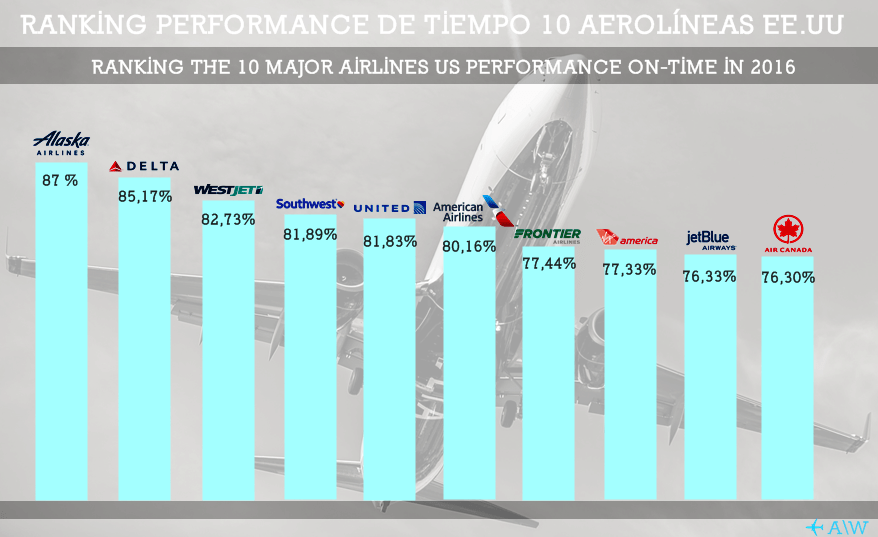
Ranking 10 principales aerolíneas EE.UU en performance de tiempo en 2016

https://i0.wp.com/media.advance.net/entertainment_news_national_desk/photo/planes-await-takeoff-at-newark-liberty-international-airport-d8e57ee955909d20.jpg

AW | 2017 03 23 12:12 | AIRLINES MARKET

Con un número récord de pasajeros que toman el cielo en 2016, el tiempo de funcionamiento se está convirtiendo en más importante que nunca. La industria aérea de Estados Unidos está volando alto en más de una forma


Según el Departamento de Transporte de Estados Unidos (DOT), la industria de la aviación registró un hito nunca antes visto en 2016: Cruzó la marca de 800 millones de pasajeros. Para ser más exactos, las aerolíneas estadounidenses llevaron un récord de 823 millones de pasajeros el año pasado, de los cuales 719 millones correspondían a vuelos nacionales, y el resto a pasajeros internacionales. Eso representa un aumento del 3,1% frente a los 798 millones de dólares en 2015, y representa un aumento de aproximadamente un 17% con respecto a los 704 millones de pasajeros transportados en 2009.
AW-7553737

Además de transportar más pasajeros que nunca, las aerolíneas también manejaron menos bolsas que nunca (2,7 por cada 1.000 pasajeros), golpearon menos pasajeros que el récord anterior mínimo (0,62 por 10.000 pasajeros) y cancelaron un 1,17% de vuelos nacionales.

Sin embargo, estas mejoras podrían ser inútiles si las aerolíneas no son capaces de llegar a sus destinos a tiempo. Mientras que la lealtad del cliente importa en cierta medida en muchas industrias y sectores, las aerolíneas en particular están contando con una experiencia agradable del cliente (que incluye una llegada a tiempo) para impulsar el negocio de repetición. Con el 2017 buscando como si pudiera ser otro año récord para los viajes aéreos, las llegadas a tiempo nunca han sido nunca más importantes.

Entonces, ¿qué aerolíneas son las mejores en conseguir a sus pasajeros a sus destinos a tiempo? Para responder a eso, nos dirigiremos a FlightStats, que ha examinado el desempeño a tiempo para las aerolíneas en cada uno de los últimos ocho años. Los datos de FlightStats, que consideran que una llegada dentro de los 15 minutos de la hora de llegada programada para ser «a tiempo», nos ha permitido una mirada en profundidad a donde están las 10 principales aerolíneas norteamericanas de primera a peor.

1. Alaska Air: 87% de llegada a tiempo
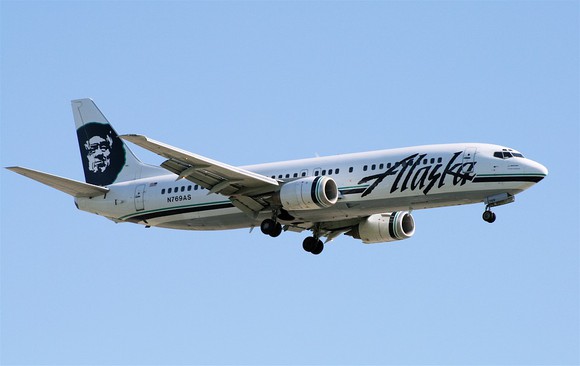
An Alaska Air plane in flight.
Liderando el camino en el tiempo de rendimiento en 2016 fue Alaska Air Group (NYSE: ALK), y por un margen cómodo en eso. Puede ser una sorpresa para algunos, pero este es el séptimo año consecutivo que Alaska ha sido el mejor perro en términos de rendimiento a tiempo. El presidente y director general de operaciones Ben Minicucci, después de que Alaska ganó su sexto premio consecutivo de FlightStats el año pasado, señaló a los empleados de su empresa y su firmeza en poner las necesidades de los clientes en primer lugar como las razones de su éxito.

Una punta del casquillo también puede ser merecida para el aeropuerto internacional de Seattle-Tacoma, que sirve como eje más grande del aire de Alaska. SeaTac, como es más conocido, se ubicó en el sexto lugar en el desempeño a tiempo entre los principales aeropuertos que atienden a más de 20 millones de pasajeros que salen anualmente.

2. Delta Air Lines: 85.17% de llegada a tiempo
A Delta Air Lines A321 at a manufacturing facility.
Alaska Airlines puede haber tomado el primer puesto, pero Delta Air Lines (NYSE: DAL) merece su propia corona teniendo en cuenta que cuenta con más de cinco veces más asientos que Alaska (220,5 millones frente a 42,03 millones) y fue capaz de entregar un De rendimiento superior a 85%.

El enfoque de Delta últimamente, aparte de dar a Alaska una carrera por su dinero mediante la expansión en Seattle, ha estado en la reducción de las cancelaciones de vuelos domésticos, que parece haber tenido un impacto positivo en el rendimiento también. Delta informó en enero que pasó 241 días en 2016 sin cancelar un vuelo principal en cualquier parte del mundo, lo que superó su propio récord de la industria en unos 80 días. La fiabilidad de Delta podría convertirse en un activo importante que atrae a los negocios repetidos.

3. WestJet: 82.73% de llegada a tiempo
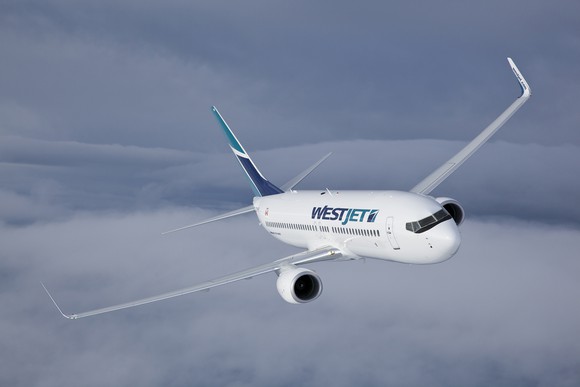
A WestJet plane in flight.
Aunque es la tercera más pequeña de las 10 principales aerolíneas clasificadas por vuelos en 2016, WestJet de Canadá (NASDAQOTH: WJAFF) deslumbró con un desempeño puntual que se aproximaba al 83%. Además, con base en los datos de FlightStats, WestJet tuvo el retraso promedio de llegada más bajo entre las 10 principales aerolíneas norteamericanas – 46,4 minutos.

También hay razones para creer que WestJet podría mejorar su desempeño a tiempo en los próximos años. Aunque se centra principalmente en los vuelos nacionales canadienses, WestJet se ha enfrentado a desafíos incorporando nuevos aviones en nuevas rutas. Estos «dolores de dentición», como el CEO Gregg Saretsky se refirió a ellos el verano pasado, son similares a lo que experimentó cuando lanzó su marca WestJet Encore. Dado el tiempo, la fiabilidad internacional de WestJet a tiempo podría prosperar.
Un avión de Southwest Airlines rodando en la pista.

4. Southwest Airlines: 81.89% de llegada a tiempo
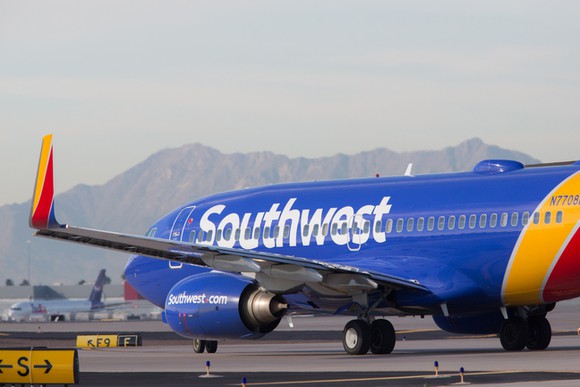
A Southwest Airlines plane taxiing on the runway.
No hace mucho tiempo que Southwest Airlines (NYSE: LUV), hogar de las bolsas de vuelo libre, estaba muerta por última vez en el desempeño puntual. En 2013, Southwest pensó que sería una buena idea expandir significativamente sus horarios en las rutas existentes, lo que aplastó el rendimiento a tiempo. Unos años más tarde, y tras una prudente poda de sus horarios, Southwest está de vuelta en el medio del pelotón con una llegada a tiempo de casi el 82%.

Al igual que muchos de los mayores nacionales, Southwest está siendo considerablemente más cauteloso con sus planes de expansión en 2017. Los precios del petróleo crudo, y por lo tanto los precios del combustible para aviones, son mucho más altos que el año pasado, y Southwest quiere evitar una repetición de 2013, posible.
United Airlines avión en vuelo.


5. United Airlines: 81.83% de llegada a tiempo
https://i0.wp.com/www.elvenezolanohouston.com/gescont/recursos/noticias/12789.jpg
A pesar de aterrizar en el medio del paquete en términos de puntualidad de rendimiento, United Airlines, que es parte de United Continental Holdings (NYSE: UAL), ha hecho avances significativos en la mejora de su fiabilidad. Sólo en septiembre pasado, la aerolínea informó que sus resultados a tiempo para la temporada de viajes de verano fueron los mejores de su historia, especialmente durante el período de viaje del 4 de julio.

Un comunicado de prensa de United Airlines señaló una serie de iniciativas recientes que están dando sus frutos. Estos incluyen ajustes de programación, un movimiento para equipar a más empleados con tecnologías móviles para servir mejor a los clientes y mejorar el trabajo en equipo de los empleados. United espera agregar 300 millones de dólares en valor para 2018, según el comunicado, al operar una aerolínea más confiable.

6. American Airlines: 80.16% de llegada a tiempo
https://i1.wp.com/thepointsguy.com/wp-content/uploads/2016/02/American-Airlines-A321-landing-featured-1.jpg?fit=830%2C401&ssl=1
Un ranking de sexto lugar y una tasa de llegada a tiempo mejor que el 80% parece algo así como una bendición para American Airlines Group (NASDAQ: AAL), que ha enfrentado escasez de luchas en la memoria reciente.

Según la compañía de datos de la industria de viajes Skift, American tiene tres grandes problemas que están obstaculizando su fiabilidad. En primer lugar, sigue enfrentándose a los problemas de post-fusión vinculados a US Airways. La fusión de los sistemas informáticos de ambas aerolíneas está teniendo un tiempo excepcionalmente largo, y como las tripulaciones de vuelo sólo pueden volar aviones con sistemas que pertenecían a su línea aérea antes de la fusión, se ha llevado a asignaciones ineficientes de la tripulación.

American también está tratando de expandirse rápidamente en el Aeropuerto Internacional de Los Ángeles, pero la aerolínea simplemente no tiene suficientes puertas para acomodar una mejora en la capacidad. Esto ha creado algunos contratiempos claros en su desempeño puntual. Por último, el clima en sus centros también ha sido un factor que afecta la puntualidad de la aerolínea.

7. Frontier Airlines: 77.44% de llegada a tiempo
https://i0.wp.com/www.tbo.com/storyimage/TB/20140513/ARTICLE/140519702/AR/0/AR-140519702.jpg
La aerolínea de bajo coste Frontier, que ofreció el segundo vuelo (99,302) de las 10 principales aerolíneas norteamericanas en 2016, llegó a la parte inferior con una tasa de llegadas a tiempo de 77,44%.

Hasta el verano pasado, Frontier había entregado numerosos meses de 80% más de tasas de llegada a tiempo, lo que es bastante impresionante para una aerolínea cuyo principal gancho es su precio de billetes ultrabajo. El portavoz de la empresa, Jim Faulkner, dijo al Denver Post que su tarifa de llegada a tiempo, estaba ocupando puestos de trabajo en Swissport, el contratista de servicios de rampa de la compañía en el Aeropuerto Internacional de Denver (DIA), su principal centro. Frontier contrató a Simplicity USA en mayo de 2016 para administrar el servicio al cliente, el trabajo en rampa y el manejo de equipaje en DIA, por lo que espera poner su reciente inmersión en el desempeño puntual en el retrovisor.

8. Virgen América: 77.33% de llegada a tiempo
https://i0.wp.com/www.flightswatcher.com/wp-content/uploads/2015/10/virgin-plane.jpg
Virgin America, que fue adquirida por Alaska Airlines en diciembre por 2.600 millones de dólares, sorprendentemente llegó en octavo lugar en el tiempo de rendimiento en 2016.

¿Por qué es sorprendente? Según el informe anual de calificación de la calidad de la aerolínea publicado en 2016 por la Universidad Estatal de Wichita y la Universidad Aeronáutica Embry-Riddle, basado en las calificaciones del Departamento de Transporte de los Estados Unidos (DOT), Virgin America se clasificó como la primera aerolínea por cuarto año consecutivo. La llegada a tiempo es uno de los muchos factores examinados por las puntuaciones del DOT. Aunque la integración de la aerolínea con Alaska podría obstaculizar temporalmente las tasas de rendimiento a tiempo de este último, Virgin America se ha destacado históricamente por su fiabilidad, lo cual debería ser algo bueno para Alaska Air.

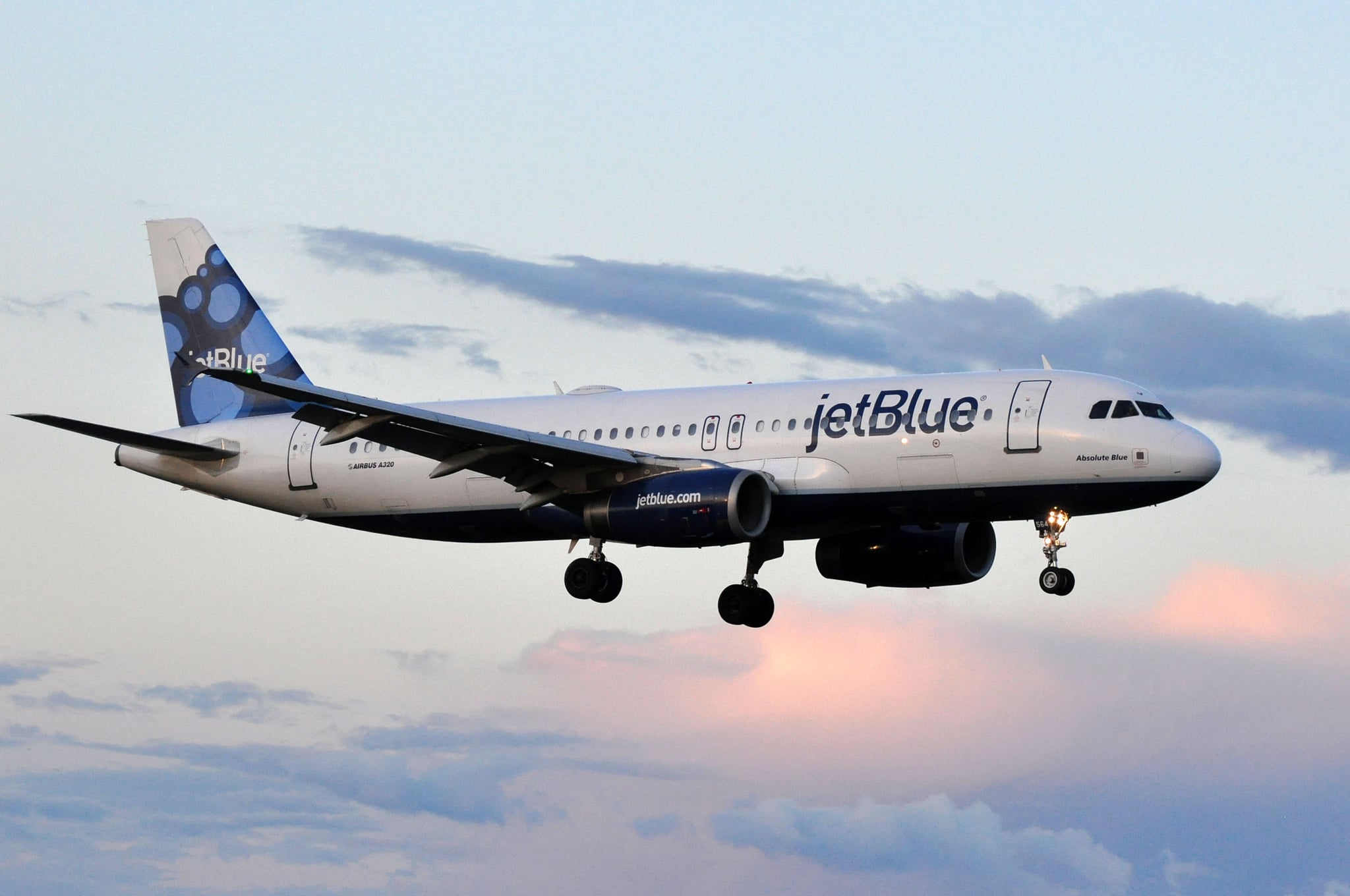
9. JetBlue Airways: 76.33% de llegada a tiempo
https://media1.popsugar-assets.com/files/thumbor/AqjRwIL-bStl96SlKsJdpgUMe9Q/fit-in/2048xorig/filters:format_auto-!!-:strip_icc-!!-/2016/03/31/954/n/1922398/81206889de5649a2_23140827435_1b61b53925_o.jpg
Otra sorpresa es JetBlue Airways (NASDAQ: JBLU), que se encuentra a sólo 0,03 puntos porcentuales de distancia de ser el más bajo de las 10 principales aerolíneas listadas por FlightStats en términos de tasa de llegada a tiempo.

JetBlue ha sido recientemente y consistentemente insatisfactoria en términos de puntualidad en relación con sus pares más grandes. Parte de la culpa podría ir a su eje principal, John F. Kennedy Aeropuerto Internacional (JFK), que está entre los más ocupados en los Estados Unidos. Un análisis de este verano pasado de la Oficina de Estadísticas de Transporte de los 29 mejores aeropuertos de Estados Unidos enumeró JFK como el cuarto peor cuando se trata de retrasos.

De nuevo, JetBlue está haciendo algo bien. Está en la cima del estudio de satisfacción de la aerolínea norteamericana de 2016 de J.D. Power durante 12 años consecutivos, lo que significa que otros factores, como sus servicios a bordo y menores tarifas de equipaje con respecto a sus pares, están claramente desempeñando un papel en mantener satisfechos a sus clientes.

10. Air Canada: 76.30% de llegada a tiempo
https://i0.wp.com/aerospace-journal.com/wp-content/uploads/2017/02/new-livery-unveiling-2.jpg
La incorporación de la furgoneta entre los mayores de América del Norte con una puntualidad del 76,30% en 2016 es Air Canada (NASDAQOTH: ACDVF).

La culpa de la baja clasificación de Air Canada puede estar en sus centros principales. Según los datos proporcionados por FlightStats, la tarifa de salida a tiempo de 81% de Air Canada era mejor que la de JetBlue, Virgin America, Frontier y Southwest, pero la aerolínea pierde casi 5 puntos porcentuales cuando se trata de llegadas a tiempo. Esto podría implicar una creciente congestión en sus rutas de servicio, señalando que puede ser necesario aumentar la capacidad o agregar más rutas para atenuar este problema.

Si bien no hay garantía, el retraso en el desempeño de Air Canada podría resultar en pérdida de clientes si no mejora. AIRGWAYS ® Icon-AW

A woman looking at a large arrivals board at an airport.

Ranking the 10 major airlines US performance on-time in 2016

With a record number of passengers taking to the skies in 2016, on-time performance is becoming more important than ever. The U.S. airline industry is flying high in more ways than one

According to the U.S. Department of Transportation (DOT), the airline industry hit a never-before-seen milestone in 2016: It crossed the 800-million-passenger mark. To be more precise, U.S. airlines carried a record 823 million passengers last year, 719 million of which were on domestic flights, with the remainder made up of international passengers. That’s up 3.1% from the 798 million carried in 2015, and marks a roughly 17% increase from the 704 million passengers carried in 2009.

AW-7553737

On top of transporting more passengers than ever, airlines also mishandled fewer bags than ever (2.7 bags per 1,000 passengers), bumped fewer passengers than the previous record low (0.62 per 10,000 passengers), and cancelled a record-low 1.17% of domestic flights.

Yet these improvements could all be for naught if airlines aren’t able to get their passengers to their destinations on time. While customer loyalty matters to some degree across many industries and sectors, airlines in particular are counting on a pleasant customer experience (which includes an on-time arrival) to drive repeat business. With 2017 looking as if it could be another record year for air travel, on-time arrivals have arguably never been more important.

So, which airlines are the best at getting their passengers to their destinations on time? To answer that we’ll turn to FlightStats, which has examined the on-time performance for airlines in each of the past eight years. FlightStats’ data, which considers an arrival within 15 minutes of the scheduled arrival time to be «on time,» has allowed us an in-depth look at where the top 10 major North American airlines rank, from first to worst.

1. Alaska Air: 87% on-time arrival

Leading the way in on-time performance in 2016 was Alaska Air Group (NYSE:ALK), and by a comfortable margin at that. It may come as a surprise to some, but this is the seventh consecutive year that Alaska has been the top dog in terms of on-time performance. President and Chief Operating Officer Ben Minicucci, after Alaska won its sixth consecutive award from FlightStats last year, pointed to his company’s employees and its steadfastness in putting the needs of customers first as the reasons behind its success.

A tip of the cap may also be deserved for Seattle-Tacoma International Airport, which serves as Alaska Air’s largest hub. In a separate on-time performance report from air travel analytics company OAG, SeaTac, as it’s better known, ranked sixth in on-time performance among the major airports serving more than 20 million departing passengers annually.

2. Delta Air Lines: 85.17% on-time arrival

Alaska Airlines may have taken the top spot, but Delta Air Lines (NYSE:DAL) deserves its own crown considering that it boasts more than five times as many seats as Alaska (220.5 million versus 42.03 million) and it was able to deliver an on-time performance of more than 85%.

Delta’s focus lately, other than giving Alaska a run for its money by expanding in Seattle, has been on reducing domestic flight cancellations, which appears to have had a positive impact on performance as well. Delta reported in January that it went 241 days in 2016 without cancelling a mainline flight anywhere in the world, which beat its own industry record by a whopping 80 days. Delta’s reliability could become an important asset that draws in repeat business.

3. WestJet: 82.73% on-time arrival

Though it’s the third smallest of the 10 major airlines ranked by flights in 2016, Canada’s WestJet (NASDAQOTH:WJAFF) dazzled with an on-time performance that neared 83%. What’s more, based on FlightStats’ data, WestJet had the lowest average arrival delay among the 10 major North American airlines — 46.4 minutes.

There’s also reason to believe that WestJet could improve its on-time performance in the years to come. Though it’s primarily focused on domestic Canadian flights, WestJet has faced challenges incorporating new planes on new routes. These «teething pains,» as CEO Gregg Saretsky referred to them last summer, are similar to what it experienced when it launched its WestJet Encore brand. Given time, WestJet’s international on-time reliability could thrive.

4. Southwest Airlines: 81.89% on-time arrival

It wasn’t that long ago that Southwest Airlines (NYSE:LUV), home of the free-flying bags, was dead last in on-time performance. In 2013, Southwest thought it would be a good idea to significantly expand its schedules on existing routes, which crushed on-time performance. A few years later, and after some prudent pruning of its schedules, Southwest is back in the middle of the pack with an on-time arrival of nearly 82%.

Like many of the domestic majors, Southwest is being considerably more cautious with its expansion plans in 2017. Crude oil prices, and thus jet fuel prices, are much higher than they were last year, and Southwest wants to avoid a repeat of 2013, if possible.

5. United Airlines: 81.83% on-time arrival

Despite landing in the middle of the pack in terms of on-time performance, United Airlines, which is part of United Continental Holdings (NYSE:UAL), has made significant strides in improving its reliability. Just this past September, the airline reported that its on-time results for the summer travel season were its best ever, especially during the July 4 travel period.

A press release from United Airlines pointed to a number of recent initiatives that are paying off. These include scheduling adjustments, a move to equip more employees with mobile technologies to better serve customers, and improved employee teamwork. United expects to add $300 million in value by 2018, according to the release, by running a more reliable airline.

6. American Airlines: 80.16% on-time arrival

A sixth-place ranking and a better-than-80% on-time arrival rate seems like something of a godsend for American Airlines Group (NASDAQ:AAL), which has faced no shortage of struggles in recent memory.

According to travel industry data company Skift, American has three big issues that are hampering its reliability. First, it’s still contending with post-merger woes tied to US Airways. Merging the computer systems for both airlines is taking an exceptionally long time, and since flight crews can only fly aircraft with systems that belonged to their airline prior to the merger, it’s led to inefficient crew assignments.

American is also attempting to rapidly expand at Los Angeles International Airport, but the airline simply doesn’t have enough gates there to accommodate an upgrade in capacity. This has created some clear hiccups in its on-time performance. Last, weather at its hubs has also been a factor affecting the airline’s timeliness.

7. Frontier Airlines: 77.44% on-time arrival

Ultra-low-cost airline Frontier, which offered the second-fewest flights (99,302) of the top 10 major North American airlines in 2016, came in toward the bottom with a 77.44% on-time arrival rate.

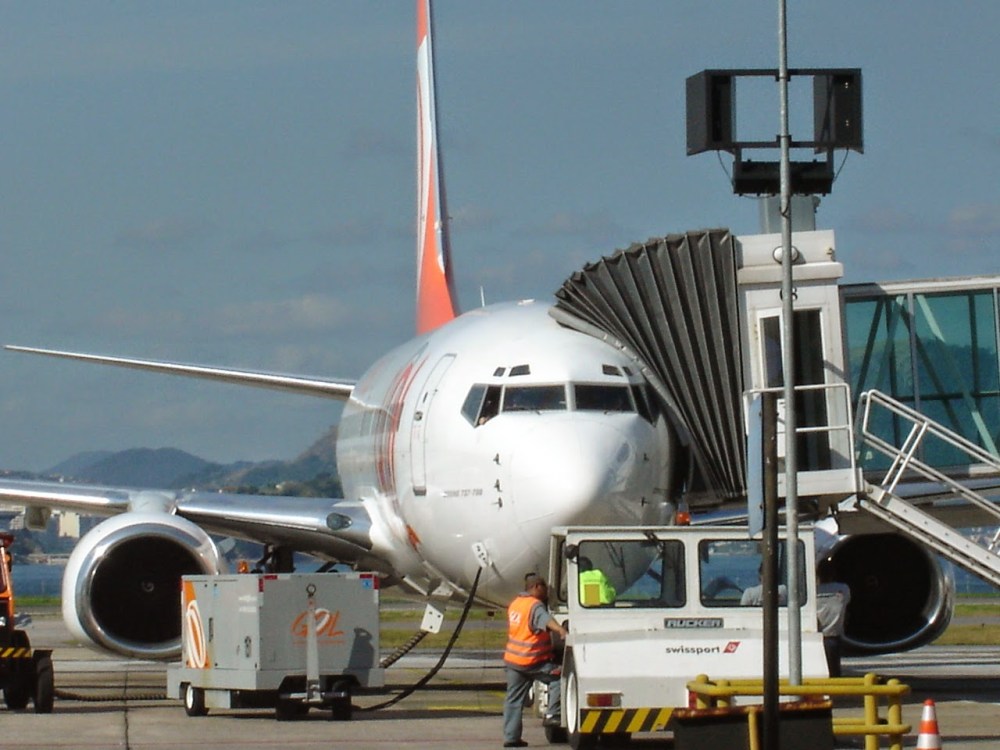
Until this past summer, Frontier had delivered numerous months of 80%-plus on-time arrival rates, which is pretty impressive for an airline whose main hook is its ultra-low ticket prices. What did its on-time arrival rate in, company spokesman Jim Faulkner told the Denver Post, were staffing issues at Swissport, the company’s ramp services contractor at Denver International Airport (DIA), its main hub. Frontier hired Simplicity USA in May 2016 to manage customer service, ramp work, and baggage handling at DIA, so it hopes to put its recent dip in on-time performance in the rearview mirror.

8. Virgin America: 77.33% on-time arrival

Virgin America, which was acquired by Alaska Airlines in December for $2.6 billion, surprisingly came in eighth in on-time performance in 2016.

Why is it surprising? According to the annual Airline Quality Rating report released in 2016 from Wichita State University and Embry-Riddle Aeronautical University, based on scores from the U.S. Department of Transportation (DOT), Virgin America ranked as the top airline for the fourth year in a row. On-time arrival is one of the many factors examined by the DOT scores. While the airline’s integration with Alaska could temporarily hinder the latter’s on-time performance rates, Virgin America has historically stood out for its reliability, which should be a good thing for Alaska Air.

9. JetBlue Airways: 76.33% on-time arrival

Another surprise is JetBlue Airways (NASDAQ:JBLU), which sits just 0.03 percentage points away from being the lowest-ranked of the 10 major airlines listed by FlightStats in terms of on-time arrival rate.

JetBlue has recently and consistently been subpar in terms of on-time performance relative to its larger peers. Some of the blame might go to its main hub, John F. Kennedy International Airport (JFK), which is among the busiest in the United States. An analysis this past summer from the Bureau of Transportation Statistics of America’s top 29 airports listed JFK as the fourth-worst when it comes to delays.

Then again, JetBlue is certainly doing something right. It’s topped J.D. Power’s 2016 North America Airline Satisfaction Study for 12 straight years, meaning other factors, such as its in-flight services and lower baggage fees relative to its peers, are clearly playing a role in keeping its customers happy.

10. Air Canada: 76.30% on-time arrival

Bringing up the caboose among the North American majors with an on-time performance of 76.30% in 2016 is Air Canada (NASDAQOTH:ACDVF).

The blame for Air Canada’s low ranking may lie with its primary hubs. According to the data provided by FlightStats, Air Canada’s 81% on-time departure rate was better than those of JetBlue, Virgin America, Frontier, and Southwest, but the airline loses nearly 5 percentage points when it comes to on-time arrivals. This could imply growing congestion at its serviced routes, signaling that it may need to boost capacity or add more routes to assuage this problem.

While there’s no guarantee, Air Canada’s lagging on-time performance could result in lost customers if it doesn’t improve. A\W

Ξ A I R G W A Y S Ξ
SOURCE: Fool.com [The Mootley Fool]
DBk: Airgways / Getty Images / Pixabay / Delta Air Lines / WestJet / Southwest / Thepointsguy.com / Tbo.com / Flightswatcher.com / Popsugar-assets.com / Aerospace-journal.com / Advance.net
AW-POST: 201703231212AR

A\W   A I R G W A Y S ®

¿Qué significará Brexit para la industria aérea británica?

https://i0.wp.com/estaticos.elperiodico.com/resources/jpg/0/2/aviones-british-airways-aeropuerto-heathrow-1463399938420.jpg 

AW | 2017 03 22 21:17 | AIRLINES MARKET

Resultado de imagen para Brexit LOGOLas aerolíneas basadas en Reino Unido están clamando por estar al frente de la cola cuando las negociaciones sobre el Brexit comienzan en serio.

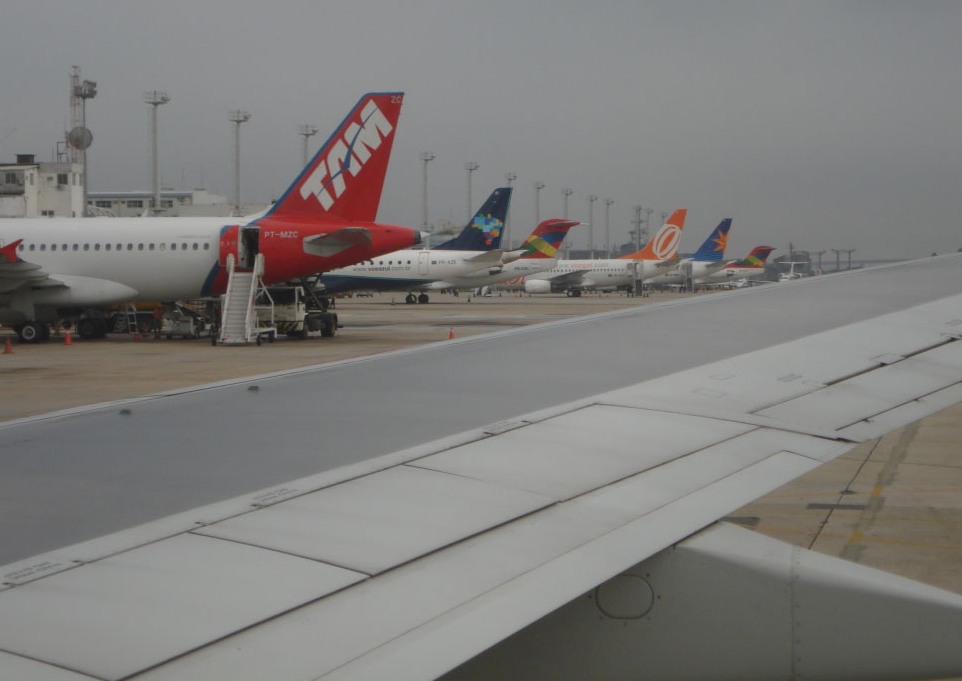
En las últimas semanas, han tenido lugar reuniones entre los funcionarios de la UE y las compañías aéreas en un intento de dar a conocer los problemas que deben abordarse para el sector de los viajes.

Ha habido una creciente preocupación por parte de la industria aérea de que podría verse obstaculizada si las discusiones entre el Reino Unido y la UE se vuelven acrimoniosas. La cuestión de Brexit es particularmente aguda para la industria aérea dado que los acuerdos existentes permiten a las compañías volar entre el Reino Unido y la UE, así como entre los países europeos continentales, y estos deberán ser renegociados antes de que el Reino Unido salga formalmente del bloque. AIRGWAYS ® Icon-AW

https://i2.wp.com/www.touchfinancial.co.uk/wp-content/uploads/2016/04/brexit.jpg

What will Brexit mean for the UK airline industry?

UK-based airlines are clamouring to be at the front of the queue when negotiations over Brexit begin in earnest.

Meetings have been taking place between EU officials and airlines in recent weeks in a bid to flesh out the issues that need to be tackled for the travel sector.

There has been mounting concern from the airline industry that it could be hobbled if discussions between the UK and the EU turn acrimonious. The issue of Brexit is particularly acute for the airline industry given existing agreements allow companies to fly between the UK and EU – as well as between mainland European countries – and these will need be renegotiated before the UK formally exits the bloc. A\W


Ξ A I R G W A Y S Ξ
SOURCE: Telegraph.co.uk
DBk: Elperiodico.com / Touchfinancial.co.uk
AW-POST: 201703222117AR

A\W   A I R G W A Y S ®

Vuelos directos desde América Latina a Brasil crecen 21%

https://airgways.com/wp-content/uploads/2017/03/1c031-3931921231_428e7ea1f7_o.jpg

AW | 2017 03 22 05:25 | AIRLINES MARKET

En el primer trimestre del año, el país recibió más de 3 400 vuelos semanales directos internacionales procedentes de 57 ciudades en el mundo


En marzo, el número de vuelos directos de los países de América Latina a Brasil creció un 21,64% en comparación con el mismo mes de 2016. El número total de llegadas en el país aumentó de 2.4000 a 2,9000 y hubo un aumento del 25,83% en los asientos, que pasó de 418.400 a 526.400.

Las cifras son parte del análisis de la red de rutas de la Inteligencia Competitiva y la Comisión de Promoción del Turismo, el Instituto Brasileño de Turismo (Embratur), preparado a partir de la información proporcionada por la Agencia Nacional de Aviación Civil (ANAC).

Según la encuesta, el primer trimestre de 2017, Brasil recibió más de 3.400 vuelos internacionales directos semanales procedentes de 57 ciudades de todo el mundo para destinos al norte del sur del país.

Este mes, por ejemplo, será 1.127 millones de vuelos directos semanales. De éstos, 556 son de América del Sur; 216 llevar a los turistas extranjeros de América del Norte y 215 de Europa. En enero, llegó a Brasil 1.135 vuelos directos desde otras ciudades en el mundo cada semana y en febrero fue de 1.145.

«La oscilación entre los meses es común y muchos factores deben ser considerados como temporada alta y baja, revisión y mantenimiento de las aeronaves de las líneas aéreas, la adaptación a la demanda y la economía de los países, entre otros», explicó el director de Inteligencia Competitiva y la promoción del turismo de Embratur, Gilson Lira.

Los datos indican que en América Latina, Argentina es líder en la llegada de los vuelos a Brasil, con 1.275; Europa, llega a 930 vuelos mensuales, mientras que en América del Norte, son 895. De Asia vienen 146 vuelos y África 97.

Compañías aéreas

Azul Airlines, que habían iniciado la operación directa entre Belo Horizonte y Buenos Aires el 1 de marzo, anunció que desde el 1 de julio habrá una segunda operación que une las dos ciudades.

Ya Gol Airlines firmó un acuerdo con el gobierno de Paraiba para operar a partir de julio, el primer vuelo regular internacional a la capital argentina João Pessoa, un avión capaz de volar 170 pasajeros.

Avianca inaugura vuelo diario entre Sao Paulo y Foz de Iguazú, facilitando la salida de turistas extranjeros a otros destinos brasileños.

El Ministro de Turismo, Marx Beltrao, anunció el miércoles (15) que Brasil fue elegido por Emirates Airlines como el primer país de América Latina para recibir vuelos diarios que conectan Dubai a Sao Paulo.

«Estas acciones son muy importantes para aumentar el flujo de turistas extranjeros al país y optimizar, ni siquiera indirectamente, el trabajo de Embratur. Es más fácil vender Brasil cuando tenemos más conectividad «, dijo el presidente del Instituto, Vinicius Lummertz. AIRGWAYS ® Icon-AW

https://airgways.com/wp-content/uploads/2017/03/ad64c-dsc09704.jpg

 Direct flights from Latin America to Brazil grow 21%

In the first quarter of the year, the country received more than 3,400 international weekly flights from 57 cities worldwide


In March, the number of direct flights from Latin American countries to Brazil grew 21.64% compared to the same month of 2016. Total arrivals in the country rose from 2,4 thousand to 2,9 thousand and There was an increase of 25.83% in seats, which went from 418.4 thousand to 526.4 thousand.

The figures are part of the Analysis of the Aircraft of the Directorate of Competitive Intelligence and Tourism Promotion, of the Brazilian Tourism Institute (Embratur), prepared from information provided by the National Civil Aviation Agency (ANAC).

According to the survey, in the first quarter of 2017, Brazil received more than 3,400 weekly international direct flights, from 57 cities worldwide to destinations from north to south of the country.

This month, for example, will be 1,127 thousand direct flights a week. Of these, 556 are from South America; 216 include foreign tourists from North America and 215 from Europe. In January, 1,135 direct flights from other cities of the world arrived in Brazil each week and, in February, were 1,145.

«The oscillation between the months is common and several factors must be considered, such as high and low season, review and maintenance of aircraft of airlines, adaptation to the demand and the economy of the countries, among others,» explained the director of Competitive Intelligence and Tourism Promotion of Embratur, Gilson Lira.

The data indicate that, in Latin America, Argentina leads in arrival of flights to Brazil, with 1,275; Of Europe, there are 930 flights a month, while in North America, there are 895 flights. From Asia there are 146 flights and 97 Africa.

Airlines

Azul Linhas Aéreas, which had started the direct operation between Belo Horizonte and Buenos Aires on March 1, announced that, as of July 1, there will be a second operation linking the two cities.

Gol Linhas Aéreas signed an agreement with the government of Paraíba to operate, from July, the first regular international flight of the Argentine capital to João Pessoa, in an aircraft capable of flying with 170 passengers.

Avianca Linhas Aéreas inaugurated a daily flight between São Paulo and Foz do Iguaçu, facilitating the trip of foreign tourists to other Brazilian destinations.

The Minister of Tourism, Marx Beltrão, announced last Wednesday (15) that Brazil was chosen by Emirates Airlines as the first Latin American country to receive daily flights connecting Dubai to São Paulo.

«These actions are extremely important to increase the flow of foreign tourists to the country and optimize, even indirectly, the work of Embratur. It is easier to sell Brazil when we have more connectivity»,  says the president of the Institute, Vinicius Lummertz. A\W

https://upload.wikimedia.org/wikipedia/commons/1/1e/Terminal_3_de_Guarulhos.jpg

Voos direto da América Latina para o Brasil crescem 21%

No primeiro trimestre do ano, o País recebeu mais de 3,4 mil voos internacionais semanais diretos vindos de 57 cidades do mundo

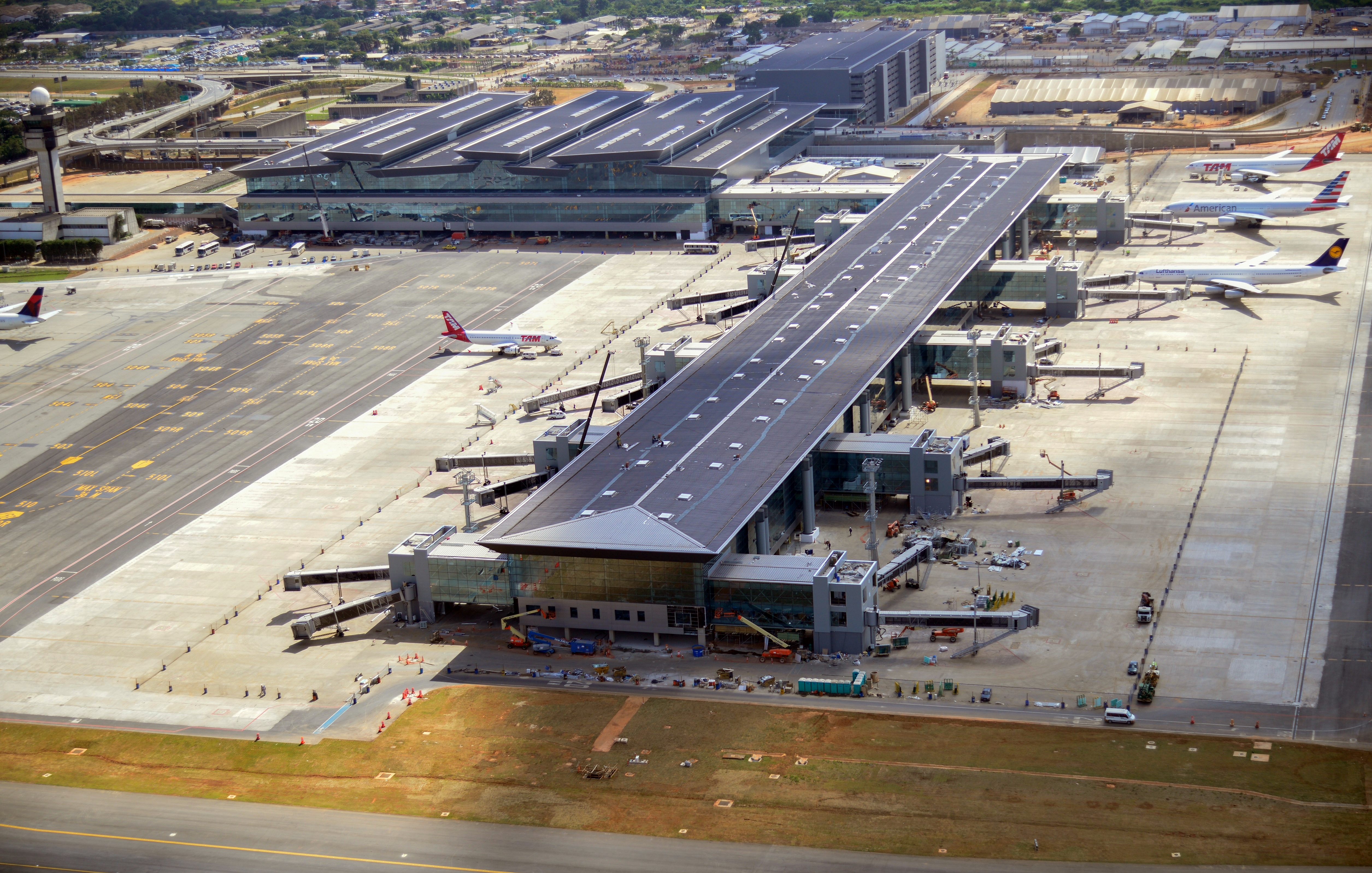
Neste mês de março, o número de voos diretos de países da América Latina para o Brasil cresceu 21,64% em comparação com o mesmo mês de 2016. O total de chegadas no País passou de 2,4 mil para 2,9 mil e houve acréscimo de 25,83% nos assentos, que passou de 418,4 mil para 526,4 mil.

Os números fazem parte da Análise da Malha Aérea da Diretoria de Inteligência Competitiva e Promoção Turística, do Instituto Brasileiro de Turismo (Embratur), preparada a partir de informações fornecidas pela Agência Nacional de Aviação Civil (Anac).

De acordo com o levantamento, no primeiro trimestre de 2017, o Brasil recebeu mais de 3,4 mil voos internacionais semanais diretos, vindos de 57 cidades do mundo inteiro para destinos de norte a sul do País.

Neste mês, por exemplo, serão 1.127 mil voos diretos semanais. Destes, 556 são oriundos da América do Sul; 216 trazem turistas estrangeiros da América do Norte e 215, da Europa. Em janeiro, chegaram ao Brasil 1.135 voos diretos de outras cidades do mundo a cada semana e, em fevereiro, foram 1.145.

“A oscilação entre os meses é comum e diversos fatores devem ser considerados, como alta e baixa temporada, revisão e manutenção de aeronaves das companhias aéreas, adequação à demanda e à economia dos países, entre outros”, explicou o diretor de Inteligência Competitiva e Promoção Turística da Embratur, Gilson Lira.

Os dados indicam que, na América Latina, a Argentina lidera em chegada de voos ao Brasil, com 1.275; da Europa, chegam 930 voos mensais, enquanto na América do Norte, são 895. Da Ásia chegam 146 voos e da África, 97.

Companhias Aéreas

A Azul Linhas Aéreas, que havia iniciado a operação direta entre Belo Horizonte e Buenos Aires em 1º de março, anunciou que, a partir de 1º de julho haverá uma segunda operação ligando as duas cidades.

Já a Gol Linhas Aéreas assinou convênio com o governo da Paraíba para operar, a partir de julho, o primeiro voo regular internacional da capital argentina para João Pessoa, numa aeronave capaz de voar com 170 passageiros.

A Avianca Linhas Aéreas inaugurou voo diário entre São Paulo e Foz do Iguaçu, facilitando a ida de turistas estrangeiros para outros destinos brasileiros.

O Ministro do Turismo, Marx Beltrão, anunciou, na última quarta-feira (15), que o Brasil foi escolhido pela Emirates Airlines como primeiro País da América Latina a receber voos diários ligando Dubai a São Paulo.

“Essas ações são de extrema importância para aumentar fluxo de turistas estrangeiros para o País e otimizar, mesmo que indiretamente, o trabalho da Embratur. Fica mais fácil vender o Brasil quando temos mais conectividade”, avalia o presidente do Instituto, Vinicius Lummertz. A\W

Ξ A I R G W A Y S Ξ
SOURCE: Brasil.gov.br
DBk: Bp.blogspot.com / Wikipedia.org
AW-POST: 201703220525AR

A\W   A I R G W A Y S ®

Aerolíneas Argentinas seguirá liderando el mercado argentino

AW | 2017 03 20 17:09 | AIRLINES MARKET

El Ministro de Transporte Dietrich afirmó que Aerolíneas Argentinas seguirá liderando el mercado de cabotaje argentino

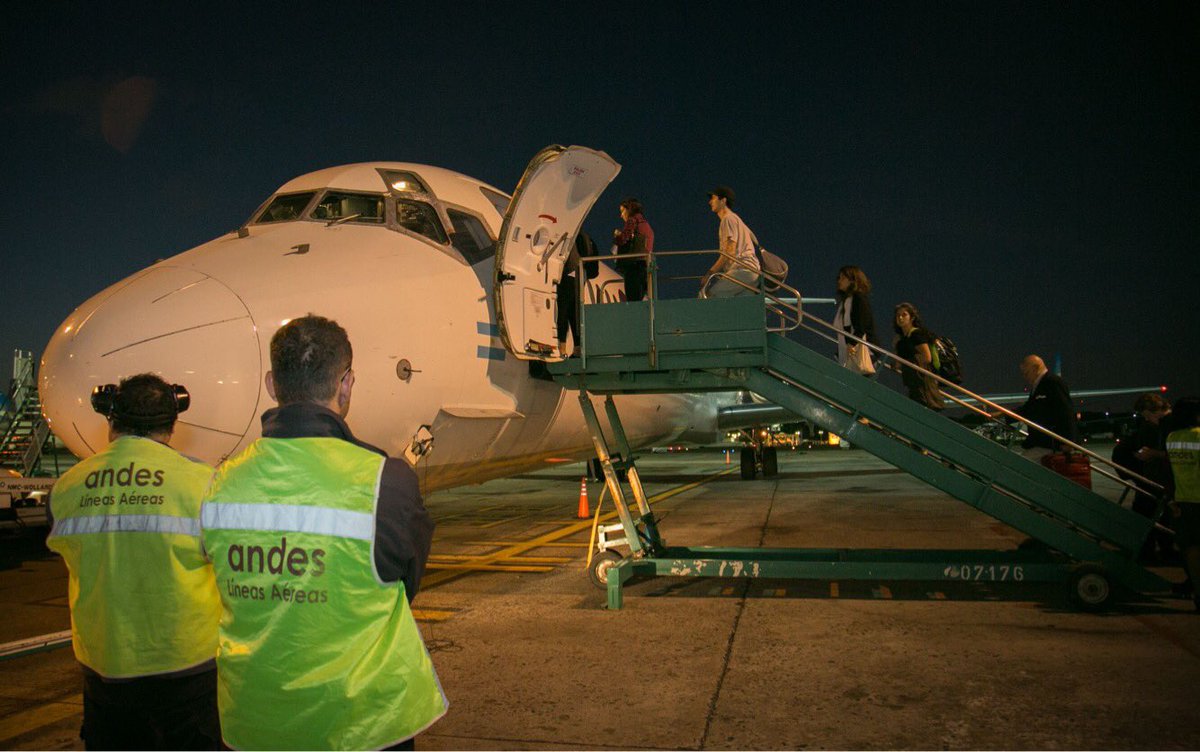
El ministro de Transporte Guillermo Dietrich presenció este lunes la partida del primer vuelo de la empresa low cost Andes Líneas Aéreas rumbo a la ciudad de Mendoza desde el aeroparque metropolitano Jorge Newbery y en ese marco, afirmó que «Aerolíneas Argentinas seguirá siendo líder del mercado de cabotaje», a pesar de la competencia que pueda significar la asignación de rutas aéreas a otras compañías.

Aerolineas-Argentinas-Aeroparque

EL GRUPO AEROLÍNEAS/AUSTRAL SEGUIRÁ LIDERANDO EL MERCADO ARGENTINO

Dietrich descartó que las actividades de Andes o de las otras dos low cost habilitadas a operar en Argentina (American Jet y Alas del Sur) puedan afectar a Aerolíneas Argentinas. «Aerolíneas podría absorber alrededor de 3,8 millones de pasajeros. Seguirá siendo la líder del sector y para eso se pasará de una flota actual de 74 aviones a 84», subrayó.

En tanto, Andes Líneas Aéreas cubrirá el nuevo destino de lunes a viernes con dos frecuencias diarias, sumándolo a los tramos Salta, Jujuy, Córdoba, y Puerto Madryn desde y hacia Buenos Aires.

«La decisión es duplicar el mercado de cabotaje. Ya ase pasó del dicho al hecho. Tres empresas recibieron rutas y a una cuarta, Flybondi, se les adjudicarán en el corto plazo», señaló Dietrich al tiempo que agregó: «Avianca pasó a ser analizada en el marco del esquema de gestión de intereses. Y en abril habrá otra audiencia a la que seguramente se presentará Norwegian, la compañía low cost estrella por estos días en el mundo».

El vuelo inaugural de Andes partió a las 6.30 desde el aeroparque Jorge Newbery y llegó a Mendoza las 8.15, donde fue bautizado por los bomberos como tradicionalmente se estila.

«Nuestra empresa experimenta el crecimiento más grande desde su nacimiento. Y es un orgullo poder decir que Andes Líneas Aéreas es pionera en Argentina en un nuevo esquema tarifario y un servicio de vanguardia que crece a medida que nos desarrollamos», explicó, por su parte, Horacio Preneste, gerente general de la compañía.

Por su parte, para Bernardo Racedo Aragón, gerente comercial de Andes, llegar a Mendoza constituye la materialización del salto que experimenta la compañía. «Mendoza es un mercado en constante crecimiento y con una elevada competitividad. Consideramos que podemos acompañar ese crecimiento al ofrecer más conectividad para los mendocinos a un precio realmente atractivo, generando en el mercado una regulación de tarifas para que todos puedan volar», indicó.

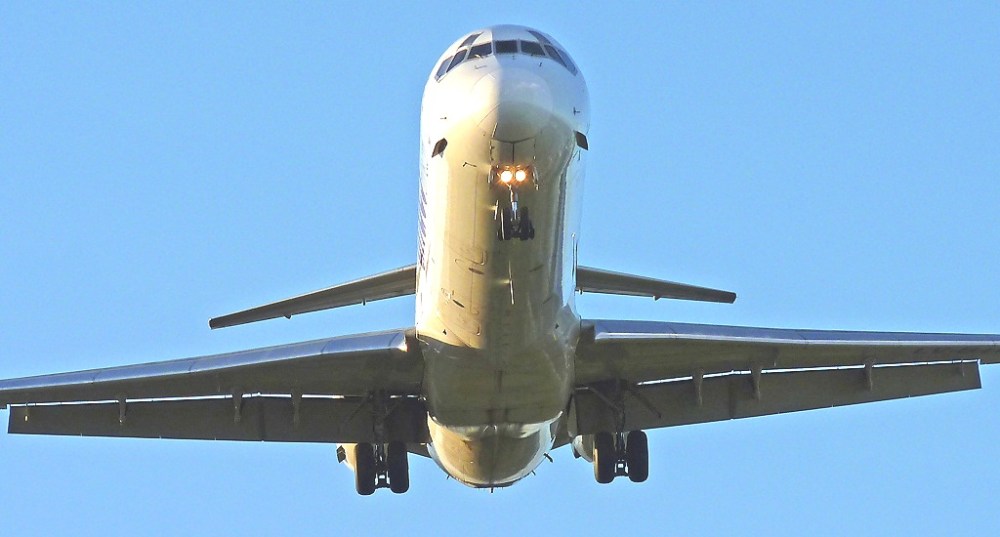
Los vuelos que unirán Mendoza con Buenos Aires operarán de lunes a viernes y habrá dos frecuencias diarias. Partirán desde Aeroparque a las 6.30 y 18.15, y desde Mendoza a Buenos Aires los vuelos saldrán a las 9 y a las 20.45. La tarifa mínima, ida y vuelta, es de $ 2.096 finales. «Si bien comenzamos a operar en Mendoza con aviones MD83 con capacidad para 165 pasajeros, el paso siguiente es incorporar los Boeing B737-800 de última generación», anunció Racedo Aragón.

Actualmente Andes opera en Jujuy, Salta, Córdoba, Mendoza, Puerto Madryn y Buenos Aires. Andes fue autorizada recientemente por la resolución 138-E/2017 del Ministerio de Transporte de la Nación a operar rutas a Rosario, Resistencia, Posadas, Puerto Iguazú, San Miguel de Tucumán, Santiago del Estero, Salta, San Salvador de Jujuy, Córdoba, Mendoza, Neuquén, San Carlos de Bariloche, Puerto Madryn, Comodoro Rivadavia, El Calafate, Ushuaia, Santiago de Chile, Lima (Perú) y San Pablo (Brasil). AIRGWAYS ® Icon-AW

Aerolíneas Argentinas will continue to lead the argentine market


Transport Minister Dietrich said that Aerolíneas Argentinas will continue to lead the Argentinean cabotage market


Transport Minister Guillermo Dietrich attended Monday’s departure of the first flight of the low cost airline Andes Líneas Aéreas to the city of Mendoza from the metropolitan airport Jorge Newbery and in that framework, stated that «Aerolíneas Argentinas will continue to be the leader of the market of Cabotage», despite the competition that may mean the allocation of air routes to other companies.

Dietrich ruled out that the activities of Andes or the other two low-cost flights enabled in Argentina (American Jet and Alas del Sur) could affect Aerolíneas Argentinas. «Aerolíneas could absorb about 3.8 million passengers and will continue to be the leader of the sector and will move from a current fleet of 74 aircraft to 84,» he said.

Meanwhile, Andes Líneas Aéreas will cover the new destination from Monday to Friday with two daily frequencies, adding to the sections Salta, Jujuy, Cordoba, and Puerto Madryn from and to Buenos Aires.

«The decision is to double the cabotage market,» said Dietrich. «Three companies received routes and a fourth, Flybondi, will be awarded in the short term», said Dietrich while adding: «Avianca has now been analyzed in the short term. In the framework of the interest management scheme, and in April there will be another audience that will surely be presented Norwegian, the low-cost star company these days in the world».

ANDES LÍNEAS AÉREAS INAUGURAL FLIGHT AEROPARQUE TO MENDOZA


The inaugural flight of the Andes departed at 6.30 from Jorge Newbery Airport and arrived in Mendoza at 8.15, where it was baptized by firefighters as traditionally styled.

«Our company is experiencing the greatest growth since its birth and we are proud to say that Andes Líneas Aéreas is a pioneer in Argentina in a new tariff scheme and a state-of-the-art service that grows as we develop», he explained. , Horacio Preneste, general manager of the company.

For Bernardo Racedo Aragón, commercial manager of the Andes, arriving in Mendoza is the materialization of the leap experienced by the company. «Mendoza is a market that is constantly growing and has a high level of competitiveness. We believe we can accompany this growth by offering more connectivity for Mendoza at a really attractive price, generating tariff regulation in the market so that everyone can fly,» he said.

The flights that will connect Mendoza with Buenos Aires will operate from Monday to Friday and there will be two daily frequencies. They will depart from Aeroparque at 6.30 and 18.15, and from Mendoza to Buenos Aires flights will depart at 9:45 p.m. The minimum fare, round trip, is $ 2,096 end. «Although we started operating in Mendoza with MD83 aircraft with capacity for 165 passengers, the next step is to incorporate the latest generation Boeing B737-800,» announced Racedo Aragón.

Andes currently operates in Jujuy, Salta, Cordoba, Mendoza, Puerto Madryn and Buenos Aires. Andes was recently authorized by Resolution 138-E / 2017 of the Ministry of Transport of the Nation to operate routes to Rosario, Resistencia, Posadas, Puerto Iguazú, San Miguel de Tucumán, Santiago del Estero, Salta, San Salvador de Jujuy, Cordoba, Mendoza, Neuquén, San Carlos de Bariloche, Puerto Madryn, Comodoro Rivadavia, El Calafate, Ushuaia, Santiago de Chile, Lima (Peru) and San Pablo (Brazil). A\W

Ξ A I R G W A Y S Ξ
SOURCE: Ambito.com
DBk: Ambito.com /Min. G. Dietrich [vía Twitter: @Guillodietrich] / E. Guiménez Mazó
AW-POST: 201703201709AR

A\W   A I R G W A Y S ®

Las aerolíneas que ofrecen WiFi gratis


wififemale.jpg

AW | 2017 03 17 12:58 | AIRLINES MARKET


Resultado de imagen para airlines wifi    ♦
Las investigaciones demuestran que la mayoría de los pasajeros de las aerolíneas preferirían el WiFi gratuito a las comidas gratuitas   

    ♦ Un número cada vez mayor de aerolíneas están atendiendo a esta tendencia y un nuevo espectáculo infográfico que está conectado   

    ♦ La aerolínea irlandesa Aer Lingus, la española Vueling Airlines y la Norwegian Air Shuttle lideran el grupo en Europa


Con la sociedad de hoy en día encontrando cada vez más difícil de apagar, una abrumadora mayoría de los pasajeros de las líneas aéreas quieren WiFi gratuito a bordo de comidas gratis, sugiere la investigación.

Y atendiendo a estos hallazgos, un número creciente de transportistas aéreos se esfuerzan por servir Internet como un bono adicional a los rollos de pan ya los platos envueltos en papel de aluminio de placer.

Un nuevo infográfico muestra que las líneas aéreas en el mundo están ofreciendo actualmente conectividad de cortesía, con Aer Lingus de Irlanda, la española Vueling Airlines y Norwegian Air Shuttle líder en Europa

En Asia, China Air, China Eastern, Philippine Airlines y Nok Air de Tailandia ofrecen Wi-Fi en vuelo sin cargo.

En Oriente Medio, Turkish Airlines está liderando la tendencia mientras que Jet Blue Airways está volando la bandera de Estados Unidos.

El mapa de las compañías aéreas que ofrecen WiFi, publicado por Let’s Fly Cheaper en enero, también muestra los países que cobran por ‘iniciar sesión’.

KLM Airlines, con sede en los Países Bajos, Virgin America y Quantas de Australia son algunas de las opciones más caras cuando se trata de la conectividad.

Mientras que una serie de grandes operadores estadounidenses ofrecen actualmente WiFi a sus pasajeros, muchas aerolíneas británicas han sido lentos para satisfacer la demanda, con muchos que no ofrecen el servicio en absoluto.

Cuando se trata de pago-para Internet inflight, algunos de los precios pueden ser exorbitantes.

Tim Farrar, presidente de TMF Associates, le dijo a MailOnline el precio más alto que encontró fue de $ 45 (£ 30) en un vuelo de Virgin America desde Washington, DC, a San Francisco.

Eso es más de tres veces el precio promedio de 8,50 libras esterlinas (13 dólares) de una sola sesión en un vuelo doméstico en Estados Unidos, y las aerolíneas reciben un recorte de 20-25 por ciento de proveedores como Gogo, dijo Farrar.

Gogo, uno de los proveedores más grandes del mundo, vende pases diarios por $ 16 (£ 10.50) cuando se compran por adelantado, aunque las compras a bordo pueden ser alrededor de £ 25 ($ 40) por vuelo.

https://www.wired.com/images_blogs/business/2010/11/wifi_onboard_brian_brooks.jpg


Por 40 libras (60 dólares), los viajeros pueden obtener un mes de acceso en todos los vuelos nacionales con el servicio de Gogo, incluyendo Delta Air Lines, United Airlines, American Airlines y Virgin America.

El año pasado, Gogo anunció un nuevo pase de mensajería que permite a los pasajeros usar aplicaciones como WhatsApp, Viber, Skype e iMessage por menos de 2 libras ($ 3) por vuelo en la mayoría de los vuelos en Estados Unidos y Canadá.

Las aerolíneas actualmente utilizan dos sistemas para proporcionar acceso WiFi en sus aviones: conexiones por satélite para vuelos sobre océanos y aire a tierra, lo cual es más rápido.

La mayoría de las aerolíneas ofrecen velocidades de descarga de 1-3MB por segundo, lo cual es aceptable para navegar por Internet o verificar correo electrónico, pero no para programas de TV o películas en streaming. La velocidad media de descarga del Reino Unido en casa es de sólo 23MB por segundo.

Para satisfacer la demanda, un puñado de compañías aéreas han lanzado streaming gratuito utilizando tecnología de a bordo, incluyendo Virgin America, que se ha asociado con Netflix. El mes pasado, JetBlue permitió a sus pasajeros pasar por Amazon Prime.

https://business-reporter.co.uk/wp-content/uploads/2016/07/5976659263_6c7b4cd8e6_o.jpg

AEROPUERTOS DEL MUNDO SE HAN ADECUADO A LAS EXIGENCIAS DE LOS PASAJEROS

AIRLINES CON ACCESO WIFI GRATUITO

Estas aerolíneas están equipadas con tecnología que permite a los pasajeros utilizar WiFi para navegar por Internet o consultar su correo electrónico de forma gratuita:

China: China Air

China: China Oriental

Irlanda: Aer Lingus

Noruega: Norwegian Air Shuttle

América del Norte: Jet Blue Airways

Filipinas: Philippine Airlines

España: Vueling Airlines

Tailandia: Nok Air

Turquía: Turkish Airlines

3E548EA400000578-0-image-m-56_1489673891984

¿QUE PAGAN LAS LÍNEAS AÉREAS PARA EL ACCESO WIFI EN VUELO?

Los planes de precios y la disponibilidad varían según la aerolínea y el avión. Aquí hay una muestra de algunas de las opciones disponibles para los pasajeros:

Aer Lingus: £ 5.85 ($ 9.95) por hora o £ 11 ($ 18.95) por vuelo; Gratis para la clase de negocios
American Airlines: £ 10 ($ 16) por un pase de todo el día y £ 33 ($ 49.95) por un pase mensual en vuelos domésticos; £ 8 ($ 12) por dos horas, £ 11.50 ($ 17) por cuatro horas o £ 12.75 ($ 19) por un vuelo completo en rutas internacionales
Delta Air Lines: £ 13.50 ($ 19.95) por 60 minutos en un portátil / tableta, £ 27 ($ 39.95) para un vuelo completo en un portátil / tableta, £ 10 ($ 14.95) por 60 minutos en un móvil, £ 20 ($ 29.95) Para un vuelo completo en un móvil
Emiratos: 10MB de datos gratis, con un extra de 500MB por 65p ($ 1) en aviones Airbus A380
Finnair: £ 3.50 ($ 5.50) por una hora o £ 11 ($ 16.50) para todo el vuelo en su Airbus A350 (el servicio es gratuito en clase ejecutiva)
JetBlue: El servicio básico es gratuito, el servicio premium es de £ 6 ($ 9) por hora
Noruego: Servicio gratuito en vuelos dentro de Europa y entre los Estados Unidos y el Caribe (ningún servicio en vuelos transatlánticos)
Qatar Airways: Gratuito durante los primeros 15 minutos, luego £ 3,50 ($ 5) por una hora o £ 7 ($ 10) por tres horas. En los vuelos más largos, los pasajeros pueden tener acceso wifi durante la duración del viaje por una tarifa plana de £ 14 ($ 20).
Southwest Airlines: £ 5.40 ($ 8) al día
United Airlines: £ 2.70 ($ 3.99) a £ 10.75 ($ 15.99) por vuelo doméstico, dependiendo de la distancia; Las tarifas por hora van desde £ 1.35 ($ 1.99) a £ 2.70 ($ 3.99)
Virgin Atlantic: £ 14.99 ($ 22.30) por vuelo
Monarch Airlines no permite a sus clientes hacer cosas como navegar por Internet o consultar WiFi, pero usa WiFi para ofrecer un servicio de streaming de video que cuesta hasta £ 3,99 ($ 6) por un vuelo entero y opera a través de una aplicación descargada en un Tableta o portátil.

Actualmente, los pasajeros de British Airways no pueden usar WiFi, pero la aerolínea está en conversaciones con la empresa de tecnología de satélites Inmarsat.
Ryanair, la aerolínea más grande de Europa, es otra aerolínea que no ha empezado a ofrecer wifi en vuelo todavía.
EasyJet también está en conversaciones para llevar WiFi a sus pasajeros.
 

El streaming de video es uno de los principales motivos por los que los pasajeros quieren WiFi a bordo. Una encuesta reciente Cheapflights.co.uk de 1.073 adultos encontró que el 70 por ciento de los pasajeros quieren permanecer conectados para evitar el aburrimiento, mantenerse en contacto con familiares y amigos, o el trabajo de negocios completo.

Un portavoz de BA dijo a MailOnline: «Comenzando con las rutas domésticas del Reino Unido tiene la intención de desplegar la primera red de banda ancha en tierra de 4G en Europa que ofrece a los clientes el acceso a Internet que esperan en el suelo mientras están en el aire». «En términos de precios, no estamos proporcionando más detalles en esta etapa.» airgways-icon-aw

https://citytrips.planetfem.com/wp-content/uploads/2015/12/o-AIRPLANE-WIFI-facebook.jpg

Sky-high internet without sky-high prices: The airlines that offer inflight WiFi for free

Resultado de imagen para wifi Logo png♦ Research shows that the majority of airline passengers would prefer free onboard WiFi to free meals


♦ A growing number of airlines are catering to this trend and a new infographic shows which are connected

♦ Ireland’s Aer Lingus, Spain’s Vueling Airlines and Norwegian Air Shuttle are leading the pack in Europe

With today’s society finding it more and more difficult to switch off, an overwhelming majority of airline passengers want free onboard WiFi over free meals, research suggests.

And catering to these findings, a growing number of air carriers are striving to serve up internet as an added bonus to bread rolls and foil wrapped dishes of delight.

A new infographic shows which airlines in the world are currently offering complimentary connectivity, with Ireland’s Aer Lingus, Spain’s Vueling Airlines and Norwegian Air Shuttle leading the pack in Europe

In Asia, China Air, China Eastern, Philippine Airlines and Thailand’s Nok Air all offer in-flight WiFi for no fee.

In the Middle East, Turkish Airlines is leading the trend while Jet Blue Airways is flying the flag for America.

The map of airlines providing WiFi, published by Let’s Fly Cheaper in January, also shows the countries that charge for ‘logging on’.

KLM Airlines, based in the Netherlands, Virgin America and Australia’s Quantas are some of the pricier options when it comes to connectivity.

While a number of major American carriers currently offer WiFi to their passengers, many British airlines have been slow to meet the demand, with many not offering the service at all.

When it comes to pay-for inflight internet, some of the prices can be extortionate.

Tim Farrar, president of TMF Associates, previously told MailOnline the highest price he has encountered was $45 (£30) on a Virgin America flight from Washington, DC, to San Francisco.

That’s more than three times the average price – £8.50 ($13) – of a single session on a US domestic flight, with airlines getting a 20-25 per cent cut from providers such as Gogo, said Farrar.

Resultado de imagen para gogo png

Gogo, one of the world’s largest providers, sells day passes for $16 (£10.50) when purchased in advance, although on-board purchases can be about £25 ($40) per flight.

For £40 ($60), travellers can get a month’s worth of access on all domestic flights with Gogo service, including Delta Air Lines, United Airlines, American Airlines and Virgin America.

Last year, Gogo announced a new messaging pass that allows passengers to use apps such as WhatsApp, Viber, Skype and iMessage for under £2 ($3) per flight on most flights in the US and Canada.

Airlines currently use two systems to provide WiFi access on their planes – satellite connections for flights over oceans, and air-to-ground, which is faster.

Most airlines offer download speeds of 1-3MB per second, which is OK for internet browsing or checking email, but not for streaming TV programmes or films. The average UK download speed at home is just under 23MB per second.

To meet the demand, a handful of airlines have launched free streaming using on-board technology, including Virgin America, which has partnered with Netflix. Last month JetBlue allowed its passengers to stream using Amazon Prime.

AIRLINES WITH FREE WIFI ACCESS

These airlines are equipped with technology that allows passengers to use WiFi to browse the internet or check their email free-of-charge:
China: China Air
China: China Eastern
Ireland: Aer Lingus
Norway: Norwegian Air Shuttle
North America: Jet Blue Airways
Philippines: Philippine Airlines
Spain: Vueling Airlines
Thailand: Nok Air
Turkey: Turkish Airlines

3E548EA400000578-0-image-m-56_1489673891984

WHAT DO AIRLINES CHARGE FOR IN-FLIGHT WIFI ACCESS?

Pricing plans and availability vary by airline and aircraft. Here is a sampling of some of the options available to passengers:

Aer Lingus: £5.85 ($9.95) per hour or £11 ($18.95) per flight; free for business class
American Airlines: £10 ($16) for an all-day pass and £33 ($49.95) for a monthly pass on domestic flights; £8 ($12) for two hours, £11.50 ($17) for four hours or £12.75 ($19) for a full flight on international routes
Delta Air Lines: £13.50 ($19.95) for 60 minutes on a laptop/tablet, £27 ($39.95) for a full flight on a laptop/tablet, £10 ($14.95) for 60 minutes on a mobile, £20 ($29.95) for a full flight on a mobile
Emirates: 10MB of data free, with an extra 500MB for 65p ($1) on Airbus A380 aircraft
Finnair: £3.50 ($5.50) for one hour or £11 ($16.50) for the entire flight on its Airbus A350 (the service is free in business class)
JetBlue: Basic service is free, premium service is £6 ($9) per hour
Norwegian: Free service on flights within Europe and between the US and Caribbean (no service on transatlantic flights)
Qatar Airways: Free for the first 15 minutes, then £3.50 ($5) for one hour or £7 ($10) for three hours. On longer flights, passengers can access wifi for the duration of the trip for a flat fee of £14 ($20).
Southwest Airlines: £5.40 ($8) a day
United Airlines: £2.70 ($3.99) to £10.75 ($15.99) per domestic flight, depending on the distance; hourly rates range from £1.35 ($1.99) to £2.70 ($3.99)
Virgin Atlantic: £14.99 ($22.30) per flight
Monarch Airlines doesn’t allow its customers to do things such as browse the internet or check WiFi, but uses WiFi to offer a video streaming service that costs up to £3.99 ($6) for an entire flight and operates through an app downloaded onto a tablet or laptop.
Currently, British Airways passengers are unable to use WiFi, but the airline is in discussions with satellite technology company Inmarsat.
Ryanair, Europe’s largest budget airline, is another airline that hasn’t started offering in-flight wifi just yet.
EasyJet is also in talks to bring WiFi to its passengers

Video streaming is one of the main reasons passengers want affordable WiFi on board. A recent Cheapflights.co.uk survey of 1,073 adults found that 70 per cent of passengers want to remain connected to avoid boredom, stay in touch with family and friends, or complete business work.

A BA spokesperson told MailOnline: «Starting with UK domestic routes it intends to roll out Europe’s first ground-based 4G broadband network giving customers the internet access they expect on the ground while in the air». ‘In terms of pricing, we are not providing further details at this stage.’ A\W

Ξ A I R G W A Y S Ξ
SOURCE: Dailymail.co.uk
DBk: Citytrips.com / Farecompare.com / Business-reporter.co.uk / Gogo.com
AW-POST: 201703171258AR

A\W   A I R G W A Y S ®

Gobierno oficializó la concesión de las rutas aéreas en Argentina

Aeropuertocordoba.blogspot.com.ar JPG068

AW | 2017 03 17 11:07 | AIRLINES MARKET

AW-Icon Red-1000Con la firma de tres resoluciones que fueron publicadas este viernes en el Boletín Oficial, el gobierno argentino oficializó el otorgamiento de rutas a tres aerolíneas

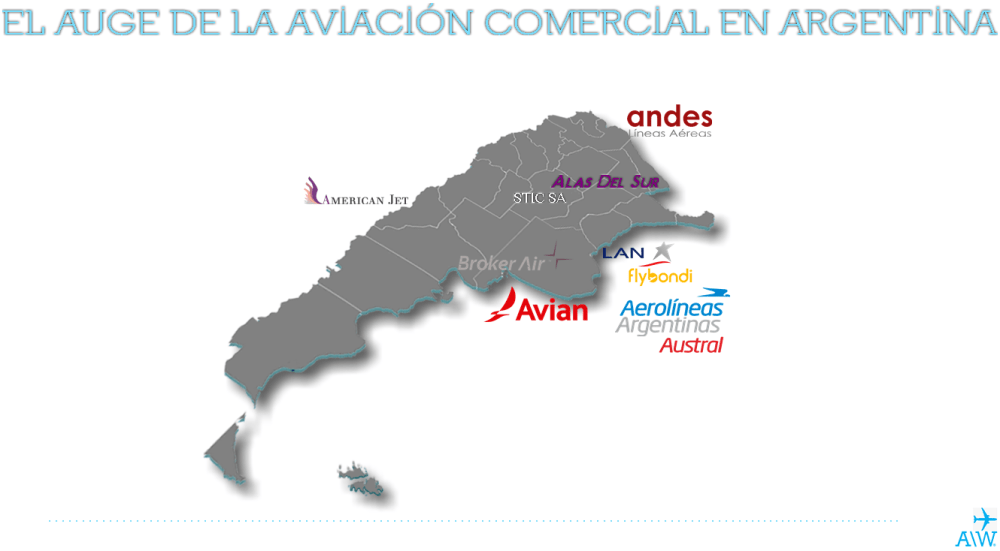
Tal como ya había anunciado el presidente Mauricio Macri semanas atrás, las compañías que podrán operar en la Argentina durante los próximos 15 años son American Jet, Andes y Alas del Sur, mientras que los pedidos realizados por Avianca y Fly Bondi no prosperaron.

En los fundamentos de las resoluciones 136-E/2017, 137-E/2017 y 138-E/2017 del Ministerio de Trasporte, la administración nacional manifiesta que «se considera conveniente, necesaria y de evidente utilidad general la incorporación de un transportador de nuestro país para explotar servicios de transporte aéreo internacional hacia los destinos propuestos, con el fin de incrementar las operaciones que permitan aprovechar también el flujo de esos pasajeros en el ámbito interno».

«En el mismo sentido, ello posibilitará una mayor oferta de capacidad por parte de transportadores argentinos en las rutas regionales, en las que en general existe capacidad disponible para nuestro país», se lee en los argumentos de los tres textos que llevan la firma del ministro Guillermo Dietrich.

A su vez, el Gobierno advierte que «en los casos en que existan limitaciones en materia de capacidad o de derechos de tráfico de quinta libertad con los países involucrados y/o que las rutas regionales solicitadas se encuentren concedidas a otros transportadores aéreos, deberán actualizarse los marcos bilaterales vigentes y aplicarse el régimen de asignación de capacidad y/o frecuencias vigente».

«En consecuencia, los servicios de transporte aéreo que se conceden, estarán condicionados a la eventual obtención de los derechos de tráfico y/o de la capacidad que tornen factible la operatoria proyectada por la empresa, en los términos del Artículo 10 de la Ley N° 19.030 de Política Nacional de Transporte Aéreo Comercial», completa.

AndesAndes Líneas Aéreas

Realizará las prestaciones con cinco aeronaves Mc Donnell Douglas MD-83 con una capacidad de 185 pasajeros, con autonomía extendida para operar vuelos chárter de larga distancia, e incrementará próximamente su flota con dos aeronaves Boeing B737-800, llegando en un futuro a un total de 12 aeronaves.

Andes New-look -001

Rutas aprobadas:

BUENOS AIRES – ROSARIO (Provincia de SANTA FE) – RESISTENCIA (Provincia del CHACO) – POSADAS (Provincia de MISIONES) – PUERTO IGUAZÚ (Provincia de MISIONES) y viceversa.
BUENOS AIRES – SAN MIGUEL DE TUCUMÁN (Provincia de TUCUMÁN) – SANTIAGO DEL ESTERO (Provincia de SANTIAGO DEL ESTERO) – SALTA (Provincia de SALTA) – SAN SALVADOR DE JUJUY (Provincia de JUJUY) y viceversa.
BUENOS AIRES – CÓRDOBA (Provincia de CÓRDOBA) – MENDOZA (Provincia de MENDOZA) – NEUQUÉN (Provincia del NEUQUÉN) – SAN CARLOS DE BARILOCHE (Provincia de RÍO NEGRO) y viceversa.
BUENOS AIRES – PUERTO MADRYN (Provincia del CHUBUT) – COMODORO RIVADAVIA (Provincia del CHUBUT) – EL CALAFATE (Provincia de SANTA CRUZ) – USHUAIA (Provincia de TIERRA DEL FUEGO, ANTÁRTIDA E ISLAS DEL ATLÁNTICO SUR) y viceversa.
BUENOS AIRES (REPÚBLICA ARGENTINA) – CÓRDOBA (Provincia de CÓRDOBA – REPÚBLICA ARGENTINA) – SANTIAGO DE CHILE (REPÚBLICA DE CHILE) y viceversa.
BUENOS AIRES (REPÚBLICA ARGENTINA) – CÓRDOBA (Provincia de CÓRDOBA – REPÚBLICA ARGENTINA) – LIMA (REPÚBLICA DEL PERÚ) y viceversa.
BUENOS AIRES (REPÚBLICA ARGENTINA) – CÓRDOBA (Provincia de CÓRDOBA – REPÚBLICA ARGENTINA) – SAN PABLO (REPÚBLICA FEDERATIVA DEL BRASIL).

Resultado de imagen para Alas del Sur  logoAlas del Sur Líneas Aéreas

Propone llevar a cabo los servicios en las rutas internas inicialmente con el mismo tipo de aeronave indicado en el considerando anterior y prevé adicionar nuevos equipos en la medida en que incorpore rutas y frecuencias hasta completar la totalidad de las solicitadas, llegando a utilizar aeronaves del tipo Boeing 777 con capacidad para 500 pasajeros.

https://i0.wp.com/www.sirchandler.com.ar/wp-content/uploads/2016/10/alas-del-sur-777.jpg?resize=700%2C290

Rutas aprobadas:

CÓRDOBA (Provincia de CÓRDOBA) – BUENOS AIRES – ROSARIO (Provincia de SANTA FE) y viceversa.
CÓRDOBA (Provincia de CÓRDOBA) – BUENOS AIRES – TRELEW (Provincia del CHUBUT) – PUERTO MADRYN (Provincia del CHUBUT) – SAN CARLOS DE BARILOCHE (Provincia de RÍO NEGRO) – NEUQUÉN (Provincia del NEUQUÉN) – EL CALAFATE (Provincia de SANTA CRUZ) – USHUAIA (Provincia de TIERRA DEL FUEGO, ANTÁRTIDA E ISLAS DEL ATLÁNTICO SUR) y viceversa.
CÓRDOBA (Provincia de CÓRDOBA) – BUENOS AIRES – VILLA GESELL (Provincia de BUENOS AIRES) – MAR DEL PLATA (Provincia de BUENOS AIRES) – BAHÍA BLANCA (Provincia de BUENOS AIRES) – TRELEW (Provincia del CHUBUT) – COMODORO RIVADAVIA (Provincia del CHUBUT) – RÍO GALLEGOS (Provincia de SANTA CRUZ) – RÍO GRANDE (Provincia de TIERRA DEL FUEGO, ANTÁRTIDA E ISLAS DEL ATLÁNTICO SUR) – USHUAIA (Provincia de TIERRA DEL FUEGO, ANTÁRTIDA E ISLAS DEL ATLÁNTICO SUR) y viceversa.
CÓRDOBA (Provincia de CÓRDOBA) – BUENOS AIRES – NEUQUÉN (Provincia del NEUQUÉN) – SAN MARTÍN DE LOS ANDES (Provincia del NEUQUÉN) – ESQUEL (Provincia del CHUBUT) y viceversa.
CÓRDOBA (Provincia de CÓRDOBA) – BUENOS AIRES – RÍO CUARTO (Provincia de CÓRDOBA) – SAN LUIS (Provincia de SAN LUIS) – MENDOZA (Provincia de MENDOZA) – SAN MIGUEL DE TUCUMÁN (Provincia de TUCUMÁN) – SALTA (Provincia de SALTA) – SAN SALVADOR DE JUJUY (Provincia de JUJUY) y viceversa.
CÓRDOBA (Provincia de CÓRDOBA) – MENDOZA (Provincia de MENDOZA) – NEUQUÉN (Provincia del NEUQUÉN) – TRELEW (Provincia del CHUBUT) – COMODORO RIVADAVIA (Provincia del CHUBUT) – RÍO GALLEGOS (Provincia de SANTA CRUZ) – RÍO GRANDE (Provincia de TIERRA DEL FUEGO, ANTÁRTIDA E ISLAS DEL ATLÁNTICO SUR) y viceversa.
CÓRDOBA (Provincia de CÓRDOBA) – BUENOS AIRES – MENDOZA (Provincia de MENDOZA) – SAN RAFAEL (Provincia de MENDOZA) – SAN JUAN (Provincia de SAN JUAN) – LA RIOJA (Provincia de LA RIOJA) – SAN FERNANDO DEL VALLE DE CATAMARCA (Provincia de CATAMARCA) – SANTIAGO DEL ESTERO (Provincia de SANTIAGO DEL ESTERO) y viceversa.
CÓRDOBA (Provincia de CÓRDOBA) – BUENOS AIRES – BAHÍA BLANCA (Provincia de BUENOS AIRES) – SANTA ROSA (Provincia de LA PAMPA) – VIEDMA (Provincia de RÍO NEGRO) y viceversa.
CÓRDOBA (Provincia de CÓRDOBA) – BUENOS AIRES – SANTA FE (Provincia de SANTA FE) – POSADAS (Provincia de MISIONES) – PUERTO IGUAZÚ (Provincia de MISIONES) y viceversa.
SALTA (Provincia de SALTA) – PUERTO IGUAZÚ (Provincia de MISIONES) – EL CALAFATE (Provincia de SANTA CRUZ) – SAN CARLOS DE BARILOCHE (Provincia de RÍO NEGRO) – CÓRDOBA (Provincia de CÓRDOBA) y viceversa.
CÓRDOBA (Provincia de CÓRDOBA) – BUENOS AIRES – CORRIENTES (Provincia de CORRIENTES) – RESISTENCIA (Provincia del CHACO) – FORMOSA (Provincia de FORMOSA) y viceversa.
SALTA (Provincia de SALTA) – SAN SALVADOR DE JUJUY (Provincia de JUJUY) – SAN FERNANDO DEL VALLE DE CATAMARCA (Provincia de CATAMARCA) – SAN JUAN (Provincia de SAN JUAN) – MENDOZA (Provincia de MENDOZA) – CÓRDOBA (Provincia de CÓRDOBA) – NEUQUÉN (Provincia del NEUQUÉN) – PERITO MORENO (Provincia de SANTA CRUZ) y viceversa.
CÓRDOBA (Provincia de CÓRDOBA – REPÚBLICA ARGENTINA) – SALTA (Provincia de SALTA – REPÚBLICA ARGENTINA) – SANTA CRUZ DE LA SIERRA (ESTADO PLURINACIONAL DE BOLIVIA) y viceversa.
CÓRDOBA (Provincia de CÓRDOBA – REPÚBLICA ARGENTINA) – BUENOS AIRES (REPÚBLICA ARGENTINA) – ROSARIO (Provincia de SANTA FE – REPÚBLICA ARGENTINA) – PORTO ALEGRE (REPÚBLICA FEDERATIVA DEL BRASIL) – SAN PABLO (REPÚBLICA FEDERATIVA DEL BRASIL) – RÍO DE JANEIRO (REPÚBLICA FEDERATIVA DEL BRASIL) y viceversa.
CÓRDOBA (Provincia de CÓRDOBA – REPÚBLICA ARGENTINA) – BUENOS AIRES (REPÚBLICA ARGENTINA) – ROSARIO (Provincia de SANTA FE – REPÚBLICA ARGENTINA) – LIMA (REPÚBLICA DEL PERÚ) – MIAMI (ESTADOS UNIDOS DE AMÉRICA) y viceversa.
CÓRDOBA (Provincia de CÓRDOBA – REPÚBLICA ARGENTINA) – BUENOS AIRES (REPÚBLICA ARGENTINA) – ROSARIO (Provincia de SANTA FE – REPÚBLICA ARGENTINA) – ASUNCIÓN DEL PARAGUAY (REPÚBLICA DEL PARAGUAY) – MIAMI (ESTADOS UNIDOS DE AMÉRICA) y viceversa.
CÓRDOBA (Provincia de CÓRDOBA – REPÚBLICA ARGENTINA) – BUENOS AIRES (REPÚBLICA ARGENTINA) – ROSARIO (Provincia de SANTA FE – REPÚBLICA ARGENTINA) – SANTA CRUZ DE LA SIERRA (ESTADO PLURINACIONAL DE BOLIVIA) y viceversa.
CÓRDOBA (Provincia de CÓRDOBA – REPÚBLICA ARGENTINA) – BUENOS AIRES (REPÚBLICA ARGENTINA) – ROSARIO (Provincia de SANTA FE – REPÚBLICA ARGENTINA) – SANTIAGO DE CHILE (REPÚBLICA DE CHILE) – MIAMI (ESTADOS UNIDOS DE AMÉRICA) y viceversa.
CÓRDOBA (Provincia de CÓRDOBA – REPÚBLICA ARGENTINA) – BUENOS AIRES (REPÚBLICA ARGENTINA) – ROSARIO (Provincia de SANTA FE – REPÚBLICA ARGENTINA) – MONTEVIDEO (REPÚBLICA ORIENTAL DEL URUGUAY) – PUNTA DEL ESTE (REPÚBLICA ORIENTAL DEL URUGUAY) y viceversa.
CÓRDOBA (Provincia de CÓRDOBA – REPÚBLICA ARGENTINA) – BUENOS AIRES (REPÚBLICA ARGENTINA) – LOS ÁNGELES (ESTADOS UNIDOS DE AMÉRICA) – SHANGHÁI (REPÚBLICA POPULAR CHINA) y viceversa.
CÓRDOBA (Provincia de CÓRDOBA – REPÚBLICA ARGENTINA) – BUENOS AIRES (REPÚBLICA ARGENTINA) – ROMA (REPÚBLICA ITALIANA) y viceversa.

Resultado de imagen para American Jet  logoAmerican Jet

Cuenta en la actualidad con cinco aeronaves con capacidad máxima autorizada de 50 asientos y prevé incorporar a su flota equipos de gran porte con configuración de hasta 350 asientos.

https://pbs.twimg.com/media/Crc2G5PWEAAJZ34.jpg

Rutas aprobadas:

NEUQUÉN (Provincia del NEUQUÉN) – COMODORO RIVADAVIA (Provincia del CHUBUT) – RÍO GALLEGOS (Provincia de SANTA CRUZ) – EL CALAFATE (Provincia de SANTA CRUZ) – RÍO GRANDE (Provincia de TIERRA DEL FUEGO, ANTÁRTIDA E ISLAS DEL ATLÁNTICO SUR) – USHUAIA (Provincia de TIERRA DEL FUEGO, ANTÁRTIDA E ISLAS DEL ATLÁNTICO SUR) y viceversa.
NEUQUÉN (Provincia del NEUQUÉN) – COMODORO RIVADAVIA (Provincia del CHUBUT) – ISLAS MALVINAS (Provincia de TIERRA DEL FUEGO, ANTÁRTIDA E ISLAS DEL ATLÁNTICO SUR) y viceversa.
NEUQUÉN (Provincia del NEUQUÉN – REPÚBLICA ARGENTINA) – TEMUCO (REPÚBLICA DE CHILE) – SANTIAGO DE CHILE (REPÚBLICA DE CHILE) y viceversa.
NEUQUÉN (Provincia del NEUQUÉN – REPÚBLICA ARGENTINA) – COMODORO RIVADAVIA (Provincia del CHUBUT – REPÚBLICA ARGENTINA) – RÍO GALLEGOS (Provincia de SANTA CRUZ – REPÚBLICA ARGENTINA) – PUNTA ARENAS (REPÚBLICA DE CHILE) y viceversa.
NEUQUÉN (Provincia del NEUQUÉN – REPÚBLICA ARGENTINA) – MALARGÜE (Provincia de MENDOZA – REPÚBLICA ARGENTINA) – MENDOZA (Provincia de MENDOZA – REPÚBLICA ARGENTINA) – SAN MIGUEL DE TUCUMÁN (Provincia de TUCUMÁN – REPÚBLICA ARGENTINA) – SALTA (Provincia de SALTA – REPÚBLICA ARGENTINA) – TARIJA (ESTADO PLURINACIONAL DE BOLIVIA) y viceversa.
NEUQUÉN (Provincia del NEUQUÉN – REPÚBLICA ARGENTINA) – CÓRDOBA (Provincia de CÓRDOBA – REPÚBLICA ARGENTINA) – SAN MIGUEL DE TUCUMÁN (Provincia de TUCUMÁN – REPÚBLICA ARGENTINA) – SANTA CRUZ DE LA SIERRA (ESTADO PLURINACIONAL DE BOLIVIA) y viceversa.
NEUQUÉN (Provincia del NEUQUÉN – REPÚBLICA ARGENTINA) – CÓRDOBA (Provincia de CÓRDOBA – REPÚBLICA ARGENTINA) – RESISTENCIA (Provincia del CHACO – REPÚBLICA ARGENTINA) – ASUNCIÓN DEL PARAGUAY (REPÚBLICA DEL PARAGUAY) y viceversa.
NEUQUÉN (Provincia del NEUQUÉN) – ROSARIO (Provincia de SANTA FE) – PUERTO IGUAZÚ (Provincia de MISIONES) y viceversa.
NEUQUÉN (Provincia del NEUQUÉN – REPÚBLICA ARGENTINA) – ROSARIO (Provincia de SANTA FE – REPÚBLICA ARGENTINA) – BUENOS AIRES (AEROPARQUE JORGE NEWBERY – REPÚBLICA ARGENTINA) – PUNTA DEL ESTE (REPÚBLICA ORIENTAL DEL URUGUAY) y viceversa.
NEUQUÉN (Provincia del NEUQUÉN) – BAHÍA BLANCA (Provincia de BUENOS AIRES) – MAR DEL PLATA (Provincia de BUENOS AIRES) – BUENOS AIRES y viceversa.
NEUQUÉN (Provincia del NEUQUÉN – REPÚBLICA ARGENTINA) – CÓRDOBA (Provincia de CÓRDOBA – REPÚBLICA ARGENTINA) – ROSARIO (Provincia de SANTA FE – REPÚBLICA ARGENTINA) – PORTO ALEGRE (REPÚBLICA FEDERATIVA DEL BRASIL) y viceversa.
NEUQUÉN (Provincia del NEUQUÉN) – SANTA ROSA (Provincia de LA PAMPA) – BUENOS AIRES y viceversa; y NEUQUÉN (Provincia del NEUQUÉN) – SAN CARLOS DE BARILOCHE (Provincia de RÍO NEGRO) – EL CALAFATE (Provincia de SANTA CRUZ) – USHUAIA (Provincia de TIERRA DEL FUEGO, ANTÁRTIDA E ISLAS DEL ATLÁNTICO SUR) y viceversa.

Lucho Pereira-Esoslugares.com

En tanto las compañías aéreas como Aerolíneas Argentinas, Austral Líneas Aéreas, LATAM Airlines, entre otras tendrán que adecuarse al nuevo escenario del mercado de la aviación comercial en Argentina.

El mercado de las low cost ha traído pros y contras, pero es importante que tanto el gobierno como las líneas aéreas desempeñen el papel correspondiente para poder disfrutar de ventajas competitivas que favorezcan al pasajero, algo que los argentinos todavía no conocemos y que ahora con la apertura aerocomercial podamos tener la posibilidad de volar más y mejor.airgways-icon-aw

AW-7013737

Argentina officialized the concession of air routes

With the signing of three resolutions that were published this Friday in the Official Gazette, the government made official the granting of routes to three airlines

As President Mauricio Macri announced earlier this year, the companies that will be able to operate in Argentina for the next 15 years are American Jet, Andes Líneas Aéreas and Alas del Sur, while orders placed by Avianca and Fly Bondi did not prosper.

On the basis of Ministerial Orders 136-E / 2017, 137-E / 2017 and 138-E / 2017, the national administration states that «the incorporation of a Our country to exploit international air transport services to the proposed destinations, in order to increase the operations that allow to take advantage of the flow of those passengers in the domestic environment».

«In the same sense, this will enable a greater supply of capacity on the part of Argentinean transporters in the regional routes, in which there is generally available capacity for our country,» reads the arguments of the three texts that carry the signature of the Minister William Dietrich.

At the same time, the Government warns that «in cases where there are limitations on capacity or fifth-freedom traffic rights with the countries involved and / or that the requested regional routes are granted to other air carriers, they must be updated The existing bilateral frameworks and apply the current allocation regime and / or frequency «.

«Consequently, the air transport services that are granted will be conditioned to the eventual attainment of the traffic rights and / or the capacity that make feasible the operations projected by the company, under the terms of Article 10 of Law N No. 19,030 of the National Commercial Air Transport Policy», he added.

Andes

Andes Líneas Aéreas

It will deliver five Mc Donnell Douglas MD-83 aircraft with a capacity of 185 passengers, with extended autonomy to operate long-distance charter flights, and will soon increase its fleet with two Boeing B737-800 aircraft, arriving in the future in a total of 12 aircraft.

lv-bth-andes-lneas-areas-MD-83 Andrés Aliotta

Approved Routes:

BUENOS AIRES – ROSARIO (PROVINCE OF SANTA FE) – RESISTANCE (Province of CHACO) – POSADAS (Province of MISIONES) – PUERTO IGUAZÚ (Province of MISIONES) and viceversa.
BUENOS AIRES – SAN MIGUEL DE TUCUMÁN (Province of TUCUMÁN) – SANTIAGO DEL ESTERO (Province of SANTIAGO DEL ESTERO) – SALTA (Province of SALTA) – SAN SALVADOR DE JUJUY (Province of JUJUY) and viceversa.
BUENOS AIRES – CÓRDOBA (Province of CÓRDOBA) – MENDOZA (Province of MENDOZA) – NEUQUÉN (Province of NEUQUÉN) – SAN CARLOS DE BARILOCHE (Province of RIO NEGRO) and viceversa.
BUENOS AIRES – PUERTO MADRYN (CHUBUT PROVINCE) – COMODORO RIVADAVIA (Province of CHUBUT) – EL CALAFATE (Province of SANTA CRUZ) – USHUAIA (Province of FIERCE, ANTARCTICA and ISLANDS OF THE SOUTH ATLANTIC) and viceversa.
BUENOS AIRES (ARGENTINE REPUBLIC) – CÓRDOBA (Province of CÓRDOBA – ARGENTINE REPUBLIC) – SANTIAGO DE CHILE (REPUBLIC OF CHILE) and viceversa.
BUENOS AIRES (ARGENTINE REPUBLIC) – CÓRDOBA (Province of CÓRDOBA – ARGENTINE REPUBLIC) – LIMA (REPUBLIC OF PERU) and viceversa.
BUENOS AIRES (ARGENTINE REPUBLIC) – CÓRDOBA (Province of CÓRDOBA – ARGENTINE REPUBLIC) – SAN PABLO (FEDERATIVE REPUBLIC OF BRAZIL).

Resultado de imagen para Alas del Sur  logo

Alas del Sur Líneas Aéreas

It proposes to carry out the services on the internal routes initially with the same type of aircraft indicated in the previous recital and foresees to add new equipment to the extent that it incorporates routes and frequencies until completing all the requested ones, arriving at using aircraft of the type Boeing B777 with capacity for 500 passengers.

Approved Routes:

CORDOBA (Province of CÓRDOBA) – BUENOS AIRES – ROSARIO (Province of SANTA FE) and viceversa.
CÓRDOBA (Provincia de CÓRDOBA) – BUENOS AIRES – TRELEW (Provincia del CHUBUT) – PUERTO MADRYN (Provincia del CHUBUT) – SAN CARLOS DE BARILOCHE (Provincia de RÍO NEGRO) – NEUQUÉN (Provincia del NEUQUÉN) – EL CALAFATE (Provincia de SANTA CRUZ) – USHUAIA (Provincia de TIERRA DEL FUEGO, ANTÁRTIDA E ISLAS DEL ATLÁNTICO SUR) y viceversa.
BUENOS AIRES PROVINCE BUENOS AIRES PROVINCE BUENOS AIRES PROVINCE BUENOS AIRES PROVINCE BUENOS AIRES PROVINCE BUENOS AIRES PROVINCE BUENOS AIRES PROVINCE BUENOS AIRES PROVINCE BUENOS AIRES PROVINCE Of CHUBUT) – RIO GALLEGOS (Province of SANTA CRUZ) – RÍO GRANDE (Province of Tierra del Fuego, Antarctica and South Atlantic Islands) – USHUAIA (Province of Tierra del Fuego, Antarctica and South Atlantic islands) and vice versa.
CORDOBA (Province of CÓRDOBA) – BUENOS AIRES – NEUQUÉN (Province of NEUQUÉN) – SAN MARTÍN DE LOS ANDES (Province of NEUQUÉN) – ESQUEL (Province of CHUBUT) and viceversa.
CORDOBA (Province of CÓRDOBA) – BUENOS AIRES – RÍO CUARTO (Province of CÓRDOBA) – SAN LUIS (Province of SAN LUIS) – MENDOZA (Province of MENDOZA) – SAN MIGUEL DE TUCUMÁN (Province of TUCUMÁN) – SALTA ) – SAN SALVADOR DE JUJUY (Province of JUJUY) and viceversa.
CÓRDOBA (Province of CÓRDOBA) – MENDOZA (Province of MENDOZA) – NEUQUÉN (Province of NEUQUÉN) – TRELEW (Province of CHUBUT) – COMODORO RIVADAVIA (Province of CHUBUT) – RIO GALLEGOS (Province of SANTA CRUZ) – RIO GRANDE Of Tierra del Fuego, Antarctica and South Atlantic Islands) and viceversa.
SAN RAFAEL (PROVINCE OF MENDOZA) – SAN JUAN (Province of SAN JUAN) – LA RIOJA (Province of LA RIOJA) – SAN FERNANDO DEL VALLE DE CATAMARCA (Province of CATAMARCA) – SANTIAGO DEL ESTERO (Province of SANTIAGO DEL ESTERO) and viceversa.
CORDOBA (Province of CÓRDOBA) – BUENOS AIRES – BAHÍA BLANCA (Province of BUENOS AIRES) – SANTA ROSA (Province of LA PAMPA) – VIEDMA (Province of RIO NEGRO) and viceversa.
CORDOBA (Province of CÓRDOBA) – BUENOS AIRES – SANTA FE (Province of SANTA FE) – POSADAS (Province of MISIONES) – PUERTO IGUAZÚ (Province of MISIONES) and viceversa.
-SALTA (Province of SALTA) – PUERTO IGUAZÚ (Province of MISIONES) – EL CALAFATE (Province of SANTA CRUZ) – SAN CARLOS DE BARILOCHE (Province of RÍO NEGRO) – CÓRDOBA (Province of CÓRDOBA) and viceversa.
CORDOBA (Province of CÓRDOBA) – BUENOS AIRES – CORRIENTES (Province of CORRIENTES) – RESISTENCIA (Province of CHACO) – FORMOSA (Province of FORMOSA) and viceversa.
SALTA (Province of SALTA) – SAN SALVADOR DE JUJUY (Province of JUJUY) – SAN FERNANDO DEL CATLEARCA (Province of CATAMARCA) – SAN JUAN (Province of SAN JUAN) – MENDOZA (Province of MENDOZA) – CÓRDOBA CÓRDOBA) – NEUQUÉN (Province of NEUQUÉN) – PERITO MORENO (Province of SANTA CRUZ) and viceversa.
CORDOBA (Province of CÓRDOBA – ARGENTINE REPUBLIC) – SALTA (Province of SALTA – ARGENTINE REPUBLIC) – SANTA CRUZ DE LA SIERRA (PLURINATIONAL STATE OF BOLIVIA) and viceversa.
CÓRDOBA (Province of CÓRDOBA – ARGENTINE REPUBLIC) – BUENOS AIRES (ARGENTINE REPUBLIC) – ROSARIO (Province of SANTA FE – ARGENTINE REPUBLIC) – PORTO ALEGRE (FEDERATIVE REPUBLIC OF BRAZIL) – SAN PABLO (FEDERATIVE REPUBLIC OF BRAZIL) – RIO DE JANEIRO (FEDERATIVE REPUBLIC OF BRAZIL) and viceversa.
CORDOBA (Province of CÓRDOBA – ARGENTINE REPUBLIC) – BUENOS AIRES (ARGENTINE REPUBLIC) – ROSARIO (Province of SANTA FE – ARGENTINE REPUBLIC) – LIMA (REPUBLIC OF PERU) – MIAMI (UNITED STATES OF AMERICA) and viceversa.
CORDOBA (Province of CÓRDOBA – ARGENTINE REPUBLIC) – BUENOS AIRES (ARGENTINE REPUBLIC) – ROSARIO (Province of SANTA FE – ARGENTINA REPUBLIC) – ASSUMPTION OF PARAGUAY (REPUBLIC OF PARAGUAY) – MIAMI (UNITED STATES OF AMERICA) and viceversa.
CORDOBA (Province of CÓRDOBA – ARGENTINE REPUBLIC) – BUENOS AIRES (ARGENTINE REPUBLIC) – ROSARIO (Province of SANTA FE – ARGENTINE REPUBLIC) – SANTA CRUZ DE LA SIERRA (PLURINATIONAL STATE OF BOLIVIA) and viceversa.
CORDOBA (Province of CÓRDOBA – ARGENTINE REPUBLIC) – BUENOS AIRES (ARGENTINE REPUBLIC) – ROSARIO (Province of SANTA FE – ARGENTINE REPUBLIC) – SANTIAGO DE CHILE (REPUBLIC OF CHILE) – MIAMI (UNITED STATES OF AMERICA) and viceversa.
CORDOBA (Province of CÓRDOBA – ARGENTINE REPUBLIC) – BUENOS AIRES (ARGENTINE REPUBLIC) – ROSARIO (Province of SANTA FE – ARGENTINE REPUBLIC) – MONTEVIDEO (EASTERN REPUBLIC OF URUGUAY) – PUNTA DEL ESTE (EASTERN REPUBLIC OF URUGUAY) and viceversa.
CORDOBA (Province of CÓRDOBA – ARGENTINE REPUBLIC) – BUENOS AIRES (ARGENTINA REPUBLIC) – LOS ANGELES (UNITED STATES OF AMERICA) – SHANGHAI (PEOPLE’S REPUBLIC OF CHINA) and viceversa.
CORDOBA (Province of CÓRDOBA – ARGENTINE REPUBLIC) – BUENOS AIRES (ARGENTINE REPUBLIC) – ROME (ITALIAN REPUBLIC) and viceversa.

Resultado de imagen para American Jet  logoAmerican Jet

It currently has five aircraft with a maximum authorized seating capacity of 50 seats and plans to incorporate to its fleet large equipment with configuration of up to 350 seats.

https://i.ytimg.com/vi/Sc-9hBE-JIQ/maxresdefault.jpg

Approved Routes:


NEUQUÉN (PROVINCE OF NEUQUÉN) – COMODORO RIVADAVIA (CHUBUT PROVINCE) – RIO GALLEGOS (Province of SANTA CRUZ) – EL CALAFATE (Province of SANTA CRUZ) – RIO GRANDE (Province of Tierra del Fuego, ANTARTIDE AND ISLANDS OF THE SOUTH ATLANTIC) – USHUAIA (Province of Tierra del Fuego, Antarctica and South Atlantic islands) and viceversa.
NEUQUÉN (Province of NEUQUÉN) – COMODORO RIVADAVIA (Province of CHUBUT) – MALVINAS ISLANDS (Province of FIERCE, ANTARCTICA and ISLANDS OF THE SOUTH ATLANTIC) and viceversa.
NEUQUÉN (Province of NEUQUÉN – ARGENTINE REPUBLIC) – TEMUCO (REPUBLIC OF CHILE) – SANTIAGO DE CHILE (REPUBLIC OF CHILE) and viceversa.
COMODORO RIVADAVIA (Province of CHUBUT – ARGENTINE REPUBLIC) – GALLEGOS RIVER (SANTA CRUZ PROVINCE – ARGENTINA REPUBLIC) – PUNTA ARENAS (REPUBLIC OF CHILE) and vice versa – NUOVA (Province of NEUQUÉN – ARGENTINE REPUBLIC) – COMODORO RIVADAVIA (Province of CHUBUT – ARGENTINE REPUBLIC)
(PROVINCE OF SALTA – PROVINCE OF SALTA – PROVINCE OF SALVADOR – PROVINCE OF SALTA – PROVINCE OF SALTA – PROVINCE OF SALTA – PROVINCE OF SALTA – PROVINCE OF SALTA – PROVINCE OF SALTA – ARGENTINE REPUBLIC) – TARIJA (PLURINATIONAL STATE OF BOLIVIA) and viceversa.
SAN MIGUEL DE TUCUMÁN (Province of TUCUMÁN – ARGENTINE REPUBLIC) – SANTA CRUZ DE LA SIERRA (PLURINATIONAL STATE OF BOLIVIA) and vice versa – NUOVA (Province of NEUQUÉN – ARGENTINE REPUBLIC) – CÓRDOBA (Province of CÓRDOBA – ARGENTINE REPUBLIC)
NEUQUÉN (Province of NEUQUÉN – ARGENTINE REPUBLIC) – CÓRDOBA (Province of CÓRDOBA – ARGENTINE REPUBLIC) – RESISTANCE (Province of CHACO – ARGENTINE REPUBLIC) – ASSUMPTION OF PARAGUAY (REPUBLIC OF PARAGUAY) and viceversa.
NEUQUÉN (Province of NEUQUÉN) – ROSARIO (Province of SANTA FE) – PUERTO IGUAZÚ (Province of MISIONES) and viceversa.
NEUQUÉN (Province of NEUQUÉN – ARGENTINE REPUBLIC) – ROSARIO (Province of SANTA FE – ARGENTINE REPUBLIC) – BUENOS AIRES (AEROPARQUE JORGE NEWBERY – ARGENTINE REPUBLIC) – PUNTA DEL ESTE (ORIENTAL REPUBLIC OF URUGUAY) and viceversa.
NEUQUÉN (Province of NEUQUÉN) – BAHÍA BLANCA (Province of BUENOS AIRES) – MAR DEL PLATA (Province of BUENOS AIRES) – BUENOS AIRES and viceversa.
NEUQUÉN (Province of NEUQUÉN – ARGENTINE REPUBLIC) – CÓRDOBA (Province of CÓRDOBA – ARGENTINE REPUBLIC) – ROSARIO (Province of SANTA FE – ARGENTINE REPUBLIC) – PORTO ALEGRE (FEDERATIVE REPUBLIC OF BRAZIL) and viceversa.
NEUQUÉN (Province of NEUQUÉN) – SANTA ROSA (Province of LA PAMPA) – BUENOS AIRES and vice versa; And NEUQUÉN (Province of NEUQUÉN) – SAN CARLOS DE BARILOCHE (Province of RÍO NEGRO) – EL CALAFATE (Province of SANTA CRUZ) – USHUAIA (Province of Tierra del Fuego, ANTARTIDA AND ISLANDS OF THE SOUTH ATLANTIC) and viceversa. 

Aeroparque-Jorge-Newbery-Plataforma-de-noche- Eduardo Guiménez Mazó

While airlines such as Aerolíneas Argentinas, Austral Líneas Aéreas, LATAM Airlines, among others, will have to adapt to the new scenario of the commercial aviation market in Argentina.

The low cost market has brought pros and cons, but it is important that both government and airlines play the corresponding role in order to enjoy competitive advantages that favor the passenger, something that Argentines still do not know and now with the Open air commercial we can have the possibility to fly more and better. A\W


Ξ A I R G W A Y S Ξ
SOURCE: Infobae.com
DBk: Airgways / Andesonline.com / Alas del Sur / Ytimg.com / Matías Rivero / E. Guiménez Mazó / Lucho Pereira / Andrés Aliotta
AW-POST: 201703171107AR

A\W   A I R G W A Y S ®

Adjudican hoy 135 rutas a las aerolíneas low-cost en Argentina

https://i.ytimg.com/vi/GDdf9o5ShsY/maxresdefault.jpg

AW | 2017 03 06 05:23 | AIRLINES MARKET

 El Gobierno argentino anunciará esta tarde la autorización de las rutas aéreas pedidas por la firma Avian y otras cuatro compañías, luego de la controversia que se generó por un presunto nuevo conflicto de intereses entre el Estado y los negocios de la familia del Presidente. Mac Air -la empresa del grupo Macri- fue transferida a Avianca el año pasado y Carlos Colunga -hombre de confianza de Franco Macri- se mantuvo en el directorio, lo que desencadenó las denuncias y el fiscal federal Jorge Di Lello inició una investigación penal contra Mauricio Macri y el ministro de Transporte, Guillermo Dietrich.

Con un acto en la Casa Rosada, el Gobierno avalará en su mayor parte la recomendación de la Administración Nacional de Aviación Civil (ANAC) de autorizar 135 nuevas rutas áreas a cinco compañías: 16 a Avian y el resto a Fly Bondi, American Jet, Alas del Sur y Andes. “Habrá algunos pequeños cambios, pero básicamente se mantendrá el dictamen de la Junta Asesora del Transporte Aéreo (JATA). Es un proceso transparente, no hay nada que ocultar”, dijo a Clarín un funcionario, pese al hermetismo por adelantar detalles del anuncio. Habrá objeciones para Fly Bondi, por no haber presentado algunas garantías de capacidad técnica, y Avian tendrá el camino despejado. Fly Bondi también había levantado polémica por el vínculo de Richard Ruy Gluzman -uno de sus propietarios- con Mario Quintana: el empresario integró directorios de empresas con el funcionario, entre ellas el fondo de inversión Pegasus. Las denuncias advirtieron sobre el eventual perjuicio que provocará a Aerolíneas Argentinas el ingreso de estas compañías.

A diferencia del acuerdo entre el Estado y el Correo Argentino, en el que el Presidente anunció que volvía a “fojas cero”, con este caso el Gobierno decidió avanzar con el objetivo de aventar las sospechas. “Avianca compró el 100% de Mac Air, no hay ningún familiar del Presidente vinculado y no le vamos a dar cabida a denuncias infundadas”, insistieron anoche desde el Gobierno. Ya el propio Dietrich había rechazado las acusaciones ante Clarín: “La familia Macri no tiene nada que ver con Avian. Que esté Colunga es anecdótico. En todas partes las empresas compran con el management”. Está previsto que el propio Presidente encabece el acto esta tarde, al que fueron invitados gobernadores, intendentes e integrantes de las Cámaras de turismo, con el objetivo de sumar respaldo. El anuncio estará enmarcado en el “plan integral” para potenciar el mercado de cabotaje y mejorar la conectividad, que incluirá la modernización de la infraestructura en 19 aeropuertos, la incorporación de tecnología y otras obras, con una inversión de 22 mil millones de pesos en los próximos tres años. La Empresa Argentina de Navegación Aérea (EANA), dependiente del ministerio de Transporte, difundió cifras en esa línea: indicó que en el primer bimestre de 2017 la oferta de vuelos en el mercado de cabotaje creció 9,8% respecto del mismo período de 2016 y 16,4% en relación con 2015, y que en esos dos meses Aerolíneas Argentinas transporto 785.000 pasajeros contra 742.000 en 2016 y 619.000 en 2015.

Las denuncias por supuesto fraude al Estado fueron presentadas por la ONG Fundación por la Paz y Cambio Climático y los diputados kirchneristas Rodolfo Taihlade y Juan Cabandié, y Di Lello imputó al Presidente y a Dietrich por los presuntos delitos de “asociación ilícita, negociaciones incompatibles con el ejercicio de la función pública, defraudación contra el Estado y tráfico de influencias” el último miércoles.

https://i.ytimg.com/vi/K8deSwTODZY/maxresdefault.jpg

135 routes adjudicate to low-cost airlines in Argentina


The argentine government will announce this afternoon the authorization of the air routes requested by Avian and four other companies, after the controversy that was generated by an alleged new conflict of interests between the State and the businesses of the family of the President. Mac Air – the company of the Macri group – was transferred to Avianca last year and Carlos Colunga – trusted man of Franco Macri – remained in the directory, which triggered the denunciations and the federal prosecutor Jorge Di Lello initiated a criminal investigation against Mauricio Macri and Transport Minister, Guillermo Dietrich.

With an act in the Casa Rosada, the Government will largely endorse the recommendation of the National Civil Aviation Administration (ANAC) to authorize 135 new routes to five companies: Avian 16 and the rest to Fly Bondi, American Jet, Alas del Sur and Andes. «There will be some minor changes, but basically the opinion of the Air Transport Advisory Board (JATA) will be maintained. It is a transparent process, there is nothing to hide,» an official told Clarin, despite the secrecy to advance details of the announcement. There will be objections for Fly Bondi, for not having presented some guarantees of technical capacity, and Avian will have the way cleared. Fly Bondi had also raised controversy over the link of Richard Ruy Gluzman – one of its owners – with Mario Quintana: the entrepreneur integrated company directories with the official, among them the Pegasus investment fund. The denunciations warned about the possible harm that will cause to Aerolíneas Argentinas the entrance of these companies.

Unlike the agreement between the State and the Argentine Post Office, in which the President announced that he was returning to «fojas cero», with this case the Government decided to move forward with the aim of stirring up suspicions. «Avianca bought 100% of Mac Air, there is no family of the President linked and we are not going to accommodate unfounded denunciations,» insisted last night from the Government. Already Dietrich himself had rejected the accusations against Clarín: «The Macri family has nothing to do with Avian. Colunga is anecdotal. Everywhere businesses buy from management. » It is expected that the President himself will head the event this afternoon, to which were invited governors, intendants and members of the chambers of tourism, with the aim of adding support. The announcement will be framed in the «integral plan» to boost the cabotage market and improve connectivity, which will include the modernization of infrastructure in 19 airports, the incorporation of technology and other works, with an investment of 22 billion pesos in The next three years. The Argentinean Air Navigation Company (EANA), under the Ministry of Transport, reported figures in this line: it indicated that in the first two months of 2017, the offer of flights in the cabotage market grew 9.8% over the same period of 2016 And 16.4% in relation to 2015, and that in those two months, Aerolíneas Argentinas transported 785,000 passengers, compared with 742,000 in 2016 and 619,000 in 2015.

The allegations of alleged State fraud were presented by the NGO Foundation for Peace and Climate Change and Kirchner MPs Rodolfo Taihlade and Juan Cabandié, and Di Lello accused the President and Dietrich of alleged crimes of «illicit association, negotiations incompatible with Exercise of the public function, defrauding against the State and traffic of influences» last Wednesday. A\W

Ξ A I R G W A Y S Ξ
SOURCE: Clarin.com
DBk: Ytimg.com
AW-POST: 201703050523AR

A\W   A I R G W A Y S ®

Argentina, la gran apertura aérea

imagen-068

AW | 2017 03 03 13:33 | AIRLINES MARKET

aw-icon-red-1000

La República Argentina por estos tiempos está experimentado una inclusión en el mercado doméstico, regional e internacional, lo que probablemente sea la mayor apertura de la aviación comercial en el plano mundial

El establecimiento de políticas y reglas claras para una competencia en Argentina ha permitido generar un «boom» de inversiones en el sector aéreo. Además, más líneas aéreas internacionales están interesadas llegar a argentina. Estas acciones están generando una reactivación del turismo y un mejoramiento en los sistemas de aeropuertos en el país.

El mercado argentino estaba dominado por Aerolíneas Argentinas / Austral y en menor porcentaje por Latam Airlines, donde las políticas de regresión y monopólicas atentaban todos los sectores de la aviación comercial. Ahora, con el otorgamiento de rutas de cabotaje e internacional de líneas aéreas tradicionales y low cost se amplía el abanico de posibilidades para el mercado de Argentina, por lo que se traduce en más beneficios desde lo profesional hasta las ventajas para el pasajero. Latinoamérica fue experimentando poco a poco el ingreso de más competidores, cuando Argentina era uno de los únicos países donde apenas existía una mejora en rutas y destinos servidos, como así las tarifas más compatitivas.

2828115

Desarrollo de más competencia

El ingreso de más competidores en el ámbito aéreo ha modificado las expectativas para todas las regiones de Argentina, lo que generaría más oportunidades para cada ciudadano, donde las posibilidades de volar desde una ciudad con poca demanda a ciudades importantes antes eran remotas, en la actualidad, la competitividad mejoraría las ofertas, y crearía otras nuevas.

aviation-argentina-new-companiesaw-700348

El ingreso de operadores extranjeros como Norwegian con un ambicioso plan de conecciones transatlánticas mejoraría la oferta y aumentaría la demanda hacia el viejo continente. Otro operador aéreo extranjero es Flybondi, que «ha tirado toda la carne al asador» que es la aerolínea que más destinos a solicitado tanto a nivel nacional como internacional. Air Nostrum, inversores españoles están interesados en fundar una nueva compañía llamada Flyest Líneas Aéreas, después de la malograda inversión en Sol Líneas Aéreas. Avianca, de la mano de Avianca Holding, detenta ingresar al mercado para obtener «una buena porción de la torta» del segmento aéreo argentino. Con menor estructura, están las líneas aéreas Broker Air de Buenos Aires y la firma puntana Stic S.A.

Otras compañías locales o con inversión mixta como Alas del Sur, prometen también revolucionar el sector aerocomercial con su base en Córdoba. Andes Líneas Aéreas, una compañía que está operando desde hace varios años, promete ampliar frecuencias y destinos desde Salta y Aeroparque. AmericanJet que desarrolla sus operaciones en la Provincia de Buenos Aires y la Provincia de Neuquén, también desea expandirse como operador doméstico y algunas rutas recionales. En tanto Aerolíneas Argentinas / Austral y LATAM Airlines generarán más frecuencias y mejoras en el servicio prestado tanto a nivel cabotaje como así también regional e internacional.

Este mes, el Ministerio de Transporte de la Nación terminará de dar el visto al otorgamiento de rutas aéreas, por lo que la «jaula» se abre y comenzará de manera irreversible la mayor apertura aerocomercial en Argentina y el mundo.  airgways-icon-aw

AW-0043227.png

Argentina, the commercial opening

The Argentine Republic in these times is experienced an inclusion in the domestic, regional and international market, which is probably the greatest opening of commercial aviation at the global level


The establishment of clear policies and rules for a competition in Argentina has allowed to generate a boom of investments in the aerial sector. In addition, more international airlines are interested in reaching Argentina. These actions are generating a revival of tourism and an improvement in the systems of airports in the country.
The Argentine market was dominated by Aerolíneas Argentinas / Austral and in lesser percentage by Latam Airlines, where regression and monopoly policies affected all sectors of commercial aviation. Now, with the granting of cabotage and international routes for traditional and low cost airlines, the range of possibilities for the Argentine market is expanded, which translates into more benefits from the professional to the advantages for the passenger. Latin America gradually experienced the entry of more competitors, when Argentina was one of the only countries where there was scarcely an improvement in routes and destinations served, as well as the most compatible rates.

Development of more competition
The entry of more competitors in the air has modified expectations for all regions of Argentina, which would generate more opportunities for each citizen, where the possibilities of flying from a city with little demand to important cities before were remote, nowadays , Competitiveness would improve offers, and create new ones.

The entry of foreign operators such as Norwegian with an ambitious transatlantic connection plan would improve supply and increase demand for the old continent. Another foreign air operator is Flybondi, who «has thrown all the meat to the steakhouse» which is the airline that more destinations to requested both nationally and internationally. Air Nostrum, Spanish investors are interested in founding a new company called Flyest Líneas Aéreas, after the ill-fated investment in Sol Líneas Aéreas. Avianca, in the hand of Avianca Holding, has entered the market to obtain «a good portion of the cake» from the Argentine air segment.

3900113

Other local companies or with mixed investment like Alas del Sur, promise also to revolutionize the aerial commercial sector with its base in Córdoba. Andes Líneas Aéreas, a company that has been operating for several years, promises to expand frequencies and destinations from Salta and Aeroparque. AmericanJet that develops its operations in the Province of Buenos Aires and the Province of Neuquén, also wants to expand as domestic operator and some recional routes. Meanwhile Aerolineas Argentinas / Austral and LATAM Airlines will generate more frequencies and improve the service provided both at the cabotage level as well as regional and international level. With a smaller structure, are the airlines Broker Air of Buenos Aires and the firm Stic S.A.

This month, the Ministry of Transport of the Nation will end the visa granting air routes, so the «cage» opens and will begin in an irreversible way the largest air-trade opening in Argentina and the world. A\W

airgways-aw-isologotype-slogan

Ξ A I R G W A Y S Ξ
SOURCE: A I R G W A Y S
DBk: Airgways / Aeropuertocordoba.blogspot.com
AW-POST: 201703031333AR

A\W   A I R G W A Y S ®

La industria aeronáutica mundial encuentra turbulencia en el Golfo

http://www.trbimg.com/img-553ac9ff/turbine/la-fi-growth-of-persian-gulf-airlines-poses-threat-to-us-carriers-20150424

AW | 2017 03 02 15:10 | AIRLINES MARKET

Pronóstico

A medida que el proteccionismo se impone en todo Occidente, las aerolíneas estadounidenses y europeas pueden tener la oportunidad de presionar a sus gobiernos para que apliquen regulaciones más estrictas a sus competidores extranjeros.


Ninguna cantidad de acción por parte de Occidente, sin embargo, empujará a las líneas aéreas cada vez más competitivas del Golfo fuera de curso.


Emiratos Árabes Unidos y Qatar trabajarán aún más para asegurar el éxito de sus aerolíneas en los próximos años mientras tratan de diversificar sus economías lejos del petróleo y el gas natural.

Análisis

La industria aérea es uno de los sectores más protegidos del mundo, pero un nuevo competidor ha surgido para desafiar el dominio de Occidente de los cielos: la Península Arábiga. En los últimos 15 años, las aerolíneas basadas en las monarquías del Golfo de los Emiratos Árabes Unidos y Qatar han experimentado un asombroso crecimiento. Emirates Airlines de Dubai, por ejemplo, se convirtió recientemente en la aerolínea más grande fuera de América del Norte, cuando transportó 51,8 millones de pasajeros en un asombroso 255,3 mil millones de asientos de pasajeros en el año fiscal 2015-16, un gran salto de los 5,7 millones de pasajeros Y 20.500 millones de kilómetros de pasajeros registrados en 2000-01. Qatar Airways y Etihad Airways de Abu Dhabi, las últimas de las cuales ni siquiera existieron a principios del milenio, han sufrido aumentos similares de crecimiento. Juntas, las tres compañías del Golfo han agobiado a la industria global de aerolíneas comerciales mientras luchan para hacer frente a otros problemas, incluyendo el aumento de los precios del combustible para aviones.

No es de sorprender que el éxito de las compañías aéreas del Golfo no haya sido satisfecho con entusiasmo entre sus competidores más establecidos. Acostumbrados a la protección de sus gobiernos frente a la competencia extranjera, muchas aerolíneas estadounidenses y europeas han comenzado a presionar a los funcionarios para investigar las prácticas de sus «Tres Grandes» rivales del Golfo, alegando que las monarquías emirati y qatarí les han dado una ventaja injusta concediéndoles $ 42 mil millones en varios beneficios a lo largo de los años. Ahora que el proteccionismo está aumentando en Occidente, esas aerolíneas pueden obtener su deseo. Pero independientemente de la acción que Estados Unidos y los gobiernos europeos toman para proteger a sus propias empresas, las líneas aéreas del Golfo han dejado claro que están aquí para quedarse.


El Oeste bloquea su objetivo

El presidente estadounidense, Donald Trump, se reunió el 9 de febrero con los directores ejecutivos de American Airlines, Delta Airlines y United Airlines, las tres mayores aerolíneas de pasajeros del mundo, y prometió ayudarlos a luchar contra los pares extranjeros que reciben apoyo estatal. Al otro lado del estanque, Bruselas se está preparando para hacer lo mismo; Se espera que la Comisión Europea publique un proyecto de ley en abril que le permita golpear a las compañías aéreas extranjeras o suspender sus derechos de vuelo a los aeropuertos europeos si la comisión descubre que han «hecho daño» a las compañías aéreas del continente.

Aunque ni Trump ni Bruselas han mencionado los tres grandes del Golfo por su nombre, es claro que son los objetivos principales de la renovada voluntad del Oeste de regular la industria. Las aerolíneas estadounidenses, en particular, han pedido desde hace mucho tiempo medidas punitivas contra Qatar Airways, Emirates Airlines y Etihad Airways. El ex presidente Barack Obama optó por no responderlas, sin embargo, a pesar de un extenso informe de las compañías estadounidenses publicado en 2015 que acusó a las aerolíneas del Golfo de haber recibido un total combinado de $ 39.2 mil millones en subsidios y $ 3.1 mil millones en otros beneficios, Préstamos sin interés y prohibiciones a los sindicatos, desde 2004 de sus respectivos gobiernos.

Además de los cargos de recibir generosos regalos financieros, las aerolíneas estadounidenses y europeas han lanzado acusaciones contra sus rivales del Golfo por abusar de los acuerdos de cielos abiertos. (Estos acuerdos, generalmente entre dos países o entre un país y la Unión Europea, conceden ciertos derechos a las líneas aéreas de sus firmantes.) Por ejemplo, se ha criticado a Emirates Airlines por apoyarse demasiado en la «quinta libertad del aire, Que permite a las compañías aéreas incluir a terceros países en sus rutas, siempre y cuando el vuelo incluya a los estados que han firmado un acuerdo de cielos abiertos. Pero en la práctica, estas rutas, como los vuelos desde Dubai a Nueva York que se detienen en Milán, a menudo dan a los pasajeros una manera de bajar del vuelo sin pisar el pie en el país de destino final. Como resultado, las aerolíneas estadounidenses y europeas han argumentado que estos vuelos son injustos, especialmente dada la tendencia de Emirates Airlines a usar aviones masivos A380 para transportar más pasajeros a lo largo de ellos. Poco después de la publicación del informe de 2015, Delta Airlines canceló su vuelo directo entre Dubai y Atlanta, alegando que no podía competir con los vuelos directos de Qatar Airways y Emirates Airlines a centros similares.

Por supuesto, no todas las líneas aéreas estadounidenses están a bordo con la cruzada que las compañías más grandes de la nación han comenzado. De hecho, las aerolíneas nacionales más pequeñas de Estados Unidos, Alaska Airlines, JetBlue y Southwest Airlines, por nombrar algunas, han pedido a Washington que se mantenga al margen de la disputa. (FedEx Express, la aerolínea de carga más grande del mundo, también se ha opuesto al proteccionismo en la industria porque se basa en acuerdos de cielo abierto para mantener su propio negocio funcionando sin problemas.) Su postura subraya las diferentes circunstancias que enfrentan las aerolíneas regionales y sus competidores más grandes; Después de todo, las principales aerolíneas occidentales tienen que jockey por una cuota del mercado con sus rivales en casa y en el extranjero. A nivel nacional, las aerolíneas más pequeñas y más baratas, como JetBlue y Spirit Airlines están atrayendo lentamente a más consumidores locales, mientras que internacionalmente, compañías aéreas extranjeras del Golfo, Australia, Singapur y China están creando sus propios lugares en el mercado global. En muchos sentidos, las dos categorías de líneas aéreas ofrecen servicios complementarios – todo lo que los gigantes occidentales están tratando de proporcionar por su cuenta.

Las aerolíneas del Golfo no han perdido tiempo en disputar las reclamaciones de sus pares estadounidenses. Emirates Airlines ha negado categóricamente la alegación de que ha recibido subsidios del gobierno, y ha respondido, línea por línea, a cada uno de los cargos hechos en el informe de 2015. La compañía también ha apoyado sus declaraciones publicando registros financieros detallados que han sido auditados por terceros. (La firma señaló que cuatro auditores independientes no encontraron evidencia de prácticas desleales.) También ha observado que muchas aerolíneas internacionales – en particular las de Europa – han disfrutado de asistencia gubernamental durante los últimos 20 años y que varias aerolíneas estadounidenses han hecho uso De la quinta libertad del aire al volar a destinos asiáticos más allá de Japón. Según Emirates Airlines, sus costos de mano de obra barata y otras ventajas son simplemente beneficios que vienen con su ubicación estratégica cerca de la amplia oferta de mano de obra de Asia del Sur. Qatar Airways y Etihad Airways han emitido respuestas similares, rechazando los intentos de sus rivales occidentales de echar la culpa a otros lugares por su aburrida ventaja competitiva.
El Golfo mantiene un curso estable

No hay duda de que las compañías aéreas del Golfo se beneficiarán de la munificencia de sus monarquías, y en una pizca Dubai, Doha y Abu Dhabi sin duda llegarían a la ayuda de sus compañías. (También vale la pena que los principales organismos de inversión responsables de administrar el dinero de las familias reales sean accionistas de las compañías aéreas). Pero el nuevo éxito del Golfo en los viajes aéreos comerciales tiene menos que ver con la política y más con la geografía. La región tiene la buena fortuna de estar situada en el centro de las rutas de la aviación que conectan Europa, Asia y África, así como Mesopotamia se ha sentado en la encrucijada de viajes por tierra desde la antigüedad. La importancia del Golfo para la aviación mundial se hizo evidente ya en la década de 1930, cuando el Imperio Británico utilizó el Emirato de Sharjah (situado en lo que ahora es Emiratos Árabes Unidos) como un eje conectivo entre Gran Bretaña y sus lejanas posesiones en Singapur y Australia . Unas décadas más tarde, Gulf Air – una compañía dirigida por Bahrein, Omán, Abu Dhabi y Qatar – se convirtió en un destacado actor regional en aviación comercial y de pasajeros en todo Oriente Medio.

No mucho después, el príncipe heredero de Dubai, jeque Mohammed bin Rashid al-Maktoum, tomó la decisión rápida de convertir al emirato en un centro de transporte. Su plan requería una aerolínea que liberara a Dubai de tener que depender de otras compañías aéreas a medida que crecía y se desarrollaba. Pero aunque concedió 10 millones de dólares a la recién fundada empresa Emirates Airlines de las arcas de su familia, advirtió al equipo de inicio de la compañía que no esperaba fondos adicionales. Y hasta ahora, las aspiraciones del líder Emirati de convertir a Emirates Airlines en una empresa rentable que puede mantenerse por sí misma se han convertido en una realidad.

Hoy en día, Dubai sólo tiene que señalar los hechos para mostrar su competitividad internacional. Un tercio de la población mundial vive dentro de un vuelo de cuatro horas del emirato; Dos tercios viven en un vuelo de ocho horas. Aunque Doha y Abu Dhabi pueden hacer la misma afirmación, ninguna otra región del mundo descansa en un lugar tan ideal. Además, las aerolíneas del Golfo han utilizado su ubicación para modelar mejor sus estrategias, adquiriendo aviones de cuerpo ancho modernos con grandes capacidades de carga y altas eficiencias de combustible para darles una ventaja en los mercados de servicio de cinco a 10 horas de distancia – incluyendo algunos de los mayores mercados de consumo En Asia oriental y Europa. Los pasajeros de estos vuelos también disfrutan de más comodidades de lo que lo harían en muchos vuelos competitivos, lo que permitirá a las aerolíneas atraer a más clientes con la promesa de una mayor comodidad. Aunque los aviones de fuselaje ancho son menos ventajosos para los vuelos fuera del rango de cinco a 10 horas, las aerolíneas del Golfo han concentrado sus esfuerzos en el nicho de mercado entre los que rutinariamente sobresalen.

A medida que los Estados del Golfo tratan de diversificar y modernizar sus economías, la industria aeroespacial, la aviación y las industrias relacionadas se volverán aún más críticas para su futuro. En los últimos cinco años, estos sectores sólo han adquirido mayor importancia a medida que Doha y Abu Dhabi han renovado sus esfuerzos para alejarse de su dependencia histórica del petróleo y el gas natural. Aunque la aviación será sólo una parte de su intento, sin duda será crucial.

A pesar de la crítica de sus pares, las líneas aéreas del Golfo seguirán adelante con planes para expandir sus servicios alrededor del mundo. Trump ha prometido poner a Estados Unidos en primer lugar y apoyar puestos de trabajo de EE.UU. – algo que las aerolíneas de los EE.UU. han dicho que sus rivales del Golfo están destruyendo – pero la adopción de medidas punitivas contra las empresas Emirati y Qatar no será fácil. Trump tendrá que confiar en los Emiratos Árabes Unidos y Qatar para avanzar en muchos de sus objetivos de política exterior, incluyendo la contención de la influencia de Irán en el Medio Oriente y la lucha contra grupos yihadistas como el Estado Islámico. En lugar de enfocarse directamente en las líneas aéreas del Golfo, Trump probablemente contará con la reestructuración de impuestos corporativos y otros cambios regulatorios en su país para hacer más competitivas las aerolíneas de Estados Unidos.

Hay límites, mientras tanto, a cuánto más grandes compañías del Golfo pueden conseguir. A medida que los Tres Grandes de la región se expanden, la competencia entre ellos se intensificará sin duda. Queda por ver cómo y si  Estados Unidos y Europa podrán aprovechar su creciente rivalidad regional. Pero aunque el proteccionismo occidental podría hacer un viaje accidentado, las compañías aéreas del Golfo ya han demostrado que son capaces de soportarlo.  airgways-icon-aw

https://airgways.com/wp-content/uploads/2017/03/5e49b-lhr2b012.jpg

The Global Aviation Industry Encounters Turbulence in the Gulf

Forecast

As protectionism takes hold throughout the West, U.S. and European airlines may have an opportunity to lobby their governments for stricter regulations on their foreign competitors.

No amount of action on the West’s part, however, will push the Gulf’s increasingly competitive airlines off-course.

The United Arab Emirates and Qatar will work even harder to ensure their airlines’ success in the years ahead as they try to diversify their economies away from oil and natural gas.

Analysis

The airline industry is one of the most protected sectors in the world, but a new competitor has emerged to challenge the West’s longtime dominance of the skies: the Arabian Peninsula. Over the past 15 years, airlines based in the Gulf monarchies of the United Arab Emirates and Qatar have seen a staggering amount of growth. Dubai’s Emirates Airlines, for example, recently became the largest airline outside of North America when it carried 51.8 million passengers a whopping 255.3 billion passenger seat kilometers (158.6 billion miles) in the 2015-16 fiscal year — a huge leap from the 5.7 million passengers and 20.5 billion passenger seat kilometers it logged in 2000-01. Qatar Airways and Abu Dhabi’s Etihad Airways, the latter of which didn’t even exist at the beginning of the millennium, have undergone similar growth spurts. Together, the three Gulf companies have upended the global commercial airline industry as it struggles to cope with other problems, including rising jet fuel prices.

Unsurprisingly, the Gulf airlines’ success has not been met with enthusiasm among their more established competitors. Accustomed to their governments’ protection from foreign competition, many major U.S. and European airlines have begun to pressure officials to investigate the practices of their «Big Three» Gulf rivals, claiming that the Emirati and Qatari monarchies have given them an unfair advantage by granting them $42 billion worth of various perks over the years. Now that protectionism is rising in the West, those airlines may get their wish. But regardless of the action U.S. and European governments take to shield their own firms, the Gulf airlines have made it clear that they are here to stay.

The West Locks on Its Target

U.S. President Donald Trump met with the CEOs of American Airlines, Delta Airlines and United Airlines — the three largest passenger airlines in the world — on Feb. 9 and vowed to help them fight back against foreign peers who receive state support. Across the pond, Brussels is gearing up to do the same; the European Commission is expected to publish draft legislation in April that would enable it to slap duties on foreign airlines or suspend their flying rights to European airports if the commission finds that they have «done harm» to the Continent’s airlines.

Though neither Trump nor Brussels has mentioned the Gulf’s Big Three by name, it’s clear that they are the primary targets of the West’s renewed resolve to regulate the industry. U.S. airlines in particular have long called for punitive measures against Qatar Airways, Emirates Airlines and Etihad Airways. Former President Barack Obama chose not to answer them, though, despite a lengthy report the U.S. companies published in 2015 that accused the Gulf airlines of having received a combined total of $39.2 billion in subsidies and $3.1 billion in other benefits, such as tax exemptions, interest-free loans and bans on unions, since 2004 from their respective governments.

Beyond charges of receiving generous financial gifts, U.S. and European airlines have leveled accusations against their Gulf rivals of abusing open skies agreements. (These deals, usually made between two countries or between a country and the European Union, grant certain rights to their signatories’ airlines.) Emirates Airlines, for instance, has been criticized for leaning too heavily on the «fifth freedom of the air,» which allows airlines to include third-party countries on their routes as long as the flight includes the states that have signed an open skies agreement. But in practice, these routes — such as flights from Dubai to New York that stop over in Milan — often give passengers a way to get off the flight without stepping foot in the final destination country. As a result, U.S. and European airlines have argued that these flights are unfair, especially given Emirates Airlines’ tendency to use massive A380 aircraft to shuttle more passengers along them. Not long after the 2015 report was published, Delta Airlines canceled its direct flight between Dubai and Atlanta, claiming that it couldn’t compete with the direct flights of Qatar Airways and Emirates Airlines to similar hubs.

Of course, not all U.S. airlines are on board with the crusade the nation’s larger companies have started. In fact, the United States’ smaller, domestic airlines — Alaska Airlines, JetBlue and Southwest Airlines, to name a few — have asked Washington to stay out of the dispute. (FedEx Express, the world’s largest cargo airline, has also stood against protectionism in the industry because it relies on open skies agreements to keep its own business running smoothly.) Their stance underscores the different circumstances facing regional airlines and their larger competitors; after all, major Western airlines have to jockey for a share of the market with rivals at home and abroad. Domestically, smaller and cheaper airlines such as JetBlue and Spirit Airlines are slowly drawing in more local consumers, while internationally, foreign airlines from the Gulf, Australia, Singapore and China are carving out their own places in the global market. In many ways, the two categories of airlines offer complementary services — all of which the Western giants are trying to provide on their own.

The Gulf airlines have wasted no time in disputing the claims their U.S. peers have made. Emirates Airlines has categorically denied the allegation that it has received government subsidies, and it has responded, line by line, to each of the charges made in the 2015 report. The company has also supported its statements by publishing detailed financial records that have been audited by third parties. (The firm pointed out that four separate auditors failed to find evidence of unfair practice.) It has likewise noted that many international airlines — particularly those in Europe — have enjoyed government assistance for the past 20 years, and that several U.S. airlines have made use of the fifth freedom of the air when flying to Asian destinations beyond Japan. According to Emirates Airlines, its cheap labor costs and other advantages are simply benefits that come with its strategic location near South Asia’s ample, low-cost labor pool. Qatar Airways and Etihad Airways have issued similar responses, rejecting their Western rivals’ attempts to place blame elsewhere for their dulling competitive edge.

The Gulf Keeps a Steady Course

There’s no question that Gulf airlines stand to gain from their monarchies’ munificence, and in a pinch Dubai, Doha and Abu Dhabi would certainly come to their companies’ aid. (It is also worth nothing that the chief investment bodies responsible for managing the royal families’ money are shareholders in the airlines.) But the Gulf’s newfound success in commercial air travel has less to do with policy and more to do with geography. The region has the good fortune of being positioned at the center of aviation routes connecting Europe, Asia and Africa, just as Mesopotamia has sat at the crossroads of overland travel since antiquity. The Gulf’s importance to global aviation became clear as far back as the 1930s, when the British Empire used the Emirate of Sharjah (located in what is now the United Arab Emirates) as a connective hub between Great Britain and its distant possessions in Singapore and Australia. A few decades later, Gulf Air — a company run by Bahrain, Oman, Abu Dhabi and Qatar — became a prominent regional player in passenger and commercial aviation throughout the Middle East.

Not long after, Dubai Crown Prince Sheikh Mohammed bin Rashid al-Maktoum made the quick decision to fashion the emirate into a transportation hub. His plan required an airline that would free Dubai from having to rely on other airlines as it grew and developed. But though he granted the newly founded Emirates Airlines $10 million in investment from his family’s own coffers, he warned the company’s startup team against expecting any additional funds. And so far, the Emirati leader’s aspirations of turning Emirates Airlines into a profitable firm that can stand on its own have become a reality.

Today, Dubai need only point to the facts to show its international competitiveness. A third of the global population lives within a four-hour flight of the emirate; two-thirds live within an eight-hour flight. Though Doha and Abu Dhabi can make the same claim, no other region in the world rests in such an ideal place. Moreover, Gulf airlines have used their location to better shape their strategies, buying modern wide-body aircraft with large carrying capacities and high fuel efficiencies to give them an edge in servicing markets from five to 10 hours away — including some of the biggest consumer markets in East Asia and Europe. Passengers on these flights also enjoy more amenities than they would on many competing flights, enabling the airlines to attract more customers with the promise of greater comfort. Though wide-body aircraft are less advantageous for flights outside the five- to 10-hour range, Gulf airlines have concentrated their efforts on the niche market in between where they routinely excel.

As the Gulf states attempt to diversify and modernize their economies, aerospace, aviation and related industries will become all the more critical to their futures. Over the past five years, these sectors have only become even more important as Doha and Abu Dhabi have renewed their efforts to move away from their historical reliance on oil and natural gas. Though aviation will be only one part of their attempt, it will certainly be a crucial one.

Despite their peers’ criticism, Gulf airlines will press onward with plans to expand their services around the globe. Trump has promised to put America first and support U.S. jobs — something U.S. airlines have said their Gulf rivals are destroying — but pursuing punitive measures against the Emirati and Qatari companies will not be easy. Trump will have to rely on the United Arab Emirates and Qatar to make headway on many of his foreign policy goals, including containing Iran’s influence in the Middle East and combating jihadist groups such as the Islamic State. Rather than targeting Gulf airlines directly, then, Trump will probably count on corporate tax restructuring and other regulatory changes at home to make U.S. airlines more competitive.

There are limits, meanwhile, to just how much bigger Gulf airlines can get. As the region’s Big Three expand, the competition among them will no doubt intensify. It remains to be seen just how — and whether — the United States and Europe will be able to take advantage of their burgeoning regional rivalry. But although Western protectionism could make for a bumpy ride, the Gulf airlines have already proved that they are capable of withstanding it. A\W

Ξ A I R G W A Y S Ξ
SOURCE: Stratfor.com
DBk: Trbimg.com / Airline-news.blogspot.com
AW-POST: 201703021510AR

A\W   A I R G W A Y S ®

Virgin Australia la más puntual en 2016

AW | 2017 03 02 14:25 | AIRLINES MARKET

VIRGIN Australia ha vuelto a tomar el título de ser la compañía aérea más puntual de Australia. Las cifras publicadas por el gobierno federal revelan que Virgin obtuvo las cifras más altas de tiempo para llegadas (86,7 por ciento) y salidas (88,4 por ciento) en 2016.

Siguiendo el patrón de los resultados de 2015, Qantas llegó en un segundo muy cercano con 86.4 por ciento de sus llegadas que aterrizan en tiempo y 88 por ciento para salidas.

«Entendemos la importancia que tienen nuestros clientes de llegar a su destino a tiempo y contamos con muchos equipos en todo el negocio, incluyendo nuestro personal de vuelo y cabina, equipo de operaciones de red y tripulación de tierra, trabajando duro todos los días para ayudar a entregar este fuerte resultado, Y les damos las gracias por su dedicación a esta tarea «, dice John Thomas de Virgin Australia Airlines.

«Como parte de nuestro continuo impulso para mejorar el desempeño a tiempo, hemos puesto un gran énfasis en asegurar que nuestros primeros vuelos del día salen a tiempo que nos ayuda a manejar mejor las circunstancias que surgen durante el día que están fuera de nuestro Control, como los eventos meteorológicos «.

Virgin Australia is the most punctual airline again. Picture: AAP
Virgin Australia es la aerolínea más puntual. Imagen: AAP

Mientras que Tigerair Australia ocupaba el tercer lugar detrás de Virgin y Qantas (81,6 por ciento y 83,1 por ciento para llegadas y salidas, respectivamente), la aerolínea presupuestaria afirmó que tendría la tasa de cancelación más baja (0,9 por ciento) de todas las principales aerolíneas nacionales en 2016.

Esto también significa que superó a su rival de bajo costo, Jetstar, que era la aerolínea con más probabilidades de llegar tarde, con un 76,2 por ciento de llegadas a tiempo y un 73,3 por ciento para las salidas a tiempo.

Un portavoz de Jetstar dijo: «Operamos más de 1800 vuelos nacionales a través de Australia cada semana, y la gran mayoría llegaron a tiempo el año pasado».

«Sabemos lo importante que esto es para nuestros clientes, y estamos trabajando duro detrás de las escenas para asegurarnos de que nuestros vuelos salgan sistemáticamente y lleguen a tiempo».

La Oficina de Infraestructura, Transporte y Economía Regional (BITRE) define una llegada o partida como «puntual» si se encuentra dentro de los 15 minutos del horario del transportista.

Un vuelo se considera cancelado cuando se retira del servicio dentro de los 7 días de la salida programada.

Sólo un pequeño margen separaba a las aerolíneas regionales, que se clasificaron Regional Express en el 87,5 por ciento, seguido de Virgin Australia Regional Airlines con 86,8 por ciento y QantasLink con 85,7 por ciento.

Jetstar ha sido clasificado como el último de los principales proveedores de rendimiento a tiempo.

QantasLink tuvo el porcentaje más alto de cancelaciones (2.5 por ciento) durante 2016. Para la ruta de vuelo más probable que se ejecute en el horario, sin embargo, usted querrá estar volando de Melbourne a Hamilton Island, o Townsville a Cairns con 94,1 por ciento de Llegadas consideradas puntuales. Para las salidas, Adelaide a Alice Springs encabezó la tabla en 95.2 por ciento.

La ruta con el peor desempeño puntual en 2016 fue el puerto de Macquarie a Sydney con sólo 70,5 por ciento de los vuelos de aterrizaje a tiempo.

Sunshine Coast a Melbourne clasificó la peor ruta para salidas a tiempo al 67.8 por ciento.

El mejor aeropuerto para la puntualidad es Mount Isa, con un alto 93,9 por ciento para llegadas a tiempo, mientras que el peor aeropuerto del país fue la Sunshine Coast con sólo 68,7 por ciento de los vuelos que salen a tiempo.

En general, sin embargo, en el informe BITRE se observó que las cifras de puntualidad para 2016 estaban muy por encima del rendimiento promedio a largo plazo para todas las rutas.  airgways-icon-aw

Virgin Australia rated the most on-time airline in 2016 and Jetstar rated the worst

VIRGIN Australia has once again nabbed the title of being the most punctual domestic carrier in Australia. Figures released by the federal government reveal that Virgin achieved the highest on-time figures for both arrivals (86.7 per cent) and departures (88.4 per cent) in 2016.

Following the pattern of the 2015 results, Qantas came in a very close second with 86.4 per cent of its arrivals landing on time and 88 per cent for departures.

“We understand the importance our guests place on getting to their destination on time and we have many teams across the business, including our flight and cabin crew, network operations team, and ground crew, working hard every day to help deliver this strong result, and we thank them for their dedication to this task,” says John Thomas from Virgin Australia Airlines.

“As part of our ongoing push to improve on-time performance we have placed a heavy emphasis on ensuring our first flights of the day depart on-time which helps us better manage circumstances that arise during the course of the day that are out of our control, such as weather events».

While Tigerair Australia came in third behind Virgin and Qantas (at 81.6 per cent and 83.1 per cent for arrivals and departures respectively), the budget carrier laid claim to having the lowest cancellation rate (0.9 per cent) of all major domestic airlines in 2016.

This also means it beat its low-cost rival, Jetstar, which was the airline most likely to run late at 76.2 per cent of arrivals running on time and 73.3 per cent for on-time departures.

A Jetstar spokesperson said: “We operate more than 1800 domestic flights across Australia each week, and the vast majority were on time last year.»

“We know how important this is for our customers, and we’re working hard behind the scenes to make sure our flights consistently depart and arrive on time.”

The Bureau of Infrastructure, Transport and Regional Economics (BITRE) defines an arrival or departure as being “on-time” if it’s within 15 minutes of the carrier’s schedule.

A flight is considered cancelled when it’s removed from service within 7 days of scheduled departure.

Only a small margin separated the regional airlines, which were ranked Regional Express at 87.5 per cent, followed by Virgin Australia Regional Airlines at 86.8 per cent and QantasLink at 85.7 per cent.

Jetstar has been ranked last of the major carriers for on-time performance.
Jetstar has been ranked last of the major carriers for on-time performance.Source:Supplied

QantasLink had the highest percentage of cancellations (2.5 per cent) during 2016. For the flight route most likely to run on schedule, however, you’ll want to be flying from Melbourne to Hamilton Island, or Townsville to Cairns with 94.1 per cent of arrivals considered on-time. For departures, Adelaide to Alice Springs topped the chart at 95.2 per cent.

The route with the worst on-time performance in 2016 was the Port Macquarie to Sydney run with just 70.5 per cent of flights landing on time.

Sunshine Coast to Melbourne rated the worst route for on-time departures at 67.8 per cent.

The best airport for punctuality is Mount Isa, scoring a high 93.9 per cent for on-time arrivals, while the worst airport in the country was the Sunshine Coast with just 68.7 per cent of flights leaving on time.

Overall, however, the BITRE report noted that the on-time figures for 2016 were well above the long-term average performance for all routes. A\W

Ξ A I R G W A Y S Ξ
SOURCE: News.com.au
DBk: News.com.au / AAP
AW-POST: 2017030021425AR

A\W   A I R G W A Y S ®