Reapertura del Aeropuerto de Mendoza

Resultado de imagen para remodelación Aeropuerto Mendoza

AW | 2016 12 07 10:03 | AIRPORTS

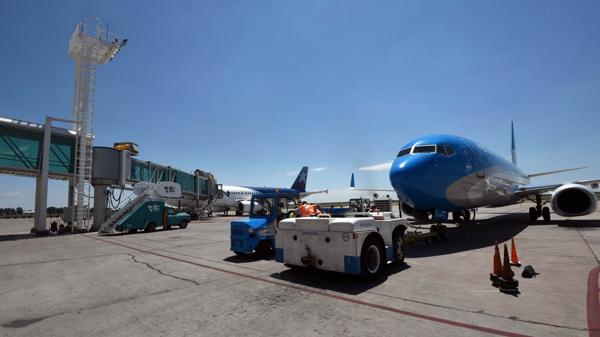
El Presidente Macri estará en la reapertura del aeropuerto El Plumerillo de Mendoza. La estación aérea tendrá 50 vuelos diarios

Luego de tres meses de intensas obras, la principal aeroestación de la región cuyana volverá a funcionar con normalidad. El presidente arribará en el vuelo que estrene las nuevas pistas remodeladas.

Hoy por la mañana reabrirá el Aeropuerto de Mendoza con la presencia del presidente Mauricio Macri, quien hará una fugaz visita de dos horas. Fueron tres meses de remodelación en los que la principal aeroestación de Cuyo estuvo cerrada y los vuelos fueron derivados a San Juan, San Luis y San Rafael.

Resultado de imagen para remodelación Aeropuerto Mendoza

Resultado de imagen para remodelación Aeropuerto Mendoza

La inversión en obras de El Plumerillo alcanzó los 1.200 millones de pesos. Las pistas de aterrizaje y rodaje fueron reconstruidas y reasfaltadas con hormigón. Fue modernizado el sistema de balizas con un sistema de luces led, primero del país, que posiciona a Mendoza como el segundo mejor aeropuerto en tecnología después de Ezeiza, según la Agencia Nacional de Aviación Civil (ANAC).

Fueron tres meses difíciles para el turismo mendocino, que tuvo un marcado descenso de visitantes de Brasil y otros países. El mayor golpe lo recibieron los hoteles cuatro y cinco estrellas y los servicios relacionados al turismo de bodegas, que tuvieron una reducción de hasta el 70% de los visitantes. Pero la expectativa con la reapertura es grande: “El nuevo aeropuerto podrá duplicar sus vuelos, con 50 viajes diarios”, dijo Juan Pablo Irigoin, titular de la ANAC. En el último año, El Plumerillo movilizó 1,6 millón de pasajeros.

Resultado de imagen para Aeropuerto Mendoza

Se retomarán los vuelos con Aeroparque, Ezeiza, Córdoba, Jujuy, Salta, Neuquén, Esquel, Perito Moreno, Rosario, Misiones e Iguazú. Además, la mejor infraestructura permitirá habilitar rutas aéreas con destinos internacionales, como Lima, Santiago de Chile, Río de Janeiro, Florianópolis y San Pablo.

Hoy también comienza a operar un vuelo directo entre Mendoza y Mar del Plata, de Aerolíneas Argentinas. El vuelo hacia la Costa Atlántica tendrá tres frecuencias semanales, miércoles, sábados y domingos; y estará vigente hasta marzo.

Otra de las novedades tendrá lugar a partir del 6 de enero cuando comience a volar la aerolínea de bajo costo Sky, que ofrecerá cinco vuelos semanales hacia la capital chilena, compitiendo con Latam por una de las rutas más demandadas como es Mendoza-Santiago de Chile. Este trayecto es también la principal puerta de salida a Europa, Estados Unidos y el Caribe de los viajeros del Oeste argentino. Sky ofrecerá un vuelo diario en horario de tarde, los lunes, miércoles, jueves, viernes y domingo. La duración del viaje será de una hora.

La conectividad con Brasil también crecerá. El 7 de enero, Aerolíneas unirá en un vuelo directo Mendoza con Florianópolis, con una frecuencia semanal. Mientras que la empresa brasileña Gol retoma con dos frecuencias semanales, jueves y domingos, su vuelo Mendoza-San Pablo; y a partir de enero, incorpora Mendoza-Río de Janeiro. En febrero, Latam inaugurará el vuelo directo Mendoza-Lima con una frecuencia de 4 días semanales.

Macri arribará a las 10.30 en el vuelo inaugural de las obras de remodelación de la pista y las instalaciones del aeropuerto mendocino. A las 11.20, el presidente visitará la Asociación Social, Cultural y Deportiva San Pablo, en Las Heras, donde anunciará el programa Clubes Argentinos para la promoción de clubes de barrio y de pueblo.

A las 12 está prevista una conferencia de prensa de Macri en el aeropuerto El Plumerillo, antes de regresar a Buenos Aires para continuar su actividad.  airgways-icon-aw

Resultado de imagen para Aeropuerto MendozaResultado de imagen para Aeropuerto Mendoza

Reopening of Mendoza Airport

The President Macri will be in the reopening of the airport El Plumerillo de Mendoza. The air station will have 50 daily flights
Resultado de imagen para remodelación Aeropuerto Mendoza

After three months of intense works, the main aero station of the Cuyana region will return to normal operation. The president will arrive on the flight to release the new remodeled tracks.

This morning the Mendoza Airport will be reopened with the presence of President Mauricio Macri, who will make a brief two-hour visit. It was three months of remodeling in which the main aero station of Cuyo was closed and flights were shipped to San Juan, San Luis and San Rafael.

The investment in works of El Plumerillo reached 1,200 million pesos. The landing and taxiways were rebuilt and resurfaced with concrete. The system of beacons was modernized with a system of led lights, first in the country, which positions Mendoza as the second best airport in technology after Ezeiza, according to the National Civil Aviation Agency (ANAC).

Three months were difficult for the Mendocino tourism, which had a marked decrease in visitors from Brazil and other countries. The biggest hit was the hotels four and five stars and services related to wine tourism, which had a reduction of up to 70% of visitors. But the expectation with the reopening is great: «The new airport will be able to double its flights, with 50 trips a day,» said Juan Pablo Irigoin, head of the ANAC. In the last year, El Plumerillo mobilized 1.6 million passengers.

The flights will be resumed with Aeroparque, Ezeiza, Cordoba, Jujuy, Salta, Neuquén, Esquel, Perito Moreno, Rosario, Misiones and Iguazú. In addition, the best infrastructure will enable air routes with international destinations, such as Lima, Santiago de Chile, Rio de Janeiro, Florianópolis and São Paulo.

Today also begins to operate a direct flight between Mendoza and Mar del Plata, of Aerolíneas Argentinas. The flight to the Atlantic Coast will have three weekly frequencies, Wednesdays, Saturdays and Sundays; And will be in force until March.

Another novelty will take place from January 6 when the low-cost airline Sky starts flying, which will offer five flights a week to the Chilean capital, competing with Latam for one of the most sought-after routes such as Mendoza-Santiago de Chile . This route is also the main gateway to Europe, the United States and the Caribbean of travelers from the Argentinean West. Sky will offer a daily flight in the afternoon, Monday, Wednesday, Thursday, Friday and Sunday. The duration of the trip will be one hour.

Connectivity with Brazil will also grow. On January 7, Aerolíneas will join a direct flight Mendoza with Florianópolis, with a weekly frequency. While the Brazilian company Gol returns with two weekly flights, Thursdays and Sundays, its Mendoza-San Pablo flight; And as of January, incorporates Mendoza-Rio de Janeiro. In February, Latam will open the Mendoza-Lima direct flight with a frequency of 4 days a week.

Macri will arrive at 10.30 on the inaugural flight of the remodeling works of the track and the facilities of the Mendocino airport. At 11.20, the president will visit the Social, Cultural and Sports Association San Pablo, in Las Heras, where he will announce the program Argentine Clubs for the promotion of neighborhood and town clubs.

At 12 a Macri press conference is scheduled at El Plumerillo airport, before returning to Buenos Aires to continue its activity. A\W


Ξ A I R G W A Y S Ξ
SOURCE: clarin.com
DBk: Photographic © Prensa.mendoza.gov.ar / Eldiariodeturismo.com.ar / Losandes.com.ar / Telam.com.ar
AW-POST: 201612071003AR
A\W A I R G W A Y S ®

Aeropuerto Sáenz Peña reclama vuelos

Resultado de imagen para Aeropuerto Sáenz Peña

AW | 2016 12 06 09:57 | AIRPORTS

A 66 años del primer vuelo, el aeropuerto de Sáenz Peña cada vez con menos actividadResultado de imagen para Chaco Sáenz Peña mapa

Sáenz Peña, Chaco · “El Aeropuerto Sáenz Peña está cada vez con menos luces”, comentaba un empresario local que estuvo días atrás allí en ocasión de la visita presidencial. Lógicamente no se refería a la iluminación, sino a las posibilidades cada vez más alejadas de recuperar los vuelos de cabotaje, sobre todo con las últimas medidas adoptadas de llevarse a los controladores aéreos a otro aeropuerto del país que al menos tenga vuelos comerciales.

El 6 de diciembre del año 1950, llegó a Sáenz Peña el primer vuelo comercial de Aerolíneas Argentinas. Aterrizó en donde hasta hace poco funcionó el Aeroclub, en el sur de la ciudad. Así, hoy se cumplen 66 años de la llegada del primer vuelo comercial a nuestra zona. La empresa estatal Aerolíneas Argentinas inauguró el servicio de vuelos entre Resistencia y Tucumán, con escala en Sáenz Peña, con unidades Douglas DC 3. Tenían la representación de la empresa los hermanos Aldo y Efraín Boglietti.

Cuando llegó el presidente Mauricio Macri a la Ciudad Termal en su anteúltima visita, los periodistas le preguntaron por los vuelos. No hubo respuestas positivas.

La reactivación de los vuelos comerciales desde el aeropuerto de Sáenz Peña son una vieja demanda de comunidades del interior que pretenden estar conectados con los principales centros del país. La amenaza latente del posible retiro de los controles de vuelo del aeropuerto termal lo que haría perder definitivamente la posibilidad de contar con vuelos de cabotaje desde esta ciudad hizo que el tema se reflotara y fuera uno de las consultas obligadas durante la visita presidencial.

Consultado sobre si en un futuro cortoplacista el aeropuerto local podría volver a contar con vuelos de aerolíneas comerciales, el presidente Mauricio Macri respondió “no se si eso será posible en el corto plazo” pero señaló como objetivo de este gobierno “unir a los argentinos y conectar para hacer un país federal enserio, y de una vez por todas para que cada vez más la interconexión sea entre distritos sin pasar por la Capital sea una realidad”.

Resultado de imagen para Aeropuerto Sáenz Peña

Un Fokker 28 de la Presidencia a su paso por Sáenz Peña

Resultado de imagen para Aeropuerto Sáenz Peña Aerochaco

La empresa MacAir/Aerochaco realizaba servicios Resistencia-Sáenz Peña

La gestión de los hermanos Aldo y Efraín Boglietti

Los hermanos Aldo y Efraín Boglietti fueron los agentes locales de la empresa Aerolíneas Argentinas durante largos años, luego de la inauguración de la empresa estatal a principios de la década del 50. La iniciativa de ambos, junto al Gobierno de la provincia, logró que el 6 de diciembre de 1950 se inaugurara el servicio de vuelos.

En aquella época, con la creación de la empresa estatal bajo la presidencia del general Juan Domingo Perón, la actividad significó un gran crecimiento en el desarrollo aerocomercial nacional. Se ampliaron sensiblemente los vuelos con destinos a diferentes provincias, significando un amplio crecimiento en la demanda de pasajeros.

La formación de la nueva empresa pública estuvo en una etapa de crecimiento y los primeros aviones comerciales fueron Douglas DC-3. airgways-icon-aw

Sáenz Peña airport claims flights

66 years after the first flight, Sáenz Peña airport with less activity

Sáenz Peña, Chaco · «Sáenz Peña Airport is becoming less and less light,» a local businessman who was there a few days ago during the presidential visit. Logically, it was not about lighting, but about the possibilities that are increasingly far removed from catching up on cabotage flights, especially with the latest measures taken to take air traffic controllers to another airport in the country that has at least commercial flights.

On December 6, 1950, the first commercial flight of Aerolíneas Argentinas arrived in Sáenz Peña. It landed where until recently the Aeroclub operated, in the south of the city. Thus, today is 66 years since the arrival of the first commercial flight to our area. The state-owned company Aerolíneas Argentinas inaugurated the flight service between Resistencia and Tucumán, with stopover in Sáenz Peña, with Douglas DC 3 units. The brothers Aldo and Efraín Boglietti were represented.

When President Mauricio Macri arrived at the Thermal City on his last visit, journalists asked him about the flights. There were no positive responses.

The reactivation of the commercial flights from the airport of Sáenz Peña are an old demand of communities of the interior that pretend to be connected with the main centers of the country. The latent threat of the possible withdrawal of the flight controls of the thermal airport which would definitively lose the possibility of having flights of cabotage from this city made the subject to be reflected and one of the consultations forced during the presidential visit.

Consulted on whether in a short-term future the local airport could return to commercial airline flights, President Mauricio Macri replied «I do not know if that will be possible in the short term» but he pointed out as an objective of this government «to unite the Argentines and Connect to make a federal country serious, and once and for all so that more and more interconnection between districts without going through the capital is a reality.»

The management of the brothers Aldo and Efraín Boglietti

The brothers Aldo and Efraín Boglietti were the local agents of the company Aerolíneas Argentinas for many years, after the inauguration of the state-owned company in the early 1950’s. Their initiative, together with the provincial government, December 6, 1950, the flight service will be inaugurated.

At that time, with the creation of the state-owned company under the presidency of General Juan Domingo Perón, the activity meant a great growth in the national aerial commercial development. Flights with destinations to different provinces were significantly expanded, meaning a large growth in passenger demand.

The formation of the new public company was in a stage of growth and the first commercial aircraft were Douglas DC-3. A\W


Ξ A I R G W A Y S Ξ
SOURCE: diarionorte.com
DBk: Photographic © MacAir Jet / Chacodiaadia.com
AW-POST: 201612060957AR
A\W A I R G W A Y S ®

Aeropuerto Internacional de Mendoza reabrirá en diciembre

Imagen relacionada

AW | 2016 11 30 11:55 | AIRPORTS

Resultado de imagen para obras Aeropuerto MendozaLas obras de remodelación del Aeropuerto internacional “El Plumerillo” de Mendoza, cuya reapertura está prevista para el 7 de diciembre, “se encuentran prácticamente terminadas”, informaron desde el gobierno provincial

El ministro provincial de Economía, Infraestructura y Energía, Enrique Vaquié, dijo que “la pista principal se encuentra prácticamente terminada y faltan detalles menores del balizamiento y señalización”.

Además el funcionario mendocino destacó que faltan algunas terminaciones en la playa de estacionamiento, que ampliará sus plazas a más de 400 lugares, y en la terminal del edificio central , que permitirá recibir de manera simultánea hasta tres vuelos diferentes.

Vaquié recorrió la obra junto al subsecretario de Infraestructura, Daniel Chicahuala, entre otros funcionarios de la cartera y de la Administración Nacional de Aviación Civil (ANAC) para observar el avance de los trabajos y verificar que su reapertura se realice el 7 de diciembre, detallaron desde el gobierno mendocino.

El remodelado aeropuerto contará con instalaciones que lo colocarán como una de las terminales aéreas más modernas e importante del interior del país, potenciando y dinamizando el sector turismo, ya que podrá recibir mayor cantidad de vuelos y también otro tipo de aviones que no recibía anteriormente, destacaron.

El proyecto incluye la refacción de pistas de rodaje, plataformas, áreas de seguridad, terminales aeroportuarias, estacionamientos y vialidades.

La pista principal y los caminos de rodamiento requirieron la utilización de 38 mil toneladas de cemento y 11 toneladas de asfalto.

Las obras representaron una inversión de 1.200 millones de pesos, cifra aún «mayor a lo que se destinó en todos los aeropuertos juntos durante 2015», se informó oficialmente.  airgways-icon-aw

Resultado de imagen para obras Aeropuerto MendozaResultado de imagen para obras Aeropuerto MendozaResultado de imagen para obras Aeropuerto MendozaResultado de imagen para obras Aeropuerto Mendoza

Mendoza Airport to reopen in December

The remodeling works of the international airport «El Plumerillo» of Mendoza, whose reopening is scheduled for December 7, «are almost finished,» reported from the provincial government

The provincial minister of Economy, Infrastructure and Energy, Enrique Vaquié, said that «the main runway is practically finished and minor details of the beaconing and signaling are missing.»

Resultado de imagen para obras Aeropuerto Mendoza

In addition, the Mendoza official stressed that there are some terminations in the parking lot, which will expand its plazas to more than 400 places, and in the terminal of the central building, which will allow simultaneously receive up to three different flights.

Vaquié toured the work with Deputy Secretary of Infrastructure, Daniel Chicahuala, among other officials of the portfolio and the National Civil Aviation Administration (ANAC) to observe the progress of the work and verify that its reopening takes place on December 7, detailed From the Mendocino government.

The refurbished airport will have facilities that will place it as one of the most modern and important air terminals in the country’s interior, boosting and boosting the tourism sector, as it will receive more flights and other types of aircraft that it did not previously receive, Highlighted.

The project includes the repair of taxiways, platforms, security areas, airport terminals, parking lots and roads.

The main runway and the roadways required the use of 38 thousand tons of cement and 11 tons of asphalt.

The works represented an investment of 1.2 billion pesos, a figure still «higher than what was spent at all airports together during 2015,» it was officially reported. A\W

Ξ A I R G W A Y S Ξ
SOURCE: Telam.com.ar
DBk: Photographic © Tiempodesanjuan.com / Radionihuil.com / AA2000.com.ar / Noticiascuyo.com
AW-POST: 201611301155AR
A\W A I R G W A Y S ®

Aeropuerto de Puebla cerrado por limpieza ceniza volcánica

AW | 2016 11 30 11:40 | AIRPORTS

El Aeropuerto Internacional de Puebla, México se reporta cerrado por la limpieza de ceniza volcánica desde las 06:41 horas de este miércoles

Las operaciones en el Aeropuerto Internacional de Puebla Hermanos Serdán, perteneciente a la Red de Aeropuertos y Servicios Auxiliares (ASA), se vieron afectadas por la caída de ceniza del volcán Popocatépetl.

El servicio en el Aeropuerto Internacional de Puebla, Hermanos Serdán, se reanudó una vez que existieron las condiciones óptimas para el despegue y aterrizaje de aeronaves.

Las acciones se realizaron con la finalidad de preservar la seguridad de los pasajeros y el correcto funcionamiento de las operaciones aéreas.  airgways-icon-aw

Puebla airport closed by volcanic ash cleaning

The International Airport of Puebla, Mexico, is reported closed for the cleaning of volcanic ash from 06:41 hours on Wednesday

Operations at the Puebla Hermanos Serdán International Airport, belonging to the Network of Airports and Auxiliary Services (ASA), were affected by the ash fall of the Popocatépetl volcano.

The service at the Puebla International Airport, Hermanos Serdán, resumed once the optimum conditions for the take-off and landing of aircraft existed.

The actions were carried out with the purpose of preserving the safety of the passengers and the correct operation of the air operations. A\W

Ξ A I R G W A Y S Ξ
SOURCE: Televisa.com
DBk: Photographic ©  Aeropuertos ASA
AW-POST: 201611301140AR
A\W A I R G W A Y S ®

Nuevo «hub» de Aerolíneas en Córdoba

12042641_10207779126416360_8002402693877808035_n

AW | 2016 11 26 16:11 | AIRLINES ROUTES / AIRPORTS

Desde el aeropuerto de Taravella, la empresa cubrirá 14 destinos

Córdoba, Argentina · Aerolíneas Argentinas convirtió al aeropuerto internacional Ambrosio Taravella de esta ciudad en un «focus city», una suerte de distribuidor de vuelos regionales. A corto plazo la compañía establecerá un «banco horario» para que los pasajeros que viajen desde el norte del país puedan conectar al sur desde Córdoba.

La compañía ya cubre 14 destinos desde esta ciudad (uno más, por ejemplo, de los que vuela LAN desde Aeroparque) y por el verano se suman cinco hacia las playas: Porto Seguro, Río de Janeiro, Florianópolis, Punta del Este y Mar del Plata.

Los ejecutivos de Aerolíneas especulan con que Río (dos frecuencias semanales y Mar del Plata (frecuencia diaria) podrían continuar desde marzo próximo, aunque con otro esquema. «Córdoba nos sorprendió; destino que lanzamos, destino que anda bien», admitió Rubén Nóbili, gerente de Ventas para el interior.

Como ejemplo mencionó que los vuelos a Buenos Aires (11 a Aeroparque y tres a Ezeiza diarios) crecieron 15% en un año, mientras que la ruta a Resistencia (Chaco) tiene una ocupación promedio del 72% y a Jujuy o Salta, el 80%.

En el caso de Río Cuarto a Buenos Aires, última ruta incorporada por la compañía a nivel nacional, habría cambios; se eliminaría la escala en Córdoba y sería directo.

DMi 709

Es una manera de bajar costos y de tratar de apuntalar la cantidad de pasajeros. La saturación de Aeroparque tiene 23 posiciones para estacionar aviones, el 80% ocupada por Aerolíneas Argentinas favorece a Córdoba como centro de distribución de vuelos regionales.

Nóbili, reconoció, había una demanda reprimida en el interior que evitaba las escalas para llegar a destino. Respecto de la infraestructura del Taravella, el ejecutivo señaló que está en «condiciones» para seguir sumando rutas.

Desde Aerolíneas reconocieron que si bien el objetivo es promover el turismo interno, es inevitable generar rutas a Brasil porque hay demanda. Los vuelos a Brasil, tienen enero «prácticamente con ocupación completa».

Costos cubiertos

«Los vuelos domésticos cubren, en todos los casos, los costos operativos», enfatizó Nóbili. Hasta julio de este año, la empresa recibió fondos del Tesoro por $ 3201,5 millones; son los vuelos internacionales los deficitarios. El peor es Roma, que en el primer semestre recibió un subsidio de 4,1 millones de dólares.

«Estamos tratando de salvar esa ruta; un paso importante será cubrirla con el Airbus 330 en vez del 330, que reduce entre 20 y 25 por ciento los costos operativos», insistió Nóbili. Mientras tanto, continúa el problema de que la empresa no cuenta con la cantidad suficiente de pilotos certificados como para volarlos. airgways-icon-aw

Resultado de imagen para Aeropuerto Córdoba aerolineas argentinas

New «hub» of Aerolíneas in Córdoba

From the airport of Taravella, the company will cover 14 destinations

Córdoba, Argentina · Aerolíneas Argentinas converted the Ambrosio Taravella International Airport from this city into a «focus city», a sort of regional flight distributor. In the short term the company will establish a «time bank» so that passengers traveling from the north of the country can connect to the south from Cordoba.

The company already covers 14 destinations from this city (one more, for example, that LAN flies from Aeroparque) and for the summer they add five towards the beaches: Porto Seguro, Rio de Janeiro, Florianópolis, Punta del Este and Mar del Silver.

Aerolíneas executives speculate that Rio (two weekly frequencies and Mar del Plata (daily frequency) could continue from next March, although with another scheme. «Córdoba surprised us, a destination we launched, a destination that is good,» admitted Rubén Nóbili, Sales manager for the interior.

As an example he mentioned that flights to Buenos Aires (11 to Aeroparque and three to Ezeiza daily) grew 15% in a year, while the route to Resistencia (Chaco) has an average occupation of 72% and Jujuy or Salta, 80% .

In the case of Rio Cuarto to Buenos Aires, the last route incorporated by the company at national level, there would be changes; Would eliminate the scale in Cordoba and would be direct.

It is a way to lower costs and try to shore up the number of passengers. The saturation of Aeroparque has 23 positions to park airplanes, the 80% occupied by Aerolíneas Argentinas favors to Cordova like center of distribution of regional flights.

DMi 1054
Nóbili, he acknowledged, had a pent-up demand on the inside that avoided the ladders to reach destination. Regarding the infrastructure of the Taravella, the executive said that he is in «conditions» to continue adding routes.

Since Aerolíneas recognize that although the goal is to promote domestic tourism, it is inevitable to generate routes to Brazil because there is demand. Flights to Brazil, have January «practically with full occupation».

Covered costs

«Domestic flights cover, in all cases, operating costs,» Nóbili said. As of July of this year, the company received funds from the Treasury for $ 3201.5 million; Are the international flights the deficit. The worst is Rome, which in the first half received a subsidy of 4.1 million dollars.

«We are trying to save that route, an important step will be to cover it with the Airbus 330 instead of the 330, which reduces operating costs by 20 to 25 percent,» Nbili insisted. Meanwhile, the problem continues that the company does not have enough certified pilots to fly them. A\W


Ξ A I R G W A Y S Ξ
SOURCE: lanacion.com.ar
DBk: Photographic © A I R G W A Y S / Cordobatimes.com / Aeropuertocordoba.blogspot.com
AW-POST: 201611261611AR
A\W A I R G W A Y S ®

Aeropuerto Rosario necesita reparación de pista

DMi 687

AW | 2016 11 24 12:30 | AIRPORTS

El incremento de vuelos terminó rompiendo la pista del Aeropuerto Internacional Rosario, lo que dejó en evidencia otras fallas en la terminal aérea. Los aviones deben ser remolcados desde la plataforma hasta la pista de rodaje, con la consiguiente demora en las operaciones; las aeronaves más pequeñas deben estacionar en el pasto y cuando llueve se empantanan, y los meteorólogos trabajan dentro de un contenedor. Este panorama generó un gran malestar entre los pilotos y llevó a las autoridades del aeropuerto a gestionar el cierre de la terminal una vez que culmine la temporada.

Según denunciaron pilotos, la rotura de la plataforma se aceleró con el incremento de las operaciones de vuelos comerciales internacionales con aviones de gran porte. Una situación que, prevén, se agudizará en los próximos días con el aumento de vuelos por el inicio de la temporada de verano a Mar del Plata y Punta del Este, y desde el 7 de diciembre con más conexiones a Ezeiza y Córdoba.

«Estas operaciones fueron aprobadas por la autoridad aeronáutica en base a los pedidos de la administración del aeropuerto con el sólo fin de la recaudación en tasas aeroportuarias, sin las adecuadas garantías de infraestructura y soporte», cuestionaron las fuentes consultadas.

Los pilotos explicaron que el incremento de dos a diez vuelos de aviones comerciales diarios aceleró la rotura de la pista, «lo que no permite el movimiento natural de los máquinas, así como la presencia de gran cantidad de piedras sueltas, que pueden ser absorbidas por los motores con las consecuencias del caso», apuntaron.

«Para evitar esto, la autoridad a cargo de la seguridad tomó medidas, que implican que los aviones no estén en marcha en plataforma y deban ser remolcados desde y hasta la pista, ocasionando demoras y congestionamiento en todos los movimientos de las aeronaves y el consiguiente malestar de los pasajeros, fácilmente observable en horas del mediodía», explicaron.

La cantidad de vuelos actuales y los que se prevén en el verano —estimaron— acelerará el proceso de rotura, «con el riesgo de una clausura total de la estación aérea, en plena temporada», adelantaron.

En el pasto. El deterioro de la plataforma provoca que todos los aviones de menor porte no puedan estacionar allí y deban hacerlo en la zona de hangares, «cuyo suelo no está en condiciones ni debidamente señalizado, y sin personal suficiente que los ordene, ocasionando un caos en el movimiento, con peligro para los pasajeros y los mismos aviones», estimaron.

En este escenario, estas limitaciones perjudican todo tipo de vuelo, como ser posibles servicios sanitarios o de trasplante de órganos.

Según consignaron, para morigerar las consecuencias del deterioro de la plataforma la administración del aeropuerto decidió habilitar «un estacionamiento en el pasto» para los aviones pequeños, que se inutiliza por varios días cada vez que llueve, «porque los aviones se entierran», detallaron.

El grupo que profesionales que habitualmente opera en la terminal de Fisherton apuntó que si bien recientemente se construyó una estación meteorológica, el personal de meteorología trabaja actualmente dentro de un container metálico. «La estación aún no se habilitó por fallas de infraestructura», destacaron.

Los pilotos cuestionaron que se haya invertido «en el embellecimiento del frente e iluminación del aeropuerto, en lugar de priorizar la reparación de las calles internas, las cuales hoy complican el movimiento de los aviones».

Por lo pronto, la operatividad del aeropuerto está bastante complicada y la llegada de los aviones se alterna con las tareas de reparación de la plataforma operativa. airgways-icon-aw

Resultado de imagen para pista AEROPUERTO ROSARIO

Rosario Airport needs repair of track

The increase in flights ended up breaking the runway at Rosario International Airport, which revealed other flaws in the air terminal. Airplanes must be towed from the platform to the taxiway, with consequent delay in operations; The smaller aircraft must park in the grass and when it rains are bogged down, and the meteorologists work inside a container. This panorama generated a great discomfort between the pilots and took to the authorities of the airport to manage the closing of the terminal once it finishes the season.

According to reported by pilots, the rupture of the platform was accelerated with the increase of the operations of international commercial flights with large airplanes. A situation that, they predict, will intensify in the coming days with the increase of flights by the beginning of the summer season to Mar del Plata and Punta del Este, and since December 7 with more connections to Ezeiza and Cordoba.

«These operations were approved by the aeronautical authority based on requests from the airport administration for the sole purpose of collecting airport charges, without adequate infrastructure and support guarantees,» the sources consulted by LaCapital questioned.

The pilots explained that the increase of two to ten flights of daily commercial aircraft accelerated the breaking of the runway, «which does not allow the natural movement of the machines, as well as the presence of large amount of loose stones, which can be absorbed by The engines with the consequences of the case,» they said.

«In order to avoid this, the security authority took action, which means that aircraft are not on platform and must be towed to and from the runway, causing delays and congestion in all aircraft movements and the consequent Discomfort of passengers, easily observable in the noon hours,» they explained.

The amount of current flights and those expected in the summer – estimated – will accelerate the break, «with the risk of a total closure of the air station, in full season,» they said.

On the grass. The deterioration of the platform means that all smaller airplanes can not be parked there and must do so in the hangar area, «whose ground is not in condition or properly marked, and without sufficient personnel to order them, causing chaos in the area. Movement, with danger for the passengers and the same airplanes», they estimated.

In this scenario, these limitations impair any type of flight, such as health services or organ transplantation.

Resultado de imagen para AEROPUERTO ROSARIO

According to them, in order to mitigate the consequences of the deterioration of the platform the airport administration decided to enable «a parking lot in the grass» for small aircraft, which is rendered useless for several days whenever it rains, «because the planes are buried», they detailed .

The group that professionals who usually operate in the terminal of Fisherton pointed out that although a meteorological station was recently constructed, the meteorological personnel are currently working inside a metal container. «The station has not yet been enabled due to infrastructure failures,» they said.

The pilots questioned that «the beautification of the front and lighting of the airport, instead of prioritizing the repair of the internal streets, which today complicate the movement of the airplanes, has been invested.»

For now, the operation of the airport is quite complicated and the arrival of the aircraft is alternated with the repair tasks of the operating platform. A\W

Ξ A I R G W A Y S Ξ
SOURCE: lacapital.com.ar
DBk: Photographic © A I R G W A Y S / Aeropuertos.net
AW-POST: 20161124120AR
A\W A I R G W A Y S ®


Incremento vuelos en Aeropuerto Malaca

Resultado de imagen para Malacca Airport

AW | 2016 11 21 05:39 | AIRPORTSResultado de imagen para malacca airport

El gobierno del estado de Malaca está considerando la apertura de varias rutas de vuelos domésticos e internacionales para impulsar el sector del turismo y la industria de la aviación en el estado.

Transporte Estado, Proyecto de Rehabilitación y presidente del Comité de Comercio Internacional Datuk Lim Hong Ban dijo que una de las rutas nacionales fue a Kota Bharu. que fue hasta ahora manejados por Malindo Air.

Una nueva ruta doméstica en cuestión ha de Langkawi en Kedah, dijo en la conferencia de prensa de ayer en la reanudación de vuelos entre Pekanbaru en Indonesia y Malaca por Indonesia Xpressair.

Lim también dijo que se está estudiando una nueva ruta internacional entre Malaca y Batam en Indonesia, que era más probable para ser manejado por Xpressair.

Dijo que el aeropuerto de Malaca maneja actualmente vuelos nacionales entre Malaca y Penang y los vuelos internacionales entre Malaca y Pekanbaru, así como entre Malaca y Guangzhou en China, proporcionados por Malindo Air, Xpressair y China Southern Airlines, respectivamente.

dijo Lim turistas de Melaka también podrían transitar en Palembang, Lampung y Tanjung Pinang, todo en Indonesia, en la ruta a Pekanbaru manejado por Xpressair. airgways-icon-aw

Resultado de imagen para Xpressair

More flights planned for Malacca airport

The Malacca state government is considering opening up several domestic and international flight routes to spur the tourism sector and the aviation industry in the state.

State Transport, Project Rehabilitation and International Trade Committee chairman Datuk Lim Ban Hong said one of the domestic routes was to Kota Bharu. which was hitherto handled by Malindo Air.

A new domestic route under consideration is to Langkawi in Kedah, he said at yesterday’s press conference on the resumption of flights between Pekanbaru in Indonesia and Malacca by Indonesia’s Xpress Air.

Lim also said discussions are ongoing on a new international route between Malacca and Batam in Indonesia, which was most likely to be handled by Xpress Air.

He said the Malacca airport currently handled domestic flights between Malacca and Penang and international flights between Malacca and Pekanbaru as well as between Malacca and Guangzhou in China, provided by Malindo Air, Xpress Air and China Southern Airlines, respectively.

Lim said tourists from Melaka could also transit at Palembang, Lampung and Tanjung Pinang, all in Indonesia, on the route to Pekanbaru handled by Xpress Air. A\W


Ξ A I R G W A Y S Ξ
SOURCE: therakyatpost.com
DBk: Photographic © Freemalaysiatoday.com / therakyatpost.com / Thewanderdan.com
AW-POST: 201611210539AR
A\W A I R G W A Y S ®

Aeropuerto de Heathrow: «Volver a casa, el mejor regalo de todos»

El comercial de esta aerolínea está conmoviendo a todo el mundo

AW | 2016 11 19 09:55 | AIRPORTS

Esta es una de las cosas más tiernas que verás este fin de semana, y tal vez en el mes. Entre tanta noticia mala, hace falta ver algo que nos provoque una sonrisa y este spot es perfecto. Se trata del comercial del aeropuerto londinense de Heathrow para el que eligieron a los mejores protagonistas: dos ositos de peluche.

Así, esta pareja de ositos, después de dormitar en el avión, aterrizan y se enfrentan a las típicas penurias que vivimos todos en los aeropuertos. Recorrer pasillos inmensos, esperar a otra persona afuera del baño, encontrar su equipaje en la cinta de maletas.

El climax y lo más importante del video llega cuando, al final, los osos llegan a su destino: los brazos de sus dueños.

VIDEO:https://i.ytimg.com/vi/kg6uEk1tfTc/hqdefault.jpg?custom=true&w=196&h=110&stc=true&jpg444=true&jpgq=90&sp=68&sigh=CKcmdAiRvlGk5w6Ge_-1A0HoAQM

Con el slogan “Coming home, the best gift of all” (Volver a casa, el mejor regalo de todos), termina este anuncio que literalmente le ha dado la vuelta al mundo, pues ha ganado millones de reproducciones y reacciones positivas. airgways-icon-aw

Resultado de imagen para Heathrow Airport: "Coming home, the best gift of all"Resultado de imagen para Heathrow Airport: "Coming home, the best gift of all"Resultado de imagen para Heathrow Airport: "Coming home, the best gift of all"Resultado de imagen para Heathrow Airport: "Coming home, the best gift of all"Resultado de imagen para Heathrow Airport: "Coming home, the best gift of all"

Heathrow Airport: «Coming home, the best gift of all»

This is one of the most tender things you’ll see this weekend, and maybe in the month. Among so much bad news, we need to see something that makes us smile and this spot is perfect. It is the commercial of London Heathrow airport for which they chose the best protagonists: two teddy bears.

So, this pair of bears, after sleeping on the plane, land and face the typical hardships that we all live in airports. Go through immense corridors, wait for someone outside the bathroom, find your luggage in the suitcase.

The climax and most important of the video comes when, in the end, the bears arrive at their destination: the arms of their owners.

With the slogan «Coming home, the best gift of all», this ad that literally has gone round the world ends, as it has won millions of reproductions and positive reactions. A\W

Ξ A I R G W A Y S Ξ
SOURCE: swagger.mx
DBk: Photographic © Youtube.com, Heathrow Airport
AW-POST: 20161190955AR
A\W A I R G W A Y S ®

La IATA urge a América Latina modernizar su infraestructura aeroportuaria

Resultado de imagen para iata airports latin america

AW | 2016 11 15 10:50 | AIRPORTS

Resultado de imagen para iata airportsLa Asociación de Transporte Aéreo Internacional (IATA, por su sigla en inglés) llamó hoy a los Gobiernos de América Latina a modernizar la infraestructura aeroportuaria de la mano de la industria, a fin de responder a las crecientes necesidades del mercado.

El consejero delegado de la IATA, Alexandre de Juniac, recordó hoy que para 2035 se espera que los viajeros sumen 658 millones, más del doble de las 298 millones de pasajeros reportados en 2015.

En Latinoamérica y el Caribe, las aerolíneas enfrentan numerosos desafíos, entre ellos costes de operación «elevados» e impuestos «significativos», afirmó durante el foro anual de líderes de aerolíneas de ALTA, que se celebra hasta mañana en la Ciudad de México.

«Además, las reglamentaciones son onerosas y, a menudo, no están en consonancia con las normas internacionales», apuntó el ejecutivo, quien llamó a la industria a «trabajar mano a mano con los gobiernos para abordar estos temas de manera efectiva».

En ese sentido, destacó que la cooperación Gobierno-industria representa «una gran oportunidad para crear valor mediante la modernización urgente de las infraestructuras en la región».

Los aeropuertos de Bogotá, Lima y Ciudad de México son un reflejo del problema de capacidad aeroportuaria que sufre la región, y si bien ya hay planes para hacerle frente, aún pasarán años antes de que se resuelva, con el consiguiente perjuicio para el empleo y el crecimiento económico.

Bogotá necesita que la industria participe en el estudio de soluciones que respondan a las necesidades del mercado, mientras que a Argentina -en el lugar 114 de un listado de 141 países en materia de calidad de infraestructura aeroportuaria- debe revisar su anticuado y costoso sistema de navegación aérea, indicó.

«La clave está en la cooperación. Aerolíneas, gobiernos y operadores aeroportuarios necesitan asociarse para ofrecer soluciones eficientes y económicas que respondan a las necesidades reales del mercado en coste y capacidad», insistió De Juniac.

Sobre la privatización de los aeropuertos, resaltó la necesidad de tener «una regulación firme para proteger a los usuarios del abuso de los monopolios» y pidió otorgar concesiones a socios que busquen la mejora de la conectividad aérea a largo plazo y un crecimiento económico sostenible.

El consejero delegado de la IATA mencionó a Chile como un ejemplo de lo que puede suceder cuando la regulación no es lo suficientemente fuerte.

La prefinanciación del proyecto de expansión del aeropuerto de Santiago causó «una dramática subida de las tasas aeroportuarias, una medida que pone en riesgo la competitividad del transporte aéreo del país junto con los beneficios sociales y económicos que genera», resaltó.

La IATA representa a 265 líneas aéreas que constituyen el 83 % del tráfico aéreo internacional, mientras la Asociación Latinoamericana y Caribeña de Transporte Aéreo (ALTA, por su sigla en inglés), fundada en 1980, reúne a 35 aerolíneas que representan más del 90 % del tráfico aéreo regional. airgways-icon-aw

Resultado de imagen para iata airports

IATA urges Latin America to modernize its airport infrastructure

The International Air Transport Association (IATA) today called on Latin American governments to modernize the airport infrastructure in the hands of industry in order to respond to the growing needs of the market.

IATA Chief Executive Alexandre de Juniac recalled today that by 2035 travelers are expected to add 658 million, more than double the 298 million passengers reported in 2015.

In Latin America and the Caribbean, airlines face numerous challenges, including «high» operating costs and «significant» taxes, he said at the annual ALTA airline leaders’ forum, held until tomorrow in Mexico City.

«In addition, regulations are onerous and often are not in line with international standards,» said the executive, who called on the industry to «work hand in hand with governments to address these issues effectively.»

In that sense, he stressed that government-industry cooperation represents «a great opportunity to create value through the urgent modernization of infrastructures in the region.»

The airports of Bogota, Lima and Mexico City are a reflection of the airport capacity problem in the region, and although there are already plans to deal with it, it will still be years before it is resolved, with a consequent detriment to employment and economic growth.

Bogotá needs the industry to participate in the study of solutions that respond to the needs of the market, while Argentina – in the 114th place in a list of 141 countries in terms of quality of airport infrastructure – must review its old-fashioned and expensive system of Air navigation, he said.

«The key is co-operation: airlines, governments and airport operators need to partner to deliver efficient and cost-effective solutions that respond to the market’s real needs for cost and capacity,» De Juniac insisted.

On the privatization of airports, he stressed the need for «strong regulation to protect users from abuse of monopolies» and called for concessions to partners seeking to improve long-term air connectivity and sustainable economic growth.

The CEO of IATA mentioned Chile as an example of what can happen when regulation is not strong enough.

The prefinancing of the Santiago airport expansion project caused «a dramatic increase in airport charges, a measure that puts the country’s air transport competitiveness at risk along with the social and economic benefits it generates,» he said.

IATA represents 265 airlines that constitute 83% of international air traffic, while the Latin American and Caribbean Air Transport Association (ALTA), founded in 1980, brings together 35 airlines representing more than 90% Of regional air traffic. A\W


Ξ A I R G W A Y S Ξ
SOURCE: eleconomista.net
DBk: Photographic © hallandwilcox.com.au / iata.org
AW-POST: 201611151050AR
A\W A I R G W A Y S ®

Gestionan un vuelo más entre San Rafael y Buenos Aires

Resultado de imagen para aeropuerto san rafael

AW | 2016 11 14 08:51 | AIRPORTS

Lucas Quesada, planteó la necesidad a Aerolíneas Argentinas. Además se habló de mover los horarios a la mañana.

El vicepresidente del Ente Mendoza Turismo (Emetur), Lucas Quesada, planteó a la gerenta regional de Aerolíneas Argentinas, Gabriela Goncalves, la necesidad de que San Rafael sume una frecuencia más a Buenos Aires y de mover el horario de los vuelos a la mañana. Lo hizo tras la presentación del vuelo directo entre Mendoza y Mar del Plata.

El funcionario adelantó que «esta va a ser una negociación dura, pero no imposible, estamos poniendo en relieve la utilidad que se le da desde San Rafael al vuelo que nos conecta con Buenos Aires y viceversa». Además «le planteamos a Goncalves, la posibilidad de analizar el horario del vuelo para ver si operativamente se puede trasladar a la mañana».

De todos modos, desde el Emetur dijeron que las novedades se conocerán en un futuro cercano y se estima que serán favorables, ya que San Rafael ha demostrado ser una plaza muy interesante y el aeropuerto local ha soportado de gran manera la carga que representó recibir vuelos extras por el cierre de la aeroestación del El Plumerillo.

En el transcurso de la semana el Emetur y Aerolíneas Argentinas anunciaron una conexión directa entre Mendoza y Mar del Plata a partir del 7 de diciembre cuando el aeropuerto Francisco Gabrielli termine sus obras de refacción. En ese marco, se espera una buena temporada de verano para ambos destinos y que esta conexión aérea se consolide en el tiempo.

Las frecuencias serán tres, con salidas desde la capital de Mendoza a las 12.10 y arribo a las 14.30 los días miércoles, sábados y domingos. El costo del pasaje ida y vuelta será desde $2800 más impuestos.

Quesada comentó que «ambos destinos han trabajado de forma aunada y con una gran sinergia, lo que nos ha permitido en enero poder promocionar nuestro destino y la Fiesta Nacional de la Vendimia en Mar del Plata y a ellos poder dar a conocer su oferta en Mendoza».

Por su parte, el vicepresidente del Ente Municipal de Turismo de Mar del Plata, Jorge Zanier, explicó que «nosotros consideramos a Mendoza una de las provincias más importantes del país. Ambos destinos están unidos por algo tan especial como la hermandad entre la montaña y el mar».

Finalmente, Marcelo Montenegro, director de Promoción del Emetur, destacó que «esta iniciativa de Aerolíneas viene a aportar una mejora en la conectividad aérea y contribuye a reforzar dos destinos que se complementan entre sí, como lo son Mendoza y Mar del Plata».  airgways-icon-aw

Resultado de imagen para aeropuerto san rafael

They manage one more flight between San Rafael and Buenos Aires

Lucas Quesada, raised the need for Aerolíneas Argentinas. In addition there was talk of moving the schedules in the morning.

The vice president of the Ente Mendoza Tourism (Emetur), Lucas Quesada, told the regional manager of Aerolineas Argentinas, Gabriela Goncalves, the need for San Rafael to add one more frequency to Buenos Aires and to move the flight schedule in the morning. He did so after the presentation of the direct flight between Mendoza and Mar del Plata.

The official said that «this is going to be a tough negotiation, but not impossible, we are highlighting the utility that is given from San Rafael to the flight that connects us with Buenos Aires and vice versa.» In addition «we asked Goncalves, the possibility of analyzing the flight schedule to see if it can be transferred in the morning».

Anyway, from the Emetur said that the novelties will be known in the near future and it is estimated that they will be favorable, since San Rafael has proven to be a very interesting place and the local airport has supported in great way the load that represented to receive flights Extras by the closure of the El Plumerillo aero station.

During the week the Emetur and Aerolineas Argentinas announced a direct connection between Mendoza and Mar del Plata as of December 7 when Francisco Gabrielli airport finished its repair work. In this context, a good summer season is expected for both destinations and this air connection will consolidate over time.

The frequencies will be three, with departures from the capital of Mendoza at 12.10 and arrival at 14.30 on Wednesday, Saturday and Sunday. The cost of the round trip ticket will be from $ 2800 plus taxes.

Quesada commented that «both destinations have worked together and with a great synergy, which has allowed us in January to promote our destination and the National Harvest Festival in Mar del Plata and to be able to publicize their offer in Mendoza» .

Jorge Zanier, vice-president of the Mar del Plata Municipal Tourism Office, explained that «we consider Mendoza one of the most important provinces in the country. Both destinations are united by something as special as the brotherhood between the mountain and the sea».

Finally, Marcelo Montenegro, Director of Emetur Promotion, emphasized that «this initiative of Aerolíneas comes to contribute an improvement in the aerial connectivity and contributes to reinforce two destinies that complement each other, as they are Mendoza and Mar del Plata». A\W


Ξ A I R G W A Y S Ξ
SOURCE: unosanrafael.com.ar
DBk: Photographic © losandes.com.ar
AW-POST: 201611140851AR
A\W A I R G W A Y S ®