Argentina, lowcosts y Aeroparque

AW | 2023 01 10 14:57 | AIRLINES / AIRPORTS / AIRLINES MARKET / GOVERNMENT

Reaviva polémica por low cost en Aeroparque

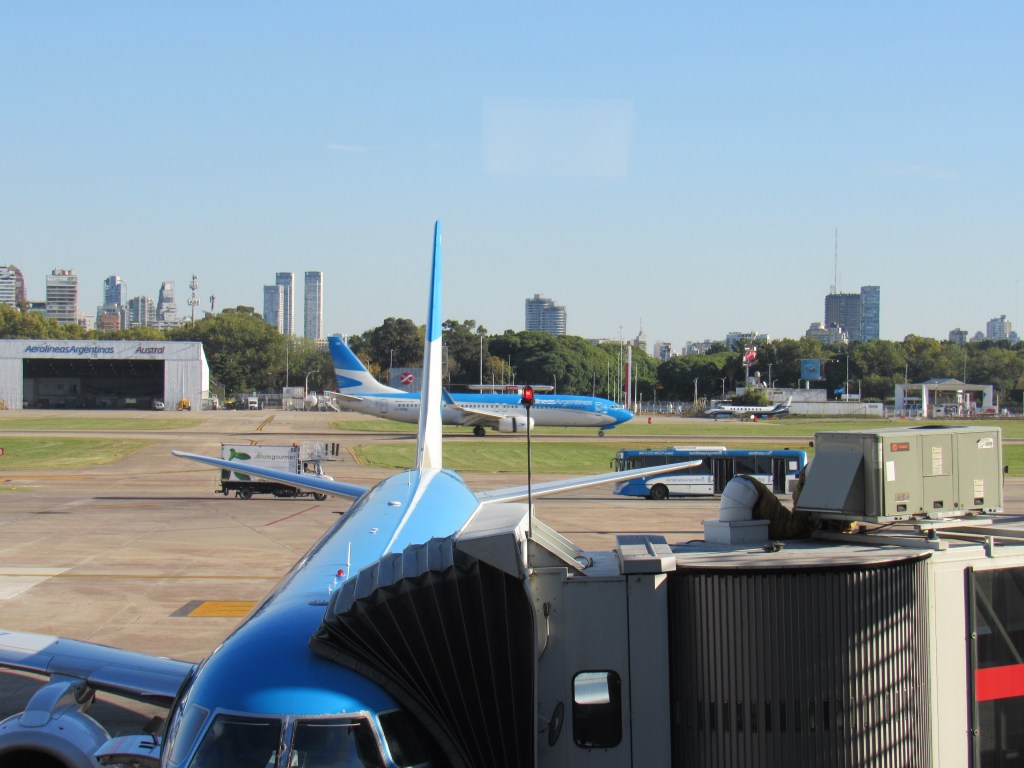
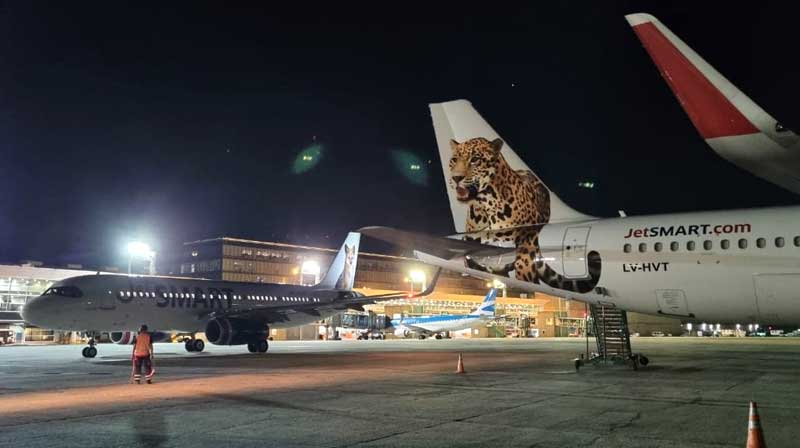
El Gobierno de Argentina dispuso una medida de regionalización para las líneas aéreas que ofrecen vuelos regionales en el Aeropuerto Buenos Aires/Jorge Newbery/AEP y resurgió un reclamo de las low-cost argentinas. El cambio que habilitó el Gobierno reaviva una vieja disputa de slots para las aerolíneas de presupuesto local.

La regionalización de Aeroparque ha reavivado la puja política entre el Gobierno con las low-cost debido al viejo reclamo de las low cost para aumentar los amarres (slots) en la aeroestación de la Ciudad de Buenos Aires. El reclamo se fundamenta legítimamente en que el cierre del Aeropuerto El Palomar/EPA por parte del Gobierno de turno permitiría a las líneas aéreas argentinas low cost migrar su base operativa hacia el Aeropuerto Buenos Aires/Jorge Newbery/AEP. Tras la finalización del reacondicionamiento de las obras de ampliación y mejoramiento de Aeroparque en Marzo 2021, el Gobierno se había comprometido a habilitar todos los vuelos regulares de las aerolíneas low cost Flybondi Líneas Aéreas y JetSMART Airlines Argentina, pero las solicitudes han sido reiteradamente postergadas en favor de Aerolíneas Argentinas.

Actualmente, las low cost operan algunos vuelos desde Aeroparque y otras rutas regionales desde el Aeropuerto Ezeiza/EZE, mientras que el mayor número de amarres en Aeroparque representan para Aerolíneas Argentinas.

Regionalización & 6º libertad

A través de la Resolución Nº744/2022 publicada en el Boletín Oficial, la Administración Nacional de Aviación Civil (ANAC) les permite ahora a las aéreas que ofrecen vuelos en Aeroparque vender pasajes con conexión. De esa manera, se pone en práctica la sexta libertad aérea, posibilitando viajar desde Aeroparque haciendo escala en países de la región para seguir a otro destino final y viceversa. La noticia fue recibida con beneplácito por las líneas aéreas clásicas por los beneficios que traerá; pero las low-cost no han aplaudido este beneficio porque no ha sido inclusivo. Aunque aseguran que a ellas no les impacta de lleno en el tráfico diario, insisten con un viejo pedido: recibir la autorización para aumentar su capacidad operativa en el Aeropuerto Buenos Aires/Jorge Newbery. Tras el cierre de El Palomar, las low-cost tuvieron que trasladar casi toda su operación al Aeropuerto Ezeiza/EZE.

Desde ANAC afirmaron que «están dadas las condiciones para permitir la sexta libertad en Aeroparque y se hicieron los estudios correspondientes para evaluar que no se sature la capacidad». Pero las low-cost apuntan que, desde que cerró el Aeropuerto low cost El Palomar, quieren llevar más aviones a la terminal aérea porteña para aumentar las frecuencias aéreas que ofrecen y no pueden hacerlo ante la falta de decisión política del Gobierno de Argentina.

Argumentan que el hecho de que ahora los pasajeros podrán volar desde Aeroparque a países de la región para seguir viaje en conexión al Caribe o los Estados Unidos va en desmedro de los usuarios que eligen viajar a destinos de cabotaje con tarifas más bajas y tienen que movilizarse hasta Ezeiza, lo que implica un gasto de tiempo y dinero para quienes viven cerca de la base metropolitana.
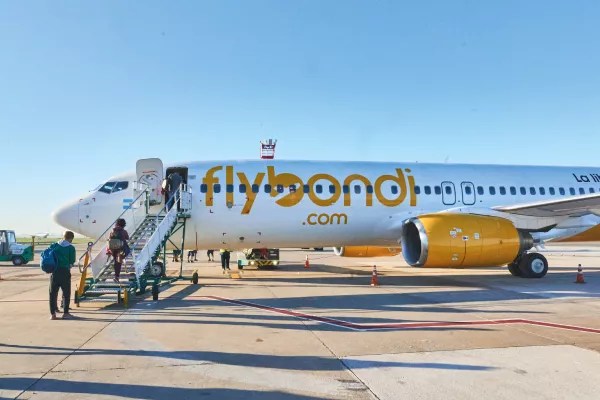
Desde Aeroparque las low cost operan discretamente algunas rutas domésticas. Flybondi vuela de forma directa solo a Florianópolis. El resto de sus vuelos a Brasil que comprende Río de Janeiro y São Paulo y a Asunción (Paraguay) se operan desde Ezeiza. En tanto, JetSMART Airlines Argnetina tiene vuelos solo en la ruta Buenos Aires—Santiago de Chile.

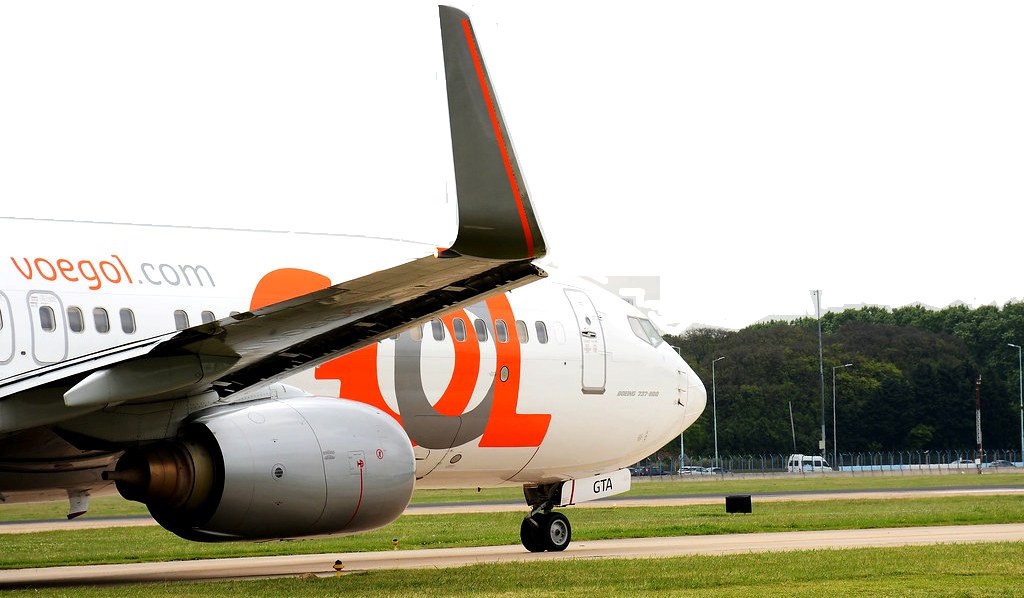
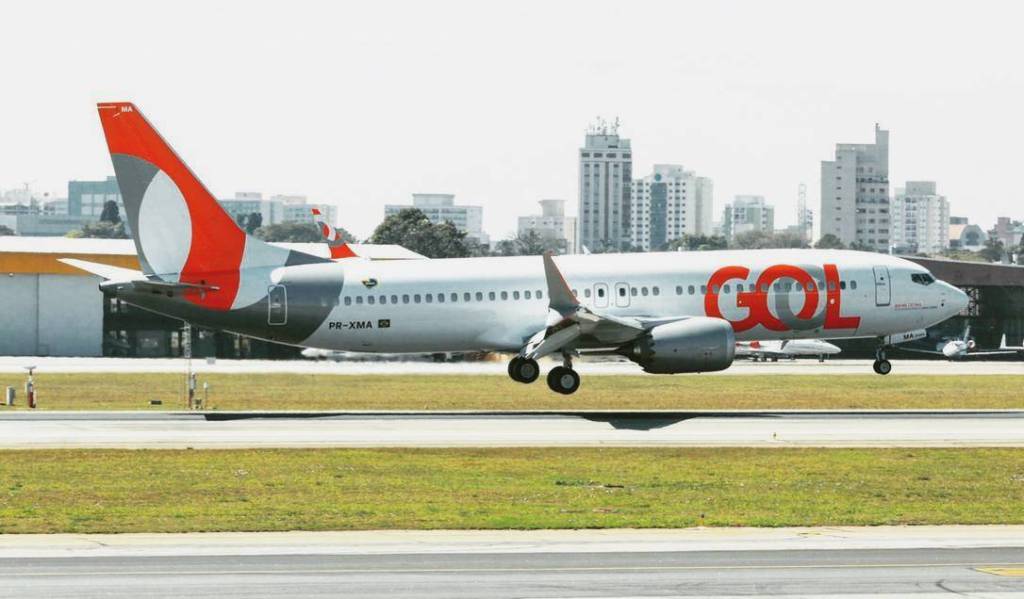
La regionalización y la aplicación de la sexta libertad para el Aeroparque permitirá beneficiar a Aerolíneas Argentinas, LATAM Airlines y GOL Linhas Aéreas, que operan en Aeroparque y poseen una importante red regional por lo que podrán realizar rutas Buenos Aires/AEP hacia destinos en Sudamérica, conexiones al Caribe y Estados Unidos. Los pasajeros podrán comprar los tramos por separado o un pasaje completo que incluya la conectividad desde el destino inicial al final, viajando con la misma aerolínea. La nueva medida significa una ventaja competitiva para atraer más usuarios desde el Aeroparque, con la conveniencia de salir desde la Ciudad de Buenos Aires y alcanzar rápidamente conexiones con otros destinos internacionales. Aunque el cambio de la nueva disposición de sexta libertad no les afecta e impacta a las low-cost argentinas, pues ofrecen solo vuelos directos punto a punto.

Amarres Aeroparque

Tras el cierre del Aeropuerto El Palomar, tanto a Flybondi como a JetSMART les prometieron más lugar en la estación metropolitana. JetSMART Argentina recibió un amarre y otros tres por el espacio que dejó vacante Norwegian Air Argentina, mientras que Flybondi Líneas Aéreas consiguió tres slots. Desde entonces, el espacio que tienen continúa siendo el mismo, por lo que las aeronaves que recibieron en el último tiempo pernoctan en Ezeiza.

Flybondi introdujo a Argentina su décimo primer avión, como parte del plan de inversión por US$ 42 millones que anunció a fines de 2021, al que denominó ‘Plan 2X’, con el objetivo de duplicar su flota y oferta. Ahora, tiene tres aeronaves en Aeroparque y ocho en Ezeiza. Por su parte, JetSMART, que también quiere aumentar su capacidad en la terminal porteña, terminó 2022 con cuatro aviones en Aeroparque y cuatro en Ezeiza.

Cambios Aeroparque

La gestión a cargo de Guillermo Dietrich, durante la Presidencia de Mauricio Macri, trasladó a Ezeiza las operaciones con países limítrofes. La decisión del anterior Gobierno se basó en la intención de descomprimir Aeroparque. Solo permanecieron allí los vuelos que tenían como destino u origen Montevideo y Punta del Este, por lo que la estación aérea quedó reservada casi completamente para el mercado de cabotaje. Así fue que el 3 de Mayo de 2018 dejaron de operar gran parte de los vuelos regionales y se movieron a Ezeiza. La otra mitad dejó de hacerlo progresivamente hasta el 1 de Abril de 2019, fecha límite que se estableció para la concreción de la segunda etapa del traslado.

Con las obras de ampliación que se llevaron adelante en Aeroparque y su reinauguración tras la cuarentena aérea en Marzo de 2021, volvieron las operaciones con Brasil, Chile, Uruguay, Paraguay y Bolivia, a las que se agregó Perú y en 2022 se sumó Colombia. Pero esa reanudación ha sido parcial, con ventas de vuelos punto a punto, y no con conexiones, como ocurrió hasta el macrismo, en la época en que había vuelos regionales desde y hacia Aeroparque. Es decir, en 2020, la venta quedó autorizada solo para vuelos directos entre Buenos Aires y destinos del Mercosur, Perú y Colombia. El 2 de Enero de 2020, antes del inicio de la pandemia, el Gobierno anunció que el Aeropuerto Buenos Aires/Jorge Newbery/AEP retomaría los vuelos internacionales bajo la regionalización que impulsa el Ministerio de Transporte. Ahora, la diferencia es que las aéreas que operan en Aeroparque podrán comercializar servicios con escalas.

Perspectivas low cost

El crecimiento de las líneas aéreas en Argentina se encuentra atada a los vaivenes de la política aeronáutica que establece el Gobierno de turno, priorizando los intereses de Aerolíneas Argentinas condicionando el mercado aéreo hacia un monopolio, sumándose la intencionalidad de manipular los intereses de Aeroparque para ser funcional a la aerolínea de bandera. Por su parte, las low cost continuarán solicitando a la agencia de la ANAC las aprobaciones de ampliación de amarres y más frecuencias tal como había prometido el Gobierno tras la finalización de obras en 03/2021.

El consorcio AA2000 continuará con futuras etapas de modificaciones de la aeroestación de Aeroparque que permitirán el ingreso de más franjas horarias, más aeronaves y mejores servicios, es imperativo que desde el Gobierno obre de acuerdo con las reglas claras de mercado donde todas las aerolíneas argentinas puedan acceder al Aeropuerto Jorge Newbery con los mismo derechos priorizando el beneficio para todos los usuarios del transporte aéreo de Argentina.

Ambas compañías desean incorporar más aeronaves para operar desde Aeroparque. Pero, teniendo en cuenta que aunque insisten para que haya cambios, todavía no lograron modificaciones en las disposiciones de los organismos de aviación. Las low cost diseñaron sus planes de crecimiento para 2023 operando principalmente en Ezeiza.

Argentina, low cost and Aeroparque
Rekindles controversy over low cost at Aeroparque

The Government of Argentina ordered a regionalization measure for the airlines that offer regional flights at the Buenos Aires/Jorge Newbery/AEP Airport and a claim from the Argentine low-cost resurfaced. The change that the Government enabled revives an old dispute over slots for local budget airlines.

The regionalization of Aeroparque has revived the political struggle between the Government and the low-cost companies due to the old claim of the low-cost companies to increase the moorings (slots) in the air station of the City of Buenos Aires. The claim is legitimately based on the fact that the closure of the El Palomar/EPA Airport by the current government would allow low-cost Argentine airlines to migrate their operational base to the Buenos Aires/Jorge Newbery/AEP Airport. After the completion of the reconditioning of the expansion and improvement works of Aeroparque in March 2021, the Government had promised to enable all regular flights of the low-cost airlines Flybondi Líneas Aéreas and JetSMART Airlines Argentina, but the requests have been repeatedly postponed in favor of Aerolíneas Argentinas.

Currently, low cost airlines operate some flights from Aeroparque and other regional routes from Ezeiza/EZE Airport, while the largest number of berths at Aeroparque are for Aerolíneas Argentinas.

Regionalization & 6th freedom

Through Resolution No. 744/2022 published in the Official Gazette, the National Civil Aviation Administration (ANAC) now allows airlines that offer flights at Aeroparque to sell connecting tickets. In this way, the sixth air freedom is put into practice, making it possible to travel from Aeroparque with a stopover in countries of the region to continue to another final destination and vice versa. The news was welcomed by the classic airlines for the benefits it will bring; but the low-cost have not applauded this benefit because it has not been inclusive. Although they assure that they are not fully affected by daily traffic, they insist on an old request: to receive authorization to increase their operational capacity at the Buenos Aires/Jorge Newbery Airport. After the closure of El Palomar, the low-cost companies had to transfer almost all their operations to the Ezeiza/EZE Airport.

From ANAC they affirmed that «the conditions are in place to allow the sixth freedom in Aeroparque and the corresponding studies were carried out to evaluate that the capacity is not saturated». But the low-cost companies point out that, since the El Palomar low-cost airport closed, they want to bring more planes to the Buenos Aires air terminal to increase the air frequencies they offer and they cannot do so due to the lack of political decision from the Government of Argentina.

They argue that the fact that now passengers will be able to fly from Aeroparque to countries in the region to continue traveling in connection to the Caribbean or the United States is detrimental to users who choose to travel to cabotage destinations with lower rates and have to move to Ezeiza, which implies a cost of time and money for those who live near the metropolitan base.

From Aeroparque the low cost operate discreetly some domestic routes. Flybondi flies directly only to Florianópolis. The rest of its flights to Brazil, which includes Rio de Janeiro and São Paulo, and to Asunción (Paraguay) are operated from Ezeiza. Meanwhile, JetSMART Airlines Argentina has flights only on the Buenos Aires-Santiago de Chile route.

The regionalization and application of the sixth freedom for the Aeroparque will benefit Aerolíneas Argentinas, LATAM Airlines and GOL Linhas Aéreas, which operate in Aeroparque and have an important regional network, so they will be able to carry out Buenos Aires/AEP routes to destinations in South America, connections to the Caribbean and the United States. Passengers will be able to buy the sections separately or a complete ticket that includes connectivity from the initial destination to the final destination, traveling with the same airline. The new measure means a competitive advantage to attract more users from the Aeroparque, with the convenience of leaving from the City of Buenos Aires and quickly reaching connections with other international destinations. Although the change of the new provision of sixth freedom does not affect them and impacts the Argentine low-cost, since they only offer direct point-to-point flights.
Moorings Aeroparque

After the closure of El Palomar Airport, both Flybondi and JetSMART were promised more space in the metropolitan station. JetSMART Argnetina received one berth and another three for the space left vacant by Norwegian Air Argentina, while Flybondi Líneas Aéreas got three slots. Since then, the space they have has remained the same, so the aircraft they recently received spend the night at Ezeiza.

Flybondi introduced its eleventh aircraft to Argentina, as part of the US$ 42 million investment plan that it announced at the end of 2021, which it called ‘Plan 2X’, with the aim of doubling its fleet and offer. Now, it has three aircraft at Aeroparque and eight at Ezeiza. For its part, JetSMART, which also wants to increase its capacity at the Buenos Aires terminal, ended 2022 with four planes at Aeroparque and four at Ezeiza.

Aeroparque changes

The management in charge of Guillermo Dietrich, during the Presidency of Mauricio Macri, transferred to Ezeiza the operations with bordering countries. The decision of the previous Government was based on the intention to decompress Aeroparque. Only the flights that had Montevideo and Punta del Este as their destination or origin remained there, so the air station was reserved almost entirely for the cabotage market. So it was that on May 3, 2018, a large part of the regional flights stopped operating and moved to Ezeiza. The other half stopped doing so progressively until April 1, 2019, the deadline that was established for the completion of the second stage of the transfer.

With the expansion works that were carried out at Aeroparque and its reopening after the air quarantine in March 2021, operations with Brazil, Chile, Uruguay, Paraguay and Bolivia returned, to which Peru was added and in 2022 Colombia was added. But this resumption has been partial, with sales of point-to-point flights, and not with connections, as happened until the macrismo, at the time when there were regional flights to and from Aeroparque. In other words, in 2020, the sale was authorized only for direct flights between Buenos Aires and Mercosur, Peru and Colombia destinations. On January 2, 2020, before the start of the pandemic, the Government announced that the Buenos Aires/Jorge Newbery/AEP Airport would resume international flights under the regionalization promoted by the Ministry of Transportation. Now, the difference is that the airlines that operate in Aeroparque will be able to market services with stopovers.

Low-cost perspectives

The growth of the airlines in Argentina is tied to the fluctuations of the aeronautical policy established by the Government of the day, prioritizing the interests of Aerolíneas Argentinas conditioning the air market towards a monopoly, adding the intention of manipulating the interests of Aeroparque to be functional to the flag carrier. For their part, the low cost will continue to request approvals from the ANAC agency for the expansion of moorings and more frequencies as promised by the Government after the completion of works on 03/2021.

The AA2000 consortium will continue with future stages of modifications to the Aeroparque airstation that will allow the entry of more time slots, more aircraft and better services. It is imperative that the Government works in accordance with clear market rules where all Argentine airlines can access Jorge Newbery Airport with the same rights prioritizing the benefit for all users of air transport in Argentina.

Both companies want to incorporate more aircraft to operate from Aeroparque. But, taking into account that although they insist that there be changes, they have not yet achieved modifications in the provisions of the aviation organizations. The low cost companies designed their growth plans for 2023, operating mainly in Ezeiza.

PUBLISHER: Airgways.com
DBk: Airgways.com / Anac.gov.ar /
AW-POST: 202301101457AR
OWNERSHIP: Airgways Inc.
A\W A I R G W A Y S ®


Aeroparque vuelos regionales

AW | 2023 01 06 11:26 | AIRPORTS / AIRLINES / GOVERNMENT

Aerolíneas celebran retorno vuelos regionales con conexión

Un cambio normativo aplicado por el Gobierno de Argentina permite ahora que las aerolíneas vendan vuelos desde y hacia el Aeroparque Jorge Newbery con conexión, una noticia que fue bienvenida por varias empresas del sector por los beneficios que traerá para ellas y los pasajeros. A través de la Resolución Nº744/2022 publicada esta semana en el Boletín Oficial, la Administración Nacional de Aviación Civil (ANAC) dejó sin efecto una medida que impedía la comercialización de vuelos que tuvieran como origen o destino Aeroparque e hicieran conexión en países de la región con terceros. El 2 de Enero de 2020, el Gobierno de Argentina anunció que el Aeropuerto Jorge Newbery/AEP retomaría los vuelos internacionales bajo la regionalización que impulsa el Ministerio de Transporte, luego de que la Presidencia anterior de Mauricio Macri trasladara las operaciones regionales al Aeropuerto Internacional de Ezeiza/EZE.

La decisión del anterior Gobierno se basó en la intención de descomprimir Aeroparque. Solo permanecieron allí los vuelos que tenían como destino u origen Montevideo y Punta del Este, por lo que la estación aérea quedó reservada para el mercado de cabotaje. Así fue que el 3 de Mayo de 2018 dejaron de operar gran parte de los vuelos regionales y se trasladaron a Ezeiza, completando la migración de los vuelos el 1 de Abril de 2019, fecha límite que se estableció para la concreción de la segunda etapa del traslado. La nueva normativa vigente modifica un cambio normativo que permite ahora a las líneas aéreas efectuar vuelos desde y hacia el Aeropuerto Jorge Newbery con conexión, mientras que hasta la fecha sólo podían operar punto a punto. En 2020, la venta de pasajes quedó autorizada solo para vuelos directos con destinos del Mercosur, Perú y Colombia.

Con las obras de ampliación que se llevaron adelante en Aeroparque y su reinauguración tras la cuarentena aérea en Marzo de 2021, volvieron las operaciones con Brasil, Chile, Uruguay, Paraguay y Bolivia, a las que se agregó Perú y en 2022 se sumó Colombia. Pero esa reanudación ha sido parcial, como aseguran en la industria aeronáutica: los vuelos se vendían punto a punto, y no con conexión, como ocurrió hasta el macrismo, en la época en que había vuelos regionales desde y hacia Aeroparque. Ahora, la diferencia es que las líneas aéreas que operan en la terminal metropolitana podrán comercializar servicios desde o hacia Aeroparque con escala.

La medida fue bienvenida por varias empresas del sector por los beneficios que traerá para ellas y los pasajeros. Desde ANAC reconocieron que era una deuda pendiente. «Están dadas las condiciones para permitir la sexta libertad. Se mantienen los mismos destinos, pero se levanta la prohibición que estaba vigente», aseguraron desde el organismo de aviación.

La agencia de la ANAC busca incentivar la conectividad regional, «con beneficios para los pasajeros y un incremento significativo en los niveles de recuperación del tráfico aéreo en el país y la región. No solo se apoyará los servicios para el turismo receptivo, sino que también se contribuirá a mejorar los utilizados por los usuarios en general, pudiendo incrementar los servicios internacionales en un mismo aeropuerto, lo que beneficiará al sistema de aviación nacional y regional», sostiene la resolución. La comercialización de estos pasajes queda sujeta a las autorizaciones previamente otorgadas por ANAC a las compañías y las condiciones acordadas bilateralmente con cada país comprendido por la norma.

Beneficios nueva resolución

En el sector, apuntan que los principales beneficiarios serán los pasajeros, que tendrán más alternativas a la hora de elegir: podrán optar por comprar los tramos por separado o solo un pasaje que incluya la conectividad desde el destino inicial al final, viajando con la misma aerolínea. A su vez, en la medida en que las aéreas que operan en Aeroparque pongan a la venta los boletos con conexión, no será necesario ir a Ezeiza para tomarse un vuelo al exterior, lo que implica un ahorro de tiempo y dinero para quienes viven cerca de la terminal metropolitana.

Compañías extranjeras como LATAM Airlines, SKY Airline y GOL Linhas Aéreas, que operan en Aeroparque y tienen una importante red regional podrán vender, por ejemplo, las rutas Buenos Aires/AEP—Lima/LIM—Miami/MIA o Buenos Aires/AEP—Brasilia/BSB—Miami/MIA y viceversas. La derogación de la medida representa una oportunidad para estas empresas que llevan regularmente pasajeros, especialmente, a los Estados Unidos, Brasil y el Caribe, a través de sus centros de conexión. Alrededor del 60% de los viajeros que se movilizan a países limítrofes tienen como punto final otro destino.

«Es una ventaja competitiva. Hace más eficiente la venta de tickets y evita que los usuarios tengan que comprar pasajes por separado, lo que generaba un riesgo: que eligieran llegar a los destinos limítrofes con aéreas como LATAM, que opera a nivel local, y luego optaran por compañías de esos países, que no están presentes en la Argentina, para llegar al destino final», indicó una fuente del sector.

Aunque Aerolíneas Argentinas no se ve directamente beneficiada, porque sus vuelos internacionales no tienen conexión con otros países, sí queda impactada de forma positiva por la medida. La aerolínea de bandera tiene un código compartido con GOL para brindar más oportunidades de vuelos, ofreciendo conexiones con destinos a los que Aerolíneas no llega. Así, la asociación con la aerolínea brasileña permite a pasajeros argentinos de Buenos Aires y ciudades del interior llegar con vuelos directos a Brasil, y allí conectar con otras operaciones de GOL Linhas Aéreas.

Perjuicios nueva resolución

Podemos notar que la nueva resolución implementado por el Gobierno actual traería aparejado un perjuicio para las líneas aéreas low cost. Desde el Gobierno han estado aplazando las reiteradas solicitudes por parte de las aerolíneas low cost argentinas como Flybondi y JetSMART Airlines para incrementar los amarres en el Aeropuerto Jorge Newbery/AEP, argumentando la falta de slots (permisos de despegues/aterrizajes) en la aeroestación remodelada y ampliada.

Por este motivo, son incongruentes los planteos del Gobierno de no aprobar las solicitudes de amarres adicionales para las low cost. Ahora, con el incremento de las operaciones regionales de Aeroparque, las oportunidades de progresar y ampliar sus operaciones en este aeropuerto de las aéreas low cost estaría truncados, pues el Aeropuerto Jorge Newbery estaría funcionando casi al 100% de su capacidad operativa.

Aeroparque regional flights

Airlines celebrate regional flights with connection

A regulatory change applied by the Government of Argentina now allows airlines to sell flights from and to the Jorge Newbery Aeroparque with connection, a news that was welcomed by several companies in the sector for the benefits it will bring for them and passengers. Through Resolution No. 744/2022 published this week in the Official Gazette, the National Civil Aviation Administration (ANAC) left without effect a measure that prevented the commercialization of flights that had as an origin or destination Aeroparque and made connection in countries of the countries of the region with third parties. On January 2, 2020, the Government of Argentina announced that the Jorge Newbery/AEP airport would resume international flights under the regionalization promoted by the Ministry of Transportation, after the previous presidency of Mauricio Macri moved regional operations to the International Airport of Ezeiza/EZE.

The decision of the previous government was based on the intention of decompressing Aeroparque. Only the flights had as destination or Montevideo origin and Punta del Este, so the air station was reserved for the cabotage market. Thus, on May 3, 2018, a large part of the regional flights stopped operating and moved to Ezeiza, completing the migration of the flights on April 1, 2019, a deadline that was established for the concretion of the second stage of the second stage of the transfer. The new regulations in force modifies a regulatory change that now allows airlines to make flights from and to Jorge Newbery airport with connection, while to date they could only operate point to point. In 2020, the sale of tickets was authorized only for direct flights with destinations from Mercosur, Peru and Colombia.

With the extension works that were carried out in Aeroparque and its reopening after the air quarantine in March 2021, operations with Brazil, Chile, Uruguay, Paraguay and Bolivia, to which Peru was added and in 2022 Colombia joined. But that resumption has been partial, as they assure in the aeronautical industry: the flights were sold to point, and not with connection, as happened until the macrismo, at the time when there were regional flights from and to Aeroparque. Now, the difference is that the airlines operating in the Metropolitan Terminal can market services from or to Aeroparque with scale.

The measure was welcomed by several companies in the sector for the benefits it will bring for them and passengers. From ANAC they recognized that it was a pending debt. «The conditions to allow sixth freedom are given. The same destinations are maintained, but the prohibition that was in force is raised», they said from the aviation body.

The ANAC agency seeks to encourage regional connectivity, «with benefits for passengers and a significant increase in air traffic recovery levels in the country and the region. Not only will services be supported for receptive tourism, but also It will contribute to improving those used by users in general, being able to increase international services in the same airport, which will benefit the national and regional aviation system», says the resolution. The commercialization of these passages is subject to the authorizations previously granted by ANAC to the companies and the conditions bilaterally agreed with each country comprised by the standard.

New resolution benefits

In the sector, they point out that the main beneficiaries will be the passengers, who will have more alternatives when choosing: they can choose to buy the sections separately or only a passage that includes connectivity from the initial destination at the end, traveling with the same airline. In turn, to the extent that the air that operate in Aeroparque put on sale the tickets with connection, it will not be necessary to go to Ezeiza to take a flight abroad, which implies a saving of time and money for those who live nearby of the Metropolitan Terminal.

Foreign companies such as LATAM Airlines, SKY Airline and GOL Linhas Aéreas, which operate at Aeroparque and have an important regional network, will be able to sell, for example, the Buenos Aires/AEP—Lima/LIM—Miami/MIA or Buenos Aires/AEP—Brasilia routes. /BSB—Miami/MIA and vice versa. The repeal of the measure represents an opportunity for these companies that regularly carry passengers, especially to the United States, Brazil and the Caribbean, through their connection centers. About 60% of travelers who move to neighboring countries have another destination as their end point.

«It is a competitive advantage. It makes ticket sales more efficient and prevents users from having to buy tickets separately, which generated a risk: choosing to reach bordering destinations with airlines such as LATAM, which operates locally, and then they will opt for companies from those countries, which are not present in Argentina, to reach the final destination», said a source from the sector.

Although Aerolíneas Argentinas does not directly benefit, because its international flights do not have connections with other countries, it is positively impacted by the measure. The flag carrier has a code share with GOL to provide more flight opportunities, offering connections to destinations that Aerolíneas does not reach. Thus, the association with the Brazilian airline allows Argentine passengers from Buenos Aires and cities in the interior to arrive with direct flights to Brazil, and there connect with other GOL Linhas Aéreas operations.

Damages new resolution

We can note that the new resolution implemented by the current government would bring harm to low cost airlines. The Government has been postponing the repeated requests by Argentine low-cost airlines such as Flybondi and JetSMART Airlines to increase moorings at the Jorge Newbery/AEP Airport, arguing the lack of slots (takeoff/landing permits) in the remodeled aerostation and enlarged.

For this reason, the proposals of the Government of not approving the requests for additional moorings for low cost are incongruous. Now, with the increase in regional operations of Aeroparque, the opportunities to progress and expand its operations at this airport for low cost airlines would be cut short, since the Jorge Newbery Airport would be operating at almost 100% of its operational capacity.

PUBLISHER: Airgways.com
DBk: Anac.gov.ar / Santiago Filipuzzi / Airgways.com
AW-POST: 202301061126AR
OWNERSHIP: Airgways Inc.
A\W A I R G W A Y S ®

Aeropuerto San Rafael cerrado

AW | 2023 01 02 14:42 | AIRPORTS / AIRLINES

San Rafael, Argentina permanecerá cerrado por obras

El Aeropuerto San Rafael/AFA, localizado en la Provincia de Mendoza, Argentina, ha anunciado el cierre de las operaciones para realizar obras de mantenimiento. Las autoridades de la aeroestación sanrafaelina han indicado que permanecerá cerrada del 1 de Febrero al 2 de Abril de 2023, para efectuar trabajos de recomposición de la Pista y mejoras edilicias y ampliaciones. Las obras tendrán una duración de aproximadamente sesenta días para la puesta a punto de la Terminal aérea.

A partir de 01/02 comenzarán las obras de reparado de la única Pista del Aeropuerto San Rafael como así también las ampliaciones en la Terminal aeroportuaria. El Aeropuerto de San Rafael es un aeropuerto público ubicado a 6 kilómetros al oeste de San Rafael, una ciudad en la Provincia de Mendoza, Argentina. También es conocido como Aeropuerto Suboficial Ayudante Santiago Germano. La longitud de la pista incluye umbrales desplazados de 100 metros en las cabeceras de la Pista 11 y 155 metros en la Pista 29.

La programación de los vuelos atendidos por Aerolíneas Argentinas en Embraer E190-100 serán atendidos hacia el Aeropuerto Mendosa/MDZ, en la Capital de la provincia homónima. Además, la compañía ha expresado que los usuarios podrán cambiar los pasajes aéreos sin penalidades para la fecha entre el 03/04 hasta el 30/06 o si el usuario desea cancelar el vuelo no se cobrarán adicionales ni penalidades.

San Rafael Airport closed

San Rafael, Argentina will remain closed for works

The San Rafael Airport/AFA, located in the Province of Mendoza, Argentina, has announced the closure of operations to carry out maintenance works. The authorities of the San Rafael airstation have indicated that it will remain closed from February 1 to April 2, 2023, to carry out work to recompose the runway and building improvements and extensions. The works will last approximately sixty days for the development of the Air Terminal.

As of 02/01, the repair works of the only runway at the San Rafael Airport will begin, as well as the expansions in the airport terminal. San Rafael Airport is a public airport located 6 kilometers west of San Rafael, a city in the Province of Mendoza, Argentina. It is also known as Santiago Germano Assistant Petty Officer Airport. The length of the runway includes offset thresholds of 100 meters at the head of Runway 11 and 155 meters on Runway 29.

The programming of the flights attended by Aerolíneas Argentinas in Embraer E190-100 will be attended to the Mendosa/MDZ Airport, in the Capital of the homonymous province. In addition, the company has stated that users can change air tickets without penalties for the date between 04/03 to 06/30 or if the user wishes to cancel the flight, no additional charges or penalties will be charged.

PUBLISHER: Airgways.com
DBk: Aa2000.com.ar / Aerolineas.com / Pablo G. Sanz / Airgways.com
AW-POST: 202301021442AR
OWNERSHIP: Airgways Inc.
A\W A I R G W A Y S ®

Argentina regionalización Aeroparque

AW | 2023 01 02 12:35 | AIRPORTS / GOVERNMENT

Gobierno argentino elimina restricción vuelos regionales

AW-AA2000__AEP

El Gobierno de la República Argentina ha anunciado por medio de la Administración de Nacional de Aviación Civil (ANAC) que a través de la Resolución Nº744/2022 publicada en el Boletín Oficial el Lunes 2 de Enero de 2023, ha eliminado las restricciones existentes a la operación de vuelos internacionales en el Aeropuerto Buenos Aires/Jorge Newbery/AEP de la Ciudad de Buenos Aires. La normativa de la internacionalización del Aeroparque Buenos Aires establecida en Febrero de 2020 otorgaba vuelos comercializados por las aerolíneas en origen o destino en esos países, eliminando la quinta libertad aérea.

La nueva regulación del organismo en la resolución del día Lunes 02/01, con base en informes de la Organización Nacional del Sistema Aeroportuario Nacional (ORSNA) expresa: «se ha concluido que es posible promover la modificación regulatoria con el fin de aumentar la conectividad a nivel regional, lo que redunda en grandes beneficios para los pasajeros, y un aumento significativo en los niveles de recuperación del tráfico aéreo comercial en el país y la región. […] No solo favorecería los servicios aéreos para el turismo receptivo, sino que también contribuiría a mejorar los utilizados por los usuarios en general, y podría aumentar las conexiones de servicios internacionales en el mismo aeropuerto, beneficiando a todo el sistema aéreo comercial nacional y regional». La nueva resolución permitirá a cada aerolínea contar con aprobaciones previas de la programación necesaria y bajo las condiciones pactadas bilateralmente con Argentina.

El Aeropuerto Jorge Newbery/AEP operan las siguientes aerolíneas cubriendo los siguientes destinos:
Asunción/ASU: Aerolíneas Argentinas / Paranair
Bogotá/BOG: Aerolíneas Argentinas
Brasilia/BSB: Aerolíneas Argentinas
Curitiba/CWB: Aerolíneas Argentinas
Florianópolis/FLN: Aerolíneas Argentinas / GOL Linhas Aéreas
Fortaleza/FOR: GOL Linhas Aéreas
Río de Janeiro/GIG: Aerolíneas Argentinas / GOL Linhas Aéreas / LATAM Airlines
São Paulo/Guarulhos/GRU: Aerolíneas Argentinas, GOL Linhas Aéreas y LATAM Airlines
Lima/LIM: Aerolíneas Argentinas / LATAM Airlines
Montevideo/MVD: Aerolíneas Argentinas
Punta del Este/PDP: Aerolíneas Argentinas
Porto Alegre/POA: Aerolíneas Argentinas
Recife/REC: GOL Linhas Aéreas
Santiago de Chile/SCL: Aerolíneas Argentinas / JetSMART Airlines Chile / LATAM Airlines Chile / SKY Airline
Salvador Bahía/SSA: GOL Linhas Aéreas / Aerolíneas Argentinas
Santa Cruz de la Sierra/VVI: Aerolíneas Argentinas

El tráfico aéreo entre Enero y Noviembre de 2022, el Aeroparque ha desarrollado un movimiento de 2,2 millones de pasajeros internacionales, un incremento triplicando los valores de 2019, cuando existían vuelos regionales hacia Uruguay. El sitio de monitoreo de aviación Cirium, establece que durante el mes de Enero 2023 se ofrecerán 348.948 plazas en vuelos internacionales desde y hacia el Aeropuerto Jorge Newbery, con Aerolíneas Argentinas representando un 56% de la oferta, seguida de GOL Linhas Aéreas con 18,3% y LATAM Airlines con el 17,7%.

Argentina restores AEP regionalization

Argentine government removes restriction on regional flights

The Government of the Argentine Republic has announced through the National Civil Aviation Administration (ANAC) that through Resolution No. 744/2022 published in the Official Gazette on Monday, January 2, 2023, it has eliminated the existing restrictions on the operation of international flights at the Buenos Aires/Jorge Newbery Airport/AEP in the City of Buenos Aires. The internationalization regulations of Aeroparque Buenos Aires established in February 2020 granted flights marketed by airlines at origin or destination in those countries, eliminating the fifth air freedom.

The new regulation of the organization in the resolution of Monday 02/01, based on reports from the National Organization of the National Airport System (ORSNA) expresses: «it has been concluded that it is possible to promote the regulatory modification in order to increase connectivity at the regional level, which results in great benefits for passengers, and a significant increase in the levels of recovery of commercial air traffic in the country and the region […] It would not only favor air services for receptive tourism, but it would also contribute to improving those used by users in general, and could increase international service connections at the same airport, benefiting the entire national and regional commercial air system». The new resolution will allow each airline to have prior approval of the necessary programming and under the conditions agreed bilaterally with Argentina.

Jorge Newbery Airport/AEP operates the following airlines covering the following destinations:
Asuncion/ASU: Aerolíneas Argentinas / Paranair
Bogota/BOG: Aerolíneas Argentinas
Brasilia/BSB: Aerolíneas Argentinas
Curitiba/CWB: Aerolíneas Argentinas
Florianópolis/FLN: Aerolíneas Argentinas / GOL Linhas Aéreas
Fortaleza/FOR: GOL Linhas Aéreas
Rio de Janeiro/GIG: Aerolíneas Argentinas / GOL Linhas Aéreas / LATAM Airlines
São Paulo/Guarulhos/GRU: Aerolíneas Argentinas, GOL Linhas Aéreas and LATAM Airlines
Lima/LIM: Aerolíneas Argentinas / LATAM Airlines
Montevideo/MVD: Aerolíneas Argentinas
Punta del Este/PDP: Aerolíneas Argentinas
Porto Alegre/POA: Aerolíneas Argentinas
Recife/REC: GOL Linhas Aéreas
Santiago de Chile/SCL: Aerolíneas Argentinas / JetSMART Airlines Chile / LATAM Airlines Chile / SKY Airline
Salvador Bahia/SSA: GOL Linhas Aéreas / Aerolíneas Argentinas
Santa Cruz de la Sierra/VVI: Aerolíneas Argentinas

Air traffic between January and November 2022, the Aeroparque has developed a movement of 2.2 million international passengers, an increase tripling the values of 2019, when there were regional flights to Uruguay. The Cirium aviation monitoring site establishes that during the month of January 2023, 348,948 seats will be offered on international flights to and from Jorge Newbery Airport, with Aerolíneas Argentinas representing 56% of the offer, followed by GOL Linhas Aéreas with 18, 3% and LATAM Airlines with 17.7%.

PUBLISHER: Airgways.com
DBk: Anac.gov.ar / Argentina.gob.ar/orsna / Cirium.com / Airgways.com
AW-POST: 202301021235AR
OWNERSHIP: Airgways Inc.
A\W A I R G W A Y S ®
Protesta frente Aeroparque

AW | 2022 12 27 08:28 | AIRPORTS / AVIATION

Caos tránsito frente a Jorge Newbery por protesta de sindicalistas

Los empleados tercerizados de GPS para Aerolíneas Argentinas reclaman por el despido de un delegado sindical. Una de las principales empresas tercerizadas que presta servicio para Aerolíneas Argentinas, realizan una protesta frente al Aeroparque Jorge Newbery en reclamo por el despido de un delegado. La medida de fuerza provoca un importante caos de tránsito sobre la Avenida Costanera Rafael Obligado, debido a que sólo quedaron habilitados dos carriles uno de cada mano para la circulación de vehículos.

Los trabajadores de GPS realizaron la convocatoria programada para el Martes 27/12 desde las 06:30 hs frente a la terminal aeroportuaria de la Ciudad de Buenos Aires para reclamar contra la expulsión de delegados, sanciones contra los trabajadores, el llamado a elecciones limpias y sin proscripciones, y por la reapertura de paritarias y el pago de un bono antes de fin de año. La manifestación se produce a raíz del despido de un delegado que había sufrido dos ACV. Ante este escenario, se llevó a cabo una asamblea en protesta de ese despido que derivó en la suspensión de por lo menos cuarenta trabajadores.

Agentes de Policía de la Ciudad ordenan el ingreso a Aeroparque en plena manifestación, que no afecta a los vuelos programados pero presenta demoras para el acceso a la terminal aérea de la Ciudad de Buenos Aires.

Protest in front of Aeroparque

Traffic chaos in front of Jorge Newbery due to union protest

Outsourced GPS employees for Aerolíneas Argentinas are demanding the dismissal of a union delegate. One of the main outsourced companies that provides services for Aerolíneas Argentinas, held a protest in front of Aeroparque Jorge Newbery to demand the dismissal of a delegate. The measure of force causes significant traffic chaos on Avenida Costanera Rafael Obligado, due to the fact that only two lanes, one on each side, were enabled for the circulation of vehicles.

GPS workers held the call scheduled for Tuesday 12/27 from 06:30 am in front of the Buenos Aires City airport terminal to protest against the expulsion of delegates, sanctions against workers, the call for fair elections and without proscriptions, and for the reopening of parities and the payment of a bonus before the end of the year. The demonstration occurs as a result of the dismissal of a delegate who had suffered two strokes. Given this scenario, an assembly was held to protest the dismissal that led to the suspension of at least forty workers.

City Police officers order entry to Aeroparque in full demonstration, which does not affect scheduled flights but presents delays for access to the air terminal of the City of Buenos Aires.

PUBLISHER: Airgways.com
DBk: C5n.com / Airgways.com
AW-POST: 202212270828AR
OWNERSHIP: Airgways Inc.
A\W A I R G W A Y S ®
Veliky Ustyug recibe 1er SSJ-100

AW | 2022 12 26 13:37 | AIRPORTS / AIRLINES

Aeropuerto Veliky Ustyug recibió primer vuelo Sukhoi Superjet 100

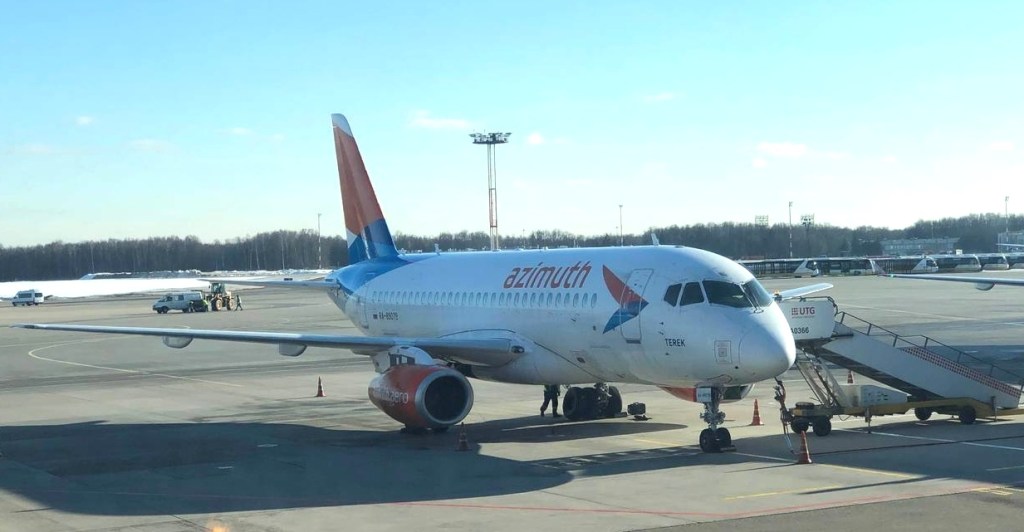
El Aeropuerto Veliky Ustyug/VUS, recibió el primer vuelo regular del avión Irkut Sukhoi Superjet SSJ-100 con turistas que llegaron el 25 de Diciembre de 2022, informó el servicio de prensa del Gobernador de la región de Vologda, Oleg Kuvshinnikov. El Aeropuerto de Velikiy Ustyug es un aeropuerto de la Federación Rusia situado a 2 km al Norte de Velikiy Ustyug. Es un pequeño aeródromo civil con una plataforma de estacionamiento y algunos edificios. El aeropuerto sólo puede aceptar aviones pequeños. Existe servicio ocasional de pasajeros a Vologda. El aeropuerto más grande de Kotlas está a 72 kilómetros

El primer vuelo en la práctica confirma que a partir de ahora el Aeropuerto de Veliky Ustyug puede recibir aviones como Sukhoi Superjet 100, Bombardier CRJ-200 y otros aviones de esta categoría. Actualmente, se observa que hay cinco vuelos programados a la semana, dos desde Vologda y tres desde Cherepovets. Sin embargo, en el futuro, señala el servicio de prensa, se planea organizar vuelos directos sin escalas a Veliky Ustyug desde Moscú, San Petersburgo y otras ciudades importantes.

La reconstrucción del Aeropuerto Veliky Ustyug ha demandado cuatro años, que durante este tiempo la longitud de la pista se incrementó a 1.799 metros. Además, el aeródromo y las calles de rodaje se equiparon actualizando los estándares a su categoría.

El Sukhoi Superjet SSJ-100 es un avión de pasajeros ruso de corta distancia desarrollado por Sukhoi Civil Aircraft, bajo la compañía Irkut Corporation, diseñado para transportar 108 pasajeros en un rango de autonomía de 3.000 a 4.5000 kilómetros.

Veliky Ustyug receives 1st SSJ-100

Veliky Ustyug Airport received first Sukhoi Superjet 100 flight

Veliky Ustyug/VUS Airport received the first regular flight of the Irkut Sukhoi Superjet SSJ-100 plane with tourists who arrived on December 25, 2022, the press service of the Governor of the Vologda region Oleg Kuvshinnikov reported. Velikiy Ustyug Airport is an airport in the Russian Federation located 2 km north of Velikiy Ustyug. It is a small civilian airfield with a parking apron and some buildings. The airport can only accept small planes. There is occasional passenger service to Vologda. The largest airport in Kotlas is 72 kilometers away

The first flight in practice confirms that from now on Veliky Ustyug Airport can receive such aircraft as Sukhoi Superjet 100, Bombardier CRJ-200 and other aircraft of this category. Currently, it is noted that there are five scheduled flights a week, two from Vologda and three from Cherepovets. However, in the future, the press service notes, it is planned to organize direct non-stop flights to Veliky Ustyug from Moscow, St. Petersburg and other major cities.

The reconstruction of Veliky Ustyug Airport has taken four years, during which time the length of the runway was increased to 1,799 meters. In addition, the aerodrome and taxiways were equipped up to date with the standards for their category.

The Sukhoi Superjet SSJ-100 is a Russian short-haul airliner developed by Sukhoi Civil Aircraft, under the Irkut Corporation company, designed to carry 108 passengers over a range of 3,000 to 4,500 km.

Великий Устюг получил первый SSJ-100

Аэропорт Великий Устюг принял первый рейс Sukhoi Superjet 100

Аэропорт Великий Устюг/ВУС принял первый регулярный рейс самолета Иркут Sukhoi Superjet SSJ-100 с прибывшими 25 декабря 2022 года туристами, сообщила пресс-служба губернатора Вологодской области Олега Кувшинникова. Аэропорт Великий Устюг — аэропорт в Российской Федерации, расположенный в 2 км к северу от Великого Устюга. Это небольшой гражданский аэродром со стоянкой и несколькими постройками. Аэропорт может принимать только небольшие самолеты. Изредка есть пассажирские перевозки в Вологду. Крупнейший аэропорт Котласа находится в 72 км.

Первый полет на практике подтверждает, что отныне аэропорт Великий Устюг может принимать такие самолеты, как Sukhoi Superjet 100, Bombardier CRJ-200 и другие самолеты этой категории. В настоящее время отмечается пять регулярных рейсов в неделю, два из Вологды и три из Череповца. Однако в дальнейшем, отмечает пресс-служба, планируется организовать прямые беспосадочные рейсы в Великий Устюг из Москвы, Санкт-Петербурга и других крупных городов.

Реконструкция аэропорта Великий Устюг заняла четыре года, за это время длина взлетно-посадочной полосы была увеличена до 1799 метров. Кроме того, аэродром и рулежные дорожки были оборудованы в соответствии со стандартами своей категории.

Sukhoi Superjet SSJ-100 — российский ближнемагистральный авиалайнер, разработанный компанией «Гражданские самолеты Сухого» при корпорации «Иркут», рассчитанный на перевозку 108 пассажиров на дальность от 3000 до 4500 км.

PUBLISHER: Airgways.com
DBk: Azimuth.aero / Airgways.com
AW-POST: 202212261337AR
OWNERSHIP: Airgways Inc.
A\W A I R G W A Y S ®
Vuelo bajo del Aeropuerto Rosario

AW | 2022 12 25 21:05 | AIRPORTS

Aeropuerto Rosario busca levantar vuelo pospandemia

AIR_Isologotype

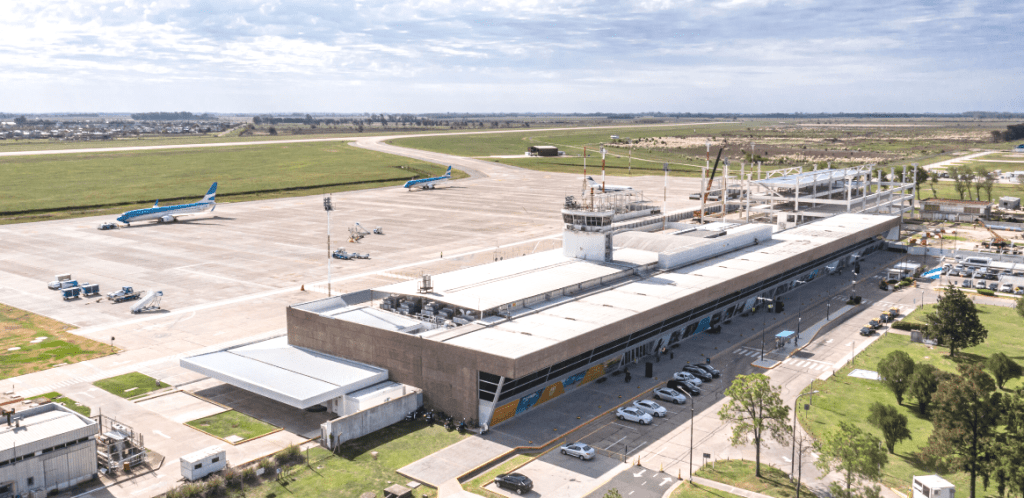
El informe difundido por la Administración Nacional de Aviación Civil (ANAC) de Argentina para el Aeropuerto Rosario/ROS en 2022, expresa que ha desarrollado alrededor de 300.000 personas han pasado por el aeropuerto, en comparación con 650.000 en 2019, anteriormente a la crisis sanitaria mundial. Parte del tráfico perdido en la pandemia se ha recuperado, es cierto, pero todavía falta la mitad. En tres años, el aeropuerto ha descendido del décimo al decimoséptimo lugar en el ranking de las terminales más concurridas del país, mientras que antes había logrado superar a ciudades como Ushuaia, Iguazú, El Calafate y Salta, destinos con un alto flujo turístico.

El mayor impacto de la aeroestación rosarina obedece a la falta de vuelos low cost nacionales debido a una mezcla de baja rentabilidad y problemas políticos. En Marzo de 2019, la administración socialista acordó una contribución de AR$ 4 millones a Flybondi para fortalecer el desarrollo de nuevas rutas, pero menos de un año después de que se implementó la herramienta, el nuevo Gobernador de la Provincia de Santa Fe, Omar Perotti, canceló las ayudas a las aerolíneas de presupuesto. Mediante el Decreto 0257/2019, se derogó el Programa General de Promoción del Transporte Aeronáutico y se eliminó una política de promoción de la operación de nuevas aerolíneas en la provincia.

AW-Wk_Flybondi_Boeing_737-83N_LV-HKR

El incentivo de la Gobernación Socialista de Miguel Lifschitz estimuló la aviación comercial incentivando a las líneas aéreas low cost Flybondi Líneas Aéreas y JetSMART Airlines Argentina ha desarrollar vuelos desde Rosario. Las medidas actuales de la Gobernación provincial alineadas alas medidas nacionales de aplicar las tarifas máximas y mínimas para los vuelos nacionales ha erosionado el fortalecimiento de las aerolíneas privadas, favoreciendo a la aerolínea del Estado Aerolíneas Argentinas al desarrollar precios de tickets acorde a su alto costo operativo. En en plano de vuelos internacionales sólo despegan Aerolíneas Argentinas, Copa Airlines y GOL Linhas Aéreas, con números muy por debajo de la pre-pandemia.

En Octubre 2022, una investigación de la Concejal de Rosario, Véronica Irízar, ha expresado que «hubo 21.000 pasajeros internacionales en 2021 contra más de 500.000 en 2018. Rosario es el aeropuerto con peor desempeño entre los principales», señala el informe, lo que representó una caída del 90% en tres años para la terminal aérea rosarina, que también marcó la fuerte caída en el ranking de la terminal local del puesto décimo al décimo séptimo. En 2018, por ejemplo, hubo conexiones internacionales a Lima, Santiago de Chile, Río de Janeiro, Recife, Porto Alegre, São Paulo, Panamá y Florianópolis. Actualmente, el Aeropuerto Rosario mantiene conexiones hacia Panamá, Río de Janeiro y São Paulo/GRU.

AIR presenta argumentos

El Presidente del Aeropuerto Internacional Rosario (AIR), Eduardo Romagnoli, expresó su desacuerdo con los dichos de la Concejal Verónica Irízar del documento divulgado: «Este es un documento sesgado y destructivo porque compara los datos de 2018 con un año de pandemia. Si bien es cierto que el Aeropuerto Rosario ha recuperado sus vuelos, también es cierto que todavía están muy por debajo de los niveles previos a la pandemia. El número total de pasajeros en 2022 se ha triplicado respecto al año anterior, todavía afectado por el Covid, pero representan la mitad de los controlados en 2019. De hecho, según datos de la Fundación Banco Municipal en Noviembre de este año, la cifra representó 639.767 pasajeros en total (entre nacionales e internacionales) en 2019 frente a los 355.376 de 2022». Las cifras divulgadas por la autoridad del Aeropuerto Rosario anterior a la pandemia la diferencia de pasajeros en vuelos nacionales es considerablemente menor que la registrada en vuelos internacionales. En 2018, la diferencia se extiende al 85,9% respecto al actual panorama. El periodo de los primeros meses de 2019 la brecha interanual respecto al 2022 alcanza los 14,5%, mientras que en el segmento internacional la diferencia retrocede al 81,5% para 2022.

Perspectivas Rosario

El anuncio en el 3Q2022 del retorno de la aerolínea de presupuesto Flybondi a Rosario para 2023 estará condicionada a la variable de mercado y la evolución de la economía en Argentina. La aerolínea low cost posee bases en Buenos Aires/EZE/AEP y Córdoba/COR ampliando conexiones a diferentes destinos del país. El Aeropuerto Rosario deberá establecer políticas claras para incentivar a más aerolíneas a desembarcar, una tarea que la pandemia borró las expectativas de los santafesinos.

Low flight from Rosario Airport

Rosario Airport seeks to lift post-pandemic flight

The report released by the National Civil Aviation Administration (ANAC) of Argentina for the Rosario Airport/ROS in 2022, states that around 300,000 people have passed through the airport, compared to 650,000 in 2019, prior to the global health crisis. Some of the traffic lost in the pandemic has been recovered, it is true, but half is still missing. In three years, the airport has fallen from tenth to seventeenth place in the ranking of the busiest terminals in the country, while before it had managed to surpass cities such as Ushuaia, Iguazú, El Calafate and Salta, destinations with a high tourist flow.

The greatest impact of the Rosario airport is due to the lack of national low cost flights due to a mixture of low profitability and political problems. In March 2019, the socialist administration agreed to a contribution of AR$4 million to Flybondi to strengthen the development of new routes, but less than a year after the tool was implemented, the new Governor of the Province of Santa Fe, Omar Perotti, canceled aid to budget airlines. Through Decree 0257/2019, the General Program for the Promotion of Aeronautical Transport was repealed and a policy to promote the operation of new airlines in the province was eliminated.

The incentive of the Socialist Government of Miguel Lifschitz stimulated commercial aviation by encouraging the low cost airlines Flybondi Líneas Aéreas and JetSMART Airlines Argentina to develop flights from Rosario. The current measures of the provincial government aligned with the national measures to apply the maximum and minimum rates for domestic flights have eroded the strengthening of private airlines, favoring the state airline Aerolíneas Argentinas by developing ticket prices according to its high operating cost. . In the plane of international flights, only Aerolíneas Argentinas, Copa Airlines and GOL Linhas Aéreas take off, with numbers well below the pre-pandemic.

In October 2022, an investigation by the Rosario Councilor, Véronica Irízar, has stated that «there were 21,000 international passengers in 2021 against more than 500,000 in 2018. Rosario is the airport with the worst performance among the main ones», the report states, which It represented a 90% drop in three years for the Rosario air terminal, which also marked the sharp drop in the ranking of the local terminal from tenth to seventeenth place. In 2018, for example, there were international connections to Lima, Santiago de Chile, Rio de Janeiro, Recife, Porto Alegre, São Paulo, Panama, and Florianópolis. Currently, Rosario Airport maintains connections to Panama, Rio de Janeiro and São Paulo/GRU.

AIR presents arguments

The President of the Rosario International Airport (AIR), Eduardo Romagnoli, expressed his disagreement with the statements of Councilor Verónica Irízar in the document released: «This is a biased and destructive document because it compares the 2018 data with a pandemic year. Although It is true that Rosario Airport has recovered its flights, it is also true that they are still well below pre-pandemic levels. The total number of passengers in 2022 has tripled compared to the previous year, still affected by Covid, but they represent half of those controlled in 2019. In fact, according to data from the Fundación Banco Municipal in November of this year, the figure represented 639,767 passengers in total (between national and international) in 2019 compared to 355,376 in 2022». The figures disclosed by According to the authority of the Rosario Airport prior to the pandemic, the difference in passengers on domestic flights is considerably less than that registered on international flights. In 2018, the difference extends to 85.9% compared to the current scenario. In the period of the first months of 2019, the year-on-year gap compared to 2022 reached 14.5%, while in the international segment the difference receded to 81.5% by 2022.

Rosario perspectives

The announcement in 3Q202 of the return of the budget airline Flybondi to Rosario for 2023 will be conditioned to the market variable and the evolution of the economy in Argentina. The low cost airline has bases in Buenos Aires/EZE/AEP and Córdoba/COR expanding connections to different destinations in the country. The Rosario Airport must establish clear policies to encourage more airlines to disembark, a task that the pandemic erased the expectations of the people of Santa Fe.

PUBLISHER: Airgways.com
DBk: Aeropuertorosario.com / Anac.gov.ar / Airgways.com
AW-POST: 202212252105AR
OWNERSHIP: Airgways Inc.
A\W A I R G W A Y S ®

Inversiones en Corporación América

AW | 2022 12 23 15:43 | AIRPORTS

Corporación América Airports objetivo África

CAAP_Isologotype

Corporación América Airports, ha anunciado inversiones en construcción de aeropuertos después de atravesar la crisis de la pandemia y la supresión de vuelos en todo el mundo. Después de salir de posiblemente la peor crisis en la historia de la industria de las aerolíneas, uno de los operadores aeroportuarios más grandes del mundo está empezando a ver los beneficios de una gran reorganización y está considerando una expansión en África.

Corporación América Airports, una compañía con sede en Luxemburgo que opera 53 aeropuertos en seis países, está licitando nuevas concesiones fuera de sus mercados principales después de una serie de medidas para apuntalar las finanzas y las operaciones durante los cierres para salvaguardar la confianza de los inversores, según el Presidente Ejecutivo, Martín Eurnekian.

La compañía reestructuró o emitió nueva deuda en varios mercados, extendiendo concesiones en Argentina y Uruguay hasta 2038 y 2053, respectivamente. Corporación América también decidió retirarse de Perú, entregando el control a un socio local de cinco aeropuertos en el sur del país y renunció a su concesión de su aeropuerto en Natal, Brasil. «Esa crisis fue un estrés enorme y una prueba de resiliencia. Tomamos muchas decisiones sobre dónde íbamos a enfocar nuestros esfuerzos y dónde no», dijo Eurnekian, de 44 años, en una entrevista en la sede de la compañía en Buenos Aires, Argentina.

Ahora, está mirando a África como una región para construir su próxima cartera de aeropuertos. Corporación América fue designada por el gobierno nigeriano como «licitador preferido» para las concesiones de dos aeropuertos en Abuja y Kano. La compañía está esperando la decisión final y está buscando construir una unidad de negocios en África que idealmente operaría en varios países del continente. «El tipo de crecimiento que podemos capturar allí está en línea con nuestra historia como compañía y nuestro perfil de riesgo. Los desafíos de seguridad únicos allí son parte de lo que vamos a tener que gestionar, pero estamos pensando principalmente en la capacidad de crecimiento y la generación de valor real», dijo Martín Eurnekian.

El operador aeroportuario es parte del holding Corporación América International fundado por el tío de Eurnekian, el multimillonario Eduardo Eurnekian. El holding también controla la compañía de energía Cia General de Combustibles, y tiene intereses en infraestructura, tecnología, agricultura y bodegas.

Casi dos años después de que los cierres globales llevaran a los aeropuertos a cerrar de la noche a la mañana, los inversores empujaron las acciones a casi el nivel más alto en cuatro años a fines de Noviembre 2022. Desde entonces, se han reducido para cotizar a alrededor de US$ 7.99, con una capitalización de mercado de US$ 1.3 mil millones. Las acciones subieron hasta un 2,04 por ciento el miércoles, la mayor cantidad en cuatro semanas. La compañía superó las estimaciones de los analistas en el tercer trimestre y los bonos emitidos por la filial argentina de la compañía, Aeropuertos Argentina 2000, han subido alrededor de 10 centavos desde principios de noviembre para cotizar a 83 centavos por Dólar, el nivel más alto en casi ocho meses.

La compañía no descarta nuevas expansiones en Europa, Oriente Medio o Asia, si se presenta la oportunidad adecuada. Una expansión a África «va a ser algo que tiene que ser manejado con mucho cuidado y podría venir con una serie de otros problemas, incluidos los desafíos regulatorios. Pero parece que la compañía probablemente está priorizando los rendimientos potenciales sobre el riesgo país», dijo Stephen Trent, Analista de aerolíneas de Citigroup Inc en Nueva York.

En Argentina, el mercado más grande de la compañía con 35 concesiones aeroportuarias, la pandemia se sumó a las difíciles condiciones operativas, incluida una inflación cercana a los tres dígitos y controles de capital destinados a disuadir a los ciudadanos de viajar al extranjero. La compañía, que establece las tarifas aeroportuarias en moneda fuerte para viajes al extranjero y en pesos para viajes locales, está esperando que una agencia gubernamental fije una fecha para la revisión del próximo año de las tarifas nacionales denominadas en pesos. «Pasamos por la peor crisis en la historia de la aviación, pero lo que está sucediendo en Argentina es una crisis pequeña en comparación con estar cerrada durante dos años debido al Covid», expresó Martín Eurnekian.

Aeropuertos Argentina 2000, la unidad local, reestructuró su deuda denominada en dólares en 2020 y 2021 y se refinanció con ventas de deuda vinculada al dólar en el mercado local, una forma de asumir efectivamente deuda dolarizada a una tasa de interés del cero por ciento. La compañía está buscando otras oportunidades para mejorar su perfil de deuda y puede emitir un bono vinculado a ESG más adelante. Esas ventas de deuda local, junto con las facilidades bancarias, permitieron a la compañía asegurar alrededor de US$270 millones en financiamiento, según S&P Global, que elevó la calificación crediticia de la compañía en septiembre a B, desde CCC+.

Vertipuertos

Una nueva terminal largamente esperada en el aeropuerto internacional de Buenos Aires, Ezeiza, se inaugurará en el primer trimestre de 2023, luego de un accidente en 2019 y la pandemia frenaron el progreso. La compañía está tomando varias medidas para prepararse para el creciente potencial de los aviones eléctricos. El mes pasado, firmó un acuerdo con Skyports Infrastructure, un proveedor de infraestructura de movilidad aérea, para evaluar la posibilidad de desplegar infraestructura para vertipuertos utilizados por aviones eléctricos conocidos como eVTOL. En junio, firmó otro acuerdo para evaluar el entorno regulatorio para dicha infraestructura en los aeropuertos europeos. «Ya tenemos un diseño para vertipuertos y estamos trabajando con todo el ecosistema para que realmente pueda funcionar. Si las cosas continúan como están, podemos ver los primeros eVTOL en todo el mundo en 2025 y 2026, y en América Latina entre 2026 y 2027», concluye Martín Eurnekian.

Investments in Corporación América

Corporation America Airports target Africa

America Airports Corporation, has announced investments in airport construction after going through the pandemic crisis and the suppression of flights around the world. After emerging from possibly the worst crisis in the history of the airline industry, one of the world’s largest airport operators is beginning to see the benefits of a major shakeup and is considering expansion into Africa.

Corporación América Airports, a Luxembourg-based company that operates 53 airports in six countries, is bidding for new concessions outside its core markets after a series of measures to shore up finances and operations during lockdowns to safeguard investor confidence, according to the Executive President, Martín Eurnekian.

The company restructured or issued new debt in several markets, extending concessions in Argentina and Uruguay until 2038 and 2053, respectively. Corporación América has also decided to withdraw from Peru, handing over control of five airports in the south of the country to a local partner and giving up its concession for its airport in Natal, Brazil. «That crisis was a huge stress and a test of resilience. We made a lot of decisions about where we were going to focus our efforts and where not», Eurnekian, 44, said in an interview at the company’s headquarters in Buenos Aires, Argentina.

Now, he is looking at Africa as a region to build his next airport pipeline. America Corporation was designated by the Nigerian government as «preferred bidder» for the concessions of two airports in Abuja and Kano. The company is awaiting the final decision and is looking to build a business unit in Africa that would ideally operate in various countries on the continent. «The kind of growth that we can capture there is in line with our history as a company and our risk profile. The unique security challenges there are part of what we’re going to have to manage, but we’re primarily thinking about capacity for growth and the generation of real value«, said Martín Eurnekian.

The airport operator is part of the Corporación América International holding company founded by Eurnekian’s uncle, billionaire Eduardo Eurnekian. The holding also controls energy company Cia General de Combustibles, and has interests in infrastructure, technology, agriculture and wineries.

Nearly two years after global lockdowns prompted airports to close overnight, investors pushed the shares to near the highest level in four years at the end of November 2022. Since then, they have been reduced to listing. to around US$ 7.99, with a market capitalization of $1.3 billion. The shares rose as much as 2.04 percent on Wednesday, the most in four weeks. The company beat analysts’ estimates in the third quarter and bonds issued by the company’s Argentine subsidiary, Aeropuertos Argentina 2000, have risen about 10 cents since early November to trade at 83 cents to the dollar, the highest level in almost eight months.

The company is not ruling out further expansions in Europe, the Middle East or Asia, if the right opportunity presents itself. An expansion into Africa «is going to be something that has to be managed very carefully and could come with a host of other issues, including regulatory challenges. But it looks like the company is probably prioritizing potential returns over country risk», he said. Stephen Trent, Airline Analyst at Citigroup Inc in New York.

In Argentina, the company’s largest market with 35 airport concessions, the pandemic has added to difficult operating conditions, including near triple-digit inflation and capital controls aimed at discouraging citizens from traveling abroad. The company, which sets airport fees in hard currency for foreign travel and in pesos for domestic travel, is waiting for a government agency to set a date for next year’s review of peso-denominated domestic fees. «We went through the worst crisis in the history of aviation, but what is happening in Argentina is a small crisis compared to being closed for two years due to Covid», said Martín Eurnekian.

Aeropuertos Argentina 2000, the local unit, restructured its Dollar-denominated debt in 2020 and 2021 and refinanced with sales of dollar-linked debt in the local market, a way to effectively assume dollarized debt at zero percent interest. The company is looking at other opportunities to improve its debt profile and may issue an ESG-linked bond at a later date. Those local debt sales, along with bank facilities, allowed the company to secure about US$ 270 million in financing, according to S&P Global, which raised the company’s credit rating in September to B, from CCC+.

Vertiports

A long-awaited new terminal at Buenos Aires international airport Ezeiza is due to open in the first quarter of 2023, after a 2019 accident and the pandemic slowed progress. The company is taking several steps to prepare for the growing potential of electric aircraft. Last month, it signed an agreement with Skyports Infrastructure, an air mobility infrastructure provider, to evaluate the possibility of deploying infrastructure for vertiports used by electric aircraft known as eVTOL. In June, it signed another agreement to assess the regulatory environment for such infrastructure at European airports. «We already have a design for vertiports and we are working with the whole ecosystem to make it really work. If things continue as they are, we may see the first eVTOLs around the world in 2025-2026, and in Latin America between 2026-2027», concludes Martín Eurnekian.

PUBLISHER: Airgways.com
DBk: Corporacionamerica.com / Airgways.com
AW-POST: 202212231543AR
OWNERSHIP: Airgways Inc.
A\W A I R G W A Y S ®

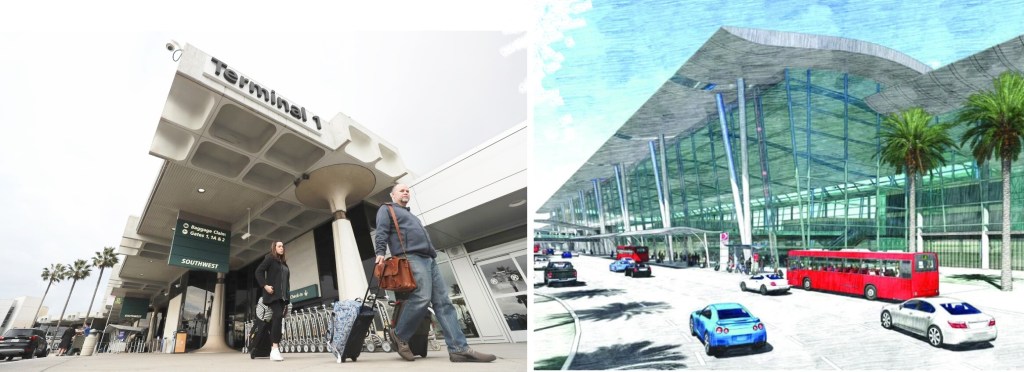
San Diego construcción vs retrasos

AW | 2022 12 20 10:22 | AIRPORTS

Construcción en el Aeropuerto San Diego puede provocar retrasos

AW-San Diego Airport__Isologotype

La construcción de la Terminal 1 del Aeropuerto Internacional de San Diego/SAN provocaría retrasos en los viaje de vacaciones debido al período más ocupados del año en tráfico de pasajeros. La Administración de Seguridad en el Transporte (TSA) estadounidense espera que los números de viajes estén cerca de los niveles anteriores a la pandemia y se prevé que los días de viaje más ocupados sean el Jueves 22/12 y el Viernes 30/12.

«Llegue temprano, normalmente lo estoy cerrando, pero afortunadamente hoy decidí llegar temprano, y valió la pena. Estaba mucho más ocupado de lo que esperaba, pensé que iba a vencer la fiebre de las vacaciones», dijo Ashley Reinhardt, solo una de los muchos viajeros que acuden a San Diego desde fuera de la ciudad.

Estas demoras se producen en medio de un proyecto de construcción de un año en la nueva Terminal 1 que comenzó en Noviembre de 2021. «Hemos estado en construcción por un poco más de un año. Cualquiera que haya estado en el aeropuerto en el último año, en los últimos días o meses, notará que hay un montón de cosas sucediendo, a lo largo de Harbor Dr., realmente todo el campus del aeropuerto está realmente en construcción en este momento, por lo que las cosas están avanzando», dijo Sabrina Lopiccolo, Portavoz del Aeropuerto Internacional de San Diego.

La reparación del puente hará que parte de la Ruta Estatal SR-76 se cierre. Se prevé que la apertura del estacionamiento de la Terminal 1 se abra en 2024, la primera fase de la Terminal 1 se abrirá en 2025 y la segunda fase en 2027.

San Diego construction vs. delays

Construction at San Diego Airport may cause delays

Construction of San Diego International Airport/SAN Terminal 1 would cause holiday travel delays due to the busiest period of the year in passenger traffic. The US Transportation Security Administration (TSA) expects travel numbers to be close to pre-pandemic levels with the busiest travel days expected to be Thursday 12/22 and Friday 12/30.

«I got there early, I’m usually closing it down, but luckily I decided to get there early today, and it paid off. It was so much busier than I expected, I thought I’d beat the holiday rush», said Ashley Reinhardt, just one of the many travelers who come to San Diego from out of town.

These delays come in the midst of a year-long construction project on the new Terminal 1 that began in November 2021. «We’ve been under construction for a little over a year. Anyone who has been to the airport in the last year So, in the last few days or months, you’ll notice there’s a ton of stuff going on, along Harbor Dr., really the entire airport campus is really under construction right now, so things are moving forward», said Sabrina Lopiccolo, Spokesperson for the San Diego International Airport.

The bridge repair will cause part of State Route SR-76 to close. The Terminal 1 parking garage is scheduled to open in 2024, the first phase of Terminal 1 will open in 2025 and the second phase in 2027.

PUBLISHER: Airgways.com
DBk: San.org / Tsa.gov / Airgways.com
AW-POST: 202212201022AR
OWNERSHIP: Airgways Inc.
A\W A I R G W A Y S ®

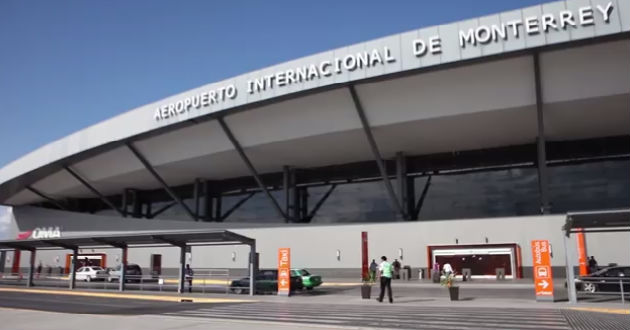
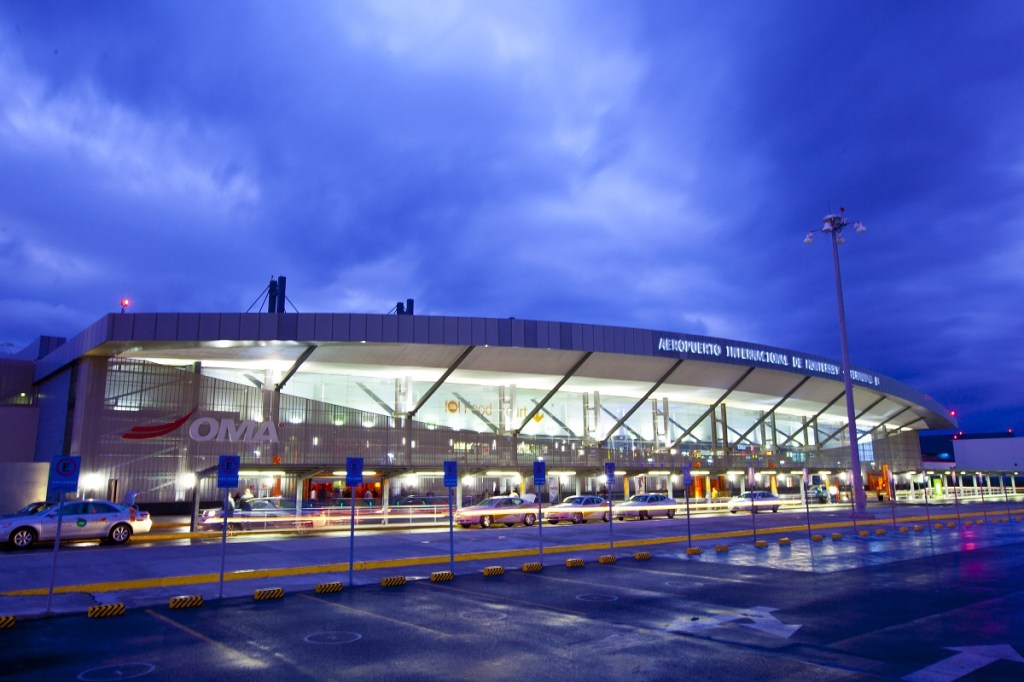
Vinci inversiones en México

AW | 2022 12 20 10:02 | AIRPORTS

Vinci invertirá US$ 820 millones en Monterrey, México

AW-Vinci Airports__Isologotype

El operador aeroportuario francés Vinci Airports invertirá US$ 820 millones en la renovación del Aeropuerto Internacional Monterrey/MTY, en el Estado de Nuevo León, fronterizo con Estados Unidos, dijeron el Lunes 19/12 autoridades locales. La inversión de Vinci se produce después de que la compañía europea adquiriera a principios de este mes una participación cercana al 30% en el administrador aeroportuario mexicano OMA, propietario del Aeropuerto Internacional de Monterrey.

La inversión fue anunciada en un comunicado por el Gobierno de Nuevo León y en la cuenta de Instagram del Gobernador Samuel García, quien compartió videos de su reunión con representantes de la empresa gala. Una presentación compartida en esa red social por Samuel García señala que Vinci Airports vio al Aeropuerto de Monterrey como «la mejor alternativa al aeropuerto de Ciudad de México y que tenía un gran potencial». También informa que la firma planeaba participar en fuertes asociaciones con las aerolíneas mexicanas Aeroméxico y Viva Aerobus para construir sus bases de clientes.

A principios de este mes, Vinci Airports anunció que iniciaría vuelos directos entre Monterrey, y Los Ángeles, Houston, Detroit y Austin, en Estados Unidos. El tráfico del aeropuerto internacional representa aproximadamente la mitad del tráfico de pasajeros de OMA. La firma francesa se convirtió en el mayor accionista de OMA cuando finalizó la compra de su participación por US$ 1.170 millones a principios de Diciembre 2022.

Vinci investments in Mexico

Vinci will invest US$ 820 million in Monterrey, Mexico

The French airport operator Vinci Airports will invest US$ 820 million in the renovation of the Monterrey/MTY International Airport, in the State of Nuevo León, on the border with the United States, local authorities said on Monday 12/19. Vinci’s investment comes after the European company earlier this month acquired a stake of about 30% in Mexican airport administrator OMA, owner of Monterrey International Airport.

The investment was announced in a statement by the Government of Nuevo León and on the Instagram account of Governor Samuel García, who shared videos of his meeting with representatives of the gala company. A presentation shared on that social network by Samuel García points out that Vinci Airports saw the Monterrey Airport as «the best alternative to the Mexico City airport and that it had great potential.» He also reports that the firm planned to enter into strong partnerships with Mexican airlines Aeroméxico and Viva Aerobus to build their customer bases.

Earlier this month, Vinci Airports announced that it would start direct flights between Monterrey, and Los Angeles, Houston, Detroit and Austin, in the United States. International airport traffic accounts for approximately half of OMA’s passenger traffic. The French firm became OMA’s largest shareholder when it completed the purchase of its stake for US$1.17 billion at the beginning of December 2022.

PUBLISHER: Airgways.com
DBk: Vinci-airports.com / Oma.aero / Nl.gob.mx / Airgways.com
AW-POST: 202212201002AR
OWNERSHIP: Airgways Inc.
A\W A I R G W A Y S ®