 AW | 2019 11 23 12:38 | AVIATION TECHNOLOGY / AIRLINES
Las aerolíneas noruegas iniciarán era biocombustibles
Las aerolíneas noruegas preparan el inicio de una era de suministro de biocombustibles marcando el inicio de una etapa de reducción en las emisiones de carbono. A partir de Enero 2020, los proveedores de combustible para aviones en Noruega deben mezclar 0,5% de biocombustible en todo su combustible de aviación, una política que Oslo espera que impulse la oferta y la demanda y conduzca a una reducción de las emisiones de CO2. confían en tener suficientes suministros de combustible para aviones con biocombustible para cumplir con un requisito de Noruega que entrará en vigencia en 2020, aunque advierten sobre costos adicionales.
Calidad & costos biocombustibles
 La nueva normativa de Noruega impulsará a las líneas aéreas al uso de los biocombustibles a fin de reducir la huella de carbono en Europa. Aunque los proveedores de biocombustibles para la aviación dicen que puede reducir la contaminación por el efecto de la huella de cabono en hasta un 80% en las aerolíneas, el costo del producto es cuatro veces mayor que el combustible convencional, lo que hasta ahora ha reducido su uso corriente en las compañías aéreas.
Mercado biocombustible
La demanda del biocombustible requerirá un mayor compromiso de producción, donde no todos los biocarburantes son iguales en lo que respecta a su impacto ambiental, tanto en la producción como en el transporte. Los fabricantes, tanto de aviones como de combustibles, se han puesto a trabajar en nuevos materiales y nuevos combustibles que lleven a un menor consumo y con ello a una menor contaminación atmosférica por la emisión de gases de efecto invernadero para el año 2050. La nueva normativa de Noruega exige que los aviones reabastecidos en el país utilicen un producto hecho de grasas de desecho y aceite vegetal, aunque excluye el aceite de palma.
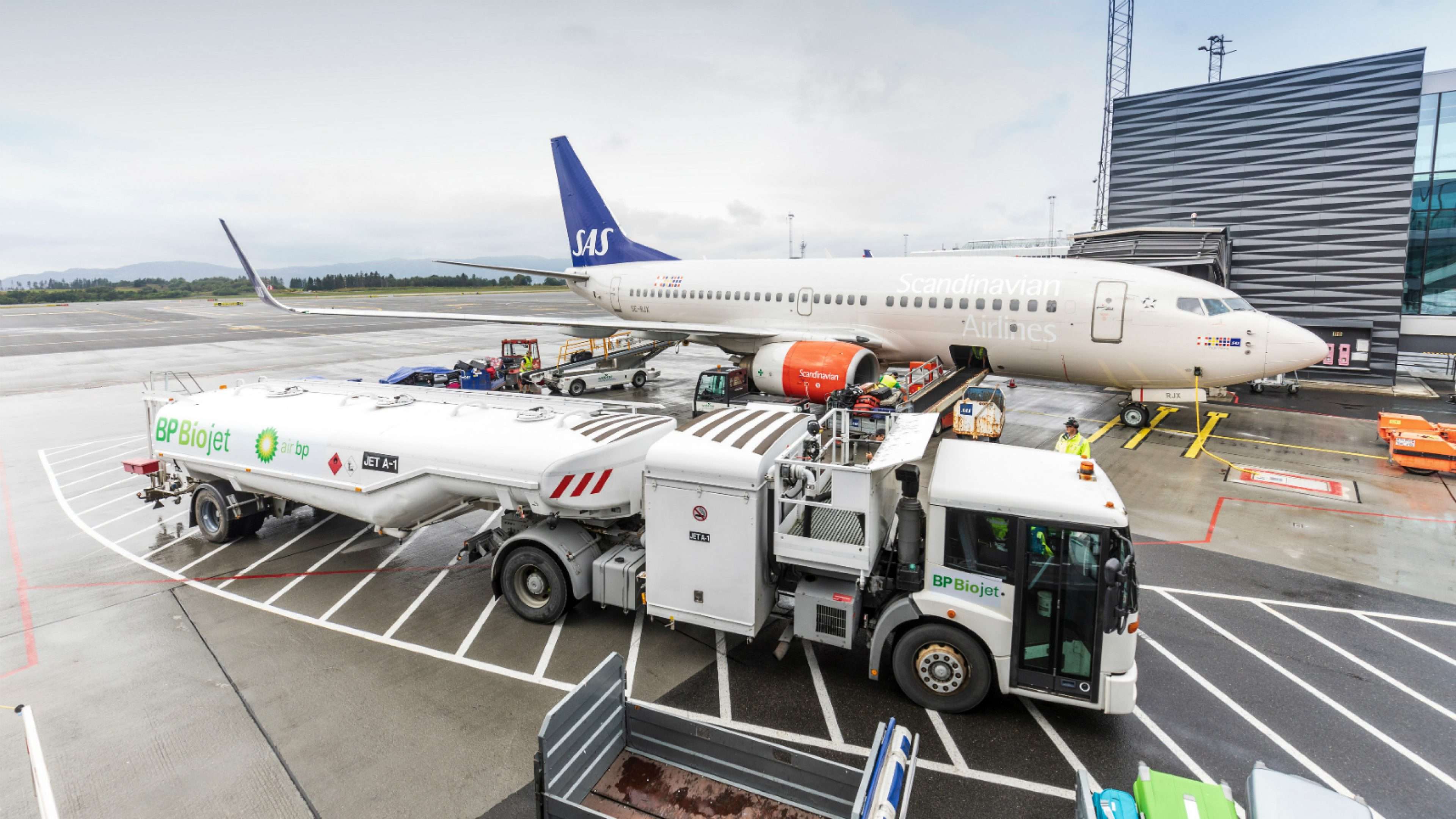
«No hay tantos proveedores que suministren ese tipo de combustible. Tenemos acceso y podemos comprar estas cantidades en esta etapa. A medida que avanzamos en el futuro, aunque necesitamos más», dijo Rickard Gustafson, Director Ejecutivo de SAS. SAS espera que el requisito de 0,5% de biocombustibles de Noruega signifique 3 millones de euros adicionales (US$ 3.33 millones) en costos anuales de combustible. La aerolínea escandinava se ha fijado su propia meta de impulsar todos sus vuelos nacionales, que representan el 17% de su consumo total de combustible, con biocombustible para 2030. La obtención del biocombustible que necesita puede ser provista por AirBP (Air British Petroleum), la división de aviación especializada de BP, y tiene la intención de comprar más de Preem de Suecia, que está construyendo nuevas instalaciones. Algunos en el mercado de la industria de las aerolíneas, incluido el CEO de SAS, dijeron que algunos de los costos adicionales de combustible pueden agregarse a las tarifas.
El mercado de biocombustibles se expandirá consecutivamente con Suecia y Finlandia considerando seguir el liderazgo de Noruega. Los tres países escandinavos han establecido para 2030 aumentar el uso de biocombustibles de aviación al 30% del reabastecimiento total, pero existe el peligro de que la demanda supere la producción.
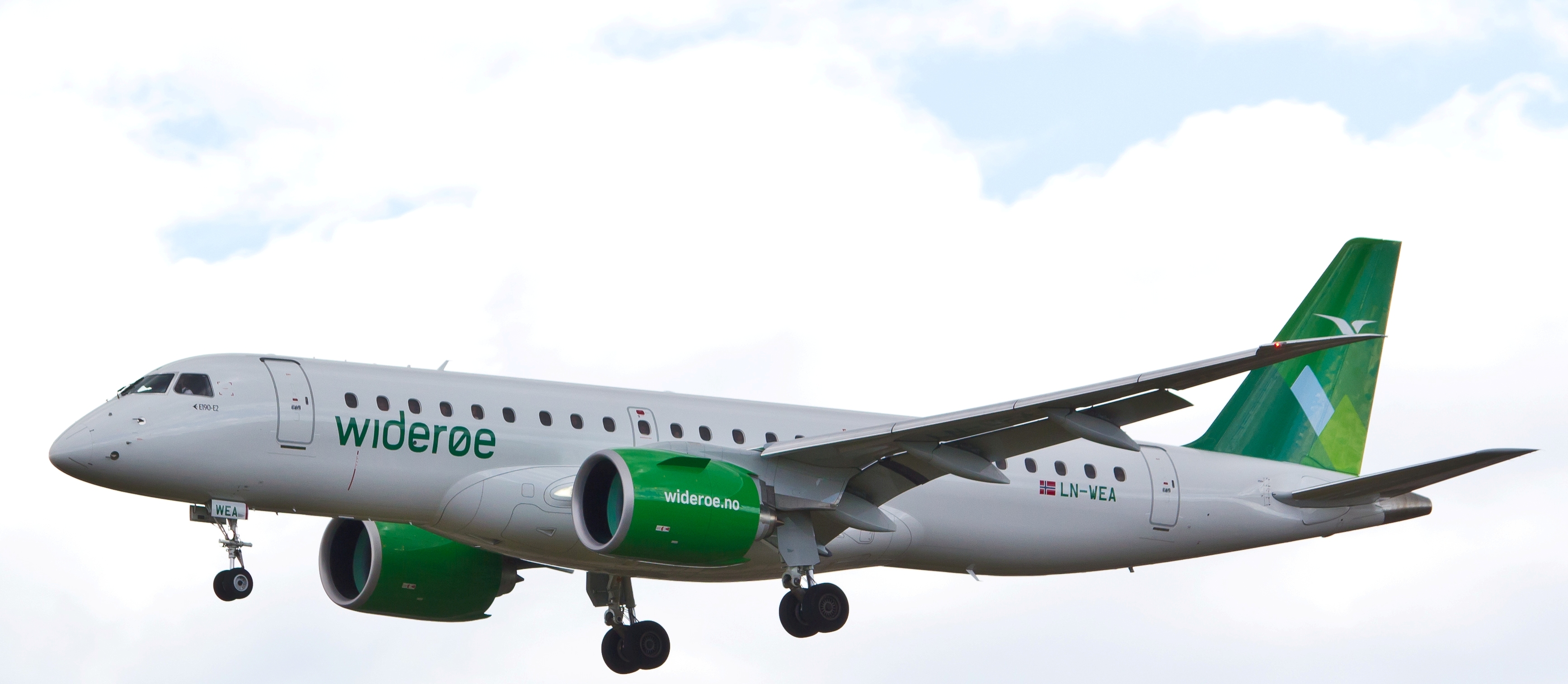
«Tenemos que crear el mercado. Hay una fuerte demanda de biocombustibles. Pero no se produce lo suficiente», dijo el Ministro noruego de clima y medio ambiente, Ola Elvestuen. Las compañías Neste y Statkraft también desarrollando nuevas plantas, mientras que Air France-KLM y AirBP han anunciado proyectos similares. Widerøe, una pequeña aerolínea noruega, acoge con satisfacción el requisito de Noruega, pero pidió que otros países hagan lo mismo.
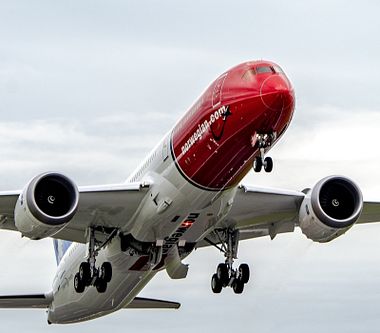
La aerolínea low cost Norwegian Air dijo que Noruega estaba creando una demanda artificial que, a pesar de que se puede satisfacer inicialmente, podría causar una futura reducción de combustible. Norwegian Air ha estado invirtiendo en aviones más eficientes en combustible, lo que debería fomentarse el uso del biocarburante.
«No me importa si costará un poco más. Tenemos que limpiar el mundo y hacer lo que podamos para tener un combustible más limpio», dijo Dag Christopherson, de 72 años. 
 Norway advances biofuel in airlines
Norwegian airlines will start biofuels era
Norwegian airlines are preparing the beginning of an era of biofuel supply marking the beginning of a stage of reduction in carbon emissions. Beginning in January 2020, suppliers of jet fuel in Norway must mix 0.5% of biofuel throughout their aviation fuel, a policy that Oslo expects to boost supply and demand and lead to a reduction in emissions from CO2 they hope to have enough fuel supplies for biofuel planes to meet a Norwegian requirement that will take effect in 2020, although they warn of additional costs.
Quality & biofuel costs
Norway’s new regulations will encourage airlines to use biofuels to reduce the carbon footprint in Europe. Although aviation biofuel suppliers say they can reduce pollution by the effect of the carbon footprint by up to 80% on airlines, the cost of the product is four times higher than conventional fuel, which has so far reduced its current use in airlines.
Biofuel market
The demand for biofuel will require a greater production commitment, where not all biofuels are equal in terms of their environmental impact, both in production and in transport. The manufacturers, both of airplanes and of fuels, have been put to work in new materials and new fuels that lead to a lower consumption and with it to a lower atmospheric pollution by the emission of greenhouse gases for the year 2050. Norway’s new regulations require that refueling aircraft in the country use a product made from waste fats and vegetable oil, although it excludes palm oil.
«There are not so many suppliers that supply that type of fuel. We have access and we can buy these quantities at this stage. As we move forward in the future, although we need more», said Rickard Gustafson, SAS Executive Director. SAS expects Norway’s 0.5% biofuel requirement to mean an additional 3 million euros (US$ 3.33 million) in annual fuel costs. The Scandinavian airline has set its own goal of boosting all its domestic flights, which represent 17% of its total fuel consumption, with biofuel by 2030. Obtaining the biofuel it needs can be provided by AirBP (Air British Petroleum), BP’s specialized aviation division, and intends to buy more from Preem from Sweden, which is building new facilities. Some in the airline industry market, including the CEO of SAS, said some of the additional fuel costs can be added to the rates.
The biofuel market will expand consecutively with Sweden and Finland considering following Norway’s leadership. The three Scandinavian countries have established by 2030 to increase the use of aviation biofuels to 30% of the total refueling, but there is a danger that demand will exceed production.
«We have to create the market. There is a strong demand for biofuels. But not enough is produced», said Norwegian Minister of Climate and Environment, Ola Elvestuen. The companies Neste and Statkraft are also developing new plants, while Air France-KLM and AirBP have announced similar projects. Widerøe, a small Norwegian airline, welcomes Norway’s requirement but asked other countries to do the same.
The low-cost airline Norwegian Air said that Norway was creating an artificial demand that, although it can be initially met, could cause future fuel reduction. Norwegian Air has been investing in more fuel-efficient airplanes, which should encourage the use of biofuel.
«I don’t care if it will cost a little more. We have to clean the world and do what we can to have a cleaner fuel», said Dag Christopherson, 72. 
 Norge forskutterer biodrivstoff i flyselskaper
Norske flyselskaper vil starte biodrivstoff-tiden
Norske flyselskaper forbereder begynnelsen på en epoke med biodrivstoffforsyning som markerer begynnelsen på et stadium av reduksjon i karbonutslipp. Fra og med januar 2020 må leverandører av jetbrensel i Norge blande 0,5% av biodrivstoff i hele flydrivstoffet, en policy som Oslo forventer å øke tilbud og etterspørsel og føre til reduksjon i utslipp fra CO2 de håper å ha nok drivstoffforsyning til biodrivstoff fly for å oppfylle et norsk krav som trer i kraft i 2020, selv om de advarer om merkostnader.
Kvalitet og biodrivstoffkostnader
Norges nye regelverk vil oppmuntre flyselskapene til å bruke biodrivstoff for å redusere karbonavtrykket i Europa. Selv om leverandører av biodrivstoff i luftfart sier at de kan redusere forurensningen med effekten av karbonavtrykket med opptil 80% for flyselskapene, er kostnadene for produktet fire ganger høyere enn konvensjonelt drivstoff, som hittil har redusert den nåværende bruken i flyselskapene.
Biodrivstoffmarked
Etterspørselen etter biodrivstoff vil kreve større produksjonsforpliktelse, der ikke alle biodrivstoff er like med tanke på miljøpåvirkningen, både i produksjon og transport. Produsentene, både av fly og drivstoff, har blitt satt i verk i nye materialer og nye brensler som fører til et lavere forbruk og med det til en lavere luftforurensning ved utslipp av klimagasser for året 2050. Norges nye regelverk krever at tanking av fly i landet bruker et produkt laget av avfallsfett og vegetabilsk olje, selv om det ekskluderer palmeolje.

«Det er ikke så mange leverandører som leverer den typen drivstoff. Vi har tilgang og vi kan kjøpe disse mengdene på dette stadiet. Når vi går fremover, selv om vi trenger mer», sa Rickard Gustafson, SAS konserndirektør. SAS forventer at Norges 0,5% biodrivstoffbehov vil bety ytterligere 3 millioner euro (3,33 millioner dollar) i årlige drivstoffkostnader. Det skandinaviske flyselskapet har satt sitt eget mål om å øke alle sine innenlandsflyvninger, som representerer 17% av det totale drivstofforbruket, med biodrivstoff innen 2030. Innhenting av biodrivstoff det trenger kan leveres av AirBP (Air British Petroleum), BPs spesialiserte luftfartsdivisjon , og har til hensikt å kjøpe mer fra Preem fra Sverige, som bygger nye fasiliteter. Noen i markedet for flyindustri, inkludert administrerende direktør i SAS, sa at noen av de ekstra drivstoffkostnadene kan legges til prisene.
Biodrivstoffmarkedet vil ekspandere sammenhengende med Sverige og Finland med tanke på å følge Norges ledelse. De tre skandinaviske landene har etablert innen 2030 for å øke bruken av biodrivstoff i luftfarten til 30% av den totale tankingen, men det er fare for at etterspørselen vil overstige produksjonen.
«Vi må skape markedet. Det er en sterk etterspørsel etter biodrivstoff. Men det produseres ikke nok», sa den norske klima- og miljøminister Ola Elvestuen. Selskapene Neste og Statkraft utvikler også nye anlegg, mens Air France-KLM og AirBP har kunngjort lignende prosjekter. Widerøe, et lite norsk flyselskap, hilser Norges krav velkommen, men ba andre land gjøre det samme.
Lavprisflyselskapet Norwegian Air sa at Norge skapte et kunstig krav som, selv om det opprinnelig kan oppfylles, kan føre til fremtidig drivstoffreduksjon. Norwegian Air har investert i mer drivstoffeffektive fly, noe som bør oppmuntre til bruk av biodrivstoff.
«Jeg bryr meg ikke om det vil koste litt mer. Vi må rense verden og gjøre det vi kan for å få et renere drivstoff», sa Dag Christopherson, 72.
Ξ A I R G W A Y S Ξ
SOURCE: Airgways.com
DBk: Bp.com / Flysas.com / Norwegian.com / Wikimedia.org / Airgways.com
AW-POST: 201911231238AR
A\W A I R G W A Y S ®