Bombardier CS300 certificada en Europa

Resultado de imagen para CS300 EASA

AW | 2016 10 10 10:30 | INDUSTRY

bombardier_logo1La Agencia Europea de Seguridad Aérea (AESA) emitió la certificación de tipo de la aeronave Bombardier CS300 , posibilitando entrar en servicio con la aerolínea airBaltic de Letonia para final de año 2016

El fabricante de aviones canadiense recuerda en un comunicado el 7 de octubre 2016 la validación Europea sigue a la certificación de tipo CS300 por Transport Canada el pasado mes de julio, y se produce en la fecha prevista. Fred Cromer, presidente de Bombardier Commercial Aircraft, dijo que «certificar las dos aeronaves de nuevo desarrollo a intervalos de nueve meses es un logro importante en la industria de la aviación», y aprovechó la oportunidad para «agradecer a los cientos de empleados y proveedores de la Bombardier que trabajaron con diligencia y profesionalismo para diseñar y construir el hermoso avión CSeries, los únicos aviones de un solo pasillo desarrollados para el segmento de mercado de los 100 a 150 personas en casi 30 años». La certificación del CS300 por parte de la FAA debe ocurrir en los próximos días, los estadounidenses y europeos en general, suelen ponerse de acuerdo sobre el tema.

air-journal_airBaltic CS300 profil

El CS300 había comenzado a finales de septiembre una serie de evaluación de las rutas de los vuelos en Europa y Oriente Medio. AirBaltic tiene un pedido en firme de veinte CS300 de 148 asientos, que se sumarán a los doce Q400. La compañía es cliente lanzamiento del nuevo avión CS300 que comenzó una transición gradual a una flota Bombardier (todavía opera 12 Boeing 737-300 y 737-500) .

François Caza, vicepresidente de desarrollo de producto e ingeniero en jefe, responsable de la organización de la aprobación del diseño Bombardier está convencido de que «la entrega y puesta en servicio inminente de la aeronave CS300 a airBaltic será tan exitoso como el CS100 a Swiss», que entró en servicio en julio 2016. El CS100 y CS300 comparten una cuota de de comunalidad de más del 99% de sus partes, y el mismo tipo de certificación de pilotaje. El «revolucionario» PW1500G PurePowerMD, motor de la Pratt & Whitney, combina una avanzada aerodinámica con el avión que permite una reducción en el consumo de combustible, el ruido y las emisiones, haciendo que el avión CSeries sean «los aviones más fácil de usar para comunidades «, dice Bombardier. Estos aviones «ofrecen un rendimiento económico y características sin igual en el segmento del pasajero de 100 a 150 asientos y los costos en un 18% menores, lo que les hace candidatos ideales para completar las flotas de aviones de pasillo único de más capacidad. Las compañías aéreas pueden ahora en sus operaciones de sus rutas no rentables previamente. La mejora en el rendimiento de más del 20% en aeropuewrtos de gran altura y de clima cálido tales como Denver, Ciudad de México o Lhasa, ahora se ha confirmado», dijo el fabricante. Bombardier ha reservado 123 pedidos para el CS100 y 235 de la serie CS300. airgways-icon-aw

Resultado de imagen para CS300

Bombardier CS300 certified in Europe

The European Aviation Safety Agency (EASA) issued the type certification of the aircraft Bombardier CS300, allowing enter service with the airline airBaltic of Latvia by the end of 2016

Canadian aircraft maker recalls in a statement on October 7, 2016 the European validation follows CS300 type certification by Transport Canada last July, and occurs as scheduled. Fred Cromer, president of Bombardier Commercial Aircraft, said that «certify the two new aircraft development at intervals of nine months is a significant achievement in the aviation industry,» and took the opportunity to «thank the hundreds of employees and suppliers of Bombardier who they worked with diligence and professionalism to design and build the beautiful CSeries aircraft, the only aircraft developed single-aisle market segment of 100-150 people in nearly 30 years.» CS300 certification by the FAA should occur in the coming days, Americans and Europeans in general, tend to agree on the subject.

The CS300 had begun in late September a series of evaluation of routes of flights in Europe and the Middle East. AirBaltic has a firm order for twenty CS300 of 148 seats, which will add to the twelve Q400. The company’s customer launch of the new CS300 aircraft began a gradual transition to a Bombardier fleet (still operates 12 Boeing 737-300 and 737-500).

François Caza, vice president product development and chief engineer, responsible for the organization of the design approval Bombardier is convinced that «the delivery and commissioning imminent servicing of aircraft CS300 to airBaltic will be as successful as the CS100 to Swiss», which entered service in July 2016. the CS100 and CS300 share a commonality share of more than 99% of its parts, and the same type of pilot certification. The «revolutionary» PW1500G PurePowerMD, motor Pratt & Whitney, combines advanced aerodynamics with the plane that allows a reduction in fuel consumption, noise and emissions, making the CSeries aircraft are «the easiest aircraft to use for communities, «says Bombardier. These aircraft «offer cheap performance and features unmatched in the segment of passenger 100-150 seats and costs 18% less, which makes them ideal candidates to complete fleets of single-aisle aircraft more capacity. The airlines are now in their operations of their previously profitable routes. the performance improvement of more than 20% in aeropuewrtos high altitude and warm climate such as Denver, Mexico City or Lhasa, has now been confirmed,» he said the manufacturer. Bombardier has booked 123 orders for the CS100 and CS300 series of 235. A\W

Ξ A I R G W A Y S Ξ
SOURCE: A I R G W A Y S
DBk: Photographic © Bombardier Inc.
AW-POST: 2016101030AR
A\W A I R G W A Y S ®

Empujando las ventas a fin de 2016

AW | 2016 10 08 21:15 | INDUSTRY / AIRLINES

aviaways-isologotypeEn los últimos meses que se observan del año 2016, tanto Airbus como Boeing están muy cautelosos a la espera de nuevos clientes o de nuevos negocios en el mundo de la aviación comercial. Boeing, que todavía no está cumpliendo con sus expectativas de ventas en un año de desaceleración de nuevas carteras de pedido, se muestra optimista al horizonte cercano, aunque presume de sus excelentes entregas de aviones a un ritmo acelerado, algo donde en Airbus Group están teniendo algunos problemas con los retrazos en las entregas de turbinas a las unidades de ensamblajes del consorcio europeo.

Resultado de imagen para A320neo

airbus-logo1Un caso donde una empresa cancela sus pedidos por motivos de contextura particular es la Turkish Airlines ahora se ha vista obligada a revisar seriamente su plan de crecimiento. La aerolínea ha pospuesto las entregas de parte de los 92 Airbus A321neo y Boeing 737 MAX ordenados por los 75 aniversarios para apoyar sus proyectos de desarrollo. Los efectos combinados del ataque en el aeropuerto de Estambul y el intento de golpe contra el gobierno actual llegó al «romper» esta ambición.

Se esperaba que estos 92 Airbus A321neo y Boeing 737 MAX, durante el período 2018-2023. Un total de 167 de medio recorrido de más de cinco años. La empresa va a aceptar menos de lo esperado ya que las 34 entregas previstas para el 2018 aumentarán a diez y 40 a 35 en 2019. En el año 2020, ahora se anuncian 42 entregas contra los 52 previstos inicialmente.

Resultado de imagen para B737max  airlines

Turkish Airlines espera una mejora en su situación desde 2021 como el número de entregas de aviones previstas se mantiene sin cambios, mientras que las recepciones Airbus A321neo y Boeing 737 MAX a subir de nuevo en el año 2022 con 30 entregas contra seis anunciado inicialmente. Por último, otro 15 por medio radio se ha programado para 2023.

boeing-company-logoBoeing 757 es único

Doce años después de que Boeing dejara de construir en su cadena de montaje el Boeing 757 sigue siendo popular entre las aerolíneas estadounidenses, y yo diría que de todo el mundo. De hecho, American, Delta y United todavía operan grandes flotas de esta aeronave.

De hecho, Delta, que recientemente ha invertido mucho dinero en una flota de nuevos aviones, reformando las cabinas de sus 757, prefiere el envejecimiento en lugar de reemplazarlos con nuevas aeronaves.

¿Por qué las líneas aéreas le son tan leales? El 757 todavía es un gran avión a día de hoy. No se puede negar que es una nave de edad que fue diseñada a finales de 1970. Sin embargo, su versatilidad es notable y sin precedentes y es rentable tanto en corta distancia como en las rutas transatlánticas, o de larga distancia.

Durante su vida útil de producción, el 757 fue siempre una casta de rareza única, un bimotor configurado en diferentes clases. Es más grande y ofrece mayor alcance que los aviones de fuselaje estrecho, pero más pequeño y más barato de operar que un avión de fuselaje ancho.

Además es capaz de despegar y alcanzar los 4.000 pies rápidamente, con una velocidad de menos de 140 nudos. Mientras que, en comparación, el 737 no despega hasta haber alcanzado los 160 nudos y utiliza mucha más pista.

Por otra parte, el 757 puede subir directamente con facilidad a su altitud de crucero. Por el contrario, el Boeing 737 requiere un procedimiento de ascenso algo más lento.

Indiscutiblemente, el 757 tiene también sus cosas negativas, como una cabina muy antigua (comparada con los nuevos aviones en el mercado), una capacidad en cabina que hace que los pasajeros tarden más en poder abandonarlo. También, e inexplicablemente, es un avión que deja una estela de turbulencia a su paso que a veces ha sido a mayor que la que deja un Boeing 747.

Latécoère remodela Para esperado MOM Aeronaves

El proveedor de PARIS de aeroestructuras, Latécoère, está reorganizando para estar listo para el lanzamiento previsto de un avión comercial medio mercado (MOM) en 2020-25, el reequilibrio de su huella entre Francia y los países de menor coste de mano de obra. «La próxima aviones MOM traerá avances tecnológicos en el segmento de gama alta ya Airbus A321neo y el Boeing 757; que será un gran éxito y una oportunidad que no podemos dejar pasar, pero no sabemos [quien], Airbus o Boeing,

Mucho se ha hablado de un nuevo Medio de la aeronave Market o MoM durante más de un año, pero mientras que Boeing, que inventó el término, determina qué es exactamente lo que será, otro avión ha asumido un papel que es capaz de convertirlo en un Major Disruptor mercado o chorro de MMD.

Airbus A321 NEO y versión de largo alcance o LR

Este MMD ya se ha ordenado o opcionado para las rutas del Atlántico Norte de Noruega y JetBlue, con el primero de utilizar la variante con un máximo de 240 asientos, o mucho la misma capacidad que el Boeing 757-200 obsoleta.

Resultado de imagen para A321neo png

La forma LR del A321 NEO tiene el potencial de alterar significativamente las redes aéreas en esta parte del mundo no importa qué decisiones flota de Qantas o Virgin Australia podría hacer por la forma en que puede ser utilizado por otras compañías en la región de Asia y el Pacífico a by-pass las principales limitaciones de los acuerdos bilaterales restrictivos en algunos casos, o aprovechar el modelo de las compañías de bajo coste en rutas que eviten los centros congestionados como Sydney, Hong Kong o los principales aeropuertos de Tokio.

El 757 salió de la producción en 2005. Con 4000 millas náuticas o 7.200 kilómetros de la gama LR A321 puede llevar tanto como el más viejo Boeing hizo sobre todo, pero algunas rutas por mucho menos coste en combustible y mantenimiento.

En una perspectiva más amplia, la LR A321 podría ser visto como un vehículo de crecimiento hacia los NEOs A330, que es probable que se encuentran principalmente en el servicio a través de pares similares de gama de la ciudad con los tiempos del sector como los de la costa este Australia a SE y Asia Media se ejecuta .

Por coincidencia tiene un conteo de asiento que es cercana a la de la intención original de Boeing tenía por sus 787-8, salvo que esos Dreamliner están ahora casi universalmente configurados para volar alrededor de 90 a más pasajeros (o 335 en el ejemplo de Jetstar) debido a una toda la industria abrazo de asientos de alta densidad.

Esta versión de Airbus del Boeing MoM también será utilizado por las compañías con modelos de negocio que son diferentes y mucho más centrado en la conducción volúmenes de tarifas bajas de tráfico que era el caso en los días de los 757 picos, el último de los cuales fue entregado en 2005.

Y a partir de 2019, todos los NEO A321 o una nueva opción de motor de los más grandes de pasillo único de Airbus que se entrega se pueden convertir en un LR. Lleva comparación con la estrategia de Airbus con su A350-900, que como se ha librado de mediados 2018, puede ser actualizado en términos de alcance a un A350 ULR o chorro de ultra largo alcance, que Singapore Airlines va a utilizar para relanzar sus servicios sin escalas a Newark (para Manhattan) y otros vuelos sin escala aún no se ha anunciado a América.

El papel de los MMD NEO A321 no era evidente cuando Airbus lanzó oficialmente la nueva opción de motor sola línea de pasillo en 2010. La gran final de la alineación, el A321 sólo se representó aproximadamente el diez por ciento de los pedidos. Desde entonces, muchos clientes han NEO upsized sus pedidos antes de comenzar el corte de metales, y los nuevos pedidos comprender al menos 40 por ciento A321 con muchas expectativas de un 50 por ciento de la producción NEO siendo su participación en el año 2020.

Hay 364 actuales A321 de opción en la cartera de pedidos de Airbus y 1294 versiones NEO en el momento de la escritura. El A321 NEO se dice que está vendiendo más que su correspondiente tecnología de motor nuevo producto de Boeing, el 737 MAX 9 de cuatro a uno.

El handicap geométrica de los 737 Max ha sido recitado en centímetros de su vida en muchos lugares. Los 737 se han «sentado» demasiado cerca del suelo para los nuevos motores de tecnología de diámetro más ancho que se utilizará, y que inhibe el rendimiento del 737 MAX 9 a pesar de que el motor CFM franco-estadounidense que utiliza Boeing es una versión necesariamente más pequeña de uno de los motores utilizados en los NEOs de Airbus en competencia.

La pérdida de 80 por ciento del extremo más grande del mercado de pasillo único de Airbus es un incentivo para Boeing para hacer algo. Las últimas noticias dicen que se hará un anuncio de un máximo de 10 unidades del 737 entre diciembre y julio del próximo año de un modelo que cuenta con un tren de aterrizaje más alto (lo que activará el rediseño de los toboganes de emergencia y otras características) y utilizan la misma versión más potente del motor CFM es una de las opciones para las versiones estándar de Airbus A321 NEO y LR.

Pero eso significaría una complejidad para Boeing en las dos versiones sustancialmente diferentes de su familia de aviones de pasillo único para cubrir las capacidades ofrecidas por un avión de Airbus, que a su vez es probable tener un impacto negativo en los valores residuales y los gastos de funcionamiento, especialmente para las compañías aéreas con un número relativamente pequeño de flotas de aviones desde el principio.

Bombardier y las entregas del CS100/CS300

Entrega el primer avión a CS300 AIRBALTIC prevista para el cuarto trimestre de 2016

bombardier_logo1Bombardier Commercial Aircraft anunció hoy que la Agencia Europea de Seguridad Aérea (AESA) ha adjudicado Tipo de validación a las aeronaves CS300 de Bombardier. La validación es un requisito para la operación de la aeronave en Europa y un precursor de la primera entrega al operador de lanzamiento CS300, airBaltic de Letonia. primera entrega del avión CS300 de Bombardier de airBaltic está prevista para el cuarto trimestre de 2016. validación de la AESA sigue la certificación de tipo de aeronaves CS300 otorgado por Transport Canada en julio de 2016.

«La certificación de dos aviones-cero dentro de un período de nueve meses es un logro importante industria de la aviación y en la actualidad se celebra el hito más reciente programa de la Serie C con la certificación CS300 AESA. Tenemos una gran cantidad de agradecimiento a los cientos de empleados y proveedores de Bombardier que han trabajado de forma diligente y profesional para diseñar y construir el soberbio avión C Series – los únicos aviones de un solo pasillo desarrollados para el segmento de mercado de 100 a 150- asiento en cerca de 30 años «, dijo Fred Cromer, presidente de Bombardier Commercial Aeronave.

«La aprobación de nuestros aviones CS300 de la AESA, según lo previsto, reconoce la importante contribución de nuestros ingenieros altamente cualificados y expertos técnicos en el desarrollo y prueba de los mejores en su clase de aviones C Series», dijo François Caza, vicepresidente de Desarrollo de Productos y el jefe de máquinas y el Director de la Organización la aprobación de diseño de Bombardier. «Esperamos que la próxima entrega y entrada en servicio de la aeronave CS300 con airBaltic será tan exitoso como para los aviones CS100 con SWISS.»

«Nuestros equipos han producido una familia impresionante de aviones con tecnología probada, rendimiento, servicios de pasajeros, la economía y las calificaciones ambientales que son cabezas que dan vuelta y va a servir operadores bien en el futuro», dijo Robert Dewar, vicepresidente de programa de aviones de la serie C. «Nuestra atención se centra en la realización de la primera producción de aviones CS300 para el operador de lanzamiento de airBaltic que sus equipos se centran en completar su formación de pilotos y tripulación de primera entrega a finales de este año.»

El más pequeño avión CS100 de Bombardier, que fue galardonado con la certificación de tipo de Transporte de Canadá en diciembre de 2015, y de tipo validaciones tanto por la AESA y la Administración Federal de Aviación de EE.UU. (FAA) en junio de 2016, entró en servicio con éxito operador de lanzamiento SWISS en julio de 2016.

Tanto airBaltic y SWISS se han unido al programa de Smart Parts de Bombardier para el avión C Series. El programa Smart Parts maximiza la utilización de las aeronaves y reducir al mínimo los costes de mantenimiento al proporcionar servicios integrales de mantenimiento de componentes, reparación y revisión, el acceso a las piscinas de intercambio de repuestos ubicados estratégicamente, y los inventarios en el lugar de basarse en los centros de las líneas aéreas.

Acerca de la Serie C Aviones

La serie C es el único avión optimizado para el segmento de mercado de 100 a 150 asientos, que impulsa propuesta económica fenomenal de la aeronave y el rendimiento, la apertura de nuevas oportunidades para la operación de aviones de pasillo único.

Formó parte de la CS100 y CS300 el avión más grande, la familia de la Serie C representa la fusión de rendimiento y tecnología. El resultado es aeronaves que proporcionan un rendimiento y economía sin igual en el segmento de mercado de 100 a 150 asientos y un 18 por ciento menor costo por pasajero, por lo que los candidatos ideales para complementar más grande de aviones de pasillo único. Las compañías aéreas pueden operar rutas que antes no eran rentables o incluso posible. Una mejora en el rango de más del 20 por ciento de los aeropuertos alta calientes-y-como Denver, Ciudad de México o Lhasa ha sido confirmada.

Bombardier ha creado un nuevo estándar en el diseño de la cabina y flexibilidad para garantizar una experiencia inigualable de pasajeros. asientos más grandes, contenedores y ventanas de arriba de la aeronave proporcionan una sensación de fuselaje ancho que ofrece a los pasajeros un confort sin igual en una cabina de un solo pasillo.

El CS100 y CS300 la aeronave tienen más del 99 por ciento piezas comunes, así como la misma calificación de tipo de pilotos por. El motor Pratt & Whitney PW1500G PurePower® innovador, combinado con la avanzada aerodinámica de la aeronave, ofrece una reducción del consumo de combustible, ruido y emisiones – hacer de la Serie C los aviones más amigable en la comunidad.

Un gran futuro para Bombardier y Embraer

embraer-logo1El segmento de 100 a 130 asientos es de tamaño considerable con cerca de 4.000 aviones en servicio. También es el segmento que está siendo rechazada por la gran duopolio. El argumento de que este mercado se está reduciendo debido dimensionamiento arriba-no parece ser totalmente plausible. Ha sido vibrante por un largo tiempo. Parece sin embargo que podría reducirse desde el punto de vista de la gran duopolio.

44996726-1475847887428802_origin

Echamos un vistazo a donde estabamos en 2Q16. Para la gran duopolio, decir que este mercado se está reduciendo parece ser cierto desde su perspectiva. Se las arreglaron para exprimir los otros fabricantes de equipos originales. Durante la última década se han dividido el mercado, con Boeing  siendo el líder del mercado. Pero hace cinco años, Boeing se está alejando y Airbus tomó la delantera segmento.

Aeronaves en este segmento normalmente vuela muchos ciclos y esto significa que envejecen más rápido que los aviones de largo recorrido. Entre 2000 y 2015 este segmento promedio de 170 pedidos por año. Esto es mucho más bajo que lo que Airbus y Boeing se utilizan en los segmentos de más de 150 asientos. Pero eso es un buen número para trabajar con ellos. Después de todo, el segmento tiene un promedio de 197 partos por año durante el mismo período.

Como la gran duopolio comienza a abandonar este segmento porque sus aviones no competitiva a menos profundamente descontado, se abre un buen mercado para Bombardier y Embraer . Estos dos fabricantes de equipos originales están ofreciendo aeronave que optimizado para el segmento. Con 848 aviones en el segmento que son más de 20 años de edad, y por lo tanto listo para el retiro, las cosas se ven bastante bien. Tanto las empresas deben ver como los crecientes pedidos de aviones más viejos se retiran. A esa edad, es cuesta más que el consumo de combustible que impulsan la sustitución de MRO.

comac_logoEl programa ARJ21 recibe su primer tren de aterrizaje ensamblado en China

Liebherr Aerospace anunció 6 de octubre que había entregado el primer tren de aterrizaje principal para el ARJ21 ensamblado en China. El evento se celebró el 27 de septiembre con AVIC, la filial LAMC (tren de aterrizaje avanzada Manufacturing Corp) es su socio de empresa conjunta Liebherr LAMC Aviación.

Ahora todo el tren de aterrizaje principal del avión regional chino COMAC será ensamblado por la empresa conjunta en Changsha. Liebherr LAMC aviación es responsable de la adquisición de las piezas entregadas por los proveedores acreditados, así como Liebherr Aerospace. airgways-icon-aw

Pushing sales to end 2016

In recent months observed in 2016, both Airbus and Boeing are very cautious ahead of new customers or new business in the world of commercial aviation. Boeing, which is still not meeting its sales expectations in a year of slowdown in new portfolios order, is optimistic the near horizon, but boasts excellent aircraft deliveries at an accelerated pace, something which is having on Airbus Group retraces some problems with deliveries of units of assemblies European consortium turbines.

Turkish Airlines is now compelled to seriously revise down its growth plan. The airline has postponed deliveries of part of the 92 Airbus A321neo and Boeing 737 MAX ordered 75 years past to support its development projects. The combined effects of the attack at Istanbul airport and the attempted coup against the current government came to «break» this ambition.

These 92 Airbus A321neo and Boeing 737 MAX 75 were expected over the period 2018-2023. A total of 167 medium-haul over five years. The company will accept less than expected since the 34 deliveries planned for 2018 will increase to ten and 40 to 35 in 2019. In 2020, now 42 deliveries are announced against the 52 originally planned.

Turkish Airlines expects an improvement in its situation from 2021 as the number of planned aircraft deliveries remains unchanged while the Airbus A321neo receptions and Boeing 737 MAX rising again in 2022 with 30 deliveries against six initially announced . Finally, another 15 medium-haul are now scheduled for 2023.

The Boeing 757 is unique

Twelve years after Boeing stop building its assembly line in the Boeing 757 it remains popular among US airlines, and I would say worldwide. In fact, American, Delta and United still operate large fleets of this aircraft.

In fact, Delta, which has recently invested heavily in a fleet of new aircraft, refurbishing its 757 cabins, preferred aging rather than replacing them with new aircraft.

Why airlines you are so loyal? The 757 is still a great aircraft today. You can not deny that is an old ship that was designed in late 1970. However, its versatility is remarkable and unprecedented and is profitable both short and transatlantic routes, or long distance.

During its production life, the 757 was always a breed unique rarity, a twin-engine configured in different classes. It is larger and offers greater range than the narrow-body aircraft, but smaller and cheaper to operate than a widebody.

It is also able to take off and quickly reach 4,000 feet with a speed of 140 knots less. While in comparison, the 737 does not take off until you have reached 160 knots and uses a lot more track.

Moreover, the 757 can easily upload directly to your cruising altitude. Instead, the procedure 737 requires a somewhat slower rise.

Unquestionably, the 757 also has its negatives, like a very old car (compared to new aircraft in the market), capacity cabin makes passengers take more time to leave. Also, and unaccountably, it’s a plane leaving a wake of turbulence in its wake that has sometimes been higher than leaving a Boeing 747.

Latécoère remodels expected MOM For Aircraft

PARIS-aerostructures supplier Latécoère is reorganizing to be ready for the planned launch of a middle-of-the-market commercial aircraft (MOM) in 2020-25, rebalance their mark between France and countries with lower labor cost . «The next MOM aircraft will bring technological advances in the high-end segment and Airbus A321neo and Boeing 757, which will be a great success and an opportunity we can not miss, but do not know [who], Airbus or Boeing,

Much has been made of a new Middle of the Market or MoM aircraft for over a year, but while Boeing, which invented the term, determines what exactly it will be, another jet has taken on a role that is capable of making it a Major Market Disruptor or MMD jet.

Airbus A321 NEO and its long range or LR version

This MMD has already been ordered or optioned for North Atlantic routes by Norwegian and JetBlue, with the former operating the variant with as many as 240 seats, or much the same capacity as the obsolete Boeing 757-200.

The LR form of the A321 NEO has the potential to significantly disrupt airline networks in this part of the world no matter what fleet decisions Qantas or Virgin Australia might make because of the way it can be used by other carriers in the Asia-Pacific to bypass the major limitations of restrictive bilateral agreements in some instances, or leverage the low cost airline model into routes that avoid congested hubs like Sydney, Hong Kong or the major Tokyo airports.

The 757 went out of production in 2005. With 4000 nautical miles or 7200 kilometres of range the A321 LR can carry as much as the older Boeing did over all but a few routes for considerably less cost in fuel and maintenance.

In a wider perspective, the A321 LR could be seen as a growth vehicle toward the A330 NEOs, which are likely to be found mostly in service over similar range city pairs with sector times like those on the east coast Australia to SE and Middle Asia runs.

By coincidence they have a seat count that is close to that of the original intention Boeing had for its 787-8s, except that those Dreamliners are now almost universally configured to fly around 90 more passengers (or 335 in the Jetstar example) because of an industry wide embrace of high density seating.

This Airbus version of the Boeing MoM will also be used by carriers with business models that are different and much more focused on driving low fare volumes of traffic than was the case in the days of peak 757s, the last of which was delivered in 2005.

And from 2019, every A321 NEO or new engine option of the largest single aisle Airbus that is delivered can be turned into an LR. It bears comparison to the Airbus strategy with its A350-900, which as delivered from mid 2018, can be upgraded in terms of range to an A350 ULR or ultra long range jet, which Singapore Airlines will be using to relaunch its non-stop services to Newark (for Manhattan) and other yet to be announced non-stop flights to America.

The MMD role of the A321 NEOs wasn’t apparent when Airbus officially launched the new engine option single aisle line in 2010. The large end of the line-up, the A321 only accounted for about ten percent of orders. Since then many NEO customers have upsized their orders prior to start of metal cutting, and new orders comprise at least 40 percent A321s with many expectations of 50 percent of NEO production being its share in 2020.

There are 364 current engine option A321s in the Airbus backlog and 1294 NEO versions at time of writing. The A321 NEO is said to be outselling its corresponding new engine technology Boeing product, the 737 MAX 9 by four to one.

The geometrical handicap of the 737 MAXs has been recited to within centimetres of its life in many places. The 737s sit too close to the ground for the wider diameter new tech engines to be used to full potential, and that inhibits the performance of the 737 MAX 9 even though the Franco-American CFM engine Boeing uses is a necessarily smaller version of one of the engines used on the competing Airbus NEOs.

The loss of 80 percent of the larger end of the single aisle market to Airbus is an incentive for Boeing to do something. The latest insider stories say an announcement of a 737 MAX 10 will be made between December and July next year of a model with has a taller undercarriage (which will trigger redesigning the emergency slides and other features) and use the same more powerful version of the CFM engine as is one of the options for the standard Airbus A321 NEO and LR versions.

But that would mean Boeing is selling the complexity of two substantially different versions of its single aisle family to cover the capabilities offered by one Airbus jet, which in turn would likely have negative impact on residual values and running costs, especially for airlines with relatively small fleets of jets at the outset.

First CS300 aircraft delivery to airBaltic scheduled for the fourth quarter of 2016

Bombardier Commercial Aircraft announced today that the European Aviation Safety Agency (EASA) has awarded Type Validation to Bombardier’s CS300 aircraft. The validation is a requirement for the aircraft’s operation in Europe and a precursor to first delivery to CS300 launch operator, airBaltic of Latvia. Bombardier’s first CS300 aircraft delivery to airBaltic is scheduled for the fourth quarter of 2016. EASA’s validation follows the CS300 aircraft Type Certification awarded by Transport Canada in July 2016.

«Certifying two clean-sheet aircraft within a nine-month period is a major aviation industry achievement and today we celebrate the latest C Series program milestone with the CS300 EASA certification. We owe a great deal of thanks to the hundreds of Bombardier employees and suppliers who have worked so diligently and professionally to design and build the superb C Series aircraft — the only single-aisle jetliners developed for the 100- to 150- seat market segment in close to 30 years,» said Fred Cromer, President, Bombardier Commercial Aircraft.

«EASA’s approval of our CS300 aircraft, as per schedule, recognizes the significant contribution of our highly skilled engineers and technical experts in the development and testing of the best-in-class C Series aircraft,» said François Caza, Vice President, Product Development and Chief Engineer and Head of Bombardier’s Design Approval Organization. «We fully expect that the CS300 aircraft’s upcoming delivery and entry-into-service with airBaltic will be as successful as for the CS100 aircraft with SWISS.»

«Our teams have produced an impressive family of airplanes with proven technology, performance, passenger amenities, economics and environmental qualifications that are turning heads and will be serving operators well in the future,» said Robert Dewar, Vice President, C Series Aircraft Program. «Our focus is on the completion of the first production CS300 aircraft for launch operator airBaltic as their teams focus on completing their pilot and crew training for first delivery later this year.»

Bombardier’s smaller CS100 airliner, which was awarded Type Certification by Transport Canada in December 2015, and Type Validations by both EASA and the U.S. Federal Aviation Administration (FAA) in June 2016, successfully entered service with launch operator SWISS in July 2016.

Both airBaltic and SWISS have joined Bombardier’s Smart Parts program for the C Series aircraft. The Smart Parts program maximizes aircraft utilization and minimize maintenance costs by providing comprehensive component maintenance, repair and overhaul services, access to strategically located spare parts exchange pools, and on-site inventories based at the airlines’ hubs.

About C Series Aircraft

The C Series is the only aircraft optimized for the 100- to 150-seat market segment, which drives the aircraft’s phenomenal economic proposition and performance, opening up new opportunities for single-aisle aircraft operation.

Comprised of the CS100 and the larger CS300 aircraft, the C Series family represents the fusion of performance and technology. The result is aircraft that deliver unmatched performance and economics in the 100- to 150-seat market segment and an 18 per cent lower cost per passenger, making them the ideal candidates to complement larger single-aisle aircraft. Airlines can now operate routes that were previously not profitable or even possible. An improvement in range in excess of 20 per cent out of hot-and-high airports such as Denver, Mexico City or Lhasa has been confirmed.

Bombardier has created a new standard in cabin design and flexibility to ensure an unrivalled passenger experience. The aircraft’s larger seats, overhead bins and windows deliver a widebody feel that offers passengers unparalleled comfort in a single-aisle cabin.

The CS100 and the CS300 aircraft have over 99 per cent parts commonality as well as the same pilot type rating. The groundbreaking Pratt & Whitney PurePower® PW1500G engine, combined with the aircraft’s advanced aerodynamics, delivers reduced fuel burn, noise, and emissions – making the C Series the most community-friendly aircraft.

A Great Future For Bombardier And Embraer

The 100 to 130 seat segment is sizable with about 4,000 aircraft in service. It is also the segment that is being dismissed by the big duopoly. The argument that this market is shrinking because of up-sizing does not seem to be entirely plausible. It has been vibrant for a long time. It does seem though that it might shrink from the perspective of the big duopoly.

44996726-1475847887428802_origin

Take a look at where we were at 2Q16. For the big duopoly to say this market is shrinking seems be true from their perspective. They managed to squeeze out the other OEMs. For the past decade they have split the market, with Boeing  being the market leader. But even five years ago, Boeing was moving away and Airbus took the segment lead.

Aircraft in this segment typically fly many cycles and this means they age faster than long haul aircraft. Between 2000 and 2015 this segment averaged 170 orders per year. This is much lower than what Airbus and Boeing are used to in the over 150 seat segments. But that is a good number to work with. After all, the segment has averaged 197 deliveries per year over the same period.

As the big duopoly starts to leave this segment because their aircraft are noncompetitive unless deeply discounted, it opens a good market for Bombardier and Embraer. These two OEMs are offering aircraft that optimized for the segment. With 848 aircraft in the segment that are over 20 years old, and therefore ready for retirement, things look pretty good. Both firms should see growing orders as the older aircraft retire. At that age, it is MRO costs more than fuel burn that drive replacement.

Resultado de imagen para Arj21
The ARJ21 program receives its first landing gear assembled in China

Liebherr Aerospace announced October 6 that he had delivered the first main landing gear for the ARJ21 assembled in China. The event was celebrated on September 27 with AVIC, the LAMC subsidiary (Landing Gear Advanced Manufacturing Corp) is its joint venture partner Liebherr LAMC Aviation.

Now all the main landing gear of the Chinese regional jet COMAC will be assembled by the joint venture in Changsha. Liebherr LAMC Aviation is responsible for the acquisition of parts delivered by accredited providers as well as Liebherr Aerospace. A\W

aviaways-isologotype
Sección de noticias actualizadas de la industria de la aviación aerocomercial del mundo. Analiza el mercado y los análisis de los eventos y tendencias de la industria aérea y de las líneas aéreas del mundo.
Updated news section of the industry worldwide commercial aviation. Analyzes the market and analysis of events and trends in the industry and airlines in the world.

Ξ A I R G W A Y S Ξ
SOURCE: A I R G W A Y S
DBk: Photographic ©Airbus.com / Boeing.com / Bloomberg.com
AW-POST: 201610082115AR
A\W A I R G W A Y S ®

Servicio SROV del Boeing 737MAX

AW | 2016 10 05 18:01 | INDUSTRY

El mes pasado el 737 MAX entró en una de sus más intensa ronda de pruebas de vuelo hasta la fecha

boeing-company-logoSe llama SROV, acrónimo de inicio del servicio de validación operacional (por sus siglas en inglés). Con la ayuda de clientes del lanzamiento como lafk492336737-max-round-pin Southwest Airlines, el MAX fue llevado a varios aeropuertos del suroeste para simular el tipo de condiciones de la vida real del avión que se encontrará en un día determinado del servicio.

Utilizando el 737MAX, avión de ensayo # 4, durante un período de seis días, los pilotos de Boeing y Southwest volaron rutas desde Love Field en Dallas a ciudades como Albuquerque, Denver, Chicago, Austin y Phoenix. Los equipos de mantenimiento y de tierra de Southwest en cada aeropuerto pusieron manos a la experiencia, haciendo de todo, desde el remolque y abastecimiento de combustible del avión, a realizar los controles de ajuste de los equipos de apoyo en tierra y realizar el mantenimiento.

Hace unos años, Boeing realizó actividades SROV con el 787, tomando el «Dreamliner» a Japón para ejercicios similares con la aerolínea ANA.

El objetivo del SROV es mostrar que el MAX está listo para entrar en servicio el próximo año cuando el avión comience a entregarse a los clientes. airgways-icon-aw

20160712-152037

Service SROV the Boeing 737 MAX

Last month the 737 MAX entered one of its most intense round of flight testing to date

It’s called SROV – which stands for Service Ready Operational Validation. With the help of launch customer Southwest Airlines, the MAX was taken to several of the airports in Southwest’s system to simulate the kind of real life conditions the airplane will encounter on any given day of revenue service.

Using MAX test airplane #4 over a six-day period, pilots from Southwest and Boeing flew routes from Love Field in Dallas to cities including Albuquerque, Denver, Chicago, Austin and Phoenix. Southwest’s maintenance and ground crews at each airport got hands-on experience, doing everything from towing and fueling the airplane, to conducting fit checks of ground support equipment and performing maintenance.

A few years ago Boeing performed SROV activities with the 787, taking the Dreamliner to Japan for similar exercises with ANA.

The goal of SROV is to show the MAX is ready to enter service next year when the airplane starts delivering to customers.

A\W

Ξ A I R G W A Y S Ξ
SOURCE: Boeing.com
DBk: Photographic © Boeing.com
AW-POST: 201610051801AR
A\W A I R G W A Y S ®

AԐRÓSPACIALԐ

Resultado de imagen para A320neo assembly line

AW | 2016 10 05 18:07 | INDUSTRY

Aproximamos las últimas novedades de la industria de la aviación comercial

Approach the latest developments in the commercial aviation industry Airbus and Boeing

B O E I N G 

Qatar Airways y Boeing confirmarán el viernes un pedido significativo

En un esperanzado pedido para el fabricante Boeing, en la confirmación de un pedido para fortalecer la cartera de ventas a fin de cumplir las expectativas hacia fin de año, la compañía aérea Qatar Airways y Boeing anunciarán el viernes en rueda de prensa un importante pedido de aviones de fuselaje ancho, según confirmó a la agencia Reuters un portavoz de la aerolínea con sede en Doha.

La confirmación del pedido se retrasó en un intento por acelerar la aprobación por parte de las autoridades norteamericanas de vender aviones de combate Boeing.

De confirmarse el acuerdo, supondría para el constructor aeronáutico norteamericano un incremento significativo de sus ventas en un año como éste en el que los pedidos de aviones de fuselaje ancho se han desplomado.

Tal y como publicó este diario el pasado miércoles, la aerolínea de Doha podría formalizar un pedido de varias decenas de aviones de los modelos 777 y 787 de Boeing.

En el pasado mes de septiembre el constructor aeronáutico norteamericano recibió sólo 20 pedidos netos de aviones y entregó 97. Y agosto fue casi un mes inhábil a efectos de encargos. airgways-icon-aw

Qatar Airways and Boeing confirmed on Friday a significant order

In a hopeful news for the manufacturer in confirmation of an order to strengthen the sales portfolio to meet expectations by year-end airline Qatar Airways and Boeing announced Friday at a news conference a major order from aircraft fuselage width, confirmed to Reuters a spokesman for the airline based in Doha.

The order confirmation was delayed in an attempt to speed up the approval by the US authorities to sell fighter aircraft Boeing.

If confirmed, the deal would mean for the US aircraft manufacturer a significant increase in sales in a year like this where orders widebody have plummeted.

As reported by this newspaper last Wednesday, the airline Doha could formalize an order of several tens of aircraft models of Boeing 777 and 787.

In last September, the US aircraft manufacturer received only 20 aircraft net orders and delivered 97. And August was almost a non-business purposes month orders. A\W

A I R B U S

Unos veinte aviones Airbus A320neo a la espera de los motores P&W

Una veintena de Airbus de la versión modernizada del avión de pasillo único, el A320neo, esperan en la cadena de montaje de Toulouse la llegada de los motores Pratt and Whitney (P&W), con retrasos en la producción.

Un portavoz de Airbus confirmó hoy la acumulación de esos aparatos, cuyo ensamblaje ha finalizado, pero le quitó importancia, al insistir en que no será un obstáculo para que el grupo europeo entregue este año al menos 650 aviones, como había anunciado.

«Hay que relativizar las cosas», subrayó el portavoz, en respuesta a las informaciones de que los problemas de producción de P&W van a penalizar las entregas del A320neo.

El portavoz recordó que sus clientes ya están operando 24 de esos aviones A320neo, de los que 17 tienen motores P&W y los 7 restantes con reactores LEAP, fabricados conjuntamente por Safran y General Electric.

Airbus pone el acento en que gracias a la versión modernizada de su familia de pasillo único, que permite una reducción del consumo de carburante del 15 % respecto a la generación precedente y una disminución del ruido generado del 50 %, ha conseguido el 60 % de los encargos en ese nicho de mercado (1.800 unidades).  airgways-icon-aw

About twenty Airbus A320neo waiting for the P & W engines

Twenty Airbus modernized version of the single-aisle aircraft, the A320neo, waiting on the assembly line in Toulouse arrival of the Pratt and Whitney (P & W) engines, with delays production.

An Airbus spokesman confirmed today the accumulation of these devices, the assembly is complete, but downplayed, insisting it will not be an obstacle for the European group this year deliver at least 650 aircraft, as announced.

«You have to relativize things,» said the spokesman, in response to reports that production problems of P & W will penalize deliveries of the A320neo.

The spokesman said that its customers are already operating 24 of these A320neo aircraft, of which 17 are P & W engines and the remaining 7 reactors LEAP, jointly made by Safran and General Electric.

Airbus emphasizes that thanks to the upgraded version of its family of single-aisle, which allows a reduction in fuel consumption of 15% compared to the previous generation and decreased noise generated 50%, achieved 60% orders in that niche market (1,800 units). A\W

Ξ A I R G W A Y S Ξ
SOURCE: A I R G W A Y S
DBk: Photographic © Airbus.com
AW-POST: 201610051807AR
A\W A I R G W A Y S ®

Fusión de Airbus Group y de la Airbus Commercial Aircraft

Resultado de imagen para merger Airbus Group and Airbus Commercial Aircraft

AW | 2016 10 03 21:50 | INDUSTRY

Resultado de imagen para merger Airbus Group and Airbus Commercial AircraftAirbus continúa con su proceso de integración mediante la creación de una nueva entidad a partir de la fusión de su estructura de grupo con su mayor División, Airbus Commercial Aircraft.

Tom Enders, Chief Executive Officer (CEO) de la compañía, ha señalado que en julio la compañía lanzó un programa de transformación centrado especialmente en la digitalización de sus principales procesos y herramientas, que tendrá un impacto en la forma en la que la compañía y sus empleados trabajarán y se organizarán.

La fusión de Airbus Group y Airbus Commercial Aircraft allana el camino de cara a una revisión de la estructura corporativa, simplificará la gobernanza, eliminará redundancias y aportará más eficiencia, a la vez que impulsará aún más la integración de todo el Grupo. Las otras dos divisiones, Defence and Space y Helicopters seguirán siendo parte integral del grupo y se beneficiarán en gran medida de la fusión gracias a un soporte empresarial más específico y a la reducción de costes, según Enders.

Los detalles de la fusión y sus posibles efectos están sujetos actualmente a conversaciones con los representantes sociales a escala corporativa, nacional y de División. Esta fusión ofrece la oportunidad de implantar una única marca Airbus que represente al Grupo y a todas sus entidades a partir de enero de 2017.

Resultado de imagen para fusion Airbus Group and Airbus Commercial Aircraft

Merger of Airbus Group and Airbus Commercial Aircraft

Airbus continues its integration process by creating a new entity from the merger of its group structure with its largest Division, Airbus Commercial Aircraft.

Tom Enders, Chief Executive Officer (CEO) of the company, noted that in July the company launched a transformation program especially focused on the digitization of its main processes and tools that will have an impact on the way the company and its employees work and be organized.

Resultado de imagen para fusion Airbus Group and Airbus Commercial Aircraft

The merger of Airbus Group and Airbus Commercial Aircraft  and paves the way ahead of a review of the corporate structure, governance simplify, eliminate redundancies and provide more efficiency, while further boost the integration of the entire Group. The other two divisions, Defence and Space and Helicopters will remain an integral part of the group and will benefit greatly from the merger thanks to a more specific business support and cost reduction, according to Enders.

The details of the merger and its potential effects are currently subject to discussions with the social corporate representatives, national and Division level. This merger provides the opportunity to introduce a single brand Airbus representing the Group and all its entities from January 2017. A\W


Ξ A I R G W A Y S Ξ
SOURCE: Airbus.com / A I R G W A Y S
DBk: Photographic © Airbus Group / Investing.com
AW-POST: 201610032150AR
A\W A I R G W A Y S ®

La batalla aérea por los cielos del mundo

sky-globe-1920x1200-wallpaper172196

AW | 2016 10 02 18:04 | INDUSTRY

A I R G W A Y S ® 005

Boeing está en camino de perder su objetivo de 2016 para aviones por un amplio margen. La empresa estadounidense necesita revertir su pulseada para estar a la altura del consorcio Airbus que está dando batalla en todos sus frentes

fk492336737-max-round-pinmaxresdefaultBoeing estableció el objetivo de lograr una proporción 1 a 1 de recibir una orden para cada avión se entrega este año.

A nueve meses del año 2016, las posibilidades de Boeing no se ven bien. La empresa espera entregar entre 740-745 aviones comerciales este año. Mientras tanto, a partir del martes, había reservado 357 pedidos netos en lo que va del 2016. Eso pone menos de la mitad de su objetivo de órdenes.

Sin embargo, mientras que Boeing se enfrenta a una batalla cuesta arriba para llegar a 740 pedidos, todavía tiene una oportunidad de conseguirlo.

Finalizar los acuerdos de venta recientes
En primer lugar, Boeing tiene un gran número de compromisos de aviones que todavía se están discutiendo en pedidos en firme. Por ejemplo, en Farnborough Airshow 2016, Boeing ha anunciado 182 pedidos y compromisos, pero sólo una fracción de ellos eran nuevos pedidos en firme.

Hay alrededor de 100 compromisos pendientes sobre todo para las compañías aéreas chinas que aún no se reflejan en el listado total del pedido de Boeing de 2016. Para contar los pedidos en firme, Boeing necesita finalizar los términos de la venta.

Del mismo modo, existen acuerdos históricos de Boeing para vender 80 aviones a Iran Air, todavía no ha dado lugar a ningún pedidos en firme aún. El gobierno de Estados Unidos recientemente aprobó licencias de exportación para estos aviones, pero Irán todavía tiene que alinear la financiación para cerrar el trato.

Por último, la compañía de bandera de Arabia Saudia ha anunciado recientemente planes para comprar 28 aviones de fuselaje ancho a Boeing. Al parecer, el acuerdo no es oficial todavía, ya que Boeing no ha registrado pedidos en firme de Saudia este año.

En total, Boeing tiene cerca de 200 de estas órdenes pendientes. Será difícil para Boeing finalizar todos ellos en los próximos tres meses.

Obtener pedidos esperados en el Medio Oriente
Boeing también podría estar cerca de ganar grandes pedidos a partir de las dos principales aerolíneas de Oriente Medio. Qatar Airways está a punto de ordenar al menos 30 más aviones de fuselaje ancho a Boeing, principalmente el 787 Dreamliner según la fuente periodística Bloomberg. El CEO de Qatar Airways, Akbar Al Baker ha estado disgustado con Airbus últimamente, debido a los retrasos en la entrega, por lo que la Boeing tiene poco riesgo de perder frente a Airbus.

Mientras tanto, Emirates es probable que realice un pedido de unos 70 aviones de fuselaje ancho antes de que finalice el año. Los candidatos a elegir están entre el 787 Dreamliner de Boeing y el Airbus A350. Teniendo en cuenta que Emirates ha cancelado un pedido anterior de 70 A350 en 2014, parece probable que Boeing tiene la pista despejada. También es posible que Emirates divida una orden entre Boeing y Airbus.

Capitalizar la fiebre del fin de año
Por último, Boeing tiene que tomar ventaja de la fiebre típica de fin de año para ordenar los aviones. El año pasado, Boeing terminó Q3 con sólo 447 pedidos netos. Sin embargo, se retiró en 321 pedidos netos en el Q4 de llegar a una proporción de relación de 1 entrega / 1 pedido nuevo para el año.

Boeing recibe a menudo un número desmesurado de pedidos en el cuarto trimestre. Hasta cierto punto, Boeing puede llegar a ser más agresivo hacia el final del año, ya que trata de cumplir los objetivos de ventas internas. Los ciclos de planificación de las aerolínea también pueden alentar una oleada de pedidos de fin de año. En el año 2016, es más importante que nunca para Boeing para terminar el año con una nota alta.

Boeing todavía tiene una oportunidad
Internamente, los ejecutivos de Boeing parecen reconocer que será muy difícil de satisfacer una proporción 1V/1P* este año. Boeing tendría que reafirmar los numerosos pedidos que han sido anunciados, la captura de grandes pedidos de fuselaje ancho de Emirates y Qatar Airways, y redondeando más pedidos en la carrera de fin de año.

Al final, Boeing probablemente caerá por debajo de su meta de 2016 orden. Sin embargo, los inversores todavía deben esperar ver un gran repunte en la actividad de orden en los próximos tres meses.

Airbus y Boeing podrían perder la batalla de los cielos

La campana ha sonado en otra ronda entre dos fabricantes de aeronaves dominantes del mundo. Cuando la Organización Mundial de Comercio dictaminó la semana pasada que la europea Airbus no había podido eliminar miles de millones de dólares en ayuda estatal ilegal, Boeing, su competidor trasatlántico, se apresuró a pronunciar una victoria decisiva. La realidad, sin embargo, es que muchas rondas aún están por llegar.

Sería mejor para todos si la UE y los Estados Unidos, los cuales han prodigado las diversas formas de ayuda estatal en sus industrias aeronáuticas, volvieron a la mesa de negociación, donde estaban hasta que los EE.UU. decidieron iniciar un litigio en 2006.

No sólo tiene este caso perdido demasiado tiempo y dinero. La amenaza ahora, dada la atmósfera política febril en ambos lados del Atlántico, con consecuencias más perjudiciales.

Llevado a su conclusión lógica y ninguna de las partes debe volver a bajar, esta diferencia podría dar lugar a la imposición de aranceles de represalia, y una guerra comercial que podría ser devastadora para las relaciones UE-EE.UU.

Airbus y Boeing están saliendo al mercado de aviones más pequeños

Esto permite espacio para Bombardier y Embraer para moverse en el vacío. Este vacío es de un valor aproximado de 2.000 aviones. Probablemente la mejor manera de ilustrar el punto que queremos hacer es la siguiente imagen.

Mira las grandes burbujas para el A319 y 737-700. A partir de 2Q16 había 1.430 A319 en servicio y 1.058 737-700 en servicio. Estos dos aviones casi representan el 90% de la flota mundial entre 120 y 150 asientos. Hay una pequeña flota de McDonnell Douglas retirarse rápidamente. Por lo que el mercado tiene un valor de al menos 2.500 aviones.

Las pequeñas burbujas a la derecha, se tratan de la próxima generación de los Airbus y Boeing.

Las pequeñas burbujas en la izquierda se aplican a los productos de Bombardier y Embraer. Como muestra su ubicación vertical, sus aviones son más eficientes desde el punto de vista de peso específico de la saeronaves. Sólo los aviones pueden hacer dinero de carga útil, por lo que mientras más ligero sea el avión, más eficiente es.

Tenga en cuenta el tamaño de las burbujas de la aeronave Bombardier y Embraer es mayor que para Airbus y Boeing. Airbus y Boeing han tenido que añadir asientos de sus aviones de nueva generación con el fin de escapar de la competencia, como por ejemplo la implementación de más asientos en el rediseño del B737-7 MAX. Esto ha llevado a sus nuevos modelos a subir sus capacidades operativas. Pero, al hacerlo, han abandonado el mercado de asiento por debajo de los 130 pax. Se trata de un segmento de 2.500 aviones. Es un mercado grande e importante.

Nuevos aviones para el mercado de medio rango
Dennis Muilenburg, CEO de Boeing, piensa que la empresa puede diseñar y construir dos nuevos aviones de pasajeros comerciales en un marco de tiempo que cumple con entrada prevista de su competidor Airbus en servicio, el A321NEO y roba una marcha en el razonable plan de fabricante europeo para hacer frente a la demanda de un avión para llenar el vacío entre las líneas B737 y B787, el llamado medio rango de mercado.

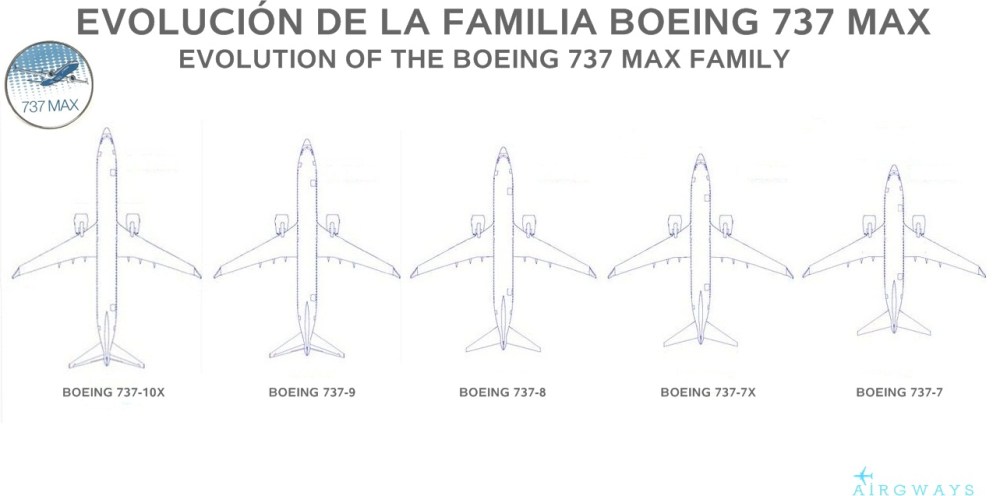
Un competidor para el A321NEO, que ha sido apodado como el Boeing 737-10X, podría estar listo para el mercado en 2019 o 2020, según Muilenburg. Una aeronave de este tipo es una versión alargada del Boeing 737-9 MAX con capacidad para 180 pasajeros, en una configuración de dos clases en el nuevo plano diseñado para un máximo de 198 asientos.

La empresa tiene que responder a cuatro preguntas principales antes de comprometerse a una versión alargada o más grande llamada B737-10X:

En primer lugar, si se lanza cualquier otra variante alargada, ¿será suficiente para ganar una cuota de mercado estimada del 17%? En segundo lugar, ¿será un derivado tal de mantener el valor de coincidencia familia sin dejar de ser lo suficientemente diferentes para evitar la potencial canibalización del mercado del Boeing 737-9? En tercer lugar, dependiendo del nivel de cambio, ¿podría ser la variante lanzada al mercado en el momento oportuno y ser asequible? Por último, en cuarto lugar, ¿es el mercado potencial para la variante -10x lo suficientemente importante como para merecer la interrupción que podría alterar en el sistema de cadena de producción de un nuevo derivado?

Cómo Boeing responde a estas preguntas afectarán a los planes de la compañía para un diseño de la aeronave de medio rango de acción que la compañía ha llamado a la aeronave nueva de tamaño mediano conocida como NMA que transportaría hasta 270 pasajeros en los vuelos, llegando a las 5.000 millas náuticas. La NMA se prevé que entre en servicio en torno a 2025 y depende en gran medida de la capacidad de los fabricantes de motores para desarrollar un nuevo motor con entre 40.000 y 45.000 libras de empuje.

El motor CFM LEAP-1B en los aviones 737 MAX tiene una potencia de poco más de 29.000 libras de empuje de despegue, y se espera una nueva versión para elevar a 31.000. El motor LEAP-1A utilizado en el Airbus A320NEO genera 35.000 libras de empuje de despegue, y la variante LEAP-1C construido para la china Comac C919 desarrolla ya 31.000 libras de empuje de despegue. Boeing podría utilizar el más potente LEAP-1A en el 737-10X, pero eso requeriría un cambio significativo en el tren de aterrizaje del avión, al igual que la adición del LEAP-1C.

c919-wingspan-copia

Resultado de imagen para CFM LEAP-1C

Un avión Airbus más grande, el A321LR, podía albergar hasta 240 pasajeros en vuelos de hasta 4.000 millas náuticas por simple adición de tres tanques de combustible en el espacio utilizado actualmente para equipaje y carga. El 737-10X estirado, se muestra al lado del 737-9, podría demandar $ 2 mil millones en gastos de desarrollo, un costo relativamente barato en el mundo aviones.

df-737max_diagrams_new

737-9 737-10X dibujos
Fuente: El Boeing Co .; Aviation Week

Si Boeing decide en última instancia construir dos nuevos aviones, la decisión se se tomará dependiendo del número de aviones que la compañía cree que puede vender. A principios de este mes de octubre 2016, Boeing estima la demanda de su avión NMA de 2.000 a 5.000 unidades para el mercado. Debido a que el avión sería más costoso en desarrollar, la empresa tiene que cerciorarse de que un 737-10X no canibalice el mercado antes de que el proyecto NMA esté fuera de la mesa de dibujo y en producción.

Eso podría ser más complicado que nunca, dado indicios recientes de que las compañías de bajo coste (LCC) como de Norwegian Air tienen previsto utilizar los nuevos 737-8s MAX para vuelos de larga distancia. Las nuevas aeronaves 737 MAX y A320NEO pueden volar rutas de hasta 3.200 millas náuticas en sus modelos estándar y que el A321LR añade otras 300 millas náuticas a eso.

La gran pregunta entonces para Boeing es si las aerolíneas de bajo costo impulsarán los costes de volar, por ejemplo,a Europa occidental a la costa este de los Estados Unidos, tan bajo que el mercado de un NMA se evapore. El jurado está todavía fuera de esta decisión. Los cielos son el escenario de Airbus y Boeing como los principales luchadores y donde ninguno de ellos quiere perder la batalla por los cielos. airgways-icon-aw


The aerial battle for the skies of the world

Boeing is on track to miss its 2016 target aircraft by a wide margin. The US company needs to reverse its pulseada to keep up the Airbus consortium is giving battle on all fronts

Boeing set a target of achieving a 1 to 1 ratio to receive an order for each aircraft is delivered this year.

A nine months of 2016, Boeing chances do not look good. The company expects to deliver between 740-745 commercial aircraft this year. Meanwhile, as of Tuesday, there were 357 net orders booked so far in 2016. That puts less than half of its goal of orders.

However, while Boeing is facing an uphill battle to reach 740 orders, still you have a chance to get it.

Finish recent sales agreements
First, Boeing has a large number of commitments aircraft still being discussed in firm orders. For example, in Farnborough Airshow 2016, Boeing announced 182 orders and commitments, but only a fraction of them were new firm orders.

There are about 100 commitments outstanding especially for Chinese airlines that are not yet reflected in the total list of 2016 Boeing order to have firm orders, Boeing needs to finalize the terms of the sale.

Similarly, there are historical agreements to sell 80 Boeing aircraft to Iran Air, it has not yet resulted in any firm orders yet. The US government recently approved export licenses for these aircraft, but Iran has yet to line up financing to close the deal.

Finally, the flag carrier Saudia Arabia recently announced plans to buy 28 widebody Boeing. Apparently, the deal is not official yet, since Boeing has not recorded firm orders from Saudia this year.

In total, Boeing has about 200 of these outstanding orders. Boeing will be difficult to finish all of them in the next three months.

Get orders expected in the Middle East
Boeing may also be close to winning large orders from two major airlines in the Middle East. Qatar Airways is about to order at least 30 more widebody Boeing, the 787 Dreamliner mainly according to Bloomberg journalistic source. Qatar Airways CEO Akbar Al Baker has been displeased with Airbus lately, due to delays in delivery, so Boeing has little risk of losing to Airbus.

Meanwhile, Emirates is likely to make an order for 70 wide-body aircraft before the end of the year. Candidates are to choose between the Boeing 787 Dreamliner and the Airbus A350. Given that Emirates has canceled a previous order of 70 A350 in 2014, it seems likely that Boeing has a clear track. Emirates may also split an order between Boeing and Airbus.

Capitalize fever end of the year
Finally, Boeing has to take advantage of the typical year-end rush to order aircraft. Last year, Boeing ended Q3 with only 447 net orders. However, he retired in 321 net orders in Q4 to reach a ratio of 1 share of delivery / 1 new order for the year.

Boeing often receives a disproportionate number of orders in the fourth quarter. To some extent, Boeing may become more aggressive towards the end of the year, as it tries to meet the objectives of domestic sales. Planning cycles of the airline can also encourage a wave of year-end orders. In 2016, it is more important than ever for Boeing to end the year on a high note.

Boeing still has a chance
Internally, Boeing executives seem to recognize it will be very difficult to meet a 1S/1P* proportion this year. Boeing would have to reaffirm the many requests that have been announced, capturing large orders for widebody Emirates and Qatar Airways, and rounding more orders in the year-end race.

In the end, Boeing will likely fall below its 2016 target order. However, investors should still expect to see a big spike in activity order in the next three months.

Airbus and Boeing could lose both the battle of heaven

The bell has sounded in another round between two dominant aircraft manufacturers in the world. When the World Trade Organization ruled last week that the European Airbus had failed to eliminate billions of dollars in illegal state aid, Boeing, its transatlantic competitor, he hastened to utter a decisive victory. The reality, however, is that many rounds are still to come.

It would be better for everyone if the EU and the United States, which have lavished the various forms of state aid in their aviation industries, they returned to the negotiating table, where they were until the US They decided to initiate litigation in 2006.

Not only has this case lost too much time and money. The threat now, given the feverish political atmosphere on both sides of the Atlantic, with more damaging consequences.

Taken to its logical conclusion and neither party should back down, this difference may result in the imposition of retaliatory tariffs, and a trade war that could be devastating for EU-US relations.

Airbus and Boeing are coming to market smaller aircraft

This allows space for Bombardier and Embraer to move in a vacuum. This gap is approximately $ 2,000 aircraft. Probably the best way to illustrate the point we want to make is this image.

Look at the big bubbles to the A319 and 737-700. From 2Q16 there were 1,430 A319s in service and 1,058 737-700 in service. These two aircraft represent almost 90% of the world fleet between 120 and 150 seats. There is a small fleet of McDonnell Douglas withdraw quickly. So the market has a value of at least 2,500 aircraft.

Small bubbles on the right, are treated in the next generation of Airbus and Boeing.

Small bubbles on the left apply to products from Bombardier and Embraer. As shown by its vertical location, their planes are more efficient from the point of view of specific gravity of the saeronaves. Only airplanes can make money payload, so while lighter the plane, the more efficient.

Note the size of bubbles and Embraer aircraft Bombardier is higher than for Airbus and Boeing. Airbus and Boeing have had to add seats of its new generation aircraft in order to escape competition, such as the implementation of more seats in the redesign of the B737-7 MAX. This has led to new models to upload their operational capabilities. But in doing so, they have left the market below the seat 130 pax. This is a segment of 2,500 aircraft. It is a large and important market.

New aircraft for the midrange market
Dennis Muilenburg, CEO of Boeing, thinks the company can design and build two new commercial airliners in a time frame that meets planned entry of its competitor Airbus in service, the A321neo and steals a march on the reasonable plan manufacturer Europe to meet the demand for an aircraft to fill the gap between the B737 and B787 lines, called midrange market.

A competitor for the A321neo, which has been dubbed as the Boeing 737-10X, could be ready for market in 2019 or 2020, according Muilenburg. An aircraft of this type is a stretched version of the Boeing 737-9 with capacity for 180 passengers in a two-class configuration on the new plane designed for up to 198 seats.

The company has to answer four main questions before committing to a long or larger version called B737-10X:

First, if any elongated version is released, will it be enough to win an estimated market share of 17%? Secondly, is it a derivative such to maintain the value of coincidence family while still being sufficiently different to avoid potential market cannibalization Boeing 737-9? Third, depending on the level of change, it could be variant launched in a timely manner and be affordable? Finally, fourthly, is the potential market for variant -10x important enough to warrant the disruption that could alter the system of production line of a new derivative?

How Boeing answers to these questions will affect the company’s plans for a design of the aircraft mid-range of action that the company has called the new aircraft midsize known as NMA that would transport up to 270 passengers on flights, reaching 5,000 nautical miles. NMA is expected to enter service around 2025 and depends largely on the ability of engine manufacturers to develop a new engine with 40,000 to 45,000 pounds of thrust.

The CFM LEAP-1B engine 737 MAX aircraft has a capacity of just over 29,000 pounds of takeoff thrust, and a new version is expected to increase to 31,000. The LEAP-1A engine used in the Airbus A320neo generates 35,000 pounds of takeoff thrust, and LEAP-1C variant built for the Chinese Comac C919 and develops 31,000 pounds of takeoff thrust. Boeing could use the most powerful LEAP-1A in the 737-10X, but that would require a significant change in the landing gear of the aircraft, like the addition of the LEAP-1C.

c919-wingspan-copia

A larger Airbus, the A321LR, could hold up to 240 passengers on flights up to 4,000 nautical miles by simple addition of three fuel tanks in the space currently used for baggage and cargo. The 737-10X stretched, is shown next to the 737-9, could demand $ 2 billion in development costs, a relatively cheap cost aircraft in the world.

df-737max_diagrams_new

737-10X drawings 737-9
Source: The Boeing Co;. Aviation Week

If Boeing decides to ultimately build two new aircraft, the decision will be taken depending on the number of aircraft that the company believes it can sell. Earlier this month, October 2016, Boeing estimates the demand for its aircraft NMA 2,000 to 5,000 units for the market. Because the plane would be more expensive to develop, the company has to make sure that a 737-10X not cannibalize the market before the NMA project is off the drawing board and into production.

That could be more complicated than ever, given recent indications that low cost carriers (LCC) and Norwegian Air are planning to use the new 737-8s MAX for long-haul flights. MAX 737 new aircraft and routes A320neo can fly up to 3,200 nautical miles in its standard models and that the other nautical A321LR adds 300 miles to that.

The big question then is whether Boeing LCCs fly drive costs, such as western Europe to the east coast of the United States, so low that the market for a NMA evaporate. The jury is still out on this decision. The skies are the backdrop for Airbus and Boeing as the main fighters and where none of them want to lose the battle for the skies. A\W

(*) 1V/1P: Proporción de 1 venta (1V) para recuperar por una producción (1P) 1S/1P: Proportion of 1 sale (1S) to recover production (1P)

Ξ A I R G W A Y S Ξ
SOURCE: A I R G W A Y S / fool.com / ft.com / seekingalpha.com / 247wallst.com
DBk: Photographic © A I R G W A Y S / Air Insight / CFM
AW-POST: 201610021804AR
A\W A I R G W A Y S ®

Hagerstown marcando 100 años de la industria de la aviación

AW | 2016 09 28 12:26 | INDUSTRY

Hagerstown, MD (AP) · La ciudad de Western Maryland Hagerstown está marcando 100 años de historia de la aviación.

Alcalde David Gysberts está proclamando este año centenario de la industria de la aviación en una reunión Ayuntamiento martes por la noche.

La celebración continúa el sábado con un espectáculo de avión en el Aeropuerto Regional de Hagerstown. Fabricación de aviones en Hagerstown data desde 1916, cuando el Maryland Prensados Steel Co. comenzó a hacer el CD Bellanca

Un empleado de esa compañía ayudó a fundar otro avión que se convirtió en fabricante de aeronaves Fairchild después de que fue adquirida en 1929 por una firma de Nueva York.

Contratos militares de Fairchild hicieron Hagerstown un próspero centro de fabricación de aviones de la Segunda Guerra Mundial en la década de 1950. El trabajo decayó hasta Fairchild terminó la producción en 1984. El Instituto de Aeronáutica Pittsburgh ahora entrena técnicos de la aviación en el aeropuerto. airgways-icon-aw

Hagerstown marking 100 years of aviation industry

HAGERSTOWN, Md. · The Western Maryland city of Hagerstown is marking 100 years of aviation history.

Mayor David Gysberts is proclaiming this the centennial year of the aviation industry at a City Council meeting Tuesday night.

The celebration continues Saturday with an airplane show at the Hagerstown Regional Airport. Airplane manufacturing in Hagerstown dates to 1916, when the Maryland Pressed Steel Co. began making the Bellanca C.D.

An employee of that company helped found another airplane manufacturer that became Fairchild Aircraft after it was acquired in 1929 by a New York firm.

Fairchild’s military contracts made Hagerstown a thriving center of airplane manufacturing from World War II into the 1950s. The work tailed off until Fairchild ended production in 1984. The Pittsburgh Institute of Aeronautics now trains aviation technicians at the airport.

A\W

Ξ A I R G W A Y S Ξ
SOURCE: Associated Press (AP)
DBk:
AW-POST: 201609281226AR
A\W A I R G W A Y S ®

Boeing 787 Dreamliner Nº 500 en Everett

The tail section of the 500th Boeing 787 Dreamliner at the assembly plant in Everett on September 21. (Kevin Clark / The Herald)

AW | 2016 09 25 19:10 | INDUSTRY

boeing-company-logo

El avión está seccionado, ahora, pero es en laResultado de imagen para heraldnet logo fábrica de Everett donde se armará el Boeing 787 número 500

Los trabajadores cargan el Air France 787-9 a la línea de montaje final de la planta de Everett a principios de este mes, poniendo el programa en camino de ser el más rápido para poner hacia fuera 500 aviones de doble pasillo. La planta de Boeing aquí y en North Charleston, Carolina del Sur, están entregando constantemente Dreamliner – casi  12 por mes. Y los 787 están haciendo bien en lo que es más importante para las compañías aéreas: grandes afirmaciones de la empresa para hacer un avión que reduce drásticamente los costos de operación y abre nuevos mercados.

Boeing está trabajando en nuevas mejoras en la cabina del avión de pasajeros, que ya ha establecido nuevos estándares para la comodidad de los pasajeros. No hay mejoras aerodinámicas están previstas por ahora. Sin embargo, la mejora de la RTE Trent 1000 de Rolls-Royce se espera motor para estar en línea a finales de 2017 – más de un año de retraso – ofreciendo a los operadores un rendimiento aún mejor, dijo Bob Whittington, vicepresidente de Boeing y el ingeniero jefe del programa para el 787. Después de comienzo plagado de problemas del avión, «la vista es estupenda» a 500, dijo.

Han pasado cinco años desde el día de hoy cuando Boeing entregó el primer 787 de All Nippon Airways de Japón. La entrega fue más de tres años de retraso. Pero los primeros dolores de cabeza del programa, problemas de fiabilidad, copias de seguridad de producción, una conexión a tierra de emergencia debido al consumo de tabaco baterías, una espiral de desarrollo y costos de producción – son recuerdos lejanos casi ahora. «Estamos fuera de los días oscuros», dijo.

«Boeing mágico»

cadena de suministro remotas del 787 se basó en gran medida de la contratación externa para reducir el tiempo y costes de desarrollo. Sin embargo, la estrategia agresiva creado migrañas logísticos y financieros para el programa Dreamliner. Boeing ha comprometido enormes recursos para la solución de los problemas, incluyendo la compra de sus socios de empresas conjuntas en Carolina del Sur. Eso abrió la puerta para que la empresa de poner una segunda línea de montaje final allí en 2011.

Boeing par con su deseo de reformar drásticamente la forma en aviones modernos vienen junto con su ambición de hacer que el avión de pasajeros más avanzado. El 787 es el primer avión de pasajeros con un cuerpo material todo-compuesto, mientras que los organismos de avión convencionales se basan en aleaciones de aluminio. El avión sería tan fuerte como una de aluminio, sin embargo, mucho más ligero. Eso, junto con la mejora de la aerodinámica, el software más sofisticado, nuevas y potentes motores y otras innovaciones, haría que el avión mucho más eficientes que los de tamaño y rango similar, Boeing prometió.

Pero los primeros 787 han ido extendiendo el sobrepeso y los clientes estaban decepcionados. Varias líneas aéreas se negaron a aceptar la entrega de los primeros Dreamliner, que comenzaron apilamiento de hasta alrededor de Paine Field. Boeing invirtió dinero y la gente de los problemas, y de manera constante trabajó a través de ellos.

«Yo lo llamo el «Boeing mágico», por cómo las personas se reúnen y asumen los problemas y encontrar soluciones», dijo Michael Griego, un alto directivo de la cadena de suministro 787. «Fue sorprendente ver» en el Dreamliner.

Durante los primeros días, Griego pasaba largas horas caminando la línea de producción con ingenieros y mecánicos direccionar partes de problemas – lo que salió mal, cuando se le ocurrió, y la mejor manera de solucionarlo ahora y evitar que vuelva a ocurrir? «Fue intenso el trabajo  e importante», ella dijo. «Esos eran buenos días.» «Cuando recuerdo los primeros días y lo duro que hemos tenido problemas, casi no puedo creer donde estamos ahora«, dijo Griego.

Aumento producción

En 2012, Boeing entregó 46 787, su primer año completo de producción. Se entregó tres veces esa cantidad el año pasado, y está en camino de hacerlo de nuevo este año. La tasa de producción actual es de 12 aviones al mes. Las entregas efectivas son un poco menos. La compañía planea convertir a cabo 14 Dreamliner de un mes a finales de la década, y el programa ya se está preparando para el aumento, aunque un ejecutivo de Boeing dijo el mes pasado que tal vez no haya órdenes para apoyar a ese ritmo«No estamos muy una operación de llave en mano, pero ya casi estamos allí», dijo Griego.

La compañía continúa para suavizar la producción. El uso de las máquinas automatizadas que permitan calcular su fuselaje material compuesto de la 787 se ha aplanado la curva de aprendizaje de producción. Eso ayudó a que el programa aumente rápidamente la producción. Pero el costo de fabricación de un avión no ha caído a un ritmo similar.

Eso tiene muchos expertos de la industria escépticos sobre la capacidad de Boeing para obtener la producción tan eficiente que puede producir suficientes beneficios grandes apagado futuras entregas para compensar los casi $ 28 de millones de dólares que ha perdido hasta ahora. La compañía hace bastante dinero de otros programas y servicios que pueda absorber las pérdidas de 787. El fabricante de aviones mantiene esas pérdidas de empantanamiento sus balances a través de un método de contabilidad de costes de producción llamada diferida. Eso tiene costos Boeing propagación a partir de hoy a través de los cientos de Dreamliner que planea vender en los próximos años, mientras cuenta los beneficios futuros esperados ahora.

Este enfoque ayuda a cotización de las acciones boya y, dicen los defensores, se pueda dar una visión más precisa de la empresa en el tiempo. Los críticos dicen que está usando trucos financieros para ocultar la realidad.

Independientemente, también significa que Boeing tiene menos dinero en efectivo para gastar el desarrollo de nuevos aviones, incluso más brillante.

A principios de este mes, se cerró un puesto 787 en su línea de vuelo en el campo de Paine, donde los clientes inspeccionar los aviones y la mecánica hacen correcciones de última hora. A la altura de los problemas de producción, de los 787 que no están listos para la entrega docenas estaban estacionados alrededor del aeropuerto. Ahora, el programa cuenta con sólo ocho puestos de la línea de vuelo dedicados. Se cerró una segunda línea de montaje en Everett en 2015 como la eficiencia de la planta de Carolina del Sur mejoró.

En 2012, 16.800 personas trabajaron en el programa 787 en Washington, según un estudio encargado estado.

El número es considerablemente menor ahora. Boeing no comenta públicamente sobre cuántas personas trabajan en un programa específico de avión.

Refinamiento del B787

En la fábrica, «hay una gran cantidad de proyectos en las obras para el 2016 y 2017» para mejorar aún más la producción y reducir los costos, dijo John Barnfather, un alto directivo de 787 de fabricación. Él ayuda a ejecutar el último punto de la línea de montaje en la fábrica.

«Pusimos las brasas para hacerlo bien aquí», para terminar cualquier tarea que tarde – algo que se llama «trabajo viajado» – antes de que el avión se mueve fuera, dijo.

La cantidad de trabajo que se disparó en 2014 que viajó por detrás de Boeing intensificó la tasa de producción de 787 a 10 al mes. Se llegó a un punto en que la compañía dejó de cargar nuevos aviones en la línea de montaje aquí por dos semanas en agosto de ese año con el fin de ponerse al día. La línea de vuelo estaba lleno de equipos de fábrica y contratistas que abordan las tareas atrasadas. Esa cantidad es drásticamente en estos días, de acuerdo con la mecánica en el programa.

Boeing fuertemente ha ajustado el diseño del 787, ya que los primeros 787-8 den la línea de ensamblaje eran demasiado pesados para cumplir sus promesas de rendimiento de la empresa. Los primeros planos se persiguieron con problemas de pieza y otros dolores de cabeza para las compañías aéreas. Luego estaban las baterías de fumar, lo que llevó a todos en el servicio 787 está aterrizado temporalmente a principios de 2013, mientras que Boeing y socios trabajaron en una solución, que se produjo pocas semanas después.

«Los aviones siempre comienzan pesado y se limpian,» dijo Edmund Greenslet, analista de la industria de la aviación y editor de la línea aérea del monitor.«Los aviones son lo contrario de las personas, que inician la luz y se vuelven más pesados.»

Los ingenieros suelen hacer mejoras en el diseño después de un nuevo avión comienza realizando en el mundo real. «Usted está mirando para cortar libras dondequiera que pueda encontrarlos», dijo.

Con más de 450 Dreamliner en funcionamiento, el avión «está entregando hasta ahora en lo que se prometió», dijo Greenslet.

El 787-9, que fue entregado por primera vez en mediados de 2014, está mostrando ganancias de eficiencia alrededor del 15 por ciento – se mide en el consumo de combustible por asiento – más de aviones similares, como 767-300ER. El más pequeño 787-8 se muestran un crecimiento de un dígito en la eficiencia del combustible, dijo.

La primera 787-10, el mayor Dreamliner, está programado para ser emitido en el año 2018. Se monta sólo en Carolina del Sur.

El rendimiento también está mejorando las líneas aéreas que vuelan a más del 787 y aprender cómo obtener el máximo rendimiento de los aviones, dijo.

Las compañías aéreas han utilizado el 787 para abrir más de 100 nuevas rutas entre ciudades distantes que habrían sido los perdedores de dinero de más edad con chorros, menos eficientes.

Para las líneas aéreas, Dreamliner ahora son casi tan fiable como 777, el estándar de oro para la confiabilidad de despacho – una medida clave en la aviación comercial que rastrea la frecuencia con hojas de un tipo de avión las puertas del aeropuerto a 15 minutos de programación. El 777 es muy por encima de 99 por ciento. El 787 tropezó desde el principio, pero ahora es de unos 0,2 puntos porcentuales detrás del 777, dijo Whittington, jefe de máquinas del 787.

Hasta el momento, en el servicio 787 han respaldado la promesa de Boeing para construir un mundo más plano más resistente, libre de problemas. Más de 30 Dreamliner han tenido su primer mantenimiento programado importante, llamado un cheque C. Los resultados están en línea con las expectativas de la compañía para el desgaste, dijo.

Durante el chequeo, la mecánica recorren el avión, tirando de él, aparte de inspeccionar los sistemas y componentes. A 767 se supone que tiene un cheque C, que puede tomar casi dos semanas y costó $ 700,000, cada 18 meses. Debe tener un cheque D – la inspección más intensa – cada seis años. Dreamliner pueden ir el doble de tiempo entre las inspecciones, el ahorro de las líneas aéreas millones de dólares durante la vida útil de un avión.

«Tomamos riesgos en la tecnología, y tomamos riesgos en una nueva base de suministro y sistema de producción. Y tomamos riesgos en la fecha prevista «, dijo Whittington. «Y el avión resultó ser genial. Los riesgos que tomamos en el avión resultó ser todo vale la pena».

«Si tuviera algo que yo diría que hacer de manera diferente, tal vez no hemos tenido tantos tramos de la base de suministro, al mismo tiempo que estábamos tratando de comprimir nuestros horarios», dijo. «Es simplemente demasiado riesgo de una sola vez y tomar demasiados pasos de gigante.»

Para cambiar la aviación, «hay que tomar medidas audaces», y Boeing ha demostrado su capacidad para entregar a tiempo las medidas negrita y otra vez, dijo Whittington. «Se acaba de construir en nuestro ADN».  airgways-icon-aw

Boeing Everett plant set to roll out 500th 787 Dreamliner

The airplane is in pieces, now, but it’s in the factory: the 500th Boeing 787

Workers loaded the Air France 787-9 onto the Everett plant’s final assembly line earlier this month, putting the program on track to be the fastest to crank out 500 twin-aisle jetliners. Boeing’s plant here and in North Charleston, South Carolina, are steadily delivering Dreamliners — nearly 12 a month. And the 787s are making good on what matters most to airlines: the company’s big claims to make an airplane that slashes operating costs and opens new markets.

Boeing is working on further upgrades to the jetliner’s cabin, which has already set new standards for passenger comfort. No aerodynamic improvements are planned for now. However, Rolls-Royce’s improved Trent 1000 TEN engine is expected to be online in late 2017 — more than a year late — offering operators even better performance, said Bob Whittington, Boeing vice president and chief program engineer for the 787. After the plane’s problem-plagued beginning, “the view is great” at 500, he said.

It’s been five years today since Boeing delivered the first 787 to All Nippon Airways of Japan. The delivery was more than three years late. But the program’s early headaches — reliability issues, production backups, an emergency grounding due to smoking batteries, spiraling development and production costs — are almost distant memories now. “We’re out of the dark days,” he said.

‘Boeing magic’

The 787’s far-flung supply chain relied heavily on outsourcing to cut development time and costs. However, the aggressive strategy created logistical and financial migraines for the Dreamliner program. Boeing committed huge resources to solving the issues, including buying out its joint-venture partners in South Carolina. That opened the door for the company to put a second final assembly line there in 2011.

Boeing matched its desire to drastically reshape how modern jetliners come together with its ambition to make the most advanced passenger plane. The 787 is the first jetliner with an all-composite material body, whereas conventional airplane bodies rely on aluminum alloys. The plane would be just as strong as an aluminum one, yet much lighter. That, along with improved aerodynamics, more sophisticated software, powerful new engines and other innovations, would make the plane much more efficient than ones of similar size and range, Boeing promised.

But early 787s rolled out overweight and customers were underwhelmed. Several airlines refused to take delivery of the earliest Dreamliners, which started stacking up around Paine Field. Boeing poured money and people on the problems, and steadily worked through them.

“I call it the ‘Boeing Magic’ — how people come together and take on problems and come up with solutions,” said Michael Griego, a senior manager for the 787 supply chain. “It was amazing to see” on the Dreamliner.

During those early days, Griego spent long hours walking the production line with engineers and mechanics addressing problem parts — what went wrong, where did it occur, and how best to fix it now and stop it from happening again? “It was intense” work — and important, too, she said. “Those were good days.” “When I remember the early days and how hard we struggled, I almost can’t believe where we are now,” Griego said.

Almost there

In 2012, Boeing delivered 46 787s, its first full production year. It delivered three times that many last year, and is on pace to do so again this year. The current production rate is 12 airplanes a month. Actual deliveries are slightly fewer. The company plans to turn out 14 Dreamliners a month by the end of the decade, and the program is already gearing up for the increase, although a Boeing exec said last month that there might not be orders to support that pace. “We’re not quite a turnkey operation, but we’re almost there,” Griego said.

The company continues to smooth out production. The 787’s use of automated machines required for making its composite material airframe has flattened the production learning curve. That helped the program rapidly increase production. But the cost of making an airplane has not fallen at a similar pace.

That has many industry experts skeptical about Boeing’s ability to get production so efficient that it can make big enough profits off future deliveries to make up the nearly $28 billion it has lost up to now. The company makes enough money from other programs and services that it can absorb the 787 losses. The airplane maker keeps those losses from bogging down its balance sheets through an accounting method called deferred production cost. That has Boeing spread costs from today across the hundreds of Dreamliners it plans to sell in years to come, while counting future expected profits now.

That approach helps buoy share price and, proponents say, gives investors a more accurate view of the company over time. Critics say it is using financial tricks to obscure reality.

Regardless, it also means Boeing has less cash now to spend developing new, even shinier airplanes.

Earlier this month, it closed one 787 stall on its flight line at Paine Field, where customers inspect the planes and mechanics make last-minute fixes. At the height of the production problems, dozens of 787s not ready for delivery were parked around the airport. Now, the program has only eight dedicated flight line stalls. It closed a second assembly line in Everett in 2015 as the South Carolina plant’s efficiency improved.

In 2012, 16,800 people worked on the 787 program in Washington, according to a state commissioned study.

The number is considerably less now. Boeing does not publicly comment on how many people work on a specific airplane program.

Put the coals to it

In the factory, “there are a lot of projects in the works for 2016 and 2017” to further improve production and reduce costs, said John Barnfather, a senior manager for 787 manufacturing. He helps run the last spot on the assembly line in the factory.

“We put the coals to it right here,” to finish any jobs that are behind schedule — something called “traveled work” — before the plane moves outside, he said.

The amount of traveled work spiked in 2014 after Boeing stepped up 787 production rate to 10 a month. It reached a point that the company stopped loading new planes onto the assembly line here for about two weeks in August of that year in order to catch up. The flight line was crowded with factory crews and contractors tackling overdue tasks. That amount is dramatically down these days, according to mechanics on the program.

Boeing heavily tweaked the 787’s design, as the first 787-8s out of factory were too heavy to make good on the company’s performance promises. Early planes were dogged with part problems and other headaches for airlines. Then there were the smoking batteries, which led to all in-service 787s being temporarily grounded in early 2013, while Boeing and partners worked on a fix, which came a few weeks later.

“Planes always start heavy and get lighter,” said Edmund Greenslet, an aviation industry analyst and publisher of Airline Monitor. “Planes are the opposite of people, who start light and get heavier.”

Engineers typically make design improvements after a new plane starts performing in the real world. “You’re looking to cut pounds wherever you can find them,” he said.

With more than 450 Dreamliners in operation, the plane “is delivering so far on what was promised,” Greenslet said.

An assembly worker checks out a wing of the 500th 787 Dreamliner at the assembly plant in Everett. Air France is slated to receive the 500th 787. (Kevin Clark / The Herald)The nose of the 500th 787 Dreamliner at the assembly plant in Everett on September 21. (Kevin Clark / The Herald)Currently in many pieces, the fuselage of the 500th 787is being assembled in Everett.
                                (Kevin Clark / The Herald)

The 787-9, which was first delivered in mid-2014, is showing about 15 percent efficiency gains — measured in fuel consumption per seat — over similar airplanes, such as 767-300ERs. The smaller 787-8 is posting single-digit gains in fuel efficiency, he said.

The first 787-10, the biggest Dreamliner, is slated to be delivered in 2018. It will be assembled only in South Carolina.

Performance also is improving the more airlines fly the 787 and learn how to get the most out of the planes, he said.

Airlines have used the 787 to open more than 100 new routes between distant cities that would have been money-losers with older, less efficient jets.

For airlines, Dreamliners are now almost as dependable as 777s, the gold standard for dispatch reliability — a key metric in commercial aviation that tracks how often an airplane type leaves the airport gates within 15 minutes of schedule. The 777 is well above 99 percent. The 787 stumbled early on, but now is about 0.2 percentage points behind the 777, said Whittington, the 787’s chief engineer.

So far, in-service 787s have backed up Boeing’s promise to build a hardier, more problem-free plane. More than 30 Dreamliners have had their first major scheduled maintenance, called a C check. The findings are in line with the company’s expectations for wear and tear, he said.

During the checkup, mechanics scour the airplane, pulling it apart to inspect major systems and components. A 767 is supposed to have a C check, which can take nearly two weeks and cost about $700,000, every 18 months. It should have a D check — the most intense inspection — every six years. Dreamliners can go twice as long between inspections, saving airlines millions of dollars during a plane’s lifespan.

So far, 787 is on track to realize Boeing’s promise to cut maintenance costs by as much as 30 percent. “The amount of unscheduled work at the C check point is dramatically less than for a 767 or 777,” he said.

“We took risks on technology, and we took risks on a new supply base and production system. And we took risks on schedule,” Whittington said. “And the airplane turned out to be great. The risks we took on the airplane turned out to be all worth it.»

“If I had something I would say do differently, we might have not taken so many stretches on the supply base at the same time that we were trying to compress our schedules,” he said. “It’s just too much risk all at one time and taking too many giant leaps.”

To change aviation, “you have to take bold steps,” and Boeing has proven its ability to deliver on bold steps time and again, Whittington said. “It’s just built into our DNA.” A\W

Ξ A I R G W A Y S Ξ
SOURCE: heraldnet.com
DBk: Photographic © Kevin Clark / The Herald
AW-POST: 201609251910AR
A\W A I R G W A Y S ®

Southwest espera antes de lo previsto al B737 MAX

Resultado de imagen para boeing 737 max southwest airlines

AW | 2016 09 25 06:42 | AIRLINES

boeing-company-logofk492336737-max-round-pinSouthwest Airlines Co. espera recibir la entrega de 10 de la versión más reciente de Boeing 737 antes de que comience volar el avión comercial el próximo año, una consecuencia del desarrollo más suave de lo esperado del avión.

La aerolínea todavía está discutiendo un calendario de entregas del Max 8 con Boeing y planea llevar los aviones a finales de agosto o principios de septiembre del próximo año, dijo suroeste Director de Operaciones Mike Van de Ven, durante una entrevista el viernes a bordo de un modelo de prueba de la aeronave . Boeing ha dicho que el avión estará listo para hacer su debut en el segundo trimestre.

El Max 8 permitirá suroeste de volar más lejos de lo que ahora puede, un beneficio como el vehículo comienza a expandir sus operaciones internacionales jóvenes. También ofrece una mejora de la eficiencia de combustible de alrededor del 14 por ciento respecto a los modelos actuales y será el primero con el motor de salto-1B construido por CFM International Inc., una empresa conjunta de General Electric Co. y la francesa Safran SA.

«Se siente como si fuera el primer día de una gran parte de nuestro futuro», dijo Van de Ven como el Max se detuvo en Dallas Love Field durante una serie de vuelos de prueba. «Sólo hay un montón de emoción en Southwest.»

LANZAMIENTO DEL CLIENTE

Southwest se considera el cliente de lanzamiento de los aviones de fuselaje estrecho actualizados, ya que coloca la primera orden para el Max, el chorro de venta más rápida en la historia de Boeing. Sin embargo, si la compañía de bajo coste será el primero en volar el avión está en el mercado de que se trate. El nuevo 737 está ejecutando meses antes de lo previsto, una rareza para aviones comerciales.

Boeing ya ha construido la primera de las 737 rumbo a suroeste, a pesar de que la nueva aeronave no será entregado hasta que las pruebas de vuelo y llega a la conclusión de los aviones están certificados aptos para el vuelo. El fabricante de aviones está construyendo el Max al lado de la corriente 737-modelo, mientras se prepara para acelerar la salida combinada próximo año a 47 aviones al mes desde el actual 42.

HORARIO DE VUELO

Antes de volar el Max, Southwest tiene que retirarse de sus aviones más antiguos , un proceso que ahora se espera que esté terminada en septiembre de 2017. Un plan de vuelo se hace a mano en los próximos seis meses o así puede permitir el inicio de los vuelos Max a «moverse hacia arriba o hacia atrás una poco «, dijo Van de Ven.

Southwest tiene pedidos para 30 de los aviones Max 7 de Boeing, el más pequeño de la nueva 737, con entregas comenzando en 2019. La compañía no tiene planes ahora para comprar un llamado Max 10, una versión alargada del modelo más grande 737 que Boeing está considerando. Posibles vuelos a través del Atlántico son «realmente no en el radar», dijo.

«No hemos tenido ningún interés serio en ese momento», dijo Van de Ven. «Cuando nos fijamos en nuestras oportunidades de seguir adelante con el Max 7 y 8, hay 50 destinos adicionales podríamos servir y hasta aviones 500-ish en los próximos 20 años que podíamos llevar en ese tamaño que encaja con nuestro punto a -point red. No hay ninguna razón para nosotros en este momento para ir a buscar a un avión que nos pondría fuera de lo que nuestro modelo de negocio actual es «airgways-icon-aw

Resultado de imagen para boeing 737 max southwest airlines

Southwest Expects to Take its First Boeing 737 Max Ahead of Schedule

Southwest Airlines Co. expects to take delivery of 10 of the latest version of Boeing Co.’s 737 before it begins flying the aircraft commercially next year, a consequence of the plane’s smoother-than-expected development.

The airline is still discussing a delivery schedule for the Max 8 with Boeing and plans to take the planes by late August or early September of next year, Southwest Chief Operating Officer Mike Van de Ven said during a Friday interview aboard a test model of the aircraft. Boeing has said the plane will be ready to make its debut in the second quarter.

The Max 8 will allow Southwest to fly farther than it can now, a benefit as the carrier begins to expand its young international operations. It also offers a fuel-efficiency improvement of about 14 percent over current models and will be the first with the Leap-1B engine built by CFM International Inc., a joint venture of General Electric Co. and France’s Safran SA.

“It feels like it’s the first day of a big part of our future,” Van de Ven said as the Max stopped at Dallas Love Field during a series of test flights. “There’s just a lot of excitement at Southwest.”

LAUNCH CUSTOMER

Southwest is considered the launch customer for the upgraded narrow-body jets because it placed the first order for the Max, the fastest-selling jet in Boeing’s history. But whether the low-cost carrier will be the first to fly the plane commercially is in question. The new 737 is running months ahead of schedule, a rarity for commercial jetliners.

Boeing has already built the first of the 737s headed for Southwest, even though the new aircraft won’t be handed over until flight-testing concludes and the planes are certified as airworthy. The planemaker is building the Max along side current-model 737s while it prepares to speed combined output next year to 47 planes a month from the current 42.

FLIGHT SCHEDULE

Before flying the Max, Southwest has to retire its oldest planes, a process now expected to be finished in September 2017. A flight schedule being crafted over the next six months or so may allow the start of Max flights to “move up or back a little bit,” Van de Ven said.

Southwest has orders for 30 of Boeing’s Max 7 aircraft, the smallest of the new 737, with deliveries starting in 2019. The carrier has no plans now to purchase a so-called Max 10, a stretched version of the largest 737 model that Boeing is considering. Possible flights across the Atlantic are “really not on the radar,” he said.

“We haven’t had any serious interest in that right now,” Van de Ven said. “When we look at our opportunities going forward with the Max 7 and 8, there are 50 additional destinations we could serve and up to 500-ish airplanes over the next 20 years that we could take in that size that fit with our point-to-point network. There’s no reason for us at this point to go look for an airplane that would put us outside of what our current business model is.” A\W

Ξ A I R G W A Y S Ξ
SOURCE: skift.com
DBk: Photographic © Boeing.com
AW-POST: 201609250642AR
A\W A I R G W A Y S ®

Boeing repiensa al B737-10 MAX

K66500-01

AW | 2016 09 22 19:27 | INDUSTRY

boeing-company-logo

fk492336737-max-round-pinBoeing está estudiando el mayor 737, el Max 10, para entrar en servicio después de 2019

Boeing Co. aún está estudiando la posibilidad de construir una versión más grande de su éxito de ventas el 737  para contrarrestar las ventas fuera de control por su rival Airbus  de una versión grande de su plano de la competencia, dijo un alto ejecutivo.

Resultado de imagen para reuters logoLa compañía no ha tomado una decisión para construir el avión de mayor tamaño, conocido como el 737 MAX 10, dijo Michael Teal, vicepresidente e ingeniero jefe del proyecto del programa MAX 737.

«Estamos pensando en varias alternativas … diferentes variedades de motores, longitud del fuselaje», dijo Teal en una entrevista en las instalaciones de producción del Boeing 737 en Renton, Washington, el martes por la noche.

«Está en estudio y es simplemente una determinación de si encontramos la solución adecuada para el cliente y el momento y la cantidad de cambio en el que tendríamos que hacer para ese trabajo», dijo.

b737_900_png_2_by_vankaiser-d50bao6-copia

El Airbus A321neo tiene capacidad para 240 pasajeros, en comparación con un máximo de 220 en el planificado 737 MAX 9.

El MAX 10 se desarrolló después de variantes de su otro MAX. Debería entrar en servicio después de la versión más pequeña, el MAX 7, sale en 2019, dijo Teal.

Boeing está estudiando una amplia gama de opciones para los aviones más grandes, incluyendo el uso de los motores diseñados para un avión de un solo pasillo está siendo desarrollado por COMAC de China.

Boeing ya ha decidido ampliar el MAX 7, la adición de 12 asientos. El MAX 7 tendrá un rango de alrededor de 3.500 y 3.600 millas náuticas, más largo que el MAX 8, dijo.

Las pruebas de vuelo de los iniciales 737 MAX 8 aviones es el calendario previsto y espera que concluya a finales de este año o principios del próximo año, permitiendo que los primeros 737 Max’s para  los clientes entre en servicio en 2017.

«Nos vamos a cumplir que el [plazo]», dijo Teal. «Va bastante bien. Las cuatro [Test] aviones están volando.»

Boeing ya ha construido 10 aviones MAX y el número 11 está en producción ahora. La compañía está construyendo el 787 MAX 8 en primer lugar, con entrega en 2017, seguido por el MAX 9 en 2018 y el MAX 7 en 2019.

Teal dijo que no tiene preocupaciones acerca de los problemas de la cadena de suministro del 737 y las tasas de producción se incrementen y el Max entra en servicio.

La mayor parte de su producción de 737 en 2017será del modelo 737 NG (próxima generación) , haciendo más modelos MAX a finales de 2018, dijo.

Vuelos transatlánticos

Los vuelos transatlánticos en las nuevas aeronaves B737MAX o de similar prestaciones como el A321NEO permitirán un cambio en la manera de volar, uniendo ciudades de menores demandas desde un lugar del Atlántico hacia el otro, evitando realizar conexiones en centro de distribuciones congestionados.airgways-icon-aw

20160712-152037

Boeing rethinks the B737-10 MAX

Boeing still studying larger 737 Max 10 to enter service after 2019

Boeing Co. is still studying whether to build a larger version of its best-selling 737 aircraft to counter runaway sales by rival Airbus  of a large version of its competing plane, a senior executive said.

boeing-737max-10-vs-max9

The company has not made a decision yet to build the larger jet, dubbed the 737 MAX 10, said Michael Teal, vice president and chief project engineer of the 737 MAX program.

«We’re looking at various alternatives … different varieties of engines, fuselage length,» Teal said in an interview at Boeing’s 737 production facility in Renton, Washington on Tuesday evening.

«It is being studied and it’s just a determination if we find the right solution for the customer and the timing and how much change we would have to do to make that work,» he said.

The Airbus A321neo can hold up to 240 passengers, compared with a maximum of 220 on the planned 737 MAX 9.

The MAX 10 would be developed after its other MAX variants. It would enter service after the smallest version, the MAX 7, comes out in 2019, Teal said.

Boeing is studying a wide range of options for the larger planes, including using the engines designed for a single-aisle plane being developed by China’s COMAC.

Boeing already has decided to enlarge the MAX 7, adding 12 seats. The MAX 7 will have a range of around 3,500 to 3,600 nautical miles, longer than the MAX 8, he said.

Flight testing of the initial 737 MAX 8 planes is on schedule and expected to conclude late this year or early next year, allowing the first 737 MAXs to go to customers in 2017.

«We’re gonna meet that [deadline],» Teal said. «It’s going pretty well. All four [test] airplanes are flying.»

Boeing has already built 10 MAX planes and the 11th is in production now. The company is building the 787 MAX 8 first, with delivery in 2017, followed by the MAX 9 in 2018 and the MAX 7 in 2019.

Teal said he didn’t have concerns about supply chain problems as 737 production rates increase and the Max comes into service.

Most of its 737 production in 2017 will be 737 NG (next generation) models, making more MAX models by the end of 2018, he said.

Transatlantic flights

Transatlantic flights in new aircraft B737MAX or similar features as the A321neo will allow a change in the way of flying, linking cities small claims from a place the Atlantic to the other, avoiding making connections in congested distribution center. A\W

Ξ A I R G W A Y S Ξ
SOURCE: reuters.com / A I R G W A Y S
DBk: Photographic © A I R G W A Y S  / gereports.com
AW-POST: 201609221927AR
A\W A I R G W A Y S ®