JetBlue Airways inicia ops New York/JFK a Georgetown, Guyana
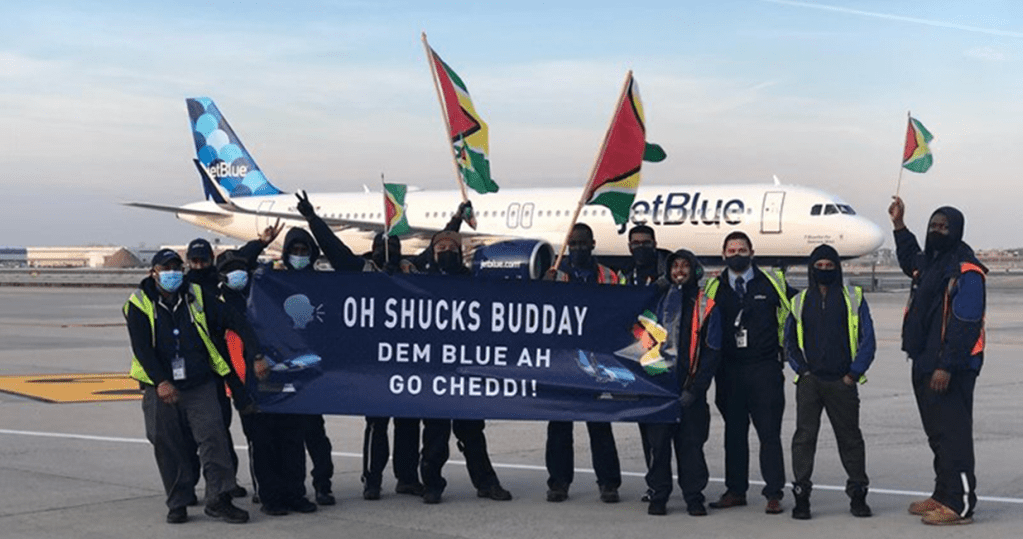
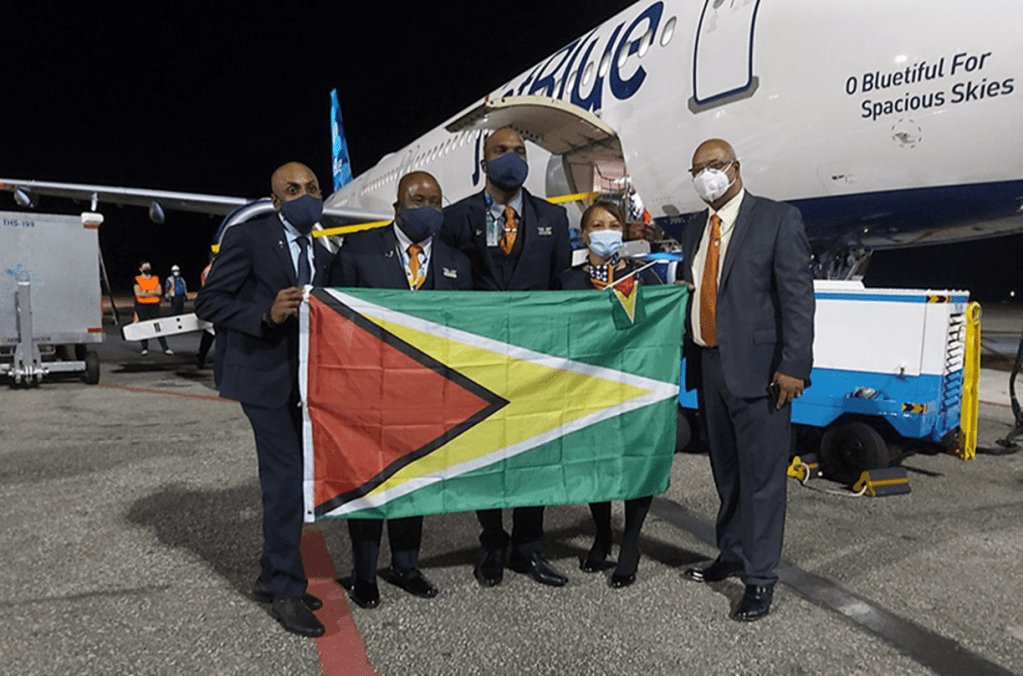
JetBlue Airways ha iniciado este 11 de Diciembre de 2020 el vuelo inaugural entre New York/JFK y Georgetown, Guyana como parte de las estrategias de ampliación de red de servicios en Sudamérica. La compañía low cost con sede en New York/JFK es ahora el tercer operador en esta ruta, uniéndose a Caribbean Airlines con tres servicios semanales, próximamente incrementando un cuarto vuelo semanal, y el servicio tres veces por semana operado por Eastern Airlines.
La ruta cubre una distancia de 4.086 kilómetros hacia el noreste de América del Sur operando inicialmente cuatro vuelos semanales (4Frq/S) utilizando aeronaves Airbus A321NEO con capacidades para 200 asientos. El servicio JFK de JetBlue se complementará con el destino San Juan, aunque este servicio operará solo del 15 de Enero al 8 de Febrero de 2021. Los datos de reserva de OAG Traffic Analyser revelan que apenas 199.000 volaron entre JFK y Georgetown en 2019, con más de 122.000 tráfico de pax en vuelos directos por Caribbean Airlines. En el tráfico indirecto, casi 50.000 volaron vía Puerto España con la misma aerolínea.
JetBlue connects Georgetown/Guyana
JetBlue Airways launches ops New York/JFK to Georgetown, Guyana
JetBlue Airways has started this December 11, 2020 the inaugural flight between New York/JFK and Georgetown, Guyana as part of the service network expansion strategies in South America. The low cost company based in New York/JFK is now the third operator on this route, joining Caribbean Airlines with three weekly services, soon increasing a fourth weekly flight, and the service three times a week operated by Eastern Airlines.
The route covers a distance of 4,086 kilometers to the northeast of South America initially operating four weekly flights (4Frq/S) using Airbus A321NEO aircraft with capacities for 200 seats. JetBlue’s JFK service will be complemented with the San Juan destination, although this service will operate only from January 15 to February 8, 2021. Booking data from OAG Traffic Analyzer reveals that just 199,000 flew between JFK and Georgetown in 2019, with more than 122,000 pax traffic on direct flights by Caribbean Airlines. In indirect traffic, almost 50,000 flew via Port of Spain with the same airline.
Gobierno fiscaliza proceso de ofertas por Air India
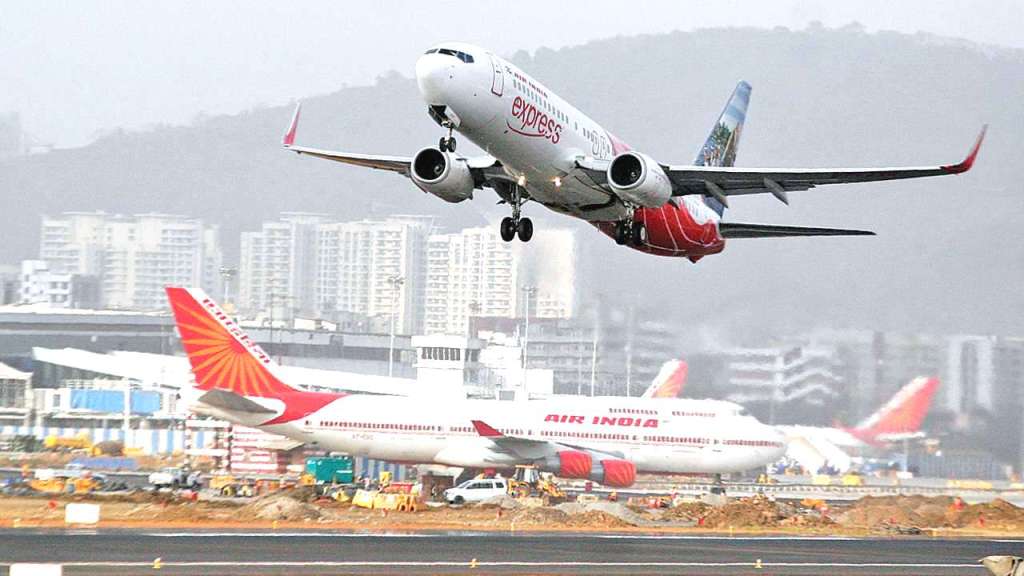
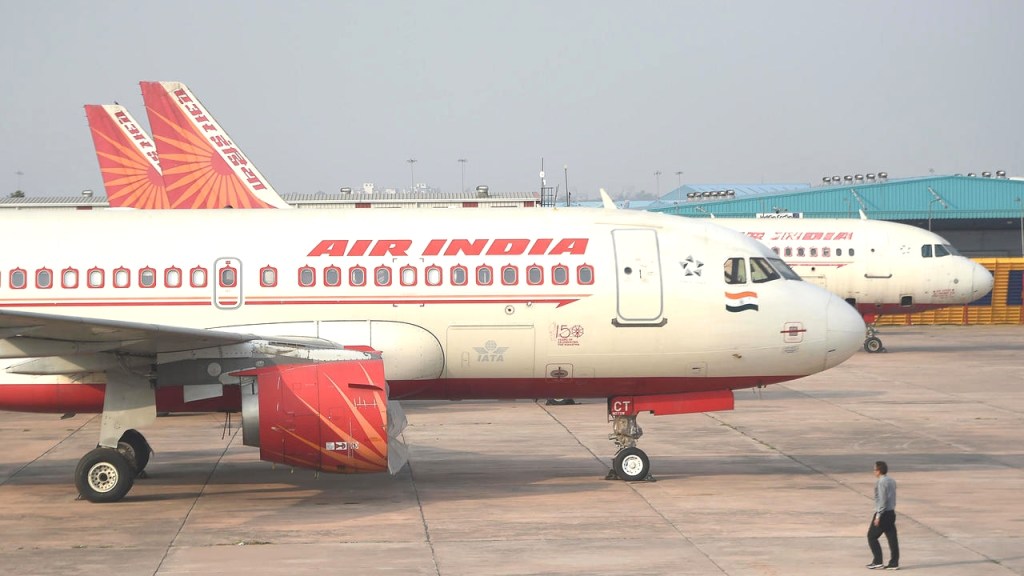
Las Expresiones de Interés (EoI) de las compañías Tata Group, Interups Inc., con sede en Nueva York, y un grupo de empleados han avanzado en las ofertas para Air India, han mostrado interés en comprar la compañía nacional que reportó por última vez un beneficio en 2007. Las Expresiones de Interés (EoIs) darán a los interesados acceso a todos los registros de la aerolínea. La oferta del mayor conglomerado de la India, si tiene éxito, marcará el regreso de Air India, fundada por el industrial J.R.D. Tata como transportista de correo en 1932. El Gobierno ha tomado el control de Air India en 1953 después de que Tata propusiera que tomara el 49% de la aerolínea.
Tata Group es quizás el único conglomerado indio que puede invertir, sostener y revivir Air India en las circunstancias actuales, dijo Mark Martin, Director Ejecutivo de la consultora de aviación Martin Consulting LLC: «El grupo Tata tiene la experiencia técnica adecuada para que la aerolínea tenga éxito. También tiene un buen legado, ya que comenzó Air India antes de que fuera nacionalizado por el gobierno. Creo que los empleados se alegrarán si el grupo Tata termina tomando el control de la aerolínea debido al legado del grupo en el sector de las aerolíneas», expresó Mark Martin.
El Departamento de Inversión y Gestión de Activos Públicos (DIPAM), el brazo del Ministerio de Finanzas de la India que supervisa las ventas de activos, dijo que obtuvo múltiples intereses al final del plazo el Lunes 14/12, sin dar detalles. «La transacción pasará ahora a la segunda etapa», dijo el Secretario de DIPAM, Tuhin Kanta Pandey, en un post en Twitter. El Gobierno de la India evaluará ahora los EoIs y seleccionará los que califiquen el 5 de Enero de 2021, de acuerdo con la propuesta del Departamento para privatizar la compañía nacional.
En la propuesta presentada por el consorcio, un grupo de 219 empleados de Air India poseerá una participación del 51%, e Interups tendrá el 49%, dijo el Presidente de la compañía con sede en Nueva York, Laxmi Prasad, en una entrevista. Interups administra el corpus de jubilación de 27.635 cuentas propiedad de indios con sede en Estados Unidos. «Se ofrecerá a los empleados dispuestos y continuos el 51% en el consorcio que adquiere la aerolínea. No se requiere ninguna inversión de capital [de ellos]», dijo Laxmi Prasad, añadiendo que si su adquisición planeada de Air India tuviera éxito, su compañía establecería un fideicomiso de inversión en infraestructura de aviación para monetizar los activos de la aerolínea. «Estamos abogando activamente por las rutas aéreas, el manejo en tierra, la capacitación y otras instalaciones en la colocación de infraestructuras. Esto deja a la compañía actual para permanecer magra y operativa», agregó.
El Tata Group está tratando de persuadir a Singapore Airlines, con quien opera una empresa conjunta de aerolíneas (Joint Venture), Vistara Airlines, de que renuncie a una cláusula de no competencia en el acuerdo para permitirle pujar por compañías rivales y asociarse con la compañía en su oferta por Air India.
El gobierno ha estado buscando un comprador para la aerolínea estatal desde 2017, pero ha dibujado un espacio en blanco hasta el punto de que los inversores se han visto disuadidos por la enorme carga de deuda de la aerolínea que pierde dinero. Desde entonces, el Gobierno ha endulzado el trato para hacer el activo más atractivo. Esta vez, el gobierno indio planea vender el 100% de Air India, incluyendo la unidad Air India Express Ltd y el 50% en Air India SATS Airport Services Pvt. Ltd, después de no venderlo hace dos años, cuando buscó vender el 76% en la aerolínea. El Gobierno de la India también permitió a los oferentes decidir cuánto de la deuda de la aerolínea quieren absorber como parte de la venta. Air India tenía pasivos y provisiones corrientes, incluidos préstamos a corto plazo y pagos comerciales, de ₹ 70,686,6 Crores y deuda neta de ₹ 58,255 Crores a finales de Marzo de 2019. Sin embargo, desde entonces el Gobierno ha transferido ₹ 29,464 Crores de esta deuda de Air India a un vehículo de propósito especial propiedad del Gobierno, Air India Assets Holding Company.
Processes interest in Air India
Government oversees bidding process for Air India
The Expressions of Interest (EoI) of the companies Tata Group, Interups Inc., based in New York, and a group of employees have advanced in the offers for Air India, have shown interest in buying the national company that reported for the last time a profit in 2007. Expressions of Interest (EoIs) will give interested parties access to all airline records. The bid from India’s largest conglomerate, if successful, will mark the return of Air India, founded by industrialist J.R.D. Tata as a mail carrier in 1932. The Government took control of Air India in 1953 after Tata proposed that it take 49% of the airline.
Tata Group is perhaps the only Indian conglomerate that can invest, sustain and revive Air India under the current circumstances, said Mark Martin, CEO of aviation consulting firm Martin Consulting LLC: «The Tata group has the appropriate technical expertise for the airline to be successful. It also has a good legacy, having started Air India before it was nationalized by the government. I think employees will be happy if the Tata group ends up taking over the airline because of the group’s legacy in the airline industry. airlines», said Mark Martin.
The Department of Investment and Public Asset Management (DIPAM), the arm of the Indian Ministry of Finance that oversees asset sales, said it earned multiple interests by the end of the term on Monday 12/14, without giving details. «The transaction will now move to the second stage», said DIPAM Secretary Tuhin Kanta Pandey in a post on Twitter. The Government of India will now evaluate the EoIs and select the qualifying ones on January 5, 2021, in accordance with the Department’s proposal to privatize the national company.
In the proposal presented by the consortium, a group of 219 Air India employees will own a 51% stake, and Interups will have 49%, said the President of the New York-based company, Laxmi Prasad, in an interview. Interups manages the retirement corpus of 27,635 accounts owned by Indians based in the United States. «Willing and continuing employees will be offered 51% in the consortium that the airline acquires. No capital investment is required [from them]», Laxmi Prasad said, adding that if their planned acquisition of Air India were successful, their The company would establish an aviation infrastructure investment trust to monetize the airline’s assets. «We are actively advocating for air routes, ground handling, training and other facilities in the placement of infrastructure. This leaves the current company to remain lean and operational», he added.
The Tata Group is trying to persuade Singapore Airlines, with whom it operates an airline joint venture (Joint Venture), Vistara Airlines, to waive a non-compete clause in the deal to allow it to bid on rival carriers and partner with the company. in your bid for Air India.
The government has been looking for a buyer for the state carrier since 2017, but has drawn a blank to the point where investors have been put off by the huge debt burden of the money-losing carrier. Since then, the government has sweetened the deal to make the asset more attractive. This time, the Indian government plans to sell 100% of Air India, including the Air India Express Ltd unit and 50% in Air India SATS Airport Services Pvt. Ltd, after not selling it two years ago, when it sought to sell 76%. at the airline. The Government of India also allowed bidders to decide how much of the airline’s debt they want to absorb as part of the sale. Air India had current liabilities and provisions, including short-term loans and commercial payments, of ₹ 70,686.6 Crores and net debt of ₹ 58,255 Crores at the end of March 2019. However, since then the Government has transferred ₹ 29,464 Crores from this Air India debt to a government-owned special purpose vehicle, Air India Assets Holding Company.
एयर इंडिया में रुचि रखते हैं
सरकार एयर इंडिया के लिए बोली प्रक्रिया की देखरेख करती है
न्यूयॉर्क में स्थित Tata Group, Interups Inc., और कर्मचारियों के एक समूह, जो एयर इंडिया के प्रस्तावों में आगे बढ़े हैं, एक्सप्रेस ऑफ़ इंट्रेस्ट (EoI) ने आखिरी बार रिपोर्ट की गई राष्ट्रीय कंपनी को खरीदने में रुचि दिखाई है। 2007 में एक लाभ। एक्सप्रेशन ऑफ इंटरेस्ट (ईओआई) सभी एयरलाइन रिकॉर्ड के लिए इच्छुक पार्टियों को पहुंच प्रदान करेगा। भारत के सबसे बड़े समूह से बोली, यदि सफल होती है, तो एयर इंडिया की वापसी को चिह्नित करेगी, जिसकी स्थापना उद्योगपति जे.आर.डी. 1932 में एक मेल वाहक के रूप में टाटा। सरकार ने 1953 में एयर इंडिया का नियंत्रण टाटा के प्रस्ताव के बाद लिया कि वह एयरलाइन का 49% हिस्सा लेती है।
टाटा समूह शायद एकमात्र भारतीय समूह है जो मौजूदा परिस्थितियों में एयर इंडिया का निवेश, रखरखाव और पुनरुद्धार कर सकता है, विमानन सलाहकार मार्टिन कंसल्टिंग एलएलसी के सीईओ मार्क मार्टिन ने कहा: «टाटा समूह के पास एयरलाइन के लिए उपयुक्त तकनीकी विशेषज्ञता है। सफल रहें। इसकी एक अच्छी विरासत भी है क्योंकि इसने सरकार द्वारा राष्ट्रीयकरण करने से पहले एयर इंडिया की शुरुआत की थी। मुझे लगता है कि अगर टाटा समूह एयरलाइन उद्योग में समूह की विरासत की वजह से एयरलाइन का कार्यभार संभाल लेती है तो कर्मचारी खुश होंगे। एयरलाइंस», मार्क मार्टिन ने कहा।
निवेश और सार्वजनिक संपत्ति प्रबंधन विभाग (डीआईपीएएम), भारतीय वित्त मंत्रालय का हाथ है जो परिसंपत्ति की बिक्री की देखरेख करता है, उसने कहा कि उसने विवरण दिए बिना सोमवार 12/14 की अवधि के अंत तक कई ब्याज अर्जित किए। डीआईपीएएम के सचिव तुहिन कांता पांडे ने ट्विटर पर एक पोस्ट में कहा, «लेनदेन अब दूसरे चरण में जाएगा।» भारत सरकार अब EoI का मूल्यांकन करेगी और राष्ट्रीय कंपनी के निजीकरण के विभाग के प्रस्ताव के अनुसार 5 जनवरी 2021 को योग्य लोगों का चयन करेगी।
219 एयर इंडिया के कर्मचारियों के एक समूह के पास 51% हिस्सेदारी होगी, और कंसोर्टियम द्वारा प्रस्तुत प्रस्ताव में, एक साक्षात्कार में, न्यूयॉर्क स्थित कंपनी के अध्यक्ष लक्ष्मी प्रसाद ने कहा। Interups संयुक्त राज्य अमेरिका में भारतीयों के स्वामित्व वाले 27,635 खातों की सेवानिवृत्ति कोष का प्रबंधन करते हैं। लक्ष्मी प्रसाद ने एयर इंडिया के नियोजित अधिग्रहण को सफल बनाने पर जोर देते हुए कहा, «एयरलाइन में काम करने वाले कर्मचारियों को तैयार करने और जारी रखने के लिए 51% की पेशकश की जाएगी। कंपनी एयरलाइन की संपत्ति के मुद्रीकरण के लिए एक विमानन बुनियादी ढांचा निवेश ट्रस्ट स्थापित करेगी। उन्होंने कहा, «हम बुनियादी ढांचे के निर्माण में हवाई मार्गों, जमीनी संचालन, प्रशिक्षण और अन्य सुविधाओं के लिए सक्रिय रूप से वकालत कर रहे हैं। इससे मौजूदा कंपनी दुबली और परिचालन बनी रहती है», उन्होंने कहा।
टाटा समूह सिंगापुर एयरलाइंस को राजी करने की कोशिश कर रहा है, जिसके साथ वह एयरलाइन संयुक्त उद्यम (संयुक्त उद्यम), विस्तारा एयरलाइंस का संचालन करती है, जो सौदे में एक गैर-प्रतिस्पर्धा वाले खंड को माफ करने के लिए उसे प्रतिद्वंद्वी वाहक और कंपनी के साथ साझेदारी करने की अनुमति देती है। एयर इंडिया के लिए आपकी बोली में।
सरकार 2017 के बाद से राज्य वाहक के लिए एक खरीदार की तलाश कर रही है, लेकिन उस बिंदु पर एक खाली स्थान ले लिया है जहां निवेशकों को पैसे खोने वाले वाहक के भारी ऋण बोझ से दूर रखा गया है। तब से, सरकार ने संपत्ति को और अधिक आकर्षक बनाने के लिए सौदे को मीठा कर दिया है। इस बार, भारत सरकार ने एयर इंडिया एक्सप्रेस लिमिटेड यूनिट सहित एयर इंडिया के 100% और एयर इंडिया SATS एयरपोर्ट सर्विसेज प्राइवेट लिमिटेड में 50% बेचने की योजना बनाई है, दो साल पहले इसे बेचने के बाद, जब उसने 76% बेचने की मांग की थी। एयरलाइन में। भारत सरकार ने बोलीदाताओं को यह तय करने की भी अनुमति दी कि वे एयरलाइन के कितने ऋण को बिक्री के हिस्से के रूप में अवशोषित करना चाहते हैं। मार्च 2019 के अंत में एयर इंडिया के पास वर्तमान देनदारियाँ और प्रावधान थे, जिनमें अल्पकालिक ऋण और वाणिज्यिक भुगतान, current 70,686.6 करोड़ और ₹ 58,255 करोड़ का शुद्ध ऋण था। हालाँकि, तब से सरकार ने ,4 29,464 करोड़ रुपये हस्तांतरित किए हैं यह एयर इंडिया सरकार के स्वामित्व वाले विशेष प्रयोजन वाहन, एयर इंडिया एसेट्स होल्डिंग कंपनी को कर्ज देता है।
AW | 2020 12 15 14:16 | AIRLINES MARKET / GOVERNMENT
Compañías aéreas preocupadas por normas sin acuerdo Brexit
Las aerolíneas de Europa se encuentran temerosas por posibles multas por infringir las normas de datos de la Unión Europea (UE) sin acuerdo con el Brexit. El manejo de la información de los pasajeros para los vuelos del Reino Unido se convierte en una preocupación importante antes del 1 de Enero de 2021. Las compañías aéreas advierten que se enfrentan a grandes multas por infringir estrictas normas europeas sobre el intercambio de datos de pasajeros para vuelos al Reino Unido a partir del próximo Enero 2021 en caso de que negocien conversaciones con el colapso de la Unión Europea.
Las preocupaciones se centran en la omisión de cómo deben tratarse los datos de los pasajeros en los planes de contingencia de la UE para mantener los aviones volando en caso de un Brexit sin acuerdos. Las aerolíneas están ahora en conversaciones con el Gobierno del Reino Unido sobre transferencias de datos personales cuando el período de transición del Reino Unido en la UE se agota a finales de Diciembre 2020. Los datos personales, incluidos los nombres, los medios de pago y los itinerarios de viaje, se recopilan para cada pasajero que viaja entre la UE y el Reino Unido. Esto se pasa a las autoridades británicas para luchar contra el terrorismo y los delitos graves.
Las aerolíneas dicen que la transferencia de datos al Reino Unido ya no se ajustará al Reglamento General de Protección de Datos (RGPD) de Europa para los datos personales de los pasajeros a menos que se pueda llegar a un acuerdo legal. Esto significa que las compañías aéreas podrían ser multadas en virtud de las disposiciones de privacidad de datos del RGPD de la UE si transmiten la información de los pasajeros. Las multas de la Comisión Europea (CE) pueden aumentar hasta € 20 millones de Euros, es decir, el 4 por ciento del volumen de negocios de una empresa, aunque deben ser proporcionadas a cada caso concreto. Las compañías aéreas también podrían enfrentarse a multas de hasta € 10.000 Euros por vuelo por negarse a entregar datos a las autoridades del Reino Unido. El problema afecta a la mayoría de las compañías aéreas del Reino Unido y Europa, incluidas Lufthansa Airlines y Air France-KLM.
El Home Office del Reino Unido ha tranquilizado a las aerolíneas que están buscando una solución alternativa para ayudarles a encontrar una manera de cumplir con las reglas de datos. Los ministros tienen previsto llegar a acuerdos de transferencia de datos con compañías aéreas individuales. Esto permitirá que el intercambio de información continúe, si hay un Brexit sin trato, dijo una persona familiarizada con el Gobierno británico. En un comunicado, el Home Office dijo que tiene un plan bien ensayado en vigor: «El suministro de listas de pasajeros de los nombres de los pasajeros y los detalles de sus documentos de viaje no se ve afectado por el final del período de transición. Las agencias de control fronterizo y de aplicación de la ley del Reino Unido seguirán conociendo quién se espera que esté en aviones con la intención de volar hacia o desde el Reino Unido», dijo el Ministerio del Interior.
Si bien la industria de la aviación confía en que los aviones permanecerán en el aire sea cual sea el resultado de las conversaciones comerciales, el manejo de los datos de los pasajeros se ha convertido en una gran preocupación antes del 1 de Enero de 2021. Grant Shapps, Secretario de Transporte del Reino Unido, ha dicho que Gran Bretaña reciprocará los planes de emergencia de la UE para garantizar que la conectividad por carretera y ferroviaria pueda continuar cuando finalice el período de transición del Brexit el 31 de Diciembre de 2020.
Las aerolíneas podrían volar sus rutas normales durante seis meses, ofreciendo un cierto alivio a corto plazo para una industria que ya está en crisis tras un colapso en el número de pasajeros este año debido a la pandemia de Coronavirus. Las compañías aéreas europeas y los grupos de presión aeroportuario han instado al Sr. Grant Shapps a publicar lo antes posible la respuesta del Reino Unido a las propuestas para «proporcionar a la industria confianza para un posible escenario de no trato».
Airlines Brexit prospects 2021
Airlines concerned about no-deal Brexit rules
Airlines in Europe are fearful of possible fines for violating European Union (EU) data rules without a Brexit deal. Handling passenger information for UK flights becomes a major concern before 1 January 2021. Airlines warn they face heavy fines for violating strict European rules on passenger data sharing for flights to the United Kingdom from next January 2021 in case they negotiate talks with the collapse of the European Union.
Concerns center on the omission of how passenger data should be treated in EU contingency plans to keep planes flying in the event of a no-deal Brexit. Airlines are now in talks with the UK Government about transfers of personal data when the UK’s transition period to the EU runs out at the end of December 2020. Personal data, including names, means of payment and Travel itineraries, are compiled for each passenger traveling between the EU and the UK. This is passed on to the British authorities to fight terrorism and serious crime.
Airlines say data transfer to the UK will no longer comply with Europe’s General Data Protection Regulation (GDPR) for passenger personal data unless a legal agreement can be reached. This means that airlines could be fined under the data privacy provisions of the EU GDPR if they transmit passenger information. The fines of the European Commission (EC) can increase up to € 20 million Euros, that is to say, 4 percent of the turnover of a company, although they must be proportionate to each specific case. Airlines could also face fines of up to € 10,000 per flight for refusing to hand over data to UK authorities. The problem affects most UK and European airlines, including Lufthansa Airlines and Air France-KLM.
The UK Home Office has reassured airlines that they are looking for an alternative solution to help them find a way to comply with data rules. The ministers plan to reach data transfer agreements with individual airlines. This will allow the information exchange to continue, if there is a no-deal Brexit, said a person familiar with the British government. In a statement, the Home Office said it has a well-rehearsed plan in place: «The provision of passenger lists of passenger names and the details of their travel documents is not affected by the end of the transition period. UK law enforcement and border control agencies will continue to learn who is expected to be on planes with the intention of flying to or from the UK», the Home Office said.
While the aviation industry is confident that planes will stay in the air whatever the outcome of the trade talks, handling passenger data has become a major concern before January 1, 2021. Grant Shapps, the UK Transport Secretary, has said Britain will reciprocate EU emergency plans to ensure that road and rail connectivity can continue when the Brexit transition period ends on December 31, 2020.
Airlines could fly their normal routes for six months, offering some short-term relief for an industry already in crisis following a collapse in passenger numbers this year due to the Coronavirus pandemic. European airlines and airport lobbyists have urged Mr Grant Shapps to publish the UK’s response to the proposals as soon as possible to «give the industry confidence for a possible no-deal scenario».
Gobierno brinda apoyo aéreas para afrontar la crisis pandemia
El Primer Ministro de Rusia, Mikhail Vladimirovich Mishustin, ha anunciado este 15 de Diciembre de 2020 que el Gobierno de la Federación Rusia ha extendido programas de subvenciones para apoyar aeropuertos y aerolíneas en medio de la pandemia de COVID-19. «El gobierno decidió ampliar los programas para subsidiar aeropuertos y aerolíneas, aumentar la cantidad de apoyo estatal a las compañías aéreas, y el correspondiente decreto del gobierno ya ha sido firmado», dijo el Primer Ministro. Según el funcionario, inicialmente las medidas de apoyo se diseñaron para el período de Febrero a Julio de 2020 y ahora las compañías aéreas pueden recibir una compensación parcial por sus pérdidas por el período comprendido entre Agosto y Noviembre 2020. «Sin embargo, también se aumentará la tasa de cálculo de las subvenciones para cada pasajero que no voló debido a las restricciones de COVID-19, y se aplicará una proporción más alta a las aerolíneas del Lejano Oriente», dijo.
El programa de asistencia para los aeropuertos, que originalmente iba a cubrir sólo el segundo trimestre de 2020, se prorrogará por otro mes. «Más de ₽34 mil millones de Rublos (unos US$ 465 millones de Dólares) ya se han asignado para estabilizar la operación de la industria de la aviación en medio de la propagación del coronavirus. La extensión de los programas de subvenciones ayudará al sector de las aerolíneas a superar las dificultades financieras y, lo que es más importante, a mantener los recursos humanos», concluyó el Primer Ministro.
Russia expands financial support to airlines
Government provides air support to face the pandemic crisis
The Prime Minister of Russia, Mikhail Vladimirovich Mishustin, announced this December 15, 2020 that the Government of the Russian Federation has extended grant programs to support airports and airlines amid the COVID-19 pandemic. «The government decided to expand programs to subsidize airports and airlines, increase the amount of state support to airlines, and the corresponding government decree has already been signed», said the Prime Minister. According to the official, initially the support measures were designed for the period from February to July 2020 and now airlines can receive partial compensation for their losses for the period between August and November 2020. «However, it will also increase the subsidy calculation rate for each passenger who did not fly due to COVID-19 restrictions, and a higher ratio will apply to Far Eastern airlines», he said.
The airport assistance program, which was originally going to cover only the second quarter of 2020, will be extended for another month. «More than ₽34 billion Rubles (about US$ 465 million) have already been allocated to stabilize the operation of the aviation industry amid the spread of the coronavirus. The extension of grant programs will help the airline sector. to overcome financial difficulties and, most importantly, to maintain human resources», concluded the Prime Minister.
Primer Boeing 737-800BCF entra servicio en Francia
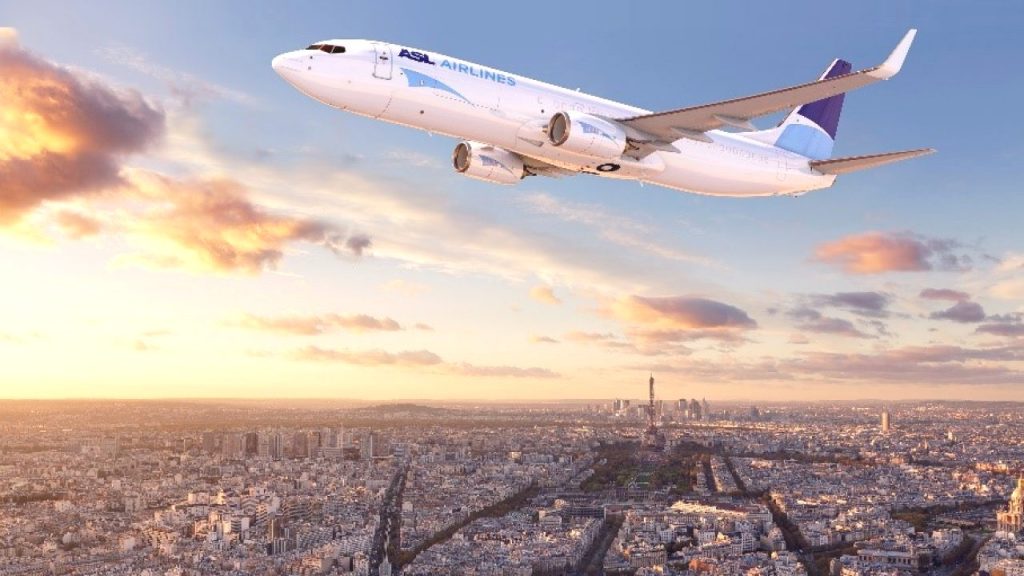
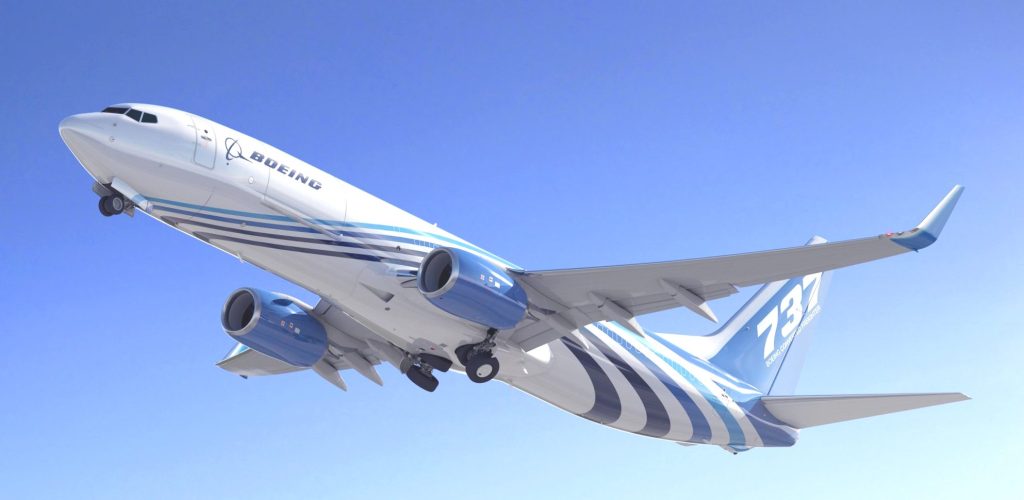
El primer avión del Boeing 737-800BCF para ASL Airlines ha entrado en servicio en Francia. La aeronave con registro F-HIQB, MSN 33641, es el primer carguero operado por una aerolínea francesa y realizó su primer vuelo el 9 de Diciembre de 2020. ASL Airlines France también opera dos aviones de pasajeros B737-800.
El avión es el primero de 10 Boeing 737-800BCF (Boeing Converted Freighters) anunciados por Boeing y ASL Aviation Holdings en el último Salón Aéreo de París Air Show 2019. Fue convertido por la empresa la Shandong Taikoo Aircraft Engineering Company (STAECO) en Jinan, China en un proceso que también incluyó la revisión de los motores y una actualización de aviónica. El trabajo de conversión ya ha comenzado en Jinan en los aviones dos y tres en el programa BCF de ASL, y la cuarta aeronave ha llegado a las instalaciones de Shandong. Además de los diez pedidos en firme, ASL también tiene otras 10 opciones para Boeing Converted Freighters.
La primer aeronave realizó el vuelo en ferry hacia París a través de Ekaterimburgo, Rusia, y Vilnius, Lituania, llegando al Aeropuerto Charles De Gaulle/CDG el 28 de Noviembre de 2020. El historial de la aeronave de pasajeros ha sido operado anteriormente por la aerolínea turca Pegasus Airlines. El avión llegó a Jinan, China el 15 de Julio de 2020 para su conversión y estandarización. El F-HIQB tendrá su sede en París/CDG y el B737-800BCF tiene una capacidad de 178 metros cúbicos con 11 posiciones y media en la cubierta superior y un alcance de 3.250 millas náuticas. Se une a la flota de ASL Airlines de 19 aviones Boeing 737 incluyendo las variantes -400, -700 y -800.
ASL Airlines adds 737-800BCF
First Boeing 737-800BCF enters service in France
The first Boeing 737-800BCF aircraft for ASL Airlines has entered service in France. The aircraft with registration F-HIQB, MSN 33641, is the first freighter operated by a French airline and made its maiden flight on December 9, 2020. ASL Airlines France also operates two B737-800 passenger aircraft.
The aircraft is the first of 10 Boeing 737-800BCF (Boeing Converted Freighters) announced by Boeing and ASL Aviation Holdings at the last Paris Air Show 2019. It was converted by the Shandong Taikoo Aircraft Engineering Company (STAECO) in Jinan, China in a process that also included an overhaul of the engines and an avionics upgrade. Conversion work has already started in Jinan on aircraft two and three in ASL’s BCF program, with the fourth aircraft arriving at the Shandong facility. In addition to the ten firm orders, ASL also has 10 other options for Boeing Converted Freighters.
The first aircraft made the ferry flight to Paris via Yekaterinburg, Russia, and Vilnius, Lithuania, arriving at Charles De Gaulle/CDG Airport on November 28, 2020. The history of the passenger aircraft has previously been operated by the Turkish airline Pegasus Airlines. The aircraft arrived in Jinan, China on July 15, 2020 for conversion and standardization. The F-HIQB will be based in Paris/CDG and the B737-800BCF has a capacity of 178 cubic meters with 11 and a half positions on the upper deck and a range of 3,250 nautical miles. It joins ASL Airlines’ fleet of 19 Boeing 737 aircraft including the -400, -700 and -800 variants.
Starlux Airlines iniciaría primer destino a Los Ángeles
Starlux Airlines, la nueva aerolínea de Taiwán ha anunciado que está mirando a Los Ángeles como su primer destino en los Estados Unidos. En una presentación ante el Departamento de Transporte de los Estados Unidos (DOT), la startup iniciará vuelos non-stop (sin escalas) de Taipei a Los Angeles a partir de 2022, utilizando Airbus A350-900.
Starlux Airlines con sede en Taiwán, desarrolla vuelos con una orientación de clase premium en rutas de Asia Oriental. Sin embargo, tiene proyecciones de expansión internacional. La aerolínea opera desde su Centro de Operaciones en el Aeropuerto Internacional de Taipéi/Taoyuan/TPE para lo cual desarrollará vuelos sin escalas al Aeropuerto Internacional de Los Angeles/LAX abriendo el mercado hacia América y Estados Unidos. Starlux Airlines entrará en competitividad con China Airlines que posee 2Frq/D y EVA Air que vuelan sin escalas entre LAX y TPE con 3Frq/D. Los Ángeles es uno de los 15 aeropuertos que Starlux que ha programado como potenciales destinos para servicios sin escalas.
Starlux Airlines incorporará próximamente aeronaves Airbus A350 para iniciar sus vuelos internacionales, proyectando su primer incorporación hacia finales de 2021, estableciendo configuraciones de primera clase a bordo de sus Airbus A350-900 como parte de su estrategia de clase Premium.
Starlux first flight to Los Angeles 2022
Starlux Airlines would start first destination to Los Angeles
Starlux Airlines, Taiwan’s newest airline, has announced that it is looking to Los Angeles as its first destination in the United States. In a filing with the United States Department of Transportation (DOT), the startup will initiate non-stop (non-stop) flights from Taipei to Los Angeles starting in 2022, using Airbus A350-900.
Starlux Airlines based in Taiwan, operates flights with a premium class orientation on East Asian routes. However, it has projections for international expansion. The airline operates from its Operations Center at the Taipei/Taoyuan/TPE International Airport, for which it will develop non-stop flights to the Los Angeles/LAX International Airport, opening the market to America and the United States. Starlux Airlines will become competitive with China Airlines that owns 2Frq/D and EVA Air that fly non-stop between LAX and TPE with 3Frq/D. Los Angeles is one of 15 airports that Starlux has scheduled as potential destinations for nonstop services.
Starlux Airlines will shortly incorporate Airbus A350 aircraft to start its international flights, projecting its first incorporation towards the end of 2021, establishing first class configurations on board its Airbus A350-900 as part of its Premium class strategy.
Desprogramaciones por nuevo escenario post-pandemia
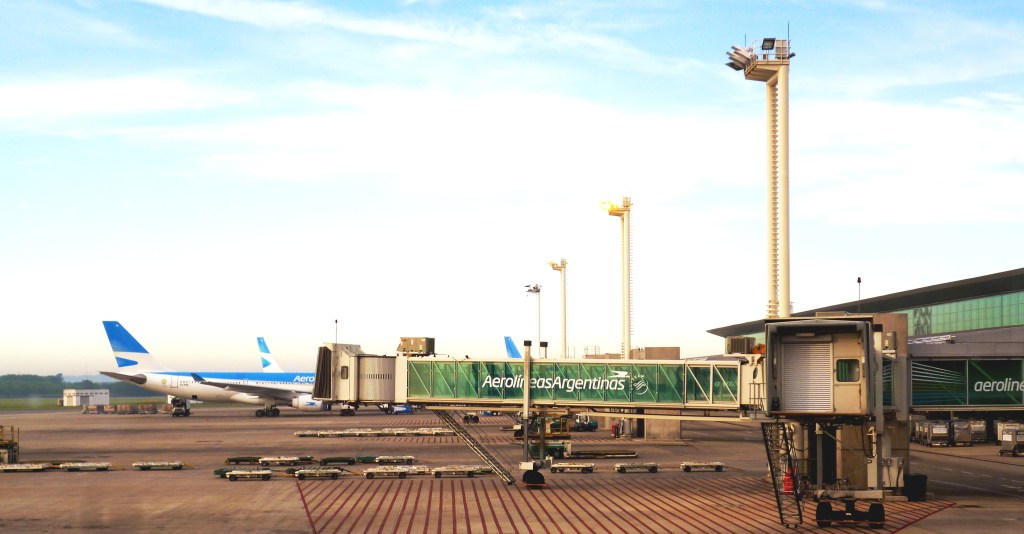
Aerolíneas Argentinas se encuentra estudiando la desprogramación de aeronaves con la finalidad de adecuar la flota al nuevo escenario tras las modificaciones de mercado que la aviación mundial ha sufrido. Después de la concreción del proceso de fusión de Aerolíneas/Austral a principios de Diciembre 2020, Aerolíneas Argentinas ha recibido por parte de la Administración Nacional de Aviación Civil (ANAC) el Certificado de Explotador de Servicios Aéreos (CESA) que ha habilitado la fusión con la compañía Austral Líneas Aéreas, permitiendo la integración total de ambas aerolíneas. La sinergia de las líneas aéreas ha establecido un nuevo horizonte de cara a estandarizar los procesos de la compañía y la flota como parte de una reestructuración acompañando la modificación del escenario de mercado actual.
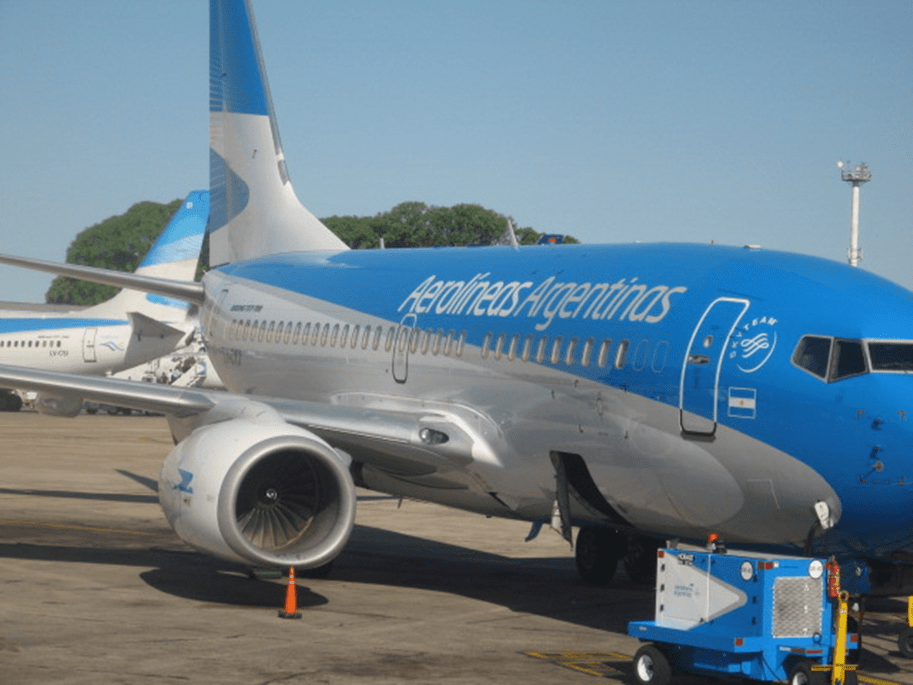
Aerolíneas Argentinas avanza en la estandarización de la flota de la línea Boeing 737 Next Generation/MAX, por lo que evalúa la desprogramación de cuatro Boeing 737-800 con mayor antigüedad debido a la incompatibilidad con el resto de sus aeronaves y motivado por la baja demanda producto de la crisis de los viajes por la pandemia de Coronavirus. El comienzo de la baja del Boeing 737-800, S/N 30478 de 19 años de edad ha sido desprogramado y aparcado en el Aeropuerto Internacional de Ezeiza; mientras que evalúan la baja comercial de otra aeronave similar entrando el 2021.
La compañía espera recibir un nuevo Boeing 737-8 MAX, mientras tanto, el proceso de integración y activación de la flota de los cinco Boeing 737-8 MAX llevaría un tiempo para reacondicionar las unidades a los nuevos requerimientos de los organismos de seguridad en aviación. En cuanto a la flota de la línea Airbus A330-200, Aerolíneas podría incorporar mas aeronaves de largo recorrido, pero no se han detallado hasta el momento fechas y modalidad de adquisición.
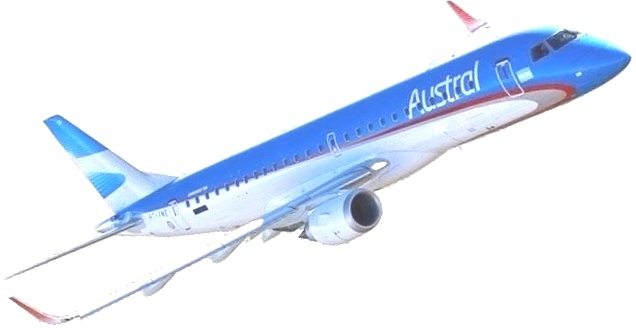
Respecto a la flota de la línea Embraer E190-100AR que pertenecían anteriormente a Austral Líneas Aéreas, la compañía Aerolíneas Argentinas ha recibido la transferencia de las 26 unidades, por lo que el proceso de adecuación e integración a la flota se ha iniciado con el repintado y reacondicionamiento para las nuevas necesidades de mercado. Algunos anuncios entre pasillo han comentado de posibles desprogramaciones de algunos aviones regionales E190, pero mientras tanto, la compañía evaluará la demanda del mercado actual.
Aerolíneas fleet modifications
Deprogramming due to new post-pandemic scenario
Aerolíneas Argentinas is studying the deprogramming of aircraft in order to adapt the fleet to the new scenario after the market changes that world aviation has suffered. After the conclusion of the Aerolíneas/ Austral merger process at the beginning of December 2020, Aerolíneas Argentinas has received from the National Civil Aviation Administration (ANAC) the Air Services Operator Certificate (CESA) that has enabled the merger with Austral Líneas Aéreas, allowing the total integration of both airlines. The synergy of the airlines has established a new horizon in order to standardize the processes of the company and the fleet as part of a restructuring accompanying the modification of the current market scenario.
Aerolíneas Argentinas advances in the standardization of the fleet of the Boeing 737 Next Generation/MAX line, for which it evaluates the deprogramming of four Boeing 737-800 with older age due to incompatibility with the rest of its aircraft and motivated by low demand product of the travel crisis due to the Coronavirus pandemic. The beginning of the decommissioning of the 19-year-old Boeing 737-800, S/N 30478, has been deprogrammed and parked at the Ezeiza International Airport; while they evaluate the commercial decline of another similar aircraft entering 2021.
The company expects to receive a new Boeing 737-8 MAX, meanwhile, the process of integrating and activating the fleet of the five Boeing 737-8 MAXs would take time to recondition the units to the new requirements of the aviation security organizations. Regarding the fleet of the Airbus A330-200 line, Aerolíneas could incorporate more long-haul aircraft, but dates and method of acquisition have not been detailed until now.
Regarding the fleet of the Embraer E190-100AR line that previously belonged to Austral Líneas Aéreas, the company Aerolíneas Argentinas has received the transfer of the 26 units, so the process of adaptation and integration to the fleet has begun with the repainting and reconditioning for new market needs. Some aisle announcements have commented on possible deprogramming of some E190 regional aircraft, but in the meantime, the company will assess current market demand.
AW | 2020 12 15 11:05 | GOVERNMENT / AVIATION SAFETY / AIRLINES
Gobierno exigirá información pasajeros en vuelos domésticos
El Gobierno de Argentina a anunciado a través de la Disposición Nº 1406/2020, publicada este martes en el Boletín Oficial una nuevas medidas con la finalidad de prevenir delitos complejos tales como el narcotráfico, el terrorismo y la trata de personas, en el marco de la crisis sanitaria actual.
Las líneas aéreas que realizan vuelos regulares o charters de cabotaje en la República Argentina deberán informar a la Policía de Seguridad Aeroportuaria (PSA) datos específicos de los pasajeros antes de despegar, algo que hasta el momento solamente se requería cuando se trataba de vuelos internacionales. Así se anunció a través de la Disposición Nº 1406/2020, publicada este Martes 15/12 en el Boletín Oficial. El Director de la PSA, José Alejandro Glinski, ha cargo de esta nueva modalidad ha anunciado que esta medida comenzará a regir dentro de 120 días corridos a partir de este Martes 15/12 con el objetivo de prevenir delitos complejos tales como el narcotráfico, el terrorismo y la trata de personas.
Puntualmente, las compañías aéreas tendrán que compartir con las autoridades policiales los datos correspondientes a la Información Anticipada de Pasajeros (API) y al Registro de Nombres de Pasajeros (PNR), tratándose de vuelos internos con más de 19 pasajeros a bordo. Además de la documentación a la Dirección Nacional de Migraciones, la Administración Nacional de Aviación Civil (ANAC), y la Administración Federal de Ingresos Públicos (AFIP). Este requisito actualmente continúa en vigencia desde el 8 de Septiembre de 2014 para los viajes hacia y provenientes del exterior.
Las compañías aéreas deberán adjuntar información para la operación que deberá hacerse de manera electrónica y con 24 horas de anticipación al despegue. Luego, se realizarán dos transmisiones adicionales para comunicar las novedades pertinentes, una cuando falten 6 horas para la partida y la última, una vez que todos los sujetos hayan abordado y la aeronave esté lista para salir. Respecto a los datos del avión, las aerolíneas tendrán que informar el código identificativo de la compañía que envía los datos; número de vuelo; fecha y hora previstas de salida y de llegada; origen y destino, y número total de personas transportadas. En tanto, sobre las personas a bordo, incluida la tripulación, se solicitará el tipo y número de documento con el que se identificó cada una de ellas; nacionalidad de las mismas; nombre y apellido completo, y fecha de nacimiento que aparece en el documento de identificación presentado. Por último, las compañías le aportarán a la PSA la siguiente información de los pasajeros: localizador del expediente; fecha de reserva del vuelo; itinerario completo del viaje; nombre y apellido informado; modalidades de pago; orden y dirección de facturación; teléfonos de contacto, y datos sobre programas de fidelización (referida únicamente a millas recorridas y direcciones). También se requerirá la agencia y el agente de viajes que intervino en la operación de compra, si correspondiera; comunicar si tiene PNR escindido/dividido; fecha y número de emisión del billete; historial de incomparecencia del pasajero (no show); si es pasajero de último momento sin reserva (go show); listas de espera; números de etiqueta del equipaje y de asiento; especificaciones sobre el asiento, y la cantidad de equipaje que transporta.
Además, las líneas aéreas tienen «la obligación de presentar ante las autoridades que así lo requieran la documentación que sustente la información remitida y no cumplir con este punto o hacerlo fuera de término” o de manera incompleta, “determinará el inicio de las actuaciones administrativas y/o judiciales correspondientes”. En los considerandos, la Policía Aeroportuaria señaló que “si bien estos sistemas de transmisión de datos son recomendados y requeridos para el tránsito aéreo internacional, han sido reconocidos por la comunidad internacional como una fuente de información beneficiosa para los sistemas de seguridad locales”. En este sentido, el organismo remarcó que “aprovechando los avances tecnológicos en materia de sistemas informáticos y comunicaciones, resulta necesario avanzar hacia un procedimiento que permita efectuar el análisis de riesgo de los vuelos y evaluar la existencia de eventuales amenazas y/o conflictos”.
Este mecanismo facilitará, “ante una emergencia, implementar medidas especiales con la suficiente anticipación para prevenir delitos complejos tales como el narcotráfico, el terrorismo y la trata de personas”. Las autoridades confían en que eso se puede lograr al “contar con información unívoca y actualizada en tiempo real que simplificará procedimientos operativos de seguridad aeroportuaria”.
Argentina cabotage flight controls
Government will require passenger information on domestic flights
The Government of Argentina has announced through Provision No. 1406/2020, published this Tuesday in the Official Gazette, new measures in order to prevent complex crimes such as drug trafficking, terrorism and human trafficking, within the framework of the current health crisis.
The airlines that carry out regular flights or cabotage charters in the Argentine Republic must inform the Airport Security Police (PSA) specific data of the passengers before taking off, something that until now was only required when it came to international flights. This was announced through Provision No. 1406/2020, published this Tuesday 12/15 in the Official Gazette. The Director of the PSA, José Alejandro Glinski, has been in charge of this new modality and has announced that this measure will take effect within 120 calendar days from this Tuesday 15/12 with the aim of preventing complex crimes such as drug trafficking, terrorism and human trafficking.
From time to time, the airlines will have to share with the police authorities the data corresponding to the Advance Passenger Information (API) and the Passenger Name Register (PNR), in the case of internal flights with more than 19 passengers on board. In addition to the documentation to the National Directorate of Migration, the National Civil Aviation Administration (ANAC), and the Federal Administration of Public Revenues (AFIP). This requirement currently remains in effect as of September 8, 2014 for travel to and from abroad.
The airlines must attach information for the operation that must be done electronically and 24 hours before takeoff. Then, two additional transmissions will be made to communicate the pertinent news, one when there are 6 hours until departure and the last, once all subjects have boarded and the aircraft is ready to depart. Regarding the plane data, the airlines will have to provide the identification code of the company that sends the data; flight number; expected date and time of departure and arrival; origin and destination, and total number of people transported. Meanwhile, about the people on board, including the crew, the type and number of document with which each one of them was identified will be requested; nationality of the same; Full name and surname, and date of birth that appears on the identification document presented. Finally, the companies will provide the PSA with the following passenger information: file locator; flight reservation date; complete itinerary of the trip; given name and surname; payment methods; order and billing address; contact telephone numbers, and data on loyalty programs (referring only to miles traveled and addresses). The agency and the travel agent involved in the purchase operation will also be required, if applicable; report if you have split off/divided PNR; date and number of ticket issuance; passenger’s no-show history (no show); if you are a last minute passenger without a reservation (go show); waiting lists; luggage tag and seat numbers; specifications about the seat, and the amount of luggage it carries.
In addition, the airlines have «the obligation to present to the authorities that require it the documentation that supports the information sent and not comply with this point or do it after the deadline» or incompletely, «will determine the start of administrative actions and/or corresponding judicial proceedings”. In the considerations, the Airport Police stated that “although these data transmission systems are recommended and required for international air traffic, they have been recognized by the international community as a source of beneficial information for the local security systems”. In this sense, the agency remarked that “taking advantage of technological advances in computer systems and communications, it is necessary to move towards a procedure that allows the risk analysis of flights to be carried out and the evaluation of the existence of possible threats and/or conflicts”.
This mechanism will facilitate, «in an emergency, implement special measures with sufficient anticipation to prevent» complex crimes such as drug trafficking, terrorism and human trafficking. The authorities trust that this can be achieved by «having unambiguous and updated information in real time that will simplify airport security operating procedures».
El 22 de Octubre de 2020 Aerolíneas Argentinas reiniciaba sus operaciones regulares tras las restricciones impuestas por pandemia del Coronavirus desde el 20 de Marzo de 2020. Desde entonces hasta la actualidad varios pasajeros denunciaron la cancelación y la reprogramación de los vuelos y también que la empresa no brinda información. La abogada Silvina Martínez indicó, además, que la empresa no da respuesta y que el cierre del Aeropuerto de El Palomar y las obras en Aeroparque hicieron que se concentraran los vuelos en Ezeiza, cuya operación este Lunes 14/12 se vio afectada por un paro de trabajadores de la compañía Latam Airlines Argentina. La canalización de los reclamos ha obligado a presentar un pedido de informes para que el Poder Ejecutivo indique los motivos por los que no funciona el servicio telefónico de atención al cliente, las oficinas comerciales de la empresa y la atención en los mostradores de las terminales aeroportuarias. La carta de la denuncia expresa en parte: “Los motivos por los cuales, siendo la única vía comunicacional ofrecida por la empresa Aerolíneas Argentinas, la línea de Whatsapp, no se da respuesta a los clientes, [sin tener respuesta], de la venta de pasajes on-line para rutas no disponibles, así como también constantes y repentinas reprogramaciones y cancelaciones de vuelos”. La carta extiende el reclamo a otras reparticiones: “si el Ministerio de Turismo y Deportes de la Nación tomó conocimiento de los públicos y masivos inconvenientes que sufren los pasajeros de la empresa Aerolíneas Argentinas, sin que tengan respuesta alguna. Lo mismo con la Administración Nacional de Aviación Civil (ANAC) y la Dirección Nacional de Defensa del Consumidor». La abogada Silvia Martínez explicó que al presente se venden tickets de manera online para rutas como vuelo directo que no están autorizadas y que se comercializan pasajes en la página web y a los pocos días se dan de baja todas esas frecuencias.
Aerolíneas Argentinas en tanto ha informado que “pese al inicio de las operaciones regulares desde el 22/10, la programación de vuelos aún se encuentra sujeta a diferentes modificaciones. En el caso de cabotaje, la programación es aprobada todos los meses por la autoridad aeronáutica, previa conformidad de cada provincia, con las modificaciones que impone la situación sanitaria de cada destino. Asimismo, queremos aclarar que aquellos intertramos (frecuencias que no pasan por Buenos Aires) programados para el mes de Diciembre y que tuvieron que ser cancelados fue debido a que estos no fueron autorizados por la provincia de destino o bien, no contaban con la ocupación mínima requerida para realizarse el vuelo. No obstante, a todos esos pasajeros se les ofreció una alternativa para realizar la conexión vía Ezeiza o bien, la reprogramación de su vuelo. Todas las reprogramaciones de los vuelos afectados a causa del Covid-19 se realizan sin costo alguno al pasajero, siempre que se mantenga la misma temporada del vuelo original”.
Aerolíneas untimely rescheduling
They denounced untimely cancellation/rescheduling
On October 22, 2020, Aerolíneas Argentinas restarted its regular operations after the restrictions imposed by the Coronavirus pandemic since March 20, 2020. From then until now, several passengers denounced the cancellation and rescheduling of flights and also that the company did not provides information. The lawyer Silvina Martínez also indicated that the company does not give an answer and that the closure of the El Palomar Airport and the works in Aeroparque led to the concentration of flights in Ezeiza, whose operation this Monday 12/14 was affected by a strike of workers of the company Latam Airlines Argentina. The channeling of claims has forced the submission of a request for reports so that the Executive Power indicates the reasons why the customer service telephone service, the company’s commercial offices and the service at the airport terminal counters do not work. The complaint letter expresses in part: «The reasons why, being the only communication channel offered by the company Aerolíneas Argentinas, the WhatsApp line, no response is given to customers, [without having an answer], of the sale of online tickets for unavailable routes, as well as constant and sudden rescheduling and cancellation of flights”. The letter extends the claim to other departments: “if the Ministry of Tourism and Sports of the Nation became aware of the public and massive inconveniences suffered by the passengers of the company Aerolíneas Argentinas, without any response. The same with the National Civil Aviation Administration (ANAC) and the National Directorate for Consumer Defense». The lawyer Silvia Martínez explained that at present tickets are sold online for routes such as direct flights that are not authorized and that tickets are sold on the website and after a few days all these frequencies are canceled.
Aerolíneas Argentinas has reported that “despite the start of regular operations since 10/22, the flight schedule is still subject to different modifications. In the case of cabotage, the schedule is approved every month by the aeronautical authority, with the prior agreement of each province, with the modifications imposed by the health situation of each destination. Likewise, we want to clarify that those intertramos (frequencies that do not pass through Buenos Aires) scheduled for the month of December and that had to be canceled was because they were not authorized by the destination province or, they did not have the minimum occupation required to perform the flight. However, all those passengers were offered an alternative to make the connection via Ezeiza or to reschedule their flight. All rescheduling of the flights affected by Covid-19 are carried out at no cost to the passenger, provided that the same season of the original flight is maintained».
Aerolíneas de EE.UU. llevarán vacunas anti-COVID-19 a América Latina
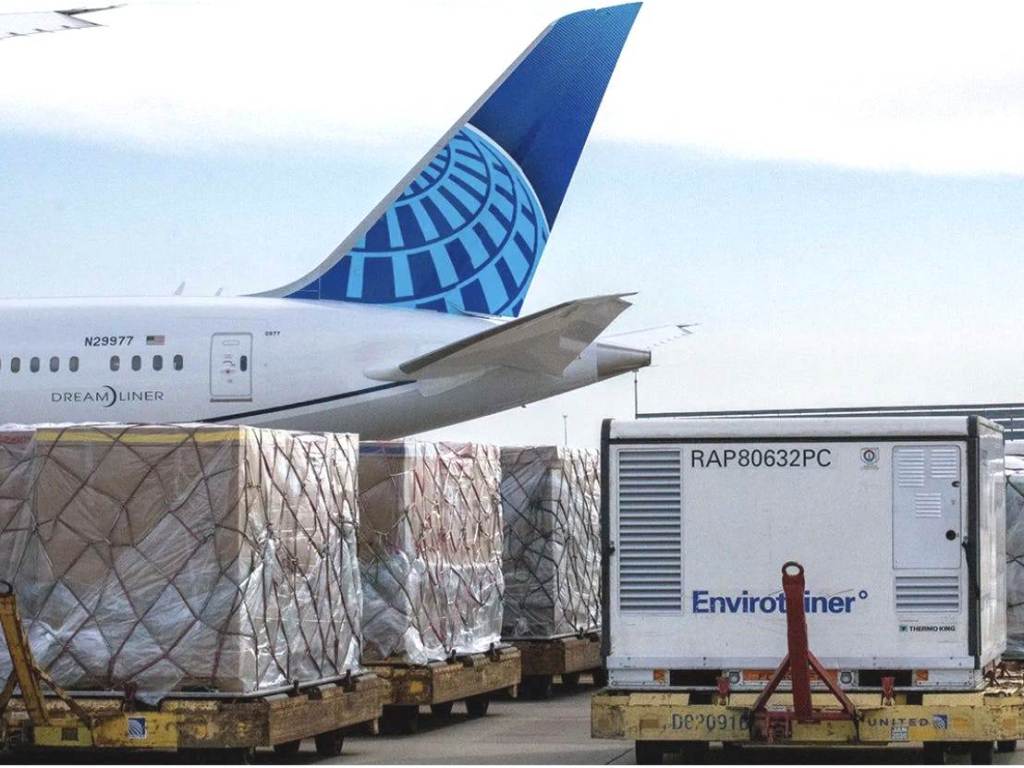
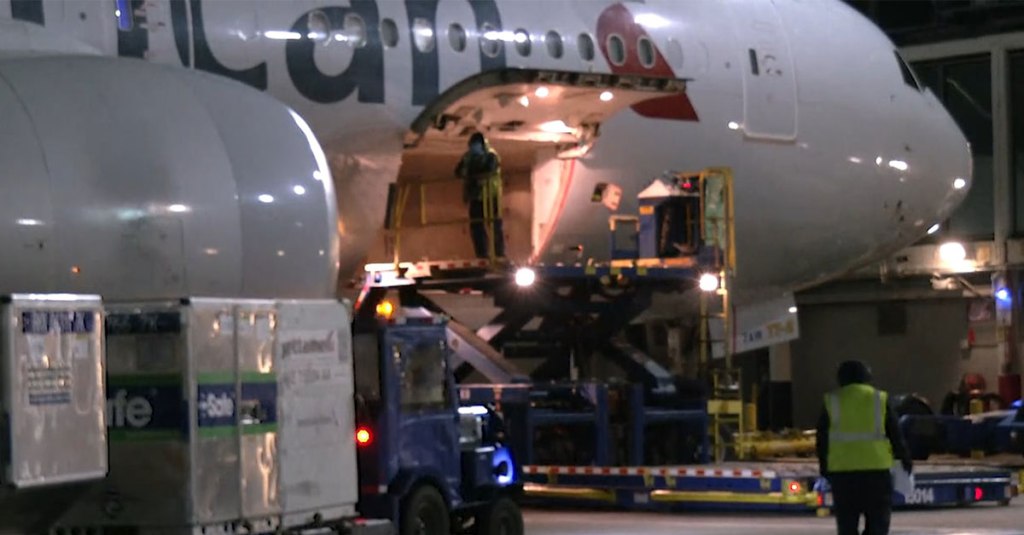
Las aerolíneas de Estados Unidos se encuentran programando el envío de unidades de carga de vacunas anti-COVID-19 a países como Argentina, Brasil, Chile, Colombia, México, entre otros países, como parte de un programa de distribución efectiva a la Región de América Latina (AL). La mayoría de los vuelos partirían desde Miami (FL). Sin embargo, a Venezuela no llegarán las dosis de las farmacéuticas estadounidenses, tal y como anunció el Presidente Nicolás Maduro, por lo que se espera que las vacunas de Rusia puedan arribar a este país.
A partir de este Lunes 14/12 Estados Unidos ha comenzado a aplicar las primeras dosis de vacunas contra el COVID-19 a la población tras la aprobación para el uso de emergencia de la Administración de Medicamentos y Alimentos.
El mayor reto al que se enfrentan todos los actores involucrados en la logística es mantener las dosis del fármaco a bajas temperaturas. Muchas de las compañías aéreas, como American Airlines, se han venido preparando y haciendo vuelos de prueba para simular el envío de carga con las vacunas.
Air transport vaccines Latin America
US airlines to bring COVID-19 Vaccines to Latin America
The airlines of the United States are programming the shipment of cargo units of anti-COVID-19 vaccines to countries like Argentina, Brazil, Chile, Colombia, Mexico, among other countries, as part of an effective distribution program to the Region of Latin America (LA). Most flights would depart from Miami (FL). However, the doses from US pharmaceutical companies will not reach Venezuela, as announced by President Nicolás Maduro, so it is expected that the vaccines from Russia can arrive in this country.
As of this Monday 12/14, the United States has begun to apply the first doses of vaccines against COVID-19 to the population after approval for emergency use by the Food and Drug Administration.
The biggest challenge faced by all stakeholders involved in logistics is keeping drug doses at low temperatures. Many of the airlines, like American Airlines, have been preparing and doing test flights to simulate the shipment of cargo with vaccines.