Apertura aerocomercial Argentina

Resultado de imagen para Audiencia Publica Nº 218 lineas aereas

AW | 2016 12 28 22:50 | AIRLINES MARKET

La Audiencia Pública Nº 218 dio comienzo a la apertura de un mercado más dinámico en Argentina, luego de más de 10 años de retraimiento de la aviación

Esperan inversiones por u$s 1700 M con el ingreso de nuevas aerolíneas. La cifra surge de la audiencia pública realizada ayer para analizar los planes de las cinco compañías aéreas que piden rutas para volar en el país y a mercados regionales

El ministro de Transporte, Guillermo Dietrich, rechazó ayer que el Gobierno impulse una «política de cielos abiertos» y destacó que las nuevas líneas aéreas que se radiquen en el país «invertirán u$s 1700 millones en los próximos cuatro años», lo que «implica más empleo en un marco de competitividad».

La flexibilidad aerocomercial levanta vuelo. Pese a las explicaciones del ministro de Transporte, los gremios aeronáuticos alertaron que el paso dado ayer, con la audiencia pública para habilitar a operar a cinco firmas de low cost, es el primero en la flexibilización del mercado en contra de Aerolíneas Argentinas.

Resultado de imagen para Audiencia Publica Nº 218 lineas aereas

DIFERENTES ORGANIZACIONES AERONÁUTICAS SE MANIFESTARON EN CONTRA DEL PROYECTO DE FLEXIBILIZACIÓN Y APERTURA AÉREA EN ARGENTINA

La política de flexibilización del mercado aerocomercial que impulsa el jefe coordinador de Políticas Públicas de la Jefatura de Gabinete, el ex CEO de LAN Gustavo Lopetegui, junto al ministro de Transporte, generó mucha preocupación en el sector e incluso dentro del propio gobierno. Los reparos que la ex presidente de AA Isela Costantini había manifestado sobre el tema incluso le costaron su salida. Los sindicatos buscaron hasta anoche impugnar la audiencia pública que, pese a no ser vinculante, la consideran como un puntapié inicial a la desregulación del sector. Previo a que comenzara la audiencia, los sindicatos del sector se autoconvocaron en la puerta del teatro.

En la Audiencia organizada por la Anac para debatir la concesión de rutas aéreas, moderada por Javier Corcuera, los representantes de las empresas informaron sobre sus planes. Todos destacaron «el potencial» del país para aumentar los vuelos y conexiones entre distintos puntos y el beneficio que los usuarios tendrán por «la mayor competencia», como la «reducción de tarifas» y la posibilidad de que en 10 años «se triplique» la cantidad de pasajeros. A\W

Resultado de imagen para flybondi avian american jet andes

Opening of the aerocomercial Argentina


Public Hearing No. 218 led to the opening of a more dynamic market in Argentina, after more than 10 years of aviation withdrawal


They expect investments for u $ s 1700 M with the entry of new airlines. The figure comes from the public hearing yesterday to analyze the plans of the five airlines that ask for routes to fly in the country and regional markets.

Resultado de imagen para flybondi avian american jet andes

Transport Minister Guillermo Dietrich yesterday rejected the government’s push for an «open skies policy» and stressed that new airlines based in the country «will invest U.S. $ 1.7 billion over the next four years,» which «Implies more employment in a competitive framework».

Aircraft flexibility lifts flight. Despite the explanations of the Minister of Transport, the aeronautical guilds warned that the step taken yesterday, with the public hearing to enable the operation of five low cost firms, is the first to flexibilize the market against Aerolíneas Argentinas.

https://i0.wp.com/www.telam.com.ar/advf/imagenes/2016/11/58303b964f95d_1920x835.jpg

AIR FLEXIBILITY IN ARGENTINA WILL BRING BENEFITS TO THE MARKET, BUT IT WILL REQUIRE AN EFFICIENT AUDIT FOR ITS SUCCESS


The policy of flexibilization of the aerial commercial market promoted by the Chief Coordinator of Public Policies of the Cabinet Headquarters, former CEO of LAN Gustavo Lopetegui, together with the Minister of Transport, generated much concern in the sector and even within the government itself. The repairs that the former president of AA Isela Costantini had manifested on the subject even cost her exit. The unions sought until last night to challenge the public hearing that, despite not being binding, consider it as a kick-start to the deregulation of the sector. Before the hearing began, the unions of the sector were selfconvocated at the door of the theater.

At the Audit organized by the Anac to discuss the concession of air routes, moderated by Javier Corcuera, representatives of the companies reported on their plans. All highlighted the country’s potential to increase flights and connections between different points and the benefit that users will have for «greater competition», such as «reduction of tariffs» and the possibility that in 10 years «triple» The number of passengers. A\W

Ξ A I R G W A Y S Ξ
SOURCE: A I R G W A Y S / Cronista.com
DBk: Photographic © Cronica.org.ar / Cronista.com / Telam.com.ar
AW-POST: 201612282250AR

A\W A I R G W A Y S ®
Las derivaciones de la Audiencia Pública

https://airgways.com/wp-content/uploads/2016/10/airgways-dbk0013.png?w=1000

AW |  2016 12 28 10:32 | AIRLINES MARKET

Con gran expectativa y afluencia de figuras vinculadas a la aeronáutica y el turismo, finalmente se realizó la esperada audiencia pública entre las cinco nuevas aerolíneas que esperan aterrizar en Argentina y altos representantes del Gobierno macrista.

El ministro de Transporte, Guillermo Dietrich, afirmó que el Gobierno “no impulsa ni impulsará una política de cielos abiertos”, entendidendo por esto la posibilidad de que una empresa aeronáutica extranjera vuele cabotaje en nuestro país con aviones de otra nacionalidad y tripulación extranjera. “Esto no pasa en Argentina y nunca va a pasar mientras nosotros seamos gobierno”, aseguró el ministro.

La primera empresa en exponer fue Alas del Sur, a través de su representante legal, Juan Carlos Vásquez, remarcando que nuestro país tiene “menos vuelos, menos frecuencias y menos pasajeros” que países limítrofes y de la región. Explicó que en este proyecto la base de operaciones sería el aeropuerto Ambrosio Talavera de la ciudad de Córdoba, que va ganando cada vez más operatividad e importancia. Detalló que iniciarían operaciones con seis aviones al Aeroparque Jorge Newbery, Mendoza, Salta, Iguazú y Bariloche. En cuanto a los destinos internacionales, propususieron San Pablo, Río de Janeiro, Santiago de Chile, Estados Unidos, España y posteriormente a China, todas pasando por Buenos Aires.

American Jet, y en representación su asesora legal, Ivana Palmeiro, solicitó rutas regionales, especialmente patagónicas, para unir tramos largos con base en la ciudad de Neuquén, desde donde tienen previsto volar a Mendoza, Ushuaia, Rosario, Córdoba y a distintas ciudades de la Patagonia.

Andes Líneas Aéreas, respresentada por Horacio Presnete, solicitó una ampliación de servicios y como nuevas rutas los destinos de San Pablo, Santiago de Chile y Montevideo.

Avian Líneas Aéreas, del Grupo Avianca, que recibió la mayor desaprobación por parte de los gremios presentes en la sala pese a que su apoderada legal, Elisa Cinigaglia aseguró que “Avian no es una empresa Low Cost”, y que los aviones estarán pintados con los colores de Avianca reafirmando el compromiso asumido. Avian solicitó 16 rutas que desde Buenos Aires incluyen ciudades como Santa Fe, Rosario, Puerto Madryn, Viedma, Mar del Plata, Mendoza, San Luis, Villa Mercedes, Río Cuarto, Paraná, Reconquista, Tandil, Villa María, Bahía Blanca, Concordia, Paso de los Libres, Sunchales y Porto Alegre.

Flybondi, finalmente cerró las exposiciones de las empresas, en nombre de Julian Coock, quien además de las numerosas rutas solicitadas, ratificó la inversión de 75 millones de dólares en el próximo año, con una proyección de transportar ocho millones de pasajeros para 2021. A\W

La postura del grupo Aerolíneas

Era una de las ponencias más esperadas. Pero decepcionó. Aerolíneas Argentinas usó no más de tres minutos de diez que tenía asignados y se limitó a entregar un escrito con consideraciones respecto de la llegada de nuevas empresas. Fue el director Comercial de la empresa, Diego García, el encargado de administrar la pequeña dosis de Aerolíneas en la audiencia. García dejó una máxima. «Queremos enfatizar que el grupo Aerolíneas se encuentra capacitado para competir», sostuvo, en total coincidencia con el Gobierno. Dijo que la empresa transportó 7% de pasajeros más que el último año. «Auspiciamos que la competencia se dé en un marco de reglas justas y equitativas», agregó. No aclaró que la empresa estatal recibe subsidios por más de un millón de dólares por día y que tiene reglas especiales.

La postura de Aerolíneas fue, entre otras cosas, uno de los temas que enfrentaron a Isela Costantini con el ministro Guillermo Dietrich. Hubo una discusión por el tema, ya que en el Gobierno no veían con buenos ojos que la aerolínea estatal se presente a impugnar la audiencia prevista para la llegada de competencia.

Durante todo el día, el rol de Aerolíneas y Austral estuvo presente. Incluso hubo mención a Isela Costantini. Fue Pablo Biró, secretario general del gremio de pilotos, quien dijo que había un plan para vaciar la compañía. «Cuando encuentran a una persona como Isela que dice que va a bajar los números, y los bajó, ¿qué hacen? La [expulsan]», concluyó. Además, todos los gremios defendieron los puestos de trabajo y amenazaron con medidas de fuerza si se tocaba alguno.

Hubo sí un mensaje por elevación. «No necesitamos subsidios», dijo Carlos Vázquez, de Alas del Sur, unas de las firmas que pidió rutas. Lo decía, claro está, por la dependencia de subsidios que aún tiene la empresa estatal. A\W

Resultado de imagen para Audiencia Pública aérea Argentina

The derivations of the Public Hearing


With great expectation and influx of figures linked to aeronautics and tourism, the expected public hearing was finally held among the five new airlines that are expected to land in Argentina and high representatives of the Macrista government.

Transport Minister Guillermo Dietrich said that the government «does not promote or promote an open skies policy», meaning that the possibility of a foreign aeronautical company flying cabotage in our country with aircraft of another nationality and foreign crew. «This does not happen in Argentina and will never happen while we are government,» said the minister.

The first company to present was Alas del Sur, through its legal representative, Juan Carlos Vásquez, noting that our country has «fewer flights, fewer frequencies and less passengers» than neighboring countries and the region. He explained that in this project the base of operations would be the airport Ambrosio Talavera of the city of Cordoba, that is gaining more and more operativity and importance. He detailed that they would begin operations with six airplanes to the Aeroparque Jorge Newbery, Mendoza, Salta, Iguazú and Bariloche. As for the international destinations, they proposed San Pablo, Rio de Janeiro, Santiago de Chile, United States, Spain and later to China, all passing through Buenos Aires.

American Jet, and on behalf of its legal adviser, Ivana Palmeiro, requested regional routes, especially patagónicas, to join long stretches with base in the city of Neuquén, from where they intend to fly to Mendoza, Ushuaia, Rosario, Córdoba and to different cities of the Patagonia.

Andes Líneas Aéreas, represented by Horacio Presnete, requested an extension of services and as new routes the destinations of San Pablo, Santiago de Chile and Montevideo.

Avian Líneas Aéreas, of the Avianca Group, which received the biggest disapproval by the guilds present in the room despite its legal agent, Elisa Cinigaglia said that «Avian is not a low cost company», and that the planes will be painted with the Colors of Avianca reaffirming the commitment assumed. Avian asked for 16 routes that from Buenos Aires include cities like Santa Fe, Rosario, Puerto Madryn, Viedma, Mar del Plata, Mendoza, San Luis, Villa Mercedes, Rio Cuarto, Parana, Reconquista, Tandil, Villa Maria, Bahía Blanca, Concordia, Paso de los Libres, Sunchales and Porto Alegre.

Finally he closed the exhibitions of the companies Julian Coock, on behalf of FlyBondi, who in addition to the numerous routes requested, ratified the investment of 75 million dollars in the next year, with a projection of transporting eight million passengers to 2021. A\W

The position of the group Aerolíneas

It was one of the most anticipated papers. But disappointed. Aerolineas Argentinas used no more than three minutes out of ten that it had assigned and merely delivered a letter with considerations regarding the arrival of new companies. The commercial director of the company, Diego García, was in charge of administering the small dose of Aerolíneas in the hearing. Garcia left a maxim. «We want to emphasize that the Aerolineas group is qualified to compete,» he said, in total agreement with the Government. He said the company carried 7% more passengers than last year. «We encourage competition to take place within a framework of fair and equitable rules,» he added. He did not clarify that the state company receives subsidies for more than one million dollars per day and that it has special rules.

The position of Aerolíneas was, among other things, one of the issues that confronted Isela Costantini with Minister Guillermo Dietrich. There was a discussion on the issue, as the government did not welcome the state airline appearing to contest the expected hearing for the arrival of competition.

Throughout the day, the role of Aerolíneas and Austral was present. There was even mention of Isela Costantini. It was Pablo Biró, general secretary of the pilot guild, who said that there was a plan to empty the company. «When they find a person like Isela who says he’s going to lower the numbers, and down, what do they do? The expel  he concluded. In addition, all the guilds defended the jobs and threatened with measures of force if any were touched.

There was a message for elevation. «We do not need subsidies,» said Carlos Vázquez, of Alas del Sur, one of the firms that asked for routes. He said it, of course, by the dependence of subsidies that the state company still has. A\W

Ξ A I R G W A Y S Ξ
SOURCE: A I R G W A Y S / Lanacion.com.ar / Reportur.com
DBk: Photographic © A I R G W A Y S / Telam.com.ar
AW-POST: 201612281032AR

A\W A I R G W A Y S ®

Azul, nuevo operador aéreo de Uruguay

https://i0.wp.com/imagenes.montevideo.com.uy/imgnoticias/201607/570081.jpg

AW | 2016 12 28 08:47 | AIRLINES MARKET

Después de la baja de Alas Uruguay como explotador aéreo, Azul comenzó a interezarse en poder cubrir un espacio que ha quedado vacío

El gobierno de Uruguay, por medio de la ministra de Turismo, Liliam Kechichian, confirmó que Azul Linhas Aéreas será un nuevo explotador aéreo en la República de Uruguay ycomenzará a operar en abril o mayo con dos aviones y 62 empleados.

La secretaria de Estado ha informado que ya se iniciaron los trámites ante la Dirección Nacional de Aviación Civil e Infraestructura Aeronáutica (Dinacia) para el otorgamiento de licencias y permisos para cubrir una demanda que dejó la joven aerolínea Alas Uruguay.

La nueva aerolínea operaría con el nombre de Azul Uruguay. «Se trata de una empresa joven y dinámica que cuenta con más de 2.300 pilotos y 2.000 azafatas», dijo Liliam Kechichian. La titular de Turismo sostuvo que la empresa operará en un principio con dos aviones en el que trabajarán 25 empleados cada uno y doce técnicos en tierra.

Con este modelo, la compañía brasilera trae a recuerdo cuando VARIG compró a PLUNA. Azul Linhas Aéreas comienza de esta manera su expansión en otros países. A\W

https://i0.wp.com/www.aeropuertosarg.com.ar/wp-content/uploads/2015/08/Azul-ATR-72-600-Renato-Spilimbergo-Carvalho-1024x731.jpg

Azul to start operations in Uruguay


After the fall of Alas Uruguay as an aerial operator, Azul began to interact in order to cover a space that has been empty


The government of Uruguay, through the Minister of Tourism, Liliam Kechichian, confirmed that Azul Linhas Aéreas will be a new air operator in the Republic of Uruguay and will begin to operate in April or May with two aircraft and 62 employees.

The Secretary of State has informed that the procedures have been initiated before the National Civil Aviation and Aeronautical Infrastructure (Dinacia) for the granting of licenses and permits to cover a demand left by the young airline Alas Uruguay.

The new airline would operate under the name of Azul Uruguay. «This is a young and dynamic company that has more than 2,300 pilots and 2,000 flight attendants,» said Liliam Kechichian. The holder of Tourism said that the company will initially operate with two aircraft in which will work 25 employees each and twelve technicians on the ground.

With this model, the Brazilian company brings to mind when VARIG bought PLUNA. Azul Linhas Aéreas begins its expansion in other countries. A\W

Ξ A I R G W A Y S Ξ
SOURCE: A I R G W A Y S
DBk: Photographic © montevideo.com.uy / Aeropuertosarg.com.ar
AW-POST: 201612280847AR

A\W A I R G W A Y S ®

Audiencia Pública aérea en Argentina

Resultado de imagen para Audiencia Publica lineas aereas

AW | 2016 12 27 21:33 | AIRLINES MARKET / GOVERNMENT

Cinco empresas presentaron solicitudes de nuevas rutas de cabotaje e internacionales. Las empresas que presentaron solicitudes de nuevas rutas fueron Andes Líneas Aéreas, American Jet, Alas del Sur, Avian Líneas Aéreas y FB Líneas Aéreas, conocida como FlyBondi

Cinco empresas aéreas privadas presentaron hoy sus planes de negocios y solicitaron la operación de rutas de cabotaje, regionales e internacionales en una audiencia pública organizada por la reguladora del sector, la Administración Nacional de Aviación Civil (ANAC).

Las empresas que presentaron solicitudes de nuevas rutas fueron Andes Líneas Aéreas, American Jet, Alas del Sur, Avian Líneas Aéreas y FB Líneas Aéreas, conocida como FlyBondi.

Resultado de imagen para Audiencia Publica lineas aereasResultado de imagen para Audiencia Publica lineas aereas

En la audiencia, de carácter no vinculante, las autoridades nacionales dijeron que en Argentina no rige la política de «cielos abiertos», mientras que organizaciones gremiales manifestaron una posición crítica a la llegada al mercado local de aerolíneas de bajo costo e hicieron una férrea defensa de Aerolíneas Argentinas y Austral.

En la audiencia, que se inició pocos minutos después de las 9 y culminó pasadas las 17.30 en un teatro del barrio de La Boca, hablaron 70 expositores bajo la supervisión de la Junta Asesora del Transporte Aéreo presidida por el titular de la ANAC, Juan Pedro Irigoin; Paolo Marino, director Nacional de Seguridad Operacional; Alejandro Álvarez, director General Infraestructura y Servicios Aeroportuarios; y Horacio Ernesto Knobel, director de Normas Aeronáuticas y Acuerdos Internacionales de la Dirección Nacional de Transporte Aéreo.

No a política de cielos abiertos

El encuentro fue abierto por el ministro de Transporte, Guillermo Dietrich, quién puntualizó que el Gobierno nacional «no impulsa ni impulsará una política de cielos abiertos» en la actividad aerocomercial.

Dietrich dijo que en la audiencia de hoy “no estamos hablando de cielos abiertos. No se trata de eso. Cielos abiertos es cuando una compañía extranjera opera rutas de cabotaje con aviones con matrícula extranjera, con pilotos extranjeros».

«Acá estamos hablando de compañías que habrán de atenerse a las reglamentaciones de nuestro país, que emplearán pilotos y personal de nuestro país”, agregó.

Por lo expuesto, el funcionario pidió “no confundir las cosas: nosotros acompañamos el crecimiento y el desarrollo de nuestro país, y lo que propiciamos son nuevas inversiones y nuevos puestos de trabajo”.

Después fue el turno del titular de la cartera de Turismo, Gustavo Santos, quién hizo referencia al “estancamiento” del turismo interno en los últimos años y el “trabajo conjunto” que vienen realizando la Nación y las provincias para revertir esta situación.

Reveló que la meta es lograr en el corto plazo 22 millones de pasajeros internos y un ingreso de tres millones de turistas extranjeros, lo que representa un crecimiento del 50 por ciento respecto al movimiento actual.

“No se va donde no se puede llegar”, dijo Santos y remarcó la importancia del transporte aéreo en el turismo y lo que la actividad puede aportar al desarrollo regional y del país. “El turismo es un generador de empleo por antonomasia en un país que está demandando trabajo”, aseveró.

Resultado de imagen para Audiencia Publica lineas aereas

Luego de las presentaciones, expusieron ministros de Turismo provinciales, intendentes, funcionarios de organismos nacionales como el ORSNA y el EANA y del Ministerio de Defensa.

También hablaron representantes de las Cámaras de Transporte Automotor, de la UTA, el titular de la Cámara Argentina de Turismo, Oscar Ghezzi, así como “particulares interesados”, que no son más que personas comunes que se inscribieron para expresar su opinión sobre lo que se trataba en la Audiencia.

Entre los exponentes estuvieron los gremios aeronaúticos, que manifestaron una posición crítica hacia la Audiencia y hacia el desembarco de las aerolíneas de bajo costo. A su turno fueron hablando ante la Junta Ricardo Cirielli, secretario general de la Asociación del Personal Técnico Aeronáutico (APTA; Juan Pablo Brey, secretario general de la Asociación Argentina de Aeronavegantes (AAA); Pablo Biro, titular de APLA (Asociación de Pilotos de Líneas Aéreas); Edgardo Llano, de la Asociación de Personal Aeronáutico (APA), y Genaro Trucco, secretario adjunto de la Unión de Pilotos de Líneas Aéreas (UALA).

Ahora la Junta Asesora evaluará todas las posturas y luego comunicará su decisión en cuanto al otorgamiento o no de las rutas solicitadas, que puede ser total o parcial, tras lo cual las empresas tendrán un plazo de seis meses para comenzar a ejecutar sus operaciones. A\W

Las compañías que solicitan rutas aéreas en Argentina

Resultado de imagen para Audiencia Publica lineas aereas

FLYBONDI: solicitaron 99 rutas en total, de las que 53 son nacionales y 43 internacionales. Habría vuelos desde el aeropuerto de El Palomar a ciudades como Puerto Iguazú, Córdoba, Bariloche, Mendoza, Salta, Río Gallegos, Mar del Plata, Trelew, Bahía Blanca, San Luis y Rosario. En los internacionales, hay pedidos de rutas que unen Buenos Aires-Santa Cruz de la Sierra; Buenos Aires-San Pablo y otros 12 destinos de Brasil, como así también a Santiago de Chile, Bogotá, Caracas y Punta del Este, entre otros.

AVIAN LÍNEAS AÉREAS: la aerolínea de origen colombiano pidió 16 rutas para desarrollar en los próximos 15 años. Todas parten desde Buenos Aires y llegarían a ciudades como Santa Fe, Rosario, Viedma, Puerto Madryn, Comodoro Rivadavia, Concordia, Sunchales. A su vez, busca aterrizar en Santa Cruz de la Sierra (Bolivia), Miami (Estados Unidos), Barcelona (España), Roma (Italia) y la ruta Córdoba-Buenos Aires-Los Ángeles- Shangai. La ciudad china como destino no es casual: Alas tiene el respaldo de capitales del gigante asiático.

ANDES LÍNEAS AÉREAS: solicitó siete rutas desde Buenos Aires, como Buenos Aires-Rosario-Resistencia-Posadas-Puerto Iguazú; Buenos Aires-San Miguel de Tucumán-Santiago del Estero-Salta-San Salvador de Jujuy; Buenos Aires-Córdoba-Santiago de Chile, Buenos Aires-Córdoba-Lima y Buenos Aires-CórdobaSan Pablo.

AMERICAN JET: pidió nueve rutas, todas desde Neuquén. Algunas son Neuquén-Rosario-Buenos Aires (Aeroparque)-Punta del Este; Neuquén-Córdoba-Rosario-Porto Alegre; y Neuquén-Temuco-Santiago de Chile, entre otros.

ALAS DEL SUR: Solicitó 21 rutas aéreas de las cuales 9 son internacionales. Su base estará en Córdoba. A\W

https://airgways.com/wp-content/uploads/2016/12/8a275-avianca2b2.jpg

Aerial Public Hearing in Argentina


Five companies submitted applications for new cabotage and international routes. The companies that submitted applications for new routes were Andes Linhas Aéreas, American Jet, Alas del Sur, Avian Airlines and FB Líneas Aéreas, known as FlyBondi


Five private airlines presented their business plans today and requested the operation of regional and international coastal routes at a public hearing organized by the sector’s regulator, the National Civil Aviation Administration (ANAC).

The companies that submitted applications for new routes were Andes Líneas Aéreas, American Jet, Alas del Sur, Avian Airlines and FB Líneas Aéreas, known as FlyBondi.

At the non-binding hearing, national authorities said that Argentina does not govern the «open skies» policy, while trade unions expressed a critical position on the arrival of low-cost airlines in the local market and made a strong defense Of Aerolíneas Argentinas and Austral.

At the hearing, which began a few minutes after 9 and culminated after 17:30 in a theater in the neighborhood of La Boca, 70 speakers spoke under the supervision of the Advisory Board of Air Transport chaired by the head of the ANAC, Juan Pedro Irigoin; Paolo Marino, National Director of Safety; Alejandro Álvarez, General Director of Infrastructure and Airport Services; And Horacio Ernesto Knobel, Director of Aeronautical Standards and International Agreements of the National Air Transport Directorate.

No to open skies policy

The meeting was opened by the Minister of Transport, Guillermo Dietrich, who pointed out that the national government «does not promote or promote an open skies policy» in aerial trade.

Dietrich said that at today’s hearing «we are not talking about open skies. It’s not about that. Open skies is when a foreign company operates cabotage routes with planes with foreign registration, with foreign pilots. «

«Here we are talking about companies that will stick to the regulations of our country, which will employ pilots and personnel of our country,» he added.

For the above, the official asked «not to confuse things: we accompany the growth and development of our country, and what we promote are new investments and new jobs.»

Then it was the turn of the holder of the Tourism portfolio, Gustavo Santos, who referred to the «stagnation» of domestic tourism in recent years and the «joint work» that the Nation and the provinces have been doing to reverse this situation.

He revealed that the goal is to achieve in the short term 22 million internal passengers and an income of three million foreign tourists, representing a growth of 50 percent compared to the current movement.

«It does not go where it can not be reached,» said Santos and stressed the importance of air transport in tourism and what the activity can contribute to regional and country development. «Tourism is a generator of employment par excellence in a country that is demanding work,» he said.

After the presentations, they presented provincial ministers of tourism, mayors, officials of national agencies such as ORSNA and EANA and the Ministry of Defense.

Also speaking were representatives of the Automobile Transport Chambers, the UTA, the head of the Argentine Chamber of Tourism, Oscar Ghezzi, as well as «interested individuals», who are just ordinary people who registered to express their opinion on what Was at the Audiencia.

Among the exponents were the aeronautical guilds, which manifested a critical position towards the Audiencia and towards the landing of the low-cost airlines. Ricardo Cirielli, Secretary General of the Association of Technical Aeronautical Personnel (APTA), Juan Pablo Brey, Secretary General of the Argentine Aircraft Association (AAA), Pablo Biro, APLA Edgardo Llano, of the Aeronautical Personnel Association (APA), and Genaro Trucco, deputy secretary of the Union of Pilots of Airlines (UALA).

Now the Advisory Board will evaluate all positions and then communicate its decision regarding whether or not to grant the requested routes, which may be total or partial, after which the companies will have a period of six months to start executing their operations. A\W

Companies requesting air routes in Argentina


FLYBONDI: requested 99 routes in total, of which 53 are national and 43 international. There would be flights from El Palomar airport to cities such as Puerto Iguazú, Cordoba, Bariloche, Mendoza, Salta, Rio Gallegos, Mar del Plata, Trelew, Bahía Blanca, San Luis and Rosario. In the international ones, there are orders of routes that unite Buenos Aires-Santa Cruz de la Sierra; Buenos Aires-San Pablo and 12 other destinations in Brazil, as well as Santiago de Chile, Bogotá, Caracas and Punta del Este, among others.

AVIAN LÍNEAS AÉREAS: The airline of Colombian origin requested 16 routes to develop in the next 15 years. All depart from Buenos Aires and reach cities like Santa Fe, Rosario, Viedma, Puerto Madryn, Comodoro Rivadavia, Concordia, Sunchales. In turn, it seeks to land in Santa Cruz de la Sierra (Bolivia), Miami (United States), Barcelona (Spain), Rome (Italy) and Cordoba-Buenos Aires-Los Angeles-Shangai route. The Chinese city as a destination is not accidental: Alas has the backing of Asian giant capital.

ANDES LÍNEAS AÉREAS: requested seven routes from Buenos Aires, such as Buenos Aires-Rosario-Resistencia-Posadas-Puerto Iguazú; Buenos Aires-San Miguel de Tucumán-Santiago del Estero-Salta-San Salvador de Jujuy; Buenos Aires-Cordoba-Santiago de Chile, Buenos Aires-Cordoba-Lima and Buenos Aires-Córdoba-San Pablo.

AMERICAN JET: requested nine routes, all from Neuquén. Some are Neuquén-Rosario-Buenos Aires (Aeroparque) -East of the East; Neuquén-Córdoba-Rosario-Porto Alegre; And Neuquén-Temuco-Santiago de Chile, among others.

ALAS DEL SUR: Solicited 21 air routes of which 9 are international. His base will be in Cordoba. A \ W

Ξ A I R G W A Y S Ξ
SOURCE: Telam.com.ar / Infobae.com
DBk: Photographic © Jujuyonline.com / Jornadaonline.com / Misionesonline.com
AW-POST: 201612272133AR

A\W A I R G W A Y S ®

FlyBondi con plan «B»

Aspirante a aerolínea de bajo costo en Argentina tiene un plan B e incluye entrar a mercado chileno

AW | 2016 12 26 11:25 | AIRLINES MARKET

La futura aerolínea de bajo costo en Argentina tiene un plan B e incluye entrar a mercado chileno

Julian Cook, de 43 años, presidente ejecutivo de Flybondi, dijo que el ministro de Turismo, Gustavo Santos, le comentó que los precios base de las aerolíneas se eliminarán en el próximo año. Pero en Argentina, los cambios regulatorios suelen tomar más tiempo de lo planeado y, por esta razón, Cook tiene preparados unos cuantos trucos para sortear las restricciones, como el establecimiento de un club solo para miembros o incluir un cuarto de hotel gratuito dentro del costo del pasaje.

El emprendedor en serie de aerolíneas que intenta lanzar el primer operador de bajo costo de Argentina apuesta a que el gobierno argentino desregulará lo suficiente el sector para que su empresa sea viable. Y si eso no resulta, el empresario tiene un plan.

Julian Cook, de 43 años, presidente ejecutivo de Flybondi, dijo que el ministro de Turismo, Gustavo Santos, le comentó que los precios base de las aerolíneas se eliminarán en el próximo año. Pero en Argentina, los cambios regulatorios suelen tomar más tiempo de lo planeado y, por esta razón, Cook tiene preparados unos cuantos trucos para sortear las restricciones, como el establecimiento de un club solo para miembros o incluir un cuarto de hotel gratuito dentro del costo del pasaje.

“No me malinterpreten. Quiero que esto se elimine porque, en ciertos momentos del año y en ofertas especiales, quiero ofrecer tarifas a US$10”, dijo. Pero el gobierno “nos está diciendo que, si queremos hacer algo creativo, ellos no van a intentar averiguar exactamente de qué manera lo estamos haciendo”.

El presidente argentino, Mauricio Macri, quien asumió el poder en una elección el año pasado con la promesa de terminar con el exilio de Argentina de los mercados de capital internacionales, está abriendo lentamente los sectores que estuvieron cerrados por mucho tiempo, conforme intenta sacar al país de la recesión. La supresión de los precios mínimos que las aerolíneas deben aplicar podría impulsar la competencia en un mercado dominado por solo dos grandes actores: la estatal Aerolíneas Argentinas y Latam Airlines Group SA.

El Ministerio de Turismo dijo que el ministro no estaba disponible para hacer comentarios porque se encontraba de viaje. El gobierno nunca ha tenido el plan de eliminar el precio mínimo, dijo un representante del Ministerio de Transporte.

Fundador de Baboo
Cook, quien fundara anteriormente Fly Baboo SA, operador regional suizo que se declaró en bancarrota y fue adquirido por Darwin Airline en el 2010, considera que puede ofrecer tarifas a un tercio del precio que cobran sus mayores competidores y, en el proceso, conquistar cerca de 20 por ciento del mercado dentro de cinco años.

Tiene algunos importantes patrocinadores que apuestan a que Cook está en lo correcto. Michael Cawley ex-vicepresidente ejecutivo de la aerolínea de bajo costo Ryanair Holdings Plc y Montie Brewer, ex-presidente de Air Canada, son algunos de sus inversionistas, aunque solo han aportado cerca de US$1,5 millones. Flybondi está a punto de anunciar una inyección de capital de US$75 millones proveniente de una firma de capital privado de Estados Unidos, dijo Cook, sin identificar al grupo antes de su anuncio oficial el próximo mes.

La aerolínea espera comenzar a pequeña escala, operando 12 rutas nacionales hacia septiembre desde el aeropuerto militar El Palomar, a 18 kilómetros (11 millas) al oeste de Buenos Aires. Tiene planes para aumentar las rutas nacionales a 40 destinos al cabo de cinco años e iniciar servicios de vuelos internacionales a Chile, Uruguay y Brasil para 2018. A\W

FlyBondi with plan «B»

The future low-cost airline in Argentina has a plan B and includes entering the Chilean market

Julian Cook, 43, chief executive of Flybondi, said tourism minister Gustavo Santos told him that airlines’ base prices will be eliminated in the coming year. But in Argentina, regulatory changes tend to take longer than planned, and for this reason Cook has a few tricks to get around the restrictions, such as setting up a member-only club or including a free hotel room within the cost Of the passage.

The serial airline entrepreneur trying to launch Argentina’s first low-cost operator is betting that the Argentine government will deregulate the sector enough to make its business viable. And if that does not work, the entrepreneur has a plan.

Julian Cook, 43, chief executive of Flybondi, said tourism minister Gustavo Santos told him that airlines’ base prices will be eliminated in the coming year. But in Argentina, regulatory changes tend to take longer than planned, and for this reason Cook has a few tricks to get around the restrictions, such as setting up a member-only club or including a free hotel room within the cost Of the passage.

«Do not get me wrong. I want this to be eliminated because, at certain times of the year and in special offers, I want to offer rates at $ 10,» he said. But the government «is telling us that if we want to do something creative, they will not try to figure out exactly how we are doing it.»

Argentine President Mauricio Macri, who took power in an election last year with the promise of ending Argentina’s exile from international capital markets, is slowly opening up sectors that have been closed for a long time, as he tries to get the Country of recession. The suppression of the minimum prices that the airlines must apply could boost competition in a market dominated by only two major players: state-owned Aerolíneas Argentinas and Latam Airlines Group SA.

The Ministry of Tourism said the minister was not available to comment because he was traveling. The government has never had the plan to eliminate the minimum price, said a representative of the Ministry of Transport.

Founder of Baboo
Cook, who previously founded Fly Baboo SA, a Swiss regional operator that went bankrupt and was acquired by Darwin Airline in 2010, believes it can offer rates at a third of the price charged by its biggest competitors and, in the process, Of 20 percent of the market within five years.

It has some important sponsors who bet that Cook is right. Michael Cawley former executive vice president of low-cost airline Ryanair Holdings Plc, and Montie Brewer, former president of Air Canada, are some of its investors, although they have only contributed about $ 1.5 million. Flybondi is about to announce a $ 75 million capital injection from a US private equity firm, Cook said, without identifying the group before its official announcement next month.

The airline expects to begin on a small scale, operating 12 national routes by September from El Palomar military airport, 11 miles (18 kilometers) west of Buenos Aires. It has plans to increase national routes to 40 destinations after five years and start international flights services to Chile, Uruguay and Brazil by 2018. A\W


Ξ A I R G W A Y S Ξ
SOURCE: elmostrador.cl
DBk: Photographic © elmostrador.cl / FlyBondi SA
AW-POST: 20161261155AR

A\W A I R G W A Y S ®

Las razones de la renuncia de la CEO de Aerolíneas Argentinas

https://i0.wp.com/www.aviacionline.com/wp-content/uploads/2016/03/Argentina-1024x683.jpg

AW | 2016 12 23 18:50 | AIRLINES MARKET

 Resultado de imagen para lineas aereas argentinasEl momento de la salida de la CEO de Aerolíneas Argentinas, Isela Constantini, tiene las razones de peso con el presupuesto 2017 y con la llegada de las líneas aéreas low cost en Argentina. El pedido del gobierno argentino está relacionado con que la presidenta de la línea de bandera diera el visto bueno a las licitaciones que se harán el martes 27 de diciembre en la Audiencia Pública

El portazo de la CEO se venía anticipando por los cruces que tenía con el ministro de Transporte, Guillermo Dietrich y con el secretario de Coordinación de Políticas Públicas de la Jefatura de Gabinete, Gustavo Lopetegui, un ex LAN que le había pedido a Daniel Maggi que siga de cerca a Isela, pero el gerente de Recursos Humanos también dimitió en las últimas horas.

Isela Costantini había pedido partidas presupuestarias por US$442 millones para este año, pero recibió un 38% menos y para 2017 tendría un ajuste similar. Por eso, la hoy ex titular de Aerolíneas Argentinas repetía que no tenía los fondos suficientes para la empresa. Desde la Casa Rosada (cede del gobierno argentino) le reprochaban su poco conocimiento del sector.

Desde el Ejecutivo le hicieron un último pedido a Costantini: tenía que ver con la Audiencia Pública Nacional para la apertura de nuevas compañías aéreas del día 27 de diciembre. El próximo martes entrarán en juego firmas nuevas como operadoras balo el esquema o modalidad low cost, que ofrecen vuelos baratos a través de compañías menores. El problema es que esas empresas presentan ciertas irregularidades en la constitución como firmas y los avales que se requieren para participar en la/s Audiencia/s pública/s.

El caso de FlyBondi pedirá operar casi cien rutas (56 de cabotaje y 43 internacionales) pero su capital social es menor a los US$6.000. Alas del Sur, otra de las low cost, su capital constitutivo declarado no le alcanzaría para iniciarse como línea aérea. Avianca, firma controlante de la ex-Macair, reclamó algunas rutas pero no se presentaría el martes. El CEO de Avianca es el mismo que el de Macair y también consultor aeronáutico privado del jefe de Estado. «De la mano del empresario Carlos Colunga, de fuerte llegada a la Casa Rosada, Avianca pretende obtener rutas clave para invertir en la Argentina. Colunga es vicepresidente de Avian Líneas Aéreas, la subsidiara de Avianca que adquirió 12 aviones con la idea de operar las mejores rutas del país. Antes dirigía MacAir, la firma de Franco Macri que fue vendida a Avianca».

Isela Constantini, ante este panorama, se resistió al desembarco «privilegiado» de Avianca. Según publicó esta mañana el periodista Marcelo Bonelli, esa posición fue uno de los motivos centrales que desencadenó su abrupta e inexplicable salida del equipo de Gobierno.

El informe de Claudio Destefano para empresarios que dedica a la salida de Isela de Aerolíneas, da cuenta de la audiencia de la semana que viene: «En la Audiencia Pública del 27 de diciembre, Isela iba a plantarse frente a la intención del ANAC y el Ministerio de Transporte de habilitar a nuevos operadores en el mercado. La Ley dice que si el operador instalado en el mercado presenta objeciones fundadas y demuestra que pueden perjudicarse todos (los que están y los que pretenden entrar), el resultado y dictamen final de la audiencia cambiaría. Si Aerolíneas/Austral no presenta objeciones, la audiencia de rutas otorga a los operadores vía libre para desembarcar en el mercado argentino. Isela se opuso al ingreso, y la quisieron «obligar» a que el 27 en la audiencia de rutas tuviera una actitud pasiva frente a los que vienen a comerle el mercado a AR/AU. Frente a la negación de modificar esta postura, el Ministro de Transporte, Guillermo Dietrich, y su asesor Lucas Aparicio, obligaron a renunciar a la funcionaria».

La Jefatura de Gabinete no le perdonó a Isela que tuviera una actitud condescendiente con el paro del lunes pasado y les facilitara las cosas a los gremios con la decisión empresaria de suspender directamente los vuelos. Ambas causas (el paro y la aceptación a la Audiencia Pública) detonaron la ya explosiva relación que ella mantenía con Gustavo Lopetegui, Mario Quintana y Guillermo Dietrich.

El mercado de las Low-cost en Argentina

El mercado aéreo argentino está por ingresar en un nuevo capítulo, más competidores ingresarían para volar rutas nacionales e internacionales. Dependerá mucho de las políticas claras y las reglas precisas para que pueda funcionar el ingreso de las low cost. El nuevo mercado para las low cost en Argentina abre el juego para atraer una demanda cautiva que en las rutas domésticas del país pudiera existir, pero es un «modelo» que tiene sus aciertos y fracasos. El modelo low cost funciona bien en Europa. En latinoamérica, Brasil se destaca con un modesto desempeño con el ingreso al mercado de Gol Linhas Aereas en el 2005, revolucionando el concepto del viaje por avión. Pero por otro lado, los usuarios han visto en muchas ocasiones los abusos por una tarifa «conveniente». Estados Unidos existen varias low-cost bien constituídas como Southwest Airlines que funciona bien. JetBlue en franca expansión, y otras como AirTran, ex-ValuJet, fue absorvida por Southwest. Aunque el mercado americano es muy diferente al latinoamericano, las empresas líderes siguen jugando un papel preponderante.

Resultado de imagen para aerolineas argentinas lan

PELEA POR LOS CIELOS ARGENTINOS, CRUZAN INTERESES ENTRE AEROLÍNEAS Y LATAM

Desde el inicio, Costantini tuvo un fuerte enfrentamiento con Lopetegui. El vicejefe de Gabinete, fue jefe de LAN y es experto en el negocio, propició acelerar la política de «cielos abiertos» y pidió, desde el inicio, cirugía sin anestesia para el déficit de Aerolíneas. Las peleas entre Costantini y Lopetegui derivaron en una decisión del Presidente para evitar cuestionamientos éticos: hace meses decidió que Costantini sea auditada por Quintana y no por Lopetegui.

«Guillermo Dietrich fue el encargado de cuestionar la flexibilidad con los gremios. Primero, por los fuertes aumentos acordados en las paritarias –pilotos, del 49 %– y después por lo ocurrido el lunes. El viernes pasado nada hacía presagiar la crisis. El presidente Mauricio Macri estuvo a solas en Olivos con Isela, Dietrich y Quintana. Hablaron del futuro de Aerolíneas, y Costantini defendió su posición sin sobresaltos».

La llegada de Dell’Acqua

Franco Rinaldi, consultor aeronáutico y politólogo, que considera que la gestión de Costantini fue «regular» y quien dijo que Macri era la «principal persona» que piensa que fue así, habló esta mañana por ‘AM 950 Belgrano’, sobre Mario Dell’Acqua, quien la reemplazará: «Lo conozco, es una persona razonable y experimentada que tiene mucho diálogo con Dietrich y sabe lo que quiere el Gobierno con Aerolíneas.»

«Los gremios van a poder complicar la gestión de Dell’ Aqua porque el intenta trabajar sobre una restructuración de la compañía que trate de reducir los privilegios que mantienen los trabajadores de la empresa», manifestó.

«Aerolíneas tiene que pasar por un proceso de restructuración para redefinir qué empresa quiere y qué empresa va a ser. Para eso, necesita renegociar sus contratos de trabajo, determinar qué y cuántos aviones trae y qué empleados necesita y cuales no», explicó. En tanto, remarcó: «La llegada de nuevas empresas generará que Aerolíneas deba hacer lo que menos sabe, competir.»

Consultado sobre si Aerolíneas Argentinas debería privatizarse, respondió: «No hay nadie que quiera comprar la empresa porque tiene el 35% más del personal que necesita, pierde 200 mil dólares por día y tiene problemas de convenios clectivos de trabajo.» «Este año fue un año perdido y el próximo será muy duro, pero la próxima debería ser una gestión más saludable», concluyó. A\W

https://i0.wp.com/www.aviacionline.com/wp-content/uploads/2016/03/Categoria-LineasAereasArgentinas-1024x683.jpg

The reasons for the resignation of the CEO of Aerolíneas Argentinas


The departure of Aerolineas Argentinas CEO Isela Constantini has the strongest reasons for the 2017 budget and the arrival of low cost airlines in Argentina. The request from the Argentine government is related to the president of the flag line giving the approval to the bids to be made on Tuesday, December 27 at the Public Hearing

The slam of the CEO was anticipated by the crossings he had with the Minister of Transportation, Guillermo Dietrich and the Secretary of Coordination of Public Policies of the Cabinet Head, Gustavo Lopetegui, a former LAN who had asked Daniel Maggi Follow Isela, but the Human Resources manager also resigned in the last hours.

Isela Costantini had requested budget allocations for US $ 442 million for this year, but received 38% less and by 2017 would have a similar adjustment. Therefore, the former owner of Aerolíneas Argentinas repeated that he did not have enough funds for the company. From the Casa Rosada (cede of the Argentine government) they reproached him for his little knowledge of the sector.

From the Executive made a last order to Costantini: had to do with the National Public Hearing for the opening of new airlines on December 27. Next Tuesday will come into play new firms as operators balo the scheme or modality low cost, that offer cheap flights through smaller companies. The problem is that these companies have certain irregularities.

The case of FlyBondi will request to operate almost one hundred routes (56 of cabotage and 43 international) but its social capital is smaller to the US $ 6,000. Alas del Sur, another of the low cost, its declared constituent capital would not reach him to start as an airline. Avianca, the controlling firm of the former Macair, claimed some routes but would not appear on Tuesday. The CEO of Avianca is the same as that of Macair and also a private aeronautical consultant to the head of state. «Avianca, a subsidiary of Avianca, has acquired 12 aircraft with the idea of operating the same aircraft, said Colunga, vice president of Avian Líneas Aéreas. Best routes in the country. I used to run MacAir, the Franco Macri firm that was sold to Avianca.»

Isela Constantini, before this panorama, resisted the «privileged» landing of Avianca. As Marcelo Bonelli reported this morning, that position was one of the central reasons that triggered his abrupt and inexplicable departure from the Government team.

https://i0.wp.com/www.aviacionline.com/wp-content/uploads/2016/08/IMG_0663c.jpg

The report by Claudio Destefano for entrepreneurs dedicated to Isela’s departure from Airlines, reports on next week’s hearing: «At the Public Hearing on December 27, Isela was to stand up against the intention of the ANAC and the The Law says that if the operator installed in the market presents well-founded objections and demonstrates that all can be harmed (those who are and those who intend to enter), the result and final ruling of the Isela objected to the entry, and wanted to «force» the 27 in the audience of routes to have A passive attitude towards those who come to eat the market to AR / AU. Faced with the refusal to modify this position, the Minister of Transport, Guillermo Dietrich, and his adviser Lucas Aparicio, forced to resign the official.»

The Head of Cabinet did not forgive Isela who had a condescending attitude to the strike last Monday and made things easier for the guilds with the business decision to suspend the flights directly. Both causes (the strike and acceptance to the Public Hearing) detonated the already explosive relationship that she maintained with Gustavo Lopetegui, Mario Quintana and Guillermo Dietrich.

The Low-cost market in Argentina

The Argentine air market is about to enter a new chapter, more competitors would enter to fly national and international routes. It will depend a lot on the clear policies and the precise rules so that the income of the low cost can work. The new market for low cost in Argentina opens the game to attract a captive demand that on the domestic routes of the country could exist, but is a «model» that has its successes and failures. The low cost model works well in Europe. In Latin America, Brazil stands out with a modest performance with the entrance to the market of Gol Linhas Aereas in 2005, revolutionizing the concept of the trip by airplane. But on the other hand, users have often seen abuses at a «convenient» rate. United States there are several low-cost well-constituted like Southwest Airlines that works well. JetBlue in full expansion, and others such as AirTran, formerly ValuJet, was absorbed by Southwest. Although the American market is very different from the Latin American market, the leading companies continue to play a preponderant role.

From the beginning, Costantini had a strong confrontation with Lopetegui. The deputy chief of staff, who was chief of LAN and an expert in the business, encouraged accelerating the policy of «open skies» and asked, from the beginning, surgery without anesthesia for the airline deficit. The fights between Costantini and Lopetegui resulted in a decision of the President to avoid ethical questions: months ago decided that Costantini be audited by Quintana and not by Lopetegui.

«Guillermo Dietrich was in charge of questioning the flexibility with the guilds, first because of the strong increases agreed in the pari-pilots, 49%, and then because of what happened on Monday. Mauricio Macri was alone in Olivos with Isela, Dietrich and Quintana. They talked about the future of Aerolíneas, and Costantini defended his position without any fuss. «

The arrival of Dell’Acqua

Franco Rinaldi, an aeronautical consultant and political scientist, who considers that the management of Costantini was «regular» and who said that Macri was the «main person» who thinks that was so, spoke this morning for ‘AM 950 Belgrano’, about Mario Dell ‘ Acqua, who will replace her: «I know him, he is a reasonable and experienced person who has a lot of dialogue with Dietrich and knows what the Government wants with Aerolíneas.»

«The guilds are going to be able to complicate the management of Dell ‘Aqua because it tries to work on a restructuring of the company that tries to reduce the privileges that keep the workers of the company,» he said.

«Aerolíneas has to go through a restructuring process to redefine what company it wants and what company it is going to be. For that, it needs to renegotiate its work contracts, determine what and how many airplanes it brings and what employees it needs and which it does not,» he explained. Meanwhile, he remarked: «The arrival of new companies will cause airlines to do what they least know, compete.»

Asked if Aerolíneas Argentinas should be privatized, he replied: «There is nobody who wants to buy the company because he has 35% more of the personnel he needs, he loses 200 thousand dollars a day and he has problems of working agreements.» «This year was a lost year and the next one will be very hard, but the next one should be a healthier management,» he concluded. A\W

Ξ A I R G W A Y S Ξ
SOURCE: A I R G W A Y S
DBk: Photographic © Aviacionline.com
AW-POST: 201612231850AR

A\W   A I R G W A Y S ®

Air Nostrum quiere volar en Argentina

Resultado de imagen para Air Nostrum

AW | 2016 12 21 11:51 | AIRLINES MARKET / GOVERNMENT

Resultado de imagen para Air Nostrum new lookLa compañía española Air Nostrum, subsidiaria de Iberia Líneas Aéreas desea iniciar operaciones en Argentina a partir del año 2017

La compañía feeder de Iberia y ex accionista de Sol Líneas Aéreas, se encuentra iniciando reclutamiento de azafatas y mecánicos para asistir en futuros vuelos de cabotaje por el país.

La línea aérea, franquicia de Iberia, realizó en el día de ayer una serie de entrevistas grupales e individuales para la futura contratación de azafatas. Del grupo convocado, 12 quedaron pre seleccionadas para realizar un curso de iniciación de dos semanas que comenzaría el próximo 2 de enero. Tras aprobarlo y luego de superar exitosamente un examen de la Administración Nacional de Aviación Civil (ANAC), las candidatas quedarían incorporadas a la empresa, aunque sólo 4 de ellas comenzarían a volar en un primer avión. El resto se sumarían al plantel efectivo a medida que la flota fuera creciendo.

Otra fuente anteriormente involucrada con Sol Líneas Aéreas confirmó la reactivación de los procesos administrativos necesarios para que Air Nostrum vuele sobre las rutas de la ex aerolínea rosarina, operaciones en las que el Grupo Transatlántica, fundador de Sol Líneas Aéreas, no tendrá relación alguna. El nombre tentativo de la aerolínea sería Flyest, y que comenzará a hacer vuelos charter de cabotaje (a destinos como Mar del Plata o San Carlos de Bariloche) con el único avión con el que cuenta por el momento a partir de la segunda quincena de enero de 2017. También sostuvo que Air Nostrum cuenta con pilotos que ya tomaron la capacitación obligatoria para volar el avión de esta nueva aerolínea, y que la franquicia de Iberia quiere invertir en el país y sumar aeronaves.

https://aeropuertodevigo.files.wordpress.com/2012/11/crk4.jpg

UN BOMBARDIER CRJ-1000 DE LA COMPAÑÍA IBERIA REGIONAL AIR NOSTRUM

La noticia de los primeros movimientos de Air Nostrum llega a días de la audiencia pública del 27 de diciembre, día en que las líneas aéreas mencionadas pelearán por conseguir para sí pedidos de autorización para cubrir nuevas rutas de cabotaje e internacionales, algo que no se realizaba desde 2005.

Los antecedentes de la compañía española en el país son escasos. Según indica en su sitio, Air Nostrum inició sus negocios con Sol Líneas Aéreas, la ex aerolínea de origen rosarino, en septiembre de 2015. En esa época, la firma europea había ingresado a Sol tras una alianza entre esta última y Aerolíneas Argentinas, como socia minoritaria con carácter tecnológico y con el objetivo de tutelar la transformación de su flota.

El acuerdo fue suscripto por ILAI, una sociedad conformada por accionistas de Air Nostrum. Fueron ellos también quienes solicitaron que ese contrato incluyera una cláusula que permitiera a la línea franquicia de Iberia salirse de ese acuerdo si los lazos entre Aerolíneas Argentinas y Sol llegaban a su fin, lo que finalmente sucedió a principios de año.

Ante esa circunstancia, los responsables de ILAI, la sociedad de Air Nostrum, hicieron efectiva la cláusula de salida que habían incorporado a su convenio con Sol Líneas Aéreas.

Ahora, la realización de entrevistas para reclutar azafatas por parte de Air Nostrum despierta rumores de que la aerolínea tiene intenciones certeras de volver a estar involucrada con el tráfico aérea de pasajeros sobre suelo argentino.

En 2015, Air Nostrum declaró haber realizado más de 75 mil vuelos en los que se transportó a alrededor de 4 millones de pasajeros. A su vez, la aerolínea es, según un artículo de El País, la que más vuelos internos realiza en España. Para el Grupo Iberia opera bajo la marca Iberia Regional Air Nostrum, y en los últimos reportes publicados en su web asegura facturar 400 millones de euros al año y emplear a cerca de 1.400 empleados. Está enfocada al vuelo de pasajeros por negocios y sus aeronaves sobrevuelan distancias cortas o medias y transportan a no más de 100 personas.

Su presidente y accionista mayoritaria es Carlos Bertomeu, fundador de la empresa y quien comparte la propiedad de la línea con Antonio Pellicer y José Remohí, fundadores del IVI (Instituto Valenciano de Infertilidad); la familia Serratosa -fundadora de Air Nostrum en 1994- mediante Nefinsa-Pool de Activos S.L.; el Banco Zeiss y un grupo de directivos de la aerolínea. A\W

Resultado de imagen para Air Nostrum

Air Nostrum wants to fly in Argentina


The Spanish company Air Nostrum, subsidiary of Iberia Líneas Aéreas wants to start operations in Argentina from 2017


Iberia’s feeder company and former shareholder of Sol Líneas Aéreas, is starting recruiting hostesses and mechanics to assist in future cabotage flights throughout the country.
The airline, Iberia franchise, made yesterday a series of group and individual interviews for the future hiring of hostesses. Of the group convened, 12 were pre-selected for a two-week initiation course starting on January 2. After approving it and after successfully passing an examination of the National Civil Aviation Administration (ANAC), the candidates would be incorporated into the company, although only 4 of them would start flying in a first plane. The rest would join the effective squad as the fleet grew.

Another source previously involved with Sol Líneas Aéreas confirmed the reactivation of the administrative processes necessary for Air Nostrum to fly over the routes of the former Rosarina airline, operations in which the Transatlantic Group, founder of Sol Líneas Aéreas, will have no relation whatsoever. The tentative name of the airline would be Flyest, and that it will begin to make charter flights of cabotage (to destinations like Mar del Plata or San Carlos de Bariloche) with the only airplane that counts for the moment from the second half of January Of 2017. He also said that Air Nostrum has pilots who have already taken the mandatory training to fly the plane of this new airline, and that the Iberia franchise wants to invest in the country and add aircraft.

The news of the first movements of Air Nostrum arrives at days of the public hearing of December 27, day in which the above mentioned airlines will fight for to obtain for themselves orders of authorization to cover new routes of international and coastal, something that was not realized Since 2005.

The background of the Spanish company in the country is scarce. As indicated on its website, Air Nostrum started its business with Sol Líneas Aéreas, the former airline of Rosario origin, in September 2015. At that time, the European company had entered Sol after an alliance between the latter and Aerolíneas Argentinas, as Minority partner with a technological character and with the aim of protecting the transformation of its fleet.

The agreement was signed by ILAI, a company formed by shareholders of Air Nostrum. They were also the ones who requested that this contract included a clause that would allow the Iberia franchise line to leave that agreement if the ties between Aerolineas Argentinas and Sol came to an end, which finally happened at the beginning of the year.

In view of this circumstance, those responsible for ILAI, the company of Air Nostrum, made effective the departure clause that they had incorporated in their agreement with Sol Líneas Aéreas.

Now, interviews to recruit air hostesses by Air Nostrum arouse rumors that the airline has certain intentions to be again involved with air passenger traffic on Argentine soil.

Resultado de imagen para Air Nostrum new look 

In 2015, Air Nostrum claimed to have made more than 75 thousand flights in which about 4 million passengers were transported. In turn, the airline is, according to an article of El País, the most internal flights made in Spain. For the Iberia Group it operates under the Iberia Regional Air Nostrum brand, and in the latest reports published on its website, it claims to invoice 400 million euros a year and employ about 1,400 employees. It is focused on the passenger flight for business and its aircraft fly short or medium distances and carry no more than 100 people.

Its president and majority shareholder is Carlos Bertomeu, founder of the company and who shares the ownership of the line with Antonio Pellicer and José Remohí, founders of the IVI (Valencian Institute of Infertility); The Serratosa family – founder of Air Nostrum in 1994 – through Nefinsa-Pool of Assets S.L .; The Zeiss Bank and a group of executives of the airline. A\W

Ξ A I R G W A Y S Ξ
SOURCE: sinmordaza.com.ar
DBk: Photographic © Air Nostrum / Fly-news.es / Youtube.com
AW-POST: 201612211551AR

A\W   A I R G W A Y S ®

Líneas aéreas de bajo costo expanden operaciones en Centroamérica

Volaris_A320neo_-1

AW | 2016 12 16 09:05 | AIRLINES MARKET

Las líneas aéreas de bajo costo han llegado a Centroamérica. La filial de Volaris México se ha instalado en Costa Rica y la otra línea aérea de bajo costo, Wingo, pertenece a Copa Holdings. Ambas aerolíneas iniciaron operaciones la semana pasada y piensan expandir su operación en los próximos meses.

Volaris realizó su primer vuelo el 30 de noviembre, entre San José, Costa Rica y Guatemala. “¡Qué dicha, Volaris! Nuestro primer avión tico llegó a tierra guatemalteca”, posteó la aerolínea en su perfil en Facebook, donde publicó una foto de la aeronave.

Al contrario, Wingo, hizo su primer vuelo de Guatemala a San José, el 1 de diciembre. Wingo tiene su sede en Bogotá, Colombia e inició operaciones hace dos semanas.

Enrique Beltranena, presidente de Volaris, explicó que la presencia de las aerolíneas de bajo costo es una respuesta del mercado a los altos costos de los vuelos entre países de Centroamérica. “¿Por qué si la economía crece, por qué no crece el mercado? la respuesta es que las tarifas lo están estrangulando”, explicó Beltranena al diario La Nación, de Costa Rica.

“Según datos presentados por la aerolínea, el costo de los boletos aéreos entre países de la región puede ser de hasta USD$ 500, cuando el mercado permite ofrecer tarifas a la mitad de ese precio”, añadió el periódico. “La participación de pocas empresas en el mercado permitió que las aerolíneas tradicionales cobraran esa suma”, afirmó el presidente de Volaris. airgways-icon-aw

Low-cost airlines expand operations in Central America


Low-cost airlines have reached Central America. The subsidiary of Volaris Mexico has settled in Costa Rica and the other low-cost airline, Wingo, belongs to Copa Holdings. Both airlines started operations last week and are planning to expand their operation in the coming months.

Volaris made its first flight on November 30, between San Jose, Costa Rica and Guatemala. «How blissful, Volaris! Our first Tico plane arrived in Guatemala,» the airline said in its Facebook profile, where it posted a photo of the aircraft.

On the contrary, Wingo made his first flight from Guatemala to San Jose on December 1. Wingo is based in Bogota, Colombia and started operations two weeks ago.

Enrique Beltranena, President of Volaris, explained that the presence of low-cost airlines is a response of the market to the high costs of flights between Central American countries. «Why if the economy grows, why does not the market grow? The answer is that rates are strangling it,» Beltranena told Costa Rican daily La Nación.

«According to data presented by the airline, the cost of air tickets between countries in the region can be up to USD $ 500, when the market allows to offer rates at half that price,» the newspaper added. «The participation of few companies in the market allowed the traditional airlines to charge that amount», affirmed the president of Volaris. A\W

Ξ A I R G W A Y S Ξ
SOURCE: lapatilla.com
DBk: Photographic © Airbus.com
AW-POST: 201612160905AR

A\W   A I R G W A Y S ®

Aerolíneas EE.UU despegarían en bolsa para 2017

AW | 2016 12 16 08:57 | AIRLINES MARKET


En un contexto enmarcado por máximos históricos en el Dow Jones Transportes y precios de combustible para avión moderadamente más altos que la cotización del crudo en los mercados petroleros, analistas financieros consideran que, si la economía recupera terreno, la confianza del consumidor mejorará, lo que tendrá un impacto positivo para algunas aerolíneas.

Así lo consigna un informe de Bank of America Merrill Lynch, donde destacan sus observaciones sobre los valores de compañías aéreas que tienen buena calificación de compra y que pueden tener mayor capacidad de revalorización. Las aerolíneas que sobresalen en este reporte son Delta Air Lines, JetBlue Airways y Southwest Airlines.

En el caso de Delta, ésta siempre se clasifica como una de las aerolíneas de mayor capitalización dentro de Wall Street, por lo que los expertos de Bank of America la añadieron a su abanico de acciones que compra de cara al próximo año.

Los analistas de Wall Street tienen en alta estima a Delta por su amplia política de cobertura (internacional y regional) entre las aerolíneas estadounidenses. Por ello, Merrill Lynch elevó su precio objetivo por acción a 66 dólares desde 55 dólares. En estos momentos, el valor accionario ronda los 50 dólares.

En lo que respecta a JetBlue, sus acciones han tenido un buen comportamiento desde las elecciones de Estados Unidos, pero evidencian un desempeño negativo desde máximos del año pasado.

Pese a que las cifras del cuarto trimestre de JetBlue pueden presentar impactos negativos (debido a cancelaciones de viajes provocadas por el huracán Matthew), Merrill Lynch mantiene su entusiasmo hacia la aerolínea, ya que incrementaron el precio objetivo por acción hasta 30 dólares desde los 28 anteriores. Actualmente los títulos de JetBlue Airways cotizan sobre los 21 dólares.

Por último, Southwest Airlines continúa con su estrategia de expansión de rutas, que la colocan como la líder de las low cost en los EU. Por ello, es una de las mejores selecciones en Wall Street para muchos analistas.

Aunque sus acciones han sido castigadas últimamente, esto podría ofrecer un punto de entrada a nuevos inversionistas. Actualmente, los accionistas de Southwest reciben un dividendo cuyo retorno asciende al 0.85%. Por su parte, Merrill Lynch elevó el precio objetivo por acción de 50 hasta 58 dólares. Hoy en día, la acción se mueve en los 48 dólares.

Los precios del combustible para reactores, que continúan siendo mucho más bajos que en años anteriores, representan casi el 30% de los costes totales de Southwest, por lo que representan un factor clave para mejorar los ingresos y ganancias de todas las aerolíneas.  airgways-icon-aw

US airlines to take off in 2017


In a context framed by historic highs in the Dow Jones Transport and aircraft fuel prices moderately higher than oil prices in oil markets, financial analysts believe that if the economy recovers ground, consumer confidence will improve, which Will have a positive impact for some airlines.

This is stated in a report by Bank of America Merrill Lynch (link is external), where they emphasize their observations on the values of airlines that have good qualification of purchase and that can have greater capacity of revaluation. Airlines that excel in this report are Delta Air Lines, JetBlue Airways and Southwest Airlines.

In the case of Delta, it is always classified as one of the largest capitalization airlines on Wall Street, so Bank of America experts added it to its range of stocks it buys next year.

Wall Street analysts have high regard for Delta’s wide coverage policy (international and regional) among US airlines. As a result, Merrill Lynch raised its target price per share to $ 66 from $ 55. At the moment, the stock value is around $ 50.

As for JetBlue, its shares have performed well since the United States elections, but show a negative performance since last year’s highs.

Although JetBlue’s fourth-quarter figures may have negative impacts (due to Hurricane Matthew travel cancellations), Merrill Lynch remains enthusiastic about the airline as it has raised the target price per share to $ 30 from 28 Above. Currently, JetBlue Airways shares are priced at $ 21.

Finally, Southwest Airlines continues its route expansion strategy, which places it as the leader of the low cost in the US. So it’s one of the best picks on Wall Street for many analysts.

Although their actions have been punished lately, this could offer a point of entry for new investors. Currently, Southwest shareholders receive a dividend whose return amounts to 0.85%. For its part, Merrill Lynch raised the target price per share from 50 to 58 dollars. Today, the stock moves at $ 48.

Reactor fuel prices, which continue to be much lower than in previous years, account for almost 30% of Southwest’s total costs, making it a key factor in improving the revenue and earnings of all airlines. A\W


Ξ A I R G W A Y S Ξ
SOURCE: a21.com.mx
DBk: Photographic © a21.com.mx
AW-POST: 201612160857AR

A\W   A I R G W A Y S ®

Alaska Airlines adquiere Virgin America

Resultado de imagen para Alaska Virgin Airlines

AW | 2016 12 16 08:33 | AIRLINES MARKET

Resultado de imagen para Alaska Virgin AirlinesLa sinergia de ambas aerolíneas la convierte en la quinta aerolínea más grande de EE.UU

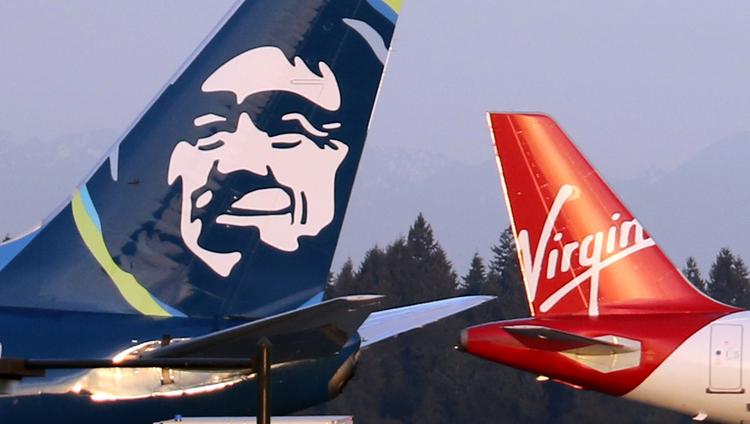
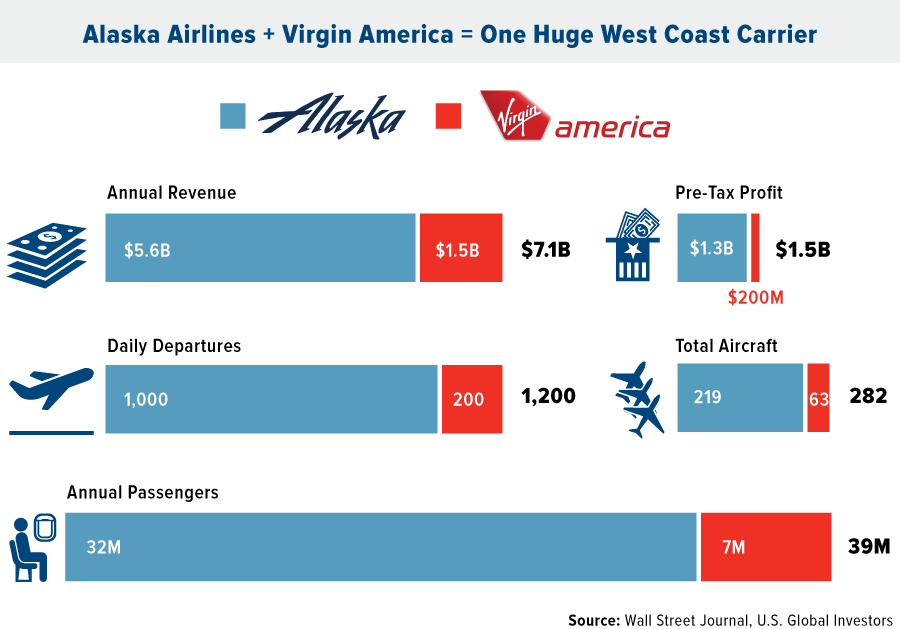
Alaska Air Group ha cerrado la adquisición de Virgin America por más de 4 mil millones de dólares, creando así la quinta aerolínea más grande de los Estados Unidos. La fusión obtuvo la aprobación antimonopolio del Departamento de Justicia el pasado 6 de diciembre después de que Alaska acordó reducir su relación de código compartido con American Airlines.

Alaska llegó a un acuerdo el pasado 4 de abril Aepara comprar Virgin America por 2.6 mil millones y además asumir 1.4 mil millones de dólares en deudas y obligaciones de arrendamiento de aeronaves, creando un valor empresarial de 4 mil millones de dólares para la transacción.

Al combinar la fuerte presencia de Alaska en el Pacífico Noroeste de los Estados Unidos con la fuerte presencia de Virgin America en los principales aeropuertos de California, Alaska cree que puede convertirse en la aerolínea líder en la costa oeste de Estados Unidos.

La compañía combinada, que tendrá su sede en Seattle, ofrecerá casi 1.200 vuelos diarios a 118 destinos, generando más de 7.000 millones de dólares en ingresos anuales. La flota combinada comprende 286 aviones, incluyendo más de 150 Boeing 737 y más de 60 aviones de la familia Airbus A320.

VIRGIN_AMERICA_ALASKA

Alaska Airlines mencionó en un comunicado:

«La combinación ampliara el servicio y proporcionará conexiones más frecuentes a los socios de aerolíneas internacionales en los mercados de tecnología en San Francisco, Los Ángeles y Seattle. Juntas, las líneas aéreas ofrecen 289 vuelos diarios a 52 destinos desde California, incluyendo 113 vuelos diarios sin escalas a 32 destinos de tres aeropuertos de la Bahía y 105 vuelos diarios sin escalas a 37 destinos de cuatro aeropuertos de Los Ángeles. Alaska planea continuar operando la flota de Virgin America con su nombre actual y producto por un período de tiempo mientras conduce investigación extensa de clientes. Virgin America continuará volando bajo su marca sin cambios inmediatos en el producto o experiencia a bordo”.

Alaska añadió que la combinación también aumentará su acceso a importantes aeropuertos de la costa este como Washington, New York JFK, New York LaGuardia y New York Newark.

Resultado de imagen para Alaska Virgin Airlines

El Presidente Ejecutivo de Alaska, Brad Tilden, agregó:

«Apreciamos que existe un gran interés en el futuro de la marca Virgin America entre clientes y empleados por igual. Esta es una gran decisión y que merece meses de análisis reflexivo y profundo. Planeamos tomar una decisión sobre la marca Virgin America a principios del próximo año”.

La duda surge respecto a si Alaska continuará con las operaciones de la familia Airbus, incluyendo las unidades del Airbus A320neo encargados por Virgin con entregas programadas para el próximo año. airgways-icon-aw

Alaska Airlines Acquires Virgin America


The synergy of both airlines makes it the fifth largest airline in the US


Alaska Air Group has closed the acquisition of Virgin America for more than 4 billion dollars, creating the fifth largest airline in the United States. The merger won the Justice Department’s antitrust approval on Dec. 6 after Alaska agreed to reduce its code-share relationship with American Airlines.

Alaska reached an agreement last April 4 to buy Virgin America for 2.6 billion dollars and also assume 1.4 billion dollars in debts and aircraft lease obligations, creating a business value of 4 billion dollars for the transaction.

Combining Alaska’s strong presence in the Pacific Northwest of the United States with Virgin America’s strong presence at major California airports, Alaska believes it can become the leading airline on the West Coast.

The combined Seattle-based company will offer nearly 1,200 daily flights to 118 destinations, generating more than $ 7 billion in annual revenue. The combined fleet comprises 286 aircraft, including more than 150 Boeing 737s and more than 60 aircraft of the Airbus A320 family.

Alaska Airlines said in a statement:

  «The combination will expand service and provide more frequent connections to international airline partners in technology markets in San Francisco, Los Angeles and Seattle. Together, airlines offer 289 daily flights to 52 destinations from California, including 113 daily nonstop flights to 32 destinations at three Bay Airports and 105 daily nonstop flights to 37 destinations at four Los Angeles airports. Alaska plans to continue operating the Virgin America fleet with its current name and product for a period of time while conducting extensive customer research. Virgin America will continue to fly under its brand without immediate changes to the product or experience on board.»

Resultado de imagen para Alaska Virgin Airlines

Alaska added that the combination will also increase access to major East Coast airports like Washington, New York JFK, New York LaGuardia and New York Newark.

Alaska Executive President Brad Tilden added:

«We appreciate that there is great interest in the future of the Virgin America brand among customers and employees alike. This is a great decision and deserves months of thoughtful and profound analysis. We plan to make a decision on the Virgin America brand early next year.»

Resultado de imagen para Alaska Virgin Airlines

Resultado de imagen para Alaska Virgin Airlines

Resultado de imagen para Alaska Virgin Airlines


The question arises as to whether Alaska will continue operations with the Airbus family, including Airbus A320neo units commissioned by Virgin with deliveries scheduled for next year. A\W


Ξ A I R G W A Y S Ξ
SOURCE: transponder1200.com
DBk: Photographic © twitter.com/VirginAmerica / Latimes.com / Wsj.com / Smatertravel.com
AW-POST: 201612160833AR

A\W   A I R G W A Y S ®