Azul Linhas Aéreas miembro de ALTA

AW | 2020 10 14 14:58 | AVIATION ORGANISMS / AIRLINES

Azul se convierte en miembro de la Asociación ALTA

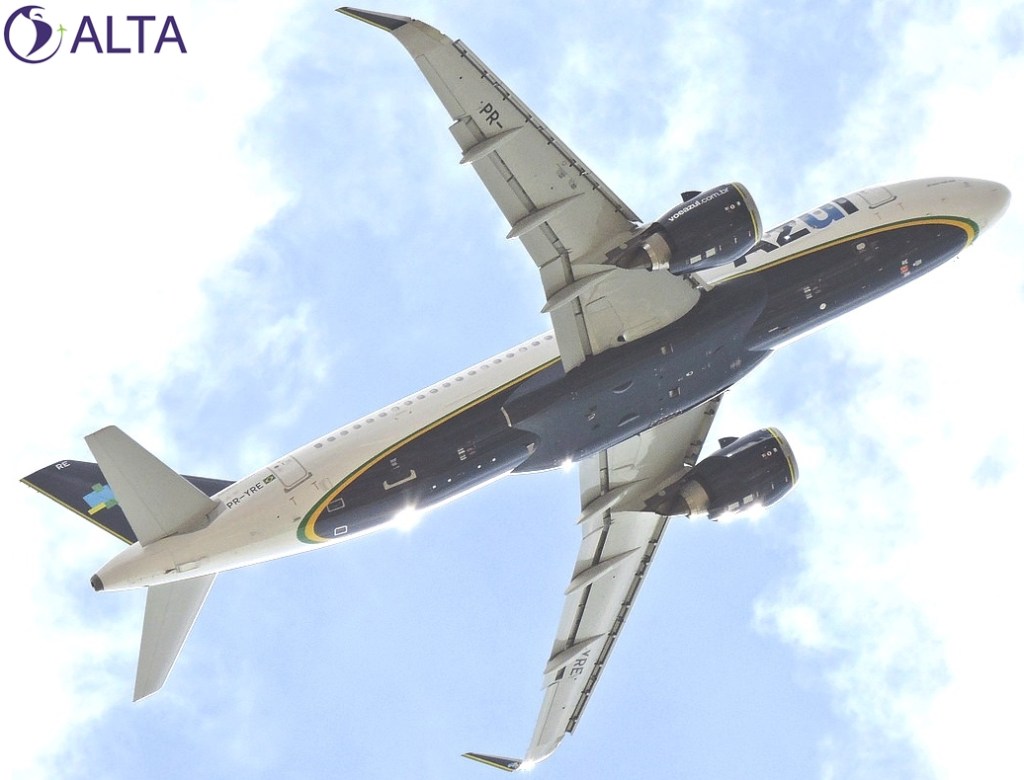
La Asociación Latinoamericana y del Caribe de Transporte Aéreo (ALTA) ha anunciado la presentación de un nuevo socio en el transporte aéreo de Latinoamérica y el Caribe. ALTA se complace en dar la bienvenida a Azul Linhas Aéreas Brasileiras S.A. como nuevo miembro de su creciente grupo de aerolíneas.

Azul Linhas Aéreas es la mayor aerolínea de Brasil en números de vuelos y cantidad de ciudades servidas. Actualmente, opera más de 916 vuelos diarios a más de 100 destinos en Brasil, Suramérica, Estados Unidos y Europa con una flota de 140 aeronaves y más de 13,000 miembros de tripulación. La compañía tiene una red de 249 rutas directas al 31 de Diciembre de 2019.

«Desde ALTA nos sentimos muy encantados/entusiasmados de recibir a Azul en nuestro extraordinario grupo de aerolíneas miembro en estos momentos. Son tiempos donde como industria debemos unirnos para y mirar hacia el futuro. Estoy seguro de que trabajando de la mano de Azul lograremos ampliar la conectividad dentro de Brasil y en la región, lo que los convierte en un aliado importante para el mercado latinoamericano. Contar con Azul como miembro nos permitirá desarrollar iniciativas con el objetivo de aumentar la conectividad y competitividad en la región y continuar aportando al desarrollo económico y social de la región», expresa, José Ricardo Botelho, Director Ejecutivo y CEO de ALTA.

Premios de Azul

En 2020 Azul Linhas Aéreas fue elegida por primera vez como la mejor aerolínea del mundo por TripAdvisor Traveler’s Choice, siendo la única empresa brasileña en recibir este reconocimiento en la historia de la premiación. Así como también, en 2019 Azul fue elegida la mejor compañía aérea regional de Suramérica por noveno año consecutivo por Skytrax. Adicionalmente, Azul quedó entre las diez primeras aerolíneas de bajo costo más puntuales del mundo, de acuerdo con OAG en el 2019.

«Es un gran placer ser parte de ALTA. Esperamos trabajar en conjunto con José Ricardo Botelho y las otras aerolíneas para ayudar a nuestra industria a avanzar. En tiempos como estos es más importante que nunca que nos unamos como industria y busquemos la manera de ser más eficientes y volar más cada día. Azul vuela a más de 120 destinos y sé que junto con ALTA y sus aerolíneas miembros podemos hacer que la aviación sea más accesible para más personas en América Latina», comenta John Rodgerson, Presidente de Azul Linhas Aéreas.

Acerca de ALTA

ALTA cuenta con más de 100 miembros entre aerolíneas, organizaciones y compañías proveedoras de la industria de la aviación. Juntos seguiremos fuertes e impulsando a la industria en los desafíos que enfrentamos. ALTA es una asociación privada sin fines de lucro al servicio de la industria aérea cuyo objetivo es desarrollar una aviación más segura, eficiente y sustentable en América Latina y El Caribe. Coordina esfuerzos colaborativos a lo largo de toda la cadena de valor maximizando el impacto que tiene la aviación en el crecimiento económico y social de la región para el beneficio de la industria, las naciones y las poblaciones servidas por el transporte aéreo.

Azul Linhas Aéreas member of ALTA

Azul becomes a member of the ALTA Association

The Latin American and Caribbean Air Transport Association (ALTA) has announced the presentation of a new partner in the air transport of Latin America and the Caribbean. ALTA is pleased to welcome Azul Linhas Aéreas Brasileiras S.A. as a new member of its growing group of airlines.

Azul Linhas Aéreas is the largest airline in Brazil in terms of number of flights and number of cities served. Currently, it operates more than 916 daily flights to more than 100 destinations in Brazil, South America, the United States and Europe with a fleet of 140 aircraft and more than 13,000 crew members. The company has a network of 249 direct routes as of December 31, 2019.

«At ALTA we are very delighted/excited to welcome Azul into our extraordinary group of member airlines at this time. These are times when as an industry we must come together and look to the future. I am sure that working hand in hand with Azul we will be able to expand connectivity within Brazil and in the region, which makes them an important ally for the Latin American market. Having Azul as a member will allow us to develop initiatives with the aim of increasing connectivity and competitiveness in the region and continue contributing to economic development and social of the region», expresses, José Ricardo Botelho, Executive Director and CEO of ALTA.

Azul Awards

In 2020, Azul Linhas Aéreas was chosen for the first time as the best airline in the world by TripAdvisor Traveler’s Choice, being the only Brazilian company to receive this recognition in the history of the award. As well as, in 2019 Azul was chosen as the best regional airline in South America for the ninth consecutive year by Skytrax. Additionally, Azul was among the top ten most punctual low-cost airlines in the world, according to OAG in 2019.

«It is a great pleasure to be part of ALTA. We look forward to working together with José Ricardo Botelho and the other airlines to help our industry move forward. In times like these it is more important than ever that we come together as an industry and find a way to be. more efficient and fly more every day. Azul flies to more than 120 destinations and I know that together with ALTA and its member airlines we can make aviation more accessible to more people in Latin America», says John Rodgerson, President of Azul Linhas Aéreas.

About ALTA

ALTA has more than 100 members among airlines, organizations and supplier companies of the aviation industry. Together we will remain strong and propel the industry through the challenges we face. ALTA is a private, non-profit association serving the airline industry whose objective is to develop safer, more efficient and sustainable aviation in Latin America and the Caribbean. Coordinates collaborative efforts throughout the entire value chain maximizing the impact that aviation has on the economic and social growth of the region for the benefit of the industry, nations and populations served by air transport.

Azul Linhas Aéreas membro da ALTA

Azul torna-se membro da Associação ALTA

A Associação Latino-Americana e Caribenha de Transporte Aéreo (ALTA) anunciou a apresentação de um novo parceiro no transporte aéreo da América Latina e Caribe. A ALTA tem o prazer de receber a Azul Linhas Aéreas Brasileiras S.A. como um novo membro de seu crescente grupo de companhias aéreas.

A Azul Linhas Aéreas é a maior companhia aérea do Brasil em número de voos e número de cidades atendidas. Atualmente, opera mais de 916 voos diários para mais de 100 destinos no Brasil, América do Sul, Estados Unidos e Europa com uma frota de 140 aeronaves e mais de 13.000 tripulantes. A empresa tinha uma rede de 249 rotas diretas em 31 de dezembro de 2019.

«Na ALTA, estamos muito satisfeitos / entusiasmados por receber a Azul em nosso extraordinário grupo de companhias aéreas membro neste momento. Estes são tempos em que, como indústria, devemos nos unir e olhar para o futuro. Tenho certeza de que trabalhando lado a lado com a Azul, seremos capazes de expandir conectividade no Brasil e na região, o que a torna uma importante aliada do mercado latino-americano. Ter a Azul como associada nos permitirá desenvolver iniciativas com o objetivo de aumentar a conectividade e a competitividade da região e continuar contribuindo para o desenvolvimento econômico e social da região”, expressa, José Ricardo Botelho, Diretor Executivo e CEO da ALTA.

Azul Awards

Em 2020, a Azul Linhas Aéreas foi eleita pela primeira vez a melhor companhia aérea do mundo pela TripAdvisor Traveler’s Choice, sendo a única empresa brasileira a receber esse reconhecimento na história da premiação. Além disso, em 2019 a Azul foi eleita a melhor companhia aérea regional da América do Sul pelo nono ano consecutivo pela Skytrax. Além disso, a Azul estava entre as dez companhias aéreas de baixo custo mais pontuais do mundo, de acordo com a OAG em 2019.

“É um grande prazer fazer parte da ALTA. Estamos ansiosos para trabalhar em conjunto com José Ricardo Botelho e as outras companhias aéreas para ajudar o nosso setor a avançar. Em tempos como este é mais importante do que nunca que estejamos juntos como setor e encontremos um jeito de ser. mais eficiente e voe mais a cada dia. A Azul voa para mais de 120 destinos e sei que junto com a ALTA e suas companhias aéreas associadas podemos tornar a aviação mais acessível a mais pessoas na América Latina”, afirma John Rodgerson, Presidente da Azul Linhas Aéreas.

Sobre ALTA

A ALTA tem mais de 100 membros entre companhias aéreas, organizações e empresas fornecedoras da indústria da aviação. Juntos, permaneceremos fortes e impulsionaremos a indústria através dos desafios que enfrentamos. A ALTA é uma associação privada sem fins lucrativos que atende ao setor de aviação civil e tem como objetivo desenvolver uma aviação mais segura, eficiente e sustentável na América Latina e no Caribe. Coordena esforços de colaboração em toda a cadeia de valor, maximizando o impacto que a aviação tem no crescimento econômico e social da região para o benefício da indústria, nações e populações servidas pelo transporte aéreo.


PUBLISHER: Airgways.com
DBk: Alta.aero / Airgways.com
AW-POST: 202010141458AR

A\W   A I R G W A Y S ®

Airbus entrega A330 Nº 1.500 a Delta

AW | 2020 10 14 14:20 | INDUSTRY / AIRLINES

Airbus entrega a Delta Air Lines A330 número 1.500

Airbus Group ha anunciado la entrega del avión A330 número 1.500 a Delta Air Lines el 21 de Septiembre de 2020 marcando el último hito en el progreso de la línea A330 del consorcio europeo. Un Airbus A330-900 entregado el mes pasado a Delta Air Lines es el jet de larga distancia Nº 1.500 construido por Airbus Group desde el lanzamiento del programa. Casi 28 años después del primer vuelo de un A330 en Noviembre de 1992, el fabricante europeo de aviones anunció el 12 de Octubre de 2020 en las redes sociales que había entregado la copia número 1.500 de la familia a la aerolínea estadounidense Delta Air Lines. La nueva aeronave A350-900, matrícula N407DX, MSN1957 almacenado en Amsterdam, Países Bajos lo que lo convierte en el avión más popular en ese segmento.

Familia A330

Las diferentes versiones están ahora en servicio con 121 aerolíneas y operadores; desde la primera entrega a finales de 1993 a Air Inter en Enero de 1994), Airbus ha entregado en promedio un A330 por semana, lo que remarca la popularidad de esta aeronave widebody. Todas las variantes del afamado A330 comprenden al A330-200, A330-300, ACJ330 (VIP), A330F, A330MRTT, Beluga XL, A330-800 y A330-900. A finales de Septiembre 2020, Airbus había registrado 1.818 pedidos para esta familia, excluyendo de la cartera de órdenes a los MRTT y Beluga; de los cuales 1.501 habían sido entregados de los cuales unos 1.432 están actualmente en servicio.

Objetivo A330

El Airbus A330 fue diseñado para reemplazar al envejecido A300, el primer gran cuerpo ancho del mundo impulsado por sólo dos motores, pero fue para utilizar los avances tecnológicos de la familia A320 que en aquellos tiempos se encontraba en servicio.

El A330-200/300, ahora conocido como CEO (Current Engine Option) voló por primera vez en 1992 e inmediatamente fue pionero en viajes de larga distancia en aviones bimotores. Su sistema fly-by-wire hizo inmensamente seguro y su capacidad para volar eficientemente en rutas de corta, media y larga distancia lo hizo popular entre las aerolíneas. El A330-300 no sólo tenía más asientos que el A300 que reemplazó, sino que también tenía un alcance de 4000 millas náuticas con un peso máximo de despegue de 212 toneladas. El rango también se incrementó a 5000nm a medida que maduraba. Esto le ayudó a competir directamente con tres de los aviones de la compañía americana Boeing, el 767, 777-200 y más tarde, el 787 Dreamliner.

El A330 había entrado en servicio en 1994 con Air Inter. En el corto plazo el constructor europeo lazó una versión más acortada denominada A330-200 con un alcance de 6.200 nm. Como la mayoría de los aviones Airbus, las alas se hicieron en las instalaciones de fabricación de alas del Reino Unido de Airbus en Broughton, Gales del Norte y luego se unieron con las secciones del fuselaje y otras piezas en la línea de montaje final del Airbus A330 en Toulouse. Unos 789 A330-300 se han ordenado desde el lanzamiento con 745 actualmente en servicio. El A330-200 adjuntó 665 pedidos de los cuales 619 aviones están en servicio.

Introduciendo al A330NEO

La decisión de volver a enviar el A330 se produjo en 2014 después de que la aerolínea Delta Air Lines había expresado un interés significativo en la opción de reemplazar su línea Boeing 767. La aerolínea con sede en Atlanta era un operador A330 y una versión más eficiente tenía sentido no sólo para ellos, sino también para muchos otros operadores A330.

Airbus Group desarrollaría dos tipos de actualizaciones, el A330-800NEO y el A330-900NEO. El A330-900NEO fue el primero en volar en 2017 con mejoras que incluyen un ala rediseñada, mejoras en la cabina y, por supuesto, eficientes motores Rolls-Royce Trent 7000 que se combinaron para dar una reducción de combustible del 25% en comparación con el A330CEO. En una configuración standard de 460 pasajeros a una distancia de 7.200nm el 900NEO demostró ser popular atrayendo 318 pedidos hasta la fecha con 49 entregados. Entró en servicio en 2018 con TAP Air Portugal como cliente de lanzamiento. El A330-800NEO más pequeño no ha demostrado ser tan popular hasta ahora atrayendo sólo 14 pedidos desde 2016. Irónicamente, el A330NEO sonaba la campana de la muerte para el A350-800XWB, la versión más pequeña planeada de la popular serie A350XWB, ya que habría sido un tamaño similar al A330NEO. Delta Air Lines es ahora el mayor operador del A330NEO, mientras que Turkish Airlines es el operador A330 más grande del mundo.

Perspectivas A330

Airbus continúa desarrollando el Airbus A330 e incluso ahora está diseñando mejoras para aumentar la eficiencia en la línea que introdujo hace más de 25 años de servicio. El introducción del A330 a las flotas de las aerolíneas continúa siendo el punto de referencia para la versatilidad, proporcionando una solución de cuerpo ancho de bajo riesgo para cada tipo de operador que transporta de 230 a 460 pasajeros, capaz de operar en rutas de 20 minutos a más de 17 horas, y Airbus dice que hace todo esto con más del 99% de fiabilidad.

Airbus delivers 1,500 A330 to Delta

Airbus delivers 1,500th A330 to Delta Air Lines

Airbus Group announced the delivery of the 1,500th A330 aircraft to Delta Air Lines on September 21, 2020, marking the latest milestone in the progress of the European consortium’s A330 line. An Airbus A330-900 delivered last month to Delta Air Lines is the 1,500th long-haul jet built by Airbus Group since the launch of the program. Almost 28 years after the first flight of an A330 in November 1992, the European aircraft manufacturer announced on October 12, 2020 on social media that it had delivered the 1,500th copy of the family to the US airline Delta Air Lines. The new A350-900 aircraft, registration N407DX, MSN1957 stored in Amsterdam, The Netherlands making it the most popular aircraft in that segment.

A330 Family

The different versions are now in service with 121 airlines and operators; since the first delivery in late 1993 to Air Inter in January 1994), Airbus has delivered on average one A330 per week, underscoring the popularity of this widebody aircraft. All variants of the famed A330 include the A330-200, A330-300, ACJ330 (VIP), A330F, A330MRTT, Beluga XL, A330-800 and A330-900. At the end of September 2020, Airbus had registered 1,818 orders for this family, excluding the MRTT and Beluga from the order book; of which 1,501 had been delivered of which about 1,432 are currently in service.

Objective A330

The Airbus A330 was designed to replace the aging A300, the world’s first large widebody powered by just two engines, but it was to utilize the technological advances of the A320 family that were in service at the time.

The A330-200 / 300, now known as CEO (Current Engine Option) first flew in 1992 and immediately pioneered long-haul travel in twin-engine aircraft. Its fly-by-wire system made it immensely safe and its ability to fly efficiently on short, medium and long haul routes made it popular with airlines. The A330-300 not only had more seats than the A300 it replaced, it also had a range of 4,000 nautical miles with a maximum takeoff weight of 212 tonnes. The range also increased to 5000nm as it matured. This helped it compete directly with three of the American company’s Boeing aircraft, the 767, 777-200 and later, the 787 Dreamliner.

The A330 had entered service in 1994 with Air Inter. In the short term, the European manufacturer launched a shorter version called A330-200 with a range of 6,200 nm. Like most Airbus aircraft, the wings were made at Airbusen Broughton’s UK wing manufacturing facility, North Wales and then joined with the fuselage sections and other parts on the final Airbus A330 assembly line. in Toulouse. Some 789 A330-300s have been ordered since launch with 745 currently in service. The A330-200 added 665 orders of which 619 aircraft are in service.

Introducing the A330NEO

The decision to re-ship the A330 came in 2014 after Delta Air Lines carrier had expressed significant interest in the option of replacing its Boeing 767 line. The Atlanta-based carrier was an A330 operator and a more efficient version. it made sense not only for them, but also for many other A330 operators.

Airbus Group would develop two types of upgrades, the A330-800NEO and the A330-900NEO. The A330-900NEO was the first to fly in 2017 with upgrades including a redesigned wing, cockpit upgrades, and of course efficient Rolls-Royce Trent 7000 engines that combined to give a 25% fuel reduction compared to the A330CEO. In a standard 460 passenger configuration at a distance of 7,200nm the 900NEO proved popular attracting 318 orders to date with 49 delivered. It entered service in 2018 with TAP Air Portugal as a launch customer. The smaller A330-800NEO has not proven that popular so far attracting only 14 orders since 2016. Ironically, the A330NEO sounded the death knell for the A350-800XWB, the planned smaller version of the popular A350XWB series, as it would have been a similar size to the A330NEO. Delta Air Lines is now the largest operator of the A330NEO, while Turkish Airlines is the largest A330 operator in the world.

Perspective A330

Airbus continues to develop the Airbus A330 and is even now designing improvements to increase efficiency on the line that it introduced more than 25 years ago in service. The introduction of the A330 to airline fleets continues to be the benchmark for versatility, providing a low-risk widebody solution for every type of operator carrying 230 to 460 passengers, capable of operating on 20-minute routes. to more than 17 hours, and Airbus says it does all of this with more than 99% reliability.


PUBLISHER: Airgways.com
DBk: Airbus.com / Delta.com / Airgways.com
AW-POST: 202010141420AR

A\W   A I R G W A Y S ®

Cepo argentino vuelos internacionales

AW | 2020 10 13 15:00 | AIRLINES / GOVERNMENT

Aéreas extranjeras temen impacto del cepo en los pasajes

Las líneas aéreas extranjeras que operan en la República Argentina han solicitado al Gobierno que cancele la aplicación del recargo de 35% en la compra de tickets aéreos, expresando que agravará las pérdidas que están sufriendo por el impacto de la pandemia, causando un gran impacto en los futuros viajes.

Las aerolíneas extranjeras como las nacionales en Argentina que tienen rutas asignadas sumaron una preocupación adicional por el súper cepo que les quitará aun más posibilidades de vender pasajes a los argentinos en la reapertura aérea, sepultando las esperanzas de estimular al transporte en los vuelos internacionales frente al nuevo panorama post-pandemia.

El encarecimiento de los pagos en dólares y las trabas que se van agregando para operar con divisas, obligan a algunas líneas aéreas a revisar sus proyecciones de ingresos para los próximos meses. La posibilidad de ampliar las frecuencias, reducidas actualmente a los llamados vuelos especiales, se ve cada vez más limitada. Para algunas compañías, los parámetros fijados en cantidad de vuelos para Octubre 2020 serían el techo a considerar. El encarecimiento de los tickets para los bolsillos argentinos, sumado a la bajísima demanda de pasajes por efecto del Coronavirus, son argumentos que ponen en la balanza al momento de sopesar si conviene o no ampliar la oferta de asientos para viajar al exterior. Las compañías aéreas comenzaron a reevaluar algunos planes para el mercado argentino con cautela.

Las compañías hicieron pública una petición al Gobierno para que exima a los pasajes internacionales del recargo del 35%, recordando que ya rige el impuesto PAIS de 30%, más otra serie de tributos que se trasladan al precio final del pasaje. “La sumatoria de cargas e impuestos incorporados al billete de pasaje en Argentina es una de las más elevadas ya no de la región sino del mundo. La incorporación de la percepción del 35%, independientemente de ser recuperable contra futuras presentaciones de los impuestos a las Ganancias y Bienes Personales, colocará a la Argentina en lo más alto del podio de la carga tributaria soportada por un billete aéreo. Estimamos que esta crisis del sector generará en Argentina una contracción de la demanda cercana al 67%, resultantes en pérdidas en ingresos para las aerolíneas cercanas a los u$s3.280 millones para el 2020, poniendo en riesgo cerca de 19.820 empleos directos y reflejado en una reducción en la contribución al PIB cercana a los u$s1.630 millones. Por ello, incluir una percepción del 35% contraería aún más la demanda impactando significativamente al sector”, planteó la Asociación de Transporte Aéreo Internacional (IATA).

La carta fue dirigida a la titular de la AFIP, Mercedes Marcó del Pont. Pero envió copia también al Banco Central, el Ministerio de Transporte, el Ministerio de Economía y la Jefatura de Gabinete. Lleva la firma country manager de IATA para Argentina, Paraguay y Uruguay, María José Taveira.

Reapertura vuelos

La fecha de reanudación de los vuelos regulares domésticos en la República Argentina establecida para el Lunes 19/10 permitirá marcar el comienzo de un largo proceso de adecuación en el nuevo escenario del transporte aéreo. Igualmente, la reanudación de los vuelos internacionales permitirá demostrar que será un desafío para las compañías aéreas continuar realizando las rutas aéreas pre-pandemia, amenazando con la integración del país con el resto del mundo.

Argentine international flights stocks

Foreign airlines fear the impact of the stocks on the tickets

Foreign airlines operating in the Argentine Republic have requested the Government to cancel the application of the 35% surcharge on the purchase of air tickets, stating that it will aggravate the losses they are suffering from the impact of the pandemic, causing a great impact on future trips.

Foreign airlines such as national ones in Argentina that have assigned routes added an additional concern about the super-cap that will take away even more possibilities to sell tickets to Argentines in the air reopening, burying the hopes of stimulating transport on international flights compared to the new post-pandemic landscape.

The rising cost of payments in Dollars and the obstacles that are being added to operate with currencies, force some airlines to review their income projections for the coming months. The possibility of expanding the frequencies, currently reduced to so-called special flights, is increasingly limited. For some companies, the parameters set in the number of flights for October 2020 would be the ceiling to consider. The rising cost of tickets for Argentine pockets, added to the very low demand for tickets due to the Coronavirus, are arguments that are put in the balance when weighing whether or not to expand the offer of seats to travel abroad. Airlines began to re-evaluate some plans for the Argentine market with caution.

The companies made public a request to the Government to exempt international tickets from the 35% surcharge, recalling that the PAIS tax of 30% already applies, plus another series of taxes that are transferred to the final price of the ticket. “The sum of charges and taxes incorporated into the ticket in Argentina is one of the highest, not in the region but in the world. The incorporation of the 35% perception, regardless of being recoverable against future filings of Income and Personal Property taxes, will place Argentina at the top of the podium of the tax burden borne by an air ticket. We estimate that this sector crisis will generate in Argentina a contraction of demand close to 67%, resulting in revenue losses for airlines close to US$ 3,280 million by 2020, putting at risk about 19,820 direct and reflected jobs in a reduction in the contribution to GDP close to US$ 1,630 million. For this reason, including a 35% perception would further contract demand, significantly impacting the sector”, stated the International Air Transport Association (IATA).

The letter was addressed to the head of the AFIP, Mercedes Marcó del Pont. But she also sent a copy to the Central Bank, the Ministry of Transport, the Ministry of Economy and the Chief of Staff. She runs the IATA country manager firm for Argentina, Paraguay and Uruguay, María José Taveira.

Flights reopening

The date of resumption of regular domestic flights in the Argentine Republic set for Monday 10/19 will mark the beginning of a long process of adaptation to the new air transport scenario. Likewise, the resumption of international flights will show that it will be a challenge for airlines to continue carrying out pre-pandemic air routes, threatening the country’s integration with the rest of the world.


PUBLISHER: Airgways.com
DBk: Argentina.gob.ar/transporte / Iata.org / Airgways.com
AW-POST: 202010131500AR

A\W   A I R G W A Y S ®

Aéreas europeas reclaman coordinación

AW | 2020 10 13 12:08 | AIRLINES / GOVERNMENT

Unión Europea fracaso código común para restricciones de viajes

Ver las imágenes de origen

La plataforma Airlines for Europe (A4E), que representa a la mayoría de las compañías aéreas europeas, criticó este Martes 13/10 que los países de la Unión Europea (UE) hayan fracasado en dotarse de un código común para las restricciones de viajes y alertaron de las potenciales consecuencias negativas. «La recomendación del Consejo sobre un enfoque coordinado para la restricción de la libre circulación en respuesta a la pandemia de COVID-19 […] establece algunas orientaciones para los Estados miembros» pero no evita el «desastroso mosaico de respuestas individuales entre los Estados miembros», señaló A4E en un comunicado. Según las aerolíneas, en una nota que también suscriben el Consejo Internacional de Aeropuertos en Europa (ACI Europe) y la Asociación Internacional de Transporte Aéreo (IATA), la recomendación adoptada este Martes no logra el objetivo de «fomentar el reinicio de los viajes mediante una coordinación eficaz y medidas proporcionadas, predecibles y no discriminatorias».

La recomendación adoptada por el Consejo de la UE prevé que las capitales reporten información sobre contagios, números de test y tasa de positividad al Centro Europeo para el Control y la Prevención de Enfermedades (ECDC), que actualizará semanalmente un mapa europeo del coronavirus según la incidencia por regiones, en función de esa información. Pero los Estados miembros se reservan la libertad de aplicar las restricciones a los viajes que deseen y la posibilidad de exigir cuarentenas a los viajeros, además de pruebas de diagnóstico, si bien deberán de informar de esas medidas al resto de socios y a la Comisión Europea 48 horas antes. El sector de la aviación, contrario a las cuarentenas en los traslados y muy crítico con la falta de coordinación a nivel europeo en los últimos meses, considera que el acuerdo de los países significa que las fronteras permanecen cerradas.

Entre otros puntos, A4E, AECI EUROPE e IATA señalan también que el acuerdo «ignora la opinión del ECDC de que las restricciones de viaje, y en particular las cuarentenas, tienen una ‘eficacia cuestionable’ cuando la transmisión en la comunidad está en curso, que es el caso actualmente en la mayor parte de Europa». La exigencia de advertir de las restricciones a los ciudadanos al menos 24 horas antes de aplicarlas dista mucho de los cinco días que pedía la Comisión, agregan. «Estas deficiencias son un fracaso político. La incapacidad del Consejo para ir más allá de una coordinación superficial y establecer un marco realmente armonizado y viable está ahora fuera de toda duda», agregan las tres organizaciones.

El sector de la aviación sí ve con buenos ojos el protocolo de pruebas para viajes en la UE que, a petición de la Comisión Europea (CE), desarrollan la Agencia de Seguridad Aérea de la Unión Europea (EASA) y el ECDC, pues «presenta una oportunidad para abordar el riesgo de importación de casos de áreas de alto riesgo a áreas de bajo riesgo de manera mucho más efectiva que la cuarentena». Las aerolíneas confían en que ese sistema sirva para «revertir los continuos golpes económicos sufridos por Europa como resultado de la continua falta de una respuesta coordinada y de liderazgo por parte del Consejo», institución que representa a los países de la Unión Europea.

European airlines demand coordination

European Union common code for travel restrictions failed

The Airlines for Europe (A4E) platform, which represents the majority of European airlines, criticized this Tuesday 10/13 that the countries of the European Union (EU) have failed to provide a common code for travel restrictions and warned of the potential negative consequences. «The Council’s recommendation on a coordinated approach to restricting free movement in response to the COVID-19 pandemic […] sets some guidance for Member States» but does not avoid the «disastrous mosaic of individual responses among the Member States», A4E said in a statement. According to the airlines, in a note also signed by the International Council of Airports in Europe (ACI Europe) and the International Air Transport Association (IATA), the recommendation adopted this Tuesday does not achieve the objective of «encouraging the restart of travel through effective coordination and proportionate, predictable and non-discriminatory measures».

The recommendation adopted by the Council of the EU provides that capitals report information on infections, test numbers and positivity rate to the European Center for Disease Control and Prevention (ECDC), which will update weekly a European map of the coronavirus according to the incidence by region, based on that information. But the Member States reserve the freedom to apply any travel restrictions they wish and the possibility of requiring travelers to quarantine, in addition to diagnostic tests, although they must inform the rest of the partners and the Eurpea Commission of these measures. hours before. The aviation sector, contrary to quarantines in transfers and highly critical of the lack of coordination at the European level in recent months, considers that the countries’ agreement means that the borders remain closed.

Among other points, A4E, AECI EUROPE and IATA also point out that the agreement «ignores the ECDC’s view that travel restrictions, and in particular quarantines, have ‘questionable effectiveness’ when community transmission is ongoing, which is currently the case in most of Europe». The requirement to warn citizens of the restrictions at least 24 hours before applying them is far from the five days that the Commission pería, they add. «These deficiencies are a political failure. The inability of the Council to go beyond superficial coordination and establish a truly harmonized and workable framework is now beyond question», the three organizations add.

The aviation sector does welcome the test protocol for travel in the EU that, at the request of the European Commission (EC), developed by the European Union Aviation Safety Agency (EASA) and the ECDC, since «presents an opportunity to address the risk of importing cases from high-risk areas to low-risk areas much more effectively than quarantine». The airlines trust that this system will serve to «reverse the continuous economic blows suffered by Europe as a result of the continuing lack of a coordinated response and leadership on the part of the Council», an institution that represents the countries of the European Union.


PUBLISHER: Airgways.com
DBk: Efe.com / A4e.eu / Airgways.com
AW-POST: 202010131208AR

A\W   A I R G W A Y S ®

Jet Airways rechaza EoI de UAE

Extensión plazos oferentes Jet Airways |

AW | 2020 10 13 11:00 | AIRLINES

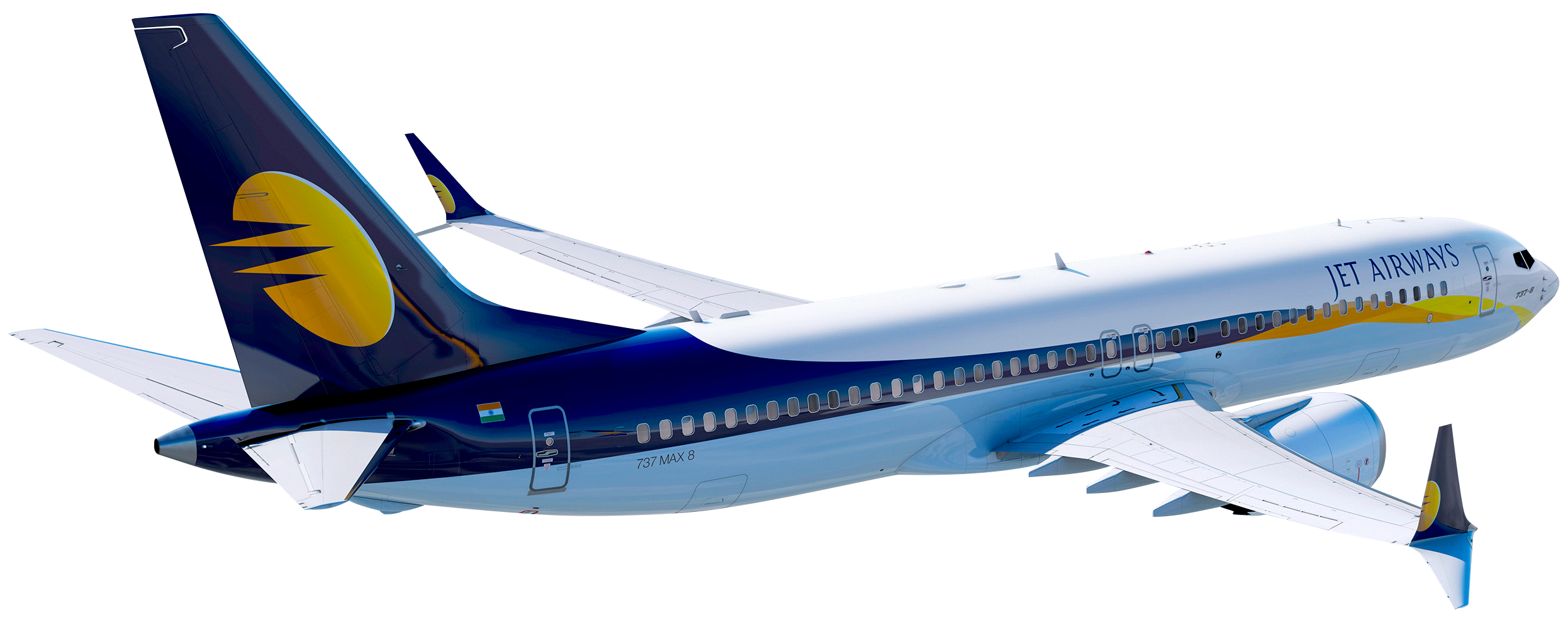
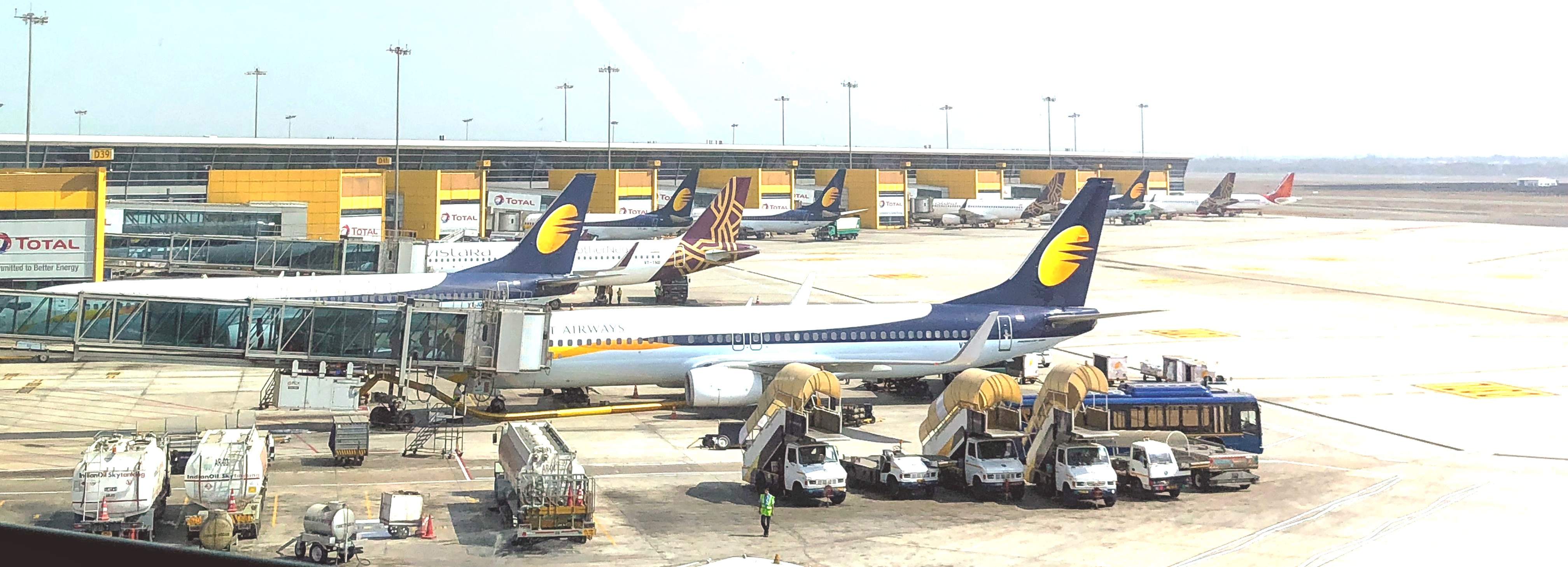
Oferta Interés de empresas son rechazadas por RP de Jet Airways

Tata Group interesada en Jet Airways |

Una oferta de adquisición de Expresión de Interés (EoI) de la aerolínea Jet Airways en quiebra por parte de un consorcio de grupos empresariales con sede en los Emiratos Árabes Unidos y Londres no ha tenido éxito en la primera ronda, dijeron las fuentes de la aerolínea. En una presentación regulatoria, el Profesional de Resolución (RP) de Jet Airways, que se encuentra bajo el proceso del Código de Insolvencia y Quiebras, aclaró el estado de la licitación del empresario Murari Lal Jalan, con sede en los Emiratos Árabes Unidos, que dirige MJ Developers, y Kalrock Capital del Reino Unido. La aclaración se produjo después de que los medios informaran que el consorcio había sido elegido como el ganador de Jet Airways, la aerolínea privada más antigua de India, detuvo sus operaciones en abril de 2019 en medio de una grave crisis de efectivo y deudas acumuladas, y sus prestamistas lo llevaron al tribunal de quiebras de la India, para a quien debía más de 80.000 millones de rupias.

Ashish Chhawchharia, del Profesional de Resolución (RP) de Jet Airways, dijo que el Comité de Acreedores no ha concluido la votación electrónica sobre los planes de resolución final presentados por los dos postores preseleccionados. La aclaración agregó que el consorcio Kalrock-Jalan ha insinuado al Profesional de la Resolución que no ha hecho ninguna declaración alegando haber sido elegido como el solicitante de resolución exitoso. De acuerdo con el plan de resolución propuesto, el consorcio había presentado planes para infundir cerca de ₹ 10.000 millones de Rupias en la extinta aerolínea durante los próximos cinco años, y estaba dispuesto a ofrecer una garantía de ₹ 2.500 millones de Rupias como garantía. También prometió efectivo a los prestamistas desde el tercer año en adelante, independientemente de lo que suceda con la aerolínea. Se ofreció a los prestamistas un 9,5 por ciento de capital durante el período de reestructuración, según informes anteriores. Otros postores incluyeron el Centro de Técnicas de Simulación de Vuelo con sede en Haryana, Big Charter de Mumbai y Imperial Capital Investments de Abu Dhabi. El conglomerado sudamericano Synergy Group y Prudent ARC, con sede en Nueva Delhi, también se encontraban entre los pretendientes de Jet Airways, pero no pudieron presentar ningún plan de resolución concreto antes de la fecha límite del 17 de Febrero 2020.

El Consorcio Kalrock-Jalan, cuyo interés abarca diversos sectores como inmobiliario, minería, comercio, construcción, bienes de consumo, viajes y turismo, tiene inversiones en los Emiratos Árabes Unidos, India, Rusia y Uzbekistán, entre otros lugares. Kalrock-Jalan es una firma global que opera en asesoría financiera y administración de activos alternativos, administrando activos de socios importantes a través de una serie de estrategias e inversiones únicas claramente definidas y diversificadas, con enfoque en mercados privados.

Jet Airways propuestas sin esperanza |

Jet Airways rejects EoI of UAE

Offer Interest of companies are rejected by RP of Jet Airways

An Expression of Interest (EoI) takeover offer of the bankrupt airline Jet Airways by a consortium of business groups based in the United Arab Emirates and London has been unsuccessful in the first round, the airline’s sources said. . In a regulatory filing, Jet Airways’ Resolution Professional (PR), which is under the Insolvency and Bankruptcy Code process, clarified the status of the bidding of businessman Murari Lal Jalan, based in the United Arab Emirates, who He runs MJ Developers, and Kalrock Capital of the UK. The clarification came after media reported that the consortium had been chosen as the winner of Jet Airways, India’s oldest private airline, halted operations in April 2019 amid a severe cash crisis and accumulated debt, and his lenders took him to bankruptcy court in India, to whom he owed more than Rs 80,000 million.

Ashish Chhawchharia of the Jet Airways Resolution Professional (PR) said the Creditors Committee has not concluded the electronic vote on the final resolution plans submitted by the two shortlisted bidders. The clarification added that the Kalrock-Jalan consortium has hinted to the Resolution Professional that it has made no statement claiming to have been chosen as the successful resolution applicant. Under the proposed resolution plan, the consortium had put forward plans to infuse about ₹ 10 billion Rupees into the defunct airline over the next five years, and was willing to offer a ₹ 2.5 billion guarantee as collateral. He also promised cash to lenders from the third year onward, regardless of what happens to the airline. Lenders were offered 9.5 percent equity during the restructuring period, according to previous reports. Other bidders included the Haryana-based Flight Simulation Techniques Center, Mumbai Big Charter and Abu Dhabi Imperial Capital Investments. South American conglomerate Synergy Group and New Delhi-based Prudent ARC were also among Jet Airways’ suitors, but were unable to present any concrete resolution plans before the February 17, 2020 deadline.

The Kalrock-Jalan Consortium, whose interest spans various sectors such as real estate, mining, commerce, construction, consumer goods, travel and tourism, has investments in the United Arab Emirates, India, Russia and Uzbekistan, among other places. Kalrock-Jalan is a global firm operating in financial advisory and alternative asset management, managing assets of major partners through a clearly defined and diversified series of unique investments and strategies, with a focus on private markets.

Comité acreedores futuro Jet Airways |

जेट एयरवेज ने यूएई ईओआई को खारिज कर दिया

जेट एयरवेज के आरपी द्वारा कंपनियों के प्रस्ताव को अस्वीकार कर दिया जाता है

एयरलाइन के सूत्रों ने कहा कि एक्सप्रेशन ऑफ इंटरेस्ट (ईओआई) संयुक्त अरब अमीरात और लंदन में स्थित व्यापारिक समूहों के एक संघ द्वारा दिवालिया एयरलाइन जेट एयरवेज के अधिग्रहण प्रस्ताव को असफल कर दिया गया है, एयरलाइन के सूत्रों ने कहा। । एक विनियामक फाइलिंग में, जेट एयरवेज के रिज़ॉल्यूशन प्रोफेशनल (पीआर), जो इन्सॉल्वेंसी एंड बैंकरप्सी कोड प्रक्रिया के तहत है, ने संयुक्त अरब अमीरात में स्थित व्यवसायी मुरारी लाल जालान द्वारा बोली की स्थिति स्पष्ट की, जो वह एमजे डेवलपर्स, और यूके की कल्रोक कैपिटल चलाते हैं। मीडिया द्वारा रिपोर्ट किए जाने के बाद स्पष्टीकरण आया कि कंसोर्टियम को जेट एयरवेज, भारत की सबसे पुरानी निजी एयरलाइन के विजेता के रूप में चुना गया था, एक गंभीर नकदी संकट और संचित ऋण के बीच, अप्रैल 2019 में परिचालन रुका हुआ था, और उसके ऋणदाता उसे भारत में दिवालियापन अदालत में ले गए, जिस पर उसका 80,000 करोड़ रुपये से अधिक का बकाया था।

जेट एयरवेज रिज़ॉल्यूशन प्रोफेशनल (पीआर) के आशीष छावछरिया ने कहा कि लेनदारों की समिति ने दो शॉर्टलिस्ट किए गए बोलीदाताओं द्वारा प्रस्तुत अंतिम रिज़ॉल्यूशन योजनाओं पर इलेक्ट्रॉनिक वोट का निष्कर्ष नहीं निकाला है। स्पष्टीकरण में कहा गया है कि कलोरोक-जालान कंसोर्टियम ने रिज़ॉल्यूशन प्रोफेशनल को संकेत दिया है कि उसने कोई भी ऐसा बयान नहीं दिया है जो यह दावा करता है कि सफल रिज़ॉल्यूशन आवेदक के रूप में चुना गया है। प्रस्तावित रिज़ॉल्यूशन प्लान के तहत, कंसोर्टियम ने अगले पांच वर्षों में five 10 बिलियन रुपए के डिफ्यूज एयरलाइन में निवेश करने की योजना को आगे बढ़ाया था, और संपार्श्विक के रूप में guarantee 2.5 बिलियन की गारंटी देने के लिए तैयार था। उन्होंने तीसरे वर्ष से उधारदाताओं को नकद देने का वादा किया, भले ही एयरलाइन का क्या हो। पिछली रिपोर्टों के अनुसार, पुनर्गठन अवधि के दौरान उधारदाताओं को 9.5 प्रतिशत इक्विटी की पेशकश की गई थी। अन्य बोलीदाताओं में हरियाणा स्थित उड़ान सिमुलेशन तकनीक केंद्र, मुंबई बिग चार्टर और अबू धाबी इंपीरियल कैपिटल इंवेस्टमेंट्स शामिल थे। दक्षिण अमेरिकी समूह सिनर्जी ग्रुप और नई दिल्ली स्थित प्रूडेंट एआरसी भी जेट एयरवेज के आत्महत्या करने वालों में से थे, लेकिन 17 फरवरी, 2020 की समय सीमा से पहले कोई ठोस संकल्प योजना पेश करने में असमर्थ थे।

Kalrock-Jalan कंसोर्टियम, जिसकी रुचि विभिन्न क्षेत्रों जैसे कि रियल एस्टेट, खनन, वाणिज्य, निर्माण, उपभोक्ता वस्तुओं, यात्रा और पर्यटन में है, ने संयुक्त अरब अमीरात, भारत, रूस और उजबेकिस्तान में निवेश किया है। Kalrock-Jalan एक वैश्विक फर्म है जो वित्तीय सलाहकार और वैकल्पिक परिसंपत्ति प्रबंधन में काम कर रही है, निजी बाजारों पर ध्यान देने के साथ अद्वितीय निवेश और रणनीतियों की स्पष्ट रूप से परिभाषित और विविध श्रृंखला के माध्यम से प्रमुख भागीदारों की संपत्ति का प्रबंधन कर रही है।

AIRGWAYS NEWSLETTER |


PUBLISHER: Airgways.com
DBk: Jetairways.com / Airgways.com
AW-POST: 202010131100AR

A\W   A I R G W A Y S ®

Gobierno Indonesia estimula aviación

AW | 2020 10 12 17:31 | AIRLINES / GOVERNMENT

Gobierno de Indonesia alivia las restricciones a las aerolíneas locales

El Gobierno de la República de Indonesia ha aprobado un proyecto de Ley Omnibus que establece que las aerolíneas comerciales ya no necesitan poseer al menos cinco aviones como parte de la estructura de la compañía como parte de los requisitos operativos para el reinicio de vuelos, junto con otras enmiendas legales como parte de su nuevo proyecto de ley general de amplio alcance destinado a impulsar los negocios y crear empleos en la economía en general.

Bayu Sutanto, Secretario General de la Asociación Nacional de Transportistas Aéreos de Indonesia (INACA), ha comunicado que eliminar el requisito de un número mínimo de aeronaves en propiedad facilita que las nuevas empresas ingresen al mercado.

La nueva ley establece otros cambios menos tangibles que abordan otros problemas que enfrentan las nuevas aerolíneas, como la estructura de costos y la regulación de la competencia. Por ejemplo, la fijación de tarifas ahora está regulada por una regulación de todo el gobierno en lugar de una regulación del ministerio de transporte en virtud de la enmienda al artículo 130 de la Ley de Aviación. También es más fácil para las nuevas aerolíneas iniciar operaciones, ya que se ha derogado el Artículo 42 de la Ley de Aviación, recortando 12 de los requisitos para obtener Certificación de Operador Aéreo (AOC). Aunque algunos de estos requisitos todavía se encuentran en otros artículos de la Ley de Aviación.

Ahora se pueden construir nuevos aeropuertos con menos burocracia, ya que ya no existe el requisito de que los permisos de construcción de aeropuertos se coordinen con los gobiernos regionales, ya que el Artículo 215 ha sido revocado.

“A corto plazo, es posible que las nuevas leyes no atraigan [nuevos operadores comerciales] ya que no se espera que la demanda de pasajeros aumente [rápidamente] después de la pandemia. Pero en dos años, probablemente atraerán a muchos operadores nuevos. [Basamos esto en] las proyecciones de la OACI y la IATA de que la demanda de pasajeros alcanzará los niveles de 2019 alrededor de 2023, o justo después. Las leyes deberían tener poco efecto en los operadores de flete y carga, a menos que quieran ingresar al servicio de pasajeros programado”, dice Bayu Sutanto. A estos operadores nunca se les ha exigido poseer cinco aeronaves, como se establece en el Artículo 118, y solo se les exigió que tener una flota mínima de tres aviones, de los cuales uno debe ser de propiedad.

La industria de las aerolíneas de Indonesia es predominantemente un duopolio, con más del 80% del mercado nacional acorralado por los grupos Garuda Airlines y Lion Air. El tercer jugador en el mercado, el grupo Sriwijaya Air, se unió al grupo Garuda en 2018 pero luego se fue en 2019. Desde entonces, la participación de mercado de Sriwijaya Air se ha mantenido en torno al 13%. Algunos comentaristas de la industria han atribuido el duopolio a las altas barreras de entrada en el mercado indonesio, una de las cuales ha sido el requisito de propiedad de cinco aviones. El Gobierno indonesio introdujo el requisito hace unos años en un esfuerzo por evitar que las aerolíneas subcapitalizadas ingresen al mercado, ya que se consideró que tales aerolíneas representaban una amenaza para la seguridad. Pero desde que se introdujo el requisito, el mercado se ha consolidado enormemente y han aumentado las quejas con respecto a tarifas aéreas más altas y falta de competencia en algunas rutas.

Las leyes provocaron recientemente protestas en toda Indonesia, aunque por enmiendas en el proyecto de ley que cubren las industrias distintas de la aviación, que han sido criticadas por tener un impacto significativo en los derechos de los trabajadores. La Ley Omnibus se refiere a un proyecto de ley que incluye muchas leyes dispares que pertenecen a diferentes industrias, problemas, entre otros asuntos.

El hecho de que se hayan incluido cambios en las leyes de aviación en el proyecto de ley ómnibus de gran alcance, refleja cómo el Gobierno indonesio ve a la industria aérea local como un importante generador de empleo y crecimiento económico. El proyecto de ley general se trata principalmente de iniciativas de creación de empleo en la economía en general y de los esfuerzos para eliminar algunos trámites burocráticos en las empresas.

Indonesian government encourages aviation

Indonesian government eases restrictions on local airlines

The Government of the Republic of Indonesia has approved a draft Omnibus Law that states that commercial airlines no longer need to own at least five aircraft as part of the company structure as part of the operational requirements for the restart of flights, along with other legal amendments as part of his new wide-ranging blanket bill aimed at boosting business and creating jobs in the broader economy.

Bayu Sutanto, Secretary General of the Indonesian National Air Carriers Association (INACA), has communicated that eliminating the requirement of a minimum number of aircraft owned makes it easier for new companies to enter the market.

The new law establishes other less tangible changes that address other problems that new airlines face, such as cost structure and competition regulation. For example, fare setting is now regulated by a government-wide regulation instead of a regulation by the transport ministry under the amendment to section 130 of the Aviation Law. It is also easier for new airlines to start operations, since Article 42 of the Aviation Law has been repealed, cutting 12 of the requirements to obtain Air Operator Certification (AOC). Although some of these requirements are still found in other articles of the Aviation Law.

New airports can now be built with less bureaucracy as there is no longer a requirement for airport construction permits to be coordinated with regional governments, as Article 215 has been repealed.

“In the short term, the new laws may not attract [new commercial operators] as passenger demand is not expected to increase [rapidly] after the pandemic. But in two years, they will likely attract a lot of new operators. [We base this on] ICAO and IATA projections that passenger demand will reach 2019 levels around 2023, or just after. The laws should have little effect on freight and freight operators, unless they want to enter scheduled passenger service”, says Bayu Sutanto. These operators have never been required to own five aircraft, as established in Article 118, and were only required to have a minimum fleet of three aircraft, of which one must be owned.

Indonesia’s airline industry is predominantly a duopoly, with more than 80% of the domestic market cornered by the Garuda Airlines and Lion Air groups. The third player on the market, the Sriwijaya Air group, joined the Garuda group in 2018 but then left in 2019. Since then, Sriwijaya Air’s market share has remained at around 13%. Some industry commentators have attributed the duopoly to high barriers to entry in the Indonesian market, one of which has been the five-aircraft ownership requirement. The Indonesian government introduced the requirement a few years ago in an effort to prevent undercapitalized airlines from entering the market, as such airlines were seen as posing a security threat. But since the requirement was introduced, the market has consolidated enormously and complaints have increased regarding higher airfares and lack of competition on some routes.

The laws recently sparked protests across Indonesia, albeit over amendments to the bill covering industries other than aviation, which have been criticized for having a significant impact on workers’ rights. The Omnibus Law refers to a bill that includes many disparate laws that pertain to different industries, issues, among other issues.

The fact that changes to aviation laws have been included in the far-reaching omnibus bill reflects how the Indonesian Government views the local airline industry as an important generator of employment and economic growth. The general bill is primarily about job creation initiatives in the wider economy and efforts to eliminate some red tape in companies.

Pemerintah Indonesia mendorong penerbangan

Pemerintah Indonesia mempermudah pembatasan pada maskapai penerbangan lokal

Pemerintah Republik Indonesia telah menyetujui rancangan Omnibus Law yang menyatakan bahwa maskapai penerbangan komersial tidak perlu lagi memiliki minimal lima pesawat sebagai bagian dari struktur perusahaan sebagai bagian dari persyaratan operasional untuk memulai kembali penerbangan, bersama dengan amandemen hukum lainnya sebagai bagian dari rancangan undang-undang baru yang luas bertujuan untuk meningkatkan bisnis dan menciptakan lapangan kerja dalam perekonomian yang lebih luas.

Bayu Sutanto, Sekretaris Jenderal Indonesian National Air Carrier Association (INACA), telah mengomunikasikan penghapusan persyaratan jumlah minimum pesawat yang dimiliki akan memudahkan perusahaan baru masuk ke pasar.

Undang-undang baru menetapkan perubahan lain yang kurang nyata untuk mengatasi masalah lain yang dihadapi maskapai baru, seperti struktur biaya dan regulasi persaingan. Misalnya, pengaturan tarif sekarang diatur oleh peraturan pemerintah, bukan peraturan oleh kementerian perhubungan di bawah amandemen pasal 130 UU Penerbangan. Maskapai baru juga lebih mudah untuk memulai operasi, karena Pasal 42 Undang-Undang Penerbangan telah dicabut, memotong 12 persyaratan untuk mendapatkan Sertifikasi Operator Udara (AOC). Meskipun sebagian dari persyaratan tersebut masih ditemukan dalam pasal-pasal lain UU Penerbangan.

Bandara baru kini dapat dibangun dengan birokrasi yang lebih ringan karena tidak ada lagi persyaratan izin pembangunan bandara untuk dikoordinasikan dengan pemerintah daerah, karena Pasal 215 sudah dicabut.

“Dalam jangka pendek, undang-undang baru mungkin tidak menarik [operator komersial baru] karena permintaan penumpang diperkirakan tidak akan meningkat [cepat] setelah pandemi. Namun dalam dua tahun, mereka kemungkinan akan menarik banyak operator baru. [Kami mendasarkannya pada] proyeksi ICAO dan IATA bahwa permintaan penumpang akan mencapai level 2019 sekitar tahun 2023, atau setelahnya. Undang-undang seharusnya hanya berdampak kecil pada operator pengangkutan dan pengangkutan, kecuali jika mereka ingin memasuki layanan penumpang berjadwal”, kata Bayu Sutanto. Operator ini tidak pernah diwajibkan untuk memiliki lima pesawat, sebagaimana ditetapkan dalam Pasal 118, dan hanya diwajibkan memiliki armada minimal tiga pesawat, yang salah satunya harus dimiliki.

Industri penerbangan Indonesia didominasi oleh duopoli, dengan lebih dari 80% pasar domestik dipojokkan oleh grup Garuda Airlines dan Lion Air. Pemain ketiga di pasar, grup Sriwijaya Air, bergabung dengan grup Garuda pada 2018 tetapi kemudian keluar pada 2019. Sejak itu, pangsa pasar Sriwijaya Air tetap di sekitar 13%. Beberapa komentator industri mengaitkan duopoli tersebut dengan hambatan yang tinggi untuk masuk ke pasar Indonesia, salah satunya adalah persyaratan kepemilikan lima pesawat. Pemerintah Indonesia telah memberlakukan persyaratan tersebut beberapa tahun yang lalu sebagai upaya untuk mencegah maskapai yang kekurangan modal memasuki pasar, karena maskapai penerbangan tersebut dianggap mengancam keamanan. Namun sejak persyaratan tersebut diperkenalkan, pasar telah sangat terkonsolidasi dan keluhan meningkat terkait harga tiket pesawat yang lebih tinggi dan kurangnya persaingan di beberapa rute.

Undang-undang tersebut baru-baru ini memicu protes di seluruh Indonesia, meskipun atas amandemen RUU yang mencakup industri selain penerbangan, yang telah dikritik karena berdampak signifikan terhadap hak-hak pekerja. Omnibus Law mengacu pada RUU yang mencakup banyak undang-undang yang berbeda yang berkaitan dengan industri yang berbeda, masalah, antara masalah lainnya.

Fakta bahwa perubahan undang-undang penerbangan telah dimasukkan ke dalam omnibus bill yang luas mencerminkan bagaimana Pemerintah Indonesia memandang industri penerbangan lokal sebagai generator penting lapangan kerja dan pertumbuhan ekonomi. RUU umum terutama tentang inisiatif penciptaan lapangan kerja dalam ekonomi yang lebih luas dan upaya untuk menghilangkan beberapa birokrasi di perusahaan.


PUBLISHER: Airgways.com
DBk: Inaca.or.id / Smartaviation-apac.com / Airgways.com
AW-POST: 202010121731AR

A\W   A I R G W A Y S ®

Estrategias en Aerolíneas Argentinas

AW | 2020 10 12 13:43 | AIRLINES

Aerolíneas desarrolla plan para reinicio operaciones aéreas

Aerolíneas Argentinas prevé potenciar el negocio de cargas como uno de los ejes del plan estratégico para el futuro post-pandemia, luego de adoptar medidas de contingencia que le permitieron ahorrar AR$ 350 millones Pesos mensuales desde Junio 2020. El relanzamiento de la unidad de Cargas «resultará clave en el contexto post pandemia», destacó el Ministerio de Transporte en un informe cuyas definiciones principales fueron incorporadas a la reciente presentación en el Senado del Jefe de Gabinete, Santiago Cafiero.

La fusión con Austral Líneas Aéreas, busca concluir la sinergia definitiva con Aerolíneas, «no sólo eliminará estructuras duplicadas, sino que permitirá el ahorro de costos impositivos y duplicación en pagos de servicios operativos, aportará mayor previsibilidad en términos de dotación y mejor manejo de las jornadas laborales», indicó la cartera del Ministerio de Transporte.

Las áreas de operaciones de las dos empresas ya trabajan en conjunto para lograr la reorganización efectiva con ambas líneas aéreas y se prevé la fusión de los dos talleres aeronáuticos de reparaciones para el próximo 1 Noviembre 2020. La unidad Técnica de Aerolíneas Argentinas está realizando su propio desarrollo para brindar a terceros servicios de mantenimiento de aeronaves (mayor y de línea), de componentes, en general y motores, e instrucción de certificada por Airbus para mecánicos de A330-200. «Como compañía líder del mercado aerocomercial argentino, Aerolíneas cuenta con las instalaciones y el know how calificado para salir a ofrecer este servicio a otras líneas aéreas y ampliar la cartera de productos hacia ese segmento», sostuvo el Ministerio de Transporte.

Plan post-pandemia

El plan post-pandemia se diseñó luego de aplicarse en los últimos meses una política de mitigación de gastos, a fin de reorganizar los recursos de acuerdo con las necesidades de dotación y la situación financiera de la empresa.

Aerolíneas, en ese sentido, negoció con los gremios la suspensión de 4.000 empleados en el marco del Artículo 223 bis de la Ley de Contrato de Trabajo, y dejó de abonar algunos ítems laborales, tales como viáticos y horas extras del personal de tierra y vuelo, mientras en material salarial se acordó con los directores y gerentes una reducción de entre el 10 y 20% del sueldo. A la vez, el pago de los medio aguinaldos de julio superiores a AR$ 40.000 brutos se abonó en cuotas y se depositó en dos partes el salario de Junio 2020. Como complemento, se encuentra abierto un nuevo Programa de Acuerdo de Prejubilaciones, que tiene como finalidad reducir la dotación, con acuerdos beneficiosos tanto para el personal cercano a la jubilación como para la compañía.

En lo que respecta al resultado económico de Aerolíneas, en Enero-Julio 2020 se acumuló un déficit de US$ 374,5 millones debido a la parálisis casi total de operaciones, sólo se generaron ingresos por el tráfico de pasajeros repatriados, por vuelos especiales y el traslado de insumos sanitarios provenientes de China.

Ante esa situación el Tesoro Nacional realizó transferencias por AR$ 16.894 millones para abonar salarios de los trabajadores, asegurar el mantenimiento de la flota y continuar con las actividades mínimas. Esos recursos se aportaron desde Marzo 2020, ya que durante los dos primeros meses del año, Aerolíneas Argentinas había recibido un 15% menos de subsidios, en comparación con el mismo período de 2019.

Plan PreViaje

Aerolíneas Argentinas anunció que se sumará al plan Previaje anunciado este jueves por el ministerio de Turismo de la Nación, el cual busca impulsar el turismo interno para el 2021 mediante el otorgamiento de créditos que sirven como un 50% de reintegro a quienes compren un pasaje en el sitio web de la compañía. La campaña busca poder darle a los turistas la posibilidad de programar sus viajes en un contexto dinámico debido a la pandemia mundial, cosa que Aerolíneas también permite gracias a su política de vuelos flexibles, los cuales le dan la posibilidad a los pasajeros de realizar un cambio de fecha del boleto sin costos ni cargos extras y de acceder a 6 cuotas sin interés con el plan Ahora 6, comprando antes del 25 de Octubre de 2020.

Pablo Ceriani, Presidente de la línea aérea de bandera, expresó: «Este programa es un gran incentivo para que los argentinos y argentinas puedan planificar su próximo viaje para el 2021 aprovechando los beneficios de PreViaje. Aerolíneas Argentinas va a ser uno de los motores para impulsar la reactivación del turismo interno, esto va a beneficiar a las economías regionales». Cabe destacar que Aerolíneas Argentinas cuenta con protocolos de salud y medidas de higiene para sus operaciones en cada una de las etapas del viaje tanto en los aeropuertos como en los vuelos, los cuales fueron diseñados siguiendo las recomendaciones de International Air Transport Association (IATA), Airport Council International (ACI), Organización Mundial de la Salud (OMS) y el Ministerio de Salud de la Nación.

El plan Previaje es una medida anunciada por el Ministerio de Turismo de la Nación, en la cual se asegura la entrega de un reintegro del 50% de los gastos en turismo para quienes vayan a destinos de la Argentina, el cual deberá suceder en un plazo de hasta 30 días contando desde la fecha del comprobante. Luego, a la hora de canjear el beneficio, por ejemplo en enero de 2021, se podrá hacer hasta 30 días antes de la fecha del viaje. Para viajes a partir de febrero, la fecha límite es el 31 Diciembre 2020. Desde el Ministerio se dieron dos ejemplos simples para conocer cómo funciona el plan de incentivo al turismo local, uno con un viaje desde el Calafate a Córdoba y el otro con un viaje a Iguazú.

Actualmente está disponible el sistema de preventa turística, que busca incentivar el turismo local al darle a los clientes un crédito del 50% de lo gastado este año en la compra de sus viajes para 2021. El programa prevé que el Estado aporte AR$ 16.500 millones. El Ministerio de Turismo ha anunciado que ya hay 2.000 prestadores entre los que se encuentran los principales sitios de venta online, como Despegar y Almundo. Prevén que se realizarán preventas por AR$ 30.000 millones. Esto implicaría un movimiento de AR$ 45.000 millones para reactivar al sector en todas las regiones del país.

Strategies at Aerolíneas Argentinas

Aerolíneas develops plan to restart air operations

Aerolíneas Argentinas plans to strengthen the cargo business as one of the axes of the strategic plan for the future post-pandemic, after adopting contingency measures that allowed it to save AR$ 350 million pesos per month from June 2020. The relaunch of the Cargo unit «it will be key in the post-pandemic context», highlighted the Ministry of Transportation in a report whose main definitions were incorporated into the recent presentation in the Senate of the Chief of Staff, Santiago Cafiero.

The merger with Austral Líneas Aéreas, seeks to conclude the definitive synergy with Aerolíneas, «will not only eliminate duplicate structures, but will allow savings in tax costs and duplication in payments for operational services, will provide greater predictability in terms of staffing and better management of the working hours», indicated the Ministry of Transport portfolio.

The areas of operations of the two companies are already working together to achieve an effective reorganization with both airlines and the merger of the two aeronautical repair workshops is expected for next November 1, 2020. The Technical Unit of Aerolíneas Argentinas is carrying out its own development to provide third-party maintenance services for aircraft (major and line), components, in general and engines, and training certified by Airbus for A330-200 mechanics. «As a leading company in the Argentine commercial aviation market, Aerolíneas has the facilities and the qualified know-how to go out and offer this service to other airlines and expand the portfolio of products to that segment», said the Ministry of Transportation.

Post-pandemic plan

The post-pandemic plan was designed after applying an expense mitigation policy in recent months, in order to reorganize resources according to the endowment needs and the financial situation of the company.

Aerolíneas, in this sense, negotiated with the unions the suspension of 4,000 employees within the framework of Article 223 bis of the Labor Contract Law, and stopped paying some labor items, such as per diem and overtime for ground and flight personnel, while in salary material a reduction of between 10 and 20% of the salary was agreed with the directors and managers. At the same time, the payment of the July half bonuses exceeding AR$ 40,000 gross was paid in installments and the June 2020 salary was deposited in two parts. As a complement, a new Early Retirement Agreement Program is open, which has The aim is to reduce the endowment, with agreements that are beneficial to both the personnel nearing retirement and the company.

Regarding the economic result of Aerolíneas, in January-July 2020 a deficit of US$ 374.5 million was accumulated due to the almost total paralysis of operations, income was only generated by the traffic of repatriated passengers, by special flights and the transfer of sanitary supplies from China.

Faced with this situation, the National Treasury made transfers for AR$ 16,894 million to pay workers’ salaries, ensure the maintenance of the fleet and continue with the minimum activities. These resources were provided since March 2020, since during the first two months of the year, Aerolíneas Argentinas had received 15% less subsidies, compared to the same period in 2019.

Pre-trip Plan

Aerolíneas Argentinas announced that it will join the Pre-trip plan announced this Thursday by the Ministry of Tourism of the Nation, which seeks to promote domestic tourism by 2021 by granting credits that serve as a 50% refund to those who buy a ticket in the company’s website. The campaign seeks to give tourists the possibility to schedule their trips in a dynamic context due to the global pandemic, which Aerolíneas also allows thanks to its flexible flight policy, which gives passengers the possibility to make a change. From the date of the ticket without costs or extra charges and to access 6 interest-free installments with the Now 6 plan, buying before October 25, 2020.

Pablo Ceriani, President of the flag carrier, said: «This program is a great incentive for Argentines to plan their next trip for 2021, taking advantage of the benefits of Pre-Travel. Aerolíneas Argentinas will be one of the engines for to promote the reactivation of domestic tourism, this will benefit regional economies». It should be noted that Aerolíneas Argentinas has health protocols and hygiene measures for its operations in each of the stages of the trip, both at airports and on flights, which were designed following the recommendations of International Air Transport Association (IATA), ACI Airport Council International (ACI), World Health Organization (WHO) and the Ministry of Health of the Nation.

The Pre-trip plan is a measure announced by the Ministry of Tourism of the Nation, which ensures the delivery of a reimbursement of 50% of tourism expenses for those who go to destinations in Argentina, which must happen within a period up to 30 days counting from the date of the receipt. Then, when it comes to redeeming the benefit, for example in January 2021, it can be done up to 30 days before the date of travel. For trips from February, the deadline is 12 Diciembre 2020. The Ministry gave two simple examples to learn how the local tourism incentive plan works, one with a trip from El Calafate to Córdoba and the other with a trip to Iguazú.

The tourist pre-sale system is currently available, which seeks to encourage local tourism by giving customers a credit of 50% of what was spent this year on the purchase of their trips for 2021. The program foresees that the State will contribute AR$ 16,500 million. The Ministry of Tourism has announced that there are already 2,000 providers among which are the main online sales sites, such as Despegar and Almundo. They foresee that pre-sales will be made for AR$ 30,000 million. This would imply a movement of AR$ 45,000 million to reactivate the sector in all regions of the country.


PUBLISHER: Airgways.com
DBk: Aerolineas.com / Airgways.com / Argentina.gob.ar/transporte / Argentina.gob.ar/turismoydeportes / Pagina12.com.ar / Pinterest.com
AW-POST: 202010121343AR

A\W   A I R G W A Y S ®
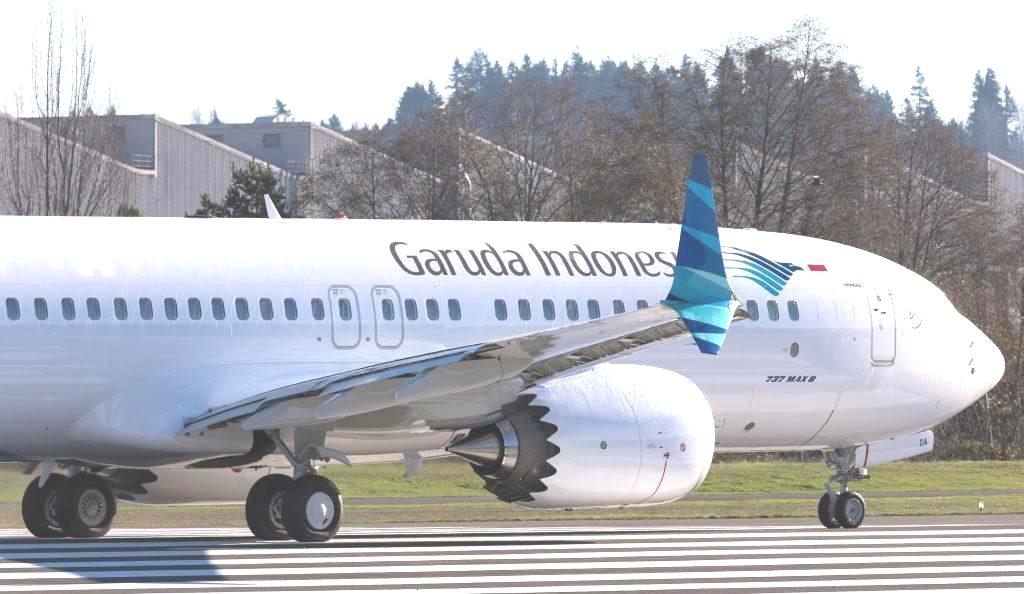
Gobierno Italia nacionaliza Alitalia

AW | 2020 10 11 12:11 | AIRLINES / GOVERNMENT

Alitalia será nacionalizada por € 3.000 millones de euros

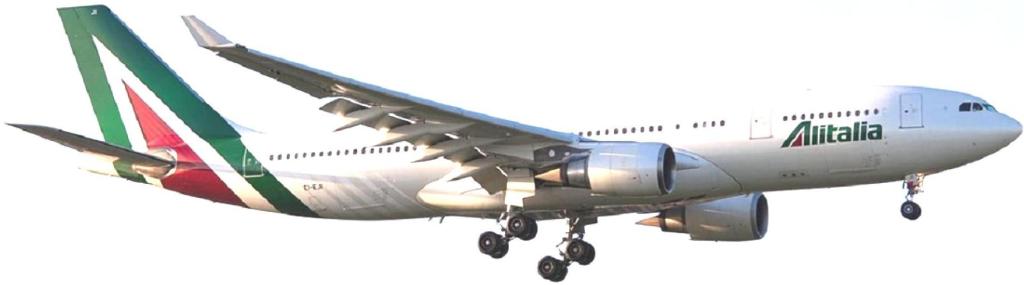
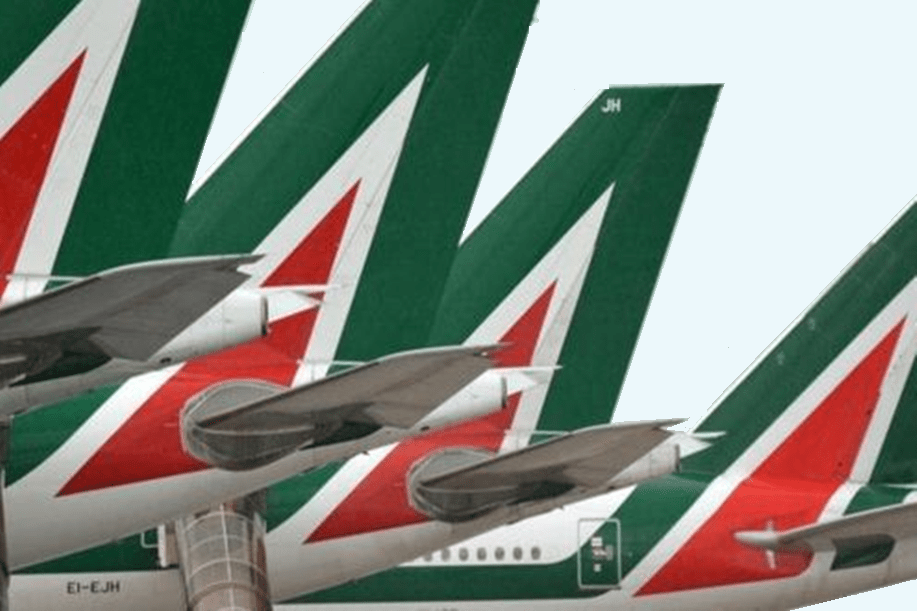
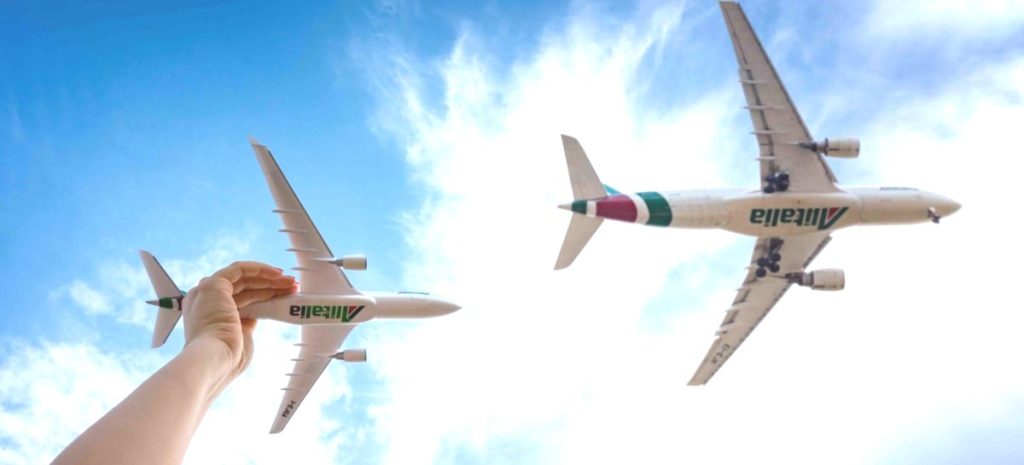
El Gobierno de Italia ha anunciado un rescate financiero para su aerolínea Alitalia, que ha estado en administración durante los últimos tres años, con una inyección de capital de € 3.000 millones de Euros, ha comunicado la cartera del Ministerio de Economía. El Viernes 09/10 el Gobierno nacional ha firmado un decreto para nacionalizar la aerolínea italiana con el propósito y compromiso de dar continuidad a una compañía referente de la República de Italia. “Los Ministros de Economía, Industria, Transportes y Trabajo firmaron este Viernes el decreto fundacional de la nueva empresa que surge de 11 años de difícil gestión privada y tres intentos fallidos de reestructuración, que se ven lastrados por los problemas agravados por la crisis del Coronavirus. El primer desafío es el nuevo plan industrial para la pandemia que se presentará en un plazo de 30 días al Parlamento, que luego deberá evaluar el decreto. El despegue real de la nueva Alitalia con Francesco Caio, Presidente y Fabio Lazzerini, Director Ejecutivo, está programado para principios de 2021”, expresaba el anuncio del Gobierno.

Alitalia ha sido una aerolínea con problemas con fases alternas durante casi treinta años. La última situación difícil de Alitalia había comenzado ya en Noviembre 2019, cuando se retiraron las últimas ofertas por Expresiones de Interés (EoI) para adquisición de la empresa y el Gobierno se enfrentó a la difícil decisión de hacer que la empresa fracasara o implementar una nueva intervención pública, la tercera en poco más de diez años.

Alitalia Ita

La compañía aérea italiana continuaba volando, aunque técnicamente estaba bajo administración para la reorganización. La aerolínea ha tenido que despedir a unos 7.000 trabajadores y, actualmente, tiene una capacidad y un número de vuelos muy limitados. Tras la nacionalización de la línea aéreas, es rebautizada como Alitalia Ita, la empresa sucesora de Alitalia, se establecerá con el 100% de propiedad del Ministerio de Economía italiano, como parte de los anuncios de un viraje en busca de una reestructuración completa para la aerolínea.

El plan actual para la nueva Alitalia Ita es permanecer como una aerolínea de servicio completo, dentro de las aerolíneas clásicas, descartando y rechazando un plan como aerolínea de presupuesto. “Esta nueva aerolínea está tomando forma en un momento en que la demanda de viajes aéreos es baja y hay una sobreabundancia de capacidad en todo el mundo. Parece que no importa en qué dirección vaya esta nueva aerolínea italiana; tendrá las probabilidades en contra”, comenta un analista del sector.

Italian Government nationalizes Alitalia

Alitalia will be nationalized for € 3,000 million euros

The Government of Italy has announced a financial rescue for its airline Alitalia, which has been in administration for the last three years, with a capital injection of € 3 billion, the Ministry of Economy has announced. On Friday 10/09 the national government has signed a decree to nationalize the Italian airline with the purpose and commitment of giving continuity to a leading company in the Republic of Italy. “The Ministers of Economy, Industry, Transport and Labor signed this Friday the founding decree of the new company that arises from 11 years of difficult private management and three unsuccessful attempts at restructuring, which are hampered by problems aggravated by the Coronavirus crisis . The first challenge is the new industrial plan for the pandemic that will be presented within 30 days to Parliament, which will then have to evaluate the decree. The real take-off of the new Alitalia with Francesco Caio, President and Fabio Lazzerini, Executive Director, is scheduled for early 2021”, stated the Government’s announcement.

Alitalia has been a troubled airline with alternate phases for almost thirty years. The last difficult situation for Alitalia had already started in November 2019, when the last offers for Expressions of Interest (EoI) to acquire the company were withdrawn and the Government faced the difficult decision to make the company fail or implement a new one. public intervention, the third in little more than ten years.

Alitalia Ita

The Italian airline was continuing to fly, although technically it was under management for the reorganization. The airline has had to lay off some 7,000 workers and currently has a very limited capacity and number of flights. Following the nationalization of the airline, it is renamed Alitalia Ita, the successor company to Alitalia, it will be established with 100% ownership by the Italian Ministry of Economy, as part of the announcements of a turnaround in search of a complete restructuring for the airline.

The current plan for the new Alitalia Ita is to remain a full service airline, within the classic airlines, discarding and rejecting a plan as a budget airline. “This new airline is taking shape at a time when demand for air travel is low and there is an overabundance of capacity around the world. It seems that it doesn’t matter which way this new Italian airline goes; it will have the odds against it”, comments an industry analyst.

Il Governo italiano nazionalizza Alitalia

Alitalia sarà nazionalizzata per € 3.000 milioni di Euro

Il Governo di Italia ha annunciato un salvataggio finanziario per la sua compagnia aerea Alitalia, in amministrazione da tre anni, con un apporto di capitale di € 3 miliardi di Euro, ha annunciato il ministero dell’Economia. Venerdì 10/09 il Governo nazionale ha firmato un decreto di nazionalizzazione della compagnia aerea italiana con lo scopo e l’impegno di dare continuità ad una compagnia leader nella Repubblica Italiana. “I Ministri dell’Economia, Industria, Trasporti e Lavoro hanno firmato questo venerdì il decreto istitutivo della nuova società che nasce da 11 anni di difficile gestione privata e tre tentativi falliti di ristrutturazione, ostacolati dai problemi aggravati dalla crisi del Coronavirus . La prima sfida è il nuovo piano industriale per la pandemia che verrà presentato entro 30 giorni al Parlamento, che poi dovrà valutare il decreto. Il vero decollo della nuova Alitalia con Francesco Caio, Presidente e Fabio Lazzerini, Direttore Esecutivo, è previsto per l’inizio del 2021”, si legge nell’annuncio del Governo.

Alitalia è da quasi trent’anni una compagnia aerea in difficoltà con fasi alterne. L’ultima difficile situazione di Alitalia era già iniziata a novembre 2019, quando le ultime offerte di Manifestazioni di interesse (EoI) per l’acquisizione della società sono state ritirate e il Governo ha dovuto affrontare la difficile decisione di far fallire la società o di implementarne una nuova. intervento pubblico, il terzo in poco più di dieci anni.

Alitalia Ita

La compagnia aerea italiana continuava a volare, anche se tecnicamente era sotto gestione per la riorganizzazione. La compagnia aerea ha dovuto licenziare circa 7.000 lavoratori e attualmente ha una capacità e un numero di voli molto limitati. A seguito della nazionalizzazione della compagnia aerea, ribattezzata Alitalia Ita, società successore di Alitalia, verrà costituita con il 100% di proprietà del Ministero dell’Economia italiano, nell’ambito degli annunci di un turnaround alla ricerca di una completa ristrutturazione del compagnia aerea.

Il piano attuale per la nuova Alitalia Ita è di rimanere una compagnia aerea a servizio completo, all’interno delle compagnie aeree classiche, scartando e rifiutando un piano come compagnia aerea a basso costo. “Questa nuova compagnia aerea sta prendendo forma in un momento in cui la domanda di viaggi aerei è bassa e c’è una sovrabbondanza di capacità in tutto il mondo. Sembra che non importi in che direzione vada questa nuova compagnia aerea italiana; avrà le probabilità contrarie”, commenta un analista del settore.


PUBLISHER: Airgways.com
DBk: Governo.it / Alitalia.com / Airgways.com / Lagenziadiviaggi.it / Europress.es
AW-POST: 202010111211AR

A\W   A I R G W A Y S ®
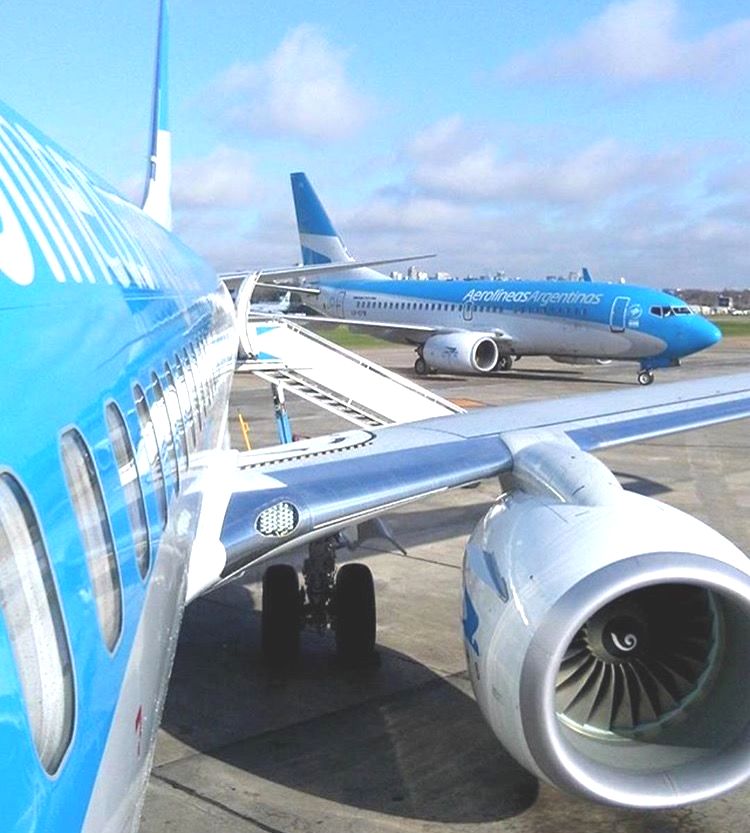
Asamblea General Aerolíneas-Austral

AW | 2020 10 10 21:11 | AIRLINES / GOVERNMENT

Asamblea General 20/10 para fusión Aerolíneas-Austral

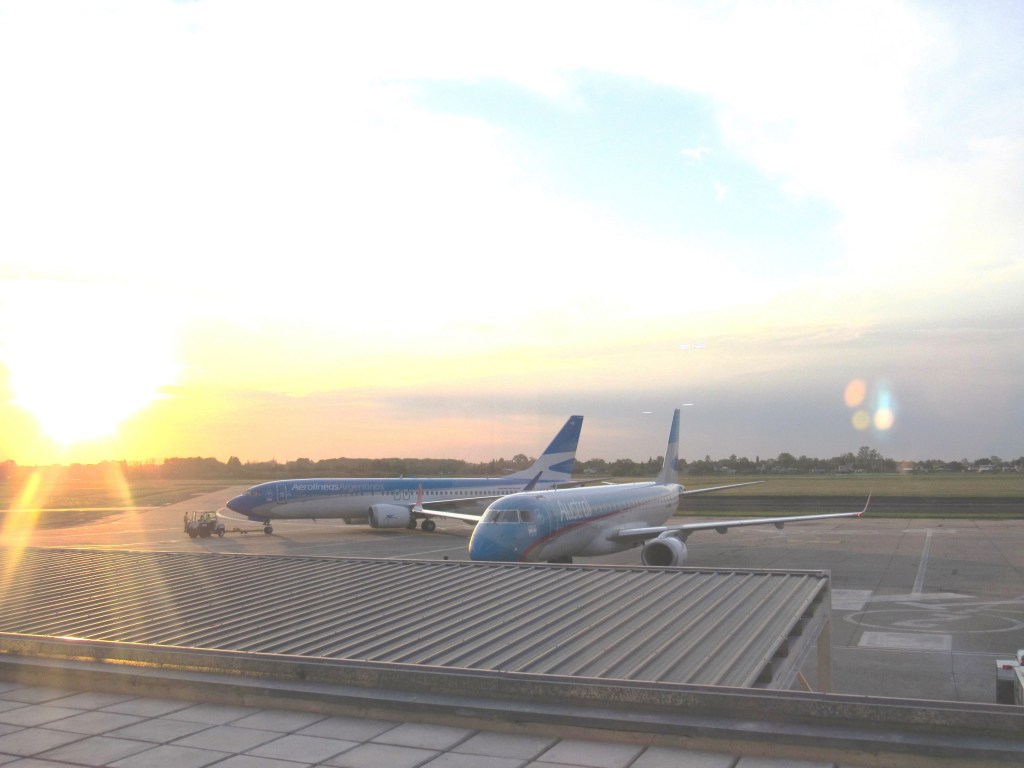
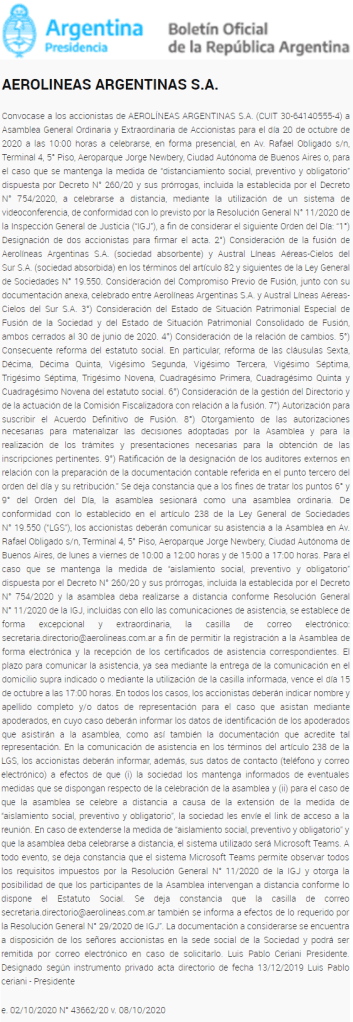
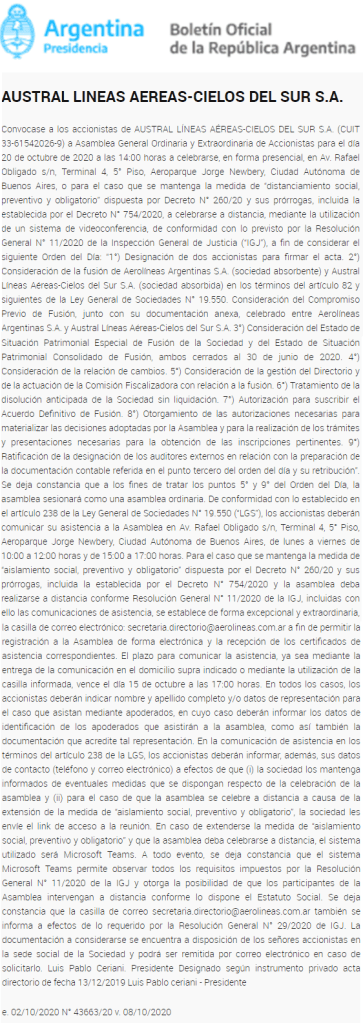
El Gobierno de la República Argentina ha publicado este 08/10 en el Boletín oficial, la convocatoria para la Reunión de Accionistas de las compañías Aerolíneas Argentinas y Austral Líneas Aéreas en Asamblea General Ordinaria y Extraordinaria de Accionistas para el día 20 de Octubre de 2020 a las 10:00 horas para tratamiento de la sinergia de las empresas aéreas.

El paso previo a la materialización de la fusión ha sido el acuerdo alcanzado con los pilotos y gremios de Aerolíneas (APLA) y Austral (UALA), como un avance para concretar la unión integral de ambas compañías. El Sindicato de Técnicos APTA continúa pendiente para acordar el proceso de sinergia.

Proceso integración

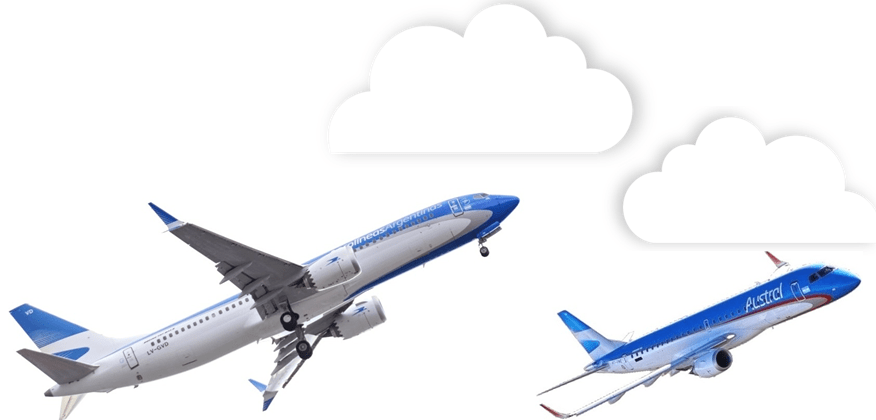
El Gobierno de Argentina ha establecido definitivamente, después de muchos años de idas y vueltas, la integración de las compañías del Grupo Aerolíneas en una sola línea aérea. El proceso de fusión que está siendo consensuado por las diferentes partes y organismos, es más un proceso de absorción por parte de Aerolíneas Argentinas de Austral Líneas Aéreas.

La Asamblea General de Accionistas será presencial en la sede de Aerolíneas Argentinas ubicada en la Terminal 4, piso quinto del Aeropuerto Jorge Newbery, o caso contrario, a distancia de continuar la vigencia del decreto que impone el Aislamiento Social, Preventivo y Obligatorio (ASPO), se efectuará vía web. El Artículo 82 enumera la disponibilidad de la Junta de Accionistas para el tratamiento del proceso de integración Aerolíneas/Austral, siguientes temas de la Ley General de Sociedades N° 19.550 y la situación patrimonial cerrada al 30 de Junio de 2020.

Tras las aprobaciones de la reunión de la Convocatoria de Accionistas que se celebrará el 20/10, quedará efectuada la integración total de ambas compañías en una sola entidad bajo el nombre de Aerolíneas Argentinas, culminando así con la marca Austral Líneas Aéreas y de la legendaria historia que ha aportado esta singular aerolínea de la República Argentina.

Aerolíneas-Austral General Assembly

10/20 General Assembly for Aerolíneas-Austral merger

The Government of the Argentine Republic has published this 08/10 in the Official Gazette, the call for the Meeting of Shareholders of the companies Aerolíneas Argentinas and Austral Líneas Aéreas in Ordinary and Extraordinary General Assembly of Shareholders for October 20, 2020 at 10:00 am for treatment of the synergy of the airlines.

The step prior to the materialization of the merger has been the agreement reached with the pilots and unions of Aerolíneas (APLA) and Austral (UALA), as a step forward to achieve the comprehensive union of both companies. The APTA Technicians Union is still pending to agree on the synergy process.

Integration process

The Government of Argentina has definitively established, after many years of back and forth, the integration of the Aerolíneas Group companies into a single airline. The merger process, which is being agreed upon by the different parties and organizations, is more a process of absorption by Aerolíneas Argentinas de Austral Líneas Aéreas.

The General Assembly of Shareholders will be in person at the Aerolíneas Argentinas headquarters located in Terminal 4, fifth floor of the Jorge Newbery Airport, or otherwise, at a distance from continuing the validity of the decree that imposes Social, Preventive and Mandatory Isolation (ASPO), will be done via the web. Article 82 lists the availability of the Shareholders’ Meeting for the treatment of the Aerolíneas/Austral integration process, following topics of the General Law of Companies No. 19,550 and the closed equity situation as of June 30, 2020.

Following the approvals of the Shareholders’ Call meeting to be held on 10/20, the total integration of both companies into a single entity will be approved under the name of Aerolíneas Argentinas, thus culminating with the Austral Líneas Aéreas brand and the legendary history that this unique airline of the Argentine Republic has contributed.


PUBLISHER: Airgways.com
DBk: Boletinoficial.gob.ar / Aerolineas.com / Airgways.com
AW-POST: 202010102111AR

A\W   A I R G W A Y S ®

Airbus entrega a MEA tercer A321NEO

AW | 2020 10 09 14:30 | AIRLINES

Middle East Airlines recibe tercer A3321NEO

Middle East Airlines (MEA) ha recibido el avión de la Familia Airbus A320 con el número de serie Nº 10.000, con la tercer aeronave A321NEO en unirse a la flota de la aerolínea de la República del Líbano. De pie orgulloso frente al escenario de entrega, el A321NEO, con destino a Middle East Airlines, mostró su elegante librea y la calcomanía de la «Familia de Airbus A320 número 10.000». El avión, registrado T7-ME3, fue capturado volando a su casa en Beirut. A su llegada, el avión se unirá a la flota de Airbus de la aerolínea libanesa.

El MSN 10.000 es el tercer A321NEO que se une a la flota de aeronaves Airbus de la compañía MEA, lo que eleva el tamaño de la flota a 18 unidades. Middle East Airlines recibió su primer avión A321NEO a principios de 2020 y tomará otros seis A321NEO en los próximos meses.

La entrega del avión tuvo lugar en Toulouse en presencia de Mohamad El-Hout, Presidente y Director General de Middle East Airlines. “Nos sentimos honrados de recibir el A321NEO de última generación con su número de serie distintivo 10.000 coincidiendo con el 75 aniversario de Middle East Airlines y especialmente después de recibir el avión MSN 5.000 del constructor europeo en 2012. Desde que adquirimos por primera vez un avión de la familia A320 en 2003, no solo se han beneficiado de la excelente eficiencia operativa de la aeronave, sino que también fueron la primera aerolínea en introducir el producto de cabina de fuselaje ancho en una aeronave de pasillo único, lo que se ha convertido en una tendencia en la industria de las aerolíneas posteriormente. Desafortunadamente, debido a la situación actual en el Líbano, esta vez no podremos celebrar la entrega de MSN 10.000 en Beirut, como hicimos con MSN 5.000, pero estoy seguro de que en estas circunstancias desafiantes, es un rayo de luz”, dijo el Presidente y Director General de MEA, Mohamad El Hout.

Desde el consorcio europeo Airbus Group se mostraron animosos por continuar trabajando con la aerolínea libanesa. “Airbus se enorgullece de continuar construyendo su asociación de larga data con Middle East Airlines, que ya opera una de las flotas de Airbus más modernas del mundo. Como operador totalmente de Airbus, MEA se beneficia de la singularidad de la flota de Airbus entre las familias de aviones y ahora está agregando el tercer A321NEO altamente eficiente en combustible para intensificar el juego. Admiro la agilidad y la resistencia de esta empresa en este entorno complejo. Entregar MSN10,000 es un hito que demuestra el éxito de la Familia A320 y agradecemos a nuestros clientes de todo el mundo por su confianza en nuestros productos”, dijo Christian Scherer, Director Comercial de Airbus.

Middle East Airlines adquirió MSN 5.000 en 2012, después de 23 años de producción de la familia Airbus A320. Los siguientes 5.000 aviones tomaron solo otros ocho años para marcar este importante hito del número de serie MSN 10.000, nuevamente con la aerolínea MEA. Este logro es un testimonio del avance industrial y las capacidades de Airbus y la popularidad de la última versión de la familia A320NEO (New Engine Option), alcanzando niveles de popularidad por la eficiencia enel consumo de combustible. El A321NEO de la aerolínea está propulsado por dos motores turbofan Pratt & Whitney PurePower PW1100G-JM y está configurado en un cómodo diseño de dos clases con 28 asientos en Business y 132 asientos en Economy Class.

Airbus delivers third A321NEO to MEA

Middle East Airlines receives third A3321NEO

Middle East Airlines (MEA) has taken delivery of Airbus’ A320 Family aircraft with serial number No. 10,000, with the third A321NEO aircraft to join the Republic of Lebanon airline’s fleet. Standing proud in front of the delivery stage, the A321NEO, bound for Middle East Airlines, displayed its elegant livery and the «10,000th Airbus A320 Family» decal. The plane, registered T7-ME3, was captured flying to its home in Beirut. Upon arrival, the aircraft will join the Airbus fleet of the Lebanese airline.

The MSN 10,000 is the third A321NEO to join the MEA company’s Airbus aircraft fleet, bringing the fleet size to 18 units. Middle East Airlines received its first A321NEO aircraft in early 2020 and will take another six A321NEOs in the coming months.

The delivery of the aircraft took place in Toulouse in the presence of Mohamad El-Hout, President and CEO of Middle East Airlines. “We are honored to receive the next generation A321NEO with its distinctive serial number 10,000 coinciding with the 75th anniversary of Middle East Airlines and especially after receiving the MSN 5,000 aircraft from the European manufacturer in 2012. Since we first purchased an aircraft of the A320 Family in 2003, they have not only benefited from the aircraft’s excellent operating efficiency, but were also the first airline to introduce the wide-body product in a single-aisle aircraft, which has become a trend in the airline industry subsequently. Unfortunately, due to the current situation in Lebanon, this time we will not be able to celebrate the delivery of MSN 10,000 in Beirut, as we did with MSN 5,000, but I am sure that in these challenging circumstances, it is a ray of light”, said the President and Managing Director of MEA, Mohamad El Hout.

From the European consortium Airbus Group they were encouraged for continuing to work with the Lebanese airline. “Airbus is proud to continue building its long-standing partnership with Middle East Airlines, which already operates one of the most modern Airbus fleets in the world. As a fully Airbus operator, MEA benefits from the uniqueness of the Airbus fleet among aircraft families and is now adding the third highly fuel efficient A321NEO to step up the game. I admire the agility and resilience of this company in this complex environment. Delivering MSN10,000 is a milestone that demonstrates the success of the A320 Family and we thank our customers around the world for their confidence in our products”, said Christian Scherer, Airbus Chief Commercial Officer.

Middle East Airlines acquired MSN 5,000 in 2012, after 23 years of production of the Airbus A320 family. The next 5,000 aircraft took just another eight years to mark this important MSN 10,000 serial number milestone, again with airline MEA. This achievement is a testament to Airbus’ industrial advancement and capabilities and the popularity of the latest version of the A320NEO Family (New Engine Option), reaching popularity levels for fuel efficiency. The airline’s A321NEO is powered by two Pratt & Whitney PurePower PW1100G-JM turbofan engines and is configured in a comfortable two-class layout with 28 seats in Business and 132 seats in Economy Class.

إيرباص تسلم ثالث طائرة من طراز A321NEO لمنطقة الشرق الأوسط وأفريقيا

طيران الشرق الأوسط تستقبل ثالث طائرة A3321NEO

تسلمت طيران الشرق الأوسط (MEA) طائرة العائلة طائرة إيرباص A320 برقم تسلسلي 10،000 ، مع ثالث طائرة A321NEO تنضم إلى أسطول شركة الخطوط الجوية اللبنانية. وقفت الطائرة A321NEO المتوجهة إلى طيران الشرق الأوسط بفخر أمام مرحلة التسليم ، حيث عرضت لونها الأنيق وشعار «عائلة إيرباص A320 رقم 10000». وخطفت الطائرة المسجلة T7-ME3 وهي متجهة إلى منزلها في بيروت. عند الوصول ، ستنضم الطائرة إلى أسطول إيرباص التابع لشركة الطيران اللبنانية.

MSN 10،000 هي ثالث طائرة من طراز A321NEO تنضم إلى أسطول طائرات إيرباص التابع لشركة الشرق الأوسط وأفريقيا ، وبذلك يصل حجم الأسطول إلى 18 وحدة. تسلمت طيران الشرق الأوسط أولى طائراتها من طراز A321NEO في أوائل عام 2020 وستستقبل ست طائرات أخرى من طراز A321NEOs في الأشهر المقبلة.

تم تسليم الطائرة في مدينة تولوز بحضور محمد الحوت ، الرئيس والمدير التنفيذي لشركة طيران الشرق الأوسط. “يشرفنا أن نحصل على الجيل القادم A321NEO برقمه التسلسلي المميز 10،000 بالتزامن مع الذكرى 75 لشركة طيران الشرق الأوسط وخاصة بعد استلام طائرة MSN 5000 من الشركة المصنعة الأوروبية في عام 2012. منذ أن اشترينا طائرة لأول مرة من عائلة A320 في عام 2003 ، لم يستفدوا فقط من الكفاءة التشغيلية الممتازة للطائرة ، بل كانوا أيضًا أول شركة طيران تقدم منتج الجسم العريض في طائرة ذات ممر واحد ، والتي أصبحت اتجاه في صناعة الطيران لاحقًا. لسوء الحظ ، نظرًا للوضع الحالي في لبنان ، لن نتمكن هذه المرة من الاحتفال بتسليم MSN 10،000 في بيروت ، كما فعلنا مع MSN 5،000 ، لكنني متأكد من أنه في هذه الظروف الصعبة ، يكون هذا شعاعًا من الضوء «، قال الرئيس والعضو المنتدب لشركة طيران الشرق الأوسط محمد الحوت.

من مجموعة ايرباص الكونسورتيوم الأوروبي تم تشجيعهم لمواصلة العمل مع شركة الطيران اللبنانية. «تفخر شركة إيرباص بمواصلة بناء شراكتها الطويلة الأمد مع شركة طيران الشرق الأوسط ، التي تشغل بالفعل أحد أحدث أساطيل طائرات إيرباص في العالم. وباعتبارها مشغل إيرباص بالكامل ، تستفيد شركة طيران الشرق الأوسط من تفرد أسطول طائرات إيرباص بين عائلات الطائرات ، وهي الآن تضيف ثالث طائرة A321NEO ذات كفاءة عالية في استهلاك الوقود لتكثيف اللعبة. أنا معجب بخفة الحركة ومرونة هذه الشركة في هذه البيئة المعقدة. قال كريستيان شيرير ، الرئيس التجاري للشؤون التجارية في إيرباص: «إن تسليم MSN10،000 هو علامة فارقة توضح نجاح عائلة A320 ، ونحن نشكر عملائنا في جميع أنحاء العالم على ثقتهم في منتجاتنا».

استحوذت شركة طيران الشرق الأوسط على MSN 5000 في عام 2012 ، بعد 23 عامًا من إنتاج عائلة إيرباص A320. استغرقت الطائرات الخمسة آلاف التالية ثماني سنوات أخرى فقط للاحتفال بهذا الرقم التسلسلي المهم MSN 10،000 ، مرة أخرى مع شركة طيران الشرق الأوسط وإفريقيا. هذا الإنجاز هو شهادة على التقدم الصناعي لشركة إيرباص وقدراتها وشعبية أحدث إصدار من عائلة A320NEO (خيار المحرك الجديد) ، والتي وصلت إلى مستويات الشعبية فيما يتعلق بكفاءة استهلاك الوقود. يتم تشغيل طائرة الخطوط الجوية A321NEO بمحركين توربينيين من طراز Pratt & Whitney PurePower PW1100G-JM ومجهز بتصميم مريح من درجتين مع 28 مقعدًا في درجة رجال الأعمال و 132 مقعدًا في الدرجة السياحية.


PUBLISHER: Airgways.com
DBk: Mea.com.lb / Airbus.com / Airgways.com
AW-POST: 202010091430AR

A\W   A I R G W A Y S ®