Ampliación de Ezeiza y Aeroparque
AW-7008566.png

AW | 2017 12 05 19:37 | AIRPORTS

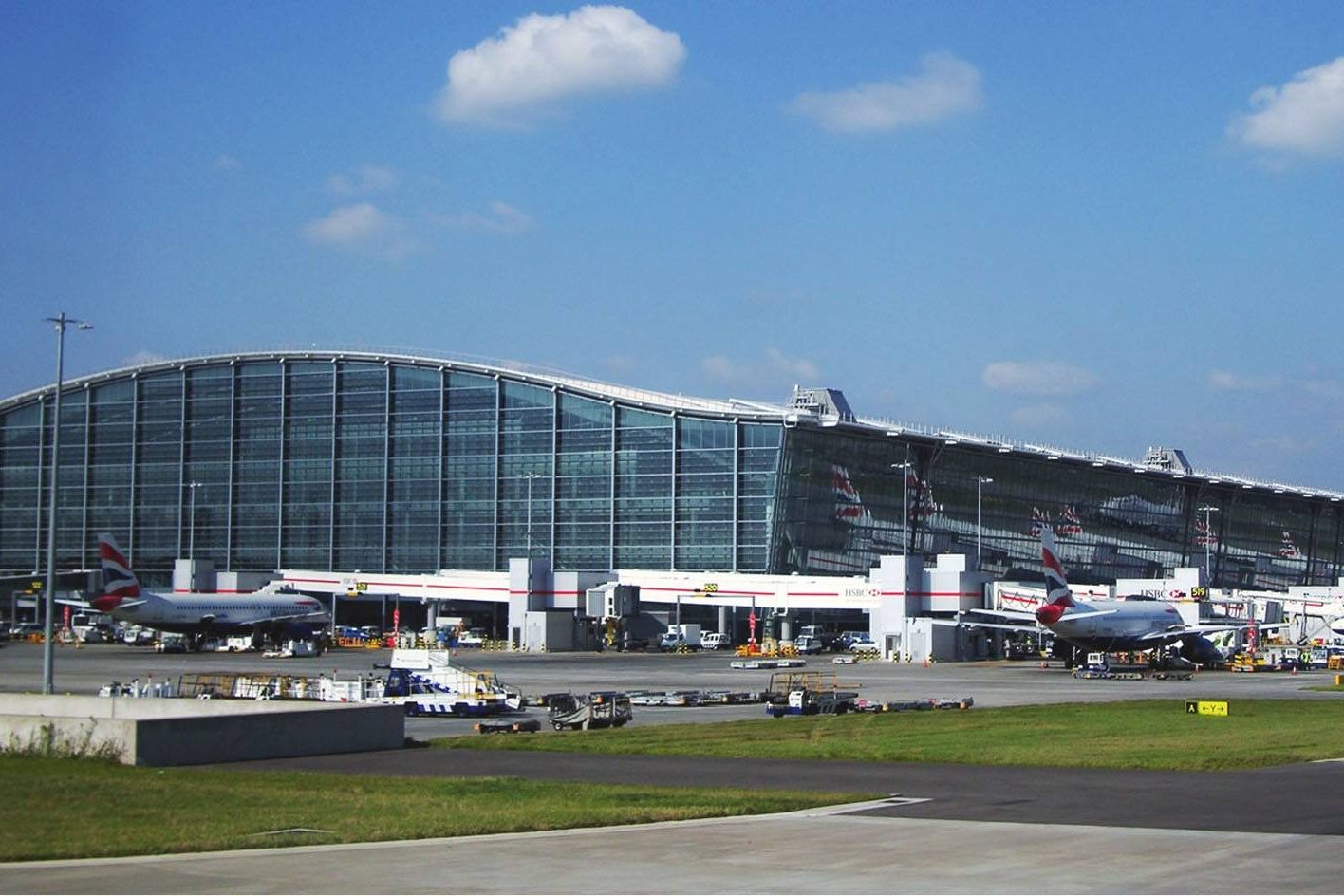
El Gobierno de Argentina proyecta la ampliación de los aeropuertos Jorge Newbery y Ezeiza

El la etapa de la «Revolución de los Aviones» se abrirá la licitación pública para las terminales aéreas de Aeroparque y Ezeiza. Mientras se espera un nuevo llamado a audiencia pública para que más compañías se sumen a lo que desde el Ministerio de Transporte denominaron la revolución de los aviones, en paralelo se sigue adelante con un conjunto de licitaciones que buscan ampliar la capacidad de las terminales aéreas de Ezeiza y Aeroparque.

Aeropuerto Internacional Ezeiza

Las obras más adelantadas están en el Aeropuerto Internacional de Ezeiza, donde ya se finalizó la construcción de la pista secundaria y se habilitó una nueva conexión vial y peatonal entre las terminales. Están en marcha varias licitaciones para seguir trabajando en la terminal. Desde el Ministerio de Transporte, las próximas licitaciones serán para realizar el Anillo de Balizamiento pista (AR$ 58 millones), la Ampliación CCTV Patio de valijas terminal A y C (AR$ 4 millones), el Balizamiento borde rodaje (AR$ 24 millones), la remodelación del edificio de Aduana TCA (AR$ 34 millones), la rehabilitación de la pista principal (AR$ 200 millones), la readecuación de balizamiento de cabecera 29 (AR$ 12 millones) y por último, nuevos estacionamientos vehiculares y espacios exteriores por $ 358.

Se demolió la vieja Terminal B para la construcción de una conexión que unifica el sistema vial del aeropuerto con una nueva calle principal que conecta a todas las terminales para que la circulación de autos y peatones. La demolición servirá también para la renovación de la terminal de pasajeros, cuya obra busca aumentar la capacidad, mejorar la funcionalidad.

Aeropuerto Jorge Newbery

El Aeropuerto Jorge Newbery también tendrá obras que modoficarán de manera más radical el Aeroparque de la Ciudad de Buenos Aires. Esta terminal aérea, que es desde donde planean operar varias de las nuevas compañías a las que el Gobierno aprobó sus rutas y también querrán hacerlo las próximas que se inscriban, se encuentra trabajando al límite.

El proyecto estima ganarle al río unas 19 hectáreas que no se utilizarán solamente para la estación sino que anexarán espacio verde para la Ciudad. Ya está en marcha una licitación para ganar al río unas nueve hectáreas.

La primera decisión de la administración nacional sería la de mudar a todas las compañías de taxis aéreos desde la terminal situada en la costanera norte al Aeropuerto de El Palomar, donde Flybondi, la aerolínea «low cost» ya tiene asignadas un centenar de rutas.

La segunda es que, según los dichos del ministro Guillermo Dietrich, Aeroparque tiene saturación de vuelos y falta de espacio: en horas pico, hay entre 26 y 28 despegues o aterrizajes por hora.

El Gobierno argentino busca ganar terreno al Río de la Plata, incorporando nueve hectáreas. El problema que tenían que sortear era que las vías del ferrocarril y la autopista Lugones actúan como una especia de cordillera, por lo que la única opción para crecer es hacia el Río de la Plata. Así es que según el proyecto que tiene el Ministerio y del que ya se empezó a licitar, esas hectáreas se las ganarán al río.

Para eso tiene una licitación en curso que implican demoler la terminal C, obra estimada en AR$ 41 millones y, la más importante, ganarle nueve hectáreas a la margen del río para relleno costero, parquización y cocheras por un valor de obra de AR$ 1941 millones de pesos.

La idea de los planificadores de Nación, Ciudad y del concesionario es que la nueva traza para los vehículos y el transporte público tenga mejores comodidades y servicios. Por caso, se piensa en otro sistema para taxis, monitoreado y moderno, para eliminar las incomodidades de las veredas atestadas de pasajeros en horas pico y de autos de alquiler, vehículos particulares y combis en verdaderos Tetris vehiculares. La licitación del Organismo Regulador del Sistema Nacional de Aeropuertos (Orsna) y de Aeropuertos Argentina 2000 ya está en marcha y se reciben ofertas hasta el 8 de enero próximo. El pliego tiene un presupuesto oficial de AR$ 1941 millones de pesos y según surge de las cláusulas, deberá iniciar en 3 de abril del año que viene.  AIRWAYS® AW-Icon TXT

Expansion of Ezeiza Airports and Aeroparque

The Government of Argentina plans the expansion of the Jorge Newbery and Ezeiza airports

The stage of the «Aircraft Revolution» will open the public tender for the Aeroparque and Ezeiza air terminals. While awaiting a new public hearing call for more companies to join what the Ministry of Transport called the aircraft revolution, in parallel, a set of tenders that seek to expand the capacity of air terminals in Ezeiza and Aeroparque.

Ezeiza International Airport

The most advanced works are at the Ezeiza International Airport, where the construction of the secondary track has been completed and a new road and pedestrian connection between the terminals has been enabled. Several tenders are underway to continue working in the terminal. From the Ministry of Transport, the next bids will be to carry out the Ringing Beacon track (AR$ 58 million), the CCTV Patio Enlargement terminal A and C (AR$ 4 million), the Beacon edge filming (AR$ 24 million), the remodeling of the TCA Customs building (AR$ 34 million), the rehabilitation of the main runway (AR$ 200 million), the refurbishment of the beacon of header 29 (AR$ 12 million) and finally, new parking lots and outdoor spaces for AR$ 358.

The old Terminal B was demolished for the construction of a connection that unifies the road system of the airport with a new main street that connects all terminals for the circulation of cars and pedestrians. The demolition will also serve for the renovation of the passenger terminal, whose work seeks to increase capacity, improve functionality.

Jorge Newbery Airport

The Jorge Newbery Airport will also have works that will modify more radically the Aeroparque of the City of Buenos Aires. This air terminal, which is where they plan to operate several of the new companies to which the Government approved their routes and will also want to do the next ones that register, is working to the limit.

Así será el nuevo Aeroparque

MODIFICATION OF JORGE NEWBERY AIRPORT

The project estimates to beat the river some 19 hectares that will not be used only for the season but will annex green space for the City. A tender is underway to win over nine hectares to the river.

The first decision of the national administration would be to move all air taxi companies from the terminal located on the north coast to El Palomar Airport, where Flybondi, the «low cost» airline, has already allocated a hundred routes.

The second is that, according to the words of Minister Guillermo Dietrich, Aeroparque has saturation of flights and lack of space: during peak hours, there are between 26 and 28 takeoffs or landings per hour.

The Argentine Government seeks to gain ground to the Río de la Plata, incorporating nine hectares. The problem they had to overcome was that the railroad tracks and the Lugones highway act as a kind of mountain range, so the only option to grow is to the Río de la Plata. So according to the project that the Ministry has and which has already begun to tender, those hectares will be won by the river.

For that, it has an ongoing tender that involves the demolition of terminal C, an estimated work of AR$ 41 million and, the most important, to win nine hectares on the river margin for coastal landfill, landscaping and garages for a work value of AR$ 1941 million pesos.

The idea of ​​the planners of Nation, City and of the concessionaire is that the new trace for the vehicles and the public transport have better comforts and services. By case, we think of another system for taxis, monitored and modern, to eliminate the discomfort of crowded lanes of pedestrian passengers and rental cars, private vehicles and combis in real vehicles Tetris. The tender of the Regulatory Body of the National Airport System (Orsna) and Aeropuertos Argentina 2000 is already underway and offers are received until January 8. The sheet has an official budget of AR$ 1941 million pesos and as it arises from the clauses, must start on April 3 next year. A \ W


Ξ A I R G W A Y S Ξ
SOURCE:  Airgways.com
DBk: Cronista.com / Lanacion.com.ar /  Airgways.com / Wikimedia.org
AW-POST: 201712051937AR

A\W   A I R G W A Y S ®
Prestigioso premio para la Autoridad Aeroportuaria de Aruba

1200px-Queen_Beatrix_Airport

AW | 2017 12 05 16:41 | AIRPORTS

La Autoridad Aeroportuaria de Aruba (AAA) ha obtenido Premio a Calidad Servicio Aeropuerto Internacional

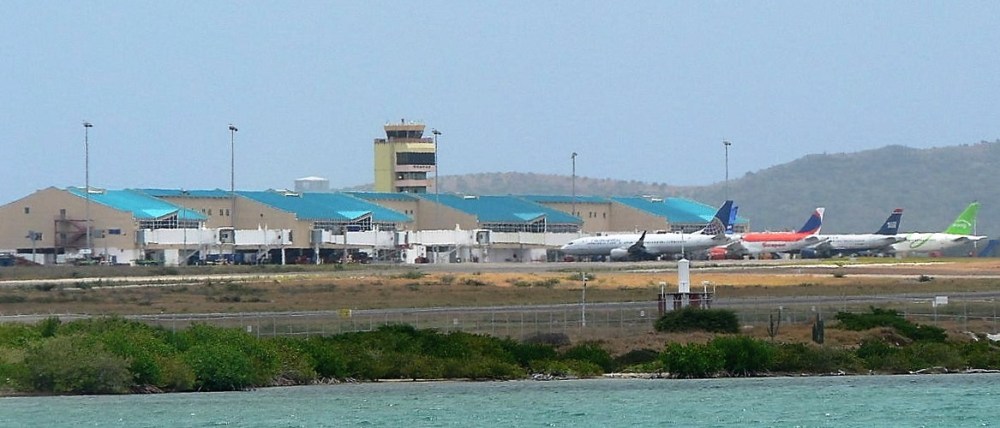
El Aeropuerto de Aruba (TNCA/AUA) obtuvo el tercer lugar como en la categoría «Mejor Aeropuerto Regional» en los Premios a la Calidad del Servicio de Aeropuertos Internacionales. También ganó como el primer premio como «Aeropuerto que ha mostrado la mayor mejoría en las regiones de América Latina y el Caribe».

La Autoridad Aeroportuaria de Aruba (AAA) estuvo en la Isla de Mauricio, en el Océano Índico, durante la ceremonia de los Premios a la Calidad del Servicio de Aeropuertos Internacionales, donde aeropuertos, grandes y pequeños, de todo el mundo compiten por galardones que reconocen el mejor servicio y experiencia para los pasajeros. Estos son determinados por los clientes que califican a estas instalaciones durante un período de un año. Las categorías están organizadas para reconocer los logros de los aeropuertos de diferentes tamaños y en las diferentes regiones.

El aeropuerto de Aruba obtuvo el tercer lugar como Mejor Aeropuerto Regional con más de 2 millones de pasajeros al año, compartiendo con el aeropuerto de Quito. El Aeropuerto de Aruba también ganó el primer premio como el aeropuerto que ha mostrado la mayor mejoría en las regiones de América Latina y el Caribe. “Continuaremos con nuestro objetivo de convertirnos en líderes en servicio al cliente entre los aeropuertos. Este premio no solo es un logro para nosotros como aeropuerto y comunidad de aeropuertos, también es un gran logro para nuestros pasajeros”, dijo Marc Figaroa, Gerente de Comercio de la Autoridad Aeroportuaria de Aruba (AAA) quien aceptó estos premios en la Isla de Mauricio.  AIRWAYS® AW-Icon TXT

Prestigious award for Airport Authority of Aruba

The Airport Authority of Aruba (AAA) has obtained the International Airport Service Quality Award

The Airport of Aruba (TNCA/AUA) obtained the third place as in the category «Best Regional Airport» in the Awards for Service Quality of International Airports. It also won as the first prize as «Airport that has shown the greatest improvement in the Latin American and Caribbean regions».

The Aruba Airport Authority (AAA) was in the Island of Mauritius, in the Indian Ocean, during the ceremony of the International Airport Service Quality Awards, where airports, large and small, from all over the world compete for awards that They recognize the best service and experience for passengers. These are determined by customers who qualify to these facilities during a period of one year. The categories are organized to recognize the achievements of airports of different sizes and in different regions.

The airport of Aruba obtained the third place as Best Regional Airport with more than 2 million passengers per year, sharing with the Quito airport. The Aruba airport also won the first prize as the airport that has shown the greatest improvement in the Latin American and Caribbean regions. «We will continue with our goal of becoming leaders in customer service between airports. This award is not only an achievement for us as an airport and airport community, it is also a great achievement for our passengers», said Marc Figaroa, Trade Manager of the Airport Authority of Aruba (AAA), who accepted these awards on the Island. Mauricio. A \ W


Ξ A I R G W A Y S Ξ
SOURCE:  Airgways.com
DBk: Wikimedia.org / Bondia.com
AW-POST: 201712051641AR

A\W   A I R G W A Y S ®

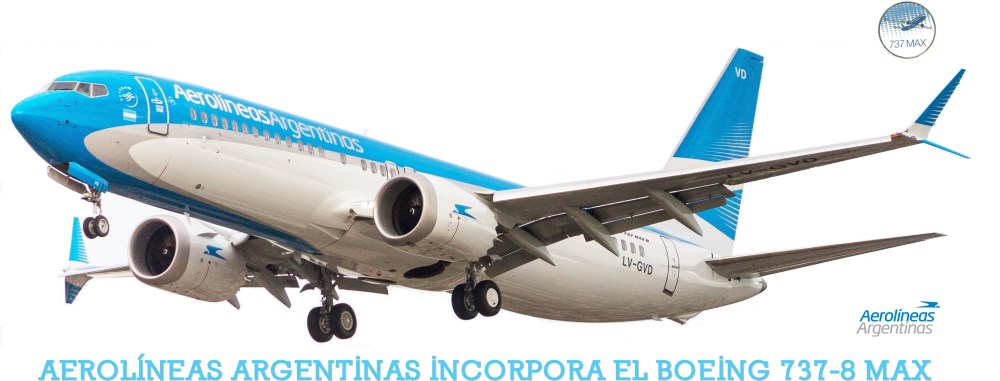
Boeing y Aerolíneas Argentinas celebran entrega del 1er Boeing 737 MAX

AW7700007379

AW | 2017 12 05 16:12 | AIRLINES

Aerolíneas Argentinas es la primera aerolínea latinoamericana en volar el nuevo Boeing 737 MAX

Aerolineas-Argentinas-logo.png

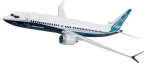
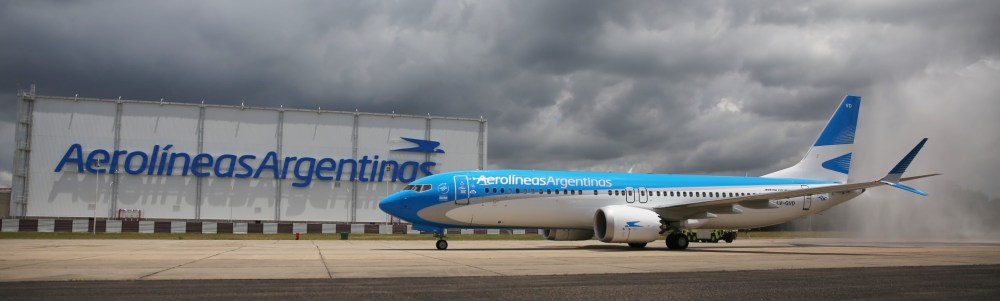
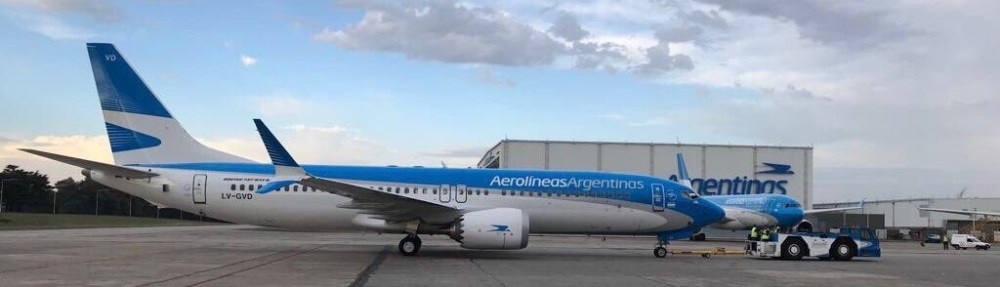
FK,4923,36,737-max-round-pinBoeing y Aerolíneas Argentinas celebraron hoy la entrega y el debut comercial del primer avión Boeing 737-8 MAX para la aerolínea y para América Latina. Aerolíneas tomó la entrega del avión, un MAX 8, a fines de noviembre y voló el primer vuelo comercial una semana después desde Buenos Aires a Mendoza, convirtiéndose en el primero en la región en operar el nuevo y mejorado avión 737.
100_737MAX8

«Agregar el 737 MAX a nuestra flota es otro ejemplo más del crecimiento que estamos visualizando para nuestra compañía», dijo Mario Dell’ Acqua, presidente de Aerolíneas Argentinas. «Nos sentimos orgullosos y responsables de continuar trabajando para ofrecer conectividad mejorada y una experiencia elevada a nuestros pasajeros».

04-12-2017737 (1)IMG_20171124_111529-1024x768

Aerolíneas Argentinas está experimentando un fuerte crecimiento, con un aumento del 15 por ciento en el tráfico de pasajeros en el último año, y un aumento del 22 por ciento desde 2015. Para apoyar ese crecimiento, la aerolínea planea tomar la entrega de 12 aviones MAX y usarlos en vuelos regionales y , más tarde en 2018, al Caribe.

«El 737 MAX 8 es una adición significativa a la flota de Aerolíneas. El MAX permitirá a la aerolínea continuar creciendo y ganar participación en el mercado en el mercado competitivo de pasillo único», dijo Ricardo Cavero, vicepresidente de ventas para América Latina de Boeing. Aviones comerciales. «Es un gran honor que Aerolíneas Argentinas sea la primera aerolínea latinoamericana en volar el 737 MAX, y confiamos en que la eficiencia y confiabilidad del avión ayudarán a cumplir sus objetivos».

El 737 MAX es el avión de mayor venta en la historia de Boeing, superando los 4.000 pedidos en total hasta la fecha. La familia MAX incorpora la última tecnología de los motores CFM International LEAP-1B, aletas de tecnología avanzada y otras mejoras para ofrecer la mayor eficiencia, fiabilidad y comodidad de los pasajeros en el mercado de pasillo único. El Boeing 737-8 MAX de Aerolíneas Argentinas está configurado para 170 pasajeros y vuela 3,515 millas náuticas (6,510 kilómetros).

Sobre Aerolíneas Argentinas

Fundada en 1950, Aerolíneas Argentinas es una de las compañías líderes en Sudamérica. Desde sus bases en el Aeroparque Jorge Newbery y el Aeropuerto Internacional de Ezeiza en Buenos Aires, Aerolíneas Argentinas vuela a 22 destinos internacionales en América y Europa. Junto con Austral Líneas Aéreas, Aerolíneas opera vuelos a 37 destinos en Argentina, volando a más ciudades en el territorio argentino que cualquier otra aerolínea. Aerolíneas proporciona enlaces dinámicos entre Argentina y la región a través de su hub relanzado en Aeroparque Jorge Newbery. El Grupo Aerolíneas está llevando a cabo un ambicioso programa de renovación de la flota, que consiste en Airbus 330, Airbus 340, Boeing 737-700 / 800 y MAX y Embraer 190. Aerolíneas Argentinas es miembro de la alianza global SkyTeam desde septiembre de 2012 . AIRWAYS® AW-Icon TXT

AW7700007377

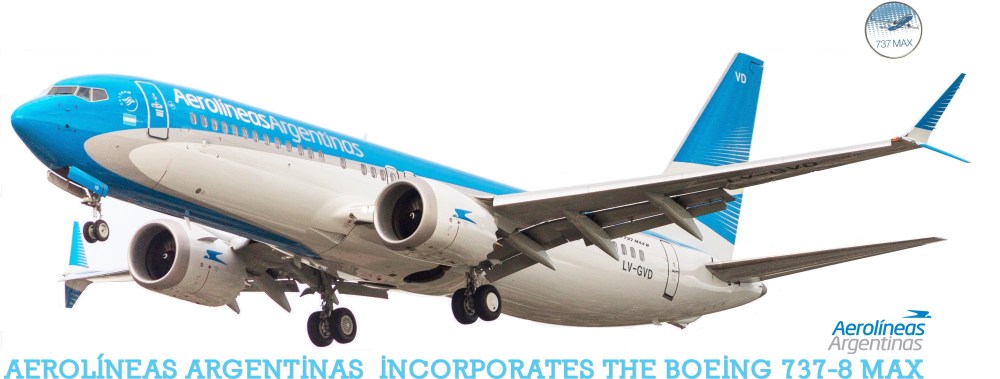
Boeing and Aerolíneas Argentinas celebrate the delivery of the airline’s first Boeing 737 MAX

Aerolineas-Argentinas-logo.pngAerolíneas Argentinas is the first Latin American airline to fly the new Boeing 737 MAX

Boeing and Aerolíneas Argentinas today celebrated the delivery and commercial debut of the first Boeing 737-8 MAX aircraft for the airline and for Latin America. Aerolíneas took delivery of the plane, a MAX 8, at the end of November and flew the first commercial flight a week later from Buenos Aires to Mendoza, becoming the first in the region to operate the new and improved 737 aircraft.

«Adding the 737 MAX to our fleet is another example of the growth we are seeing for our company», said Mario Dell ‘Acqua, president of Aerolíneas Argentinas. «We are proud and responsible to continue working to provide improved connectivity and an elevated experience for our passengers».

Aerolineas Argentinas is experiencing strong growth, with a 15 percent increase in passenger traffic in the last year, and an increase of 22 percent since 2015. To support that growth, the airline plans to take delivery of 12 MAX planes and use them on regional flights and, later in 2018, to the Caribbean.

«The 737 MAX 8 is a significant addition to the airline fleet, and the MAX will allow the airline to continue to grow and gain market share in the competitive single aisle market», said Ricardo Cavero, vice president of sales for Latin America at Boeing. Commercial aircraft. «It is a great honor that Aerolineas Argentinas is the first Latin American airline to fly the 737 MAX, and we are confident that the airplane’s efficiency and reliability will help it meet its objectives».

The 737 MAX is the best-selling airplane in the history of Boeing, surpassing the 4,000 orders in total to date. The MAX family incorporates the latest CFM International LEAP-1B engine technology, fins of advanced technology and other improvements to offer the highest efficiency, reliability and passenger comfort in the single aisle market. The Aerolíneas Argentinas MAX 8 is configured for 170 passengers and flies 3,515 nautical miles (6,510 kilometers).

About Aerolíneas Argentinas

Founded in 1950, Aerolíneas Argentinas is one of the leading companies in South America. From its bases in Aeroparque Jorge Newbery and Ezeiza International Airport in Buenos Aires, Aerolíneas Argentinas flies to 22 international destinations in America and Europe. Together with Austral Líneas Aéreas, Aerolíneas operates flights to 37 destinations in Argentina, flying to more cities in the Argentine territory than any other airline. Aerolíneas provides dynamic links between Argentina and the region through its hub relaunched in Aeroparque Jorge Newbery. The Aerolíneas Group is carrying out an ambitious fleet renewal program, consisting of Airbus 330, Airbus 340, Boeing 737-700 / 800 and MAX and Embraer 190. Aerolíneas Argentinas is a member of the SkyTeam global alliance since September 2012. A \ W


Ξ A I R G W A Y S Ξ
SOURCE:  Airgways.com
DBk: Boeing.com / Baenegocios.com / Airgways.com / E. Catalano / Infobae.com
AW-POST: 201712051612AR

A\W   A I R G W A Y S ®

Aeropuerto Castellón desguaza aviones

1106381_1.jpg

AW | 2017 12 04 18:01 | AIRPORTS

El Aeropuerto de Castellón, España es un nuevo cementerio para el desguace de aeronaves comerciales

El Aeropuerto de Castellón (CDT/LECH), es también conocido como Castellón-Costa Azahar, es un aeropuerto que se ubica en las inmediaciones de Villanueva de Alcolea y Benlloch, en la provincia de Castellón (España).

La nueva directora del Aeropuerto de Castellón, Ivana Guinot, destaca su apuesta por la diversificación de negocio como uno de los puntales de futuro para el desarrollo de la base aérea de Vilanova. Una de esas posibilidades pasa por el desmantelamiento de aviones, haciendo competencia a la Base Aérea de Teruel, después del acuerdo al que ha llegado la empresa gestora de Castellón y la norteamericana KP Aviation, cuya sede social se encuentra en Reno, ciudad del estado de Nevada.

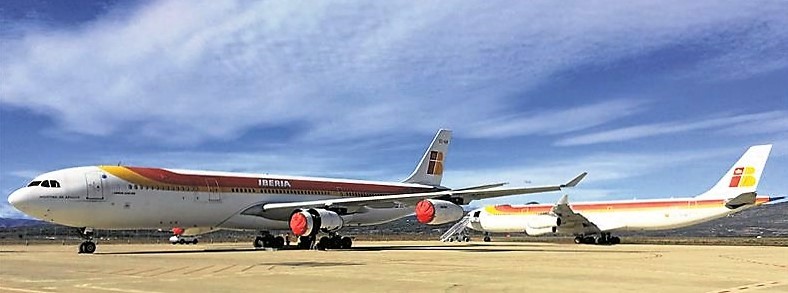
KP Aviation y Edeis-Castellón han negociado un contrato para el desmantelamiento de aeronaves comerciales. La compañía estadounidense había adquirido a Iberia dos Airbus 340-300 utilizados en rutas de larga distancia y necesitaba un aeropuerto para su baja comercial y retiro del Aeropuerto de Madrid-Barajas. El Aeropuerto Castellón ahora podrá albergar a aviones fuera de uso. De esta manera Iberia ha enviado dos A340-300 para que los operarios de la empresa KP Aviation comiencen con el desguace de las aeronaves para el retiro de piezas útiles.

El nuevo negocio del cementerio de aeronaves ha permitido un nuevo servicio de carga en la terminal aérea. El áerea de Carga aun no fue utilizada, por lo que KP Aviation ha alquilado el espacio para almacenar los elementos desamblados de los dos Airbus 340-400 de Iberia. La firma estadounidense que compra y desmonta aviones de líneas aéreas comerciales ha observado en el Aeropuerto Castellón es un buen emplazamiento para su actividad debido a las excelentes condiciones meteorológicas.  AIRWAYS® AW-Icon TXT

Video thumbnail

Castellón Airport scraps planes

The Airport of Castellón, Spain is a new cemetery for the scrapping of commercial aircraft

Castellón Airport (CDT / LECH), also known as Castellón-Costa Azahar, is an airport located in the vicinity of Villanueva de Alcolea and Benlloch, in the province of Castellón (Spain).

The new director of the Castellón Airport, Ivana Guinot, highlights her commitment to business diversification as one of the mainstays of the future for the development of the Vilanova air base. One of those possibilities involves the dismantling of airplanes, making competition to the Air Base of Teruel, after the agreement reached by the management company of Castellón and the North American company KP Aviation, whose head office is located in Reno, a city in the state of Nevada.

KP Aviation and Edeis-Castellón have negotiated a contract for the dismantling of commercial aircraft. The US company had purchased two Airbus 340-300 used in long distance routes from Iberia and needed an airport for its commercial withdrawal and withdrawal from the Madrid-Barajas Airport. The Castellón Airport will now be able to house out of use aircraft. In this way Iberia has sent two A340-300 so that the operators of the company KP Aviation begin with the scrapping of the aircraft for the removal of useful parts.

The new business of the aircraft cemetery has allowed a new cargo service in the air terminal. The Cargo area has not yet been used, so KP Aviation has rented the space to store the disconnected elements of the two Iberia Airbus 340-400. The US firm that buys and dismantles airplanes of commercial airlines has observed at the Castellón Airport is a good location for its activity due to the excellent weather conditions. A \ W


Ξ A I R G W A Y S Ξ
SOURCE:  Airgways.com
DBk: Elmundo.es / A. BÁEZ
AW-POST: 201712041801AR

A\W   A I R G W A Y S ®

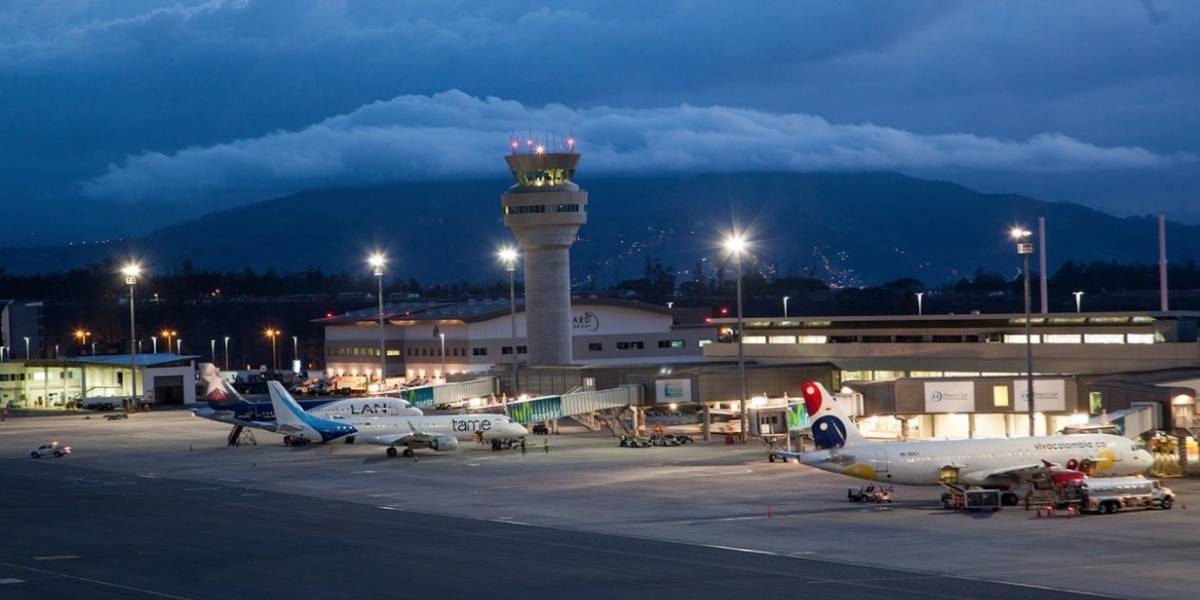
Aeropuerto de Quito con Categoría II

AW | 2017 12 04 16:01 | AIRPORTS

Aeropuerto de Quito alcanzó Categoría II en sistema de aterrizaje instrumental

El Aeropuerto Internacional “Mariscal Sucre” de Quito, Ecuador ha alcanzado la Categoría II en el sistema de aterrizaje instrumental ( ILS, Instrument Landing System) para operar en condiciones meteorológicas adversas.

Este sistema cuenta con 3 categorías de operación. El ILS es el sistema de ayuda a la aproximación y el aterrizaje establecido por la Organización de Aviación Civil Internacional (OACI), que permite que las aeronaves sean guiadas con precisión durante su aproximación a la pista de aterrizaje y, en algunos casos, a lo largo de la misma. Las aproximaciones de Categoría II permiten a los aviones aterrizar con una altura de decisión de 110 pies y una visibilidad de tan solo 350 metros.

La Dirección General de Aviación Civil (DGAC), en coordinación con Corporación Quiport, han implementado desde 2013 ayudas para la navegación aérea con el objetivo de aumentar la disponibilidad operativa del aeropuerto de Quito cuando exista presencia de niebla. Se instalaron equipos y sistemas como el ILS, alcance visual de pista (RVR) e iluminación de centro de pista, detalló.

“Subir de Categoría I a II permite mayor disponibilidad de operaciones de la terminal aérea en condiciones atmosféricas adversas y estar a la altura de grandes aeropuertos a nivel mundial” manifestó el Director de la DGAC, Luis Carrera.

El Presidente de Quiport, Andrew O’Brian, manifestó que la Categoría II es uno de los principales objetivos que se planteó la gestión de Quiport, convirtiéndose así en el primer aeropuerto del país en obtener esta certificación.  AIRWAYS® AW-Icon TXT

Quito Airport with Category II

Quito Airport reached Category II in instrumental landing system

The «Mariscal Sucre« International Airport in Quito, Ecuador has reached Category II in the Instrument Landing System (ILS) to operate in adverse weather conditions.

This system has 3 operation categories. The ILS is the approach and landing aid system established by the International Civil Aviation Organization (ICAO), which allows aircraft to be guided accurately during their approach to the runway and, in some cases, at length of it. Category II approaches allow aircraft to land with a decision height of 110 feet and a visibility of only 350 meters.

The General Directorate of Civil Aviation (DGAC), in coordination with Corporación Quiport, has implemented aids for air navigation since 2013 with the aim of increasing the operational availability of the Quito airport when there is fog. Equipment and systems such as the ILS, track visual range (RVR) and track center lighting were installed, he explained.

«Going up from Category I to II allows greater availability of operations of the air terminal in adverse weather conditions and be at the height of large airports worldwide» said the Director of the DGAC, Luis Carrera.

The President of Quiport, Andrew O’Brian, said that Category II is one of the main objectives of the management of Quiport, thus becoming the first airport in the country to obtain this certification. A \ W


Ξ A I R G W A Y S Ξ
SOURCE:  Airgways.com
DBk: Aeropuertoquito.aero
AW-POST: 201712041601AR

A\W   A I R G W A Y S ®

Avanzan las obras en El Palomar

Avanzan las obras en El Palomar para que las low cost usen ese aeropuerto desde enero

AW | 2017 12 02 18:57 | AIRPORTS

Las low cost emplearán el nuevo aeropuerto para vuelos económicos

El objetivo del Ministerio de Transporte de la Nación es comenzar lo más rápidamente con las operaciones con la primera aerolínea low cost Flybondi en el mes de Enero 2018 desde el Aeropuerto El Palomar.

Extienden la plataforma y acondicionan hangares para que operen las aerolíneas de bajo costo Flybondi y Norwegian Air Argentina. Las obras están tomando curso y empezaron a reacondicionar hangares, ampliar la plataforma y en principio utilizarán parte de las instalaciones que fueron usadas en 2010 cuando tomó algunos vuelos de Aeroparque, que había cerrado por obras de remodelación. Para acceder al nuevo aeropuerto civil se podrá utilizar el tren San Martín y la autopista.

Desde Flybondi empezarán con la venta de tickets en unas semanas y desde hace horas tiene en el país su primer avión, un Boeing 737-800. Arrancará con sus vuelos desde Córdoba, pero espera despegar desde El Palomar para la última semana de Enero 2018.

Las obras en El Palomar

La confirmación oficial llegó la semana pasada cuando el ministro de Transporte, Guillermo Dietrich, lo anunció en la conferencia anual de la Latin American and Caribbean Airlines (ALTA). Pero antes, la Fuerza Aérea recibió un pedido para desafectar ocho hangares, el Casino de Oficiales y hasta la zona de la pileta y los quinchos.Todas estas instalaciones se ubican dentro del Aeropuerto El Palomar, cercanas a las vías del ferrocarril San Martín, donde acondicionan el lugar para los futuros pasajeros. Allí ya volcaron 252 metros cúbicos de hormigón, que equivalen a 350 metros cuadrados de plataforma.

Etapas planificación en El Palomar

Existen tres etapas para el reacondicionamiento de la aeroestación de El Palomar. “Hay tres partes de obra en El Palomar. En enero estará la terminal temporaria, que funcionará más o menos hasta junio. Va a tener una capacidad de hasta tres vuelos en simultáneo, con tres salidas a la misma hora. Vamos a tener un espacio de check-in con cinco mostradores y un salón para 300 personas sentadas”, expresó Julián Cook, CEO de Flybondi.

La segunda fase, a partir de Julio 2018, va a ser en la zona de hangares, que van a transformar la terminal y por la que podrá pasar hasta un millón de pasajeros al año.

Una tercera etapa será la construcción de una nueva terminal frente a la pista actual, que se usará en 2018 y luego quedará para los militares. Ponen como ejemplo el aeropuerto de Mendoza, donde la pista separa el edificio militar del comercial. A diferencia de Aeroparque y Ezeiza, El Palomar que sería identificado con las letras EPA no tendrá mangas, lo que implicará un ahorro para las aerolíneas. «Apenas esté abierto vamos a volar desde Córdoba a El Palomar, y con el segundo avión desde El Palomar a otros destinos. Mientras, desde Córdoba vamos a ir a Mendoza, Bariloche, Iguazú, y también desde Mendoza a Bariloche e Iguazú, que hoy no existen”, aclara Cook.

La operación del lugar estará a cargo de la empresa Aeropuertos Argentina 2000, también concesionaria de Ezeiza y Aeroparque. Esta semana le renovaron los contratos hasta 2028.

Su empresa ya cuenta con 140 empleados. El primer avión partió el martes desde Alaska a Los Angeles, e hizo escala en Costa Rica, perú para llegar a Córdoba, Argentina. Aseguran que a principios de Enero 2018 llegará la segunda nave, y entre fines de Enero y principios de Febrero arribarán dos más.  AIRWAYS® AW-Icon TXT

Avanzan las obras en El Palomar para que las low cost usen ese aeropuerto desde enero

The works in El Palomar advance

The low cost will use the new airport for cheap flights

The objective of the Ministry of Transportation of the Nation is to begin as quickly as possible with the operations with the first low cost airline Flybondi in the month of January 2018 from El Palomar Airport.

They extend the platform and upgrade hangars for the low-cost airlines Flybondi and Norwegian Air Argentina to operate. The works are taking course and began to recondition hangars, expand the platform and in principle use part of the facilities that were used in 2010 when it took some Aeroparque flights, which had closed for remodeling works. To access the new civil airport you can use the San Martin train and the highway.

From Flybondi they will start selling tickets in a few weeks and for the last few hours they have their first plane in the country, a Boeing 737-800. It will start with its flights from Córdoba, but it expects to take off from El Palomar for the last week of January 2018.

The works in El Palomar

Official confirmation came last week when Transportation Minister Guillermo Dietrich announced it at the annual conference of the Latin American and Caribbean Airlines (ALTA). But before, the Air Force received an order to deactivate eight hangars, the Official Casino and even the pool area and the barbecue areas. All these facilities are located within the El Palomar Airport, near the San Martín railroad tracks, where They condition the place for the future passengers. There already overturned 252 cubic meters of concrete, equivalent to 350 square meters of platform.

Planning stages in El Palomar

There are three stages for the reconditioning of El Palomar’s airport. «There are three parts of work in El Palomar. In January there will be the temporary terminal, which will work more or less until June. It will have a capacity of up to three simultaneous flights, with three departures at the same time. We will have a check-in space with five counters and a room for 300 people sitting, «said Julián Cook, CEO of Flybondi.

The second phase, starting in July 2018, will be in the area of ​​hangars, which will transform the terminal and through which it will be able to pass up to one million passengers per year.

A third stage will be the construction of a new terminal in front of the current runway, which will be used in 2018 and then left for the military. They give as an example the airport of Mendoza, where the track separates the military building from the commercial one. Unlike Aeroparque and Ezeiza, El Palomar, which would be identified with the letters EPA, will not have sleeves, which will mean savings for the airlines. «As soon as it is open we will fly from Córdoba to El Palomar, and with the second plane from El Palomar to other destinations. Meanwhile, from Córdoba we will go to Mendoza, Bariloche, Iguazú, and also from Mendoza to Bariloche and Iguazú, which today do not exist», clarifies Cook.

The operation of the place will be in charge of the company Aeropuertos Argentina 2000, also concessionaire of Ezeiza and Aeroparque. This week they renewed the contracts until 2028.

Your company already has 140 employees. The first plane departed Tuesday from Alaska to Los Angeles, and stopped in Costa Rica to get to Córdoba. They assure that at the beginning of January 2018 the second ship will arrive, and between the end of January and the beginning of February, two more will arrive. A \ W


Ξ A I R G W A Y S Ξ
SOURCE:  Airgways.com
DBk: Aa2000.com.ar / Flybondi.com / Clarin.com
AW-POST: 201712021857AR

A\W   A I R G W A Y S ®

Cancelan único vuelo en Serra Capivara

5364963

AW | 2017 12 01 20:55 | AIRLINES ROUTES / AIRPORTS

Suspenden único vuelo del Aeropuerto São Raimundo Nonato en el Estado de Piauí

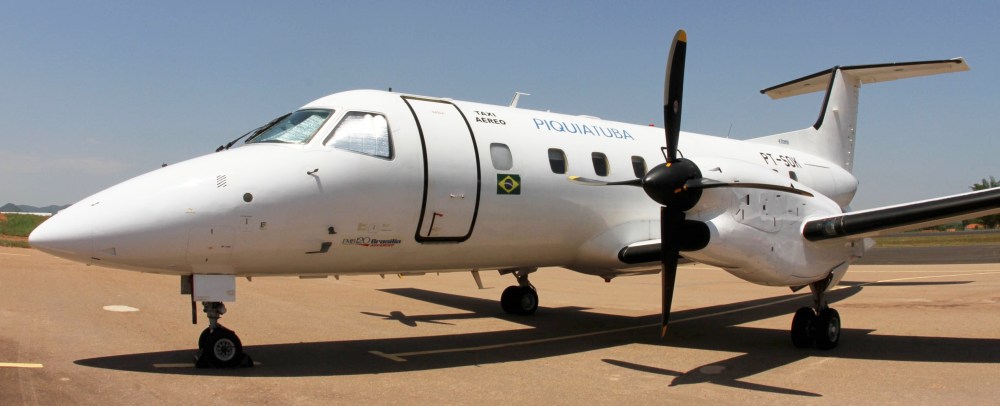
El Gobierno del Estado de Piauí, República de Brasil, está conversando con otra empresa para reanudar vuelos. Piquiatuba Transportes Aéreos es una empresa de taxi aéreo que mantiene vuelos diarios a distintas ciudades desde su base de operaciones en el Estado de Pará uniendo Maranhão, Piauí, Tocantins y Amapá. Piquiatuba suspendió las operaciones con aeronaves Cessna 208 Caravan. Además posee aeronaves Embraer EMB-120.

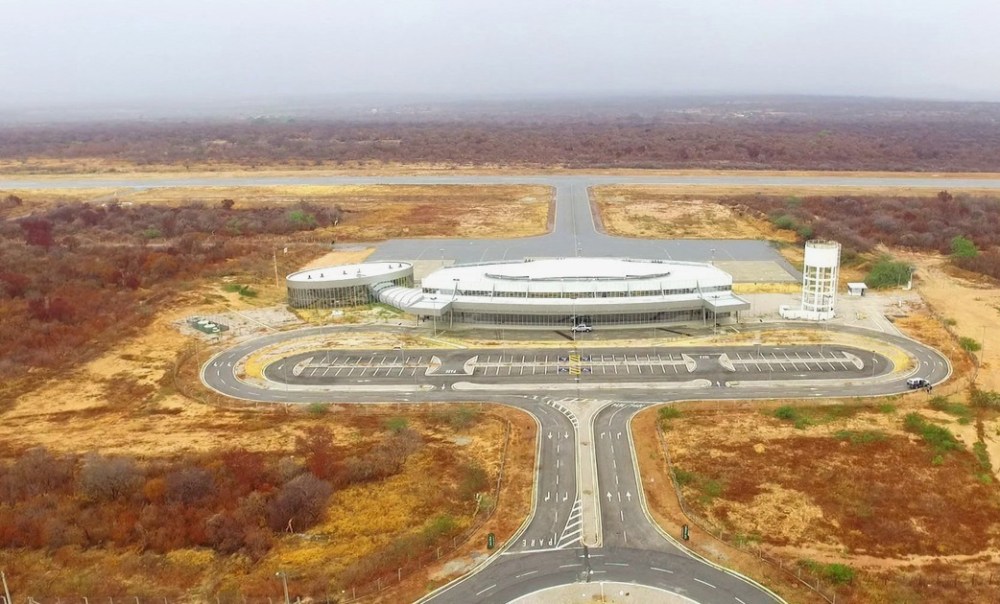
El Aeropuerto Serra Capivara (SWKQ), está ubicado en el municipio Piauiense de São Raimundo Nonato, 522 km de Teresina, la capital del estado. Las obras del aeropuerto se iniciaron en 2004. Después de casi 12 años del inicio de las obras, el aeropuerto fue inaugurado el 27 de octubre de 2015, al costo de R$ 20 millones. El aeropuerto cambió su nombre al de Aeropuerto São Raimundo Nonato. El terminal de pasajeros tiene la forma de un capibara, que es el símbolo del Parque Nacional Serra da Capivara. Es un aeropuerto bastante estratégico por posibilitar la conexión de diversos estados de Brasil: Bahía, Pernambuco, Piauí, Maranhão, entre otros, lo que facilitará el desarrollo local así como el turismo.

Resultado de imagen para Piquiatuba

PIQUIATUBA TRANSPORTES AÉREOS ENLAZA EL NORDESTE BRASILEÑO CON CESSNA 208 CARAVAN

Pero debido a falta de políticas fuertes de parte de los gobiernos federal y estatal, ese aeropuerto nunca entrará en funcionamiento regular, porque ningún empresario del sector del transporte aéreo invertirá en un negocio sin ninguna perspectiva del retorno de la inversión. La situación perjudica a los piauienses que solían hacer los trayectos y turistas que viajaban para visitar las ciudades localizadas, respectivamente, en el Litoral y en el sur de Piauí. La empresa que operaba los vuelos desde Junio el año 2015 Piquiatuba Transportes Aéreas canceló el programa Vuela Piauí, desconectando parte de la red aislando al Aeropuerto São Raimundo Nonato.

El Aeropuerto de São Raimundo Nonato, que tardó 12 años en construirse, está detenido por la suspensión de los vuelos de la única empresa que hacía vuelos regulares. El gobierno del Estado de Piauí afirmó que está en contacto con otra empresa para retornar los vuelos, que forman parte del proyecto Vuela Piauí. AIRWAYS® AW-Icon TXT

Canceled only flight São Raimundo Nonato Airport

Suspend only flight from São Raimundo Nonato Airport in the State of Piauí

The Government of the State of Piauí, Republic of Brazil, is talking with another company to resume flights. Piquiatuba Transportes Aéreos is an air taxi company that maintains daily flights to different cities from its base of operations in the State of Pará uniting Maranhão, Piauí, Tocantins and Amapá. Piquiatuba suspended operations with Cessna 208 Caravan aircraft. It also has Embraer EMB-120 aircraft.

The Serra Capivara Airport (SWKQ) is located in the Piauiense municipality of São Raimundo Nonato, 522 km from Teresina, the state capital. The works of the airport began in 2004. After almost 12 years of the beginning of the works, the airport was inaugurated on October 27, 2015, at the cost of R $ 20 million. The airport changed its name to São Raimundo Nonato Airport. The passenger terminal has the shape of a capibara, which is the symbol of the Serra da Capivara National Park. It is a very strategic airport because it allows the connection of several Brazilian states: Bahia, Pernambuco, Piauí, Maranhão, among others, which will facilitate local development as well as tourism.

But due to a lack of strong policies on the part of the federal and state governments, that airport will never enter into regular operation, because no businessman in the air transport sector will invest in a business without any prospect of a return on investment. The situation harms the Piauans who used to make the journeys and tourists who traveled to visit the cities located, respectively, in the Litoral and in the south of Piauí. The company that operated the flights since June 2015 Piquiatuba Transportes Aéreas canceled the Vuela Piauí program, disconnecting part of the network isolating the São Raimundo Nonato Airport.

The São Raimundo Nonato Airport, which took 12 years to build, is stopped by the suspension of the flights of the only company that made regular flights. The government of the State of Piauí affirmed that it is in contact with another company to return flights, which are part of the Vuela Piauí project. A \ W

77922_247622.jpg

Cancelado único vôo São Raimundo Nonato Airport

Suspende único vôos do Aeroporto São Raimundo Nonato

O Governo do Estado do Piauí conversa com outra empresa para retomar os vôos. Piquiatuba Transportes Aéreos é uma companhia de táxi aéreo que mantém vôos diários para diferentes cidades a partir de sua base de operações no Estado do Pará, unindo Maranhão, Piauí, Tocantins e Amapá. Piquiatuba suspendeu as operações com o avião Cessna 208 Caravan. Ele também possui aeronaves Embraer EMB-120.

O Aeroporto Serra Capivara (SWKQ) está localizado no município de Piauiense de São Raimundo Nonato, a 522 km de Teresina, a capital do estado. As obras do aeroporto começaram em 2004. Após quase 12 anos do início das obras, o aeroporto foi inaugurado em 27 de outubro de 2015, no custo de R $ 20 milhões. O aeroporto mudou seu nome para São Raimundo Nonato Airport. O terminal de passageiros tem a forma de um capibara, que é o símbolo do Parque Nacional Serra da Capivara. É um aeroporto muito estratégico porque permite a conexão de vários estados brasileiros: Bahia, Pernambuco, Piauí, Maranhão, entre outros, o que facilitará o desenvolvimento local e o turismo.

Mas, devido à falta de políticas fortes por parte dos governos federal e estadual, esse aeroporto nunca entrará em operação regular, porque nenhum empresário no setor de transporte aéreo vai investir em uma empresa sem qualquer perspectiva de retorno sobre o investimento. A situação prejudica os piauenses que costumavam fazer as viagens e turistas que viajaram para visitar as cidades localizadas, respectivamente, no Litoral e no sul do Piauí. A empresa que operou os vôos desde Junho de 2015 Piquiatuba Transportes Aéreas cancelou o programa Vuela Piauí, desconectando parte da rede isolando o Aeroporto São Raimundo Nonato.

O Aeroporto São Raimundo Nonato, que levou 12 anos para construir, é interrompido pela suspensão dos vôos da única empresa que fez vôos regulares. O governo do Estado do Piauí disse que está em contato com outra empresa para retornar os vôos, que fazem parte do projeto Vuela Piauí. A \ W


Ξ A I R G W A Y S Ξ
SOURCE:  Airgways.com
DBk:  Oglobo.com.br / Redepara.com.br / Piquiatuba.ttinteractive.com
AW-POST: 201712012055AR

A\W   A I R G W A Y S ®

Proyecto Aeropuerto Santa Fe-Paraná

maxresdefault.jpg

AW | 2017 11 30 12:35 | AIRPORTS

Imagen relacionadaEl proyecto de un nuevo aeropuerto para las ciudades de Santa Fe y Paraná comienza a planificarse

El proyecto con apoyo del gobierno de Argentina, tiene por objetivo mejorar la conectividad entre las dos capitales de provincia Paraná y Santa Fe. La construcción de un aeropuerto internacional en una zona equidistante entre ambas capitales, cercana a la traza actual de la ruta 168 y la Resultado de imagen para Entre Ríos turismo pngproyectada para el puente, entre los ríos Colastiné y Paraná, será licitado en 2018.

«Es una jornada histórica, porque esta iniciativa del presidente Mauricio Macri de tener un aeropuerto único para ambas ciudades y de carácter internacional empieza su curso de acción. De acuerdo a lo que se resolvió, y a lo manifestado por autoridades nacionales, de aquí a marzo del año entrante se harán los estudios de factibilidad para su realización, y a partir de allí hay un cronograma sobre el proyecto ejecutivo», sostuvo ayer el intendente de la ciudad de Paraná, Sergio Varisco, al término de la reunión mantenida con su par, el Intendente de la ciudad de Santa Fe, José Corral, y funcionarios nacionales del Organismo Regulador del Sistema Nacional de Aeropuertos (ORSNA).

Proyecto Aeropuerto Santa Fe-Paraná

La convocatoria a estudios de factibilidad será a través de consultoras internacionales, según se precisó. Por año, se transportan vía aérea unas 120.000 personas de la región, en una área de influencia de 2 millones de habitantes en un radio de 100 kilómetros.

La futura ubicación del nuevo Aeropuerto Internacional Santa Fe-Paraná estaría emplazado pasando el puente sobre el río Colastiné de la Ruta Nacional Nº 168, en sentido de circulación este-oeste, en una zona de islas entre los ríos Colastiné y Paraná, en territorio de la Provincia de Santa Fe.

AW-700837715.png

«Ese estudio de factibilidad puede generar luego un debate, y nosotros vamos a propiciarlo, porque pueden surgir voces a favor y en contra, con distintos argumentos. Pero más allá del debate, la piedra angular es el estudio de factibilidad desde lo técnico, lo ambiental y lo financiero entre Paraná y Santa Fe. Hay un entusiasmo de la Nación al respecto, incluso porque la idea es que esto se complemente con el puente Paraná-Santa Fe que las autoridades nacionales llamaron a la participación pública privada», dijo el jefe comunal paranaense.

Propuesta gobierno nacional

La iniciativa surgida del Poder Ejecutivo Nacional tuvo origen en argumentos de costos, al sostener que dos aeropuertos generan doble gasto a las empresas, para instalarse. «Si hablamos de dos aeropuertos internacionales es imposible desde el punto de vista de su aptitud financiera sostenerlos desde Paraná y desde Santa Fe. He escuchado voces que dicen que habría que refuncionalizar el de Paraná, pero en definitiva el estudio de factibilidad que se va a encargar a las consultoras más importantes del mundo en esta materia es lo que nos va a dar una visión de si es posible o no, si es conveniente o no. Lo importante es que con las autoridades máximas en materia de aeropuertos, se pasó de lo teórico y los discursos a los hechos. En marzo veremos incluso el costo de construcción, que un aeropuerto de estas características no va a bajar de los 200 millones de dólares», remarcó Sergio Varisco. Este aeropuerto nuevo se suma además a la denominada «Revolución Aérea» que impulsa la actual gestión a nivel nacional: «Hay una explosión del transporte aéreo en la Argentina que incluso incide en el transporte terrestre de empresas de media y larga distancia, porque los costos de vuelos se han abaratado mucho e incluso si se bajan los costos operativos de ambos aeropuertos de Sauce Viejo y de Paraná, bajará el costo del pasaje», detalló el Intendente de la ciudad de Paraná.

En tanto, el intendente de la capital santafesina aludió a cuestiones ambientales y otras relativas a la operación aeroportuaria: «Las cuestiones viales estarían resueltas porque no solo está la 168, sino la nueva conexión Paraná-Santa Fe, con el túnel y con el puente». En ese contexto, no descartó abrir el debate a la comunidad «para escuchar opiniones», coincidiendo con Sergio Varisco.

«Las ciudades y las regiones no crecen si no tienen ambición y proyectos hacia el futuro. Y este es un proyecto que nos entusiasma mucho porque en el país ya está creciendo la actividad aeroportuaria, va a crecer mucho más y van a bajar los costos de los pasajes aéreos. Por lo tanto, nos tenemos que preparar para tener más actividad. Santa Fe y Paraná tenemos experiencia de trabajo común, como el caso del Túnel, que ya lleva 45 años de administración común. Porqué no pensar en un aeropuerto que estaría más cerca de ambas ciudades que los respectivos aeropuerto actuales, y la utilización de la infraestructura que tenemos hoy en los actuales aeropuertos para otros usos perfectamente posibles», remarcó el Intendente de Santa Fe.  AIRWAYS® AW-Icon TXT


Obras complementarias

El puente Paraná-Santa Fe, obra vital para la integración del área metropolitana, será licitada en Setiembre de 2018, según el cronograma de convocatoria a empresas mediante el Programa de Participación Privada (PPP), planteado por la Dirección Nacional de Vialidad.

Resultado de imagen para futuro puente Santa Fe-Paraná mapa

La obra podría demandar unos cuatro años de obras. La cabecera sobre Paraná estará en cercanías a la Toma Vieja. A la salida, sobre territorio santafesino se unirá a la actual ruta nacional 168, pasando la salida del túnel subfluvial, y tras el cruce del puente sobre el río Colastiné se construirá una nueva traza de cuatro carriles que llegará hasta la zona sur de Santa Fe para facilitar la conexión con la ruta nacional 19 y el Nuevo Puerto. Junto con la obra del puente, Paraná se verá beneficiada con la concreción de un nuevo anillo circunvalar, que partirá desde Sauce Montrull, se extenderá por el sur de San Benito y de Oro Verde, hasta unirse con la ruta 11, pasando la sede del INTA. A \ W


Santa Fe-Paraná common airport project

Imagen relacionadaThe project of a new airport for the cities of Santa Fe and Paraná begins to be planned

The project with the support of the government of Argentina, aims to improve connectivity between the two provincial capitals of Paraná and Santa Fe. The construction of an international airport in an area equidistant between the two capitals, close to the current route of route 168 and the one Resultado de imagen para Entre Ríos turismo pngplanned for the bridge, between the Colastiné and Paraná rivers, will be tendered in 2018.

«It is a historic day, because this initiative of President Mauricio Macri to have a single airport for both cities and international character begins its course of action, according to what was resolved, and as stated by national authorities, from here to March the feasibility studies for its realization will be made next year, and from there there is a schedule on the executive project», Sergio Varisco, the mayor of the city of Paraná, said at the end of the meeting held with his peer, Intendant of the city of Santa Fe, José Corral, and national officials of the Regulatory Agency of the National Airport System (ORSNA).

Santa Fe-Paraná Airport Project

The call for feasibility studies will be through international consultancies, as indicated. Per year, some 120,000 people of the region are transported by air, in an area of ​​influence of 2 million inhabitants within a radius of 100 kilometers.

The future location of the new Santa Fe-Paraná International Airport would be located by passing the bridge over the Colastiné River of National Route No. 168, in the east-west direction, in an area of ​​islands between the Colastiné and Paraná rivers, in the territory of the Province of Santa Fe.


AW-700837713.png

«That feasibility study can then generate a debate, and we are going to propitiate it, because there may be voices for and against, with different arguments, but beyond the debate, the cornerstone is the technical feasibility study, environmental and financial between Paraná and Santa Fe. There is an enthusiasm of the Nation on the matter, even because the idea is that this is complemented by the Paraná-Santa Fe bridge that the national authorities called for private public participation», said the chief paranaense community.

National government proposal

The initiative that emerged from the National Executive Power originated in cost arguments, arguing that two airports generate double expense for companies, to install themselves. «If we talk about two international airports it is impossible from the point of view of their financial ability to sustain them from Paraná and from Santa Fe. I have heard voices that say that the Paraná would have to be re-functionalized, but ultimately the feasibility study that is going to commissioning the most important consultancies in the world in this area is what will give us a vision of whether it is possible or not, whether it is convenient or not.The important thing is that with the maximum authorities in the matter of airports, it went We will see the cost of construction, that an airport with these characteristics will not fall below 200 million dollars», remarked Sergio Varisco. This new airport also adds to the so-called «Air Revolution» that drives the current management at the national level: «There is an explosion of air transport in Argentina that even affects the land transport of medium and long distance companies, because the costs of flights have become a lot cheaper and even if the operating costs of both Sauce Viejo and Paraná airports are lowered, the cost of the ticket will be lowered», said the Mayor of the city of Paraná.

Meanwhile, the mayor of the capital Santa Fe alluded to environmental issues and other related to the airport operation: «The road issues would be resolved because not only is the 168, but the new connection Paraná-Santa Fe, with the tunnel and the bridge». In this context, he did not rule out opening the debate to the community «to hear opinions», coinciding with Sergio Varisco.

«Cities and regions do not grow if they do not have ambition and projects towards the future, and this is a project that excites us a lot because the country is already growing airport activity, it will grow much more and the costs of Air tickets, therefore, we have to prepare ourselves to have more activity Santa Fe and Paraná have common work experience, as in the case of the Tunnel, which has been running for 45 years, so why not think about an airport that would be closer to both cities than the current airport, and the use of the infrastructure we have today at the current airports for other perfectly possible uses», remarked the Mayor of Santa Fe. A \ W


Works complementary

The Paraná-Santa Fe bridge, a vital work for the integration of the metropolitan area, will be tendered in September 2018, according to the schedule of calls for companies through the Private Participation Program (PPP), proposed by the National Road Administration.

The work could require about four years of work. The head of Paraná will be close to Toma Vieja. At the exit, on Santa Fe territory will join the current national route 168, past the exit of the subfluvial tunnel, and after crossing the bridge over the Colastiné River will be built a new four-lane road that will reach the south of Santa Fe to facilitate the connection with National Route 19 and the New Port. Along with the work of the bridge, Paraná will benefit from the concretion of a new circumvallation ring, which will start from Sauce Montrull, will extend south of San Benito and Oro Verde, until joining route 11, passing the headquarters of the INTA. A\W


AW-Airgways.com-Jet

AW-Airgways Icon-webΞ A I R G W A Y S Ξ
SOURCE:  Airgways.com
DBk: Orsna.gov.ar / Airgways.com / Eldiario.com.ar
AW-POST: 201711301235AR

A\W   A I R G W A Y S ®

Aeropuerto Rosario cerrado por 72 horas

AW-70087775.png

AW | 2017 11 23 23:15 | AIRPORTS

El Aeropuerto Internacional Rosario estará cerrado por 72 horas

Desde hoy martes, 28 de Noviembre por la tarde y por 72 hs el Aeropuerto de Rosario permanecerá cerrado a las operaciones comerciales por dos obras simultáneas en un sector de la pista y una de las calles de rodaje.

El anuncio sobre la suspensión temporal del Aeropuerto se realizó hace algunas semanas. Según informó la vocera del “Islas Malvinas”, Cecilia Gabenara Boero, se harán trabajos de demolición y construcción de lozas. Las obras no están relacionadas entre sí, pero se harán al mismo tiempo para que el cese de actividad sea el menor tiempo posible.

Las líneas aérreas han reprogramado las frecuencias semanales por la interrupción de los vuelos al Aeropuerto Rosario. Desde Aerolíneas Argentinas confirmaron que quienes tengan pasajes en esas fechas tienen la posibilidad de utilizar Aeroparque o modificar la fecha del ticket sin penalidad. Los servicios de Gol llegarán y saldrán de Aeroparque y Ezeiza. Latam y Copa también debieron alterar la programación de sus servicios en la semana.

A principio de mes, el gobernador anunció el llamado a licitación de la obra «Ejecución nueva terminal de pasajeros. Primera etapa». El proyecto, diseñado por la Unidad de Proyectos Especiales de la Provincia de Santa Fe, perteneciente al Ministerio de Obras Públicas, contempla en esta primera etapa, la creación de un nuevo sector de más de 11.550 metros cuadrados para la atención de vuelos internacionales, con una inversión de AR$ 946 millones de pesos y un plazo de ejecución de 18 meses.

Este proyecto es parte de un plan mayor a desarrollarse en distintas etapas que transformará sustancialmente al Aeropuerto de Rosario. La ejecución de la obra de duplicación de la plataforma comercial, la construcción de la nueva terminal de pasajeros, el aumento de espacios de estacionamiento y la diagramación de nuevos accesos vehiculares le permitirá al AIR aumentar su capacidad operativa impactando directamente en el desarrollo comercial y turístico de la región. AIRWAYS® AW-Icon TXT


Rosario Airport closed for 72 hours

The Rosario International Airport will be closed for 72 hours

From today Tuesday, November 28 in the afternoon and for 72 hours Rosario Airport will be closed to commercial operations for two simultaneous works in a sector of the track and one of the taxiways.

The announcement about the temporary suspension of the airport was made a few weeks ago. According to the spokesperson of the «Islas Malvinas», Cecilia Gabenara Boero, there will be demolition work and construction of earthenware. The works are not related to each other, but they will be done at the same time so that the cessation of activity is as short as possible.

The air lines have reprogrammed weekly frequencies due to the interruption of flights to Rosario Airport. From Aerolíneas Argentinas they confirmed that those who have tickets on those dates have the possibility of using Aeroparque or modify the date of the ticket without penalty. Gol services will arrive and depart from Aeroparque and Ezeiza. Latam and Copa also had to alter the programming of their services during the week.

At the beginning of the month, the governor announced the call for bids for the work «New passenger terminal execution, first stage.» The project, designed by the Special Projects Unit of the Province of Santa Fe, belonging to the Ministry of Public Works, contemplates in this first stage, the creation of a new sector of more than 11,550 square meters for the attention of international flights, with an investment of AR $ 946 million pesos and an execution period of 18 months.

This project is part of a larger plan to be developed in different stages that will substantially transform the Rosario Airport. The execution of the work of duplication of the commercial platform, the construction of the new passenger terminal, the increase of parking spaces and the layout of new vehicular accesses will allow the AIR to increase its operational capacity directly impacting the commercial and tourist development region. A \ W


Ξ A I R G W A Y S Ξ
SOURCE:  Airgways.com
DBk:  Airgways.com
AW-POST: 201711232315AR

IAG compra slots de Monarch en Gatwick

AW | 2017 11 28 08:27 | AIRLINES / AIRPORTS

El Grupo IAG ha comprado slots de la Monarch Airlines en Aeropuerto Gatwick

El grupo hispanobritánico de aviación International Airlines Group (IAG) ha comprado los derechos de la mayoría de los slots, o derechos de despegue y aterrizaje, en el Aeropuerto Gatwick de la aerolínea quebrada británica Monarch Airlines.

IAG es propietaria de British Airways, Aer Lingus, Iberia y Vueling, ha pulseado la batalla con otras aerolíneas por tener el control de la mayoría de los slots de la ex-monarch Airlines. El monto de la transacción no ha sido informado.

La consultora KPMG, que administra los activos de Monarch Airlines declarada insolvente el 2 de Octubre pasado, ganó el pasado miércoles un juicio que le autorizó a poner a la venta los valiosos slots de la aerolínea, propiedad de la firma de capital de riesgo Greybull Capital. Los slots de Monarch en Gatwick, al sur de Londres, y los de Luton, al norte de la ciudad y donde la compañía tenía su base, tienen un valor conjunto de alrededor de unos € 67 millones de euros.

En la participación por la compra de los slots en el Aeropuerto de Gatwick y el Aeropuerto de Luton se encontraban las aerolíneas IAG, easyJet, Norwegian Air UK, Wizz Air Hungary Ltd. y Jet2.com.  AIRWAYS® AW-Icon TXT

Grupo IAG buys Monarch’s ‘slots’ in Gatwick

The IAG Group has purchased slots from the Monarch Airlines in Gatwick Airport

The Spanish-British aviation group International Airlines Group (IAG) has bought the rights to the majority of the slots, or take-off and landing rights, at the Gatwick Airport of the British bankrupt airline Monarch Airlines.

IAG owns British Airways, Aer Lingus, Iberia and Vueling, has wrestled the battle with other airlines to have control of most of the slots of the former monarch Airlines. The amount of the transaction has not been reported.

The consulting firm KPMG, which manages the assets of Monarch Airlines declared insolvent on October 2 last, won a lawsuit last Wednesday that authorized it to put on sale the valuable ‘slots’ of the airline, owned by the venture capital firm Greybull Capital. Monarch’s ‘slots’ in Gatwick, south of London, and those in Luton, north of the city and where the company had its base, have a combined value of around € 67 million.

Participating in the purchase of the slots at Gatwick Airport and Luton Airport were the airlines IAG, easyJet, Norwegian Air UK, Wizz Air Hungary Ltd. and Jet2.com. A \ W


Ξ A I R G W A Y S Ξ
SOURCE:  Airgways.com
DBk: Irishtimes.com / Milanamos.com
AW-POST: 201711280827AR

A\W   A I R G W A Y S ®