SSJ100 primer vuelo con Saberlets

P38A0434-1-копия.jpg

AW | 2017 12 22 20:40 | INDUSTRY

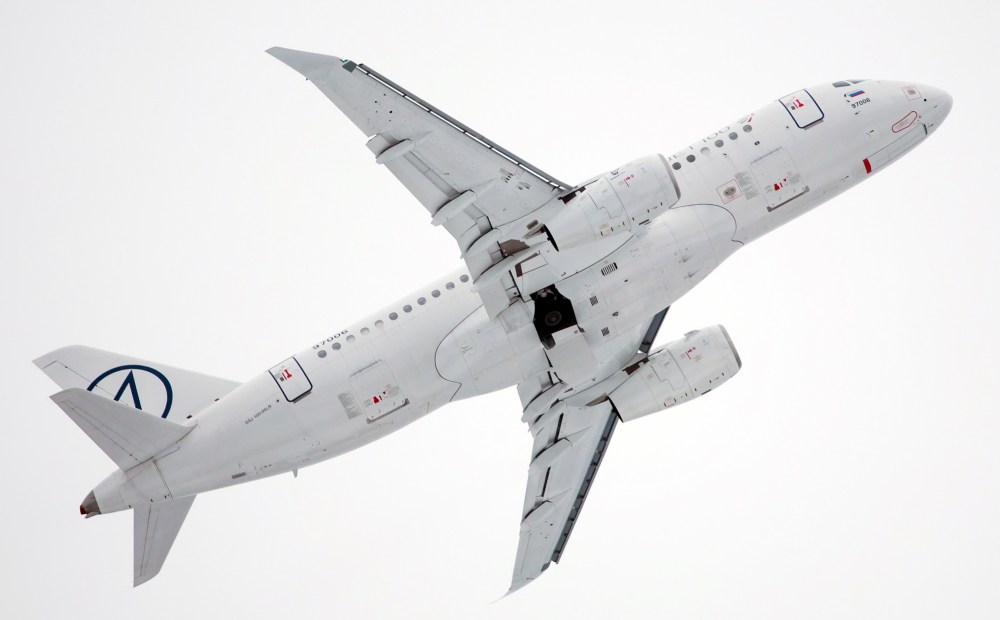
suhoy_logoEl 21 de diciembre de 2017, Sukhoi Superjet 100 realizó su primer vuelo con instalación de saberletsResultado de imagen para Sukhoi SSJ-100 png

El fabricante Voronezh es el responsable de los kits de saberlets, los materiales utilizados están certificados en Rusia y en el extranjero.La configuración tipo sable de los winglets en el Sukhoi Superjet 100 (SSJ-100) resultó ser el resultado de una serie de actividades de investigación, ingeniería y experimentales llevadas a cabo por la Sukhoi Civil Aircraft Company con la asistencia del Instituto Aerohidrodinámico Central (TsAGI).

La geometría de los consejos se determinó con la implementación de los métodos innovadores de optimización 3D basados ​​en cálculos numéricos llamados Dinámica de fluidos computacional (CFD): el conocimiento único de TsAGI utilizado en la industria de la aviación rusa, en particular para el programa Sukhoi Superjet 100.

ttxlNB4TiPc.jpg

WINGLETS «SABERLETS» DEL SUKHOI SUPER JET SSJ-100

Los resultados de la investigación y los experimentos demostraron que la instalación de las puntas con forma de sable permite mejorar simultáneamente el rendimiento de despegue y aterrizaje y disminuir el consumo de combustible en no menos del 3%. La mejora esperada de las características de despegue y aterrizaje será obvia para los transportistas que operan la aeronave en las pistas regionales y en condiciones de clima cálido, así como en los aeródromos de montaña (Hot & High).

El presidente de la Compañía de Aeronaves Civiles de Sukhoi, Alexander Rubtsov, expresó: «Sukhoi Civil Aircraft Company está implementando el programa de mejora Sukhoi Superjet 100 con el objetivo de la expansión del mercado y el aumento del número de clientes, el crecimiento actual del nivel de satisfacción de los operadores y el mantenimiento del alto nivel competitivo del producto. La instalación de puntas de ala como parte del programa de mejora proporcionará a los operadores un recorte de costes de hasta $ 70 000 por año por un SSJ100».

El final de un programa a gran escala de pruebas terrestres y de vuelo dará como resultado la certificación de la SSJ100 con las puntas horizontales los sabelets y se ofrecerán como una opción para los Clientes. La instalación de las puntas es posible no solo para las nuevas aeronaves, sino también para las aeronaves ya entregadas.  AIRWAYS® AW-Icon TXT

DRlzXDfW4AAyNAw.jpg

SSJ100 first flight with Saberlets

logo_sukhoiOn December 21, 2017, Sukhoi Superjet 100 made its first flight with saberlets installation

The manufacturer Voronezh is responsible for the kits of saberlets, the materials used are certified in Russia and abroad. The sable configuration of the winglets in the Sukhoi Superjet 100 (SSJ-100) turned out to be the result of a series of activities of research, engineering and experimental work carried out by the Sukhoi Civil Aircraft Company with the assistance of the Central Aerohydrodynamic Institute (TsAGI).

The geometry of the councils was determined with the implementation of innovative 3D optimization methods based on numerical calculations called Computational Fluid Dynamics (CFD): the unique knowledge of TsAGI used in the Russian aviation industry, in particular for the Sukhoi Superjet 100 program.

The results of the research and the experiments showed that the installation of the saber-shaped tips allows to simultaneously improve the take-off and landing performance and reduce fuel consumption by no less than 3%. The expected improvement in take-off and landing characteristics will be obvious for carriers operating the aircraft on regional runways and in warm weather conditions, as well as at mountain aerodromes (Hot & High).

The president of the Sukhoi Civil Aircraft Company, Alexander Rubtsov, said: «Sukhoi Civil Aircraft Company is implementing the Sukhoi Superjet 100 improvement program with the aim of expanding the market and increasing the number of customers, the current growth of the level of operator satisfaction and maintaining the high competitive level of the product.The installation of wing tips as part of the improvement program will provide operators with a cost cut of up to $ 70,000 per year for an SSJ100. «

The end of a large-scale program of ground and flight tests will result in the certification of the SSJ100 with the horizontal tips the sabelets and will be offered as an option for the clients. The installation of the tips is possible not only for new aircraft, but also for aircraft already delivered. A \ W


Ξ A I R G W A Y S Ξ
SOURCE:  Airgways.com
DBk: Sukhoi.org / Scac.ru
AW-POST: 201712222040AR

A\W   A I R G W A Y S ®

Boeing ambiciona compra de Embraer

AW-7000190737

AW | 2017 12 22 18:50 | INDUSTRY

Boeing-Logo.svg.pngThe Boeing Company está discutiendo una potencial adquisición multimillonaria del fabricante de aviones regionales Embraer S.A. de Brasil

1280px-Embraer_logo.svgUn acuerdo no es seguro ya que el gobierno brasileño tendría que aprobar la venta de una empresa considerada la joya de la corona del sector manufacturero del país.

La compañía estadounidense The Boeing Company tendría intenciones de controlar al fabricante aeroespacial Embraer S.A. La operación de compra o fusión sería una de las más importantes después de la fusión con McDonnell Douglas hace 20 años atrás.

El mercado de la industria aeronáutica parece ir cercando horizontes. Esta movida pudiera suponer una reacción por parte de Boeing a un sorpresivo acuerdo entre Airbus y Bombardier.

En líneas de diálogo en la relación Boeing-Embraer expresaron que existe un largo camino por recorrer. Está sujeto a todo tipo de aprobaciones regulatorias y gubernamentales entre ambos países.

La postura brasileña

Citando a un alto funcionario del gobierno brasileño, Reuters informó el jueves que la administración del presidente Michel Temer respaldaría una asociación en aviación comercial entre Boeing y Embraer, pero que bloquearía cualquier intento de adquisición total.

SEDE DE LA EMBRAER EN SAO JOSÉ DOS CAMPOS, SAO PAULO

El Presidente de Brasil Michel Temer en una reunión el jueves con su Ministro de Defensa y oficiales militares dijo que, bajo su gobierno, Embraer nunca será vendida. El Gobierno brasileño tiene poder de veto desde que privatizó la compañía hace dos décadas, por lo que cualquier acuerdo entre las dos grupos aeronáuticos requerirá la aprobación del Ejecutivo.

Aunque Boeing ha tenido una relación estrecha con Embraer durante años, su movimiento ahora es ampliamente visto como un obstáculo a la adquisición propuesta por Airbus de una participación mayoritaria en el nuevo jet regional CSeries diseñado y construido por Bombardier de Canadá. Las conversaciones dijo que comenzaron a principios de este año, mucho antes del anuncio de Airbus en octubre, y advirtió que el interés de Boeing en Embraer no debería verse como reactivo para Airbus. La aparente seriedad de las conversaciones en este momento sugiere que la movida de Airbus ha agregado ímpetu a la propuesta de Boeing.

Embraer, con sede en São José dos Campos (SP), compite exitosamente contra Bombardier y se ha establecido como el principal fabricante mundial de jets regionales, aviones de menor y menor alcance que los construidos por Airbus y Boeing, utilizados en muchos vuelos domésticos en rutas menos densas.

El jueves por la mañana, después de que The Wall Street Journal dio la noticia de las conversaciones de adquisición, las acciones de Embraer se dispararon más del 30%, y luego retrocedieron. Las acciones cerraron un 22% en el día, lo que le dio a la compañía un valor de mercado de U$D 4.5 mil millones.

Si Boeing puede persuadir al gobierno de Brasil para que considere una venta, lo que seguramente requeriría garantías firmes para preservar empleos en Brasil y mantener la marca, probablemente tendría que pagar una prima considerable por encima de ese valor de mercado para asegurar un acuerdo. En muchos sentidos, las dos compañías encajarían perfectamente, con productos complementarios en lugar de superpuestos.

En 2012, los dos anunciaron un acuerdo de cooperación amplio y formal, que se extiende a múltiples proyectos, incluido el avión de carga militar KC-390 de Embraer.

Escenario de fusión

Una adquisición de toda la compañía incluiría los extensos aviones militares y negocios corporativos de Embraer, así como su unidad de aviación comercial. Sin embargo, Boeing debe prestar especial atención a la nueva línea de E2 de Embraer, una renovación sustancial de la familia de E-jet que se introdujo para contrarrestar la familia de jets CSeries de Bombardier, un diseño completamente nuevo. Los E2 cuentan con los últimos motores turbohélice con engranaje Pratt & Whitney, así como un nuevo ala y tren de aterrizaje El modelo inicial, el E190-E2 con capacidad para 106 pasajeros en una configuración de clase única, actualmente está completando la prueba de vuelo y la certificación. Widerøe Airlines de Noruega recibirá el primer E190-E2 en abril.

El acuerdo que Airbus anunció en octubre para adquirir una participación mayoritaria en el programa Bombardier CSeries potencialmente asegura el extremo más pequeño del mercado de aviones de pasillo único para el fabricante de aviones europeo, con el jet CS100 de 110 asientos y el jet CS300 de 130 asientos llenando el espacio de mercado debajo de sus propios jets A320 de 150 asientos.

Al comprar los jets E2, Boeing crearía una alineación similar, con el E190-E2 y el E195-E2 de 132 asientos que complementan sus nuevos jets 737 MAX de pasillo único.

Sin embargo, el movimiento podría matar al MAX más pequeño, el Boeing 737-7 MAX de 138 asientos, al igual que al hacer que su CSeries se mueva, Airbus abandonó efectivamente su A319NEO. Tanto el MAX 7 como el A319NEO son vendedores deficientes.

La postura Boeing

El hecho de que Boeing esté involucrado en una discusión seria con Embraer sobre una posible adquisición contradice el argumento del fabricante de aviones de EEUU. Ante la Comisión Federal de Comercio Internacional (ITC) en el caso destinado a bloquear las ventas de CSeries a Delta y otras aerolíneas de los EE. UU.

Bombardier, enfrentando un colapso financiero este año, le ofreció a Boeing este verano la oportunidad de tomar una participación en la CSeries. Boeing se alejó y, en cambio, optó por continuar su litigio para bloquear el CSeries. Cuando Airbus intervino, la postura pública de Boeing fue desdeñosa.

En el caso de ITC, los abogados de Boeing argumentaron que el trato de Airbus con Bombardier es una estratagema dudosa para evitar las tarifas, que quizás nunca se finalice, y es poco probable que Airbus fabrique CSeries en Mobile, Alabama, ya que el fabricante de aviones europeo prometido.

Sin embargo, la movida secreta de Boeing en Embraer indica que Boeing ve el movimiento de Airbus como una amenaza seria, una que potencialmente podría dejar a su rival con una amplia gama de ofertas en el mercado de aviones de pasillo único que podrían resultar inatacables. Si su movimiento en Embraer tiene éxito, Boeing debería tener un contador igualmente audaz y efectivo. Si no se logra, el mundo de la aviación verá más claramente a Airbus con una ventaja competitiva.  AIRWAYS® AW-Icon TXT

Boeing ambitions purchase of Embraer

us$bngThe Boeing Company is discussing a multi-million dollar potential acquisition of regional aircraft manufacturer Embraer S.A. from Brazil

embraer logo (1)

An agreement is not safe because the Brazilian government would have to approve the sale of a company considered the jewel in the crown of the country’s manufacturing sector.

The American company The Boeing Company would have intentions of controlling the aerospace manufacturer Embraer S.A. The purchase or merger operation would be one of the most important after the merger with McDonnell Douglas 20 years ago.

The aeronautical industry market seems to be closing horizons. This move could mean a reaction on the part of Boeing to a surprise agreement between Airbus and Bombardier.

In lines of dialogue in the Boeing-Embraer relationship they expressed that there is a long way to go. It is subject to all kinds of regulatory and governmental approvals between both countries.

The Brazilian posture

e190 (2).pngQuoting a senior Brazilian government official, Reuters reported Thursday that President Michel Temer’s administration would back a commercial aviation partnership between Boeing and Embraer, but that it would block any attempt at full acquisition.

Brazilian President Michel Temer at a meeting on Thursday with his Defense Minister and military officials said that, under his rule, Embraer will never be sold. The Brazilian government has veto power since it privatized the company two decades ago, so any agreement between the two aeronautical groups will require the approval of the Executive.

Although Boeing has had a close relationship with Embraer for years, its movement is now widely seen as an obstacle to the acquisition proposed by Airbus of a majority stake in the new CSeries regional jet designed and built by Bombardier of Canada. The talks said they began earlier this year, long before Airbus announced in October, and warned that Boeing’s interest in Embraer should not be seen as reactive to Airbus. The apparent seriousness of the talks at this time suggests that the move of Airbus has added impetus to the Boeing proposal.

Embraer, based in São José dos Campos (SP), successfully competes against Bombardier and has established itself as the world’s leading manufacturer of regional jets, smaller and smaller aircraft than those built by Airbus and Boeing, used in many domestic flights in less dense routes.

On Thursday morning, after The Wall Street Journal broke the news of the acquisition talks, Embraer’s stock shot up more than 30%, and then retreated. Shares closed 22% on the day, which gave the company a market value of US $ 4.5 billion.

If Boeing can persuade the Brazilian government to consider a sale, which would surely require firm guarantees to preserve jobs in Brazil and maintain the brand, it would probably have to pay a considerable premium above that market value to secure an agreement. In many ways, the two companies would fit perfectly, with complementary products instead of superimposed ones.

In 2012, the two announced a comprehensive and formal cooperation agreement, which extends to multiple projects, including the Embraer military cargo plane KC-390.

Merge scenario

An acquisition of the entire company would include Embraer’s extensive military aircraft and corporate business, as well as its commercial aviation unit. However, Boeing must pay special attention to Embraer’s new E2 line, a substantial renewal of the E-jet family that was introduced to counter the Bombardier CSeries jet family, a completely new design. The E2 features the latest turboprop engines with Pratt & Whitney gear, as well as a new wing and landing gear. The initial model, the E190-E2 with capacity for 106 passengers in a single-class configuration, is currently completing the flight test. and the certification. Widerøe Airlines from Norway will receive the first E190-E2 in April.

THE EMBRAER E-190/195-E2 ARE THE AIRCRAFT BADGE OF THE EMBRAER S.A.

The agreement that Airbus announced in October to acquire a majority stake in the Bombardier CSeries program potentially secures the smaller end of the single aisle aircraft market for the European aircraft manufacturer, with the CS100 jet of 110 seats and the CS300 jet of 130 seats filling the market space below their own 150 seat A320 jets.

When buying the E2 jets, Boeing would create a similar alignment, with the E190-E2 and the E195-E2 of 132 seats that complement their new 737 MAX single-aisle jets.

However, the move could kill the smaller MAX, the 138-seat Boeing 737-7 MAX, just as by making its CSeries move, Airbus effectively abandoned its A319NEO. Both the MAX 7 and the A319NEO are poor sellers.

The Boeing posture

Resultado de imagen para Boeing 737 pngThe fact that Boeing is involved in a serious discussion with Embraer about a possible acquisition contradicts the argument of the US aircraft manufacturer. UU Before the Federal Commission of International Trade (ITC) in the case destined to block the sales of CSeries to Delta and other US airlines. UU

Bombardier, facing a financial collapse this year, offered Boeing this summer the opportunity to take a stake in the CSeries. Boeing moved away and, instead, chose to continue his litigation to block the CSeries. When Airbus intervened, Boeing’s public stance was disdainful.

In the case of ITC, Boeing’s lawyers argued that Airbus’ dealings with Bombardier are a dubious ploy to avoid tariffs, which may never be finalized, and it is unlikely that Airbus will manufacture CSeries in Mobile, Alabama, since the manufacturer of promised European aircraft.

However, Boeing’s secret move at Embraer indicates that Boeing sees the move of Airbus as a serious threat, one that could potentially leave its rival with a wide range of offers in the single-aisle market that could be unassailable. If his movement at Embraer is successful, Boeing should have an equally bold and effective accountant. If this is not achieved, the aviation world will see Airbus more clearly with a competitive advantage. A\W


AW-Airgways.com-Jet

AW-Airgways Icon-webΞ A I R G W A Y S Ξ
SOURCE:  Airgways.com
DBk: Boeing.com / Embraer.com / Airgways.com / Panoramio.com / Reutersmedia.net
AW-POST: 201712221850AR

A\W   A I R G W A Y S ®
Las Big-3 y el proteccionismo recurrente

AW | 2017 12 22 17:35 | AIRLINES MARKET

Las aerolíneas líderes estadounidenses fuerzan por desalentar la competencia

Las tres grandes aerolíneas de Estados Unidos conocidas como las Big-3’s, American Airlines, Delta Air Lines y United Airlines están desalentando la competencia al querer permitir que el Estado brinde más proteccionismo al mercado estadounidense.

Es la competitividad una herramienta eficaz para establecer un mercado claro y ventajoso para los consumidores, pues impulsa la innovación y el espíritu empresarial, y en el proceso ofrece un gran valor para los consumidores que proviene de nuevos y mejores productos, menores costos operativos, entre otras ventajas. La competencia es lo que ha hecho grande a los Estados Unidos. Desafortunadamente, ahora hay algunas empresas estadounidenses que están dando la espalda a la fuerza que fomentó su nacimiento, crecimiento y dominio global.

Cielos Abiertos vs Proteccionismo

Las grandes líneas aéreas de Estados Unidos como American Airlines, Delta Air Lines, United Airlines y otras que han quedado atrás como Northwest Airlines (NWA), Trans World Airlines (TWA), US Airways, Eastern Air Lines, Pan Am Airways, entre otras han construido algunas de las redes de servicios más extensas y permitieron dominar el mercado de EEUU y en algunas rutas internacionales como resultado directo del liderazgo de los Estados Unidos en los acuerdos de cielos abiertos. Estos acuerdos, que Estados Unidos comenzó a negociar a principios de la década de 1990, abrieron la puerta a una mayor competencia global en la industria de la aviación y prepararon el escenario para que los transportistas estadounidenses aumentaran significativamente su expansión en el mundo. Las aerolíneas Big-3’s y sus socias de la alianza ostentan más del 80% del mercado transatlántico Americano-Europeo. Las mayores aerolíneas de EEUU se encontraban entre las principales defensoras del «Open Skies» y de un mercado competitivo global.

El mismo mercado competitivo de cielos abiertos con Estados Unidos ha hecho que se abriesen la puerta al éxito de las mayores compañías americanas, pero también abrieron la puerta a las ágiles aerolíneas del Golfo Pérsico. La nueva competencia de Medio Oriente ha estado eclipsando a las compañías de EEUU.

El nuevo escenario de las líneas aéreas estadounidenses están librando una batalla comercial, como sucede a menudo cuando las empresas se convierten en oligopolios atrincherados, éstas están luchando para limitar la competencia. En lugar de competir en un escenario de libre mercado, están presionando al gobierno para que les brinde un manto de protección del mecado de Medio Oriente, donde se acusa a las aerolíneas árabes de subvenciones estatales deshonestas y competencia desleal. En otras palabras están reclamando que la administración de Donald Trump renegocie los acuerdos de cielos abiertos de EEUU con los Estados del Golfo.

Existen varios escenarios en el proteccionismo heredado de las aerolíneas. En primer lugar las Big-3’s no han especificado ninguna violación de los acuerdos existentes de Open Skies. De hecho, los tratados bilaterales mencionan la palabra «subsidio» solo una vez, con respecto a «pasajes aéreos artificialmente bajos», que las Big-3’s no han alegado. En segundo lugar, las Big-3’s no tienen problemas con las inversiones de gobiernos extranjeros en embolsos profundos cuando los propios operadores nacionales son los beneficiarios de dicha influencia del gobierno. En conjunto, American, Delta y United tienen sociedades de código compartido con 28 aerolíneas estatales y con inversión estatal, muchas de las cuales reciben subsidios gubernamentales, incluidas Air China, Aeroflot y South African Airways. Además, Delta Airlines no se opuso a los generosos subsidios del gobierno cuando ordenó 75 aviones Bombardier CS100 del fabricante de aviones con sede en Canadá con un descuento tan grande que el precio de Delta es un 50% inferior al costo real de producción. En tercer lugar, los Big 3 no tienen pruebas para respaldar las afirmaciones de que estos subsidios «injustos» les están causando algún daño económico. Están experimentando ganancias récord y el crecimiento del empleo en la industria es robusto. Los tres operadores heredados colectivamente ganaron más de $ 5 mil millones en los últimos dos trimestres más recientes, que son casi $ 30 millones en ganancias todos los días . Además, los datos del gobierno muestran que los empleos en la industria aérea estadounidense superaron los 700,000 en octubre por primera vez desde septiembre de 2001. Durante el año pasado, los empleos a tiempo completo en la industria aérea crecieron casi un 3 por ciento en comparación con el crecimiento laboral de menos del 2 por ciento. trabajadores a tiempo completo en general. Esta no es una imagen de una industria sdeficiente.

Efectos del proteccionismo

El escenario más oneroso de las Big-3’s podría presentarse al utililzar la política como un instrumento para evitar la competencia. Esta acción tendría un impacto negativo en la economía de los EEUU, la industria de los viajes y el turismo en general.

Un estudio de la Asociación de Viajes de EEUU ha descubierto que si los EEUU hubieran congelado los vuelos de las aerolíneas del Golfo según lo solicitado por las Big-3’s, se habrían perdido más de 7.000 empleos en los Estados Unidos en 2015 y 2016. Estas pérdidas de empleos serán triviales en comparación con lo que podría suceder si la administración Trump responde a las exigencias de Big-3’s.

Los acuerdos de reapertura de las negociaciones sobre el mercado de cielos abiertos con Emiratos Árabes Unidos y Qatar podrían conducir a un menor acceso para las aerolíneas estadounidenses no solo en esos mercados sino también con otros socios donde reclamen un trato más justo y equitativo con los transportistas estadounidenses.

El objetivo principal de los acuerdos de cielos abiertos es sacar a los gobiernos del escenario de los cielos y dejar que el mercado y la competencia elijan lo más saludable para el consumidor. Los acuerdos de cielos abiertos son un mercado de aviación internacional competitivo y amigable. Durante décadas, American Airlines, Delta Air Lines y United Airlines han sido ganadores exitosos y rentables en un mercado global competitivo. Las Big-3’s necesitarán seguir ganando dinero, pero para eso deberían dejar de recurrir al gobierno para buscar innecesariamente proteccionismo y mostrar signos de verdadera competitividad, volando con reglas claras. AIRWAYS® AW-Icon TXT

Big-3 and recurrent protectionism

Leading US airlines force by discouraging competition

Resultado de imagen para Big 3 airlines USThe three major US airlines known as the Big-3’s, American Airlines, Delta Air Lines and United Airlines are discouraging competition by wanting to allow the state to provide more protection to the US market.
Competitiveness is an effective tool to establish a clear and advantageous market for consumers, as it promotes innovation and entrepreneurship, and in the process offers great value to consumers that comes from new and better products, lower operating costs, between other advantages Competition is what has made the United States great. Unfortunately, now there are some American companies that are turning their backs on the force that fostered their birth, growth and global dominance.

Open Skies vs. Protectionism

The major airlines of the United States such as American Airlines, Delta Air Lines, United Airlines and others that have been left behind such as Northwest Airlines (NWA), Trans World Airlines (TWA), US Airways, Eastern Air Lines, Pan Am Airways, among others they have built some of the most extensive service networks and allowed them to dominate the US market and some international routes as a direct result of the United States’ leadership in open skies agreements. These agreements, which the United States began to negotiate in the early 1990s, opened the door to greater global competition in the aviation industry and set the stage for US carriers to significantly increase their expansion in the world. Big-3’s airlines and their alliance partners hold more than 80% of the American-European transatlantic market. The largest US airlines were among the main defenders of the «Open Skies» and a global competitive market.

The same competitive open skies market with the United States has opened the door to the success of the largest American companies, but they also opened the door to agile Gulf Arabian airlines. The new Middle East competition has been eclipsing US companies.

The new scenario of US airlines are waging a commercial battle, as often happens when companies become entrenched oligopolies, they are struggling to limit competition. Instead of competing in a free market scenario, they are pressuring the government to provide them with a blanket of protection from the Middle East market, where Arab airlines are accused of dishonest state subsidies and unfair competition. In other words, they are demanding that the Donald Trump administration renegotiate US open skies agreements with the Gulf States.

There are several scenarios in the protectionism inherited from the airlines. First of all, the Big-3’s have not specified any violation of existing Open Skies agreements. In fact, bilateral treaties mention the word «subsidy» only once, with respect to «artificially low air tickets», which the Big 3 have not claimed. Second, the Big-3’s have no problems with the investments of foreign governments in deep pockets when the national operators themselves are the beneficiaries of such government influence. Together, American, Delta and United have code-share partnerships with 28 state-owned and state-owned airlines, many of which receive government subsidies, including Air China, Aeroflot and South African Airways. In addition, Delta Airlines did not oppose the generous government subsidies when it ordered 75 Bombardier CS100 aircraft from the Canadian-based aircraft manufacturer at such a large discount that Delta’s price is 50% lower than the actual cost of production. Third, the Big 3 have no evidence to support claims that these «unfair» subsidies are causing them some economic damage. They are experiencing record profits and the growth of employment in the industry is robust. The three legacy operators collectively earned more than $ 5 billion in the last two most recent quarters, which are almost $ 30 million in profits every day. In addition, government data shows that jobs in the US airline industry exceeded 700,000 in October for the first time since September 2001. Over the past year, full-time jobs in the airline industry grew by almost 3 percent compared with labor growth of less than 2 percent. full-time workers in general. This is not an image of a deficient industry.

Effects of protectionism

The most onerous scenario of the Big-3’s could be presented when using politics as an instrument to avoid competition. This action would have a negative impact on the US economy, the travel industry and tourism in general.

A study by the US Travel Association has found that if the US had frozen Gulf airlines’ flights as requested by the Big-3’s, more than 7,000 jobs would have been lost in the United States in 2015 and 2016. Job losses will be trivial compared to what could happen if the Trump administration responds to Big-3’s demands.

The agreements to reopen negotiations on the open skies market with the United Arab Emirates and Qatar could lead to less access for US airlines not only in those markets but also with other partners where they claim fairer and more equitable treatment with carriers. Americans

The main objective of open skies agreements is to take governments out of the skies and let the market and the competition choose the healthiest for the consumer. Open skies agreements are a competitive and friendly international aviation market. For decades, American Airlines, Delta Air Lines and United Airlines have been successful and profitable winners in a competitive global market. The Big-3’s will need to keep making money, but for that they should stop using the government to unnecessarily seek protectionism and show signs of true competitiveness, flying with clear rules. A \ W


Ξ A I R G W A Y S Ξ
SOURCE:  Airgways.com
DBk: Cnbc.com / Npr.org
AW-POST: 201712221735AR

A\W   A I R G W A Y S ®

Test medición ruido en Mitsubishi MRJ-90

Resultado de imagen para Noise Measurement Test MRJ90

AW | 2017 12 21 14:40 | INDUSTRY

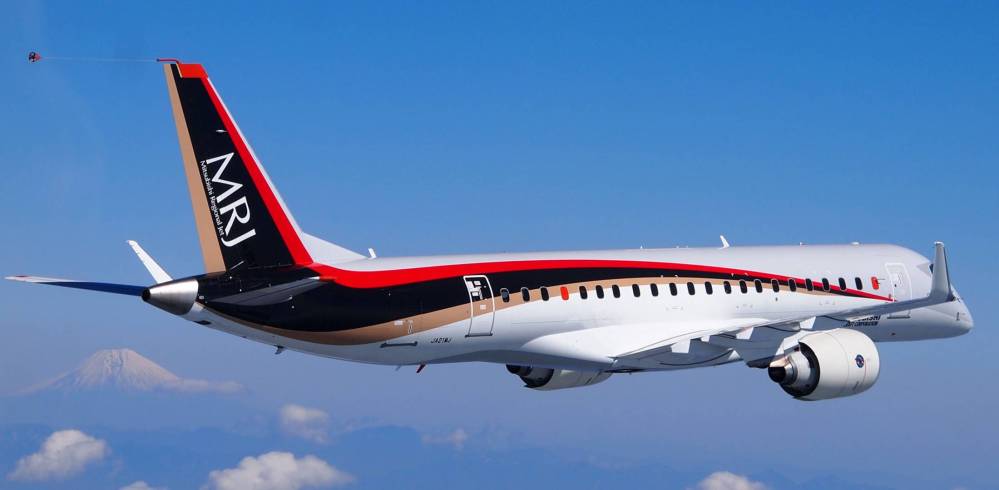
mitac_logotypeEl avión regional japonés Mitsubishi MRJ-90 realiza pruebas de medición de ruido

El 21 de diciembre, Mitsubishi Aircraft anunció su progreso de trabajo de pintura de dos MRJ-90 y la prueba de vuelo número #5 de medición de ruido de la aeronave regional.

Desde finales de octubre hasta principios de diciembre, trasladamos los dos MRJ 90 a la fábrica de pintura y realizamos el trabajo de pintura. Esta vez fue el primer trabajo de pintura de máquina en una fábrica de pintura completada cerca de la planta de ensamblaje final de MRJ. Ambas máquinas están pintadas en un color blanco simple, y el logotipo de «MRJ 90» se le da a las alas verticales de la cola para dar algunas características al diseño. En el futuro, planeamos fabricar progresivamente el avión que refleje el cambio de diseño, y planeamos utilizar aproximadamente 2 máquinas nuevas (MRJ 90) para la prueba de vuelo.

El 30 de noviembre, llevamos a cabo una prueba de medición de ruido de estacionamiento en el prefectural Aeropuerto de Nagoya usando Flight Tester Unit 5. Esta prueba se llevó a cabo para evaluar la validez del diseño de ruido de estacionamiento, y se instaló un micrófono alrededor del cuerpo de la aeronave para adquirir datos de ruido cuando se utiliza la APU (unidad de potencia auxiliar). Se dijo que el resultado de la prueba era bueno, y se confirmó que los datos de ruido adquiridos satisfacían los requisitos de diseño. En Moses Lake Flight Test Center (MFC), desde octubre de 2016, cuando se inició la prueba de vuelo, la tasa de cancelación de prueba debido a problemas técnicos se mantiene en el 1%. Además, el 30 de noviembre, se inauguró el «Museo MRJ». En el Museo MRJ, estamos llevando a cabo exhibiciones que presentan tecnologías y recorridos de última generación (sistema de reserva completo, tarifa) que nos permiten observar el montaje real.  AIRWAYS® AW-Icon TXT

Noise measurement test on Mitsubishi MRJ-90

The Japanese regional aircraft Mitsubishi MRJ-90 performs noise measurement tests

On December 21, Mitsubishi Aircraft announced its work progress of painting two MRJ-90s and the flight test number # 5 noise measurement of the regional aircraft.

From the end of October to the beginning of December, we moved the two MRJ 90s to the paint factory and carried out the painting work. This time it was the first machine paint job in a paint factory completed near the final assembly plant of MRJ. Both machines are painted in a simple white color, and the «MRJ 90» logo is given to the vertical wings of the tail to give some design characteristics. In the future, we plan to progressively manufacture the airplane that reflects the design change, and we plan to use approximately 2 new machines (MRJ 90) for the flight test.

On November 30, we conducted a parking noise measurement test at the Nagoya Airport prefectural using Flight Tester Unit 5. This test was carried out to evaluate the validity of the parking noise design, and a microphone was installed around the body of the aircraft to acquire noise data when the APU (auxiliary power unit) is used. The result of the test was said to be good, and it was confirmed that the acquired noise data satisfied the design requirements. In Moses Lake Flight Test Center (MFC), since October 2016, when the flight test was started, the test cancellation rate due to technical problems remains at 1%. In addition, on November 30, the «MRJ Museum» was inaugurated. In the MRJ Museum, we are holding exhibitions that present technologies and last generation tours (full reservation system, rate) that allow us to observe the real assembly. A\W


Ξ A I R G W A Y S Ξ
SOURCE:  Airgways.com
DBk: Flythemrj.com / Airgways.com
AW-POST: 201712211440AR

A\W   A I R G W A Y S ®

Mauritania recibe 1er Boeing 737 MAX

99219_1513305364.jpg

AW | 2017 12 21 14:26 | AIRLINES

Resultado de imagen para Air Mauritanie logoBoeing y Mauritania Airlines International celebran la entrega de First 737-8 MAX
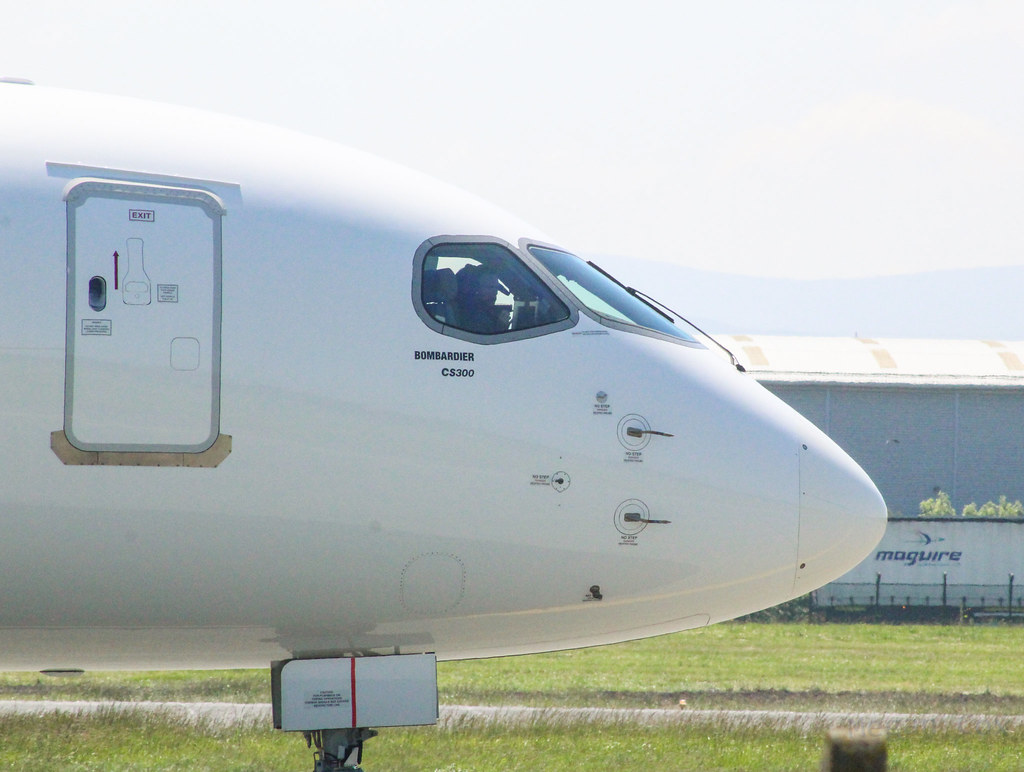
La aerolínea mauritana se convierte en la primera en África en volar la versión más nueva del 737 más vendido

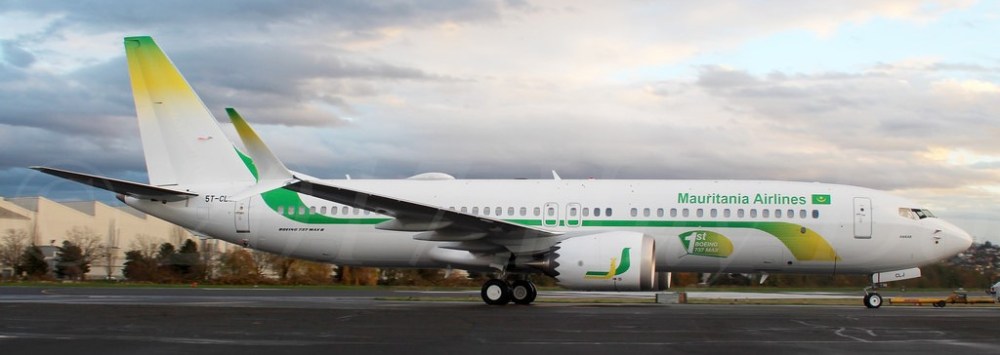
Boeing  y Mauritania Airlines International celebraron hoy la entrega del nuevo 737 MAX 8 de la aerolínea. El operador mauritano se convierte en el primer operador del nuevo y mejorado avión en África.

«Estamos orgullosos de ser el primer operador en África en operar el 737 MAX», dijo Mohamed Radhi Bennahi, director ejecutivo de Mauritania Airlines International. «La introducción del 737 MAX en la creciente flota de Mauritania ayudará a aumentar de manera rentable nuestra red a medida que introducimos nuevas rutas hacia Europa y Medio Oriente«.

El 737 MAX ofrece la mayor eficiencia, fiabilidad y comodidad para los pasajeros en el mercado de pasillo único al incorporar la última tecnología de los motores CFM International LEAP-1B, las aletas de tecnología avanzada, Boeing Sky Interior, grandes pantallas de cabina de vuelo y otras mejoras. Los aumentos de eficiencia han ayudado a que el MAX sea el avión más vendido en la historia de Boeing, con más de 4,000 pedidos a la fecha de 92 clientes en todo el mundo.

«Estamos encantados de que Mauritania Airlines International se convierta en el primer operador del MAX en África y me gustaría agradecer a todos en la aerolínea por su asociación y fe continua en el programa 737″, dijo Marty Bentrott , vicepresidente senior de ventas para Oriente Medio. , Turquía , África , Rusia y Asia Central , Boeing Commercial Airplanes. «El 737 MAX será una gran adición a su flota que brinda mayor eficiencia, alcance y comodidad para sus operaciones».

Fundada en 2010, Mauritania Airlines International atiende a más de 10 destinos en África y Europa desde su base en el aeropuerto internacional de Nouakchott-Oumtounsy en la capital de Mauritania, Nouakchott . La compañía de bandera mauritana opera una flota que incluye una 737-800 de nueva generación, una 737-700 de próxima generación, dos 737-500 y ahora la 737 MAX 8. AIRWAYS® AW-Icon TXT

26815103519_10fb8a77bd_b.jpg

Mauritania receives first Boeing 737 MAX

Boeing and Mauritania Airlines International celebrate the delivery of First 737-8 MAX

Mauritanian carrier becomes the first in Africa to fly the newest version of the best-selling 737

Boeing and Mauritania Airlines International today celebrated the delivery of the airline’s new 737 MAX 8. The Mauritanian carrier becomes the first operator of the new and improved airplane in Africa.

«We are proud to be the first carrier in Africa to operate the 737 MAX,» said Mohamed Radhi Bennahi, chief executive officer of Mauritania Airlines International. «The introduction of the 737 MAX into the growing Mauritanian fleet will help to profitably grow our network as we introduce new routes to Europe and the Middle East.»

The 737 MAX delivers the highest efficiency, reliability and passenger comfort in the single-aisle market by incorporating the latest technology CFM International LEAP-1B engines, Advanced Technology winglets, the Boeing Sky Interior, large flight deck displays, and other improvements. The efficiency gains have helped make the MAX the fastest selling airplane in Boeing history with more than 4,000 orders to date from 92 customers worldwide.

«We are delighted that Mauritania Airlines International becomes the first operator of the MAX in Africa and I would like to thank everyone at the airline for their partnership and continued faith in the 737 program,» said Marty Bentrott, senior vice president sales for Middle East, Turkey, Africa, Russia & Central Asia, Boeing Commercial Airplanes. «The 737 MAX will be a great addition to its fleet providing greater efficiency, range and passenger comfort to its operations.»

Founded in 2010, Mauritania Airlines International serves more than 10 destinations across Africa and Europe from its base at Nouakchott-Oumtounsy International Airport in Mauritania’s capital city of Nouakchott. The Mauritanian flag-carrier operates a fleet which includes one Next-Generation 737-800, one Next Generation 737-700, two 737-500s and now the 737 MAX 8.  A \ W


Ξ A I R G W A Y S Ξ
SOURCE:  Airgways.com
DBk: Huy Do / Rocky Wang
AW-POST: 201712211426AR

A\W   A I R G W A Y S ®

EEUU avanza con aranceles a Bombardier

AW | 2017 12 21 14:15 | INDUSTRY

Resultado de imagen para Boeing vs CSeriesEEUU fija arancel de 292% a importaciones del Bombardier CSeries

Boeing ha reclamado procesos antidumping a Bombardier en la venta del CSeries a Delta Air Lines, catalogándola como injusta e ilegalmente subsidiada por el Gobierno de Québec (Canadá).

El Departamento de Comercio de EEUU mantendrá fuertes aranceles sobre los jets CSeries de Bombardier Inc., preparando la próxima ronda de una feroz disputa comercial internacional entre los Estados Unidos y Canadá.

La medida anunciada por el departamento para imponer aranceles de casi 300% proviene de una queja del rival Boeing de que Bombardier había sido injusta e ilegalmente subsidiado por el gobierno canadiense, lo que permitió al fabricante de aviones deshacerse de su el avión más nuevo en el mercado de EEUU por debajo del costo.

La tasa antidumping corresponde a un desequilibrio entre el costo de fabricación y el precio de venta de los 75 aviones vendidos por Bombardier a la compañía estadounidense Delta Air Lines. Las primeras aeronaves entregadas se esperan entregar en 2Q2018.

“La decisión de hoy valida las quejas de Boeing con respecto a los precios de Bombardier en los Estados Unidos, los precios que han perjudicado a nuestra fuerza de trabajo y la industria estadounidense”, dijo Boeing en un comunicado luego de la decisión del departamento.

Delta Air Lines, la segunda aerolínea más grande de EEUU por tráfico de pasajeros, y ha formulado un pedido de 75 de los CSeries CS100. Si se impone, los aranceles triplicarían el costo de un avión CSeries vendido en los Estados Unidos, según la afirmación de Boeing de que Delta recibió los aviones por 20 millones de dólares cada uno, muy por debajo de un costo estimado de 33 millones de dólares y lo que Bombardier cobra en Canadá.

La sanción del Departamento de Comercio contra Bombardier solo tendrá efecto si la menos conocida Comisión de Comercio Internacional de EEUU (ITC) falla a favor de Boeing, como lo ha hecho hasta ahora, en su decisión final que se espera para principios de 2018.

En su reclamo en dos partes, Boeing solicitó derechos compensatorios de 79.41% para compensar lo que describió como los subsidios dañinos de Canadá a Bombardier. También identificó un “margen de dumping” del 80.5%, basado en los precios no publicados en los que afirma que Bombardier vendió los aviones CSeries a Delta.

La decisión del departamento obedece a la promesa del Secretario de Comercio, Wilbur Ross, de vigilar agresivamente las importaciones objeto de comercio injusto para ayudar a reducir los déficits comerciales de los EE. UU.

A pesar de la decisión del Departamento de Comercio, la palabra final la tendrá la Comisión estadounidense del Comercio Internacional (ITC) que debe pronunciarse en febrero.  AIRWAYS® AW-Icon TXT

Resultado de imagen para CS100 Delta

US advances with tariffs to Bombardier CSeries

The US sets a tariff of 292% on imports from Bombardier CSeries

Boeing has claimed anti-dumping proceedings against Bombardier in the sale of CSeries to Delta Air Lines, labeling it as unfair and illegally subsidized by the Government of Québec (Canadá).

The US Department of Commerce will maintain heavy tariffs on CSeries jets from Bombardier Inc., preparing for the next round of a fierce international trade dispute between the United States and Canada.

The measure announced by the department to impose tariffs of nearly 300% comes from a rival Boeing complaint that Bombardier had been unfairly and illegally subsidized by the Canadian government, which allowed the aircraft manufacturer to dispose of its newest aircraft in the country. US market below cost.

The anti-dumping rate corresponds to an imbalance between the cost of manufacturing and the sale price of the 75 aircraft sold by Bombardier to the US company Delta Air Lines. The first delivered aircraft are expected to be delivered in 2Q2018.

«Today’s decision validates Boeing’s complaints regarding Bombardier’s prices in the United States, the prices that have harmed our workforce and the American industry», Boeing said in a statement following the department’s decision.

Delta Air Lines, the second largest airline in the US for passenger traffic, and has placed an order for 75 of the CSeries CS100. If imposed, tariffs would triple the cost of a CSeries aircraft sold in the United States, according to Boeing’s claim that Delta received the planes for 20 million dollars each, well below an estimated cost of 33 million dollars and what Bombardier charges in Canada.

The Department of Commerce’s sanction against Bombardier will only take effect if the less-known US International Trade Commission (ITC) rules in Boeing’s favor, as it has done so far, in its final decision that is expected by early 2018.

In its two-part claim, Boeing requested countervailing duties of 79.41% to compensate for what it described as damaging subsidies from Canada to Bombardier. It also identified a «margin of dumping» of 80.5%, based on unpublished prices in which it states that Bombardier sold the CSeries aircraft to Delta.

The department’s decision follows the promise of Commerce Secretary Wilbur Ross to aggressively monitor unfairly traded imports to help reduce US trade deficits. UU

Despite the decision of the Department of Commerce, the final word will be the United States Commission of International Trade (ITC), which must speak in February. A\W


Ξ A I R G W A Y S Ξ
SOURCE:  Airgways.com
DBk: Commerce.gov / Bombardier.com
AW-POST: 201712211415AR

A\W   A I R G W A Y S ®

Pegasus compra 25 Airbus A321NEO’s

AW-70000087

AW | 2017 12 21 13:57 | AIRLINES

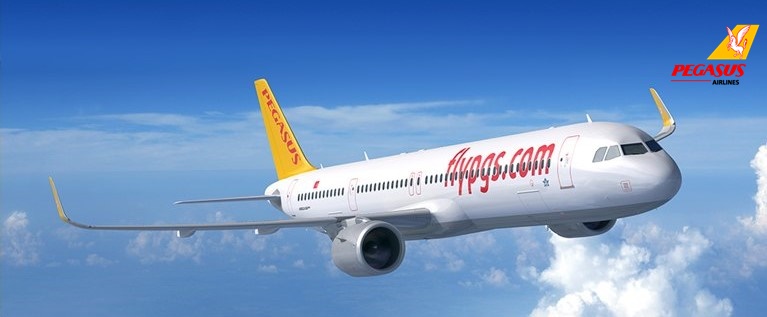
Pegasus AirlinesPegasus Airlines ha emitido una orden por 25 A321NEO ACF
La aerolínea turca Pegasus Airlines ha rformulado un pedido por 25 aviones Airbus A321NEO ACF (Airbus Cabin Flex), valorados en U$D 3.175 millones de dólares (€2.670,6 millones de euros) a precio de catálogo, informó Airbus Group.

Este nuevo pedido de la aerolínea turca de bajo coste se suma a los 18 aviones A321NEO y los 57 A320NEO que ya acordó la compañía en 2012, elevando a cien aviones los encargados, con un valor en el mercado de 11.104 millones de dólares (9.340 millones de euros).

El nuevo pedido de Pegasus se enmarca en la estrategia de expansión de la red nacional e internacional de la aerolínea. «Turquía sigue fortaleciendo su posición en el mercado mundial de la aviación cada día y nosotros, como Pegasus, somos una parte importante de esta transformación», dijo el director de la aerolínea turca, Mehmet T. Nane.

El pedido que la compañía aérea realizó a Airbus en 2012, y que ahora ha ampliado, se convirtió en el más grande en la historia de la aviación de Turquía en ese momento. El primer Airbus A320NEO fue entregado a Pegasus en el 3Q2016. El modelo A321NEO es el miembro más grande de la familia A320, con capacidad para 240 pasajeros, incorporando los últimos motores avanzados LEAP-1A, avances aerodinámicos e innovaciones de cabina de Airbus, el A321NEO ofrece una reducción significativa en el consumo de combustible de al menos 15% por asiento desde el primer día y 20% en 2020, señala el fabricante europeo. AIRWAYS® AW-Icon TXT


Pegasus buys 25 Airbus A321NEO’s

Resultado de imagen para Pegasus Airlines logo pngPegasus Airlines has issued an order for 25 A321NEO ACF
The Turkish airline Pegasus Airlines has filed an order for 25 Airbus A321NEO ACF (Airbus Cabin Flex) aircraft, valued at US$ 3,175 million (€ 2,670.6 million) at the list price, Airbus Group reported.

This new order from the low cost Turkish airline joins the 18 aircraft A321NEO and 57 A320NEO that the company already agreed in 2012, raising to one hundred aircraft the managers, with a market value of 11,104 million dollars (9.340 million of euros).

a320neo-pegasus-cfm.jpg

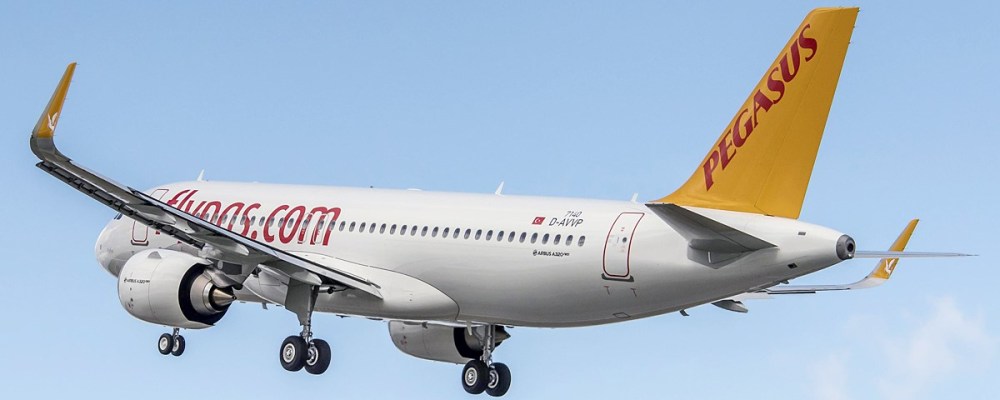
AIRBUS A320NEO OF PEGASUS AIRLINES

The new Pegasus order is part of the expansion strategy of the airline’s national and international network. «Turkey continues to strengthen its position in the global aviation market every day and we, like Pegasus, are an important part of this transformation», said Turkish airline director Mehmet T. Nane.

The order that the airline made to Airbus in 2012, which it has now expanded, became the largest in the history of aviation in Turkey at that time. The first Airbus A320NEO was delivered to Pegasus in 3Q2016. The A321NEO model is the largest member of the A320 family, with capacity for 240 passengers, incorporating the latest LEAP-1A advanced engines, aerodynamic breakthroughs and Airbus cab innovations, the A321NEO offers a significant reduction in fuel consumption to less 15% per seat from the first day and 20% in 2020, says the European manufacturer. A\W


Ξ A I R G W A Y S Ξ
SOURCE:  Airgways.com
DBk: Flypgs.com / Airbus.com
AW-POST: 201712211357AR

A\W   A I R G W A Y S ®

Austral y los Embraer E190

20-_vale.jpg

AW | 2017 12 21 13:31 | AIRLINES

Austral_new_logo[1]Poner a disposición la venta de los Embraer E190 ocasiona dificultades para el Grupo Aerolíneas
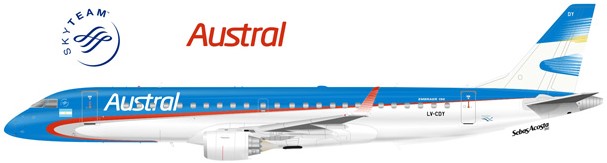
La venta de los 22 Embraer E190-100AR podría ocasionarle una gran pérdida al Grupo Aerolíneas. La flota total de Embraer E190 son de 26 aviones de los cuales cuatro están bajo régimen de alquiler y los restantes están siendo pagados al fabricante brasileño Embraer por medio del Banco Nacional de Desarrollo de Brasil (BNDES).

La trama de la compra de los Embraer’s

El Grupo Aerolíneas compró a Embraer 22 aviones E190-100AR para Austral Líneas Aéreas. Estos aviones que compró, con presuntos sobreprecios, en la gestión de Cristina F. Kirchner; aún no se pagó la totalidad de la deuda. En noviembre de 2009, la entonces presidenta Cristina Kirchner reconoció que la compra de los aviones Embraer a esa empresa brasileña para la flota de Austral se debió más a una cuestión política que a razones operacionales.

AW-70083707

El problema estriba en la venta de estas unidades en el mercado es dificultoso debido a que ofrecen pagar un precio bajo que ni siquiera alcanza para saldar el crédito que Aerolíneas debe por aquella compra «fraudulenta».

Austral Líneas Aéreas tiene 26 Embraer 190-100AR, con capacidad para 94 pax. Un total de 20 fueron adquiridos en la gestión de Ricardo Jaime como Secretario de Transporte y Julio Alak como Presidente de Aerolíneas Argentinas, mientras que los dos restantes se negociaron en épocas de Mariano Recalde.

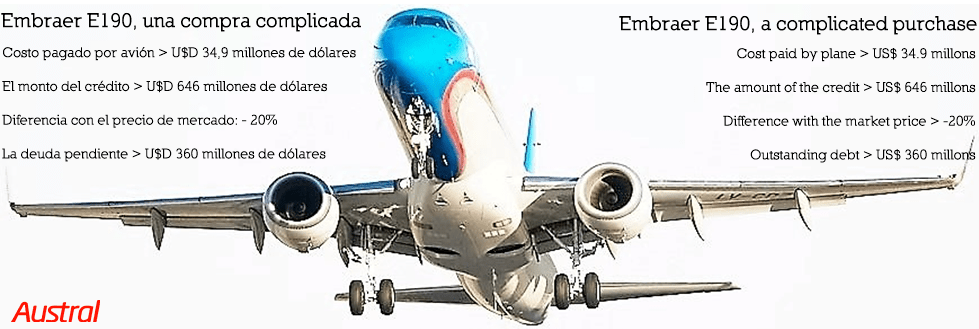
Se pagaron U$D 34,9 millones de dólares por cada uno, mientras en el mercado costaban alrededor de U$D 30 millones. Ahora, según los consultores internacionales que miraron la operación, no valen más de U$D12 millones de dólares. Es un negocio de sobreprecios. Por el crédito del Banco Nacional de Desarrollo de Brasil (BNDES), financista de la operación, se deben abonar aún U$D 360 millones de dólares; por lo que la ecuación de la venta futura venta de los Embraers no alcanzaría para cubrir el saldo adeudado, por lo que la operación generaría un déficit para el Grupo Aerolíneas.

Los consultores internacionales, han llamado la atención el precio de compra de los 24 Embraer E190 para Austral Líneas Aéreas. Los aviones están puestos en el activo por valores que al menos duplican el precio de mercado. El Grupo deberá asumir las pérdidas si vende los aviones o agudizar la inventiva contable para maquillar la pérdida. En consecuencia, se sustanciaron denuncias tanto en la Argentina como en la Securities and Exchange Commission (SEC), la Comisión de Valores de EEUU.

La causa local, que quedó en manos del juez federal Sergio Torres, no avanzó y está a la espera de alguna prueba más. La justicia norteamericana no se expidió sobre el caso argentino, aunque negoció con la firma brasileña el pago de U$D 206 millones de dólares en concepto de multa por haber pagado coimas en varios países para obtener contratos. Todo indica que el juez Torres tendrá nuevas pruebas como para sacarle el polvo a aquel expediente por sobreprecios.

sky14 - copia.jpg

El mercado de los aviones regionales E190

Los Embraer E190 consumen menos, pero en un marco de combustible relativamente barato. Pero en un mercado de alta demanda se vuelven antieconómicos, ya que para llevar la misma gente necesitan más frecuencias. El menor consumo no compensa. Por caso, en la ruta Buenos Aires-Neuquén se necesitarían ocho o nueve Embraer paras cubrir cinco vuelos de un Boeing 737-800.

En Aerolíneas abrirán una licitación en Enero 2018 para la compra de nuevos aviones, poniendo la mira en los grandes fabricantes Boeing, Airbus, Bombardier y Embraer. Lo racional del análisis de la venta es evaluar poder reemplazarlos por aviones más grandes para un mercado que crece. El diferencial de precio es mínimo respecto de la posibilidad de optimizar más ventas de asientos. El mismo personal de despacho, mantenimiento y aeropuertos, y con un consumo adicional de combustible de entre 15 y 20% por el mayor tamaño del avión, se dispondría de entre 40 y 120% de asientos adicionales para vender.

E190, una venta complicada

La línea aérea estatal decidió venderlos todos juntos. El problema es que los vendedores ya miraron el mercado y no hay comprador a buen precio por un lote de 22 aviones. Las ofertas que llegaron obligarían, de aceptarlas, a anotar un enorme quebranto en los balances de la empresa. El pago de los Embraer se hizo a través de un crédito firmado entre Austral y el Bndes, y comprendió el financiamiento del 85% del valor de cada aeronave. El valor total es de U$D 646 millones de dólares en concepto de capital y U$D 320,8 millones por intereses a devengar. La tasa a la que se actualizó fue del 7,45% en dólares. Fue el Banco de la Nación el que otorgó los avales sobre los pagarés emitidos por la sociedad por cada uno de los aviones adquiridos.

La interna gremial también trae sus complicaciones. Los pilotos de Aerolíneas Argentinas no estarían cómodos en la situación en que sus colegas de Austral Líneas Aéreas tengan algo más que los Embraer regionales. Austral habría reclamado más horas en los Boeing 737 que lo que vuelan los de Aerolíneas. Esa predisposición a un poco más de trabajo no ha caído bien en el Grupo Aerolíneas.

Todo se financió con un crédito por US$ 646 millones en concepto de capital más otros US$ 320,8 millones por intereses a devengar, que dió el Banco Nacional de Desarrollo de Brasil (BNDS) a una tasa del 7,45% anual.

La deuda que se hereda de la gestión anterior es de U$D 360 millones, mientras que cada una de las aeronaves tiene un precio en el mercado que no supera los U$D 12 millones.

Las ventas de Embraers a travéz del mundo resume los despropósitos del fracaso de la compra para Argentina de los E190-100AR. Aeroméxico pagó U$D 29 millones de dólares por un E190 en 2008. En Julio de 2009, TACA Airlines pagó U$D 30,5 millones. Ese mismo año, Air Europa pagó U$D 31 millones por el E195, un avión más grande de Embraer. La Argentina pagó U$D 34,9 millones por cada uno, en una operación por 22 unidades. AIRWAYS® AW-Icon TXT

AW-70083713

Austral and the Embraer E190

Resultado de imagen para Austral Embraer E190 pngMaking the sale of the Embraer E190 available causes difficulties for the Airlines Group
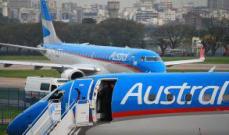
The sale of the 22 Embraer E190-100AR could cause a great loss to the Aerolíneas Group. The total fleet of Embraer E190 are 26 aircraft, of which four are under rental regime and the rest are being paid to the Brazilian manufacturer Embraer through the National Development Bank of Brazil (BNDES).

The plot of the Embraer’s purchase

The Aerolíneas Group bought Embraer 22 E190-100AR aircraft for Austral Líneas Aéreas. These aircraft that he bought, with presumed surcharges, in the management of Cristina F. Kirchner; The entire debt has not yet been paid. In November 2009, then-President Cristina Kirchner acknowledged that the purchase of the Embraer aircraft from that Brazilian company for the Austral fleet was due more to a political issue than to operational reasons.

AW-70083707.png

The main problem in the sale of these units in the market is difficult because they offer to pay a low price that is not even enough to settle the credit that Aerolíneas owes for that «fraudulent» purchase.

Austral Líneas Aéreas has 26 Embraer 190-100AR, with capacity for 94 pax. A total of 20 were acquired in the management of Ricardo Jaime as Transportation Secretary and Julio Alak as President of Aerolíneas Argentinas, while the other two were negotiated during the Mariano Recalde era.

US$ 34.9 million were paid for each one, while in the market they cost around US$ 30 million. Now, according to the international consultants who looked at the operation, they are worth no more than US$ 12 million. It’s a premium business. For the credit of the National Development Bank of Brazil (BNDES), the financier of the operation, US$ 360 million must still be paid; so that the equation of the future sale sale of the Embraers would not reach to cover the balance owed, reason why the operation would generate a deficit for the Aerolíneas Group.

International consultants have drawn attention to the purchase price of the 24 Embraer E190 for Austral Líneas Aéreas. Aircraft are placed in the asset for securities that at least double the market price. The Group must assume the losses if it sells the aircraft or sharpen the inventive accounting to make up the loss. As a result, complaints were filed both in Argentina and in the Securities and Exchange Commission (SEC), the US Securities Commission.

The local cause, which remained in the hands of federal judge Sergio Torres, did not advance and is waiting for some more evidence. US justice was not issued on the Argentine case, although it negotiated with the Brazilian firm the payment of US$ 206 million as a fine for having paid bribes in several countries to obtain contracts. Everything indicates that Judge Torres will have new evidence to get rid of that file due to surcharges.

The market for regional aircraft E190

Llegaron_los_nuevos_aviones_para_Aerol_neas_Argentinas_y_Austral_01 (1)The Embraer E190 consume less, but in a relatively cheap fuel frame. But in a market of high demand they become uneconomical, since to carry the same people they need more frequencies. The lower consumption does not compensate. For example, on the Buenos Aires-Neuquén route it would take eight or nine Embraer to cover five flights of a Boeing 737-800.

In Aerolíneas they will open a tender in January 2018 for the purchase of new aircraft, targeting the big manufacturers Boeing, Airbus, Bombardier and Embraer. The rational of the analysis of the sale is to evaluate being able to replace them with larger aircraft for a growing market. The price differential is minimal compared to the possibility of optimizing more sales of seats. The same personnel of office, maintenance and airports, and with an additional consumption of fuel of between 15 and 20% for the greater size of the airplane, would be available between 40 and 120% of additional seats to sell.

E190, a complicated sale

The state airline decided to sell them all together. The problem is that the sellers have already looked at the market and there is no buyer at a good price for a lot of 22 planes. The offers that arrived would force, if accepted, to record a huge loss in the balance sheets of the company. The payment of the Embraer was made through a loan signed between Austral and Bndes, and included the financing of 85% of the value of each aircraft. The total value is US$ 646 million for capital and US$ 320.8 million for interest to be accrued. The rate at which it was updated was 7.45% in dollars. It was the Banco de la Nación that granted the guarantees on the promissory notes issued by the company for each of the acquired aircraft.

The internal union also brings its complications. Aerolineas Argentinas pilots would not be comfortable in the situation in which their colleagues from Austral Líneas Aéreas have something more than the regional Embraer. Austral would have claimed more hours in the Boeing 737 than airlines fly. That predisposition to a little more work has not fallen well in the Aerolíneas Group.

Everything was financed with a credit for US $ 646 million in capital plus another US $ 320.8 million for interest to be accrued, which was given by the National Development Bank of Brazil (BDNES) at a rate of 7.45% per annum.

The debt inherited from the previous management is US$ 360 million, while each of the aircraft has a price in the market that does not exceed US$ 12 million.

The sales of Embraers throughout the world summarizes the nonsense of the failure of the purchase for Argentina of the E190-100AR. Aeromexico paid US$ 29 million for an E190 in 2008. In July 2009, TACA Airlines paid US$ 30.5 million. That same year, Air Europa paid U$ 31 million for the E195, a larger Embraer aircraft. Argentina paid US$ 34.9 million for each one, in an operation for 22 units. A\W


Ξ A I R G W A Y S Ξ
SOURCE:  Airgways.com
DBk: Aerolineas.com / Airgways.com / Sebastián Acosta
AW-POST: 201712211331AR

A\W   A I R G W A Y S ®

Hawaiian comprará activos de Island Air

n945wp-island-air-atr-72-212_PlanespottersNet_508977

AW | 2017 12 21 11:27 | AIRLINES / AVIATION

La compañía matriz de Hawaiian Airlines comprará los activos de Island Air

Hawaiian Holdings Inc. acordó comprar el certificado de operación (AOC) y otros activos de Island Air en un movimiento para poder salvar a la línea aérea regional hacia una quiebra.

La empresa matriz Hawaiian Holdings Inc. de la aerolínea Hawaiian Airlines manifestó que compraría el certificado de operación por U$D 450,000 e inmediatamente proporcionaría adelantos en efectivo para pagar los gastos administrativos del Capítulo 7. Hawaiian Holdings dijo que compraría otros activos, como equipo de servicio terrestre, mobiliario y listas de viajeros frecuentes, por U$D 300,000. La justicia dio la aprobación preliminar a la venta. Una audiencia sobre la venta está programada para el 5 de Enero 2018.

Elliott Street Holdings compraría las acciones de Island Air y asumiría la propiedad del certificado de operación de Island Air, así como de otros activos, entre los aviones ATR 72-500 de la aerolínea regional.

Island Air se declaró en bancarrota según el Capítulo 11 el 16 de Octubre 2017 y cesó sus operaciones el 10 de noviembre. Convirtió el caso en el Capítulo 7 el 15 de Noviembre 2017. AIRWAYS® AW-Icon TXT

Resultado de imagen para Hawaiian Airlines Island Air

Hawaiian will buy Island Air assets

The parent company of Hawaiian Airlines will buy the assets of Island Air

Hawaiian Holdings Inc. agreed to purchase the operating certificate (AOC) and other Island Air assets in a move to save the regional airline from bankruptcy.

The Hawaiian Holdings Inc. parent company of Hawaiian Airlines said it would buy the operating certificate for US$450,000 and immediately provide cash advances to pay Chapter 7 administrative expenses. Hawaiian Holdings said it would buy other assets, such as ground service equipment, furniture and lists of frequent travelers, for US$ 300,000. The justice gave preliminary approval to the sale. A hearing on the sale is scheduled for January 5, 2018.

Elliott Street Holdings would buy the shares of Island Air and assume ownership of the Island Air operating certificate, as well as other assets, among the ATR 72-500 aircraft of the regional airline.

Island Air filed for bankruptcy under Chapter 11 on October 16, 2017 and ceased operations on November 10. He turned the case into Chapter 7 on November 15, 2017. A\W


Ξ A I R G W A Y S Ξ
SOURCE:  Airgways.com
DBk: Khon.com  / Cooper
AW-POST: 201712211127AR

A\W   A I R G W A Y S ®

Tratado cielos abiertos Brasil-EEUU

AW | 2017 12 21 10:55 | AIRLINES ALLIANCE / AVIATION

Imagen relacionadaEl tratado de cielos abiertos entre Brasil y Estados Unidos elimina límites de número de vuelos entre ambos países

El tratado de cielos abiertos entre Brasil y Estados Unidos fue aprobado este martes por la Cámara baja del Congreso de Brasil y ahora pasará al Senado, abre el camino para una asociación entre American Airlines Group Inc y LATAM Airlines Group SA.

El tratado de «cielos abiertos», que requiere de la aprobación del Senado para su ratificación final, fue firmado en el 2011, pero se enfrentó a la oposición de los legisladores que defienden los intereses de las aerolíneas brasileñas, que temían la competencia de las firmas estadounidenses.

El Departamento de Transporte (DOT) de Estados Unidos requiere que se apruebe un acuerdo de operación conjunta entre American Airlines y la aerolínea más grande de América Latina, LATAM Airlines, que les permitiría coordinar horarios y ofrecer más conexiones. El tratado debería abrir la vía para que Estados Unidos apruebe el acuerdo de operación conjunta.

La agencia antimonopolio de Brasil dio la aprobación para el acuerdo entre American y Latam. Los partidarios del tratado de cielos abiertos dicen que impulsará los viajes y reducirá las tarifas aéreas entre Brasil y Estados Unidos, el destino favorito de los turistas brasileños.  AIRWAYS® AW-Icon TXT

Next treaty open skies Brazil-USA

The treaty of open skies between Brazil and the United States eliminates limits on the number of flights between both countries

The treaty of open skies between Brazil and the United States was approved on Tuesday by the lower house of Congress of Brazil and will now go to the Senate, paving the way for a partnership between American Airlines Group Inc and LATAM Airlines Group SA.

The «open skies» treaty, which requires the approval of the Senate for its final ratification, was signed in 2011, but was opposed by legislators who defend the interests of Brazilian airlines, who feared competition from the airlines American firms.

The US Department of Transportation (DOT) requires a joint operating agreement between American Airlines and the largest airline in Latin America, LATAM Airlines, to be approved, which would allow them to coordinate schedules and offer more connections. The treaty should open the way for the United States to approve the joint operation agreement.

Brazil’s antitrust agency approved the agreement between American and Latam. Supporters of the open skies treaty say it will boost travel and reduce air fares between Brazil and the United States, the favorite destination of Brazilian tourists. A \ W


Ξ A I R G W A Y S Ξ
SOURCE:  Airgways.com
DBk: Aa.com / Latam.com
AW-POST: 201712211055AR

A\W   A I R G W A Y S ®