Tianjin Airlines acaba de recibir su E-Jet número 45, un E195 que es el ejemplar número 1.300 de esta familia
Pocos en Embraer pensaban en lograr el éxito que han obtenido con la familia E-Jet, del que la aerolínea china Tianjin Airlines perteneciente al grupo HNA, acaba de recibir el ejemplar número 1.300 de los más de 1.700 que ha vendido en todo el mundo.
En 2014 esta aerolínea firmó la compra de hasta 20 E195 y otros 20 E190-E2, si bien opera esta familia de aviones desde 2008 cuando fue la primera de China en poner en servicio la familia E-Jet. Los EJet-E2 comenzarán a serle entregados en 2018.
Embraer lidera el mercado chino de reactores regionales con 190 pedidos (21 de ellos pendientes del preceptivo permiso gubernamental), que representan el 80 por ciento del total.
Embraer delivers 1,300 E-Jet
Tianjin Airlines has just received its E-Jet number 45, an E195 which is the number 1,300 of this family
Few at Embraer were thinking of achieving the success they have achieved with the E-Jet family, of which the Chinese airline Tianjin Airlines belonging to the HNA group has just received the 1,300 copy of the more than 1,700 it has sold worldwide.
In 2014 this airline signed the purchase of up to 20 E195 and 20 E190-E2, although it operates this family of aircraft since 2008 when it was the first in China to put the E-Jet family in service. The EJet-E2 will begin to be delivered in 2018.
Embraer leads the Chinese market for regional reactors with 190 orders (21 of them pending mandatory governmental permission), which represent 80 percent of the total. A\W
Tandil dispondrá de vuelos comerciales a partir de marzo de 2017. La línea aérea Broker Air cubrirá la ruta Tandil-Buenos Aires
El Secretario de Desarrollo Económico Local, Jaime Feeney, de Tandil, dio precisiones acerca de los vuelos comerciales que comenzarán a funcionar en Tandil a partir de marzo de 2017 y expresó sus altas expectativas respecto de lo que representa la incorporación de un servicio de estas características.
Con el objetivo de acortar distancias y simplificar los traslados que en ocasiones deben experimentar visitantes provenientes de otras provincias, quienes deben hacer escala en Ezeiza para luego tomarse un remís y arribar a Tandil, la ciudad finalmente contará con vuelos comerciales directos hacia y desde la ciudad capitalina. De esta forma, será posible prescindir del transporte terrestre para arribar en un corto tiempo a destino. Según el Secretario, el servicio apunta principalmente a conferencistas, profesores de la universidad, servicios médicos, empresarios, funcionarios y personas de negocios. Se trata de un convenio que no dispone de ningún tipo de convenio estatal, por lo que el riesgo será tomado por la empresa prestadora en su totalidad. Sin embargo, la firma confía en que habrá una gran demanda, en miras hacia el desarrollo y el avance que augura la ciudad en términos empresariales y de negocios. La intención principal es “transformar a Tandil como un centro de referencia”, expresó Feeney, al mismo tiempo que valoró en gran manera la ayuda brindada por la Brigada Aérea y el personal del aeropuerto para la concreción del proyecto.
La empresa escogida para transportar pasajero por vía aérea desde Tandil hacia Aeroparque y de regreso fue Broker Air, puesto que propuso el acuerdo más conveniente, luego de gestiones que datan de principios de este año, donde se barajaron diversas firmas. La aerolínea dispone de gran prestigio trabaja para embajadas y hospitales. El jueves 15 de diciembre se anunciará públicamente la puesta en marcha del servicio, durante el cual se brindarán detalles y se presentará a la comunidad la nave que realizará los viajes, por lo que será “un día importante para Tandil”, comentó Feeney. Se espera la presencia de intendentes de localidades de la región, representantes de la UNICEN, de empresas y de hospitales.
La puesta en funcionamiento será el 1 de marzo y, con una frecuencia semanal, brindará vuelos durante los 365 días del año. Por el momento, el servicio saldrá de Tandil hacia Aeroparque los lunes y miércoles a las 7.30, para luego regresar a las 19.30 horas del mismo día. En principio se iniciará con naves con capacidad para ocho personas, con la posibilidad de pasar a otra de diecisiete, así como también incluir frecuencias de vuelo adicionales, según sea la demanda. Entre las características sobresalientes de la nave se encuentra su configuración sanitaria, lo que significa que se podrá transformar en un vuelo sanitario en caso de ser necesaria la derivación de un paciente a un centro médico lejano de inmediato. Aún no hay precisiones sobre las tarifas, las cuales serán anunciadas el día 15 de este mes, pero anticipó que el pasaje será más económico que trasladarse en remís entre las localidades. Sin embargo, el valor será acorde a un vuelo de cabotaje de otras aerolíneas.
La propuesta primeramente fue pensada para la gente de Tandil, aunque el Secretario no duda que los beneficios también se extenderán a las localidades vecinas, puesto que dispondrán de un aeropuerto en las cercanías y tendrán la posibilidad de proponer vuelos. Jaime Feeney destacó la flexibilidad de la aerolínea, ya que también sería posible acceder a otros destinos en caso de que grupos de ocho personas necesiten asistir a ciudades como Córdoba o Bahía Blanca, o, incluso, arribar al aeropuerto de Ezeiza en vez de Aeroparque, según sean las necesidades.
Al ser consultado por la suspensión del servicio de trenes en relación a la nueva puesta en marcha del transporte aéreo, afirmó que “una cosa no excluye la otra” y que el tren continúa siendo una preocupación. “No quiere decir que debamos excluir otras cosas buenas”, aclaró a partir de la ausencia de funcionamiento del transporte ferroviario. “Queremos que todo funcione”, finalizó.
Broker Air to join Tandil with Buenos Aires
Tandil will have commercial flights from March 2017. The airline Broker Air will cover the route Tandil-Buenos Aires
Local Economic Development Secretary Jaime Feeney of Tandil gave details of the commercial flights that will start operating in Tandil from March 2017 and expressed his high expectations regarding the incorporation of a service of this nature.
With the objective of shortening distances and simplifying the transfers that visitors should occasionally experience from other provinces, who must stop in Ezeiza and then take a remis and arrive at Tandil, the city will finally have direct commercial flights to and from the Capital city in this way, it will be possible to dispense with terrestrial transport to arrive in a short time to destination. According to the Secretary, the service targets mainly lecturers, university professors, medical services, businessmen, officials and business people. It is an agreement that does not have any type of state agreement, so the risk will be taken by the lending company as a whole. However, the company is confident that there will be a great demand, in view of the development and progress that augurs the city in business and business terms. The main intention is «to transform Tandil as a center of reference,» Feeney said, while appreciating greatly the assistance provided by the Air Brigade and the airport staff for the completion of the project.
The company chosen to transport passengers by air from Tandil to Aeroparque and back was Broker Air, since it proposed the most convenient agreement, after negotiations that date from the beginning of this year, where several firms were shuffled. The airline has great prestige working for embassies and hospitals. On Thursday, December 15, the service will be announced publicly, during which details will be given and the ship that will make the trips will be presented to the community, so it will be «an important day for Tandil», Feeney said. The presence of mayors from localities of the region, representatives of UNICEN, companies and hospitals is expected.
The commissioning will be on March 1 and, with a weekly frequency, will provide flights during the 365 days of the year. For the moment, the service will leave Tandil to Aeroparque on Monday and Wednesday at 7.30, and then return at 19.30 the same day. In principle it will begin with ships with capacity for eight people, with the possibility of passing to another one of seventeen, as well as to include additional flight frequencies, according to the demand. Among the salient characteristics of the ship is its health configuration, which means that it can be transformed into a health flight in case it is necessary to refer a patient to a distant medical center immediately. There are still no details on the rates, which will be announced on the 15th of this month, but anticipated that the passage will be cheaper than moving in remis between the localities. However, the value will be according to a cabotage flight from other airlines.
The proposal was first intended for the people of Tandil, although the Secretary does not doubt that the benefits will also be extended to the neighboring towns, since they will have an airport in the vicinity and will have the possibility to propose flights. Jaime Feeney highlighted the flexibility of the airline, as it would also be possible to access other destinations in case groups of eight people need to attend cities such as Córdoba or Bahía Blanca, or even arrive at Ezeiza airport instead of Aeroparque, According to the needs.
When asked about the suspension of the train service in relation to the new start-up of air transport, he affirmed that «one thing does not exclude the other» and that the train continues to be a concern. «It does not mean that we should exclude other good things», he clarified from the lack of operation of rail transport. «We want everything to work,» he said. A\W
Washington, Estados Unidos · El Departamento de Transporte de Estados Unidos acordó el viernes permitir a Norwegian Air International volar a los Estados Unidos, en una decisión que las líneas aéreas nacionales, sus sindicatos y algunos legisladores se opusieron como competencia desleal.
La aerolínea de bajo costo, una subsidiaria de Norwegian Air Shuttle, había solicitado en diciembre de 2013 para servir a los EE.UU. La compañía matriz estableció rutas en varios aeropuertos de Estados Unidos con aviones Boeing 787 Dreamliner y cientos de trabajadores contratados localmente mientras espera la decisión.
Pero los críticos estadounidenses, entre ellos American, Delta y United Airlines y la Asociación de Pilotos de Líneas Aéreas, argumentaron que el noruego estaba tratando de evitar las leyes laborales y de seguridad, al tener su sede en Irlanda y potencialmente contratar a tripulaciones asiáticas por salarios por debajo del mercado.
El departamento dio la aprobación provisional en abril y finalizó la decisión el viernes. En referencia directa a las preocupaciones sobre las prácticas de contratación y empleo, la decisión dijo que el CEO de la aerolínea ofreció «una serie de prácticas voluntarias» para abordar las preocupaciones.
«Este caso es uno de los más nuevos y complejos jamás llevados a cabo por el departamento», escribió Jenny Rosenberg, secretaria adjunta interina para asuntos internacionales, en la decisión de nueve páginas. «Independientemente de nuestra apreciación de los argumentos de política pública planteados por los opositores, nos han advertido que la ley y nuestras obligaciones bilaterales no nos dejan ninguna vía para rechazar esta solicitud».
Roger Dow, CEO de la Asociación de Viajes de Estados Unidos, dijo que la comunidad de viajes estaba «extática» en la decisión.
«No hay ningún inconveniente en permitir que más aerolíneas de bajo costo lleguen a los aeropuertos estadounidenses: es una política que es buena para los consumidores, estupenda para el crecimiento económico y de empleo en Estados Unidos, e incluso buena para las aerolíneas estadounidenses porque amplía el mercado de vuelos domésticos», Dow dijo. «Más opciones para los viajeros estadounidenses y más capacidad para atraer visitantes extranjeros y sus dólares a las costas de Estados Unidos es la decisión incuestionablemente correcta, punto».
Los críticos estaban indignados ante una decisión que advirtieron que podría permitir a las aerolíneas reflejar la industria naviera, donde las compañías se organizan en países con las regulaciones menos onerosas. Los opositores citaron el lenguaje de la política denominada Acuerdo de Cielos Abiertos entre Estados Unidos, la Unión Europea y Noruega, que dice que «las oportunidades creadas por el acuerdo no pretenden socavar las normas laborales o los derechos y principios laborales», pero el DOT La decisión encontró que eso no bloqueó la aprobación de los vuelos.
«La decisión del DOT ha garantizado una carrera hacia el fondo en nuestro mercado transatlántico de aviación», dijo el representante Peter DeFazio, D-Ore. «Norwegian es una aerolínea virtual, creada bajo bandera de conveniencia para aprovechar leyes laborales débiles en otros países como Singapur, ahorrar dinero y socavar la competencia».
La crítica era bipartidista. El representante Frank LoBiondo, republicano de Nueva York, también calificó la decisión de «una bofetada en la cara».
La Asociación de Asistentes de Vuelo-CWA condenó la decisión como una doble cruz de los trabajadores estadounidenses.
«Es una traición para cientos de miles de trabajadores de la aviación», dijo Sara Nelson, presidenta del sindicato. «Esta decisión pone un sello de aprobación en el modelo de bandera de conveniencia que destruyó más de cien mil empleos de envío de Estados Unidos.»
El capitán Tim Canoll, presidente del sindicato de pilotos, dijo que el grupo «está considerando todas las opciones para revertir esta acción».
«Esta acción defectuosa es un legado duradero de la administración Obama y demuestra una falta flagrante de apoyo para los trabajadores y trabajadoras en este país», dijo Canoll. «Esta decisión es una afrenta a la competencia leal y en última instancia resultará en la pérdida de EE.UU. Puestos de trabajo y, potencialmente, pérdidas significativas para la industria de la aviación internacional estadounidense «.
Pero los funcionarios de las aerolíneas noruegas se opusieron firmemente a que se les caracterizara como un recorte de las normas de seguridad o de trabajo. Bjorn Kjos, director general del grupo noruego, ha dicho que la aprobación sería un «ganar-ganar» para los consumidores y las economías de ambos lados del Atlántico. La compañía dijo que sus vuelos beneficiarían a economías de ambos lados del Atlántico, después de ordenar 18.500 millones de dólares de 787 y 737 aviones.
Los grupos de aeropuertos de Oakland, Orlando, Fort Lauderdale y Washington, D.C., solicitaron la aprobación de la solicitud para obtener más vuelos internacionales.
John Byerly, ex funcionario del Departamento de Estado que ayudó a negociar el acuerdo de Cielos Abiertos que permitió la aplicación y que ahora es consultor para el noruego, ha dicho que las aerolíneas y los sindicatos intentaban evitar la competencia en vuelos transatlánticos.
DOT approves contested Norwegian Air flights
Washington, USA · The Transportation Department of United States agreed Friday to allow Norwegian Air International to fly to the U.S., in a decision that domestic airlines, their unions and some lawmakers opposed as unfair competition.
The low-cost carrier, a subsidiary of Norwegian Air Shuttle, had applied in December 2013 to serve the U.S. The parent carrier established routes at several U.S. airports with Boeing 787 Dreamliner aircraft and hundreds of locally hired workers while awaiting the decision.
But U.S. critics, including American, Delta and United airlines, and the Air Line Pilots Association, argued that Norwegian was trying to skirt labor and safety laws, by being headquartered in Ireland and potentially hiring Asian crews for below-market wages.
The department gave tentative approval in April and finalized the decision Friday. In direct reference to concerns about hiring and employment practices, the decision said the airline CEO offered «a number of voluntary practices» to address the concerns.
“This case is among the most novel and complex ever undertaken by the department,” Jenny Rosenberg, acting assistant secretary for international affairs, wrote in the nine-page decision. “Regardless of our appreciation of the public policy arguments raised by opponents, we have been advised that the law and our bilateral obligations leave us no avenue to reject this application.”
Roger Dow, CEO of the U.S. Travel Association, said the travel community was «ecstatic» at the decision.
«There is zero downside to allowing more low-cost carriers into U.S. airports: it’s a policy that’s good for consumers, stupendous for U.S. economic and job growth, and even good for U.S. airlines because it broadens the market for domestic connector flights,» Dow said. «More choices for American travelers and more capacity to bring foreign visitors and their dollars to U.S. shores is the unimpeachably correct decision, period.»
Critics were outraged at a decision they warned could allow airlines to mirror the shipping industry, where companies organize in countries with the least-onerous regulations. The opponents cited language in the policy called an Open Skies agreement between the U.S., the European Union and Norway, which says “opportunities created by the agreement are not intended to undermine labour standards or the labour-related rights and principles,» but the DOT decision found that that didn’t block approval of the flights.
“DOT’s decision has guaranteed a race to the bottom in our transatlantic aviation market,” said Rep. Peter DeFazio, D-Ore. “Norwegian is a virtual airline, set up under a flag of convenience to exploit weak labor laws in other countries like Singapore, save money, and undercut competition.”
The criticism was bipartisan. Rep. Frank LoBiondo, R-N.J., also called the decision a “slap in the face.”
The Association of Flight Attendants-CWA condemned the decision as a double-cross of U.S. workers.
“It is a betrayal to hundreds of thousands of aviation workers,” said Sara Nelson, the union president. “This decision puts a rubber-stamp of approval on the ‘flag of convenience model’ that destroyed over a hundred thousand U.S. shipping jobs.”
Capt. Tim Canoll, president of the pilots’ union, said the group «is considering all options to reverse this action.»
“This flawed action is a lasting legacy of the Obama administration and demonstrates an egregious lack of support for working men and women in this country,» Canoll said. “This decision is an affront to fair competition and will ultimately result in the loss of U.S. jobs and, potentially, significant losses for the U.S. international aviation industry.»
But Norwegian airline officials strongly objected to being characterized as cutting corners on safety or labor regulations. Bjorn Kjos, CEO of Norwegian Group, has said the approval would be a “win-win” for consumers and the economies on both sides of the Atlantic. The company said its flights would benefit economies on both sides of the Atlantic, after ordering $18.5 billion of 787 and 737 aircraft.
Airport groups in Oakland, Orlando, Fort Lauderdale and Washington, D.C. each urged approval of the application to gain more international flights.
John Byerly, a former State Department official who helped negotiate the Open Skies agreement that allowed the application and who is now a consultant for Norwegian, has said airlines and unions were just trying to prevent competition on trans-Atlantic flights. A\W
Alerta amarilla en la Patagonia chilena por el volcán Hudson
Se trata de Los Antiguos y Perito Moreno, en Santa Cruz. Las estaciones de monitoreo del Observatorio Volcanológico de los Andes del Sur registraron mayor actividad sísmica
Las localidades de Los Antiguos y Perito Moreno, en Santa Cruz, y varias ciudades vecinas de la República de Chile, por protocolo, entraron esta noche en alerta amarilla por la mayor actividad sísmica del volcán Hudson.
El alerta amarilla responde a mayor actividad sísmica, detectada por estaciones de monitoreo del Observatorio Volcanológico de los Andes del Sur (OVDAS), que están instaladas en el volcán y trasmiten información que se recibe en la Oficina Nacional de Emergencia del Ministerio del Interior y Seguridad Pública de Chile (Onemi) y el Servicio Nacional de Geología y Minería (Sernageomín). El alerta amarilla responde a mayor actividad sísmica.
En Chile, el alerta tiene cobertura para la Provincia de Aysén, Comuna de Aysén, y Provincia del General Carrera; Comunas de Rio Ibáñez y Chile Chico de la Región de Aysén.
Situado a unos 15 kilómetros del océano Pacífico, el Hudson alcanza una altitud de 1.905 metros y posee un cráter principal de 500 metros de diámetro.
Tuvo otra erupción de alta magnitud en agosto de 1991. En aquella oportunidad la provincia de Santa Cruz estuvo en emergencia sanitaria y económica por la gran cantidad de cenizas.
Yellow alert in Patagonia by the volcano Hudson
These are Los Antiguos and Perito Moreno, in Santa Cruz. Monitoring stations of the Southern Andes Volcano Observatory recorded higher seismic activity
The localities of Los Antiguos and Perito Moreno, in Santa Cruz, and several neighboring cities of the Republic of Chile, by protocol, entered this evening on a yellow alert due to the greater seismic activity of the Hudson volcano.
The yellow alert responds to increased seismic activity, detected by monitoring stations of the Southern Andes Volcano Observatory (OVDAS), which are installed on the volcano and transmit information received at the National Emergency Office of the Ministry of Interior and Security Public of Chile (Onemi) and the National Service of Geology and Mining (Sernageomín). Yellow alert responds to increased seismic activity.
In Chile, the alert has coverage for the Province of Aysén, Commune of Aysén, and Province of General Carrera; Communes of Rio Ibáñez and Chile Chico of the Region of Aysén.
Located about 15 kilometers from the Pacific Ocean, the Hudson reaches an altitude of 1,905 meters and has a main crater 500 meters in diameter.
It had another eruption of high magnitude in August of 1991. At that time the province of Santa Cruz was in sanitary emergency and economic by the great amount of ashes. A\W
La ANAC de Argentina cuestionó la seguridad operacional del Aeropuerto Rosario
El titular de la Agencia Nacional de Aviación Civil (ANAC) ha cuestionado las condiciones de seguridad operacional del Aeropuerto Islas Malvinas de Rosario, que fue cerrado este viernes por una falla en un tractor que se dedica a remolcar aeronaves. La semana pasada, la ANAC lanzó un ultimátum de 15 días a las autoridades locales para que resuelvan los inconvenientes que registran hace meses en la plataforma y en las calles de rodaje.
Juan Irigois, presidente de la ANAC, afirmó que «hace mucho tiempo» que el organismo «advierte problemas en la pista del aeropuerto Islas Malvinas». «Los tractores que remolcan las aeronaves estaban con problemas. Hoy se rompió el último. Trataremos de enviar uno», expresó.
«Hay material desprendido en las calles de rodaje y en la plataforma, lo que ocasiona daños en las aeronaves. Por ese motivo, resolvieron usar los tractores remolcadores», subrayó la ANAC.
El viernes de la semana pasada, el ente que administra el aeropuerto local había emitido un comunicado en el que desmentía «absolutamente lo afirmado en cuanto a que la pista tiene roturas». Aún así, las autoridades del Aeropuerto Internacional de Rosario planeaban pedir el cierre del Islas Malvinas para marzo 2017, después de la temporada estival, por una serie de reparaciones necesarias por el gran deterioro que se produjo por el crecimiento del número de vuelos.
ANAC questioned safety Rosario Airport
The ANAC of Argentina questioned the operational safety of Rosario Airport
The head of the National Civil Aviation Agency (ANAC) has questioned the safety conditions of the Islas Malvinas Airport in Rosario, which was closed Friday because of a failure in a tractor towing aircraft. Last week, ANAC launched a 15-day ultimatum to local authorities to resolve the drawbacks they recorded months ago on the platform and on taxiways.
Juan Irigois, president of the ANAC, said that «a long time ago» that the agency «notices problems in the runway of the Islas Malvinas airport».«The tractors that tow the aircraft were in trouble, the last one was broken today, we’ll try to send one,» he said.
«There is loose material on the taxiways and on the platform, which causes damage to the aircraft, which is why they decided to use the tow tractors,» said the ANAC.
On Friday of last week, the entity that manages the local airport had issued a statement in which he denied «absolutely the assertion that the track has broken.» Even so, the Rosario International Airport authorities planned to ask for the closure of the Falkland Islands for March 2017, after the summer season, for a series of repairs necessary for the great deterioration caused by the growth in the number of flights. A\W
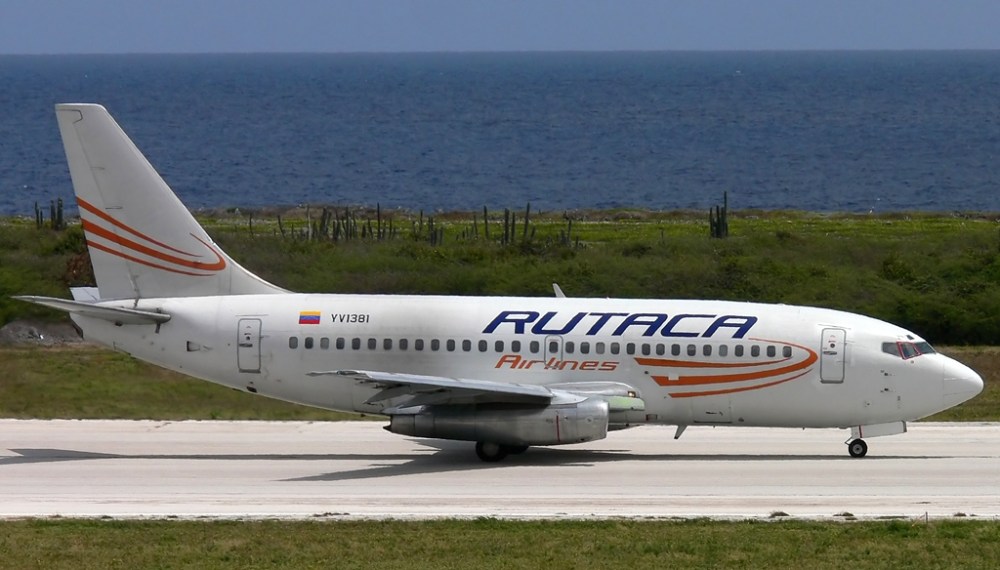
Personal de vuelo de la aerolínea Rutaca presentó renuncia masiva
El personal de vuelo de la aerolínea nacional de Venezuela Rutaca Airlines presentó este viernes una renuncia masiva, que incluye a tripulantes de cabina evaluadoras, jefas de cabina y tripulantes de cabina regulares, mediante una carta dirigida al departamento de Recursos Humanos de la empresa.
Los trabajadores de la compañía aérea venezolana, basándose en el articulado de la Ley Orgánica del Trabajo (Lottt), precisan “actos de ofensa” “acoso laboral” y “actos que se entiendan como despido indirecto” y “reducción de salario”, tripulantes de cabina evaluadoras, Jefas de Cabina y Tripulantes de Cabina Regularesor lo que llevaron a acabo la medida.
Los empleados, según reseñó el diario 2001, destacan en la renuncia “constante falta de respeto” hacia los trabajadores en todos los aspectos, al no considerar las reiteradas quejas de éstos y no llevar a cabo los acuerdos entre las partes; señalaron, asimismo, una “actuación unilateral”.
Pasajeros que aguardaban por un vuelo con destino a República Dominicana, en el Aeropuerto de Maiquetía, fueron afectados pro la medida ya que el personal de vuelo no se presentó, según destacaron usuarios mediante las redes sociales.
The flight personnel of the national airline of Venezuela Rutaca Airlines presented a massive resignation this Friday, which includes cabin crew members, cabin crew and regular cabin crew members, through a letter addressed to the company’s Human Resources department.
Based on the provisions of the Labor Act (Lottt), the venezuelan airline workers specify «acts of offense» «labor harassment» and «acts that are understood as indirect dismissal» and «reduction of wages», crew members Of evaluating cabin, Heads of Cabin and Crew of Cabin Regularesor what they carried out the measurement.
The employees, as reported in the 2001 newspaper, emphasize the renunciation of «constant disrespect» towards workers in all aspects, by not considering their repeated complaints and not carrying out the agreements between the parties; Also pointed to «unilateral action».
Passengers waiting for a flight to the Dominican Republic, at Maiquetía Airport, were affected by the measure as flight personnel did not show up, according to users using social networks. A\W
La familia A320 más vendida de Airbus registró pedidos para 19 aviones tanto en las versiones de CEO (Current Engine Option) como de NEO (New Engine Option) durante octubre. Las 54 entregas del mes involucraron a todos los miembros de su línea de productos de producción actual: la familia A320 de un solo pasillo y el fuselaje ancho A330, A350 XWB y A380, lo que elevó a más de 10.000 el número total de aviones desde la primera entrega de Airbus en 1974.
Los pedidos de la familia A320 en octubre involucraron tres transacciones con clientes no revelados: una de las cuales constaba de 10 aeronaves A320neo. Otro para dos A320ceo y tres versiones A321ceo; Y la tercera que comprende cuatro aviones A319ceo.
Teniendo en cuenta las reservas y cancelaciones del mes, las órdenes netas de Airbus para 2016 totalizaron 395 aviones hasta el 31 de octubre.
Entre los logros del mes se destaca el 10.000º hito aeronáutico: un A350-900 para Singapore Airlines, lo que confirma una vez más el papel de Airbus como líder del mercado global ofreciendo la línea de productos más moderna e integral con capacidad de 100 a más de 600 pasajeros .
Otros tres A350 XWB también fueron proporcionados durante el mes (recibido por Cathay Pacific, Thai Airways International y Vietnam Airlines), continuando el paso de entrega 2016 para este nuevo avión XTRA widebody.
También recibidas por las aerolíneas durante el mes fueron tres A380: dos para Emirates, y uno para Asiana Airlines. Airbus completó sus entregas de fuselaje ancho durante el período con seis A330.
Las 41 entregas de pasillo único de la familia A320 en octubre incluyeron ocho versiones A320neo, con las siguientes aerolíneas recibiendo su primera aeronave de Nueva Opción: Avianca Brasil, Azul, Frontier Airlines, SAS, Viva Aerobus y Spirit Airlines (obteniendo dos).
Teniendo en cuenta estas últimas entregas, Airbus suministró un total de 516 aviones a 78 clientes en 2016 de enero a octubre.
A partir del 31 de octubre, la cartera de pedidos de Airbus ascendía a 6.710 aeronaves, compuesta por: 5.494 aviones A320 Familiares, 330 A330, 765 A350 XWB y 121 A380.
AIRBUS GROUP ORDERS & DELIVERIES OCTOBER 2016
Airbus’ best-selling A320 Family logged orders for 19 aircraft in both the CEO (Current Engine Option) and NEO (New Engine Option) versions during October. The month’s 54 deliveries involved all members of its current-production product line – the single-aisle A320 Family, and widebody A330, A350 XWB and A380 – bringing to more than 10,000 the total number of jetliners provided since Airbus’ first delivery in 1974.
The A320 Family orders in October involved three transactions with undisclosed customers: one comprising 10 A320neo aircraft; another for two A320ceo and three A321ceo versions; and the third comprising four A319ceo jetliners.
Taking the month’s bookings and cancellations into account, Airbus net orders for 2016 totalled 395 aircraft through 31 October.
Among the month’s delivery highlights was the 10,000th aircraft milestone: an A350-900 for Singapore Airlines, once again confirming Airbus’ role as a global market leader offering the most modern and comprehensive product line with seating capacities ranging from 100 to more than 600 passengers.
Three other A350 XWBs also were provided during the month (received by Cathay Pacific, Thai Airways International and Vietnam Airlines), continuing the 2016 delivery pace for this new Xtra widebody jetliner.
Also received by airlines during the month were three A380s: two for Emirates, and one for Asiana Airlines. Airbus completed its widebody deliveries during the period with six A330s.
The 41 A320 Family single-aisle deliveries in October included eight A320neo versions, with the following airlines receiving their first New Engine Option aircraft: Avianca Brazil, Azul, Frontier Airlines, SAS, Viva Aerobus and Spirit Airlines (obtaining two).
Taking these latest deliveries into account, Airbus provided a total of 516 aircraft to 78 customers in 2016 from January through October.
Based on the month’s order and delivery activity, Airbus’ backlog as of 31 October stood at 6,710 aircraft, composed of: 5,494 A320 Family jetliners, 330 A330s, 765 A350 XWBs and 121 A380s.
THE BOEING CO.
ORDENES Y ENTREGAS OCTUBRE 2016
El número de pedidos de aeronaves de los principales de Boeing hasta el mes de octubre de este año, era de 85 pedidos para Boeing.
Boeing tuvo mayor pedido de aeronaves de fuselaje ancho, casi la mitad de ellas fueron de Qatar Airways que ordenó 30 aeronaves Boeing 787-9 y 10 Boeing 777-300ER; otros clientes (como Swiss International Airlines, UPS y China Southern) ordenaron aeronaves 737MAX, 747-8F y 737-900ER. Para Boeing, octubre fué el mes más importante.
THE BOEING CO. ORDERS & DELIVERIES OCTOBER 2016
The number of aircraft orders from major manufacturers Boeing , up to October this year, was 85 orders for Boeing.
Boeing had more orders for wide-body aircraft, almost half of which were from Qatar Airways which ordered 30 Boeing 787-9 aircraft and 10 Boeing 777-300ER aircraft; Other customers (such as Swiss International Airlines, UPS and China Southern) ordered 737MAX, 747-8F and 737-900ER aircraft. For Boeing, October was the most important month.
La FAA está recomendando que los operadores del 787 Dreamliner de Boeing reajustar periódicamente la potencia en el avión para evitar un fallo que podría causar los tres módulos informáticos que gestionan las superficies de control de vuelo del jet para detener brevemente mientras se trabaja en vuelo
La Administración Federal de Aviación (FAA) es la emisión de una norma que exige atención urgente por parte de los operadores Boeing 787 Dreamliner de Boeing para evitar la posibilidad de los tres módulos informáticos que gestionan las superficies de control de vuelo del jet podría detener brevemente mientras se trabaja en vuelo.
Los operadores deben cerrar y reiniciar periódicamente la potencia eléctrica en los planos, o el poder de los tres módulos de control de vuelo. Eso va a evitar el problema hasta que Boeing tiene un arreglo de software permanente.
En una directiva de aeronavegabilidad que se publicará el viernes la FAA dijo que está reaccionando a indicios de que «todos los módulos de control de vuelo en tres el 787 puede reiniciarse de forma simultánea si se alimenta de forma continua durante 22 días.»
Se dijo que un restablecimiento de tales simultánea en vuelo «podría dar lugar a superficies de control de vuelo no se mueve en respuesta a las entradas de la tripulación de vuelo durante un breve periodo de tiempo y la consiguiente pérdida temporal de la capacidad de control.»
Una persona con conocimiento de las prácticas de las aerolíneas, hablando en condición de anonimato, dijo que es «extremadamente raro» para cualquier operador de abandonar el chorro de encendido durante más de una semana.
En un comunicado, Boeing dijo que las nuevas acciones mandatos gobernar el fabricante de aviones ya ha recomendado a 787 operadores durante los últimos dos meses.
«Boeing recomienda que los operadores de energía de ciclo para los módulos de control de vuelo periódica para asegurar restablece la superposición no se producen«, declaró Boeing. «Un arreglo de software permanente se prevé en el segundo trimestre de 2017.»
La FAA se ordena que la aproximadamente 99 Dreamliner registradas en los EE.UU. actúan sobre la directiva dentro de una semana. Las aerolíneas extranjeras suelen seguir el ejemplo de la FAA en tales directivas. Hasta la fecha, 489 Dreamliner se han entregado en todo el mundo.
Workers check out the cockpit of a United Airlines Boeing 787 Dreamliner after it arrived at O’Hare International Airport in 2013. Scott Olson/Getty Images
FAA orders Boeing 787 safety fix: Reboot power once in a while
The FAA is mandating that operators of Boeing’s 787 Dreamliner periodically reset the power on the airplane to avoid a glitch that could cause all three computer modules that manage the jet’s flight control surfaces to briefly stop working while in flight
The Federal Aviation Administration (FAA) is issuing a rule requiring urgent attention by operators of Boeing’s 787 Dreamliner to avoid the possibility all three computer modules that manage the jet’s flight-control surfaces could briefly stop working while in flight.
Operators must periodically shut and restart the electrical power on the planes, or the power to the three flight control modules. That will avoid the problem until Boeing has a permanent software fix.
In an airworthiness directive to be published Friday, the FAA said it is reacting to indications that “all three flight control modules on the 787 might simultaneously reset if continuously powered on for 22 days.”
It said such a simultaneous reset in flight “could result in flight control surfaces not moving in response to flight crew inputs for a short time and consequent temporary loss of controllability.”
A person with knowledge of airline practices, speaking on condition of anonymity, said it is “extremely rare” for any operator to leave the jet powered on for longer than a week.
In a statement, Boeing said the new rule mandates actions the jet maker has already recommended to 787 operators during the past two months.
“Boeing recommended that operators cycle power to flight control modules periodically to ensure overlapping resets do not occur,” Boeing stated. “A permanent software fix is anticipated in the second quarter of 2017.”
The FAA is mandating that the roughly 99 Dreamliners registered in the U.S. act on the directive within a week. Foreign airlines typically follow the FAA’s lead on such directives. To date, 489 Dreamliners have been delivered worldwide. A\W
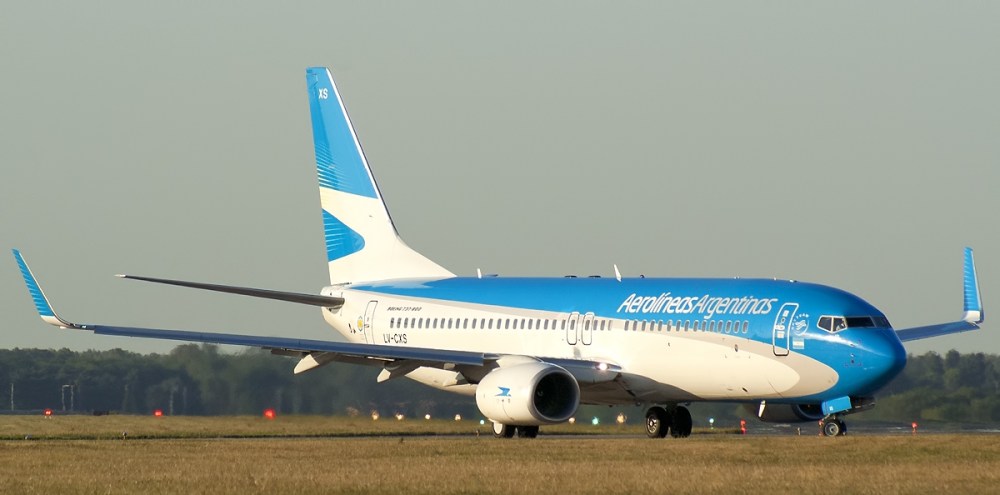
Aerolíneas incorporó un nuevo Boeing 737-800 a su flota de cabotaje
Aerolíneas Argentinas recibió una nueva aeronave B737-800, que arribó directamente desde la fábrica Boeing, en Seattle, Estados Unidos, como parte de un plan de renovación de la flota destinado a mantener los coeficientes de puntualidad en sus operaciones, que hoy la posicionan como líder en cabotaje.
Aerolíneas Argentinas incorporó el nuevo Boeing 737-887, con matrícula asignada LV-GKS (msn 60491/6169). La aeronave despegó de EE.UU. desde el Aeropuerto de Boeing Field (BFI) haciendo escala en Punta Cana (PUJ) arribó al Aeropuerto Internacional de Ezeiza realizando el vuelo de traslado AR1085.
El nuevo avión, matriculado LV-GKS, es el segundo que se entrega de acuerdo con el contrato de compra con la firma Avolon, y para la tercera semana de diciembre se aguarda la llegada de una tercera aeronave. Desde la empresa se indicó que la llegada del nuevo avión ha sido posible a partir de haber mejorado las condiciones de financiación con la fábrica.
De esta manera, la flota de B737-800 cuenta con 25 aviones que, sumados a los 15 B737-700 NG y a los 26 Embraer E-190 de Austral, conforman un parque de 66 aviones de fuselaje angosto para vuelos de cabotaje y regionales. En total, incluyendo las naves de fuselaje ancho, la empresa cuenta hoy con una flota de 81 aviones.
La renovación y ampliación de esta flota de corto y mediano alcance ha permitido que Aerolíneas Argentinas y Austral tengan hoy un índice de puntualidad en sus operaciones que supera el 90 por ciento de eficiencia, muy por encima de las metas previstas, indicó la empresa.
Hoy el Grupo Aerolíneas ostenta el liderazgo en puntualidad en cabotaje, puesto que sostuvo con mejoras durante todo 2016, señalaron desde la empresa estatal.
Los B737-800, con las especificaciones previstas por Aerolíneas, están configurados con 170 butacas, ocho en Club Economy y 162 en clase Económica.
Aerolíneas added a new Boeing to its cabotage fleet
Aerolíneas Argentinas received a new B737-800 aircraft, which arrived directly from the Boeing plant in Seattle, USA, as part of a fleet renewal plan aimed at maintaining the timeliness coefficients of its operations. Position as leader in cabotage.
Aerolineas Argentinas incorporated the new Boeing 737-887, with assigned registration LV-GKS (msn 60491/6169). The aircraft took off from the USA. From Boeing Field Airport (BFI) in Punta Cana (PUJ) arrived at the International Airport of Ezeiza carrying out the transfer flight AR1085.
The new aircraft, registered LV-GKS, is the second aircraft that is delivered according to the purchase agreement with the firm Avolon, and by the third week of December is awaiting the arrival of a third aircraft. From the company it was indicated that the arrival of the new airplane has been possible from having improved the conditions of financing with the factory.
In this way, the B737-800 fleet has 25 airplanes which, together with the 15 B737-700 NG and the 26 Embraer E-190 Austral, make up a fleet of 66 narrow-body aircraft for Cabotage and regional. In total, including wide-body aircraft, the company now has a fleet of 81 aircraft.
The renewal and expansion of this short- and medium-range fleet has allowed Aerolíneas Argentinas and Austral today to have a punctuality index in their operations that exceeds 90 percent of efficiency, well above the expected targets, the company said.
Today the Aerolíneas Group has the leadership in punctuality in cabotage, since it maintained with improvements throughout 2016, they indicated from the state company.
The B737-800, with the specifications foreseen by Airlines, are configured with 170 seats, eight in Club Economy and 162 in Economy class. A\W
Bolivia suspendió el permiso de operación de LAMIA y apartó a las autoridades civiles aeronáuticas
La medida contra la aerolínea tiene efecto “inmediato”, a dos días de la tragedia del vuelo en el que murieron 71 personas. A su vez, el Gobierno cambiará a los funcionarios implicados “para no contaminar la investigación”.
REVOCAMIENTO LICENCIA AÉREA A EMPRESA LAMIA CORPORATION
La historia de Lamia Corporation
Lamia fue fundada en Venezuela y nunca pudo volar. La empresa está asentada en Bolivia, pero alguna vez intentó alzar vuelo en Venezuela sin éxito. Fundada en 2009 por el venezolano Ricardo Albacete Vidal en la occidental ciudad de Mérida, en los andes venezolanos, la Línea Aérea Merideña Internacional de Aviación (Lamia) pasó seis años sin iniciar operaciones comerciales hasta que recibió autorización para operar en Bolivia en 2015 con parte de las aeronaves adquiridas para la operación venezolana. Se asentaron en Santa Cruz, la segunda ciudad más importante de ese país.
Desde ese país se concentró en el atractivo nicho de mercado de los vuelos fletados por particulares. La apuesta luce como una deriva de la imposibilidad de concretar en Venezuela la aspiración de darle forma a una línea aérea que atendiera rutas no convencionales. A comienzos de su largo mandato, cuando aún no se había declarado como socialista, el fallecido presidente Hugo Chávez llegó a poner alguna vez a los viejos aviones Hércules del ejército venezolano a disposición para unir ciudades no tomadas en cuenta por la aviación comercial.
Lamia fue un proyecto avalado por el exgobernador chavista de Mérida, Marcos Díaz Orellana, y encontró en Albacete Vidal, un exsenador por el estado andino de Táchira al viejo congreso bicameral de la República, al socio ideal para emprenderlo. Cuando en 2010 el avión con sus siglas aterrizó por primera vez en el aeropuerto de la ciudad, un valle estrechísimo cercado por dos montañas, habían pasado dos años desde el accidente del vuelo 518 de Santa Bárbara Airlines, que se estrelló contra los riscos vecinos a pocos minutos de su despegue mientras se dirigía hacia Caracas, y que provocó el cierre de las operaciones. A Albacete lo entrevistaron en la televisión regional y detalló sus planes: tarifas económicas —el clamor del comandante-presidente—, la devolución de la totalidad del importe pagado por el tiquete en caso de no abordar el vuelo y un trato que trascendiera la impersonal relación entre pasajero y aerolínea.
Esa voluntad chocó contra la burocracia. En el Registro Nacional de Contratistas de Venezuela consta que la empresa Lamia, domiciliada en Mérida, jamás culminó el proceso necesario para poder convertirse en contratista del Estado. El aeropuerto abrió en una fecha posterior pero la paciencia de Albacete Vidal se había acabado. En una rueda de prensa acusó al Instituto Nacional de Aviación Civil y a un diputado opositor, el socialdemócrata William Dávila, de boicotear sus esfuerzos empresariales. Sus enemigos lo acusaban de ser un intermediario. El verdadero dueño, según esas denuncias, era un empresario chino, Sam Pa, sospechado de corrupción y tachado de mafioso por Washington. De acuerdo con esas versiones, estaba aprovechando el convenio entre ese país y Venezuela para explorar otros mercados.
Pronto encontró consuelo en el Caribe insular venezolano. La primera autoridad del estado de Nueva Esparta, Carlos Mata Figueroa, acogió sus planes con entusiasmo. Hablaron de rutas nuevas, querían aprovechar para comunicar el norte de Brasil con los destinos playeros venezolanos y las ventajas arancelarias derivadas de la entrada de Venezuela al Mercosur. Hasta el nombre de la aerolínea le calzaba porque podría rebautizarla como Línea Aérea Margariteña Internacional de Aviación sin cambiar el diseño o las siglas. Pero tampoco en la visitada isla venezolana, el principal polo turístico del país, pudieron comenzar a operar. Se fueron antes de despegar con pasajeros por primera vez.
En 2015, ya asentados en Bolivia con el nombre de Lamia Corporation, las federaciones de fútbol de Sudamérica y los equipos que juegan la Copa Libertadores y la Sudamericana, habituados a los largos traslados y escalas que supone moverse en un continente amplio y poco comunicado, vieron en Lamia una posibilidad de acortar el desgaste de los viajes por un precio mucho más económico. En sus aeronaves viajó la selección de Venezuela hasta Barranquilla para enfrentar a Colombia en septiembre; la Argentina de Leo Messi también la contrató para el traslado hasta Belo Horizonte, donde hace tres semanas enfrentaron a Brasil. Los argentinos, de acuerdo con un reporte del diario boliviano Diez, se quejaron del servicio. Fue la penúltima queja. Ahora Lamia enfrenta la peor de las tragedias para una aerolínea.
Revocamiento de licencia a Lamia Corporation
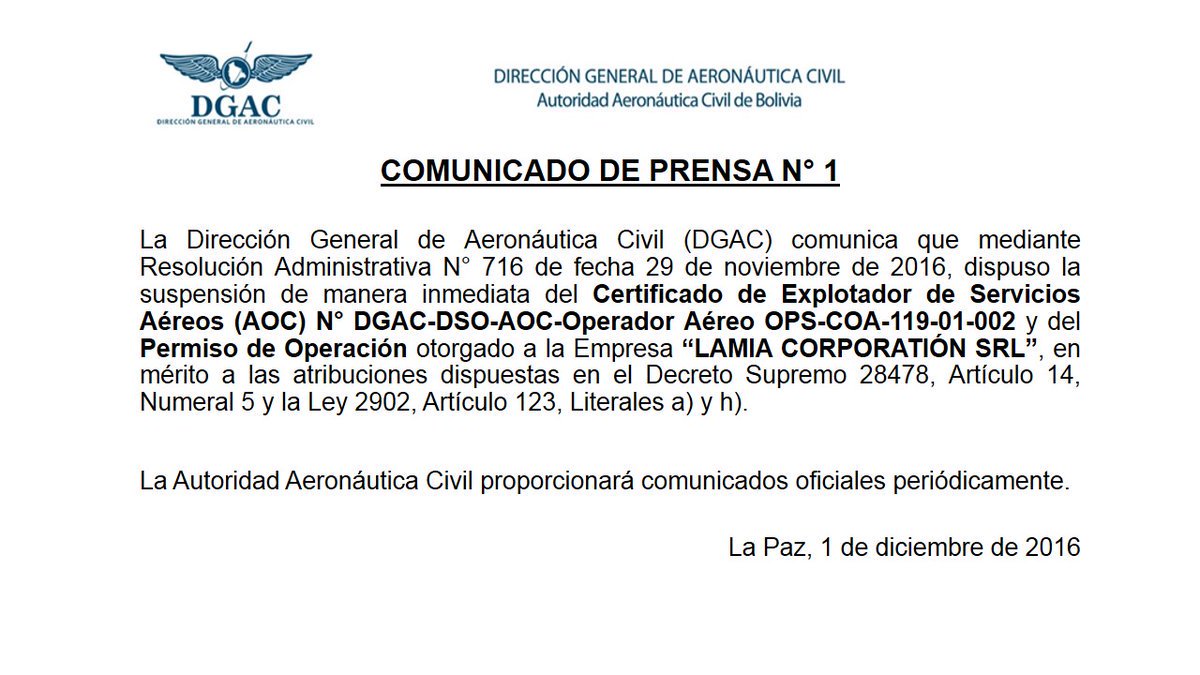
La Dirección General de Aeronáutica Civil de Bolivia informó la «suspensión de manera inmediata» del permiso de operación de la aerolínea LAMIA, cuyo vuelo del lunes cayó en Colombia y causó la muerte de 71 personas e hirió de gravedad a otras seis.
Las autoridades comunicaron su decisión a través de Twitter, después de conocerse que el avión cayó al quedarse sin combustible. El vuelo, que transportaba al plantel del club Chapecoense, recibió varias observaciones antes de partir de Santa Cruz, en Bolivia.
Por su parte, el Ministerio de Obras Públicas decidió cambiar a los directivos de dicho órgano de control y de la Administración de Aeropuertos «para no contaminar la investigación».
AERONAVE ACCIDENTADA
BAe SYSTEM
AVRO RJ85
VIDEO ÁREA ACCIDENTE AVRO RJ85 VUELO CP2933 DE LAMIA CORPORATION
PUNTO DE IMPACTO EN EL MONTE GORDO, COLOMBIA
Según indicó el ministro del sector, Milton Claros, aún no se pueden establecer las responsabilidades por las condiciones del vuelo.
Gustavo Steven Vargas Villegas, que figura en la estructura organizacional de la Dirección General de Aeronáutica Civil (DGAC) como su Director de Registro Aeronáutico Nacional, es hijo del director general de la siniestrada aerolínea Lamia, Gustavo Vargas Gamboa, informó ayer, una fuente allegada a la familia y según se pudo verificar en la cuenta de Facebook de Vargas Villegas.
Entre las atribuciones de la Dirección de Registro Aeronáutico Nacional, según el Decreto Supremo 28478, está asignar matrículas nacionales a las aeronaves que reúnan las condiciones estipuladas en la Ley de Aeronáutica Civil de Bolivia.
Otra atribución que tiene esa Dirección es asentar donde corresponda mediante acto público todo hecho que tenga relevancia jurídica sobre las naves y empresas aeronáuticas, así como expedir las certificaciones solicitadas que se hallen dentro del marco de la Ley.
Asimismo, la norma señala que es responsable de la gestión y custodia de toda la documentación a su cargo y de inscribir los permisos de constitución de empresas, industrias, talleres y toda intervención relacionada con la actividad aeronáutica en función de la evaluación técnica efectuada por las instancias correspondientes, previa la acreditación de su registro en la institución pública encargada del registro de empresas.
Según información a la que accedió El Deber, la compañía LaMia tenía un certificado de explotador de servicios aéreos de carácter «indefinido”, que fue emitido por la Dirección General de Aeronáutica Civil (DGAC) el 31 de julio de 2015.
Vargas Villegas, según el registro de Colegio de Abogados de La Paz, es de profesión abogado, con especialidad en derecho administrativo, aeronáutico y público.
La noche del pasado lunes, una aeronave de la empresa LaMia se estrelló en Colombia cuando trasladaba el equipo de fútbol brasileño Chapecoense y un grupo de periodistas. En el hecho perdieron la vida 71 personas.
¿Negocios turbios?
Medios insinúan que la firma del avión accidentado tenía negocios turbios en Venezuela.
Lamia (Línea Aérea Mérida Internacional de Aviación, Compañía Anónima) es una pequeña aerolínea con capital venezolano con origen en el estado de Mérida, aunque opera desde Bolivia. Nació en 2009 con la vocación de «ayudar al desarrollo turístico regional» de este estado venezolano, y la prestación del servicio de pasajeros, carga y correo. La historia de la aerolínea inició en Mérida, pero años más tarde se estableció en Margarita.
Según el portal Reporte Confidencial del periodista Braulia Jatar (actualmente preso por el gobierno de Venezuela) en 2011 los empleados de la aerolínea Lamia se encontraron con que la misma había eliminado el stand de atención en el que iban a operar en un aeropuerto del interior del país. Hubo denuncias laborales en los tribunales venezolanos, pero sin respuesta.
Luego se conoció que la aerolínea arrancó operaciones en la isla de Margarita en Venezuela, donde fue presentada junto a su primer avión el 2 de noviembre de 2013.
En esa oportunidad se aseguró que a partir del año 2014 uniría al estado Nueva Esparta con varios destinos en el Caribe, además del estado Bolívar y la región norte de Brasil, según reportó el diario El Sol de Margarita.
En su momento, el gobernador de Nueva Esparta, Carlos Mata Figueroa habría asegurado: “Lamia es nuestra línea margariteña, neoespartana; al fin Margarita tendrá una empresa aérea propia y desde aquí vamos a ir a diferentes partes de Venezuela y del exterior, ya que cubrirá rutas nacionales e internacionales”.
El presidente de Lamia, Ricardo Albacete, habría dado a conocer los detalles de la aeronave que iniciaba operaciones durante un acto en el que estuvo el gobernador de Nueva Esparta, y el gobernador de Bolívar, Francisco Rangel Gómez (ambos piezas claves del oficialismo venezolano).
Revocation of aeronautical license to LaMia Airlines
LAMIA AIRLINES CP2933
Bolivia suspended LAMIA’s operating permit and removed the civil aviation authorities
The measure against the airline has an «immediate» effect, two days after the tragedy of the flight in which 71 people died. In turn, the Government will change the officials involved «not to pollute the investigation».
The History of Lamia Corporation
Lamia was founded in Venezuela and could never fly. The company is based in Bolivia, but once tried to take flight in Venezuela without success. Founded in 2009 by the Venezuelan Ricardo Albacete Vidal in the western city of Merida in the Venezuelan Andes, the Meria International Aviation Line (Lamia) spent six years without starting commercial operations until it was authorized to operate in Bolivia in 2015 with part Of aircraft acquired for the Venezuelan operation. They settled in Santa Cruz, the second most important city of that country.
From that country he concentrated on the attractive market niche of charter flights. The bet looks like a drift of the impossibility of concretizing in Venezuela the aspiration to give shape to an airline that attends nonconventional routes. At the beginning of his long term, when he had not yet declared himself a socialist, the late President Hugo Chávez once put the old Hercules aircraft of the Venezuelan army at bay to unite cities not taken into account by commercial aviation.
Lamia was a project endorsed by the ex-governor Chavista of Mérida, Marcos Diaz Orellana, and found in Albacete Vidal, an ex-senator by the Andean state of Táchira to the old bicameral congress of the Republic, to the ideal partner to undertake it. When in 2010 the plane with its initials landed for the first time at the city’s airport, a narrow valley surrounded by two mountains, had been two years since the crash of Flight 518 Santa Bárbara Airlines, which crashed against the risks neighboring Few minutes of its takeoff while it was going towards Caracas, and that caused the closing of the operations. Albacete interviewed him on regional television and detailed his plans: economic rates – the cry of the commander-president – the return of the entire amount paid for the ticket in case of not boarding the flight and a treatment that transcended the impersonal relationship Between passenger and airline.
That will hit the bureaucracy. The National Registry of Contractors of Venezuela states that the company Lamia, domiciled in Merida, never completed the process necessary to become a state contractor. The airport opened at a later date but the patience of Albacete Vidal was over. In a press conference he accused the National Institute of Civil Aviation and an opposition deputy, the Social Democrat William Dávila, to boycott his business efforts. His enemies accused him of being an intermediary. The real owner, according to those allegations, was a Chinese businessman, Sam Pa, suspected of corruption and branded a mafia by Washington. According to those versions, he was taking advantage of the agreement between that country and Venezuela to explore other markets.
He soon found solace in the Venezuelan insular Caribbean. The first authority of the state of Nueva Esparta, Carlos Mata Figueroa, welcomed his plans with enthusiasm. They spoke of new routes, they wanted to use to communicate the north of Brazil with the Venezuelan beach destinations and the tariff advantages derived from the entry of Venezuela to Mercosur. Even the airline’s name suited her because she could rename it as Margarita’s International Airline of Aviation without changing the design or acronyms. But neither in the visited Venezuelan island, the main tourist pole of the country, could begin to operate. They left before taking off with passengers for the first time.
In 2015, already settled in Bolivia with the name of Lamia Corporation, the South American football federations and the teams that play the Copa Libertadores and South American, accustomed to the long transfers and scales that means to move in a wide and little communicated continent, Saw in Lamia a possibility of shortening the wear and tear of travel for a much cheaper price. In his aircrafts traveled the selection of Venezuela until Barranquilla to face Colombia in September; The Argentina of Leo Messi also contracted for the transfer to Belo Horizonte, where three weeks ago they faced Brazil. Argentines, according to a report by the Bolivian newspaper Diez, complained about the service. It was the penultimate complaint. Now Lamia faces the worst tragedy for an airline.
Revocation of license to Lamia Corporation
The Bolivian General Directorate of Civil Aviation informed the «immediate suspension» of LAMIA’s operating permit, whose flight from Monday fell in Colombia, killing 71 people and severely wounding six others.
Authorities announced their decision via Twitter, after it became known that the plane crashed when it ran out of fuel. The flight, which carried the Chapecoense team, received several observations before leaving Santa Cruz, Bolivia.
For its part, the Ministry of Public Works decided to change the directors of said control body and the Airport Administration «not to contaminate the investigation.»
According to the minister of the sector, Milton Claros, the responsibilities for the conditions of the flight can not yet be established.
Aerial Images of crash site, right image point of first impact, two left images main wreckage (Photos: Jose Luis Osorio Ortega)
One of the engines (Photo: CCAA)
Main wreckage (Photo: AP/Luis Benavides)
First daylight impressions from the crash site (Photos: Telemedellin)
First impressions at the crash site:
Gustavo Steven Vargas Villegas, who is included in the organizational structure of the Directorate General of Civil Aeronautics (DGAC) as its Director of National Aeronautical Registry, is the son of the director general of the airline Lamia, Gustavo Vargas Gamboa, To the family and as it could be verified in the Facebook account of Vargas Villegas.
Among the attributions of the National Aeronautical Registry, according to Supreme Decree 28478, is to assign national registrations to aircraft that meet the conditions stipulated in the Law of Civil Aviation of Bolivia.
Another attribution that has this Directorate is to settle where it corresponds by means of public act any fact that has legal relevance on the ships and aeronautical companies, as well as to issue the requested certifications that are within the framework of the Law.
The standard also states that it is responsible for the management and custody of all the documentation in its charge and for registering the permits for the constitution of companies, industries, workshops and any intervention related to the aeronautical activity according to the technical evaluation carried out by the Corresponding instances, prior to the accreditation of its registration in the public institution in charge of the registration of companies.
According to information to which El Deber agreed, LaMia had an «indefinite» air service operator certificate, which was issued by the Directorate General of Civil Aviation (DGAC) on July 31, 2015.
Vargas Villegas, according to the register of the Bar Association of La Paz, is by profession lawyer, with specialty in administrative, aeronautical and public law.
On Monday night, a LaMia aircraft crashed in Colombia as it moved the Brazilian football team Chapecoense and a group of journalists. In fact, 71 people were killed.
Business murky?
Media hints that the signature of the crashed plane had murky business in Venezuela.
Lamia (Merida International Airline, Company) is a small airline with Venezuelan capital originating in the state of Mérida, although it operates from Bolivia. It was born in 2009 with the vocation to «help regional tourism development» of this Venezuelan state, and the provision of passenger, cargo and mail service. The history of the airline began in Mérida, but years later it settled down in Margarita.
According to the portal Confidential Report of journalist Braulia Jatar (currently imprisoned by the Venezuelan government) in 2011 the employees of the airline Lamia found that it had eliminated the stand where they were to operate in an airport in the interior of the country. There were labor complaints in Venezuelan courts, but no response.
It was later revealed that the airline started operations on the island of Margarita in Venezuela, where it was presented along with its first airplane on November 2, 2013.
At that time, he assured that from 2014 he would join the Nueva Esparta state with several destinations in the Caribbean, as well as Bolívar state and northern Brazil, according to the daily El Sol de Margarita.
At the time, the governor of Nueva Esparta, Carlos Mata Figueroa would have assured: «Lamia is our margariteña line, neoespartana; At last Margarita will have its own airline and from here we will go to different parts of Venezuela and abroad, as it will cover national and international routes.»
The president of Lamia, Ricardo Albacete, would have released the details of the aircraft that began operations during an act in which the governor of Nueva Esparta was, and the governor of Bolívar, Francisco Rangel Gómez (both key pieces of the Venezuelan government) . A\W


 Tandil dispondrá de vuelos comerciales a partir de marzo de 2017. La línea aérea Broker Air cubrirá la ruta Tandil-Buenos Aires






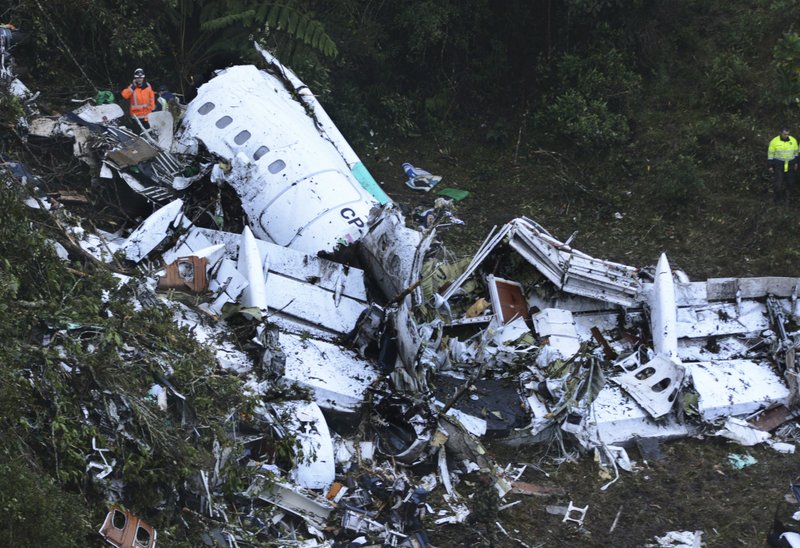


 Aerial Images of crash site, right image point of first impact, two left images main wreckage (Photos: Jose Luis Osorio Ortega)
 One of the engines (Photo: CCAA)
 Main wreckage (Photo: AP/Luis Benavides)


