Protocolos, documentación necesaria para usuarios transporte aéreo
El Gobierno de Argentina ha autorizado el libre tránsito delos pasajeros no habiendo restricciones impuestas para volar dentro y fuera del Argentina. Todo usuario del transporte deberá cumplimentar requisitos y formularios de declaración jurada en caso de que se cierren las fronteras nuevamente, no vas a requerir ayuda del de las agencias Consulares para volver.
Respecto a los vuelos internacionales, algunos países piden PCR negativo; otros, seguro médico; otros, cuarentena. Cada país tiene sus normas. A Europa pueden ingresar solo los argentinos que tengan un pasaporte de la Comunidad Europea (CE) o que tengan residencia, visa de trabajo o de estudio o por reunión familiar. A Estados Unidos podemos viajar sin hacer cuarentena, excepto en Nueva York, donde exigen visa de turista, de trabajo o de estudio. En México solicitan cuarentena y al Reino Unido cuarentena de 14 días, República Dominicana o Brasil se puede ingresar con seguro médico. En el sitio Reopen.europa.eu podés los pasajeros pueden chequear las restricciones para los países europeos También hay una página oficial de IATA iatatravelcentre.com donde se puede realizar un simulacro ingresando pasaporte y te dice si estás habilitado para viajar. También está bueno seguir en Twitter las cuentas oficiales de las embajadas en Argentina porque ellas van actualizando acerca de las habilitaciones de la programación de los vuelos disponibles aprobados.
Viajar a Argentina
Por el momento, no pueden ingresar turistas al país. Los argentinos que ingresen tienen que hacer cuarentena obligatoria por 14 días en un domicilio declarado y para salir del país también hay que realizar cuarentena de catorce días antes del vuelo.
Vuelos interior
Todavía no se puede viajar por el interior del país como turista. Se habilitó solo para trabajadores esenciales con certificado único habilitante para circular, que se saca con la app Cuidar, personas que deban realizarse tratamientos médicos y otras que exhiban razones de fuerza mayor: varados internos, personas que necesiten asistir a familiares o a quienes deban trasladarse para tomar un vuelo internacional.
Protocolos Aeropuertos
Hay círculos pintados en el piso para mantener la distancia al momento de hacer las colas; expendedores de alcohol en gel por todos lados; cuando ingresás te toman la temperatura; solamente podés ingresar a la terminal si vas a viajar, no se permiten acompañantes; tenés que firmar la declaración jurada al salir y al volver, es obligatoria; en los counters pusieron los vidrios separadores, que antes no estaban, para evitar el contacto y es obligatorio usar barbijo en todo momento.
Protocolos aerolíneas
La tripulación y los pasajeros tienen que ir con barbijo todo el tiempo. Las líneas aéreas recomiendan que se lleven por lo menos cuatro o cinco barbijos para ir cambiando cada tres horas durante el vuelo. Hay algunas aerolíneas que obligan a que sean quirúrgicos y no tapabocas de tela. Con respecto a las comidas, te entregan una vianda, como una caja, con cosas frías antes de subir al avión para que durante el vuelo no haya manejo de servicios ni contacto innecesario. Es más seguro estar en vuelo dentro de un avión que haciendo la fila en la verdulería. El aire en el avión se renueva constantemente ya que usan los filtros HEPA (los mismos que se utilizan en los quirófanos), que atrapan el 97% de las bacterias. Encima, tienen un sistema con el que el aire circula de arriba hacia abajo reciclándose. De hecho, no hay pruebas de que en los últimos vuelos haya habido contagios dentro de un avión.
Oferta pasajes
Algunas aerolíneas del mundo bajaron sus precios de sus pasajes aéreos. En Argentina, de donde solo salen vuelos especiales, todavía hay más demanda que oferta, lo que hace que los precios no bajen. Hay ofertas de pasajes, pero los impuestos del 77% los encarecen. Los vuelos especiales a Europa están saliendo bastante completos, los vuelos a Estados Unidos también. Para viajar en el futuro cercano no es probable que bajen, sí seguramente haya ofertas para el año que viene, para comprar por adelantado. Igual, se debe observar bien la letra chica, las condiciones de la tarifa, si permite cambios. Además, hay que tener en cuenta que, después del último recargo del 35% sobre la compra en dólares, el 77% del pasaje es impuestos, lo que lo encarece muchísimo. Hay países que te permiten permanecer en zona de tránsito por 24 hs. Por ejemplo, viajar a Irlanda o Reino Unido se puede hacer tránsito en España, Países Bajos o Francia, recordando en aquellos que tengan nacionalidad europea o Pasaporte de la Comunidad Europea, se puede tener una estadía de hasta 24 horas sin salir del área de tránsito, priorizando que los dos tramos de vuelos sean con la misma aerolínea para que el equipaje viaja viaje más directo a destino.
Travel in times of pandemic in Argentina
Protocols, necessary documentation for air transport users
The Government of Argentina has authorized the free transit of passengers, with no restrictions imposed on flying in and out of Argentina. All transport users must complete requirements and affidavit forms in case the borders are closed again, you will not require help from the Consular agencies to return.
Regarding international flights, some countries ask for negative PCR; others, health insurance; others, quarantine. Each country has its own rules. Only Argentines who have a European Community (CE) passport or who have residence, work or study visa or by family reunion can enter Europe. We can travel to the United States without quarantine, except in New York, where they require a tourist, work or study visa. In Mexico they request quarantine and the United Kingdom quarantine for 14 days, the Dominican Republic or Brazil you can enter with medical insurance. On the Reopen.europa.eu site, passengers can check the restrictions for European countries. There is also an official IATA page iatatravelcentre.com where you can perform a simulation by entering your passport and it tells you if you are authorized to travel. It is also good to follow the official accounts of the embassies in Argentina on Twitter because they are updating about the authorizations of the approved available flight programming.
Travel to Argentina
At the moment, tourists cannot enter the country. Argentines who enter have to do mandatory quarantine for 14 days at a declared address and to leave the country they also have to quarantine fourteen days before the flight.
Indoor flights
You still cannot travel inside the country as a tourist. It was enabled only for essential workers with a unique certificate enabling them to circulate, which is obtained with the Caring app, people who must undergo medical treatment and others who show reasons of force majeure: internally stranded, people who need to assist relatives or those who must move to take an international flight.
Airports protocols
There are circles painted on the floor to maintain distance when queuing; gel alcohol dispensers everywhere; when you enter they take your temperature; You can only enter the terminal if you are going to travel, companions are not allowed; You have to sign the affidavit when leaving and when returning, it is mandatory; In the counters they put the separating glasses, which were not there before, to avoid contact and it is mandatory to wear a chinstrap at all times.
Airline protocols
The crew and passengers have to wear a chinstrap at all times. Airlines recommend wearing at least four or five chinstraps to change every three hours during the flight. There are some airlines that require them to be surgical and not cloth masks. With regard to meals, they give you a lunch box, like a box, with cold things before boarding the plane so that during the flight there is no handling of services or unnecessary contact. It is safer to be in flight in an airplane than to stand in line at the grocery store. The air in the plane is constantly renewed as they use HEPA filters (the same ones used in operating rooms), which trap 97% of bacteria. Above, they have a system with which the air circulates from top to bottom, recycling itself. In fact, there is no evidence that in recent flights there have been infections inside a plane.
Offer tickets
Some airlines in the world lowered their prices for their air tickets. In Argentina, where only special flights depart, there is still more demand than supply, which means that prices do not fall. There are ticket offers, but the 77% taxes make them more expensive. The special flights to Europe are going quite full, the flights to the United States as well. To travel in the near future they are not likely to go down, yes there will surely be offers for next year, to buy in advance. Likewise, take a good look at the fine print, the conditions of the rate, if it allows changes. In addition, it must be taken into account that, after the last 35% surcharge on the purchase in dollars, 77% of the ticket is taxes, which makes it very expensive. There are countries that allow you to stay in the transit zone for 24 hours. For example, traveling to Ireland or the United Kingdom can be made transit in Spain, the Netherlands or France, remembering in those who have European nationality or Passport of the European Community, you can stay up to 24 hours without leaving the transit area, prioritizing that the two sections of flights are with the same airline so that the luggage travels more direct trip to destination.
Embraer S.A. ha anunciado la presentación oficial del futuro avión híbrido en Brasil denominado STOUT (Short Take Off Utility Transport), una aeronave desarrollada en asociación con la Fuerza Aérea Brasileña (FAB) que se ha presentado con los primeros detalles al mundo aeronáutico. El futuro avión utilitario tuvo sus primeros detalles revelados el Viernes 13/11 durante un seminario organizado por el Ministerio de Defensa de la República de Brasil.
El nuevo concepto STOUT utilizará tecnología híbrida, con motores turbohélice y eléctricos y cuatro juegos de hélices. Aunque todavía está en la fase de estudio, el nuevo transporte logístico-táctico tendrá dimensiones similares al turbohélice EMB-120 Brasilia, pero la misma configuración que el C-390 Millenium, con ala alta y rampa de carga trasera, así como una cola en T. El avión podrá transportar 30 soldados o tres toneladas de carga a distancias de 2.425 km (1.310 nm). El desarrollo y prestaciones del nuevo concepto de la línea Embraer se utilizará en la región amazónica, que tiene una infraestructura aeroportuaria deficiente. «El nuevo avión tendrá en cuenta varias necesidades operativas, como el transporte de carga y personal en las zonas selváticos, el lanzamiento de un paracaidista, la extracción de palés y el transporte de pacientes», dijo el Comandante de la Fuerza Aérea, Teniente Brig. Antonio Carlos Moretti Bermúdez, durante la presentación del proyecto. La intención de la FAB es sustituir sus antiguos aviones de transporte turbohélice C-95 Bandeirante y C-97 por el nuevo modelo, que tendrá una corta capacidad de despegue y aterrizaje. A finales del año pasado se firmó un Memorándum de Entendimiento entre Embraer y el gobierno brasileño para desarrollar el proyecto, pero aún no es un plazo claro para su producción.
Embraer STOUT presentation
Embraer to develop tactical turboprop aircraft
Embraer S.A. has announced the official presentation of the future hybrid aircraft in Brazil called STOUT (Short Take Off Utility Transport), an aircraft developed in association with the Brazilian Air Force (FAB) that has been presented with the first details to the aeronautical world. The future utility aircraft had its first details revealed on Friday 11/13 during a seminar organized by the Ministry of Defense of the Republic of Brazil.
The new STOUT concept will use hybrid technology, with turboprop and electric engines and four sets of propellers. Although it is still in the study phase, the new logistics-tactical transport will have similar dimensions to the EMB-120 Brasilia turboprop, but the same configuration as the C-390 Millenium, with a high wing and rear loading ramp, as well as a tail in T. The aircraft will be able to carry 30 soldiers or three tons of cargo over distances of 2,425 km (1,310 nm). The development and performance of the new Embraer line concept will be used in the Amazon region, which has a poor airport infrastructure. «The new aircraft will take into account various operational needs, such as transporting cargo and personnel in jungle areas, dropping a paratrooper, removing pallets and transporting patients», said Air Force Commander Lt. Brig. . Antonio Carlos Moretti Bermúdez, during the presentation of the project. The intention of the FAB is to replace its old C-95 Bandeirante and C-97 turboprop transport aircraft with the new model, which will have a short take-off and landing capacity. At the end of last year, a Memorandum of Understanding was signed between Embraer and the Brazilian government to develop the project, but it is not yet a clear deadline for its production.
Apresentação da Embraer STOUT
Embraer desenvolverá aeronaves turboélice táticas
A Embraer S.A. anunciou a apresentação oficial da futura aeronave híbrida no Brasil denominada STOUT (Short Take Off Utility Transport), uma aeronave desenvolvida em parceria com a Força Aérea Brasileira (FAB) que foi apresentada com os primeiros detalhes ao mundo aeronáutico. A futura aeronave utilitária teve seus primeiros detalhes revelados na sexta-feira 13/11, durante seminário organizado pelo Ministério da Defesa da República do Brasil.
O novo conceito STOUT usará tecnologia híbrida, com motores turboélice e elétricos e quatro conjuntos de hélices. Embora ainda em fase de estudos, o novo transporte logístico-tático terá dimensões semelhantes ao turboélice EMB-120 Brasília, mas a mesma configuração do C-390 Millenium, com asa alta e rampa de carregamento traseira, além de uma cauda em T. A aeronave será capaz de transportar 30 soldados ou três toneladas de carga em distâncias de 2.425 km (1.310 nm). O desenvolvimento e a atuação do novo conceito de linha da Embraer serão utilizados na região amazônica, que possui uma infraestrutura aeroportuária precária. “A nova aeronave levará em consideração várias necessidades operacionais, como transporte de carga e pessoal em áreas de selva, queda de um paraquedista, remoção de paletes e transporte de pacientes”, disse o Comandante da Força Aérea, Tenente Brig. . Antonio Carlos Moretti Bermúdez, durante a apresentação do projeto. A intenção da FAB é substituir suas antigas aeronaves de transporte turboélice C-95 Bandeirante e C-97 pelo novo modelo, que terá capacidade de decolagem e pouso curta. No final do ano passado, foi assinado um Memorando de Entendimentos entre a Embraer e o governo brasileiro para desenvolver o projeto, mas ainda não há um prazo definido para sua produção.
Qantas Airways Limited es la aerolínea de bandera de Australia y su aerolínea más grande por tamaño de flota, vuelos internacionales y destinos internacionales. Es la tercera aerolínea más antigua del mundo, después de KLM y Avianca, habiendo sido fundada en noviembre de 1920; comenzó vuelos internacionales de pasajeros en mayo de 1935. El nombre Qantas proviene de «QANTAS», un acrónimo por su nombre original, Queensland y Northern Territory Aerial Services, ya que originalmente servía a Queensland y el Territorio del Norte,y es apodado «El Canguro Volador». Qantas es miembro fundador de la alianza aérea Oneworld.
La aerolínea tiene su sede en el suburbio de Sydney de Mascot, junto a su centro principal en el aeropuerto de Sydney. A partir de marzo de 2014, Qantas tenía una participación del 65% en el mercado nacional australiano y transportaba el 14,9% de todos los pasajeros que viajaban dentro y fuera de Australia. Varias aerolíneas subsidiarias operan a centros regionales y en algunas rutas troncales dentro de Australia bajo el estandarte de QantasLink. Qantas también posee Jetstar, una aerolínea de bajo costo que opera tanto servicios internacionales desde Australia como desde servicios domésticos dentro de Australia y Nueva Zelanda; y tiene participaciones en un número de otras aerolíneas de la marca Jetstar.
Qantas fue fundada en Winton, Queensland el 16 de Noviembre de 1920 por Hudson Fysh, Paul McGinness y Fergus McMaster como Queensland y Northern Territory Aerial Services Limited. El primer avión de la aerolínea fue un Avro 504K. Trasladó su sede a Longreach, Queensland en 192 y Brisbane,Queensland en 1930.
Era QEA
En 1934, QANTAS y la británica Imperial Airways, precursora de British Airways, formaron una nueva compañía, Qantas Empire Airways Limited (QEA). La nueva aerolínea comenzó a operar en diciembre de 1934, volando entre Brisbane y Darwin. QEA voló internacionalmente desde mayo de 1935, cuando el servicio desde Darwin se extendió a Singapur (Imperial Airways operó el resto del servicio hasta Londres). Cuando comenzó la Segunda Guerra Mundial, la acción enemiga y los accidentes destruyeron la mitad de la flota de diez, y la mayor parte de la flota fue tomada por el gobierno australiano para el servicio de guerra.
Los servicios de barcos voladores se reanudaron en 1943, con vuelos entre el río Swan en Crawley en Perth, Australia Occidental y el lago Koggala en Ceilán,ahora denominada Sri Lanka. Esto se vinculó con el servicio de British Overseas Airways Corporation (BOAC), la aerolínea sucesora de Imperial Airways a Londres. El logotipo canguro de Qantas fue utilizado por primera vez en la «Ruta del Canguro», iniciada en 1944, de Sydney a Karachi, donde las tripulaciones de BOAC tomaron el resto del viaje al Reino Unido.
En 1947, QEA fue nacionalizado por el gobierno australiano dirigido por el Primer Ministro laborista Ben Chifley. QANTAS Limited fue entonces liquidada. Después de la nacionalización, la red nacional restante de Qantas, en Queensland, fue transferida a la también nacional Trans-Australia Airlines,dejando Qantas con una red puramente internacional. Poco después de la nacionalización, QEA comenzó sus primeros servicios fuera del Imperio Británico,a Tokio. Los servicios a Hong Kong comenzaron alrededor de la misma época. En 1957 se inauguró en Sydney una sede central, Qantas House.
Edad del Jet
En junio de 1959 Qantas Airways entró en la era del jet cuando se entregó el primer Boeing 707-138. El 14 de Septiembre de 1992, Qantas se fusionó con la aerolínea nacional Australian Airlines (Trans-Australia Airlines en 1986). La aerolínea comenzó a ser renombrada a Qantas al año siguiente. Qantas Airways se privatizó gradualmente entre 1993 y 1997. En virtud de la legislación aprobada para permitir la privatización, Qantas debe ser al menos propiedad del 51% de los accionistas australianos.
Oneworld y Jetstar
En 1998, Qantas cofundó la alianza Oneworld con American Airlines,British Airways, Canadian Airlines y Cathay Pacific, con otras aerolíneas que se unen posteriormente. Con la entrada de la nueva aerolínea económica Virgin Blue (ahora Virgin Australia) en el mercado nacional en 2000, la cuota de mercado de Qantas cayó. Qantas creó el presupuesto Jetstar en 2001 para competir. El principal competidor nacional de Qantas, Ansett Australia,se derrumbó el 14 de Septiembre de 2001. La cuota de mercado de Qantas se acercaba inmediatamente al 90%, pero la competencia con Virgin aumentó a medida que se expandió; la cuota de mercado del Grupo Qantas finalmente se estableció en una posición relativamente estable de alrededor del 65%, con un 30% para Virgin y otras aerolíneas regionales que representan el resto del mercado.
Desarrollos del siglo XXI
Qantas revivió brevemente el nombre de Australian Airlines para una aerolínea de bajo presupuesto internacional entre 2002 y 2006, pero esta filial fue cerrada en favor de la expansión de Jetstar internacionalmente, incluyendo a Nueva Zelanda. En 2004, el grupo Qantas se expandió al mercado de aerolíneas económicas asiáticas con Jetstar Asia Airways, en el que Qantas posee una participación minoritaria. Un modelo similar fue utilizado para la inversión en Jetstar Pacific, con sede en Vietnam en 2007, y Jetstar Japón, lanzado en 2012.
En Diciembre de 2006, Qantas fue objeto de una oferta fallida de un consorcio que se hacía llamar Partners Australia Airlines. Las conversaciones de fusión con British Airways en 2008 tampoco llegaron a un acuerdo. En 2011, una disputa de relaciones laborales entre Qantas y el Sindicato de Trabajadores del Transporte de Australia dio lugar a la puesta a tierra de todos los aviones Qantas y el bloqueo del personal de la aerolínea durante dos días.
El 25 de Marzo de 2018, un Boeing 787 de Qantas se convirtió en el primer avión en operar un vuelo comercial regular sin escalas entre Australia y Europa, con la llegada inaugural a Londres del Vuelo 9 (QF9). QF9 fue un viaje de 17 horas y 14.498 km (9.009 millas) desde el aeropuerto de Perth en Australia Occidental hasta Londres Heathrow.
El 20 de Octubre de 2019, Qantas Airways completó el vuelo comercial más largo hasta la fecha entre Nueva York y Sídney utilizando El Boeing 787-9 Dreamliner en 19 horas y 20 minutos.
Pandemia COVID-19
El 19 de Marzo de 2020, Qantas confirmó que suspendería alrededor del 60% de los vuelos nacionales, dejó en licencia a dos tercios de sus empleados, suspendiendo todos los vuelos internacionales y tierraría más de 150 de sus aviones desde finales de marzo hasta al menos el 31 de Mayo de 2020 tras la ampliación de las restricciones de viaje del gobierno debido a la pandemia COVID-19. Para sobrevivir a la pandemia, Qantas anunció que sería de 6.000 puestos de trabajo y anunció un plan para recaudar 1.900 millones de Dólares A en nuevo capital. Qantas también anunció que descargaría su participación del 30% en Jetstar Pacific a Vietnam Airlines, por lo que retiraría la marca Jetstar en Vietnam.
Qantas retiró su último Boeing 747 en Julio de 2020 después de casi 49 años de funcionamiento continuo: el primer 747 fue incluido en Agosto de 1971, mientras que los 12 Airbus A380 fueron colocados en almacenamiento, 10 en Mojave Air & Space Port y 2 en el Aeropuerto Internacional de Los Angeles, durante un mínimo de tres años. Los pilotos del último vuelo del Boeing 747 al desierto de Mojave a través de Los Angeles trazaron la forma del icónico logotipo de Qantas en el camino de vuelo antes de que el avión continuara su viaje.
Sede central
La sede de Qantas Airways se encuentra en el Qantas Centre en el suburbio de Mascot, Sydney, Nueva Gales del Sur. La sede se sometió a una remodelación que se completó en diciembre de 2013.
Subsidiarias de Qantas
Qantas ha operado una serie de subsidiarias de aerolíneas de pasajeros desde su creación, incluyendo: Australia Asia Airlines, operado de 1990 a 1996 para permitir a Qantas servir al mercado taiwanés. Impulse Airlines, una aerolínea establecida comprada por Qantas en 2001; dejó de operar el mismo año y sus activos se utilizaron para establecer Jetstar Airways. Australian Airlines, una aerolínea de bajo presupuesto internacional operada de 2001 a 2006. QantasLink, la marca de aerolíneas regionales de Qantas Airways que abarca las operaciones de tres aerolíneas subsidiarias de Qantas, Eastern Australia Airlines que también opera algunas aeronaves en nombre de Jetstar Airways, Network Aviation y Sunstate Airlines. Jetstar, actualmente operando como la aerolínea de bajo costo de Qantas. Jetconnect, una filial de Qantas de propiedad total establecida en 2002 que se centró en los viajes trans-Tasman entre Nueva Zelanda y las ciudades de Australia Oriental: Brisbane, Melbourne y Sydney; el último de los aviones de Jetconnect fueron transferidos a la flota principal en Octubre de 2018. Qantas Airways opera un servicio de carga bajo el nombre de Qantas Freight que utiliza aeronaves operadas por la filial de Qantas Express Freighters Australia y también alquila aviones de Atlas Air y también es dueña de la compañía de logística y carga aérea Australian airExpress.
Red de Destinos
Qantas Airways opera vuelos a la Antártida en nombre de Croydon Travel. Voló por primera vez en vuelos antárticos en 1977. Fueron suspendidos por varios años debido al accidente del vuelo 901 de Air New Zealand en el Monte Erebus en 1979. Qantas reinició los vuelos en 1994. Aunque estos vuelos no aterrizan, requieren operaciones polares específicas y entrenamiento de la tripulación debido a factores como el whiteout del sector, que contribuyó al desastre de Air New Zealand de 1979.
Qantas Airways tiene un servicio sin escalas entre Sydney y Dallas/Fort Worth operado por el Airbus A380, que comenzaron el 29 de Septiembre de 2014, Qantas operó el vuelo de pasajeros más largo del mundo en el avión de pasajeros más grande del mundo. Esto fue superado el 1 de Marzo de 2016 por el nuevo servicio Auckland-Dubai de Emirates. Después de ordenar aviones Boeing 787, Qantas anunció su intención de lanzar vuelos sin escalas entre Australia y el Reino Unido durante Marzo de 2018 desde Perth a Londres. El vuelo inaugural salió de Perth el 24 de Marzo de 2018.
El 19 de Marzo de 2020, Qantas Airways confirmó que suspendería todos los vuelos internacionales y alrededor del 60% de los vuelos nacionales desde finales de marzo hasta al menos el 31 de mayo de 2020, tras la ampliación de las restricciones de viaje del gobierno debido a la pandemia COVID-19.
Flota actual
A partir de Noviembre de 2018, Qantas Airways y sus filiales operaron 297 aviones, incluidos 71 aviones de Jetstar Airways; 90 de las diversas aerolíneas de la marca QantasLink y seis de Express Freighters Australia en nombre de Qantas Freight, que también arrieste a tres Boeing 747-400F de Atlas Air.
El 22 de Agosto de 2012, Qantas anunció que, debido a pérdidas y para conservar capital, había cancelado su pedido de 35 aviones Boeing 787-9 manteniendo el pedido de 15 aviones Boeing 787-8 para Jetstar Airways y avanzando 50 derechos de compra. El 20 de Agosto de 2015, Qantas anunció que había pedido ocho Boeing 787-9 para su entrega desde 2017.
Qantas Airways
Durante 100 años, Qantas ha estado llevando a Australia y Australia al mundo. Ahora, mientras miramos hacia adelante y celebramos el comienzo de nuestro próximo siglo, únete a nosotros mientras soñamos más grande, volamos más lejos y creamos un futuro más brillante, juntos.
Pasado, presente y futuro
«La historia de Qantas es la historia de la Australia moderna: pasado, presente y futuro. Es una historia notable e improbable de cómo una humilde operación de correo aéreo en Queensland se convirtió en una aerolínea nacional que vuela más de 50 millones de pasajeros al año. Es una historia de servicio, a través de la paz, la guerra, el desastre natural y la celebración nacional. Es una historia de innovación: desde un vuelo de 31 paradas y 12 días a Londres, hasta operar los primeros vuelos sin escalas del mundo entre Australia y Europa. Pero sobre todo, es una historia compartida por todos los australianos. Gracias por unirnos en el año del Centenario de Qantas mientras celebramos esa historia y buscamos crear nuevas historias para que las generaciones futuras cuenten», expresó Alan Joyce, Director Ejecutivo y Director General de Qantas Airways Limited.
Un siglo de seguridad
La seguridad siempre ha sido y seguirá siendo nuestra prioridad número uno. Por lo tanto, en nuestro nuevo vídeo de seguridad a bordo hemos realizado un viaje desenfado por el carril de la memoria, hasta los años 20, mostrando cómo han cambiado los tiempos y la seguridad ha evolucionado en el último siglo. Un siglo de seguridad se muestra en todos los vuelos de Qantas a partir de Marzo de 2020. Echa un vistazo a nuestro nuevo vídeo de seguridad a bordo ahora.
Nuestro patrimonio
Desde sus humildes comienzos hasta convertirse en nuestro transportista nacional, Qantas ha sido parte de la historia de Australia durante casi 100 años. Sumérjase a los momentos históricos clave que han dado forma a nuestro viaje.
Ξ 100TH ANNIVERSARIES OF QANTAS Ξ
Qantas Airways celebrates its 100th anniversary
Qantas Airways Limited is Australia’s flag carrier and its largest carrier by fleet size, international flights and international destinations. It is the third oldest airline in the world, after KLM and Avianca, having been founded in November 1920; began international passenger flights in May 1935. The name Qantas comes from «QANTAS», an acronym for its original name, Queensland and Northern Territory Aerial Services, as it originally served Queensland and the Northern Territory, and is nicknamed «The Flying Kangaroo». Qantas is a founding member of the Oneworld airline alliance.
The airline is based in the Sydney suburb of Mascot, adjacent to its main hub at Sydney Airport. As of March 2014, Qantas had a 65% share of the Australian domestic market and carried 14.9% of all passengers traveling in and out of Australia. Several subsidiary airlines operate regional hubs and on some trunk routes within Australia under the QantasLink banner. Qantas also owns Jetstar, a low-cost airline that operates both international services from Australia and domestic services within Australia and New Zealand; and has interests in a number of other Jetstar-branded airlines.
Qantas was founded in Winton, Queensland on November 16, 1920 by Hudson Fysh, Paul McGinness and Fergus McMaster as Queensland and Northern Territory Aerial Services Limited. The airline’s first aircraft was an Avro 504K. It moved its headquarters to Longreach, Queensland in 192 and Brisbane, Queensland in 1930.
It was QEA
In 1934, QANTAS and Britain’s Imperial Airways, the forerunner of British Airways, formed a new company, Qantas Empire Airways Limited (QEA). The new airline began operating in December 1934, flying between Brisbane and Darwin. QEA flew internationally from May 1935, when service from Darwin was extended to Singapore (Imperial Airways operated the remainder of the service to London). When World War II began, enemy action and accidents destroyed half the fleet of ten, and most of the fleet was taken over by the Australian government for war service.
Flying boat services were resumed in 1943, with flights between the Swan River at Crawley in Perth, Western Australia and Lake Koggala in Ceylon, now called Sri Lanka. This was linked to the service of British Overseas Airways Corporation (BOAC), the successor airline of Imperial Airways to London. The Qantas kangaroo logo was first used on the «Kangaroo Trail», started in 1944, from Sydney to Karachi, where BOAC crews took the remainder of the trip to the UK.
In 1947, QEA was nationalized by the Australian government led by Labor Prime Minister Ben Chifley. QANTAS Limited was then liquidated. After nationalization, the remaining national network of Qantas, in Queensland, was transferred to the also national Trans-Australia Airlines, leaving Qantas with a purely international network. Shortly after nationalization, QEA began its first services outside the British Empire, to Tokyo. Services to Hong Kong began around the same time. In 1957 a headquarters, Qantas House, was opened in Sydney.
Jet age
In June 1959 Qantas Airways entered the jet age when the first Boeing 707-138 was delivered. On September 14, 1992, Qantas merged with the national airline Australian Airlines (Trans-Australia Airlines in 1986). The airline began to be renamed to Qantas the following year. Qantas Airways was gradually privatized between 1993 and 1997. Under legislation passed to allow privatization, Qantas must be owned by at least 51% of Australian shareholders.
Oneworld and Jetstar
In 1998, Qantas co-founded the Oneworld alliance with American Airlines, British Airways, Canadian Airlines, and Cathay Pacific, with other airlines joining later. With the entry of the new budget airline Virgin Blue (now Virgin Australia) into the domestic market in 2000, Qantas’ market share fell. Qantas created the Jetstar budget in 2001 to compete. Qantas ‘main domestic competitor, Ansett Australia, collapsed on September 14, 2001. Qantas’ market share was immediately approaching 90%, but competition with Virgin increased as it expanded; Qantas Group’s market share eventually settled into a relatively stable position of around 65%, with 30% for Virgin and other regional airlines accounting for the remainder of the market.
21st century developments
Qantas briefly revived the Australian Airlines name for an international low-budget airline between 2002 and 2006, but this subsidiary was closed in favor of Jetstar’s expansion internationally, including New Zealand. In 2004, the Qantas group expanded into the Asian budget airline market with Jetstar Asia Airways, in which Qantas owns a minority stake. A similar model was used for investment in Jetstar Pacific, based in Vietnam in 2007, and Jetstar Japan, launched in 2012.
In December 2006, Qantas was the subject of a failed bid from a consortium calling itself Partners Australia Airline. Merger talks with British Airways in 2008 also failed to reach an agreement. In 2011, a labor relations dispute between Qantas and the Transport Workers’ Union of Australia resulted in the grounding of all Qantas aircraft and the blocking of airline personnel for two days.
On March 25, 2018, a Qantas Boeing 787 became the first aircraft to operate a regular commercial non-stop flight between Australia and Europe, with the inaugural arrival in London of Flight 9 (QF9). QF9 was a 17 hour, 14,498 km (9,009 mile) journey from Perth Airport in Western Australia to London Heathrow.
On October 20, 2019, Qantas Airways completed the longest commercial flight to date between New York and Sydney using the Boeing 787-9 Dreamliner in 19 hours and 20 minutes.
COVID-19 pandemic
On March 19, 2020, Qantas confirmed that it would suspend about 60% of domestic flights, put two-thirds of its employees on leave, suspending all international flights, and land more than 150 of its planes from the end of March until at least on May 31, 2020 following the extension of government travel restrictions due to the COVID-19 pandemic. To survive the pandemic, Qantas announced that it would be 6,000 jobs and announced a plan to raise US$ 1.9 billion in new capital. Qantas also announced that it would offload its 30% stake in Jetstar Pacific to Vietnam Airlines, thereby withdrawing the Jetstar brand in Vietnam.
Qantas recalled its last Boeing 747 in July 2020 after nearly 49 years of continuous operation: the first 747 was included in August 1971, while the 12 Airbus A380s were placed in storage, 10 at Mojave Air & Space Port and 2 at Los Angeles International Airport, for a minimum of three years. The pilots of the last Boeing 747 flight to the Mojave Desert via Los Angeles traced the shape of the iconic Qantas logo on the flight path before the plane continued its journey.
Headquarters
Qantas Airways headquarters are located at the Qantas Center in the Sydney suburb of Mascot, New South Wales. The headquarters underwent a remodel that was completed in December 2013.
Qantas Subsidiaries
Qantas has operated a number of passenger airline subsidiaries since its inception, including: Australia Asia Airlines, operated from 1990 to 1996 to enable Qantas to serve the Taiwanese market. Impulse Airlines, an established airline bought by Qantas in 2001; It ceased operations the same year and its assets were used to establish Jetstar Airways. Australian Airlines, an international low-budget airline operated from 2001 to 2006. QantasLink, Qantas Airways ‘regional airline brand encompassing the operations of Qantas’ three subsidiary airlines, Eastern Australia Airlines which also operates some aircraft on behalf of Jetstar Airways, Network Aviation and Sunstate Airlines. Jetstar, currently operating as Qantas’ low-cost carrier. Jetconnect, a wholly owned Qantas affiliate established in 2002 that focused on trans-Tasman travel between New Zealand and Eastern Australian cities: Brisbane, Melbourne and Sydney; the last of Jetconnect’s aircraft were transferred to the main fleet in October 2018. Qantas Airways operates a cargo service under the name Qantas Freight that uses aircraft operated by the Qantas Express Freighters Australia subsidiary and also leases aircraft from Atlas Air and it also owns the air cargo and logistics company Australian airExpress.
Destination Network
Qantas Airways operates flights to Antarctica on behalf of Croydon Travel. It first flew Antarctic flights in 1977. They were suspended for several years due to the crash of Air New Zealand Flight 901 on Mount Erebus in 1979. Qantas restarted flights in 1994. Although these flights do not land, they require specific polar operations and crew training due to factors such as the industry whiteout, which contributed to the 1979 Air New Zealand disaster.
Qantas Airways has a nonstop service between Sydney and Dallas/Fort Worth operated by the Airbus A380, which began on September 29, 2014, Qantas operated the longest passenger flight in the world on the world’s largest airliner. This was overcome on March 1, 2016 by Emirates’ new Auckland-Dubai service. After ordering Boeing 787 aircraft, Qantas announced its intention to launch non-stop flights between Australia and the UK during March 2018 from Perth to London. The maiden flight departed from Perth on March 24, 2018.
On March 19, 2020, Qantas Airways confirmed that it would suspend all international flights and about 60% of domestic flights from the end of March until at least May 31, 2020, following the extension of government travel restrictions due to the COVID-19 pandemic.
Current fleet
As of November 2018, Qantas Airways and its subsidiaries operated 297 aircraft, including 71 Jetstar Airways aircraft; 90 from various QantasLink-branded airlines and six from Express Freighters Australia on behalf of Qantas Freight, which also risked three Atlas Air Boeing 747-400Fs.
On August 22, 2012, Qantas announced that, due to losses and to conserve capital, it had canceled its order for 35 Boeing 787-9 aircraft, keeping the order for 15 Boeing 787-8 aircraft for Jetstar Airways and advancing 50 purchase rights. On August 20, 2015, Qantas announced that it had ordered eight Boeing 787-9s for delivery since 2017.
Qantas Airways
For 100 years, Qantas has been bringing Australia and Australia to the world. Now, as we look ahead and celebrate the beginning of our next century, join us as we dream bigger, fly further, and create a brighter future, together.
Past, present and future
«The story of Qantas is the story of modern Australia – past, present and future. It is a remarkable and unlikely story of how a humble airmail operation in Queensland grew into a national airline flying more than 50 million passengers to the world. year. It’s a story of service, through peace, war, natural disaster and national celebration. It’s a story of innovation: from a 31-stop, 12-day flight to London, to operating the first nonstop flights of the world between Australia and Europe. But most of all, it is a story shared by all Australians. Thank you for joining us in the Qantas Centennial year as we celebrate that history and seek to create new stories for future generations to tell», said Alan Joyce, Chief Executive Officer and Managing Director of Qantas Airways Limited.
A century of security
Safety has always been and will continue to be our number one priority. So in our new onboard safety video we have taken a carefree journey down memory lane, back to the 1920s, showing how times have changed and safety has evolved in the last century. A century of safety is displayed on all Qantas flights starting March 2020. Check out our new onboard safety video now.
Our heritage
From humble beginnings to becoming our national carrier, Qantas has been a part of Australian history for almost 100 years. Immerse yourself in the key historical moments that have shaped our journey.
Korean Air Lines la aerolínea principal de la República de Corea del Sur, se encuentra en negociaciones par la adquisición de la compañía Asiana Airlines, en un acuerdo valorado en ₩ 2,5 billones de Wones (US$ 2.300 millones de Dólares), lo que la convertirá en la 10ª aerolínea más grande del mundo en términos de flotas, según dijeron, este lunes, fuentes de la industria. Asiana Airlines Inc. es una importante aerolínea y la única aerolínea de cinco estrellas en Corea del Sur. La sede global de la aerolínea se encuentra en la capital, Seúl. En 2019, representó una participación del 25% en el mercado internacional y una participación del 20% en el mercado interno. Korean Air, que actualmente es la 18ª aerolínea más grande del mundo, venderá acciones nuevas, valuadas en ₩ 2,5 billones de Wones para financiar el acuerdo, y su compañía matriz, Hanjin KAL Corp., inyectará ₩ 800.000 millones de Wones (US$ 722 millones de Dólares).
Korean Air comprará una participación del 30,77 por ciento en Asiana Airlines a los acreedores de la aerolínea más pequeña, los cuales están liderados por el Banco de Desarrollo de Corea del Sur (KDB), que está gestionado por el Estado. El KDB planea invertir ₩ 500.000 millones de Wones (US$ 451 millones de Dólares) en acciones que emitirá Hanjin KAL y ₩ 300.000 millones de Wones (US$ 271 millones de Dólares) en las obligaciones convertibles de la empresa. Se espera que Hanjin KAL presente una carta de intenciones al KDB, a principios de esta semana, para proseguir con el acuerdo.
La participación mayoritaria de Asiana está en manos de Kumho Industrial Co., una filial del Grupo Kumho Asiana, un conglomerado que incluye desde aerolíneas hasta empresas del sector petroquímico. Los acreedores de Asiana, el KDB y el Banco de Exportación e Importación de Corea del Sur (Eximbank), decidieron terminar, en Septiembre 2020, un acuerdo prolongado para vender Asiana a un consorcio liderado por HDC Hyundai Development Co., por diferencias sobre los términos del mismo, en medio de la prolongación de la pandemia del COVID-19. El consorcio había firmado, inicialmente, un acuerdo para comprar, por ₩ 2,5 billones de Wones, la participación de Asiana que correspondía a Kumho Industrial, así como nuevas acciones de Asiana que serían emitidas, y seis filiales de la aerolínea. Sin embargo, posteriormente, HDC demandó una renegociación de los términos a Kumho y a los acreedores, así como otra ronda de diligencia debida sobre Asiana, para reflejar el impacto de la pandemia sobre la industria aeronáutica. No obstante, la demanda fue rechazada por los acreedores.
Korean Air negotiates purchase of Asiana
Korean Air to buy Asiana Airlines
Korean Air Lines, the main airline of the Republic of South Korea, is in negotiations for the acquisition of the company Asiana Airlines, in an agreement valued at ₩ 2.5 billion Wons (US$ 2.3 billion), which It will make it the 10th largest airline in the world in terms of fleets, industry sources said Monday. Asiana Airlines Inc. is a major airline and the only five-star airline in South Korea. The airline’s global headquarters are in the capital, Seoul. In 2019, it represented a 25% share in the international market and a 20% share in the domestic market. Korean Air, which is currently the 18th largest airline in the world, will sell new shares, valued at ₩ 2.5 trillion Wons to fund the deal, and its parent company, Hanjin KAL Corp., will inject ₩ 800 billion Wons (US$ 722 million Dollars).
Korean Air will buy a 30.77 percent stake in Asiana Airlines from the smaller airline’s creditors, which are led by the South Korean Development Bank (KDB), which is run by the state. The KDB plans to invest ₩ 500 billion won (US$ 451 million) in shares to be issued by Hanjin KAL and ₩ 300 billion won (US$ 271 million) in the company’s convertible bonds. Hanjin KAL is expected to submit a letter of intent to the KDB earlier this week to pursue the deal.
Asiana’s majority stake is held by Kumho Industrial Co., a subsidiary of the Kumho Asiana Group, a conglomerate that includes everything from airlines to companies in the petrochemical sector. Asiana’s creditors, the KDB and the Export-Import Bank of South Korea (Eximbank), decided to terminate, in September 2020, a lengthy agreement to sell Asiana to a consortium led by HDC Hyundai Development Co., due to differences over the terms of the same, amid the prolongation of the COVID-19 pandemic. The consortium had initially signed an agreement to purchase, for ₩ 2.5 trillion Wones, the Asiana stake that belonged to Kumho Industrial, as well as new Asiana shares to be issued, and six subsidiaries of the airline. However, HDC subsequently demanded a renegotiation of the terms from Kumho and the creditors, as well as another round of due diligence on Asiana, to reflect the impact of the pandemic on the aviation industry. However, the claim was rejected by the creditors.
대한 항공, 아시아나 매입 협상
대한 항공, 아시아나 항공 인수
대한항공민국의 주요 사 인 대한 항공이 아시아나 항공 인수 협의를 진행 중이며 25 억 원 (미화 23 억 달러) 규모의 계약으로 10 번째로 큰 규모가 될 것입니다. 업계 소식통은 월요일에 전 세계 항공기를 운항합니다. 아시아나 항공은 국내 유일의 주요 항공사이자 5 포함 항공사입니다. 항공사의 글로벌 본사는 수도 인 서울에 있습니다. 2019 년에는 국제 시장에서 25 %, 국내 시장에서 20 %를 차지했습니다. 현재 세계 18 위 항공사 인 대한 항공이 2 조 5000 억원 규모의 신주를 매각하고 모회사 인 한진 칼 (주)가 8000 억원 (미화 722 달러)을 투입한다. 백만 달러).
대한 항공은 국가가 운영하는 한국 산업 은행 (KDB)이 이끄는 소규모 항공사 채권단으로부터 아시아나 항공 지분 30.77 %를 인수 할 예정이다. 산은은 한진 칼이 발행 할 주식에 5000 억원, 전환 사채에 3000 억원을 투자 할 계획이다. 한진 칼은 이번 주 초 KDB에 의향 출시 될 거래를 추진할 예정이다.
아시아나의 과반수 지분은 항공사로부터 석유 화학 기업까지 모든 것을 아우르는 대기업 인 금호 아시아나 그룹의 자회사 인 금호 산업이 보유하고있다. 아시아나 채권단 인 KDB와 한국 수출입 은행 (엑심 뱅크)은 조건의 차이로 인해 2020 년 9 월 HDC 현대 산업 개발이 이끄는 컨소시엄에 아시아나를 매각하는 장기 계약을 해지하기로 결정했습니다. COVID-19 대유행의 연장에서도 마찬가지입니다. 컨소시엄은 당초 금호 산업이 보유한 아시아나 지분 2 조 5000 억원과 아시아나 신주 발행 예정인 주식과 항공사 6 개 자회사를 매입하기로 하나했다. 그러나 HDC는 이후 금호와 채권단의 조건에 대한 재협상과 아시아나에 대한 또 다른 실사를 요구하여 전염병이 항공 산업에 대한 영향을 반영했습니다. 그러나 채권자들은 주장을 거부했습니다.
La situación de la aerolínea de presupuesto de México Interjet se torna complicada tras el retiro del accionista Carlos Cabal Peniche, quien planificaba inyectar capitalización. Paralelamente, otro inversionista Alejandro del Valle, tampoco ha inyectado los US$ 150 millones de Dólares que había anunciado, que actualmente posee el 90% de las acciones de la aerolínea.
Desde la Secretaría de Comunicaciones y Transportes de México, el responsable de la cartera, Jorge Arganis Díaz, ha expresado que Interjet no será una próxima Mexicana de Aviación, por lo que detalló el compromiso del Gobierno Federal para respaldar a la aerolínea, aunque manifestó que la compañía debe componer varios de sus problemas internos, como así también resolver problemas fiscales importantes, como así también debe reestructurar una deuda de Mx$ 600 millones de Pesos a Aeropuertos y Servicios Auxiliares (ASA).
Expertos en la materia afirman que se encamina a la quiebra o al concurso mercantil, dependiendo de cual sea la vía que elijan los directivos para tratar de reestructurar a la aerolínea y eventualmente seguir operando. Ante esta situación, subrayan los analistas, se espera que el Gobierno actúe de inmediato y apoye a la aerolínea, pues de otra forma no llegaría a fin de año. No obstante, aseguran que si el Gobierno apoya a Interjet, tendría que estar apoyando a todas las aerolíneas del país, ya que la pandemia las ha dejado en una posición muy vulnerable. La Procuraduría Federal del Consumidor (Profeco), ya ha hecho la primera alerta a los viajeros para que no compren con la aerolínea, ya que ha dejado de ser una empresa confiable.
El Director General del Diario El Financiero, Enrique Quintana, refiere que no tiene salvación: “No se cuánto oxigeno para darle vida artificial piense darle el Gobierno, pero si lo desconectaran, Interjet ya no funcionaría después de un par de días, creo que es cuestión de tiempo para que sea la otra Mexicana”.
Government of Mexico supports Interjet
Government would avoid low cost bankruptcy
The situation of Mexico’s budget airline Interjet becomes complicated after the retirement of shareholder Carlos Cabal Peniche, who planned to inject capitalization. At the same time, another investor, Alejandro del Valle, has not injected the US$ 150 million that he had announced, which currently owns 90% of the airline’s shares.
From the Ministry of Communications and Transport of Mexico, the head of the portfolio, Jorge Arganis Díaz, has expressed that Interjet will not be the next Mexican Aviation, for which he detailed the commitment of the Federal Government to support the airline, although he stated that The company must fix several of its internal problems, as well as solve important fiscal problems, as well as restructure a debt of Mx$ 600 million pesos to Airports and Auxiliary Services (ASA).
Experts in the field affirm that it is heading for bankruptcy or commercial bankruptcy, depending on which path the managers choose to try to restructure the airline and eventually continue operating. Given this situation, analysts emphasize, the government is expected to act immediately and support the airline, otherwise it would not reach the end of the year. However, they assure that if the Government supports Interjet, it would have to be supporting all the country’s airlines, since the pandemic has left them in a very vulnerable position. The Federal Consumer Prosecutor’s Office (Profeco) has already issued the first alert to travelers not to buy with the airline, since it is no longer a reliable company.
The General Director of El Financiero newspaper, Enrique Quintana, says that he has no salvation: “I don’t know how much oxygen to give it artificial life the Government thinks to give it, but if they disconnected it, Interjet would no longer work after a couple of days, I think it’s a matter time for it to be the other Mexican”.
Aerolíneas Argentinas y Assist Card presentan una cobertura médica ante diagnóstico positivo de COVID-19. Assist Card es compañía líder mundial en asistencia al viajero, refuerzan su alianza y compromiso por garantizarles a sus clientes una experiencia de viaje confiable y segura en el actual escenario de pandemia. Los pasajeros podrán acceder a tickets aéreos de Aerolíneas Argentinas para viajes internacionales, contará con un producto de asistencia al viajero con cobertura médica ante diagnóstico positivo de COVID-19 provisto por Assist Card.
“Desde Aerolíneas Argentinas estamos contentos de ampliar los beneficios a nuestros viajeros, brindándoles ahora la posibilidad de sentirse seguros y protegidos con una tarjeta de Assist Card. El Coronavirus impone una nueva normalidad en viajes que es cambiante, por lo que es clave el trabajo articulado entre empresas que demuestren liderazgo y agilidad organizacional”, expresó Pablo Ceriani, CEO de Aerolíneas Argentinas.
Federico Tarling, Chief Service Officer de Assist Card International expresó “es un orgullo para Assist Card ser la empresa de asistencia al viajero que cuidará de aquellos que viajen con nuestra línea de bandera al extranjero. Ambas compañías tenemos el mismo propósito y es el de cuidar a nuestros viajeros cuando están lejos de casa”.
El nuevo beneficio se enmarca dentro de la alianza que ambas compañías mantienen desde 2017 con el espíritu de ofrecer importantes provechos a sus clientes; los cuales fueron variando desde descuentos en la contratación de productos, programas de acumulación de millas y ahora también, la garantía de contar con un próximo viaje protegido en el extranjero ante las contingencias médicas y no médicas ocasionadas por el Coronavirus.
Alliance Aerolíneas-Assist Card
Air transport users will be able to select medical coverage
Aerolíneas Argentinas and Assist Card present medical coverage for a positive diagnosis of COVID-19. Assist Card is a world leading company in travel assistance, they reinforce their alliance and commitment to guarantee their clients a reliable and safe travel experience in the current pandemic scenario. Passengers will be able to access Aerolineas Argentinas air tickets for international travel, it will have a traveler assistance product with medical coverage for a positive diagnosis of COVID-19 provided by Assist Card.
“From Aerolíneas Argentinas we are happy to extend the benefits to our travelers, now offering them the possibility of feeling safe and protected with an Assist Card. The Coronavirus imposes a new normal in travel that is changing, so articulated work between companies that demonstrate leadership and organizational agility is key”, said Pablo Ceriani, CEO of Aerolineas Argentinas.
Federico Tarling, Chief Service Officer of Assist Card International expressed “Assist Card is proud to be the traveler assistance company that will take care of those who travel with our flag line abroad. Both companies have the same purpose and it is to take care of our travelers when they are away from home”.
The new benefit is part of the alliance that both companies have maintained since 2017 with the spirit of offering important benefits to their clients; which ranged from discounts on product hiring, mileage accumulation programs and now also the guarantee of having a next protected trip abroad against medical and non-medical contingencies caused by the Coronavirus.
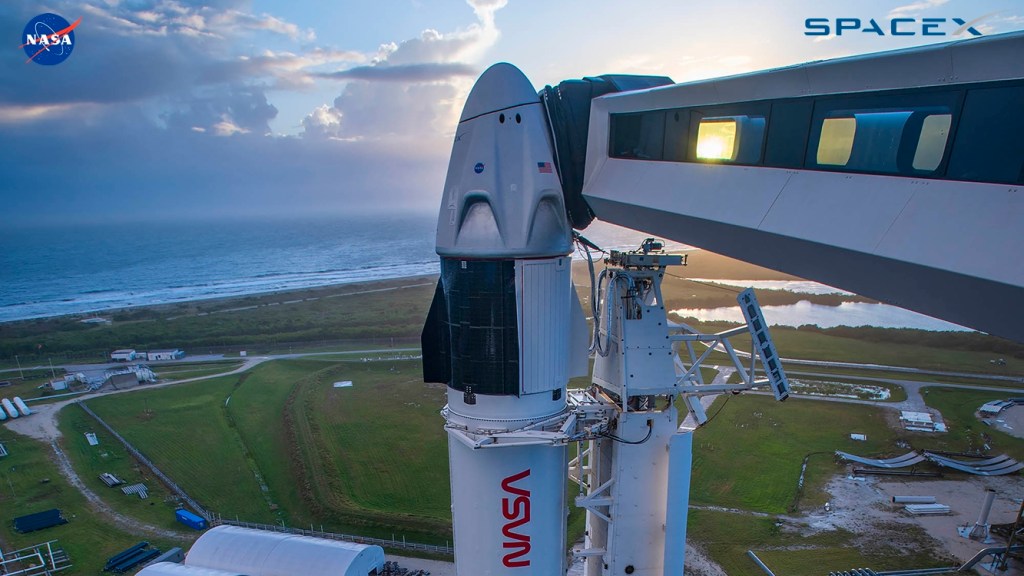
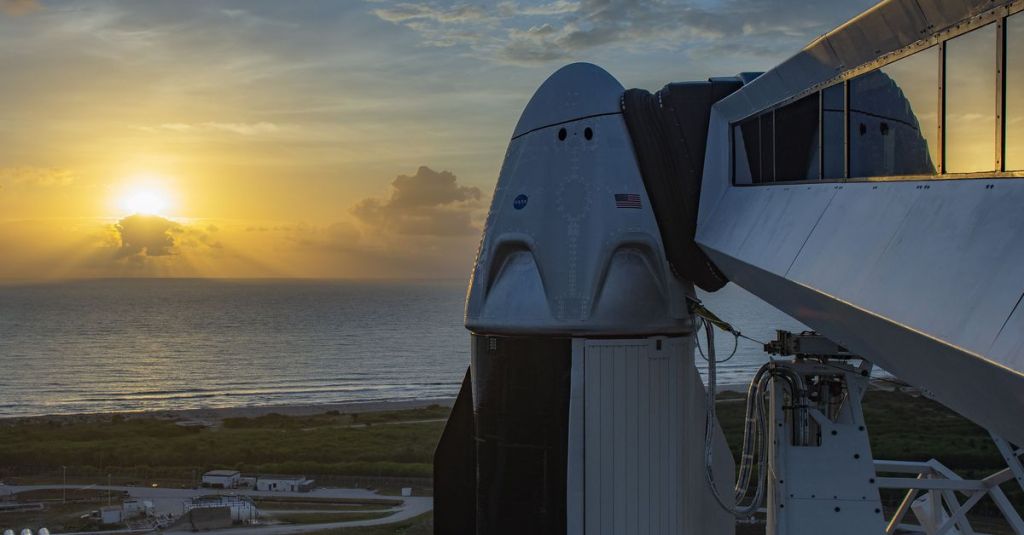
Centro Espacial Kennedy: Launch Complex 39A Falcon 9 Rocket
El lanzamiento espacial del Cohete Falcon 9 impulsará la Misión SpaceX Crew-1 Dragon desde la Plataforma Launch Complex 39A en el Centro Espacial de Cabo Cañaveral, Florica, Estados Unidos. Esta noche hora local EE.UU., la primera misión operativa de la nave espacial Crew-1 Dragon de SpaceX está lista para volar, llevando una tripulación de cuatro personas a la Estación Espacial Internacional (ISS). La misión, programada para las 07:27 P.M. ET, marca el comienzo de misiones regulares tripuladas hacia y desde la ISS para SpaceX, ya que la compañía establece una ruta hacia el espacio para los astronautas de la NASA. A bordo del vuelo de esta noche hay tres astronautas de la NASA, Mike Hopkins, Victor Glover y Shannon Walker, así como Soichi Noguchi de la Agencia Japonesa de Exploración Aeroespacial. La tripulación está programada para permanecer a bordo de la ISS durante seis meses, antes de regresar a la Tierra dentro del Crew-1 Dragon.
Cobertura en vivo
La cobertura en vivo del vuelo de la NASA ha comenzado a las 03:15 P.M. ET, antes de que la tripulación comience a vestirse con los trajes de presión SpaceX personalizados que usarán en el vuelo al espacio. Luego se dirigirán a la plataforma de lanzamiento en el Centro Espacial Kennedy de la NASA alrededor de las 04:00 P.M. ET para abordar el Dragón de tripulación y atar dentro de la nave espacial. Una vez que estén atados, la escotilla se cerrará alrededor de las 05:30 P.M. ET. Entonces es hora de esperar hasta el despegue.
Horario lanzamiento
El Cohete Falcon 9 de SpaceX despegará del sitio de lanzamiento de la Plataforma 39A del Centro Espacial Kennedy, Cabo Cañaveral, Florida, el Domingo 15 de Noviembre de 2020 a las 07:27 P.M. ET. correspondiendo a los horarios universales de lanzamiento programada en Nueva York: 07:27 P.M., San Francisco: 04:27 P.M., Londres: 12:27 A.M. 16/11, Berlín: 01:27 A.M. 16/11, Moscú: 03:27 A.M. 16/11, Nueva Delhi: 05:57 A.M. 16/11, Beijing 08:27 A.M. 16/11, Tokio 09:27 A.M. 16/11, Melbourne 11:27 A.M. 16/11.
Transmisión en vivo SPACEX CREW-1 DRAGON
La transmisión en vivo puede seguirse en Nasa.gov / Space.com / Airgways.com
Ξ SPACEX CREW DRAGON Ξ
Kennedy Space Center: Launch Complex 39A Falcon 9 Rocket
The space launch of the Falcon 9 Rocket will propel Mission SpacceX Crew-1 Dragon from Platform Launch Complex 39A at Cape Canaveral Space Center, Florica, United States. Tonight US local time, the first operational mission of SpaceX’s Crew-1 Dragon spacecraft is ready to fly, taking a crew of four to the International Space Station (ISS). The mission, scheduled for 07:27 P.M. ET, marks the beginning of regular manned missions to and from the ISS for SpaceX, as the company establishes a route into space for NASA astronauts. On board tonight’s flight are three NASA astronauts, Mike Hopkins, Victor Glover and Shannon Walker, as well as Soichi Noguchi of the Japan Aerospace Exploration Agency. The crew is scheduled to stay aboard the ISS for six months, before returning to Earth inside Crew-1 Dragon.
Live cover
Live coverage of the NASA flight has started at 03:15 P.M. ET, before the crew begins dressing in the custom SpaceX pressure suits that they will wear on the flight into space. They will then head to the launch pad at NASA’s Kennedy Space Center around 04:00 P.M. ET to board the Dragon Crew and tie inside the spaceship. Once they are tied down, the hatch will close around 05:30 P.M. ET. Then it’s time to wait until take off.
Launch schedule
The SpaceX Falcon 9 Rocket will lift off from the Kennedy Space Center Platform 39A launch site, Cape Canaveral, Florida, on Sunday, November 15, 2020 at 07:27 P.M. ET. corresponding to the universal launch times scheduled in New York: 07:27 P.M., San Francisco: 04:27 P.M., London: 12:27 A.M. 11/16, Berlin: 01:27 A.M. 11/16, Moscow: 03:27 A.M. 11/16, New Delhi: 05:57 A.M. 11/16, Beijing 08:27 A.M. 11/16, Tokyo 09:27 A.M. 11/16, Melbourne 11:27 A.M. 11/16.
Live stream SPACEX CREW-1 DRAGON
The live broadcast can be followed at Nasa.gov / Space.com / Airgways.com
AW | 2020 11 15 14:01 | AIRLINES MARKET / GOVERNMENT
La aviación incursiona en una crisis sin precedentes
El sector aeronáutico es uno de los más afectados a nivel mundial por la crisis de la actual pandemia. Sólo durante el primer semestre del año se cancelaron 7,5 millones de operaciones. La Asociación Internacional de Transporte Aéreo (IATA) ha estimado una pérdida de US$ 84,3 billones de Dólares para este año 2020 y una retracción de la demanda en torno al 54%, números que pregonan la mayor crisis del sector en la historia reciente de la aviación. Un gran número de países, al tiempo que aplicaron medidas de aislamiento social, cerraron las fronteras aéreas para limitar la propagación de los contagios. Según IATA, el indicador que muestra el tránsito de pasajeros marcó un piso histórico en Abril 2020, cuando registró una caída de 94,1% interanual.
Muchos de los gobiernos del mundo han permitido en sus aerolíneas ingresar como capitalizadores, en algunos ejemplos, como accionista mayoritario, una tendencia para salvaguardar el colapso de los grandes transportadores.
Europa
En Europa la actual crisis sanitaria pone en jaque a la industria del transporte que ha llevado a que distintos estados abran un paréntesis al respecto e implementen una batería de medidas que van desde el aplazamiento de pago de las tarifas aeroportuarias y de navegación aérea, hasta desembolsos millonarios.
Los primeros países en anunciar rescates financieros a las compañías aéreas fueron Alemania, Italia y Francia. Alemania aprobó un plan de ayuda de hasta € 9.000 millones para Lufthansa. El Estado alemán obtiene el 20% del paquete accionario de la firma. Italia definió en Abril 2020 llevar adelante la nacionalización de Alitalia que se encuentra en concurso desde 2017 por sus problemas financieros, formando parte de una aerolínea bajo la esfera estatal. La nueva aerolínea contará con una inyección de € 3.000 millones. En Francia, que posee un 14% del capital de Air France, anunció a fines de 04/2020 ha anunciado una inyección económica histórica de € 7.000 millones de Euros. España confirmó hace una semana la entrega de un préstamo de € 475 millones a devolver en seis años a Air Europa, la principal línea aérea de capital español. Se trata del primer desembolso de fondos públicos del estado español a una empresa afectada por la crisis del COVID-19. La mejora en los indicadores está traccionada por el mercado de vuelos de cabotaje, el cual comenzó a flexibilizarse en países de Europa a partir de Julio 2020.
América
En Julio 2020, Estados Unidos anunció el mayor programa de asistencia financiera de la historia al sector privado, que incluyó US$ 25.000 millones para compañías aéreas. Las ayudas gubernamentales no han alcanzado para soportar el retroceso económico de los mega-compañías, aún con el transporte aéreo abierto con algunas restricciones por parte de las líneas aéreas. Durante los últimos meses se observa una leve reactivación y recuperación del sector de la aviación, pero las nuevas olas de contagios no permiten avizorar un panorama alentador para los meses venideros, aunque la esperanza ahora está focalizada enn las vacunas para frenar al virus. Según el segmento del mercado que se analice, se observa una situación diferenciada respecto a América Latina, con una situación de mayor vulnerabilidad.
Asia
En el mercado asiático, con China en primer lugar, continúan superando las barreras y dificultades post-pandemia, alcanzado en particular el primer superhábit de la compañía China Southern Airlines en sus ejercicios económicos de este año 2020. En Septiembre 2020, la contracción fue de 43,3% interanual. China y Rusia tuvieron fuertes contribuciones a la mejora de este indicador, ya que ambos mercados están operando en niveles cercanos a la pre pandemia. Por otra parte, el mercado de vuelos internacionales continúa operando en mínimos históricos. Con una caída de 88,8% interanuales en 09/2020, tuvo un peor desempeño que en Agosto. Ello es resultado de que más de 70 países mantienen sus fronteras cerradas al turismo.
Aviación Argentina
La República Argentina, el espacio aéreo fue cerrado el 20 de Marzo de 2020, día en que se decretó el Aislamiento Social, Preventivo y Obligatorio (ASPO), operando únicamente vuelos humanitarios, de carga y de repatriación, alcanzando una contracción de mercado cercano al 995 según cifras presentadas por la Administración Nacional de Aviación Civil (ANAC). Después de siete meses y medio el Gobierno habilitaba a partir del 1 Noviembre 2020, con la publicación en el Boletín Oficial el 15/10 del Ministerio de Transporte la reanudación de los vuelos domésticos para usuarios esenciales, personas que deban realizar tratamientos médicos y por motivos de fuerza mayor, mostrando una tracción lenta hacia la normalización de los servicios aéreos. La baja de la curva de contagios podría mejorar las perspectivas de las siguientes fases sanitarias para comenzar a fomentar las conexiones interprovinciales, pero dependerá de la situación endémica.
El apoyo del Estado a Aerolíneas Argentinas ha representado una salvaguarda decisiva para evitar la quiebra de la aerolínea de bandera. Las medidas adoptadas en el marco de la pandemia, con la transferencia del Adelantos del Tesoro Nacional (ATN) por valores a AR$ 16.894 millones de Pesos ha permitido subsidiar a la compañía frente a un colapso inminente. El proceso de fusión de Austral Líneas Aéreas continúa frenado por las posturas sindicales y de accionistas.
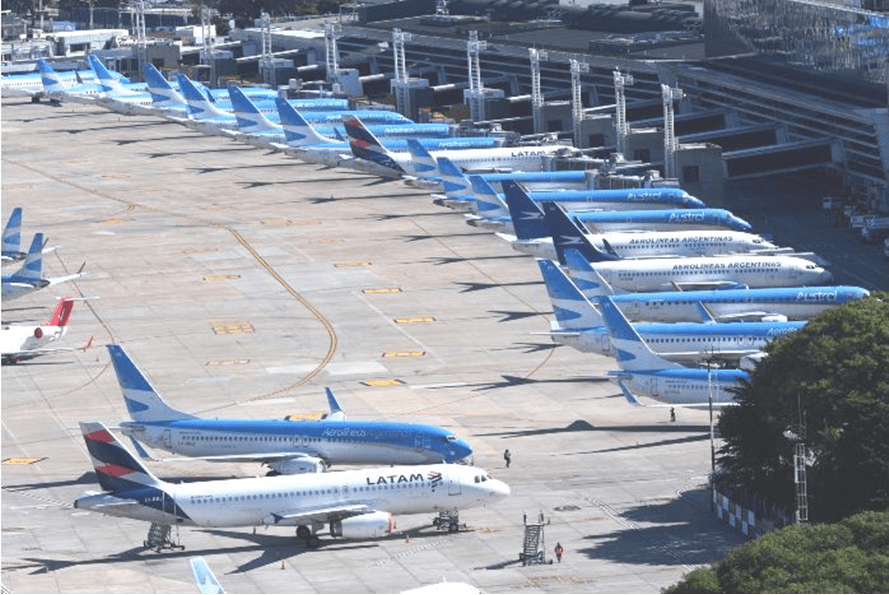
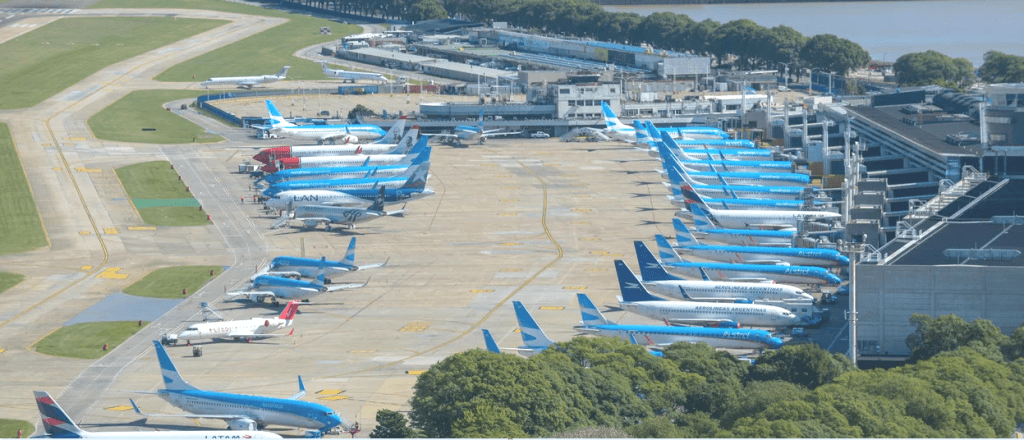
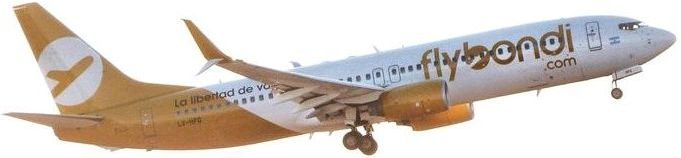
El mayor impacto se ha sentido en el sector de las aerolíneas privadas, donde las aéreas como Flybondi Líneas Aéreas, JetSmart Airlines Argentina, Andes Líneas Aéreas, American Jet Líneas Aéreas, continúan sobreviviendo después de siete meses y medio sin asistencias y en un entorno de reapertura muy limitada y con dificultades políticas y logísticas por el conflicto con el Aeropuerto El Palomar.
Otras aerolíneas no pudieron soportar la puesta en tierra de la aviación por el tiempo prolongado establecido, arrastrando a Latam Airlines Argentina, Flyest Líneas Aéreas, LAER Líneas Aéreas y Avianca Argentina que continúa desprendiéndose de sus empleados.
Ante la falta de ayudas por parte del Estado y la desidia que fomenta las inacciones por parte de la política de turno, generan una indignación por parte de los ciudadanos que no hacen otra cosa que observar como el país va hacia una concentración de un mercado monopólico, estimulado entre bastidores, por parte de un Estado-dependiente de Aerolíneas Argentinas.
Perspectivas aéreas
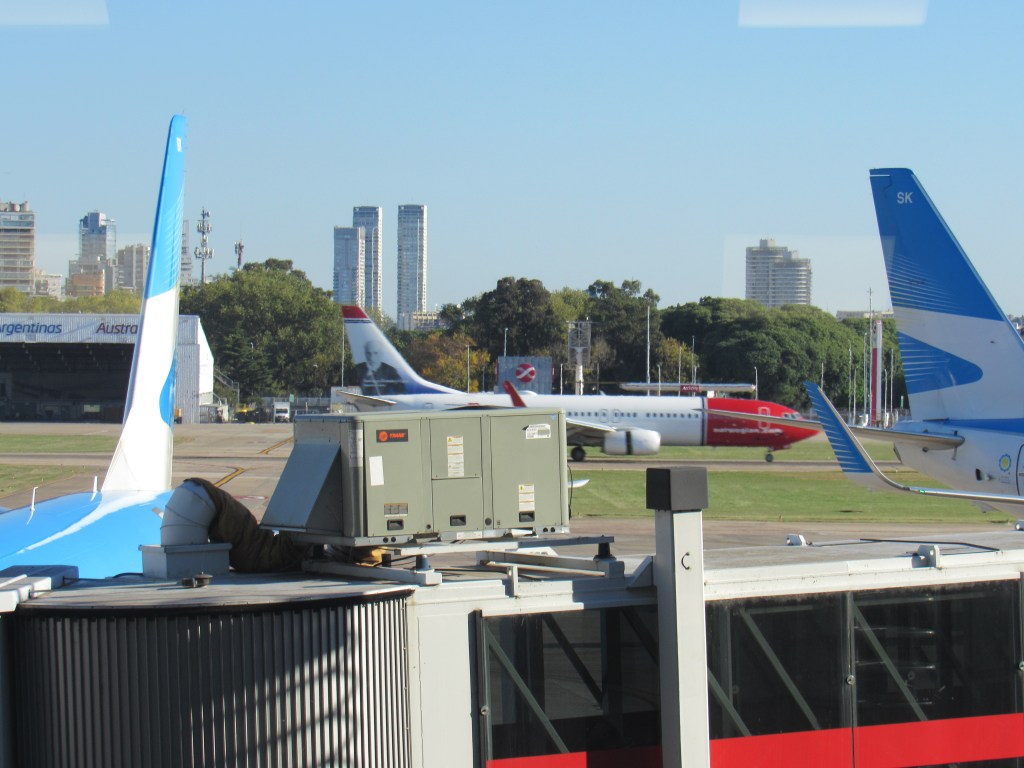
El próximo escenario aéreo estará focalizado a garantizar a las líneas aéreas en Argentina trabajar en las mismas condiciones y reglas que en Aerolíneas Argentinas. Es imperante que el Gobierno de Argentina establezca definiciones claras respecto al Aeropuerto El Palomar y permita la continuidad de la aeroestación que ha generado un impacto positivo en el flujo de tráfico aéreo. Por otro lado, el Aeropuerto Jorge Newbery, que se espera concluir las mejoras que se están efectuando hacia Abril 2020, permitan la pluralidad de compañías aéreas argentinas que operen desde esta aeroestación, estimulando la creación de más líneas aéreas para trabajar en un entorno de economía abierta y diversificada.
Argentina vs aviation crisis
Aviation enters an unprecedented crisis
The aeronautical sector is one of the most affected worldwide by the crisis of the current pandemic. Only during the first half of the year 7.5 million operations were canceled. The International Air Transport Association (IATA) has estimated a loss of US$ 84.3 billion dollars for this year 2020 and a retraction in demand of around 54%, numbers that herald the biggest crisis in the sector in recent history of aviation. A large number of countries, while applying social isolation measures, closed air borders to limit the spread of infections. According to IATA, the indicator that shows passenger traffic marked a historic low in April 2020, when it registered a fall of 94.1% year-on-year.
Many of the world’s governments have allowed their airlines to enter as capitalizers, in some examples, as a majority shareholder, a trend to safeguard the collapse of the large carriers.
Europe
In Europe, the current health crisis puts the transport industry in check, which has led different states to open a parenthesis in this regard and implement a battery of measures that range from postponing payment of airport and air navigation fees, to disbursements millionaires.
The first countries to announce financial bailouts to airlines were Germany, Italy and France. Germany approved an aid plan of up to € 9 billion for Lufthansa. The German state obtains 20% of the firm’s share package. Italy defined in April 2020 to carry out the nationalization of Alitalia that has been in competition since 2017 due to its financial problems, forming part of an airline under the state sphere. The new airline will have an injection of € 3,000 million. In France, which owns 14% of the capital of Air France, announced at the end of 04/2020 has announced a historic economic injection of € 7,000 million euros. Spain confirmed a week ago the delivery of a € 475 million loan to be repaid in six years to Air Europa, the main airline with Spanish capital. It is the first disbursement of public funds from the Spanish state to a company affected by the COVID-19 crisis. The improvement in the indicators is driven by the domestic flight market, which began to become more flexible in European countries as of July 2020.
America
In July 2020, the United States announced the largest financial assistance program in history to the private sector, which included US$ 25 billion for airlines. Government aid has not been enough to support the economic decline of the mega-companies, even with open air transport with some restrictions on the part of the airlines. In recent months, a slight reactivation and recovery of the aviation sector has been observed, but the new waves of infections do not allow for an encouraging outlook for the coming months, although hope is now focused on vaccines to stop the virus. According to the market segment analyzed, a different situation is observed compared to Latin America, with a situation of greater vulnerability.
Asia
In the Asian market, with China in the first place, they continue to overcome post-pandemic barriers and difficulties, in particular the first super-habitat of the China Southern Airlines company in its financial years this year 2020. In September 2020, the contraction was of 43.3% year-on-year. China and Russia had strong contributions to the improvement of this indicator, since both markets are operating at levels close to the pre-pandemic. On the other hand, the international flight market continues to operate at historic lows. With a fall of 88.8% year-on-year in 09/2020, it had a worse performance than in August. This is the result of more than 70 countries keeping their borders closed to tourism.
Argentine aviation
The Argentine Republic, the airspace was closed on March 20, 2020, the day on which the Social, Preventive and Mandatory Isolation (ASPO) was decreed, operating only humanitarian, cargo and repatriation flights, reaching a market contraction close to 995 according to figures presented by the National Civil Aviation Administration (ANAC). After seven and a half months, the Government enabled as of November 1, 2020, with the publication in the Official Gazette on 10/15 of the Ministry of Transport, the resumption of domestic flights for essential users, people who must perform medical treatments and for reasons of force majeure, showing a slow traction towards the normalization of air services. The lowering of the contagion curve could improve the prospects for the next health phases to start promoting interprovincial connections, but it will depend on the endemic situation.
The support of the State to Aerolíneas Argentinas has represented a decisive safeguard to avoid the bankruptcy of the flag carrier. The measures adopted in the framework of the pandemic, with the transfer of the Advances from the National Treasury (ATN) for amounts of AR$ 16,894 million pesos, has allowed the company to be subsidized in the face of an imminent collapse. The Austral Líneas Aéreas merger process continues to halt due to union and shareholder positions.
The greatest impact has been felt in the private airline sector, where airlines such as Flybondi Líneas Aéreas, JetSmart Airlines Argentina, Andes Líneas Aéreas, American Jet Líneas Aéreas, continue to survive after seven and a half months without assistance and in an environment of Very limited reopening and with political and logistical difficulties due to the conflict with El Palomar Airport.
Other airlines could not withstand the grounding of aviation for the long established time, dragging Latam Airlines Argentina, Flyest Líneas Aéreas, LAER Líneas Aéreas and Avianca Argentina, which continues to shed its employees.
Faced with the lack of aid from the State and the laziness that encourages inactions on the part of the politics of the moment, they generate an outrage on the part of citizens who do nothing other than observe how the country goes towards a concentration of a monopoly market, stimulated behind the scenes, by a state-dependent Aerolíneas Argentinas.
Aerial perspectives
The next air scenario will be focused on guaranteeing the airlines in Argentina to work under the same conditions and rules as in Aerolíneas Argentinas. It is imperative that the Government of Argentina establish clear definitions regarding the El Palomar Airport and allow the continuity of the air station that has generated a positive impact on the flow of air traffic. On the other hand, Jorge Newbery Airport, which is expected to complete the improvements that are being made by April 2020, will allow the plurality of Argentine airlines that operate from this airstation, stimulating the creation of more airlines to work in an economic environment open and diversified.
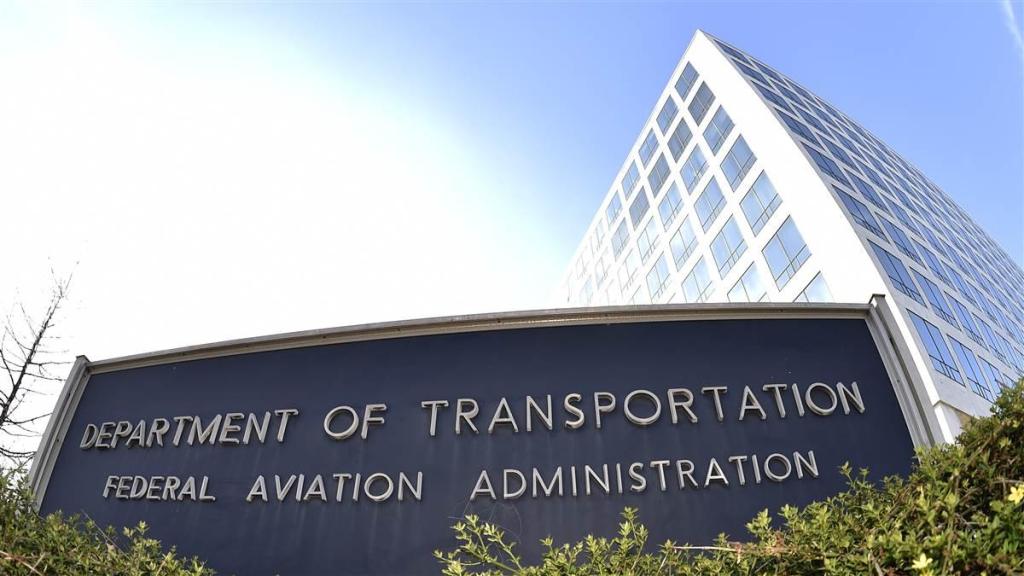
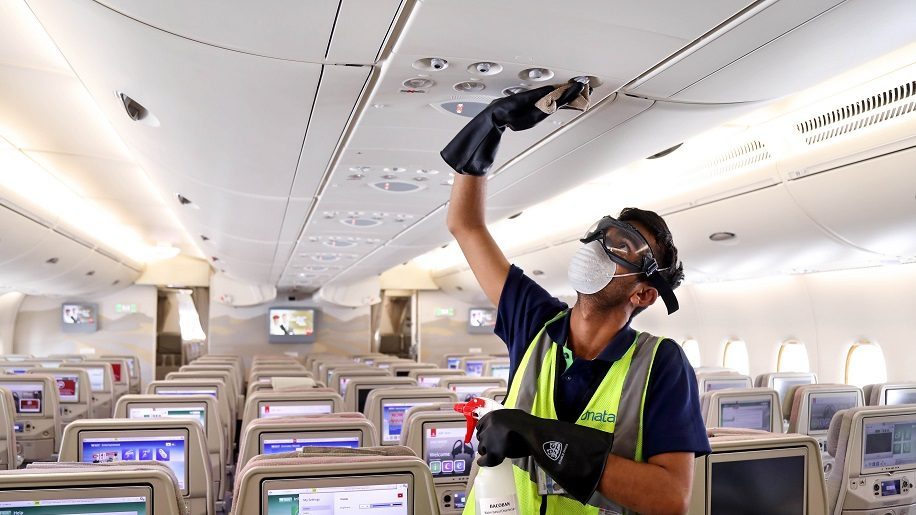
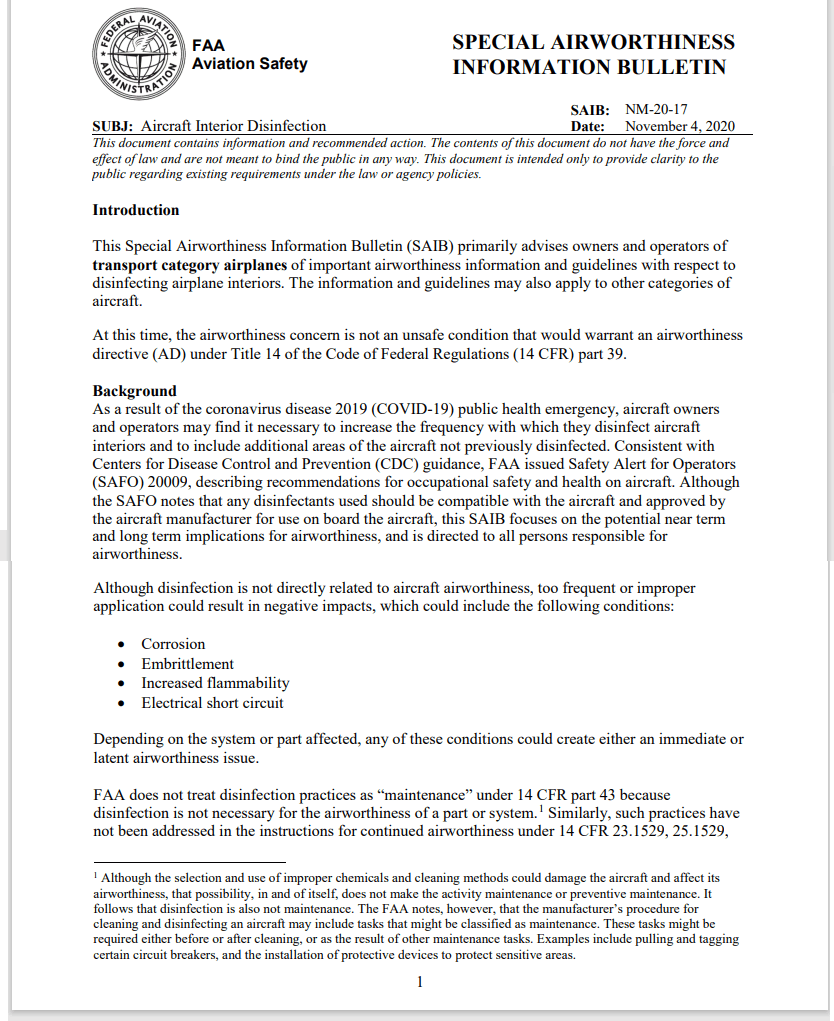
La Administración Federal de Aviación (FAA) de los Estados Unidos ha emitido una advertencia acerca de las acciones que podrían representar un riesgo para la seguridad el mal procedimiento de desinfecciones en las aeronaves comerciales. El Boletín Especial de Información sobre aeronavegabilidad publicado el 4 de Noviembre de 2020 ha dado advertencia que el uso demasiado frecuente o incorrecto de desinfectantes podría causar problemas como corrosión, fragilidad, mayor inflamabilidad y cortocircuitos eléctricos, lo que podría vulnerar la seguridad en la aviación. «Dependiendo del sistema o parte afectada, cualquiera de estas condiciones podría crear un problema de aeronavegabilidad inmediato o latente», expresa la advertencia del organismo de seguridad estadounidense.
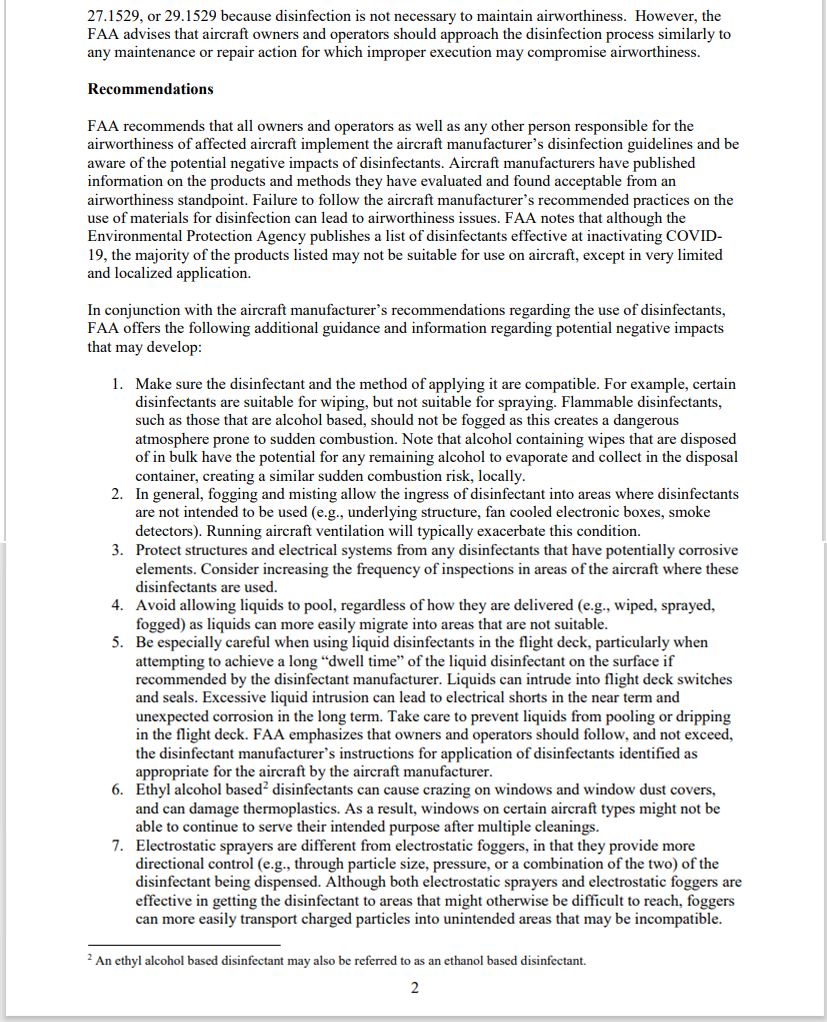
La FAA insta a las compañías aéreas a utilizar desinfectantes compatibles con aeronaves y aprobados por el fabricante. También deben asegurarse de que el desinfectante y el método de aplicación son compatibles. «Por ejemplo, ciertos desinfectantes son adecuados para limpiar, pero no son adecuados para la pulverización. Los desinfectantes inflamables, como los que son a base de alcohol, no deben empañarse, ya que esto crea una atmósfera peligrosa propensa a la combustión repentina. Tenga en cuenta que las toallitas que contienen alcohol que se eliminan a granel tienen la posibilidad de que cualquier alcohol restante se evapore y se recoja en el contenedor de eliminación, creando un riesgo de combustión repentina similar, localmente».
La FAA advierte que ciertas áreas los desinfectantes no deben utilizarse, como cajas electrónicas refrigeradas por ventilador, detectores de humo y estructura subyacente. La ventilación de los aviones en funcionamiento normalmente exacerbará esta condición, advierte. El organismo continúa asesorando a las compañías aéreas para proteger las estructuras y los sistemas eléctricos de los agentes desinfectantes de elementos potencialmente corrosivos y considerar el aumento de las inspecciones de estas áreas. También deben tener especial cuidado cuando se utilizan desinfectantes líquidos en la cubierta de vuelo, particularmente aquellos con largos tiempos de permanencia. «Los líquidos pueden invadir los interruptores y sellos de la cubierta de vuelo. La intrusión excesiva de líquidos puede conducir a cortocircuitos eléctricos a corto plazo y corrosión inesperada a largo plazo. Tenga cuidado de evitar que los líquidos se acomodan o gotee en la cubierta de vuelo. La FAA hace hincapié en que los propietarios y operadores deben seguir, y no exceder, las instrucciones del fabricante del desinfectante para la aplicación de desinfectantes identificados como apropiados para la aeronave por el fabricante de la aeronave», explica la FAA.
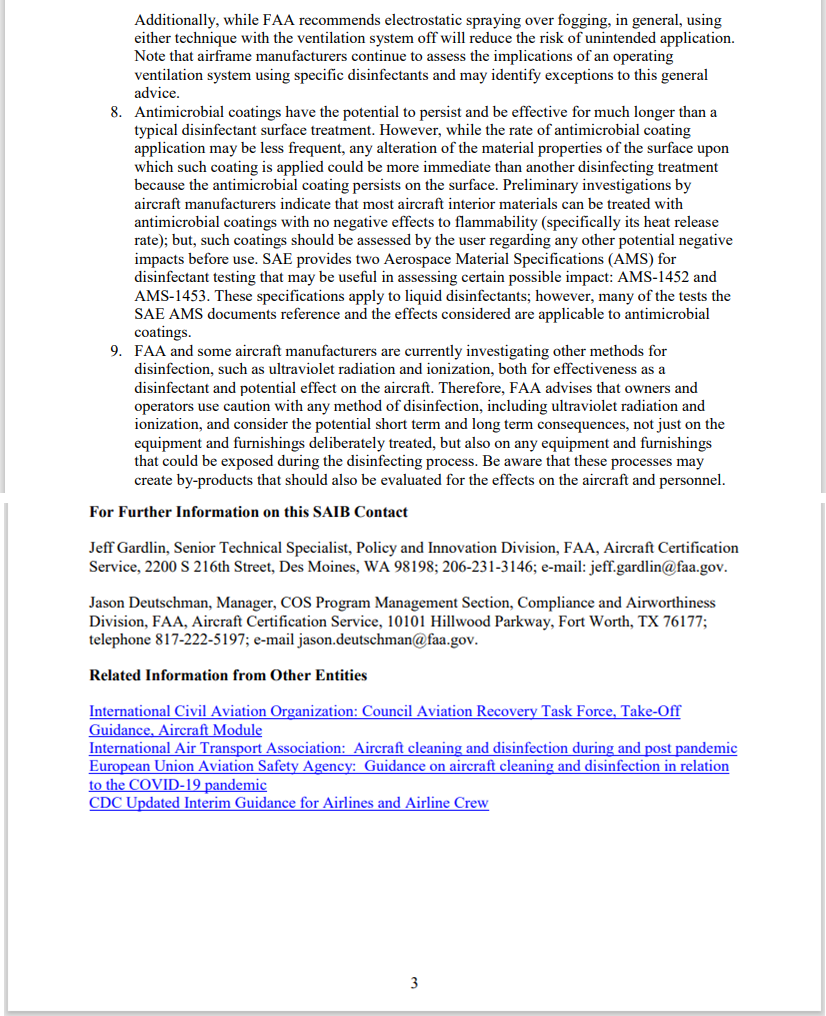
Los desinfectantes que contienen alcohol etílico pueden causar agrietamiento en las ventanas y dañar los termoplásticos. «Como resultado, es posible que las ventanas de ciertos tipos de aeronaves no puedan seguir sirviendo a su propósito después de varias limpiezas’‘, añade el organismo de aviación. La FAA recomienda el uso de pulverización electrostática sobre el empañamiento, ya que los foggers pueden transportar más fácilmente partículas cargadas a áreas no deseadas que pueden ser incompatibles. Los recubrimientos antimicrobianos más duraderos son otra área en la que es necesario tener precaución con una advertencia de que estos pueden tener más impacto cuando se trata de alterar la superficie en la que se aplica el recubrimiento.
Las investigaciones preliminares de los fabricantes de aeronaves indican que la mayoría de los materiales interiores de las aeronaves pueden tratarse con recubrimientos antimicrobianos sin efectos negativos a la inflamabilidad, específicamente su tasa de liberación de calor; pero, tales recubrimientos deben ser evaluados por el usuario con respecto a cualquier otro impacto negativo potencial antes de su uso. El boletín señala que otros métodos de desinfección, incluida la radiación ultravioleta y la ionización, están siendo investigados tanto en términos de eficacia como de efecto potencial en una aeronave. Pero aconseja a los operadores que examinen cualquier método de desinfección para posibles consecuencias a corto y largo plazo «no sólo en el equipo y el mobiliario tratados deliberadamente, sino también en cualquier equipo y mobiliario que pueda estar expuesto durante el proceso de desinfección. Tenga en cuenta que estos procesos pueden crear subproductos que también deben evaluarse para los efectos en la aeronave y el personal», expresa la FAA.
FAA warning incorrect disinfection
FAA gives warning about sanitary modality
The Federal Aviation Administration (FAA) of the United States has issued a warning about actions that could pose a safety risk from poor disinfection procedures on commercial aircraft. The Special Airworthiness Information Bulletin published on November 4, 2020 has given a warning that the too frequent or incorrect use of disinfectants could cause problems such as corrosion, brittleness, increased flammability and electrical short circuits, which could compromise aviation safety. «Depending on the system or part affected, any of these conditions could create an immediate or latent airworthiness problem», says the warning from the US security agency.
The FAA encourages airlines to use manufacturer-approved, aircraft-compatible disinfectants. They must also ensure that the disinfectant and the application method are compatible. «For example, certain disinfectants are suitable for cleaning but are not suitable for spraying. Flammable disinfectants, such as those that are alcohol-based, should not fog up, as this creates a dangerous atmosphere prone to flash fire. Note that alcohol-containing wipes that are disposed of in bulk have the potential for any remaining alcohol to evaporate and collect in the disposal container, creating a similar flash fire hazard, locally».
The FAA advises that disinfectants should not be used in certain areas, such as fan-cooled electronic boxes, smoke detectors and underlying structure. Ventilation of working aircraft will typically exacerbate this condition, it warns. The agency continues to advise airlines to protect structures and electrical systems from disinfecting agents of potentially corrosive elements and to consider increasing inspections of these areas. They must also take special care when using liquid disinfectants on the flight deck, particularly those with long residence times. «Liquids can invade the switches and seals of the flight deck. Excessive liquid intrusion can lead to short-term electrical shorts and unexpected long-term corrosion. Take care to prevent liquids from settling or dripping on the flight deck. The FAA emphasizes that owners and operators must follow, and not exceed, the disinfectant manufacturer’s instructions for applying disinfectants identified as appropriate for the aircraft by the aircraft manufacturer», explains the FAA.
Disinfectants containing ethyl alcohol can cause window cracking and damage thermoplastics. «As a result, the windows of certain types of aircraft may no longer be able to serve their purpose after multiple cleanings», the aviation agency adds. The FAA recommends the use of electrostatic spray on fogging, as foggers can more easily transport charged particles to unwanted areas that may be incompatible. Longer lasting antimicrobial coatings are another area where caution is required with a caveat that these can have more of an impact when it comes to altering the surface on which coating is applied.
Preliminary research by aircraft manufacturers indicates that most aircraft interior materials can be treated with antimicrobial coatings without negative effects on flammability, specifically their rate of heat release; but, such coatings must be evaluated by the user for any other potential negative impacts prior to use. The bulletin notes that other disinfection methods, including ultraviolet radiation and ionization, are being investigated both in terms of efficacy and potential effect on an aircraft. But he advises operators to examine any disinfection method for possible short-term and long-term consequences «not only on deliberately treated equipment and furniture, but also on any equipment and furniture that may be exposed during the disinfection process. Please note Note that these processes can create by-products that must also be evaluated for effects on aircraft and personnel», says the FAA.
El Centro Aeroespacial de la NASA, Estados Unidos, ha reportado que el lanzamiento de Cohete Falcon 9 y la cobertura del lanzamiento de la misión SpaceX Crew-1 Dragon de la NASA a la Estación Espacial Internacional (ISS) ha sido reprogramado para el día 15 de Noviembre de 2020 a las 07:27 p.m. EST (hora EEUU); la cobertura será continua a través de la apertura de atraque y escotilla mediante el canal de la NASA.
Cuatro astronautas tienen previsto lanzarse a la Estación Espacial Internacional el Domingo 15/11 para el primer vuelo comercial operativo de la nave espacial Crew Dragon de SpaceX, una misión denominada Crew-1.
La cobertura en vivo estará transmitida en Space.com y NASA TV, donde los astronautas de la NASA: Shannon Walker, Victor Glover, Michael Hopkins y el astronauta de la Agencia Japonesa de Exploración Aeroespacial (JAXA) Soichi Noguchi, se embarcarán en la misión hacia la ISS. Airgways.com transmitirá en vivo la cobertura de la hazaña espacial.
Launch SpaceX Crew Dragon
Launch postponed to Sunday 11/15
The NASA Aerospace Center, United States, has reported that the launch of the Falcon 9 Rocket and the coverage of the launch of the NASA SpaceX Crew-1 Dragon mission to the International Space Station (ISS) has been rescheduled for the 15th. November 2020 at 07:27 pm EST (US time); coverage will be continuous through the berth and hatch opening through the NASA channel.
Four astronauts are scheduled to launch to the International Space Station on Sunday 11/15 for the first operational commercial flight of SpaceX’s Crew Dragon spacecraft, a mission called Crew-1.
Live coverage will be broadcast on Space.com and NASA TV, where NASA astronauts Shannon Walker, Victor Glover, Michael Hopkins and Japan Aerospace Exploration Agency (JAXA) astronaut Soichi Noguchi will embark on the mission. towards the ISS. Airgways.com will broadcast live coverage of the space feat.