AW | 2020 10 14 17:20 | AVIATION ORGANISMS / INDUSTRY
Acuerdan recortes empleos temporales por impacto pandemia
Los principales sindicatos franceses y la empresa europea Airbus Group firmaron este 14/10 un acuerdo que prevé recortes de empleo y despidos temporales para los trabajadores afectados por la disminución de la demanda de aviones de pasajeros debido a la pandemia de Coronavirus. Este acuerdo fue el preludio de los recortes de empleo en Francia, la mayoría de ellos en Toulouse, que es el centro del negocio de Airbus y la capital de la industria de la aviación y el espacio en Europa.
Los sindicatos aeronáuticos indicaron que el convenio evitará algunos despidos forzosos, y que firmaron un convenio que incluye planes apoyados por el gobierno francés, cuyo contenido son despidos temporales para alrededor del 30% de los empleados franceses, la mayoría de los cuales trabajan en la producción, siempre que que los acuerdos comenzarán a funcionar el 1 de Enero de 2021. El acuerdo evitaría los despidos forzosos, aunque Geum Fawry, Director General de Airbus, advirtió recientemente a los empleados de la empresa que las medidas voluntarias no serían suficientes. El sindicato Confédération Générale du Travail (CGT) se negó a apoyar el paquete de acuerdos porque no excluyó los despidos forzosos y ayudó a la mayoría de los trabajadores.
Unions and Airbus agree to layoffs
Temporary job cuts agreed due to pandemic impact
The main French unions and the European company Airbus Group signed an agreement on 10/14 that provides for job cuts and temporary layoffs for workers affected by the decrease in demand for passenger aircraft due to the Coronavirus pandemic. This agreement was the prelude to job cuts in France, most of them in Toulouse, which is the center of Airbus business and the capital of the aviation and space industry in Europe.
The aeronautical unions indicated that the agreement will prevent some forced layoffs, and that they have signed an agreement that includes plans supported by the French government, the content of which is temporary dismissals for around 30% of French employees, most of whom work in production, provided that the agreements will go into effect on January 1, 2021. The agreement would prevent forced layoffs, although Geum Fawry, Airbus CEO, recently warned company employees that voluntary measures would not be enough. The Confédération Générale du Travail (CGT) union refused to support the agreement package because it did not exclude forced dismissals and helped most of the workers.
Embraer entrega dos E175 para aerolínea Mesa Airlines
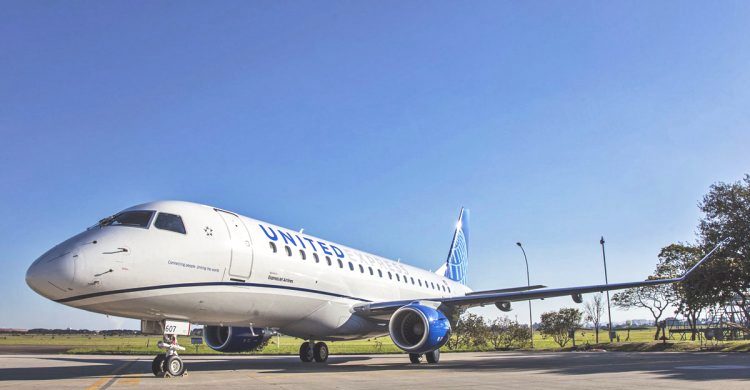
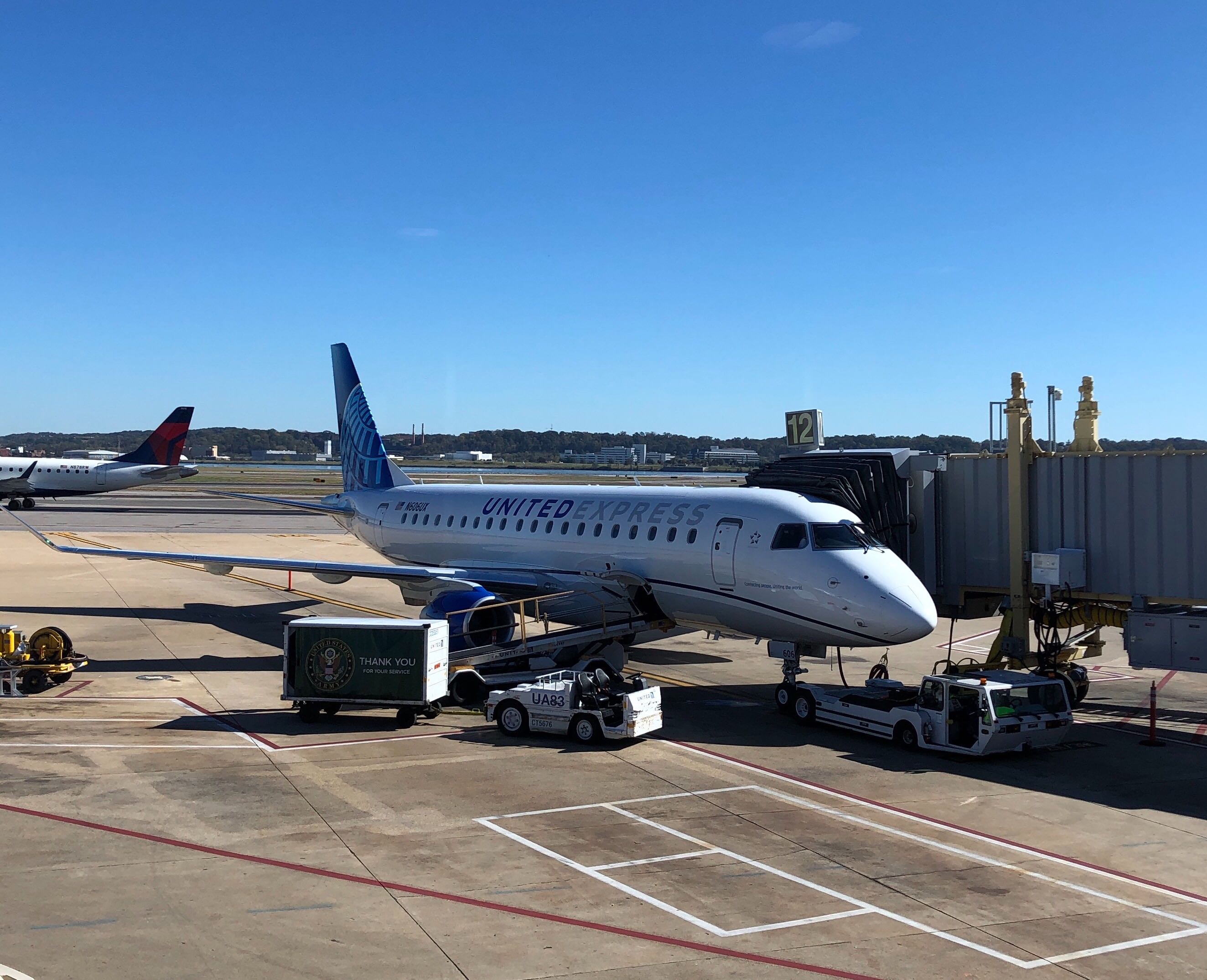
Embraer entregó dos Embraer E175-E1 a la aerolínea regional de Estados Unidos, Mesa Airlines a principios de Octubre 2020. Como parte de la adquisición de más aeronaves regionales para los servicios que propporciona como empresa feeder de United Airlines, para volar bajo el nombre de United Express. Los número de series o matrículas de ambas aeronaves corresponden a N87364 (SN:170.00858) y N78361 (SN:170.00855).
Ambos aviones partieron rumbo a Estados Unidos en la ruta del vuelo desde Sao José dos Campos con escalas en Manaos, St. John (Antigua y Barbuda), Fort Lauderdale (FL) y Houston (TX) en ambos casos en los Estados Unidos.
Perspectivas Mesa Airlines
La compañía regional Mesa Airlines actualmente opera 60 unidades E-Jets y 20 aeronaves corresponden a nuevos pedidos pendientes de entrega. Estas aeronaves tienen una capacidad entre 70 y 76 asientos en una configuración de doble clase, permitiendo favorecer la implementación de vuelos regionales bajo los acuerdos de las Cláusulas de Alcance impuestas por los sindicatos y aerolíneas.
Embraer delivers E175 to Mesa Airlines
Embraer delivers two E175s for Mesa Airlines
Embraer delivered two Embraer E175-E1s to the United States regional airline, Mesa Airlines in early October 2020. As part of the acquisition of more regional aircraft for the services it provides as a feeder company for United Airlines, to fly under the name United Express. The serial or registration numbers of both aircraft correspond to N87364 (SN: 170.00858) and N78361 (SN: 170.00855).
Both planes departed for the United States on the route of the flight from Sao José dos Campos with stops in Manaus, St. John (Antigua and Barbuda), Fort Lauderdale (FL) and Houston (TX) in both cases in the United States.
Perspective Mesa Airlines
The regional company Mesa Airlines currently operates 60 E-Jets units and 20 aircraft correspond to new orders pending delivery. These aircraft have a capacity between 70 and 76 seats in a double class configuration, allowing to favor the implementation of regional flights under the agreements of the Scope Clauses imposed by the unions and airlines.
Embraer entrega E175 para Mesa Airlines
Embraer entrega dois E175s para Mesa Airlines
A Embraer entregou dois Embraer E175-E1 para a companhia aérea regional dos Estados Unidos, Mesa Airlines no início de outubro de 2020. Como parte da aquisição de mais aeronaves regionais para os serviços que presta como uma empresa alimentadora da United Airlines, para voar sob o nome United Expressar. Os números de série ou de registro de ambas as aeronaves correspondem a N87364 (SN:170.00858) e N78361 (SN: 170.00855).
Os dois aviões partiram para os Estados Unidos na rota do vôo de São José dos Campos com escalas em Manaus, St. John (Antígua e Barbuda), Fort Lauderdale (FL) e Houston (TX) nos dois casos nos Estados Unidos.
Perspectiva Mesa Airlines
A empresa regional Mesa Airlines opera atualmente 60 E-Jets e 20 aeronaves correspondem a novos pedidos com entrega pendente. Estas aeronaves têm capacidade entre 70 e 76 lugares em configuração de classe dupla, permitindo favorecer a implementação de voos regionais ao abrigo dos acordos de Cláusulas de Escopo impostos pelos sindicatos e companhias aéreas.
Inician plan de verificación mundial sanitaria en aeropuertos
A partir del 13 Octubre 2020 ha entrado en vigencia un nuevo esquema de Auditoría de Verificación de Cumplimiento de Aviación a nivel mundial, el cual está diseñado para ayudar a las organizaciones aeronáuticas a prepararse para una próxima normalidad y mitigar riesgos en salud pública y aumentar la confianza en viajes aéreos. A través de este esquema, aeropuertos, servicios en tierra, aerolíneas comerciales y de carga serán evaluados independientemente en una o más de las siguientes directrices o requerimientos de acceso público: La norma de la OACI, bajo la Council’s Aviation Recovery Task Force (CART) que será válida para aerolíneas, aeropuertos y los módulos de carga; en tanto que el protocolo de la European Union Aviation Safety Agency (EASA) ECDC COVID-19 Aviation Health Safety, entrará en vigor para aerolíneas y aeropuertos.
Hamad, precursor
La primera organización en lograr la verificación BSI fue el Aeropuerto Internacional de Hamad (HIA), en la República de Qatar. “Es un honor que se nos reconozca por nuestros esfuerzos para personal y pasajeros, al tiempo que aseguramos la eficiencia operativa. La verificación refleja nuestra capacidad para mantener la posición de HIA como aeropuerto líder en el mundo en estos tiempos (…) el reconocimiento internacional que obtenemos de BSI es importante para asegurar la capacidad operativa de HIA en todo momento”, destacó Badr Mohammed Al-Meer, Jefe de Operaciones de HIA.
Por su parte, Abdulla bin Nasser Turki Al-Subaey, Presidente de la Autoridad de Aviación Civil de Qatar (QCAA) destacó el avance para colocar sus servicios de aeropuertos en una vanguardia sanitaria mundial: “Este acontecimiento sienta precedentes en la historia de la aviación de Qatar. Es un testimonio de la agudeza y el compromiso de Qatar con los principios y objetivos de la OACI que ayudan a lograr la seguridad operacional, la protección y la eficiencia del sistema mundial de aviación civil. La Autoridad en Aviación Civil de Qatar trabaja por el liderazgo del Aeropuerto Internacional de Hamad, para llevarlo a ser de los mejores aeropuertos del mundo”.
Worldwide airport control audit
Global health verification plan begins at airports
As of October 13, 2020, a new Aviation Compliance Verification Audit scheme has come into effect worldwide, which is designed to help aeronautical organizations prepare for the next normality and mitigate public health risks and increase the confidence in air travel. Through this scheme, airports, ground services, commercial and cargo airlines will be independently evaluated in one or more of the following guidelines or public access requirements: The ICAO standard, under the Council’s Aviation Recovery Task Force (CART) which will be valid for airlines, airports and cargo modules; while the protocol of the European Union Aviation Safety Agency (EASA) ECDC COVID-19 Aviation Health Safety, will enter into force for airlines and airports.
Hamad, forerunner
The first organization to achieve BSI verification was Hamad International Airport (HIA), in the Republic of Qatar. “It is an honor to be recognized for our efforts for staff and passengers, while ensuring operational efficiency. The verification reflects our ability to maintain HIA’s position as the world’s leading airport at this time […] the international recognition we obtain from BSI is important to ensure HIA’s operational capacity at all times”, highlighted Badr Mohammed Al-Meer, HIA Chief of Operations.
For his part, Abdulla bin Nasser Turki Al-Subaey, President of the Qatar Civil Aviation Authority (QCAA) highlighted the progress to place its airport services at a global health vanguard: “This event sets precedents in the history of aviation from Qatar. It is a testament to the acuity and commitment of Qatar to ICAO principles and objectives that help to achieve the safety, security and efficiency of the global civil aviation system. The Qatar Civil Aviation Authority works for the leadership of Hamad International Airport, to make it one of the best airports in the world”.
Las compañías aéreas y los grupos aeroportuarios han pedido a los gobiernos de todo el mundo que proporcionen nuevos paquetes de ayuda para la asediada industria de la aviación. Los acuerdos de cuarentena actuales se sustituyen por un nuevo régimen de pruebas, por lo que industria de la aviación se enfrenta a un nuevo desafío frente a la lenta reactivación de los viajes aéreos.
La Asociación Internacional de Transporte Aéreo (IATA) ha advertido que las aerolíneas de todo el mundo se enfrentaron a una caída en los ingresos este año por valores de US$ 418 billones de Dólares. En el mismo sector, Airport Council International World (ACI) dijo que los aeropuertos verían caer sus propios ingresos en valores de alrededor de US$ 104 mil millones.
El Director General de la IATA, Alexandre de Juniac, dijo que los paquetes de ayuda financiera concedidos por muchos países a sus empresas de aviación a principios de este año, se habían reunido en el supuesto de que en la actualidad se estaría llevando a cabo una recuperación. Eso no había demostrado ser el caso, y el sector todavía estaba sufriendo un profundo trauma financiero. «Sin un segundo tramo de ayuda financiera, muchas aerolíneas no sobrevivirán al invierno», expresó con aplastante pronóstico. Mientras tanto, el Director de ACI, Luis Felipe de Oliveira, dijo que los aeropuertos también se enfrentaban a una presión financiera extrema. «Podríamos ver la quiebra de aeropuertos en muy poco tiempo. Sin esta acción, no es una exageración que la industria se enfrente al colapso», expresó el Director de ACI.
ACI y la IATA están alineadas al pedir medidas urgentes de los gobiernos para introducir pruebas generalizadas y coordinadas de los pasajeros a fin de permitir la eliminación de los requisitos de cuarentena.
Airlines/airports claim aid
Request incentive packages for continuity
Airlines and airport groups have called on governments around the world to provide new aid packages for the beleaguered aviation industry. The current quarantine agreements are being replaced by a new testing regime, so the aviation industry is facing a new challenge in the face of the slow reactivation of air travel.
The International Air Transport Association (IATA) has warned that airlines around the world faced a drop in revenue this year amounting to US$ 418 trillion. In the same sector, Airport Council International World (ACI) said airports would see their own revenues fall by around US$ 104 billion.
IATA Director General Alexandre de Juniac said that the financial assistance packages granted by many countries to their aviation companies earlier this year had been brought together on the assumption that a Recovery. That had not proven to be the case, and the sector was still suffering deep financial trauma. «Without a second tranche of financial aid, many airlines will not survive the winter», he said with a crushing forecast. Meanwhile, ACI Director Luis Felipe de Oliveira said airports were also facing extreme financial pressure. «We could see the bankruptcy of airports in a very short time. Without this action, it is not an exaggeration that the industry is facing collapse», said the Director of ACI.
ACI and IATA are aligned in calling for urgent action by governments to introduce generalized and coordinated passenger testing to allow for the removal of quarantine requirements.
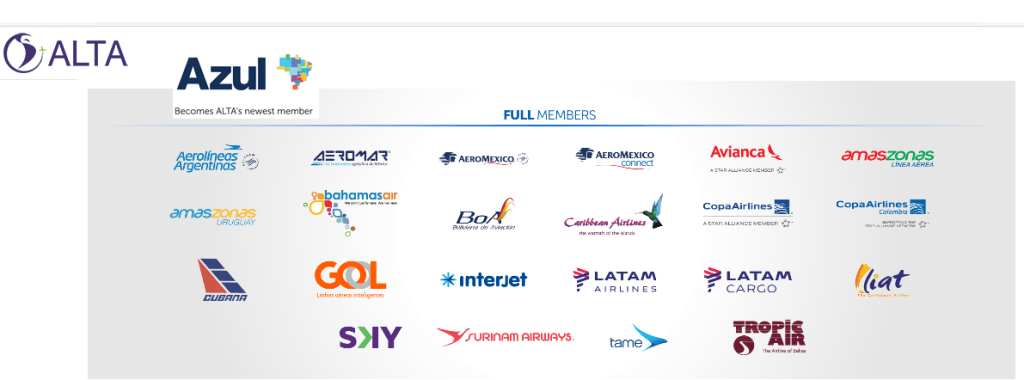
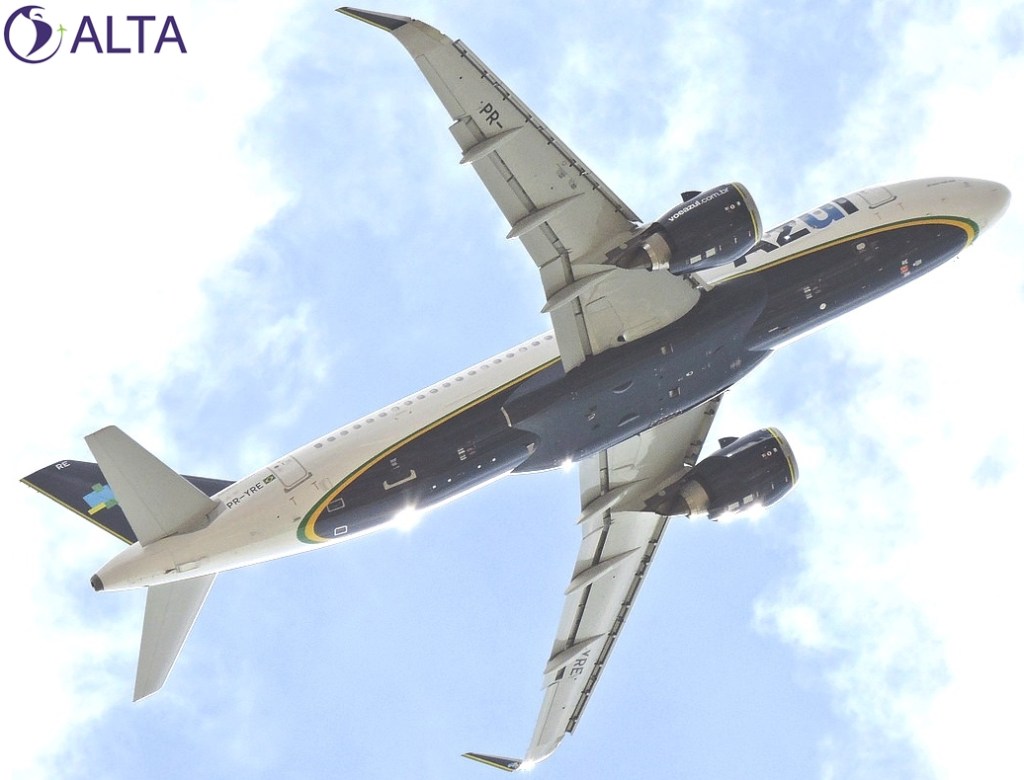
Azul se convierte en miembro de la Asociación ALTA
La Asociación Latinoamericana y del Caribe de Transporte Aéreo (ALTA) ha anunciado la presentación de un nuevo socio en el transporte aéreo de Latinoamérica y el Caribe. ALTA se complace en dar la bienvenida a Azul Linhas Aéreas Brasileiras S.A. como nuevo miembro de su creciente grupo de aerolíneas.
Azul Linhas Aéreas es la mayor aerolínea de Brasil en números de vuelos y cantidad de ciudades servidas. Actualmente, opera más de 916 vuelos diarios a más de 100 destinos en Brasil, Suramérica, Estados Unidos y Europa con una flota de 140 aeronaves y más de 13,000 miembros de tripulación. La compañía tiene una red de 249 rutas directas al 31 de Diciembre de 2019.
«Desde ALTA nos sentimos muy encantados/entusiasmados de recibir a Azul en nuestro extraordinario grupo de aerolíneas miembro en estos momentos. Son tiempos donde como industria debemos unirnos para y mirar hacia el futuro. Estoy seguro de que trabajando de la mano de Azul lograremos ampliar la conectividad dentro de Brasil y en la región, lo que los convierte en un aliado importante para el mercado latinoamericano. Contar con Azul como miembro nos permitirá desarrollar iniciativas con el objetivo de aumentar la conectividad y competitividad en la región y continuar aportando al desarrollo económico y social de la región», expresa, José Ricardo Botelho, Director Ejecutivo y CEO de ALTA.
Premios de Azul
En 2020 Azul Linhas Aéreas fue elegida por primera vez como la mejor aerolínea del mundo por TripAdvisor Traveler’s Choice, siendo la única empresa brasileña en recibir este reconocimiento en la historia de la premiación. Así como también, en 2019 Azul fue elegida la mejor compañía aérea regional de Suramérica por noveno año consecutivo por Skytrax. Adicionalmente, Azul quedó entre las diez primeras aerolíneas de bajo costo más puntuales del mundo, de acuerdo con OAG en el 2019.
«Es un gran placer ser parte de ALTA. Esperamos trabajar en conjunto con José Ricardo Botelho y las otras aerolíneas para ayudar a nuestra industria a avanzar. En tiempos como estos es más importante que nunca que nos unamos como industria y busquemos la manera de ser más eficientes y volar más cada día. Azul vuela a más de 120 destinos y sé que junto con ALTA y sus aerolíneas miembros podemos hacer que la aviación sea más accesible para más personas en América Latina», comenta John Rodgerson, Presidente de Azul Linhas Aéreas.
Acerca de ALTA
ALTA cuenta con más de 100 miembros entre aerolíneas, organizaciones y compañías proveedoras de la industria de la aviación. Juntos seguiremos fuertes e impulsando a la industria en los desafíos que enfrentamos. ALTA es una asociación privada sin fines de lucro al servicio de la industria aérea cuyo objetivo es desarrollar una aviación más segura, eficiente y sustentable en América Latina y El Caribe. Coordina esfuerzos colaborativos a lo largo de toda la cadena de valor maximizando el impacto que tiene la aviación en el crecimiento económico y social de la región para el beneficio de la industria, las naciones y las poblaciones servidas por el transporte aéreo.
Azul Linhas Aéreas member of ALTA
Azul becomes a member of the ALTA Association
The Latin American and Caribbean Air Transport Association (ALTA) has announced the presentation of a new partner in the air transport of Latin America and the Caribbean. ALTA is pleased to welcome Azul Linhas Aéreas Brasileiras S.A. as a new member of its growing group of airlines.
Azul Linhas Aéreas is the largest airline in Brazil in terms of number of flights and number of cities served. Currently, it operates more than 916 daily flights to more than 100 destinations in Brazil, South America, the United States and Europe with a fleet of 140 aircraft and more than 13,000 crew members. The company has a network of 249 direct routes as of December 31, 2019.
«At ALTA we are very delighted/excited to welcome Azul into our extraordinary group of member airlines at this time. These are times when as an industry we must come together and look to the future. I am sure that working hand in hand with Azul we will be able to expand connectivity within Brazil and in the region, which makes them an important ally for the Latin American market. Having Azul as a member will allow us to develop initiatives with the aim of increasing connectivity and competitiveness in the region and continue contributing to economic development and social of the region», expresses, José Ricardo Botelho, Executive Director and CEO of ALTA.
Azul Awards
In 2020, Azul Linhas Aéreas was chosen for the first time as the best airline in the world by TripAdvisor Traveler’s Choice, being the only Brazilian company to receive this recognition in the history of the award. As well as, in 2019 Azul was chosen as the best regional airline in South America for the ninth consecutive year by Skytrax. Additionally, Azul was among the top ten most punctual low-cost airlines in the world, according to OAG in 2019.
«It is a great pleasure to be part of ALTA. We look forward to working together with José Ricardo Botelho and the other airlines to help our industry move forward. In times like these it is more important than ever that we come together as an industry and find a way to be. more efficient and fly more every day. Azul flies to more than 120 destinations and I know that together with ALTA and its member airlines we can make aviation more accessible to more people in Latin America», says John Rodgerson, President of Azul Linhas Aéreas.
About ALTA
ALTA has more than 100 members among airlines, organizations and supplier companies of the aviation industry. Together we will remain strong and propel the industry through the challenges we face. ALTA is a private, non-profit association serving the airline industry whose objective is to develop safer, more efficient and sustainable aviation in Latin America and the Caribbean. Coordinates collaborative efforts throughout the entire value chain maximizing the impact that aviation has on the economic and social growth of the region for the benefit of the industry, nations and populations served by air transport.
Azul Linhas Aéreas membro da ALTA
Azul torna-se membro da Associação ALTA
A Associação Latino-Americana e Caribenha de Transporte Aéreo (ALTA) anunciou a apresentação de um novo parceiro no transporte aéreo da América Latina e Caribe. A ALTA tem o prazer de receber a Azul Linhas Aéreas Brasileiras S.A. como um novo membro de seu crescente grupo de companhias aéreas.
A Azul Linhas Aéreas é a maior companhia aérea do Brasil em número de voos e número de cidades atendidas. Atualmente, opera mais de 916 voos diários para mais de 100 destinos no Brasil, América do Sul, Estados Unidos e Europa com uma frota de 140 aeronaves e mais de 13.000 tripulantes. A empresa tinha uma rede de 249 rotas diretas em 31 de dezembro de 2019.
«Na ALTA, estamos muito satisfeitos / entusiasmados por receber a Azul em nosso extraordinário grupo de companhias aéreas membro neste momento. Estes são tempos em que, como indústria, devemos nos unir e olhar para o futuro. Tenho certeza de que trabalhando lado a lado com a Azul, seremos capazes de expandir conectividade no Brasil e na região, o que a torna uma importante aliada do mercado latino-americano. Ter a Azul como associada nos permitirá desenvolver iniciativas com o objetivo de aumentar a conectividade e a competitividade da região e continuar contribuindo para o desenvolvimento econômico e social da região”, expressa, José Ricardo Botelho, Diretor Executivo e CEO da ALTA.
Azul Awards
Em 2020, a Azul Linhas Aéreas foi eleita pela primeira vez a melhor companhia aérea do mundo pela TripAdvisor Traveler’s Choice, sendo a única empresa brasileira a receber esse reconhecimento na história da premiação. Além disso, em 2019 a Azul foi eleita a melhor companhia aérea regional da América do Sul pelo nono ano consecutivo pela Skytrax. Além disso, a Azul estava entre as dez companhias aéreas de baixo custo mais pontuais do mundo, de acordo com a OAG em 2019.
“É um grande prazer fazer parte da ALTA. Estamos ansiosos para trabalhar em conjunto com José Ricardo Botelho e as outras companhias aéreas para ajudar o nosso setor a avançar. Em tempos como este é mais importante do que nunca que estejamos juntos como setor e encontremos um jeito de ser. mais eficiente e voe mais a cada dia. A Azul voa para mais de 120 destinos e sei que junto com a ALTA e suas companhias aéreas associadas podemos tornar a aviação mais acessível a mais pessoas na América Latina”, afirma John Rodgerson, Presidente da Azul Linhas Aéreas.
Sobre ALTA
A ALTA tem mais de 100 membros entre companhias aéreas, organizações e empresas fornecedoras da indústria da aviação. Juntos, permaneceremos fortes e impulsionaremos a indústria através dos desafios que enfrentamos. A ALTA é uma associação privada sem fins lucrativos que atende ao setor de aviação civil e tem como objetivo desenvolver uma aviação mais segura, eficiente e sustentável na América Latina e no Caribe. Coordena esforços de colaboração em toda a cadeia de valor, maximizando o impacto que a aviação tem no crescimento econômico e social da região para o benefício da indústria, nações e populações servidas pelo transporte aéreo.
Airbus entrega a Delta Air Lines A330 número 1.500
Airbus Group ha anunciado la entrega del avión A330 número 1.500 a Delta Air Lines el 21 de Septiembre de 2020 marcando el último hito en el progreso de la línea A330 del consorcio europeo. Un Airbus A330-900 entregado el mes pasado a Delta Air Lines es el jet de larga distancia Nº 1.500 construido por Airbus Group desde el lanzamiento del programa. Casi 28 años después del primer vuelo de un A330 en Noviembre de 1992, el fabricante europeo de aviones anunció el 12 de Octubre de 2020 en las redes sociales que había entregado la copia número 1.500 de la familia a la aerolínea estadounidense Delta Air Lines. La nueva aeronave A350-900, matrícula N407DX, MSN1957 almacenado en Amsterdam, Países Bajos lo que lo convierte en el avión más popular en ese segmento.
Familia A330
Las diferentes versiones están ahora en servicio con 121 aerolíneas y operadores; desde la primera entrega a finales de 1993 a Air Inter en Enero de 1994), Airbus ha entregado en promedio un A330 por semana, lo que remarca la popularidad de esta aeronave widebody. Todas las variantes del afamado A330 comprenden al A330-200, A330-300, ACJ330 (VIP), A330F, A330MRTT, Beluga XL, A330-800 y A330-900. A finales de Septiembre 2020, Airbus había registrado 1.818 pedidos para esta familia, excluyendo de la cartera de órdenes a los MRTT y Beluga; de los cuales 1.501 habían sido entregados de los cuales unos 1.432 están actualmente en servicio.
Objetivo A330
El Airbus A330 fue diseñado para reemplazar al envejecido A300, el primer gran cuerpo ancho del mundo impulsado por sólo dos motores, pero fue para utilizar los avances tecnológicos de la familia A320 que en aquellos tiempos se encontraba en servicio.
El A330-200/300, ahora conocido como CEO (Current Engine Option) voló por primera vez en 1992 e inmediatamente fue pionero en viajes de larga distancia en aviones bimotores. Su sistema fly-by-wire hizo inmensamente seguro y su capacidad para volar eficientemente en rutas de corta, media y larga distancia lo hizo popular entre las aerolíneas. El A330-300 no sólo tenía más asientos que el A300 que reemplazó, sino que también tenía un alcance de 4000 millas náuticas con un peso máximo de despegue de 212 toneladas. El rango también se incrementó a 5000nm a medida que maduraba. Esto le ayudó a competir directamente con tres de los aviones de la compañía americana Boeing, el 767, 777-200 y más tarde, el 787 Dreamliner.
El A330 había entrado en servicio en 1994 con Air Inter. En el corto plazo el constructor europeo lazó una versión más acortada denominada A330-200 con un alcance de 6.200 nm. Como la mayoría de los aviones Airbus, las alas se hicieron en las instalaciones de fabricación de alas del Reino Unido de Airbus en Broughton, Gales del Norte y luego se unieron con las secciones del fuselaje y otras piezas en la línea de montaje final del Airbus A330 en Toulouse. Unos 789 A330-300 se han ordenado desde el lanzamiento con 745 actualmente en servicio. El A330-200 adjuntó 665 pedidos de los cuales 619 aviones están en servicio.
Introduciendo al A330NEO
La decisión de volver a enviar el A330 se produjo en 2014 después de que la aerolínea Delta Air Lines había expresado un interés significativo en la opción de reemplazar su línea Boeing 767. La aerolínea con sede en Atlanta era un operador A330 y una versión más eficiente tenía sentido no sólo para ellos, sino también para muchos otros operadores A330.
Airbus Group desarrollaría dos tipos de actualizaciones, el A330-800NEO y el A330-900NEO. El A330-900NEO fue el primero en volar en 2017 con mejoras que incluyen un ala rediseñada, mejoras en la cabina y, por supuesto, eficientes motores Rolls-Royce Trent 7000 que se combinaron para dar una reducción de combustible del 25% en comparación con el A330CEO. En una configuración standard de 460 pasajeros a una distancia de 7.200nm el 900NEO demostró ser popular atrayendo 318 pedidos hasta la fecha con 49 entregados. Entró en servicio en 2018 con TAP Air Portugal como cliente de lanzamiento. El A330-800NEO más pequeño no ha demostrado ser tan popular hasta ahora atrayendo sólo 14 pedidos desde 2016. Irónicamente, el A330NEO sonaba la campana de la muerte para el A350-800XWB, la versión más pequeña planeada de la popular serie A350XWB, ya que habría sido un tamaño similar al A330NEO. Delta Air Lines es ahora el mayor operador del A330NEO, mientras que Turkish Airlines es el operador A330 más grande del mundo.
Perspectivas A330
Airbus continúa desarrollando el Airbus A330 e incluso ahora está diseñando mejoras para aumentar la eficiencia en la línea que introdujo hace más de 25 años de servicio. El introducción del A330 a las flotas de las aerolíneas continúa siendo el punto de referencia para la versatilidad, proporcionando una solución de cuerpo ancho de bajo riesgo para cada tipo de operador que transporta de 230 a 460 pasajeros, capaz de operar en rutas de 20 minutos a más de 17 horas, y Airbus dice que hace todo esto con más del 99% de fiabilidad.
Airbus delivers 1,500 A330 to Delta
Airbus delivers 1,500th A330 to Delta Air Lines
Airbus Group announced the delivery of the 1,500th A330 aircraft to Delta Air Lines on September 21, 2020, marking the latest milestone in the progress of the European consortium’s A330 line. An Airbus A330-900 delivered last month to Delta Air Lines is the 1,500th long-haul jet built by Airbus Group since the launch of the program. Almost 28 years after the first flight of an A330 in November 1992, the European aircraft manufacturer announced on October 12, 2020 on social media that it had delivered the 1,500th copy of the family to the US airline Delta Air Lines. The new A350-900 aircraft, registration N407DX, MSN1957 stored in Amsterdam, The Netherlands making it the most popular aircraft in that segment.
A330 Family
The different versions are now in service with 121 airlines and operators; since the first delivery in late 1993 to Air Inter in January 1994), Airbus has delivered on average one A330 per week, underscoring the popularity of this widebody aircraft. All variants of the famed A330 include the A330-200, A330-300, ACJ330 (VIP), A330F, A330MRTT, Beluga XL, A330-800 and A330-900. At the end of September 2020, Airbus had registered 1,818 orders for this family, excluding the MRTT and Beluga from the order book; of which 1,501 had been delivered of which about 1,432 are currently in service.
Objective A330
The Airbus A330 was designed to replace the aging A300, the world’s first large widebody powered by just two engines, but it was to utilize the technological advances of the A320 family that were in service at the time.
The A330-200 / 300, now known as CEO (Current Engine Option) first flew in 1992 and immediately pioneered long-haul travel in twin-engine aircraft. Its fly-by-wire system made it immensely safe and its ability to fly efficiently on short, medium and long haul routes made it popular with airlines. The A330-300 not only had more seats than the A300 it replaced, it also had a range of 4,000 nautical miles with a maximum takeoff weight of 212 tonnes. The range also increased to 5000nm as it matured. This helped it compete directly with three of the American company’s Boeing aircraft, the 767, 777-200 and later, the 787 Dreamliner.
The A330 had entered service in 1994 with Air Inter. In the short term, the European manufacturer launched a shorter version called A330-200 with a range of 6,200 nm. Like most Airbus aircraft, the wings were made at Airbusen Broughton’s UK wing manufacturing facility, North Wales and then joined with the fuselage sections and other parts on the final Airbus A330 assembly line. in Toulouse. Some 789 A330-300s have been ordered since launch with 745 currently in service. The A330-200 added 665 orders of which 619 aircraft are in service.
Introducing the A330NEO
The decision to re-ship the A330 came in 2014 after Delta Air Lines carrier had expressed significant interest in the option of replacing its Boeing 767 line. The Atlanta-based carrier was an A330 operator and a more efficient version. it made sense not only for them, but also for many other A330 operators.
Airbus Group would develop two types of upgrades, the A330-800NEO and the A330-900NEO. The A330-900NEO was the first to fly in 2017 with upgrades including a redesigned wing, cockpit upgrades, and of course efficient Rolls-Royce Trent 7000 engines that combined to give a 25% fuel reduction compared to the A330CEO. In a standard 460 passenger configuration at a distance of 7,200nm the 900NEO proved popular attracting 318 orders to date with 49 delivered. It entered service in 2018 with TAP Air Portugal as a launch customer. The smaller A330-800NEO has not proven that popular so far attracting only 14 orders since 2016. Ironically, the A330NEO sounded the death knell for the A350-800XWB, the planned smaller version of the popular A350XWB series, as it would have been a similar size to the A330NEO. Delta Air Lines is now the largest operator of the A330NEO, while Turkish Airlines is the largest A330 operator in the world.
Perspective A330
Airbus continues to develop the Airbus A330 and is even now designing improvements to increase efficiency on the line that it introduced more than 25 years ago in service. The introduction of the A330 to airline fleets continues to be the benchmark for versatility, providing a low-risk widebody solution for every type of operator carrying 230 to 460 passengers, capable of operating on 20-minute routes. to more than 17 hours, and Airbus says it does all of this with more than 99% reliability.
IATA alerta aviación no se está reactivando como se esperaba
La Asociación Internacional de Transporte Aéreo (IATA) ha expresado a los gobiernos del mundo la necesidad de liderazgo para salvar al sector de la aviación, pues entre más tiempo se prolongue la recuperación, mayor será el riesgo. Para reactivar las economías, el organismo de la IATA solicita a los gobiernos que establezcan un sistema de pruebas de bioseguridad anti-Covid-19, para reabrir fronteras, restablecer la conectividad y evitar que la industria de la aviación colapse.
Acciones tempranas
Gracias a las acciones tempranas que llevó a cabo la industria desde Junio 2020 en medidas de bioseguridad, el sector aéreo no es un vector de la pandemia, teniendo en cuenta las medidas de seguridad, señala Peter Cerdá, Vicepresidente de IATA para las Américas, pues menciona que los protocolos fueron avalados por los gobiernos e implementados por las aerolíneas, sin embargo han encontrado que la industria no se ha reactivado de la manera que se esperaba.
Implementar confianza
Las restricciones no están ayudando para abrir y sobre todo traer confianza al sector, lo cual está causando un estrés muy extremo a la industria. “Hay muchos países a nivel mundial que siguen con sus fronteras cerradas, y aunque ya han abierto muchos también, mantienen estrictas restricciones como cuarentenas”, dijo, y citó que en Chile, por ejemplo, mantienen abiertas sus fronteras solo a chilenos residentes, ya que hasta el momento los extranjeros no pueden entrar. Durante los primeros meses del año, al inicio de la pandemia, hubo muy pocas operaciones, lo cual obligó a las aerolíneas a pedir apoyo a sus gobiernos, sin embargo a nivel global se han aportado alrededor de US$ 160 mil millones de Dólares, la mayoría provenientes de Norte América y Europa, muy poco ha sido el apoyo en la región de América Latina, lo que ha puesto en riesgo a la industria y se teme que cuando la recuperación llegue, las aerolíneas no estén preparadas.
El pronóstico de IATA señala que la recuperación internacional se dará hasta el 2024, mientras que en vuelos domésticos la recuperación se podrá estar dando para finales de 2022, principios de 2023, lo cual dependerá mucho del liderazgo que tomen los gobiernos, “este es el momento de la responsabilidad privada y del apoyo del gobierno”, puntualizó Peter Cerdá.
IATA aviation reactivation alert
IATA aviation alert is not being reactivated as expected
The International Air Transport Association (IATA) has expressed to world governments the need for leadership to save the aviation sector, because the longer the recovery continues, the greater the risk. To reactivate economies, the IATA body asks governments to establish an anti-Covid-19 biosafety testing system, to reopen borders, restore connectivity and prevent the aviation industry from collapsing.
Early actions
Thanks to the early actions that the industry carried out since June 2020 in biosafety measures, the aviation sector is not a vector of the pandemic, taking into account security measures, says Peter Cerdá, IATA Vice President for the Americas, as mentions that the protocols were endorsed by governments and implemented by airlines, however they have found that the industry has not reactivated in the way expected.
Implement trust
The restrictions are not helping to open up and especially bring confidence to the sector, which is causing very extreme stress to the industry. «There are many countries worldwide that continue to have their borders closed, and although many have already opened, they maintain strict restrictions such as quarantines», he said, citing that in Chile, for example, they keep their borders open only to Chilean residents, since that so far foreigners cannot enter. During the first months of the year, at the beginning of the pandemic, there were very few operations, which forced the airlines to ask their governments for support, however globally around US$ 160 billion dollars have been contributed, the Most from North America and Europe, there has been very little support in the Latin American region, which has put the industry at risk and it is feared that when the recovery arrives, the airlines will not be prepared.
The IATA forecast indicates that the international recovery will take place until 2024, while on domestic flights the recovery may be taking place by the end of 2022, the beginning of 2023, which will depend a lot on the leadership that governments take, “this is the moment of private responsibility and government support”, pointed out Peter Cerdá.
Airbus Group mejor posicionada frente a la crisis de pandemia
Airbus Group ha logrado el pasado mes de Septiembre 2020 entregar 57 nuevos aviones comerciales, con un importante incremento respecto a los anteriores meses. La cuota de mercado alcanzada en 09/2019 ha sido de 71 aeronaves. Con un total de 57 aviones entregados, aunque sin ninguna venta, Airbus ha cerrado su mejor mes en 2020 en este campo, superando por dos aviones a Febrero 2020, hasta ahora el mejor mes del año. Los 341 aviones entregados desde el 1 de Enero de 2020 son solo un 40 por ciento de los que había entregado en el mismo período de 2019, cuando acumulaba 571.
Airbus no ha efectuado ventas en Septiembre 2020, contando el acumulado anual de 370 pedidos hay que restar 70 cancelaciones. En septiembre Airbus ha sumado una nueva cancelación: A220-300 (3) del pedido de la financiera Macquarie Financial Holdings. Con tres de los cuatro trimestres del año finalizados, Airbus mantiene una cartera de pedidos de aviones sin entregar de 7.441 aviones, frente a 7.133 hace un año.
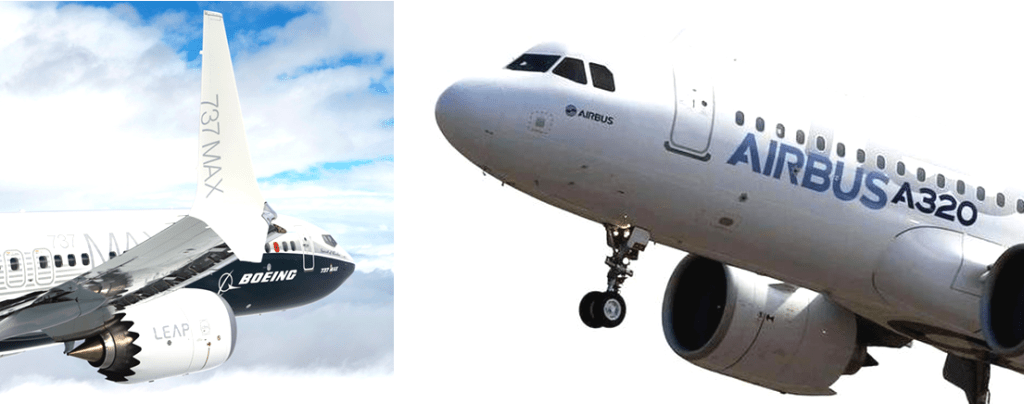
The Boeing Company no vendió ningún avión en Septiembre 2020. La compañía ha comunicado el Martes 13/10 que tres pedidos del 737 MAX fueron cancelados en 09/2020 y dejó caer los pedidos de otros 48 unidades más debido a la incertidumbre sobre si los clientes podrán cerrar las transacciones. Boeing ha reservado 67 pedidos en lo que va del año, pero ha sufrido 448 cancelaciones para el Boeing 737 MAX y ha retirado otros 602 pedidos de su atraso porque la compañía no está segura de que pueda completar las ventas con tantas aerolíneas en problemas financieros.
La línea 737 ha sido el avión más vendido de Boeing y elmás taquillero del mundo, pero los problemas generados por la cuarta generación del MAX hasta que fue aterrizado en Marzo de 2019 después de dos accidentes aéreos, han puesto en duda la solidez de la línea hacia el futuro. En Agosto 2020, la compañía reservó su primer pedido 737 MAX de 2020 de una aerolínea polaca. Boeing espera obtener la aprobación de Estados Unidos antes de fin de año para que retorno al servicio tan pronto como a principios del 1Q2021.
Boeing dijo que entregó 11 nuevos aviones comerciales el mes pasado, en su mayoría de pasillo doble Boeing 787, en comparación con 25 unidades en 09/2019. La compañía entregó 98 aviones este año, hasta el 30/09, frente a 301 en el mismo período de 2019.
La disminución de las entregas es crucial porque Boeing obtiene la mayor parte del efectivo de las ventas cuando se entregan los aviones. Boeing ha despedido a miles de trabajadores este año. Si bien optó por no buscar fondos para aliviar la pandemia del Gobierno, la compañía ha recaudado miles de millones en crédito privado para superar la recesión.
Airbus-Boeing aircraft 09/2020
Airbus Group best positioned in the face of the pandemic crisis
Airbus Group managed to deliver 57 new commercial aircraft last September 2020, with a significant increase compared to previous months. The market share reached in 09/2019 was 71 aircraft. With a total of 57 aircraft delivered, although without any sales, Airbus has closed its best month in 2020 in this field, surpassing February 2020 by two aircraft, so far the best month of the year. The 341 aircraft delivered since January 1, 2020 are only 40 percent of those delivered in the same period in 2019, when it accumulated 571.
Airbus has not made sales in September 2020, counting the accumulated annual of 370 orders, it is necessary to subtract 70 cancellations. In September Airbus has added a new cancellation: A220-300 (3) of the order of the financial company Macquarie Financial Holdings. With three of the four quarters ended, Airbus maintains an undelivered aircraft order book of 7,441 aircraft, up from 7,133 a year ago.
The Boeing Company did not sell any aircraft in September 2020. The company announced on Tuesday 10/13 that three orders for the 737 MAX were canceled in 09/2020 and it dropped orders for a further 48 units due to uncertainty over whether customers they will be able to close the transactions. Boeing has booked 67 orders so far this year, but has suffered 448 cancellations for the Boeing 737 MAX and has withdrawn another 602 orders from its backlog because the company is not sure it can complete sales with so many airlines in financial trouble.
The 737 line has been Boeing’s best-selling aircraft and the world’s highest-grossing aircraft, but the problems generated by the fourth generation of the MAX until it was landed in March 2019 after two plane crashes have cast doubt on the robustness of the line. towards the future. In August 2020, the company booked its first 2020 737 MAX order from a Polish airline. Boeing expects to obtain US approval before the end of the year for it to return to service as early as 1Q2021.
Boeing said it delivered 11 new airliners last month, mostly double-aisle Boeing 787s, compared with 25 units in 09/2019. The company delivered 98 aircraft this year, through 09/30, compared to 301 in the same period in 2019.
The drop in deliveries is crucial because Boeing makes most of the cash from sales when the planes are delivered. Boeing has laid off thousands of workers this year. While it chose not to seek funds to alleviate the government pandemic, the company has raised billions in private credit to weather the recession.
UE acuerdo negociado con EEUU por diferendo Boeing-Airbus
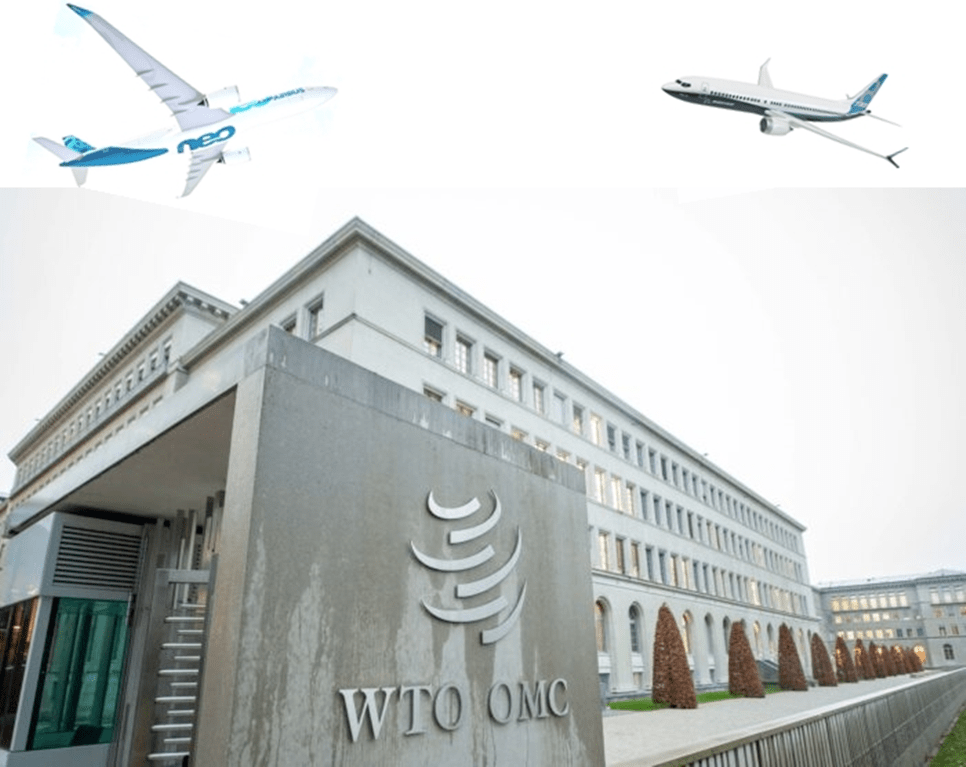
El Vicepresidente Ejecutivo de la Comisión Europea (CE), Valdis Dombrovskis, instó este Martes 13/10 a Estados Unidos a aceptar un acuerdo después de que la Organización Mundial de Comercio (OMC) autorizó a la Unión Europea a aplicar represalias por el diferendo Boeing-Airbus. «Dejé en claro que mi fuerte preferencia es por un acuerdo negociado con Estados Unidos, evitando rondas dañinas de medidas y contramedidas. Nuestra sugerencia es que Estados Unidos retire las tarifas que ha impuesto a raíz de este caso. La UE evitaría ejercitar el derecho de aranceles de represalia, y limpiamos la mesa, trabajando juntos para hallar un territorio común en diversas áreas», señaló Dombrovskis, Alto Representante de la UE para el Comercio en un comunicado.
La OMC ha autorizado este Martes 13 Octubre 2020 a la UE a imponer aranceles a cerca de US$ 4.000 millones de Dólares de importaciones estadounidenses al año, en represalia por las ayudadas concedidas a Boeing. La entidad concluyó que la naturaleza de los efectos desfavorables vinculados a la ayudas al fabricante de aviones estadounidense asciende a cerca de US$ 4.000 millones de Dólares y que, por tanto, Bruselas no puede pedir contramedidas que superen ese monto.
La UE y Estados Unidos se acusan mutuamente de haber proporcionado ayuda estatal ilegal a sus respectivos fabricantes de aeronaves, y ambos presentaron reclamaciones ante el Órgano de Solución de Diferencias (OSD) de la OMC.
EU requests Airbus-Boeing agreement
EU agreement negotiated with the US over Boeing-Airbus dispute
The Executive Vice President of the European Commission (EC), Valdis Dombrovskis, urged the United States on Tuesday 10/13 to accept an agreement after the World Trade Organization (WTO) authorized the European Union to retaliate over the Boeing-Airbus dispute. «I made it clear that my strong preference is for a negotiated agreement with the United States, avoiding harmful rounds of measures and countermeasures. Our suggestion is that the United States withdraw the tariffs it has imposed in the wake of this case. The EU would avoid exercising the right to retaliatory tariffs, and we cleared the table, working together to find common ground in various areas», Dombrovskis, the EU High Representative for Trade, said in a statement.
The World Trade Organization (WTO) has authorized the EU this Tuesday, October 13, 2020 to impose tariffs on about US$ 4 billion of US imports a year, in retaliation for the aid granted to Boeing. The entity concluded that the nature of the unfavorable effects linked to the aid to the US aircraft manufacturer amounts to close to US$ 4 billion and that, therefore, Brussels cannot request countermeasures that exceed that amount.
The EU and the United States accuse each other of having provided illegal state aid to their respective aircraft manufacturers, and both have filed complaints with the WTO’s Dispute Settlement Body (DSB).
AW | 2020 10 13 16:00 | AIRLINES MARKET / GOVERNMENT
Transporte comienza a trabajar reapertura vuelos regulares
El Ministerio de Transporte ha comenzado este 13/10 con los diferentes gobiernos provinciales con el objetivo del retorno de la aviación comercial para vuelos domésticos. En el área dialogarán con los gobernadores para que las operaciones retomen la regularidad en las provincias.
El Ministro de Transporte, Mario Meoni, había anunciado semanas atrás que los vuelos regulares iban a retornar entre este Martes 13/10 y Jueves próximo, con lo cual los pasos se darán muy cerca de los plazos anunciados. Luego de que el Lunes 12/10 se publicara el Decreto de Necesidad y Urgencia (DNU) que determina las nuevas características del aislamiento social, preventivo y obligatorio por la pandemia de Coronavirus; las precisiones en torno a la reactivación de la actividad tras la interrupción por siete meses, ha estado tomando impulso para la reactivación del sector del transporte aéreo nacional. En cuanto a los vuelos internacionales, desde el Gobierno no han solicitado más postergaciones, por lo que el decreto no trata más la suspensión, con lo cual queda en el ámbito del Ministerio de Transporte diagramar la apertura de las rutas al exterior.
El Ministerio de Transporte continuará trabajando con las provincias para consensuar el diálogo para reactivar el mayor número de vuelos en el interior del país, bajo la modalidad en primera instancia con los pasajeros establecidos por el decreto que permite movilizarse al personal esencial establecido en el Artículo 11 y a quienes deban hacer tratamiento médico con acompañante, aunque advirtieron que estas categorías pueden ser ampliadas por la Jefatura de Gabinete.
Las compañías aéreas habían recibido en oportunidad del decreto anterior, que extendía el aislamiento obligatorio hasta el Lunes 13/10, una notificación de parte de la Administración Nacional de Aviación Civil (ANAC), donde se especificaba que los vuelos regulares seguían suspendidos hasta el 12 de Octubre de 2020, en consonancia con esa decisión presidencial. Ahora, fuentes aeronáuticas señalaron que se espera que este martes se emita una nueva notificación en la que se especificaría la fecha a partir de la cual podrían volver a operar.
Programaciones tentativas
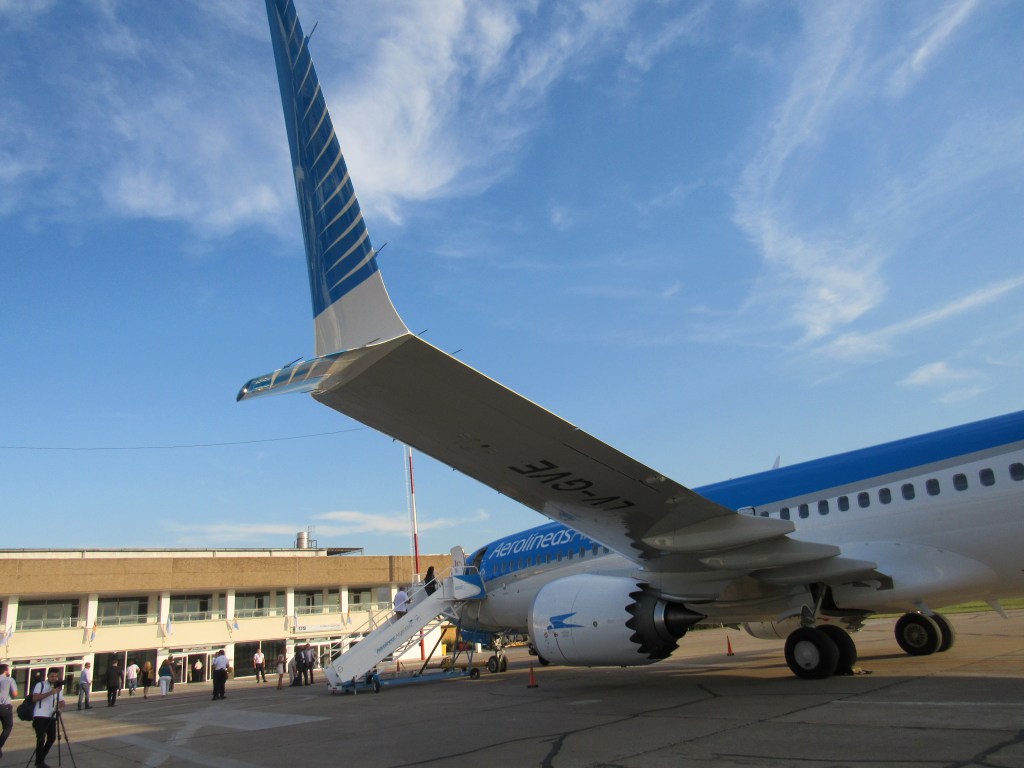
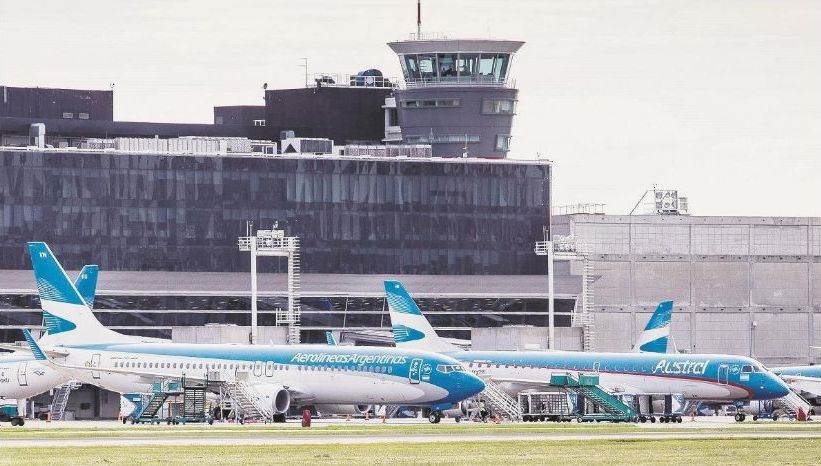
En Aerolíneas Argentinas se enfocaron en diagramar programaciones tentativas para el reinicio de sus operaciones. Un posible cronograma que en principio marcaría una operación con 39 frecuencias, lo que representa un 5 por ciento respecto a los niveles que tenía antes de la pandemia con una proyección de incremento al 13 por ciento para la primera quincena de Noviembre 2020. Córdoba, la ruta doméstica con más tráfico del país, con más de 20 vuelos diarios en la pre-pandemia, iniciaría con cuatro frecuencias por semana hasta el 25/10, para luego pasar a un vuelo diario desde el 26 al 1 de Noviembre 2020, y pasar a dos diarios a partir del 15/11. La ruta entre Buenos Aires-Mendoza iniciará con 3 frecuencias semanales (3Frq/S), mientras que para entre Buenos Aires y Bariloche, Iguazú, Neuquén, Salta, Tucumán y Comodoro Rivadavia, habrá dos servicios semanales (2Frq/S). En tanto que entre Buenos Aires-Bahía Blanca, Mar del Plata, Trelew, Posadas, Resistencia, Rosario, Santiago del Estero, Corrientes, Formosa, El Calafate, Jujuy, Rio Grande, Rio Gallegos, San Juan, Ushuaia, Chapelco, Catamarca, La Rioja, San Luis, Santa Fe, en esta primera etapa tendrá una programación de un vuelo semanal (1Frq/S). Los servicios a las capitales provinciales Paraná, Santa Rosa y Viedma recién volverían a partir de Noviembre 2020 al igual que los vuelos interprovinciales.
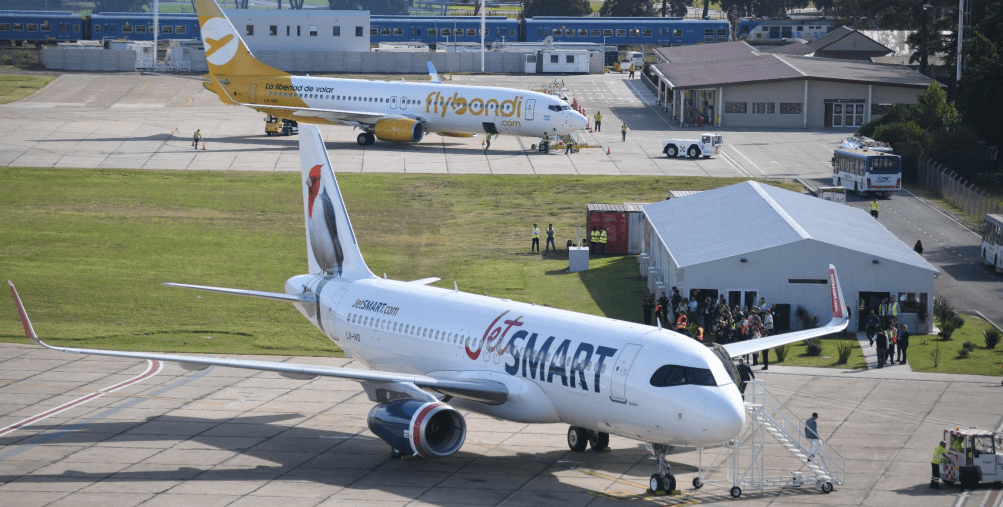
En tanto las aerolíneas low cost JetSmart Airlines Argentina y Flybondi Líneas Aéreas reiniciarán sus operaciones desde el Aeropuerto Internacional El Palomar, con lo cual es un fuerte aliciente para continuar despegando desde una plataforma de bajo costo con las ventajas de estar cerca de la Ciudad de Buenos Aires.
American Jet Líneas Aéreas, Andes Líneas Aéreas con estructuras más pequeñas proyectarán su programación de acuerdo con el nuevo organigrama vigente de los vuelos de ambas líneas aéreas. En el caso de la aerolínea salteña, el Gobierno de la Provincia de Chubut ha solicitado a Andes ante la ausencia de programación, acercar diálogo para reanudar las operaciones a Puerto Madryn.
Despegue post-pandemia
La introducción de la pandemia a nivel mundial ha traído profundo cambios que continuarán proyectándose en el tiempo. Las restricciones para los vuelos regulares en Argentina tras siete meses de parálisis ha modificado el mercado aéreo local. Anterior a las restricciones de los vuelos, operaban en el mercado doméstico siete compañías, Aerolíneas Argentinas, Austral Líneas Aéreas, Latam Airlines Argentina, Andes Líneas Aéreas, Flybondi Líneas Aéreas, American Jet Líneas Aéreas y JetSmart Airlines Argentina, esta última adquiriendo tras el proceso de compra a Norwegian Air Argentina y sus derechos de rutas.
Tras el retorno de los vuelos después de siete meses de inactividad, el panorama es un tanto diferente, con mayor concentración de compañías en un mercado más difícil de volar. Latam Airlines Argentina continúa inerte, donde está estudiando adecuarse bajo la nueva modalidad de transporte low cost, después de un proceso de insolvencia acogido en el Proceso Preventivo de Crisis (PPC), pero se desconocen las intenciones y cuándo reiniciarán operaciones. Austral Líneas Aéreas será absorbida por Aerolíneas Argentinas en el proceso de sinergia total, por lo que desaparecerá la marca de la compañía regional de los cielos de Argentina. Andes Líneas Aéreas, American Jet Líneas Aéreas, Flybondi Líneas Aéreas y JetSmart Airlines Argentina continuarán desafiando el nuevo panorama frente al nuevo escenario de monopolio de Aerolíneas Argentinas detentando más del 70% del tráfico aéreo argentino.
Reinicio Ops
En cuanto a las operaciones, estarán en los primeros meses centralizadas en el Aeropuerto Ezeiza para Aerolíneas Argentinas, Austral, Andes y American Jet y en el Aeropuerto de El Palomar, para Flybondi y JetSmart; teniendo presente las obras que se están realizando en el Aeropuerto Jorge Newbery, con proyecciones para reiniciar su habilitación como un nuevo aeropuerto regional con mayores capacidades hacia Febrero 2021.
En lo que hace a los vuelos internacionales, gran parte de las empresas que operaban hacia y desde el país han anunciado que retomarán las operaciones, aunque con menos frecuencias que las que tenían: Gol Linhas Aéreas, Azul Linhas Aéreas, Sky Airline, JetSmart Airlines Chile, Latam Airlines Chile, Latam Airlines Brasil y Latam Airlines Perú, Avianca Airlines, Aeroméxico, Copa Airlines, United Airlines, American Airlines, Delta Airlines, Iberia Líneas Aéreas, Air Europa, British Airways, Level Airlines, Lufthansa German Airlines y Edelweiss Air, entre otras, anticiparon que mantendrán sus operaciones con Argentina. Otras anticiparon que por el momento suspenderán sus frecuencias a Argentina, entre las que se encuentran Air New Zealand, Turquish Airlines, Emirates Airline y Qatar Airways.
Argentine transport plans restart
The Ministry of Transport has started this 10/13 with the different provincial governments with the objective of the return of commercial aviation for domestic flights. In the area, they will dialogue with the governors so that operations can resume regularity in the provinces.
The Minister of Transport, Mario Meoni, had announced weeks ago that the regular flights would return between this Tuesday 10/13 and next Thursday, with which the steps will be taken very close to the announced deadlines. After the Decree of Necessity and Urgency (DNU) was published on Monday, October 12, which determines the new characteristics of social, preventive and mandatory isolation due to the Coronavirus pandemic; The details regarding the reactivation of activity after the seven-month interruption, has been gaining momentum for the reactivation of the national air transport sector. As for international flights, the Government has not requested further postponements, so the decree no longer addresses the suspension, which leaves the Ministry of Transportation to diagram the opening of routes abroad.
The Ministry of Transportation will continue working with the provinces to agree on a dialogue to reactivate the largest number of flights within the country, under the modality in the first instance with passengers established by the decree that allows the mobilization of essential personnel established in Article 11 and those who must undergo medical treatment with a companion, although they warned that these categories can be expanded by the Chief of Staff.
The airlines had received on the occasion of the previous decree, which extended the mandatory isolation until Monday 10/13, a notification from the National Civil Aviation Administration (ANAC), which specified that regular flights were still suspended until 12 October 2020, in line with that presidential decision. Now, aeronautical sources indicated that a new notification is expected to be issued this Tuesday, specifying the date from which they could operate again.
Tentative schedules
In Aerolíneas Argentinas they focused on diagramming tentative schedules for the restart of their operations. A possible schedule that in principle would mark an operation with 39 frequencies, which represents 5 percent compared to the levels it had before the pandemic with a projection of an increase to 13 percent for the first half of November 2020. Córdoba, the domestic route with the most traffic in the country, with more than 20 daily flights in the pre-ndemic, would start with four frequencies per week until 10/25, and then move on to a daily flight from November 26 to 1, 2020, and move to two daily from 11/15. The route between Buenos Aires-Mendoza will start with 3 weekly frequencies (3Frq/S), while for between Buenos Aires and Bariloche, Iguazú, Neuquén, Salta, Tucumán and Comodoro Rivadavia, there will be two weekly services (2Frq/S). While between Buenos Aires-Bahía Blanca, Mar del Plata, Trelew, Posadas, Resistencia, Rosario, Santiago del Estero, Corrientes, Formosa, El Calafate, Jujuy, Rio Grande, Rio Gallegos, San Juan, Ushuaia, Chapelco, Catamarca, La Rioja, San Luis, Santa Fe, in this first stage will have a weekly flight schedule (1Frq/S). Services to the provincial capitals Paraná, Santa Rosa and Viedma would only return from November 2020 as well as interprovincial flights.
Meanwhile, the low cost airlines JetSmart Airlines Argentina and Flybondi Líneas Aéreas will restart their operations from the El Palomar International Airport, which is a strong incentive to continue taking off from a low-cost platform with the advantages of being close to the City of Buenos Aires. Aires.
American Jet Líneas Aéreas, Andes Líneas Aéreas with smaller structures will project their schedule in accordance with the new current flow chart of both airlines. In the case of the Salta airline, the Government of the Province of Chubut has requested Andes, in the absence of programming, to bring closer dialogue to resume operations in Puerto Madryn.
Post-pandemic takeoff
The introduction of the pandemic worldwide has brought profound changes that will continue to be projected over time. Restrictions for regular flights in Argentina after seven months of paralysis have changed the local air market. Prior to the flight restrictions, seven companies operated in the domestic market: Aerolíneas Argentinas, Austral Líneas Aereas, Latam Airlines Argentina, Andes Lineas Aereas, Flybondi Líneas Aéreas, American Jet Líneas Aéreas and JetSmart Airlines Argentina, the latter acquiring after the process purchase from Norwegian Air Argentina and its route rights.
After the return of the flights after seven months of inactivity, the picture is somewhat different, with a greater concentration of companies in a market that is more difficult to fly. Latam Airlines Argentina continues to be undeterred, where it is studying to adapt under the new low-cost transport modality, after an insolvency process under the Preventive Crisis Process (PPC), but the intentions and when they will restart operations are unknown. Austral Lineas Aereas will be absorbed by Aerolineas Argentinas in the process of total synergy, for which the brand of the regional company of the skies of Argentina will disappear. Andes Lineas Aereas, American Jet Líneas Aéreas, Flybondi Líneas Aéreas and JetSmart Airlines Argentina will continue to challenge the new scenario in the face of the new monopoly scenario of Aerolíneas Argentinas, holding more than 70% of Argentine air traffic.
Restart Ops
Regarding operations, in the first months they will be centralized at the Ezeiza Airport for Aerolíneas Argentinas, Austral, Andes and American Jet and at the El Palomar Airport, for Flybondi and JetSmart; Bearing in mind the works that are being carried out at the Jorge Newbery Airport, with projections to restart its authorization as a new regional airport with greater capacities by February 2021.
Regarding international flights, a large part of the companies that operated to and from the country have announced that they will resume operations, although with fewer frequencies than they had: Gol Linhas Aéreas, Azul Linhas Aéreas, Sky Airline, JetSmart Airlines Chile, Latam Airlines Chile, Latam Airlines Brasil and Latam Airlines Peru, Avianca Airlines, Aeroméxico, Copa Airlines, United Airlines, American Airlines, Delta Air Lines, Iberia Líneas Aéreas, Air Europa, British Airways, Level Airlines, Lufthansa and Edelweiss, among others, anticipated that they will maintain their operations with Argentina. Others anticipated that for the moment they will suspend their frequencies to Argentina, among which are Air New Zealand, Turquish Airlines, Emirates Airline and Qatar Airways.