Aerolínea charter retorna a los cielos con nuevo propietario
La aerolínea de vuelos chárter Miami Air International regresa a los cielos después de un proceso de bancarrota, en un momento difícil para la industria de la aviación que la pandemia del Coronavirus ha golpeado fuertemente. El nuevo dueño de Miami Air International, Tomás Romero, dijo que decidió apostar a esa oportunidad de negocios al igual que lo hizo en el 2008 cuando fundó World Atlantic Airlines en medio de otra crisis económica en Estados Unidos. El empresario, un veterano en el sector de las aerolíneas que presentó una oferta por Miami Air International cuyo monto no ha sido revelado en Mayo 2020. Este Miércoles 02/11 el nuevo propietario ha expresado que “finalmente se ha recibido el primer avión de regreso que ofrece una excelente capacidad y se adapta a un servicio de varias clases”. La primer aeronave entregada corresponde a un Boeing 737-800 Next Generation. El Miami Air Group incluye a World Atlantic Airways, con una flota de ocho aviones Boeing MD-80.
La aerolínea aérea fue creada en 1990 en el Condado Miami-Dade y realizaba vuelos chárter de alto nivel, tanto internacionales como nacionales. Después de 29 años en el negocio como una compañía de vuelos chárter Premier, con sede en el Aeropuerto Internacional de Miami (MIA), ha llegado a tener más de 350 empleados. Entre sus clientes tuvo al Miami Heat, al Departamento de Defensa de Estados Unidos y a varios equipos deportivos de universidades.
La empresa se acogió al Capítulo 7 de la Ley de Bancarrota en Marzo 2020, Un tribunal liquidó la empresa el 9 de Junio de 2020 y Tomás Romero la adquirió manteniendo el Certificado de Operador Aéreo (AOC). En Diciembre 2020, después de unos meses de trabajo regulatorio, el Departamento de Transporte (DOT) le ha concedido el certificado de funcionamiento.
Tomás Romero adquirió la aerolínea cuando la pandemia del Coronavirus desató una crisis económica en Estados Unidos que le cortó las alas a la industria de la aviación. En el caso de Miami Air International, ha contratado hasta el momento a 100 empleados y “estamos trabajando muy duro para recuperar a los 250 empleados restantes y muchos más. Voy a continuar llamando a los ex empleados de la línea aérea”, aseguró, al destacar que con ello contribuye con la economía local.
A pesar del sombrío panorama de la industria de la aviación, Tomás Romero se mantiene optimista y espera que la aerolínea en un año tenga de nuevo los altos niveles que la caracterizaba. “En el 2008 cuando la economía de Estados Unidos estaba muy mal, vi una oportunidad parecida y fundé World Atlantic Airlines. Todo el mundo me decía que estaba loco, que cómo era posible que me iba a meter en una aerolínea en ese escenario y la he mantenido por 12 años. En esta oportunidad, de nuevo, en medio de una pandemia, en una crisis, vi una oportunidad de negocios y me dije que la peor diligencia es la que no se hace”, expresó entusiasta.
Miami Air International returns to the skies
Charter airline returns with new owner
The charter airline Miami Air International returns to the skies after a bankruptcy proceedings, at a difficult time for the aviation industry that the Coronavirus pandemic has hit hard. The new owner of Miami Air International, Tomás Romero, said he decided to bet on that business opportunity just like he did in 2008 when he founded World Atlantic Airlines in the middle of another economic crisis in the United States. The businessman, a veteran in the airline sector who submitted an offer for Miami Air International, the amount of which has not been disclosed in May 2020. This Wednesday 02/11 the new owner has stated that “the first return plane has finally been received. which offers excellent capacity and adapts to a service of various kinds”. The first aircraft delivered corresponds to a Boeing 737-800 Next Generatio. The Miami Air Group includes World Atlantic Airways, with a fleet of eight Boeing MD-80 aircraft.
The airline was created in 1990 in Miami-Dade County and operated high-level charter flights, both international and domestic. After 29 years in business as a Premier charter company, headquartered at Miami International Airport (MIA), it has grown to over 350 employees. Among his clients he had the Miami Heat, the United States Department of Defense and several university sports teams.
The company filed for Chapter 7 of the Bankruptcy Law in March 2020, a court liquidated the company on June 9, 2020 and Tomás Romero acquired it while maintaining the Air Operator Certificate (AOC). In December 2020, after a few months of regulatory work, the Department of Transportation (DOT) has granted the certificate of operation.
Tomás Romero acquired the airline when the Coronavirus pandemic unleashed an economic crisis in the United States that cut the wings of the aviation industry. In the case of Miami Air International, it has hired 100 employees so far and “we are working very hard to recover the remaining 250 employees and many more. I will continue to call the former employees of the airline», he said, noting that this contributes to the local economy.
Despite the gloomy outlook for the aviation industry, Tomás Romero remains optimistic and hopes that the airline will once again have the high levels that characterized it in a year. “In 2008 when the US economy was very bad, I saw a similar opportunity and founded World Atlantic Airlines. Everybody told me that I was crazy, that how was it possible that I was going to get into an airline in that scenario and I have kept it for 12 years. On this occasion, again, in the middle of a pandemic, in a crisis, I saw a business opportunity and I told myself that the worst diligence is the one that is not done”, he enthusiastically expressed.
Ante persistentes reclamos compañía abre oficinas comerciales
Luego de los reclamos y las experiencias de pasajeros que trascendieron esta semana, este Miércoles 02/12 las oficinas de Aerolíneas Argentinas han dado aperturas debido a las frecuentes demoras en la atención y ante la falta de respuestas efectiva, por lo que los usuarios del transporte continúan reclamando en respuesta a los vuelos reprogramados y cancelados. El Martes 01/12 la empresa emitió un comunicado en el que señala que pese al inicio de operaciones regulares a partir del 22 de Octubre de 2020, la programación de vuelos se encuentra sujeta a diferentes modificaciones. “Aerolíneas Argentinas se encuentra tomando medidas para dar respuesta efectiva a cada uno de los pasajeros que realizan solicitudes de cambio, reconfirmación o reprogramación de sus vuelos, pide disculpas a aquellas personas que todavía no ha obtenido una respuesta y espera poder normalizar la situación en los próximos días”, explicaron desde la compañía. Ha detallado adicionalmente que aquellos pasajeros que necesiten hacer uso de su pasaje y han comprado su ticket de manera directa, es necesario e indispensables contactarse través de la línea de WhatsApp al +5491149404798 con el siguiente texto: ACTUALIZOMIVUELO y un agente se comunicará, por este mismo canal, a la brevedad.
“Nosotros compramos vuelos en marzo, se canceló y ahora no nos dan respuesta, no nos pudimos comunicar nos dicen que lo hagamos por WhatsApp y que se están comunicando con un comercial. A mí me dieron las vacaciones de trabajo porque teníamos el vuelo y hace un mes que estamos viendo si podemos reprogramar el vuelo”, expresó un cliente de la compañía. Otro usuario comentó que el 07/12 tenía un vuelo, pero no le coincide la escala para viajar a Brasil. “Nos dan un mail y un teléfono con WhatsApp pero no te atienden nunca”, expresó su reclamo.
La apertura de los vuelos está generando desprolijidades típicas de la idiosincrasia argentina, impresentables por donde se lo observe. Aunque teniendo presente acerca de las advertencias de posibles reprogramaciones, no se puede dejar a la deriva a los usuarios sin dar una rápida asistencia a los reclamos, con las complicaciones y disgustos que esto genera. Lastimosamente el mercado argentino se dirige hacia un monopolio del transporte aéreo, esperemos que no nos choque la realidad menos esperada.
Aerolíneas Argentinas offices opened
Faced with persistent complaints, the company opens offices
After the complaints and the experiences of passengers that transpired this week, this Wednesday 02/12 the Aerolíneas Argentinas offices have opened due to the frequent delays in service and the lack of effective responses, so that transport users continue claiming in response to rescheduled and canceled flights. On Tuesday, the company issued a statement stating that despite the start of regular operations as of October 22, 2020, the flight schedule is subject to different modifications. “Aerolíneas Argentinas is taking measures to give an effective response to each of the passengers who make requests for changes, reconfirmation or rescheduling of their flights, apologizes to those people who have not yet obtained a response and hopes to normalize the situation in the next days”, they explained from the company. It has additionally detailed that those passengers who need to use their ticket and have bought their ticket directly, it is necessary and essential to contact the WhatsApp line at +5491149404798 with the following text: ACTUALIZOMIVUELO (I UPDATE MY FLIGHT) an agent will contact you, through this same channel, soon.
“We bought flights in March, it was canceled and now they don’t give us an answer, we couldn’t communicate, they tell us to do it on WhatsApp and that they are communicating with a commercial. They gave me work vacations because we had the flight and for a month we have been seeing if we can reschedule the flight, «said a client of the company. Another user commented that on 12/07 he had a flight, but the stopover to travel to Brazil did not match. «They give us an email and a phone with WhatsApp but they never answer you», he said.
The opening of the flights is generating typical messiness of the Argentine idiosyncrasy, unpresentable from where it is observed. Although bearing in mind the warnings of possible reprogramming, users cannot be left adrift without giving prompt assistance to claims, with the complications and displeasure that this generates. Unfortunately, the Argentine market is heading towards a monopoly of air transport, we hope that the least expected reality does not shock us.
Cathay Pacific fortalece Hong Kong centro conexión
Cathay Pacific Airways acoge con satisfacción el compromiso del gobierno de la Región Administrativa Especial de Hong Kong de fortalecer la competitividad a largo plazo de Hong Kong como un centro de conexión global líder y un centro logístico internacional, como se describe en la política de 2020 compartida por la Jefa Ejecutiva del Gobierno de Hong Kong, Carrie Lam.
Augustus Tang, Director Ejecutivo de Cathay Pacific, expresó: “Estamos agradecidos con Hong Kong, Guangdong y los gobiernos centrales por su compromiso con el desarrollo continuo de Hong Kong como centro de conexión. Compartimos su confianza en que Hong Kong continuará prosperando, ya que la ciudad se encuentra en una gran posición como parte del Greater Bay Area (GBA), una región que presenta una maravillosa oportunidad para Hong Kong y que será el motor de crecimiento de la economía mundial durante las próximas décadas. Así que damos la bienvenida a la cooperación, cada vez más profunda, entre el Aeropuerto Internacional de Hong Kong (HKIA) y el Aeropuerto de Zhuhai para establecer una red de aeropuertos de clase mundial competitiva a nivel global, aprovechando las fortalezas complementarias de ambos aeropuertos. También esperamos con ganas la puesta en marcha en 2024 del sistema de tres pistas, la finalización del centro logístico premium y los proyectos de desarrollo de SKYCITY. Nos entusiasma enormemente que la visión esté puesta en mejorar la red y la capacidad del transporte, conectando HKIA y los diversos modos de transporte e infraestructuras del aeropuerto. También acogemos las medidas que facilitan el tránsito de tierra a aire para que todos los pasajeros del área GBA vuelen a través del aeropuerto de Hong Kong. Durante más de 70 años, Cathay Pacific ha tenido el privilegio de ser la aerolínea local de Hong Kong. Estamos muy orgullosos de haber desempeñado un papel importante en el logro de convertir nuestra ciudad natal en un centro de conexión internacional líder, y nuestro compromiso se mantiene”, ha expresado Augustus Tang.
Cathay Pacific Airways es una aerolínea con sede en Hong Kong que ofrece un servicio regular para pasajeros y cargo a cerca de 200 destinos en Asia, Norteamérica, Australia, Europa y África, con una flota de más de 140 aviones de fuselaje ancho. La compañía es miembro fundador de la alianza global Oneworld. Cathay Pacific ha sido premiada como la «Mejor aerolínea del mundo» por cuarta vez en los Premios anuales Skytrax World Airline 2014. Además, Cathay Pacific ha sido reconocida como una de las 5 mejores aerolíneas del mundo en la edición Skytrax de 2016, donde también ha obtenido otros premios como el “Best First Class Airline Lounge” y “World’s Best Airline Cabin Cleanliness”. En España ha recibido en 2017 el premio como mejor aerolínea Asia–Pacífico en la Noche del Turismo, en los premios otorgados por la revista Gaceta del Turismo.
Cathay strengthens competitiveness
Cathay Pacific strengthens Hong Kong hub connection
Cathay Pacific Airways welcomes the commitment of the Hong Kong Special Administrative Region government to strengthen the long-term competitiveness of Hong Kong as a leading global hub and international logistics hub, as outlined in the shared 2020 policy. by the Chief Executive of the Government of Hong Kong, Carrie Lam.
Augustus Tang, Chief Executive Officer of Cathay Pacific, said: “We are grateful to Hong Kong, Guangdong and central governments for their commitment to the continued development of Hong Kong as a hub. We share your confidence that Hong Kong will continue to prosper as the city is in a great position as part of the Greater Bay Area (GBA), a region that presents a wonderful opportunity for Hong Kong and will be the engine of growth for the economy. worldwide for decades to come. So we welcome the deepening cooperation between Hong Kong International Airport (HKIA) and Zhuhai Airport to establish a globally competitive world-class airport network, leveraging the complementary strengths of both airports. We also look forward to the 2024 start-up of the three-lane system, the completion of the premium logistics center, and the SKYCITY development projects. We are extremely excited that the vision is to improve the transportation network and capacity, connecting HKIA and the various modes of transportation and infrastructure at the airport. We also welcome measures that facilitate ground-to-air transit for all GBA passengers to fly through Hong Kong airport. For more than 70 years, Cathay Pacific has had the privilege of being Hong Kong’s local airline. We are very proud to have played an important role in making our hometown a leading international hub, and our commitment continues”, said Augustus Tang.
Cathay Pacific Airways is a Hong Kong-based airline that offers scheduled passenger and cargo service to nearly 200 destinations in Asia, North America, Australia, Europe and Africa, with a fleet of more than 140 wide-body aircraft. The company is a founding member of the Oneworld global alliance. Cathay Pacific has been recognized as the «World’s Best Airline» for the fourth time at the 2014 Skytrax World Airline Annual Awards. Additionally, Cathay Pacific has been recognized as one of the World’s Top 5 Airlines in the 2016 Skytrax edition, where it also it has obtained other awards such as the «Best First Class Airline Lounge» and «World’s Best Airline Cabin Cleanliness». In Spain, in 2017, it received the award for the best Asia-Pacific airline at the Night of Tourism, in the awards given by the Gaceta del Turismo magazine.
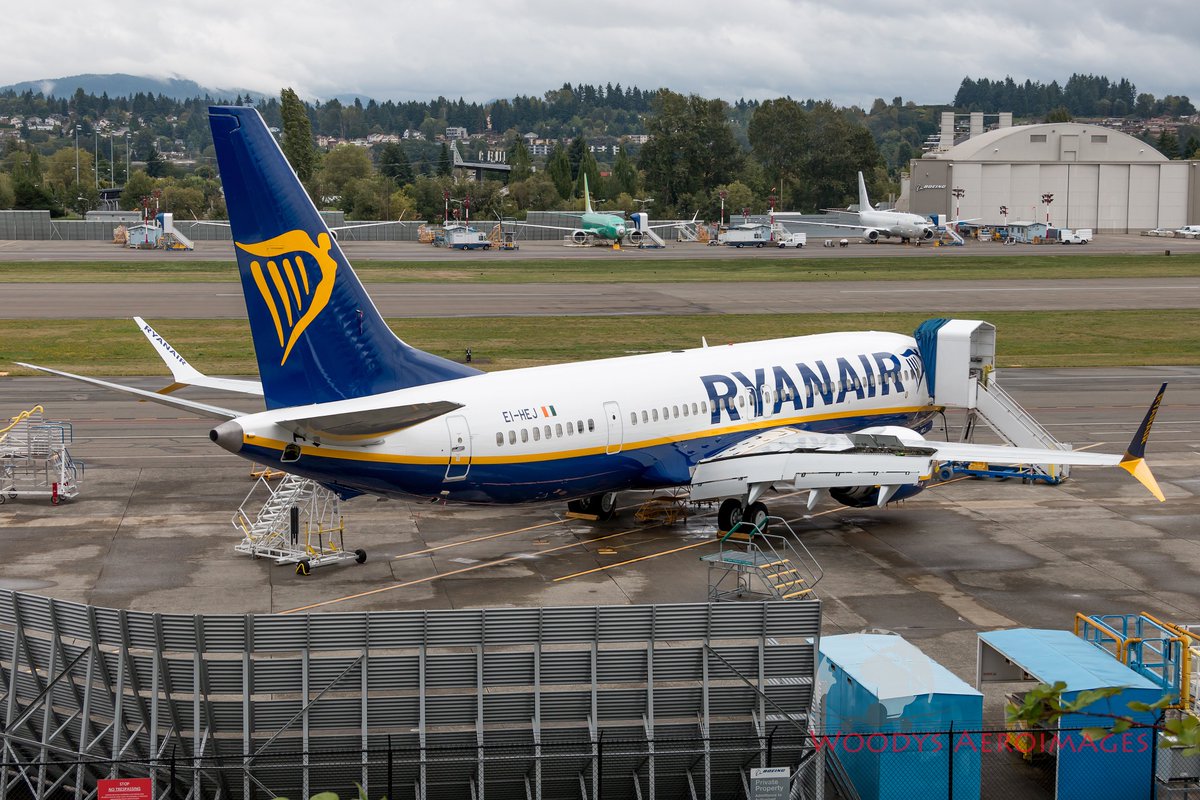
La compañía líder low cost europea Ryanair está cerca de realizar un pedido de docenas de aviones Boeing 737 MAX adicionales en un impulso comercial al fabricante de aviones de Estados Unidos después de que los reguladores levantaron la conexión a tierra de seguridad de veinte meses. El mayor transportista de tarifas bajas de Europa, que tiene la opción de ampliar su pedido actual en 75 aviones a 210 aviones podría alcanzar un pedido récord de la aeronave que ha sufrido pérdidas de órdenes y confianza de mercado. Ryanair ha estado negociando durante meses para ampliar su orden para 135 aviones como parte de las discusiones con Boeing sobre la compensación por los retrasos causados por la puesta a tierra, pero no se esperaba ninguna decisión hasta que el avión fue autorizado para reanudar los vuelos.
Ryanair es uno de los mayores clientes de Boeing en todo el mundo y un pedido de la aerolínea irlandesa es visto como un momento crucial en los esfuerzos de Boeing para rehabilitar el problemático 737 MAX. El avión de pasillo único mejorado fue aterrizado en Marzo 2019 después de dos accidentes aéreos en Indonesia y Etiopía en los que murieron un total de 346 personas, generando múltiples investigaciones.
Cada 737 MAX vale alrededor de US$ 125 millones a precios de lista, pero los jets suelen vender por cerca de la mitad de su valor de catálogo y Ryanair se espera que gane descuentos aún más pronunciados para realizar un pedido clave en medio de cancelaciones de algunos compradores. En un nuevo movimiento para restaurar la reputación del jet ha sumado cierta confianza de mercado en un momento de capital importancia para la cuarta generación de la saga 737.
Ryanair approaches new order 737 MAX
Ryanair would finalize new order Boeing 737 MAX
Leading European low-cost carrier Ryanair is close to ordering dozens of additional Boeing 737 MAXs in a commercial boost from the US aircraft maker after regulators lifted the 20-month safety ground. Europe’s largest low-fare carrier, which has the option to expand its current order from 75 aircraft to 210 aircraft, could reach a record order for the aircraft that has suffered loss of orders and market confidence. Ryanair has been negotiating for months to extend its order for 135 aircraft as part of discussions with Boeing on compensation for delays caused by grounding, but no decision was expected until the plane was cleared to resume flights.
Ryanair is one of Boeing’s largest customers worldwide and an order from the Irish airline is seen as a pivotal moment in Boeing’s efforts to rehabilitate the troubled 737 MAX. The upgraded single-aisle aircraft was landed in March 2019 after two air crashes in Indonesia and Ethiopia in which a total of 346 people died, sparking multiple investigations.
Each 737 MAX is worth about $ 125 million at list prices, but jets typically sell for about half their list value, and Ryanair is expected to earn even steeper discounts for placing a key order amid cancellations. some buyers. In a new move to restore the jet’s reputation, it has added some market confidence at a time of paramount importance for the fourth generation of the 737 saga.
Tesoro EEUU respalda US$ 20 mil millones para nómina de aerolíneas
El Secretario del Tesoro de los Estados Unidos, Steven Mnuchin, dijo el Miércoles 02/12 que respalda otro desembolso de US$ 20.000 millones de Dólares en apoyo adicional a la nómina del Gobierno para las aerolíneas estadounidenses. «Creo que eso sería muy significativo en términos de empleo y salvar a la industria», dijo Steven Mnuchin en una audiencia de la Cámara de Estados. Una propuesta bipartidista publicada el Martes 01/12 pidió US$ 17.000 millones de Dólares en apoyo a la nómina de las aerolíneas para extender el programa por cuatro meses.
En Octubre 2020, American Airlines y United Airlines eliminaron a más de 32.000 trabajadores después de que un programa anterior de asistencia para la nómina de US$ 25 mil millones expirara para finales de 09/2020. Hasta la fecha ha aprobado más de US$ 21 mil millones en préstamos, incluyendo $7.500 millones para Estados Unidos. El Tesoro ofreció por separado otros US$ 25.000 millones de Dólares en préstamos a las compañías aéreas.
US Treasury backs new payroll
US Treasury backs US$ 20 billion for airline payroll
The Secretary of the Treasury of the United States, Steven Mnuchin, said on Wednesday 02/12 that he supports another disbursement of US$ 20,000 million in additional support to the government payroll for US airlines. «I think that would be very significant in terms of jobs and saving the industry», Mnuchin said at a State House hearing. A bipartisan proposal published on Tuesday 01/12 asked for US$ 17,000 million in support of airline payroll to extend the program for four months.
In October 2020, American Airlines and United Airlines cut more than 32,000 workers after a previous US$ 25 billion payroll assistance program expired at the end of 09/2020. To date, it has approved more than US$ 21 billion in loans, including US$ 7.5 billion for the United States. The Treasury separately offered another US$ 25 billion in loans to airlines.
PUBLISHER: Airgways.com DBk: Treasury.gov / Reuters.com / Dallasnews.com/Smiley N. Pool / Airgways.com AW-POST: 202012021727AR
Comienza vuelos de pruebas para restablecer confianza consumidor
American Airlines ha iniciado a volar la línea Boeing 737 MAX en demostraciones a los medios de comunicación antes de la entrada de servicio regular el próximo 29 de Diciembre de 2020. La aerolínea con sede en Fort Worth, Estado de Texas, ha comenzado una serie de vuelos con la aeronave de cuarta generación antes del servicio regular de pasajeros, más de 20 meses después de que los aviones fueran incursionados en tierra en todo el mundo después de dos accidentes aéreos que sacudieron el mundo de la aviación.
El Boeing 737 MAX ha sido incursionado en tierra el 10 de Marzo de 2019 después de que un segundo avión se estrelló en Etiopía. Las investigaciones arrojaron resultados de un funcionamiento defectuosos del software del Sistema de Control de Vuelo destinados a estabilizar la aeronaves. Las investigaciones sobre los accidentes y los aviones revelaron una serie de errores y decisiones cuestionables que dañaron la credibilidad tanto de la compañía aeronáutica Boeing como de la Administración Federal de Aviación (FAA), la agencia gubernamental que certificó los aviones. Actualmente, cerca de 200 aviones en todo el mundo fueron retirados del servicio y Estados Unidos es el único regulador que le ha dado la aprobación para volar de nuevo, emitiendo su autorización final esta semana y aprobando planes de entrenamiento de vuelo para American. «En nuestra industria, la seguridad está por encima de todo. Cuando esa seguridad está en cuestión, nos unimos para mejorar. Ahora, después de la revisión de seguridad más extensa en la historia de la aviación comercial, el 737 MAX ha sido recertificado», expresó Doug Parker.
Mientras que las víctimas y los defensores de los consumidores han criticado y cuestionado a Boeing y a las aerolíneas por devolver el 737 MAX, diciendo que no había suficiente transparencia en el proceso de recertificación.
Test demostración
American Airlines iniciará la reapertura de los viajes convirtiéndose en la primera aerolínea en volver a poner a los pasajeros en vuelo en la línea 737 MAX. El primer vuelo de adaptación de tripulación ha despegado el Martes 01/12 por la noche desde el Aeropuerto Internacional de Dallas/Forth Worth DFW, incluyendo s pasajeros al CEO Doug Parker y su esposa Gwen, junto con otros líderes de la compañía. Un vuelo de demostración el Miércoles 02/12 se está llevando a los medios de comunicación desde el Aeropuerto DFW a la base de mantenimiento de American en Tulsa y la compañía ha programado una serie de vuelos solo para empleados en las próximas semanas.
American Airlines reiniciará las operaciones con la flota 737 MAX más próximo por delante que sus competidores como Southwest Airlines con sede en Dallas y United Airlines, con sede en Chicago, quienes planean esperar hasta bien entrado 2021 antes de poner el avión de nuevo en servicio, eligiendo esperar mientras entrena a los pilotos. Mientras que la compañía American tiene su primer vuelo comercial programado para el 29 de Diciembre de 2020 desde el Aeropuerto Internacional de Miami/MIA hasta el Aeropuerto Internacional New York/LaGuardia LGA. American sólo ha programado un puñado de vuelos para sus 24 aviones Boeing 737 MAX, a lo largo de la ruta Miami-Nueva York. La aerolínea planea añadir lentamente más aviones y vuelos en retorno a su horario de programación entrando el 2021. «Durante 20 meses, los aviones Boeing 737 MAX de todo el mundo han sido puestos en tierra. Nuestros corazones se van a las familias de las víctimas cuyas vidas se han perdido, y nunca olvidaremos la tragedia que cambió sus vidas para siempre», escribió el CEO Doug Parker en un post de Instagram el Martes 01/12 por la noche.
Aún así, el retorno del jet no está exento de controversia y escepticismo. Southwest Airlines, el mayor propietario de Boeing 737 MAX con 34 aeronaves, dijo que las encuestas han demostrado que alrededor de una cuarta parte de los clientes se sienten incómodos volando en el 737 MAX, pero espera que esa renuencia disminuya con el tiempo.
American Airlines planea dar a los clientes una notificación anticipada si están programados en un vuelo 737 MAX o si se cambian a uno de las demás aeronaves de la flota de la compañía. Los clientes tendrán la capacidad de cambiar de vuelo si se sienten incómodos. Cuando la cadena de seguridad se rompe, depende de nosotros en la industria repararla y traerla de vuelta, dijo Peter Gamble, quien pilotó el vuelo de demostración 737 MAX de DFW a Tulsa el Miércoles 02/12 y ha sido miembro del comité de regreso al servicio de la Asociación de Pilotos Aliados (APA).
American starts testing on 737 MAX
Starts test flights to restore consumer confidence
American Airlines has begun to fly the Boeing 737 MAX line in demonstrations to the media before the entry of regular service on December 29, 2020. The airline based in Fort Worth, State of Texas, has begun a series of flights with the fourth-generation aircraft before regular passenger service, more than 20 months after the planes were grounded around the world after two plane crashes that shook the world of aviation.
The Boeing 737 MAX was grounded on March 10, 2019 after a second plane crashed in Ethiopia. Investigations revealed a malfunction of the Flight Control System software intended to stabilize the aircraft. Investigations into the accidents and the planes revealed a series of errors and questionable decisions that damaged the credibility of both the airline company Boeing and the Federal Aviation Administration (FAA), the government agency that certified the planes. Currently, about 200 aircraft around the world have been decommissioned and the United States is the only regulator to give it approval to fly again, issuing its final clearance this week and approving flight training plans for American. «In our industry, safety comes first. When that safety is in question, we come together to improve. Now, after the most extensive safety review in the history of commercial aviation, the 737 MAX has been recertified», expressed Doug Parker.
While victims and consumer advocates have criticized and criticized Boeing and the airlines for returning the 737 MAX, saying there was not enough transparency in the recertification process.
Demo test
American Airlines will begin reopening travel by becoming the first airline to put passengers back into flight on the 737 MAX lines. The first crew adaptation flight took off Tuesday night 12/01 from the Dallas / Forth Worth DFW International Airport, including passengers CEO Doug Parker and his wife Gwen, along with other company leaders. A demonstration flight on Wednesday 02/12 is taking the media from DFW Airport to American’s maintenance base in Tulsa and the company has scheduled a series of employee-only flights in the coming weeks.
American Airlines will restart operations with the 737 MAX fleet closer ahead than its competitors such as Dallas-based Southwest Airlines and Chicago-based United Airlines, who plan to wait until well into 2021 before putting the aircraft back into service. Choosing to wait while training the pilots, while the American company has its first commercial flight scheduled for December 29, 2020 from Miami International Airport/ MIA to New York International Airport/LaGuardia LGA. American has only scheduled a handful of flights for its 24 Boeing 737 MAX jets, along the Miami-New York route. The airline plans to slowly add more aircraft and return flights to its schedule entering 2021. «For 20 months, Boeing 737 MAX aircraft around the world have been grounded. Our hearts go out to the families of the victims. whose lives have been lost, and we will never forget the tragedy that changed their lives forever», wrote CEO Doug Parker in an Instagram post on Tuesday night 12/01.
Still, the return of the jet is not without controversy and skepticism. Southwest Airlines, the largest owner of the Boeing 737 MAX with 34 aircraft, said surveys have shown that about a quarter of customers are uncomfortable flying the 737 MAX, but it expects that reluctance to diminish over time.
American Airlines plans to give customers advance notice if they are scheduled on a 737 MAX flight or if they switch to one of the other aircraft in the company’s fleet. Customers will have the ability to change flights if they feel uncomfortable. When the safety chain is broken, it’s up to us in the industry to fix it and bring it back, said Peter Gamble, who piloted the DFW 737 MAX demonstration flight to Tulsa on Wednesday 02/12 and has been a member of the committee back to the service of the Allied Pilots Association (APA).
Aerolíneas enfrentan mayor crisis historia dice sindicato AFACWA
La industria aérea se enfrenta a su mayor desastre cuando Capitol Hill continúa debatiendo sobre un proyecto de ley de ayudas adicionales por los efectos de la pandemia, reclamó Sara Nelson, Presidenta de la Asociación de Asistentes de Vuelo-CWA (AFACWA): «Estamos experimentando una crisis que es más grande que todas las crisis financieras que la industria aérea ha enfrentado desde que los aviones tomaron el vuelo por primera vez», expresó la sindicalista el Martes 01/12 por la noche.
Han transitado 250 días desde que se aprobó el último proyecto de ley de estímulo a la aviación comercial. Se ha hablado de una nueva medida bipartidista del Senado de US$ 908 mil millones ,que incluye dinero para pequeñas empresas, gobiernos estatales y locales, y financiamiento para beneficios de desempleo de US$ 300 por semana. Sara Nelson informó que el proyecto de ley de estímulo de Marzo 2020 debería haber quitado las conjeturas de las negociaciones y escribiendo otro proyecto de ley. «Fue el paquete más transparente y exitoso de todo el alivio del Coronavirus, y se supone que es la plantilla que se puede utilizar para cualquier otra industria», dijo.
Los trabajadores de las aerolíneas recibieron apoyo financiero a través del Programa de Apoyo a la Nómina de la Ley CARES, que se firmó como ley el 27 de Marzo de 2020. Mantuvo a los empleados de las aerolíneas en la nómina durante la pandemia, pero esos beneficios expiraron el 30 de septiembre. Nelson dijo que como resultado de la inacción federal, miles en la industria aérea se quedaron desempleados. «Cientos de miles de trabajadores han perdido su salario, muchos están desconectados de la atención médica y se preguntan cómo van a pagar su cheque de alquiler, cómo van a salir adelante, y están en esas líneas de pan ahora mismo con muchos otros estadounidenses. Hemos estado esperando esta legislación de sentido común que, en este momento, obtendría 95 votos en el Senado si estuviera allí para una votación, y hemos estado esperando que esto se apruebe desde Agosto», ha comunicado Sara Nelson, representante líder de AFACWA.
Las aerolíneas habrán recortado el equivalente a unos 90.000 puestos de trabajo para finales de año, incluyendo más de 30.000 permisos en aerolíneas como United Airlines y American Airlines que comenzaron el mes de Octubre 2020 y la salida de miles de otros trabajadores que aceptaron compras de Southwest Airlines, Delta Air Lines y otras aerolíneas. Las predicciones de Boston Consulting Group sugieren que los viajes no repuntarían a los niveles de 2019 hasta 2023 o 2024. Sara Nelson dijo que sigue siendo optimista de que los viajes aéreos se recuperarán. «Vamos a tener el repunte de la industria aérea, y la primera vez que alguien consiga un trato de negocios porque fue allí en persona, créeme, va a volver a la normalidad».
AFACWA union demands assistance
Airlines Facing Biggest Crisis History Says US Stewardess Union
The airline industry faces its biggest disaster when Capitol Hill continues to debate a bill for additional aid due to the effects of the pandemic, claimed Sara Nelson, President of the Association of Flight Attendants-CWA (AFACWA): «We are experimenting a crisis that is bigger than all the financial crises that the airline industry has faced since the planes took flight for the first time», said the union member on Tuesday night 01/12.
It has been 250 days since the last commercial aviation stimulus bill was passed. There has been talk of a new bipartisan Senate bill of US$ 908 billion, which includes money for small businesses, state and local governments, and funding for unemployment benefits of US$ 300 a week. Sara Nelson reported that the March 2020 stimulus bill should have taken the guesswork out of the negotiations and writing another bill. «It was the most transparent and successful package of all the Coronavirus relief, and it’s supposed to be the template that can be used for any other industry», she said.
Airline workers received financial support through the CARES Act Payroll Support Program, which was signed into law on March 27, 2020. It kept airline employees on the payroll during the pandemic, but those benefits expired on September 30. Nelson said that as a result of federal inaction, thousands in the airline industry were left unemployed. She added that lawmakers could take critical steps to help the industry in woe by authorizing another round of payroll support. «Hundreds of thousands of workers have lost their wages, many are disconnected from health care and wondering how they are going to pay their rent check, how they are going to get by, and they are on those bread lines right now with many other Americans. We have been waiting for this common sense legislation that, at this time, would get 95 votes in the Senate if it were there for a vote, and we have been waiting for this to pass since August», said Sara Nelson, lead representative of AFACWA.
Airlines will have cut the equivalent of about 90,000 jobs by the end of the year, including more than 30,000 permits on airlines such as United Airlines and American Airlines that began in October 2020 and the departure of thousands of other workers who accepted Southwest purchases. Airlines, Delta Air Lines and other airlines. Boston Consulting Group predictions suggest that travel would not rebound to 2019 levels until 2023 or 2024. Sara Nelson said she remains optimistic that air travel will rebound. «We are going to have the upturn in the airline industry, and the first time someone gets a business deal because they went there in person, trust me, it’s going to be back to normal».
AW | 2020 12 02 14:58 | AIRLINES / AIRPORTS / GOVERNMENT
Revisión enlace Santiago/Punta Arenas/Falklands in 01/2021
El Gobierno de las Islas Malvinas sigue vigilando de cerca la situación relativa a la suspensión de los enlaces aéreos comerciales con la República de Chile a la luz de la actual pandemia. Los vuelos de conexión con el continente americano son vitales para el desarrollo social y económico del archipiélago, el Gobierno de las Islas Falklands (FIG) sigue comprometido a garantizar que se mantenga la salud y la seguridad de la comunidad, a medida que las circunstancias en toda América del Sur continental siguen evolucionando.
Tras el anuncio del 27 de Agosto de 2020, la ruta directa explotada Santiago de Chile-Mount Pleasant por la aerolínea Latam Airlines continuará suspendida, al igual que la ruta Santiago de Chile-Punta Arenas permanecerá suspendida al menos hasta el 2 de Enero de 2021, pero la situación se revisará hacia el final de ese período. Latam Airlines también ha confirmado ahora que la ruta de Sao Paulo-Santiago de Chile-Mount Pleasant permanecerá suspendida al menos hasta el 31 de Marzo de 2021.
La Directora de Desarrollo y Servicios Comerciales, Catherine Silva Donayre, dijo: «Desde que se tomó por primera vez la decisión de suspender estos vuelos, hemos trabajado muy de cerca con Latam, no sólo para monitorear la situación, sino para comenzar a desarrollar planes a más largo plazo para la reinstalación de estas rutas. Como se puede ver en todo el mundo, la pandemia sigue teniendo un impacto significativo en todos los aspectos de los viajes internacionales y es vital que alcancemos el equilibrio adecuado entre mantener a nuestra gente segura y la planificación de reanudar estos vuelos en el momento adecuado. Esto también significa apoyar a las empresas locales que se han visto afectadas por la suspensión de los vuelos para que estén en una buena posición para reanudar sus actividades una vez que estas rutas se reinicien. FIG y Latam están igualmente comprometidos con la viabilidad a largo plazo de estas rutas».
Controles sanitarios Malvinas
Las Islas Malvinas continúa bajo mayor vigilancia tras el primer caso civil positivo de Coronavirus. Un período de mayor vigilancia comenzará en las Islas Malvinas después de que se confirmara un caso positivo de Covid-19 a principios de Noviembre 2020. La Legisladora de las Malvinas, Leona Roberts, expresó oportunamente que «esto no significa que estemos encerrando o que tengamos la intención de instigar un período de bloqueo en un futuro próximo. Las escuelas, la biblioteca y la universidad permanecerán abiertas junto con guarderías y cuidadores de niños. Las empresas y los servicios deben permanecer abiertos y se les alentará a trabajar de manera que limiten la propagación de la infección».
Los pasajeros que lleguen al Aeropuerto Mount Pleasant tendrán tres opciones para viajar a Port Stanley. Las personas pueden utilizar el transporte obligatorio de la Falklands Islands Government (FIG) entre Port Stanley y el aeropuerto, dejar un vehículo vacío en el Aeropuerto Mount Pleasant (MPA) para conducir de regreso a Stanley para entrar en cuarentena, o ser recogidos por amigos o familiares que tendrán que entrar en cuarentena con el pasajero al regresar a Stanley. El programa no es obligatorio ya que es un procedimiento invasivo, pero se recomienda ya que proporciona a las personas la seguridad personal de que no están infectados con el virus. Hasta la fecha, la captación ha sido, y sigue siendo, muy alta. También se han aplicado protocolos de seguimiento y rastreo a otras personas que entraron en contacto con pasajeros del vuelo, incluidos los que trabajan en aduanas e inmigración, y el transporte.
Debido a las circunstancias recientes que rodean el puente aéreo, también ha sido necesario instigar protocolos de seguimiento y rastreo para los pasajeros que habrían entrado en contacto con la persona que dio positivo, pero que no llegaron en el mismo vuelo que ellos. Las pruebas periódicas están produciendo un resultado positivo y esto ha demostrado que la vigilancia durante la cuarentena está funcionando de la manera prevista. Esto es muy importante, ya que puede ser un portador de Covid-19 sin presentar ningún síntoma o enfermarse. También significa que ahora entraremos en un período de mayor vigilancia según nuestros procedimientos de planificación de emergencia. El aumento de la vigilancia significa que sabemos que hay un caso de Covid-19 en las Islas Malvinas y que, si la situación se vuelve más grave, el Gobierno puede cambiar su orientación.
Malvinas will review link to the archipelago
Review link Santiago/Punta Arenas/Falklands in 01/2021
The Government of the Falkland Islands continues to closely monitor the situation regarding the suspension of commercial air links with the Republic of Chile in light of the current pandemic. Connecting flights to the American continent are vital to the archipelago’s social and economic development, the Falkland Islands Government (FIG) remains committed to ensuring that the health and safety of the community is maintained, as circumstances in all of continental South America continue to evolve.
After the announcement on August 27, 2020, the direct route operated by Santiago de Chile-Mount Pleasant by the airline Latam Airlines will continue to be suspended, as well as the Santiago de Chile-Punta Arenas route will remain suspended at least until January 2, 2021 , but the situation will be reviewed towards the end of that period. Latam Airlines has also confirmed now that the Sao Paulo-Santiago de Chile-Mount Pleasant route will remain suspended until at least March 31, 2021.
Business Development and Services Director Catherine Silva Donayre said: «Since the decision to suspend these flights was first made, we have worked closely with Latam, not only to monitor the situation, but to begin developing plans. longer term for the reinstallation of these routes. As can be seen around the world, the pandemic continues to have a significant impact on all aspects of international travel and it is vital that we strike the right balance between keeping our people safe and planning to resume these flights at the right time.This also means supporting local businesses that have been affected by the suspension of flights so that they are in a good position to resume their activities once these routes are restarted. FIG and Latam are equally committed to the long-term viability of these routes».
Malvinas health controls
The Falkland Islands continues to be under increased surveillance after the first positive civil case of Coronavirus. A period of increased surveillance will begin in the Falkland Islands after a positive case of Covid-19 was confirmed in early November 2020. The Legislator of the Falklands, Leona Roberts, timely expressed that «this does not mean that we are locking up or that we intend to instigate a period of lockdown in the near future. The schools, the library and the university will remain open along with nurseries and caregivers of children. Businesses and services must remain open and will be encouraged to work in ways that limit the spread of infection».
Passengers arriving at Mount Pleasant Airport will have three options for travel to Port Stanley. People can use Falklands Islands Government (FIG) mandatory transportation between Port Stanley and the airport, leave an empty vehicle at Mount Pleasant Airport (MPA) to drive back to Stanley for quarantine, or be picked up by friends or family members who will have to quarantine with the passenger upon returning to Stanley. The program is not mandatory as it is an invasive procedure, but it is recommended as it provides people with personal assurance that they are not infected with the virus. To date, uptake has been, and continues to be, very high. Track and trace protocols have also been applied to other people who came into contact with passengers on the flight, including those working in customs and immigration, and transportation.
Due to the recent circumstances surrounding the airlift, it has also been necessary to instigate track and trace protocols for passengers who would have come into contact with the person who tested positive, but who did not arrive on the same flight as them. Regular testing is producing a positive result and this has shown that quarantine surveillance is working as intended. This is very important, as you can be a Covid-19 carrier without showing any symptoms or getting sick. It also means that we will now enter a period of increased vigilance based on our emergency planning procedures. Increased surveillance means that we know that there is a case of Covid-19 in the Falkland Islands and that if the situation becomes more serious, the Government may change its orientation.
Aerolíneas Argentinas ha comunicado a los pasajeros que se comuniquen con la compañía por reprogramaciones en la grilla de vuelos establecidos para Diciembre 2020 y Enero 2021. La aerolínea ha solicitado a los pasajeros que cuenten con pasajes para volar dentro de los próximos sesenta días que se comuniquen con la empresa para reprogramar o confirmar los vuelos. La emisión del comunicado de prensa explica que: «Queremos informar que, pese al inicio de operaciones regulares a partir del 22 de Octubre, la programación de vuelos aún se encuentra sujeta a diferentes modificaciones. La compañía se encuentra trabajando intensamente en la normalización de la atención a los pasajeros, y que solo se comuniquen aquellos pasajeros que tengan tickets para los meses de Diciembre y Enero», señalaron desde Aerolíneas.
Respecto a las reprogramaciones de vuelos de cabotaje se ha detallado que la «programación es aprobada todos los meses por la autoridad aeronáutica, previa conformidad de cada provincia, con las modificaciones que impone la situación sanitaria de cada destino respecto al ingreso de pasajeros». En el caso de los vuelos internacionales, ha indicado que «las condiciones sanitarias y las políticas migratorias de cada país, también someten nuestra programación a diversos ajustes».
Aerolíneas ha informado que alrededor de 2.000.000 de pasajeros vieron afectados sus vuelos desde el inicio de la pandemia y destacó que durante Noviembre 2020 se atendieron un total de 370.000 clientes a través de sus canales de comunicación. En el mismo comunicado expresa: «Estamos trabajando para regularizar la situación y mejorar la atención a nuestros pasajeros con refuerzos de dotación en las áreas sensibles». Desde la reapertura de los vuelos en el país, durante los 39 días que transcurrieron desde el reinicio de las operaciones regulares Aerolíneas Argentinas ha transportado a 78.440 pasajeros en 848 vuelos operados dentro de la República Argentina. A los destinos internacionales se transportaron un total de 28.154 pasajeros.
«Aerolíneas Argentinas se encuentra tomando medidas para dar respuesta efectiva a cada uno de los pasajeros que realizan solicitudes de cambio, reconfirmación o reprogramación de sus vuelos, pide disculpas a aquellas personas que todavía no ha obtenido una respuesta y espera poder normalizar la situación en los próximos días», concluye el comunicado de la aerolínea.
Aerolíneas Argentinas has informed passengers to contact the company for rescheduling of the flight grid established for December 2020 and January 2021. The airline has asked passengers who have tickets to fly within the next sixty days to contact the company to reschedule or confirm flights. The issuance of the press release explains that: «We want to inform that, despite the start of regular operations as of October 22, the flight schedule is still subject to various modifications. The company is working intensively on the normalization of the attention to passengers, and that only those passengers who have tickets for the months of December and January are communicated», they said from Aerolíneas.
Regarding the rescheduling of domestic flights, it has been detailed that the «programming is approved every month by the aeronautical authority, with the prior agreement of each province, with the modifications imposed by the health situation of each destination regarding the entry of passengers». In the case of international flights, he indicated that «the sanitary conditions and immigration policies of each country also subject our programming to various adjustments».
Aerolíneas has reported that around 2,000,000 passengers had their flights affected since the beginning of the pandemic and highlighted that during November 2020 a total of 370,000 customers were served through their communication channels. In the same statement, he states: «We are working to regularize the situation and improve the attention to our passengers with reinforcements in personnel in sensitive areas». Since the reopening of flights in the country, during the 39 days that have elapsed since the restart of regular operations, Aerolíneas Argentinas has transported 78,440 passengers on 848 flights operated within the Argentine Republic. A total of 28,154 passengers were transported to international destinations.
«Aerolíneas Argentinas is taking measures to provide an effective response to each of the passengers who make requests for changes, reconfirmation or rescheduling of their flights, apologizes to those people who have not yet obtained a response and hopes to normalize the situation in the next days», concludes the statement of the airline.
Norwegian Air enfretará fiabilidad protección de acreedores
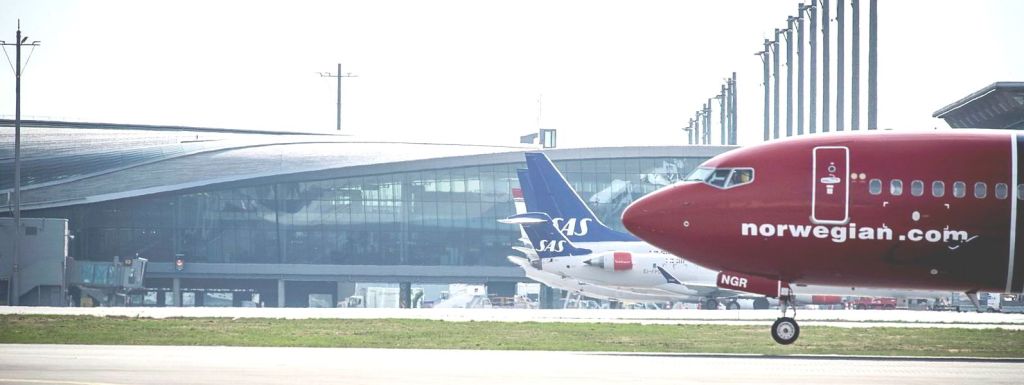
El destino de la aerolínea de bajo coste Norwegian Air enfrenta su tiempo más histórico fuertemente influenciado por dos fechas clave de Diciembre 2020. El 07/12 la aerolínea presenciará si la protección total de los acreedores en virtud de la legislación de examen irlandés para sus filiales Norwegian Air International y Arctic Aircraft Assets podría acogerse, como así también la compañía matriz Norwegian Air Shuttle ASA también obtendría protección. La aprobación inicial se concedió en Noviembre 2020, pero si la audiencia es exitosa, el plazo podría ser de cinco meses para alcanzar su restructuración.
La aerolínea había recibido una inyección de dinero en efectivo del Gobierno noruego, pero recientemente se le informó de que no recibiría más financiación, lo que la llevó a la gran mayoría de su personal y a reducir las operaciones a sólo seis aviones de una flota de 140. Fue esto lo que lo llevó a buscar protección bajo el exemen irlandés.
El 15 de Diciembre de 2020, la aerolínea se enfrenta a un caso judicial con Boeing, de quien reclama 1.000 millones de Dólares por daños y perjuicios, incluidas las pérdidas de ingresos de 18 Boeing 737 MAX que no fueron entregados según lo planeado debido a la puesta a tierra de ese tipo. El éxito para Norwegian añadiría la liquidez muy necesaria, pero del otro lado del Atlántico, The Boeing Company está buscando que se desestime el caso judicial.
Turbulencias largo alcance
Incluso antes de que la industria de las aerolíneas se sintió afectada por la crisis del Covid-19, Norwegian había estado luchando para fortalecer sus finanzas. En los últimos dos años, la aerolínea ha estado convirtiendo cada piedra para reducir los costos y aumentar la liquidez. Las rutas han sido cortadas, las aeronaves vendidas, las entregas y los arrendamientos cancelados. Ha habido negociaciones con proveedores, la deuda se ha convertido en capital, el pago de los tenedores de bonos pospuesto y el capital adicional recaudado. Se habían hecho muchos progresos y antes de la crisis sanitaria mundial, la aerolínea tenía la esperanza de volver a una base financiera más sólida y la rentabilidad a partir de 2021.
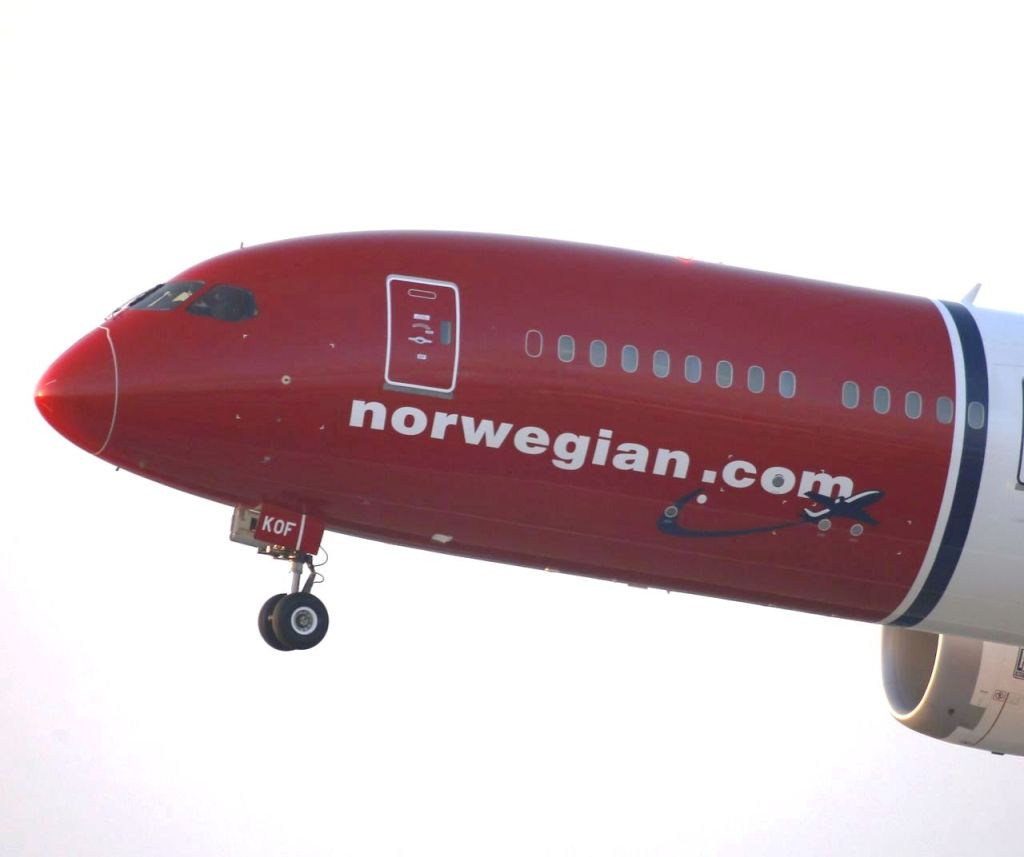
No existe la duda de que Norwegian se ha enfrentado a la desgracia de factores externos en los últimos años. En primer lugar, la aerolínea sufrió aterrizajes extendidos de aviones Boeing 787 Dreamliner debido a problemas con los motores Rolls Royce del tipo. El papel de la red de bajo costo de largo recorrido de Norwegian se basó en la eficiencia y la economía de costos del Boeing 787. Con la necesidad de poner en tierra una parte de la flota durante un período que se extendió a alrededor de dos años, los vuelos tuvieron que ser cancelados causando pérdida de ingresos o el alquiler de aeronaves menos eficientes a un costo considerable. Además de este desafío llegó la puesta a tierra mundial del Boeing 737 MAX. Norwegian había planeado utilizar este avión para ampliar los servicios, incluyendo la extensión de las operaciones de larga distancia a los mercados para los que el 787 era demasiado grande. Los aviones entregados fueron en tierra y las entregas planificadas se detuvieron. A medida que ambos problemas de aviones se desarrollaban, la crisis del Covid-19 golpeó y la aerolínea estuvo casi en su totalidad en tierra durante la mayor parte del período de verano, que normalmente es el momento de la generación de ingresos máximos.
Desafíos por delante
Durante la última década, la aerolínea se expandió masivamente y, en particular, con la llegada de Boeing 787 en 2014, se trasladó al mercado de bajo costo de larga distancia. Este modelo ha demostrado ser popular entre los clientes, pero ha demostrado ser esquivo en la entrega de rentabilidad sostenible a largo plazo para los profesionales de todo el mundo. Air Asia X, uno de los primeros en adoptar, ha incurrido en grandes pérdidas por gran parte de su existencia, Noruega también ha visto una mezcla de pérdidas y rentabilidad marginal y varias otras aerolíneas han fracasado por completo. Hay numerosos desafíos con el modelo, incluyendo la dependencia del tráfico de tarifas bajas sensibles a los precios, la estacionalidad en la demanda y la falta de conexión del tráfico para recargar en las horas punta. Como reconoció Michael O’Leary de Ryanair en una entrevista reciente conmigo, muchos elementos que son críticos para el éxito del bajo costo de corto recorrido, no pueden migrarse al contexto de larga distancia.
En el caso de Norwegian también ha intentado una aplicación geográficamente diversa del modelo, operando desde varias bases europeas a América del Norte y del Sur, así como a Asia. Esto se ha sumado a los costos, ha debilitado la presencia en el mercado y ha creado desafíos operativos y de fiabilidad. Además, Norwegian examinó los reducidos costos operativos y la eficiencia que ofrecía el Boeing 787 para apoyar la viabilidad, pero tuvo que comprometerse con el alto costo de capital de invertir en estos nuevos aviones. A medida que ha luchado para arrojar costos y mejorar la liquidez, las operaciones de larga distancia se han reducido a cero y muchos 787 ya están en la flota están siendo desinvertidos.
Perspectivas Norwegian
Los desafíos de Norwegian Air se remontan a que cualquiera de los factores externos que intervinieran. Aún así, si la aerolínea logra generar suficiente liquidez para mantener el negocio, la compañía tendría una estructura mucho mas pequeña, donde las operaciones de larga distancia podrían hacer concluido para concentrarse en el mercado europeo. Incluso en su mercado interno se enfrenta ahora a una intensa nueva presión competitiva. El líder de bajo costo Wizzair está en el proceso de establecer bases en Noruega tanto en Oslo como en Trondheim. Su enfoque inicial se centra en las rutas nacionales que han sido históricamente rentables para el noruego. Como si esto no fuera suficiente, una nueva aerolínea está planeada por Eric Braathen de la famosa familia de la aviación noruega e incluyendo ex ejecutivos de Norwegian en el equipo de inicio.
Las opciones parecen estar disminuyendo para que Norwegian encuentre un nivel de negocio sostenible. Con la temporada de invierno boreal normalmente siendo difícil y aún más este año debido a la crisis de la pandemia, la capacidad de Norwegian para lograr la protección completa del examen de los acreedores y para aumentar la liquidez adicional significativa va a ser fundamental para continuar sobreviviendo en tiempos muy turbulentos.
Norwegian approaches key date
Norwegian Air will face reliability creditor protection
The fate of the low-cost airline Norwegian Air faces its most historic time heavily influenced by two key dates of December 2020. On 07/12 the airline will witness whether the full protection of creditors under Irish scrutiny legislation for its subsidiaries Norwegian Air International and Arctic Aircraft Assets could qualify, as would parent company Norwegian Air Shuttle ASA would also get protection. Initial approval was granted in November 2020, but if the hearing is successful, the deadline could be five months to achieve its restructuring.
The airline had received an injection of cash from the Norwegian Government, but was recently informed that it would not receive any further funding, leading to the vast majority of its staff and reducing operations to just six aircraft out of a fleet of 140 It was this that led him to seek protection under the Irish test.
On December 15, 2020, the airline faces a legal case with Boeing, from which it claims 1,000 million Dollars in damages, including lost revenue from 18 Boeing 737 MAXs that were not delivered as planned due to the commissioning of land of that kind. Success for Norwegian would add much-needed liquidity, but on the other side of the Atlantic, The Boeing Company is seeking to have the court case dismissed.
Long-range turbulence
Even before the airline industry was hit by the Covid-19 crisis, Norwegian had been struggling to strengthen its finances. For the past two years, the airline has been turning every stone to lower costs and increase liquidity. Routes have been cut, aircraft sold, deliveries and leases canceled. There have been negotiations with suppliers, the debt has been converted into equity, the payment of the bondholders postponed and the additional capital raised. Much progress had been made and prior to the global health crisis, the airline was hoping to return to a stronger financial footing and profitability from 2021.
There is no doubt that Norwegian has faced the misfortune of external factors in recent years. First, the airline suffered extended landings from Boeing 787 Dreamliner jets due to problems with the type’s Rolls Royce engines. The role of Norwegian’s long-haul low-cost network was based on the efficiency and cost economy of the Boeing 787. With the need to ground part of the fleet over a period that extended to around two years , flights had to be canceled causing loss of revenue or the rental of less efficient aircraft at considerable cost. Adding to this challenge came the global grounding of the Boeing 737 MAX. Norwegian had planned to use this aircraft to expand services, including extending long-haul operations to markets for which the 787 was too large. The delivered aircraft were on the ground and the planned deliveries were stopped. As both aircraft problems unfolded, the Covid-19 crisis struck and the airline was almost entirely grounded for most of the summer period, which is normally the time of peak revenue generation.
Challenges ahead
Over the past decade, the airline expanded massively and, in particular, with the arrival of the Boeing 787 in 2014, moved into the low-cost long-haul market. This model has proven popular with customers, but has proven elusive in delivering long-term sustainable profitability for professionals around the world. Air Asia X, an early adopter, has incurred heavy losses for much of its existence, Norway has also seen a mix of losses and marginal profitability and several other airlines have completely failed. There are numerous challenges with the model, including reliance on price-sensitive low-rate traffic, seasonality in demand, and lack of connection to traffic to recharge at peak times. As Ryanair’s Michael O’Leary recognized in a recent interview with me, many elements that are critical to the success of low-cost short haul cannot be migrated to the long-haul context.
In Norwegian’s case, it has also attempted a geographically diverse application of the model, operating from various European bases to North and South America, as well as Asia. This has added to costs, weakened market presence, and created operational and reliability challenges. Additionally, Norwegian examined the reduced operating costs and efficiencies offered by the Boeing 787 to support feasibility, but had to commit to the high capital cost of investing in these new aircraft. As it has struggled to shed costs and improve liquidity, long-haul operations have been reduced to zero and many 787s already in the fleet are being divested.
Norwegian perspective
Norwegian Air’s challenges go back to any of the external factors involved. Still, if the airline manages to generate enough liquidity to maintain business, the company would have a much smaller structure, where long-haul operations could be concluded to focus on the European market. Even in its domestic market it is now facing intense new competitive pressure. Low-cost leader Wizzair is in the process of establishing bases in Norway in both Oslo and Trondheim. His initial focus is on domestic routes that have historically been profitable for the Norwegian. As if this wasn’t enough, a new airline is planned by Eric Braathen from the famous Norwegian aviation family and including former Norwegian executives in the start-up team.
The options appear to be diminishing for Norwegian to find a sustainable level of business. With the boreal winter season typically challenging and made even more difficult this year due to the pandemic crisis, Norwegian’s ability to achieve full protection from creditors’ examination and to increase significant additional liquidity will be critical to its continued survival. in very turbulent times.
Norwegian nærmer seg nøkkeldato
Norwegian Air vil møte pålitelighetsbeskyttelse av kreditorer
Skjebnen til lavprisflyselskapet Norwegian Air står overfor sin mest historiske tid sterkt påvirket av to viktige datoer i desember 2020. 07/12 vil flyselskapet være vitne til om full beskyttelse av kreditorer under irsk granskningslovgivning for dets datterselskaper Norwegian Air International og Arctic Aircraft Assets kan kvalifisere seg, slik også morselskapet Norwegian Air Shuttle ASA vil få beskyttelse. Første godkjenning ble gitt i november 2020, men hvis høringen lykkes, kan fristen være fem måneder for å oppnå omstrukturering.
Flyselskapet hadde mottatt en innsprøytning av kontanter fra den norske regjeringen, men ble nylig informert om at det ikke ville motta ytterligere finansiering, noe som førte til det store flertallet av personalet og reduserte driften til bare seks fly av en flåte på 140 Det var dette som førte til at han søkte beskyttelse under den irske testen. 15 Desember 2020 står flyselskapet overfor en rettssak med Boeing, hvorfra det hevder 1000 millioner dollar i erstatning, inkludert tapte inntekter fra 18 Boeing 737 MAX-er som ikke ble levert som planlagt på grunn av igangsetting av land av den typen. Suksess for Norwegian vil tilføre sårt tiltrengt likviditet, men på den andre siden av Atlanterhavet søker The Boeing Company å få avvist rettssaken.
Langturbulens
Allerede før flyindustrien ble rammet av Covid-19-krisen, hadde Norwegian slitt med å styrke økonomien. De siste to årene har flyselskapet vendt hver stein for å redusere kostnadene og øke likviditeten. Ruter er kuttet, solgt fly, leveranser og leieavtaler kansellert. Det har vært forhandlinger med leverandører, gjelden er omgjort til egenkapital, betalingen av obligasjonseierne utsatt og den ekstra kapitalen er samlet inn. Det var gjort store fremskritt, og før den globale helsekrisen håpet flyselskapet å komme tilbake til en sterkere økonomisk holdning og lønnsomhet fra 2021.
Det er ingen tvil om at Norwegian har møtt ulykken med eksterne faktorer de siste årene. For det første fikk flyselskapet forlengede landinger fra Boeing 787 Dreamliner-jetfly på grunn av problemer med typens Rolls Royce-motorer. Rollen til Norwegians langvarige lavkostnettverk var basert på Boeing 787s effektivitet og kostnadsøkonomi. Med behovet for å bakke en del av flåten over en periode som strakte seg til rundt to år måtte fly avlyses og forårsake inntektstap eller leie av mindre effektive fly til betydelige kostnader. I tillegg til denne utfordringen kom den globale forankringen av Boeing 737 MAX. Norwegian hadde planlagt å bruke dette flyet til å utvide tjenestene, inkludert utvidelse av langdistansedrift til markeder som 787 var for stor for. De leverte flyene var på bakken og de planlagte leveransene ble stoppet. Da begge flyproblemene utspilte seg, traff Covid-19-krisen, og flyselskapet var nesten helt jordet det meste av sommerperioden, som normalt er tiden for toppinntektsgenerering.
Utfordringer fremover
I løpet av det siste tiåret utvidet flyselskapet seg massivt, og spesielt med ankomsten av Boeing 787 i 2014, flyttet det inn til lavprismarkedet. Denne modellen har vist seg å være populær blant kunder, men har vist seg å være unnvikende når det gjelder å levere langsiktig bærekraftig lønnsomhet for fagfolk over hele verden. Air Asia X, en tidlig adopterer, har hatt store tap i store deler av sin eksistens, Norge har også sett en blanding av tap og marginal lønnsomhet, og flere andre flyselskaper har fullstendig mislyktes. Det er mange utfordringer med modellen, inkludert avhengighet av prissensitiv lavpristrafikk, sesongmessig etterspørsel og manglende tilknytning til trafikk for å lade i topptider. Som Ryanairs Michael O’Leary anerkjente i et nylig intervju med meg, kan mange elementer som er kritiske for suksessen med kortdistanselavekostnader ikke overføres til langdistansesammenheng
I Norwegians tilfelle har den også forsøkt en geografisk mangfoldig anvendelse av modellen, som opererer fra forskjellige europeiske baser til Nord- og Sør-Amerika, samt Asia. Dette har økt kostnadene, svekket tilstedeværelsen på markedet og skapt drifts- og pålitelighetsutfordringer. I tillegg undersøkte Norwegian de reduserte driftskostnadene og effektiviteten som Boeing 787 tilbyr for å støtte gjennomførbarheten, men måtte forplikte seg til de høye kapitalkostnadene ved å investere i disse nye flyene. Ettersom det har slitt med å få ned kostnadene og forbedre likviditeten, har langdistansedrift blitt redusert til null, og mange 787-er som allerede er i flåten blir solgt.
Norwegian perspektiver
Norwegian Air utfordringer går tilbake til noen av de eksterne faktorene som er involvert. Likevel, hvis flyselskapet klarer å generere nok likviditet til å opprettholde virksomheten, vil selskapet ha en mye mindre struktur, der langdistansedrift kan avsluttes for å fokusere på det europeiske markedet. Selv i hjemmemarkedet står det nå overfor et intensivt nytt konkurransepress. Lavprisleder Wizzair er i ferd med å etablere baser i Norge i både Oslo og Trondheim. Hans første fokus er på innenlandske ruter som historisk har vært lønnsomme for nordmannen. Som om dette ikke var nok, planlegges et nytt flyselskap av Eric Braathen fra den berømte norske luftfartsfamilien og inkluderer tidligere norske ledere i oppstartslaget.
Alternativene ser ut til å avta for Norwegian å finne et bærekraftig forretningsnivå. Med den boreale vintersesongen som regel utfordrende og vanskeliggjort i år på grunn av pandemikrisen, vil Norwegians evne til å oppnå full beskyttelse mot kreditorundersøkelser og øke betydelig ekstra likviditet være avgjørende for fortsatt overlevelse. i veldig turbulente tider.