Tratado cielos abiertos Brasil-EEUU

AW | 2017 12 21 10:55 | AIRLINES ALLIANCE / AVIATION

Imagen relacionadaEl tratado de cielos abiertos entre Brasil y Estados Unidos elimina límites de número de vuelos entre ambos países

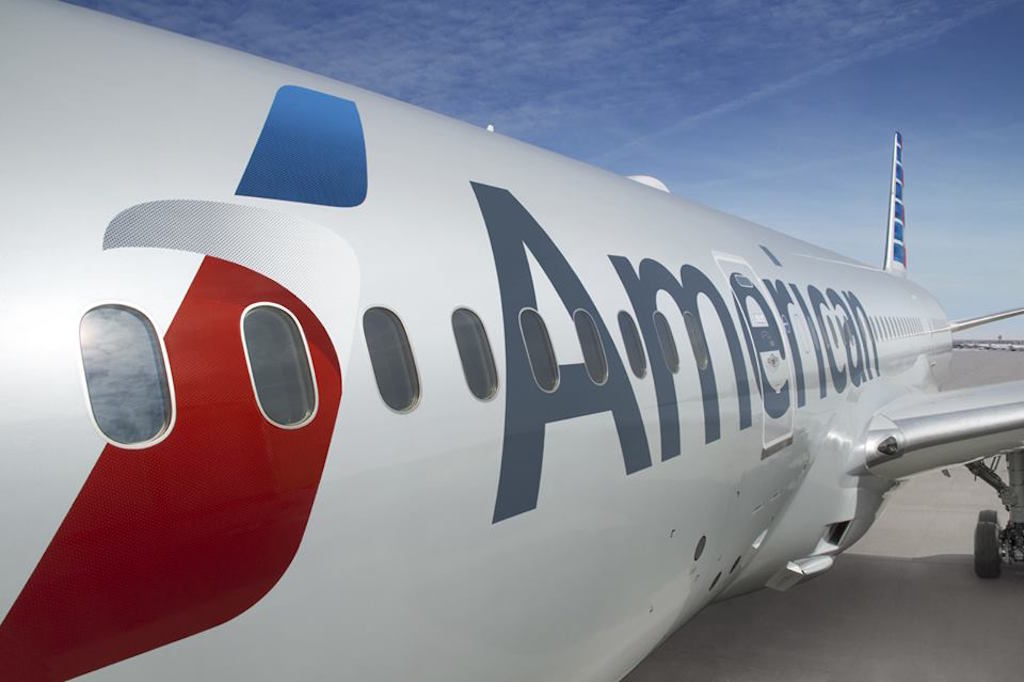
El tratado de cielos abiertos entre Brasil y Estados Unidos fue aprobado este martes por la Cámara baja del Congreso de Brasil y ahora pasará al Senado, abre el camino para una asociación entre American Airlines Group Inc y LATAM Airlines Group SA.

El tratado de «cielos abiertos», que requiere de la aprobación del Senado para su ratificación final, fue firmado en el 2011, pero se enfrentó a la oposición de los legisladores que defienden los intereses de las aerolíneas brasileñas, que temían la competencia de las firmas estadounidenses.

El Departamento de Transporte (DOT) de Estados Unidos requiere que se apruebe un acuerdo de operación conjunta entre American Airlines y la aerolínea más grande de América Latina, LATAM Airlines, que les permitiría coordinar horarios y ofrecer más conexiones. El tratado debería abrir la vía para que Estados Unidos apruebe el acuerdo de operación conjunta.

La agencia antimonopolio de Brasil dio la aprobación para el acuerdo entre American y Latam. Los partidarios del tratado de cielos abiertos dicen que impulsará los viajes y reducirá las tarifas aéreas entre Brasil y Estados Unidos, el destino favorito de los turistas brasileños.  AIRWAYS® AW-Icon TXT

Next treaty open skies Brazil-USA

The treaty of open skies between Brazil and the United States eliminates limits on the number of flights between both countries

The treaty of open skies between Brazil and the United States was approved on Tuesday by the lower house of Congress of Brazil and will now go to the Senate, paving the way for a partnership between American Airlines Group Inc and LATAM Airlines Group SA.

The «open skies» treaty, which requires the approval of the Senate for its final ratification, was signed in 2011, but was opposed by legislators who defend the interests of Brazilian airlines, who feared competition from the airlines American firms.

The US Department of Transportation (DOT) requires a joint operating agreement between American Airlines and the largest airline in Latin America, LATAM Airlines, to be approved, which would allow them to coordinate schedules and offer more connections. The treaty should open the way for the United States to approve the joint operation agreement.

Brazil’s antitrust agency approved the agreement between American and Latam. Supporters of the open skies treaty say it will boost travel and reduce air fares between Brazil and the United States, the favorite destination of Brazilian tourists. A \ W


Ξ A I R G W A Y S Ξ
SOURCE:  Airgways.com
DBk: Aa.com / Latam.com
AW-POST: 201712211055AR

A\W   A I R G W A Y S ®

IATA cierra sus oficinas en Venezuela

AW-775440077.jpg

AW | 2017 12 05 17:03 | AVIATION

Resultado de imagen para iata.org logoEl organismo regulador aéreo IATA ha cerrado sus oficinas en Venezuela debido a inestabilidad política y económica

La Asociación Internacional de Transporte Aéreo (IATA) cerrará a partir de Enero 2018 su oficina en Caracas ante la inestabilidad política y el deterioro de la situación social y económica, anunció este martes (05.12.2017) la organización.

El vicepresidente regional para las Américas de la IATA, Peter Cerdá, explicó a los medios que el cierre se producirá el 31 de enero a raíz de la inestabilidad en el país suramericano, «que tiene un impacto en la comunidad empresarial».

Algunas de las aerolíneas más importantes del mundo han dejado de volar al país o reducido sus operaciones debido principalmente a la imposibilidad de repatriar sus ingresos. En la actualidad, solo seis aerolíneas miembros de la IATA siguen operando en Venezuela frente a las veinticuatro líneas aéreas que había en el país en 2014. Según Cerdá, el tráfico internacional ha descendido un 65% desde su punto álgido en 2013 y más del 69 % de los vuelos de las aerolíneas miembros de la IATA han sido cancelados. A esto se suma que el Gobierno del presidente Nicolás Maduro sigue bloqueando la repatriación de 3.800 millones de dólares de fondos de la industria, recalcó Cerdá.

La IATA, que no tiene grandes esperanzas de mejora en Venezuela, operará a partir de febrero desde Panamá para apoyar a las aerolíneas que permanecen en Venezuela, la industria aérea más amplia y a los viajeros venezolanos. Mientras, las operaciones cubanas que previamente se gestionaron desde Caracas, se trasladarán a la oficina de la IATA en Miami (EE.UU.), responsable de las relaciones con el Caribe.

Al menos una decena de aerolíneas ya no vuelan a Venezuela, entre ellas Lufthansa, Air Canada, United Airlines, Delta, Avianca, Alitalia y Latam. La razón principal es la imposibilidad de poder repatriar sus ingresos debido al estricto control de cambio impuesto por el expresidente Hugo Chávez en 2003 que le da al Gobierno el monopolio de la compra y venta de divisas y con ello la discreción de decidir a qué sectores se destinan las divisas.  AIRWAYS® AW-Icon TXT

IATA closes its offices in Venezuela

The IATA air regulator has closed its offices in Venezuela due to political and economic instability

The International Air Transport Association (IATA) will close its office in Caracas in January 2018 due to political instability and the deterioration of the social and economic situation, announced on Tuesday (05.12.2017) the organization.

The regional vice president for the Americas of IATA, Peter Cerdá, told the media that the closure will occur on January 31 due to the instability in the South American country, «which has an impact on the business community».

Some of the most important airlines in the world have stopped flying to the country or reduced their operations due mainly to the impossibility of repatriating their income. Currently, only six IATA member airlines are still operating in Venezuela compared to the twenty-four airlines that were in the country in 2014. According to Cerdá, international traffic has fallen by 65% ​​since its peak in 2013 and more than 69% of the flights of the IATA member airlines have been canceled. To this is added that the Government of President Nicolás Maduro continues to block the repatriation of 3,800 million dollars of industry funds, said Cerdá.

IATA, which does not have high hopes for improvement in Venezuela, will operate from February from Panama to support the airlines that remain in Venezuela, the broader airline industry and Venezuelan travelers. Meanwhile, Cuban operations that were previously managed from Caracas will be transferred to the IATA office in Miami (USA), responsible for relations with the Caribbean.

At least a dozen airlines no longer fly to Venezuela, including Lufthansa, Air Canada, United Airlines, Delta, Avianca, Alitalia and Latam. The main reason is the inability to repatriate their income due to the strict exchange control imposed by former President Hugo Chávez in 2003, which gives the Government a monopoly on the purchase and sale of foreign currency and with it the discretion to decide which sectors they allocate the currencies. A \ W


Ξ A I R G W A Y S Ξ
SOURCE:  Airgways.com
DBk: Iata.org / Airgways.com
AW-POST: 201712051703AR

A\W   A I R G W A Y S ®

IATA implementa nuevo gestor BSPlink

AW | 2017 11 29 11:47 | AVIATION

Imagen relacionadaFacilitará la distribución global y la liquidación de fondos entre las agencias de viajes y las líneas aéreas

Resultado de imagen para BSPLink logoEl año pasado, el BSP procesó $ 219 mil millones en fondos de líneas aéreas con un 100% de liquidación a tiempo. BSPlink es un sistema innovador, basado en Internet para facilitar la interacción y el intercambio de información entre todos los participantes en el BSP.

BSPlink es la interfaz global para que las agencias de viajes y las aerolíneas accedan al Plan de facturación y liquidación (BSP) de IATA. La IATA actualmente brinda servicios para la liquidación de transacciones financieras entre las agencias de viajes y las aerolíneas. Este servicio consolida los montos adeudados por cada agente y los montos adeudados a cada línea aérea y permite que la liquidación se realice a través de una sola transferencia financiera para cada participante.

«La implementación de NewGen ISS es un paso fundamental de la industria del transporte aéreo mundial para garantizar que BSP continúe satisfaciendo los requisitos de liquidación financiera de la industria en los próximos años. Es la culminación de un compromiso de varios años con una industria que incluye aerolíneas, agentes de viajes y proveedores de TI y sistemas. Brindará mayores opciones y flexibilidad a nuestros agentes de viajes, al tiempo que brindará aún más seguridad financiera a las aerolíneas», dijo Aleks Popovich, Vicepresidente Senior de Finanzas y Distribución en IATA. AIRWAYS® AW-Icon TXT

IATA implements new BSPlink manager

Facilitate the global distribution and settlement of funds between travel agencies and airlines

Last year, the BSP processed $ 219 billion in airline funds with 100% settlement on time. BSPlink is an innovative system, based on the Internet to facilitate the interaction and exchange of information among all participants in the BSP.

BSPlink is the global interface for travel agencies and airlines to access the IATA Billing and Settlement Plan (BSP). IATA currently provides services for the settlement of financial transactions between travel agencies and airlines. This service consolidates the amounts owed by each agent and the amounts owed to each airline and allows the settlement to be made through a single financial transfer for each participant.

«The implementation of NewGen ISS is a critical step in the global air transport industry to ensure that BSP continues to meet the industry’s financial settlement requirements in the years to come. It is the culmination of a multi-year commitment to an industry that includes Airlines, travel agents and IT providers and systems will provide greater options and flexibility to our travel agents, while providing even more financial security to airlines», said Aleks Popovich, Senior Vice President of Finance and Distribution at IATA. A \ W


Ξ A I R G W A Y S Ξ
SOURCE:  Airgways.com
DBk: Bsplink.iata.org
AW-POST: 201711291147AR

A\W   A I R G W A Y S ®

¿Reorganización y cambio en la FAA?

AW | 2017 11 13 20:26 | AVIATION / CONGRESS

Imagen relacionadaCambios en la FAA beneficia aviación EEUU. Seminario sobre aviación comercial «Reorganización y cambio de FAA: ¿Todo cambia o nada cambia?»

En un extenso seminario web, los miembros del grupo de aviación de la firma de abogados LeClairRyan de EEUU profundizan cambios de largo alcance propuestos para el Control del Tráfico Aéreo de la FAA y los EEUU.

LeClairRyan es un estudio de abogados que brinda asesoría comercial y representación de clientes en derecho corporativo y litigios. En esta función, la firma aplica su conocimiento, conocimiento y destreza para ayudar a los clientes a alcanzar sus objetivos comerciales, a la vez que gestiona y minimiza sus riesgos legales, dificultades y gastos. Con oficinas de costa a costa, la firma representa una amplia variedad de clientes en todo el país.

La reorganización de gran alcance propuesta para la FAA es una medida sensata que debería ayudar a la agencia a mantener el ritmo de la aviación del siglo XXI, afirmaron dos abogados de LeClairRyan durante un período de 90 minutos de seminario web que cubre una amplia gama de cuestiones en el sector de la aviación de los Estados Unidos, incluida la propuesta de privatización del Sistema de Control del Tráfico Aéreo.

La reorganización planificada de FAA se enfoca en reemplazar una estructura organizativa de 30 años compuesta por oficinas regionales y administradores por una aerodinámica que se adapte mejor a las aerolíneas actuales.

Una estructura simplificada, por el contrario, promete traer un mayor nivel de uniformidad regulatoria y estandarización a los transportistas aéreos globalizados y consolidados actuales, dijo Mark A. Dombroff. «Ciertamente, en mi opinión, esto no es un cambio simplemente por el bien del cambio. Tiene mucho sentido», dijo a la audiencia en línea, que incluyó a más de 200 personas.

La presentación incluyó una actualización exhaustiva de la Ley de innovación, reforma y reautorización de la aviación (AIRR) del siglo XXI. La legislación federal bipartidista, que ahora se abre camino en el Congreso, está orientada a reorganizar la FAA como parte de una reautorización pendiente de seis años. Como señalaron los abogados durante el webinar, los objetivos del proyecto incluyen mejorar la seguridad aérea y la experiencia de vuelo; fomentar la innovación en sistemas de aeronaves no tripuladas (es decir, drones); financiación de infraestructura aeroportuaria y privatización del sistema de control del tráfico aéreo.

El último problema, señaló McKinnon, ha creado una brecha, con la aviación corporativa y general en general apoyando la privatización y la industria de las aerolíneas que prefiere el status quo. No obstante, dijo Mark E. McKinnon, los defensores del cambio sí hacen argumentos persuasivos. «La forma en que opera el gobierno federal, con asignaciones temporales de cuatro años o siete años, no es necesariamente óptima para el sistema de control de tráfico aéreo. Después de todo, se enfrenta a muchos desafíos tecnológicos, como la infraestructura y las instalaciones que envejecen. Realmente no se puede administrar la actualización de esos sistemas cuando se tiene que patear la lata por el camino y volver a visitar estos esfuerzos cada pocos años. Más bien, se necesita una entidad que es capaz de abordar el proceso más lógicamente, con una línea de tiempo no interrumpida por la política del día».

Liberado de la dependencia de las arcas federales, un sistema privatizado también tendría una mayor capacidad para acceder a los mercados de capital y emitir bonos, al menos como lo ven los proponentes, dijo McKinnon a la audiencia. «Habría otra fuente de financiamiento», dijo. «No tendría que depender del proceso presupuestario federal y podría hacer mejores planes sobre qué dinero entra y cómo gastarlo».

Pero, ¿qué hay de las críticas de que la privatización entregaría el control del tráfico aéreo de los EE. UU. Al mejor postor, socavando la seguridad en aras de la obtención de beneficios? Durante el webinar, Dombroff señaló que los componentes del sistema existente, en particular las torres de control sin radar, ya se han privatizado con éxito mediante el programa de torres de control de contratos de la FAA. «Varias compañías, como Robertson Aviation o Midwest Air Traffic Control, ya operan bajo contrato con la FAA», dijo. «Utilizan los procedimientos y manuales de la FAA y son monitoreados bajo los mismos estándares. De hecho, la FAA es buena asegurando que los estándares apropiados aún se mantengan».  AIRWAYS® AW-Icon TXT

Reorganization and change in the FAA?

Changes in the FAA benefit US aviation. Seminar on commercial aviation «Reorganization and change of FAA: Everything changes or nothing changes?»

In an extensive webinar, members of the aviation group of the US law firm LeClairRyan deepen proposed long-range changes to Air Traffic Control of the FAA and the US.

LeClairRyan is a law firm that provides business advice and representation of clients in corporate law and litigation. In this function, the firm applies its knowledge, knowledge and skills to help clients achieve their business objectives, while managing and minimizing legal risks, difficulties and expenses. With offices from coast to coast, the firm represents a wide variety of clients throughout the country.

The proposed far-reaching reorganization for the FAA is a sensible move that should help the agency keep pace with 21st-century aviation, said two LeClairRyan attorneys during a 90-minute webinar that covers a broad range of topics. issues in the aviation sector of the United States, including the proposed privatization of the Air Traffic Control System.

The FAA’s planned reorganization focuses on replacing a 30-year organizational structure composed of regional offices and managers for aerodynamics that best suits current airlines.

A simplified structure, on the other hand, promises to bring a greater level of regulatory uniformity and standardization to globalized and current consolidated air carriers, said Mark A. Dombroff. «Certainly, in my opinion, this is not a change simply for the sake of change, it makes a lot of sense», he told the online audience, which included more than 200 people.

The presentation included a comprehensive update of the Aviation Innovation, Reform and Reauthorization Act (AIRR) of the 21st century. The federal bipartisan legislation, which is now making headway in Congress, is aimed at reorganizing the FAA as part of a six-year pending reauthorization. As the lawyers pointed out during the webinar, the project’s objectives include improving aviation security and flight experience; encourage innovation in unmanned aircraft systems (ie, drones); financing of airport infrastructure and privatization of the air traffic control system.

The last problem, McKinnon said, has created a gap, with corporate aviation and general general support for privatization and the airline industry that prefers the status quo. However, said Mark E. McKinnon, advocates of change do make persuasive arguments. «The way the federal government operates, with temporary assignments of four years or seven years, is not necessarily optimal for the air traffic control system, after all, it faces many technological challenges, such as infrastructure and facilities. They do not really manage to update those systems when you have to kick the can down the road and revisit these efforts every few years, rather, you need an entity that is able to approach the process more logically, with a timeline not interrupted by the policy of the day».

Freed from dependence on federal coffers, a privatized system would also have a greater ability to access capital markets and issue bonds, at least as proponents see it, McKinnon told the audience. «There would be another source of funding,» he said. «It would not have to depend on the federal budget process and could make better plans about what money comes in and how to spend it».

But what about the criticism that privatization would hand over control of US air traffic? UU To the highest bidder, undermining security for the sake of obtaining benefits? During the webinar, Dombroff noted that existing system components, particularly control towers without radar, have already been successfully privatized through the FAA contract control tower program. «Several companies, such as Robertson Aviation or Midwest Air Traffic Control, already operate under contract with the FAA,» he said. «They use FAA procedures and manuals and are monitored under the same standards, in fact, the FAA is good at ensuring that the appropriate standards are still maintained». A \ W


Ξ A I R G W A Y S Ξ
SOURCE:  Airgways.com
DBk:  Prnewswire.com / Aopa.org / Chicagotribune.com
AW-POST: 201711132026AR

A\W   A I R G W A Y S ®

NCAA suspende Proyecto Automatización Sistemas de Pago

AW | 2017 11 02 16:36 | AVIATION / AIRLINES

NCAALa Autoridad de Aviación Civil de Nigeria suspendió temporalmente su presentación del Proyecto de Automatización de Ingresos de Aviación para la recaudación de ingresos

Sam Adurogboye, el Gerente General de Relaciones Públicas de la Nigerian Civil Aviation Authority (NCAA) informa que en marzo emitió una directiva para las aerolíneas nacionales sobre la automatización de la remesa del 5 % de los Cargos de Venta de Tickets y Carga (TSC / CSC). El 5 % de TSC / CSC son ingresos acumulables para las agencias de aviación a través de NCAA como figura en la Parte V, Sección 12 (1) de la Ley de Aviación Civil de 2006. La sección obliga a las aerolíneas a cobrar los cargos pagados por los pasajeros en nombre de NCAA y remitir el mismo de manera apropiada y en tiempo real.

Sin embargo, la NCAA y las aerolíneas habían estado en desacuerdo sobre las afirmaciones de que le deben a las agencias de aviación más de N15 mil millones de Nairas por la no remisión del 5 % de TSC / CSC. Oponiéndose a la medida, los operadores de líneas aéreas de Nigeria habían pedido la suspensión de la automatización del sistema de envío de remesas. Los operadores dijeron que el proceso debería suspenderse hasta que los parámetros que constituyen el cinco por ciento estatutario del TSC / CSC se definan de manera clara y adecuada.

De esta manera la NCAA suspendió las medidas para permitir nuevas discusiones entre la NCAA y las aerolíneas con respecto a su implementación. AIRWAYS® AW-Icon TXT

NCAA suspends Payment Systems Automation Project

The Civil Aviation Authority of Nigeria temporarily suspended its presentation of the Aviation Revenue Automation Project for revenue collection

Sam Adurogboye, the General Manager of Public Relations of the Nigerian Civil Aviation Authority (NCAA), reports that in March he issued a directive for national airlines on the automation of the remittance of 5% of Ticket and Cargo Charges (TSC / CSC). 5% of TSC / CSC is cumulative revenue for aviation agencies through the NCAA as set forth in Part V, Section 12 (1) of the Civil Aviation Act of 2006. The section requires airlines to collect charges paid by passengers on behalf of the NCAA and send it in an appropriate manner and in real time.

However, the NCAA and airlines had disagreed over claims that they owe aviation agencies more than N15 billion from Nairas because of the non-remission of 5% of TSC / CSC. Opposing the measure, the airline operators in Nigeria had requested the suspension of the automation of the remittance sending system. The operators said that the process should be suspended until the parameters that make up the statutory five percent of the TSC / CSC are defined clearly and adequately.

In this way the NCAA suspended the measures to allow new discussions between the NCAA and the airlines regarding their implementation. A \ W


Ξ A I R G W A Y S Ξ
SOURCE:  Airgways.com
DBk:  Ncaa.gov.ng / Guardian.ng
AW-POST: 201711021636AR

A\W   A I R G W A Y S ®

Acuerdo bilateral aviación EEUU-China

AW | 2017 10 30 23:03 | AVIATION / INDUSTRY

Acuerdo de Seguridad de la Aviación Bilateral (BASA) entre Estados Unidos y China

Resultado de imagen para Boeing 737 MAX pngLa FAA y los reguladores chinos firmaron un acuerdo de implementación para el Acuerdo de Seguridad de la Aviación Bilateral entre Estados Unidos y China (BASA) la semana pasada. Aunque los dos países firmaron BASA en 2005, generalmente acordando facilitar la aceptación mutua de partes y aeronaves certificadas por el otro, los países tardaron 12 años en llegar a un acuerdo sobre un plan de implementación concreto.

Resultado de imagen para civil aviation administration of china logoEstados Unidos tiene acuerdos similares con Canadá y Europa para facilitar la aceptación mutua de la certificación de aeronaves. El presidente Trump tiene previsto viajar a China en una misión comercial a principios de noviembre, que se espera que incluya representantes de Boeing.

Las compañías aeroespaciales estadounidenses y chinas esperan beneficiarse del acuerdo. Aunque el C919 fabricado en China carece del rendimiento para competir con el Boeing 737MAX y el Airbus A320NEO, sus pares de cuerpo estrecho, además del negocio de los transportistas chinos subvencionados por el estado, COMAC, fabricante del C919, tiene grandes aspiraciones para competir con los dos grandes de la aviación comercial.

La capacidad de certificar la aeronave para el uso de las compañías aéreas de los Estados Unidos otorgaría una gran credibilidad al negocio. Boeing, por el contrario, quiere asegurarse de que no sean excluidos del mercado chino, que fue el mayor comprador de jets de categoría de transporte en 2015. AIRWAYS® AW-Icon TXT

Resultado de imagen para airlines of china

Agreements in aviation between the US-China

Resultado de imagen para Administracion aviacion China logoBilateral Aviation Security Agreement (BASA) between the United States and China

The FAA and Chinese regulators signed an implementation agreement for the Bilateral Aviation Security Agreement between the United States and China (BASA) last week. Although the two countries signed BASA in 2005, generally agreeing to facilitate the mutual acceptance of certified parts and aircraft by the other, the countries took 12 years to reach an agreement on a concrete implementation plan.

Resultado de imagen para civil aviation administration of china logoThe United States has similar agreements with Canada and Europe to facilitate mutual acceptance of aircraft certification. President Trump is scheduled to travel to China on a trade mission in early November, which is expected to include Boeing representatives.

US and Chinese aerospace companies hope to benefit from the agreement. Although the C919 made in China lacks the performance to compete with the Boeing 737MAX and the Airbus A320NEO, its narrow body pairs, in addition to the business of Chinese carriers subsidized by the state, COMAC, manufacturer of the C919, has great aspirations to compete with the two big ones of commercial aviation.

The ability to certify the aircraft for the use of United States airlines would give great credibility to the business. Boeing, on the other hand, wants to ensure that they are not excluded from the Chinese market, which was the largest buyer of transport category jets in 2015. A \ W


Ξ A I R G W A Y S Ξ
SOURCE:  Airgways.com
DBk:  Faa.gov / Caac.gov.cn
AW-POST: 201710302303AR

A\W   A I R G W A Y S ®

FAA nueva normativa acústica CLEEN

slide_1.jpg

AW | 2017 10 16 19:35 | AVIATION

La FAA ha aprobado el programa de supresión de ruidos denominado «CLEEN» para las nuevas aeronaves

A partir del 1 de enero de 2018, la Federal Aviation Administration (FAA) exigirá que las aeronaves recientemente diseñadas sean más silenciosas, lo que ayudará a reducir el ruido alrededor de los aeropuertos y las comunidades aledañas.

La FAA continúa cumpliendo con su reducción en el ruido de las aeronaves y otras metas de aviación ambiental a través del Programa Continuous Lower Energy, Emissions and Noise Program (CLEEN). CLEEN es el principal esfuerzo ambiental de Next Generation (NextGen) de la FAA para acelerar el desarrollo de nuevas aeronaves, tecnologías de motores y avances en combustibles alternativos sostenibles.

La nueva normativa denominada «Estándar de ruido de avión de etapa 5», esta regla de la  FAA garantiza que la última tecnología de reducción de ruido disponible se incorpore a los nuevos diseños de aeronaves. Como resultado, los nuevos diseños de tipo de avión en los aviones de reacción subsónicos y la categoría de transporte subsónico de grandes aviones operarán al menos 7 decibeles (dB) más silenciosos que los aviones en la flota actual.

La FAA se compromete a reducir el ruido de las aeronaves mediante un «enfoque equilibrado» mediante la reducción del ruido en su origen, planificación mejorada del uso en tierra alrededor de los aeropuertos y un uso más amplio de los procedimientos operativos de las aeronaves y las restricciones que disminuyen el ruido.

«Reducir el ruido de las aeronaves es importante para la FAA porque es un problema importante de calidad de vida para las comunidades aeroportuarias circundantes», dijo el administrador de la FAA, Michael Huerta. «Continuaremos haciendo nuestro mejor esfuerzo a través de nuevas tecnologías, procedimientos y participación comunitaria para que las operaciones de las aeronaves sean más silenciosas».

En 1975, había unos 200 millones de personas que volaban en los Estados Unidos, con cerca de 7 millones de personas expuestas a lo que se considera un ruido significativo en las aeronaves. Desde entonces, un estudio de la FAA realizado en 2015 mostró que el número de personas que volaban en los Estados Unidos casi se había cuadruplicado, pero el número de personas expuestas al ruido de las aeronaves había disminuido a alrededor de 340,000 o una reducción del 94% en la exposición al ruido de las aeronaves. AIRWAYS® AW-Icon TXT

FAA new CLEEN acoustic normative

The FAA has approved the noise suppression program called «CLEEN» for new aircraft

Resultado de imagen para Continuous Lower Energy, Emissions and Noise Program CLEEN)Beginning January 1, 2018, the Federal Aviation Administration (FAA) will require newly designed aircraft to be quieter, which will help reduce noise around airports and surrounding communities.

The FAA continues to comply with its reduction in aircraft noise and other environmental aviation goals through the Continuous Lower Energy, Emissions and Noise Program (CLEEN). CLEEN is FAA’s Next Generation (NextGen) environmental effort to accelerate the development of new aircraft, engine technologies and advances in sustainable alternative fuels.

The new regulation called «Stage 5 Airplane Noise Standard», this  FAA rule ensures that the latest available noise reduction technology is incorporated into new aircraft designs. As a result, new airplane type designs on subsonic jet aircraft and subsonic large aircraft category will operate at least 7 decibels (dB) quieter than aircraft in the current fleet.

The FAA is committed to reducing aircraft noise through a «balanced approach» by reducing noise at source, improved land-use planning around airports and a wider use of aircraft operating procedures and restrictions that reduce noise.

«Reducing aircraft noise is important to the FAA because it is a significant quality of life problem for surrounding airport communities,» said FAA Administrator Michael Huerta. «We will continue to do our best through new technologies, procedures and community involvement to make aircraft operations quieter.»

In 1975, there were about 200 million people flying in the United States, with about 7 million people exposed to what is considered significant aircraft noise. Since then, an FAA study conducted in 2015 showed that the number of people flying in the United States had almost quadrupled, but the number of people exposed to aircraft noise had dropped to about 340,000 or a reduction of 94 % in the exposure to aircraft noise. A \ W


Ξ A I R G W A Y S Ξ
SOURCE:  Airgways.com
DBk:  Faa.gov / Flyfright.com
AW-POST: 201710161935AR

A\W   A I R G W A Y S ®

La Autoridad de Aviación de Ghana aplicará derechos

AW | 2017 09 14 16:21 | AVIATION

Resultado de imagen para Ghana Aviation AuthorityLa Autoridad de Aviación Civil de Ghana (GCAA) sancionará severamente a todas las compañías aéreas que no protejan los derechos de los consumidores y los intereses de los grupos marginados en sus operaciones. Estas sanciones tendrán vigencia desde octubre de 2017.

La medida también se ajusta a la ratificación del Convenio de Montreal que protege a los pasajeros y reduce los litigios prolongados en casos de abuso de los derechos de los pasajeros. Las Directivas sobre los derechos de los pasajeros y la protección del consumidor son las directrices de aplicación del documento jurídico de Ghana sobre la Convención de Montreal.

El documento, que actualmente se encuentra en la fase de borrador, promoverá, entre otras cosas, el estricto cumplimiento de las líneas aéreas particularmente nacionales de las compañías aéreas. Con referencia a las sanciones contenidas en el Convenio de Montreal, una aerolínea nacional que no cumpla las disposiciones sobre compensación de pasajeros por vuelos retrasados ​​estará obligada a pagar una indemnización de 100 dólares pagaderos al equivalente de cedi de Ghana a la tasa vigente.

Los vuelos regionales atraerán la compensación de 300 dólares con los vuelos internacionales que atraen 600 dólares en la remuneración. La Directora de Relaciones Jurídicas, Relaciones Internacionales y Comunicaciones de la GCAA, la Sra. Joyce Thompson explica que «El Convenio de Montreal de 1999 fue ratificado por el parlamento de Ghana en diciembre de 2015. Está incorporado en la Ley de Enmienda de la Aviación Civil de Ghana de 906 de 2016. Esto fue acentuado por el Presidente en febrero de 2016. Incorpora el Convenio de Montreal, convenciones y el Convenio de Montreal se ha domesticado para aplicar también a las operaciones nacionales. Como parte de esto, era el derecho de la aviación civil a garantizar que los clientes estén protegidos «. «En vista de que la Aviación Civil ha elaborado estas directivas de protección al consumidor y las directivas de protección al consumidor salen con los pasajeros adecuados en caso de retraso de vuelo, cancelación de un vuelo, denegación de embarque, daños o pérdida de su equipaje, « ella añadió.
Otro punto destacado de las Directivas sobre Derechos de los Pasajeros y Protección del Consumidor es la disposición que protege a las personas con discapacidad. De acuerdo con la directiva, en caso de denegación de embarque, cancelación y demora de cualquier duración, las personas con discapacidad tendrán derecho a la atención, entre ellas la de proporcionar alojamiento, refresco entre otros. Este gesto también se extenderá a cualquier persona o persona que acompañe a esas personas vulnerables.

El CEO de Starbow, James Asare Antwi admite que se debe prestar más atención a las personas con discapacidad. Pero sostiene que el alto costo de tales aeronaves conformes los ha disuadido en parte de invertir en ellos. «Tomamos personas con discapacidad pero no todas. Como dijiste, algunos de ellos necesitan ser acompañados, pero se niegan a pagar por la gente para acompañarlos y en caso de emergencia, no hay nadie para ayudarlos. Pero también en Ghana aquí la mayoría de nuestras aeronaves que compramos son aviones usados. Si queremos ordenar un avión nuevo y más grande, eso costará mucho dinero y eso no es económico para nosotros en este momento «, se quejó.

Ghana está tratando de aprobar definitivamente las directivas en ley para el próximo mes; el GCAA está empeñado en agrietar el látigo en todos los morosos. El Sr. Kofi Boateng, un Oficial de Estadística de la GCAA asegura que un moroso no quedará impune. «No lo deseamos, pero es posible que no podamos evitarlo, pero podría ocurrir que habrá infracciones o infracciones a estas directivas y, por lo tanto, también está disponible la disposición para tales posibles incumplimientos en los casos en que no se muestre información prominente sobre la autoridades, se aplicarán algunas sanciones», aseguró. AIRWAYS® AW-Icon TXT

The Ghana Aviation Authority shall apply rights

The Ghana Civil Aviation Authority (GCAA) will severely penalize all airlines that do not protect the rights of consumers and the interests of marginalized groups in their operations. These sanctions will be effective from October 2017.

The measure is also in line with the ratification of the Montreal Convention which protects passengers and reduces long-term litigation in cases of abuse of passengers’ rights. The Directives on passenger rights and consumer protection are the guidelines for the implementation of the legal document of Ghana on the Montreal Convention.

The document, which is currently in the draft phase, will promote, among other things, strict compliance with the airlines’ national airlines. With reference to the sanctions contained in the Montreal Convention, a national airline that does not comply with the provisions on compensation of passengers for delayed flights will be obliged to pay compensation of $ 100 payable to Ghana’s cedi equivalent at the current rate.

The regional flights will attract the compensation of 300 dollars with the international flights that attract 600 dollars in the remuneration. Ms. Joyce Thompson, Director of Legal Relations, International Relations and Communications, Ms. Joyce Thompson explains that «The 1999 Montreal Convention was ratified by the Ghanaian Parliament in December 2015. It is incorporated into the Aviation Amendment Act Ghana Civil Code of 906 of 2016. This was accentuated by the President in February 2016. It incorporates the Montreal Convention, conventions and the Montreal Convention has been domesticated to apply also to national operations. of civil aviation to ensure that customers are protected. » «Given that Civil Aviation has developed these consumer protection directives and consumer protection directives leave with adequate passengers in case of flight delay, cancellation of a flight, denied boarding, damages or loss of their luggage «, she added.
Another feature of the Directives on Passenger Rights and Consumer Protection is the provision that protects people with disabilities. According to the directive, in case of denied boarding, cancellation and delay of any duration, persons with disabilities will have the right to care, including provision of accommodation, refreshment among others. This gesture will also extend to any person or person accompanying those vulnerable people.

Starbow CEO James Asare Antwi admits that more attention should be paid to people with disabilities. But he argues that the high cost of such compliant aircraft has partly deterred them from investing in them. «We take people with disabilities, but not all of them». «As you said, some of them need to be accompanied, but they refuse to pay for the people to accompany them and in case of emergency, there is no one to help them. aircraft that we buy are used aircraft.If we want to order a new and bigger aircraft, that will cost a lot of money and that is not economical for us at the moment», he complained.

Ghana is trying to definitively pass the directives into law for the next month; the GCAA is bent on cracking the whip on all the defaulters. Mr. Kofi Boateng, a GCAA Statistical Officer, assures that a defaulter will not go unpunished. «We do not want to, but we may not be able to avoid it, but it could happen that there will be infringements or breaches of these directives and, therefore, provision is also made for such possible breaches in cases where no prominent information on the authorities, will apply some sanctions», he said.    A \ W


Ξ A I R G W A Y S Ξ
SOURCE: Airgways.com
DBk: Planconsult.biz
AW-POST: 201709141621AR
A\W A I R G W A Y S ®

En contra de circular aérea en Filipina

AW | 2017 08 28 11:00 | AVIATION

Resultado de imagen para Office of Immigration (BI) Department of Justice (DOJ)  philippinesOficina de Inmigración (BI) funcionarios están instando al Departamento de Justicia (DOJ) de Filipinas para revocar una circular del departamento de detención de la oficina de multas a las compañías aéreas y marítimas que traen indebidamente documentados extranjeros en el país.

Un funcionario de BI que buscaba el anonimato dijo que el BI pedirá al Secretario de Justicia Vitaliano Aguirre II que reexamine la Circular 026 del DOJ que prohíbe a la oficina imponer a los propietarios de aeronaves y barcos una multa administrativa de 50.000 pesos por cada pasajero extranjero traído al país Sin documentos adecuados.

«Esta circular debe ser retirada, ya que eliminó una medida que pretende disuadir a las compañías aéreas y navieras de violar o desatender las leyes de inmigración de Filipinas», dijo el funcionario.

Explicó que el objetivo de la multa es «desalentar a las compañías aéreas y marítimas a ignorar nuestras leyes permitiendo a los extranjeros embarcar en sus buques, incluso si estos pasajeros no cumplen con nuestras regulaciones de inmigración».

Fue el ex secretario del Departamento de Justicia, Emmanuel Caparas, quien emitió la circular el 1 de junio del año pasado, después de que Air Philippines Corp. presentara una petición para cuestionar la legalidad de una orden de 1999 del BI ordenando la multa de P50,000 por no tener base legal.

Caparas estuvo de acuerdo en que Air Philippines «argumentó de manera convincente» que la imposición de la multa de P50,000 no está prevista en la ley de inmigración que fija el monto de la multa sólo en P500.

Caparas ordenó al BI que dejara de cobrar la multa a compañías aéreas y navieras y en su lugar aconsejó a la oficina proponer una legislación que enmendaría la actual ley de inmigración y ajustaría la cantidad de multas impuestas a las compañías aéreas.

Pero los funcionarios del BI argumentaron que la multa P500 se había vuelto poco realista, considerando que la actual ley de inmigración fue promulgada en 1940.

La circular del DOJ prácticamente convirtió un informe académico y discutible en un informe de la Comisión de Auditoría (COA) de 2015 que ordenaba al BI que cobrara a las compañías aéreas multas administrativas no pagadas por un total de P249.95 millones.

Los auditores estatales dijeron que el monto, que permaneció sin cobrarse entre 2001 y 2015, ha privado al gobierno de los ingresos aun cuando culpó a la BI por no haber aplicado estrictamente las sanciones prescritas por la ley.  AIRWAYS® AW-Icon TXT

Against air travel in Philippines

Office of Immigration (BI) officials are urging the Department of Justice (DOJ) of Philipines to repeal a circular from the detention department’s Bureau of Fines to airlines and maritime carriers who unduly bring foreigners into the country.

An IB official seeking anonymity said that IB will ask Justice Secretary Vitaliano Aguirre II to re-examine DOJ Circular 026 prohibiting the office from imposing on the owners of aircraft and ships an administrative fine of 50,000 pesos for each foreign passenger Brought to the country Without adequate documents.

«This circular must be withdrawn because it removed a measure that is intended to discourage airlines and shipping companies from violating or disregarding the immigration laws of the Philippines,» the official said.

He explained that the purpose of the fine is to «discourage airlines and maritime companies from ignoring our laws by allowing foreigners to board their ships, even if these passengers do not comply with our immigration regulations.»

It was former Justice Department Secretary Emmanuel Caparas who issued the circular on June 1 of last year after Air Philippines Corp. filed a petition to challenge the legality of a 1999 IB order ordering the P50 fine , 000 for not having legal basis.

Caparas agreed that Air Philippines «argued convincingly» that the imposition of the P50,000 fine is not provided for in the immigration law which sets the fine only in P500.

Caparas ordered the IB to stop charging the fine to airlines and shipping companies and instead advised the office to propose legislation that would amend the current immigration law and adjust the amount of fines imposed on airlines.

But BI officials argued that the P500 fine had become unrealistic, considering that the current immigration law was enacted in 1940.

The DOJ circular virtually converted an academic and debatable report into a 2015 Audit Commission (COA) report ordering the IB to charge airlines unpaid administrative fines totaling P249.95 million.

State auditors said the amount, which remained uncollected between 2001 and 2015, has deprived the government of revenue even though it blamed BI for not strictly enforcing the sanctions prescribed by law. A \ W


Ξ A I R G W A Y S Ξ
SOURCE:  Airgways.com
DBk:  Airgways.com / Inquirer.net / Philippineslifestyle.com
AW-POST: 201708281100AR

A\W   A I R G W A Y S ®

Inseguridad ops aérea en Venezuela

AW-775440077.jpg

AW | 2017 08 21 12:41 | AIRLINES MARKET / AVIATION

La seguridad operativa de las aerolíneas en Venezuela está en pelígro

Las aerolíneas nacionales e internacionales cada vez afrontan con más complicaciones las operaciones en Venezuela. A los problemas económicos, robos de equipaje, mantenimiento deficiente de la pista y el último informe de denuncia de adulteración del combustible por baja calidad para los aviones.

La crisis aérea en Venezuela

El tráfico desde y hacia Caracas disminuyó un 40% en 2014 después de que las empresas no pudiesen recuperar el dinero generado en el país bolivariano. Las compañías de vuelo que sufrieron esta situación pudieron pagar los costos locales y el combustible con bolívares, hasta que Venezuela cambió la normativa y exigió el pago en dólares.

La Asociación Colombiana de Pilotos (ACDAC) afirma que las tripulaciones que han volado a Venezuela han tenido que lidiar con combustible contaminado y con retrasos de varias horas mientras la Guardia Nacional retiraba varias maletas para «saquearlas». Hace unos días, se difundieron unos videos donde aparentemente un hombre era asesinado en el mostrador de facturación de una aerolínea local.

«Todo lo que forma parte de la infraestructura del aeropuerto empezó a degradarse», comentó Julián Pinzón, responsable de seguridad y asuntos técnicos de la asociación colombiana ACDAC. «Empezamos a ver problemas en la pista, con el rodaje de los aviones, con el suministro eléctrico en el aeropuerto, en los camiones de distribución de combustible».

La nueva rondas de abandonos de las compañías aéreas llega después de que las rutas se estabilizaran a partir de un éxodo anterior provocado por la suspensión del gobierno de hacer los pagos en dólares y dejando a los venezolanos cada vez más aislados del resto del mundo. Un vuelo a Miami en clase turista costaría alrededor de USD 1,000, en un país donde el salario mínimo mensual es de aproximadamente USD 20 en la tasa del mercado negro.

La implosión social y económica de la nación ha hecho que las cosas tan simples, como el traslado de la tripulación de vuelo a los hoteles, se conviertan en auténticos desafíos logísticos. El personal que hace noche en Caracas, a unos 45 minutos en auto, se queda a dormir en hoteles cerca del aeropuerto para evitar las bandas criminales que puedan encontrarse en el camino. Incluso así tampoco se salvan y, a veces, también son atacados. Ante esta situación, algunas aerolíneas prefieren llevarse a la tripulación a otros países vecinos.

Las aerolíneas en apuros

Avianca Airlines contrató guardaespaldas después de que dispararan al autobús que llevaba a algunos de sus empleados. Nadie resultó herido, pero fue motivo más que suficiente para que la ruta nocturna fuera cancelada sin previo aviso, tal y como recuerda ACDAC.

American Airlines, que aún vuela a Caracas y Maracaibo, comentó en un correo electrónico que no operaría en ningún aeropuerto que no cumpliera con los más altos estándares de seguridad y protección.

Copa Airlines, de Panamá, que vuela a Caracas y a otras dos ciudades venezolanas, afirmó que ha sido capaz de superar los desafíos operacionales y sigue monitoreando las condiciones del país.

Fiscalización degradada

El Instituto Nacional de Aviación Civil (INAC), declaró que no tenía un portavoz oficial que pudiera hablar sobre el sector. La Organización de Aviación Civil Internacional de la ONU señaló que cuando una delegación visitó Venezuela hace cuatro años, el país entregó unos informes con «resultados ejemplares».

En los últimos meses, las aerolíneas han encontrado que el combustible destinado para sus aviones está contaminado debido a las malas condiciones de los camiones de distribución y los depósitos que lo almacenan, según alerta ACDAC. Los aviones que llenan sus tanques con ese combustible, a veces, requieren un tipo de mantenimiento adicional. «Ya no tienes garantía de que el combustible que están poniendo a bordo no está contaminado. Los motores que están recibiendo ese fuel no se van a parar, pero el sistema interno comenzará a degradarse y los filtros pueden bloquearse o dañarse», subraya Pinzón, el portavoz de ACDAC.

Aerolíneas que levantan escala

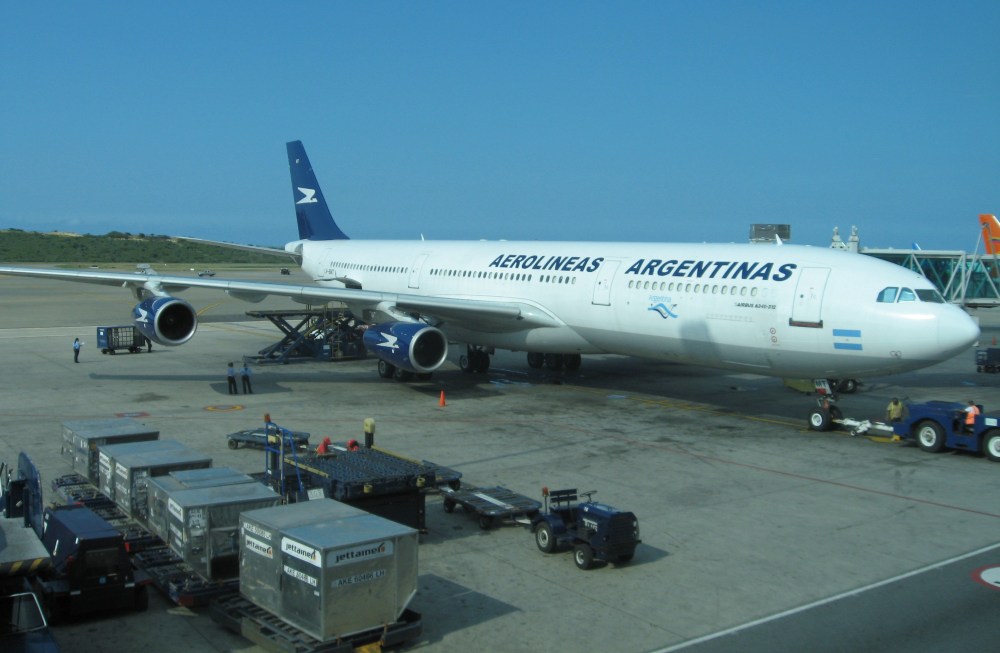
United Airlines dijo que su ruta a Venezuela no estaba satisfaciendo las expectativas financieras, mientras que Avianca Airlines citó cuestiones operacionales sin proporcionar demasiados detalles. Aerolíneas Argentinas, por su parte, aseguró que quiere continuar volando a Caracas, pero primero necesita tener la certeza de que los vuelos serán viables y seguros. Después de dejar a los pasajeros del vuelo semanal desde Buenos Aires a Caracas, la aerolínea lleva a su tripulación a Bogotá en vez de pasar la noche en la capital venezolana. A la mañana siguiente los empleados regresan a Venezuela.

«Las quejas sobre cuestiones operacionales por parte de las autoridades venezolanas han caído en oídos sordos». «Es bastante desafortunado, las aerolíneas han hecho todo lo posible por mantener a Venezuela conectada con el resto del mundo. Cada día es un desafío», según Peter Cerda, vicepresidente regional de la Asociación Internacional de Transporte Aéreo (IATA) para las Américas. AIRWAYS® AW-Icon TXT

Air Operational Insecurity in Venezuela

The operational security of the airlines in Venezuela is in danger

National and international airlines are facing more complicated operations in Venezuela. To economic problems, luggage thefts, poor maintenance of the runway and the last report of adulteration of the fuel by low quality for the airplanes.

The air crisis in Venezuela

Traffic to and from Caracas declined 40% in 2014 after companies were unable to recover money generated in the Bolivarian country. The flight companies that suffered this situation could pay the local costs and the fuel with bolivares, until Venezuela changed the regulation and demanded the payment in dollars.

The Colombian Association of Pilots (ACDAC) says that the crews that have flown to Vanezuela have had to deal with contaminated fuel and with delays of several hours while the National Guard removed several suitcases to «plunder» them. A few days ago, videos were broadcast where apparently a man was killed at the check-in counter of a local airline.

«Everything that is part of the airport infrastructure began to degrade,» said Julián Pinzón, head of security and technical issues at the Colombian association ACDAC. «We started to see problems on the runway, with the running of the planes, with the power supply at the airport, on the fuel distribution trucks.»

The new round of airline dropouts comes after the routes stabilize following an earlier exodus triggered by the government’s suspension of making payments in dollars and leaving Venezuelans increasingly isolated from the rest of the world. A flight to Miami in economy class would cost around USD 1,000, in a country where the monthly minimum wage is about USD 20 at the black market rate.

The nation’s social and economic implosion has made things so simple, such as moving the flight crew to hotels, become real logistical challenges. The staff that night in Caracas, about 45 minutes by car, stays to sleep in hotels near the airport to avoid criminal gangs that may be on the road. Even so, they are not saved either, and sometimes they are also attacked. In this situation, some airlines prefer to take the crew to other neighboring countries.

Airlines in trouble

Avianca Airlines hired bodyguards after they fired the bus carrying some of its employees. No one was injured, but it was more than enough reason for the night route to be canceled without notice, as Acdac recalls.

American Airlines, still flying to Caracas and Maracaibo, said in an e-mail that it would not operate in any airport that did not meet the highest safety and security standards.

Copa Airlines, of Panama, flying to Caracas and two other Venezuelan cities, said it has been able to overcome operational challenges and continues to monitor conditions in the country.

Degraded inspection

The Venezuelan aviation authority, National Institute of Civil Aviation (INAC) stated that it did not have an official spokesperson who could talk about the sector. The UN International Civil Aviation Organization said that when a delegation visited Venezuela four years ago, the country provided reports with «exemplary results».

In recent months, airlines have found that the fuel destined for their aircraft is contaminated due to the poor conditions of the distribution trucks and the warehouses that store it, according to ACDAC. Airplanes that fill their tanks with that fuel sometimes require additional maintenance. «There is no guarantee that the fuel they are putting on board is uncontaminated. The engines that are receiving the fuel will not stop, but the internal system will begin to degrade and the filters can be blocked or damaged,» says Pinzon. Spokesman for ACDAC.

Airlines non-scale

United Airlines said its route to Venezuela was not meeting financial expectations, while Avianca Airlines cited operational issues without providing too much detail. Aerolíneas Argentinas, meanwhile, said it wants to continue flying to Caracas, but first needs to be certain that flights will be viable and safe. After leaving the passengers of the weekly flight from Buenos Aires to Caracas, the airline takes its crew to Bogota instead of spending the night in the Venezuelan capital. The next morning the employees return to Venezuela.

«Complaints about operational issues by the Venezuelan authorities have fallen on deaf ears.» «It’s quite unfortunate, airlines have done everything possible to keep Venezuela connected to the rest of the world. Every day is a challenge,» said Peter Cerda, regional vice president of the International Air  Transport Association (IATA). A \ W


Ξ A I R G W A Y S Ξ
SOURCE:  Airgways.com
DBk:  Adac.org.co / Iata.org / Airgways.com / Wikipedia.org
AW-POST: 201708211241AR

A\W   A I R G W A Y S ®