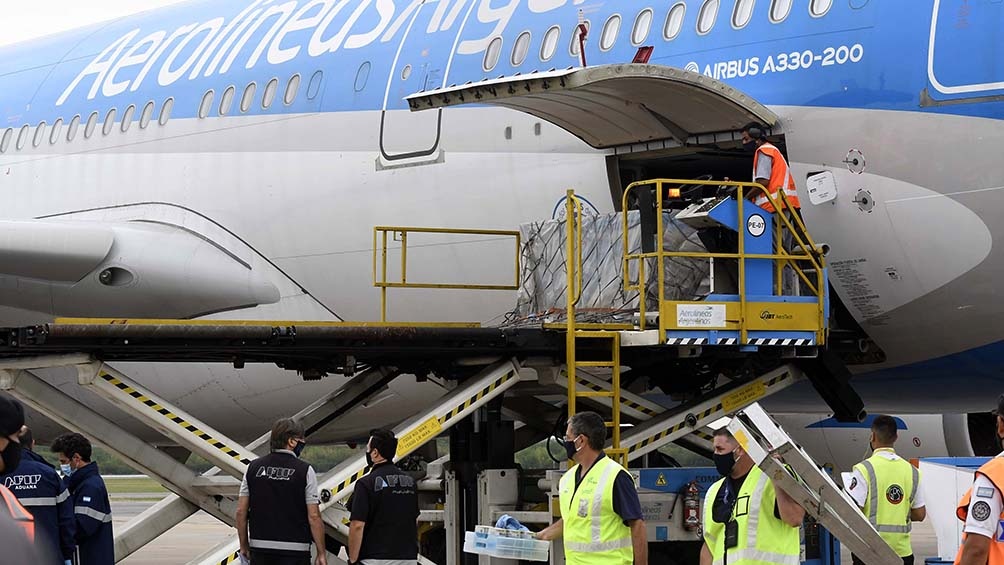
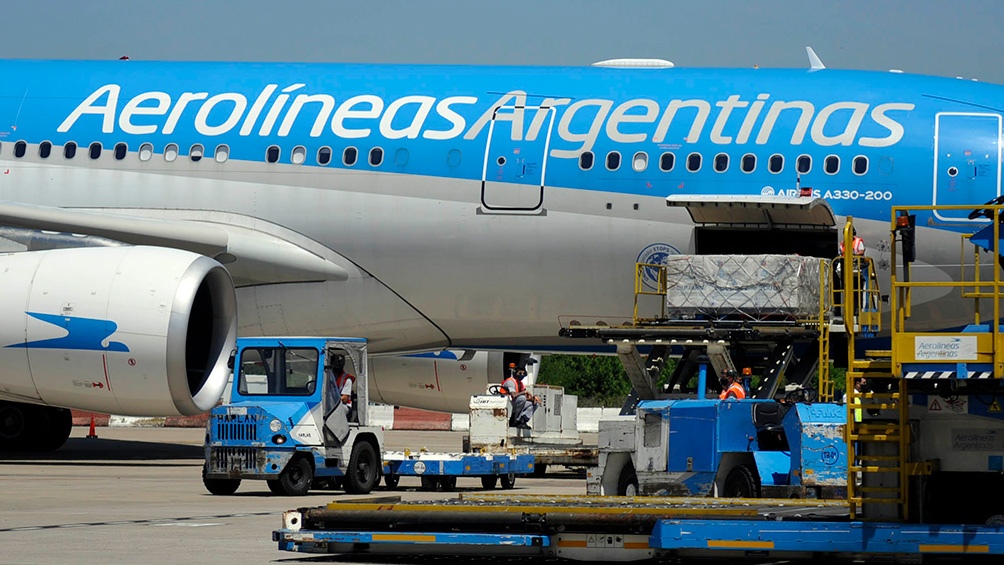
El segundo vuelo de Aerolíneas Argentinas destinado a traer desde China más dosis de la vacuna Sinopharm contra el Coronavirus despegó en la tarde del Miércoles 31/03 del Aeropuerto Internacional de Beijing, rumbo a la Argentina, donde está previsto que arribe este Jueves 1 de Abril de 2021 a las 19:00 hs aproximadamente. Bajo el número de vuelo AR1051, el Airbus 330-200, matrícula LV-GHQ, despegó de China a las 04:53, hora local, [17:53 hora local Argentina] de nuestro país donde realizará en Madrid una escala técnica para reaprovisionamiento de combustible en el Aeropuerto Internacional de Barajas, en España. «Es la segunda operación que realizamos a Beijing cumpliendo con esta tarea logística fundamental contra el Covid-19. Tener una aerolínea de bandera nos permite contar con una respuesta rápida a cada necesidad operativa. Todo el trabajo que hacemos tiene por objetivo aportar al despliegue de esfuerzos que se está llevando adelante para frenar el avance de esta pandemia mundial que tanto daño está haciendo. Cada vuelo que llega son vidas que se salvan, por eso es fundamental tener una logística aérea que pueda dar una respuesta rápida», había dicho sobre el vuelo el Presidente de la compañía, Pablo Ceriani, a través de su cuenta en la red social Twitter.
Este es el segundo vuelo que la compañía realiza para traer vacunas Sinopharm, sumado al primer vuelo efectuado el 25/02 con las primeras 904.000 dosis producidas por el laboratorio del Instituto de Productos Biológicos de Beijing, a bordo del vuelo AR1051. Posteriormente, se completó una tanda de un millón de dosis, con las 94 mil que llegaron a bordo de un vuelo comercial de KLM Airlines. En los últimos días, la ministra de Salud, Carla Vizzotti, había adelantado que se trabajaba activamente con Beijing para que en el transcurso de esta semana llegara el primero de los tres millones de vacunas Sinopharm acordado. Se trata de un acuerdo entre el Gobierno argentino y la Corporación Farmacéutica Nacional de China que se viene trabajando desde hace varias semanas.
Gastos por vacunas
Argentina ha informado un gasto total de US$ 108 millones de adquisiciones de vacunas rusas y chinas. El Gobierno argentino realizó hasta ahora catorce transferencias bancarias a Moscú para pagar siete de los cargamentos con la vacuna Sputnik V que llegaron al país. Representa una inversión total de más de US$ 28 millones de Dólares y se suman a los US$ 80 millones abonados a China por la vacuna de Sinopharm. Los datos son obtenidos de registros oficiales del Ministerio de Salud de la República Argentina.
Second flight for vaccines to China
Second flight Aerolíneas Argentinas returns from Beijing
The second flight of Aerolíneas Argentinas destined to bring from China more doses of the Sinopharm vaccine against the Coronavirus took off on the afternoon of Wednesday 03/31 from the Beijing International Airport, bound for Argentina, where it is scheduled to arrive this Thursday, April 1 from 2021 at approximately 07:00 p.m. Under the flight number AR1051, the Airbus 330-200, registration LV-GHQ, took off from China at 04:53, local time, [17:53 local time Argentina] from our country where it will make a technical stopover for refueling in Madrid of fuel at the Barajas International Airport, in Spain. «It is the second operation we carry out in Beijing fulfilling this fundamental logistical task against Covid-19. Having a flag airline allows us to have a rapid response to each operational need. All the work we do aims to contribute to the deployment of efforts that are being carried out to stop the advance of this global pandemic that is causing so much damage. Each flight that arrives is lives that are saved, that is why it is essential to have air logistics that can give a quick response», he had said about the The President of the company, Pablo Ceriani, flew through his account on the social network Twitter.
This is the second flight that the company makes to bring Sinopharm vaccines, in addition to the first flight carried out on 02/25 with the first 904,000 doses produced by the laboratory of the Beijing Institute of Biological Products, on board flight AR1051. Subsequently, a batch of one million doses was completed, with the 94,000 that arrived on board a commercial KLM Airlines flight. In recent days, the Minister of Health, Carla Vizzotti, had announced that it was actively working with Beijing so that during this week the first of the three million agreed Sinopharm vaccines would arrive. It is an agreement between the Argentine Government and the National Pharmaceutical Corporation of China that has been working for several weeks.
Vaccine expenses
Argentina has reported a total expenditure of US$ 108 million for purchases of Russian and Chinese vaccines. The Argentine Government has so far made fourteen bank transfers to Moscow to pay for seven of the shipments with the Sputnik V vaccine that arrived in the country. It represents a total investment of more than US$ 28 million and is in addition to the US$ 80 million paid to China for the Sinopharm vaccine. The data are obtained from official records of the Ministry of Health of the Argentine Republic.
Gobiernos realizan pedidos adicionales por 11 P-8A Poseidon
La Marina de los Estados Unidos adjudicó este 31/03 a The Boeing Company un contrato de producción de US$ 1.600 millones de Dólares para los próximos 11 aviones de patrullaje P-8A Poseidon. Nueve aviones se unirán a la flota de la Armada de los Estados Unidos y dos irán a la Royal Australian Air Force (RAAF), un socio cooperativo en el programa conjunto P-8A desde 2009. El contrato eleva a 128 el número total de aviones P-8A de la Armada de los Estados Unidos bajo contrato y el total de la RAAF a 14. «El P-8A sigue siendo un activo invaluable y estos aviones adicionales ayudarán a ofrecer capacidades ampliadas de patrulla marítima y reconocimiento a la flota», dijo el capitán Eric Gardner, Director de Programas de la Oficina del Programa de Patrulla Marítima y Reconocimiento de la Armada de los Estados Unidos.
El P-8A es un avión antisubmarino y anti-guerra anti-superficie de largo alcance utilizado por la Armada de los Estados Unidos. Es vital para la recolección de inteligencia, el reconocimiento de vigilancia y la búsqueda y rescate. Desplegado en todo el mundo, con 103 aviones en servicio y más de 300.000 horas de vuelo, el rendimiento y la fiabilidad del P-8 ofrecen confianza a los clientes que operan en un mundo incierto. «Seguimos escuchando comentarios de escuadrones de la Marina desplegados que nos dicen que el P-8A está superando las expectativas. Nuestro enfoque se centra en la entrega de los mejores aviones de patrulla marítima del mundo. Esto solo sucede cuando los equipos realmente colaboran, escuchan y se centran en las prioridades de los clientes», dijo Stu Voboril, Vicepresidente y Director de Programas del Programa P-8A de Boeing.
El P-8 está militarizado con armas marítimas, una moderna arquitectura de sistema de misiones abiertas y apoyo comercial para la asequibilidad. Es el avión principal con la capacidad de detectar y rastrear submarinos. El avión es modificado para incluir una bahía de bombas y pilones para armas. Tiene dos estaciones de armas en cada ala y puede llevar 129 sonobuoys. El avión también está equipado con un sistema de reabastecimiento a bordo.
El Poseidon P8-A es una aeronave derivado militar del avión Boeing 737 Next-Generation que combina el sistema de armas más avanzado del mundo con las ventajas de costes del avión más popular del planeta. El P-8 comparte el 86% de similitud con el comercial 737NG, proporcionando enormes economías de la cadena de suministro de escala en producción y apoyo. El P-8 tiene dos variantes: el P-8I, pilotado por la Marina de la India, y el P-8A Poseidon, pilotado por la Marina de los Estados Unidos, la Real Fuerza Aérea Australiana y la Real Fuerza Aérea del Reino Unido. La RAAF ha adquirido el avión de Boeing a través del proceso de ventas militares extranjeras y recibirá una variante diseñada y producida para la Armada de los Estados Unidos llamada P-8A Poseidon.
Boeing obtains 11 P8-A Poseidon orders
Governments place additional orders for 11 P-8A Poseidon
The United States Navy awarded The Boeing Company on 03/31 a production contract of US $ 1.6 billion for the next 11 P-8A Poseidon patrol aircraft. Nine aircraft will join the United States Navy fleet and two will go to the Royal Australian Air Force (RAAF), a cooperative partner in the joint P-8A program since 2009. The contract brings the total number of aircraft to 128 US Navy P-8A under contract and RAAF total at 14. «The P-8A remains an invaluable asset and these additional aircraft will help deliver expanded maritime patrol and reconnaissance capabilities to the fleet», said Captain Eric Gardner, Director of Programs for the US Navy’s Office of the Maritime Patrol and Reconnaissance Program.
The P-8A is a long-range anti-surface warfare and anti-submarine aircraft used by the United States Navy. It is vital for intelligence gathering, surveillance reconnaissance, and search and rescue. Deployed around the world, with 103 aircraft in service and more than 300,000 flight hours, the P-8’s performance and reliability offer confidence to customers operating in an uncertain world. «We continue to hear comments from deployed Navy squadrons telling us that the P-8A is exceeding expectations. Our focus is on delivering the best maritime patrol aircraft in the world. This only happens when teams really collaborate, listen. and they focus on customer priorities», said Stu Voboril, Vice President and Program Director for the Boeing P-8A Program.
The P-8 is militarized with maritime weapons, modern open mission system architecture, and commercial support for affordability. It is the main aircraft with the ability to detect and track submarines. The aircraft is modified to include a bomb bay and weapons pylons. It has two weapon stations in each wing and can carry 129 sonobuoys. The aircraft is also equipped with an on-board refueling system.
The Poseidon P8-A is a military derivative aircraft of the Boeing 737 Next-Generation aircraft that combines the world’s most advanced weapons system with the cost advantages of the most popular aircraft on the planet. The P-8 shares 86% similarity to the commercial 737NG, providing enormous supply chain economies of scale in production and support. The P-8 has two variants: the P-8I, piloted by the Indian Navy, and the P-8A Poseidon, piloted by the United States Navy, the Royal Australian Air Force and the Royal United Kingdom Air Force. . The RAAF has acquired the aircraft from Boeing through the foreign military sales process and will receive a variant designed and produced for the United States Navy called the P-8A Poseidon.
La decisión del Reino de Marruecos de suspender las líneas aéreas de Francia y España a partir del Miércoles 31 de Marzo de 2021 a partir de las 00:00 prolongando la interrupción por parte del Gobierno hasta nuevo aviso. La Embajada de Francia en Rabat, Marruecos hizo unas recomendaciones a los nacionales y residentes franceses después de las suspensiones de los enlaces aéreos: “La embajada de Francia recomienda que los nacionales y residentes franceses se acerquen a las aerolíneas con el fin de estudiar las modalidades de su vuelta a Francia. Además, recomienda que cada uno de ellos aplace todo proyecto de viaje a Marruecos hasta nuevo aviso”, indica la representación diplomática francesa en un comunicado.
El Lunes 29/03, las autoridades marroquíes han decidido suspender los vuelos de pasajeros desde y hacia Francia y España a partir de la la primer hora del 31/03 hasta nuevo aviso. Esta decisión se enmarca dentro de las medidas preventivas decretadas por el Reino marroquí con el fin de contener la propagación del Coronavirus y sus variantes. Se reforzarán los controles de los vuelos especiales de pasajeros desde estos dos destinos, conformemente al protocolo sanitario definido por las autoridades marroquíes competentes, ha indicado el comunicado de la Dirección general de la aviación civil (DGAC), dependiente del ministerio del Turismo, artesanía, transporte aéreo y economía social. Por otra parte, Royal Air Maroc (RAM) ha decidido intensificar los vuelos con, Francia y España este martes, con el fin de permitir a los viajeros volver a su país.
Actualmente, Marruecos ha suspendido las líneas aéreas con 39 países con el fin de contener la propagación de las nuevas variantes del coronavirus. Se trata de Italia, Bélgica, Turquía, Suiza, Alemania, Países Bajos, Austria, Portugal, Suecia, Ucrania, República Checa, Australia, Irlanda, Nueva Zelandia, Sudáfrica, Dinamarca, Reino Unido, Brasil, Argelia, Egipto, Polonia, Noruega, Finlandia, Grecia, Líbano, Kuwait, Argentina, Bosnia Herzegovina, Botsuana, Camerún, Croacia, Mozambique, Mali, Ghana, República democrática de Congo, Guinea-Conakry, Libia, Francia y España.
Morocco suspensions flights
Morocco air armor against virus outbreaks
The decision of the Kingdom of Morocco to suspend the airlines of France and Spain as of Wednesday, March 31, 2021 from 00:00, prolonging the interruption by the Government until further notice. The French Embassy in Rabat, Morocco made some recommendations to French nationals and residents after the suspension of air links: “The French embassy recommends that French nationals and residents approach the airlines in order to study the modalities on his return to France. In addition, it recommends that each of them postpone any travel project to Morocco until further notice”, the French diplomatic representation indicated in a statement.
On Monday 03/29, the Moroccan authorities have decided to suspend passenger flights to and from France and Spain from the first hour of 03/31 until further notice. This decision is part of the preventive measures decreed by the Moroccan Kingdom in order to contain the spread of the Coronavirus and its variants. The controls of special passenger flights from these two destinations will be reinforced, in accordance with the health protocol defined by the competent Moroccan authorities, has indicated the statement of the General Directorate of Civil Aviation (DGAC), dependent on the Ministry of Tourism, crafts, air transport and social economy. On the other hand, Royal Air Maroc (RAM) has decided to intensify flights with France and Spain this Tuesday, in order to allow travelers to return to their country.
Currently, Morocco has suspended airlines with 39 countries in order to contain the spread of new variants of the coronavirus. These are Italy, Belgium, Turkey, Switzerland, Germany, Netherlands, Austria, Portugal, Sweden, Ukraine, Czech Republic, Australia, Ireland, New Zealand, South Africa, Denmark, United Kingdom, Brazil, Algeria, Egypt, Poland, Norway , Finland, Greece, Lebanon, Kuwait, Argentina, Bosnia Herzegovina, Botswana, Cameroon, Croatia, Mozambique, Mali, Ghana, Democratic Republic of Congo, Guinea-Conakry, Libya, France and Spain.
المغرب يعلق الرحلات الجوية
درع جوي مغربي ضد تفشي الفيروس
قرار المملكة المغربية بتعليق رحلات الخطوط الجوية الفرنسية والإسبانية اعتبارًا من الأربعاء 31 مارس 2021 من الساعة 00:00 ، مما يطيل فترة الانقطاع من قبل الحكومة حتى إشعار آخر. قدمت السفارة الفرنسية في الرباط ، المغرب بعض التوصيات للمواطنين الفرنسيين والمقيمين بعد تعليق الرحلات الجوية: «توصي السفارة الفرنسية المواطنين والمقيمين الفرنسيين بالاتصال بشركات الطيران من أجل دراسة الإجراءات عند عودته إلى فرنسا. بالإضافة إلى ذلك ، توصي اللجنة كل منهم بتأجيل أي مشروع سفر إلى المغرب حتى إشعار آخر ، «حسبما أشار الممثل الدبلوماسي الفرنسي في بيان.
قررت السلطات المغربية ، الإثنين 29/3 ، تعليق رحلات الركاب من وإلى فرنسا وإسبانيا اعتبارًا من الساعة الأولى من 31/03 وحتى إشعار آخر. يأتي هذا القرار في إطار الإجراءات الوقائية التي اتخذتها المملكة المغربية لاحتواء انتشار فيروس كورونا ومتغيراته. سيتم تعزيز الضوابط على رحلات الركاب الخاصة من هاتين الوجهتين ، وفقًا للبروتوكول الصحي الذي حددته السلطات المغربية المختصة ، وفقًا لبيان المديرية العامة للطيران المدني (DGAC) ، التابعة لوزارة السياحة والحرف اليدوية. والنقل الجوي والاقتصاد الاجتماعي. من ناحية أخرى ، قررت الخطوط الملكية المغربية (RAM) تكثيف رحلاتها مع فرنسا وإسبانيا يوم الثلاثاء ، للسماح للمسافرين بالعودة إلى بلادهم.
حاليًا ، أوقف المغرب شركات الطيران مع 39 دولة من أجل احتواء انتشار المتغيرات الجديدة لفيروس كورونا. هذه هي إيطاليا ، بلجيكا ، تركيا ، سويسرا ، ألمانيا ، هولندا ، النمسا ، البرتغال ، السويد ، أوكرانيا ، جمهورية التشيك ، أستراليا ، أيرلندا ، نيوزيلندا ، جنوب إفريقيا ، الدنمارك ، المملكة المتحدة ، البرازيل ، الجزائر ، مصر ، بولندا ، النرويج ، فنلندا واليونان ولبنان والكويت والأرجنتين والبوسنة والهرسك وبوتسوانا والكاميرون وكرواتيا وموزمبيق ومالي وغانا وجمهورية الكونغو الديمقراطية وغينيا كوناكري وليبيا وفرنسا وإسبانيا.
AW | 2021 03 30 18:33 | AIRLINES / GOVERNMENT / AVIATION
Pilotos Fuerza Aérea capacitados para Boeing 737
La compañía Aerolíneas Argentinas ha anunciado este 30 de Marzo de 2021 la conclusión de la capacitación a pilotos de la Fuerza Aérea Argentina en los simuladores de Boeing 737 Next Generation en el Centro de Entrenamiento CEFEPRA. La Fuerza Aérea Argentina se encuentra finalizando las capacitaciones a sus pilotos, despachantes y Tripulantes de Cabina bajo la empresa Aerolíneas en el Centro de Instrucción localizado en Ezeiza, Provincia de Buenos Aires, con la finalidad de ampliar las capacidades de la Fuerza Aérea para la próxima adquisición de un Boeing 737-700 Next Generation como estaba planificado antes de la pandemia.
El Presidente de Aerolíneas Argentinas, Pablo Ceriani, encabezó el acto de entrega de diplomas al personal de la Fuerza Aérea Argentina, quienes completaron un curso de instrucción en el Boeing 737, anticipándose a la introducción del modelo en la I Brigada Aérea, Grupo I de transporte. En el acto, que tuvo lugar en la mock up de entrenamiento, participaron el CEO de Aerolíneas Argentinas, Pablo Ceriani, el Ministro de Defensa, Agustin Rossi y el Jefe del Estado Mayor Conjunto, Xavier Isaac. El CEO de Aerolíneas Argentinas, Pablo Ceriani ha expresado: «Nuestro centro de instrucción es un espacio modelo, único en el país y la región, en el cual se capacita el personal de Aerolíneas». La entrega de diplomar a cardo del ejecutivo y del Ministro de Defensa, Agustín Rossi a 28 miembros de la Fuerza Aérea, mostrando un orgullo para el aporte a la formación profesional del personal. Los entrenamientos requeridos para la formación de la línea Boeing 737NG comprendieron a 11 pilotos, 8 despachantes de aeronaves y 13 tripulantes de cabina.
La Fuerza Aérea Argentina había iniciado el proceso de ampliación y modernización de la flota que se había establecido hacia el 2020 para la adquisición de un Boeing 737-700 para reforzar las capacidades de transporte táctico y logístico del país. Tras las dificultades de la presente pandemia, las autoridades estiman la incorporación de la unidad reacondicionada hacia el 4Q2021.
Argentina FFAA pilot training
Air Force pilots trained for Boeing 737
The company Aerolíneas Argentinas has announced on March 30, 2021 the conclusion of the training for pilots of the Argentine Air Force in the Boeing 737 Next Generation simulators at the CEFEPRA Training Center. The Argentine Air Force is completing the training of its pilots, dispatchers and Cabin Crew members under the company Aerolíneas in the Training Center located in Ezeiza, Province of Buenos Aires, in order to expand the capabilities of the Air Force for the next acquisition of a Boeing 737-700 Next Generation as planned before the pandemic.
The President of Aerolíneas Argentinas, Pablo Ceriani, led the ceremony to deliver diplomas to the personnel of the Argentine Air Force, who completed an instruction course in the Boeing 737, anticipating the introduction of the model in the I Air Brigade, Group I of transport. The event, which took place in the training mock up, was attended by the CEO of Aerolineas Argentinas, Pablo Ceriani, the Minister of Defense, Agustin Rossi and the Chief of the Joint Chiefs of Staff, Xavier Isaac. The CEO of Aerolíneas Argentinas, Pablo Ceriani has expressed: «Our training center is a model space, unique in the country and the region, in which Aerolíneas personnel are trained». The delivery of diplomas to the executive officer and the Minister of Defense, Agustín Rossi, to 28 members of the Air Force, showing pride in their contribution to the professional training of the personnel. The training required for the formation of the Boeing 737NG line comprised 11 pilots, 8 aircraft dispatchers and 13 cabin crew.
The Argentine Air Force had begun the process of expansion and modernization of the fleet that had been established around 2020 for the acquisition of a Boeing 737-700 to reinforce the country’s tactical and logistical transport capabilities. After the difficulties of the present pandemic, the authorities estimate the incorporation of the reconditioned unit by 4Q2021.
AW | 2021 03 30 10:08 | AVIATION SAFETY / GOVERNMENT
Boeing pide a Tribunal EEUU desechar demanda a Junta Accionistas
La demanda alega que la Junta de Accionistas de The Boeing Company no ha desarrollado ninguna herramienta para evaluar y monitorear la seguridad de los aviones hasta después de que dos accidentes aéreos que involucraron aviones Boeing 737-8 MAX en Indonesia y Etiopía sesgaron la vida de 346 personas en un lapso de cinco meses. Desde 2019, el Consejo de Boeing ha implementado cambios para mejorar la supervisión de la ingeniería y las operaciones industriales de la compañía a medida que el fabricante de aviones navegaba por las consecuencias durante los casi dos años de puesta en tierra de su 737 MAX más vendido después de dos accidentes aéreos.
En una queja enmendada desprecintada en Febrero 2021, el Contralor del Estado de Nueva York, Thomas DiNapoli, quien dirige el fondo estatal de pensiones, y otros inversionistas argumentaron que la Junta de Boeing había violado sus obligaciones fiduciarias y actuó con negligencia grave al no «monitorear la seguridad de los aviones 737 MAX de Boeing».
Boeing ha solicitado al Tribunal de la Cancillería Delaware, Estados Unidos, que desechara una demanda a accionistas sobre la seguridad de su 737 MAX tras accidentes fatales, diciendo que la Junta participó en una supervisión «robusta y bien establecida» del desarrollo del avión. La demanda también alega que la Junta no desarrolló ninguna herramienta para evaluar y monitorear la seguridad de los aviones hasta después de que dos accidentes de aviones 737 MAX en Indonesia y Etiopía. La Junta no recibió una reunión informativa sobre los fundamentos de la seguridad de los aviones hasta finales de Abril de 2019, varias semanas después de la puesta en tierra mundial del avión. En su moción para desestimar la queja, hecha pública el Lunes 29/03, Boeing dijo que los demandantes ignoran «los sistemas robustos que habían estado en vigor durante mucho tiempo» para mantener a la junta informada sobre problemas de riesgo significativos. «Los directores de Boeing mantuvieron este alto escrutinio, además, durante un período en el que los aviones comerciales, y los de Boeing en particular, lograron niveles cada vez más altos de seguridad, una tendencia que no puede cuadrarse con la narrativa simplista de los demandantes sobre una ‘cultura de ingeniería de seguridad’ que había sido ‘desmantelada intencionalmente'», expresó la compañía americana aeroespacial. Boeing tuvo sesiones informativas de gestión en la Junta y un grupo interno de auditoría corporativa para evaluar los riesgos, así como un mecanismo para recibir informes sobre la ética de los empleados y las quejas de cumplimiento, dijo The Boeing Company.
Desde 2019, el Consejo de Boeing ha implementado cambios para mejorar la supervisión de las operaciones de ingeniería e industriales de Boeing a medida que la compañía navegaba por las consecuencias durante los casi dos años de puesta en tierra del 737 MAX más vendido después de los accidentes.
Correos electrónicos y memorandos publicados bajo orden judicial el 4 de Marzo de 2021 muestran a ejecutivos y miembros de la Junta discutiendo la lucha contra la cobertura negativa de la prensa, y un miembro veterano de la Junta sugiriendo que la Junta eleve su atención a la seguridad y la calidad en sus reuniones. «Creo que deberíamos dedicar toda la reunión de la Junta (aparte de las reuniones e informes requeridos del Comité) a una revisión de la calidad dentro de Boeing», escribió el veterano miembro de la Junta Art Collins a su compañero de Consejo Dave Calhoun, ahora Director Ejecutivo de Boeing, días después del segundo accidente en 2019.
Boeing reconoció más tarde, como parte de un acuerdo de Procesamiento Diferido con el Departamento de Justicia de Estados Unidos en Enero de 2021 la compañía ocultó detalles sobre un sistema crucial de control de vuelo en el centro de los dos accidentes a la Administración Federal de Aviación (FAA) de Estados Unidos. Los empleados de Boeing también trabajaron para que se omitiera referencias al sistema, conocido como MCAS, de los manuales de operación de la tripulación de vuelo como parte del objetivo de la compañía de evitar requisitos de capacitación de pilotos más costosos.
Boeing requests rejection of lawsuit
Boeing asks US Court to dismiss lawsuit against Shareholders
The lawsuit alleges that The Boeing Company‘s Board of Shareholders did not develop any tools to assess and monitor aircraft safety until after two plane crashes involving Boeing 737-8 MAX aircraft in Indonesia and Ethiopia skewed the lives of 346. people within five months. Since 2019, the Boeing Board has implemented changes to improve oversight of the company’s engineering and industrial operations as the aircraft manufacturer navigated the fallout during the nearly two-year grounding of its best-selling 737 MAX. after two plane crashes.
In an unsealed amended complaint in February 2021, New York State Comptroller Thomas DiNapoli, who heads the state pension fund, and other investors argued that the Boeing Board had violated its fiduciary obligations and was grossly negligent in failing to «monitor the safety of Boeing 737 MAX aircraft».
Boeing has petitioned the US Court of Chancery Delaware to dismiss a shareholder lawsuit over the safety of its 737 MAX following fatal crashes, saying the Board participated in «robust and well-established» oversight of the aircraft’s development. The lawsuit also alleges that the Board did not develop any tools to assess and monitor aircraft safety until after two 737 MAX aircraft crashes in Indonesia and Ethiopia. The Board did not receive a briefing on the fundamentals of aircraft safety until the end of April 2019, several weeks after the global grounding of the aircraft. In its motion to dismiss the complaint, released Monday 03/29, Boeing said the plaintiffs are ignoring «robust systems that have been in place for a long time» to keep the board informed of significant risk issues. «Boeing directors maintained this high scrutiny, furthermore, during a period when commercial aircraft, and Boeing’s in particular, achieved ever-higher levels of safety, a trend that cannot be squared with the simplistic narrative of aircraft. plaintiffs about a ‘safety engineering culture’ that had been ‘intentionally dismantled'», said the American aerospace company. Boeing held management briefings at the Board and an internal corporate audit group to assess risks, as well as a mechanism for receiving reports on employee ethics and compliance complaints, The Boeing Company said.
Since 2019, the Boeing Board has implemented changes to improve oversight of Boeing’s engineering and industrial operations as the company navigated the aftermath during nearly two years of grounding the best-selling 737 MAX after the accidents.
Emails and memos published under court order on March 4, 2021 show executives and Board members discussing fighting negative press coverage, and a veteran Board member suggesting that the Board raise its focus on safety. and the quality of your meetings. «I think we should dedicate the entire Board meeting (aside from the required committee meetings and reports) to a quality review within Boeing», wrote veteran Board member Art Collins to fellow Board member Dave Calhoun, now CEO of Boeing, days after the second accident in 2019.
Boeing later acknowledged, as part of a Deferred Processing agreement with the United States Department of Justice in January 2021, the company withheld details about a crucial flight control system at the center of the two accidents from the Federal Aviation Administration. (FAA) of the United States. Boeing employees also worked to have references to the system, known as MCAS, be omitted from flight crew operating manuals as part of the company’s goal to avoid more costly pilot training requirements.
AW | 2021 03 29 16:22 | AIRLINES ALLIANCE / GOVERNMENT
Korean Air aerolínea integrada en 2024 después absorción Asiana
Korean Air Group (KAL) planea continuar con el proceso de fusión con Asiana Airlines, convertirla en una subsidiaria y luego lanzar una aerolínea integrada en 2024. Korean Air ha presentado un plan de integración posterior a la fusión (PMI) para Asiana Airlines al Banco de Desarrollo de Corea, según la oficina del Legislador del Partido Demócrata Park Yong-jin el 28 de Marzo de 2021.
Korean Air planea adquirir oficialmente Asiana Airlines en 2022. Originalmente planeaba adquirir una participación del 63,9 por ciento en Asiana Airlines al participar en el aumento de capital pagado de Asiana Airlines de ₩ 1,5 billones de Wones el 30 de Junio de 2021, pero ha retrasado la fecha de adquisición considerando el proceso de revisiones de combinaciones corporativas en nueve países, incluidos Corea, Estados Unidos, la Unión Europea, China, Japón y Turquía. Ocho países, excluido Turquía, aún no han revelado los resultados de sus revisiones.
Korean Airlines Group lanzará una aerolínea integrada en 2024, dos años después de que Korean Air se haga cargo de Asiana Airlines. Si Korean Air adquiere Asiana Airlines, creará una estructura de gobierno en la que Hanjin KAL (sociedad de cartera) es propietaria de Korean Air (subsidiaria), que a su vez controla Asiana Airlines (subfilial). Las subsidiarias de Asiana Airlines, Air Busan (44,2 por ciento), Air Seoul (100 por ciento), Asiana Sabre (80 por ciento), Aeropuerto de Asiana (100 por ciento) y Asiana IDT (76,2 por ciento), se convertirán en sub-sub-subsidiarias de Hanjin KAL.
Korean-Asiana integration by 2024
Korean Air to Launch Integrated Airline in 2024 after absorbing Asiana
Korean Air Group (KAL) plans to continue the merger process with Asiana Airlines, make it a subsidiary, and then launch an integrated airline in 2024. Korean Air has submitted a Post-Merger Integration (PMI) plan for Asiana Airlines to the Bank Development Committee, according to the office of Democratic Party Legislator Park Yong-jin on March 28, 2021.
Korean Air plans to officially acquire Asiana Airlines in 2022. It originally planned to acquire a 63.9 percent stake in Asiana Airlines by participating in the Asiana Airlines paid-in capital increase of ₩ 1.5 trillion Wons on June 30, 2021, but it has pushed back the acquisition date considering the corporate combination review process in nine countries, including Korea, the United States, the European Union, China, Japan and Turkey. Eight countries, excluding Turkey, have yet to reveal the results of their reviews.
Korean Airlines Group will launch an integrated airline in 2024, two years after Korean Air takes over Asiana Airlines. If Korean Air acquires Asiana Airlines, it will create a governance structure in which Hanjin KAL (holding company) owns Korean Air (subsidiary), which in turn controls Asiana Airlines (sub-subsidiary). Asiana Airlines subsidiaries Air Busan (44.2 percent), Air Seoul (100 percent), Asiana Saber (80 percent), Asiana Airport (100 percent) and Asiana IDT (76.2 percent) , will become sub-sub-subsidiaries of Hanjin KAL.
2024 년까지 한-아시아나 통합
대한 항공, 아시아나 항공 흡수 후 2024 년 통합 항공사 출범
대한 항공 그룹 (KAL)은 아시아나 항공과의 합병을 이어가고 자회사로 전환 한 후 2024 년 통합 항공사를 출범 할 계획입니다. 대한 항공은 아시아나 항공의 합병 후 통합 (PMI) 계획을 은행 개발에 제출했습니다. 2021 년 3 월 28 일 박용진 민주당 의원실에 따르면위원회.
대한 항공은 2022 년 공식적으로 아시아나 항공을 인수 할 계획이다. 당초 2021 년 6 월 30 일 아시아나 항공 유상 증자 1 조 5000 억원에 참여해 아시아나 항공 지분 63.9 %를 인수 할 계획 이었으나 미루고있다. 한국, 미국, 유럽 연합, 중국, 일본, 터키 등 9 개국의 기업 결합 심사 과정을 고려한 인수 일. 터키를 제외한 8 개국은 아직 리뷰 결과를 공개하지 않았다.
대한 항공 그룹은 대한 항공이 아시아나 항공을 인수 한 지 2 년 만인 2024 년 통합 항공사를 출범시킨다. 대한 항공이 아시아나 항공을 인수하면 한진 칼 (지주 회사)이 대한 항공 (자회사)을 소유하고 차례로 아시아나 항공 (자회사)을 지배하는 거버넌스 구조를 구축한다. 아시아나 항공 자회사 인 에어 부산 (44.2 %), 에어 서울 (100 %), 아시아나 세이버 (80 %), 아시아나 공항 (100 %), 아시아나 IDT (76.2 %)가 한진 칼의 자회사가된다.
Compañía holandesa arriba dosis vacunas a Argentina
Arribaron a la República Argentina unas 218.000 dosis de vacunas AstraZeneca del Fondo Global Covax, creado por parte de la Organización Mundial de Salud (OMS). Las vacunas fueron recibidas por autoridades del Ministerio de Salud junto a representantes de la Organización Panamericana de la Salud (OPS) en el país y de Unicef Argentina.
El vuelo KL-701 de la aerolínea KLM Airlines ha arribado a Argentina con 218.000 dosis de Oxford/AstraZeneca del Fondo Global de Acceso a las Vacunas contra la Covid-19 (Covax) aterrizó este Domingo 28/03 en el Aeropuerto Internacional Ezeiza, informaron fuentes oficiales. Con la llegada de este lote de AstraZeneca se inicia el proceso de recepción de las vacunas que ese mecanismo de distribución, creado por la Organización Mundial de la Salud (OMS), irá suministrando a la Argentina: el total comprometido para el país es de 9 millones de dosis. Las 218.000 dosis que llevaron se suman a la provisión que ya tiene la Argentina de vacunas provenientes de Rusia (Sputnik V), China (Sinopharm) e India (Covishield), esta última producida con transferencia de tecnología de Oxford/AstraZeneca. Las dosis de vacunas serán trasladadas, como es habitual, al operador logístico en camiones refrigerados especialmente acondicionados, para luego continuar el proceso hasta que lleguen a las 24 jurisdicciones, esto es, las 23 provincias más la Ciudad Autónoma de Buenos Aires.
KLM brings Argentina more doses
Dutch company uploads vaccine doses to Argentina
Some 218,000 doses of AstraZeneca vaccines from the Covax Global Fund, created by the World Health Organization (WHO), arrived in the Argentine Republic. The vaccines were received by authorities of the Ministry of Health together with representatives of the Pan American Health Organization (PAHO) in the country and Unicef Argentina.
KLM Airlines flight KL-701 has arrived in Argentina with 218,000 doses of Oxford/AstraZeneca from the Global Fund for Access to Vaccines against Covid-19 (Covax) landed this Sunday 03/28 at Ezeiza International Airport, sources reported officers. With the arrival of this batch of AstraZeneca, the process of receiving the vaccines that this distribution mechanism, created by the World Health Organization (WHO), will be supplying to Argentina begins: the total committed for the country is 9 million doses. The 218,000 doses they brought are in addition to the provision that Argentina already has of vaccines from Russia (Sputnik V), China (Sinopharm) and India (Covishield), the latter produced with technology transfer from Oxford/AstraZeneca. The vaccine doses will be transferred, as usual, to the logistics operator in specially conditioned refrigerated trucks, and then continue the process until they reach the 24 jurisdictions, that is, the 23 provinces plus the Autonomous City of Buenos Aires.
Argentina anuncia nuevas medidas en tráfico internacional
El décimo vuelo de Aerolíneas Argentinas con destino a Moscú partió este Lunes 29/03 a la madrugada en busca de vacunas Sputnik V contra el Coronavirus y estará de regreso el próximo Martes 30/03 en horas de la tarde, según confirmó el Presidente de la línea de bandera, Pablo Ceriani, a través de su cuenta de Twitter. ”Queremos anunciar que mañana a las 2 sale un nuevo vuelo de Aerolíneas a Rusia en búsqueda de más dosis de la vacuna Sputnik V. Es la décima operación que realizamos a Moscú”, publicó Ceriani en la red social en la tarde del Domingo 28/03.
Bajo el número de vuelo AR1066, el Airbus 330-200, matrícula LV-GIF, despegó desde el Aeropuerto Internacional Ezeiza a las 02:00 hs [hora local argentina], estimando su arribo al Aeropuerto Internacional Moscow/Sheremétievo a las 18:30 [hora local argentina], 0:30 del Martes 30/03 [hora local rusa]. Está previsto que, por los trabajos de carga de las vacunas, la aeronave permanezca en tierra hasta alrededor de las 14:30 hs y su retorno al Aeropuerto Ezeiza se establezca alrededor de las 16:30 hs del Martes 30/03. ”El esfuerzo logístico que se realiza para sacar los vuelos en cuestión de horas se puede hacer porque hay una línea aérea puesta al servicio de los argentinos. Cada avión que llega con vacunas permite darle continuidad al plan de vacunación trazado por el Gobierno Nacional”, señaló Pablo Ceriani.
Desde fines de Diciembre 2020, Aerolíneas Argentinas se encuentra realizando operaciones de vuelos especiales con el objetivo de traer vacunas contra el coronavirus al país. En los nueve vuelos completados hacia y desde la Federación Rusa se trajeron en total unas 3.669.000 dosis de Sputnik V. El último viernes, bajo el número de vuelo AR1065, llegaron al país 370.000 nuevas dosis de la Sputnik V. Además, se realizó un vuelo a Beijing, República Popular China, en el cual vinieron 908.000 dosis de la vacuna producida por Sinopharm. Hasta el momento, la cantidad de vacunas contra el Covid-19 que llegaron al país en vuelos de Aerolíneas Argentinas es de 4.577.000.
Reprogramación vuelos internacionales
En el marco de las medidas dispuestas por el gobierno nacional para intensificar los controles a fin de evitar la llegada al país de las nuevas cepas de coronavirus, la Administración Nacional de Aviación Civil (ANAC) reprogramará desde este Lunes 29 de Marzo de 2021 los horarios de todos los vuelos internacionales. Las aerolíneas comunicarán a sus pasajeros los nuevos horarios. La resolución oficial busca espaciar las frecuencias y evitar aglomeraciones.
Ante el aumento de los casos de Covid-19 y el temor de las autoridades nacionales de que ingresen las cepas británica y brasileña en forma masiva, la ANAC anunció esta resolución adoptada ante la emergencia sanitaria que vive el país. Las aerolíneas tendrán que avisar a sus pasajeros sobre el cambio de horario. “Los pasajeros deben esperar la comunicación de su aerolínea. Cuando reciban la confirmación, solo deberán verificar el estado de su vuelo”, dijeron fuentes del Ministerio de Transporte de Argentina.
La medida fue informada por correo electrónico a las aerolíneas y busca que los vuelos sean reprogramados en distintos horarios, pero en los mismos días pautados. Esta decisión busca espaciar las frecuencias entre vuelos para evitar aglomeraciones de pasajeros al momento de realizar los testeos en el sector de arribos del Aeropuerto Internacional de Ezeiza. “La modificación apunta exclusivamente a generar una distancia entre cada de arribo de alrededor de 120 minutos, manteniéndose los vuelos. No existe ni un cambio de fase ni ninguna otra medida adicional a las ya anunciadas por el Jefe de Gabinete de Ministros [Santiago Cafiero], sino un mero reacomodamiento y redistribución de los vuelos a efectos de dar cumplimiento con las medidas sanitarias correspondientes”, informó la ANAC en un comunicado.
Otras medidas de prevención
La reprogramación de vuelos internacionales se da en el contexto de un mayor control en las fronteras dispuesto por el gobierno nacional para reducir el impacto de la segunda ola de la pandemia. Desde el pasado Sábado 27/03 todas las personas que lleguen al país están obligadas a someterse a dos tests a cargo del pasajero, uno al arribo y otro siete días después y están suspendidos los vuelos desde Chile, Brasil y México. En tanto, continúan suspendidos los provenientes de Gran Bretaña e Irlanda del Norte. En caso de que el primer testeo de un resultado negativo de coronavirus, deberán hacer un aislamiento en un domicilio comprobado durante una semana. De ser positivo, las autoridades determinarán dónde realiza el aislamiento, cuya estadía también estará a cargo del pasajero y se les realizará un estudio genómico para precisar la cepa.
Tenth flight Aerolíneas for vaccines
Argentina announces new measures in international traffic
The tenth flight of Aerolíneas Argentinas to Moscow departed this Monday 03/29 at dawn in search of Sputnik V vaccines against the Coronavirus and will be back next Tuesday 03/30 in the afternoon, as confirmed by the President of the flag line, Pablo Ceriani, through his Twitter account. «We want to announce that tomorrow at 2 am a new Aerolíneas flight leaves for Russia in search of more doses of the Sputnik V vaccine. It is the tenth operation we carried out in Moscow», Pablo Ceriani published on the social network on the afternoon of Sunday 28 / 03.
Under flight number AR1066, Airbus 330-200, registration LV-GIF, took off from Ezeiza International Airport at 02:00 am [Argentine local time], estimating its arrival at Moscow/Sheremetyevo International Airport at 18:30 [Argentine local time], 0:30 on Tuesday 03/30 [Russian local time]. Due to the vaccine loading work, the aircraft is expected to remain on the ground until around 2:30 p.m. and its return to Ezeiza Airport will be established around 4:30 p.m. on Tuesday 03/30. «The logistical effort that is made to get the flights out in a matter of hours can be done because there is an airline at the service of the Argentines. Each plane that arrives with vaccines allows continuity to the vaccination plan drawn up by the National Government”, said Pablo Ceriani.
Since the end of December 2020, Aerolíneas Argentinas has been conducting special flight operations with the aim of bringing vaccines against the coronavirus to the country. In the nine flights completed to and from the Russian Federation, a total of 3,669,000 doses of Sputnik V were brought in. Last Friday, under flight number AR1065, 370,000 new doses of Sputnik V arrived in the country. a flight to Beijing, People’s Republic of China, in which 908,000 doses of the vaccine produced by Sinopharm came. So far, the number of vaccines against Covid-19 that arrived in the country on Aerolineas Argentinas flights is 4,577,000.
Rescheduling international flights
Within the framework of the measures arranged by the national government to intensify controls in order to prevent the arrival in the country of new strains of coronavirus, the National Civil Aviation Administration (ANAC) will reprogram the schedules from this Monday, March 29, 2021. of all international flights. The airlines will inform their passengers of the new schedules. The official resolution seeks to space the frequencies and avoid crowds.
Given the increase in cases of Covid-19 and the fear of the national authorities that British and Brazilian strains will enter in a massive way, the ANAC announced this resolution adopted in the face of the health emergency that the country is experiencing. The airlines will have to notify their passengers about the time change. “Passengers must wait for communication from their airline. When they receive the confirmation, they will only have to verify the status of their flight”, said sources from the Ministry of Transport of Argentina.
The measure was informed by email to the airlines and seeks that the flights be rescheduled at different times, but on the same scheduled days. This decision seeks to space the frequencies between flights to avoid crowds of passengers at the time of testing in the arrivals area of the Ezeiza International Airport. “The modification aims exclusively at generating a distance between each arrival of around 120 minutes, keeping the flights. There is neither a change of phase nor any other measure in addition to those already announced by the Chief of the Cabinet of Ministers [Santiago Cafiero], but a mere rearrangement and redistribution of the flights in order to comply with the corresponding sanitary measures”, he reported the ANAC in a statement.
Other preventive measures
The rescheduling of international flights occurs in the context of greater control at the borders provided by the national government to reduce the impact of the second wave of the pandemic. Since last Saturday 03/27 all people arriving in the country are required to undergo two tests by the passenger, one upon arrival and another seven days later, and flights from Chile, Brazil and Mexico are suspended. Meanwhile, those from Great Britain and Northern Ireland continue to be suspended. In the event that the first test of a negative result of coronavirus, they must make an isolation in a verified address for a week. If positive, the authorities will determine where the isolation is carried out, whose stay will also be in charge of the passenger and a genomic study will be carried out to determine the strain.
AW | 2021 03 28 21:22 | AVIATION / INDUSTRY / GOVERNMENT
Puja por la supremacía aérea entre EEUU y China
Las relaciones entre Estados Unidos de América y la República Popular de China continúan pujando el plan de Pekín para la supremacía de la aviación. El plan de China de convertirse en una potencia en la fabricación de aviones civiles podría descarrilar por los controles de exportación estadounidenses sobre productos de aviación, ya que la tensión entre Pekín y Washington no muestra signos de relajación a pesar de una nueva administración en Washington. Una guerra comercial entre las dos economías más grandes del mundo se ha transformado en una batalla por la supremacía tecnológica que se ha extendido al sector de la aviación en los últimos dos años.
En medio de los temores de que la competitividad global estadounidense podría verse comprometida y la tecnología crítica podría caer en manos del ejército chino, Washington se ha dirigido a empresas chinas, incluidas muchas en la industria aeroespacial, restringiéndoles la compra de productos fabricados en Estados Unidos. «Por el momento, la Administración Biden no ha flexibilizado ningún control, y puede que nunca. Mucho dependerá de la trayectoria general de las relaciones entre Estados Unidos y China y del resultado de las revisiones de políticas en curso», dijo Scott Kennedy, Asesor Principal y residente de confianza en negocios y economía chinas del Centro de Estudios Estratégicos e Internacionales (CSIS) en Washington.
Aproximando competencia
China tiene grandes esperanzas en su aeronave insignia C919 en particular, un avión de pasajeros de media distancia de cuerpo estrecho diseñado para competir con el Boeing 737 y el Airbus A320. Se espera que reciba su certificado de aeronavegabilidad este año. Pero el fabricante del avión, la estatal Commercial Aircraft Corporation of China (COMAC), fue añadido a una lista negra de supuestas compañías militares chinas por el Departamento de Defensa de Estados Unidos en enero. Bajo una orden ejecutiva firmada el año pasado por el entonces Presidente Donald Trump, las empresas estadounidenses no pueden invertir en estas entidades. «No creo que Estados Unidos deba ver a Comac, y China, como un competidor global de aviones. Pero también creo que hay muchos funcionarios del gobierno estadounidense que quieren una oportunidad para verse duros en cuestiones comerciales, y en cuestiones de propiedad intelectual, con China», dijo Richard Aboulafia, Vicepresidente de Análisis de la consultora de aviación y defensa Teal Group.
Guerra comercial sino-americana
El despliegue del avión insignia de pasajeros de China sigue en el aire mientras se espera que las restricciones tecnológicas estadounidenses persistan bajo la Administración de Joe Biden. Algunos también pueden verlo como una oportunidad para que la Administración de Aviación Civil de China (CAAC) al menos discuta las condiciones para la recertificación de 737 MAX. El negocio de Boeing en China y el regreso a los cielos de su problemático avión 737 MAX se han visto envueltos en la creciente tensión entre Pekín y Washington. China fue el primer país en aterrizar el 737 MAX en Marzo de 2019 después de dos accidentes aéreos. La Agencia de Aviación de la CAAC no ha dado un calendario para que el avión de pasajeros vuelva al servicio en China.
China es un gran importador de productos de aviación estadounidenses y ha confiado principalmente en componentes estadounidenses para su C919. Como tal, hay crecientes preocupaciones entre los fabricantes estadounidenses de que China podría comenzar a buscar alternativas a medida que el gobierno estadounidense busca endurecer las licencias. Un informe publicado en Febrero 2021 por la Cámara de Comercio de Estados Unidos, un grupo de presión estadounidense orientado a los negocios, dijo que el gobierno estadounidense ha hecho cada vez más difícil para las empresas estadounidenses obtener licencias de exportación para vender productos de doble uso a clientes chinos, creando incertidumbre que es difícil para las empresas estadounidenses mitigar e incentivando a los clientes chinos a reemplazar a los proveedores estadounidenses. Los productos de doble uso se definen como productos y tecnología que tienen aplicación civil y militar.
Made in China 2025
El plan industrial estatal de China, apodado «Made in China 2025» (MIC2025) que tiene como objetivo actualizar sus industrias de alta tecnología a los niveles occidentales y disminuir su dependencia de las importaciones y su programa de fusión militar-civil plantean grandes preocupaciones a la hora de regular las exportaciones de doble uso, según un informe de Enero 2021 elaborado por el Servicio de Investigación del Congreso. Las políticas tecnológicas de China a menudo requieren empresas conjuntas y asociaciones en las que la parte china controla la tecnología y la propiedad intelectual. Muchos socios chinos de empresas estadounidenses son entidades controladas por el gobierno, lo que aumenta la posibilidad de que la tecnología estadounidense pueda estar avanzando en las capacidades gubernamentales y militares de China.
Richard Aboulafia cree que sería difícil para China reemplazar la tecnología de aviación estadounidense y ser aún más difícil para ella innovar a puerta cerrada. Un desacoplamiento en el sector de la aviación podría significar que Estados Unidos puede perderse el mayor mercado de crecimiento del mundo, pero China también podría terminar «con un sistema estatal inferior y de aspecto interno que se haga eco de la experiencia de la industria soviética», dijo el analista de aviación.
Aviación global
Las empresas estadounidenses realmente no pueden perder ante los competidores europeos como resultado de estas reglas, por dos razones. Una de ellas, las empresas europeas que aplicaron estas normas podrían enfrentarse a sanciones en los Estados Unidos, en particular para los programas de defensa. Dos, hay muy pocos sistemas aeroespaciales europeos. El motor del C919 es una empresa conjunta entre GE y la francesa Safran. Casi todo en el mercado aeroespacial civil mundial, fuera de Rusia, es un producto global.
La Administración Trump impulsó un aluvión de acciones punitivas dirigidas a Pekín hacia finales del año pasado, muchas de las cuales apuntaron a la industria de la aviación. La mayor empresa estatal de aviación y defensa de China, la Aviation Industry Corporation of China (AVIC), fue puesta en la lista de «compañías militares comunistas chinas». Siete filiales de AVIC también fueron catalogadas como «usuarios finales militares» por el Departamento de Comercio de los Estados Unidos, lo que significa que los exportadores estadounidenses están obligados a obtener licencias para venderles ciertos productos.
«Las empresas que están en la lista de usuarios finales militares del Departamento de Comercio están sujetas a un requisito de licencia para ciertos artículos sensibles que se describen en las regulaciones de control de exportaciones de Estados Unidos«, dijo Nick Turner, un Abogado especializado en sanciones económicas y lucha contra el lavado de dinero en Steptoe & Johnson en Hong Kong. No hay ninguna posibilidad de que China pueda ser autosuficiente en la fabricación de aviones comerciales en los próximos 30-40 años. «Si esto tendría un impacto importante en las empresas depende de si reciben esos artículos y de si sus proveedores estadounidenses pueden obtener licencias para seguir proporcipándoles», expresa Scott Kennedy.
La aviación es parte integral de MIC2025, que ha sido criticada por los mayores socios comerciales de China, Estados Unidos y Europa, por dar a las empresas chinas una ventaja injusta a través de subsidios gubernamentales y otras formas de apoyo estatal. Si bien desde entonces China se ha abstenido de hablar públicamente sobre MIC2025, su inversión en aviación y su objetivo de esculpir una parte de la lucrativa industria no ha cambiado. En el 14º Plan Quinquenal de Pekín y los objetivos de desarrollo a largo plazo para 2035, la aviación y la industria aeroespacial han sido destacadas como las industrias emergentes estratégicas que son cruciales para el avance económico de China y su desarrollo debe ser acelerado. «No hay ninguna posibilidad de que China pueda ser autosuficiente en la fabricación de aeronaves comerciales en los próximos 30-40 años. Tampoco deberían serlo. Nadie es plenamente autosuficiente, ni siquiera Estados Unidos ni [la Unión Europea]. La especialización tiene sentido», dijo Scott Kennedy.
World aviation supremacy
Bid for air supremacy between the US and China
Relations between the United States of America and the People’s Republic of China continue to push Beijing’s plan for aviation supremacy. China’s plan to become a civilian aircraft powerhouse could be derailed by US export controls on aviation products, as tension between Beijing and Washington shows no signs of easing despite a new administration in Washington. A trade war between the world’s two largest economies has morphed into a battle for technological supremacy that has spread to the aviation sector in the past two years.
Amid fears that US global competitiveness could be compromised and critical technology could fall into the hands of the Chinese military, Washington has targeted Chinese companies, including many in the aerospace industry, restricting them from purchasing US-made products. «At the moment, the Biden Administration has not relaxed any controls, and may never have. Much will depend on the overall trajectory of US-China relations and the outcome of ongoing policy reviews», said Scott Kennedy, Advisor. Principal and trusted resident in Chinese business and economics at the Center for Strategic and International Studies (CSIS) in Washington.
Approaching competition
China has high hopes for its flagship C919 aircraft in particular, a narrow-body medium-haul airliner designed to compete with the Boeing 737 and Airbus A320. It is expected to receive its certificate of airworthiness this year. But the plane’s maker, the state-run Commercial Aircraft Corporation of China (COMAC), was added to a blacklist of alleged Chinese military companies by the US Department of Defense in January. Under an executive order signed last year by then-President Donald Trump, American companies cannot invest in these entities. «I don’t think the United States should see COMAC, and China, as a global aircraft competitor. But I also think there are a lot of US government officials who want an opportunity to be tough on trade issues, and on intellectual property issues, with China», said Richard Aboulafia, Vice President of Analytics for aviation and defense consultancy Teal Group.
Sino-American trade war
The deployment of China’s flagship airliner remains in the air as US technology restrictions are expected to persist under the Joe Biden Administration. Some may also see it as an opportunity for the Civil Aviation Administration of China (CAAC) to at least discuss the conditions for 737 MAX recertification. Boeing’s business in China and the return to the skies of its troublesome 737 MAX jet have been caught up in rising tension between Beijing and Washington. China was the first country to land the 737 MAX in March 2019 after two plane crashes. The CAAC Aviation Agency has not given a timetable for the passenger jet to return to service in China.
China is a large importer of American aviation products and has relied primarily on American components for its C919. As such, there are growing concerns among US manufacturers that China could start looking for alternatives as the US government seeks to tighten licenses. A report published in February 2021 by the US Chamber of Commerce, a business-oriented US lobby group, said the US government has made it increasingly difficult for US companies to obtain export licenses to sell dual-use products. to Chinese customers, creating uncertainty that is difficult for US companies to mitigate and incentivizing Chinese customers to replace US suppliers. Dual-use products are defined as products and technology that have civil and military applications.
Made in China 2025
China’s state industrial plan, dubbed «Made in China 2025» (MIC2025) that aims to upgrade its high-tech industries to Western levels and decrease its dependence on imports and its military-civil fusion program raises great concerns to when regulating dual-use exports, according to a January 2021 report prepared by the Congressional Research Service. China’s technology policies often call for joint ventures and partnerships in which the Chinese side controls technology and intellectual property. Many Chinese partners of US companies are government-controlled entities, raising the possibility that US technology may be advancing China’s military and government capabilities.
Richard Aboulafia believes that it would be difficult for China to replace American aviation technology and be even more difficult for it to innovate behind closed doors. A decoupling in the aviation sector could mean that the United States may miss out on the world’s largest growth market, but China could also end up with «an inferior, domestic-looking state system that echoes the experience of Soviet industry», said the aviation analyst.
Global aviation
American companies really cannot lose to European competitors as a result of these rules, for two reasons. One of them, European companies that enforced these rules could face sanctions in the United States, particularly for defense programs. Two, there are very few European aerospace systems. The C919 engine is a joint venture between GE and France’s Safran. Almost everything in the global civil aerospace market, outside of Russia, is a global product.
The Trump Administration launched a barrage of punitive actions targeting Beijing towards the end of last year, many of which targeted the aviation industry. China’s largest state-owned aviation and defense company, the Aviation Industry Corporation of China (AVIC), was put on the list of «Chinese communist military companies». Seven AVIC affiliates were also listed as «military end users» by the US Department of Commerce, meaning that US exporters are required to obtain licenses to sell certain products to them.
«Companies that are on the Department of Commerce’s military end-user list are subject to a licensing requirement for certain sensitive items that are outlined in the United States export control regulations», said Nick Turner, an Lawyer specializing in economic sanctions and the fight against money laundering at Steptoe & Johnson in Hong Kong. There is no chance that China can become self-sufficient in manufacturing commercial aircraft in the next 30-40 years. «Whether this would have a significant impact on companies depends on whether they receive those items and whether their US suppliers can obtain licenses to continue to supply them», says Scott Kennedy.
Aviation is an integral part of MIC2025, which has been criticized by major trading partners China, the United States, and Europe, for giving Chinese companies an unfair advantage through government subsidies and other forms of state support. While China has since refrained from speaking publicly about MIC2025, its investment in aviation and its goal of sculpting a piece of the lucrative industry has not changed. In Beijing’s 14th Five-Year Plan and the long-term development goals for 2035, aviation and aerospace have been highlighted as the strategic emerging industries that are crucial for China’s economic advancement and their development must be accelerated. «There is no chance that China can be self-sufficient in manufacturing commercial aircraft in the next 30-40 years. Nor should they be. No one is fully self-sufficient, not even the United States or [the European Union]. Specialization makes sense», Scott Kennedy said.
Comisión Europea aprueba nueva aerolínea de bandera italiana
La Comisión Europea ha aprobado la nueva compañía italiana producto de la reestructuración de la Alitalia Società Aerea Italiana S.p.A. permitiendo configurar la deuda, los derechos de aterrizaje (slots), entre otros detalles. Los derechos de aterrizaje en los aeropuertos, especialmente en algunos de ellos, en Europa y en Estados Unidos, son muy caros. Ita Líneas Aéreas la nueva entidad bajo el ala de la nueva Alitalia permitirá conservarlos slots vitales para su funcionamiento. La nueva Alitalia tendrá un 75% menos aviones.
La Comisión Europea exige a la empresa italiana que renuncie a una serie de slots. Es lo mismo que se le exigió a Lufthansa en Frankfurt y Munich. Pero el Gobierno italiano dice que la nueva aerolínea de bandera también debería tener sus slots y parte de los activos de su predecesor. Ita ha rechazado la idea de renunciar a las franjas horarias en el aeropuerto de Milán/Linate, donde Alitalia tenía más del 50 por ciento de los segmentos antes de la pandemia. El Gobierno de Italia y la Comisión Europea continuarán negociando una flexibilidad para permitir a la aérea continuar proyectando su reestructuración para continuar volando.
Europe approves new Alitalia
European Commission approves new Italian-flagged airline
The European Commission has approved the new Italian company resulting from the restructuring of Alitalia Società Aerea Italiana S.p.A. allowing to configure the debt, the landing rights (slots), among other details. Landing fees at airports, especially some of them, in Europe and the United States, are very expensive. Ita Lineas Aereas, the new entity under the wing of the new Alitalia, will allow them to conserve vital slots for their operation. The new Alitalia will have 75% fewer aircraft.
The European Commission requires the Italian company to give up a series of slots. It is the same that was demanded of Lufthansa in Frankfurt and Munich. But the Italian government says that the new flag carrier should also have its slots and part of the assets of its predecessor. Ita has rejected the idea of giving up slots at the Milan / Linate airport, where Alitalia had more than 50 percent of the segments before the pandemic. The Government of Italy and the European Commission will continue negotiating flexibility to allow the airline to continue planning its restructuring to continue flying.
L’Europa approva la nuova Alitalia
Commissione Europea approva nuova aerea battente bandiera italiana
La Commissione Europea ha approvato la nuova società italiana derivante dalla ristrutturazione di Alitalia Società Aerea Italiana S.p.A. consentendo di configurare il debito, i diritti di atterraggio (slot), tra gli altri dettagli. Le tasse di atterraggio negli aeroporti, specialmente alcuni di loro, in Europa e negli Stati Uniti, sono molto costose. Ita Lineas Aereas, la nuova entità sotto l’ala protettrice della nuova Alitalia, consentirà loro di conservare spazi vitali per la loro operatività. La nuova Alitalia avrà il 75% di aeromobili in meno.
La Commissione Europea impone all’azienda italiana di rinunciare a una serie di slot. È lo stesso che è stato richiesto a Lufthansa a Francoforte e Monaco. Ma il governo italiano afferma che anche la nuova compagnia di bandiera dovrebbe avere i suoi slot e parte degli asset del suo predecessore. Ita ha rifiutato l’idea di rinunciare alle bande orarie all’aeroporto di Milano/Linate, dove Alitalia aveva oltre il 50 per cento dei segmenti prima della pandemia. Il governo italiano e la Commissione europea continueranno a negoziare la flessibilità per consentire alla compagnia aerea di continuare a pianificare la sua ristrutturazione per continuare a volare.