AW | 2021 03 21 10:47 | AIRLINES ROUTES / GOVERNMENT
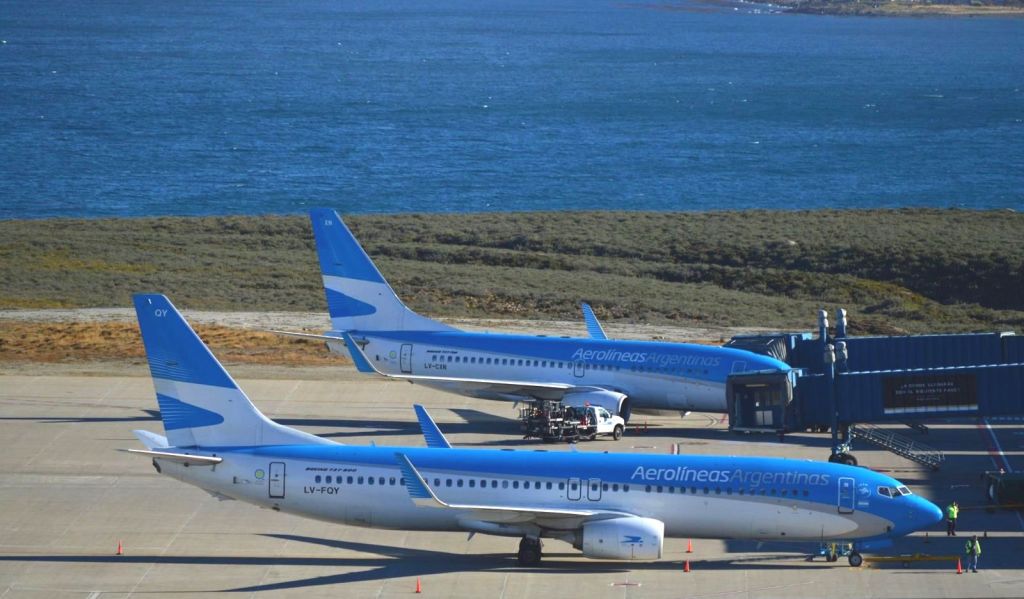
Aerolíneas Argentinas planifica aumentar la conectividad en invierno
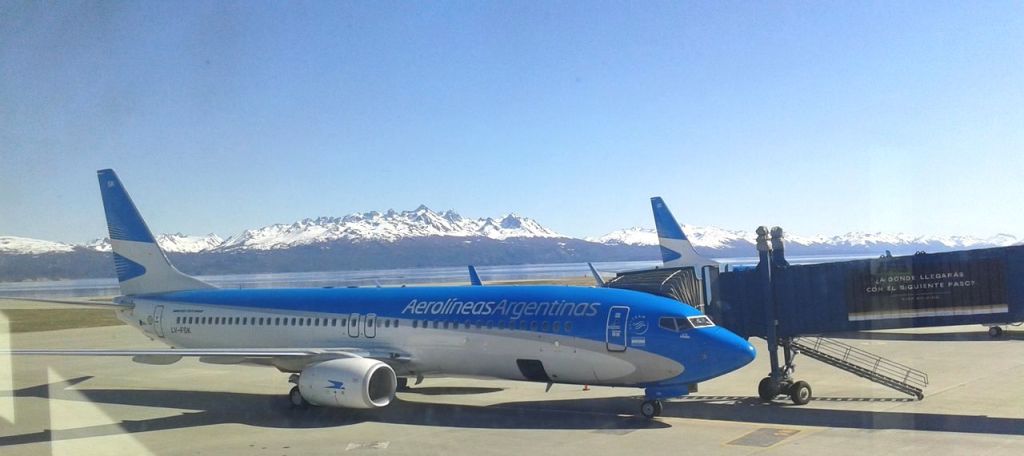
El Gobierno Municipal de Ushuaia, a través de la Secretaría de Turismo y de la delegación Municipal en la Ciudad Autónoma de Buenos Aires (CABA), mantuvieron una reunión con personal directivo de Aerolíneas Argentinas a fin de elaborar políticas en conjuntos para mejorar la conectividad aérea de la ciudad.
Oscar Suoto, Delegado Municipal en CABA, destacó “la predisposición de la aerolínea para consolidar la temporada turística”. La reunión que involucró al Secretario de Turismo, David Ferreyra, al Delegado Municipal de CABA y el Director de Comunicación y Relaciones Institucionales de Aerolíneas Argentinas, Carlos Figueroa, contó además con la presencia del representante de Tolkeyen Patagonia Turismo, Luis Martínez. En la misma, se presentó la necesidad de aumentar la frecuencia de los vuelos a Ushuaia, así como aeronaves preparadas para el traslado de equipamiento deportivo invernal, junto a otras solicitudes surgidas en la cadena de venta del destino turístico. Oscar Suoto ha remarcado que “poder trabajar en conjunto con Aerolíneas Argentinas facilita aspectos logísticos para los proveedores turísticos y permite iniciar la recuperación económica de un sector muy golpeado por la pandemia”.
They seek to improve the Ushuaia connection
Aerolíneas Argentinas plans to increase connectivity in winter
The Municipal Government of Ushuaia, through the Secretariat of Tourism and the Municipal delegation in the Autonomous City of Buenos Aires (CABA), held a meeting with management personnel of Aerolíneas Argentinas in order to develop joint policies to improve air connectivity from the city.
Oscar Suoto, Municipal Delegate in CABA, highlighted «the predisposition of the airline to consolidate the tourist season». The meeting that involved the Secretary of Tourism, David Ferreyra, the Municipal Delegate of CABA and the Director of Communication and Institutional Relations of Aerolíneas Argentinas, Carlos Figueroa, was also attended by the representative of Tolkeyen Patagonia Tourism, Luis Martínez. At the meeting, the need to increase the frequency of flights to Ushuaia was presented, as well as aircraft prepared for the transfer of winter sports equipment, along with other requests arising from the tourist destination’s sales chain. Oscar Suoto has remarked that «being able to work together with Aerolíneas Argentinas facilitates logistical aspects for tourist providers and allows the economic recovery of a sector hit hard by the pandemic».
AW | 2021 03 21 10:34 | AIR TRAFFIC / GOVERNMENT / AIRLINES
Adelantan cancelaciones vuelos por rebrote de Coronavirus
Aerolíneas Argentinas ha cancelado 68 vuelos debido a los rebrotes a nivel mundial y confirman que no habrá viajes de repatriación. El Gobierno de Argentina ha emitido datos oficiales de unos 27.000 turistas en el exterior. Tras un año de que se declarara el Aislamiento Social Preventivo y Obligatorio (ASPO), se adelantaron las cancelaciones de vuelos desde y hacia Argentina. El anuncio de una segunda ola y el miedo a variantes más contagiosas del Coronavirus están haciendo que gobiernos y aerolíneas comiencen a tomar medidas precautorias y restrictivas.
Este Jueves 18/03, desde Aeropuertos Argentina 2000 habían anticipado que las reducciones de vuelos se efectivizarían en Abril 2021. La Decisión Administrativa Nº 219/2021, publicada el 13 de Marzo de 2021, establecía que la Dirección Nacional de Migraciones, la Administración Nacional de Aviación Civil (ANAC) y el Ministerio de Salud debían determinar los cronogramas de vuelos y la cantidad de pasajeros que ingresarían al país.
Aerolíneas Argentinas hasta el momento ha cancelado 68 vuelos: cuarenta correspondientes a 03/2021 y 28 vuelos a 04/2021. De los cancelados de este mes, cinco fueron suprimidos en la ruta Ezeiza hacia Río de Janeiro, San Pablo y Florianópolis. Desde la compañía explicaron que los pasajeros de esos vuelos son reubicados en otras fechas, o en el mismo día si ese destino contara con más de una frecuencia diaria. El resto de los vuelos de Marzo 2021 de Aerolíneas Argentinas que fueron suspendidos iban a partir entre este Domingo 21/03 y el Miércoles 31/03, con destino a Río de Janeiro, San Pablo, Florianópolis, Santiago de Chile, Miami y Madrid. De la misma manera las diferentes compañías aéreas con rutas internacionales continuarán reestructurando sus vuelos, por lo que la sugerencia es entrar en contacto con las líneas aéreas para más información.
Las medidas preventivas que ha continuado lanzando el Gobierno desde Febrero 2021 ha permitido incrementar en un 20%-30% la reducción de salidas al exterior con la Decisión Administrativa Nº 219/2021 emitida por Argentina, lo que ha disminuido frecuencias a México y Europa, Perú, Ecuador, Colombia, Panamá y Chile. Además de aumentar la reducción a Brasil en un 20%, se sumó otro 10% a la de Estados Unidos, alcanzando una supresión de vuelos del 40%.
Sin vuelos repatriación
Actualmente, se encuentran en el exterior alrededor de 110.000 argentinos según datos oficiales, de ellos, 27.000 son turistas, es decir, deberán volver al país en las próximas semanas o meses. Las fronteras siguen abiertas pero, en caso de que la situación sanitaria se complique aún más, serán los mismos pasajeros quienes deban hacerse cargo de todos los costos que conlleve la situación, confirmando desde la Dirección Nacional de Migraciones que no habrá vuelos de repatriación.
Aerolíneas cancel 68 flights
Flight cancellations due to coronavirus outbreak anticipated
Aerolíneas Argentinas has canceled 68 flights due to worldwide outbreaks and confirm that there will be no repatriation trips. The Government of Argentina has issued official data on some 27,000 tourists abroad. After a year of the declaration of the Preventive and Compulsory Social Isolation (ASPO), the cancellations of flights to and from Argentina were advanced. The announcement of a second wave and the fear of more contagious variants of the Coronavirus are causing governments and airlines to begin taking precautionary and restrictive measures.
This Thursday 03/18, from Airports Argentina 2000 had anticipated that the flight reductions would take effect in April 2021. Administrative Decision No. 219/2021, published on March 13, 2021, established that the National Directorate of Migration, the National Administration of Civil Aviation (ANAC) and the Ministry of Health had to determine the flight schedules and the number of passengers that would enter the country.
Aerolíneas Argentinas has so far canceled 68 flights: forty corresponding to 03/2021 and 28 flights to 04/2021. Of those canceled this month, five were eliminated on the Ezeiza route to Rio de Janeiro, São Paulo and Florianópolis. From the company they explained that the passengers of these flights are relocated on other dates, or on the same day if that destination had more than one daily frequency. The rest of the flights in March 2021 of Aerolíneas Argentinas that were suspended were to start between this Sunday 03/21 and Wednesday 03/31, bound for Rio de Janeiro, São Paulo, Florianópolis, Santiago de Chile, Miami and Madrid. In the same way, the different airlines with international routes will continue to restructure their flights, so the suggestion is to contact the airlines for more information.
The preventive measures that the Government has continued to launch since February 2021 have made it possible to increase the reduction of exits abroad by 20% -30% with Administrative Decision No. 219/2021 issued by Argentina, which has decreased frequencies to Mexico and Europe, Peru, Ecuador, Colombia, Panama and Chile. In addition to increasing the reduction to Brazil by 20%, another 10% was added to that of the United States, reaching a reduction of flights of 40%.
No repatriation flights
Currently, around 110,000 Argentines are abroad according to official data, of which 27,000 are tourists, that is, they must return to the country in the coming weeks or months. The borders are still open but, in the event that the health situation becomes even more complicated, it will be the passengers themselves who will have to bear all the costs that the situation entails, confirming from the National Directorate of Migration that there will be no repatriation flights.
Octavo vuelo de Aerolíneas para traer más vacunas de Rusia
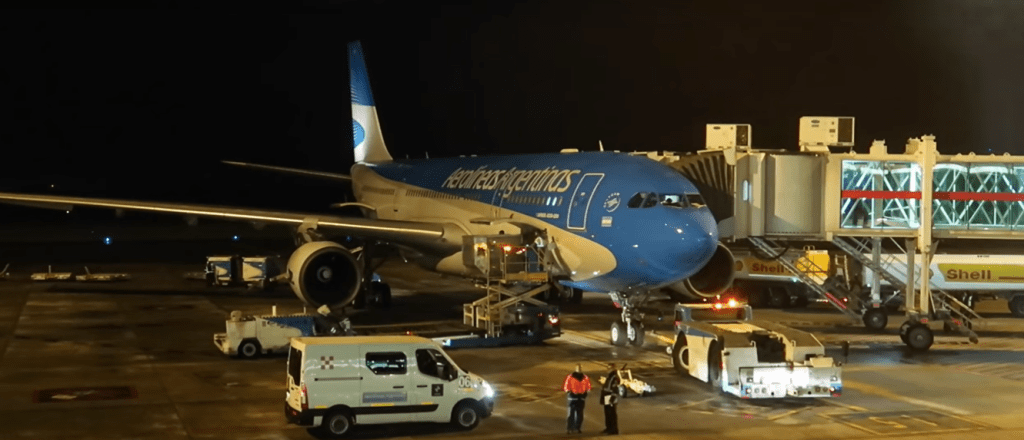
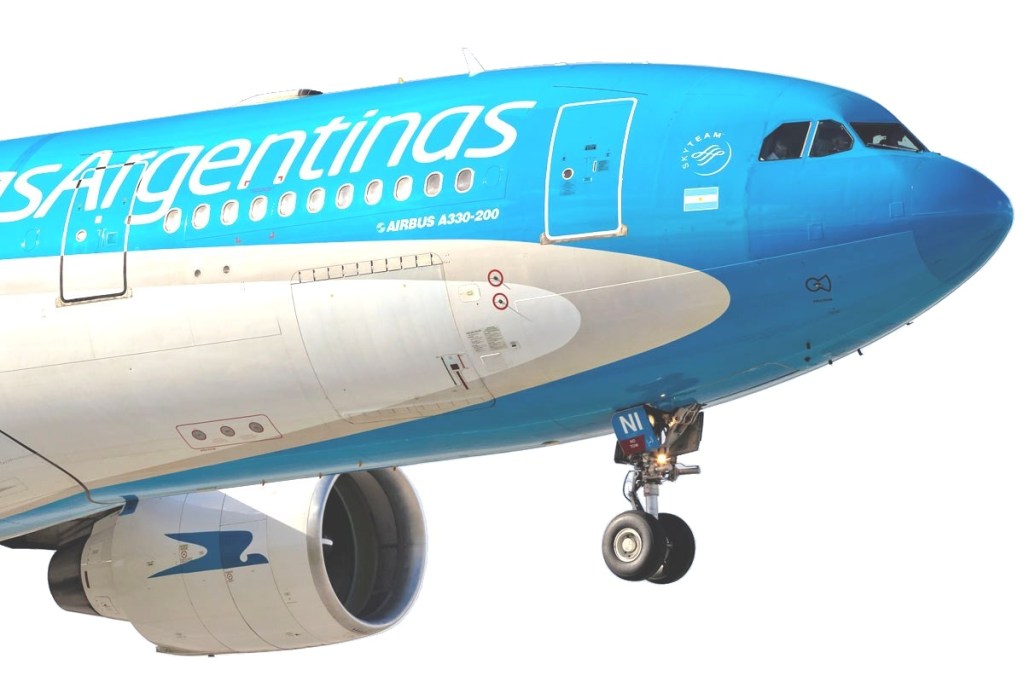
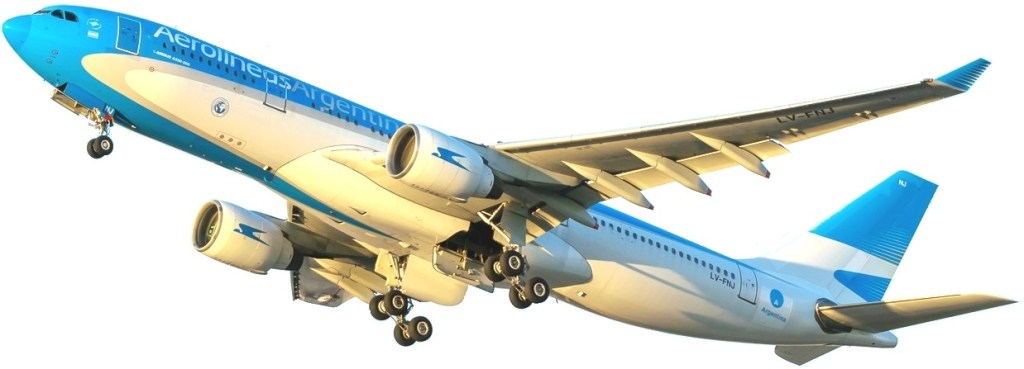
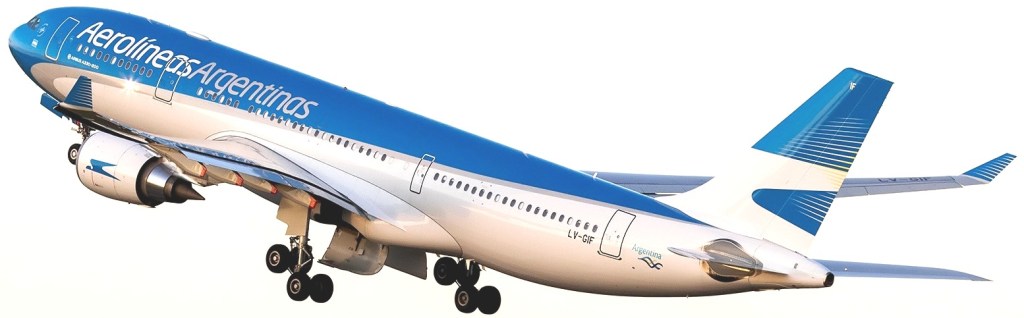
El octavo vuelo de Aerolíneas Argentinas que traerá al país una nueva partida de la vacuna Sputnik V contra el Coronavirus ha despegado esta madrugada rumbo a Moscú en el marco de la octava operación realizada por la compañía aérea hacia la Federación Rusia. El vuelo, a cargo de un Airbus 330-200, matrícula LV-GIF, especialmente preparado para el transporte de carga, bajo el número AR1062, despegó a las 02:29 del Aeropuerto Internacional de Ezeiza y estima su arribo al Aeropuerto Internacional de Moscú/Sheremétievo a la 13:00 hora local rusa [17:00 hs de Argentina].
Operativos Moscú/China
Desde Diciembre 2020, Aerolíneas Argentinas se encuentra realizando operaciones de vuelo especiales con el objetivo de traer vacunas al país. En los siete vuelos completados hacia y desde la capital de la Federación Rusa se trajeron 2.799.000 dosis de Sputnik V. El nuevo operativo se concreta luego de que el Viernes 19/03 arribara el séptimo vuelo desde Moscú. Adicionalmente se ha efectuado un vuelo a Beijing, República Popular China, en el cual vinieron 908.000 dosis de la vacuna producida por Sinopharm. Hasta el momento, la cantidad de vacunas que llegaron al país en vuelos de Aerolíneas Argentinas es de 3.707.000.
El CEO de Aerolíneas Argentinas Pablo Ceriani ha expresado mediante un tuit publicado este 20/03 en la red social en el que indica que «luego de recibir ayer la séptima operación desde Rusia, podemos confirmar que a las 02:30 a.m. despega el octavo vuelo de Aerolíneas con destino a Moscú para traer al país más dosis de la vacuna Sputnik V».
8th flights Aerolíneas for vaccines
Eighth Aerolíneas flight to bring more vaccines from Russia
The eighth Aerolíneas Argentinas flight that will bring to the country a new batch of the Sputnik V vaccine against the Coronavirus has taken off this morning to Moscow as part of the eighth operation carried out by the airline to the Russian Federation. The flight, in charge of an Airbus 330-200, registration LV-GIF, specially prepared for the transport of cargo, under the number AR1062, took off at 02:29 from Ezeiza International Airport and estimates its arrival at Moscow International Airport/Sheremetyevo at 01:00 p.m. Russian local time [05:00 p.m. in Argentina].
Operations Moscow/China
Since December 2020, Aerolíneas Argentinas has been conducting special flight operations with the aim of bringing vaccines to the country. In the seven flights completed to and from the capital of the Russian Federation, 2,799,000 doses of Sputnik V were brought in. The new operation takes place after the arrival of the seventh flight from Moscow on Friday 03/19. Additionally, a flight was made to Beijing, People’s Republic of China, in which 908,000 doses of the vaccine produced by Sinopharm came. So far, the number of vaccines that have arrived in the country on Aerolíneas Argentinas flights is 3,707,000.
The CEO of Aerolíneas Argentinas Pablo Ceriani has expressed through a tweet published this 03/20 on the social network in which he indicates that «after receiving yesterday the seventh operation from Russia, we can confirm that the eighth flight takes off at 02:30 am of Aerolíneas bound for Moscow to bring to the country more doses of the Sputnik V vaccine».
AW | 2021 03 20 15:06 | AIRLINES ROUTES / GOVERNMENT
Hawaiian Airlines enlaza Hawáii con Samoa Americana
La aerolínea Hawaiian Airlines ha restablecido el servicio con Airbus A330-200 sobre Micronesia al reanudar los vuelos desde el Daniel K. Inouye International Airport/HNL de las Islas de Hawáii hacia Pago Pago-Tafuna Internacional Airport/PPG en la Isla de Samoa Americana. Las autoridades del Gobierno de Samoa Americana han establecido el vínculo para reforzar las conexiones en el Océano Pacífico luego de doce meses de interrupciones en el transporte aéreo por causa de la pandemia.
El restablecimiento de la ruta Hawáii-Samoa representa el único enlace aéreo regular entre el territorio estadounidense de Samoa y Hawáii. La aerolínea Hawaiian Airlines ha iniciado en Enero 2021 las negociaciones para reiniciar las operaciones vitales para la región para que la población de ambos países puedan volver a reencontarse, contabilizando alrededor de unos 2.000 residentes varados. Los gobiernos han coordinado con el Gobernador de Samoa Americana para repatriar a los ciudadanos tras las aprobaciones sanitarios vigentes.
Gobiernos y aerolínea continúan estableciendo los parámetros sanitarios vigentes para brindar máxima seguridad al transporte aéreo asegurando que todos los viajes fueran operados bajo protocolos de los CDC.
Hawaii-American Samoa Link
Hawaiian Airlines links Hawaii with American Samoa
Hawaiian Airlines has restored service with Airbus A330-200 over Micronesia by resuming flights from Daniel K. Inouye International Airport/HNL on the Hawaiian Islands to Pago Pago-Tafuna International Airport/PPG on the Island of American Samoa. The authorities of the Government of American Samoa have established the link to strengthen connections in the Pacific Ocean after twelve months of interruptions in air transport due to the pandemic.
The reestablishment of the Hawaii-Samoa route represents the only regular air link between the US territory of Samoa and Hawaii. The Hawaiian Airlines airline began negotiations in January 2021 to restart vital operations for the region so that the population of both countries can reconnect, accounting for around 2,000 stranded residents. Governments have coordinated with the Governor of American Samoa to repatriate citizens following current health approvals.
Governments and the airline continue to establish current sanitary parameters to provide maximum security to air transport, ensuring that all trips were operated under CDC protocols.
Loulou Hawaii-American Samoa
Pili nā Mokulele Hawaiian iā Hawaii me ʻAmelika
Ua hoʻōla hou ʻo Hawaiian Airlines i ka lawelawe me Airbus A330-200 ma luna o Micronesia ma o ka hoʻi hou ʻana i nā mokulele mai Daniel K. Inouye International Airport / HNL ma ko Hawaiʻi Pae ʻĀina a i Pago Pago-Tafuna International Airport / PPG ma ka Mokupuni ʻo American Samoa. Ua hoʻokumu nā luna o ke Aupuni o ʻAmelika ʻAmelika i ka loulou e hoʻoikaika i nā pilina ma ka Moana Pākīpika ma hope o ʻumikūmālua mau mahina o nā kahakaha ma ka lawe ʻana i ka ea ma muli o ke ahulau.
ʻO ke kūkulu hou ʻia ʻana o ke ala ʻo Hawaii-Samoa ka mea kū i ka lewa maʻamau maʻamau ma waena o ka mokuʻāina ʻo US o Samoa a me Hawaiʻi. Ua hoʻomaka ke kūkākūkā ʻana o ka mokulele ʻo Hawaiian Airlines ma Ianuali 2021 e hoʻomaka hou i nā hana nui no ia āpana i hiki ai i ka heluna kanaka o nā ʻāina ʻelua ke hoʻohui hou, e helu ana no ma kahi o 2000 mau kamaʻāina paʻa. Ua hui pū nā aupuni me ke kiaʻāina o ʻAmelika Hui Pū ʻIa e hoʻihoʻi i nā kamaʻāina ma hope o nā ʻae ʻana i ke olakino o kēia wā.
Ke hoʻomau nei nā aupuni a me nā mokulele i nā palena hoʻomaʻemaʻe o kēia manawa e hāʻawi i ka palekana i ka lawe ʻana i ka ea, e hōʻoia ana i ka holo ʻana o nā huakaʻi āpau ma lalo o nā kuʻina CDC.
AW | 2021 03 20 09:00 | GOVERNMENT / AIRLINES / AIR TRAFFIC
Aerolíneas divisan señales de nueva normalidad con plan europeo
Las aerolíneas y la industria hotelera de Europa recibieron la promesa de un regreso gradual a una cierta normalidad, con un plan para aliviar las restricciones de viaje inducidas por el Coronavirus según anunciaron este Miércoles desde la Unión Europea. La rama ejecutiva de la Unión Europea propuso la introducción de certificados digitales que comprobarán que sus titulares han sido vacunados, se han recuperado de la enfermedad o han dado negativo recientemente, por lo que no presentan riesgos significativos para la salud. Los pases tiene como objetivo facilitar los viajes de ocio dentro de la UE y desde fuera del bloque, según un comunicado el miércoles.
La Comisión Europea también reveló un plan para un levantamiento coordinado de los cierres. La hoja de ruta, cuyo objetivo explícito es ayudar a restablecer el turismo, se basará en un sistema de niveles que refleje la situación epidemiológica en cada Estado miembro. El esfuerzo apunta a crear una política unificada, ante algunos Estados miembro dependientes del turismo que amenazan con reabrir unilateralmente a los extranjeros. Incluso con un amplio acuerdo, tomará meses implementar la tecnología. El objetivo es tener el sistema de aprobación de vacunas a mediados de junio, según la propuesta.
Los grupos de aviación acogieron con beneplácito la propuesta, al tiempo que destacaron la urgencia de hacer que el sistema sea operativo a tiempo para la temporada de verano, que generalmente es lucrativa. La Asociación Internacional de Transporte Aéreo y otros grupos de la industria dijeron en una declaración conjunta que los certificados de vacunas en particular eliminan la necesidad de restricciones de viaje.
Las acciones de las aerolíneas han subido en las últimas semanas ante la expectativa de que el despliegue de vacunas y una reducción gradual de los cierres impulsarán las reservas durante épocas de temporada. Un indicador de acciones europeas de ocio y viajes ha recuperado las pérdidas del comienzo de la pandemia y se encuentra en torno a máximos históricos. Deutsche Lufthansa AG ganó 11% a la fecha este año e InterContinental Hotels Group Plc. está al alza 9,8%.
Una portavoz de EasyJet Plc dijo en un correo electrónico que la aerolínea aplaude el plan de la UE: “Dado el progreso continuo del despliegue de la vacuna, debemos asegurarnos de que haya un enfoque basado en el riesgo y en datos para eliminar las restricciones, con el objetivo de regresar a los viajes sin restricciones donde sea posible y seguro”.
El Consejo Mundial de Viajes y Turismo, con sede en Londres, instó al Parlamento Europeo a adoptar la propuesta del certificado de vacuna “con urgencia”, mientras que la alianza del Manifiesto Europeo del Turismo, que representa a más de 60 organizaciones de viajes, instó a la UE a trabajar con la Organización Mundial de la Salud y otros organismos internacionales para allanar el camino hacia el reinicio de los viajes internacionales.
European plan European aviation
Airlines spot signs of a new normal with a European plan
Europe’s airlines and hotel industry received the promise of a gradual return to a certain normalcy, with a plan to ease travel restrictions induced by the Coronavirus as announced this Wednesday from the European Union. The executive branch of the European Union proposed the introduction of digital certificates that will verify that their holders have been vaccinated, have recovered from the disease or have recently tested negative, so they do not present significant health risks. The passes are intended to facilitate leisure travel within the EU and from outside the bloc, according to a statement on Wednesday.
The European Commission also unveiled a plan for a coordinated lifting of the closures. The roadmap, the explicit objective of which is to help restore tourism, will be based on a tier system that reflects the epidemiological situation in each Member State. The effort aims to create a unified policy, in the face of some tourism-dependent member states that threaten to unilaterally reopen to foreigners. Even with a broad agreement, it will take months to implement the technology. The goal is to have the vaccine approval system by mid-June, according to the proposal.
Aviation groups welcomed the proposal, while highlighting the urgency of making the system operational in time for the generally lucrative summer season. The International Air Transport Association and other industry groups said in a joint statement that vaccination certificates in particular eliminate the need for travel restrictions.
Airline stocks have risen in recent weeks on the expectation that vaccine rollouts and a gradual reduction in closures will boost bookings during the season. An indicator of European leisure and travel stocks has recovered the losses from the beginning of the pandemic and is around all-time highs. Deutsche Lufthansa AG gained 11% to date this year and InterContinental Hotels Group Plc. it is up 9.8%.
A spokeswoman for EasyJet Plc said in an email that the airline applauds the EU plan: «Given the continued progress of vaccine deployment, we must ensure that there is a data and risk-based approach to removing restrictions, with the goal of returning to unrestricted travel where possible and safe».
The London-based World Travel and Tourism Council urged the European Parliament to adopt the vaccine certificate proposal «urgently», while the European Tourism Manifesto alliance, representing more than 60 travel organizations, urged the EU to work with the World Health Organization and other international bodies to pave the way for the restart of international travel.
Aerolíneas internacionales operan actualmente vuelos a Maldivas
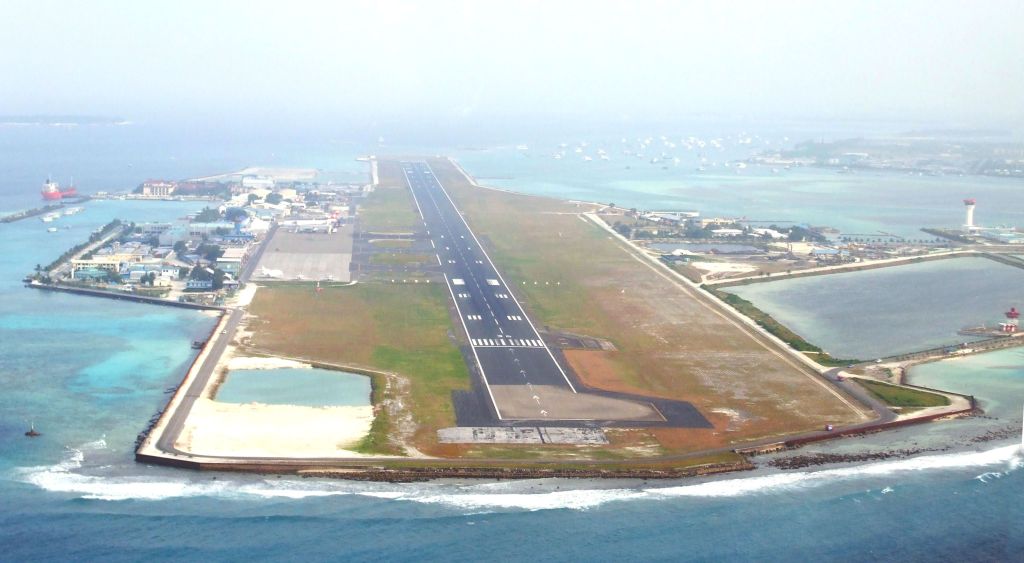
Las Islas Maldivas han comunicado que se encuentran incrementando el número de tráfico de pasajeros después de que el Gobierno ha abierto los vuelos internacionales a mitad de año 2020. Las últimas estadísticas publicadas por el Ministerio de Turismo de las Islas Madivas revelaron que varias aerolíneas internacionales están aumentando la frecuencia de vuelos a la nación insular, a la luz de la creciente demanda de visitantes. Actualmente se contabiliza una treinta aerolíneas internacionales están operando vuelos a Maldivas.
Mientras Maldivas dejó de emitir visas a su llegada el 27 de Marzo de 2020, casi cuatro meses después el Gobierno reabrió las fronteras para los viajes internacionales, tras lo cual Qatar Airways fue la primera aerolínea en iniciar operaciones de vuelo a la nación insular. Emirates Airline ha transportado el mayor número de pasajeros a las Maldivas con 48.098, en 540 vuelos. En segundo lugar Qatar Airways con 446 vuelos y 34.436 pasajeros, seguido de IndiGo con 496 vuelos y 32.248 pasajeros. Otras aerolíneas que operan vuelos a Maldivas incluyen: Go Air con 490 vuelos y 30.370 pasajeros, Aeroflot Russian Airlines con 150 vuelos y 27.240 pasajeros, Turkish Airlines con 88 vuelos y 11.104 pasajeros, flydubai con 174 vuelos y 8.889 pasajeros, Lufthansa German Airlines con 58 vuelos y 6.284 pasajeros, Azur Air Rusia con 22 vuelos y 5.833 pasajeros, Austrian Airlines con 44 vuelos y 4.888 pasajeros, Edelweiss Air con 50 vuelos y 4.881 pasajeros, Condor Airlines con 44 vuelos y 4.495 pasajeros, Etihad Airways con 112 vuelos y 3.551 pasajeros, Sri Lankan Airlines con 228 vuelos y 1.842 pasajeros, Air India con 44 vuelos y 1.829 pasajeros, British Airways con 62 vuelos y 1.791 pasajeros, Lot Polish Airlines con ocho vuelos y 1.088 pasajeros, Silk Air con 44 vuelos y 1.077 pasajeros, Gulf Air con 18 vuelos y 209 pasajeros, Air France con seis vuelos y 166 pasajeros, Air Seychelles con seis vuelos y 72 passengers, mientras que otros 488 pasajeros aterrizaron en Maldivas en otras aerolíneas. Desde que se reabrieron las fronteras de la aerolínea nacional del país, Maldivas también ha transportado a 6.395 pasajeros. Además, algunas de las aerolíneas internacionales que operan vuelos fletados a Maldivas incluyen Air Astana, Azur Air Ukraine, Gullivair, Ukraine International, Scat Airlines, Uzbekistán Airways, Vistara Airlines, Blue Air y Garuda Indonesia Airlines.
Maldivas recibió el Jueves 18/03 a 247.138 turistas, de los cuales las mayores llegadas se registraron desde la India, aportando el 23,8 por ciento del total de llegadas. En segundo lugar se produce desde la Federación Rusia que aporta el 21,7 por ciento de la tasa total de llegadas, seguida de Ucrania, que acumula el 6,5 por ciento del total de arribos. Las cifras de llegada de turistas de los principales mercados de origen para el Miércoles 18/03 representan: 57.965 visitantes de la India, 52.902 visitantes de Rusia, 15.940 visitantes de Ucrania, 10.488 visitantes de Kazajstán, 10.393 visitantes de Alemania, 8.394 visitantes procedentes de Rumania, 6.576 visitantes de la República Checa, 6.185 visitantes de Francia, 5.950 visitantes de EE.UU., 5.931 visitantes procedentes de Suiza. Las Islas Maldivas tiene como objetivo acoger a 1,5 millones de llegadas de turistas este año en curso.
Maldives increases flights
International airlines currently operate flights to Maldives
The Maldives Islands have reported that they are increasing the number of passenger traffic after the Government has opened international flights in the middle of 2020. The latest statistics published by the Madivas Islands Ministry of Tourism revealed that several international airlines are increasing the frequency of flights to the island nation, in light of the increasing demand of visitors. Currently there are thirty international airlines operating flights to Maldives.
While the Maldives stopped issuing visas upon arrival on March 27, 2020, almost four months later the Government reopened the borders for international travel, after which Qatar Airways was the first airline to begin flight operations to the island nation. Emirates Airline has carried the largest number of passengers to the Maldives with 48,098, on 540 flights. In second place Qatar Airways with 446 flights and 34,436 passengers, followed by IndiGo with 496 flights and 32,248 passengers. Other airlines operating flights to Maldives include: Go Air with 490 flights and 30,370 passengers, Aeroflot Russian Airlines with 150 flights and 27,240 passengers, Turkish Airlines with 88 flights and 11,104 passengers, flydubai with 174 flights and 8,889 passengers, Lufthansa German Airlines with 58 flights and 6,284 passengers, Azur Air Russia with 22 flights and 5,833 passengers, Austrian Airlines with 44 flights and 4,888 passengers, Edelweiss Air with 50 flights and 4,881 passengers, Condor Airlines with 44 flights and 4,495 passengers, Etihad Airways with 112 flights and 3,551 passengers, Sri Lankan Airlines with 228 flights and 1,842 passengers, Air India with 44 flights and 1,829 passengers, British Airways with 62 flights and 1,791 passengers, Lot Polish Airlines with eight flights and 1,088 passengers, Silk Air with 44 flights and 1,077 passengers, Gulf Air with 18 flights and 209 passengers, Air France with six flights and 166 passengers, Air Seychelles with six flights and 72 passengers, while another 488 passengers landed in Maldives on other airlines. Since the borders of the country’s national airline were reopened, the Maldives has also carried 6,395 passengers. Also, some of the international airlines operating chartered flights to Maldives include Air Astana, Azur Air Ukraine, Gullivair, Ukraine International, Scat Airlines, Uzbekistan Airways, Vistara Airlines, Blue Air, and Garuda Indonesia Airlines.
Maldives received 247,138 tourists on Thursday 03/18, of which the largest arrivals were from India, contributing 23.8 percent of total arrivals. In second place, it comes from the Russian Federation, which contributes 21.7 percent of the total arrival rate, followed by Ukraine, which accumulates 6.5 percent of total arrivals. The tourist arrival figures for the main markets of origin for Wednesday 03/18 represent: 57,965 visitors from India, 52,902 visitors from Russia, 15,940 visitors from Ukraine, 10,488 visitors from Kazakhstan, 10,393 visitors from Germany, 8,394 visitors from Romania, 6,576 visitors from the Czech Republic, 6,185 visitors from France, 5,950 visitors from the US, 5,931 visitors from Switzerland. The Maldives Islands is aiming to host 1.5 million tourist arrivals this current year.
Aprueban presupuesto 2021 para Aerolíneas Argentinas
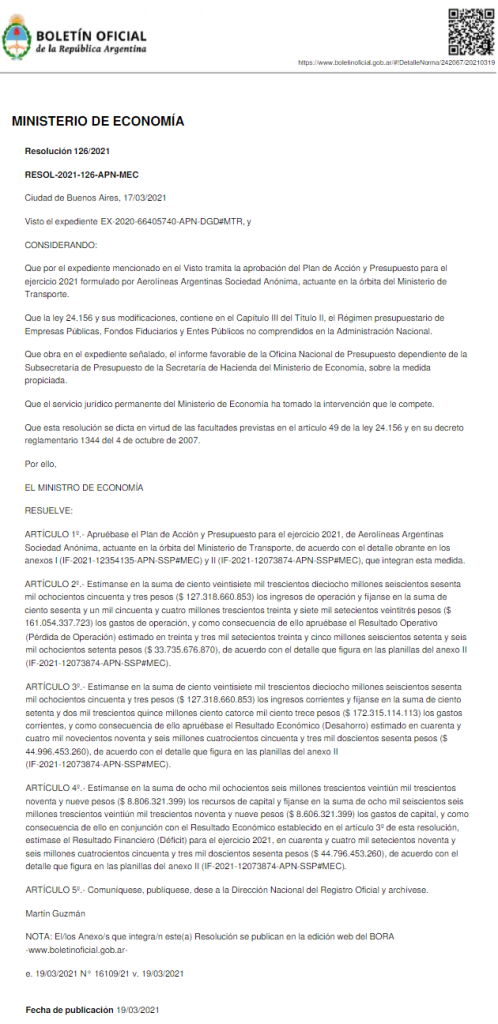
El Gobierno de Argentina ha aprobado este Viernes 19/03 el presupuesto para Aerolíneas Argentinas para el año 2021. Se prevé que los ingresos corrientes de este año alcanzarán a AR$ 127.318.660.853 millones de Pesos, mientras que los gastos corrientes serán de AR$ 172.315.114.113 millones de Pesos. Aerolíneas Argentinas registrará este año un déficit superior a los AR$ 44.000 millones de Pesos, de acuerdo con el Plan de Acción y Presupuesto para el ejercicio 2021 de la línea aérea.
El Ministerio de Economía, a través de la Resolución Nº 126/2021 que fue publicada este 19/03 en el Boletín Oficial, estableció cuáles serán los resultados financieros de este año de la compañía estatal. Las proyecciones económicas estiman en la suma de AR$ 127.318.660.853 millones de Pesos los ingresos de operación y en AR$ 161.054.337.723 millones de Pesos los gastos de operación, y como consecuencia de ello aprobó el Resultado Operativo de AR$ 33.735.676.870 millones de Pesos en pérdidas operativas.
Asimismo, proyectó que los ingresos corrientes de este año alcanzarán a AR$ 127.318.660.853 millones de pesos, mientras que los gastos corrientes serán de AR$ 172.315.114.113 millones de Pesos, con un Resultado Económico (desahorro) de AR$ 44.996.453.260 millones de Pesos. Los recursos de capital fueron estimados en AR$ 8.806.321.399 millones de Pesos y los gastos de capital en la misma suma, y como consecuencia de ello en conjunción con el Resultado Económico, proyectó el Resultado Financiero (Déficit) para el ejercicio 2021, en AR$ 44.796.453.260 millones de Pesos.
Antes de la pandemia, el presidente de Aerolíneas, Pablo Ceriani, señaló que la empresa necesitaría US$ 700 millones de Dólares para hacer frente a gastos corrientes y para renegociar pasivos que habían quedado de la administración anterior, durante la cual la compañía tuvo tres presidentes: Isela Costantini, Mario Dell Acqua y Luis Malvido. Pero con la pandemia, los aviones dejaron de volar el 20 de Marzo de 2020 y solo se realizaron algunos vuelos para repatriar argentinos que habían quedado varados en el exterior y para traer insumos médicos desde China. Durante 2020, Aerolíneas recibió aportes del Tesoro Nacional por AR$ 45.076 millones de Pesos, en el peor año de la aviación comercial en todo el mundo, como consecuencia de la pandemia y las medidas de aislamiento. Ante esa situación, la compañía aplicó una serie de medidas de ajuste, como suspensiones a un tercio del personal y jubilaciones anticipadas.
El decisión más importante fue la la fusión entre Aerolíneas Argentinas y Austral Líneas Aéreas, cuando la compañía propuso a los empleados de esta última compañía mantener las fuentes laborales y los salarios, pero no así la antigüedad ni el escalafón. Desde fines de 2015, la plantilla de empleados de Aerolíneas y sus empresas controladas Austral, JetPaq, Optar y Aerohandling superan los 12.000 empleados.
Government approves budget Aerolíneas
2021 budget approved for Aerolíneas Argentinas
The Government of Argentina has approved this Friday 03/19 the budget for Aerolineas Argentinas for the year 2021. Current revenues for this year are expected to reach AR$ 127,318,660,853 million Pesos, while current expenses will be AR$ 172,315,114,113 million Pesos. Aerolíneas Argentinas will register this year a deficit of more than AR$ 44,000 million Pesos, according to the Action Plan and Budget for fiscal year 2021 of the airline.
The Ministry of Economy, through Resolution No. 126/2021 that was published this 03/19 in the Official Gazette, established what will be the financial results of this year for the state company. The economic projections estimate the sum of AR$ 127,318,660,853 million pesos for operating income and AR$ 161,054,337,723 million Pesos for operating expenses, and as a result, it approved the Operating Result of AR$ 33,735,676,870 million Pesos in operating losses.
Likewise, it projected that current income for this year will reach AR$ 127,318,660,853 million Pesos, while current expenses will be AR$ 172,315,114,113 million Pesos, with an Economic Result (dissaving) of AR$ 44,996,453,260 millions of Pesos. Capital resources were estimated at AR$ 8,806,321,399 million Pesos and capital expenditures in the same amount, and as a consequence of this, in conjunction with the Economic Result, it projected the Financial Result (Deficit) for fiscal year 2021, in AR$ 44,796,453,260 million Pesos.
Before the pandemic, the president of Airlines, Pablo Ceriani, pointed out that the company would need US$ 700 million Dollars to meet current expenses and to renegotiate liabilities that had remained from the previous administration, during which the company had three presidents: Isela Costantini, Mario Dell Acqua and Luis Malvido. But with the pandemic, the planes stopped flying on March 20, 2020 and only a few flights were made to repatriate Argentines who had been stranded abroad and to bring medical supplies from China. During 2020, Aerolíneas received contributions from the National Treasury for AR$ 45,076 million Pesos, in the worst year of commercial aviation in the world, as a result of the pandemic and isolation measures. Faced with this situation, the company applied a series of adjustment measures, such as suspensions for a third of the staff and early retirements.
The most important decision was the merger between Aerolíneas Argentinas and Austral Líneas Aéreas, when the company proposed to the employees of the latter company to keep their sources of employment and salaries, but not their seniority or rank. Since the end of 2015, the workforce of Aerolíneas and its controlled companies Austral, JetPaq, Optar and Aerohandling have exceeded 12,000 employees.
Kazajstán amplía conexiones con España y Estados Unidos
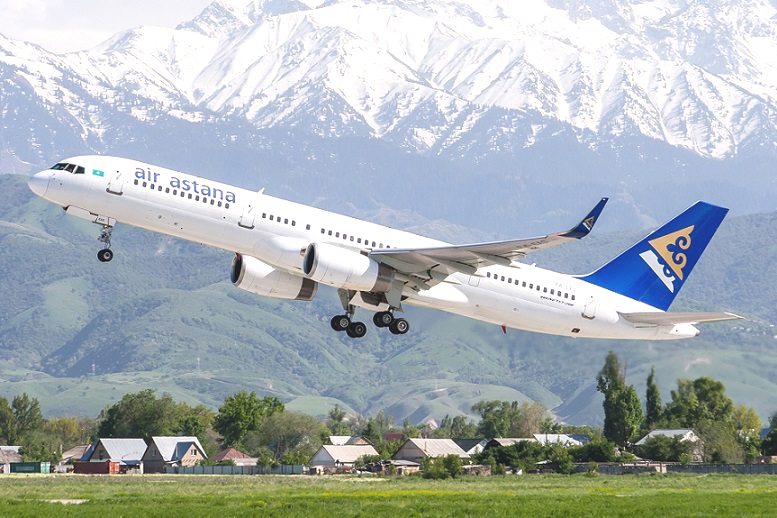
Una vez que las aerolíneas comerciales de Kazajstán comiencen a ofrecer vuelos directos regulares a España, la región del Caspio establecerá más conexiones con Europa. La Comisión del Comité de Aviación Civil de Kazajstán de la Administración de Aviación de Kazajstán (KAA) ha anunciado que ha firmado un acuerdo de tráfico aéreo entre los dos países para establecer una base jurídica para efectuar vuelos directos entre Kazajstán y España. Actualmente, Air Astana posee cuatro vuelos directos a la semana a Madrid, pero el nuevo acuerdo aumenta el número de vuelos de pasajeros a siete por semana. Los vuelos regulares que conectan el Aeropuerto Internacional Madrid Barajas/Adolfo Suárez para unir Nur-Sultan y Almaty. El servicio de prensa del Comité dijo: “Las aerolíneas designadas por ambas partes tienen derecho a utilizar cualquier tipo de aeronave para operar siete vuelos regulares de pasajeros y conjuntos cada semana, y a utilizar cualquier tipo de aeronave para operar siete vuelos regulares de carga cada semana”.
Además, las dos aerolíneas también se beneficiarán de acuerdos de código compartido entre sí y con terceros. Los vuelos de código compartido son vuelos comercializados por una aerolínea y operados por otra aerolínea. La aparición de vuelos de código compartido es un acuerdo alcanzado entre aerolíneas, es decir, la venta mutua de asientos en los vuelos de las demás, con el fin de brindar a los pasajeros más opciones de destino.
El anuncio del Comité de Aviación de Kazajstán se hizo después de los recientes cambios provocados por el acuerdo firmado entre Kazajstán y Japón. A principios de Marzo 2021, la Comisión de Aviación Civil de Kazajstán eligió a Air Astana para operar Nur Sultan y Tokio, que iniciarán alrededor de catorce vuelos por semana operaciones mitad de 2021.
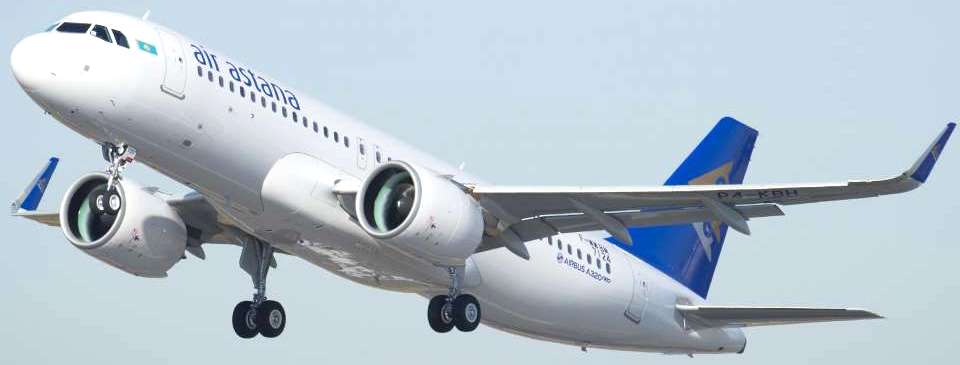
Para unirse a la lista de los 30 países/regiones más atractivos para los turistas, el Gobierno de Kazajstán está trabajando arduamente para expandir la accesibilidad al transporte del país más grande y la economía más grande de Asia Central. Al mismo tiempo, volar al extranjero se ha vuelto cada vez más realista entre los residentes y ciudadanos de la República de Kazajstán. Air Astana está mejorando su flota de aviones para adaptarla a los estándares de la aviación occidental, especialmente los de Estados Unidos.
Kazajstán-Estados Unidos
El Presidente Nursultan Nazarbayev visitó los Estados Unidos en Enero de 2018, firmó un acuerdo de US$ 2.5 mil millones con Boeing, que incluía tres 787 Dreamliner. El primer Dreamliner se entregará a Air Astana en 2022. Al mismo tiempo, la empresa espera establecer vínculos directos con Singapur, Shanghai y Nueva York.
Funcionarios en Astana Airlines dijeron que actualmente se está elaborando un acuerdo que cubre el tráfico aéreo entre Estados Unidos y Kazajstán. Con este fin, Air Astana y la Comisión de Aviación Civil primero deben someterse a una auditoría por parte de la autoridad de aviación de Estados Unidos para garantizar el cumplimiento de las normas de seguridad de la aviación. Las perspectivas de volar hacia Estados Unidos podrían efectivizarse en 2021. Una vez que Kazajstán comience a operar vuelos directos a los Estados Unidos, se convertirá en el segundo país del Caspio después de Azerbaiyán, utilizando Dreamliner para volar directamente a los Estados Unidos.
Kazakhstan expands connections Spain/United States
Kazakhstan expands connections with Spain and United States
Once Kazakhstan’s commercial airlines start offering regular direct flights to Spain, the Caspian region will establish more connections with Europe. The Commission of the Kazakh Civil Aviation Committee of the Kazakhstan Aviation Administration (KAA) has announced that it has signed an air traffic agreement between the two countries to establish a legal basis for direct flights between Kazakhstan and Spain. Air Astana currently has four direct flights a week to Madrid, but the new agreement increases the number of passenger flights to seven a week. Regular flights connecting Madrid Barajas/Adolfo Suárez International Airport to connect Nur-Sultan and Almaty. The Committee’s press service said: “The airlines designated by both parties have the right to use any type of aircraft to operate seven scheduled passenger and joint flights each week, and to use any type of aircraft to operate seven scheduled cargo flights each week”.
In addition, the two airlines will also benefit from codeshare agreements with each other and with third parties. Codeshare flights are flights marketed by one airline and operated by another airline. The appearance of codeshare flights is an agreement reached between airlines, that is, the mutual sale of seats on each other’s flights, in order to provide passengers with more destination options.
The announcement by the Kazakh Aviation Committee was made after recent changes brought about by the agreement signed between Kazakhstan and Japan. At the beginning of March 2021, the Civil Aviation Commission of Kazakhstan chose Air Astana to operate Nur Sultan and Tokyo, which will begin around fourteen flights per week operations mid-2021.
To join the list of the 30 most attractive countries/regions for tourists, the Government of Kazakhstan is working hard to expand the transportation accessibility of the largest country and the largest economy in Central Asia. At the same time, flying abroad has become increasingly realistic among residents and citizens of the Republic of Kazakhstan. Air Astana is upgrading its aircraft fleet to bring it up to Western aviation standards, especially those of the United States.
Kazakhstan-United States
President Nursultan Nazarbayev visited the United States in January 2018, signed a US$ 2.5 billion deal with Boeing, which included three 787 Dreamliners. The first Dreamliner will be delivered to Air Astana in 2022. At the same time, the company hopes to establish direct links with Singapore, Shanghai and New York.
Officials at Astana Airlines said an agreement covering air traffic between the United States and Kazakhstan is currently being worked out. To this end, Air Astana and the Civil Aviation Commission must first undergo an audit by the United States aviation authority to ensure compliance with aviation security regulations. Prospects of flying to the United States could be realized in 2021. Once Kazakhstan begins operating direct flights to the United States, it will become the second Caspian country after Azerbaijan, using Dreamliner to fly directly to the United States.
Қазақстан байланыстарды кеңейтеді
Қазақстан Испаниямен және АҚШ-пен байланысты кеңейтеді
Қазақстанның коммерциялық авиакомпаниялары Испанияға тұрақты рейстер ұсына бастағаннан кейін, Каспий аймағы Еуропамен көбірек байланыс орнатады. Қазақстандық авиация әкімшілігінің (KAA) Қазақ азаматтық авиация комитетінің комиссиясы екі ел арасында әуе қатынасы туралы келісімге Қазақстан мен Испания арасындағы тікелей рейстердің құқықтық негіздерін құру туралы келісімге қол қойғаны туралы хабарлады. Қазіргі уақытта Эйр Астана аптасына Мадридке төрт рейсті жүзеге асырады, бірақ жаңа келісімде жолаушылар рейсі аптасына жетіге дейін көбейеді. Мадрид Барахас/Адольфо Суарес халықаралық әуежайын байланыстыратын тұрақты рейстер Нұр-Сұлтан мен Алматы қалаларын байланыстырады. Комитеттің баспасөз қызметі: «Екі тарап та тағайындаған авиакомпаниялар апта сайын жоспарланған жеті жолаушы және бірлескен рейстерді орындау үшін кез-келген типтегі әуе кемелерін пайдалануға, сондай-ақ апта сайын жеті жоспарлы жүк рейстерін орындау үшін кез-келген типтегі әуе кемелерін пайдалануға құқылы».
Сонымен қатар, екі авиакомпания бір-бірімен және үшінші тұлғалармен кодресті келісуден де ұтады. Codeshare рейстері – бұл бір авиакомпания сататын және басқа авиакомпания жүзеге асыратын рейстер. Codeshare рейстерінің пайда болуы – бұл әуе компаниялары арасында жасалған келісім, яғни жолаушыларға көбірек баратын жолдарды ұсыну мақсатында бір-бірінің рейстеріндегі орындарды өзара сату.
Қазақстандық авиация комитетінің хабарламасы Қазақстан мен Жапония арасында жасалған келісім нәтижесінде болған соңғы өзгерістерден кейін жасалды. 2021 жылдың наурыз айының басында Қазақстанның Азаматтық авиация комиссиясы Эйр Астананы Нұр Сұлтан» мен Токионы пайдалану үшін таңдады, олар 2021 жылдың ортасында аптасына он төрт рейс бастайды.
Туристер үшін ең тартымды 30 елдің/аймақтардың тізіміне кіру үшін Қазақстан Үкіметі Орталық Азиядағы ең ірі елдің және ең ірі экономиканың көлікке қол жетімділігін кеңейту үшін көп жұмыс істейді. Сонымен қатар, шетелге ұшу Қазақстан Республикасының тұрғындары мен азаматтары арасында барған сайын нақты бола бастады. Эйр Астана әуе кемелерінің паркін батыстық авиация стандарттарына, әсіресе АҚШ авиациясының стандарттарына сәйкестендіру үшін жаңартуда.
Қазақстан-Америка Құрама Штаттары
Президент Нұрсұлтан Назарбаев 2018 жылдың қаңтарында АҚШ-қа барып, Boeing компаниясымен 2,5 миллиард долларлық келісімге қол қойды, оның құрамына үш 787 Dreamliner кірді. Алғашқы Dreamliner 2022 жылы Эйр Астанаға жеткізіледі. Сонымен қатар, компания Сингапур, Шанхай және Нью-Йоркпен тікелей байланыс орнатуға үміттенеді.
Астана әуе жолдары компаниясының ресми өкілдері қазіргі уақытта АҚШ пен Қазақстан арасындағы әуе қатынасын қамтитын келісім әзірленіп жатқанын айтты. Осы мақсатта алдымен Эйр Астана мен Азаматтық авиация комиссиясы авиация қауіпсіздігі ережелерінің сақталуын қамтамасыз ету үшін Америка Құрама Штаттарының авиация органының тексерісінен өтуі керек. Америка Құрама Штаттарына ұшудың болашағы 2021 жылы жүзеге асырылуы мүмкін. Қазақстан АҚШ-қа тікелей рейстер жасай бастағаннан кейін, Америка Құрама Штаттарына тікелей ұшу үшін Dreamliner көмегімен Әзірбайжаннан кейінгі екінші Каспий елі болады.
Aerolínea portuguesa solicita otras ayudas complementarias
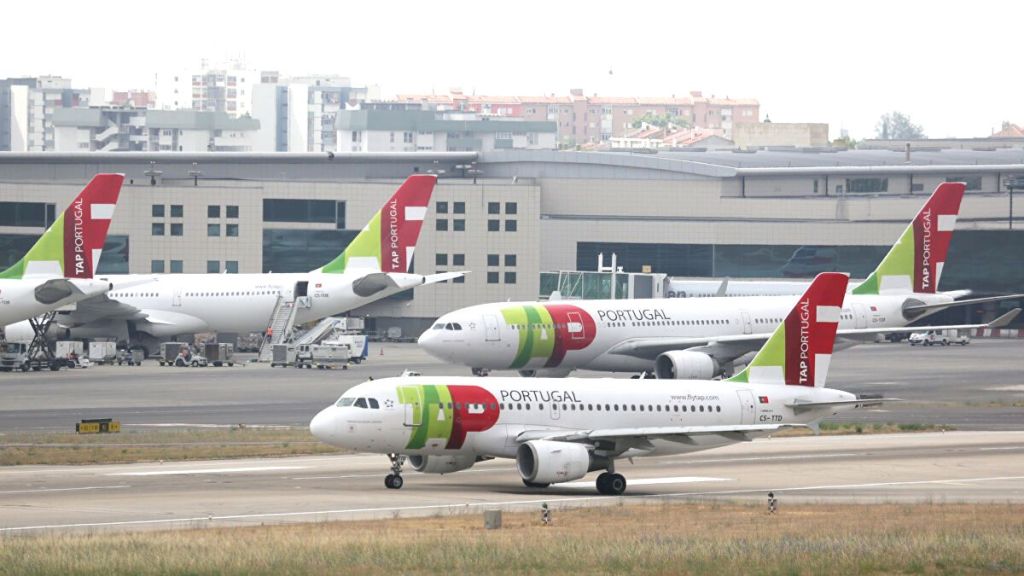
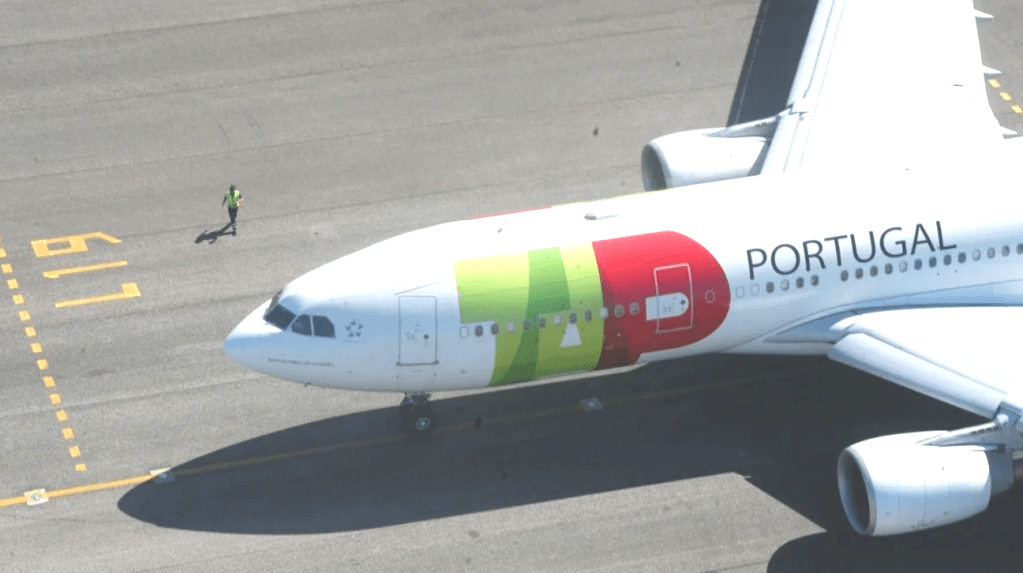
El Gobierno Portugal está buscando la aprobación de la Comisión Europea (CE) para un nuevo paquete de ayudas para la aerolínea portuguesa TAP Air Portugal por un monto de € 460 millones de Euros. TAP Air Portugal había presentado su plan de reestructuración ante la Comisión Europea y el Parlamento de Portugal con el fin de conseguir viabilidad a la aerolínea para la obtención de crédito en ayudas para hacer frente a la situación financiera delicada del sector de la aviación comercial.
Reestructuración en TAP Air Portugal
La compañía estima que el plan de reestructuración significaría la reducción de su flota y de costos laborales con las consiguientes reducciones de personal estimados en 3.600 personas, 500 pilotos, 750 sobrecargos, 750 trabajadores de tierra fueran despedidas de un total de 10.600 trabajadores, más otros 1.600 contratos que no serán renovados. Estas medidas generarían ahorros por € 187.5 millones de Euros al año. La flota de la compañía ha sido ajustada a la nueva demanda, sufriendo una disminución del 20% en Diciembre 2020 de 108 a 88 aeronaves.
Anteriormente TAP Air Portugal había solicitado una primer ayuda que había sido aprobada por la Comunidad Europea y el Gobierno de Portugal inyectó ayudas por € 1.200 millones de Euros. Pero la aerolínea portuguesa necesita un nuevo apoyo gubernamental para concretar la reestructuración.
TAP Air Portugal seeks Government support
Portuguese airline requests other complementary aid
The Portuguese Government is seeking approval from the European Commission (EC) for a new aid package for the Portuguese airline TAP Air Portugal in the amount of € 460 million Euros. TAP Air Portugal had submitted its restructuring plan to the European Commission and the Portuguese Parliament in order to make the airline viable in obtaining aid credit to face the delicate financial situation of the commercial aviation sector.
Restructuring at TAP Air Portugal
The company estimates that the restructuring plan would mean the reduction of its fleet and labor costs with the consequent reductions in personnel estimated at 3,600 people, 500 pilots, 750 flight attendants, 750 ground workers would be laid off out of a total of 10,600 workers, plus others. 1,600 contracts that will not be renewed. These measures would generate savings of € 187.5 million euros per year. The company’s fleet has been adjusted to the new demand, suffering a 20% decrease in December 2020 from 108 to 88 aircraft.
Previously TAP Air Portugal had requested a first aid that had been approved by the European Community and the Government of Portugal injected aid for € 1,200 million Euros. But the Portuguese airline needs new government support to complete the restructuring.
Filipinas impone restricciones de entrada a aeropuertos
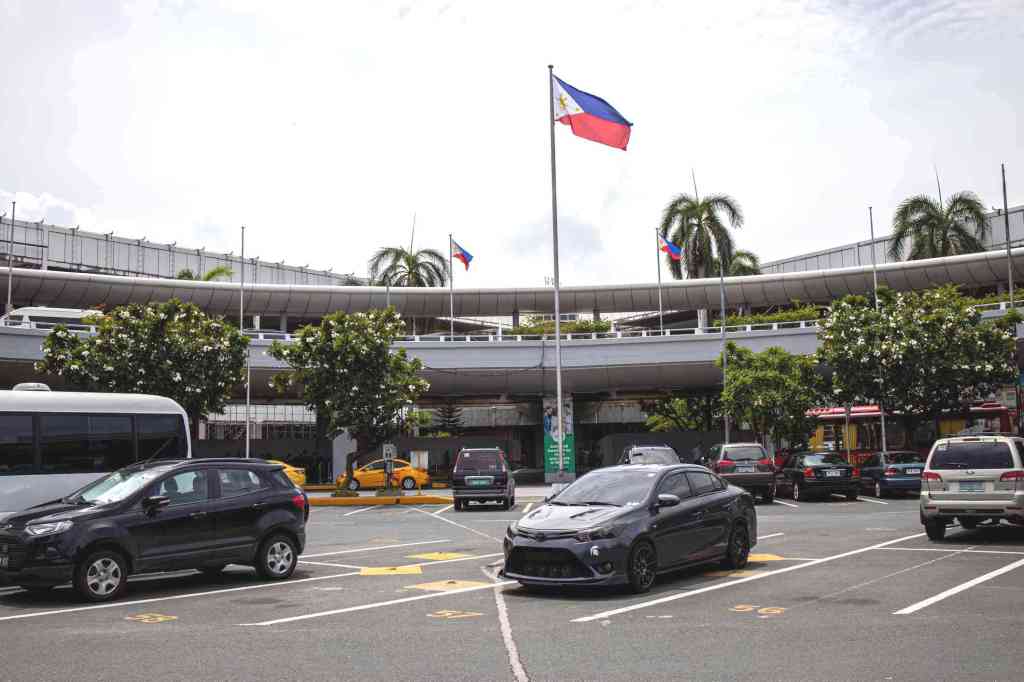
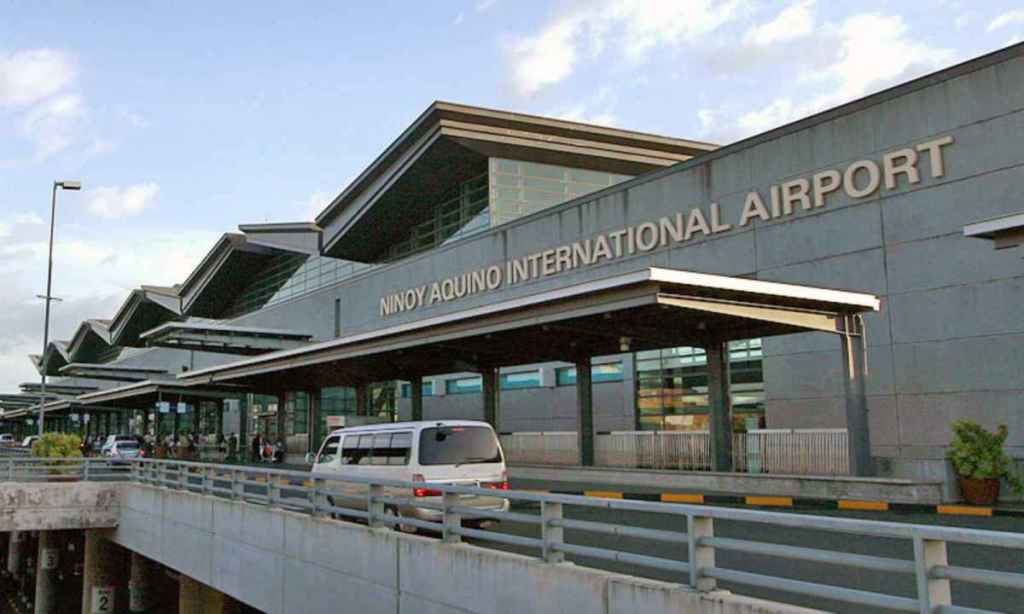
El Gobierno de Filipinas ha decidido prohibir temporalmente la entrada de extranjeros y limitar la entrada de filipinos que regresan al aeropuerto internacional de Manila a 1.500 diarios mientras lucha por contener un alarmante aumento de las infecciones por coronavirus. Un organismo gubernamental que se ocupa de la pandemia dijo que las restricciones de viaje de un mes comenzarían el sábado y tendrían como objetivo evitar la propagación al país de cepas de coronavirus de otros países que se cree que son más contagiosas. Entre los que se les permitirá la entrada limitada se encuentran los trabajadores filipinos de origen. Philippine Airlines dijo que anunciaría algunas cancelaciones de vuelos para cumplir con la restricción temporal.
Manila y otras ciudades de la región capitalina reimpusieron toques de queda nocturnos de siete horas durante dos semanas a partir del Lunes 15/03 y cerraron decenas de aldeas en medio del aumento de infecciones que algunos funcionarios atribuyeron a la complacencia pública y los críticos culparon al fracaso de la respuesta del gobierno a la pandemia. Filipinas ha notificado más de 631.300 casos confirmados de COVID-19, con 12.848 muertes, el segundo total más alto en el sudeste asiático después de Indonesia.
Philippines imposes entry restrictions
Philippines imposes airport entry restrictions
The Government of the Philippines has decided to temporarily ban the entry of foreigners and limit the entry of Filipinos returning to the Manila International Airport to 1,500 a day as it struggles to contain an alarming increase in coronavirus infections. A government body dealing with the pandemic said the month-long travel restrictions would begin on Saturday and aim to prevent the spread to the country of coronavirus strains from other countries that are believed to be more contagious. Among those who will be allowed limited entry are native Filipino workers. Philippine Airlines said it would announce some flight cancellations to comply with the temporary restriction.
Manila and other cities in the capital region reimposed seven-hour night curfews for two weeks starting Monday 03/15 and closed dozens of villages amid spike in infections that some officials attributed to public complacency and critics blamed the failure of the government’s response to the pandemic. The Philippines has reported more than 631,300 confirmed cases of COVID-19, with 12,848 deaths, the second-highest total in Southeast Asia after Indonesia.















 airgways.com