Confirman cierre Aeropuerto El Palomar

AW | 2020 12 14 22:27 | AIRPORTS / GOVERNMENT

Gobierno Argentina confirma cierre ops comerciales de El Palomar

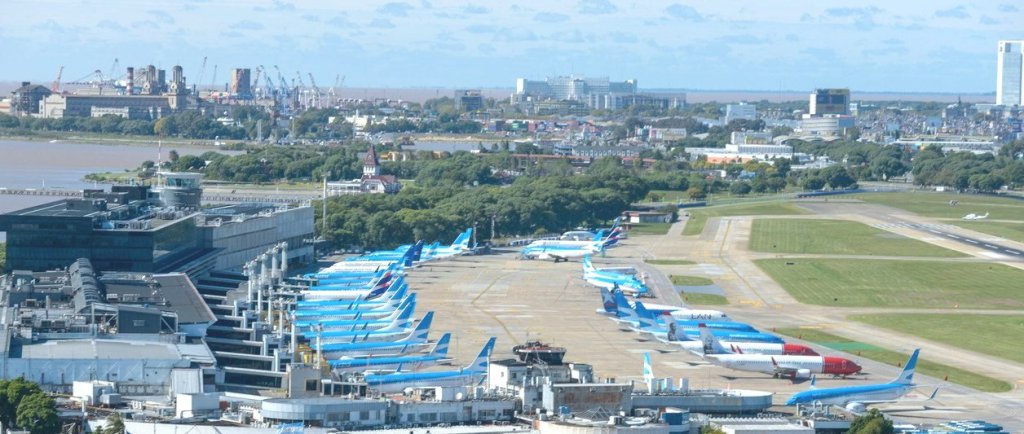
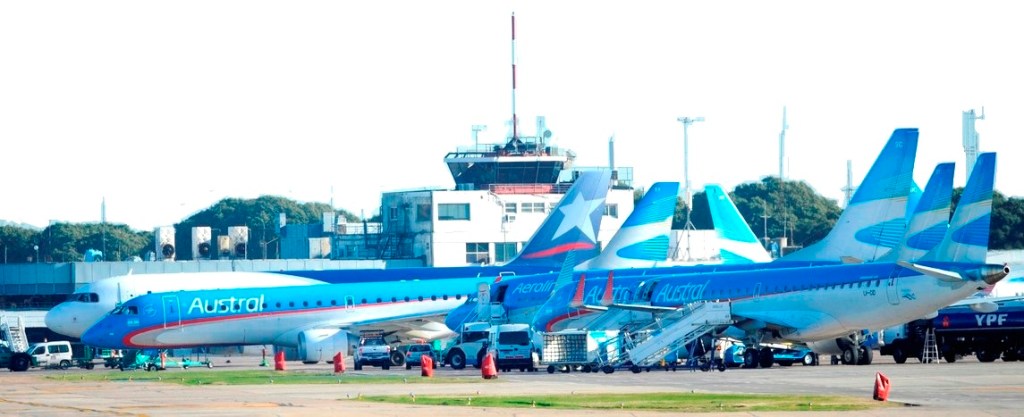
El Gobierno de Argentina ha confirmado en el día 14 de Diciembre de 2020 que el Aeropuerto Internacional El Palomar no tendrá más vuelos comerciales. Desde el Ministerio de Transporte la aeroestación continuará para uso reservado a vuelos militares y aviación general. De esta manera, el Gobierno dispuso el fin de las operaciones aerocomerciales en el primer aeropuerto low cost de Sudamérica. Tras varias negociaciones y tratamientos de discusiones, el Organismo Regulador del Sistema Nacional de Aeropuertos (ORSNA) y el Ministerio de Transporte emitieron un comunicado en donde señalaba que la terminal aérea vuelve a ser sólo una Base de la Fuerza Aérea y ya no operará más vuelos comerciales. Los organismos señalaron que la terminal aérea no cumple con los requisitos sanitarios acordados con las empresas aéreas y que no se encuentra cerrado sino que está operativo para la Fuerza Aérea y hace referencia a que no es sustentable mantener tres aeropuertos comerciales operativos en el AMBA.

El ORSNA ha confirmado que la aeroestación seguirá activa a las operaciones militares y de aviación general de aeronaves de porte reducido, aunque pudieran plantearse incorporar vuelos comerciales en el futuro si la demanda así lo justificara. Si bien se señala que fue una decisión del Ministerio de Transporte y del ORSNA, quienes conocen el ambiente de la aeronáutica sostienen que el regulador es un organismo controlado por La Cámpora, mucho más cercana a que Aerolíneas Argentinas sea el dominante del sector aerocomercial. El comunicado lo firma el ministro de Transporte Mario Meoni, el Presidente del ORSNA Carlos Lugones Aignasse, su Vicepresidente Fernando Muriel y Pilar Becerra, Primera Vocal del organismo.

Negociando traslados

El Gobierno de Argentina en un movimiento de ajedrez premeditado fue incorporando detalles acerca de la próxima diagramación del escenario aerocomercial para establecer solamente dos aeroestaciones para lo cual han establecido modificaciones en las obras para reacondicionar al Aeropuerto Jorge Newbery en una aeroestación con mayores capacidades operativas.

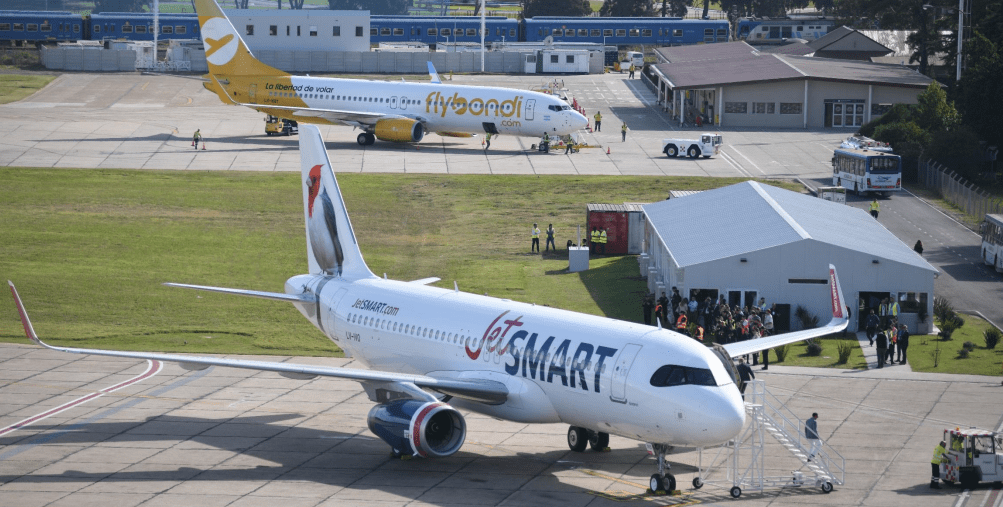
«Tanto Jetsmart como Flybondi, acompañaron y entendieron la propuesta del Gobierno, comprendiendo la irracionalidad que implica en este contexto sostener un aeropuerto operativo para un número reducido de operaciones, con los gastos que ocasionan para el Estado, para las empresas y para organismos que deben prestar servicios como ser PSA, Migraciones, ANAC, Aduanas, Sanidad de Fronteras, EANA, etc.”, explicaron desde los organismos oficiales. La propuesta que le hizo el Gobierno a las aerolíneas es que se muden a Ezeiza y luego a Aeroparque “manteniendo el acuerdo comercial, con las misma bonificación de tasas aeroportuarias que contaban en El Palomar, a efectos de garantizar los puestos de trabajo, la seguridad de la operación, la seguridad sanitaria de pasajeros y empleados, y también, cuidando los recursos y haciendo una asignación federal de las inversiones”.

Asimismo, en el comunicado del Gobierno señalan que continuidad de la operación comercial de El Palomar exige realizar importantes inversiones en la terminal de pasajeros y en la pista de aterrizaje “construida de losas de hormigón y que presentan un altísimo nivel de deterioro con una vida útil actual remanente de cero años. Este deterioro incluye además a rodajes y plataformas, con un costo aproximado de AR$ 4.000 millones de Pesos que se podrían destinar a otros aeropuertos”.

Informe ORSNA

Un informe de la ORSNA señala que, además de las obras, también se pudo observar que durante la gestión de Mauricio Macri “el Estado se encargó de desviar fondos y recursos, destinados previamente para ser aplicados en aeropuertos del interior del país, para adecuar a El Palomar a las necesidades requeridas para la operación de las low cost. El resultado final fue una solución precaria representada en una terminal de pasajeros con una superficie de 2.520 m2, y una terminal satélite de 462 m2, sin parkings habilitados para pasajeros, un solo local gastronómico complementado con foodtrucks al aire libre y sin resguardo climático para los pasajeros”. El trabajo también hace referencia a que Flybondi había licitado rutas aéreas comprometiendo una inversión que nunca hizo y que la realizó el Estado nacional. También se señala que “previo a su inclusión en el Sistema Nacional de Aeropuertos (SNA), la línea aérea Flybondi presentó un proyecto que comprometía inversiones por un monto no menor a los treinta millones de dólares, algo que no sucedió. Una vez adjudicadas las rutas, Flybondi no efectuó ninguna inversión en ese aeropuerto”, precisa el documento oficial.

Cierre de El Palomar

Tras la noticia del cierre de las operaciones aerocomerciales en el Aeropuerto El Palomar, muchos empleados comienzan a observar un escenario oscuro al perder sus fuentes laborales. El Jueves 17/12 habrá una marcha frente al predio para pedir que vuelvan a operar los vuelos comerciales, pero tal vez sea un intento en vano tras la decisión definitiva del Gobierno de clausurar los vuelos en la aeroestación low cost.

La más cruda realidad la asumirán los cientos de ex-empleados que no podrán trasladarse ni al Aeropuerto Ezeiza ni al Aeropuerto Jorge Newbery. Muchos se empleaban en las áreas de Tráfico, Rampa, entre otras dependencias en JetSmart Airlines Argentina y Flybondi Líneas Aéreas. Por ejemplo, Cristian Arias, de 28 años, se desempeñaba en Rampa en JetSmart Argentina. Comenta: «Tuvimos que tomar un retiro voluntario, no tuvimos muchas opciones. Nos quedamos todos sin trabajo por cuestiones políticas, sino no hay otros motivos para cerrarlo, este lugar es una mina de oro. Yo tenía mis proyectos, mi estudio, pero ahora no sé qué voy a hacer. Es posible que emigre a España para buscar otro trabajo como este, porque en la Argentina el rubro aeronáutico cada vez está más complicado», se lamentaba Cristian Arias. A su lado estaba Juan Pablo Aguilera, de 27 años. Al igual que su compañero, se quedó sin trabajo. Estaba preocupado; en línea con lo que dijo su compañero, señalaba que el mundo de la aeronáutica se está cerrando cada vez más. Afirmó que el trabajo de rampa en Ezeiza, que ahora es el único aeropuerto del Área Metropolitana de Buenos Aires en funcionamiento, está absolutamente monopolizado por la empresa Intercargo. «Yo tengo una nena chiquita. Dejé la Fuerza Aérea para trabajar en Jet Smart y ahora no sé qué voy a hacer. Si esto se puede remontar, trabajo va a sobrar, pero si no está complicado. El rubro aeronáutico está muy monopolizado».

Perspectivas aviación

El impacto por el cierre de los vuelos comerciales han apagado las esperanzas de reactivar los vuelos de presupuesto y las economías del barrio. El sueño de reactivar la Ciudad de El Palomar ha quedado truncada, como los sueños de reactivar una de las aeroestaciones con mayor desarrollo por parte de las aerolíneas low cost que en un tiempo ha traído dinamismo a la aviación comercial de Argentina. Tras la decisión del Gobierno de avanzar con el cierre de las operaciones comerciales en el Aeropuerto El Palomar se abre una nueva etapa donde será difícil soñar un país federal, pero debemos nuevamente intentarlo para forjar un horizonte con verdadero protagonismo y compromiso por la aviación en la Argentina.

El Palomar Airport closure confirmed

Government confirms closure of commercial ops of El Palomar

The Government of Argentina has confirmed on December 14, 2020 that the El Palomar International Airport will no longer have commercial flights. From the Ministry of Transport, the air station will continue for use reserved for military flights and general aviation. In this way, the Government ordered the end of commercial air operations at the first low cost airport in South America. After several negotiations and discussions, the Regulatory Body of the National Airport System (ORSNA) and the Ministry of Transportation issued a statement in which they indicated that the air terminal is once again just an Air Force Base and will no longer operate flights commercial. The agencies pointed out that the air terminal does not meet the sanitary requirements agreed with the airlines and that it is not closed but is operational for the Air Force and refers to the fact that it is not sustainable to keep three commercial airports operating in the AMBA.

The ORSNA has confirmed that the airstation will continue to be active in the military and general aviation operations of small aircraft, although they could consider incorporating commercial flights in the future if demand so justifies it. Although it is pointed out that it was a decision of the Ministry of Transport and the ORSNA, those who know the aeronautical environment maintain that the regulator is a body controlled by La Cámpora, much closer to Aerolineas Argentinas being the dominant one in the commercial aerospace sector. The statement is signed by the Minister of Transport Mario Meoni, the President of ORSNA Carlos Lugones Aignasse, its Vice President Fernando Muriel and Pilar Becerra, First Vocal of the organization.

Negotiating transfers

The Government of Argentina in a premeditated chess move was incorporating details about the next layout of the commercial aviation scenario to establish only two aerostations, for which they have established modifications in the works to recondition Jorge Newbery Airport into an airstation with greater operational capacities.

«Both Jetsmart and Flybondi, accompanied and understood the Government’s proposal, understanding the irrationality that in this context implies to sustain an operational airport for a reduced number of operations, with the expenses that they cause for the State, for companies and for organizations that must provide services such as PSA, Migrations, ANAC, Customs, Border Health, EANA, etc.», explained from official bodies. The proposal that the Government made to the airlines is that they move to Ezeiza and then to Aeroparque “maintaining the commercial agreement, with the same discount on airport taxes that they had in El Palomar, in order to guarantee jobs, security of the operation, the health safety of passengers and employees, and also, taking care of resources and making a federal allocation of investments”.

Likewise, in the government statement they point out that the continuity of the commercial operation of El Palomar requires significant investments in the passenger terminal and in the runway “built of concrete slabs and which present a very high level of deterioration with a useful life current zero-year carryover. This deterioration also includes taxiways and platforms, with an approximate cost of AR$ 4,000 million Pesos that could be allocated to other airports”.

ORSNA report

A report from the ORSNA indicates that, in addition to the works, it was also observed that during Mauricio Macri’s administration “the State was in charge of diverting funds and resources, previously destined to be applied in airports in the interior of the country, to adapt to El Palomar to the needs required for the operation of the low cost. The final result was a precarious solution represented in a passenger terminal with a surface area of ​​2,520 m2, and a satellite terminal of 462 m2, without parking spaces for passengers, a single gastronomic place complemented with outdoor food trucks and without climate protection for the passengers. passengers”. The work also refers to the fact that Flybondi had tendered air routes, committing an investment that it never made and that was made by the national State. It is also stated that “prior to its inclusion in the National Airport System (SNA), the Flybondi airline presented a project that committed investments for an amount of no less than thirty million dollars, something that did not happen. Once the routes were awarded, Flybondi did not make any investment in that airport , states the official document.

Closing of El Palomar

Following the news of the closure of commercial air operations at El Palomar Airport, many employees begin to observe a dark scenario when they lose their jobs. On Thursday 12/17 there will be a march in front of the property to ask that commercial flights operate again, but it may be an attempt in vain after the Government’s final decision to close the flights at the low cost air station.

The harshest reality will be assumed by the hundreds of former employees who will not be able to travel to either the Ezeiza Airport or the Jorge Newbery Airport. Many were employed in the areas of Traffic, Ramp, among other dependencies in JetSmart Airlines Argentina and Flybondi Líneas Aéreas. For example, Cristian Arias, 28, worked as Rampa at JetSmart Argentina. He comments: «We had to take a voluntary retirement, we did not have many options. We were all left without work for political reasons, but there are no other reasons to close it, this place is a gold mine. I had my projects, my studio, but now I don’t know what I’m going to do. It is possible that I will emigrate to Spain to find another job like this, because in Argentina the aeronautical sector is becoming more and more complicated«, Cristian Arias lamented. At his side was Juan Pablo Aguilera, 27. Like his partner, he lost his job. I was worried; In line with what his colleague said, he pointed out that the world of aeronautics is closing more and more. He affirmed that the ramp work in Ezeiza, which is now the only airport in the Metropolitan Area of ​​Buenos Aires in operation, is absolutely monopolized by the Intercargo company. «I have a little girl. I left the Air Force to work at Jet Smart and now I don’t know what I’m going to do. If this can be traced, work will be left over, but if it isn’t complicated. The aeronautical sector is very monopolized».

Aviation perspectives

The impact of the closure of commercial flights has dampened hopes of reviving budget flights and neighborhood economies. The dream of reactivating the City of El Palomar has been truncated, like the dreams of reactivating one of the most developed air stations by low cost airlines that at one time has brought dynamism to commercial aviation in Argentina. After the Government’s decision to move forward with the closure of commercial operations at El Palomar Airport, a new stage opens where it will be difficult to dream of a federal country, but we must try again to forge a horizon with true leadership and commitment to aviation in the Argentina.


PUBLISHER: Airgways.com
DBk: Argentina.gob.ar/transporte / Argentina.gob.ar/orsna / Lanacion.com.ar / Airgways.com
AW-POST: 202012142227AR

A\W   A I R G W A Y S ®

La Cámpora dominar aviación Argentina

AW | 2020 12 14 15:37 | AIRPORTS / AIRLINES / GOVERNMENT

Agrupación La Cámpora a cargo del vaciamiento aerocomercial

AA2000_EPA

El Ministerio de Transporte Argentina no tiene injerencia en las decisiones, que terminaron con la mudanza de JetSmart Airlines Argentina y Flybondi Líneas Aéreas hacia el Aeropuerto Internacional Ezeiza. La agrupación La Cámpora ha arrebatado la política aerocomercial de la Argentina al Ministerio de Transporte al introducir dos resoluciones de carácter técnico, permitiendo desarmar no solo las políticas aéreas del anterior Gobierno nacional, sino además, conseguir mantener el control de la aviación comercial con el dominio de los cielos bajo la bandera de Aerolíneas Argentinas.

AW-Flybondi_JetSmart

Las dos resoluciones fueron emitidas en Octubre de 2020 cuando regresaron los vuelos de cabotaje, tras haber estado suspendidos durante siete meses. El Jueves 22, Aerolíneas Argentinas había reiniciado sus vuelos de cabotaje desde el Aeropuerto de Ezeiza, mientras que el Aeropuerto Jorge Newbery continúa con las obras de remodelación y ampliaciones y el Aeropuerto Internacional El Palomar iniciaría nuevamente vuelos con la modalidad low cost.

JetSmart Airlines Argentina había pedido autorización a la Administración Nacional de Aviación Civil (ANAC) para hacer su primer vuelo el Sábado 24/10, pero la autorización se demoraba en llegar, alcanzando a las 18:00 hs del Viernes 23/10 sin notificaciones ni autorizaciones, por lo que la aerolínea de presupuesto suspendía sus programación al no tener certezas por parte de la autoridad aeronáutica. La agrupación de La Cámpora continuaba traccionando como árbitro para denostar la aeroestación low cost. A última hora de ese Viernes 23, el Organismo Regulador del Sistema Nacional Aeroportuario (ORSNA), dispuso que el Aeropuerto Internacional Ezeiza era el único corredor seguro en la zona del AMBA mientras durase la pandemia de Coronavirus. Con un argumento sanitario imposible de apelar en el corto plazo hubiera sido necesario judicializar los reclamos, iniciando por parte de Flybondi Líneas Aéreas reclamaciones legales sin ningún resultado favorable a la aerolínea para continuar operando desde el Aeropuerto El Palomar, iniciando un bloqueo para hacer vuelos regulares de cabotaje. La nueva disposición reglamentaria no estaba firmada por el Presidente del ORSNA, Carlos Lugones Aignasse, sino rubricada por el Vicepresidente, Fernando Muriel, dirigente de la agrupación política de La Cámpora, quien responde políticamente al Senador Nacional Mariano Recalde. Anteriormente, el Senador había sido Presidente de Aerolíneas Argentinas entre el período Julio de 2009 y Diciembre de 2015, mientras que Pablo Ceriani había sido su Vicepresidente.

La segunda resolución del ORSNA fue emitida el Lunes 26/10, y puso en evidencia las negociaciones que habían tenido lugar durante ese fin de semana, cuando el ORSNA y su Vicepresidente, Fernando Muriel, al ordenar a la concesionaria, Aeropuertos Argentina 2000 (AA2000) mantener las bonificaciones de las tasas aeroportuarias para las líneas aéreas low cost que decidieran mudar sus operaciones desde el Aeropuerto Internacional El Palomar hacia el Aeropuerto Internacional Ezeiza. Ese mismo Lunes 26/10 JetSmart Argentina abandonó su postura de confrontación que había mantenido hasta la tarde del Viernes 23/10 y emitió un comunicado donde anunciaba a sus pasajeros que comenzaría a volar desde Ezeiza.

En el caso de Flybondi, la otra aerolínea que continuaba inoperativa, continuaba reclamando la postura de reiniciar operaciones desde la aeroestación low cost intentando judicializar los reclamos ante una postura justa de preservación de los empleos de la compañía aérea, los costos logísticos elevados que presta la empresa de servicios aeroportuarios Intercargo referentes a rampa, y la posición de la aeroestación frente a la conveniencia de traslados cercanos que brinda el Aeropuerto El Palomar. En el medio hubo declaraciones del Ministro de Transporte Mario Meoni a favor de la reapertura del Aeropuerto El Palomar, mientras continuaban los reclamos en marchas populares en favor y en contra de la terminal aérea.

Tras la nueva solicitud realizada por parte de Flybondi, no tuvo nuevamente respuesta para reiniciar sus operaciones desde el aeropuerto low cost, finalmente abordó una negociación con el Gobierno para trasladar sus operaciones al Aeropuerto Internacional Ezeiza. El ex-Presidente Mauricio Macri ha salido a reclamar por el Aeropuerto El Palomar como un símbolo de lo que está haciendo el actual Gobierno de Alberto Fernández: «Hay en marcha un plan activo y deliberado para entorpecer, clausurar, estropear o eliminar cualquier política implementada por nuestro Gobierno», dijo Mauricio Macri a través de las redes sociales. El encargado de responderle y señalar que la mudanza de El Palomar fue un simple acuerdo entre empresas fue el Jefe de Gabinete, Santiago Cafiero. Pero lo cierto es que el Gabinete de Gobierno actual fue ajeno a todas las decisiones establecidas. Formalmente, fueron emitidas desde un organismo menor del Poder Ejecutivo, el despacho del Senador Mariano Recalde.

Ahora, el Gobierno nacional y su cartera, el Ministerio de Transporte, deberán decidir qué hacen con los 1.000 empleados de un aeropuerto y los trabajos indirectos que genera la actividad aérea en el Aeropuerto El Palomar que está sin funcionar desde Marzo 2020 y que ahora continúa sin aerolíneas, un aeropuerto que había generado sólo en 2019 el paso de 1,7 millones de pasajeros, todo un logro y mérito por haber alcanzado reactivar la aviación comercial y federal, ha caído en manos de la agrupación La Cámpora que ha denostado el progreso de todos los argentinos y junto con ello la libertad de volar.

La Cámpora dominating Argentine aviation

La Cámpora political group in charge of commercial air clearing

The Argentine Ministry of Transportation has no influence in the decisions, which ended with the move of JetSmart Airlines Argentina and Flybondi Líneas Aéreas to the Ezeiza International Airport. The La Cámpora group has seized Argentina’s commercial aviation policy from the Ministry of Transportation by introducing two technical resolutions, allowing disarming not only the air policies of the previous national government, but also maintaining control of commercial aviation with dominance. from the skies under the flag of Aerolíneas Argentinas.

The two resolutions were issued in October 2020 when the domestic flights returned, after having been suspended for seven months. On Thursday 22, Aerolíneas Argentinas had restarted its domestic flights from Ezeiza Airport, while Jorge Newbery Airport continues with remodeling and expansion works and El Palomar International Airport would again start flights with the low cost mode.

JetSmart Airlines Argentina had requested authorization from the National Civil Aviation Administration (ANAC) to make its first flight on Saturday 10/24, but the authorization was delayed in arriving, reaching 6:00 p.m. on Friday 10/23 without notifications or authorizations, so the budget airline suspended its programming due to not having certainties from the aeronautical authority. The La Cámpora group continued to act as a referee to revile the low cost air station. Late on Friday 23, the Regulatory Body of the National Airport System (ORSNA), established that the Ezeiza International Airport was the only safe corridor in the AMBA area while the Coronavirus pandemic lasted. With a health argument impossible to appeal in the short term, it would have been necessary to prosecute the claims, initiating legal claims on the part of Flybondi Líneas Aéreas without any favorable result for the airline to continue operating from El Palomar Airport, initiating a blockade to make regular flights of cabotage. The new regulatory provision was not signed by the President of the ORSNA, Carlos Lugones Aignasse, but signed by the Vice President, Fernando Muriel, leader of the political group La Cámpora, who responds politically to the National Senator Mariano Recalde. Previously, the Senator had been President of Aerolíneas Argentinas between July 2009 and December 2015, while Pablo Ceriani had been its Vice President.

SENATOR MARIANO RECALDE MANAGER OF THE DISARTICULATION OF EL PALOMAR INTERNATIONAL AIRPORT

The second resolution of the ORSNA was issued on Monday 10/26, and put in evidence the negotiations that had taken place during that weekend, when the ORSNA and its Vice President, Fernando Muriel, when ordering the concessionaire, Airports Argentina 2000 (AA2000 ) maintain the discounts on airport charges for low cost airlines that decide to move their operations from El Palomar International Airport to Ezeiza International Airport. That same Monday 10/26 JetSmart Argentina abandoned its confrontational stance that it had maintained until the afternoon of Friday 10/23 and issued a statement announcing to its passengers that it would begin flying from Ezeiza.

In the case of Flybondi, the other airline that remained inoperative, continued to claim the position of restarting operations from the low-cost air station, trying to prosecute the claims before a fair position to preserve the jobs of the airline, the high logistics costs provided by the airport services company Intercargo regarding the ramp, and the position of the airstation compared to the convenience of nearby transfers provided by the El Palomar Airport. In the middle, there were statements by the Minister of Transportation Mario Meoni in favor of the reopening of the El Palomar Airport, while the claims continued in popular marches in favor and against the air terminal.

After the new request made by Flybondi, it did not have a response to restart its operations from the low cost airport, finally it approached a negotiation with the Government to transfer its operations to the Ezeiza International Airport. Former President Mauricio Macri has come out to claim the El Palomar Airport as a symbol of what the current Government of Alberto Fernández is doing: «An active and deliberate plan is underway to hinder, close, spoil or eliminate any implemented policy for our Government», said Mauricio Macri through social networks. The person in charge of answering him and pointing out that the El Palomar move was a simple agreement between companies was the Chief of Staff, Santiago Cafiero. But the truth is that the current Government Cabinet was oblivious to all the established decisions. Formally, they were issued from a smaller body of the Executive Power, the office of Senator Mariano Recalde.

Now, the national Government and its portfolio, the Ministry of Transportation, must decide what to do with the 1,000 employees of an airport and the indirect jobs generated by air activity at the El Palomar Airport, which has been out of operation since March 2020 and is now continuing Without airlines, an airport that had generated the passage of 1.7 million passengers in 2019 alone, an achievement and merit for having managed to reactivate commercial and federal aviation, has fallen into the hands of the La Cámpora group that has reviled the progress of all Argentines and along with it the freedom to fly.


PUBLISHER: Airgways.com
DBk: Airgways.com / Clarin.com / Argentina.gob.ar/transporte
AW-POST: 202012141537AR

A\W   A I R G W A Y S ®

CE obligaría a SATA pago deuda

AW | 2020 12 14 12:38 | AIRLINES / GOVERNMENT

Aerolínea de Azores debe devolver € 73 millones en ayudas

SATA_Isologotype

La Comisión Europea (CE), pese a la gravedad de la crisis sanitaria actual y los efectos sobre la aviación, no contemplaría situación imperante, obligando a SATA Air Açores, la aerolínea de las Islas Azores, a devolver € 73 millones de Euros a la región, según dijo en un comunicado este Domingo 13/12 el Secretario de Finanzas del Gobierno, Bastos e Silva. Las ayudas establecidas a la aerolínea portuguesa SATA Air Açores no está motivada por razones de la crisis de Coronavirus, sino más bien, que ha sido emitida deuda anterior a la pre-pandemia. Bruselas, la capital de la sede de la Unión Europea, ha analizado tres ayudas públicas de las cuales han sido consideradas ilegales y ahora hay que devolverlas, por la razón de que no obtuvieron autorización previa de la Comisión Europea. “La decisión se ha transmitido de forma muy clara, de forma que permita encontrar una solución que no arrastre a la empresa a la quiebra”, expresó el mandatario, añadiendo que continúan las negociaciones con la Comisión Europa.

La decisión de la Comisión Económica Europea fue comunicada al ejecutivo el 4 de Diciembre de 2020, pero la noticia ha trascendido ahora. El Secretario Regional argumentó que “habría sido democráticamente imprescindible conocer la decisión de Bruselas antes de las elecciones del 25 de Octubre [en el archipiélago, para que] los actos políticos y de gestión erróneos llevados a cabo en el pasado hubieran sido juzgados democráticamente. Es, sin embargo, una expresión en este Parlamento de la vehemente censura a la forma en que se ha dirigido la empresa en los últimos años, con incompetencia, imprudencia, en una palabra, irresponsabilidad”, expresó el comisionado.

A mediados de Agosto 2020, la Comisión Europea dio aprobación a la ayuda estatal portuguesa de € 133 millones de Euros a la aerolínea azoriana SATA, pero abrió una investigación para evaluar el cumplimiento de las normas de la Unión Europea en tres apoyos públicos previos a la empresa. Las dificultades financieras de SATA han persistido desde al menos 2014, cuando la aerolínea de propiedad total del Gobierno regional de las Islas Azores comenzó a tener pérdidas económicas, que se vieron agravadas por la pandemia Covid-19. Fue por estas dificultades que la Región Autónoma de las Azores había aprobado tres ampliaciones de capital en la aerolínea desde 2017, con el fin de suplir la falta de liquidez. Es este apoyo público lo que Bruselas ha investigado y calificado como ilegal, dijo el Secretario regional del responsable del área de Finanzas del Estado portugués.

CE would oblige SATA to pay debt

Azores airline must return € 73 million in aid

AW-SATA_Azores_Map

The European Commission (EC), despite the seriousness of the current health crisis and the effects on aviation, would not consider the prevailing situation, forcing SATA Air Açores, the airline of the Azores Islands, to return € 73 million Euros to the region, according to the Government’s Finance Secretary, Bastos e Silva, in a statement this Sunday 12/13. The aid established to the Portuguese airline SATA Air Açores is not motivated by reasons of the Coronavirus crisis, but rather, that debt has been issued prior to the pre-pandemic. Brussels, the capital of the headquarters of the European Union, has analyzed three public aids of which have been considered illegal and now they must be returned, for the reason that they did not obtain prior authorization from the European Commission. «The decision has been transmitted very clearly, so as to find a solution that does not drag the company into bankruptcy», said the president, adding that negotiations continue with the European Commission.

The decision of the European Economic Commission was communicated to the executive on December 4, 2020, but the news has now transpired. The Regional Secretary argued that “it would have been democratically essential to know the Brussels decision before the October 25 elections [in the archipelago, so that] erroneous political and management acts carried out in the past would have been democratically judged. It is, however, an expression in this Parliament of vehement censorship of the way the company has run in recent years, with incompetence, recklessness, in a word, irresponsibility», said the commissioner.

In mid-August 2020, the European Commission approved the Portuguese state aid of € 133 million Euros to the Azorean airline SATA, but opened an investigation to assess compliance with European Union standards in three public supports prior to the company. SATA’s financial difficulties have persisted since at least 2014, when the airline wholly owned by the regional government of the Azores Islands began to suffer economic losses, which were compounded by the Covid-19 pandemic. It was due to these difficulties that the Autonomous Region of the Azores had approved three capital increases in the airline since 2017, in order to make up for the lack of liquidity. It is this public support that Brussels has investigated and described as illegal, said the regional Secretary of the head of the Portuguese State Finance area.

CE obrigaria SATA a pagar dívidas

Companhia aérea dos Açores deve devolver € 73 milhões de ajuda

AW-7000800

A Comissão Europeia (CE), apesar da gravidade da actual crise sanitária e dos efeitos na aviação, não considerou a situação existente, obrigando a SATA Air Açores, a companhia aérea dos Açores, a devolver € 73 milhões de euros à região, de acordo com o Secretário da Fazenda do Governo, Bastos e Silva, em nota neste Domingo, 13/12. O auxílio concedido à companhia aérea portuguesa SATA Air Açores não é motivado por motivos da crise do Coronavirus, mas sim por essa dívida ter sido emitida antes da pré-pandemia. Bruxelas, capital da sede da União Europeia, analisou três ajudas públicas, das quais foram consideradas ilegais e agora devem ser devolvidas, pelo facto de não terem obtido autorização prévia da Comissão Europeia. “A decisão foi transmitida de forma muito clara, de forma a encontrar uma solução que não leve a empresa à falência”, disse o presidente, acrescentando que as negociações continuam com a Comissão Europeia.

A decisão da Comissão Econômica Europeia foi comunicada ao executivo em 4 de Dezembro de 2020, mas a notícia já correu. O Secretário Regional defendeu que “teria sido democraticamente essencial conhecer a decisão de Bruxelas antes das eleições de 25 de Outubro [no arquipélago, para que] atos políticos e de gestão errados cometidos no passado tivessem sido julgados democraticamente. É, no entanto, uma expressão neste Parlamento de censura veemente à forma como a empresa tem funcionado nos últimos anos, com incompetência, imprudência, numa palavra, irresponsabilidade”, afirmou o comissário.

Em meados de Agosto de 2020, a Comissão Europeia aprovou o auxílio estatal português de € 133 milhões de Euros à companhia aérea açoriana SATA, mas abriu uma investigação para avaliar o cumprimento das normas da União Europeia em três apoios públicos antes do companhia. As dificuldades financeiras da SATA persistem pelo menos desde 2014, altura em que a companhia aérea detida a 100% pelo governo regional dos Açores começou a sofrer perdas económicas, a que se agravou a pandemia Covid-19. Foi devido a estas dificuldades que a Região Autónoma dos Açores aprovou três aumentos de capital na companhia aérea desde 2017, de forma a compensar a falta de liquidez. É este apoio público que Bruxelas investigou e qualificou de ilegal, afirmou o Secretário regional da chefia da área das Finanças do Estado português.


PUBLISHER: Airgways.com
DBk: Ec.europa.eu / Azoresairlines.pt / Wikipedia.org / Francisco Nogueira / Nelson Carvalheiro.com / Airgways.com
AW-POST: 202012141238AR

A\W   A I R G W A Y S ®

Protesta Latam acceso a Ezeiza

AW-@AutoconLATAM

AW | 2020 12 14 09:43 | AIRLINES / GOVERNMENT

Trabajadores de Latam Argentina cortan acceso Aeropuerto Ezeiza

Latam Airlines Argentina

Un grupo de trabajadores que fueron despedidos de la aerolínea Latam Airlines Argentina toma una línea de acceso de la carretera Ricchieri a 300 metros de la entrada al Aeropuerto Internacional de Ezeiza, por lo que la medida impide que los pasajeros entren y salgan de la terminal aérea en automóviles y transporte público. Por esta razón, aquellos que tienen billetes para despegar esta mañana deciden salir de los vehículos y caminar por la autopista con su equipaje. La medida se había anticipado a través de un comunicado de prensa de los trabajadores.

Martín, uno de los delegados que lideran la convocatoria, aseguró que hasta ahora no han sido recibidos por ejecutivos de empresas o por representantes del gobierno nacional. En el reclamo de este Lunes 14/12 a partir de las 08:00 hs, participan trabajadores de la aerolínea Latam airlines argentina, Securitas y GPS. «Estamos acompañando a los trabajadores porque su reclamo no está siendo respondido. Llevan meses quejándose de los despidos, estamos en Nochebuena y las familias están angustiadas por quedarse en la calle», dijo la legisladora de Buenos Aires, Alejandrina Barry, que participa en la protesta.

El sector aeronáutico fue uno de los más afectados por la crisis económica causada por la pandemia de Coronavirus. Los vuelos fueron suspendidos y Argentina fue uno de los últimos países en permitir el tráfico aéreo. Incluso hoy en día, muy pocas operaciones diarias se realizan en comparación con la antigua normal. Debido a los efectos de las cuarentenas en todo el mundo y debido a las condiciones económicas típicas de Argentina, Latam Airlines Argentina anunció el cierre de su filial local. «La empresa quiere reducir el tamaño del personal a pesar del hecho de que trabajamos durante la pandemia. La empresa SASA, que pertenece a Securitas, en este caso subcontratada a Latam, quiere reducir el personal. Así que aprovecha el escenario de la pandemia para barrernos a todos. Esa es la verdad», dijo Javier, un empleado de Securitas que participa en la manifestación.

La empresa Latam Airlines Argentina sigue operando y lucrando en los cielos argentinos mientras miles de trabajadores continúan luchando desde hace ocho meses y que aún no tienen respuesta por su continuidad laboral por parte de la empresa ni del Gobierno. «El gobierno y los ministerios son los responsables de dar respuesta a nuestros reclamos», sostienen en un comunicado.

Latam protest access to Ezeiza

Latam Argentina workers cut access to Ezeiza Airport

AW-Latam_A321_001

A group of workers who were fired from the Latam Airlines Argentina airline takes an access line from the Ricchieri highway 300 meters from the entrance to the Ezeiza International Airport, so the measure prevents passengers from entering and leaving the air terminal in cars and public transport. For this reason, those who have tickets to take off this morning decide to get out of the vehicles and walk down the highway with their luggage. The measure had been anticipated through a press release from the workers.

Martín, one of the delegates leading the call, assured that until now they have not been received by company executives or by representatives of the national government. Workers from the Argentine airline Latam airlines, Securitas and GPS participate in the claim of this Monday 12/14 from 08:00 am. «We are accompanying the workers because their claim is not being answered. They have been complaining about the layoffs for months, we are on Christmas Eve and the families are distressed to remain on the street», said the legislator of Buenos Aires, Alejandrina Barry, who participates in the protest.

The aeronautical sector was one of the most affected by the economic crisis caused by the Coronavirus pandemic. Flights were suspended and Argentina was one of the last countries to allow air traffic. Even today, very few daily operations are performed compared to the old normal. Due to the effects of quarantines around the world and due to typical economic conditions in Argentina, Latam Airlines Argentina announced the closure of its local subsidiary. «The company wants to reduce the size of the staff despite the fact that we work during the pandemic. The SASA company, which belongs to Securitas, in this case subcontracted to Latam, wants to reduce the staff. So it takes advantage of the pandemic scenario to sweep us all away. That’s the truth», said Javier, a Securitas employee participating in the rally.

The Latam Airlines Argentina company continues to operate and profit in the Argentine skies while thousands of workers have continued to fight for eight months and who still have no answer for their employment continuity from the company or the Government. «The government and the ministries are responsible for responding to our claims», ​​they say in a statement.


PUBLISHER: Airgways.com
DBk: Latam.com / @AutoconLATAM / Airgways.com
AW-POST: 202012140943AR

A\W   A I R G W A Y S ®

Panamá prohibe vuelos de Venezuela

AW | 2020 12 14 09:09 | AIRLINES ROUTES / GOVERNMENT

Aumenta aislamiento de Venezuela tras suspender vuelos a Panamá

El Gobierno de la República de Panamá ha suspendido los vuelos a/desde Venezuela, cortando uno de los pocos corredores aéreos habilitados del país Sudamericano. La Autoridad de Aeronáutica Civil de Panamá (AACP) dijo el Domingo 13 de diciembre de 2020 que ha tomado la medida después de que Venezuela restringió el acceso a una aerolínea panameña mientras exigía un aumento de las franjas horarias en Panamá para las aerolíneas venezolanas. La suspensión se aplicará desde el Domingo 13/12 hasta que Panamá reciba «trato igual y justo», dijo la autoridad aeronáutica en un comunicado. El Gobierno de Panamá canceló el acceso de aerolíneas venezolanas a su territorio hasta que Venezuela restablezca un trato igualitario y justo a las líneas panameñas, a las que ha limitado durante meses el número de vuelos, que suspendió finalmente el Sábado 12/12 de manera unilateral y sin justificación.

La AACP ha apelado en un comunicado al diálogo de buena fe para superar la situación, como ya ha ocurrido antes, en el mejor interés de la usuarios y con base en los compromisos comerciales de las partes. La Agencia aeronúatica dijo que “Panamá se ha visto obligado a cancelar los vuelos existentes a las aerolíneas de Venezuela, como respuesta a la misma medida adoptada por ese país y hasta que se alcance un trato igualitario y recíproco en la frecuencia de vuelos, según corresponde por el acuerdo aercomercial bilateral vigente”. La AACP ha citado de un acuerdo actualizado en 2015 que otorga a cada país acceso hasta a 63 frecuencias semanales en cualquiera de los dos trayectos (Panamá-Caracas/Caracas-Panamá), lo que se vio afectado fuertemente por la pandemia, que redujo al mínimo el número de vuelos entre los dos países.

La reapertura de los vuelos ha permitido que la situación se haya ido descomprimiendo en Panamá, pero no no ha sido el caso en Venezuela. Actualmente, Panamá ha concedido hasta nueve vuelos semanales a aerolíneas venezolanas, pero en respuesta Venezuela solo ha permitido tres vuelos a la semana a la aerolínea panameña (Copa Airlines) aduciendo restricciones por la pandemia en curso.

El Lunes 07/12 Venezuela solicitó a Panamá un nuevo aumento de frecuencias para sus aerolíneas, ante lo cual la parte panameña pidió un trato de reciprocidad y equidad como condición para la aprobación de estos, dijo la AACP. Pero en una respuesta unilateral el 13/12, el Gobierno de Venezuela “procedió a cancelar unilateralmente, sin aviso previo y sin justificación, los tres vuelos semanales de la aerolínea panameña”, agregó el comunicado de la AACP. A raíz de las medidas adoptadas unilateralmente por Venezuela, la aerolínea panameña Copa Airlines anunció el Sábado 12/12 que el Instituto Nacional de Aeronáutica Civil (INAC) de Venezuela canceló la conexión de la aerolínea con ese país a partir de este Domingo 13/12, por lo que la ruta Panamá-Caracas continuará suspendida por tiempo indefinido hasta tanto se reestablezcan los acuerdos entre ambas naciones. Copa Airlines ha expresado un comunicado donde lamenta los inconvenientes que escapan a su alcance una solución, solicitando a los pasajeros afectados a gestionar reembolsos a través de su sitio web. Copa Airlines “continuará en comunicación constante con la autoridad aeronáutica para obtener más información sobre esta situación, y conocer cuándo se podrá conectar nuevamente a Venezuela”, expresa el comunicado de la compañía aérea. Copa Airlines solo poseía operaciones a la República de Venezuela en la ruta Panamá-Caracas/Caracas-Panamá con tres frecuencias semanales los Martes, Jueves y Domingos.

La aerolínea de bandera panameña realizó algunos vuelos humanitarios para repatriar a venezolanos varados en Panamá durante el cierre de las fronteras aéreas de este país centroamericano a causa de la pandemia en curso. Copa Airlines se ha visto obligada a suspender antes sus vuelos a Venezuela debido a crisis diplomáticas entre Venezuela y Panamá. Por causa de la pandemia en curso, Venezuela extendió en Noviembre 2020 hasta el 11 de Febrero de 2021 el cierre del espacio aéreo de sus aeropuertos para vuelos comerciales, con la excepción de las rutas con México, Irán, República Dominicana, Turquía, Panamá, Bolivia y Rusia.

Panama bans flights from Venezuela

Venezuela’s isolation increases after suspending flights to Panama

AW-78993355

The Government of the Republic of Panama has suspended flights to/from Venezuela, cutting off one of the few enabled air corridors in the South American country. The Civil Aviation Authority of Panama (AACP) said on Sunday December 13, 2020 that it has taken the measure after Venezuela restricted access to a Panamanian airline while demanding an increase in slots in Panama for Venezuelan airlines. The suspension will apply from Sunday 12/13 until Panama receives «equal and fair treatment», the aeronautical authority said in a statement. The Government of Panama canceled the access of Venezuelan airlines to its territory until Venezuela restores equal and fair treatment to Panamanian lines, to which it has limited the number of flights for months, which it finally suspended on Saturday 12/12 unilaterally and without justification.

The AACP has appealed in a statement to dialogue in good faith to overcome the situation, as has happened before, in the best interest of the users and based on the commercial commitments of the parties. The Aeronautical Agency said that “Panama has been forced to cancel the existing flights to Venezuelan airlines, in response to the same measure adopted by that country and until equal and reciprocal treatment is reached in the frequency of flights, as appropriate. by the current bilateral air trade agreement”. The AACP has cited an agreement updated in 2015 that grants each country access to up to 63 weekly frequencies on either of the two routes (Panama-Caracas/Caracas-Panama), which was strongly affected by the pandemic, which reduced minimum the number of flights between the two countries.

The reopening of flights has allowed the situation to decompress in Panama, but this has not been the case in Venezuela. Currently, Panama has granted up to nine weekly flights to Venezuelan airlines, but in response Venezuela has only allowed three flights a week to the Panamanian airline (Copa Airlines) citing restrictions due to the ongoing pandemic.

On Monday 12/07 Venezuela asked Panama for a new increase in frequencies for its airlines, before which the Panamanian side asked for reciprocity and equity treatment as a condition for their approval, said the AACP. But in a unilateral response on 12/13, the Government of Venezuela «proceeded to unilaterally cancel, without prior notice and without justification, the three weekly flights of the Panamanian airline», the AACP statement added. As a result of the measures taken unilaterally by Venezuela, the Panamanian airline Copa Airlines announced on Saturday 12/12 that the National Institute of Civil Aeronautics (INAC) of Venezuela canceled the airline’s connection with that country as of this Sunday 13/12 Therefore, the Panama-Caracas route will continue to be suspended indefinitely until the agreements between both nations are re-established. Copa Airlines has issued a statement in which it regrets the inconveniences that a solution is beyond its reach, asking affected passengers to manage refunds through its website. Copa Airlines «will continue in constant communication with the aeronautical authority to obtain more information on this situation, and to find out when it will be able to connect to Venezuela again», says the statement from the airline. Copa Airlines only had operations to the Republic of Venezuela on the Panama-Caracas/Caracas-Panama route with three weekly frequencies on Tuesdays, Thursdays and Sundays.

The Panamanian flag carrier made some humanitarian flights to repatriate Venezuelans stranded in Panama during the closure of the air borders of this Central American country due to the ongoing pandemic. Copa Airlines has been forced to suspend its flights to Venezuela earlier due to diplomatic crises between Venezuela and Panama. Due to the ongoing pandemic, Venezuela extended in November 2020 until February 11, 2021 the closure of the airspace of its airports for commercial flights, with the exception of routes with Mexico, Iran, the Dominican Republic, Turkey, Panama, Bolivia and Russia.


PUBLISHER: Airgways.com
DBk: Aeronautica.gob.pa / Inac.gob.ve / Copaair.com / Airgways.com
AW-POST: 202012140909AR

A\W   A I R G W A Y S ®

Vaciamiento del Aeropuerto El Palomar

AW | 2020 12 13 13:13 | AIRPORTS / GOVERNMENT

Ex-Presidente argentino reacciona por vaciamiento El Palomar

AW-Flybondi_JetSmart

El ex-Presidente de la República Argentina, Mauricio Macri, ha reaccionado recientemente ante el vaciamiento del Aeropuerto El Palomar/EPA, que había sido inaugurado durante su presidencia para expandir la aviación por medio de la Revolución de los Aviones, iniciando la apertura de la modalidad de vuelos de presupuesto en el primer aeropuerto low cost de Latinoamérica y que ahora se ha truncado ante el traslado de las operaciones de las líneas aéreas hacia Ezeiza y posteriormente al Aeropuerto Jorge Newbery. El ex-primer mandatario expreso tristeza por la decisión mantenida d por el Gobierno actual, escribió en su cuenta de Twitter, donde replicó un mensaje de Guillermo Dietrich, ex-Ministro de Transporte de la Nación durante el mandato de Mauricio Macri.

«Qué tristeza que el Aeropuerto El Palomar, el cuarto con mayor cantidad de pasajeros, haya sido cerrado por el gobierno. Miles de familias perderán sus empleos y muchas otras no podrán disfrutar del crecimiento que iba a traer. No solo se pierden puestos de trabajo dentro del aeropuerto, sino que también se ven afectados los remiseros, los restaurantes del barrio y tantas otras actividades que crecían alrededor. La conectividad, el federalismo y el desarrollo del interior del país», escribió el ex-Ministro de Transporte Guillermo Dietrich.

Tras la migración de los vuelos al Aeropuerto Internacional Ezeiza/EZE por parte de JetSmart Airlines Argentina, la aerolínea Flybondi ha tenido que negociar la postura asumida, mientras que el Aeropuerto El Palomar, que emplea a más de mil personas preocupadas por el destino de sus fuentes laborales, estará inactivo a las operaciones regulares comerciales. Desde inicios de 2018, más de 2,5 millones de personas fueron transportadas por esa aeroestación, la tercera del Área Metropolitana de Buenos Aires, mientras que 764.000 personas volaron en 2018 y 1,7 millones en 2019.

Flybondi migrando EZE

Este Viernes 11/12 se confirmó que Flybondi Líneas Aéreas abandona la estación aérea del conurbano bonaerense, para trasladar sus operaciones al Aeropuerto Internacional de Ezeiza. La aerolínea había sido la compañía que había inaugurado el Aeropuerto El Palomar como centro de operaciones para vuelos regulares nacionales y regionales. Pero tras las negociaciones de este Viernes 11/12 los directivos de Flybondi con el Organismo Regulador del Sistema Nacional Aeroportuario (ORSNA), luego de que en Abril 2020 la concesionaria Aeropuertos Argentina 2000 (AA2000) había solicitado el cierre de la estación aérea low cost. Tras el acuerdo con los organismos, Flybondi anunciaba el reinicio de sus operaciones el día Sábado 12/12 desde el Aeropuerto Internacional Ezeiza como nueva base de operaciones transitoria.

Perspectivas Flybondi

El acuerdo Gobierno-Flybondi ha asegurado la continuidad de las operaciones aéreas en en el Aeropuerto Jorge Newbery una vez que se encuentre habilitado hacia Febrero 2021, pues actualmente se encuentra en obras. Hacia el futuro las líneas aéreas low cost reiniciarían sus operaciones desde Aeroparque, en la Ciudad de Buenos Aires, mientras que los internacionales se seguirían desarrollando desde el Aeropuerto Internacional Ezeiza. Previamente, la empresa había reclamado la vuelta a los vuelos en el Aeropuerto El Palomar y hasta había sido muy crítica con el Gobierno por la inhabilitación.

Este Jueves 10/12 había arribado un Boeing 737-800 de la compañía Flybondi para reiniciar sus operaciones el 12/12, proyectando reactivar doce destinos nacionales hacia fin de 2020, incorporando los primeros destinos a Córdoba, Corrientes, Jujuy, Mendoza y Neuquén, entre otros. La aerolínea de presupuesto establecerá hacia el 2021 una segunda aeronave para continuar restableciendo la malla aérea para alcanzar los niveles pre-pandemia que la línea aérea había desarrollado. Las perspectivas de los vuelos regionales estarían establecidas hacia mitad de 2021.

Emptying of El Palomar Airport

Argentine ex-President reacts to low cost air station emptying

AA2000_EPA

The ex-President of the Argentine Republic, Mauricio Macri, has recently reacted to the emptying of the El Palomar/EPA Airport, which had been inaugurated during his presidency to expand aviation through the Aircraft Revolution, initiating the opening of the budget flight modality in the first low cost airport in Latin America, which has now been truncated due to the transfer of airline operations to Ezeiza and later to Jorge Newbery Airport. The ex-Prime Minister expressed sadness over the decision upheld by the current Government, wrote on his Twitter account, where he replied to a message from Guillermo Dietrich, ex-Minister of Transportation of the Nation during Mauricio Macri’s term.

«How sad that El Palomar Airport, the fourth with the highest number of passengers, has been closed by the government. Thousands of families will lose their jobs and many others will not be able to enjoy the growth that it was going to bring. Not only are jobs lost within the airport, but also the remiseros, the neighborhood restaurants and many other activities that grew around are affected. The connectivity, federalism and the development of the interior of the country», wrote the ex-Minister of Transportation Guillermo Dietrich.

After the migration of the flights to the Ezeiza/EZE International Airport by JetSmart Airlines Argentina, the Flybondi airline had to negotiate the position taken, while the El Palomar Airport, which employs more than a thousand people concerned about the fate of their sources of employment, will be inactive to regular business operations. Since the beginning of 2018, more than 2.5 million people were transported by this airstation, the third in the Metropolitan Area of ​​Buenos Aires, while 764,000 people flew in 2018 and 1.7 million in 2019.

Flybondi migrating EZE

This Friday 12/11 it was confirmed that Flybondi Líneas Aéreas is leaving the Buenos Aires suburban air station, to transfer its operations to the Ezeiza International Airport. The airline had been the company that had inaugurated the El Palomar Airport as an operations center for scheduled national and regional flights. But after the negotiations of this Friday 12/11, the Flybondi managers with the Regulatory Body of the National Airport System (ORSNA), after in April 2020 the concessionaire Airports Argentina 2000 (AA2000) had requested the closure of the low cost air station. Following the agreement with the agencies, Flybondi announced the restart of its operations on Saturday 12/12 from the Ezeiza International Airport as a new temporary base of operations.

Flybondi perspectives

The Government-Flybondi agreement has ensured the continuity of air operations at Jorge Newbery Airport once it is enabled by February 2021, as it is currently under construction. In the future, low cost airlines would restart their operations from Aeroparque, in the City of Buenos Aires, while international airlines would continue to develop from Ezeiza International Airport. Previously, the company had demanded the return of flights at El Palomar Airport and had even been very critical of the Government for the disqualification.

This Thursday 12/10 a Boeing 737-800 from the Flybondi company had arrived to restart its operations on 12/12, planning to reactivate twelve national destinations by the end of 2020, incorporating the first destinations to Córdoba, Corrientes, Jujuy, Mendoza and Neuquén, among others. The budget airline will establish a second aircraft by 2021 to continue to reestablish the aerial mesh to reach the pre-pandemic levels that the airline had developed. Prospects for regional flights are expected to be established by the middle of 2021.


PUBLISHER: Airgways.com
DBk: Airgways.com / Jxc.com.ar
AW-POST: 202012131313AR

A\W   A I R G W A Y S ®

Holanda expulsa diplomáticos espías

AW | 2020 12 11 12:47 | GOVERNMENT

Reino Países Bajos expulsa diplomáticos rusos por espionaje

Los Servicios Secretos de los Países Bajos han desenmascarado a dos diplomáticos rusos acusados de espiar a empresas de alta tecnología y a una institución educativa. Ambos diplomáticos estaban adscritos a la Embajada de Rusia en La Haya y han sido declarados persona no gratas por el Ministerio de Asuntos Exteriores, lo que implica que tendrán que abandonar el país. Así lo confirmó este Jueves 10/12 un comunicado del Servicio de Espionaje holandés, sin que hubiera respuesta de Moscú, en una clara violación a los derechos gubernamentales entre estados. El Gobierno holandés prepara ya una ley para frenar estas prácticas corruptas.

La agencia holandesa de servicios de inteligencia Algemene Inlichtingen-en Veiligheidsdienst (AIVD) ha sido la encargada de la divulgación de la noticia. Uno de los confidentes rusos contaba con una red de contactos de una decena de personas que disponían de acceso a información sensible, y en algunos casos pagaba por obtenerla. El papel del otro era de apoyo. Los sectores económico, científico y tecnológico figuran entre los más desarrollados de la sociedad neerlandesa. Para Erik Akerboom, Director General de AIVD, ha advertido que el país se ha convertido “en un lugar atractivo, pero también vulnerable” a este tipo de asaltos.

El diplomático ruso con la red de contacto estaba interesado en obtener datos sobre inteligencia artificial, semiconductores y nanotecnología, que pueden aprovecharse en la vida civil y en aplicaciones militares. Sus propios informantes han sido utilizados por el espionaje neerlandés para destapar el episodio y cerrar esta operación. Uno de los enlaces, cuya nacionalidad no se ha desvelado, deberá dejar asimismo el país. Erik Akerboom aseguró que su labor consiste en proteger los intereses estratégicos de los Países Bajos, “y en alertar a la sociedad de estos riesgos explicando a su vez a las empresas, autoridades y organismos educativos cómo evitar el espionaje”.

En los últimos años, ha habido otros casos similares de espías rusos operando en territorio de los Países Bajos. En 2018, los servicios secretos desbarataron un ciberataque contra la Organización para la Prohibición de las Armas Químicas (OPAQ), que tiene su sede en La Haya. Según los informes del Ministerio de Defensa, los agentes rusos dejaron un vehículo cargado con equipos electrónicos en el aparcamiento de un hotel contiguo al mencionado organismo. El objetivo era atacar sus sistemas informáticos, y el Gobierno indicó que la operación fue coordinada por los Servicios de Inteligencia Militar de Rusia (GRU). En el maletero del coche registrado por la policía frente al edificio de la OPAQ se encontraron equipos destinados a interceptar su sistema de wifi, y también los códigos de acceso. Ank Bijleveld, titular del Ministerio de Defensa, añadió que en el ordenador de uno de los agentes rusos había enlaces con Brasil, Suiza y Malasia. El contenido de este último, en particular, se centraba en la investigación del vuelo MH-017, de la línea aérea de la República de Malasia, Malaysia Airlines, derribado en Julio de 2014 por un misil Buk, de fabricación rusa, sobre el este de Ucrania. Perecieron todos sus ocupantes: 298 personas, 196 de nacionalidad neerlandesa. Desde entonces, las relaciones entre Rusia y Países Bajos son tensas debido a la negativa de Moscú a cooperar en la investigación criminal contra sospechosos rusos.

Lejos de ser un hecho aislado, el incidente de la OPAQ coincidió con la denuncia de Occidente relativa a una trama de ciberespionaje ruso a escala mundial. Lo ocurrido en Países Bajos es el último de los escándalos relacionados con el espionaje descubierto en suelo europeo y que señala a Rusia. Este verano, otros dos diplomáticos fueron expulsados de la República Checa por la misma razón. En 2019, las autoridades suizas detuvieron de forma temporal a dos ciudadanos rusos bajo idéntica sospecha, y Alemania recela de la posible participación rusa en la muerte de un checheno en su territorio. En Francia, por su parte, los medios de comunicación señalaron, también el año pasado, la presencia activa de al menos 15 espías rusos. Más de 20 países se solidarizaron en 2018 con el Reino Unido y expulsaron a cerca de 120 diplomáticos rusos de sus respectivas embajadas. Fue la respuesta al envenenamiento del ex-espía ruso, Serguéi Skripal, y de su hija, Yulia, perpetrado en la localidad de Salisbury, en el sur de Inglaterra. Se trataba de enviar así, por un lado, un mensaje al Gobierno de Rusia, y de entorpecer, si no evitar, las actividades de los servicios rusos de inteligencia. Los Skripal estuvieron al borde de la muerte, y la OPAQ confirmó los resultados de los análisis efectuados por el Reino Unido sobre el origen del agente nervioso que los envenenó. La OPAQ, que fue objeto de un intento de espionaje ruso ese mismo año, no nombró el gas Novichok, de fabricación rusa, en su informe. Corroboró, sin embargo, “las conclusiones sobre su naturaleza” tras las pruebas efectuadas por científicos británicos.

Netherlands expels spy diplomats

Kingdom Netherlands expels Russian diplomats for espionage

The Secret Services of the Netherlands have unmasked two Russian diplomats accused of spying on high-tech companies and an educational institution. Both diplomats were attached to the Russian Embassy in The Hague and have been declared unwelcome by the Ministry of Foreign Affairs, which implies that they will have to leave the country. This was confirmed this Thursday 10/12 by a statement from the Dutch Espionage Service, without there being a response from Moscow, in a clear violation of government law between states. The Dutch Government is already preparing a law to stop these corrupt practices.

The Dutch intelligence services agency Algemene Inlichtingen-en Veiligheidsdienst (AIVD) has been in charge of spreading the news. One of the Russian informants had a network of a dozen people who had access to sensitive information, and in some cases paid to obtain it. The other’s role was supportive. The economic, scientific and technological sectors are among the most developed in Dutch society. For Erik Akerboom, Director General of AIVD, has warned that the country has become «an attractive place, but also vulnerable» to this type of assault.

The Russian diplomat with the contact network was interested in obtaining data on artificial intelligence, semiconductors and nanotechnology, which can be used in civil life and in military applications. His own informants have been used by Dutch espionage to uncover the episode and close this operation. One of the links, whose nationality has not been disclosed, must also leave the country. Erik Akerboom assured that his work consists of protecting the strategic interests of the Netherlands, «and of alerting society to these risks while explaining to companies, authorities and educational organizations how to avoid espionage».

In recent years, there have been other similar cases of Russian spies operating on the territory of the Netherlands. In 2018, the secret services thwarted a cyber attack against the Organization for the Prohibition of Chemical Weapons (OPCW), which is based in The Hague. According to reports from the Ministry of Defense, Russian agents left a vehicle loaded with electronic equipment in the parking lot of a hotel adjacent to the aforementioned agency. The objective was to attack their computer systems, and the government indicated that the operation was coordinated by the Russian Military Intelligence Services (GRU). In the trunk of the car searched by the police in front of the OPCW building, equipment intended to intercept their Wi-Fi system, as well as access codes, were found. Ank Bijleveld, head of the Defense Ministry, added that on the computer of one of the Russian agents there were links with Brazil, Switzerland and Malaysia. The content of the latter, in particular, focused on the investigation of flight MH-017, of the airline of the Republic of Malaysia, Malaysia Airlines, shot down in July 2014 by a Russian-made Buk missile, over the east. from Ukraine. All its occupants perished: 298 people, 196 of Dutch nationality. Since then, relations between Russia and the Netherlands have been strained due to Moscow’s refusal to cooperate in the criminal investigation against Russian suspects.

Far from being an isolated event, the OPCW incident coincided with the West’s denunciation of a Russian cyber espionage plot on a global scale. What happened in the Netherlands is the latest of the scandals related to espionage discovered on European soil and pointing to Russia. This summer, two other diplomats were expelled from the Czech Republic for the same reason. In 2019, Swiss authorities temporarily detained two Russian citizens on the same suspicion, and Germany is suspicious of possible Russian involvement in the death of a Chechen on its territory. In France, for its part, the media noted, also last year, the active presence of at least 15 Russian spies. More than 20 countries showed solidarity with the United Kingdom in 2018 and expelled about 120 Russian diplomats from their respective embassies. It was the response to the poisoning of the former Russian spy, Sergei Skripal, and his daughter, Yulia, perpetrated in the town of Salisbury, in the south of England. The aim was thus to send, on the one hand, a message to the Government of Russia, and to hinder, if not prevent, the activities of the Russian intelligence services. The Skripals were on the brink of death, and the OPCW confirmed the results of analyzes carried out by the United Kingdom on the origin of the nerve agent that poisoned them. The OPCW, which was the target of a Russian spying attempt that same year, did not name the Russian-made Novichok gas in its report. However, it corroborated «the conclusions about its nature» after tests carried out by British scientists.

Nederland verdrijft spionagediplomaten

Koninkrijk Nederland zet Russische diplomaten uit wegens spionage

De geheime diensten van Nederland hebben twee Russische diplomaten ontmaskerd die ervan beschuldigd werden hightechbedrijven en een onderwijsinstelling te bespioneren. Beide diplomaten waren verbonden aan de Russische ambassade in Den Haag en zijn door het ministerie van Buitenlandse Zaken onwelkom verklaard, wat impliceert dat ze het land zullen moeten verlaten. Dit werd donderdag 10/12 bevestigd door een verklaring van de Nederlandse Spionagedienst, zonder dat er een reactie uit Moskou kwam, in een duidelijke schending van de overheidswet tussen staten. De Nederlandse regering bereidt al een wet voor om deze corrupte praktijken een halt toe te roepen.

De Nederlandse inlichtingendienst Algemene Inlichtingen-en Veiligheidsdienst (AIVD) is verantwoordelijk voor de verspreiding van het nieuws. Een van de Russische informanten had een netwerk van een tiental mensen die toegang hadden tot gevoelige informatie en in sommige gevallen betaalden om deze te verkrijgen. De rol van de ander was ondersteunend. De economische, wetenschappelijke en technologische sectoren behoren tot de meest ontwikkelde in de Nederlandse samenleving. Voor Erik Akerboom, directeur-generaal van de AIVD, heeft gewaarschuwd dat het land ,,een aantrekkelijke plek, maar ook kwetsbaar» is geworden voor dit soort aanvallen.

De Russische diplomaat met het contactnetwerk was geïnteresseerd in het verkrijgen van gegevens over kunstmatige intelligentie, halfgeleiders en nanotechnologie, die kunnen worden gebruikt in het burgerleven en in militaire toepassingen. Zijn eigen informanten zijn door Nederlandse spionage gebruikt om de episode bloot te leggen en deze operatie af te sluiten. Een van de links, waarvan de nationaliteit niet is bekendgemaakt, moet ook het land verlaten. Erik Akerboom verzekerde dat zijn werk bestaat uit het beschermen van de strategische belangen van Nederland, ,,en het attenderen van de samenleving op deze risico’s en het uitleggen aan bedrijven, overheden en onderwijsorganisaties hoe spionage te voorkomen».

In de afgelopen jaren zijn er andere soortgelijke gevallen geweest van Russische spionnen die op het grondgebied van Nederland opereerden. In 2018 dwarsboomden de geheime diensten een cyberaanval tegen de Organisatie voor het Verbod op Chemische Wapens (OPCW), die gevestigd is in Den Haag. Volgens rapporten van het ministerie van Defensie hebben Russische agenten een voertuig geladen met elektronische apparatuur achtergelaten op de parkeerplaats van een hotel naast het bovengenoemde bureau. Het doel was om hun computersystemen aan te vallen en de regering gaf aan dat de operatie werd gecoördineerd door de Russische Militaire Inlichtingendienst (GRU). In de kofferbak van de auto die door de politie voor het OPCW-gebouw werd doorzocht, werden apparaten gevonden om hun wifi-systeem te onderscheppen, evenals toegangscodes. Ank Bijleveld, hoofd van het ministerie van Defensie, voegde toe dat er op de computer van een van de Russische agenten verbindingen waren met Brazilië, Zwitserland en Maleisië. De inhoud van de laatste was met name gericht op het onderzoek van vlucht MH-017 van de luchtvaartmaatschappij van de Republiek Maleisië, Malaysia Airlines, die in juli 2014 werd neergeschoten door een van Russische makelij gemaakte Buk-raket, boven het oosten. uit Oekraïne. Alle inzittenden kwamen om: 298 mensen, waarvan 196 met de Nederlandse nationaliteit. Sindsdien zijn de betrekkingen tussen Rusland en Nederland gespannen door de weigering van Moskou om mee te werken aan het strafrechtelijk onderzoek tegen Russische verdachten.

Het OPCW-incident was verre van een op zichzelf staand evenement, het viel samen met de aanklacht door het Westen van een Russisch cyberspionagecomplot op wereldschaal. Wat er in Nederland is gebeurd, is het laatste van de schandalen in verband met spionage die op Europese bodem zijn ontdekt en die wijzen op Rusland. Deze zomer werden om dezelfde reden twee andere diplomaten uit Tsjechië gezet. In 2019 hebben de Zwitserse autoriteiten tijdelijk twee Russische burgers vastgehouden op basis van dezelfde verdenking, en Duitsland is verdacht van mogelijke Russische betrokkenheid bij de dood van een Tsjetsjeen op zijn grondgebied. In Frankrijk merkten de media op hun beurt ook vorig jaar de actieve aanwezigheid van minstens 15 Russische spionnen op. Meer dan 20 landen toonden zich solidair met het Verenigd Koninkrijk in 2018 en hebben ongeveer 120 Russische diplomaten uit hun respectieve ambassades verdreven. Het was de reactie op de vergiftiging van de voormalige Russische spion, Sergei Skripal, en zijn dochter, Yulia, gepleegd in de stad Salisbury, in het zuiden van Engeland. Het idee was dus om enerzijds een bericht naar de Russische regering te sturen en de activiteiten van de Russische inlichtingendiensten te belemmeren, zo niet te voorkomen. De Skripals stonden op de rand van de dood en de OPCW bevestigde de resultaten van analyses van het Verenigd Koninkrijk naar de oorsprong van het zenuwgas dat hen vergiftigde. De OPCW, die datzelfde jaar het doelwit was van een Russische spionagepoging, noemde het door Rusland gemaakte Novichok-gas niet in haar rapport. Het bevestigde echter ,,de conclusies over de aard ervan» na tests uitgevoerd door Britse wetenschappers.


PUBLISHER: Airgways.com
DBk: Aivd.nl / Government.nl / Airgways.com
AW-POST: 202012111247AR

A\W   A I R G W A Y S ®

Norwegian obtiene protección quiebra

AW | 2020 12 09 18:47 | AIRLINES / GOVERNMENT

Autorizan a Norwegian Air Protección de Bancarrota en Noruega

Norwwegian_Isologotype

La aerolínea de bajo costo Norwegian Air Shuttle ASA ha anunciado este 8 de Diciembre de 2020 que había asegurado la protección de la bancarrota en Noruega, después de haber recibido recientemente un escudo similar en Irlanda. Cargada de deuda masiva después de un ambicioso programa de expansión y de sufrimiento a la pandemia Covid-19 que ha paralizado el tráfico aéreo mundial, la tercera aerolínea de presupuesto más grande de Europa lucha ahora por su supervivencia.

Un tribunal irlandés permitió el Lunes 07/12 a Norwegian poner a sí mismo y a varias filiales irlandesas que gestionan su flota y algunas de sus rutas en Europa en examen, el equivalente al procedimiento estadounidense conocido como Capítulo 11. La maniobra protege a la compañía de los acreedores y la posible bancarrota mientras intenta reestructurar su deuda.

Un tribunal noruego especializado también le concedió protección ayer. «Un proceso de reconstrucción complementario bajo la ley noruega beneficiará a todas las partes y aumentará la probabilidad de un resultado exitoso. Nuestro objetivo es asegurar puestos de trabajo en la empresa y contribuir a asegurar la infraestructura crítica y la creación de valor en Noruega», dijo en un comunicado el Jefe Ejecutivo noruego Jacob Schram.

A la espera de la implantación mundial de las vacunas anti-Covid-19 que pudieran permitir que el tráfico aéreo volviera a la normalidad, Norwegian Air presentó la semana pasada un plan de rescate que incluía el recorte de su flota, la conversión de la deuda y una emisión de derechos de hasta NOK 4.000 millones de Coronas (US$ 453 millones de Dólares/€ 374,5 millones de Euros). Los accionistas deben votar sobre el plan en una junta general extraordinaria el 17 de Diciembre de 2020. La compañía, pionera en el sector de largo coste de larga distancia, ha estado en rojo desde 2017 y su deuda ascendió a NOK 48.500 millones de Coronas a finales de Septiembre 2020.

Actualmente, sólo seis de los 140 aviones que tenía en servicio a principios de año siguen volando, en las rutas nacionales noruegas, mientras que sólo 600 empleados entre una nómina de 10.000 antes en fuerte siguen trabajando. El precio de las acciones noruegas, que ha fluctuado salvajemente últimamente, ganó 9,13% en las operaciones del mediodía en la Bolsa de Oslo, habiendo perdido el 99% de su valor en el último año. Norwegian Air obtiene protección adicional de los acreedores para hacer frente a la deuda, buscando así sobrevivir a la actual tormenta perfecta de la pandemia de Coronavirus.

Norwegian Air obtains bankruptcy protection

Norwegian Air Authorized Bankruptcy Protection in Norway

The low-cost airline Norwegian Air Shuttle ASA announced on December 8, 2020 that it had secured bankruptcy protection in Norway, having recently received a similar shield in Ireland. Burdened with massive debt after an ambitious expansion program and suffering from the Covid-19 pandemic that has paralyzed global air traffic, Europe’s third-largest budget airline is now fighting for its survival.

An Irish court on Monday allowed Norwegian to put itself and several Irish subsidiaries that manage its fleet and some of its routes in Europe under review, the equivalent of the American procedure known as Chapter 11. The move protects the company from creditors and possible bankruptcy while trying to restructure your debt.

A specialized Norwegian court also granted him protection yesterday. «A complementary rebuilding process under Norwegian law will redound to all parties and will increase the likelihood of a successful outcome. Our goal is to secure jobs in the company and help secure critical infrastructure and value creation in Norway», Norwegian Chief Executive Jacob Schram said in a statement.

Waiting for the worldwide implementation of anti-Covid-19 vaccines that could allow air traffic to return to normal, Norwegian Air last week presented a rescue plan that included cutting its fleet, the conversion of debt and a rights issue of up to NOK 4,000 million Crowns (US$ 453 million Dollars/€ 374.5 million Euros). Shareholders must vote on the plan at an extraordinary general meeting on December 17, 2020. The company, a pioneer in the long-distance long-cost sector, has been in the red since 2017 and its debt amounted to NOK 48.5 billion Crowns to end of September 2020.

Currently, only six of the 140 aircraft it had in service at the beginning of the year are still flying, on Norwegian domestic routes, while only 600 employees out of a former 10,000 payroll are still working. The Norwegian share price, which has fluctuated wildly lately, gained 9.13% in midday trading on the Oslo Stock Exchange, having lost 99% of its value in the last year. Norwegian Air gains additional protection from creditors to address debt, seeking to survive the current perfect storm of the Coronavirus pandemic.

Norwegian Air får konkursbeskyttelse

Norsk luftautorisert konkursbeskyttelse i Norge

AW-norwegian-air

Lavprisflyselskapet Norwegian Air Shuttle ASA kunngjorde 8 Desember 2020 at det hadde sikret seg konkursbeskyttelse i Norge, etter å ha nylig mottatt et lignende skjold i Irland. Europas tredje største budsjettflyselskap kjemper nå for sin overlevelse, belastet med massiv gjeld etter et ambisiøst utvidelsesprogram og lider av Covid-19-pandemien som har lammet den globale flytrafikken.

En irsk domstol tillot mandag Norwegian å sette seg selv og flere irske datterselskaper som styrer flåten og noen av dens ruter i Europa til vurdering, tilsvarende den amerikanske prosedyren kjent som kapittel 11. Tiltaket beskytter selskapet mot kreditorer og mulig konkurs mens du prøver å restrukturere gjelden din.

En spesialisert norsk domstol ga ham også beskyttelse i går. «En komplementær gjenoppbyggingsprosess i henhold til norsk lov vil redusere til alle parter og øke sannsynligheten for et vellykket resultat. Målet vårt er å sikre arbeidsplasser i selskapet og bidra til å sikre kritisk infrastruktur og verdiskaping i Norge». Den norske konsernsjef Jacob Schram sa i en uttalelse.

I påvente av den verdensomspennende implementeringen av anti-Covid-19 vaksiner som kunne tillate flytrafikken å gå tilbake til det normale, presenterte Norwegian Air i forrige uke en redningsplan som inkluderte kutting av flåten, konvertering av gjeld og en fortrinnsemisjon på inntil 4.000 millioner Kroner (Kroner 453 millioner Dollar/€ 374,5 millioner Euro). Aksjonærer må stemme på planen på en ekstraordinær generalforsamling 17 Desember 2020. Selskapet, en pioner innen langdistansesektoren, har vært i rødt siden 2017 og gjelden utgjorde 48,5 milliarder kroner til slutten av september 2020.

Foreløpig er det bare seks av de 140 flyene de hadde i drift i begynnelsen av året som flyr på norske innenriksruter, mens bare 600 ansatte av en tidligere 10 000 lønn fortsatt jobber. Den norske aksjekursen, som har svingt voldsomt den siste tiden, økte 9,13% i middagshandel på Oslo Børs, etter å ha mistet 99% av verdien det siste året. Norwegian Air får ekstra beskyttelse fra kreditorer for å takle gjeld, og søker å overleve den nåværende perfekte stormen av Coronavirus-pandemien.


PUBLISHER: Airgways.com
DBk: Norwegian.com / Domstol.no / Dpa.com / Airgways.com
AW-POST: 202012091847AR

A\W   A I R G W A Y S ®
Plan reestructuración TAP

AW | 2020 12 09 15:25 | AIRLINES / GOVERNMENT

Gobierno Portugués examinará plan reestructuración de TAP

TAP Portugal

El Gobierno de Portugal estuvo reunido este Martes 08/12 en el Consejo Extraordinario de Ministros para examinar el Plan de Reestructuración de TAP Portugal Airlines, que tendrá que ser entregado a la Comisión Europea para el Jueves 10 de Diciembre de 2020.

El Gobierno portugués llevará a debate en el Parlamento el plan de reestructuración de TAP Portugal Airlines, que tendrá que presentarse para el próximo Jueves 10/12 ante la Comisión Económica Europea en Bruselas, Bélgica. «Hasta donde yo sé, el Gobierno ha informado incluso al PSD de ello como el principal partido de la oposición. Después de ser aprobado en Bruselas, el Gobierno querrá tomar este asunto, este plan para debatir y votar en la Asamblea de la República», dijo Luís Manuel Gonçalves Marques Mendes, abogado y ex líder del Partido Socialdemócrata de Portugal.

TAP restructuring plan

Portuguese Government will examine restructuring plan for TAP

The Government of Portugal met this Tuesday 08/12 in the Extraordinary Council of Ministers to examine the Restructuring Plan of TAP Portugal Airlines, which will have to be delivered to the European Commission by Thursday, December 10, 2020.

The Portuguese Government will debate in Parliament the restructuring plan of TAP Portugal Airlines, which will have to be presented by next Thursday 10/12 before the European Economic Commission in Brussels, Belgium. «As far as I know, the Government has even informed the PSD of it as the main opposition party. After being approved in Brussels, the Government will want to take up this matter, this plan to debate and vote in the Assembly of the Republic», said Luís Manuel Gonçalves Marques Mendes, lawyer and former leader of the Social Democratic Party of Portugal.

Plano de reestruturação da TAP

Governo português vai examinar plano de reestruturação de TAP

2000px-TAP_Portugal_Logo.svg

O Governo de Portugal reuniu esta terça-feira 08/12 em Conselho Extraordinário de Ministros para analisar o Plano de Reestruturação da TAP Portugal Airlines, que terá de ser entregue à Comissão Europeia até quinta-feira, dia 10 de Dezembro de 2020.

O Governo português vai debater na Assembleia da República o plano de reestruturação da TAP Portugal Airlines, que terá de ser apresentado até quinta-feira, dia 10/12, perante a Comissão Económica Europeia em Bruxelas, Bélgica. “Tanto quanto eu sei, o Governo chegou mesmo a informar o PSD como principal partido da oposição. Depois de aprovado em Bruxelas, o Governo vai querer retomar esta matéria, este plano de debate e votação na Assembleia da República”, disse Luís Manuel Gonçalves Marques Mendes, advogado e ex-dirigente do Partido Social Democrata de Portugal.


PUBLISHER: Airgways.com
DBk: Portugal.gov.pt / Flytap.com / Airgways.com
AW-POST: 202012091525AR

A\W   A I R G W A Y S ®

PTDI prepara entrega CN235 a Senegal

AW | 2020 12 09 15:00 | INDUSTRY / GOVERNMENT

PT Dirgantara Indonesia (PTDI) entregará CN235 a Senegal

PT Dirgantara Indonesia (PTDI) de la República de Indonesia entregará una nueva unidad de Patrulla Marítima CN235-200 para el Gobierno de Senegal. «Unos cuantos vuelos de prueba más para ir antes de que este avión llegue a Senegal», dijo la compañía en un comunicado. La formalización del acuerdo de entrega se espera antes de fin de año 2020.

El último CN235 para Senegal fue lanzado por PTDI el 4 de Agosto de 2020 y está equipado con un sensor infrarrojo de visión semiesfera bajo la nariz y un radar montado en el vientre para el papel de patrulla marítima. En Agosto de 2017 se informó de que Senegal había ordenado una unidad CN235-200 para la patrulla marítima a través de AD Trade Belgium y a mediados de 2019 Indonesia Aerospace estaba ocupado construyendo un CN235-220 MPA para Senega, con número de construcción N069, empleando registro AX-2348 para pronto ser entregado a la unidad de Patrulla Marítima de Senegal.

Parece que Senegal ha ordenado adicionalmente otro CN235 a Indonesia. En Febrero 2020 se ha advertidso que el país africano estaba en negociaciones finales con Indonesia para una nueva unidad adicional del turbohélice CN235 el 16 de Mayo de 2020. La Embajada de Indonesia en Senegal anunció que el Gobierno senegalés había acordado comprar una CN235 configurada para la patrulla marítima. «La firma del acuerdo de compra de la aeronave CN235 fue llevada a cabo anteriormente en Dakar por un representante de PTDI y la empresa AD Trade de Bélgica representando al Gobierno del Senegal como financiadores de crédito. La firma de la compra del avión también fue presenciada por el Ministro de Defensa de Indonesia, Riyamizard Riyacudu», dijo la Embajada en Mayo 2020. Medios de comunicación indonesios informaron que este avión será entregado en algún momento en 2021.

La Fuerza Aérea Senegalesa adquirió anteriormente dos CN235 de segunda mano, también ambos construidos en Indonesia. Estos fueron originalmente modelos comerciales volados por la indonesia Merpati Nusantara Airlines, pero más tarde cambiaron a configuración militar CN-235-220M y entregados en noviembre de 2010 y agosto de 2012 bajo un contrato de US$ 13 millones. Uno de los CN235 fue vendido más tarde a Guinea, informa Air Forces Daily. En Enero de 2017, la Fuerza Aérea Senegalesa recibió un avión de transporte CN235-220M de Indonesia Aerospace, después de haber sido ordenado en Noviembre de 2014 a través de AD Trade Belgium, con el contrato firmado en la exposición Indodefence de ese año. Los aviones de Senegal se entregaron en una configuración de cambio rápido que permite su uso para paracaidista, evacuación médica, VIP y misiones de transporte de pasajeros.

La adquisición más reciente llevará el recuento de pedidos del Senegal a cinco CN235, dos de segunda mano y tres nuevos aviones, que serán empleados dos en patrulla marítima y una en configuración de transporte logístico.

PTDI prepares delivery of CN235 to Senegal

PT Dirgantara Indonesia (PTDI) will deliver CN235 to Senegal

PTDI of the Republic of Indonesia will deliver a new CN235-200 Maritime Patrol unit to the Government of Senegal. «A few more test flights to go before this plane reaches Senegal», the company said in a statement. The formalization of the delivery agreement is expected before the end of the year 2020.

The last CN235 for Senegal was launched by PTDI on August 4, 2020 and is equipped with an infrared semi-sphere vision sensor under the nose and a belly-mounted radar for the role of maritime patrol. In August 2017 it was reported that Senegal had ordered a CN235-200 unit for maritime patrol through AD Trade Belgium and in mid-2019 Indonesia Aerospace was busy building a CN235-220 MPA for Senega, with construction number N069, using registration AX-2348 to soon be delivered to the Senegal Maritime Patrol unit.

It appears that Senegal has additionally ordered another CN235 from Indonesia. In February 2020 it was noted that the African country was in final negotiations with Indonesia for a new additional CN235 turboprop unit on May 16, 2020. The Indonesian Embassy in Senegal announced that the Senegalese Government had agreed to purchase a CN235 configured for the maritime patrol. «The signing of the purchase agreement for the CN235 aircraft was previously carried out in Dakar by a representative of PTDI and the Belgian company AD Trade representing the Government of Senegal as credit funders. The signing of the purchase of the aircraft was also witnessed by Indonesian Defense Minister Riyamizard Riyacudu», the Embassy said in May 2020. Indonesian media reported that this aircraft will be delivered sometime in 2021.

The Senegalese Air Force previously acquired two second-hand CN235s, also both built in Indonesia. These were originally commercial models flown by Indonesian Merpati Nusantara Airlines, but later changed to CN-235-220M military configuration and delivered in November 2010 and August 2012 under a US$ 13 million contract. One of the CN235s was later sold to Guinea, Air Forces Daily reports. In January 2017, the Senegalese Air Force received a CN235-220M transport aircraft from Indonesia Aerospace, after being ordered in November 2014 through AD Trade Belgium, with the contract signed at the Indodefence exhibition that year. Senegal’s aircraft were delivered in a quick-change configuration that allows for use for paratrooper, medical evacuation, VIP, and passenger transport missions.

The latest acquisition will bring Senegal’s order count to five CN235s, two second-hand and three new aircraft, which will be used two in maritime patrol and one in logistics transport configuration.

PTDI mempersiapkan pengiriman CN235 ke Senegal

PT Dirgantara Indonesia (PTDI) akan mengirimkan CN235 ke Senegal

PT Dirgantara Indonesia (PTDI) Republik Indonesia akan mengirimkan unit Patroli Maritim CN235-200 baru kepada Pemerintah Senegal. «Beberapa penerbangan uji coba lagi sebelum pesawat ini mencapai Senegal», kata perusahaan itu dalam sebuah pernyataan. Formalisasi kesepakatan pengiriman diharapkan sebelum akhir tahun 2020.

CN235 terakhir untuk Senegal diluncurkan oleh PTDI pada 4 Agustus 2020 dan dilengkapi dengan sensor penglihatan semi-bola inframerah di bawah hidung dan radar yang dipasang di perut untuk peran patroli maritim. Pada Agustus 2017 diberitakan Senegal telah memesan unit CN235-200 untuk patroli maritim melalui AD Trade Belgium dan pada pertengahan 2019 Dirgantara Indonesia sedang sibuk membangun CN235-220 MPA untuk Senega, dengan nomor konstruksi N069, menggunakan pendaftaran AX-2348 akan segera dikirimkan ke unit Patroli Maritim Senegal.

Tampaknya Senegal juga memesan lagi CN235 dari Indonesia. Pada Februari 2020 tercatat bahwa negara Afrika sedang dalam negosiasi akhir dengan Indonesia untuk penambahan unit turboprop CN235 baru pada 16 Mei 2020. Kedutaan Besar Indonesia di Senegal mengumumkan bahwa Pemerintah Senegal telah menyetujui untuk membeli sebuah CN235 yang dikonfigurasi untuk patroli maritim. “Penandatanganan perjanjian pembelian pesawat CN235 sebelumnya dilakukan di Dakar oleh perwakilan PTDI dan perusahaan Belgia AD Trade mewakili Pemerintah Senegal sebagai pemberi kredit. Penandatanganan pembelian pesawat tersebut juga disaksikan. oleh Menteri Pertahanan RI Riyamizard Riyacudu», kata KBRI pada Mei 2020. Media Indonesia memberitakan bahwa pesawat ini akan dikirim sekitar tahun 2021.

Angkatan Udara Senegal sebelumnya memperoleh dua CN235 bekas, keduanya juga dibuat di Indonesia. Ini awalnya model komersial yang diterbangkan oleh Merpati Nusantara Airlines Indonesia, tetapi kemudian diubah menjadi konfigurasi militer CN-235-220M dan dikirim pada November 2010 dan Agustus 2012 dengan kontrak US$ 13 juta. Salah satu CN235 kemudian dijual ke Guinea, lapor Air Forces Daily. Pada Januari 2017, Angkatan Udara Senegal menerima pesawat angkut CN235-220M dari Dirgantara Indonesia, setelah dipesan pada November 2014 melalui AD Trade Belgium, dengan kontrak ditandatangani pada pameran Indodefence tahun itu. Pesawat Senegal dikirim dalam konfigurasi perubahan cepat yang memungkinkan penggunaannya untuk penerjun payung, evakuasi medis, VIP, dan misi transportasi penumpang.

Akuisisi terbaru ini akan menambah jumlah pesanan Senegal menjadi lima CN235, dua pesawat bekas dan tiga pesawat baru, yang akan digunakan dua dalam patroli maritim dan satu dalam konfigurasi transportasi logistik.


PUBLISHER: Airgways.com
DBk: Indonesian-aerospace.com / Airgways.com
AW-POST: 202012091500AR

A\W   A I R G W A Y S ®