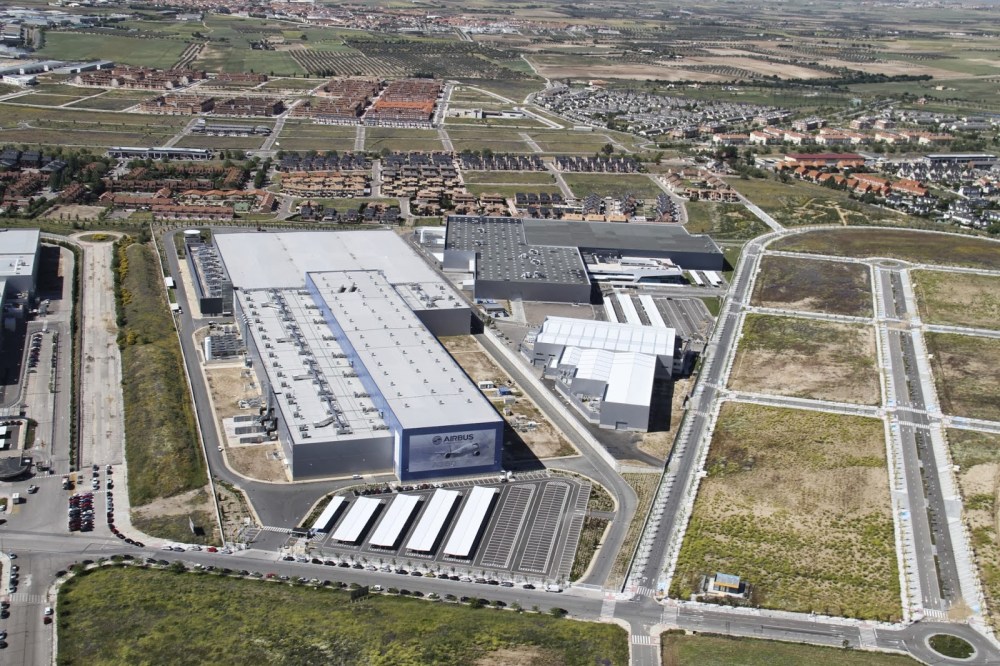
Huelga en Airbus España

AW-70066555.jpg

AW | 2018 11 04 18:58 | INDUSTRY

Logo_Airbus_2014.svg.pngHuelga indefinida en la fábrica de Airbus en Illescas ante el despido de 17 trabajadores

El sindicato CGT para los trabajadores de una de las empresas colaboradoras de Airbus Illescas, ISS Facility que está subcontratada en la fábrica illescana ha convocado a la huelga a los trabajadores de la factoría de Getafe y al resto en Illescas en solidaridad con los compañeros que van a ser despedidos.

La CGT llama a la huelga indefinida a los trabajadores de ISS Facility en Airbus en Illescas. El conflicto comenzó con el cambio de empresa, los representantes sindicales recibieron la notificación de que se dejaba de trabajar con ID Logistics y que se quedaban fuera 17 trabajadores, algunos con 25 años de antigüedad.

Según un comunicado de prensa del sindicato, la nueva empresa solo ha sido contratada para una parte del trabajo por lo que “le sobran” 17 trabajadores, aunque en el contrato de la empresa saliente recoge “de forma muy clara” que si hay subrogación de empresas, también quedará subrogada el 100% de la plantilla, según le notificaron por escrito en la extinción del contrato. La huelga arranca el Lunes 5 Noviembre 2018, desde la medianoche. La CGT informa de que los trabajadores de esta empresa realizan un trabajo de vital importancia para la multinacional aeronáutica, ya que son los encargados de realizar los movimientos y la limpieza de los útiles para poder fabricar las piezas de avión de fibra de carbono que se hacen en Illescas.

La huelga que también se manifiesta en Getafe en solidaridad con los trabajadores de Illescas aseguran que la presión sindical será un factor importante en este proceso y llaman a la unidad de los trabajadores, al igual que lo hacen con los compañeros de la factoría de Airbus en Getafe, quienes aun habiendo sido subrogados en este último caso al 100% de la plantilla, tienen convocada la huelga de igual manera para solidarizarse con los despedidos y conseguir presionar a las empresas, que son las que deben dar solución a esta situación, como únicos responsables de la misma. La CGT cree que es un escarmiento a la plantilla porque ha sabido organizarse y defenderse en diferentes negociaciones de manera muy satisfactoria y por último aseguran que este sindicalismo combativo es el que Airbus quiere eliminar de raíz para que no prospere el ejemplo. AIRWAYS® AW-Icon TXT

Imagen relacionada

Strike on Airbus Spain

Indefinite strike at the Airbus factory in Illescas before the dismissal of 17 workers

Logo_Airbus_2014.svg.pngThe CGT union for the workers of one of the companies that collaborate with Airbus Illescas, ISS Facility, which is subcontracted in the Illescana factory, has called the strike to the workers of the Getafe factory and the rest in Illescas in solidarity with the colleagues who are going to be fired.

The CGT calls the indefinite strike to the ISS Facility workers at Airbus in Illescas. The conflict started with the change of company, the union representatives received the notification that they stopped working with ID Logistics and that 17 workers were left out, some of them 25 years old.

According to a press release from the union, the new company has only been hired for part of the work, so there are «over» 17 workers, although in the contract of the outgoing company it says «very clearly» that if there is subrogation of companies, will also be subrogated 100% of the workforce, as notified in writing in the termination of the contract. The strike starts on Monday 5 November 2018, from midnight. The CGT informs that the workers of this company carry out a work of vital importance for the aeronautical multinational, since they are in charge of carrying out the movements and the cleaning of the tools to be able to manufacture the pieces of carbon fiber airplane that are made in Illescas.

The strike also manifested in Getafe in solidarity with the workers of Illescas ensure that the union pressure will be an important factor in this process and call for the unity of the workers, as they do with the colleagues of the Airbus factory in Getafe , who have been subrogated in the latter case to 100% of the workforce, have called the strike in the same way to show solidarity with the dismissed and get pressure on companies, which are the ones that must solve this situation, as sole responsible Of the same. The CGT believes that it is a warning to the workforce because it has managed to organize itself and defend itself in different negotiations in a very satisfactory way and finally they say that this combative unionism is the one that Airbus wants to eliminate at the root so that the example does not prosper. A \ W


Ξ A I R G W A Y S Ξ
SOURCE: Airgways.com
DBk: Airbus.com / Finanzas.com / Dclm.es / Airgways.com
AW-POST: 201811041858AR

A\W   A I R G W A Y S ®


Brasil aval Joint Venture Boeing-Embraer

Resultado de imagen para Boeing-Embraer airgways.com

AW | 2018 11 03 17:43 | INDUSTRY

Boeing-Embraer-Logo.pngAval del nuevo Presidente de Brasil para Joint Venture Boeing-Embraer

El Presidente electo Jair Bolsonaro apoyará el acuerdo entre la estadounidense Boeing y la brasileña Embraer en el área de la aviación comercial. Las previsiones de la nueva unidad de negocios formada por el Joint Venture entre Boeing y Embraer sea aprobado lo más rápidamente en el ámbito del Gobierno Federal de Brasil. Luego del proceso electoral, miembros del equipo económico de Bolsonaro dijeron que quería conocer detalles del acuerdo antes de que el gobierno de Michel Temer lo aprobara.

Embraer y Boeing tienen un memorando de entendimiento cerrado (MoU) desde principios de Julio 2018, pero que necesita ser avalado por el Gobierno Federal de Brasil, aunque se esperaba la definición de la elección para analizar los términos de la combinación comercial entre los fabricantes.

La Unión tiene una acción especial de Embraer, una acción llamada Golden Share, que le da derecho a vetar o aprobar temas estratégicos para la empresa con sede en São José dos Campos.

El nuevo Presidente electo de Brasil, Jair Bolsonaro confirmó su aval al negocio. «La fusión de Embraer con Boeing sigue sin ningún problema para avalar». El futuro Ministro de Defensa, general de la reserva Augusto Heleno, dijo que el equipo económico aprobaba el negocio, pero que quería conocer los detalles del acuerdo. Según el actual Ministro de Defensa, Joaquim Silva y Luna, es cuestión de tiempo que el acuerdo sea aprobado en el gobierno Temer, que ya se mostró favorable a la combinación comercial entre Boeing y Embraer.

El presidente de Embraer, Paulo Cesar de Souza e Silva, también se mostró optimista con la aprobación del negocio. «Estamos en el proceso de finalizar las negociaciones con Boeing, el proyecto tiene todo para salir bien, estamos caminando. La elección no cambia nada, no es proyecto sólo de la Embraer, pero para Brasil», dijo el ejecutivo.

Presidente de Embraer planea aprobar el acuerdo con accionistas aún en 2018. Embraer espera que el acuerdo con el gobierno federal esté aprobado en las próximas semanas para conseguir llevarlo a la apreciación de sus accionistas. La empresa informó que convocará una asamblea general extraordinaria para esa evaluación, pero que sólo puede realizarse 30 días después de la aprobación del gobierno federal. La expectativa del fabricante brasileño es que esta asamblea ocurra aún este año, y que el acuerdo sea aprobado. Tras la evaluación de los accionistas, el acuerdo con Boeing tendrá que pasar por órganos reguladores.

Con ello, según el presidente de Embraer, Paulo Cesar de Souza e Silva, la combinación comercial entre las dos empresas sólo deberá estar completamente concluida en el 3Q2019. «Una vez hecha esa aprobación de los accionistas tenemos los órganos y la expectativa es que sea a lo largo de 2019. No vemos un escenario donde esa operación tendría fin en el primer semestre, pero mucho más probable para el segundo semestre». AIRWAYS® AW-Icon TXT

Resultado de imagen para Boeing-Embraer

Presidency Brazil endorses Joint Venture Boeing-Embraer

Guarantee of the new President of Brazil for Joint Venture Boeing-Embraer

The elected President Jair Bolsonaro will support the agreement between the American Boeing and the Brazilian Embraer in the area of ​​commercial aviation. The forecasts of the new business unit formed by the Joint Venture between Boeing and Embraer will be approved as quickly as possible within the scope of the Federal Government of Brazil. After the electoral process, members of Bolsonaro’s economic team said they wanted to know details of the agreement before the Michel Temer government approved it.

Embraer and Boeing have a closed memorandum of understanding (MoU) from the beginning of July 2018, but that needs to be endorsed by the Federal Government of Brazil, although the definition of the election was expected to analyze the terms of the commercial combination between the manufacturers.

The Union has a special Embraer action, an action called Golden Share, which entitles it to veto or approve strategic issues for the company based in São José dos Campos.

The new President-elect of eBrasil, Jair Bolsonaro confirmed his endorsement of the business. «The merger of Embraer with Boeing continues without any problem to endorse». The future Minister of Defense, general of the reserve Augusto Heleno, said that the economic team approved the business, but that he wanted to know the details of the agreement. According to the current Minister of Defense, Joaquim Silva and Luna, it is a matter of time before the agreement is approved by the Temer government, which has already favored the commercial combination between Boeing and Embraer.

The president of Embraer, Paulo Cesar de Souza e Silva, was also optimistic with the approval of the business. «We are in the process of finalizing the negotiations with Boeing, the project has everything to go well, we are walking, the election does not change anything, it is not only Embraer’s project, but for Brazil», said the executive.

President of Embraer plans to approve the agreement with shareholders still in 2018. Embraer expects that the agreement with the federal government will be approved in the coming weeks to get it to the appreciation of its shareholders. The company reported that it will convene an extraordinary general assembly for that evaluation, but that it can only be done 30 days after the approval of the federal government. The expectation of the Brazilian manufacturer is that this assembly will happen even this year, and that the agreement will be approved. After the evaluation of the shareholders, the agreement with Boeing will have to go through regulatory bodies.

With this, according to the president of Embraer, Paulo Cesar de Souza e Silva, the commercial combination between the two companies should only be completely completed in 3Q2019. «Once that approval of the shareholders is made, we have the bodies and the expectation is that it will be throughout 2019. We do not see a scenario where that operation would end in the first semester, but much more likely for the second semester». A\W

Resultado de imagen para Boeing-Embraer

Presidência do Brasil aprova Joint Venture Boeing-Embraer

Garantia do novo Presidente do Brasil para Joint Venture Boeing-Embraer

O Presidente eleito Jair Bolsonaro apoiará o acordo entre a americana Boeing e a brasileira Embraer na área de aviação comercial. As previsões da nova unidade de negócios formada pela Joint Venture entre a Boeing e a Embraer serão aprovadas o mais rápido possível no âmbito do Governo Federal do Brasil. Depois do processo eleitoral, membros da equipe econômica de Bolsonaro disseram que queriam saber detalhes do acordo antes de o governo de Michel Temer aprová-lo.

A Embraer e a Boeing têm um memorando de entendimento (MoU) fechado desde o início de julho de 2018, mas que precisa ser endossado pelo governo federal do Brasil, embora a definição da eleição devesse analisar os termos da combinação comercial entre os fabricantes.

A União tem uma ação especial da Embraer, uma ação chamada Golden Share, que lhe dá direito de vetar ou aprovar questões estratégicas para a empresa sediada em São José dos Campos.

O novo presidente eleito da eBrasil, Jair Bolsonaro, confirmou seu endosso ao negócio. «A fusão da Embraer com a Boeing continua sem nenhum problema para endossar». O futuro ministro da Defesa, general da reserva Augusto Heleno, disse que a equipe econômica aprovou o negócio, mas que ele queria conhecer os detalhes do acordo. Segundo o atual ministro da Defesa, Joaquim Silva e Luna, é uma questão de tempo até que o acordo seja aprovado pelo governo Temer, que já favoreceu a combinação comercial entre a Boeing e a Embraer.

O presidente da Embraer, Paulo César de Souza e Silva, também se mostrou otimista com a aprovação do negócio. «Estamos em processo de finalização das negociações com a Boeing, o projeto tem tudo para dar certo, estamos caminhando, a eleição não muda nada, não é só o projeto da Embraer, mas para o Brasil», afirmou o executivo.

O presidente da Embraer pretende aprovar o acordo com os acionistas ainda em 2018. A Embraer espera que o acordo com o governo federal seja aprovado nas próximas semanas para levá-lo à apreciação de seus acionistas. A empresa informou que convocará uma assembléia geral extraordinária para essa avaliação, mas isso só pode ser feito 30 dias após a aprovação do governo federal. A expectativa da fabricante brasileira é que essa montagem aconteça ainda este ano, e que o acordo seja aprovado. Após a avaliação dos acionistas, o acordo com a Boeing terá que passar por órgãos reguladores.

Com isso, segundo o presidente da Embraer, Paulo César de Souza e Silva, a combinação comercial entre as duas empresas só deve estar completa no 3T2019. «Uma vez que a aprovação dos acionistas é feita, nós temos os corpos e a expectativa é de que seja ao longo de 2019. Não vemos um cenário em que essa operação terminaria no primeiro semestre, mas muito mais provável no segundo semestre». A \ W


Ξ A I R G W A Y S Ξ
SOURCE: Airgways.com
DBk: Transportes.gov.br / Boeing.com / Embraer.com / Airgways.com
AW-POST: 201811031743AR

A\W   A I R G W A Y S ®

Concorde hace su viaje final

Resultado de imagen para Concorde

AW | 2018 11 03 14:38 | INDUSTRY / HISTORY

Resultado de imagen para Aerospace Bristol logoEl último Concorde hace su viaje final

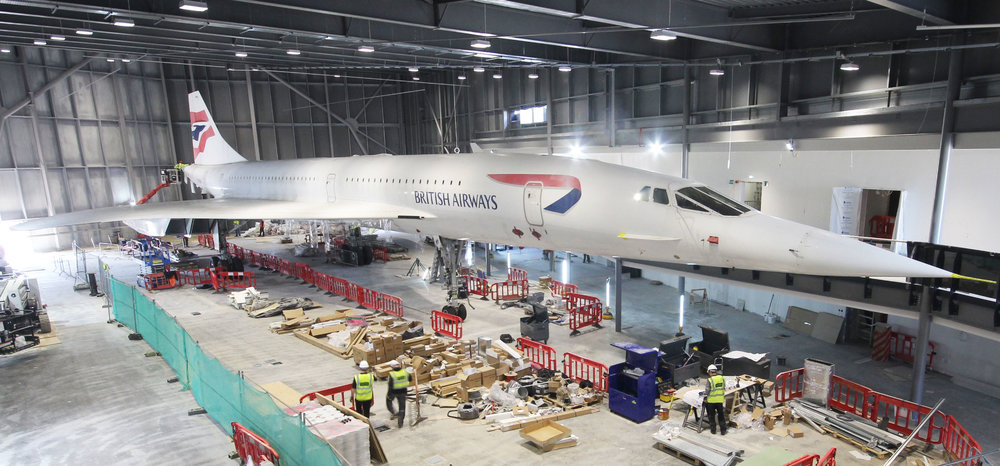
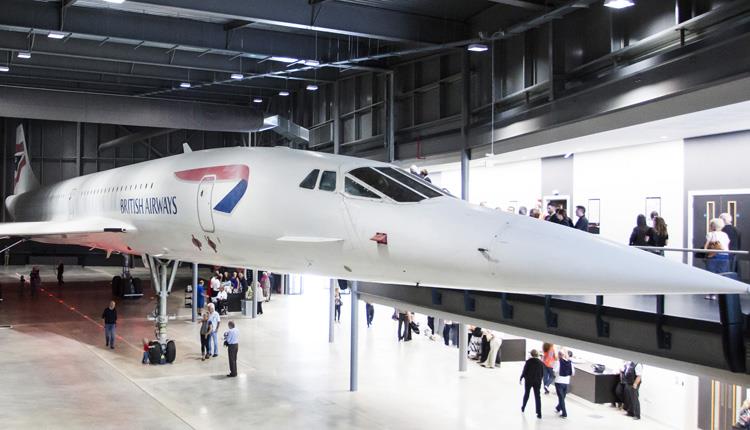
La aviación comercial ingresó en 1976 en la era supersónica dando inicio al primer vuelo comercial del Concorde. Un avión Concorde de la British Airways, el último avión supersónico estacionado por más de 13 años hizo su viaje final. En el Aeropuerto Filton, de la ciudad de Bristol, en el Reino Unido, el Concorde de British Airways, Alpha Foxtrot Nº 216, fue llevado de su vieja morada al Museo Aeroespacial de Bristol, el cual abrirá antes de que termine el 2018. Alpha Foxtrot no sólo fue el último Concorde construido para British Airways, sino que fue el último en entrar en servicio en 1979 y el último en volar en el 2003.

De acuerdo con Aerospace Bristol, la movilidad del avión se realizó gracias a la ayuda de ingenieros de Airbus y de British Airways. Usando una grúa tradicional, la nave viajó a un hangar especialmente construido quitándole una pared de forma temporal para permitir al avión de pasajeros supersónico entrara en el mismo, lo que dejó apenas 1 metro de distancia entre cada pared y la parte más ancha de las alas.

Alpha Foxtrot es el último de los 18 Concorde’s sobrevivientes que han hallado una casa permanente. En los años 80’s, el avión supersónico, franco-inglés, se consideró un proyecto de la magnitud de mandar un hombre a la Luna. El primer prototipo del Concorde hizo su vuelo en 1969 y su primer modelo en producción entró en 1976.

A diferencia de las aerolíneas comerciales, el Concorde podía volar a una velocidad de Mach 2.04 (2,180 km/hora), más del doble de la velocidad del sonido y poder llevar hasta 128 con la comodidad de ir en primera clase. Y aunque se esperaba el gran éxito comercial, los altos costos de la operación más el costo de los combustibles en los años 1970s, amén de las regulaciones ecológicas que prohibían el operar dicho avión en algunas partes de Tierra, restringiendo sus vuelos a un par de rutas intercontinentales, terminaron por cerrar los vuelos supersónicos.

Finalmente, solamente 20 Concorde’s se construyeron, que fueron empleados por Air France y British Airways, y eso ocurrió debido a las regulaciones que los respectivos gobiernos impusieron a este superavión. A pesar de eso, el Concorde parecía ser el favorito de la clase alta. El accidente del Concorde destruyó el avión Nº 203 de Air France al despegar del Aeropuerto Charles de Gaulle, en el año 2000. El servicio del Concorde se mantuvo hasta el 2003 cada vez con menor frecuencia, y fue retirado de servicio de las flotas de British Airways y Air France por motivos económicos por el aumento del combustible hizo inviables mantenerlos en el aire.

Alpha Foxtrot fue el Concorde número veinte de construcción y el último que se construyó. Entró en servicio en Abril 1979 y fue el último Concorde en volar, aterrizando en Filton el 26 Noviembre 2003. Desde esa fecha los gastos de mantener el avión en tierra han sido responsabilidad de Airbus del Reino Unido. “No podemos estar más contentos al dar la bienvenida al Concorde Nº 216 a su nuevo hogar en Aerospace Bristol”, dijo Ian Gray, del Museo Aeroespacial de Bristol. AIRWAYS® AW-Icon TXT

Resultado de imagen para Concorde Aerospace BristolResultado de imagen para Concorde Aerospace BristolResultado de imagen para Concorde Aerospace Bristol

Historia del Concorde

British-Airways-Concorde-transparent-background

El Aérospatiale-BAC Concorde fue un avión supersónico utilizado para el transporte de pasajeros. Fue construido a partir de los trabajos conjuntos de los fabricantes British Aircraft Corporation (británico) y Aérospatiale (francés). En 1969 realizó su primer vuelo, entró en servicio en 1976 y voló durante 27 años, hasta su salida de circulación en 2003. Sus principales destinos fueron los aeropuertos de Londres Heathrow, París-Charles de Gaulle, John F. Kennedy y Washington-Dulles, los dos últimos pertenecientes a Estados Unidos. Podía llegar a los destinos en la mitad de tiempo que un avión comercial convencional debido a su velocidad supersónica.​

El avión es considerado como un ícono de la aviación y una maravilla de la ingeniería. Se construyeron un total de 20 aviones en Francia y Reino Unido, seis de ellos eran prototipos y aviones de prueba. Siete fueron entregados a Air France y otros siete a British Airways. Su nombre «Concorde», proviene de la unión y colaboración de Francia y el Reino Unido en el desarrollo y fabricación del aparato. Su desarrollo y fabricación fueron una gran inversión económica para las empresas BAC y Aérospatiale.​ Además, los gobiernos francés y británico habían dado generosas subvenciones a British Airways y Air France para el desarrollo y adquisición del aparato.

El grave accidente de uno de los Concorde el 25 Julio 2000, el único en 27 años de servicio​ y otros factores como la escasa rentabilidad, precipitaron su retiro definitivo. Su último vuelo fue el 26 de noviembre de 2003. Fue el primer avión a reacción supersónico en ser usado de manera comercial, puesto en servicio el 21 Enero 1976, antes del también supersónico Tupolev Tu-144, la competencia soviética del Concorde, que entró en servicio de pasajeros el 1 Noviembre 1977. A \ W

Concorde makes its final journey

The last Concorde makes its final journey

Commercial aviation entered in 1976 in the supersonic era, starting the first commercial flight of the Concorde. A Concorde aircraft of British Airways, the last supersonic aircraft parked for more than 13 years made its final journey. At the Filton Airport, in the city of Bristol, in the United Kingdom, the British Airways Concorde, Alpha Foxtrot No. 216, was taken from its old home to the Bristol Aerospace Museum, which will open before the end of 2018. Alpha Foxtrot was not only the last Concorde built for British Airways, but it was the last to enter service in 1979 and the last to fly in 2003.

According to Aerospace Bristol, the aircraft’s mobility was made possible thanks to the help of engineers from Airbus and British Airways. Using a traditional crane, the ship traveled to a specially built hangar by temporarily removing a wall to allow the supersonic passenger plane to enter it, leaving just 1 meter between each wall and the widest part of the wings.

Alpha Foxtrot is the last of 18 surviving Concorde’s who have found a permanent home. In the 80’s, the supersonic aircraft, Franco-English, was considered a project of the magnitude of sending a man to the Moon. The first Concorde prototype made its flight in 1969 and its first model in production entered in 1976.

Unlike commercial airlines, the Concorde could fly at a speed of Mach 2.04 (2,180 km/hour), more than twice the speed of sound and can carry up to 128 with the convenience of going first class. And although the great commercial success was expected, the high costs of the operation plus the cost of fuel in the 1970’s, in addition to the ecological regulations that prohibited the operation of said aircraft in some parts of the Earth, restricting its flights to a couple of intercontinental routes, ended by closing the supersonic flights.

246048513031212.png

Finally, only 20 Concorde’s were built, which were used by Air France and British Airways, and that happened due to the regulations that the respective governments imposed on this supercar. Despite that, the Concorde seemed to be the favorite of the upper class. The Concorde accident destroyed the No. 203 aircraft of Air France when taking off from Charles de Gaulle Airport, in 2000. The Concorde service was maintained until 2003 less and less frequently, and was withdrawn from service by British fleets Airways and Air France for economic reasons because of the increase in fuel made it unviable to keep them in the air.

Alpha Foxtrot was the twentyth Concorde building and the last one to be built. It entered service in April 1979 and was the last Concorde to fly, landing at Filton on November 26, 2003. Since that date the costs of keeping the plane on the ground have been the responsibility of Airbus of the United Kingdom. «We can not be happier to welcome Concorde No. 216 to its new home at Aerospace Bristol,» said Ian Gray, of the Bristol Aerospace Museum. A \ W

History of the Concorde

Taxi1.jpg

The Aérospatiale-BAC Concorde was a supersonic aircraft used to transport passengers. It was built from the joint works of the manufacturers British Aircraft Corporation (British) and Aérospatiale (French). In 1969 he made his first flight, entered service in 1976 and flew for 27 years, until his departure from circulation in 2003. His main destinations were the airports of London Heathrow, Paris-Charles de Gaulle, John F. Kennedy and Washington-Dulles, the last two belonging to the United States. It could reach destinations in half the time of a conventional commercial jet because of its supersonic speed.

The plane is considered an icon of aviation and a marvel of engineering. A total of 20 aircraft were built in France and the United Kingdom, six of them were prototypes and test aircraft. Seven were delivered to Air France and another seven to British Airways. Its name «Concorde», comes from the union and collaboration of France and the United Kingdom in the development and manufacture of the device. Its development and manufacturing were a great economic investment for BAC and Aérospatiale companies, and the French and British governments had generously given British Airways and Air France subsidies for the development and acquisition of the device.

The serious accident of one of the Concorde on July 25, 2000, the only one in 27 years of service and other factors such as poor profitability, precipitated its definitive retirement. His last flight was on November 26, 2003. It was the first supersonic jet aircraft to be used commercially, put into service on January 21, 1976, before the also supersonic Tupolev Tu-144, the Soviet Concorde competition, which entered in passenger service on November 1, 1977. A \ W


video-camera_318-50337

Ξ A I R G W A Y S Ξ
SOURCE: Airgways.com
DBk: Aerospacebristol.org / Airlineratings.com / Wikimedia.org / Thebristolmag.co.uk
AW-POST: 201811031438AR

A\W   A I R G W A Y S ®

Dificultades de mercado del SSJ-100

Resultado de imagen para Yakutia Airlines Sukhoi SSJ-100 png

AW | 2018 11 03 12:44 | INDUSTRY / AIRLINES

logo_sukhoiUn tercio de las aeronaves Sukhoi Superjet SSJ-100 ya no vuela

Alrededor de un tercio de los aviones Sukhoi Superjet SSJ-100 de los mayores clientes de aerolíneas del mundo ha permanecido en tierra. Los movimientos de las aeronaves SSJ-100 en compañías como Aeroflot, Interjet, Yamal Airlines, Gazprom Avia y Azimuth Airlines, representan más de la mitad de los aviones producidos por este modelo. Pero después de diez años de producción y ventas, el difícil destino del avión ruso se ha hecho notar, donde las fallas en la postventa y el área de mantenimiento convierten a las aerolíneas en un blanco de dificultades.

Sukhoi y el soporte técnico

Boris Rybak, Director General de la consultora Infomost, consideró que el sistema posventa es bastante precario. «Se ha formado un sistema de soporte técnico bastante exótico para el servicio posventa, que no corresponde a la maneras modernas de cómo se hace esto. Se tomaron muchas decisiones inusuales que no son típicas en el mercado global de mantenimiento. Una aeronave tiene una gran cantidad de sistemas con una enorme cantidad de componentes. La propia Sukhoi suministra estos componentes y elementos de sistemas, pero lo hace de manera lenta y cara. Pero lo principal es que son lentos», afirmó Boris Rybak. El problema principal es que Sukhoi Aircraft se responsabiliza de todos los procesos de mantenimiento y de suministro de repuestos y componentes, pero sin contar con los recursos suficientes para hacerlo.

Boris Rybak apuntó que la práctica mundial es un poco distinta y que generalmente las piezas de los aviones se pueden comprar en el mercado a varios proveedores independientes de otras aerolíneas. Es decir, hay un mercado grande y rápido de partes. «No temo decir que otros errores han sido cometidos. Pero este es probablemente uno de los fundamentales. No hay nada sorprendente. Sukhoi es un fabricante de aviones militares que se mantienen en operación de una manera ligeramente diferente. La compañía nunca ha creado sistemas de servicio posventa para aviones comerciales. No tienen experiencia en este asunto», concluyó Rybak.

El fabricante está en contacto constante con las aerolíneas que operan su aeronave. Los sistemas de servicio postventa existen, la compañía está trabajando para mejorarlos, expresa el fabricante Sukhoi Aircraft.

El periódico Vedomosti, escribió que el SSJ-100 vuela poco debido a problemas con el servicio postventa, el alto costo y la falta de piezas de repuesto, y también por el largo tiempo de entrega. Según el periódico, ha habido casos en que en la aerolínea rusa Aeroflot no voló más de un tercio del parque.

En Septiembre 2018, Alexander Rubtsov, Presidente de Sukhoi Civil Aircraft, dijo: «No tiene sentido producir aviones que están inactivos debido a la falta de piezas de repuesto y motores». Como resultado, la compañía decidió construir almacenes de repuestos adicionales cerca de grandes centros de aviación, así como hangares adicionales para estacionar y dar servicio a aeronaves. Pero hasta ahora este proyecto no ha sido implementado.

Aerolíneas que pierden protagonismo

528078_large.pngLa aerolínea rusa Aeroflot Russian Airlines es el mayor cliente de las aeronaves SSJ-100, pero lo considera el avión menos seguro de su flota. Esto se traduce que a partir del 29 Octubre 2018, de los 50 aviones SSJ100, no habían volado más de seis días seguidos quince aeronaves. De estos, sólo uno permaneció en tierra desde el 18/10/2018 y dos desde el 19/10/2018. El resto de la flota dejó de volar antes.

A pesar de los problemas, en septiembre, Aeroflot firmó un acuerdo con United Aircraft Building Corporation para el suministro de otros 100 aviones Superjet. Se entregarán a la aerolínea rusa más grande desde 2019 hasta 2026.

Aeroflot «considera este avión de pasajeros como una carga social», dijeron tres personas cercanas a KLA a Vedomosti. Anteriormente, en abril, la compañía emitió un documento interno titulado «Estado de la seguridad de vuelo en febrero de 2018». De esto se deduce que los incidentes ocurrieron más a menudo con los aviones Superjet SSJ-100 en la flota de la compañía que con otros modelos de aeronaves. En el documento de Aeroflot, el nivel de seguridad de la aeronave SSJ-100 se denominó «medio», mientras que para todas las aeronaves fabricadas por Airbus y Boeing se designó como «alto».

Resultado de imagen para Yakutia Airlines Sukhoi SSJ-100 pngUN SUKHOI SSJ-100 DAÑADO DE YAKUTIA AIRLINES

La aerolínea Yakutia Airlines también ha criticado duramente el sistema de soporte técnico de los cuatro SSJ-100 que posee en su flota. La aerolínea ha sido suspendida para realizar vuelos internacionales. A finales de Agosto 2018, Ivan Vinokurov, Director de la flota de Yakutia Airlines, en una entrevista con Aviation Transport Observation, declaró que su compañía no excluye que en el futuro pueda negarse a operar sus cinco Superjet, debido a la baja confiabilidad. A principios de Octubre 2018, el Superjet SSJ-100 de Yakutia Airlines sufrió graves daños durante un aterrizaje fallido en Yakutsk. Como informó más tarde el Ministro de Transporte de la República, lo más probable es que la aeronave no esté sujeta a recuperación.

Yamal Airlines posee 16 Superjet SSJ-100. Según Flightradar24, un avión hizo el último vuelo el 4 Octubre 2018, tres más no vuelan desde finales de Septiembre 2018.RA-89080_SU95(LR)_Azimuth_VKO_UUWW_(37742561274).jpg
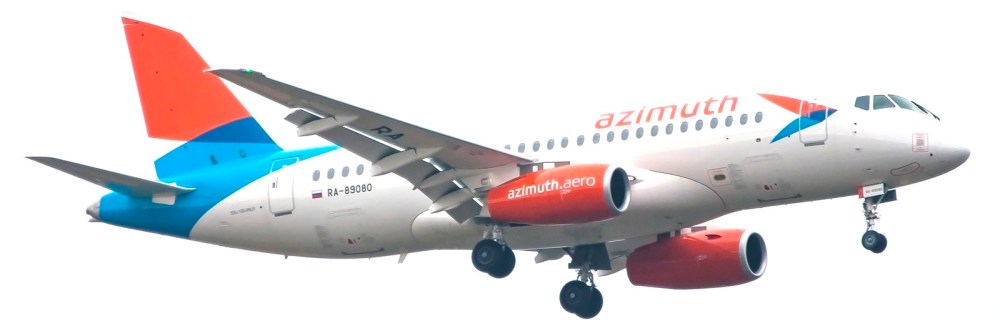
Azimuth Airlines desde principios de Octubre 2018, un avión SSJ-100, construido hace cuatro años, no vuela. El resto de la flota de SSJ-100 permanece operativa.

Gazprom Avia, una aerolínea de Rusia ha informado que una aeronave SSJ-100 no vuela desde el 15/09/2018, otra desde 15/10/2018.

Brussels Airlines desprograma SSJ-100

Resultado de imagen para Brussels Airlines Sukhoi SSJ-100 pngLa aerolínea belga Brussels Airlines ha decidido desprogramar y dar de baja la flota de aeronaves regionales Sukhoi SSJ-100. La aerolínea belga ha decidido reemplazar los aviones de fabricación rusa por aeronaves Bombardier CRJ-900 de fabricación canadiense.

La aerolínea Brussels Airlines arrendó cuatro Sukhoi Superjet SSJ-100 a su homóloga irlandesa CityJet por un plazo de dos años. Sin embargo, debido a que el fabricante de la aeronave no pudo reparar rápidamente un Superjet y los vuelos se cancelaron, los belgas decidieron rescindir el contrato antes de lo previsto.
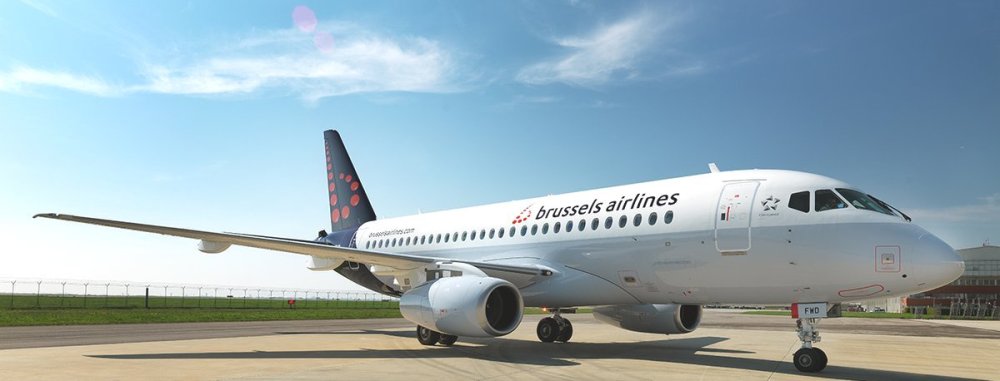
Cityjet-SSJ-wet-leased-to-Brusslers-airlines.jpg

La Directora de la aerolínea, Christina Foerster, anunció la desprogramación de los SSJ-100 lo antes posible. Según el medio belga, un avión Bombardier ya reemplazó a un SSJ-100 en la ruta Bruselas-Nantes. Los otros tres Superjet 100 dejarán gradualmente la flota de Brussels Airlines. El 1 Marzo 2019 entrará en vigor el nuevo contrato que sucederá al acuerdo firmado con CityJet y todos los SSJ-100 ya no serán parte de la flota.

Interjet vende los SSJ-100

El mayor operador extranjero de aeronaves rusas Superjet es la compañía mexicana InterJet con 22 SSJ-100, de los cuales 8 unidades permanecen inoperativas. Una aeronave permanece en tierra desde Agosto 2018. Cuatro aviones fueron aparcados en 09/2018. Dos aeronaves dejaron de volar a principios de 10/2018, otro avión dejó de volar el 11/10/2018.

Anteriormente, la aerolínea mexicana Interjet, principal comprador internacional de los Sukhoi Superjet 100, anunció que vendería los aviones. La razón son los problemas con el servicio posventa. Pero además los problemas de Interjet están relacionados con el hecho de que la compañía se equivocó en el diseño de configuración de la aeronave, al elegir la versión de 93 plazas, aunque podría reconfigurar las aeronaves para 103 asientos. Como resultado, esto condujo a una disminución en los ingresos y un deterioro en la posición financiera.

En Enero 2018, la agencia Bloomberg informó que cuatro de los 22 aviones SSJ-100 de la flota de la compañía mexicana Interjet no vuelan, porque se usan como una fuente de piezas de repuesto para el resto de los aviones de la compañía. La aerolínea mexicana declaró posteriormente que esta información acerca de la canibalización de parte de la flota de los aviones SSJ-100 no era cierta.

El retiro de los aviones rusos SSJ-100 y el costo de los despidos pasaron factura a la aerolínea Interjet. La aerolínea registró una pérdida neta de МX$ 979.8 millones de песос de Julio a Septiembre 2018, en contraste con la utilidad de MX$ 232.2 mdp del mismo periodo del año pasado, de acuerdo con los resultados financieros que presenta a sus acreedores, pues no cotiza en el mercado de capitales.

Estos resultados también estuvieron presionados por los gastos de operación, que se elevaron 32.5% en el tercer trimestre frente al mismo periodo del año anterior. “Este incremento en gastos está reflejando el desfase gradual de operaciones de la flota SSJ100 y el gasto no recurrente que se generó por los finiquitos a empleados que fueron separados de la compañía, como resultado de una reducción de la estructura de costos fijos y de una reducción parcial por cuanto a los empleados directamente relacionados a la flota SSJ100”, detalló Interjet en su reporte.

Un par de factores más abonaron a las pérdidas de la aerolínea: el aumento del precio promedio por litro de combustible, que elevó los gastos 60.2% anual; así como la depreciación del peso frente al dólar, pues muchos de sus gastos están dolarizados.

El Consejo Directivo de la empresa que encabeza la familia Alemán decidió en septiembre reducir la flota de aeronaves Sukhoi e incorporar 20 aeronaves A320NEO, del fabricante europeo Airbus, que se sumarán al pedido ya existente de 35 aviones de esta misma firma. Su expectativa es incrementar en más de 3.6 millones el número de asientos en los próximos tres años. AIRWAYS® AW-Icon TXT

Resultado de imagen para Sukhoi SSJ-100 factory

Market difficulties of the SSJ-100

One third of Sukhoi Superjet SSJ-100 aircraft no longer fly

AW-70008877About a third of the Sukhoi Superjet SSJ-100 aircraft from the world’s largest airline customers have remained on the ground. The movements of SSJ100 aircraft in companies such as Aeroflot, Interjet, Yamal Airlines, Gazprom Avia and Azimuth Airlines, represent more than half of the aircraft produced by this model. But after ten years of production and sales, the difficult fate of the Russian aircraft has been noted, where failures in after-sales and maintenance make airlines a target of difficulties.Resultado de imagen para Sukhoi SSJ-100 factory
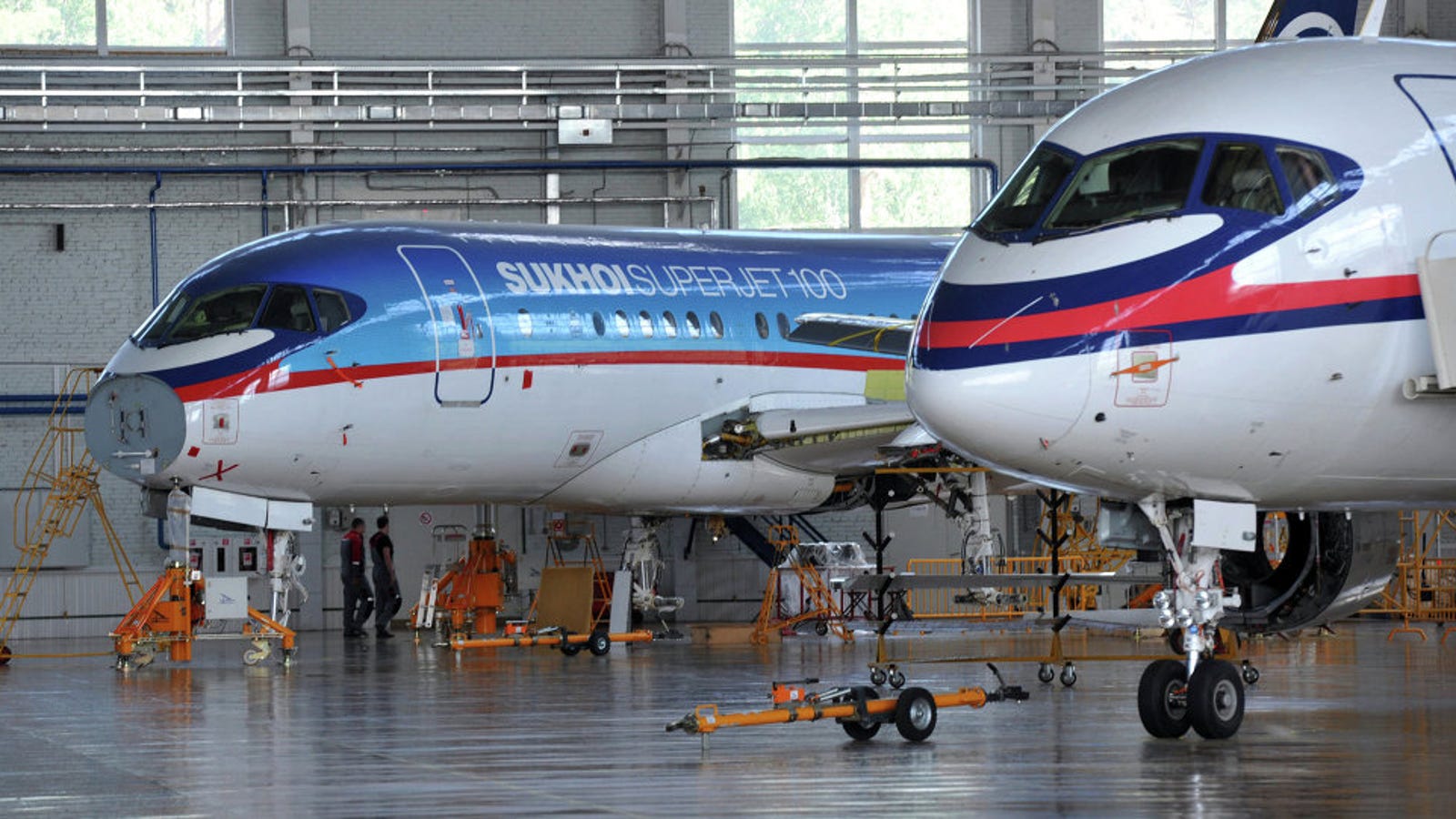
Sukhoi and technical support

Boris Rybak, General Director of the consultancy Infomost, considered that the after-sales system is quite precarious. «A rather exotic technical support system has been formed for after-sales service, which does not correspond to modern ways of doing this, and many unusual decisions were made that are not typical of the global maintenance market. number of systems with a huge number of components, Sukhoi itself supplies these components and system elements, but it does so slowly and expensively, but the main thing is that they are slow», said Boris Rybak. The main problem is that Sukhoi Aircraft is responsible for all maintenance processes and supply of spare parts and components, but without sufficient resources to do so.

Boris Rybak pointed out that the global practice is a bit different and that aircraft parts can usually be purchased in the market from several independent suppliers of other airlines. That is, there is a large and fast market of parts. «I am not afraid to say that other mistakes have been made, but this is probably one of the fundamental ones. There is nothing surprising, Sukhoi is a manufacturer of military aircraft that remain in operation in a slightly different way. after-sales service for commercial aircraft, they have no experience in this matter», Rybak concluded.

The manufacturer is in constant contact with the airlines that operate their aircraft. The after-sales service systems exist, the company is working to improve them, says the manufacturer Sukhoi Aircraft.

The Vedomosti newspaper wrote that the SSJ-100 flies little because of problems with after-sales service, high cost and lack of spare parts, and also because of the long delivery time. According to the newspaper, there have been cases in which the Russian airline Aeroflot did not fly more than a third of the park.

In September 2018, Alexander Rubtsov, President of Sukhoi Civil Aircraft, said: «There is no point in producing aircraft that are inactive due to the lack of spare parts and engines». As a result, the company decided to build additional spare warehouses near large aviation centers, as well as additional hangars to park and service aircraft. But until now this project has not been implemented.

Airlines that lose prominence

The Russian airline Aeroflot Russian Airlines is the largest client of the SSJ-100 aircraft, but considers it the least safe aircraft in its fleet. This means that as of October 29, 2018, of the 50 SSJ100 aircraft, fifteen aircraft had not flown more than six consecutive days. Of these, only one remained on land since 10/18/2018 and two since 10/19/2018. The rest of the fleet stopped flying before.

Despite the problems, in September, Aeroflot signed an agreement with United Aircraft Building Corporation to supply another 100 Superjet aircraft. They will be delivered to the largest Russian airline from 2019 to 2026.

Aeroflot «considers this passenger plane as a social burden», said three people close to KLA to Vedomosti. Previously, in April, the company issued an internal document entitled «State of flight safety in February 2018.» From this it follows that the incidents occurred more often with Superjet SSJ-100 aircraft in the company’s fleet than with other aircraft models. In the Aeroflot document, the security level of aircraft SSJ-100 was called «medium», while for all aircraft manufactured by Airbus and Boeing it was designated as «high».

Yakutia Airlines has also harshly criticized the technical support system of the four SSJ-100 that it has in its fleet. The airline has been suspended for international flights. At the end of August 2018, Ivan Vinokurov, Director of the Yakutia Airlines fleet, in an interview with Aviation Transport Observation, stated that his company does not exclude that in the future it could refuse to operate its five Superjet, due to the low reliability. At the beginning of October 2018, the Superjet SSJ-100 of Yakutia Airlines suffered serious damage during a failed landing in Yakutsk. As reported later by the Republic’s Minister of Transportation, the aircraft is most likely not subject to recovery.

Yamal Airlines has 16 Superjet SSJ-100. According to Flightradar24, an airplane made the last flight on October 4, 2018, three more do not fly since the end of September 2018.

Azimuth Airlines since early October 2018, an SSJ-100 aircraft, built four years ago, does not fly. The rest of the SSJ-100 fleet remains operational.

Gazprom Avia, a Russian airline has reported that an SSJ-100 aircraft does not fly since 09/15/2018, another since 10/15/2018.

Brussels Airlines deprograms SSJ-100

The Belgian airline Brussels Airlines has decided to deprogram and cancel the Sukhoi SSJ-100 regional aircraft fleet. The Belgian airline has decided to replace the Russian-made aircraft with Canadian-made Bombardier CRJ-900 aircraft.

The airline Brussels Airlines leased four Sukhoi Superjet SSJ-100 to its Irish counterpart CityJet for a period of two years. However, because the manufacturer of the aircraft could not quickly repair a Superjet and the flights were canceled, the Belgians decided to terminate the contract earlier than planned.

The airline’s Director, Christina Foerster, announced the deprogramming of the SSJ-100 as soon as possible. According to the Belgian media, a Bombardier aircraft has already replaced an SSJ-100 on the Brussels-Nantes route. The other three Superjet 100 will gradually leave the Brussels Airlines fleet. On March 1, 2019 will enter into force the new contract that will succeed the agreement signed with CityJet and all SSJ-100 will no longer be part of the fleet.

Interjet sells the SSJ-100

The largest foreign operator of Russian Superjet aircraft is the Mexican company InterJet with 22 SSJ-100, of which 8 units remain inoperative. An aircraft remains on land from August 2018. Four aircraft were shut down on 09/2018. Two aircraft stopped flying at the beginning of 10/2018, another plane stopped flying on 10/11/2018.

Resultado de imagen para Interjet Sukhoi SSJ-100

Previously, the Mexican airline Interjet, the main international buyer of the Sukhoi Superjet 100, announced that it would sell the aircraft. The reason is the problems with after-sales service. But in addition the problems of Interjet are related to the fact that the company made a mistake in the configuration design of the aircraft, when choosing the version of 93 seats, although it could reconfigure the aircraft for 103 seats. As a result, this led to a decrease in revenues and a deterioration in the financial position.

In January 2018, the Bloomberg agency reported that four of the 22 SSJ-100 aircraft of the Mexican company Interjet’s fleet do not fly, because they are used as a source of spare parts for the rest of the company’s aircraft. The Mexican airline later stated that this information about the canibalization of part of the fleet of the SSJ-100 aircraft was not true.

The withdrawal of the Russian SSJ-100 aircraft and the cost of the dismissals took its toll on the Interjet airline. The airline registered a net loss of MX$ 979.8 million from July to September 2018, in contrast to MX$ 232.2 million in the same period of last year, according to the financial results presented to its creditors, as it did not It is quoted in the capital market.

These results were also pressured by operating expenses, which rose 32.5% in the third quarter compared to the same period of the previous year. «This increase in expenses is reflecting the gradual lag of operations of the SSJ100 fleet and the non-recurring expense that was generated by the terminations of employees who were separated from the company, as a result of a reduction in the structure of fixed costs and a partial reduction in terms of employees directly related to the SSJ100 fleet», explained Interjet in his report.

A couple of factors more paid to the losses of the airline: the increase in the average price per liter of fuel, which raised expenses 60.2% per annum; as well as the depreciation of the peso against the dollar, since many of its expenses are dollarized.

The Board of Directors of the company headed by the German family decided in September to reduce the Sukhoi aircraft fleet and incorporate 20 A320neo aircraft, from the European manufacturer Airbus, which will be added to the existing order of 35 aircraft of the same firm. Their expectation is to increase the number of seats by more than 3.6 million over the next three years. A \ W

Resultado de imagen para Sukhoi SSJ-100 factory

Проблемы рынка SSJ-100

logo_suhoyОдна треть самолетов SSJ-100 Sukhoi Superjet больше не летает

Около трети самолета Sukhoi Superjet SSJ-100 от крупнейших авиакомпаний мира по всему миру остались на месте. Движения самолетов SSJ100 в таких компаниях, как Аэрофлот, Интерджет, Ямал, Газпром Авиа и Азимут, представляют более половины самолетов, выпускаемых этой моделью. Но после десяти лет производства и продаж была отмечена сложная судьба российских самолетов, где неудачи в послепродажном обслуживании и авиалинии создают проблемы для авиакомпаний.

Сухой и техническая поддержка

Борис Рыбак, генеральный директор консалтинговой компании Infomost, считает, что послепродажная система довольно опасна. «Для службы послепродажного обслуживания была сформирована довольно экзотическая система технической поддержки, которая не соответствует современным способам этого решения, и было принято множество необычных решений, которые не характерны для глобального рынка обслуживания. количество систем с огромным количеством компонентов, сам Сухой поставляет эти компоненты и элементы системы, но делает это медленно и дорого, но главное, что они медленны»,  сказал Борис Рыбак. Основная проблема заключается в том, что Sukhoi Aircraft отвечает за все процессы обслуживания и поставки запасных частей и компонентов, но без достаточных ресурсов для этого.

Борис Рыбак отметил, что глобальная практика немного отличается и что части самолетов обычно можно купить на рынке у нескольких независимых поставщиков других авиакомпаний. То есть, существует большой и быстрый рынок деталей. «Я не боюсь сказать, что были сделаны другие ошибки, но это, вероятно, один из фундаментальных. Нет ничего удивительного, Сухой производитель военных самолетов, которые по-прежнему работают несколько иначе. послепродажное обслуживание коммерческих самолетов, у них нет опыта в этом вопросе »,  заключил Рыбак.

Производитель находится в постоянном контакте с авиакомпаниями, которые эксплуатируют свои самолеты. Системы послепродажного обслуживания существуют, компания работает над их улучшением, говорит производитель Sukhoi Aircraft.

Газета «Ведомости» писала, что SSJ-100 мало летает из-за проблем с послепродажным обслуживанием, высокой стоимостью и отсутствием запасных частей, а также из-за длительного времени доставки. По данным газеты, были случаи, когда российская авиакомпания «Аэрофлот» не летала более трети парка.

В сентябре 2018 года президент ОАО «Гражданские самолеты Сухого» Александр Рубцов сказал: «Нет смысла производить самолеты, которые неактивны из-за отсутствия запасных частей и двигателей». В результате компания решила построить дополнительные запасные склады вблизи крупных авиационных центров, а также дополнительные ангары для парковки и обслуживания самолетов. Но до сих пор этот проект не был реализован.

По словам руководителя аналитической службы агентства «Авиапорт» Олега Пантелеева, в каждом из случаев, описанных выше, причины разные. В целом, российские компании страдают от ежегодного снижения трафика, которое происходит после окончания высокого сезона. И в этот момент, по его словам, «естественный излишек летательного аппарата» прибывает, считает он.

Проблемы Interjet, по его словам, связаны с тем, что компания допустила ошибку в дизайне салона при выборе версии 93 места, хотя она могла заказать номер на 103 места. В результате это привело к снижению доходов и ухудшению финансового положения.

Авиакомпании, потерявшие известность

Российская авиакомпания Аэрофлот Русские авиалинии является крупнейшим клиентом самолета SSJ-100, но считает ее наименее безопасным самолетом в своем парке. Это означает, что по состоянию на 29 октября 2018 года из 50 самолетов SSJ100 пятнадцать самолетов не пролетели более шести последовательных дней. Из них только один остался на суше с 18/10/2018 и два с 10/19/2018. Остальная часть флота перестала летать раньше.Resultado de imagen para Sukhoi SSJ-100 factory
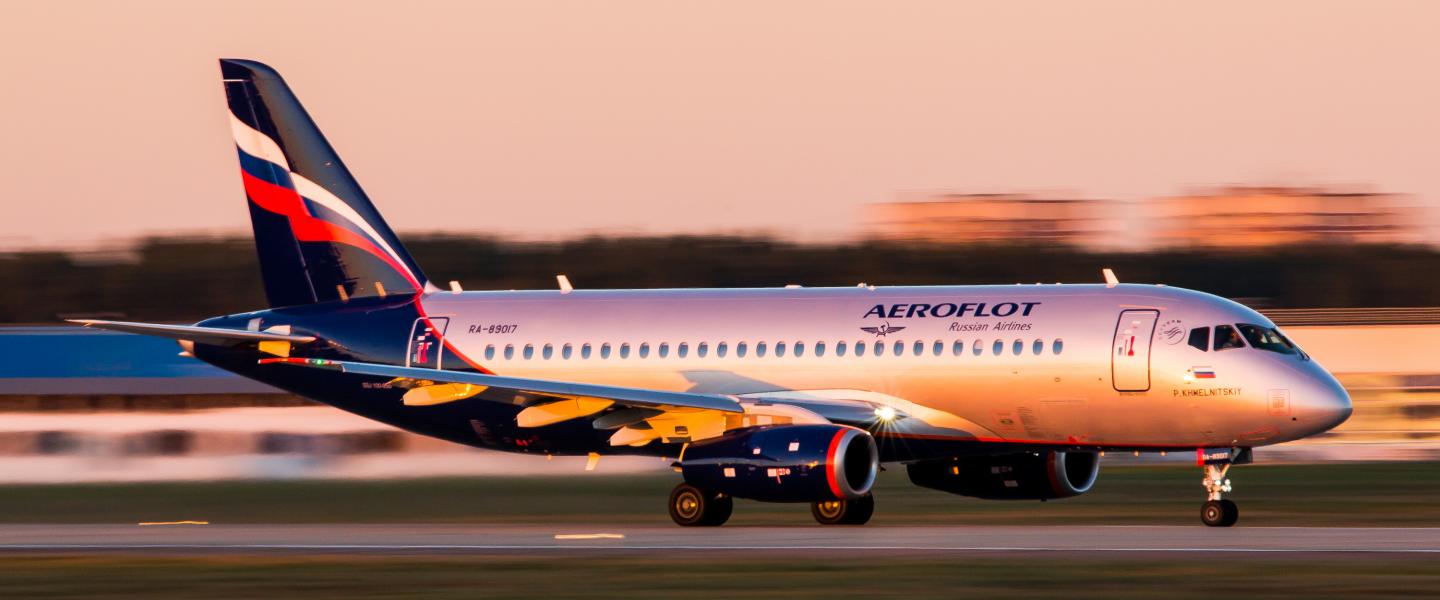
Несмотря на проблемы, в сентябре Аэрофлот подписал соглашение с United Aircraft Building Corporation о поставке еще 100 самолетов Superjet. Они будут доставлены в крупнейшую российскую авиакомпанию с 2019 по 2026 год.

Аэрофлот рассматривает этот пассажирский самолет как социальную нагрузку, сказали Ведомостям три человека, близкие к ОАК. Ранее в апреле компания выпустила внутренний документ под названием «Состояние безопасности полетов в феврале 2018 года». Из этого следует, что инциденты случались чаще с самолетами Superjet SSJ-100 в парке компании, чем с другими моделями самолетов. В документе Аэрофлота уровень безопасности самолета SSJ-100 был назван «средним», в то время как для всех самолетов, выпускаемых Airbus и Boeing, он был обозначен как «высокий».

Авиакомпания Якутия также резко критиковала систему технической поддержки четырех SSJ-100, которые она имеет в своем флоте. Авиакомпания была приостановлена ​​для международных рейсов. В конце августа 2018 года директор флота Якутская авиалиния Иван Винокуров в интервью Авиатранспортное наблюдение заявил, что его компания не исключает, что в будущем она может отказаться от эксплуатации своих пяти Superjet из-за низкой надежности. В начале октября 2018 года Superjet SSJ-100 авиакомпании Якутия понес серьезный ущерб во время неудачной посадки в Якутске. Как сообщил позднее министр транспорта Республики, самолет, скорее всего, не подлежит восстановлению.

У авиакомпании Ямал 16 Superjet SSJ-100. По данным Flightradar24, самолет совершил последний полет 4 октября 2018 года, еще три не летают с конца сентября 2018 года.

Azimuth Airlines с начала октября 2018 года, самолет SSJ-100, построенный четыре года назад, не летает. Остальная часть парка SSJ-100 остается в рабочем состоянии.

Авиакомпания Газпром, российская авиакомпания, сообщила, что самолет SSJ-100 летает не с 15 августа 2012 года, а с 10/10/2018.

Brussels Airlines депрограммирует SSJ-100

Бельгийская авиакомпания Brussels Airlines решила депрограммировать и отменить региональный самолетный парк Sukhoi SSJ-100. Бельгийская авиакомпания решила заменить самолеты российского производства канадскими самолетами Bombardier CRJ-900.

Авиакомпания Brussels Airlines арендовала четыре Sukhoi Superjet SSJ-100 своему ирландскому коллеге CityJet сроком на два года. Однако, поскольку производитель самолета не смог быстро восстановить Superjet, и рейсы были отменены, бельгийцы решили расторгнуть контракт раньше запланированного.

Директор авиакомпании Кристина Фёрстер объявила о депрограммировании SSJ-100 как можно скорее. По данным бельгийских СМИ, самолет Bombardier уже заменил SSJ-100 на трассе Брюссель-Нант. Остальные три Superjet 100 постепенно покинут флот Brussels Airlines. 1 марта 2019 года вступит в силу новый контракт, который будет успешным с соглашением, подписанным с CityJet, и все SSJ-100 больше не будут частью флота.

Interjet продает SSJ-100

Крупнейшим иностранным оператором российского самолета Superjet является мексиканская компания InterJet с 22 SSJ-100, из которых 8 единиц остаются в нерабочем состоянии. Самолет остается на суше с августа 2018 года. Четыре самолета были отключены 09/2018. Два самолета прекратили летать в начале 10/2018 года, еще один самолет перестал летать 10/11/2018.

Ранее мексиканская авиакомпания Interjet, главный международный покупатель Sukhoi Superjet 100, объявила, что будет продавать самолет. Причина заключается в проблемах послепродажного обслуживания. Но, кроме того, проблемы Interjet связаны с тем, что компания допустила ошибку в конфигурации конфигурации самолета при выборе версии из 93 мест, хотя она могла бы перенастроить самолет на 103 места. В результате это привело к снижению доходов и ухудшению финансового положения.

В январе 2018 года агентство Bloomberg сообщило, что четыре из 22 самолетов SSJ-100 мексиканской компании Interjet не летают, потому что они используются как источник запасных частей для остальных самолетов компании. Позднее мексиканская авиакомпания заявила, что эта информация о захвате части флота самолетов SSJ-100 не соответствует действительности.

Вывод российского самолета SSJ-100 и стоимость увольнений повлек за собой урон авиакомпании Interjet. Авиакомпания зарегистрировала чистый убыток в размере 979,8 млн. Долл. США с июля по сентябрь 2018 года, в отличие от 232,2 млн. MX за аналогичный период прошлого года, согласно финансовым результатам, представленным кредиторам, поскольку это не Он цитируется на рынке капитала.

На эти результаты также повлияли операционные расходы, которые выросли на 32,5% в третьем квартале по сравнению с аналогичным периодом прошлого года. «Это увеличение расходов отражает постепенное отставание операций флота SSJ100 и единовременные расходы, которые были вызваны прекращением деятельности сотрудников, которые были отделены от компании, в результате сокращения структуры постоянных затрат и частичное сокращение числа сотрудников, непосредственно связанных с флотом SSJ100», пояснил Interjet в своем отчете.

Несколько факторов, более уплаченных за потери авиакомпании: увеличение средней цены за литр топлива, что увеличило расходы на 60,2% годовых; а также обесценение песо по отношению к доллару, поскольку многие из его расходов являются долларовыми.

Совет директоров компании во главе с немецкой семьей решил в сентябре сократить парк самолетов Sukhoi и включить 20 самолетов A320NEO от европейского производителя Airbus, который будет добавлен к существующему заказу 35 самолетов той же фирмы. Их ожидания состоят в том, чтобы увели. A\W


Ξ A I R G W A Y S Ξ
SOURCE: Airgways.com
DBk: Sukhoi.org / Airgways.com / Cnn.com / Expansion.mx / Leehamnews.com / Ainonline.com / Finavia.fi
AW-POST: 201811031244AR

A\W   A I R G W A Y S ®


Boeing China inicia ops en 12/2018

Resultado de imagen para Boeing China factory

AW | 2018 11 02 22:34 | INDUSTRY

Boeing-Logo.svgLa planta china de Boeing comenzará a operar en Diciembre 2018

The Boeing Co. comenzará sus operaciones en su planta de terminación de la línea Boeing 737 en la República de China en Diciembre 2018. Boeing ha invertido US$ 33 millones de dólares el año pasado en una empresa conjunta con COMAC (Commercial Aircraft Corp de China) para supervisar la planta, tomando una participación mayoritaria. La planta, en la ciudad oriental de Zhoushan, instalará interiores y el área de pintura.

El Presidente de Boeing China, John Bruns, expresó que la fábrica entregará solo un avión en 2018 y luego aumentará gradualmente la producción hasta que alcance un objetivo de entrega de 100 aviones al año. Air China recibirá el primer avión producido.

Rivalizando en Oriente

Boeing y su rival europeo Airbus están expandiendo su presencia en China a medida que compiten por pedidos en el creciente mercado de la aviación. Airbus tiene una planta de terminación de A330 en la ciudad oriental de Tianjin. Boeing también renovó los contratos de producción del 737 con AVIC Aircraft y Shanghai Aircraft Manufacturing Co Ltd, y reconoció a cinco nuevas compañías chinas como proveedores elegibles.

Los analistas han expresado su preocupación de que Boeing eventualmente podría verse afectado por las disputas comerciales en curso entre los Estados Unidos y China, aunque los productos chinos no han sido afectados por los aranceles. AIRWAYS® AW-Icon TXT

Resultado de imagen para Boeing China Zhoushan factory

Boeing China starts ops on 12/2018

The Chinese Boeing plant will start operating in December 2018

The Boeing Co. com will begin operations at its completion plant on line Boeing 737 in the Republic of China in December 2018. Boeing has invested US $ 33 million last year in a joint venture with COMAC (Commercial Aircraft Corp of China) to supervise the plant, taking a majority stake. The plant, in the eastern city of Zhoushan, will install interiors and paint area.

Boeing China President John Bruns said the factory will deliver only one plane in 2018 and then gradually increase production until it reaches a delivery target of 100 aircraft a year. Air China will receive the first airplane produced.

Rivalizing in the Orient

Boeing and its European rival Airbus are expanding their presence in China as they compete for orders in the growing aviation market. Airbus has an A330 completion plant in the eastern city of Tianjin. Boeing also renewed the 737 production contracts with AVIC Aircraft and Shanghai Aircraft Manufacturing Co Ltd, and recognized five new Chinese companies as eligible suppliers.

Analysts have expressed concern that Boeing could eventually be affected by ongoing trade disputes between the United States and China, although Chinese products have not been affected by tariffs. A \ W


Ξ A I R G W A Y S Ξ
SOURCE: Airgways.com
DBk: Boeing.com / Reuters.com / Seattletimes.com
AW-POST: 201811022234AR

A\W   A I R G W A Y S ®

Airbus reporta ganancias en 3Q2018

Imagen relacionada

AW | 2018 10 31 22:10 | INDUSTRY

Logo_Airbus_2014.svgAirbus reporta ganancias trimestrales de € 957 millones de euros

El fabricante de aviones europeo Airbus anunció este Miércoles, 31 Octubre 2018 un beneficio más de tres veces superior al del mismo periodo del año pasado, en un contexto complicado, según la empresa. El fabricante de aviones europeo Airbus anunció este miércoles un beneficio de € 957 millones de euros en el tercer trimestre 2018, un resultado más de tres veces superior al del mismo periodo del año pasado, en un contexto complicado, según la empresa. La compañía mantuvo además su objetivo de 800 entregas de aviones comerciales en 2018, aunque avisó de que aún tenía mucho que hacer hasta alcanzarlo.

En los nueve primeros meses de 2018, el beneficio neto del grupo alcanzó los 1,453 millones de euros, un alza del 4% respecto a 2017. Esos datos «reflejan los buenos resultados del A350 y el perfil de las entregas de aviones. Aunque hayamos entregado más aviones que el año pasado a estas alturas, aún nos queda mucho que hacer para alcanzar nuestros objetivos de 800 aviones entregados en 2018», comentó Tom Enders, el jefe del grupo citado en el comunicado.

Airbus+A220

Airbus cuenta con un avión que adquirió en julio para reforzar las entregas. La compañía mantuvo el objetivo que estableció a principios de año, pero solo después de agregar 18 aviones Airbus A220, el modelo que adquirió bajo un Joint Venture a Bombardier Inc. El cambio, anunciado con los resultados del tercer trimestre, pone de relieve las dificultades de producción que enfrentado Airbus durante todo el año, comenzando con una detención de la producción de su avión más vendido, el A320NEO de fuselaje estrecho, que fue provocada por problemas relacionados con los motores.

Airbus esconde el déficit de producción con la ayuda de Bombardier. Ese objetivo incluye ahora las entregas de 18 A220, el último modelo mono-pasillo de Airbus. Según Enders, las «principales prioridades operativas siguen siendo las entregas de aviones comerciales y la continuación del incremento de la producción del A320NEO», la versión del A320 que incluye motores más eficientes.

Airbus ralentiza entregas

Ahora, la producción se ha visto afectada por problemas con los interiores, entre otros, por lo que se entregarán menos unidades. Airbus también confirmó el miércoles que indicaba que los retrasos del proveedor Rolls-Royce Holdings Plc. reducirán las entregas de su avión A330-800/900NEO de fuselaje ancho. Rolls-Royce informó la semana pasada que está enfrentando dificultades de producción de las turbinas Trent 7000 que se usan en el A330NEO, una versión rediseñada de su avión A330 de fuselaje ancho. El proveedor había prometido entregar 30 motores para fines de octubre, de modo que Airbus pudiera entregar 15 aviones a sus clientes a fin de año, pero en un memorándum al personal, la firma de ingeniería británica dijo que la producción está muy lejos de alcanzar la meta. «Hemos reducido el plan para el A330neo de manera importante», dijo en una conferencia telefónica el director financiero de Airbus, Harald Wilhelm.

El aumento de producción del A320 está en marcha, interrupciones anteriores, así como algunas dificultades internas de la industria, hacen que el objetivo para todo el año 2018 esté a una distancia mayor. «Queda mucho por hacer antes de fin de año para cumplir con los compromisos», señaló Airbus en un comunicado. La introducción de equipos de automatización en sus fábricas no ha funcionado tan bien como se esperaba en la línea de producción del A320. Además, la versión A321LR de largo alcance requiere un alto grado de trabajo especializado en la cabina. Finalmente, las demoras que sufrió este año el motor pusieron presión sobre su sistema de producción, y la compañía ha tenido que hacer malabarismos para mantener el ritmo. Por otro lado, Airbus ha tenido dificultades para definir los pedidos de dos aviones grandes, la versión estándar del A330 y el controvertido avión de dos pisos A380 de la compañía. Emirates, por lejos el mayor cliente del modelo, se ha mostrado reacio a concretar su compromiso por un pedido anunciado este año. El asunto podría afectar el flujo de efectivo si no se resuelve antes de 2019.Resultado de imagen para airbus A350 png

Las mayores entregas de sus aviones Airbus A350 de fuselaje ancho elevaron su liquidez y compensaron los problemas de producción. Los costos del programa están disminuyendo a medida que se acelera la producción, lo que ayuda a hacer del avión el impulsor de efectivo que Airbus ha necesitado. Los resultados «parecen ser, en el peor de los casos, sólidos. En última instancia, creemos que eso dice más que cualquier mayor cautela sobre si las entregas para 2018 de Airbus alcanzarán o no las 800 unidades y posicionarán a Airbus en el largo plazo», escribió en una nota Sandy Morris, analista de Jefferies Group en Londres. AIRWAYS® AW-Icon TXT

Imagen relacionada

Airbus reports earnings in 3Q2018

Airbus reports quarterly earnings of € 957 million

The European aircraft manufacturer Airbus announced this Wednesday, October 31, 2018 a benefit more than three times higher than the same period last year, in a complicated context, according to the company. The European aircraft manufacturer Airbus announced on Wednesday a profit of € 957 million in the third quarter of 2018, a result more than three times higher than the same period last year, in a complicated context, according to the company. The company also maintained its goal of 800 deliveries of commercial aircraft in 2018, but warned that it still had much to do to achieve it.

In the first nine months of 2018, the group’s net profit reached 1,453 million euros, an increase of 4% compared to 2017. These data «reflect the good results of the A350 and the profile of aircraft deliveries. more aircraft than last year at this point, we still have much to do to achieve our objectives of 800 aircraft delivered in 2018», said Tom Enders, the group’s head quoted in the statement.

Airbus + A220

Airbus has an aircraft that it acquired in July to reinforce deliveries. The company maintained the goal it set at the beginning of the year, but only after adding 18 Airbus A220 aircraft, the model it acquired under a Joint Venture from Bombardier Inc. The change, announced with the results of the third quarter, highlights the difficulties of production that faced Airbus throughout the year, beginning with a stoppage of the production of its best-selling aircraft, the A320NEO narrow-body, which was caused by problems related to the engines.

Airbus hides the production deficit with the help of Bombardier. That goal now includes deliveries of 18 A220, the latest Airbus monoblock model. According to Enders, the «main operational priorities continue to be the deliveries of commercial aircraft and the continuation of the production increase of the A320NEO», the version of the A320 that includes more efficient engines.

Resultado de imagen para airbus A330-800neo png


Airbus slows deliveries

Now, production has been affected by problems with interiors, among others, so fewer units will be delivered. Airbus also confirmed on Wednesday that it indicated that supplier delays Rolls-Royce Holdings Plc. will reduce deliveries of its A330-800/900NEO wide-body aircraft. Rolls-Royce reported last week that it is facing production difficulties in the Trent 7000 turbines used in the A330NEO, a redesigned version of its A330 wide-body aircraft. The supplier had promised to deliver 30 engines by the end of October, so that Airbus could deliver 15 aircraft to its customers by the end of the year, but in a memorandum to the staff, the British engineering firm said production was far from reaching goal. «We have reduced the plan for the A330NEO in an important way», Airbus CFO Harald Wilhelm said in a conference call.

The production increase of the Airbus A320 is underway, previous interruptions, as well as some internal difficulties of the industry, make the goal for the whole year 2018 is at a greater distance. «There is still a lot to do before the end of the year to fulfill the commitments», Airbus said in a statement. The introduction of automation equipment in their factories has not worked as well as expected in the A320 production line. In addition, the long range A321LR version requires a high degree of specialized work in the cabin. Finally, the delays that the engine suffered this year put pressure on its production system, and the company has had to juggle to keep pace. On the other hand, Airbus has had difficulty defining orders for two large aircraft, the standard version of the A330 and the company’s controversial A380 double-decker aircraft. Emirates, by far the largest customer of the model, has been reluctant to finalize its commitment to an order announced this year. The matter could affect the cash flow if it is not resolved before 2019.

The larger deliveries of its Airbus A350 wide-body aircraft raised its liquidity and offset production problems. The costs of the program are decreasing as production accelerates, which helps make the aircraft the cash driver that Airbus has needed. The results «appear to be solid at worst. Ultimately, we believe that says more than any caution about whether deliveries for 2018 of Airbus will reach 800 units or not and position Airbus in the long term», Sandy Morris, an analyst at the Jefferies Group in London, wrote in a note. A\W


Ξ A I R G W A Y S Ξ
SOURCE: Airgways.com
DBk: Airbus.com / Ainonline.com / Airgways.com
AW-POST: 201810312210AR

A\W   A I R G W A Y S ®

Boeing 737 MAX en el ojo de la tormenta

43276186904_aee9cf314d_b.jpg

AW | 2018 10 30 20:04 | AVIATION SAFETY / INDUSTRY

Boeing-Logo.svgEl accidente del Boeing 737 MAX se encuentra en un foco sensible de la seguridad de la aviación comercial

FK,4923,36,737-max-round-pinLa línea Boeing 737 MAX se encuentra en el punto de mayor complejidad e intensidad en su corta historia. La investigación sobre el accidente del vuelo JT-610 de Lion Air conlleva grandes riesgos, no solo para la compañía de presupuestos de rápido crecimiento sino también para The Boeing Co., que considera a la aerolínea como uno de los mayores compradores del tipo de avión 737 MAX involucrados en el accidente.

El avión se estrelló en el Mar de Java el Lunes, 20 Octubre 2018 poco después del despegue del Aeropuerto internacional de Jakarta. Los funcionarios indonesios creen que las 189 personas a bordo murieron. Lion Air es un cliente importante para Boeing 737-8 MAX y otras variantes anteriores de la afamada línea Boeing 737.

Impacto bursátil

Las acciones de Boeing cayeron un 6,6% después del accidente del lunes, su mayor caída de un día desde Febrero 2016, debido al impacto y repercusiones de la línea del avión más vendido del mundo. Otras compañías con grandes empresas de defensa disminuyeron en una cantidad similar debido a las preocupaciones sobre la reducción del presupuesto del Pentágono.

Asistencia técnica

Boeing dijo que está proporcionando «asistencia técnica a solicitud y bajo la dirección de las autoridades gubernamentales que investigan el accidente». La investigación se encuentra en una etapa temprana y las autoridades no han dado ninguna indicación de que una falla en el equipo haya provocado el accidente.

CFM dijo que está listo para ofrecer cualquier asistencia requerida por Lion Air, el Comité de Seguridad Nacional del Transporte y el Ministerio de Transporte de Indonesia, y la Junta Nacional de Seguridad del Transporte de EEUU.

Los reguladores de aviación de los Estados Unidos también supervisarán de cerca la sonda, lo que se producirá en medio de los esfuerzos de la Administración Federal de Aviación (FAA) para agilizar los procedimientos para certificar nuevas aeronaves. Un portavoz de la NTSB dijo que el organismo enviará expertos a Indonesia para participar en la investigación. El alcance de la cooperación de la NTSB dependerá de las autoridades indonesias, dijo el portavoz.

Resultado de imagen para Lion Air Boeing 737 MAX 8 assembly lineLÍNEA BOEING 737 MAX DEBERÁ RECUPERAR RÁPIDAMENTE LA CONFIANZA EN EL MERCADO MUNDIAL

Las aerolíneas de EEUU son compradores importantes del Boeing 737 MAX. American Airlines Group Inc. ha tomado entregas de 15 aeronaves y 85 órdenes en curso. Un portavoz dijo que American monitoreará los desarrollos de Lion Air. Southwest Airlines Co., tenía 28 de los 737-8 MAX a partir del 30 Septiembre 2018 y pedidos por 227 unidades adicionales. Un portavoz dijo que la flota permanecía en operación y que el transportista monitorearía las investigaciones.

El Boeing 737 MAX

Boeing tiene pedidos pendientes de más de 4,500 de los 737 jets máximos en cuatro modelos diferentes y ha entregado más de 200. Los analistas estiman que 737 representan hasta el 40% de las ganancias de Boeing.

Boeing anunció el 737 MAX en 2011 después de abandonar los planes de un nuevo avión, para centrarse en contrarrestar las actualizaciones que Airbus estaba realizando a su familia de aviones A320. Ambos fabricantes de aviones dieron a sus aviones más populares motores y diseños de fuselaje más eficientes que los aviones existentes. El 737 renovado hizo su vuelo inaugural en Enero 2016. Boeing entregó el primer MAX antes de lo previsto a Lion Air en Malasia en Mayo 2017, bajo la aerolínea feeder Batik Airlines.

Boeing dijo que los motores del nuevo avión y la aerodinámica mejorada podrían reducir el consumo de combustible en al menos un 14% en comparación con los modelos anteriores, lo que lo hace particularmente atractivo para los operadores de bajo costo de rápido crecimiento. La variante MAX 8 del 737 también tiene mayor capacidad de asiento que los modelos anteriores. Puede albergar hasta 210 pasajeros, en comparación con 189 en el 737-800.

Lion Air es uno de los mayores clientes del nuevo avión. El operador indonesio solicitó 201 de los nuevos 737 MAX en 2011, junto con 29 de la versión existente Next Generation en un acuerdo valorado en US$ 22 mil millones antes de los descuentos habituales en ventas tan grandes. Eso hace que el séptimo mayor cliente comercial de Lion Air Boeing por valor, según Wolfe Research. Lion Air también tiene casi US$ 21 mil millones en pedidos pendientes con Airbus antes de los descuentos.

CFM comenzó a desarrollar los motores LEAP-1B utilizados en el 737 MAX hace una década para reemplazar su ampliamente utilizado CFM56. Otra versión del motor LEAP-1A es utilizada por Airbus en los modernos A320NEO. El COMAC C919 de China, aún en desarrollo, también usa una versión del motor LEAP-1C.

El motor LEAP es responsable de la mayor parte de la eficiencia de combustible mejorada del 737 MAX. El motor utiliza aspas de ventilador compuestas que son más ligeras y más eficientes que los diseños anteriores.

Boeing y los organismos de investigación deberán aunar esfuerzos para determinar de manera urgente las causales del accidente del Boeing 737 MAX que consterna al mundo de la aviación. Los resultados deberán determinar un rápido ajuste de las normas de seguridad, pues en el fabricante americano Boeing se juegan muchos intereses, no solo del principal, la seguridad, sino además del prestigio del afamado Boeing 737.  AIRWAYS® AW-Icon TXT

AW-70083773.png

Boeing 737 MAX in the eye of the storm

Boeing-Company-LogoThe accident of the Boeing 737 MAX is in a focus of the safety of commercial aviation

The Boeing 737 MAX line is at the point of greatest complexity and intensity in its short history. The investigation into the crash of Lion Air flight JT-610 carries great risks, not only to the fast-growing budget company but also to The Boeing Co., which considers the airline one of the largest buyers of the 737 MAX aircraft type involved. in the accident.

The plane crashed in the Java Sea on Monday, 20 October 2018 shortly after takeoff from the Jakarta International Airport. Indonesian officials believe that the 189 people on board died. Lion Air is an important client for Boeing 737-8 MAX and other previous variants of the famous Boeing 737 line.

7058 737-8 Lion Air.jpgBOEING 737-8 MAX REGISTRATION PK-LQP THAT WAS AWARDED TO BE DELIVERED TO LION AIR IN RENTON

Stock market impact

Boeing shares fell 6.6% after Monday’s accident, its biggest one-day drop since February 2016, due to the impact and repercussions of the world’s best-selling aircraft line. Other companies with large defense companies decreased by a similar amount due to concerns over the reduction of the Pentagon budget.

Technical assistance

Boeing said it is providing «technical assistance upon request and under the direction of government authorities investigating the accident». The investigation is at an early stage and the authorities have not given any indication that a failure in the equipment has caused the accident.

CFM said it is ready to offer any assistance required by Lion Air, the National Transportation Safety Committee and the Indonesian Ministry of Transportation, and the US National Transportation Safety Board. UU

Aviation regulators in the United States will also closely monitor the probe, which will occur amid the efforts of the Federal Aviation Administration (FAA) to streamline procedures to certify new aircraft. A spokesman for the NTSB said the agency will send experts to Indonesia to participate in the investigation. The scope of cooperation of the NTSB will depend on the Indonesian authorities, said the spokesman.

US airlines are important buyers of the Boeing 737 MAX. American Airlines Group Inc. has taken deliveries of 15 aircraft and 85 orders in progress. A spokesman said that American will monitor Lion Air’s developments. Southwest Airlines Co., had 28 of the 737-8 MAX as of September 30, 2018 and orders for 227 additional units. A spokesman said the fleet remained in operation and that the carrier would monitor the investigations.

The Boeing 737 MAX

Boeing has outstanding orders for more than 4,500 of the top 737 jets in four different models and has delivered more than 200. Analysts estimate that 737 represent up to 40% of Boeing’s profits.

Boeing announced the 737 MAX in 2011 after abandoning plans for a new plane, to focus on counteracting the updates that Airbus was making to its family of A320 aircraft. Both aircraft manufacturers gave their most popular aircraft engines and fuselage designs more efficient than existing aircraft. The renovated 737 made its maiden flight in January 2016. Boeing delivered the first MAX earlier than planned to Lion Air in Malaysia in May 2017, under the feeder airline Batik Airlines.

Boeing said the new airplane’s engines and improved aerodynamics could reduce fuel consumption by at least 14% compared to previous models, making it particularly attractive to fast-growing low-cost operators. The variant MAX 8 of the 737 also has greater seating capacity than previous models. It can hold up to 210 passengers, compared to 189 on the 737-800.

Lion Air is one of the biggest customers of the new airplane. The Indonesian operator requested 201 of the new 737 MAXs in 2011, along with 29 of the existing Next Generation version in a deal valued at US$ 22 billion before the usual discounts on such large sales. That makes the seventh largest commercial customer of Lion Air Boeing by value, according to Wolfe Research. Lion Air also has almost US$ 21 billion in outstanding orders with Airbus before the discounts.

CFM began developing the LEAP-1B engines used in the 737 MAX a decade ago to replace its widely used CFM56. Another version of the LEAP-1A engine is used by Airbus in the modern A320NEO. The COMAC C919 from China, still in development, also uses a LEAP-1C engine version.

The LEAP engine is responsible for most of the enhanced fuel efficiency of the 737 MAX. The motor uses composite fan blades that are lighter and more efficient than previous designs.

Boeing and the research organizations must join forces to urgently determine the causes of the accident of the Boeing 737 MAX that dismays the world of aviation. The results should determine a rapid adjustment of the safety standards, since in the American boeing of many Americans, many interests are played, not only of the principal, the safety, but also of the prestige of the famous Boeing 737. A\W


Ξ A I R G W A Y S Ξ
SOURCE: Airgways.com
DBk: Boeing.com / 737-max.blogspot.com / WSJ.com / Airgways.com / Woody’s Aeroimages
AW-POST: 201810302004AR

A\W   A I R G W A Y S ®

Embraer acumula pérdidas

Resultado de imagen para Embraer sede

AW | 2018 10 30 18:24 | INDUSTRY

embraer logoEmbraer S.A. acumula pérdidas hasta Septiembre 2018

El fabricante brasileño de aeronaves Embraer ha comunicado que hasta Septiembre 2018 la factoría ha acumulado pérdidas atribuidas a sus controladores por R$ 590,9 millones de reales (unos US$ 159,7 millones de dólares), frente a las ganancias del mismo período del año pasado que había acumulado entre Enero-Septiembre 2017 un beneficio neto de R$ 712,3 millones de reales (unos US$ 192,5 millones de dólares).

Embraer, en un comunicado enviado este Martes a sus accionistas, atribuyó el balance negativo en lo que va de este año a los menores resultados operacionales, ya que se redujo el número de aeronaves entregadas a sus clientes, así como al aumento de los gastos financieros y a las pérdidas cambiarias provocadas por la apreciación del dólar frente al real, del 26 % en el período. «El crecimiento de los gastos financieros líquidos obedeció en gran parte a la elevación de la deuda líquida y a los menores ingresos financieros, mientras que las pérdidas cambiarias están asociadas a la depreciación del real frente al dólar desde comienzos del año», explicó la empresa en su comunicado. Los ingresos brutos de la empresa cayeron desde R$ 13.118,9 millones de reales (unos US$ 3.545,6 millones de dólares) en los nueve primeros meses del año pasado hasta R$ 12.341,7 millones de reales (unos US$ 3.335,6 millones de dólares) entre Enero-Septiembre 2018.

Embraer informó de que su Ebitda, beneficio antes de intereses, impuestos, depreciación y amortización, acumuló un saldo negativo de 349,1 millones de reales (94,3 millones de dólares) en los nueve primeros meses de 2018 tras haber sido positivo en 858,6 millones de reales (US$ 232 millones de dólares) en igual período de 2017. Las pérdidas del tercer trimestre, sin embargo, fueron muy inferiores a las del segundo trimestre, cuando sumaron 467 millones de reales (unos 126,2 millones de dólares).

Entregas de aeronaves

La compañía informó que en el tercer trimestre de este año entregó a sus clientes 15 aviones comerciales y 24 ejecutivos, por debajo de los 25 comerciales y 20 ejecutivos que salieron de sus plantas en el mismo período del año pasado. En los nueve primeros meses del año entregó 57 aviones comerciales y 55 ejecutivos, frente a los 78 comerciales y 59 ejecutivos del mismo período de 2017. Pese a ello, la empresa dijo que mantiene su previsión de que terminará el año con entregas de entre 85 y 95 aviones comerciales y de entre 105 y 125 ejecutivos, ya que «espera que las entregas aumenten significativamente en el último trimestre del año». La empresa informó que su cartera de pedidos en firmes hasta Septiembre 20108 sumaba US$ 13.600 millones de dólares.

Como consecuencia de la depreciación cambiaria y ante el elevado porcentaje de sus créditos en dólar, la deuda líquida de la compañía saltó un 53,96 % en el último año, hasta R$ 3.525,5 millones de reales (unos US$ 952,8 millones de dólares) en septiembre pasado. La deuda bruta, sin embargo, ascendía a R$ 16.106,2 millones de reales (unos US$ 4.353 millones de dólares) en septiembre.

En el comunicado en que divulgó sus resultados la empresa aclaró que continúa negociando una asociación con la estadounidense Boeing, que pasaría a controlar el segmento de aviación comercial de la brasileña Embraer, pero que «no hay garantía en cuanto a la conclusión de los documentos finales o a la consumación de la transacción, o tiempo o términos de estos».

La compañía, líder mundial en el segmento de aviones medianos para vuelos regionales, es el tercer mayor productor de aeronaves comerciales del mundo. La compañía Embraer ha asegurado que las pérdidas cambiarias pueden ser revertidas en lo que resta del año debido a que, en las últimas semanas, el real registró una fuerte apreciación. La fusión de los negocios de las dos empresas en un Joint Venture fue anunciada en Julio 2018 y prevé que Boeing se quede con el 80 % del control del área comercial y Embraer con el 20 %.  AIRWAYS® AW-Icon TXT

Resultado de imagen para Embraer  Sao Jose dos Campos

Embraer accumulates losses

Embraer S.A. accumulates losses until September 2018

embraer logo (1)

The Brazilian manufacturer of aircraft Embraer has reported that until September 2018 the factory has accumulated losses attributed to its controllers for R$ 590.9 million reais (about US$ 159.7 million dollars), compared to the gains of the same period last year which had accumulated between January-September 2017 a net profit of R$ 712.3 million reals (about US$ 192.5 million dollars).

Embraer, in a statement sent this Tuesday to its shareholders, attributed the negative balance so far this year to the lower operating results, since the number of aircraft delivered to its customers was reduced, as well as the increase in financial expenses and the exchange losses caused by the appreciation of the dollar against the real, of 26% in the period. «The growth in liquid financial expenses was due in large part to the increase in liquid debt and lower financial income, while foreign exchange losses are associated with the depreciation of the real against the dollar since the beginning of the year», the company explained. Your statement. The company’s gross income fell from R$ 13,118.9 million (approximately US$ 3,545.6 million) in the first nine months of last year to R$ 12,341.7 million (approximately US$ 3,335). 6 million dollars) between January-September 2018.

Embraer reported that its Ebitda, profit before interest, taxes, depreciation and amortization, accumulated a negative balance of R$ 349.1 million reais (US$ 94.3 million dollars) in the first nine months of 2018 after having been positive in R$ 858,6 million reais (US$ 232 million dollars) in the same period of 2017. The losses of the third quarter, however, were much lower than those of the second quarter, when they totaled 467 million reais (about US$ 126.2 million dollars).

Aircraft deliveries

The company reported that in the third quarter of this year delivered to its customers 15 commercial aircraft and 24 executives, below the 25 commercial and 20 executives who left their plants in the same period last year. In the first nine months of the year delivered 57 commercial aircraft and 55 executives, compared to 78 commercial and 59 executives for the same period of 2017. Despite this, the company said it maintains its forecast that it will end the year with deliveries of 85 and 95 commercial aircraft and between 105 and 125 executives, since «it expects deliveries to increase significantly in the last quarter of the year». The company reported that its backlog of orders until September 20108 amounted to US$ 13,600 million.

As a result of the exchange depreciation and the high percentage of its loans in dollars, the company’s liquid debt jumped by 53.96% in the last year, to R$ 3,525.5 million reais (about US$ 952.8 million dollars) last September. The gross debt, however, amounted to R$ 16,106.2 million reais (about US$ 4,353 million dollars) in September.

In the statement in which it disclosed its results, the company clarified that it continues to negotiate a partnership with the US company Boeing, which would control the commercial aviation segment of Brazil’s Embraer, but «there is no guarantee as to the conclusion of the final documents. or to the consummation of the transaction, or time or terms thereof».

The company, a world leader in the segment of medium aircraft for regional flights, is the third largest producer of commercial aircraft in the world. The Embraer company has ensured that the exchange losses can be reversed in the remainder of the year because, in recent weeks, the real recorded a strong appreciation. The merger of the businesses of the two companies in a Joint Venture was announced in July 2018 and foresees that Boeing will keep 80% of the control of the commercial area and Embraer with 20%. A \ W

Resultado de imagen para Embraer fabrica

Embraer acumula prejuízos

1280px-Embraer_logo.svg

Embraer S.A. acumula perdas até setembro de 2018

A Embraer anunciou que até setembro de 2018, a fábrica tem perdas atribuídas aos seus controladores para R$ 590,9 milhões de reais (US$ 159,7 milhões de dólares) acumulada, em comparação com os lucros do mesmo período do ano passado que acumulou entre janeiro e setembro de 2017 um lucro líquido de R$ 712,3 milhões de reais (cerca de US$ 192,5 milhões de dólares).

Embraer disse em um comunicado enviado terça-feira a seus acionistas, atribuiu o negativo até agora este ano para reduzir o balanço de resultados operacionais, como o número de aeronaves entregues a clientes diminuiu, eo aumento das despesas financeiras e as perdas cambiais causadas pela valorização do dólar frente ao real, de 26% no período. «O crescimento das despesas financeiras líquidos em grande parte devido ao aumento da dívida líquida e menor rendimento de juros, enquanto as perdas cambiais são associados com a desvalorização do real em relação ao dólar desde o início do ano», disse a empresa em Sua declaração. O lucro bruto da empresa caiu de R$ 13,118.9 milhões de reais (US$ 3,545.6 milhões) nos primeiros nove meses do ano passado para R$ 12,341.7 milhões de reais (cerca de US$ 3.335, 6 milhões de dólares) entre janeiro-setembro de 2018.

Embraer informou que seu EBITDA, lucro antes de juros, impostos, depreciação e amortização, acumulou um saldo negativo de R$ 349,1 milhões de reais (US$ 94,3 milhões) nos primeiros nove meses de 2018, depois de ter sido positiva em R$ 858,6 milhões de reais (US$ 232 milhões) no mesmo período de 2017 as perdas no terceiro trimestre, no entanto, foram muito mais baixas do que as do segundo trimestre, quando eles atingiram 467 milhões de reais (US$ 126.2 milhões dólares) .

Entregas de aeronaves

A empresa informou que no terceiro trimestre deste ano entregou aos seus clientes 15 aeronaves comerciais e 24 executivos, abaixo dos 25 comerciais e 20 executivos que deixaram suas fábricas no mesmo período do ano passado. Nos primeiros nove meses do ano entregou 57 aeronaves comerciais e 55 executivos, em comparação com 78 comerciais e 59 executivos em relação ao mesmo período de 2017. No entanto, a empresa disse que mantém a sua previsão de terminar o ano com entregas de entre 85 e 95 aeronaves comerciais e entre 105 e 125 executivos, já que «espera que as entregas aumentem significativamente no último trimestre do ano». A empresa informou que o volume de pedidos pendentes até setembro de 20108 era de US $ 13.600 milhões.

Como resultado da desvalorização e na alta porcentagem de seus empréstimos em dólares, a dívida líquida da empresa subiu 53,96% no último ano, para R$ 3,525.5 milhões de reais (US$ 952,8 milhões de dólares) em setembro passado. A dívida bruta, no entanto, chegou a R$ 16.106,2 milhões de reais (cerca de US$ 4.353 milhões de dólares) em setembro.

No comunicado que divulgou seus resultados a companhia disse que continua a negociar uma parceria com a Boeing com sede nos EUA, que controlaria o segmento de aviação comercial da Embraer do Brasil, mas que «não há nenhuma garantia quanto à conclusão dos documentos finais ou para a consumação da transação, ou tempo ou termos».

A empresa, líder mundial no segmento de aviões médios para vôos regionais, é a terceira maior produtora de aeronaves comerciais do mundo. A empresa Embraer garantiu que as perdas cambiais podem ser revertidas no restante do ano porque, nas últimas semanas, o real registrou forte valorização. A fusão dos negócios das duas empresas em uma Joint Venture foi anunciada em julho de 2018 e prevê que a Boeing mantenha 80% do controle da área comercial e a Embraer 20%. A \ W


Ξ A I R G W A Y S Ξ
SOURCE: Airgways.com
DBk: Embraer.com
AW-POST: 201810301824AR

A\W   A I R G W A Y S ®

Show A220 Delta Air Lines en Atlanta

Imagen relacionada

AW | 2018 10 30 16:27 | INDUSTRY

AW-70090221Presentación pública del primer Airbus A220 Delta Air Lines
El Lunes, 30 Octubre 2018, Delta Air Lines ha presentado su nuevo avión regional Airbus A220-100 durante una ceremonia en su sede de Atlanta. Es la primera aeronave de la línea Bombardier CSeries, ahora denominada Airbus A220 en incorporarse a su flota.

Delta Air Lines se ha convertirá en el primer operador de Estados Unidos en operar el Airbus A220 y el cuarto a nivel mundial después de Swiss International Air Lines, AirBaltic y Korean Air.

El show-off del A220 de Delta se produjo durante una celebración más amplia en la que la compañía celebró el décimo aniversario de su fusión con Northwest Airlines (NWA). «Al observar nuestro crecimiento en los últimos 10 años desde la fusión Delta-Noroeste, reflexionamos sobre las fortalezas complementarias que las dos aerolíneas trajeron para formar una compañía combinada que está bien posicionada para continuar liderando la industria en las próximas décadas. En muchos sentidos, el A220 representa nuestro trabajo continuo para hacer que el vuelo sea mejor para todos y representa los objetivos de avance de nuestra estrategia de flota», dijo Gil. West, Director de Operaciones de Delta Air Lines, dijo en un comunicado.

AW-700A220-002.jpgIMPRESIONANTE DESPEGUE DEL PRIMER AIRBUS A220-100 DE DELTA AIR LINES
Delta dijo que sus Airbus A220 tendrán capacidad para 109 pasajeros, 12 en First y 15 en Economy de espacio extra para las piernas, más 82 Economy restantes que serán asientos de clase turista estándar.

El primer vuelo de Delta Air Lines con el Airbus A220 está programado para el 31 Enero 2019, cuando la aerolínea despliegue el avión en su ruta entre Nueva York LaGuardia-Boston.

El A220, que fue anteriormente conocido como CSeries hasta que fue rebautizado en Julio 2018. La cartera de pedidos del A220 para Delta Air Lines es de 75 unidades. Delta ha logrado hábilmente introducir la nueva aeronave regional gracias al acuerdo entre Airbus y Bombardier al suministrar el constructor canadiense la licencia del CSeries para la construcción de aeronaves Made in USA, lo que le permite a Airbus no abonar tasas arancelarias elevadas del 300% que le impuso el Gobierno de Estados Unidos a causa de un reclamo legal con Boeing por supuestos subsidios ilegales del Estado de Québec a Bombardier y éste a su vez vendiendo la aeronave por debajo del precio establecido por los organismos que regulan las reglas comerciales. Airbus ha adquirido una participación mayoritaria en la línea de ensamblaje del nuevo A220, que le permitirá construir en Estados Unidos como una aeronave de origen nacional, por cierto ahora libre de gravámenes e impuestos para las aerolíneas de Estados Unidos, un mercado esencial para la continuidad de la línea CSeries.

Bombardier - Delta - First takeoff - Full Res - 20181006-1J4A6710.jpg

Promoción A220 en sudeste asiático

Airbus ha estado promocionando su A220 a una variedad de operadores en el sudeste asiático desde que asumió el Programa CSeries de Bombardier en Julio 2018.

El Jefe de Marketing de Airbus, Aymeric Dupront, para el sudeste asiático, explica que los clientes potenciales del A220 son nuevos jugadores que buscan bajos costos operativos, o operadores de aviones regionales que quieren modernizar sus flotas u operar aviones de más de 100 plazas. «En el sudeste asiático, hay muchas aerolíneas regionales que operan uno o dos aviones con alrededor de 100 asientos. La A220 tiene la modernidad del A350, por lo que ofrece un nuevo mundo de bajos costos operativos para ese tipo de aerolíneas», dice Dupront. Las aerolíneas de bajo costo también parecen ser otro segmento objetivo para el fabricante de aviones europeo, con Dupront agregando que la economía operativa de la aeronave se adapta bien a la región. El sudeste asiático es un mercado muy sensible a los precios, y es un mercado impulsado por operadores de bajo costo. Más del 50% de la red es operado por operadores de bajo costo que buscan reducir el costo en la relación kilómetro/asiento.

El A220 viene en dos variantes: A220-100, que transporta 100-135 asientos, y el A220-300, entre 130-160 asientos. El A220 tendrá un papel importante que desempeñar en el aumento del tráfico de punto a punto en la región, dado que varias de esas nuevas rutas inicialmente tendrían poca demanda, están mejor servidas con aeronaves regionales. AIRWAYS® AW-Icon TXT

Resultado de imagen para show's Delta A220

Show A220 Delta Air Lines in AtlantaAW-A220

Public presentation of the first Airbus A220 Delta Air Lines

On Monday, October 30, 2018, Delta Air Lines has presented its new Airbus A220-100 regional aircraft during a ceremony at its headquarters in Atlanta. It is the first aircraft of the Bombardier CSeries line, now called Airbus A220 to join its fleet.

Delta Air Lines will become the first operator in the United States to operate the Airbus A220 and the fourth worldwide after Swiss International Air Lines, AirBaltic and Korean Air.

Delta’s A220 show-off came during a wider celebration in which the company celebrated the tenth anniversary of its merger with Northwest Airlines (NWA). «Looking at our growth in the last 10 years since the Delta-Northwest merger, we reflected on the complementary strengths that the two airlines brought to form a combined company that is well positioned to continue to lead the industry in the coming decades. the A220 represents our ongoing work to make the flight better for all and represents the advancement objectives of our fleet strategy», said Gil. West, Director of Operations for Delta Air Lines, said in a statement.

El pase de diapositivas requiere JavaScript.

Delta said that its Airbus A220 will have capacity for 109 passengers, 12 in First and 15 in Economy of extra space for the legs, plus 82 Economy remaining that will be seats of standard tourist class.

The first Delta Air Lines flight with the Airbus A220 is scheduled for January 31, 2019, when the airline deploys the plane on its route between New York LaGuardia-Boston.

The A220, which was formerly known as CSeries until it was renamed in July 2018. The A220 order book for Delta Air Lines is 75 units. Delta has succeeded in introducing the new regional aircraft thanks to the agreement between Airbus and Bombardier when the Canadian manufacturer supplied the CSeries license for the construction of Made in USA aircraft, which allows Airbus not to pay 300% higher tariff rates than imposed by the United States Government because of a legal claim with Boeing for alleged illegal subsidies from the State of Quebec to Bombardier and the latter in turn selling the aircraft below the price established by the agencies that regulate the commercial rules. Airbus has acquired a majority stake in the assembly line of the new A220, which will allow it to build in the United States as an aircraft of national origin, certainly now free of liens and taxes for US airlines, an essential market for continuity of the CSeries line.

Promotion A220 in Southeast Asia

Airbus has been promoting its A220 to a variety of operators in Southeast Asia since it took over Bombardier’s CSeries Program in July 2018.

Head of Marketing of Airbus, Aymeric Dupront for Southeast Asia, said that potential customers of the A220 are new players looking for lower operating costs, or operators of regional aircraft that want to modernize their fleets or operate aircraft over 100 seats. «In Southeast Asia, there are many regional airlines operating one or two aircraft with around 100 seats, the A220 has the modernity of the A350, so it offers a new world of low operating costs for such airlines», says Dupront. Low-cost airlines also appear to be another target segment for the European aircraft manufacturer, with Dupront adding that the aircraft’s operating economy is well suited to the region. Southeast Asia is a market that is very sensitive to prices, and is a market driven by low-cost operators, more than 50% of the network is operated by low-cost operators that seek to reduce the cost in the kilometer/seat ratio.

The A220 comes in two variants: A220-100, which carries 100-135 seats, and the A220-300, between 130-160 seats. The A220 will have an important role to play in increasing point-to-point traffic in the region, since several of these new routes initially would have little demand, are better served with regional aircraft. A \ W


Ξ A I R G W A Y S Ξ
SOURCE: Airgways.com
DBk: Airbus.com / Delta.com / Airgways.com / Usatoday.com
AW-POST: 201810301627AR

A\W   A I R G W A Y S ®

Boeing-Embraer en la recta final


AW-7000190737

AW | 2018 10 29 19:09 | INDUSTRY

Boeing-Embraer-Logo.pngNuevo Presidente electo de Brasil, Jair Bolsonaro, aprueba alianza de Boeing-Embraer
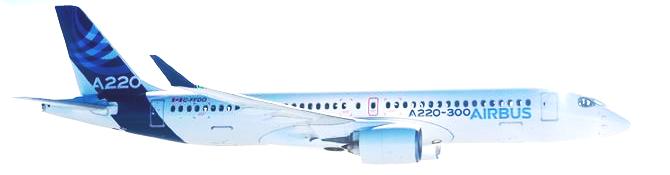
Después de la victoria electoral en Brasil, los cielos entre la futura alianza Boeing-Embraer son más reales. Por medio de un Joint Venture, The Boeing Company tomaría el control de la línea de aviones comerciales brasileños, para contrarrestar la alianza Airbus-Bombardier.

Boeing y Embraer, como en una jugada de ajedrez, están moviendo las piezas para fortalecer posiciones estratégicas. Los dos fabricantes acordaron la creación de un Joint Venture, una empresa conjunta con 80% propiedad del gigante de los Estados Unidos, Boeing, y a la que la brasileña Embraer trae su división regional de aviones aportando un 30% de la participación accionarial de la nueva alianza industrial. La operación le costará a Boeing US$ 3.8 mil millones para responder a la alianza de Airbus-Bombardier en torno al Programa CSeries, ahora denominado A220.

AW-7000220

Posición política

Tras la victoria en las Elecciones Presidenciales 2018 en Brasil de Jair Bolsonaro, la nueva política vislumbra un acercamiento y robustecimiento de las relaciones entre Embraer y Boeing. El actual Ministro de Defensa, Joaquim Silva y Luna expresó que esta operación podría ser aprobada por la actual administración del Presidente Michel Temer, pero que al equipo de Jair Bolsonaro le gustaría conocer los detalles de este proyecto.

El control por parte de Boeing de la división principal de Embraer parece ser positiva para Brasil, y el acuerdo de las dos compañías todavía pueden ser firmados en el Gobierno el Presidente Michel Temer, a pesar de que el equipo de transición del Presidente electo Jair Bolsonaro (PSL) quiere conocer los detalles de la operación, dijo el lunes el futuro Ministro de Defensa, Augusto Heleno.

Boeing y Embraer anunciaron a principios de Julio 2018 la creación de una empresa conjunta valorada en unos US$ 4,75 mil millones de dólares (€ 4,17 mil millones de euros) que otorga al grupo estadounidense una participación de control en la división de aviones comerciales brasileños. En el Programa de la línea de aeronaves Embraer se encuentran los Emb-120 turboprop, la familia E-135/145, E175, E190/195.

El control de Boeing en el Joint Venture permitirá al constructor americano ingresar nuevamente al sector regional, recordando su paso por el dominio en la década de 1980, cuando el Gobierno de Canadá privatizó De Havilland Canadá (DHC) y en 1986 vendió la compañía de aviones comerciales a The Boeing Company, en aquel entonces con sede en Seattle, Washington. DHC fue finalmente adquirida por Bombardier Aerospace con sede en Montreal en 1992.

Boeing tiene ante sí una nueva oportunidad de poder dominar la segmentación completa de la aviación comercial,algo que en la actualidad tendrá que compartir con su archirival Airbus y los nuevos programas industriales que se asoman en todo el mundo. AIRWAYS® AW-Icon TXT

Imagen relacionada

Boeing-Embraer in the final straight

New President-elect of Brazil, Jair Bolsonaro, approves alliance of Boeing-Embraer

After the electoral victory in Brazil, the skies between the future Boeing-Embraer alliance are more real. Through a Joint Venture, The Boeing Company would take control of the line of Brazilian commercial aircraft, to counter the Airbus-Bombardier alliance.

Boeing and Embraer, as in a chess move, are moving the pieces to strengthen strategic positions. The two manufacturers agreed on the creation of a Joint Venture, a joint venture with 80% owned by the giant of the United States, Boeing, and to which the Brazilian Embraer brings its regional division of aircraft contributing 30% of the shareholding of the new industrial alliance The operation will cost Boeing US $ 3.8 billion to respond to the Airbus-Bombardier alliance around the CSeries Program, now called A220.

Political position

After the victory in the Presidential Elections 2018 in Brazil by Jair Bolsonaro, the new policy envisages a rapprochement and strengthening of relations between Embraer and Boeing. The current Minister of Defense, Joaquim Silva and Luna said that this operation could be approved by the current administration of President Michel Temer, but that the team of Jair Bolsonaro would like to know the details of this project.

Resultado de imagen para Embraer E195 E2E190/195 E2 IS THE AIRCRAFT REGIONAL COMMERCIAL AVIATION THAT WILL COMPETE WITH THE A220
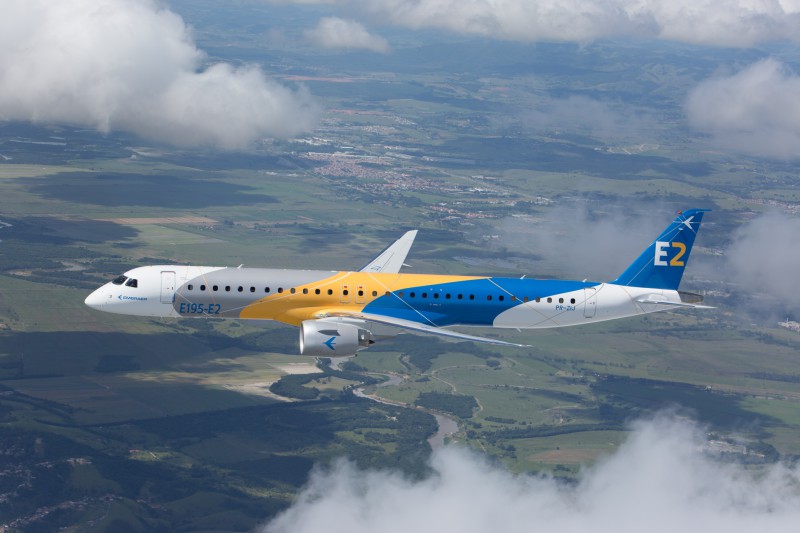
Boeing’s control of Embraer’s main division appears to be positive for Brazil, and the agreement of the two companies can still be signed in the government by President Michel Temer, despite the fact that the transition team of President-elect Jair Bolsonaro (PSL) wants to know the details of the operation, said on Monday the future Minister of Defense, Augusto Heleno.

Boeing and Embraer announced in early July 2018 the creation of a joint venture valued at some US $ 4.75 billion (€ 4.17 billion) that gives the US group a controlling interest in the division of Brazilian commercial aircraft. The Embraer Aircraft Line Program includes the Emb-120 turboprop, the E-135/145, E175, E190 / 195 family.

The control of Boeing in the Joint Venture will allow the American constructor to enter the regional sector again, remembering his passage through the domain in the 1980s, when the Government of Canada privatized De Havilland Canada (DHC) and in 1986 sold the aircraft company commercials to The Boeing Company, then based in Seattle, Washington. DHC was finally acquired by Bombardier Aerospace based in Montreal in 1992.

Boeing has before it a new opportunity to be able to master the complete segmentation of commercial aviation, something that at present it will have to share with its archirival Airbus and the new industrial programs that appear around the world. A \ W

Resultado de imagen para Embraer E195 E2

Boeing-Embraer na reta final

Novo presidente eleito do Brasil, Jair Bolsonaro, aprova aliança da Boeing-Embraer

Depois da vitória eleitoral no Brasil, os céus entre a futura aliança Boeing-Embraer são mais reais. Por meio de uma joint venture, a The Boeing Company assumiria o controle da linha de aeronaves comerciais brasileiras, para combater a aliança Airbus-Bombardier.

A Boeing e a Embraer, como em um movimento de xadrez, estão movendo as peças para fortalecer posições estratégicas. Os dois fabricantes concordaram em criar uma joint venture, uma joint venture de 80% de propriedade da gigante americana, Boeing e Embraer brasileira traz sua divisão de aeronaves regionais contribuindo 30% do capital social da nova aliança industrial A operação custará à Boeing US $ 3,8 bilhões para responder à aliança Airbus-Bombardier em torno do Programa CSeries, agora chamado de A220.

Posição política

Após a vitória nas eleições presidenciais de 2018 no Brasil por Jair Bolsonaro, a nova política prevê uma aproximação e fortalecimento das relações entre a Embraer e a Boeing. O atual ministro da Defesa, Joaquim Silva e Luna, disse que esta operação poderia ser aprovada pela atual administração do presidente Michel Temer, mas que a equipe de Jair Bolsonaro gostaria de conhecer os detalhes deste projeto.

Controle pela Boeing da principal divisão da Embraer parece ser positiva para o Brasil, e o acordo das duas empresas podem ainda ser assinado no governo do presidente Michel Temer, embora a equipe de transição do presidente eleito Jair Bolsonaro (PSL) quer saber os detalhes da operação, disse na segunda-feira o futuro ministro da Defesa, Augusto Heleno.

A Boeing e a Embraer anunciaram no início de julho de 2018 a criação de uma joint venture avaliada em cerca de US $ 4,75 bilhões (4,17 bilhões de euros) que dá ao grupo norte-americano uma participação majoritária na divisão de Aeronaves comerciais brasileiras. O programa da Embraer Aircraft Line inclui o turboprop Emb-120, a família E-135/145, E175, E190/195.

Controle Boeing na Joint Venture irá permitir que o construtor americano re-entrar na indústria regional, recordando o seu passo pelo domínio na década de 1980, quando o Governo do Canadá privatizada De Havilland Canada (DHC) e em 1986 vendeu a aeronave empresa comerciais para a The Boeing Company, então sediada em Seattle, Washington. A DHC foi finalmente adquirida pela Bombardier Aerospace, com sede em Montreal, em 1992.

A Boeing tem diante de si uma nova oportunidade de poder dominar a segmentação completa da aviação comercial, algo que atualmente terá que compartilhar com seu Airbus arquirrival e os novos programas industriais que aparecem ao redor do mundo. A\W


Ξ A I R G W A Y S Ξ
SOURCE: Airgways.com
DBk: Boeing.com / Embraer.com / Airgways.com / Lefigaro.fr
AW-POST: 201810291909AR

A\W   A I R G W A Y S ®