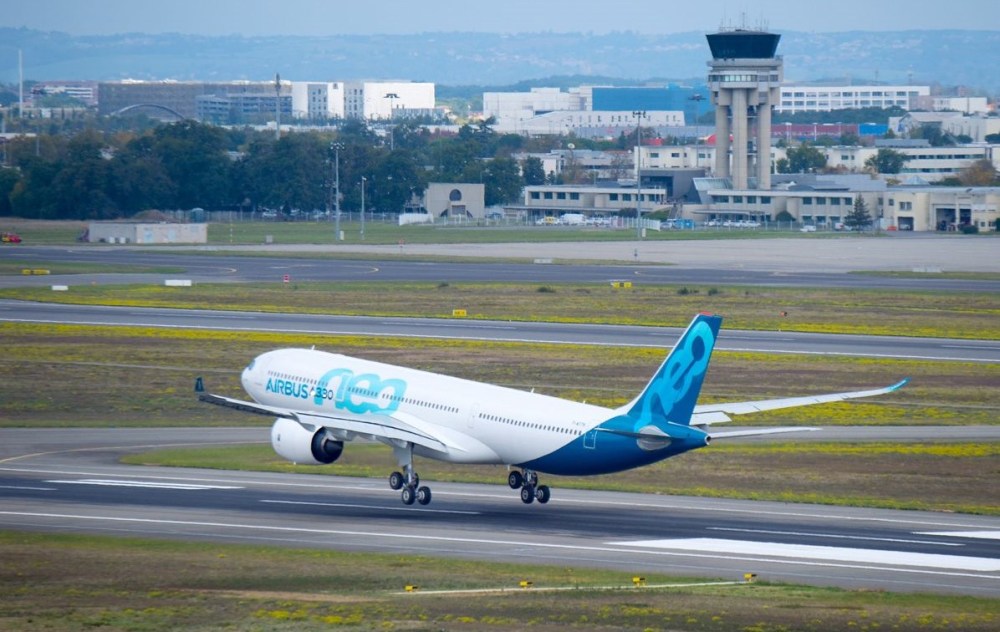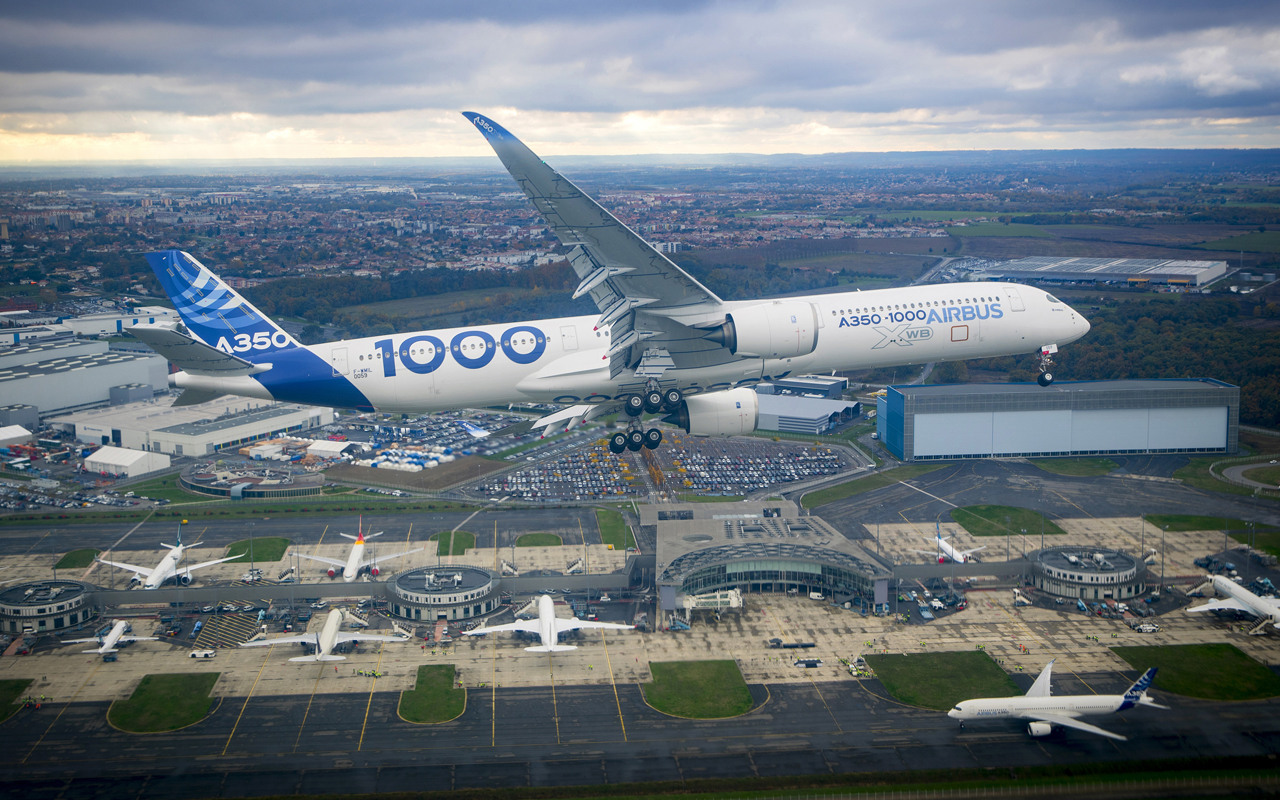
Demostrador Blade en A340 Flight Lab

AW | 2017 09 26 19:44 | INDUSTRY

airbus-logo-3d-1024x905 (1)El demostrador de prueba del ala de flujo laminar «Blade» de Airbus toma vuelo

El demostrador de prueba de flujo laminar en un A340 de Airbus salió al aire por primera vez el martes para el proyecto Blade de Clean Sky, auspiciado por la Unión Europea. El avión de cuatro motores, denominado «Flight Lab«, despegó del aeródromo de Tarbes, en el sur de Francia, a las 11:00 hora local, y aterrizó en las instalaciones de Airbus en Toulouse tras una misión de prueba de tres horas y 38 minutos.

Blade, un acrónimo de Breakthrough Laminar Aircraft Demonstrator en Europa, tiene como objetivo lograr una reducción del 50% en la fricción del ala y hasta un 5% menos emisiones de CO2.

El A340 Flight Lab, el primer avión de prueba del mundo que combina un perfil de aleta laminar transónico con una estructura primaria interna verdadera, incorpora dos alas exteriores laminares transónicas y una estación de instrumentación de vuelo-prueba (FTI) de alta complejidad en la cabina. Las amplias modificaciones del A340-300 tuvieron lugar durante un grupo de trabajo de 16 meses en Tarbes, con el apoyo de numerosos socios industriales de toda Europa.

«Comenzamos abriendo el sobre de vuelo para comprobar que el avión manejaba correctamente», explicó Philippe Seve, un ingeniero de pruebas de vuelo de Airbus a bordo del A340 para el primer vuelo. «Logramos nuestro objetivo de volar al número de Mach de diseño, a una altitud razonable y comprobar que todo estaba bien. También comprobamos que el FTI estaba trabajando como se esperaba, para identificar más ajustes para los próximos vuelos».

Un equipo de 10 pilotos especialmente entrenados, ingenieros de pruebas e ingenieros de pruebas de vuelo se prepararon para el primer hito durante varios meses, pasando tiempo en un simulador y familiarizándose con los sistemas FTI instalados en la aeronave de prueba de vuelo. Además, un grupo de trabajo de 70 personas realizó la instalación FTI dentro del avión, mientras que equipos de Bremen, Alemania, y Broughton, Reino Unido, trabajaron en las alas exteriores con un equipo de Stade, Alemania, instalando un pod que contenía cámaras infrarrojas en la aleta .

En las alas, cientos de puntos de medición miden la ondulación de la superficie para ayudar a los ingenieros de Airbus a determinar su influencia sobre la laminaridad. Fue la primera vez que Airbus utilizó este método de prueba en un avión. Otros primeros incluyen el uso de cámaras infrarrojas dentro de la cápsula para medir la temperatura del ala y el generador acústico que mide la influencia de la acústica en la llamada laminaridad. Finalmente, un innovador sistema de reflectometría mide la deformación general en tiempo real durante el vuelo, basado en la reflexión de la luz solar sobre los nuevos paneles de ala.

Un objetivo clave de Blade se centra en la medición de tolerancias e imperfecciones presentes mientras se mantiene la laminaridad. Para ello, Airbus pretende simular de manera controlada todo tipo de imperfecciones, revelando al final de la campaña las tolerancias para la construcción de un ala laminar. Los planes piden que el laboratorio de vuelo vuele durante unas 150 horas en los próximos meses.  AIRWAYS® AW-Icon TXT

Blade Demonstrator at A340 Flight Lab

Airbus Blade Flap Test Demonstrator Takes Flight

The laminar flow test demonstrator on an Airbus A340 first aired on Tuesday for the EU-sponsored Clean Sky Blade project. The four-engine aircraft, called «Flight Lab«, took off from the Tarbes airfield in the south of France at 11:00 a.m., and landed at the Airbus facility in Toulouse after a three-hour test mission and 38 minutes.

Blade, an acronym for Breakthrough Laminar Aircraft Demonstrator in Europe, aims to achieve a 50% reduction in wing friction and up to 5% less CO2 emissions.

The A340 Flight Lab, the world’s first test aircraft combining a transonic laminar fin profile with a true internal primary structure, incorporates two transonic laminar outer wings and a highly complex flight-test instrumentation (FTI) station in the cabin. The extensive modifications of the A340-300 took place during a 16-month working group in Tarbes, with the support of numerous industrial partners across Europe.

«We started by opening the flight envelope to check that the aircraft was handling correctly,» said Philippe Seve, an Airbus flight test engineer aboard the A340 for the first flight. «We achieved our goal of flying to Mach’s design number, at a reasonable altitude and checking that everything was fine. We also found that the FTI was working as expected, to identify more settings for upcoming flights.»

A team of 10 specially trained pilots, test engineers and flight test engineers prepared for the first milestone for several months, spent time in a simulator and became familiar with the FTI systems installed in the flight test aircraft. In addition, a working group of 70 people performed the FTI installation inside the aircraft, while teams from Bremen, Germany, and Broughton, UK, worked on the outer wings with a team from Stade, Germany, installing a pod containing cameras infrared in the fin.

In the wings, hundreds of measurement points measure the surface undulation to help Airbus engineers determine their influence on laminarity. It was the first time that Airbus used this test method in an airplane. Other first ones include the use of infrared cameras inside the capsule to measure the temperature of the wing and the acoustic generator that measures the influence of acoustics in the so-called laminarity. Finally, an innovative reflectometry system measures general deformation in real time during flight, based on the reflection of sunlight on the new wing panels.

A key Blade objective focuses on measuring tolerances and imperfections while maintaining laminarity. For this, Airbus intends to simulate in a controlled way all types of imperfections, revealing at the end of the campaign the tolerances for the construction of a laminar wing. The plans call for the flight laboratory to fly for about 150 hours in the coming months. A \ W


Ξ A I R G W A Y S Ξ
SOURCE:  Airgways.com
DBk:  Airbus.com / Aviationtribune.com / Deeside.com / Flightlevel.be
AW-POST: 201709261944AR

A\W   A I R G W A Y S ®

Boeing crea programa del Mid-market

Resultado de imagen para Boeing Medium New Aircraft

AW | 2017 09 26 02:01 | INDUSTRY

Boeing-Logo.svgBoeing ha dispuesto una nueva oficina para el proyecto Mid-market

Boeing ha creado una oficina del programa para apoyar el nuevo avión Mid-market, y nombró a un alto ejecutivo 787 para dirigir el esfuerzo hacia una futura decisión de lanzamiento por el consejo de administración de la compañía.

El nombramiento del ex vicepresidente del 787 y gerente general Mark Jenks para dirigir la oficina de NMA indica que Boeing está más cerca de lanzar la nueva familia de aviones compuestos destinados a un segmento de mercado entre los 737-10 MAX y 787-8.

VISTA TRASERA DEL BOEING 787-10

Jenks llega a la NMA con una «riqueza de lecciones aprendidas en el 787» y «una fuerte credibilidad con nuestros clientes», dice el presidente ejecutivo de Boeing Commercial Airplanes y presidente Kevin McAllister en una nota a los empleados el 25 de septiembre.

Después de discutir el concepto de la NMA con los clientes desde 2013, Boeing ha dejado claro que una decisión de lanzamiento podría venir pronto. Un primer vistazo de la probable estructura de la piel de composite se reveló en el Salón del Aire de París en junio, ya que los clientes potenciales ofrecieron una gama de reacciones de escéptico a entusiasta.

Los partidarios creen que la NMA le ofrece a Boeing la oportunidad de capturar un mercado emergente para miles de aeronaves que no encajan perfectamente en categorías de carrocería estrecha o ancha. Pero los escépticos siguen preocupados de que los costos de desarrollo podrían ser demasiado caros para Boeing, ya que Airbus podría contrarrestar con una nueva variante relativamente más barata de la familia A320NEO.

Aunque Boeing está persiguiendo seriamente el concepto de NMA, los líderes de la compañía aún no están comprometidos a llevar la nueva familia de aviones al mercado.

«Para ser claro, el anuncio de hoy no representa ni el lanzamiento de un programa, ni una indicación de cuándo decidiremos si daremos el siguiente paso con NMA. Esas preguntas y otras aún están por delante», dice McAllister.

Como Jenks se traslada al programa NMA, será reemplazado en el 787 por Brad Zaback en un momento crítico. A mediados de septiembre, el presidente y CEO de Boeing, Dennis Muilenburg, anunció que la producción 787 mensual aumentará en 2019 de 12 a 14.

«Continuará el enfoque de Mark en mejorar costos y eficiencia, y su liderazgo será importante mientras trabajamos con nuestros proveedores para mejorar continuamente la confiabilidad 787 para nuestros clientes», dice McAllister. AIRWAYS® AW-Icon TXT

boeing-737-max-10-concepts-mom-airbus-a321_zpspv3sexao.jpg

Boeing creates mid-market program

Boeing-Logo.svg

Boeing has set up a new office for the Mid-market project

Boeing has created a program office to support the new Mid-Market aircraft, and has appointed a top 787 executive to direct the effort toward a future launch decision by the company’s board of directors.

The appointment of former 787 vice president and general manager Mark Jenks to head the NMA office indicates that Boeing is closer to launching the new family of composite aircraft destined for a market segment between the 737-10 MAX and 787-8.

Jenks arrives at the NMA with a «wealth of lessons learned in the 787» and «a strong credibility with our customers,» says Boeing Commercial Airplanes CEO Kevin McAllister in a memo to employees on September 25.

After discussing the NMA concept with customers since 2013, Boeing has made it clear that a launch decision could come soon. A first look at the likely structure of composite skin was revealed at the Paris Air Show in June, as potential customers offered a range of reactions from skeptical to enthusiastic.

Supporters believe the NMA offers Boeing the opportunity to capture an emerging market for thousands of aircraft that do not fit perfectly into narrow or wide body categories. But skeptics remain concerned that development costs may be too expensive for Boeing, as Airbus could counteract a new, relatively cheaper variant of the A320NEO family.

Although Boeing is seriously pursuing the NMA concept, the company’s leaders are not yet committed to bringing the new family of aircraft to market.

«To be clear, today’s announcement represents neither the launch of a program nor an indication of when we will decide whether we will take the next step with NMA.» Those questions and others are still ahead», says McAllister.

As Jenks moves to the NMA program, he will be replaced on the 787 by Brad Zaback at a critical time. In mid-September, Boeing president and CEO Dennis Muilenburg announced that monthly production 787 will increase in 2019 from 12 to 14.

«It will continue Mark’s focus on improving costs and efficiency, and his leadership will be important as we work with our suppliers to continually improve 787 reliability for our customers,» says McAllister. A \ W


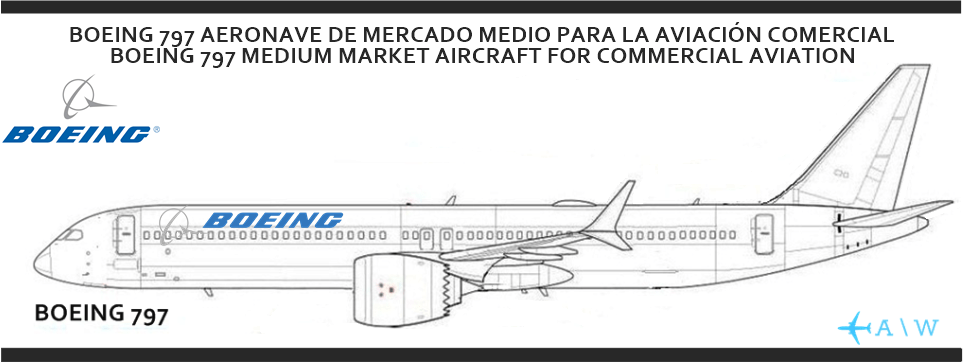
DATA: Boeing ha denominado a lo largo del tiempo, para el nuevo avión comercial de rango medio, las siguientes denominaciones: NMA (New Medium Aircraft), Boeing 797, MoM (Medium on Market) y Mid-market.
DATA: Boeing has named for the new mid-range commercial aircraft the following names: NMA (New Medium Aircraft), Boeing 797, MoM (Medium on Market) and Mid-market.


Ξ A I R G W A Y S Ξ
SOURCE:  Airgways.com
DBk:  Boeing.com / Airgways.com
AW-POST: 201709260201AR

A\W   A I R G W A Y S ®

El fuselaje C929 se fabricará en China

Resultado de imagen para C929

AW | 2017 09 26 01:34 | INDUSTRY

La fabricación del Comac C929 será conjunta entre China y Rusia

COMAC_logo

China diseñará y fabricará el fuselaje del COMAC C929, mientras que Rusia diseñará las alas del avión de pasajeros de cuerpo ancho, que actualmente está en desarrollo.

Resultado de imagen para Comac C929 png

d16e518b1ae9f07e262642b03d760369

El fabricante de aviones chino COMAC, que construirá el nuevo avión con la United Aircraft Corp de Rusia, reveló varios detalles recientes sobre el proyecto bilateral en la Expo de Aviación China 2017 en Beijing.

Aunque el principal centro de diseño está en Rusia, Shanghai también tendrá su propia oficina de diseño. COMAC dijo que el C929 está siendo desarrollado por China-Rusia Commercial Aircraft International Co Ltd, una empresa conjunta.

El avión, con una autonomía de hasta 12.000 kilómetros. China y Rusia tomarán cada uno la mitad del trabajo y enviarán personal de diseño para visitas de intercambio sobre una base no programada, según explicó COMAC. Alrededor del 51% de la aeronave estará hecha de materiales compuestos, lo que se espera que haga que el C929 sea económico y eficiente. El jet podría tener cuatro disposiciones de asientos posibles: 280 asientos en tres clases; 291 pax en dos clases; 310 asientos en tres clases apretadas; o 416 asientos en una clase de toda la economía, dijo Chen Yingchun, diseñador general de la C929.

Chen dijo que el nuevo avión se dirigirá principalmente a China, Rusia y otros mercados de Asia-Pacífico. Se espera que se entregue en servicio dentro de 10 años.

Sus modelos competidores incluyen el A330 y el A350 de Airbus Group y el B787 de Boeing. Actualmente estamos seleccionando proveedores en todo el mundo. A finales de año, es probable que se abran licitaciones para el motor Aero, y Rolls-Royce y General Electric se espera que se unan a la oferta. También estamos tratando de desarrollar motores nosotros mismos junto con Rusia.

Cada tres años, China y Rusia se turnarán para nombrar al presidente de la empresa conjunta, que se lanzó el 22 de mayo en Shanghai. Cada país tendrá cuatro escaños en el consejo de ocho miembros de la empresa. El C929 es un proyecto que pretende romper el duopolio de Boeing y Airbus en el mercado de aviones de pasajeros de gran cuerpo.

Lin Zhijie, analista de la industria aeronáutica y columnista de Carnoc.com, uno de los mayores portales de la aviación civil de China, dijo que el creciente aumento de los vuelos internacionales, especialmente las rutas de largo recorrido, requiere aviones de fuselaje ancho. «La industria de la aviación es un sector con ganancias marginales, y China gasta mucho dinero comprando aviones de cuerpo ancho de Boeing y Airbus cada año. Si el país tiene sus propios productos, ayudará a reducir significativamente el costo de las compras de aeronaves, y las aerolíneas podrán aumentar su rentabilidad y ofrecer boletos más baratos a sus clientes», dijo Lin Zhijie. AIRWAYS® AW-Icon TXT

The C929 fuselage will be manufactured in China

Production of the Comac C929 will be joint between China and Russia

China will design and manufacture the COMAC C929 fuselage, while Russia will design the wings of the wide-body passenger aircraft, which is currently under development.

Chinese aircraft manufacturer COMAC, which will build the new aircraft with United Aircraft Corp. of Russia, revealed several recent details about the bilateral project at the China Aviation Expo 2017 in Beijing.

Although the main design center is in Russia, Shanghai will also have its own design office. COMAC said the C929 is being developed by China-Russia Commercial Aircraft International Co Ltd, a joint venture.

The plane, with an autonomy of up to 12,000 kilometers. China and Russia will each take half of the work and send design staff for exchange visits on an unscheduled basis, COMAC explained. About 51% of the aircraft will be made of composite materials, which is expected to make the C929 economical and efficient. The jet could have four possible seating arrangements: 280 seats in three classes; 291 pax in two classes; 310 seats in three tight classes; or 416 seats in a class of the entire economy, said Chen Yingchun, general designer of the C929.

Chen said the new aircraft will mainly target China, Russia and other Asia-Pacific markets. It is expected to be delivered in service within 10 years.

Its competing models include the Airbus Group’s A330 and A350 and Boeing’s B787. We are currently selecting suppliers around the world. By the end of the year, tenders for the aero engine are likely to open, and Rolls-Royce and General Electric are expected to join the bid. We are also trying to develop engines ourselves together with Russia.

Every three years, China and Russia will take turns appointing the chairman of the joint venture, which was launched on May 22 in Shanghai. Each country will have four seats on the board of eight members of the company. The C929 is a project that aims to break the duopoly of Boeing and Airbus in the market of large passenger aircraft.

Lin Zhijie, an aviation industry analyst and columnist for Carnoc.com, one of China’s largest civil aviation portals, said the growing increase in international flights, especially long-haul routes, required wide-body aircraft. «The aviation industry is a marginally profitable sector, and China spends a lot of money buying Boeing and Airbus aircraft every year.If the country has its own products, it will help significantly reduce the cost of aircraft purchases, and airlines will be able to increase their profitability and offer cheaper tickets to their customers», said Lin Zhijie. A \ W


Фюзеляж C929 будет изготовлен в Китае

Производство Comac C929 будет объединено между Китаем и Россией

Китай будет проектировать и производить фюзеляж COMAC C929, в то время как Россия будет разрабатывать крылья широкополосных пассажирских самолетов, которые в настоящее время разрабатываются.

Китайский производитель самолетов COMAC, который будет строить новый самолет с United Aircraft Corp. в России, рассказал о нескольких последних подробностях о двустороннем проекте на China Aviation Expo 2017 в Пекине.

Хотя главный дизайн-центр находится в России, у Шанхая также будет свой собственный дизайн-офис. CОМАC сказал, что C929 разрабатывается совместным предприятием China-Russia Commercial Aircraft International Co Ltd.

Самолет с автономией до 12 000 километров. Китай и Россия будут выполнять половину своей работы и отправлять персонал по дизайну для обмена визитами на внеплановой основе, пояснил CОМАC. Около 51% самолетов будет изготовлено из композиционных материалов, что, как ожидается, сделает C929 экономичным и эффективным. У самолета может быть четыре возможных посадочных места: 280 мест в трех классах; 291 человек в двух классах; 310 мест в трех закрытых классах; или 416 мест в классе всей экономики, сказал Чэнь Инчунь, генеральный конструктор C929.

Чэнь сказал, что новый самолет будет в основном нацелен на Китай, Россию и другие рынки Азиатско-Тихоокеанского региона. Ожидается, что он будет поставлен на обслуживание в течение 10 лет.

Его конкурирующие модели включают в себя Airbus Group A330 и A350 и Boeing B787. В настоящее время мы выбираем поставщиков по всему миру. К концу года тендеры на авиационный двигатель, скорее всего, будут открыты, и ожидается, что к ним присоединятся Rolls-Royce и General Electric. Мы также пытаемся самостоятельно развивать двигатели вместе с Россией.

Каждые три года Китай и Россия поочередно назначают председателя совместного предприятия, которое было запущено 22 мая в Шанхае. Каждая страна будет иметь четыре места в совете восьми членов компании. C929 – это проект, целью которого является разрыв дуополии Boeing и Airbus на рынке крупных пассажирских самолетов.

Лин Чжицзе, аналитик по авиационной отрасли и обозреватель Carnoc.com, одного из крупнейших порталов гражданской авиации в Китае, сказал, что растущий рост международных рейсов, особенно дальних маршрутов, требует широкомасштабных самолетов. «Авиационная отрасль является крайне прибыльным сектором, и Китай ежегодно тратит много денег на самолеты Boeing и Airbus. Если в стране есть свои собственные продукты, это поможет значительно сократить расходы на покупку самолетов, а авиакомпании смогут повысить их прибыльность и предложить более дешевые билеты своим клиентам»,  сказал Лин Чжицзе. A \ W


C929机身将在中国制造

Comac C929的生产将由中国和俄罗斯联合开展

中国将设计和制造COMAC C929机身,而俄罗斯将设计目前正在开发的宽体客机的机翼。

将与俄罗斯联合飞机公司合作建造新飞机的中国飞机制造商申诉专员,透露了近期在北京举行的2017年中国航空博览会双边项目的细节。

虽然主要设计中心在俄罗斯,上海也将设有自己的设计室。申诉委员会表示,C929正由中俄商飞飞机国际有限公司合资开发。

这架飞机的自主能力高达12000公里。中国和俄罗斯将分别采取一半的工作,并派遣设计人员进行不定期的交流访问。约51%的飞机将由复合材料制成,预计使C929经济高效。喷气式飞机可以有四种可能的座位安排:三个班的280个座位; 291人两班; 310个座位在三个紧张的班级; C929总设计师陈应春说,在整个经济类别中有416个席位。

陈先生表示,新机将主要针对中国,俄罗斯等亚太市场。预计在10年内交付使用。

其竞争模式包括空中客车集团的A330和A350以及波音的B787。目前,我们正在选择世界各地的供应商。到今年年底,航空发动机的投标可能会开放,劳斯莱斯和通用电气有望加入。我们也试图与俄罗斯一起开发发动机。

中国和俄罗斯每三年轮流任命五月二十二日在上海启动的合资企业主席。每个国家在公司八名成员的董事会上将有四个席位。 C929是一个旨在打破波音和空中客车在大型客机市场的垄断的项目。

中国最大的民用航空门户网站Carnoc.com的航空业分析师兼专栏作家林志杰表示,国际航班,特别是长途航线的增长,需要宽体飞机。 “航空业是一个利润很小的行业,中国每年都花费很多钱购买波音和空中客车飞机。如果该国有自己的产品,这将有助于大大降低飞机采购的成本,航空公司将能够增加盈利能力,为客户提供便宜的门票»,林志杰表示。 A \ W


Ξ A I R G W A Y S Ξ
SOURCE:  Airgways.com
DBk:  Scmp.com / Ainonline.com
AW-POST: 201709260134AR

A\W   A I R G W A Y S ®

Embraer apunta mercado con el E175 SC

|  Ricardo Beccari / Divulgación

AW | 2017 09 26 00:57 | INDUSTRY

embraer logo.jpgEmbraer mejora las prestaciones del popular E175 con la nueva versión «Special Configuration» para competir mejor con los operadores del CRJ700 con nuevos E175-SC

Los E175 SC «Special Configuration» tienen cabinas premium más grandes obteniendo una configuración de 70 asientos, pero pueden ser modificadas para el diseño más típico de 76 asientos en Norteamérica. Embraer no había informado por qué decidió modificar el enormemente popular E175 en un derivado de 70 pax. Embraer ha cambiado su enfoque estadounidense hacia las ventas de una nueva versión de 70 asientos de su E175, un movimiento que dicen los ejecutivos como las aerolíneas regionales buscan reemplazar a los más viejos de 70 plazas como los Bombardier CRJ700.

embraer_jet_right_aspect_E175_left-2.png

EMBRAER E175SC

El jefe de Ventas y Comercialización de América del Norte, Charlie Hillis, explicó que «Setenta escaños es donde vemos el pan y la mantequilla en el futuro». Embraer dio a conocer su nuevo avión de 70 asientos, que llama el E175-SC (Special Configuration) el 6 de septiembre cuando anunció SkyWest Airlines había ordenado 15 de esta aeronave. Las primeras entregas del E175-SC están programadas para el 2018. Charlie Hillis hizo sus comentarios durante la reunión anual de la Asociación Regional de Aerolíneas en West Palm Beach.

Charlie Hillis dice que las ventas futuras de E175-SC son limitadas porque las líneas aéreas regionales de los EEUU casi han alcanzado topes en el número de 76 asientos que pueden funcionar para los socios de la línea principal. Estos límites se establecen bajo contratos entre líneas aéreas principales y sus pilotos.

Los contratos también limitan el número de aviones de 70 asientos en las flotas regionales, pero muchos de esos aviones están envejeciendo y pronto necesitarán reemplazo. «La mayor oportunidad, creemos, es el mercado de 70. Hay más de 300 unidades de aviones de 70 asientos en el mercado en Norteamérica en la actualidad. Muchos de ellos son viejos y necesitan ser reemplazados, tenemos la herramienta perfecta para eso», sostuvo Charlie Hillis.

Embraer podría haber visto tiempo atrás que el E170 de 70 plazas tendría un reemplazo pnatural. Pero, el mercado cambiante de este tipo de aeronaves está en gran parte fuera de la producción, en tanto Embraer no está llevando el derivado a su línea de E-2 de próxima generación. Lo que ha hecho es un mejoramiento del rendimiento de la línea E175. «Se hizo muy claro que el E175 es el camino a seguir», dice Chalie Hillis.

Las aerolíneas estadounidenses y canadienses operan alrededor de 340 aviones en la categoría de 70 asientos, incluyendo alrededor de 280 CRJ700 / 705 y alrededor de 60 E170. Muchos de esos aviones fueron fabricados en los primeros años de la década de 2000, por lo que pronto necesitarían reemplazo. Chalie Hillis dice que el E175-SC puede llevar seis asientos de primera clase más y tiene 500nm más de rango operativo que el Bombardier CRJ700. Dentro de las negociaciones las aerolíneas tendrán la opción de convertir los E175-SC en una configuración de 76 asientos.

Mercados regionales en evolución
Embraer ha tenido que efectuar cambios en las prestaciones de sus aeronaves ya que enfrenta una notable competencia en el mercado de 70 plazas.

Bombardier dio a conocer mejoras con el Programa «Atmosphere» en sus CRJ700, CRJ900 y CRJ1000, hace dos semanas. Estas actualizaciones incluyen un nuevo diseño de cabina entre otros detalles.

Al hablar en la conferencia, el vicepresidente de aviones regionales Kevin Smith de Bombardier dice que la línea CRJ tiene una fiabilidad del 99,5% y tiene una ventaja de costo de asiento y costo de viaje sobre los productos de la competencia.

Mitsubishi Aircraft continúa desarrollando su 70-asiento MRJ-70, un tipo de aeronave nueva propulsado por Pratt & Whitney. Mitsubishi anticipa que entregará el primer MRJ-70 en 2021.

La COMAC ha trabajado en el desarrollo del ARJ 21-700 que ya ha obtenido la mayoría de sus certificados de organismos de la aviación mundial, mostrándose un potencial recurso para las aerolíneas. La aeronave está en un segmento de mercado entre los 70-95 asientos, asumiendo compromisos en su cartera de producción de 239 unidades encargadas.  AIRWAYS® AW-Icon TXT

Embraer aims to market with the E175 SC

embraer logo (1)Embraer enhances the performance of the popular E175 with the new «Special Configuration» version to better compete with the operators of the CRJ700 with new E175-SC

The E175 SC «Special Configuration» have larger premium cabins for a 70-seat configuration, but can be upgraded to the more typical 76-seat design in North America. Embraer had not informed why it decided to modify the enormously popular E175 in a derivative of 70 pax. Embraer has shifted its US focus toward sales of a new 70-seat version of its E175, a move that executives say as regional airlines seek to replace the 70-seat older ones like the Bombardier CRJ700.

Resultado de imagen para Embraer E175 Png

North American Sales and Marketing Chief Charlie Hillis explained that «Seventy seats are where we see the bread and butter in the future.» Embraer unveiled its new 70-seat aircraft, which calls the E175-SC (Special Configuration) on September 6 when it announced SkyWest Airlines had ordered 15 of this aircraft. The first deliveries of the E175-SC are scheduled for 2018. Charlie Hillis made his comments during the annual meeting of the Regional Airlines Association in West Palm Beach.

Charlie Hillis says E175-SC’s future sales are limited because US regional airlines have nearly reached bumpers in the number of 76 seats that can run for mainline partners. These limits are established under contracts between major airlines and their pilots.

The contracts also limit the number of 70-seat aircraft in regional fleets, but many of those aircraft are aging and will soon need replacement. «The biggest opportunity, we think, is the 70-market. There are more than 300 70-seat aircraft on the market today in North America, many of which are old and need to be replaced, we have the perfect tool for that.» said Charlie Hillis.

Embraer may have long ago seen that the 70-seater E170 would have a paternal replacement. But the changing market for this type of aircraft is largely out of production, while Embraer is not taking the derivative to its next-generation E-2 line. What it has done is an improvement in the performance of the E175 line. «It became very clear that the E175 is the way to go,» says Chalie Hillis.

US and Canadian airlines operate around 340 aircraft in the 70-seat category, including around 280 CRJ700 / 705 and around 60 E170. Many of these aircraft were manufactured in the early 2000s, so they would soon need replacement. Chalie Hillis says the E175-SC can carry six more first-class seats and has 500nm more operating range than the Bombardier CRJ700. Within the negotiations the airlines will have the option to convert the E175-SC into a configuration of 76 seats.

Developing regional markets
Embraer has had to make changes in the performance of its aircraft as it faces significant competition in the market of 70 seats.

Bombardier unveiled improvements with the Atmosphere Program on its CRJ700, CRJ900 and CRJ1000 two weeks ago. These upgrades include a new cab design among other details.

Speaking at the conference, Bombardier Regional Vice President of Aircraft Kevin Smith says the CRJ line has 99.5% reliability and has a seat cost and travel cost advantage over competing products.

Mitsubishi Aircraft continues to develop its 70-seat MRJ-70, a new type of aircraft powered by Pratt & Whitney. Mitsubishi anticipates delivering the first MRJ-70 in 2021.

COMAC has worked on the development of ARJ 21-700 which has already obtained most of its certificates from global aviation organizations, showing a potential resource for airlines. The aircraft is in a market segment between 70-95 seats, assuming commitments in its production portfolio of 239 units ordered. A \ W


Ξ A I R G W A Y S Ξ
SOURCE:  Airgways.com
DBk:  Embraer.com
AW-POST: 201709260057AR

A\W   A I R G W A Y S ®

Boeing vs Bombardier

Resultado de imagen para Boeing 737 max 7 png

AW | 2017 09 01 15:50 | INDUSTRY

Boeing busca rápida solución legal para detener a Bombardier

Boeing-Logo.svg

A diferencia de la prolongada discusión de Boeing en la OMC con Airbus, un caso de subsidio contra Bombardier está en una pista mucho más rápida. Al tensar los lazos comerciales entre Estados Unidos y Canadá, se espera que un fallo preliminar del Departamento de Comercio de Estados Unidos, que se emitirá el lunes, imponga aranceles a las importaciones de aviones CSeries de Bombardier.

Bombardier_logo[1]

A diferencia del slugfest de subsidios con Airbus que se ha prolongado durante 14 años sin ningún impacto perceptible hasta ahora, Boeing está buscando una caída rápida y decisiva a medida que su disputa cada vez más acalorada con el fabricante de aviones canadiense Bombardier llega a un punto de decisión crucial el lunes.

Apenas cinco meses después de que Boeing iniciara el caso, se espera que una decisión preliminar del Departamento de Comercio de los Estados Unidos imponga aranceles punitivos a las importaciones de los nuevos aviones comerciales CSeries construidos por Bombardier, con sede en Montreal.

Eso podría agregar de inmediato millones de dólares al precio de cada avión CSeries para el mercado estadounidense, el primero de los cuales se entregará a Delta Air Lines en abril. La creciente temperatura del debate refleja sus altas apuestas para ambas partes.

Antes de la sentencia, el primer ministro canadiense, Justin Trudeau, advirtió el lunes que el acuerdo de 5,2 mil millones de dólares de su nación para comprar 18 aviones de combate Boeing F / A-18 Super Hornet y el hardware relacionado está retenido porque «no vamos a hacer negocios con una compañía ocupada tratando de demandarnos y poner a nuestros trabajadores aeroespaciales fuera del negocio».

La primera ministra británica, Theresa May, también dijo el mes pasado que llamó al presidente Donald Trump para expresar su preocupación por la posible amenaza a los empleos en Belfast, Irlanda del Norte, donde se construyen las alas de los aviones CSeries.

Bombardier acusó esta semana a Boeing de «pura hipocresía» por quejarse de los subsidios canadienses mientras recibe miles de millones de dólares en exenciones fiscales.Boeing no ha retrocedido, y rechaza la presión política internacional.

«Boeing no está demandando a Canadá», dijo la compañía en respuesta a Trudeau. «Esta es una disputa comercial con Bombardier».

Batallas para ganar United y Delta
La CSeries, lanzada en 2008 , es una nueva familia pequeña de aviones de un solo pasillo con una cabina de cinco pasajeros que se ofrece en dos modelos: el CS100, de 100 a 135 pasajeros, y el CS300, con capacidad para 160 pasajeros.

Resultado de imagen para Bombardier CS300 png

Ampliamente reconocido como un avión extremadamente eficiente, tiene alas compuestas de fibra de carbono, un fuselaje metálico, nuevos motores turbofan engranados Pratt & Whitney y un diseño de hoja limpia optimizado para el extremo más pequeño del mercado de aviones comerciales.

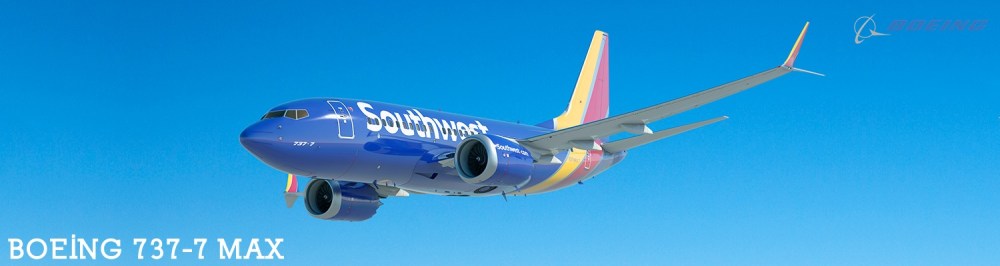
La superposición con el mercado de Boeing está entre el CS300 y el más pequeño el 737-700 o la nueva versión, el 737-7 MAX, con capacidad para 172 pasajeros.

La preocupación de Boeing por la CSeries cristalizó en 2015 en una campaña de ventas en United. Boeing ganó esa batalla con la venta de 40 de sus 737-700.

A mediados de los años noventa Boeing perdió una campaña de ventas similar en United a Airbus, dando un impulso de validación a las ventas de A320 en los EE.UU. y llevando a la subida del fabricante de aviones europeos a la paridad con Boeing. Decidido a no repetir esa experiencia con la CSeries, Boeing redujo su precio y le dio mucho a United para derrotar a Bombardier. Pero la realidad es que Boeing ha quedado muy ajustado y limitado con este tipo de negociaciones.

Así como Airbus años atrás robó su participación en el mercado nacional y ayudó a sacar a los competidores estadounidenses Lockheed y McDonnell Douglas del mercado de aviones comerciales vendiendo sus aviones subsidiados a precios inferiores a los del mercado, Bombardier apuntó así a Boeing.

Bombardier, aunque bloqueado en United Airlines, en abril de 2016 finalmente logró el avance que había estado buscando con una gran venta de 75 aviones CSeries a Delta Air Lines.

Esta vez, Boeing no propuso su 737 porque Delta buscaba específicamente un jet más pequeño, ofreciendo en cambio Delta algunos Embraer E190 regionales que había comprado. Delta hizo el trato por la CSeries, una venta que ahora es la pieza central del caso contra Bombardier.

A pesar de que Delta estaba comprando explícitamente un avión más pequeño que Boeing, el vicepresidente de Boeing, Ray Conner, argumentó que el CS100 era la cuña de Bombardier en el pequeño mercado de un solo pasillo y que Delta podría ejercer una opción para tomar CS300 en lugar de los aviones más pequeños. Conner en su testimonio se centró en la precaria posición del 737-700 y su próximo reemplazo, el 737-7 MAX. El 737-700, pilar de la enorme flota de Southwest Airlines, ha pasado de moda ya que las principales aerolíneas se han desplazado hacia volar aviones más grandes como el 737-800. Aunque la familia 737 MAX se ha vendido muy bien en general, el modelo más pequeño de MAX 7 no lo ha hecho. Conner señaló que Boeing tiene sólo 63 órdenes para ella y ninguna de las compañías estadounidenses en los últimos seis años. El mercado de aviones en el segmento de entre los 100 a 150 asientos es muy importante para Boeing, Bombardier está ganando la pulseada.

Reacción para reclamar

El mundo de las aerolíneas ha reaccionado con cierta incredulidad ante la afirmación de Boeing de que está en juego el futuro de la industria aeroespacial estadounidense y que la cartera de la familia MAX de poco más de 3.800 pedidos firmes está amenazada por la CSeries, que tiene menos de una décima.

El analista de aviación Scott Hamilton, de Leeham.net, descartó el análisis de Conner de que Bombardier amenaza al MAX 7, en lugar de decir simplemente: «Nadie lo quiere».

Dijo que el chorro ha tenido ventas pobres no debido a CSeries sino porque es una retracción relativamente pesada y por lo tanto ineficiente del modelo más grande el MAX 8, que tiene sentido solamente en las rutas en los aeropuertos con pistas más cortas o pistas elevadas, calientes y altas.

«El MAX 7 se ha reducido a un avión de nicho», dijo Hamilton. «Nunca será un gran vendedor.» Preguntado ante el ITC en mayo por parte de Bombardier, Greg May, vicepresidente senior de Fleet y Supply Chain Management de Delta, ofreció un análisis similar. El 737-700 «no es económico en la gran mayoría de nuestras rutas», dijo May. «Es por eso que sólo tenemos 10 de estos aviones en nuestra flota.» En cualquier caso, subrayó May, Boeing nunca ofreció el 737-700 a Delta. «Sería erróneo sugerir que Boeing perdió ventas a Delta porque compramos el CS100», insistió May. «Boeing simplemente no estaba en la mezcla. No tenían un avión que satisfacía nuestro perfil de misión y necesidades».

Respaldo esperado

Sin embargo, los argumentos de Boeing persuadieron a la ITC a avanzar con el caso. Se espera que Comercio respalde a Boeing el lunes con la decisión de que Bombardier ha entrado en el mercado estadounidense gracias a los subsidios gubernamentales.

Puesto que el proyecto entero de CSeries estaba en las demorado por años debido a la falta de ventas, él ha necesitado subsidios substanciales para permanecer vivo.

Para desarrollar el CSeries, Bombardier ganó originalmente un total de aproximadamente $ 670 millones en préstamos de ayuda de lanzamiento de Canadá, el Reino Unido y la provincia de Quebec.

Cuando Bombardier amenazó con implosionar en 2015, el gobierno de Quebec intervino con un rescate, invirtiendo $ 1 mil millones para una participación de 49,5 por ciento en acciones del programa CSeries. Bombardier obtuvo una inversión adicional de US $ 1.500 millones de un fondo de pensiones de Quebec. La nueva gerencia entró con un mandato para reactivar las ventas de CSeries. Y el gobierno de Canadá agregó otros $ 381 millones para Bombardier al año siguiente. Como Boeing mismo ha argumentado en la Organización Mundial del Comercio, las subvenciones no son ilegales.

Bajo las reglas acordadas internacionalmente, un gobierno está autorizado a prestar dinero para el desarrollo o para hacer una inversión de capital en una empresa. Pero para evitar alegaciones de prácticas no competitivas, los fondos deben ser otorgados en términos comercialmente razonables.

Los préstamos deben ser reembolsados ​​con intereses. Los intereses de capital deben ser adquiridos a un precio que tenga algún sentido comercial.

Naturalmente, Bombardier sostiene que sus subsidios cumplen con los estándares internacionales. Boeing insiste que no. El arbitraje de cuestiones tan complejas suele ser el dominio de la OMC, y toma mucho tiempo. En esta ocasión, a medida que Bombardier se traslada al mercado estadounidense, Boeing ha aprovechado la oportunidad para establecer su posición en un foro local en vez de en la OMC.

Es mucho más fácil pedir al gobierno de los Estados Unidos que patrulle el comercio en los Estados Unidos de lo que es conseguir que la OMC se pronuncie sobre un asunto de comercio mundial.

Después de su determinación el lunes sobre las subvenciones, Comercio debe emitir una segunda sentencia el próximo mes sobre si los precios de Bombardier en la campaña del Delta equivalían a «dumping» de bienes muy por debajo del costo. Entonces una determinación final en el caso, que decide el alcance de la «lesión» a Boeing, vendrá en febrero. Si Bombardier pierde, todos los aviones CSeries que se importen a los EE.UU. se enfrenta a un arancel, un derecho adicional que debe ser pagado al Tesoro de EE.UU. por encima del precio de venta. Boeing ha pedido un impuesto de 80% añadido al precio de venta, estimado entre 25 y 30 millones de dólares.

737-700_CS100.jpg

Las implicaciones políticas del caso van más allá de un enfrentamiento entre Estados Unidos y Canadá. Bombardier, que también fabrica aviones y trenes de negocios, tiene muchos proveedores estadounidenses y gasta alrededor de $ 3 mil millones anuales aquí. «El CSeries es una gran historia de éxito aeroespacial en Estados Unidos», dijo Mike Nadolski, vicepresidente de comunicaciones de Bombardier.

La compañía estima que la mitad del contenido de la CSeries proviene de los proveedores aeroespaciales estadounidenses. Todo el costoso equipo utilizado para fabricar las alas compuestas del jet en la fábrica de Belfast fue diseñado, construido e instalado por la empresa de ingeniería Electroimpact de Mukilteo .

Nadolski dijo que la CSeries, si tiene éxito, tendrá un valor de 30.000 millones de dólares a los Estados Unidos durante la vida del programa y apoyará casi 23.000 empleos directos e indirectos en Estados Unidos.

Algunas aerolíneas estadounidenses más pequeñas se han unido a Delta para objetar la petición de Boeing, y los senadores estadounidenses de Kansas y Virginia Occidental, donde Bombardier tiene instalaciones, presionaron al ITC para la compañía canadiense.

Boeing, por su parte, todavía enfrenta la resolución final del caso de la OMC en el que se le acusa de tomar subsidios ilegales a través de las exenciones fiscales del estado de Washington para el 787 Dreamliner. Sus abogados siguen teniendo la esperanza de salir de ese caso indemne, y son igualmente optimistas de que lograrán clavar a Airbus en el caso paralelo contra ese gran rival.

Mientras tanto, para evitar este nuevo competidor incipiente, Boeing está adoptando una línea dura contra Bombardier, que Conner expresó en su testimonio del ITC sin ningún rastro de ironía: «Es insostenible para nosotros competir contra los competidores subsidiados por el gobierno», dijo Conner.  AIRWAYS® AW-Icon TXT

Boeing vs Bombardier

Resultado de imagen para Bombardier CS100 pngBoeing seeks fast legal solution to stop Bombardier

Bombardier_Aerospace-200x

Unlike Boeing‘s protracted WTO discussion with Airbus, a subsidy case against Bombardier is on a much faster track. By tightening trade ties between the United States and Canada, a preliminary ruling by the US Department of Commerce, which will be issued on Monday, is expected to impose tariffs on imports of Bombardier CSeries aircraft.

Unlike the subsidy slugfest with Airbus that has lasted for 14 years with no perceptible impact so far, Boeing is looking for a swift and decisive crash as its increasingly heated dispute with Canadian aircraft maker Bombardier reaches a point crucial decision on Monday.

Just five months after Boeing started the case, a preliminary US Commerce Department decision is expected to impose punitive tariffs on imports of the new CSeries commercial aircraft built by Montreal-based Bombardier.

That could immediately add millions of dollars to the price of each CSeries for the US market, the first of which will be delivered to Delta Air Lines in April. The growing temperature of the debate reflects its high stakes for both sides.

Prior to the ruling, Canadian Prime Minister Justin Trudeau warned Monday that his nation’s $ 5.2 billion deal to buy 18 Boeing F / A-18 Super Hornet fighter jets and related hardware is withheld because «we are not going to do business with a busy company trying to sue us and put our aerospace workers out of business.»

British Prime Minister Theresa May also said last month that she called on President Donald Trump to express concern about the potential threat to jobs in Belfast, Northern Ireland, where the wings of CSeries aircraft are built.

Bombardier accused Boeing this week of «sheer hypocrisy» for complaining about Canadian subsidies while receiving billions of dollars in tax exemptions. Boeing has not backed down, and rejects international political pressure.

«Boeing is not suing Canada,» the company said in response to Trudeau. «This is a trade dispute with Bombardier.»

Battles to win United and Delta

The CSeries, launched in 2008, is a new small family of single-aisle aircraft with a five-passenger cabin that is offered in two models: the CS100, from 100 to 135 passengers, and the CS300, with capacity for 160 passengers.

Resultado de imagen para Bombardier CS300 png

Widely recognized as an extremely efficient aircraft, it has wings made of carbon fiber, a metal fuselage, new Pratt & Whitney geared turbofan engines and a clean blade design optimized for the smallest end of the commercial aircraft market.

The overlap with the Boeing market is between the CS300 and the smaller the 737-700 or the new version, the 737-7 MAX, with capacity for 172 passengers.

Boeing’s concern for the CSeries crystallized in 2015 in a sales campaign at United. Boeing won that battle with the sale of 40 of its 737-700.

In the mid-1990s Boeing lost a similar sales drive at United to Airbus, giving a boost to A320 sales in the US. and leading to the rise of the European aircraft manufacturer to parity with Boeing. Determined not to repeat that experience with the CSeries, Boeing reduced its price and gave United a lot to defeat Bombardier. But the reality is that Boeing has been very tight and limited with this type of negotiations.

Just as Airbus years ago stole its share of the domestic market and helped lift American competitors Lockheed and McDonnell Douglas from the commercial aircraft market by selling their subsidized aircraft at below-market prices, Bombardier pointed to Boeing.

Bombardier, although blocked on United Airlines, in April 2016 finally achieved the breakthrough it had been looking for with a large sale of 75 CSeries aircraft to Delta Air Lines.

This time, Boeing did not propose its 737 because Delta was specifically looking for a smaller jet, instead offering Delta some regional Embraer E190 it had purchased. Delta made the deal for the CSeries, a sale that is now the centerpiece of the case against Bombardier.

Although Delta was explicitly buying a smaller aircraft than Boeing, Boeing Vice President Ray Conner argued that the CS100 was Bombardier’s wedge in the small single-lane market and that Delta could exercise an option to take CS300 rather than the smaller planes. Conner in his testimony focused on the precarious position of the 737-700 and his next replacement, the 737-7 MAX. The 737-700, a pillar of Southwest Airlines’ huge fleet, has gone out of style as major airlines have flown to fly larger aircraft like the 737-800. Although the 737 MAX family has been sold very well overall, the smaller model of MAX 7 has not. Conner noted that Boeing has only 63 orders for it and none of the American companies in the last six years. The market for aircraft in the segment of 100 to 150 seats is very important for Boeing, Bombardier is winning the pulse.

Reaction to complain

The airline world has reacted with some disbelief to Boeing’s claim that the future of the US aerospace industry is at stake and that the MAX family portfolio of just over 3,800 firm orders is threatened by the CSeries, which has less than one tenth.

Aviation analyst Scott Hamilton of Leeham.net dismissed Conner’s analysis that Bombardier is threatening the MAX 7, rather than simply saying «Nobody wants it.”

He said that the jet has had poor sales not because of CSeries but because it is a relatively heavy and therefore inefficient retraction of the larger model the MAX 8, which makes sense only on routes at airports with shorter runways or elevated runways, hot and tall.

«The MAX 7 has been reduced to a niche aircraft,» Hamilton said. «He will never be a great salesman.» Asked to ITC in May by Bombardier, Greg May, senior vice president of Fleet and Supply Chain Management at Delta, offered a similar analysis. The 737-700 «is not economical on the vast majority of our routes,» May said. «That’s why we only have 10 of these planes in our fleet.» In any case, May stressed, Boeing never offered the 737-700 to Delta. «It would be wrong to suggest that Boeing lost sales to Delta because we bought the CS100,» May insisted. «Boeing was simply not in the mix. They did not have an airplane that would meet our mission profile and needs.»

Expected backing

However, Boeing’s arguments persuaded the ITC to move forward with the case. Trade is expected to back Boeing on Monday with the decision that Bombardier has entered the US market thanks to government subsidies.

Since the entire CSeries project was in the deferred for years due to lack of sales, it has needed substantial subsidies to stay alive.

To develop the CSeries, Bombardier originally won a total of approximately $ 670 million in start-up aid loans from Canada, the United Kingdom and the Province of Quebec.

When Bombardier threatened to implode in 2015, the Quebec government intervened with a bailout, investing $ 1 billion for a 49.5 percent stake in CSeries program shares. Bombardier obtained an additional investment of US $ 1.5 billion from a Quebec pension fund. The new management entered with a mandate to reactivate CSeries sales. And the Canadian government added another $ 381 million to Bombardier the following year. As Boeing himself has argued in the World Trade Organization, subsidies are not illegal.

Under internationally agreed rules, a government is authorized to lend money for development or to make a capital investment in a company. But to avoid allegations of noncompetitive practices, funds must be granted on commercially reasonable terms.

Loans must be repaid with interest. Capital interests must be acquired at a price that has some commercial sense.

Of course, Bombardier claims that its subsidies meet international standards. Boeing insists he does not. Arbitration of such complex issues is often the domain of the WTO, and it takes a long time. On this occasion, as Bombardier moves to the US market, Boeing has seized the opportunity to establish its position in a local forum rather than in the WTO.

It is much easier to ask the government of the United States to patrol the trade in the United States than it is to get the WTO to rule on a world trade issue.

Following Monday’s ruling on the subsidies, Commerce is expected to issue a second ruling next month on whether Bombardier’s Delta campaign prices equated to «dumping» of goods well below cost. Then a final determination in the case, which decides the scope of the «injury» to Boeing, will come in February. If Bombardier loses, all CSeries aircraft imported into the US is facing a tariff, an additional duty that must be paid to the US Treasury. above the selling price. Boeing has asked for a tax of 80% added to the sale price, estimated between 25 and 30 million dollars.

737-700_CS100.jpg

The political implications of the case go beyond a confrontation between the United States and Canada. Bombardier, which also manufactures airplanes and business trains, has many US suppliers and spends about $ 3 billion annually here. «The CSeries is a great history of aerospace success in the United States,» said Mike Nadolski, vice president of communications at Bombardier.

The company estimates that half of the CSeries content comes from US aerospace suppliers. All expensive equipment used to manufacture composite jet wings at the Belfast plant was designed, built and installed by Mukilteo engineering company Electroimpact.

Nadolski said the CSeries, if successful, will be worth $ 30 billion to the United States over the life of the program and will support nearly 23,000 direct and indirect jobs in the United States.

Some smaller US airlines have joined Delta to object to Boeing’s request, and US senators from Kansas and West Virginia, where Bombardier has facilities, put pressure on ITC for the Canadian company.

Boeing, meanwhile, is still facing the final ruling on the WTO case in which it is accused of taking illegal subsidies through the Washington State tax exemptions for the 787 Dreamliner. His lawyers are still hoping to get out of this harmless case, and are equally optimistic that they will nail Airbus in the parallel case against that great rival.

Meanwhile, to avoid this emerging new competitor, Boeing is taking a hard line against Bombardier, which Conner expressed in his ITC testimony with no trace of irony: «It is untenable for us to compete against government-subsidized competitors,» said Conner.  A\W


Ξ A I R G W A Y S Ξ
SOURCE:  Airgways.com
DBk:  Seattletimes.com / Boeing.com / Bombardier.com
AW-POST: 201709221425AR

A\W   A I R G W A Y S ®

La saga del Boeing 737

AW | 2017 09 20 12:55 | INDUSTRY

Resultado de imagen para family Boeing 737Boeing-Logo.svgLa asombrosa historia del la línea 737 de Boeing ha permitido a través del tiempo repuntar su producto principal

El Boeing 737 vio la luz el 28 de diciembre de 1967, es el avión comercial más entregado o vendido del mundo hasta la fecha. Boeing había entregado 9.188 aeronaves de todas las variantes. Para Boeing es el avión insignia, hasta agosto, entregó 324 Boeing 737 de un total de 476 entregas. En 2016 los 737 representaron el 65,5% de las entregas y en 2017 el 68%.

611145.jpgLa historia de entrega 737 permite observar el gráfico y la evolución de este exitoso avión. Es el avión comercial más entregado del mundo, que hasta la fecha no ha sido destronado. Se dice que es el diseño más adaptable para la aviación comercial, aunque las ventas de la familia Airbus A320 siguen creciendo.

El gráfico nos permite evaluar la escala de pedidos del Boeing 737 a través de la línea de tiempo. Las tres generaciones del Boeing 737: First Generation que comprenden las series 100, 200, 200ADV, Second Generation (Classic) agrupa a las series 300, 400, 500 y Third Generation (Next Generation) los aviones de serie 600, 700800, 900.

Boeing 737 line.png

AW-70553777.png

Las entregas del 737-700 disminuyeron mientras que los precios del petróleo subieron. El 737 más pequeño no era tan atractivo porque su economía no favorecía los precios más altos del petróleo. Como muestra el gráfico, las entregas de 737-800 crecieron muy bien a través de los altos precios del petróleo. Las aerolíneas vieron el beneficio y se trasladaron al 737-800. Un cuadro similar para el A319 y los precios del petróleo se puede hacer, y las entregas A320 se mantuvo fuerte al igual que el 737-800.Parece que el principal competidor del 737-700 ha sido el A319 como lo ilustra este siguiente gráfico. Ambos vieron descensos en las entregas con los precios del petróleo.

GLO-B738-MIA-LFL.jpg

BOEING 737-800 UN «BEST SELLER» DE LA AVIACIÓN COMERCIAL

El gráfico permite observar que a medida que la tercer generación del 737 salía al mercado, las aeronaves de la segunda generación pronto fueron reemplazadas. Con respecto a la línea de los Boeing 737NG las escaladas de ventas han sido para las series 800 y 900, esto debidso al aumento significativo del petróleo en las últimas décadas.

Ahora el mercado está enfocado el la nueva generación de la línea Boeing 737, la «MAX» que augura tener record de ventas en los cinco continentes. Habrá que esperar cómo el principal producto de la Boeing consige obstentar la saga del avión más vendido del mundo.  AIRWAYS® AW-Icon TXT

The Boeing 737 series

The amazing history of the Boeing 737 line has allowed over time to rebound its main product

The Boeing 737 was launched on December 28, 1967, the most sold or sold commercial aircraft in the world to date. Boeing had delivered 9,188 aircraft of all variants. For Boeing is the flagship plane, until August, delivered 324 Boeing 737 out of a total of 476 deliveries. In 2016 the 737 accounted for 65.5% of deliveries and in 2017 68%.

The delivery history 737 allows you to observe the graph and the evolution of this successful airplane. It is the most commercially delivered aircraft in the world, which to date has not been dethroned. It is said to be the most adaptable design for commercial aviation, although sales of the Airbus A320 family continue to grow.Resultado de imagen para Boeing 737 classic png

The chart allows us to evaluate the order scale of the Boeing 737 through the timeline. The three generations of the Boeing 737: First Generation that comprise the series 100, 200, 200ADV, Second Generation (Classic) groups to the series 300, 400, 500 and Third Generation (Next Generation) 600, 700, 800, 900.

Boeing 737 line.png

Deliveries of the 737-700 declined as oil prices rose. The smaller 737 was not as attractive because its economy did not favor higher oil prices. As the chart shows, deliveries of 737-800 grew very well through high oil prices. The airlines saw the benefit and moved to 737-800. A similar chart for the A319 and oil prices can be made, and A320 deliveries remained strong just like the 737-800. It seems that the main competitor of the 737-700 has been the A319 as illustrated in this chart below. Both saw declines in deliveries with oil prices.

The chart shows that as the third generation of the 737 was released, second-generation aircraft were soon replaced. With regard to the Boeing 737NG line the sales escalations have been for the 800 and 900 series, due to the significant increase of oil in the last decades.

Now the market is focused on the new generation of the Boeing 737 line, the «MAX» that predicts record sales in five continents. It will be necessary to wait as the main product of the Boeing consecrates obstinacy the saga of the plane soldier of the world. A \ W


AW-Airgways.com-Jet

AW-Airgways Icon-web001

Ξ A I R G W A Y S Ξ
SOURCE:  Airgways.com
DBk:  Airinsight.com / Boeing.com / Airwaysmag.com
AW-POST: 201709201255AR

A\W   A I R G W A Y S ®

Airbus a la espera primer vuelo A330NEO

AW | 2017 09 20 11:53 | INDUSTRY

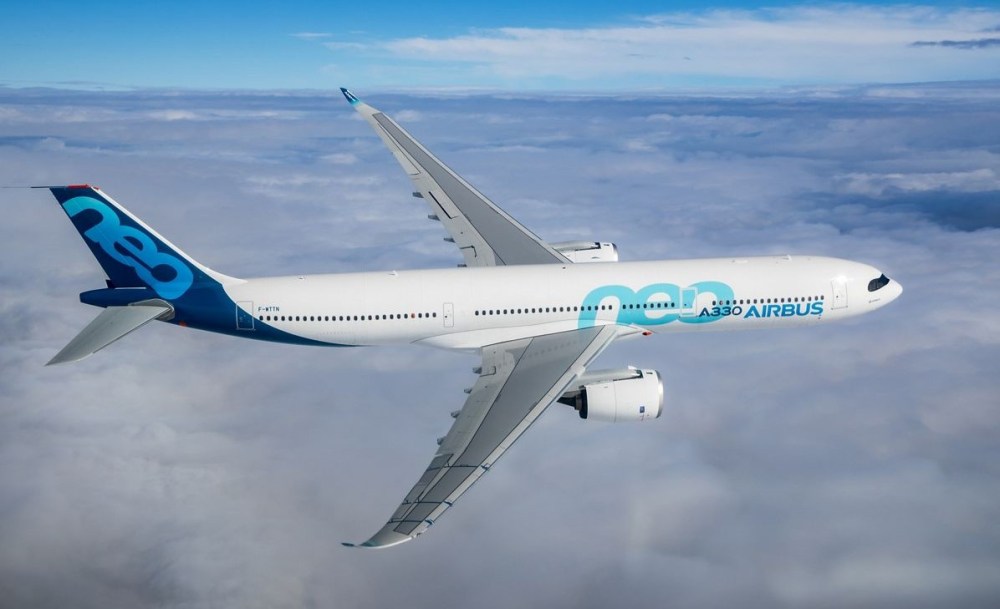
Logo_Airbus_2014.svgResultado de imagen para A330neo logoAirbus aun no ha puesto una fecha para el primer vuelo del A330NEO

El consorcio europeo ha montado ambos motores que han sido instalados en el avión de prueba inicial. La aeronave, una variante de -900, se encuentra actualmente en una «fase de prueba preparatoria».

A330NEO (1).jpg

Resultado de imagen para A330neo logoAirbus no ha revelado una fecha para el primer vuelo, pero dice que espera que esto ocurra «en las próximas semanas». Se había admitido a principios de este año que el A330NEO podría no volar hasta septiembre, pero no se ha confirmado si un vuelo para este mes es probable.

El calendario de desarrollo original para el A330NEO apuntaba a entrar en servicio a finales de este año. Pero los retrasos en el programa, especialmente con los motores Rolls-Royce Trent 7000, han dado lugar a un cambio de varios meses.

La nueva variante promete un ahorro de un 14% de consumo de combustible. El A330NEO o A330-900 podrá volar 740 KM más que su modelo originario el A330CEO. El alcance de autonomía está en los 12.130 KM, llevando 242 toneladas de carga paga. Las capacidades de pasajeros estarán entre los 287 pax dos clases y hasta llos 440 en alta Resultado de imagen para A330neo logodensidad.

Airbus ha asegurado pedidos para 210 A330NEO’s, y el cliente de lanzamiento será TAP Portugal, estimando incorporar la nueva aeronave en 2018.  AIRWAYS® AW-Icon TXT

A330Neo.jpg

Airbus awaits first flight A330NEO

Resultado de imagen para A330neoAirbus has not yet set a date for the first flight of the A330NEO

Resultado de imagen para A330neo logoThe European consortium has assembled both engines that have been installed on the initial test aircraft. The aircraft, a variant of -900, is currently in a «preparatory test phase».

Airbus has not revealed a date for the first flight, but says it expects this to happen «in the coming weeks». It had been admitted earlier this year that the A330NEO might not fly until September, but it has not been confirmed whether a flight for this month is likely.

The original development schedule for the A330NEO aimed to enter service later this year. But delays in the program, especially with Rolls-Royce Trent 7000 engines, have led to a change of several months.

The new variant promises a saving of 14% of fuel consumption. The A330NEO or A330-900 will be able to fly 740 KM more than its original model the A330CEO. The range of autonomy is at 12,130 KM, carrying 242 tons of payload. Passenger capacities will be between 287 pax two classes and up to 440 at high density.

Airbus has secured orders for 210 A330NEO’s, and the launch customer will be TAP Portugal, expecting to incorporate the new aircraft in 2018. A \ W


Ξ A I R G W A Y S Ξ
SOURCE:  Airgways.com
DBk:  Airbus.com / Clément Allonds / Bloomberg.com
AW-POST: 201709201153AR

A\W   A I R G W A Y S ®

Airbus proyecta más demanda en China

A380_CSN_A380_take_off_to_Beijing_PM.jpg

AW | 2017 09 19 15:15 | INDUSTRY

Logo_Airbus_2014.svgAirbus observa mayor presencia en el mercado chino

Airbus ha planeado canalizar más energía en aprovechar el potencial del mercado chino, contando con la economía emergente de rápido crecimiento para traer nuevas oportunidades. «Tenemos plena confianza en el mercado chino, que se convertirá en el mayor mercado de aviación civil del mundo», dijo Eric Chen, presidente de Airbus Commercial Aircraft China, en una expo de la aviación en Beijing.

El fabricante de aviones predice que el sector de la aviación en China y otras regiones emergentes duplicará el ritmo de los mercados maduros de América del Norte y Europa Occidental en las próximas décadas. «Los viajeros chinos en promedio sólo tomaron 0.4 vuelos en 2016, una cuarta parte de los Estados Unidos, pero China tiene una población más de cuatro veces la última«, dijo Chen, señalando un enorme espacio para el crecimiento.

Más de 50 millones de viajes internacionales fueron realizados por Chino el año pasado, un 22,7 por ciento más que en 2015. Chen espera que la alta tasa de crecimiento continúe en el futuro. La iniciativa Belt and Road creará nuevas oportunidades para el sector, dijo Chen.

«Estamos comprometidos con el desarrollo a largo plazo de la industria de la aviación china», dijo Chen, agregando que la compañía ha ampliado la cooperación con las empresas chinas en áreas como la fabricación aeronáutica, la gestión del tráfico aéreo y la investigación y la tecnología.

Airbus tiene cinco empresas conjuntas en China, que cubren formación y apoyo, ingeniería, montaje final y fabricación de materiales compuestos. La nueva cooperación industrial por valor de 500 millones de dólares se alcanzó en 2015 y Airbus cree que la cifra alcanzará los mil millones de dólares en 2020.

China introdujo el primer avión de Airbus en 1985. Ahora cerca de 1.500 están siendo operados por las líneas aéreas chinas, representando alrededor de la mitad de la flota total de aviones más de 100 escaños en el país. AIRWAYS® AW-Icon TXT

Airbus.jpg

Airbus expects higher demand in China

airbus-logo-3d-1024x905 (1).pngAirbus sees greater presence in Chinese market

Airbus has planned to channel more energy into tapping the potential of the Chinese market, relying on the emerging fast-growing economy to bring new opportunities. «We have full confidence in the Chinese market, which will become the largest civil aviation market in the world,» said Eric Chen, president of Airbus Commercial Aircraft China, at an aviation expo in Beijing.

The aircraft maker predicts that the aviation sector in China and other emerging regions will double the pace of mature markets in North America and Western Europe in the coming decades. «Chinese travelers on average only took 0.4 flights in 2016, a quarter of the United States, but China has a population more than four times the last,» said Chen, pointing to a huge space for growth.

More than 50 million international trips were made by Chino last year, 22.7 percent more than in 2015. Chen expects the high growth rate to continue in the future. The Belt and Road Initiative will create new opportunities for the sector, Chen said.

«We are committed to the long-term development of the Chinese aviation industry,» said Chen, adding that the company has expanded cooperation with Chinese companies in areas such as aeronautical manufacturing, air traffic management and research and technology.

Airbus has five joint ventures in China, covering training and support, engineering, final assembly and composite fabrication. The new $ 500 million industrial cooperation was reached in 2015 and Airbus believes the figure will reach $ 1 billion by 2020.

China introduced the first Airbus aircraft in 1985. Now about 1,500 are being operated by Chinese airlines, accounting for about half of the total fleet of aircraft over 100 seats in the country. A \ W


Ξ A I R G W A Y S Ξ
SOURCE:  Airgways.com
DBk:  Thestandard.com.hk / Airbus.com
AW-POST: 2017090191515AR

A\W   A I R G W A Y S ®

COMAC obtendría 750 pedidos del C919

os-comac-c919-20170505.jpg

AW | 2017 09 19 12:58 | INDUSTRY

Resultado de imagen para Comac C919 pngEscalada de 750 pedidos recibiría el COMAC C919. Comac ha asegurado nuevos compromisos para 130 aviones C919 de arrendadores chinos

Resultado de imagen para Comac C919 pngSe espera que las órdenes para el C919, el primer avión de pasajeros grande producido en China de acuerdo con las regulaciones de la aviación civil internacional, lleguen a 750 a fin de año, dijeron funcionarios corporativos.

Comac dice que cuatro arrendadores locales están detrás de los nuevos compromisos: Arrendamiento Financiero de Construcción Nuclear (40 aviones), Huabao Leasing (30), AVIC International Leasing (30); y ABC Financial Leasing, que se ha comprometido a 30 C919 adicionales, sumando a sus 45 órdenes preexistentes para el tipo.

Los compromisos, anunciados en el evento bienal de Beijing Aviation Expo, representan una mezcla de pedidos firmes y cartas de intención, dice Comac.

C919 aterriza con seguridad en el Aeropuerto Internacional de Shanghai Pudong después de su primer vuelo alrededor de las 3:20 pm, 5 de mayo de 2017. «Esperamos recibir más de 100 nuevos pedidos para el C919 de algunas empresas chinas en los próximos meses», dijo Xu Pei, subdirector de la división de marketing de Commercial Aircraft Corp de China, fabricante del avión en Shanghai.

El C919, que hizo su vuelo inaugural el 5 de mayo, tiene un alcance estándar de 4.075 kilómetros, lo que lo hace comparable al Airbus 320 actualizado y los aviones Boeing 737 de nueva generación.

El C919 ha asegurado 600 pedidos de 24 clientes nacionales y extranjeros. COMAC ha recibido 34 órdenes de GE Capital Aviation Services, la mayor compañía de arrendamiento de aerolíneas comerciales del mundo, la empresa alemana Puren Airlines y City Airways de Tailandia.

Boeing y Airbus han dominado durante mucho tiempo el mercado de aviones de pasajeros, y el C919 no tiene la intención de competir cara a cara con ellos en mercados plenamente desarrollados y maduros. «Nuestro equipo de marketing se está centrando en tres mercados objetivo principales, que son nuestro mercado interno, África y los países del sudeste asiático que participan en la Iniciativa de Cinturón y Carretera», dijo Xu.

Hu Shuangqian, de 57 años, miembro del equipo de fabricación de la Y-10, el primer avión de pasajeros localmente fabricado localmente, dirige ahora un equipo que trabaja en controles computarizados en COMAC. Dijo que tenía suerte de ser parte del proyecto. Desde que el proyecto (Y-10) fue suspendido en la década de 1980 debido a varias razones, muchos de mis antiguos colegas habían estado soñando con otra oportunidad de construir aviones chinos.

Desde su creación en 2008, COMAC ha trabajado en el avión regional ARJ21, el C919 y un avión de cuerpo ancho para ser desarrollado conjuntamente por China y Rusia.

En noviembre, COMAC publicó un informe sobre el mercado global de aviones de pasajeros entre 2016 y 2035, prevé que en las próximas dos décadas se necesitarán 39.948 aviones con un valor de 5.23 billones de dólares. Sólo China necesitará 6.865 aviones de pasajeros, 65.5 por ciento de los cuales serían aviones de un solo pasillo, 21.2 por ciento de aviones de cuerpo ancho y 13.3% de aviones regionales. AIRWAYS® AW-Icon TXT

COMAC would get 750 C919 orders

Resultado de imagen para Comac C919 pngEscalation of 750 orders would receive COMAC C919. Comac has secured new commitments for 130 Chinese lessor aircraft

Orders for the C919, the first major airliner produced in China under international civil aviation regulations, are expected to reach 750 by the end of the year, corporate officials said.

Comac says that four local lessors are behind the new commitments: Nuclear Construction Financial Leasing (40 aircraft), Huabao Leasing (30), AVIC International Leasing (30); and ABC Financial Leasing, which has committed to an additional 30 C919, adding up to its 45 pre-existing orders for the type.

The commitments, announced at the biennial Beijing Aviation Expo, represent a mix of firm orders and letters of intent, Comac says.

C919 safely lands at Shanghai Pudong International Airport after its first flight around 3:20 pm, May 5, 2017. «We expect to receive more than 100 new orders for the C919 from some Chinese companies in the coming months» said Xu Pei, deputy director of the marketing division of China’s Commercial Aircraft Corp., the maker of the plane in Shanghai.

The C919, which made its inaugural flight on May 5, has a standard range of 4,075 kilometers, which makes it comparable to the upgraded Airbus 320 and next-generation Boeing 737 aircraft.

The C919 has secured 600 orders from 24 domestic and foreign customers. COMAC has received 34 orders from GE Capital Aviation Services, the world’s largest commercial airline leasing company, the German company Puren Airlines and City Airways of Thailand.

Boeing and Airbus have long dominated the passenger aircraft market, and the C919 does not intend to compete head-to-head with them in fully developed and mature markets. «Our marketing team is focusing on three main target markets, which are our domestic market, Africa and the Southeast Asian countries that participate in the Belt and Road Initiative,» Xu said.

Hu Shuangqian, 57, a member of the Y-10’s manufacturing team, the first locally-manufactured passenger plane, now runs a team working on computerized controls at COMAC. He said he was lucky to be part of the project. «Since the project (Y-10) was suspended in the 1980s for several reasons, many of my former colleagues had been dreaming of another opportunity to build Chinese aircraft.

Since its inception in 2008, COMAC has worked on the regional aircraft ARJ21, the C919 and a wide body aircraft to be jointly developed by China and Russia.

In November, COMAC published a report on the global passenger aircraft market between 2016 and 2035, predicting that in the next two decades 39,948 aircraft worth 5.23 trillion dollars will be needed. China alone will need 6,865 passenger aircraft, 65.5 percent of which would be single-aisle aircraft, 21.2 percent of wide-body aircraft and 13.3 percent of regional aircraft. A \ W

Resultado de imagen para Comac C919

申诉委员会会得到750份C919订单

Comac-Logo-1-247x182.jpg升级750个订单将收到COMAC C919. 科马克已经为130架中国出租车取得了新的承诺

公司官员说,C919是中国根据国际民用航空规定生产的第一艘主要客机,预计到年底达到750架。

科马克说,四家本地出租人都承担了新的承诺:核建筑金融租赁(40架),华宝租赁(30),中航国际租赁(30); 和ABC金融租赁公司,其承诺额外增加30 C919,加上该类型的45个预先订单。

Comac说,在两年一度的北京航空博览会上宣布的这些承诺,都是坚定的订单和意向书的组合。

C919在2017年5月5日下午3点20分左右首次搭乘上海浦东国际机场后,安全抵达。“预计未来几个月,中国一些中国企业将会收到100多套新订单” 中国商飞机营销部门主管,上海飞机制造商。

C919在5月5日发布首航,标准范围为4075公里,与升级的空客320和下一代波音737飞机相当。

C919从国内外客户中获得了600项订单。申诉专员已收到GE Capital Aviation Services,世界上最大的商业航空公司租赁公司,德国Puren航空公司和泰国城市航空公司的34份订单。

波音和空中客车长期以来一直主导着客机市场,而C919并不打算在发达和成熟的市场上与他们竞争。徐先生说:“我们的营销团队专注于三个主要的目标市场,即我们的国内市场,非洲和东南亚国家参与” 带带和道路倡议。

胡双谦57岁,是本地制造的第一架客机的Y-10制造团队的成员,现在在COMAC执行电脑控制工作。他说他很幸运成为项目的一部分。 由于这个项目(Y-10)在20世纪80年代被暂停,原因有很多,我以前的许多同事一直在梦想着建造中国飞机的另一个机会。

自2008年成立以来,申诉专员致力于区域性飞机ARJ21,C919和中国和俄罗斯共同开发的宽体飞机。

民政事务专员十一月份发表了一份关于2016年至2035年间全球客机市场的报告,预计未来二十年将需要39,948架价值5.23万亿美元的飞机。仅中国将需要6,865架客机,其中65.5%将是单通道飞机,21.2%的宽体飞机和13.3%的区域性飞机。 A \ W


Ξ A I R G W A Y S Ξ
SOURCE:  Airgways.com
DBk:  Comac.com / Cargofacts.com / Aircelle.com
AW-POST: 201709191258AR

A\W   A I R G W A Y S ®

Construcción A321 Nº50 en Mobile, AL

AW | 2017 09 16 11:26 | INDUSTRY

Logo_Airbus_2014.svgAirbus recibe piezas para el A321 Nº50 en Mobile, Alabama

Hace apenas dos años, Airbus unió las primeras partes para construir el primer avión en la línea de ensamblaje en Mobile, Alabama

Mobile, Alabama · Alrededor de un año y medio después de la entrega de su primer avión, la instalación de Airbus Mobile ha recibido las piezas que se convertirá en su avión Nº50. A finales de este año, los ejecutivos de Airbus esperan ver la Línea de Ensamblaje Final en Mobile alcanzó una tasa objetivo de cuatro aviones mensuales.

La línea de montaje final de Airbus Mobile Aeroplex en Brookley recibe los componentes principales de Europa para cada jet que construye, incluyendo el fuselage, las alas y el estabilizador vertical. Las piezas que se entregan desde el extranjero incluyen las secciones del fuselaje delantero y trasero, las alas y el montaje de la cola. El proceso de envío especializado los lleva desde Hamburgo, Alemania, a la costa de Alabama, Estados Unidos.

El proceso se ha acelerado gradualmente a medida que el FAL alcanza la velocidad hacia un objetivo de entregar cuatro aviones mensuales. Se supone que alcanzó ese objetivo a finales de este año, y los funcionarios han dicho que está en marcha.

AIRBUS ASSEMBLY LINE AT MOBILE, ALABAMA, UNITED STATES

«La llegada de la 50ª nave es justo a tiempo para un horario que fue creado hace más de dos años», dijo Daryl Taylor, Vicepresidente y Gerente General de la Fábrica de Fabricación de Airbus en los Estados Unidos. «El equipo de producción aquí en Mobile, y nuestros colegas de Airbus en todo el mundo, han continuado trabajando juntos para asegurar que mantenemos nuestras promesas a nuestros clientes y estoy orgulloso de lo que hemos logrado juntos».

Airbus actualmente ha entregado 37 aviones de su planta de Mobile a cuatro clientes: American Airlines, Spirit Airlines, JetBlue Airways y Delta Air Lines. Casi todos ellos han sido el modelo A321; según la información publicada por Airbus, el precio medio de lista para un Airbus A321 es de U$D 116 millones.

Ahora las partes para el avión número 50 han ingresado a la planta de Airbus Mobile. Una señal conmemorativa fue pegada en el lado de una de las piezas del fuselage. El gerente general de Airbus, Darryl Taylor, dice que la llegada del conjunto de piezas para el avión Nº50 significa el logro de la construcción de los aviones planeados en Mobile, Alabama.

La compañía emplea ahora alrededor de 500 personas en la fábrica de Mobile, Alabama. El avión Nº50 que se construirá aquí en la línea de ensamblaje final de Airbus será un A321-200 para Delta Airlines. La aeronave estará terminada para el mes de diciembre 2017, así Airbus habrá alcanzado un logro importante en la construcción y procesos de montajes fuera de Europa. AIRWAYS® AW-Icon TXT


Construction A321 Nº50 in Mobile, AL

airbus_assembly_logo.jpgAirbus receives parts for A321 No.50th in Mobile

Just two years ago, Airbus joined the first parts to build the first aircraft on the assembly line in Mobile, Alabama

Mobile, Alabama · About a year and a half after the delivery of its first aircraft, the installation of Airbus Mobile has received the parts that will become its # 50 aircraft. At the end of this year, Airbus executives expect to see the Final Assembly Line in Mobile achieve a target rate of four airplanes per month.

The Airbus Mobile Aeroplex final assembly line at Brookley receives the major components of Europe for every jet it builds, including the fuselage, wings and vertical stabilizer. Parts delivered from abroad include front and rear fuselage sections, wings and tail assembly. The specialized shipping process takes them from Hamburg, Germany, to the coast of Alabama, United States.

Airbus-graphic -001

The process has gradually accelerated as the FAL reaches the speed towards a goal of delivering four airplanes per month. It is supposed to have reached that goal later this year, and officials have said it is under way.

«The arrival of the 50th ship is just in time for a schedule that was created more than two years ago,» said Daryl Taylor, Vice President and General Manager of the Airbus Manufacturing Factory in the United States. «The production team here at Mobile, and our Airbus colleagues around the world, have continued to work together to ensure we keep our promises to our customers and I am proud of what we have achieved together.»

Airbus has currently delivered 37 aircraft from its Mobile plant to four customers: American Airlines, Spirit Airlines, JetBlue Airways and Delta Air Lines. Almost all of them have been the model A321; according to information published by Airbus, the average list price for an Airbus A321 is US $ 116 million.

Now parts for the number 50 aircraft have entered the Airbus Mobile plant. A commemorative sign was struck on the side of one of the fuselage parts. Airbus General Manager Darryl Taylor says the arrival of the set of pieces for the No. 50 aircraft signifies the achievement of the planned aircraft construction in Mobile, Alabama.

The company now employs about 1.000 people at the Mobile, Alabama factory. The Nº50 aircraft to be built here on the Airbus final assembly line will be an A321-200 for Delta Airlines. The aircraft will be completed by the month of December 2017, so Airbus will have achieved a major achievement in the construction and assembly processes outside Europe. A \ W


AW-Airgways.com-Jet

AW-Airgways Icon-web001Ξ A I R G W A Y S Ξ
SOURCE:  Airgways.com
DBk:  Airbus.com / Nyt.com / Seattletimes.com
AW-POST: 201709161126AR

A\W   A I R G W A Y S ®