Incremento servicios de TAP Portugal

AW | 2017 06 08 09:43 | AIRLINES

TAP Portugal transportó a 1,1 millones de pasajeros en mayo, un 20 % más que en el mismo mes de 2016

Resultado de imagen para TAP Portugal logoLa empresa ha aumentado el tráfico de pasajeros en España respecto a otros destinos europeos como el Reino Unido (+29 %) o Italia y Croacia (con un aumento conjunto del 13,6 %).

TAP, que domina el tráfico aéreo entre Portugal y España, ya vuela a los aeropuertos de Madrid, Barcelona, Sevilla, Málaga, Valencia, Bilbao, La Coruña, Oviedo y Vigo y este sábado inaugurará dos nuevas rutas a Alicante y Gran Canaria. Transportó más de 140.000 pasajeros entre Portugal y España en mayo, un 47 % más que en el mismo mes del año anterior, según ha informado hoy la compañía. Este sábado TAP inaugura el una nueva ruta con Gran Canaria.

En los destinos intercontinentales, TAP registró fuertes aumentos en Estados Unidos (+143 %, uno de los destinos en los que más ha apostado recientemente), Marruecos (+215 %) y Angola (+36,4 %).

En la actualidad, el Estado portugués tiene el 50 % de TAP, después de que el Gobierno socialista revirtiera la privatización llevada a cabo por el anterior Ejecutivo que había puesto en manos privadas la mayoría del capital de la aerolínea.

El consorcio Gateway, integrado por el empresario portugués Humberto Pedrosa y el brasileño-estadounidense David Neeleman, dueño de la aerolínea brasileña Azul y la estadounidense jetBlue; tiene una participación del 45 %, mientras que el 5 % restante está reservado para los trabajadores del grupo TAP. AIRGWAYS ® Icon-AW

Increase of services of TAP Portugal

TAP Portugal carried 1.1 million passengers in May, 20% more than in the same month of 2016

The company has increased passenger traffic in Spain compared to other European destinations such as the United Kingdom (+29%) or Italy and Croatia (with a joint increase of 13.6%).

TAP, which dominates the air traffic between Portugal and Spain, already flies to Madrid, Barcelona, ​​Seville, Málaga, Valencia, Bilbao, La Coruna, Oviedo and Vigo airports and this Saturday will open two new routes to Alicante and Gran Canaria. It transported more than 140,000 passengers between Portugal and Spain in May, 47% more than in the same month of the previous year, according to the company reported today. This Saturday, TAP inaugurates a new route with Gran Canaria.

In intercontinental destinations, TAP registered strong increases in the United States (+143%, one of the destinations in which it has bet more recently), Morocco (+215%) and Angola (+36.4%).

At present, the Portuguese State has 50% of TAP, after the Socialist Government reversed the privatization carried out by the previous Executive who had put in private hands the majority of the capital of the airline.

The Gateway consortium, made up of Portuguese entrepreneur Humberto Pedrosa and Brazilian-American David Neeleman, owner of Brazilian airline Azul and jetBlue American; Has a 45% stake, while the remaining 5% is reserved for workers in the TAP group. A\W


Ξ A I R G W A Y S Ξ
SOURCE: Airgways.com / Tap Portugal
DBk: Noticiasaominuto.com / Oretornodaasia.wordpress.com
AW-POST: 201706080943AR

A \ W A I R G W A Y S ®

Cebu Pacific ordena 7 A321CEO

AW | 2017 06 08 05:32 | AIRLINES

Cebu Pacific realiza un pedido adicional de 7 Airbus A321CEO

La filipina Cebu Pacific ha cursado un pedido a Airbus de siete aeronaves A321CEO para responder al fuerte crecimiento de su red doméstica y regional. Este último contrato es adicional a un pedido ya realizado de 32 A321NEO. Los aviones empezarán a sumarse a la flota del operador a partir del año que viene.

Lance Gokongwei, presidente y CEO de Cebu Pacific declaró durante la firma del pedido que: “Los aviones nos permitirán aumentar nuestra capacidad en las rutas más populares y, a la vez, sacar beneficio de los costes operativos más bajos en esta categoría de tamaño. Esto se traducirá en más tarifas bajas para un mayor número de clientes de nuestra red doméstica y regional.”

Con sede en Manila, Cebu Pacific es uno de los operadores de bajo coste líderes de Asia. Actualmente opera más de 60 destinos en Asia, Australia, Oriente Medio y EStados Unidos.La flota de aviones Airbus en servicio de la compañía consta en estos momentos de 36 A320 y cuatro A319s, destinados a rutas domésticas y regionales, y de ocho A330-300 de cabina ancha que operan en rutas regionales de alta capacidad y largo recorrido.  AIRGWAYS ® Icon-AW

Cebu Pacific orders 7 A321CEO


Cebu Pacific makes an additional order for 7 Airbus A321CEO

Philippine Cebu Pacific has submitted a request to Airbus for seven A321CEO aircraft to respond to the strong growth of its domestic and regional network. The latter contract is in addition to an order already made of 32 A321neo. The planes will start joining the operator’s fleet starting next year.

Lance Gokongwei, president and CEO of Cebu Pacific, stated during the order signing that: «Airplanes will allow us to increase our capacity on the most popular routes and at the same time benefit from the lower operating costs in this size category. This will result in more low rates for a greater number of customers in our domestic and regional network. «

Headquartered in Manila, Cebu Pacific is one of the leading low-cost operators in Asia. It currently operates more than 60 destinations in Asia, Australia, the Middle East and the United States. The company’s fleet of Airbus aircraft currently consists of 36 A320s and four A319s for domestic and regional routes and eight A330- 300 cabs that operate on high-capacity and long-haul regional routes. A \ W


Ξ A I R G W A Y S Ξ
SOURCE:  Fly-news.net
DBk:  Scootvirtual.net / Bizj.us
AW-POST: 201706080532AR

A\W   A I R G W A Y S ®

Consultas de la Agencia Canadiense de Transporte

An Air Canada passenger jet

AW | 2017 06 08 05:22 | AVIATION

La Agencia Canadiense de Transporte planea consultas sobre los derechos de los pasajeros de las líneas aéreas

Calgary, Canadá · Los canadienses pronto tendrán su opinión sobre el futuro de los derechos de los pasajeros de las líneas aéreas con la Agencia Canadiense de Transporte planeando amplias consultas públicas sobre nuevas regulaciones.

La recolección de insumos se iniciará una vez que se apruebe en el Parlamento un proyecto de ley encaminado a modernizar las normas de tránsito, y se produce en un momento en que aumentan las quejas sobre el estado del transporte aéreo. Scott Streiner, presidente de la CTA, dijo en un discurso en Calgary el miércoles que la agencia ha estado recibiendo cerca de 500 denuncias de viajes aéreos al mes entre diciembre y marzo, frente a unas 800 al año en los últimos años.

El alza viene después de que comenzó en agosto pasado para tratar de crear conciencia sobre el papel del CTA en el trato con los asuntos de pasajeros, y facilitó que el público enviara sus quejas.

Dijo que la agencia está planeando dos o tres meses de consultas públicas que incluirán discusiones en línea, presentaciones escritas y sesiones abiertas de un día. «Vamos a dar a los canadienses una oportunidad en todo el país para hacernos saber lo que creen que debería ser en esas regulaciones», dijo Streiner.

«El marco legislativo actual ha sido a veces confuso para los viajeros aéreos, sabemos que ha producido frustración y también sentimos que no ha permitido soluciones a problemas en todo el sistema».

Dijo que las regulaciones se centrarán en crear más claridad sobre los derechos de los pasajeros y requisitos consistentes entre las aerolíneas cuando se trata de compensación para los pasajeros afectados por problemas tales como vuelos cancelados, retrasos y equipaje perdido. La agencia pretende tener las nuevas reglas en vigor en 2018.

Streiner dijo que las aerolíneas ya están comenzando a facilitar la búsqueda y la lectura de sus políticas de compensación, mientras que el ministro de Transporte, Marc Garneau, ha instado a las aerolíneas a asegurarse de que los niños puedan sentarse junto a sus padres sin cargo adicional. AIRGWAYS ® Icon-AW


Canadian Transportation Agency plans consultations on airline passenger rights

Calgary, Canada · Canadians will soon have their say on the future of airline passenger rights with the Canadian Transportation Agency planning broad public consultations on new regulations.

The input-gathering will launch once a bill aimed at modernizing transit rules is passed in Parliament, and comes at a time of rising complaints about the state of air travel. Scott Streiner, chair of the CTA, said in a speech in Calgary Wednesday that the agency has been getting about 500 air travel complaints a month between December and March, up from about 800 a year in recent years.

The uptick comes after it started last August to try and raise awareness about the CTA’s role in dealing with passenger issues, and made it easier for the public to send in their complaints.

He said the agency is planning for two to three months of public consultations that will include online discussions, written submissions and day-long open sessions. «We are going to give Canadians an opportunity across the country to let us know what they think should be in those regulations,» said Streiner.

«The current legislative framework has sometimes been confusing for air travellers. We know that it’s produced frustration and we also feel that it hasn’t allowed for system-wide solutions to problems.»

He said the regulations will focus on creating more clarity about passenger rights and consistent requirements across airlines when it comes to compensation for passengers affected by issues such as cancelled flights, delays and lost luggage. The agency aims to have the new rules in place in 2018.

Streiner said airlines are already starting to make their compensation policies easier to find and read, while Transport Minister Marc Garneau has urged airlines to ensure children can be seated next to a parent at no extra charge and to stop bumping passengers before regulations are finalized. A \ W


Ξ A I R G W A Y S Ξ
SOURCE:  Ctvnews.ca
DBk:  The Canadian Press
AW-POST: 201706080522AR

A\W   A I R G W A Y S ®

Sukhoi SSJ-100 prueba con éxito winglets

AW | 2017 06 08 00:07 | INDUSTRY

Resultado de imagen para Sukhoi logoSukhoi Superjet 100 prueba alas para la instalación de winglets realizada con éxito

Las pruebas estáticas del panel de ala Sukhoi Superjet 100 para la instalación futura de winglets han sido completadas con éxito

Se han realizado ensayos para verificar la resistencia de los elementos estructurales por medio de la aplicación de carga de diseño a la maqueta de ala y ala con el uso de equipo especial. Después de la descarga del objeto de prueba, no se han revelado deformaciones o daños que demuestren la finalización exitosa de la prueba. Los resultados de las pruebas se tomarán en consideración durante la finalización del informe sobre la resistencia del ala del avión SSJ100 con ala de sable instalada.

Los nuevos winglets del sable en la estructura del ala han dado lugar al cambio de las cargas que afectan al ala durante el vuelo. En consecuencia, se ha conseguido el refuerzo de áreas particulares del ala existente con respecto a la distribución de nuevas cargas.

El uso de winglets mejorará el rendimiento de despegue y aterrizaje, aumentará la eficiencia de combustible de Sukhoi Superjet 100, así como el rango de vuelo no menos del 3%, más que el aumento de las características de escalada ampliará los límites para las operaciones calientes y altas.

Las pruebas se han realizado en AVIATEST (Riga, Letonia) centro de investigación y pruebas como parte de SSJ100 mejora el rendimiento. AVIATEST ha ganado una licitación para tal finalización de pruebas y SCAC ha estado trabajando con éxito con él desde 2005. Los especialistas del Centro han desarrollado y producido la plataforma de prueba incluyendo la maqueta de ala central para la fijación del panel de ala de una manera similar a su Conexión a la aeronave. SCAC, el fabricante de Sukhoi Superjet 100, ha suministrado el modelo de ala y el modelo de resistencia de las alas.

Las pruebas estáticas de ala realizadas con éxito constituyen una parte importante de las actividades de desarrollo para la instalación de winglets en aviones SSJ100. La preparación de la estructura de las alas para pruebas estáticas y de resistencia está en progreso. Winglet pruebas de banco para demostrar su resistencia a la huelga de relámpago se completará hasta el final del año. También se realizarán pruebas de tierra y vuelo de los aviones con winglets instalados. La certificación de aeronaves SSJ100 con winglets de sable y la posibilidad de su instalación opcional en nuevas aeronaves de este tipo surgirán de estos resultados de prueba.

Sukhoi Superjet 100 (SSJ100) es un jet comercial ruso de nueva generación desarrollado y producido por Sukhoi Civil Aircraft Company. SSJ100 fue diseñado con las últimas tecnologías, asegurando la eficiencia operativa y un alto nivel de confort para los pasajeros. El SSJ100 se puede operar en rutas de corta y media distancia. La distancia del SSJ100 es de 3 048 kilómetros para el modelo básico mientras que su versión de largo alcance puede recorrer más de 4 578 kilómetros. Sukhoi Civil Aircraft Company fabrica los aviones comerciales SSJ100, una versión del Sukhoi Business Jet y aviones especiales. La operación comercial SSJ100 comenzó en 2011.

Sukhoi Civil Aircraft Company (SCAC) fue fundada en 2000 con el fin de crear y desarrollar nuevos modelos de aviones comerciales. Actualmente, el principal proyecto de la compañía es el diseño y desarrollo de Sukhoi Superjet 100. Las principales direcciones de la actividad de la compañía son desarrollo, producción, ventas y mantenimiento de los aviones Sukhoi Superjet 100. La compañía está ubicada en Moscú y los aviones están reunidos en la sucursal de la compañía en la ciudad de Komsomolsk-on-Amur. AIRGWAYS ® Icon-AW

Los italianos interesados ​​en el montaje del avión ruso Sukhoi SSJ-100

El Ministro de Industria y Comercio de Rusia, Denis Manturov, y el Ministro de Desarrollo Económico de Italia, Carlo Calenda, han discutido el desarrollo de los proyectos Sukhoi Superjet y MC-21 en Venecia.

Las conversaciones se llevaron a cabo en el marco del Foro Económico Internacional de San Petersburgo (2017 SPIEF) que tiene lugar en Rusia, como se desprende de un informe de la oficina de prensa del Ministerio ruso de Industria y Comercio. «Carlo Calenda dijo que las empresas italianas y el gobierno estaban interesados ​​en el montaje de la aeronave», dice el mensaje.

Cabe señalar que Denis Manturov ha invitado a la contraparte italiana ya las empresas italianas a participar en la exposición industrial rusa INNOPROM en la ciudad de Ekaterimburgo. Como referencia, el Sukhoi Superjet 100 es un moderno avión bimotor de tipo fly-by-wire diseñado por Sukhoi, una división de la compañía aeroespacial civil rusa. A \ W

Sukhoi SSJ-100 successfully tests winglets

Sukhoi Superjet 100 wing tests for winglets installation successfully performed

Static tests of Sukhoi Superjet 100 wing panel for future installation of winglets have been successfully completed

Tests have been performed to verify the strength of the structural elements by means of application of design load to the wing and winglet mock-up with the use of special equipment. After the test object unloading no deformations or damages have been revealed demonstrating successful test completion. Test results will be taken into consideration during finalization of the report on strength of SSJ100 aircraft wing with installed saber winglet.

New saber winglets in the wing structure have resulted in change of loads affecting the wing during the flight. Consequently reinforcement of particular areas of existing wing has been achieved with regard to new loads distribution.

Use of winglets will enhance takeoff and landing performance, increase Sukhoi Superjet 100 fuel efficiency as well as flight range for not less than 3%, more than that increased climbing characteristics will expand limits for hot and high operations.

The tests have been performed in AVIATEST (Riga, Latvia) research and testing centre as a part of SSJ100 performance enhancement. AVIATEST has won a tender for such test completion and SCAC has been successfully working with it since 2005. The specialists of the Centre have developed and produced the test rig including center wing mock-up for attachment of the wing panel in a way similar to its connection to the aircraft. The wing panel and winglet strength mock-up have been provided by SCAC, the manufacturer of Sukhoi Superjet 100.

Successfully performed wing static tests constitute an important part of the development activities for installation of winglets on SSJ100 aircraft. Preparation of winglet structure for static and endurance tests is in progress. Winglet bench tests to prove its lightning strike resistance will be completed till the end of the year. Ground and flight tests of the aircraft with installed winglets will also follow. Certification of SSJ100 aircraft with saber winglets and possibility of its optional installation on new aircraft of this type will arise from these test results.

Sukhoi Superjet 100 (SSJ100) is a new-generation Russian commercial jet developed and produced by Sukhoi Civil Aircraft Company. SSJ100 was designed with the latest technologies, ensuring operational efficiency and a high level of passenger comfort. The SSJ100 can be operated on both short and medium distance routes. The SSJ100’s distance range is 3 048 kilometers for basic model aircraft while its long-range version can travel more than 4 578 kilometers. Sukhoi Civil Aircraft Company manufactures the commercial airliners SSJ100, a version of the Sukhoi Business Jet and special-purpose aircraft. The SSJ100 commercial operation started in 2011.

Sukhoi Civil Aircraft Company (SCAC) was founded in 2000 in order to create and develop new models of commercial aircraft. Today, the company’s main project is design and development of Sukhoi Superjet 100. Principal directions of the company’s activity are development, production, sales and maintenance support of Sukhoi Superjet 100 aircraft. The company is head-quartered in Moscow and the aircraft are assembled in the company’s branch in the city of Komsomolsk-on-Amur. A \ W

Italians interested in assembly of Russian Sukhoi Superjet

The Minister of Industry and Trade of Russia, Denis Manturov, and the Minister of Economic Development of Italy, Carlo Calenda, have discussed the development of Sukhoi Superjet and MC-21 projects in Venice.

The talks were held within the framework of St. Petersburg International Economic Forum (2017 SPIEF) taking place in Russia, as it follows from a report of the press office of the Russian Ministry of Industry and Trade. “Carlo Calenda said that the Italian companies and the government were interested in assembling of the aircraft”, the message reads.

It is noted that Denis Manturov has invited the Italian counterpart and Italian companies to take part in Russian industrial exhibition INNOPROM in the city of Yekaterinburg. As a reference, the Sukhoi Superjet 100 is a modern fly-by-wire twin-engine regional jet designed by Sukhoi, a division of the Russian civil aerospace company. A \ W


Ξ A I R G W A Y S Ξ
SOURCE:  Ajot.com / Russianconstruction.com
DBk:  Wikimedia.org / Sputniknews.com / Sukhoi.com / Revistaaerea.com
AW-POST: 201706080007AR

A\W   A I R G W A Y S ®

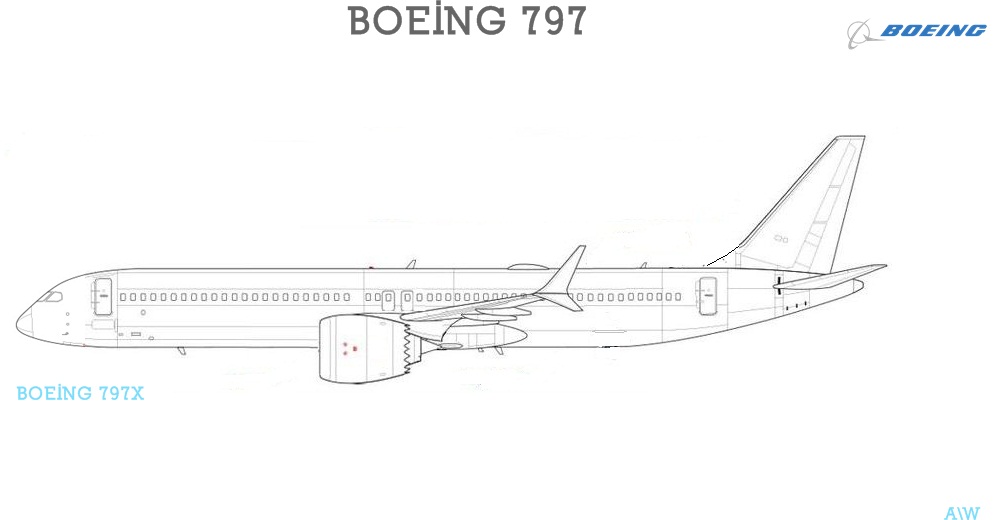
Boeing estudia avión mercado medio

AW | 2017 06 07 23:45 | INDUSTRY

Boeing-Company-LogoBoeing ha estudiado las opciones «de suave a salvaje» para el diseño de un jet de mediano mercado propuesto, según un alto ejecutivo, haciendo alusión a un avance que las fuentes de la industria dicen que creará bloques de construcción para futuros modelos

El vicepresidente de marketing Randy Tinseth dijo que Boeing saltaría los planes de Airbus de actualizar su A321NEO, ya que Boeing contempla una brecha entre los aviones de cuerpo estrecho y los aviones de largo alcance para un nuevo avión de mediano alcance potencial.

«Hemos mirado lo suave y hemos observado lo salvaje y puedo decirte que sabemos que si vas a abordar ese mercado, necesitas un nuevo avión», dijo Tinseth a Reuters luego de una reunión de dos días de líderes de aerolíneas en Mexico. Fuentes de la industria han dicho que el desarrollo del mercado medio es fundamental para Boeing ya que generará los rompecabezas, sistemas y cockpits industriales que probablemente serán utilizados para el próximo avión después de eso, un reemplazo de tres aeronaves de la vaca de efectivo 737 de Boeing.

Conseguir el «sistema de producción» en este momento permitiría parcialmente a Boeing desarrollar el siguiente avión, que se espera que gire alrededor de un modelo con 180 pasajeros, como un spin-off industrial del mercado medio, aunque con grandes diferencias. Esto daría lugar a importantes ahorros de costes y evitaría repetir un mosaico de diferentes arquitecturas de producción. Otros dos derivados podrían extender esa familia de reactores post-737 a 160-210 asientos, basado en las previsiones actuales del mercado. Boeing aún no ha hablado de sus planes más allá del plano de mediados de mercado, que se espera que entre en servicio en 2025. Los funcionarios de Boeing se negaron a comentar las opciones a largo plazo o los detalles específicos del proyecto de mercado medio, que una empresa de leasing ha denominado «797«.

Para el mercado mediano, las fuentes de la industria han dicho que Boeing se está instalando en una familia de dos aviones de fuselaje ancho. Estos combinarían de manera efectiva una cabina de dos pasillos situada encima del reducido espacio del vientre de un chorro de un solo pasillo. El objetivo es reducir la resistencia al viento o el arrastre y, por lo tanto, los costes operativos. Sin embargo, implica una apuesta arriesgada de que las aerolíneas no tendrán que cargar mucha carga pagada en las rutas para las cuales está diseñado el avión, dijeron delegados en la reunión de las aerolíneas en Cancún. Los dos modelos de mercado medio, diseñados para transportar alrededor de 220-260 pasajeros de más de 3.500 a 5.000 millas náuticas (6.400-9.260 km), también tendrá un ala que se asemeja al distintivo diseño de estilete del 787 Dreamliner, pero con importantes diferencias internas.

Visto desde el frente, el contorno de fuselajes de avión de metal tradicional suele estar más cerca de un verdadero círculo. Eso permite que el aire presurizado dentro de la cabina empuje hacia fuera uniformemente en todas las direcciones, facilitando cargas y eliminando la necesidad de materiales pesados ​​de la consolidación. Ese concepto bien probado es tan antiguo como el motor de vapor. Los compuestos de carbono permiten a los fabricantes fabricar piezas complejas en una forma y se adaptan bien al diseño más elíptico que Boeing tiene en mente para el nuevo fuselaje de mercado medio. Sin embargo, los compuestos son más costosos de producir. Airbus esta semana jugó un proyecto llamado A321NEO-Plus-Plus en respuesta al jet de Boeing mediados de mercado, y dijo que siempre estaba revisando las opciones. AIRGWAYS ® Icon-AW

Resultado de imagen para Boeing 797

Boeing studies mid-market aircraft

Boeing has looked at options «from mild to wild» for the design of a proposed mid-market jet, a senior executive says, hinting at a breakthrough that industry sources say will create building blocks for future models

Marketing vice president Randy Tinseth said Boeing would leapfrog reported plans by Airbus to update its hot-selling A321NEO, as Boeing eyes a gap between narrow-body jets and long-haul aircraft for a potential new mid-market aircraft.

«We have looked at the mild and we have looked at the wild and I can tell you we know that if you are going to address that market, you need a new aeroplane,» Tinseth told Reuters after a two-day meeting of airline leaders in Mexico. Industry sources have said the mid-market development is pivotal for Boeing since it will spawn the industrial jigsaw, systems and cockpits likely to be used for the next plane after that, a three-aircraft replacement of Boeing’s 737 cash cow.

Getting the «production system» right now would partially allow Boeing to develop the next jet, which is expected to revolve around a model carrying 180 passengers, as an industrial spin-off of the mid-market one, albeit with major differences. This would result in significant cost savings and avoid repeating a patchwork of different production architectures. Two further derivatives could extend that post-737 jet family to 160-210 seats, based on current market forecasts. Boeing has not yet talked about its plans beyond the mid-market plane, which is expected to enter service by 2025. Boeing officials declined comment on the long-term options or specific details of the mid-market project, which one leasing company has dubbed «797«.

For the mid-market jet, industry sources have said Boeing is settling on a family of two wide-body aircraft. These would effectively combine a twin-aisle cabin sitting on top of the reduced belly space of a single-aisle jet. The aim is to reduce wind resistance or drag and therefore operating costs. However, it involves a risky gamble that airlines will not need to carry much paid cargo on the routes for which the plane is designed, delegates at the airlines meeting in Cancun said. The two mid-market models, designed to carry about 220-260 passengers over 3,500 to 5,000 nautical miles (6,400-9,260 km), will also have a wing resembling the distinctive stiletto design of the 787 Dreamliner but with significant internal differences.

Seen from the front, the outline of traditional metal aeroplane fuselages is usually closer to a true circle. That allows pressurised air inside the cabin to push out uniformly in all directions, easing loads and removing the need for heavy strengthening materials. That well-tested concept is as old as the steam engine. Carbon composites allow manufacturers to make complex pieces in one shape and are well suited to the more elliptical design that Boeing has in mind for the new mid-market fuselage. However, composites are more expensive to produce. Airbus this week played down a project called A321NEO-Plus-Plus in response to the Boeing mid-market jet, and said it was always reviewing options. A \ W


Ξ A I R G W A Y S Ξ
SOURCE:  News.com.au
DBk:  Airgways.com / Fly-news.es
AW-POST: 201706072345AR

A\W   A I R G W A Y S ®

Efecto «low-cost argentina»

AW | 2017 06 07 23:29 | AIRLINES MARKET

La entrega de rutas aéreas a empresas ‘low cost’, bajo la lupa de la Justicia. La Justicia Federal ordenó este miércoles una serie de operativos y presentaciones de documentación ante la sospecha de irregularidades

El juez federal Sergio Torres ordenó este miércoles una serie de operativos y de presentaciones de documentación en el marco de una investigación denominada “Low Cost”, bajo la sospecha de irregularidades en concesiones oficiales.

El juez Sergio Torres firmó varias órdenes de presentación en la investigación judicial sobre diferentes aspectos relacionados con la firma Avianca en la que está imputado el presidente Mauricio Macri. La empresa Avianca es controlada por el mismo fondo de inversión que, con la firma Avian, compró en octubre de 2016 la histórica compañía de taxis aéreos de la familia Macri, MacAir. La causa gira en torno a la contratación de empresas aéreas para viajes presidenciales salteando pasos legales, la venta de la empresa Macair Jet S.A. (que pertenecía a la familia Macri), la irrupción en el mercado local de Avian Líneas Aéreas, la asignación de rutas aéreas operadas por Aerolíneas Argentinas a FlyBondi Líneas Aéreas.

En el expediente a cargo del juez Torres y del fiscal Jorge Di Lello, se investigan siete hechos relacionados con la aviación. En la causa también está imputado el vicejefe de Gabinete de la Nación por su denunciada vinculación con la empresa Fly Bondi que, como Avian, obtuvo rutas aéreas por parte del gobierno nacional.

Otro de los hechos investigados en el mismo expediente -producto de la denuncia de los diputados por el Frente para la Victoria Rodolfo Tailhade y Juan Cabandié- es la operación para adquirir una flota de aviación destinada a la Presidencia de la Nación donde estarían involucrados los integrantes de la firma MacAir. Y si se pagaron sobreprecios en viajes al exterior que hizo Macri. El magistrado instruyó a la Policía Federal para que curse las órdenes de presentación ante la Secretaría General de Presidencia, Aerolíneas Argentinas, la Inspección General de Justicia y otros organismos públicos, indicaron fuentes judiciales.

A la IGJ le reclamó informes sobre la composición societaria de la firma Sol Líneas Aéreas, en tanto que al Organismo Regulador del Sistema Nacional de Aeropuertos (ORSNA) le reclamó precisiones sobre Avian Líneas Aéreas. La investigación judicial involucra al presidente Mauricio Macri, a su padre Franco, y al vicejefe de Gabinete, Mario Quintana, entre otros funcionarios nacionales. AIRGWAYS ® Icon-AW

Effect «low-cost argentina»

The delivery of air routes to low cost companies, under the magnifying glass of Justice. The Federal Justice ordered Wednesday a series of operations and documentation presentations on suspicion of irregularities

Federal Judge Sergio Torres ordered a series of operations and documentation presentations on Wednesday under a «Low Cost» investigation, under suspicion of irregularities in official concessions.

Judge Sergio Torres signed several orders to present the judicial investigation on different aspects related to the Avianca signature in which President Mauricio Macri is accused. The Avianca company is controlled by the same investment fund that, with Avian, bought in October 2016 the historic airline company Macri, MacAir. The cause revolves around hiring airlines for presidential travel jumping legal steps, selling the company Macair Jet S.A. (Which belonged to the Macri family), the entry into the local market of Avian Airlines, the allocation of air routes operated by Aerolíneas Argentinas to FlyBondi Airlines.

In the file by Judge Torres and prosecutor Jorge Di Lello, seven facts related to aviation are investigated. In the case is also imputed the Deputy Chief of Cabinet of the Nation for its denounced connection with the company Fly Bondi that, like Avian, obtained air routes by the national government.

Another of the facts investigated in the same file, product of the denunciation of the deputies by the Front for the Victory Rodolfo Tailhade and Juan Cabandié, is the operation to acquire an aviation fleet destined to the Presidency of the Nation where the members would be involved Of the firm MacAir. And if they paid overprices in trips abroad that made Macri. The magistrate instructed the Federal Police to file the filing orders with the General Secretariat of the Presidency, Aerolineas Argentinas, the General Inspectorate of Justice and other public bodies, judicial sources said.

The IGJ asked him for information on the corporate composition of the company Sol Líneas Aéreas, while the regulator of the National System of Airports (ORSNA) asked him for details on Avian Airlines. The judicial investigation involves President Mauricio Macri, his father Franco, and deputy chief of staff, Mario Quintana, among other national officials. A \ W


Ξ A I R G W A Y S Ξ
SOURCE:  Airgways.com
DBk:  Hangarx.com.ar / Vortexxmag.com
AW-POST: 201706072329AR

A\W   A I R G W A Y S ®

Alza aerocomercial Argentina

Fuerte alza del sector aercomercial argentino: cuáles fueron los aeropuertos del país con más demanda

AW | 2017 06 07 23:07 | AIRLINES

El sector aercomercial argentino está experimenteando una fuerte alza en el tráfico de pax en todo el país. El Ministerio de Transporte vinculó la mejora a la aplicación del plan «Revolución de los Aviones»

El sector aerocomercial argentino registró en mayo un crecimiento del orden del 24 por ciento, con fuerte impacto de los vuelos de cabotaje y de rutas específicas, como las que unen Buenos Aires con Córdoba y con Mendoza. Así lo informó la Empresa Argentina de Navegación Aérea (EANA), el organismo oficial de reciente creación que se encarga de monitorear todos los aterrizajes y despegues, así como las condiciones técnicas de los aeropuertos.

El EANA difundió datos basados en el Sistema Integrado de Aviación (SIAC) según el cual durante mayo hubo 21.683 vuelos, con un promedio diario de 699 (incluyendo únicamente servicios comerciales y vuelos privados). Esto significó un incremento del 12,7% en relación a mayo 2016.

El reporte indica que los vuelos de cabotaje con mayor demanda fueron: Aeroparque-Córdoba y Aeroparque-Mendoza, en ambos sentidos, mientras que en destinos internacionales la ruta más elegida fue Aeroparque-San Pablo, con 706 vuelos en el mes y más de 98.000 pasajeros. En segundo puesto se ubicó el vuelo Ezeiza-Miami, con más de 81.000 pasajeros, distribuidos en 338 vuelos.

De acuerdo con los datos oficiales, los cinco aeropuertos que más crecieron en mayo en comparación interanual fueron Río Cuarto (384%) Santiago del Estero (160%); Catamarca (148%); Corrientes (87%), y Sauce Viejo y Mar del Plata (ambos 80%)

Según el reporte, hay en marcha inversiones por 22.000 millones de pesos en la modernización de la infraestructura en 19 aeropuertos del país. El ministro de Transportes, Guillermo Dietrich, ha dicho en numerosas ocasiones que apuntan a duplicar la cantidad de pasajeros transportados en avión hacia 2019.

El Gobierno había indicado que Aerolíneas Argentinas era la preferida de los pasajeros que realizaban vuelos de cabotaje y LATAM los del exterior. Se esperaba que el jueves la línea aérea estatal difunda su balance sobre la actividad.  AIRGWAYS ® Icon-AW

Aerocomercial hike Argentina

The Argentine commercial sector is experiencing a strong increase in the traffic of pax throughout the country. The Ministry of Transport linked the improvement to the implementation of the plan «Revolution of the Airplanes»

The Argentine commercial sector registered in May a growth of the order of 24 percent, with a strong impact of cabotage flights and specific routes, such as those linking Buenos Aires with Cordoba and with Mendoza. This was reported by the Argentine Air Navigation Company (EANA), the newly created official body responsible for monitoring all landings and take-offs, as well as technical conditions at airports.

The EANA disseminated data based on the Integrated Aviation System (SIAC) according to which there were 21,683 flights during May, with a daily average of 699 (including only commercial services and private flights). This represented an increase of 12.7% in relation to May 2016.

The report indicates that the most demanded cabotage flights were: Aeroparque-Córdoba and Aeroparque-Mendoza, in both directions, while in international destinations the most chosen route was Aeroparque-San Pablo, with 706 flights in the month and more than 98,000 Passengers. In second place was the Ezeiza-Miami flight, with more than 81,000 passengers, distributed in 338 flights.

According to official data, the five airports that grew the most in May in comparison year-on-year were Rio Cuarto (384%) Santiago del Estero (160%); Catamarca (148%); Corrientes (87%), and Sauce Viejo and Mar del Plata (both 80%)

According to the report, there are ongoing investments for 22,000 million pesos in the modernization of infrastructure in 19 airports in the country. Transport Minister Guillermo Dietrich has said on numerous occasions that they aim to double the number of passengers flown by 2019.

The Government had indicated that Aerolineas Argentinas was the preferred passenger for the cabotage and LATAM flights from abroad. The state airline was expected to release its balance sheet on Thursday. A\W


Ξ A I R G W A Y S Ξ
SOURCE:  Clarin.com
DBk:  Gustavo Castaing
AW-POST: 201706072307AR

A\W   A I R G W A Y S ®

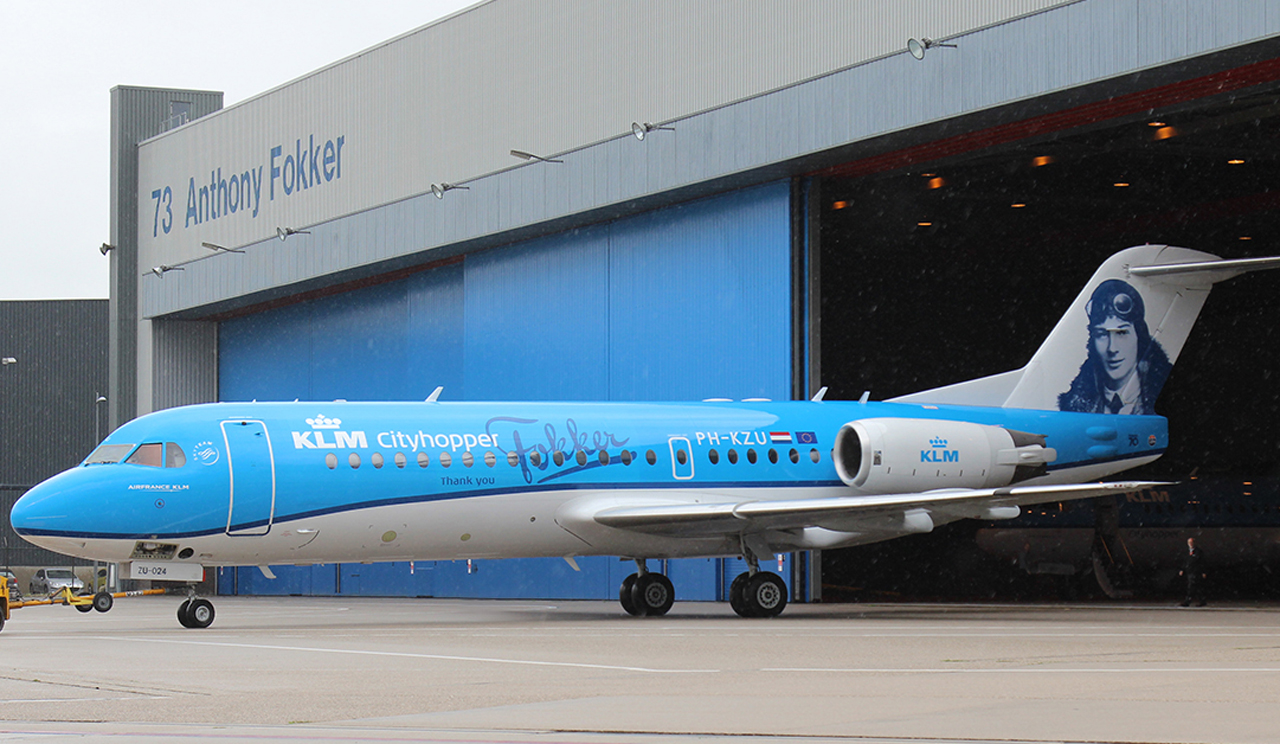
Un adiós a Fokker en KLM Cityhopper

AW | 2017 06 07 22:57 | AIRLINES

KLM ha reemplazado constantemente a los aviones más antiguos por modelos más nuevos, pero la última ronda de renovaciones de la flota comenzó en 2008. Desde entonces, más y más Embraer 190 y 175 se han unido a nuestra flota, reemplazando a nuestros Fokker 50 y 100, y ahora nuestro Fokker 70s. Y así la despedida final para la flota de Fokker se está acercando rápidamente en KLM Cityhopper. Una fecha ha sido fijada: 28 de octubre de 2017. Será un día festivo lleno de gratitud, en particular al legendario Anthony Fokker (1890-1939) y la compañía que fundó.

Expresando nuestra gratitud
Para honrar al pionero de la aviación líder de nuestro país, hemos decorado el fuselaje y la cola de nuestro último Fokker 70 con un retrato de Anthony Fokker, que forma parte de una fiesta de 97 años de historia compartida entre Fokker y KLM.

Personalmente, yo sabía muy poco sobre Anthony Fokker, aunque era consciente de que toda una serie de aviones habían sido nombrados por él. Para averiguar más sobre él, hice algunas investigaciones en línea, pero también arraigé en los archivos de KLM, donde pronto descubrí lo importante que Anthony Fokker había sido para la industria aérea en general y para KLM en particular.

Aquí están algunos de sorprendentes descubrimientos sobre Anthony Fokker:

Fue uno de los empresarios más importantes de la historia holandesa. Su primer avión impulsado por hélice, que diseñó y construyó en 1910, se llamaba «De Spin». El 31 de agosto de 1911, Fokker tomó su giro para una vuelta sobre Haarlem por primera vez. Se retiró de una pradera cercana y dio un rodeo por encima de la plaza central de Haarlem, Grote Markt, antes de aterrizar con seguridad en Kleverpark. Él pasó a probar muchos más de sus propios diseños, ganando aclamación mundial y el apodo de «The Flying Dutchman» («El holandés volador»).

Anthony Fokker dijo una vez: «Cuando tenía unos dieciséis años y por primera vez oí hablar de máquinas voladoras, mi único objetivo en la vida era convertirme en piloto. Los pilotos eran un nuevo tipo de héroe. Tal vez eso es lo que más me atraía: yo también quería ser un héroe». Dedicó la mayor parte de su vida a hacer realidad ese sueño.

Era un visionario
Fokker dijo lo siguiente en 1931: «Mirando hacia atrás en días pasados, parece que he logrado mucho desde que era un niño pequeño, practicando el arte de volar con modelos de papel. Pero cuando miro al futuro, sé que esto es sólo el comienzo, considerando las increíbles oportunidades que la aviación presenta; las cosas que soñé en los días pioneros, hace mucho tiempo. «

Fokker y KLM – un gran dúo
Durante los próximos meses, vamos a conmemorar regularmente los 97 años de historia compartida de Fokker y KLM. No me sorprendería si la despedida final deja a muchos miembros del personal de KLM con lágrimas. Así que, antes de abrazar completamente a los Embraer, estaremos dando a nuestros Fokkers una fantástica despedida. Y lo haremos con estilo.

Aspectos destacados de Farewell Fokker
La magnífica foto de Anthony Fokker, adornando la librea de nuestro último Fokker, también ha sido exhibida en el hangar H73 en Schiphol-Oost, donde Fokker entregó una vez su avión recién construido a las líneas aéreas. La librea no es solo un homenaje al pionero, sino también una muestra de nuestra gratitud a los muchos que han servido a Fokker como empresa. Stefan Vermeeren, encargado de la flota del Fokker 70, sobre la librea especial. Dijo lo siguiente:

«Queríamos encontrar una manera de agradecer a todos los que han trabajado en Fokker 70s por sus esfuerzos y dedicación. ¿Qué mejor manera de hacer esto que a través de la propia aeronave? Eso es mucho más festivo que un mensaje de agradecimiento por correo electrónico, ¿verdad?»

Al decorar el avión con el uniforme festivo, no sólo agradecemos a todos nuestros colegas de KLM Cityhopper, sino también al personal de todas las estaciones, proveedores, operadores de tierra de otras aerolíneas y aficionados a la aviación. Es también un homenaje a la aviación holandesa, a nuestra industria de transporte aéreo, y es una manera especial de celebrar el vínculo entre KLM y Fokker.

«Las palabras «Gracias» en el fuselaje, junto con la foto de Anthony Fokker, reconocen el vínculo entre KLM, Fokker y la industria, pero las palabras de gratitud también están dirigidas a la comunidad más amplia ya otros colegas, empresas y proveedores de todo el mundo. Europa, para agradecerles los muchos años de cooperación «.

Libro sobre Fokker y KLM
Pero eso no es todo. Hay más en el programa para esta adiós festiva. Una película y un vuelo fotográfico, por ejemplo, porque KLM quiere capturar su último Fokker desde tantos ángulos como sea posible. Y también estaremos celebrando los 97 años de historia de KLM, KLM Cityhopper y Fokker con el libro «Farewell Fokker 70, Dutch at Heart».

No estaremos revelando el programa completo todavía, por supuesto. Nuestro último Fokker completará su último vuelo comercial para KLM el 28 de octubre, pero mantendremos el destino en secreto. El día siguiente será muy especial también, pero ese es otro secreto. ¡Todo será revelado a tiempo!  AIRGWAYS ® Icon-AW


A Fond Farewell to Fokker in Cityhopper

KLM has, of course, constantly replaced older aircraft with newer models, but the latest round of fleet renewals began in 2008. Since then, more and more Embraer 190s and 175s have joined our fleet, replacing our Fokker 50s and 100s, and now our Fokker 70s. And so the final farewell for the Fokker fleet is fast approaching at KLM Cityhopper. A date has been set: 28 October 2017. It will be a festive day full of gratitude, particularly to the legendary Anthony Fokker (1890-1939) and the company he founded.

Expressing our gratitude
To honour our country’ s leading aviation pioneer, we have decorated the fuselage and tail of our last Fokker 70 with a portrait of Anthony Fokker, which is part of a festive livery marking 97 years of shared history between Fokker and KLM.

Personally, I knew very little about Anthony Fokker, although I was aware that a whole series of planes had been named after him. To find out more about him, I did some online research, but also rooted around in the KLM archives, where I soon discovered how important Anthony Fokker had been for the airline industry in general, and for KLM in particular.

Here are some of surprising discoveries about Anthony Fokker:

He was one of the most important entrepreneurs in Dutch history. His first propeller-driven plane, which he designed and built in 1910, was called “De Spin” (The Spider). On 31 August 1911, Fokker took his Spin for a spin over Haarlem for the first time. He took off from a nearby meadow and circled above Haarlem’s central square, de Grote Markt, before landing safely in Kleverpark. He went on to test many more of his own designs, earning worldwide acclaim and the nickname “The Flying Dutchman”.

Anthony Fokker once said: “When I was about sixteen years old and first heard about flying machines, my only goal in life was to become a pilot. Pilots were a new kind of hero. Maybe that’ s what appealed to me most: I wanted to be a hero too!” He dedicated most of his life to making that dream come true.

He was a visionary
Fokker said the following in 1931: “Looking back on days gone by, it seems I have achieved quite a lot since I was a small boy, practising the art of flying with paper models. But when I look to the future, I know that this is just the beginning, considering the incredible opportunities aviation presents; the things I dreamed of in the pioneering days, long ago.”

Fokker and KLM – a great duo
During the coming months, we will regularly commemorate the 97 years of shared Fokker and KLM history. I wouldn’ t be surprised if the final farewell leaves lots of KLM staff teary-eyed. So, before we fully embrace the Embraers, we’ ll be giving our Fokkers a fantastic farewell. And we’ ll be doing it in style.

Highlights of “Farewell Fokker”
The superb photo of Anthony Fokker, gracing the livery of our last Fokker, has also been displayed on Hangar H73 at Schiphol-Oost, which is where Fokker once delivered its newly constructed aircraft to airlines. The livery is not just a tribute to the pioneer, but also a token of our gratitude to the many who have served Fokker as a company. Stefan Vermeeren, fleet manager for the Fokker 70, about the special livery. He said the following:

“We wanted to find a way to thank everyone who has worked on Fokker 70s for their efforts and dedication. What better way to do this than by way of the aircraft itself? That’ s a lot more festive than a thank-you message by email, right?»

By decorating the plane with the festive livery, we not only thank all our colleagues at KLM Cityhopper, but also that staff at all outstations, suppliers, ground handlers at other airlines, and aviation aficionados. It’ s also a tribute to Dutch aviation, to our air transport industry, and it’ s a special way to celebrate the bond between KLM and Fokker.

«The words ‘Thank you’ on the fuselage, together with the photo of Anthony Fokker, acknowledge the bond between KLM, Fokker and the industry, but the words of gratitude are also intended for the broader community and other colleagues, companies and suppliers all over Europe, to thank them for the many years of cooperation.”

Book about Fokker and KLM
But that’s not all. There’ s more on the programme for this festive farewell. A film and photo flight, for example, because KLM want to capture its last Fokker from as many angles as possible. And we’ll also be celebrating the 97-year history of KLM, KLM Cityhopper and Fokker with the book “Farewell Fokker 70, Dutch at Heart”. You can order a copy here.

We won’t be revealing the full programme yet, of course. Our last Fokker’ s will complete its final commercial flight for KLM on 28 October, but we’ ll be keeping the destination secret. The day thereafter will be very special too, but that’ s another secret. All will be revealed in good time! A\W


Ξ A I R G W A Y S Ξ
SOURCE:  Blog.klm.com
DBk:  Blog.klm.com
AW-POST: 201706072257AR

A\W   A I R G W A Y S ®

LATAM Airlines cobrará comida a bordo

AW | 2017 06 07 22:35 | AIRLINES

La aerolínea Latam comenzará mañana a cobrar la comida de sus vuelos para competir con las low cost

La empresa anunció que presentará un menú para los viajes de cabotaje. También se cobrará aparte el equipaje que se despache a la bodega. Así, promete reducir la tarifa «plana».

Desde mañana, la aerolínea Latam Airlines cobrará por la comida y la bebida que los pasajeros quieran consumir en los vuelos nacionales. Con esa medida, más el cobro de un adicional por el equipaje que se despache a la bodega del avión, la empresa ajusta sus números para competir con los vuelos low cost. Según había anunciado a fin de 2016, la propuesta de pagar por lo que se consume abaratará alrededor de 20 por ciento las tarifas.

La compañía presentó «Mercado LATAM», una tienda a bordo que ofrecerá más de 50 opciones de bebidas y alimentos que los pasajeros podrán comprar durante sus vuelos locales. También se podrá comprar entretenimiento.

«Este nuevo servicio es el primer paso en la evolución del modelo de viaje para los vuelos nacionales de LATAM, que tiene por objetivo ofrecer una experiencia de viaje hecha a la medida, en la cual el pasajero puede pagar sólo por los servicios que quiere utilizar», indicó la compañía en un comunicado.

«La industria aérea cambió y nosotros como LATAM también lo hicimos; este nuevo servicio de compra a bordo y el modelo de viaje para vuelos domésticos entregarán a nuestros pasajeros más opciones, una experiencia de viaje hecha a la medida”, enfatizó Rosario Altgelt, Gerente General de la empresa.

Tanto Latam como Aerolíneas Argentinas manifestaron el año pasado que adaptarían los servicios de a bordo a este nuevo modelo de pagar por lo que se consume. Es una manera de abaratar los pasajes y competir con la nueva oferta que llegará al país en los próximos meses.

Avianca, por caso, comenzará a volar en el país el 11 de julio. Otras empresas, como Andes, aumentaron sus vuelos y rutas. En una próxima audiencia pública, la Administración Nacional de la Aviación Civil (ANAC) espera que se presenten 14 empresas para pedir más rutas aéreas. La aerolínea de low cost Norwegian prepara su desembarco local. Flybondi sigue en la búsqueda de aviones para operar en el país.  AIRGWAYS ® Icon-AW

LATAM Airlines to charge food on board

The airline Latam will start tomorrow to charge the food of its flights to compete with the low cost

The company announced that it will present a menu for cabotage travel. You will also be charged separately the luggage that is dispatched to the cellar. Thus, promises to reduce the flat rate.

From tomorrow, the airline Latam will charge for food and drink that passengers want to consume on domestic flights. With that measure, plus an additional charge for the luggage that is dispatched to the hold of the plane, the company adjusts its numbers to compete with the low cost flights. As announced at the end of 2016, the proposal to pay for what is consumed will reduce about 20 percent tariffs.

The company introduced «Mercado LATAM», an on-board store that will offer more than 50 food and beverage options that passengers will be able to purchase during their local flights. You can also buy entertainment.

«This new service is the first step in the evolution of the LATAM domestic flight model, which aims to offer a tailor made travel experience in which the passenger can pay only for the services he wants to use» the company said in a statement.

«The airline industry has changed and we, like LATAM, have also done so, this new onboard purchase service and domestic flight model will give our passengers more options, a tailor-made travel experience,» said Rosario Altgelt, Manager General of the company.

Both Latam and Aerolineas Argentinas stated last year that they would adapt onboard services to this new model of paying for what is consumed. It is a way to cheapen the tickets and compete with the new offer that will arrive in the country in the coming months.

Avianca, by case, will begin to fly in the country the 11 of July. Other companies, like Andes, increased their flights and routes. At a forthcoming public hearing, the National Civil Aviation Administration (ANAC) expects 14 companies to submit to request more air routes. The Norwegian low cost airline prepares its local disembarkation. Flybondi is still searching for planes to operate in the country. A\W


Ξ A I R G W A Y S Ξ
SOURCE:  Tn.com.ar
DBk:  Latam.com / Aviacionline.com
AW-POST: 201706072235AR

A\W   A I R G W A Y S ®

Lima Airlines iniciaría ops en Perú

Resultado de imagen para Lima Airlines

AW | 2017 06 07 22:27 | AIRLINES

Lima Airlines solicitó permiso para volar a 24 destinos nacionales

La nueva aerolínea Lima Airlines comenzaría a operar 24 destinos en Perú. La aerolínea solicitó a la Dirección General de Aeronáutica Civil (DGAC) el permiso de Operación de Aviación Comercial. Lima Airlines tiene en proyecto ampliar su negocio de vuelos no tradicionales realizando vuelos en el país e internacionales.

Las rutas solicitadas son 40 e incluyen 24 destinos: Lima, Piura, Talara, Tumbes, Chiclayo, Trujillo, Cajamarca, Ciro Alegría, Andoas, Trompeteros, Iquitos, Tarapoto, Yurimaguas, Jaén, Chachapoyas, Huánuco, Pucallpa, Jauja, Cusco, Ayacucho, Arequipa, Juliaca, Tacna y Puerto Maldonado.

En junio de 2016, el MTC le otorgó el permiso de operación internacional a Lima Airlines por cuatro años. La aerolínea estaría utilizando aeronaves Airbus, Boeing, Bae, Bombardier CRJ, Antonov, entre otras.  AIRGWAYS ® Icon-AW


Lima Airlines to begin operations in Perú

Lima Airlines requested permission to fly to 24 domestic destinations

The new airline Lima Airlines would start operating 24 destinations in Perú. The airline requested the Civil Aeronautics General Directorate (DGAC) the Commercial Aviation Operation permit. Lima Airlines is planning to expand its business of non-traditional flights by doing domestic and international flights.

The routes requested are 40 and include 24 destinations: Lima, Piura, Talara, Chiclayo, Trujillo, Cajamarca, Ciro Alegria, Andoas, Trompeteros, Iquitos, Yurimaguas, Jaén, Chachapoyas, Huánuco, Pauallpa, Jauja, Cusco, Ayacucho , Arequipa, Juliaca, Tacna and Puerto Maldonado.

In June 2016, the MTC granted the international operating permit to Lima Airlines for four years. The airline would be using aircraft Airbus, Boeing, Bae, Bombardier CRJ, Antonov, among others. A\W


Ξ A I R G W A Y S Ξ
SOURCE:  Airgways.com
DBk:  Lima Airlines
AW-POST: 201706072227AR

A\W   A I R G W A Y S ®