Selección pilotos para filial JetSmart Airlines Perú
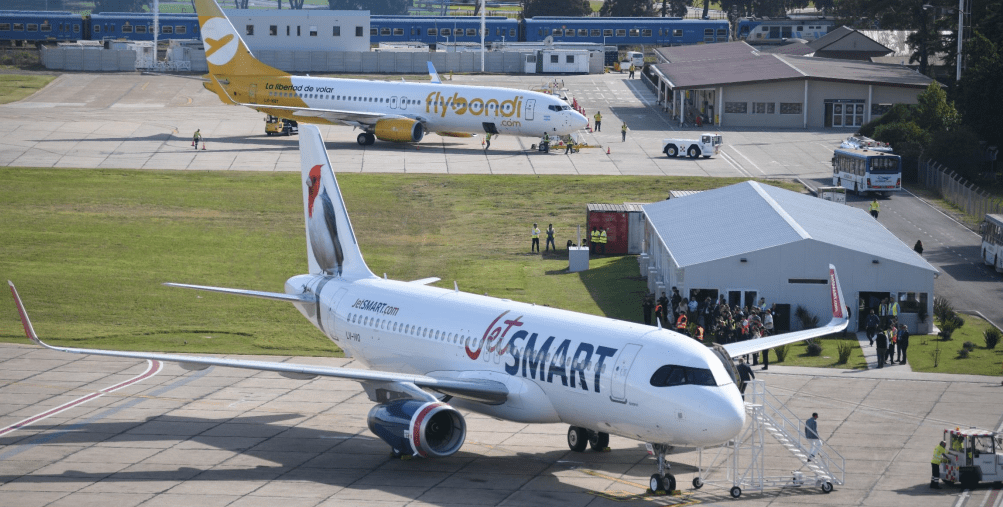
JetSmart Airlines Group ha anunciado el proceso de apertura de su filial enla República de Perú y continúa consolidando el liderazgo en la regíon como aerolínea low cost líder en Sudamérica.
Indigo Partners Group, la compañía matriz de JetSmart Airlines Group ha comunicado en Junio 2020 el anuncio oficial de expandir sus servicios como aerolínea nacional en Perú ingresando a un mercado muy atrayente en términos de turismo. El proceso de certificación de la filial como operador aéreo (AOC) se ha iniciado hace tres meses, alcanzando la finalización de la etapa de su startup hacia el primer trimestre de 2021. La nueva filial en Perú iniciará sus operaciones hacia el 2Q202, según las estimaciones de la aerolínea.
Selección personal
JetSmart Airlines Group ha lanzado la convocatoria para contratar a Comandantes (CMT) y Primeros Oficiales (FO), los cuales deberán tener licencia vigente en Airbus A320 y ser de nacionalidad peruana. Deberán acreditar las habilitaciones vigentes en aeronaves Airbus A320.
JetSmart selects A320 pilots
Pilots selection for JetSmart Airlines Peru subsidiary
JetSmart Airlines Group has announced the process of opening its subsidiary in the Republic of Peru and continues to consolidate its leadership in the region as the leading low cost airline in South America.
Indigo Partners Group, the parent company of JetSmart Airlines Group, announced in June 2020 the official announcement of expanding its services as a national airline in Peru, entering a very attractive market in terms of tourism. The certification process of the subsidiary as an air operator (AOC) has started three months ago, reaching the end of its startup stage by the first quarter of 2021. The new subsidiary in Peru will begin operations around 2Q202, according to the Airline estimates.
Personal selection
JetSmart Airlines Group has launched the call to hire Commanders (CMT) and First Officers (FO), who must have a valid Airbus A320 license and be Peruvian nationals. They must prove the current ratings on Airbus A320 aircraft.
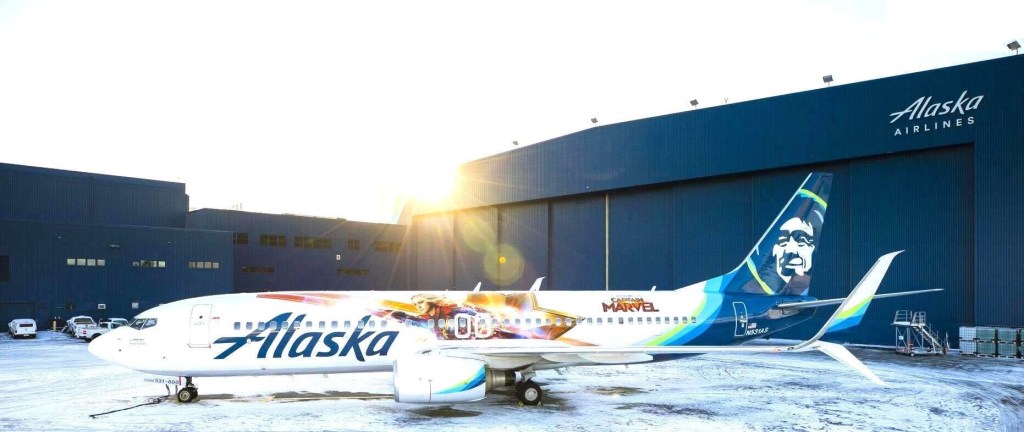
Alaska Airlines busca nuevamente alinearse a la industria de Boeing
Las decisiones recientes de retirar los Airbus A320 antes de lo programado apuntan a que Alaska Airlines regrese a una flota principal de todo-Boeing. El 4 de Abril de 2016, Alaska Air Group anunció que había acordado comprar Virgin America Airlines por US$ 2.6 mil millones. Incluyendo deuda y arrendamientos de aviones, la transacción tuvo un valor aproximado de US$ 4 mil millones. Después de operar una flota principal de Boeing durante décadas, Alaska Airlines agregó aviones Airbus A320CEO a la mezcla de Boeing 737 cuando adquirió su rival más pequeño Virgin America a fines de 2016.
Proceso de estandarización flota
En una reunión de inversionistas a principios de 2017, la dirección de Alaska sugirió que estaba sopesando los beneficios relativos de mantener una flota mixta frente a volver a la exclusividad de la línea de aeronaves Boeing. Por diversas razones, la decisión final se ha pospuesto repetidamente durante los últimos años.
A partir de 2020, Alaska Airlines tenía Airbus A320CEO (71) en su flota, en comparación con Boeing 737 (166). Además, todos sus pedidos en firme de aviones de línea principal han sido solicitados a Boeing en favor del 737 MAX, aunque en la actualidad la compañía todavía posee una solicitud de 30 pedidos cancelables para el A320NEO heredados de la antigua fusión con Virgin America.
Actualmente, posee una flota de A320CEO (21) y A321NEO (10) todos menos 1diez unidades se encuentran bajo alquiler, y alrededor de dos tercios de esos arrendamientos están programados para vencer entre 2021 y 2023. Por lo tanto, Alaska tiene una oportunidad única de alejarse rápidamente de su flota de aeronaves europeas en los próximos años.
Durante 2020, ha habido algunos indicios de que Alaska Airlines se estaba inclinando hacia un regreso a sus raíces todo-Boeing. El Jueves 01/10, la aerolínea ha pronunciado la señal más clara de que los aviones de la familia Airbus A320 están a punto de desprogramarse. La pandemia de COVID-19 ha llevado a Alaska Airlines a acelerar esta transición. A principios de este año, la aerolínea reveló que había estacionado permanentemente 12 aviones Airbus A320CEO, incluidos sus A319CEO (10). Junto con ese movimiento, volvió a capacitar a 240 de sus pilotos de Airbus para volar la línea 737. La gerencia indicó que estos aviones eventualmente serían reemplazados por aviones 737 MAX en cartera de pedido.
Perspectivas de Alaska
En una presentación ante la Securities Exchange Commission (SEC) de Estados Unidos el Jueves 01/10, Alaska Airlines dijo que había decidido seguir adelante con un préstamo de hasta US$ 1.9 mil millones de Dólares del Gobierno Federal bajo un programa de préstamos garantizados incluido en la Ley CARES. Enterrado cerca del final de la presentación había una declaración de que «la gerencia ha autorizado un plan para retirar 10 aviones Airbus A320 de propiedad antes de lo programado anteriormente», lo que lleva a un cargo por deterioro de entre US$ 115 millones y US$ 125 millones. La presentación no dice cuándo se retirarán los A320, pero es probable que sea en algún momento de los próximos cinco años, por lo que la deducción lógica es que no tendría sentido asumir un cargo por deterioro ahora por una jubilación que se espera para fines de la década de 2020 o más allá, simplemente porque muchas cosas podrían cambiar en los años intermedios.
Solo diez de los A320CEO de Alaska son de propiedad: el resto está arrendado. Los diez A320CEO de propiedad se entregaron nuevos a Virgin America entre 2015 y 2016 y tienen un poco menos de cinco años, en promedio. Establecer planes para retirar aviones a los que todavía les quedan dos décadas de vida solo tendría sentido en el contexto de la simplificación de la flota. Dentro de la flota de Airbus de Alaska, los únicos arrendamientos que se extienden más allá de 2025 son 10 arrendamientos de A321NEO que vencen alrededor de 2030. Dado que se espera que la demanda a largo plazo de ese modelo siga siendo sólida, probablemente no costaría mucho para Alaska Airlines terminar esos arrendamientos unos años más adelante. Retirar y vender los 10 A320CEO de propiedad permitiría a la aerolínea de tarifas bajas regresar a una flota principal de Boeing para 2025 aproximadamente. Desde la perspectiva de Alaska, el momento de este movimiento potencial de regreso a una flota totalmente Boeing no podría ser mejor.
Perspectivas de Boeing en Alaska
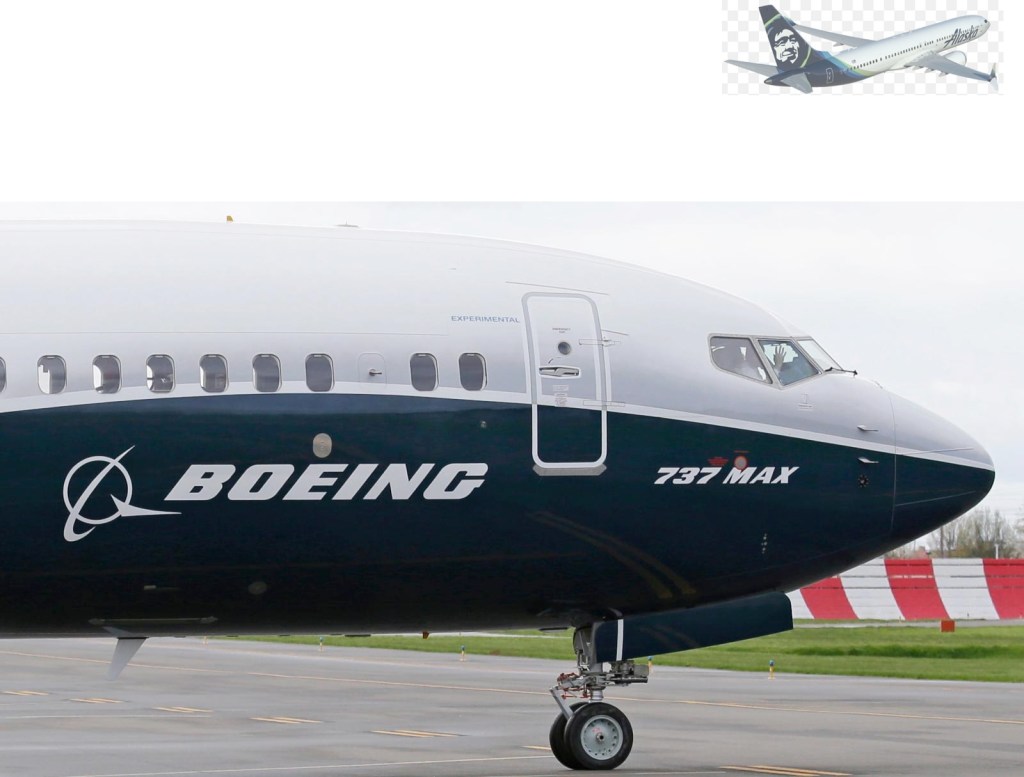
Boeing ha reservado pedidos en firme de solo 52 aviones 737 MAX desde principios de 2019, debido al doble golpe de la puesta a tierra del 737 MAX y la pandemia. Durante el mismo período, ha eliminado más de 1.000 pedidos 737 MAX de su cartera de pedidos debido a cancelaciones de pedidos y clientes que caen en dificultades financieras. Además de los problemas de Boeing, el fabricante de aviones tiene decenas de aviones 737 MAX almacenados que necesitan compradores. Solo para reemplazar sus aviones Airbus uno por uno, Alaska necesitaría docenas de aviones 737 MAX más allá de los que ya tiene ordenados. Incluyendo reemplazos para los Boeing 737 más antiguos de su flota actual y aviones para respaldar los planes de crecimiento hacia mediados de la década, Alaska Airlines podría ordenar fácilmente 100 o más aviones 737 MAX para su entrega en los próximos cinco a siete años.
Ganar un trato de ese tamaño sería un gran impulso para Boeing. El gigante aeroespacial debería estar dispuesto a ofrecer grandes descuentos para que esto suceda. La decisión de Alaska Airlines de acelerar aún más sus planes de jubilación del A320CEO es una señal de que la aerolínea está buscando aprovechar esta oportunidad para actualizar su flota a un precio asombrosamente muy ventajoso.
Alaska would turn to Boeing
Alaska Airlines Seeks Again to Align with Boeing Industry
Recent decisions to retire Airbus A320s ahead of schedule point to Alaska Airlines returning to a core all-Boeing fleet. On April 4, 2016, Alaska Air Group announced that it had agreed to purchase Virgin America Airlines for US$ 2.6 billion. Including debt and aircraft leases, the transaction was worth approximately US$ 4 billion. After operating a core Boeing fleet for decades, Alaska Airlines added Airbus A320CEO jets to the Boeing 737 mix when it acquired its smaller rival Virgin America in late 2016.
Fleet standardization process
At an investor meeting in early 2017, Alaska management suggested it was weighing the relative benefits of maintaining a mixed fleet versus going back to exclusivity on the Boeing aircraft line. For various reasons, the final decision has been repeatedly postponed over the past few years.
As of 2020, Alaska Airlines had Airbus A320CEO (71) in its fleet, compared to Boeing 737 (166). In addition, all of its firm orders for mainline aircraft have been solicited from Boeing in favor of the 737 MAX, although today the company still has a requisition for 30 cancellable orders for the A320NEO inherited from the former Virgin America merger.
It currently owns a fleet of A320CEO (21) and A321NEO (10) all but 1 ten units are under lease, and about two-thirds of those leases are scheduled to expire between 2021 and 2023. Therefore, Alaska has a unique opportunity to move quickly away from its European aircraft fleet in the coming years.
During 2020, there have been some signs that Alaska Airlines was leaning toward a return to its all-Boeing roots. On Thursday 01/10, the airline gave the clearest signal that the Airbus A320 family aircraft are about to be deprogrammed. The COVID-19 pandemic has prompted Alaska Airlines to accelerate this transition. Earlier this year, the airline revealed that it had permanently parked 12 Airbus A320CEO aircraft, including its A319CEOs (10). Along with that move, it retrained 240 of its Airbus pilots to fly the 737 line. Management indicated that these aircraft would eventually be replaced by 737 MAX aircraft in the order book.
Alaska perspective
In a filing with the United States Securities Exchange Commission (SEC) on Thursday 10/01, Alaska Airlines said that it had decided to go ahead with a loan of up to US$ 1.9 billion from the Federal Government under a guaranteed loan program included in the CARES Act. Buried near the end of the presentation was a statement that «management has authorized a plan to retire 10 owned Airbus A320 aircraft earlier than previously scheduled», leading to an impairment charge of between US$ 115 million and US$ 125 million. The filing doesn’t say when the A320s will be retired, but it’s likely to be sometime in the next five years, so the logical deduction is that it wouldn’t make sense to take an impairment charge now for a retirement that is expected by the end of the year. the 2020s or beyond, simply because a lot could change in the intervening years.
Only ten of Alaska’s A320CEOs are owned the rest are leased. The ten owned A320CEOs were delivered new to Virgin America between 2015 and 2016 and are just under five years old, on average. Establishing plans to retire planes that still have two decades to live would only make sense in the context of fleet simplification. Within the Alaska Airbus fleet, the only leases that extend beyond 2025 are 10 A321NEO leases that expire around 2030. Given that long-term demand for that model is expected to remain strong, it probably wouldn’t cost a lot for Alaska Airlines to end those leases a few years later. Retirement and sale of the 10 owned A320CEOs would allow the low-fare carrier to return to a Boeing core fleet by around 2025. From Alaska’s perspective, the timing of this potential move back to a fully Boeing fleet couldn’t be better.
Boeing perspective in Alaska
Boeing has booked firm orders for just 52 737 MAX aircraft since early 2019, due to the double whammy of the 737 MAX grounding and the pandemic. During the same period, it has removed more than 1,000 737 MAX orders from its order book due to order cancellations and customers falling into financial distress. In addition to Boeing’s woes, the planemaker has dozens of 737 MAX planes in stock that need buyers. Just to replace its Airbus jets one by one, Alaska would need dozens of 737 MAX jets beyond the ones it already has ordered. Including replacements for the older Boeing 737s in its current fleet and aircraft to support growth plans by the middle of the decade, Alaska Airlines could easily order 100 or more 737 MAX aircraft for delivery in the next five to seven years.
Winning a deal that size would be a huge boost for Boeing. The aerospace giant should be willing to offer deep discounts to make this happen. Alaska Airlines’ decision to further accelerate its A320CEO retirement plans is a sign that the airline is looking to seize this opportunity to upgrade its fleet at a staggeringly advantageous price.
La subsidiaria japonesa de la aerolínea Air Asia cerrará
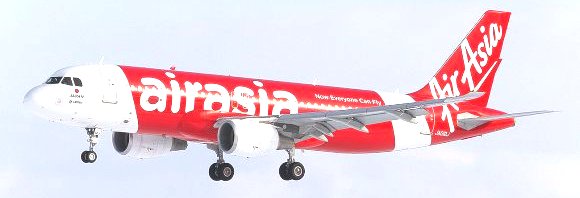
AirAsia Japan, subsidiaria nipona del grupo de aerolíneas de bajo costo malayo AirAsia, ha anunciado este Lunes 5 Octubre 2020 que cerrará sus operaciones en Japón en Diciembre 2020 por los efectos de la actual pandemia mundial. La aerolínea de bajo coste, con base en el Aeropuerto de Chubu ha notificado al Ministerio de Territorio, Infraestructura, Transporte y Turismo la cancelación de las operaciones aerocomerciales en Japón como operador de transporte aéreo. La aerolínea actualmente enlaza solo tres rutas domésticas y un servicio internacional entre Nagoya y Taoyuan en Taipei.
AirAsia Japan anteriormente había discontinuado los servicios aéreos en Japón, después de que la matriz malaya abandonara en 2013 la sociedad de riesgo compartido con base de operaciones en el Aeropuerto Narita que había fundado un año antes junto a la aerolínea nipona All Nippon Airways (ANA), que se quedó con esas operaciones y las transformó en la aerolínea low cost Vanilla Air. Al año siguiente, AirAsia Japan fue refundada entre el grupo malayo y varios socios más, entre ellos el gigante del comercio electrónico Rakuten, y tras una serie de retrasos comenzó a volar de nuevo en 2017.
Low cost AirAsia Japan closes
The Japanese subsidiary of the airline Air Asia will close
AirAsia Japan, a Japanese subsidiary of the Malaysian low-cost airline group AirAsia, announced this Monday, October 5, 2020 that it will close its operations in Japan in December 2020 due to the effects of the current global pandemic. The low-cost airline, based at Chubu Airport, has notified the Ministry of Territory, Infrastructure, Transport and Tourism of the cancellation of commercial air operations in Japan as an air transport operator. The airline currently links only three domestic routes and one international service between Nagoya and Taoyuan in Taipei.
AirAsia Japan had previously discontinued air services in Japan, after the Malaysian parent abandoned in 2013 the joint venture based at Narita Airport that it had founded a year earlier together with the Japanese airline All Nippon Airways (ANA). , which kept those operations and transformed them into the low cost airline Vanilla Air. The following year, AirAsia Japan was re-founded between the Malaysian group and several other partners, including the e-commerce giant Rakuten, and after a series of delays began flying again in 2017.
ExpressJet repliega sus alas por impacto de pandemia
ExpressJet cierra definitivamente como aerolínea regional en Estados Unidos y deja en suspenso a 3.000 trabajadores. Las pérdidas de puestos de trabajo de los empleados de ExpressJet se sumaron a los 35.000 permisos de las aerolíneas que tuvieron lugar el Miércoles 30/09, ya que el Congreso de Estados Unidos no cumplió con el plazo de medianoche para extender el programa de apoyo a la nómina para los trabajadores de las aerolíneas. El programa habría proporcionado US$ 25 mil millones para pagar a los empleados de las aerolíneas hasta el 31 de Marzo de 2020, parte de un paquete de alrededor de US$ 2 billones para apoyar la economía durante la crisis del coronavirus.
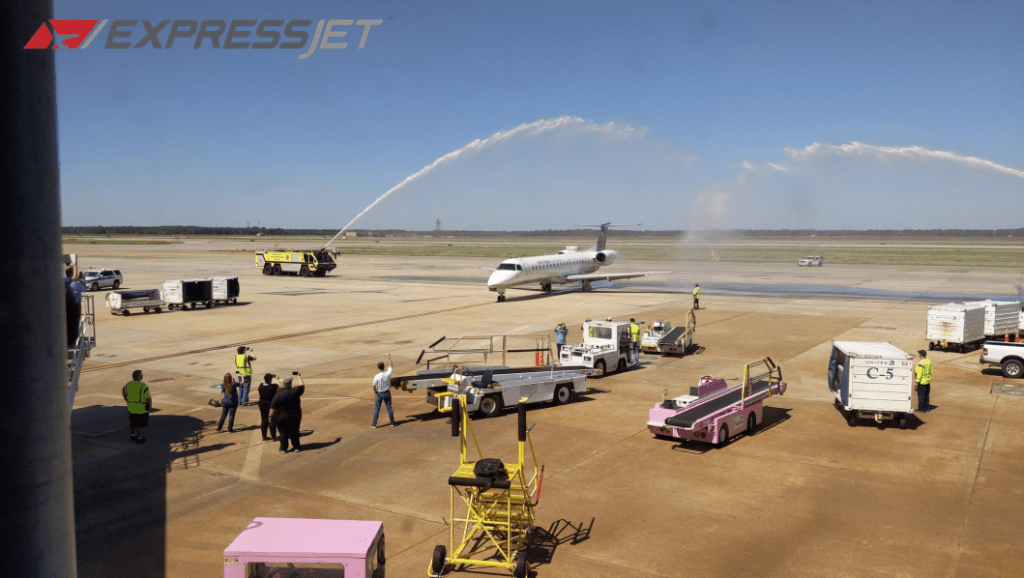
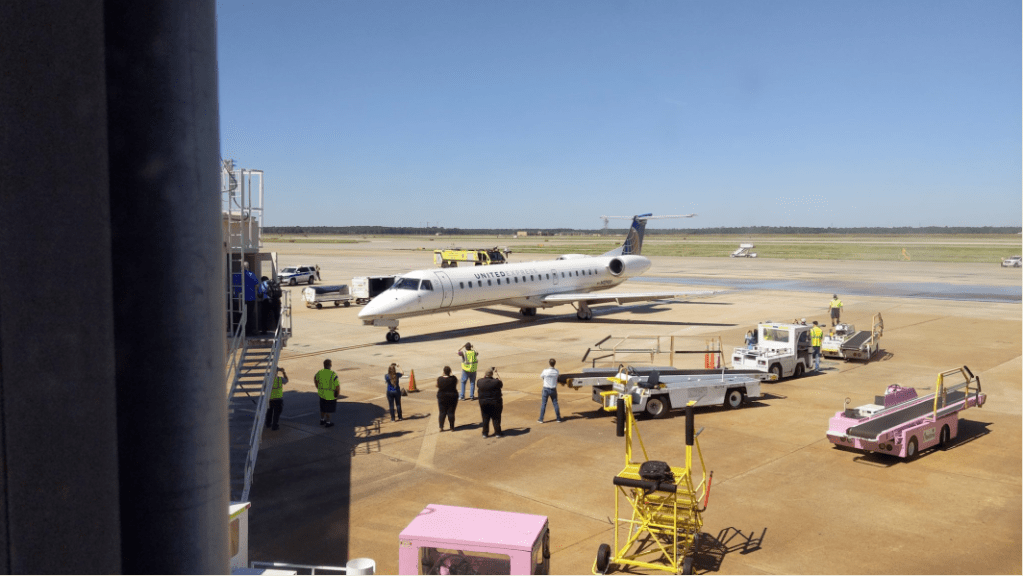
El último vuelo ExpressJet Airlines 4001 procedente desde Memphis aterrizó el Miércoles 30/09 en Houston, Texas alrededor de la 01:30 p.m., marcando el final de la existencia de la aerolínea y dejando sin trabajo a unos 3.000 empleados.
Impacto pandémico
«Estos políticos dan por sentado a los trabajadores de la aviación. Están utilizando a los trabajadores de las aerolíneas como fútbol político. Si no pueden completar todo el paquete, deberían concentrarse en aprobar un PSP independiente», dijo el jueves Sito Pantoja, Vicepresidente General de la Asociación Internacional de Maquinistas (IAM). Entre los 35.000 trabajadores despedidos el Jueves 01/10 en American Airlines, United Airlines y otras compañías, muchos son miembros de IAM que retienen los beneficios de atención médica durante un mes o más, negociando que aún podría ocurrir un acuerdo esta semana que también extendería los salarios.
ExpressJet cesó sus operaciones debido a que United Airlines trasladó su línea Embraer 145 a otra aerolínea regional para que continúe operando como aerolínea feeder bajo el nombre de United Express. Actualmente, los trabajadores de ExpressJet han sido despedidos dijo Sara Gonzales, Asistente de Vuelo de ExpressJet desde hace quince años y Presidenta General del Distrito 142 de IAM. Los 650 asistentes de vuelo de la aerolínea estaban representados por IAM y tenían su sede en Houston, Chicago y Newark. Los asistentes de vuelo «Se sienten traicionados. Tienen que marcharse sin nada, ni siquiera beneficios de vuelo. Es inconcebible», dijo Gonzales, quien vive en Houston. Un asistente de vuelo típico de ExpressJet ganaba alrededor de US$ 40.000 al año. “Eran buenos trabajos de clase media. No puedes conducir para Uber y ganar el mismo dinero. Algunos llevábamos 20 o 30 años en la empresa. La gente está molesta. Como miembros del sindicato, los auxiliares de vuelo tenían buenos planes de atención médica, pero hoy, por ahora, solo tenemos opciones de Obamacare”, dijo Sara Gonzales.
En Texas, IAM también representa a los trabajadores de American, United y otras compañías. Muchos se están acercando a los legisladores en busca de la extensión del PCP. «Este es el más comprometido políticamente que hemos visto a nuestros miembros. En todo Texas, la gente no va a olvidar quién la respalda y quién no”, dijo la Asistente de Vuelo Sara Gonzáles.
«El 30 de Julio de 2020, United Airlines (UA) seleccionó a CommutAir como su único operador ERJ145 y le pidió a ExpressJet Airlines que dejara de volar para UA para fin de año. Después de dedicar un tiempo considerable a planificar este cierre, los equipos de administración de ExpressJet y United decidieron que, debido a los horarios inciertos de Octubre a Diciembre, sería mejor acelerar la terminación de todos los vuelos programados de ExpressJet, en nombre de United Express, el 30 de Septiembre 2020», expresa la web de ExpressJet, así culmina otra historia de una aerolínea víctima de la pandemia global.
Ceases regional airline ExpressJet
ExpressJet folds its wings due to pandemic impact
ExpressJet definitively closes as a regional airline in the United States and leaves 3,000 workers on hold. The job losses of ExpressJet employees were in addition to the 35,000 airline permits that took place on Wednesday 09/30, as the United States Congress did not meet the midnight deadline to extend the support program to payroll for airline workers. The program would have provided US$ 25 billion to pay airline employees through March 31, 2020, part of a package of around US$ 2 trillion to support the economy during the coronavirus crisis.
The last ExpressJet Airlines 4001 flight from Memphis landed on Wednesday 09/30 in Houston, Texas around 1:30 p.m., marking the end of the airline’s existence and putting some 3,000 employees out of work.
Pandemic impact
«These politicians take aviation workers for granted. They are using airline workers as political football. If they cannot complete the whole package, they should focus on passing a separate PSP», Vice President General Sito Pantoja said Thursday of the International Association of Machinists (IAM). Among the 35,000 workers laid off on Thursday 10/01 at American Airlines, United Airlines, and other companies, many are IAM members who withhold health care benefits for a month or more, negotiating that a deal could still occur this week that would also extend the salaries.
ExpressJet ceased operations due to United Airlines moving its Embraer 145 line to another regional airline to continue operating as a feeder airline under the name United Express. Currently, ExpressJet workers have been laid off, said Sara Gonzales, ExpressJet Flight Attendant for 15 years and IAM District 142 General President. The airline’s 650 flight attendants were represented by IAM and were based in Houston, Chicago and Newark. Flight attendants «They feel betrayed. They have to leave with nothing, not even flight benefits. It’s unthinkable», said Gonzales, who lives in Houston. A typical ExpressJet flight attendant made about US$ 40,000 a year. “They were good middle class jobs. You can’t drive for Uber and earn the same money. Some of us had been with the company for 20 or 30 years. People are upset. As union members, the flight attendants had good health care plans, but today, for now, we only have Obamacare options”, said Sara Gonzales.
In Texas, IAM also represents workers for American, United, and other companies. Many are reaching out to legislators seeking the extension of the PCP. «This is the most politically committed that we have seen our members. All over Texas, people are not going to forget who is supporting them and who is not», said Flight Attendant Sara Gonzáles.
«On July 30, 2020, United Airlines (UA) selected CommutAir as its sole ERJ145 carrier and asked ExpressJet Airlines to stop flying for UA by the end of the year. After spending considerable time planning this closure, the ExpressJet and United management teams decided that due to uncertain schedules from October to December, it would be best to expedite the completion of all scheduled ExpressJet flights, on behalf of United Express, by September 30, 2020», says the website of ExpressJet, thus culminates another story of an airline victim of the global pandemic.
Reacondicionamiento sanitario para reapertura de vuelos
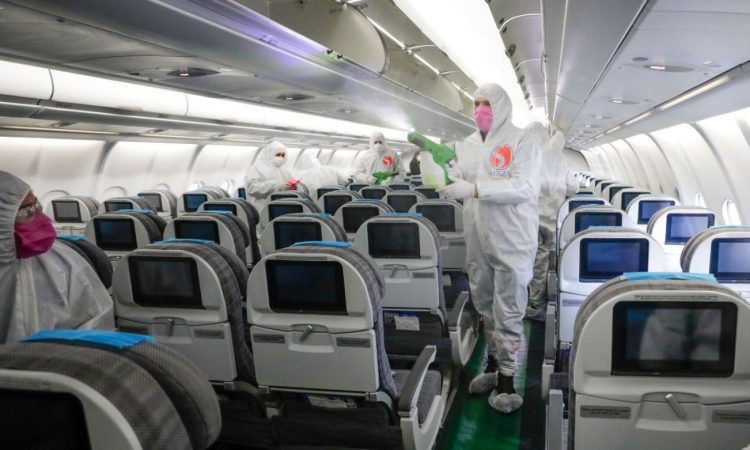
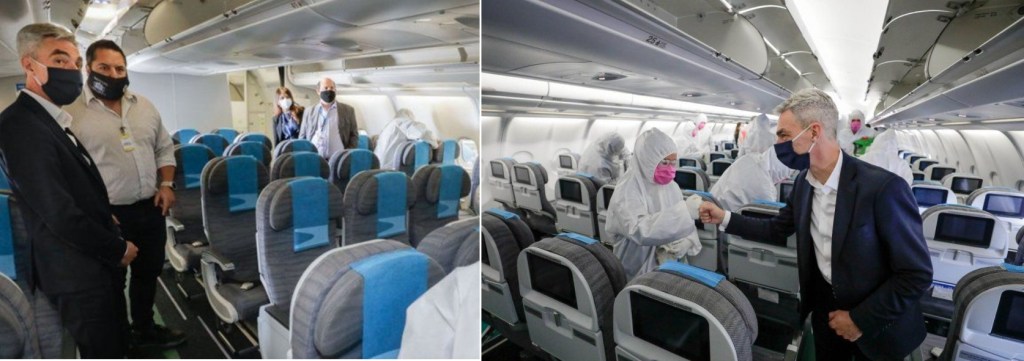
El Ministerio de Transporte de Argentina y el CEO de Aerolíneas Argentinas asistieron a la primera aplicación de un dispositivo que permitiría una mayor eficacia para desinfectar aeronaves. La presentación de evaluación realizada en el Aeropuerto Internacional de Ezeiza con un nuevo dispositivo de desinfección, certificado por el Instituto Malbrán, se emplearía en la aerolínea de Argentina, a poco de la reanudación de los vuelos aerocomerciales hacia mediados de Octubre 2020.
El nuevo aplicador permitirá una mayor efectividad para combatir el Covid-19 en la industria aerocomercial. En la recorrida y muestra, el Ministro de Transporte Mario Meoni junto al CEO de la compañía Pablo Ceriani fueron acompañados por el Director de la Unidad de Contención Biológica del Instituto Malbrán, Alexis Edelstein. La recomendación del Instituto Malbrán es que el nuevo dispositivo permite aplicar una gota mucho más fina, que al esparcirse brinda una mayor cobertura y elimina de las superficies no solo el Coronavirus que provoca la enfermedad Covid-19 sino otros virus y bacterias que habitualmente circulan en los ambientes.
El titular de Aerolíneas, que depende de la cartera de Transporte, dijo que las nuevas medidas de seguridad «hacen que realmente la aeronave sea el medio de transporte más seguro, en términos de Covid, para poder transportarse en un país tan grande como el nuestro. Ya estamos preparados para iniciar la operación cuando las condiciones estén dadas”.
Características técnicas
En cuanto a las características técnicas, Transporte señaló que el nuevo dispositivo de desinfección, de menor tamaño y mayor practicidad que el que se venía utilizando hasta ahora y con un pico que despide gotas de un desinfectante, bactericida y virucida, ya demostró ser eficaz en pruebas anteriores. Al rociar micropartículas, explicó, el aplicador permite que el producto se inserte mejor en cualquier microporo, incluyendo el tapizado de los asientos, lo que hace más efectiva la desinfección. Otro aspecto técnico señalado es que al contar con un dispositivo interno que genera estática positiva, el aplicador permite también una mayor adherencia del desinfectante, bactericida, virucida. El nuevo método empezó a aplicarse en los aviones de Aerolíneas Argentinas; funciona con batería y permite generar un 65 % de ahorro del producto desinfectante, cuyo principio activo es el amonio cuaternario. Luego de la aplicación, se deja actuar durante 10 minutos para que la desinfección sea completa.
Aerolíneas new disinfection technology
Sanitary refurbishment for flight reopening
The Argentine Ministry of Transportation and the CEO of Aerolíneas Argentinas attended the first application of a device that would allow greater efficiency to disinfect aircraft. The evaluation presentation carried out at the Ezeiza International Airport with a new disinfection device, certified by the Malbrán Institute, would be used in the Argentine airline, shortly after the resumption of commercial flights around mid-October 2020.
The new applicator will allow greater effectiveness to combat Covid-19 in the commercial aviation industry. In the tour and exhibition, the Minister of Transport Mario Meoni together with the CEO of the company Pablo Ceriani were accompanied by the Director of the Biological Containment Unit of the Malbrán Institute, Alexis Edelstein. The recommendation of the Malbrán Institute is that the new device allows a much finer drop to be applied, which when spreading provides greater coverage and eliminates from surfaces not only the Coronavirus that causes Covid-19 disease but other viruses and bacteria that usually circulate in environments.
The head of Aerolíneas, which depends on the Transportation portfolio, said that the new security measures «really make the aircraft the safest means of transport, in terms of Covid, to be able to travel in a country as large as ours. We are already prepared to start the operation when the conditions are right».
Technical characteristics
Regarding the technical characteristics, Transporte pointed out that the new disinfection device, smaller in size and more practical than the one that had been used until now and with a spout that emits drops of a bactericidal and virucidal disinfectant, has already proven to be effective in previous tests. By spraying microparticles, he explained, the applicator allows the product to better insert into any micropore, including the seat upholstery, which makes disinfection more effective. Another technical aspect noted is that by having an internal device that generates positive static, the applicator also allows greater adherence of the bactericidal, virucidal disinfectant. The new method began to be applied in Aerolíneas Argentinas planes; it works with battery and allows to generate a 65% saving of the disinfectant product, whose active principle is quaternary ammonium. After application, it is left to act for 10 minutes so that the disinfection is complete.
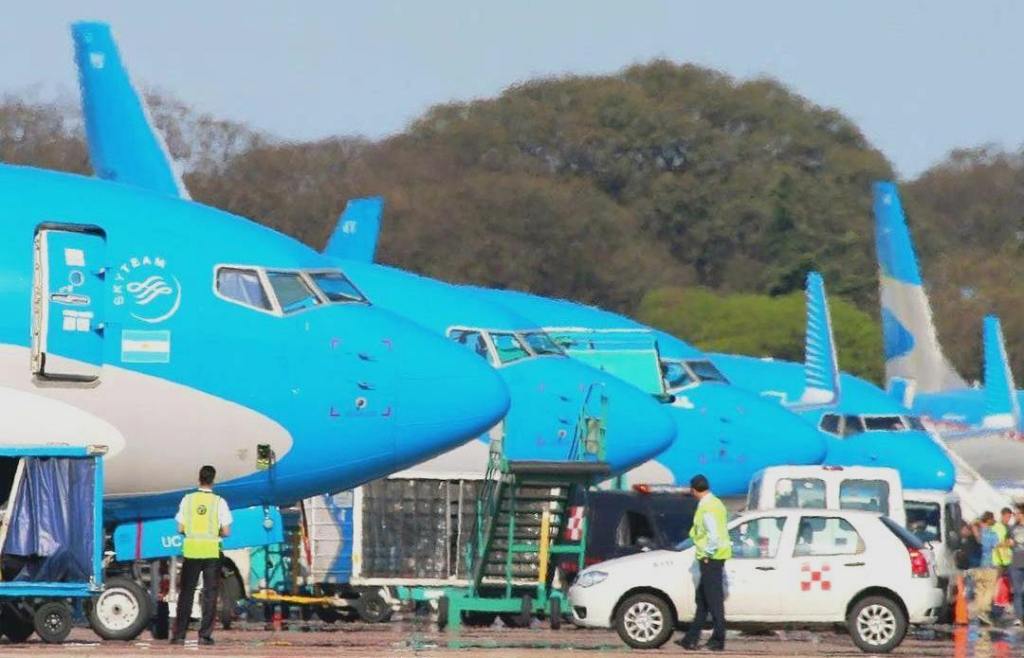
Firma acuerdo entre pilotos primer paso hacia la fusión
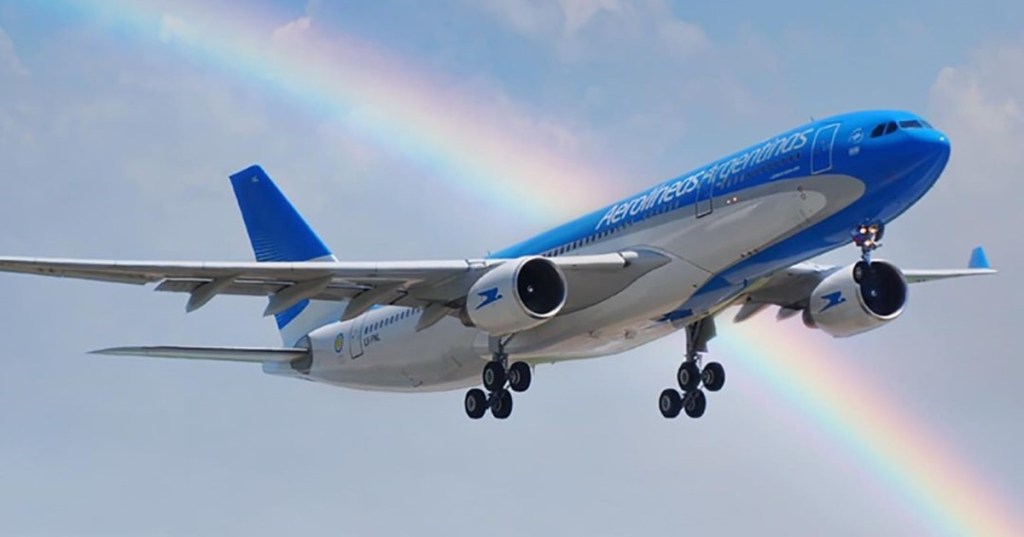
El CEO del Grupo Aerolíneas, Pablo Ceriani ha comunicado que ha avanzado en la integración de Aerolíneas Argentinas y Austral Líneas Aéreas. Tras la introducción de los problemas de la pandemia en el mundo de la aviación, los ejecutivos de la compañía del Estado un plan para continuar con la sinergia de ambas líneas aéreas, o más exactamente la eliminación de su compañera Austral Líneas Aéreas, un antiguo anhelo político-sindical entre el ambiente de la aviación comercial.
Alcanzar la integración de las dos compañías ha sumado un nuevo capítulo con un acuerdo de base de los sindicatos de pilotos de la Asociación de Pilotos de Líneas Aéreas (APLA) representados por Aerolíneas Argentinas y los de Unión de Aviadores de Líneas Aéreas (UALA) que nuclean a los de Austral Líneas Aéreas.
La integración de los pilotos de las dos flotas se ha convertido en un problema de unión efectiva tras la adquisición de Austral por parte del Estado al Grupo Aerolíneas en 2008. La rivalidad entre los gremios UALA y APLA era un asunto que incidía en el proceso de fusión entre ambas compañías.
Antecedentes
Cielos del Sur S.A. e Iberia formaron un consorcio para adquirir una participación del 85% en Aerolíneas Argentinas en 1990, en el marco de la privatización de esa aerolínea bandera. Poco después, Cielos del Sur S.A. vendió Austral Líneas Aéreas a Iberia. El destino de Aerolíneas Argentinas y Austral se alineó a partir de entonces. En Julio de 1998, la compañía era propiedad en un 10% de su antiguo competidor Aerolíneas Argentinas. El 21 de Julio de 2008, el Gobierno de Argentina retomó el control estatal de la aerolínea tras adquirir el 99,4% del capital social por un precio no revelado. El 0,6% restante sigue siendo propiedad de los empleados de la empresa. En Septiembre de 2008, el Senado de Argentina aprobó la nacionalización de Aerolíneas Argentinas y su subsidiaria Austral Líneas Aéreas en una votación de 46 a 21 a favor de la toma de posesión. En Junio de 2010 Aerolíneas Argentinas lanzó un nuevo esquema de pintura para renovar la imagen de la aerolínea. La nueva librea se asemeja al color azul de la bandera de Argentina y al color amarillo del sol. Como aerolínea subsidiaria, Austral también adoptó la nueva imagen. La librea de Austral en realidad difiere de la de Aerolíneas Argentinas solo por una línea roja. Mientras tanto, la aerolínea también anunció la incorporación de 20 nuevos Embraer E190 a su flota, recibiendo los dos primeros en Septiembre de 2010.
Reunión integración
En Julio 2020 la compañía había convocado a una reunión de accionistas para notificar la integración o fusión de ambas compañías en una sola unidad de negocio.
La dirección del Grupo Aerolíneas se ha reunido este Viernes 02/10 para continuar avanzando con la integración de Aerolíneas/Austral. «Ayer dimos un paso fundamental para concretar la fusión de Aerolíneas y Austral. Alcanzamos un acuerdo entre los pilotos de ambas empresas que pone fin a una historia de desencuentros al interior de nuestra línea aérea de bandera. A partir de este acuerdo, el trabajo de nuestros pilotos se desarrollará bajo las mismas reglas y criterios, se integrarán sus escalafones y se unificará su representación gremial, lo que se traduce en más horas de vuelo y mayor productividad para nuestros aviones. También, mejorará la programación de los vuelos de Aerolíneas, unificará los criterios operativos y nos permitirá hacer más eficiente nuestra estructura organizacional», ha expresado el CEO Pablo Ceriani por medio de Twitter.
El titular de Aerolíneas agregó que la empresa se propuso dos objetivos al comienzo de la pandemia de Coronavirus: «Poner nuestro trabajo al servicio del país, con los vuelos de repatriación y los de carga con material sanitario, y realizar las transformaciones para mejorar la productividad y así superar la peor crisis de la industria. La fusión de Aerolíneas Argentinas y Austral resulta un paso fundamental en ese sentido, incorporar las mejores prácticas de la industria nos permitirá fijar una senda de crecimiento en la etapa que viene. Este acuerdo significa un avance en esa dirección».
Acuerdo integración
El acuerdo entre los pilotos del gremio de Austral (UALA) y el de Aerolíneas (APLA) siempre fue espinoso. Sucede que ambos gremios siempre estuvieron enfrentados y la conjunción de ambos en una sola flota jamás se pudo lograr. El gran ganador en esta negociación fue el Gremio APLA. La cuestión estaba trabada en la carrera el escalafón de los pilotos. Los de la línea aérea de bandera no querían recibir a sus primos hermanos y darles la oportunidad de que compitan con ellos. Los de Austral, por el contrario, pretendían poder aspirar a volar aviones más grandes y tener otro techo en su carrera que no sea los de fuselaje angosto, los Embraer 190.
Ahora, los pilotos y copilotos de Austral podrán optar por seguir la carrera en los Embraer o tratar de ocupar las vacantes que se abran en el resto de la flota, ya sea por jubilación, por incorporación de aviones o cuando vuelvan a operar los Boeing 737 MAX, aunque se desconoce qué tan aceitado estará en camino de la competencia con los primos de Aerolíneas. Los pilotos de Austral quedaron todos por debajo de los de Aerolíneas. Lograron cierta prioridad a la hora de ascender de copilotos a pilotos. Los copilotos de Austral tienen prioridad para ser pilotos de esas cabinas frente a los de Aerolíneas. Después, APLA entregó algunos cargos en la estructura del gremio. La convivencia futura entre ambos es una incógnita.
El Secretario General de la Asociación de Pilotos de Líneas Aéreas (APLA), Pablo Biró, sostuvo que la fusión entre ambas firmas «es la respuesta para que Aerolíneas despegue de verdad. Una decisión histórica porque eran dos compañías públicas con estructuras paralelas, que comparten casi todo». Sobre las negociaciones, añadió: «Cerramos el acuerdo anoche tarde, fue un trabajo de mucho tiempo, muy complejo, muy trabajoso. Es una cosa que muchos soñamos, en lo personal estoy feliz». El representante gremial destacó que tras años de desencuentros, esto permitirá una representación sindical más fuerte porque será una compañía más grande e incluso más eficiente, al terminar la pandemia. En cuanto a ello, comentó que los millones de Dólares de facturación que se ahorrarán debido a la unión de Aerolíneas Argentinas y Austral podrán destinarse a otras cuestiones como repuestos de aviones o nuevas rutas.
El CEO Pablo Ceriani sabe que el paso que se ha realizado ha sido importante y necesario pero no suficiente para lograr que la empresa empiece a caminar por un sendero algo más competitivo. De hecho, hay dos gremios importantes que aún no han cerrado las condiciones de la fusión: los Técnicos (APTA) y los Tripulantes de Cabina (AAA).
Pablo Biró admitió que los dos sindicatos de pilotos APLA y UALA fueron «perros y gatos durante años». «Con la renovación generacional, hace muchos años trabajamos como si fuéramos un solo gremio, hubo un trabajo en unidad muy importante con estas estructuras paralelas».
Mayor escollo
A pesar de esa sintonía manifestada y de los anuncios de conjunción entre APLA y UALA, el Secretario General fue cauteloso: «Está por verse la fusión. La de empresas la logramos, ahora, la decisión de afiliarse a un sindicato es individual. Lo deseado sería que terminemos todos en un único sindicato más fuerte, pero es una decisión individual y yo soy respetuoso de los compañeros del otro sindicato». Pablo Biró dijo que «sería una alegría la unión de ambas estructuras de representación, ya que potenciarían un gremio más fuerte, incluso en lo técnico-profesional, con gente que desde hace más de 30 años vuela en la industria».
La empresa sabe que la pelea fuerte está en otro lado. Por estas horas, además, negocia para cambiar algunas condiciones laborales que parecían duras. El Decreto el 671 de 1994 y que, pese a haber sufrido muchos cambios, es el eje central de la regulación del personal civil de las aerolíneas. Allí es donde se refugia lo que tiene que ver con los tiempos de servicio, las horas de vuelo de cada tripulación y los descansos del personal. Además de que la norma incluye el tema vacaciones, lo más importante es que dispone cuánto puede volar el personal. Justamente, las condiciones allí estampadas son parte de los motivos que llevaron a Latam Airlines Argentina a desmontar su operación local.
Perspectivas aéreas
El pasado 5 de Mayo 2020, el Gobierno anunció la decisión de fusionar Aerolíneas Argentinas y Austral Líneas Aéreas en una sola compañía aérea con el objetivo de generar un ahorro, ante un panorama de fuerte crisis para el sector. «La duplicación de estructuras en este contexto no tienen razón de ser», explicó Pablo Ceriani en ese momento. Aerolíneas Argentinas absorbería a Austral Líneas Aéreas en una fusión que se prevé concluirá a fin de año. En ese marco, Austral dejará de existir como marca. Se estima que la medida le permitirá a Aerolíneas Argentinas mejorar sus números en US$ 100 millones aproximadamente, como producto de la reorganización de las estructuras internas, un aumento de la eficiencia operativa y un incremento de la facturación.
Aunque los anuncios de la compañía Aerolíneas Argentinas, la posición del Gobierno y parte de la posición sindical sean muy promisorias, son poco sostenibles hacia el futuro. Detrás de esta mentada fusión que por años se ha estado gestando, existe el deseo de eliminar a Austral Líneas Aéreas en medio de mezquindades y atropellos a la aviación comercial, para materializar el viejo anhelo de la dirigencia política y empresaria de Aerolíneas Argentinas de fortalecer la posición dominante en el mercado argentino.
Aerolíneas-Austral merger process
Sign agreement between pilots first step towards merger
The CEO of Grupo Aerolíneas, Pablo Ceriani, has announced that he has made progress in the integration of Aerolíneas Argentinas and Austral Líneas Aéreas. After the introduction of the problems of the pandemic in the world of aviation, the executives of the State company a plan to continue with the synergy of both airlines, or more precisely the elimination of its partner Austral Líneas Aéreas, an old desire political-union in the commercial aviation environment.
Reaching the integration of the two companies has added a new chapter with a basic agreement of the pilot unions of the Airline Pilots Association (APLA) represented by Aerolíneas Argentinas and those of the Union of Airline Aviators (UALA) that they bring together those of Austral Líneas Aéreas.
The integration of the pilots of the two fleets has become a problem of effective union after the acquisition of Austral by the State to the Aerolineas Group in 2008. The rivalry between the unions UALA and APLA was an issue that affected the process of merger between both companies.
Background
Cielos del Sur S.A. and Iberia formed a consortium to acquire an 85% stake in Aerolineas Argentinas in 1990, within the framework of the privatization of that flag carrier. Shortly after, Cielos del Sur S.A. Austral Líneas Aéreas sold to Iberia. The fate of Aerolíneas Argentinas and Austral was aligned from then on. In July 1998, the company was 10% owned by its former competitor Aerolíneas Argentinas. On July 21, 2008, the Government of Argentina regained state control of the airline after acquiring 99.4% of the capital stock for an undisclosed price. The remaining 0.6% is still owned by the company’s employees. In September 2008, the Argentine Senate approved the nationalization of Aerolíneas Argentinas and its subsidiary Austral Líneas Aéreas in a 46-21 vote in favor of taking office. In June 2010 Aerolíneas Argentinas launched a new paint scheme to renew the image of the airline. The new livery resembles the blue color of the Argentine flag and the yellow color of the sun. As a subsidiary airline, Austral also adopted the new image. Austral’s livery actually differs from Aerolíneas Argentinas only by a red line. Meanwhile, the airline also announced the addition of 20 new Embraer E190s to its fleet, receiving the first two in September 2010.
Integration meeting
In July 2020 the company had called a shareholders meeting to notify the integration or merger of both companies into a single business unit. The management of Grupo Aerolíneas met this Friday 02/10 to continue advancing with the integration of Aerolíneas/Austral. «Yesterday we took a fundamental step to finalize the merger of Aerolíneas and Austral. We reached an agreement between the pilots of both companies that puts an end to a history of disagreements within our flag airline. From this agreement, the work of Our pilots will be developed under the same rules and criteria, their ranks will be integrated and their union representation will be unified, which translates into more flight hours and greater productivity for our aircraft. It will also improve the programming of Airlines flights, unify operating criteria and will allow us to make our organizational structure more efficient», CEO Pablo Ceriani said via Twitter.
The head of Aerolíneas added that the company proposed two objectives at the beginning of the Coronavirus pandemic: «To put our work at the service of the country, with repatriation flights and cargo flights with medical supplies, and to carry out transformations to improve productivity. and thus overcome the worst crisis in the industry. The merger of Aerolíneas Argentinas and Austral is a fundamental step in that sense, incorporating the best practices of the industry will allow us to set a growth path in the next stage. This agreement represents progress in that direction».
Integration agreement
The agreement between the pilots of the Austral union (UALA) and the Aerolineas union (APLA) was always thorny. It happens that both guilds were always at odds and the conjunction of both in a single fleet could never be achieved. The big winner in this negotiation was the APLA Guild. The issue was locked in the career ladder of the pilots. Those of the flag airline did not want to receive their first cousins and give them the opportunity to compete with them. Those of Austral, on the other hand, wanted to be able to aspire to fly larger planes and have another ceiling in their career that is not the narrow-body, the Embraer 190s.
Now, Austral pilots and co-pilots will be able to choose to continue their careers in the Embraers or try to fill the vacancies that are opened in the rest of the fleet, either due to retirement, incorporation of aircraft or when the Boeing 737s return MAX, though it is unknown how oiled it will be on the road to competition with Aerolíneas cousins. Austral pilots were all below those of Aerolíneas. They achieved some priority when it came to moving up from co-drivers to pilots. Austral’s co-pilots have priority to be pilots in those cabins over those of Aerolíneas. Later, APLA handed over some positions in the structure of the union. The future coexistence between the two is unknown.
The Secretary General of the Airline Pilots Association (APLA), Pablo Biró, said that the merger between the two firms «is the answer for Aerolíneas to really take off. A historic decision because they were two public companies with parallel structures, which share most». On the negotiations, he added: «We closed the agreement late last night, it was a long time job, very complex, very hard work. It is something that many of us dream about, personally I am happy». The union representative stressed that after years of disagreements, this will allow a stronger union representation because it will be a larger and even more efficient company, when the pandemic ends. Regarding this, he commented that the millions of dollars in billing that will be saved due to the union of Aerolíneas Argentinas and Austral may be used for other issues such as aircraft spare parts or new routes.
CEO Pablo Ceriani knows that the step that has been taken has been important and necessary, but not enough to get the company to start down a somewhat more competitive path. In fact, there are two important unions that have not yet closed the conditions of the merger: the Técnicos (APTA) and the Cabin Crew (AAA).
Pablo Biró admitted that the two pilot unions APLA and UALA were «cats and dogs for years». «With the generational renewal, many years ago we worked as if we were a single union, there was a very important work in unity with these parallel structures».
Biggest stumbling block
Despite this manifested harmony and the announcements of conjunction between APLA and UALA, the Secretary General was cautious: «The merger remains to be seen. The company was achieved, now, the decision to join a union is individual. It would be that we all end up in a single stronger union, but it is an individual decision and I am respectful of the colleagues of the other union». Pablo Biró said that «the union of both representation structures would be a joy, since they would promote a stronger union, even in technical-professional terms, with people who have been flying in the industry for more than 30 years».
The company knows that the strong fight is elsewhere. During these hours, in addition, he negotiates to change some working conditions that seemed harsh. Decree 671 of 1994, which, despite having undergone many changes, is the central axis of the regulation of civilian airline personnel. That is where what has to do with service times, flight hours for each crew and staff breaks takes refuge. In addition to the fact that the rule includes the topic of vacations, the most important thing is that it states how much staff can fly. Precisely, the conditions stamped there are part of the reasons that led Latam Airlines Argentina to dismantle its local operation.
Aerial perspectives
On May 5, 2020, the Government announced the decision to merge Aerolíneas Argentinas and Austral Líneas Aéreas into a single airline with the aim of generating savings, in the face of a severe crisis for the sector. «The duplication of structures in this context has no reason to exist», Pablo Ceriani explained at the time. Aerolíneas Argentinas would absorb Austral Líneas Aéreas in a merger that is expected to conclude by year-end. In this framework, Austral will cease to exist as a brand. It is estimated that the measure will allow Aerolíneas Argentinas to improve its numbers by approximately US$ 100 million, as a result of the reorganization of internal structures, an increase in operating efficiency and an increase in billing.
Although the announcements of the Aerolíneas Argentinas company, the government’s position and part of the union position are very promising, they are not very sustainable in the future. Behind this so-called merger that has been brewing for years, there is the desire to eliminate Austral Líneas Aéreas amidst miseries and outrages against commercial aviation, to materialize the old desire of the political and business leadership of Aerolíneas Argentinas to strengthen the dominant position in the Argentine market.
Aviation Capital Group (ACG) ha anunciado la entrega de un nuevo avión Airbus A320NEO a Viva Air con librea modificada. La nueva adquisición del Airbus A320NEO en arrendamiento a largo plazo de la aerolínea low cost colombiana. Este es el primer A320NEO de Viva Air y el primer avión que se entrega como parte de una transacción de varios aviones entre ACG y la compañía aérea de presupuesto de Colombia. “Nos complace anunciar la entrega de este nuevo avión A320NEO a Viva Air y esperamos continuar aumentando nuestra relación a largo plazo con el equipo de Viva Air y apoyarlos en sus desarrollos en América Latina”, dijo Khanh T. Tran, Presidente y Director Ejecutivo de ACG. Aviation Capital Group se fundó en 1989 y es uno de los principales administradores de activos de aeronaves de servicio completo del mundo, con más de 450 aeronaves en propiedad, administradas y comprometidas al 17 de Agosto de 2020, que están arrendadas a aproximadamente 90 aerolíneas en aproximadamente 45 países. ACG es una subsidiaria de propiedad total de Tokyo Century Corporation.
“En Viva, estamos muy contentos de recibir el primero de los 35 nuevos aviones A320NEO. Para nosotros, este es un hito importante en el camino de expansión no solo de nuestra aerolínea, sino también del modelo de bajo costo en la región. Viva también se complace en continuar nuestra relación con ACG, un socio de larga data que ha alquilado el primer avión de Viva, MSN 1306, denominado ‘Dani’, y ahora nuestro primer A320NEO. Esperamos trabajar con el equipo de ACG en los próximos años”, dijo Felix Antelo, CEO de Viva Air. Viva Air es el grupo pionero de aerolíneas de bajo costo en la región, creado por Irelandia Aviation, el desarrollador líder de aerolíneas de bajo costo en el mundo. Viva Air opera vuelos domésticos e internacionales a más de 25 destinos en Colombia, Perú y Estados Unidos. Durante 2019, la aerolínea transportó a más de 6 millones de pasajeros y está inaugurando el primero de los 35 nuevos aviones A320NEO en operación en los próximos meses.
Viva Air receives first A320NEO
New A320NEO new livery for Viva Air
Aviation Capital Group (ACG) has announced the delivery of a new Airbus A320NEO aircraft to Viva Air with modified livery. The new acquisition of the Airbus A320NEO under long-term lease from the Colombian low cost airline. This is Viva Air’s first A320NEO and the first aircraft to be delivered as part of a multi-aircraft transaction between ACG and Colombia’s budget airline. “We are pleased to announce the delivery of this new A320NEO aircraft to Viva Air and we look forward to continuing to grow our long-term relationship with the Viva Air team and support them in their developments in Latin America”, said Khanh T. Tran, President and CEO of ACG. Aviation Capital Group was founded in 1989 and is one of the world’s leading full service aircraft asset managers, with over 450 aircraft owned, managed and committed as of August 17, 2020, which are leased to approximately 90 airlines in approximately 45 countries. ACG is a wholly owned subsidiary of Tokyo Century Corporation.
“At Viva, we are very pleased to receive the first of 35 new A320NEO aircraft. For us, this is an important milestone on the path of expansion not only for our airline, but also for the low-cost model in the region. Viva is also pleased to continue our relationship with ACG, a long-standing partner that has leased Viva’s first aircraft, MSN 1306, named ‘Dani’, and now our first A320NEO. We look forward to working with the ACG team for years to come”, said Felix Antelo, CEO of Viva Air. Viva Air is the pioneer group of low-cost airlines in the region, created by Irelandia Aviation, the world’s leading low-cost airline developer. Viva Air operates domestic and international flights to more than 25 destinations in Colombia, Peru and the United States. During 2019, the airline carried more than 6 million passengers and is inaugurating the first of 35 new A320NEO aircraft in operation in the coming months.
Low cost irlandesa prepara órdenes por Boeing 737 MAX
La aerolínea irlandesa low cost Ryanair se encuentra estudiando el lanzamiento de un mega-pedido de Boeing 737 MAX. La aerolínea de bajo costo está negociando un nuevo pedido importante con el constructor americano The Boeing Company, luego de la proximidad hacia la recertificación del modelo de cuarta generación de la línea 737.
Inicialmente, Ryanair había recibido un lote de Boeing 737-8-200 MAX, para la flota de aeronaves con alta demanda de pasajeros. La versión 200 MAX acomoda hasta doscientos pasajeros en alta densidad, una aeronave muy idónea para los vuelos de aerolíneas de presupuestos en Europa. A principios de Febrero 2020, el Director Ejecutivo de Ryanair, Michael O’Leary, anunció que Boeing había hecho una oferta para comprar un lote de Boeing 737-10 MAX, la última versión de mayor tamaño de la línea 737 MAX. Sin embargo, a cambio de un pedido, espera una nueva negociación en los precios por las unidades que se han pedido inicialmente, según fuentes de la aerolínea, debido al nuevo escenario por la crisis sanitaria.
En lugar de pedidos, las cancelaciones son ahora la regla en la industria de la aviación. La aerolínea irlandesa también está sufriendo las consecuencias de la pandemia y está recortando su oferta, pero según el periódico Irish Independent, todavía quiere ceñirse a un nuevo e importante pedido en las órdenes de 737 MAX. La aerolínea podría pedir entre 150 y 200 aviones a Boeing de la línea 737 MAX hacia final de 2020, aunque otro informante ha expresado que esperaba un pedido mucho menor sin detallar números. En cualquier caso, las conversaciones entre Ryanair y Boeing deberían girar en torno a una combinación de 737-8-200 MAX y 737-10 MAX.
La aerolínea podría aprovechar la situación de la compañía Boeing y la crisis del sector de las aerolíneas para negociar una reducción en el precio del Boeing 737 MAX de manera significativa. Una orden para devolver la confianza al nuevo avión recertificado sería simbólicamente y extremadamente importante para el gigante americano.
El Jefe de IAG, Willie Walsh, entregó un voto de confianza al fabricante de aviones en el Salón Aeronáutico de París en Junio 2019. Sin embargo, no hizo un pedido en firme, sino que lo dejó con una Carta de Intención para la compra de 200 Boeing 737 MAX. Hasta ahora, Ryanair ha solicitado 210 Boeing 737-8-200, 135 como pedidos en firme y 75 como opciones. También es concebible que se convierta en parte de un posible nuevo pedido para que los irlandeses conviertan las 75 opciones en pedidos en firme, como así también unidades adicionales. El Jefe de la aerolínea Ryanair, Eddie Wilson, dijo que el orden actual es actualmente la prioridad. Están trabajando con Boeing para obtener el primero de los aviones a principios de 2021.
Ryanair prepares mega-order 737 MAX
Irish low cost prepares orders for Boeing 737 MAX
The Irish low cost airline Ryanair is studying the launch of a mega-order for Boeing 737 MAX. The low-cost airline is negotiating a new important order with the American manufacturer The Boeing Company, following the proximity towards the recertification of the fourth generation model of the 737 line.
Initially, Ryanair had received a batch of Boeing 737-8-200 MAXs, for the fleet of aircraft with high passenger demand. The 200 MAX version accommodates up to two hundred passengers in high density, an aircraft very suitable for budget airline flights in Europe. In early February 2020, Ryanair Chief Executive Officer Michael O’Leary announced that Boeing had made an offer to buy a batch of Boeing 737-10 MAXs, the latest, larger version of the 737 MAX line. However, in exchange for an order, he expects a new negotiation in the prices for the units that have been initially ordered, according to sources from the airline, due to the new scenario due to the health crisis.
THE BOEING COMPANY-RYANAIR SIGN THE AGREEMENT FOR THE ACQUISITION OF THE BOEING 737-8 200 MAX IN APRIL 2018
Instead of orders, cancellations are now the rule in the aviation industry. The Irish airline is also suffering the consequences of the pandemic and is cutting its offer, but according to the Irish Independent newspaper, it still wants to stick to a major new order on 737 MAX orders. The airline could order between 150 and 200 planes from Boeing for the 737 MAX line by the end of 2020, although another insider has expressed that he expected a much smaller order without detailing numbers. In any case, the talks between Ryanair and Boeing should revolve around a combination of the 737-8-200 MAX and 737-10 MAX.
The airline could take advantage of the situation of the Boeing company and the crisis in the airline sector to negotiate a reduction in the price of the Boeing 737 MAX significantly. An order to restore confidence to the new recertified aircraft would be symbolically and extremely important for the American giant.
IAG Chief Willie Walsh delivered a vote of confidence to the aircraft manufacturer at the Paris Air Show in June 2019. However, he did not place a firm order, but instead left it with a Letter of Intent for the purchase of 200 Boeing 737 MAX. So far, Ryanair has ordered 210 Boeing 737-8-200s, 135 as firm orders and 75 as options. It is also conceivable that it will become part of a possible new order for the Irish to convert all 75 options into firm orders, as well as additional units. Ryanair Airline Chief Eddie Wilson said current order is currently the priority. They are working with Boeing to get the first of the jets in early 2021.
AW | 2020 10 02 13:50 | AIRLINES MARKET / GOVERNMENT
Ministerio Transporte aprobaría reapertura aérea
El Ministerio de Transporte de Argentina ha anunciado la confirmación hacia dos semanas vista la reapertura de la aviación comercial en el país. La reapertura de los vuelos se establecerán hacia la tercer semana de Octubre 2020 incluyendo los protocolos de bioseguridad correspondientes para los viajes nacionales e internacionales. El Ministro de Transporte, Mario Meoni, ha confirmado este Jueves que entre el 12 y el 15 de Octubre 2020 retornarán los vuelos regulares en el sector aerocomercial anticipando que el Gobierno se encuentra trabajando para retornar a la normalización de la actividad aérea. “Tenemos una fecha prevista para el regreso de los vuelos. Nosotros estamos procurando resolverlo cuanto antes, pero no más allá del 12 de octubre o a mediados de octubre como máximo. Estaremos operando en larga distancia y en cabotaje”, expresó el funcionario de Transporte.
Los vuelos, tanto domésticos como internacionales, se encuentran restringidos desde la declaración del Aislamiento Social Preventivo y Obligatorio (ASPO), que comenzó el 20 de Marzo 2020. A partir de esa fecha, solamente se autorizaron viajes especiales de repatriación, en una primera etapa, y luego algunos sujetos a las condiciones dispuestas por los países de destino. A nivel local, sólo están habilitados servicios esenciales a muy pocas provincias.
Vuelos nacionales
El Ministerio de Transporte ha comunicado que es importante recuperar el cabotaje, pero será crucial la posición que tengan al respecto los gobernadores o las autoridades de las ciudades a las cuales llegan esos aviones, por lo que eso podría condicionar el retorno de los servicios regulares hacia algunos destinos. De todas formas, aclaró que “naturalmente seguirán las restricciones en función del nivel de contagio y cada una de las autoridades tendrán la potestad de poder limitar la cantidad de pasajeros”. Desde la Casa Rosada, han comunicado que hasta la fecha, algunas provincias han confirmado que continuarán con las restricciones aéreas en el corto plazo: San Luis, Santiago del Estero, La Rioja y Formosa.
Vuelos internacionales
El Ministerio de Transporte ha expresado la misma posición de reapertura con respecto a los vuelos nacionales: “En cuanto a las operaciones internacionales, en estos momentos están operando una buena cantidad de vuelos especiales a distintos destinos, pero seguramente a partir de esa fecha empezarán a funcionar de manera habitual”, expresó el Ministro de Transporte Mario Meoni.
Reclamo de IATA
La Asociación Internacional de Transporte Aéreo que agrupa a aerolíneas de todo el mundo, ha expresado que la Argentina es el único país que lleva casi ocho meses con sus vuelos comerciales regulares nacionales e internacionales suspendidos. El Vicepresidente regional paras Las Américas, Peter Cerdá, ha expresado su posición a las autoridades nacionales para manifestar los riesgos de la decisión de recargar los precios de los pasajes de los vuelos internacionales con un 35% por adelanto de impuestos. “La industria no fue consultada sobre esta medida. Es un momento donde teníamos que generar más incentivos para los viajeros y no que paguen más. Esto provocará que más líneas aéreas salgan del mercado”, cuestionó.
Perspectivas aéreas
El Gobierno de Argentina se encuentra finiquitando las definiciones hacia una reapertura ordenada y controlada de las operaciones aéreas en el país. Ahora, las aerolíneas locales parecen tener un horizonte más entusiasta con más certezas y definiciones desde Transporte. Es hora de reordenar este escenario nefasto que ha provocado una profunda crisis a nivel mundial. Las aerolíneas comienzan a pedir pista para volver a volar.
Argentina approves air reopening
Transport Ministry would approve air reopening
The Ministry of Transport of Argentina has announced the confirmation within two weeks view of the reopening of commercial aviation in the country. The reopening of the flights will be established around the third week of October 2020 including the corresponding biosecurity protocols for national and international travel. The Minister of Transport, Mario Meoni, has confirmed this Thursday that between October 12 and 15, 2020, regular flights will return in the commercial aviation sector, anticipating that the Government is working to return to the normalization of air activity. “We have a scheduled date for the return of the flights. We are trying to resolve it as soon as possible, but not beyond October 12 or mid-October at the latest. We will be operating long distance and in cabotage”, said the Transportation official.
Flights, both domestic and international, have been restricted since the declaration of Mandatory Preventive Social Isolation (ASPO), which began on March 20, 2020. As of that date, only special repatriation trips were authorized, in a first stage, and then some subject to the conditions established by the destination countries. At the local level, essential services are only enabled in a very few provinces.
Domestic flights
The Ministry of Transport has communicated that it is important to recover cabotage, but the position of the governors or the authorities of the cities to which these planes arrive will be crucial, so that could condition the return of regular services to some destinations. In any case, he clarified that «naturally the restrictions will follow depending on the level of contagion and each of the authorities will have the power to limit the number of passengers». From the Casa Rosada, they have communicated that to date, some provinces have confirmed that they will continue with air restrictions in the short term: San Luis, Santiago del Estero, La Rioja and Formosa.
International flights
The Ministry of Transport has expressed the same reopening position with regard to domestic flights: “As for international operations, at the moment a good number of special flights are operating to different destinations, but surely from that date they will begin to operate. to function as usual”, said the Minister of Transport Mario Meoni.
IATA claim
The International Air Transport Association, which brings together airlines from around the world, has stated that Argentina is the only country that has been suspended for almost eight months with its regular domestic and international commercial flights. The Regional Vice President for the Americas, Peter Cerdá, has expressed his position to the national authorities to express the risks of the decision to recharge the prices of the tickets of international flights with a 35% advance tax. “The industry was not consulted on this measure. It is a time where we had to generate more incentives for travelers and not for them to pay more. This will cause more airlines to leave the market”, he questioned.
Aerial perspectives
The Government of Argentina is finalizing the definitions towards an orderly and controlled reopening of air operations in the country. Now, local airlines seem to have a more enthusiastic horizon with more certainties and definitions from Transportation. It is time to rearrange this dire scenario that has caused a profound crisis worldwide. The airlines begin to ask for a track to fly again.
KLM introduce un innovador robot en la preparación de sus comidas
La compañía aérea holandesa KLM Airlines ha introducido en la División de Catering, KLM Catering Services (KCS), tecnología innovadora convirtiéndose en la única aerolínea en el mundo en contar con un robot en su proceso de producción gastronómica. A fines de Septiembre 2020, el Presidente y CEO de KLM, Pieter Elbers, ha activado oficialmente el nuevo proceso robotizado para la producción de comidas de clase económica de los vuelos internacionales de la compañía, en su división KLM Catering Services. KCS se convierte así en la única empresa del mundo en poner en funcionamiento un robot de este tipo.
«El nuevo robot se ha puesto en funcionamiento en KCS en el contexto del Covid-19. Nunca podríamos haber imaginado la difícil situación actual en el momento en que se tomó la decisión, hace algunos años. Representa una gran innovación e inversión en el futuro. Actualmente, solo estamos usando una fracción de la capacidad de producción de 30.000 comidas al día. De todas formas, me complace que hayamos dado este paso. Después de todo, debemos seguir innovando y mirar hacia el futuro, ¡especialmente ahora!”, afirmó Pieter Elbers, Presidente y CEO de KLM.
“Es importante seguir innovando e invirtiendo, incluso en estos tiempos difíciles. Esto sirve para aumentar la calidad de nuestros productos. Estoy muy orgulloso de que KLM Catering Services sea la única empresa de catering en el mundo en aplicar este tipo de mecanización”, comentó Maarten Stienen, Director Ejecutivo de KCS.
El nuevo sistema robotizado reducirá los costos de manipulación y, al mismo tiempo, hará más sencilla la tarea de realizar ajustes de las bandejas de comida. Esto permitirá reducir los costos de producción y, a la vez, aumentar la flexibilidad y el enfoque centrado en el cliente, porque se facilita la oferta de una gama más amplia de productos en diferentes tipos de bandejas. También será posible atender de manera eficiente a los distintos pedidos especiales. La tasa de producción también se duplicará en comparación con el sistema anterior, alcanzando las 30.000 piezas.
KLM innovation catering division
KLM introduces an innovative robot in the preparation of your meals
The Dutch airline KLM Airlines has introduced innovative technology to the Catering Division, KLM Catering Services (KCS), becoming the only airline in the world to have a robot in its gastronomic production process. At the end of September 2020, KLM President and CEO Pieter Elbers has officially activated the new robotic process for the production of economy class meals for the company’s international flights, in his KLM Catering Services division. KCS thus becomes the only company in the world to put such a robot into operation.
«The new robot has been put into operation at KCS in the context of Covid-19. We could never have imagined the current difficult situation at the time the decision was made, a few years ago. It represents a great innovation and investment in the future. Currently, we are only using a fraction of the production capacity of 30,000 meals a day. However, I am pleased that we have taken this step. After all, we must continue to innovate and look to the future, especially now!», stated Pieter Elbers, President and CEO of KLM.
“It is important to keep innovating and investing, even in these difficult times. This serves to increase the quality of our products. I am very proud that KLM Catering Services is the only catering company in the world to apply this type of mechanization», said Maarten Stienen, CEO of KCS.
The new robotic system will reduce handling costs and, at the same time, make it easier to adjust the food trays. This will reduce production costs while increasing flexibility and customer-centric approach by facilitating the offering of a wider range of products in different types of trays. It will also be possible to efficiently attend to the various special requests. The production rate will also double compared to the previous system, reaching 30,000 pieces.
KLM innovatie catering divisie
KLM introduceert een innovatieve robot bij het bereiden van uw maaltijden
De Nederlandse luchtvaartmaatschappij KLM Airlines heeft innovatieve technologie geïntroduceerd in de cateringdivisie, KLM Catering Services (KCS), en is daarmee de enige luchtvaartmaatschappij ter wereld met een robot in haar gastronomische productieproces. Eind september 2020 heeft KLM President en CEO Pieter Elbers officieel het nieuwe robotproces geactiveerd voor de productie van economy class maaltijden voor de internationale vluchten van het bedrijf, in zijn KLM Catering Services divisie. KCS wordt daarmee het enige bedrijf ter wereld dat zo’n robot in gebruik neemt.
,,De nieuwe robot is bij KCS in gebruik genomen in de context van Covid-19. We hadden de huidige moeilijke situatie op het moment dat de beslissing genomen werd, een paar jaar geleden, nooit kunnen voorstellen. Het vertegenwoordigt een grote innovatie en investering in de toekomst. Momenteel gebruiken we nog maar een fractie van de productiecapaciteit van 30.000 maaltijden per dag. Ik ben echter blij dat we deze stap hebben gezet. We moeten immers blijven innoveren en naar de toekomst kijken, zeker nu!”, aldus Pieter Elbers, President en CEO van KLM.
,,Het is belangrijk om te blijven innoveren en investeren, ook in deze moeilijke tijden. Dit dient om de kwaliteit van onze producten te verhogen. Ik ben erg trots dat KLM Catering Services het enige cateringbedrijf ter wereld is dat dit soort mechanisatie toepast”, aldus Maarten Stienen, CEO van KCS.
Het nieuwe robotsysteem verlaagt de handlingkosten en maakt het tegelijkertijd gemakkelijker om de voedselbakken aan te passen. Dit verlaagt de productiekosten en verhoogt de flexibiliteit en klantgerichte aanpak door het aanbieden van een breder assortiment producten in verschillende soorten trays mogelijk te maken. Ook kan efficiënt worden ingespeeld op de verschillende speciale verzoeken. De productiesnelheid zal ook verdubbelen in vergelijking met het vorige systeem, tot 30.000 stuks.