Aerolíneas tercer vuelo excepción

AW-70002212AW | 2020 04 06 15:11 | AIRLINES

Aerolíneas Argentinas_Isologotype 2010_001Aerolíneas Argentinas suma un tercer vuelo de excepción

El tercer vuelo está programado desde Aerolíneas Argentinas desde la reanudación de operaciones especiales para repatriar argentinos varados por la pandemia de Coronavirus será desde Bogotá, el Miércoles 8 Abril 2020.

Aerolíneas Argentinas anunció un nuevo vuelo de repatriación de argentinos, en esta ocasión desde Bogotá, Colombia​, para el Miércoles 08/04, con arribo al Aeropuerto Internacional de Ezeiza a las 21:25 hs, hora Argentina. Se trata de la tercera operación excepcional que realiza la compañía, luego de que hubieran sido anunciado vuelos especiales desde Cancún, para el día 6 Abril, y desde Punta Cana​ para el 7 Abril.

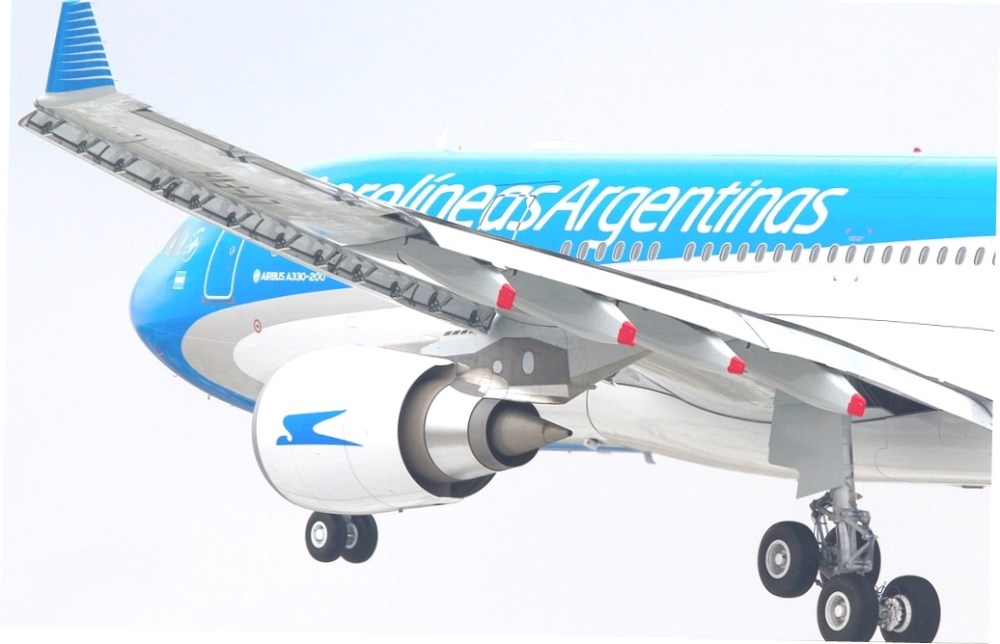
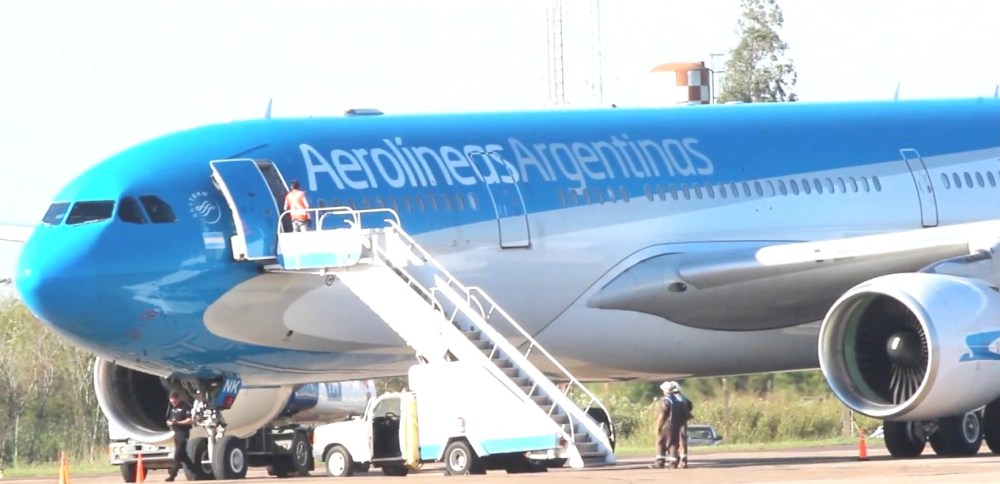
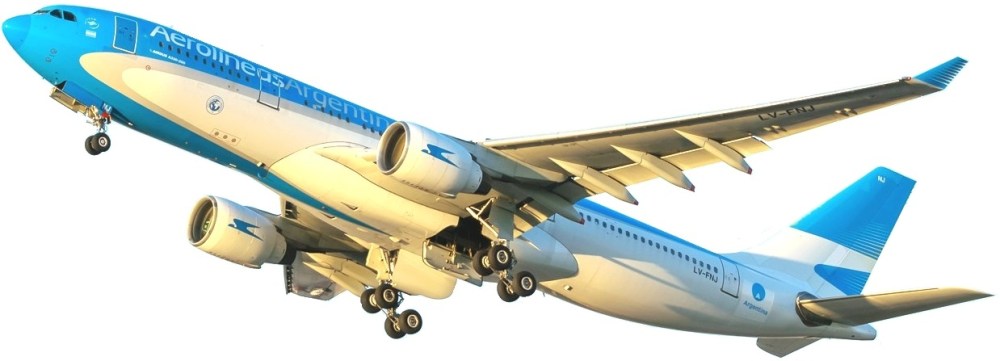
A diferencia de las operaciones regulares a la ciudad de Bogotá que se realizan habitualmente con aviones Boeing 737-800, este vuelo especial se hará con un Airbus A330-200 con capacidad para 270 pasajeros. Los tickets para dicho vuelo se pusieron a la venta hoy Lunes 06/04, mientras tanto, la compañía trabajó junto con Cancillería de Argentina para confirmar a aquellos pasajeros que, de acuerdo con los protocolos sanitarios establecidos, posean prioridad de embarque.

Durante la primera fase de vuelos especiales, que tuvo lugar entre el 18 y el 27 Marzo 2020, se realizaron 44 operaciones especiales que permitieron el regreso al país de más de 14.000 personas. Los destinos operados fueron Río de Janeiro, Florianópolis, San Pablo, Porto Seguro, San Salvador de Bahía, Bogotá, Lima, Miami, Madrid, Cancún​ y Punta Cana.

En línea con el Plan de Reapertura Gradual, Planificada y Segura dispuesto por el Gobierno de Argentina para las fronteras del país, los vuelos se irán planificando de a uno por vez con la finalidad de regular los flujos de ingreso así como también asegurar el cumplimiento de las medidas sanitarias y de aislamiento preventivo. La nueva operación especial de Aerolíneas Argentinas se enmarca en la política de corredores seguros dispuesta por el Poder Ejecutivo, que establece un límite máximo de reingresos por día de 700 personas mediante transporte aéreo. Cabe mencionar que Cancillería seguirá coordinando las prioridades de embarque por edad, cuestiones de salud o razones humanitarias. AW-Icon AW001


AW-Aerolíneas_Clement_AllonsAerolíneas incorporates 3rd exception flight

Aerolíneas Argentinas adds a third exceptional flight

The third flight is scheduled from Aerolíneas Argentinas since the resumption of special operations to repatriate Argentines stranded by the Coronavirus pandemic will be from Bogotá, on Wednesday, April 8, 2020.

Aerolíneas Argentinas announced a new repatriation flight for Argentines, this time from Bogotá, Colombia, for Wednesday 08/04, arriving at Ezeiza International Airport at 9:25 p.m. Argentina time. This is the third exceptional operation carried out by the company, after special flights had been announced from Cancun, for April 6, and from Punta Cana for April 7.

Unlike the regular operations to the city of Bogotá that are usually carried out with Boeing 737-800 aircraft, this special flight will be made with an Airbus A330-200 with capacity for 270 passengers. Tickets for said flight were put on sale today Monday 06/04, meanwhile, the company worked together with the Argentine Ministry of Foreign Affairs to confirm those passengers who, according to established health protocols, have boarding priority.

During the first phase of special flights, which took place between March 18 and 27, 2020, 44 special operations were carried out, allowing more than 14,000 people to return to the country. The destinations operated were Rio de Janeiro, Florianópolis, San Pablo, Porto Seguro, San Salvador de Bahía, Bogotá, Lima, Miami, Madrid, Cancún, and Punta Cana.

In line with the Gradual, Planned and Safe Reopening Plan established by the Government of Argentina for the country’s borders, the flights will be planned one by one in order to regulate income flows as well as ensure compliance with sanitary measures and preventive isolation. The new special operation of Aerolíneas Argentinas is framed in the policy of safe brokers established by the Executive Power, which establishes a maximum limit of re-entry per day of 700 people by air transport. It is worth mentioning that the Foreign Ministry will continue to coordinate boarding priorities by age, health issues, or humanitarian reasons. AW-Icon AW002


Ξ A I R G W A Y S Ξ
SOURCE: Airgways.com
DBk: Aerolíneas.com / Clarin.com / Airgways.com
AW-POST: 202004061511AR

A\W   A I R G W A Y S ®

Southwest reduce operaciones aéreas

AW-Southwest_GettyImagesAW | 2020 04 06 10:44 | AIRLINES

PNGPIX-COM-Southwest-Airlines-Logo-PNG-TransparentSouthwest Airlines continúa cancelando vuelos fantasmas

La industria de la aviación comercial continúa atravesando deficultades a través del mundo, y Estados Unidos no ha sido la excepción. A medida que la pandemia se expande vorazmente en el país las compañías americanas se ven afectadas por la sequía de demanda, encontrándose entre cumplir con las exigencias de una red de servicios básicas por parte del Gobierno y volar aeronaves vacías a cambio de ayudas financieras por medio de la Ley CARES. Si bien el mercado aéreo nacional de Estados Unidos, técnicamente todavía ha podido operar, los viajes no esenciales son mínimos.

Un síntoma de esto atraviesa la aerolínea low cost Southwest Airlines registrando 56 vuelos que despegaron casi vacíos, sin pasajeros, según un memorando interno enviado a los empleados. El Director de Operaciones de la compañía, Mike Van de Ven, expresó: «Esperamos que nuestro vuelo se reduzca aproximadamente un 50 por ciento en los próximos dos meses, y es probable que necesitemos hacer más». Las razones por las que la aerolínea ha viajado con muy pocos pasajeros estriban en que el transporte aéreo se considera una infraestructura crítica para moverse alrededor del personal y la carga clave, la ayuda gubernamental ofrecida a las aerolíneas implica la continuación del servicio, y los desafíos logísticos de reiniciar una aerolínea.

Muchas aerolíneas a través del mundo optan por continuar volando para no perder los slots en los aeropuertos, como se ha ido desarrollando en los meses de Febrero/Marzo 2020 en una red de servicios normales donde las líneas aéreas hacen uso de sus franjas horarias al 80% del cumplimiento. Ahora, muchas aerolíneas se encuentran en la disyuntiva de continuar volando a más pérdidas y sin sentido o arriesgarse a perder los slots ante los operadores competidores. La IATA ha solicitado la suspensión hasta Octubre 2020 de los requisitos de cumplimiento de las franjas horarias.

La Administración Federal de Aviación (FAA) toma nota especial de las asignaciones de franjas horarias en medio de la pandemia en su sitio web: “La FAA renuncia a los requisitos mínimos de uso de tragamonedas para todas las aerolíneas que cancelen vuelos programados en JFK, LGA y DCA como resultado directo del Coronavirus. Estas exenciones son efectivas para cancelaciones de vuelos relacionadas con Coronavirus hasta el 31 de mayo de 2020″.

Si bien existe una exención, parece que solo se aplica a ciertos aeropuertos, es posible que la aerolínea tenga como objetivo retener sus espacios. Sin embargo, como otros operadores también han reducido significativamente sus operaciones, parece poco probable que alguien esté preocupado por los slots en este momento. La razón es porque la demanda de viajes aéreos va disminuyendo en gran medida durante el último mes de Abril 2020. La Administración de Seguridad del Transporte (TSA) ha examinado a 124.021 pasajeros en los puestos de control del aeropuerto el Jueves 02/04, lo que representa una caída del 95% interanual. Las aerolíneas estadounidenses desarrollan factores de carga entre 10-20%, muy poco para mantener los costos de una aerolínea.

El CEO y Presidente de Southwest, Gary Kelly, ha expresado la semana pasada que la aerolínea planea solicitar subvenciones bajo la Ley CARES aprobada por el Gobierno de los Estados Unidos. Los subsidios de US$ 25 mil millones para las líneas aéreas se asignan específicamente para mantener a los empleados en nómina. Una aerolínea que acepte una subvención a través de este programa debe aceptar no suspender o despedir a ningún empleado hasta el 30 Septiembre 2020. AW-Icon AW001

AW-Southwest_70076Southwest reduces air operations

Southwest Airlines continues to cancel phantom flights

AW-Southwest_70056The commercial aviation industry continues to experience deficits throughout the world, and the United States has been no exception. As the pandemic expands voraciously in the country, American companies are affected by the drought in demand, finding themselves between meeting the demands of a basic services network by the Government and flying empty aircraft in exchange for financial aid through the CARES Law. While the United States’ domestic air market has technically still been able to operate, nonessential travel is minimal.

A symptom of this runs through the low-cost airline Southwest Airlines registering 56 flights that took off almost empty, without passengers, according to an internal memo sent to employees. Company Chief Operating Officer Mike Van de Ven said: «We expect our flight to decrease by approximately 50 percent in the next two months, and we will likely need to do more». The reasons the airline has traveled with very few passengers is that air travel is considered critical infrastructure for moving around key personnel and cargo, government aid offered to airlines implies continued service, and challenges logistics of restarting an airline.

Many airlines throughout the world choose to continue flying so as not to lose slots at airports, as it has been developed in the months of February/March 2020 in a normal service network where airlines make use of their 80% time slots of compliance. Now, many airlines find themselves in the dilemma of continuing to fly at more pointless losses or risk losing slots to competing operators. IATA has requested the suspension until October 2020 of the compliance requirements for time slots.

The Federal Aviation Administration (FAA) takes special note of slot allocations in the midst of the pandemic on its website: “The FAA waives the minimum slot usage requirements for all airlines that cancel scheduled flights at JFK, LGA and DCA as a direct result of the Coronavirus. These exemptions are effective for cancellations of Coronavirus-related flights until May 31, 2020″.

While there is an exemption, it appears that it only applies to certain airports, the airline may be aiming to retain its spaces. However, as other operators have also significantly reduced their operations, it seems unlikely that anyone is concerned about slots at this time. The reason is that the demand for air travel decreases greatly during the last month of April 2020. The Transportation Security Administration (TSA) has examined 124,021 passengers at the airport checkpoints on Thursday 02/04, which represents a fall of 95% year-on-year. US airlines develop load factors between 10-20%, very little to maintain the costs of an airline.

Southwest CEO and President Gary Kelly said last week that the airline plans to apply for grants under the CARES Act passed by the United States Government. The US$ 25 billion subsidies for airlines are specifically allocated to keep employees on the payroll. An airline that accepts a grant through this program must agree not to suspend or fire any employee until September 30, 2020. AW-Icon AW002


Ξ A I R G W A Y S Ξ
SOURCE: Airgways.com
DBk: Southwest.com / Airgways.com / Dallasnews.com
AW-POST: 202004061044AR

A\W   A I R G W A Y S ®

RavnAir reduce servicios en Alaska

RavnAir | Regional Alaska AirlineAW | 2020 04 05 09:19 | AIRLINES / AIRLINES MARKET

Aerolíneas ocupan mercado de RavnAir tras interrupción de algunos servicios aéreos

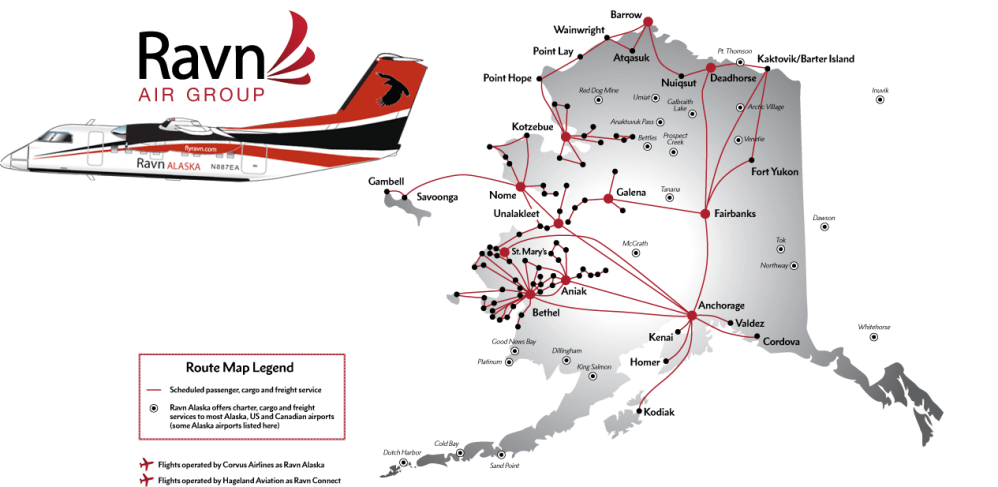
La interrupción repentina de la mayoría de los vuelos de la línea aérea regional RavnAir a las comunidades rurales de todo el Estado de Alaska, dejó a los empleados sin trabajo y a las aldeas sin servicio de pasajeros y correo. Ante la falta de conexión, otras aerolíneas regionales están interviniendo para cerrar las brechas que dejó RavnAir. Tres aerolíneas están expandiendo sus rutas en el Delta Yukon-Kuskokwim, y algunas incluso están contratando personal.

El Gerente General de Grant Aviation, Dan Knesek, dijo que pasó el día del anuncio en conferencias telefónicas consecutivas con el Servicio Postal de los Estados Unidos, la Corporación de Salud Yukon-Kuskokwim y otras compañías aéreas. «Vamos a hacer todo lo que podamos para llenar los vacíos y asegurar que se atiendan las necesidades de emergencia», expresó el Gerente. Eso incluye agregar servicio de pasajeros a las comunidades que quedan sin forma de volar después de que RavnAir la interrumpido sus servicios. Grant Aviation está agregando rutas a St. Mary’s y Mountain Village en la parte baja del Río Yukón.

RavnAir todavía sirve a St. Mary’s de Anchorage, pero Grant ahora conectará St. Mary’s con Bethel. Grant también está reemplazando la ruta hacia la comunidad de Mekoryuk en la Isla Nunivak. El CEO de Grant Aviation dice que la línea aérea absorberá la mayor cantidad posible de carga y envíos de correo de RavnAir, pero su capacidad está limitada por el tamaño de su flota. «Antes teníamos la mitad del correo y la mitad de los pasajeros. Eso cambió a donde ahora tenemos la mayor parte del correo y la mayoría de los pasajeros. Nuestra infraestructura no fue construida para eso». Sin embargo, esa infraestructura se está expandiendo. Dan Knesek dice que está trabajando con la Administración Federal de Aviación (FAA) para aumentar la flota de Grant Aviation. Esa expansión fue planeada para satisfacer la creciente demanda incluso antes de la pandemia de Coronavirus y la partida de RavnAir ha acelerado el proceso. Dan Knesek dice que lleva un mes agregar un Cessna 208 en circunstancias normales, y no tiene idea de cuánto tiempo tomará durante esta pandemia. Con Grant Aviation creciendo, está buscando trabajadores. «Una de mis primeras llamadas el Jueves 2 Abril 2020, el día de la reducción de los servicios de RavnAir fue cuando el gerente de mi estación le dijo que abriera los brazos a los trabajadores de RavnAir que perdieron sus empleos», dijo Dan Knesek.

Grant Aviation necesita rampas para cargar y descargar su aumento sustancial de carga. Grant Aviation es financieramente sólido. No ha hecho ningún despido, y el aumento en las entregas de correo y carga ayudará a disuadir los costos mientras que el número de pasajeros sigue siendo bajo. «El correo no puede cubrir todos los costos operativos, pero ayudará. Definitivamente queremos y necesitamos a los pasajeros de regreso, pero no los queremos ahora hasta que pase el virus», expresa Dan Knesek.

Yute Commuter Service es otra aerolínea regional que presta servicios en el Delta Yukon-Kuskokwim. También está tomando el correo y la carga de RavnAir, y agregando el servicio aéreo de pasajeros a una comunidad que la aerolínea regional ha dejado de operar. El Gerente de la estación, Andrew Flagg, dice que Yute Commuter Service comenzará a servir a Marshall, en el bajo Río Yukón, una vez que se haya firmado toda la documentación requerida.

En la parte superior del Río Kuskokwim, la partida de RavnAir dejó a la comunidad de Stony River sin correo ni envío de carga, pero otro transportista está interviniendo allí. El presidente de Ryan Air, Lee Ryan, dice que su compañía comenzará a prestar servicios el 6 Abril 2020 y entregará tres veces por semana (3Frq/S). Ryan Air está agregando Stony River a su ruta Upper Kuskokwim que sirve a Chuathbaulk, Crooked Creek, Red Devil y Sleetmute los Lunes, Miércoles y Viernes. Ryan Air también está absorbiendo porciones de la carga y el correo de RavnAir en todo el Delta Yukon-Kuskokwim.

Ryan Air también se está expandiendo para ofrecer servicio de pasajeros a las comunidades de North Slope que se quedaron sin un transportista cuando Ravn se retiró. Ryan dice que su compañía tiene vacantes de empleo y le pide a la gente que presente su solicitud en línea. El 23 Marzo 2020, Ryanair otorgó a los trabajadores de primera línea un aumento salarial del 8%. “Creo que otras personas lo considerarían un riesgo de pago. Lo considero, ustedes son geniales, gracias por alimentar el pago de su comunidad”, dijo Ryan.

Grant Aviation y Yute Air, sin embargo, están intensificando para llenar el vacío de muchas comunidades a las que anteriormente servía RavnAir, tomando los contratos por correo del Servicio Postal de los Estados Unidos. La situación está cambiando a medida que las empresas buscan oportunidades, pero luchan con las pequeñas flotas que operan.

Yute Air dijo: “Con todo lo que está sucediendo, queríamos asegurarnos de que supieras que todavía estamos aquí y volando fuerte. Con la salida abrupta de Ravn, intentaremos satisfacer cualquier necesidad que pueda surgir. Hasta que esto termine, Yute está aquí con ustedes”.

Grant Aviation declaró que su compañía hará todo lo posible para asegurarse de que se entregue el correo y se atiendan las necesidades de emergencia.

Ryan Air, que está saltando para llenar el vacío dejado por RavnAir. La compañía agregará Stony River a su ruta de correo y carga Upper Kuskokwim que incluye Chuathbaulk, Crooked Creek, Red Devil y Sleetmute tres veces por semana.

Photo Gallery - RavnAir Alaska®BOMBARDIER DASH 8 DE RAVNAIR OPERANDO EN EL ESTADO DE ALASKA

RavnAir continúa volando

La compañía RavnAir Group ha comunicado que continuará con sus servicios aéreos pero de manera reducida. Actualmente ha suspendido los vuelos a la mayor parte del oeste rural de Alaska esta semana, la compañía dijo que continuará volando a Unalaska, una de sus rutas principales.

La compañía, que finalizó el servicio a la mayoría de las casi 140 comunidades rurales a las que sirve, realizará cuatro vuelos semanales a Unalaska y proporcionará vuelos charter según sea necesario al que es el principal puerto pesquero de los Estados Unidos. La semana pasada, la compañía anunció que finalizaría el servicio a casi todas las comunidades rurales y detendría el 90% de sus vuelos.

Perspectivas

La situación con los transportistas aéreos en las comunidades rurales occidentales es dinámica y ninguno de los tres transportistas que quedan para servir a las pequeñas aldeas tiene la cantidad de aviones necesarios para llenar el vacío. Pero por ahora, muchas comunidades que de repente no tenían carga ni correo tienen una opción emergente, y la reorganización tuvo lugar dentro de las 72 horas de que RavnAir anunciara su decisión de aterrizar su flota por ahora.

Para RavnAir, la pregunta es más difícil ya que han incumplido el contrato con la oficina de correos. Los contratos por correo no se presentan con mucha frecuencia. Esto podría dañar permanentemente la capacidad de RavnAir de recuperarse financieramente en las zonas rurales de Alaska porque el desvío de correo es una fuente importante de ingresos. Pocas compañías aéreas han tenido éxito en Alaska rural sin que sus ingresos se complementen con los contratos por correo, que pueden representar hasta la mitad de sus ingresos. La comunidad de aviación que atiende a comunidades más pequeñas en Alaska es unida y los contratos de desvío de correo son una parte clave de su modelo comercial. AW-Icon AW001

Cyberattack forces airline to cancel flights in AlaskaRavnAir reduces services in Alaska

Airlines occupy RavnAir market after interruption of some air services

The sudden disruption of most RavnAir regional airline flights to rural communities across the State of Alaska left employees out of work and villages without passenger and mail service. In the absence of a connection, other regional airlines are intervening to close the gaps that RavnAir left. Three airlines are expanding their routes in the Delta Yukon-Kuskokwim, and some are even hiring staff.

Grant Aviation General Manager Dan Knesek said he spent the day of the announcement in consecutive conference calls with the United States Postal Service, the Yukon-Kuskokwim Health Corporation and other airlines. «We will do everything we can to fill the gaps and ensure emergency needs are met», said the manager. That includes adding passenger service to communities that are left with no way to fly after RavnAir discontinued their services. Grant Aviation is adding routes to St. Mary’s and Mountain Village in the lower Yukon River.

RavnAir still serves St. Mary’s of Anchorage, but Grant will now connect St. Mary’s with Bethel. Grant is also replacing the route to the Mekoryuk community on Nunivak Island. The Grant Aviation CEO says the airline will absorb as much of RavnAir’s cargo and mail as possible, but its capacity is limited by the size of its fleet. «Before we had half the mail and half the passengers. That changed to where we now have most of the mail and most of the passengers. Our infrastructure was not built for that». However, that infrastructure is expanding. Dan Knesek says he is working with the Federal Aviation Administration (FAA) to increase Grant Aviation’s fleet. That expansion was planned to meet growing demand even before the Coronavirus pandemic, and the departure of RavnAir has accelerated the process. Dan Knesek says it takes a month to add a Cessna 208 under normal circumstances, and he has no idea how long it will take during this pandemic. With Grant Aviation growing, he is looking for workers. «One of my first calls on Thursday, April 2, 2020, the day of the RavnAir service cut, was when my station manager told him to open his arms to RavnAir workers who lost their jobs», said Dan Knesek.

Grant Aviation needs ramps to load and unload its substantial increase in cargo. Grant Aviation is financially sound. It has not made any layoffs, and the increase in mail and freight deliveries will help deter costs while the number of passengers remains low. «The mail may not cover all operating costs, but it will help. We definitely want and need the return passengers, but we don’t want them now until the virus passes», says Dan Knesek.

Jute Commuter Service is another regional airline serving the Delta Yukon-Kuskokwim. It is also taking mail and freight from RavnAir, and adding passenger air service to a community that the regional airline has ceased to operate. Station Manager Andrew Flagg says the Jute Commuter Service will begin serving Marshall, on the lower Yukon River, once all required documentation has been signed.

At the top of the Kuskokwim River, the departure of RavnAir left the Stony River community without mail or cargo shipping, but another carrier is intervening there. Ryan Air President Lee Ryan says his company will begin servicing on April 6, 2020, and will deliver three times a week (3Frq/S). Ryan Air is adding Stony River to its Upper Kuskokwim route that serves Chuathbaulk, Crooked Creek, Red Devil, and Sleetmute on Monday, Wednesday, and Friday. Ryan Air is also absorbing portions of RavnAir’s cargo and mail throughout the Delta Yukon-Kuskokwim.

Ryan Air is also expanding to offer passenger service to North Slope communities that were left without a carrier when Ravn retired. Ryan says his company has job openings and asks people to apply online. On March 23, 2020, Ryanair awarded frontline workers an 8% pay increase. «I think other people would consider it a payment risk. I consider it, you guys are great, thanks for feeding your community payment”, said Ryan.

Grant Aviation and Yute Air, however, are stepping up to fill the void in many communities previously served by RavnAir, taking contracts by mail from the United States Postal Service. The situation is changing as companies search for opportunities, but struggle with the small fleets that operate.

Jute Air said: “With everything that is happening, we wanted to make sure you knew that we are still here and flying strong. With Ravn’s abrupt departure, we will try to satisfy any need that may arise. Until this is over, Jute is here with you».

Grant Aviation stated that its company will do everything possible to ensure that mail is delivered and emergency needs are met.

Ryan Air, who is jumping to fill the void left by RavnAir. The company will add Stony River to its Upper Kuskokwim mail and cargo route that includes Chuathbaulk, Crooked Creek, Red Devil, and Sleetmute three times a week.
Ravn_route_map

RavnAir continues to fly

The RavnAir Group company has announced that it will continue with its air services but in a reduced way. With flights to most of rural western Alaska suspended this week, the company said it will continue to fly to Unalaska, one of its main routes.

The company, which has terminated service to most of the nearly 140 rural communities it serves, will make four weekly flights to Unalaska and provide charter flights as needed to what is the largest fishing port in the United States. Last week, the company announced that it would end service to almost all rural communities and stop 90% of its flights.

Perspective

The situation with air carriers in western rural communities is dynamic, and none of the three remaining carriers to serve small villages have the number of planes needed to fill the gap. But for now, many communities that suddenly had no cargo or mail have a pop-up option, and the reorganization took place within 72 hours of RavnAir announcing its decision to land its fleet for now.

For RavnAir, the question is more difficult since they have breached the contract with the post office. Contracts by mail are not presented very often. This could permanently damage RavnAir’s ability to recover financially in rural Alaska because mail diversion is a major source of revenue. Few airlines have been successful in rural Alaska without their earnings being supplemented by mail order contracts, which can represent up to half of their earnings. The aviation community serving smaller communities in Alaska is united and mail diversion contracts are a key part of its business model. AW-Icon AW002


Ξ A I R G W A Y S Ξ
SOURCE: Airgways.com
DBk: Flyravn.com / Airgways.com / Alaskapublic.org / Nypost.com / Alaska.org
AW-POST: 202004050919AR

A\W   A I R G W A Y S ®
Aerolíneas busca fortalecimiento

AW-7001334AW | 2020 04 04 23:36 | AIRLINES

Aerolíneas Argentinas-Austral-IsologottypeAerolíneas Argentinas busca salir fortalecida por la pandemia

La industria aérea, el turismo son sectores de la economía global más golpeados por la actual pandemia del Coronavirus, donde las compañías aéreas esperan recibir ayudas de los estados para continuar volando y desarrollando servicios esenciales para sus países. Actualmente, el CEO de Aerolíneas Argentinas, Pablo Ceriani se ha dirigido en una carta a los trabajadores de las compañías para expresar un cambio drástico, pero logrando que la aerolínea sobreviva. A pesar del momento crítico para el sector aerocomercial a nivel global, Pablo Ceriani señaló que es optimista y que incluso cree que la aérea de bandera local puede salir fortalecida de esta situación.

5788567El CEO Pablo Ceriani ha expresado una descripción de la realidad del momento que atraviesa la industria y la aerolínea, pero es optimista: “Ante todo quiero agradecerles nuevamente el gran trabajo realizado durante las últimas semanas, en la que logramos traer de regreso a sus hogares a más de 14.000 argentinos y argentinas. Una operación sin precedentes que marcará un hito en los 70 años de la historia de nuestra compañía”. Luego detalla brevemente la situación sobreendeudada que ha recibido la empresa en la anterior gestión. Pero luego, da atención a la situación de la aerolínea y el mercado aerocomercial que, según sus palabras, enfrenta en estos momentos la mayor crisis de su historia con una paralización de operaciones que no tiene antecedentes. “Nos encontramos prácticamente con la totalidad de nuestra flota en tierra, más allá de alguna operación especial que podamos realizar. Tenemos que dar los mejor de nosotros y planear una recuperación para la cual es importante que podamos liberarnos de preconceptos y de usos y costumbres anclados en escenarios que ya no existen”.
El funcionario detalla que los ingresos de la aérea en este momento de crisis por el Coronavirus son iguales a cero y que las previsiones de déficit operativo se han visto fuertemente incrementadas, “déficit que es muy difícil de administrar para un Estado Nacional que tiene que atender urgencias sociales dramáticas”, expresó, pero ha dado énfasis a que todo el equipo tiene que dar lo mejor de nosotros y planear una recuperación para liberarnos de preconceptos y de usos y costumbres anclados en escenarios que ya no existen. “La gran crisis que estamos viviendo va a significar muy probablemente la concentración del sector en menos compañías pero más fuertes, más competitivas. En ese contexto es en el que vamos a tener que desenvolvernos en el futuro. Si no nos adaptamos a esa nueva realidad no vamos a poder construir una compañía sólida y eficaz que puede cumplir con las necesidades por la cuales fue creada y que son el motivo de nuestra existencia. El desafío no es menos y la responsabilidad es muy grande».

IATA

La Asociación Internacional de Transporte Aéreo (IATA) pidió a los gobiernos apoyo a las aerolíneas para que éstas puedan sobrevivir porque representan servicios vitales en el momento en que se inicie la recuperación, luego de la superación de la pandemia de coronavirus. Según el comunicado de una de las asociaciones que nuclean a compañías aéreas, la IATA, la pandemia ha arrojado pérdidas al sector por valores de US$ 252.000 millones de ingresos proyectados para este año 2020. “Nuestra industria nunca sufrió una crisis tan profunda”, dijo Alexandre de Juniac Director General de IATA. AW-Icon AW001

AW-Hernán Van NordenAerolíneas seeks to strengthen

Aerolíneas Argentinas_Isologotype_ SkyteamAerolíneas Argentinas seeks to exit strengthened by the pandemic
The airline industry and tourism are sectors of the global economy that have been hit hardest by the current Coronavirus pandemic, where airlines expect to receive aid from states to continue flying and develop essential services for their countries. Currently, the CEO of Aerolíneas Argentinas, Pablo Ceriani has addressed in a letter to the workers of the companies to express a drastic change but making the airline survive. Despite the critical moment for the global aviation sector, Pablo Ceriani indicated that he is optimistic and that he even believes that the local flag carrier can emerge stronger from this situation.

CEO Pablo Ceriani has expressed description of the reality of the moment that the industry and the airline are going through, but he is optimistic: “First of all, I want to thank you again for the great work done during the last weeks, in which we managed to bring you back to your homes to more than 14,000 Argentines. An unprecedented operation that will mark a milestone in the 70 years of our company’s history”, He then briefly details the overindebted situation that the company has received in the previous administration. But then, he gives attention to the situation of the airline and the aviation market, which, in his words, is currently facing the greatest crisis in its history with a stoppage of operations that has no history. “We find practically the entirety of our fleet on land, beyond any special operation that we can carry out. We have to give the best of ourselves and plan a recovery for which it is important that we can free ourselves from preconceptions and from uses and customs anchored in scenarios that no longer exist”.

AW-Flickr-78888

The official details that the airline’s income at this time of crisis due to the Coronavirus is equal to zero and that the operating deficit forecasts have been strongly increased, “a deficit that is very difficult to manage for a National State that has to attend Dramatic social emergencies”, he said, but he has emphasized that the entire team has to give their best and plan a recovery to free ourselves from preconceptions and from uses and customs anchored in scenarios that no longer exist. “The great crisis we are experiencing is going to very likely mean the concentration of the sector in fewer companies but stronger, more competitive. It is in this context that we are going to have to deal with in the future. If we do not adapt to this new reality, we will not be able to build a solid and effective company that can meet the needs for which it was created and which are the reason for our existence. The challenge is no less and the responsibility is great».

IATA

The International Air Transport Association (IATA) asked governments to support airlines so that they can survive because they represent vital services at the time the recovery begins, after overcoming the coronavirus pandemic. According to a statement from one of the associations that bring together airlines such as the IATA, the pandemic has resulted in losses to the sector of US$ 252,000 million in projected income for this year 2020. “Our Industry has never suffered such a deep crisis”, said Alexandre de Juniac, Director General of IATA. AW-Icon AW002


Ξ A I R G W A Y S Ξ
SOURCE: Airgways.com
DBk: Aerolineas.com / Airgways.com / Hernán Van Norden / Flickr.com
AW-POST: 202004042336AR

A\W   A I R G W A Y S ®

Reunión ANAC Argentina con aerolíneas

AW-Wk_Administración_Nacional_de_Aviación_CivilAW | 2020 04 04 01:04 | AVIATION ORGANISMS / AIRLINES

AW-ANAC_Argentina_IsologotypeLa ANAC Argentina convocará a las aerolíneas para analizar las consecuencias de la crisis del Coronavirus en la industria aérea
El organismo fiscalizador de aviación en Argentina, Administración Nacional de Aviación Civil (ANAC) se reunirá con las líneas aéreas para analizar los efectos de la pandemia del Coronavirus en el país.

La ANAC convocará a las aerolíneas y otros integrantes de la industria aeronáutica para analizar las consecuencias de la crisis del coronavirus en ese sector de la economía. La titular de la ANAC, Paola Tamburelli, el denominado Grupo de Trabajo de Evaluación de Consecuencias Económicas del COVID-19 en el Transporte Aéreo (GECOVID) apuntará a morigerar el “impacto negativo en la aviación a nivel mundial y más aún en el transporte aéreo” que tendrá la pandemia. La formación del grupo se dio luego de que la Asociación del Transporte Aéreo Internacional (IATA) señalara “en un informe de fecha 17 de marzo de 2020 que la pandemia COVID-19 ha generado graves consecuencias en la industria aeronáutica, reduciéndose prácticamente a cero el balance de liquidez de las principales líneas aéreas y proyectándose pérdidas para dicho sector a nivel mundial que se estiman, sólo para el año 2020, en US$ 122.000.000.000.000 (120 billones)”. Ante esa alarmante cifra, el GECOVID buscará atenuar los efectos económicos de dicha pandemia en el sector aeronáutico de la mano de la participación de los distintos sectores involucrados en el marco del transporte aéreo.

Además de la ANAC, al GECOVID serán invitados el Ministerio de Transporte, el Ministerio de Turismo y Deportes, el Organismo Regulador del Sistema Nacional de Aeropuertos (ORSNA), Aerolíneas Argentinas, la Empresa Argentina de Navegación Aérea Sociedad del Estado (EANA), la Cámara de Compañías Aéreas en Argentina (JURCA), la Asociación Argentina de Agentes de Carga Internacional (AAACI), la Cámara Argentina de Prestadores de Servicios Internacionales (CAPSIA), la Asociación del Transporte Aéreo Internacional (IATA) y los proveedores de servicios aeroportuarios. En un principio, el grupo de trabajo “funcionará de manera no presencial, debiendo las autoridades, instituciones y empresas participantes informar un correo electrónico al que se cursarán las vías de contacto y de trabajo a distancia que se utilizarán para viabilizar una labor eficiente”.

La comisión de trabajo se constituirá «a los efectos de relevar las secuelas de la crisis en el sector aeronáutico y consensuar las propuestas que se estimen pertinentes para mitigar dichas consecuencias, evaluar y determinar el alcance del impacto de la crisis de la pandemia, analizar el rol de la aviación civil en la recuperación económica y social frente a la crisis y consensuar las propuestas que ayuden a mitigar las secuelas adversas de la crisis en el sector”, informó la ANAC.

En tanto, se informó que la ANAC podrá cursar “invitaciones a otras autoridades, instituciones y/o empresas” para formar parte del grupo de trabajo. Por último, el organismo que controla la aviación civil estableció que el GECOVID “no suple las competencias y obligaciones atinentes a cada una de las partes involucradas, quienes mantendrán su individualidad y autonomía así como las responsabilidades consiguientes”.  AW-Icon AW001

AW-77004-ClarinANAC Argentina meeting with airlines

ANAC Argentina will convene airlines to analyze the consequences of the Coronavirus crisis in the airline industry

The Argentine aviation regulatory agency, the National Civil Aviation Administration (ANAC) will meet with airlines to analyze the effects of the Coronavirus pandemic in the country.

ANAC will convene airlines and other members of the aviation industry to analyze the consequences of the coronavirus crisis in that sector of the economy. The head of ANAC, Paola Tamburelli, the so-called Working Group for the Evaluation of Economic Consequences of COVID-19 in Air Transport (GECOVID) will aim to mitigate the «negative impact on aviation worldwide and even more so on air transport”. That the pandemic will have. The formation of the group came after the International Air Transport Association (IATA) noted «in a report dated March 17, 2020, that the COVID-19 pandemic has had serious consequences in the aviation industry, reducing the liquidity balance of the main airlines practically to zero and projecting losses for the said sector worldwide that are estimated, only for the year 2020, at US$ 122,000,000,000,000 (120 trillion)”. Given this alarming figure, GECOVID will seek to mitigate the economic effects of this pandemic in the aeronautical sector, hand in hand with the participation of the different sectors involved in the framework of air transport.

In addition to ANAC, the Ministry of Transport, the Ministry of Tourism and Sports, the Regulatory Body of the National Airport System (ORSNA), Argentine Airlines, the Argentine Company of Air Navigation, Sociedad del Estado (EANA), the Chamber of Air Companies in Argentina (JURCA), the Argentine Association of International Cargo Agents (AAACI), the Argentine Chamber of International Service Providers (CAPSIA), the Association of International Air Transport (IATA) and airport service providers. Initially, the working group «will operate in a non-face-to-face manner, and the participating authorities, institutions, and companies must report an e-mail to which the contact and remote work routes that will be used to make efficient work possible».

The working committee will be constituted «for the purpose of surveying the aftermath of the crisis in the aeronautical sector and agreeing on the proposals deemed pertinent to mitigate these consequences, evaluating and determining the scope of the impact of the pandemic crisis, analyzing the role of civil aviation in the economic and social recovery from the crisis and agree on proposals that help mitigate the adverse consequences of the crisis in the sector», ANAC reported.

Meanwhile, it was reported that ANAC may issue «invitations to other authorities, institutions and/or companies» to join the working group. Finally, the body that controls civil aviation established that GECOVID «does not replace the competences and obligations pertaining to each of the parties involved, who will maintain their individuality and autonomy as well as the consequent responsibilities». AW-Icon AW002


Ξ A I R G W A Y S Ξ
SOURCE: Airgways.com
DBk: Anac.gov.ar / Airgways.com / Wikipedia.org
AW-POST: 202004040104AR

A\W   A I R G W A Y S ®

Embargan 27 aviones a Interjet

Interjet afronta dificultades financieras |AW | 2020 04 04 00:35 | AIRLINES

Logo Interjet Transparent Vector Logo - Download Free SVG Icon ...Las aerolíneas mexicanas corren riesgos a medida que la crisis se profundiza

Como parte de la pandemia mundial del Coronavirus, los efectos en cada sectores desarrollan diferentes protagonismos. El caso de la aerolínea low cost Interjet de México estaría por perder 27 aviones en su flota a raíz de dificultades económicas. La aerolínea es una de las primeras en perder gran parte de su flota, a medida que la pandemia de coronavirus arrasa con la demanda de viajes.

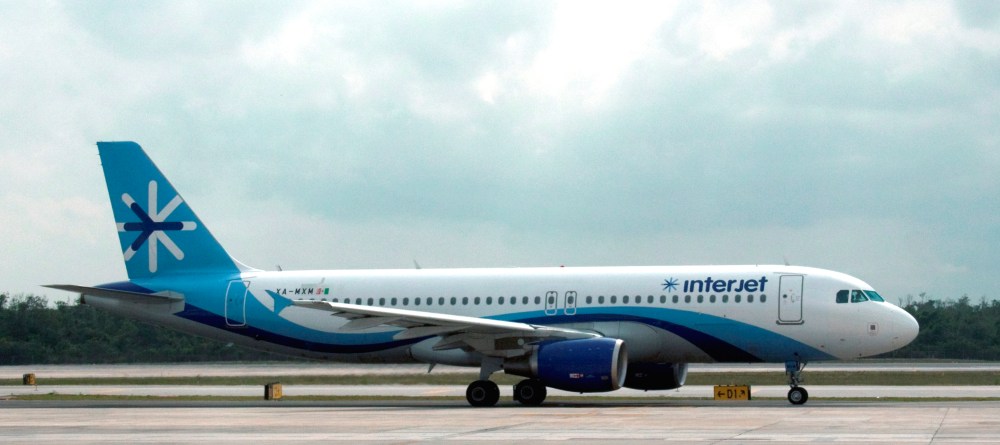
Arrendadores de aeronaves han embargado al menos 27 aviones de la aerolínea mexicana Interjet, según una compañía que hace seguimiento a aeronaves alquiladas. Parte de la flota son aeronaves Airbus A320CEO. Las aeronaves de origen europeo embargadas han volado principalmente a Arizona y California, dijo la consultora de aviación IBA Group Ltd., con sede en el Reino Unido. Interjet, que dejó de hacer vuelos internacionales la semana pasada. El golpe a la flota de Interjet apunta hacia la siguiente etapa de la crisis del virus, a medida que los transportistas financieramente más débiles luchan por mantenerse a flote mientras los clientes dejan de viajar.

El transportista atravesaba anteriormente a la pandemia con desafíos financieros. Dado que no se divisa ningún rescate del Gobierno en el horizonte, el futuro de Interjet se vuelve cada vez más sombrío, dijo George Ferguson, analista de Bloomberg Intelligence. “Parece que los arrendadores quieren sacar sus aviones antes de que entren en incumplimiento. Interjet probablemente no sea un sobreviviente a largo plazo”, dijo Ferguson.

La compañía no respondió a una solicitud de comentarios. Interjet es propiedad de la familia Alemán. La aerolínea ha tenido problemas de logística con la flota de aeronaves de origen ruso Sukhoi SSJ-100 que le ha traído muchos dolores de cabeza; ahora se suma la falta de credibilidad para continuar prestando servicio ante la falta de aeronaves por el embargo de las empresas arrendadoras de aviación.

Antes de la crisis, la flota de A320CEO de Interjet estaba compuesta por 66 aviones de cuerpo estrecho, de los cuales solo 19 volaban actualmente. El resto, junto con 22 aviones Sukhoi Superjet 100 que Interjet inmovilizó el año pasado, estaban estacionados en los aeropuertos de México, Estados Unidos y Costa Rica, según rastreadores de vuelos. Los primeros contratos de arrendamiento de las aerolíneas generalmente son por 12 años, y 20 de los aviones embargados tenían arrendamientos por menos de 11 años y medio, lo que indica que el vencimiento aún no ese había cumplido, comentó Ferguson.

La compañía dejó de presentar informes financieros el año pasado, diciendo que había pagado un préstamo que requería la divulgación pública. En aquel entonces, la deuda neta de Interjet era de aproximadamente 11.5 veces las ganancias.

El Grupo Aeroméxico fue rebajado a niveles muy bajos por la calificadora Moody’s Investors Service, mientras que las acciones de la aerolínea se han reducido a la mitad este año hasta el Jueves 03/04. Aeroméxico ha puesto en tierra 40 aeronaves y estableció un programa de licencia voluntaria y no remunerada para su fuerza laboral.

Volaris Airlines recortó su capacidad en 80% ante su compromiso por reducir costos y mantener la liquidez. Sus acciones han caído cerca de 60% este año.

A nivel global, las aerolíneas podrían perder más de 250,000 millones de dólares en ingresos este año, según la Asociación de Transporte Aéreo Internacional, y se pronostica que la muchos de los transportistas podrían llegar a la quiebra para fines de Mayo 2020 si no reciben ayudas financieras. AW-Icon AW001

A I R G W A Y S ® | | Página 4927 planes seized from Interjet

Mexican airlines take risks as the crisis deepens

As part of the world coronavirus pandemic, the effects in each sector develop different protagonists. The case of the low cost airline Interjet de México is about to lose 27 planes in its fleet due to economic difficulties. The airline is one of the first to lose much of its fleet, as the coronavirus pandemic sweeps demand for travel.

Aircraft lessors have seized at least 27 planes from the Mexican airline Interjet, according to a company that tracks leased aircraft. Part of the fleet are Airbus A320CEO aircraft. The embargoed European-origin aircraft have flown mainly to Arizona and California, said UK-based aviation consultancy IBA Group Ltd. Interjet, which stopped making international flights last week. The blow to Interjet’s fleet points to the next stage of the virus crisis, as financially weaker carriers struggle to stay afloat while customers stop traveling.

The carrier was previously going through the pandemic with financial challenges. With no government bailout on the horizon, Interjet’s future is growing bleaker, said George Ferguson, an analyst at Bloomberg Intelligence. «It seems that lessors want to get their planes out before they default. Interjet is probably not a long-term survivor», said Ferguson.

The company did not respond to a request for comment. Interjet is owned by the German family. The airline has had logistical problems with the fleet of Russian-origin aircraft Sukhoi SSJ-100 that has brought it many headaches; now the lack of credibility is added to continue providing service due to the lack of aircraft due to the embargo of the aviation leasing companies.

Before the crisis, Interjet’s A320CEO fleet consisted of 66 narrow-body aircraft, of which only 19 are currently flying. The rest, along with 22 Sukhoi Superjet 100 planes that Interjet pinned last year, were stationed at airports in Mexico, the United States, and Costa Rica, according to flight trackers. The airlines’ first leases are generally for 12 years, and 20 of the seized planes had leased for less than 11 and a half years, indicating that the maturity had not yet expired, Ferguson said.

The company stopped filing financial reports last year, saying it had repaid a loan that required public disclosure. Back then, Interjet’s net debt was approximately 11.5 times earnings.

Grupo Aeroméxico was downgraded to very low levels by the rating agency Moody’s Investors Service, while the airline’s shares have been halved this year until Thursday 03/04. Aeroméxico has grounded 40 aircraft and established a voluntary and unpaid leave program for its workforce.

Volaris Airlines cut its capacity by 80% due to its commitment to reduce costs and maintain liquidity. Its shares have fallen by about 60% this year.

Globally, airlines could lose more than US$ 250 billion in revenue this year, according to the International Air Transport Association, and it is forecast that many of the carriers could go bankrupt by the end of May 2020 if they do not receive aid. financial. AW-Icon AW002


Ξ A I R G W A Y S Ξ
SOURCE: Airgways.com
DBk: Interjet.com / Airgways.com
AW-POST: 202004040035AR

A\W   A I R G W A Y S ®

Aerolíneas EEUU obligadas reembolso

American Removes Dedicated First Class Check-In Area at JFK ...AW | 2020 04 03 17:10 | AIRLINES / GOVERNMENT

5JrvMSb4Las aerolíneas estadounidenses están obligadas a reembolsar a los pasajeros por vuelos cancelados
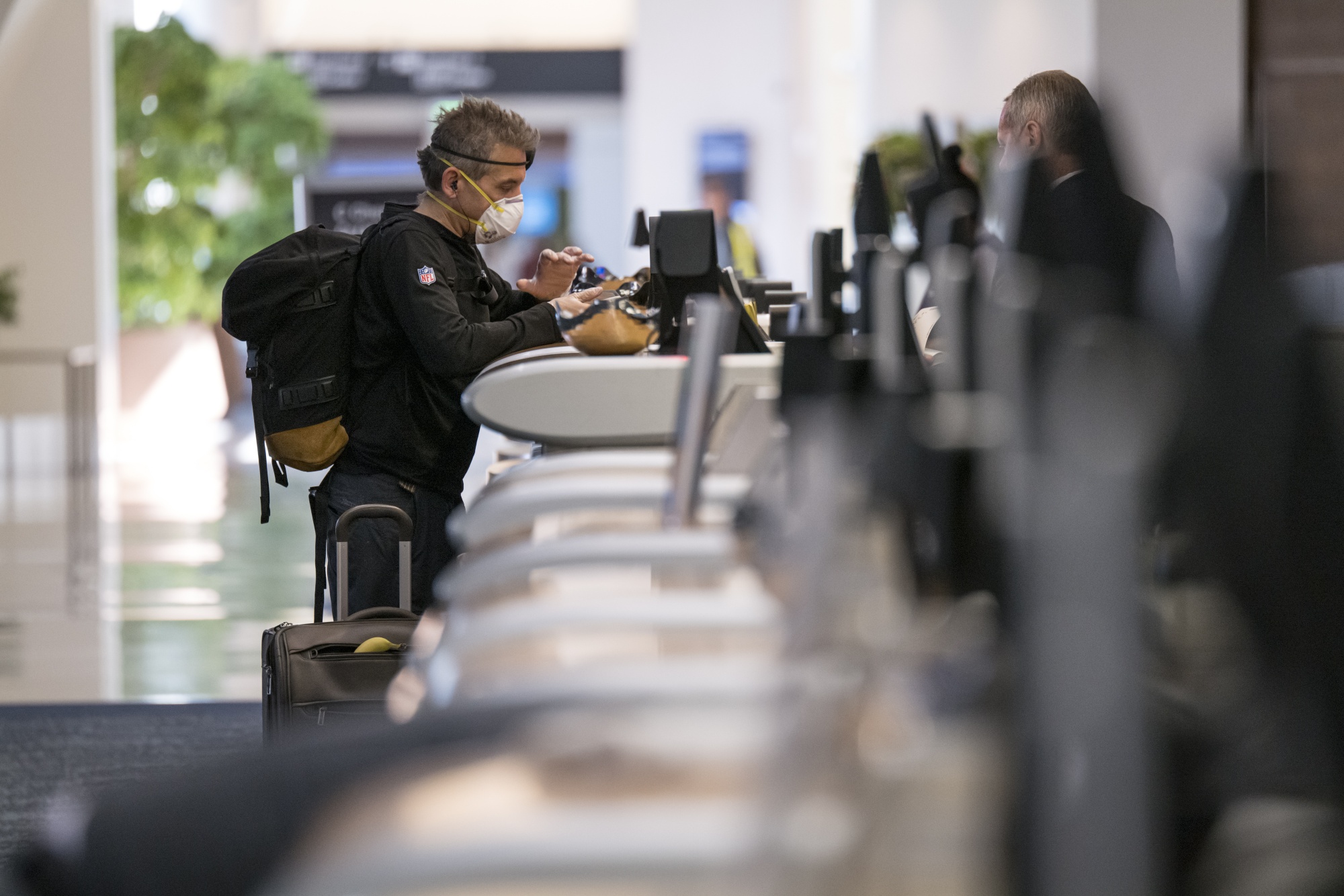
El Departamento de Transporte de Estados Unidos (DOT) ha emitido un documento obligando a las aerolíneas que prestan servicios en los Estados Unidos el Viernes 3 Abril 2020, recordándoles que deben proporcionar reembolsos en efectivo a los viajeros cuyos vuelos sean cancelados por la aerolínea. En su «Aviso de Cumplimiento», el DOT dijo que «los transportistas tienen una obligación de larga data de proporcionar un reembolso rápido a un pasajero con un boleto cuando el transportista cancela el vuelo del pasajero o realiza un cambio significativo en el horario de vuelo y el pasajero elige no aceptar la alternativa ofrecido por el transportista».

En un aviso de cumplimiento publicado el Viernes 3 Abril 2020, el Departamento de Transporte (DOT) de los Estados Unidos ha dejado poco margen de maniobra para las aerolíneas estadounidenses con problemas. «Los pasajeros deben ser reembolsados ​​de inmediato cuando sus vuelos programados se cancelen o se retrasen significativamente», escribió Blane Workie, el Asesor General adjunto del Departamento para el cumplimiento y procedimientos de la aviación.

El DOT está dejando en claro que incluso las circunstancias extraordinarias creadas por la pandemia no son excusa para que las aerolíneas ignoren la ley y que hacerlo no haya pasado desapercibido.

Proceso cancelaciones

En general, cuando se cancela un vuelo, las aerolíneas tienen dos opciones: deben reembolsar al pasajero en su totalidad u ofrecer una ruta alternativa. Si la alternativa propuesta no es satisfactoria para el cliente, tiene derecho a un reembolso completo. Este sigue siendo el caso, incluso si la cancelación se debe a factores muy fuera del control de la aerolínea, señaló Blane Workie, incluso debido a restricciones gubernamentales, después del Huracán Katrina y los ataques del 11 Septiembre 2001 (11-S), y en desastres naturales declarados presidencialmente: «Aunque La emergencia de salud pública de COVID-19 ha tenido un impacto sin precedentes en los viajes aéreos, la obligación de las aerolíneas de reembolsar a los pasajeros por vuelos cancelados o significativamente retrasados ​​no ha cambiado”.

Oficina Control Aviación

Las aerolíneas esperan compensar a los clientes en vuelos cancelados con vales, millas aéreas u otras formas de crédito, el aviso probablemente será un duro golpe. Aún así, los transportistas tienen algo de tiempo para reunirse con la Oficina de Control de Aviación donde se ha expedido que no procesaría a los transportistas de inmediato, les dio la oportunidad de ajustar sus políticas y hacerles saber a los clientes que podrían recibir un reembolso en efectivo en lugar de cualquier forma de crédito. Las aerolíneas también deben comunicarse con los pasajeros que ya han recibido cupones para vuelos cancelados o con demoras significativas y, en su lugar, informarles que tienen la opción de un reembolso. El aviso puede ser una respuesta a las líneas aéreas que instituyen políticas que impiden que los pasajeros afectados obtengan su reembolso de manera inmediata.

El organismo DOT dijo en un comunicado: «La obligación de las aerolíneas de proporcionar reembolsos, incluido el precio del boleto y cualquier tarifa opcional cobrada por los servicios que un pasajero no puede usar, no cesa cuando las interrupciones del vuelo están fuera del control del transportista».

La Oficina de Control de Aviación ha expresado: «La Oficina de Control de Aviación supervisará las políticas y prácticas de reembolso de las aerolíneas y tomará medidas de cumplimiento según sea necesario».

JetBlue Airways recientemente introdujo una política temporal vigente hasta el 15 Abril 2020 que establecía que los pasajeros solo calificarían para un reembolso si su vuelo fuera cambiaron en más de un día; de lo contrario, recibirían un crédito de viaje con una fecha de vencimiento de 18 meses.

United Airlines anunció una serie de cambios en la política de cancelación que van desde ofrecer reembolsos caso por caso, hasta solo permitir reembolsos con cambios de horario de seis horas o más. La acción más reciente de la compañía ofrece a los clientes un crédito de vuelo válido por un año. Solo al final del período de 12 meses se reembolsará el crédito a la tarjeta original.

Con respecto a las políticas de vuelos internacionales hacia Estados Unidos, por ejemplo el grupo Air France-KLM había comunicado que el alto grado de incertidumbre que rodea al transporte aéreo y la gran cantidad de solicitudes de reembolso, no emitirán reembolsos por vuelos cancelados durante el Coronavirus. Es probable que los operadores internacionales ahora tengan que replantear esa política, al menos en sus servicios hacia y desde los Estados Unidos, siguiendo las nuevas instrucciones del Departamento de Transporte de Estados Unidos. AW-Icon AW001

Airlines Must Pay Refunds for Flights Canceled by Coronavirus ...US airlines required refund

US airlines are required to reimburse passengers for canceled flights

descargaThe United States Department of Transportation (DOT) has issued a document obliging airlines serving the United States on Friday, April 3, 2020, reminding them to provide cash refunds to travelers whose flights are canceled by the airline. In its «Notice of Compliance,» DOT said, «Carriers have a long-standing obligation to provide a prompt refund to a passenger with a ticket when the carrier cancels the passenger’s flight or makes a significant change in flight schedule. and the passenger chooses not to accept the alternative offered by the carrier».
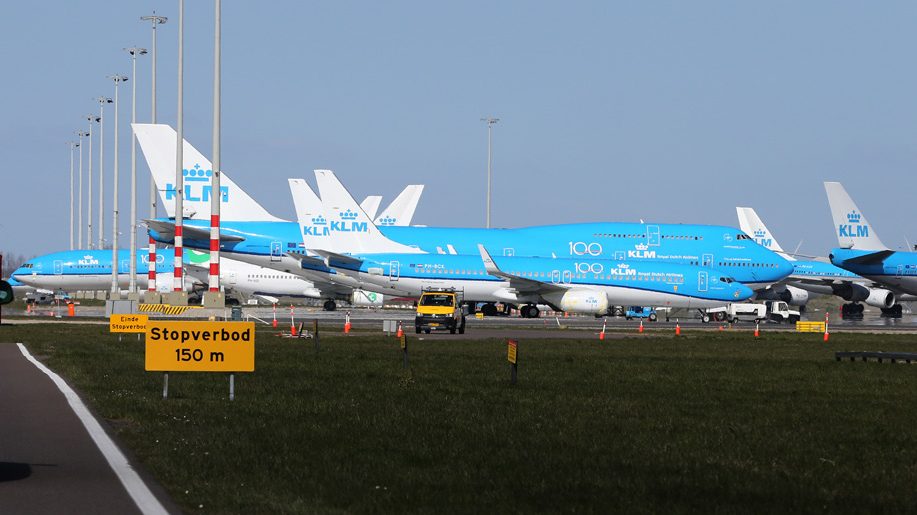
In a compliance notice released Friday, April 3, 2020, the U.S. Department of Transportation (DOT) has left little room for maneuver for troubled U.S. airlines. «Passengers must be reimbursed immediately when their scheduled flights are canceled or significantly delayed», wrote Blane Workie, the department’s deputy general counsel for aviation compliance and procedures.

DOT is making clear that even the extraordinary circumstances created by the pandemic are no excuse for airlines to ignore the law and that doing so has not gone unnoticed.

Cancellation process

In general, when a flight is canceled, airlines have two options: they must either reimburse the passenger in full or offer an alternative route. If the proposed alternative is not satisfactory to the customer, he is entitled to a full refund. This remains the case, even if the cancellation is due to factors far beyond the airline’s control, Blane Workie noted, including due to government restrictions after Hurricane Katrina and the attacks of September 11, 2001 (9/11), and in presidentially declared natural disasters: «Although the COVID-19 public health emergency has had an unprecedented impact on air travel, the obligation of airlines to reimburse passengers for canceled or significantly delayed flights has not changed».

Changes airlines have made in response to the coronavirus pandemic ...Aviation Control Office

As airlines hope to compensate customers on canceled flights with vouchers, airline miles, or other forms of credit, the notice will likely be a blow. Still, carriers have some time to meet with the Office of Aviation Control where it has been issued that it would not process carriers immediately, it gave them an opportunity to adjust their policies and let customers know that they might receive a refund. in cash instead of any form of credit. Airlines should also contact passengers who have already received coupons for flights canceled or with significant delays, and instead inform them that they have the option of a refund. The notice may be a response to airlines that institute policies that prevent affected passengers from getting their refund immediately.

The DOT agency said in a statement: «The airlines’ obligation to provide refunds, including the price of the ticket and any optional fees charged for services that a passenger cannot use, does not cease when flight interruptions are beyond the control of the carrier».

The Office of Aviation Control has stated: «The Office of Aviation Control will monitor airline reimbursement policies and practices and take compliance measures as necessary».

JetBlue Airways recently introduced a temporary policy in effect until April 15, 2020, that stated that passengers would only qualify for a refund if their flight was changed in more than one day; otherwise, they would receive a travel credit with an expiration date of 18 months.

United Airlines announced a series of cancellation policy changes ranging from offering case-by-case refunds, to only allowing refunds with schedule changes of six hours or more. The company’s latest action offers customers a flight credit valid for one year. Only at the end of the 12 month period will the credit to the original card be refunded.

With regard to international flight policies to the United States, for example, the Air France-KLM group had communicated that the high degree of uncertainty surrounding air transport and a large number of refund requests will not issue refunds for flights canceled during the Coronavirus. International operators are now likely to have to rethink that policy, at least in their services to and from the United States, following new instructions from the United States Department of Transportation. AW-Icon AW002


Ξ A I R G W A Y S Ξ
SOURCE: Airgways.com
DBk: Transportation.gov / Doi.gov/aviation / Airgways.com / Bloomberg.com / Businessinsider.com / Pinterest.com
AW-POST: 202004031710AR

A\W   A I R G W A Y S ®

KLM estaciona en Amsterdam/Schiphol

Avión KLM estacionado en Amsterdam Schiphol (crédito: Paul Ridderhof)AW | 2020 04 03 15:47 | AIRLINES

438px-KLM_logo.svgLa flota de KLM duerme en Amsterdam/Schiphol
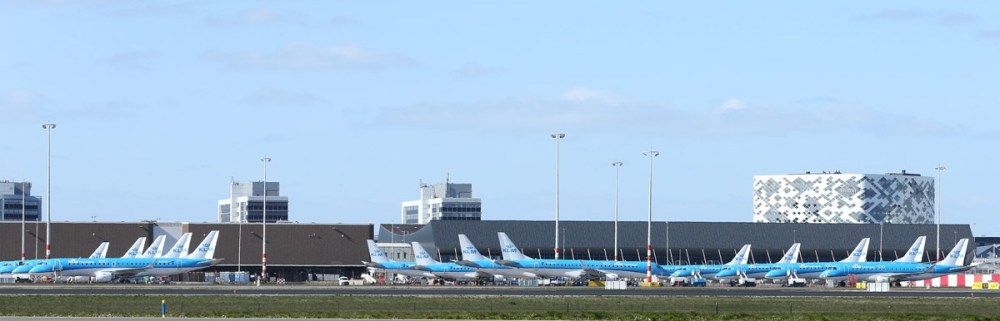
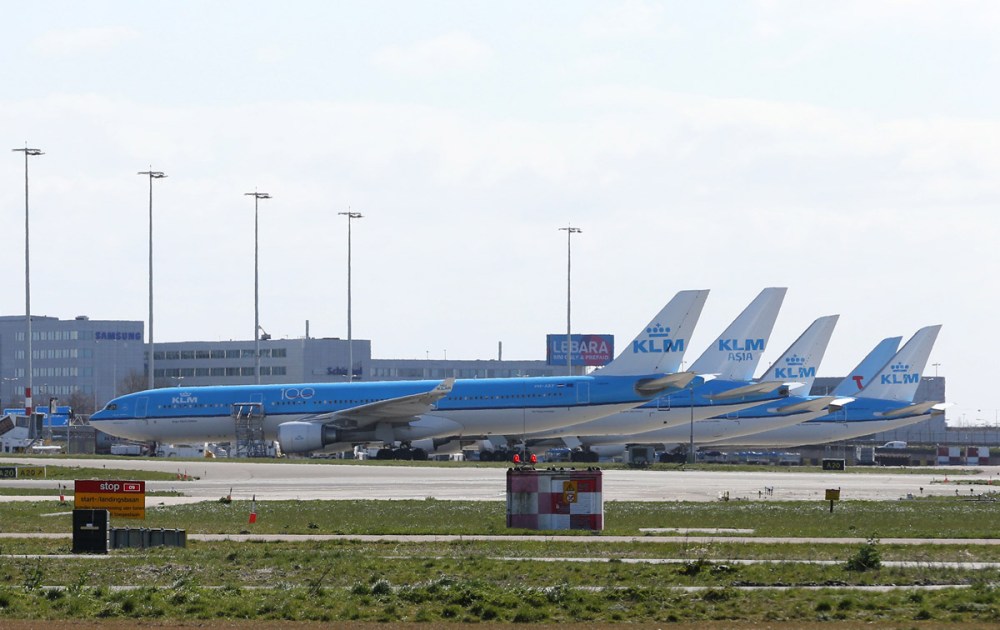
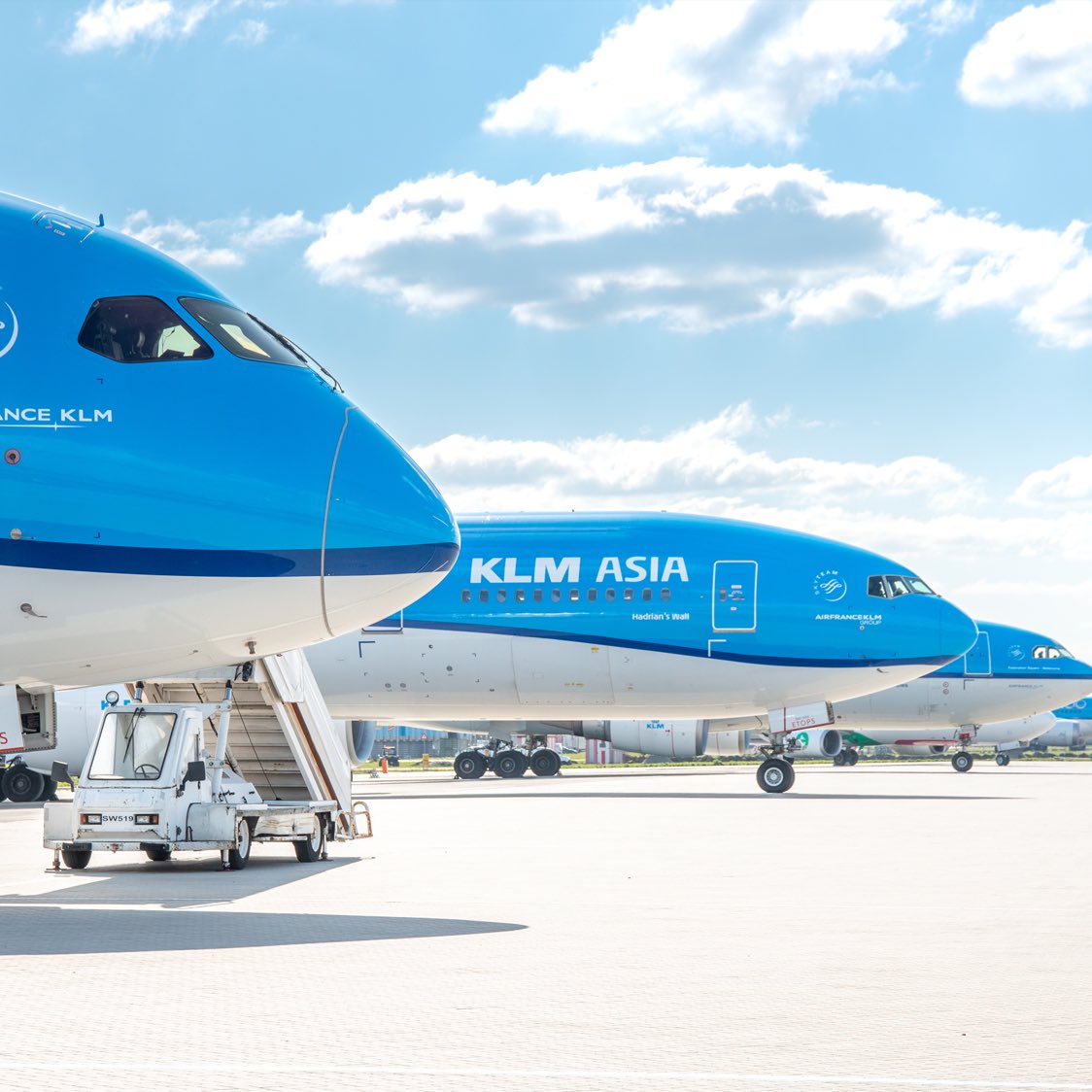
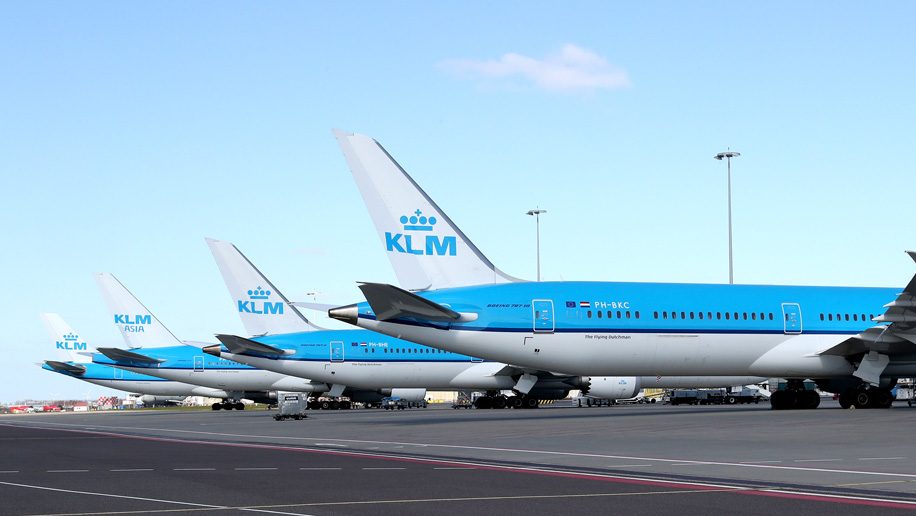
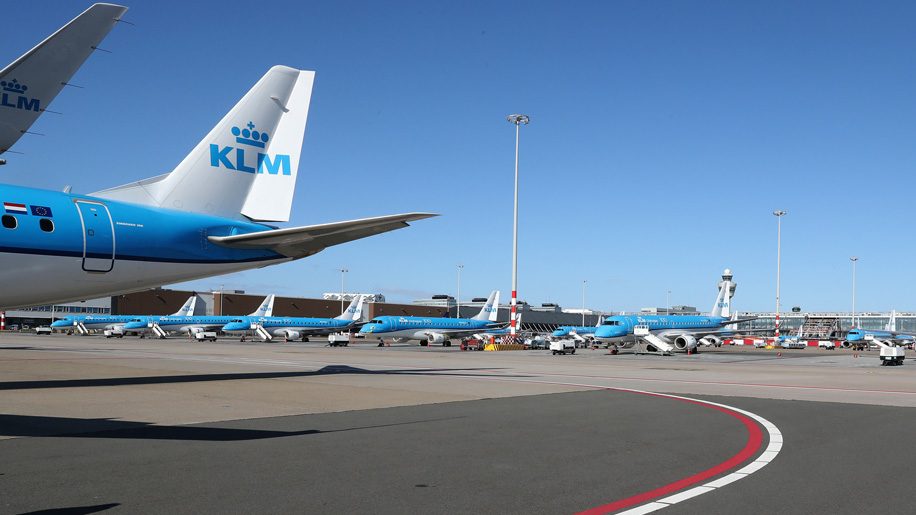
KLM Royal Dutch Airlines ha publicado imágenes de grandes partes de su flota de aviones estacionados en su base en el Aeropuerto Amsterdam/Schiphol. En una proporción de un 90% de la capacidad del grupo Air France-KLM se ha reducido debido a la pandemia de Coronavirus, con solo unos pocos servicios programados y vuelos de repatriación operativos.

La afamada aerolínea holandesa de renombre mundial y más antigua del mundo ha puesto casi todas sus aeronaves a descansar tras la pandemia y los efectos de las reducciones de los viajes a través del país y del mundo, en sintonía con la mayoría de las compañías aéreas del planeta. En Marzo 2020, la aerolínea alemana Lufthansa German Airlines había informado que había aterrizado 700 aviones de sus 763 unidades activas de su flota.

AW-Avianews_7700443Flota puesta en tierra

La flota completa de KLM de 13 Airbus A330-300 está actualmente estacionada, al igual que sus 15 Boeing 777-200, 17 Embraer E175 y siete Boeing 747-400. Una gran parte de las aeronaves regionales Embraer 190 (15) y de los aviones narrowbodies Boeing 737 Next Generation (34) del transportista también se han estacionado. El resto de las flotas Embraer 190 y Boeing 737, junto con los Boeing 777-300, Boeing 787-9 y Boeing 787-10 de KLM se están utilizando para operar vuelos. En un comunicado que acompaña a las imágenes, KLM dijo que está «llevando a cabo un programa de estacionamiento activo. De esta manera, KLM asegura que la aeronave esté bien protegida del clima durante este período. Además, el programa permite a KLM desplegar rápidamente la aeronave cuando el clima lo permite. Las inspecciones periódicas se llevan a cabo durante todo el período de estacionamiento. KLM funciona bien junto con Schiphol para utilizar el tiempo y el espacio disponibles de la manera más eficiente posible. En total, más de 200 aviones de varias aerolíneas se estacionarán en Amsterdam/Schiphol, de los cuales más de 100 serán KLM y KLC (KLM Cityhopper)». AW-Icon AW001

AW-Avianews_com_700833Alex Macheras (@AlexInAir) | TwitterAvión KLM estacionado en Amsterdam Schiphol (crédito: Paul Ridderhof)Avión KLM estacionado en Amsterdam Schiphol (crédito: Paul Ridderhof)KLM stationed in Amsterdam/Schiphol

51GCR0aHpDLThe KLM fleet sleeps in Amsterdam/Schiphol
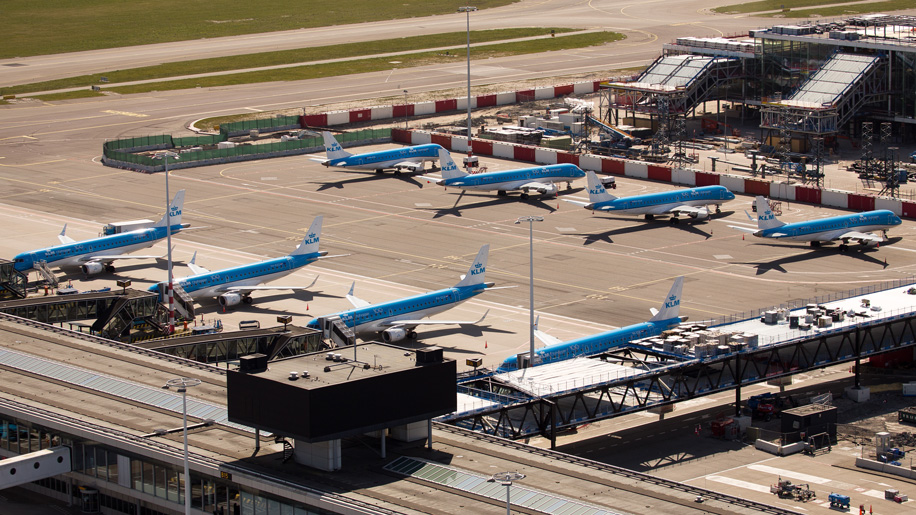
KLM Royal Dutch Airlines has released images of large parts of its fleet of aircraft parked at its base at Amsterdam/Schiphol Airport. 90% of the capacity of the Air France-KLM group has been reduced due to the pandemic of Coronavirus, with only a few scheduled services and operational repatriation flights.

The world’s oldest and renowned world-renowned Dutch airline has put almost all of its aircraft to rest after the pandemic and the effects of reduced travel across the country and the world, in tune with most airlines in the world. planet. In March 2020, the German airline Lufthansa German Airlines had reported that it had landed 700 planes from its 763 active units in its fleet.

Fleet grounded

The entire KLM fleet of 13 Airbus A330-300s is currently stationed, as are its 15 Boeing 777-200s, 17 Embraer E175s, and seven Boeing 747-400s. A large portion of the carrier’s Embraer 190 (15) regional aircraft and the carrier’s Boeing 737 Next Generation (34) narrowbodies have also been parked. The rest of the Embraer 190 and Boeing 737 fleets, along with KLM’s Boeing 777-300, Boeing 787-9 and Boeing 787-10 are being used to operate flights. In a statement accompanying the images, KLM said it is «carrying out an active parking program. In this way, KLM ensures that the aircraft is well protected from the weather during this period. In addition, the program allows KLM to rapidly deploy aircraft when weather permits. Periodic inspections are carried out throughout the parking period. KLM works well with Schiphol to use the available time and space in the most efficient way possible. In total, more than 200 aircraft of several airlines will be stationed in Amsterdam / Schiphol, of which more than 100 will be KLM and KLC (KLM Cityhopper)». AW-Icon AW002

Avión KLM estacionado en Amsterdam Schiphol (crédito: Paul Ridderhof)Avión KLM estacionado en Amsterdam Schiphol (crédito: Paul Ridderhof)AW-KLM-Marco_SpuymanKLM gestationeerd in Schiphol

De KLM-vloot slaapt in Amsterdam/Schiphol

imagesKLM Royal Dutch Airlines heeft beelden vrijgegeven van grote delen van haar vloot van vliegtuigen die op haar basis op Amsterdam/Schiphol Luchthaven staan ​​geparkeerd. 90% van de capaciteit van de Air France-KLM-groep is verminderd als gevolg van de pandemie van Coronavirus, met slechts een paar lijndiensten en operationele repatriëringsvluchten.

‘S Werelds oudste en bekendste wereldberoemde Nederlandse luchtvaartmaatschappij heeft bijna al haar vliegtuigen tot stilstand gebracht na de pandemie en de effecten van verminderde reizen door het hele land en de wereld, in overeenstemming met de meeste luchtvaartmaatschappijen ter wereld. planeet. In maart 2020 meldde de Duitse luchtvaartmaatschappij Lufthansa German Airlines dat ze 700 vliegtuigen van haar 763 actieve eenheden in haar vloot had geland.

Vloot aan de grond

AW-KLM_B747400

De gehele KLM-vloot van 13 Airbus A330-300’s is momenteel gestationeerd, evenals de 15 Boeing 777-200’s, 17 Embraer E175’s en zeven Boeing 747-400’s. Een groot deel van de Embraer 190 (15) regionale vliegtuigen van de koerier en de Boeing 737 Next Generation (34) narrowbodies van de koerier zijn ook geparkeerd. De rest van de Embraer 190- en Boeing 737-vloten, samen met KLM’s Boeing 777-300, Boeing 787-9 en Boeing 787-10 worden gebruikt om vluchten uit te voeren. In een verklaring bij de afbeeldingen zei KLM dat het ,,bezig is met een actief parkeerprogramma. Op deze manier zorgt KLM ervoor dat het vliegtuig in deze periode goed beschermd is tegen weersinvloeden. Daarnaast stelt het programma KLM in staat snel in te zetten vliegtuigen als het weer het toelaat Periodieke inspecties worden uitgevoerd gedurende de parkeerperiode KLM werkt goed samen met Schiphol om de beschikbare tijd en ruimte zo efficiënt mogelijk te benutten In totaal meer dan 200 vliegtuigen van meerdere luchtvaartmaatschappijen zullen gestationeerd zijn in Amsterdam/Schiphol, waarvan meer dan 100 KLM en KLC (KLM Cityhopper)”. AW-Icon AW002


AW-Camera


Ξ A I R G W A Y S Ξ
SOURCE: Airgways.com
DBk: Airgways.com / Klm.com / Businesstraveller.com / Youtube.com / Avianews.com
AW-POST: 202004031547AR

A\W   A I R G W A Y S ®

Ajustes en líneas aéreas Argentina

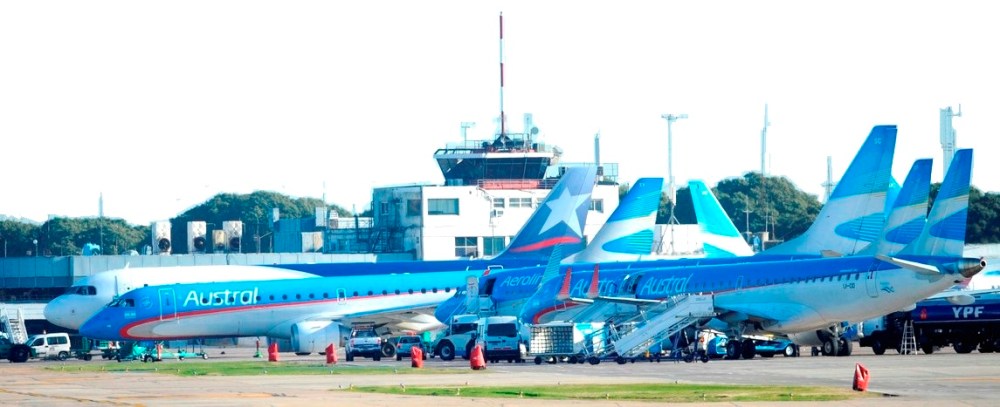
AW-Pagina12.com.ar_AeroparqueAW | 2020 04 03 14:16 | AIRLINES / GOVERNMENT
Las aerolíneas comienzan efectivizando ajustes

El Poder Ejecutivo Nacional de la República Argentina, a través del Decreto de Necesidad y Urgencia DNU Nº 329/2020, estableció medidas tendientes a limitar los despidos y las suspensiones en el marco de la emergencia generada por la pandemia del Coronavirus.

En su Artículo 1, el DNU destaca que se dicta en el marco de la emergencia pública en materia económica, financiera, fiscal, administrativa, previsional, tarifaria, energética, sanitaria y social establecida por la Ley 27.541, la ampliación de la emergencia sanitaria dispuesta por el Decreto Nº 260/20 y su modificatorio que estableció la medida de “aislamiento social, preventivo y obligatorio” hasta el día 12 Abril inclusive. La norma, en su Artículo 2, prohíbe los despidos sin justa causa y por las causales de falta o disminución de trabajo y fuerza mayor (establecido en el artículo 247 de la Ley de Contrato de Trabajo) por el plazo de 60 días contados a partir de este miércoles 1 Abril. El Artículo 3, por el mismo plazo, también prohíbe las suspensiones por las causales de fuerza mayor o falta o disminución de trabajo. En un segundo párrafo, destaca que quedan exceptuadas de esta prohibición las suspensiones efectuadas en los términos del Artículo 223 Bis de la Ley de Contrato de Trabajo (que considerará prestación no remunerativa las asignaciones en dinero que se entreguen en compensación por suspensiones de la prestación laboral y que se fundaren en las causales de falta o disminución de trabajo, no imputables al empleador, o fuerza mayor debidamente comprobada, pactadas individual o colectivamente u homologadas por la autoridad de aplicación).

Por otro lado, el DNU indica que los despidos y las suspensiones que se dispongan en violación de lo dispuesto en el Artículo 2 y primer párrafo del Artículo 3, no producirán efecto alguno, manteniéndose vigentes las relaciones laborales existentes y sus condiciones actuales.

Afectación líneas aéreas

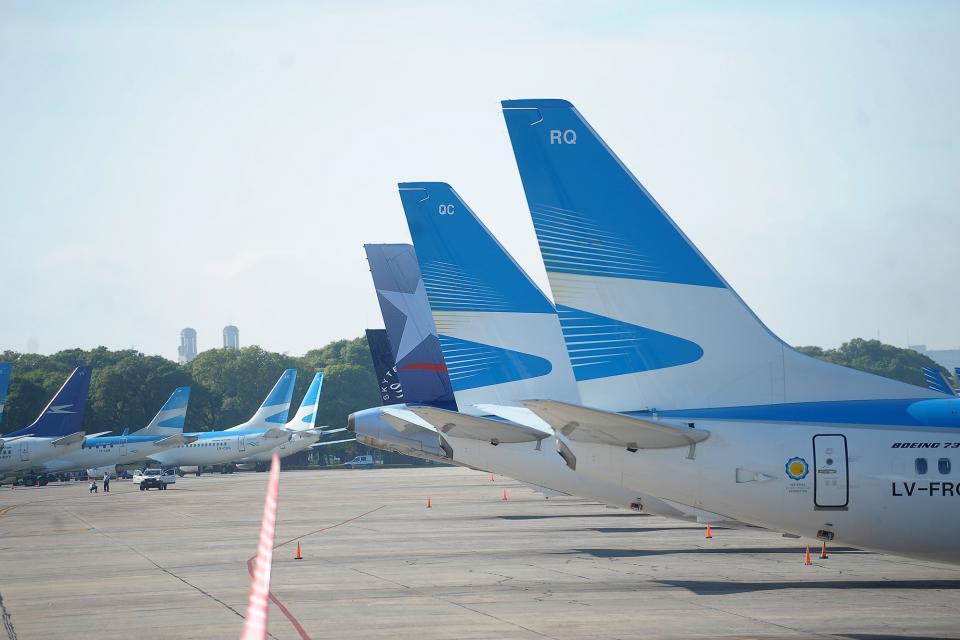
En el marco de las nuevas disposiciones del Gobierno de Argentina, las líneas aéreas han tomado medidas al respectos para reducir el impacto económico debido a la supresión se los vuelos nacionales e internacionales.

AW-Flybondi_701La aerolínea low cost Flybondi Líneas Aéreas ha decidido este Jueves 02/04 de rebajar los salarios de su plantel en un 30 % durante los próximos tres meses consecutivos. Según Infogremiales, “eso firmó con la Asociación Sindical de Trabajadores de Flybondi Líneas Aéreas y presentó ante el Ministerio de Trabajo de la Nación. Además se incorporaron una serie de cláusulas de flexibilidad laboral a cambio de no destruir puestos de trabajo».

AW-Latam_ArgOtra empresa que sigue con la intención de bajar los salarios es Latam Airlines Argentina. Desde el comienzo de esta crisis la aerolínea insiste con rebajar los sueldos a un 50%. “Reclamamos que las ganancias declaradas recientemente por la empresa estén puestas al servicio de paliar la crisis actual. Exigimos la apertura inmediata de los libros contables del holding Latam Group, una cuestión elemental y básica, que la empresa se niega a poner sobre la mesa por una razón sencilla: es mentira que no tienen el dinero, es mentira que funcionan al día. No son un almacén. Son una enorme empresa monopólica en América del Sur”, sostienen en un comunicado los aeronáuticos. El reclamo exige conocer los números económicos de la compañía para poder determinar qué acciones deben los ejecutivos determinar para ayudar a sus empleados.

ThumbWebCCAWA-570x215JetSmart Airlines Argentina ha tenido un perfil bajo en la actuación de la crisis de la pandemia del Coronavirus; aún así, los empleados no han informado ningún problema en los pagos de salarios.

AW-70005455La compañía salteña Andes Líneas Aéreas tiene un atraso de seis meses sin cobro de haberes y la situación podría extenderse a raíz de las medidas sanitarias de cuarentena obligatoria.

Aerolíneas Argentinas y Austral Líneas Aéreas no han transmitido hasta el momento la existencia de novedades respecto al cobro de los sueldos de sus empleados. El Grupo AW-717348MAXAerolíneas ha realizado diferentes servicios de repatriación de los argentinos donde estuvo envuelto el compromiso de maximizar las labores sanitarias y humanitarias. El Gobierno de Argentina ha ordenado una nueva tanda de vuelos más controlados para evitar la influencia masiva de pasajeros y por defecto comprometer al área sanitaria.
AW-70000194Por otro lado, la aerolínea de bandera ha lanzado un spot publicitario para ola concientización de la población a quedarse en casa. Aerolíneas Argentinas recuerda sus próximos 70º aniversarios y destaca su compromiso a la hora de trasladar argentinos varados en el exterior.

Las aerolíneas del mundo continúan experimentando el fuerte impacto económico producto de los efectos de la pandemia del Coronavirus, y las líneas aéreas de Argentina no están exentas a esas situaciones. El mundo de la aviación nunca ha experimentado un impacto tan fuerte donde un tercio de las aeronaves en el planeta ha detenido sus motores lo que representan más del 90% del trafico mundial de vuelos comerciales. AW-Icon AW001

Aeropuerto El PalomarAdjustments in airlines Argentina

Airlines start making adjustments

The National Executive Power of the Argentine Republic, through Decree of Need and Urgency DNU No. 329/2020, established measures aimed at limiting layoffs and suspensions in the context of the emergency caused by the Coronavirus pandemic.

In its Article 1, the DNU stresses that it is dictated in the framework of the public emergency in economic, financial, fiscal, administrative, social security, tariff, energy, health and social matters established by Law 27,541, the extension of the health emergency arranged by Decree No. 260/20 and its amendment that established the measure of «social, preventive and compulsory isolation» until April 12 inclusive. The norm, in its Article 2, prohibits dismissals without just cause and for the causes of lack or reduction of work and force majeure (established in article 247 of the Labor Contract Law) for a period of 60 days from this Wednesday, April 1. Article 3, for the same term, also prohibits suspensions for reasons of force majeure or lack or reduction of work. In a second paragraph, it highlights that the suspensions made under the terms of Article 223 Bis of the Labor Contract Law are exempt from this prohibition (which will be considered non-remunerative benefit the money assignments that are delivered in compensation for suspensions of the labor benefit and that they are based on the causes of lack or decrease of work, not attributable to the employer, or force majeure duly verified, agreed individually or collectively or approved by the enforcement authority).

On the other hand, the DNU indicates that the dismissals and suspensions that are provided in violation of the provisions of Article 2 and the first paragraph of Article 3, will not produce any effect, maintaining existing labor relations and their current conditions.

Airline involvement

Under the new provisions of the Government of Argentina, the airlines have taken measures in this regard to reduce the economic impact due to the suppression of national and international flights.

The low-cost airline Flybondi Líneas Aéreas has decided this Thursday 02/04 to cut the salaries of its staff by 30% for the next three consecutive months. According to Infogremiales, “this he signed with the Trade Union Association of Flybondi Airlines Workers and presented before the National Ministry of Labor. In addition, a series of labor flexibility clauses were incorporated in exchange for not destroying jobs».

Another company that continues with the intention of lowering wages is Latam Airlines Argentina. From the beginning of this crisis, the airline insists on cutting wages to 50%. «We demand that the profits recently declared by the company be put at the service of alleviating the current crisis. We demand the immediate opening of the accounting books of the Latam Group holding company, an elementary and basic question, which the company refuses to put on the table for a simple reason: it is a lie that they do not have the money, it is a lie that they work daily. They are not a warehouse. They are a huge monopoly company in South America», the aeronautics said in a statement. The claim requires knowing the company’s financial numbers in order to determine what actions executives must determine to help their employees.

JetSmart Airlines Argentina has had a low profile in the response to the Coronavirus pandemic crisis; Still, employees have reported no problems with salary payments.

The company from Salta, Andes Lineas Aereas, is six months behind with no collection of assets and the situation could be extended as a result of the sanitary measures of compulsory quarantine.

Aerolíneas Argentinas and Austral Líneas Aéreas have not yet transmitted the existence of news regarding the collection of their employees’ salaries. Grupo Aerolíneas has carried out different repatriation services for Argentines where the commitment to maximize health and humanitarian work was involved. The Government of Argentina has ordered a new batch of more controlled flights to avoid the massive influence of passengers and by default compromise the health area.AW-Isologotype_AR-70th Anniversaries

AW-Camera

On the other hand, the flag carrier has launched an advertising spot to raise awareness among the population to stay home. Aerolineas Argentinas remembers its upcoming 70th anniversary and highlights its commitment to moving Argentines stranded abroad.

The world’s airlines continue to experience the strong economic impact caused by the effects of the Coronavirus pandemic, and Argentine airlines are not exempt from these situations. The world of aviation has never experienced such a strong impact where a third of the aircraft on the planet has stopped their engines, representing more than 90% of the world’s commercial flights. AW-Icon AW002


Ξ A I R G W A Y S Ξ
SOURCE: Airgways.com
DBk: Argentina.gob.ar / Boletinoficial.gob.ar / Aerolineas.com / Airgways.com / Pagina12.com.ar
AW-POST: 202004031416AR

A\W   A I R G W A Y S ®

Aerolíneas reanuda repatriación

AW-Aerolíneas_A330200AW | 2020 04 03 11:31 | AIRLINES / GOVERNMENT

Aerolíneas Argentinas_Isologotype 2010_001Aerolíneas Argentinas reanudará repatriación Lunes 06/04
Aerolíneas Argentinas ha comunicado que reanudará la operación de vuelos especiales de repatriación de argentinos varados en el exterior en el marco de la emergencia sanitaria por la pandemia del Coronavirus. El próximo Lunes 6 Abril 2020 arribará un vuelo desde Cancún. «El vuelo será realizado con un Airbus 330-200 con capacidad para 270 pasajeros. Programado bajo el vuelo número AR1371 tiene previsto su arribo al Aeropuerto Internacional Ezeiza el próximo Lunes 06/04 a las 19:10 hs.», indicaron en un comunicado.

Plan de Reapertura

“En línea con el Plan de Reapertura Gradual, Planificada y Segura dispuesto por el Gobierno Nacional para las fronteras del país, los vuelos se irán planificando de a uno por vez con la finalidad de regular los flujos de ingreso así como también asegurar el cumplimiento de las medidas sanitarias y de aislamiento preventivo”, informó Aerolíneas Argentinas. En el marco de la programación controlada han comunicado que «los vuelos se irán planificando de a uno por vez con la finalidad de regular los flujos de ingreso así como también asegurar el cumplimiento de las medidas sanitarias y de aislamiento preventivo». Además, la compañía dio a conocer la programación de un vuelo a Comodoro Rivadavia y otro a Rio Gallegos para el día el 5 Abril 2020.

Durante la primera fase de vuelos especiales que tuvo lugar entre el 18 y el 27 Marzo 2020, fueron realizadas 44 operaciones especiales que trajeron de regreso a unas 14.000 personas que se encontraban en Rio de Janeiro, Florianópolis, San Pablo, Porto Seguro, San Salvador de Bahía, Bogotá, Lima, Miami, Madrid, Cancún y Punta Cana.

«Estos vuelos forman parte del rol que, como línea aérea de bandera, tiene Aerolíneas Argentinas. Estamos muy orgullosos y comprometidos con el trabajo que estamos realizando. Son vuelos graduales, que necesitan ser espaciados para regular el flujo de ingreso al país. Pedimos paciencia y comprensión a los pasajeros, es una operación sin precedente en un escenario muy dinámico», explicó Pablo Ceriani, Presidente de Aerolíneas Argentinas.

«La nueva operación especial de Aerolíneas Argentinas se encuentra enmarcada dentro de la política de corredores seguros dispuesta por el Poder Ejecutivo y que establece un límite máximo de reingresos por día de 700 personas mediante transporte aéreo. Cancillería seguirá coordinando las prioridades de embarque por edad, cuestiones de salud o razones humanitarias», explicaron desde la aerolínea. AW-Icon AW001


AW-7000045Aerolíneas resumes repatriation

Aerolíneas Argentinas_Isologotype_ SkyteamAerolíneas Argentinas will resume repatriation Monday 06/04

Aerolíneas Argentinas has announced that it will resume the operation of special repatriation flights for Argentines stranded abroad in the context of the health emergency due to the Coronavirus pandemic. Next Monday, April 6, 2020, a flight will arrive from Cancun. «The flight will be carried out with an Airbus 330-200 with a capacity for 270 passengers. Scheduled under flight number AR1371, it is scheduled to arrive at Ezeiza International Airport next Monday 06/04 at 7:10 p.m.», they said in a statement.

Reopening Plan

“In line with the Gradual, Planned and Safe Reopening Plan established by the National Government for the country’s borders, flights will be planned one by one with the purpose of regulating income flows as well as ensuring compliance with sanitary measures and preventive isolation”, reported Aerolíneas Argentinas. In the framework of controlled programming, they have communicated that «the flights will be planned one by one at a time in order to regulate the inflows as well as ensure compliance with sanitary measures and preventive isolation». In addition, the company announced the schedule of a flight to Comodoro Rivadavia and another to Rio Gallegos for the day on April 5, 2020.

During the first phase of special flights that took place between March 18 and 27, 2020, 44 special operations were carried out that brought back some 14,000 people who were in Rio de Janeiro, Florianópolis, San Pablo, Porto Seguro, San Salvador from Bahía, Bogotá, Lima, Miami, Madrid, Cancún, and Punta Cana.

«These flights are part of the role that Aerolíneas Argentinas has as a flag airline. We are very proud and committed to the work we are doing. They are gradual flights, which need to be spaced to regulate the flow of income into the country. We ask for patience and understanding for passengers, it is an unprecedented operation in a very dynamic setting», explained Pablo Ceriani, President of Aerolíneas Argentinas.

«The new special operation of Aerolíneas Argentinas is framed within the policy of safe corridors established by the Executive Power and which establishes a maximum limit of re-entries per day of 700 people by air transport. The Ministry of Foreign Affairs will continue to coordinate boarding priorities by age, health issues or humanitarian reasons», they explained from the airline. AW-Icon AW002


Ξ A I R G W A Y S Ξ
SOURCE: Airgways.com
DBk: Aerolineas.com / Airgways.com
AW-POST: 202004031131AR

A\W   A I R G W A Y S ®