Aeropuerto Resistencia recibe modernización sistema seguridad
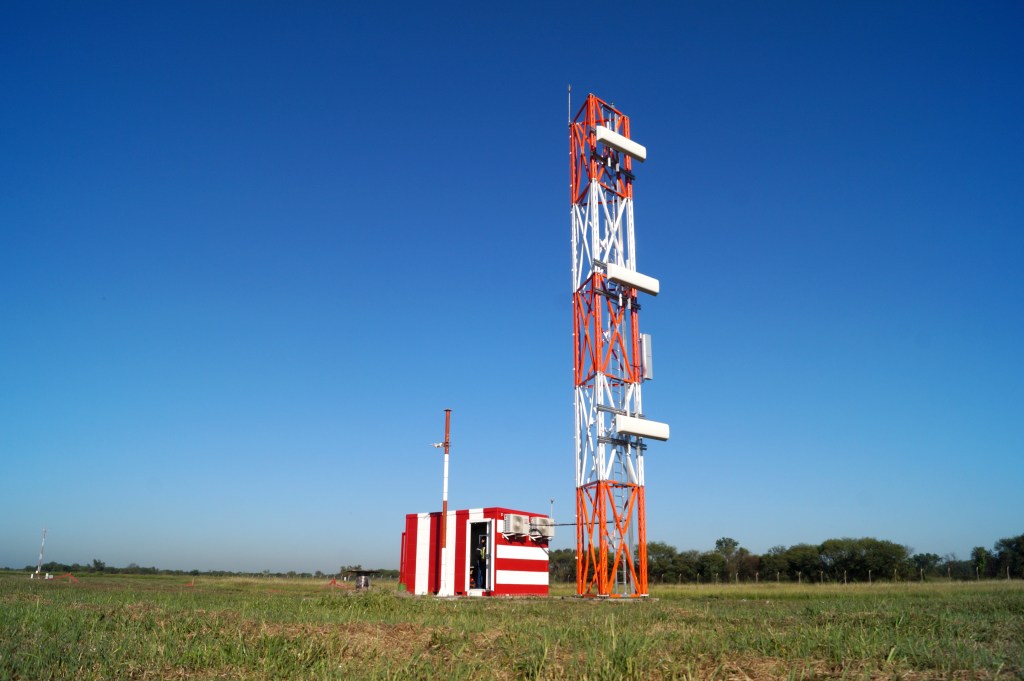
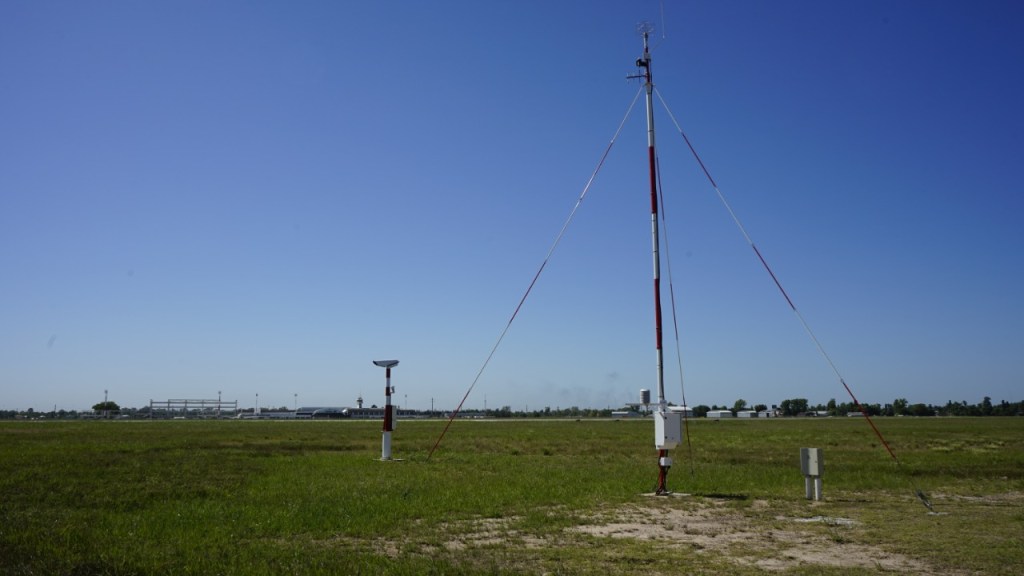
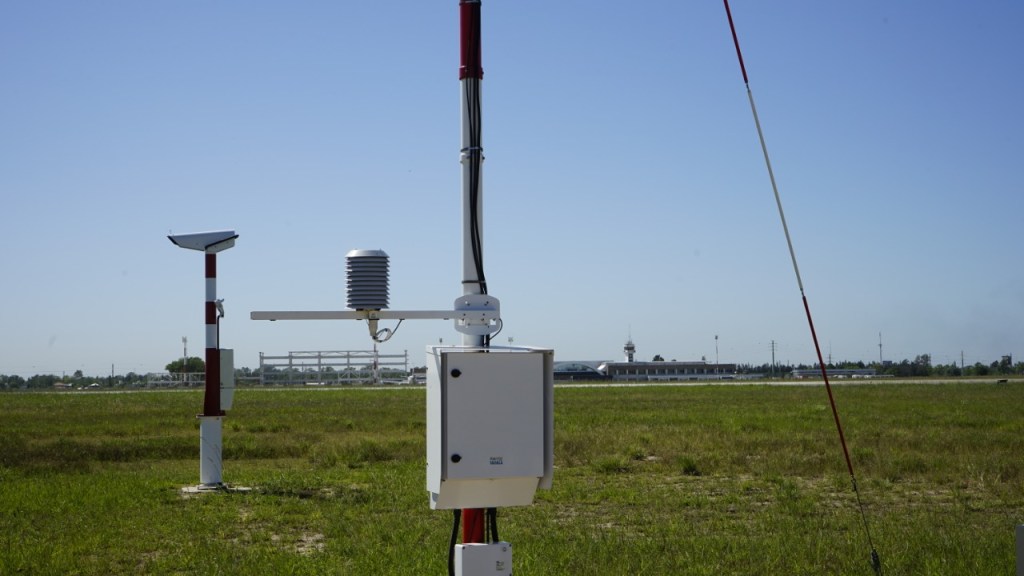
El Ministerio de Transporte de Argentina continúa modernizando la seguridad aérea, con la puesta en funcionamiento operativo del nuevo sistema ILS en el Aeropuerto de Resistencia, localizado en la Provincia de Chaco. Con el objetivo de continuar invirtiendo en tecnología y mejorar el servicio, el Ministerio de Transporte, a través de la Empresa Argentina de Navegación Aérea (EANA), instaló un nuevo sistema ILS en el Aeropuerto de Resistencia, que además de reemplazar un sistema que tenía veinticinco años de antigüedad, mejora la operatividad de las aeronaves en condiciones climatológicas desfavorables y logra una mayor seguridad aérea incorporando más control y monitoreo centralizando.
El Gobierno de Argentina continúa en línea con el Plan de Modernización de Transporte que incluye la incorporación de tecnología en el sector aéreo con el objetivo de mejorar la seguridad operativa. La Presidente de EANA, Gabriela Logatto, puso en marcha un nuevo sistema de aterrizaje por instrumentos (ILS) en el Aeropuerto de Resistencia, que permitirá mejorar el posicionamiento de la aeroestación con un alto índice de seguridad en condiciones meteorológicas adversas. La nueva incorporación significa un avance tecnológico integral para el Aeropuerto Internacional Resistencia/José de San Martín que a través de la instalación del sistema ILS en la cabecera 21, avanza en la previsibilidad de las operaciones asegurando índices de disponibilidad mayores a los actuales y posibilita el aterrizaje de las aeronaves aunque haya baja visibilidad, logrando mayor seguridad aérea y un mejor servicio para todos los argentinos y argentinas. Además, el nuevo ILS de Resistencia también incorpora un transmisor de señales DME logrando que las tripulaciones puedan conocer con exactitud su distancia al aeropuerto.
Es importante remarcar que el Ministerio de Transporte ha puesto en marcha un plan integral para la instalación del sistema ILS en los principales aeropuertos del país con el objetivo de incrementar la seguridad aérea. Durante los últimos meses, la EANA ha instalado el nuevo sistema ILS en el Aeropuerto de Posada (Misiones) y en el Aeropuerto de Córdoba (Córdoba), además del Aeropuerto de Resistencia.
Sistema ILS
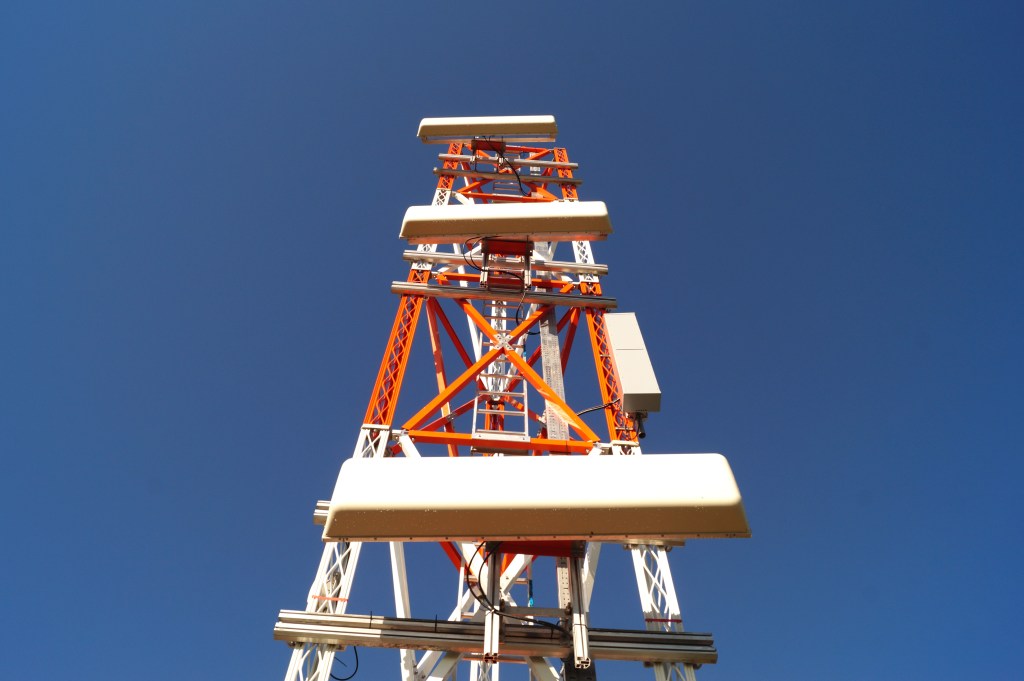
Consiste en un conjunto de transmisores de señales de navegación que brindan a las aeronaves guiado en el plano horizontal, con referencia al eje de la pista y vertical, trazando una trayectoria de descenso óptima. Estas señales conducen a las aeronaves hasta el punto de toque deseado. Las antenas de señal de eje de la pista se disponen en forma horizontal detrás de la cabecera opuesta al aterrizaje, mientras que las de trayectoria de descenso se encuentran montadas al costado de la pista, cercanas al punto previsto de toque. El anterior ILS de Resistencia llevaba más de veinticinco años de operación. Su reemplazo por uno capaz de operar en Categoría II incluyó el cambio de todas las antenas, la construcción de nuevas bases de hormigón y casetas protectoras para los equipos. Además, EANA instaló un sistema de comunicaciones robusto y duplicado (por fibra óptica y antenas de radioenlace) entre los equipos y la torre de control, que permite tanto al personal de control de tránsito aéreo como al de servicio técnico tener un seguimiento continuo del funcionamiento del sistema.
New ILS Resistencia Airport
Resistencia airport receives modernization of security system
The Argentine Ministry of Transportation continues to modernize air safety, with the operational start-up of the new ILS system at the Resistencia Airport, located in the Province of Chaco. In order to continue investing in technology and improve service, the Ministry of Transportation, through the Argentine Air Navigation Company (EANA), installed a new ILS system at Resistencia Airport, which in addition to replacing a system that had Twenty-five years old, it improves the operation of aircraft in unfavorable weather conditions and achieves greater air safety by incorporating more centralized control and monitoring.
The Government of Argentina continues in line with the Transportation Modernization Plan that includes the incorporation of technology in the air sector with the aim of improving operational safety. EANA President Gabriela Logatto launched a new instrument landing system (ILS) at Resistencia Airport, which will improve the positioning of the airstation with a high safety index in adverse weather conditions. The new incorporation means a comprehensive technological advance for the Resistencia/José de San Martín International Airport, which, through the installation of the ILS system at head 21, advances in the predictability of operations, ensuring availability rates higher than the current ones and enables landing of the aircraft even if there is low visibility, achieving greater air safety and a better service for all Argentines. In addition, the new Resistance ILS also incorporates a DME signal transmitter allowing crews to know exactly their distance to the airport.
It is important to note that the Ministry of Transportation has launched a comprehensive plan for the installation of the ILS system in the main airports of the country with the aim of increasing air safety. In recent months, EANA has installed the new ILS system at Posada Airport (Misiones) and Córdoba Airport (Córdoba), as well as Resistencia Airport.
ILS System
It consists of a set of navigation signal transmitters that provide aircraft with guidance in the horizontal plane, with reference to the axis of the runway and vertical, tracing an optimal descent path. These signals steer the aircraft to the desired touch point. The runway center line signal antennas are arranged horizontally behind the headland opposite the landing, while the descent path antennas are mounted to the side of the runway, close to the intended touch point. The former Resistance ILS had been in operation for more than 25 years. Its replacement by one capable of operating in Category II included the change of all antennas, the construction of new concrete bases and protective sheds for the equipment. In addition, EANA installed a robust and duplicated communications system (via fiber optics and radio link antennas) between the equipment and the control tower, which allows both air traffic control and technical service personnel to have continuous monitoring of the operation. of the system.
Piauí presenta proyecto PPP para Aeropuerto Parnaíba, Brasil
El Gobernador Wellington Dias y Viviane Moura, Superintendente de la Superintendencia de Asociaciones y Concesiones del estado (SUPARC), participan en el evento organizado por ABDIB, el día 27/05, a las 03:00 p.m., transmitido en el canal de YouTube de ABDIB. Durante el encuentro, que reunirá al Presidente de la Asociación, Venilton Tadini, y al Vicepresidente Ejecutivo, Ralph Terra, se presentarán detalles sobre el proyecto y los estudios de viabilidad técnica del Aeropuerto Parnaíba. La APP mejorará la calidad de los servicios aeroportuarios y fomentará el turismo y el desarrollo en la región de Rota das Emoções. La licitación debería tener lugar hasta Julio 2021. La empresa adjudicataria de la licitación, prevista para Mayo 2021 será la responsable de la administración, conservación, implementación de mejoras y operaciones aeroportuarias del aeropuerto. La concesión será por 32 años y tiene un valor de inversión estimado en alrededor de R$ 112 millones. Parnaíba, donde se ubica el Aeropuerto, es la segunda ciudad más grande del estado de Piauí, con centros que generan viajes, como universidades, hospitales, centros tecnológicos y áreas de producción agrícola e industrial.
La ciudad de Parnaíba destaca por su potencial turístico: es una de las paradas de la Rota das Emoções, un recorrido que incluye Jericoacoara (CE) y Lençóis Maranhenses (MA), que recibe alrededor de 1 millón de visitantes al año. Además, es la base para conocer el Delta del Parnaíba, el único delta de mar abierto de América, además posee el aeropuerto más cercano a Europa. “Este proyecto ha sido estructurado por la Superintendencia de Asociaciones y Concesiones (Suparc) y monitoreado por la Secretaría de Aviación Civil del Gobierno Federal, y es de suma importancia para el turismo en esta región. Estamos enfocados en modernizar la infraestructura del aeropuerto y promover mejoras en la provisión de servicios, especialmente para el usuario, desarrollando diversas cadenas productivas y fomentando el crecimiento de la economía local”, comentó la Superintendente de SUPARC, Viviane Moura.
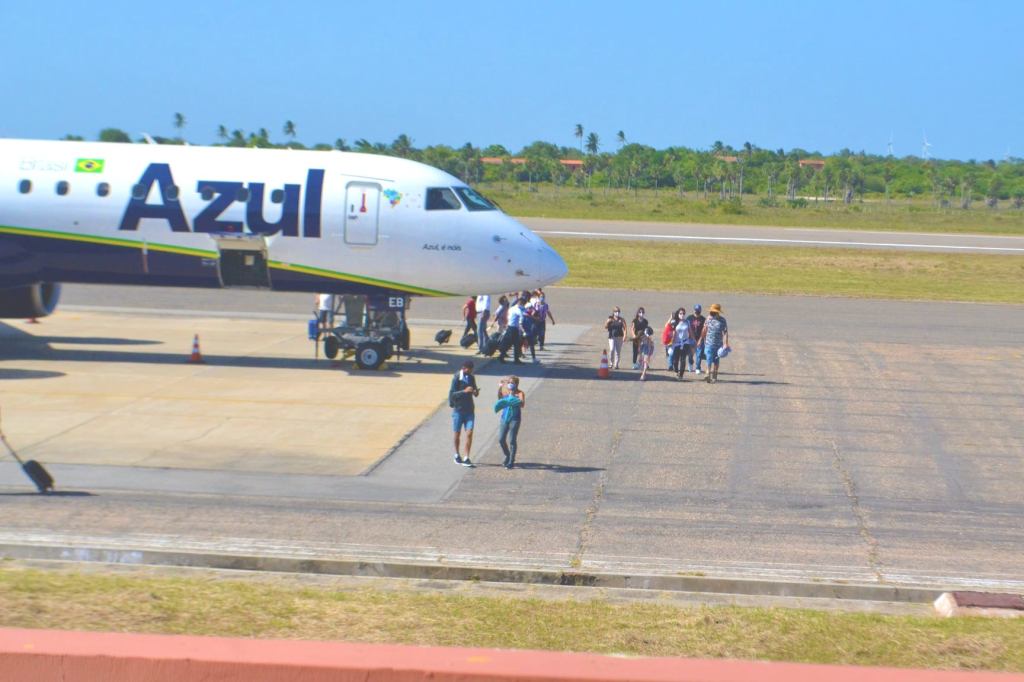
Durante los últimos cuatro años, el Aeropuerto de Parnaíba ha desarrollado un promedio de ocho mil pasajeros por año. En 2014 y 2015, con las obras de ampliación de la pista y la entrada de Azul al aeropuerto, el movimiento alcanzó un pico de 14,8 mil pasajeros. “Parnaíba tiene una infraestructura privilegiada considerando los aeropuertos regionales. La ciudad es un lugar turístico que se destaca en el panorama internacional, siendo un destino muy popular incluso para el turismo deportivo, especialmente en relación al kitesurf”, dijo Carina Câmara, Superintendente de Turismo de Setur.
Con las mejoras y ampliaciones propuestas, el movimiento de pasajeros estimado en 2050 es de 500.000. También en esta proyección, la facturación anual del aeropuerto en 2050 se estima en R$ 16,69 millones. «El PPP en el Aeropuerto de Parnaíba es una solución integral para mejorar el polo turístico, crear un centro de negocios, ser un punto de desarrollo social y fomentar la aviación regional», dijo Rodolpho Oliveira Santos, responsable de los estudios del proyecto y también participante del evento ABDIB.
El aeropuerto también tiene el potencial de ser un centro de distribución de carga, considerando su ubicación central en relación con otras grandes ciudades del Nordeste. También se encuentra cerca de una zona de procesamiento de exportación (ZPE) y se puede utilizar para importar insumos, así como producción de exportación, y algunas cargas podrían trasladarse al aeropuerto, como productos farmacéuticos y otros productos de alto valor agregado.
PPP for Parnaíba Airport
Piauí presents PPP project for Parnaíba Airport, Brazil
Governor Wellington Dias and Viviane Moura, Superintendent of the State Superintendency of Associations and Concessions (SUPARC), participate in the event organized by ABDIB, on 05/27, at 03:00 pm, broadcast on the YouTube channel of ABDIB. During the meeting, which will bring together the President of the Association, Venilton Tadini, and the Executive Vice President, Ralph Terra, details about the project and the technical feasibility studies of the Parnaíba Airport will be presented. The APP will improve the quality of airport services and promote tourism and development in the Rota das Emoções region. The tender should take place until July 2021. The company awarded the tender, scheduled for May 2021, will be responsible for the administration, conservation, implementation of improvements and airport operations of the airport. The concession will be for 32 years and has an estimated investment value of around R$ 112 million. Parnaíba, where the Airport is located, is the second largest city in the state of Piauí, with centers that generate trips, such as universities, hospitals, technology centers and areas of agricultural and industrial production.
The city of Parnaíba stands out for its tourist potential: it is one of the stops on the Rota das Emoções, a route that includes Jericoacoara (CE) and Lençóis Maranhenses (MA), which receives around 1 million visitors a year. In addition, it is the base to know the Parnaíba Delta, the only open sea delta in America, it also has the closest airport to Europe. “This project has been structured by the Superintendency of Associations and Concessions (Suparc) and monitored by the Civil Aviation Secretariat of the Federal Government, and is extremely important for tourism in this region. We are focused on modernizing the airport infrastructure and promoting improvements in the provision of services, especially for the user, developing various production chains and fostering the growth of the local economy”, commented SUPARC Superintendent, Viviane Moura.
During the last four years, the Parnaíba Airport has handled an average of eight thousand passengers per year. In 2014 and 2015, with the expansion works of the runway and the entrance of Azul to the airport, the movement reached a peak of 14.8 thousand passengers. “Parnaíba has a privileged infrastructure considering the regional airports. The city is a tourist place that stands out on the international scene, being a very popular destination even for sports tourism, especially in relation to kitesurfing”, said Carina Câmara, Setur Tourism Superintendent.
With the proposed improvements and extensions, the estimated passenger movement in 2050 is 500,000. Also in this projection, the airport’s annual turnover in 2050 is estimated at R$ 16.69 million. «The PPP at Parnaíba Airport is a comprehensive solution to improve the tourist center, create a business center, be a point of social development and promote regional aviation», said Rodolpho Oliveira Santos, responsible for the project’s studies and also participant of the ABDIB event.
The airport also has the potential to be a cargo distribution center, considering its central location in relation to other large cities in the Northeast. It is also close to an Export Processing Zone (EPZ) and can be used to import inputs as well as export production, and some cargo could be moved to the airport, such as pharmaceuticals and other high value-added products.
PPP para Aeroporto de Parnaíba
Piauí apresenta projeto de PPP para Aeroporto de Parnaíba, Brasil
O Governador Wellington Dias e Viviane Moura, Superintendente da Superintendência Estadual de Associações e Concessões (SUPARC), participam do evento organizado pela ABDIB, no dia 27/05, às 15 horas, transmitido no canal da ABDIB no YouTube. Durante o encontro, que reunirá o presidente da Associação, Venilton Tadini, e o Vice-presidente executivo, Ralph Terra, serão apresentados detalhes sobre o projeto e os estudos de viabilidade técnica do Aeroporto Parnaíba. A APP vai melhorar a qualidade dos serviços aeroportuários e promover o turismo e o desenvolvimento da região de Rota das Emoções. A licitação deverá ocorrer até Julho de 2021. A empresa vencedora da licitação, prevista para maio de 2021, será responsável pela administração, conservação, implantação de melhorias e operação aeroportuária do aeroporto. A concessão terá prazo de 32 anos e tem valor de investimento estimado em cerca de R$ 112 milhões. Parnaíba, onde está localizado o Aeroporto, é a segunda maior cidade do estado do Piauí, com centros geradores de viagens, como universidades, hospitais, centros de tecnologia e áreas de produção agrícola e industrial.
A cidade de Parnaíba se destaca pelo potencial turístico: é uma das paradas da Rota das Emoções, rota que inclui Jericoacoara (CE) e Lençóis Maranhenses (MA), que recebe cerca de 1 milhão de visitantes por ano. Além disso, é a base para conhecer o Delta do Parnaíba, único delta em mar aberto da América, também possui o aeroporto mais próximo da Europa. “Este projeto foi estruturado pela Superintendência de Associações e Concessões (Suparc) e monitorado pela Secretaria de Aviação Civil do Governo Federal, e é de extrema importância para o turismo da região. Estamos focados na modernização da infraestrutura aeroportuária e na promoção de melhorias na prestação de serviços, principalmente para o usuário, desenvolvendo diversas cadeias produtivas e fomentando o crescimento da economia local”, comentou a superintendente da SUPARC, Viviane Moura.
Nos últimos quatro anos, o Aeroporto de Parnaíba movimentou em média oito mil passageiros por ano. Em 2014 e 2015, com as obras de ampliação da pista e a entrada da Azul no aeroporto, a movimentação atingiu o pico de 14,8 mil passageiros. “Parnaíba tem uma infraestrutura privilegiada considerando os aeroportos regionais. A cidade é um pólo turístico que se destaca no cenário internacional, sendo um destino muito procurado até mesmo para o turismo desportivo, principalmente no que diz respeito ao kitesurf”, afirmou Carina Câmara, Superintendente de Turismo da Setur.
Com as melhorias e extensões propostas, o movimento estimado de passageiros em 2050 é de 500.000. Ainda nessa projeção, o faturamento anual do aeroporto em 2050 está estimado em R$ 16,69 milhões. “A PPP do Aeroporto de Parnaíba é uma solução abrangente para melhorar o pólo turístico, criar um centro de negócios, ser um ponto de desenvolvimento social e promover a aviação regional”, disse Rodolpho Oliveira Santos, responsável pelos estudos do projeto e também participante do evento da ABDIB.
O aeroporto também tem potencial para ser um centro de distribuição de cargas, considerando sua localização central em relação a outras grandes cidades do Nordeste. Também fica próximo a uma Zona de Processamento de Exportação (ZPE) e pode ser utilizado tanto para importação de insumos como para exportação de produção, podendo ser movimentadas algumas cargas para o aeroporto, como fármacos e outros produtos de alto valor agregado.
AW | 2021 05 24 00:00 | AIRPORTS / AVIATION HISTORY
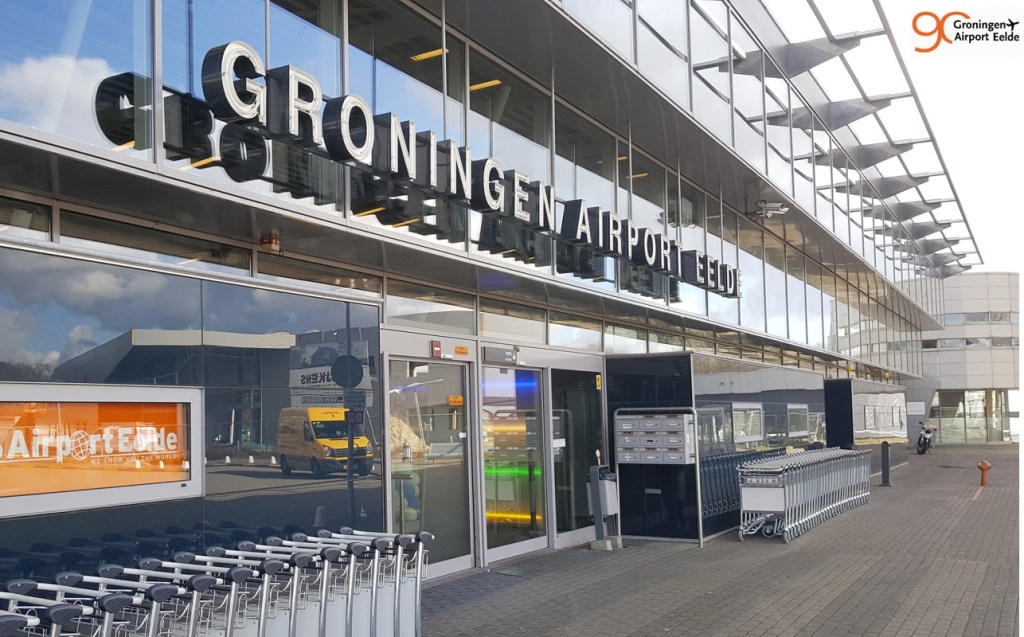
Aeropuerto de Groningen Eelde celebra su 90 aniversario
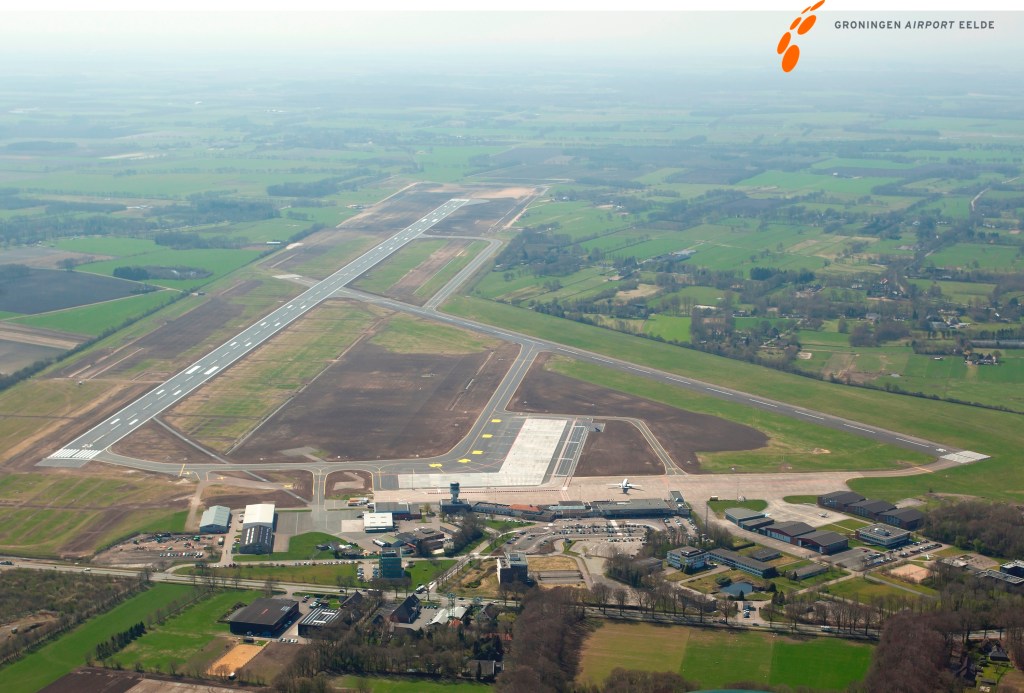
El Aeropuerto Groningen/Eelde GRQ/EHGG celebra este 23 de Mayo de 2021 su 90 aniversarios. En 1931 se inauguró oficialmente el aeródromo. Es un aeropuerto internacional menor en el noreste de los Países Bajos. Se encuentra cerca de Eelde en la Provincia de Drenthe, a 4,8 millas náuticas/8,9 km/5,5 millas al sur de la ciudad de Groningen en la Provincia de Groningen.
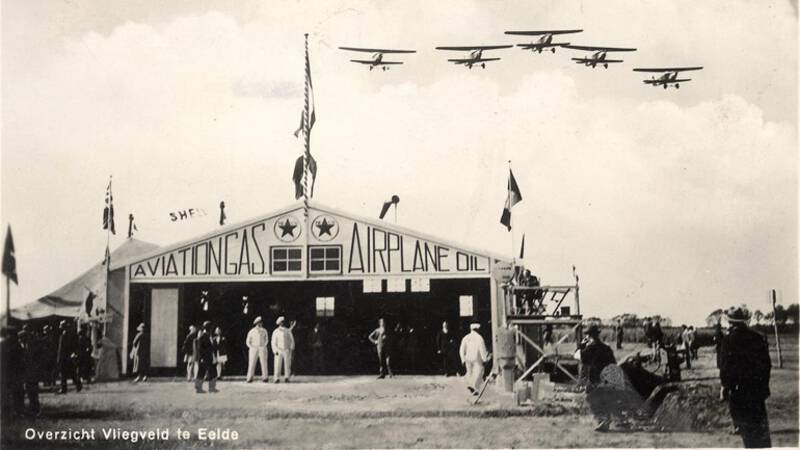
El aeropuerto comenzó bajo el nombre de «Hakenkampsveld» en 1928 y fue inaugurado oficialmente en 1931. Fue renombrado «Luchthaven Eelde» en 1933. Durante la Segunda Guerra Mundial, el ejército alemán ocupó el aeropuerto. Desde 1958, ha habido destinos europeos desde el aeropuerto. Desde 1988, el aeropuerto se llama Groningen Airport Eelde. El vuelo comercial de primera clase se realizó en 1934. En la Segunda Guerra Mundial, el aeropuerto fue utilizado como una base aérea alemana, pero el papel durante la guerra siguió siendo relativamente pequeño. El aeropuerto tal como lo conocemos en la actualidad se desarrolló a principios de la década de 1950. Después de que el gobierno decidiera en 1951 ampliar el aeropuerto, el aeropuerto de Groningen Eelde fue designado como puerto de desvío para Schiphol. Para asumir este papel, el campo tuvo que ser atendido. Por ejemplo, se construyeron las dos pistas actuales y se construyeron otras instalaciones para manejar el posible tráfico aéreo. La inauguración oficial del nuevo aeropuerto fue llevada a cabo por el príncipe Bernardo en 1957. El aeropuerto neerlandés actualmente es quizás más conocido por su papel como campo de entrenamiento y aeropuerto de desvío para el Amsterdam/Schiphol. En 2015, el aeropuerto transportó 220.710 pasajeros. El aeropuerto es también la base de la KLM Flight Academy, Noord Nederlandse Aero Club (NNAC) y General Enterprises. GroningenEelde Airport tiene una pista pavimentada asfaltada. La Pista 05/23 mide 2.500 m × 45 m (8.202 pies × 148 pies), que se ha ampliado desde 1.800 metros en 2013. Sólo la Pista 23 tiene un DME/ILS (localizador a 109,9 MHz, sin marcadores).
Historia Aeropuerto Groningen
Década de 1920-1930: primeros años
La historia de Groningen Airport Eelde (GAE) se remonta a 1927, cuando Hayo Hindriks, un ex concejal del Municipio Eelde, se acercó a la KLM (sin informar al consejo de la comunidad). Sabía que la KLM estaría interesado en un enlace aéreo entre Rotterdam, Ámsterdam y Groningen. El 13 de Julio de 1928, el consejo de la comunidad acordó una propuesta para asignar ‘Hakenkampsveld’, un terreno de doce hectáreas dentro del Municipio de Eelde, como aeropuerto. El aeropuerto fue inaugurado oficialmente por el Alcalde Jan Gerard Legro el 23 de Mayo de 1931. Alrededor de unos 40.000 visitantes vieron el espectáculo aéreo, que se celebró para el acto de la inauguración. El 15/08 del mismo año comenzó el primer servicio programado entre Eelde y Amsterdam/Schiphol, aunque no parecía viable económicamente. En 1933, el nombre del aeropuerto fue cambiado a «NV Luchthaven Eelde». Los accionistas eran las provincias de Groningen y Drenthe, los municipios de Groningen, Eelde y Assen y las Cámaras de Comercio y Fábricas de Groningen, Drenthe y las colonias de turba. Ahora había dinero para ampliar el aeropuerto. En ese momento la superficie del aeropuerto abarcaba doce hectáreas. Se estableció un nuevo servicio entre el aeropuerto y Amsterdam/Schiphol.
Década de 1940: Segunda Guerra Mundial
Durante la Segunda Guerra Mundial, entre 1940 y 1945, el aeropuerto fue ocupado por el ejército alemán. Sin embargo, sus hangares fueron completamente destruidos por soldados holandeses, cuando se retiraron de los invasores militarmente superiores. La ocupación fue un duro golpe a las prometedoras expectativas del aeropuerto, pero el aeropuerto jugó un papel importante en la guerra. Durante la ocupación, el aeropuerto fue ampliado considerablemente por los alemanes. Muchos hangares fueron construidos y el delantal se amplió para acomodar aviones de combate. A principios de 1945, en la postrimería, los alemanes abandonaron su»Fliegerhorst». Durante el retiro alemán, un miembro de la resistencia local, W.W. Krijthe, evitó que el aeropuerto explotara, cortando los cables de encendido de los explosivos. En el verano de 1945, soldados canadienses utilizaron el aeropuerto para almacenar vehículos de la 5.ª División Canadiense (Blindada). Los canadienses llamaron al sitio como «Finitocamp».
El aeródromo volvió a manos del NV Luchtvaartterrein Noord-Nederland. El Gobierno nacional asumió la mayor parte del costo de restaurar el sistema de drenaje dañado en el aeródromo. El Gobierno subsidió más desarrollos en el aeropuerto para que pudiera cumplir con las normas internacionales y permanecer registrado para la aviación. El aeropuerto fue nombrado como aeropuerto alternativo para vuelos con destino a Ámsterdam/Schiphol, en 1948. Para atender estos aviones desviadores, se tuvo que diseñar un nuevo plan base para la nivelación y drenaje de las pistas, con una pista principal de 1.800 metros de largo y una secundaria de 1.500 metros, vías de rodaje y delantal. Las nuevas pistas estaban finalmente listas para el servicio en 1953, haciendo del sitio un aeródromo oficial.
Década de 1950
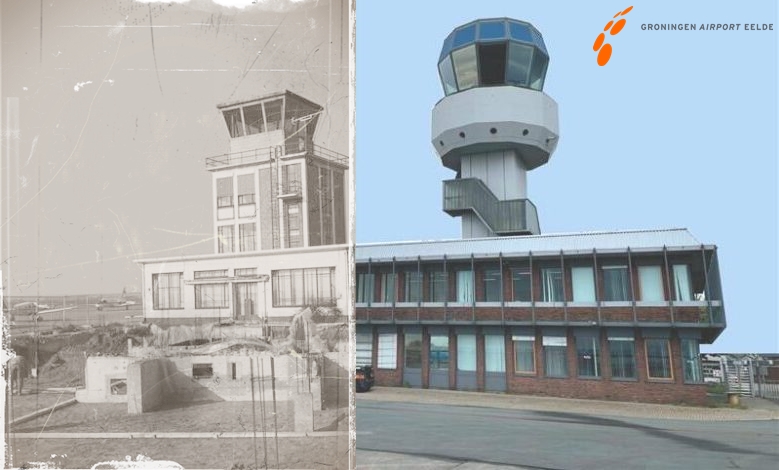
El 16 de Agosto de 1954, el Rijksluchtvaartschool (RLS) o Academia Nacional de Aviación, se trasladó al Aeropuerto Groningen desde Gilze-Rijen, donde la KLM Airlines adquiriría la propiedad de la RLS en 1991, convirtiéndose en la KLM Flight Academy. En el transcurso de los siguientes dos años después de 1954, una escuela de teoría de vuelos, la educación secundaria y final de vuelo, así como otras sucursales transferidas a Eelde, haciendo del aeropuerto un importante sitio de entrenamiento de aviación. En 1956, el aeropuerto fue renombrado como «Luchthaven Eelde NV». La inauguración oficial del complejo de edificios del aeropuerto tuvo lugar al año siguiente, el 15 de Mayo de 1957, por el Príncipe Bernard. El primer aterrizaje de un avión europeo tuvo lugar el 13 de Julio de 1958. Doce pasajeros abordaron el avión, haciendo un viaje a Mallorca para unas vacaciones de catorce días. En el mismo año, se puso en uso una nueva torre de control de tráfico aéreo.
Década 1960-1970
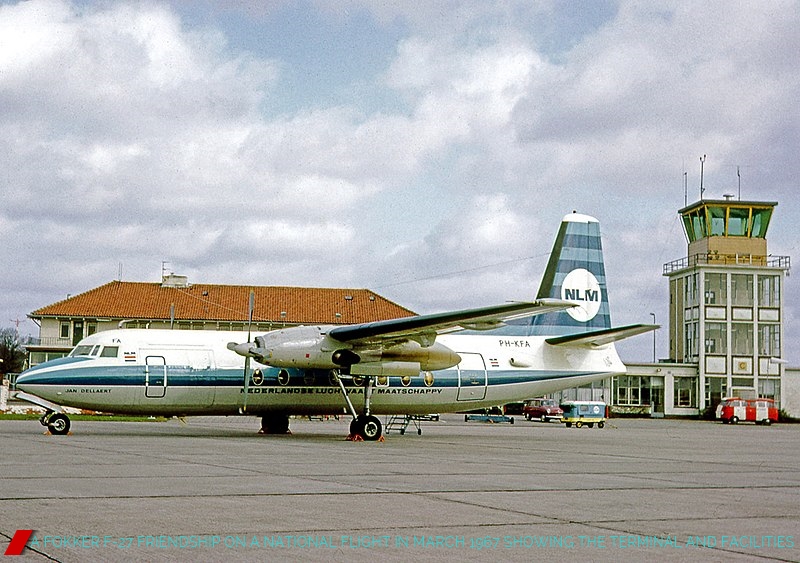
Durante la década de 1960, los servicios programados fueron restablecidos, inicialmente, vuelos nacionales operados por NLM. Se vio que el aeródromo tenía el potencial de operar útilmente como aeropuerto regional y desempeñar un papel en la infraestructura de la parte norte de los Países Bajos. Se creó el Comité de Estudio para el Desarrollo del Aeropuerto de Eelde. El Comité sugirió examinar más de cerca los aeropuertos regionales de otros países y ver cómo se habían desarrollado. El aeropuerto de Eelde parecía ser una parte clave de un sistema de infraestructura más grande en la región. Otro hallazgo fue que el ruido de los aviones era un problema mayor en Eelde que en aeropuertos similares. Por lo tanto, se estableció un comité de contaminación acústica. En 1977, se abrió una nueva terminal de pasajeros y se construyó más espacio de estacionamiento para los coches. Además de esto, se estableció un enlace de autobús a la ciudad de Groningen, mejorando la accesibilidad del aeropuerto. El trabajo comenzó a expandir el delantal y agregar un hangar. En el mismo año, el Ministerio holandés de Infraestructuras y Medio Ambiente publicó el Plan Estructural de Aeródromos Civiles. Este plan establecía que debía tenerse en cuenta una ampliación de la pista principal en 500 metros. Esto haría posibles vuelos de todos los tipos de aeronaves.
Década 1980-1990
De 1979 a 1982, se modernizaron los edificios que albergan el Servicio Estatal de Aviación (Rijksluchtvaartdienst) y el servicio meteorológico. Se construyó una nueva torre de control de tráfico aéreo. El nombre del aeródromo fue cambiado una vez más en 1988, convirtiéndose oficialmente en «Groningen Airport Eelde NV». Esto se decidió porque la importancia internacional del aeropuerto había aumentado constantemente con los años. Con el aeropuerto cada vez más concurrido debido a los vuelos de vacaciones, se decidió unirse a los dos salones de pasajeros existentes juntos. Esto creó una única sala de salidas capaz de contener a 200 pasajeros. La fusión también dio lugar a una sala de llegadas con una cinta transportadora. También se añadió un nuevo aparcamiento. Groningen Airport Eelde recibió una suma de 2,5 millones de florines para un nuevo salón de pasajes. Esta suma fue donada por el fondo europeo de apoyo ISP, que fue concedido por la provincia de Drenthe. Esto financiaría casi un tercio de los costos de la nueva sala.
En 1997, el Gobierno holandés planeaba detener el apoyo financiero a la mayoría de los aeropuertos regionales. A pesar de ello, el aeropuerto todavía tenía derecho a ƒ 25 millones de Florines/€ 11,3 millones de Euros para la ampliación de su pista principal. El 12 de Noviembre de 1999, el Gobierno estuvo de acuerdo con la propuesta de ampliar la pista, siempre que se terminara el vuelo de los circuitos de entrenamiento de aviones grandes.
Década 2000s–2010
En Abril de 2000, la mayoría del parlamento holandés no se opuso a la ampliación de la pista, pero debido a la modificación de la legislación ambiental y los procedimientos de objeción civil, tomaría doce años más hasta que el proyecto se iniciara realmente. Ryanair inició un servicio programado a su base londinense de Stansted en 2003. Este servicio atrajo a muchos pasajeros al aeropuerto. Sin embargo, este servicio no duró mucho; Ryanair rescindió el servicio en mayo de 2004. Una de las razones de esto fue la limitada longitud de la pista principal, limitando el alcance efectivo y la carga máxima del avión. Por último, el Consejo de Estado de la provincia dio el visto bueno definitivo a la ampliación de la pista el 15 de Febrero de 2012. Ryanair anunció tres nuevas rutas, regresando al aeropuerto después de ocho años. La pista extendida se puso en servicio el 24 de Abril de 2013. Sin embargo, una vez más Ryanair no operaba desde Eelde durante mucho tiempo, siendo el último vuelo en Noviembre de 2014. En Junio de 2014, la aerolínea de bajo coste británica Flybe comenzó un nuevo servicio durante todo el año a Londres-Southend. A partir de marzo de 2018 este servicio se amplió considerablemente, de seis a 18 vuelos por semana. El 19 de Septiembre de 2016, Nordica comenzó a operar dos vuelos al día entre Groningen y Copenhague. En noviembre de 2018, Nordica anunció que cerraría su base en Groningen en Diciembre, cerrando las rutas durante todo el año a Copenhague un Munich, así como servicios de temporada a Ibiza y Niza. El 4 de Marzo de 2019, los vuelos a Copenhague se reanudaron, ahora llevados a cabo por AIS Airlines con aviones BAe Jetstream 32 de 19 asientos. El 23 de Mayo de 2021 el Aeropuerto Groningen/Eelde celebra su 90 aniversarios.
Aeropuerto del Norte
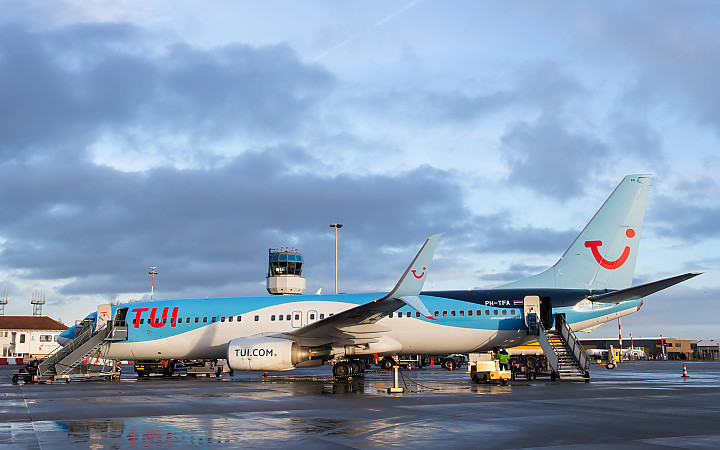
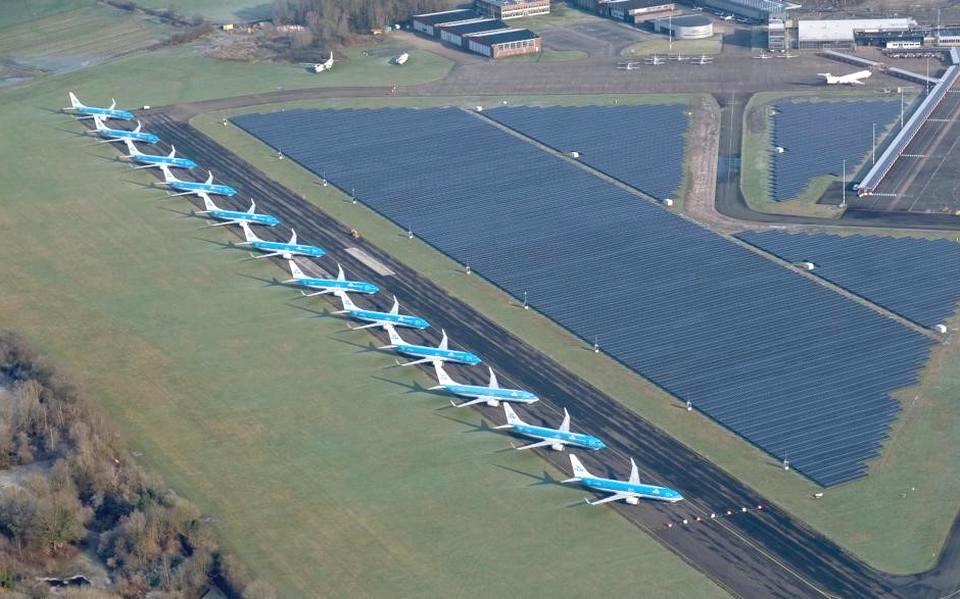
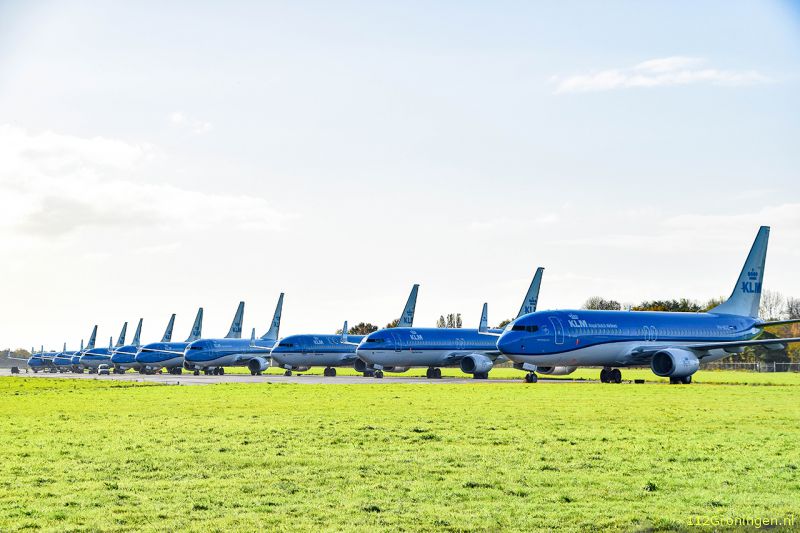
El denominado «Aeropuerto del Norte» se ha convertido en un aeropuerto de trayectoria importante. El centro de formación de KLM se encuentra en el aeropuerto local en Groningen, con el que desempeña un papel importante en la aviación holandesa. Las compañías aéreas Transavia, TUIfly y Corendon Airlines, entre otras ofrecen vuelos regulares y vacacionales. Sin embargo, durante el período de la actual pandemia de corinavirus el aeropuerto también ha alojado aeronaves como almacenamiento temporal entre ellos para la compañía KLM Airlines que tuvieron que ser obligados a permanecer en tierra.
Al Aeropuerto Groningen/Eelde también le gusta verse a sí mismo como el aeropuerto del futuro. Con un parque solar más grande, una iniciativa de innovación y sostenibilidad y el desarrollo del hidrógeno, el aeropuerto quiere centrarse en una aviación innovadora y sostenible.
Ξ 90th Anniversaries Groningen Airport Ξ
Groningen airport eelde celebrates its 90th anniversary
The Groningen/Eelde Airport GRQ/EHGG celebrates its 90th anniversary on May 23, 2021. In 1931 the airfield was officially opened. It is a minor international airport in the northeast of the Netherlands. It is located near Eelde in the Province of Drenthe, 4.8 nautical miles/8.9 km/5.5 miles south of the city of Groningen in the Province of Groningen.
The airport started under the name «Hakenkampsveld» in 1928 and was officially opened in 1931. It was renamed «Luchthaven Eelde» in 1933. During World War II, the German army occupied the airport. Since 1958, there have been European destinations from the airport. Since 1988, the airport has been called Groningen Airport Eelde. The first class commercial flight took place in 1934. In World War II, the airport was used as a German air base, but the role during the war remained relatively small. The airport as we know it today was developed in the early 1950s. After the government decided in 1951 to expand the airport, Groningen Eelde Airport was designated as a diversion port for Schiphol. To take on this role, the field had to be tended. For example, the two current runways were built and other facilities were built to handle possible air traffic. The official opening of the new airport was carried out by Prince Bernard in 1957. The Dutch airport today is perhaps best known for its role as a training ground and diversion airport for Amsterdam/Schiphol. In 2015, the airport carried 220,710 passengers. The airport is also home to the KLM Flight Academy, Noord Nederlandse Aero Club (NNAC), and General Enterprises. GroningenEelde Airport has an asphalt paved runway. Runway 05/23 measures 2,500 m×45 m (8,202 ft×148 ft), which has been expanded from 1,800 meters in 2013. Only Runway 23 has a DME/ILS (locator at 109.9 MHz, no markers).
Groningen Airport History
Decade 1920-1930s: early years
The history of Groningen Airport Eelde (GAE) dates back to 1927, when Hayo Hindriks, a former councilor of the Eelde Municipality, approached the KLM (without informing the community council). He knew that KLM would be interested in an air link between Rotterdam, Amsterdam and Groningen. On July 13, 1928, the community council agreed on a proposal to assign ‘Hakenkampsveld’, a twelve hectare piece of land within the Municipality of Eelde, as an airport. The airport was officially opened by Mayor Jan Gerard Legro on May 23, 1931. Around 40,000 visitors saw the air show, which was held for the opening ceremony. On 08/15 of the same year, the first scheduled service between Eelde and Amsterdam/Schiphol began, although it did not seem economically viable. In 1933, the name of the airport was changed to «NV Luchthaven Eelde». The shareholders were the provinces of Groningen and Drenthe, the municipalities of Groningen, Eelde and Assen and the Chambers of Commerce and Factories of Groningen, Drenthe and the peat colonies. Now there was money to expand the airport. At that time the surface of the airport covered twelve hectares. A new service was established between the airport and Amsterdam/Schiphol.
Decade 1940s: World War II
During World War II, between 1940 and 1945, the airport was occupied by the German army. However, their hangars were completely destroyed by Dutch soldiers, when the militarily superior invaders withdrew. The occupation was a severe blow to the airport’s promising expectations, but the airport played a major role in the war. During the occupation, the airport was considerably expanded by the Germans. Many hangars were built and the apron was enlarged to accommodate fighter jets. At the beginning of 1945, in the end, the Germans abandoned their «Fliegerhorst». During the German retreat, a member of the local resistance, W.W. Krijthe, prevented the airport from exploding by severing the ignition wires from the explosives. In the summer of 1945, Canadian soldiers used the airport to store vehicles for the Canadian 5th Division (Armored). Canadians called the site «Finitocamp».
The airfield was returned to the NV Luchtvaartterrein Noord-Nederland. The national government assumed most of the cost of restoring the damaged drainage system at the airfield. The government subsidized further developments at the airport so that it could meet international standards and remain registered for aviation. The airport was named as an alternative airport for flights to Amsterdam/Schiphol in 1948. In order to serve these diverter aircraft, a new base plan had to be designed for the leveling and drainage of the runways, with a main runway of 1,800 meters of long and a secondary of 1,500 meters, taxiways and apron. The new runways were finally ready for service in 1953, making the site an official airfield.
Decade 1950s
On August 16, 1954, the Rijksluchtvaartschool (RLS) or National Aviation Academy, moved to Groningen Airport from Gilze-Rijen, where KLM Airlines would acquire ownership of the RLS in 1991, becoming the KLM Flight Academy. Over the course of the next two years after 1954, a flight theory school, secondary and final flight education, as well as other branches transferred to Eelde, making the airport a major aviation training site. In 1956, the airport was renamed «Luchthaven Eelde NV». The official opening of the airport building complex took place the following year, May 15, 1957, by Prince Bernard. The first landing of a European plane took place on July 13, 1958. Twelve passengers boarded the plane, making a trip to Mallorca for a fourteen-day vacation. In the same year, a new air traffic control tower was put into use.
Decade 1960-1970s
During the 1960s, scheduled services were reestablished, initially on domestic flights operated by NLM. The airfield was seen to have the potential to usefully operate as a regional airport and play a role in the infrastructure of the northern part of the Netherlands. The Eelde Airport Development Study Committee was created. The Committee suggested taking a closer look at regional airports in other countries and seeing how they had developed. Eelde airport appeared to be a key part of a larger infrastructure system in the region. Another finding was that aircraft noise was a bigger problem at Eelde than at similar airports. Therefore, a noise pollution committee was established. In 1977, a new passenger terminal was opened and more parking space for cars was built. In addition to this, a bus link to the city of Groningen was established, improving the accessibility of the airport. Work began to expand the apron and add a hangar. In the same year, the Dutch Ministry of Infrastructure and Environment published the Structural Plan for Civil Aerodromes. This plan established that an extension of the main runway by 500 meters should be taken into account. This would make flights of all types of aircraft possible.
Decade 1980-1990
From 1979 to 1982, the buildings housing the State Aviation Service (Rijksluchtvaartdienst) and the meteorological service were modernized. A new air traffic control tower was built. The name of the airfield was changed once more in 1988, officially becoming «Groningen Airport Eelde NV». This was decided because the international importance of the airport had steadily increased over the years. With the airport becoming increasingly crowded due to holiday flights, it was decided to join the two existing passenger lounges together. This created a single departure hall capable of holding 200 passengers. The merger also resulted in an arrivals hall with a conveyor belt. A new car park was also added. Groningen Airport Eelde received a sum of 2.5 million guilders for a new hall. This sum was donated by the European ISP support fund, which was awarded by the province of Drenthe. This would finance almost a third of the costs of the new room.
In 1997, the Dutch government planned to stop financial support for most regional airports. Despite this, the airport was still entitled to ƒ 25 million Florins/€ 11.3 million for the expansion of its main runway. On November 12, 1999, the Government agreed with the proposal to expand the runway, provided that the flight of the training circuits of large aircraft was completed.
Decade 2000–2010
In April 2000, the majority of the Dutch parliament did not oppose the extension of the runway, but due to the change in environmental legislation and civil objection procedures, it would take twelve more years for the project to actually start. Ryanair started a scheduled service to its London base in Stansted in 2003. This service attracted many passengers to the airport. However, this service did not last long; Ryanair terminated service in May 2004. One reason for this was the limited length of the main runway, limiting the effective range and maximum load of the aircraft. Finally, the Council of State of the province gave the final approval to the extension of the runway on February 15, 2012. Ryanair announced three new routes, returning to the airport after eight years. The extended runway was put into service on April 24, 2013. However, once again Ryanair did not operate from Eelde for a long time, the last flight being in November 2014. In June 2014, the British low-cost airline Flybe started a new year-round service to London-Southend. As of March 2018, this service was considerably expanded, from six to 18 flights per week. On September 19, 2016, Nordica began operating two flights a day between Groningen and Copenhagen. In November 2018, Nordica announced that it would close its base in Groningen in December, closing year-round routes to Copenhagen and Munich, as well as seasonal services to Ibiza and Nice. On March 4, 2019, flights to Copenhagen resumed, now carried out by AIS Airlines with 19-seat BAe Jetstream 32 aircraft. On May 23, 2021, Groningen/Eelde Airport celebrates its 90th anniversary.
North Airport
The so-called «North Airport» has become an airport with an important trajectory. KLM’s training center is located at the local airport in Groningen, with which it plays an important role in Dutch aviation. The airlines Transavia, TUIfly and Corendon Airlines, among others, offer scheduled and vacation flights. However, during the period of the current corinavirus pandemic the airport has also housed aircraft as temporary storage between them for the KLM Airlines company that had to be forced to remain on the ground.
Groningen/Eelde Airport also likes to see itself as the airport of the future. With a larger solar park, an innovation and sustainability initiative and the development of hydrogen, the airport wants to focus on innovative and sustainable aviation.
Ξ 90-jarig jubileum Groningen Airport Ξ
Groningen Airport Eelde viert haar 90-jarig bestaan
De Luchthaven Groningen/Eelde GRQ/EHGG viert op 23 Mei 2021 haar 90-jarig bestaan. In 1931 werd het vliegveld officieel geopend. Het is een kleine internationale luchthaven in het noordoosten van Nederland. Het is gelegen nabij Eelde in de Provincie Drenthe, 4,8 zeemijl/8,9 km/5,5 mijl ten zuiden van de stad Groningen in de provincie Groningen.
Het vliegveld begon in 1928 onder de naam ,,Hakenkampsveld» en werd officieel geopend in 1931. Het werd omgedoopt tot ,,Luchthaven Eelde» in 1933. Tijdens de Tweede Wereldoorlog werd het vliegveld bezet door het Duitse leger. Sinds 1958 zijn er Europese bestemmingen vanaf de luchthaven. Sinds 1988 heet de Luchthaven Groningen Airport Eelde. De eerste klas commerciële vlucht vond plaats in 1934. In de Tweede Wereldoorlog werd de luchthaven gebruikt als Duitse luchtmachtbasis, maar de rol tijdens de oorlog bleef relatief klein. De luchthaven zoals we die nu kennen is ontwikkeld in het begin van de jaren 50. Nadat de regering in 1951 besloot de luchthaven uit te breiden, werd Groningen Eelde Airport aangewezen als omleidingshaven voor Schiphol. Om deze rol op zich te nemen, moest het veld worden onderhouden. Zo werden de twee huidige start en landingsbanen aangelegd en werden andere voorzieningen gebouwd om mogelijk vliegverkeer af te handelen. De officiële opening van de nieuwe luchthaven vond plaats in 1957 door Prins Bernard. De Nederlandse luchthaven is tegenwoordig misschien wel het meest bekend vanwege haar rol als oefenterrein en omleidingsluchthaven voor Amsterdam/Schiphol. In 2015 vervoerde de luchthaven 220.710 passagiers. De luchthaven is ook de thuisbasis van de KLM Flight Academy, de Noord Nederlandse Aero Club (NNAC) en General Enterprises. Groningen Airport Eelde heeft een geasfalteerde landingsbaan. Baan 05/23 meet 2.500 m x 45 m (8.202 ftx148 ft), die in 2013 is uitgebreid van 1.800 meter. Alleen baan 23 heeft een DME/ILS (locator op 109,9 MHz, geen markeringen).
Groningen Airport History
Decennium 1920-1930: vroege jaren
De geschiedenis van Groningen Airport Eelde (GAE) gaat terug tot 1927, toen Hayo Hindriks, een voormalig wethouder van de gemeente Eelde, de KLM benaderde (zonder de gemeenteraad te informeren). Hij wist dat KLM geïnteresseerd zou zijn in een luchtverbinding tussen Rotterdam, Amsterdam en Groningen. Op 13 Juli 1928 stemde de gemeenteraad in met een voorstel om ,,Hakenkampsveld» een stuk land van twaalf hectare binnen de gemeente Eelde, toe te wijzen als luchthaven. De luchthaven werd op 23 Mei 1931 officieel geopend door burgemeester Jan Gerard Legro. Ongeveer 40.000 bezoekers zagen de vliegshow, die werd gehouden voor de openingsceremonie. Op 15/08 van datzelfde jaar begon de eerste lijndienst tussen Eelde en Amsterdam/Schiphol, hoewel deze economisch niet levensvatbaar leek. In 1933 werd de naam van de luchthaven gewijzigd in ,,NV Luchthaven Eelde». De aandeelhouders waren de provincies Groningen en Drenthe, de gemeenten Groningen, Eelde en Assen en de Kamers van Koophandel en Fabrieken van Groningen, Drenthe en de veenkoloniën. Nu was er geld om de luchthaven uit te breiden. Op dat moment besloeg de oppervlakte van de luchthaven twaalf hectare. Er is een nieuwe dienst tot stand gekomen tussen de luchthaven en Amsterdam/Schiphol.
Decennium 1940: Tweede Wereldoorlog
Tijdens de Tweede Wereldoorlog, tussen 1940 en 1945, werd de luchthaven bezet door het Duitse leger. Hun hangars werden echter volledig verwoest door Nederlandse soldaten, toen de militair superieure indringers zich terugtrokken. De bezetting was een zware klap voor de veelbelovende verwachtingen van de luchthaven, maar de luchthaven speelde een grote rol in de oorlog. Tijdens de bezetting werd het vliegveld flink uitgebreid door de Duitsers. Er werden veel hangars gebouwd en het platform werd vergroot om plaats te bieden aan straaljagers. Begin 1945, in de nasleep, lieten de Duitsers hun,,Fliegerhorst» achter. Tijdens de Duitse terugtocht heeft een lid van het lokale verzet, W.W. Krijthe, voorkwam dat de luchthaven explodeerde door de ontstekingskabels van de explosieven door te snijden. In de zomer van 1945 gebruikten Canadese soldaten het vliegveld om voertuigen te stallen voor de Canadese 5th Division (Armoured). Canadezen noemden de site ,,Finitocamp».
Het vliegveld is teruggegeven aan de NV Luchtvaartterrein Noord-Nederland. De nationale overheid nam de meeste kosten voor het herstel van het beschadigde afvoersysteem op het vliegveld op zich. De overheid subsidieerde verdere ontwikkelingen op de luchthaven zodat deze kon voldoen aan internationale standaarden en geregistreerd kon blijven voor de luchtvaart. De luchthaven werd genoemd als alternatieve luchthaven voor vluchten naar Amsterdam/Schiphol in 1948. Om deze omleidingsvliegtuigen te bedienen moest een nieuw basisplan worden ontworpen voor het egaliseren en afvoeren van de start en landingsbanen, met een hoofdbaan van 1.800 meter lang en een secundaire van 1.500 meter, taxibanen en platform. De nieuwe banen waren eindelijk klaar voor gebruik in 1953, waardoor het een officieel vliegveld werd.
Decennium 50
Op 16 Augustus 1954 verhuisde de Rijksluchtvaartschool (RLS) of National Aviation Academy vanuit Gilze-Rijen naar Groningen Airport, waar KLM Airlines in 1991 eigenaar zou worden van de RLS en de KLM Flight Academy zou worden. In de loop van de volgende twee jaar, na 1954, werden een vliegtheorie-school, een middelbare en laatste vliegopleiding en andere takken overgebracht naar Eelde, waardoor de luchthaven een belangrijke luchtvaartopleidingslocatie werd. In 1956 werd de luchthaven omgedoopt tot ,,Luchthaven Eelde NV». De officiële opening van het gebouwencomplex van de luchthaven vond het jaar daarop, 15 Mei 1957, plaats door Prins Bernard. De eerste landing van een Europees vliegtuig vond plaats op 13 Juli 1958. Twaalf passagiers stapten in het vliegtuig en maakten een reis naar Mallorca voor een veertiendaagse vakantie. In hetzelfde jaar werd een nieuwe verkeerstoren in gebruik genomen.
Decennium 1960-1970
In de jaren zestig werden de lijndiensten hersteld, aanvankelijk op binnenlandse vluchten van NLM. Het vliegveld bleek de potentie te hebben om als regionale luchthaven zinvol te opereren en een rol te spelen in de infrastructuur van Noord-Nederland. De Studiecommissie Luchthavenontwikkeling Eelde werd opgericht. De commissie stelde voor regionale luchthavens in andere landen nader te bekijken en te kijken hoe deze zich hebben ontwikkeld. Luchthaven Eelde bleek een belangrijk onderdeel te zijn van een groter infrastructuursysteem in de regio. Een andere bevinding was dat vliegtuiglawaai op Eelde een groter probleem was dan op vergelijkbare luchthavens. Daarom is er een commissie geluidshinder opgericht. In 1977 werd een nieuwe passagiersterminal geopend en kwam er meer parkeerruimte voor auto’s. Daarnaast is er een busverbinding met de stad Groningen tot stand gekomen, waardoor de bereikbaarheid van de luchthaven is verbeterd. Het werk begon om het platform uit te breiden en een hangar toe te voegen. In hetzelfde jaar publiceerde het Nederlandse Ministerie van Infrastructuur en Milieu het Structuurplan Civiele Luchtvaartterreinen. In dit plan is bepaald dat rekening gehouden moet worden met een verlenging van de hoofdbaan met 500 meter. Dit zou vluchten van alle soorten vliegtuigen mogelijk maken.
Decennium 1980-1990
Van 1979 tot 1982 werden de gebouwen van de Rijksluchtvaartdienst en de meteorologische dienst gemoderniseerd. Er werd een nieuwe verkeerstoren gebouwd. De naam van het vliegveld werd in 1988 nogmaals veranderd en werd officieel ,,Groningen Luchtvaart Eelde NV». Dit is besloten omdat het internationale belang van de luchthaven in de loop der jaren gestaag is toegenomen. Omdat de luchthaven steeds voller wordt door vakantievluchten, is besloten om de twee bestaande passagierslounges samen te voegen. Hierdoor ontstond één vertrekhal met plaats voor 200 passagiers. De fusie resulteerde ook in een aankomsthal met lopende band. Er werd ook een nieuwe parkeerplaats toegevoegd. Groningen Eelde Luchtvaart ontving een bedrag van 2,5 miljoen gulden voor een nieuwe hal. Dit bedrag is gedoneerd door het Europese ISP-ondersteuningsfonds, dat is toegekend door de Provincie Drenthe. Hiermee zou bijna een derde van de kosten van de nieuwe kamer worden gefinancierd.
In 1997 was de Nederlandse regering van plan de financiële steun aan de meeste regionale luchthavens stop te zetten. Desondanks had de luchthaven recht op ƒ 25 miljoen gulden/€ 11,3 miljoen voor de uitbreiding van haar hoofdbaan. Op 12 November 1999 stemde de regering in met het voorstel om de landingsbaan uit te breiden, op voorwaarde dat de vlucht van de opleidingscircuits van grote vliegtuigen was voltooid.
Decennium 2000 -2010
In April 2000 was d meerderheid van het Nederlandse parlement niet tegen de verlenging van de baan, maar door de wijziging van milieuwetgeving en civiele bezwaarprocedures zou het nog twaalf jaar duren voordat het project daadwerkelijk van start ging. Ryanair startte in 2003 een lijndienst naar zijn Londense basis in Stansted. Deze dienst trok veel passagiers naar de luchthaven. Deze dienst duurde echter niet lang; Ryanair beëindigde de dienst in mei 2004. Een reden hiervoor was de beperkte lengte van de hoofdbaan, waardoor het effectieve bereik en de maximale belasting van het vliegtuig beperkten. Ten slotte gaf de Raad van State van de provincie op 15 Februari 2012 de definitieve goedkeuring voor de verlenging van de landingsbaan. Ryanair kondigde drie nieuwe routes aan die na acht jaar terugkeren naar de luchthaven. De verlengde landingsbaan werd op 24 April 2013 in gebruik genomen. Ryanair heeft echter opnieuw lange tijd niet gevlogen vanaf Eelde, de laatste vlucht was in November 2014. In Juni 2014 startte de Britse lagekostenmaatschappij Flybe een nieuwe het hele jaar door dienst naar London-Southend. Vanaf maart 2018 is deze service aanzienlijk uitgebreid, van zes naar 18 vluchten per week. Op 19 september 2016 startte Nordica met twee vluchten per dag tussen Groningen en Kopenhagen. In November 2018 kondigde Nordica aan dat het zijn basis in Groningen in December zou sluiten en het hele jaar door routes naar Kopenhagen en München zou sluiten, evenals seizoensgebonden diensten naar Ibiza en Nice. Op 4 Maart 2019 werden de vluchten naar Kopenhagen hervat, nu uitgevoerd door AIS Airlines met BAe Jetstream 32-vliegtuigen met 19 zitplaatsen. Op 23 Mei 2021 viert Groningen/ Eelde Luchtvaart haar 90-jarig bestaan.
Luchthaven Noord
De zogenaamde ,,Luchtvaart Noord» is een luchthaven geworden met een belangrijk traject. Het trainingscentrum van KLM is gevestigd op de lokale luchthaven in Groningen en speelt daarmee een belangrijke rol in de Nederlandse luchtvaart. Onder meer de luchtvaartmaatschappijen Transavia, TUIfly en Corendon Airlines bieden lijn en vakantievluchten aan. Tijdens de huidige corinaviruspandemie heeft de luchthaven echter ook vliegtuigen gehuisvest als tijdelijke opslag tussen hen voor het bedrijf KLM Airlines dat noodgedwongen aan de grond moest blijven.
Groningen/Eelde Luchtvaart ziet zichzelf ook graag als de luchthaven van de toekomst. Met een groter zonnepark, een innovatie- en duurzaamheidsinitiatief en de ontwikkeling van waterstof wil de luchthaven inzetten op innovatieve en duurzame luchtvaart.
London/Heathrow recurre Rohde & Schwarz para mejorar seguridad
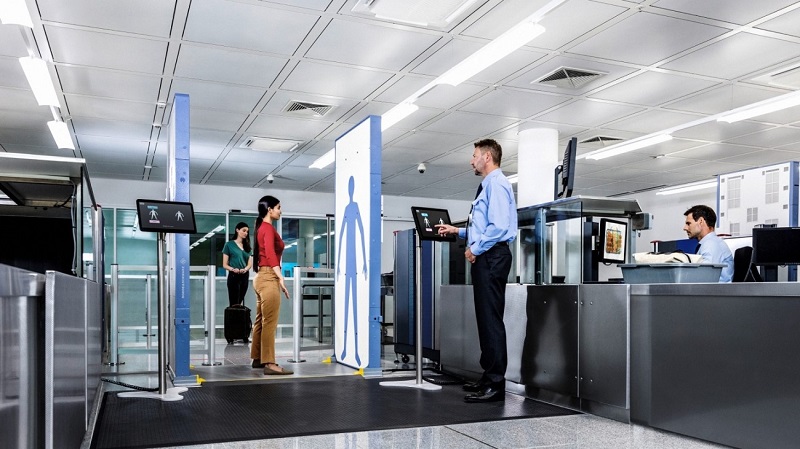
El Aeropuerto London/Heathrow/LHR ha seleccionado los scanners Quick Personnel Security (QPS) de la compañía Rohde & Schwarz para mejorar sus puntos de control de seguridad y minimizar el tiempo de espera de los pasajeros. Los escáneres R&S QPS201 se desplegarán en todo el aeropuerto de Heathrow y escanearán a todos los viajeros, personal y contratistas que se dirijan a los lugares de la parte aérea a la entrada. Con la ayuda de algoritmos de software entrenados por máquina, el escáner R&S QPS201 puede detectar todo tipo de sustancias potencialmente inseguras.
El Vicepresidente de Ventas de Rohde &Schwarz Europe, Frank Mackel, dijo: «El aeropuerto de Heathrow es el último aeropuerto internacional líder en adoptar el R&S QPS201, reforzando nuestra posición como solución de referencia para los aeropuertos de todo el mundo. Este escáner aborda los tres requisitos clave del aeropuerto, alta precisión de la detección de amenazas, baja frecuencia de falsas alarmas para minimizar los cambios manuales que consumen mucho tiempo y el rápido rendimiento para reducir los tiempos de espera de los pasajeros incluso en períodos ocupados».
El aeropuerto estaba buscando una solución integral que fuera capaz de satisfacer las necesidades de seguridad y rendimiento existentes y también pudiera actualizarse de acuerdo con los requisitos futuros. El escáner QPS201 de Rohde &Schwarz fue seleccionado debido a su capacidad para mejorarse con nuevos algoritmos después de la instalación. Habilitando una postura de manos abajo, estos escáneres llevan a cabo un escaneo de cuerpo entero en cuestión de segundos, indicando elementos sospechosos en una imagen para la privacidad de los pasajeros. Estos escáneres están equipados con tecnología que mejora la detección de amenazas al tiempo que minimiza el tiempo de procesamiento y las falsas alarmas.
A través de estas ganancias de rendimiento, los escáneres QPS201 reducen las comprobaciones manuales posteriores a la alarma, lo que garantiza el distanciamiento social durante la pandemia. Además, estos escáneres ayudan a evadir las colas excesivas, restaurando la paridad a los tiempos de análisis de equipaje y personal. El objetivo es proporcionar una experiencia positiva de los pasajeros manteniendo la seguridad en el aeropuerto. A principios de este año, Rohde &Schwarz anunció que el escáner QPS201 fue desplegado en el aeropuerto de Kerry (KIR), que se encuentra en Farranfore, Irlanda.
Heathrow selects Rohde & Schwarz
London/Heathrow uses Rohde & Schwarz to improve safety
London/Heathrow/LHR Airport has selected Rohde & Schwarz company Quick Personnel Security (QPS) scanners to enhance its security checkpoints and minimize passenger waiting time. The R&S QPS201 scanners will be deployed throughout Heathrow Airport and will scan all travelers, staff and contractors heading to the airside locations at the entrance. With the help of machine-trained software algorithms, the R&S QPS201 scanner can detect all kinds of potentially unsafe substances.
Rohde & Schwarz Europe Vice President of Sales Frank Mackel said: «Heathrow Airport is the latest leading international airport to adopt the R&S QPS201, reinforcing our position as the reference solution for airports around the world. This scanner addresses the three key airport requirements, high accuracy of threat detection, low frequency of false alarms to minimize time-consuming manual changes, and fast throughput to reduce passenger wait times even in busy periods».
The airport was looking for a comprehensive solution that was capable of meeting existing security and performance needs and could also be upgraded according to future requirements. The Rohde & Schwarz QPS201 scanner was selected due to its ability to be upgraded with new algorithms after installation. Enabling a hands-down pose, these scanners perform a full-body scan in seconds, indicating suspicious elements in an image for the privacy of passengers. These scanners are equipped with technology that improves threat detection while minimizing processing time and false alarms.
Through these performance gains, the QPS201 scanners reduce manual post-alarm checks, ensuring social distancing during the pandemic. In addition, these scanners help avoid excessive queues, restoring parity to baggage and personnel scan times. The goal is to provide a positive passenger experience while maintaining security at the airport. Earlier this year, Rohde & Schwarz announced that the QPS201 scanner was deployed at Kerry Airport (KIR), which is located in Farranfore, Ireland.
Arquitectura de aviación hacia concepto de modernización
La arquitectura de la aviación se ha transformado radicalmente. Mientras que los propios aeropuertos han crecido para dar cabida a innumerables programas y volúmenes de tráfico cada vez más altos cada año, los proyectos de construcción modernos van más allá de esta tipología familiar para explorar la naturaleza de los hangares, la taxonomía de los aeródromos y la reutilización. Mientras que los aeropuertos realmente sólo han surgido en el último siglo, la aviación ha capturado la imaginación de los diseñadores durante siglos.
Actualmente, los diseños de aviación contemporánea se están conceptualizando como obras explorativas y creativas. Diseñados en la intersección de personas, la arquitectura y el cielo, los siguientes proyectos muestran nuevos proyectos de aviación. Examinando las relaciones entre las nuevas tecnologías y los avances históricos, cada proyecto se realizó con diferentes escalas, programas y ensamblajes de materiales. Juntos, comienzan a mostrar cómo la arquitectura de la aviación contemporánea va más allá del aeropuerto para fomentar la contemplación y la conexión.
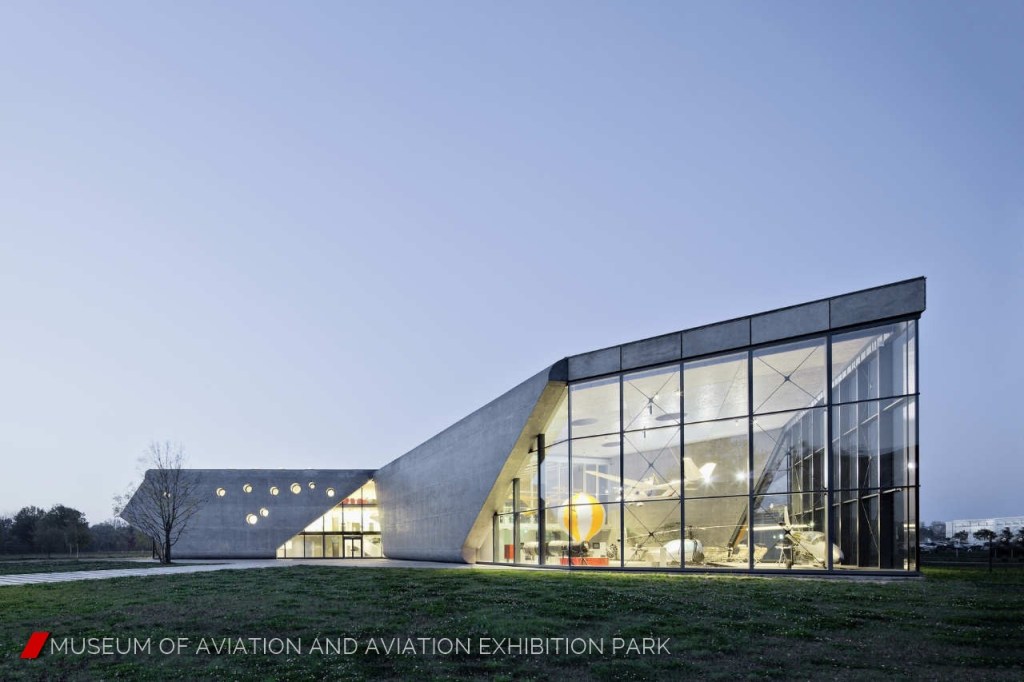
El Muzeum Lotnictwa es uno de los museos de aviación más grandes del mundo. Se encuentra en edificios y hangares históricamente pre-servidos del antiguo aeródromo histórico de Rakowice-Cyzyny en Cracovia, el primer aeródromo en terreno pulido, construido en 1912 para la flota aérea número 7 del Imperio austriaco-húngaro. En 2005 se lanzó un concurso para el nuevo edificio principal, el primer concurso paneuropeo para arquitectos, después de la adhesión de Polonia a la UE.
A lo largo de las orillas del río Huangpu de Shanghái, cinco tanques de combustible de aviación dados de baja una vez fueron abandonados en un sitio industrial vacío. Hoy en día, estos tanques y el sitio circundante, reliquias olvidadas del antiguo Aeropuerto longhua de la ciudad, han recibido nueva vida y relevancia por open architecture. En el transcurso de muchos años, los cinco tanques se convirtieron de contenedores de residuos a un vibrante centro de arte contemporáneo.
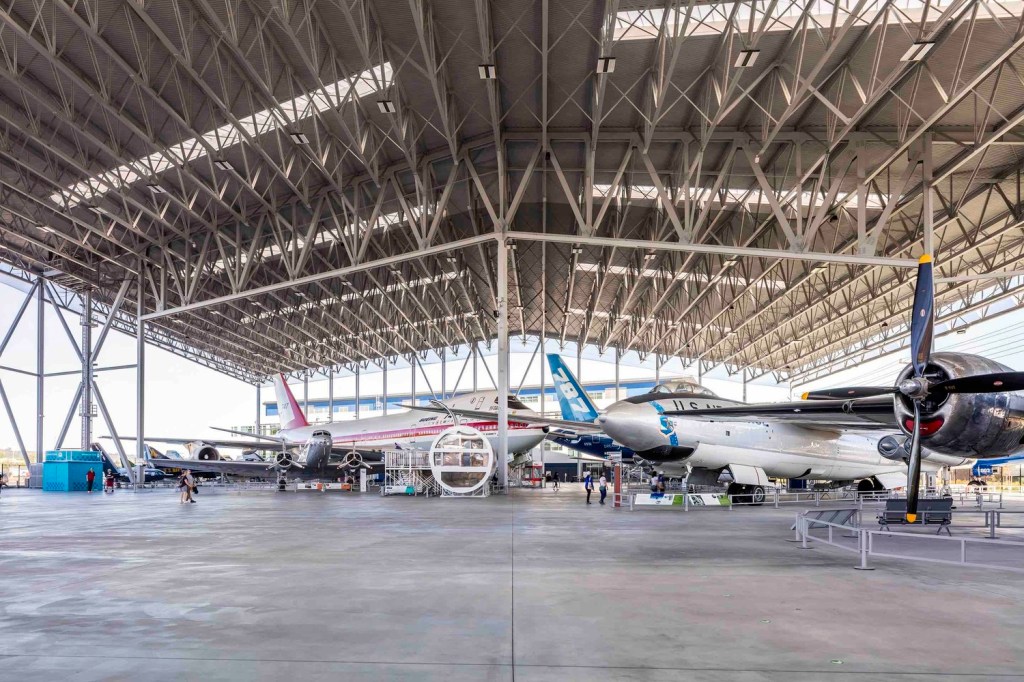
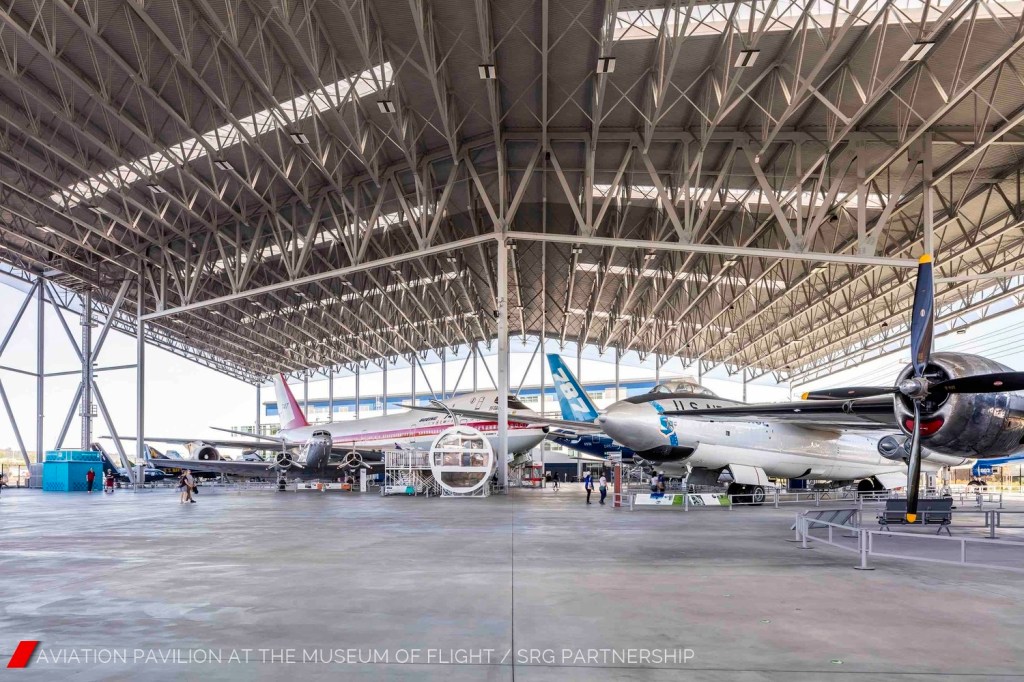
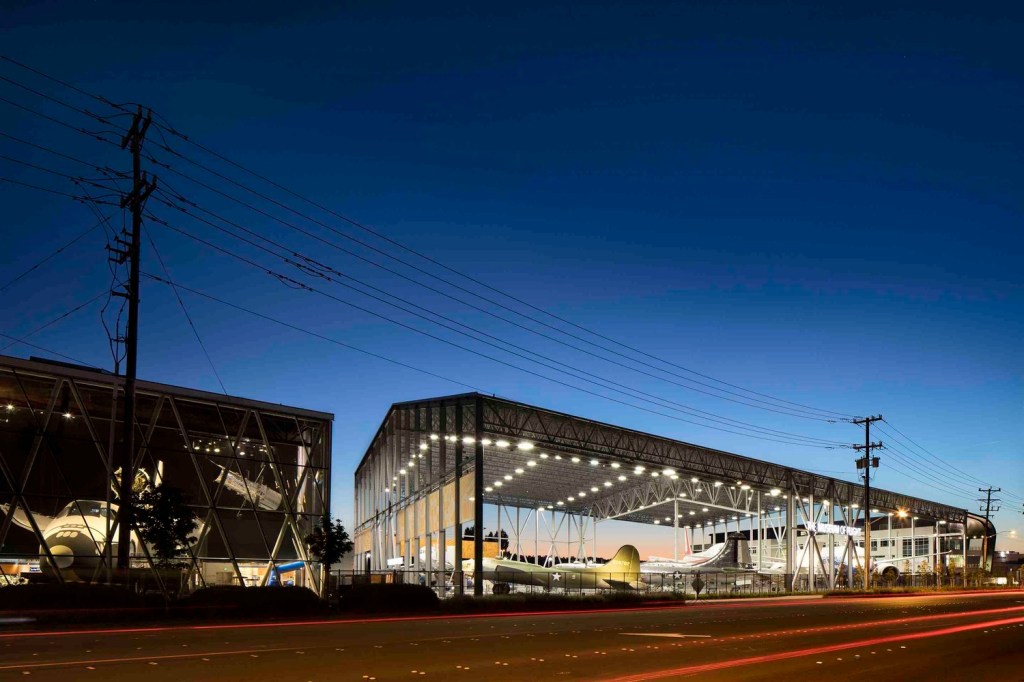
El Pabellón de Aviación del Museo del Vuelo es un techo de 135.000 pies cuadrados apoyado por columnas de acero y marcos de ortodoncia con una losa de pavimentación de hormigón de doce pulgadas. Alberga veinte aviones para una protección aumentada de los elementos y el acceso del cliente. Los aviones exhibidos incluyen los icónicos prototipos de Boeing 747 y 787, el Air Force One, el Concorde y otros aviones militares y comerciales históricos.
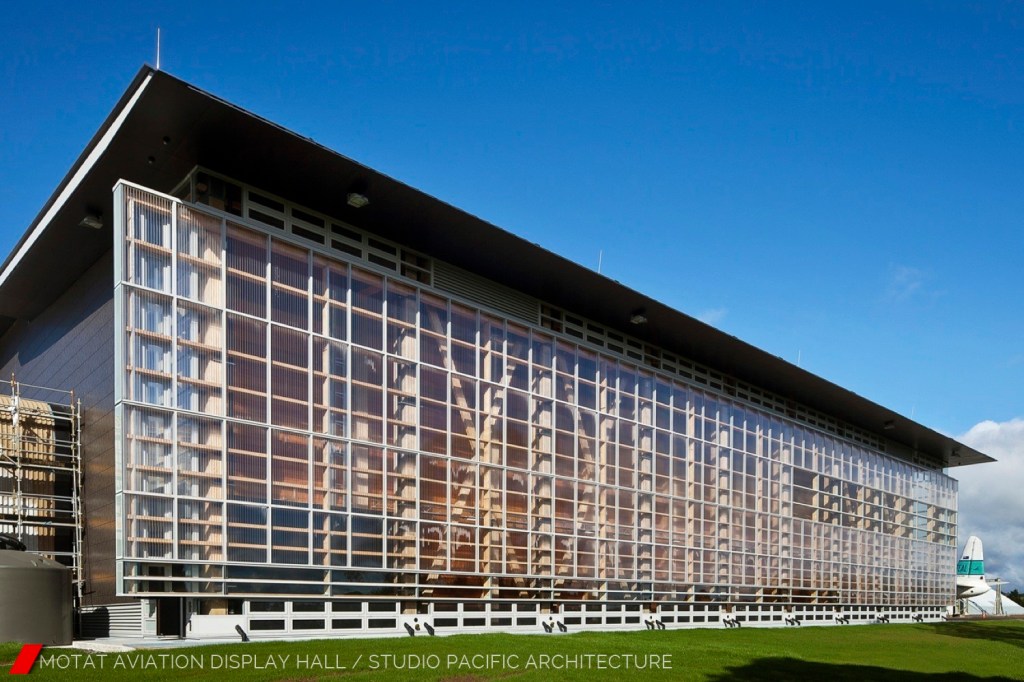
El Aviation Display Hall es una de las principales instalaciones museísticas de la colección de aviones históricos del Museo del Transporte y la Tecnología (MOTAT). Fue diseñado para ampliar el edificio de aviación existente en el sitio del museo Meola Road en Auckland. A 3300m2, la extensión permitirá a MOTAT albergar todas sus exhibiciones de aviación, algunas de las cuales son los únicos ejemplos restantes en el mundo, en un entorno protegido por primera vez.
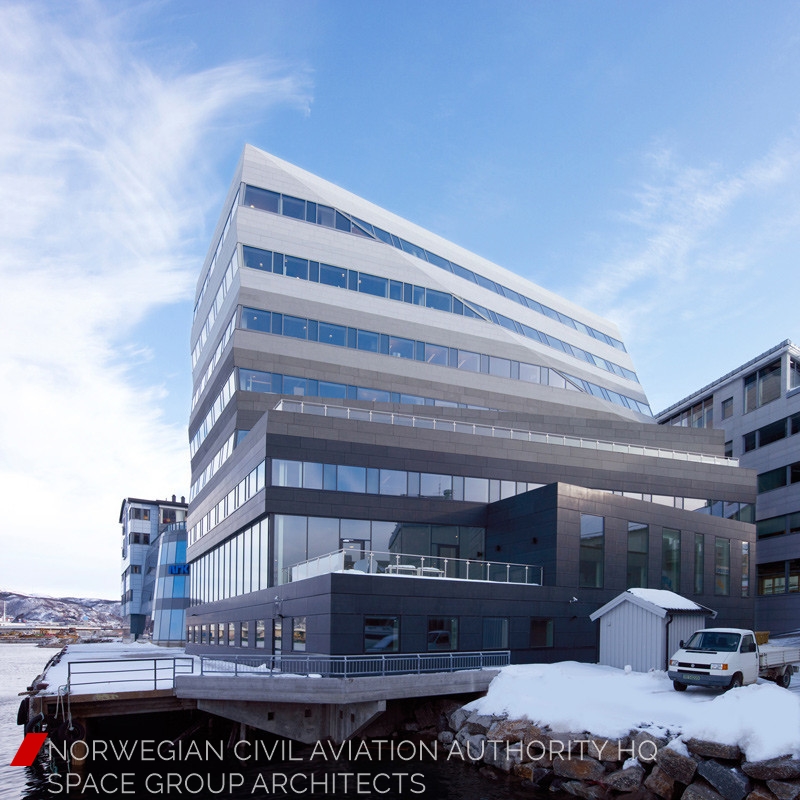
La construcción de una nueva sede para Luftfartstilsynet fue un desafío en la creación de un lugar para una organización desarraigada, trasplantada de Oslo a Bodø, y al hacerlo, la construcción de una nueva cultura de oficina. El sitio, una propiedad compacta frente al mar, está oculto de su dirección de la calle por el edificio NAV recientemente terminado. Aprovechando la diferencia de una historia entre el nivel clave y el nivel de la calle, el equipo perforó el edificio NAV con un túnel que se convierte en un puente programado (de recepción), conectando con el luftfartstilsynet independiente.
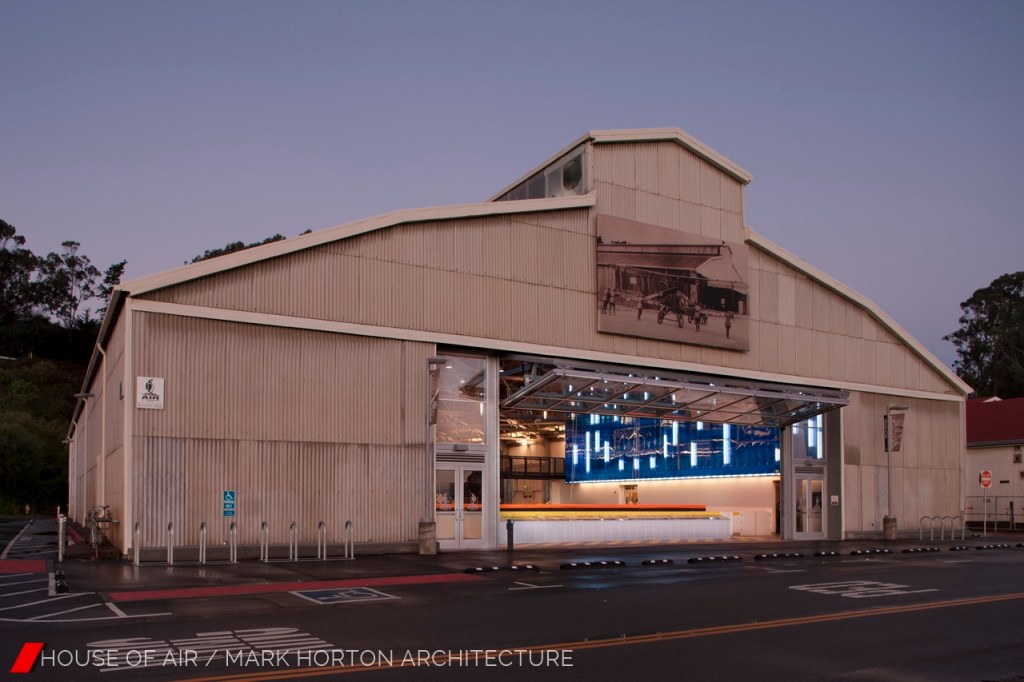
House of Air, iniciada en 2010 por dos jóvenes emprendedores interesados en el mundo del deporte de acción, es una instalación de trampolín que atiende a la población joven, enérgica y próspera de san Francisco activo. El sitio está al pie del puente Golden Gate y en el Parque Nacional Golden Gate, con amplias vistas a la bahía de San Francisco que se hacen aún más evidentes cuando se abre la puerta de la percha acristalada de 45′ de ancho.
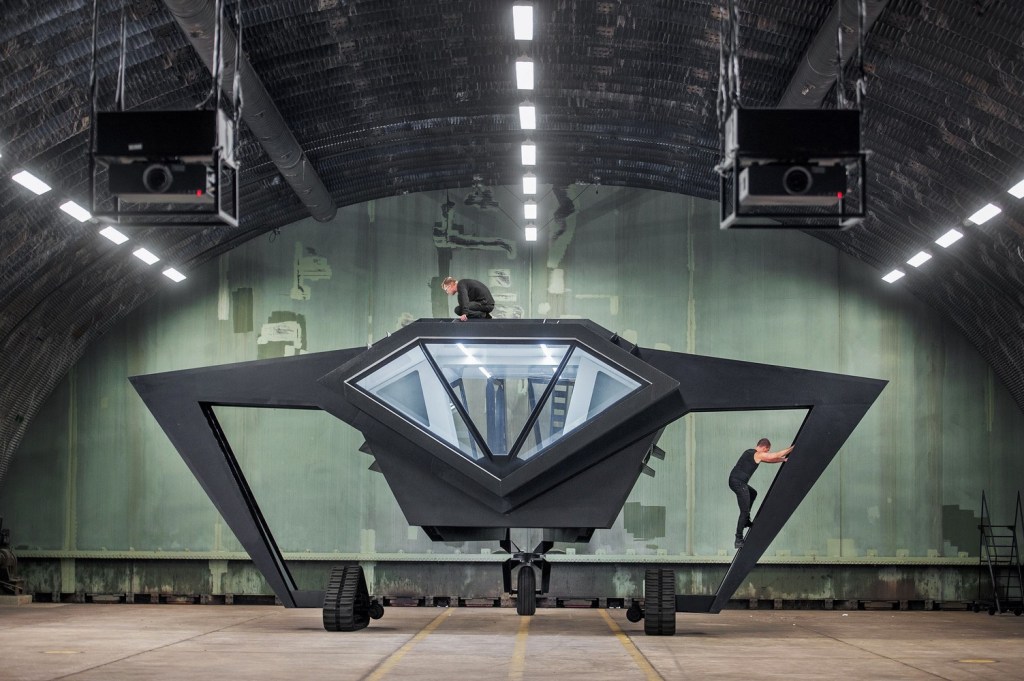
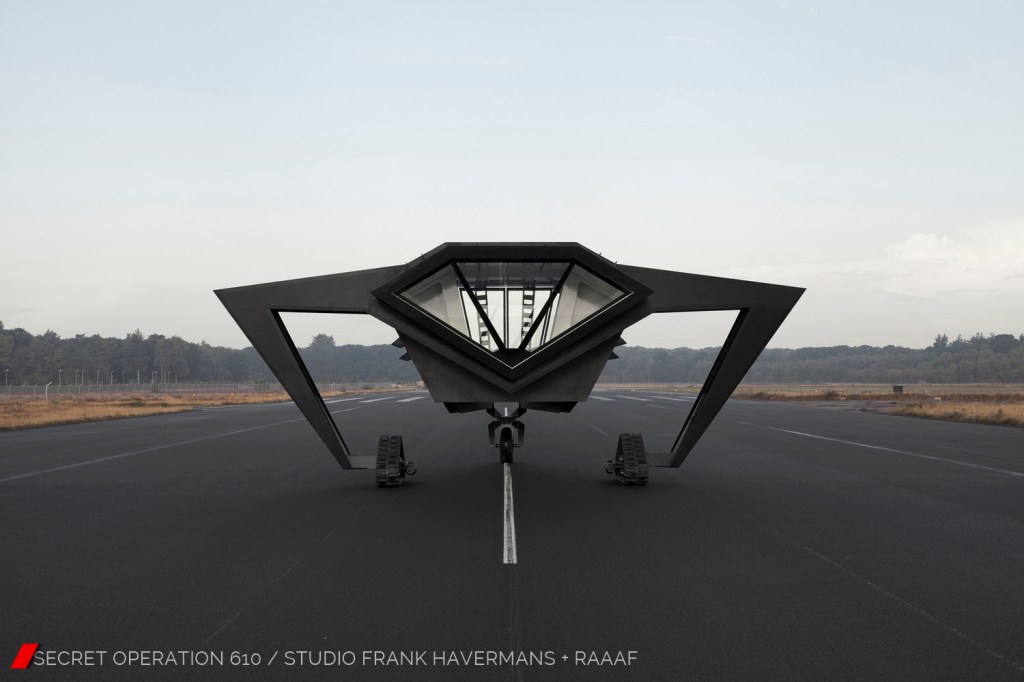
El Operación Secreta 610 es una solución móvil radical para el desafío de regeneración de transformar el búnker de aviones Shelter 610 en la antigua base aérea estadounidense de la OTAN Soesterberg de un hangar de aviones de combate F15 en un desafiante espacio de trabajo experimental para equipos más pequeños. El robusto objeto negro que hace referencia a las imágenes místicas militares de la Guerra Fría contiene un interior de trabajo funcional «básico» para un máximo de 10 personas.
Aviation architecture perspective
Aviation architecture towards modernization concept
The architecture of aviation has been radically transformed. While airports themselves have grown to accommodate myriad schedules and ever-increasing traffic volumes each year, modern construction projects go beyond this familiar typology to explore the nature of hangars, the taxonomy of airfields, and reuse. While airports have only really emerged in the last century, aviation has captured the imagination of designers for centuries.
Today, contemporary aviation designs are being conceptualized as explorative and creative works. Designed at the intersection of people, architecture, and the sky, the following projects showcase new aviation projects. Examining the relationships between new technologies and historical advances, each project was carried out with different scales, schedules, and material assemblies. Together, they begin to show how contemporary aviation architecture goes beyond the airport to encourage contemplation and connection.
The Muzeum Lotnictwa is one of the largest aviation museums in the world. It is housed in historically pre-served buildings and hangars of the former historic Rakowice-Cyzyny Airfield in Krakow, the first airfield on polished terrain, built in 1912 for the Austrian-Hungarian Empire’s number 7 air fleet. In 2005 a competition was launched for the new main building, the first pan-European competition for architects, after Poland’s accession to the EU.
Along the banks of Shanghai’s Huangpu River, five decommissioned aviation fuel tanks were once abandoned on an empty industrial site. Today these tanks and the surrounding site, forgotten relics of the city’s former longhua Airport, have been given new life and relevance by open architecture. Over the course of many years, the five tanks were converted from waste bins to a vibrant center for contemporary art.
The Museum of Flight Aviation Pavilion is a 135,000-square-foot ceiling supported by steel columns and orthodontic frames with a twelve-inch concrete paving slab. It houses twenty aircraft for increased protection from the elements and customer access. Aircraft on display include the iconic Boeing 747 and 787 prototypes, Air Force One, Concorde, and other historic military and commercial aircraft.
The Aviation Display Hall is one of the main museum facilities in the Museum of Transportation and Technology (MOTAT) collection of historic aircraft. It was designed to expand the existing aviation building on the site of the Meola Road museum in Auckland. At 3300m2, the extension will allow MOTAT to host all of its aviation exhibits, some of which are the only remaining examples in the world, in a protected environment for the first time.
Building a new headquarters for Luftfartstilsynet was a challenge in creating a place for an uprooted organization, transplanted from Oslo to Bodø, and in doing so, building a new office culture. The site, a compact beachfront property, is hidden from your street address by the recently completed NAV building. Taking advantage of the difference of a story between the key level and the street level, the team drilled the NAV building with a tunnel that becomes a programmed (reception) bridge, connecting to the independent luftfartstilsynet.
House of Air, started in 2010 by two young entrepreneurs interested in the world of action sports, is a trampoline facility serving the young, energetic and prosperous population of active San Francisco. The site is at the foot of the Golden Gate Bridge and in Golden Gate National Park, with expansive views of the San Francisco Bay that become even more apparent when the 45 ‘wide glass hanger door is opened.
Secret Operation 610 is a radical mobile solution to the regeneration challenge of transforming the Shelter 610 aircraft bunker into the former US NATO Soesterberg airbase from an F15 fighter aircraft hangar into a challenging experimental workspace for more teams. little ones. The sturdy black object that references Cold War military mystical imagery contains a «basic» functional working interior for up to 10 people.
Soesterberg -op de vooralige vliegbasis soesterberg wordt 14,15 sept en 21,22 sept het festival de basis gehouden. Met theather kunst en muziek. tussen bomen bunkers en landingsbanen. Hier wordt het kunstproject secret operations 610 klaargemaakt voor de opening. foto raymond rutting / de volkskrant
PUBLISHER: Airgways.com DBk: Archdaily.com / Raymond Rutting / Ethan Kaplan / Jens Willebrand / Jeroen Musch / Michiel de Cleene / Patrick Reynols / Airgways.com AW-POST: 202105201711AR
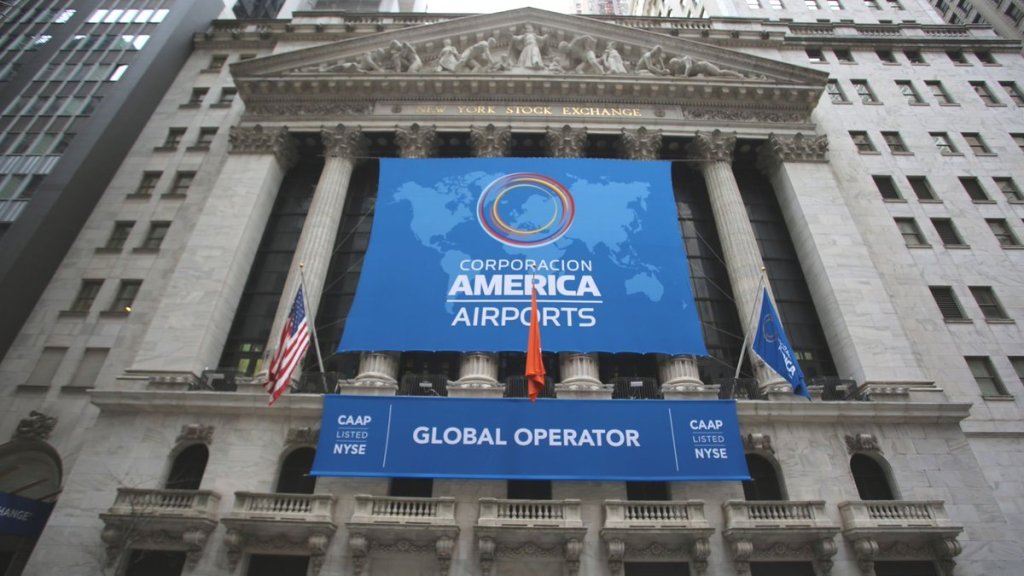
Corporación América Airports S.A. el mayor operador aeroportuario del sector privado basado en el número de aeropuertos bajo gestión informó este Miércoles 19/05 sus resultados consolidados no auditados para el período de tres meses terminado el 31 de Marzo de 2021. Los resultados financieros se expresan en millones de dólares estadounidenses y se preparan de acuerdo con las Normas Internacionales de Información Financiera (NIIF) emitidas por la Junta de Normas Internacionales de Contabilidad (IASB). A partir del 3Q2018, la compañía comenzó a reportar los resultados de sus subsidiarias argentinas que aplican hyperinflation accounting, de acuerdo con la Regla IAS 29 de la NIIF (IAS 29).
Aspectos 1Q2021
Los ingresos consolidados de US$ 138.2 millones de Dólares, un descenso de 54.4% interanual. Excluyendo el impacto de la regla IAS 29 de la NIIF, los ingresos disminuyeron 54.2%, a US$ 140.3 millones, lo que refleja principalmente disminuciones de US$ 113.6 millones de dólares en ingresos aeronáuticos, US$ 34.8 millones en ingresos comerciales impulsados por el impacto de la pandemia COVID-19, así como una disminución de US$ 13.5 millones en los ingresos de los servicios de construcción en Argentina, y en menor medida, Ecuador y Uruguay, lo que refleja un menor Capex en el período. Las métricas operativas clave disminuyeron yoY impactado por la pandemia, pero mejoraron secuencialmente: El tráfico de pasajeros fue de 6,5 millones, un 61,8% menos, pero aumentó un 27,9% desde los 5,1 millones del 4Q2020. El volumen de carga disminuyó 18.9% interanual a 67.9 mil toneladas, en comparación con una disminución secuencial de 5.9% de 72.1 mil toneladas en 4Q2020. Los movimientos de los aviones alcanzaron 98.4 mil, un 44.9% de disminución interanual, pero mejoraron 14.7% desde 85.8 mil en 4Q2020. La pérdida operativa fue de US$ 26,6 millones, en comparación con una ganancia operativa de US$ 31,3 millones de en el 1Q2020, lo que refleja principalmente el impacto de la pandemia en los ingresos, parcialmente compensado por un menor costo de los servicios y SG&A.
El EBITDA ajustado sobre una base «As Reported» fue de US$ 6.3 millones, una disminución de 92.3% desde US$ 80.9 millones en el 1Q2020. Excluyendo los cargos únicos en Argentina en relación con las comisiones profesionales por la liquidación de reclamaciones en el 1Q2021, el EBITDA ajustado habría sido de US$ 14.3 millones sobre una base reportada, o US$ 14.2 millones cuando se excluye el IAS29. Al excluir también una pérdida por deterioro en el 1Q2020 en Brasil, el EBITDA ajustado habría disminuido 83.5% en el trimestre desde US$ 86.1 millones en 1Q2020, mientras que el margen EBITDA ajustado Ex-IFRIC12 disminuyó a 12.4% desde 33.0% en 1Q2020. El 13 de Enero de 2021, La CAAP anunció que en virtud de la Resolución Nº 4/2021 de la Gaceta Oficial, el Organismo Regulador del Sistema Nacional de Aeropuertos (ORSNA) estableció un aumento en la tarifa internacional de pasajeros para los viajeros que salen de los aeropuertos AA2000 de US$ 6 a US$ 57, de acuerdo con lo dispuesto en las Condiciones Técnicas para la Prórroga que forman parte de la extensión de concesión de 10 años aprobada el 17 de Diciembre de 2020. En Febrero de 2021, CAAP recibió una propuesta de Aerolíneas Argentinas S.A. que ofrecía pagar las cantidades pendientes adeudadas a su filial AA2000 hasta el 31 de Marzo de 2020/AR$ 120,6 millones Pesos y US$ 36,5 millones. En Febrero de 2021, AA2000 renegoció el pago principal bajo el préstamo bancario sindicado con vencimiento en febrero de 2021 por un monto total de US$ 13.3 millones, y aplazó dicho monto a ser reembolsado bajo un nuevo calendario entre Marzo de 2022 y Febrero de 2023.
En Abril de 2021, Puerta del Sur (PDS), filial uruguaya de Corporación América, obtuvo una facilidad de US$ 10.0 millones con un banco comercial local. En Mayo de 2021, AA2000 renegoció un total de US$ 40.0 millones en pagos principales bajo el préstamo bancario sindicado, madurando en mayo, Agosto y Noviembre de 2021 por un monto de US$ 13.3 millones cada uno, y aplazó dicho monto a ser reembolsado en Mayo, Agosto y Noviembre de 2022.
Impactos pandemia
El brote de la pandemia ha generado una perturbación en la economía mundial y, en particular, en la industria de la aviación, lo que ha dado lugar a reducciones drásticas del tráfico de pasajeros. Desde Marzo de 2020, los gobiernos de todo el mundo aplicaron medidas para contener la propagación, incluido el cierre de fronteras y la prohibición de viajar, los bloqueos domésticos y las medidas de cuarentena. La situación general sigue siendo volátil, ya que los gobiernos de todo el mundo ajustan las prohibiciones de viaje o aplican requisitos para entrar o salir de sus países, incluidas las cuarentenas o las pruebas negativas de PCR Covid-19, basadas en la evolución de la situación sanitaria.
Las operaciones de la compañía se han visto gravemente afectadas por las prolongadas restricciones de vuelo en la mayoría de los países de operaciones, así como las prohibiciones de vuelos en muchos otros países del mundo. El tráfico total de pasajeros en Enero de 2021 disminuyó un 64,4% interanual, mostrando un ligero descenso en Febrero 2021, hasta una caída del 69,1% interanual y Marzo 2021, que descendió un 71,3% respecto a marzo de 2019. El tráfico de pasajeros, sin embargo, aumentó un 27,9% en comparación con el 4Q2020. Durante el 1Q2021, los vuelos comerciales fueron operados en todos los países de Corporación América, aunque todavía restringidos por prohibiciones gubernamentales a locales y extranjeros, y se aplicaron ciertos requisitos. También se vio afectada la actividad de carga, con un descenso interanual del 33,7%.
En la Argentina, Corporación América completó una extensión de 10 años del acuerdo de concesión AA2000 en diciembre de 2020, y más recientemente obtuvo un aumento arancelario de US$ 6.0, elevando el arancel a US$ 57.0 Dólares en la tasa internacional de pasajeros, aplicado a partir del 15 de Marzo de 2021. Los contratos de concesión en Brasil y Ecuador tienen cláusulas de reequilibrio de fuerza mayor. En Brasil, en Diciembre de 2020, la compañía obtuvo una compensación económica en relación con el impacto de Covid-19 durante 2020 por las concesiones Brasilia y Natal, de US$ 36,6 millones en total. Además, esperamos presentar pronto una solicitud de compensación a largo plazo por la concesión del Aeropuerto Brasilia. En Ecuador, se avanza en las negociaciones para obtener una compensación en virtud de la concesión de Guayaquil. Los importes y mecanismos de compensación se negociarán con las autoridades. En Uruguay y Armenia, Corporación América está avanzando en conversaciones con las autoridades para revisar los acuerdos de concesión, para compensar el impacto de la pandemia. En Italia, la Comisión Europea (CE) aprobó en Marzo de 2021 un total de € 10 millones de Euros para compensar el impacto del COVID-19 en 2020, que se espera que se recaude durante Mayo de 2021. Además, en 2020 se logró una prórroga de la concesión de dos años. Además, la Ley de Presupuesto italiana, que entró en vigor el 1 de Enero de 2021, contiene disposiciones para asignar un fondo de € 500 millones de Euros en apoyo del sector aeroportuario en el país. La filial de Corporación América, Toscana Aeroporti, espera beneficiarse de estas disposiciones, ya que estarán disponibles durante este año.
Corporación América 1Q2021 results
Corporación América announces 1Q2021 results
Corporación América Airports S.A. The largest airport operator in the private sector based on the number of airports under management reported this Wednesday 05/19 its unaudited consolidated results for the three-month period ended March 31, 2021. Financial results are expressed in millions of US Dollars and are prepared in accordance with International Financial Reporting Standards (IFRS) issued by the International Accounting Standards Board (IASB). As of 3Q2018, the company began to report the results of its Argentine subsidiaries that apply hyperinflation accounting, in accordance with Rule IAS 29 of the IFRS (IAS 29).
Aspects 1Q2021
Consolidated revenues of US$ 138.2 million, a decrease of 54.4% year-on-year. Excluding the impact of the IFRS IAS 29 rule, revenues decreased 54.2%, to US$ 140.3 million, mainly reflecting decreases of US$ 113.6 million in aeronautical revenues, US$ 34.8 million in commercial revenues driven by the impact of the COVID-19 pandemic, as well as a decrease of US$ 13.5 million in revenues from construction services in Argentina, and to a lesser extent, Ecuador and Uruguay, reflecting a lower capex in the period. Key operating metrics decreased yoY impacted by the pandemic, but improved sequentially: Passenger traffic was 6.5 million, down 61.8%, but increased 27.9% from 5.1 million in 4Q2020. Cargo volume decreased 18.9% year-on-year to 67.9 thousand tons, compared to a sequential decrease of 5.9% from 72.1 thousand tons in 4Q2020. Aircraft movements reached 98.4 thousand, a 44.9% year-on-year decrease, but improved 14.7% from 85.8 thousand in 4Q2020. Operating loss was US$ 26.6 million, compared to an operating profit of US$ 31.3 million in 1Q2020, mainly reflecting the impact of the pandemic on revenues, partially offset by lower cost of services and SG&A.
Adjusted EBITDA on an «As Reported» basis was US$ 6.3 million, a decrease of 92.3% from US$ 80.9 million in 1Q2020. Excluding the one-time charges in Argentina related to professional commissions for the settlement of claims in 1Q2021, adjusted EBITDA would have been US$ 14.3 million on a reported basis, or US$ 14.2 million when IAS29 is excluded. Also excluding an impairment loss in 1Q2020 in Brazil, adjusted EBITDA would have decreased 83.5% in the quarter from US$ 86.1 million in 1Q2020, while the Ex-IFRIC12 adjusted EBITDA margin decreased to 12.4% from 33.0% in 1Q2020. On January 13, 2021, the CAAP announced that by virtue of Resolution No. 4/2021 of the Official Gazette, the Regulatory Body of the National Airport System (ORSNA) established an increase in the international passenger rate for departing travelers of the AA2000 airports from US$ 6 to US$ 57, in accordance with the provisions of the Technical Conditions for the Extension that are part of the 10-year concession extension approved on December 17, 2020. In February 2021, CAAP received a proposal from Aerolíneas Argentinas SA offering to pay the outstanding amounts owed to its subsidiary AA2000 until March 31, 2020 AR$ 120.6 million Pesos and US$ 36.5 million. In February 2021, AA2000 renegotiated the principal payment under the syndicated bank loan due in February 2021 for a total amount of US$ 13.3 million, and deferred said amount to be repaid under a new schedule between March 2022 and February 2023.
In April 2021, Puerta del Sur (PDS), the Uruguayan subsidiary of Corporación América, obtained a US$ 10.0 million facility with a local commercial bank. In May 2021, AA2000 renegotiated a total of US$ 40.0 million in principal payments under the syndicated bank loan, maturing in May, August and November 2021 for an amount of US$ 13.3 million each, and deferred said amount to be repaid in May, August and November 2022.
Pandemic impacts
The outbreak of the pandemic has generated a disruption in the global economy and, in particular, in the aviation industry, resulting in drastic reductions in passenger traffic. Since March 2020, governments around the world have implemented measures to contain the spread, including border closures and travel bans, domestic blockades and quarantine measures. The overall situation remains volatile, as governments around the world adjust travel bans or apply requirements to enter or exit their countries, including quarantines or negative Covid-19 PCR tests, based on the evolution of the health situation.
The company’s operations have been severely affected by lengthy flight restrictions in most countries of operations, as well as flight bans in many other countries around the world. Total passenger traffic in January 2021 decreased by 64.4% year-on-year, showing a slight decrease in February 2021, down to a drop of 69.1% year-on-year and March 2021, which decreased by 71.3% compared to March 2019 Passenger traffic, however, increased 27.9% compared to 4Q2020. During 1Q2021, commercial flights were operated in all Corporación América countries, although still restricted by government prohibitions to locals and foreigners, and certain requirements were applied. Cargo activity was also affected, with a year-on-year decrease of 33.7%.
In Argentina, Corporación América completed a 10-year extension of the AA2000 concession agreement in December 2020, and more recently obtained a tariff increase of US$ 6.0, raising the tariff to US$ 57.0 Dollars in the international passenger rate, applied as of March 15, 2021. The concession contracts in Brazil and Ecuador have force majeure rebalancing clauses. In Brazil, in December 2020, the company obtained an economic compensation in relation to the impact of Covid-19 during 2020 for the Brasilia and Natal concessions, of US$ 36.6 million in total. In addition, we hope to submit a request for long-term compensation for the Brasilia Airport concession soon. In Ecuador, progress is being made in negotiations to obtain compensation under the Guayaquil concession. The amounts and compensation mechanisms will be negotiated with the authorities. In Uruguay and Armenia, Corporación América is advancing in talks with the authorities to review the concession agreements, to offset the impact of the pandemic. In Italy, the European Commission (EC) approved in March 2021 a total of € 10 million Euros to offset the impact of COVID-19 in 2020, which is expected to be collected during May 2021. In addition, in 2020 it was achieved an extension of the concession of two years. In addition, the Italian Budget Law, which came into force on January 1, 2021, contains provisions to allocate a fund of € 500 million Euros in support of the airport sector in the country. The subsidiary of Corporación América, Toscana Aeroporti, expects to benefit from these provisions, as they will be available during this year.
Aeroparque transfieren temporalmente regionales a Ezeiza
Los vuelos regionales que operan en el Aeropuerto Jorge Newbery serán trasladados temporalmente al Aeropuerto Internacional de Ezeiza debido a que dejó de funcionar el laboratorio de análisis para detectar Coronavirus que lo hacía en esa estación aérea, informó este Miércoles 19/05 el concesionario Aeropuertos Argentina 2000. Según lo proyectado desde la primier hora de este Miércoles el laboratorio de testeos que funcionaba en Aeroparque, LabPax, dejaba de funcionar. La aeroestación de Aeroparque recibía un total de dos vuelos diarios entre las compañías Aerolíneas Argentinas, JetSmart Airlines y Paranair.
En un comunicado, la empresa LabPax que tiene a su cargo la operación de la mayor parte de los aeropuertos del país señalo que “desde las 00:00 horas del 19/05 el laboratorio de testeos que funcionaba en Aeroparque, ha cesado su operación. Para garantizar el control sanitario al ingresar al país y poder cumplir con la Decisión Administrativa Nº 268 del 25 de Marzo de 2021, las líneas aéreas que cuentan con vuelos regionales en esta terminal, trasladarán su operación al aeropuerto Internacional de Ezeiza con la aprobación de las autoridades aeronáuticas”. Stamboulian Servicios de Salud se encuentra realizando los procesos administrativos para asumir la dirección técnica de la operación de testeos para pasajeros internacionales también en Aeroparque e indicó que una vez operativo el nuevo laboratorio, los vuelos regionales volverán al Aeroparque.
Los testeos en Aeroparque, al igual que lo que ocurría en Ezeiza, eran realizados por el laboratorio LabPax, pero tras detectarse irregularidades en esa empresa, fueron desafectados, primero en Ezeiza, donde ya se hizo cargo Stamboulian, y ahora de la estación aérea metropolitana de la Ciudad de Buenos Aires. A partir de esta decisión del concesionario, la empresa dirigida por Daniel Stamboulian y fundada en 1974 se hará cargo de las tareas que desarrollaba LabPax.
La Decisión Administrativa Nº 268/2021 determina que las personas que entren al país deberán cumplir, además de todos los protocolos que ya se encontraban vigentes desde que se decretó la emergencia sanitaria por Covid-19, una serie de medidas adicionales, entre ellas la realización de una prueba al arribo al país y otra al séptimo día del ingreso, con costo a cargo del pasajero.
La concesionaria aeroportuaria AA2000 indica que los exámenes se realizan todos los días, incluidos Sábados, Domingos y feriados, sin turno previo y las muestras se obtienen mediante dos técnicas diferentes: el RT PCR con un valor de AR$ 6.000, cuyo resultado está disponible a las dos horas de efectuado, y/o el test PCR Antígeno, con un costo de AR$ 4.000, con resultado a los 5 minutos de tomarse la muestra.
Regional flights to Ezeiza
Aeroparque temporarily transfers regionals to Ezeiza
Regional flights that operate at the Jorge Newbery Airport will be temporarily transferred to the Ezeiza International Airport due to the fact that the analysis laboratory to detect Coronavirus that did it in that air station stopped working, reported this Wednesday 05/19 the concessionaire Airports Argentina 2000 According to what was projected from the first hour of this Wednesday, the testing laboratory that worked in Aeroparque, LabPax, stopped working. The Aeroparque airstation received a total of two daily flights between the companies Aerolíneas Argentinas, JetSmart Airlines and Paranair.
In a statement, the LabPax company, which is in charge of the operation of most of the country’s airports, stated that “from 00:00 on 05/19 the testing laboratory that worked at Aeroparque has ceased its operation. To guarantee sanitary control when entering the country and to be able to comply with Administrative Decision No. 268 of March 25, 2021, the airlines that have regional flights in this terminal will transfer their operation to the Ezeiza International Airport with the approval of the aeronautical authorities”. Stamboulian Health Services is carrying out the administrative processes to assume the technical direction of the testing operation for international passengers also at Aeroparque and indicated that once the new laboratory is operational, regional flights will return to the Aeroparque.
The tests at Aeroparque, like what happened in Ezeiza, were carried out by the LabPax laboratory, but after detecting irregularities in that company, they were disallowed, first in Ezeiza, where Stamboulian already took over, and now the metropolitan air station of the City of Buenos Aires. From this decision of the concessionaire, the company directed by Daniel Stamboulian and founded in 1974 will take over the tasks developed by LabPax.
Administrative Decision No. 268/2021 determines that people who enter the country must comply, in addition to all the protocols that were already in force since the health emergency was decreed by Covid-19, a series of additional measures, including the implementation of a test upon arrival in the country and another on the seventh day of entry, at the passenger’s expense.
The airport concessionaire AA2000 indicates that the examinations are carried out every day, including Saturdays, Sundays and holidays, without a previous shift and the samples are obtained using two different techniques: RT PCR with a value of AR $ 6,000, the result of which is available to two hours after it was performed, and / or the Antigen PCR test, at a cost of AR $ 4,000, with results within 5 minutes of taking the sample.
Aeropuerto recibió habilitación sistema meteorológico
El Aeropuerto Internacional Rosario SAAR/ROS ha inaugurado el Automatic Weather Observation System (AWOS), un sistema automático de observación meteorológico, lo que permite a la aerostación optimizar sus condiciones de operatividad mediante la verificación y habilitación de un nuevo equipo de observación meteorológico que se suma al equipamiento de radio ayudas.
El Presidente del Directorio del Aeropuerto Internacional Rosario/Islas Malvinas (AIR), Eduardo Romagnoli informó que el Servicio Meteorológico Nacional (SMN) y la Empresa Argentina de Navegación Aérea (EANA) habilitaron el nuevo Sistema AWOS. Eduardo Romagnoli ha expresado que “somos el primer aeropuerto no concesionado en contar con este equipamiento que nos permite dar un paso más para elevar la categoría operativa del AIR, y somos el cuarto a nivel nacional de contar con este instrumental luego de Ezeiza, Aeroparque y Córdoba». Lucas Berengua Coordinador Nacional de Redes del Servicio Meteorológico Nacional ha dicho respecto al nuevo instrumental meteorológico que «permite operar en condiciones de visibilidad muy bajas o marginales, siendo importante la sincronización con otros elementos de radio ayudas como el ILS y el sistema de luces de aproximación lo que determinará las nuevas cartas instrumentales para la operación reduciendo los mínimos de visibilidad exigibles”. “Actualmente el AIR requiere 1.200 metros de visibilidad para aterrizaje y 800 para despegues. Una vez instalados todos los equipos, desde la Empresa Argentina de Navegación Aérea (EANA) fijaremos los nuevos mínimos exigibles y emitiremos las nuevas cartas instrumentales de aeronavegabilidad”, indicó Romina Viola, la Jefa Subregional Rosario de EANA.
Sistema AWOS
El Automatic Weather Observation System (AWOS) funciona de manera automática a lo largo de toda la pista en tres puntos de medición que proporcionan al observador meteorológico todas las variables para que complemente y emita los informes de rutina y especiales de operación del aeropuerto y brinda información a las oficinas centrales meteorológicas para realizar despegues y aterrizajes. Un AWOS CAT III mide y transmite de manera automática en ambas cabeceras de pista y en su punto medio datos instantáneos de alta precisión de las condiciones meteorológicas actuales: visibilidad, alcance visual en pista, altura de la base de las nubes, precipitación, dirección y velocidad de viento, temperatura, presión atmosférica y otros parámetros. De esta manera, los controladores de tránsito aéreo contarán con más y mejor información para su toma de decisiones, como también mejorar la regularidad de la operación minimizando disrupciones que generan demoras y cancelaciones. La información de tránsito aéreo que se genera es fundamental para la programación local, regional e internacional de los vuelos que llegan y salen desde Rosario y/o transitan por la Región Centro.
Rosario AWOS system enablement
Airport received meteorological system rating
Rosario SAAR/ROS International Airport has inaugurated the Automatic Weather Observation System (AWOS), an automatic meteorological observation system, which allows the ballooning to optimize its operating conditions by verifying and enabling a new meteorological observation equipment that is add to the radio equipment aids.
The Chairman of the Board of Directors of Rosario/Islas Malvinas International Airport (AIR), Eduardo Romagnoli informed that the National Meteorological Service (SMN) and the Argentine Air Navigation Company (EANA) have enabled the new AWOS System. Eduardo Romagnoli has stated that “we are the first non-concessioned airport to have this equipment that allows us to take a further step to raise the operational category of AIR, and we are the fourth nationwide to have this instrument after Ezeiza, Aeroparque and Córdoba». Lucas Berengua National Coordinator of Networks of the National Meteorological Service has said regarding the new meteorological instruments that «it allows to operate in conditions of very low or marginal visibility, being important the synchronization with other elements of radio aids such as the ILS and the system of approach lights, which will determine the new instrument charts for the operation, reducing the minimum required visibility”. “Currently the AIR requires 1,200 meters of visibility for landing and 800 for take-off. Once all the equipment has been installed, the Argentine Air Navigation Company (EANA) will set the new minimum requirements and issue the new instrumental airworthiness charts”, indicated Romina Viola, EANA’s Rosario Subregional Chief.
AWOS system
The Automatic Weather Observation System (AWOS) works automatically along the entire runway at three measurement points that provide the meteorological observer with all the variables to complement and issue routine and special airport operation reports and provide information to the meteorological headquarters for takeoffs and landings. An AWOS CAT III automatically measures and transmits at both runway headwaters and at their midpoint high-precision instantaneous data of current weather conditions: visibility, runway visual range, cloud base height, precipitation, direction and wind speed, temperature, atmospheric pressure and other parameters. In this way, air traffic controllers will have more and better information for their decision-making, as well as improve the regularity of the operation by minimizing disruptions that generate delays and cancellations. The air traffic information that is generated is essential for the local, regional and international programming of the flights that arrive and depart from Rosario and/or transit through the Central Region.
Obras ampliación Aeropueerto Macaé de Río de Janeiro
El Aeropuerto de Macaé localizado en Macaé un municipio brasileño del Estado de Río de Janeiro, a 180 km al noreste de la capital del estado. Zurich Airport Brasil el concesionario aeroportuario anuncia esta semana una inversión de R$ 160 millones de Reales para la construcción de nueva terminal. Se espera que la nueva terminal esté lista hacia el 2023. Las obras también cubrirán la ampliación de la terminal existente.
El anuncio del Martes 11, en una conferencia de prensa celebrada en el aeropuerto ha establecido la puesta a punto de la aeroestación, permitiendo a la concesión aeroportuaria avanzar con las obras desde que asumió la gestión en 2019 con un contrato vigente de 30 años. Se espera que los trabajos de construcción de la nueva terminal comiencen en 2022 según la concesionaria, y se espera que se entreguen en 2023. El CEO de Zurich Airport Brasil, Ricardo Gesse, ha expresado que la nueva terminal beneficiará el desarrollo de la región: «El aeropuerto de Macaé es ahora el principal aeropuerto de Brasil al servicio de operaciones en alta mar. Con la nueva terminal, el sector tendrá una infraestructura aún mejor, con la mayor capacidad de patio de la región, así como otros beneficios».
Actualmente, el 90% de las operaciones en el aeropuerto están relacionadas con el sector offshore. «Es un nuevo momento en el desarrollo de Macaé. El diseño completo y con un concepto de aeropuerto moderno trae una conexión aún mayor con la ciudad. Ahora, está trabajando para ofrecer vuelos comerciales con billetes más bajos y permitir que aún más negocios se instalen en la región», dijo el Alcalde de Macaé, Welberth Rezende.
Con la creación de la nueva terminal y la expansión de la corriente, los aviones más grandes podrán aterrizar y despegar en el espacio, permitiendo vuelos con más pasajeros. Actualmente, los vuelos comerciales a Macaé pueden transportar hasta 70 pasajeros, pero el número puede ser aún mayor con la nueva estructura. A principios de la semana pasada el Aeropuerto Macaé marcaba el regreso de los vuelos comerciales en Macaé y Campos con tres vuelos semanales de Azul Linhas Aéreas saliendo desde el Aeropuerto Rio/Santos Dumont con una escala en Macaé y destino final en Campos.
Macaé Airport Investments
Macaé Airport expansion works in Rio de Janeiro
Macaé Airport located in Macaé, a Brazilian municipality in the State of Rio de Janeiro, 180 km northeast of the state capital. Zurich Airport Brazil the airport concessionaire announced this week an investment of R$ 160 million for the construction of a new terminal. The new terminal is expected to be ready by 2023. The works will also cover the expansion of the existing terminal.
The announcement on Tuesday 11, in a press conference held at the airport, has established the overhaul of the airstation, allowing the airport concession to advance with the works since it took over management in 2019 with a current 30-year contract. Construction work on the new terminal is expected to begin in 2022 according to the concessionaire, and is expected to be delivered in 2023. Zurich Airport Brasil CEO Ricardo Gesse has expressed that the new terminal will benefit the development of the region: «The Macaé airport is now the main airport in Brazil serving offshore operations. With the new terminal, the sector will have an even better infrastructure, with the largest yard capacity in the region, as well as other benefits».
Currently, 90% of the operations at the airport are related to the offshore sector. «It is a new moment in the development of Macaé. The complete design and with a modern airport concept brings an even greater connection to the city. Now, it is working to offer commercial flights with lower tickets and allow even more businesses to settle. in the region», said the Mayor of Macaé, Welberth Rezende.
With the creation of the new terminal and the expansion of the stream, larger planes will be able to land and take off in space, allowing flights with more passengers. Currently, commercial flights to Macaé can carry up to 70 passengers, but the number can be even higher with the new structure. At the beginning of last week, Macaé Airport marked the return of commercial flights in Macaé and Campos with three weekly Azul Linhas Aéreas flights departing from Rio/Santos Dumont Airport with a stopover in Macaé and final destination in Campos.
Investimentos no Aeroporto de Macaé
Obras de ampliação do Aeroporto de Macaé no Rio de Janeiro
Aeroporto de Macaé localizado na cidade de Macaé, município brasileiro do Estado do Rio de Janeiro, 180 km a nordeste da capital do estado. Aeroporto de Zurique Brasil A concessionária do aeroporto anunciou esta semana um investimento de R$ 160 milhões para a construção de um novo terminal. A previsão é que o novo terminal fique pronto até 2023. As obras também contemplarão a ampliação do terminal existente.
O anúncio da Terça-feira 11, em conferência de imprensa realizada no aeroporto, prevê a reformulação do aeroporto, permitindo à concessão aeroportuária avançar com as obras, uma vez que assumiu a gestão em 2019 com um contrato vigente de 30 anos. As obras do novo terminal estão previstas para começar em 2022, segundo a concessionária, com entrega prevista para 2023. O CEO da Zurich Airport Brasil Ricardo Gesse afirmou que o novo terminal vai beneficiar o desenvolvimento da região: “O Aeroporto de Macaé é hoje o principal aeroporto do Brasil que atende a operações offshore. Com o novo terminal, o setor terá uma infraestrutura ainda melhor, com a maior capacidade de pátios da região, entre outros benefícios”.
Atualmente, 90% das operações do aeroporto estão relacionadas ao setor offshore. “É um novo momento no desenvolvimento de Macaé. O design completo e com um moderno conceito de aeroporto trazem uma conexão ainda maior com a cidade. Agora, trabalha para oferecer vôos comerciais com passagens mais baratas e permitir ainda mais negócios. da região”, disse o prefeito de Macaé, Welberth Rezende.
Com a criação do novo terminal e a ampliação do riacho, aviões maiores poderão pousar e decolar no espaço, permitindo voos com mais passageiros. Atualmente, os vôos comerciais para Macaé podem transportar até 70 passageiros, mas o número pode ser ainda maior com a nova estrutura. No início da semana passada, o Aeroporto de Macaé marcou a volta dos vôos comerciais em Macaé e Campos com três vôos semanais da Azul Linhas Aéreas com partida do Aeroporto Rio/Santos Dumont com escala em Macaé e destino final em Campos.
Aeropuerto de Bagé recibe certificación para aviones regionales
El Aeropuerto Internacional Bagé, localizado en el Estado de Rio Grande do Sul, Brasil ha anunciado la incorporación de infraestructura para operaciones de aeronaves de mayor porte. El anuncio oficial hecho por la Superintendencia de Infraestructura Aeroportuaria (SIA), sector vinculado a la Agencia Nacional de Aviación Civil (ANAC) de Brasil, permitirá a la aeroestación incorporar mayor tráfico de pasajeros y carga en la región sur del país. El Martes 11 de Mayo de 2021 el Aeropuerto Internacional Bagé/Comandante Gustavo Kraemer ha obtenido la certificación operativa, que permite recibir aviones más grandes con una capacidad de setenta asientos. El logro obtenido alcanzado por la actual dirección que ha puesto en práctica el sueño de décadas, restableciendo los vuelos después del último vuelo comercial producido en los años 80.
En Abril 2021 los aeropuertos de Bagé, Curitiba, Foz do Iguaçu, Navegantes, Londrina, Joinville, Bacacheri, Pelotas y Uruguaiana formaron parte de una subasta por concesión de gestión por 30 años. El grupo CCR ganó este lote por US$ 2.100 millones de Dólares. El Ministerio de Infraestructura estima que en las próximas tres décadas se invertirán US$ 2.840 millones de China entre las nueve estructuras mencionadas.
Bagé Airport receives certification
Bagé airport receives certification for regional aircraft
Bagé International Airport, located in the State of Rio Grande do Sul, Brazil has announced the incorporation of infrastructure for larger aircraft operations. The official announcement made by the Superintendency of Airport Infrastructure (SIA), a sector linked to the National Civil Aviation Agency (ANAC) of Brazil, will allow the air station to incorporate greater passenger and cargo traffic in the southern region of the country. On Tuesday, May 11, 2021, the Bagé/Comandante Gustavo Kraemer International Airport obtained the operational certification, which allows it to receive larger aircraft with a capacity of seventy seats. The achievement achieved by the current management that has put into practice the dream of decades, reestablishing flights after the last commercial flight produced in the 80s.
In April 2021, the airports of Bagé, Curitiba, Foz do Iguaçu, Navegantes, Londrina, Joinville, Bacacheri, Pelotas and Uruguaiana were part of a 30-year management concession auction. The CCR group won this lot for US $ 2.1 billion. The Ministry of Infrastructure estimates that in the next three decades US $ 2.84 billion will be invested from China among the nine mentioned structures.
Aeroporto de Bagé recebe certificação
Aeroporto de Bagé recebe certificação para aeronaves regionales
O Aeroporto Internacional de Bagé, localizado no Estado do Rio Grande do Sul, Brasil, anunciou a incorporação de infraestrutura para operações de aeronaves maiores. O anúncio oficial feito pela Superintendência de Infraestrutura Aeroportuária (SIA), setor vinculado à Agência Nacional de Aviação Civil (ANAC) do Brasil, permitirá à estação aérea incorporar maior tráfego de passageiros e cargas na região Sul do país. Na Terça-feira, 11 de Maio de 2021, o Aeroporto Internacional de Bagé/Comandante Gustavo Kraemer obteve a certificação operacional, o que lhe permite receber aeronaves maiores com capacidade para setenta assentos. A conquista alcançada pela atual gestão que colocou em prática o sonho de décadas, restabelecendo voos após o último voo comercial produzido na década de 80.
Em Abril de 2021, os aeroportos de Bagé, Curitiba, Foz do Iguaçu, Navegantes, Londrina, Joinville, Bacacheri, Pelotas e Uruguaiana fizeram parte de um leilão de concessão de gestão de 30 anos. O grupo CCR ganhou esse lote por US$ 2,1 bilhões. O Ministério da Infraestrutura estima que nas próximas três décadas serão investidos US$ 2,84 bilhões da China entre as nove estruturas mencionadas.