El desafío del mercado del Boeing 797

Resultado de imagen para Boeing headquarter

AW | 2017 03 24 01:57 | INDUSTRY

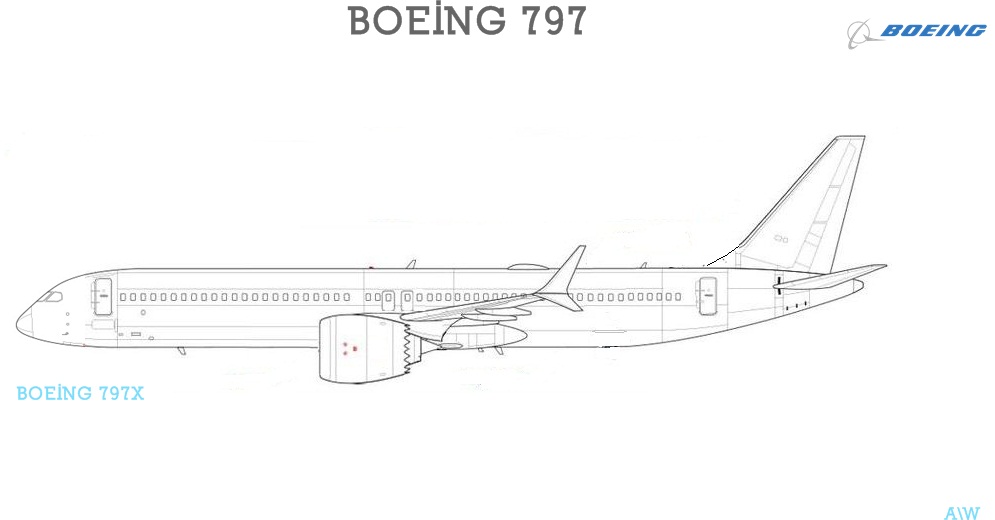
El Boeing 797X cubrirá probablemente la gama de 220-260 asientos. La gama del diseño será 4.500-5.000 millas náuticas. Las aeronaves podrían desbloquear un potencial de ingresos de 150 mil millones de dólares

Uno de los desarrollos de Boeing  es el Boeing 797X. Desde que el Airbus A321 y el Airbus A321NEO han superado con éxito a los Boeing 737-900ER y Boeing 737 MAX 9 por un amplio margen, analistas, profesionales de la industria y entusiastas de la aviación han estado esperando a que Boeing no sólo pueda competir Con el Airbus A321, sino también cómo van a reemplazar de manera eficaz y eficiente los aviones más pequeños de cuerpo ancho.

En el pasado, se ha visto cómo Boeing estaría llenando la brecha que dejó y cómo el posicionamiento del producto de cuerpo estrecho de Boeing es una de las causas de la incapacidad de Boeing para competir con el Airbus A321 y su incapacidad para proporcionar un reemplazo para El avión de cuerpo ancho más pequeño.

De los artículos enlazados arriba, se puede observar que la discusión sobre un avión MoM (Medio del Mercado) o NMA (New Midsize Airplane) no es nueva, y ha mantenido a los analistas, así como Boeing ocupado durante bastante tiempo.
Boeing 737 MAX 10 Concepts MoM Airbus A321_zpspv3sexao

Capacidad del Boeing 797X

Una de las primeras cosas que debe ser notado es que los requisitos para una NMA han estado cambiando hacia un principio, ya que Boeing admitió la necesidad de un avión de este tipo no hace mucho tiempo. Al principio, existía la posibilidad de que una aeronave de gama media se extendiera desde la capacidad de un MAX 8 hasta el Boeing 757-200. Para Boeing, esto resolvería dos problemas, siendo el primero la edad del concepto Boeing 737 que es difícil de optimizar y el segundo problema es la limitada capacidad del Boeing 737-900ER y del Boeing 737 MAX 9 para competir con los homólogos de Airbus.

Boeing, sin embargo ha optado por un Boeing 737 MAX 10. Esta decisión es comprensible ya que el Boeing 737 MAX 10 es una solución relativamente barata que podría ver la entrada de servicio antes que un diseño totalmente nuevo. El MAX 10, prácticamente igual que toda la familia MAX, es un avión de reserva que debería añadir presión sobre los precios a Airbus y mantener algo del mercado. Esto sería beneficioso para Boeing cuando comience a desarrollar nuevas familias de aviones que cubran el segmento de pasillo único o el mercado de NMA.

Otra razón por la cual Boeing no está cambiando su producto de cuerpo estrecho es el hecho de que Bombardier  compite fuertemente con Boeing en el lado inferior de la gama de productos. Mover a la familia significaría que Bombardier se quedaría sin mayor competencia. Actualmente Boeing es capaz de descuentos en su avión más pequeño para competir con Bombardier, esto le da a Bombardier una carrera por su dinero.

Así que Boeing parece haber elegido centrarse en el mercado NMA y dejar los retos de la sustitución MAX para más adelante.

La capacidad del Boeing 797X es probable esté ubicada en el segmento entre 220 pasajeros y 260 pasajeros, o posiblemente 270.


Distancia

La gama del jet de 220 pasajeros en junio de 2015 se preveía para ser 4.500nm. Esto situaría la aeronave en territorio del Boeing 757 en términos de capacidad, pero con una capacidad de alcance ligeramente superior. La gama ahora se espera que esté entre 4.500 y 5000nm. En combinación con la nueva banda de capacidad, esto significa que el Boeing 797 es efectivamente un reemplazo natural para el Boeing 757 y Boeing 767. En lugar de mirar hacia abajo para cubrir el Boeing 737 MAX con el Boeing 797, Boeing ha buscado y parece estar planeando para cubrir el espacio del mercado del Boeing 767.


Posicionamiento Boeing 797X

El posicionamiento del Boeing 797 se hace más claro si lo marcamos en un diagrama de carga.

El Airbus A321NEO LR se comercializa activamente como un reemplazo Boeing 757, cae entre el espacio MoM y el espacio tradicional de un solo pasillo.

En lugar de presentar un reemplazo, Boeing parece estar apuntando a un avión con mayor alcance que el Boeing 757-200 y que está entre las capacidades del Boeing 767-200 y Boeing 767-300 por un lado y la variante Extended Range (ER) por el otro. Esto también se puede decir de otra manera: El Boeing 797-X con sus aviones va a cubrir el rango de capacidad de los Boeing 767-200 y Boeing 767-300 con un rango más grande. Al hacerlo, Boeing se está convirtiendo en estilo Airbus desarrollando algo para lo cual la competencia aún no tiene respuesta.


El mercado
Definir el potencial del mercado es difícil, no sólo porque no puede resumir las órdenes de todas las variantes Boeing 757 y Boeing 767 y decir que es el potencial de mercado del Boeing 797. El Boeing 797 no será capaz de capturar todo el mercado. Se calcula llegar a un potencial de aproximadamente 2.000 aviones. En estos cálculos, agregamos las ventas de las versiones de rango extendido del Boeing 767, así, la razón es que el Boeing 787 no es realmente un avión tipo 767. La gama del Boeing 787-8 supera ampliamente el rango de las variantes 767ER. Boeing tampoco está muy dispuesto a vender el Boeing 787-8, ya que los márgenes de beneficio no son lo suficientemente atractivos para construir el avión. Así que en el futuro se ofrecerá el Boeing 797 a los clientes que no requieren la gama de Boeing 787. Los clientes que requieren la gama de Boeing 787 se ofrecerá el 787-9.
Hace más de un año, John Wojick dijo a Aviation Week que esperaba que un avión NMA vendiera fácilmente más de 2.000 unidades. Esta cifra tiene en cuenta la creciente demanda de viajes aéreos, pero probablemente también una posición de punto dulce para el Boeing 797 para capturar la mayoría del mercado NMA y potencialmente los clientes delAirbus A330-800NEO que no requieren la capacidad de alcance de la A330NEO.

Eficiencia

Conseguir el diseño correcto es importante, porque sobrediseño llevará a mayores costos de operación para los clientes, pero también dará lugar a mayores costos de desarrollo y producción. Además, el diseño excesivo, por ejemplo, el ala resultará en un mayor peso que requiere motores más grandes, que posteriormente requiera de nuevo un ala más grande.

Al igual que con cualquier aeronave, la eficiencia es uno de los principales impulsores del éxito comercial. El avión probablemente hará uso de un ala ligera de alta eficiencia similar a los del Boeing 787 y Boeing 777X. El fuselaje podría ser diseñado a partir de materiales compuestos, pero podría ser una de las cosas que podrían caer para mantener bajos los costos de desarrollo y los precios de venta. Una cosa que parece ser cierto es que el avión será un avión de pasillo doble con una configuración de 2-3-2 asientos.

Para los motores, es importante dimensionarlos correctamente. Con los desarrollos de Trent XWB, Trent 1000 TEN, CFM LEAP 1A / B / C, serie GEnx, GE90X y PW1100G, los desarrolladores de turbofan han estado ocupados durante los últimos años en una amplia gama de empuje. Así que incluso si Boeing hubiera querido lanzar el Boeing 797 antes, probablemente no sería posible ya que los desarrolladores estaban trabajando en otros productos.

Para el Boeing 797X, creo que un rango de empuje de 40,000-50,000 lbf debería ser suficiente. Más interesante será ver quién va a suministrar esos turbofans. Hay una alta probabilidad de que más de 1 desarrollador proporcionará los turbofans. De esta manera el potencial del Boeing 797X será compartido entre varios desarrolladores, pero el Boeing 797X será un producto más fuerte donde los clientes pueden seleccionar un turbofan preferido. Para Pratt & Whitney, habrá ocasiones de transferir el conocimiento del turbofan adaptado del PW1100 más pequeño usado en el Airbus A320NEO al mercado del pasillo gemelo. Para PW, esto sería enorme ya que han sido expulsados del mercado de pasillos gemelos hace mucho tiempo. CFM podría entrar con un turbofan más grande similar a la familia CFM LEAP utilizada en el Boeing 737 MAX, Airbus A320NEO y Comac C919. Rolls Royce ha comenzado a trabajar en un turbofán Rolls Royce Advance, el cual debería ser capaz de entrar en servicio entre 2020 y 2025, mientras que planea un Rolls Royce UltraFan, que será de servicio después de 2025. Así, mientras que CFM y PW tratarán de ampliar su Turbofan para cumplir con el rango de empuje requerido, Rolls Royce tendrá que bajar de la Trent XWB. Sin embargo, los tres desarrolladores de turbofan estarán deseando un pedazo del pastel.

 Costos de desarrollo y precio de venta

El desarrollo de un avión completamente nuevo cuesta miles de millones, y Boeing ha aprendido una lección cuando desarrolló el Boeing 787 y acumuló miles de millones en costos de desarrollo y costos de producción. Eso es algo que Boeing no puede permitirse una vez más, no sólo porque es frágil la credibilidad de la empresa como un fabricante de aviones, sino también porque tendrá poco o ningún espacio para hacer del Boeing 797 un éxito.

Que Boeing realmente tiene que hacerlo bien con el Boeing 797 se hizo aún más claro cuando el presidente de Air Lease Corp., Udvar-Hazy, dijo que las aerolíneas quieren pagar entre $ 70 y $ 80 millones. En 2002, el Boeing 757 tenía un precio de lista de 111 millones de dólares traducido a 2016 dólares, mientras que el Boeing 767-200 tenía precios de lista de 151 millones de dólares. Aplicando descuentos del 40% que eran comunes en ese momento, llegamos a un rango de precios de $ 66.6- $ 90 millones. Con diseños de aviones cada vez más complejos el precio de venta sube y el más pequeño Boeing widebody, el Boeing 787-8, se vende por un precio que es del 30-75%. Creo que eso demuestra claramente el reto que le espera a Boeing para mantener los costos de desarrollo en un rango predefinido para que pueda poner un precio razonable en el Boeing 797.


Riesgos
 

Ningún desarrollo es sin riesgo y eso también cuenta para el Boeing 797. Un riesgo significativo que Boeing podría enfrentar es el riesgo de exceso de costos. Tenemos que esperar aquí que Boeing haya aprendido del desarrollo de Boeing 787, no sólo de la ingeniería sino también en el sentido de la gestión financiera y la transferencia de riesgo a la cadena de suministro. 

Otros riesgos incluyen el retraso en el mercado, que puede ser causado por una variedad de razones por ejemplo, retrasos en el diseño y proceso de prueba de vuelo o retrasos en el desarrollo del motor. Todo esto puede afectar el éxito comercial del Boeing 797.


Conclusión
 

En general, las reacciones a un Boeing 797 son positivas, pero el camino entre diseñar y hacer que el avión sea un éxito comercial es largo. Sin embargo, es positivo que Boeing esté tratando de colocar el Boeing 797 en un punto en el que es difícil para Airbus llegar, pero donde todavía hay una demanda sin respuesta. Boeing parece estar dejando algo que Airbus reclame su corona como tener el reemplazo del Boeing 757-200, mientras que se mueve la familia de aviones en el rango de asientos en un lugar donde los transportistas, así como las compañías de bajo costo pueden utilizar con éxito el Boeing 797. AIRGWAYS ® Icon-AW

https://airgways.com/wp-content/uploads/2017/03/87918-fsscr006.jpg

The challenge of the Boeing 797 market

The Boeing 797X will probably cover the range of 220-260 seats. The design range will be 4,500-5,000 nautical miles. The aircraft could unlock a potential revenue of $ 150 thousand millions of dollars

One of the developments of Boeing or, rather, future developments – is the Boeing 797X. Since the Airbus A321 and Airbus A321NEO have successfully outperformed the Boeing 737-900ER and Boeing 737 MAX 9 by a wide margin, analysts, industry professionals and aviation enthusiasts have been waiting for Boeing not only to be able to compete With the Airbus A321, but also how they will effectively and efficiently replace smaller, wide-body aircraft.

In the past, Boeing would be filling the gap it has left and how the positioning of Boeing’s narrow-body product is one of the causes of Boeing’s inability to compete with the Airbus A321 and its inability to provide a replacement for The smallest wide-body aircraft.

Boeing 737 MAX 10 Concepts MoM Airbus A321_zpspv3sexao

It can be seen that the discussion about a MoM (New Market) or New Midsize Airplane is not new, and has kept analysts as well as Boeing busy for quite some time.

In this article, I will be seeing what we already know about the Boeing 797X. I will focus on what your general specification will be like and what you should be able to. In a separate article, I’ll take a closer look at the market potential of an airplane of this type.
Capacity

One of the first things to note is that the requirements for an NMA have been shifting upwards, as Boeing has admitted the need for such an aircraft not so long ago. At the outset, it was possible for a mid-range aircraft to extend from the MAX 8 capacity to the Boeing 757-200. For Boeing, this would solve two problems, the first being the age of the Boeing 737 concept that is difficult to optimize and the second problem is the limited capacity of the Boeing 737-900ER and the Boeing 737 MAX 9 to compete with Airbus counterparts.

Boeing, however has chosen to explore the possibility of a Boeing 737 MAX 10, which is likely to be launched by year-end. This decision is understandable since the Boeing 737 MAX 10 is a relatively cheap solution that could see service entry sooner than an all-new design. In my view the MAX 10, pretty much just like the entire MAX family, is a placeholder aircraft that should add pricing pressure to Airbus and keep some of the market. This would be beneficial to Boeing when it starts developing new aircraft families that cover either the single aisle segment or the NMA market.

Another reason why Boeing is not shifting up its narrow body product is the fact that Bombardier is heavily competing with Boeing on the lower side of the product range. Moving the family up would mean that Bombardier is left without major competition. Currently Boeing is able to heavily discount its smaller aircraft to compete with Bombardier, this gives Bombardier a run for their money.

So Boeing seems to have chosen to focus on the NMA market and leave the challenges of the MAX replacement for later.

Whereas at first I expected the capacity band to be between 160 and 240 passengers with 3 or 4 variants, the capacity of the Boeing 797X is likely between 220 passengers and 260 passengers, possibly 270.

Range

The range of the 220-passenger jet in June 2015 was envisioned to be 4,500nm. This would place the aircraft in territory of the Boeing 757 in terms of capacity but with a slightly higher range capability. The range is now expected to be between 4,500 and 5000nm. In combination with the new capacity band, this means that the Boeing 797 is effectively a replacement for the Boeing 757 and Boeing 767. Instead of looking down to cover the Boeing 737 MAX with the Boeing 797, Boeing has looked up and seems to be planning to cover the Boeing 767 market space.

Boeing 797X positioning

The positioning of the Boeing 797 becomes clearer if we maket. What can be seen is that, whereas the Airbus A321NEO LR is being actively marketed as a Boeing 757 replacement, it falls in between the MoM space and traditional single-aisle space. The design space for the NMA can be seen and what is interesting to observe is that it is likely not going to be one-on-one replacement of the Boeing 757.

Rather than bringing up a replacement, Boeing seems to be aiming for 1 aircraft with higher range than the Boeing 757-200 and aircraft that is in between the capabilities of the Boeing 767-200 and Boeing 767-300 on one hand and the Extended Range variants on the other. This can also be said differently: The Boeing 797-X with its 2 aircraft is going to cover the Boeing 767-200 and Boeing 767-300 capacity range with a bigger range. By doing so, Boeing is actually going Airbus-style by developing something for which competition has no answer yet.

Market

THE BOEING 757

Defining the market potential is difficult, not only because you cannot just sum up the orders of all Boeing 757 and Boeing 767 variants and say that is the market potential of the Boeing 797. Both 797 aircraft need to be in a sweet spot, and even then, Boeing will not be able to capture the entire market. If we were going to sum up things anyways then we get to a potential of roughly 2,000 aircraft. In these calculations, we added the sales of the Extended Range versions of the Boeing 767 as well, the reason being that the Boeing 787 is not really a 767-like aircraft. The range of the Boeing 787-8 exceeds the range of the 767ER variants by a wide margin. Boeing is also not very willing to sell the Boeing 787-8, since the profit margins are not attractive enough to build the aircraft. So in the future they will be offering the Boeing 797 to customers that do not require the range of the Boeing 787. Customers that require the range of the Boeing 787 will be offered the 787-9.

Over a year ago, John Wojick told Aviation Week that it expected an NMA aircraft to easily sell over 2,000 units. This figure takes into account growing demand for air travel, but likely also a sweet spot position for the Boeing 797 to capture the majority of the NMA market and potentially Airbus A330-800NEO customers that do not require the range capability of the A330NEO.

Efficiency

Getting the design right is important, because overdesigning will lead to higher operating costs for the customers but will also result in higher development and production costs. Additionally, overdesigning for instance the wing will result in higher weight requiring bigger engines, which subsequently again requires a bigger wing.

Like with any aircraft, efficiency is one of the main drivers of commercial success. The aircraft will likely make use of a high efficiency light-weight wing similar to the ones on the Boeing 787 and Boeing 777X. The fuselage could be designed out of composites, but might be one of the things that might be dropped to keep the development costs and sales prices low. One thing that seems to be certain is that the aircraft will be a twin aisle aircraft with a 2-3-2 seat configuration

For the engines, it is important to size them correctly. With the developments of the Trent XWB, Trent 1000 TEN, CFM LEAP 1A/B/C, GEnx series, GE90X and PW1100G, turbofan developers have been occupied for the past couple of years in a wide range of the thrust spectrum. So even if Boeing would have wanted to launch the Boeing 797 earlier, it probably would not be possible since developers were working on other products.

For the Boeing 797X, a thrust range of 40,000-50,000 lbf should be sufficient. More interesting will be to see who is going to supply those turbofans. There is a high probability that more than 1 developer will be providing the turbofans. This way the potential of the Boeing 797X will be shared between multiple developers, but the Boeing 797X will be a stronger product where customers can select a preferred turbofan. For Pratt & Whitney, there will be chances to transfer the knowledge from the smaller PW1100 geared turbofan used on the Airbus A320NEO to the twin aisle market. For PW, this would be huge since they have been pushed out of the twin aisle market a long time ago. CFM could enter with a bigger turbofan similar to the CFM LEAP family used on the Boeing 737 MAX, Airbus A320NEO and Comac C919. Rolls Royce has started working on a Rolls Royce Advance turbofan, which should be able to enter service between 2020 and 2025, while it plans a Rolls Royce UltraFan, which will be serviceable after 2025. So while CFM and PW will try to scale up their turbofan to meet the required thrust range, Rolls Royce will have to scale down from the Trent XWB. Nevertheless, all three turbofan developers will be wanting a piece of the pie.

Development costs and sales price

Developing an all-new aircraft costs billions, and Boeing has learned a lesson when it developed the Boeing 787 and accumulated billions in development and production costs overruns. That is something that Boeing cannot afford itself once more – not only because it will brittle the company’s credibility as a jet maker but also because it will have little to no space left to make the Boeing 797 a success.

That Boeing really has to get it all right with the Boeing 797 became even clearer when the chairman of Air Lease Corp., Udvar-Hazy, said that airlines want to pay will be between $70 and $80 million. In 2002, the biggest Boeing 757 had a list price of $111 million dollars translated to 2016-dollars while the Boeing 767-200 had list prices of $151 million. Applying discounts of 40% that were common at that time, we get to a price range of $66.6-$90 million. With aircraft designs becoming more and more complex the sales price goes up and the smallest Boeing widebody, the Boeing 787-8, sells for a price that is 30-75%. I think that clearly shows the challenge that lies ahead for Boeing to keep development costs in a predefined range so that it can put a reasonable price tag on the Boeing 797.
Risks

No development is without risk and that also counts for the Boeing 797. A significant risk that Boeing might face is the risk of cost overruns. We have to hope here that Boeing has learned from the Boeing 787 development, not only engineering-wise but also in the sense of financial management and risk transfer to the supply chain.

Other risks include being late to the market, which can be caused by a variety of reasons for instance delays in the design and flight testing process or delays in the engine development. These all can affect the commercial success of the Boeing 797.
Conclusion

All in all, reactions to a Boeing 797 are positive, but the road between designing and making the aircraft a commercial success is a long one. Positive, however, is that Boeing is trying to place the Boeing 797 in a spot where it is hard for Airbus to reach but where there still is an unaddressed demand. Boeing seems to be somewhat letting Airbus claim its crown as having the Boeing 757-200 replacement, while it moves it 2-aircraft family up in the seating range in a spot where legacy carriers as well as low-cost carriers can successfully utilize the Boeing 797. A\W

aw-icon-red-1000

Ξ A I R G W A Y S Ξ
SOURCE: Seekingalpha.com
DBk: Boeing.com / Airgways
AW-POST: 201703240157AR

A\W   A I R G W A Y S ®

Boeing 787-10 primer vuelo 31/03

https://i0.wp.com/www.boeing.com/resources/boeingdotcom/commercial/787-10/assets/images/787-10_wallpaper.jpg

AW | 2017 03 23 18:53 | INDUSTRY

Boeing fija el 31 de marzo para el 787-10 primer vuelo


Boeing conducirá el primer vuelo del 787-10 el 31 de marzo, sujeto al clima y otros factores. El primer vuelo será operado por un 787-10 equipado con motores Rolls-Royce Trent 1000. La aeronave también se ofrece con los generadores eléctricos General Electric GEnx.

Boeing está montando exclusivamente el 787-10 en North Charleston, Carolina del Sur, donde el jet salió en una ceremonia de febrero encabezada por el presidente de Estados Unidos, Donald Trump.

La variante más grande de la familia 787 está programada para la primera entrega en el primer semestre de 2018. Boeing ha asegurado 149 órdenes para el 787-10. AIRGWAYS ® Icon-AW

https://i0.wp.com/www.aspireaviation.com/wp-content/uploads/2012/10/Boeing-787-10X.jpg

Boeing sets 31 March for 787-10 first flight

Boeing will conduct first flight of the 787-10 on 31 March, subject to weather and other factors.

The maiden flight will be operated by a 787-10 equipped with Rolls-Royce Trent 1000 engines. The aircraft is also offered with General Electric GEnx powerplants.

https://i0.wp.com/images.hamodia.com/hamod-uploads/2013/06/BIZ-6-Boeing-Nets-Orders-For-102-Stretch-787s-975x1024.jpg

COMPARISON OF BOEING 787-10 & A350-1000

Boeing is exclusively assembling the 787-10 in North Charleston, South Carolina, where the jet rolled out in a February ceremony headlined by US President Donald Trump.

The largest variant of the 787 family is scheduled for first delivery in the first half of 2018. Boeing has secured 149 orders for the 787-10. A\W

Ξ A I R G W A Y S Ξ
SOURCE: Flightglobal.com
DBk: Boeoing.com / Reuters.com
AW-POST: 201703231853AR

A\W   A I R G W A Y S ®

Presencia de Airbus en Latinoamérica

maxresdefault.jpg

AW | 2017 03 23 17:38 | INDUSTRY

airbus-logo1 Airbus ha triplicado su presencia y captado un 60% de mercado
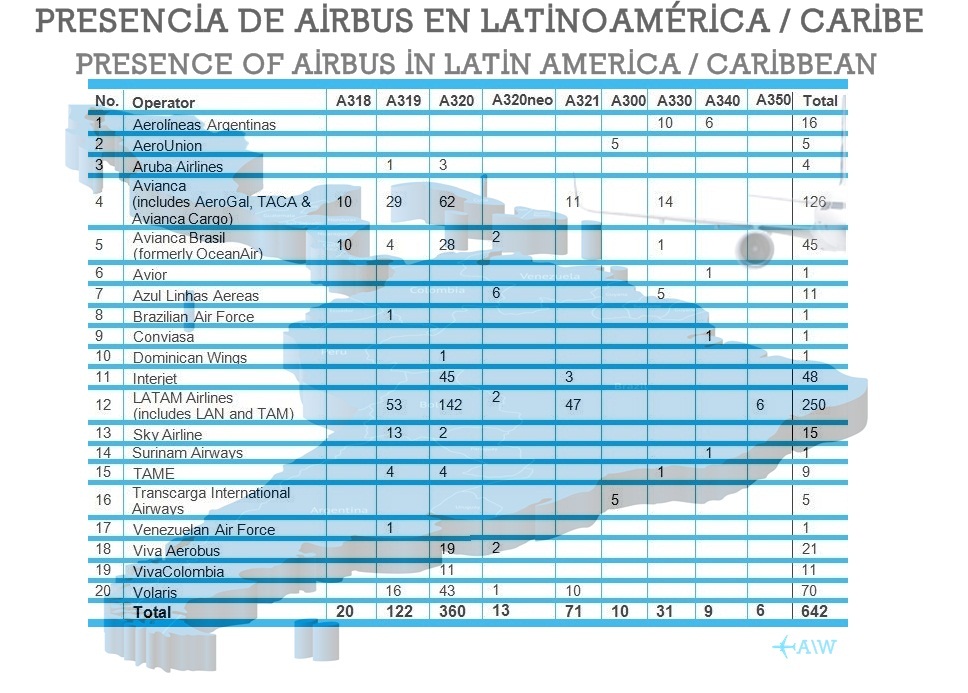
Airbus en Latinoamérica posee más de 1.000 aviones vendidos y una cartera de pedidos de casi 450 aeronaves, cerca de 650 son aviones de Airbus que operan actualmente en Latinoamérica y Caribe. En los últimos 10 años, Airbus ha triplicado su flota en servicio; y desde 1990 ha captado más del 60 por ciento de los pedidos netos en la región.

Con el fin de asegurar la cercanía y a su vez ofrecer un servicio eficiente a los clientes de Latinoamérica y el Caribe, Airbus estableció sus oficinas en Miami además de destinar a 14 representantes técnicos en toda la región para ofrecer apoyo en el terreno a todos sus operadores.

Airbus-en-Latinoamerica_71761

Airbus aumentó su presencia en América Latina en 1998 cuando la aerolínea basada en Chile LAN Airlines, la salvadoreña TACA Airlines y la brasileña TAM Airlines realizaron el mayor pedido conjunto de la historia de la aviación comercial de América Latina: 90 aeronaves de pasillo único con opción a 90 aviones adicionales. Desde entonces, las tres aerolíneas en conjunto han pedido casi 600 aviones de la Familia A320, reconocida como el referente en aviones de pasillo único.

LATAM Airlines Group, como resultado de la fusión entre LAN y TAM en 2012, se consolidó como uno de los mayores clientes de Airbus en el mundo. TAM se convirtió en operador de aviones Airbus en 1998, cuando comenzó a volar el primero de sus A330-200. Para 2013, LATAM ya se había convertido en el mayor cliente de Airbus del hemisferio sur. En enero de 2016, LATAM se convirtió en el primer operador del A350 XWB en el continente americano. La aerolínea pidió 27 de los altamente ‎eficientes aviones de largo alcance.

En agosto de 2016, LATAM Airlines Group recibió el primer A320neo de las Américas. LATAM ha pedido más de 360 aviones y actualmente dispone de más de 250 en operación. Su cartera de pedidos combinada llega casi a los 70 aviones.

Por su parte Avianca, anteriormente conocida como AviancaTaca, se ha decantado por la modernización y expansión de su flota con aviones Airbus. El pasado año, la aerolínea adquirió 100 aviones A320NEO, el mayor pedido único realizado en la historia de la aviación de Latinoamérica. En 2012, Avianca Cargo, conocida anteriormente como Tampa Cargo, se convirtió en el primer operador del carguero A330-200F de la región. Actualmente, Avianca ha realizado pedidos que suman aproximadamente 300 aviones Airbus y opera casi 130 aeronaves del mismo fabricante. Avianca cuenta con una cartera de pedidos de aproximadamente 140 aviones Airbus. Además Synergy Aerospace Corp, el mayor accionista de Avianca y propietario de Avianca Brasil, recientemente firmó un acuerdo de compra por 62 aviones de la Familia A320neo. Synergy se convirtió en un cliente de Airbus en 2007 tras el pedido de 10 A350 XWB. La compañía ordenó también 20 aeronaves de la Familia A320, seis A330-200 de pasajeros y un carguero A330-200F.

Airbus dio la bienvenida a Avianca Brasil en 2010. Actualmente la aerolínea opera más de 40 aeronaves de la Familia A320, incluidos dos A320neo y un A330 carguero. Airbus también está presente en Brasil con Azul Linhas Aereas, que ha realizado un pedido de 35 aeronaves de la Familia A320NEO y actualmente opera seis A320neo y cinco A330. Azul ha iniciado recientemente rutas internacionales con una flota de cinco A330-200 arrendados y pronto integrará más aviones Airbus de fuselaje ancho a su flota.

Airbus también dispone de tres grandes clientes en México: las aerolíneas de bajo costo Interjet, VivaAerobus y Volaris. En el año 2013, VivaAerobus, el operador exclusivo de aviones Airbus, compró 52 aeronaves de la Familia A320, incluidos 40 A320NEO y 12 A320CEO. Este ha sido el mayor pedido de aviones Airbus ejecutado por una aerolínea mexicana. VivaAerobus opera 21 aviones A320, incluidos dos A320neo. Volaris se convirtió en operador de Airbus en 2006, y ha sido un operador cuya flota está íntegramente compuesta por aviones Airbus desde entonces. La aerolínea ha pedido un total de 74 aviones, incluyendo 30 A320NEO y fue el primer operador del A320NEO de Norte América. En la actualidad, Volaris opera 70 aviones de la Familia A320, incluido un A320NEO. Por otro lado, Interjet se convirtió en cliente de Airbus en el año 2005, y desde entonces ha pedido 60 aviones A320, incluidos 40 A320NEO. Actualmente, Interjet opera 48 aviones de la Familia A320. Por último, la aerolínea mexicana de carga aérea AeroUnion opera cinco aviones de carga modelo A300.

Aerolíneas Argentinas comenzó su relación con Airbus en 1994 operando el A310-300. En los últimos años, la aerolínea nacional de Argentina recibió cuatro nuevos aviones A330-200 con el fin de renovar y consolidar su flota de aviones de fuselaje ancho en los últimos y recientes años. Actualmente, la aerolínea opera un total de 16 aeronaves de fuselaje ancho compuestos por diez A330 y seis A340.

La compañía aérea colombiana de bajo costo VivaColombia se convirtió en un operador de Airbus en 2012. Hoy en día opera 11 aviones A320. Asimismo, Sky Airline, la aerolínea de bajo costo chilena (cuya flota está compuesta únicamente por aeronaves Airbus) opera en la actualidad 15 aviones de la Familia A320.

Airbus también tiene presencia en Ecuador a través de la aerolínea TAME (que opera ocho aviones de la Familia A320 y un A330); en Aruba con Aruba Airlines (con tres A320 y un A319); en Venezuela con Conviasa (con un A340) y Transcarga International Airways (con cinco A300); en Surinam con Surinam Airways (con un A340) y en República Dominicana junto con Dominican Wings (con un A320). Las Fuerzas Aéreas venezolanas y brasileñas operan cada una un jet corporativo de Airbus basado en el A319. AIRGWAYS ® Icon-AW

https://airgways.com/wp-content/uploads/2017/03/7cf17-1o-airbusa319daaviancabrasilsobrevoasp-abrilde2010-fotodemarcosfernandes.jpg

Airbus presence in Latin America


logo_airbus_2014-svgAirbus has tripled its presence and captured 60% of the market

Airbus in Latin America has more than 1,000 aircraft sold and a order book of almost 450 aircraft, about 650 are Airbus aircraft currently operating in Latin America and the Caribbean. In the last 10 years, Airbus has tripled its fleet in service; And since 1990 has captured more than 60 percent of net orders in the region.

In order to ensure proximity and offer an efficient service to customers in Latin America and the Caribbean, Airbus established its offices in Miami, as well as assigning 14 technical representatives throughout the region to offer support to all its operators in the field .

Airbus increased its presence in Latin America in 1998 when Chilean-based airline LAN Airlines, Salvadoran TACA Airlines and Brazil’s TAM Airlines made the largest joint order in the history of commercial aviation in Latin America: 90 single-aisle aircraft with option To 90 additional aircraft. Since then, the three airlines together have ordered almost 600 aircraft of the A320 Family, recognized as the benchmark in single-aisle aircraft.

Airbus-en-Latinoamerica_71761

LATAM Airlines Group, as a result of the merger between LAN and TAM in 2012, consolidated itself as one of Airbus’ largest customers in the world. TAM became Airbus operator in 1998, when the first of its A330-200s began flying. By 2013, LATAM had already become the largest Airbus customer in the Southern Hemisphere. In January 2016, LATAM became the first operator of the A350 XWB in the American continent. The airline ordered 27 of the highly efficient long-range aircraft.

In August 2016, LATAM Airlines Group received the first A320neo of the Americas. LATAM has ordered more than 360 aircraft and currently has more than 250 in operation. Its combined order book reaches almost 70 aircraft.

For its part, Avianca, previously known as AviancaTaca, has opted for the modernization and expansion of its fleet with Airbus aircraft. Last year, the airline acquired 100 A320NEO aircraft, the largest single order ever made in Latin American aviation history. In 2012, Avianca Cargo, formerly known as Tampa Cargo, became the first operator of the A330-200F freighter in the region. Currently, Avianca has placed orders totaling approximately 300 Airbus aircraft and operates almost 130 aircraft of the same manufacturer. Avianca has a backlog of approximately 140 Airbus aircraft. In addition Synergy Aerospace Corp, Avianca’s largest shareholder and owner of Avianca Brazil, recently signed a purchase agreement for 62 aircraft of the A320NEO family. Synergy became an Airbus customer in 2007 after ordering 10 A350 XWBs. The company also ordered 20 A320 Family aircraft, six A330-200 passengers and one A330-200F freighter.

Airbus welcomed Avianca Brazil in 2010. The airline currently operates more than 40 aircraft of the A320 Family, including two A320neo and one A330 freighter. Airbus is also present in Brazil with Azul Linhas Aereas, which has ordered 35 aircraft of the A320neo Family and currently operates six A320neo and five A330. Azul has recently commenced international routes with a fleet of five leased A330-200s and will soon integrate more Airbus wide-body aircraft into its fleet.

https://i0.wp.com/fly-news.es/fly-test/wp-content/uploads/A320neo-MSN7126.jpg

Airbus also has three major customers in Mexico: the low-cost airlines Interjet, VivaAerobus and Volaris. In the year 2013, VivaAerobus, the exclusive operator of Airbus aircraft, purchased 52 aircraft of the A320 Family, including 40 A320NEO and 12 A320CEO. This has been the largest order of Airbus aircraft executed by a Mexican airline. VivaAerobus operates 21 A320 aircraft, including two A320neo. Volaris became an Airbus operator in 2006, and has been an operator whose fleet is composed entirely of Airbus aircraft since then. The airline has ordered a total of 74 aircraft, including 30 A320NEO and was the first operator of the A320NEO of North America. Currently, Volaris operates 70 aircraft of the A320 Family, including an A320neo. On the other hand, Interjet became an Airbus customer in 2005, and has since ordered 60 A320 aircraft, including 40 A320NEO. Currently, Interjet operates 48 aircraft of the A320 Family. Finally, Mexican air cargo airline AeroUnion operates five model A300 cargo aircraft.

Aerolíneas Argentinas began its relationship with Airbus in 1994 operating the A310-300. In recent years, the national airline of Argentina has received four new A330-200 aircraft in order to renew and consolidate its fleet of wide-body aircraft in recent and recent years. Currently, the airline operates a total of 16 wide-body aircraft composed of ten A330s and six A340s.

The low-cost Colombian airline VivaColombia became an Airbus operator in 2012. Today it operates 11 A320 aircraft. Likewise, Sky Airline, the Chilean low-cost airline (whose fleet is composed only of Airbus aircraft) currently operates 15 A320 Family aircraft.

Airbus also has presence in Ecuador through the TAME airline (which operates eight aircraft of the A320 Family and an A330); In Aruba with Aruba Airlines (with three A320 and one A319); In Venezuela with Conviasa (with an A340) and Transcarga International Airways (with five A300); In Surinam with Surinam Airways (with an A340) and Dominican Republic along with Dominican Wings (with an A320). The Venezuelan and Brazilian Air Forces each operate an Airbus corporate jet based on the A319. A\W

aw-icon-red-1000

Ξ A I R G W A Y S Ξ
SOURCE: Entornointeligente.com
DBk: Airgways / Bp.blogspot.com / Flynews.es / Maxresdefault.com
AW-POST: 201703231738AR

A\W   A I R G W A Y S ®

El gobierno argentino dio a conocer el «Plan Nacional de Transporte Aéreo»

https://i0.wp.com/www.telam.com.ar/advf/imagenes/2016/11/58303b964f95d_1920x835.jpg

AW | 2017 03 23 13:35 | AIRLINES MARKET

El Ministro de Transporte, Guillermo Dietrich, presentó el «Plan Nacional de Transporte Aéreo». Dietrich realizó la presentación junto al ministro de Turismo, Gustavo Santos, y al presidente de la Empresa Argentina de Navegación Aérea (EANA), Agustín Rodríguez, en el Auditorio de Radio Nacional ante 200 personas.

Entre los asistentes estuvieron intendentes cordobeses, responsables de turismo y de transporte de las diferentes localidades, representantes de las cámaras de turismo, de las agencias y demás actores del sector turístico.

Dietrich expuso los ejes que conforman el plan estratégico para duplicar la cantidad de vuelos de cabotaje, basado en un importante estudio que confirma que existen 12 millones de pasajeros al año que hoy no usan el avión para viajar y podrían hacerlo de existir una alternativa.

El primer pilar del plan es la consolidación de Aerolíneas Argentinas como líder en cabotaje mediante una estrategia que le permita continuar su crecimiento -enero fue récord histórico de pasajeros trasladados y febrero fue el mejor de su historia-, absorbiendo así 4 millones de pasajeros.

En ese sentido, para fortalecer su red federal, Aerolíneas eligió a la ciudad Córdoba como nuevo centro distribuidor de vuelos a partir de abril, según lo anunció Mario Dell Acqua, presidente de la compañía estatal.

El segundo pilar del plan es la transformación de la infraestructura y del espacio aéreo para aumentar la capacidad de los aeropuertos, modernizar instalaciones, equipos y tecnología de navegación aérea, gracias a una inversión de 23.800 millones de pesos.

Para el Aeropuerto de Córdoba, donde las obras de renovación terminaron el año pasado, el ministro adelantó que van a «ampliar el estacionamiento, a repavimentar la pista y modernizar su balizamiento». Se pasará de 13 conexiones dentro del país a 27; y de ocho conexiones internacionales a 17. Entre las nuevas líneas que operarán se encuentra «Alas del Sur», que tendrá base de operaciones en Córdoba. «Estamos también incorporando nueva tecnología y un sistema ILS para que los vuelos puedan aterrizar con condiciones climáticas adversas», precisó Dietrich.

Por último, el plan incluye la incorporación de nuevas líneas aéreas para brindar mayores alternativas de conexión. «Estas son empresas que se instalan en Argentina, que compran aviones que cuestan millones de dólares y los registran en nuestro país, que contratan pilotos, tripulantes de cabina, azafatas y mecánicos todos argentinos. El aéreo es un sector muy aspiracional que va a generar entre directos e indirectos 25 mil puestos de trabajo», precisó el funcionario nacional. El Gobierno espera que se sumen 50 nuevos aviones al transporte de pasajeros.

«Vamos a generar una explosión de conectividad en todo el país necesaria para el impulso del turismo, que representa trabajo digno. Estamos recuperando el tiempo perdido», detalló el ministro de Turismo. AIRGWAYS ® Icon-AW

AW-7043737

The Argentine government unveiled the «National Air Transport Plan»


The Minister of Transportation, Guillermo Dietrich, presented «The National Plan of Air Transport». Dietrich made the presentation with the Minister of Tourism, Gustavo Santos, and the president of the Argentine Air Navigation Company (EANA), Agustín Rodríguez, in the National Radio Auditorium to 200 people.

Among the attendants were Cordovan intendants, responsible for tourism and transportation of the different localities, representatives of the chambers of tourism, agencies and other actors in the tourism sector.

Dietrich explained the axes that make up the strategic plan to double the number of cabotage flights based on an important study confirming that there are 12 million passengers a year that today do not use the plane to travel and could do so if there is an alternative.

The first pillar of the plan is the consolidation of Aerolíneas Argentinas as a leader in cabotage by means of a strategy that will allow it to continue its growth -energy was the historical record of passengers transferred and February was the best in its history-, thus absorbing 4 million passengers.

In that sense, to strengthen its federal network, Aerolíneas chose the city of Córdoba as a new hub for flights from April, according to Mario Dell Acqua, president of the state-owned company.

The second pillar of the plan is the transformation of infrastructure and airspace to increase airport capacity, modernize facilities, equipment and air navigation technology, thanks to an investment of 23.8 billion pesos.

For the airport of Cordoba, where renovation works were completed last year, the minister said that they will «expand the parking lot, reshuffle the track and modernize its beaconing.» It will move from 13 connections within the country to 27; And of eight international connections to 17. Among the new lines that will operate is «Alas del Sur», that will have base of operations in Cordova. «We are also incorporating new technology and an ILS system so flights can land in adverse weather conditions», said Dietrich.

Finally, the plan includes the incorporation of new airlines to provide greater connection alternatives. «These are companies that settle in Argentina, who buy planes that cost millions of dollars and register them in our country, which hire pilots, cabin crew, stewardesses and mechanics all Argentines. Aerial is a very aspirational sector that will generate Between direct and indirect 25 thousand jobs», said the national official. The Government expects 50 new aircraft to be added to passenger transport.

«We are going to generate an explosion of connectivity throughout the country necessary to boost tourism, which represents decent work. We are recovering the lost time,» the Tourism Minister said. A\W

Ξ A I R G W A Y S Ξ
SOURCE: Airgways / Ambito.com
DBk:Telam.com.ar
AW-POST: 201703231335AR

A\W   A I R G W A Y S ®

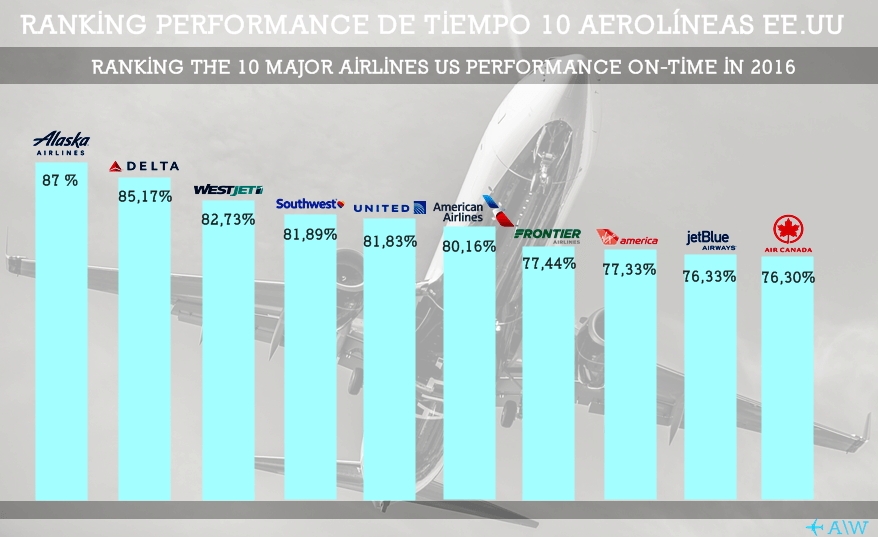
Ranking 10 principales aerolíneas EE.UU en performance de tiempo en 2016

https://i0.wp.com/media.advance.net/entertainment_news_national_desk/photo/planes-await-takeoff-at-newark-liberty-international-airport-d8e57ee955909d20.jpg

AW | 2017 03 23 12:12 | AIRLINES MARKET

Con un número récord de pasajeros que toman el cielo en 2016, el tiempo de funcionamiento se está convirtiendo en más importante que nunca. La industria aérea de Estados Unidos está volando alto en más de una forma


Según el Departamento de Transporte de Estados Unidos (DOT), la industria de la aviación registró un hito nunca antes visto en 2016: Cruzó la marca de 800 millones de pasajeros. Para ser más exactos, las aerolíneas estadounidenses llevaron un récord de 823 millones de pasajeros el año pasado, de los cuales 719 millones correspondían a vuelos nacionales, y el resto a pasajeros internacionales. Eso representa un aumento del 3,1% frente a los 798 millones de dólares en 2015, y representa un aumento de aproximadamente un 17% con respecto a los 704 millones de pasajeros transportados en 2009.

AW-7553737

Además de transportar más pasajeros que nunca, las aerolíneas también manejaron menos bolsas que nunca (2,7 por cada 1.000 pasajeros), golpearon menos pasajeros que el récord anterior mínimo (0,62 por 10.000 pasajeros) y cancelaron un 1,17% de vuelos nacionales.

Sin embargo, estas mejoras podrían ser inútiles si las aerolíneas no son capaces de llegar a sus destinos a tiempo. Mientras que la lealtad del cliente importa en cierta medida en muchas industrias y sectores, las aerolíneas en particular están contando con una experiencia agradable del cliente (que incluye una llegada a tiempo) para impulsar el negocio de repetición. Con el 2017 buscando como si pudiera ser otro año récord para los viajes aéreos, las llegadas a tiempo nunca han sido nunca más importantes.

Entonces, ¿qué aerolíneas son las mejores en conseguir a sus pasajeros a sus destinos a tiempo? Para responder a eso, nos dirigiremos a FlightStats, que ha examinado el desempeño a tiempo para las aerolíneas en cada uno de los últimos ocho años. Los datos de FlightStats, que consideran que una llegada dentro de los 15 minutos de la hora de llegada programada para ser «a tiempo», nos ha permitido una mirada en profundidad a donde están las 10 principales aerolíneas norteamericanas de primera a peor.

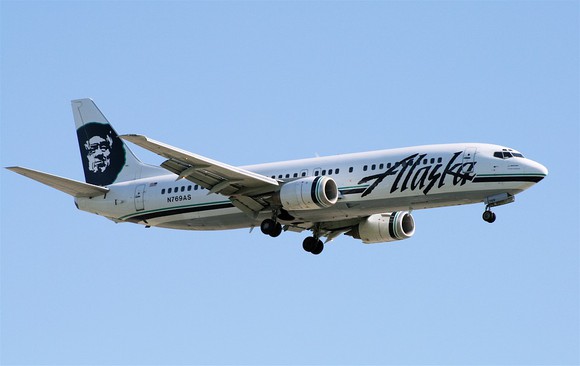
1. Alaska Air: 87% de llegada a tiempo
An Alaska Air plane in flight.
Liderando el camino en el tiempo de rendimiento en 2016 fue Alaska Air Group (NYSE: ALK), y por un margen cómodo en eso. Puede ser una sorpresa para algunos, pero este es el séptimo año consecutivo que Alaska ha sido el mejor perro en términos de rendimiento a tiempo. El presidente y director general de operaciones Ben Minicucci, después de que Alaska ganó su sexto premio consecutivo de FlightStats el año pasado, señaló a los empleados de su empresa y su firmeza en poner las necesidades de los clientes en primer lugar como las razones de su éxito.

Una punta del casquillo también puede ser merecida para el aeropuerto internacional de Seattle-Tacoma, que sirve como eje más grande del aire de Alaska. SeaTac, como es más conocido, se ubicó en el sexto lugar en el desempeño a tiempo entre los principales aeropuertos que atienden a más de 20 millones de pasajeros que salen anualmente.

2. Delta Air Lines: 85.17% de llegada a tiempo
A Delta Air Lines A321 at a manufacturing facility.
Alaska Airlines puede haber tomado el primer puesto, pero Delta Air Lines (NYSE: DAL) merece su propia corona teniendo en cuenta que cuenta con más de cinco veces más asientos que Alaska (220,5 millones frente a 42,03 millones) y fue capaz de entregar un De rendimiento superior a 85%.

El enfoque de Delta últimamente, aparte de dar a Alaska una carrera por su dinero mediante la expansión en Seattle, ha estado en la reducción de las cancelaciones de vuelos domésticos, que parece haber tenido un impacto positivo en el rendimiento también. Delta informó en enero que pasó 241 días en 2016 sin cancelar un vuelo principal en cualquier parte del mundo, lo que superó su propio récord de la industria en unos 80 días. La fiabilidad de Delta podría convertirse en un activo importante que atrae a los negocios repetidos.

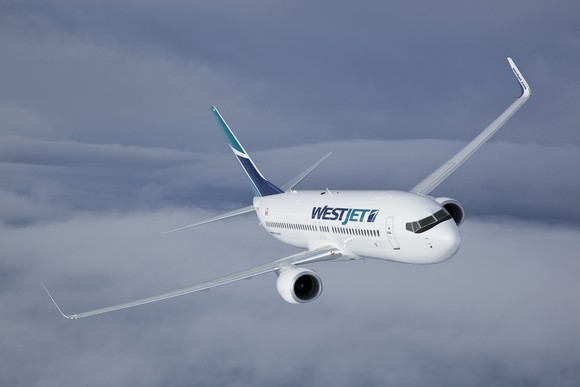
3. WestJet: 82.73% de llegada a tiempo
A WestJet plane in flight.
Aunque es la tercera más pequeña de las 10 principales aerolíneas clasificadas por vuelos en 2016, WestJet de Canadá (NASDAQOTH: WJAFF) deslumbró con un desempeño puntual que se aproximaba al 83%. Además, con base en los datos de FlightStats, WestJet tuvo el retraso promedio de llegada más bajo entre las 10 principales aerolíneas norteamericanas – 46,4 minutos.

También hay razones para creer que WestJet podría mejorar su desempeño a tiempo en los próximos años. Aunque se centra principalmente en los vuelos nacionales canadienses, WestJet se ha enfrentado a desafíos incorporando nuevos aviones en nuevas rutas. Estos «dolores de dentición», como el CEO Gregg Saretsky se refirió a ellos el verano pasado, son similares a lo que experimentó cuando lanzó su marca WestJet Encore. Dado el tiempo, la fiabilidad internacional de WestJet a tiempo podría prosperar.
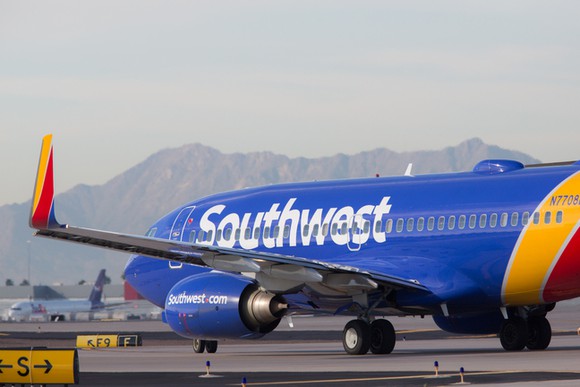
Un avión de Southwest Airlines rodando en la pista.

4. Southwest Airlines: 81.89% de llegada a tiempo
A Southwest Airlines plane taxiing on the runway.
No hace mucho tiempo que Southwest Airlines (NYSE: LUV), hogar de las bolsas de vuelo libre, estaba muerta por última vez en el desempeño puntual. En 2013, Southwest pensó que sería una buena idea expandir significativamente sus horarios en las rutas existentes, lo que aplastó el rendimiento a tiempo. Unos años más tarde, y tras una prudente poda de sus horarios, Southwest está de vuelta en el medio del pelotón con una llegada a tiempo de casi el 82%.

Al igual que muchos de los mayores nacionales, Southwest está siendo considerablemente más cauteloso con sus planes de expansión en 2017. Los precios del petróleo crudo, y por lo tanto los precios del combustible para aviones, son mucho más altos que el año pasado, y Southwest quiere evitar una repetición de 2013, posible.
United Airlines avión en vuelo.


5. United Airlines: 81.83% de llegada a tiempo
https://i0.wp.com/www.elvenezolanohouston.com/gescont/recursos/noticias/12789.jpg
A pesar de aterrizar en el medio del paquete en términos de puntualidad de rendimiento, United Airlines, que es parte de United Continental Holdings (NYSE: UAL), ha hecho avances significativos en la mejora de su fiabilidad. Sólo en septiembre pasado, la aerolínea informó que sus resultados a tiempo para la temporada de viajes de verano fueron los mejores de su historia, especialmente durante el período de viaje del 4 de julio.

Un comunicado de prensa de United Airlines señaló una serie de iniciativas recientes que están dando sus frutos. Estos incluyen ajustes de programación, un movimiento para equipar a más empleados con tecnologías móviles para servir mejor a los clientes y mejorar el trabajo en equipo de los empleados. United espera agregar 300 millones de dólares en valor para 2018, según el comunicado, al operar una aerolínea más confiable.

6. American Airlines: 80.16% de llegada a tiempo
https://i1.wp.com/thepointsguy.com/wp-content/uploads/2016/02/American-Airlines-A321-landing-featured-1.jpg?fit=830%2C401&ssl=1
Un ranking de sexto lugar y una tasa de llegada a tiempo mejor que el 80% parece algo así como una bendición para American Airlines Group (NASDAQ: AAL), que ha enfrentado escasez de luchas en la memoria reciente.

Según la compañía de datos de la industria de viajes Skift, American tiene tres grandes problemas que están obstaculizando su fiabilidad. En primer lugar, sigue enfrentándose a los problemas de post-fusión vinculados a US Airways. La fusión de los sistemas informáticos de ambas aerolíneas está teniendo un tiempo excepcionalmente largo, y como las tripulaciones de vuelo sólo pueden volar aviones con sistemas que pertenecían a su línea aérea antes de la fusión, se ha llevado a asignaciones ineficientes de la tripulación.

American también está tratando de expandirse rápidamente en el Aeropuerto Internacional de Los Ángeles, pero la aerolínea simplemente no tiene suficientes puertas para acomodar una mejora en la capacidad. Esto ha creado algunos contratiempos claros en su desempeño puntual. Por último, el clima en sus centros también ha sido un factor que afecta la puntualidad de la aerolínea.

7. Frontier Airlines: 77.44% de llegada a tiempo
https://i0.wp.com/www.tbo.com/storyimage/TB/20140513/ARTICLE/140519702/AR/0/AR-140519702.jpg
La aerolínea de bajo coste Frontier, que ofreció el segundo vuelo (99,302) de las 10 principales aerolíneas norteamericanas en 2016, llegó a la parte inferior con una tasa de llegadas a tiempo de 77,44%.

Hasta el verano pasado, Frontier había entregado numerosos meses de 80% más de tasas de llegada a tiempo, lo que es bastante impresionante para una aerolínea cuyo principal gancho es su precio de billetes ultrabajo. El portavoz de la empresa, Jim Faulkner, dijo al Denver Post que su tarifa de llegada a tiempo, estaba ocupando puestos de trabajo en Swissport, el contratista de servicios de rampa de la compañía en el Aeropuerto Internacional de Denver (DIA), su principal centro. Frontier contrató a Simplicity USA en mayo de 2016 para administrar el servicio al cliente, el trabajo en rampa y el manejo de equipaje en DIA, por lo que espera poner su reciente inmersión en el desempeño puntual en el retrovisor.

8. Virgen América: 77.33% de llegada a tiempo
https://i0.wp.com/www.flightswatcher.com/wp-content/uploads/2015/10/virgin-plane.jpg
Virgin America, que fue adquirida por Alaska Airlines en diciembre por 2.600 millones de dólares, sorprendentemente llegó en octavo lugar en el tiempo de rendimiento en 2016.

¿Por qué es sorprendente? Según el informe anual de calificación de la calidad de la aerolínea publicado en 2016 por la Universidad Estatal de Wichita y la Universidad Aeronáutica Embry-Riddle, basado en las calificaciones del Departamento de Transporte de los Estados Unidos (DOT), Virgin America se clasificó como la primera aerolínea por cuarto año consecutivo. La llegada a tiempo es uno de los muchos factores examinados por las puntuaciones del DOT. Aunque la integración de la aerolínea con Alaska podría obstaculizar temporalmente las tasas de rendimiento a tiempo de este último, Virgin America se ha destacado históricamente por su fiabilidad, lo cual debería ser algo bueno para Alaska Air.

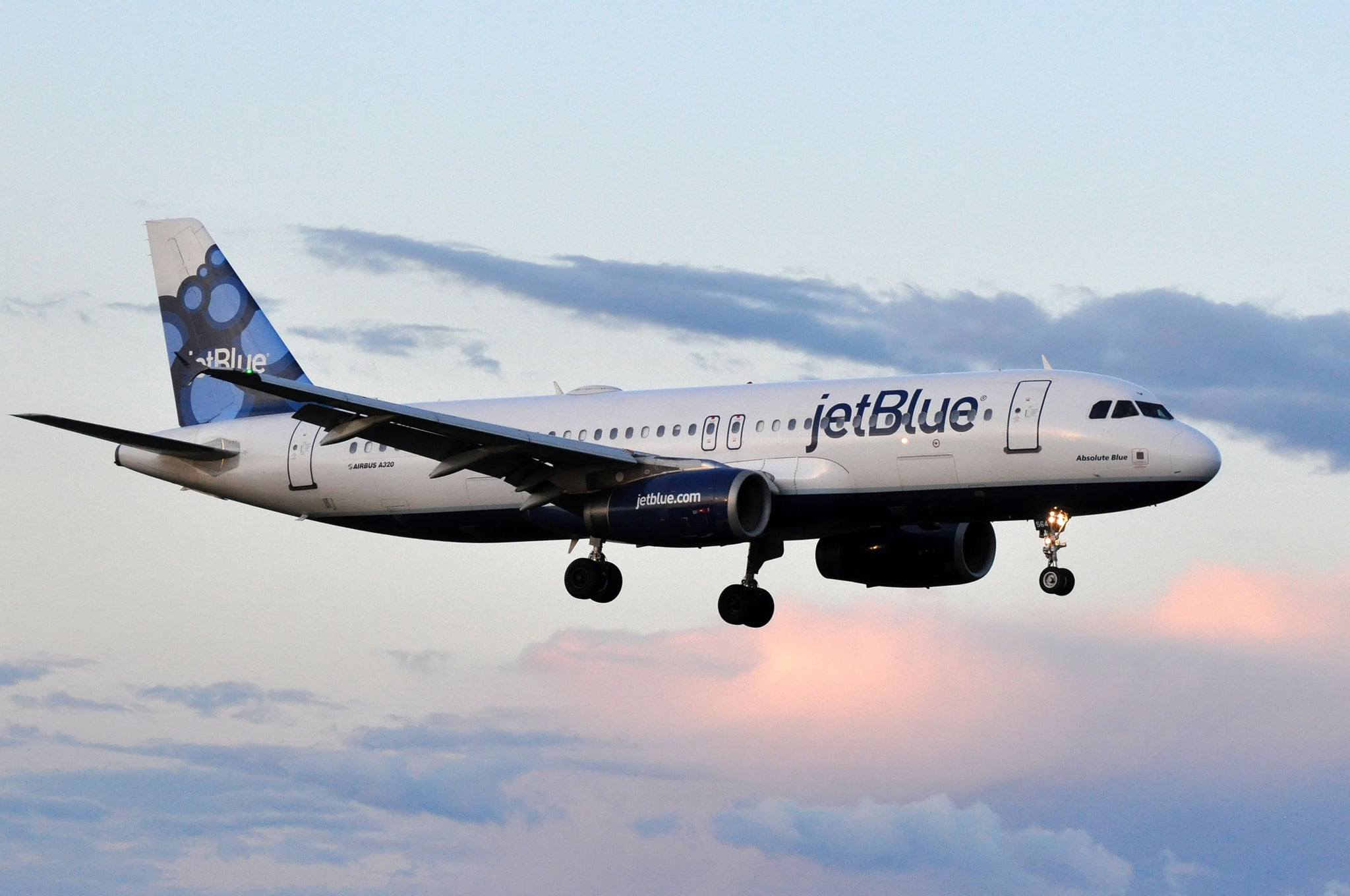
9. JetBlue Airways: 76.33% de llegada a tiempo
https://media1.popsugar-assets.com/files/thumbor/AqjRwIL-bStl96SlKsJdpgUMe9Q/fit-in/2048xorig/filters:format_auto-!!-:strip_icc-!!-/2016/03/31/954/n/1922398/81206889de5649a2_23140827435_1b61b53925_o.jpg
Otra sorpresa es JetBlue Airways (NASDAQ: JBLU), que se encuentra a sólo 0,03 puntos porcentuales de distancia de ser el más bajo de las 10 principales aerolíneas listadas por FlightStats en términos de tasa de llegada a tiempo.

JetBlue ha sido recientemente y consistentemente insatisfactoria en términos de puntualidad en relación con sus pares más grandes. Parte de la culpa podría ir a su eje principal, John F. Kennedy Aeropuerto Internacional (JFK), que está entre los más ocupados en los Estados Unidos. Un análisis de este verano pasado de la Oficina de Estadísticas de Transporte de los 29 mejores aeropuertos de Estados Unidos enumeró JFK como el cuarto peor cuando se trata de retrasos.

De nuevo, JetBlue está haciendo algo bien. Está en la cima del estudio de satisfacción de la aerolínea norteamericana de 2016 de J.D. Power durante 12 años consecutivos, lo que significa que otros factores, como sus servicios a bordo y menores tarifas de equipaje con respecto a sus pares, están claramente desempeñando un papel en mantener satisfechos a sus clientes.

10. Air Canada: 76.30% de llegada a tiempo
https://i0.wp.com/aerospace-journal.com/wp-content/uploads/2017/02/new-livery-unveiling-2.jpg
La incorporación de la furgoneta entre los mayores de América del Norte con una puntualidad del 76,30% en 2016 es Air Canada (NASDAQOTH: ACDVF).

La culpa de la baja clasificación de Air Canada puede estar en sus centros principales. Según los datos proporcionados por FlightStats, la tarifa de salida a tiempo de 81% de Air Canada era mejor que la de JetBlue, Virgin America, Frontier y Southwest, pero la aerolínea pierde casi 5 puntos porcentuales cuando se trata de llegadas a tiempo. Esto podría implicar una creciente congestión en sus rutas de servicio, señalando que puede ser necesario aumentar la capacidad o agregar más rutas para atenuar este problema.

Si bien no hay garantía, el retraso en el desempeño de Air Canada podría resultar en pérdida de clientes si no mejora. AIRGWAYS ® Icon-AW

A woman looking at a large arrivals board at an airport.

Ranking the 10 major airlines US performance on-time in 2016

With a record number of passengers taking to the skies in 2016, on-time performance is becoming more important than ever. The U.S. airline industry is flying high in more ways than one

According to the U.S. Department of Transportation (DOT), the airline industry hit a never-before-seen milestone in 2016: It crossed the 800-million-passenger mark. To be more precise, U.S. airlines carried a record 823 million passengers last year, 719 million of which were on domestic flights, with the remainder made up of international passengers. That’s up 3.1% from the 798 million carried in 2015, and marks a roughly 17% increase from the 704 million passengers carried in 2009.

AW-7553737

On top of transporting more passengers than ever, airlines also mishandled fewer bags than ever (2.7 bags per 1,000 passengers), bumped fewer passengers than the previous record low (0.62 per 10,000 passengers), and cancelled a record-low 1.17% of domestic flights.

Yet these improvements could all be for naught if airlines aren’t able to get their passengers to their destinations on time. While customer loyalty matters to some degree across many industries and sectors, airlines in particular are counting on a pleasant customer experience (which includes an on-time arrival) to drive repeat business. With 2017 looking as if it could be another record year for air travel, on-time arrivals have arguably never been more important.

So, which airlines are the best at getting their passengers to their destinations on time? To answer that we’ll turn to FlightStats, which has examined the on-time performance for airlines in each of the past eight years. FlightStats’ data, which considers an arrival within 15 minutes of the scheduled arrival time to be «on time,» has allowed us an in-depth look at where the top 10 major North American airlines rank, from first to worst.

1. Alaska Air: 87% on-time arrival

Leading the way in on-time performance in 2016 was Alaska Air Group (NYSE:ALK), and by a comfortable margin at that. It may come as a surprise to some, but this is the seventh consecutive year that Alaska has been the top dog in terms of on-time performance. President and Chief Operating Officer Ben Minicucci, after Alaska won its sixth consecutive award from FlightStats last year, pointed to his company’s employees and its steadfastness in putting the needs of customers first as the reasons behind its success.

A tip of the cap may also be deserved for Seattle-Tacoma International Airport, which serves as Alaska Air’s largest hub. In a separate on-time performance report from air travel analytics company OAG, SeaTac, as it’s better known, ranked sixth in on-time performance among the major airports serving more than 20 million departing passengers annually.

2. Delta Air Lines: 85.17% on-time arrival

Alaska Airlines may have taken the top spot, but Delta Air Lines (NYSE:DAL) deserves its own crown considering that it boasts more than five times as many seats as Alaska (220.5 million versus 42.03 million) and it was able to deliver an on-time performance of more than 85%.

Delta’s focus lately, other than giving Alaska a run for its money by expanding in Seattle, has been on reducing domestic flight cancellations, which appears to have had a positive impact on performance as well. Delta reported in January that it went 241 days in 2016 without cancelling a mainline flight anywhere in the world, which beat its own industry record by a whopping 80 days. Delta’s reliability could become an important asset that draws in repeat business.

3. WestJet: 82.73% on-time arrival

Though it’s the third smallest of the 10 major airlines ranked by flights in 2016, Canada’s WestJet (NASDAQOTH:WJAFF) dazzled with an on-time performance that neared 83%. What’s more, based on FlightStats’ data, WestJet had the lowest average arrival delay among the 10 major North American airlines — 46.4 minutes.

There’s also reason to believe that WestJet could improve its on-time performance in the years to come. Though it’s primarily focused on domestic Canadian flights, WestJet has faced challenges incorporating new planes on new routes. These «teething pains,» as CEO Gregg Saretsky referred to them last summer, are similar to what it experienced when it launched its WestJet Encore brand. Given time, WestJet’s international on-time reliability could thrive.

4. Southwest Airlines: 81.89% on-time arrival

It wasn’t that long ago that Southwest Airlines (NYSE:LUV), home of the free-flying bags, was dead last in on-time performance. In 2013, Southwest thought it would be a good idea to significantly expand its schedules on existing routes, which crushed on-time performance. A few years later, and after some prudent pruning of its schedules, Southwest is back in the middle of the pack with an on-time arrival of nearly 82%.

Like many of the domestic majors, Southwest is being considerably more cautious with its expansion plans in 2017. Crude oil prices, and thus jet fuel prices, are much higher than they were last year, and Southwest wants to avoid a repeat of 2013, if possible.

5. United Airlines: 81.83% on-time arrival

Despite landing in the middle of the pack in terms of on-time performance, United Airlines, which is part of United Continental Holdings (NYSE:UAL), has made significant strides in improving its reliability. Just this past September, the airline reported that its on-time results for the summer travel season were its best ever, especially during the July 4 travel period.

A press release from United Airlines pointed to a number of recent initiatives that are paying off. These include scheduling adjustments, a move to equip more employees with mobile technologies to better serve customers, and improved employee teamwork. United expects to add $300 million in value by 2018, according to the release, by running a more reliable airline.

6. American Airlines: 80.16% on-time arrival

A sixth-place ranking and a better-than-80% on-time arrival rate seems like something of a godsend for American Airlines Group (NASDAQ:AAL), which has faced no shortage of struggles in recent memory.

According to travel industry data company Skift, American has three big issues that are hampering its reliability. First, it’s still contending with post-merger woes tied to US Airways. Merging the computer systems for both airlines is taking an exceptionally long time, and since flight crews can only fly aircraft with systems that belonged to their airline prior to the merger, it’s led to inefficient crew assignments.

American is also attempting to rapidly expand at Los Angeles International Airport, but the airline simply doesn’t have enough gates there to accommodate an upgrade in capacity. This has created some clear hiccups in its on-time performance. Last, weather at its hubs has also been a factor affecting the airline’s timeliness.

7. Frontier Airlines: 77.44% on-time arrival

Ultra-low-cost airline Frontier, which offered the second-fewest flights (99,302) of the top 10 major North American airlines in 2016, came in toward the bottom with a 77.44% on-time arrival rate.

Until this past summer, Frontier had delivered numerous months of 80%-plus on-time arrival rates, which is pretty impressive for an airline whose main hook is its ultra-low ticket prices. What did its on-time arrival rate in, company spokesman Jim Faulkner told the Denver Post, were staffing issues at Swissport, the company’s ramp services contractor at Denver International Airport (DIA), its main hub. Frontier hired Simplicity USA in May 2016 to manage customer service, ramp work, and baggage handling at DIA, so it hopes to put its recent dip in on-time performance in the rearview mirror.

8. Virgin America: 77.33% on-time arrival

Virgin America, which was acquired by Alaska Airlines in December for $2.6 billion, surprisingly came in eighth in on-time performance in 2016.

Why is it surprising? According to the annual Airline Quality Rating report released in 2016 from Wichita State University and Embry-Riddle Aeronautical University, based on scores from the U.S. Department of Transportation (DOT), Virgin America ranked as the top airline for the fourth year in a row. On-time arrival is one of the many factors examined by the DOT scores. While the airline’s integration with Alaska could temporarily hinder the latter’s on-time performance rates, Virgin America has historically stood out for its reliability, which should be a good thing for Alaska Air.

9. JetBlue Airways: 76.33% on-time arrival

Another surprise is JetBlue Airways (NASDAQ:JBLU), which sits just 0.03 percentage points away from being the lowest-ranked of the 10 major airlines listed by FlightStats in terms of on-time arrival rate.

JetBlue has recently and consistently been subpar in terms of on-time performance relative to its larger peers. Some of the blame might go to its main hub, John F. Kennedy International Airport (JFK), which is among the busiest in the United States. An analysis this past summer from the Bureau of Transportation Statistics of America’s top 29 airports listed JFK as the fourth-worst when it comes to delays.

Then again, JetBlue is certainly doing something right. It’s topped J.D. Power’s 2016 North America Airline Satisfaction Study for 12 straight years, meaning other factors, such as its in-flight services and lower baggage fees relative to its peers, are clearly playing a role in keeping its customers happy.

10. Air Canada: 76.30% on-time arrival

Bringing up the caboose among the North American majors with an on-time performance of 76.30% in 2016 is Air Canada (NASDAQOTH:ACDVF).

The blame for Air Canada’s low ranking may lie with its primary hubs. According to the data provided by FlightStats, Air Canada’s 81% on-time departure rate was better than those of JetBlue, Virgin America, Frontier, and Southwest, but the airline loses nearly 5 percentage points when it comes to on-time arrivals. This could imply growing congestion at its serviced routes, signaling that it may need to boost capacity or add more routes to assuage this problem.

While there’s no guarantee, Air Canada’s lagging on-time performance could result in lost customers if it doesn’t improve. A\W

Ξ A I R G W A Y S Ξ
SOURCE: Fool.com [The Mootley Fool]
DBk: Airgways / Getty Images / Pixabay / Delta Air Lines / WestJet / Southwest / Thepointsguy.com / Tbo.com / Flightswatcher.com / Popsugar-assets.com / Aerospace-journal.com / Advance.net
AW-POST: 201703231212AR

A\W   A I R G W A Y S ®

BOC Aviation ordena 13 Boeing 737 MAX

https://i0.wp.com/fm.cnbc.com/applications/cnbc.com/resources/img/editorial/2016/07/14/103788159-Boeing_737.1910x1000.jpg

AW | 2017 03 22 23:07 | INDUSTRY


La firma de arrendamiento de aviones BOC Aviation, con sede en Singapur,  ordenó 13 nuevos aviones Boeing 737 MAX 8 por un total de 1.400 millones de dólares a precios de lista.


«Las aerolíneas se sienten atraídas por los 737 MAX 8 menores costos operativos y eficiencia de combustible», dijo el director gerente y director ejecutivo de BOC Aviation, Robert Martin.

«Estamos encantados de anunciar la inclusión de estos aviones adicionales a medida que construyamos nuestra línea de suministro futura».

La firma de arrendamiento de aviones BOC Aviation, con sede en Singapur, dijo que ordenó 13 nuevos aviones Boeing 737 MAX 8 por un total de 1.400 millones de dólares a precios de lista.

«Las aerolíneas se sienten atraídas por los 737 MAX 8 menores costos operativos y eficiencia de combustible», dijo el director gerente y director ejecutivo de BOC Aviation, Robert Martin.

«Estamos encantados de anunciar la inclusión de estos aviones adicionales a medida que construyamos nuestra línea de suministro futura».

BOC Aviation, propiedad de Bank of China, tiene su sede en Singapur, con oficinas en Dublín, Londres y Tianjin. Es un cliente clave tanto para el fabricante de aviones europeo Airbus como para su rival estadounidense Boeing.

BOC Aviation dijo que su flota está arrendada a 68 aerolíneas en 32 países a fines de diciembre del año pasado.

Tras el último acuerdo de compra, la compañía dijo que sus pedidos pendientes acumulados, compras y entregas de Boeing totalizan 331 aviones.

La mayoría de sus aviones Boeing son de la familia 737 de un solo pasillo, una opción popular entre las aerolíneas de bajo costo, que se han expandido rápidamente en el sudeste asiático. AIRGWAYS ® Icon-AW

https://i0.wp.com/dsg.files.app.content.prod.s3.amazonaws.com/gereports/wp-content/uploads/2016/01/22180014/K66500-021.jpg

New Boeing 737 MAX jets order from Singapore aircraft leasing firm

The Singapore-based aircraft leasing firm BOC Aviation said it has ordered 13 new Boeing 737 MAX 8 planes worth a total of US$1.4 billion at list prices.

«Airlines are attracted by the 737 MAX 8’s lower operating costs and fuel efficiency,» said the BOC Aviation managing director and chief executive Robert Martin.

«We are delighted to announce the inclusion of these additional aircraft as we build our future delivery pipeline.»

BOC Aviation, owned by Bank of China, is based in Singapore with offices in Dublin, London and Tianjin. It is a key customer for both the European aircraft maker Airbus and its US rival Boeing.

BOC Aviation said its fleet is leased to 68 airlines in 32 countries as of end December last year.

Following the latest purchase agreement, the company said its cumulative outstanding orders, purchases and deliveries from Boeing total 331 aircraft.

Most of its Boeing planes are from the single-aisle 737 family, a popular choice among low-cost carriers, which have expanded rapidly in South East Asia. A\W

https://pbs.twimg.com/media/CnhT_bEVUAAqmm5.jpg

BOC Aviation plaatst nieuwe bestelling voor 737 MAX

Leasemaatschappij BOC Aviation breidt de portfolio van Boeing-vliegtuigen verder uit. De in Singapore gevestigde onderneming, onderdeel van de Bank of China, heeft een bestelling geplaatst voor dertien extra Boeing 737 MAX 8-vliegtuigen.


BOC Aviation zegt de toestellen te hebben besteld vanwege de groeide vraag naar brandstofzuinige toestellen als de 737 MAX 8. In totaal heeft de onderneming nu 74 van dit nieuwe type in bestelling.

In totaal heeft BOC Aviation nu 331 vliegtuigen in bestelling staan bij Boeing, waaronder ook 209 737NG’s. Onlangs vierde het bedrijf de aflevering van het tweehonderdste Boeing-toestel.

BOC Aviation is ook een grote klant van Airbus. Vorige week werden nog enkele A320’s besteld. In totaal bestelde de leasemaatschappij 367 vliegtuigen bij de Europese aartsrivaal van Boeing. A\W


Ξ A I R G W A Y S Ξ
SOURCE: thenational.ae / Luchtvaartnieuws.nl
DBk: Boeing.com / Pbs.twimg.com / Cnbc.com
AW-POST: 201703222307AR

A\W   A I R G W A Y S ®

¿Qué significará Brexit para la industria aérea británica?

https://i0.wp.com/estaticos.elperiodico.com/resources/jpg/0/2/aviones-british-airways-aeropuerto-heathrow-1463399938420.jpg 

AW | 2017 03 22 21:17 | AIRLINES MARKET

Resultado de imagen para Brexit LOGOLas aerolíneas basadas en Reino Unido están clamando por estar al frente de la cola cuando las negociaciones sobre el Brexit comienzan en serio.

En las últimas semanas, han tenido lugar reuniones entre los funcionarios de la UE y las compañías aéreas en un intento de dar a conocer los problemas que deben abordarse para el sector de los viajes.

Ha habido una creciente preocupación por parte de la industria aérea de que podría verse obstaculizada si las discusiones entre el Reino Unido y la UE se vuelven acrimoniosas. La cuestión de Brexit es particularmente aguda para la industria aérea dado que los acuerdos existentes permiten a las compañías volar entre el Reino Unido y la UE, así como entre los países europeos continentales, y estos deberán ser renegociados antes de que el Reino Unido salga formalmente del bloque. AIRGWAYS ® Icon-AW

https://i2.wp.com/www.touchfinancial.co.uk/wp-content/uploads/2016/04/brexit.jpg

What will Brexit mean for the UK airline industry?

UK-based airlines are clamouring to be at the front of the queue when negotiations over Brexit begin in earnest.

Meetings have been taking place between EU officials and airlines in recent weeks in a bid to flesh out the issues that need to be tackled for the travel sector.

There has been mounting concern from the airline industry that it could be hobbled if discussions between the UK and the EU turn acrimonious. The issue of Brexit is particularly acute for the airline industry given existing agreements allow companies to fly between the UK and EU – as well as between mainland European countries – and these will need be renegotiated before the UK formally exits the bloc. A\W


Ξ A I R G W A Y S Ξ
SOURCE: Telegraph.co.uk
DBk: Elperiodico.com / Touchfinancial.co.uk
AW-POST: 201703222117AR

A\W   A I R G W A Y S ®

Fiji Airways ganancia record en 2016

https://i0.wp.com/www.aviationtoday.com/wp-content/uploads/2014/08/Fiji20AIrways20flying.jpg

AW | 2017 03 22 20:49 | AIRLINES

Fiji Airways Group anuncia ganancia récord de $ 84.5 millones FJD en 2016

Fiji Airways Group se enorgullece en anunciar una ganancia récord de 84,5 millones de dólares (Fijian Dollars), durante el año fiscal que finalizó el 31 de diciembre de 2016. La ganancia de Fiji Airways aumentó un 20,5% en comparación con 2016 y la aerolínea registró un récord de 1,4 millones Pasajeros, en comparación con 1,3 millones en 2015. El éxito de Fiji Airways se benefició de una fuerte demanda de los EE.UU., que representan aproximadamente el 27% de la contribución total al ingreso del punto de venta de la aerolínea. AIRGWAYS ® Icon-AW

https://i0.wp.com/e-spaces.eu/wp-content/uploads/2016/10/Fiji-Airways_Boeing-737-8X2.jpg

Fiji Airways Group wins record in 2016


Fiji Airways Group Announces Record Earnings of $ 84.5 Million FJD in 2016

Fiji Airways Group is proud to announce a record gain of $ 84.5 million (Fijian Dollars) for the fiscal year ending December 31, 2016. Fiji Airways’ profit increased 20.5% compared to 2016 And the airline recorded a record 1.4 million passengers, compared with 1.3 million in 2015. The success of Fiji Airways benefited from strong demand from the US, accounting for approximately 27% of the contribution Total to the entrance of the point of sale of the airline. A\W


Ξ A I R G W A Y S Ξ
SOURCE: Prnewswire.com
DBk: E-spaces.eu / Aviationtoday.com
AW-POST: 201703222049AR

A\W   A I R G W A Y S ®

Embraer #4 prototipo E190-E2

https://i0.wp.com/www.embraer.com/PublishingImages/press-releases/4_E190-E2_First_flight.jpg

AW | 2017 03 22 20:21 | INDUSTRY

Resultado de imagen para Embraer logoEn Sao José dos Campos el #4 prototipo realiza su primer vuelo

Embraer lanzó en primer vuelo del cuarto prototipo del E190-E2, un avión con número de serie 20.004 desde la fábrica de Sao José dos Campos, Brasil.

El vuelo tuvo una duración de dos horas. El #4 del E190-E2 servirá para las pruebas de interior, evacuación de cabina, confort y estudios sobre el nivel interior de ruido.En conjunto los cuatro prototipos del Embraer E190-E2 han realizado una acumulación acumuladohasta la fecha de más de 650 horas de vuelo. Embraer ha acumulado más de 30.000 horas de prueba en tierra. Ha completado aspectos como configuración aerodinámica, operaciones de despegue y aterrizaje en pistas cortas, empuje en vuelo, aspectos ligados con el tren de aterrizaje y sistemas. Se espera que en los próximos meses se realicen las pruebas correspondientes a vuelos de alta velocidad y las pruebas de frío.

«En términos de la campaña de certificación, Embraer ya ha congelado la configuración aerodinámica y ha concluido muchas pruebas tales como evaluación de calificación de vuelo, despegue y aterrizaje en campo corto, rendimiento de subida, determinación de empuje en vuelo, estabilidad de tren de aterrizaje y otras pruebas de sistemas. En breve realizaremos pruebas de calidad de vuelo de alta velocidad, aleteo, hielo natural y fríos», explica Luís Carlos Affonso, Director de Operaciones de Embraer Aviación Comercial.

Además de la campaña de pruebas en vuelo, Embraer está realizando más de 30.000 horas de pruebas en tierra, así como análisis de integración. Con el objetivo de entregar un avión más maduro al entrar en servicio, la Compañía usa un «Iron Bird», donde todos los sistemas de aviones están disponibles a escala completa, incluyendo la cabina. Esta herramienta permite a Embraer simular vuelos de cada modelo E2 y optimizar el rendimiento de los sistemas y refinar las cualidades de vuelo.

Los E190-E2 incorporarán cuarta generación de aviónica, controles totales fly-by-wire, con planta motriz Pratt & Whitney PW1500G. Con una capacidad para transportar a 106 pasajeros en clase común (Y), o 97 pasajeros en tres clases, mantiene el largo de fuselaje del actual E190, pero verá incrementada su envergadura alar en unos 5 metros. La autonomía de la aeronave rondará los 5.278 kilómetros, casi 1.000 kilómetros más que su antecesor. Podrá realizar operaciones en aeropuertos que dispongan de pistas mayores de 1.670 metros de distancia, requiriendo este E190-E2, una distancia mínima de pista para aterrizaje de 1.315 metros.

Embraer tiene planeado comenzar las entregas de esta nueva generación del E190-E2 en el 1Q 2018, a su cliente de lanzamiento y primer operador, la aerolínea noruega Widerøe.

El nuevo integrante de la familia E-Jet, Embraer E190-E2, será un punto de referencia en el segmento de aeronaves de 70 a 130 asientos, donde ya ha acumulado más de 1.300 aeronaves. AIRGWAYS ® Icon-AW

https://i0.wp.com/www.ainonline.com/sites/default/files/uploads/2017/02/e190e2ff2.jpg

Embraer # 4 prototype E190-E2

Resultado de imagen para Embraer logoIn Sao Jose dos Campos the # 4 prototype makes its first flight


Embraer launched in the first flight of the fourth prototype of the E190-E2, a plane with serial number 20.004 from the factory of Sao Jose dos Campos, Brazil.

The flight lasted two hours. The E190-E2 # 4 will be used for interior testing, cabin evacuation, comfort and internal noise level studies. Together the four prototypes of the E190-E2 have built up accumulated up to 650 hours Of flight. Embraer has accumulated more than 30,000 hours of ground test. He has completed aspects such as aerodynamic configuration, takeoff and landing operations on short tracks, thrust in flight, aspects related to the landing gear and systems. It is expected that in the coming months the tests for high-speed flights and cold tests will be carried out.

“In terms of the certification campaign, Embraer has already frozen the aerodynamic configuration and concluded many tests such as flying qualities assessment, short field takeoff and landing, climb performance, in-flight thrust determination, landing gear stability and other systems tests. Shortly we will do high speed flying qualities, flutter, natural ice and cold soak tests,” explains Luís Carlos Affonso, COO, Embraer Commercial Aviation.

In addition to the flight test campaign, Embraer is performing more than 30,000 hours of ground tests as well as integration analysis. With the goal of delivering a more mature airplane upon entry into service, the company uses an Iron Bird, where all aircraft systems are available in full scale, including the cockpit. This tool enables Embraer to simulate flights of each E2 model and to optimize systems performance and refine flight qualities.

The E190-E2 will incorporate fourth-generation avionics, total fly-by-wire controls with Pratt & Whitney PW1500G power plant. With a capacity to transport 106 passengers in common class (Y), or 97 passengers in three classes, maintains the fuselage length of the current E190, but will see its wingspan increased by about 5 meters. The autonomy of the aircraft will be around 5,278 kilometers, almost 1,000 kilometers more than its predecessor. It will be able to carry out operations in airports that have tracks greater than 1,670 meters of distance, requiring this E190-E2, a minimum distance of landing track of 1,315 meters.

https://i0.wp.com/www.aviacionline.com/wp-content/uploads/2017/02/Wideroe-Embraer-E190-E2.jpg

WIDERØE, FIRST CUSTOMER OF E190-E2

Embraer plans to begin delivery of this new generation of the E190-E2 in 1Q 2018, to its launch customer and first operator, the Norwegian airline Widerøe.

The new member of the E-Jet family, Embraer E190-E2, will be a reference point in the aircraft segment from 70 to 130 seats, where it has already accumulated more than 1,300 aircraft. A\W

Ξ A I R G W A Y S Ξ
SOURCE: AIRGWAYS
DBk: Embraer.com / Pbs.twimg.com
AW-POST: 201703222021AR

A\W   A I R G W A Y S ®

Pilotos de la eslovena Adria Airways, en huelga por reducción de salarios

https://i0.wp.com/kongres-magazine.eu/wp-content/uploads/2015/12/Adria_Airways_Canadair_CRJ900_S5-AAN%40FRA13.08.2012_674gz_7811447068.jpg

AW | 2017 03 22 19:28 | AIRLINES

Los pilotos de la compañía aérea eslovena Adria Airways han iniciado hoy una huelga de dos días con cambios en los horarios de los vuelos y cancelaciones mañana, aunque ninguna este miércoles.

De momento, la línea aérea ha cancelado los vuelos previstos para el jueves que parten y llegan a Liubliana, así como las conexiones con Zúrich, Tirana, Pristina y París.

Según informó la agencia eslovena STA, el paro laboral se inició a las 06.00 hora local (05.00 GMT) de esta mañana y se mantendrá hasta las 22.00 horas (21.00 GMT) del jueves, en protesta por una reducción de los salarios y restricciones de los derechos laborales de los pilotos. AIRGWAYS ® Icon-AW

Slovenian Adria Airways pilots on salary reduction strike

The pilots of the Slovenian airline Adria Airways today started a two-day strike with changes to flight schedules and cancellations tomorrow, but none this Wednesday.

At the moment, the airline has canceled flights scheduled for Thursday to depart and arrive in Ljubljana, as well as connections with Zurich, Tirana, Pristina and Paris.

According to Slovenian STA agency, the work stoppage started at 0600 local time (0500 GMT) this morning and will be held until 22.00 hours (21.00 GMT) on Thursday, in protest of a reduction in wages and restrictions of Labor rights of pilots. A\W


Ξ A I R G W A Y S Ξ
SOURCE: Diariovasco.com
DBk: Kongres-magazine.eu
AW-POST: 2017221928AR

A\W   A I R G W A Y S ®