Plan expansión hasta 2023 Inversiones por valores a US$ 42 millones
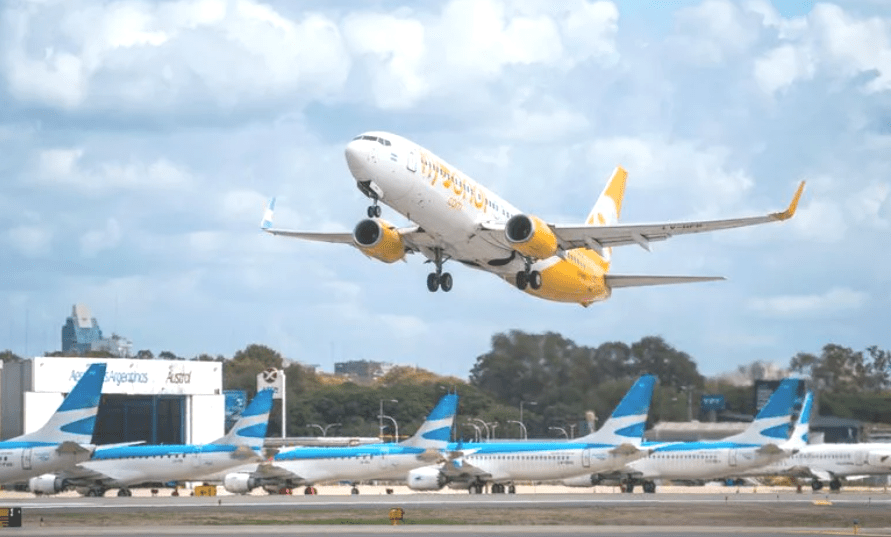
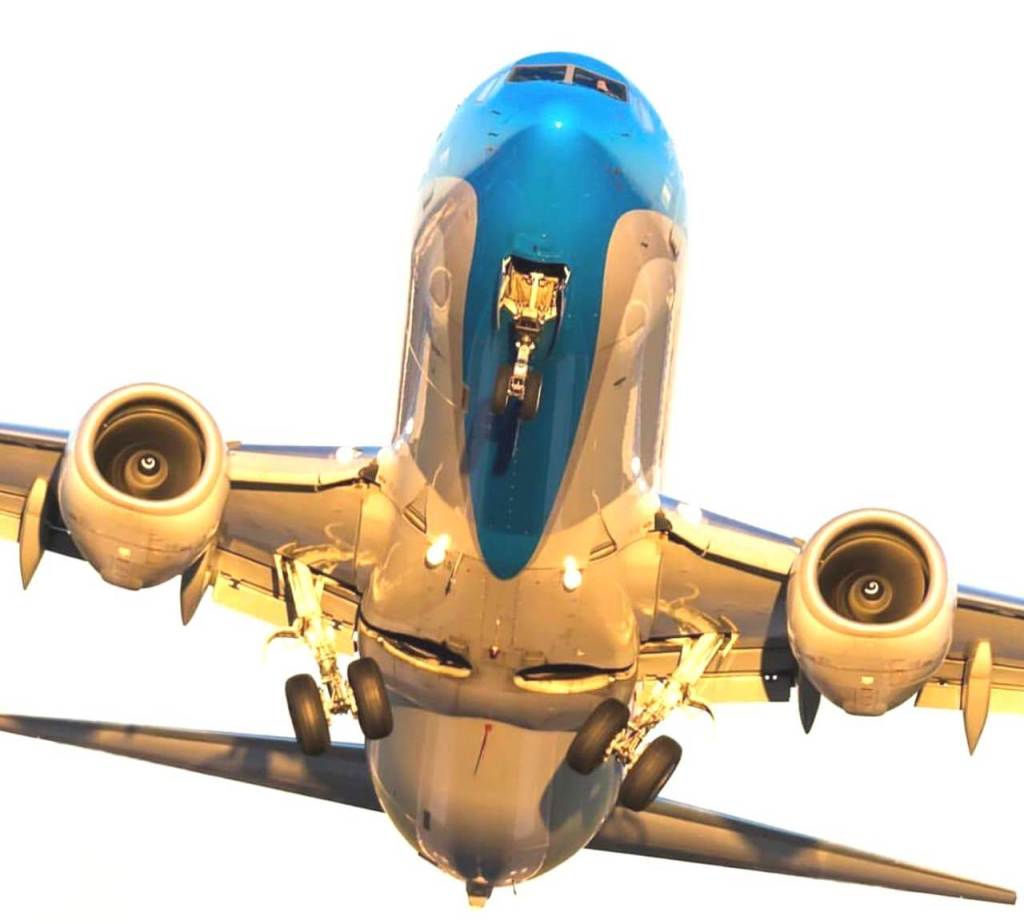
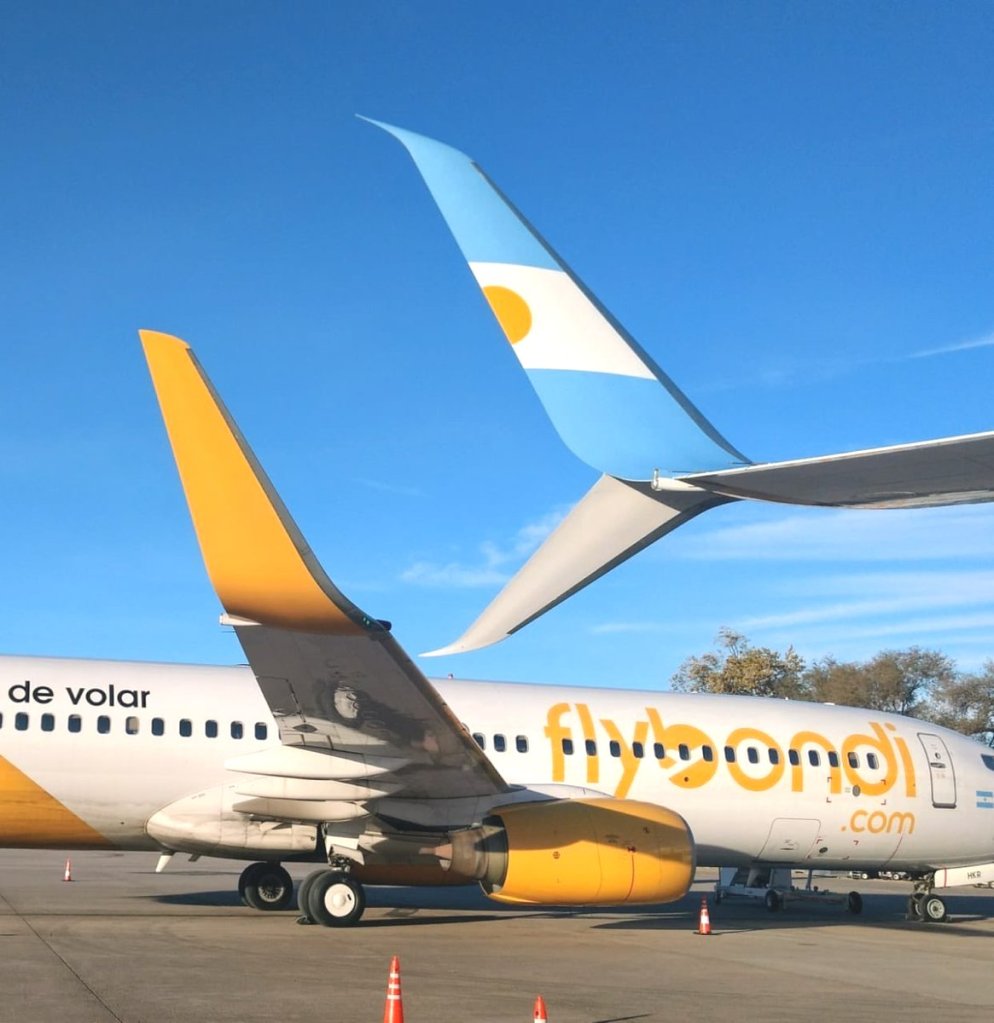
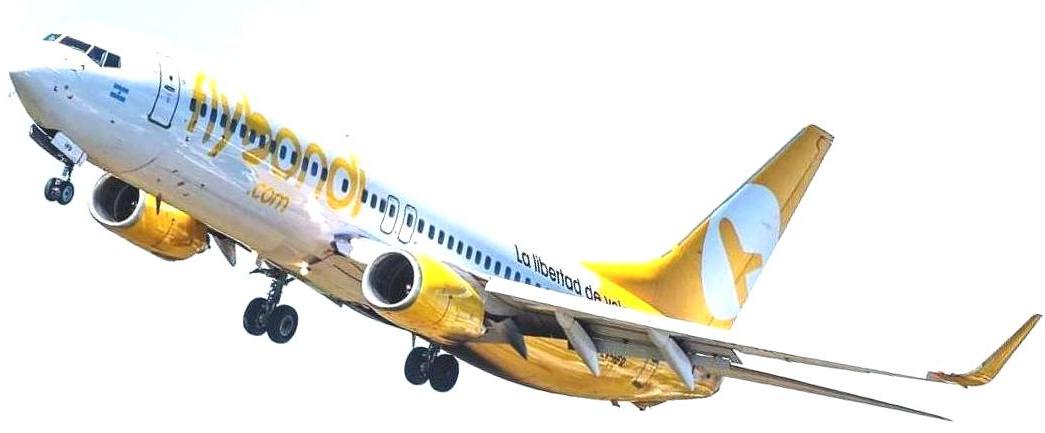
Flybondi Líneas Aéreas ha anunciado fuertes inversiones en Argentina como parte de la reactivación de la aviación comercial. La compañía low cost incorporará más aviones para enfrentar la competitividad en rutas domésticas y regionales con inversiones de US$ 42 millones de Dólares en su plan de expansión hasta 2023.
La aerolínea Flybondi buscará reactivar los servicios en rutas de cabotaje como así también la malla aérea en Sudamérica para acrecentar más pasajeros hacia nuevos destinos con el doble de aviones operativos. Tras una reunión aerolínea-Gobierno a mediados de la semana, el Director Ejecutivo de la aerolínea, Mauricio Sana, dijo que la reunión sirvió para avanzar en la programación 2022 y 2023, siendo un momento de hacer inversiones en Argentina. El Director de Flybondi expresó “es un momento de crecimiento, que es justamente lo que estamos buscando, poder trabajarlo de manera conjunta con el Gobierno y con las autoridades y con los aeropuertos para poder llevarlo a cabo». A todo esto la compañía explicó que duplicará la cantidad de aviones que tiene en el país para transportar 3,4 millones de pasajeros en los próximos dos años, que sumará 400 empleados y cinco aeronaves.
Con la incorporación de más aeronaves, Flybondi buscará ganar cuota de mercado, para lo cual adquirirá cinco aviones adicionales para duplicar la cantidad de flota que tiene en el país, con el objetivo de estimular la próxima temporada invernal, mientras que para finales de 2023 alcanzarán incorporaciones de 400 empleados adicionales a su actual plantilla de 600 trabajadores. “El solo hecho de alquilar cinco aviones implica una inversión de US$ 42 millones en dos años: 2022 y 2023. En 2019, los vuelos de cabotaje tuvieron un récord con 16 millones de tickets vendidos. Como los pasajes son ida y vuelta estaríamos hablando de 8 millones de personas si es que ninguna repitió viaje. Es decir que podríamos estar hablando de 3 o 4 millones de argentinos que viajaron, de un total de 45 millones. de ciudadanos. ¿Y los otros 42 millones qué hacen? Estamos en un 92% de ocupación y en noviembre ya tuvimos un 2% más de pasajeros que en noviembre de 2019”, se preguntó, el ejecutivo y respondió que esta falta de capacidad para que el mercado crezca es lo que impulsa a la firma a traer más aviones, además de la ocupación de las aeronaves.
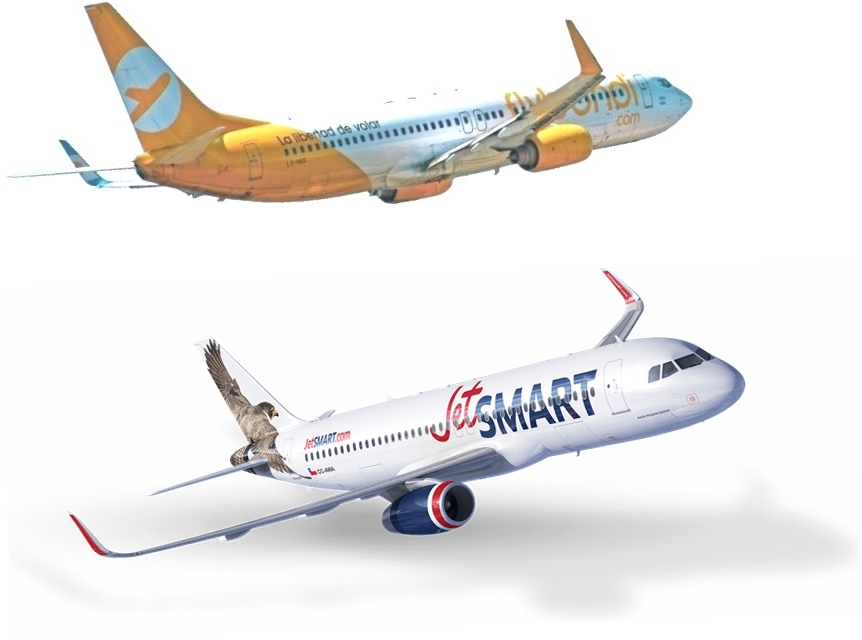
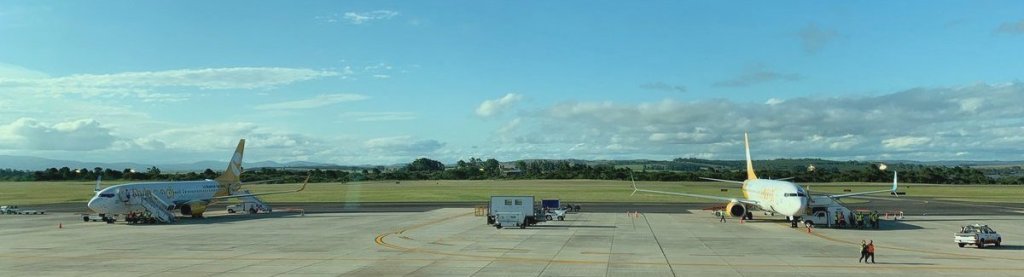
Actualmente, la aerolínea de bajo costo tiene cuatro aeronaves Boeing 737-800 en el país, la quinta estará operativa hacia Enero 2022, la sexta arribaría en Febrero 2022, y las diez se completarían en Julio de 2022. Las rutas actualmente operativas ascienden a trece en el mercado doméstico y cuatro en el regional que comprenden los destinos a Brasil, Uruguay y Paraguay.
Flybondi en números
La aerolínea de presupuesto iniciaba operaciones en la Argentina en 2018 y transportó hasta la fecha unos 3.700.000 pasajeros. El 20% de ellos realizaron el primer vuelo de su vida. Cuenta con más de 570 empleados en todo el país. Tiene una flota de cuatro (4) aviones Boeing 737-800 Next Generation con 189 asientos de única clase y considera ingresar una quinta máquina de iguales características. Vuela a trece (13) destinos domésticos: Buenos Aires, Bariloche, Corrientes, Córdoba, Jujuy, Mendoza, Neuquén, Posadas, Iguazú, Salta, Santiago del Estero, Trelew y Tucumán. La reiniciado el primer enlace regional a Florianópolis, mientras que espera los permisos para volar hacia São Paulo, Río de Janeiro y Punta del Este. Desde enero de 2021 es la aerolínea con el mayor coeficiente de ocupación dentro del país.
Perspectivas Flybondi
La proyección para los dos años siguientes estiman transportar unos 3,4 millones de pasajeros. La mayor flota se utilizará para incorporar más frecuencias, mientras que evaluarán más rutas adicionales. Con la reactivación de más servicios, las economías regionales tendrán un impacto por valores aproximados de US$ 500 millones, sin contar el monto de facturación de la compañía, y la creación de 10.200 empleos indirectos en el sector turístico.
Mientras tanto, habían sido consultado sobre la posible reapertura del Aeropuerto de El Palomar, clausurado para operaciones aerocomerciales. “El beneficio de El Palomar es que es un aeropuerto no congestionado si se lo compara con Aeroparque, pero este último nos dio más exposición y pudimos entrar en la cabeza de un público que no es el nuestro y que no entendía el modelo low cost”.
Flybondi invests heavily
Expansion plan until 2023 Investments for securities of US $ 42 million
Flybondi Líneas Aéreas has announced strong investments in Argentina as part of the reactivation of commercial aviation. The low-cost company will incorporate more aircraft to face competitiveness on domestic and regional routes with investments of US$ 42 million in its expansion plan until 2023.
The airline Flybondi will seek to reactivate services on cabotage routes as well as the air network in South America to increase more passengers to new destinations with double the number of operating aircraft. After an airline-Government meeting in the middle of the week, the Executive Director of the airline, Mauricio Sana, said that the meeting served to advance the 2022 and 2023 programming, being a time to make investments in Argentina. The Director of Flybondi expressed “it is a moment of growth, which is precisely what we are looking for, to be able to work it together with the Government and with the authorities and with the airports to be able to carry it out”. To all this, the company explained that It will double the number of planes it has in the country to transport 3.4 million passengers in the next two years, which will add 400 employees and five aircraft.
With the incorporation of more aircraft, Flybondi will seek to gain market share, for which it will acquire five additional aircraft to double the amount of fleet it has in the country, with the aim of stimulating the next winter season, while by the end of 2023 they will reach incorporation of 400 additional employees to its current staff of 600 workers. “The mere fact of renting five aircraft implies an investment of US$ 42 million in two years: 2022 and 2023. In 2019, domestic flights had a record with 16 million tickets sold. As the tickets are roundtrip, we would be talking about 8 million people if none of them repeated the trip. In other words, we could be talking about 3 or 4 million Argentines who traveled, out of a total of 45 million. of citizens. What do the other 42 million do? We are at 92% occupancy and in November we already had 2% more passengers than in November 2019”, the executive asked himself and responded that this lack of capacity for the market to grow is what prompts the firm to bring more aircraft in addition to the occupation of aircraft.
Currently, the low-cost airline has four Boeing 737-800 aircraft in the country, the fifth will be operational by January 2022, the sixth will arrive in February 2022, and the ten will be completed in July 2022. Currently operating routes amount to thirteen in the domestic market and four in the regional one that includes the destinations to Brazil, Uruguay and Paraguay.
Flybondi in numbers
The budget airline began operations in Argentina in 2018 and has transported some 3,700,000 passengers to date. 20% of them made the first flight of their life. It has more than 570 employees throughout the country. It has a fleet of four (4) Boeing 737-800 Next Generation aircraft with 189 single-class seats and is considering entering a fifth machine with the same characteristics. It flies to thirteen (13) domestic destinations: Buenos Aires, Bariloche, Corrientes, Córdoba, Jujuy, Mendoza, Neuquén, Posadas, Iguazú, Salta, Santiago del Estero, Trelew and Tucumán. The restarted the first regional link to Florianópolis, while waiting for permits to fly to São Paulo, Rio de Janeiro and Punta del Este. Since January 2021, it is the airline with the highest load factor within the country.
Flybondi outlook
The projection for the following two years is estimated to transport about 3.4 million passengers. The larger fleet will be used to incorporate more frequencies, while they will evaluate more additional routes. With the reactivation of more services, the regional economies will have an impact of approximately US$ 500 million, not counting the company’s turnover, and the creation of 10,200 indirect jobs in the tourism sector.
Meanwhile, they had been consulted about the possible reopening of the El Palomar Airport, closed for commercial air operations. «The benefit of El Palomar is that it is a non-congested airport when compared to Aeroparque, but the latter gave us more exposure and we were able to enter the head of an audience that is not ours and that did not understand the low cost model».
AW | 2021 12 16 09:40 | GOVERNMENT / AIRLINES MARKET
Presentación objetivos en la Cámara de Diputados
El Ministerio de Transporte de Argentina, a cargo de Alexis Guerrera, ha presentado en la Comisión de Presupuesto y Hacienda de la Cámara de Diputados, en el marco del análisis del proyecto de ley de Presupuesto 2022, donde expuso los números de la cartera a su cargo. Ante el comité presidido por el Diputado Carlos Heller, el funcionario habló sobre la construcción y renovación de terminales de ómnibus, que supone una inversión de más de diez millones de pesos, con 75 obras firmadas en 17 provincias. La recuperación del sistema ferroviario nacional con 818,7 kilómetros de vías renovadas. “Estamos haciendo un trabajo de recuperación de ramales ferroviarios inactivos, que conectaban a grandes ciudades con su periferia o con otras ciudades. Es necesario el debate de una ley federal de transporte, pensar un sistema integral que recoja los fondos del Estado y pueda distribuirlo de manera más equitativa”, expresó Alexis Guerrera en lo que respecta a subsidios de transporte.
En el marco de la campaña de vacunación, celebraron que Aerolíneas Argentinas haya permitido transportar 39 millones de vacunas contra el Coronavirus al país. Desde Transporte el objetivo es “mejorar la conectividad aérea, no solamente con la línea de bandera, sino también propiciando la participación de empresas privadas a la conectividad de nuestras provincias”.
Argentina Federal Transportation Law
Presentation of objectives in the Chamber of Deputies
The Ministry of Transport of Argentina, in charge of Alexis Guerrera, has presented in the Budget and Finance Commission of the Chamber of Deputies, within the framework of the analysis of the 2022 Budget bill, where he exposed the portfolio numbers to his position. Before the committee chaired by Deputy Carlos Heller, the official spoke about the construction and renovation of bus terminals, which represents an investment of more than ten million pesos, with 75 works signed in 17 provinces. The recovery of the national railway system with 818.7 kilometers of renewed tracks. “We are doing work to recover inactive railway lines, which connected large cities with their periphery or with other cities. It is necessary to debate a federal transportation law, to think of a comprehensive system that collects State funds and can distribute them more equitably», said Alexis Guerrera with regard to transportation subsidies.
As part of the vaccination campaign, they celebrated that Aerolineas Argentinas has allowed 39 million vaccines against the Coronavirus to be transported to the country. From Transport, the objective is «to improve air connectivity, not only with the flag line, but also by promoting the participation of private companies in the connectivity of our provinces».
Fin cuotas al exterior genera suba precios domésticos
El fin de cuotas al exterior genera la suba de precios en los vuelos de cabotaje. Así lo aseguraron desde la FEHGRA. Advirtieron también que provocará la baja de frecuencia de vuelos y llegada de extranjeros. La prohibición de comprar pasajes al exterior en cuotas “es una mala medida y esperamos que se pueda revisar. Esta situación genera dos efectos no deseados: primero, si las aerolíneas contemplan que van a salir menos argentinos, reducen la frecuencia de vuelos y así cae la cantidad de extranjeros que pueden llegar al país; y segundo, provoca la suba de precios de los vuelos internos ya que hay sobre demanda porque la medida no fue acompañada con más rutas o más frecuencias”, dijo Gustavo Fernández Capiet, Secretario de la Federación Empresaria Hotelera Gastronómica de la República Argentina (FEHGRA).
«Desde todo punto de vista, diría que la medida no es mala, es peor que mala. Estamos pidiendo que se revierta porque no le sirve a nadie, ni siquiera al Estado, porque en definitiva no tiene más asientos para vender. Aerolíneas Argentinas no tiene máquinas hoy para poner en el aire porque tiene más de 20 que están esperando el turno para la rehabilitación: durante la pandemia se vencieron algunos certificados ya que la empresa fabricante Embraer cortó los servicios, y por eso hay aviones de todas las aerolíneas del mundo esperando a ser rehabilitadas”, expresó el Vicepresidente de la AHGSMA.
Argentina ticket prices increase
End of quotas abroad generates rise in domestic prices
The end of quotas abroad generates a rise in prices on domestic flights. This was confirmed by FEHGRA. They also warned that it will cause a decrease in the frequency of flights and the arrival of foreigners. The ban on buying tickets abroad in installments “is a bad measure and we hope that it can be revised. This situation generates two unwanted effects: first, if the airlines consider that fewer Argentines are going to leave, they reduce the frequency of flights and thus the number of foreigners who can arrive in the country falls; and secondly, it causes the prices of internal flights to rise since there is over demand because the measure was not accompanied by more routes or more frequencies», said Gustavo Fernández Capiet, Secretary of the Federation of Gastronomic Hotel Companies of the Argentine Republic (FEHGRA).
«From every point of view, I would say that the measure is not bad, it is worse than bad. We are asking that it be reversed because it does not serve anyone, not even the State, because ultimately it does not have more seats to sell. Aerolineas Argentinas does not It has machines today to put in the air because it has more than 20 who are waiting their turn for rehabilitation: during the pandemic some certificates expired since the manufacturing company Embraer cut off services, and that is why there are planes from all the airlines in the world waiting to be rehabilitated», said the Vice President of AHGSMA.
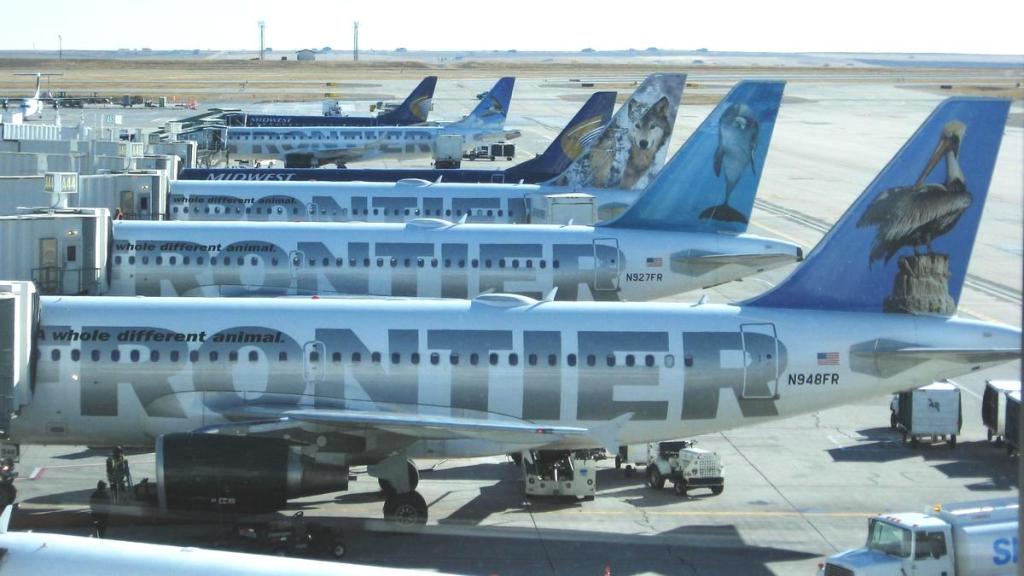
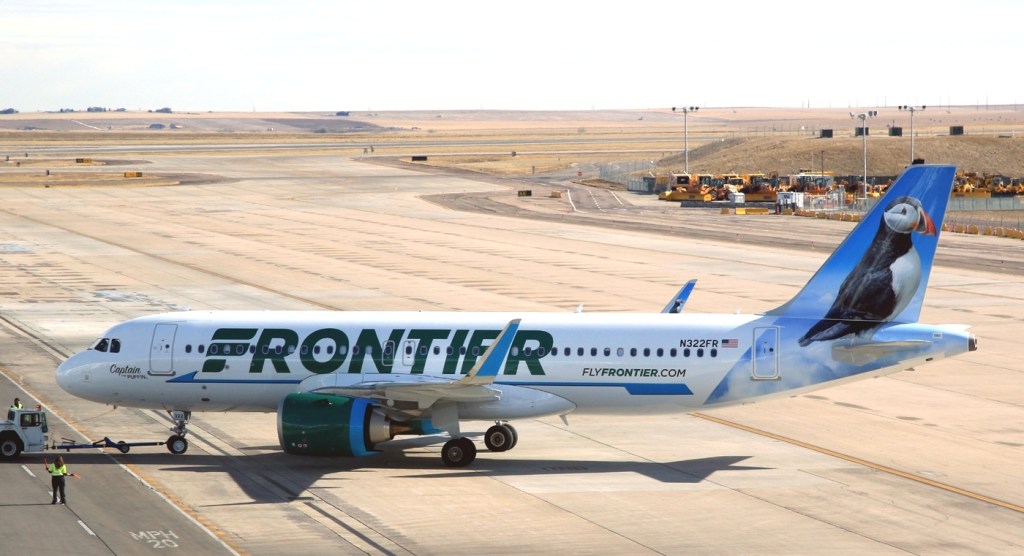
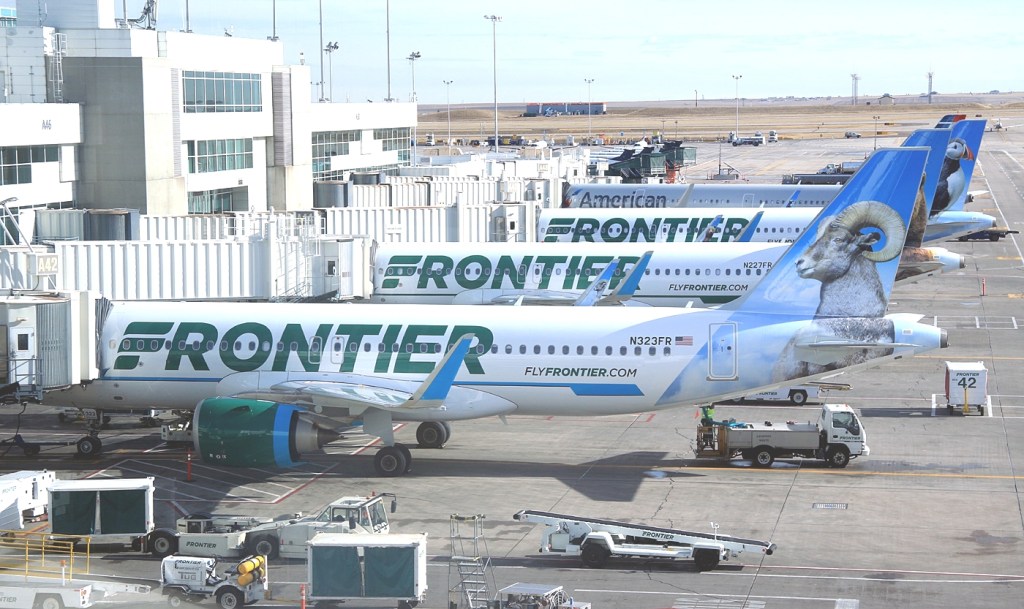
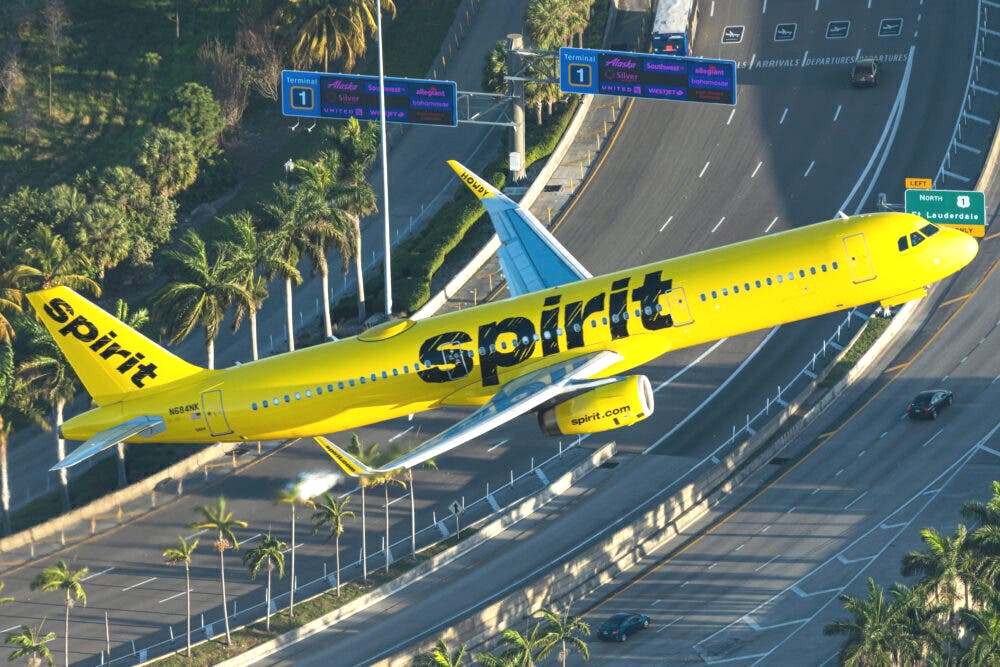
Frontier Airlines está superando a Spirit como el ULCC líder EEUU
La aerolínea Spirit Airlines desde su transformación en una aerolínea de ultra bajo costo hace más de una década ha sido el estándar norteamericano para este modelo de negocio de aerolíneas. El primer modelado de Ryanair de Europa al comparar su estructura de costos y desagregar los precios, Spirit Airlines ha pasado a innovar nuevas ideas como su club de tarifas y el cobro de maletas de mano. Si bien los medios de comunicación fueron en gran medida críticos y a veces desdeñosos con Spirit, los inversores se beneficiaron de un modelo de negocio que produjo fuertes rendimientos financieros y estableció tendencias que otros en la industria siguieron, al menos hasta cierto punto.
Cuando el inversor Bill Franke y su equipo de Indigo Partners vendieron Spirit y compraron Frontier Airlines, rápidamente adoptaron el apodo de ULCC e incluso lo usaron como su ticker de acciones cuando salieron a bolsa en 2021. Prometiendo ser más amigable con el cliente y transparente, Frontier también adoptó el lema «tarifas bajas bien hechas», una excavación no tan sutil en Spirit, que junto con el alto rendimiento del capital invertido generó muchas quejas de los clientes. A medida que Spirit ha trabajado para suavizar sus bordes, limar asperezas, Frontier se ha apegado a sus principios de bajo costo y pronto podría tomar el manto del líder ULCC.
Modelo ULCC
La evolución del modelo Ultra Low Cost (ULCC) en Estados Unidos continúa mostrando signos de madurez y robustez. Ryanair fue pionera en el modelo de aerolínea de ultra bajo coste en Europa. En Estados Unidos fueron ensayadas líneas aéreas low cost, posicionándose con Southwest Airlines como la aerolínea más emblemática, para posteriormente reproducir el modelo low cost/low fare por su eficiencia operativa. Pero luego agregaron la desagregación de los precios de los boletos: el CEO Michael O’Leary declaró que esperaba que algún día sus boletos fueran gratuitos como resultado. Cuando Spirit Airlines comenzó su transformación en 2005, estaba claro que no podían competir con operadores mucho más grandes simplemente copiando su modelo. Entonces, basándose en la idea de dirigirse a los clientes que pagan los boletos ellos mismos, se propusieron reducir sus costos unitarios y simultáneamente desagregar los precios de sus boletos para producir tarifas bajas líderes en la industria. La compañía acuñó el término aerolínea de ultra bajo costo para diferenciarla de Southwest Airlines especialmente, considerada durante mucho tiempo como una aerolínea de bajo costo. A medida que Spirit implementó este modelo, su tarifa promedio cayó de aproximadamente US$ 105 a menos de US$ 70, mientras que los ingresos auxiliares crecieron de menos de US$ 5 a más de US$ 50.
Con un modelo que cambia rápidamente, Spirit Airlines sorprendió a muchos clientes y terminó en la posición poco envidiable de liderar la industria con su tasa de quejas. A partir de 2012, justo después de que la aerolínea se hizo pública a través de una oferta pública inicial, la compañía contrató a una empresa de marca externa para ayudarla a refinar mejor sus mensajes a los clientes. Esto creó términos como «Bare Fare», «Fit Fleet» y «Frill Control». Poco a poco, este mensaje comenzó a afianzarse, pero las operaciones de Spirit tendían a tener dificultades, pues la aerolínea optaría por ejecutar vuelos tarde en lugar de cancelarlos. Esto les dio una baja tasa de puntualidad según lo medido por el Departamento de Transporte (DOT). Su capacidad para recuperarse de operaciones irregulares cuando la mayoría de los vuelos solo se vuelan una vez al día aún desafía a la aerolínea, como se ha observado este verano boreal 2021.
Tarifas bajas hechas bien
Después de guiar a Spirit Airlines a un buen punto de referencia mundial para bajos costos, Bill Franke compró Frontier Airlines y luego agregó a Barry Biffle, el líder de Marketing de Spirit durante su transición, como su CEO. Tanto Franke como Biffle saben lo que ha funcionado y no ha funcionado en Spirit Airlines. Saben que el modelo proporcionó altos rendimientos y una fuerte resiliencia. Pero como Spirit necesitaba ponerse al día con sus clientes, Frontier podía comenzar con los clientes desde el primer día. A esto lo llaman «tarifas bajas bien hechas». Si bien lo que hacen realmente no es diferente de Spirit actualmente, comenzaron esto con su transición ULCC y, por lo tanto, no tienen actuamente que ponerse al día con una reconstrucción tarifaria.
Cambio en la estrategia
Cuando Bob Fornaro, el ex-CEO de AirTran Airways, tomó las riendas de Spirit Airlines en 2016, aceleró los cambios iniciados anteriormente para abordar los problemas de expectativas de los clientes y agregó un fuerte enfoque en la eficiencia operativa. Además, la estrategia de red de la compañía cambió un poco de servir a las ciudades más grandes de los Estados Unidos, a menudo otros centros de aerolíneas como Dallas y Chicago, a crecer en mercados más pequeños y medianos. La aerolínea ha agregado ciudades como Akron, Greensboro, Asheville y Louisville, entre muchas otras. Todos estos cambios fueron buenos para Spirit Airlines y representaron un buen crecimiento desde los pequeños comienzos de la compañía. Sin embargo, estos cambios ejercen presión sobre la estructura de costos de Spirit Airlines. Ejecutar más vuelos a tiempo ha significado reducir la utilización de aeronaves el número de horas que cada avión vuela por día. Suavizar las reglas más duras de los clientes tenía sentido, pero también devolvió los costos a la empresa que antes se trasladaban a los clientes. Agregar primas de clientes como TSA Pre-check y WiFi hace felices a muchos clientes, y eso es algo bueno. Pero también ejercen presión sobre los costos. El resultado neto de todos estos cambios alejó modestamente a Spirit Airlines del estricto modelo ULCC, o tal vez mejor dicho, comenzaron a evolucionar lo que ese modelo realmente significaba.
Mientras tanto, Frontier Airlines se parece más a Spirit Airlines sin los bordes ásperos de los clientes permitiendo buscar el modelo más ULCC y persiguiendo alcanzar la lideranza en el basto mercado estadounidense.
Frontier chasing lead ULCC
Frontier Airlines is overtaking Spirit Airlines as the leading US ULCC
Spirit Airlines since its transformation into an ultra-low-cost airline more than a decade ago has been the North American standard for this airline business model. Ryanair’s first modeling of Europe by comparing its cost structure and disaggregating prices, Spirit Airlines has gone on to innovate new ideas like its fare club and carry-on bag charging. While the media was largely critical and sometimes dismissive of Spirit, investors benefited from a business model that produced strong financial returns and set trends that others in the industry followed, at least to some extent.
When investor Bill Franke and his team at Indigo Partners sold Spirit and bought Frontier Airlines, they quickly adopted the nickname ULCC and even used it as their stock ticker when they went public in 2021. Promising to be more customer-friendly and transparent, Frontier it also embraced the motto «low rates done right», a not-so-subtle dig at Spirit, which coupled with the high return on invested capital generated a lot of customer complaints. As Spirit has worked to smooth its edges, iron out rough spots, Frontier has stuck to its low-cost principles and could soon take on the mantle of the ULCC leader.
Model ULCC
The evolution of the Ultra Low Cost (ULCC) model in the United States continues to show signs of maturity and robustness. Ryanair pioneered the ultra-low-cost airline model in Europe. In the United States, low cost airlines were tested, positioning itself with Southwest Airlines as the most emblematic airline, to later reproduce the low cost/low fare model due to its operational efficiency. But then they added the disaggregation of ticket prices: CEO Michael O’Leary stated that he hoped one day his tickets would be free as a result. When Spirit Airlines began its transformation in 2005, it was clear that they could not compete with much larger carriers simply by copying its model. So, based on the idea of targeting customers who pay for tickets themselves, they set out to reduce their unit costs while simultaneously unbundling their ticket prices to produce industry-leading low fares. The company coined the term ultra-low-cost airline to differentiate it from Southwest Airlines especially, long considered a low-cost airline. As Spirit implemented this model, its average rate fell from approximately US$ 105 to less than US$ 70, while ancillary revenue grew from less than US$ 5 to more than US$ 50.
With a rapidly changing model, Spirit Airlines surprised many customers and ended up in the unenviable position of leading the industry with its complaint rate. Starting in 2012, right after the airline went public through an initial public offering, the company hired a third-party brand company to help it better refine its messages to customers. This created terms like «Bare Fare», «Fit Fleet» and «Frill Control». Gradually, this message began to take hold, but Spirit’s operations tended to struggle as the airline would choose to run late flights rather than cancel them. This gave them a low on-time rate as measured by the Department of Transportation (DOT). Its ability to recover from irregular operations when most flights are only flown once a day still challenges the airline, as observed this summer 2021.
Low rates done right
After guiding Spirit Airlines to a good global benchmark for low costs, Bill Franke bought Frontier Airlines and then added Barry Biffle, Spirit’s Marketing leader during its transition, as its CEO. Both Franke and Biffle know what has and hasn’t worked at Spirit Airlines. They know that the model provided high returns and strong resilience. But because Spirit needed to catch up with its customers, Frontier was able to start with customers from day one. They call this «low rates well done». While what they do is really no different from Spirit currently, they started this with their ULCC transition and therefore do not currently have to catch up on a fare rebuild.
Change in strategy
When Bob Fornaro, the former CEO of AirTran Airways, took over the reins of Spirit Airlines in 2016, he accelerated changes initiated previously to address customer expectations issues and added a strong focus on operational efficiency. Additionally, the company’s network strategy shifted somewhat from serving the largest cities in the United States, often other airline hubs such as Dallas and Chicago, to growing in smaller and midsize markets. The airline has added cities such as Akron, Greensboro, Asheville, and Louisville, among many others. All of these changes were good for Spirit Airlines and represented good growth from the company’s small beginnings. However, these changes put pressure on Spirit Airlines’ cost structure. Running more flights on time has meant reducing aircraft utilization the number of hours each aircraft flies per day. Relaxing the toughest customer rules made sense, but it also returned costs to the business that were previously passed on to customers. Adding customer bonuses like TSA Pre-check and WiFi makes a lot of customers happy, and that’s a good thing. But they also put pressure on costs. The net result of all these changes modestly moved Spirit Airlines away from the strict ULCC model, or perhaps rather, they began to evolve what that model really meant.
Meanwhile, Frontier Airlines is more like Spirit Airlines without the rough edges of customers allowing for the most ULCC model and pursuing leadership in the vast US market.
Incremento precios vuelos de cabotaje por alta demanda
El aumento de la demanda de vuelos doméstico ha incrementado el valor de los precios de los pasajes aéreos en Argentina. La prohibición de pagar viajes al exterior en cuotas, ha desencadenado que se incrementaran las tarifas para viajar dentro del país. Con la finalidad de desincentivar la salida de Dólares del país y cuidar las reservas, este Jueves 02/12 el Banco Central de la República Argentina (BCRA) prohibió que los emisores de tarjetas de crédito financien en cuotas los pasajes de avión al exterior y los demás servicios turísticos del exterior. Esta medida ha generado un aumento de los valores en vuelos domésticos.
Los aumentos de los precios delos pasajes aéreos ha ido incrementándose a lo largo del período de la pandemia. Entre Junio y Septiembre 2021 han alcanzado un ajuste del 123% en los tickets de cabotaje contra igual período del año anterior. Mientras que los internacionales sufrieron un incremento del 87%, según un estudio del buscador Viajala.com. En los últimos doce meses, a Octubre 2021, la inflación acumuló un 52,1%, significando que los precios de aéreos domésticos se duplicaron en estos últimos tiempos. Las razones se vinculan con la oferta y la demanda. Alta demanda y poca oferta, esa es la explicación. La oferta de vuelos nacionales es baja para un mercado que se está recuperando rápido, aunque no llega al 50% respecto a 2019. Argentina tiene una lenta recuperación si se compara con la región. La dinámica del mercado de los valores de los tickets responden actualmente al factor de ocupación donde elos valores aumentan a medida que los aviones completan sus asientos vacíos. Existen un flatande de oferta que hace que los precios se incrementen rápidamente.
El aumento de precios de los pasajes aéreos se ha visto reflejado en Despegar.com: el boleto ida y vuelta Buenos Aires—Bariloche por Aerolíneas Argentinas para Febrero 2021 tenía un valor de AR$ 32.000 Pesos siete días atrás, frente a los AR$ 36.000 que actualmente cuesta. La ruta Buenos Aires—Mendoza para Febrero 2021 el costo era de AR$ 15.000 Pesos por JetSmart Airlines Argentina y AR$ 23.000 por Aerolíneas Argentinas. Actualmente han sufrido incrementos de AR$ 19.796 y AR$ 32.554 respectivamente.
“El precio de los vuelos nacionales está recontra disparado. Hay una saturación de la oferta. Con el impulso de Previaje, el reintegro del 50%, hay muy pocos cupos para viajar en temporada alta por nuestro país. La gente está mirando ahora hacia el final del carnaval, marzo, o Semana Santa, para que sea más barato. Pero si se compara a 2019, los proveedores se aprovechan, porque se los subsidia, y están vendiendo más que al doble de precio”, dice Emilia Vexler otra de los principales jugadores del mercado vacacional. En la misma línea, aseguran que en estas primeras 72 horas de cepo, en coincidencia con el inicio del Black Friday, se vendió menos de la mitad de lo que se preveía en pasajes internacionales. También puntúan que existe un pico de ventas entre los destinos que históricamente son más caros en el país: “Se vende más Ushuaia, Calafate y Bariloche, y menos Iguazú”, expresa Emilia Vexler.
Argentina ticket values increase
Cabojate flight prices increase due to high demand
The increase in demand for domestic flights has increased the value of airfare prices in Argentina. The ban on paying for trips abroad in installments has triggered an increase in rates for traveling within the country. In order to discourage the departure of dollars from the country and take care of reserves, this Thursday 12/02 the Central Bank of the Argentine Republic (BCRA) prohibited credit card issuers from financing airline tickets abroad in installments and other tourist services abroad. This measure has generated an increase in the values of domestic flights.
The increases in airfare prices have been increasing throughout the period of the pandemic. Between June and September 2021 they have reached an adjustment of 123% in cabotage tickets against the same period of the previous year. While internationals suffered an 87% increase, according to a study by the Viajala.com search engine. In the last twelve months, to October 2021, inflation accumulated 52.1%, meaning that domestic air prices have doubled in recent times. The reasons are linked to supply and demand. High demand and low supply, that is the explanation. The supply of domestic flights is low for a market that is recovering fast, although it does not reach 50% compared to 2019. Argentina has a slow recovery when compared to the region. The market dynamics of ticket values currently respond to the load factor where the values increase as the planes fill their empty seats. There is a range of supply that causes prices to increase rapidly.
The increase in airfare prices has been reflected in Despegar.com: the roundtrip ticket Buenos Aires-Bariloche by Aerolíneas Argentinas for February 2021 had a value of AR$ 32,000 Pesos seven days ago, compared to AR$ 36,000 which currently costs. The Buenos Aires-Mendoza route for February 2021, the cost was AR$ 15,000 pesos for JetSmart Airlines Argentina and AR$ 23,000 for Aerolíneas Argentinas. Currently there have been increases of AR$ 19,796 and AR$ 32,554 respectively.
«The price of domestic flights is again skyrocketing. There is a saturation of the supply. With the advance of Previaje, the refund of 50%, there are very few quotas to travel in high season through our country. People are now looking towards the end of the carnival, March, or Easter, to make it cheaper. But if you compare to 2019, providers take advantage, because they are subsidized, and they are selling more than twice the price”, says Emilia Vexler, another of the main players in the vacation market. In the same vein, they assure that in these first 72 hours of stocks, coinciding with the start of Black Friday, less than half of what was expected in international passages was sold. They also point out that there is a peak in sales among destinations that are historically more expensive in the country: «More Ushuaia, Calafate and Bariloche are sold, and less Iguazú», says Emilia Vexler.
PUBLISHER: Airgways.com DBk: Despegar.com/ Viajala.com / Aerolineas.com / Jetsmart.com / Juan Carlos Guerra / Airgways.com AW-POST: 202112021508AR A\W A I R G W A Y S ®

El plan de reorganización presentado por el grupo chileno fue incapaz de generar sinergias a partir de la combinación de negocios. La expectativa de adquisición del grupo chileno causó expectación en el mercado de aviación sudamericano. Azul Linhas Aéreas ofreció al mercado detalles sobre la propuesta realizada para la adquisición del Latam Airlines Group. Según un comunicado difundido este Lunes 29/11 la compañía aérea presentó de manera confidencial el pasado día 11 de Noviembre de 2021, junto a algunos acreedores de la empresa chilena, una propuesta no vinculante relacionada con una combinación de negocios. La oferta incluye la prospección de aproximadamente US$ 5.000 millones en financiamiento en acciones garantizadas por diversas instituciones financieras. La participación en la compañía combinada sería compartida entre los actuales accionistas de Azul, los acreedores de Latam, que recibirían una compensación en acciones, y los participantes en el nuevo capital generado por el sindicato empresarial. Según Azul, el acuerdo proporcionaría un crecimiento significativo en la red de aerolíneas, con expansión en el número de destinos y mayor conveniencia, productos y servicios, beneficiando a los pasajeros de ambas compañías, lo que generaría sinergias estimadas en más de US$ 4 mil millones en valor de mercado incremental por encima del plan independiente de Latam.
Finalmente, la compañía brasileña concluye que el plan de reestructuración presentado por Latam es, por definición, incapaz de generar sinergias a partir de esta combinación de negocios. Además, en este momento el valor de la compañía en el plan presentado es superior al que Azul considera razonable, sobre todo en vista de las continuas incertidumbres en el sector, que continúa con incertidumbres sobre la reanudación de los mercados internacionales de larga distancia.
Azul dijo que continuará enfocándose en sus principales negocios, como la división de transporte de pasajeros, Azul Cargo, Azul Viagens y TudoAzul, pero que continúa evaluando futuras oportunidades de asociación y consolidación.
Azul drops Latam Group proposal
Cancels synergy project with Latam Group
The reorganization plan presented by the Chilean group was unable to generate synergies from the business combination. The expectation of acquisition of the Chilean group caused excitement in the South American aviation market. Azul Linhas Aéreas offered the market details about the proposal made for the acquisition of Latam Airlines Group. According to a statement released this Monday, November 29, the airline confidentially presented on November 11, 2021, together with some creditors of the Chilean company, a non-binding proposal related to a business combination. The offer includes the prospecting of approximately US$ 5 billion in equity financing guaranteed by various financial institutions. The stake in the combined company would be shared between current Azul shareholders, Latam’s creditors, who would receive compensation in shares, and participants in the new capital generated by the business union. According to Azul, the agreement would provide significant growth in the airline network, with expansion in the number of destinations and greater convenience, products and services, benefiting the passengers of both companies, which would generate synergies estimated at more than US$ 4 thousand million in incremental market value above Latam’s standalone plan.
Finally, the Brazilian company concludes that the restructuring plan presented by Latam is, by definition, incapable of generating synergies from this business combination. In addition, at this time the value of the company in the plan presented is higher than what Azul considers reasonable, especially in view of the continuous uncertainties in the sector, which continues with uncertainties about the resumption of international long distance markets.
Azul said it will continue to focus on its core businesses, such as the passenger transportation division, Azul Cargo, Azul Viagens and TudoAzul, but continues to evaluate future partnership and consolidation opportunities.
Azul desiste proposta do Grupo Latam
Cancela projeto de sinergia com Grupo Latam
O plano de reorganização apresentado pelo grupo chileno não foi capaz de gerar sinergias com a combinação de negócios. A expectativa da aquisição do grupo chileno causou entusiasmo no mercado de aviação sul-americano. A Azul Linhas Aéreas ofereceu ao mercado detalhes sobre a proposta feita para a aquisição do Grupo Latam Airlines. De acordo com nota divulgada nesta segunda-feira, 29 de Novembro, a companhia aérea apresentou confidencialmente em 11 de Novembro de 2021, junto com alguns credores da empresa chilena, uma proposta não vinculante relativa a uma combinação de negócios. A oferta inclui a prospecção de aproximadamente US$ 5 bilhões em financiamentos patrimoniais garantidos por diversas instituições financeiras. A participação na empresa combinada seria compartilhada entre os atuais acionistas da Azul, os credores da Latam, que receberiam uma remuneração em ações, e os participantes do novo capital gerado pelo sindicato empresarial. Segundo a Azul, o acordo proporcionaria significativo crescimento da malha aérea, com ampliação do número de destinos e maior comodidade, produtos e serviços, beneficiando os passageiros das duas empresas, o que geraria sinergias estimadas em mais de US$ 4 bilhões em valor de mercado incremental acima do plano autônomo da Latam.
Por fim, a empresa brasileira conclui que o plano de reestruturação apresentado pela Latam é, por definição, incapaz de gerar sinergias com esta combinação de negócios. Além disso, neste momento o valor da empresa no plano apresentado é superior ao que a Azul considera razoável, principalmente tendo em vista as contínuas incertezas no setor, que segue com incertezas quanto à retomada dos mercados de longa distância internacional.
A Azul disse que continuará a focar em seus negócios principais, como a divisão de transporte de passageiros, Azul Cargo, Azul Viagens e TudoAzul, mas continua avaliando futuras parcerias e oportunidades de consolidação.
AW | 2021 11 30 09:27 | AIRLINES MARKET / GOVERNMENT
Aerolíneas y agencias evalúan realizar reclamo judicial Gobierno argentino habilita aerolíneas business
Las cámaras del sector se reunieron este Lunes 29/11 para analizar alternativas para dar marcha atrás a la medida del Banco Central de la República Argentina impuesta por el Gobierno de Argentina de establecer un cepo a las compras financiadas con tarjeta de crédito. Hay varias cuestiones técnicas y legales que se están evaluando como la constitucionalidad de la medida y la legitimidad del reclamo.
La decisión del Banco Central de impedir la venta de pasajes internacionales en cuotas con tarjetas de crédito golpeó fuerte a las agencias de turismo y de las líneas aéreas, que ya evalúan realizar un reclamo judicial para evitar que se siga aplicando la medida. “Nuestros asesores legales están analizando alguna medida. No lo descartamos. Hay varias cuestiones técnicas y legales que se están evaluando como la constitucionalidad de la medida y la legitimidad del reclamo que requieren tiempo”, señaló Daniel Hana, Presidente del Foro Argentino de Consultores y Empresas de Viaje (FACVE). Lo mismo señalaron desde la Cámara de Compañías Aéreas en Argentina (JURCA): “La idea es evaluar las distintas alternativas. La decisión de ir a la Justicia no está tomada pero tenemos que hacer un análisis previo”, dijo su Director Ejecutivo Felipe Baravalle.
La semana pasada, cuando se dieron a conocer la medidas, las cámaras solicitaron una reunión con las autoridades del Banco Central y, luego de una respuesta favorable de parte de la entidad, esperan una convocatoria para los próximos días. “Pedimos una mesa de diálogo porque la decisión fue muy abrupta”, indicó Daniel Hana.
Desde el Ministerio de Turismo también confirmaron que el Martes 30/11 o Miércoles 01/12 se reunirán con las entidades del sector para formar una mesa de trabajo, donde se podrán analizar algunas alternativas con respecto a la financiación de pasajes en cuotas.
Según estimaciones de FACVE, las agencias de viaje perdieron un 50% de las ventas que previstas en el marco del Black Friday, las jornadas donde se iban a ofrecer amplios planes de financiación de hasta 12 cuotas para vuelos al exterior y que tuvo que ser suspendida apenas unas horas antes, cuando se conoció la medida del Banco Central. “El impacto es grande porque la medida salió dos horas antes del evento que era el punto de partida de la venta de la temporada. Resultó una pérdida porque las agencias habían hecho una inversión en publicidad y pauta en medios. Las ventas se frenaron además porque se genera incertidumbre hasta que la medida se asimile y mientras tanto los clientes suspende cualquier decisión de compra”, analizó Daniel Hana.
El público que cuotificaba sus viajes va a dejar de hacerlo por no tener esa ventaja ya que directamente no tiene la capacidad para poder viajar. “Pensamos que esta medida va a repercutir en las ventas ordinarias, de cualquier día, entre el 20% y 25% menos. El público que cuotificaba sus viajes va a dejar de hacerlo por no tener esa ventaja ya que directamente no tiene la capacidad para poder viajar. Los viajes corporativos se suelen hacer en un pago, pero todo lo que es viaje de placer tiene una alta incidencia”, manifestó el CEO de una agencia.
Las líneas aéreas alertaron que una consecuencia de la medida será la menor frecuencia de vuelos y una disminución también en la cantidad de turistas del exterior que lleguen a la Argentina. “Si no hay pasajero emisivo la ecuación no funciona solo con receptivo. Simplemente no se sostiene una operación donde no exista un cierto equilibrio entre estos. Si había intención de atraer turismo o mejorar conectividad para atraer divisas, sin duda éste no es el camino”, destacaron desde JURCA a través de un comunicado.
Autorización CESA
Argentina autorizó nuevas aerolíneas para vuelos de cabotaje e internacionales. La Administración Nacional de Aviación Civil (ANAC) habilitó las operaciones de otras cuatro empresas aeronáuticas para realizar vuelos de cabotaje e internacionales para transportar pasajeros, carga y correo. La medida surge a días de la prohibición de vender pasajes internaciones en cuotas sin interés.
A través de las resoluciones Nº410, 412, 413 y 414/2021 publicadas este Lunes 29/11 en el Boletín Oficial, el organismo habilitó a las firmas Brickell Electronics, Lerpas, Flight Edge y Nuevos Aires MMB a explotar servicios no regulares internos e internacionales de transporte aéreo de pasajeros y carga, utilizando aeronaves de reducido porte. En el caso de Flight Edge y Nuevos Aires MMB, también autorizó los servicios de correo.
En todos los casos la ANAC indicó que las empresas deberán obtener el Certificado de Explotador de Servicios Aéreos (CESA), con la constancia de los servicios de transporte aéreo que se otorgan, dentro del plazo de un año, e iniciar las operaciones dentro de los 180 días siguientes a la fecha de obtención. Su explotación deberá cumplir con ciertos requisitos: No deberán interferir con los servicios regulares de transporte aéreo. Las cuatros compañías tendrán que ajustar su actividad y la prestación de los servicios conferidos a los requisitos previstos en el Código Aeronáutico y la Política Nacional de Transporte Aéreo Comercial. Las empresas deberán someter a consideración de la ANAC las tarifas a aplicar, los seguros de ley, los libros de a bordo y los libros de quejas para su habilitación. Tendrán que proceder a la afectación del personal que desempeñe funciones aeronáuticas. Habilitar una cuenta de correo electrónico a los efectos de la tramitación de las denuncias de los usuarios.
Aunque celebramos la bienvenida de más líneas aéreas al mercado argentino, es necesario remarcar que estas aprobaciones derivan del cepo a la venta de financiación de pasajes aéreos internacionales. Nuevamente, el Gobierno se burla de los usuarios del transporte aéreo queriendo imponer una modalidad de transporte business con los costos derivados que representa volar al extranjero. Nuevamente el Gobierno nacional asiste con medidas retrógradas que impactan negativamente en la economía del bolsillo de los argentinos y en la calidad de los servicios internacionales; mientras que la aviación mundial busca recomponerse del escenario pandémico mundial, los argentinos compadecemos la falta de visión de los gobiernos sin rumbos ni proyectos para reconstruir una aviación digna en Argentina.
Judicial claim for foreign passages
Airlines and agencies evaluate legal claim Argentine government enables airlines business
The chambers of the sector met this Monday, November 29, to analyze alternatives to reverse the measure of the Central Bank of the Argentine Republic imposed by the Government of Argentina to establish a stocks for purchases financed with credit cards. There are several technical and legal issues that are being evaluated such as the constitutionality of the measure and the legitimacy of the claim.
The Central Bank’s decision to prevent the sale of international tickets in installments with credit cards hit the tourist agencies and airlines hard, which are already evaluating a judicial claim to prevent the measure from being applied. “Our legal advisors are analyzing some measure. We do not rule it out. There are several technical and legal issues that are being evaluated, such as the constitutionality of the measure and the legitimacy of the claim that require time”, said Daniel Hana, President of the Argentine Forum of Travel Consultants and Companies (FACVE). The same was pointed out by the Chamber of Air Companies in Argentina (JURCA): “The idea is to evaluate the different alternatives. The decision to go to court has not been made but we have to do a preliminary analysis”, said its Executive Director Felipe Baravalle.
Last week, when the measures were announced, the chambers requested a meeting with the authorities of the Central Bank and, after a favorable response from the entity, they expect a call for the next few days. «We asked for a dialogue table because the decision was very abrupt», said Daniel Hana.
The Ministry of Tourism also confirmed that on Tuesday 11/30 or Wednesday 12/01 they will meet with the entities of the sector to form a working table, where they can analyze some alternatives regarding the financing of tickets in installments.
According to estimates by FACVE, travel agencies lost 50% of the sales expected in the framework of Black Friday, the days where they were going to offer extensive financing plans of up to 12 installments for flights abroad and that had to be suspended just a few hours before, when the Central Bank’s measure was known. “The impact is great because the measure came out two hours before the event that was the starting point of the sale of the season. It was a loss because the agencies had made an investment in advertising and media coverage. Sales were also slowed down because uncertainty is generated until the measure is assimilated and in the meantime customers suspend any purchase decision”, analyzed Daniel Hana.
The public that quoted their trips will stop doing so because they do not have that advantage since they do not directly have the capacity to travel. “We think that this measure is going to affect ordinary sales, of any day, between 20% and 25% less. The public that quoted their trips will stop doing so because they do not have that advantage since they do not directly have the capacity to travel. Corporate trips are usually done in a payment, but everything that is pleasure travel has a high incidence», said the CEO of an agency.
The airlines warned that a consequence of the measure will be the lower frequency of flights and a decrease in the number of foreign tourists arriving in Argentina. “If there is no emissive passenger, the equation does not work only with receptive. An operation is simply not sustained where there is not a certain balance between them. If there was an intention to attract tourism or improve connectivity to attract foreign currency, without a doubt this is not the way”, they highlighted from Jurca through a statement.
CESA authorization
Argentina authorized new airlines for domestic and international flights. The National Civil Aviation Administration (ANAC) enabled the operations of four other aeronautical companies to carry out domestic and international flights to transport passengers, cargo and mail. The measure comes days after the ban on selling international tickets in installments without interest.
Through resolutions No. 410, 412, 413 and 414/2021 published this Monday 11/29 in the Official Gazette, the agency empowered the firms Brickell Electronics, Lerpas, Flight Edge and Nuevos Aires MMB to exploit non-regular internal and international services of air transport of passengers and cargo, using small aircraft. In the case of Flight Edge and Nuevos Aires MMB, it also authorized mail services.
In all cases, ANAC indicated that companies must obtain the Air Services Operator Certificate (CESA), with proof of the air transport services that are granted, within a period of one year, and begin operations within the 180 days after the date of obtaining. Their exploitation must meet certain requirements: They must not interfere with regular air transport services. The four companies will have to adjust their activity and the provision of the conferred services to the requirements set forth in the Aeronautical Code and the National Commercial Air Transport Policy. The companies must submit to the consideration of the ANAC the rates to be applied, the legal insurance, the log books and the complaint books for their authorization. They will have to proceed to affect the personnel who perform aeronautical functions. Enable an email account for the purposes of processing user complaints.
Although we celebrate the welcome of more airlines to the Argentine market, it is necessary to emphasize that these approvals derive from the stocks for the sale of financing of international air tickets. Once again, the Government makes fun of air transport users wanting to impose a business transport modality with the derived costs that flying abroad represents. Once again, the national government assists with retrograde measures that negatively impact the pocket economy of Argentines and the quality of international services; while world aviation seeks to recover from the global pandemic scenario, Argentines sympathize with the lack of vision of governments without direction or projects to rebuild a dignified aviation in Argentina.
AW | 2021 11 29 15:35 | GOVERNMENT / AIRLINES MARKET
Gobierno estudia flexibilizar cepo viajes en cuotas al exterior
El Ministro de Seguridad de la Nación, Aníbal Fernández, reconoció que el Gobierno de Argentina estudia realizar modificaciones a la cuestionada disposición del Banco Central de la República Argentina que prohibe a las emisoras de tarjetas de crédito vender pasajes al exterior en cuotas. «Creo que hay quienes están estudiando en este momento como suplir la decisión de esta característica, que es absolutamente antipática y encontrar alternativas que sean supletorias de lo que venía sucediendo hasta este momento. No puede ser que todo el pueblo argentino pague o subvencione este tipo de compras en contra del resto. No está bien que así suceda. De todos modos, consideró que se podía haber tomado otra medida», manifestó el mandatario Aníbal Fernández. En ese sentido Aníbal Fernández explicó de qué otra manera se podría haber resuelto la disposición del BCRA. El ministro aclaró de antemano que es su visión no representa al Gobierno, y sostuvo que podría haberse dejado el mismo sistema, pagando con intereses, entonces no sería el pueblo argentino el que subvencione los pagos para aquellos que necesiten viajar. «Se resolvería de una forma más corta, aplicando una tasa de interés es una forma de resolver la situación en la que nos encontramos y no es tan agresiva para con los que necesitan para poder viajar. Yo no soy agresivo con el que quiere viajar; si quiere viajar y lo puede hacer, y había una forma acomodada para poder comprarlo, tonto sería que no lo hiciera».
La portavoz de la Presidencia de la Nación, Gabriela Cerruti, aseguró que la decisión del Banco Central (BCRA) de limitar el financiamiento de las compras en cuotas con tarjetas de crédito de pasajes y servicios de turismo al exterior, es una medida puntual y momentánea que viene a cuidar el rumbo de la economía. El Banco Central limitó el Jueves 25/11 el financiamiento de las compras en cuotas con tarjetas de crédito de pasajes y servicios de turismo al exterior como alojamientos, excursiones y alquiler de transporte, entre otras, tanto en forma directa o abonadas a través de agencias de viajes, plataformas web u otros intermediarios. La iniciativa fue adoptada a través de la Comunicación A7407, y entró en vigencia el Viernes 26/11. Pero fuentes oficiales confirmaron que se estaba analizando algunas modificaciones a la norma por el fuerte impacto que tuvo en los mercados tanto internacionales como domésticos.
Desde la Presidencia de la Nación apuntan a que el anterior Presidente ha dejado comprometida a varias generaciones de argentinos, y que al Gobierno del Frente de Todos le toca hacer un esfuerzo más de superar este obstáculo, que tiene que ver específicamente con que los viajes al exterior no van a poder ser pagados en cuotas.
Repudio generalizado
Esta medida generó fuertes reacciones adversas en el sector de la aviación y el turismo duramente castigados por los efectos de las crisis económica y sanitaria de la pandemia. El Diputado Nacional electo Javier Milei opinó sobre el anuncio del Banco Central de prohibir el pago en cuotas en la compra de pasajes, hoteles y otros servicios de turismo al exterior: «Lo que muestra es la falta de Dólares del Banco Central. Las reservas internacionales de libre disponibilidad, las netas, están en un terreno casi ya perforando lo negativo. En el fondo, es un devaluación sin tocar el tipo de cambio», expresó el político argentino. Para el legislador electo de Derecha, es consecuencia del «modelo de déficit fiscal, financiado con emisión monetaria. Eso alimenta más el exceso de demanda de divisivas; y el Gobierno, para tratar de limitarlo, mete más controles, pero eso no es gratis. El mayor exceso de demanda que se genera en el mercado de divisivas tiene consecuencias en otras partes de la economía. Vas a tener exceso de oferta por todos lados, y en el mercado de bonos esto significa alta tasa de interés. Por eso, el riesgo país en promedio está arriba de 1.700 y en la punta corta arriba de 2.000. Para adelante se va a destruir la inversión y se van a fugar capitales. Se te va a penalizar sobre la actividad económica».
La falta de previsibilidad del presente Gobierno permite demostrar que los parches en la economía continúan siendo moneda corriente, mientras que se necesitan restaurar un modelo de confianza en los mercados para que las restricciones impuestas a la economía argentina no continúen atropellando los derechos de los ciudadanos. «La única salida posible es hacer un programa de ajuste y poner las cuentas fiscales en orden, pero cuando caresés de reputación, el programa no es creíble y termina siendo recesivo. La única forma para que no sea recesiva, o que sea lo menos doloroso posible en un contexto dado por un Presidente al que no le cree nadie, es que el ajuste recaiga sobre el sector público, que es lo que no quiere hacer el Gobierno», sentenció Javier Milei.
Argentina studies reverse travel stocks
Government make foreign travel stocks more flexible in installments
The Minister of National Security, Aníbal Fernández, acknowledged that the Government of Argentina is studying modifications to the questioned provision of the Central Bank of the Argentine Republic that prohibits credit card issuers from selling tickets abroad in installments. «I think there are those who are studying at this time how to make up for the decision of this characteristic, which is absolutely unpleasant and find alternatives that are supplementary to what has been happening up to this moment. It cannot be that all the Argentine people pay or subsidize this type of purchases against the rest. It is not good that this happens. In any case, he considered that another measure could have been taken», said President Aníbal Fernández. In that sense, Aníbal Fernández explained how else the BCRA provision could have been resolved. The minister clarified in advance that it is his vision that he does not represent the Government, and said that the same system could have been left, paying with interest, so it would not be the Argentine people that would subsidize the payments for those who need to travel. «It would be solved in a shorter way, applying an interest rate is a way to solve the situation in which we find ourselves and it is not so aggressive towards those who need to be able to travel. I am not aggressive towards those who want to travel; If you want to travel and you can do it, and there was a comfortable way to buy it, it would be silly if you didn’t».
The spokesperson for the Presidency of the Nation, Gabriela Cerruti, assured that the decision of the Central Bank (BCRA) to limit the financing of purchases in installments with credit cards of tickets and tourism services abroad, is a punctual and momentary measure that comes to take care of the course of the economy. The Central Bank limited on Thursday 11/25 the financing of purchases in installments with credit cards of tickets and tourism services abroad such as accommodation, excursions and transport rental, among others, both directly or paid through agencies of travel, web platforms or other intermediaries. The initiative was adopted through Communication A7407, and entered into force on Friday 11/26. But official sources confirmed that some changes to the standard were being analyzed due to the strong impact it had on both international and domestic markets.
From the Presidency of the Nation they point out that the previous President has left several generations of Argentines compromised, and that the Government of the Frente de Todos has to make one more effort to overcome this obstacle, which has to do specifically with the fact that trips to the exterior will not be able to be paid in installments.
Widespread repudiation
This measure generated strong adverse reactions in the aviation and tourism sectors, severely punished by the effects of the economic and health crisis of the pandemic. The elected National Deputy Javier Milei expressed his opinion on the announcement of the Central Bank to prohibit the payment in installments in the purchase of tickets, hotels and other tourism services abroad: «What shows is the lack of Central Bank Dollars. International reserves of free availability, the net ones, are in a terrain almost already piercing the negative. In the background, it is a devaluation without touching the exchange rate», said the Argentine politician. For the right-wing legislator-elect, it is a consequence of the «fiscal deficit model, financed with monetary issuance. That further feeds the excess demand for divisive, and the Government, to try to limit it, puts more controls, but that is not free. The greater excess demand that is generated in the divisive market has consequences in other parts of the economy. You are going to have excess supply everywhere, and in the bond market this means high interest rates. Therefore, the risk On average, the country is above 1,700 and at the short end above 2,000. For the future, investment will be destroyed and capital will flee. You will be penalized on economic activity».
The lack of predictability of the present Government shows that the patches in the economy continue to be common currency, while it is necessary to restore a model of confidence in the markets so that the restrictions imposed on the Argentine economy do not continue to trample over the rights of citizens. «The only possible way out is to make an adjustment program and put the fiscal accounts in order, but when you lack reputation, the program is not credible and ends up being recessive. The only way so that it is not recessive, or that it is the least painful possible in a context given by a President that nobody believes, is that the adjustment falls on the public sector, which is what the Government does not want to do», said Javier Milei.
AW | 2021 11 26 07:30 | AIRLINES MARKET / GOVERNMENT
Argentina prohíbe vender servicios turísticos cuotas sin intereses Sobreprecio de pasajes alcanza a 117%
Argentina vive en el «reino del revés» ante la publicación por parte del Gobierno de Argentina de ventas en cuotas de pasajes aéreos. “Desde la Cámara de Líneas Aéreas en Argentina (JURCA) queremos manifestar nuestro desconcierto, preocupación y repudio por las medidas informadas por el BCRA (Comunicación “A” 7407) mediante la cual informan que las entidades financieras y no financieras emisoras de tarjetas de crédito no deberán financiar en cuotas las compras efectuadas mediante tarjetas de crédito de sus clientes –personas humanas y jurídicas– de pasajes al exterior y demás servicios turísticos en el exterior. Repudio de la Cámara de Líneas Aéreas en Argentina por la prohibición de financiamiento emitida por el Banco Central de la República Argentina. Debemos tener presente que sobre el valor de la tarifa (de los pasajes aéreos) hoy se aplica el 30% del Impuesto PAIS, 35% de Percepción + 7% de DNT (Imp. de Turismo) + 45% de Financiación= 117% sobre el valor de la tarifa”, puntualizan, acusando un impacto negativo, directo e inmediato en el comunicado de la Cámara de Líneas Aéreas de Argentina (JURCA) emitido en la noche de este Jueves 25/11.
La Cámara estaba negociando con el Gobierno la habilitación de más frecuencias, que siguen estando limitadas, y la programación a partir del 1 de Enero de 2022, que está pendiente y, según JURCA, los pasajeros que quisieran venir a Argentina aún no tienen asegurado su eventual regreso a partir de esta última fecha.
“Si había intención de atraer turismo o mejorar conectividad para atraer divisas, sin duda este no es el camino. A días de la Feria Internacional de Turismo en Argentina a partir del 4 de Diciembre de 2021 nos preguntamos qué se puede planificar en un contexto como este. Cómo pueden explicar a las casas matrices porque otros países se abren y aquí nos seguimos aislando día tras día”, expresan las aerolíneas.
Comunicado a aéreas
«Nada de esto fue consultado ni anticipado como posible con nuestra industria. Tan solo hace días, desde JURCA habíamos pedido reunirnos con el Ministro de Turismo, Matías Lammens, y el Jefe de Gabinete Juan Mansur, para que se levantaran las actuales restricciones para permitir programar nuevas frecuencias. Es lamentable que habiendo pasado más de un año de pandemia, dónde la industria ha pedido reuniones y mesas de trabajo con las autoridades, incluso Jefatura de Gabinete, no se escuche a este sector que directa e indirectamente genera miles de puestos de trabajo y sostiene a familias argentinas cuyos ingresos provienen del mismo. Las restricciones de operación aún persisten limitando los arribos cada media hora hasta el 31 de Diciembre y seguimos sin tener vuelos aprobados a partir del próximo 1 de Enero de 2022 por lo que los pasajeros que quisieran venir aún no tienen asegurado su eventual regreso a partir de esta última fecha. Sin duda los planes de crecimiento, incrementar frecuencias y traer turistas y divisas al país, recibirán un impacto negativo directo e inmediato. Menos vuelos significaría menos turismo y menos turismo resultará en menos vuelos domésticos. Medidas de estas características lesionan a todas las actividades conexas al transporte aéreo internacional como Aeropuertos, Agencias y Operadores turísticos, empresas de Rampa, etcétera. Esto es un nuevo golpe a nuestra industria, la cual aún está en etapa de recuperación de la peor crisis de su historia. Sólo en nuestro país, en los últimos tiempos debemos tener presente que sobre el valor de la tarifa hoy se aplica el 30% del Impuesto PAIS, 35% de Percepción + 7% de DNT (Imp. de Turismo) + 45% de Financiación= 117% sobre el valor de la tarifa. Si no hay pasajero emisivo la ecuación no funciona solo con receptivo. Simplemente, no se sostiene una operación donde no exista un cierto equilibrio entre estos”.
Aerolíneas Argentinas aclaró que “no coincide con el comunicado de JURCA y no está en contra de esta medida del Gobierno”.
Reject commercial bar in Argentina
Prohibits sale tourist services in installments without interest Ticket surcharge reaches 117%
Argentina lives in the «kingdom of the reverse» before the publication by the Government of Argentina of sales in air tickets. “From the Chamber of Air Lines in Argentina (JURCA) we want to express our bewilderment, concern and repudiation of the measures reported by the BCRA (Communication“ A ”7407) through which they report that financial and non-financial entities that issue credit cards They must not finance in installments purchases made by credit cards of their clients human and legal persons of tickets abroad and other tourist services abroad. Repudiation of the Chamber of Air Lines in Argentina for the prohibition of financing issued by the Central Bank of the Argentine Republic. We must bear in mind that 30% of the PAIS Tax, 35% of Perception + 7% of DNT (Tourism Tax) + 45% of Financing= 117% on the value of the fare”, they point out, accusing a negative, direct and immediate impact in the statement issued by the Chamber of Air Lines of Argentina (JURCA) issued on the night of this Thursday 11/25.
The Chamber was negotiating with the Government the authorization of more frequencies, which are still limited, and the programming as of January 1, 2022, which is pending and, according to JURCA, passengers who would like to come to Argentina have not yet insured their eventual return from this last date.
“If there was an intention to attract tourism or improve connectivity to attract foreign exchange, this is certainly not the way. A few days before the International Tourism Fair in Argentina from December 4, 2021, we wonder what can be planned in a context like this. How can they explain to the parent companies why other countries are opening up and here we continue to isolate ourselves day after day”, express the airlines.
Communicated to airlines
«None of this was consulted or anticipated as possible with our industry. Just days ago, from JURCA we had asked to meet with the Minister of Tourism, Matías Lammens, and the Chief of Cabinet Juan Mansur, so that the current restrictions were lifted to allow program new frequencies It is unfortunate that after more than a year of pandemic has passed, where the industry has requested meetings and work tables with the authorities, including the Chief of Cabinet, this sector is not listened to, which directly and indirectly generates thousands of jobs. work and supports Argentine families whose income comes from it. Operating restrictions still persist limiting arrivals every half hour until December 31 and we still do not have approved flights as of January 1, 2022, so passengers who would like to come have not yet assured their eventual return from this last date. Without a doubt the growth plans, increase frecu gums and bring tourists and foreign currency to the country, will receive a direct and immediate negative impact. Fewer flights would mean less tourism and less tourism will result in fewer domestic flights. Measures of these characteristics injure all activities related to international air transport such as Airports, Agencies and Tour Operators, Ramp companies, etc. This is a new blow to our industry, which is still in the recovery stage from the worst crisis in its history. Only in our country, in recent times we must bear in mind that 30% of the PAIS Tax is applied today, 35% of Perception + 7% of DNT (Tourism Tax) + 45% of Financing= 117% on the value of the rate. If there is no emissive passenger, the equation does not work only with receptive. Simply, an operation is not sustained where there is not a certain balance between them”.
Aerolineas Argentinas clarified that «it does not coincide with the JURCA statement and is not against this government measure».
Catamarca suspenden vuelos por dos semanas Postergan arribo A330 a El Calafate Aumento rerservas vuelos privados a Punta del Este
Aerolíneas Argentinas ha anunciado la suspensión de los vuelos disponibles a Catamarca por dos semanas. La empresa no dispone de servicio hasta el 7 de Diciembre de 2021. Los usuarios reclaman por los costos que representan tres veces más caro que volar a un destino similar.
El servicio de Aerolíneas Argentinas sigue siendo un serio déficit para Catamarca, después que se comprometieran a establecer vuelos que permitieran una conexión en el país. La Provincia de Catamarca sufrirá de aislamiento aéreo en las próximas dos semanas, por lo que el usuario de transporte aéreo deberá buscar un medio de transporte alternativo, mientras que la compañía no dispone de ningún vuelo entre este Miércoles 24/11 hasta el 07/12. Pero el problema se agrava, además, debido al precio del pasaje el primer día en que hay disponibilidad, pues representa el triple de lo que cuesta volar a un destino como Santiago del Estero, ubicado a una distancia similar que Catamarca respecto a Buenos Aires. El pasaje de ida Buenos Aires—Catamarca el Martes 07/12 cuesta la AR$ 29.435, mientras que a Santiago del Estero sale AR$ 9.627 el 29/11, volando ocho días antes. La falta de vuelos como el excesivo precio de los pasajes atentan no solo contra el turismo sino sobre todo contra los usuarios habituales del servicio que viajan por razones de salud, trabajo y estudio. La crisis de conectividad es crónico para la provincia porque representa años sin soluciones de fondo, pese a las reiteradas gestiones de las autoridades provinciales y de los legisladores nacionales con directivos de la empresa aérea.
A mediados de Julio 2021, las Diputadas Nacionales Lucía Corpacci y Silvana Ginocchio se reunieron con las máximas autoridades de Aerolíneas Argentinas y consiguieron que se incrementen de dos a cuatro los vuelos semanales desde Agosto 2021 en la ruta Buenos Aires/AEP—Catamarca. En Octubre 2021, el Ministro de Infraestructura y Obras Civiles, Eduardo Niéderle, acordó con su par de Transporte de la Nación y Aerolíneas dos vuelos más en la semana, es decir, seis en total, más un compromiso de la empresa de activar un vuelo directo a Buenos Aires a partir de Marzo o Abril de 2022.
Aerolíneas conectividad Esquel
Esquel gestiona con Aerolíneas Argentinas pasajes a Buenos Aires por AR$ 8.000 Pesos. Además, la idea es sumar un vuelo los Sábados para tener conectividad con Rosario, Córdoba y Mar del Plata, entre otras ciudades. En el marco de su viaje a Buenos Aires, el Secretario de Turismo y Producción de la Municipalidad de Esquel Gustavo Simieli se reunió con Leandro Serino Gerente de Planeamiento de Redes, Itinerarios y Alianzas y Fabián Lombardo, Director Comercial de Planeamiento y Gestión de Rutas de Aerolíneas Argentinas. Durante el encuentro, Simieli le agradeció a la empresa los cambios para la ciudad en cuanto a conectividad. Además, se trataron diversos puntos de interés, esenciales para el desarrollo turístico de Esquel, uno de ellos fue el de continuar con las acciones de promoción en conjunto, para ello la Secretaría de Turismo realizará una campaña en medios locales para incentivar la venta de tickets a través de los residentes de la ciudad. Acerca de esto Gustavo Simieli mencionó “tenemos esta oportunidad de contar con una tarifa competitiva, que antes no teníamos, ahora los vecinos de Esquel no necesitan trasladarse varios kilómetros para conseguir una misma tarifa, esto nos genera mayor demanda ya que se suma a las compras de pasajes realizada por los turistas. La ciudad tiene la posibilidad de aumentar la demanda demostrando que somos un destino competitivo para la empresa”.
La propuesta de cambio de horario de arribo a la Ciudad de Esquel tiene por objetivo optimizar conexiones con otros destino y recuperar el vuelo de los días Sábados: “Fijar el arribo a media mañana nos va a permitir diferentes conexiones con ciudades que nos generan turismo emisivo como por ejemplo Rosario, Mar del Plata o Córdoba, contar con un horario que pueda combinar con estas y otras ciudades suma a la llegada de turismo”. En cuanto a conectar Esquel con la Ciudad de Córdoba, Gustavo Simieli informó: “solicitamos la posibilidad de tener un vuelo directo, de no ser posible esto sugerimos una tarifa punto a punto, aunque realice escala en Buenos Aires. Hay muchos chicos de Esquel estudiando en esa ciudad que serán beneficiados con esta gestión”. Además, continúan las tratativas por conexión a Puerto Madryn uniendo Costa-Cordillera, permitiendo reactivar los corredores turísticos, sumamos la posibilidad de tener vuelos especiales para eventos, todas estas propuestas serán evaluadas por la compañía aérea.
La conectividad Internacional también fue uno de los temas abordados, remarcando la necesidad de una frecuencia semanal a Ezeiza, “sería ideal Sábado, como segundo vuelo diario pensando en el sector del turismo de pesca deportiva y los que llegan atraídos por la nominación del Parque Nacional Los Alerces como Patrimonio UNESCO, así como también los que arriban para conocer nuestro tren”, afirmó Gustavo Simieli.
Airbus 330 a El Calafate
Aerolíneas Argentinas comenzará a partir del 1 de Enero de 2021 la operación del Airbus A330-200 entre Buenos Aires y El Calafate. Esto es un mes después de lo originalmente anunciado. Es el avión de mayor porte que opera la compañía aérea en rutas de cabotaje. Tiene capacidad para 265 pasajeros. Originalmente había sido anunciado desde Diciembre 2021, pero ahora se confirmó su reprogramación.
Actualmente, la aerolínea cuenta con vuelos a El Calafate empleando Boeing 737-700, Boeing 737-800, Boeing 737-8 MAX y Embraer 190. Los destinos de Aerolíneas Argentinas desde y hacia el Aeropuerto Internacional El Calafate/Comandante Armando Tola son Bariloche, Buenos Aires, Córdoba y Ushuaia. Las operaciones en los Airbus A330 estarán durante la temporada de verano 2022. El programa de desarrollo de vuelos corresponde desde el 1 de Enero al 3 de Abril de 2022. La programación corresponde a: AR1860 Buenos Aires/EZE 15:30—El Calafate/FTE 18:45 y AR1861 El Calafate/FTE 20:15—Buenos Aires/EZE 23:10.
Vuelos privado a Punta del Este
Para la temporada estival 2022 se han duplicado las reservas de vuelos privados para viajar a Punta del Este, Uruguay, creciendo la demanda de jets, dada la mayor cantidad de turismo que se espera para el verano en la costa uruguaya y la escasa oferta de asientos disponibles en vuelos regulares a Uruguay. El país se prepara para vivir una de las mejores temporadas y los argentinos planifican sus vacaciones con vuelos charter.
Tras la reapertura de fronteras a partir del 1 de Noviembre de 2021, luego de veinte meses de permanecer cerradas para extranjeros, se espera una mayor cantidad de afluencia de pasajeros y turistas. La escasez de asientos disponibles en vuelos regulares de las dos aerolíneas que actualmente tienen operaciones entre la Argentina y Uruguay, Aerolíneas Argentinas y Flybondi Líneas Aéreas, prácticamente no disponen de plazas para las semanas más requeridas hacia fin de año y principios de 2022. Los vuelos previstos para Diciembre 2021 a Montevideo, otro de los puntos turísticos de mayor demanda, alcanzan el 90% de ocupación. Hacia Enero/Febrero 2022, tienen una tasa de reservas superior al 80%, con vuelos full los fines de semana. Por su parte, la low-cost Flybondi, que retomará sus frecuencias con Uruguay en Diciembre 2021, tiene un nivel de demanda elevado en la ruta Buenos Aires—Punta del Este, un trayecto estival que será operado cuatro veces por semana (Lunes, Viernes, Sábados y Domingos) con un avión Boeing 737-800 para 189 asientos.
En este escenario, aumenta cada vez más la contratación de servicios aéreos privados, un sector que creció desde la irrupción del Covid-19, con las restricciones a la industria aerocomercial, y que se afianza en la nueva normalidad. Tanto el Aeropuerto San Fernando/FDO como el Aeropuerto Jorge Newbery/AEP funcionan como terminales aéreas para estos servicios.
«El incremento es exponencial. Registramos el doble de reservas que en 2019. La principal diferenciarespecto de los vuelos tradicionales es la comodidad y el ahorro de tiempo. Para los nuestros, hay que estar en el aeropuerto solo media hora antes del despegue. En cambio, con los comerciales, se precisan hasta dos horas de anticipación», explica Miguel Livi, Presidente de Royal Class, compañía de servicios aeronáuticos privados con sede en Aeroparque. Los precios varían en función de la talla de los aviones. En esta empresa, los valores de los viajes a Punta del Este para el próximo verano promedian los US$ 3.500 ida y vuelta. «Notamos el interés de turistas y dueños de propiedades por viajar y robustecimos la oferta para satisfacer la demanda», comenta. En Febrero 2022, la compañía invirtió US$ 3,6 millones para sumar a su flota estable dos nuevos Cessna Citation Jet. «Apuntamos a dar a respuesta a las nuevas necesidades y los requerimientos de un mercado que se potenció con el coronavirus, con usuarios que buscan evitar grandes conglomeraciones y acortar tiempos de espera, con los mismos controles», señala el directivo.
Las unidades cuentan con capacidad para seis pasajeros y una amplia bodega. Su autonomía es de tres horas, por lo cual, se adaptan a viajes hacia y desde Uruguay, además de conectar Buenos Aires con otros destinos de la Argentina y de países limítrofes como Chile y el sur de Brasil. «Tienen como característica ser jets con un bajo costo operativo, lo que permite ofrecer opciones competitivas. Vuelan a una altitud de 45.000 pies, una medida habitual entre el resto de las líneas aéreas, y garantizan el confort, la velocidad de traslado y el nivel de servicio», detalla Miguel Livi.
Let’s Fly, otra empresa que ofrece enlaces privados, estima que cerrará 2021 con más transacciones que hace dos años. «Calculamos que el nivel de operaciones va a ser más alto que el habitual entre el 20/12 y el 20 de Enero de 202, la época más fuerte de viajes a Punta del Este», proyecta Sergio Mastropietro, Director de la firma, que opera desde Aeroparque y San Fernando.
En la temporada 2019/2020, Let’s Fly realizó alrededor de 200 viajes. Para esta, prevé llegar a, por lo menos, 300. «Estamos recibiendo muchas consultas y esperamos que en los próximos días se concreten más sobre la fecha», explica Sergio Mastropietro. En esta compañía, los precios parten desde US$ 2.000 y trepan a US$ 11.000.
«Tenemos la expectativa de alcanzar números récord en términos de operaciones y cantidad de viajeros, por el efecto rebote de la pandemia, producto del impedimento para viajar, y el incremento de la oferta por parte de todos los prestadores, tanto de servicios aéreos como de hotelería», dice Juan Ignacio Graña, CEO de Cruxjets, una plataforma que agrupa la oferta de este tipo de servicios, pudiendo elegir, si compartir el vuelo o hacerlo de manera individual. El 40% de las ventas efectuadas corresponden a vuelos charter con destino a Punta del Este. El marketplace estima que la modalidad sharing será la que aportará el mayor número de viajeros de este segmento, que hasta hace unos años no podían acceder a esta opción de traslado.
Argentina air market
Catamarca suspends flights for two weeks A330 arrival to El Calafate postponed Increase in private flights reservations to Punta del Este
Aerolíneas Argentinas has announced the suspension of available flights to Catamarca for two weeks. The company does not have service until December 7, 2021. Users claim for costs that are three times more expensive than flying to a similar destination.
The Aerolíneas Argentinas service continues to be a serious deficit for Catamarca, after they agreed to establish flights that would allow a connection in the country. The Province of Catamarca will suffer from air isolation in the next two weeks, so the air transport user will have to look for an alternative means of transport, while the company does not have any flights between this Wednesday 24/11 until 07/12. But the problem is further aggravated due to the price of the ticket on the first day that it is available, since it represents three times what it costs to fly to a destination like Santiago del Estero, located at a similar distance to Catamarca from Buenos Aires. The one-way ticket Buenos Aires—Catamarca on Tuesday 07/12 costs AR$ 29,435, while to Santiago del Estero it leaves AR$ 9,627 on 11/29, flying eight days before. The lack of flights and the excessive price of tickets threaten not only tourism but especially against regular users of the service who travel for health, work and study reasons. The connectivity crisis is chronic for the province because it represents years without substantive solutions, despite repeated efforts by provincial authorities and national legislators with directors of the airline.
In mid-July 2021, National Deputies Lucía Corpacci and Silvana Ginocchio met with the highest authorities of Aerolíneas Argentinas and managed to increase weekly flights from two to four since August 2021 on the Buenos Aires/AEP—Catamarca route. In October 2021, the Minister of Infrastructure and Civil Works, Eduardo Niéderle, agreed with his pair of National Transportation and Airlines two more flights in the week, that is, six in total, plus a commitment from the company to activate a flight. direct to Buenos Aires from March or April 2022.
Aerolíneas, Esquel connectivity
Esquel manages with Aerolíneas Argentinas tickets to Buenos Aires for AR$ 8,000 Pesos. In addition, the idea is to add a flight on Saturdays to have connectivity with Rosario, Córdoba and Mar del Plata, among other cities. As part of his trip to Buenos Aires, the Secretary of Tourism and Production of the Municipality of Esquel Gustavo Simieli met with Leandro Serino Manager of Network Planning, Itineraries and Alliances and Fabián Lombardo, Commercial Director of Planning and Management of Routes of Argentinian airlines. During the meeting, Simieli thanked the company for the changes for the city in terms of connectivity. In addition, various points of interest were discussed, essential for the tourism development of Esquel, one of them was to continue with joint promotion actions, for this the Ministry of Tourism will carry out a campaign in local media to encourage the sale of tickets through city residents. About this Gustavo Simieli mentioned “we have this opportunity to have a competitive rate, which we did not have before, now the residents of Esquel do not need to travel several kilometers to get the same rate, this generates greater demand since it adds to purchases of passages made by tourists. The city has the possibility of increasing demand by showing that we are a competitive destination for the company”.
The purpose of the proposed change to the arrival time in the City of Esquel is to optimize connections with other destinations and recover the flight on Saturdays: “Setting the arrival at mid-morning will allow us different connections with cities that generate outbound tourism. as for example Rosario, Mar del Plata or Córdoba, having a schedule that can be combined with these and other cities adds to the arrival of tourism». Regarding connecting Esquel with the City of Córdoba, Gustavo Simieli reported: “We request the possibility of having a direct flight, if this is not possible, we suggest a point-to-point rate, even if you make a stopover in Buenos Aires. There are many boys from Esquel studying in that city who will benefit from this management». In addition, negotiations continue for connection to Puerto Madryn joining the Coast-Cordillera, allowing to reactivate the tourist corridors, we add the possibility of having special flights for events, all these proposals will be evaluated by the airline.
International connectivity was also one of the topics addressed, highlighting the need for a weekly frequency to Ezeiza, “Saturday would be ideal, as a second daily flight thinking about the sport fishing tourism sector and those who arrive attracted by the National Park nomination Los Alerces as UNESCO Heritage, as well as those who arrive to see our train”, affirmed Gustavo Simieli.
Airbus 330 to El Calafate
Aerolíneas Argentinas will begin the operation of the Airbus A330-200 between Buenos Aires and El Calafate as of January 1, 2021. This is one month after originally announced. It is the largest aircraft that the airline operates on domestic routes. It has capacity for 265 passengers. It had originally been announced since December 2021, but now its rescheduling has been confirmed.
Currently, the airline has flights to El Calafate using Boeing 737-700, Boeing 737-800, Boeing 737-8 MAX and Embraer 190. The destinations of Aerolíneas Argentinas to and from El Calafate/Comandante Armando Tola International Airport are Bariloche, Buenos Aires, Córdoba and Ushuaia. The operations in the Airbus A330 will be during the summer season 2022. The flight development program corresponds from January 1 to April 3, 2022. The programming corresponds to: AR1860 Buenos Aires/EZE 15:30—El Calafate/FTE 18:45 and AR1861 El Calafate/FTE 20: 15—Buenos Aires/EZE 23:10.
Private flights to Punta del Este
For the 2022 summer season, private flight reservations to travel to Punta del Este, Uruguay, have doubled, increasing the demand for jets, given the greater amount of tourism expected for the summer on the Uruguayan coast and the scarce supply of seats. available on regular flights to Uruguay. The country is preparing to live one of the best seasons and Argentines plan their vacations with charter flights.
After the reopening of trunk lines as of November 1, 2021, after twenty months of being closed to foreigners, a greater number of passengers and tourists are expected. The scarcity of available seats on regular flights of the two airlines that currently have operations between Argentina and Uruguay, Aerolíneas Argentinas and Flybondi Líneas Aéreas, practically do not have seats for the most required weeks towards the end of the year and the beginning of 2022. The flights scheduled for December 2021 to Montevideo, another of the tourist spots with the highest demand, reach 90% occupancy. Towards January/February 2022, they have a reservation rate higher than 80%, with full flights on weekends. For its part, the low-cost Flybondi, which will resume its frequencies with Uruguay in December 2021, has a high level of demand on the Buenos Aires—Punta del Este route, a summer route that will be operated four times a week (Monday, Friday, Saturdays and Sundays) with a Boeing 737-800 aircraft for 189 seats.
In this scenario, the contracting of private air services increases more and more, a sector that has grown since the emergence of Covid-19, with restrictions on the commercial aviation industry, and that is taking hold in the new normal. Both the San Fernando Airport/FDO and the Jorge Newbery Airport/AEP function as air terminals for these services.
«The increase is exponential. We registered twice as many reservations as in 2019. The main difference compared to traditional flights is comfort and time savings. For ours, you have to be at the airport only half an hour before takeoff. On the other hand, with commercials, you need up to two hours in advance», explains Miguel Livi, President of Royal Class, a private aeronautical services company based in Aeroparque. Prices vary depending on the size of the aircraft. In this company, the values of the trips to Punta del Este for next summer average US$ 3,500 round trip. «We noticed the interest of tourists and property owners to travel and we strengthened the offer to meet the demand», he says. In February 2022, the company invested US$ 3.6 million to add two new Cessna Citation Jet to its stable fleet. «We aim to respond to the new needs and requirements of a market that was boosted by the coronavirus, with users who seek to avoid large conglomerations and shorten waiting times, with the same controls», says the manager.
The units have capacity for six passengers and a large warehouse. Their autonomy is three hours, therefore, they adapt to trips to and from Uruguay, in addition to connecting Buenos Aires with other destinations in Argentina and neighboring countries such as Chile and southern Brazil. «They have the characteristic of being jets with a low operating cost, which allows offering competitive options. They fly at an altitude of 45,000 feet, a common measure among the rest of the airlines, and guarantee comfort, transfer speed and level. of service», details Miguel Livi.
Let’s Fly, another company that offers private links, estimates that it will close 2021 with more transactions than two years ago. «We estimate that the level of operations will be higher than usual between 12/20 and January 20, 202, the strongest time for trips to Punta del Este», projects Sergio Mastropietro, Director of the firm, who operates from Aeroparque and San Fernando.
In the 2019/2020 season, Let’s Fly made around 200 trips. For this, he expects to reach, at least, 300. «We are receiving many inquiries and we hope that in the coming days more will be specified on the date», explains Sergio Mastropietro. In this company, prices start from US$ 2,000 and climb to US$ 11,000.
«We expect to reach record numbers in terms of operations and the number of travelers, due to the rebound effect of the pandemic, a product of the impediment to travel, and the increase in the offer by all providers, both air services and hotels», says Juan Ignacio Graña, CEO of Cruxjets, a platform that groups together the offer of this type of services, being able to choose whether to share the flight or do it individually. 40% of the sales made correspond to charter flights to Punta del Este. The marketplace estimates that the sharing mode will be the one that will provide the largest number of travelers in this segment, who until a few years ago could not access this transfer option.