Viet Bamboo Airways inicia ops 10/2018

Resultado de imagen para viet bamboo airways

AW | 2018 07 21 18:00 | AIRLINES

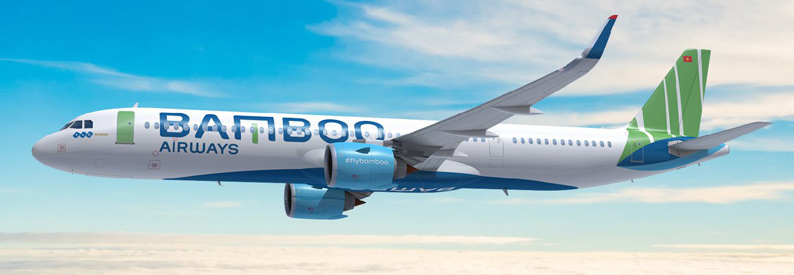
Resultado de imagen para viet bamboo airwaysViet Bamboo Airways la nueva startup de Vietnam comenzará operaciones en Octubre 2018

Viet Bamboo Airways, empresa matriz de Viet Bamboo Airlines Co., es propiedad del desarrollador inmobiliario FLC Group. La nueva aerolínea de Vietnam iniciará operaciones comerciales el 10 Octubre 2018.

Viet Bamboo Airlines Co., se estableció en 2017 con un capital social de 700 mil millones de dongs (US$ 31,4 millones de dólares). El lanzamiento de la venta de tickets aéreos estará disponible el 2 Septiembre 2018 junto con varios anuncios promocionales, programas, algunos de los cuales ofrecen paquetes atractivos para boletos de avión con servicios de golf y alojamiento FLC.

Rutas de Viet Bamboo Airways

Según el Director de Bamboo Airways, Dang Tat Thang, la aerolínea tomará un camino diferente al de sus contrapartes locales, explicando que se enfocará en servicios directos que conectan mercados internacionales con destinos turísticos emergentes en Vietnam, en lugar de las principales áreas urbanas donde la infraestructura de aviación es ya sobrecargado. Viet Bamboo Airways iniciará operaciones a destinos donde FLC Group ha construido importantes complejos turísticos, incluidos Quang Ninh y Hai Phong en el norte; Thanh Hoa y Quy Nhon (Provincia de Binh Dinh) en la región central; y Nha Trang (Provincia de Khanh Hoa) y Phu Quoc (Provincia de Kien Giang) en el sur.

Estrategias de mercado

FLC Group ha orientado a Bamboo Airways como una aerolínea híbrida, combinando características de bajo costo con las de los operadores tradicionales o de servicio completo. El grupo también ha invertido en infraestructura para operaciones de aviación, como la modernización del aeropuerto de Phu Cat en la ciudad de Quy Nhon y las carreteras principales que conectan el aeropuerto con la zona económica de Nhon Hoi.

Antes de que el gobierno aprobara su licencia de operación (AOC) el 9 Julio 2018, la aerolínea ya había firmado acuerdos por un valor total de US$ 8.600 millones de dólares para comprar 44 aviones Boeing y Airbus en Marzo y Junio. Entre sus últimos movimientos, Bamboo Airlines elevó su capital de fletamento a 1.3 billones de VND (56.69 millones de dólares), lo cual era importante para la aerolínea para operar una flota de más de 30 aviones.

Según el Ministerio de Transporte de Vietnam, la tasa de crecimiento anual del mercado de la aviación será del 16% desde ahora hasta 2020, y del 8% para 2020-2030. Se espera que las aerolíneas locales presten servicio a 64 millones de pasajeros para 2020 y 131 millones de pasajeros para el 2030. AIRWAYS® AW-Icon TXT

Resultado de imagen para viet bamboo airways

Viet Bamboo Airways lainicia ops October 2018

Viet Bamboo Airways Vietnam’s new startup will start operations in October 2018

Viet Bamboo Airways, parent company of Viet Bamboo Airlines Co., is owned by real estate developer FLC Group. The new airline of Vietnam will start commercial operations on October 10, 2018.

Viet Bamboo Airlines Co., was established in 2017 with a social capital of 700 billion VND (US$ 31.4 million). The launch of the sale of air tickets will be available on September 2, 2018 along with several promotional announcements, programs, some of which offer attractive packages for air tickets with golf services and FLC accommodation.

Viet Bamboo Airways Routes

According to the Director of Bamboo Airways, Dang Tat Thang, the airline will take a different route than its local counterparts, explaining that it will focus on direct services connecting international markets with emerging tourist destinations in Vietnam, instead of the main urban areas where the Aviation infrastructure is already overloaded. Viet Bamboo Airways will start operations to destinations where FLC Group has built important tourist complexes, including Quang Ninh and Hai Phong in the north; Thanh Hoa and Quy Nhon (Province of Binh Dinh) in the central region; and Nha Trang (Province of Khanh Hoa) and Phu Quoc (Province of Kien Giang) in the south.

Marketing strategies

FLC Group has oriented Bamboo Airways as a hybrid airline, combining low-cost features with those of traditional or full-service operators. The group has also invested in infrastructure for aviation operations, such as the modernization of Phu Cat Airport in the city of Quy Nhon and the main roads that connect the airport with the Nhon Hoi economic zone.

Before the government approved its operating license (AOC) on July 9, 2018, the airline had already signed agreements worth a total of US$ 8.6 billion to buy 44 Boeing and Airbus aircraft in March and June. Among its latest movements, Bamboo Airlines raised its charter capital to 1.3 trillion VND (56.69 million dollars), which was important for the airline to operate a fleet of more than 30 aircraft.

According to the Ministry of Transport of Vietnam, the annual growth rate of the aviation market will be 16% from now until 2020, and 8% for 2020-2030. Local airlines are expected to serve 64 million passengers by 2020 and 131 million passengers by 2030. A \ W


Ξ A I R G W A Y S Ξ
SOURCE:  Airgways.com
DBk: Vietnamplus.vn
AW-POST: 201807211800AR

A\W   A I R G W A Y S ®

Conflicto Aerolíneas-APLA

Clarin.com 07767677

AW | 2018 07 16 23:00 | AIRLINES / AVIATION ORGANISMS

Aerolíneas Argentinas denunció a pilotos por leer mensajes anti low cost en vuelo

El conflicto entre Aerolíneas Argentinas y el gremio de los pilotos nucleados en Asociación de Pilotos de Líneas Aéreas APLA entró en la cima, cuando el comandante de un vuelo efectuó un comunicado fuera de del contexto aeronáutico reglamentario. Los trabajadores protestaron contra la política aerocomercial oficial favorable al desembarco de las empresas low cost en el país. La empresa convocó a los pasajeros afectados por la medida y anunció que sancionará a los responsables. El gremio amenazó con hacer un paro.

La línea de bandera, que ya había adelantado que sancionaría a los responsables por violar las normas de conducta y seguridad aérea, denunció este lunes al Sindicato ante el Ministerio de Trabajo. Lanzó además una convocatoria para que los pasajeros reporten si se sintieron afectados por esas acciones; asegurando que uno de los comandantes sufrió problemas de salud tras ser presionado por un gremialista para leer el comunicado crítico. Según voceros de la empresa, el episodio sucedió el domingo por la mañana, cuando uno de los comandantes se negó a participar de la medida.

El vuelo salía de Buenos Aires y cuando el piloto se presentó en la sala de embarque se encontró con un delegado de la APLA que lo intima a leer el panfleto. Se niega, y hay un cruce de palabras, con testigos, explicaron. Según las fuentes de Aerolíneas, durante el vuelo hacia Ushuaia el piloto se empezó a sentir mal. Entonces derivó el vuelo al copiloto y le pidió que se hiciera cargo. Una vez en la ciudad austral, el hombre fue a un centro médico y le detectaron que tenía alta presión, cuadro del que luego se recuperó.

La línea de bandera, que ya había adelantado que sancionaría a los responsables por violar «las normas de conducta y seguridad aérea», denunció este lunes al sindicato ante el Ministerio de Trabajo. Lanzó además una convocatoria para que los pasajeros reporten si se sintieron afectados por esas acciones. Y hasta aseguró que uno de los comandantes sufrió problemas de salud tras ser «presionado» por un gremialista para leer el comunicado crítico.

Por este incidente, se suspendió el vuelo AR1893 que debía despegar el domingo desde Ushuaia, lo que generó pérdidas económicas a la compañía y complicaciones para los clientes, aseguró la empresa. «Probablemente haya una denuncia penal, es una decisión de el piloto contaron. Va a haber una sanción para los pilotos que leyeron los mensajes. Tenemos identificados a unos 12 pilotos, son todos delegados, que apelan a su impunidad gremial para hacer esto», sostiene la aerolínea. AIRWAYS® AW-Icon TXT

AW-0 (27)

Aerolíneas-APLA conflict

Aerolíneas Argentinas denounced pilots for reading low cost anti-flight messages

The conflict between Aerolíneas Argentinas and the guild of pilots nucleated in Association of Airline Pilots (APLA) entered the top, when the comandate of a flight made a statement outside the regulatory aeronautical context. The workers protested against the official commercial airline policy in favor of the disembarkation of low cost companies in the country. The company called the passengers affected by the measure and announced that it will punish those responsible. The union threatened to make a strike.

The flag line, which had already advanced that would punish those responsible for violating the rules of conduct and air safety, denounced on Monday to the Union before the Ministry of Labor. It also launched a call for passengers to report if they felt affected by those actions; assuring that one of the commanders suffered health problems after being pressured by a unionist to read the critical statement. According to spokespersons of the company, the episode happened on Sunday morning, when one of the commanders refused to participate in the measure.

The flight left Buenos Aires and when the pilot showed up in the departure lounge he met with a delegate from the APLA who intimated him to read the pamphlet. He refuses, and there is a crossing of words, with witnesses, they explained. According to the sources of Aerolíneas, during the flight to Ushuaia the pilot began to feel bad. He then referred the flight to the co-pilot and asked him to take over. Once in the southern city, the man went to a medical center and was found to have high blood pressure, which he recovered from.

The flag line, which had already advanced that would sanction those responsible for violating «rules of conduct and air safety», denounced the union on Monday before the Ministry of Labor. It also launched a call for passengers to report if they felt affected by those actions. And even said that one of the commanders suffered health problems after being «pressured» by a unionist to read the critical statement.

For this incident, the flight AR1893 that was due to take off on Sunday from Ushuaia was suspended, which generated economic losses to the company and complications for customers, the company said. «There is probably a criminal complaint, it is a decision of the pilot, there will be a sanction for the pilots who read the messages, we have identified about 12 pilots, they are all delegates, who appeal to their union impunity to do this», said the airline. A \ W


Ξ A I R G W A Y S Ξ
SOURCE:  Airgways.com
DBk: Aerolineas.com / Airgways.com
AW-POST: 201807162300AR

A\W   A I R G W A Y S ®

Aerolíneas renueva con sistemas SABRE

Resultado de imagen para aerolineas argentinas check-in

AW | 2018 07 13 13:44 | AIRLINES

aerolineas-argentinas-logo.jpgAerolíneas Argentinas renueva la asociación con el sistema de reservas Sabre

El Grupo Aerolíneas ha continuado confiando al sistema de reservas SABRE extiende el acuerdo a largo plazo y avanza con las tecnologías de próxima generación.

El Sistema Sabre ofrece tecnología de distribución de contenido para apoyar los objetivos de crecimiento global de las aerolíneas del mundo. De esta manera, Aerolíneas Argentinas y Austral Líneas Aéreas renovaron su asociación estratégica a largo plazo con Sabre Corporation, logrando el objetivo del grupo operador de avanzar con una nueva generación innovadora tecnologías que facilitarán la expansión de su huella doméstica y global. El acuerdo amplía la disponibilidad de contenido completo en el sistema de distribución global (GDS) de Sabre y permitirá a Aerolíneas aprovechar la última innovación del sistema de servicios de pasajeros SabreSonic (PSS) para ampliar las capacidades de compra y pago, mejorar las operaciones aeroportuarias y mejorar la experiencia del viajero de extremo a extremo.

Con sede en Southlake, Texas, EEUU, Sabre presta servicios a clientes en más de 160 países de todo el mundo.Sabre Corporation es el proveedor líder de tecnología para la industria de viajes global. Las soluciones de software, datos, dispositivos móviles y distribución de Saber son utilizadas por cientos de aerolíneas y miles de propiedades hoteleras para gestionar operaciones críticas, que incluyen reservaciones de pasajeros e invitados, administración de ingresos, vuelos, redes y administración de personal. Sabre también opera un mercado de viajes líder a nivel mundial, que procesa más de 120 mil millones de dólares en viajes globales al año al conectar compradores y proveedores de viajes.

El Director de Planificación de Aerolíneas Argentinas, Juan Valverde expresó: «Aerolíneas busca optimizar y encontrar eficiencias que le brinden a nuestra aerolínea una ventaja competitiva y beneficien a nuestra comunidad de clientes para alcanzar nuestra meta principal de crecimiento sostenible. Sabemos que la introducción de nuevos productos y servicios centrados en la personalización y la calidad de las experiencias de los clientes es parte de esa ecuación. Sabre sigue siendo el mejor socio tecnológico para ayudarnos a lograr nuestra estrategia y distribuir nuestro contenido a las agencias de viajes de todo el mundo».

La inversión de Sabre en ventas minoristas, distribución y tecnologías de cumplimiento son complementarias a los objetivos comerciales a corto y largo plazo de Aerolineas de la innovación del comercio electrónico, la expansión de las capacidades de compras y pagos y la personalización. Aerolineas también será una de las primeras en aprovechar la nueva capa de conexión digital de Sabre, que proporciona API para permitir la velocidad en el mercado y la flexibilidad. Esta solución permitirá al operador controlar su experiencia de marca en todos los canales mientras se conecta sin problemas al SabreSonic PSS. La última innovación de Sabre le dará a Aerolineas la agilidad para ofrecer una experiencia uniforme y personalizada en todo el recorrido del viajero.

Ana María Escobar, Vicepresidenta y Gerente General Regional de Sabre Airline. Soluciones, América Latina, expresó: «Sabre ha trabajado codo a codo con Aerolíneas por más de dos décadas. Nuestra relación es extensa, como lo es nuestra comprensión de su negocio y los mercados en los que operan. Nos enorgullece mantener a este cliente de la aerolínea y esperamos continuar la colaboración entre nuestros equipos a medida que implementamos nuevos servicios e innovación que impulsan el crecimiento y aumentan las oportunidades de ingresos para nuestros colegas en Argentina».  AIRWAYS® AW-Icon TXT

AW-7008567.png

Aerolíneas renews with SABRE systems

Aerolíneas Argentinas renews its association with the Saber reservation system

The Aerolíneas Group has continued to rely on the reserve system SABRE extends the long-term agreement and advances with the next generation technologies.

The Sabre System offers content distribution technology to support the global growth goals of the world’s airlines. In this way, Aerolíneas Argentinas and Austral Líneas Aéreas renewed their long-term strategic partnership with Sabre Corporation, achieving the objective of the operator group to move forward with a new generation of innovative technologies that will facilitate the expansion of its domestic and global footprint. The agreement expands the availability of full content in Sabre’s global distribution system (GDS) and will allow Aerolíneas to take advantage of the latest innovation from the SabreSonic passenger services system (PSS) to expand purchasing and payment capabilities, improve airport operations and improve the end-to-end traveler experience.

Based in Southlake, Texas, USA, Sabre serves clients in more than 160 countries around the world. Sabre Corporation is the leading technology provider to the global travel industry. Sabre’s software, data, mobile device and distribution solutions are used by hundreds of airlines and thousands of hotel properties to manage critical operations, including passenger and guest reservations, revenue management, flights, networks and personnel management. Sabre also operates a leading travel market worldwide, which processes more than 120 billion dollars in global travel per year by connecting buyers and travel providers.

The Director of Planning of Aerolíneas Argentinas, Juan Valverde said: «Aerolíneas seeks to optimize and find efficiencies that give our airline a competitive advantage and benefit our community of customers to achieve our main goal of sustainable growth. We know that the introduction of new products and services focused on personalization and the quality of customer experiences is part of that equation. Sabre is still the best technology partner to help us achieve our strategy and distribute our content to travel agencies around the world».

Sabre’s investment in retail sales, distribution and compliance technologies are complementary to Aerolíneas’ short-term and long-term business objectives of e-commerce innovation, the expansion of purchasing and payment capabilities and personalization. Aerolíneas will also be one of the first to take advantage of Saber’s new digital connection layer, which provides APIs to allow market speed and flexibility. This solution will allow the operator to control their brand experience on all channels while seamlessly connecting to the SabreSonic PSS. The latest Sabre innovation will give Aerolíneas the agility to offer a uniform and personalized experience throughout the journey of the traveler.

Ana María Escobar, Vice President and Regional General Manager of Sabre Airline. Solutions, Latin America, said: «Sabre has worked hand in hand with Aerolíneas for more than two decades, our relationship is extensive, as is our understanding of their business and the markets in which they operate. We are proud to maintain this client of the airline and we hope to continue the collaboration between our teams as we implement new services and innovation that drive growth and increase income opportunities for our colleagues in Argentina». A \ W


Ξ A I R G W A Y S Ξ
SOURCE:  Airgways.com
DBk: Sabre.com / Aerolineas.com / Airgways.com / Cronica.com.ar
AW-POST: 201807131344AR

A\W   A I R G W A Y S ®


Airbus Mobile entrega primer A321NEO

A321neo-HawaiianAirlines-first-US-delivery.jpg

AW | 2018 07 13 08:37 | AIRLINES

Logo_Airbus_2014.svgAirbus Mobile FAL entrega su primer avión A321NEO

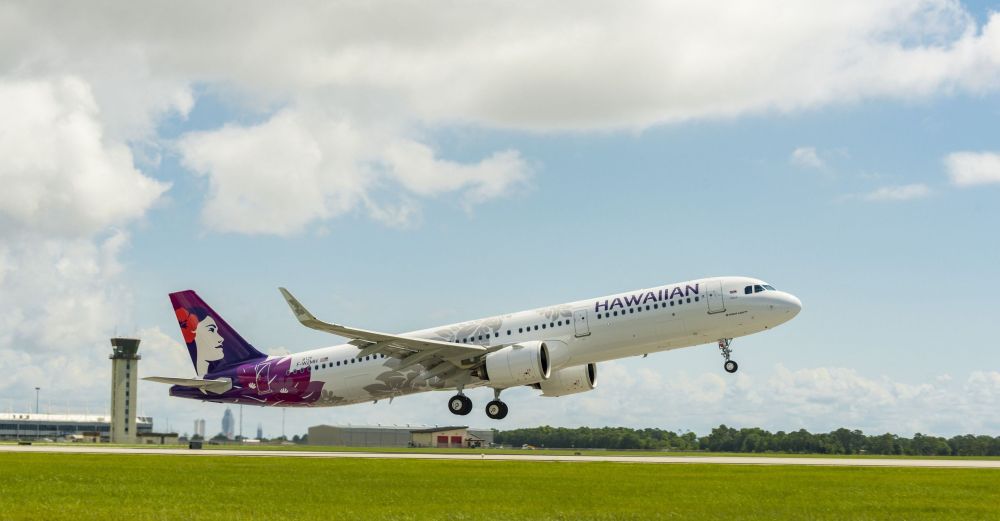
Hawaiian Airlines ha completado recientemente la entrega de su primer A321NEO producido en los Estados Unidos. El avión, propulsado por Pratt & Whitney PW1000G turbofans, será utilizado por la aerolínea para hacer crecer su red occidental-estadounidense y proporcionar un mayor acceso a toda la cadena de islas. Actualmente, Hawaiian ofrece vuelos diarios sin escalas de A321NEO desde Portland y Long Beach a Honolulu. El transportista abrirá rutas A321NEO adicionales entre la costa oeste de los EEUU y las islas hawaianas, ya que habrá un total de 18 aviones hasta 2020.  AIRWAYS® AW-Icon TXT

Resultado de imagen para Hawaiian A321neo

Airbus Mobile delivers first A321NEO

Airbus’ Mobile FAL delivers its 1st A32NEO aircraft

Hawaiian Airlines has recently taken delivery of its first US-produced A321NEO. The aircraft, powered by Pratt & Whitney PW1000G turbofans, will be used by the airline to grow its Western-US network and provide greater access to its entire island chain. Hawaiian currently offers daily non-stop A321NEO flights from Portland and Long Beach to Honolulu. The carrier will open additional A321NEO routes between the US West-Coast and the Hawaiian Islands as it introduces a total of 18 aircraft through 2020. A \ W


Ξ A I R G W A Y S Ξ
SOURCE:  Airgways.com
DBk: Airbus.com / Hawaiianairlines.com
AW-POST: 201807130837AR

A\W   A I R G W A Y S ®

Asamblea AAA en Aeroparque en contra desregulación del transporte aéreo

Resultado de la imagen para aterrizaje aeroparque

AW | 2018 07 12 13:56 | AIR TRAFFIC / AIRLINES

Asamblea abierta en Aeroparque contra la desregulación del transporte aéreo en Argentina

Desde Asociación Argentina de Aeronavegantes (AAA) entienden que la decisión de eliminar de las tarifas mínimas precarizan la industria aeronáutica. Tras la decisión del Ministerio de Transporte nacional de la eliminación de las tarifas mínimas que hasta ahora limitaban las ofertas en los pasajes de cabotaje nacionales, la Asociación Argentina de Aeronavegantes (AAA) está llevando a cabo este jueves desde las 07:00 hs una Asamblea Abierta en el Aeroparque Jorge Newbery.

Cada vez hay más empresas low cost habilitadas para volar, ya que esta semana se anunció que en Noviembre 2018 se suma la chilena JetSmart, y el 15 Agosto 2018 entrará en vigencia la medida. Las asambleas se están realizando en los espacios de descanso de las tripulaciones. Aclararon que la medida es en contra del Ministerio, y no contra las empresas, por lo que no habrá cancelaciones. Sin embargo, indicaron que la asamblea puede provocar demoras. Alrededor de las 09.30 hs, había un sólo vuelo con el estado del sitio de Aeropuertos Argentina 2000, informaron fuentes de AAA.

Juan Pablo Brey, Secretario General de la AAA. expresó: “Vemos con preocupación la medida adoptada por el Ministerio de Transporte, ya que representa una señal a favor de las low cost y en contra de las aerolíneas tradicionales y sus trabajadores. Nosotros no nos oponemos a la entrada de ninguna aerolínea, pero sí queremos que se le exijan las mismas normativas de seguridad y convenios laborales que al resto”.

En tanto, Andrés Junor, Comisario de Abordo de Aerolíneas Argentinas y Secretario Gremial de Aeronavegantes, “No estamos haciendo un paro, es una modalidad distinta: hacemos asambleas en el lugar de trabajo los trabajadores de Aerolíneas Argentinas, Austral Líneas Aéreas, Avianca y Latam Airlines Argentina, entre otros. Nuestra postura ante las low cost que avaló Guillermo Dietrich no va en contra de los pasajeros, pero reclamamos porque se ven amenazados los puestos de trabajo. Quieren precarizar la industria aeronáutica».  AIRWAYS® AW-Icon TXT

1 (1)

Assembly Aeroparque against deregulation

Open Assembly in Aeroparque against the deregulation of air transport in Argentina

From Asociación Argentina de Aeronavegantes (AAA) they understand that the decision to eliminate from the minimum tariffs precarizes the aeronautical industry. After the decision of the Ministry of National Transportation of the elimination of the minimum tariffs that until now limited the offers in the domestic cabotage passages, the Argentine Association of Air Navigation Companies (AAA) is carrying out this Thursday from 07:00 a.m. Open in the Aeroparque Jorge Newbery.

Every time there are more low cost companies enabled to fly, since this week it was announced that in November 2018 the Chilean JetSmart will be added, and on August 15, 2018 the measure will come into force. The assemblies are being held in the crews’ rest areas. They clarified that the measure is against the Ministry, and not against the companies, so there will be no cancellations. However, they indicated that the assembly may cause delays. Around 09.30 hs, there was a single flight with the status of the site of Aeropuertos Argentina 2000, sources of AAA reported.

Juan Pablo Brey, Secretary General of the AAA. He expressed: «We see with concern the measure adopted by the Ministry of Transport, since it represents a signal in favor of the low cost and against the traditional airlines and their workers. We do not oppose the entry of any airline, but we do want to demand the same safety regulations and labor agreements as the rest».

Meanwhile, Andrés Junor, Commissioner of Aerolíneas Argentinas Board and Secretary of Aircraft, «We are not making a strike, it is a different modality: we make assemblies in the workplace the workers of Aerolíneas Argentinas, Austral Líneas Aéreas, Avianca and Latam Airlines Argentina, among others. Our position against the low cost that Guillermo Dietrich endorsed is not against the passengers, but we complain because the jobs are threatened. They want to make the aeronautical industry precarious». A \ W


Ξ A I R G W A Y S Ξ
SOURCE:  Airgways.com
DBk: Aeronavegantes.org.ar / Shutterstock.com / Viajarsiempre.com
AW-POST: 201807121356AR

A\W   A I R G W A Y S ®

Norwegian Air retorna al superhábit

Resultado de imagen para Norwegian.com

AW | 2018 07 12 13:40 | AIRLINES

Norwegian Air retorna a los beneficios

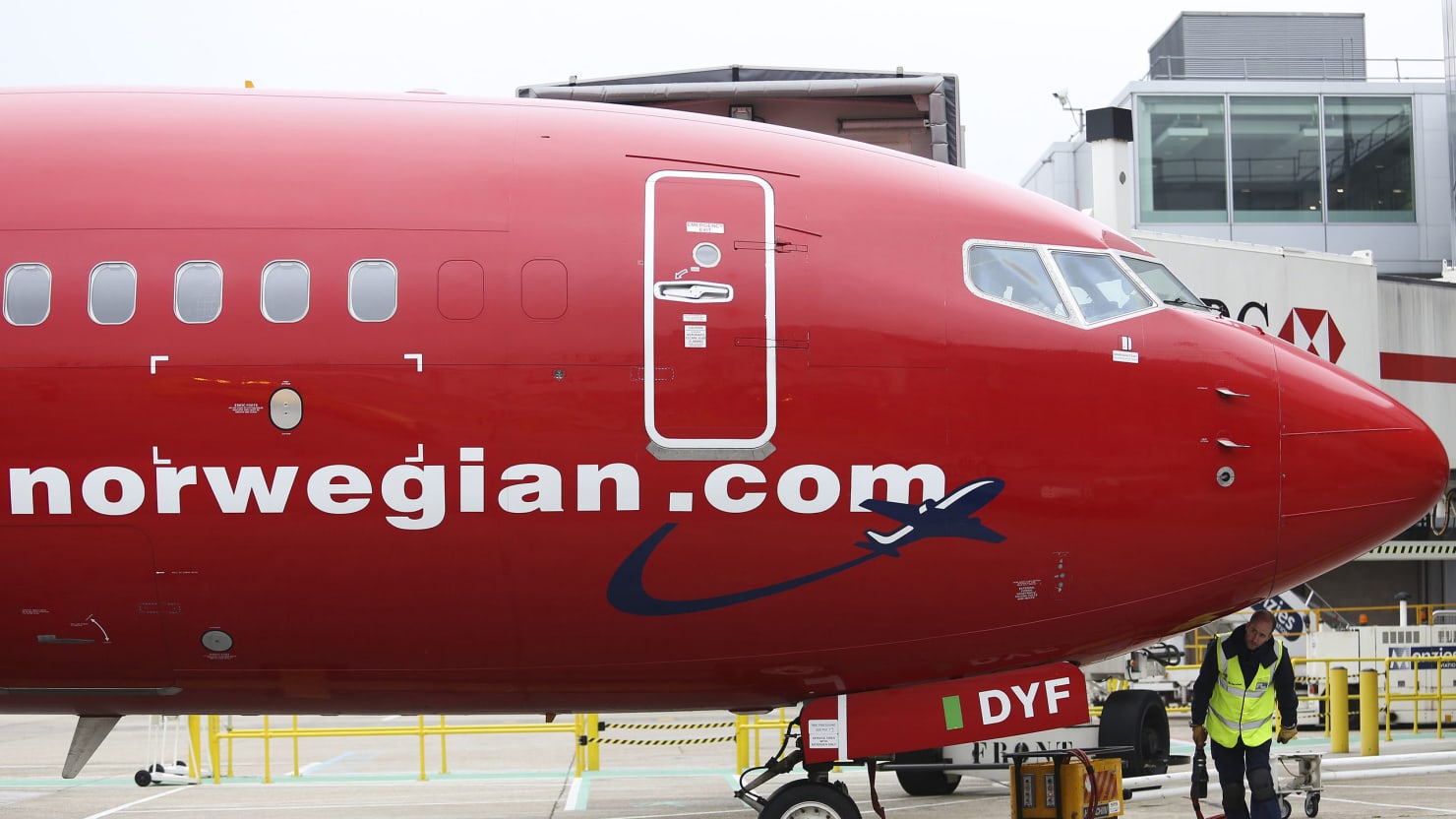
Resultado de imagen para Norwegian.comNorwegian Air deja atrás las pérdidas y gana € 27 millones de euros en la primera mitad de 2018. En el mismo periodo del anterior ejercicio, la aerolínea tuvo pérdidas de € 231 millones de euros

La aerolínea noruega Norwegian Air anunció que en la primera mitad del año obtuvo un beneficio neto de 254 millones de coronas noruegas (€ 26,9 millones de euros), frente a la pérdida de 2.182,4 millones de coronas (€ 231 millones de euros) del mismo período del ejercicio previo.

La compañía, por la que ha mostrado su interés el IAG Group en los últimos meses, indicó en un comunicado que su pérdida bruta (ebitda) en el período se situó en los 1.357,7 millones de coronas (€ 143,2 millones de euros), un 6% más en términos interanuales. Por su parte, la pérdida neta de explotación (ebit) de Norwegian alcanzó los 2.072,8 millones de coronas (€ 219,4 millones de euros), un 19% menos que en el mismo período del año anterior.

Repunte facturación

La facturación por operaciones en los seis primeros meses del ejercicio repuntaron un 32% en términos interanuales, hasta los 17.220,5 millones de coronas (€ 1.822,5 millones de euros). La aerolínea agregó que en el segundo trimestre su beneficio neto fue de 31,8 millones de euros y sus ingresos, de 1.083,1 millones de euros (de los que 141,8 millones se originaron en España). En este período, la producción unitaria, medida en AKO (asiento-kilómetro ofertados), se incrementó un 48% y la ocupación media alcanzó el 86,8 % tras transportar entre abril y junio a 9,97 millones de pasajeros, un 16 % más en términos interanuales.

Norwegian Air incorpora más aviones

La compañía sumó a su flota cinco aviones nuevos durante el segundo trimestre, Boeing 787-9 (5) y Boeing 737-8 MAX (2), con lo que cuenta ya con 155 aeronaves. “Pese a estar en el pico de nuestra fase de crecimiento hemos sido capaces de presentar un beneficio y una reducción de los costes por unidad durante el segundo trimestre. En el futuro, el crecimiento se reducirá y recogeremos los beneficios de lo plantado para beneficio de nuestros clientes, trabajadores y accionistas”, prometió el consejero delegado de Norwegian, Bjørn Kjos.  AIRWAYS® AW-Icon TXT

Resultado de imagen para Norwegian.com

Norwegian Air returns to the superhábit

Norwegian Air returns to benefits

AW-norwegian-air.pngNorwegian Air leaves losses behind and earns € 27 million in the first half of 2018. In the same period of the previous year, the airline had losses of € 231 million euros. The Norwegian airline Norwegian Air announced that in the first half of the year it obtained a net profit of NOK 254 million (€ 26.9 million), compared to the loss of SEK 2,182.4 million (€ 231 million)  of the same period of the previous year.

The company, for which IAG Group has shown interest in recent months, said in a statement that its gross loss (EBITDA) in the period stood at 1,357.7 million crowns (€ 143.2 million euros), 6% more in year-on-year terms. For its part, the net operating loss (EBIT) of Norwegian reached 2,072.8 million crowns (€ 219.4 million), 19% less than in the same period of the previous year.

Pick up turnover

The billing for operations in the first six months of the year rose by 32% in year-on-year terms, to 17,220.5 million crowns (€ 1,822.5 million). The airline added that in the second quarter its net profit was 31.8 million euros and its revenues were 1,083.1 million euros (of which 141.8 million originated in Spain). In this period, unit production, measured in ASK (seat-kilometers offered), increased by 48% and average occupancy reached 86.8% after transporting 9.97 million passengers between April and June, 16% more in year-on-year terms.

Norwegian Air incorporates more aircraft

The company added five new aircraft to its fleet during the second quarter, Boeing 787-9 (5) and Boeing 737-8 MAX (2), which already has 155 aircraft. «Despite being at the peak of our growth phase, we were able to present a benefit and a reduction in costs per unit during the second quarter. In the future, growth will be reduced and we will reap the benefits of planting for the benefit of our customers, workers and shareholders», promised Norwegian CEO Bjørn Kjos. A \ W


Ξ A I R G W A Y S Ξ
SOURCE:  Airgways.com
DBk: Norwegian.com / Londonspotter.co.uk / Thedailybeast.com / Airgways.com
AW-POST: 201807121340AR

A\W   A I R G W A Y S ®

COFECE investiga a Mexicana Aviación

Resultado de imagen para mexicana A320

AW | 2018 07 12 13:01 | AIRLINES

Resultado de imagen para mexicana aviacionMexicana de Aviación es investigada por la COFECE después de su quiebra

La extinta aerolínea Mexicana de Aviación vuelve a ser noticia ante la Comisión Federal de Competencia (COFECE) de México. Está involucrada en una investigación por presunta colusión en el mercado de transporte aéreo entre 2008-2010. La investigación de la autoridad antimonopolios la acusa por presunta colusión, acción de pactar contra un tercero en el mercado de transporte aéreo.

La acusación contra Mexicana de Aviación está enmarcada en intentar convertir un monopolio de acción solo para quienes forman parte de la colusión establecida, cerrándole las puertas a las demás compañías que intentan a menor escala formar parte del grupo de competencia libre de mercado.

En el proceso, que puede seguir en forma de juicio, la Comisión Federal de Competencia Económica solicitó a Mexicana de Aviación y a Isaac Volin Bolok Portnoy, ex-Director General de la empresa de bajo costo Mexicana Click, del Grupo Mexicana, sus declaraciones fiscales y estado de resultados para, de probarse el caso, hacerles objeto de sanción. Ninguno de los agentes económicos presentaron la información.

“El pleno de esta Cofece podrá presumir que cuentan con capacidad suficiente para hacer frente a las sanciones que, en su caso, les llegue a imponer, salvo prueba en contrario”, se lee en la lista de notificaciones del expediente. “Se advierte que IVBP (Isaac Volin Bolok) no realizó manifestación alguna en torno a su imputación” añadió la Dirección General de Asuntos Jurídicos del órgano autónomo en la nota publicada en Junio 2018.

Un mes antes, la aerolínea mexicana, que dejó de operar en 2010, hizo su primera manifestación dentro de este proceso. Alfonso Triujeque, síndico del concurso mercantil de la aerolínea, pidió a la COFECE que estableciera que Mexicana no participó en las prácticas para fijar o manipular precios, como acusó la unidad de investigación. “Por lo que respecta a la solicitud de Mexicana relativa a que se declare que dicha persona moral no participó en las practicas monopólicas imputadas en el dictamen de probable responsabilidad relacionado (DPR), se indica que será el pleno de la COFECE quien se pronuncie respecto a las manifestaciones contenidas en las contestaciones al DPR de cada emplazado al momento de emitir la resolución”, señaló el área encargada de llevar el proceso en el que las aerolíneas se defienden frente a los señalamientos vertidos en la investigación.

Para imponer una multa, la COFECE debe considerar la capacidad económica de los agentes económicos que pudieron haber cometido alguna práctica monopólica absoluta. La multa se basa en los ingresos que reportan los involucrados a la Secretaría de Hacienda, de acuerdo con la Ley de Competencia Económica.

Aerolíneas mexicanas investigadas

Interjet, Aeroméxico y Volaris son las aerolíneas que han confirmado el emplazamiento de la COFECE por posibles prácticas monopólicas absolutas. De acuerdo con el brazo investigador de la autoridad antimonopolios, las empresas involucradas presuntamente fijaron o manipularon precios durante el periodo 2008-2010. Ahora las empresas se defienden de las acusaciones y posteriormente el pleno de la COFECE definirá si existió colusión. Puede imponer una multa que puede ser de hasta 10% de los ingresos, de acuerdo con la ley vigente. Tanto Aeroméxico como Volaris descartan que el regulador pueda multarlas con las leyes de competencia vigentes, aprobadas en 2014, pues son posteriores a la época de los hechos bajo investigación.

Como parte de las indagatorias de la COFECE, desde Marzo 2015 la unidad de investigación había solicitado a Aeroméxico y Aeroméxico Connect información sobre sus acuerdos y alianzas con otras líneas aéreas, y ejecutó redadas para sustraer información. La visita a las oficinas de la aerolínea mexicana fue una de las primeras bajo la nueva ley de competencia de 2014, que permite al personal de la Cofece llegar por sorpresa a las instalaciones de las empresas bajo investigación.  AIRWAYS® AW-Icon TXT


COFECE investigates Mexicana Aviación

Mexicana de Aviación is investigated by COFECE after its bankruptcy

The extinct airline Mexicana de Aviación returns to be news before the Federal Commission of Competition (COFECE) of Mexico. She is involved in an investigation for alleged collusion in the air transport market between 2008-2010. The investigation of the antitrust authority accuses it of alleged collusion, an action to agree against a third party in the air transport market.

The accusation against Mexicana de Aviación is framed in trying to convert a monopoly of action only for those who are part of the established collusion, closing the doors to the other companies that try to smaller scale to be part of the group of free market competition.

In the process, which can be followed in the form of a trial, the Federal Economic Competition Commission requested Mexicana de Aviación and Isaac Volin Bolok Portnoy, ex-General Director of the Mexican low-cost company Click, of the Mexican Group, its tax declarations and statement of results, to prove the case, make them subject to punishment. None of the economic agents presented the information.

«The plenary session of this Cofece may presume that they have sufficient capacity to face the sanctions that, in their case, they may impose, unless there is evidence to the contrary», reads the list of notifications in the file. «It is noted that IVBP (Isaac Volin Bolok) did not make any statement about its imputation» added the General Directorate of Legal Affairs of the autonomous body in the note published in June 2018.

A month before, the Mexican airline, which stopped operating in 2010, made its first manifestation in this process. Alfonso Triujeque, trustee of the airline’s mercantile contest, asked the COFECE to establish that Mexicana did not participate in the practices to fix or manipulate prices, as the investigation unit accused. «With respect to Mexicana’s request that it be declared that said legal entity did not participate in the monopolistic practices imputed in the opinion of probable related liability (DPR), it is indicated that the plenary session of the COFECE will rule on to the statements contained in the responses to the DPR of each location at the time of issuing the resolution», said the area responsible for carrying the process in which the airlines defend themselves against the allegations made in the investigation.

To impose a fine, the COFECE must consider the economic capacity of economic agents who may have committed some absolute monopolistic practice. The fine is based on the income reported by those involved to the Ministry of Finance, in accordance with the Economic Competition Law.

Mexican airlines investigated

Interjet, Aeroméxico and Volaris are the airlines that have confirmed the location of the COFECE for possible absolute monopolistic practices. According to the investigative arm of the antitrust authority, the companies allegedly set or manipulated prices during the 2008-2010 period. Now the companies defend themselves of the accusations and later the plenary session of the COFECE will define if collusion existed. You can impose a fine that can be up to 10% of the income, according to the current law. Both Aeromexico and Volaris rule out that the regulator can fine them with the current competition laws, approved in 2014, since they are subsequent to the time of the events under investigation.

As part of the COFECE inquiries, since March 2015 the investigation unit had requested Aeromexico and Aeromexico Connect for information on their agreements and alliances with other airlines, and executed raids to subtract information. The visit to the offices of the Mexican airline was one of the first under the new competition law of 2014, which allows Cofece staff to arrive by surprise at the facilities of the companies under investigation. A \ W


Ξ A I R G W A Y S Ξ
SOURCE:  Airgways.com
DBk: Cofece.mx / A320archive.com
AW-POST: 201807121301AR

A\W   A I R G W A Y S ®

Ryanair analiza desembarcar en Ecuador

Boeing_737-8AS,_Ryanair_JP6361158.jpg

AW | 2018 07 12 12:27 | AIRLINES

Resultado de la imagen para Ryanair logoRyanair está estudiando iniciar operaciones en Ecuador

La aerolínea irlandesa Ryanair low cost más grande del mundo tiene en la mira desembarcar en Ecuador. El Alcalde de Guayaquil, Jaime Nebot, indicó este miércoles que la empresa aérea de bajo costo no solo tendría vuelos regulares en la ciudad, sino que negocia implementar un centro de conexión o ‘hub’ en el Aeropuerto Internacional José Joaquín de Olmedo.Resultado de la imagen para Ecuador logo

«En este momento de crecimiento (de pasajeros) relativamente bajo, la empresa low cost más grande del mundo ha venido a Guayaquil a plantear la constitución de un ‘hub’ y una operación que puede dar 700.000 pasajeros adicionales», indicó Nebot, quien agregó que las negociaciones pueden ser positivas o negativas, esto en referencia a la planificación que se tiene que realizar para afrontar cualquiera de las dos situaciones.

La construcción del aeropuerto intercontinental en el sector de Daular se iniciará cuando se cumpla la meta de pasajeros internacionales a 3,5 millones esté a tres años de cumplirse en la actual estación aérea. Antes la construcción estaba planeada para el año 2024, puede ser que ahora sea en 2025 o 2026, pero si las circunstancias cambian puede ser incluso antes sea para el 2024.  AIRWAYS® AW-Icon TXT

Resultado de la imagen para Ryanair

Ryanair analyzes landings in Ecuador

Ryanair is studying to start operations in Ecuador

The largest low-cost Irish airline Ryanair in the world is aiming to land in Ecuador. The Mayor of Guayaquil, Jaime Nebot, said on Wednesday that the low-cost airline not only would have regular flights in the city, but also negotiates to implement a hub in the José Joaquín de Olmedo International Airport.

«In this relatively low growth moment (passenger), the world’s largest low cost company has come to Guayaquil to propose the constitution of a ‘hub’ and an operation that can give 700,000 additional passengers,» said Nebot, who added that the negotiations can be positive or negative, this in reference to the planning that has to be carried out to face any of the two situations.

The construction of the intercontinental airport in the Daular sector will begin when the international passenger goal is met, at 3.5 million, three years from completion at the current air station. Before the construction was planned for the year 2024, it could be now in 2025 or 2026, but if the circumstances change it can be even before 2024. A \ W


Ξ A I R G W A Y S Ξ
SOURCE:  Airgways.com
DBk: Ryanair.com / Qz.com / Wikimedia.org
AW-POST: 201807121227AR

A\W   A I R G W A Y S ®

EEUU enfrenta escasez de pilotos

Resultado de imagen para pilots cabin

AW | 2018 07 12 11:53 | AIRLINES / TRAINING

Estados Unidos enfrenta una grave escasez de pilotos de líneas aéreas

La seguridad nacional de los EEUU depende de una industria aeronáutica saludable. Eso requiere aviones modernos y confiables, y pilotos altamente capacitados para operarlos. Sin embargo, en la actualidad, Estados Unidos tiene escasez de pilotos, especialmente en los niveles de aerolíneas regionales.

De acuerdo con la Administración Federal de Aviación, había alrededor de 827.000 pilotos en los Estados Unidos en 1987. En las últimas tres décadas, ese número ha disminuido en un 30%. Mientras tanto, durante este período de tiempo, ha habido un tremendo aumento en la demanda de viajes aéreos. La Asociación Internacional de Transporte Aéreo (IATA) predice que, en los próximos 20 años, los viajes aéreos se duplicarán. Este es un caso clásico de bajo suministro y alta demanda. Esta falta de coincidencia ha creado una tormenta perfecta que podría causar estragos en la industria de las aerolíneas de los Estados Unidos durante la próxima década. La sombría noticia es que esta escasez empeorará.

Cambios en la industria

En la década de 1970, cuando la mayoría de los pilotos de líneas aéreas actuales como yo crecíamos, pilotear para una aerolínea se consideraba una carrera prestigiosa. El trabajo no solo ofrecía altos salarios y buenos horarios con muchos días libres, sino también una posición respetada en la sociedad. A principios de la década de 1990, los salarios de los pilotos se aproximaban a US$ 300.000 dólares estadounidenses en dólares de hoy para algunos pilotos internacionales.

Además, durante este tiempo, los militares tuvieron una demanda constante y constante de pilotos. Un joven aspirante a aviador podría ir al ejército para recibir todo su entrenamiento de vuelo. Una vez que estos pilotos habían cumplido su compromiso militar, tenían casi garantizado un buen trabajo volando para una aerolínea importante. Hoy en día, esto ya no es el caso. La carrera del piloto de la aerolínea ha perdido su brillo. Esto se debe en parte a la desregulación. La Ley de Desregulación de Aerolíneas de 1978 dio inicio a la era de la aerolínea de bajo costo. Como resultado, las aerolíneas como Pan-Am cerraron.

Luego, los ataques del 11 Septiembre 2011 dejaron a las aerolíneas en malas condiciones financieras. Cinco de las seis principales aerolíneas heredadas en los EEUU se declararon en bancarrota: US Airways, Delta Air Lines, Northwest Airlines, United Airlines y American Airlines.

Menos nuevos pilotos

Mientras tanto, la cantidad de pilotos suministrados por los militares ha disminuido. Gran parte de esto se debe al uso de vehículos aéreos no tripulados. En los años 80, aproximadamente dos tercios de los pilotos de líneas aéreas eran ex militares. Recientemente, ese porcentaje se ha reducido a menos de un tercio. La Marina predice un 10 por ciento de escasez de pilotos en 2020, mientras que la Fuerza Aérea predice su propia escasez de 1.000 pilotos para el 2022. Esto significa que muchos jóvenes aspirantes a aviadores ahora tienen que pagar por su propio entrenamiento de vuelo. Eso puede ser muy costoso, excediendo fácilmente los US$ 100.000, especialmente a la luz de un futuro incierto. Muchos simplemente no están dispuestos a correr el riesgo. Este efecto fue agravado por la Gran Recesión.

En 2009, el Congreso de Estados Unidos cambió la edad de jubilación obligatoria para los pilotos de líneas aéreas de 60 a 65. En mi opinión, esto no resolvió el problema, sino que simplemente eliminó la lata en el futuro.

Resultado de imagen para pilots cabinEL GOBIERNO DE ESTADOS UNIDOS ENFRENTA UNA VERDADERA ESCASEZ DE PILOTOS DE LÍNEAS AÉREAS

Un informe de 2016 de Boeing muestra que el 42% de los pilotos que actualmente vuelan para las principales aerolíneas en los Estados Unidos alcanzarán su edad obligatoria de jubilación de 65 años en los próximos 10 años. Mientras tanto, este movimiento paralizó los avances profesionales de los pilotos más jóvenes y más jóvenes. Eso ha causado que muchos de ellos, incluido yo mismo, busquemos una carrera más estable.

Si eso no es suficiente, ha habido cambios significativos en las reglas de trabajo y descanso para los pilotos de líneas aéreas. Después del accidente de Colgan cerca de Buffalo en 2009, el Congreso cambió los requisitos de experiencia piloto para las aerolíneas. Los pilotos recién contratados ahora deben tener un certificado que requiere un mínimo de 1.500 horas de vuelo. Antes de que se aprobara esta ley, los pilotos podían volar para una aerolínea con un mínimo de 250 horas de vuelo.

Demanda creciente

El otro lado del problema de la escasez es que la demanda de pilotos bien entrenados en realidad está aumentando. La mayor demanda se encuentra en las regiones de Asia y el Pacífico. Fabricantes como Boeing y Airbus están entregando más y más aviones y planean continuar haciéndolo durante los próximos 20 años.

El Congreso también modificó las reglas de tiempo de servicio en 2010 para mitigar los problemas de fatiga de los pilotos. Este cambio significó que las aerolíneas tuvieron que aumentar su personal piloto de 5% a 8% para cubrir el mismo cronograma . En otras palabras, necesitan contratar pilotos aún más calificados.

Las principales aerolíneas estadounidenses aún no experimentan directamente la escasez de pilotos. Pero las aerolíneas regionales más pequeñas están experimentando esto de primera mano. Sus horarios se han reducido y algunos, como Republic Airline, se han visto obligados a declararse en quiebra debido a la falta de personal.

La industria ha dado algunos pasos para abordar este problema. Las aerolíneas regionales ahora ofrecen un salario mucho más alto e incluso firman bonificaciones. Además, ha habido algunas modificaciones menores a la regla de las 1.500 horas. Los pilotos ahora pueden recibir su certificado en menos de 1.500 horas si la capacitación se lleva a cabo en ciertas escuelas de vuelo. Incluso se habla de extender la edad de jubilación nuevamente a 67 años.

Las aerolíneas deberán comenzar a reclutar y capacitar a sus propios candidatos piloto. Por ejemplo, en Abril 2018, American Airlines, anunció la American Airlines Cadet Academy, con la intención de reclutar a la próxima generación de pilotos. AIRWAYS® AW-Icon TXT

Resultado de imagen para pilots cabin

US faces shortage of pilots

The United States faces a serious shortage of airline pilots

The national security of the USA depends on a healthy aeronautical industry. That requires modern and reliable aircraft, and highly trained pilots to operate them.However, at present, the United States has a shortage of pilots, especially at the regional airline levels.

According to the Federal Aviation Administration, there were about 827,000 pilots in the United States in 1987. In the last three decades, that number has decreased by 30%. Meanwhile, during this period of time, there has been a tremendous increase in the demand for air travel. The International Air Transport Association (IATA) predicts that, in the next 20 years, air travel will double. This is a classic case of low supply and high demand. This mismatch has created a perfect storm that could wreak havoc on the US airline industry over the next decade. The grim news is that this shortage will get worse.

Changes in the industry

In the 1970s, when most of the current airline pilots like me grew up, piloting for an airline was considered a prestigious career. The work not only offered high salaries and good hours with many days off, but also a respected position in society. In the early 1990s, pilots’ salaries were approaching US $ 300,000 in today’s dollars for some international pilots.

In addition, during this time, the military had a constant and constant demand from pilots. A young aspiring aviator could go to the army to receive all his flight training. Once these pilots had fulfilled their military commitment, they had almost guaranteed a good job flying for an important airline. Nowadays, this is no longer the case. The race of the pilot of the airline has lost its brightness. This is partly due to deregulation. The Airline Deregulation Act of 1978 started the era of the low-cost airline. As a result, airlines like Pan-Am closed.

Then, the attacks of September 11, 2011 left the airlines in poor financial condition.Five of the six leading airlines inherited in the US filed for bankruptcy: US Airways, Delta Air Lines, Northwest Airlines, United Airlines and American Airlines.

Less new pilots

Meanwhile, the number of pilots supplied by the military has decreased. Much of this is due to the use of unmanned aerial vehicles. In the 1980s, approximately two-thirds of airline pilots were former military. Recently, that percentage has been reduced to less than a third. The Navy predicts a 10 percent shortage of pilots by 2020, while the Air Force predicts its own shortage of 1,000 pilots by 2022. This means that many aspiring young aviators now have to pay for their own flight training. That can be very expensive, easily exceeding US$ 100,000, especially in light of an uncertain future. Many simply are not willing to take the risk. This effect was aggravated by the Great Recession.

In 2009, the United States Congress changed the mandatory retirement age for airline pilots from 60 to 65. In my opinion, this did not solve the problem, but simply eliminated the can in the future.

A 2016 Boeing report shows that 42 percent of pilots currently flying for major airlines in the United States will reach their mandatory retirement age of 65 over the next 10 years. Meanwhile, this movement paralyzed the professional advances of the youngest and youngest pilots. That has caused many of them, including myself, to look for a more stable career.

If that is not enough, there have been significant changes in the rules of work and rest for airline pilots. After the Colgan accident near Buffalo in 2009, Congress changed the pilot experience requirements for airlines. Newly hired pilots must now have a certificate that requires a minimum of 1,500 flight hours. Before this law was passed, pilots could fly for an airline with a minimum of 250 flight hours.

Increasing demand

The other side of the problem of scarcity is that the demand for well-trained pilots is actually increasing. The greatest demand is found in the regions of Asia and the Pacific. Manufacturers such as Boeing and Airbus are delivering more and more aircraft and plan to continue doing so for the next 20 years.

Congress also amended the rules of time of service in 2010 to mitigate pilots’ fatigue problems. This change meant that airlines had to increase their pilot staff from 5 to 8 percent to cover the same schedule. In other words, they need to hire even more qualified pilots.

The main US airlines still do not directly experience the shortage of pilots. But the smaller regional airlines are experiencing this first-hand. Their schedules have been reduced and some, like Republic Airline, have been forced to declare bankruptcy due to lack of personnel.

The industry has taken some steps to address this problem. Regional airlines now offer a much higher salary and even sign bonuses. In addition, there have been some minor modifications to the 1,500-hour rule. Pilots can now receive their certificate in less than 1,500 hours if the training is carried out in certain flight schools. There is even talk of extending the retirement age again to 67 years.

Airlines should start recruiting and training their own pilot candidates. For example, in April 2018, American Airlines announced the American Airlines Cadet Academy, with the intention of recruiting the next generation of pilots. A \ W


Ξ A I R G W A Y S Ξ
SOURCE:  Airgways.com
DBk: Transportation.gov / Theconversation.com / Thesun.co.uk
AW-POST: 201807121153AR

A\W   A I R G W A Y S ®

Arriba 1er E-145 de LASA Líneas Aéreas

AW-70083722.png

AW | 2018 07 12 00:04 | AIRLINES

LASA-16-9Arriba a Argentina el primer Embraer E145 de LASA Líneas Aéreas
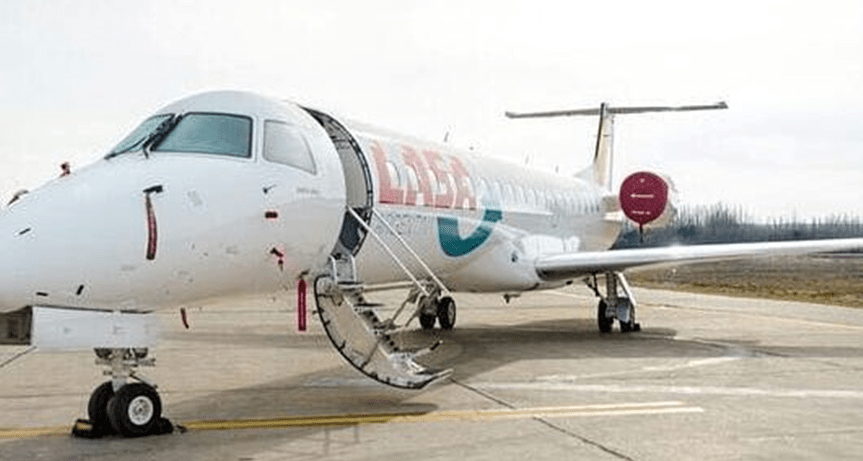
AW-700088888LASA Líneas Aéreas toma entrega del primer Embraer E-145 de su flota y el primero en el ingreso a Argentina con matrícula comercial. La compañía aérea empezará a volar a partir del próximo 30 Agosto 2018.

La aerolínea LASA presentó la primera de sus aeronaves y anunció el comienzo de sus operaciones con base en Neuquén. Las rutas que unirán a toda la Patagonia argentina y chilena tendrán su vuelo inicial el próximo 30 Agosto 2018.

LASA ha tomado entrega del primer avión Embraer E145 para 50 pasajeros para iniciar sus operaciones comerciales. Se prevé una segunda aeronave arribando a Argentina para el próximo 4 Agosto 2018. La compañía espera tener 12 aviones Embraer 145 que operarán desde el Aeropuerto Internacional Presidente Perón de Neuquén.

Primeras rutas de LASA

La primera aeronave estará afectada con frecuencias diarias en tres de las cinco rutas anunciadas, mientras que realizará viajes tres veces por semana para las frecuencias a Chile. Conectará Neuquén—Santa Rosa—Mar del Plata, Neuquén—Bahía Blanca—Mar del Plata y Neuquén—Chapelco—Bariloche todas las semanas. Por otro lado, realizará vuelos Neuquén- Bariloche—Puerto Montt y Neuquén—Temuco tres veces a la semana.

Flota de Embraer E-145

El Presidente de la aerolínea patagónica, Juan Silenzi, detalló que las aeronaves del constructor brasileño Embraer E-145 resultan idóneas para operaciones en la región y cuentan con tecnología de punta para circular. “Funcionan con la misma velocidad que la línea aérea de bandera, viene preparado para esta zona donde hay mucha formación de hielo, tiene posicionamiento y rastreo satelital, que nos da la posibilidad de tener monitoreado el avión desde Neuquén”, explicó. A su vez, ese sistema de monitoreo permite conocer cómo están funcionando los motores, los parámetros de vuelo, la ubicación del vuelo e incluso “se le puede pasar el plan de vuelo online a través de mensajería”.

“Hoy es un día histórico para la empresa. Nos sentimos como en casa. La aerolínea se siente neuquina y va a volar por toda la Patagonia”, expresó Juan Silenzi. La aerolínea regional ya dispone en página web de la aerolínea el tarifario y la disponibilidad de los vuelos en la región.  AIRWAYS® AW-Icon TXT

Arrive 1st E-145 of LASA Líneas Aéreas

Up to Argentina the first Embraer E145 of LASA Líneas Aéreas

LASA Líneas Aéreas takes delivery of the first Embraer E-145 from its fleet and the first one to enter Argentina with commercial registration. The airline will start flying from next August 30, 2018.

The airline LASA presented the first of its aircraft and announced the start of its operations based in Neuquén. The routes that will unite the entire Argentine and Chilean Patagonia will have their initial flight on August 30, 2018.

LASA has taken delivery of the first Embraer E145 aircraft for 50 passengers to start its commercial operations. A second aircraft is expected to arrive in Argentina on August 4, 2018. The company expects to have 12 Embraer 145 aircraft that will operate from the Presidente Perón International Airport in Neuquén.

First routes of LASA

The first aircraft will be affected with daily frequencies on three of the five routes announced, while it will travel three times a week for frequencies to Chile. It will connect Neuquén-Santa Rosa-Mar del Plata, Neuquén-Bahía Blanca-Mar del Plata and Neuquén-Chapelco-Bariloche every week. On the other hand, it will carry out flights Neuquén-Bariloche-Puerto Montt and Neuquén-Temuco three times a week.

Fleet of Embraer E-145

The President of the Patagonian airline, Juan Silenzi, explained that the Brazilian constructor Embraer E-145’s aircraft are ideal for operations in the region and have state-of-the-art technology for driving. «They work with the same speed as the flag airline, it is prepared for this area where there is a lot of ice formation, it has positioning and satellite tracking, which gives us the possibility of having the plane monitored from Neuquén,» he explained. In turn, this monitoring system allows to know how the engines are working, the flight parameters, the location of the flight and even «you can pass the flight plan online through messaging».

«Today is a historic day for the company. We felt at home. The airline feels neuquina and will fly throughout Patagonia», said Juan Silenzi. The regional airline already has on the website of the airline the fare and the availability of flights in the region. A \ W


Ξ A I R G W A Y S Ξ
SOURCE:  Airgways.com
DBk: Aerolinealasa.com.ar / Airgways.com
AW-POST: 201807120004AR

A\W   A I R G W A Y S ®