Caso PLUNA Líneas Aéreas


AW-70083900

AW | 2017 12 24 12:33 | AIRLINES / GOVERNMENT

Resultado de imagen para PLUNA logoLa Justicia de Uruguay se expidió sobre el caso PLUNA

El proceso de la quiebra de la aerolínea uruguaya PLUNA, desde el cierre de sus operaciones en 2012 hasta la fecha con la sentencia de la jueza María Helena Mainard, realizada en estos días, han traído sentencias judiciales al caso.

Resultado de imagen para PLUNA CRJLa Justicia uruguaya condenó por delito de abuso de funciones al ex-Presidente del Banco República (BROU), Fernando Calloia y absolvió al ex-Ministro de Economía, Fernando Lorenzo.

Los motivos que llevaron a la quiebra inducida de PLUNA radican en la venta de la flota de aeronaves y el papel del empresario Juan Carlos López Mena. El empresario argentino-uruguayo reclama que el Banco República le devuelva el dinero pago por el aval del remate de PLUNA. En 2014 había hecho un acuerdo con el gobierno de Uruguay para hacerse cargo de esa deuda, asumida por la empresa de origen español Cosmo Líneas Aéreas SL, cuyo representante ofertó en un remate por los aviones de la ex-aerolínea de bandera, pero nunca inyectó el dinero. López Mena reclama en la demanda que el BROU le devuelva el dinero abonado con intereses, y le pague U$D 1 millón de dólares por daños y perjuicios. Queda expuesto el aval del Banco República para la participación de una empresa en el remate y las derivaciones sobre si hubo o no abuso de funciones.

La Justicia uruguaya se pronunció sobre el aval que otorgó el Banco República a la empresa española Cosmo Líneas Aéreas SL para participar del remate de los siete aviones de la aerolínea uruguaya. El ex-Presidente del banco, Fernando Calloia, fue condenado con una pena de 20 meses de prisión, inhabilitación especial por dos años, y una multa de 1.000 unidades reajustables. No irá a prisión por ser primario, procesado sin prisión, por un delito excarcelable. Por su parte, el ex-Ministro de Econamía Fernando Lorenzo fue absuelto.

El Parlamento de Uruguay aprobó el cierre de PLUNA Líneas Aéreas Ente Autónomo, para el próximo 31 de Diciembre 2017. El caso PLUNA todavía sigue abierto, pero sus alas quedarán en el recuerdo colectivo de los uruguayos.  AIRWAYS® AW-Icon TXT

Case PLUNA Líneas Aéreas

The Justice of Uruguay was issued on the PLUNA case

The process of the bankruptcy of the Uruguayan airline PLUNA, from the closure of its operations in 2012 to date with the ruling of Judge María Helena Mainard, carried out these days, have brought a judicial decision to the case.

The Uruguayan Justice condemned the ex-President of the Banco República (BROU), Fernando Calloia, for the crime of abuse of functions and acquitted the ex-Minister of Economy, Fernando Lorenzo.

The reasons that led to the induced bankruptcy of PLUNA lie in the sale of the aircraft fleet and the role of entrepreneur Juan Carlos López Mena. The Argentine-Uruguayan businessman claims that the Banco República will return the money paid for the endorsement of the PLUNA auction. In 2014, it had made an agreement with the government of Uruguay to take over that debt, assumed by the Spanish company Cosmo Líneas Aéreas SL, whose representative offered in a auction for the planes of the former flag carrier, but never injected the money. Lopez Mena claims in the lawsuit that the BROU will return the money paid with interest, and will pay U $ D 1 million dollars for damages. The endorsement of the Banco República for the participation of a company in the auction and the derivations on whether or not there was abuse of functions is exposed.

Uruguayan Justice ruled on the endorsement granted by the Banco República to the Spanish company Cosmo Líneas Aéreas SL to participate in the auction of the seven planes of the Uruguayan airline. The former president of the bank, Fernando Calloia, was sentenced to 20 months in prison, special disqualification for two years, and a fine of 1,000 readjustable units. He will not go to prison for being primary, processed without prison, for an excarcelable crime. For his part, former Minister of Economy Fernando Lorenzo was acquitted.

The Parliament of Uruguay approved the closure of PLUNA Líneas Aéreas Ente Autónomo, for next December 31, 2017. The PLUNA case is still open, but its wings will remain in the collective memory of Uruguayans. A \ W


Ξ A I R G W A Y S Ξ
SOURCE:  Airgways.com
DBk: Wikimedia.org / Elpais.com.uy / Edgardo Giménez Mazó
AW-POST: 201712241233AR

A\W   A I R G W A Y S ®

Viva Air Panamá compra 50 A320

29513607701_4ce4012a2a_o.jpg

AW | 2017 12 23 18:01 | AIRLINES

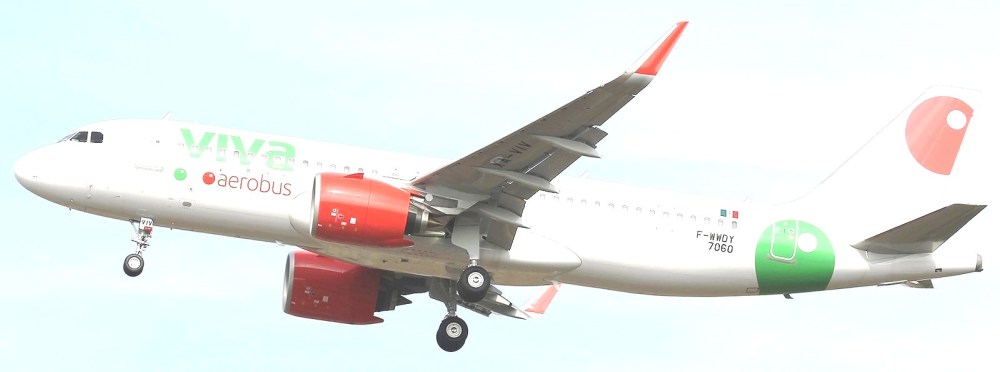
Viva Air, con sede en Panamá, anunció la orden de compra de los 50 Airbus 320

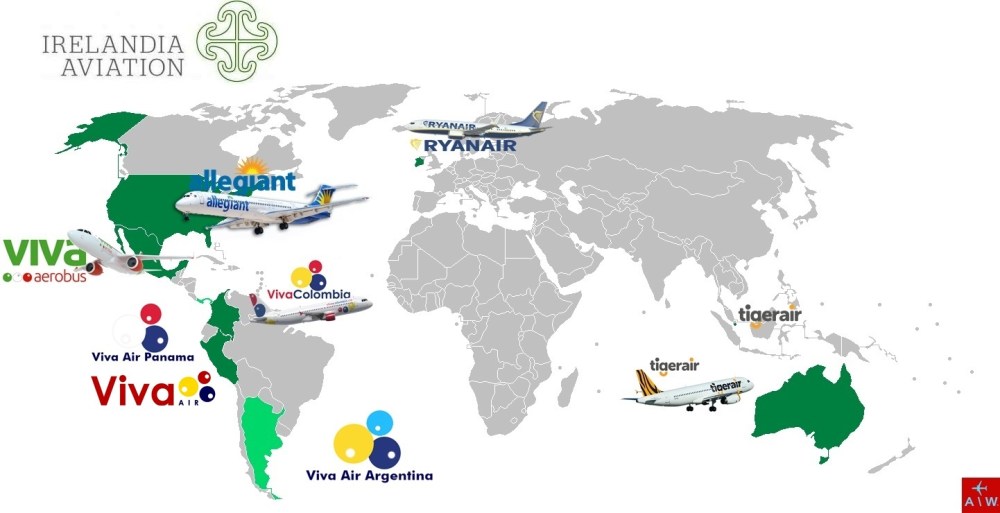
Viva Air es un grupo con sede en Panamá, creado por Irelandia Aviation, desarrollador líder de aerolíneas de bajo costo del mundo, liderada por Declan Ryan y su equipo, uno de los fundadores de Ryanair.

Viva Air, una aerolínea de bajo costo de Latinoamérica, recientemente firmó un acuerdo de compra con Airbus para adquirir 50 aviones de la familia A320CEO/NEO, aunque no precisó el monto de la inversión en su declaración. Viva Air lanzó recientemente Viva Air Perú, la aerolínea hermana de VivaColombia con sede en Lima. Viva Air Perú actualmente opera tres aviones A320.

Según los informes, se firmó un MOU en Le Bourget Paris Airshow celebrado en junio por Viva Air con Airbus para la compra de 35 aviones A320NEO y 15 A320CEO de bajo costo. VivaColombia, con sede en Medellín, ha sido un operador totalmente de Airbus desde entonces, y actualmente opera 11 A320. El mismo será operado por la aerolínea del grupo: VivaColombia y Viva Air Perú. AIRWAYS® AW-Icon TXT

Resultado de imagen para Viva Air Ireland

Viva Air Panama buys 50 A320

Viva Air, based in Panama, announced the purchase order for the 50 Airbus 320

Viva Air is a group based in Panama, created by Irelandia Aviation, leading developer of low cost airlines in the world, led by Declan Ryan and his team, one of the founders of Ryanair.

Viva Air, a low-cost airline in Latin America, recently signed a purchase agreement with Airbus to acquire 50 aircraft from the A320CEO/NEO family, although it did not specify the amount of the investment in its declaration. Viva Air recently launched Viva Air Peru, the sister airline of VivaColombia based in Lima. Viva Air Peru currently operates three A320 aircraft.

According to reports, an MOU was signed at Le Bourget Paris Airshow in June by Viva Air with Airbus for the purchase of 35 A320NEO and 15 A320CEO low-cost aircraft. VivaColombia, headquartered in Medellín, has been a fully Airbus operator since then, and currently operates 11 A320. The same will be operated by the group’s airline: VivaColombia and Viva Air Peru. A \ W


Ξ A I R G W A Y S Ξ
SOURCE:  Airgways.com
DBk: Airbus.com / Vivaair.com / Spotter-Aviation Pibracais
AW-POST: 201712231801AR

A\W   A I R G W A Y S ®

TAM Bolivia podría cerrar operaciones

Resultado de imagen para TAM Bolivia Avro 70

AW | 2017 12 23 17:23 | AIRLINES

Resultado de imagen para TAM BoliviaTras 72 años de servicio Transportes Aéreos Militares de Bolivia podría cesar sus operaciones

La Empresa Pública Comercial de Transportes Aéreos Militares, (EPTAM) concluirá sus opercaiones comerciales. El presidente de la comisión de Planificación, Política Económica y Finanzas, Javier Zavaleta, expresó su preocupación por la incapacidad de Transporte Aéreo Militar de gestionar una certificación de operaciones comerciales ante la Dirección General de Aeronáutica Civil (DGAC). El parlamentario oficialista, manifestó sus temores ante las acciones de regulación de la aeronáutica civil en Bolivia, y concretamente refirió a las fallas que ha registrado la empresa BoA, durante la gestión.

“Lo que me preocupa en realidad es toda la aeronáutica en general, las fallas de BoA, en los últimos meses, sumado a la incapacidad del TAM de lograr sus licencias. Nos muestra poca planificación y regulación de la DGAC”, sostuvo el legislador.

“Hay algo que está marchando mal en la aeronáutica civil boliviana”, advirtió el diputado, sin precisar qué aspectos están fallando y anunció que en la Asamblea Legislativa existen muchas peticiones de informe que en la gestión 2018 se dará prioridad.

Se refirió al tema a propósito del anunció de Transporte Aéreo Militar, para suspender operaciones el 31 de diciembre en el entendido de que no pudo lograr la certificación de la Dirección General de Aeronáutica Civil (DGAC), para que opere como aerolínea en el ámbito civil comercial.

Según un comunicado, la empresa militar especificó que el Decreto Supremo Nº 3074, aprobado el primero de febrero de 2017, le dio 150 días para que cumpla con los requisitos y se adecue a la regulación civil. La aerolínea inició este proceso en 2015, cuando el 21 de enero de ese año tramitó la pre solicitud a la Dirección de Aeronáutica Civil para comenzar los trámites para acceder al Certificado de Operación Aérea (COA), según dijo entonces un matutino cruceño. Vencido ese plazo, el Ministro de Defensa, Reymi Ferreira, convocó a la prensa para informar acerca del tercer plazo concedido de seis meses adicionales a las autoridades del TAM para que concluyan la certificación ante la DGAC, mismo que debió concluir el 31 de Diciembre de 2017.

El Gerente del TAM, Julio César Villarroel anunció, inversiones del orden de B$ 28 millones para la adquisición de dos aeronaves y se fijó este año para concluir las operaciones de alquiler de los aparatos.

Estos recursos fueron presupuestados en el ejercicio fiscal de 2017, y contemplaba una asignación de B$ 16 millones (U$D 2.7 millones) para el alquiler de dos naves, cuyo trámite de acreditación ante la Dirección General de Aeronáutica Civil (DGAC) concluirá en diciembre próximo, informó en la rendición de cuentas parcial el 24 de mayo pasado. Inclusive dijo, es probable que se contrate una tercera nave. “Luego de la respectiva acreditación, la nueva empresa podrá operar en la siguiente gestión, como aerolínea comercial en Bolivia”, señaló entonces Villarroel.

El Presupuesto General del Estado 2017 asignó este año al TAM Bs 370 millones, según el informe de rendición de cuentas de mayo. Este dato fue comentado por el ministro Ferreira cuando anunció el último plazo a mediados del año. Villarroel se comprometió ante los medios a subir la presentación al portal web de la compañía, pero lamentablemente incumplió ese compromiso. Al cumplirse la segunda rendición final de cuentas donde informó la suspensión de operaciones, supuestamente en razón al congelamiento de cuentas, tampoco ha transparentado su informe en el portal del TAM.

El alquiler de las aeronaves estaba en curso a mediados de año. Uno de los aparato llegó a Cochabamba en julio. En esa ocasión las autoridades de la aerolínea dieron por hecha la certificación de las naves. El aparato que llegó a Cochabamba es una aeronave de fabricación inglesa, BAe Avro RJ70. Las dos aeronaves serían las primeras en incorporarse a la nueva empresa estatal que debió concluir sus trámites el 31 de diciembre para comenzar a operar como empresa comercial desde el 1 de enero de 2018.  AIRWAYS® AW-Icon TXT

TAM Bolivia could close operations

After 72 years of service Bolivian Military Air Transport will close

The Commercial Public Company of Military Air Transport (EPTAM) will conclude its commercial operations. The chairman of the Planning, Economic Policy and Finance Committee, Javier Zavaleta, expressed his concern about the inability of the Military Air Transport to manage a certification of commercial operations before the Directorate General of Civil Aeronautics (DGAC). The parliamentary official, expressed his fears about the actions of regulation of civil aeronautics in Bolivia, and specifically referred to the failures that has registered the BoA company, during the management.

«What really worries me is all the aeronautics in general, the failures of BoA, in recent months, added to the inability of TAM to achieve their licenses. It shows little planning and regulation of the DGAC», said the legislator.

«There is something that is going badly in the Bolivian civil aeronautics», warned the deputy, without specifying what aspects are failing and announced that in the Legislative Assembly there are many requests for report that in the 2018 administration will be given priority.

He referred to the issue of the announcement of Military Air Transport, to suspend operations on December 31 on the understanding that he could not achieve the certification of the Directorate General of Civil Aeronautics (DGAC), to operate as an airline in the civil field commercial.

According to a statement, the military company specified that Supreme Decree No. 3074, approved on February 1, 2017, gave 150 days to comply with the requirements and be adapted to civil regulation. The airline started this process in 2015, when on January 21 of that year it processed the pre-application to the Directorate of Civil Aeronautics to begin the procedures to access the Air Operation Certificate (COA), as it was said by a morning Cruceño. After that period, the Minister of Defense, Reymi Ferreira, called the press to inform about the third term granted of six additional months to the TAM authorities to complete the certification before the DGAC, which should have concluded on December 31st. 2017

The Manager of the TAM, Julio César Villarroel announced, investments in the order of B$ 28 million for the acquisition of two aircraft and was set this year to complete the rental operations of the devices.

These resources were budgeted in the fiscal year of 2017, and contemplated an allocation of B$ 16 million (US$ 2.7 million) for the rental of two ships, whose accreditation process before the General Directorate of Civil Aeronautics (DGAC) will conclude in next December, reported on the partial surrender of accounts on May 24 last. Even said, it is likely that a third ship will be hired. «After the respective accreditation, the new company may operate in the following management, as a commercial airline in Bolivia», said Villarroel then.

The General State Budget for 2017 assigned this year to the TAM B$ 370 million, according to the May accountability report. This information was commented by Minister Ferreira when he announced the last deadline in the middle of the year. Villarroel committed himself before the media to upload the presentation to the company’s web portal, but unfortunately he failed to fulfill that commitment. At the end of the second final account submission where he reported the suspension of operations, supposedly due to the freezing of accounts, he has not disclosed his report on the TAM portal.

Aircraft rental was in progress mid-year. One of the aircraft arrived in Cochabamba in July. On that occasion the authorities of the airline assumed certification of the ships. The aircraft that arrived in Cochabamba is an English-made aircraft, BAe Avro RJ70. The two aircraft would be the first to join the new state-owned company that had to complete its procedures on December 31 to begin operating as a commercial company from January 1, 2018. A \ W


Ξ A I R G W A Y S Ξ
SOURCE:  Airgways.com
DBk: Tam.bo / Wikimedia.org
AW-POST: 201712231723AR

A\W   A I R G W A Y S ®

Korean Air Lines recibe primer CS300

AW-7009933000.jpg

AW | 2017 12 23 17:01 | AIRLINES

Bombardier_logo[1]Bombardier Commercial Aircraft entregó recientemente su primer avión CS300 a la aerolínea Korean Air Lines

Korean Air Lines ha tomado entrega en Mirabel, Quebec, Canadá del primer Bombardier CS300 convirtiéndose en el primer cliente asiático de Bombardier. La aerolínea ha ordenado 10 unidades del nuevo avión regional canadiense de Bombardier Inc.

Bombardier_Aerospace-200x (2)«Es un hito bastante importante para el programa de la CSeries porque es nuestro gran avance en el mercado asiático de rápido crecimiento, y nos sentimos honrados de tener a Korean Air Lines como embajador de nuestra marca en la región. Esperamos que en los próximos 20 años, los operadores asiáticos recibirán 2.870 pequeños aviones de pasillo único. Estamos encantados de que Korean Air sea el primero en la región en mostrar el desempeño y las capacidades sobresalientes del avión CS300», dijo Fred Cromer, presidente de Bombardier Commercial. Aeronave.

«Hemos sido testigos del impresionante primer año de funcionamiento de la Serie C, y nos complace recibir nuestro primer avión Bombardier CS300. Cuando seleccionamos la aeronave en 2011, sabíamos que sería una gran adición a nuestra flota. Hoy en día, es la aeronave más eficiente de su clase, y la comodidad de los pasajeros es sobresaliente. La aeronave CS300 nos permitirá reforzar nuestra capacidad regional. Las operaciones de pasillo único, a la vez que proporcionan un alto nivel de rentabilidad y satisfacción del cliente, son factores clave de nuestra decisión de adquirir el Bombardier CS300, y esperamos integrarlo a nuestra flota», dijo Soo-Keun Lee, CTO de Korean Air Lines.

«Estamos encantados de que Korean Air reciba su primer avión CS300. Pratt & Whitney ha compartido una relación de larga data con KAL desde finales de la década de 1940 y esperamos poder impulsar su flota de nueva generación», dijo Rick Deurloo, vicepresidente senior de ventas, marketing y atención al cliente de Pratt & Whitney.

Con eso, Korean Air se convirtió en la tercera aerolínea global en recibir la entrega del jet, el más grande de los dos modelos de la «Serie C» del fabricante de aviones canadiense Bombardier. AirBaltic de Suiza y Letonia son los otros dos operadores que ya pilotean el CS300.

Korean Air, el cliente de lanzamiento asiático para el modelo, ha configurado sus CS300 con 127 asientos en un diseño de 2 por 3. De ellos, 25 serán asientos Premium Space extra Economy, que debutarán en la flota de Korean Air en el CS 300s. Korean Air dice que los clientes sentados en los nuevos asientos de Economy Premium «podrán disfrutar de un campo más ancho (4 pulgadas más ancho) y un ancho de asiento más ancho de 19 pulgadas».

Korean dice que usará sus nuevos CS300 en «rutas regionales de baja densidad», una acción que según la aerolínea liberará su avión de pasillo único más grande para rutas de mayor tráfico.

Para Bombardier, la entrega es la última señal de progreso en su problemática línea C Series. Las ventas de han sido lentas tanto para el CS300 como para el modelo CS100 más pequeño.

Bombardier recibió un disparo en el brazo por su CS100 en 2016, cuando Delta hizo un pedido en firme de 75 de los aviones. Pero eso llevó a Boeing a presentar una demanda comercial alegando que Bombardier estaba volcando los aviones en el mercado de los EEUU por debajo del costo.

Desde entonces, se ha producido una disputa comercial, con los EE. UU. Amenazando tentativamente con un arancel de casi 300% en los aviones CSeries. La disputa se ha intensificado recientemente, con Canadá rechazando un pedido de aviones de combate Boeing y Bombardier anunciando que había vendido una participación mayoritaria en su línea CSeries al archirival de Boeing, Airbus. Como parte de este último, Airbus ensamblaría jets CSeries con destino a las líneas aéreas de EEUU en su nueva fábrica en Alabama.

El Bombardier CS300 entregado el viernes 22 de Diciembre es el primero de los 10 pedidos por Korean Air. Se espera que el segundo avión regional del pedido se entregue a Korean Air Lines antes de fin deDiciembre 2017. AIRWAYS® AW-Icon TXT

636496240686637635-Bombardier---Korean-Air---002---20171002---3446 (1)

Korean Air Lines receives first CS300

AW-7000300Bombardier Commercial Aircraft recently delivered its first CS300 aircraft to the airline Korean Air Lines

Korean Air Lines has taken delivery of the first Bombardier CS300 in Mirabel, Quebec, Canada, becoming the first Asian customer of Bombardier. The airline has ordered 10 units of the new Canadian regional aircraft from Bombardier Inc.BCA-C-Series-LP-960X525-en

«This is a very important milestone for the CSeries program because it is our breakthrough in the rapidly growing Asian market, and we are honored to have Korean Air Lines as our brand ambassador in the region. For years, Asian operators will receive 2,870 small single-aisle aircraft, and we are delighted that Korean Air is the first in the region to showcase the outstanding performance and capabilities of the CS300», said Fred Cromer, president of Bombardier Commercial. Aircraft.

«We have witnessed the impressive first year of operation of the C Series, and we are pleased to receive our first Bombardier CS300 aircraft.When we selected the aircraft in 2011, we knew it would be a great addition to our fleet.Today, it is the most Efficient in its class, and passenger comfort is outstanding.The CS300 aircraft will allow us to strengthen our regional capacity.The single aisle operations, while providing a high level of profitability and customer satisfaction, are key factors of our decision to acquire the Bombardier CS300, and we hope to integrate it into our fleet», said Soo-Keun Lee, CTO of Korean Air Lines.

«We are delighted that Korean Air will receive its first CS300 aircraft. Pratt & Whitney has shared a long-standing relationship with KAL since the late 1940s and we look forward to boosting its next-generation fleet», said Rick Deurloo, senior vice president of sales, marketing and customer service of Pratt & Whitney.

AW-700083300

BOMBARDIER CS300 FOR KOREAN AIR LINES

With that, Korean Air became the third global airline to receive jet delivery, the largest of the two «C Series» models of Canadian aircraft manufacturer Bombardier. AirBaltic from Switzerland and Latvia are the other two operators that already pilot the CS300.

Korean Air, the Asian launch customer for the model, has configured its CS300 with 127 seats in a 2 by 3 design. Of these, 25 will be Premium Space extra Economy seats, which will debut in the Korean Air fleet in the CS 300s . Korean Air says customers sitting in the new Economy Premium seats «can enjoy a wider field (4 inches wider) and a wider seat width of 19 inches».

Korean says it will use its new CS300s on «low density regional routes,» an action the airline says will free its largest single-aisle plane for high-traffic routes.

For Bombardier, delivery is the latest sign of progress in its problematic CSeries line. Sales have been slow for both the CS300 and the smaller CS100 model.

Bombardier was shot in the arm for his CS100 in 2016, when Delta placed a firm order for 75 of the planes. But that led Boeing to file a commercial suit alleging that Bombardier was dumping the aircraft in the US market. UU Below the cost.

13-april-bombardier-cseries-360Since then, there has been a commercial dispute, with the USA. UU Threatening tentatively with a tariff of almost 300% on CSeries aircraft. The dispute has intensified recently, with Canada rejecting an order for Boeing and Bombardier fighter jets announcing that it had sold a majority stake in its CSeries line to Boeing’s arch-rival, Airbus. As part of the latter, Airbus would join CSeries jets bound for US airlines at its new factory in Alabama.

The Bombardier CS300 delivered on Friday, December 22 is the first of 10 orders by Korean Air. It is expected that the second regional aircraft of the order will be delivered to Korean Air Lines before the end of December 2017. A \ W


Ξ A I R G W A Y S Ξ
SOURCE:  Airgways.com
DBk: Bombardier.com / Koreanair.com / Ksdk.com
AW-POST: 201712231701AR

A\W   A I R G W A Y S ®

Azafata, 60 años volando su pasión

AW | 2017 12 23 16:24 | AIRLINES / BIOGRAPHY

AW-Bette_Nash_the_80_year_old_flight_attendantUna azafata de 81 años continúa volando en American Airlines

Bette Nash lleva 60 años volando y aún hoy se desempeña como asistente de vuelo en Estados Unidos. Le hicieron un nota en la televisión y ahora todos los pasajeros se quieren sacar una foto con ella.

El vuelo AA2160 de American Airlines proveniente de Boston acaba de aterrizar en Washington DC, y Bette Nash, de 81 años, ayuda a los pasajeros a desembarcar. En la cabina del Airbus, la saludan, le toman fotos, le agradecen.

Después de seis décadas surcando los cielos como azafata, Bette Nash mantiene un estilo impecable, una energía increíble y una sonrisa constante. Perdió solo una cosa: el anonimato. Es muy profesional. Tiene ese toque de la vieja escuela, que recuerda los buenos viejos tiempos.

En Estados Unidos, los pilotos deben retirarse a los 65 años, pero no los auxiliares de vuelo comerciales, de los cuales Nash es presumiblemente la decana mundial.

Al verla trotando de arriba a abajo por los pasillos de la terminal aérea, arrastrando su maleta, es difícil no dejarse llevar por las palabras de admiración que se escuchan sobre ella.

«Me levanto a las 02H10 de la mañana. Tengo dos despertadores y, cuando suenan, ¡no me quedo en la cama!», asegura. En su casa en Virginia, muy cerca de la capital estadounidense, prepara comida para su único hijo, discapacitado, que la estará esperando a su regreso a tierra firme.

Toda arreglada y tras desayunar «un par de huevos», llega antes del amanecer al Aeropuerto Nacional Ronald Reagan. Su vuelo favorito es el «Washington-Boston-Washington», que puede elegir debido a su notable antigüedad.

Un legado de pasión

Tenía 21 años, bajo la presidencia de Dwight Eisenhower, cuando la hoy desaparecida aerolínea Eastern Air Lines la reclutó como «azafata», un término que en inglés se ha vuelto obsoleto ante el de «asistente de vuelo».

BETTE NASH VOLANDO PARA EASTERN AIR LINES

Cuando comenzó a volar, el transporte aéreo era una prerrogativa de la élite. «Había muchos empresarios y las mujeres entraban con sus abrigos de piel, sus joyas, sus sombreros; no veíamos las chanclas y las zapatillas deportivas de hoy», cuenta. Sus propios uniformes variaron a través de los años: fueron conservadores, elegantes e incluso «salvajes».

«A principios de 1960, cuando John F. Kennedy asumió el poder, todo se liberó, llevábamos uniformes completamente locos, que incluso tenían mini-shorts y botas», recuerda. En esos tiempos, las bandejas de comida en cadena no existían. Las azafatas cocinaban tanto langosta como pato a la naranja y cortaban el asado. En primera clase, los clientes tenían derecho a platería y vajilla de porcelana. «Pasábamos con cinco carritos: primero las bebidas, luego los aperitivos, luego el plato principal, luego el carro de postre y finalmente los licores digestivos»«Los vuelos turísticos eran solo para los turistas, vendíamos los sándwiches a 50 centavos de dólar y el vaso de leche a 15 centavos, y no ofrecíamos ninguna bebida fresca, solo había café, té, chocolate caliente y caldo».

Según pasan los años

Huelgas, fusiones, adquisiciones, Bette Nash ha experimentado todos los altibajos del sector aéreo en Estados Unidos. Incluso trabajó para Trump Shuttle, una compañía que fue brevemente propiedad del actual presidente Donald Trump.

La azafata de American Airlines Bette Nash, de 81 años, saluda a los pasajeros al llegar al aeropuerto Ronald Reagan Washington en Arlington, Virginia, el 19 de diciembre de 2017 (AFP – Eric BARADAT )

La azafata de American Airlines Bette Nash, de 81 años, en el aeropuerto Ronald Reagan Washington en Arlington, Virginia, el 19 de diciembre de 2017 (AFP – Eric BARADAT )

No olvida una vez cuando, llegando a Washington, su avión quedó en medio de turbulencias tan violentas que se desprendió parte de un inodoro y parecía como si un ala golpeara el piso. «Fue simplemente terrible», dijo Nash, recordando los rayos que se sucedían sin parar. «Creo que incluso volamos sobre la Casa Blanca esa noche, lo cual era completamente ilegal». El avión tuvo que regresar a Nueva York. Hace diez años, al cumplir 50 años de carrera, la aeronave en que viajaba Bette Nash fue recibida en la pista con chorros de agua del cuerpo de bomberos, un honor normalmente reservado para pilotos veteranos o para el bautizo de un nuevo avión comercial. ¿Quién imaginaba entonces que ella todavía estaría aquí hoy? «No voy a trabajar hasta que tenga 90 años», afirma, antes de agregar sobre su jubilación: «¡No quiero pensar en eso!» Bette Nash cumplirá 82 años el 31 de diciembre de 2017. AIRWAYS® AW-Icon TXT

Stewardess, 60 years flying his passion

An 81-year-old stewardess continues to fly in American Airlines

Bette Nash has been flying for 60 years and still serves as a flight attendant in the United States. They made a note on television and now all the passengers want to take a picture with her.

American Airlines flight AA2160 from Boston has just landed in Washington DC, and Bette Nash, 81, helps passengers disembark. In the cabin of the Airbus, they greet her, they take photos, they thank her.

After six decades in the skies as stewardess, Bette Nash maintains impeccable style, incredible energy and a constant smile. Lost only one thing: anonymity. It is very professional. It has that touch of the old school, which reminds us of the good old days.

In the United States, pilots must retire at age 65, but not commercial flight attendants, of whom Nash is presumably the world’s dean.

La azafata de American Airlines Bette Nash, de 81 años, en una entrevista con la AFP tras desembarcar de un vuelo en Arlington, Virginia, el 19 de diciembre de 2017 (AFP – Eric BARADAT )

American Airlines stewardess Bette Nash, 81, greets passengers as they arrive at the Ronald Reagan Washington airport in Arlington, Virginia, on December 19, 2017 (AFP – Eric BARADAT)

Seeing her trotting up and down the halls of the air terminal, dragging her suitcase, it’s hard not to get carried away by the words of admiration that are heard about her.

«I get up at 02h10 in the morning, I have two alarm clocks and when they sound, I do not stay in bed!» He says. At her home in Virginia, very close to the US capital, she prepares food for her only child, disabled, who will be waiting for her on her return to the mainland.

All arranged and after breakfast «a couple of eggs» arrives before dawn at the Ronald Reagan National Airport. Your favorite flight is the «Washington-Boston-Washington», which you can choose because of its remarkable antiquity.

This undated photo, from a personal album by Bette Nash, shows her in an old stewardess costume, in Washington DC (Bette Nash / AFP – HO)

A legacy of passion

She was 21 years old, under the presidency of Dwight Eisenhower, when the now defunct airline Eastern Air Lines recruited her as «stewardess», a term that in English has become obsolete before that of «flight attendant».

Esta foto sin fecha, de un album personal de Bette Nash, la muestra en un antiguo traje de azafata, en Washington DC (Bette Nash/AFP – HO)

This undated photo, from a personal album by Bette Nash, shows her in an old stewardess costume, in Washington DC (Bette Nash / AFP – HO)

When it began to fly, air transport was a prerogative of the elite. «There were many entrepreneurs and women came with their fur coats, their jewelry, their hats, we did not see the flip flops and sneakers today», he says. Their own uniforms varied over the years: they were conservative, elegant and even «wild».

«In the early 1960s, when John F. Kennedy came to power, everything was freed, we were wearing completely crazy uniforms, which even had mini-shorts and boots», he recalls. In those times, chain meal trays did not exist. The hostesses cooked both lobster and orange duck and cut the roast. In first class, customers had the right to porcelain china and crockery. «We had five carts: first the drinks, then the appetizers, then the main course, then the dessert cart and finally the digestive liquors»«The tourist flights were only for tourists, we sold the sandwiches for 50 cents and the glass of milk for 15 cents, and we did not offer any fresh drinks, there was only coffee, tea, hot chocolate and broth».

As the times go by

Strikes, mergers, acquisitions, Bette Nash has experienced all the ups and downs of the airline industry in the United States. He even worked for Trump Shuttle, a company that was briefly owned by current President Donald Trump.

Do not forget once when, arriving in Washington, his plane was in turbulence so violent that part of a toilet came off and it seemed as if a wing hit the floor. «It was just terrible», Nash said, remembering the beams that were happening without stopping. «I think we even flew over the White House that night, which was completely illegal». The plane had to return to New York. Ten years ago, when he turned 50 years old, Bette Nash’s aircraft was received on the runway with jets of water from the fire department, an honor normally reserved for veteran pilots or for the christening of a new commercial aircraft. Who imagined then that she would still be here today? «I’m not going to work until I’m 90 years old», he says, before adding about his retirement: «I do not want to think about that!» Bette Nash will turn 82 on December 31, 2017. A \ W


Ξ A I R G W A Y S Ξ
SOURCE:  Airgways.com
DBk: post-gazette.com  / Infobae.com
AW-POST: 201712231624AR

A\W   A I R G W A Y S ®

Mauritania recibe 1er Boeing 737 MAX

99219_1513305364.jpg

AW | 2017 12 21 14:26 | AIRLINES

Resultado de imagen para Air Mauritanie logoBoeing y Mauritania Airlines International celebran la entrega de First 737-8 MAX

La aerolínea mauritana se convierte en la primera en África en volar la versión más nueva del 737 más vendido

Boeing  y Mauritania Airlines International celebraron hoy la entrega del nuevo 737 MAX 8 de la aerolínea. El operador mauritano se convierte en el primer operador del nuevo y mejorado avión en África.

«Estamos orgullosos de ser el primer operador en África en operar el 737 MAX», dijo Mohamed Radhi Bennahi, director ejecutivo de Mauritania Airlines International. «La introducción del 737 MAX en la creciente flota de Mauritania ayudará a aumentar de manera rentable nuestra red a medida que introducimos nuevas rutas hacia Europa y Medio Oriente«.

El 737 MAX ofrece la mayor eficiencia, fiabilidad y comodidad para los pasajeros en el mercado de pasillo único al incorporar la última tecnología de los motores CFM International LEAP-1B, las aletas de tecnología avanzada, Boeing Sky Interior, grandes pantallas de cabina de vuelo y otras mejoras. Los aumentos de eficiencia han ayudado a que el MAX sea el avión más vendido en la historia de Boeing, con más de 4,000 pedidos a la fecha de 92 clientes en todo el mundo.

«Estamos encantados de que Mauritania Airlines International se convierta en el primer operador del MAX en África y me gustaría agradecer a todos en la aerolínea por su asociación y fe continua en el programa 737″, dijo Marty Bentrott , vicepresidente senior de ventas para Oriente Medio. , Turquía , África , Rusia y Asia Central , Boeing Commercial Airplanes. «El 737 MAX será una gran adición a su flota que brinda mayor eficiencia, alcance y comodidad para sus operaciones».

Fundada en 2010, Mauritania Airlines International atiende a más de 10 destinos en África y Europa desde su base en el aeropuerto internacional de Nouakchott-Oumtounsy en la capital de Mauritania, Nouakchott . La compañía de bandera mauritana opera una flota que incluye una 737-800 de nueva generación, una 737-700 de próxima generación, dos 737-500 y ahora la 737 MAX 8. AIRWAYS® AW-Icon TXT

26815103519_10fb8a77bd_b.jpg

Mauritania receives first Boeing 737 MAX

Boeing and Mauritania Airlines International celebrate the delivery of First 737-8 MAX

Mauritanian carrier becomes the first in Africa to fly the newest version of the best-selling 737

Boeing and Mauritania Airlines International today celebrated the delivery of the airline’s new 737 MAX 8. The Mauritanian carrier becomes the first operator of the new and improved airplane in Africa.

«We are proud to be the first carrier in Africa to operate the 737 MAX,» said Mohamed Radhi Bennahi, chief executive officer of Mauritania Airlines International. «The introduction of the 737 MAX into the growing Mauritanian fleet will help to profitably grow our network as we introduce new routes to Europe and the Middle East

The 737 MAX delivers the highest efficiency, reliability and passenger comfort in the single-aisle market by incorporating the latest technology CFM International LEAP-1B engines, Advanced Technology winglets, the Boeing Sky Interior, large flight deck displays, and other improvements. The efficiency gains have helped make the MAX the fastest selling airplane in Boeing history with more than 4,000 orders to date from 92 customers worldwide.

«We are delighted that Mauritania Airlines International becomes the first operator of the MAX in Africa and I would like to thank everyone at the airline for their partnership and continued faith in the 737 program,» said Marty Bentrott, senior vice president sales for Middle EastTurkeyAfricaRussia & Central Asia, Boeing Commercial Airplanes. «The 737 MAX will be a great addition to its fleet providing greater efficiency, range and passenger comfort to its operations.»

Founded in 2010, Mauritania Airlines International serves more than 10 destinations across Africa and Europe from its base at Nouakchott-Oumtounsy International Airport in Mauritania’s capital city of Nouakchott. The Mauritanian flag-carrier operates a fleet which includes one Next-Generation 737-800, one Next Generation 737-700, two 737-500s and now the 737 MAX 8.  A \ W


Ξ A I R G W A Y S Ξ
SOURCE:  Airgways.com
DBk: Huy Do / Rocky Wang
AW-POST: 201712211426AR

A\W   A I R G W A Y S ®

Pegasus compra 25 Airbus A321NEO’s

AW-70000087

AW | 2017 12 21 13:57 | AIRLINES

Pegasus AirlinesPegasus Airlines ha emitido una orden por 25 A321NEO ACF

La aerolínea turca Pegasus Airlines ha rformulado un pedido por 25 aviones Airbus A321NEO ACF (Airbus Cabin Flex), valorados en U$D 3.175 millones de dólares (€2.670,6 millones de euros) a precio de catálogo, informó Airbus Group.

Este nuevo pedido de la aerolínea turca de bajo coste se suma a los 18 aviones A321NEO y los 57 A320NEO que ya acordó la compañía en 2012, elevando a cien aviones los encargados, con un valor en el mercado de 11.104 millones de dólares (9.340 millones de euros).

El nuevo pedido de Pegasus se enmarca en la estrategia de expansión de la red nacional e internacional de la aerolínea. «Turquía sigue fortaleciendo su posición en el mercado mundial de la aviación cada día y nosotros, como Pegasus, somos una parte importante de esta transformación», dijo el director de la aerolínea turca, Mehmet T. Nane.

El pedido que la compañía aérea realizó a Airbus en 2012, y que ahora ha ampliado, se convirtió en el más grande en la historia de la aviación de Turquía en ese momento. El primer Airbus A320NEO fue entregado a Pegasus en el 3Q2016. El modelo A321NEO es el miembro más grande de la familia A320, con capacidad para 240 pasajeros, incorporando los últimos motores avanzados LEAP-1A, avances aerodinámicos e innovaciones de cabina de Airbus, el A321NEO ofrece una reducción significativa en el consumo de combustible de al menos 15% por asiento desde el primer día y 20% en 2020, señala el fabricante europeo. AIRWAYS® AW-Icon TXT


Pegasus buys 25 Airbus A321NEO’s

Resultado de imagen para Pegasus Airlines logo pngPegasus Airlines has issued an order for 25 A321NEO ACF

The Turkish airline Pegasus Airlines has filed an order for 25 Airbus A321NEO ACF (Airbus Cabin Flex) aircraft, valued at US$ 3,175 million (€ 2,670.6 million) at the list price, Airbus Group reported.

This new order from the low cost Turkish airline joins the 18 aircraft A321NEO and 57 A320NEO that the company already agreed in 2012, raising to one hundred aircraft the managers, with a market value of 11,104 million dollars (9.340 million of euros).

a320neo-pegasus-cfm.jpg

AIRBUS A320NEO OF PEGASUS AIRLINES

The new Pegasus order is part of the expansion strategy of the airline’s national and international network. «Turkey continues to strengthen its position in the global aviation market every day and we, like Pegasus, are an important part of this transformation», said Turkish airline director Mehmet T. Nane.

The order that the airline made to Airbus in 2012, which it has now expanded, became the largest in the history of aviation in Turkey at that time. The first Airbus A320NEO was delivered to Pegasus in 3Q2016. The A321NEO model is the largest member of the A320 family, with capacity for 240 passengers, incorporating the latest LEAP-1A advanced engines, aerodynamic breakthroughs and Airbus cab innovations, the A321NEO offers a significant reduction in fuel consumption to less 15% per seat from the first day and 20% in 2020, says the European manufacturer. A\W


Ξ A I R G W A Y S Ξ
SOURCE:  Airgways.com
DBk: Flypgs.com / Airbus.com
AW-POST: 201712211357AR

A\W   A I R G W A Y S ®

Austral y los Embraer E190

20-_vale.jpg

AW | 2017 12 21 13:31 | AIRLINES

Austral_new_logo[1]Poner a disposición la venta de los Embraer E190 ocasiona dificultades para el Grupo Aerolíneas

La venta de los 22 Embraer E190-100AR podría ocasionarle una gran pérdida al Grupo Aerolíneas. La flota total de Embraer E190 son de 26 aviones de los cuales cuatro están bajo régimen de alquiler y los restantes están siendo pagados al fabricante brasileño Embraer por medio del Banco Nacional de Desarrollo de Brasil (BNDES).

La trama de la compra de los Embraer’s

El Grupo Aerolíneas compró a Embraer 22 aviones E190-100AR para Austral Líneas Aéreas. Estos aviones que compró, con presuntos sobreprecios, en la gestión de Cristina F. Kirchner; aún no se pagó la totalidad de la deuda. En noviembre de 2009, la entonces presidenta Cristina Kirchner reconoció que la compra de los aviones Embraer a esa empresa brasileña para la flota de Austral se debió más a una cuestión política que a razones operacionales.

AW-70083707

El problema estriba en la venta de estas unidades en el mercado es dificultoso debido a que ofrecen pagar un precio bajo que ni siquiera alcanza para saldar el crédito que Aerolíneas debe por aquella compra «fraudulenta».

Austral Líneas Aéreas tiene 26 Embraer 190-100AR, con capacidad para 94 pax. Un total de 20 fueron adquiridos en la gestión de Ricardo Jaime como Secretario de Transporte y Julio Alak como Presidente de Aerolíneas Argentinas, mientras que los dos restantes se negociaron en épocas de Mariano Recalde.

Se pagaron U$D 34,9 millones de dólares por cada uno, mientras en el mercado costaban alrededor de U$D 30 millones. Ahora, según los consultores internacionales que miraron la operación, no valen más de U$D12 millones de dólares. Es un negocio de sobreprecios. Por el crédito del Banco Nacional de Desarrollo de Brasil (BNDES), financista de la operación, se deben abonar aún U$D 360 millones de dólares; por lo que la ecuación de la venta futura venta de los Embraers no alcanzaría para cubrir el saldo adeudado, por lo que la operación generaría un déficit para el Grupo Aerolíneas.

Los consultores internacionales, han llamado la atención el precio de compra de los 24 Embraer E190 para Austral Líneas Aéreas. Los aviones están puestos en el activo por valores que al menos duplican el precio de mercado. El Grupo deberá asumir las pérdidas si vende los aviones o agudizar la inventiva contable para maquillar la pérdida. En consecuencia, se sustanciaron denuncias tanto en la Argentina como en la Securities and Exchange Commission (SEC), la Comisión de Valores de EEUU.

La causa local, que quedó en manos del juez federal Sergio Torres, no avanzó y está a la espera de alguna prueba más. La justicia norteamericana no se expidió sobre el caso argentino, aunque negoció con la firma brasileña el pago de U$D 206 millones de dólares en concepto de multa por haber pagado coimas en varios países para obtener contratos. Todo indica que el juez Torres tendrá nuevas pruebas como para sacarle el polvo a aquel expediente por sobreprecios.

sky14 - copia.jpg

El mercado de los aviones regionales E190

Los Embraer E190 consumen menos, pero en un marco de combustible relativamente barato. Pero en un mercado de alta demanda se vuelven antieconómicos, ya que para llevar la misma gente necesitan más frecuencias. El menor consumo no compensa. Por caso, en la ruta Buenos Aires-Neuquén se necesitarían ocho o nueve Embraer paras cubrir cinco vuelos de un Boeing 737-800.

En Aerolíneas abrirán una licitación en Enero 2018 para la compra de nuevos aviones, poniendo la mira en los grandes fabricantes Boeing, Airbus, Bombardier y Embraer. Lo racional del análisis de la venta es evaluar poder reemplazarlos por aviones más grandes para un mercado que crece. El diferencial de precio es mínimo respecto de la posibilidad de optimizar más ventas de asientos. El mismo personal de despacho, mantenimiento y aeropuertos, y con un consumo adicional de combustible de entre 15 y 20% por el mayor tamaño del avión, se dispondría de entre 40 y 120% de asientos adicionales para vender.

E190, una venta complicada

La línea aérea estatal decidió venderlos todos juntos. El problema es que los vendedores ya miraron el mercado y no hay comprador a buen precio por un lote de 22 aviones. Las ofertas que llegaron obligarían, de aceptarlas, a anotar un enorme quebranto en los balances de la empresa. El pago de los Embraer se hizo a través de un crédito firmado entre Austral y el Bndes, y comprendió el financiamiento del 85% del valor de cada aeronave. El valor total es de U$D 646 millones de dólares en concepto de capital y U$D 320,8 millones por intereses a devengar. La tasa a la que se actualizó fue del 7,45% en dólares. Fue el Banco de la Nación el que otorgó los avales sobre los pagarés emitidos por la sociedad por cada uno de los aviones adquiridos.

La interna gremial también trae sus complicaciones. Los pilotos de Aerolíneas Argentinas no estarían cómodos en la situación en que sus colegas de Austral Líneas Aéreas tengan algo más que los Embraer regionales. Austral habría reclamado más horas en los Boeing 737 que lo que vuelan los de Aerolíneas. Esa predisposición a un poco más de trabajo no ha caído bien en el Grupo Aerolíneas.

Todo se financió con un crédito por US$ 646 millones en concepto de capital más otros US$ 320,8 millones por intereses a devengar, que dió el Banco Nacional de Desarrollo de Brasil (BNDS) a una tasa del 7,45% anual.

La deuda que se hereda de la gestión anterior es de U$D 360 millones, mientras que cada una de las aeronaves tiene un precio en el mercado que no supera los U$D 12 millones.

Las ventas de Embraers a travéz del mundo resume los despropósitos del fracaso de la compra para Argentina de los E190-100AR. Aeroméxico pagó U$D 29 millones de dólares por un E190 en 2008. En Julio de 2009, TACA Airlines pagó U$D 30,5 millones. Ese mismo año, Air Europa pagó U$D 31 millones por el E195, un avión más grande de Embraer. La Argentina pagó U$D 34,9 millones por cada uno, en una operación por 22 unidades. AIRWAYS® AW-Icon TXT

AW-70083713

Austral and the Embraer E190

Resultado de imagen para Austral Embraer E190 pngMaking the sale of the Embraer E190 available causes difficulties for the Airlines Group

The sale of the 22 Embraer E190-100AR could cause a great loss to the Aerolíneas Group. The total fleet of Embraer E190 are 26 aircraft, of which four are under rental regime and the rest are being paid to the Brazilian manufacturer Embraer through the National Development Bank of Brazil (BNDES).

The plot of the Embraer’s purchase

The Aerolíneas Group bought Embraer 22 E190-100AR aircraft for Austral Líneas Aéreas. These aircraft that he bought, with presumed surcharges, in the management of Cristina F. Kirchner; The entire debt has not yet been paid. In November 2009, then-President Cristina Kirchner acknowledged that the purchase of the Embraer aircraft from that Brazilian company for the Austral fleet was due more to a political issue than to operational reasons.

AW-70083707.png

The main problem in the sale of these units in the market is difficult because they offer to pay a low price that is not even enough to settle the credit that Aerolíneas owes for that «fraudulent» purchase.

Austral Líneas Aéreas has 26 Embraer 190-100AR, with capacity for 94 pax. A total of 20 were acquired in the management of Ricardo Jaime as Transportation Secretary and Julio Alak as President of Aerolíneas Argentinas, while the other two were negotiated during the Mariano Recalde era.

US$ 34.9 million were paid for each one, while in the market they cost around US$ 30 million. Now, according to the international consultants who looked at the operation, they are worth no more than US$ 12 million. It’s a premium business. For the credit of the National Development Bank of Brazil (BNDES), the financier of the operation, US$ 360 million must still be paid; so that the equation of the future sale sale of the Embraers would not reach to cover the balance owed, reason why the operation would generate a deficit for the Aerolíneas Group.

International consultants have drawn attention to the purchase price of the 24 Embraer E190 for Austral Líneas Aéreas. Aircraft are placed in the asset for securities that at least double the market price. The Group must assume the losses if it sells the aircraft or sharpen the inventive accounting to make up the loss. As a result, complaints were filed both in Argentina and in the Securities and Exchange Commission (SEC), the US Securities Commission.

The local cause, which remained in the hands of federal judge Sergio Torres, did not advance and is waiting for some more evidence. US justice was not issued on the Argentine case, although it negotiated with the Brazilian firm the payment of US$ 206 million as a fine for having paid bribes in several countries to obtain contracts. Everything indicates that Judge Torres will have new evidence to get rid of that file due to surcharges.

The market for regional aircraft E190

Llegaron_los_nuevos_aviones_para_Aerol_neas_Argentinas_y_Austral_01 (1)The Embraer E190 consume less, but in a relatively cheap fuel frame. But in a market of high demand they become uneconomical, since to carry the same people they need more frequencies. The lower consumption does not compensate. For example, on the Buenos Aires-Neuquén route it would take eight or nine Embraer to cover five flights of a Boeing 737-800.

In Aerolíneas they will open a tender in January 2018 for the purchase of new aircraft, targeting the big manufacturers Boeing, Airbus, Bombardier and Embraer. The rational of the analysis of the sale is to evaluate being able to replace them with larger aircraft for a growing market. The price differential is minimal compared to the possibility of optimizing more sales of seats. The same personnel of office, maintenance and airports, and with an additional consumption of fuel of between 15 and 20% for the greater size of the airplane, would be available between 40 and 120% of additional seats to sell.

E190, a complicated sale

The state airline decided to sell them all together. The problem is that the sellers have already looked at the market and there is no buyer at a good price for a lot of 22 planes. The offers that arrived would force, if accepted, to record a huge loss in the balance sheets of the company. The payment of the Embraer was made through a loan signed between Austral and Bndes, and included the financing of 85% of the value of each aircraft. The total value is US$ 646 million for capital and US$ 320.8 million for interest to be accrued. The rate at which it was updated was 7.45% in dollars. It was the Banco de la Nación that granted the guarantees on the promissory notes issued by the company for each of the acquired aircraft.

The internal union also brings its complications. Aerolineas Argentinas pilots would not be comfortable in the situation in which their colleagues from Austral Líneas Aéreas have something more than the regional Embraer. Austral would have claimed more hours in the Boeing 737 than airlines fly. That predisposition to a little more work has not fallen well in the Aerolíneas Group.

Everything was financed with a credit for US $ 646 million in capital plus another US $ 320.8 million for interest to be accrued, which was given by the National Development Bank of Brazil (BDNES) at a rate of 7.45% per annum.

The debt inherited from the previous management is US$ 360 million, while each of the aircraft has a price in the market that does not exceed US$ 12 million.

The sales of Embraers throughout the world summarizes the nonsense of the failure of the purchase for Argentina of the E190-100AR. Aeromexico paid US$ 29 million for an E190 in 2008. In July 2009, TACA Airlines paid US$ 30.5 million. That same year, Air Europa paid U$ 31 million for the E195, a larger Embraer aircraft. Argentina paid US$ 34.9 million for each one, in an operation for 22 units. A\W


Ξ A I R G W A Y S Ξ
SOURCE:  Airgways.com
DBk: Aerolineas.com / Airgways.com / Sebastián Acosta
AW-POST: 201712211331AR

A\W   A I R G W A Y S ®

Hawaiian comprará activos de Island Air

n945wp-island-air-atr-72-212_PlanespottersNet_508977

AW | 2017 12 21 11:27 | AIRLINES / AVIATION

La compañía matriz de Hawaiian Airlines comprará los activos de Island Air

Hawaiian Holdings Inc. acordó comprar el certificado de operación (AOC) y otros activos de Island Air en un movimiento para poder salvar a la línea aérea regional hacia una quiebra.

La empresa matriz Hawaiian Holdings Inc. de la aerolínea Hawaiian Airlines manifestó que compraría el certificado de operación por U$D 450,000 e inmediatamente proporcionaría adelantos en efectivo para pagar los gastos administrativos del Capítulo 7. Hawaiian Holdings dijo que compraría otros activos, como equipo de servicio terrestre, mobiliario y listas de viajeros frecuentes, por U$D 300,000. La justicia dio la aprobación preliminar a la venta. Una audiencia sobre la venta está programada para el 5 de Enero 2018.

Elliott Street Holdings compraría las acciones de Island Air y asumiría la propiedad del certificado de operación de Island Air, así como de otros activos, entre los aviones ATR 72-500 de la aerolínea regional.

Island Air se declaró en bancarrota según el Capítulo 11 el 16 de Octubre 2017 y cesó sus operaciones el 10 de noviembre. Convirtió el caso en el Capítulo 7 el 15 de Noviembre 2017. AIRWAYS® AW-Icon TXT

Resultado de imagen para Hawaiian Airlines Island Air

Hawaiian will buy Island Air assets

The parent company of Hawaiian Airlines will buy the assets of Island Air

Hawaiian Holdings Inc. agreed to purchase the operating certificate (AOC) and other Island Air assets in a move to save the regional airline from bankruptcy.

The Hawaiian Holdings Inc. parent company of Hawaiian Airlines said it would buy the operating certificate for US$450,000 and immediately provide cash advances to pay Chapter 7 administrative expenses. Hawaiian Holdings said it would buy other assets, such as ground service equipment, furniture and lists of frequent travelers, for US$ 300,000. The justice gave preliminary approval to the sale. A hearing on the sale is scheduled for January 5, 2018.

Elliott Street Holdings would buy the shares of Island Air and assume ownership of the Island Air operating certificate, as well as other assets, among the ATR 72-500 aircraft of the regional airline.

Island Air filed for bankruptcy under Chapter 11 on October 16, 2017 and ceased operations on November 10. He turned the case into Chapter 7 on November 15, 2017. A\W


Ξ A I R G W A Y S Ξ
SOURCE:  Airgways.com
DBk: Khon.com  / Cooper
AW-POST: 201712211127AR

A\W   A I R G W A Y S ®

Privatair intenciones adquirir FlyNiki

AW | 2017 12 20 23:30 | AIRLINES

Niki (airline) logo.svgLa compañía aérea suiza, Privatair, está interesada en comprar la totalidad de la aerolínea austríaca FlyNiki, que ha ido a la quiebra

Resultado de imagen para Privatair pngResultado de imagen para Privatair pngPrivatair se suma al grupo de líneas aéreas que han manifestado interés por FlyNiki. La sotras compañías que desean adquirir la aerolínea austríaca son el empresario aeronáutico Niki Lauda (Austria), Condor (Alemania )y Ryanair (Irlanda).

“Queremos apoderarnos por completo de Niki y conseguir la mayor cantidad de empleos posible”, dijo el Presidente de PrivatAir, Thomas Limberger. Privatair conoce las limitaciones temporales que se han planteado para la adquisición de Niki, que podría perder sus ‘slots’ el próximo día 22 de Diciembre 2017.

Privatair es una aerolínea suiza de vuelos charter con una flota de ochoaviones, algunos de ellos arrendados a otras compañías aérea. Cuenta con una división de ventas y aprovisionamiento de aeronaves, una de gestión de aviones y otra de servicios terrestres. Posee bases operativas en Fráncfort (Alemania), Ginebra (Suiza) y Copenhague (Dinamarca).

Las demás compañías solo están interesadas especialmente en los ‘slots’ de la filial austríaca de Air Berlin, pero los suizos desean quedarse con el 100% de FlyNiki. AIRWAYS® AW-Icon TXT

Resultado de imagen para FlyNiki

Privatair intentions acquire FlyNiki

Imagen relacionadaThe Swiss airline, Privatair, is interested in buying the entire Austrian airline FlyNiki, which has gone bankrupt

Privatair joins the group of airlines that have expressed interest in FlyNiki. The other companies that want to acquire the Austrian airline are the aeronautical entrepreneur Niki Lauda (Austria), Condor (Germany) and Ryanair (Ireland).

«We want to take over Niki completely and get as many jobs as possible», said PrivatAir President Thomas Limberger. Privatair knows the temporary limitations that have been raised for the acquisition of Niki, which could lose its ‘slots’ next December 22, 2017.

Privatair is a Swiss charter airline with a fleet of eight aircraft, some of which are leased to other airlines. It has a division of sales and supply of aircraft, one of management of aircraft and another of terrestrial services. It has operational bases in Frankfurt (Germany), Geneva (Switzerland) and Copenhagen (Denmark).

The other companies are only interested in the slots of the Austrian branch of Air Berlin, but the Swiss want to keep 100% of FlyNiki. A\W


Ξ A I R G W A Y S Ξ
SOURCE:  Airgways.com
DBk: Flyniki.com
AW-POST: 201712202330AR

A\W   A I R G W A Y S ®