AW | 2021 04 12 12:33 | AIR TRAFFIC / AVIATION SAFETY
Nube volcánica La Soufriere causa desvíos y anulaciones vuelos
El Volcán La Sufriere de la Isla San Vicente, en la región Caribe ha entrado en actividad. Las aerolíneas que vuelan en la región han sido alertadas en el espacio aéreo y obligadas a desviar o cancelar vuelos este Domingo 11/04 cuando el volcán entró en actividad en lo que se denomina técnicamente como fase eruptiva explosiva.
El volcán La Soufriere es el único activo potencialmente en esa parte del Caribe y tiene una altura de unos 1.200 metros. Su erupción de partículas muy finas ha afectado a unas 16 mil personas que han debido abandonar sus hogares. Las cancelaciones de vuelos afectan la zona de las islas de Barbados y Dominica.
El Centro de Investigación Sísmica de la Universidad de las Indias Occidentales, que se dedica al estudio de la vulcanología de la región, informó de que “el volcán ha entrado en una fase eruptiva explosiva que puede continuar durante los próximos días y semanas. Se espera que las explosiones sean de magnitud similar o mayor” a las ya registradas.
Caribbean Airlines, que es la compañía regional que cubre estas islas, ha cancelado las siguientes rutas: desde y hacia Antigua a Barbados, Barbados a Dominica, Barbados a San Vicente, Granada a Barbados, Barbados a Ogle, Guyana y Barbados a Kingston, Jamaica.
La actividad el volcán complica el aislamiento de estos territorios del suministro de vacunas que estaban llegado por vía aérea. Marklan Moseley, el Gerente de Caribbean, había declarado hace unos días, cuando se llevó a cabo el primer reparto de vacunas, que su aerolínea estaba preparada para entregar con éxito las vacunas Covid-19 a Barbados, Dominica y Guyana, lo cual ahora queda comprometido. Esta compañía también ofrece servicios de carga entre Barbados y Dominica a través de sus vuelos semanales entre las islas y a Estados Unidos, Antigua, Granada, Guyana, Jamaica, San Vicente y Trinidad y Tobago.
Active volcano on San Vicente Island
La Soufriere volcanic cloud causes diversions and flight cancellations
The La Sufriere Volcano on San Vicente Island, in the Caribbean region, has become active. The airlines that fly in the region have been alerted in the airspace and forced to divert or cancel flights this Sunday 04/11 when the volcano became active in what is technically called an explosive eruptive phase.
La Soufriere volcano is the only potentially active volcano in that part of the Caribbean and has a height of about 1,200 meters. Its eruption of very fine particles has affected some 16 thousand people who have had to leave their homes. Flight cancellations affect the area of the islands of Barbados and Dominica.
The Seismic Research Center of the University of the West Indies, which is dedicated to the study of volcanology in the region, reported that “the volcano has entered an explosive eruptive phase that may continue for the next few days and weeks. The explosions are expected to be of a similar or greater magnitude”, to those already recorded.
Caribbean Airlines, which is the regional company that covers these islands, has canceled the following routes: from and to Antigua to Barbados, Barbados to Dominica, Barbados to Saint Vincent, Grenada to Barbados, Barbados to Ogle, Guyana and Barbados to Kingston, Jamaica.
The activity of the volcano complicates the isolation of these territories from the supply of vaccines that were arrived by air. Marklan Moseley, the Caribbean Manager, had stated a few days ago, when the first vaccine delivery took place, that his airline was prepared to successfully deliver the Covid-19 vaccines to Barbados, Dominica and Guyana, which now remains engaged. This company also offers cargo services between Barbados and Dominica through its weekly flights between the islands and to the United States, Antigua, Grenada, Guyana, Jamaica, Saint Vincent and Trinidad and Tobago.
AW | 2021 04 09 17:11 | INDUSTRY / AVIATION SAFETY
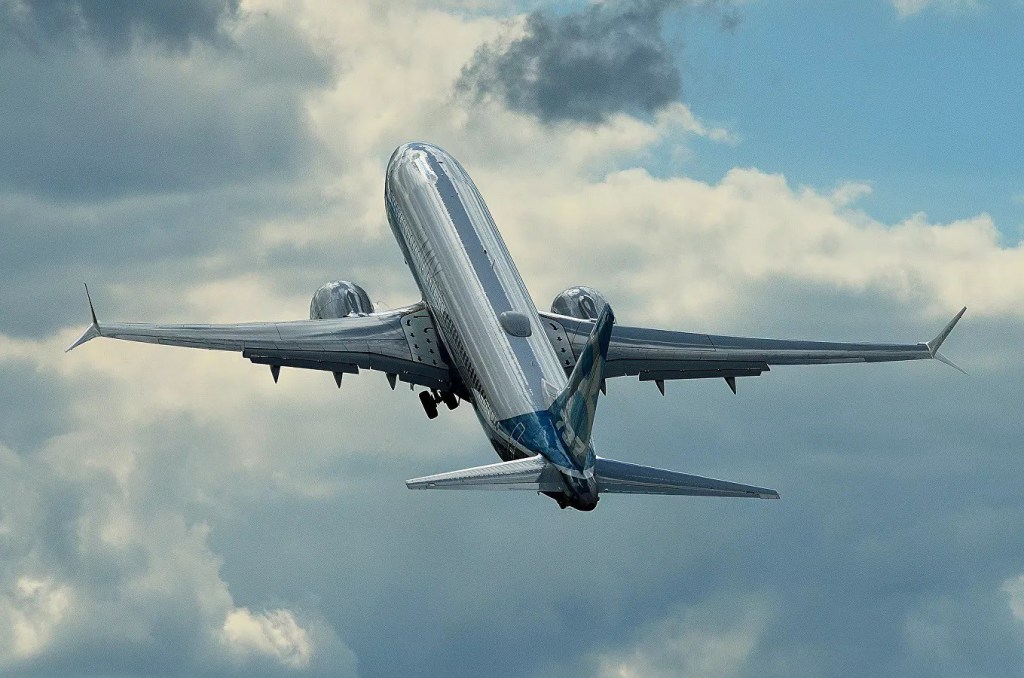
Boeing informa algunas aerolíneas problema eléctrico 737 MAX
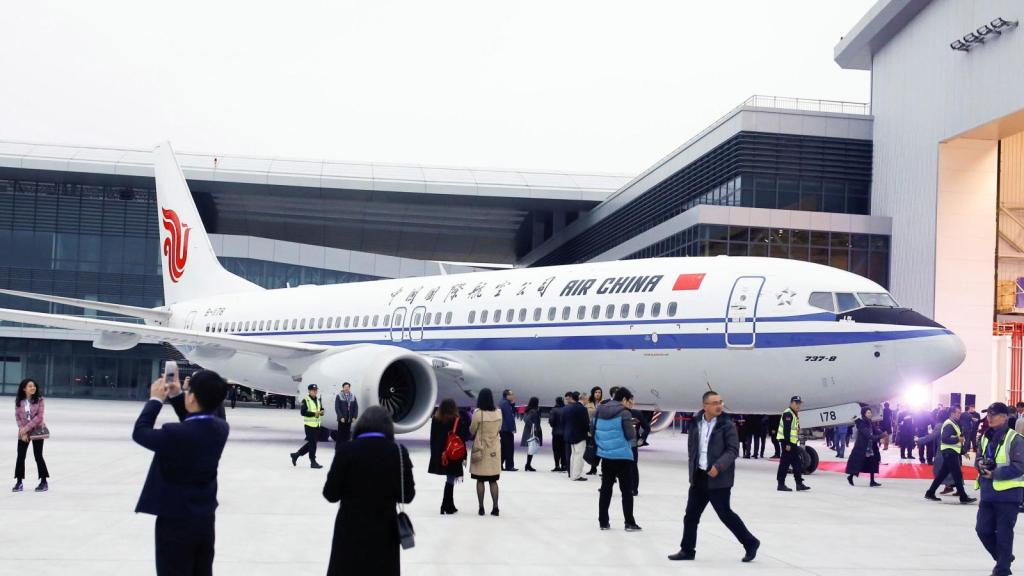
The Boeing Company dijo este Viernes 09/04 que había notificado a dieciséis clientes de un posible problema eléctrico con su línea Boeing 737 MAX y ha recomendado que dejaran temporalmente de volar algunos aviones. Las aerolíneas afectadas deben verificar «que existe una trayectoria terrestre suficiente para un componente del sistema de energía eléctrica en ciertos aviones MAX. Estamos trabajando estrechamente con la Administración Federal de Aviación de Estados Unidos en este tema de producción. También estamos informando a nuestros clientes de números de cola específicos afectados y proporcionaremos orientación sobre las acciones correctivas apropiadas», dijo Boeing en un comunicado. La declaración se produce pocos meses después de que las compañías reanudaran el vuelo del avión, que había estado en tierra durante casi dos años debido a errores de diseño, tras dos accidentes aéreos.
Alcance medidas
American Airlines, Southwest Airlines y United Airlines, los tres principales operadores del Boeing 737 MAX, dijeron que habían retirado más de 60 aviones del servicio. No está claro cuánto tiempo estarán marginados los aviones. Southwest Airlines, uno de los mayores clientes del avión, dijo que 30 de sus aviones 58 MAX se vieron afectados por la notificación y que estaba cambiando esos aviones por ahora. La aerolínea dijo que sólo tenía quince o menos aviones 737 MAX programados para volar cada día. «Southwest anticipa una interrupción mínima en nuestra operación, y apreciamos la comprensión de nuestros clientes y empleados, ya que la seguridad es siempre nuestra prioridad intransigente», dijo en un comunicado la aerolínea de presupuesto. United Airlines dijo que 16 de sus 30 aviones MAX se vieron afectados por el anuncio de Boeing y que no serían utilizados para transportar pasajeros. American Airlines dijo que el problema afectó a 17 de sus 737 MAX más recientemente entregados, todos los cuales han sido temporalmente marginados. American dijo que 24 aviones aeronaves de cuarta generación entregados antes de la puesta a tierra global no se vieron afectados. «Como compartimos cuando devolvimos el 737 MAX al servicio comercial, la seguridad de nuestros clientes y miembros del equipo está por encima de todo. Es con este estándar inequívoco que mantenemos y monitoreamos rigurosamente todos nuestros aviones, incluido el Boeing 737 MAX, para asegurarnos de que todos los aviones en el aire sean seguros», dijo American en un comunicado.
La Federal Aviation Adminitration (FAA) dijo en un comunicado que Boeing le notificó del asunto a última hora del Jueves 08/04 a las aerolíneas y que la agencia «se aseguraría de que el problema se aborde». Además de exigir que se actualizara el Software de Control de Vuelo del avión, la FAA en Noviembre 2020 también requirió que se redirija algún cableado eléctrico antes de que el Boeing 737 MAX pudiera volar de nuevo.
Boeing notifies revisions in 737 MAX
Boeing reports some airlines 737 MAX electrical problem
The Boeing Company said this Friday 04/09 that it had notified sixteen customers of a possible electrical problem with its Boeing 737 MAX line and has recommended that they temporarily stop flying some aircraft. Affected airlines must verify «that there is sufficient ground path for a component of the electrical power system on certain MAX aircraft. We are working closely with the US Federal Aviation Administration on this production issue. We are also informing our customers of specific queue numbers affected and we will provide guidance on appropriate corrective actions», Boeing said in a statement. The statement comes just months after the companies resumed flying the plane, which had been on the ground for nearly two years due to design errors, following two plane crashes.
Scope measures
American Airlines, Southwest Airlines and United Airlines, the top three operators of the Boeing 737 MAX, said they had withdrawn more than 60 aircraft from service. It’s unclear how long the planes will be sidelined. Southwest Airlines, one of the plane’s biggest customers, said 30 of its 58 MAX planes were affected by the notification and that it was switching those planes for now. The airline said it only had 15 or fewer 737 MAX planes scheduled to fly each day. «Southwest anticipates minimal disruption to our operation, and we appreciate the understanding of our customers and employees, as safety is always our uncompromising priority», the budget airline said in a statement. United Airlines said 16 of its 30 MAX planes were affected by the Boeing announcement and would not be used to carry passengers. American Airlines said the problem affected 17 of its most recently delivered 737 MAXs, all of which have been temporarily sidelined. American said 24 fourth-generation aircraft delivered prior to global grounding were unaffected. «As we shared when we returned the 737 MAX to commercial service, the safety of our customers and team members comes first. It is with this unambiguous standard that we rigorously maintain and monitor all of our aircraft, including the Boeing 737 MAX, to ensure make all planes in the air safe», American said in a statement.
The Federal Aviation Administration (FAA) said in a statement that Boeing notified the airlines of the matter late on Thursday 04/08 and that the agency would «make sure the problem is addressed», In addition to requiring the aircraft’s Flight Control Software to be updated, the FAA in November 2020 also required some electrical wiring to be rerouted before the Boeing 737 MAX could fly again.
NTSB vuelve a llamar a grabadoras de vídeo de cabina
La Junta Nacional de Seguridad en el Transporte (NTSB) de Estados Unidos ha lanzado una recomendación a las líneas aéreas para la instalación de cámaras de video en las cabinas de las aeronaves, sugiriendo nuevamente que los reguladores de aviación requieran las grabadoras como normativa para la seguridad en la aviación.
La agencia de investigación de seguridad de la NTSB hizo la recomendación en su lista 2021-2022 de mejoras requeridas en materia de seguridad en el transporte que han sido publicadas este 06/04, recomendando a la Administración Federal de Aviación (FAA) que exija que los aviones comerciales nuevos y en servicio estén equipados con un sistema de grabación de imágenes de cabina protegido contra fallos. Las regulaciones estadounidenses requieren que los aviones tengan datos de vuelo y grabadoras de voz de cabina, pero no dispositivos de captura de imágenes o video.
La NTSB lleva más de una década instando a la FAA a hacer obligatorias las grabadoras de imágenes. «Este tipo de video habría sido extremadamente útil para determinar las acciones de la tripulación de vuelo en accidentes recientes en Texas, Indonesia y Etiopía», dice la NTSB. Las recomendaciones de la NTSB también incluyen un llamamiento para que los reguladores exijan que los helicópteros propulsados por turbinas estén equipados con grabadoras de vuelo que recojan audio e imágenes. Además, la FAA debería exigir a todos los operadores de aeronaves de transporte de pasajeros de ingresos que cuenten con Sistemas de Gestión de Meguridad (SMS), que son estructuras de seguridad en toda la organización. La FAA ha exigido a las aerolíneas que tengan SMS desde 2015.
Oposición sindical
Los sindicatos de pilotos se han opuesto durante mucho tiempo a los llamamientos a las grabadoras de vídeo de cabina, entre ellas la Asociación de Pilotos de Líneas Aéreas, Internacional (ALPA). Aunque ALPA no proporcionó inmediatamente un comentario, el sindicato ha descrito previamente las grabadoras de video de la cabina como una invasión de la privacidad. ALPA ha dicho que las imágenes y el video proporcionan información imprecisa, y ha insistido en que los investigadores ya tienen herramientas necesarias para determinar las causas del accidente.
Postura FAA
La FAA ha expresado que «las grabadoras de imágenes de video en cabinas plantean preocupaciones significativas de privacidad y seguridad que hasta la fecha no se han abordado adecuadamente. Mientras que la FAA fomenta el uso voluntario de estos dispositivos no creemos que sea apropiado ordenar sistemas de grabación de imágenes hasta que se aborden más completamente los problemas de privacidad y seguridad».
Sin embargo, la FAA está involucrada a nivel internacional en el trabajo para definir otros tipos de grabadoras de imágenes. Estos dispositivos podrían capturar imágenes de pantallas de cabina o mostrar la posición y selección de botones, perillas e interruptores. «La FAA tiene una estrecha relación de trabajo con la NTSB, y las dos agencias comparten un objetivo común de promover la seguridad de la aviación y prevenir accidentes aéreos. La FAA se toma muy en serio las recomendaciones de la NTSB, y las agencias están de acuerdo en un curso de acción alrededor del 80% del tiempo», dice el regulador de la FAA.
NTSB in-cab video recommendation
NTSB recalls cockpit video recorders
The National Transportation Safety Board (NTSB) of the United States has issued a recommendation to airlines for the installation of video cameras in aircraft cabins, again suggesting that aviation regulators require recorders as regulations for the aviation security.
The NTSB’s safety research agency made the recommendation in its 2021-2022 list of required improvements in transportation safety that have been published this 04/06, recommending that the Federal Aviation Administration (FAA) require that new and in-service commercial aircraft are equipped with a fail-safe cockpit imaging system. US regulations require aircraft to have flight data and cockpit voice recorders, but not image or video capture devices.
The NTSB has been urging the FAA to make image recorders mandatory for more than a decade. «This type of video would have been extremely helpful in determining the actions of the flight crew in recent accidents in Texas, Indonesia and Ethiopia», says the NTSB. The NTSB recommendations also include a call for regulators to require that turbine-powered helicopters be equipped with flight recorders that collect audio and images. Additionally, the FAA should require all revenue passenger aircraft operators to have Safety Management Systems (SMS) in place, which are organization-wide safety structures. The FAA has required airlines to have SMS since 2015.
Unions opposition
Pilot unions have long opposed calls for cockpit video recorders, including the Airline Pilots Association, International (ALPA). Although ALPA did not immediately provide comment, the union has previously described the cockpit video recorders as an invasion of privacy. ALPA has said that the images and video provide inaccurate information, and has insisted that investigators already have the necessary tools to determine the causes of the accident.
FAA position
The FAA has stated that «cabin video recorders raise significant privacy and security concerns that to date have not been adequately addressed. While the FAA encourages the voluntary use of these devices we do not believe it is appropriate to order video systems. recording of images until privacy and security concerns are more fully addressed».
However, the FAA is involved internationally in work to define other types of image recorders. These devices could capture images of cockpit screens or show the position and selection of buttons, knobs and switches. «The FAA has a close working relationship with the NTSB, and the two agencies share a common goal of promoting aviation safety and preventing air accidents. The FAA takes the NTSB’s recommendations very seriously, and the agencies are agree on a course of action about 80% of the time», says the FAA regulator.
Inspectores y técnicos FTA inspeccionan aerolíneas
Una comisión de técnicos de la Administración Federal de Transporte (FTA) de Estados Unidos inspecciona desde principio de semana las líneas aéreas que operan vuelos regulares desde el país hacia diferentes ciudades de Estados Unidos, para garantizar que éstas cumplan a cabalidad con las medidas preventivas de seguridad recomendadas por esa agencia internacional. Los inspectores y técnicos de la agencia llegaron al país el pasado lunes y permanecerán hasta el fin de semana en labores de inspección no solo de las líneas aéreas estadounidenses sino también de los aeropuertos nacionales y del sistema de seguridad que opera en los aeropuertos dominicanos. También están revisando los niveles y estándares de seguridad establecidos en las terminales por el Cuerpo Especializado de Seguridad Aeroportuaria y de la Aviación Civil (CESAC).
En el caso de las líneas aéreas, los supervisores y técnicos del organismo internacional se reunirán con los representantes en los aeropuertos y de cada una de las aerolíneas de manera individual. Este Miércoles 07/04 la comisión trabajaba con el personal responsable de la seguridad y del control de pasajeros y de equipajes de la línea aérea United Airlines, que realiza desde el país vuelos directos Newark, New Jersey, Estados Unidos.
En su última visita de inspección a la República Dominicana realizada en Marzo de 2020, los técnicos hallaron deficiencias en los puntos de controles de inspección de responsabilidad de las líneas aéreas, por los que fueron penalizadas con multas por las alegadas fallas de éstas en los puntos de accesos de pasajeros que salen hacia territorio norteamericano por el Aeropuerto Internacional de Las Américas, José Francisco Peña Gómez. De acuerdo con los detalles, durante su permanencia en el país éstos conocerán más de cerca sobre su colaboración con las instituciones del gobierno que trabajan en la prevención del coronavirus en las terminales aeroportuarias.
Las reuniones de los técnicos de la FTA con los ejecutivos de las líneas aéreas, según se indicó, se hará énfasis en la necesidad de que el personal de éstas cumpla a cabalidad con las medidas recomendadas por la Organización Mundial de la Salud (OMS), como colaborar con los pasajeros sobre su procedencia y reportar cualquier síntoma gripal que los mismos pudieran presentar a su arribo a las terminales. Se destaca que el equipo de técnicos de la FTA está conformada por unas cuatro personas, algunos de ellos de origen latinoamericana. La Organización Mundial de la Salud OMS y el ministerio de Salud Pública, en coordinación con las líneas aéreas e inspectores de la Dirección General de Migración mantienen un estricto control protocolar de los viajeros que entran al país, de naciones donde se ha propagado el coronavirus (COVID-19), cada pasajero que viene al país en los vuelos donde se han comprobado la expansión del virus es sometido a un cuestionario de parte del personal de las líneas aéreas y del personal de migración para establecer cualquier situación de riesgo en su salud.
En el transcurso de esta semana el personal de la FTA se reunirá con los gerentes y el personal técnicos de las demás líneas aéreas, estadounidenses, así como funcionarios del CESAC.
FTA inspects US airlines
FTA inspectors and technicians inspect airlines
Since the beginning of the week, a commission of technicians from the Federal Transportation Administration (FTA) of the United States inspects the airlines that operate regular flights from the country to different cities in the United States, to ensure that they fully comply with the preventive measures of recommended by that international agency. The agency’s inspectors and technicians arrived in the country last Monday and will remain until the weekend to inspect not only US airlines but also national airports and the security system that operates in Dominican airports. They are also reviewing the security levels and standards established in the terminals by the Specialized Corps for Airport Security and Civil Aviation (CESAC).
In the case of airlines, the supervisors and technicians of the international organization will meet with the representatives at the airports and from each of the airlines individually. This Wednesday 04/07 the committee worked with the personnel responsible for the security and control of passengers and baggage of the United Airlines airline, which carries out direct flights from Newark, New Jersey, United States from the country.
In their last inspection visit to the Dominican Republic in March 2020, the technicians found deficiencies in the inspection control points of responsibility of the airlines, for which they were penalized with fines for their alleged failures in the points of passenger accesses leaving for North American territory through the International Airport of Las Américas, José Francisco Peña Gómez. According to the details, during their stay in the country they will learn more about their collaboration with government institutions that work to prevent coronavirus at airport terminals.
The meetings of FTA technicians with airline executives, as indicated, will emphasize the need for their personnel to fully comply with the measures recommended by the World Health Organization (WHO), how to collaborate with passengers about their origin and report any flu symptoms that they may present upon arrival at the terminals. It should be noted that the FTA team of technicians is made up of about four people, some of them of Latin American origin. The World Health Organization WHO and the Ministry of Public Health, in coordination with the airlines and inspectors of the General Directorate of Migration maintain a strict protocol control of travelers entering the country, from nations where the coronavirus has spread (COVID-19), each passenger who comes to the country on flights where the spread of the virus has been verified is subjected to a questionnaire by airline personnel and migration personnel to establish any risk situation for their health.
During this week, the FTA staff will meet with the managers and technical personnel of the other US airlines, as well as CESAC officials.
AW | 2021 04 06 14:57 | AVIATION SAFETY / AVIATION ORGANISMS / INDUSTRY
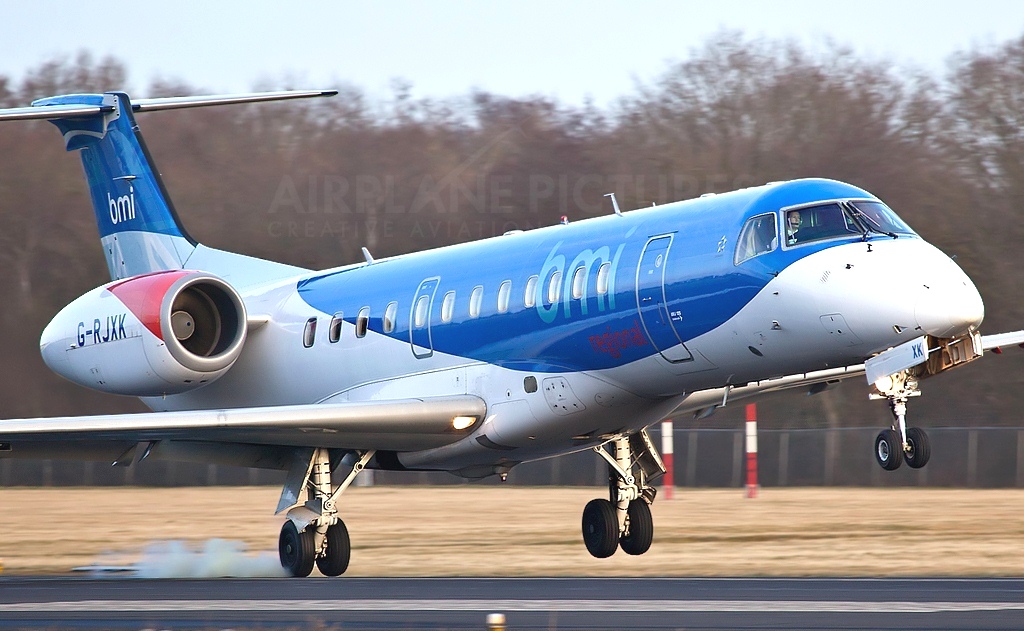
FAA emite AD sobre inspecciones de engranajes
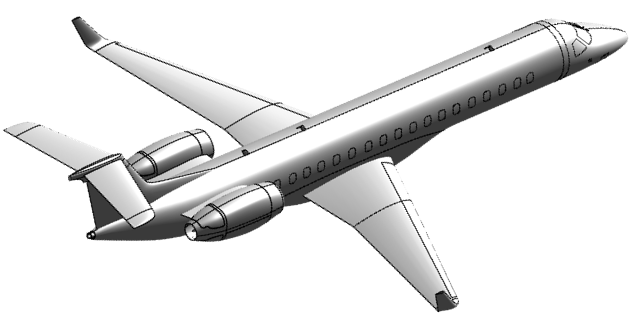
La Administración Federal de Aviación de los Estados Unidos (FAA) ha presentado una nueva Directiva de Aeronavegabilidad (AD) No. FAA-2021-0253 este 05/04 que afectan a los aviones regionales Embraer ERJ135 y ERJ145. El nuevo AD exige inspecciones visuales generales adicionales del tren de aterrizaje principal. Este anuncio se produce después de que Brasil emitiera una directiva para los modelos de aeronaves regionales. El nuevo AD requiere que las aerolíneas realicen una inspección visual general del tren de aterrizaje principal derecho e izquierdo (MLG). Si se encuentra una condición adversa, las compañías aéreas deben rectificar ese problema antes de volver a poner la aeronave en servicio comercial de pasajeros.
La Agencia Nacional de Aviación Civil (ANAC) de Brasil emitió un AD en Febrero 2021 sobre los modelos de aviones Embraer E135/145. El Brasil emitió el AD después de un informe que implicaba la desconexión de un puntal del brazo lateral del MLG derecho. Otra investigación encontró que el rodamiento inferior del puntal del brazo lateral se instaló invertido en la aeronave. Si bien una instancia puede no exigir un AD específico, otras inspecciones en otras aeronaves encontraron casos adicionales de instalaciones invertidas. Se descubrieron otras instalaciones inadecuadas, como sellador dañado o faltante o accesorios de grasa instalados incorrectamente. A la luz de esto, la FAA se unió a Brasil en la emisión de un AD que abordaba la desconexión del puntal del brazo lateral MLG. La FAA afirma que una desconexión podría evitar que el MLG quedara bloqueado en la posición descendente, lo que conduciría a una pérdida de control del avión durante el despegue y el aterrizaje. El AD emitido por la ANAC Brasil aplica todas las variantes Embraer ERJ135 y ERJ145 en todo el mundo, esto incluye aviones como el ERJ-135LR, ERJ145ER, ERJ145LR y ERJ145XR, entre otros.
Revisiones en EEUU
En Estados Unidos, la FAA prevé actualmente que el AD afectará a 304 aviones del registro estadounidense. El AD cubre aviones jet regionales ERJ135 y ERJ145. Estos son algunos de los aviones regionales que vuelan comercialmente en los Estados Unidos y cumplen con los roles necesarios. Según cálculos desarrollados por la FAA, se estima que la inspección en sí toma una hora de trabajo a un costo por hora de trabajo de US$ 85 para una aerolínea, se espera que el costo total de 304 aviones en los Estados Unidos sea de US$ 25.840. Si se encuentra una condición adversa que requeriría una reparación, que es un número indeterminado de aviones, la FAA anticipa que el costo estimado de las piezas en sí está por encima de US$ 14.500 por avión y requeriría mano de obra por valor de seis horas de trabajo. A US$ 85 por hora por trabajo, esto lleva el costo total de la pieza y la mano de obra a poco más de US$ 15.000 por avión.
El AD emitido por la FAA entra en vigor el 20 de Abril de 2021, por lo que las aerolíneas estadounidenses tienen algún tiempo para programar inspecciones adicionales de aeronaves. Con un poco de ventaja, las aerolíneas pueden empezar a mirar sus horarios y encontrar tiempo de inactividad para comenzar a realizar inspecciones de la aeronave para asegurarse de que no contienen condiciones adversas. Actualmente, el mercado de aeronaves E135/E145 se encuentra ampliamente desarrollada en el mercado de tercer nivel, que sirven en aerolíneas como aviones alimentadores regionales que vuelan a destinos más pequeños desde los centros de línea principal. El operador ERJ145 más grande del mundo es CommutAir que vuela en nombre de United Airlines bajo el estandarte de United Express. Otros operadores incluyen Envoy Air y Piedmont Airlines, que vuelan ERJ145 en nombre de American Airlines bajo el la firma de American Eagle.
FAA issues AD Embraer ERJ135 / ERJ145
FAA issues AD on gear inspections
The United States Federal Aviation Administration (FAA) has introduced a new Airworthiness Directive (AD) No. FAA-2021-0253 in 05/04 affecting regional Embraer ERJ135 and ERJ145 aircraft. The new AD requires additional general visual inspections of the main landing gear. This announcement comes after Brazil issued a directive for regional aircraft models. The new AD requires airlines to perform a general visual inspection of the left and right main landing gear (MLG). If an adverse condition is found, airlines must rectify that problem before returning the aircraft to commercial passenger service.
The National Civil Aviation Agency (ANAC) of Brazil issued an AD in February 2021 on the Embraer E135/145 aircraft models. Brazil issued the AD following a report involving the disconnection of a strut from the right MLG side arm. Another investigation found that the lower bearing of the lateral arm strut was installed inverted on the aircraft. While one instance may not require a specific AD, other inspections on other aircraft found additional instances of inverted installations. Other improper installations were discovered, such as damaged or missing sealant or improperly installed grease fittings. In light of this, the FAA joined Brazil in issuing an AD addressing the disconnection of the MLG lateral arm strut. The FAA claims that a disconnect could prevent the MLG from being locked in the down position, leading to a loss of control of the aircraft during takeoff and landing. The AD issued by ANAC Brazil applies all Embraer ERJ135 and ERJ145 variants worldwide, this includes aircraft such as ERJ-135LR, ERJ145ER, ERJ145LR and ERJ145XR, among others.
Reviews in the USA
In the United States, the FAA currently anticipates that the AD will affect 304 aircraft on the US registry. The AD covers ERJ135 and ERJ145 regional jet aircraft. These are some of the regional jets that fly commercially in the United States and fill the necessary roles. According to calculations developed by the FAA, it is estimated that the inspection itself takes one hour of work at a cost per hour of work of US$ 85 for an airline, the total cost of 304 aircraft in the United States is expected to be US$ 25,840. If an adverse condition is found that would require repair, which is an undetermined number of aircraft, the FAA anticipates that the estimated cost of the parts themselves is above US$ 14,500 per aircraft and would require six hours’ worth of labor. of work. At US$ 85 per hour per job, this brings total part and labor cost to just over US$ 15,000 per plane.
The AD issued by the FAA goes into effect on April 20, 2021, so US airlines have some time to schedule additional inspections of aircraft. With a little head start, airlines can start looking at their schedules and find downtime to begin conducting inspections of the aircraft to make sure they do not contain adverse conditions. Currently, the market for E135/E145 aircraft is widely developed in the third tier market, serving airlines as regional feeder aircraft flying to smaller destinations from mainline hubs. The world’s largest ERJ145 operator is CommutAir which flies on behalf of United Airlines under the United Express banner. Other carriers include Envoy Air and Piedmont Airlines, which fly ERJ145 on behalf of American Airlines under the American Eagle signature.
FEDERAL AVIATION ADMINISTRATION
14 CFR Part 39, Docket No. FAA-2021-0253; Project Identifier MCAI-2021-00220-T; Amendment 39-21491; AD 2021-07-14 RIN 2120-AA64
Las autoridades de Irán imputaron esta semana a diez funcionarios por el derribo del avión ucraniano Boeing 737-800 del vuelo PS752 de la aerolínea Ukraine International Airlines en Enero de 2020 que causó la muerte de sus 176 ocupantes. Según anunció este Martes 06/04 el fiscal militar saliente de Teherán, Gholamabbas Torki, ”se llevó a cabo una investigación seria y precisa y se emitió la imputación para diez culpables y las conclusiones necesarias serán adoptadas en los tribunales”. El fiscal militar de Teherán no ha formulado más detalles ni identificó a los citados funcionarios en sus declaraciones, efectuadas durante la ceremonia de traspaso del cargo a Naser Seraj.
El Boeing 737-800 de Ukranian International Airlines (UIA) fue derribado con dos misiles poco después de despegar del Aeropuerto Internacional Teherán en la mañana del 8 de Enero de 2020 con destino a Kiev, Ucrania. La tragedia creó mucha controversia en todo el mundo, debido a que Irán negó durante tres días que hubiera disparado contra el avión, aunque Ucrania había expresado sus sospechas de que el derribo no fue accidental.
Reporte Final CAO Irán
El 17 de Marzo de 2021, la Organización de la Aviación Civil de Irán (CAO) ha publicado su informe en el cual concluyó que “el avión fue identificado como un objetivo hostil debido al error del operador del sistema defensivo aéreo situado en los alrededores de Teherán”. El informe identifica cuatro fallos clave de los militares iraníes, sin especificar una rama o unidad en concreto, incluyendo un error de 105 grados en la alineación de un sistema de defensa de corto alcance, una “comunicación defectuosa” entre los militares y civiles del espacio aéreo, la identificación errónea del avión y el incumplimiento de los procedimientos de comando de rutina requeridos para el lanzamiento de misiles. El documento detalla además que un operador había identificado el avión como un objetivo y disparó contra la aeronave, ya que las especificaciones del avión de que se trataba de un avión civil no llegaron al centro de mando. Por el momento, los supuestos implicados no han sido identificados.
Las Fuerzas Armadas de Irán se encontraban en máxima alerta ese día debido a que habían efectuado un ataque contra una base militar en Irak con presencia de tropas estadounidenses, en venganza por la operación contra el poderoso general iraní Qasem Soleimaní, y esperaban una acción de represalia de Washington. El incidente provocó un aumento de las tensiones entre Teherán y los países de origen de los pasajeros del avión Ucrania, Canadá, Afganistán, Reino Unido y Suecia, ya que inicialmente las autoridades iraníes se negaron a admitir que había derribado la aeronave.
El Gobierno iraní ha aprobado una indemnización de US$ 150.000 por cada una de las 176 víctimas: 82 iraníes (82), 63 canadienses (63), once ucranianos (11) dos pasajeros y nueve tripulantes, suecos (10), afganos (4), alemanes (3) y británicos (3). Al cumplirse un año del siniestro, el Presidente de Ucrania, Vladímir Zelenski, pidió justicia para las víctimas y sus familias y subrayó que es imposible que Irán no supiera que el aparato que cubría la ruta Teherán-Kiev era un avión de pasajeros.
Causa del accidente PS752
El 17 de Marzo de 2021, la CAO de Irán publicó su Informe Final y sus datos adjuntos. El lanzamiento de dos misiles tierra-aire de la defensa aérea en el vuelo PS752, aeronave Boeing 737-800 registro UR-PSR, la detonación de la primera ojiva de misiles en las proximidades del avión causó daños en los sistemas de aeronaves, y la intensificación de los daños llevó a la aeronave a estrellarse en tierra y explotar instantáneamente. Otros factores que contribuyen las medidas atenuantes y las capas de defensa en la gestión de riesgos resultaron ser ineficaces debido a la aparición de un error inesperado en las identificaciones de amenazas, y finalmente no protegió la seguridad de vuelo contra las amenazas causadas por el estado de alerta de las fuerzas de defensa. Además de los hechos relatados en el Informe Preliminar, la CAO afirma: Cada Estado tiene soberanía completa y exclusiva sobre el espacio aéreo sobre su Territorio 5, y ninguna aeronave puede ser operada sobre un espacio aéreo excepto con el permiso del Estado que gestiona ese espacio aéreo.
Iran accuses officers of downing flight PS752
Sentence handed down responsible Ukraine Airlines flight accident
The Iranian authorities this week indicted ten officials for the downing of the Ukrainian plane Boeing 737-800 of the flight PS752 of the airline Ukraine International Airlines in January 2020 that caused the death of its 176 occupants. As announced this Tuesday 04/06 by the outgoing military prosecutor from Tehran, Gholamabbas Torki, «a serious and precise investigation was carried out and the indictment was issued for ten culprits and the necessary conclusions will be adopted in court». The Tehran military prosecutor has not provided further details or identified the aforementioned officials in his statements, made during the transfer ceremony for Naser Seraj.
The Ukranian International Airlines (UIA) Boeing 737-800 was shot down with two missiles shortly after taking off from Tehran International Airport on the morning of January 8, 2020 bound for Kiev, Ukraine. The tragedy created much controversy around the world, with Iran denying for three days that it had fired at the plane, although Ukraine had expressed suspicions that the shooting down was not accidental.
Final Report CAO Iran
On March 17, 2021, the Civil Aviation Organization of Iran (CAO) published its report in which it concluded that “the aircraft was identified as a hostile target due to the error of the operator of the air defense system located in the vicinity of Tehran”. The report identifies four key failures of the Iranian military, without specifying a particular branch or unit, including a 105 degree error in the alignment of a short-range defense system, a «faulty communication» between the military and civilians in space. aircraft, misidentification of the aircraft and failure to comply with routine command procedures required for launching missiles. The document also details that an operator had identified the aircraft as a target and fired at the aircraft, since the specifications of the aircraft that it was a civilian aircraft did not reach the command center. At the moment, the supposed implicated have not been identified.
The Armed Forces of Iran were on high alert that day because they had carried out an attack on a military base in Iraq with the presence of US troops, in revenge for the operation against the powerful Iranian general Qasem Soleimaní, and expected retaliatory action. from Washington. The incident led to increased tensions between Tehran and the plane’s passengers’ home countries Ukraine, Canada, Afghanistan, the United Kingdom and Sweden, as Iranian authorities initially refused to admit that they had shot down the aircraft.
The Iranian government has approved compensation of US $ 150,000 for each of the 176 victims: 82 Iranians (82), 63 Canadians (63), eleven Ukrainians (11), two passengers and nine crew members, Swedes (10), Afghans (4 ), Germans (3) and British (3). On the first year of the incident, the President of Ukraine, Vladimir Zelensky, called for justice for the victims and their families and stressed that it is impossible for Iran not to know that the device that covered the Tehran-Kiev route was a passenger plane.
Cause of accident PS752
On March 17, 2021, the CAO of Iran published its Final Report and its attachments. The launch of two air defense surface-to-air missiles on flight PS752, aircraft Boeing 737-800 registration UR-PSR, the detonation of the first missile warhead in the vicinity of the aircraft caused damage to aircraft systems, and the Intensifying damage led to the aircraft crashing to the ground and exploding instantly. Other contributing factors mitigating measures and defense layers in risk management were found to be ineffective due to the appearance of an unexpected error in threat identifications, and ultimately did not protect flight safety against threats caused by the state of defense forces alert. In addition to the facts reported in the Preliminary Report, the CAO affirms: Each State has complete and exclusive sovereignty over the airspace over its Territory 5, and no aircraft may be operated over an airspace except with the permission of the State that manages that space aerial.
El 2 de Abril de 2021, la Administración Federal de Aviación (FAA) de los Estados Unidos ha producido una nueva Directiva de Aeronavegabilidad (AD) con respecto a la unidad de procesador de cantidad de combustible del Boeing 737 MAX. Este AD no sería un requisito general para toda la serie MAX, sólo afectará a los modelos MAX 8 y MAX 9. La FAA ha detallado en un comunicado: «Esta propuesta de AD fue motivada por un informe de que, durante el reabastecimiento de combustible del tanque principal adecuado, si hay un fallo del sistema de cierre automático, el panel de reabastecimiento de combustible no proporciona la indicación necesaria de que el cierre automático ha fallado. Este AD propuesto requeriría instalar una nueva Unidad de Procesador de Cantidad de Combustible (FQPU) y hacer una comprobación de Software FQPU».
Por ahora, esta propuesta de AD está al comienzo de un período de comentarios de 45 días que termina el 17 de Mayo de 2021. Durante este tiempo, la FAA está abierta a recibir «datos relevantes escritos, opiniones o argumentos sobre esta propuesta».
FAA new directive for 737 MAX
FAA Launches AD for Boeing 737 MAX FQPU Software
On April 2, 2021, the United States Federal Aviation Administration (FAA) has produced a new Airworthiness Directive (AD) regarding the fuel quantity processor unit of the Boeing 737 MAX. This AD would not be a general requirement for the entire MAX series, it will only affect the MAX 8 and MAX 9 models. The FAA has detailed in a statement: «This AD proposal was motivated by a report that, during refueling from the proper main tank, if there is a failure of the automatic shut-off system, the refueling panel does not provide the necessary indication that the automatic shut-off has failed. This proposed AD would require installing a new Fuel Quantity Processor Unit (FQPU) and do a Software FQPU check».
For now, this AD proposal is at the beginning of a 45-day comment period ending May 17, 2021. During this time, the FAA is open to receiving «relevant written data, opinions or arguments on this proposal».
AW | 2021 04 01 15:55 | AVIATION SAFETY / INDUSTRY / GOVERNMENT
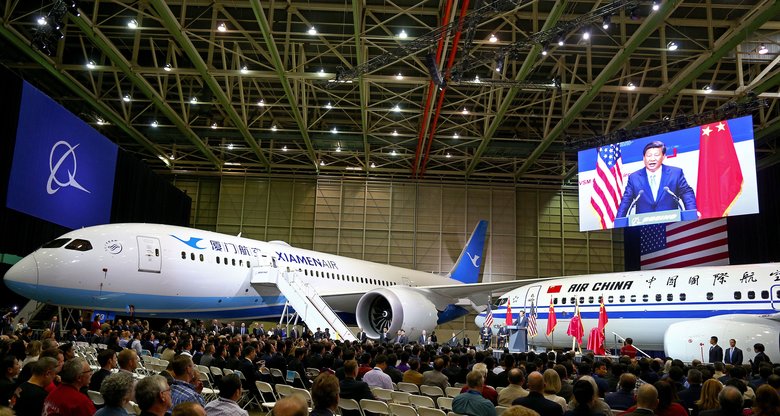
Boeing insta a EEUU separar comercio y derechos humanos de China
The Boeing Company ha instado este Miércoles 31/03 al Gobierno de Estados Unidos a mantener los derechos humanos y otras disputas separadas de las relaciones comerciales con Pekín, y advirtió que su rival europeo Airbus ganaría si el fabricante de aviones estadounidense fuera bloqueado de China. El país de Oriente suele hacer compras en bloque para aviones importados, a menudo coincidiendo con visitas diplomáticas estadounidenses o europeas.
Boeing y Airbus venden cada uno alrededor de una cuarta parte de sus aviones a China, que ha superado a Estados Unidos como el mercado de viajes domésticos más grande del mundo. El Director Ejecutivo de la compañía americana, David (Dave) Calhoun, dijo en un foro de negocios en línea que creía que una disputa importante de subsidios a los aviones con Europa podría resolverse después de 16 años de disputas en la Organización Mundial del Comercio (OMC), pero lo contrastó con las perspectivas sobre China. «Creo que políticamente [China] es más difícil para esta administración y fue para la administración pasada. Pero todavía tenemos que comerciar con nuestro socio más grande del mundo: China. Espero que podamos separar la propiedad intelectual, los derechos humanos y otras cosas del comercio y seguir fomentando un entorno de libre comercio entre estos dos juggernauts económicos. […] No podemos darnos el lujo de quedar excluidos de ese mercado. Nuestro competidor saltará justo en ese mercado», dijo el CEO de Boeing en la Cumbre de Aviación de la Cámara de Comercio de Estados Unidos.
Boeing comenzó a enfrentar preguntas sobre su participación en el mercado chino mientras Estados Unidos y China libraban una guerra comercial de dieciocho meses bajo la Administración de Donald Trump, aunque las compras de aviones de China se han ralentizado en todos los ámbitos en los últimos años. Pekín también enfrenta cada vez más tensiones con Occidente por su trato a las minorías étnicas y religiosas en Xinjiang, y ha advertido a las empresas extranjeras que no entren en política. China rechaza las acusaciones estadounidenses de que ha cometido genocidio contra uigures y otros musulmanes en la remota región occidental, donde los activistas dicen que más de un millón de personas están retenidas en campos de internamiento. El Presidente Joe Biden advirtió el mes pasado que China enfrentaría repercusiones por los abusos contra los derechos humanos y dijo que Estados Unidos reafirmaría su papel global al hablar sobre esos temas.
Boeing 737 MAX
Las preocupaciones más apremiantes de Boeing en China representa el destino de su avión de pasajeros insignia el 737 MAX, que estuvo en tierra en todo el mundo durante veinte meses después de correcciones en el Sistema de Control de Vuelo MCAS. Los reguladores estadounidenses aprobaron el avión para volar de nuevo en Noviembre 2020, seguido por Europa y los principales mercados del mundo; pero por parte de China, cuyo regulador sigue expresando importantes preocupaciones de seguridad, todavía queda un largo vuelo por recorrer. China ha prometido un enfoque paso a paso para aprobar el avión, pero fuentes de la industria occidental dicen que crece la preocupación de que el proceso técnico podría verse empañado por el creciente enfrentamiento diplomático entre Pekín y Washington.
David Calhoun dijo que Boeing había llevado a cabo una revisión «de arriba a abajo y puso el lugar patas arriba» mientras aprende lecciones internas de los dos accidentes aéreos en el que murieron un total de 346 personas. Los comentarios parecían diseñados para disipar las preocupaciones de los legisladores y líderes de la industria, incluido el Jefe de la aerolínea Emirates Airline de Dubái, quien dijo en Enero 2021 que Boeing debería reconocer la «culpabilidad y responsabilidad de arriba hacia abajo» sobre el MAX. Sin embargo, el Presidente de la aerolínea, Tim Clark, dijo que confiaba en que el avión rediseñado era seguro.
Boeing instó la semana pasada a la desestimación de una demanda de inversionistas que alega que el consejo de Boeing, donde David Calhoun sirvió durante una década antes de convertirse en CEO en 2020, no monitoreó la seguridad. Negó negligencia y dijo que la queja ignoraba los controles corporativos. Boeing ha dicho por separado a los empleados que las métricas de seguridad y calidad se añadirán a un plan general de compensación de incentivos.
Boeing advocates trade in China
Boeing urges US to separate trade and human rights from China
The Boeing Company on Wednesday 03/31 urged the United States Government to keep human rights and other disputes separate from commercial relations with Beijing, and warned that its European rival Airbus would win if the US aircraft manufacturer were blocked from China. The eastern country tends to make bulk purchases for imported aircraft, often coinciding with American or European diplomatic visits.
Boeing and Airbus each sell about a quarter of their jets to China, which has overtaken the United States as the world’s largest domestic travel market. The CEO of the American company, David (Dave) Calhoun, said in an online business forum that he believed a major aircraft subsidy dispute with Europe could be resolved after 16 years of disputes at the World Trade Organization (WTO), but he contrasted it with the prospects for China. «I think politically [China] is more difficult for this administration and it was for the past administration. But we still have to trade with our biggest partner in the world: China. I hope we can separate intellectual property, human rights and other things from the world. trade and continue to foster a free trade environment between these two economic juggernauts. […] We cannot afford to be excluded from that market. Our competitor will jump right into that market», said the CEO of Boeing at the Summit of United States Chamber of Commerce Aviation.
Boeing began to face questions about its share of the Chinese market as the United States and China fought an eighteen-month trade war under the Donald Trump Administration, although China’s jet purchases have slowed across the board in recent years. Beijing is also facing increasing tensions with the West over its treatment of ethnic and religious minorities in Xinjiang, and has warned foreign companies not to enter politics. China rejects US allegations that it has committed genocide against Uighurs and other Muslims in the remote western region, where activists say more than a million people are being held in internment camps. President Joe Biden warned last month that China would face repercussions for human rights abuses and said the United States would reaffirm its global role by speaking out on those issues.
Boeing 737 MAX
Boeing’s most pressing concerns in China represent the fate of its flagship airliner the 737 MAX, which was grounded worldwide for twenty months after corrections to the MCAS Flight Control System. US regulators approved the plane to fly again in November 2020, followed by Europe and the main world markets; But on the part of China, whose regulator continues to express significant security concerns, there is still a long flight to go. China has promised a step-by-step approach to approving the plane, but Western industry sources say concerns are growing that the technical process could be clouded by the escalating diplomatic standoff between Beijing and Washington.
David Calhoun said Boeing had conducted a «top-down and turned the place upside down» review while learning inside lessons from the two plane crashes that killed a total of 346 people. The comments appeared designed to allay the concerns of lawmakers and industry leaders, including the Head of Dubai’s Emirates Airline, who said in January 2021 that Boeing should acknowledge «top-down guilt and responsibility» over the MAX. However, the airline’s President, Tim Clark, said he was confident the redesigned plane was safe.
Boeing last week urged the dismissal of an investor lawsuit alleging that the board of Boeing, where David Calhoun served for a decade before becoming CEO in 2020, failed to monitor safety. He denied negligence and said the complaint ignored corporate controls. Boeing has separately told employees that the safety and quality metrics will be added to an overall incentive compensation plan.
AW | 2021 03 30 10:08 | AVIATION SAFETY / GOVERNMENT
Boeing pide a Tribunal EEUU desechar demanda a Junta Accionistas
La demanda alega que la Junta de Accionistas de The Boeing Company no ha desarrollado ninguna herramienta para evaluar y monitorear la seguridad de los aviones hasta después de que dos accidentes aéreos que involucraron aviones Boeing 737-8 MAX en Indonesia y Etiopía sesgaron la vida de 346 personas en un lapso de cinco meses. Desde 2019, el Consejo de Boeing ha implementado cambios para mejorar la supervisión de la ingeniería y las operaciones industriales de la compañía a medida que el fabricante de aviones navegaba por las consecuencias durante los casi dos años de puesta en tierra de su 737 MAX más vendido después de dos accidentes aéreos.
En una queja enmendada desprecintada en Febrero 2021, el Contralor del Estado de Nueva York, Thomas DiNapoli, quien dirige el fondo estatal de pensiones, y otros inversionistas argumentaron que la Junta de Boeing había violado sus obligaciones fiduciarias y actuó con negligencia grave al no «monitorear la seguridad de los aviones 737 MAX de Boeing».
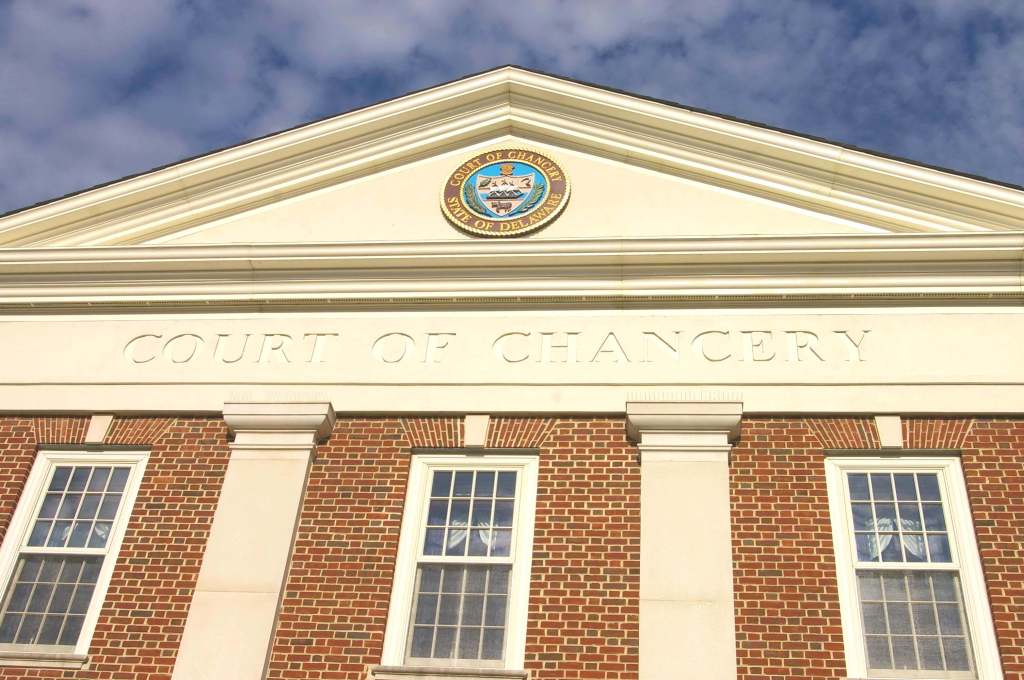
Boeing ha solicitado al Tribunal de la Cancillería Delaware, Estados Unidos, que desechara una demanda a accionistas sobre la seguridad de su 737 MAX tras accidentes fatales, diciendo que la Junta participó en una supervisión «robusta y bien establecida» del desarrollo del avión. La demanda también alega que la Junta no desarrolló ninguna herramienta para evaluar y monitorear la seguridad de los aviones hasta después de que dos accidentes de aviones 737 MAX en Indonesia y Etiopía. La Junta no recibió una reunión informativa sobre los fundamentos de la seguridad de los aviones hasta finales de Abril de 2019, varias semanas después de la puesta en tierra mundial del avión. En su moción para desestimar la queja, hecha pública el Lunes 29/03, Boeing dijo que los demandantes ignoran «los sistemas robustos que habían estado en vigor durante mucho tiempo» para mantener a la junta informada sobre problemas de riesgo significativos. «Los directores de Boeing mantuvieron este alto escrutinio, además, durante un período en el que los aviones comerciales, y los de Boeing en particular, lograron niveles cada vez más altos de seguridad, una tendencia que no puede cuadrarse con la narrativa simplista de los demandantes sobre una ‘cultura de ingeniería de seguridad’ que había sido ‘desmantelada intencionalmente'», expresó la compañía americana aeroespacial. Boeing tuvo sesiones informativas de gestión en la Junta y un grupo interno de auditoría corporativa para evaluar los riesgos, así como un mecanismo para recibir informes sobre la ética de los empleados y las quejas de cumplimiento, dijo The Boeing Company.
Desde 2019, el Consejo de Boeing ha implementado cambios para mejorar la supervisión de las operaciones de ingeniería e industriales de Boeing a medida que la compañía navegaba por las consecuencias durante los casi dos años de puesta en tierra del 737 MAX más vendido después de los accidentes.
Correos electrónicos y memorandos publicados bajo orden judicial el 4 de Marzo de 2021 muestran a ejecutivos y miembros de la Junta discutiendo la lucha contra la cobertura negativa de la prensa, y un miembro veterano de la Junta sugiriendo que la Junta eleve su atención a la seguridad y la calidad en sus reuniones. «Creo que deberíamos dedicar toda la reunión de la Junta (aparte de las reuniones e informes requeridos del Comité) a una revisión de la calidad dentro de Boeing», escribió el veterano miembro de la Junta Art Collins a su compañero de Consejo Dave Calhoun, ahora Director Ejecutivo de Boeing, días después del segundo accidente en 2019.
Boeing reconoció más tarde, como parte de un acuerdo de Procesamiento Diferido con el Departamento de Justicia de Estados Unidos en Enero de 2021 la compañía ocultó detalles sobre un sistema crucial de control de vuelo en el centro de los dos accidentes a la Administración Federal de Aviación (FAA) de Estados Unidos. Los empleados de Boeing también trabajaron para que se omitiera referencias al sistema, conocido como MCAS, de los manuales de operación de la tripulación de vuelo como parte del objetivo de la compañía de evitar requisitos de capacitación de pilotos más costosos.
Boeing requests rejection of lawsuit
Boeing asks US Court to dismiss lawsuit against Shareholders
The lawsuit alleges that The Boeing Company‘s Board of Shareholders did not develop any tools to assess and monitor aircraft safety until after two plane crashes involving Boeing 737-8 MAX aircraft in Indonesia and Ethiopia skewed the lives of 346. people within five months. Since 2019, the Boeing Board has implemented changes to improve oversight of the company’s engineering and industrial operations as the aircraft manufacturer navigated the fallout during the nearly two-year grounding of its best-selling 737 MAX. after two plane crashes.
In an unsealed amended complaint in February 2021, New York State Comptroller Thomas DiNapoli, who heads the state pension fund, and other investors argued that the Boeing Board had violated its fiduciary obligations and was grossly negligent in failing to «monitor the safety of Boeing 737 MAX aircraft».
Boeing has petitioned the US Court of Chancery Delaware to dismiss a shareholder lawsuit over the safety of its 737 MAX following fatal crashes, saying the Board participated in «robust and well-established» oversight of the aircraft’s development. The lawsuit also alleges that the Board did not develop any tools to assess and monitor aircraft safety until after two 737 MAX aircraft crashes in Indonesia and Ethiopia. The Board did not receive a briefing on the fundamentals of aircraft safety until the end of April 2019, several weeks after the global grounding of the aircraft. In its motion to dismiss the complaint, released Monday 03/29, Boeing said the plaintiffs are ignoring «robust systems that have been in place for a long time» to keep the board informed of significant risk issues. «Boeing directors maintained this high scrutiny, furthermore, during a period when commercial aircraft, and Boeing’s in particular, achieved ever-higher levels of safety, a trend that cannot be squared with the simplistic narrative of aircraft. plaintiffs about a ‘safety engineering culture’ that had been ‘intentionally dismantled'», said the American aerospace company. Boeing held management briefings at the Board and an internal corporate audit group to assess risks, as well as a mechanism for receiving reports on employee ethics and compliance complaints, The Boeing Company said.
Since 2019, the Boeing Board has implemented changes to improve oversight of Boeing’s engineering and industrial operations as the company navigated the aftermath during nearly two years of grounding the best-selling 737 MAX after the accidents.
Emails and memos published under court order on March 4, 2021 show executives and Board members discussing fighting negative press coverage, and a veteran Board member suggesting that the Board raise its focus on safety. and the quality of your meetings. «I think we should dedicate the entire Board meeting (aside from the required committee meetings and reports) to a quality review within Boeing», wrote veteran Board member Art Collins to fellow Board member Dave Calhoun, now CEO of Boeing, days after the second accident in 2019.
Boeing later acknowledged, as part of a Deferred Processing agreement with the United States Department of Justice in January 2021, the company withheld details about a crucial flight control system at the center of the two accidents from the Federal Aviation Administration. (FAA) of the United States. Boeing employees also worked to have references to the system, known as MCAS, be omitted from flight crew operating manuals as part of the company’s goal to avoid more costly pilot training requirements.
GOL certificada mayor performance ops pista de Congonhas
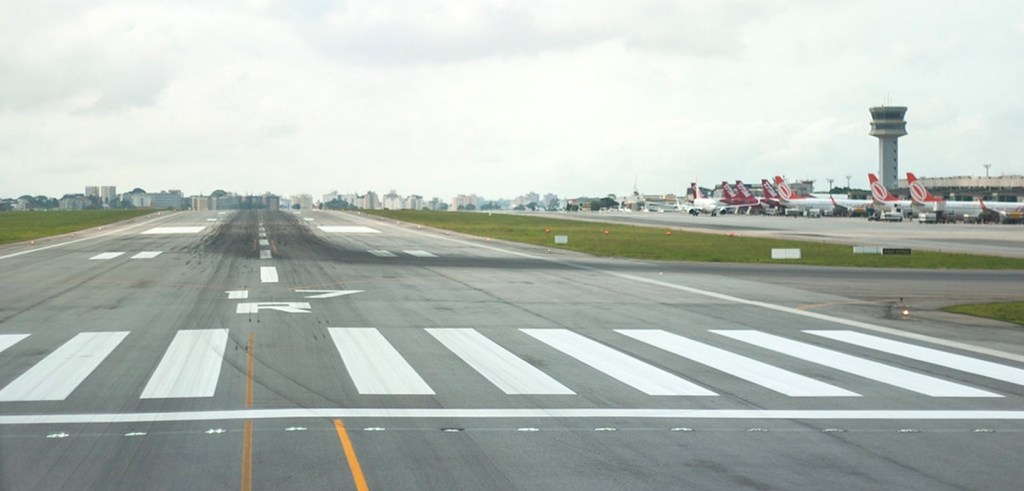
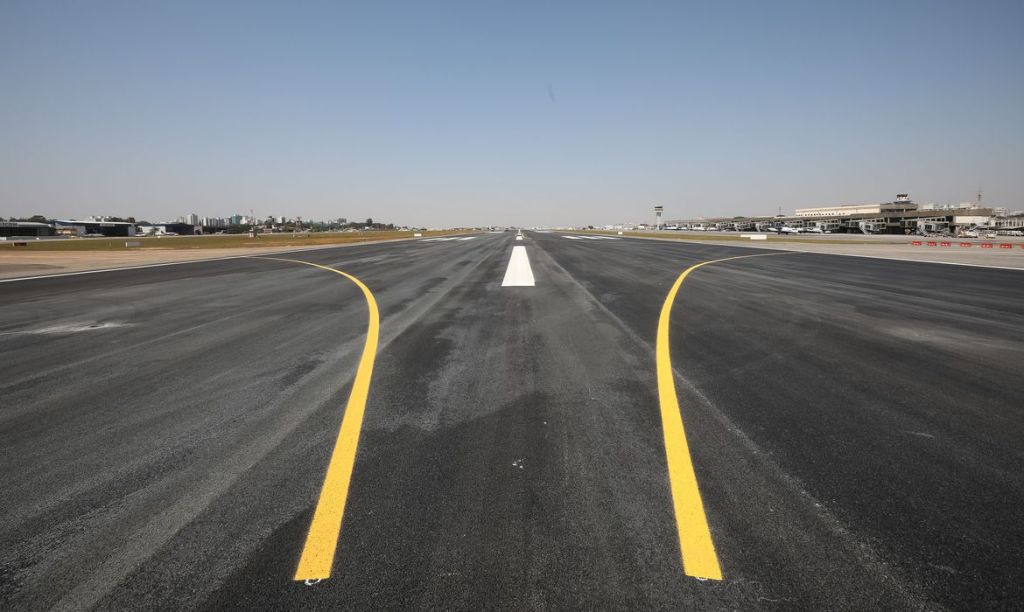
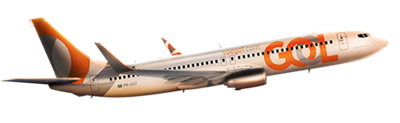
GOL Linhas Aéreas es la primera compañía brasileña en ser certificada por rendimiento por fricción en la nueva pista reconstruida del Aeropuerto Sao Paulo/Congonhas. A partir del 29 de Marzo de 2021, reestablece sus operaciones de vuelo en Congonhas donde le permitirá aterrizar y despegar con su Boeing 737 Netx Generation y MAX con aún más seguridad incluso en condiciones climáticas adversas.
La certificación otorgada por ANAC (Agencia Nacional de Aviación Civil) de Brasil garantiza que los aviones de la Compañía, junto con las características de la adherencia de la pista, operen de manera más eficiente, en pleno cumplimiento de las normas de seguridad para este fin. La ganancia de rendimiento se reflejará en el día a día, permitiendo una equivalencia de operaciones tanto en días claros como en días lluviosos con operaciones con pista mojada. Esta nueva certificación le permitirá a la aerolínea low cost brasileña reducir significativamente la posibilidad de alterar sus operaciones por tiempo desfavorable.
El Aeropuerto Sao Paulo/Congonhas ha recibido una reforma en su pista principal llevada a cabo por Infraero en Septiembre 2020, convirtiendo a la aeroestación de la Ciudad de Sao Paulo en una pista aún más segura, con más capacidad de drenaje (rápida escorrentía de agua de lluvia) y mayor agarre para los neumáticos de los aviones.
La pista principal ha recibido modificaciones en su estructura del fresado del antiguo revestimiento asfáltico, la ejecución de la capa estructural de hormigón asfáltica (CBUQ) con ranuras en la pista en la región de las cabeceras; y aplicación de capa de fricción superficial porosa (CPA), así como señalización horizontal que se incorporan para establecer más seguridad a las operaciones aéreas.
Para el Director de Seguridad Operacional de GOL, Danilo Andrade, «GOL siempre ha contribuido activamente a Infraero y ANAC para que las operaciones de vuelo en Congonhas sean cada vez más seguras, eficientes y cómodas. Recibir esta certificación de ANAC es otro certificado de calidad y refuerzo del trabajo de todos aquí con Seguridad, que es nuestro valor número uno».
«Sabemos de las molestias que tuvieron los clientes en aquellos días con esas duchas en Congonhas. Ahora, con esta certificación, GOL ofrece al Cliente, ya sea turístico o corporativo, aún más eficiencia operativa en su servicio en este aeropuerto tan importante para todos en la capital de São Paulo. Agradecemos a Infraero y a todos los que trabajaron para llegar a este punto», dice Eduardo Calderón, Director de CCO e Ingeniería de GOL.
Infraero, a través del Ministerio de Infraestructura, ha invertido R$ 77,79 millones de Reales en la modernización de la pista de operaciones del Aeropuerto Soa Paulo/Congonhas. El trabajo contó con la contribución de aerolíneas, la Asociación Brasileña de Aerolíneas (ABEAR), la Asociación Brasileña de Aviación General (ABAG) y otras entidades públicas relacionadas, como el Departamento de Control del Espacio Aéreo (DECEA), la Secretaría de Aviación Civil del Ministerio de Infraestructura y la Agencia Nacional de Aviación Civil (ANAC) de Brasil.
La certificación de GOL para operar de manera más eficiente a partir de la mejora de la pista de Congonhas allana el camino para que todo el sector de la aviación ofrezca mayores y mejores servicios a sus usuarios. «Es muy gratificante para Infraero participar en este resultado que ya permite a GOL esta ganancia de eficiencia operativa, centrándose en la comodidad y seguridad de los pasajeros. Fue un proyecto complejo y posible gracias al trabajo integrado de todo el sector aeronáutico», celebra el Presidente de INFRAERO, Brigadier Paes de Barros.
El aeropuerto de Congonhas, uno de los más concurridos de Brasil, es especial para GOL Linhas Aéreas, porque es donde se encuentra su sede administrativa, y recibió el histórico primer vuelos Brasilia-Sao Paulo/Congonhas en 2001. El Hub principal de GOL Linhas Aéreas diversifica sus operaciones a las principales ciudades de varios estados, especialmente el mundialmente famoso puente aéreo, que conecta con Sao Paulo—Río de Janeiro.
Sistema EMAS para Congonhas
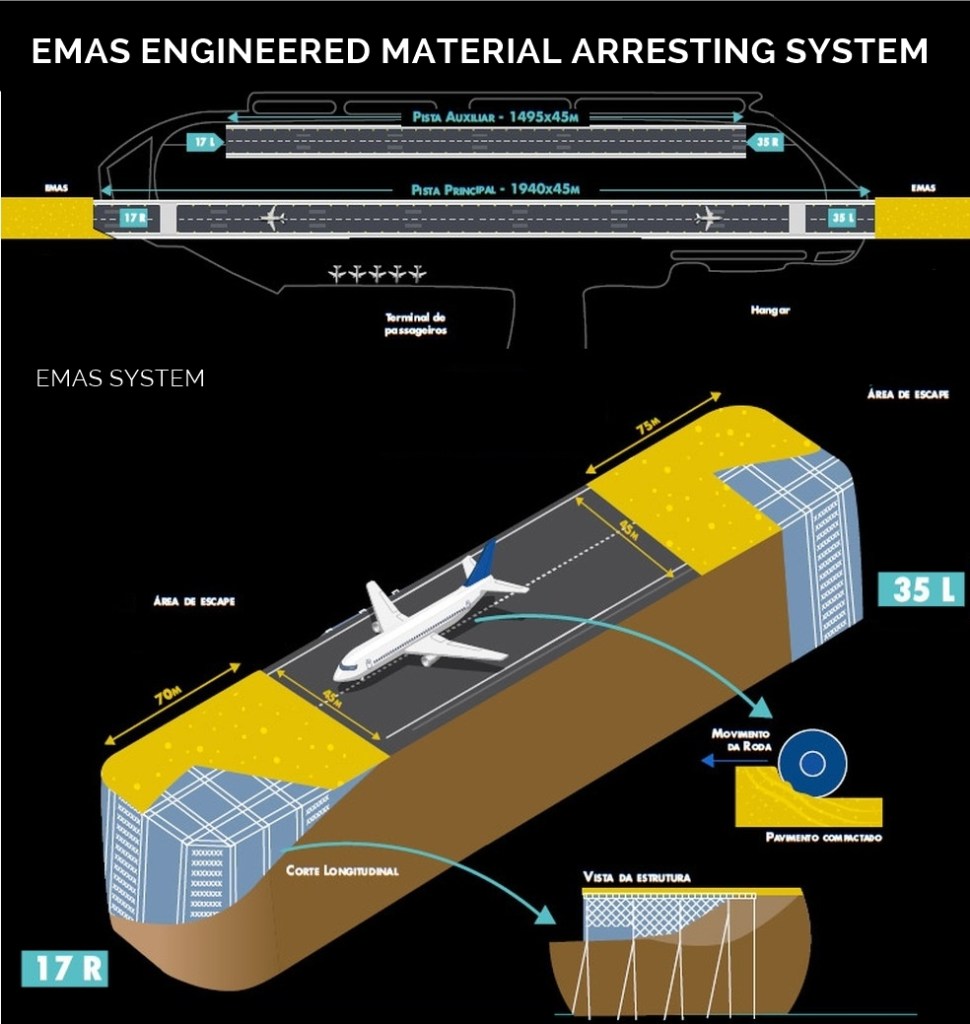
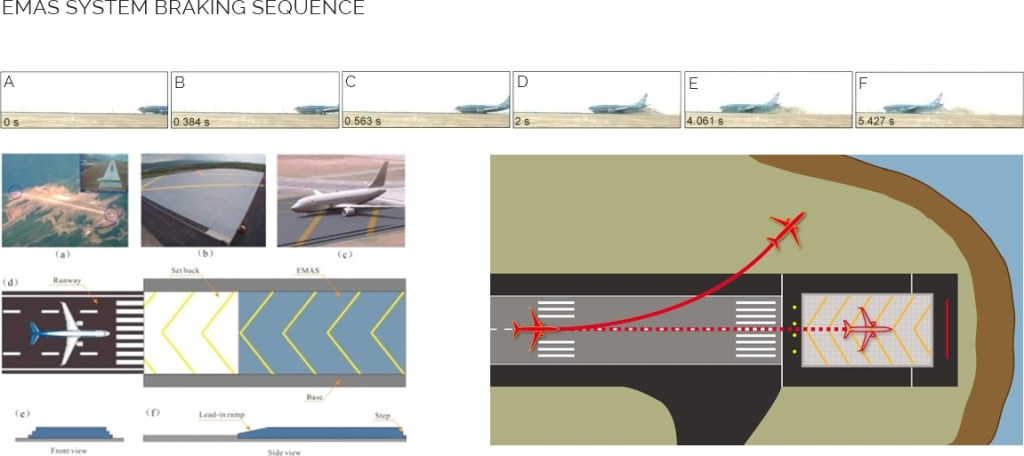
Tras casi catorce años después del accidente del vuelo JJ-3054 de TAM Linhas Aéreas, el Aeropuerto Sao Paulo/Congonhas recibe un sistema de emergencia que ralentiza los aviones en pequeñas pistas. El sistema será instalado por Infraero en la vía principal en un año y cuatro meses a un costo de R$ 122.5 millones. Infraero anunció este Miércoles 27 de Marzo de 2021 que el Aeropuerto de Congonhas, en la Zona Sur de São Paulo, recibirá un sistema de emergencia que ralentiza los aviones en la pista principal. La nueva tecnología se desplegará casi catorce años después del accidente del vuelo JJ-3054 de TAM, el mayor accidente en la historia de la aviación en el país sudamericano.
El sistema de emergencia se instalará en las zonas de escape y el despliegue deberá completarse en un año y cuatro meses. Desarrollado en los Estados Unidos en la década de 1990, el sistema de emergencia ralentiza los aviones que superan el final de la pista. Congonhas será el primer aeropuerto de América Latina en recibir el sistema.
Llamada Sistema de Detención de Materiales Modificados (EMAS) un sistema de materiales de ingeniería para la detención de aeronaves. La nueva tecnología prolonga las pistas de aterrizaje en los aeropuertos con limitaciones de espacio, como Congonhas. Es decir, si el avión supera el límite de la pista cae en el suelo hecho para desintegrarse, lo que mantendría a las aeronaves «atrapadas» en el hormigón al final de pista. Las dos estructuras estarán apoyadas por vigas y pilares capaces de soportar aviones y vehículos.
La tecnología comenzó a desarrollarse en la década de 1990, a través de una investigación de la Administración Federal de Aviación (FAA) en los Estados Unidos, que tiene un programa para mejorar las áreas de seguridad al final de las pistas de aterrizaje en los aeropuertos comerciales de Europa, Asia y también en suelo estadounidense. Según Infraero, cada aeropuerto tiene un sistema de frenado de la propia aeronave cuando entra en fricción con la pista de aterrizaje.
En el Aeropuerto Sao Paulo/Congonhas, la pista principal tiene una capa porly aplicada en el suelo de aterrizaje y despegue, proporcionando un mayor drenaje en caso de lluvia, favoreciendo la fricción entre los neumáticos de los aviones y el suelo. Este sistema actual se instaló después del accidente con el vuelo JJ-3054 de un Airbus A320-200 de la aerolínea TAM Linhas Aéreas.
Accidente vuelo JJ-3054
En 2007, el avión Airbus A320-200 de TAM Linhas Aéreas, había despegado de Porto Alegre, Rio Grande do Sul, con destino hacia Sao Paulo intentando aterrizar en la pista principal del Aeropuerto de Congonhas en condicciones de tiempo desfavorales con lluvia atravesó la Pista 17 y traspasó sobre la Avenida Washington Luís de la Ciudad de Sao Paulo, colisionando con un edificio de la misma compañía, donde murieron las 187 personas a bordo del vuelo JJ-3054, así como otras 12 que estaban en tierra. En el momento del accidente, estaba lloviendo y el avión A320-200, tenía uno de los reversos de empuje (sistema de aerofrenos) desactivado y los pilotos no podían detener la aeronave en curso de aterrizaje.
En Julio 2021 el accidente del vuelo fatal JJ-3054 conmemoraría catorce años. Según las investigaciones, el accidente fue causado exclusivamente por un error de los pilotos del Airbus 320. Las cajas negras del avión indican que los Comandantes Kleyber Lima y Henrique Stefanini di Sacco manejaron los aceleradores de manera diferente a la recomendada. Uno de ellos permaneció en la posición de aceleración, dejando el avión en acción de potencia. En el momento del accidente, el piso original de la pista era responsable de proporcionar fricción con el avión en una situación de aterrizaje, sin embargo, la fricción no funcionó y el avión estaba en una situación de aceleración.
En 2017, el Tribunal Regional Federal (TRF) decidió mantener una decisión de inicencia a los tres acusados del accidente aéreo. El Ministerio Público había denunciado al entonces Director de Seguridad Aérea de la aerolínea, Marco Aurélio dos Santos de Miranda y Castro, al entonces Vicepresidente de Operaciones de TAM, Alberto Fajerman, y la Directora Denise Abreu de la Agencia Nacional de Aviación Civil (ANAC). Sin embargo, los tres jueces que formaron el TRF colegiado decidieron por unanimidad mantener la absolución de los tres acusados. El dictamen fue apoyado por el informe del Centro de Prevención e Investigación de Accidentes Aeronáuticos (CENIPA), que indicó que las condiciones meteorológicas o las condiciones de la pista del Aeropuerto de Congonhas no fueron determinantes para el accidente.
GOL certification Ops Congonhas
GOL certified highest performance ops runway of Congonhas
GOL Linhas Aéreas is the first Brazilian company to be certified for friction performance on the new reconstructed runway at the Sao Paulo/Congonhas Airport. As of March 29, 2021, it will reestablish its flight operations in Congonhas where it will allow you to land and take off with your Boeing 737 Netx Generation and MAX with even more safety even in adverse weather conditions.
The certification granted by ANAC (National Civil Aviation Agency) of Brazil guarantees that the Company’s aircraft, together with the characteristics of the runway adherence, operate more efficiently, in full compliance with the safety regulations for this purpose. The performance gain will be reflected on a day-to-day basis, allowing an equivalence of operations both on clear days and on rainy days with operations on a wet track. This new certification will allow the Brazilian low cost airline to significantly reduce the possibility of altering its operations due to unfavorable weather.
The Sao Paulo/Congonhas Airport has received a reform in its main runway carried out by Infraero in September 2020, turning the airstation of the City of Sao Paulo into an even safer runway, with more drainage capacity (rapid water runoff rain) and greater grip for aircraft tires.
The main runway has received modifications in its structure from the milling of the old asphalt coating, the execution of the structural layer of asphalt concrete (CBUQ) with grooves in the runway in the region of the headwaters; and application of a porous surface friction layer (CPA), as well as horizontal signage that are incorporated to establish more security for air operations.
For GOL’s Director of Operational Safety, Danilo Andrade, «GOL has always actively contributed to Infraero and ANAC so that flight operations in Congonhas are increasingly safe, efficient and comfortable. Receiving this certification from ANAC is another quality certificate and reinforcing everyone’s work here with Security, which is our number one value».
«We know about the inconvenience that clients had in those days with those showers in Congonhas. Now, with this certification, GOL offers the Client, whether tourist or corporate, even more operational efficiency in its service at this airport that is so important to everyone in the capital of São Paulo. We thank Infraero and all those who worked to get to this point», says Eduardo Calderón, Director of CCO and Engineering at GOL.
Infraero, through the Ministry of Infrastructure, has invested R$ 77.79 million in the modernization of the operating runway at the Soa Paulo/Congonhas Airport. The work counted with the contribution of airlines, the Brazilian Airline Association (ABEAR), the Brazilian General Aviation Association (ABAG) and other related public entities, such as the Department of Airspace Control (DECEA), the Civil Aviation Secretariat. of the Ministry of Infrastructure and the National Civil Aviation Agency (ANAC) of Brazil.
The GOL certification to operate more efficiently from the improvement of the Congonhas runway paves the way for the entire aviation sector to offer greater and better services to its users. «It is very gratifying for Infraero to participate in this result that already allows GOL this gain in operational efficiency, focusing on the comfort and safety of passengers. It was a complex project and possible thanks to the integrated work of the entire aeronautical sector», celebrates the President of INFRAERO, Brigadier Paes de Barros.
Congonhas airport, one of the busiest in Brazil, is special for GOL Linhas Aéreas, because it is where its administrative headquarters are located, and received the historic first Brasilia-Sao Paulo/Congonhas flights in 2001. GOL Linhas main hub Aéreas diversifies its operations to the main cities of several states, especially the world famous airlift, which connects with Soa Paulo—Rio de Janeiro.
EMAS system for Congonhas
After almost fourteen years after the accident of TAM Linhas Aéreas flight JJ-3054, the Sao Paulo/Congonhas Airport receives an emergency system that slows down the planes on small runways. The system will be installed by Infraero on the main road in one year and four months at a cost of R$ 122.5 million. Infraero announced this Wednesday, March 27, 2021 that the Congonhas Airport, in the South Zone of São Paulo, will receive an emergency system that slows down the planes on the main runway. The new technology will be deployed almost fourteen years after the accident of TAM flight JJ-3054, the largest accident in the history of aviation in the South American country.
The emergency system will be installed in the escape zones and the deployment should be completed in one year and four months. Developed in the United States in the 1990s, the emergency system slows down aircraft that pass the end of the runway. Congonhas will be the first airport in Latin America to receive the system.
Called Modified Materials Arrest System (EMAS) an engineered materials system for the arrest of aircraft. New technology lengthens runways at space-constrained airports like Congonhas. That is, if the plane exceeds the runway limit it falls on the ground made to disintegrate, which would keep the aircraft «trapped» in the concrete at the end of the runway. The two structures will be supported by beams and pillars capable of supporting aircraft and vehicles.
The technology began to be developed in the 1990s, through an investigation of the Federal Aviation Administration (FAA) in the United States, which has a program to improve security areas at the end of runways at airports. trade in Europe, Asia and also on US soil. According to Infraero, each airport has a braking system for the aircraft itself when it comes into friction with the runway.
At the Sao Paulo/Congonhas Airport, the main runway has a porly layer applied to the landing and take-off ground, providing greater drainage in the event of rain, favoring friction between aircraft tires and the ground. This current system was installed after the accident with flight JJ-3054 of an Airbus A320-200 of the airline TAM Linhas Aéreas.
Flight accident JJ-3054
In 2007, the TAM Linhas Aéreas Airbus A320-200 aircraft had taken off from Porto Alegre, Rio Grande do Sul, bound for Sao Paulo, trying to land on the main runway of Congonhas Airport in unfavorable weather conditions with rain, and it crossed the Runway 17 and crossed over Washington Luís Avenue in the city of Sao Paulo, colliding with a building of the same company, where the 187 people on board flight JJ-3054 died, as well as another 12 who were on the ground. At the time of the accident, it was raining and the A320-200 aircraft had one of the thrust reversers (speedbrake system) disabled and the pilots were unable to stop the aircraft on the landing course.
In July 2021 the accident of the fatal flight JJ-3054 would commemorate fourteen years. According to investigations, the accident was caused exclusively by an error by the Airbus 320 pilots. The black boxes on the plane indicate that Commanders Kleyber Lima and Henrique Stefanini di Sacco operated the throttles differently than recommended. One of them remained in the acceleration position, leaving the plane in power action. At the time of the accident, the original runway floor was responsible for providing friction with the aircraft in a landing situation, however, the friction did not work and the aircraft was in an acceleration situation.
In 2017, the Federal Regional Court (TRF) decided to uphold an injunction decision for the three defendants in the plane crash. The Public Ministry had denounced the then Director of Air Safety of the airline, Marco Aurélio dos Santos de Miranda y Castro, the then Vice President of TAM Operations, Alberto Fajerman, and the Director Denise Abreu of the National Civil Aviation Agency (ANAC). However, the three judges who formed the collegiate TRF unanimously decided to maintain the acquittal of the three defendants. The opinion was supported by the report of the Center for the Prevention and Investigation of Aeronautical Accidents (CENIPA), which indicated that the meteorological conditions or the conditions of the runway at Congonhas Airport were not decisive for the accident.
Certificação GOL Ops Congonhas
GOL certificou o melhor desempenho operações pista de Congonhas
A GOL Linhas Aéreas é a primeira empresa brasileira a ser certificada em desempenho de atrito na nova pista reconstruída do Aeroporto de São Paulo/Congonhas. A partir de 29 de Março de 2021, ele restabelecerá suas operações de vôo em Congonhas onde permitirá pousar e decolar com seu Boeing 737 Netx Generation e MAX com ainda mais segurança mesmo em condições climáticas adversas.
A certificação concedida pela ANAC (Agência Nacional de Aviação Civil) do Brasil garante que as aeronaves da Companhia, aliadas às características de aderência da pista, operem de forma mais eficiente, em total conformidade com as normas de segurança para esse fim. O ganho de desempenho será refletido no dia a dia, permitindo uma equivalência de operações tanto em dias claros quanto em dias chuvosos com operações em pista molhada. Esta nova certificação permitirá que a companhia aérea brasileira de baixo custo reduza significativamente a possibilidade de alterar suas operações devido ao clima desfavorável.
O Aeroporto de São Paulo/Congonhas recebeu reforma em sua pista principal realizada pela Infraero em setembro de 2020, tornando o aeroporto da Cidade de São Paulo uma pista ainda mais segura, com maior capacidade de drenagem (chuva rápida) e maior aderência para pneus de aeronaves.
A pista principal recebeu modificações em sua estrutura a partir da fresagem do antigo revestimento asfáltico, da execução da camada estrutural de concreto asfáltico (CBUQ) com ranhuras na pista na região das cabeceiras; e aplicação de camada de fricção superficial porosa (CPA), bem como sinalização horizontal que é incorporada para dar mais segurança às operações aéreas.
Para o Diretor de Segurança Operacional da GOL, Danilo Andrade, “a GOL sempre contribuiu ativamente com a Infraero e a ANAC para que as operações de vôo em Congonhas sejam cada vez mais seguras, eficientes e confortáveis. Receber essa certificação da ANAC é mais um certificado de qualidade e reforça o trabalho de todos aqui com Segurança , que é o nosso valor número um».
“Sabemos do incômodo que os clientes tinham naqueles dias com aqueles chuveiros em Congonhas. Agora, com essa certificação, a GOL oferece ao Cliente, seja turístico ou corporativo, ainda mais eficiência operacional no atendimento neste aeroporto tão importante para todos na capital paulista. Agradecemos à Infraero e a todos que trabalharam para chegar até aqui”, afirma Eduardo Calderón, diretor de CCO e Engenharia da GOL.
A Infraero, por meio do Ministério da Infraestrutura, investiu R$ 77,79 milhões na modernização da pista operacional do Aeroporto de São Paulo/Congonhas. O trabalho contou com a contribuição das companhias aéreas, da Associação Brasileira das Companhias Aéreas (ABEAR), da Associação Brasileira de Aviação Geral (ABAG) e de outros órgãos públicos relacionados, como o Departamento de Controle do Espaço Aéreo (DECEA), a Secretaria de Aviação Civil do Ministério da Infraestrutura e Agência Nacional de Aviação Civil (ANAC) do Brasil.
A certificação da GOL para operar com mais eficiência a partir da melhoria da pista de Congonhas abre caminho para que todo o setor de aviação ofereça mais e melhores serviços aos seus usuários. “É muito gratificante para a Infraero participar desse resultado que já permite à GOL esse ganho de eficiência operacional, com foco no conforto e segurança dos passageiros. Foi um projeto complexo e possível graças ao trabalho integrado de todo o setor aeronáutico”, comemora o Presidente da INFRAERO, Brigadeiro Paes de Barros.
O Aeroporto Congonhas, um dos mais movimentados do Brasil, é especial para a GOL Linhas Aéreas, por ser onde fica sua sede administrativa, e recebeu os primeiros vôos históricos Brasília-São Paulo/Congonhas em 2001. Principal hub da GOL Linhas Aéreas diversifica sua atuação para as principais cidades de vários estados, com destaque para a mundialmente famosa ponte aérea, que se conecta com São Paulo—Rio de Janeiro.
Sistema EMAS para Congonhas
Passados quase quatorze anos após o acidente do vôo JJ-3054 da TAM Linhas Aéreas, o Aeroporto de São Paulo/Congonhas recebe um sistema de emergência que retarda os aviões em pequenas pistas. O sistema será instalado pela Infraero na rodovia em um ano e quatro meses a um custo de R$ 122,5 milhões. A Infraero anunciou nesta quarta-feira, 27 de Março de 2021, que o Aeroporto de Congonhas, na Zona Sul de São Paulo, receberá um sistema emergencial que reduz a velocidade dos aviões na pista principal. A nova tecnologia será implantada quase quatorze anos após o acidente do voo TAM JJ-3054, o maior acidente da história da aviação no país sul-americano.
O sistema de emergência será instalado nas zonas de escape e a implantação deve ser concluída em um ano e quatro meses. Desenvolvido nos Estados Unidos na década de 1990, o sistema de emergência desacelera as aeronaves que passam no final da pista. Congonhas será o primeiro aeroporto da América Latina a receber o sistema.
Chamado Modified Materials Arrest System (EMAS), um sistema de materiais projetados para a apreensão de aeronaves. A nova tecnologia alonga as pistas de aeroportos com restrição de espaço, como Congonhas. Ou seja, se o avião ultrapassar o limite da pista, ele cai no solo feito para se desintegrar, o que manteria a aeronave «presa» no concreto no final da pista. As duas estruturas serão sustentadas por vigas e pilares capazes de suportar aeronaves e veículos.
A tecnologia começou a ser desenvolvida na década de 1990, por meio de investigação da Federal Aviation Administration (FAA), dos Estados Unidos, que tem um programa de melhoria das áreas de segurança no final das pistas de aeroportos. Solo dos EUA. De acordo com a Infraero, cada aeroporto possui um sistema de frenagem para a própria aeronave quando ela entra em atrito com a pista.
No Aeroporto de São Paulo/Congonhas, a pista principal possui uma camada porosa aplicada ao solo de pouso e decolagem, proporcionando maior drenagem em caso de chuva, favorecendo o atrito entre os pneus da aeronave e o solo. Este sistema atual foi instalado após o acidente com o vôo JJ-3054 de um Airbus A320-200 da companhia aérea TAM Linhas Aéreas.
Acidente de vôo JJ-3054
Em 2007, a aeronave TAM Linhas Aéreas Airbus A320-200 havia decolado de Porto Alegre, no Rio Grande do Sul, com destino a São Paulo, tentando pousar na pista principal do Aeroporto de Congonhas em condições climáticas desfavoráveis com chuva, e cruzou o Pista 17 e atravessou a Avenida Washington Luís na Cidade de São Paulo, colidindo com um prédio da mesma empresa, onde morreram 187 pessoas a bordo do vôo JJ-3054, além de outras 12 que se encontravam no solo. No momento do acidente, estava chovendo e a aeronave A320-200 estava com um dos reversores de empuxo (sistema de speedbrake) desativado e os pilotos não conseguiram parar a aeronave no curso de pouso.
Em julho de 2021, o acidente do vôo fatal JJ-3054 comemoraria quatorze anos. Segundo apuração, o acidente foi causado exclusivamente por erro dos pilotos do Airbus 320. As caixas pretas do avião indicam que os comandantes Kleyber Lima e Henrique Stefanini di Sacco operaram os manetes de forma diferente do recomendado. Um deles permaneceu na posição de aceleração, deixando o avião em ação de potência. No momento do acidente, o piso original da pista era responsável por proporcionar atrito com a aeronave em situação de pouso, porém, o atrito não funcionava e a aeronave estava em situação de aceleração.
Em 2017, o Tribunal Regional Federal (TRF) decidiu manter a liminar para os três réus na queda do avião. O Ministério Público havia denunciado o então diretor de Segurança Aérea da companhia aérea, Marco Aurélio dos Santos de Miranda y Castro, o então vice-presidente de Operações da TAM, Alberto Fajerman, e a Diretora Denise Abreu, da Agência Nacional de Aviação Civil (ANAC). No entanto, os três juízes que formavam o colegiado do TRF decidiram, por unanimidade, manter a absolvição dos três réus. A opinião foi amparada pelo relatório do Centro de Prevenção e Investigação de Acidentes Aeronáuticos (CENIPA), que apontou que as condições meteorológicas ou da pista do Aeroporto de Congonhas não foram determinantes para o acidente.