Boeing 737 MAX al Congreso EEUU

AW | 2019 05 15 21:20 | AVIATION SAFETY / GOVERNMENT

Resultado de imagen para congress USDeclaraciones ante Congreso EEUU por Boeing 737 MAXFK,4923,36,737-max-round-pin.jpg

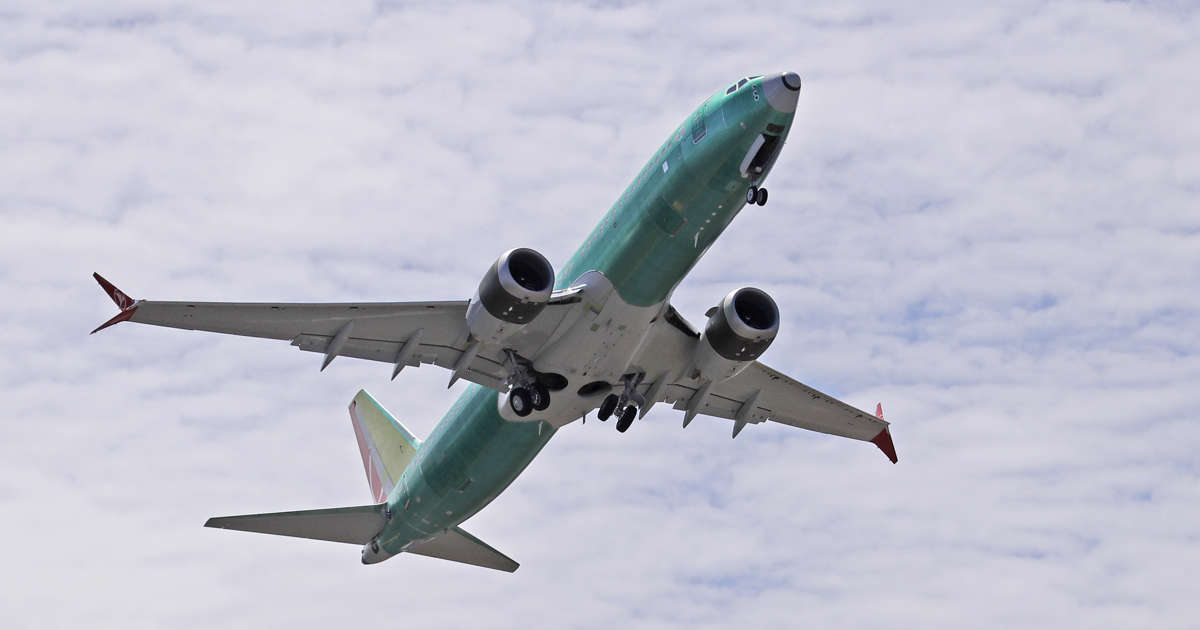
El administrador interino de la Administración Federal de Aviación (FAA), Dan Elwell, y el Presidente de la Junta Nacional de Seguridad del Transporte (NTSB), Robert Sumwalt, declararon ante el Congreso en los aviones Boeing 737 MAX. El Sr. Elwell ofreció sus disculpas a las familias de las víctimas de dos accidentes recientes en Indonesia y Etiopía. Brindó una actualización sobre cuándo volaría nuevamente el avión y dijo: «En los EE.UU., el 737 MAX volverá al servicio solo cuando el análisis de los hechos 20150215-logo-faa_1y los datos técnicos de la FAA indiquen que es seguro hacerlo». Además, dijo que los legisladores esperan que la compañía Boeing presente una solución de software para los aviones a tierra pronto para su aprobación.

El principal regulador de aviación de los Estados Unidos ha asegurado al Congreso que el Boeing 737 MAX, conectado a tierra después de dos accidentes mortales, solo volverá a volar cuando un análisis del gobierno demuestre que es seguro. La Administración Seal_of_the_United_States_National_Transportation_Safety_Board.svg.pngFederal de Aviación está bajo escrutinio por la forma en que confió en Boeing para certificar el MAX y luego no aterrizó el avión hasta después del segundo accidente, en marzo. El jefe interino de la FAA, Daniel Elwell, dijo al subcomité de aviación de la Cámara de Representantes que su agencia «da la bienvenida al escrutinio que nos ayuda a mejorar». Elwell enumeró varias revisiones del manejo del asunto por parte de la FAA, agregando, sin embargo, que solo la FAA decidiría cuándo el Max es lo suficientemente seguro como para permitir que vuelva al aire. «En los Estados Unidos el 737 MAX regresará al servicio solo cuando el análisis de los hechos y los datos técnicos de la FAA indiquen que es seguro hacerlo», dijo Elwell.

El Presidente del subcomité de House Aviation, Rick Larsen, dijo que espera respuestas sobre la certificación de la FAA de MAX, el papel de los empleados de Boeing en la evaluación de las características clave del avión y el papel de la FAA en el desarrollo de la capacitación de pilotos para el avión. «La FAA tiene un problema de credibilidad», dijo. Larsen agregó una nota de urgencia económica a la puesta a tierra de MAX, el avión más vendido de Boeing y uno que se construye en su estado natal de Washington. Dijo que el Congreso debe ayudar a que el público se sienta seguro al volar porque si no vuelan, las aerolíneas no necesitan comprar aviones y entonces no habrá empleos en la fabricación de aviones.

El Representante ante el Congreso Peter DeFazio criticó a Boeing por los manuales de pilotos que no mencionaban un nuevo sistema automatizado de control de vuelo implicado en ambos accidentes, y por un diseño que hizo caer la nariz del avión basándose en las lecturas de un solo sensor que podría fallar. Los dos aviones se estrellaron en Etiopía en marzo y en Indonesia, en octubre pasado, mataron a 346 personas. DeFazio, quien encabeza el comité de transporte completo, también dijo que Boeing aún no ha proporcionado los documentos que él y Larsen solicitaron, y dijo que esperaba que la compañía los proporcionara voluntariamente y pronto. «Boeing aún tiene que proporcionar un solo documento. Tenemos que llegar al fondo de esto», dijo.

Boeing ya es objeto de una investigación criminal por parte del Departamento de Justicia de Estados Unidos.

Clientes del 737 MAX

Los clientes de Boeing Southwest Airlines y American Airlines y sus sindicatos piloto han recibido citaciones relacionadas con esa investigación; United Airlines, que también voló el 737 MAX hasta que fue puesto a tierra en marzo, declinó hacer comentarios, aunque su sindicato piloto confirmó que también recibió una citación.

Los pilotos de American Airlines presionaron a Boeing en Noviembre 2018, poco después del primer accidente de 737 MAX, para poner a tierra los aviones y solicitar una rápida solución de software del fabricante del avión. «No queremos hacer un mal trabajo de arreglar las cosas, y tampoco queremos arreglar las cosas incorrectas», respondió un empleado de Boeing.

El Inspector General del Departamento de Transporte y un Comité del Senado están investigando la relación de la FAA con Boeing, y es probable que el subcomité de la Cámara siga un camino similar. Se espera que la audiencia ante el panel de la Cámara de Representantes cubra la revisión de la FAA de un sistema de control de vuelo en el MAX que no estaba presente en las versiones anteriores del 737. En ambos accidentes, el sistema de vuelo automatizado hizo descender la nariz del avión y los pilotos no pudieron recuperar el control.

Robert Sumwalt, Presidente de la Junta Nacional de Seguridad en el Transporte, programó la participación de Elwell en la audiencia de la Cámara. Ningún representante de Boeing estaba programado para dar evidencia.

Mientras tanto, el candidato del Presidente Donald Trump para dirigir la Administración Federal de Aviación dijo que estaba comprometido a realizar los cambios recomendados por los grupos que analizan cómo la agencia certifica la seguridad de los aviones. Durante el interrogatorio durante una audiencia de confirmación del Comité del Senado, Stephen Dickson dijo que nunca renunciaría a su responsabilidad de asegurarse de que los aviones estén a salvo.AW-Icon-TXT-01

Resultado de imagen para congress USBoeing 737 MAX to the US Congress

Declarations before US Congress for Boeing 737 MAX737MAX8-960x298.png

The acting administrator of the Federal Aviation Administration (FAA), Dan Elwell, and the President of the National Transportation Safety Board (NTSB), Robert Sumwalt, testified before Congress on the Boeing 737 MAX aircraft. Mr. Elwell offered his apologies to the families of the victims of two recent accidents in Indonesia and Ethiopia. He gave an update on when the plane would fly again and said: «In the US, the 737 MAX will return to service only when the factual analysis and FAA technical data indicate that it is safe to do so». In addition, he said that lawmakers expect the Boeing company to present a software solution for the planes ashore soon for approval.

The top aviation regulator in the United States has assured Congress that the Boeing 737 MAX, grounded after two fatal accidents, will only fly again when a government analysis shows it is safe. The Federal Aviation Administration is under scrutiny for the way it trusted Boeing to certify the MAX and then did not land the plane until after the second accident, in March. FAA interim chief Daniel Elwell told the aviation subcommittee of the House of Representatives that his agency «welcomes the scrutiny that helps us improve». Elwell enumerated several reviews of the handling of the matter by the FAA, adding, however, that only the FAA would decide when the Max is safe enough to allow it to return to air. «In the United States, the 737 MAX will return to the service only when the factual analysis and the FAA’s technical data indicate that it is safe to do so», Elwell said.

The Chairman of the House Aviation subcommittee, Rick Larsen, said he expects answers about MAX’s FAA certification, the role of Boeing employees in evaluating the aircraft’s key characteristics, and the role of the FAA in the development of the training of pilots for the plane. «The FAA has a credibility problem», he said. Larsen added a note of economic urgency to the grounding of MAX, Boeing’s best-selling aircraft and one that is built in his home state of Washington. He said that Congress should help the public feel safe when flying because if they do not fly, airlines do not need to buy planes and then there will be no jobs in airplane manufacturing.

Congress Representative Peter DeFazio criticized Boeing for the pilot manuals that did not mention a new automated flight control system involved in both accidents, and for a design that dropped the nose of the aircraft based on the readings of a single sensor that could fail. The two planes crashed in Ethiopia in March and in Indonesia, last October, killed 346 people. DeFazio, who heads the full transport committee, also said Boeing has not yet provided the documents he and Larsen requested, and said he expected the company to provide them voluntarily and soon. «Boeing has yet to provide a single document, we have to get to the bottom of this», he said.

Boeing is already the subject of a criminal investigation by the United States Department of Justice.

Customers of the 737 MAX

Customers of Boeing Southwest Airlines and American Airlines and their pilot unions have received citations related to that investigation; United Airlines, which also flew the 737 MAX until it was grounded in March, declined to comment, although its pilot union confirmed it also received a subpoena.

American Airlines pilots pressured Boeing in November 2018, shortly after the first 737 MAX accident, to ground the aircraft and request a quick software solution from the aircraft manufacturer. «We do not want to do a bad job of fixing things, and we do not want to fix the wrong things either», answered a Boeing employee.

The Inspector General of the Department of Transportation and a Senate Committee are investigating the FAA’s relationship with Boeing, and it is likely that the House subcommittee will follow a similar path. The hearing before the House of Representatives panel is expected to cover the FAA’s review of a flight control system in the MAX that was not present in previous versions of the 737. In both accidents, the automated flight system made descend the nose of the plane and the pilots could not regain control.

Robert Sumwalt, President of the National Transportation Safety Board, scheduled Elwell’s participation in the House hearing. No Boeing representative was scheduled to give evidence.

Meanwhile, President Donald Trump’s candidate to head the Federal Aviation Administration said he was committed to making the changes recommended by the groups that analyze how the agency certifies aircraft safety. During questioning during a confirmation hearing of the Senate Committee, Stephen Dickson said he would never give up his responsibility to make sure the planes are safe. A\W


Ξ A I R G W A Y S Ξ
SOURCE: Airgways.com
DBk: Congress.gov / Faa.gov / Ntsb.gov / Boeing.com / Airgways.com
AW-POST: 201905152120AR

A\W   A I R G W A Y S ®


Afirman errores cálculo búsqueda MH370

Resultado de imagen para inmarsat buildingAW | 2019 05 15 00:07 | AIR INVESTIGATION / AVIATION SAFETY

AW-70083772.pngExperto en aviación explica errores en los cálculos de localización del vuelo MH-370

Un experto en aviación ha cuestionado si los datos satelitales centrales a las conclusiones hechas sobre la pérdida del vuelo MH-370 de Malaysia Airlines fueron manipulados pudieran ser revelados.

Resultado de imagen para inmarsat

El vuelo MH-370 desapareció el 8 Marzo 2014, en ruta de Kuala Lumpur a Beijing con 239 personas a bordo. La investigación oficial sobre el caso concluyó que la aeronave debía haberse estrellado contra el Océano Índico meridional, pero esta teoría dependía completamente de un conjunto de datos satelitales. Los datos provienen del satélite 3F1, que pertenece a la compañía británica de telecomunicaciones por satélite Inmarsat.

Jeff Wise ha publicado en su libro de 2015 ‘El avión que no estaba allí’, donde explicó que, dado que la narrativa de la teoría de la investigación se basa completamente en siete comunicaciones entre el MH370 y el 3F1. Hay dos formas principales en que estos datos podrían haber sido manipulados. Sabemos que los datos que Malaysia Airlines publicó son los mismos que los datos que Inmarsat recibió del MH-370 a través del 3F1 en la noche del 7 y 8 Marzo 2014, según las investigaciones oficiales de Inmarsat y la Oficina de Seguridad del Transporte de Australia (ATSB), reconociendo la integridad de los datos aportados. Pero también se podría cuestionar si los datos se modificaron antes de que fueran recibidos por Inmarsat.

¿Manipulación de datos?

El Sr. Wise explicó que hasta ahora se había asumido que los datos de Desviación de Tiempo de Ráfaga (BTO) y Desviación de Frecuencia de Ráfaga (BFO) se generaron como parte de la función normal de los sistemas de comunicación. Si bien no hay un proceso natural conocido que cambie estos datos, esto no descarta la interferencia humana. La pregunta entonces es si el ser humano modificó deliberadamente la electrónica para que las señales de saludo generen datos BFO y/o BTO engañosos cuando se reciban en tierra. En otras palabras, ¿podrían haberse falsificado los datos de Inmarsat para sacar a los investigadores del camino? El Sr. Wise admitió que al principio la idea parecía ridícula. Pero si los datos técnicos utilizados para rastrear al Boeing 777-200ER utilizan estos datos adulterados, el vuelo MH370 desaparecido podría estar en otro lugar.

Los propios ingenieros de Inmarsat no estaban seguros de que sus datos fueran precisos. El ingeniero de Inmarsat Alan Schuster Bruce dijo en ese momento: «Una de las preocupaciones que tuvimos fue el hecho de que todo esto podría ser un gran engaño de que alguien había jugado en Inmarsat». AW-Icon-TXT-01

Imagen relacionadaAffirm errors calculation search MH370

Aviation expert explains errors in flight location calculations MH-370

An aviation expert has questioned whether the satellite data central to the findings made about the loss of Malaysia AirlinesMH-370 flight were tampered with could be revealed.

Flight MH-370 disappeared on March 8, 2014, en route from Kuala Lumpur to Beijing with 239 people on board. The official investigation into the case concluded that the aircraft must have crashed into the southern Indian Ocean, but this theory depended entirely on a set of satellite data. The data comes from satellite 3F1, which belongs to the British satellite telecommunications company Inmarsat.

Jeff Wise has published in his 2015 book ‘The plane that was not there’, where he explained that, since the narrative of research theory is based entirely on seven communications between the MH370 and the 3F1. There are two main ways in which this data could have been manipulated. We know that the data that Malaysia Airlines posted is the same as the data that Inmarsat received from MH-370 through 3F1 on the night of 7 and 8 March 2014, according to the official investigations of Inmarsat and the Australian Transport Security Office. (ATSB), recognizing the integrity of the data provided. But one could also question whether the data was modified before it was received by Inmarsat.

Data manipulation?

Mr. Wise explained that until now it had been assumed that the Burst Time Deviation (BTO) and Burst Frequency Deviation (BFO) data were generated as part of the normal function of the communication systems. While there is no known natural process that changes this data, this does not rule out human interference. The question then is whether the human being deliberately modified the electronics so that the greet signals generate deceptive BFO and/or BTO data when received on the ground. In other words, could the Inmarsat data have been falsified to get the researchers out of the way? Mr. Wise admitted that at first the idea seemed ridiculous. But if the technical data used to track the Boeing 777-200ER uses this adulterated data, the missing MH370 flight could be elsewhere.

Inmarsat’s own engineers were not sure their data was accurate. Inmarsat engineer Alan Schuster Bruce said at the time: «One of the concerns we had was the fact that all this could be a great deception that someone had played in Inmarsat». A \ W

Imagen relacionadaTerangkan kesilapan pengiraan carian MH370

Pakar penerbangan menjelaskan ralat dalam pengiraan lokasi penerbangan MH-370

Seorang pakar penerbangan telah mempersoalkan sama ada pusat kepada kesimpulan yang dibuat mengenai kehilangan pesawat MH-370 Malaysia Airlines data satelit telah dimanipulasi boleh didedahkan.

Penerbangan MH-370 hilang pada 8 Mac 2014, dalam perjalanan dari Kuala Lumpur ke Beijing dengan 239 orang di atas kapal. Siasatan rasmi ke dalam kes itu menyimpulkan pesawat itu telah jatuh ke selatan Lautan Hindi, tetapi teori ini bergantung sepenuhnya pada satu set data satelit. Data ini berasal dari satelit 3F1, yang dimiliki oleh syarikat telekomunikasi satelit British Inmarsat.

Jeff Wise telah diterbitkan dalam buku 2015 beliau ‘Pesawat itu tidak ada’, di mana beliau menjelaskan bahawa, sejak naratif teori penyelidikan adalah berdasarkan sepenuhnya kepada tujuh komunikasi antara MH370 dan 3F1. Terdapat dua cara utama di mana data ini dapat dimanipulasi. Kita tahu bahawa data Malaysia Airlines mencatatkan adalah sama seperti data yang Inmarsat menerima MH-370 melalui 3F1 pada malam 7 dan 8 Mac 2014, mengikut siasatan rasmi Inmarsat dan Pejabat Keselamatan pengangkutan Australia (ATSB), mengiktiraf integriti data yang disediakan. Tetapi ia juga boleh mempersoalkan sama ada data yang telah berubah sebelum ia diterima oleh Inmarsat.

Manipulasi data?

Mr Bijaksana menjelaskan bahawa sehingga kini ia telah dianggap bahawa data Offset Masa Burst (BTO) dan sisihan frekuensi Burst (BFO) diwujudkan sebagai sebahagian daripada fungsi normal sistem komunikasi. Walaupun tidak ada proses semulajadi yang diketahui yang mengubah data ini, ini tidak menolak campur tangan manusia. Soalan tersebut ialah sama ada manusia yang sengaja diubah suai isyarat elektronik untuk menjana Ucapan BFO data dan / atau mengelirukan apabila diterima tanah BTO. Dalam erti kata lain, bolehkah data Inmarsat dipalsukan untuk mendapatkan para penyelidik? Mr Bijaksana mengakui bahawa pada mulanya idea seolah-olah tidak masuk akal. Tetapi jika data teknikal yang digunakan untuk mengesan Boeing 777-200ER menggunakan data yang dipalsukan ini, penerbangan MH370 yang hilang boleh berada di tempat lain.

Jurutera Inmarsat tidak pasti data mereka adalah tepat. Inmarsat jurutera Bruce Alan Schuster berkata ketika itu: «Satu kebimbangan kita mempunyai adalah hakikat bahawa semua ini boleh menjadi angan-angan yang besar bahawa seseorang telah bermain dalam Inmarsat». A \ W


Ξ A I R G W A Y S Ξ
SOURCE: Airgways.com
DBk: Express.co.uk / Inmarsat.com
AW-POST: 201905150007AR

A\W   A I R G W A Y S ®


Fallas en procesos certificación 737 MAX

AW-700-Bizjournals.jpg

AW | 2019 05 14 17:13 | AVIATION SAFETY / INDUSTRY

Boeing-Logo.svg.pngLa FAA no trató el sistema de control de vuelo sospechoso 737 MAX como un riesgo de seguridad crítico

La conclusión es parte de la revisión interna de la agencia FAA (Federal Aviation Administration) del proceso de certificación del avión. Una revisión interna de la

20150215-logo-faa_1.jpg

Administración Federal de Aviación ha determinado tentativamente que los funcionarios superiores de la agencia no participaron ni monitorearon las evaluaciones de seguridad cruciales de un sistema de control de vuelo del Boeing 737 MAX de Boeing que luego se implicaron en dos accidentes fatales, según funcionarios de la industria y del gobierno.

La conclusión preliminar también indica que durante el proceso de certificación, Boeing no marcó la función de prevención de bloqueo automática como un sistema cuyo mal funcionamiento o falla podría causar un evento catastrófico. Tal designación habría conducido a un escrutinio más intenso.

Los ingenieros de la FAA y los gerentes de nivel medio aplazaron la clasificación de seguridad temprana de Boeing, lo que permite a los expertos de la compañía realizar análisis posteriores de peligros potenciales con la supervisión limitada de la agencia. Los empleados de Boeing que se desempeñaron como representantes de las agencias designadas luego aprobaron el diseño final.

Resultado de imagen para Boeing 737 MAX Everett

Órdenes de Boeing

Boeing entregó un 24 por ciento menos de aviones de reacción en los primeros cuatro meses de 2019 en comparación con el mismo período del año anterior, ya que la puesta a tierra de su aeronave 737 MAX más vendida detuvo las entregas por segundo mes.

Como se esperaba, la compañía no recibió nuevos pedidos en abril para los aviones de fuselaje estrecho, ya que continúa trabajando en una solución de software para el sistema anti-bloqueo del avión MCAS. Las entregas de la aeronave se detuvieron a principios de marzo, unos días después de que un avión de Ethiopian Airlines se estrellara, matando a las 157 personas a bordo, en el segundo accidente fatal que involucró al 737 MAX en solo cinco meses.

El mes de Abril, Boeing abandonó su perspectiva financiera para 2019, detuvo la recompra de acciones y dijo que la reducción en la producción de los 737 MAX de venta más rápida después de las bases había costado al menos US$ 1 mil millones. Boeing reconoce el pago completo de los aviones cuando se entregan a los clientes, y la conexión a tierra formal del 737 MAX en casi todo el espacio aéreo global ha detenido completamente las entregas.

A fines de Marzo, Boeing tenía 91 pedidos netos, pero la unidad de servicios de arrendamiento y préstamo de la compañía, Boeing Capital, trasladó cuatro de sus 737 MAX espacios a un arrendador. Eso llevó a que la compañía registrara 87 pedidos netos hasta Abril 2019 en toda la línea de aeronaves comerciales, una reducción de cuatro en base neta. Boeing también retiró 206 aviones de su pedido atrasado el mes pasado debido a los problemas financieros de Jet Airways de la India.

Ethiopian Airlines ha perdido la confianza en volver a utilizar el Boeing 737 MAX en su flota. «La aerolínea no utilizará el avión a menos que la aerolínea, sus pilotos y pasajeros estén convencidos de que es seguro. Si volvemos a volarlos, seremos la última aerolínea en hacerlo», afirmó el Director General de la compañía Tewolde Gebremariam.

Como resultado, sus pedidos netos para los primeros cuatro meses (1Q2019) se deslizaron hacia territorio negativo, con un total de menos de 119 pedidos netos después de las cancelaciones, a pesar de una serie de nuevas ventas.

El ajuste ha empujado al mayor fabricante de aeronaves del mundo detrás del rival europeo Airbus SE en la carrera por los negocios este año, ya que ambas compañías lidian con cancelaciones que superan a los nuevos pedidos.

La semana pasada, Airbus dijo que había ganado 67 pedidos brutos hasta Abril 2019, pero 125 cancelaciones lo dejaron con un pedido neto negativo de 58 aviones. Airbus entregó 232 aviones en los primeros cuatro meses de 2019, frente a los 172 aviones del año anterior.

Los inversores y analistas observan de cerca la cantidad de aviones que Boeing entrega a las aerolíneas y empresas de leasing para obtener pistas sobre el flujo de caja y los ingresos de la empresa.AW-Icon-TXT-01


AW-70007378.jpgFailures in 737 MAX certification processes

Boeing-Company-Logo.jpgThe FAA did not treat the suspect 737 MAX flight control system as a critical safety risk

The conclusion is part of the FAA (Federal Aviation Administration) internal review of the aircraft certification process. An internal review by the Federal Aviation Administration has tentatively determined that the agency’s senior officials did not participate in or monitor the critical safety assessments of a Boeing 737 MAX flight control system that subsequently became involved in two fatal accidents, officials said. of industry and government.

The preliminary conclusion also indicates that during the certification process, Boeing did not mark the automatic blocking prevention function as a system whose malfunction or failure could cause a catastrophic event. Such a designation would have led to more intense scrutiny.

FAA engineers and mid-level managers postponed Boeing’s early safety classification, allowing the company’s experts to conduct further analysis of potential hazards with the agency’s limited oversight. Boeing employees who served as representatives of the designated agencies then approved the final design.

Boeing orders

100_737MAX8.pngBoeing delivered 24 percent fewer jet aircraft in the first four months of 2019 compared to the same period last year, as the grounding of its best-selling 737 MAX aircraft halted deliveries for the second month.

As expected, the company did not receive new orders in April for narrow-body aircraft, as it continues to work on a software solution for the MCAS anti-blocking system. Deliveries of the aircraft were halted in early March, a few days after an Ethiopian Airlines plane crashed, killing all 157 people on board, in the second fatal accident involving the 737 MAX in just five months.

The month of April, Boeing abandoned its financial outlook for 2019, halted the repurchase of shares and said that the reduction in production of the 737 MAX quickest sales after the bases had cost at least US$ 1 billion. Boeing recognizes the full payment of aircraft when delivered to customers, and the formal grounding of the 737 MAX in almost all of the global airspace has completely halted deliveries.

At the end of March, Boeing had 91 net orders, but the company’s leasing and lending services unit, Boeing Capital, moved four of its 737 MAX spaces to a lessor. That led the company to register 87 net orders until April 2019 in the entire line of commercial aircraft, a reduction of four in net base. Boeing also recalled 206 aircraft from its backlog last month due to the financial problems of India’s Jet Airways.

Ethiopian Airlines has lost confidence in reusing the Boeing 737 MAX in its fleet. «The airline will not use the plane unless the airline, its pilots and passengers are convinced that it is safe, if we fly them back, we will be the last airline to do so», said Tewolde Gebremariam, CEO of the company.

As a result, their net orders for the first four months (1Q2019) slipped into negative territory, with a total of less than 119 net orders after cancellations, despite a series of new sales.

The adjustment has pushed the world’s largest aircraft maker behind European rival Airbus SE in the race for business this year, as both companies deal with cancellations that outperform new orders.

Last week, Airbus said it had won 67 gross orders through April 2019, but 125 cancellations left it with a negative net order of 58 aircraft. Airbus delivered 232 aircraft in the first four months of 2019, compared to the 172 aircraft of the previous year.

Investors and analysts are closely watching the number of aircraft that Boeing delivers to airlines and leasing companies to get clues about the cash flow and revenues of the company. A \ W


Ξ A I R G W A Y S Ξ
SOURCE: Airgways.com
DBk: Faa.gov / Boeing.com / Airgways.com / Woody’s Aeroimages
AW-POST: 201905141713AR

A\W   A I R G W A Y S ®


Aterrizaje forzoso Myanmar E190

XY-AGQ en la pista (Foto: Myanmar National Airlines)

AW | 2019 05 12 16:45 | AVIATION SAFETY

Un Embraer E190-100 de Myanmar Airlines efectúa aterrisaje forzoso en Mandalay

Un Embraer ERJ-190-100, con registro de XY-AGQ de Myanmar Airlines que realizaba el vuelo UB-103 desde Yangon a Mandalay (Myanmar) con 82 pasajeros y 7 tripulantes, se aproximaba a la Pista 17 de Mandalay aproximadamente a las 09:00L (02:30Z) cuando La tripulación no pudo extender el engranaje de la nariz (tren de nariz) y dio la vuelta. El equipo trabajó en las listas de verificación relacionadas, intentó una extensión alternativa para extender hacia abajo las ruedas del tren de nariz. Un acercamiento bajo confirmó que el engranaje de la punta todavía no estaba extendido. La tripulación se preparó para un aterrizaje frontal y aterrizó en la Pista 17 del Aeropuerto Mandalay, manteniendo la nariz arriba el mayor tiempo posible, deteniendo la aeronave en la pista. El humo ingresó en la cabina después de colisionar el fuselaje en la pista. El avión fue evacuado a través de toboganes. No hubo heridos, la aeronave sufrió daños sustanciales.

La aerolínea informó que el avión estaba en camino desde Yangon a Mandalay cuando, al acercarse a Mandalay, la tripulación no pudo extender el engranaje de morro. La aeronave sobrevolaba la pista dos veces para que la torre revisara el tren de aterrizaje. El avión entró en un espiral en un espacio aéreo asignado para quemar combustible y poder aterrizar.

El piloto intentó en varias ocasiones activar el tren de aterrizaje delantero, primero mediante la computadora de vuelo y luego manualmente, por lo cual decidió aterrizar sin ruedas delanteras, declaró Ye Htut Aung, Director Adjunto de la aviación civil de Myanmar.AW-Icon-TXT-01

XY-AGQ en la pista (Foto: Myanmar National Airlines)Forced landing Myanmar E190

An Embraer E190-100 from Myanmar Airlines makes a forced landing in Mandalay

An Embraer ERJ-190-100, with registration of XY-AGQ of Myanmar Airlines that made flight UB-103 from Yangon to Mandalay (Myanmar) with 82 passengers and 7 crew, approached Track 17 of Mandalay at approximately 09:00L (02:30Z) when The crew could not extend the nose gear (nose gear) and turned around. The team worked on the related checklists, tried an alternative extension to extend down the wheels of the nose train. A low approach confirmed that the tip gear was not yet extended. The crew prepared for a frontal landing and landed on Runway 17 at Mandalay Airport, keeping their nose up as long as possible, stopping the aircraft on the runway. The smoke entered the cabin after colliding the fuselage on the runway. The plane was evacuated through slides. There were no injuries, the aircraft suffered substantial damage.

The airline reported that the plane was on its way from Yangon to Mandalay when, approaching Mandalay, the crew could not extend the nose gear. The aircraft flew over the runway twice for the tower to check the landing gear. The plane went into a spiral in an assigned airspace to burn fuel and be able to land.

The pilot tried several times to activate the front landing gear, first using the flight computer and then manually, so he decided to land without front wheels, said Ye Htut Aung, Deputy Director of Civil Aviation of Myanmar. A \ W


Ξ A I R G W A Y S Ξ
SOURCE: Airgways.com
DBk: Dca.gov.mm / Avherald.com
AW-POST: 201905121645AR

A\W   A I R G W A Y S ®

Boeing 737 MAX a rehabilitación marca

Resultado de imagen para Boeing 737 max groundedAW | 2019 05 10 21:27 | AVIATION SAFETY / INDUSTRY

Boeing-Logo.svgEl Boeing 737 MAX está a punto de unirse a la lista de marcas que intentan volver a la rehabilitaciónFK,4923,36,737-max-round-pin

Los analistas están investigando los temores de seguridad de décadas de antigüedad en busca de pistas sobre el futuro del avión de pasajeros Boeing 737 MAX y las finanzas de Boeing. La conexión a tierra del turbulento 737 MAX de Boeing está a punto de extenderse hasta su tercer mes. Pero hay pocos precedentes para la maraña de problemas de seguridad, regulatorios y financieros que afectan a un avión de batalla que es vital para sostener el aumento en los viajes aéreos globales. Después de dos choques del modelo de avión en cinco meses y una puesta a tierra cercana a los dos meses, algunos pasajeros nerviosos están prometiendo evitar al 737 MAX.

La Administración Federal de Aviación (FAA), está programada para reunirse con los reguladores de la aviación internacional en Dallas el 23 de mayo. La reunión podría llevar a un levantamiento de la puesta a tierra mundial del 737 MAX. Eso sería una buena noticia para los inversionistas, pero eso no sería el final de la confusión para la compañía.

Boeing se ha sumado al lío al no explicar completamente las fallas aparentes en el avión más vendido en la historia de la compañía. El veterano observador de Boeing, Nick Cunningham, dijo que está empezando a preguntarse si «esto se ha vuelto demasiado serio y demasiado prolongado para que el Max salga ileso». Los accidentes en Indonesia y Etiopía mataron a 346 personas. La propia sobrina nieta de Nader estaba entre las víctimas. Cuanto más se prolongue la crisis, mayor será el riesgo de que el efecto acumulativo «haya actuado para bloquearlo permanentemente en los recuerdos de las personas», dijo Cunningham, socio fundador de Agency Partners.

Confianza sacudida

Boeing está finalizando una actualización del software vinculado a ambos fallos, que presentará a la Administración Federal de Aviación en un paso crucial para que el avión vuelva a estar en el aire. Una cumbre del 23 de mayo de reguladores globales «podría trazar un camino para certificar arreglos y eliminar la conexión a tierra», dijo el analista de Morgan Stanley Rajeev Lalwani en una nota el jueves.

La reconstrucción de la confianza del consumidor es una prioridad urgente, ya que la compañía con sede en Chicago trabaja con las aerolíneas para preparar la reanudación de los vuelos del modelo 737 en los próximos meses. Boeing también debe ganarse a los pilotos, azafatas y a los reguladores.

AW-700-AP19129008893827.jpg

El Director Ejecutivo Dennis Muilenburg y el jefe de aviones comerciales Kevin McAllister han estado realizando llamadas de conferencia con ejecutivos de aerolíneas. Y la compañía ha invitado a los operadores y arrendadores de 737 MAX a media docena de sesiones en todo el mundo para discutir los detalles específicos de los cambios de software, junto con la logística de sacar aviones del almacenamiento.

«Es un enfoque multifacético para tomar las medidas necesarias para preservar la flota, devolverla al servicio de manera segura y restaurar la confianza perdida que los pilotos, reguladores y el público viajero han tenido en el MAX», dijo el portavoz de Boeing, Gordon Johndroe.

El presidente de Estados Unidos, Donald Trump, incluso asesoró sobre cómo rehabilitar la exportación más grande de Estados Unidos, sugiriendo que Boeing renombra su marca de fábrica de un solo pasillo. «Ningún producto ha sufrido como este», dijo en un tweet del 15 de abril. No ha habido «ninguna discusión» sobre un cambio de nombre, dijo Johndroe, incluida la eliminación de «MAX» y la referencia a la familia de chorros por números de productos como 737-8.

Recuperación de Jetliner

Los programas de aviones comerciales se han recuperado una y otra vez de horribles accidentes. La tendencia comenzó en los albores de la era de los jets con Havilland Comets, que se desintegró debido a un defecto en el diseño de la ventana. Una versión rediseñada nunca fue un vendedor atractivo, sino que voló para el ejército del Reino Unido hasta 2011. Los consumidores que buscaban gangas en la era de Internet rápidamente olvidaron su aversión al 787 Dreamliner de Boeing después de que los incendios de baterías lo impidieran en 2013.

La empresa brasileña Gol Linhas Aéreas Inteligentes SA está asumiendo que la crisis se habrá desvanecido en diciembre. La compañía ya está promocionando un nuevo servicio sin escalas desde Sao Paulo a Lima a partir del 12 Diciembre 2019 en un Boeing 737-8 MAX, aunque un modelo más antiguo puede ser sustituido si es necesario. Las dificultades de Boeing podrían estimular una revisión de la certificación y supervisión de aviones en medio de investigaciones criminales y del Congreso.

Cálculo incorrecto

El creador del plan empeoró su propia situación al esperar meses para explicar públicamente cómo un subsistema de software conocido como MCAS presionaba repetidamente la nariz de los aviones condenados, lo que finalmente abrumaba a los pilotos. Con la compañía enfrentando US$ 1bn o más en responsabilidad potencial de demandas, los ejecutivos han tenido cuidado de no admitir que su enfoque fue defectuoso.

«Hicieron el cálculo incorrecto. Simplemente explique qué salió mal con el subsistema y explique todo sobre él. Haz esto lo más transparente posible», dijo Richard Aboulafia, analista aeroespacial de Teal Group, al sopesar los costos de responsabilidad a corto plazo frente al riesgo de daños a largo plazo en la marca.

Para agravar su dilema, Boeing reveló un problema aparte con una luz de advertencia en la cabina a fines de abril. La compañía siguió esa semana con una admisión de que sabía del problema, pero esperó aproximadamente un año para avisar a las aerolíneas o a la Administración Federal de Aviación.«Tenemos una serie de áreas en las que sabemos que debemos mejorar, y la transparencia es una de ellas», dijo Johndroe, el portavoz de Boeing.

Miedos de los pasajeros

La falta de divulgación completa ha avivado una narrativa de que el propio Max tiene fallas graves debido a sus motores más grandes. Aboulafia, quien pronostica mercados de aviones, dice que su estimación de las ventas de MAX «se basa en que esto mejorará a largo plazo. Si empeoran esto al convertirlo en un producto públicamente vilipendiado, todas las apuestas están canceladas».

Lo que está en juego no es solo la imagen del fabricante, sino la vitalidad del avión que representa alrededor de un tercio de las ganancias de Boeing y ha agregado 4.625 pedidos sin completar a la cartera de pedidos de la compañía. Si la demanda se desvanece debido a los consumidores nerviosos, las aerolíneas podrían posponer las entregas o forzar a Boeing a un patrón de descuentos más profundos que erosionen sus ganancias y efectivo, dijo Aboulafia.

La historia de fondo es que Boeing ha sido golpeada por una gran cantidad de preocupaciones desde la segunda tragedia aérea de su nuevo modelo 737 MAX. Las partes interesadas de la aviación han cuestionado la estrategia de comunicación, las prácticas de fabricación, las opciones de diseño y el liderazgo de la empresa, entre otros temas.

Mirando hacia la recertificación

Aunque no existen garantías de que la reunión de Dallas el 23 Mayo 2019 resulte en una decisión final sobre la conexión a tierra del 737 MAX. «La FAA también podría requerir pruebas y documentación adicionales. Además, se espera que el regulador europeo EASA y China se muevan por separado para evaluar la posibilidad de reanudar el servicio MAX», escribe el analista de Cowen, Cai von Rumohr. Sin embargo, von Rumohr cree que la FAA podría levantar su prohibición de vuelo en las próximas cuatro a cinco semanas. Eso es un poco mejor de lo que esperan los inversores y podría impulsar la confianza en las acciones de Boeing.AW-Icon-TXT-01

Resultado de imagen para Boeing

Boeing sends the 737 MAX to brand rehabilitation

Boeing-Company-LogoThe Boeing 737 MAX is about to join the list of brands trying to return to rehabilitation

Analysts are investigating decades-old security fears for clues about the future of the Boeing 737 MAX passenger plane and Boeing’s finances. The grounding of Boeing’s turbulent 737 MAX is about to extend into its third month. But there are few precedents for the tangle of security, regulatory and financial issues that affect a battle aircraft that is vital to sustain the increase in global air travel. After two crashes of the plane model in five months and a grounding close to two months, some nervous passengers are promising to avoid the 737 MAX.

The Federal Aviation Administration (FAA) is scheduled to meet with international aviation regulators in Dallas on May 23. The meeting could lead to a lifting of the 737 MAX global grounding. That would be good news for investors, but that would not be the end of the confusion for the company.

Boeing has added to the mess by not fully explaining the apparent failures in the best-selling aircraft in the company’s history. Veteran Boeing observer Nick Cunningham said he is beginning to wonder if «this has become too serious and too prolonged for Max to get away unharmed». Accidents in Indonesia and Ethiopia killed 346 people. Nader’s own niece was among the victims. The longer the crisis lasts, the greater the risk that the cumulative effect «has acted to permanently block it in people’s memories», said Cunningham, founding partner of Agency Partners.

Shaken confidence

Boeing is finalizing an update of the software linked to both failures, which will present to the Federal Aviation Administration in a crucial step so that the airplane returns to be in the air. A May 23 summit of global regulators «could chart a way to certify arrangements and eliminate grounding», Morgan Stanley analyst Rajeev Lalwani said in a note on Thursday.

The rebuilding of consumer confidence is an urgent priority, as the Chicago-based company works with airlines to prepare for the resumption of Model 737 flights in the coming months. Boeing must also win over the pilots, hostesses and regulators.

Executive Director Dennis Muilenburg and commercial aircraft chief Kevin McAllister have been making conference calls with airline executives. And the company has invited Max operators and lessors to half a dozen sessions around the world to discuss the specifics of the software changes, along with the logistics of taking aircraft out of storage.

«It’s a multifaceted approach to take the necessary measures to preserve the fleet, return it to service safely and restore the lost confidence that pilots, regulators and the traveling public have had in the MAX», said Boeing spokesman Gordon Johndroe. .

The president of the United States, Donald Trump, even advised on how to rehabilitate the largest export in the United States, suggesting that Boeing renames its brand of a single corridor. «No product has suffered like this», he said in a tweet on April 15. There has been «no discussion» about a name change, Johndroe said, including the elimination of «MAX» and the reference to the jet family by product numbers such as 737-8.

Resultado de imagen para Boeing

Jetliner Recovery

Commercial aircraft programs have recovered again and again from horrible accidents. The trend began at the dawn of the era of jets with Havilland Comets, which disintegrated due to a defect in the design of the window. A redesigned version was never an attractive seller, but flew to the UK army until 2011. Consumers who were looking for bargains in the Internet era quickly forgot their aversion to Boeing’s 787 Dreamliner after battery fires prevented it from 2013

The Brazilian company Gol Linhas Aéreas Inteligentes SA is assuming that the crisis will have vanished in December. The company is already promoting a new nonstop service from Sao Paulo to Lima as of December 12, 2019 on a Boeing 737-8 MAX, although an older model can be replaced if necessary. The difficulties of Boeing could stimulate a review of the certification and supervision of aircraft in the midst of criminal and congressional investigations.

Incorrect calculation

The creator of the plan worsened his own situation by waiting months to publicly explain how a subsystem of software known as MCAS repeatedly pressed the nose of the condemned planes, which ultimately overwhelmed the pilots. With the company facing US$ 1bn or more in potential claims liability, executives have been careful not to admit that their approach was flawed.

«They made the wrong calculation. Just explain what went wrong with the subsystem and explain everything about it. Make this as transparent as possible», said Richard Aboulafia, a Teal Group aerospace analyst, weighing the costs of short-term liability against the risk of long-term damage to the brand.

To compound his dilemma, Boeing revealed a separate problem with a warning light in the cab at the end of April. The company followed that week with an admission that it knew about the problem, but waited approximately one year to advise the airlines or the Federal Aviation Administration: «We have a number of areas where we know we need to improve, and transparency is a of them», said Johndroe, the spokesman for Boeing.

Fear of passengers

AW-70033400The lack of full disclosure has fueled a narrative that Max himself has serious flaws due to his larger engines. Aboulafia, who forecasts aircraft markets, says that his estimate of MAX’s sales «is based on the fact that this will improve in the long term if they make this worse by turning it into a publicly vilified product, all bets are canceled».

What is at stake is not just the image of the manufacturer, but the vitality of the airplane that represents around a third of Boeing’s profits and has added 4,625 unfilled orders to the company’s order book. If demand wanes due to nervous consumers, airlines could postpone deliveries or force Boeing into a pattern of deeper discounts that erode their profits and cash, Aboulafia said.

The background story is that Boeing has been hit by a lot of concerns since the second air tragedy of its new model 737 MAX. Aviation stakeholders have questioned the communication strategy, manufacturing practices, design options and leadership of the company, among other issues.

Looking towards recertification

Although there is no guarantee that the Dallas meeting on May 23, 2019 will result in a final decision on the grounding of the 737 MAX. «The FAA may also require additional testing and documentation, and the European regulator EASA and China are expected to move separately to evaluate the possibility of resuming MAX service», writes Cowen analyst Cai von Rumohr. However, von Rumohr believes that the FAA could lift its flight ban in the next four to five weeks. That’s a little better than investors expect and could boost confidence in Boeing’s stock. A \ W


Ξ A I R G W A Y S Ξ
SOURCE: Airgways.com
DBk: Boeing.com / Faa.gov / Airgways.com / Barrons.com / Latimes.com / Washingtonpost.com
AW-POST: 201905102127AR

A\W   A I R G W A Y S ®

Colaboración FAA-NASA en 737 MAX

Resultado de imagen para Boeing 737 MAX

AW | 2019 05 08 18:27 | AVIATION SAFETY / INDUSTRY

Boeing-Logo.svgLa FAA solicita la ayuda de la NASA en la revisión de la actualización de seguridad de los Boeing 737 MAXFK,4923,36,737-max-round-pin

La Agencia de la Administración Federal de Aviación (FAA) anunció una nueva Junta Asesora Técnica, cuyas recomendaciones «informarán directamente la decisión de la FAA con respecto al regreso seguro al servicio de la flota 737 MAX». La Administración Federal de Aviación está convocando a un panel de expertos externos de la Fuerza Aérea, la NASA (National Aeronautics and Space Administration) y un centro del Departamento de Transporte (DOT) para revisar las correcciones de software MCAS aplicados en la línea Boeing 737 MAX de cuarta generación.

La agencia anunció el nuevo Consejo Asesor Técnico en una declaración el Martes 7 Mayo 2019. Las recomendaciones del panel «informarán directamente la decisión de la FAA con respecto al regreso seguro al servicio de la flota 737 MAX», dijo la agencia.

AW-70001370.JPGFLOTA DE BOEING 737-8 MAX DE AEROLÍNEAS ARGENTINAS DESCANSA EN AEROPARQUE, ARGENTINA

El avión fue puesto en tierra el 10 Marzo 2019 después de que el segundo accidente fatal en menos de cinco meses se cobrara un total de 346 vidas. Boeing diseñó el avión con un sistema que forzó automáticamente la nariz en algunas circunstancias y el mal funcionamiento en ambos vuelos hizo que se zambullera repetidamente hasta que los pilotos perdieron el control. El fabricante está cambiando el software para hacer que sea menos probable que falle y para limitar la distancia que puede conducir. Boeing y la FAA han estado trabajando estrechamente en la solución del software, pero el fabricante de planos con sede en Chicago no ha completado su trabajo.

El nuevo panel está separado de otras dos revisiones existentes creadas por la FAA. El Centro Nacional de Sistemas de Transporte Volpe del DOT en Massachusetts está participando.AW-Icon-TXT-01


AW-70099933.jpg

NASA collaborates with FAA update 737 MAX

The FAA requests the help of NASA in the revision of the safety update of the Boeing 737 MAX

562The Federal Aviation Administration Agency (FAA) announced a new Technical Advisory Board, whose recommendations «will directly inform the FAA’s decision regarding the safe return of the 737 MAX fleet». The Federal Aviation Administration is convening a panel of outside experts from the Air Force, NASA (National Aeronautics and Space Administration) and a Department of Transportation (DOT) center to review MCAS software corrections applied to the Boeing 737 MAX fourth-generation line.

The agency announced the new Technical Advisory Board in a statement on Tuesday, May 7, 2019. The panel’s recommendations «will directly inform the FAA’s decision regarding the safe return to service of the 737 MAX fleet», the agency said.

The plane was landed on March 10, 2019 after the second fatal accident in less than five months claimed a total of 346 lives. Boeing designed the airplane with a system that automatically forced the nose in some circumstances and the malfunction in both flights caused it to dive repeatedly until the pilots lost control. The manufacturer is changing the software to make it less likely to fail and to limit the distance it can drive. Boeing and the FAA have been working closely on the software solution, but the Chicago-based blueprint maker has not completed its work.

The new panel is separated from two existing revisions created by the FAA. The Volpe National Transportation Systems Center of DOT in Massachusetts is participating. A \ W


Ξ A I R G W A Y S Ξ
SOURCE: Airgways.com
DBk: Faa.gov / Nasa.gov / Airgways.com / Washingtonpost.com
AW-POST: 201905081827AR

A\W   A I R G W A Y S ®

Accidente Q400 Biman Bangladesh

Resultado de imagen para air crash Biman Bangladesh 8 Q400AW | 2019 05 08 17:18 | AVIATION SAFETY

Accidente aéreo de un Bombardier Q400 de Biman Bangladesh en Yagón, Myanmar

A Bombardier 8-Q400 de la aerolínea Biman Bangladesh Airlines con registro S2-AGQ que realiza el vuelo BG-60 desde Dhaka (Bangladesh) a Yangon (Myanmar) con 29 pasajeros y 4 tripulantes, aterrizó en la Pista 21 de Yangon aproximadamente a las 18:50L (12:20Z) pero se desvió a la izquierda de la pista y se detuvo en un terreno blando con todos los engranajes colapsados ​​y el fuselaje roto en tres secciones. Los 33 ocupantes recibieron lesiones, 19 de ellos fueron llevados a hospitales con lesiones que no amenazan su vida.

El Aeropuerto de Yagon se cerró durante aproximadamente 02:30 horas como resultado del accidente, luego reanudó las operaciones, la primera operación después del accidente, un aterrizaje en la Pista 21, tuvo lugar a las 14:52Z. El último aterrizaje antes del accidente ocurrió en la pista 21 a las 12:17Z.

La aerolínea confirmó 29 pasajeros, dos pilotos y dos tripulantes de cabina a bordo del avión. El embajador de Bangladesh en Myanmar informó desde el hospital que 19 personas fueron hospitalizadas, ninguna de las cuales tenía lesiones que amenazaban su vida.AW-Icon-TXT-01

Resultado de imagen para air crash Biman Bangladesh 8 Q400Resultado de imagen para air crash Biman Bangladesh 8 Q400

Accident Q400 Biman Bangladesh

Air crash of a Bombardier Q400 from Biman Bangladesh in Yagon, Myanmar

A Bombardier 8-Q400 of the Biman Bangladesh Airlines with registration S2-AGQ that performs flight BG-60 from Dhaka (Bangladesh) to Yangon (Myanmar) with 29 passengers and 4 crew, landed on Runway 21 of Yangon approximately at 18: 50L (12: 20Z)) but it veered to the left of the runway and stopped on a soft terrain with all the gears collapsed and the fuselage broken into three sections. The 33 occupants received injuries, 19 of them were taken to hospitals with injuries that do not threaten their lives.

Yagon Airport closed for approximately 02:30 hours as a result of the accident, then resumed operations, the first operation after the accident, a landing on Runway 21, took place at 2:52 PM. The last landing before the accident occurred on runway 21 at 12: 17Z.

The airline confirmed 29 passengers, two pilots and two cabin crew aboard the plane. The Ambassador of Bangladesh in Myanmar reported from the hospital that 19 people were hospitalized, none of which had life threatening injuries. A \ W


Ξ A I R G W A Y S Ξ
SOURCE: Airgways.com
DBk: Avherald.com / Heralsun.com.au
AW-POST: 201905081718AR

A\W   A I R G W A Y S ®

Declaración Boeing sobre el 737 MAX

Resultado de imagen para Boeing 737 MAX seattleAW | 2019 05 06 17:15 | AVIATION SAFETY / INDUSTRY

Boeing-Logo.svgDeclaración de Boeing sobre funcionalidad del MCAS en el 737 MAXFK,4923,36,737-max-round-pin

The Boeing Company ha comunicado que cada avión entregado a nuestros clientes, incluido el Boeing 737 MAX, fueron realizados con todos los datos de vuelo y la información necesaria para operar de manera segura que se proporcionan en la cabina de vuelo en la pantalla principal de la plataforma de vuelo. Esta información se proporciona a tiempo completo en el campo de visión principal de los pilotos, y siempre lo ha sido.

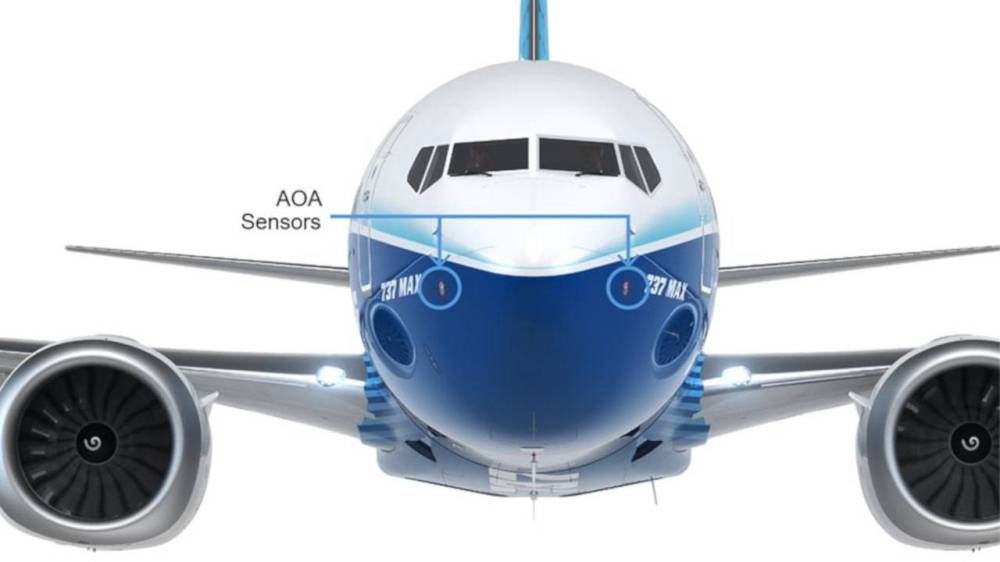
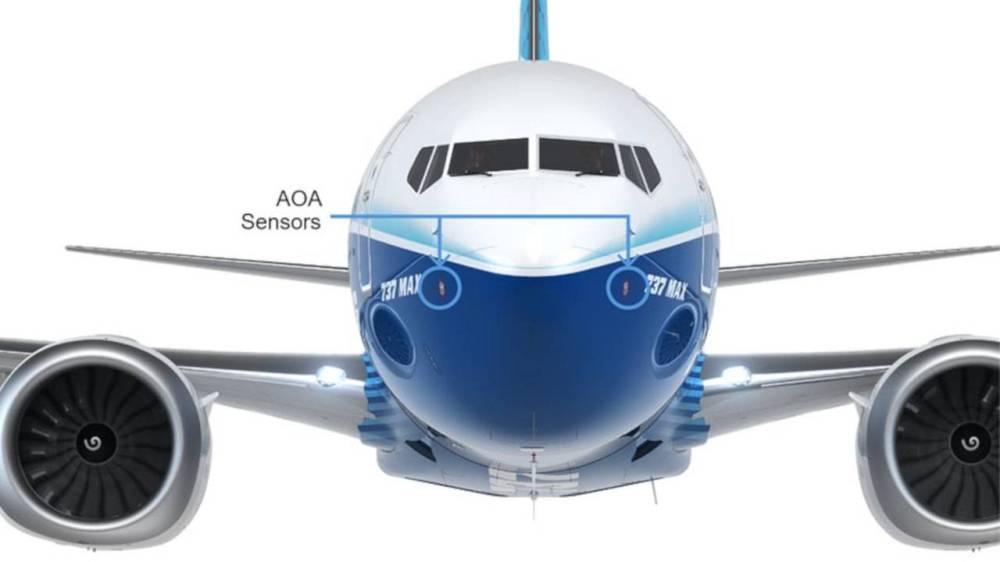
La velocidad del aire, la actitud, la altitud, la velocidad vertical, el rumbo y la configuración de la potencia del motor son los parámetros principales que utilizan las tripulaciones de vuelo para operar el avión de manera segura en un vuelo normal. El agitador de barra y el indicador de límite de inclinación son las características principales utilizadas para el funcionamiento del avión en ángulos de ataque elevados. Todas las acciones piloto, listas de verificación y capacitación recomendadas se basan en estos indicadores principales. Ni el indicador de ángulo de ataque ni la alerta AOA en desacuerdo son necesarios para la operación segura del avión. Solo proporcionan información complementaria, y nunca se han considerado características de seguridad en aviones de transporte comercial.

Los requisitos de diseño de Boeing para el 737 MAX incluían la alerta de AOA en desacuerdo como una característica estándar e independiente, de acuerdo con la filosofía de diseño fundamental de Boeing de mantener los elementos comunes con el 737NG. En 2017, varios meses después de comenzar las entregas de 737 MAX, los ingenieros de Boeing identificaron que el software del sistema de pantalla 737 MAX no cumplía correctamente con los requisitos de alerta de Desacuerdo AOA. El software entregado a Boeing vinculó la alerta de AOA en desacuerdo con el indicador AOA, que es una función opcional en el MAX y el NG. En consecuencia, el software activó la alerta AOA en desacuerdo solo si una aerolínea optó por el indicador AOA.

Cuando se identificó la discrepancia entre los requisitos y el software, Boeing siguió su proceso estándar para determinar la resolución adecuada de dichos problemas. Esa revisión, que involucró a varios expertos en la materia de la empresa, determinó que la ausencia de la alerta AOA En desacuerdo no tuvo un impacto adverso en la seguridad o la operación del avión. En consecuencia, la revisión concluyó, la funcionalidad existente era aceptable hasta que la alerta y el indicador pudieran desvincularse en la próxima actualización de software del sistema de pantalla planificada. El liderazgo de la compañía no participó en la revisión y se dio cuenta de este problema por primera vez después del accidente de Lion Air.

Aproximadamente una semana después del accidente de Lion Air, el 6 Noviembre 2018, Boeing emitió un Boletín del Manual de Operaciones (OMB), que fue seguido un día después por la emisión de una Directiva de Aeronavegabilidad (AD). Al identificar la alerta de desacuerdo de AOA como una de varias indicaciones que podrían resultar de un AOA erróneo, tanto la OMB como el AD describieron que la función de alerta de desacuerdo de AOA está disponible solo si la opción del indicador AOA está instalada.

Boeing discutió el estado de la alerta de desacuerdo AOA con la FAA tras el accidente de Lion Air. En ese momento, Boeing informó a la FAA que los ingenieros de Boeing habían identificado el problema del software en 2017 y habían determinado, según el proceso estándar de Boeing, que el problema no tenía un impacto negativo en la seguridad o la operación del avión. En diciembre de 2018, Boeing convocó a una Junta de Revisión de Seguridad (SRB) para considerar de nuevo si la ausencia de la alerta AOA en desacuerdo de ciertas pantallas de vuelo 737 MAX presentaba un problema de seguridad. Esa SRB confirmó la conclusión previa de Boeing de que no lo hizo. Boeing compartió esta conclusión y el análisis de SRB de apoyo con la FAA.

Boeing está emitiendo una actualización de software del sistema de pantalla para implementar la alerta AOA en desacuerdo como una característica estándar e independiente antes de que MAX vuelva al servicio. Cuando el MAX vuelva al servicio, todas las aeronaves de producción MAX tendrán una alerta AOA en desacuerdo activada y operable y un indicador de ángulo de ataque opcional. Todos los clientes con aviones MAX entregados previamente tendrán la capacidad de activar la alerta AOA en desacuerdo.

AW-70033400.jpgIncremento expectativas del 737 MAX

Hasta la divulgación del domingo, sus inversionistas estimaban que Boeing tendría que pagar para solucionar problemas técnicos con el 737 MAX, el avión en el que 346 personas murieron en accidentes en Octubre 2018 (Lion Air) y Marzo 2019 (Ethiopian Airlines). Boeing perdería ingresos mientras el avión está conectado a tierra, y compense a las aerolíneas por sus ingresos perdidos hasta que los reguladores dejen que el 737 MAX vuelva a volar.

Pero el 5 Mayo 2019, Boeing reveló en una declaración que sabía, meses antes del accidente de Lion Air, que la alerta en la cabina no estaba funcionando de la forma en que la compañía les había dicho a los compradores. Además, Boeing no compartió sus hallazgos con las aerolíneas ni con la FAA hasta después del accidente de Lion Air.

Antes de la noticia, los analistas estimaron que los juicios y los retrasos en las 737 entregas MAX podrían costarle a Boeing miles de millones. Boeing podría perder US$ 1 mil millones al mes en ingresos hasta que la aeronave comience a despacharse nuevamente, pagar otros US$ 1 mil millones al mes para compensar a las aerolíneas y las compañías de leasing por ingresos perdidos y desembolsar más de US$ 500 millones para reparar el software, según Canaccord Genuity. Mientras tanto, Cowen estimó que el flujo de efectivo libre de Boeing caería US$ 5 mil millones por debajo de su guía de enero de 2019 como resultado de la debacle del 737 MAX.

Los abogados podrían usar el anuncio del domingo de Boeing para aumentar ese costo. En una entrevista realizada el 6 Mayo 2019, Richard Aboulafia, Vicepresidente de Análisis de Teal Group, dijo: «Este problema no le cuesta nada a la empresa desde un punto de vista técnico para desarrollar una solución, pero estoy seguro de que los abogados lo utilizarán contra ellos en el cual siempre se desarrollan demandas». Según la declaración de Boeing al describir su demora en compartir información sobre el software AOA en desacuerdo que no funciona, Boeing argumentó que estaba protegido por su proceso estándar.

En 2017, varios meses después de comenzar las entregas de 737 MAX, los ingenieros de Boeing identificaron que el software del sistema de pantalla 737 MAX no cumplía con los requisitos de alerta de AOA en desacuerdo. Cuando se identificó la discrepancia entre los requisitos y el software, Boeing siguió su proceso estándar para determinar la resolución apropiada de tales problemas. Esa revisión, que involucró a varios expertos en la materia de la empresa, determinó que la ausencia de la alerta de AOA en desacuerdo no tuvo un impacto adverso en la seguridad u operación del avión.

Boeing planea poner a disposición de las aerolíneas una versión de trabajo de la alerta de AOA en desacuerdo como una característica estándar e independiente antes de que MAX vuelva al servicio. El AOA en desacuerdo, que funcionó en las versiones anteriores del 737, tiene la intención de «alertar a los pilotos que las señales de los dos ángulos de ataque del avión enviaron datos contradictorios sobre la relación de la nariz del avión a la corriente de aire que se aproxima», según Bloomberg.

La divulgación de Boeing agrega un nuevo elemento al costo potencial para los accionistas de la debacle del 737 MAX. Charles Elson, Director del Centro John L. Weinberg para el Gobierno Corporativo en la Universidad de Delaware, dijo en una entrevista el 6 Mayo 2019 en Cambridge, Inglaterra, «Boeing enfrenta tres costos: daños extracurriculares y daños potencialmente punitivos debido a las muertes de los dos choques; daños contractuales debidos a la pérdida de negocios de los clientes de sus aerolíneas, mientras que el 737 MAX está conectado a tierra, y daños a la reputación».AW-7009-GettyImages.jpg

Efecto colateral

El daño a la reputación del Boeing 737 MAX significa que las aerolíneas podrían comprarle a Airbus en lugar de a Boeing, algo que ya está sucediendo. Por ejemplo, como informó el Wall Street Journal, China está tomando la delantera en la puesta a tierra del Boeing 737 MAX y comprando 300 aviones al Airbus rival [una oportunidad perdida considerable desde que el 737 MAX se vende por US$ 106 millones cada uno.

Se especula que Boeing hizo su divulgación el 5 Mayo 2019 después de una investigación interna del asunto y determinó que la información saldría eventualmente y que era importante para el precio de las acciones. Algunos plantearán preguntas sobre por qué Boeing no reveló esto antes.

Si bien los inversionistas pueden haber asumido previamente que Boeing pagaría por los daños extracontractuales, contractuales y de reputación, la divulgación de Boeing del 5 Mayo 2019 plantea la cuestión de los daños punitivos, que en teoría podría ir incluso más alto que los «daños agudos», o tres veces los daños del agravio.

La principal defensa de Boeing es que los datos del AOA no son una «característica de seguridad porque una alerta sobre lecturas erróneas no forma parte central de la pantalla de vuelo clásica de un piloto». La lectura que se observa es un esfuerzo de Boeing para argumentar que estaba haciendo lo que una persona razonable habría hecho. Por otro lado, se especula la cuestión de si Boeing tergiversó la situación ante los reguladores de la industria de aviación.

Los funcionarios superiores de la FAA y de la aerolínea cada vez hacen más preguntas sobre cuán transparente ha sido el gigante aeroespacial de Chicago con respecto a los problemas con las advertencias en la cabina.AW-Icon-TXT-01

AW-7008766787677.jpgBoeing statement on the 737 MAX

Boeing-Company-LogoBoeing statement on MCAS functionality in the 737 MAX

The Boeing Company has communicated that each plane delivered to our customers, including the Boeing 737 MAX, were made with all the flight data and information necessary to operate safely that are provided in the flight deck on the main screen of the platform Of flight. This information is provided full time in the main field of vision of the pilots, and always has been.

Air velocity, attitude, altitude, vertical speed, heading and engine power settings are the main parameters used by flight crews to operate the aircraft safely on a normal flight. The bar agitator and the tilt limit indicator are the main characteristics used for the operation of the aircraft at high angles of attack. All recommended pilot actions, checklists and training are based on these main indicators. Neither the angle of attack indicator nor the AOA alert in disagreement are necessary for the safe operation of the aircraft. They only provide complementary information, and have never been considered safety features in commercial transport aircraft.

The Boeing design requirements for the 737 MAX included the AOA Disagree alert as a standard, stand-alone feature, in line with Boeing’s fundamental design philosophy of maintaining common elements with the 737NG. In 2017, several months after starting deliveries of 737 MAX, Boeing engineers identified that the 737 MAX display system software did not correctly meet the AOA Disagreement alert requirements. The software delivered to Boeing linked the AOA alert in disagreement with the AOA indicator, which is an optional feature in the MAX and the NG. As a result, the software activated the AOA alert in disagreement only if an airline opted for the AOA indicator.

When the discrepancy between the requirements and the software was identified, Boeing followed its standard process to determine the appropriate resolution of those problems. That review, which involved several experts in the matter of the company, determined that the absence of the AOA Disagreement alert did not have an adverse impact on the safety or operation of the aircraft. As a result, the review concluded, the existing functionality was acceptable until the alert and the indicator could be unlinked in the next software update of the planned screen system. The company’s leadership did not participate in the review and became aware of this problem for the first time after the Lion Air accident.

Approximately one week after the Lion Air accident, on November 6, 2018, Boeing issued an Operations Manual Bulletin (OMB), which was followed a day later by the issuance of an Airworthiness Directive (AD). When identifying the AOA disagreement alert as one of several indications that could result from a misleading AOA, both the OMB and the AD described that the AOA disagreement alert function is available only if the AOA indicator option is installed.

Boeing discussed the status of the AOA disagreement alert with the FAA following the Lion Air crash. At that time, Boeing informed the FAA that Boeing engineers had identified the software problem in 2017 and had determined, according to the standard Boeing process, that the problem did not have a negative impact on the safety or operation of the aircraft. In December 2018, Boeing convened a Safety Review Board (SRB) to consider again whether the absence of the AOA Disagreement alert from certain 737 MAX flight screens presented a safety problem. That SRB confirmed Boeing’s previous conclusion that he did not. Boeing shared this conclusion and SRB’s analysis of support with the FAA.

Boeing is issuing a screen system software update to implement the AOA Disagreement alert as a standard and independent feature before MAX returns to service. When MAX returns to service, all MAX production aircraft will have an activated and operable AOA alert and an optional attack angle indicator. All customers with previously delivered MAX aircraft will have the ability to activate the AOA alert in disagreement.

Increased expectations of the 737 MAX

Until the disclosure on Sunday, his investors estimated that Boeing would have to pay to solve technical problems with the 737 MAX, the plane in which 346 people died in accidents in October 2018 (Lion Air) and March 2019 (Ethiopian Airlines). Boeing would lose revenue while the plane is grounded, and compensate airlines for lost revenues until regulators let the 737 MAX fly again.

But on May 5, 2019, Boeing revealed in a statement that it knew, months before the Lion Air crash, that the alert in the cabin was not working the way the company had told the buyers. In addition, Boeing did not share its findings with the airlines or with the FAA until after the Lion Air crash.

Resultado de imagen para Boeing 737 MAX

Before the news, analysts estimated that the trials and delays in the 737 MAX deliveries could cost Boeing billions. Boeing could lose US$ 1 billion per month in revenues until the aircraft begins to re-ship, pay another US$ 1 billion per month to compensate airlines and leasing companies for lost revenues and disburse more than US$ 500 million to repair the software, according to Canaccord Genuity. Meanwhile, Cowen estimated that Boeing’s free cash flow would fall US$ 5 billion below its January 2019 guidance as a result of the 737 MAX debacle.

Lawyers could use Boeing’s Sunday announcement to increase that cost. In an interview on May 6, 2019, Richard Aboulafia, Vice President of Analysis of Teal Group, said: «This problem does not cost the company anything from a technical point of view to develop a solution, but I am sure that the lawyers they will use against them in which lawsuits always take place». According to Boeing’s statement describing its delay in sharing information about the disagreeing AOA software that does not work, Boeing argued that it was protected by its standard process.

In 2017, several months after the deliveries of 737 MAX began, Boeing engineers identified that the 737 MAX display system software did not meet the AOA alert requirements in disagreement. When the discrepancy between the requirements and the software was identified, Boeing followed its standard process to determine the appropriate resolution of such problems. That review, which involved several experts in the matter of the company, determined that the absence of the AOA alert in disagreement did not have an adverse impact on the safety or operation of the aircraft.

Boeing plans to make available to airlines a working version of the AOA Disagree alert as a standard and independent feature before MAX returns to service. The disagreeing AOA, which worked in previous versions of the 737, is intended to «alert pilots that signals from the two angles of attack of the aircraft sent contradictory data about the relationship of the airplane’s nose to the airstream that is approaching», according to Bloomberg.

The Boeing disclosure adds a new element to the potential cost to shareholders of the 737 MAX debacle. Charles Elson, Director of the John L. Weinberg Center for Corporate Governance at the University of Delaware, said in an interview on May 6, 2019 in Cambridge, England, «Boeing faces three costs: extracurricular damages and potentially punitive damages due to deaths of the two crashes, contractual damages due to the loss of business of the clients of their airlines, while the 737 MAX is connected to earth, and damages to the reputation».

Side effect

imagesThe damage to the reputation of the Boeing 737 MAX means that airlines could buy Airbus instead of Boeing, something that is already happening. For example, as reported by the Wall Street Journal, China is taking the lead in grounding the Boeing 737 MAX and buying 300 aircraft from the rival Airbus [a considerable lost opportunity since the 737 MAX sells for US$ 106 million each one.

It is speculated that Boeing made its disclosure on May 5, 2019 after an internal investigation of the matter and determined that the information would eventually come out and that it was important for the price of the shares. Some will raise questions about why Boeing did not reveal this before.

While investors may have previously assumed that Boeing would pay for non-contractual, contractual and reputational damages, Boeing’s disclosure of 5 May 2019 raises the issue of punitive damages, which in theory could go even higher than «acute damages, or three times the damages of the tort.

Boeing’s main defense is that the AOA data is not a «safety feature because a warning about erroneous readings is not a central part of a pilot’s classic flight display». The reading that is observed is an effort by Boeing to argue that he was doing what a reasonable person would have done. On the other hand, there is speculation as to whether Boeing misrepresented the situation to regulators in the aviation industry.

Senior FAA and airline officials are increasingly asking more questions about how transparent the Chicago aerospace giant has been with regard to problems with warnings in the cockpit. A \ W


Ξ A I R G W A Y S Ξ
SOURCE: Airgways.com
DBk: Boeing.com / Forbes.com / Bloomberg.com / Weinberg.udel.edu / Tealgroup.com / Usatoday.com / Airgways.com / Gettyimages.com / Deskgram.net / Theaircurrent.com
AW-POST: 201905061715AR

A\W   A I R G W A Y S ®

Accidente aéreo SSJ-100 de Aeroflot

Resultado de imagen para SSJ-100 air crash aeroflotAW | 2019 05 05 20:23 | AVIATION SAFETY

Resultado de imagen para aeroflot logoAccidente aéreo de un Sukhoi SSJ-100-95 de Aeroflot Russian Airlines

Un Sukhoi Superjet SSJ-100-95, registro RA-89098 de la aerolínea Aeroflot Russian Airlines que realiza el vuelo SU-1492 de Moscú Sheremetyevo a Murmansk (Rusia) con 73 pasajeros y 5 tripulantes, salió de la pista 24C de Sheremetyevo, el 5 Mayo 2019 a las 18:04L (15:04Z) pero detuvo el ascenso en aproximadamente el FL100, primero declaró la pérdida de la comunicación por radio, luego la emergencia a través de los códigos del transpondedor y regresó a Sherementyevo para un aterrizaje en la pista 24L a las 18:31L (15:31Z). Durante el despliegue, el avión estalló en llamas, se desvió a la izquierda de la pista y se detuvo en el pasto adyacente a la pista, el avión se quemó. 13 ocupantes murieron en el accidente, 28 siguen desaparecidos, 35 pudieron evacuar la aeronave a través de los dos portaobjetos de emergencia de la puerta delantera, la tripulación de vuelo escapó a través de las cuerdas de escape a través de las ventanas de la cabina, no se sabe cuántas lesiones ocurrieron.

Los servicios de emergencia informaron que el incendio se extinguió unos 45 minutos después del aterrizaje. Según información preliminar hubo 10 muertes. Los servicios de emergencia posteriormente actualizaron el recuento a 13 muertes, 6 heridos y un número aún no determinado de ocupantes desaparecidos. Las agencias de noticias rusas afirman que la aeronave recibió un rayo que causó una falla eléctrica total y un posterior retorno y un aterrizaje brusco.

5ccf481e4fb77.image.jpg

El Ministerio de Emergencias de Rusia originalmente afirmó que todos los ocupantes habían evacuado la aeronave y se habían registrado. Los hospitales locales informan que más de 10 personas a bordo de la aeronave están siendo tratadas.

La Fiscalía de Transporte Interregional de Moscú abrió una investigación sobre el aterrizaje de emergencia en la Sheremetyevo de Moscú. La oficina inicialmente confirmó una muerte, luego confirmó 13 muertes, incluyendo dos niños. La Fiscalía informó posteriormente, solo 37 ocupantes han sido contabilizados y están vivos, se teme que mueran 41 personas. Aeroflot informó que ha habido muertes, el número está siendo determinado. En la noche, la aerolínea dio a conocer una lista de los 33 pasajeros nombrados, que han sobrevivido al accidente, de los 5 que fueron hospitalizados.

Los oyentes en frecuencia informan que la aeronave perdió el contacto por radio en aproximadamente FL100 y regresó a Sheremetyevo sin contacto por radio con ATC. Un observador de tierra informó que fue testigo del aterrizaje. La aeronave rebotó, en el tercer touchdown crítico ambos puntales de los engranajes principales se derrumbaron y la aeronave se incendió. Un video no muestra humo ni fuego de la aeronave antes de la toma de contacto.AW-Icon-TXT-01

Resultado de imagen para SSJ-100 air crash aeroflotLos restos de la aeronave en la distancia.Evacuación en cursoResultado de imagen para aeroflot logo

Air crash SSJ-100 of Aeroflot

Plane crash of a Sukhoi SSJ-100-95 from Aeroflot Russian Airlines

A Sukhoi Superjet SSJ-100-95, registration RA-89098 of the airline Aeroflot Russian Airlines that performs the flight SU-1492 from Moscow Sheremetyevo to Murmansk (Russia) with 73 passengers and 5 crew, left the runway 24C of Sheremetyevo, the 5 May 2019 at 18:04L (15:04Z) but stopped the ascent at approximately the FL100, first declared the loss of radio communication, then the emergency through the transponder codes and returned to Sherementyevo for a landing at track 24L at 18:31L (15:31Z). During the deployment, the plane burst into flames, veered to the left of the runway and stopped at the grass adjacent to the runway, the plane burned down. 13 occupants were killed in the accident, 28 are still missing, 35 were able to evacuate the aircraft through the two front door emergency slides, the flight crew escaped through the escape lines through the cabin windows, It is not known how many injuries occurred.

The emergency services reported that the fire was extinguished about 45 minutes after landing. According to preliminary information there were 10 deaths. The emergency services subsequently updated the count to 13 deaths, 6 injuries and an as yet undetermined number of missing occupants. Russian news agencies claim that the aircraft received a beam that caused a total electrical failure and a subsequent return and abrupt landing.

The Russian Emergency Ministry originally claimed that all occupants had evacuated the aircraft and had registered. Local hospitals report that more than 10 people aboard the aircraft are being treated.

The Interregional Transport Prosecutor’s Office in Moscow opened an investigation into the emergency landing at the Sheremetyevo in Moscow. The office initially confirmed one death, then confirmed 13 deaths, including two children. The Prosecutor’s Office later reported, only 37 occupants have been counted and are alive, it is feared that 41 people will die. Aeroflot reported that there have been deaths, the number is being determined. At night, the airline released a list of the 33 named passengers, who have survived the accident, of the 5 who were hospitalized.

Frequent listeners report that the aircraft lost radio contact at approximately FL100 and returned to Sheremetyevo without radio contact with ATC. An earth observer reported that he witnessed the landing. The aircraft bounced, on the third critical touchdown both struts of the main gears collapsed and the aircraft caught fire. A video shows no smoke or fire from the aircraft before making contact. A \ W

Resultado de imagen para SSJ-100 air crash aeroflotАвиакатастрофа SSJ-100 Аэрофлота

Авиакатастрофа Сухого SSJ-100-95 от Аэрофлот Российские Авиалинии

Sukhoi Superjet SSJ-100-95, регистрация RA-89098 авиакомпании Аэрофлот Российские авиалинии, выполняющей рейс Су-1492 из Москвы Шереметьево в Мурманск (Россия) с 73 пассажирами и 5 членами экипажа, покинул взлетно-посадочную полосу 24С Шереметьево. 5 мая 2019 года в 18:04L (15:04Z), но остановил всплытие примерно на FL100, сначала объявил о потере радиосвязи, затем о чрезвычайной ситуации с помощью кодов приемоответчика и вернулся в Шеременево для посадки в дорожка 24L в 18:31L (15:31Z). Во время развертывания самолет загорелся, повернул налево от ВПП и остановился у травы, прилегающей к ВПП, самолет сгорел. В результате аварии погибли 13 пассажиров, 28 пропали без вести, 35 смогли эвакуировать самолет через две аварийные горки передних дверей, летный экипаж сбежал через линии эвакуации через окна кабины, Не известно, сколько травм произошло.

Аварийные службы сообщили, что пожар был ликвидирован примерно через 45 минут после приземления. По предварительной информации погибло 10 человек. Службы экстренной помощи впоследствии обновили счет до 13 смертей, 6 раненых и пока еще неизвестного числа пропавших без вести. Российские информационные агентства утверждают, что самолет получил луч, который вызвал полный электрический сбой и последующий возврат и резкую посадку.

МЧС России первоначально утверждало, что все пассажиры эвакуировали самолет и зарегистрировались. Местные больницы сообщают, что более 10 человек на борту самолета проходят лечение.

Межрегиональная транспортная прокуратура в Москве начала расследование аварийной посадки в Шереметьево в Москве. Офис сначала подтвердил одну смерть, затем подтвердил 13 смертей, включая двух детей. Прокуратура позже сообщила, что только 37 жителей были подсчитаны и живы, есть опасения, что 41 человек погибнет. Аэрофлот сообщил, что имели место случаи смерти, число уточняется. Ночью авиакомпания опубликовала список из 33 названных пассажиров, переживших аварию, из 5, которые были госпитализированы.

Частые слушатели сообщают, что самолет потерял связь по радио примерно на FL100 и вернулся в Шереметьево без радиосвязи с УВД. Наземный наблюдатель сообщил, что он был свидетелем посадки. Самолет отскочил, при третьем критическом приземлении обе стойки главных передач разрушились, и самолет загорелся. Видео не показывает дыма или огня от самолета, прежде чем вступить в контакт. A \ W


video-camera_318-50337.jpg


DATA: La información procesada puede actualizarse debido al tipo de datos cambiantes, por lo que le sugerimos consultar periódicamente esta información.

DATA: The processed information can be updated due to the type of changing data, so we suggest you consult this information periodically.


Ξ A I R G W A Y S Ξ
SOURCE: Airgways.com
DBk: Avherald.com / Mchs.ru / Bloomberg.com / Nytimes.com / L.Metskhvarishvili / Fatimakhadueva
AW-POST: 201905052023AR

A\W   A I R G W A Y S ®

Incursión 737-800 Miami Air

Resultado de imagen para Miami Air

AW | 2019 05 04 20:13 | AVIATION SAFETY

Resultado de imagen para Miami AirUn Boeing 737-800 incursiona en Estación Aérea Naval de Jacksonville, Florida

Un Boeing 737-800 de la aerolínea Miami Air efectúa aterrizaje forzoso en Base Aérea Naval de Jacksonville, en el Estado de Florida el 3 Mayo 2019, incursionando la aeronave saliendo de pista y cayendo en el río.

Un Boeing 737-800 de Miami Air International, con registro N732MA que realizaba el vuelo GL-293 desde la Estación Aérea Naval de la Bahía de Guantánamo (Cuba) a la Estación Aérea Naval de Jacksonville, Florida con 136 pasajeros y 7 tripulantes, aterrizó en la Pista 10 de la Base Aérea Naval de Jacksonville a las 21:42L (01:42Z, 4 Mayo 2019), pero sobrepasó el final de la pista y se detuvo en las aguas poco profundas del Río St. John’s a unos 380 metros (1250 pies) más allá del final de la pista y quedó parcialmente sumergido. Todos los ocupantes pudieron evacuar el avión, 21 fueron trasladados a hospitales con lesiones no críticas.

La Oficina del Sheriff de Jacksonville informó que se llamó a Unidades Marinas para ayudar en el rescate. Todas las personas a bordo están vivas y contabilizadas. Hubo heridas leves, varias personas fueron trasladadas a un hospital. La oficina luego agregó que 21 personas fueron llevadas a hospitales con lesiones no críticas.

El aeropuerto informó que el avión se estrelló contra el río al final de la pista, a unos 100 pies de la superficie pavimentada. El alcalde de Jacksonville informó que el avión aterrizó durante una tormenta con poca visibilidad, lo que puede ser un factor en el accidente.

La NTSB abrió una investigación y envió un equipo de investigación en el sitio. El equipo de la NTSB planea una sesión informativa para los medios de comunicación la tarde del 4 de mayo de 2019 (hora local). La Estación Aérea Naval de Jacksonville cuenta con una pista 10/28 de 9003 pies / 2740 metros de longitud.AW-Icon-TXT-01

Miami Air.jpgIncursion Boeing 737-800 Miami Air

A Boeing 737-800 ventures into Jacksonville Naval Air Station, Florida

A Boeing 737-800 of the airline Miami Air makes a forced landing at Naval Air Base Jacksonville, in the State of Florida on May 3, 2019, entering the aircraft off the runway and falling into the river.

A Boeing 737-800 from Miami Air International, with registration N732MA that made flight GL-293 from the Naval Air Station of Guantánamo Bay (Cuba) to the Naval Air Station of Jacksonville, Florida with 136 passengers and 7 crew, landed on Runway 10 of Jacksonville Naval Air Base at 9.42L (01: 42Z, 4 May 2019), but it passed the end of the runway and stopped in the shallow waters of the St. John’s River about 380 meters (1250 feet) beyond the end of the track and was partially submerged. All the occupants were able to evacuate the plane, 21 were transferred to hospitals with non-critical injuries.

The Jacksonville Sheriff’s Office reported that Marine Units were called to help in the rescue. All people on board are alive and accounted for. There were minor injuries, several people were transferred to a hospital. The office then added that 21 people were taken to hospitals with non-critical injuries.

The airport reported that the plane crashed into the river at the end of the runway, about 100 feet from the paved surface. The mayor of Jacksonville reported that the plane landed during a storm with poor visibility, which may be a factor in the accident.

The NTSB opened an investigation and sent a research team to the site. The NTSB team plans an informational session for the media on the afternoon of May 4, 2019 (local time). The Jacksonville Naval Air Station has a 10/28 track of 9003 feet / 2740 meters in length. A\W


Ξ A I R G W A Y S Ξ
SOURCE: Airgways.com
DBk: Avherald.com / Jaxsheriff.org / Faa.gov
AW-POST: 201905042013AR

A\W   A I R G W A Y S ®