Japan Airlines anuncia implemento de solución de carga
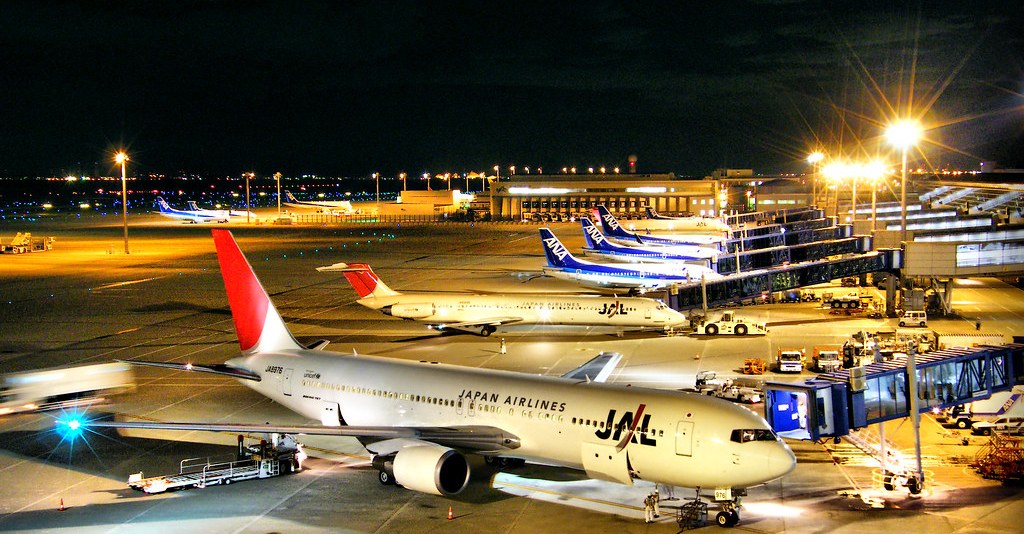
Japan Airlines (JAL) ha informado que aplicará la solución para alimentar un nuevo servicio nacional de carga aérea que permite al transportista competir con otros modos de transporte, integrando opciones aéreas y terrestres. JAL desarrollará un conjunto de API que conectan su nuevo servicio doméstico a Cargospot, el sistema de gestión de carga de la aerolínea, desarrollado y operado por CHAMP.
Las ventajas de la integración de la API incluyen presupuestos instantáneos de extremo a extremo para los clientes y la capacidad de permitir que los socios ofrezcan múltiples servicios, incluida la comprobación de la disponibilidad de vuelos y la administración de reservas. «CHAMP ha proporcionado una solución verdaderamente innovadora. En lugar de organizar el transporte terrestre y aéreo por separado, y comparar manualmente las diferentes opciones, el poder de las API de CHAMP ahora nos permite conectarnos y proporcionar una propuesta de extremo a extremo más fácil y sin problemas a nuestros valiosos clientes. Estamos encantados con la implementación sin problemas y la transformación empresarial, y con la excelente cooperación del equipo de entrega de CHAMP», comentó Yasunari Taniguchi, Vicepresidente de Administración, Carga y Correo de Japan Airlines Cargo.
Japan Airlines increases digital capabilities
Japan Airlines announces cargo solution implementation
Japan Airlines (JAL) has informed that it will apply the solution to feed a new national air cargo service that allows the carrier to compete with other modes of transport, integrating air and land options. JAL will develop a set of APIs that connect its new domestic service to Cargospot, the airline’s cargo management system, developed and operated by CHAMP.
The benefits of API integration include instant end-to-end quotes for customers and the ability to enable partners to offer multiple services, including checking flight availability and managing reservations. «CHAMP has provided a truly innovative solution. Instead of organizing air and ground transportation separately, and manually comparing the different options, the power of CHAMP’s APIs now allows us to connect and provide an easier and easier end-to-end proposition. hassle-free to our valued customers. We are delighted with the smooth implementation and business transformation, and with the excellent cooperation from the CHAMP delivery team», commented Yasunari Taniguchi, Vice President of Administration, Cargo and Mail, Japan Airlines Cargo.
Reclamaciones por cancelación vuelos por Tormenta Filomena
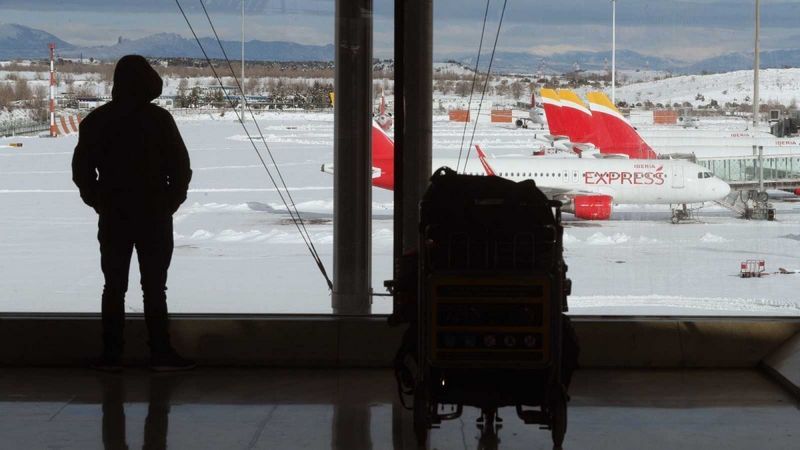
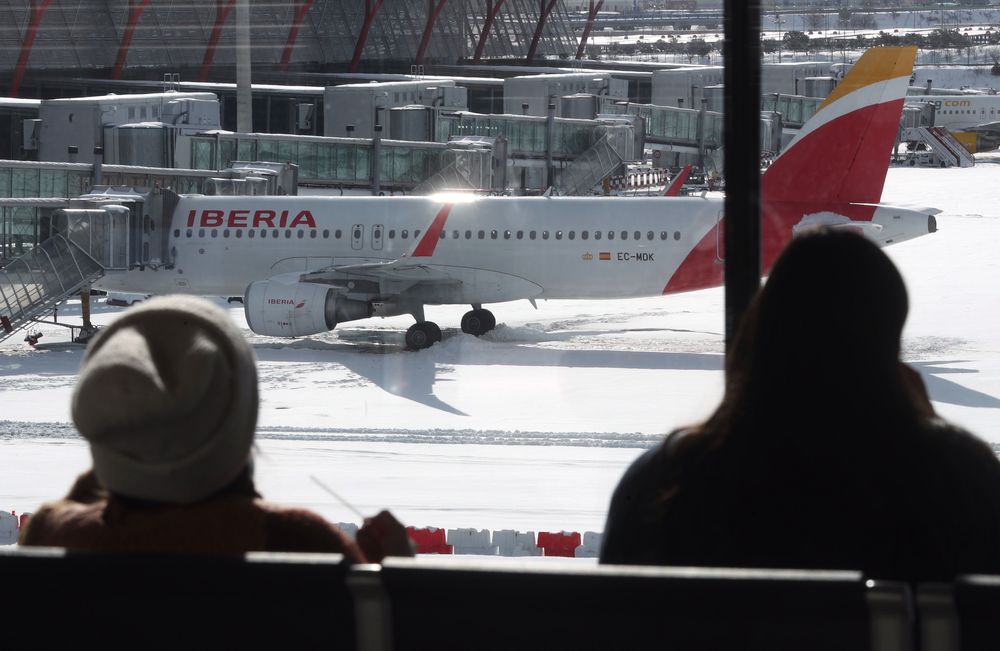
Partes de España luchan tras nevadas récord en el país. Las operaciones de limpieza de nieve en toda España continuaron la semana pasada a medida que las temperaturas en todo el país se desplomaran a mínimos históricos después del impacto de la tormenta Filomena durante el fin de semana. El temporal claramente adverso en ese momento considera una circunstancia extraordinaria y, por ello, no es posible reclamar su cancelación a la aerolínea, pero la línea aérea está obligada a reembolsar el pasaje aéreo o a buscar una alternativa de reprogramación de vuelo. Debido a la naturaleza del evento, la aerolínea no pudo evitar la incidencia, ya que fue causada por circunstancias impredecibles e inevitables, todas ellas fuera del control efectivo de la compañía. Las aerolíneas no pueden aplicar ninguna medida adicional para intentar minimizar los inconvenientes, por lo que miles de pasajeros afectados ante su vuelo cancelado por el temporal Filomena, que afecta especialmente a la capital de España desde el pasado viernes.
El aeropuerto más concurrido del país, el Adolfo Suárez Madrid/Barajas en Madrid, se vio obligado a cerrar el fin de semana debido a las condiciones climáticas adversas, y miles de vuelos fueron y siguen siendo cancelados a día de hoy. La tormenta Filomena ha traído fuertes nevadas y ha sido el principal motivo de cancelación de vuelo durante la semana. En este contexto, el 40% de los más de 500 pasajeros afectados que han contactado con la plataforma especialista en reclamaciones de vuelos, Reclamación de Vuelos, aseguran que su vuelo no debería haberse cancelado. Entre los muchos comentarios de los afectados, se repite un “los demás volaron sin ningún problema».
El Director de Operaciones de reclamaciondevuelos.com, Ekaitz Bacelo, una plataforma de derechos de los pasajeros, expresa: “Si se demuestra que el tiempo era claramente adverso en ese momento, esto se considera una circunstancia extraordinaria y, por ello, no es posible reclamar su cancelación a la aerolínea. Sin embargo, la aerolínea está obligada a hacer el reembolso del billete o buscar una alternativa de vuelo. No obstante, en muchos casos, las compañías aéreas alegan esta circunstancia para justificar retrasos o cancelaciones de sus vuelos cuando no se dan tales condiciones climatológicas. Merece la pena cerciorarse de que no sea una excusa injustificada. Esto se puede comprobar mediante nuestros expertos”, expresa.
Reembolso o vuelo alternativo
Las cancelaciones de vuelos por los efectos de la Tormenta Filomena dan derecho a reembolso pero no a indemnización. Legalmente, las aerolíneas están obligadas como mínimo a devolver al pasajero el coste del billete cancelado. No obstante, si el pasajero está de acuerdo, la compañía aérea puede reasignarle en otro vuelo o cambiar su billete por un bono canjeable en un futuro.
Indemnización de vuelo
Sin embargo, en otras ocasiones se puede exigir una indemnización. Si otros vuelos están despegando al mismo tiempo que el vuelo del pasajero afectado, indicaría que esa cancelación es debido a un problema de la aerolínea y no a una circunstancia extraordinaria, por lo que sí se puede exigir una indemnización.
Es posible reclamar por la cancelación de un vuelo que no se deba a circunstancias extraordinarias, una indemnización que varía entre los € 250 y los 600 Euros, en función de la distancia del vuelo hasta el destino final. Además, el pasajero puede reclamar los gastos provocados por la cancelación o que no pueda disfrutar derivados de la misma: hoteles reservados en destino o abonados durante la espera, taxis, comidas en el aeropuerto o fuera de él, excursiones perdidas, coche de alquiler, entre otros ítems. Por cualquier razón, decide no viajar porque la cancelación del vuelo provoca que el viaje deje de tener sentido, o bien, decide buscar una alternativa para llegar a su destino porque la aerolínea no le reubica en otro vuelo, se puede exigir, también, el reembolso del vuelo comprado.
Post-Filomena air claims
Claims for cancellation of flights due to Storm Filomena
Parts of Spain are battling after record snowfall in the country. Snow clearing operations across Spain continued last week as temperatures across the country plummeted to record lows after the impact of Storm Filomena over the weekend. The clearly adverse storm at that time is considered an extraordinary circumstance and, therefore, it is not possible to claim its cancellation from the airline, but the airline is obliged to reimburse the air ticket or to look for an alternative flight rescheduling. Due to the nature of the event, the airline was unable to prevent the incident as it was caused by unavoidable and unpredictable circumstances, all of which were beyond the effective control of the company. The airlines cannot apply any additional measures to try to minimize the inconvenience, so thousands of passengers affected by their flight canceled by the Filomena storm, which especially affects the capital of Spain since last Friday.
The busiest airport in the country, the Adolfo Suárez Madrid/Barajas airport in Madrid, was forced to close for the weekend due to adverse weather conditions, and thousands of flights were and continue to be canceled to this day. Storm Filomena brought heavy snowfall and was the main reason for flight cancellation during the week. In this context, 40% of the more than 500 affected passengers who have contacted the platform specializing in flight claims, Flight Claim, assure that their flight should not have been canceled. Among the many comments from those affected, a “the others flew without any problem is repeated».
The Director of Operations of reclamaciondevuelos.com, Ekaitz Bacelo, a passenger rights platform, states: “If it is shown that the weather was clearly adverse at that time, this is considered an extraordinary circumstance and, therefore, it is not possible claim its cancellation to the airline. However, the airline is obliged to refund the ticket or find an alternative flight. However, in many cases, airlines use this circumstance to justify delays or cancellations of their flights when such weather conditions do not exist. It is worth making sure that it is not an unwarranted excuse. This can be verified by our experts”, he says.
Refund or alternative flight
Flight cancellations due to the effects of the Filomena Storm give the right to reimbursement but not compensation. Legally, airlines are required at least to return the cost of the canceled ticket to the passenger. However, if the passenger agrees, the airline can reassign him to another flight or change his ticket for a voucher that can be exchanged in the future.
Flight compensation
However, on other occasions compensation may be required. If other flights are taking off at the same time as the affected passenger’s flight, it would indicate that this cancellation is due to a problem with the airline and not to an extraordinary circumstance, for which compensation may be required.
It is possible to claim for the cancellation of a flight that is not due to extraordinary circumstances, compensation that varies between € 250 and 600 Euros, depending on the distance of the flight to the final destination. In addition, the passenger can claim the expenses caused by the cancellation or that they cannot enjoy derived from it: hotels reserved at the destination or paid during the wait, taxis, meals at or outside the airport, missed excursions, rental car, among other items. For whatever reason, you decide not to travel because the cancellation of the flight causes the trip to stop making sense, or you decide to look for an alternative to reach your destination because the airline does not relocate you to another flight, you can also require the refund of the purchased flight.
Implementará primera estación de abastecimiento aeronaves
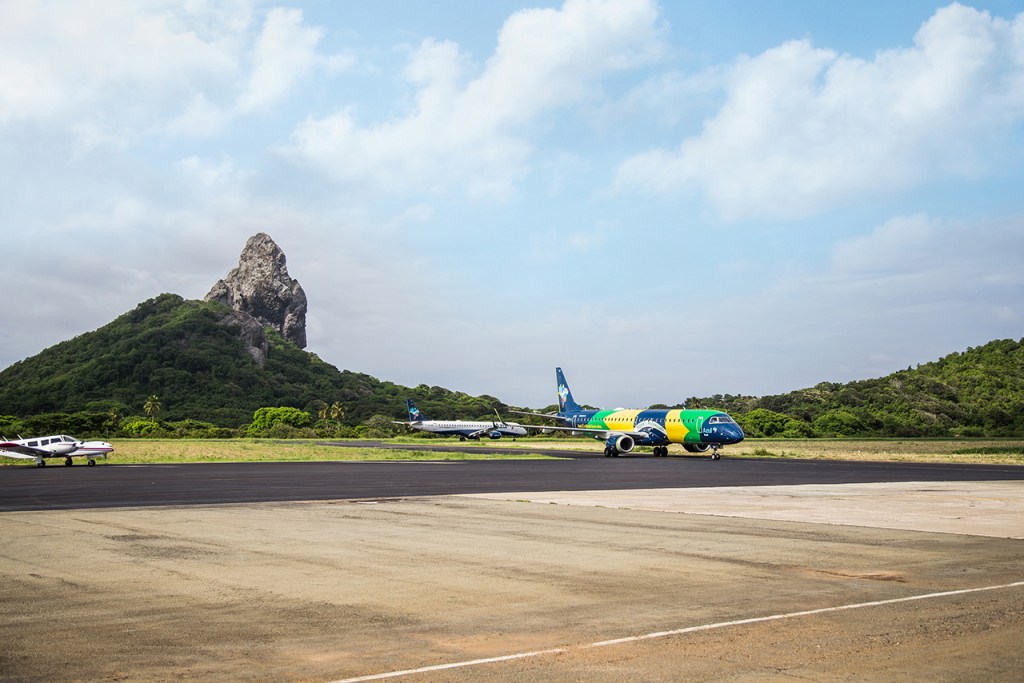
La Isla de Fernando de Noronha, en el Estado de Pernambuco (PE), República de Brasil, tendré su primer Puesto de Abastecimiento de Aeronaves (PAA), una inversión de unos R$ 20 millones de Reales, a finales de este año 2021. El objetivo del implemento de suministro en la isla permitirá evitar paradas en los aeropuertos de la costa noreste para repostar, como así también de aquellas aeronaves que no encuentran condiciones climáticas adecuadas para el aterrizaje inmediato en Fernando de Noronha no tendrían que regresar al continente para aterrizar. Esto se debe precisamente a que no hay posibilidad de reabastecimiento de combustible en el archipiélago, un problema que se cumplirá con el nuevo PAA que tiene Agemar como responsable del suministro regular de combustible del archipiélago, que invirtió R$ 15 millones para construir un buque cisterna especial que cumpla con todos los estándares de seguridad requeridos para el transporte de queroseno de aviación. Otros R$ 4,7 millones fueron asignados por revisión para las obras de PAA.
«Fernando de Noronha tiene un enorme potencial de Turismo y necesita una estructura cada vez mejor para que reciba a los turistas de una manera cómoda y sostenible. Sabemos que el turista sólo regresa o indica un destino turístico si tiene una buena experiencia y encuentra la naturaleza preservada», afirma Carlos Brito, Presidente de Embratur. Los incentivos previstos en el proyecto BR do Mar, propuestos por el Ejecutivo, aprobados en la Cámara de Representantes y que se llevan a cabo en el Senado Federal, son esperados por las empresas responsables de las inversiones. Entre las ventajas de BR do Mar se encuentra la modernización de la navegación por cabotaje en todo Brasil.
Noronha will have resupply
Noronha will implement the first aircraft supply station
The Island of Fernando de Noronha, in the State of Pernambuco (PE), Republic of Brazil, will have its first Aircraft Supply Post (PAA), an investment of about R$ 20 million, at the end of this year 2021. The objective of the supply implement on the island will avoid stops at the airports on the northeast coast to refuel, as well as those aircraft that do not find adequate weather conditions for immediate landing in Fernando de Noronha would not have to return to the continent to land. This is precisely due to the fact that there is no possibility of refueling in the archipelago, a problem that will be met with the new PAA that Agemar has as responsible for the regular supply of fuel to the archipelago, which invested R$ 15 million to build a tanker that meets all the safety standards required for the transport of aviation kerosene. Another R$ 4.7 million were assigned for revision for PAA works.
«Fernando de Noronha has enormous tourism potential and needs an increasingly better structure so that it receives tourists in a comfortable and sustainable way. We know that tourists only return or indicate a tourist destination if they have a good experience and find nature. preserved», affirms Carlos Brito, President of Embratur. The incentives provided for in the BR do Mar project, proposed by the Executive, approved in the House of Representatives and carried out in the Federal Senate, are expected by the companies responsible for the investments. Among the advantages of BR do Mar is the modernization of coastal shipping throughout Brazil.
Noronha terá reabastecimento
Noronha vai implantar 1ra estação de abastecimento de aeronaves
A Ilha de Fernando de Noronha, no Estado de Pernambuco (PE), República do Brasil, terá seu primeiro Posto de Abastecimento de Aeronaves (PAA), um investimento de cerca de R$ 20 milhões, no final deste ano de 2021. O objetivo do implemento de abastecimento na ilha evitará paradas nos aeroportos do litoral nordestino para reabastecimento, bem como aquelas aeronaves que não encontrem condições climáticas adequadas para o pouso imediato em Fernando de Noronha não precisem retornar ao continente para pousar. Isso se deve justamente ao fato de não haver possibilidade de reabastecimento no arquipélago, problema que será enfrentado com o novo PAA que a Agemar tem como responsável pelo abastecimento regular de combustível ao arquipélago, que investiu R$ 15 milhões na construção de um petroleiro que atenda a todas as normas de segurança exigidas para o transporte de querosene de aviação. Outros R$ 4,7 milhões foram destinados para revisão de obras do PAA.
“Fernando de Noronha tem um enorme potencial turístico e precisa de uma estrutura cada vez melhor para receber os turistas de forma confortável e sustentável. Sabemos que o turista só retorna ou indica um destino turístico se tiver uma boa experiência e encontrar a natureza. preservada”, afirma Carlos Brito, presidente da Embratur. Os incentivos previstos no projeto BR do Mar, proposto pelo Executivo, aprovado na Câmara dos Deputados e executado no Senado Federal, são esperados pelas empresas responsáveis pelos investimentos. Entre as vantagens da BR do Mar está a modernização da cabotagem em todo o Brasil.
Primer Airbus A321P2F entregado para Titan Airways
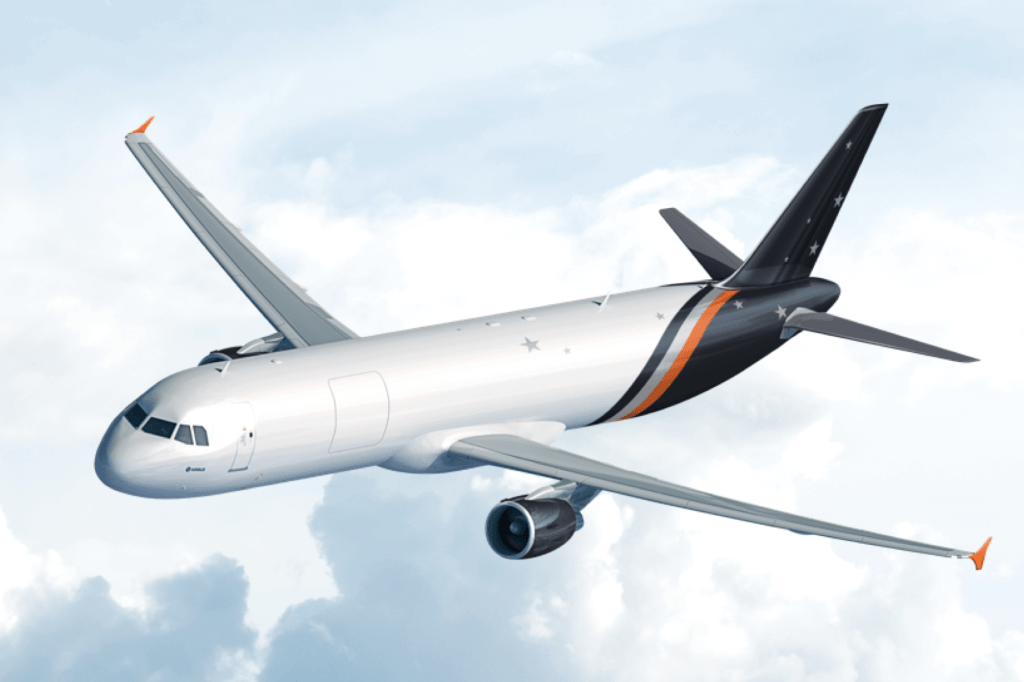
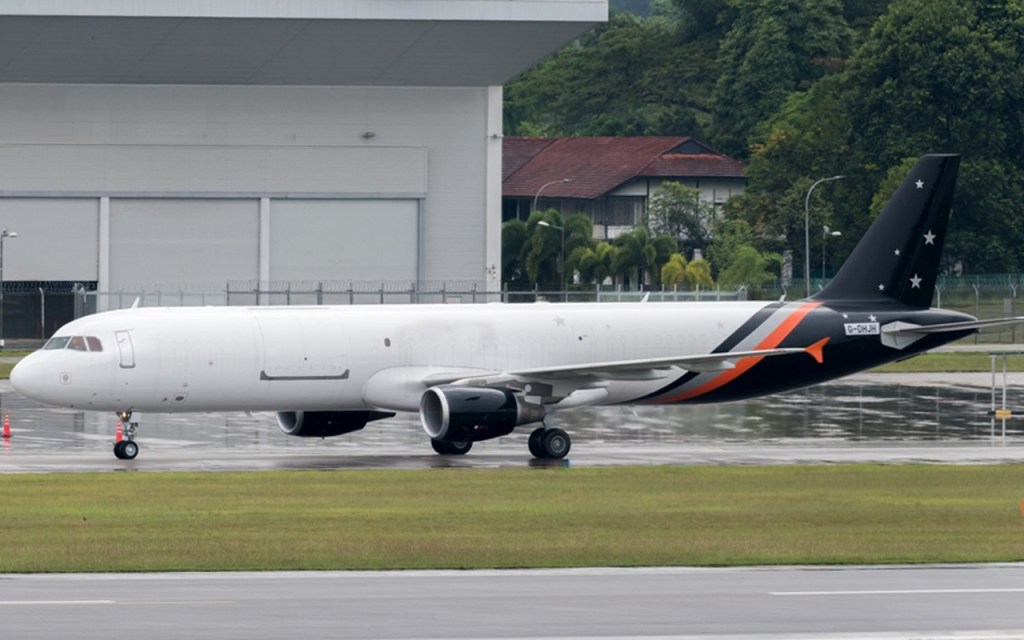
La compañía Elbe Flugzeugwerke EFW ha entregado un Airbus A321P2F (P2F Pasajero a Carguero) a la empresa de arrendamiento BBAM Limited Partnership el Jueves 07/01. Es el primer carguero de conversión A321-P2F entregado a la compañía con sede en San Francisco. El primer carguero A321 convertido será arrendado por BBAM a la aerolínea chárter británica Titan Airways.
ST Engineering Airbus ST Engineering, Airbus y su empresa conjunta, Elbe Flugzeugwerke (EFW) presentaron el primere avión A321P2F a BBAM Limited Partnership, una empresa líder en gestión de arrendamiento de aeronaves con más de US$ 29 mil de activos bajo gestión y unos 150 profesionales ubicados en oficinas de todo el mundo. Este es el primer redelivery A321P2F hecho a BBAM, con varias unidades más por venir según lo contratado con EFW. Steve Zissis, Presidente y Director Ejecutivo de BBAM dijo: «ST Engineering, Airbus y el programa A321P2F de EFW ofrecen firmemente en las áreas de innovación y mejora del valor. Nos complace asociarnos con ellos y con nuestro cliente, Titan Airways en una solución que satisfaga plenamente los requisitos de nuestros clientes y conduzca valor para nuestros inversores». Alastair Willson, Director General de Titan: «Estamos encantados de recibir la entrega de nuestro primer A321P2F de BBAM y EFW».
Titan Airways tiene más de 32 años de exitosas operaciones de carga y pasajeros, y ha sido un operador de Airbus desde 2013. El A321P2F nos permitirá utilizar todos los beneficios de este tipo en nuestras actividades de flete aéreo, incluyendo la mejor economía de su clase, ruido reducido, una menor huella de carbono y monitoreo de la salud en tiempo real, garantizando los más altos niveles de confiabilidad.
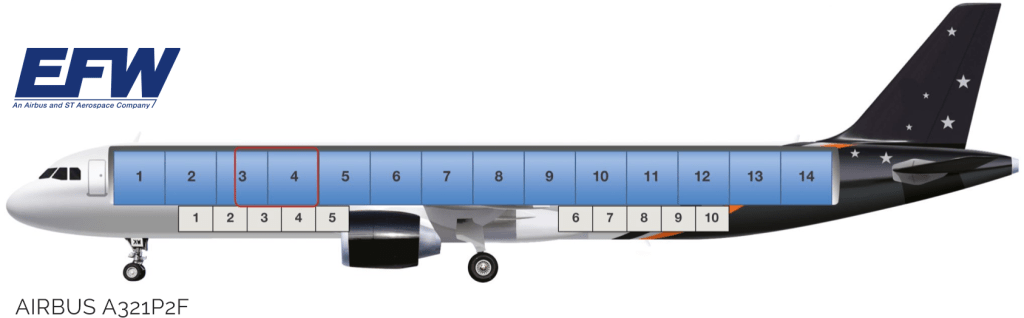
El A321P2F es el primero en su categoría de tamaño que ofrece carga en contenedores tanto en la cubierta principal hasta 14 posiciones completas del contenedor como en la cubierta inferior hasta 10 posiciones de contenedor. La solución A321P2F de EFW tiene una carga útil bruta generosa y probada de más de 28 toneladas métricas, con un mayor potencial al alza en futuras conversiones. La solución, que viene con una distribución de peso optimizada para permitir vuelos vacíos y carga aleatoria, otorga una alta flexibilidad para los operadores, en particular las compañías aéreas exprés. El hecho de que el programa de EFW sea la única solución OEM para A321P2F en el mercado también garantiza el valor del ciclo de vida, dada su superioridad en calidad, fiabilidad y facilidad de mantenimiento. «Queremos agradecer a nuestro cliente, BBAM y operador de este carguero, Titan Airways por confiarnos el crecimiento de su flota de cargueros con un nuevo miembro de la familia de cargueros Airbus. A medida que nuestro programa A321P2F gane constantemente fuerza con más redeliveries, junto con nuestras empresas matrices ST Engineering y Airbus, duplicaremos la entrega de esta innovadora solución al mercado y la captura de una cuota de mercado de cargueros de cuerpo más estrecho», dijo Andreas Sperl, Director Ejecutivo de EFW.
Para satisfacer la creciente demanda de A321P2F, ST Engineering, junto con EFW, planea establecer sitios de conversión adicionales en China, Estados Unidos y Alemania, lo que aumentará su capacidad de conversión global a 25 ranuras por año para 2023.
Titan receives 1st Airbus A321P2F
First Airbus A321P2F delivered for Titan Airways
The company Elbe Flugzeugwerke EFW has delivered an Airbus A321P2F (P2F Passenger to Freighter) to the leasing company BBAM Limited Partnership on Thursday 07/01. It is the first A321-P2F conversion freighter delivered to the San Francisco-based company. The first converted A321 freighter will be leased by BBAM from British charter airline Titan Airways.
ST Engineering Airbus ST Engineering, Airbus and their joint venture, Elbe Flugzeugwerke (EFW) presented the first A321P2F aircraft to BBAM Limited Partnership, a leading aircraft lease management company with more than US $ 29,000 of assets under management and about 150 professionals located in offices around the world. This is the first A321P2F redelivery made to BBAM, with several more units to come as contracted with EFW. Steve Zissis, President and CEO of BBAM said: «ST Engineering, Airbus and EFW’s A321P2F program are strong in the areas of innovation and value enhancement. We are pleased to partner with them and our customer, Titan Airways on a solution that fully satisfy our customers’ requirements and drive value for our investors». Alastair Willson, Titan Managing Director: «We are delighted to receive the delivery of our first A321P2F from BBAM and EFW».
Titan Airways has more than 32 years of successful passenger and cargo operations and has been an Airbus operator since 2013. The A321P2F will allow us to use all the benefits of this type in our air charter activities, including best-in-class economy, reduced noise, a lower carbon footprint and health monitoring in real time, ensuring the highest levels of reliability.
The A321P2F is the first in its size category to offer containerized loading on both the main deck up to 14 full container positions and the lower deck up to 10 container positions. EFW’s A321P2F solution has a proven, generous gross payload of over 28 metric tons, with greater upside potential in future conversions. The solution, which comes with an optimized weight distribution to allow empty flights and random loading, provides high flexibility for operators, particularly express airlines. The fact that the EFW program is the only OEM solution for A321P2F on the market also guarantees life cycle value, given its superiority in quality, reliability and ease of maintenance. «We want to thank our customer, BBAM and operator of this freighter, Titan Airways for entrusting us with the growth of their freighter fleet with a new member of the Airbus freighter family. As our A321P2F program steadily gains strength with more redeliveries, along with With our parent companies ST Engineering and Airbus, we will double the delivery of this innovative solution to the market and capture a tighter body freighter market share», said Andreas Sperl, CEO of EFW.
To meet the growing demand for A321P2F, ST Engineering, in conjunction with EFW, plans to establish additional conversion sites in China, the United States, and Germany, increasing its global conversion capacity to 25 slots per year by 2023.
El Gobierno de los Países Bajos ha agregado entrando el 2021 un nuevo impuesto a los usuarios del transporte aéreo. El organismo fiscalizador de los aeropuerto introducen una tarifa de tasas de impuesto ambiental. Cada pasajero deberá pagar casi € 7,45 Euros. Cada año, según la tasa de inflación, el precio de este impuesto irá variando. Al mismo tiempo, se introduce una segunda tasa en las emisiones de dióxido de carbono, que amplían el impuesto sobre el mismo concepto que aplica la Unión Europea (UE). Este segundo impuesto, que no afecta a las aerolíneas sino a la contaminación industrial, irá aumentando progresivamente hasta 2030.
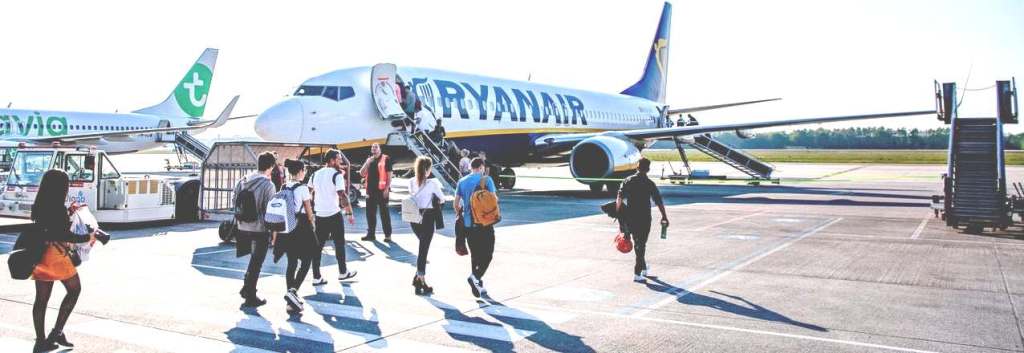
El impuesto estará aplicado a viajes directos desde y hacia el Aeropuerto Amsterdam/Schiphol. Los viajeros que parten de un aeropuerto, aterrizan en Schiphol y desde allí vuelven a volar a otro aeropuerto para completar su viaje no estarán afectados por este impuesto ambiental. Ryanair ha sido muy crítica con este impuesto porque sólo grava a los viajeros que van y vienen desde Holanda al resto del mundo. Ryanair tiene una base en Eindhoven, que opera vuelos punto a punto, todos ellos afectados por esta tasa.
Holland introduces airline passenger tax
Netherlands introduces environmental tax
The Government of the Netherlands has added a new tax on air transport users entering 2021. The airport inspection body introduces a rate of environmental tax rates. Each passenger will have to pay almost € 7.45 Euros. Each year, depending on the inflation rate, the price of this tax will vary. At the same time, a second tax is introduced on carbon dioxide emissions, which extend the tax on the same concept applied by the European Union (EU). This second tax, which does not affect airlines but industrial pollution, will increase progressively until 2030.
The tax will be applied to direct trips to and from Amsterdam/Schiphol Airport. Travelers who depart from an airport, land in Schiphol and from there fly again to another airport to complete their trip will not be affected by this environmental tax. Ryanair has been very critical of this tax because it only levies on travelers coming and going from the Netherlands to the rest of the world. Ryanair is based in Eindhoven, operating point-to-point flights, all of which are affected by this charge.
Holland introduceert vliegbelasting
Nederland voert milieubelasting in
De Nederlandse Regering heeft een nieuwe belasting toegevoegd voor luchtvervoergebruikers die in 2021 ingaan. De luchthaveninspectie-instelling voert een tarief van milieubelastingtarieven in. Elke passagier zal bijna € 7,45 euro moeten betalen. Elk jaar zal de prijs van deze belasting variëren, afhankelijk van de inflatie. Tegelijkertijd wordt een tweede belasting op de uitstoot van kooldioxide ingevoerd, waarmee de belasting op hetzelfde concept dat door de Europese Unie (EU) wordt toegepast, wordt uitgebreid. Deze tweede belasting, die geen gevolgen heeft voor luchtvaartmaatschappijen maar voor industriële vervuiling, zal tot 2030 geleidelijk toenemen.
De belasting wordt toegepast op rechtstreekse reizen van en naar Amsterdam/Schiphol Airport. Reizigers die vanaf een luchthaven vertrekken, op Schiphol landen en van daaruit weer naar een andere luchthaven vliegen om hun reis te voltooien, worden niet getroffen door deze milieubelasting. Ryanair is zeer kritisch over deze belasting omdat deze alleen heffingen op reizigers die vanuit Nederland naar de rest van de wereld komen en gaan. Ryanair is gevestigd in Eindhoven en voert point-to-point-vluchten uit, die allemaal onder deze heffing vallen.
UE buscará un nuevo compromiso con la Administración Biden
La Comisión Europea (CE) dice que buscará una solución con la Administración del nuevo Presidente de Estados Unidos, Joseph Biden, para avanzar con los arreglos sobre los subsidios y aranceles. Los nuevos aranceles estadounidenses se aplican a los componentes de las aeronaves como otros productos establecidos por la Administración Trump. La Comisión Europea dijo este Jueves 31/12 que lamenta la decisión de los Estados Unidos de abofetear la economía de mercado con más aranceles a los productos franceses y alemanes como parte de una pelea sobre los fabricantes de aeronaves Airbus y Boeing. Bruselas acusó a Washington de interrumpir unilateralmente las conversaciones en curso y dijo que buscaría una solución a la fila con la nueva Administración entrante de Joseph Biden.
El USTR no dijo cuándo surtirían efecto los aranceles, pero señaló que los detalles adicionales serían próximamente. Los nuevos aranceles marcan el último movimiento en una disputa de 16 años entre Estados Unidos y la Unión Europea sobre las subvenciones a la aviación civil que involucran a la compañía europea de aeronaves Airbus Group SE y a su rival estadounidense The Boeing Company. El USTR dijo que la UE había calculado injustamente los aranceles contra los Estados Unidos tras una resolución de la Organización Mundial del Comercio (OMC) a principios de este año 2020. Esta sentencia permitió a la UE imponer en Noviembre 2020 aranceles punitivos a las importaciones estadounidenses, que ascendieron a US$ 4.000 millones de Dólares, alrededor de € 3.400 millones de Euros al año en represalia por subvenciones injustas a los aviones.
El Gobierno de Estados Unidos ha acusado ahora a Bruselas de tomar decisiones injustas: «La UE debe tomar medidas para remediar esta injusticia. En la aplicación de sus aranceles […] la UE utilizó datos comerciales de un período en el que los volúmenes de comercio se habían reducido drásticamente debido a los terribles efectos en la economía mundial de la crisis COVID-19», dijo el USTR.
US imposes new EU tariffs
European flags in front of headquarters of European commission in Brussels in summer day
EU will seek a new commitment with the Biden Administration
The European Commission (EC) says it will seek a solution with the Administration of the new US President, Joseph Biden, to move forward with the arrangements on subsidies and tariffs. The new U.S. tariffs apply to aircraft components like other products set by the Trump Administration. The European Commission said this Thursday 12/31 that it regrets the decision of the United States to slap the market economy with more tariffs on French and German products as part of a fight over aircraft manufacturers Airbus and Boeing. Brussels accused Washington of unilaterally disrupting ongoing talks and said it would seek a solution to the queue with the incoming new administration of Joseph Biden.
The USTR did not say when the tariffs would take effect, but noted that additional details would be forthcoming. The new tariffs mark the latest move in a 16-year dispute between the United States and the European Union over subsidies to civil aviation involving European aircraft company Airbus Group SE and its American rival The Boeing Company. The USTR said that the EU had unfairly calculated tariffs against the United States following a resolution of the World Trade Organization (WTO) earlier this year 2020. This ruling allowed the EU to impose punitive tariffs on US imports in November 2020, which amounted to US$ 4 billion, about € 3.4 billion a year in retaliation for unfair subsidies to airplanes.
The United States government has now accused Brussels of making unfair decisions: «The EU must take steps to remedy this injustice. In applying its tariffs […] the EU used trade data from a period in which volumes Trade had been drastically reduced due to the dire effects on the global economy of the COVID-19 crisis», the USTR said.
Estados Unidos finaliza sus primeras regulaciones de emisiones de gases de efecto invernadero para las aerolíneas. La Agencia de Protección Ambiental de Estados Unidos (EPA) finalizó este lunes sus primeras normas para regular las emisiones de gases de efecto invernadero de los aviones, que habían estado ultimándose después de hacerse públicas en Julio 2020. Sus requisitos alinearían al país con los estándares internacionales. En 2016, la Organización de Aviación Civil Internacional (OACI) de la ONU acordó unos estándares globales de emisiones de la aviación dirigidos a los fabricantes de aviones, entre ellos Airbus y Boeing, que han respaldado los estándares. «Estos estándares reflejan los esfuerzos de EE.UU. para asegurar el más alto grado posible de uniformidad internacional en las regulaciones y estándares de aviación», indicaron desde la agencia EPA.
Las reglas requieren que los fabricantes de aviones utilicen motores de bajo consumo que liberen menos dióxido de carbono, y que todos los aviones nuevos vendidos a aerolíneas comerciales cumplan con los requisitos para 2028. La EPA aclara que «no proyecta reducciones de emisiones asociadas con estas regulaciones, ni que hagan que los fabricantes realicen mejoras técnicas en sus aviones que no se habrían producido sin las reglas».
Los críticos aseguran que las reglas serán ineficaces, ya que no harán que las aerolíneas mejoren su gestión ambiental. La asesora internacional del Fondo de Defensa Ambiental, Annie Petsonk, ha citado que «la regla de la EPA es totalmente inadecuada a la luz de la crisis climática. El hecho de que la norma de la EPA se finalice al mismo tiempo que el Congreso emitirá otro paquete de rescate de miles de millones de Dólares para las aerolíneas por el Covid-19 —sin requisitos exigibles para que las aerolíneas mejoren su desempeño ambiental— subraya la necesidad de una acción reguladora rápida por parte de la próxima Administración», dijo Annie Petsonk.
El diario The New York Times publicó en Julio 2020 que la EPA propuso unos estándares de emisiones que las aerolíneas ya están cumpliendo, pero la propuesta ayudó al país a evitar una demanda que habría obligado a las autoridades a regular las emisiones de los aviones de todos modos. Es decir, las normas de la EPA hacen poco más que codificar un conjunto de estándares ya creados por la industria de la aviación.
New environmental regulations in the US
EPA Agency establishes new environmental rules
The United States finalizes its first greenhouse gas emissions regulations for airlines. The United States Environmental Protection Agency (EPA) finalized on Monday its first rules to regulate greenhouse gas emissions from airplanes, which had been finalizing after being made public in July 2020. Its requirements would bring the country into line with the standards. international. In 2016, the UN’s International Civil Aviation Organization (ICAO) agreed to global aviation emissions standards targeting aircraft manufacturers, including Airbus and Boeing, who have endorsed the standards. «These standards reflect the US efforts to ensure the highest possible degree of international uniformity in aviation regulations and standards», they indicated from the EPA agency.
The rules require aircraft manufacturers to use fuel-efficient engines that release less carbon dioxide, and that all new aircraft sold to commercial airlines meet the requirements by 2028. The EPA clarifies that it «does not project emission reductions associated with these regulations, or prompting manufacturers to make technical improvements to their aircraft that would not have occurred without the rules».
Critics claim that the rules will be ineffective, as they will not make airlines improve their environmental stewardship. The international advisor to the Environmental Defense Fund, Annie Petsonk, has cited that «the EPA rule is totally inappropriate in light of the climate crisis. The fact that the EPA rule is finalized at the same time that Congress will issue Another billion dollar rescue package for airlines from Covid-19, with no mandated requirements for airlines to improve their environmental performance underscores the need for swift regulatory action by the next Administration», said Annie Petsonk.
The New York Times newspaper published in July 2020 that the EPA proposed emission standards that airlines are already complying with, but the proposal helped the country avoid a lawsuit that would have forced authorities to regulate emissions from everyone’s planes. modes. In other words, the EPA rules do little more than codify a set of standards already created by the aviation industry.
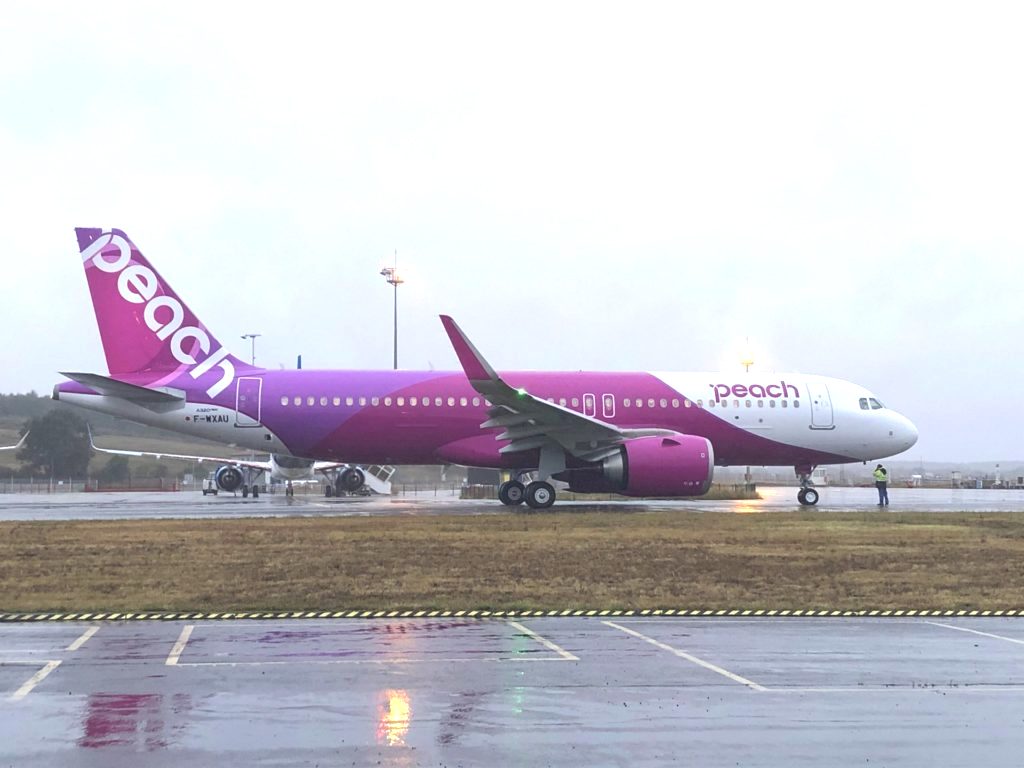
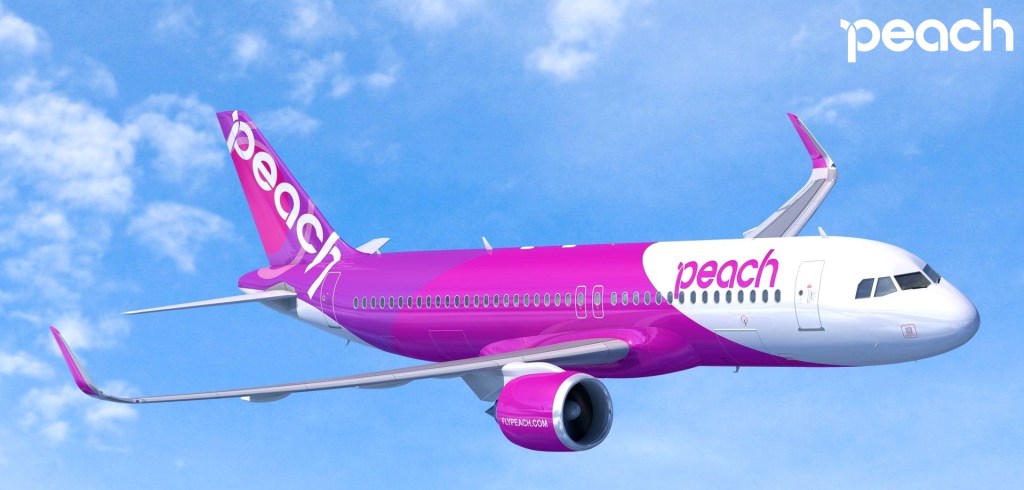
Air Lease Corporation entregó un nuevo avión Airbus A320-200NEO en arrendamiento a largo plazo a Peach Aviation Limited de Japón. Además de los dos A320-200NEO, Peach también tiene dos nuevos A321-200NEO LR entregando a la aerolínea en arrendamiento de Air Lease en 2021 y 2022. «Nos complace anunciar este primero de los cuatro aviones Airbus entrega a Peach Air este 28/12. Esta transacción más reciente de ALC en el mercado japonés demuestra nuestro compromiso con la sostenibilidad ambiental con los aviones más modernos y eficientes en el consumo de combustible. ALC tiene el honor de contribuir a la creciente flota de 320 Airbus de Peach y estamos seguros de que nuestros aviones A320-200NEO y A321NEO LR mejorarán en gran medida las operaciones de la aerolínea en su mercado nacional e internacional», dijo Steven F. Udvar-Házy, Presidente Ejecutivo de Air Lease.
Esta nueva aeronave, como toda la línea A320NEO posee motores CFM International LEAP-1A. Este es el primero de dos nuevos aviones A320-200NEO que entregan este Diciembre 2020 la compañía de leasing. Peach Aviation es una aerolínea de bajo costo en Japón. Con sede en Osaka en el Aeropuerto Internacional de Kansai, es una filial de All Nippon Airways.
Air Lease delivers A320NEO to Peach Air
Peach Air takes delivery of additional A320-200NEO
Air Lease Corporation delivered a new Airbus A320-200NEO aircraft on long-term lease to Peach Aviation Limited of Japan. In addition to the two A320-200NEOs, Peach also has two new A321-200NEO LRs delivering to Air Lease’s lease carrier in 2021 and 2022. «We are pleased to announce this first of four Airbus aircraft delivered to Peach today. This transaction further Recent ALC in the Japanese market demonstrates our commitment to environmental sustainability with the most modern and fuel efficient aircraft. ALC is honored to contribute to Peach’s growing fleet of 320 Airbus and we are confident that our A320-200NEO and A321NEO LR aircraft will greatly enhance the airline’s operations in its domestic and international market», said Steven F. Udvar-Házy, Executive Chairman of Air Lease.
This new aircraft, like the entire A320NEO line, has CFM International LEAP-1A engines. This is the first of two new A320-200NEO aircraft delivered this December 2020 by the leasing company. Peach Aviation is a low-cost airline in Japan. Headquartered in Osaka at Kansai International Airport, it is a subsidiary of All Nippon Airways.
Acuerdo derechos de tercera y cuarta libertad RU-Unión Europea
Las nuevas normas que rigen la relación entre la aviación del Reino Unido y la Unión Europea y las industrias aeroespaciales que entrarán en vigor el 1 de Enero de 2021 otorgan a las compañías aéreas de la Unión Europea y del Reino Unido el derecho a sobrevuelos del territorio, a hacer paradas técnicas y a operar vuelos de pasajeros y carga de tercera y cuarta libertad entre cualquier punto del Reino Unido y cualquier punto de la Unión Europea (UE-27).
En virtud del acuerdo UE-Reino Unido post-Brexit, las compañías aéreas del Reino Unido operarán como compañías aéreas de terceros países a la UE y, por lo tanto, perderán el acceso al mercado de la aviación totalmente liberalizado del bloque. No podrán operar vuelos de pasajeros y/o de carga entre destinos de la UE o el Espacio Económico Europeo más amplio que incluyen Islandia, Liechtenstein y Noruega. Del mismo modo, los transportistas de la Unión Europea no tendrán derecho a operar en el país dentro del Reino Unido.
Período transición
El Reino Unido salió formalmente de la Unión Europea el 31 de Enero de 2020, pero entró en un período de transición de 11 meses durante el cual la legislación de la UE sigue aplicándose y el Reino Unido y su sector de aviación siguen participando en los sistemas de la Agencia de Seguridad Aérea de la Unión Europea (EASA). El Reino Unido también continúa como parte en el Reglamento de servicios aéreos de la UE, que establece normas comunes para el funcionamiento de las compañías aéreas de la UE en el mercado interior de la aviación. Todo esto, sin embargo, concluirá a la medianoche del 31 de Diciembre de 2020 y los términos de un nuevo Acuerdo de Comercio y Cooperación UE-UE comenzarán a aplicarse, con carácter provisional.
Los negociadores de la UE y el Reino Unido llegaron a un acuerdo de última hora el 24 de Diciembre de 2020. Si bien el acuerdo evita un Brexit sin trato altamente disruptivo y evita aranceles y contingentes a los bienes que cruzan el Canal de la Mancha, ambas partes han advertido que el nuevo régimen recreará barreras al comercio de bienes y servicios y a la movilidad transfronteriza, en ambas direcciones, afectando a las administraciones públicas, las empresas, los ciudadanos y las partes interesadas de ambas partes. Habrá formalidades y controles aduaneros de las mercancías del Reino Unido que entren en la UE, y viceversa. Los visitantes del Reino Unido a la UE y Suiza, Noruega, Islandia o Liechtenstein necesitarán un pasaporte y visados válidos para estancias de más de 90 días en un período de 180 días. Ya no podrán utilizar el control rápido de pasaportes y los carriles aduaneros de la UE.
El nuevo régimen hace posibles los derechos de quinta libertad, pero sólo para el transporte de carga y si los Estados miembros de la Unión Europea están de acuerdo bilateral y recíprocamente con el Reino Unido. El acuerdo posterior al Brexit también permite el código compartido entre las aerolíneas del Reino Unido y EU-27.
Las normas de propiedad y control exigen que una compañía aérea de la UE sea de propiedad mayoritaria y esté efectivamente controlada por nacionales de la UE/EEA/Suiza[Ɖ], tenga su sede principal en la UE y tenga un certificado de operador aéreo de la UE. Londres requiere condiciones similares para sus compañías aéreas, pero ha demostrado más flexibilidad con respecto a la propiedad en su disposición a conceder autorizaciones de explotación y permisos a las compañías aéreas en el Reino Unido, incluso si son propiedad mayoritaria y están efectivamente controladas por uno o más nacionales de los Estados miembros de la UE/EEA y Suiza. La postura liberal ampliamente esperada resuelve posibles obstáculos para compañías como British Airways, Norwegian UK y Wizz Air UK, que ahora pueden mantener el pleno acceso al mercado al Reino Unido a pesar de su propiedad mayoritaria por parte de los intereses de la UE.
Paul Everitt, Director Ejecutivo de la organización de comercio aeroespacial del Reino Unido ADS, acogió con beneplácito el acuerdo, aunque advirtió de las dificultades de sincronización dadas menos de una semana permanece hasta el final del período de transición. «El gobierno debe emitir asesoramiento rápido, claro y completo a las empresas sobre los preparativos y trabajar urgentemente para poner en marcha todos los arreglos necesarios», subrayó Paul Everitt.
UK/EU preserve air liberties
UK-European Union third and fourth freedom rights agreement
The new rules governing the relationship between the United Kingdom and the European Union aviation and the aerospace industries that will enter into force on January 1, 2021 grant the airlines of the European Union and the United Kingdom the right to fly over the territory, to make technical stops and to operate third and fourth freedom passenger and cargo flights between any point in the United Kingdom and any point in the European Union (EU-27).
Under the EU-UK post-Brexit deal, UK airlines will operate as third country airlines to the EU and thus lose access to the bloc’s fully liberalized aviation market. They will not be able to operate passenger and/or cargo flights between destinations in the EU or the wider European Economic Area which include Iceland, Liechtenstein and Norway. Similarly, European Union carriers will not have the right to operate in the country within the United Kingdom.
Transition period
The UK formally left the European Union on January 31, 2020, but entered an 11-month transition period during which EU law continues to apply and the UK and its aviation sector continue to participate in the systems. of the European Union Aviation Safety Agency (EASA). The UK also remains a party to the EU Air Services Regulation, which sets common rules for the operation of EU airlines in the internal aviation market. All this, however, will conclude at midnight on December 31, 2020 and the terms of a new EU-EU Trade and Cooperation Agreement will begin to apply, on a provisional basis.
Negotiators from the EU and the UK reached a last-minute deal on December 24, 2020. While the deal avoids a highly disruptive no-deal Brexit and avoids tariffs and quotas on goods crossing the English Channel, Both parties have warned that the new regime will recreate barriers to trade in goods and services and to cross-border mobility, in both directions, affecting public administrations, companies, citizens and stakeholders of both parties. There will be customs formalities and controls on UK goods entering the EU, and vice versa. Visitors from the UK to the EU and Switzerland, Norway, Iceland or Liechtenstein will need a passport and valid visas for stays of more than 90 days in a 180-day period. They will no longer be able to use fast passport control and EU customs lanes.
The new regime makes fifth freedom rights possible, but only for freight transport and if the Member States of the European Union agree bilaterally and reciprocally with the United Kingdom. The post-Brexit deal also allows codeshare between UK and EU-27 airlines.
Ownership and control rules require that an EU air carrier be majority owned and effectively controlled by EU/EEA/Swiss[Ɖ] nationals, have its head office in the EU and have an EU Air Operator Certificate. London requires similar conditions for its airlines but has shown more flexibility with regard to ownership in its willingness to grant operating authorizations and permits to UK airlines, even if they are majority owned and effectively controlled by one or plus nationals of EU/EEA member states and Switzerland. The widely anticipated liberal stance solves potential hurdles for companies like British Airways, Norwegian UK and Wizz Air UK, which can now maintain full market access to the UK despite its majority ownership by EU interests.
Paul Everitt, Executive Director of the UK aerospace trade organization ADS, welcomed the deal, although he warned of timing difficulties given less than a week remaining until the end of the transition period. «The government must issue prompt, clear and comprehensive advice to companies on preparations and work urgently to put all necessary arrangements in place», stressed Paul Everitt.
European Environment Agency (EEA)
La Agencia Europea de Medio Ambiente (EEA) es una agencia de la Unión Europea. El objetivo es proporcionar información sólida e independiente sobre el medio ambiente. Somos una fuente de información importante para quienes participan en el desarrollo, adopción, implementación y evaluación de la política ambiental, y también para el público en general. Actualmente, el EEA cuenta con 32 países miembros.
The European Environment Agency (EEA) is an agency of the European Union. The aim is to provide sound and independent information on the environment. We are an important source of information for those involved in the development, adoption, implementation and evaluation of environmental policy, and also for the general public. Currently, the EEA has 32 member countries.
EU27: En conjunto, los veintisiete Estados miembros de la UE, a partir de 2017, sin el Reino Unido. EU27: Altogether the 27 EU Member States, as of 2017, without the UK.
Aparcamiento de aeronaves y proceso de reincorporación a flota
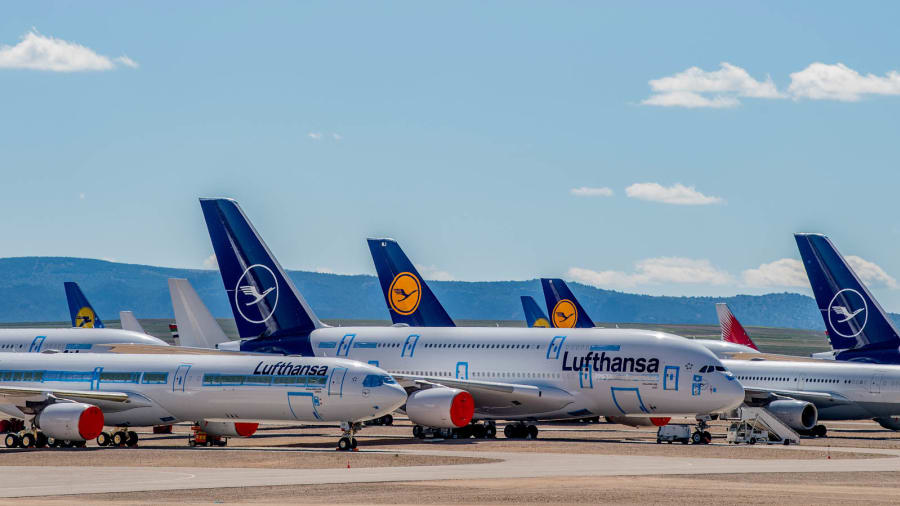
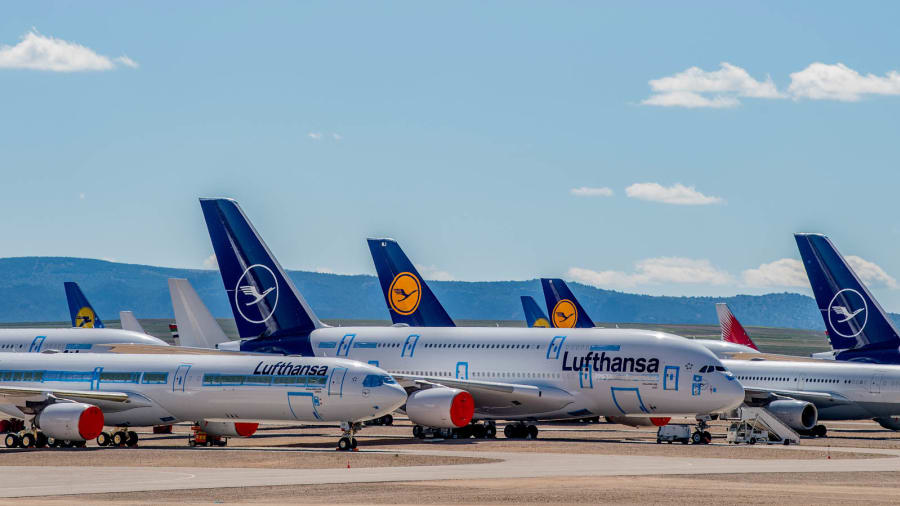
La pandemia vio la puesta a tierra de más de dos tercios de los aviones comerciales en todo el mundo, muchos de los cuales terminaron en cementerios de aviones y en aeropuerto menos concurridos. Alrededor del 31% de la flota mundial de aviones de pasajeros todavía se encuentran almacenadas, según la compañía de análisis de aviación Cirium.
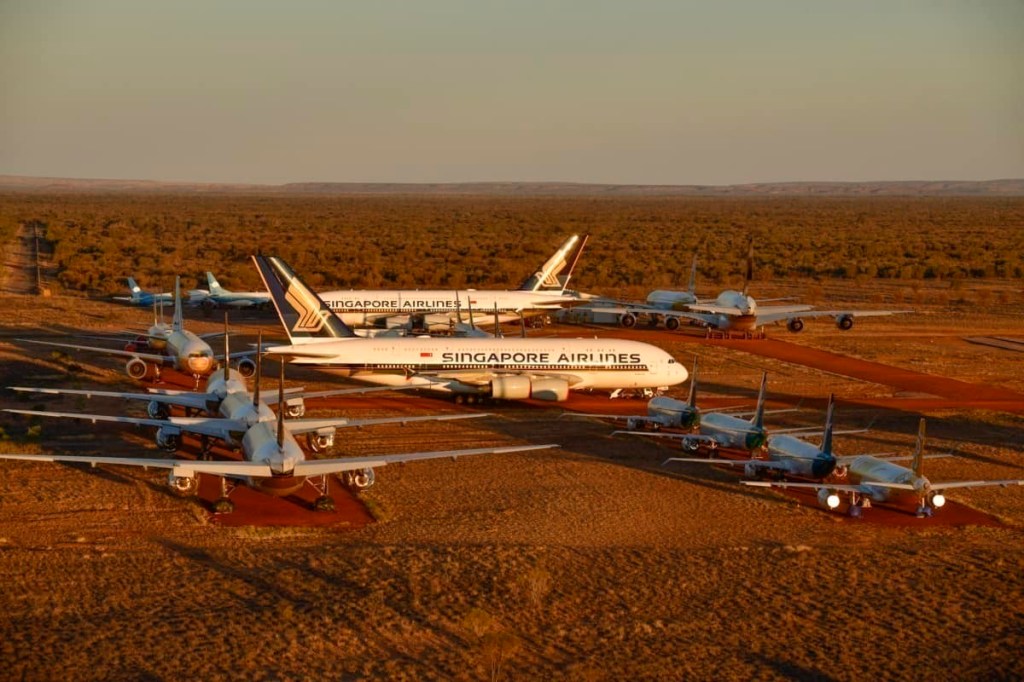
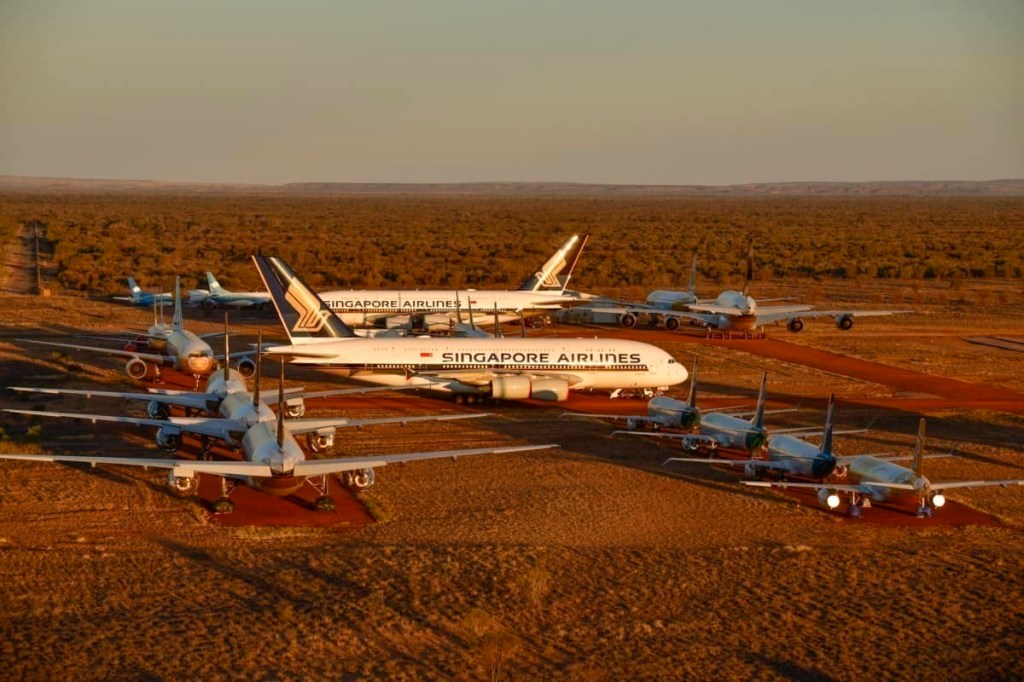
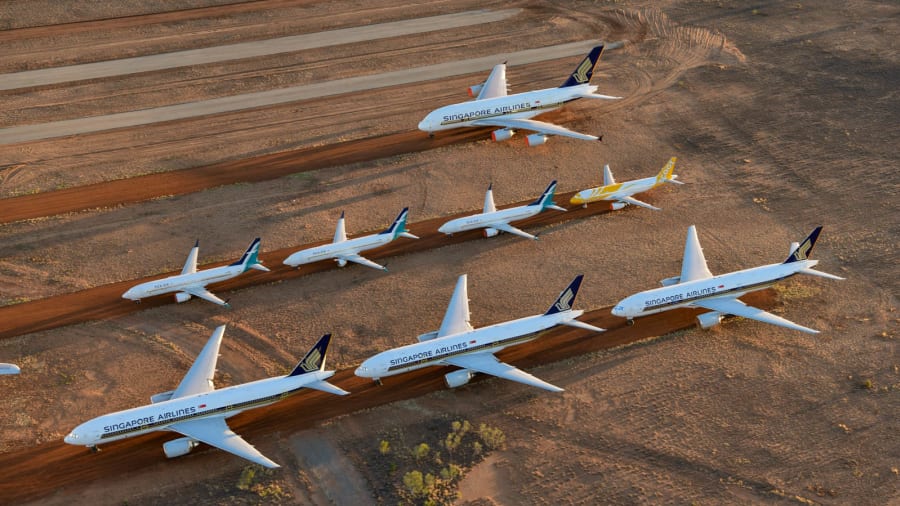
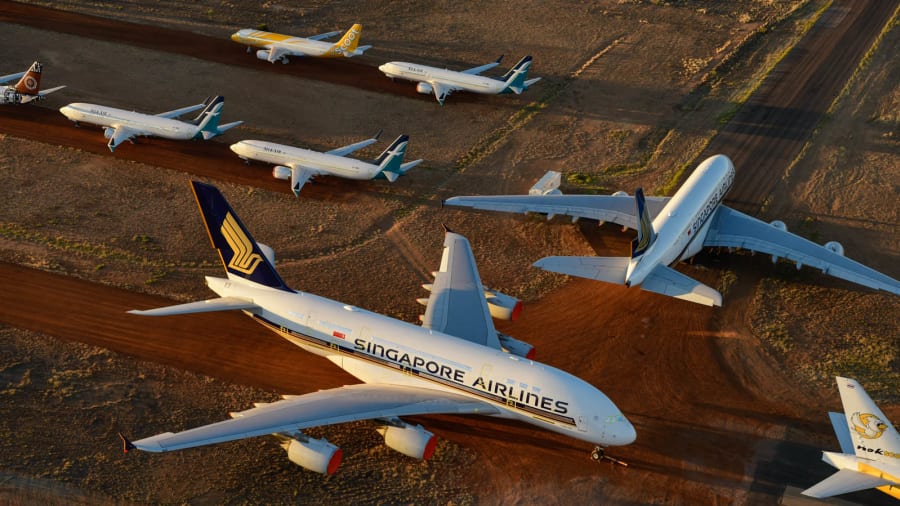
En lo profundo del exterior australiano, filas de aviones están estacionados en la arena roja del desierto australiano, esperando la culminación de la pandemia bajo vastos cielos azules. Antes de Marzo de 2020, Asia Pacific Aircraft Storage (APAS) había almacenado, mantenido y reactivado alrededor de 75 aviones en su instalación de almacenamiento en el desierto en Alice Springs. Hoy en día, el doble de aviones están hibernando en esta remota ubicación del Territorio del Norte. «Ahora hemos aumentado la capacidad de almacenamiento a más de 200 aviones. Ha sido un gran año de expansión para nosotros. El entorno de baja humedad es ideal para la preservación del activo, básicamente previene la corrosión superficial en todas las partes de la aeronave, particularmente en los motores», le dice el Director General de APAS, Tom Vincent. Anticipa que la demanda sólo seguirá creciendo hasta 2021.
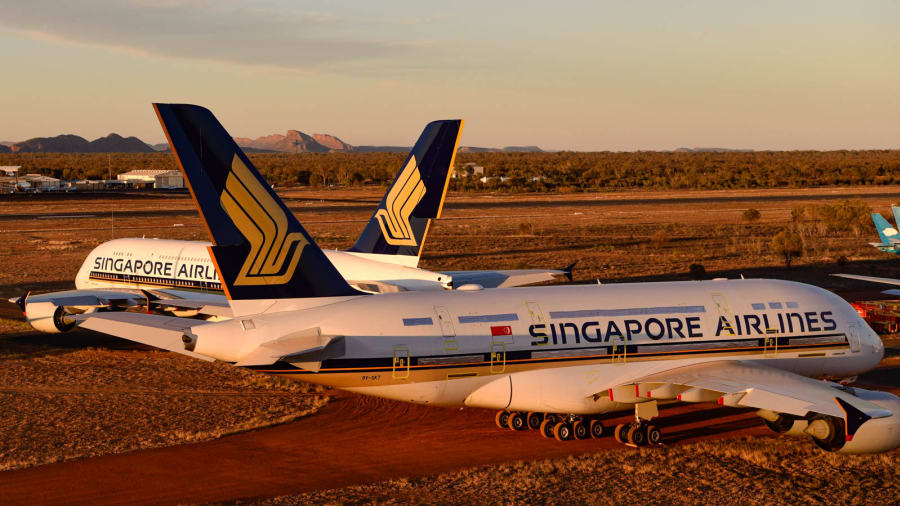
La instalación de almacenamiento y separación de aeronaves es la primera de su tipo para la región, dice Vincent, y es el hogar de aviones de Cathay Pacific, Hong Kong Express, Singapore Airlines, SilkAir, Scoot, Cebu Pacific Fiji Airways y una serie de arrendadores. Pero a medida que los viajes se reanuda lentamente y el mundo comienza a volar de nuevo, ¿qué se necesita exactamente para conseguir aviones de vuelta en los cielos después de muchos meses en el desierto? «Es un programa bastante intensivo que se lleva a cabo en todos y cada uno de los aviones antes de firmar el CRS (Certificado de Liberación al Servicio», explica Vincent. Cada tarea que debe realizarse es prescrita por el manual de mantenimiento de la aeronave proporcionado por cada fabricante de aeronaves.
Cuando los aviones han estado conectados a tierra durante algún tiempo, prepararlos para volar de nuevo significa comenzar con cosas simples como la eliminación del gran número de espacios en blanco, protectores del motor, y cintas que cubren cada agujero, puerto o sonda, explica el ingeniero de aeronaves B1 con licencia Steph Smith. «No hay nada peor que tener sistemas llenos de insectos, agua o escombros porque, como han demostrado las investigaciones de accidentes de aeronaves a lo largo de los años, los sistemas pitot-estáticos bloqueados pueden ser catastróficos. No piensas que cuando dejes un avión sellado por un par de meses, sólo va a apestar debido a la falta de ventilación», dice Steph Smith.
Los jets también necesitarán una buena aireación. Se estima que se necesitan más de 100 horas-hombre para hacer un avión de fuselaje ancho de fuselaje aéreo después del almacenamiento, y alrededor de 40 horas-hombre para un avión de fuselaje estrecho. El tiempo que se tarda depende tanto del tamaño de la aeronave como del tiempo que se haya almacenado. «Si solo lo has almacenado a corto plazo, puedes darles la vuelta rápidamente porque has estado haciendo el mantenimiento cada dos semanas para mantenerlos fáciles de ventila. Mientras que los aviones en almacenamiento a largo plazo pueden llevarte mucho tiempo, y si estás hablando algo como un A380, va a ser mucho trabajo porque es un avión grande», explica Smith. Otras tareas incluyen cambiar los fluidos en los motores si se han inhibido y volver a conectar las baterías. «Entonces enciendes todo, restableces todo y revisas todas las comprobaciones funcionales del sistema», explica Steph Smith.
Los ingenieros tienen que hacer una serie de motores de acuerdo con el manual de mantenimiento de la aeronave. «Estos se hacen para garantizar que los motores siguen funcionando según lo esperado y que el almacenamiento a largo plazo no ha causado efectos perjudiciales para ninguno de los sistemas que no sería obvio con solo mirarlos», dice Steph Smith. Con algunos de los aviones más nuevos, estas pruebas deben seguirse en el orden exacto y en el segundo exacto de lo contrario puede fallar la prueba y volver a ponerte atrás unas horas: «La mejor manera de describir algunos aviones es como si fuera un niño pequeño que tiene un berrinche en el supermercado, si haces algo para molestarlos aún más, simplemente se va a escalar y empeorar». Una vez que los paquetes de trabajo de mantenimiento están autorizados y certificados, el ingeniero puede firmar la aeronave como aeronave de aire.
Muchas de las aeronaves serán más propensas a retornar a los cielos como los Boeing 737-800 y los Airbus A320, pues representan las columnas vertebrales de las aerolíneas. Las que son más difíciles de comercializar son las versiones encogidas de las familias como los Airbus A319 y Boeing 737-600 y 700. Su rendimiento económico no es tan bueno como las versiones alargadas. Si las aerolíneas deciden retirar permanentemente una aeronave, sus valiosos componentes pueden ser revisados, probados y puestos de nuevo en servicio. También, las aeronaves pueden tener una nueva vida anticipando que varios tipos de aeronaves se someten a conversiones de pasajeros a cargueros, en vista del incremento del auge del transporte de carga en el mundo.
En Alice Springs, se espera que los aviones más jóvenes abandonen sus instalaciones a medida que regrese la demanda. Se pronostica que una serie de aviones volvieran al servicio como los nuevos Boeing 737 MAX, A350 y Boeing 777 serán los primeros en volar. Todos los aviones más ecológicos y sostenibles serán los que sobrevivan, aunque tomará una cantidad considerable de tiempo conseguir que todo vuelva a volar teniendo en cuenta el volumen de trabajo de mantenimiento que hay que hacer y el número de ingenieros que han sido despedidos durante la pandemia.
Aircraft hibernation process
Aircraft parking and process of rejoining the fleet
The pandemic saw the grounding of more than two-thirds of commercial aircraft worldwide, many of which ended up in airplane graveyards and less crowded airports. About 31% of the world’s passenger jet fleet is still in storage, according to aviation analytics company Cirium.
Deep in the Australian outback, rows of planes are parked in the red sand of the Australian desert, awaiting the culmination of the pandemic under vast blue skies. Prior to March 2020, Asia Pacific Aircraft Storage (APAS) had stored, maintained and reactivated around 75 aircraft at its desert storage facility in Alice Springs. Today, twice as many planes are hibernating in this remote Northern Territory location. «Now we have increased the storage capacity to more than 200 aircraft. It has been a great year of expansion for us. The low humidity environment is ideal for asset preservation, it basically prevents surface corrosion on all parts of the aircraft, particularly in the engines, «says APAS CEO Tom Vincent. He anticipates that demand will only continue to grow until 2021.
The aircraft storage and separation facility is the first of its kind for the region, Vincent says, and is home to aircraft from Cathay Pacific, Hong Kong Express, Singapore Airlines, SilkAir, Scoot, Cebu Pacific Fiji Airways and a number of landlords. But as travel slowly resumes and the world begins to fly again, what exactly does it take to get planes back into the skies after many months in the desert? «It is a fairly intensive program that is carried out on each and every aircraft before signing the CRS (Certificate of Release to Service», Vincent explains. Each task to be performed is prescribed by the aircraft maintenance manual provided by each aircraft manufacturer.
When planes have been grounded for some time, preparing them to fly again means starting with simple things like removing the large number of blanks, engine guards, and tapes that cover every hole, port or probe, explains the Steph Smith Licensed B1 Aircraft Engineer. «There is nothing worse than having systems full of insects, water, or debris because, as aircraft accident investigations have shown over the years, blocked pitot-static systems can be catastrophic. You don’t think that when you leave a plane sealed for a couple of months, it’s just going to suck due to lack of ventilation», says Steph Smith.
Jets will also need good aeration. It is estimated that it takes more than 100 man-hours to make an air-body wide-body aircraft after storage, and about 40 man-hours for a narrow-body aircraft. How long it takes depends on both the size of the aircraft and how long it has been in storage. «If you’ve only stored it for short-term, you can turn it over quickly because you’ve been doing maintenance every two weeks to keep it easy to ventilate. Whereas planes in long-term storage can take a long time, and if you’re talking something like an A380, it’s going to be a lot of work because it’s a big plane», explains Smith. Other tasks include changing the fluids in the motors if they have been inhibited and reconnecting the batteries. «Then you turn everything on, reset everything, and go through all the functional checks on the system», explains Steph Smith.
Engineers have to make a series of engines according to the aircraft maintenance manual. «These are done to ensure that the engines continue to perform as expected and that long-term storage has not caused detrimental effects to any of the systems that would not be obvious just by looking at them», says Steph Smith. With some of the newer airplanes, these tests must be followed in the exact order and in the exact second otherwise the test may fail and put you back a few hours: «The best way to describe some airplanes is as if it were a child Little one who has a grocery store tantrum, if you do something to upset them even more, it’s just going to escalate and get worse». Once the maintenance work packages are authorized and certified, the engineer can sign the aircraft as air aircraft.
Many of the aircraft will be more likely to return to the skies such as the Boeing 737-800 and Airbus A320, since they represent the backbones of the airlines. The ones that are most difficult to market are the shrunken versions of families like the Airbus A319 and Boeing 737-600 and 700. Their economic performance is not as good as the elongated versions. If airlines decide to permanently retire an aircraft, its valuable components can be inspected, tested, and put back into service. Also, aircraft can be given a new life in anticipation of various types of aircraft undergoing conversions from passengers to freighters, in light of the increasing boom in freight transport around the world.
At Alice Springs, younger planes are expected to leave their facilities as demand returns. A number of aircraft are forecast to return to service as the new Boeing 737MAX, A350 and Boeing 777 will be the first to fly. All of the greenest and most sustainable aircraft will survive, although it will take a considerable amount of time to get everything flying again considering the volume of maintenance work that needs to be done and the number of engineers who have been laid off during the pandemic.