Gobierno Colombia rescata aérea por CO$ 40.000 millones
El Gobierno de Colombia ha expresado la intensión de inyectar liquidez a la aerolínea regional Satena con el fin de garantizar la conectividad de las regiones apartadas del país. El Gobierno ha determinado la capitalización de la aerolínea estatal Satena, con CO$ 40.000 millones de Pesos. Aunque la aerolínea ha sido rentable en los últimos cuatro años, su inactividad durante cinco meses a causa de la pandemia, le generó una gran afectación económica. “En este año que ha sido tan difícil para todos los servicios de transporte aéreo del país, he dado una instrucción muy precisa para que el Ministerio de Hacienda y el Ministerio de Defensa capitalicen la aerolínea Satena con CO$ 40.000 millones”, dijo el Presidente Iván Duque durante el Programa Prevención y Acción.
El Brigadier General Luis Carlos Córdoba Avendaño, ha comunicado que estos recursos permitirán “seguir prestando nuestro servicio a las comunidades apartadas con precios bastante favorables y seguir proyectando ampliar la cobertura en más destinos en un mediano plazo”. Luis Córdoba resaltó que la aerolínea opera 92 rutas de las cuales 82 son rutas sociales que permiten a los colombianos conectarse con los centros más importantes del país, “hemos conectado a través de la operación de la empresa 692 municipios que equivale a 62% de las poblaciones del país”, detalló el Brigadier.
Anteriormente, el Ministerio de Defensa Nacional aprobó un presupuesto de subvención en Diciembre de 2019, por valor de CO$ 3.264 millones para la aerolínea Satena, por medio de la Resolución No. 6415 del 28 de Noviembre de 2019. Estos recursos irán destinados para la reestructuración y estandarización de tarifas, a destinos sociales lo que permitirá ofrecer tarifas más accesibles a las regiones del Este y Sureste de Colombia.
Colombia, Satena airline capitalization
Government of Colombia rescues air for CO$ 40,000 million
The Government of Colombia has expressed the intention of injecting liquidity into the regional airline Satena in order to guarantee connectivity to remote regions of the country. The Government has determined the capitalization of the state airline Satena, with CO$ 40,000 million pesos. Although the airline has been profitable in the last four years, its inactivity for five months due to the pandemic, generated a great economic impact. «In this year that has been so difficult for all air transport services in the country, I have given a very precise instruction for the Ministry of Finance and the Ministry of Defense to capitalize the Satena airline with CO$ 40,000 million», said President Iván Duque during the Prevention and Action Program.
Brigadier General Luis Carlos Córdoba Avendaño, has communicated that these resources will allow «to continue providing our service to remote communities with quite favorable prices and to continue planning to expand coverage in more destinations in the medium term», Luis Córdoba highlighted that the airline operates 92 routes of which 82 are social routes that allow Colombians to connect with the most important centers in the country, «we have connected 692 municipalities through the operation of the company, which is equivalent to 62% of the populations of the country”, detailed the Brigadier.
Previously, the Ministry of National Defense approved a subsidy budget in December 2019, amounting to CO$ 3,264 million for the airline Satena, through Resolution No. 6415 of November 28, 2019. These resources will go to the restructuring and standardization of rates, to social destinations, which will allow offering more accessible rates to the eastern and southeastern regions of Colombia.
AW | 2020 11 28 09:54 | GOVERNMENT / AIRLINES MARKET
Estados Unidos ultima nuevas reglas sobre protección al consumidor
El Departamento de Transporte (DOT) de los Estados Unidos dijo el Viernes 27/11 que agregaría nuevos obstáculos procesales antes de que el Gobierno pudiera prohibir la mayoría de las prácticas injustas o engañosas adicionales por parte de las aerolíneas, en una medida buscada por las compañías aéreas. El DOT está codificando una definición de lo que constituye prácticas injustas o engañosas. Se requerirá un análisis antes de adoptar nuevas normas que consideren que las prácticas de las aerolíneas son injustas o engañosas y requerirán audiencias probatorias antes de que se adopten la mayoría de las nuevas normas.
Muchos demócratas en el Congreso instaron al departamento a abandonar el esfuerzo. La representante Katie Porter dijo en julio que la regla «debilitaría la aplicación de las protecciones de pasajeros de las aerolíneas». Cuatro Senadores, entre ellos María Cantwell, la principal Demócrata en el Comité de Comercio, dijeron que «los grupos industriales podrían explotar estos nuevos aros de procedimiento ,que las propias aerolíneas parecen estar impulsando para retrasar cualquier acción del Departamento para proteger a los consumidores».
El Departamento de Transporte dijo el 27/11 las nuevas normas que se aplican a las aerolíneas y agentes de billetes proporcionan «mayor transparencia y previsibilidad sobre cómo el departamento lleva a cabo sus actividades de elaboración y aplicación de normas de protección del consumidor de aviación».
La International Air Transport Association (IATA) y Airlines for America (A4A), un grupo comercial de aerolíneas asociadas, que había buscado las reglas que representaban a las principales aerolíneas, incluyendo American Airlines, Delta Air Lines y United Airlines, dijeron anteriormente que las reglas propuestas «beneficiarían al público al mejorar aún más la transparencia, la previsibilidad y la coherencia de los procedimientos de elaboración y aplicación de normas del DOT», mientras que la aerolínea de presupuesto Southwest Airlines dijo que el DOT anteriormente «no había adoptado normas o declaraciones de política claramente articuladas para determinar qué constituye injusticia o engaño. Con demasiada frecuencia, esto ha dado lugar a interpretaciones excesivas de la autoridad del DOT».
DOT finalizes Consumed Law modifications
The United States finalizes new rules on consumer protection
The United States Department of Transportation (DOT) said Friday 11/27 that it would add new procedural hurdles before the government could ban most of the additional unfair or deceptive practices by airlines, in a move sought by airlines. airlines. DOT is codifying a definition of what constitutes unfair or deceptive practices. Analysis will be required before adopting new rules that consider airlines’ practices to be unfair or deceptive and will require evidentiary hearings before most new rules are adopted.
Many Democrats in Congress urged the department to abandon the effort. Rep. Katie Porter said in July that the rule «would weaken the enforcement of airline passenger protections». Four Senators, including Maria Cantwell, the top Democrat on the Commerce Committee, said that «industry groups could exploit these new procedural rings, which the airlines themselves appear to be pushing to delay any action by the Department to protect consumers».
The Department of Transportation said on 11/27 the new rules applying to airlines and ticket agents provide «greater transparency and predictability of how the department conducts its aviation consumer protection rulemaking and enforcement activities».
The International Air Transport Association (IATA) and Airlines for America (A4A), a trade group of airline partners, which had sought the rules representing major airlines, including American Airlines, Delta Air Lines and United Airlines, previously said that the Proposed rules «would benefit the public by further enhancing the transparency, predictability, and consistency of DOT’s rulemaking and enforcement procedures», while budget carrier Southwest Airlines said DOT had previously «not adopted rules or Clearly articulated policy statements to determine what constitutes injustice or deception. Too often, this has led to excessive interpretations of DOT’s authority».
AW | 2020 11 28 08:29 | AVIATION SAFETY / GOVERNMENT
DGCA eliminará restricciones motores PW1000G
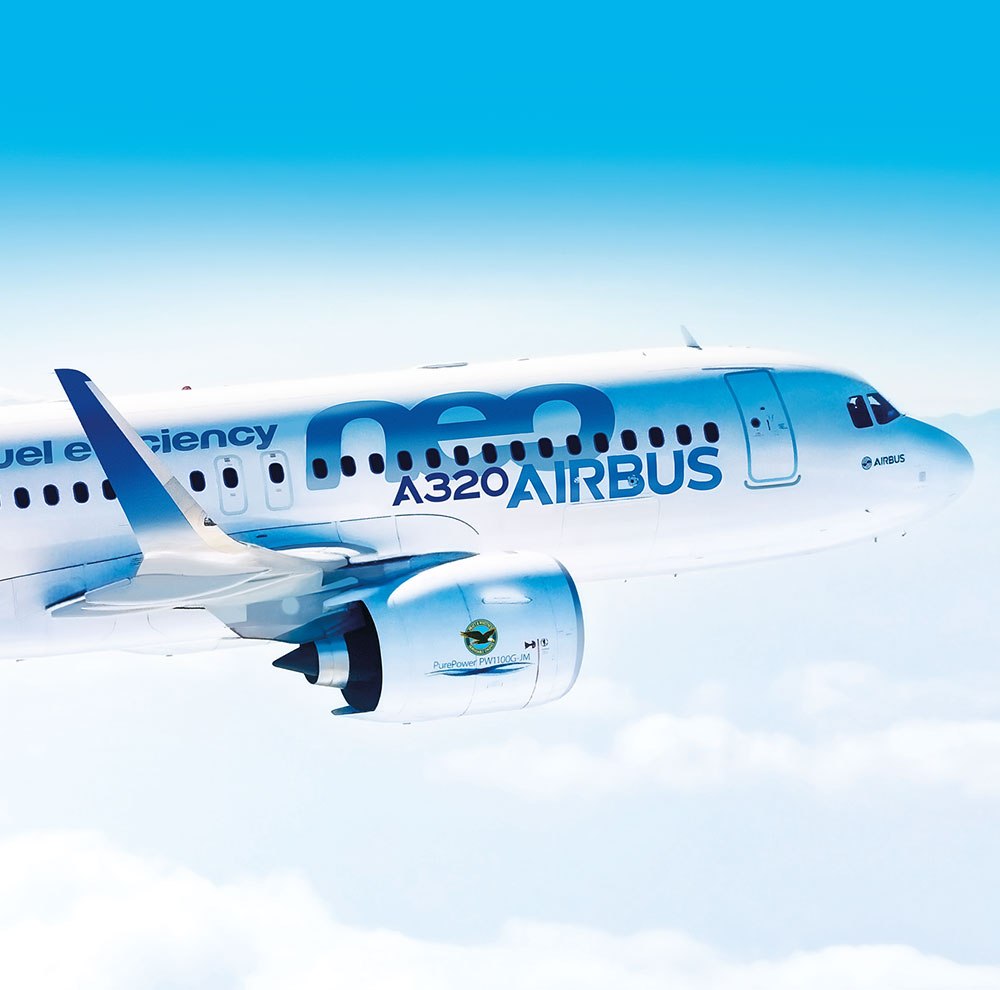
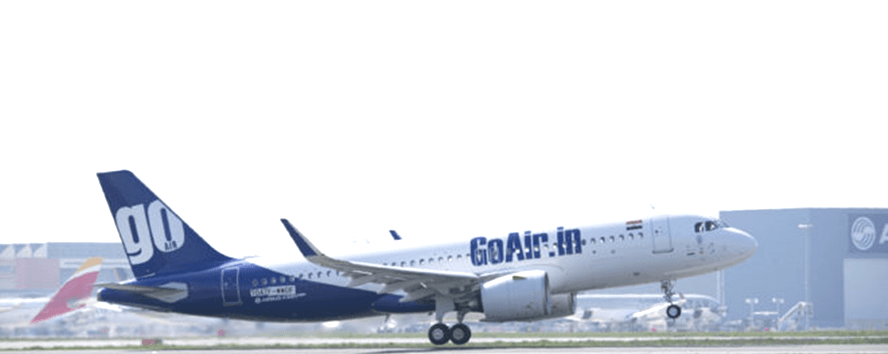
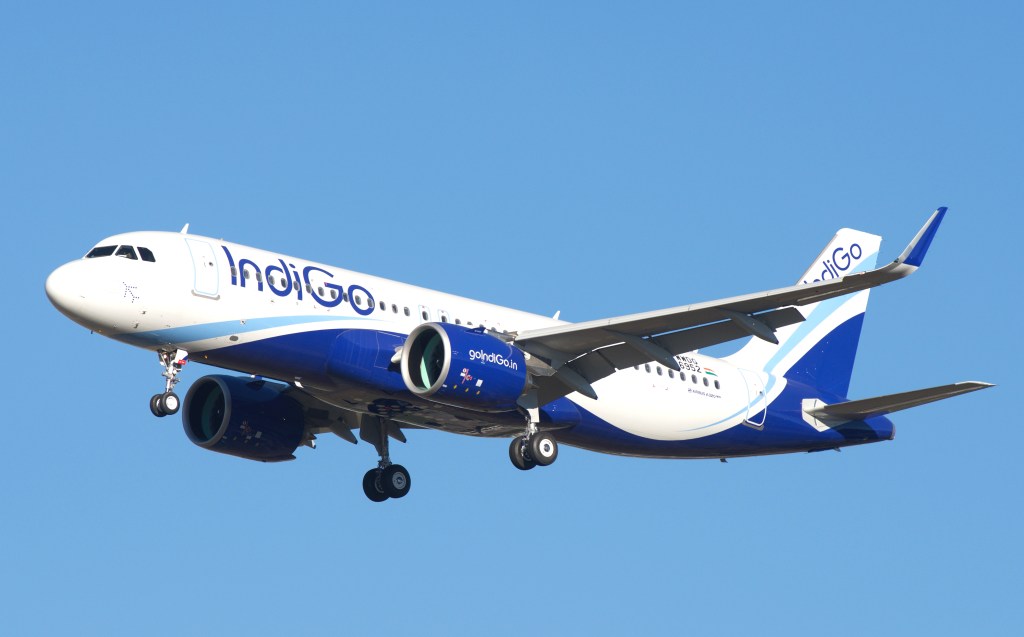
El regulador de aviación de la India, la Directorate General of Civil Aviation (DGCA) dará aprobación de EDTO a la línea de aeronaves Airbus 320/321NEO equipados con motores Pratt & Whitney PW1000G, que son utilizados por parte de las aerolíneas IndiGo y Go Air.
Debido a las restricciones, IndiGo & Go Air se vieron obligados a utilizar aviones de la anterior versión A320CEO. La aprobación de las Operaciones de Tiempo de Desvío Extendido (EDTO) es obligatoria para que las aeronaves tomen rutas para las que el aeropuerto adecuado más cercano, para realizar un aterrizaje de emergencia, esté a más de 60 minutos. Los motores P&W han sufrido múltiples fallos que han llevado a paradas en vuelo debido a las cuales la DGCA había restringido las operaciones EDTO de aviones A320NEO y A321NEO, principalmente operados por IndiGo y Go Air. Sin embargo, los reguladores de aviación estadounidenses y europeos dieron esta aprobación hace dos años atrás.
Según una Circular de la DGCA, el regulador ha pedido a IndiGo que realice un vuelo de validación de 90 minutos por una aeronave A320NEO o A321,NEO tras lo cual la DGCA dará permiso. Se requiere que los vuelos de validación o prueba demuestren la disposición de IndiGo a realizar operaciones con la aeronave y a garantizar que la aerolínea tenga instalaciones, servicios y personal para hacer lo mismo. Las restricciones a EDTO significaron que IndiGo y Go Air se vieron obligados a utilizar aviones anteriores A320 CEO, que consumen más combustible o toman una ruta más larga a destinos como Kuala Lumpur, Singapur, Bangkok, Phuket y Muscat, que se extienden más allá del rango de vuelo de 60 minutos desde el aeropuerto alternativo más cercano.
India removes P&W motor restrictions
DGCA will remove PW1000G engine restrictions
India’s aviation regulator, the Directorate General of Civil Aviation (DGCA) will give EDTO approval to the line of Airbus 320/321NEO aircraft equipped with Pratt & Whitney PW1000G engines, which are used by IndiGo and Go Air airlines.
Due to restrictions, IndiGo & Go Air were forced to use aircraft of the previous version A320CEO. The approval of Extended Diversion Time Operations (EDTO) is mandatory for aircraft to take routes for which the nearest suitable airport for an emergency landing is more than 60 minutes away. The P&W engines have suffered multiple failures that have led to flight stops due to which the DGCA had restricted the EDTO operations of A320NEO and A321NEO aircraft, mainly operated by IndiGo and Go Air. However, US and European aviation regulators gave this approval two years ago.
According to a DGCA Circular, the regulator has asked IndiGo to perform a 90-minute validation flight on an A320NEO or A321, NEO aircraft after which the DGCA will give permission. Validation or test flights are required to demonstrate IndiGo’s willingness to operate the aircraft and to ensure that the airline has the facilities, services, and personnel to do the same. The restrictions on EDTO meant that IndiGo and Go Air were forced to use older A320 CEO jets, which either consume more fuel or take a longer route to destinations such as Kuala Lumpur, Singapore, Bangkok, Phuket and Muscat, which extend beyond the 60 minute flight range from the nearest alternate airport.
भारत ने P & W मोटर प्रतिबंध हटा दिए
DGCA PW1000G इंजन प्रतिबंधों को हटा देगा
भारत का विमानन नियामक, नागरिक उड्डयन महानिदेशालय (DGCA) प्रैट एंड व्हिटनी PW1000G इंजन से लैस एयरबस 320/321NEO विमान की लाइन को EDTO स्वीकृति देगा, जिसका उपयोग IndiGo और Go Air Airlines करती हैं। ।
प्रतिबंधों के कारण, इंडिगो और गो एयर को पिछले संस्करण A320CEO के विमानों का उपयोग करने के लिए मजबूर किया गया था। विस्तारित डायवर्जन टाइम ऑपरेशंस (EDTO) की मंजूरी विमान को रूट लेने के लिए अनिवार्य है, जिसके लिए आपातकालीन लैंडिंग के लिए निकटतम उपयुक्त हवाई अड्डा 60 मिनट से अधिक दूर है। P & W इंजन को कई असफलताओं का सामना करना पड़ा है जिसके कारण उड़ान रुक गई है जिसके कारण DGCA ने A320NEO और A321NEO विमान के EDTO संचालन को प्रतिबंधित कर दिया था, जो मुख्य रूप से IndiGo और गो एयर द्वारा संचालित था। हालांकि, अमेरिका और यूरोपीय विमानन नियामकों ने दो साल पहले यह मंजूरी दी थी।
एक DGCA सर्कुलर के अनुसार, नियामक ने IndiGo को A320NEO या A321, NEO विमान पर 90 मिनट की वैलिडेशन फ्लाइट करने के लिए कहा है, जिसके बाद DGCA अनुमति देगा। विमान संचालित करने और यह सुनिश्चित करने के लिए इंडिगो की इच्छा को प्रदर्शित करने के लिए वैधता या परीक्षण उड़ानों की आवश्यकता होती है और यह सुनिश्चित करने के लिए कि एयरलाइन के पास सुविधाएं, सेवाएं और कार्मिक हैं। EDTO पर प्रतिबंधों का मतलब था कि इंडिगो और गो एयर को पुराने A320 सीईओ जेट का उपयोग करने के लिए मजबूर किया गया था, जो या तो अधिक ईंधन की खपत करते हैं या कुआलालंपुर, सिंगापुर, बैंकॉक, फुकेत और मस्कट जैसे गंतव्यों के लिए एक लंबा रास्ता तय करते हैं, जो इससे परे हैं निकटतम वैकल्पिक हवाई अड्डे से 60 मिनट की उड़ान रेंज।
Operaciones de Tiempo de Desvío Extendido (EDTO): Cualquier operación de un avión con dos o más motores de turbina donde el tiempo de desvío a un aeródromo alternativo en ruta sea mayor que el tiempo de umbral establecido por el Estado del Operador. Extended Deviation Time Operations (EDTO): Any operation of an aircraft with two or more turbine engines where the deviation time to an alternate en-route aerodrome is greater than the threshold time established by the State of the Operator.
Uruguay busca mercado libre combustibles para estimular aviación
La República de Uruguay está introduciendo cambios en las regulaciones del mercado de los combustibles para fomentar la competitividad en la oferta de valores. Esto ayudaría al mercado de las líneas aéreas para diversificarse.
El Senado de Uruguay, con el apoyo mayoritario de los oficialistas, aprobó que la petrolera estatal uruguaya Ancap, pierda el monopolio de suministro de combustible en los aeropuertos. Este paso indica que para el próximo año otras empresas podrán entrar en el mercado local para surtir combustible a vuelos comerciales nacionales e internacionales. La decisión se dio en el marco de las reuniones que se realizan para definir el presupuesto nacional para el quinquenio de Gobierno (2020-2024), que ya fue aprobado en la Cámara de Diputados. De acuerdo a reportes de la prensa, la oposición uruguaya fue sorprendida con el artículo, pues no estaba en el proyecto que salió de la cámara baja. «El monopolio creado por la Ley 8.764, del 15 de Octubre de 1931, y administrado por la Administración Nacional de Combustibles, Alcohol y Portland no regirá en cualquier aeropuerto internacional únicamente para la provisión de aeronaves con fines comerciales y con destino a aeropuertos ubicados fuera del territorio nacional”, sostiene el aditivo que se añade luego del Artículo 298 del proyecto de presupuesto.
El Senador nacionalista Juan Sartori se refirió a la decisión del Gobierno de Uruguay de eliminar el monopolio petrolero de Ancap para vender combustible en los aeropuertos. “La desmonopolización hará que lleguen nuevas aerolíneas y el país se dinamice”, expresó el Senador.
La coalición ha optado por incluir un aditivo al Presupuesto Nacional que habilita la desmonopolización de la venta de combustibles en los aeropuertos, lo que se suma a la idéntica decisión adoptada hace varias semanas respecto a lo que sucederá en los puertos, estuvo lejos de pasar desapercibido. La postura de Juan Sartori se sitúa en la vereda de en frente de la interpretación del asunto que hacen los dirigentes oficialistas: “Combustibles más baratos es más desarrollo. Hoy aprobamos eliminar el monopolio de distribución en aeropuertos. Esto hará que lleguen nuevas aerolíneas y que nuestro país se dinamice. Sectores como el agro también lo necesitan y debemos seguir trabajando para lograrlo”, escribió en Twitter el Senador nacionalista.
Uruguay free market fuels
Uruguay seeks free market for fuels to stimulate aviation
The Republic of Uruguay is introducing changes in the fuel market regulations to promote competitiveness in the supply of securities. This would help the airline market to diversify.
The Senate of Uruguay, with the majority support of the ruling party, approved that the Uruguayan state oil company Ancap, lose the monopoly of fuel supply at airports. This step indicates that for next year other companies will be able to enter the local market to supply fuel for national and international commercial flights. The decision was made within the framework of the meetings that are held to define the national budget for the five-year period of Government (2020-2024), which has already been approved in the Chamber of Deputies. According to press reports, the Uruguayan opposition was surprised with the article, as it was not in the bill that came out of the lower house. «The monopoly created by Law 8.764, of October 15, 1931, and administered by the National Administration of Fuels, Alcohol and Portland will not govern in any international airport solely for the provision of aircraft for commercial purposes and destined for airports located outside of the national territory”, maintains the additive that is added after article 298 of the budget project.
Nationalist Senator Juan Sartori referred to the decision of the Government of Uruguay to eliminate Ancap’s oil monopoly to sell fuel at airports. «Demonopolization will make new airlines arrive and the country will become more dynamic», said the Senator.
The coalition has chosen to include an additive to the National Budget that enables the de-monopolization of the sale of fuel at airports, which adds to the identical decision adopted several weeks ago regarding what will happen in ports, it was far from going unnoticed. The position of Juan Sartori is situated on the sidewalk in front of the interpretation of the matter that the government leaders make: “Cheaper fuel is more development. Today we approved the elimination of the airport distribution monopoly. This will make new airlines arrive and our country will become more dynamic. Sectors such as agriculture also need it and we must continue working to achieve it”, the nationalist Senator wrote on Twitter.
El fundador de la aerolínea de bajo costo, Ultra Air, el mexicano William Shaw, dijo que espera culminar todo el proceso administrativo para empezar a volar entre Mayo a Julio de 2021 (2/3Q2021). El proceso de Ultra Air para convertirse en competidor aéreo en la República de Colombia en el segmento de aerolíneas de bajo costo. Este Jueves 26/11, la empresa creada por el mexicano William Shaw se presentó a una audiencia pública convocada por la Aeronáutica Civil para conocer los planes de la aerolínea.
William Shaw, fundador de Ultra Air, ha presentado el plan de la compañía, acompañado de Oscar Herrera, Vicepresidente Financiero de Ultra Air, ha indicado que actualmente se encuentran bajo estudio dos tipos de aeronaves para conformar su flota, Boeing 737 y Airbus A320, enfrentando así a estos dos competidores que se disputan el mercado de transporte aéreo, en medio de la más dura crisis económica y de salud de la historia reciente de la humanidad. “El único que saldrá beneficiado de esta competencia es el usuario final”, indicó William Shaw, mientras agregó que espera ofrecer tarifas un 20% inferiores al promedio del mercado actual y frente a la competencia. El empresario explicó que no está definido aún desde qué ciudad despegará el primer vuelo, pero indicó que están en conversaciones para que la flota, personal técnico y la tripulación puedan estar en Cali, Medellín o Bogotá. “La decisión final de la ciudad donde saldrá el primer vuelo dependerá del avance de las conversiones con estos tres aeropuertos”, dijo William Shaw.
La sede principal de la empresa estará en Rionegro, Antioquia. La empresa se encuentra en trámite de solicitud de 29 rutas domésticas y 15 rutas internacionales, ya que espera cubrir desde Bogotá destinos en Latinoamérica como Quito o México DF, como también Miami o Nueva York.
El representante legal de la empresa Ultra AIR, William Shaw, ha expresado este 26/11 que se han presentado las correspondientes tramitaciones a la espera del organismo de aviación colombiano, la Aeronáutica Civil de Colombia (ACC) para iniciar el proceso de adecuación y startup en Colombia, con 29 rutas nacionales y 15 rutas internacionales. Su pronunciamiento se conoció luego de la Audiencia Pública convocada para que la Aerocivil confirme autorización de constitución como una nueva aerolínea en el país.
Perspectivas Ultra Air
La futura compañía aérea incorporará destinos a valores low cost en Colombia y la región. Desde la compañía han adelantado: “El primer destino que empezamos a operar es San Andrés, el sitio turístico por excelencia, hoy muy afectado por el huracán y por eso, hemos escogido como la primera ruta que vamos a estar volando”, afirmó Oscar Herrera, planteando tres opciones solicitadas para llegar a la isla desde Medellín, Cali y Bogotá. La compañía continúa con las conversaciones con los aeropuertos y analiza los mayores beneficios para iniciar a destinos en todo el país, pero en la etapa inicial comenzarán con tres rutas.
Con el ingreso del nuevo operador Ultra Air en el transporte aéreo, se estima una generación de 36.000 empleos y un crecimiento del 5% en los ingresos para agencias de viajes y la industria hotelera en los próximos años. Según la empresa, su participación estimulará la demanda de pasajeros domésticos e internacionales, cuya recuperación se estima en el 2022.
Ultra Air startup process in Colombia
Presents low cost company plan for startup
The founder of the low-cost airline, Ultra Air, the Mexican William Shaw, said he hopes to complete the entire administrative process to start flying between May and July 2021 (2/3Q2021). Ultra Air’s process to become an air competitor in the Republic of Colombia in the low-cost airline segment. This Thursday 11/26, the company created by the Mexican William Shaw appeared at a public hearing called by Civil Aeronautics to learn about the airline’s plans.
William Shaw, founder of Ultra Air, has presented the company’s plan, accompanied by Oscar Herrera, Ultra Air’s Financial Vice President, who has indicated that two types of aircraft are currently under study to make up its fleet, Boeing 737 and Airbus A320. thus facing these two competitors who are competing in the air transport market, in the midst of the toughest economic and health crisis in the recent history of mankind. «The only one who will benefit from this competition is the end user», said William Shaw, adding that he expects to offer rates 20% lower than the current market average and against the competition. The businessman explained that it is not yet defined from which city the first flight will take off, but indicated that they are in talks so that the fleet, technical personnel and the crew can be in Cali, Medellín or Bogotá. «The final decision of the city where the first flight will depart will depend on the progress of the conversions with these three airports», said William Shaw.
The main headquarters of the company will be in Rionegro, Antioquia. The company is in the process of applying for 29 domestic routes and 15 international routes, as it expects to cover Latin American destinations such as Quito or Mexico City from Bogotá, as well as Miami or New York.
The legal representative of the Ultra Air company, Willian Shaw, has expressed this 11/26 that the corresponding procedures have been submitted to the Colombian aviation agency, the Aeronáutica Civil de Colombia (ACC) to initiate the adaptation and startup process in Colombia, with 29 national routes and 15 international routes. His pronouncement was known after the Public Hearing called for Aerocivil to confirm authorization of the constitution as a new airline in the country.
Ultra Air perspectives
The future airline will incorporate destinations at low cost values in Colombia and the region. From the company they have advanced: «The first destination that we begin to operate is San Andrés, the tourist site par excellence, today very affected by the hurricane and for that reason, we have chosen as the first route that we will be flying», said Oscar Herrera, proposing three requested options to reach the island from Medellín, Cali and Bogotá. The company continues with the talks with the airports and analyzes the greater benefits to start to destinations throughout the country, but in the initial stage they will start with three routes.
With the entry of the new Ultra Air operator in air transport, it is estimated that 36,000 jobs will be created and 5% growth in revenues for travel agencies and the hotel industry in the coming years. According to the company, its participation will stimulate the demand of domestic and international passengers, whose recovery is estimated in 2022.
Senadores dictaminan cierre definitivo de LAER Líneas Aéreas
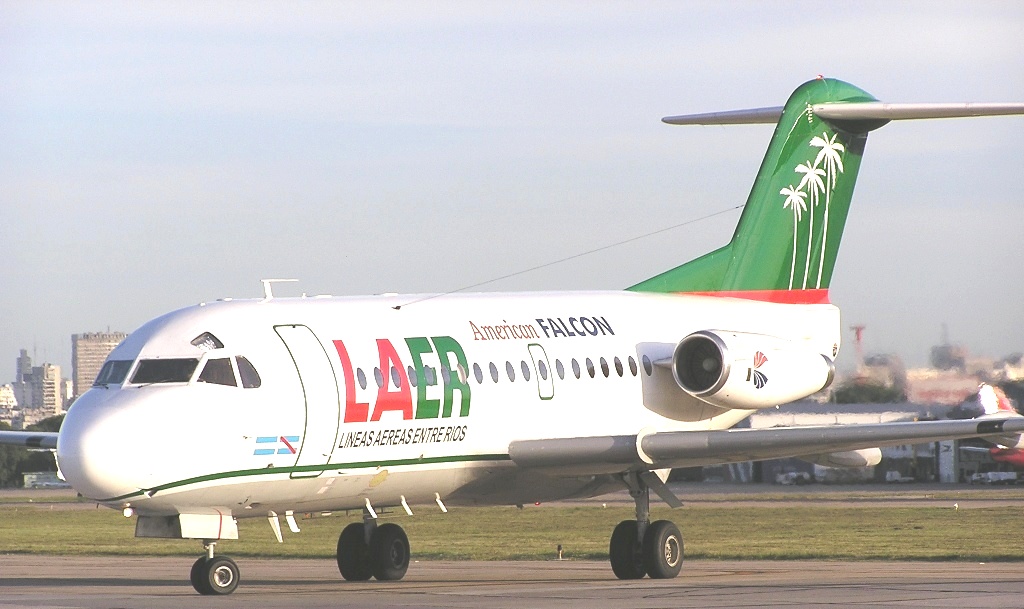
Este Miércoles 25/11 se desarrolló la 16º Sesión Ordinaria del 141º Período Legislativo de la Cámara de Senadores de la Provincia de Entre Ríos, República Argentina. Por una unanimidad se aprobó el presupuesto, que contaba con media sanción de la Cámara de Diputados desde el 18 de Noviembre de 2020, dentro del cual se ha dado sanción definitiva para su promulgación el proyecto de ley dentro del cual se contempla de liquidación definitiva de la aerolínea regional LAER Líneas Aéreas (Líneas Aéreas Entre Ríos).
La Autorización al Poder Ejecutivo para el procedimiento de disolución y liquidación de la empresa “Líneas Aéreas Entre Ríos Sociedad del Estado” (LAERSE) ha sido sancionada, marcando la finalización de una compañía regional que ha prestado servicios por períodos interrumpidos, pero remarcando el federalismo apoyando el valor de unir a las provincias de la Región Litoral de la República Argentina.
Historia de LAER
En 1967 ante el aislamiento que presentaban las provincias mesopotámicas, el gobernador de facto de Entre Ríos, Brigadier Favre, decide fundar LAPER (Líneas Aéreas Provinciales de Entre Ríos). En el momento de la creación de LAPER la aerolínea comenzó a volar utilizando aviones Cessna 180, 337 y 402. Se empezó a hacer correo aéreo uniendo a Paraná con Villaguay, Concordia, Córdoba, Concepción del Uruguay, La Paz, Rosario y Buenos Aires. En Diciembre de 1973 LAPER dejó de volar. Pero en 1978 se utiliza por primera vez el nombre LAER (Líneas Aéreas de Entre Ríos), contando con aviones IA -50 GII y haciendo el vuelo inaugural Paraná-Gualeguaychú-Aeroparque. El 19 de Abril de 2002, tras la crisis económica que atravesó el país, LAER suspende sus operaciones. El 22 de Octubre de 2007, LAER con Gualberto Salcerini como interventor reinicia sus vuelos a través de un convenio con la empresa Macair Jet del Grupo Macri, quienes se hacen cargo de la operación de la aerolínea con sus aviones propios. Los nuevos destinos cubiertos fueron Paraná, Concordia y Buenos Aires. En esta nueva etapa LAER estrenó una nueva imagen comercial, que fue visible en el área comercial de la aerolínea pero no en los aviones que operaban los vuelos. En Diciembre de 2009, LAER finaliza el contrato con Macair Jet y no es renovado, optando por contratar a Flying America para la operatoria de sus vuelos. En Noviembre de 2010, se inician conversaciones con la empresa Macair Jet en el marco de la planificación de expansión de rutas que lleva adelante LAER con miras al año 2011. En Marzo del 2011, se acuerdan los primeros lineamientos para la futura operación y el 11 de Mayo de 2011 se firman los contratos para la operación de los vuelos entre Paraná y Buenos Aires. El 24 de Julio de ese año, se suma la operación de las demás rutas que opera LAER. Este contrato estipula que LAER mantiene el gerenciamiento total de las operaciones realizadas, lo que representa: operaciones en vuelo, parte del mantenimiento de las aeronaves, comercialización y gestión empresarial. Como parte de los acuerdos alcanzados, una de las aeronaves BAe Jetstream 32EP pasó a ser en parte propiedad de LAER a partir del 12 de Mayo de 2011, quedando definitivamente como propiedad de la empresa al cabo de 26 meses contados a partir de la fecha antes mencionada. En Marzo de 2014, LAER dejó de realizar vuelos. En Diciembre de 2015 renunció Salcerini y asumió Alfredo de Meyer como interventor, quien declaró que la empresa estaba en un proceso de reestructuración. El Gobierno provincial siguió enviando aportes a la empresa para pagar los sueldos de los 30 empleados. En Marzo de 2016, los Senadores de Cambiemos emitieron un pedido de informes al ejecutivo para conocer el estado de la empresa. En Abril de 2016, el Gobernador de Entre Ríos, Gustavo Bordet declaró que LAER Líneas Aéreas dejará de operar debido a su alto costo. En Noviembre 2016, Macair demandó a LAER por cuotas impagas del contrato de leasing de los aviones. Sus operaciones cesaron en 2017, pero la aerolínea continuaba volando en los papeles hasta la actualidad, con la finalización como empresa aérea marcando así la conclusión de más de cincuenta años de operaciones aerocomerciales desde la Provincia Entre Ríos para la Región Litoral en Argentina.
Final dissolution of LAER
Senators rule definitive closure of LAER Líneas Aéreas
This Wednesday, 11/25, the 16th Ordinary Session of the 141st Legislative Period of the Chamber of Senators of the Province of Entre Ríos, Argentine Republic was held. The budget was unanimously approved, which had half approval from the Chamber of Deputies since November 18, 2020, within which the bill has been given final approval for enactment of the bill within which the final settlement of the the regional airline LAER Líneas Aéreas (Líneas Aéreas Entre Ríos).
The Authorization to the Executive Power for the dissolution and liquidation procedure of the company “Líneas Aéreas Entre Ríos Sociedad del Estado” (LAERSE) has been sanctioned, marking the termination of a regional company that has provided services for interrupted periods, but highlighting federalism supporting the value of uniting the provinces of the Littoral Region of the Argentine Republic.
LAER history
In 1967, faced with the isolation of the Mesopotamian provinces, the de facto governor of Entre Ríos, Brigadier Favre, decided to found LAPER (Líneas Aéreas Provinciales de Entre Ríos). At the time of LAPER’s creation, the airline began to fly using Cessna 180, 337 and 402 aircraft. Airmail began to be carried out, linking Paraná with Villaguay, Concordia, Córdoba, Concepción del Uruguay, La Paz, Rosario and Buenos Aires. In December 1973 LAPER stopped flying. But in 1978 the name LAER (Líneas Aéreas de Entre Ríos) was used for the first time, with IA -50 GII airplanes and making the maiden flight Paraná-Gualeguaychú-Aeroparque. On April 19, 2002, after the economic crisis that the country went through, LAER suspended its operations. On October 22, 2007, LAER with Gualberto Salcerini as controller restarted its flights through an agreement with the Macair Jet company of the Macri Group, who take over the operation of the airline with their own aircraft. The new destinations covered were Paraná, Concordia and Buenos Aires. In this new stage, LAER launched a new commercial image, which was visible in the airline’s commercial area but not on the planes that operated the flights. In December 2009, LAER terminated the contract with Macair Jet and it was not renewed, opting to contract Flying America to operate its flights. In November 2010, conversations began with the Macair Jet company in the framework of the route expansion planning carried out by LAER with a view to 2011. In March 2011, the first guidelines for the future operation were agreed and the 11 On May 2011, contracts are signed for the operation of flights between Paraná and Buenos Aires. On July 24 of that year, the operation of the other routes operated by LAER was added. This contract stipulates that LAER maintains the total management of the operations carried out, which represents: in-flight operations, part of the aircraft maintenance, commercialization and business management. As part of the agreements reached, one of the BAe Jetstream 32EP aircraft became part property of LAER as of May 12, 2011, remaining definitively the property of the company after 26 months from the date before. mentioned. In March 2014, LAER stopped operating flights. In December 2015 Salcerini resigned and Alfredo de Meyer assumed as controller, who declared that the company was in a restructuring process. The provincial government continued to send contributions to the company to pay the salaries of the 30 employees. In March 2016, the Senators of Cambiemos issued a request for reports to the executive to know the status of the company. In April 2016, the Governor of Entre Ríos, Gustavo Bordet declared that LAER Líneas Aéreas will cease to operate due to its high cost.In November 2016, Macair sued LAER for unpaid installments on the aircraft leasing contract. Its operations ceased in 2017, but the airline continued to fly on paper until today, with the termination as an airline, thus marking the conclusion of more than fifty years of commercial air operations from the Entre Rios Province to the Litoral Region in Argentina.
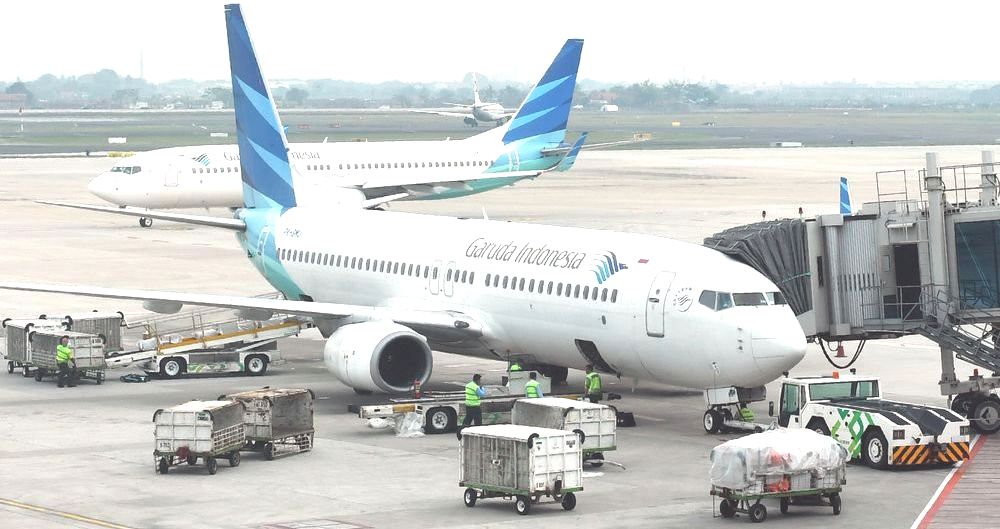
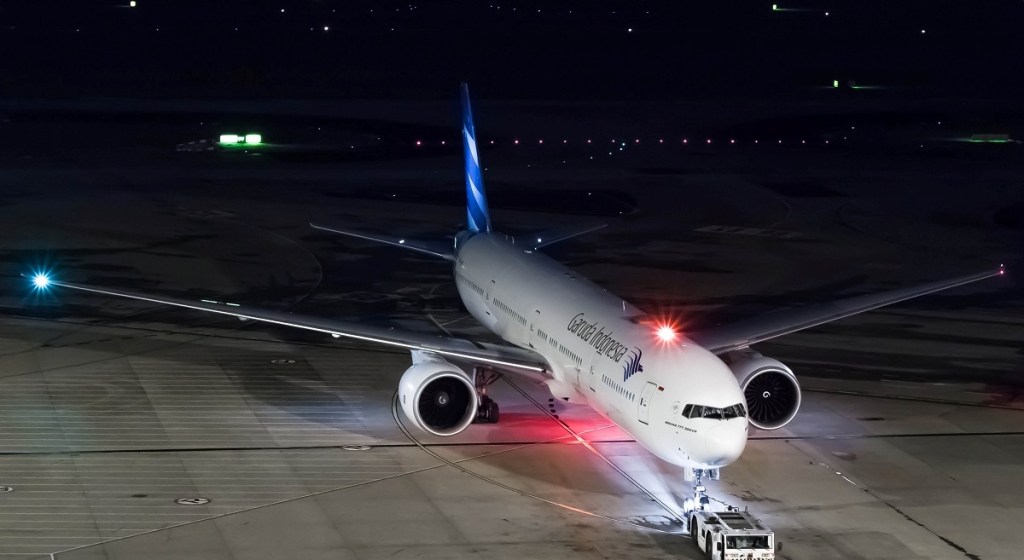
Accionistas de Garuda Indonesia respaldan rescate financiero
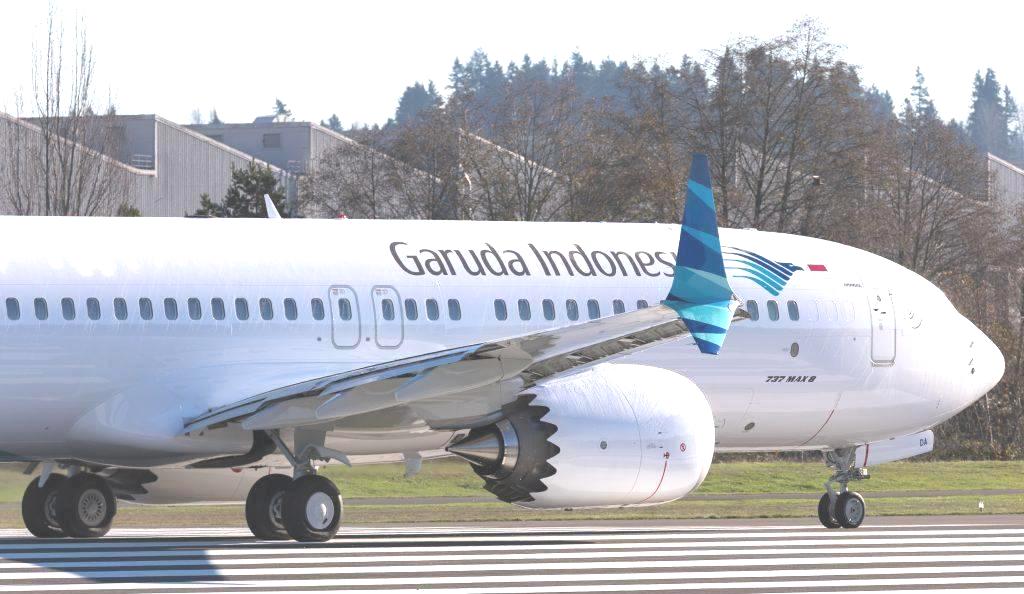
Garuda Indonesia Airlines ha obtenido la aprobación de los accionistas para emitir bonos convertibles a siete años con una cantidad máxima de Rp 8,5 billones de Rupias (US$ 600 millones de Dólares) como parte de un rescate gubernamental para el transportista de bandera, anunció la compañía en una presentación bursátil en Jakarta, República de Indonesia.
El Ministerio de Finanzas de Indonesia adquirirá los bonos a través de su vehículo de misión especial Sarana Multi Infrastruktur (Persero), una empresa de inversión estatal que financia proyectos de infraestructura. Serán bonos convertibles obligatorios, lo que significa que se convertirán en acciones una vez que hayan transcurrido los siete años. La Cámara de Representantes de Indonesia aprobó el rescate, que fue propuesto originalmente por el Ministerio de Empresas de Propiedad Estatal, en Julio 2020. Si todos los bonos se convierten en acciones, el Gobierno aumentará su participación en Garuda Indonesia del 60,54% de las acciones actuales al 76,99%, fortaleciendo el control estatal sobre la compañía aérea. En las condiciones de los bonos, la tasa de cupón que pagará Garuda se ha mantenido a valores mínimos.
En la presentación de la modalidad de rescate, la compañía expresó: «Los ingresos de la transacción se utilizarán para apoyar la liquidez y solvencia de la empresa, especialmente para las operaciones de financiación. La empresa necesita la ayuda como está en una línea estratégica de negocio en la que desempeña un papel importante en el crecimiento económico futuro de Indonesia, como apoyo de conectividad para el flujo de mercancías y pasajeros en Indonesia y en el extranjero que es crucial para impulsar el crecimiento económico, […] en particular para ayudar a los problemas de liquidez de la empresa». La presentación añadió que los pasivos totales en Garuda Indonesia Airlines superan los activos totales en un 80 por ciento, factor que el Director Ejecutivo Irfan Setiaputra repitió en una sesión informativa en línea del 20 de Noviembre de 2020 que siguió a la Junta de Accionistas. Los ingresos son necesarios porque «la compañía ya tiene un capital de trabajo neto negativo y tiene pasivos superiores al 80% de los activos». Añadió que esperaba que la emisión de bonos «pueda alentar una recuperación más rápida en la industria de la aviación, lo que, a su vez, puede ayudar a la recuperación económica nacional».
Seguridad sanitaria
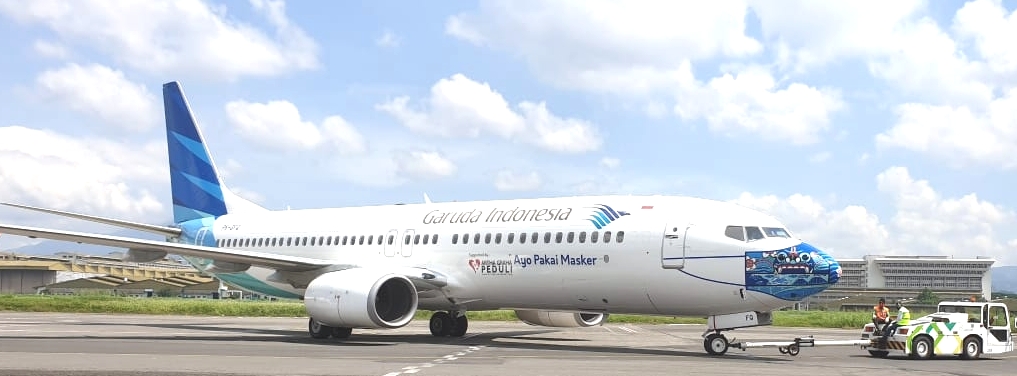
Garuda Indonesia Airlines fue clasificada entre las aerolíneas más seguras del mundo en términos de la aplicación de protocolos de salud durante la pandemia COVID-19. La calificación fue dada por Safe Travel Barometer, una agencia de auditoría independiente que evalúa la implementación de los protocolos de salud COVID-19 en la industria global de viajes, turismo y hospitalidad. «Este logro tiene importancia para la continuidad y nuestra coherencia en la aplicación óptima de los protocolos de salud en todas las líneas de operaciones de vuelo para garantizar que los esfuerzos para evitar la transmisión COVID-19 durante los vuelos se hayan ejecutado al máximo», señaló el CEO de Garuda Indonesia, Irfan Setiaputra. Según la auditoría, Garuda Indonesia es la única aerolínea indonesia que figura entre las veinte aerolíneas más seguras del mundo. El ranking se basó en una evaluación exhaustiva sobre el estándar de implementación de los protocolos de salud y la seguridad de los vuelos, en la que Garuda obtuvo una puntuación de viaje seguro de 4 de 5,0 entre más de 230 aerolíneas evaluadas en todo el mundo. Emirates Airline encabezó el ranking, con una Puntuación de Viaje Segura de 4,4.
Irfan Setiaputra afirmó que el aumento del nivel de higiene durante los servicios de vuelo se había convertido en el foco principal durante la pandemia. Por lo tanto, las aerolíneas estatales se mantienen firmes en su compromiso de ofrecer seguridad y comodidad a sus pasajeros a través de mantenerse consistentes en la aplicación de protocolos de salud y mantener estándares de servicio que prioricen la calidad y seguridad del servicio, incluido el procedimiento de distanciamiento físico durante los vuelos. Safe Travel Barometer evaluó que las normas de salud y seguridad esperadas por los consumidores abarcaban aspectos de la comodidad, los servicios y la experiencia de los pasajeros. Los indicadores utilizados en la evaluación comprenden frecuencia de desinfección, cribado térmico, máscaras faciales, forma de declaración de salud y máscaras faciales del personal. Noticias relacionadas: Garuda registró ingresos operativos de US$ 1.13 mil millones al tercer trimestre (3Q2020).
Perspectivas Garuda Indonesia
La compañía espera que los fondos recaudados de los bonos comiencen a fluir antes de finales de 2020, expresó el CEO de Garuda. La aerolínea ha registrado una pérdida neta de US$ 1.100 millones de Dólares en el período de nueve meses hasta Septiembre 2020, muestran resultados financieros no auditados, un contraste con respecto a su beneficio de US$ 122,4 millones de Dólares un año antes.
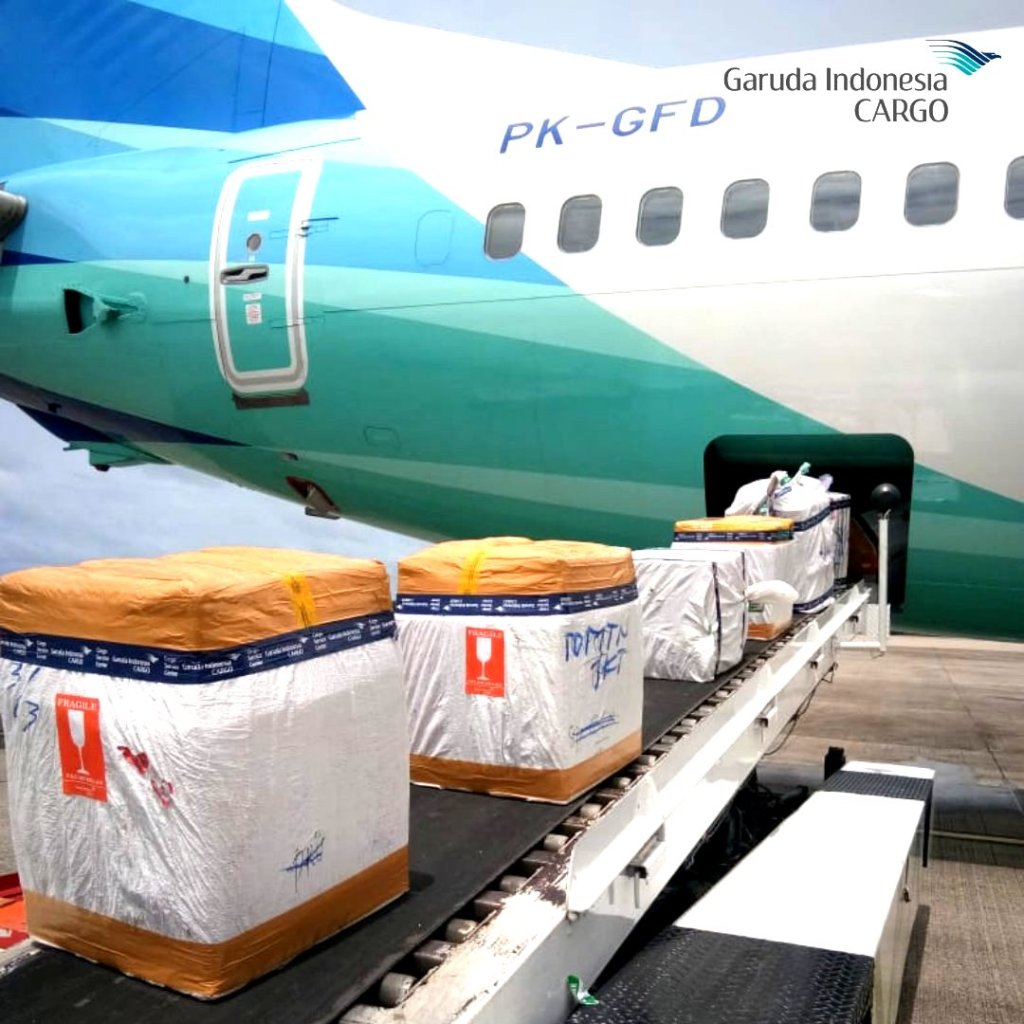
Garuda Indonesia Airlines planea traer un avión de carga a mediados de 2021 mientras utilizaba cargueros de pasajeros convertidos en el intermedio. Más aviones de pasajeros pueden convertirse en aviones de carga hacia 2021.
Mohammad Rizal Pahlevi, Director de Comercio y Carga de la aerolínea, dijo que el aumento de la demanda de exportaciones de mariscos a China, Singapur y Japón es una oportunidad para que el transportista aumente su capacidad de carga. Hasta ahora, estos productos marinos, que provienen de aeropuertos regionales como Makassar, Manado, Ambony Ternate, se exportan principalmente a través de Jakarta Soekarno-Hatta y Denpasar, Bali. Garuda Indonesia Airlines lanzó oficialmente una ruta de carga Denpasar-Hong Kong el 7 de Noviembre de 2020 para apoyar dichas exportaciones. En el futuro, se espera que la mayoría de los productos se envíen directamente desde Makassar y Manado, manteniendo su calidad y reduciendo los costos de transporte.
El próximo 2021, el modelo para el que se está estudiando, se espera que sea un paso estratégico para satisfacer esta demanda de vuelos directos, dijo Pahlevi. Mientras tanto, más aviones de pasajeros pueden convertirse en cargueros en 2021. Garuda Indonesia estrenó vuelos regulares de carga internacional de Manado a Tokio Narita y de Makassar a Singapur Changi en 09/2020 utilizando aeronaves A330-200 y A330-300 no convertidos. El transportista todavía no tiene ningún avión dedicado de carga pura.
Garuda Indonesia rescue backed
Garuda Indonesia shareholders back bailout
Garuda Indonesia Airlines has obtained shareholder approval to issue seven-year convertible bonds with a maximum amount of Rp 8.5 trillion Rupees (US $ 600 million) as part of a government bailout for the flag carrier, it announced the company at a stock market presentation in Jakarta, Republic of Indonesia.
The Indonesian Ministry of Finance will acquire the bonds through its special mission vehicle Sarana Multi Infrastruktur (Persero), a state investment company that finances infrastructure projects. They will be mandatory convertible bonds, which means that they will be converted to stocks once the seven years have passed. The Indonesian House of Representatives approved the bailout, which was originally proposed by the Ministry of State-Owned Enterprises, in July 2020. If all the bonds are converted into shares, the Government will increase its stake in Garuda Indonesia from 60.54% of current shares at 76.99%, strengthening state control over the airline. Under the terms of the bonds, the coupon rate that Garuda will pay has been kept at minimum values.
In the presentation of the rescue modality, the company expressed: «The proceeds of the transaction will be used to support the liquidity and solvency of the company, especially for financing operations. The company needs the help as it is in a strategic line of business in which it plays an important role in the future economic growth of Indonesia, such as connectivity support for the flow of goods and passengers in Indonesia and abroad which is crucial to drive economic growth, […] in particular for help the company’s liquidity problems». The presentation added that total liabilities at Garuda Indonesia Airlines exceed total assets by 80 percent, a factor that Chief Executive Officer Irfan Setiaputra repeated in an online briefing on November 20, 2020 that followed the Shareholders’ Meeting. The income is necessary because «the company already has negative net working capital and has liabilities greater than 80% of assets». He added that he hoped the bond issuance «could encourage a faster recovery in the aviation industry, which, in turn, can help the national economic recovery».
Health security
Garuda Indonesia Airlines was ranked among the safest airlines in the world in terms of the application of health protocols during the COVID-19 pandemic. The rating was given by Safe Travel Barometer, an independent auditing agency that assesses the implementation of COVID-19 health protocols in the global travel, tourism and hospitality industry. «This achievement is important to the continuity and our consistency in the optimal application of health protocols across all lines of flight operations to ensure that efforts to prevent COVID-19 transmission during flights have been fully executed». Garuda Indonesia CEO Irfan Setiaputra noted. According to the audit, Garuda Indonesia is the only Indonesian airline listed among the twenty safest airlines in the world. The ranking was based on a comprehensive evaluation of the standard of implementation of flight health and safety protocols, in which Garuda obtained a safe travel score of 4 out of 5.0 among more than 230 airlines evaluated throughout the world. Emirates Airline topped the rankings, with a Safe Travel Score of 4.4.
Irfan Setiaputra claimed that the increased level of hygiene during flight services had become the main focus during the pandemic. Therefore, state airlines remain firm in their commitment to offer safety and comfort to their passengers through being consistent in the application of health protocols and maintaining service standards that prioritize the quality and safety of the service, including the procedure of physical distancing during flights. The Safe Travel Barometer assessed that the health and safety standards expected by consumers encompassed aspects of passenger comfort, services and experience. The indicators used in the evaluation include frequency of disinfection, thermal screening, face masks, health declaration form and face masks of the personal. Related news: Garuda posted operating income of US$ 1.13 billion as of the third quarter (3Q2020).
Garuda Indonesia perspective
The company expects the funds raised from the bonds to start flowing before the end of 2020, the Garuda CEO said. The airline has recorded a net loss of US $ 1.1 billion in the nine-month period until September 2020, showing unaudited financial results, a contrast with its profit of US $ 122.4 million a year earlier.
Garuda Indonesia Airlines plans to bring in a cargo plane in mid-2021 while using converted passenger freighters in the interim. More passenger jets can become freighters by 2021.
Mohammad Rizal Pahlevi, the airline’s Director of Trade and Freight, said that increased demand for seafood exports to China, Singapore and Japan is an opportunity for the carrier to increase its cargo capacity. So far, these marine products, which come from regional airports like Makassar, Manado, Ambony Ternate, are mainly exported via Jakarta Soekarno-Hatta and Denpasar, Bali. Garuda Indonesia Airlines officially launched a Denpasar-Hong Kong cargo route on November 7, 2020 to support such exports. In the future, most of the products are expected to be shipped directly from Makassar and Manado, maintaining their quality and reducing transportation costs.
Next 2021, the model for which it is being studied, is expected to be a strategic step to meet this demand for direct flights, Pahlevi said. Meanwhile, more passenger jets can be converted to freighters in 2021. Garuda Indonesia launched regular international cargo flights from Manado to Tokyo Narita and from Makassar to Singapore Changi on 09/2020 using unconverted A330-200 and A330-300 aircraft. The carrier does not yet have any dedicated pure cargo aircraft.
Penyelamatan Garuda Indonesia didukung
Pemegang saham Garuda Indonesia kembali melakukan bailout
Garuda Indonesia Airlines telah memperoleh persetujuan pemegang saham untuk menerbitkan obligasi konversi tujuh tahun dengan jumlah maksimum Rp 8,5 triliun Rupees (US$ 600 juta) sebagai bagian dari dana talangan pemerintah untuk maskapai penerbangan tersebut. perusahaan pada presentasi pasar saham di Jakarta, Republik Indonesia.
Kementerian Keuangan Indonesia akan memperoleh obligasi melalui kendaraan misi khusus Sarana Multi Infrastruktur (Persero), perusahaan investasi negara yang membiayai proyek infrastruktur. Mereka akan menjadi obligasi konversi wajib, yang berarti akan dikonversi menjadi saham setelah tujuh tahun berlalu. DPR menyetujui dana talangan yang semula diusulkan Kementerian Badan Usaha Milik Negara pada Juli 2020. Jika semua obligasi dikonversi menjadi saham, Pemerintah akan menambah kepemilikannya di Garuda Indonesia dari 60,54% saham. saham saat ini sebesar 76,99%, memperkuat kontrol negara atas maskapai penerbangan. Berdasarkan ketentuan obligasi, tingkat kupon yang akan dibayarkan Garuda dijaga pada nilai minimum.
Dalam penyampaian modalitas penyelamatan tersebut, perseroan mengutarakan: “Hasil transaksi akan digunakan untuk menunjang likuiditas dan solvabilitas perseroan, khususnya untuk pembiayaan operasional. Perseroan membutuhkan bantuan karena berada dalam garis strategis bisnis yang berperan penting dalam pertumbuhan ekonomi Indonesia ke depan, seperti dukungan konektivitas bagi arus barang dan penumpang di dalam dan luar negeri yang sangat penting untuk mendorong pertumbuhan ekonomi, […] khususnya untuk membantu masalah likuiditas perusahaan». Presentasi tersebut menambahkan bahwa total kewajiban di Garuda Indonesia Airlines melebihi total aset sebesar 80 persen, hal yang diulangi oleh Chief Executive Officer Irfan Setiaputra dalam briefing online pada 20 November 2020 setelah RUPS. Penghasilan tersebut diperlukan karena «perusahaan telah memiliki modal kerja bersih negatif dan memiliki kewajiban lebih dari 80% dari aset». Ia menambahkan, pihaknya berharap penerbitan obligasi «bisa mendorong pemulihan lebih cepat di industri penerbangan, yang pada akhirnya bisa membantu pemulihan ekonomi nasional».
Keamanan kesehatan
Garuda Indonesia Airlines menduduki peringkat di antara maskapai teraman di dunia dalam hal penerapan protokol kesehatan selama pandemi COVID-19. Peringkat tersebut diberikan oleh Safe Travel Barometer, sebuah lembaga audit independen yang mengevaluasi penerapan protokol kesehatan COVID-19 dalam industri perjalanan global, pariwisata, dan perhotelan. «Pencapaian ini penting untuk kesinambungan dan konsistensi kami dalam penerapan protokol kesehatan yang optimal di semua lini operasi penerbangan untuk memastikan bahwa upaya pencegahan penularan COVID-19 selama penerbangan telah dilaksanakan sepenuhnya». CEO Garuda Indonesia Irfan Setiaputra mencatat. Menurut audit tersebut, Garuda Indonesia merupakan satu-satunya maskapai penerbangan Indonesia yang masuk dalam daftar dua puluh maskapai teraman di dunia. Pemeringkatan tersebut didasarkan pada evaluasi komprehensif terhadap standar penerapan protokol kesehatan dan keselamatan penerbangan, di mana Garuda memperoleh skor perjalanan aman 4 dari 5,0 di antara lebih dari 230 maskapai penerbangan yang dievaluasi selama penerbangan. dunia. Emirates Airline menduduki peringkat teratas, dengan Skor Perjalanan Aman 4,4.
Irfan Setiaputra mengklaim bahwa peningkatan tingkat kebersihan selama layanan penerbangan menjadi fokus utama selama pandemi. Oleh karena itu, maskapai penerbangan negara tetap teguh dalam komitmennya untuk menawarkan keselamatan dan kenyamanan kepada penumpangnya dengan tetap konsisten dalam penerapan protokol kesehatan dan menjaga standar pelayanan yang mengutamakan kualitas dan keselamatan pelayanan, termasuk prosedurnya. jarak fisik selama penerbangan. Safe Travel Barometer menilai standar kesehatan dan keselamatan yang diharapkan konsumen mencakup aspek kenyamanan, layanan, dan pengalaman penumpang. Indikator yang digunakan dalam evaluasi meliputi frekuensi desinfeksi, skrining termal, sungkup wajah, formulir pernyataan kesehatan dan sungkup wajah pribadi. Berita terkait: Garuda membukukan pendapatan operasional sebesar US$ 1,13 miliar hingga kuartal III (3Q2020).
Garuda Indonesia perspektif
Perseroan mengharapkan dana yang diperoleh dari obligasi mulai mengalir sebelum akhir tahun 2020, kata Direktur Utama Garuda. Maskapai ini membukukan rugi bersih US$ 1,1 miliar dalam periode sembilan bulan hingga September 2020, menunjukkan hasil keuangan yang belum diaudit, kontras dengan laba US$ 122,4 juta setahun sebelumnya.
Garuda Indonesia Airlines berencana untuk membawa pesawat kargo pada pertengahan 2021 dengan menggunakan angkutan penumpang yang dikonversi untuk sementara. Lebih banyak jet penumpang dapat menjadi kargo pada tahun 2021.
Mohammad Rizal Pahlevi, Direktur Perdagangan dan Pengangkutan Maskapai, mengatakan peningkatan permintaan ekspor makanan laut ke China, Singapura, dan Jepang merupakan peluang bagi maskapai untuk meningkatkan kapasitas kargo. Selama ini, hasil laut yang berasal dari bandara regional seperti Makassar, Manado, Ambony Ternate tersebut terutama diekspor melalui Jakarta Soekarno-Hatta dan Denpasar, Bali. Garuda Indonesia Airlines resmi meluncurkan rute kargo Denpasar-Hong Kong pada 7 November 2020 untuk mendukung ekspor tersebut. Kedepannya, sebagian besar produk diharapkan dikirim langsung dari Makassar dan Manado, dengan tetap menjaga kualitas dan menekan biaya transportasi.
Tahun 2021 mendatang, model yang sedang dipelajari, diharapkan menjadi langkah strategis untuk memenuhi permintaan penerbangan langsung ini, kata Pahlevi. Sementara itu, lebih banyak jet penumpang yang dapat dikonversi menjadi kargo pada 2021. Garuda Indonesia meluncurkan penerbangan kargo internasional reguler dari Manado ke Tokyo Narita dan dari Makassar ke Singapura Changi pada 09/2020 menggunakan pesawat A330-200 dan A330-300 yang tidak dikonversi. Pengangkut belum memiliki pesawat kargo murni khusus.
Gobierno iniciará proceso de privatización aerolínea en 2022
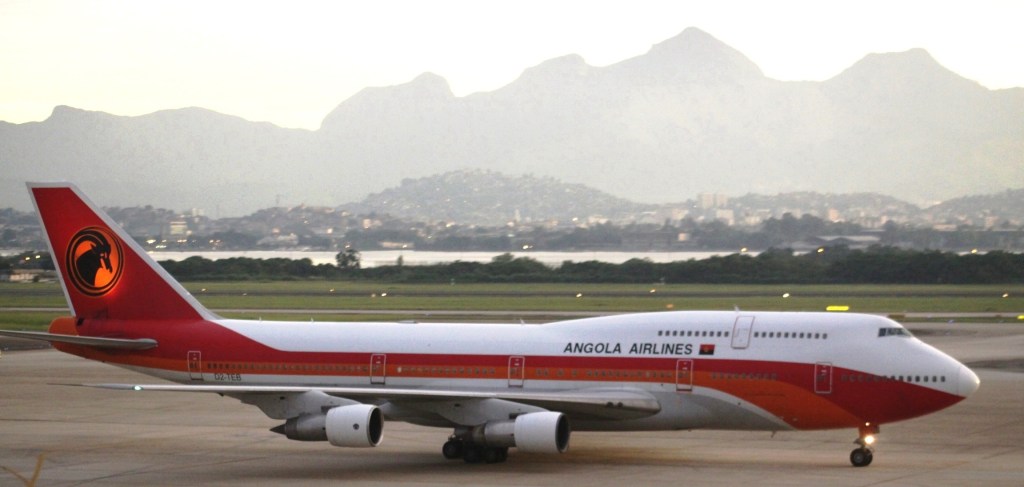
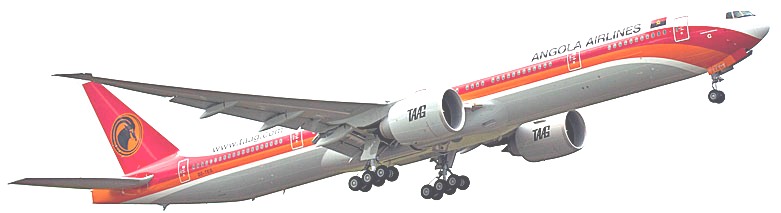
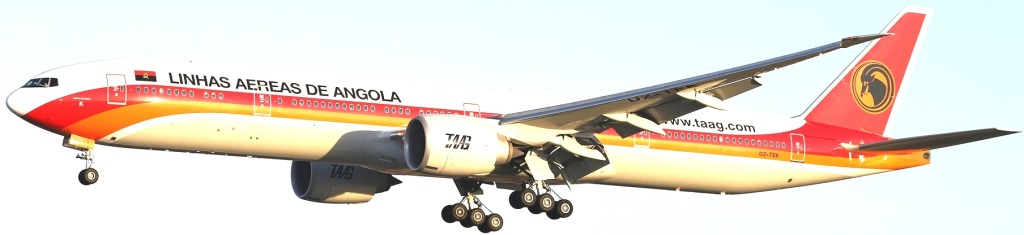
El Gobierno de la República de Angola ha anunciado la privatización de su aerolínea Transportes Aéreos de Angola (TAAG) hacia el año 2022. Se espera que la aerolínea pública que produce pérdidas pierda de US$ 280 millones de Dólares para este año, alrededor de 170 empresas estatales y parapúblicas participan en este programa estatal de privatización. Se espera que el proceso de privatización de la empresa nacional TAAG Linhas Aéreas de Angola se lleve a cabo en 2022. El anuncio realizado el 23 de Noviembre de 2020 en la capital del país, Luanda, por el Ministro de Transportes de Angola, Ricardo de Abreu. La apertura del capital del transportista a la inversión privada forma parte de un vasto programa en marcha, el segundo mayor productor de petróleo de África, de varias empresas públicas y parapúblicas, la mayoría de las cuales están en déficit y endeudadas. El objetivo es limitar su injerencia en la economía al mínimo, especialmente en el sector industrial.
Alrededor de 170 empresas están involucradas en el proceso de privatización. En Agosto 2020, el Secretario de Estado del Tesoro, Osvaldo Victorino João, informó que catorce empresas nacionales habían sido privatizadas en 2019. Una transacción de alrededor de Kz 31 mil millones de Kwanzas, unos € 40 millones de Euros al Gobierno angoleño.
En el caso de TAAG Linhas Aéreas, el Presidente de Angola, João Lourenço, firmó un decreto en Septiembre de 2018 por el que se transformaba la sociedad pública en sociedad limitada. Este cambio en la situación jurídica era esencial para la apertura de la participación del transportista en el sector privado. En Julio 2020, emitió otro decreto que reducía el capital del transportista de Kz 700 mil millones de Kwanzas a Kz 127 mil millones de Kwanzas. El Jefe de Estado también ha creado un Comité de monitoreo estratégico e inversiones de TAAG. Todas estas reformas tienen por objeto limpiar y reestructurar la empresa ya con pérdidas, que ha visto aumentar sus pérdidas como resultado de la pandemia. Según el CEO Rui Carreira, se espera que la aerolínea pierda US$ 280 millones de dólares este 2020.
TAAG privatization in 2022
Government will start airline privatization process in 2022
The Government of the Republic of Angola has announced the privatization of its airline Transportes Aéreos de Angola (TAAG) by 2022. The public airline that produces losses is expected to lose US$ 280 million for this year, around 170 State and parapublic companies participate in this state privatization program. The privatization process of the national company TAAG Linhas Aéreas de Angola is expected to take place in 2022. The announcement made on November 23, 2020 in the country’s capital, Luanda, by the Angolan Minister of Transport, Ricardo de Abreu. The opening of the carrier’s capital to private investment is part of a vast program underway, the second largest oil producer in Africa, of several public and para-public companies, most of which are in deficit and in debt. The objective is to limit their interference in the economy to a minimum, especially in the industrial sector.
Around 170 companies are involved in the privatization process. In August 2020, the Secretary of State for the Treasury, Osvaldo Victorino João, reported that fourteen national companies had been privatized in 2019. A transaction of around Kz 31 billion Kwanzas, about € 40 million to the Angolan Government.
In the case of TAAG Linhas Aéreas, the President of Angola, João Lourenço, signed a decree in September 2018 by which the public company was transformed into a limited company. This change in the legal situation was essential for the opening of the carrier’s participation in the private sector. In July 2020, it issued another decree that reduced the carrier’s capital from Kz 700 billion Kwanzas to Kz 127 billion Kwanzas. The Head of State has also created a Committee for strategic monitoring and investments of TAAG. All of these reforms are aimed at cleaning up and restructuring the already losing company, which has seen its losses rise as a result of the pandemic. According to CEO Rui Carreira, the airline is expected to lose US$ 280 million in 2020.
Privatização da TAAG em 2022
Governo iniciará processo privatização companhia em 2022
O Governo da República de Angola anunciou a privatização da sua companhia aérea Transportes Aéreos de Angola (TAAG) até 2022. A companhia aérea que produz prejuízos deverá perder este ano 280 milhões de dólares, cerca de 170 Empresas estatais e parapúblicas participam desse programa de privatização estadual. Prevê-se que o processo de privatização da empresa nacional TAAG Linhas Aéreas de Angola ocorra em 2022. O anúncio feito a 23 de novembro de 2020 na capital do país, Luanda, pelo ministro angolano dos Transportes, Ricardo de Abreu. A abertura do capital da transportadora ao investimento privado faz parte de um vasto programa em curso, o segundo maior produtor de petróleo de África, de várias empresas públicas e para-públicas, a maioria deficitária e endividada. O objetivo é limitar ao mínimo a sua interferência na economia, especialmente no setor industrial.
Cerca de 170 empresas estão envolvidas no processo de privatização. Em Agosto de 2020, o Secretário de Estado do Tesouro, Osvaldo Victorino João, informou que catorze empresas nacionais foram privatizadas em 2019. Transacção de cerca de Kz 31 mil milhões de Kwanzas, cerca de € 40 milhões ao Governo angolano.
No caso da TAAG Linhas Aéreas, o Presidente de Angola, João Lourenço, assinou um decreto em setembro de 2018 pelo qual a sociedade anónima foi transformada em sociedade por quotas. Essa mudança na situação jurídica foi fundamental para a abertura da participação da transportadora no setor privado. Em julho de 2020, emitiu outro decreto que reduziu o capital da transportadora de Kz 700 bilhões de Kwanzas para Kz 127 bilhões de Kwanzas. O Chefe de Estado também criou uma Comissão de Acompanhamento Estratégico e Investimentos da TAAG. Todas essas reformas visam limpar e reestruturar a empresa já perdida, que viu seus prejuízos aumentarem como resultado da pandemia. Segundo o CEO Rui Carreira, a companhia aérea deverá perder 280 milhões de dólares em 2020.
AW | 2020 11 25 17:15 | AIRLINES MARKET / GOVERNMENT
La larga saga mediática del Aeropuerto El Palomar
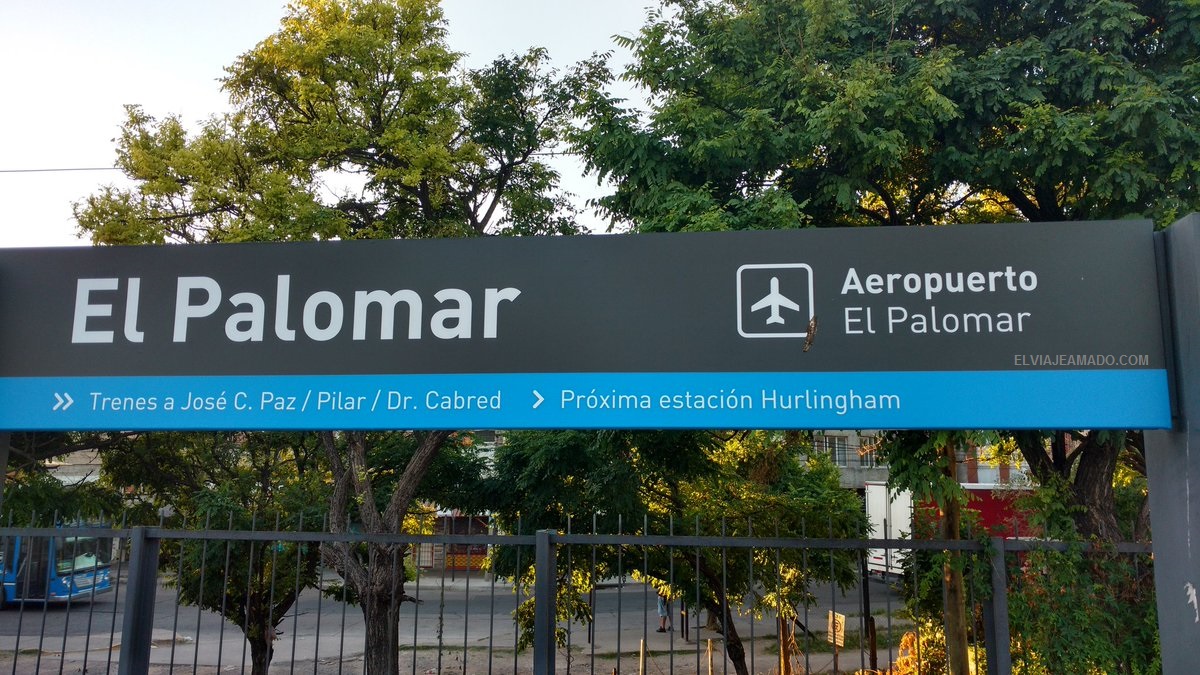
Desde el Ministerio de Transporte de Argentina han expresado ciertas simpatías por la continuidad del Aeropuerto Internacional El Palomar, localizado al oeste a unos siete kilómetros del límite de la Ciudad de Buenos Aires.
En un reportaje realizado el Viernes 20/11 por el Diario Perfil de Argentina, el Ministro de Transporte Mario Meoni ha expresado su parecer respecto a la futura continuidad de la aeroestación low cost, que aproxima con sus dichos vacilantes respecto a una doble política dentro del Gobierno, con el ala más dura encarnada por la asociación La Cámpora. «La política aerocomercial tiene que dar mucha más conectividad. Las low cost incorporaron un método bueno en algún aspecto. Hay mucha gente que pudo viajar gracias a eso. No estamos en contra de que se sostenga», expresó Mario Meoni, aunque remarcó que fueron subsidiadas por algunas provincias o municipios. En sintonía con la continuidad de la red de aeropuertos, el Ministro de Transporte expresó: «Debemos replantearnos la idea de sostener aeropuertos. Eso sí es un costo adicional que no paga la gente, el viajero directo. Lo pagamos entre todos los argentinos». Pero, siendos objetivos, de manera más equitativa, se puede razonar que Aerolíneas Argentinas ha recibido y continúa recibiendo fortunas de Adelantos del Tesoro Nacional (ATN) entre otros subsidios, que lo abonan todos los argentinos año tras año, décadas tras décadas.
Otro aspecto que involucraban los dichos del Ministerio de Transporte era a la cantidad de aeropuertos necesarios para el Área Metropolitana de Buenos Aires (AMBA), que tres aeroestaciones son demasiado para las actuales estructuras del país producto de la desaceleración económica por la crisis sanitaria mundial que ha afectado los viajes aéreos. La realidad, es que si se miden las actuales condiciones, incluso dos aeropuertos Jorge Newbery y Ezeiza representarían una sobreabundancia de ofertas para poca demanda. Siendo objetivos, hay que medir las economías a mediano/largo plazo, por algo se está ampliando el propio Aeroparque.
Al entender las intenciones de no querer confrontar con un sector muy poderoso del Gobierno, las aerolíneas no pueden continuar con las incertidumbres que genera un doble discurso empobrecido producto de una política de coalición que continuamente contribuye al choque, más bien que a la de acuerdos entre todos los sectores de la economía y la política. «No quiero ser tajante con El Palomar. Hay que hacer un análisis profundo de cuánto es el costo de sostenimiento, cuál es la inversión necesaria y cuántas las posibilidades de repago. Alguno podrá preguntar por qué achicarse. La respuesta es que hay que achicarse porque, cuando somos un país pobre, no tenemos que tener por tener aeropuertos. En el mundo nadie los tiene. Tienen aeropuertos en función de la cantidad de pasajeros que tienen. Es algo que debería replicarse en Argentina». Nuevamente, con el concepto de la abundancia se corre el riesgo de poder usar esa postura para reclamar otras áreas que tampoco deberían los ciudadanos argentinos tener siendo un país pobre.
La postura respecto a las operaciones en el Aeropuerto Internacional Ezeiza están relacionadas a la migración de los vuelos por las cuestiones de seguridad sanitarias según el Gobierno ha expresado. Pero, aún continúan las dudas acerca de trasladar las operaciones nuevamente al Aeropuerto El Palomar o al Aeropuerto Jorge Newbery. «Hay que analizarlo. Estamos dándoles posibilidades de desarrollo a las empresas en Aeroparque. En Ezeiza también. Es algo para analizar cuando llegue el momento. Hoy soy partidario de que siga operando El Palomar», expresó el Ministro de Transporte, arrojando una fuerte impresión de su particular postura frente a futuras definiciones.
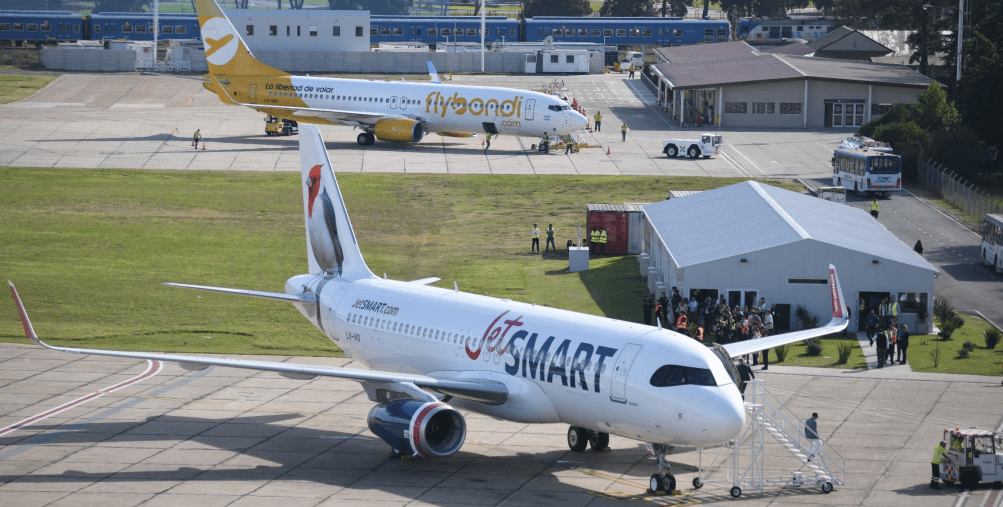
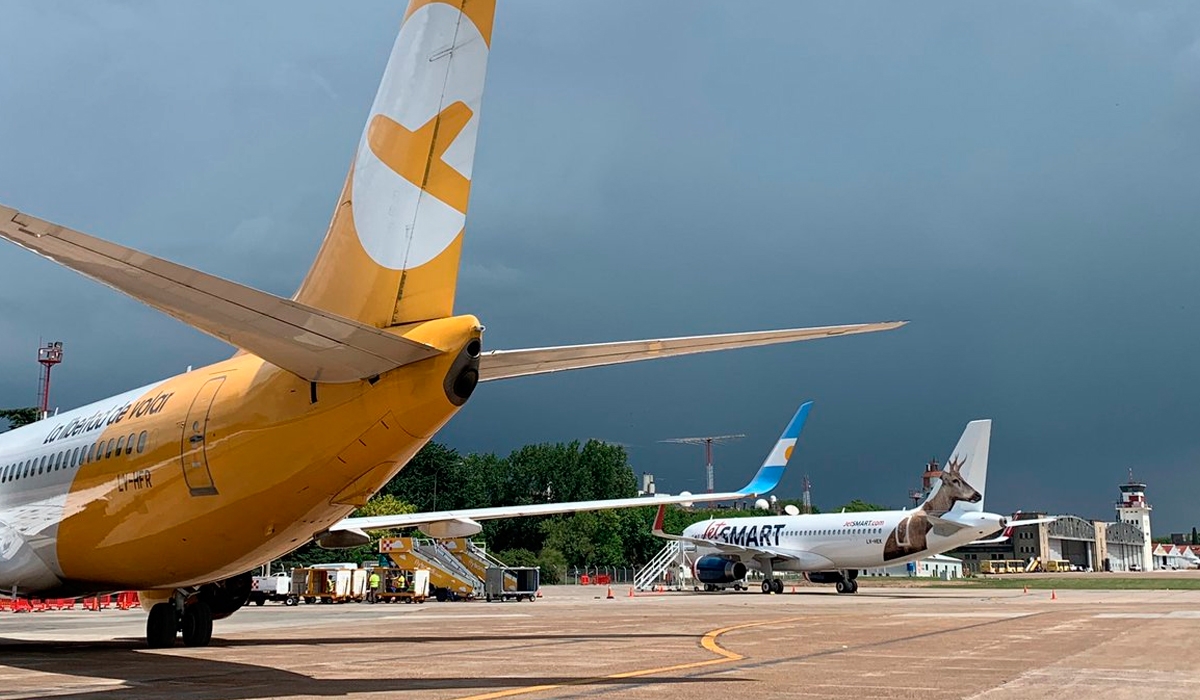
El Ministro de Transporte ha agregado el deseo de que «le gustaría particularmente que las low-cost tuvieran base en algunas otras provincias, en Córdoba por ejemplo. Desde allí poder operar a distintos puntos y ser una low cost que vincule el interior del país de forma diferente. Salir de la lógica de que se haga desde Buenos Aires». En buena parte, es un sentir federal para vincular el interior del país hacia las diferentes provincias argentinas. Particularmente, JetSmart Airlines Argentina había hecho pie como sede administrativa en la Ciudad de Córdoba, tras la adquisición de los derechos de la aerolínea Alas del Sur Líneas Aéreas, pero su base operativa se encuentra en el Aeropuerto El Palomar, en la Provincia de Buenos Aires.
Perspectivas aéreas
Sin lugar a dudas, la propia política de turno es una generadora de incertidumbres que, sumado al panorama post-pandemia, incrementan los desafíos cargados de vacilaciones, indecisiones, perplejidades. Las actuales políticas no hacen otra cosa que girar como un carrusel, dar vueltas y vueltas, mientras que las líneas aéreas y todos los argentinos continúan aspirando a las más nobles pretensiones de poder soñar con una aviación más inclusiva y federal.
The «carousel» of El Palomar Airport
The long media saga of El Palomar Airport
From the Ministry of Transport of Argentina they have expressed certain sympathies for the continuity of the El Palomar International Airport, located to the west about seven kilometers from the limit of the City of Buenos Aires.
In a report carried out on Friday 11/20 by the Diario Perfil de Argentina, the Minister of Transport Mario Meoni has expressed his opinion regarding the future continuity of the low cost air station, which with his vacillating sayings approximates a double policy within the Government, with the toughest wing embodied by the La Cámpora association. «The commercial air policy has to provide much more connectivity. The low cost incorporated a good method in some respect. There are many people who were able to travel thanks to that. We are not against it being sustained», said Mario Meoni, although he remarked that they were subsidized by some provinces or municipalities. In line with the continuity of the airport network, the Minister of Transportation said: «We must rethink the idea of sustaining airports. That is an additional cost that people, the direct traveler, do not pay. We pay it among all Argentines». But, being objective, in a more equitable way, it can be reasoned that Aerolíneas Argentinas has received and continues to receive fortunes from Advances from the National Treasury (ATN) among other subsidies, which are paid by all Argentines year after year, decades after decades.
Another aspect that the sayings of the Ministry of Transportation involved was the number of airports necessary for the Metropolitan Area of Buenos Aires (AMBA), that three air stations are too much for the current structures of the country as a result of the economic slowdown due to the global health crisis that it has affected air travel. The reality is that if current conditions are measured, even two Jorge Newbery and Ezeiza airports would represent an overabundance of offers for little demand. Being objectives, which must be measured in the medium/long-term economies, the Aeroparque itself is expanding for a reason.
By understanding the intentions of not wanting to confront a very powerful sector of the Government, the airlines cannot continue with the uncertainties generated by an impoverished double discourse product of a coalition policy that continuously contributes to the clash, rather than to that of agreements between all sectors of the economy and politics. «I do not want to be blunt with El Palomar. You have to do a deep analysis of how much is the cost of support, what is the investment necessary and how many possibilities of repayment. Some may ask why downsize. The answer is that you have to downsize because when we are a poor country, we don’t have to have airports. Nobody in the world has them. They have airports depending on the number of passengers they have. It is something that should be replicated in Argentina». Once again, with the concept of abundance, there is a risk of being able to use this position to claim other areas that Argentine citizens should not have as a poor country.
The position regarding the operations at the Ezeiza International Airport is related to the migration of flights due to health security issues, according to the Government. But there are still doubts about moving operations back to El Palomar Airport or Jorge Newbery Airport. «We have to analyze it. We are giving development opportunities to the companies in Aeroparque. In Ezeiza as well. It is something to analyze when the time comes. Today I am in favor of continuing to operate El Palomar», said the Minister of Transportation, throwing a strong impression of its particular position in relation to future definitions.
The Minister of Transport has added the wish that «he would particularly like the low-cost to be based in some other provinces, in Córdoba for example. From there to be able to operate at different points and be a low cost that links the interior of the country to different way. Get out of the logic that it is done from Buenos Aires». To a large extent, it is a federal feeling to link the interior of the country to the different Argentine provinces. In particular, JetSmart Airlines Argentina had established itself as an administrative headquarters in the City of Córdoba, after acquiring the rights of the airline Alas del Sur Líneas Aéreas, but its operating base is located at El Palomar Airport, in the Province of Buenos Aires.
Aerial perspectives
Undoubtedly, the politics of the day itself is a generator of uncertainties that, added to the post-pandemic panorama, increase the challenges fraught with vacillations, indecisions, and perplexities. The current policies do nothing but spin like a carousel, going round and round, while the airlines and all Argentines continue to aspire to the noblest claims of being able to dream of a more inclusive and federal aviation.
AW | 2020 11 25 15:37 | AIRLINES / INDUSTRY / GOVERNMENT
Boeing intenta paralizar demanda por US$ 1.000 millones
The Boeing Company está intentando paralizar la demanda presentada por Norwegian Air Shuttle ASA hacia Marzo 2019. La aerolínea de descuento noruega está solicitando una compensación a la industria de aviación estadounidense por su flota en tierra de aviones Boeing 737-8 MAX. Norwegian Air ha sido la primer aerolínea que había presentado públicamente que exigirá que Boeing pague por el tiempo perdido de vuelo; muchas aerolíneas habían seguido su ejemplo.
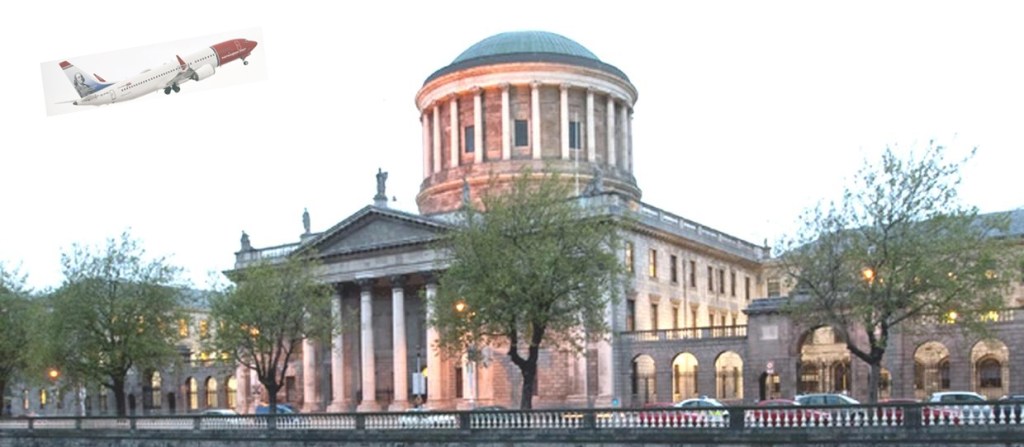
Norwegian Air ha presentado contra el fabricante de aviones estadounidense Boeing por un valor de US$ 1.000 millones de Dólares en resarcimientos por el tiempo de la puesta en tierra de sus unidades adquiridas. La actuación está teniendo lugar en el Juzgado de Michael Quinn, en la República de Irlanda, ante el que se presentó la suspensión de pagos de Norwegian Air Shuttle, con sede en Oslo, y la quiebra de cinco subsidiarias todas ellas con sede en Irlanda. El Juzgado se ha convertido en el centro del drama de la compañía noruega, en el que cada día aparecen historias sobre la agonía de los últimos meses de esta aerolínea. El proceso judicial ha desvelado que Norwegian tenía presentada una demanda de mil millones de Dólares por daños y perjuicios contra Boeing en los tribunales estadounidenses para recuperar el costo de 18 de los Boeing 737-8 MAX almacenados. Ahora esta petición de Boeing contra la demanda debe ser vista el 15 de Diciembre de 2020, ocho días después de que el caso irlandés de la aerolínea se presente ante el Tribunal Superior de Dublín.
Norwegian Air había comprado 18 aviones Boeing 737 MAX por un valor de US$ 1.000 millones de Dólares, pero no pudo utilizarlos tras la decisión de los reguladores de aviación internacionales de ponerlos en tierra por cuestiones de seguridad operativa. Posteriormente, el grupo escandinavo canceló un pedido de 92 aeronaves adicionales. En cualquier aerolínea esta situación habría sido problemática pero para Norwegian fue la gota que colmó su vaso de las desgracias. La demanda presentada incluye reclamos por daños al no poder usar los aviones y también repercute en los costes de mantenimiento. Norwegian calcula que el no poder utilizar el 737 MAX supuso pérdidas por valores a US$ 185 millones sólo en 2019, agravando su crisis financiera. El importe llega a los mil millones de Dólares al solicitar la devolución de los aviones. Al parecer, continúa con poca claridad que la acción judicial en Irlanda impida acciones judiciales de los acreedores en otras jurisdicciones, donde la compañía acarrea un déficit que alcanza los US$ 6.000 millones de Dólares.
Boeing vs Norwegian Air for 737 MAX
Boeing tries to stall US$ 1 billion lawsuit
The Boeing Company is attempting to paralyze the lawsuit filed by Norwegian Air Shuttle ASA by March 2019. The Norwegian discount carrier is seeking compensation from the US aviation industry for its ground fleet of Boeing 737-8 MAX aircraft. Norwegian Air was the first airline to publicly present that it would require Boeing to pay for lost flight time; many airlines had followed suit.
Norwegian Air has filed against the US aircraft manufacturer Boeing for a value of US$ 1,000 million in compensation for the time of the grounding of its acquired units. The action is taking place in the Court of Michael Quinn, in the Republic of Ireland, before which the suspension of payments of Norwegian Air Shuttle, based in Oslo, and the bankruptcy of five subsidiaries all based in Ireland was presented. The Court has become the center of the drama of the Norwegian company, in which stories appear every day about the agony of the last months of this airline. The court process has revealed that Norwegian had filed a lawsuit of one billion dollars for damages against Boeing in the US courts to recover the cost of 18 of the Boeing 737-8 MAX in storage. Now this Boeing petition against the lawsuit is due to be heard on December 15, 2020, eight days after the airline’s Irish case is filed in Dublin High Court.
Norwegian Air had purchased 18 Boeing 737 MAX aircraft for a value of US$ 1 billion, but was unable to use them following the decision of international aviation regulators to ground them for operational safety reasons. Subsequently, the Scandinavian group canceled an order for 92 additional aircraft. In any airline this situation would have been problematic but for Norwegian it was the last straw. The lawsuit filed includes claims for damages due to not being able to use the airplanes and also affects maintenance costs. Norwegian estimates that failing to use the 737 MAX led to losses of US$ 185 million in 2019 alone, compounding its financial crisis. The amount reaches one billion dollars when requesting the return of the aircraft. Apparently, it remains unclear that the legal action in Ireland prevents legal actions from creditors in other jurisdictions, where the company has a deficit of US$ 6 billion.
Boeing vs Norwegian Air for 737 MAX
Boeing prøver å stoppe søksmål på 1 milliard dollar
The Boeing Company prøver å lamme søksmålet fra Norwegian Air Shuttle ASA innen mars 2019. Det norske lavprisselskapet søker erstatning fra den amerikanske luftfartsindustrien for sin bakkeflåte på Boeing 737-8 MAX-fly. Norwegian Air var det første flyselskapet som offentlig presenterte at det ville kreve at Boeing betalte for tapt flytid; mange flyselskaper hadde fulgt etter.
Norwegian Air har søkt mot den amerikanske flyprodusenten Boeing om en verdi på US$ 1 000 millioner i erstatning for tidspunktet for grunnstøting av sine ervervede enheter. Handlingen finner sted i Retten til Michael Quinn, i Irland, før suspensjonen av betalingen av Norwegian Air Shuttle, basert i Oslo, og konkursen til fem datterselskaper som alle er basert i Irland, ble presentert. Domstolen er blitt sentrum for dramaet til det norske selskapet, der historier dukker opp hver dag om kvalen de siste månedene til dette flyselskapet. Rettsprosessen har avdekket at Norwegian hadde anlagt en søksmål på en milliard dollar for erstatning mot Boeing for de amerikanske domstolene for å få tilbake kostnadene på 18 av Boeing 737-8 MAX i lagring. Nå skal denne Boeing-begjæringen mot søksmålet behandles 15. desember 2020, åtte dager etter at flyselskapets irske sak er anlagt i Dublin High Court.
Norwegian Air hadde kjøpt 18 Boeing 737 MAX-fly til en verdi av 1 milliard Dollar, men klarte ikke å bruke dem etter avgjørelsen fra internasjonale luftfartsmyndigheter om å begrunne dem av operasjonelle sikkerhetsmessige årsaker. Deretter kansellerte den skandinaviske gruppen en bestilling på 92 ekstra fly. I ethvert flyselskap ville denne situasjonen ha vært problematisk, men for Norwegian var det det siste strået. Søksmålet som inngis inkluderer krav om erstatning på grunn av ikke å kunne bruke flyene og påvirker også vedlikeholdskostnadene. Norwegian anslår at manglende bruk av 737 MAX førte til tap på 185 millioner Dollar bare i 2019, noe som forverret finanskrisen. Beløpet når en milliard Dollar når vi ber om retur av flyet. Det ser ut til at det fortsatt er uklart at rettssaken i Irland forhindrer rettslige handlinger fra kreditorer i andre jurisdiksjoner, der selskapet har et underskudd som når 6000 millioner.


























 airgways.com