Embraer anuncia acuerdo con KLM Cityhopper flota E195-E2s
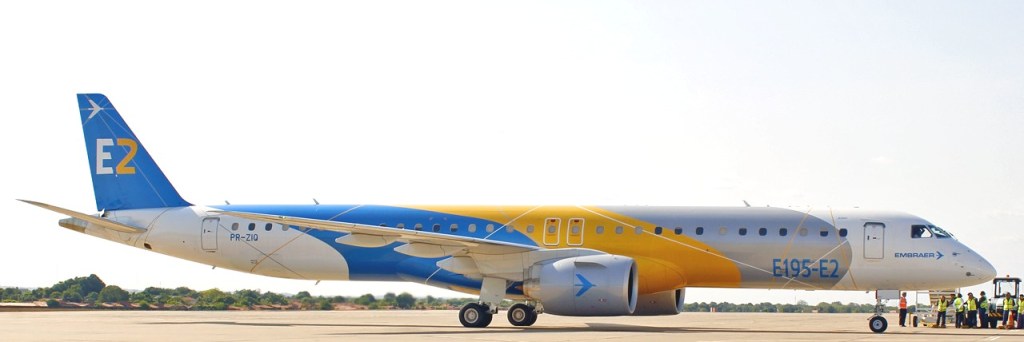
Embraer S.A. anunció en en el congresp MRO Europe, un evento líder de mantenimiento aeronáutico, un acuerdo del Programa pool con KLM Cityhopper, la filial regional de KLM Royal Dutch Airlines. El contrato incluye un amplio soporte de componentes para la flota de E195-E2 de la aerolínea. Actualmente, el Programa Pool de Embraer apoya a más de 50 aerolíneas en todo el mundo. La aerolínea recibió el primer E195-E2 de los 25 aviones que tiene en pedido, a principios de 2021, con todos los E2 cubiertos por este contrato. Actualmente, KLM Cityhopper ya opera un total de cuatro E195-E2 (4) y una flota de cuarenta y nueve (49) E-Jets de primera generación (E1). «Como operador con la flota de E-Jet más grande de Europa, KLM Cityhopper tiene una vasta experiencia en operaciones y mantenimiento de E-Jets, y estándares muy altos, especialmente en lo que respecta a la disponibilidad de aeronaves. Este contrato es un gran respaldo de KLM Cityhopper y continúa el éxito de Embraer en la prestación de soporte y servicios integrales para los clientes de E2», dijo Johann Bordais, Presidente y CEO de Embraer Services & Support. El Programa Pool de Embraer está diseñado para permitir a las aerolíneas minimizar su inversión inicial en inventarios y recursos reparables de alto valor y aprovechar la experiencia técnica de Embraer y su vasta red de proveedores de servicios de reparación de componentes. Los resultados son ahorros significativos en los costos de reparación y transporte de inventario, la reducción del espacio de almacenamiento requerido y la eliminación virtual de la necesidad de recursos necesarios para la gestión de reparaciones, al tiempo que proporciona niveles de rendimiento garantizados.
El E195-E2, el avión de nueva generación de Embraer, está diseñado específicamente para reducir las emisiones y la huella de ruido. Las credenciales ambientales del E2 son impresionantes. El bajo nivel de ruido externo del E2 ya está muy por debajo de los futuros límites previstos de la OACI. Las emisiones de carbono son casi un 10% más bajas por viaje y un 31% más bajas por asiento. En un año típico, cada E195-E2 emitirá 1.500 toneladas menos de CO2.
KLM Cityhopper announces E2-Jets agreement
Embraer announces agreement with KLM Cityhopper E195-E2s fleet
Embraer S.A. announced at the MRO Europe congress, a leading aeronautical maintenance event, a Pool Program agreement with KLM Cityhopper, the regional subsidiary of KLM Royal Dutch Airlines. The contract includes extensive component support for the airline’s E195-E2 fleet. Currently, the Embraer Pool Program supports more than 50 airlines around the world. The airline received the first E195-E2 of the 25 aircraft it has on order, in early 2021, with all E2 covered by this contract. Currently, KLM Cityhopper already operates a total of four E195-E2 (4) and a fleet of forty-nine (49) first generation E-Jets (E1). «As the operator with the largest E-Jet fleet in Europe, KLM Cityhopper has vast experience in E-Jets operations and maintenance, and very high standards, especially when it comes to aircraft availability. This contract is a strong support from KLM Cityhopper and continues Embraer’s success in providing comprehensive service and support for E2 customers», said Johann Bordais, President and CEO of Embraer Services & Support. The Embraer Pool Program is designed to enable airlines to minimize their initial investment in high-value repairable inventories and resources and to take advantage of Embraer’s technical expertise and its vast network of component repair service providers. The results are significant savings in inventory transport and repair costs, reduced storage space required, and virtual elimination of the need for resources required for repair management, while providing guaranteed levels of performance.
The E195-E2, Embraer’s next generation aircraft, is specifically designed to reduce emissions and the footprint of noise. The E2’s environmental credentials are impressive. The E2’s low external noise level is already well below future ICAO limits. Carbon emissions are almost 10% lower per trip and 31% lower per seat. In a typical year, each E195-E2 will emit 1,500 fewer tons of CO2.
KLM Cityhopper kondigt E2-Jets deal aan
Embraer kondigt overeenkomst KLM Cityhopper met E195-E2s-vloot
Embraer SA kondigde op het MRO Europe congres, een toonaangevend luchtvaartonderhoudsevenement, een Pool Program-overeenkomst aan met KLM Cityhopper, de regionale dochteronderneming van KLM Royal Dutch Airlines. Het contract omvat uitgebreide ondersteuning van componenten voor de E195-E2-vloot van de luchtvaartmaatschappij. Momenteel ondersteunt het Embraer Pool-programma meer dan 50 luchtvaartmaatschappijen over de hele wereld. De luchtvaartmaatschappij ontving begin 2021 de eerste E195-E2 van de 25 vliegtuigen die ze in bestelling heeft, waarbij alle E2 hierdoor wordt gedekt contract. Momenteel exploiteert KLM Cityhopper al in totaal vier E195-E2 (4) en een vloot van negenenveertig (49) eerste generatie E-Jets (E1). ,,Als operator met de grootste E-Jet-vloot in Europa, heeft KLM Cityhopper uitgebreide ervaring in E-Jets-operaties en onderhoud, en zeer hoge normen, vooral als het gaat om de beschikbaarheid van vliegtuigen. Dit contract is een krachtige ondersteuning van KLM Cityhopper en zet het succes van Embraer voort in het bieden van uitgebreide service en ondersteuning aan E2-klanten», zei Johann Bordais, President en CEO van Embraer Services & Support. Het Embraer Pool-programma is ontworpen om luchtvaartmaatschappijen in staat te stellen hun initiële investering in hoogwaardige herstelbare voorraden en middelen tot een minimum te beperken en te profiteren van de technische expertise van Embraer en haar uitgebreide netwerk van serviceproviders voor het repareren van onderdelen. De resultaten zijn aanzienlijke besparingen in voorraadtransport- en reparatiekosten, verminderde opslagruimte en eliminatie van de behoefte aan middelen die nodig zijn voor reparatiebeheer, terwijl gegarandeerde prestatieniveaus worden geboden.
De E195-E2, het volgende generatie vliegtuig van Embraer, is speciaal ontworpen om de uitstoot en de voetafdruk van lawaai. De milieuprestaties van de E2 zijn indrukwekkend. Het lage externe geluidsniveau van de E2 ligt al ver onder de toekomstige ICAO-limieten. De CO2-uitstoot is bijna 10% lager per rit en 31% lager per stoel. In een typisch jaar zal elke E195-E2 1.500 ton minder CO2 uitstoten.
Embraer entrega treinta aeronaves en tercer trimestre 2021
La brasileña Embraer S.A. ha informado la entrega de treinta (30) aviones en el tercer trimestre (3Q2021), con una cartera de pedidos valorados en US$ 16.800 millones de Dólares. El fabricante brasileño de aviones Embraer entregó 3treinta aviones en el tercer trimestre, un 7,1% más que el año anterior, pero un 11,7% menos que en el trimestre anterior, dijo el Jueves 21/10, detallando que las entregas incluyeron nueve aviones comerciales y veintiún aviones ejecutivos. Embraer también dijo en una presentación de valores que su cartera de pedidos en firme totalizó US$ 16.8 mil millones en el 30 de Septiembre de 2021, frente a US$ 15.1 mil millones en el mismo período de 2020 y US$ 15.9 mil millones al final del segundo trimestre de 2021. Según la compañía brasileña, sus entregas de aviones comerciales disminuyeron cinco unidades con respecto al trimestre anterior, mientras que las entregas de aviones ejecutivos aumentaron en una unidad.
Los analistas de Banco Itaú BBA dijeron que las cifras mostraron un buen desempeño general en las entregas y una sólida cartera de pedidos, en línea con las expectativas, a pesar de que las entregas comerciales han disminuido después de un segundo trimestre fuerte. «Creemos que el desempeño general fue sólido, lo que sugiere que la demanda continúa recuperándose. Nuestro optimismo se ve reforzado por la cartera de pedidos de 16.800 millones de Dólares», dijo Itau BBA, manteniendo su calificación de rendimiento superior para las acciones de Embraer.
Durante el 3Q2021, en el segmento de aviación ejecutiva, Embraer entregó su avión de negocios número 1.500. El avión hito fue un Phenom 300E, el avión ligero más vendido durante nueve años consecutivos, que fue entregado a Haute Aviation, una compañía suiza centrada en el chárter, la correduría y la gestión de aeronaves. En el segmento de aviación comercial, Embraer anunció la venta de 16 nuevos aviones E175 a SkyWest, Inc. para su operación en la red de Delta Air Lines, que se suman a los 71 aviones E175 que SkyWest ya opera para Delta. El avión E175 volará para Delta bajo un Acuerdo de Compra de Capacidad (CPA). El valor del contrato, que se incluye en la cartera de pedidos del tercer trimestre de Embraer, es de USD 798,4 millones,según el precio de lista. En el segmento de Servicios y Soporte, Embraer firmó varios contratos durante el trimestre. Porter Airlines firmó un importante paquete de soporte posventa con Embraer para la flota de aviones comerciales E2 de Porter, por hasta 20 años. Embraer también firmó un acuerdo del Programa Pool con CommutAir, una aerolínea de United Express, para apoyar la flota de aviones ERJ 145 de la aerolínea, y una extensión para el Programa Pool con Cobham, en Australia, para respaldar sus tres E190. Además, en Australia, Embraer firmó un acuerdo de servicios con Alliance Airlines, que proporcionará soporte material para la flota de E190 de la aerolínea.
Embraer delivers 30 units 3Q2021
Embraer delivers thirty aircraft in third quarter 2021
The Brazilian Embraer S.A. has reported the delivery of thirty (30) aircraft in the third quarter (3Q2021), with an order portfolio valued at US$ 16,800 million. Brazilian aircraft manufacturer Embraer delivered 30 aircraft in the third quarter, 7.1% more than the previous year, but 11.7% less than in the previous quarter, it said on Thursday 10/21, detailing that the deliveries included nine commercial jets and twenty-one executive jets. Embraer also said in a securities presentation that its firm order book totaled US$ 16.8 billion on September 30, 2021, up from US$ 15.1 billion in the same period of 2020 and US$ 15.9 billion at the end. of the second quarter of 2021. According to the Brazilian company, its commercial aircraft deliveries decreased five units compared to the previous quarter, while business aircraft deliveries increased by one unit.
Analysts at Banco Itaú BBA said the figures showed an overall good performance in deliveries and a strong order book, in line with expectations, even though commercial deliveries have declined after a strong second quarter. «We believe the overall performance was strong, suggesting that demand continues to recover. Our optimism is reinforced by the order book of $ 16.8 billion», said Itau BBA, maintaining its outperformance rating for Embraer shares.
During 3Q2021, in the business aviation segment, Embraer delivered its 1,500th business jet. The milestone aircraft was a Phenom 300E, the best-selling light aircraft for nine consecutive years, which was delivered to Haute Aviation, a Swiss company focused on charter, brokerage and aircraft management. In the commercial aviation segment, Embraer announced the sale of 16 new E175 aircraft to SkyWest, Inc. for operation on the Delta Air Lines network, in addition to the 71 E175 aircraft that SkyWest already operates for Delta. The E175 aircraft will fly for Delta under a Capacity Purchase Agreement (CPA). The value of the contract, which is included in Embraer’s third quarter order book, is $ 798.4 million, based on list price. In the Services and Support segment, Embraer signed several contracts during the quarter. Porter Airlines has signed a major aftermarket support package with Embraer for Porter’s fleet of E2 commercial aircraft, for up to 20 years. Embraer also signed a Pool Program agreement with CommutAir, a United Express airline, to support the airline’s fleet of ERJ 145 aircraft, and an extension to the Pool Program with Cobham, Australia, to support its three E190s. In addition, in Australia, Embraer signed a service agreement with Alliance Airlines, which will provide material support for the airline’s E190 fleet.
Embraer entrega 30 unidades 3T2021
Embraer entrega trinta aeronaves no terceiro trimestre de 2021
A Embraer S.A. brasileira informou a entrega de trinta (30) aeronaves no terceiro trimestre (3T2021), com uma carteira de pedidos avaliada em US $ 16.800 milhões. A fabricante brasileira de aeronaves Embraer entregou 30 aeronaves no terceiro trimestre, 7,1% a mais que no ano anterior, mas 11,7% a menos que no trimestre anterior, informou na quinta-feira 21/10, detalhando que as entregas incluíram nove jatos comerciais e vinte e um. jatos executivos. A Embraer também disse em apresentação de títulos que sua carteira de pedidos firmes totalizou US$ 16,8 bilhões em 30 de setembro de 2021, ante US$ 15,1 bilhões no mesmo período de 2020 e US$ 15,9 bilhões no final do segundo trimestre de 2021 Segundo a empresa brasileira, as entregas de aeronaves comerciais diminuíram cinco unidades em relação ao trimestre anterior, enquanto as entregas de aeronaves executivas aumentaram em uma unidade.
Analistas do Banco Itaú BBA disseram que os números mostram um bom desempenho geral nas entregas e uma forte carteira de pedidos, em linha com as expectativas, embora as entregas comerciais tenham diminuído após um segundo trimestre forte. «Acreditamos que o desempenho geral foi forte, sugerindo que a demanda continua se recuperando. Nosso otimismo é reforçado pela carteira de pedidos de US$ 16,8 bilhões», disse o Itaú BBA, mantendo sua classificação de desempenho superior para as ações da Embraer.
Durante o 3T2021, no segmento de aviação executiva, a Embraer entregou seu 1.500º jato executivo. A aeronave marco foi um Phenom 300E, a aeronave leve mais vendida por nove anos consecutivos, que foi entregue à Haute Aviation, uma empresa suíça focada em fretamento, corretagem e gerenciamento de aeronaves. No segmento de aviação comercial, a Embraer anunciou a venda de 16 novas aeronaves E175 para a SkyWest, Inc. para operação na rede da Delta Air Lines, além das 71 aeronaves E175 que a SkyWest já opera para a Delta. A aeronave E175 voará para a Delta sob um Contrato de Compra de Capacidade (CPA). O valor do contrato, que está incluído na carteira de pedidos da Embraer no terceiro trimestre, é de US $ 798,4 milhões, com base no preço de lista. No segmento de Serviços e Suporte, a Embraer fechou diversos contratos durante o trimestre. A Porter Airlines assinou um grande pacote de suporte de pós-venda com a Embraer para a frota de aeronaves comerciais E2 da Porter, por até 20 anos. A Embraer também assinou um acordo do Programa Pool com a CommutAir, uma companhia aérea da United Express, para apoiar a frota da companhia aérea de aeronaves ERJ 145, e uma extensão do Programa Pool com a Cobham, Austrália, para apoiar seus três E190s. Além disso, na Austrália, a Embraer assinou um contrato de prestação de serviços com a Alliance Airlines, que fornecerá suporte material para a frota E190 da companhia aérea.
Airbus abrirá línea conversión cargueros en San Antonio, Texas
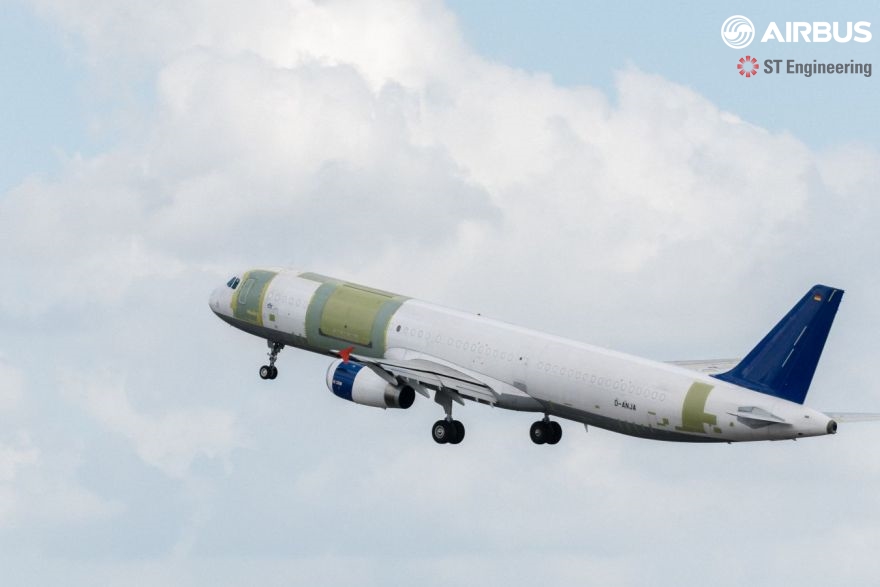
El fabricante europeo Airbus Group está expandiendo su presencia en Estados Unidos para capitalizar el crecimiento en el mercado de carga aérea. Según un informe de Freight Waves, un funcionario de Airbus dijo que la compañía planea que una línea de conversión de cargueros A321 en San Antonio, Estado de Texas, esté en funcionamiento para fin de año 2021. También hay planes para una instalación en Estados Unidos para conversiones de A330 en 2022. Un portavoz de Airbus no respondió de inmediato a una solicitud de comentarios.
Según los informes, la empresa conjunta que involucra a Airbus y ST Engineering de Singapur detrás del trabajo de conversión podrá realizar alrededor de sesenta (60) conversiones al año una vez que ambas instalaciones entren en funcionamiento, un aumento de las diecinueve (19) conversiones esperadas este 2021.
Actualmente, Wichita (KS) ya es parte de la huella de Airbus en los Estados Unidos como sede de Airbus Americas Engineering en el Campus de Innovación de la Universidad Estatal de Wichita (WSU). Pero el mercado potencial para convertir aviones viejos en cargueros es algo que ya ha llamado la atención de WSU. El Instituto Nacional de Investigación de Aviación de la universidad recibió el mes pasado su primer Boeing 777 usado para un programa de conversión que ha lanzado en sus instalaciones en la Línea de Vuelo de Capital Aéreo.
Airbus conversion San Antonio/TX
Airbus to open cargo conversion line in San Antonio, Texas
European manufacturer Airbus Group is expanding its presence in the United States to capitalize on growth in the air cargo market. According to a Freight Waves report, an Airbus official said the company plans to have an A321 freighter conversion line in San Antonio, Texas, operational by the end of the year 2021. There are also plans for an installation in the United States. for A330 conversions in 2022. An Airbus spokesman did not immediately respond to a request for comment.
The joint venture involving Airbus and Singapore’s ST Engineering behind the conversion work will reportedly be able to perform around sixty (60) conversions per year once both facilities come online, an increase from nineteen (19) conversions. expected this 2021.
Currently, Wichita (KS) is already part of Airbus’ footprint in the United States as the headquarters of Airbus Americas Engineering on the Wichita State University (WSU) Innovation Campus. But the potential market for converting old planes into freighters is something that has already caught WSU’s attention. The university’s National Aviation Research Institute last month received its first Boeing 777 used for a conversion program it has launched at its facility on the Air Capital Flight Line.
AW | 2021 10 21 15:15 | INDUSTRY / AIRLINES MARKET
Aviación china vuelve a mostrar su resiliencia
El desempeño comercial del mercado de aviación comercial china fue peor de lo esperado en esta última semana, pues algunos casos esporádicos de la pandemia de COVID-19 en la República Popular China han afectado parte de la demanda de viajes. Sin embargo, la demanda ha mantenido una tendencia al alza, aunque con algunas fluctuaciones, y se espera que el mercado prospere aún más el próximo año, dijeron expertos de la industria. Del 1 al 7 de Octubre de 2021, China registró 515 millones de viajes turísticos nacionales, según el Ministerio de Cultura y Turismo. El promedio diario de vuelos domésticos operados durante el período llegó a 12.952, lo que fue un 11,27 por ciento inferior al del mismo período del año pasado, según la Administración de Aviación Civil de China (CAAC). El factor de carga promedio de pasajeros de los vuelos nacionales durante las vacaciones alcanzó el 73,7 por ciento, que fue 4,8 puntos porcentuales más bajo que el del mismo período del año pasado, según la CAAC.
«Con la pandemia de COVID-19 bajo un mejor control en China, se prevé que la demanda interna de viajes crezca gradualmente, y la circulación nacional proporciona un apoyo espina dorsal para la economía cuando la parte externa es relativamente débil.Cuando el estancado mercado internacional de viajes comenzó a volver a la normalidad, el mercado nacional y el mercado internacional volverán a lograr el equilibrio. Los transportistas restaurarán gradualmente su rentabilidad para entonces», han expresado analistas de Guotai Junan Securities en un informe.
A pesar de la disminución en las reservas de boletos de avión, el precio promedio del boleto se ha incrementado. Durante las vacaciones, el precio promedio de un vuelo doméstico de ida fue de ¥ 821 Yuanes/US$ 127,3 Dólares, que fue un 7 por ciento más alto que el del mismo período del año pasado, según datos de Trip.com Group, la agencia de viajes en línea más grande de China. En particular, los destinos populares experimentaron un aumento sustancial en los precios de los boletos de los vuelos a esos lugares. Por ejemplo, el precio promedio de un vuelo de ida desde Shenzhen en la provincia de Guangdong a Beijing durante las vacaciones aumentó un 47 por ciento desde el nivel visto durante las vacaciones del año pasado, según Trip.com. En Septiembre 2021, el número promedio diario de vuelos domésticos operados en China alcanzó los 21.329, que fue un 43 por ciento más alto que el número visto en agosto, según VariFlight, un proveedor de servicios de datos de aviación civil con sede en China, lo que muestra que la demanda regular de viajes de pasajeros nacionales se está recuperando constantemente.
Por otro lado, debido al impacto de la pandemia, la tasa de aumento de nuevos aviones en China se ha desacelerado. En 2020, el tamaño de la flota en China fue un 2,2 por ciento más alto que el de 2019. Esto es significativamente más bajo que la tasa de crecimiento anual promedio del 10 por ciento registrada antes de la pandemia, según la proyección de Guosen Securities. Además, el avión Boeing 737 MAX de pasillo único de Boeing permaneció en tierra en China. El modelo de avión ha sido puesto en tierra en todo el mundo después de dos accidentes fatales en Indonesia en 2018 y en Etiopía en 2019, y no hay un calendario específico para que el modelo reanude los vuelos en China. Con la puesta a tierra del Boeing 737 MAX y la suspensión de la introducción de nuevos aviones del modelo, el número de aviones comerciales en China creció solo un 4,9 por ciento en 2019.
Índices IATA
Mientras tanto, la Asociación Internacional de Transporte Aéreo (IATA) anunció su última perspectiva en Octubre 2021 para la industria de las aerolíneas, y el desempeño financiero mostró mejores resultados en medio de la continua crisis de COVID-19. Se espera que las pérdidas netas de la industria se reduzcan a US$ 11.6 mil millones en 2022 después de una pérdida de US$ 51.8 mil millones este año. Se espera que la demanda general de viajes aéreos sea del 40 por ciento de los niveles de 2019 para este año, y aumente al 61 por ciento en 2022, dijo la IATA.
La demanda internacional es la más lenta en recuperarse, debido a las continuas restricciones a la libertad de movimiento a través de las fronteras, las medidas de cuarentena y la incertidumbre de los viajeros. Este año, se espera que la demanda internacional alcance el 22 por ciento de los niveles previos a la pandemia en 2019. En 2022, se espera que la demanda internacional alcance el 44 por ciento de los niveles de 2019. La demanda interna, con menos restricciones en la mayoría de los países, está impulsando la recuperación. Este año, se espera que la demanda interna alcance el 73 por ciento de los niveles previos a la pandemia en 2019. En 2022, se espera que la demanda interna alcance el 93 por ciento de los niveles de 2019.
«La magnitud de la crisis del COVID-19 para las aerolíneas es enorme. Para sobrevivir, las aerolíneas han reducido drásticamente los costos y han adaptado su negocio a cualquier oportunidad disponible. Ya hemos superado el punto más profundo de la crisis. Si bien persisten problemas graves, el camino hacia la recuperación está a la vista. La aviación está mostrando su resiliencia una vez más. La gente no ha perdido su deseo de viajar, como vemos en la sólida resiliencia del mercado interno. Pero están siendo retenidos de los viajes internacionales por las restricciones, la incertidumbre y la complejidad. Más gobiernos están viendo las vacunas como una salida a esta crisis. Estamos totalmente de acuerdo en que las personas vacunadas no deben ver limitada su libertad de movimiento de ninguna manera. De hecho, la libertad de viajar es un buen incentivo para que más personas se vacunen», dijo Willie Walsh, Director General de la IATA.
Perspectivas COMAC
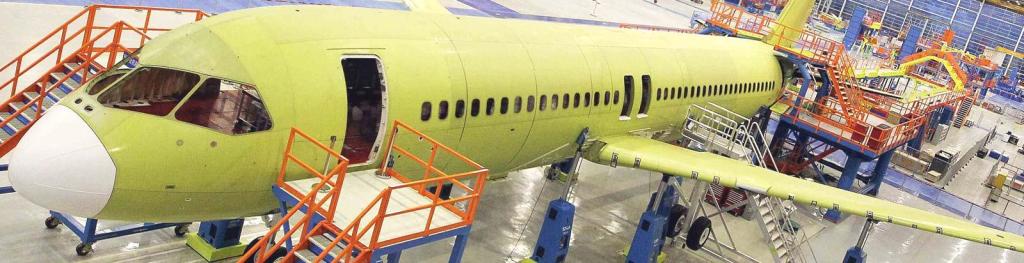
En los próximos veinte años, se espera que la tasa de crecimiento anual promedio de la facturación de pasajeros en China alcance el 5,7 por ciento, y se prevé que la tasa de crecimiento anual del tamaño de la flota en China sea del 5,2 por ciento, según el pronóstico del fabricante nacional de aviones Commercial Aircraft Corp of China (COMAC). Para 2040, el mundo necesitará 41,429 nuevos aviones comerciales valorados en US$ 6.1 billones, según el precio de catálogo del año pasado. Para entonces, China se convertirá en el mercado de aviación más grande, y se espera que las aerolíneas chinas adquieran 9.084 nuevos aviones con más de 50 asientos cada uno. La demanda de China representará el 22 por ciento del total de nuevos aviones requeridos a nivel mundial, según el informe. El C919, el avión de pasajeros de fuselaje estrecho de fabricación nacional de China, está en la vía rápida para recibir la certificación de aeronavegabilidad antes de su debut comercial en un futuro cercano. «La capacidad actual de fabricación de aviones de Boeing y Airbus no puede satisfacer completamente la demanda de las aerolíneas globales, y el futuro debut del C919 proporcionará nuevas opciones para las aerolíneas globales», dijo Yang Yang, Subgerente General de Marketing y Ventas de COMAC.
Resilience in Chinese aviation
Chinese aviation once again shows its resilience
The commercial performance of the Chinese commercial aviation market was worse than expected in this last week, as some sporadic cases of the COVID-19 pandemic in the People’s Republic of China have affected part of the travel demand. However, demand has been on an upward trend, albeit with some fluctuations, and the market is expected to prosper further next year, industry experts said. From October 1-7, 2021, China recorded 515 million domestic tourist trips, according to the Ministry of Culture and Tourism. Average daily domestic flights operated during the period reached 12,952, which was 11.27 percent lower than the same period last year, according to the Civil Aviation Administration of China (CAAC). The average passenger load factor for domestic flights during the holidays reached 73.7 percent, which was 4.8 percentage points lower than the same period last year, according to the CAAC.
«With the COVID-19 pandemic under better control in China, domestic travel demand is projected to grow gradually, and domestic circulation provides backbone support for the economy when the external is relatively weak. When the market stagnant international travel began to return to normal, the domestic market and the international market will again achieve equilibrium. Carriers will gradually restore their profitability by then», analysts at Guotai Junan Securities said in a report.
Despite the decline in airline ticket reservations, the average ticket price has increased. During the holidays, the average price for a one-way domestic flight was ¥ 821 Yuan/US$ 127.3, which was 7 percent higher than the same period last year, according to Trip.com Group data, China’s largest online travel agency. Popular destinations in particular saw a substantial increase in ticket prices for flights to those locations. For example, the average price for a one-way flight from Shenzhen in Guangdong province to Beijing during the holidays increased 47 percent from the level seen during last year’s holidays, according to Trip.com. In September 2021, the average daily number of domestic flights operated in China reached 21,329, which was 43 percent higher than the number seen in August, according to VariFlight, a China-based civil aviation data service provider, which shows that the regular demand for domestic passenger travel is constantly recovering.
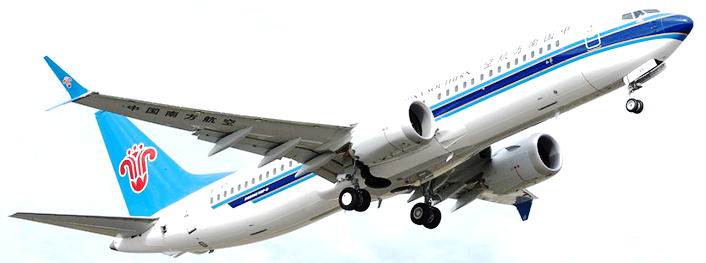
On the other hand, due to the impact of the pandemic, the rate of increase of new aircraft in China has slowed. In 2020, the fleet size in China was 2.2 percent higher than in 2019. This is significantly lower than the average annual growth rate of 10 percent recorded before the pandemic, according to the projection of Guosen Securities. Additionally, Boeing’s single-aisle Boeing 737 MAX aircraft remained grounded in China. The model aircraft has been grounded around the world after two fatal accidents in Indonesia in 2018 and Ethiopia in 2019, and there is no specific timetable for the model to resume flights in China. With the grounding of the Boeing 737 MAX and the suspension of the introduction of new aircraft of the model, the number of commercial aircraft in China grew by only 4.9 percent in 2019.
IATA indices
Meanwhile, the International Air Transport Association (IATA) announced its latest outlook in October 2021 for the airline industry, and financial performance showed better results amid the ongoing COVID-19 crisis. The industry’s net losses are expected to shrink to US$ 11.6 billion in 2022 after a loss of US$ 51.8 billion this year. Overall demand for air travel is expected to be 40 percent of 2019 levels for this year, increasing to 61 percent in 2022, IATA said.
International demand is the slowest to recover, due to continued restrictions on freedom of movement across borders, quarantine measures and uncertainty for travelers. This year, international demand is expected to reach 22 percent of pre-pandemic levels in 2019. In 2022, international demand is expected to reach 44 percent of 2019 levels. Domestic demand, with less restrictions in most countries is driving the recovery. This year, domestic demand is expected to reach 73 percent of pre-pandemic levels in 2019. In 2022, domestic demand is expected to reach 93 percent of 2019 levels.
«The magnitude of the COVID-19 crisis for airlines is enormous. To survive, airlines have dramatically reduced costs and adapted their business to whatever opportunities are available. We have already passed the deepest point of the crisis. While they persist serious problems, the road to recovery is in sight. Aviation is showing its resilience once again. People have not lost their desire to travel, as we see in the strong resilience of the domestic market. But they are being held back from travel international restrictions, uncertainty and complexity. More governments are seeing vaccines as a way out of this crisis. We fully agree that vaccinated people should not be restricted in their freedom of movement in any way. In fact, freedom travel is a good incentive for more people to get vaccinated», said Willie Walsh, IATA Director General.
COMAC perspectives
In the next twenty years, the average annual growth rate of passenger turnover in China is expected to reach 5.7 percent, and the annual growth rate of the fleet size in China is projected to be 5, 2 percent, according to the forecast of the national aircraft manufacturer Commercial Aircraft Corp of China (COMAC). By 2040, the world will need 41,429 new commercial jets valued at US$ 6.1 trillion, based on last year’s list price. By then, China will become the largest aviation market, and Chinese airlines are expected to acquire 9,084 new aircraft with more than 50 seats each. Demand from China will account for 22 percent of the total new aircraft required globally, according to the report. The C919, China’s domestically-made narrow-body airliner, is on the fast track to receiving airworthiness certification ahead of its commercial debut in the near future. «The current aircraft manufacturing capacity of Boeing and Airbus cannot fully meet the demand from global airlines, and the future debut of the C919 will provide new options for global airlines», said Yang Yang, Deputy General Manager of Marketing and Sales at COMAC.
另一方面,受疫情影響,中國新飛機增速放緩。據國信證券預測,2020年中國船隊規模較2019年增長2.2%,明顯低於疫情前10%的年均增長率。此外,波音的單通道波音 737 MAX 飛機仍在中國停飛。該模型飛機在2018年印度尼西亞和2019年埃塞俄比亞發生兩起致命事故後,已在全球範圍內停飛,該模型在中國恢復飛行還沒有具體時間表。隨著波音737 MAX停飛、該機型新機暫停引進,2019年中國商用飛機數量僅增長4.9%。
AW | 2021 10 21 14:33 | GOVERNMENT / AVIATION SAFETY / INDUSTRY
Justicia Delaware sostiene demanda contra Junta Directiva
Tribunal de Justicia de Delaware (DE), Estados Unidos, ha rechazado la moción para desestimar demanda contra miembros de la Junta corporativa de The Boeing Company por no llevar a cabo una supervisión adecuada del cumplimiento de los sistemas de seguridad en la empresa. El Tribunal de la Cancillería de Delaware continúa su tendencia de permitir las reclamaciones de Caremark [Ɖ]: contra los miembros de la junta corporativa que no ejercen una supervisión y monitoreo adecuados de los programas de cumplimiento. La última decisión de la Corte de Delaware que involucra a la Junta de Boeing y su falta de supervisión adecuada del escándalo de seguridad del Boeing 737 MAX es otro ejemplo. En el fondo, el Tribunal de la Cancillería está aumentando las apuestas sobre la responsabilidad de los miembros de la Junta. El escándalo del Boeing 737 MAX es un caso problemático e inquietante en el que faltaba supervisión y responsabilidad de la Junta corporativa. Las implicaciones del fracaso de la Junta resultaron en la fallecimiento de pasajeros inocentes, la puesta a tierra del Boeing 737 MAX, un acuerdo de US$ 2.5 mil millones en concepto de multas, un caso penal contra un piloto Jefe Técnico de la línea 737 MAX y problemas técnicos y de seguridad continuos.
El Tribunal de Delaware no está alterando el estándar Caremark bien arraigado. En cambio, la Corte está aplicando el estándar Caremark para rechazar las mociones de desestimación, lo que permite que los casos procedan al descubrimiento y litigio. Los riesgos para los miembros de la junta corporativa están aumentando y la Corte de Delaware claramente está enviando un mensaje: los miembros de la junta deben atender los programas de cumplimiento y los riesgos relevantes o enfrentar el riesgo de responsabilidad personal.
El Tribunal de Delaware ha proporcionado otra decisión importante relacionada con el escándalo de seguridad del Boeing 737 MAX. El caso de Boeing se deriva del accidente del vuelo JT-610 de Lion Air el 29 de Octubre de 2018 y el accidente del vuelo ET-302 Ethiopian Airlines el 10 de Marzo de 2019. Los accidentes fueron el resultado directo de la falta de capacitación de los pilotos en el Sistema de Aumento de Características de Maniobra (MCAS).
En el Tribunal de la Cancillería de Delaware, varios demandantes hicieron demandas de libros y registros y presentaron demandas derivadas en 2019. Los demandantes afirmaron el incumplimiento de las reclamaciones de obligaciones fiduciarias contra los directores de Boeing, específicamente 1) Boeing no implementó un sistema de informes para monitorear la seguridad de los aviones de Boeing; 2) Boeing ignoró las banderas rojas y su deber de investigar; y 3) la Junta despidió al CEO y permitió que el CEO cobrara su compensación de capital.
El estándar Caremark requiere que los demandantes aleguen hechos que: 1) los directores fallaron por completo en implementar ningún sistema o control de informes o información; o 2) habiendo implementado tal sistema o controles, [los directores] conscientemente no monitorearon o supervisaron sus operaciones, lo que les impidió ser informados de los riesgos o problemas que requerían su atención.
En primer lugar, la supervisión de la Junta para los problemas de misión crítica debe ejercerse rigurosamente, lo que implica sensibilidad a los problemas de cumplimiento intrínsecamente críticos para la empresa. El Tribunal dictaminó que los demandantes habían alegado adecuadamente las reclamaciones contra los directores demandados. En apoyo de su conclusión, el Tribunal citó en primer lugar el hecho de que la junta no tenía un comité encargado directamente de supervisar la seguridad de los aviones, y que la Junta en general no estaba supervisando o debatiendo oficialmente la seguridad de forma regular. El Tribunal citó el hecho de que, tras el accidente del vuelo JT-610 de la compañía indonesia Lion Air, la agenda de la reunión de la Junta no incluyó una discusión específica sobre la seguridad, sino que se centró en la restauración de las ganancias y la eficiencia. En particular, el Tribunal citó que las discusiones de la Junta sobre los problemas del 737 MAX eran invocaciones pasivas de calidad y seguridad que no cumplen con la rigurosa supervisión que Caremark contempla. En segundo lugar, el Tribunal explicó que la Junta no exigía a la administración que presentara informes periódicos sobre cuestiones de seguridad. Específicamente, el Tribunal citó la estructura de informes defectuosa de Boeing y la administración se comunicó con la Junta solo sobre una base ad hoc con respecto a cuestiones de seguridad. El Tribunal señaló que la Junta estaba «aceptando pasivamente las garantías y opiniones de la gerencia».
El Tribunal de Justicia de Delaware ha tomado nota de pruebas documentales que indicaban que los miembros de la Junta Directiva eran conscientes de la importancia de las cuestiones de seguridad y que la Junta sabía que era necesario mejorar sus procedimientos de supervisión de la seguridad. El Tribunal también dictaminó que los demandantes declararon una reclamación bajo el punto dos de Caremark, basada en las acusaciones de que la Junta «aceptó pasivamente» las garantías de la administración de que el 737 MAX era seguro y que no tomó medidas frente a las alertas rojas que se encendían enla línea deproducción del Boeing 737 MAX.
Delaware court sues Boeing
Delaware Justice File Lawsuit Against Board of Directors
Court of Justice of Delaware (DE), United States, has rejected the motion to dismiss lawsuit against members of the corporate Board of The Boeing Company for not carrying out adequate supervision of the compliance of the security systems in the company. The Delaware Chancery Court continues its trend of allowing Caremark [Ɖ]: claims against corporate board members who do not exercise adequate oversight and monitoring of compliance programs. The latest Delaware Court decision involving the Boeing Board and its lack of proper oversight of the Boeing 737 MAX safety scandal is another example. In the background, the Court of Chancery is raising the stakes on the liability of Board members. The Boeing 737 MAX scandal is a troubling and disturbing case in which corporate Board oversight and accountability was lacking. The implications of the Board’s failure resulted in the death of innocent passengers, the grounding of the Boeing 737 MAX, a US$ 2.5 billion settlement in fines, a criminal case against a Chief Technical pilot of the 737 MAX line and ongoing technical and security issues.
The Delaware Court is not altering the Caremark standard: well established. Instead, the Court is applying the Caremark standard to reject motions to dismiss, allowing cases to proceed to discovery and litigation. The risks to corporate board members are increasing, and the Delaware Court is clearly sending a message: Board members must address compliance programs and relevant risks or face personal liability risk.
The Delaware Court has provided another important decision related to the Boeing 737 MAX safety scandal. The Boeing case stems from the Lion Air flight JT-610 accident on October 29, 2018 and the Ethiopian Airlines flight ET-302 accident on March 10, 2019. The accidents were the direct result of lack of training. of pilots in the Maneuvering Characteristics Increase System (MCAS).
In Delaware Chancery Court, several plaintiffs made book and record lawsuits and filed derivative lawsuits in 2019. Plaintiffs claimed breach of fiduciary obligation claims against Boeing directors, specifically 1) Boeing did not implement a system of reports to monitor the safety of Boeing aircraft; 2) Boeing ignored the red flags and its duty to investigate; and 3) the Board fired the CEO and allowed the CEO to collect equity compensation from him.
The Caremark standard requires plaintiffs to allege facts that: 1) principals completely failed to implement any reporting or information system or control; or 2) having implemented such a system or controls, [the directors] consciously did not monitor or supervise their operations, which prevented them from being informed of the risks or problems that required their attention.
First, the Board’s oversight for mission-critical issues must be rigorously exercised, implying sensitivity to inherently business-critical compliance issues. The Court ruled that the plaintiffs had adequately argued the claims against the defendant directors. In support of its conclusion, the Court first cited the fact that the board did not have a committee directly charged with overseeing aircraft safety, and that the Board as a whole was not officially monitoring or discussing safety on a regular basis. The Court cited the fact that, following the accident of the Indonesian company Lion Air flight JT-610, the agenda of the Board meeting did not include a specific discussion on safety, but instead focused on restoring profits. and efficiency. In particular, the Court cited that the Board’s discussions of the 737 MAX issues were passive invocations of quality and safety that do not meet the rigorous oversight that Caremark envisions. Second, the Court explained that the Board did not require management to submit regular reports on security issues. Specifically, the Court cited Boeing’s faulty reporting structure and management communicated with the Board only on an ad hoc basis regarding safety issues. The Tribunal noted that the Board was «passively accepting management’s assurances and opinions».
The Delaware Court of Justice has noted documentary evidence indicating that the members of the Board of Directors were aware of the importance of safety issues and that the Board knew that their safety oversight procedures needed to be improved. The Court also ruled that the plaintiffs declared a claim under Caremark point two, based on allegations that the Board «passively accepted» management assurances that the 737 MAX was safe and failed to act on the alerts. flashing red lights on the Boeing 737 MAX production line.
Standard Caremark: Es un standard para la supervisión del cumplimiento normativo al establecer responsabilidades para que los demandantes se escalen al afirmar el incumplimiento de una junta con el deber de cuidado y los estándares de lealtad. Al abordar la responsabilidad de supervisión de una junta, el tribunal de Justicia describe lo que un demandante debe probar para demostrar que los directores incumplieron su deber.
La Corte Suprema de Delaware adoptó en Noviembre 2006 el estándar para la responsabilidad de «supervisión» del director de In re Caremark Int’l Inc. Deriv. Litig.,698 A.2d 959 (Del. Ch. 1996). La decisión proporciona consuelo a los directores de las corporaciones de Delaware preocupados por el riesgo de responsabilidad por irregularidades corporativas de las que no tenían conocimiento pero que ocurrieron bajo su supervisión.
Standard Caremark: It is a standard for the supervision of regulatory compliance by establishing responsibilities for claimants to escalate by affirming a board’s failure to comply with the duty of care and loyalty standards. In addressing the supervisory responsibility of a board, the court of law outlines what a plaintiff must prove to show that the directors failed to do their duty.
The Delaware Supreme Court adopted in November 2006 the standard for the «supervisory» responsibility of the director of In re Caremark Int’l Inc. Deriv. Litig., 698 A.2d 959 (Del. Ch. 1996). The decision provides comfort to Delaware corporate directors concerned about the risk of liability for corporate wrongdoing of which they were not aware but which occurred under their supervision.
Mercado Oriente Medio valorado en US$ 1,4 billones
The Boeing Company ha pronosticado un mercado de servicios y aviones comerciales de Oriente Medio a veinte años valorado en más de US$ 1,4 billones de Dólares. Se espera que la flota comercial se duplique para atender la demanda de pasajeros y carga. Las entregas de cuerpo ancho proyectadas serán la proporción más alta de cualquier región con un 44%. Servicios comerciales de posventa, como mantenimiento y reparación por valor de US$ 740 mil millones.
The Boeing Company ha comunicado este Martes 19/10 que las aerolíneas de Oriente Medio requerirán 3.000 aviones nuevos valorados en US$ 700.000 millones de Dólares y servicios de posventa como mantenimiento y reparación por un valor de US$ 740.000 millones de Dólares posicionada para capitalizar la recuperación de la demanda de viajes y carga regional e internacional. Boeing proporcionó la estimación en su Perspectiva del Mercado Comercial (CMO) de 2021, un pronóstico de la demanda de aviones comerciales y servicios a veinte años.
Se prevé que el tráfico de pasajeros de Oriente Medio y la flota comercial de la región se dupliquen con creces durante el período de pronóstico de veinte años, según la CMO. Más de dos tercios de las entregas de aviones a Oriente Medio se adaptará al crecimiento, mientras que un tercio de las entregas reemplazarán los aviones más antiguos con modelos más eficientes en combustible como el 737 MAX, 787 Dreamliner y 777X. “El papel de la región de Oriente Medio como centro de conexión global sigue siendo importante para los mercados en desarrollo hacia y desde el sudeste asiático, China y África. La región ha sido líder en restaurar la confianza en los viajes de pasajeros a través de iniciativas multifacéticas que ayudan a la recuperación de los viajes internacionales”, dijo Randy Heisey, Director General de Marketing Comercial de Boeing para Oriente Medio.
El flete aéreo representa un área de oportunidad continua para las aerolíneas de Medio Oriente, y se proyecta que la flota de cargueros casi se duplique de 80 aviones en 2019 a 150 para 2040. En particular, el tráfico de carga aérea realizado por transportistas de Medio Oriente ha aumentado desde 2020 en casi un 20% con dos de los cinco principales transportistas de carga del mundo con sede en la región. La CMO de Oriente Medio de 2021 también incluye estas proyecciones hasta 2040:
Para adaptarse al aumento del tráfico de pasajeros y carga, se prevé que las aerolíneas aumenten sus flotas a 3.530 aviones. La región seguirá experimentando una sólida demanda de fuselaje ancho, con 1.570 entregas que respaldan una creciente red de rutas internacionales. Se pronostica que la flota actual de pasillo único de 660 aviones casi se triplicará a 1.750 jets. Las oportunidades de servicios comerciales incluyen la renovación, el mantenimiento, la reparación y el suministro de piezas de la flota, y la optimización de las operaciones. Boeing 2021 Pilot and Technician Outlook pronostica que se estima que la región requerirá 223.000 nuevos miembros del personal de aviación para 2040, incluidos 54.000 pilotos, 51.000 técnicos y 91.000 miembros de la tripulación de cabina. La TDF completa está disponible en: https://www.boeing.com/commercial/market/pilot-technician-outlook/. El pronóstico completo de CMO está disponible en http://www.boeing.com/commercial/market/commercial-market-outlook/.
Como empresa aeroespacial líder a nivel mundial, Boeing desarrolla, fabrica y da servicio a aviones comerciales, productos de defensa y sistemas espaciales para clientes en más de 150 países. La empresa aprovecha los talentos de una base de proveedores global para promover las oportunidades económicas, la sostenibilidad y el impacto en la comunidad. El diverso equipo de Boeing está comprometido con innovar para el futuro y vivir los valores fundamentales de seguridad, calidad e integridad de la compañía. Obtenga más información en www.boeing.com.
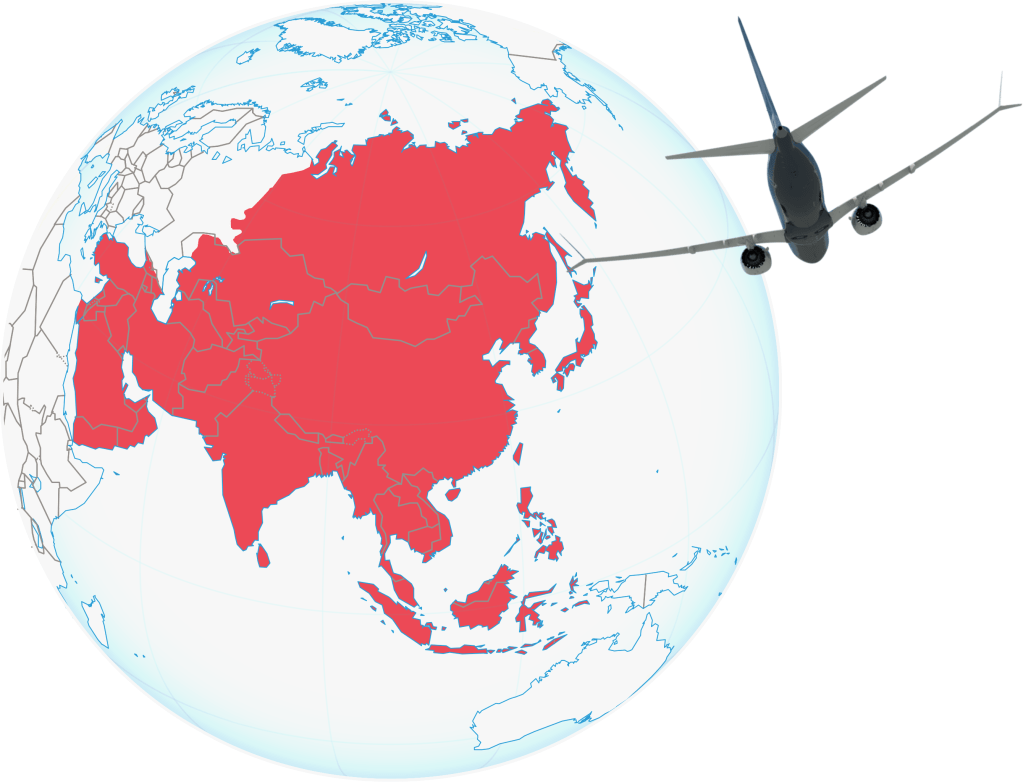
Boeing asian market forecast
Middle East market valued at US $ 1.4 trillion
The Boeing Company has forecast a twenty-year Middle East commercial aircraft and services market valued at more than US$ 1.4 trillion. The commercial fleet is expected to double to meet passenger and cargo demand. Projected widebody deliveries will be the highest share of any region at 44%. After-sales business services, such as maintenance and repair worth US$ 740 billion.
The Boeing Company announced this Tuesday 10/19 that the Middle East airlines will require 3,000 new aircraft valued at US$ 700,000 million and after-sales services such as maintenance and repair for a value of US$ 740,000 million, positioned to capitalize on the recovery of the demand for travel and regional and international cargo. Boeing provided the estimate in its 2021 Commercial Market Outlook (CMO), a twenty-year forecast of demand for commercial aircraft and services.
Middle East passenger traffic and the region’s commercial fleet are projected to more than double over the twenty-year forecast period, according to the CMO. More than two-thirds of aircraft deliveries to the Middle East will accommodate growth, while one-third of deliveries will replace older aircraft with more fuel-efficient models such as the 737 MAX, 787 Dreamliner and 777X. “The role of the Middle East region as a global hub continues to be important for developing markets to and from Southeast Asia, China and Africa. The region has been a leader in restoring confidence in passenger travel through multifaceted initiatives that help the recovery of international travel”, said Randy Heisey, Boeing’s Chief Commercial Marketing Officer for the Middle East.
Air cargo represents an area of continued opportunity for Middle Eastern airlines, and the freighter fleet is projected to nearly double from 80 aircraft in 2019 to 150 by 2040. In particular, air cargo traffic carried by carriers from the Middle East. The East has risen since 2020 by nearly 20% with two of the world’s top five freight forwarders based in the region. The 2021 Middle East CMO also includes these projections through 2040:
To accommodate increased passenger and cargo traffic, airlines are expected to increase their fleets to 3,530 aircraft. The region will continue to experience strong wide-body demand, with 1,570 deliveries supporting a growing network of international routes. The current single-aisle fleet of 660 aircraft will almost triple to 1,750 jets. Business service opportunities include fleet renewal, maintenance, repair and parts supply, and optimization of operations. Boeing 2021 Pilot and Technician Outlook forecasts that the region is estimated to require 223,000 new aviation personnel by 2040, including 54,000 pilots, 51,000 technicians and 91,000 cabin crew members. The full PTO is available at: https://www.boeing.com/commercial/market/pilot-technician-outlook/. CMO’s full forecast is available at http://www.boeing.com/commercial/market/commercial-market-outlook/.
As the world’s leading aerospace company, Boeing develops, manufactures and services commercial aircraft, defense products and space systems for customers in more than 150 countries. The company harnesses the talents of a global supplier base to promote economic opportunity, sustainability and community impact. Boeing’s diverse team is committed to innovating for the future and living the company’s core values of safety, quality and integrity. Learn more at www.boeing.com.
AW | 2021 10 16 11:33 | INDUSTRY / AVIATION SAFETY
Boeing enfrenta nuevos retos de imagen, reputación y credibilidad
The Boeing Company se enfrenta a dos nuevos desafíos esta semana para su imagen, reputación y credibilidad. Tras el proceso de un gran jurado federal, la Justicia de Estado Unidos acusó a un ex ejecutivo clave de Boeing por fraude. Alegaron que «engañó a la Administración Federal de Aviación mientras certificaba por primera vez el avión 737 MAX que tendría dos accidentes fatales causados por fallas de diseño. Los cargos no fueron contra un alto ejecutivo. En cambio, estaban en contra de Mark Forkner, de 49 años, quien fue el Piloto Jefe Técnico de Boeing durante el proceso de certificación del avión y está acusado de engañar a la FAA durante ese proceso en 2016 y 2017. El abogado de Mark Forkner no respondió a una solicitud de comentarios, y Boeing se negó a hacer comentarios», dijo el comunicado de la Justicia.
Frentes de tormentas
Boeing se enfrenta diferentes dificultades cuando había concluido los escrutinios de seguridad referentes a los 737 MAX, ahora continúan los problemas con un incidente diferente que involucra nuevamente a la línea Boeing 787 Dreamliner. El fabricante americano de aviones dijo que «algunas piezas de titanio 787 Dreamliner se fabricaron incorrectamente en los últimos tres años, el último de una serie de problemas que plagaron el avión de fuselaje ancho». La compañía dijo que el problema de calidad no afecta la seguridad inmediata de los vuelos, y agregó que había notificado a la Administración Federal de Aviación (FAA). Boeing está trabajando para determinar cuántos aviones contienen la pieza defectuosa. Boeing no respondió de inmediato a una solicitud de comentarios para este artículo, y no se mencionaron los cargos de fraude o el problema de las piezas de Dreamliner en el sitio web de la compañía. Dennis E. Sawan es un abogado de lesiones personales y seguros en Sawan & Sawan, ha observado que, «Dada la insensodad supuestamente exhibida por Boeing con respecto al 737 MAX, podemos esperar que la compañía se enfrente a un escrutinio cada vez mayor de los reguladores, que sin duda sacarán a relucir los peines de dientes finos al revisar las representaciones de seguridad de Boeing en el futuro. Además, las compañías que colocan las ganancias por encima de la seguridad del consumidor se han enfrentado repetidamente a veredictos de daños punitivos multimillonarios, y es poco probable que Boeing escape de este destino si las acusaciones en el caso de fraude resultan ser ciertas. Si bien Boeing sigue siendo una fuerza dominante en los vuelos comerciales, las aerolíneas pueden ser cada vez más cautelosas de realizar negocios en el futuro, especialmente si las lleva a incurrir en responsabilidad adicional e inesperada por la operación de ciertos tipos de aeronaves», concluyó David Sawan.
Jonathan Hemus es Director General de la consultora de gestión de crisis Insignia dijo: «Hay tantas lecciones de gestión de crisis de este trágico caso 737 MAX, sobre todo el enorme poder de las crisis para dañar vidas, medios de subsistencia, reputaciones y negocios. Estos últimos desarrollos resaltan la importancia crítica de que los líderes inculquen una cultura que facilite la prevención de crisis o la resolución rápida. Tres años después del primer accidente del 737 MAX, esta última atención sobre Boeing muestra lo mucho más fácil que es entrar en el centro de atención debido a una crisis mal manejada que salir de ella. Las crisis mal manejadas no son eventos de aquí hoy, se fueron mañana»; su impacto en una organización como Boeing puede persistir durante años, en algún momento décadas», observó la consultora Insignia.
Problemas sistémicos masivos
Joey Smith es el Director de servicios de aviación del banco de inversión Cassel Salpeter & Co. Dijo: «Aparte de los persistentes problemas de reputación de Boeing y su mala gestión de la crisis del 737 Max, también es evidente que hay problemas masivos y sistémicos dentro de la cultura de Boeing. La falta de controles y equilibrios, transparencia y comunicación entre la alta dirección y el personal de base para hacer lo correcto con la seguridad como primera consideración. Estos problemas de cultura de la empresa permiten un entorno en el que se desarrollan tantas crisis adicionales con plataformas adicionales y su cadena de suministro. Boeing necesita algo más que un simple ajuste. Necesita una revisión. Además, la revisión debe abordar lo que parecen ser problemas de miedo, intimidación y compensación relacionados con el avance de los proyectos, lo que puede abrir la puerta a resultados negativos y eventos catastróficos», concluyó el Joey Smith.
En Noviembre 2020, la FAA levantó su prohibición contra el 737 MAX. Caroline Sapriel, socia Gerente de la firma de gestión de crisis CS&A International, ha expresado en ese momento que «tomará tiempo y esta marca negra en su historia puede que nunca se borre por completo». Boeing acordó pagar más de US$ 2.5 mil millones en multas e indemnizaciones después de llegar a un acuerdo de enjuiciamiento diferido con el Departamento de Justicia de los Estados Unidos por los accidentes del MAX, que le costaron a Boeing más de US$ 20 mil millones.
En Febrero 2021, tres meses después de que la compañía devolviera el 737 MAX al servicio, un motor en un Boeing 777 de United Airlines explotó sobre Denver (CO), lloviendo escombros en un vecindario debajo. Las aerolíneas en Estados Unidos, Japón y Corea del Sur pusieron en tierra docenas de Boeing 777, y la Administración Federal de Aviación ordenó a United Airlines que aumentara sus inspecciones de la línea de aeronaves.
En Abril 2021 Boeing enfrentó otra crisis que involucró a su 737 MAX. El fabricante de la aerolínea recomendó que se aborde un posible problema eléctrico en un grupo específico de aviones 737 MAX antes de que vuelvan a volar.
Boeing credibility challenges
Boeing faces new image, reputation and credibility challenges
The Boeing Company faces two new challenges this week to its image, reputation and credibility. Following a federal grand jury trial, the United States Justice indicted a former key Boeing executive for fraud. They alleged that he «misled the Federal Aviation Administration while first certifying the 737 MAX aircraft that it would have two fatal accidents caused by design flaws. The charges were not against a senior executive. Instead, they were against Mark Forkner of 49-year-old, who was Boeing’s Chief Technical Pilot during the plane’s certification process and is accused of misleading the FAA during that process in 2016 and 2017. Forkner’s attorney did not respond to a request for comment, and Boeing declined. to make comments», said the Justice statement.
Storm fronts
Boeing faced different difficulties when it had concluded the safety scrutinies regarding the 737 MAX, now the problems continue with a different incident that again involves the Boeing 787 Dreamliner line. The American aircraft manufacturer said that «some 787 Dreamliner titanium parts were manufactured incorrectly in the last three years, the latest in a series of problems that plagued the wide-body aircraft». The company said the quality issue does not affect the immediate safety of the flights, adding that it had notified the Federal Aviation Administration (FAA). Boeing is working to determine how many planes contain the defective part. Boeing did not immediately respond to a request for comment for this article, and the fraud charges or the Dreamliner parts problem were not mentioned on the company’s website. Dennis E. Sawan, an insurance and personal injury attorney at Sawan & Sawan, has observed that, «Given the callousness allegedly exhibited by Boeing regarding the 737 MAX, we can expect the company to face increasing scrutiny from regulators, who will no doubt bring up fine-toothed combs when reviewing Boeing’s safety representations in the future. Additionally, companies that place profits above consumer safety have repeatedly faced multi-million dollar punitive damages verdicts, and Boeing is unlikely to escape this fate if the allegations in the fraud case turn out to be true. While Boeing remains a dominant force in commercial flights, airlines may be increasingly wary of doing business in the future, especially if it leads them to incur additional and unexpected liability for the operation of certain types of aircraft», concluded David Sawan.
Jonathan Hemus is Managing Director of crisis management consultancy Insignia said: «There are so many crisis management lessons from this tragic 737 MAX case, especially the enormous power of crises to damage lives, livelihoods, reputations and businesses. These latest developments highlight the critical importance of leaders instilling a culture that facilitates crisis prevention or rapid resolution.Three years after the first 737 MAX accident, this latest attention to Boeing shows how much easier it is to get into the market. spotlight due to a poorly managed crisis than to get out of it. Mishandled crises are not «here today, gone tomorrow» events; their impact on an organization like Boeing can persist for years, sometime decades», he observed. the consulting firm Insignia.
Massive systemic problems
Joey Smith is the Director of Aviation Services at investment bank Cassel Salpeter & Co. he said: «Aside from Boeing’s persistent reputational issues and mismanagement of the 737 MAX crisis, it is also apparent that there are massive and systemic issues. within Boeing culture. Lack of checks and balances, transparency, and communication between senior management and grassroots personnel to do the right thing with safety as the first consideration. These company culture issues allow for an environment in which so many additional crises unfold with additional platforms and their supply chain. Boeing needs more than a simple adjustment. Needs a review. Additionally, the review must address what appear to be fear, intimidation and compensation issues related to the advancement of projects, which can open the door to negative outcomes and catastrophic events», concluded the Joey Smith.
In November 2020, the FAA lifted its ban on the 737 MAX. Caroline Sapriel, Managing Partner of crisis management firm CS&A International, said at the time that «it will take time and this black mark in your history may never be completely erased». Boeing agreed to pay more than US$ 2.5 billion in fines and damages after reaching a deferred prosecution agreement with the United States Department of Justice for the MAX accidents, which cost Boeing more than US$ 20 billion.
In February 2021, three months after the company returned the 737 MAX to service, an engine on a United Airlines Boeing 777 exploded over Denver (CO), raining debris into a neighborhood below. Airlines in the United States, Japan and South Korea grounded dozens of Boeing 777s, and the Federal Aviation Administration ordered United Airlines to increase its inspections of the aircraft line.
In April 2021 Boeing faced another crisis involving its 737 MAX. The airline’s manufacturer recommended that a potential electrical problem be addressed on a specific group of 737 MAX aircraft before they are flown again.
AW | 2021 10 16 10:43 | INDUSTRY / AVIATION SAFETY
Subcontratista de Leonardo no afecta línea ensamblaje Airbus
El ex-subcontratista de Leonardo Company, Manufacturing Processes Specification (MPS), no ha vendido componentes a Airbus Group, dijo el Viernes 15/10 el grupo de defensa italiano. Las acciones del conglomerado estatal italiano cayeron más de un 7% el Jueves 14/10 después de que The Boeing Company dijo que las piezas suministradas por Leonardo procedentes del subcontratista habían sido fabricadas incorrectamente.
Leonardo dijo que Manufacturing Processes Specification (MPS) no había suministrado componentes de titanio para los programas de Airbus Group. MPS figura como proveedor aprobado por Airbus en un documento disponible en el sitio web del fabricante de aviones.
MPS has not sold components to Airbus
Leonardo’s subcontractor does not affect Airbus assembly line
Former Leonardo Company subcontractor Manufacturing Processes Specification (MPS) has not sold components to Airbus Group, the Italian defense group said on Friday 10/15. Shares in the Italian state conglomerate fell more than 7% on Thursday 10/14 after The Boeing Company said parts supplied by Leonardo from the subcontractor had been manufactured incorrectly.
Leonardo said Manufacturing Processes Specification (MPS) had not supplied titanium components for Airbus Group programs. MPS is listed as an approved Airbus supplier in a document available on the aircraft manufacturer’s website.
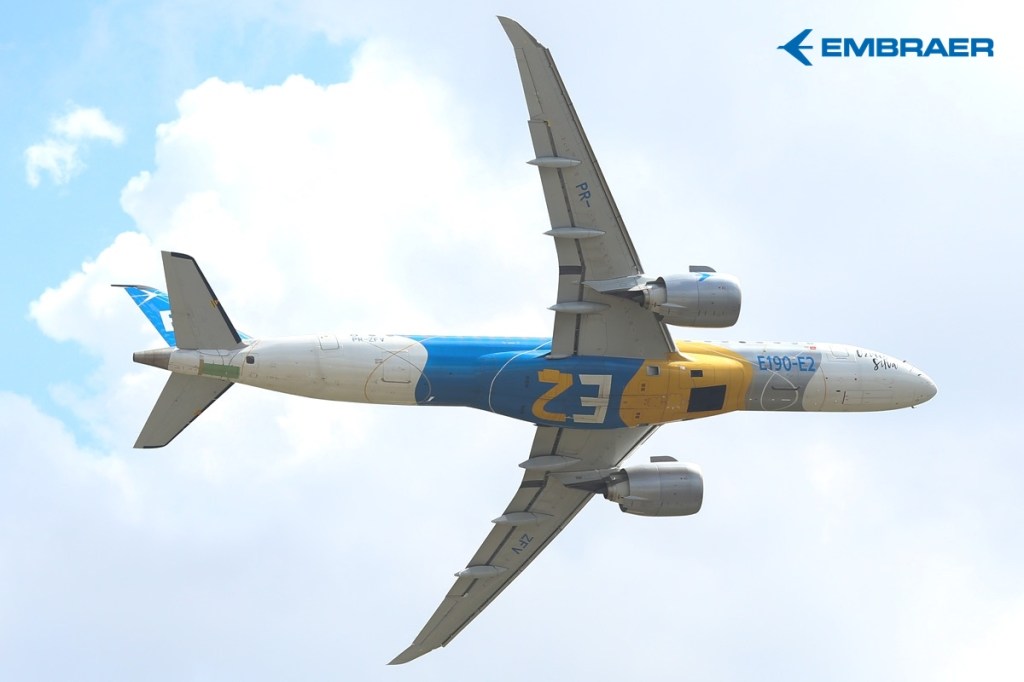
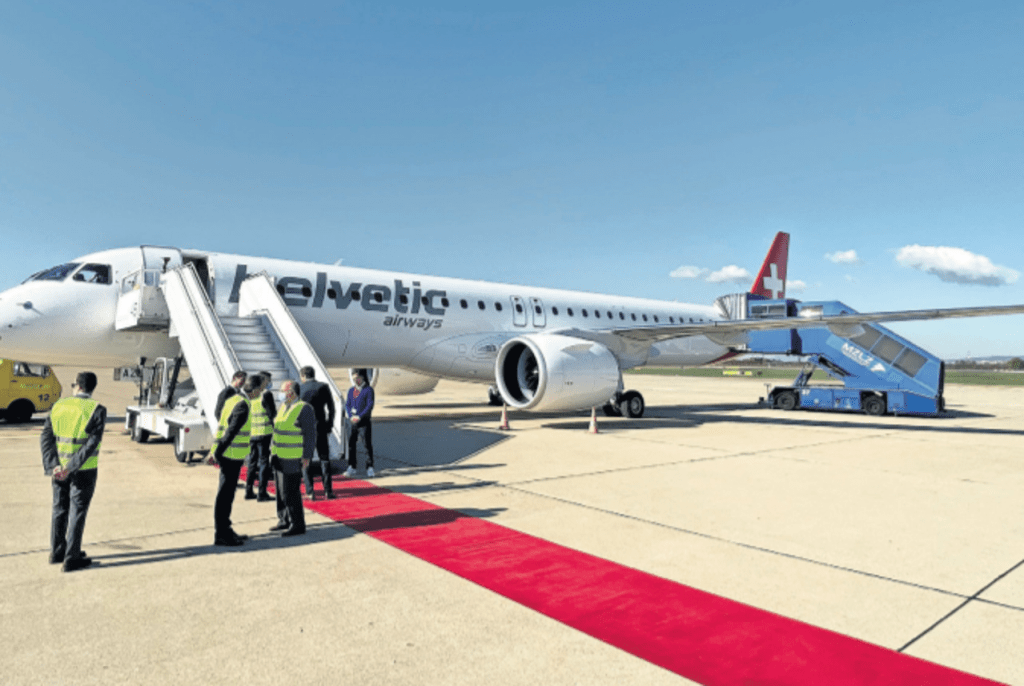
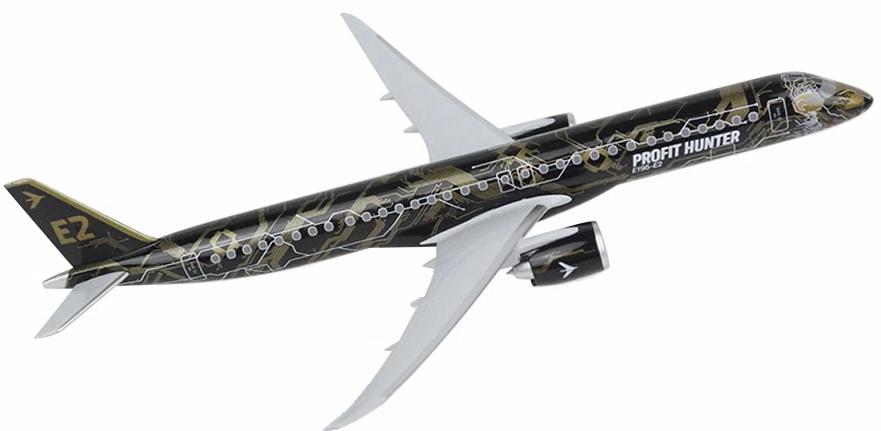
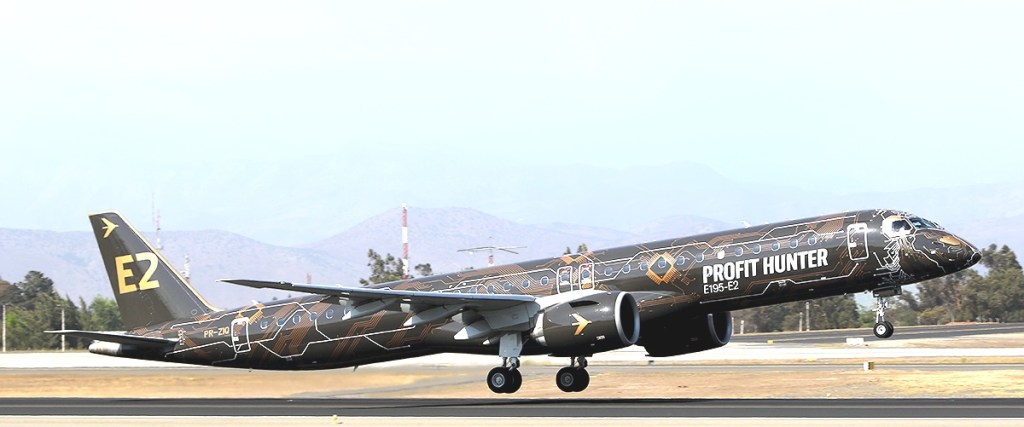
Embraer S.A. sha desarrollado una gira de promoción hacia Zagreb, República de Croacia, permitiendo que Croatia Airlines examine laas bondades de esta línea de aeronaves con la intención de renovar su flota aerocomercial. El fabricante de aviones brasileño mostró este Jueves 14/08 su avión E2 «Profit Hunter» en la capital croata, donde lanzó su producto y operó un vuelo de demostración captando la atención de los expectadores. Para tal evento se ha empleado un E195-E2 perteneciente a Helvetic Airways que realizó un vuelo y exhibición en el Aeropuerto Internacinal Zagreb. Entre los presentes se encontraban representantes de Croatia Airlines, otras aerolíneas del país, así como Air Montenegro.
La compañía aeronáutica brasileña Embraer actualmente ha recibido más de doscientos pedidos de los aviones de la línea más avanzada E2-Jets que comprenden las aeronaves E170-E2, E190-E2 y E195-E2. La aerolínea de Suiza, Helvetic Airways el mayor operador de la línea E2 que incluye la variante E190-E2. Otras aerolíneas europeas que utilizan los aviones incluyen: Belavia, Binter Canarias, KLM Royal Dutch Airlines, bajo el operador regional KLM Cityhopper y Widerøe Airlines.
Embraer promotes E2-Jet in Croatia
Embraer promotes E2 to Croatia Airlines
Embraer S.A. sha developed a promotional tour to Zagreb, Republic of Croatia, allowing Croatia Airlines to examine the benefits of this line of aircraft with the intention of renewing its commercial airline fleet. This Thursday, 08/14, the Brazilian aircraft manufacturer showed its E2 «Profit Hunter» aircraft in the Croatian capital, where it launched its product and operated a demonstration flight, capturing the attention of viewers. For this event, an E195-E2 belonging to Helvetic Airways was used, which carried out a flight and exhibition at Zagreb International Airport. Among those present were representatives of Croatia Airlines, other airlines in the country, as well as Air Montenegro.
Currently, the Brazilian aeronautical company Embraer has received more than two hundred orders for the aircraft of the most advanced line E2-Jets, which comprise the E170-E2, E190-E2 and E195-E2 aircraft. The Swiss airline Helvetic Airways is the largest operator of the E2 line that includes the E190-E2 variant. Other European airlines using the planes include: Belavia, Binter Canarias, KLM Royal Dutch Airlines, under regional operator KLM Cityhopper, and Widerøe Airlines.
Embraer promovira E2-Jet u Hrvatska
Embraer promovira E2 u Croatia Airlines
Embraer S.A. sha je razvio promotivno putovanje u Zagreb, Republika Hrvatska, dopuštajući Croatia Airlines da ispita prednosti ove linije zrakoplova s namjerom obnove flote komercijalnih zračnih prijevoznika. Ovaj četvrtak, 08./14., Brazilski proizvođač zrakoplova pokazao je svoj zrakoplov E2 «Profit Hunter» u glavnom gradu Hrvatske, gdje je lansirao svoj proizvod i izveo pokazni let, zaokupivši pozornost gledatelja. Za ovaj događaj korišten je E195-E2 koji pripada Helvetic Airwaysu, a koji je izveo let i izložbu u Međunarodnoj zračnoj luci Zagreb. Među prisutnima su bili predstavnici Croatia Airlinesa, drugih zračnih prijevoznika u zemlji, kao i Air Montenegro.
Trenutno je brazilska zrakoplovna tvrtka Embraer primila više od dvjesto narudžbi za zrakoplove najnaprednije linije E2-Jets, koji se sastoji od zrakoplova E170-E2, E190-E2 i E195-E2. Švicarski zračni prijevoznik Helvetic Airways najveći je operater linije E2 koja uključuje varijantu E190-E2. Ostali europski zračni prijevoznici koji koriste zrakoplove su: Belavia, Binter Canarias, KLM Royal Dutch Airlines, pod regionalnim operatorom KLM Cityhopper i Widerøe Airlines.
AW | 2021 10 14 20:42 | INDUSTRY / AVIATION SAFETY
Subcontratista italiano centro polémica por defectos producción
Un subcontratista italiano en el centro de los últimos inconvenientes que surgieron en la línea Boeing 787 Dreamliner ha trabajado para un amplio conjunto de compañías aeroespaciales, incluida Spirit AeroSystems, según fuentes y documentos de la industria. The Boeing Company y los reguladores de la industry dijeron anteriormente que algunas piezas del avión 787 se fabricaron incorrectamente en los últimos tres años. Fueron suministrados indirectamente por Manufacturing Process Specification (MPS) de Brindisi, Italia, como subcontratista de Leonardo Company, también empresa italiana.
En Marzo 2021, Boeing advirtió a Spirit AeroSystems sobre presuntos problemas con piezas en MPS y le había solicitado que utilizara proveedores alternativos mientras continuaba una auditoría de las operaciones de la compañía italiana. También le pidió a Spirit AeroSystems con sede en Wichita (KS), que rastreara cualquier pieza de MPS que hubiera utilizado hasta 2017 y que las tratara como «sospechosas no conformes», lo que significa que estarían sujetas a más controles. «Por precaución mientras Boeing realiza más pruebas y evaluaciones, Boeing también ha decidido considerar sospechosos todos los productos procesados por MPS», dijo en un comunicado.
The Boeing Company y Spirit AeroSystems no hicieron comentarios inmediatos sobre la carta. Boeing dijo anteriormente que los problemas no plantearon ningún problema de seguridad inmediato a los 787 Dreamliners que ya están en servicio. Manufacturing Process Specification (MPS), con sede en Brindisi, Italia, un proveedor de recubrimientos, no respondió a las llamadas telefónicas y a una solicitud de comentarios por correo electrónico. MPS también es un proveedor aprobado para Airbus, según una lista disponible a través del sitio web del fabricante de aviones. Un portavoz de la compañía europea no hizo comentarios inmediatos cuando se le preguntó si ella o sus proveedores habían utilizado recientemente alguna pieza que involucrara el trabajo realizado por MPS.
Boeing subcontractor irregularities
Italian subcontractor controversial center for production defects
An Italian subcontractor at the center of the latest disruptions to the Boeing 787 Dreamliner line has worked for a broad set of aerospace companies, including Spirit AeroSystems, according to industry sources and documents. The Boeing Company and industry regulators previously said that some parts of the 787 aircraft were manufactured incorrectly in the past three years. They were supplied indirectly by Manufacturing Process Specification (MPS) of Brindisi, Italy, as a subcontractor to Leonardo Company, also an Italian company.
In March 2021, Boeing warned Spirit AeroSystems of suspected parts problems at MPS and had asked it to use alternative suppliers while continuing an audit of the Italian company’s operations. It also asked Wichita-based Spirit AeroSystems (KS) to track down any MPS parts it had used through 2017 and treat them as «suspect non-conforming», meaning they would be subject to further scrutiny. «As a precaution while Boeing conducts further tests and evaluations, Boeing has also decided to consider all products processed by MPS as suspicious», it said in a statement.
The Boeing Company and Spirit AeroSystems had no immediate comment on the letter. Boeing previously said the issues did not pose any immediate safety concerns for the 787 Dreamliners already in service. Brindisi, Italy-based Manufacturing Process Specification (MPS), a coatings supplier, did not respond to phone calls and an email request for comment. MPS is also an approved supplier to Airbus, according to a list available through the aircraft manufacturer’s website. A spokesperson for the European company had no immediate comment when asked if she or her suppliers had recently used any parts involving work done by MPS.


































 airgways.com