Airbus entregó 21 aviones en 01/2021, sin nuevos pedidos
Airbus Group ha alcanzado entregar 21 aviones a 15 compañías durante el mes de Enero 2021, mientras que el fabricante no ha recibido órdenes por nuevos pedidos, permitiendo observar un estancamiento en las actuales condiciones de mercado. Los modelos entregados en 01/2021 han sido Airbus A320CEO (4), A320NEO (12), A220 (3), A330NEO (1) y A350 (1).
Airbus había cerrado el año anterior entregando un total de 89 aviones en Diciembre 2020, en un esfuerzo por equilibrar las alicaídas entregas y ventas de aeronaves comerciales. A pesar de esa esperanza, la mayoría de las aerolíneas han tenido una gran parte de su flota en tierra mientras operaban la mitad de su red normal a lo largo de 2020, lo que ha afectado negativamente a los fabricantes de aeronaves que dependen directamente de las compañías aéreas que necesitan nuevos aviones. A principios de 2021, la industria del transporte aéreo espera que la demanda del mercado mejore con la llegada de nuevas vacunas contra el COVID-19, para contrarrestar las dificultades del transporte y reactivar las economías de la industria de la aviación.
Airbus Delivery January 2021
Airbus delivered 21 aircraft in 01/2021, no new orders
Airbus Group has managed to deliver 21 aircraft to 15 companies during the month of January 2021, while the manufacturer has not received orders for new orders, allowing to observe a stagnation in current market conditions. The models delivered on 01/2021 were Airbus A320CEO (4), A320NEO (12), A220 (3), A330NEO (1) and A350 (1).
Airbus had closed the previous year delivering a total of 89 aircraft in December 2020, in an effort to balance declining deliveries and sales of commercial aircraft. Despite that hope, most airlines have had a large part of their fleet on the ground while operating half of their normal network throughout 2020, which has negatively affected aircraft manufacturers that are directly dependent on airlines. airlines that need new planes. In early 2021, the air transport industry expects market demand to improve with the arrival of new vaccines against COVID-19, to counter transport difficulties and revive the economies of the aviation industry.
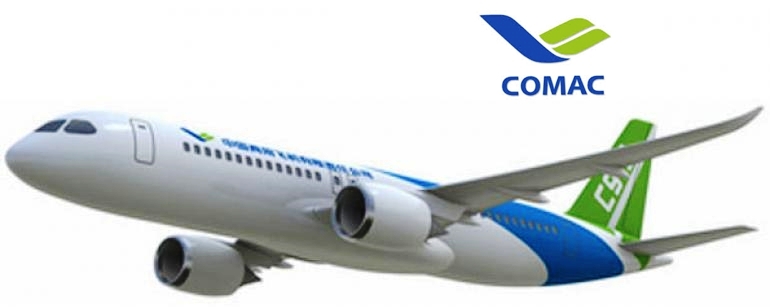
COMAC C919 realizará prueba de formación hielo en Canadá
La Canadian International Test Pilot Academy ha informado que COMAC Corp. realizará pruebas de test de formación de hielo al avión C919 de fabricación china en el Aeropuerto Internacional de London YXU/CYXU, Estado de Ontario, en Canadá. El viaje se realizará en Marzo 2021, pero puede retrasarse hasta el otoño boreal debido a la crisis sanitaria. El vuelo de prueba de engelamiento natural llega a la aeronave para revisar los sujetos de prueba de vuelo que no son necesarios y requieren requisitos meteorológicos especiales el día de la prueba de vuelo, y los temas como la prueba de vuelo en pérdida y la prueba de vuelo de aleteo se enumeran como clases diurnas.
La prueba de vuelo de prueba de formación de hielo natural comprobará las funciones antihielo y descongelación de las alas, el parabrisas, la góndola del motor, etc., y verificará las funciones del sistema del motor, la unidad de potencia auxiliar y la calidad del control de la aeronave, entre otros detalles, para demostrar que la aeronave puede operar en clima helado sin alterarse la seguridad del vuelo. De acuerdo con los requisitos pertinentes, la aeronave debe poder operar de manera segura en el estado de engelamiento máximo continuo e intermitente especificado, la resistencia máxima continua del estado de engelamiento atmosférico está determinada por las tres variables del contenido de agua líquida de la nube, el diámetro efectivo promedio de las gotas de nubes y la temperatura del aire circundante. Los sistemas meteorológicos que cumplen con este requisito tienen altos requisitos sobre el contenido de agua líquida de las nubes, el diámetro de las gotas de las nubes y la temperatura del aire circundante, por lo que la probabilidad de ocurrencia es pequeña y el rango de tiempo es pequeño.
Un aeropuerto que cumpla con estas duras condiciones climáticas y del espacio aéreo es difícil de encontrar en China, pero el Aeropuerto Internacional de Londres en la región de los Grandes Lagos de América del Norte tiene condiciones climáticas muy adecuadas. En 2014, el avión ARJ21 #104 también fue al Aeropuerto de Windsor en Ontario, donde ha realizado una prueba de formación de hielo natural. Según informes anteriores, en 2021, Shanghai promoverá el gran avión C919 de fabricación nacional para obtener el certificado de aeronavegabilidad y entregar el primer avión.
C919 ice formation test
COMAC C919 will conduct ice formation test in Canada
The Canadian International Test Pilot Academy has reported that COMAC Corp. will conduct icing tests on the Chinese-made C919 aircraft at London International Airport YXU/CYXU, State of Ontario, Canada. The trip will take place in March 2021, but may be delayed until autumn due to the health crisis. The natural icing test flight comes to the aircraft to review the flight test subjects that are not necessary and require special meteorological requirements on the day of the flight test, and topics such as the stall test and the stall test. flapping flight are listed as diurnal classes.
The natural icing test flight test will check the anti-icing and de-icing functions of the wings, windshield, engine nacelle, etc., and will verify the functions of the engine system, auxiliary power unit and the quality of the control of the aircraft, among other details, to demonstrate that the aircraft can operate in freezing weather without altering flight safety. According to the relevant requirements, the aircraft must be able to safely operate in the specified maximum continuous and intermittent icing state, the maximum continuous resistance of the atmospheric icing state is determined by the three variables of the liquid water content of the cloud, the average effective diameter of the cloud droplets and the temperature of the surrounding air. Meteorological systems that meet this requirement have high requirements on the liquid water content of clouds, the diameter of cloud droplets, and the surrounding air temperature, so the probability of occurrence is small and the time range it is small.
An airport that meets these harsh weather and airspace conditions is difficult to find in China, but London International Airport in the Great Lakes region of North America has very suitable weather conditions. In 2014, the ARJ21 #104 aircraft also went to Windsor Airport in Ontario, where it has conducted a natural icing test. According to previous reports, in 2021, Shanghai will promote the large domestic-made C919 aircraft to obtain the certificate of airworthiness and deliver the first aircraft.
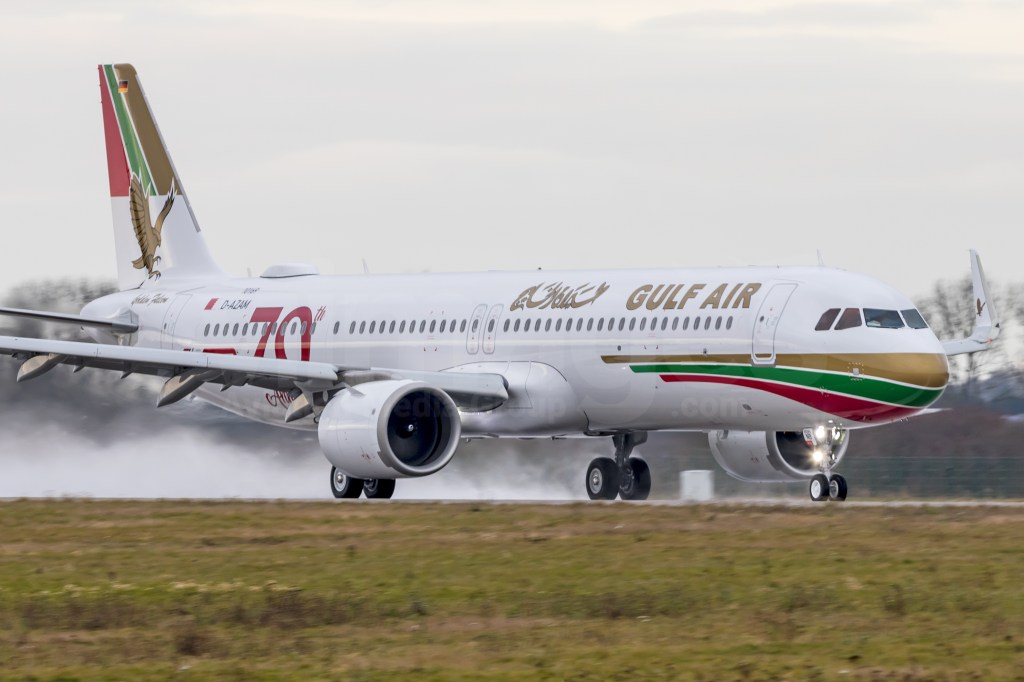
Gulf Air presenta nuevo A321NEO con librea 70º aniversarios
Gulf Air ha acogido con satisfacción este 5 de Febrero de 2021 su nuevo Airbus A321NEO LR que aterrizó en la nueva terminal del Aeropuerto Internacional de Bahréin. Tras su entrega desde el centro de entrega de Airbus en Hamburgo, Alemania, el avión operará rutas europeas de larga distancia, así como una selección de destinos del CCG. El avión es el segundo del pedido de 17 aviones A321NEO que incluye 8 que están equipados con asientos de cama plana. El nuevo avión estrena 16 nuevos asientos Falcon Gold de cama plana y 150 asientos de clase económica. Todos los asientos están equipados con la última tecnología de entretenimiento a bordo. Gulf Air fue la primera aerolínea en Oriente Medio en introducir camas completamente planas en este tipo de aeronave.
El segundo avión incorporado a la flota de Gulf Air está diseñado con la librea especial de 70 aniversarios «Golden Falcon» que muestra el diseño icónico y vintage de la aerolínea del siglo pasado con un aspecto renovado. Zayed R. Alzayani, presidente de la Junta Directiva de Gulf Air, dijo: «Estamos encantados de dar la bienvenida a nuestros aviones más nuevos, el Airbus A321NEO LR en nuestra flota en su librea especial del 70 aniversario de Golden Falcon. Esta adición fortalecerá nuestra posición en los mercados de media y larga distancia, ya que representa un producto actualizado para ofrecer el mejor servicio en su clase a nuestros pasajeros. La relación que tenemos con Airbus es muy fuerte y seguimos trabajando estrechamente con ellos para seguir desarrollando nuestra flota y productos para garantizar los más altos niveles de satisfacción del cliente».
Gulf Air adds new A321NEO LR
Gulf Air Introduces New A321NEO in 70th Anniversary Livery
Gulf Air has welcomed this February 5, 2021 its new Airbus A321NEO LR that landed in the new terminal of the Bahrain International Airport. Upon delivery from the Airbus delivery center in Hamburg, Germany, the aircraft will operate long-haul European routes, as well as a selection of GCC destinations. The aircraft is the second in the order of 17 A321NEO aircraft that includes 8 that are equipped with flat-bed seats. The new aircraft debuts 16 new Falcon Gold flat bed seats and 150 economy class seats. All seats are equipped with the latest inflight entertainment technology. Gulf Air was the first airline in the Middle East to introduce completely flat beds on this type of aircraft.
The second aircraft added to the Gulf Air fleet is designed in the special 70th anniversary «Golden Falcon» livery that showcases the airline’s iconic and vintage design from the last century with a fresh look. Zayed R. Alzayani, Chairman of the Gulf Air Board of Directors, said: «We are delighted to welcome our newest aircraft, the Airbus A321NEO LR into our fleet in its special Golden Falcon 70th anniversary livery. This addition will strengthen our position in the medium and long-haul markets, as it represents an updated product to offer best-in-class service to our passengers. Our relationship with Airbus is very strong and we continue to work closely with them to further develop our fleet and products to ensure the highest levels of customer satisfaction».
طيران الخليج تضيف طائرة A321NEO LR جديدة
طيران الخليج تطرح طائرة A321NEO الجديدة في الذكرى السبعين للزينة
استقبلت طيران الخليج في 5 فبراير 2021 طائرتها الجديدة من طراز Airbus A321NEO LR التي هبطت في المبنى الجديد لمطار البحرين الدولي. عند التسليم من مركز تسليم إيرباص في هامبورغ ، ألمانيا ، ستعمل الطائرة على خطوط أوروبية طويلة المدى ، بالإضافة إلى مجموعة مختارة من وجهات دول مجلس التعاون الخليجي. هذه الطائرة هي الثانية في ترتيب 17 طائرة من طراز A321NEO التي تضم 8 طائرات مزودة بمقاعد ذات أسرة مسطحة. طرحت الطائرة الجديدة 16 مقعدًا جديدًا من طراز فالكون الذهبي المسطح و 150 مقعدًا على الدرجة الاقتصادية. جميع المقاعد مجهزة بأحدث تقنيات الترفيه على متن الطائرة. كانت طيران الخليج أول شركة طيران في الشرق الأوسط تقدم أسرة مسطحة بالكامل على هذا النوع من الطائرات.
صُممت الطائرة الثانية التي أضيفت إلى أسطول طيران الخليج في الذكرى السبعين الخاصة لغطاء «الصقر الذهبي» الذي يبرز تصميم الخطوط الجوية الأيقوني والعتيق من القرن الماضي بمظهر جديد. وقال زايد الزياني ، رئيس مجلس إدارة طيران الخليج: «يسعدنا أن نرحب بأحدث طائراتنا ، إيرباص A321NEO LR ، في أسطولنا في الذكرى السبعين لتأسيس شركة Golden Falcon. هذه الإضافة ستعزز مكانتنا في أسواق المسافات المتوسطة والطويلة ، حيث إنها تمثل منتجًا محدثًا لتقديم أفضل خدمة لركابنا. علاقتنا مع شركة إيرباص قوية للغاية ونواصل العمل معهم عن كثب لتطوير أسطولنا ومنتجاتنا لضمان أعلى مستويات رضا العملاء».
AW | 2021 02 04 13:22 | GOVERNMENT / INDUSTRY / AIRLINES
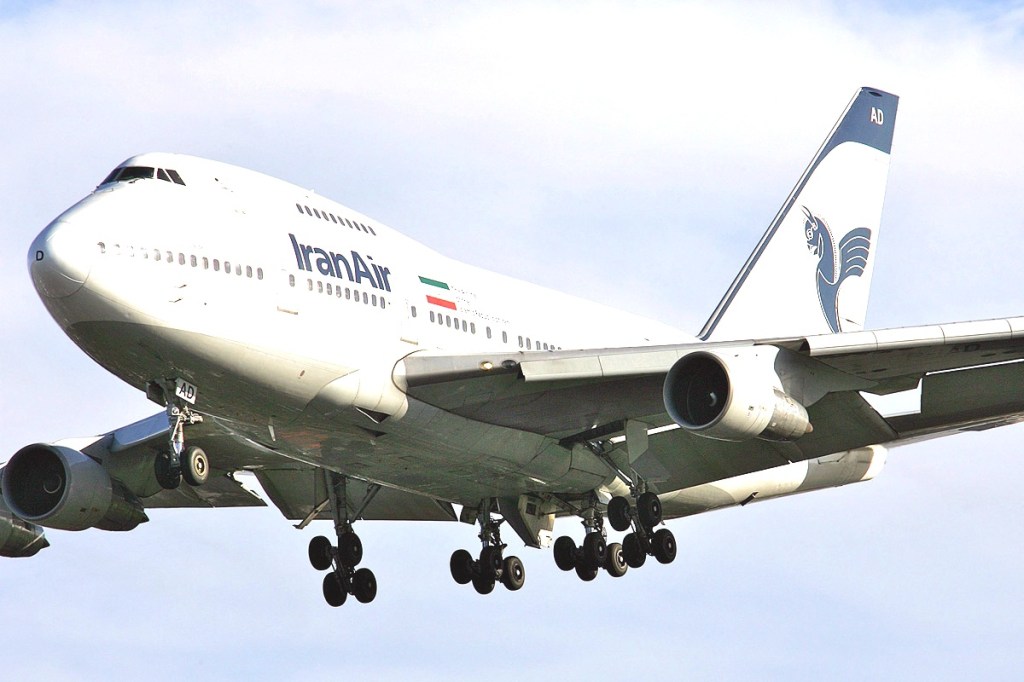
Bloqueos comerciales a industria aviación en Irán
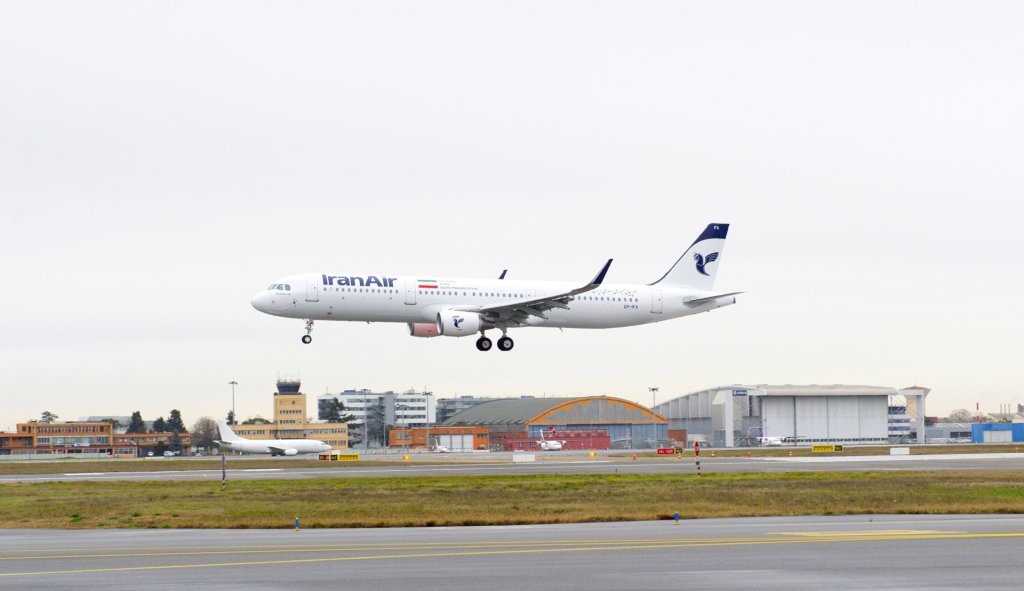
La Organización de Aviación Civil de Irán (OACI) ha emitido informes respectivos acerca de los contratos suspendidos por parte de la aerolínea iraní Iran Air después de los bloqueos impuestos por Estados Unidos para la adquisición de material aeronáutico. El servicio de Radiodifusión de la República Islámica del Irán (IRIB) informó el 3 de Febrero de 2021 que el CEO de la OACI, Touraj Dehqani Zanganeh, escribió para determinar la última palabra de Boeing sobre el destino de la gran orden, preguntándose si podría ser revivido tras el cambio de Gobierno en los Estados Unidos.
La OACI ha escrito a The Boeing Company para informarse acerca de la aerolínea de bandera de acuerdo de US$ 16.500 millones de Dólares como parte del contrato con Iran Air hizo en Diciembre de 2016 para la compra de ochenta aeronaves para ayudar a renovar su envejecimiento de la flota de la línea aérea. El acuerdo fue descarrilado por las fuertes sanciones que el entonces Presidente estadounidense Donald Trump introdujo contra la República Islámica de Irán desde Mayo de 2018, pero la compañía Boeing anunció recientemente que había encontrado nuevos clientes para los aviones que esperaba entregar a IranAir.
Antes de la imposición de sanciones por parte de la Adnimistración Trump, Iran Air en 2016 también hizo pedidos con Airbus Group para el suministro de 118 aviones, con 73 aviones de cuerpo ancho y 45 aviones de cuerpo estrecho. El contrato incluía A320CEO (21) y A320NEO (24). También ha solicitado órdenes con la fábrica franco-italiana ATR Aircraft para la entrega de ATR-72 (20). Aunque los pedidos de Airbus y ATR también quedaron bloqueados por las sanciones, el Director de Relaciones Públicas de Airbus Group dijo al margen del Salón Aéreo de París en Junio de 2019 que los pedidos de Airbus no habían sido cancelados y el deseo era que estos pedidos y otros pedidos realizados por aerolíneas iraníes se cumplieran una vez que las sanciones estadounidenses no impidieran las entregas.
«El contrato de Irán con Airbus y ATR ha sido suspendido. En cuanto al contrato que tenemos con Boeing, recientemente he escrito una carta para aclarar su destino. Definitivamente existe la posibilidad de que los contratos ATR y Airbus se reactiven. Si se produce una apertura, tendrán que volver a los contratos», dijo el CEO de la OACI Touraj Dehqani Zanganeh.
Las aerolíneas de Irán tienen actualmente 162 aviones en sus flotas de aviación civil, pero necesitan urgentemente renovar su parque aéreo para continuar brindando eficiencia y seguridad. Detrás de las sanciones impuestas por Estados Unidos, al cambio de administración podrían producirse un cambio en las perspectivas de las aerolíneas, pero la República Islámica de Irán deberá efectuar el pleno cumplimiento del acuerdo nuclear de 2016 para mantener su programa de desarrollo nuclear de naturaleza totalmente civil y despejar los bloqueos impuestos para reactivar los pedidos de aviones comerciales.
ICAO requests reports of blockades from Iran
Commercial blockades to aviation industry in Iran
The Civil Aviation Organization of Iran (ICAO) has issued respective reports about the contracts suspended by the Iranian airline Iran Air after the blockades imposed by the United States for the acquisition of aeronautical material. The Islamic Republic of Iran Broadcasting service (IRIB) reported on February 3, 2021 that ICAO CEO Touraj Dehqani Zanganeh wrote to determine Boeing’s final word on the fate of the grand order, wondering if he could be revived after the change of government in the United States.
ICAO has written to The Boeing Company to inquire about the US$ 16,500 million US flag carrier agreement as part of the contract with Iran Air made in December 2016 for the purchase of eighty aircraft to help renew its aging airline fleet. The deal was derailed by the heavy sanctions then-US President Donald Trump introduced against the Islamic Republic of Iran since May 2018, but the Boeing company recently announced that it had found new customers for the planes it hoped to deliver to IranAir.
Prior to the imposition of sanctions by the Trump Administration, Iran Air in 2016 also placed orders with Airbus Group for the supply of 118 aircraft, with 73 wide-body aircraft and 45 narrow-body aircraft. The contract included A320CEO (21) and A320NEO (24). It has also placed orders with the French-Italian factory ATR Aircraft for the delivery of ATR-72 (20). Although Airbus and ATR orders were also blocked by sanctions, Airbus Group’s Director of Public Relations said on the sidelines of the Paris Air Show in June 2019 that Airbus orders had not been canceled and the wish was that these orders and other orders placed by Iranian airlines were fulfilled once US sanctions did not prevent deliveries.
«Iran’s contract with Airbus and ATR has been suspended. Regarding the contract that we have with Boeing, I have recently written a letter to clarify its fate. There is definitely a possibility that the ATR and Airbus contracts will be reactivated. If one occurs. opening, they will have to go back to contracts», said ICAO CEO Touraj Dehqani Zanganeh.
Iran’s airlines currently have 162 aircraft in their civil aviation fleets, but they urgently need to renovate their air park to continue providing efficiency and safety. Behind the sanctions imposed by the United States, the change of administration could bring about a change in the perspectives of the airlines, but the Islamic Republic of Iran will have to carry out full compliance with the 2016 nuclear agreement to maintain its nuclear development program of a fully natural nature. civil and clear the blockades imposed to reactivate the orders of commercial airplanes.
تطلب منظمة الطيران المدني الدولي تقارير عن عمليات حصار من إيران
حصار تجاري لصناعة الطيران في إيران
أصدرت منظمة الطيران المدني الإيرانية (إيكاو) تقارير ذات صلة حول العقود التي أوقفتها شركة الطيران الإيرانية إيران للطيران بعد الحصار الذي فرضته الولايات المتحدة للحصول على مواد الطيران. أفادت خدمة إذاعة جمهورية إيران الإسلامية (IRIB) في 3 فبراير 2021 أن الرئيس التنفيذي لمنظمة الطيران المدني الدولي تورج دهقاني زنكنه كتب ليحدد كلمة بوينج الأخيرة بشأن مصير الأمر الكبير ، متسائلاً عما إذا كان يمكن إحياؤه بعد تغيير الحكومة في الولايات المتحدة. تنص على.
كتبت منظمة الطيران المدني الدولي إلى شركة بوينج للاستعلام عن اتفاقية شركة النقل الأمريكية البالغة قيمتها 16500 مليون دولار أمريكي كجزء من العقد المبرم مع إيران للطيران في ديسمبر 2016 لشراء ثمانين طائرة للمساعدة في تجديد أسطولها الجوي القديم. خرجت الصفقة عن مسارها بسبب العقوبات الشديدة التي فرضها الرئيس الأمريكي دونالد ترامب على جمهورية إيران الإسلامية منذ مايو 2018 ، لكن شركة بوينج أعلنت مؤخرًا أنها وجدت عملاء جددًا للطائرات التي تأمل في تسليمها إلى إيران للطيران.
قبل فرض إدارة ترامب للعقوبات ، قدمت إيران للطيران في عام 2016 أيضًا طلبات إلى مجموعة إيرباص لتوريد 118 طائرة ، مع 73 طائرة ذات جسم عريض و 45 طائرة ضيقة البدن. تضمن العقد A320CEO (21) و A320NEO (24). كما قدمت طلبات إلى المصنع الفرنسي الإيطالي ATR Aircraft لتسليم ATR-72 (20). على الرغم من حظر طلبات إيرباص و ATR بسبب العقوبات ، قال مدير العلاقات العامة في مجموعة إيرباص على هامش معرض باريس للطيران في يونيو 2019 إن طلبات إيرباص لم يتم إلغاؤها وكان الأمل هو أن هذه الطلبات وغيرها من الطلبات التي قدمتها شركات الطيران الإيرانية تم الوفاء بها بمجرد أن العقوبات الأمريكية لم تمنع التسليم.
«تم تعليق عقد إيران مع إيرباص و ATR. فيما يتعلق بالعقد الذي أبرمناه مع شركة Boeing ، فقد كتبت مؤخرًا خطابًا لتوضيح مصيرها. هناك بالتأكيد احتمال أن يتم إعادة تنشيط عقدي ATR و Airbus. في حالة حدوث ذلك. وقال المدير التنفيذي لمنظمة الطيران المدني الدولي ، تراج دهقاني زنغنه ، «عند الافتتاح ، سيتعين عليهم العودة إلى العقود».
تمتلك الخطوط الجوية الإيرانية حاليًا 162 طائرة في أساطيل الطيران المدني الخاصة بها ، لكنها بحاجة ماسة إلى تجديد منتزهها الجوي لمواصلة توفير الكفاءة والسلامة. خلف العقوبات التي فرضتها الولايات المتحدة ، يمكن أن يؤدي تغيير الإدارة إلى إحداث تغيير في وجهات نظر شركات الطيران ، لكن سيتعين على جمهورية إيران الإسلامية الالتزام الكامل بالاتفاقية النووية لعام 2016 للحفاظ على برنامج التطوير النووي الخاص بها طبيعية بالكامل مدنية وتطهير الحصار المفروض لإعادة تفعيل طلبيات الطائرات التجارية.
Airbus comenzará línea producción del nuevo A321XLR
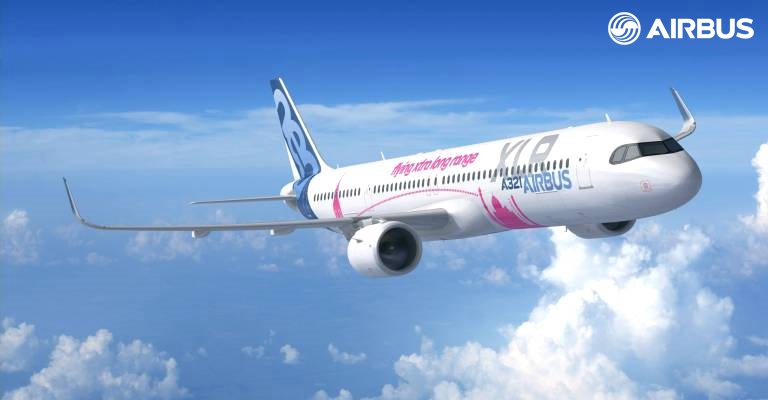
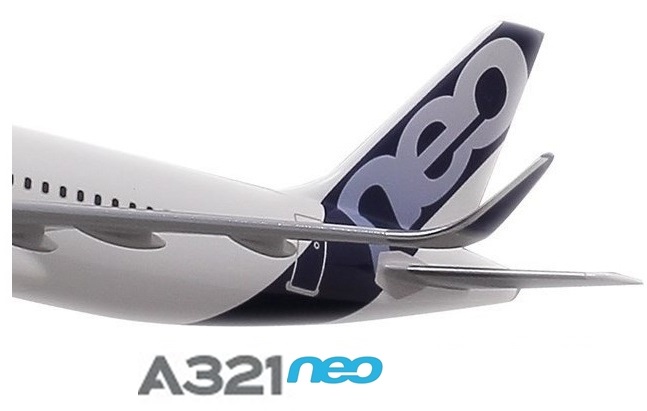
Airbus Group ha anunciado el inicio de la producción de piezas para el primer A321XLR narrowbody, permitiendo adelantar espacio a la alta demanda que generará el nuevo avión intercontinental que permitirá sustituir en sus prestaciones definitivamente al Boeing 757. El constructor europeo reconoce que el segmento de rango medio continuaba vacío sin lograr un verdadero complemento con las aeronaves narrowbodies y los grandes aviones widebodies.
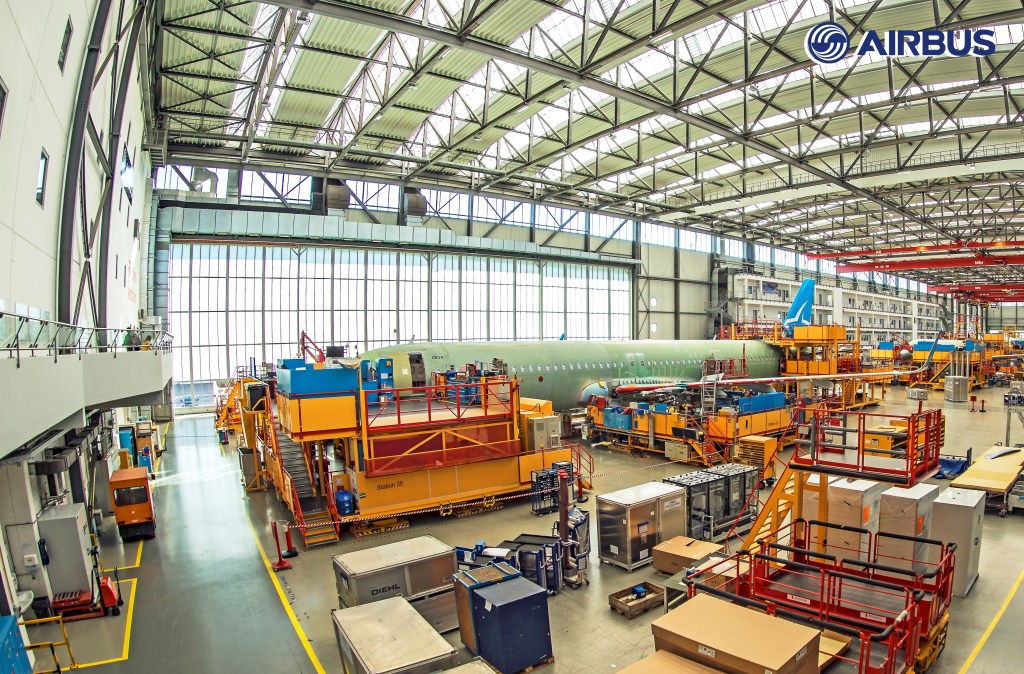
Airbus Group se ha propuesto una cadena de suministro más amplia, incluyendo una nueva línea en Hamburgo, Alemania, donde la compañía planea desacoplar el ensamblaje de componentes principales para el fuselaje trasero y el nuevo tanque de combustible central trasero del resto de la línea A320. La compañía aeronáutica ha establecido una línea de prueba que permitirá una aceleración gradual de la producción del nuevo fuselaje trasero del avión A321XLR (eXtra Long Range) de la misma línea NEO (New Engine Option) a partir del próximo año para alcanzar la madurez sin afectar las operaciones de producción de pasillo único existentes en la línea de Hamburgo. Airbus espera que el conjunto de componentes principales de las primeras secciones del fuselaje delantero, central y trasero, y las alas comiencen este año 2021 mientras se prepara para la entrada de servicio en 2023. «El principio de esta línea piloto en Hamburgo significa que podemos tener una fábrica estable. Esto nos permitirá comenzar a aumentar la producción del conjunto de componentes principales del fuselaje de popa del A321XLR utilizando tiempos de ciclo más largos, para empezar, y con un mayor nivel de ingeniería y soporte, en particular, para garantizar la integración fluida del nuevo tanque central trasero y sus nuevos sistemas de combustible. Es importante destacar que este nuevo enfoque también evitará que pongamos en riesgo el resto de la producción de pasillo único. Y luego, una vez que estemos felices de que todo esté maduro y actualizado, podemos transferirlo con confianza al sistema de producción principal», explicó Gary O’Donnell, Jefe del Programa A321XLR.
Introduciendo mejoras en A321XLR
Mientras que todas las secciones principales del A321XLR contienen lo que Airbus llama cambios de diseño significativos en comparación con el actual avión de línea de base A321NEO/A321LR, el fuselaje central y de popa presentan las mayores diferencias debido en gran parte al nuevo tanque de combustible del centro trasero y a los sistemas de gestión de combustible asociados.
Coordinando entregas
Airbus comenzó el sub-ensamblaje de la caja del ala central a mediados de Noviembre de 2020 en su planta de Nantes, Francia. Una vez construido, el componente irá hacia Hamburgo, donde Airbus lo integrará con la sección del fuselaje de popa.
Premium Aerotec Group en Augsburgo Alemania ha casi terminado las piezas finales para el tanque central trasero y ha comenzado a preparar las herramientas y el taller para el montaje del tanque central trasero. En otros sitios de Premium Aerotec Group en Nordenham y Varel, varios componentes grandes del fuselaje central y de popa ya han entrado en producción.
Stelia Aerospace ha comenzado la producción de piezas para la sección del fuselaje de nariz y avance del avión. Una vez terminados, irán a las instalaciones de Airbus en St. Nazaire, Francia, para su montaje.
La sección alar en la planta de Airbus en Broughton, Reino Unido, donde el enfoque particular del equipo se centra en la nueva configuración de flaps del A321XLR, ha comenzado las pruebas de herramientas asociadas para los nuevos movibles en conjunto con sus socios Spirit AeroSystems en Malasia (inboard flap) y FACC en Austria (outboard flap). Los componentes fijos más convencionales del ala, como largueros y zancas, siguen tomando forma en Broughton y en la cadena de suministro asociada.
La producción de los componentes del tren de aterrizaje (Safran, Collins y Triumph); sistemas de combustible e inerte (Collins y Parker Aerospace); y los pilones del motor, en la planta de producción dedicada de Airbus en St. Eloi, cerca de Toulouse. Los sistemas de cabina y carga han llegado a la fase de prueba para validar los elementos de confort del A321XLR.
Airbus to activate A321XLR production
Airbus will start production line of the new A321XLR
Airbus Group has announced the start of the production of parts for the first A321XLR narrowbody, allowing space to advance to the high demand that the new intercontinental aircraft will generate, which will allow it to permanently replace the Boeing 757 in its performance. The European manufacturer recognizes that the range segment medium remained empty without achieving a true complement with narrowbodies aircraft and large widebodies aircraft.
Airbus Group has proposed a broader supply chain, including a new line in Hamburg, Germany, where the company plans to decouple the main component assembly for the rear fuselage and the new rear center fuel tank from the rest of the A320 line. The aeronautical company has established a test line that will allow a gradual acceleration of the production of the new rear fuselage of the A321XLR aircraft (eXtra Long Range) of the same NEO line (New Engine Option) from next year to reach maturity without affecting existing single aisle production operations on the Hamburg line. Airbus expects the main component assembly of the first front, center and rear fuselage sections, and wings to start this year 2021 as it prepares for service entry in 2023. «The beginning of this pilot line in Hamburg means that we can have a stable factory. «This will allow us to start ramping up production of the A321XLR aft fuselage major component set using longer cycle times to begin with, and with a higher level of engineering and support, in particular, to ensure the seamless integration of the new rear center tank and its new fuel systems. Importantly, this new approach will also prevent us from putting the rest of our single aisle production at risk. And then once we’re happy that everything is mature and up-to-date, we can confidently transfer it to the main production system», explained Gary O’Donnell, A321XLR Program Manager.
Introducing enhancements to A321XLR
While all the main sections of the A321XLR contain what Airbus calls significant design changes compared to the current baseline A321NEO / A321LR aircraft, the central and aft fuselage show the biggest differences due in large part to the new fuel tank. rear center and associated fuel management systems.
Coordinating deliveries
Airbus began sub-assembly of the center wing box in mid-November 2020 at its Nantes, France plant. Once built, the component will go to Hamburg, where Airbus will integrate it with the aft fuselage section.
Premium Aerotec Group in Augsburg Germany has almost finished the final parts for the rear center tank and has started preparing the tools and workshop for the rear center tank assembly. At other Premium Aerotec Group sites in Nordenham and Varel, several large core and aft fuselage components have already gone into production.
Stelia Aerospace has begun production of parts for the nose and forward fuselage section of the aircraft. Once completed, they will go to the Airbus facility in St. Nazaire, France, for assembly.
The wing section at the Airbus plant in Broughton, UK, where the team’s particular focus is on the new flap configuration of the A321XLR, has begun associated tool testing for the new movable in conjunction with its partners Spirit AeroSystems at Malaysia (inboard flap) and FACC in Austria (outboard flap). More conventional fixed wing components, such as spars and stringers, continue to take shape at Broughton and the associated supply chain.
The production of the landing gear components (Safran, Collins and Triumph); fuel and inert systems (Collins and Parker Aerospace); and the engine pylons, at Airbus’ dedicated production plant in St. Eloi, near Toulouse. The cabin and cargo systems have reached the testing phase to validate the comfort elements of the A321XLR.
Boeing riesgo pérdidas tercio órdenes por retrasos en Programa 777X
The Boeing Company ha señalado que se encuentra en riesgo de perder más de un tercio de su listado de pedidos para el Boeing 777-9X debido al último retraso en el debut del avión ahora programado para finales de 2023 da a algunos clientes el derecho de alejarse de los contratos de ventas.
El fabricante de aviones estadounidense en una presentación el Lunes 01/02 redujo el atraso de la familia 777X a sólo 191 jets un 38% menos que los pedidos de la empresa que figuran en el sitio web de la empresa. La razón de la caída es un estándar contable que requiere que las ventas en riesgo de caer deban ser eliminado, dijo la compañía en un correo electrónico. El recuento de caída subraya el precario futuro de la nueva variante como el avión de pasajeros más grande de la línea de productos de la compañía. La pandemia de coronavirus ha aplastado la demanda de aviones de dos pasillos construidos para navegar a través de los océanos, y se espera que los pedidos de aviones de cuerpo ancho como el 777X, 787 sean los últimos en su recuperación.
Boeing anunció un cargo de US$ 6.500 millones de Dólares por el 777X cuando reportó ganancias del cuarto trimestre la semana pasada (4Q2020) y dijo que el último retraso dejaría el debut del avión tres años por en medio de su calendario original. Cancelaciones, recortes de producción y riesgos de pruebas de vuelo podrían traer pérdidas adicionales, advirtió la compañía en su presentación financiera anual ante la Comisión de Bolsa y Valores de los Estados Unidos.
Perspectivas industria
Emirates Airline, uno de los clientes iniciales del Boeing 777X, ha Señalado que tiene la intención de intercambiar otra parte de sus 115 pedidos para Boeing 787 Dreamliner, que son más pequeños. El transportista con sede en Dubái puede tener más apalancamiento para hacerlo si sus contratos tienen provisiones estándar en la industria que permiten a los clientes escapar si la entrega de un avión llega más de un año de retraso. Tales términos contractuales eliminaron más de 1.100 aviones de la línea Boeing 737 MAX en medio de una larga puesta a tierra después de dos accidentes aéreos. Los retrasos para el 777X «han y continuarán dado lugar a los clientes que tienen el derecho de terminar pedidos y o suplentes pedidos para otras aeronaves de Boeing», dijo Boeing en la presentación.
Boeing 777X order loss risk
Boeing risks third order losses due to delays in 777X Program
The Boeing Company has noted that it is at risk of losing more than a third of its order list for the Boeing 777-9X due to the latest delay in the debut of the aircraft now scheduled for late 2023 giving some customers the right to move away from sales contracts.
The American aircraft manufacturer in a presentation on Monday 02/01 reduced the backlog of the 777X family to just 191 jets by 38% less than the company’s orders listed on the company’s website. The reason for the drop is an accounting standard that requires sales at risk of falling must be eliminated, the company said in an email. The drop count underscores the precarious future of the new variant as the largest airliner in the company’s product line. The coronavirus pandemic has crushed demand for two-aisle jets built to navigate across the oceans, and orders for wide-body jets like the 777X, 787 are expected to be the last to recover.
Boeing announced a US$ 6.5 billion charge for the 777X when it reported fourth-quarter earnings last week (4Q2020) and said the latest delay would put the aircraft’s debut three years in the middle of its original schedule. Cancellations, production cuts and flight test risks could bring additional losses, the company warned in its annual financial filing with the United States Securities and Exchange Commission.
Industry perspectives
Emirates Airline, one of the initial customers for the Boeing 777X, has signaled that it intends to exchange another part of its 115 orders for Boeing 787 Dreamliner, which are smaller. The Dubai-based carrier may have more leverage to do so if its contracts have industry-standard provisions that allow customers to escape if a plane delivery is more than a year late. Such contract terms removed more than 1,100 planes from the Boeing 737 MAX line amid a lengthy grounding after two plane crashes. The delays for the 777X «have and will continue to result in customers having the right to complete orders and or alternate orders for other Boeing aircraft», Boeing said at the presentation.
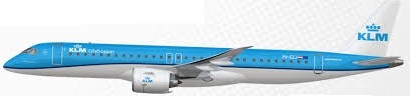
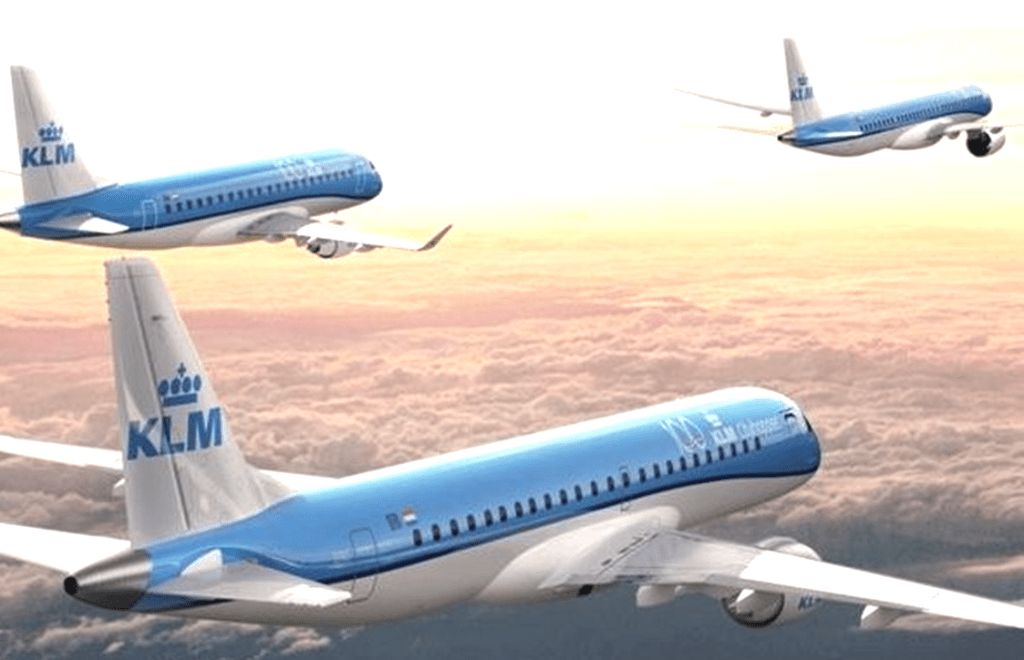
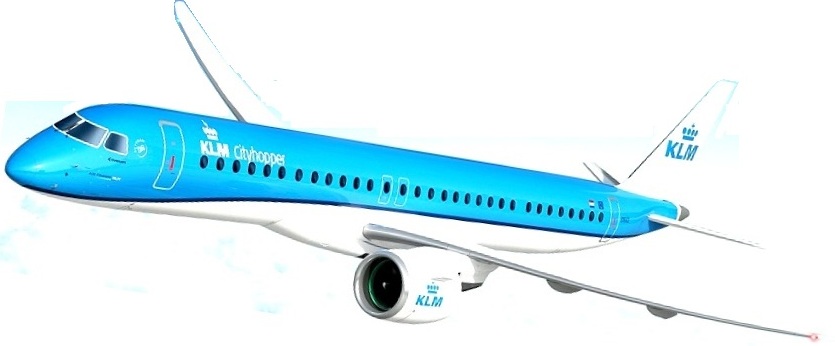
Primeras imágenes del Embraer E195-E2 para KLM Cityhopper
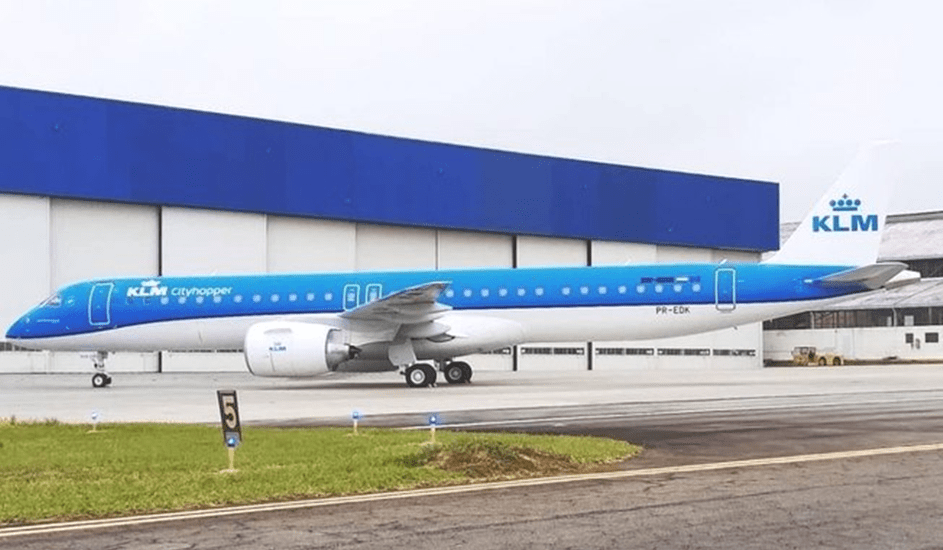
El primer Embraer 195-E2 de KLM Cityhopper se observa en la plataforma de la Planta de la fábrica en San José dos Campos elLuneas 01/02. La filial holandesa regional de KLM Royal Dutch Airlines, se encuentra estacionado en el Aeropuerto Internacional de San José dos Campos/SJK a la espera de de los testeos y trámites correspondientes para su vuelo en ferry hacia los Países Bajos.
El E195-E2 posee el registro brasileño PR-EDK utilizado por el fabricante brasileño, el nuevo motor ha estado realizando vuelos de prueba en San José dos Campos y pronto será entregado a su nuevo operador, donde tiene asignado la matrícula neerlandesa PH-NXA.
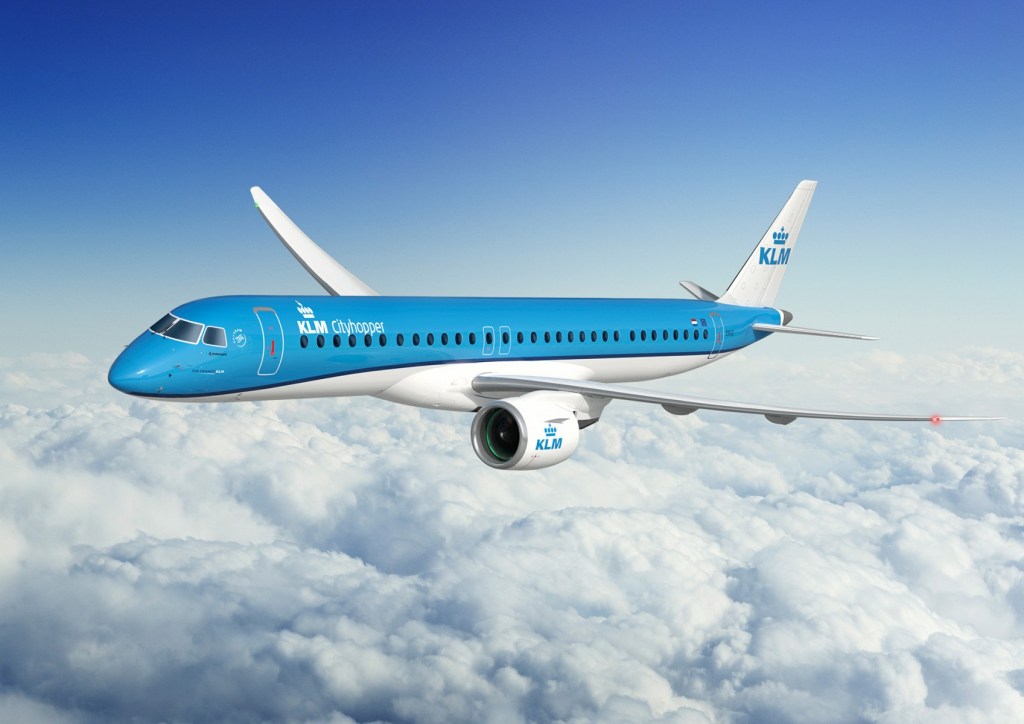
La compañía aérrea KLM Airlines bajo una orden para KLM Cityhopper ha solicitado en Noviembre 2019 un pedido en firme por 21 aeronaves E195-E2, con derecho de compras 14 adicionales. El E195-E2 es la variante de mayor tamaño de la serie E2. Estos aviones irán a reemplazar a los actuales Embraer E190-E1 más antiguos dela flota de KLM Cityhopper.
KLM Cityhopper Embraer E195-E2
First images of the Embraer E195-E2 for KLM Cityhopper
The first KLM Cityhopper Embraer 195-E2 is seen on the platform of the factory plant in San José dos Campos on Monday 01/02. The regional Dutch subsidiary of KLM Royal Dutch Airlines, is parked at the San José dos Campos/SJK International Airport awaiting the tests and corresponding procedures for its ferry flight to the Netherlands.
The E195-E2 has the Brazilian registration PR-EDK used by the Brazilian manufacturer, the new engine has been conducting test flights in San José dos Campos and will soon be delivered to its new operator, where it is assigned the Dutch registration PH-NXA.
The airline company KLM Airlines under an order for KLM Cityhopper has requested in November 2019 a firm order for 21 E195-E2 aircraft, with the right to purchase an additional 14. The E195-E2 is the largest variant of the E2 series. These aircraft will replace the current older Embraer E190-E1s in the KLM Cityhopper fleet.
KLM Cityhopper Embraer E195-E2
Eerste afbeeldingen van de Embraer E195-E2 voor KLM Cityhopper
Maandag 01/02 is de eerste KLM Cityhopper Embraer 195-E2 te zien op het platform van de fabriek in San José dos Campos. De regionale Nederlandse dochteronderneming van KLM Royal Dutch Airlines, staat geparkeerd op de San José dos Campos/SJK International Airport in afwachting van de tests en bijbehorende procedures voor haar ferryvlucht naar Nederland.
De E195-E2 heeft de Braziliaanse registratie PR-EDK die wordt gebruikt door de Braziliaanse fabrikant, de nieuwe motor voert testvluchten uit in San José dos Campos en wordt binnenkort geleverd aan zijn nieuwe operator, waar hij de Nederlandse registratie PH-NXA krijgt toegewezen.
De luchtvaartmaatschappij KLM Airlines in het kader van een bestelling voor KLM Cityhopper heeft in november 2019 een definitieve bestelling aangevraagd voor 21 E195-E2-vliegtuigen, met het recht om er nog eens 14 te kopen. De E195-E2 is de grootste variant van de E2-serie. Deze toestellen zullen de huidige oudere Embraer E190-E1’s in de KLM Cityhopper-vloot vervangen.
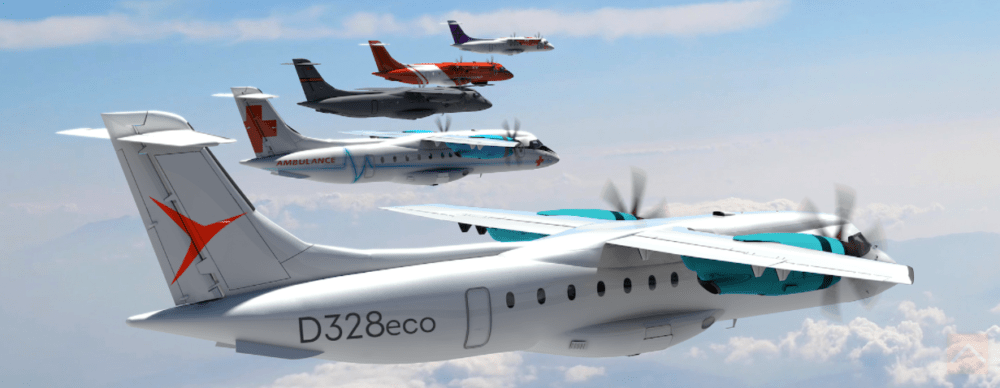
Deutsche Aircraft estableciendo supremacía para mercado regional
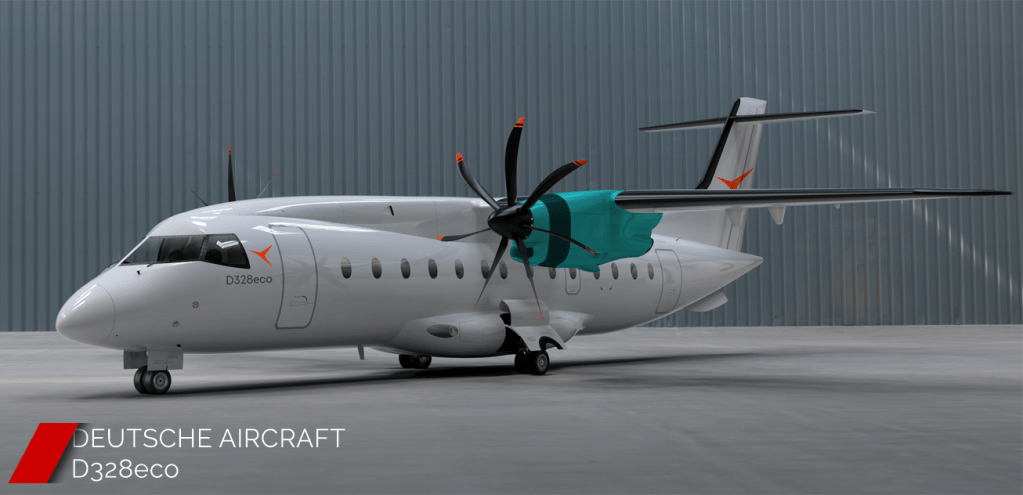
El CEO de Deutsche Aircraft, Dave Jackson, ha destacado en una entrevista sobre el interés en el nuevo avión turboprop Do328eco, acerca de la calidad alemana y la competencia. La puesta en forma de la industria de Deutsche Aircraftha sido importante en términos de reclutamiento, pudiendo demostrar que se está creando un proyecto nuevo, mientras que los puestos de trabajo se están cortando en todas partes.
En Diciembre 2020 se ha presentado el renovado proyecto de avión regional donde la perspectivas de la industria ha acogido con beneplácito los nuevos proyectos a pesar de los tiempos difíciles. Algunos clientes potenciales iniciaron conversaciones para conocer más en detalla sobre el nuevo modelo actualizado Do328eco.
Las unidades de proveedores que anteriormente trabajaban principalmente para Airbus y Boeing y no tenían capacidad para nuevos pedidos han solicitado presentarse como potenciales desarrolladores partners, convirtiéndose en una interesante oportunidad para formar parte de un equipo de trabajo.
Buscando clientela
La compañía alemana ha estado presentando al nuevo modelo regional a diferentes clientes en todo el mundo, pero por el momento continúan buscando clientes. «Eso sería fantástico, por supuesto, pero poco realista. Por primera vez, presentamos información detallada sobre el Do328eco, como la capacidad de ejecutar el 100 por ciento de combustible sostenible o, gracias a la aviónica moderna, para ser volado por un piloto. Ahora los clientes potenciales tendrán que echar un vistazo de cerca a los detalles y lógicamente verán cómo progresa el programa. Sin embargo, definitivamente hay expresiones de interés y hemos formado un panel con clientes potenciales para ayudarnos a desarrollarnos aún más. Queremos llenar uno o dos asientos más», expresa Dave Jackson.
En cuanto a la perspectiva de mercado en el horizonte, perciben tres segmentos. El más grande y más importante es el de reemplazar el envejecimiento de los turbohélices con alrededor de 50 asientos, como Saab 340, Dash 8 o Jetstream 31/32, con unas edades de alrededor de 25 años, con un potencial mercado de alrededor de 4.000 aviones. Otro segmento es Asia. En países como China, India, Indonesia, un avión del tamaño y con las capacidades como el Do328eco puede servir a ciudades o islas más pequeñas. Pero ciertamente hay tales oportunidades en Occidente, donde se utilizarán más aviones ecológicos, porque se endurecerán las normas sobre emisiones. El tercer segmento son misiones especiales como guardias fronterizos, guardacostas o ambulancias. El Dornier Do-328 tuvo mucho éxito, permitiendo cubrir un mercado bastante grande.
Ecología del Do328eco
Gracias a su capacidad de bioquerosene, destacan los aspectos ecológicos del D328eco. La compañía continúa demostrando confianza en combustibles sostenibles, aunque la tecnología del hidrógeno continúa afianzándose en la aviación, va a pasar tiempo para que la infraestructura alcance a poner a disposición una tecnología que tiempo atrás las industrias intentaron aplicar.
Características Dornier Do328eco
La aeronave Dornier Do328eco se ofrece en una configuración para 43 plazas. La anterior versión del Do-328 turboprop tenía una configuración de 33 asientos. Deutsche Aircraft ha innovado para modificar las prestaciones del excelente avión regional permitiendo ampliar un mercado más grande, de entre 29 a 43 asientos. El Dornier 328 es una aeronave rápido, con alto nivel de techo, pudiendo despegar y aterrizar en pendientes sin asfaltar y tiene características de vuelo estables como un piso alto, permitiendo maximizar estos beneficios en comparación con otros desarrolladores.
Competencia regional
Los principales competidores del D328 Eco serán el ATR 42, el Ilyushin Il-114-300, el Xian MA-60, el indonesio R80, y el nuevo proyecto de Embraer E3. Turquía, Brasil, indonesia continúan desarrollando potenciales nuevos modelos de aviones regionales.
ATR Aircraft es la compañía con mayor desarrollo en el mercado mundial de aeronaves regionales presente en los cinco continentes. «Se encuentra bien establecido, construye buenos aviones y goza de una excelente reputación. Somos realistas al respecto. Ese será nuestro principal competidor. Sin embargo, creemos que nuestros aviones son mejores que el ATR 42, no sólo por la capacidad de aviónica y bioqueroseno. Nuestro avión vuela más y más alto y, por lo tanto, es menos propenso a las condiciones climáticas. Los otros fabricantes ofrecen modelos más antiguos, todavía son jóvenes o sólo están establecidos en sus regiones. Con la herencia del Dornier 328, miramos hacia atrás en una tradición».
Se ha creado la nueva marca Deutsche Aircraft, que describe todo lo que queremos ser: ingeniería alemana y calidad alemana. «La ventaja en el desarrollo de la línea Do328eco es que no se ha iniciado de cero, sino que se construye sobre la base del Dornier 328. Esto lo hace más barato y más rápido», sostiene el CEO de Deutsche Aircraft.
La compañía estadounidense de defensa y tecnología espacial Sierra Nevada Corporation es el principal inversor. Actualmente, la compañía está desarrollando la búsqueda de inversores financieros, inversores estratégicos, capital, know-how, para potenciar más el éxito. Al mismo tiempo, el Gobierno de Alemania continúa apoyando la estrategia del desarrollo del avión regional.
Perspectivas Dornier
Deutsche Aircraft está construyendo el avión en Alemania, para continuar la herencia de Dornier. El Dornier 328 se adelantó a su tiempo. La industria está en una crisis gigantesca. Mientras tanto, el proyecto es concreto y definido. Las perspectivas para el primer prototipo está planificado hacia el 2023 o 2024, siendo el 2025 absolutamente realista.
Dornier industry perspectives
Deutsche Aircraft establishing supremacy for regional market
Deutsche Aircraft CEO Dave Jackson highlighted in an interview about interest in the new D328eco turboprop aircraft, about German quality and competition. Putting the Deutsche Aircraft industry in shape has been important in terms of recruiting, being able to show that a new project is being created, while jobs are being cut everywhere.
In December 2020 the renewed regional aircraft project was presented where the industry outlook has welcomed the new projects despite difficult times. Some potential customers started conversations to learn more in detail about the new updated Do328eco model.
Vendor units that previously worked primarily for Airbus and Boeing and did not have the capacity for new orders have applied to present themselves as potential developer partners, becoming an interesting opportunity to be part of a working team.
Looking for clientele
The German company has been introducing the new regional model to different customers around the world, but for the moment they continue to search for customers. «That would be fantastic, of course, but unrealistic. For the first time, we are presenting detailed information about the Do328eco, such as the ability to run 100 percent sustainably fuel or, thanks to modern avionics, to be flown by a pilot. Now potential clients will have to take a close look at the details and of course they will see how the program progresses. However, there are definitely expressions of interest and we have formed a panel of potential clients to help us develop further. We want to fill one or two more seats», says Dave Jackson.
Regarding the market outlook on the horizon, they perceive three segments. The largest and most important is to replace aging turboprops with around 50 seats, such as Saab 340, Dash 8 or Jetstream 31/32, with ages of around 25 years, with a potential market of around 4,000 planes. Another segment is Asia. In countries like China, India, Indonesia, a plane of the size and capabilities like the Do328eco can serve smaller cities or islands. But there are certainly such opportunities in the West, where more green aircraft will be used, because emissions rules will be tightened. The third segment are special missions such as border guards, coast guards, or ambulances. The Dornier Do-328 was very successful, allowing it to cover a fairly large market.
Ecology of the Do328eco
Thanks to its biochesene capacity, the ecological aspects of the D328eco stand out. The company continues to demonstrate confidence in sustainable fuels, although hydrogen technology continues to take hold in aviation, it will take time for the infrastructure to make available a technology that industries have long tried to apply.
Characteristics Dornier Do328eco
The Dornier Do328eco aircraft is offered in a 43-seat configuration. The previous version of the Do-328 turboprop had a 33-seat configuration. Deutsche Aircraft has innovated to modify the performance of the excellent regional aircraft allowing it to expand a larger market, from 29 to 43 seats. The Dornier 328 is a fast aircraft, with a high ceiling level, being able to take off and land on unpaved slopes and has stable flight characteristics such as a high floor, allowing to maximize these benefits compared to other developers.
Regional competition
The main competitors of the D328 Eco will be the ATR 42, the Ilyushin Il-114-300, the Xian MA-60, the Indonesian R80, and the new Embraer project E3. Turkey, Brazil, Indonesia continue to develop potential new regional aircraft models.
ATR Aircraft is the company with the greatest development in the world market for regional aircraft present in the five continents. «It is well established, builds good aircraft and has an excellent reputation. We are realistic about this. That will be our main competitor. However, we believe that our aircraft are better than the ATR 42, not only because of the avionics and biokerosene capacity. Our aircraft flies higher and higher and therefore less prone to weather conditions. Other manufacturers offer older models, are still young, or are only established in their regions. With the heritage of the Dornier 328, we are looking towards back in a tradition».
The new Deutsche Aircraft brand has been created, describing everything we want to be: German engineering and German quality. «The advantage in the development of the Do328eco line is that it has not been started from scratch, but is built on the basis of the Dornier 328. This makes it cheaper and faster», says the CEO of Deutsche Aircraft.
The US space defense and technology company Sierra Nevada Corporation is the main investor. Currently, the company is developing the search for financial investors, strategic investors, capital, know-how, to further enhance success. At the same time, the German Government continues to support the regional aircraft development strategy.
Dornier perspectives
Deutsche Aircraft is building the aircraft in Germany, to continue the Dornier heritage. The Dornier 328 was ahead of its time. The industry is in a gigantic crisis. Meanwhile, the project is concrete and defined. The prospects for the first prototype are planned for 2023 or 2024, with 2025 being absolutely realistic.
Factores determinantes para liderar mercado aviación comercial
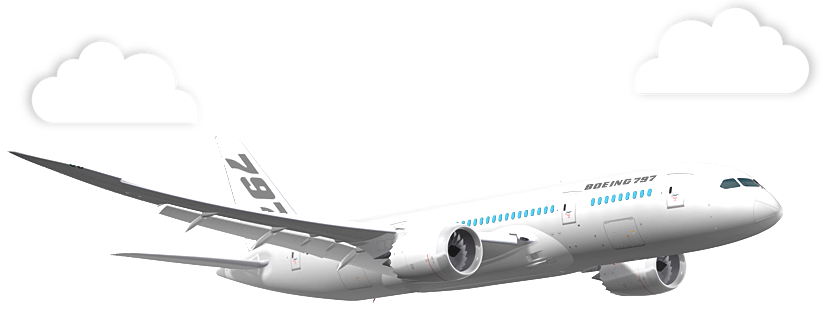
El nuevo avión de tamaño mediano conocido como New Midsize Airplane (NMA) es un avión de pasajeros conceptual diseñado por The Boeing Company para llenar el segmento del mercado de medio rango de acción. Tres factores que se desarrollarán este año serán fundamentales para dar a compañía la confianza para lanzar su próximo avión de pasajeros denominado Boeing 797 en el segmento de los 220-270 asientos.
Las pérdidas económicas de Boeing en 2020 permitirían evaluar que el Programa 797 podría retrasarse todavía más en un año vista. Existe una demanda de viajes acumulada y ahorros que alimentarán un auge de los viajes durante el resto de esta década 2020-2030.
797-backlogs
En 2015, Boeing determinó que el mercado era lo suficientemente grande como para lanzar un nuevo diseño. En 2017, varias aerolíneas expresaron interés en una aeronave de pasillo doble. Las previsiones de terceros para este mercado variaron de 2.000 a 4.000 aviones, aunque Boeing esperaba que la demanda del mercado se situara en el extremo superior de esta gama.
Antes del Paris Air Show de 2015, el Jefe de Ventas John Wojick dijo que Boeing había mantenido conversaciones con los clientes y determinó que el mercado era lo suficientemente grande como para lanzar un avión de reacción totalmente nuevo, el primero desde el lanzamiento del 787 Dreamliner en 2003. Las estimaciones para aquellos tiempos sugirieron que el costo de desarrollar y construir un nuevo avión de hoja limpia podría incluso alcanzar los US$ 15 mil millones. A principios de 2016, las dos opciones principales de Boeing siguieron siendo una variante 737 MAX más grande o un nuevo diseño 797. El Middle on Market (MOM), como también se lo ha denominado al 797, fue el tema de una sesión de la conferencia de 2016 de la Sociedad Internacional de Comercio de Aeronaves de Transporte (ISTAT) en Phoenix, Arizona, donde se reúnen los principales vendedores, compradores y financistas de aviones comerciales en todo el mundo. En Julio 2016, Boeing identificó el punto dulce del mercado para la NMA como un avión bimotor de 200 a 250 asientos con más de 4.000 nmi (7.400 km) de alcance, pero menos costoso de operar que los pasillos gemelos pequeños existentes. Posteriormente, los recursos de desarrollo de Boeing se comprometieron en los números de los programas actuales de 777X, 787-10 y 737 MAX, mientras que el perfil de gasto en I+D de Airbus parecía dejar espacio para un nuevo desarrollo; sin embargo, Airbus Group creía que el A321NEO LR y el A330NEO eran suficientes para abordar el segmento.
Para evaluar dónde se encuentra el «medio del mercado», Flight Ascend Consultancy examinó en 2017 los aviones de doble pasillo existentes con menos de 260 asientos y encontró que estos ofrecen un promedio de 234 asientos y tienen una distancia de vuelo promedio de 2.670 nmi, con el 60% de las millas de asiento disponibles por debajo de 4.000 nmi y 82% por debajo de 5.000 nmi. Para ser competitivos, los precios de NMA tendrían que estar entre el 787-8 y el A330NEO en US$ 100-120 millones y mayores pasillos individuales por encima de US$ 50 millones; el 767-300ER en su apogeo costó poco más de US$ 70 millones.
En 2018, los sólidos costos de producción y las previsiones de ventas están obligados a convencer a la junta de Boeing de comprometerse con su desarrollo del programa del nuevo avión de rango medio, cuando las aerolíneas continuaban mostrando buen interés por reemplazar el veterano Boeing 757. El diseño conceptual lanzado a principios de 2018 tiene un cono de cola de estilo 737 MAX, grandes ventanas de cabina del tamaño 787/777X, un parabrisas de estilo 757/767/777, una disposición de puerta 767-200 y entradas cortas del motor. Como los nuevos diseños recientes tardaron entre 88 y 101 meses (7,3 a 8,4 años) entre la autoridad para ofrecer y la introducción, un lanzamiento de finales de 2018 a principios de 2019 implicaría una entrada de servicio de 2026. En este momento, los aviones existentes mayores de 30 años habrán sido reemplazados por los modelos actuales, dejando 900 aviones de 15 a 25 años para ser reemplazados.
A principios de 2019, Rolls-Royce estaba anticipando un mercado direccionable de 4.000 a 5.000 aviones de medio mercado durante 20 años, de acuerdo con las cifras de Boeing, y señaló que Boeing no capturará todo ese mercado; espera que la demanda de la NMA alcance entre 2.000 y 3.000 aviones.
El 30 de Enero de 2019, el entonces CEO de Boeing, Dennis Muilenburg, aclaró que la de ofrecer la NMA para la venta se decidiría más adelante en el año, ante una autoridad para lanzar una decisión diferida hasta 2020, alineada con el desarrollo de 777X y permitiendo que la NMA se basara en el trabajo 777X. El proceso de decisión en dos etapas es estándar en Boeing y la entrada en servicio todavía está destinada a 2025, pero el retraso podría causar 757 oportunidades de reemplazo que se pierdan. Boeing tiene la intención de aprovechar las tecnologías existentes, como los compuestos para la NMA. El programa revisaría las prácticas de la cadena de suministro y se centraría en una producción, soporte y mantenimiento más eficientes que también podrían aplicarse a un futuro reemplazo 737.
En Febrero de 2019, Rolls-Royce plc abandonó su propuesta de motor, dejando a CFM International y Pratt & Whitney como únicos competidores. Un nuevo desarrollo no sería lo suficientemente maduro ya que el programa UltraFan está demasiado lejos de las necesidades de Boeing, pero Rolls-Royce podría estar interesado en una asociación con otro fabricante. El Director Ejecutivo de GE Aviation, por segundo año consecutivo, expresó escepticismo con respecto al tamaño del mercado del jet.
En Junio de 2019, tras el lanzamiento del Airbus A321XLR, se entendió que Boeing priorizaba la variante de 275 asientos, tentativamente apodada NMA-7X, por delante del NMA-6X de 225 asientos que competiría más directamente con el A321XLR. Todavía se espera una autoridad formal para ofrecer una decisión más adelante en 2019. Se entiende que los dos posibles proveedores de motores están pujando por un solo proveedor, creyendo que la demanda del mercado no permitiría que dos motores competidores lograran un retorno oportuno de la inversión, mientras que Steven Udvar-Házy de Air Lease Corporation considera que los compradores deberían tener una opción. Udvar-Házy también sugirió que la NMA debería diseñarse teniendo en cuenta cambios futuros, como la posibilidad de una operación de un solo piloto.
En Julio de 2019, Boeing declaró que su prioridad era el regreso seguro al servicio del 737 MAX basado en tierra, y que la decisión de lanzar el NMA dependería en parte de su confianza en las herramientas que se pretende implementar para mejorar el rendimiento de los programas de desarrollo.
En Septiembre de 2019, Airbus estimó que el mercado total direccionable para aviones de tamaño mediano representaría entre 2.000 y 2.500 aviones en los próximos 20 años, y señaló que estaría tomando el mercado temprano en este espacio con el A321XLR y las configuraciones A321 de alta densidad, y con el A330NEO.
En Octubre de 2019, Boeing estaba estudiando una remotorización para el 767-XF para alrededor de 2025, basado en el 767-400ER con un tren de aterrizaje extendido para acomodar turboventiladores General Electric GEnx. El mercado de carga es el objetivo principal, pero una versión de pasajeros podría ser una alternativa menos costosa a la NMA propuesta. Algunas aerolíneas y arrendadores promocionados como clientes de NMA han estado presionando a Boeing para que se centrara en su lugar en un avión de cuerpo estrecho, apodado el Future Small Airplane (FSA), para reemplazar al 737 MAX, y han puesto en duda si el NMA será lanzado.
En Diciembre de 2019, United Airlines hizo un pedido de 50 A321XLR para reemplazar su flota envejecida de 757, su primer pedido de Airbus de cuerpo estrecho desde 2006, pero declaró que esto no descartó la consideración de la NMA en el futuro. Los analistas Richard Aboulafia y Rob Morris creen que, aunque sería un fuerte contendiente reemplazar al 767, las posibilidades de que un NMA de cuerpo ancho sea lanzado están disminuyendo en favor de un avión de cuerpo estrecho que competiría más directamente con el A321NEO XLR de alcance intercontinental.
El 22 de Enero de 2020, el nuevo Director Ejecutivo de Boeing, David Calhoun, anunció una reevaluación de hojas limpias del proyecto, ya que la compañía se centra en los productos existentes y el mercado se aleja después de que Airbus lanzara el popular A321XLR en 2019. Boeing también señaló su comprensión, tras los accidentes del 737 MAX, de que cualquier nuevo diseño debe centrarse en el Sistema de Control de Vuelo y en cómo interactúan los pilotos con la aeronave.
Boeing ordenó un nuevo estudio para evaluar el mercado futuro y el tipo de aeronaves que podrían satisfacer ese mercado, efectivamente estanterías de su plan actual. Boeing está perdiendo cuota de mercado en el Airbus A321 de 200 a 240 asientos en particular, que se dirige a un segmento similar del mercado al Boeing 757/Boeing 797 NMA. El retraso en el lanzamiento de la NMA ya había puesto en riesgo para Boeing una parte clave del mercado objetivo, especialmente después de que Airbus ganara contratos con dos grandes aerolíneas estadounidenses. Los analistas también cuestionaron si Boeing tenía el apetito por los gastos del proyecto NMA, ya que se enfrenta a costos equivalentes a un nuevo programa para reparar la crisis del MAX y retrasos en el programa 777X. Una opción postulada para Boeing sería revivir el 787-3, una variante 787 optimizada para uso de corta distancia.
Factores para startup-797
El primer factor para el lanzamiento del Programa NMA/797 estaría relacionado con el Programa de vacunación COVID-19 para inmunizar a las poblaciones, necesarias para dar un respiro al mercado de la industria de la aviación comercial. En un plazo de doce meses se espera que la mayoría de la población mundial sea vacunada por COVID-19. Con la vacunación generalizada y las pruebas anti-COVID-19 casi instantáneas disponibles en los aeropuertos antes y después de la llegada, la cuarentena será cosa del pasado y los viajes se restablecerían rápidamente hacia el 2022.
El segundo factor será la exitosa reanudación del servicio del Boeing 737 MAX, que no ha encontrado resistencia de la mayoría de los pasajeros a pesar de estar en tierra durante casi dos años por problemas en la seguridad operativa. Es evidente que la enorme cantidad de trabajo realizado por Boeing y la industria mundial para eliminar la más mínima posibilidad de que se repitan los problemas que llevaron a los dos trágicos accidentes ha tenido un resultado positivo en el público viajero. Boeing y la industria fueron más allá para eliminar escenarios que nunca han ocurrido antes. El backlogs (atrasos) de las entregas que traerán rápidamente liquidez muy necesaria y dará al mercado de valores comodidad en Boeing a largo plazo. Actualmente, Boeing tiene un atraso de más de 400 aviones 737 MAX sin entregar y está aumentando lentamente la producción de la línea de cuarta generación del avión más exitosos de todos los tiempos. La compañía tiene pedidos de alrededor de 3.300 aviones una vez que se toman en cuenta las cancelaciones previstas. El analista de Nueva York Alliance Bernstein pronostica que los ingresos de los aviones comerciales se duplicarán más del doble este año 2021 de aproximadamente US$ 16.000 a US$ 40.000 millones de Dólares hacia el futuro, empujando a Boeing a una modesta ganancia de US$ 2.000 millones frente a una pérdida de US$11.600 millones en 2020. Para 2025, Alliance Bernstein prevé ingresos de aviones comerciales por valores de US$ 55.000 millones y unos ingresos totales de US$ 107.000 millones con un beneficio de alrededor de US$ 9.000 millones. También predice que Boeing será positivo en el flujo de efectivo en 2022.
El tercer factor, que es más difícil del entorno, es la fortaleza financiera de las compañías aéreas, que en parte tendrán que financiar la construcción del nuevo Programa 797 con sus depósitos iniciales. La debilidad de las aerolíneas puede promover nuevos modelos de financiación con una mayor distribución del riesgo por parte de los socios potenciales de Boeing, como la industria japonesa y sus respaldos. China, podría continuar en el radar con un nuevo acuerdo comercial con los Estados Unidos sellado en 2021 que lo convertirse en un socio mucho más importante en un mercado de alta demanda vital para la compañía americana. Otros jugadores importantes podrían ser países de Oriente Medio como el Reino de Qatar y los Emiratos Árabes Unidos.
Perspectivas mercado 797
El programa del nuevo desarrollo de la aeronave de rango medio ha traído mucha crítico para el avance es la forma y el tamaño del NMA/797. En tiempos pre-pandemia las aerolíneas eran líricas, o sea expresaban una idea distinta al significado literal, sobre una aeronave de doble pasillo con capacidad para entre 220 y 270 pasajeros que fue optimizado para rangos de media distancia de hasta 11 horas de vuelo. Los costos por asiento/milla son más altos que un solo pasillo, pero el atractivo de los pasillos gemelos en una configuración de economía 2-3-2 es enorme. Además, los horarios de embarque para un solo pasillo de 270 plazas son simplemente demasiado largos, particularmente con la insistencia de los pasajeros en la cantidad de equipaje de mano que traen a bordo. Con una tendencia post-pandemia de las aerolíneas focalizadas en volar con menos pasajeros, será un pensamiento a corto plazo que deberá ser descartado por la industria de aviación.
Los programas de aeronaves basculan un tiempo prolongado para llegar a materializarse, pero la compañía Boeing podría reafirmar su compromiso para reactivar el tan necesario programa narrowbody de rango medio de vital importancia para continuar siendo competitivo en un mercado donde Airbus continúa liderando el sector del rango medio.
Boeing 797 Program perspectives
Determining factors to lead the commercial aviation market
The new mid-size aircraft known as New Midsize Airplane (NMA) is a concept airliner designed by The Boeing Company to fill the mid-range market segment. Three factors that will play out this year will be essential to give the company the confidence to launch its next passenger jet called the Boeing 797 in the 220-270 seat segment.
Boeing’s economic losses in 2020 would make it possible to assess that the 797 Program could be delayed even further in a year from now. There is pent-up travel demand and savings that will fuel a travel boom for the remainder of this 2020-2030 decade.
797-backlogs
In 2015, Boeing determined that the market was large enough to launch a new design. In 2017, several airlines expressed interest in a twin-aisle aircraft. Third-party forecasts for this market ranged from 2,000 to 4,000 aircraft, although Boeing expected market demand to be at the higher end of this range.
Prior to the 2015 Paris Air Show, Sales Manager John Wojick said Boeing had had discussions with customers and determined that the market was large enough to launch an entirely new jet aircraft, the first since the 787 Dreamliner was launched in 2003. Estimates for those times suggested that the cost of developing and building a new clean-blade aircraft could even reach US$ 15 billion. In early 2016, Boeing’s two main options remained a larger 737 MAX variant or a new 797 design. The Middle on Market (MOM), as the 797 has also been referred to, was the subject of a session of the 2016 conference of the International Society for the Trade in Transportation Aircraft (ISTAT) in Phoenix, Arizona, where the world’s leading commercial aircraft sellers, buyers and financiers gather. In July 2016, Boeing identified the market sweet spot for the NMA as a 200 to 250 seat twin-engine aircraft with more than 4,000 nm (7,400 km) of range, but less expensive to operate than existing small twin aisles. Subsequently, Boeing development resources were committed to the current 777X, 787-10, and 737 MAX program numbers, while Airbus’ R&D spending profile seemed to leave room for further development; however, Airbus Group believed that the A321NEO LR and A330NEO were sufficient to address the segment.
To assess where the «market middle» lies, Flight Ascend Consultancy examined existing twin-aisle aircraft with fewer than 260 seats in 2017 and found that these offer an average of 234 seats and have an average flight distance of 2,670 nmi. with 60% of available seat miles under 4,000 nmi and 82% under 5,000 nmi. To be competitive, NMA prices would have to be between the 787-8 and the A330NEO at US$ 100-120 million and larger individual aisles above US$ 50 million; the 767-300ER at its peak cost just over US$ 70 million.
In 2018, strong production costs and sales forecasts are bound to convince Boeing’s board to commit to its development of the new mid-range aircraft program, as airlines continued to show good interest in replacing the veteran Boeing 757. The concept design released in early 2018 has a 737 MAX style tail cone, large 787/777X size cabin windows, a 757/767/777 style windshield, a 767-200 door arrangement and short engine intakes. . As recent new designs took between 88 and 101 months (7.3 to 8.4 years) between authority to offer and introduction, a late 2018 to early 2019 launch would imply a 2026 service entry. By now, existing aircraft older than 30 years will have been replaced by current models, leaving 900 aircraft aged 15-25 years to be replaced.
In early 2019, Rolls-Royce was anticipating an addressable market of 4,000 to 5,000 mid-market aircraft for 20 years, according to Boeing figures, noting that Boeing will not capture all of that market; he expects demand for the NMA to reach 2,000 to 3,000 aircraft.
On January 30, 2019, the then CEO of Boeing, Dennis Muilenburg, clarified that offering the NMA for sale would be decided later in the year, before an authority to launch a deferred decision until 2020, aligned with the development of 777X and allowing the NMA to build on the 777X job. The two-stage decision process is standard at Boeing and entry into service is still targeted for 2025, but the delay could cause 757 replacement opportunities to be missed. Boeing intends to leverage existing technologies such as composites for the NMA. The program would review supply chain practices and focus on more efficient production, support and maintenance that could also be applied to a future 737 replacement.
In February 2019, Rolls-Royce plc abandoned its engine proposal, leaving CFM International and Pratt & Whitney as sole competitors. A new development would not be mature enough as the Ultrafan program is too far from Boeing’s needs, but Rolls-Royce might be interested in a partnership with another manufacturer. The CEO of GE Aviation, for the second year in a row, expressed skepticism regarding the size of the jet market.
In June 2019, following the launch of the Airbus A321XLR, it was understood that Boeing was prioritizing the 275-seat variant, tentatively dubbed the NMA-7X, ahead of the 225-seat NMA-6X which would compete more directly with the A321XLR. A formal authority is still expected to offer a decision later in 2019. It is understood that the two potential engine suppliers are bidding for a single supplier, believing that market demand would not allow two competing engines to achieve a timely return on investment, while Steven Udvar-Házy of Air Lease Corporation believes that buyers should have a choice. Udvar-Házy also suggested that the NMA should be designed with future changes in mind, such as the possibility of a single-pilot operation.
In July 2019, Boeing stated that its priority was the safe return to service of the ground-based 737 MAX, and that the decision to launch the NMA would depend in part on its confidence in the tools it is intended to implement to improve program performance. developmental.
In September 2019, Airbus estimated that the total addressable market for midsize aircraft would represent between 2,000 and 2,500 aircraft over the next 20 years, and noted that it would be taking the market early in this space with the A321XLR and high-density A321 configurations, and with the A330NEO.
In October 2019, Boeing was studying a re-engine for the 767-XF for around 2025, based on the 767-400ER with an extended landing gear to accommodate General Electric GEnx turbofans. The cargo market is the main target, but a passenger version could be a less expensive alternative to the proposed NMA. Some airlines and lessors touted as NMA customers have been pushing Boeing to focus instead on a narrow-body aircraft, dubbed the Future Small Airplane (FSA), to replace the 737 MAX, and have questioned whether the NMA will be launched.
In December 2019, United Airlines placed an order for 50 A321XLRs to replace its aging fleet of 757s, its first narrow-body Airbus order since 2006, but stated that this did not preclude consideration by the NMA in the future. Analysts Richard Aboulafia and Rob Morris believe that although it would be a strong contender to replace the 767, the chances of a wide-body NMA being launched are diminishing in favor of a narrow-body aircraft that would more directly compete with the long-range A321NEO XLR intercontinental.
On January 22, 2020, new Boeing Chief Executive Officer David Calhoun announced a clean sheets reassessment of the project as the company focuses on existing products and the market retreats after Airbus launched the popular A321XLR in 2019. Boeing also signaled its understanding, following the 737 MAX accidents, that any new design must focus on the Flight Control System and how pilots interact with the aircraft.
Boeing ordered a new study to assess the future market and the type of aircraft that could satisfy that market, effectively shelving from its current plan. Boeing is losing market share in the 200-240 seat Airbus A321 in particular, which is targeting a similar market segment to the Boeing 757/Boeing 797 NMA. The delay in launching the NMA had already put a key part of the target market at risk for Boeing, especially after Airbus won contracts with two large US airlines. Analysts also questioned whether Boeing had an appetite for NMA project spending, as it faces costs equivalent to a new program to repair the MAX crisis and delays to the 777X program. One posited option for Boeing would be to revive the 787-3, a 787 variant optimized for short-haul use.
Factors for startup-797
The first factor for the launch of the NMA/797 Program would be related to the COVID-19 Vaccination Program to immunize the populations, necessary to give a break to the commercial aviation industry market. Within twelve months, the majority of the world’s population is expected to be vaccinated for COVID-19. With widespread vaccination and near-instantaneous anti-COVID-19 testing available at airports before and after arrival, quarantine will be a thing of the past and travel will be quickly restored by 2022.
The second factor will be the successful resumption of service of the Boeing 737 MAX, which has not met with resistance from the majority of passengers despite being on the ground for almost two years due to operational safety problems. It is clear that the enormous amount of work done by Boeing and the global industry to eliminate the slightest possibility of a recurrence of the problems that led to the two tragic accidents has had a positive result on the traveling public. Boeing and the industry went above and beyond to eliminate scenarios that have never happened before. Deliveries backlogs that will quickly bring in much needed liquidity and give the stock market long-term comfort at Boeing. Boeing currently has more than 400 undelivered 737 MAX aircraft backlog and is slowly increasing production of the fourth-generation line of the most exotic aircraft of all time. The company has orders for around 3,300 planes once planned cancellations are taken into account. New York analyst Alliance Bernstein forecasts that commercial aircraft revenue will more than double this year 2021 from approximately US$ 16,000 to US$ 40,000 million into the future, pushing Boeing to a modest profit of US$ 2,000. million versus a loss of US$ 11.6 billion in 2020. By 2025, Alliance Bernstein expects commercial aircraft revenue of US$ 55 billion and total revenue of US$ 107 billion with a profit of about US$ 9 billion. He also predicts that Boeing will be cash flow positive in 2022.
The third factor, which is more difficult in the environment, is the financial strength of the airlines, which in part will have to finance the construction of the new 797 Program with their initial deposits. The weakness of the airlines may promote new financing models with a greater distribution of risk on the part of Boeing’s potential partners, such as the Japanese industry and its backers. China could continue on the radar with a new trade agreement with the United States sealed in 2021 that would make it a much more important partner in a high-demand market vital for the American company. Other major players could be Middle Eastern countries such as the Kingdom of Qatar and the United Arab Emirates.
Market perspectives 797
The program of the new development of the mid-range aircraft has brought much critical to the advance is the shape and size of the NMA/797. In pre-pandemic times, airlines were lyrical, that is, they expressed an idea different from the literal meaning, about a double-aisle aircraft with capacity for between 220 and 270 passengers that was optimized for medium-distance ranges of up to 11 hours of flight. The costs per seat/mile are higher than a single aisle, but the appeal of twin aisles in a 2-3-2 economy configuration is enormous. Additionally, boarding times for a single 270-seat aisle are simply too long, particularly with passengers insisting on the amount of carry-on luggage they bring on board. With a post-pandemic trend of airlines focused on flying with fewer passengers, it will be a short-term thought that should be discarded by the aviation industry.
Aircraft programs take a long time to materialize, but Boeing could reaffirm its commitment to revive the much-needed mid-range narrowbody program that is vitally important to remain competitive in a market where Airbus continues to lead the mid-range sector.
Boeing 737 MAX cumple quinto aniversario primer vuelo
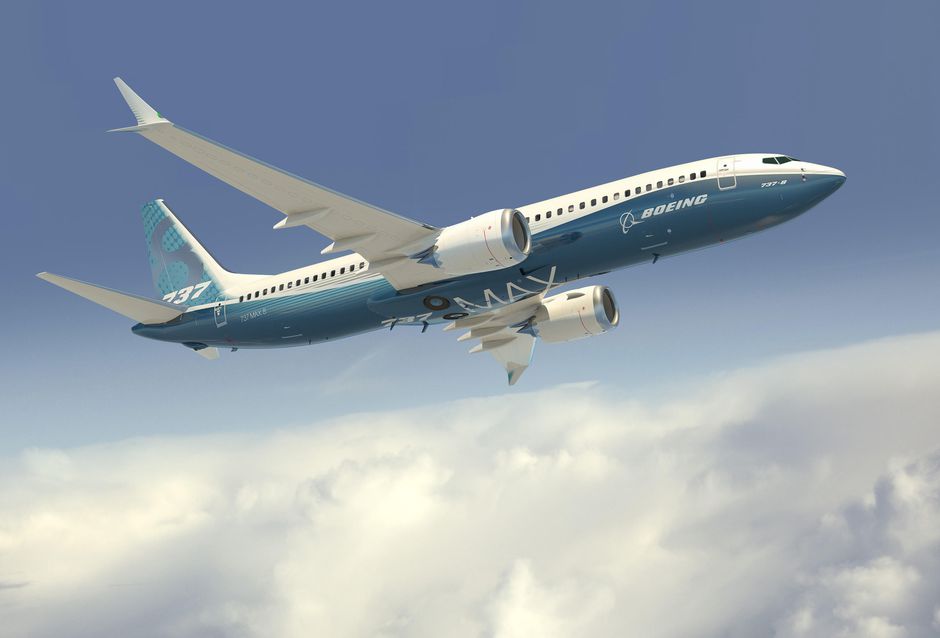
The Boeing Company celebra el quinto aniversario del primer vuelo del Boeing 737 MAX el 29 de Enero de 2016, decolaba la cuarta generación de la línea 737 a cielos por primera vez desde el Aeropuerto de Renton (WA). Para el vuelo inaugural fue empleado el Boeing 737-8 MAX. El vuelo había despegado desde el Aeropuerto Municipal de Renton/RNT, Estado de Washington a las 09:46 hs. [hora local] y estuvo realizando test en vuelo durante 02/horas y 47/minutos, aterrizando en el Aeropuerto Internacional del Condado de King/BFI a las 12:33 hs. [hora local]. Mientras que el Piloto en Jefe Ed Wilson y el piloto Jefe de Pruebas de Boeing y Vicepresidente de Operaciones de Vuelo Craig Bomben participaron de la tripulación del vuelo inaugural, mientras que un equipo en tierra analizaba y procesa el comportamiento de los datos de las pruebas de vuelo en tiempo real.
El vuelo de prueba del Boeing 737-8 MAX ha sido muy positivo en la compañía aeroespacial. Su Presidente y Director Ejecutivo Ray Conner había expresado oportunamente: «El primer vuelo de hoy del 737 MAX nos lleva a través del umbral de un nuevo siglo de innovación, impulsado por la misma pasión e ingenio que han hecho grande a esta empresa durante 100 años. Estamos tremendamente orgullosos de comenzar a probar un avión que ofrecerá una eficiencia de combustible sin precedentes en el mercado de pasillo único para nuestros clientes».
Familia Boeing 737 MAX
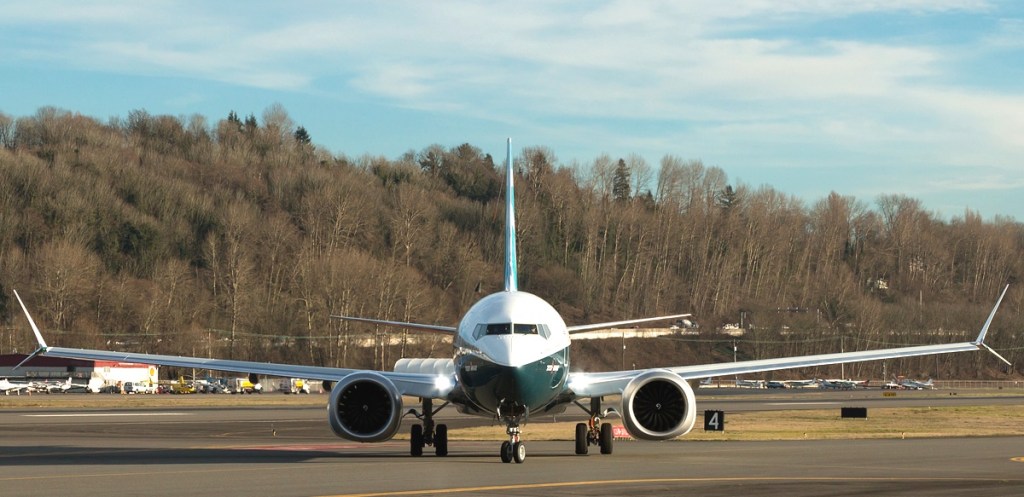
El Boeing 737 MAX es la cuarta generación del Boeing 737, un avión de pasajeros de cuerpo estrecho fabricado por Boeing Commercial Airplanes (BCA), sucediendo al Boeing 737NG (Next Generation). Se basa en diseños anteriores 737, con motores CFM International LEAP-1B más eficientes, cambios aerodinámicos que incluyen sus distintivas alas de punta dividida denominados winglets AT y modificaciones en fuselaje como el tren de aterrizaje, cono de cola, entre muchos otros. La nueva serie fue anunciada públicamente el 30 de Agosto de 2011. Tomó su primer vuelo el 29 de Enero de 2016 y fue certificado por la Administración Federal de Aviación de los Estados Unidos (FAA) en Marzo 2017. La primera entrega fue un MAX 8 en Mayo 2017 a la aerolínea Malindo Air, iniciando el primer vuelo comercial den una aerolínea el 22 de Mayo de 2017.
La cuarta generación de la serie 737 MAX, lleva su nombre de MAX por MAX-imizar las ventajas a las prestaciones superadoras que representa para los modelos anteriores y de la competencia. La nueva serie se ha ofrecido en cuatro variantes que recorren las prestaciones y configuraciones desde 138 a 204 asientos en una configuración típica de dos clases y un rango de 3.215 a 3.825 nmi (5.954 a 7.084 km). Las variantes 737-7 MAX, 737-8 MAX, 737-9 MAX, 737-10 MAX y 737-10 200 MAX (aeronave de alta densidas de pasajeros). Las nuevas series representas el avance de la tecnología para reemplazar a la línea Next Generation 737-600/700/800/900/900ER.
Entre bastidores
En 2006, Boeing comenzó a considerar la sustitución del 737 Next Generation por un diseño de hoja limpia. En Junio de 2010, una decisión sobre este reemplazo fue pospuesta hasta 2011. El 1 de Diciembre de 2010, el competidor de Boeing, Airbus Group, lanzó la familia Airbus A320NEO para mejorar la quema de combustible y la eficiencia operativa con nuevos motores: el CFM International LEAP y Pratt & Whitney PW1000G. En Febrero de 2011, el CEO de Boeing, Jim McNerney, sostuvo: «Vamos a hacer un nuevo avión». En Marzo de 2011, el Presidente de BCA, James Albaugh, dijo a los participantes de una reunión comercial que la compañía no estaba segura de un re-motor 737, como el Director Financiero de Boeing James A. Bell declaró en una conferencia de inversionistas el mismo mes. El A320NEO reunió 667 compromisos en el Salón Aéreo de París de Junio de 2011 para un atraso de 1.029 unidades desde su lanzamiento, estableciendo un récord de pedidos para un nuevo avión comercial.
El 20 de Julio de 2011, American Airlines anunció un pedido de 460 aviones de cuerpo estrecho, incluyendo 130 A320CEO y 130 A320NEO, y tenía la intención de pedir 100 Boeing 737 de la última versión a la espera de la confirmación de Boeing. La orden rompió el monopolio de Boeing con la aerolínea y obligó a Boeing rápidamente establecer las prioridades para modernizar a la línea 737. Como esta venta incluía una Cláusula de Clientes Más Favorecidos, Airbus tiene que devolver cualquier diferencia a American Airlines si vende a otra aerolínea a un precio más bajo, por lo que el fabricante europeo no puede dar un precio competitivo a la competidora United Airlines, dejándola a una flota sesgada por Boeing.
Boeing ha presentado el Boeing 737-8ERX basado en el 737-8 MAX con un peso máximo de despegue de 194.700 libras (88,3 t) más alto usando alas, tren de aterrizaje y sección central del MAX 9 para proporcionar un alcance más largo de 4.000 millas náuticas (4.600 millas; 7.400 km) con capacidad para 150, acercándolo al Airbus A321NEO LR.
Inicio del programa
El 30 de Agosto de 2011, el consejo de administración de Boeing aprobó el lanzamiento del 737, esperando una quema de combustible un 4% inferior al A320NEO. Durante 2011 se realizaron estudios para la reducción adicional de la resistencia a la resistencia aerodinámica, incluyendo cono de cola revisado, góndola de flujo laminar natural y estabilizador vertical de flujo laminar híbrido. Boeing abandonó el desarrollo de un nuevo diseño. Boeing esperaba que el 737 MAX cumplió o superara la gama del Airbus A320NEO. La configuración firme para el 737 MAX estaba programada para 2013.
En marzo de 2010, el costo estimado para volver a crear un re-motor del 737 según Mike Bair, Vicepresidente de Estrategia Comercial y Marketing de Boeing Commercial Airplanes, sería de US$ 2 a 3 mil millones de Dólares, incluido el desarrollo del motor CFM. Durante la llamada de ganancias del segundo trimestre de 2011 de Boeing, el ex director financiero James Bell dijo que el costo de desarrollo del fuselaje sólo sería del 10-15% del costo de un nuevo programa estimado en US$ 10-12 mil millones en ese momento. Bernstein Research predijo en Enero de 2012 que este costo sería el doble que el Airbus A320NEO. El costo de desarrollo de MAX podría haber sido muy superior a la meta interna de US$ 2.000 millones y más cerca de US$4.000. El consumo de combustible se reduce en un 14% desde el 737NG. Southwest Airlines se inscribió como cliente de lanzamiento en 2011. En Noviembre de 2014, McNerney dijo que el 737 sería reemplazado por un nuevo avión en 2030, un poco más grande y con nuevos motores, pero manteniendo su configuración general, probablemente un avión compuesto.
Línea producción
El 13 de Agosto de 2015, el primer fuselaje 737 MAX completó el montaje en Spirit Aerosystems en Wichita, Kansas, para un avión de prueba que eventualmente sería entregado para lanzar al cliente Southwest Airlines. El 8 de Diciembre de 2015, el primer Boeing 737 MAX, un MAX 8 denominado Spirit of Renton, fue lanzado en la Boeing Renton Factory.
Debido a que la fábrica británica GKN no podía producir las paredes interiores de panal de titanio para los reversores de empuje lo suficientemente rápido, Boeing cambió a una pieza compuesta producida por Spirit AeroSystems para entregar 47.000 por mes en 2017. Spirit suministra el 69% del fuselaje737, incluyendo el fuselaje, el reverso de empuje, los pilones del motor, las góndolasy los bordes delanteros de las alas. Una nueva línea de montaje de larguero con máquinas de perforación robóticas debería aumentar el rendimiento en un 33%. La línea de montaje de paneles automatizados. Electroimpact aceleró el conjunto de la piel inferior del ala en un 35%. Boeing planeó aumentar su tasa de producción mensual de 737 MAX de 42 aviones en 2017, a 57 aviones para 2019. La nueva línea de montaje de larguero está diseñada por Electroimpact. Electroimpact también ha instalado máquinas remachadoras totalmente automatizadas y herramientas para sujetar las cuerdas a la piel del ala.
El aumento de la velocidad tensó la producción y en Agosto de 2018, más de 40 aviones inacabados estaban estacionados en Renton, a la espera de piezas o instalación del motor, ya que los motores CFM y los fuselajes Spirit se entregaron tarde. Después de que los aviones estacionados alcanzaran un máximo de 53 a principios de septiembre, Boeing lo redujo en nueve el mes siguiente, ya que las entregas aumentaron a 61 desde 29 en Julio y 48 en Agosto 2018.
El 23 de Septiembre de 2015, Boeing anunció una colaboración con COMAC Corp. para construir una instalación de finalización y entrega para el 737, en Zhoushan, China, el primero fuera de los Estados Unidos. Esta instalación inicialmente maneja el acabado interior solamente, pero posteriormente se ampliará para incluir pintura. El primer avión fue entregado desde la instalación a Air China el 15 de Diciembre de 2018.
La mayor parte del costo de los proveedores son las aeroestructuras con US$ 10-12 millones (35-34% del total de US$ 28.5-35 M), seguidos de los motores con US$7-9 millones (25-26%), sistemas e interiores con US$5-6 Millones cada uno (18-17%), luego aviónica con US$ 1.5–2 millones (5-6%).
Pruebas y certificación
El primer vuelo tuvo lugar el 29 de Enero de 2016, en el Aeropuerto Municipal de Renton, casi 49 años después del primer vuelo del original 737-100, el 9 de Abril de 1967. El primer MAX 8, 1A001, fue utilizado para ensayos aerodinámicos: pruebas de aleteo, estabilidad y control, y verificación de datos de rendimiento de despegue, antes de que fuera modificado para un operador y entregado. 1A002 se utilizó para el rendimiento y las pruebas del motor: rendimiento de ascenso y aterrizaje, viento cruzado, ruido, clima frío, alta altitud, quema de combustible y la ingestión de agua. Los sistemas de aeronaves, incluido el autoland, se probaron con 1A003. 1A004, con un diseño de avión, voló la función y la certificación de fiabilidad durante 300h con una instrumentación de prueba de vuelo ligera.
El 737 MAX obtuvo la certificación de la Administración Federal de Aviación (FAA) el 8 de Marzo de 2017. Fue aprobado por la EASA el 27 de Marzo de 2017. Después de completar 2.000 horas de vuelo de prueba y 180 minutos de prueba ETOPS que requerían 3.000 ciclos de vuelo simulados en abril de 2017, CFM International notificó a Boeing un posible problema de calidad de fabricación con discos de turbina de baja presión (LPT) en motores LEAP-1B. Boeing suspendió 737 vuelos MAX el 4 de mayo de y reanudó sus vuelos el 12 de Mayo.
Durante el proceso de certificación, la FAA delegó muchas evaluaciones a Boeing, lo que permitió al fabricante revisar su propio producto. Se informó ampliamente que Boeing presionó para acelerar la aprobación del 737 MAX para competir con el Airbus A320neo, que llegó al mercado nueve meses antes del modelo de Boeing.
Introducción
La primera entrega fue un MAX 8, entregado a Malindo Air (una subsidiaria de Lion Air) el 16 de Mayo de 2017; entró en servicio el 22 de Mayo de 2017. La filial de Norwegian Air Norwegian Air International fue la segunda aerolínea en poner en servicio un 737 MAX, cuando realizó su primer vuelo transatlántico con un MAX 8 llamado Sir Freddie Laker el 15 de Julio de 2017, entre el Aeropuerto de Edimburgo en Escocia y el Aeropuerto Internacional Bradley en el estado estadounidense de Connecticut, seguido de una segunda rotación de Edimburgo al Aeropuerto Stewart, Nueva York.
Boeing tenía como objetivo igualar la fiabilidad de envío del 99,7% del 737 Next Generation (NG). Southwest Airlines, el cliente de lanzamiento, tomó la entrega de su primer 737 MAX el 29 de Agosto de 2017. Boeing planeaba entregar al menos 50 a 75 aviones en 2017, 10-15% de los más de 500 737 que se entregarán en el año.
Después de un año de servicio, se habían entregado 130 MAX a 28 clientes, registrando más de 41.000 vuelos en 118.000 horas y volando más de 6,5 millones de pasajeros. flydubai observó un 15% más de eficiencia que el NG, más del 14% prometido, y la fiabilidad alcanzó el 99,4%. Las rutas largas incluyen 24 sobre 2.500 nmi (4.630 km), incluyendo un servicio diario de Aerolíneas Argentinas desde Buenos Aires hasta Punta Cana más de 3.252 nmi (6.023 km).
En 2019, Moody’s había estimado que el margen de operación de Boeing sería de 12 a 15 millones de Dólares por cada 737-8 MAX a su precio de lista de US$ 121,6 millones de dólares, aunque el precio de lista suele descontar entre el 50 y el 55 por ciento en la práctica. Este alto margen fue posible gracias a la eficiencia del volumen de producción y la amortización de los costos de desarrollo y la inversión de capital a lo largo de las décadas del programa. Sin embargo, desde entonces los costos han aumentado significativamente y el margen se ha reducido tras el segundo accidente, la puesta a tierra de la FAA y la grave interrupción de la producción. Boeing estimó que costaría US$ 6.300 millones de Dólares adicionales producir el programa 737 MAX restante, US$ 4.000 millones de dólares para costos anormales futuros a medida que se reiniciaba la producción, más unos US$ 8.300 millones de Dólares para concesiones y compensación a los clientes. El aumento de los costos también llevó a Moody’s a degradar la calificación crediticia de Boeing.
Puesta a tierra y recertificación
El Boeing 737 MAX fue puesto en tierra en todo el mundo desde Marzo de 2019 hasta Noviembre de 2020, después de que un sistema de control de vuelo que no funcionaba correctamente provocó que dos nuevos aviones se estrellara en Indonesia y Etiopía entre Octubre de 2018 y Marzo de 2019, matando a las 346 personas a bordo. En los siguientes dieciocho meses, Boeing rediseñó la arquitectura informática que soportaba MCAS, mientras que las investigaciones fallaban en el diseño de aeronaves y la certificación fallaba. Boeing se enfrenta a consecuencias legales y financieras, ya que no se podían realizar entregas del MAX mientras el avión estaba en tierra, y las compañías aéreas cancelaron más pedidos que Boeing produjo durante este período; una parte de esos aviones han perdido a sus compradores originales. Boeing encontró desechos de objetos extraños en los tanques de combustible de 35 de 50 aviones 737 MAX en tierra que fueron inspeccionados, y debe comprobar el resto de los 400 aviones no entregados. Boeing tuvo problemas similares con 787 producidos en Carolina del Sur. La FAA restringió la autoridad delegada de Boeing e invitó a las partes interesadas mundiales en la aviación a comentar sobre los cambios pendientes en la aeronave y para entrenar a los pilotos. La orden de puesta a tierra de la FAA fue levantada el 18 de Noviembre de 2020. Todas las aeronaves deben ser reparadas para cumplir con diversas directivas de aeronavegabilidad. Después de ser acusado de fraude, Boeing se conformó con pagar más de 2.500 millones de Dólares: una sanción monetaria criminal de 243,6 millones de Dólares, 1.770 millones de dólares de daños a los clientes de las aerolíneas y un fondo de US$ 500 millones de beneficiarios de víctimas de accidentes.
Desaceleración de la producción y suspensión
Desde mediados de Abril de 2019, la compañía anunció que estaba reduciendo temporalmente la producción de los 737 aviones de 52 por mes a 42 en medio de los Boeing 737 MAX groundings. La producción del motor LEAP-1B continuó a un ritmo sin cambios, lo que permitió a CFM ponerse al día con su trabajo pendiente en pocas semanas.
A medida que la recertificación 737 MAX se trasladó a 2020, Boeing suspendió la producción a partir de enero para ahorrar dinero en efectivo y priorizar la entrega de aeronaves almacenadas. El programa 737 MAX fue la mayor fuente de beneficios de Boeing. Alrededor del 80% de los 737 costos de producción implican pagos a proveedores de piezas, que pueden ser tan bajos como US$10 millones por avión. Después del anuncio, Moody’s recoró las calificaciones de deuda de Boeing en diciembre de 2019, citando el aumento de los costos debido a la puesta a tierra y la detención de la producción, incluyendo apoyo financiero a proveedores y compensación a aerolíneas y arrendadores que podrían reducir los márgenes del programa y la generación de efectivo durante años. Moody’s también advirtió que el alto de la producción tendría un impacto amplio y dañino en toda la cadena de suministro aeroespacial y de defensa y, si y cuando la producción se reanuda, la rampa sería más lenta de lo previsto anteriormente, ya que los proveedores tienen que hacer ajustes a las estructuras de costos construidas para la producción de récord planificada en el programa 737.
CFM International redujo la producción del 737 MAX CFM LEAP-1B, a favor del LEAP-1A del A320NEO, pero está preparado para satisfacer la demanda de ambos aviones. Boeing no dijo públicamente cuánto duraría la suspensión. Los últimos fuselajes de pre-suspensión entraron en el montaje final a principios de enero de 2020. Se informó que Boeing esperaba internamente que la producción se detuviera durante al menos 60 días. Los observadores de la industria comenzaron a cuestionarse si la proyección de Boeing de una tasa de producción récord de 57 por mes se alcanzaría alguna vez. A principios de Enero de 2020, se descubrió un problema en la actualización de software, retrasando aún más el regreso al servicio.
A finales de Enero 2020, se esperaba que la producción se reiniciara en Abril y tomara un año y medio para limpiar el inventario de 400 aviones, aumentando lentamente y construyendo con el tiempo: Boeing podría haber entregado 180 aviones almacenados a finales de año y producir un número igual. Boeing no reveló ningún posible efecto en las entregas causado por la retirada de la autoridad delegada de la FAA de La autoridad delegada de Boeing para certificar la aeronavegabilidad de cada aeronave. El proveedor de MAX Spirit AeroSystems dijo que no espera devolver la tasa de producción a 52 por mes hasta finales de 2022. A principios de abril, la pandemia COVID-19 llevó a Boeing a cerrar sus otras líneas de producción de aviones y a retrasar aún más la recertificación del MAX. A finales de abril de 2020, Boeing señaló que esperaba obtener la aprobación regulatoria en agosto de 2020. El 27 de Mayo de 2020, Boeing reanudó la producción de 737 MAX a una tasa de producción baja, que esperaba que se intensificara según las entregas de los clientes, hacia 31 mensuales en 2021.
Recertificación y plan de entrega
Entre el 29 de Junio y el 1 de Julio de 2020, la FAA y Boeing llevaron a cabo una serie de vuelos de prueba de recertificación. Transport Canada y EASA concluyeron sus propios vuelos de recertificación independientes a finales de agosto y principios de septiembre de 2020.
El 19 de Agosto de 2020, Boeing anunció que había recibido nuevos pedidos para el 737 MAX por primera vez en 2020. Por un comunicado de la compañía, Enter Air de Polonia firmó un acuerdo para comprar hasta cuatro 737. The Guardian informó que Boeing se refirió al avión como un Boeing 737-8 en un movimiento lejos de la marca Boeing 737 MAX.
El 28 de Octubre de 2020, Boeing indicó que esperaba entregar aproximadamente la mitad de los 450 aviones almacenados en 2021, y la mayoría del resto en 2022, señalando que algunos de estos aviones tendrán que ser re-comercializados y potencialmente reconfigurados. La tasa de entrega también condicionará la tasa de producción de nuevas aeronaves, para evitar agravar el problema.
El 18 de Noviembre de 2020, la FAA anunció que el MAX había sido autorizado para volver al servicio. Antes de que la aeronave pueda reanudar el servicio, las reparaciones deben implementarse de acuerdo con una próxima directiva de aeronavegabilidad de la FAA. Los programas de capacitación de aerolíneas también requerirán aprobación. Se espera que los vuelos de pasajeros se reanuden en los Estados Unidos antes de fin de año; las entregas pueden reanudarse y se espera que la producción aumente lentamente. Boeing ha visto más de 1000 cancelaciones de órdenes desde la puesta a tierra en Marzo de 2019. Algunos de estos aviones ya construidos han visto su pedido cancelado y Boeing está trabajando para encontrar nuevos clientes para tomar la entrega. El 3 de Diciembre de 2020, American Airlines hizo un vuelo de demostración para que los periodistas explicaran las modificaciones requeridas por la FAA, para recuperar la confianza pública. La primera aerolínea en reanudar el servicio regular de pasajeros fue Golde bajo costo brasileño, el 9 de diciembre de 2020. El primero en los Estados Unidos fue American Airlines el 29 de Diciembre. Transport Canada y EASA establecieron test del MAX a finales de Enero de 2021, sujeto a requisitos adicionales.
Pedidos y entregas
American Airlines fue el primer cliente divulgado. Para el 17 de noviembre de 2011 había 700 compromisos de nueve clientes, incluyendo Lion Air y SMBC Aviation Capital. En Diciembre de 2011, el 737 MAX tenía 948 compromisos y pedidos firmes de trece clientes. El 8 de Septiembre de 2014, Ryanair acordó 100 pedidos en firme con 100 opciones. En Enero de 2017, la compañía de arrendamiento de aeronaves GECAS ordenó 75. En Enero de 2019 el 737 MAX tenía 5.011 pedidos en firme de 78 clientes identificados, siendo los tres primeros Southwest Airlines con 280, flydubai con 251, y Lion Air con 251. El primer 737-8 MAX fue entregado a Malindo Air el 16 de Mayo de 2017.
Tras las puestas a tierra en Marzo de 2019, Boeing suspendió todas las entregas de 737 aviones MAX, redujo la producción de 52 a 42 aviones al mes, y el 16 de Diciembre de 2019, anunció que la producción se suspendería a partir de Enero de 2020 para conservar efectivo y priorizar la entrega de las 387 aeronaves en almacenamiento una vez recertificadas. En el momento de la puesta a tierra, el 737 MAX tenía 4.636 órdenes sin llenar valoradas en un estimado de US$ 600 mil millones de Dólares. Para el 30 de Noviembre de 2020, las órdenes habían disminuido a 4.039 y el atraso a 3.290 después de que los ajustes contables reconocieron órdenes que no se debían llenar.
5th anniversary first flight 737 MAX
Boeing 737 MAX celebrates fifth anniversary of first flight
The Boeing Company celebrates the fifth anniversary of the first flight of the Boeing 737 MAX on January 29, 2016, decorating the fourth generation of the 737 line in the sky for the first time from Renton Airport (WA). The Boeing 737-8 MAX was used for the maiden flight. The flight had taken off from Renton Municipal Airport/RNT, Washington State at 09:46 am. [local time] and was conducting flight tests for 02/hours and 47/ minutes, landing at King County International Airport/BFI at 12:33 pm. [local time]. While Chief Pilot Ed Wilson and Boeing Chief Test Pilot and Vice President of Flight Operations Craig Bomben participated in the maiden flight crew, while a team on the ground monitored and judged the performance of the aircraft test data. real-time flight.
The test flight of the Boeing 737-8 MAX has been very positive in the aerospace company. Its President and CEO Ray Conner had aptly stated: «Today’s maiden flight of the 737 MAX takes us through the threshold of a new century of innovation, fueled by the same passion and ingenuity that have made this company great for 100 years. We are tremendously proud to begin testing an aircraft that will deliver unprecedented fuel efficiency in the single aisle market for our customers».
Boeing 737 MAX family
The Boeing 737 MAX is the fourth generation of the Boeing 737, a narrow-body airliner manufactured by Boeing Commercial Airplanes (BCA), succeeding the Boeing 737NG (Next Generation). It is based on previous 737 designs, with more efficient CFM International LEAP-1B engines, aerodynamic changes that include its distinctive split-tip wings called AT winglets, and fuselage modifications such as the landing gear, tail cone, among many others. The new series was publicly announced on August 30, 2011. It took its first flight on January 29, 2016 and was certified by the United States Federal Aviation Administration (FAA) in March 2017. The first delivery was a MAX 8 in May 2017 to the Malindo Air airline, starting the first commercial flight with an airline on May 22, 2017.
The fourth generation of the 737 MAX series, is named after MAX for MAX-imize the advantages to the superior performance that it represents for the previous models and the competition. The new series has been offered in four variants ranging in performance and configurations from 138 to 204 seats in a typical two-class configuration and a range of 3,215 to 3,825 nm (5,954 to 7,084 km). The 737-7 MAX, 737-8 MAX, 737-9 MAX, 737-10 MAX and 737-10 200 MAX (high-density passenger aircraft) variants. The new series represent the advancement of technology to replace the Next Generation 737-600/700/800/900/900ER line.
Behind the scenes
In 2006, Boeing began considering replacing the 737 Next Generation with a clean sheet design. In June 2010, a decision on this replacement was postponed until 2011. On December 1, 2010, Boeing’s competitor, Airbus Group, launched the Airbus A320neo family to improve fuel burn and operating efficiency with new engines: the CFM International LEAP and Pratt & Whitney PW1000G. In February 2011, Boeing CEO Jim McNerney said, «We are going to make a new plane». In March 2011, BCA President James Albaugh told trade meeting participants that the company was unsure of a 737 re-engine, as Boeing CFO James A. Bell stated at an investor conference. the same month. The A320NEO met 667 engagements at the Paris Air Show in June 2011 for a delay of 1,029 units since launch, setting a record for orders for a new commercial aircraft.
On July 20, 2011, American Airlines announced an order for 460 narrow-body aircraft, including 130 A320CEO and 130 A320NEO, and intended to order 100 Boeing 737s of the latest version pending confirmation from Boeing. The order broke Boeing’s monopoly with the airline and forced Boeing to quickly set priorities to modernize the 737 line. As this sale included a Most Favored Customers Clause, Airbus has to return any difference to American Airlines if it sells to another airline at a lower price, so the European manufacturer cannot give competitor United Airlines a competitive price, leaving it to a fleet biased by Boeing.
Boeing has introduced the Boeing 737-8ERX based on the 737-8 MAX with a higher maximum takeoff weight of 194,700 pounds (88.3 t) using wings, landing gear and center section of the MAX 9 to provide a longer range. of 4,000 nautical miles (4,600 miles; 7,400 km) with capacity for 150, bringing it closer to the Airbus A321NEO LR.
Program start
On August 30, 2011, Boeing’s board of directors approved the launch of the 737, expecting a 4% lower fuel burn than the A320NEO. During 2011, studies were carried out for the additional reduction of resistance to aerodynamic drag, including revised tail cone, natural laminar flow nacelle and hybrid laminar flow vertical stabilizer. Boeing abandoned development of a new design. Boeing expected the 737 MAX to meet or exceed the range of the Airbus A320NEO. Firm setup for the 737 MAX was scheduled for 2013.
In March 2010, the estimated cost to re-create a 737 re-engine according to Mike Bair, Vicepresident of Business Strategy and Marketing for Boeing Commercial Airplanes, would be US$ 2 to US$ 3 billion, including engine development. CFM. During Boeing’s 2011 second quarter earnings call, former CFO James Bell said the cost of developing the airframe would only be 10-15% of the cost of a new program estimated at US$ 10-12 billion in that moment. Bernstein Research predicted in January 2012 that this cost would be double that of the Airbus A320NEO. MAX’s development cost could have been well above the internal goal of US$ 2 billion and closer to US$ 4,000. Fuel consumption is reduced by 14% from the 737NG. Southwest Airlines signed up as a launch customer in 2011. In November 2014, McNerney said the 737 would be replaced by a new aircraft in 2030, slightly larger and with new engines, but maintaining its overall configuration, probably a composite aircraft.
Production line
On August 13, 2015, the first 737 MAX airframe completed assembly at Spirit Aerosystems in Wichita, Kansas, for a test aircraft that would eventually be delivered to launch to the Southwest Airlines customer. On December 8, 2015, the first Boeing 737 MAX, a MAX 8 named Spirit of Renton, was launched at the Boeing Renton Factory.
Because British factory GKN could not produce the titanium honeycomb inner walls for the thrust reversers fast enough, Boeing switched to a composite part produced by Spirit AeroSystems to deliver 47,000 per month in 2017. Spirit supplies 69% of the 737 fuselage, including the fuselage, thrust reverse, engine pylons, nacelles, and leading edges of the wings. A new stringer assembly line with robotic drilling machines should increase throughput by 33%. The automated panel assembly line. Electroimpact accelerated the lower wing skin assembly by 35%. Boeing planned to increase its 737 MAX monthly production rate from 42 aircraft in 2017, to 57 aircraft by 2019. The new stringer assembly line is designed by Electroimpact. Electroimpact has also installed fully automated riveting machines and tools to fasten the strings to the wing skin.
The increase in speed strained production and in August 2018, more than 40 unfinished aircraft were parked in Renton, awaiting engine parts or installation, as the CFM engines and Spirit airframes were delivered late. After parked aircraft peaked at 53 in early September, Boeing cut it by nine the following month, as deliveries jumped to 61 from 29 in July and 48 in August 2018.
On September 23, 2015, Boeing announced a collaboration with Comac to build a completion and delivery facility for the 737, in Zhoushan, China, the first outside the United States. This facility initially handles interior trim only, but will later be expanded to include paint. The first aircraft was delivered from installation to Air China on December 15, 2018.
Most of the supplier cost is aerostructures with US$ 10-12 million (35-34% of the total of US$ 28.5-35 M), followed by engines with US$ 7-9 million (25-26%) , systems and interiors with US$ 5-6 Million each (18-17%), then avionics with US$ 1.5-2 million (5-6%).
Testing and certification
The first flight took place on January 29, 2016, at Renton Municipal Airport, almost 49 years after the first flight of the original 737-100, on April 9, 1967. The first MAX 8, 1A001, was used for testing. aerodynamics: flap, stability and control tests, and takeoff performance data verification, before it was modified to an operator and released. 1A002 was used for engine performance and testing: climb and landing performance, crosswind, noise, cold weather, high altitude, fuel burning, and water ingestion. Aircraft systems, including autoland, were tested with 1A003. 1A004, with an aircraft design, flew the function and reliability certification for 300h with a light flight test instrumentation.
The 737 MAX was certified by the Federal Aviation Administration (FAA) on March 8, 2017. It was approved by EASA on March 27, 2017. After completing 2,000 hours of test flight and 180 minutes of ETOPS test it required 3,000 simulated flight cycles in April 2017, CFM International notified Boeing of a potential build quality issue with low pressure turbine discs (LPTs) on LEAP-1B engines. Boeing suspended 737 MAX flights on May 4, and resumed its flights on May 12.
During the certification process, the FAA delegated many evaluations to Boeing, allowing the manufacturer to review its own product. It was widely reported that Boeing lobbied to accelerate the approval of the 737 MAX to compete with the Airbus A320NEO, which hit the market nine months before the Boeing model.
Introduction
The first delivery was a MAX 8, delivered to Malindo Air (a subsidiary of Lion Air) on May 16, 2017; entered service on May 22, 2017. Norwegian Air’s subsidiary Norwegian Air International was the second airline to put a 737 MAX into service, when it made its first transatlantic flight with a MAX 8 named Sir Freddie Laker on July 15, 2017, between Edinburgh Airport in Scotland and Bradley International Airport in the US state of Connecticut, followed by a second rotation from Edinburgh to Stewart Airport, New York.
Boeing aimed to match the 99.7% shipping reliability of the 737 Next Generation (NG). Southwest Airlines, the launch customer, took delivery of its first 737 MAX on August 29, 2017. Boeing planned to deliver at least 50 to 75 aircraft in 2017, 10-15% of the more than 500 737s that will be delivered at the year.
After a year of service, 130 MAXs had been delivered to 28 customers, recording more than 41,000 flights in 118,000 hours and flying more than 6.5 million passengers. flydubai saw 15% more efficiency than NG, more than the promised 14%, and reliability reached 99.4%. Long routes include 24 over 2,500 nmi (4,630 km), including a daily service from Aerolineas Argentinas from Buenos Aires to Punta Cana over 3,252 nmi (6,023 km).
In 2019, Moody’s had estimated that Boeing’s operating margin would be US$ 12-15 million for every 737 Max 8 at its list price of US$ 121.6 million, although the list price typically discounted between US$ 50 and 55 percent in practice. This high margin was made possible by efficient production volume and amortization of development costs and capital investment over the decades of the program. However, since then costs have risen significantly and the margin has been reduced following the second accident, the FAA grounding and the severe production disruption. Boeing estimated that it would cost an additional US$ 6.3 billion to produce the remaining 737 MAX program, US$ 4 billion for future abnormal costs as production restarted, plus an additional US$ 8.3 billion for concessions and compensation to the customers. Rising costs also led Moody’s to downgrade Boeing’s credit rating.
Grounding and recertification
The Boeing 737 MAX was grounded around the world from March 2019 to November 2020, after a malfunctioning flight control system caused two new aircraft to crash in Indonesia and Ethiopia between October 2018 and March 2019, killing all 346 people on board. Over the next eighteen months, Boeing redesigned the IT architecture that supported MCAS, while investigations failed in aircraft design and certification failed. Boeing faces legal and financial consequences, as deliveries of the MAX could not be made while the plane was on the ground, and airlines canceled more orders than Boeing produced during this period; a portion of these aircraft have lost their original buyers. Boeing found foreign object debris in the fuel tanks of 35 of 50 737 MAX aircraft on the ground that were inspected, and must check the remainder of the 400 undelivered aircraft. Boeing had similar problems with 787s produced in South Carolina. The FAA restricted Boeing’s delegated authority and invited global aviation stakeholders to comment on pending changes to the aircraft and to train pilots. The FAA grounding order was lifted on November 18, 2020. All aircraft must be repaired to meet various airworthiness directives. After being accused of fraud, Boeing settled for paying more than US$ 2.5 billion: a criminal monetary penalty of US$ 243.6 million, US$ 1.77 billion in damages to airline customers and a US$ 500 fund. million beneficiaries of accident victims.
Production slowdown and suspension
Since mid-April 2019, the company announced that it was temporarily reducing production of the 737 aircraft from 52 per month to 42 amid the Boeing 737 MAX groundings. Production of the LEAP-1B engine continued at an unchanged rate, allowing CFM to catch up with its pending work within a few weeks.
As 737 MAX recertification moved to 2020, Boeing suspended production starting in January to save cash and prioritize delivery of aircraft in storage. The 737 MAX program was Boeing’s biggest source of profit. About 80% of the 737 production costs involve payments to suppliers for parts, which can be as low as $ 10 million per plane. Following the announcement, Moody’s recalled Boeing’s debt ratings in December 2019, citing increased costs due to grounding and production halt, including financial support to suppliers and compensation to airlines and lessors that could reduce program margins and cash generation for years. Moody’s also warned that the halt in production would have a broad and damaging impact on the entire aerospace and defense supply chain and, if and when production resumes, the ramp would be slower than previously anticipated, as suppliers have to make adjustments to the cost structures built for planned record production in the 737 program.
CFM International reduced production of the 737 MAX CFM LEAP-1B, in favor of the LEAP-1A of the A320NEO, but is prepared to meet demand for both aircraft. Boeing did not publicly say how long the suspension would last. The final pre-suspension airframes went into final assembly in early January 2020. Boeing was reported internally expecting production to stop for at least 60 days. Industry watchers began to question whether Boeing’s projection of a record production rate of 57 per month would ever be achieved. At the beginning of January 2020, a problem was discovered in the software update, further delaying the return to service.
At the end of January 2020, production was expected to restart in April and take a year and a half to clear the inventory of 400 aircraft, slowly increasing and building over time: Boeing could have delivered 180 stored aircraft by the end of the year and produced an equal number. Boeing did not disclose any possible effect on deliveries caused by the withdrawal of the FAA’s delegated authority from Boeing’s delegated authority to certify the airworthiness of each aircraft. MAX Spirit AeroSystems provider said it does not expect to return the production rate to 52 per month until the end of 2022. In early April, the COVID-19 pandemic led Boeing to shut down its other aircraft production lines and further delay recertification of the MAX. At the end of April 2020, Boeing indicated that it expected to obtain regulatory approval in August 2020. On May 27, 2020, Boeing resumed production of 737 MAXs at a low production rate, which it expected to intensify based on deliveries of customers, towards 31 per month in 2021.
Recertification and delivery plan
Between June 29 and July 1, 2020, the FAA and Boeing conducted a series of recertification test flights. Transport Canada and EASA concluded their own independent recertification flights in late August and early September 2020.
On August 19, 2020, Boeing announced that it had received new orders for the 737 MAX for the first time in 2020. In a statement from the company, Enter Air of Poland signed an agreement to purchase up to four 737s. The Guardian reported that Boeing was referred to the plane as a Boeing 737-8 in a move away from the Boeing 737 MAX brand.
On October 28, 2020, Boeing indicated that it expected to deliver approximately half of the 450 aircraft in stock in 2021, and most of the remainder in 2022, noting that some of these aircraft will have to be re-marketed and potentially reconfigured. The delivery rate will also condition the production rate for new aircraft, to avoid exacerbating the problem.
On November 18, 2020, the FAA announced that the MAX had been cleared for return to service. Before the aircraft can resume service, repairs must be implemented in accordance with an upcoming FAA airworthiness directive. Airline training programs will also require approval. Passenger flights are expected to resume in the United States before the end of the year; deliveries may resume and production is expected to increase slowly. Boeing has seen more than 1,000 order cancellations since grounding in March 2019. Some of these already built aircraft have seen their order canceled and Boeing is working to find new customers to take delivery. On December 3, 2020, American Airlines made a demonstration flight for journalists to explain the modifications required by the FAA, to regain public confidence. The first airline to resume regular passenger service was Brazilian low-cost Golde, on December 9, 2020. The first in the United States was American Airlines on December 29. Transport Canada and EASA established MAX testing at the end of January 2021, subject to additional requirements.
At the end of January 2020, production was expected to restart in April and take a year and a half to clear the inventory of 400 aircraft, slowly increasing and building over time: Boeing could have delivered 180 stored aircraft by the end of the year and produced an equal number. Boeing did not disclose any possible effect on deliveries caused by the withdrawal of the FAA’s delegated authority from Boeing’s delegated authority to certify the airworthiness of each aircraft. MAX Spirit AeroSystems provider said it does not expect to return the production rate to 52 per month until the end of 2022. In early April, the COVID-19 pandemic led Boeing to shut down its other aircraft production lines and further delay recertification of the MAX. At the end of April 2020, Boeing indicated that it expected to obtain regulatory approval in August 2020. On May 27, 2020, Boeing resumed production of 737 MAXs at a low production rate, which it expected to intensify based on deliveries of customers, towards 31 per month in 2021.
Orders and deliveries
American Airlines was the first customer disclosed. As of November 17, 2011, there were 700 commitments from nine clients, including Lion Air and SMBC Aviation Capital. As of December 2011, the 737 MAX had 948 commitments and firm orders from thirteen customers. On September 8, 2014, Ryanair agreed to 100 firm orders with 100 options. In January 2017, the aircraft leasing company GECAS ordered 75. In January 2019 the 737 MAX had 5,011 firm orders from 78 identified customers, the first three being Southwest Airlines with 280, flydubai with 251, and Lion Air with 251 The first 737-8 MAX was delivered to Malindo Air on May 16, 2017.
Following landings in March 2019, Boeing suspended all deliveries of 737 MAX aircraft, reduced production from 52 to 42 aircraft per month, and on December 16, 2019, announced that production would be suspended as of January 2020 to conserve cash and prioritize the delivery of the 387 aircraft in storage once recertified. At the time of grounding, the 737 MAX had 4,636 unfilled orders valued at an estimated US$ 600 billion. As of November 30, 2020, the orders had decreased to 4,039 and the backlog to 3,290 after accounting adjustments recognized orders that did not need to be filled.