Declaración de Boeing sobre fallo OMC

Resultado de imagen para WTO

AW | 2018 05 16 15:41 | INDUSTRY

Resultado de imagen para WTOLa OMC determina que la UE se ha negado a cumplir las sentencias sobre los masivos subsidios europeos a Airbus

Estados Unidos está autorizado a buscar miles de millones en aranceles de represalia sobre las importaciones procedentes de Europa. La Organización Mundial Boeing-Logo.svgdel Comercio (OMC) determinó hoy que la Unión Europea (UE) no ha cumplido múltiples resoluciones anteriores y ha otorgado más de $ 22 mil millones de subsidios ilegales a los europeos fabricante de aviones Airbus. Después de examinar este caso durante más de una década, la OMC ha determinado que la UE debe poner fin a sus prácticas comerciales desleales y remediar el daño continuo causado por los subsidios ilegales.

Esta decisión histórica del Órgano de Apelación de la OMC es la decisión final en este caso, que se inició en 2006. La decisión de hoy pone fin a la disputa y allana el camino para que el Representante de Comercio de los Estados Unidos busque recursos en forma de aranceles contra el importaciones a los Estados Unidos .

Es probable que los aranceles autorizados totalicen miles de millones de derechos por año, a menos y hasta que Airbus aborde los subsidios ilegales que recibió de los gobiernos europeos para sus aviones lanzados más recientemente. Se anticipa que las tarifas de los Estados Unidos se autorizarán hasta la cantidad de daño anual que esta táctica de distorsión del mercado está causando. Los aranceles podrían programarse ya en 2019. Se espera que esta sea la mayor autorización de la historia de la OMC de aranceles de represalia.

«La decisión final de hoy envía un mensaje claro: no se tolera el incumplimiento de las normas y los subsidios ilegales. El éxito comercial de los productos y servicios debe basarse en sus méritos y no en acciones que distorsionen el mercado. Ahora que la OMC ha emitido su decisión final, corresponde a todas las partes cumplir plenamente, ya que dichas acciones finalmente producirán los mejores resultados para nuestros clientes y la salud mutua de nuestra industria. Apreciamos los esfuerzos incansables del Representante de Comercio de los EE. UU. durante los 14 años de esta investigación para fortalecer la industria aeroespacial global al poner fin a los subsidios ilegales», dijo Dennis Muilenburg, Presidente de Boeing y CEO.

El gobierno de los Estados Unidos, con pleno apoyo de Boeing, ha cumplido con las resoluciones de la OMC derivadas de los dos casos que la UE presentó contra los Estados Unidos . Un caso ya ha finalizado a favor de los Estados Unidos, y en el otro, la gran mayoría de las alegaciones formuladas por la UE contra los Estados Unidos y Boeing fueron desestimadas. En los casos en que hubo resoluciones limitadas contra las prácticas de los Estados Unidos, se han tratado plenamente a satisfacción de la OMC.

Solo queda un hallazgo contra los Estados Unidos ante la OMC, que se refiere a una medida impositiva del estado de Washington. Es apelable y debe decidirse más adelante este año o principios de 2019. Boeing cree que la decisión se revertirá, pero si no, Boeing se ha comprometido a hacer todo lo necesario para cumplir plenamente con el interés de mantener el comercio basado en reglas, que es esencial para la equidad y la prosperidad futura de la industria aeroespacial global. AIRWAYS® AW-Icon TXT

Resultado de imagen para WTO Boeing Airbus

Boeing statement on the WTO ruling

The WTO determines that the EU has refused to comply with the judgments on the massive European subsidies to Airbus

The United States is authorized to seek billions of retaliatory tariffs on imports from Europe. The World Trade Organization (WTO) ruled today that the European Union (EU) has not complied with multiple previous resolutions and has granted more than $ Logo_Airbus_2014.svg22 billion in illegal subsidies to the European aircraft manufacturer Airbus. After examining this case for more than a decade, the WTO has determined that the EU must end its unfair trade practices and remedy the continuing damage caused by illegal subsidies.

This landmark decision of the WTO Appellate Body is the final decision in this case, which began in 2006. Today’s decision puts an end to the dispute and paves the way for the US Trade Representative to seek resources in form of tariffs against imports to the United States.

Authorized tariffs are likely to total billions of rights per year, unless and until Airbus addresses the illegal subsidies it received from European governments for its most recently launched aircraft. It is anticipated that US tariffs will be authorized up to the amount of annual damage that this market distortion tactic is causing. Tariffs could be scheduled as early as 2019. This is expected to be the largest authorization in the history of the WTO for retaliatory tariffs.

«Today’s final decision sends a clear message: non-compliance with illegal rules and subsidies is not tolerated. The commercial success of products and services must be based on their merits and not on actions that distort the market. Now that the WTO has issued its final decision, it is up to all parties to fully comply, since such actions will ultimately produce the best results for our customers and the mutual health of our industry. We appreciate the tireless efforts of the US Trade Representative. US during the 14 years of this investigation to strengthen the global aerospace industry by ending illegal subsidies», said Dennis Muilenburg, President of Boeing and CEO.

The government of the United States, with the full support of Boeing, has complied with the WTO resolutions derived from the two cases that the EU filed against the United States. One case has already ended in favor of the United States, and in the other, the vast majority of the claims made by the EU against the United States and Boeing were dismissed. In cases where there were limited resolutions against United States practices, they have been fully addressed to the satisfaction of the WTO.

Only one finding remains against the United States before the WTO, which refers to a tax measure of the state of Washington. It is appealable and should be decided later this year or early 2019. Boeing believes that the decision will be reversed, but if not, Boeing is committed to doing everything necessary to fully comply with the interest of maintaining trade based on rules, which It is essential for the future equity and prosperity of the global aerospace industry. A \ W


Ξ A I R G W A Y S Ξ
SOURCE:  Airgways.com
DBk: Wto.org / Huffingtonpost.com / Boeing.com
AW-POST: 201805161541AR

A\W   A I R G W A Y S ®

COMAC celebra 10 años de crecimiento

Resultado de imagen para comac Commercial Aircraft Corporation of China

AW | 2018 05 14 16:56 | INDUSTRY

Imagen relacionadaCOMAC celebra diez años de crecimiento de la industria de la aviación

Cuando la República de China declaró sus ambiciones de desarrollar un gran avión de pasajeros y convertirse en un jugador de clase mundial en la fabricación de aeronaves comerciales, estableció la Corporación de Aeronaves Comerciales de China (COMAC) para comenzar a soñar.

China está experimentando importantes avances en tres modelos de aeronaves civiles, con el ARJ 21 en funcionamiento, el C919 en pruebas de vuelo y el CR929 en diseño preliminar.

Abrazando su décimo aniversario, la Commercial Aircraft Corporation of China (COMAC) ha logrado grandes avances en el cultivo de una industria nacional de aviación civil, dijo un comunicado de COMAC.

COMAC se había dado cuenta del proceso de desarrollo de aviones civiles y formó un grupo de productos de aviones de fuselaje corto y mediano, de cuerpo angosto y mediano, de fuselaje ancho.

El avión regional ARJ21 vuela ahora en ocho rutas para Chengdu Airlines. El transportista tiene cinco ARJ21 que han volado alrededor de 74.000 pasajeros. El ARJ21-700 es un jet desarrollado en China con 78 a 90 asientos y un alcance de hasta 3.700 km. Hizo su primer vuelo en junio de 2016 y la producción en masa comenzó en septiembre de 2017.

El avión de pasajeros grande C919 se está sometiendo a pruebas de vuelo en la base de pruebas en Yanliang, provincia de Shaanxi, noroeste de China. El C919 se sometió a su exitoso vuelo inaugural el 5 de mayo de 2017, en el Aeropuerto Internacional de Shanghai Pudong. Hasta la fecha, COMAC ha recibido 815 pedidos de 28 clientes en todo el mundo.

El proyecto de avión de pasajeros CR929 de China-Rusia entró en la fase de diseño preliminar, según COMAC. La empresa comercial con sede en Shanghai China-Rusia Commercial Aircraft International Corp. Ltd. (CRAIC), una empresa conjunta de COMAC y la empresa rusa United Aircraft Corp., se estableció en mayo de 2017 para desarrollar conjuntamente el CR929. A principios de mayo, CRAIC anunció que había comenzado la fase de definición del concepto conjunto para el cuerpo y la cola.  AIRWAYS® AW-Icon TXT

Resultado de imagen para comac Commercial Aircraft Corporation of China

COMAC celebrates 10 years of growth

COMAC celebrates ten years of growth in the aviation industry

When the ROC declared its ambitions to develop a large passenger plane and become a world class player in the manufacture of commercial aircraft, established the Commercial Aircraft Corporation of China (COMAC) to begin to dream.

China is experiencing important advances in three civil aircraft models, with the ARJ 21 in operation, the C919 in flight tests and the CR929 in preliminary design.

Embracing its tenth anniversary, the Commercial Aircraft Corporation of China (COMAC) has made great strides in cultivating a national civil aviation industry, said a COMAC statement.

COMAC had noticed the development process of civil airplanes and formed a product group of short and medium body fuselage, narrow body and medium body, wide body.

The regional aircraft ARJ21-700 now flies on eight routes for Chengdu Airlines. The carrier has five ARJs that have flown around 74,000 passengers. The ARJ21 is a jet developed in China with 78 to 90 seats and a range of up to 3,700 km. It made its first flight in June 2016 and mass production began in September 2017.

The large C919 passenger plane is undergoing flight tests at the test base in Yanliang, Shaanxi Province, northwest China. The C919 underwent its successful inaugural flight on May 5, 2017, at the Shanghai Pudong International Airport. To date, COMAC has received 815 orders from 28 customers around the world.

Resultado de imagen para comac CR929 png

COMERCIAL AIRCRAFT INTERNATIONAL CORPORATION LTD.  CR929

The China-Russia CR929 passenger plane project entered the preliminary design phase, according to COMAC. The commercial company based in Shanghai China-Russia Commercial Aircraft International Corp. Ltd. (CRAIC), a joint venture of COMAC and the Russian company United Aircraft Corp., was established in May 2017 to jointly develop the CR929. At the beginning of May, CRAIC announced that the definition phase of the joint concept for body and tail had begun. A \ W


Ξ A I R G W A Y S Ξ
SOURCE:  Airgways.com
DBk: English.comac.cc
AW-POST: 201805141656AR

A\W   A I R G W A Y S ®

Impacto en Boeing sobre revocación Pacto Irán


Resultado de imagen para US-Iran pact airlines

AW | 2018 05 09 12:46 | INDUSTRY / GOVERNMENT

Estados Unidos cancela el acuerdo nuclear con Irán cancelando posibilidades de ventas de Boeing

La retirada de Estados Unidos de un acuerdo nuclear con Irán cierra de golpe lo que había sido una breve apertura para las ventas históricas de aviones de Boeing Co. y Airbus SE a la República Islámica.

El anuncio del presidente Donald Trump de que EEUU buscaría volver a imponer sanciones dejó pocas esperanzas de que los duopolistas de fabricación de aviones puedan consumar 40 mil millones de dólares en acuerdos de aviones alcanzados por las compañías iraníes durante el breve deshielo. Las licencias de exportación de ambas compañías a Irán serán revocadas, dijo a reporteros el secretario del Tesoro, Steven Mnuchin.

Los pedidos de aviones, muy necesarios para modernizar los aviones de época de la República Islámica, podrían haber convertido a Teherán en un centro de aviación que podría competir mejor con Dubai y Qatar, las superpotencias de la aviación de la región.

También representan una oportunidad perdida para Boeing, con sede en Chicago, y Toulouse, con sede en Francia, Airbus. El fabricante de aviones europeo está sujeto a las restricciones de exportación de Estados Unidos a Irán porque más del 10 por ciento de las piezas en sus aviones se originan en compañías estadounidenses como United Technologies Corp., Rockwell Collins Inc. y General Electric Co.

Airbus dijo que «analizará cuidadosamente» las implicaciones de la retirada estadounidense del acuerdo nuclear con la República Islámica antes de decidir cómo proceder. «Esto podría tomar algo de tiempo», dijo un portavoz de la compañía por correo electrónico.

Respuesta de Boeing

«Consultaremos con el gobierno de los EE. UU. Sobre los próximos pasos. Como lo hemos hecho a lo largo de este proceso, continuaremos siguiendo el ejemplo del gobierno de EEUU», dijo en un comunicado Gordon Johndroe, vicepresidente de Boeing.

Mientras que la administración Obama había autorizado las ventas de Airbus y Boeing a Iran Air a finales de 2016, los fabricantes de aviones manejaban las órdenes de manera muy diferente. Airbus registró las ventas en su cartera de pedidos y entregó tres jets, mientras que su empresa ATR despachó ocho turbopropulsores.

Boeing nunca cerró su transacción con Iran Air, y restó importancia a las perspectivas del acuerdo histórico después de que Trump asumió el cargo. En los últimos meses, el mayor exportador de EE. UU. Ha alineado silenciosamente a otros clientes para algunos de los aviones 777-300ER que alguna vez fueron destinados a Iran Air este año.

«Mirando hacia atrás, tomaron enfoques muy diferentes: Boeing fue muy conservador en la reserva y construcción, y Airbus fue muy agresivo», dijo Richard Aboulafia, un consultor aeroespacial de Teal Group.

Órdenes de Airbus

Airbus tiene 95 aviones no entregados con destino a Iran Air en su cartera de pedidos. Incluyen 16 pedidos cruciales para su mayor A350 de fuselaje ancho y 28 para su A330neo aún por entregar. Otros 12 turbopropulsores más pequeños fabricados por ATR aún están por entregarse a la compañía nacional de bandera de Irán.

La reacción del inversor fue silenciada desde que Trump había sido crítico con el pacto nuclear. Las acciones de Boeing cayeron menos de un 1 por ciento a $ 338.49 al cierre de las operaciones en Nueva York, mientras que las acciones de Airbus registraron pocos cambios en París.

«No tenemos entregas iraníes que estén programadas o sean parte del horizonte este año, por lo que se han diferido en línea con los procesos del gobierno de EEUU», dijo el CEO de Boeing Dennis Muilenburg a los inversores el 25 de abril. «Si esas órdenes se concretan, si finalmente entregamos aviones, esos representan oportunidades para nosotros».

Otros fabricantes dijeron que estaban revisando la decisión de los EE. UU. Y enfatizaron su cumplimiento con los controles de exportación. En un comunicado enviado por correo electrónico, General Electric Co. dijo que «adapta nuestras actividades según sea necesario para cumplir con estos cambios en las leyes de los EEUU», dijo Siemens AG, «esperamos que los gobiernos establezcan las reglas y estén a la espera de mayor orientación por parte del comunidad».  AIRWAYS® AW-Icon TXT

Resultado de imagen para US-Iran pact airlines

Impact on Boeing on revocation Pact Iran

The United States cancels the nuclear agreement with Iran, canceling Boeing sales possibilities

The US withdrawal from a nuclear deal with Iran slammed what had been a brief opening for the historic sales of Boeing Co. and Airbus SE aircraft to the Islamic Republic.

President Donald Trump’s announcement that the US would seek to re-impose sanctions left little hope that aircraft manufacturing duopolists could consummate U$S 40 billion in aircraft deals reached by Iranian companies during the brief meltdown. The export licenses of both companies to Iran will be revoked, Treasury Secretary Steven Mnuchin told reporters.

Aircraft orders, much needed to modernize the Islamic Republic’s vintage aircraft, could have turned Tehran into an aviation hub that could compete better with Dubai and Qatar, the region’s aviation superpowers.

They also represent a missed opportunity for Boeing, based in Chicago, and Toulouse, based in France, Airbus. The European aircraft manufacturer is subject to US export restrictions on Iran because more than 10 percent of parts in its aircraft originate from US companies such as United Technologies Corp., Rockwell Collins Inc. and General Electric Co.

Airbus said it would «carefully analyze» the implications of the US withdrawal from the nuclear deal with the Islamic Republic before deciding how to proceed. «This could take some time», a company spokesperson said by email.

Reply from Boeing

«We will consult with the US government on the next steps, as we have done throughout this process, we will continue to follow the example of the US government», Gordon Johndroe, vice president of Boeing, said in a statement.

While the Obama administration had authorized Airbus and Boeing sales to Iran Air at the end of 2016, aircraft manufacturers handled orders very differently. Airbus registered sales in its order book and delivered three jets, while its ATR company dispatched eight turboproppers.

Boeing never closed its deal with Iran Air, and downplayed the prospects for the historic deal after Trump took office. In recent months, the largest exporter of US it has quietly aligned other customers for some of the 777-300ER aircraft that were once destined for Iran Air this year.

«Looking back, they took very different approaches: Boeing was very conservative in the reserve and construction, and Airbus was very aggressive», said Richard Aboulafia, an aerospace consultant for the Teal Group.

Airbus orders

Airbus has 95 aircraft not delivered to Iran Air in its order book. They include 16 crucial orders for their largest wide-body A350 and 28 for their A330neo yet to be delivered. Another 12 smaller turboprops manufactured by ATR are still to be delivered to the national flag company of Iran.

The investor’s reaction was silenced since Trump had been critical of the nuclear pact. Boeing shares fell less than 1 percent to U$S 338.49 at the close of trading in New York, while Airbus shares saw little change in Paris.

«We do not have Iranian deliveries that are scheduled or are part of the horizon this year, so they have been deferred in line with the processes of the US government», Boeing CEO Dennis Muilenburg told investors on April 25.  «If those orders are finalized, if we finally deliver planes, those represent opportunities for us».

Other manufacturers said they were reviewing the US decision. UU And they emphasized their compliance with export controls. In an e-mailed statement, General Electric Co. said it «adapts our activities as necessary to comply with these changes in the laws of the US», Siemens AG said, «We hope that governments will set the rules and await further guidance from the community». A \ W


Ξ A I R G W A Y S Ξ
SOURCE:  Airgways.com
DBk: Bloomberg.com / News.zedid.com / Timesofisrael.com
AW-POST: 201805091246AR

A\W   A I R G W A Y S ®

Ventas Sukhoi Superjet SSJ100R a Irán

Resultado de imagen para SSJ-100 Iran Aseman

AW | 2018 05 08 12:11 | INDUSTRY

Sukhoi Civil Aircraft anuncia ventas de SSJ-100 a República de Irán

Sukhoi Civil Aircraft (SCAC) ha anunciado que tiene durante el Salón Aeronáutico de Eurasia en Turquía firmó un acuerdo con las dos líneas aéreas iraníes Iran Aseman y Iran Air Tours para la entrega de 20 aviones regionales del tipo Superjet SSJ100R. El avión para Irán constará de 50-60% de partes de proveedores rusos.

Sukhoi Civil Aircarft (SCAC), fabricante del motor a reacción regional Sukhoi Superjet SSJ100, firmó un memorando de entendimiento con dos aerolíneas iraníes a fines de abril en Eurasia Airshow. Irán Aseman e Irán Airtour quieren comprar 20 aviones Sukhoi Superjet 100 SSJ100R del fabricante ruso. En la versión R, el fabricante prescinde en gran medida de las piezas y componentes de los fabricantes estadounidenses para evitar posibles restricciones de ventas por parte del gobierno de EEUU.

Resultado de imagen para SSJ-100 Iran AsemanIRANAIR YA VUELA EL SUKHOI SUPERJET SSJ-100

SSJ100R es un superjet ruso

Los superjets destinados a Irán están marcados con la letra R en el código de tipo SSJ100R, ya que consisten de 50 a 60 por ciento de partes de proveedores rusos. Por el contrario, los SSJ100 construidos hasta la fecha constan de un 70 por ciento de componentes y sistemas de fabricantes occidentales y, por lo tanto, están sujetos a restricciones de exportación. Según Alexander Rubstov, presidente de SCAC, su compañía ha estado trabajando con proveedores rusos durante algún tiempo para equipar al SSJ100 con una mayor proporción de sistemas y componentes rusos. Para el SSJ100R se fabrican en Rusia la turbina de gas auxiliar (APU), el sistema de navegación inercial, la cabina, el sistema eléctrico e hidráulico y otros componentes.

Los mayores clientes de exportación para el Sukhoi Superjet son actualmente la línea aérea mexicana Internet con una flota de 22 SSJ100 y el irlandés CityJet, que ha pedido 15 SSJ100, y ya ha tomado seis copias de estos 15. Sin embargo, Interjet tiene problemas con el suministro de repuestos de la flota SSJ100. Por lo tanto, la aerolínea retiró cuatro de sus superjets de servicio activo hace seis meses y los utiliza como un donante de repuesto para los otros especímenes.  AIRWAYS® AW-Icon TXT

Sales Sukhoi Superjet SSJ100R to Iran

Sukhoi Civil Aircraft announces sales of SSJ-100 to the Republic of Iran

Sukhoi Civil Aircraft (SCAC) has announced that it has during the Eurasia Air Show in Turkey signed an agreement with the two Iranian airlines Iran Aseman and Iran Air Tours for the delivery of 20 regional aircraft Superjet type SSJ100R. The plane for Iran will consist of 50-60% of parts of Russian suppliers.

Sukhoi Civil Aircarft (SCAC), manufacturer of the Sukhoi Superjet SSJ100 regional jet engine, signed a memorandum of understanding with two Iranian airlines at the end of April at Eurasia Airshow. Iran Aseman and Iran Airtour want to buy 20 Sukhoi Superjet 100 SSJ100R aircraft from the Russian manufacturer. In the R version, the manufacturer largely bypasses the parts and components of the US manufacturers to avoid possible sales restrictions by the US government. UU

SSJ100R is a Russian superjet

The superjets destined to Iran are marked with the letter R in the type code SSJ100R, since they consist of 50 to 60 percent of parts of Russian suppliers. On the contrary, the SSJ100 built to date consist of 70 percent components and systems from Western manufacturers and, therefore, are subject to export restrictions. According to Alexander Rubstov, president of SCAC, his company has been working with Russian suppliers for some time to equip the SSJ100 with a greater proportion of Russian systems and components. For the SSJ100R the auxiliary gas turbine (APU), the inertial navigation system, the cab, the electrical and hydraulic system and other components are manufactured in Russia.

The largest export customers for the Sukhoi Superjet are currently the Mexican airline Internet with a fleet of 22 SSJ100 and the Irish CityJet, which has ordered 15 SSJ100, and has already taken six copies of these 15. However, Interjet has problems with the supply of spare parts for the SSJ100 fleet. Therefore, the airline withdrew four of its active service superjets six months ago and uses them as a spare donor for the other specimens. A \ W


Ξ A I R G W A Y S Ξ
SOURCE:  Airgways.com
DBk: Sukhoi.com
AW-POST: 201805081211AR

A\W   A I R G W A Y S ®

Despegue casi vertical del A350-900

AW-70008350

AW | 2018 05 08 11:37 | INDUSTRY / AIR SHOW FAIR CONGRESS

Resultado de imagen para A350 logoAirbus efectuó un despegue casi vertical con un Airbus A350-900 en la Feria ILA Berlín 2018

En el marco de la Feria Aeronáutica ILA Berlín 2018, la aeronave más moderna de la industria europea, un Airbus A350-900 realizó una demostración de sus capacidades y maniobras al realizar un takeoff casi vertical, en imitación a las prestaciones alcanzadas por el Boeing 787-9 de la compañía Vietnam Airlines en 2015.

Resultado de imagen para A350-900 png

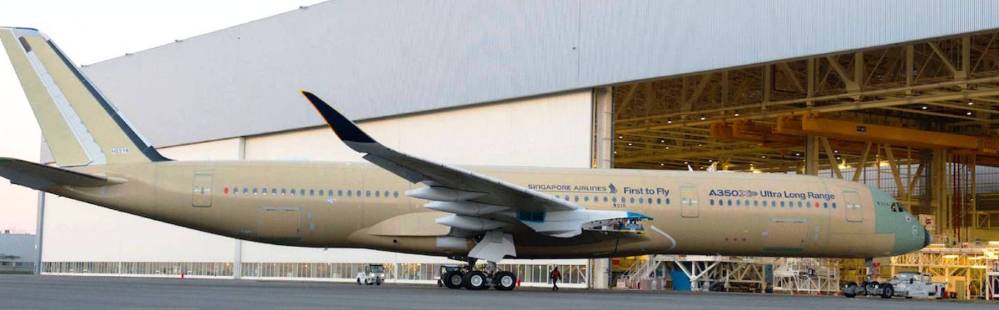
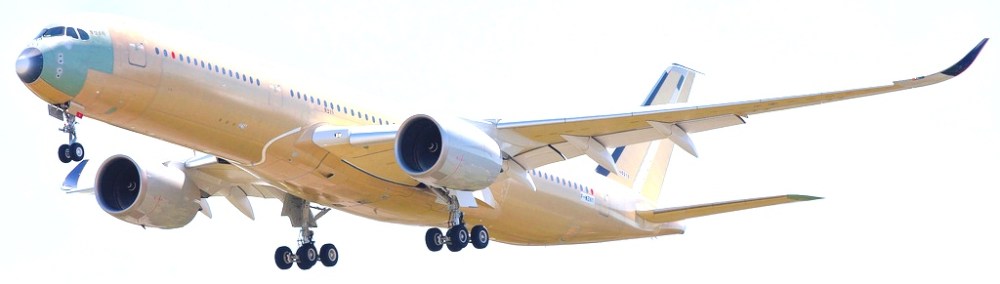
Los operadores mundiales han incorporado más de cien Airbus A350 en el mercado, con Qatar Airways y Cathay Airlines como los principales compradores. Su eficiencia y posibilidad de realizar viajes mucho más extensos, ponen al A350 entre los preferidos en este momento. Volar en un Airbus A350 es una de las experiencias de aviación más singulares disponibles para los pasajeros en la actualidad. El avión es reconocido no solo por sus avances tecnológicos bajo el capó, sino por una serie de características innovadoras diseñadas para que la experiencia del pasajero sea más cómoda .

Las imágenes de la convención de Innovación y Liderazgo en la Industria Aeroespacial (ILA) en Berlín 2018 muestran que un A350 despega en un ascenso casi vertical. Efectuó un despegue casi vertical que fue registrado en video. En menos de cinco segundos, las ruedas del avión se levantan del suelo y la punta apunta casi directamente hacia el cielo.

Este avión específico, un A350-900XWB, tiene una cabina completa a bordo. Airbus utiliza esta aeronave para espectáculos aéreos, vuelos de socorro y como campo de pruebas para modificaciones de la cabina. Con los pasajeros a bordo, el A350-900 como todo otra aeronave, asciende a una pendiente mucho más suave. AIRWAYS® AW-Icon TXT

Resultado de imagen para A350-900 pngNear vertical takeoff of the A350-900

Resultado de imagen para A350 logoAirbus made an almost vertical takeoff with an Airbus A350-900 at the ILA Berlin Fair 2018

Within the framework of the ILA Berlin 2018 Aeronautical Fair, the most modern aircraft in European industry, an Airbus A350-900 demonstrated its capabilities and maneuvers by performing an almost vertical takeoff, in imitation of the performance achieved by the Boeing 787 -9 of the Vietnam Airlines company in 2015. Global operators have incorporated more than one hundred Airbus A350 into the market, with Qatar Airways and Cathay Airlines as the main buyers.

Its efficiency and ability to make much more extensive trips, put the A350 among the favorites at this time. Flying on an Airbus A350 is one of the most unique aviation experiences available to passengers today. The aircraft is recognized not only for its technological advances under the hood, but for a series of innovative features designed to make the passenger experience more comfortable.

The images of the Innovation and Leadership in the Aerospace Industry (ILA) convention in Berlin 2018 show that an A350 takes off in an almost vertical ascent. He made an almost vertical takeoff that was recorded on video. In less than five seconds, the wheels of the plane are lifted off the ground and the point points almost directly towards the sky.

This specific aircraft, an A350-900XWB, has a full cabin on board. Airbus uses this aircraft for aerial shows, distress flights and as a testing ground for cab modifications. With passengers on board, the A350-900, like all other aircraft, it rises to a much smoother slope. A\W


Ξ A I R G W A Y S Ξ
SOURCE:  Airgways.com
DBk: Ila-berlin.de / Airbus.com / Airgways.com
AW-POST: 201805081137AR

A\W   A I R G W A Y S ®

Airbus y Boeing persiguen el cielo

Resultado de imagen para Boeing VS Airbus

AW | 2018 05 07 16:26 | INDUSTRY

airbus-logo-3d-1024x905Airbus y Boeing luchan por conquistar el cielo

Airbus y Boeing mantienen el liderazgo, un duopolio que encabeza la estadounidense en cuanto al número de entregas. El consorcio europeo cumplió la expectativa en pedidos, sobre todo gracias a la familia de los A320.

Boeing-Logo.svg

Airbus y Boeing mantienen la hegemonía y el duopolio mundial de la industria aeronáutica comercial. En su historia de competencia, en 2012 fue un año importante en el que la compañía estadounidense superó la europea en la cantidad de aviones entregados y ha mantenido la supremacía hasta hoy, aunque, desde entonces, Airbus está acumulando más pedidos cada año. Pero los clientes pueden cancelar, y el liderazgo de Boeing está empezando a menguar en las entregas.

AW-78880222.png

Boeing cerró en 2017 con la entrega de 763 aviones comerciales y una cartera de pedidos de 912 aparatos, valorados en 134.000 millones de dólares a precio de catálogo. Su programa estrella, el modelo 737, cerró el año pasado con 529 entregas, incluyendo 74 aviones de su último modelo ultra eficiente MAX, además de tener una cartera de pedidos para los próximos años de 745 aparatos. Aparte, su programa 787 Dreamliner cerró el año con el ritmo de producción más alto jamás alcanzado en la fabricación de un avión de doble pasillo, con la entrega de 136 aeronaves y una cartera de 94 pedidos.

Por su parte, Airbus recibió el año pasado encargos para 1.109 aviones y tuvo una cuota de mercado del 55% en número de aeronaves comercializadas y un 51% en valor, ya que estas 1.109 unidades representan 138.000 millones de dólares a precio de catálogo.

En el terreno de los pedidos, el grupo europeo cumplió con creces las expectativas, y eso fue responsabilidad de la familia A320 de aparatos de pasillo único, con 1.054 unidades, 128 en la versión tradicional y 926 en la modernizada NEO (New Engine Option). En cuanto a los modelos de doble pasillo, la empresa en colocó 36 de su modelo más innovador, el A350, y 21 más del A330. En cambio, con respecto a la aeronave gigante A380, no sólo no recibió ningún otro contrato, sino que tuvo dos cancelaciones, una cifra que ha hecho disminuir hasta 95 los que están pendientes de fabricación. En este sentido, Airbus se planteó, a principios de este 2018, dejar de fabricarlo si no conseguía contratos para poder mantener una cadena de producción mínima de seis unidades al año. Esta situación se recondujo cuando, el 11 de febrero pasado,

Para este año 2018, la compañía europea se propone llegar a las 800 entregas, pero deberá resolver los problemas que el año pasado tuvo por los retrasos que soportó en la entrega de los motores para los modelos A320NEO, que retrasaron decenas de aparatos, pendientes de recibir los reactores.

Etihad va de compras

Airbus y Boeing, a la espera de una decisión de Etihad Airways sobre los 166 aviones pedidos. Los fabricantes aeronáuticos Airbus y Boeing se están preparando para posibles cambios por parte de la aerolínea de Oriente Medio Etihad Airways de decenas de pedidos de aviones mientras avanza un replanteamiento de su estrategia de negocio, según informa la agencia Reuters basándose hasta en cuatro fuentes solventes.

Etihad está revisando su negocio desde 2016 cuando las inversiones en otras aerolíneas contribuyeron a una pérdida de casi 2.000 millones de dólares para la compañía estatal de Abu Dhabi.

Etihad está considerando sus opciones sobre 166 aviones que tiene pedidos 88 a Airbus y 78 a Boeing por valor de decenas de miles de millones de dólares, en gran parte en virtud de acuerdos firmados en 2013, que están programados para comenzar a entregarse a partir de este año. Los pedidos incluyen 62 Airbus A350 y 52 Boeing 787 Dreamliners, según los sitios web de los dos fabricantes de aviones.

Acuerdo EEUU-Irán

Virtualmente todas las multinacionales tienen operaciones y transacciones bancarias en Estados Unidos, lo que significa que un regreso a las sanciones previas al acuerdo puede perjudicar contratos hechos después del acuerdo de 2015.

El acuerdo nuclear con Irán levantó las severas sanciones que aislaron a Irán del mercado de petróleo y la banca internacional. A cambio, Teherán limitó el enriquecimiento de uranio, reconfiguró un reactor de agua pesada para que no pudiese producir plutonio y redujo sus existencias de uranio.

Los fabricantes de aviones se apresuraron a remplazar la avejentada flota civil del país.En diciembre de 2016, Airbus firmó un acuerdo con la aerolínea nacional de Irán, IranAir, para venderle 100 aviones por 19.000 millones de dólares. Más adelante, Boeing llegó a un acuerdo con IranAir para venderle 80 aviones por 17.000 millones de dólares, prometiendo entregas a partir de 2017 y hasta 2025. Además firmó un acuerdo con la iraní Aseman Airlines para 30 aviones.Pero Boeing aún no le ha entregado un avión a Irán. El director general de Boeing dijo recientemente que entiende «los riesgos e implicaciones relacionados con el acuerdo aeronáutico con Irán».  AIRWAYS® AW-Icon TXT

Resultado de imagen para Boeing VS Airbus

Airbus and Boeing chase the sky

Airbus and Boeing fight to conquer the skyResultado de imagen para Boeing VS Airbus

Airbus and Boeing maintain leadership, a duopoly headed by the US in terms of the number of deliveries. The European consortium fulfilled the expectation in orders, especially thanks to the family of the A320.

Airbus and Boeing maintain the hegemony and the global duopoly of the commercial aviation industry. In its history of competition, in 2012 it was an important year in which the American company exceeded the European in the number of aircraft delivered and has maintained its supremacy until today, although, since then, Airbus is accumulating more orders each year. But customers can cancel, and Boeing’s leadership is beginning to wane in deliveries.

AW-78880222

Boeing closed in 2017 with the delivery of 763 commercial aircraft and an order book of 912 aircraft, valued at 134,000 million dollars at the catalog price. Its flagship program, model 737, closed last year with 529 deliveries, including 74 aircraft of its latest ultra-efficient model MAX, in addition to having an order book for the coming years of 745 devices. In addition, its 787 Dreamliner program closed the year with the highest production pace ever achieved in the manufacture of a double aisle aircraft, with the delivery of 136 aircraft and a portfolio of 94 orders.

For its part, Airbus received orders for 1,109 aircraft last year and had a market share of 55% in number of commercialized aircraft and 51% in value, since these 1,109 units represent 138,000 million dollars at the catalog price.

In the field of orders, the European group exceeded expectations, and that was the responsibility of the A320 family of single aisle apparatuses, with 1,054 units, 128 in the traditional version and 926 in the modernized NEO (New Engine Option). As for the double aisle models, the company placed 36 of its most innovative model, the A350, and 21 more than the A330. On the other hand, with respect to the A380 giant aircraft, not only did it not receive any other contract, but it had two cancellations, a figure that has made it possible to reduce to 95 those that are pending manufacturing. In this sense, Airbus considered, at the beginning of this 2018, to stop manufacturing it if it did not get contracts to be able to maintain a minimum production chain of six units per year. This situation was reversed when, on February 11,

For this year 2018, the European company intends to reach 800 deliveries, but it will have to solve the problems it had last year due to delays in the delivery of engines for the A320NEO models, which delayed dozens of devices, pending receive the reactors.

Etihad goes shopping

Airbus and Boeing, pending an Etihad Airways decision on the 166 aircraft ordered. Aircraft manufacturers Boeing and Airbus are preparing for possible changes by the Middle East airline Etihad Airways of dozens of aircraft orders as it advances a rethinking of its business strategy, as reported by the Reuters agency based on up to four solvent sources.

Etihad is reviewing its business since 2016 when investments in other airlines contributed to a loss of almost 2,000 million dollars for the state company of Abu Dhabi.

Etihad is considering its options on 166 aircraft that have orders 88 to Airbus and 78 to Boeing worth tens of billions of dollars, largely under agreements signed in 2013, which are scheduled to begin to be delivered to from this year. Orders include 62 Airbus A350 and 52 Boeing 787 Dreamliners, according to the websites of the two aircraft manufacturers.

US-Iran Agreement

Virtually all multinationals have banking operations and transactions in the United States, which means that a return to the pre-agreement sanctions may harm contracts made after the 2015 agreement.

The nuclear agreement with Iran lifted the severe sanctions that isolated Iran from the oil market and international banking. In return, Tehran limited uranium enrichment, reconfigured a heavy water reactor so it could not produce plutonium and reduced its uranium stocks.

The aircraft manufacturers rushed to replace the aging civilian fleet in the country. In December 2016, Airbus signed an agreement with Iran’s national airline, IranAir, to sell 100 aircraft for 19 billion dollars. Later, Boeing reached an agreement with IranAir to sell 80 aircraft for 17,000 million dollars, promising deliveries from 2017 until 2025. It also signed an agreement with the Iranian Aseman Airlines for 30 aircraft. But Boeing has not yet delivered a plane to Iran. The CEO of Boeing recently said he understands «the risks and implications related to the aeronautical agreement with Iran». A \ W


Ξ A I R G W A Y S Ξ
SOURCE:  Airgways.com
DBk: Boeing.com / Airbus.com  /Travelskills.com / Wikimedia.org
AW-POST: 201805071626AR

A\W   A I R G W A Y S ®

Boeing, el comprador soberano

E195_E2_model.png

AW | 2018 05 05 20:40 | INDUSTRY

Boeing-Logo.svgContinúan las negociaciones de Boeing con la brasileña Embraer

La industria aeronáutica está acercándose como un efecto vizagra ante los acuerdos, fusiones y compras en el sector de la aviación. El 21 Diciembre 2017 la empresa norteamericana The Boeing Company anunció la intención de comprar la empresa industrial de aviación Embraer.

1280px-Embraer_logo.svg

Impulsada por la relación en el acuerdo Airbus-Bombardier, Boeing está implementando una serie de compras en el sector de la aviación. No ajena a esta, Boeing intenta seducir a la brasileña Embraer para poder dominar un sector con una alta demanda, la aviación regional.

Temores fusión Boeing-Embraer

Tres sindicatos metalúrgicos de Brasil se reunieron para reclamar al gobierno de Brasil cuestiones que afectan a los trabajadores frente a las fusiones y adquisiciones en un escenario de creciente precarización y desregulación del trabajo. Los sindicatos están reclamando por los efectos colaterales que pudieran tener la compra por parte de Boeing en Embraer, previendo que sería perjudicial para la soberanía nacional. Además del futuro de los trabajadores si el control total o parcial de Embraer es adquirido por Boeing. También reclaman los efectos de gerenciamiento que tendría Embraer en otras latitudes.

Muchos alegan que Embraer entregaría el control de una empresa estratégica al gobierno de Estados Unidos, que, en última instancia, determina las decisiones fundamentales de Boeing. Brasil perdería la soberanía sobre las decisiones relativas a la empresa. La realidad es que cuando el gobierno de Estados Unidos o los dueños de Boeing toman una decisión, apuntan a favorecer sus intereses geopolíticos y financieros.

Boeing, un poderoso quásar

En la compra de McDonnell Douglas, en 1996, Boeing había cerrado línea de ensamblajes como la MD-11 y la venta de MD Helicopters. Posteriormente completó el cierre de la línea MD-95, avión rebautizado como Boeing 717. Teniendo presente que McDonnell Douglas era el tercer mayor fabricante de aviones comerciales y militares del mundo, tres veces mayor que la Embraer, los efectos desencadenaron en reducción de plantilla laboral y pérdida de unidades de negocios.

En 2006, Embraer fue impedida de vender sus aviones Super Tucano a Venezuela, porque la operación fue vetada por el gobierno de Estados Unidos. Embraer está prohibida de vender Super Tucano a Irán, Irak, Corea del Norte y otros países porque el gobierno de EEUU veta la venta, ya que esos aviones tienen tecnología norteamericana embutida en la fabricación.

El largo brazo de Boeing

Boeing adquiriendo la Embraer podría dejar en Brasil las operaciones de baja rentabilidad y tecnología, preservando en la matriz los procesos de alta tecnología. Además podría existir una migración de la fuerza laboral de la ingeniería aeroespacial de Brasil para Estados Unidos. También podría ocasionar que la ingeniería brasileña pierda su liderazgo porque la matriz Boeing opera con alta tecnología y no está dispuesta a brindarla en partes iguales.

Embraer sucursal de Boeing

Boeing es un constructor que factura quince veces más que Embraer, por lo que es un claro dominio de tecnología y mercadotecnia.

Todas las decisiones importantes se tomarán de acuerdo con el interés de la matriz de Boeing, que es prácticamente un brazo del Pentágono, Departamento de Defensa de Estados Unidos.

Teniendo presente este punto álgido, la base de lanzamientos de Alcántara, en Maranhão, está prohibida de ser usada por otros países, debido al veto del gobierno de Estados Unidos, ya que la mayoría de los equipos espaciales del mundo tienen tecnología norteamericana. Todo el desarrollo tecnológico y militar de Embraer y de Brasil será dominado por el gobierno estadounidense.

La privatización y desnacionalización

En la privatización de Embraer en 1994, pagado por la compañía un valor de aproximadamente US$ 110 millones. El valor de mercado, según la prensa, está en torno a los 5.000 millones de dólares, lo que no respaldamos en absoluto. Incluso considerándolo como referencia, corresponde a 42 veces al valor pagado en la privatización. Las ganancias de Embraer, desde la privatización, alcanzaron los 3.700 millones de dólares, 33 veces lo que le pagó.

El Estado brasileño invirtió miles de millones de dólares en la empresa desde su fundación en 1969. Embraer sólo logró firmar como una empresa mundial porque contó con el apoyo del Estado y de la logística producida por el CTA e ITA. El financiamiento de proyectos, la compra por parte del Estado de una parte de la producción, principalmente en los momentos que la empresa alzaba vuelo, en las décadas de 1970 y 1980, permitieron a Embraer encontrar un nicho de mercado y galgar posiciones en el disputado mercado mundial. En el primer año de vida, en 1970, el gobierno encomendó a Embraer la fabricación de 242 aviones, por valor de 600 millones de dólares. Esta producción correspondía a ocho años de trabajo de la empresa. En 1974, Embraer quedó exenta de pagar IPI y en 1976 fue exenta de pagar ICMS. En ese período, adquirió la capacidad de producir la familia de aviones comerciales que hasta hoy garantizan su supervivencia. Incluso después de privatizada y controlada por fondos de inversiones extranjeras, Embraer contó con el BNDES que, de 1997 a 2014, financió la empresa en 14.400 millones de dólares. El Estado brasileño financió el carguero KC-390 con US$ 6.000 millones de las arcas públicas. Embraer también fue la principal beneficiaria del programa de exención de la nómina del gobierno federal. Entre 2013 y 2015, la empresa ha ahorrado más R$ 1 mil millones con el beneficio. Mientras tanto, la dirección de la empresa comenzó a desplazar la producción de los jets Legacy y Phenom, así como partes del KC-390, fuera de Brasil. También inició la transferencia de la producción del fuselaje, largueros, estabilizadores y otras piezas para el exterior.

Brasil, potencia exportadora

Embraer es la mayor exportadora de productos de tecnología de Brasil. Es líder en volúmenes de ventas y facturación. Alineado a la abanderada aeroespacial, en los últimos veinte años, Brasil se ha convertido en el mayor productor de alimentos y energía del planeta, alcanzando ser el mayor productor en ventas de carnes, fé, minerales, petróleo crudo, celulosa, azúcar y soja.

Globalización empresarial

La industria brasileña de alta tecnología está siendo absorbida como si fuera un efecto quásar por empresas multinacionales. Las 100 mayores empresas operando en Brasil que dominan casi la mitad de toda la riqueza del país, 76 son multinacionales o de capital nacional asociadas a multinacionales. Sólo 18 son 100% de capital nacional. Los grandes bancos internacionales dominan el 57% del sistema financiero brasileño. Las multinacionales dominan el 70% del agronegocio. La privatización significó la desnacionalización de las empresas y el capital internacional pasó a dominar las principales ramas de la economía brasileña.

Efectos positivos Boeing-Embraer

Los efectos de un acuerdo comercial Boeing-Embraer significaría que las líneas aéreas de Brasil, decantasen por más unidades de Boeing y Embraer. Gol Línhas Aéreas posee una flota de 110 Boeing 737-700/800 y Latam Airlines opera una flota de 120 aviones comprados de Airbus. Estas compañías podrían incorporar más aeronaves de origen americano-brasileño, posicionando a las industrias de ambos países como selectoras de aviones de la alianza. Se estima un estudio en promedio de 640 aviones de gran tamaño para los próximos veinte años. El valor de esas compras permitiría a la fábrica brasileña entrar en la producción de grandes aeronaves con más de 150 pasajeros.

Brasil podría convertirse en exportador de componentes de aviones para Boeing, posicionando a Embraer como una industria integral a los mercado de Boeing. Las sinercias engrosarían las arcas y potenciaría el sertor de autopartes en Brasil.

Los dueños de Embraer

Los dueños del 85% de las acciones de Embraer son grandes bancos internacionales: Brandes (15%), Mondrian (10%), BlackRock (5%), JP Morgan Chase Bank, Barclays Global Investors, Fidelity Management, Vanguard Emerging Markets, Morgan Stanley, Crédit Suisse, Templeton, Black River Global entre otros.

Resultado de imagen para Embraer headquarterEL E195-E2 ES LA FIGURA ESTRELLA DE EMBRAER

Para tener una idea de cómo gobiernan Embraer a favor de sus propios intereses: las inversiones para el desarrollo del proyecto del jet regional ERJ-145 fueron del orden de US$ 350 millones. Para el desarrollo del ERJ-140, se gastaron 45 millones de dólares. El ERJ-135 llevó otros US$ 100 millones de dólares. Los nuevos jets E170 y E190 exigieron una inversión de US$ 850 millones de dólares. Estos proyectos, que garantizan el grueso de las ventas, costaron un total de US$ 1.300 millones de dólares. Las inversiones fueron garantizadas por el Estado brasileño.

Mientras tanto, los nuevos dueños extranjeros de Embraer llevaron fuera de Brasil US$ 3,7 mil millones en beneficios, en el período 2001-2016. Si se usara en Brasil, esos recursos garantizarían el desarrollo de proyectos importantes de Embraer, como aeronaves para más de 150 pasajeros o incluso la fabricación integral de cazas modernos, que se encargaron a la sueca Saab.

Proceso de venta de Embraer

Embraer está tan desnacionalizada que contrató dos bancos estadounidenses Citibank y Goldman Sachs para negociar su venta a Boeing. ¿Cuáles son las razones de Boeing para adquirir Embraer? Básicamente, porque es un buen negocio para Boeing, que dominará el mercado mundial de aviones regionales de hasta 150 plazas. Detrás de esa compra planea invertir US$ 6 mil millones a adquirir una empresa que tiene ingresos de alrededor de US$ 7 mil millones por año, con 18 000 empleados y la adquisición de tecnología para el desarrollo y producción de aviones comerciales, empresariales, agrícolas y militares, y las piezas aeroespaciales, de satélites y el monitoreo de fronteras. Es, por lo tanto, estratégica para Brasil.

Fábrica Embraer-Évora

Las dos fábricas de Embraer en Évora, Portugal podrían pasar a manos de Boeing. La multinacional norteamericana podría asumir el control de las unidades de Évora en el marco de la compra de los negocios civiles del grupo brasileño.

Boeing concluiría en breve la operación de compra de la vertiente comercial de Embraer. Las fábricas de Évora y Lisboa (OGMA) podrían desembarcar el control estadounidense.

Las unidades de Évora de la brasileña Embraer, una de estructuras metálicas y otra de materiales compuestos, fueron inauguradas hace poco más de cinco años, fruto de una inversión de € 180 millones de euros.

Efecto Mamushka

La metáfora de las Mamushkas o Matrioskas es muy elocuente para entender qué significa el nuevo escenario de una empresa conjunta denominada Boeing-Embraer. La metáfora es usada para significar que una o más empresas operan dentro de uno o más mercados, dentro de uno o más sectores industriales, formados por una o más cadenas de valor, dentro de uno o más clusters, en uno o más escenarios generales regionales dentro del gran escenario general mundial.

Boeing quiere producir todo dentro de su interior. Anteriormente, Boeing ha tercerizado mucho la producción en las últimas décadas perdiendo buena parte del lucro para sus proveedores. Ahora, está iniciando un movimiento de verticalización de la producción, es decir, quiere producir la mayor parte de las piezas de sus aeronaves. Boeing quiere duplicar la facturación en diez años y, para ello, tiene que comprar empresas. Con la compra de Embraer, el constructor americano estaría jugando un partido ganado.

Garantías de Embraer

La privatización de Embraer ha significado pautas de garantías operativas. La acción Golden Share da al gobierno el derecho de veto a la venta de Embraer o en relación a cuestiones de seguridad nacional. Además, se prohíbe que la mayoría de las acciones estén en manos extranjeras. La venta de acciones de las empresas a las personas físicas o jurídicas extranjeras no puede superar el 40% del capital votante, salvo autorización legislativa, para determinar un porcentaje más alto.

La dirección de Embraer, para mantener las apariencias de obediencia a la ley, creó en 2006 un mecanismo de votación en las asambleas de accionistas por el que el voto de los extranjeros no puede superar el 40% a los de los accionistas brasileños. Ahora bien, esto se trata de una maniobra jurídica. El edicto prohibía a extranjeros detentar más del 40% de las acciones con derecho a voto y no que se reservaría el 40% de los votos en una determinada asamblea.

Es esa prohibición, establecida en la privatización, que está siendo desatendida por la venta del 85% de las acciones para grandes bancos internacionales. Embraer, desde 2006, ya no es una empresa brasileña. Por lo tanto, la acción golden share debería haber sido usada hace diez años, ya que hubo un cambio del control accionario. Brasil entonces perdió una gran oportunidad para reestatizar a Embraer y defender la soberanía nacional. Probablemente, no quiso enfrentarse con el gobierno de Estados Unidos, con quien tenía buenas relaciones.

Reestatización de Embraer

En la lucha sindical y nacional, Embraer se encuentra entre bastidores y exclama no ser capturada por el constructor aeronáutico Boeing. La única herramienta es la posibilidad es volver a ser una empresa estatal, lo que le garantizaría inversiones.

La venta a sectores de la banca extranjera es el resultado de un proceso de pérdida de la soberanía nacional. Embraer es la figura emblemática de Brasil, donde los mismos brasileños están convencidos de los logros alcanzados a través del tiempo, eso quieren conservar.  AIRWAYS® AW-Icon TXT

Resultado de imagen para Boeing-Embraer

Boeing, the sovereign buyer

Boeing negotiations with Brazil’s Embraer continue

embraer logo

The aviation industry is approaching as a direct effect before the agreements, mergers and purchases in the sects of aviation. On December 21, 2017 the North American company The Boeing Company announced the intention to buy the industrial aviation company Embraer.

Driven by the relationship in the Airbus-Bombardier agreement, Boeing is implementing a series of purchases in the aviation sector. No stranger to this, Boeing tries to seduce the Brazilian Embraer to dominate a sector with a high demand, the regional aviavión.

Fears Boeing-Embraer fusion

Three metallurgical unions in Brazil met to demand from the Brazilian government issues that affect workers in the face of mergers and acquisitions in a scenario of growing precariousness and deregulation of work. The unions are demanding for the collateral effects that the purchase by Boeing in Embraer could have, foreseeing that it would be detrimental to the national sovereignty. In addition to the future of the workers if the total or partial control of Embraer is acquired by Boeing. They also claim the management effects that Embraer would have in other latitudes.

AW-7001955.jpg

Many claim that Embraer would hand over control of a strategic enterprise to the US government, which ultimately determines Boeing’s fundamental decisions. Brazil would lose sovereignty over decisions regarding the company. The reality is that when the US government or the owners of Boeing make a decision, they aim to favor their geopolitical and financial interests.

Boeing, a powerful quasar

In the purchase of McDonnell Douglas, in 1996, Boeing had closed assembly lines such as the MD-11 and the sale of MD Helicopters. Later it completed the closure of the MD-95 line, renamed Boeing 717. Bearing in mind that McDonnell Douglas was the third largest commercial and military aircraft manufacturer in the world, three times larger than Embraer, the effects triggered a reduction in workforce and loss of business units.

In 2006, Embraer was prevented from selling its Super Tucano aircraft to Venezuela, because the operation was vetoed by the United States government. Embraer is prohibited from selling Super Tucano to Iran, Iraq, North Korea and other countries because the US government vetoes the sale, since those planes have American technology embedded in the manufacture.

The long arm of Boeing

Boeing acquiring Embraer could leave low profitability and technology operations in Brazil, preserving high technology processes in the matrix. In addition, there could be a migration of the aerospace engineering workforce from Brazil to the United States. It could also cause Brazilian engineering to lose its leadership because the Boeing parent company operates with high technology and is not willing to provide it in equal parts.

Embraer Boeing branch

Boeing is a constructor that costs fifteen times more than Embraer, which is why it is a clear domain of technology and marketing.

All important decisions will be made in accordance with the interests of the Boeing parent company, which is practically an arm of the Pentagon, the United States Department of Defense.

With this high point in mind, the launch base of Alcántara, in Maranhão, is forbidden to be used by other countries, due to the veto of the United States government, since most of the space equipment in the world has North American technology. All the technological and military development of Embraer and Brazil will be dominated by the US government.

Privatization and denationalization

In the privatization of Embraer in 1994, paid by the company a value of approximately US $ 110 million. The market value, according to the press, is around 5 billion dollars, which we do not support at all. Even considering it as a reference, it corresponds to 42 times the value paid in the privatization. Embraer’s profits, since privatization, reached 3,700 million dollars, 33 times what it paid him.

The Brazilian State invested billions of dollars in the company since its founding in 1969. Embraer only managed to sign as a global company because it had the support of the State and the logistics produced by the CTA and ITA. The financing of projects, the purchase by the State of a part of the production, mainly in the moments that the company took flight, in the decades of 1970 and 1980, allowed Embraer to find a market niche and galgar positions in the disputed World Market. In the first year of life, in 1970, the government entrusted Embraer with the manufacture of 242 aircraft, worth 600 million dollars. This production corresponded to eight years of work of the company. In 1974, Embraer was exempt from paying IPI and in 1976 was exempt from paying ICMS. In that period, it acquired the capacity to produce the family of commercial aircraft that until today guarantee its survival. Even after privatization and controlled by foreign investment funds, Embraer had the BNDES, which, from 1997 to 2014, financed the company at 14.4 billion dollars. The Brazilian State financed the freighter KC-390 with US $ 6,000 million from the public purse. Embraer was also the main beneficiary of the federal government’s payroll exemption program. Between 2013 and 2015, the company has saved more R $ 1 billion with the benefit. Meanwhile, the company’s management began to shift the production of the Legacy and Phenom jets, as well as parts of the KC-390, out of Brazil. It also initiated the transfer of production of the fuselage, spars, stabilizers and other parts for the exterior.

Brazil, exporting power

Embraer is the largest exporter of technology products in Brazil. He is a leader in sales and billing volumes. Aligned to the aerospace standard, in the last twenty years, Brazil has become the largest producer of food and energy in the world, reaching the largest producer in sales of meats, fe, minerals, crude oil, cellulose, sugar and soybeans.

Business globalization

The Brazilian high-tech industry is being absorbed as if it were a quasar effect by multinational companies. The 100 largest companies operating in Brazil that dominate almost half of all the country’s wealth, 76 are multinationals or national capital associated with multinationals. Only 18 are 100% national capital. The large international banks dominate 57% of the Brazilian financial system. Multinationals dominate 70% of agribusiness. Privatization meant the denationalization of companies and international capital came to dominate the main branches of the Brazilian economy.

Positive effects Boeing-Embraer

The effects of a Boeing-Embraer commercial agreement would mean that Brazilian airlines would opt for more Boeing and Embraer units. Gol Línhas Aéreas owns a fleet of 110 Boeing 737-700 / 800 and Latam Airlines operates a fleet of 120 aircraft purchased from Airbus. These companies could incorporate more aircraft of American-Brazilian origin, positioning the industries of both countries as selecting aircraft of the alliance. A study is estimated on average of 640 large aircraft for the next twenty years. The value of these purchases would allow the Brazilian factory to enter the production of large aircraft with more than 150 passengers.

Brazil could become an exporter of aircraft components for Boeing, positioning Embraer as an integral industry to the Boeing market. The synergies would swell the coffers and boost the sertor of auto parts in Brazil.

The owners of Embraer

The owners of 85% of Embraer’s shares are large international banks: Brandes (15%), Mondrian (10%), BlackRock (5%), JP Morgan Chase Bank, Barclays Global Investors, Fidelity Management, Vanguard Emerging Markets, Morgan Stanley, Credit Suisse, Templeton, Black River Global among others.

Resultado de imagen para E195-E2 Png

To get an idea of ​​how Embraer governs in favor of its own interests: investments for the development of the ERJ-145 regional jet project were of the order of US $ 350 million. For the development of the ERJ-140, 45 million dollars were spent. The ERJ-135 carried another US $ 100 million. The new E170 and E190 jets required an investment of US $ 850 million dollars. These projects, which guarantee the bulk of sales, cost a total of US $ 1,300 million dollars. The investments were guaranteed by the Brazilian State.

Meanwhile, Embraer’s new foreign owners brought US $ 3.7 billion in profits out of Brazil, in the period 2001-2016. If used in Brazil, these resources would guarantee the development of important Embraer projects, such as aircraft for more than 150 passengers or even the integral manufacture of modern fighters, which were entrusted to the Swedish company Saab.

Embraer sales process

It is so denationalized that it hired two US banks Citibank and Goldman Sachs to negotiate its sale to Boeing. What are the reasons for Boeing to acquire Embraer? Basically, because it is a good business for Boeing, which will dominate the world market of pre-professional aircraft of up to 150 seats. Behind that purchase, he plans to invest US $ 6 billion to acquire a company that has revenues of around US $ 7 billion per year, with 18,000 employees and the acquisition of technology for the development and production of commercial, business and agricultural aircraft. and military, and aerospace parts, satellites and border monitoring. It is, therefore, strategic for Brazil.

Embraer-Évora factory

The two Embraer factories in Évora, Portugal could be transferred to Boeing. The North American multinational could take control of the Évora units in the framework of the purchase of the Brazilian group’s civil businesses.

Boeing would shortly conclude the purchase operation of Embraer’s commercial side. The factories of Évora and Lisbon (OGMA) could disembark US control.

The Évora units of the Brazilian Embraer, one of metal structures and another of composite materials, were inaugurated a little over five years ago, the result of an investment of € 180 million euros.

Mamushka effect

Resultado de imagen para mamushka pngThe metaphor of the Mamushkas or Matrioskas is very eloquent to understand what the new scenario of a joint venture called Boeing-Embraer means. The metaphor is used to mean that one or more companies operate within one or more markets, within one or more industrial sectors, formed by one or more value chains, within one or more clusters, in one or more regional general scenarios within the great global general scenario.

Boeing wants to produce everything inside it. Previously, Boeing has outsourced production in recent decades, losing much of the profit to its suppliers. Now, it is initiating a movement of verticalization of production, that is, it wants to produce most of the pieces of its aircraft. Boeing wants to double the turnover in ten years and, for this, has to buy companies. With the purchase of Embraer, the American builder would be playing a won game.

Embraer guarantees

The privatization of Embraer has meant guidelines for operational guarantees. The Golden Share action gives the government the right of veto to the sale of Embraer or in relation to questions of national security. In addition, it is prohibited that most of the shares are in foreign hands. The sale of shares of companies to foreign natural or legal persons can not exceed 40% of the voting capital, unless legislative authorization, to determine a higher percentage.

Embraer’s management, in order to maintain the appearance of obedience to the law, created in 2006 a voting mechanism in shareholders’ meetings whereby the vote of foreigners can not exceed 40% of those of Brazilian shareholders. Now, this is a legal maneuver. The edict prohibited foreigners from holding more than 40% of the shares with the right to vote and not that 40% of the votes would be reserved in a given assembly.

It is this prohibition, established in the privatization, that is being neglected by the sale of 85% of the shares for large international banks. Embraer, since 2006, is no longer a Brazilian company. Therefore, the golden share action should have been used ten years ago, since there was a change in stock control. Brazil then lost a great opportunity to re-nationalize Embraer and defend national sovereignty. Probably, he did not want to confront the United States government, with whom he had good relations.

Re-nationalization of Embraer

In the union and national struggle, Embraer is behind the scenes and exclaims not being captured by the aeronautical constructor Boeing. The only tool is the possibility is to return to be a state company, which would guarantee investments.

The sale to sectors of foreign banks is the result of a process of loss of national sovereignty. Embraer is the emblematic figure of Brazil, where the Brazilians themselves are convinced of the achievements made over time, that they want to preserve. A \ W


AW-Airgways-Jet

AW-Airgways Icon-webΞ A I R G W A Y S Ξ
SOURCE:  Airgways.com
DBk: Embraer.com / Boeing.com / Airgways.com
AW-POST: 201805052040AR

A\W   A I R G W A Y S ®

Débil mercado del Airbus A319NEO

33780322786_b4af31ff90_k.jpg

AW | 2018 05 05 05:33 | INDUSTRY

airbus-logo-3d-1024x905La cartera de pedidos del A319NEO es escasa

Airbus aseguró un respiro de sus débiles ventas de A319NEO durante Abril 2018. Sus últimos datos de pedidos atrasados ​​enumeran un pedido de 22 A319NEO’s, parte de un acuerdo que también incluía cinco A319CEO. Airbus todavía tiene que confirmar la identidad del cliente, aunque indicó en febrero que había obtenido un nuevo pedido de A319neo de un cliente chino.

Mercado modesto

La cartera de pedidos del A319NEO había disminuido, pero el último acuerdo lo eleva a 56 aviones. Treinta y tres de ellos están asignados a clientes no divulgados, otros 20 a Avianca, y los operadores ejecutivos representan los otros tres. Airbus registró el pedido del operador escandinavo SAS por 35 A320NEO’s y acuerdos para otros cinco aviones de pasillo único de otros tres clientes.

Pero tuvo poco alivio de un período débil de ventas. Aunque Airbus ha recibido pedidos netos de 99 aviones de la familia A320, el déficit de aeronaves de larga distancia ha arrastrado las órdenes netas generales para el primer tercio del año a 86 aviones. AIRWAYS® AW-Icon TXT

Resultado de imagen para A319neo

Weak market of the Airbus A319NEO

The order book of the A319NEO is scarce

Airbus secured a respite from its weak A319NEO sales during April 2018. Its latest backorder data lists an order for 22 A319NEO’s, part of an agreement that also included five A319CEOs. Airbus has yet to confirm the customer’s identity, although it indicated in February that it had obtained a new A319neo order from a Chinese customer.

Modest market

The order book of the A319NEO had decreased, but the latest agreement brings it to 56 aircraft. Thirty-three of them are assigned to undisclosed clients, another 20 to Avianca, and the executive operators represent the other three. Airbus registered the order of the Scandinavian operator SAS for 35 A320NEO’s and agreements for another five single-aisle aircraft from three other customers.

But he had little relief from a weak sales period. Although Airbus has received net orders for 99 aircraft of the A320 family, the deficit of long-haul aircraft has dragged the general net orders for the first third of the year to 86 aircraft. A \ W


Ξ A I R G W A Y S Ξ
SOURCE:  Airgways.com
DBk: Airbus.com
AW-POST: 201805050533AR

A\W   A I R G W A Y S ®

COMAC define concepto del CR929

Resultado de imagen para CR929

AW | 2018 05 02 08:38 | INDUSTRY

636433972972651303.pngComac inicia la definición de concepto para el fuselaje del avión CR929

Comac ha comenzado la fase de definición del concepto con proveedores en el fuselaje y la cola del nuevo concepto de avión comercial chino-ruso CR929. La atención se centrará en los requisitos de diseño y la optimización de las soluciones técnicas, dice el gerente general de China-Rusia Commercial Aircraft Corporation (CRAIC), Guo Bozhi. En un comunicado, el fabricante chino dice que 29 posibles proveedores locales y extranjeros asistieron a una reunión de lanzamiento celebrada en Shanghai el 27 de Abril. Los equipos de ambos países están intensificando los esfuerzos para formular el plan técnico general para el cuerpo ancho, que hará un gran uso de los compuestos en su estructura.

En Marzo 2018, United Aircraft Corporation anunció que CRAIC comenzará a trabajar con los proveedores para definir los requisitos para los principales sistemas de aviación, incluidos el tren de aterrizaje, los sistemas de control ambiental y la aviónica.

En cuanta a la motorización, GE Aviation y Rolls-Royce presentan ofertas para Mayo 2018 por los turbofan de empuje de 75.000 libras planificados para el bimotor de doble foso. Las alas, la sección central y los carenados de la aeronave se fabricarán en Rusia, mientras que los trabajos en su fuselaje y ensamblaje final se llevarán a cabo en Shanghai.

CRAIC está desarrollando un avión de 280 asientos con un alcance de 12,000 km. Si se introduce en el período de tiempo 2025-2028 según lo programado, el avión se convertiría en el primer avión de fuselaje ancho de dos cuerpos producido por cualquiera de los dos países.  AIRWAYS® AW-Icon TXT

Resultado de imagen para CR929

COMAC defines CR929 concept

Comac initiates the definition of concept for the fuselage of the CR929 aircraft

COMAC_logoComac has started the definition phase of the concept with suppliers in the fuselage and tail of the new concept of Chinese-Russian commercial airplane CR929. The focus will be on the design requirements and the optimization of technical solutions, says China-Russia General Manager Commercial Aircraft Corporation (CRAIC), Guo Bozhi. In a statement, the Chinese manufacturer says that 29 potential local and foreign suppliers attended a launch meeting held in Shanghai on April 27. The teams of both countries are intensifying the efforts to formulate the general technical plan for the wide body, which will make a great use of the compounds in its structure.

In March 2018, United Aircraft Corporation announced that CRAIC will begin working with suppliers to define requirements for major aviation systems, including undercarriage, environmental control systems and avionics.

Regarding the motorization, GE Aviation and Rolls-Royce present bids for May 2018 for the thrust turbofan of 75,000 pounds planned for the twin-engine twin-engine. The wings, the center section and the fairings of the aircraft will be manufactured in Russia, while the works on its fuselage and final assembly will be carried out in Shanghai.

CRAIC is developing a 280-seat aircraft with a range of 12,000 km. If introduced in the 2025-2028 time period as scheduled, the aircraft would become the first two-body wide-body aircraft produced by either country. A \ W


Ξ A I R G W A Y S Ξ
SOURCE:  Airgways.com
DBk: Comac.cc
AW-POST: 201805020838AR

A\W   A I R G W A Y S ®

Airbus recorta producción para A330

AW-70009888.pngAW | 2018 04 27 20:50 | INDUSTRY

airbus-logo-3d-1024x905.pngDébil demanda de entregas de los Airbus A330Resultado de imagen para Airbus A330 logo

El fabricante de aviones europeo Airbus está recortando la producción de la línea A330, uno de sus aviones de largo alcance, en medio de una demanda débil de mercado, mientras, por otro lado lucha por conseguir cumplir con las entregas de los narrowbodies A320NEO.

Airbus ha tenido una escasez de pedidos para sus aviones de largo alcance A330 y A350. En cuantoo a Boeing está luchando por encontrar clientes para el Boeing 777, mostrando signos de demanda baja, obserbando las intenciones de reducir la producción.

Airbus comunicó que recortaría la producción de ese modelo. una vez que un conductor de ganancias para la empresa, a unos 50 aviones al año a partir del próximo año. Entregó 67 A330 en 2017 y planea entregar 60 en 2018.

Caída de ganancias

El movimiento se produce cuando el gigante aeroespacial europeo registró una caída del 31% en las ganancias del primer trimestre. Hace menos de tres años, Airbus estaba construyendo 10 A330 por mes, pero su propia introducción de un nuevo jet de largo alcance, el A350, y una caída en las ventas de fuselaje ancho obligaron a la compañía a reducir su aceleración, lo que afectó las ganancias. Una nueva versión, el A330NEO con motores actualizados para su primera entrega este año, hasta ahora no ha sido el éxito de ventas que Airbus esperaba.

El Director de Finanzas de Airbus, Harald Wilhelm, expresó confianza en el avión, diciendo que sería «súper competitivo» y que estaba en condiciones de beneficiarse de un repunte anticipado en la demanda de aviones más grandes. «Esperamos cambios importantes en el mercado de fuselaje ancho en el comienzo de la próxima década», dijo Wilhelm a los periodistas. Eso se hace eco del presidente ejecutivo de Boeing, Dennis Muilenburg, quien esta semana expresó su «alta confianza en un aumento significativo en la demanda de reemplazo de carrocería amplia a principios de la próxima década».

Los constructores líderes del mercado de la aviación comercial, Airbus y Boeing también tuvieron que recortar las perspectivas de producción de los aviones de mayor tamaño los A380 y B747 en medio de una menor demanda de este tipo de aeronaves. AIRWAYS® AW-Icon TXT

Resultado de imagen para Airbus A330

Airbus cuts production for A330

Weak demand for deliveries of the Airbus A330

The European aircraft manufacturer Airbus is cutting production of the A330 line, one of its long-range aircraft, in the midst of weak market demand, while, on the other hand, struggles to achieve deliveries of A320NEO narrowbodies.

Airbus has had a shortage of orders for its A330 and A350 long-range aircraft. As for Boeing, it is struggling to find customers for the Boeing 777, showing signs of low demand, observing intentions to reduce production.

Airbus reported that it would cut production of that model. once a driver profits for the company, about 50 aircraft a year starting next year. He delivered 67 A330s in 2017 and plans to deliver 60 in 2018.

Fall of earnings

The movement occurs when the European aerospace giant registered a 31% drop in first-quarter profits. Less than three years ago, Airbus was building 10 A330 per month, but its own introduction of a new long-range jet, the A350, and a drop in wide-body sales forced the company to reduce its acceleration, which affected the earnings. A new version, the A330neo with updated engines for its first delivery this year, so far has not been the sales success that Airbus expected.

AW-70000655.png

Airbus Finance Director Harald Wilhelm expressed confidence in the plane, saying it would be «super competitive» and that it was in a position to benefit from an anticipated rebound in the demand for larger aircraft. «We expect major changes in the wide-body market at the beginning of the next decade», Wilhelm told reporters. That echoes Boeing CEO Dennis Muilenburg, who this week expressed his «high confidence in a significant increase in the demand for broad body replacement early next decade».

The leading builders of the commercial aviation market, Airbus and Boeing, also had to cut production prospects for the larger aircraft A380 and B747 amid lower demand for this type of aircraft. A \ W


Ξ A I R G W A Y S Ξ
SOURCE:  Airgways.com
DBk: Wsj.com / Airbus.com / Airgways.com
AW-POST: 201804272050AR

A\W   A I R G W A Y S ®