1er aniversario del Boeing 737 MAX

AW-722111101


AW | 2018 05 24 15:05 | INDUSTRY

Boeing-Logo.svg.pngBoeing ha cumplido el primer aniversario del 737 MAX desde su entrada en servicioAW-70000875

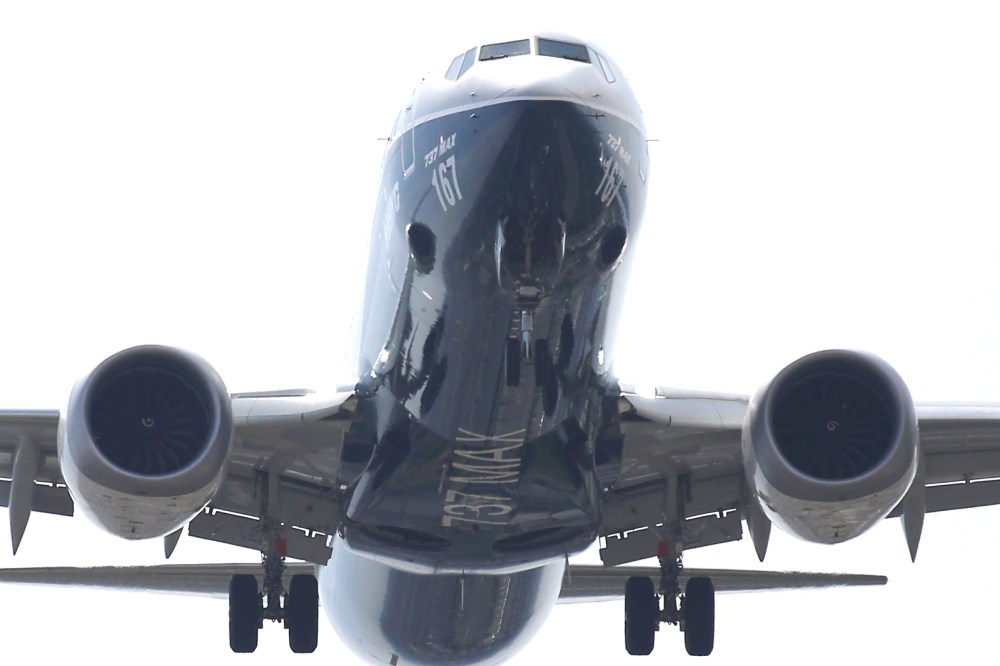
El Boeing 737 MAX es una serie estadounidense de aviones de fuselaje estrecho diseñada y producida por Boeing Commercial Airplanes como la cuarta generación del Boeing 737, sucediendo al Boeing 737 Next Generation (NG). Boeing ha logrado introducir una flota en servicio asombrosamente grande en el mercado que ha cumplido las promesas de mejorar la eficiencia del combustible mientras lucha contra los problemas normales de la dentición.

Lanzamiento del programa

El programa se lanzó el 30 Agosto 2011. El primer vuelo fue el 29 Enero 2016. Obtuvo la certificación FAA el 9 Marzo 2017. La primera entrega fue un MAX 8 el 6 Mayo 2017 a Malindo Air, que lo puso en servicio el 22 Mayo de 2017. El 737 MAX se basa en los 737 diseños anteriores. El MAX está remotorizado con CFM International LEAP-1B más eficientes, mejoras aerodinámicas, winglets de punta dividida (AT) y modificaciones de fuselaje como nuevo tren de aterrizaje más alto para alojar los nuevos motores LEAP-1B.

La serie 737 MAX se ofrece en cuatro longitudes, ofreciendo típicamente 138 a 230 asientos y una gama de 3,215 a 3,825 nmi (5,954 a 7,084 km). El 737 MAX 7, MAX 8 y MAX 9 reemplazan, respectivamente a las series 700, 800 y 900. Se ofrece una longitud adicional con el 737 MAX 10. Además, hasta la fecha Marzo 2018, el Boeing 737 MAX recibió 4.474 pedidos en firme.

Producción Boeing 737 MAX

Resultado de la imagen para aerosystems espírituEl 13 Agosto 2015, el primer fuselaje 737 MAX completó el ensamblaje en Spirit Aerosystems en Wichita, Kansas, para un avión de prueba que finalmente se entregaría al cliente de lanzamiento Southwest Airlines. El 8 de diciembre de 2015, se lanzó el primer 737-8 MAX llamado «Spirit of Renton» en la Boeing Renton Factory.

Resultado de imagen para Boeing 737 MAX 7 8 9 10

Debido a que GKN no pudo producir las paredes interiores de panal de titanio para los inversores de empuje lo suficientemente rápido, Boeing cambió a una pieza compuesta producida por Spirit para entregar 47 MAX por mes en 2017. Spirit suministra el 70% de la estructura 737, incluido el fuselaje, inversor de empuje, pilones de motor, góndolas y bordes de ataque de ala.

Una nueva línea de montaje de spar con máquinas de perforación robótica debería aumentar el rendimiento en un 33 por ciento. La línea de montaje del panel automatizado Electroimpact aceleró el ensamblaje de la parte inferior del ala en un 35 por ciento. Boeing planea aumentar su índice de producción mensual 737 MAX de 42 aviones en 2017 a 57 aviones en 2019.

Boeing apunta a igualar la confiabilidad de envío del 99.7% del NG. Southwest Airlines, el cliente de lanzamiento, recibió su primer 737 MAX el 29 Agosto 2017. Boeing planea entregar al menos 50 a 75 aviones en 2017, 10-15% de los más de 500 737 a ser entregado en el año.

1200x799.jpgBATIK AIR FUE EL PRIMER CLIENTE DEL BOEING 737 MAX

Entrada de servicio

La primera entrega fue un MAX 8, entregado a Malindo Air (una subsidiaria de Lion Air ) el 16 Mayo 2017; entró en servicio el 22 Mayo. Norwegian Air International, filial de Norwegian Air, fue la segunda aerolínea en poner un 737 MAX en servicio, cuando realizó su primer vuelo transatlántico con un MAX 8 llamado Sir Freddie Laker el 15 de julio de 2017 entre Edimburgo Aeropuerto de Escocia y el Aeropuerto Internacional de Hartford en el estado estadounidense de Connecticut, seguido de una segunda rotación desde Edimburgo al aeropuerto de Stewart, Nueva York.

Primer aniversario Boeing 737 MAX

Después de un año de servicio, se han entregado 130 a 28 clientes, registrando más de 41,000 vuelos en 118,000 horas y volando sobre 6.5 millones de pasajeros. flydubai observó un 15% más de eficiencia que el NG, más del 14% prometido, y la confiabilidad alcanzó el 99.4%. Las rutas largas incluyen 24 más de 2.500 nmi (4.630 km), incluido un servicio diario de Aerolíneas Argentinas desde Buenos Aires a Punta Cana por encima de 3.252 nmi (6.023 km).

AW-70083551.png

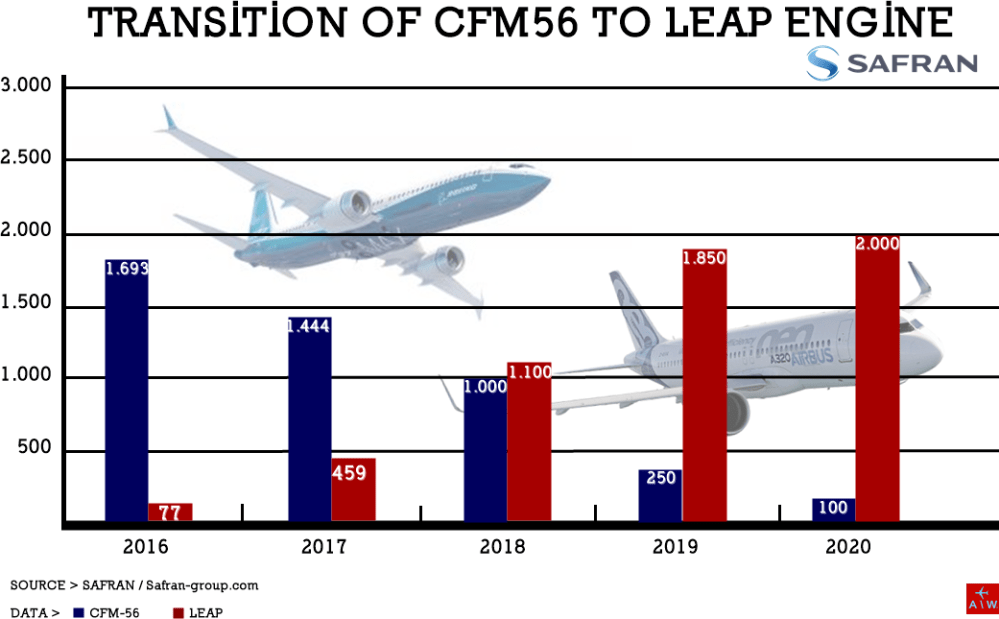
Las entregas podrían haber sido incluso mayores, pero el proveedor de motores CFM International se quedó varias semanas atrás con un aumento planificado de la producción del motor LEAP-1B. CFM planea ponerse al día con las entregas en el 3Q2018.

Las 130 entregas del 737 MAX en un año casi duplican el número de aviones de la familia Airbus A320NEO que la compañía europea entregó a los clientes durante su primer año de funcionamiento. Airbus también enfrentó deficiencias en la producción de los proveedores, que involucraron interiores de la cabina y el motor Pratt & Whitney PW1100G.

Hasta ahora, los 28 operadores 737 MAX registraron 118.006 hs. en 41.797 vuelos que transportaban a 6.5 millones de pasajeros, según informes de Boeing. La familia 737 MAX ingresa al mercado con una alta capacidad de confiabilidad, ya que la serie 737NG altamente madura opera con una tasa de despacho de la visión superior al 99,7%.

El Vicepresidente de Marketing de Boeing, Randy Tinseth, en su blog comentó: «Al principio es probable que tenga algunos problemas iniciales». La flota ahora tiene una tasa de despacho de misión del 99.4% y debería mejorar al estándar de 99.7% para fin de año. Boeing ha vendido 4.509 pedidos en firme para la familia 737 MAX, incluidas ventas de 416.737 MAX 10. Boeing no desglosa los pedidos firmes de las otras tres variantes principales de la familia 737 MAX, pero la versión Boeing 737-8 MAX es por mucho más popular pues encaja al igual de su antecesor el Boeing 737-800, en un mercado ideal para las aerolíneas.  AIRWAYS® AW-Icon TXT

Resultado de imagen para Boeing 737 MAX 7 8 9 10

1st anniversary of the Boeing 737 MAX

posavasos-boeing-737-max - copia.jpgBoeing-Company-Logo.jpgBoeing has celebrated the first anniversary of the 737 MAX since its entry into service

The Boeing 737 MAX is an American series of narrow-body aircraft designed and produced by Boeing Commercial Airplanes as the fourth generation of the Boeing 737, succeeding the Boeing 737 Next Generation (NG). Boeing has managed to introduce an astonishingly large fleet in service on the market that has fulfilled the promises of improving fuel efficiency while fighting against normal teething problems.

Launch of the program

The program was launched on August 30, 2011. The first flight was on January 29, 2016. It obtained the FAA certification on March 9, 2017. The first delivery was a MAX 8 on May 6, 2017 to Malindo Air, which put it into service on May 22 of 2017. The 737 MAX is based on the previous 737 designs. The MAX is remotorized with CFM International LEAP-1B more efficient, aerodynamic improvements, split point winglets (AT) and fuselage modifications as new higher landing gear to accommodate the new LEAP-1B engines.

Imagen relacionadaBOEING 737 MAX WITH LEAP-1B ENGINES

The 737 MAX series is offered in four lengths, typically offering 138 to 230 seats and a range of 3,215 to 3,825 nmi (5,954 to 7,084 km). The 737 MAX 7, MAX 8 and MAX 9 replace the 700, 800 and 900 series respectively. An additional length is offered with the 737 MAX 10. In addition, to date March 2018, the Boeing 737 MAX received 4,474 firm orders.

Production of Boeing 737 MAX

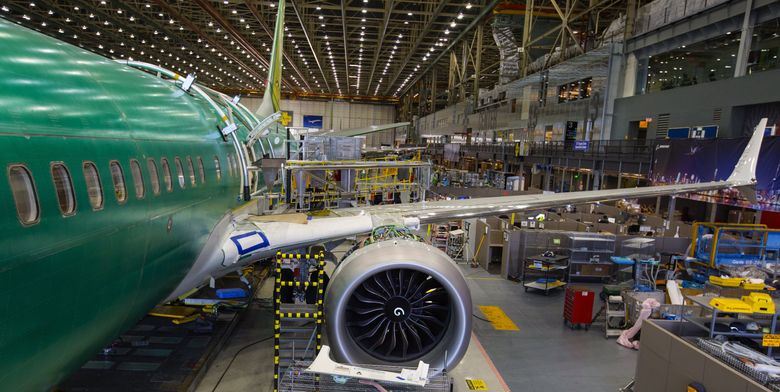
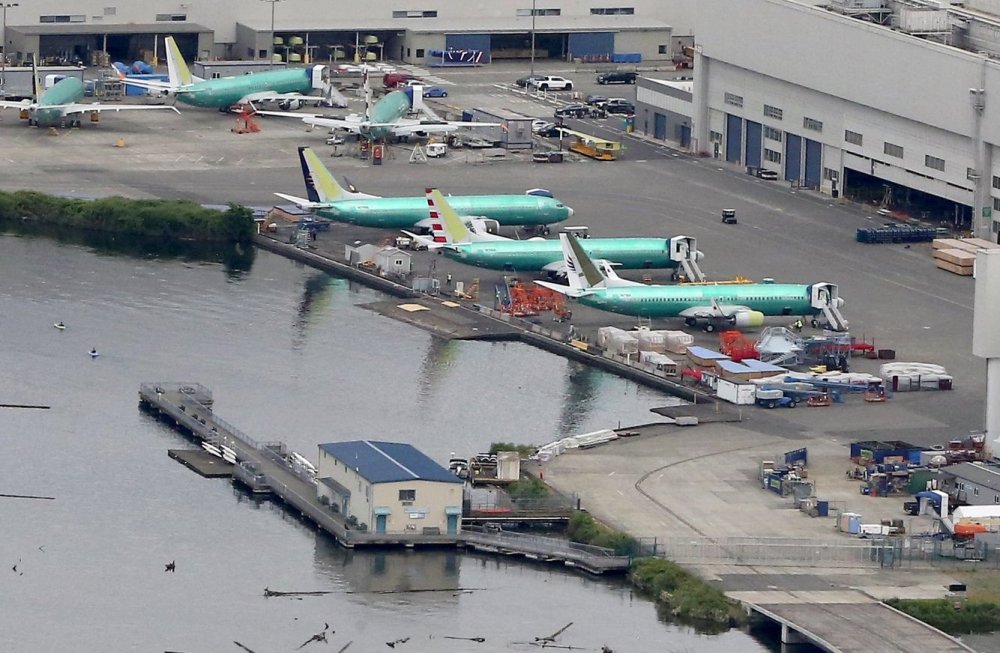
On August 13, 2015, the first 737 MAX fuselage completed the assembly at Spirit Aerosystems in Wichita, Kansas, for a test aircraft that would eventually be delivered to the Southwest Airlines launch customer. On December 8, 2015, the first 737-8 MAX called «Spirit of Renton» was launched at the Boeing Renton Factory.

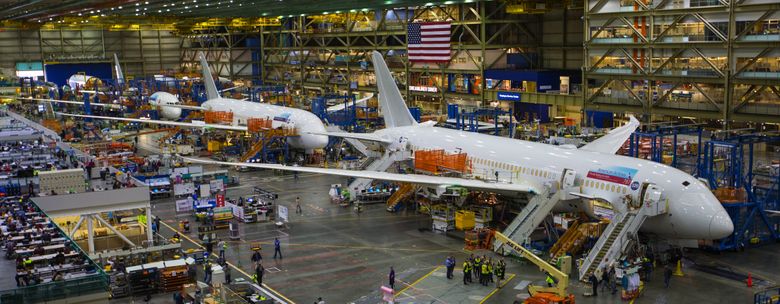
Resultado de imagen para Boeing 737 MAX factoryASSEMBLY LINE OF THE BOEING 737 MAX IN RENTON

Because GKN could not produce the interior walls of titanium honeycomb for push investors fast enough, Boeing switched to a composite piece produced by Spirit to deliver 47 MAX per month in 2017. Spirit supplies 70% of structure 737, including the fuselage, thrust reverser, engine pylons, gondolas and wing attack edges.

A new spar assembly line with robotic drilling machines should increase performance by 33%. The assembly line of the automated Electroimpact panel accelerated the assembly of the lower part of the wing by 35%. Boeing plans to increase its 737 MAX monthly production index from 42 aircraft in 2017 to 57 aircraft in 2019.

Boeing aims to match the shipping reliability of 99.7% of the NG. Southwest Airlines, the launch customer, received its first 737 MAX on August 29, 2017. Boeing plans to deliver at least 50 to 75 aircraft in 2017, 10-15% of the more than 500 737 to be delivered in the year.

Service entry

20_737_Boeing_Lit_LeftView

The first delivery was a MAX 8, delivered to Malindo Air (a subsidiary of Lion Air) on May 16, 2017; It entered service on May 22. Norwegian Air International, a subsidiary of Norwegian Air, was the second airline to put a 737 MAX in service, when it made its first transatlantic flight with a MAX 8 named Sir Freddie Laker on July 15, 2017 between Edinburgh Airport of Scotland and the International Airport. of Hartford in the US state of Connecticut, followed by a second rotation from Edinburgh to Stewart Airport, New York.

First anniversary Boeing 737 MAX

After one year of service, 130 to 28 customers have been delivered, registering more than 41,000 flights in 118,000 hours and flying over 6.5 million passengers. flydubai observed 15% more efficiency than the NG, more than 14% promised, and reliability reached 99.4%. The long routes include 24 more than 2,500 nmi (4,630 km), including a daily Aerolíneas Argentinas service from Buenos Aires to Punta Cana above 3,252 nmi (6,023 km).

AW-70083551.png

Deliveries may have been even greater, but engine supplier CFM International stayed several weeks behind with a planned increase in LEAP-1B engine production. CFM plans to catch up on deliveries in 3Q2018.

The 130 deliveries of the 737 Max in a year almost double the number of aircraft of the Airbus A320NEO family that the European company delivered to customers during its first year of operation. Airbus also faced deficiencies in the suppliers’ production, which involved interiors of the Pratt & Whitney PW1100G engine and cabin.

So far, the 28 737 MAX operators registered 118,006 hours. in 41,797 flights that transported 6.5 million passengers, according to Boeing reports. The 737 MAX family enters the market with a high reliability capacity, since the highly mature 737NG series operates with a vision clearance rate of over 99.7%.

Boeing’s Vice President of Marketing, Randy Tinseth, commented on his blog: «At the beginning it’s likely to have some initial problems». The fleet now has a mission dispatch rate of 99.4% and should improve to the 99.7% standard by the end of the year. Boeing has sold 4,509 firm orders for the 737 MAX family, including sales of 416,737 MAX 10. Boeing does not itemize firm orders for the other three major variants of the 737 MAX family, but the Boeing 737-8 MAX version is far more popular as it fits the same as its predecessor the Boeing 737-800, in an ideal market for airlines. A \ W


Ξ A I R G W A Y S Ξ
SOURCE:  Airgways.com
DBk: Bpoeing.com / Spiritaero.com / Ainonline.com / Cnn.com / Airgways.com
AW-POST: 201805241505AR

A\W   A I R G W A Y S ®


Fokker 70 Realeza vuela en Australia

24480759964_9ddd10f911_b.jpg

AW | 2018 05 22 23:37 | INDUSTRY

Fokker.svg.pngEl avión Fokker 70 de la Realeza Holandesa vuela ahora en Australia para Alliance Airlines

El Fokker 70 con registro PH-KBX, ha comenzado su segunda vida en Australia. La aeronave que fue miembro de la flota de la Familia Real Holandesa, ahora sirve como avión VIP en Alliance Airlines.

El gobierno holandés se despidió del avión de lujo en 2017, que será reemplazado en 2019 por un Boeing 737BBJ. El PH-KBX se vendió a la aerolínea australiana Alliance Airlines y recientemente lanzó sus primeros vuelos en el otro lado del mundo.

Alliance Airlines ya tenía una flota considerable de Fokker 50, Fokker 70 y Fokker 100, pero ahora también tiene un producto de lujo con el anterior PH-KBX. El avión, que lleva a cabo el registro VH-KBX, ahora se ofrece para viajes VIP en Australia. Alliance Airlines llevó la semana pasada a un grupo de periodistas australianos a probar el dispositivo. Por lo tanto, la compañía espera generar atención adicional para el avión especial. En el pasado, Alliance Airlines ya trajo criadores de todo el mundo a Australia, convirtiendo a la compañía con 39 dispositivos en el mayor usuario de Fokker.  AIRWAYS® AW-Icon TXT

Resultado de imagen para fokker 70 Royal nederlands

Fokker 70 Dutch royalty flies in Australia

The Fokker 70 aircraft of Dutch Royalty flies now in Australia for Alliance Airlines

The Fokker 70 with PH-KBX registration, has started his second life in Australia. The aircraft that was a member of the Royal Dutch Family fleet now serves as a VIP aircraft on Alliance Airlines.

The Dutch government bid farewell to the luxury plane in 2017, which will be replaced in 2019 by a Boeing 737BBJ. The PH-KBX was sold to the Australian airline Alliance Airlines and recently launched its first flights on the other side of the world.

Alliance Airlines already had a sizeable fleet of Fokker 50, Fokker 70 and Fokker 100, but now also has a luxury product with the previous PH-KBX. The plane, which carries out the VH-KBX registration, is now offered for VIP trips in Australia. Alliance Airlines last week led a group of Australian journalists to test the device. Therefore, the company expects to generate additional attention for the special plane. In the past, Alliance Airlines brought breeders from all over the world to Australia, making the company with 39 devices the largest user of Fokker. A \ W

Resultado de imagen para fokker 70 Royal nederlands

Fokker 70 Nederlandse royalty vliegt in Australië

Het Fokker 70-vliegtuig van Dutch Royalty vliegt ahoara in Australië voor Alliance Airlines

De Fokker 70 met PH-KBX-registratie is zijn tweede leven in Australië begonnen. Het vliegtuig dat lid was van de Koninklijke Nederlandse Familie vloot dient nu als een VIP-vliegtuig op Alliance Airlines.

De Nederlandse regering neemt in 2017 afscheid van het luxe vliegtuig, dat in 2019 wordt vervangen door een Boeing 737BBJ. De PH-KBX is verkocht aan de Australische luchtvaartmaatschappij Alliance Airlines en heeft onlangs zijn eerste vluchten aan de andere kant van de wereld gelanceerd.

Alliance Airlines had al een omvangrijke vloot van Fokker 50, Fokker 70 en Fokker 100, maar heeft nu ook een luxe product met de vorige PH-KBX. Het vliegtuig, dat de VH-KBX-registratie uitvoert, wordt nu aangeboden voor VIP-reizen in Australië. Alliance Airlines leidde vorige week een groep Australische journalisten om het apparaat te testen. Daarom verwacht het bedrijf extra aandacht te genereren voor het speciale vliegtuig. In het verleden bracht Alliance Airlines fokkers van over de hele wereld naar Australië, waardoor het bedrijf met 39 apparaten de grootste gebruiker van Fokker werd. A \ W


Ξ A I R G W A Y S Ξ
SOURCE:  Airgways.com
DBk: Fokker.com
AW-POST: 201805222337AR

A\W   A I R G W A Y S ®

Votación trabajadores Boeing Carolina

Resultado de imagen para boeing carolina

AW | 2018 05 22 23:27 | INDUSTRY

Boeing-Logo.svgTrabajadores de Boeing en Carolina del Sur votan por adhesión al Sindicato Internacional de Maquinistas

Algunos empleados de la planta de Boeing en Carolina del Sur votarán pronto si quieren unirse al sindicato de la Asociación Internacional de Maquinistas.

La Junta Nacional de Relaciones Laborales dictaminó el lunes que 178 técnicos e inspectores de preparación de vuelo en la fábrica de North Charleston del fabricante pueden votar si desean unirse al sindicato. La votación está programada para el 31 de mayo.

Según medios de comunicación locales, Boeing ha dicho que apelará el fallo, argumentando que el grupo más pequeño es demasiado difícil para establecer diferentes reglas y que cualquier voto sindical debe incluir a los 3,000 empleados de producción. En una audiencia en marzo, Boeing dijo que el trabajo realizado por los empleados de la línea de vuelo está tan entrelazado con el resto de las instalaciones que el grupo pequeño no puede analizarse para la negociación colectiva.

El grupo más grande rechazó la sindicalización por un margen de tres a uno el año pasado. Según el sindicato, el grupo más pequeño tiene deberes diferentes y debería poder votar por separado.

Los trabajadores de la línea de vuelo tienen la tarea de preparar los aviones para vuelos de prueba, realizar inspecciones y responder a las cuestiones planteadas por los pilotos. En la audiencia de marzo, un abogado sindicalista dijo que esos trabajadores tienen requisitos de licencia que otros empleados no tienen y que reciben bonificaciones especiales, capacitación e incluso ropa que los distingue del resto del personal de la asamblea.

Los maquinistas, el sindicato aeroespacial más grande del país, ya representan a más de 35,000 empleados de Boeing en 24 ubicaciones en todo el país. Esta es la tercera vez que los maquinistas intentan organizar a los trabajadores de Boeing en North Charleston. Un esfuerzo de 2015 finalizó cuando el sindicato retiró su petición días antes de una elección programada.  AIRWAYS® AW-Icon TXT

Worker voting Boeing South Carolina

Boeing workers in South Carolina vote for membership of the International Union of Machinists

Some employees at the Boeing plant in South Carolina will soon vote if they want to join the union of the International Association of Machinists.

The National Labor Relations Board ruled Monday that 178 flight preparation technicians and inspectors at the manufacturer’s North Charleston factory can vote if they want to join the union. Voting is scheduled for May 31.

According to local media, Boeing has said it will appeal the ruling, arguing that the smaller group is too difficult to establish different rules and that any union vote should include the 3,000 production employees. At a hearing in March, Boeing said that the work done by the employees of the flight line is so intertwined with the rest of the facilities that the small group can not be analyzed for collective bargaining.

The largest group rejected unionization by a margin of three to one last year. According to the union, the smaller group has different duties and should be able to vote separately.

The flight line workers are tasked with preparing the planes for test flights, conducting inspections and answering the questions raised by the pilots. At the March hearing, a union lawyer said those workers have licensing requirements that other employees do not have and that they receive special bonuses, training and even clothing that distinguishes them from the rest of the assembly staff.

Machinists, the largest aerospace union in the country, already represent more than 35,000 Boeing employees in 24 locations across the country. This is the third time the machinists have tried to organize the Boeing workers in North Charleston. A 2015 effort ended when the union withdrew its petition days before a scheduled election. A \ W


Ξ A I R G W A Y S Ξ
SOURCE:  Airgways.com
DBk: Boeing.com / Seattletimes.com / Bizjournals.com
AW-POST: 201805222327AR

A\W   A I R G W A Y S ®

OMC falla contra Airbus

Resultado de imagen para WTO Airbus vs Boeing

AW | 2018 05 22 21:36 | INDUSTRY

Resultado de imagen para WTOEl fabricante europeo Airbus enfrentó un fallo adverso de la OMC

Tras una decisión adversa de la Organización Mundial del Comercio (OMC) la semana pasada, Airbus ha realizado pequeños ajustes a los préstamos del gobierno para sus programas de aviones A350 y A380 y afirma que ahora ha logrado el pleno cumplimiento de las normas de la OMC. Sus abogados argumentan que las sanciones de Estados Unidos contra la UE deberían ser mínimas.

En respuesta a la decisión de la OMC de que Airbus no solucionó el daño causado a Boeing por los subsidios ilegales en sus programas de aviones A350 y A380, el fabricante de aviones europeo dijo el martes que acordó algunas enmiendas confidenciales al gobierno. préstamos para esos programas.

El consejero general de Airbus, John Harrison, «afirmó el martes que con esas movidas, el fabricante de aviones ahora ha logrado el pleno cumplimiento» de las exigencias de la OMC. Es improbable que el gobierno de los Estados Unidos acepte esa perspectiva.

Se espera que en las próximas semanas comiencen procedimientos formales en la OMC para establecer la siguiente etapa de argumentos en el caso: determinar cuánto daño financiero le han causado a Boeing los aviones con subsidio de Airbus y exactamente cuánto Estados Unidos estará autorizado a imponer como tarifas diseñadas para obligar a la Unión Europea (UE) a cumplir.

Karl Hennessee, jefe de litigación de Airbus, dijo en una entrevista que Airbus argumentará en esos procedimientos que el daño a Boeing por los programas de aviones A350 y A380 es tan marginal que cualquier sanción encabezada por Estados Unidos contra la Unión Europea debería ser mínima.

Dijo que las lentas ventas del avión superjumbo A380 de dos pisos, el programa más ambicioso de Airbus, significan que ha tenido poco impacto en la capacidad de Boeing de vender su gran avión jumbo 747.

«La compañía europea también alegará que el apoyo estatal para el modelo A350 más popular fue solo un beneficio más que el que podría obtenerse del financiamiento de bancos comerciales, dado el financiamiento alternativo barato disponible en ese momento en medio de tasas de interés históricamente bajas», dijo Hennessee.

Determinando el tamaño de las sanciones

Airbus está en desventaja después de que Boeing ganara la última semana la última de una serie de disputas sobre subsidios ilegales para el A380 y el A350 que abarca más de una década.

La OMC dictaminó que el fabricante de aviones con sede en Toulouse, Francia, no pudo abordar adecuadamente lo que equivale a miles de millones de dólares en fondos de los patrocinadores estatales, abriendo una ruta para que la administración del presidente Donald Trump imponga aranceles contra los bienes de la UE.

Hennessee dijo que el proceso que los Estados Unidos deben atravesar para imponer sanciones podría llevar años. «Lo único que permitiría que se impongan sanciones es si Boeing puede demostrar que el A380 representa un costo competitivo directo, inminente y masivo para su negocio», dijo Hennessee en una entrevista. El subsidio del A350 era «tan pequeño que no era capaz de afectar el lanzamiento del avión» y tuvo un «minúsculo y pequeño impacto en los precios», dijo.

En contraste, Boeing sostiene que Airbus enfrenta sanciones masivas, y mucho más rápido de lo que sugiere Hennessee. Boeing dijo a Bloomberg que el fallo final de la OMC deja en claro que $ 9 mil millones de ayuda de lanzamiento ilegal al A380 y al A350 causaron daños reales y continuos que «se traducirán en miles de millones de dólares en aranceles sobre las exportaciones europeas a Estados Unidos anualmente». Bob Novick, abogado externo de Boeing en el caso, dijo la semana pasada que las sanciones podrían imponerse dentro de seis o siete meses a partir de ahora.

Keith Rockwell, vocero de la OMC con sede en Ginebra, no quiso hacer ningún comentario. La afirmación de que el A380 presenta poca competencia para Boeing reconoce que el jet superjumbo es una decepción financiera. El avión comercial más grande del mundo ha asegurado apenas 330 pedidos en todo el mundo desde su lanzamiento en 2000 y hace mucho tiempo que el fabricante reconoció que nunca generará ganancias en un programa que costó $ 18 mil millones para llevar al mercado.

Acuerdo negociado

Airbus también está esperando una decisión del regulador comercial sobre una contrademanda de que Boeing se ha beneficiado de manera similar del financiamiento ilegal para sus 777 y 787 multitudes que expondría a Estados Unidos a los aranceles de la UE. Sin embargo, Boeing cree que su exposición podría ser tan pequeña como US$ 377 millones, en base a resoluciones anteriores. En última instancia, Airbus espera negociar un acuerdo con Boeing. «Si terminamos con sanciones en ambos lados, si se imponen, ¿qué vamos a lograr?», dijo Hennessee.  AIRWAYS® AW-Icon TXT

Resultado de imagen para WTO

OMC fails against Airbus

Resultado de imagen para WTOThe European manufacturer Airbus faced an adverse ruling of the WTO

Following an adverse World Trade Organization (WTO) decision last week, Airbus has made minor adjustments to government loans for its A350 and A380 aircraft programs and claims that it has now achieved full compliance with WTO rules. His lawyers argue that US sanctions against the EU should be minimal.

In response to the decision of the WTO that Airbus did not fix the damage done to Boeing by illegal subsidies to its aircraft programs A350 and A380, the European planemaker said on Tuesday it agreed to certain confidential amendments to the government. loans for those programs.

The general counsel of Airbus, John Harrison, said on Tuesday that with these moves, the aircraft manufacturer «has now achieved full compliance» with the demands of the WTO. It is unlikely that the government of the United States will accept that perspective.

Is expected in the coming weeks to begin formal proceedings in the WTO to set the next stage of arguments in the case: determine how much financial damage you have caused Boeing aircraft subsidized Airbus and exactly how much the United States will be authorized to impose such rates designed to force the European Union (EU) to comply.

Karl Hennessee, head of litigation for Airbus, said in an interview that Airbus will argue in those proceedings that the damage to Boeing from the A350 and A380 aircraft programs is so marginal that any US-led sanctions against the European Union should be minimal.

He said the slow sales of the two-story A380 superjumbo aircraft, Airbus’ most ambitious program, mean it has had little impact on Boeing’s ability to sell its large 747 jumbo jet.

«The European company will also argue that state support for the most popular A350 model was only one more benefit than could be obtained from commercial bank financing, given the cheap alternative financing available at that time amidst historically low interest rates», he said. Hennessee

Determining the size of sanctions

Airbus is at a disadvantage after Boeing won last week the latest in a series of disputes over illegal subsidies for the A380 and the A350 spanning more than a decade.

The WTO ruled that the aircraft manufacturer based in Toulouse, France, could not adequately address what amounts to billions of dollars in funds from state sponsors, opening a route for the administration of President Donald Trump to impose tariffs against the EU goods.

Henderson said the process that the United States must go through to impose sanctions could take years. «The only thing that would allow sanctions to be imposed is whether Boeing can demonstrate that the A380 represents a direct, imminent and massive competitive cost to its business, Hennessee said in an interview. The subsidy of the A350 was «so small that it was not able to affect the launch of the plane and had a tiny and small impact on prices», he said.

In contrast, Boeing argues that Airbus faces massive sanctions, and much faster than Hennessee suggests. Boeing told Bloomberg that the final WTO ruling makes it clear that $ 9 billion of illegal launch aid to the A380 and the A350 caused real and continuing damage that «will translate into billions of dollars in tariffs on European exports. to the United States annually». Bob Novick, Boeing’s outside counsel in the case, said last week that sanctions could be imposed within six or seven months from now.

Keith Rockwell, a spokesman for the Geneva-based WTO, declined to comment. The claim that the A380 presents little competition for Boeing recognizes that the superjumbo jet is a financial disappointment. The largest commercial plane in the world has secured just 330 orders worldwide since its launch in 2000 and it has been a long time since the manufacturer recognized that it will never generate profits in a program that cost $ 18 billion to bring to the market.

Negotiated agreement

Airbus is also awaiting a decision by the commercial regulator on a counterclaim that Boeing has similarly benefited from illegal financing for its 777 and 787 crowds that would expose the United States to EU tariffs. However, Boeing believes that its exposure could be as small as US $ 377 million, based on previous resolutions. Ultimately, Airbus expects to negotiate an agreement with Boeing. «If we end up with sanctions on both sides, if they prevail, what are we going to achieve?», Hennessee said. A \ W


Ξ A I R G W A Y S Ξ
SOURCE:  Airgways.com
DBk: Wto.org / Npr.org / Wikimedia.org
AW-POST: 201805222136AR

A\W   A I R G W A Y S ®

Prueba motores CJ-1000AX para C919

AW | 2018 05 21 21:55 | INDUSTRY

COMAC_logoChina comienza a probar motor turbofan CJ-1000AX comercial

China ha comenzado a probar su motor de turbohélice de alto bypass CJ-1000AX, diseñado para alimentar el avión de pasajeros de pasillo único COMAC C919 en desarrollo.

El motor es el primer turbofan comercial indígena de China que se está desarrollando en el país. El ensamblaje del primer motor de demostración se completó en diciembre de 2017 después de un proceso de 18 meses. El motor se someterá a una prueba exhaustiva de tierra y vuelo con 24 unidades para validar la tecnología y lograr la certificación para impulsar vuelos comerciales desde un ambicioso calendario 2021.

Durante el primer encendido de la fábrica de pruebas Shanghai Lingang del fabricante chino AECC Commercial Aircraft Engine, el motor CJ-1000AX alcanzó una velocidad central de 6600 rpm. Con un empuje de 98-196 kN (22,000-44,000 lbf), el CJ-1000AX es similar al motor CFM LEAP-1C de nueva generación que actualmente alimenta al COMAC C919. El motor tiene un diámetro de 1.95 metros y una longitud de 3.29 metros y cuenta con tecnologías avanzadas como aspas de ventilador de cuerda ancha fabricadas en titanio hueco y boquillas de combustible de combustor impresas en 3D. El motor tiene una configuración de dos carretes, con un ventilador de una etapa, un amplificador de tres etapas, un compresor de alta presión de 10 etapas, una turbina de dos etapas de alta presión y una turbina de baja presión de seis etapas. Los motores Turbofan son una de las tecnologías estratégicas más vigiladas en el mundo, y la única China se está quedando atrás.  AIRWAYS® AW-Icon TXT

Resultado de imagen para engines CJ-1000AX Comac C919

Test engines CJ-1000AX for C919

China begins to test commercial turbofan CJ-1000AX engine

China has begun testing its CJ-1000AX high bypass turboprop engine, designed to power the COMAC C919 single aisle passenger plane under development.

The engine is the first indigenous commercial turbofan in China that is being developed in the country. The assembly of the first demonstration engine was completed in December 2017 after an 18-month process. The engine will undergo an exhaustive ground and flight test with 24 units to validate the technology and achieve certification to drive commercial flights from an ambitious 2021 calendar.

During the first lighting of the Shanghai Lingang test factory of the Chinese manufacturer AECC Commercial Aircraft Engine, the CJ-1000AX engine reached a central speed of 6600 rpm. With a thrust of 98-196 kN (22,000-44,000 lbf), the CJ-1000AX is similar to the new generation CFM LEAP-1C engine that currently powers the COMAC C919. The engine has a diameter of 1.95 meters and a length of 3.29 meters and has advanced technologies such as wide-bladed fan blades made of hollow titanium and combustor fuel nozzles printed in 3D. The engine has a two-reel configuration, with a single-stage fan, a three-stage amplifier, a 10-stage high-pressure compressor, a high-pressure two-stage turbine and a six-stage low pressure turbine. Turbofan engines are one of the most. A \ W


Ξ A I R G W A Y S Ξ
SOURCE:  Airgways.com
DBk: Aviationanalysis.net / Airgways.com
AW-POST: 201805212155AR

A\W   A I R G W A Y S ®

FAA aprueba alas plegables Boeing 777X

AW | 2018 05 19 12:55 | INDUSTRY

Boeing-Logo.svgLas alas plegables de Boeing 777X obtienen la luz verde de la FAArotate0.png

The Boeing Co. recibió el viernes la aprobación del regulador federal, Federal Aviation Administration (FAA), por los nuevos alabeos plegables de la compañía para sus últimos aviones Boeing 777.

La punta del ala plegable de Boeing para nuevos 777s obtiene la aprobación. El diseño permite que el 777X atraque en las puertas regulares de los aeropuertos a pesar de tener alas más grandes. El diseño, que se incorporará a los Boeing 777-8 y Boeing 777-9 del fabricante de aviones comercial más grande del mundo, permitiría que las alas más grandes quepan en el espacio de estacionamiento del aeropuerto de tamaño estándar.

Resultado de imagen para BOEING 777-8 9 FOLDING WINGS862,485-554d64edf71c449baaa234a1767f2254-boeing-777x-1500n862,485-554d6518b0e448e5b8d5363f767f2254-boeing-777x-1500j862,539-554d65582df845fa9ee63493767f2254-boeing-777x-1500d862,565-554d656c011c450091f6366d767f2254-boeing-777x-1500b862,794-554d6501fabc4058b75335aa767f2254-boeing-777x-1500lResultado de imagen para BOEING 777-8 9 FOLDING WINGS

La característica ayudará a reducir la envergadura a 212 pies desde 235 pies cuando se pliega durante las operaciones en tierra. Los aviones bimotores de largo recorrido con capacidad para 350 a 410 pasajeros se consideran la próxima gran batalla de la industria con Boeing y su rival Airbus compitiendo por un mercado potencial de varios miles.

Los pasajeros en la nueva línea de aviones 777 de Boeing podrían no tener que tomar un autobús desde la puerta de embarque a través de la pista, a pesar de que las alas mucho más grandes podrían dificultar el desplazamiento de la aeronave. Eso se debe a que la compañía recibió hoy la aprobación de la Administración Federal de Aviación para sus alas plegables: eso permitirá que los aviones se detengan en las puertas del aeropuerto lo suficientemente grandes como para acomodar los modelos 777 típicos.

Una vez que aterrice el 777X, las puntas de las alas girarán hasta que apunten hacia arriba. Bloomberg señala que el avión será el único modelo comercial de uso generalizado que tenga esa característica. Algunos aviones más pequeños tienen alas plegables, incluidos aviones militares que deben ocupar el menor espacio posible en portaaviones. La NASA, mientras tanto, está probando alas plegables que ajustan el aire para vuelos supersónicos. Las puntas de las alas del 777X son tan novedosas que los reguladores estadounidenses tuvieron que elaborar nuevos estándares para ellas. La FAA selló esas medidas el viernes.

La agencia estaba preocupada de que las puntas de las alas pudieran causar problemas de seguridad, algunos accidentes aéreos ocurrieron después de que los pilotos no aseguraron las aletas en las alas antes del despegue. La FAA requiere que Boeing tenga varios sistemas de advertencia para asegurarse de que los pilotos no intenten despegar antes de que las puntas de las alas estén bloqueadas en la posición correcta. La FAA también quería garantías de que no había manera de que las puntas giraran durante el vuelo, y que las alas podían soportar vientos de hasta 75 millas por hora mientras estaban en tierra.

Las nuevas alas están hechas de compuestos de fibra de carbono que son más fuertes y más ligeros que el metal que usa Boeing en otras alas. Eso le permite a la compañía aumentar el ancho de las alas en 23 pies a 235 pies, lo que hace que volar sea más eficiente. Estas son las alas más anchas que Boeing ha conectado a un avión, superando los 747-8 de 224 pies. Sin embargo, no tiene el récord para un avión comercial: el Airbus A380 tiene un ala de 262 pies de ancho, lo que obligó a algunos aeropuertos a instalar puertas específicamente para acomodarlo.

La decisión de la FAA acerca el 777X a una realidad comercial, cuatro años y medio después de que se anunciara el avión. Sin embargo, recientemente hubo un revés : hubo un retraso de tres meses para comenzar las pruebas del motor, que General Electric está suministrando, en gran parte debido a un problema en el compresor. Hubo un retraso con las alas también en un proceso más largo de lo esperado en la elaboración de costillas estructurales, aunque Boeing espera volver a la pista para el verano. A pesar de los problemas, Boeing todavía está trabajando para el primer vuelo del 777X, que está programado para la Q1 el próximo año. Las salidas comerciales no se llevarán a cabo hasta al menos ese mes de Diciembre 2018. AIRWAYS® AW-Icon TXT


AW-78022111.png

FAA approves folding wings on Boeing 777X

The folding wings of the Boeing 777X get the green light from the FAA

Boeing-Company-LogoThe Boeing Co. received approval Friday from the federal regulator, Federal Aviation Administration (FAA), for the company’s new folding warps for its latest Boeing 777 aircraft.

The tip of the folding wing of Boeing for new 777s gets approval. The design allows the 777X to dock at regular airport doors despite having larger wings. The design, which will be incorporated into the Boeing 777-8 and Boeing 777-9 of the world’s largest commercial aircraft manufacturer, would allow larger wings to fit into the airport’s standard-sized parking space.

The feature will help reduce the wingspan to 212 feet from 235 feet when folded during ground operations. The twin-engine long-haul aircraft with capacity for 350 to 410 passengers are considered the next big battle of the industry with Boeing and its rival Airbus competing for a potential market of several thousand.

B48Ata4IEAAKw1T.jpg

8caQq.jpg

Passengers on Boeing’s new 777 aircraft line might not have to take a bus from the boarding gate through the runway, even though much larger wings could make it difficult for the aircraft to travel. That’s because the company today received approval from the Federal Aviation Administration (FAA) for its folding wings: that will allow planes to stop at airport doors large enough to accommodate typical 777 models.

Once the 777X lands, the tips of the wings will rotate until they point upwards. Bloomberg points out that the airplane will be the only commercial model of widespread use that has that characteristic. Some smaller airplanes have folding wings, including military airplanes that must occupy the smaller possible space in aircraft carriers. NASA, meanwhile, is testing folding wings that adjust the air for supersonic flights. The tips of the 777X’s wings are so new that US regulators had to develop new standards for them. The FAA sealed those measures on Friday.

The agency was concerned that the wing tips could cause safety problems, some air accidents occurred after the pilots did not secure the wings on the wings before takeoff. The FAA requires that Boeing have several warning systems to ensure that pilots do not attempt to take off before the wing tips are locked in the correct position. The FAA also wanted assurances that there was no way for the points to turn during the flight, and that the wings could withstand winds of up to 75 miles per hour while on the ground.video-camera_318-50337

The new wings are made of carbon fiber compounds that are stronger and lighter than the metal that Boeing uses in other wings. That allows the company to increase wing width by 23 feet to 235 feet, which makes flying more efficient. These are the widest wings that Boeing has connected to an airplane, surpassing the 747-8 of 224 feet. However, it does not have the record for a commercial airplane: the Airbus A380 has a wing of 262 feet in width, which forced some airports to install doors specifically to accommodate it.

The FAA’s decision about the 777X to a commercial reality, four and a half years after the airplane was announced. However, recently there was a setback: there was a delay of three months to start the engine tests, which General Electric is supplying, largely due to a problem in the compressor. There was a delay with the wings also in a process longer than expected in the development of structural ribs, although Boeing hopes to return to the track for the summer. Despite the problems, Boeing is still working for the first flight of the 777X, which is scheduled for Q1 next year. The commercial outlets will not be carried out until at least that month of December 2018. A\W


Ξ A I R G W A Y S Ξ
SOURCE:  Airgways.com
DBk: Boeing.com / Airgways.com / Flightglobal.com
AW-POST: 201805191255AR

A\W   A I R G W A Y S ®

10 años Programa Sukhoi SSJ-100

Resultado de imagen para Сухой SSJ-100

AW | 2018 05 19 12:17 | INDUSTRY

logo_sukhoiResultados y perspectivas de los vuelos Sukhoi SSJ-100

El primer avión civil desarrollado en la Federación de Rusia después del colapso de la URSS voló desde el aeródromo en la planta de Komsomolsk-en-Amur el 19 de mayo de 2008.

Hace exactamente diez años, el 19 Mayo 2008, el primer avión civil desarrollado en Rusia después del colapso de la URSS, voló: aviones regionales Sukhoi Superjet 100 despegó de un aeropuerto en una planta en Komsomolsk-on-Amur. El vuelo duró poco más de una hora, el despegue despegó durante el vuelo, el avión hizo cuatro pasadas sobre la pista a diferentes alturas (máximo -1200 m). El aterrizaje fue exitoso, el crucero fue piloteado por el piloto de pruebas senior de Sukhoi Civil Aircraft (SSC) Alexander Yablontsev y el piloto de pruebas Leonid Chikunov. Yabloncev señaló que «el avión es realmente excelente y está contento de que en la vida hubo la oportunidad de ser el primero en levantar este hermoso automóvil hacia el cielo».

El primer vuelo fue solo un paso en el largo camino hacia el comienzo de la operación comercial de la aeronave. «Los sentimientos [después del primer vuelo] eran muy diferentes. Por un lado, era la sensación de que estamos resumiendo la gran obra, que fue hecho por miles de personas, y que estamos listos para completar con éxito esta fase del proyecto», dice el ex presidente de la compañía aérea de Estados (UAC) Mikhail Pogosyan. por otro lado, «tenía una sensación de confianza que hemos proporcionado todos los matices que puedan surgir en el primer vuelo y el avión y la tripulación están totalmente preparados para lidiar con el problema después del vuelo un sentido de orgullo y satisfacción por el resultado».

Proyecto SSJ-100

En julio de 2002, la Agencia Aeroespacial Rusa (la estructura existió entre 1999 y 2004) anunció una competencia para la creación de un avión regional. Tres proyectos participaron en la competencia: Russian Regional Jet (marca Sukhoi SuperJet), 72 asientos Tu-414 y M-60-70 (desarrollado por Myasishchev Experimental Machine Building Plant). Se suponía que el nuevo avión regional reemplazaría al obsoleto Tu-134.

El ganador fue reconocido como SSJ-100. En ese momento, estaba previsto que la familia se compone de tres capacidad de asientos de aviones diferentes: 60, 75 y 95 asientos con un rango de hasta 3500 kilómetros. A continuación, los medios de comunicación informaron que la decisión Rosaviakosmos aceptado debido al hecho de que el proyecto RRJ parecía más elaborado, además, «Sukhoi Civil Aircraft» era un socio serio de Boeing. Por cierto, el acuerdo sobre el establecimiento de RRJ firmó SCA, el Boeing, Ilyushin y OKB. Yakovlev en el año 2001.

Resultado de imagen para Сухой SSJ-100PARTICIPACIÓN DEL PROYECTO DEL SUKHOI SUPER JET SSJ-100

Luego, los medios informaron que el proyecto recibirá hasta $ 120 millones para lanzar el avión en la serie. Andrey Ilyin, Director General del SSC, informó en 2003 que el costo de diseño, inicio de producción, prueba y certificación de RRJ es de aproximadamente $ 600 millones. El 80% del trabajo de diseño fue realizado por el GSS. Boeing tuvo que asignar especialistas y transferir tecnología.

Por primera vez como una modificación del modelo básico se adoptó RRJ-75, pero en el futuro, en base a la demanda del mercado y el cliente de lanzamiento, «Aeroflot», en el diseño detallado se adoptó el modelo RRJ-95. También se convirtió en el más popular, según los materiales del Ministerio de Industria y Comercio de la Federación de Rusia, preparado para TASS. En la configuración básica, la aeronave puede acomodar hasta 98 ​​pasajeros.

El 26 de septiembre de 2007, se lanzó la aeronave, por primera vez se mostró públicamente su apariencia exterior. Se planeó que el primer vuelo se realice a fines de 2007, luego el vuelo se pospuso a marzo de 2008 y más tarde, hasta mayo.

«La finalización exitosa del primer vuelo mostró que habíamos organizado bien el trabajo en el proyecto, y luego tuvimos que completar el programa de certificación principal dentro de dos años, organizar la producción y comenzar la operación del avión, creo que estos planes se implementaron en general, sin ningún matiz, un programa de esta escala nunca falla», dijo Pogosyan.

El avión recibió un certificado de tipo en enero de 2011, un certificado de la Agencia Europea de Seguridad Aérea EASA a principios de 2012. El primer vuelo comercial fue realizado por la compañía armenia Armavia. Es cierto que en 2013 la compañía devolvió el avión. Según Poghosyan, la denegación no estaba relacionada con las características técnicas de la aeronave, sino con los problemas de la administración de la línea aérea: la compañía aérea detuvo los vuelos en 2013 debido a la quiebra.

Clientes del SSJ-100Sukhoi-Superjet-100

El inicio de las ventas del GSS fue bastante pesado, a pesar de que se firmaron varios contratos de suministro. Uno de los primeros clientes de la aeronave fue Aeroflot (se firmó un contrato de 30 aviones en 2005, financiando la entrega de los primeros diez VEB-leasing). En 2013, Aeroflot comenzó a reemplazar gradualmente el SSJ-100 ya operado por otros nuevos. Como el propio Aeroflot informó en 2013, para cumplir con los plazos para la entrega de los primeros automóviles, las partes acordaron suministrar los primeros 10 aviones en la especificación ligera, que posteriormente será reemplazada por la aeronave en el equipo completo expandido. Moskovia Airlines, que tomó el avión después de la bancarrota de Armavia, también se declaró en quiebra y ni siquiera comenzó a utilizar el avión. Se utilizaron tres aviones SSJ-100 en la Aviación del cielo de Indonesia, con Sky Airlines, pero también detuvo los vuelos en 2014. También en diferentes momentos se informó que tiene previsto poner el avión Transaero y UTair, pero, por ejemplo, este último muy degradado la crisis en 2014 y se vio obligado a abandonar la expansión o actualizar la flota.

En 2017, Aeroflot, que en ese momento operaba 30 aviones SSJ-100, firmó un contrato en firme por otros 20 aviones de ese tipo. Otros ocho aviones son operados por la aerolínea regional Azimut (8), Gazpromavia (10), Yamal (10) y IrAero (9). También dos aviones SSJ-100 son utilizados por el destacamento de vuelo especial Rusia, que proporciona el transporte de las primeras personas del estado.

En total, según el GSS, 127 aviones se utilizan actualmente, 89 en Rusia y 38 en el extranjero. En 2018, se planea concluir contratos para el suministro de otros 60 automóviles, dijo el presidente de TSSA , Alexander Rubtsov, en una entrevista con TASS. También dijo que se planea producir 35-40 aviones al año, más del 50% de ellos para la exportación. Ahora produjo más de 170 aviones: según los datos de noviembre de 2017, las capacidades del GSS ya eran 169 piezas.

El mayor operador de aviones extranjeros es el mexicano Interjet. De acuerdo con la información más reciente, entregó 18 aviones de los 20 ordenados en 2012. Además, en 2017 la compañía anunció que estaba lista para firmar un contrato adicional para el suministro de 10 automóviles más.

Sin embargo, lo más moderno son las entregas de los aviones Irish CityJet. Este es el primer operador de aviones europeo. Ahora la compañía tiene solo seis de esos aviones, el contrato se concluye para 15 con una opción para otros 16 autos. Se utilizan aviones, incluidos, para el transporte de atletas. Por ejemplo, se sabe que el primer puesto CityJet SSJ-100 entregado en el último campeonato europeo de fútbol del equipo nacional de Irlanda.

Además, tres automóviles pasaron dos años en arrendamiento con servicio de agua (es decir, alquilados con tripulación, mantenimiento y seguro) a la aerolínea belga Brussels Airlines (parte del grupo Lufthansa).

Modificaciones de aviones

Durante más de 10 años de la historia del proyecto, la visión de la alta dirección de la familia de aviones ha cambiado radicalmente. Todo comenzó con los planes de crear una familia de tres aviones para 60, 75 y 95 asientos con un alcance de vuelo de hasta 3.500 km. Ahora hay una versión básica para 98 asientos con un alcance de vuelo de poco más de 3000 km.

AW-70008788.jpg

EL SUKHOI SUPERJET SSJ-100 INTRODUCE WINGLETS EN LAS PUNTAS ALARES

Desde 2013 hay una modificación de SSJ-100LR (Long Range) con un mayor rango de vuelo a poco más de 4.500 mil km. También en un momento se anunció la creación de una versión ampliada del SSJ-100 SV con capacidad para pasajeros de hasta 120 asientos. También hay una versión VIP de la aeronave.

Pero el futuro principal de la línea SSJ-100 está conectado con la versión reducida a 75 asientos SSJ-75. Al menos en la exhibición aérea en Antalya en abril de 2018, el GSS firmó un acuerdo con el S7 ruso sobre la compra de 75 aviones, la aerolínea prometió tomar la decisión final antes de fin de año. Además, Rubtsov informó que el GSS puede entregar hasta 50 SSJ-75 a clientes estatales, el Ministerio de Defensa y el SLO ruso-esloveno. Al mismo tiempo, el GSS y la aerolínea Severstal firmaron un contrato en firme para el suministro de seis aviones hasta el 2022.

Resultado de imagen para Сухой SSJ-75MODELO DEL SUKHOI SUPERJET SSJ-75

«La rentabilidad de la operación y la comodidad de la cabina a la altura de los aviones de pasillo único son las principales ventajas de la SSJ100 que determinan el interés en él a partir de las aerolíneas rusas y extranjeras», dice Rubtsov, según fue citado en el comunicado de GSS . Una amplia gama de capacidades operativas permite SSJ100 en los aeropuertos únicos de Europa con rayas ultracortas, en las tierras altas y clima cálido, sin perder sus capacidades y al volar en el extremo norte de Rusia.

«Los cambios en la creación de SSJ 75 puede tocar los sistemas de alas, fuselaje, motores y aeronaves, en particular, que se supone que crear una nueva ala y aviónica en el aire, unificado con el avión MC-21», se reportan palabras del ministro de Industria y Comercio Denis Manturov. La aeronave puede ingresar al mercado tentativamente a fines de 2022 y principios de 2023. Según las estimaciones preliminares de los expertos, la necesidad a largo plazo del mercado ruso en tales máquinas puede llegar a 200-300 aviones, extranjeros – hasta 3000.

No hace mucho tiempo se supo que GSS está desarrollando una versión especial de SSJ-100R, en la que el volumen de piezas rusas aumentará al 50-60%. Los transportistas iraníes ya han firmado un contrato marco para el suministro de 40 de esos aviones.

Se prevé que la aeronave se llevará a cabo con el máximo uso de componentes producidos en Rusia. La configuración del fuselaje permanecerá sin cambios, mientras que el peso total de la estructura a ser reducido en un 10-15%, mejorar la eficiencia aerodinámica en un 10%, un 5% de corte consumo específico de combustible y aumentar la proporción de materiales compuestos en la estructura. Se seguirá para desarrollar el programa, tanto en términos de cambios en las dimensiones de la aeronave, y en términos del aumento de su parte de los proveedores rusos.  AIRWAYS® AW-Icon TXT

Resultado de imagen para Сухой SSJ-100

10 years Program Sukhoi SSJ-100

Results and perspectives of Sukhoi SSJ-100 flights

AW-70008877The first civil aircraft developed in the Russian Federation after the collapse of the USSR flew from the airfield at the Komsomolsk-en-Amur plant on May 19, 2008.

Exactly ten years ago, on May 19, 2008, the first civil aircraft developed in Russia after the collapse of the USSR, flew: regional aircraft Sukhoi Superjet 100 took off from an airport at a plant in Komsomolsk-on-Amur. The flight lasted just over an hour, the takeoff took off during the flight, the plane made four passes on the runway at different heights (maximum -1200 m). The landing was successful, the cruise was piloted by Sukhoi Civil Aircraft (SSC) senior test pilot Alexander Yablontsev and test pilot Leonid Chikunov. Yabloncev pointed out that «the plane is really excellent and is happy that in life there was the opportunity to be the first to lift this beautiful car to the sky».

The first flight was just one step on the long road to the beginning of the commercial operation of the aircraft. «The feelings [after the first flight] were very different: on the one hand, it was the feeling that we are summarizing the great work, which was done by thousands of people, and that we are ready to successfully complete this phase of the project», says the former president of the United States airline (UAC) Mikhail Pogosyan. On the other hand, «I had a feeling of confidence that we have provided all the nuances that may arise on the first flight and the plane and crew are fully prepared to deal with the problem after the flight of course sense of pride and satisfaction for the result».

Project SSJ-100

In July 2002, the Russian Aerospace Agency (the structure existed between 1999 and 2004) announced a competition for the creation of a regional aircraft. Three projects participated in the competition: Russian Regional Jet (brand Sukhoi SuperJet), 72 seats Tu-414 and M-60-70 (developed by Myasishchev Experimental Machine Building Plant). It was assumed that the new regional aircraft would replace the obsolete Tu-134.

The winner was recognized as SSJ-100. At that time, it was planned that the family consists of three different aircraft seating capacity: 60, 75 and 95 seats with a range of up to 3500 kilometers. Then the media reported that the decision Rosaviakosmos accepted due to the fact that the RRJ project seemed more elaborate, in addition, Sukhoi Civil Aircraft was a serious partner Boeing. By the way, the agreement on the establishment of RRJ signed SCA, Boeing, Ilyushin and OKB. Yakovlev in the year 2001.

Then, the media reported that the project will receive up to US$ 120 million to launch the aircraft in the series. Andrey Ilyin, General Director of the SSC, reported in 2003 that the cost of design, start of production, testing and certification of RRJ is approximately $ 600 million. 80% of the design work was done by the GSS. Boeing had to assign specialists and transfer technology.

For the first time as a modification of the basic model, RRJ-75 was adopted, but in the future, based on market demand and the launch customer, Aeroflot, in the detailed design the RRJ-95 model was adopted. It also became the most popular, according to the materials of the Ministry of Industry and Commerce of the Russian Federation, prepared for TASS. In the basic configuration, the aircraft can accommodate up to 98 passengers.

On September 26, 2007, the aircraft was launched, for the first time its external appearance was publicly shown. The first flight was planned to take place in late 2007, then the flight was postponed to March 2008 and later, until May.

«The successful completion of the first flight showed that we had well organized the work on the project, and then we had to complete the main certification program within two years, organize the production and start the operation of the aircraft, I think these plans were implemented in Overall, without any nuance, a program of this scale never fails», Pogosyan said.

The aircraft received a type certificate in January 2011, a certificate from the European Aviation Safety Agency EASA in early 2012. The first commercial flight was made by the Armenian company Armavia. It is true that in 2013 the company returned the plane. According to Poghosyan, the denial was not related to the technical characteristics of the aircraft, but to the problems of the airline’s management: the airline stopped flights in 2013 due to bankruptcy.

Customers of the SSJ-100

10106The start of sales of the GSS was quite heavy, despite the fact that several supply contracts were signed. One of the first customers of the aircraft was Aeroflot (a contract of 30 aircraft was signed in 2005, financing the delivery of the first ten VEB-leasing). In 2013, Aeroflot began to gradually replace the already operated SSJ-100 with new ones. As Aeroflot itself reported in 2013, to meet the deadlines for the delivery of the first cars, the parties agreed to supply the first 10 aircraft in the light specification, which will 528078_largelater be replaced by the aircraft in the expanded full equipment, who took the plane after Armavia‘s bankruptcy, also filed for bankruptcy and did not even start using the plane. There were three SSJ-100 aircraft used in the Indonesian Sky Aviation, but it also stopped flights in 2014. At different times it was reported that he plans to put the Transaero and UTair aircraft, but, for example, the latter greatly degraded the crisis in 2014 and was forced to abandon the expansion or upgrade the fleet.

7362In 2017, Aeroflot, which at that time operated 30 SSJ-100 aircraft, signed a firm contract for another 20 aircraft of that type. Another eight aircraft are operated by the regional airline Azimut (8), by Gazpromavia (10),  by Yamal (15) and  by IrAero (9). Also two SSJ-100 aircraft are used by the special flight detachment Russia, which provides transportation for the first people of the state.

In total, according to the GSS, 127 aircraft are currently used, 89 in Russia and 38 abroad. In 2018, it is planned to conclude contracts for the supply of another 60 cars, said the president of TSSA, Alexander Rubtsov, in an interview with TASS. He also said that it plans to produce 35-40 aircraft a year, more than 50% of them for export. Now it produced more than 170 airplanes: according to the data of November of 2017, the capacities of the GSS already were 169 pieces.

interjetThe largest operator of foreign aircraft is the Mexican Interjet. According to the most recent information, it delivered 18 aircraft out of the 20 ordered in 2012. In addition, in 2017 the company announced that it was ready to sign an additional contract for the supply of 10 more cars.

Resultado de imagen para SSJ100 png cityjet

However, the most modern are the deliveries of the Irish CityJet aircraft. This is the first European aircraft operator. Now the company has only six of those planes, the contract is concluded for 15 with an option for another 16 cars. Airplanes are used, included, for the transport of athletes. For example, it is known that the first place CityJet SSJ-100 delivered in the last European football championship of the national team of Ireland.

In addition, three cars spent two years leasing water service (ie rented with crew, maintenance and insurance) to the Belgian airline Brussels Airlines (part of the Lufthansa group).

Modifications of aircraft

For more than 10 years of the project’s history, the vision of senior management of the aircraft family has changed radically. It all started with plans to create a family of three aircraft for 60, 75 and 95 seats with a flight range of up to 3,500 km. Now there is a basic version for 98 seats with a flight range of just over 3000 km.

Since 2013 there is a modification of SSJ-100LR (Long Range) with a greater range of flight to little more than 4,500 thousand km. The creation of an extended version of the SSJ-100 SV with capacity for passengers of up to 120 seats was also announced at one point. There is also a VIP version of the aircraft.

But the main future of the SSJ-100 line is connected with the reduced version to 75 seats SSJ-75. At least in the air show in Antalya in April 2018, the GSS signed an agreement with the Russian S7 on the purchase of 75 aircraft, the airline promised to make the final decision before the end of the year. In addition, Rubtsov informed that the GSS can deliver up to 50 SSJ-75 to state clients, the Ministry of Defense and the Russian-Slovene SLO.

At the same time, the GSS and the airline Severstal signed a firm contract for the supply of six aircraft until 2022. «The profitability of the operation and the comfort of the cabin at the height of the single aisle aircraft are the main advantages of the SSJ100 that determine the interest in it from the Russian and foreign airlines», says Rubtsov, as was quoted in The GSS statement – a wide range of operational capabilities allows SSJ100 at Europe’s unique airports with ultra-short stripes, in the highlands and warm climate, without losing their capabilities and by flying into the far north of Russia.

Changes in the creation of SSJ 75 chairs can touch the systems of wings, fuselage, engines and aircraft, in particular, which is supposed to create a new wing and avionics in the air, unified with the MC-21 aircraft is they report words of the minister of Industry and Commerce Denis Manturov. – The aircraft can enter the market tentatively by the end of 2022 and the beginning of 2023. According to the preliminary estimates of the experts, the long-term need of the Russian market in such machines can reach 200-300 aircraft, foreigners – up to 3000.

Not long ago it became known that GSS is developing a special version of SSJ-100R, in which the volume of Russian parts will increase to 50-60%. The Iranian carriers have already signed a framework contract for the supply of 40 of those aircraft.

It is anticipated that the aircraft will be carried out with the maximum use of components produced in Russia.The configuration of the fuselage will remain unchanged, while the total weight of the structure to be reduced by 10-15%, improve aerodynamic efficiency in 10%, 5% cut specific fuel consumption and increase the proportion of composite materials in the structure. It will continue to develop the program, both in terms of changes in the dimensions of the aircraft, and in terms of increasing its share of Russian suppliers. A \ W

Resultado de imagen para Сухой SSJ-100

10 лет Программа Sukhoi SSJ-100

Результаты и перспективы рейсов SSH-100 Sukhoi

logo_suhoyПервый гражданский самолет, разработанный в Российской Федерации после распада СССР, вылетел с аэродрома на Комсомольском-Амурском заводе 19 мая 2008 года.

Ровно десять лет назад, 19 мая 2008 года, первый гражданский самолет, разработанный в России после распада СССР, летал: региональный самолет Sukhoi Superjet 100 вылетел из аэропорта на заводе в Комсомольске-на-Амуре. Полет длился чуть больше часа, взлет взлетал во время полета, самолет совершил четыре прохода по взлетно-посадочной полосе на разных высотах (максимум -1200 м). Посадка прошла успешно, круиз пилотировал старший летчик-испытатель Сухого гражданской авиации (SSC) Александр Яблонцев и летчик-испытатель Леонид Чикунов. Яблонцев отметил, что «самолет действительно превосходный и счастлив, что в жизни появилась возможность первыми снять этот красивый автомобиль на небо».

AW-70000100.gif

Первый полет был всего лишь одним шагом на длинном пути к началу коммерческой эксплуатации самолета. «Чувства [после первого полета] были очень разными: с одной стороны, было ощущение, что мы суммируем великую работу, которую делали тысячи людей, и что мы готовы успешно завершить этот этап проекта», говорит бывший президент авиакомпании США (ОАК) Михаил Погосян. С другой стороны, «у меня было чувство уверенности в том, что мы предоставили все нюансы, которые могут возникнуть при первом полете, и самолет и экипаж полностью готовы справиться с проблемой после полета, конечно же, ощущения гордости и удовлетворения за результат.

Проект SSJ-100

В июле 2002 года Российское аэрокосмическое агентство (структура, существовавшее в период с 1999 по 2004 год) объявило конкурс на создание регионального самолета. В конкурсе приняли участие три проекта: Russian Regional Jet (бренд Sukhoi SuperJet), 72 места Ту-414 и М-60-70 (разработан Мясищевским экспериментальным машиностроительным заводом). Предполагалось, что новый региональный самолет заменит устаревший Ту-134.

Resultado de imagen para Сухой SSJ-100

Победитель был признан SSJ-100. В то время планировалось, что семья состоит из трех различных посадочных мест для самолетов: 60, 75 и 95 мест с дальностью до 3500 километров. Затем СМИ сообщили, что решение Росавиакосмос было принято в связи с тем, что проект RRJ казался более сложным, кроме того, Гражданские самолеты Сухого были серьезным партнером Боинг. Кстати, соглашение о создании RRJ подписало SCA, Boeing, Илюшин и ОКБ. Яковлев в 2001 году.

Затем СМИ сообщили, что проект получит до 120 миллионов долларов для запуска самолета в этой серии. Андрей Ильин, генеральный директор SSC, сообщил в 2003 году, что стоимость проектирования, начала производства, тестирования и сертификации RRJ составляет около 600 миллионов долларов. 80% проектных работ было выполнено ГСС. Boeing пришлось назначать специалистов и передавать технологии.

Впервые в качестве модификации базовой модели был принят RRJ-75, но в будущем, основываясь на спросе на рынке и клиенте запуска Аэрофлот, в подробном проекте была принята модель RRJ-95. Он также стал самым популярным, согласно материалам Министерства промышленности и торговли Российской Федерации, подготовленному для ТАСС. В базовой конфигурации самолет может вместить до 98 пассажиров.

26 сентября 2007 года самолет был запущен, впервые его внешний вид был публично показан. Первый полет планировался в конце 2007 года, затем рейс был отложен до марта 2008 года, а затем, до мая.

«Успешное завершение первого полета показало, что мы хорошо организовали работу над проектом, а затем мы должны были завершить основную программу сертификации в течение двух лет, организовать производство и начать эксплуатацию самолета, я думаю, что эти планы были реализованы в В целом, без каких-либо нюансов, программа такого масштаба никогда не терпит неудачу», сказал Погосян.

Самолет получил сертификат типа в январе 2011 года, сертификат Европейского агентства по безопасности полетов EASA в начале 2012 года. Первый коммерческий рейс был произведен армянской компанией Армавиа. Верно, что в 2013 году компания вернула самолет. По словам Погосяна, отказ был не связан с техническими характеристиками самолета, а с проблемами руководства авиакомпании: авиакомпания прекратила полеты в 2013 году из-за банкротства.

Клиенты SSJ-100

Начало продаж GSS было довольно тяжелым, несмотря на то, что было подписано несколько контрактов на поставку. Одним из первых заказчиков самолета был Аэрофлот (в 2005 году был подписан контракт на 30 самолетов, который финансировал поставку первых десяти ВЭБ-лизинга). В 2013 году Аэрофлот начал постепенно заменять уже эксплуатируемые SSJ-100 новыми. Как сообщал Аэрофлот в 2013 году, чтобы соответствовать срокам доставки первых автомобилей, стороны договорились предоставить первые 10 самолетов в спецификации света, которые позднее будут заменены воздушным судном в расширенном полном оборудовании, который взял самолет после банкротства Армавии, также подал заявление о банкротстве и даже не начал использовать самолет. В Индонезийской Sky Aviation было использовано три самолета SSJ-100, но он также прекратил полеты в 2014 году. В разное время сообщалось, что он планирует поставить самолеты Трансаэро и ЮТэйр, но, например, последний значительно ухудшил кризис в 2014 году и был вынужден отказаться от расширения или модернизации флота.

В 2017 году Аэрофлот, который в то время эксплуатируется 30 самолетов SSJ-100, подписал твердый контракт на еще 20 самолетов этого типа. Еще восемь самолетов эксплуатируются региональной авиакомпанией Azimut (8), Газпромавиа (10), Ямалом (15) и IrAero (9). Также два самолета SSJ-100 используются специальным летным отрядом Россия, который обеспечивает перевозку для первых людей государства.

В общей сложности, по данным ГСС, в настоящее время используется 127 самолетов, 89 в России и 38 за рубежом. В 2018 году мы планируем заключить контракты на поставку еще 60 машин, председатель TSSA, Александр Рубцов сказал в интервью ТАСС. Он также сказал, что планирует выпускать 35-40 самолетов в год, более 50% из них для экспорта. Сейчас было произведено более 170 самолетов: по данным ноября 2017 года мощности ГСС уже составили 169 штук.

Крупнейшим оператором иностранных самолетов является мексиканский Interjet. Согласно последней информации, он поставил 18 самолетов из 20 заказанных в 2012 г. Кроме того, в 2017 году компания объявила, что готово подписать дополнительный контракт на поставку 10 машин больше.

Однако самыми современными являются поставки ирландского самолета CityJet. Это первый европейский авиационный оператор. Теперь у компании только шесть таких самолетов, контракт заключен на 15 с возможностью для еще 16 автомобилей. Самолеты используются, в том числе, для перевозки спортсменов. Например, известно, что первое место CityJet SSJ-100 досталось на последнем чемпионате Европы по футболу сборной Ирландии.

Кроме того, прошло два года, три машины в аренду водные услуги (т.е. в аренду с экипажем, техническое обслуживание и страхование) бельгийской авиакомпании Brussels Airlines (входит в группу Lufthansa).

Модификации воздушных судов

За более чем 10 лет истории проекта видение высшего руководства семейства самолетов радикально изменилось. Все началось с создания семьи из трех самолетов на 60, 75 и 95 мест с дальностью полета до 3500 км. Теперь есть базовая версия для 98 мест с дальностью полета чуть более 3000 км.

С 2013 года существует модификация Long Range (LR) SSJ-100 с большим диапазоном полета до немногим более 4500 тыс. Км. Одновременно было объявлено о создании расширенной версии SSJ-100 SV с пропускной способностью для пассажиров до 120 мест. Существует также VIP-версия самолета.

Но главное будущее линии SSJ-100 связано с уменьшенной версией на 75 мест (SSJ-75). По крайней мере, на авиасалоне в Анталии в апреле 2018 года, СОБ подписал соглашение с российской S7 по приобретению 75 самолетов, авиакомпания пообещала принять окончательное решение до конца года. Кроме того, Рубцы сообщили, что ГСС может обеспечить до 50 SSJ-75 для государственных заказчиков (Министерства обороны и Российско-словенского SLO).

В то же время GSS и авиакомпания Северсталь подписали твердый контракт на поставку шести самолетов до 2022 года. Рентабельность эксплуатации и комфорт кабины на высоте узкофюзеляжных воздушных судов являются основными преимуществами SSJ100, которые определяют интерес к нему со стороны российских и зарубежных авиакомпаний, говорит Рубцов, был процитирован в пресс-GSS. широкий спектр оперативных возможностей позволяет SSJ100 в единственном аэропорту в Европе с ультракороткими полосами, в горной местности и теплой погоде, не теряя свои способности и летать на российском северном конце.

Изменения в создании SSJ 75 стульев может коснуться системы крыльев, фюзеляжа, двигателей и самолетов, в частности, предполагается создать новое крыло и авионику в воздухе, унифицированный с самолета МС-21 это сообщают слова министра промышленности и торговли Дениса Мантурова.  Самолет может выйти на рынок ориентировочно в конце 2022 и начале 2023 года, по предварительным оценкам экспертов, в долгосрочной перспективе потребность российского рынка в таких машинах может достигать 200-300 самолетов, иностранных до 3000.

Не так давно стало известно, что ГСС разрабатывает специальную версию SSJ-100R, в котором объем российских частей увеличится до 50-60%. Иранские перевозчики уже подписали рамочный контракт на поставку 40 таких самолетов.

Предполагаются, что самолет будет проходить с максимальным использованием компонентов, производимых в России. Конфигурация фюзеляжа будет оставаться неизменной, в то время как общий вес конструкции должны быть уменьшен на 10-15%, повысить аэродинамическую эффективность в 10%, 5% сократить удельный расход топлива и увеличить долю композитных материалов в структуре. Он продолжит разработку программы, как с точки зрения изменений в размерах самолета, так и с точки зрения увеличения доли российских поставщиков. A \ W


AW-Airgways.com-Jet

Ξ A I R G W A Y S Ξ
AW-Airgways Icon-webSOURCE:  Airgways.com
DBk: Scac.ru / Tass.ru / Samolets.com / Wikimedia.org / Airgways.com
AW-POST: 20180191217AR

A\W   A I R G W A Y S ®

MA-700 entraría al mercado en 2021

Imagen relacionada

AW | 2018 05 18 11:44 | INDUSTRY

Imagen relacionadaResultado de imagen para MA700 AVICAvión regional turbohélice MA700 de China para entrar en el mercado en 2021

El avión MA700 de China, un avión regional de turbohélice de alta velocidad actualmente en desarrollo se espera ingrese al mercado para el año 2021, dijo el fabricante AVIC XAC Commercial Aircraft (AVIC XACC) de China.

El MA700 se encuentra ahora en la fase de diseño detallado, dijo la Corporación de la Industria de Aviación de China. AVIC apunta a un vuelo inaugural por parte del MA700 para 2019 y para que el avión reciba el certificado de tipo (TC) de las autoridades de aviación civil para 2021, dijo AVIC. El avión regional de turbohélice está diseñado para lograr eficiencia económica, altas velocidades y adaptabilidad en aeropuertos y rutas aéreas.

El MA700 es parte del plan de China para desarrollar dos aviones de línea troncales y dos aviones regionales, y los otros modelos son el avión de cabina estrecha C919, el avión CR929 de fuselaje ancho y el avión regional ARJ21. Hasta la fecha, ha recibido 185 pedidos previstos de 11 clientes nacionales y extranjeros.  AIRWAYS® AW-Icon TXT

avicma700-copy_11574835.jpg

Turboprop MA-700 would enter market in 2021

MA700 turboprop regional aircraft from China to enter the market in 2021

China’s MA700 aircraft, a regional high-speed turboprop aircraft currently under development, is expected to enter the market by 2021, said the manufacturer AVIC XAC Commercial Aircraft (AVIC XACC) of China.

Resultado de imagen para MA700 AVICDIMENSIONS OF AVIC AIRCRAFT REGIONAL MA-700 MODELS

The MA700 is now in the detailed design phase, said the China Aviation Industry Corporation. AVIC aims for an inaugural flight by the MA700 for 2019 and for the aircraft to receive the type certificate (TC) from the civil aviation authorities by 2021, said AVIC. The regional turboprop aircraft is designed to achieve economic efficiency, high speeds and adaptability in airports and air routes.

The MA700 is part of China’s plan to develop two trunk aircraft and two regional aircraft, and the other models are the C919 narrow-cabin aircraft, the CR929 wide-body aircraft and the ARJ21 regional aircraft. To date, it has received 185 anticipated orders from 11 domestic and foreign customers. A \ W

Imagen relacionada

2021年涡轮螺旋桨飞机MA-700将进入市场

2021年中国MA700涡桨支线飞机进入市场

中国MA700飞机,支线涡轮螺旋桨在高速发展目前该机预计进入市场的2021年,中国的制造商中航商用飞机西飞(XACC AVIC)说。

中国航空工业集团公司表示,MA700目前正处于详细设计阶段。中航点由MA700一个首飞2019年和飞机收到民航当局的型号合格证(TC)为2021,中航工业表示。区域涡轮螺旋桨飞机的设计,实现经济效率高,速度快和适应性,机场和空中航线。

该MA700是中国计划开发两个干线飞机和两架支线飞机的一部分,和其他车型狭窄的机舱飞机C919,飞机CR929宽体飞机ARJ21支线和。迄今为止,已收到来自11家国内外客户的185项预期订单。A \ W


Ξ A I R G W A Y S Ξ
SOURCE:  Airgways.com
DBk: Avic.com / Maaircraft.com
AW-POST: 201805181144AR

A\W   A I R G W A Y S ®

Brexit, suenan alarmas en Reino Unido

Resultado de imagen para brexit UK

AW | 2018 05 17 16:44 | INDUSTRY / GOVERNMENT

Brexit comienza a sonar campanas de alarma para el sector de aviación del Reino Unido

Si los aspectos del Reino Unido que salen de la Unión Europea no se aclaran pronto, especialmente dado que el período de transición propuesto hasta fines de 2020 no está finalizado, podría haber consecuencias significativas para la industria de la aviación, advirtieron expertos legales de aviación reunidos en Aeropdium.

Organizado por The Air Law Firm y Aeropodium y celebrado en la Royal Aeronautical Society, el evento reunió a destacados abogados de aviación para discutir Brexit y los riesgos que enfrenta la industria si los políticos no pueden brindar certeza. El reloj ya marcó más allá del año anterior a la fecha de Marzo 2019 donde las aerolíneas comienzan a tomar reservas para después de que el Reino Unido se vaya; su mayor preocupación es la falta de acuerdos de servicios aéreos para llenar el vacío que quedaría cuando el Reino Unido deje de ser parte de los acuerdos de la UE, como con los EEUU.

También están sonando las alarmas de que aún no hay certeza de que el Reino Unido siga siendo parte de EASA. No puede ser un miembro con derecho a voto, ya que no será un estado miembro de la UE. El modelo favorecido parece ser el mismo que Suiza tiene con EASA, pero la falta de progreso deja a las empresas nerviosas, ya que tienen que preparar sus negocios y, tal como están las cosas, perderán todas sus aprobaciones EASA. De hecho, la agencia ya envió una carta de «todas las partes interesadas» a las empresas del Reino Unido que dice que las aprobaciones, incluidas las del mantenimiento de la Parte 145/147, deberán volver a aplicarse después del Brexit.

Otro contingente que se pone nervioso es la comunidad financiera y de arrendamiento de aviones, que debe considerar cómo actualizar los contratos. Según Aoife O’Sullivan, fundador de The Air Law Firm, la industria «nunca anticipó que algo como esto podría suceder».

Además, O’Sullivan advirtió que se estaba generando un efecto escalofriante por el cual las aerolíneas del Reino Unido estaban luchando por cerrar contratos de arrendamiento y financiar negocios. «Francamente no es aceptable», dijo, y agregó que, para los operadores corporativos, «no puedo ver ningún impacto ya que tienen una opción completa de dónde hacer negocios». Sin embargo, el Reino Unido y la Isla de Man ya no estarán disponibles. lugares para importar aeronaves y hacer que paguen con el IVA para su circulación dentro de la UE. Otro riesgo es que los países de la UE comiencen a reconocer que otras aeronaves se importaron correctamente.

El presidente de TAG Aviation Graham Williamson expresó su preocupación por el efecto en la aviación corporativa. “No puedo ejecutar un negocio sin tener un plan con menos de 12 meses”. Sin embargo, advirtió podría haber pronto una prisa que invadiría tales jurisdicciones. Dijo que el Reino Unido «no era demasiado grande como para fallar y que todo podría ir terriblemente mal». TAG tiene 27 aviones comerciales en el registro G del Reino Unido.

Williamson señaló que la CAA ha indicado claramente que no podría retirar sus responsabilidades ahora transferidas a EASA, ya que tomaría muchos años establecerlas de nuevo; al mismo tiempo, el principal negociador de la UE sobre Brexit, Michel Barnier, declaró que el Reino Unido no podía seguir siendo parte del sistema EASA. «Eso es todo lo que tengo que hacer», concluyó Williamson.

Michael McParland QC, abogado de Quadrant Chambers en Londres, dijo que todavía hay demasiadas «incógnitas desconocidas» relacionadas con Brexit. AIRWAYS® AW-Icon TXT


Brexit, alarms sound in the United Kingdom

Resultado de imagen para brexit UK pngBrexit starts ringing alarm bells for the UK aviation sector

If aspects of the United Kingdom leaving the European Union are not clarified soon, especially given that the proposed transition period to the end of 2020 is not finalized, there could be significant consequences for the aviation industry, aviation legal experts warned. in Aeropdium.

Organized by The Air Law Firm and Aeropodium and held at the Royal Aeronautical Society, the event brought together leading aviation lawyers to discuss Brexit and the risks the industry faces if politicians can not provide certainty. The clock already marked beyond the «previous year» to the date of March 2019 where the airlines begin to take reservations for after the United Kingdom leaves; its biggest concern is the lack of air services agreements to fill the gap that would remain when the United Kingdom ceases to be part of the EU agreements, such as with the USA.

Alarms are also sounding that there is still no certainty that the UK will remain part of EASA. It can not be a member with the right to vote, as it will not be a member state of the EU. The favored model seems to be the same as Switzerland has with EASA, but the lack of progress leaves companies nervous, as they have to prepare their businesses and, as things stand, they will lose all their EASA approvals. In fact, the agency has already sent a letter from «all interested parties» to companies in the United Kingdom that says that approvals, including those for the maintenance of Part 145/147, should be re-applied after Brexit.

Another contingent that gets nervous is the financial and aircraft leasing community, which must consider how to update the contracts. According to Aoife O’Sullivan, founder of The Air Law Firm, the industry «never anticipated that something like this could happen».

In addition, O’Sullivan warned that a chilling effect was being generated by which UK airlines were struggling to close leases and finance businesses. «Frankly it’s not acceptable,» he said, adding that, for corporate operators, «I can not see any impact since they have a full option of where to do business». However, the United Kingdom and the Isle of Man will no longer be available. places to import aircraft and have them pay with VAT for circulation within the EU. Another risk is that EU countries begin to recognize that other aircraft were imported correctly.

The president of TAG Aviation Graham Williamson expressed concern about the effect on corporate aviation. «I can not run a business without having a plan with less than 12 months». However, he warned there might soon be a rush that would invade such jurisdictions. He said the United Kingdom «was not too big to fail and everything could go horribly wrong». TAG has 27 commercial aircraft in the G register of the United Kingdom.

Williamson noted that the CAA has clearly indicated that it could not withdraw its responsibilities now transferred to EASA, since it would take many years to establish them again; At the same time, the main EU negotiator on Brexit, Michel Barnier, stated that the United Kingdom could not remain part of the EASA system. «That’s all I have to do», Williamson concluded.

Michael McParland QC, a lawyer for Quadrant Chambers in London, said there are still too many «unknowns» related to Brexit. A \ W


Ξ A I R G W A Y S Ξ
SOURCE:  Airgways.com
DBk: Ainonline.com
AW-POST: 201805171644AR

A\W   A I R G W A Y S ®

Cubana pone en tierra flota Antonov 158

283371.jpg

AW | 2018 05 17 16:30 | AVIATION SAFETY / INDUSTRY / AIRLINES

Resultado de la imagenLa flota de aviones Antonov An-158 fue puesta en tierra por problemas técnicos

Cubana de Aviación recibió una orden de la Autoridad Nacional de Aviación de Cuba para poner a tierra su flota de aeronaves Antonov An-158 debido a problemas técnicos recurrentes que afectan la seguridad de vuelo.

Cubana de Aviación opera hasta seis de los aviones An-158 de fabricación ucraniana, pero la repetición de problemas de mantenimiento y la falta de disponibilidad de piezas de repuesto obligaron a Cubana de Aviación a poner en tierra la mayor parte de su flota desde hace meses. Solo un An-158 todavía estaba funcionando en Abril 2018.

La Autoridad Nacional de Aviación de Cuba ha emitido una orden oficial con resolución emitida por la autoridad que establece «que se han encontrado fallas múltiples y recurrentes en sistemas complejos, construidos por componentes mecánicos, hidráulicos y eléctricos, así como algoritmos de rendimiento de la computadora, así como evidencia de diseño y fabricación fallas, problemas serios en el sistema de control de vuelo, grietas en la estructura y temperatura del motor aumentan por encima de los parámetros normales».

134.png

De esta manera, el Certificado de Aeronavegabilidad de Antonov 158 ha sido revocado en Cuba, lo que significa que la compañía tendrá que encontrar un reemplazo para el jet regional. Pero la situación económica y financiera del transportista, junto con las sanciones políticas que impiden a Cubana acceder a la tecnología occidental, debilita la posibilidad.

Cubana incorporó dos ATR 72-500 a su flota en 2017, provistos por la arrendataria sudafricana Solenta Aviation, pero no alcanza para compensar la demanda de pasajeros que soportaba un jet como el Antonov An-158, afectando severamente el rendimiento del transportista. Debido a la alta demanda, los pasajeros esperaron hasta 12 horas para un vuelo y terminaron tomando un autobús por el precio del pasaje aéreo. Cubana de Aviación está teniendo una tasa de puntualidad del orden del 50%.

El 11 Febrero 2018, un Antonov An-148 que operaba como el Vuelo 703 de Saratov Airlines, se estrelló cerca de Ramenskoye, en las afueras de Moscú, poco después del despegue. El avión transportaba 65 pasajeros y 6 miembros de la tripulación. No hubo sobrevivientes. Este es el primer accidente comercial fatal para este tipo de avión.

Por el momento, las autoridades cubanas afirman que el constructor ucraniano Antonov está trabajando en la ejecución de mejoras, reparaciones, ajustes y cambios en el proceso de fabricación.  AIRWAYS® AW-Icon TXT

Resultado de imagen para cubana An-158 png

Cubana lands Antonov fleet 158

The Antonov An-158 aircraft fleet was put on the ground due to technical problems

Cubana de Aviación received an order from the National Aviation Authority of Cuba to ground its fleet of Antonov An-158 aircraft due to recurring technical problems that affect flight safety.

Cubana de Aviación operates up to six of the Ukrainian-made An-158 aircraft, but the repetition of maintenance problems and the lack of availability of spare parts forced Cubana de Aviación to put most of its fleet on land for months. . Only an An-158 was still running in April 2018.

The National Aviation Authority of Cuba has issued an official order with a resolution issued by the authority stating «that multiple and recurrent failures have been found in complex systems, built by mechanical, hydraulic and electrical components, as well as computer performance algorithms, as well as evidence of design and manufacturing faults, serious problems in the flight control system, cracks in the structure and temperature of the engine increase above the normal parameters».

In this way, the Antonov 158 Certificate of Airworthiness has been revoked in Cuba, which means that the company will have to find a replacement for the regional jet. But the transporter’s economic and financial situation, together with the political sanctions that prevent Cubana from accessing Western technology, weakens the possibility.

Cubana added two ATR 72-500 to its fleet in 2017, provided by the South African lessee Solenta Aviation, but it is not enough to compensate the demand of passengers who bore a jet like the Antonov An-158, severely affecting the performance of the carrier. Due to the high demand, passengers waited up to 12 hours for a flight and ended up taking a bus for the airfare price. Cubana de Aviación is having a punctuality rate of the order of 50%.

On February 11, 2018, an Antonov An-148 that operated as Flight 703 of Saratov Airlines, crashed near Ramenskoye, just outside Moscow, shortly after takeoff. The plane carried 65 passengers and 6 crew members. There were no survivors. This is the first fatal commercial accident for this type of plane.

For the moment, Cuban authorities claim that the Ukrainian builder Antonov is working on the execution of improvements, repairs, adjustments and changes in the manufacturing process. A \ W


Ξ A I R G W A Y S Ξ
SOURCE:  Airgways.com
DBk: Iacc.gob.cu / Antonov.com / Cubana.cu / Vasily Koba
AW-POST: 201805171630AR

A\W   A I R G W A Y S ®