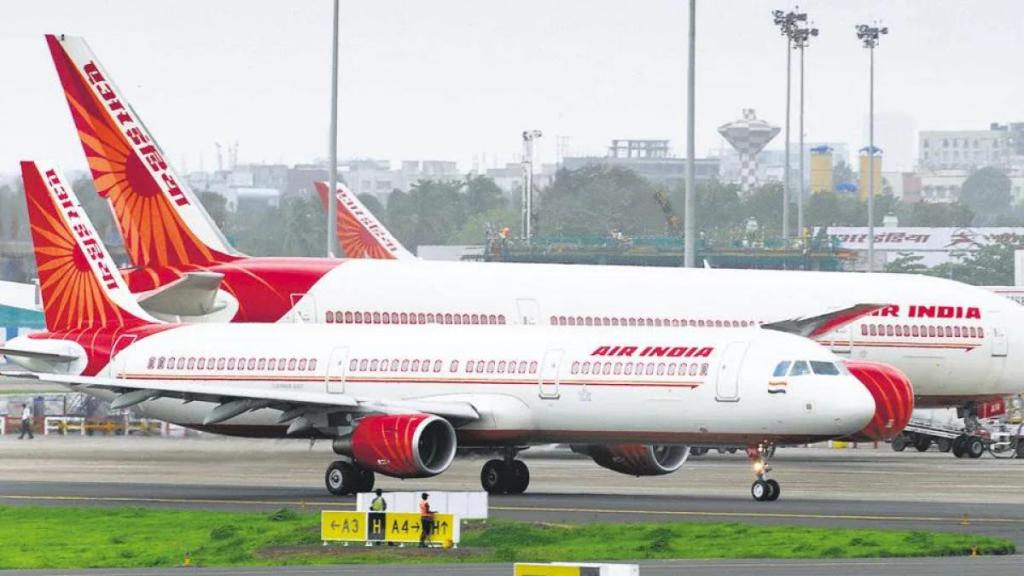
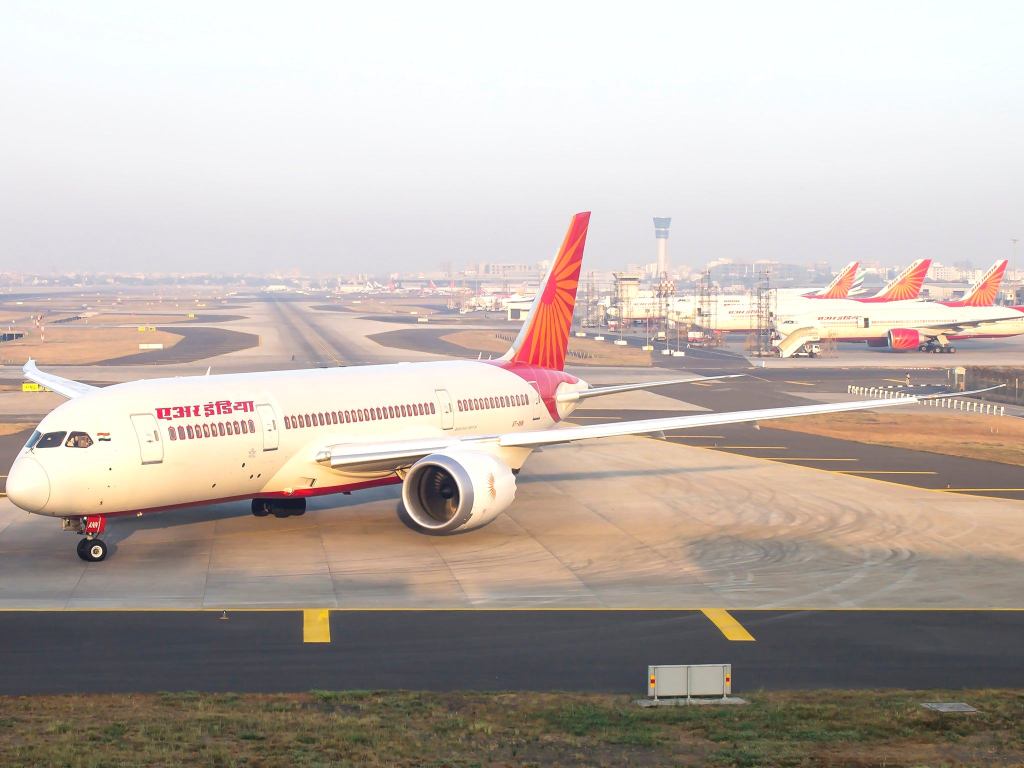
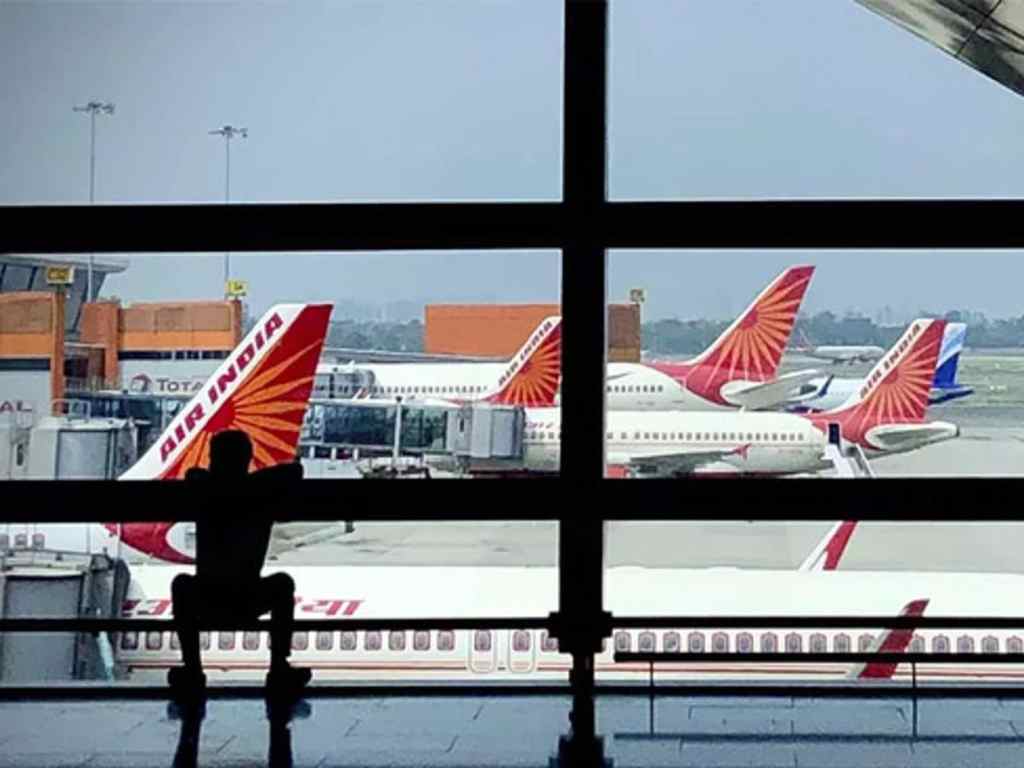
Los pilotos de Air India habían dado, el 29 de Noviembre de 2021, un ultimátum de tres días a la dirección de Air India para satisfacer sus demandas. En una carta a Rajiv Bansal, Secretario de Aviación, enviada el Lunes 29/11 por la noche, los pilotos habían advertido que si no ven que el recorte salarial ilegal y los problemas relacionados se aborden dentro de los tres días, buscarán justicia a través de una acción industrial. Los pilotos de Air India, que habían advertido a la dirección de una huelga, han decidido reunirse con Rajiv Bansal, una vez antes de anunciar su decisión de ir a una huelga. Los pilotos de Air India han advertido a la aerolínea de una «acción industrial» si sus recortes salariales y atrasos no se pagan debidamente antes de que Air India sea entregada al nuevo propietario.
El Gremio de Pilotos de la India, el sindicato de pilotos que nuclea a la línea de aeronaves Boeing tuiteó el Domingo 28/11: «Las conversaciones con la gerencia junto con Pilots Indian con respecto al recorte salarial del 60% solo para los empleados con licencia, no concluyentes. Gestión de reuniones (CMD/SECY MOCA) mañana para encontrar una resolución pacífica».
Los pilotos de Air India habían dado, el 29 de Noviembre de 2021, un ultimátum de tres días a la dirección de Air India para satisfacer sus demandas. En una carta a Bansal, enviada el lunes por la noche, los pilotos habían advertido que si no ven que el recorte salarial ilegal y los problemas relacionados se aborden dentro de los tres días, buscarán justicia a través de una acción industrial. La carta fue escrita por el sindicato Airbus de la aerolínea, el Gremio de Pilotos Comerciales de la India (ICPA) y el Sindicato de Pilotos de Boeing, el Gremio de Pilotos de la India (IPG), que representan a más de 900 pilotos. Después de esto, la gerencia se comunicó con los pilotos y tuvo una reunión con ellos. Estos pilotos habían estado escribiendo a la aerolínea desde Octubre 2021, pero no han recibido ninguna respuesta.
En sus cartas anteriores, los pilotos se quejaron de que están agobiados por el «recorte salarial ilegal» del 55% y exigieron que se les pagara según los estándares del mercado. Mencionando sus problemas de desinversión de larga data, los pilotos también han exigido la retención del 25% de atrasos con intereses, declaración de propina, una opción de pago de licencias, beneficios médicos para todos los empleados permanentes, implicación fiscal en el subsidio de sustancias de escala retenida y liberación de grados pendientes a los primeros oficiales.
Los pilotos de alto rango de Air India, sin embargo, dijeron que la reunión con representantes de ambos grupos piloto el 3 de Diciembre de 2021 no fue concluyente. «La gerencia fue informada de que somos conscientes de que los ingresos de Air India se remontan a los niveles anteriores a Covid-19 y que la mayoría de los pilotos están trabajando más que antes de Covid-19. La gerencia nos pidió que aguantemos hasta la adquisición. Sin embargo, ambos sindicatos advirtieron de graves consecuencias si no se resolvía la emisión», dijo un piloto de alto rango.
«Somos firmes con nuestra decisión de acción industrial. Nos estamos reuniendo con nuestro CMD con la esperanza de que tenga una solución definitiva a nuestros problemas. Esperamos sinceramente que la aerolínea no nos obligue a tomar una decisión extrema», dijo otro piloto senior que no quiso ser identificado.
India pilots industrial action
Pilots-Secretary of Aviation Meeting India
Air India pilots had given, on November 29, 2021, a three-day ultimatum to Air India management to meet their demands. In a letter to Rajiv Bansal, Secretary of Aviation, sent on Monday night 11/29, the pilots had warned that if they do not see that the illegal pay cut and related issues are addressed within three days, they will seek justice through of an industrial action. The Air India pilots, who had warned the management of a strike, have decided to meet with Rajiv Bansal once before announcing his decision to go on strike. Air India pilots have warned the airline of «industrial action» if its wage cuts and arrears are not paid properly before Air India is handed over to the new owner.
The Pilots Guild of India, the pilots union that brings together the Boeing aircraft line, tweeted on Sunday 11/28: «Discussions with management along with Pilots Indian regarding the 60% pay cut only for employees with license, inconclusive. Meeting management (CMD/SECY MOCA) tomorrow to find a peaceful resolution».
Air India pilots had given, on November 29, 2021, a three-day ultimatum to Air India management to meet their demands. In a letter to Bansal, sent Monday night, the pilots had warned that if they do not see that the illegal pay cut and related issues are addressed within three days, they will seek justice through industrial action. The letter was written by the airline’s Airbus Union, the Commercial Pilots Guild of India (ICPA) and the Boeing Pilots Union, the Pilots Guild of India (IPG), representing more than 900 pilots. After this, the management contacted the pilots and had a meeting with them. These pilots had been writing to the airline since October, but have not received any response.
In their previous letters, the pilots complained that they are burdened by the «illegal pay cut» of 55% and demanded that they be paid according to market standards. Citing their long-standing divestment issues, the pilots have also demanded 25% withholding of arrears with interest, tip declaration, a leave payment option, medical benefits for all permanent employees, tax involvement in the subsidy of substances. scale withheld and release of pending grades to first officers.
Senior Air India pilots, however, said the meeting with representatives from both pilot groups on December 3 was inconclusive. «Management was informed that we are aware that Air India’s revenue goes back to pre-Covid-19 levels and that most pilots are working harder than before Covid-19. Management asked us to hold out until However, both unions warned of serious consequences if the issue was not resolved», said a senior pilot.
«We are firm with our industrial action decision. We are meeting with our CMD in the hope that he has a definitive solution to our problems. We sincerely hope that the airline does not force us to make an extreme decision», said another senior pilot who did not wanted to be identified.
भारत पायलट औद्योगिक कार्रवाई
पायलट-सचिव उड्डयन बैठक भारत
एयर इंडिया के पायलटों ने 29 नवंबर, 2021 को एयर इंडिया प्रबंधन को अपनी मांगों को पूरा करने के लिए तीन दिन का अल्टीमेटम दिया था। सोमवार रात 11/29 को भेजे गए विमानन सचिव राजीव बंसल को लिखे एक पत्र में, पायलटों ने चेतावनी दी थी कि यदि वे यह नहीं देखते हैं कि अवैध वेतन कटौती और संबंधित मुद्दों को तीन दिनों के भीतर संबोधित किया जाता है, तो वे एक के माध्यम से न्याय की मांग करेंगे। औद्योगिक कार्यकलाप। एयर इंडिया के पायलटों, जिन्होंने प्रबंधन को हड़ताल की चेतावनी दी थी, ने हड़ताल पर जाने के अपने फैसले की घोषणा करने से पहले एक बार राजीव बंसल से मिलने का फैसला किया है। एयर इंडिया के पायलटों ने एयरलाइन को «औद्योगिक कार्रवाई» की चेतावनी दी है, अगर एयर इंडिया को नए मालिक को सौंपने से पहले उसके वेतन में कटौती और बकाया का भुगतान ठीक से नहीं किया जाता है।
पायलट्स गिल्ड ऑफ इंडिया, बोइंग एयरक्राफ्ट लाइन को एक साथ लाने वाली पायलट यूनियन, ने रविवार 11/28 को ट्वीट किया: «पायलट इंडियन के साथ प्रबंधन के साथ केवल लाइसेंस वाले कर्मचारियों के लिए 60% वेतन कटौती के संबंध में चर्चा, अनिर्णायक। बैठक प्रबंधन (सीएमडी) /एसईसी एमओसीए) कल शांतिपूर्ण समाधान निकालने के लिए»।
एयर इंडिया के पायलटों ने 29 नवंबर, 2021 को एयर इंडिया प्रबंधन को अपनी मांगों को पूरा करने के लिए तीन दिन का अल्टीमेटम दिया था। सोमवार की रात भेजे गए बंसल को लिखे पत्र में पायलटों ने चेतावनी दी थी कि अगर तीन दिनों के भीतर अवैध वेतन कटौती और संबंधित मुद्दों का समाधान नहीं होता है, तो वे औद्योगिक कार्रवाई के माध्यम से न्याय की मांग करेंगे। यह पत्र एयरलाइन के एयरबस यूनियन, कमर्शियल पायलट गिल्ड ऑफ इंडिया (ICPA) और बोइंग पायलट यूनियन, पायलट्स गिल्ड ऑफ इंडिया (IPG) द्वारा लिखा गया था, जो 900 से अधिक पायलटों का प्रतिनिधित्व करता है। इसके बाद प्रबंधन ने पायलटों से संपर्क किया और उनके साथ बैठक की। ये पायलट अक्टूबर से एयरलाइन को लिख रहे थे, लेकिन उन्हें कोई जवाब नहीं मिला।
अपने पिछले पत्रों में, पायलटों ने शिकायत की कि वे 55% की «अवैध वेतन कटौती» के बोझ से दबे हुए हैं और मांग की कि उन्हें बाजार के मानकों के अनुसार भुगतान किया जाए। अपने लंबे समय से विनिवेश के मुद्दों का हवाला देते हुए, पायलटों ने ब्याज के साथ बकाया राशि का 25% रोक, टिप घोषणा, छुट्टी भुगतान विकल्प, सभी स्थायी कर्मचारियों के लिए चिकित्सा लाभ, पदार्थों की सब्सिडी में कर शामिल होने की भी मांग की है। पहले अधिकारियों को ग्रेड।
हालांकि, एयर इंडिया के वरिष्ठ पायलटों ने कहा कि 3 दिसंबर को दोनों पायलट समूहों के प्रतिनिधियों के साथ बैठक अनिर्णायक थी। «प्रबंधन को सूचित किया गया था कि हम जानते हैं कि एयर इंडिया का राजस्व पूर्व-कोविद-19 स्तरों पर वापस चला जाता है और अधिकांश पायलट कोविद -19 से पहले की तुलना में अधिक कठिन काम कर रहे हैं। प्रबंधन ने हमें तब तक रोके रखने के लिए कहा, जब तक कि दोनों यूनियनों ने गंभीर परिणामों की चेतावनी दी, यदि मुद्दा हल नहीं हुआ था», एक वरिष्ठ पायलट ने कहा।
एक अन्य वरिष्ठ पायलट ने कहा, «हम अपने औद्योगिक कार्रवाई के फैसले के साथ दृढ़ हैं। हम अपने सीएमडी के साथ इस उम्मीद में बैठक कर रहे हैं कि उनके पास हमारी समस्याओं का एक निश्चित समाधान है। हमें पूरी उम्मीद है कि एयरलाइन हमें अत्यधिक निर्णय लेने के लिए मजबूर नहीं करेगी»। जो पहचानना नहीं चाहता था।
Las obras de ampliación del Parque Científico y Tecnológico del Alentejo (PACT), en Évora, República de Portugal, han comenzado, ayudando a promover la tecnología y la innovación en la región. El Presidente Ejecutivo del parque, Soumodip Sarkar, reveló que la construcción del primer edificio de la 2ª fase del PACT se encuentra en marcha. «Ya hemos comenzado con la construcción de un edificio, pero formalmente, colocaremos la primera piedra el 13 de Diciembre», dijo Soumodip Sarkar, quien también es Vicerrector de la Universidad de Évora (UE).
El proyecto, con la firma del Arquitecto Carrilho da Graça, tiene una superficie de 6.100 metros cuadrados e implica la construcción de cuatro nuevos edificios, lo que representa una inversión de «casi € 9 millones de Euros», indicó Soumodip Sarkar. Las nuevas instalaciones se ubicarán en terrenos adyacentes al actual edificio PACT, inaugurado en septiembre de 2015, tras una inversión de 3,6 millones de euros. Según Soumodip Sarkar, la primera fase de PACT es actualmente un éxito, pues no existe espacio para más empresas y el parque continúa recibiendo pedidos de otros que están interesados en venir al interior. Ahora, como parte de la ampliación, la mitad del edificio en construcción está reservado para una empresa, y este proyecto debería finalizar en Mayo de 2022. En cuanto a los otros tres edificios, dado que cuentan con una fuente de financiación diferente, las obras comenzarán en Enero 2022.
El funcionario dijo que cree que, para mediados de 2023, el PACT ya tendrá tres edificios. Las nuevas instalaciones estarán dedicadas a cuatro áreas, una de ellas aeronáutica, debido a la presencia en Évora de empresas como Embraer y Mecachrome y al hecho de que el Alentejo quiere afirmarse como un ‘clúster’ en este sector, con inversiones en otros municipios de la región. Otra área es la salud digital, con la construcción de un nuevo hospital y la posible creación de una Escuela de Medicina en la Ciudad de Évora, dijo Soumodip Sarkar.
Destacando el potencial del Alentejo, que ofrece, por ejemplo, un coste de vida más barato y una calidad de vida muy diferente a la que existe en Lisboa, el funcionario dijo que PACT quiere contribuir a retener a los jóvenes del Alentejo y atraer no solo empresas, sino también familias, de otras partes de Portugal y de Europa. El Alentejo no solo debe entenderse como un hermoso lugar para caminar o una región conocida por su gastronomía: «Tenemos que pensar en el Alentejo tecnológico», argumentó Soumodip Sarkar.
Alentejo investments in technology
Expansion of the PACT in Évora, Portugal
The expansion works of the Alentejo Science and Technology Park (PACT), in Évora, Republic of Portugal, have begun, helping to promote technology and innovation in the region. The Park’s Executive President, Soumodip Sarkar, revealed that the construction of the first building of the 2nd phase of the PACT is underway. «We have already started with the construction of a building, but formally, we will lay the first stone on December 13», said Soumodip Sarkar, who is also Vice Chancellor of the University of Évora (EU).
The project, signed by the architect Carrilho da Graça, has an area of 6,100 square meters and involves the construction of four new buildings, representing an investment of «almost € 9 million Euros», said Soumodip Sarkar. The new facilities will be located on land adjacent to the current PACT building, inaugurated in September 2015, after an investment of € 3.6 million Euros. According to Soumodip Sarkar, the first phase of PACT is currently a success, as there is no room for more companies and the park continues to receive requests from others who are interested in coming to the interior. Now, as part of the expansion, half of the building under construction is reserved for a company, and this project should end in May 2022. As for the other three buildings, given that they have a different source of financing, the works They will begin in January 2022.
The official said he believes that by mid-2023, the PACT will already have three buildings. The new facilities will be dedicated to four areas, one of them aeronautics, due to the presence in Évora of companies such as Embraer and Mecachrome and the fact that Alentejo wants to establish itself as a ‘cluster’ in this sector, with investments in other municipalities of the region. Another area is digital health, with the construction of a new hospital and the possible creation of a School of Medicine in the City of Évora, said Soumodip Sarkar.
Highlighting the potential of the Alentejo, which offers, for example, a cheaper cost of living and a quality of life very different from what exists in Lisbon, the official said that PACT wants to contribute to retain the young people of Alentejo and attract not only companies, but also families, from other parts of Portugal and Europe. The Alentejo should not only be understood as a beautiful place to walk or a region known for its gastronomy: «We have to think about the technological Alentejo», argued Soumodip Sarkar.
Investimentos do Alentejo em tecnologia
Expansão do PACT em Évora, Portugal
Já foram iniciadas as obras de expansão do Parque de Ciência e Tecnologia do Alentejo (PACT), em Évora, República de Portugal, ajudando a promover a tecnologia e a inovação na região. O Presidente Executivo do Parque, Soumodip Sarkar, revelou que está em curso a construção do primeiro edifício da 2ª fase do PACT. “Já iniciamos a construção de um edifício, mas formalmente colocaremos a primeira pedra no dia 13 de Dezembro”, disse Soumodip Sarkar, que também é vice-reitor da Universidade de Évora (UE).
O projecto, assinado pelo arquitecto Carrilho da Graça, tem uma área de 6.100 metros quadrados e envolve a construção de quatro novos edifícios, representando um investimento de “quase € 9 milhões de Euros”, disse Soumodip Sarkar. As novas instalações ficarão localizadas em terrenos adjacentes ao atual edifício PACT, inaugurado em setembro de 2015, após um investimento de € 3,6 milhões de Euros. Segundo Soumodip Sarkar, a primeira fase do PACT hoje é um sucesso, pois não há espaço para mais empresas e o parque continua recebendo pedidos de outros interessados em vir para o interior. Agora, como parte da ampliação, metade do prédio em construção está reservado para uma empresa, e essa obra deve terminar em Maio de 2022. Quanto aos outros três prédios, por terem uma fonte de financiamento diferente, as obras Eles vão. começar em Janeiro de 2022.
O responsável disse acreditar que, até meados de 2023, o PACT já terá três edifícios. Las nuevas instalaciones estarán dedicadas a cuatro áreas, una de ellas aeronáutica, debido a la presencia en Évora de empresas como Embraer y Mecachrome y al hecho de que el Alentejo quiere afirmarse como un ‘clúster’ en este sector, con inversiones en otros municipios de a região. Outra área é a saúde digital, com a construção de um novo hospital e a possível criação de uma Faculdade de Medicina na Cidade de Évora, disse Soumodip Sarkar.
Destacando o potencial do Alentejo, que oferece, por exemplo, um custo de vida mais barato e uma qualidade de vida muito diferente do que existe em Lisboa, o responsável disse que o PACT quer contribuir para reter os jovens alentejanos e não só atrair empresas, mas também famílias, de outras partes de Portugal e da Europa. O Alentejo não deve ser entendido apenas como um belo local para passear ou uma região conhecida pela sua gastronomia: “Temos que pensar no Alentejo tecnológico”, defendeu Soumodip Sarkar.
AW | 2021 12 05 20:27 | AVIATION ORGANISMS / GOVERNMENT
Respuesta gobiernos a Omicron amenaza recuperación emergente
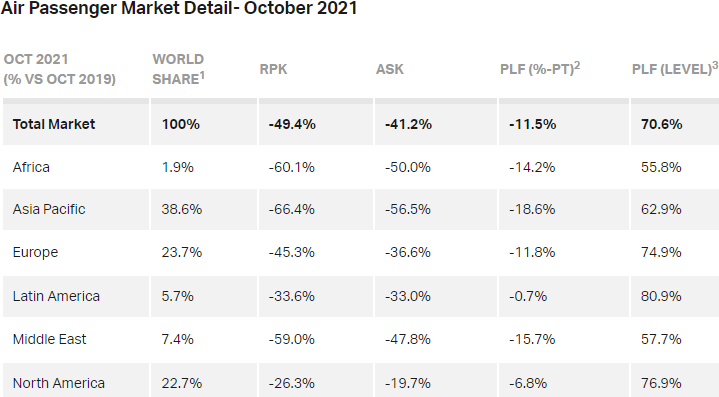
La Asociación Internacional de Transporte Aéreo (IATA) anunció que la recuperación de los viajes aéreos continuó en octubre de 2021 con mejoras de amplia base en los mercados nacionales e internacionales. También advirtió que la imposición de prohibiciones de viaje por parte de los gobiernos, en contra del consejo de la OMS, podría amenazar la recuperación del sector. Debido a que las comparaciones entre los resultados mensuales de 2021 y 2020 están distorsionadas por el impacto extraordinario de COVID-19, a menos que se indique lo contrario, todas las comparaciones son con octubre de 2019, que siguió un patrón de demanda normal.
La demanda total de viajes aéreos en Octubre de 2021 (medida en ingresos por pasajero-kilómetro o RPK) se redujo un 49,4% en comparación con Octubre 2019. Esto mejoró con respecto a la caída del 53,3% registrada en Septiembre de 2021, en comparación con dos años antes. Los mercados nacionales bajaron un 21,6% en comparación con Octubre 019, mejorando la disminución del 24,2% registrada en Septiembre frente a septiembre de 2019. La demanda internacional de pasajeros en octubre fue un 65,5% inferior a Octubre de 2019, en comparación con una disminución del 69,0% para septiembre en comparación con el período de 2019, con todas las regiones mostrando una mejora. «El desempeño del tráfico de Octubre refuerza que las personas viajarán cuando se les permita. Desafortunadamente, las respuestas del gobierno a la aparición de la variante Omicron están poniendo en riesgo la conectividad global que tanto tiempo ha llevado reconstruir», dijo Willie Walsh, Director General de IATA.
Mercados Internacionales de Pasajeros
El tráfico aéreo internacional en el mercado de Europa en Octubre 2021 disminuyó un 50,6% en comparación con Octubre de 2019, mucho mejor que la caída del 56,5% en Septiembre 2021 en comparación con Septiembre de 2019. La capacidad cayó un 41,3% y el factor de carga cayó 13,7 puntos porcentuales hasta el 72,5%. Las aerolíneas de Asia-Pacífico vieron caer su tráfico internacional de Octubre un 92,8% en comparación con Octubre de 2019, mejorando fraccionalmente con respecto a la disminución del 93,1% registrada para Septiembre de 2021 en comparación con hace dos años. La capacidad cayó un 83,8% y el factor de carga bajó 44,0 puntos porcentuales a 35,7%, el más bajo entre las regiones con diferencia. Las aerolíneas de Oriente Medio tuvieron una caída de la demanda del 60,3% en Octubre 2021 en comparación con octubre de 2019, un gran salto sobre la caída del tráfico del 67,1% registrada en Septiembre contra Septiembre de 2019. La capacidad disminuyó un 49,1%, y el factor de carga cayó 16,1 puntos porcentuales a 57,5%. Las aerolíneas norteamericanas experimentaron una caída del tráfico del 57,0% en Octubre 2021 en comparación con el período de 2019, mejorada desde una disminución del 61,4% en Septiembre 2021 en comparación con el mismo mes de 2019. La capacidad cayó un 43,2%, y el factor de carga cayó 20,0 puntos porcentuales a 62,4%. Las aerolíneas latinoamericanas experimentaron una caída del 55,1% en el tráfico de Octubre 2021, en comparación con el mismo mes interanual de 2019. En Septiembre 2021, el tráfico bajó un 61,4% en comparación con hace dos años. La capacidad de 10/2021 cayó 52.5% y el factor de carga cayó 4.3 puntos porcentuales a 76.9%, que fue el factor de carga más alto entre las regiones por décimo tercer mes consecutivo. El tráfico de las aerolíneas africanas cayó un 60,2% en Octubre 2021 en comparación con hace dos años. El tráfico en Septiembre bajó un 62,1% durante el período correspondiente de 2019. La capacidad de Octubre 2021 bajó un 49,0% y el factor de carga disminuyó 15,2 puntos porcentuales a 54,1%. El mercado interno de la India experimentó una disminución del 27,0% en la demanda de Octubre 2021 en comparación con Octubre de 2019, una gran mejora desde una caída del 40,5% en Septiembre tras la flexibilización de algunas medidas de control. En la Federación Rusia el tráfico doméstico de Octubre 2021 subió un 24% en comparación con Octubre de 2019, lo que suspendió una desaceleración desde el crecimiento del 29,3% registrado en Septiembre de 2021 con respecto al período de hace dos años, atribuible a una fuerte ola de COVID-19 y el inicio de la temporada de viajes de invierno.
Perspectivas aéreas
«El levantamiento de las restricciones de Estados Unidos a los viajes desde unos 33 países el mes pasado aumentó las esperanzas de que un aumento en la demanda de viajes reprimida impulsaría el tráfico durante el próximo invierno del hemisferio norte. Pero la aparición de la variante de Omicron indujo en pánico a muchos gobiernos para que una vez más restringieran o eliminaran por completo la libertad de viajar, a pesar de que la OMS claramente aconsejó que «las prohibiciones generales de viaje no evitarán la propagación internacional, y suman una pesada carga para las vidas y los medios de subsistencia. La lógica del consejo de la OMS fue evidente a los pocos días de la identificación de Omicron en Sudáfrica, con su presencia ya confirmada en todos los continentes. Las prohibiciones de viaje mal aconsejadas son tan ineficaces como cerrar la puerta del establo después de que el caballo se haya atornillado», dijo Willie Walsh.
Específicamente, la IATA instó a los gobiernos a centrarse en tres áreas clave: Protocolos de salud simplificados, Soluciones digitales para procesar credenciales de salud, Medidas de COVID-19 proporcionadas a los niveles de riesgo con un proceso de revisión continua. «Además, los gobiernos deben abordar la terrible disparidad en las tasas de vacunación que ha visto al mundo desarrollado ofrecer refuerzos en un momento en que menos del 10% del continente africano está completamente vacunado», dijo Willie Walsh.
IATA aviation outlook
Governments response to Omicron threatens emerging recovery
The International Air Transport Association (IATA) announced that the recovery in air travel continued in October 2021 with broad-based improvements in domestic and international markets. He also warned that the imposition of travel bans by governments, against the advice of the WHO, could threaten the recovery of the sector. Because comparisons between the 2021 and 2020 monthly results are skewed by the extraordinary impact of COVID-19, unless otherwise noted, all comparisons are to October 2019, which followed a normal demand pattern.
Total demand for air travel in October 2021 (measured in revenue per passenger-kilometer or RPK) was down 49.4% compared to October 2019. This improved from the 53.3% drop recorded in September 2021, compared to two years earlier. Domestic markets were down 21.6% compared to October 019, improving on the 24.2% decrease registered in September compared to September 2019. International passenger demand in October was 65.5% lower than October 2019, compared to a 69.0% decrease for September compared to the 2019 period, with all regions showing an improvement. «The October traffic performance reinforces that people will travel when allowed. Unfortunately, government responses to the emergence of the Omicron variant are putting at risk global connectivity that has taken so long to rebuild», said Willie Walsh, Director IATA General.
1) % of industry RPKs in 2020 2) Change in load factor vs. the same month in 2019 3) Load Factor Level
Note: the seven domestic passenger markets for which broken-down data are avaiable for approximately 46% of global total RPKs and 84% of domestic RPKs.
Note: The total industry and regional growth rates are based on a constant sample of airlines combining reported data and estimates for missing observations. Airline traffic is allocated according to the region in which the carrier is registrated; it should not be considered as regional traffic.
1) Percentage (%) of industry RPKs in 2020 2) Change in load factor vs. the same month in 2019 3) Load Factor Level
Note: the seven domestic passenger markets for which broken-down data are avaiable for approximately 46% of global total RPKs and 84% of domestic RPKs.
Note: The total industry and regional growth rates are based on a constant sample of airlines combining reported data and estimates for missing observations. Airline traffic is allocated according to the region in which the carrier is registrated; it should not be considered as regional traffic.
International Passenger Markets
International air traffic in the European market in October 2021 decreased by 50.6% compared to October 2019, much better than the fall of 56.5% in September 2021 compared to September 2019. Capacity fell by 41 , 3% and the load factor fell 13.7 percentage points to 72.5%. Asia-Pacific airlines saw their October international traffic drop 92.8% compared to October 2019, improving fractionally from the 93.1% decrease recorded for September 2021 compared to two years ago. Capacity fell 83.8% and load factor fell 44.0 percentage points to 35.7%, the lowest among regions by far. Middle Eastern airlines saw a 60.3% drop in demand in October 2021 compared to October 2019, a big jump from the 67.1% drop in traffic recorded in September versus September 2019. Capacity decreased 49.1%, and the load factor fell 16.1 percentage points to 57.5%. North American airlines experienced a 57.0% drop in traffic in October 2021 compared to the 2019 period, improved from a 61.4% decrease in September 2021 compared to the same month in 2019. Capacity fell by 43 , 2%, and the load factor fell 20.0 percentage points to 62.4%. Latin American airlines experienced a 55.1% drop in traffic in October 2021, compared to the same year-on-year month in 2019. In September 2021, traffic was down 61.4% compared to two years ago. 10/2021 capacity fell 52.5% and load factor fell 4.3 percentage points to 76.9%, which was the highest load factor among regions for the 13th consecutive month. African airline traffic fell 60.2% in October 2021 compared to two years ago. Traffic in September decreased 62.1% during the corresponding period of 2019. Capacity in October 2021 decreased 49.0% and load factor decreased 15.2 percentage points to 54.1%. The Indian domestic market saw a 27.0% decrease in demand in October 2021 compared to October 2019, a big improvement from a 40.5% drop in September following the easing of some control measures. In the Russian Federation, domestic traffic in October 2021 rose 24% compared to October 2019, which was a slowdown from the 29.3% growth registered in September 2021 compared to the period two years ago, attributable to a strong wave of COVID-19 and the start of the winter travel season.
Air perspectives
«The lifting of US restrictions on travel from some 33 countries last month raised hopes that an increase in pent-up travel demand would boost traffic during the upcoming Northern Hemisphere winter. But theemergence of the Omicron panicked many governments to once again restrict or completely eliminate freedom to travel, despite the WHO clearly advising that blanket travel bans will not prevent international spread, and put a heavy burden on women. lives and livelihoods. The logic of the WHO advice was evident within days of Omicron’s identification in South Africa, with its presence already confirmed on all continents. Ill-advised travel bans are as ineffective as closing the stable door after the horse has been bolted», Walsh said.
Specifically, IATA urged governments to focus on three key areas: Simplified health protocols, Digital solutions for processing health credentials, COVID-19 measures provided at risk levels with an ongoing review process. «In addition, governments must address the dire disparity in vaccination rates that has seen the developed world offer boosters at a time when less than 10% of the African continent is fully vaccinated», said Willie Walsh.
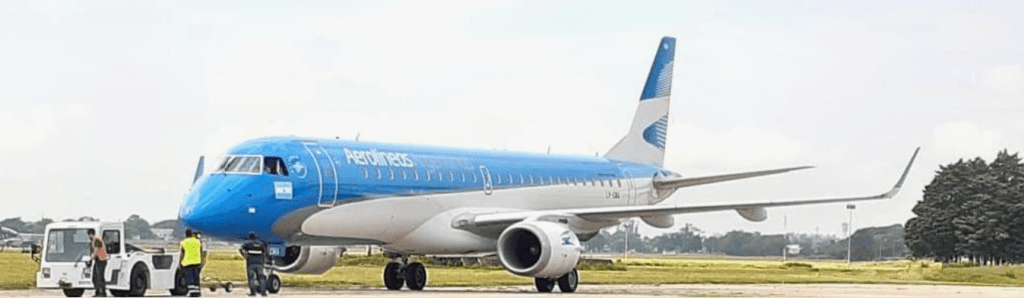
Incorpora 2Frq/S San Juan—Córdoba 01/2022 Incrementa a 14 frecuencias a Bariloche Críticas a las políticas tarifarias
Aerolíneas Argentinas pondrá dos vuelos por semana a San Juan—Córdoba a partir de Enero 2022. La última vez que hubo vuelos entre San Juan y Córdoba fue en el 2012, según recuerdan fuentes del sector. Ahora, después de diez años después, adelantaron que a partir del próximo año Aerolíneas Argentinas pondrá dos vuelos semanales, los Domingos y Miércoles. Los dos vuelos semanales partirán desde Buenos Aires/AEP con escala en Córdoba/COR y arribando a San Juan/UAQ. La vuelta, que está prevista entre las 10 y las 11 de la mañana, será también con destino a la provincia mediterránea y punto final en Buenos Aires. La intención es que el horario permita, tanto a la venida como a la vuelta, poder hacer combinaciones con la mayor parte de los vuelos internacionales que llegan al Aeropuerto Internacional Ingeniero Ambrosio Taravella, que se encuentra a 11,5 kilómetros del centro de la capital de esa provincia mediterránea. Los valores de los pasajes no están definidos saldrán a la venta a partir de la próxima semana, según confirmó ayer la Ministra de Turismo, Claudia Grynszpan. La Ministra Grynszpan destacó que hay una fuerte vinculación entre San Juan y Córdoba, que justifican la necesidad de los vuelos, porque hay demanda de muchos estudiantes sanjuaninos y porque existe un fuerte vínculo comercial y empresarial entre ambas provincias.
La funcionaria sanjuanina, que lidera el Consejo Federal de Turismo (CFT), estuvo participando ayer en la apertura de la Feria Internacional de Turismo de América Latina (FIT), el evento anual más importante del sector turístico. «Estos nuevos vuelos generarán la posibilidad de que llegue a San Juan turismo internacional», dijo la funcionaria. La última vez que hubo vuelos entre San Juan y Córdoba, según recuerdan fuentes del sector, fue en el 2012, cuando llegaban a la estación aérea de Las Chacritas dos vuelos semanales de una aerolínea privada, AeroChaco, que operaba aviones a hélice y de pequeño porte, con capacidad para unos quince pasajeros. AeroChaco era una línea aérea argentina, con base en la ciudad de Resistencia, en Chaco. Fue fundada por el Gobierno de esa provincia en los años sesenta.
Actualmente, desde el Aeropuerto San Juan/Domingo Faustino Sarmiento posee trtece frecuencias semanales hacia Buenos Aires con dos vuelos diarios, excepto el Domingo con una frecuencia diaria. Además, desde el Gobierno provincial se viene trabajando con una agenda cargada de eventos. Un ejemplo fue el partido de Argentina con Brasil, en noviembre, para el que hizo falta contratar vuelos privados porque los de Aerolíneas Argentinas resultaron insuficientes. Y en carpeta hay otros acontecimientos con características internacionales, como la Vuelta Ciclística a San Juan, que tendrá lugar desde el 30 de Enero al 6 de Febrero del 2022, con la participación de varios de los principales equipos del mundo. Para Marzo 2022 está previsto el Congreso Internacional del Tomate, que congregará en la provincia a invitados de todo el planeta.
San Juan, retoman obras
Con un presupuesto de AR$ 1.951 millones de Pesos el Organismo Regulador del Sistema Nacional de Aeropuertos (ORSNA) y Aeropuertos Argentina 2000, realizaron el llamado a licitación para la continuación de la obra de la terminal de pasajeros del Aeropuerto Domingo Faustino Sarmiento. La intención es adjudicar los trabajos en Febrero de 2022, para iniciarlos al mes siguiente.
Será la cuarta vez que se retomarán las obras, que tienen un avance del 18%. Así, la nueva licitación es por el 82% de los trabajos restantes. El plazo de ejecución proyectado es de 24 meses. La construcción de una nueva terminal de pasajeros permitirá que la provincia eleve su categoría con un nuevo edificio de nivel internacional, equipado con la mejor tecnología para usuarios y pasajeros. El aeropuerto pasará de una terminal existente con 1.706 m2 a una nueva con una superficie cubierta total de 5.000 m2, distribuidos en dos niveles. Incluso contará con mangas para el ascenso y descenso directamente desde las aeronaves.
A330 cabotaje
La introducción del Airbus A330 en rutas de cabotaje por parte de Aerolíneas Argentinas fue, principalmente, debido a un aumento en la demanda del turismo interno. En la actualidad, además de Bariloche, El Calafate, Iguazú y Ushuaia cuentan con servicios de estos aviones.
Buenos Aires—Bariloche
De acuerdo al sistema de reserva de Aerolíneas Argentinas, a partir del 6 de Diciembre de 2021 aumentará sus vuelos entre Buenos Aires/EZE—Bariloche/BRC en aeronaves Airbus A330-200. La empresa argentina tendrá catorce operaciones semanales con dichas aeronaves. Este cronograma estaría durante Diciembre 2021. En Enero 2022 volvería la frecuencia diaria a Bariloche con los Airbus A330-200.
Reclamos tarifarios
El Senador Nacional fueguino de Juntos por el Cambio (JXC), Pablo Daniel Blanco, criticó duramente la política tarifaria de la línea de bandera y acusó a sus autoridades de llevar adelante una “política deliberada de vaciamiento que no considera en absoluto ni las necesidades de conectividad del país ni las de los usuarios. Lo de Aerolíneas Argentinas ya es incalificable. Los fueguinos tenemos que padecer a este verdadero monopolio de La Cámpora que tiene a la mitad de su flota en tierra, no aumenta las frecuencias de sus vuelos y, encima, impone tarifas exorbitantes. No puede ser que un pasaje de los baratos ida y vuelta a Buenos Aires desde Ushuaia cueste AR$ 60 mil Pesos como mínimo si el viajero tiene la suerte de conseguir lugar. De acá a fin de año está casi todo tomado con excepción de algunos pocos asientos business y los fueguinos necesitan viajar no sólo por razones turísticas sino también familiares, de estudio o por enfermedad. Hace meses envié notas al titular de la empresa y al Ministro de Transporte que jamás fueron respondidas. La Cámpora es así: se adueñan de bienes y empresas públicas, las vacían o echan a perder de manera deliberada. Esta política tarifaria, que no dudo en calificar de abusiva y extorsiva, nada tiene que ver con el federalismo que falsamente pregona el gobierno y que realmente necesita el país. La Provincia del Tierra del Fuego por su condición insular es aero-dependiente y esto agrava más la situación de los fueguinos que necesitan pronta atención y respuesta. Es hora de que la autoridad de aplicación de la Ley de Defensa de la Competencia intervenga de una buena vez frente a la obvia conducta anticompetitiva por abuso de posición dominante de Aerolíneas Argentinas”, fustigó el Senador fueguino.
Aerolíneas increases FRQ and claims
Incorporates 2Frq/S San Juan—Córdoba 01/2022 Increase to 14 frequencies to Bariloche Criticisms of tariff policies
Aerolíneas Argentinas will put two flights per week to San Juan—Córdoba from January 2022. The last time there were flights between San Juan and Córdoba was in 2012, according to sources in the sector. Now, after ten years later, they announced that starting next year Aerolíneas Argentinas will put two weekly flights, on Sundays and Wednesdays. The two weekly flights will depart from Buenos Aires/AEP with a stopover in Córdoba/COR and arriving at San Juan/UAQ. The return, which is scheduled between 10 and 11 in the morning, will also be bound for the Mediterranean province and ending point in Buenos Aires. The intention is that the schedule allows, both on arrival and on the return, to be able to make combinations with most of the international flights that arrive at the Ingeniero Ambrosio Taravella International Airport, which is located 11.5 kilometers from the center of the capital of that Mediterranean province. The values of the tickets are not defined and will go on sale starting next week, as confirmed yesterday by the Minister of Tourism, Claudia Grynszpan. Minister Grynszpan stressed that there is a strong link between San Juan and Córdoba, which justifies the need for flights, because there is demand from many San Juan students and because there is a strong commercial and business link between both provinces.
The San Juan official, who leads the Federal Tourism Council (CFT), was participating yesterday in the opening of the International Tourism Fair of Latin America (FIT), the most important annual event in the tourism sector. «These new flights will generate the possibility of international tourism arriving in San Juan», said the official. The last time there were flights between San Juan and Córdoba, according to sources in the sector, was in 2012, when two weekly flights from a private airline, AeroChaco, which operated propeller and small planes arrived at the Las Chacritas air station. size, with capacity for about fifteen passengers. AeroChaco was an Argentine airline, based in the city of Resistencia, in Chaco. It was founded by the Government of that province in the sixties.
Currently, from the San Juan/Domingo Faustino Sarmiento Airport it has thirteen weekly frequencies to Buenos Aires with two daily flights, except on Sunday with a daily frequency. In addition, the provincial government has been working with an agenda full of events. An example was Argentina’s match with Brazil, in November, for which it was necessary to hire private flights because those of Aerolíneas Argentinas were insufficient. And in the portfolio there are other events with international characteristics, such as the Vuelta Ciclística a San Juan, which will take place from January 30 to February 6, 2022, with the participation of several of the main teams in the world. The International Tomato Congress is scheduled for March 2022, which will bring together guests from all over the planet in the province.
San Juan, resume works
With a budget of AR$ 1,951 million pesos, the Regulatory Body of the National Airport System (ORSNA) and Airports Argentina 2000, made the call for bids for the continuation of the work of the passenger terminal of the Domingo Faustino Sarmiento Airport. The intention is to award the works in February 2022, to start them the following month.
It will be the fourth time that the works will be resumed, which are 18% complete. Thus, the new tender is for 82% of the remaining works. The projected execution period is 24 months. The construction of a new passenger terminal will allow the province to raise its category with a new international-level building, equipped with the best technology for users and passengers. The airport will go from an existing terminal with 1,706 m2 to a new one with a total covered area of 5,000 m2, distributed over two levels. It will even have sleeves for ascent and descent directly from the aircraft.
A330 cabotage
The introduction of the Airbus A330 on cabotage routes by Aerolíneas Argentinas was mainly due to an increase in demand from domestic tourism. Currently, in addition to Bariloche, El Calafate, Iguazú and Ushuaia have these aircraft services.
Buenos Aires—Bariloche
According to the Aerolíneas Argentinas reservation system, as of December 6, 2021, it will increase its flights between Buenos Aires/EZE-Bariloche/BRC in Airbus A330-200 aircraft. The Argentine company will have fourteen weekly operations with these aircraft. This schedule would be during December 2021. In January 2022 the daily frequency would return to Bariloche with Airbus A330-200s.
Tariff claims
The Fuegian National Senator of Together for Change (JXC), Pablo Daniel Blanco, harshly criticized the tariff policy of the flag line and accused his authorities of carrying out a “deliberate policy of emptying that does not consider at all the needs of connectivity of the country or users. The thing about Aerolíneas Argentinas is already unspeakable. We Fuegians have to suffer from this true monopoly of La Cámpora, which has half its fleet on land, does not increase the frequencies of its flights and, on top of that, imposes exorbitant rates. It cannot be that a cheap round trip ticket to Buenos Aires from Ushuaia costs AR$ 60 thousand pesos at least if the traveler is lucky enough to find a place. Between now and the end of the year, almost everything has been taken with the exception of a few business seats and Fuegians need to travel not only for tourist reasons but also for family reasons, for study or due to illness. Months ago I sent notes to the head of the company and the Minister of Transportation that were never answered. The Cámpora is like this: they take over property and public companies, empty them or deliberately spoil them. This rate policy, which I do not hesitate to describe as abusive and extortionate, has nothing to do with the federalism that the government falsely proclaims and that the country really needs. Due to its insular condition, the Province of Tierra del Fuego is aerodependent and this further aggravates the situation of Fuegians who need prompt attention and response. It is time for the enforcement authority of the Antitrust Law to intervene once and for all in the face of the obvious anticompetitive conduct due to abuse of the dominant position of Aerolíneas Argentinas”, the Fuegian Senator attacked.
PUBLISHER: Airgways.com DBk: Aerolineas.com / Senado.gob.ar / Fernando A. Torre / @airportlife / Airgways.com AW-POST: 202112051616AR
FAA inspecciones Boeing 787 por grietas estructurales
La Federal Aviation Administration (FAA) de Estados Unidos ha emitido dos Directivas de Aeronavegabilidad (AD) que requieren inspecciones de la línea Boeing 787 Dreamliner. El regulador de avaición ha comunicado que las aerolíneas y el constructor deberán realizar inspecciones de chequeo de la flota de aeronaves en línea de fabricación como así también de las unidades que se encuentran en las flotas de las líneas aéreas.
La FAA ha finalizado un plan de inspección para un subconjunto de Boeing 787 producidos entre 2013 y 2017 que pueden tener un shimming inadecuado en varias áreas. Dos directivas de aeronavegabilidad que se publican el 6 de Diciembre de 2021 exigen el protocolo de inspección para los operadores afectados, adoptando conjuntos de medidas respectivas para la seguridad del modelo de aeronaves fabricadas por el constructor americano.
FAA issues AD Boeing 787
FAA inspections Boeing 787 for structural cracks
The United States Federal Aviation Administration (FAA) has issued two Airworthiness Directives (AD) requiring inspections of the Boeing 787 Dreamliner line. The avaicion regulator has communicated that the airlines and the constructor must carry out check inspections of the aircraft fleet on the manufacturing line as well as the units that are in the airlines’ fleets.
The FAA has finalized an inspection plan for a subset of Boeing 787s produced between 2013 and 2017 that may have inadequate shimming in several areas. Two airworthiness directives published on December 6, 2021 require the inspection protocol for affected operators, adopting respective sets of measures for the safety of the aircraft model manufactured by the American manufacturer.
Manifestaciones continuidad laboral trabajadores Latam Argentina
Los trabajadores de Latam Airlines Argentina volvieron a marchar por reclamos de reinserción laboral este Jueves 02/12 para lograr que las firmas del sector aeronáutico prioricen su reinserción ante la reanudación plena de la actividad aérea, como se firmó en el Ministerio de Transporte de la República Argentina. Se formó una mesa de diálogo con buenas perspectivas.
La nueva protesta encabezada por los autoconvocados se realizó como las veces anteriores en el Aeropuerto Jorge Newbey, desde horas de la mañana del día Jueves 02/12. La compañía aérea matriz chilena volvió a operar en el país, pese a que se mantiene el conflicto abierto con cerca de 200 trabajadores, que resisten las cesantías iniciadas hace casi veinte meses. Luego de la protesta, se destacó que la fluidez en las negociaciones con las autoridades comenzó a regularizarse, y ya se lograron tres o cuatro audiencias seguidas, lo que consideran un paso positivo.
La protesta es parte del plan de protestas de un grupo de despedidos de Latam Argentina que a comienzos de año 2021 lograron el compromiso de la cartera de Transporte nacional para ser reincorporados a otras empresas del sector aerocomercial una vez que la actividad comenzara a normalizarse, pero que hasta ahora no se ha cumplido. Por eso, le piden al Ministro Alexis Guerrera que cumpla la palabra empeñada. «Retomamos hace un tiempo las audiencias y el canal de diálogo con las autoridades, por ese lado vemos logrando nuestro objetivo», explicó Martín Tomé, vocero del grupo de empleados. A partir de esto, desde hace un tiempo se abrió una mesa de negociación con representantes de los distintos sectores con algunas propuestas. Esta primera oferta fue considerada limitada, pero marca el inicio de un camino que puede terminar con el reclamo de este grupo: la reinserción laboral. En el caso de los tripulantes de cabina desean volver a desempeñar funciones arriba de un avión. «Parte del balance positivo a esta altura del conflicto, a casi dos años después de que comenzara, es lograr algunas propuestas, limitadas, pero que empiezan a mover la posibilidad de retomar actividades», completó Martín Tomé.
Retorno a los cielos
En los últimos meses, producto de la situación epidemiológica, se fueron liberando los cupos para los vuelos internacionales y de cabotaje, al punto que hoy está prácticamente normalizado el flujo. Esto era una condición para comenzar a reincorporar al personal de Latam. El Ministerio de Transporte informó esta semana que los primeros quince días de Noviembre se produjeron más de cuatrocientos arribos internacionales, lo que muestra esta normalidad de la actividad.
«Hoy hay más pasajeros que en la prepandemia. Latam volvió a operar desde Aeroparque, y desde el interior las rutas más rentables; hacen negocios en dólares y euros, y los trabajadores seguimos en la calle», se quejaron en la convocatoria los despedidos. «Logramos la firma de ocho empresas del sector para reincorporarnos, dependiendo de la vuelva a la actividad. Hoy el flujo supera el de marzo 2020, prepandemia. Muchas compañías están haciendo entrevistas para incorporar personal, priorizando ingresos de gente externa, dejando de lado el compromiso firmado», expresó Martín Tomé. Uno de los ejemplos que pusieron los empleados fue el de JetSmart Airlines Argentina, que hoy está tomando entre 80 y 100 trabajadores nuevos, pese a ser parte del compromiso. Lo mismo pasa con Flybondi líneas Aéreas, que está tomando empleados. En el caso de Aerolíneas Argentinas, que firmó el acuerdo a comienzos de este año, los trabajadores cesanteados afirman que la falta de cumplimiento del compromiso redunda además en una situación de sobrecarga laboral en el personal de la firma de bandera nacional. «La mayor parte del incremento laboral se dirige hacia Aerolíneas Argentinas, donde los trabajadores están sobrecargados, con ritmos extenuantes debido a la falta de personal. El Gobierno tiene la solución al alcance de la mano», dijeron los empleados. «Todas las compañías tienen un panorama de crecimientos, están realizando selección de personal, eso es alentador, nos preocupa que no se cumpla el compromiso asumido», dijo Martín Tomé.
Claims former employees Latam AR
Demonstrations labor continuity workers Latam Argentina
The workers of Latam Airlines Argentina will march again for claims of labor reintegration this Thursday 02/12 to ensure that the firms of the aeronautical sector prioritize their reintegration before the full resumption of the air activity, as signed in the Ministry of Transportation of the Republic Argentina. A dialogue table was formed with good prospects.
The new protest led by the autoconvocados was held as the previous times at Jorge Newbey Airport, from the morning of Thursday 02/12. The Chilean parent airline company returned to operate in the country, despite the fact that the conflict remains open with about 200 workers, who are resisting the layoffs that began almost twenty months ago. After the protest, it was highlighted that the fluidity in the negotiations with the authorities began to be regularized, and three or four hearings in a row have already been achieved, which they consider a positive step.
The protest is part of the protest plan of a group of laid off people from Latam Argentina who at the beginning of 2021 achieved the commitment of the national Transportation portfolio to be reincorporated to other companies in the aviation sector once the activity began to normalize, but that until now has not been fulfilled. For this reason, they ask Minister Alexis Guerrera to keep his word. «Some time ago we resumed the hearings and the channel of dialogue with the authorities, on that side we see achieving our objective», explained Martín Tomé, spokesman for the group of employees. Based on this, a negotiation table was opened for some time with representatives of the different sectors with some proposals. This first offer was considered limited, but it marks the beginning of a path that may end with the claim of this group: labor reintegration. In the case of cabin crew members, they wish to resume their duties on top of an aircraft. «Part of the positive balance at this point in the conflict, almost two years after it began, is to achieve some proposals, limited, but which begin to move the possibility of resuming activities», completed Martín Tomé.
Return to heaven
In recent months, as a result of the epidemiological situation, the quotas for international and domestic flights have been released, to the point that today the flow is practically normalized. This was a condition to start reinstating the Latam staff. The Ministry of Transport reported this week that the first fifteen days of November there were more than four hundred international arrivals, which shows this normality of activity.
«Today there are more passengers than in the prepandemic. Latam returned to operate from Aeroparque, and from the interior the most profitable routes; they do business in dollars and euros, and the workers are still on the street», the dismissed complained in the call. «We managed to sign eight companies in the sector to rejoin, depending on the return to activity. Today the flow exceeds that of March 2020, prepandemic. Many companies are conducting interviews to incorporate personnel, prioritizing income from external people, leaving aside the signed commitment», expressed Martín Tomé. One of the examples given by the employees was that of JetSmart Airlines Argentina, which today is taking on between 80 and 100 new workers, despite being part of the commitment. The same thing happens with Flybondi Airlines, which is taking employees. In the case of Aerolíneas Argentinas, which signed the agreement at the beginning of this year, the laid off workers affirm that the lack of fulfillment of the commitment also results in a situation of work overload in the personnel of the national flag firm. «Most of the labor increase is directed towards Aerolineas Argentinas, where workers are overloaded, with exhausting rates due to lack of personnel. The government has the solution at hand», said the employees. «All companies have a growth outlook, they are selecting personnel, that is encouraging, we are concerned that the commitment assumed will not be fulfilled», said Martín Tomé.
Deberá pagar US$ +600 millones por juicios con sentencia firme
La República Argentina debería pagar más de US$ 600 millones de Dólares en concepto de cuatro juicios con fallos confirmados y sin más instancias de apelación. El monto toma relevancia teniendo en cuenta que el país tiene vencimientos por cerca de US$ 20.000 millones con el Fondo Monetario Internacional (FMI) para 2022, mientras no se cierre un nuevo acuerdo, y que las reservas netas rondan los US$ 5.000 millones.
En primer lugar, el país debería erogar unos US$ 320 millones por demandas tras la estatización de Aerolíneas Argentinas. En este caso hay una sentencia firme en el Centro Internacional de Arreglo de Diferencias Relativas a Inversiones (CIADI), institución del Banco Mundial que se encarga de resolver conflictos entre los Estados Nacionales e inversores externos. En paralelo, los fondos de inversión Attestor Master Value/Trinity y Bainbridge Capital tienen juicios a su favor luego de decidir no entrar a los canjes de deuda de 2005/2010 y esperan recibir, entre ambos, US$ 322 millones de parte dela República Argentina. Estos fueron dos de los denominados «Fondos Buitre» más importantes que no aceptaron las ofertas de reestructuración durante los gobiernos de Néstor Krchner y Cristina Kirchner. Ambos solicitaron a la Jueza que decretó el fallo, Loretta Preska, que sean embargados activos argentinos como método de presión. Cabe recordar que en 2014 el Juez estadounidense Thomas Griesa llevó al país a un «default técnico» ya que impidió abonarle a los bonistas que si habían entrado al canje mientras no se resolviera el conflicto con los holduouts. Una de las primeras medidas del Gobierno de Mauricio Macri fue desembolsar en un solo pago US$ 9.300 millones a parte de estos fondos para que el juez levante la cautelar.
Por último, también hay otra sentencia firme en el CIADI por US$ 21 millones debido a «Impregilo por incumplimiento de contratos». Además de estos casos, según datos oficiales hay juicios pendientes por más de US$ 10.400 millones. Estos montos toman relevancia teniendo en cuenta que el país tiene vencimientos por cerca de US$ 20.000 millones con el Fondo Monetario Internacional (FMI) para 2022, mientras no se cierre un nuevo acuerdo, y que las reservas netas rondan los US$ 5.000 millones de Dólares.
Argentina face judicial payments
You will have to pay US$ +600 million for trials with final judgment
The Argentine Republic should pay more than US$ 600 million dollars in respect of four trials with confirmed rulings and without further instances of appeal. The amount becomes relevant considering that the country has maturities of about US$ 20,000 million with the International Monetary Fund (IMF) for 2022, until a new agreement is closed, and that net reserves are around US$ 5,000 million.
In the first place, the country should spend some US$ 320 million for lawsuits after the nationalization of Aerolíneas Argentinas. In this case, there is a final judgment in the International Center for Settlement of Investment Disputes (ICSID), an institution of the World Bank that is in charge of resolving conflicts between National States and external investors. In parallel, the investment funds Attestor Master Value/ Trinity and Bainbridge Capital have lawsuits in their favor after deciding not to enter the debt swaps of 2005/2010 and expect to receive, between them, US$ 322 million from the Argentine Republic . These were two of the most important so-called «Vulture Funds» that did not accept restructuring offers during the governments of Néstor Krchner and Cristina Kirchner. Both asked the judge who decreed the ruling, Loretta Preska, that Argentine assets be seized as a method of pressure. It should be remembered that in 2014 the US Judge Thomas Griesa led the country to a «technical default» as he prevented the bondholders from paying the bondholders who had entered the swap until the conflict with the Holduouts was resolved. One of the first measures of the Government of Mauricio Macri was to disburse US$ 9,300 million in a single payment in addition to these funds so that the judge lifts the precautionary measure.
Finally, there is also another final judgment in ICSID for US$ 21 million due to «Impregilo for breach of contracts». In addition to these cases, according to official data there are pending lawsuits for more than US$ 10,400 million. These amounts are relevant considering that the country has maturities of about US$ 20,000 million with the International Monetary Fund (IMF) for 2022, until a new agreement is closed, and that net reserves are around US$ 5,000 million. Dollars.
El Ministro de Turismo y Deportes, Matías Lammens, encabezó la delegación argentina en la vigésima cuarta reunión de la Asamblea General de la Organización Mundial del Turismo (OMT), que se llevó adelante en Madrid en Diciembre 2021. En la Asamblea de la OMT en el marco del Consejo Ejecutivo se ha establecido la oficina regional para Argentina. Durante el encuentro del Consejo Ejecutivo, donde Lammens representó a la región de las Américas, se aprobó el establecimiento de una oficina regional de la OMT en Argentina. Tambien habrá otras en Brasil y Marruecos.
“Esta es una gran noticia, poder tener una oficina regional en la Argentina nos permitirá renovar nuestro compromiso y trabajar en nuevos consensos que velen por los intereses y las necesidades de la región. En nuestro país estamos convencidos de que el turismo es uno de los grandes motores de desarrollo económico y creemos que esta será una oportunidad clave para fortalecernos como región en la etapa que comienza”, expresó Matías Lammens. Acompañado por la Secretaria de Promoción Turística, Yanina Martínez, durante las jornadas el Ministro Matías Lammens mantuvo encuentros con las autoridades de Turismo de Italia, Máximo Garavaglia; de Portugal, Rita Marques; de los Emiratos Árabes Unidos, Ahmad Belhoul Al Falasi; de Federación Rusia, Zarina Doguzova; de Brasil, Gilson Machado Neto; del Paraguay, Sofía Montiel; y de Guatemala, Mynor Cordón. A su vez, se reunió con el Secretario General de la OMT, Zurab Pololikashvili; con la Presidenta y CEO del Consejo Mundial del Viaje y el Turismo (WTTC), Julia Simpson; y con el Presidente de la corporación de viajes AVORIS, Vicente Fenollar.
También en el marco de la Asamblea, la localidad de Caspalá, Provincia de Jujuy, fue reconocida en la iniciativa “Best Tourism Villages” de la OMT. Recibió la distinción entre 44 pueblos del mundo por su compromiso con la promoción y la conservación del patrimonio cultural y el desarrollo sostenible a través del turismo.
A su vez, Matías Lammens participó de la proyección del documental “Maravillas ocultas de la Argentina”, organizado por el Ministerio de Turismo y Deportes de la Nación, Aerolíneas Argentinas y la Embajada Argentina en España, con el objetivo de promocionar las bellezas argentinas y promover el turismo receptivo.
Argentina WTO regional office
Argentina will have its regional WTO office
The Minister of Tourism and Sports, Matías Lammens, led the Argentine delegation at the twenty-fourth meeting of the General Assembly of the World Tourism Organization (WTO), which was held in Madrid in December 2021. At the WTO Assembly in Within the framework of the Executive Council, the regional office for Argentina has been established. During the Executive Council meeting, where Lammens represented the Americas region, the establishment of a WTO regional office in Argentina was approved. There will also be others in Brazil and Morocco.
“This is great news. Being able to have a regional office in Argentina will allow us to renew our commitment and work towards new consensuses that protect the interests and needs of the region. In our country we are convinced that tourism is one of the great engines of economic development and we believe that this will be a key opportunity to strengthen ourselves as a region in the stage that is beginning”, said Matías Lammens. Accompanied by the Secretary for Tourism Promotion, Yanina Martínez, during the conference Minister Matías Lammens held meetings with the Italian Tourism authorities, Máximo Garavaglia; from Portugal, Rita Marques; from the United Arab Emirates, Ahmad Belhoul Al Falasi; from the Russian Federation, Zarina Doguzova; from Brazil, Gilson Machado Neto; from Paraguay, Sofía Montiel; and from Guatemala, Mynor Cordón. In turn, he met with the Secretary General of the UNWTO, Zurab Pololikashvili; with the President and CEO of the World Travel and Tourism Council (WTTC), Julia Simpson; and with the President of the AVORIS travel corporation, Vicente Fenollar.
Also within the framework of the Assembly, the town of Caspalá, Jujuy Province, was recognized in the “Best Tourism Villages” initiative of the UNWTO. It received the distinction among 44 peoples of the world for its commitment to the promotion and conservation of cultural heritage and sustainable development through tourism.
In turn, Matías Lammens participated in the screening of the documentary «Hidden Wonders of Argentina», organized by the Ministry of Tourism and Sports of the Nation, Aerolíneas Argentinas and the Argentine Embassy in Spain, with the aim of promoting Argentine beauties and promoting receptive tourism.
Revela negociar con Copa y otras aerolíneas Continuará aliada a United Airlines Adaptación de modelo de sus unidades de negocios
Avianca Airlines, luego de salir recientemente del proceso de bancarrota, el CEO de la aerolínea colombiana, Adrian Neuhauser, admite que buscan llegar a acuerdos con Copa Airlines, acercamientos que ya se habían vislumbrado antes que se acogiera a la Ley de quiebras de Estados Unidos, además de contar en perspectivas con otras asociaciones de aerolíneas. “Este es un compromiso y vamos a ver cómo se negocia esto. Sin embargo, estamos en conversaciones con otros, pero no podemos anunciarlas todavía, quizá en otro tiempo haya noticias”, ha reconocido el CEO de Avianca. Continuará aliada con United Airlines y continúan trabajando conjuntamente mientras que seguirán asociada con Star Alliance de la que son miembros desde 2012.
Tras anunciar su salida de la bancarrota, Avianca también ha admitido que renovó su modelo de negocio para ser más eficiente y por eso ahora ofrece una propuesta que combina atributos del modelo low cost con el de legacy. En el primer aspecto, la compañía ofrecerá unas tarifas básicas en las que no se tiene derecho a un asiento asignado ni a cambio de vuelo ni a llevar maletas. Contará con un asiento confortable parecido a los de la low cost como tarifa básica. En el segundo modelo, los pasajes aéreos incluirán maletas, millas y otras opciones con asientos más grandes y cómodos en el área Premium de las aeronaves. Esto permitirá a la aerolínea mayor flexibilidad para captar pasajeros en un mercado con verdaderos altibajos. “Esto permite que el mercado decida qué es lo quiere. Que todos se adapten a lo que quieren”, ha expresado el CEO de Avianca, Adrian Neuhauser.
Avianca pursues alliances
Reveals negotiating with Copa and other airlines Will continue to be allied with United Airlines Adaptation of the model of your business units
Avianca Airlines, after recently exiting the bankruptcy process, the CEO of the Colombian airline, Adrian Neuhauser, admits that they seek to reach agreements with Copa Airlines, approaches that had already been glimpsed before it was filed under the bankruptcy law of the United States, in addition to having prospects with other airline associations. “This is a compromise and we are going to see how this is negotiated. However, we are in talks with others, but we cannot announce them yet, perhaps there will be news at another time”, acknowledged the CEO of Avianca. It will continue to be allied with United Airlines and they continue to work together while they will continue to be associated with the Star Alliance of which they have been members since 2012.
After announcing its exit from bankruptcy, Avianca has also admitted that it renewed its business model to be more efficient and that is why it now offers a proposal that combines attributes of the low-cost model with that of legacy. In the first aspect, the company will offer basic rates in which you are not entitled to an assigned seat or in exchange for a flight or to carry suitcases. It will have a comfortable seat similar to those of the low cost as a basic rate. In the second model, the air tickets will include suitcases, miles and other options with larger and more comfortable seats in the Premium area of the aircraft. This will allow the airline more flexibility to attract passengers in a market with real ups and downs. “This allows the market to decide what it wants. Let everyone adapt to what they want», said Avianca CEO Adrian Neuhauser.
Flair Airlines se está expandiendo rápidamente Desafíos por discordia interna y escrutinio regulatorio
Es principios de 2021, y casi un año después de la pandemia, los cielos alrededor de los aeropuertos de Canadá son en su mayoría tranquilos. Porter Airlines y Sunwing Airlines están en tierra, Air Canada, WestJet Airlines y Air Transat están operando un pequeño número de vuelos diarios, cancelando pedidos de nuevos aviones y perdiendo millones de Dólares todos los días a medida que se detienen los viajes aéreos en gran parte del mundo.
Es una imagen diferente en Flair Airlines, la pequeña aerolínea de descuento con sede en Edmonton. El 27 de Enero de 2021, Flair anunció planes para arrendar y volar trece (13) aviones de pasajeros Boeing 737 MAX. La flota más grande volaría nuevas rutas a ocho ciudades canadienses, dieciocho para el verano boreal. «Con este pedido, Flair está en camino de lograr su ambición ‘F50’ de crecer a 50 aviones en cinco años», dijo Flair, que en ese momento tenía solo tres (3) Boeing 737 MAX, dos de los cuales estaban esencialmente en tierra por la pandemia. Los nuevos aviones serían arrendados a 777 Partners, la compañía de capital privado con sede en Miami que posee el 25 por ciento de Flair y es un importante acreedor de la aerolínea, que se presenta como una alternativa de bajo costo a sus grandes rivales. Fue un movimiento audaz, ya que la industria aérea mundial estaba en crisis y en gran parte en tierra. Las aerolíneas canadienses buscaban miles de millones en ayuda de Ottawa para cubrir el alquiler y otros costos, ya que miles de trabajadores de la aviación estaban en casa o trabajando con salarios complementados por subsidios gubernamentales. Flair dio a conocer otro paso en su expansión el mes pasado, con la adición planificada de México y otros destinos vacacionales, y agregó Hollywood/Burbank a su creciente lista de destinos en Estados Unidos.
Escollos financieros
Pero mientras Flair planeaba su rápida expansión, un funcionario de finanzas advirtió al principal ejecutivo de la aerolínea que el plan era demasiado arriesgado. Jocelyn Harris, Vicepresidenta de Finanzas de Flair Airlines hasta finales de 2020, dijo que informó al Director Ejecutivo Stephen Jones que la aerolínea no podía pagar la expansión, dado que estaba casi completamente cerrada y no podía pagar sus facturas. «No podía comprenderlo», dijo Jocelyn Harris sobre el plan de arrendar aviones de 777 Partners. «En el otoño éramos completamente insolventes, e iban a ir a firmar estos contratos para estos aviones». Jocelyn Harris, quien ha presentado una demanda por despido injustificado y acoso contra Flair, alegó en una presentación judicial y entrevista que 777 Partners estaba tomando las decisiones contra Flair. Dijo que advirtió a los ejecutivos que el control ejercido por la compañía con sede en Estados Unidos era una posible violación de las leyes canadienses. Un inversionista extranjero no puede tener más del 25 por ciento de las acciones de una aerolínea canadiense, ni se le permite hacerse cargo de la toma de decisiones de la compañía, conocida por el regulador como «Control de Hecho». Las acusaciones de Jocelyn Harris se producen en medio de un momento tumultuoso para la industria de las aerolíneas, que enfrenta nuevas restricciones de viaje debido a la variante Omicron. Flair también enfrenta una demanda de su mayor inversionista canadiense, Prescott Strategic Investments, que es en parte propiedad de Jim Scott, ex CEO de Flair.
Control de Flair
La Agencia Canadiense de Transporte (CTA), el regulador de la industria aérea de Canadá, está investigando el acuerdo financiero de Flair con 777 Partners, que fue fundado en 2015 por Steven Pasko y Joshua Craig Wander. «Flair está obligado a cumplir con el requisito de propiedad y control canadiense de la Ley de Transporte de Canadá para mantener sus licencias. Al evaluar el requisito de Control de Hecho, la CTA considera una serie de factores, incluidas las implicaciones que puedan surgir del arrendamiento de activos de no canadienses. Sin embargo, no existe ninguna restricción específica que impida el arrendamiento de activos de no canadienses», dijo la CTA en un comunicado.
«El personal de CTA está al tanto del acuerdo entre Flair y su inversionista estadounidense, y actualmente está investigando la situación», dijo el regulador, un organismo cuasi-judicial que tiene el poder de imponer multas, sanciones o suspender licencias de operación. La CTA dijo que la investigación de Flair aún no ha sido remitida a un panel.
Stephen Jones, CEO de Flair, dijo en un comunicado que su aerolínea es «58 por ciento propiedad y controlada por canadienses, muy por encima del estándar mínimo establecido bajo la regulación federal». El Abogado de Flair, Mike Wagner, se negó a comentar sobre la demanda presentada por Prescott, citando una prohibición de publicación y una orden de sellado en el archivo solicitado por Flair.
La Justicia de la Corte Suprema de British Columbia emitió el 12 de Julio de 2021 una prohibición de publicación de la demanda y selló el archivo. En un correo electrónico, Mike Wagner dijo que la prohibición de la publicación le impedía decir por qué buscaba la prohibición de la publicación. Jim Scott y el Abogado de Prescott Strategic Investments, Steve Warnett, declinaron hacer comentarios. Prescott también nombró a 777Partners en la demanda. El inversionista declinó hacer comentarios.
Jocelyn Harris, quien dejó la aerolínea el 31 de Diciembre de 2020, alega que fue despedida en represalia por su queja sobre el acoso de Juan Arciniegas, un ejecutivo de 777 Partners que trabajaba en la oficina de Edmonton. También alega que fue dejada ir por «plantear preocupaciones con respecto al creciente control de 777 Partners, en contra de la Ley de Transporte de Canadá», según su declaración de demanda, que no ha sido probada en la corte. «Flair se opone enérgicamente a estas acusaciones sin fundamento a través de todos los canales legales adecuados», dijo Stephen Jones.
Michael Robinson, portavoz de 777Partners, dijo que las afirmaciones de Jocelyn Harris de «acoso verbal e intimidación son sin mérito y serán defendidas vigorosamente si se intenta involucrar a la compañía». Robinson dijo que la investigación de la CTA es una parte rutinaria de la «revisión rutinaria de la participación de propiedad del regulador, que 777Partners continuará ayudando, a Flair en cualquier diálogo que la CTA desee tener con la aerolínea».
Acerca de 777Partners
En 2019, 777Partners compró una participación del 25 por ciento en Flair Airlines por una cantidad no revelada. Flair, en un comunicado anunciando la inversión, dijo que la fortaleza financiera de 777Partners lo ayudaría a crecer y competir con las dos aerolíneas dominantes de Canadá. El inversor de capital privado no divulga datos financieros. Llegó a los titulares en el mundo del deporte en Septiembre 2021 con la compra del equipo de fútbol profesional más antiguo de Italia, Genoa Cricket and Football Club, por un informe de US$ 175 millones de Dólares. Sus otras inversiones incluyen Synchrono Group Inc., un asegurador de seguros con sede en Carolina del Norte (NC). Sus participaciones en la aviación incluyen Air Black Box, una plataforma tecnológica que permite a un puñado de aerolíneas asiáticas realizar ventas cruzadas de asientos; Software de venta de asientos World Ticket; y Bonza Aviation, una aerolínea australiana de bajo costo programada para lanzarse en 2022 con dos o tres Boeing 737. El inversor también ha comprado los derechos para usar el nombre World Airways Inc., la aerolínea estadounidense que dejó de volar en 2014. «Nuestro equipo de alta gerencia está compuesto por veteranos de la industria con experiencia en capital privado, capital de riesgo, banca de inversión, tecnología financiera, seguros, ciencia actuarial, gestión de activos, crédito estructurado, análisis de riesgos, litigios comerciales complejos y ciencias de la computación. Nos asociamos directamente con nuestros equipos de gestión y compañías de cartera para crear valor a largo plazo para todas las partes interesadas».
En 2004, el cofundador de 777Partners, el Sr. Mike Wander, fue declarado culpable de tráfico de cocaína en un Tribunal del Estado de Florida, alegando que no impugnaba los cargos. Recibió dieciséis años de libertad condicional, según los registros judiciales de Florida. Según un informe de prensa sobre su caso de tráfico, el entonces joven de 22 años admitió que un paquete que contenía 31 gramos de cocaína era para él y un amigo. Según los informes, evitó una pena de cárcel de hasta 26 años con su declaración de culpabilidad. Los representantes de Flair y 777Partners no respondieron preguntas sobre los antecedentes penales de Mike Wander ni concedieron una entrevista con él. «La compañía no hará comentarios sobre ningún problema heredado con respecto al pasado distante del Sr. Wander», dijo Michael Robinson. Jamina Kotak, Jefa de Personal de Flair, dijo en un correo electrónico que la aerolínea está «complacida de estar asociada con el Sr. Wander y 777Partners. No podíamos imaginar un director, accionista y prestamista más solidario».
Flair, adquiriendo 737 MAX
Los Boeing 737 MAX que 777Partners arrendará a Flair se encuentran entre los veinticuatro aviones que la compañía de capital privado está comprando al constructor amereicano Boeing. El acuerdo incluye una opción para comprar otros sesenta (60) de los aviones de cuarta generación. Flair este mes está volando nueve (9) aviones Boeing 737-8 MAX, cinco de los cuales están arrendados a 777Partners y cuatro a una compañía no relacionada, dijo Jamina Kotak.
Perspectivas Flair
Jocelyn Harris dijo que Flair debía alrededor de US$ 129 millones a 777 Partners a fines de 2020. El préstamo venía con un interés del 18 por ciento. Los ejecutivos de la aerolínea y Wander sostuvieron conversaciones con los prestamistas gubernamentales Export Development Canada y el Banco de Desarrollo Empresarial de Canadá para obtener financiamiento de emergencia, pero fueron rechazados, dijo Jocelyn Harris. Flair se negó a responder preguntas sobre su panorama financiero. «Como empresa privada, Flair generalmente no divulga ni discute públicamente su información financiera confidencial, que incluye, entre otras cosas, detalles de deuda, financiamiento, préstamos y arrendamiento de aeronaves. Flair se ha beneficiado de una enorme cantidad de apoyo de sus proveedores durante la pandemia de COVID. Varios proveedores acordaron diferir los pagos», expresó Jamina Kotak.
Para que se le otorgue una licencia de operación aérea para volar de un punto a un punto en Canadá, una aerolínea debe ser propiedad mayoritaria de canadienses. La propiedad extranjera está limitada al 49 por ciento, o al 25 por ciento para una sola persona o entidad. Además, la aerolínea debe ser controlada de hecho por canadienses. Según el sitio web de la CTA, el control en la ley generalmente se muestra al poseer suficientes acciones para tener el derecho a una mayoría de votos. De hecho, el control va más allá del control de la ley, ya que incluye la capacidad de ejercer control por cualquier influencia directa o indirecta. «Aunque el término no está definido en la Ley [de Transporte], la agencia considera que el Control de Hecho es el poder, ya sea ejercido o no, para controlar las actividades estratégicas de toma de decisiones de una empresa y para administrar y ejecutar sus operaciones diarias. Aquellos que pueden tener el poder de influir en las decisiones de una empresa pueden incluir propietarios minoritarios, representantes designados, instituciones financieras, empleados y otros», dice la CTA.
Jocelyn Harris dijo que 777Partners se mantuvo fuera del componente de operaciones y mantenimiento de aeronaves de la aerolínea. «Pero en el lado comercial, el horario, qué aviones íbamos a volar, cómo vamos a anunciar y comercializar, y los proveedores con los que nos comprometimos, sentí que todo tenía que ser casi ejecutado a través de ellos», dijo.
David Gillen, Profesor de transporte en la Universidad de Columbia Británica, dijo que los contratos de arrendamiento no parecen violar las leyes de propiedad extranjera de Canadá. «El arrendador puede ejercer mucho peso en la toma de decisiones, pero no es un propietario, como tampoco el banco que tiene la hipoteca de uno es un propietario, a menos que, por supuesto, no pueda hacer un pago, momento en el que podría convertirse en un propietario involuntario», dijo el profesor. Las reglas están destinadas a garantizar que los canadienses tomen las decisiones que afectan a las aerolíneas nacionales. «Si Flair está tratando de interrumpir el mercado canadiense sin tener que seguir realmente las mismas reglas y las mismas prácticas que otros operadores canadienses, les da una ventaja competitiva injusta. Otras aerolíneas nacionales agradecerían la oportunidad de tener un mayor acceso a la financiación extranjera», dijo John Gradek, quien enseña liderazgo de aviación en la Universidad McGill.
Flair llamó la atención del regulador debido a la naturaleza de sus acuerdos financieros con 777Partners, arrendando aviones del mismo propietario parcial y prestamista. «Creo que fue el hecho de que 777Partners era la entidad que realmente quería desplegar aviones en Canadá», dijo John Gradek.
La investigación de Flair parece estar en la etapa inicial de recopilación de hechos para respaldar una recomendación de acción o despido. «Y luego se entrega al panel [de la CTA] para que hagan la adjudicación y la emisión formal de la orden de la CTA, si se requiere. Si es una violación lo suficientemente grave de las regulaciones y prácticas que pueden ver sanciones monetarias o pueden hacer una recomendación a Transport Canada para un recurso regulatorio, incluida la suspensión de la licencia de operación de la aerolínea», dijo John Gradek.
Flair expansion vs institutional crisis
Flair Airlines is expanding rapidly Challenges by internal discord and regulatory scrutiny
It’s early 2021, and almost a year after the pandemic, the skies around Canada’s airports are mostly calm. Porter Airlines and Sunwing Airlines are on the ground, Air Canada, WestJet Airlines and Air Transat are operating a small number of daily flights, canceling orders for new planes and losing millions of dollars every day as air travel largely stops. of the world.
It’s a different picture at Flair Airlines, the small discount airline based in Edmonton. On January 27, 2021, Flair announced plans to lease and fly thirteen (13) Boeing 737 MAX passenger aircraft. The largest fleet would fly new routes to eight Canadian cities, eighteen by the summer. «With this order, Flair is on track to achieve its ‘F50’ ambition of growing to 50 aircraft in five years», said Flair, who at the time had only three (3) Boeing 737 MAXs, two of which were essentially in business. Earth for the pandemic. The new jets would be leased to 777 Partners, the Miami-based private equity company that owns 25 percent of Flair and is a major creditor of the airline, which presents itself as a low-cost alternative to its big rivals. It was a bold move, as the global airline industry was in crisis and largely on the ground. Canadian airlines sought billions in aid from Ottawa to cover rent and other costs, as thousands of aviation workers were at home or working on salaries supplemented by government subsidies. Flair unveiled another step in its expansion last month, with the planned addition of Mexico and other vacation destinations, and added Hollywood / Burbank to its growing list of US destinations.
Financial pitfalls
But as Flair planned its rapid expansion, a finance official warned the airline’s chief executive that the plan was too risky. Jocelyn Harris, Vice President of Finance for Flair Airlines until the end of 2020, said that she informed CEO Stephen Jones that the airline could not pay for the expansion as it was almost completely closed and could not pay its bills. «I couldn’t understand it», Jocelyn Harris said of 777 Partners’ plan to lease planes. «In the fall we were completely insolvent, and they were going to go and sign these contracts for these planes». Jocelyn Harris, who has filed a wrongful termination and harassment lawsuit against Flair, alleged in a court filing and interview that 777 Partners was making the decisions against Flair. She said she warned executives that the control exercised by the US-based company was a possible violation of Canadian law. A foreign investor cannot own more than 25 percent of the shares of a Canadian airline, nor is he allowed to take over the decision-making of the company, known to the regulator as «Control of Fact». The Jocelyn Harris allegations come amid a tumultuous time for the airline industry, which faces new travel restrictions due to the Omicron variant. Flair is also facing a lawsuit from its largest Canadian investor, Prescott Strategic Investments, which is partly owned by Jim Scott, former Flair CEO.
Flair control
The Canadian Transportation Agency (CTA), Canada’s airline industry regulator, is investigating Flair’s financial deal with 777 Partners, which was founded in 2015 by Steven Pasko and Joshua Craig Wander. «Flair is required to comply with the Canadian ownership and control requirement of the Canadian Transportation Act in order to maintain its licenses. In assessing the Fact Control requirement, the CTA considers a number of factors, including implications that may arise from the leasing of assets from non-Canadians. However, there are no specific restrictions preventing the leasing of assets from non-Canadians», the CTA said in a statement.
«CTA staff are aware of the agreement between Flair and his US investor, and are currently investigating the situation», said the regulator, a quasi-judicial body that has the power to impose fines, penalties or suspend operating licenses. The CTA said Flair’s investigation has not yet been referred to a panel.
Stephen Jones, Flair’s CEO, said in a statement that his airline is «58 percent owned and controlled by Canadians, well above the minimum standard set under federal regulation». Flair’s attorney, Mike Wagner, declined to comment on the lawsuit filed by Prescott, citing a publication ban and a sealing order on file requested by Flair.
The Justice of the Supreme Court of British Columbia issued a ban on the publication of the lawsuit on July 12, 2021 and sealed the file. In an email, Mike Wagner said the posting ban prevented him from saying why he was seeking the posting ban. Jim Scott and Prescott Strategic Investments Attorney Steve Warnett declined to comment. Prescott also named 777Partners in the lawsuit. The investor declined to comment.
Jocelyn Harris, who left the airline on December 31, 2020, alleges that she was fired in retaliation for her complaint about the harassment of Juan Arciniegas, a 777 Partners executive who worked in the Edmonton office. She also alleges that she was released for «raising concerns regarding the increasing control of 777 Partners, contrary to the Canadian Transportation Act,» according to her lawsuit statement, which has not been proven in court. «Flair vigorously opposes these unsubstantiated allegations through all appropriate legal channels», said Stephen Jones.
Michael Robinson, a spokesman for 777Partners, said Jocelyn Harris’s claims of «verbal harassment and bullying are without merit and will be vigorously defended if attempts are made to involve the company». Robinson said the CTA investigation is a routine part of the regulator’s «routine ownership stakeholder review, which 777Partners will continue to assist Flair in any dialogue the CTA wishes to have with the airline».
About 777Partners
In 2019, 777Partners purchased a 25 percent stake in Flair Airlines for an undisclosed amount. Flair, in a statement announcing the investment, said 777Partners’ financial strength would help it grow and compete with Canada’s two dominant airlines. The private equity investor does not disclose financial data. He made headlines in the sports world in September 2021 with the purchase of Italy’s oldest professional soccer team, Genoa Cricket and Football Club, for a reported US$ 175 million. His other investments include Synchrono Group Inc., an insurance underwriter based in North Carolina (NC). Its aviation holdings include Air Black Box, a technology platform that enables a handful of Asian airlines to cross-sell seats; World Ticket seat sales software; and Bonza Aviation, a low-cost Australian airline scheduled to launch in 2022 with two or three Boeing 737s. The investor has also purchased the rights to use the name World Airways Inc., the US airline that stopped flying in 2014. «Our Senior management team is comprised of experienced industry veterans in private equity, venture capital, investment banking, fintech, insurance, actuarial science, asset management, structured credit, risk analysis, complex business litigation, and business science. computing. We partner directly with our management teams and portfolio companies to create long-term value for all stakeholders».
In 2004, 777 Partners co-founder, Mr. Mike Wander, was convicted of cocaine trafficking in Florida State Court, alleging that he did not contest the charges. He received sixteen years of probation, according to Florida court records. According to a press report on his trafficking case, the then 22-year-old admitted that a package containing 31 grams of cocaine was for him and a friend of his. He reportedly avoided a jail term of up to 26 years by convicting him. Representatives for Flair and 777Partners did not answer questions about Mike Wander’s criminal history or grant an interview with him. «The company will not comment on any inherited issues regarding Mr. Wander’s distant past», said Michael Robinson. Jamina Kotak, Flair’s Chief of Staff, said in an email that the airline is «pleased to be associated with Mr. Wander and 777Partners. We could not imagine a more supportive director, shareholder and lender».
Flair, acquiring 737 MAX
The Boeing 737 MAXs that 777Partners will lease from Flair are among the twenty-four planes that the private equity company is buying from American builder Boeing. The agreement includes an option to purchase another sixty (60) of the fourth generation aircraft. Flair this month is flying nine (9) Boeing 737-8 MAX jets, five of which are leased from 777Partners and four from an unrelated company, Jamina Kotak said.
Flair Perspectives
Jocelyn Harris said Flair owed about US$ 129 million to 777 Partners at the end of 2020. The loan came with 18 percent interest. The airline executives and Wander held talks with government lenders Export Development Canada and the Business Development Bank of Canada for emergency financing but were turned down, Jocelyn Harris said. Flair declined to answer questions about his financial outlook. «As a private company, Flair generally does not publicly disclose or publicly discuss its confidential financial information, which includes, but is not limited to, details of debt, financing, loans and aircraft leasing. Flair has benefited from a tremendous amount of support from its suppliers over the years. COVID pandemic. Several providers agreed to defer payments», said Jamina Kotak.
To be issued an air operation license to fly from point to point in Canada, an airline must be majority-owned by Canadians. Foreign ownership is limited to 49 percent, or 25 percent for a single person or entity. Furthermore, the airline must in fact be controlled by Canadians. According to the CTA website, control in the law is generally shown by owning enough shares to qualify for a majority vote. In fact, control goes beyond the control of the law, as it includes the ability to exercise control by any direct or indirect influence. «Although the term is not defined in the [Transportation] Law, the agency considers Fact Control to be the power, whether exercised or not, to control the strategic decision-making activities of a company and to administer and execute its day-to-day operations. Those who may have the power to influence a company’s decisions may include minority owners, designated representatives, financial institutions, employees and others», says the CTA.
Jocelyn Harris said 777Partners stayed out of the airline’s aircraft operations and maintenance component. «But on the business side, the schedule, what planes we were going to fly, how we are going to advertise and market, and the suppliers that we engaged with, I felt like it all had to be almost run through them», she said.
David Gillen, Professor of Transportation at the University of British Columbia, said the leases do not appear to violate Canada’s foreign property laws. «The landlord can exercise a lot of weight in the decision-making, but he is not an owner, nor is the bank that has your mortgage an owner, unless, of course, he cannot make a payment, at which point it could become an unintentional owner», said the professor. The rules are intended to ensure that Canadians make the decisions that affect domestic airlines. «If Flair is trying to disrupt the Canadian market without actually having to follow the same rules and practices as other Canadian carriers, it gives them an unfair competitive advantage. Other domestic airlines would welcome the opportunity to have greater access to foreign financing», said John Gradek, who teaches aviation leadership at McGill University.
Flair came to the attention of the regulator due to the nature of its financial arrangements with 777Partners, leasing aircraft from the same part owner and lender. «I think it was the fact that 777Partners was the entity that really wanted to deploy aircraft in Canada», said John Gradek.
Flair’s investigation appears to be in the initial stage of gathering facts to support a recommendation for action or termination. «And then it is handed over to the [CTA] panel to do the adjudication and formal issuance of the CTA order, if required. If it is a serious enough violation of regulations and practices that they can see monetary penalties or they can make a recommendation to Transport Canada for regulatory recourse, including suspension of the airline’s operating license», said John Gradek.