Airbus presenta módulos ESM-2/ESM-3

AW | 2021 10 02 09:40 | AEROSPACE

Modulos que contribuirán misiones de Artemis a la Luna

Airbus_Isologotype_svg

Entrega del 2º Módulo de Servicio Europeo: de Europa a la Luna. El Miércoles 6 de Octubre de 2021, los representantes de los medios de comunicación están invitados a participar en una visita virtual a la sala limpia de Airbus para la entrega del Módulo de servicio europeo ESM-2 y para ver ESM-3, ambas partes clave de la contribución de Europa a la Misiones de Artemis a la Luna.

ESA_Isologotype_001 (1)

Orion es la próxima nave espacial de exploración de la NASA que enviará humanos al espacio. Está diseñado para enviar astronautas al espacio más lejos que nunca, más allá de la Luna a los asteroides e incluso a Marte.

La European Space Agency (ESA) ha contratado y supervisa el desarrollo del Módulo de servicio europeo, la parte de la nave espacial Orion que proporciona aire, electricidad y propulsión. Al igual que la locomotora de un tren tira de los vagones de pasajeros y suministra energía, el módulo de servicio europeo impulsará el módulo de tripulación Orion a su destino y de regreso a la Tierra.

Durante la visita virtual, podrá ver los Módulos de servicio europeos ESM-2, que estarán listos para su envío al Centro Espacial Kennedy de la NASA, y ESM-3, que está en proceso de finalización a fines de 2022. El primer módulo, ESM-1, está completamente integrado con la cápsula Orion y ahora se encuentra en los preparativos finales para su lanzamiento en Artemis I, la primera misión lunar sin tripulación. La segunda misión Artemis, con ESM-2, llevará hasta cuatro astronautas en un sobrevuelo alrededor de la Luna y ESM-3 llevará a los primeros humanos en aterrizar en la Luna desde diciembre de 1972.

Programa del Miércoles 6 de Octubre de 2021:
11:00 Inicio del programa con una breve introducción de los ponentes.
11:15 Preguntas y respuestas
11:45 Fin del programa
Posteriormente, se cargará una grabación en la TV web de la ESA:
Enlace de TV web de la ESA: https://www.esa.int/ESA_Multimedia/ESA_Web_TV
Canal de YouTube de Airbus: https://www.youtube.com/airbusds

Airbus presents ESM-2/ESM-3 modules

Modules that will contribute Artemis missions to the Moon

NASA_Isologotype

Delivery of the 2nd European Service Module: from Europe to the Moon. On Wednesday October 6, representatives of the media are invited to participate in a virtual tour of the Airbus Cleanroom for the delivery of the European Service Module ESM-2 and to see ESM-3, both key parts of Europa’s contribution to the Artemis Missions to the Moon.

Orion is NASA’s next exploration spacecraft that will send humans into space. It is designed to send astronauts into space further than ever, beyond the Moon to asteroids and even to Mars.

The European Space Agency (ESA) has contracted and oversees the development of the European Service Module, the part of the Orion spacecraft that provides air, electricity and propulsion. Like a train locomotive pulling passenger cars and supplying power, the European service module will propel the Orion crew module to its destination and back to Earth.

During the virtual tour, you will see the European Service Modules ESM-2, which will be ready for shipment to NASA’s Kennedy Space Center, and ESM-3, which is in the process of completion in late 2022. The first module, ESM-1, is fully integrated with the Orion capsule and is now in final preparations for launch on Artemis I, the first unmanned lunar mission. The second Artemis mission, with ESM-2, will carry up to four astronauts on a flyby around the Moon and ESM-3 will carry the first humans to land on the Moon since December 1972.

Program for Wednesday, October 6, 2021:
11:00 Start of the program with a brief introduction by the speakers.
11:15 Questions and Answers
11:45 End of program
Subsequently, a recording will be uploaded to the ESA web TV:
ESA web TV link: https://www.esa.int/ESA_Multimedia/ESA_Web_TV
Airbus YouTube Channel: https://www.youtube.com/airbusds

PUBLISHER: Airgways.com
DBk: Airbus.com / Esa.int / Airgways.com
AW-POST: 202110020940AR

A\W   A I R G W A Y S ®

Entramado caso del Boeing 737 MAX

AW | 2021 10 02 01:27 | AIR INVESTIGATION / AVIATION SAFETY / GOVERNMENT

Los grandes peces se escapan del proceso judicial
Secuelas de los accidentes aéreos del 737 MAX

Boeing 737 MAX_Isologotype

Las decisiones y eventos que precedieron a dos accidentes aéreos de la línea Boeing 737 MAX continúan trayendo serias dificultades en los procesos judiciales. Después de los accidentes aéreos que involucraron a dos aeronaves Boeing 737-8 MAX causando la muerte de las 346 personas a bordo, los fiscales solo persiguen a un par de empleados de nivel medio del gigante americano The Boeing Company. El fiscal que cortó el acuerdo con Boeing ahora trabaja para el bufete de abogados de Boeing. Algo huele a pescado podrido.

Sistema bajo escrutinio

Boeing instaló un sistema de software en su 737 MAX que, basado en lecturas de un solo sensor, empujó automáticamente la nariz del avión hacia abajo. El software no permitía una simple anulación manual por parte de los pilotos. Además, Boeing ocultó la existencia y el funcionamiento de este sistema a los pilotos, llegando a eliminar información sobre él de los borradores de los manuales de operación. Por lo tanto, el sistema de Boeing violó dos principios básicos de aviación. Primero la desinformación a los pilotos sobre cómo funciona su avión y cuáles son sus parámetros operativos. En segundo lugar, siempre permitir que los pilotos anulen fácilmente los controles automatizados, o como dijo un ex piloto de avión de combate F-15, «Cada vez que tiras del palo, las casas deberían hacerse más pequeñas».

Numerosas personas dentro de Boeing y la Administración Federal de Aviación (FAA) conocían estas características, así como su violación de los principios fundamentales. Boeing convenció a la FAA para que los permitiera dejándose convencer.

Después del segundo accidente del Boeing 737 MAX, los gobiernos de todo el mundo incursionaron la aeronave en cuestión. Las investigaciones sugirieron desde el principio que un solo sensor defectuoso en cada avión activó el software, que obligó a los aviones hacia una inmersión nariz hacia abajo. Las tripulaciones, sin darse cuenta de la existencia del sistema, no pudieron desconectarlo, perdieron el control y se estrellaron.

Juego de la culpa

La FAA y Boeing quedaron bajo el escrutinio del Congreso de los Estados Unidos y de los medios de comunicación. Los burócratas de la FAA afirmaron que Boeing los engañó. En particular, la FAA se quejó de que Boeing no reveló los cambios tardíos en el sistema de software crítico denominado Sistema de Aumento de Características de Maniobra (MCAS). Estos cambios aumentaron la probabilidad y el grado en que el sistema automáticamente sumergiera el avión nariz hacia abajo. La FAA, después del hecho, sostiene que si solo hubiera sabido sobre este cambio, nunca habría certificado el 737 MAX.

Boeing enfrentó posibles cargos criminales que podrían haber excluido a la compañía de contratos gubernamentales: una sentencia de muerte. Numerosos directores, funcionarios y empleados de Boeing también se enfrentaron a una investigación criminal y un posible enjuiciamiento. Boeing decidió cooperar y llegar a un acuerdo. La compañía ofreció dos empleados de nivel medio, Mark Forkner y su adjunto, Patrik Gustavsson. Boeing argumentó que ambos empleados, sin la dirección de los superiores, engañaron a la FAA al no actualizarla sobre los cambios en el sistema de software MCAS. La compañía fue multada por un valor de US$ 244 millones de Dólares y un acuerdo de enjuiciamiento diferido. El acuerdo incluso exoneró expresamente a la alta gerencia de Boeing. Al final del día, la FAA desvió la atención de sí misma. Boeing recibió una palmada en la muñeca, y los directores y altos directivos de la compañía se fueron libres.

Los informes indican que el Gobierno Federal acusará a Mark Forkner y Patrik Gustavsson. Los correos electrónicos revelados apuntan a una conducta licenciosa anunciando un engaño a las aerolíneas para que renunciaran al entrenamiento en el simulador del 737 MAX, expresando una fantasía como un truco mental del Jedi. Pero los mismos correos electrónicos que lo demuestran como un imbécil también sugieren que no engañó a sabiendas a la FAA, al menos en los cambios en el sistema de software que la FAA afirma que fueron tan cruciales. Mark Forkner probablemente argumentará que nunca engañó intencionalmente a la FAA y que alguien más en Boeing tenía la obligación de actualizar a la FAA sobre cualquier cambio en el sistema. Buscarán presionar a Mark Forkner para que se declare culpable.

Peces grandes se escapan

La culpabilidad de Mark Forkner no establecerá la inocencia de la FAA o Boeing. Tanto Boeing como institución, así como la FAA, sabían que el sistema MCAS del 737 MAX violaba los principios básicos de la aviación. La pregunta que surge es ¿cómo lograron el personal mayor de la FAA y Boeing un escape tan limpio? Un último hecho puede ser el más revelador: Erin Nealy Cox, la Fiscal Federal que dirigió el caso Boeing 737 MAX, dejó el Departamento de Justicia para convertirse en socia de Kirkland & Ellis. Esa firma, con ganancias por socio de capital que promedian los US$ 6,2 millones de Dólares, sirve actualmente como asesor externo de The Boeing Company. Más detalles reveladores permiten observar que su incorporación a la firma de buffet fue anunciada por su nuevo socio, Mark Filip. Como abogado de Boeing, Mark Filip firmó el Acuerdo de Enjuiciamiento Diferido en nombre de la compañía. Mark Filip, por cierto, también llegó a Kirkland & Ellis desde el Departamento de Justicia, donde emitió el muy promocionado «Memorando Filip», que establece los «Principios de enjuiciamiento Federal de organizaciones empresariales», aunque usted no lo crea. Algo aquí huele muy mal, tal vez sea el pez grande se ha escapado intencionalmente.

Framework case of the Boeing 737 MAX

Big fish escape the judicial process
Aftermath of the 737 MAX plane crashes

The decisions and events that preceded two Boeing 737 MAX air crashes continue to bring serious difficulties in the legal proceedings. After the air crashes involving two Boeing 737-8 MAX aircraft killing all 346 people on board, prosecutors are only going after a couple of mid-level employees of the American giant The Boeing Company. The prosecutor who cut the deal with Boeing now works for the Boeing law firm. Something smells like rotten fish.

System under scrutiny

Boeing installed a software system in its 737 MAX that, based on readings from a single sensor, automatically pushed the nose of the plane down. The software did not allow for a simple manual override by the pilots. In addition, Boeing concealed the existence and operation of this system from the pilots, even removing information about it from draft operating manuals. Therefore, the Boeing system violated two basic aviation principles. First, the misinformation to the pilots about how their plane works and what its operating parameters are. Second, always allow pilots to easily override automated controls, or as one former F-15 fighter jet pilot put it, «Every time you pull the stick, the houses should get smaller».

Many people within Boeing and the Federal Aviation Administration (FAA) were aware of these characteristics, as well as their violation of fundamental principles. Boeing convinced the FAA to allow them by being persuaded.

After the second Boeing 737 MAX accident, governments around the world raided the aircraft in question. Investigations suggested early on that a single faulty sensor on each plane triggered the software, forcing the planes into a nose-down dive. The crews, unaware of the existence of the system, were unable to disconnect it, lost control and crashed.

Blame game

The FAA and Boeing came under the scrutiny of the United States Congress and the media. FAA bureaucrats claimed that Boeing misled them. In particular, the FAA complained that Boeing failed to disclose late changes to the critical software system called the Maneuvering Characteristics Augmentation System (MCAS). These changes increased the probability and the degree to which the system would automatically submerge the aircraft nose down. The FAA, after the fact, maintains that if it had only known about this change, it would never have certified the 737 MAX.

Boeing faced possible criminal charges that could have excluded the company from government contracts a death sentence. Numerous Boeing directors, officers and employees also faced a criminal investigation and possible prosecution. Boeing decided to cooperate and reach an agreement. The company offered two mid-level employees, Mark Forkner and his deputy, Patrik Gustavsson. Boeing argued that both employees, without direction from superiors, misled the FAA by not updating it on the changes to the MCAS software system. The company was fined US$ 244 million and a deferred prosecution agreement. The deal even expressly exonerated Boeing’s top management. At the end of the day, the FAA diverted attention from itself. Boeing was slapped on the wrist, and the company’s directors and senior managers went free.

Reports indicate that the Federal Government will indict Mark Forkner and Patrik Gustavsson. The emails revealed point to licentious conduct announcing a hoax for airlines to give up training on the 737 MAX simulator, expressing a fantasy like a mind trick from the Jedi. But the same emails that prove him a jerk also suggest that he did not knowingly mislead the FAA, at least on the changes to the software system that the FAA claims were so crucial. Mark Forkner will likely argue that he never intentionally misled the FAA and that someone else at Boeing had an obligation to update the FAA on any changes to the system. They will seek to pressure Mark Forkner to plead guilty.

Big fish run away

Mark Forkner’s guilt will not establish the innocence of the FAA or Boeing. Both Boeing as an institution, as well as the FAA, knew that the MCAS system of the 737 MAX violated the basic principles of aviation. The question that arises is how did senior FAA and Boeing personnel achieve such a clean escape? One last fact may be the most telling: Erin Nealy Cox, the US Attorney who led the Boeing 737 MAX case, left the Justice Department to become a partner at Kirkland & Ellis. That firm, with earnings per equity partner averaging US$ 6.2 million, currently serves as an outside advisor to The Boeing Company. More revealing details show that her incorporation into the buffet firm was announced by her new partner, Mark Filip. As an attorney for Boeing, Mark Filip signed the Deferred Prosecution Agreement on behalf of the company. Mark Filip, by the way, also came to Kirkland & Ellis from the Justice Department, where he issued the highly touted «Filip Memorandum,» which sets out the «Principles of Federal Prosecution of Business Organizations», believe it or not. Something here smells really bad, maybe it’s the big fish that has escaped intentionally.

PUBLISHER: Airgways.com
DBk: Boeing.com / Faa.gov / Forbes.com / Airgways.com
AW-POST: 202110020127AR

A\W   A I R G W A Y S ®

ExpressJet rebautizada como Aha!

AW | 2021 10 01 22:02 | AIRLINES

ExpressJet se relanza con nueva denominación comercial en Reno

AW-Aha Airlines

ExpressJet Airlines, con sede en College Park, se ha mutado de denominación comercial y como antigua aerolínea regional fuera de la base de Atlanta; ahora operando desde Reno, Estado de Nevada (NV). Esta semana, ExpressJet anunció planes para operar vuelos desde el Aeropuerto Internacional Reno-Tahoe a ocho ciudades de California (CA), Washington (WA) y Oregon (OR) bajo una nueva marca de ocio llamada Aha!, cuyo acrónimo significa Aire-Hotel-Aventura.

ExpressJet, anteriormente conocida como Atlantic Southeast Airlines (ASA), fue una aerolínea regional para Delta Connection durante décadas, y luego fue una aerolínea regional de United Express antes de cerrar el año 2020. La pérdida del contrato de Delta ha significado el fin de la era para la aerolínea regional de Atlanta. En Abril 2021, ExpressJet presentó una solicitud ante el Departamento de Transporte (DOT) de Estados Unidos para reanudar el servicio de las aerolíneas. El CEO de ExpressJet, Subodh Karnik, dijo que su objetivo era servir a las ciudades que perdieron el servicio sin escalas a lo largo de los años debido a fusiones y adquisiciones de aerolíneas y otros factores. También reconoció que eso probablemente significaría vuelos entre ciudades más pequeñas, en lugar de centros como Atlanta.

Startup Aha!

Aha! esperaba comenzar a volar en Junio 2021, sin embargo, no fue hasta el 30/07 que el DOT emitió una orden declarando a ExpressJet apto para reanudar el vuelo como aerolínea certificada. Ahora, la nueva etapa de la aerolínea regional planea comenzar a volar el 24 de Octubre de 2021 totalmente renovada. Sus primeros vuelos serán a Reno desde Pasco/Tri-Cities, Washington; Medford, Redmond y Eugene, Oregón; y Bakersfield, Ontario, Arcata-Eureka y Fresno/Yosemite, California. Los vuelos serán tres veces por semana entre los destinos con aviones regionales Embraer ERJ145 de 50 asientos. La compañía dijo que planea crecer a más de veinte ciudades en 2022.

Subodh Karnik es el inversor mayoritario en ManaAir LLC, que adquirió la compañia aérea ExpressJet de la aerolínea regional SkyWest en 2019. El propietario mayoritario de ExpressJet es ahora KAir Enterprises LLC, que tiene a United Airlines como propietario minoritario.

ExpressJet renamed Aha!

ExpressJet relaunches under new Reno-based brand name

College Park-based ExpressJet Airlines has changed its business name and former regional airline out of the Atlanta base; now operating out of Reno, Nevada State (NV). This week, ExpressJet announced plans to operate flights from Reno-Tahoe International Airport to eight cities in California (CA), Washington (WA) and Oregon (OR) under a new leisure brand called Aha!, which acronym stands for Air-Hotel-Adventure.

ExpressJet, formerly known as Atlantic Southeast Airlines (ASA), was a regional carrier for Delta Connection for decades, then a United Express regional carrier before closing in 2020. The loss of the Delta contract has spelled the end of the era for the Atlanta regional carrier. In April 2021, ExpressJet filed an application with the United States Department of Transportation (DOT) to resume airline service. ExpressJet CEO Subodh Karnik said his goal was to serve cities that lost nonstop service over the years due to airline mergers and acquisitions and other factors. He also acknowledged that that would likely mean flights between smaller cities, rather than hubs like Atlanta.

Startup Aha!

Aha! expected to begin flying in June 2021, however, it was not until 07/30 that the DOT issued an order declaring ExpressJet fit to resume flight as a certified airline. Now, the new stage of the regional airline plans to start flying on October 24, 2021 completely renewed. Your first flights will be to Reno from Pasco/Tri-Cities, Washington; Medford, Redmond and Eugene, Oregon; and Bakersfield, Ontario, Arcata-Eureka and Fresno/Yosemite, California. Flights will be three times a week between destinations with 50-seat Embraer ERJ145 regional aircraft. The company said it plans to grow to more than twenty cities in 2022.

Subodh Karnik is the majority investor in ManaAir LLC, which acquired the ExpressJet airline from regional airline SkyWest in 2019. ExpressJet’s majority owner is now KAir Enterprises LLC, which has United Airlines as a minority owner.

PUBLISHER: Airgways.com
DBk: Flyaha.com / Airgways.com
AW-POST: 202110012202AR

A\W   A I R G W A Y S ®

Embraer test sonorización E2

AW | 2021 10 01 21:30 | INDUSTRY / AVIATION TECHNOLOGY

Embraer continúa ensayos ruidos en E175-E2

Embraer_Isologotype_001

AW-Embraer E195-E2_1001

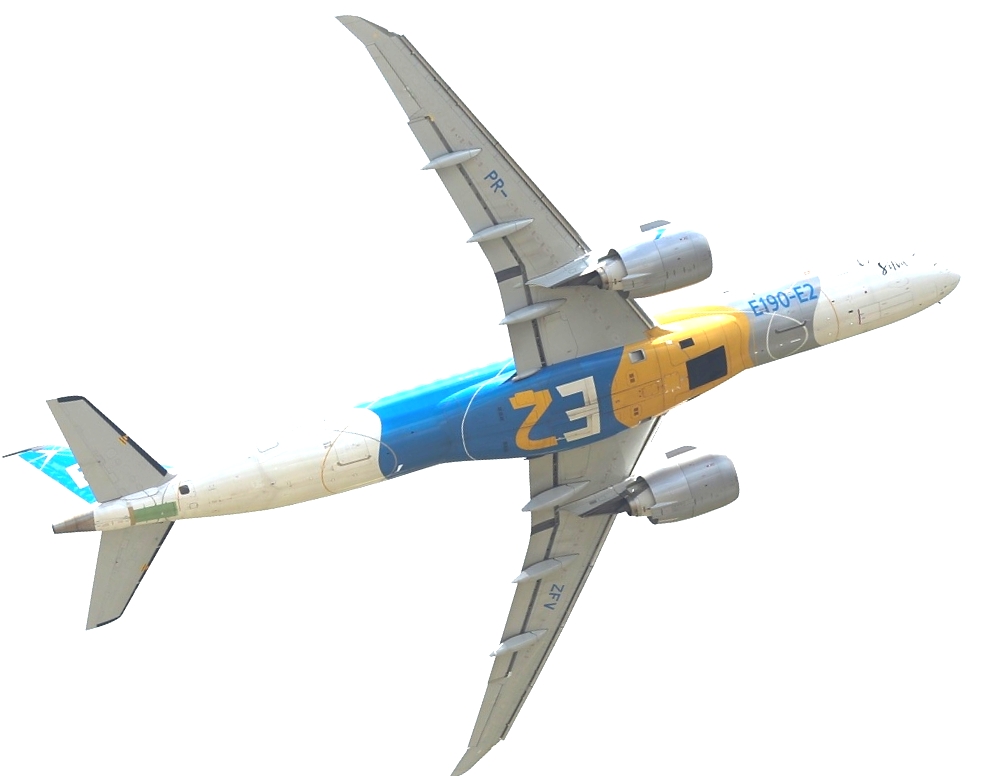
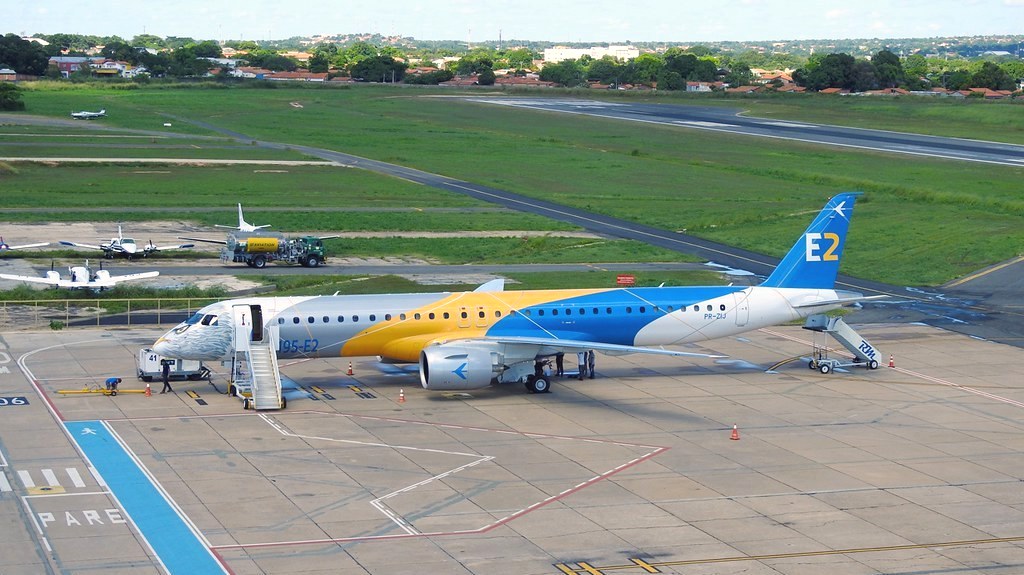
Embraer continúa evaluando la sonoridad de los nuevos E2-Jets persiguiendo bajar los decíbeles de ruido mejorando su condición como aeronave silenciosa. El tercer mayor fabricante de aviones del mundo, ha ganado muchos elogios de los clientes de los aviones E190-E2 y E195-E2 de segunda generación más modernos en los últimos años por la reducción de las emisiones de ruido, entre otros aspectos destacados.

Los países del mundo continúan marcando la presión sobre la aviación para reducir sus impactos en el medio ambiente, la huella de ruido que experimenta la población en las cercanías de los aeropuertos es uno de los aspectos incluidos en esta nueva realidad que el segmento tratará en los próximos años y décadas. El fabricante brasileño continúa avanzando en sus proyectos de reducción de ruido de la nueva familia de aviones más eficientes, buscando dar atención en el E175-E2, el miembro más pequeño de los tres modelos de la generación más actualizada.

Embraer ha presenta información visual sobre cómo se realizan los ensayos de las pruebas prácticas de vuelo del modelo para capturar los sonidos emitidos y estudiar cómo reducirlos aún más. El equipo montado en su Unidad de Gavião Peixoto, en el interior de São Paulo, del que participan ingenieros y pilotos, comentan los aspectos de la operación, como la disposición de los micrófonos y la precisión del lugar donde el avión necesita volar. «Nuestro equipo de treinta ingenieros y técnicos tardó varias semanas en instalar equipos sensibles hace unos meses en nuestras instalaciones de prueba en Gavião Peixoto. Los dispositivos midieron el ruido de despegue y aterrizaje de nuestro E-Jet más nuevo, el E175-E2, a medida que el avión pasaba a la certificación. El proceso está altamente coordinado entre las tripulaciones de tierra y los pilotos que deben volar el E2 en varios ángulos, velocidades y altitudes para construir un perfil de ruido para la aeronave a partir de casi 70,000 muestras de sonido generadas por segundo, capturadas en 96 micrófonos», dijo Embraer en su comunicado.

Embraer E2 sound system test

Embraer continues noise tests on E175-E2

AW-70004335

Embraer continues to evaluate the loudness of the new E2-Jets in pursuit of lowering the decibels of noise, improving their status as a silent aircraft. The third-largest aircraft manufacturer in the world, it has won much praise from customers for the most modern second-generation E190-E2 and E195-E2 aircraft in recent years for reduced noise emissions, among other highlights.

The countries of the world continue to put pressure on aviation to reduce its impact on the environment, the noise footprint experienced by the population in the vicinity of airports is one of the aspects included in this new reality that the segment will deal with in the years and decades to come. The Brazilian manufacturer continues to advance its noise reduction projects for the new family of more efficient aircraft, seeking to pay attention to the E175-E2, the smallest member of the three models of the most up-to-date generation.

Embraer has presented visual information on how the model’s practical flight tests are carried out to capture the emitted sounds and study how to reduce them further. The team assembled at its Gavião Peixoto Unit, in the interior of São Paulo, in which engineers and pilots participate, comment on the aspects of the operation, such as the arrangement of the microphones and the precision of the place where the plane needs to fly. «Our team of thirty engineers and technicians took several weeks to install sensitive equipment a few months ago at our test facility in Gavião Peixoto. The devices measured the takeoff and landing noise of our newest E-Jet, the E175-E2, to as the aircraft progressed to certification. The process is highly coordinated between ground crews and pilots who must fly the E2 at various angles, speeds and altitudes to build a noise profile for the aircraft from nearly 70,000 samples of sound generated per second, captured at 96 microphones», Embraer said in its statement.

Teste do sistema de som Embraer E2

Embraer continua testes de ruído no E175-E2

Embraer_Isotype

A Embraer continua avaliando o loudness dos novos jatos E2-Jets em busca de diminuir os decibéis de ruído, melhorando seu status de aeronave silenciosa. Terceira maior fabricante de aeronaves do mundo, ela ganhou muitos elogios dos clientes pelas mais modernas aeronaves de segunda geração E190-E2 e E195-E2 nos últimos anos por reduzir as emissões de ruído, entre outros destaques.

Os países do mundo continuam pressionando a aviação para reduzir o seu impacto no meio ambiente, a pegada sonora vivida pela população do entorno dos aeroportos é um dos aspectos incluídos nesta nova realidade que o segmento vai atender nos anos e nas próximas décadas. A fabricante brasileira continua avançando em seus projetos de redução de ruído para a nova família de aeronaves mais eficientes, buscando dar atenção ao E175-E2, o menor integrante dos três modelos da geração mais atual.

A Embraer apresentou informações visuais de como são realizados os testes práticos de voo do modelo para captar os sons emitidos e estudar como reduzi-los ainda mais. A equipe montada na Unidade Gavião Peixoto, no interior de São Paulo, da qual participam engenheiros e pilotos, comenta aspectos da operação, como a disposição dos microfones e a precisão do local por onde o avião deve voar. “Nossa equipe de trinta engenheiros e técnicos levou várias semanas para instalar equipamentos sensíveis há alguns meses em nossa instalação de testes em Gavião Peixoto. Os aparelhos mediram o ruído de decolagem e aterrissagem de nosso mais novo E-Jet, o E175-E2, conforme o aeronave progrediu para a certificação. O processo é altamente coordenado entre as equipes de solo e os pilotos que devem voar no E2 em vários ângulos, velocidades e altitudes para construir um perfil de ruído para a aeronave a partir de quase 70.000 amostras de som geradas por segundo, capturadas em 96 microfones“, a Embraer disse em seu comunicado.

PUBLISHER: Airgways.com
DBk: Embraer.com / Airgways.com
AW-POST: 202110012130AR

A\W   A I R G W A Y S ®

5G para infraestructura espacial

AW | 2021 10 01 20:48 | AEROSPACE

Airbus/socios estudian estándares 5G infraestructura espacial

Airbus Defence and Space y sus socios Fraunhofer IIS, Fraunhofer FOKUS, Bundeswehr University Munich y Eurescom han lanzado recientemente un proyecto para estudiar la entrega de estándares basados en 5G y más allá de los servicios de comunicación 5G en una infraestructura espacial. El uso de satélites contribuirá en gran medida a los Objetivos de Desarrollo Sostenible de la ONU para una sociedad mejor y un crecimiento sostenible en todos los sectores industriales.

La infraestructura de red basada en el ritmo muy pronto complementará las redes móviles terrestres 5G que se están implementando actualmente. Esto conducirá a que las comunicaciones por satélite se conviertan en una parte integrada e indispensable del ecosistema global de telecomunicaciones con el potencial de hacer crecer los segmentos de mercado existentes, como el backhauling, y expandirse a nuevas áreas como las redes híbridas y la Internet de las Cosas (IoT).

El estudio, que está financiado por la Agencia Espacial Europea (ESA), propondrá una visión integral de cómo una infraestructura espacial 5G y más allá de 5G puede proporcionar servicios para consumidores e industrias que brindan rendimiento, confiabilidad, resiliencia y seguridad.

El consorcio propondrá una infraestructura de red no terrestre (NTN) y escenarios de implementación para brindar servicios de comunicación avanzados de manera oportuna y rentable. Además, se centrará en la preparación de una futura hoja de ruta de tecnología de comunicaciones por satélite en línea con los conceptos emergentes de 6G para que una NTN desempeñe un papel aún mayor en la oferta de conectividad global.

Los objetivos clave del estudio son: Consolidar los requisitos para respaldar una variedad de industrias y consumidores, de acuerdo con las partes interesadas y los reguladores de la industria. Definir servicios que respalden estos segmentos de mercado a mediano (2025) y largo plazo más allá de 2030. Definir la arquitectura general del sistema y sus componentes. Para definir la convergencia y la integración del sistema con 5G y más allá de las redes terrestres 5G, teniendo en cuenta las normas pertinentes, como la tercera Generation Partnership Project. Elaborar hojas de ruta en apoyo del desarrollo, validación e implementación de la arquitectura propuesta y sus componentes, incluida la investigación necesaria. Establecer recomendaciones de mecanismos de financiamiento con modelos válidos de adquisición y despliegue para la realización de la infraestructura propuesta.

El estudio debe completarse a mediados de 2022 y producirá un documento de posición que describa los principales hallazgos del estudio. Se hará especial hincapié en proponer conceptos para la infraestructura espacial 5G y recomendaciones de tecnología y hojas de ruta de demostración, así como modelos asociados de implementación y adquisición.

5G for space infrastructure

Airbus/partners study 5G standards space infrastructure

Airbus Defense and Space and its partners Fraunhofer IIS, Fraunhofer FOKUS, Bundeswehr University Munich and Eurescom have recently launched a project to study the delivery of standards based on 5G and beyond 5G communication services in a space infrastructure. The use of satellites will contribute greatly to the UN Sustainable Development Goals for a better society and sustainable growth in all industrial sectors.

The rhythm-based network infrastructure will very soon complement the 5G land mobile networks that are currently being deployed. This will lead to satellite communications becoming an integrated and indispensable part of the global telecommunications ecosystem with the potential to grow existing market segments, such as backhauling, and expand into new areas such as hybrid networks and the Internet of Things (IoT).

The study, which is funded by the European Space Agency (ESA), will propose a comprehensive vision of how a space infrastructure 5G and beyond 5G can provide services for consumers and industries that provide performance, reliability, resilience and security.

The consortium will propose a non-terrestrial network (NTN) infrastructure and deployment scenarios to provide advanced communication services in a timely and cost-effective manner. In addition, it will focus on preparing a future satellite communications technology roadmap in line with emerging 6G concepts for an NTN to play an even greater role in delivering global connectivity.

The key objectives of the study are: Consolidate requirements to support a variety of industries and consumers, in agreement with stakeholders and industry regulators. Define services that support these market segments in the medium (2025) and long-term beyond 2030. Define the general architecture of the system and its components. To define the convergence and integration of the system with 5G and beyond 5G terrestrial networks, taking into account the relevant standards, such as the third Generation Partnership Project. Prepare roadmaps in support of the development, validation and implementation of the proposed architecture and its components, including the necessary research. Establish recommendations for financing mechanisms with valid acquisition and deployment models to carry out the proposed infrastructure.

The study is due to be completed by mid-2022 and will produce a position paper outlining the study’s main findings. Special emphasis will be placed on proposing concepts for 5G space infrastructure and technology recommendations and demonstration roadmaps, as well as associated deployment and procurement models.

PUBLISHER: Airgways.com
DBk: Airbus.com / Airgwys.com
AW-POST: 202110012048AR

A\W   A I R G W A Y S ®

Aperturas tránsito en Argentina

AW | 2021 10 01 20:16 | AIR TRAFFIC / GOVERNMENT

Cronograma de apertura de fronteras y requisitos migratorios

El Gobierno de la República Argentina ha establecido en el Boletín Oficial del Decreto 678/2021 del día Viernes 01/10 como parte de la flexibilización de las medidas de cuidado ante el descenso de los contagios de Covid-19, dispuso la apertura de las fronteras. Para ello se establecieron diversos pasos seguros por los cuales podrán entrar al país los argentinos o residentes en países limítrofes siempre que cumplan las condiciones que se establecieron para el ingreso a territorio nacional. A los turistas o extranjeros no residentes se les imponen requisitos adicionales.

Cronograma/condiciones de apertura de fronteras

APERTURA INTERNACIONAL/PAÍSES LIMÍTROFES

Se establece a partir del 1 de Octubre de 2021. Personas nacionales o residentes de países limítrofes que hayan permanecido en estos durante los catorce días previos al ingreso al territorio nacional sea por medios terrestres, aéreos o marítimos. La Dirección Nacional de Migraciones podrá autorizar el tránsito vecinal fronterizo cuando se verifiquen las condiciones epidemiológicas y los requisitos que la autoridad sanitaria nacional considere necesarios.

Los aeropuerto habilitados son Aeropuerto Internacional Cataratas del Iguazú, Aeropuerto Internacional Mendoza/Gobernador Francisco Gabrielli, Aeropuerto Internacional de Ezeiza, Aeropuerto Jorge Newbery, Aeropuerto San Fernando, Aeropuerto Internacional Ushuaia ( 20/10). Se sumarán aquellos que sean pedidos por las Provincias y cuenten con habilitación del Gobierno Nacional.

Requisitos de tránsito
Esquema de vacunación completo, fecha de última aplicación al menos catorce (14) días. Quienes no presenten esquema de vacunación completo deberán realizar aislamiento obligatorio. Argentina respeta las vacunas aprobadas por los países de origen. PCR negativo 72 hs. antes y antígeno en el punto de ingreso. PCR a los 5/7 días en caso de seguir permaneciendo en el país. Menores de edad sin esquema de vacunación completo, acompañados de adultos al ingresar al país, podrán ingresar, pero debiendo realizar la cuarentena. Transcurridos catorce días desde que nuestro país alcance el 50% de la población con esquema de vacunación completo, quienes ingresen al país con el esquema de vacunación, quedan exceptuados de la realización del test de antígenos.

⚠️ Los turistas o extranjeros no residentes deben contar con un seguro con cobertura Covid-19

Reanudación de Cruceros Bioceánicos y Antárticos
Quedan habilitados para el transporte fluvial y marítimo las embarcaciones a partir del 20 de Octubre de 2021, abriendo la temporada de cruceros.

Avance progresivo de cupos
Los cupos de tránsito son las capacidades que el Gobierno nacional ha establecido diariamente para ingreso/egreso del país. Entre el día 1 al 3/10 2.300 plazas diarias. Entre el día 4 al 10/10 21.000 plazas semanales. A partir del día 11/10 y hasta los 14 días de alcanzar el 50% de la población con vacunación completa, 28.000 plazas semanales. A los 14 días de alcanzar el 50% de la población con esquema de vacunación completo, se eliminan los cupos.

APERTURA INTERNACIONAL/RESTO DEL MUNDO

A partir del próximo 1 de Noviembre de 2021 se restablecerá el ingreso al territorio nacional de los extranjeros del resto del mundo, siempre que cumplan con los requisitos ya mencionados y que entren por los corredores seguros aéreos, marítimos, fluviales y terrestres que determinen las autoridades nacionales.

Transit openings in Argentina

Timetable for opening borders and immigration requirements

The Government of the Argentine Republic has established in the Official Gazette of Decree 678/2021 of Friday 01/10 as part of the flexibility of care measures in the face of the decrease in Covid-19 infections, it ordered the opening of the borders . For this, various safe steps were established by which Argentines or residents of neighboring countries may enter the country as long as they meet the conditions that were established for entering the national territory. Additional requirements are imposed on tourists or non-resident foreigners.

Timetable/conditions for opening borders

INTERNATIONAL OPENING/NEIGHBORING COUNTRIES

It is established as of October 1, 2021. Nationals or residents of neighboring countries who have stayed in these for the fourteen days prior to entering the national territory, whether by land, air or sea. The National Directorate of Migration may authorize border transit when the epidemiological conditions and the requirements that the national health authority deems necessary are verified.

The authorized airports are Cataratas del Iguazú International Airport, Mendoza/Gobernador Francisco Gabrielli International Airport, Ezeiza International Airport, Jorge Newbery Airport, San Fernando Airport, Ushuaia International Airport (10/20). Those that are requested by the Provinces and have authorization from the National Government will be added.

Transit requirements

Complete vaccination schedule, date of last application at least fourteen (14) days. Those who do not present a complete vaccination scheme must perform mandatory isolation. Argentina respects the vaccines approved by the countries of origin. Negative PCR 72 h. before and antigen at the point of entry. PCR at 5/7 days if you continue to stay in the country. Minors without a complete vaccination scheme, accompanied by adults when entering the country, may enter, but must quarantine. Fourteen days after our country reaches 50% of the population with a complete vaccination scheme, those who enter the country with the vaccination scheme are exempted from performing the antigen test.

⚠️ Tourists or non-resident foreigners must have insurance with Covid-19 coverage

Resumption of Bioceanic and Antarctic Cruises
Vessels are enabled for river and maritime transport from October 20, 2021, opening the cruise season.

Progressive advance of quotas
Transit quotas are the capacities that the national government has established daily for entering / leaving the country. From day 1 to 3/10 2,300 places per day. Between the 4th and the 10th of October 21,000 places per week. Starting on 10/11 and until 14 days after reaching 50% of the population with complete vaccination, 28,000 weekly places. After 14 days of reaching 50% of the population with a complete vaccination scheme, the quotas are eliminated.

INTERNATIONAL OPENING / REST OF THE WORLD

As of next November 1, 2021, the entry into the national territory of foreigners from the rest of the world will be restored, provided that they meet the aforementioned requirements and that they enter through the safe air, maritime, river and land corridors determined by the authorities. nationals.

PUBLISHER: Airgways.com
DBk: Argentina.gob.ar / Airgways.com
AW-POST: 202110012016AR

A\W   A I R G W A Y S ®

Air France-KLM aproxima órdenes

AW | 2021 10 01 17:33 | AIRLINES

Air France-KLM cerca encomienda nuevos pedidos aeronaves

Air_France-KLM.svg

El Air France-KLM Group podría estar cerca de completar un pedido por al menos ochenta aviones nuevos. Aunque el grupo franco-holandés no se ha revelado los modelos se encomendaría, los especialistas en aviación han estimado que la aerolínea divida su orden entre unidades fabricadas por Airbus y Boeing y solicite al menos ochenta aeronaves en firme y opciones por 80 adicionales.

AW-Air France_A220304

AW-Transavia_Isologotype

Air France-KLM había informado en Julio 2021 que estaba buscando hasta 160 aeronaves de fuselaje estrecho para su aerolínea de presupuesto Transavia Airlines, por lo que es factible la decantación en parte de los podidos por aviones de la línea Boeing 737 MAX. Parte de las órdenes podrían adquirir la línea de aeronaves narrowbodies Airbus A320NEO. Air France, por su parte, podría tomar la opción de adquirir sesenta aviones Airbus A220-300 (60), luego de que recibiera su primera unidad esta semana.

El Director General del grupo, Benjamin Smith, ha expresado que la compañía determinará la decisión al respecto en los próximos meses. Actualmente, tanto Air France como KLM Airlines se encuentran en un proceso de renovación de su flota como medida para mejorar la eficiencia de combustible y reducir las emisiones de CO2, así como simplificar los procesos, dando salida a aviones más viejos como las familias A330 y A319 de la flota de Air France y A330 de la flota de KLM Airlines.

Air France-KLM approximates orders

Air France-KLM nearby orders new aircraft orders

KLM_73780002

Air France-KLM_Group_Isologotype

The Air France-KLM Group could be close to completing an order for at least 80 new aircraft. Although the French-Dutch group has not disclosed the models it would order, aviation specialists have estimated that the airline will divide its order between units made by Airbus and Boeing and order at least eighty firm aircraft and options for an additional eighty.

AW-7800012

Air France-KLM had reported in July 2021 that it was looking for up to 160 narrow-body aircraft for its budget airline Transavia Airlines, making it possible to decant part of those obtained by aircraft of the Boeing 737 MAX line. Part of the orders could acquire the narrowbodies Airbus A320NEO line of aircraft. Air France, for its part, could take the option of acquiring sixty Airbus A220-300 aircraft (60), after it received its first unit this week.

The Group’s Managing Director, Benjamin Smith, has stated that the company will determine the decision in this regard in the coming months. Currently, both Air France and KLM Airlines are in a process of renewing their fleet as a measure to improve fuel efficiency and reduce CO2 emissions, as well as simplify processes, releasing older aircraft such as the A330 families and A319 from the Air France fleet and A330 from the KLM Airlines fleet.

PUBLISHER: Airgways.com
DBk: Airfrance-klm.com / Airgways.com
AW-POST: 202110011733AR

A\W   A I R G W A Y S ®

Tata Sons adquiere Air India

AW | 2021 10 01 17:07 | AIRLINES

Gana licitación para adquirir propiedad aerolínea india

Air_India_Old_Logo.svg

Tata Sons Private Limited ganó la licitación final para adquirir la aerolínea nacional Air India, según fuentes gubernamentales. El conglomerado Salt to Software hizo la oferta final de la aerolínea el 15 de Septiembre de 2021 y emergió como el primer candidato en hacerse cargo de la aerolínea. Si bien el promotor de SpiceJet, Ajay Singh, también ha hecho una oferta por la aerolínea, fuentes gubernamentales han confirmado que Tata Sons ha hecho una oferta más alta para adquirir la aerolínea. Este desarrollo se produce un día después de un informe de que el Gobierno de la India ha puesto fin al precio mínimo de reserva para la aerolínea. El Gobierno ha finalizado la tasa de reserva mínima para la aerolínea nacional, basada en proyecciones de flujo de caja futuro, valor de marca y aperturas en aeropuertos extranjeros. Las fuentes indicaron que la oferta de Tata Sons superó el precio mínimo de reserva establecido por la comisión gubernamental en más de ₹ 3.000 millones de Rupias.

AW-Air India_A320CEO-002

Varios informes indicaron anteriormente que Tata Sons surgió como el primer candidato en hacerse cargo de Air India, ya que hizo una oferta más alta por la aerolínea cargada de deudas. El ex-Director de Air India, Jitendra Bhargava, dijo recientemente que Tata Sons obtendrá la aprobación del Gobierno porque tiene el potencial de inyectar una cantidad significativa de dinero necesaria para renovar la aerolínea nacional. “Tata ha sido un apasionado de Air India”, dijo Jitendra Bhargava.

Perspectivas Air India

Si bien los detalles de la oferta de Tata Sons aún no están del todo definidos, se cree que incluye una cláusula de indemnización para evitar reclamos inesperados que surjan más adelante. Más de 200 empleados del Grupo Tata participaron en el proceso, incluidos especialistas en fusiones y adquisiciones de unidades como Vistara, Air Asia India, Tata Steel e Indian Hotels. Cabe señalar que Tata Sons planea fusionar todas sus aerolíneas en una sola entidad si tiene éxito en la licitación de Air India.

Tata Sons ya ha llevado a cabo una exhaustiva diligencia debida que involucró a tres equipos de AirAsia India, TCS y otros consultores externos. El grupo también formó una empresa independiente, Talace Private Limited, para participar en la adquisición de Air India. Las ofertas para el operador nacional se solicitaron al valor de la institución y no al valor del capital. Esto se debe a que el Gobierno ha cambiado los criterios de licitación de Air India.

Tras la adquisición, Tata Group tendrá que inyectar una gran cantidad de dinero para ayudar a la aerolínea a recuperarse de sus problemas económicos. La deuda total de Air India ha aumentado significativamente en los últimos dos años debido a la pandemia de COVID-19 y hasta ahora ha alcanzado más de ₹ 40.000 millones de Rupias. Sin embargo, el gobierno planea entregar la aerolínea con una deuda de ₹ 23.000 millones de Rupias a Tata Sons.

Tata Sons acquires Air India

Wins tender to acquire Indian airline property

AW-Air India_A320NEO-004

Tata Sons Private Limited won the final bid to acquire national airline Air India, according to government sources. Conglomerate Salt to Software made the airline’s final offer on September 15, 2021 and emerged as the first candidate to take over the airline. While SpiceJet promoter Ajay Singh has also made an offer for the airline, government sources have confirmed that Tata Sons has made a higher offer to acquire the airline. This development comes a day after a report that the Government of India has ended the minimum reserve price for the airline. The Government has finalized the minimum reservation rate for the national airline, based on projections of future cash flow, brand value and openings at foreign airports. Sources indicated that Tata Sons’ offer exceeded the minimum reserve price set by the government commission by more than ₹ 3 billion Rupees.

Various reports previously indicated that Tata Sons emerged as the first candidate to take over Air India as it made a higher bid for the debt-laden airline. Former Air India Director Jitendra Bhargava said recently that Tata Sons will get government approval because it has the potential to inject a significant amount of money needed to revamp the national airline. «Tata has been passionate about Air India», said Jitendra Bhargava.

Air India perspectives

While the details of the Tata Sons offer are not fully defined yet, it is believed to include an indemnification clause to prevent unexpected claims arising later. More than 200 Tata Group employees participated in the process, including M&A specialists from units such as Vistara, Air Asia India, Tata Steel and Indian Hotels. It should be noted that Tata Sons plans to merge all its airlines into one entity if it is successful in the Air India tender.

Tata Sons has already carried out extensive due diligence involving three teams from AirAsia India, TCS and other external consultants. The group also formed an independent company, Talace Private Limited, to participate in the acquisition of Air India. The offers for the national operator were requested at the value of the institution and not at the value of capital. This is because the Government has changed Air India’s bidding criteria.

After the acquisition, the Tata Group will have to inject a large amount of money to help the airline recover from its financial problems. Air India’s total debt has increased significantly in the last two years due to the COVID-19 pandemic and has so far reached more than ₹ 40 billion Rupees. However, the government plans to hand over the airline with a debt of ₹ 23 billion Rupees to Tata Sons.

टाटा संस ने एयर इंडिया का अधिग्रहण किया

भारतीय एयरलाइन संपत्ति के अधिग्रहण के लिए निविदा जीती

Air_India_Old_Logo.svg

AW-Air India_0022

सरकारी सूत्रों के अनुसार, टाटा संस प्राइवेट लिमिटेड ने राष्ट्रीय एयरलाइन एयर इंडिया के अधिग्रहण के लिए अंतिम बोली जीती। सॉल्ट टू सॉफ्टवेयर समूह ने 15 सितंबर, 2021 को एयरलाइन की अंतिम पेशकश की और एयरलाइन को संभालने वाले पहले उम्मीदवार के रूप में उभरा। जबकि स्पाइसजेट के प्रमोटर अजय सिंह ने भी एयरलाइन के लिए एक प्रस्ताव दिया है, सरकारी सूत्रों ने पुष्टि की है कि टाटा संस ने एयरलाइन का अधिग्रहण करने के लिए एक उच्च पेशकश की है। यह घटनाक्रम एक रिपोर्ट के एक दिन बाद आया है कि भारत सरकार ने एयरलाइन के लिए न्यूनतम आरक्षित मूल्य समाप्त कर दिया है। सरकार ने राष्ट्रीय एयरलाइन के लिए न्यूनतम आरक्षण दर को भविष्य के नकदी प्रवाह, ब्रांड मूल्य और विदेशी हवाई अड्डों पर खुलने के अनुमानों के आधार पर अंतिम रूप दिया है। सूत्रों ने संकेत दिया कि टाटा संस की पेशकश सरकारी आयोग द्वारा निर्धारित न्यूनतम आरक्षित मूल्य से 3 अरब रुपये से अधिक थी।

विभिन्न रिपोर्टों ने पहले संकेत दिया था कि टाटा संस एयर इंडिया को संभालने वाले पहले उम्मीदवार के रूप में उभरा क्योंकि इसने कर्ज में डूबी एयरलाइन के लिए एक उच्च बोली लगाई। एयर इंडिया के पूर्व निदेशक जितेंद्र भार्गव ने हाल ही में कहा था कि टाटा संस को सरकार की मंजूरी मिल जाएगी क्योंकि इसमें राष्ट्रीय एयरलाइन को सुधारने के लिए आवश्यक एक महत्वपूर्ण राशि को इंजेक्ट करने की क्षमता है। जितेंद्र भार्गव ने कहा, «टाटा एयर इंडिया को लेकर जुनूनी है»

एयर इंडिया आउटलुक

AW-Air India Express_CRJ-700

हालांकि टाटा संस की पेशकश का विवरण अभी तक पूरी तरह से परिभाषित नहीं है, माना जाता है कि बाद में होने वाले अप्रत्याशित दावों को रोकने के लिए एक क्षतिपूर्ति खंड शामिल किया गया है। 200 से अधिक टाटा समूह के कर्मचारियों ने इस प्रक्रिया में भाग लिया, जिसमें विस्तारा, एयर एशिया इंडिया, टाटा स्टील और इंडियन होटल्स जैसी इकाइयों के एम एंड ए विशेषज्ञ शामिल हैं। यह ध्यान दिया जाना चाहिए कि टाटा संस एयर इंडिया के टेंडर में सफल होने पर अपनी सभी एयरलाइनों को एक इकाई में विलय करने की योजना बना रही है।

टाटा संस पहले ही एयरएशिया इंडिया, टीसीएस और अन्य बाहरी सलाहकारों की तीन टीमों को शामिल करते हुए व्यापक जांच कर चुकी है। समूह ने एयर इंडिया के अधिग्रहण में भाग लेने के लिए एक स्वतंत्र कंपनी, टैलेस प्राइवेट लिमिटेड का भी गठन किया। राष्ट्रीय ऑपरेटर के प्रस्तावों का अनुरोध संस्था के मूल्य पर किया गया था न कि पूंजी के मूल्य पर। ऐसा इसलिए है क्योंकि सरकार ने एयर इंडिया के बोली मानदंड में बदलाव किया है।

अधिग्रहण के बाद, टाटा समूह को एयरलाइन को अपनी वित्तीय समस्याओं से उबरने में मदद करने के लिए बड़ी राशि का निवेश करना होगा। COVID-19 महामारी के कारण पिछले दो वर्षों में Air India का कुल कर्ज काफी बढ़ गया है और अब तक ₹40 बिलियन से अधिक हो गया है। हालांकि, सरकार की योजना टाटा संस को ₹23 बिलियन के कर्ज के साथ एयरलाइन को सौंपने की है।

PUBLISHER: Airgways.com
DBk: Tata.com / Airindia.in / Airgways.com
AW-POST: 202110011707AR

A\W   A I R G W A Y S ®

Vueling expande rutas desde Paris/Orly

Vueling_Isologotype

AW | 2021 10 01 16:03 | AIRLINES ROUTES

Vueling abre 32 nuevas rutas desde París/Orly a diez países

AW-76600654

Vueling Airlines, aerolínea española perteneciente al IAG Group, anuncia su nueva programación de vuelos en el Aeropuerto de París/Orly tras el otorgamiento por parte de la Comisión Europea (CE). La aerolínea de presupuesto española expandirá 32 nuevas rutas a diez países que empezarán a operar a partir del próximo 2 de Noviembre de 2021 y que se añaden a las veinte programadas en el aeropuerto francés para la temporada de invierno. De esta manera, Vueling demuestra su gran apuesta por el mercado francés, alcanzando las 48 conexiones directas en París/Orly, con cuatro más pendientes de confirmar la fecha y que se pondrán a la venta a la brevedad.

Además de aumentar las conexiones incorporando nuevos destinos en España, Italia, Reino Unido y Dinamarca, Vueling lanza rutas directas por primera vez con Alemania, Noruega, Suecia, Irlanda, Marruecos y Malta. Vueling incorpora a su programa cinco nuevas conexiones con los aeropuertos de Jerez, Asturias, Santander, Granada y Zaragoza. Lo que eleva hasta veinte los enlaces directos con España teniendo en cuenta las quince rutas ya a la venta para la temporada de invierno 2021-2022: Barcelona, Menorca, Mallorca, Ibiza, Valencia, Alicante, Málaga, Sevilla, Madrid, Bilbao, Santiago, Gran Canaria, Tenerife, Lanzarote y Fuerteventura.

Desde el aeropuerto de París/Orly se lanzan cinco nuevas conexiones a Italia con los aeropuertos de Milán/Bérgamo, Bolonia, Turín, Génova y Bari, que se añaden a las 3 existentes de Roma/Fiumicino, Florencia y Milán/Malpensa. Vueling operará seis nuevas conexiones directas desde París/Orly con los aeropuertos de Cardiff, Birmingham, Edimburgo, Glasgow, Newcastle y Belfast. Con el vuelo ya existente entre el aeropuerto francés y Londres/Gatwick, la aerolínea operará siete rutas directas.

Vueling expands routes from Paris/Orly

Vueling_BCN

Vueling opens 32 new routes from Paris/Orly to ten countries

Vueling_Isologotype

Vueling Airlines, a Spanish airline belonging to the IAG Group, announces its new flight schedule at Paris/Orly Airport after being granted by the European Commission (EC). The Spanish budget airline will expand 32 new routes to ten countries that will begin operating on November 2, 2021 and will be added to the twenty scheduled at the French airport for the winter season. In this way, Vueling demonstrates its great commitment to the French market, reaching 48 direct connections in Paris/Orly, with four more pending to confirm the date and which will be put on sale shortly.

In addition to increasing connections by incorporating new destinations in Spain, Italy, the United Kingdom and Denmark, Vueling is launching direct routes for the first time with Germany, Norway, Sweden, Ireland, Morocco and Malta. Vueling incorporates into its program five new connections with the airports of Jerez, Asturias, Santander, Granada and Zaragoza. Which brings the direct links with Spain to twenty taking into account the fifteen routes already on sale for the winter season 2021-2022: Barcelona, ​​Menorca, Mallorca, Ibiza, Valencia, Alicante, Malaga, Seville, Madrid, Bilbao, Santiago, Gran Canaria, Tenerife, Lanzarote and Fuerteventura.

Five new connections to Italy are launched from the Paris/Orly airport with the airports of Milan/Bergamo, Bologna, Turin, Genoa and Bari, in addition to the 3 existing ones in Rome/Fiumicino, Florence and Milan/Malpensa. Vueling will operate six new direct connections from Paris/Orly to Cardiff, Birmingham, Edinburgh, Glasgow, Newcastle and Belfast airports. With the existing flight between the French airport and London/Gatwick, the airline will operate seven direct routes.

PUBLISHER: Airgways.com
DBk: Vueling.com / Airgways.com
AW-POST: 202110011603AR

A\W   A I R G W A Y S ®
PreViaje 40% ventas turísticas

AW | 2021 10 01 14:20 | TOURISM

PreViaje de Argentina gana impulso para reapertura turística

AW-PreViaje_Isologotype

PreViaje superó las expectativas y vendió 40% más que el año 2020. El Ministro de Turismo y Deportes de la Nación, Matías Lammens, destacó este Viernes 01/10 que la segunda etapa del programa PreViaje ha superado nuestras expectativas dado que en dos semanas ha habido in incremento del 40% más que el año anterior.

La inminente reapertura de fronteras con países limítrofes a partir de este Sábado 02/10 y desde el 01/11 con el turismo internacional. Los funcionarios y empresarios del sector turístico auguran que el sector va a ser uno de los grandes puntales de la recuperación económica de la Argentina. «Tenemos una apuesta muy grande en este sentido. Creemos que se va a llenar la Argentina de turistas extranjeros y estamos trabajando para que eso suceda van a estar establecidos en el DNU de mañana pero va a tener que ver con el tema de la vacunación completa, ya que van a estar eximidos de la cuarentena quienes así lo tengan, y algunos otros detalles. El DNU de mañana es importante porque empieza a ordenar y a dar un marco de previsibilidad a las aerolíneas a trabajar para que haya vuelos internacionales directos a las provincias que lo tenían. Algunas aerolíneas nuevas arribarán a la Argentina», expresó el Ministro de Turismo Matías Lammens.

El sistema PreViaje ha mostrado muy buenas expectativas, mientras que en esta segunda etapa ha superado las expectativas. «Al día de hoy ya llevamos vendidos más de AR$ 14 mil millones de Pesos y en todo el año pasado se vendieron AR$ 10 mil millones de Pesos, es decir, en dos semanas se vendió el 40% más que todo el año pasado», aseguró el Ministro de Turismo. También está el «PreViaje PAMI», para los jubilados por el cual los afiliados podrán acceder a un reintegro del 70% de los gastos que tengan en sus vacaciones.

Respecto del éxito del PreViaje, señaló también que a modo de ejemplo, son 750.000 personas las que ya usaron el programa este año, cuando en 2020 habían sido 600.000 y todavía quedan tres meses de venta para la temporada turística de verano.

Pre-trip 40% tourist sales

Argentina’s pre-trip gains momentum for tourist reopening

PreViaje exceeded expectations and sold 40% more than in 2020. The Minister of Tourism and Sports of the Nation, Matías Lammens, highlighted this Friday 01/10 that the second stage of the Pre-Trip program has exceeded our expectations since in two weeks there has been an increase of 40% more than the previous year.

The imminent reopening of borders with neighboring countries from this Saturday 02/10 and from 01/11 with international tourism. Officials and businessmen in the tourism sector predict that the sector is going to be one of the great pillars of Argentina’s economic recovery. «We have a very big bet in this regard. We believe that Argentina is going to be filled with foreign tourists and we are working to make that happen. They will be established in the DNU tomorrow but it will have to do with the issue of complete vaccination, since those who have it will be exempt from quarantine, and some other details. Tomorrow’s DNU is important because it begins to order and give a framework of predictability to the airlines to work so that there are direct international flights to the provinces that they had it. Some new airlines will arrive in Argentina», said Tourism Minister Matías Lammens.

The PreTravel system has shown very good expectations, while in this second stage it has exceeded expectations. «As of today, we have already sold more than AR$ 14 billion pesos and in the whole of last year AR$ 10 billion pesos were sold, that is, in two weeks 40% more than the whole of last year was sold», assured the Minister of Tourism. There is also the «PAMI Pre-Trip», for retirees by which members will be able to access a 70% reimbursement of the expenses they have on their vacations.

Regarding the success of the Pre-trip, he also pointed out that by way of example, 750,000 people have already used the program this year, when in 2020 there had been 600,000 and there are still three months of sales for the summer tourist season.

PUBLISHER: Airgways.com
DBk: Argentina.gob.ar / Airgways.com
AW-POST: 202110011420AR

A\W   A I R G W A Y S ®