Solvay S.A. ha sido galardonado con un nuevo acuerdo empresarial a largo plazo por The Boeing Company. La compañía de capitales belga Solvay ofrece soluciones de materiales en todos los programas comerciales y de defensa de Boeing para aplicaciones que incluyen estructuras primarias y secundarias, interiores y superficies. Solvay suministra a Boeing una amplia cartera de materiales avanzados que incluyen termoestables y compuestos termoplásticos, adhesivos y películas de superficie de sus ubicaciones en los Estados Unidos, Europa y China.
«Estamos orgullosos de seguir apoyando los programas de Boeing con una amplia cartera de tecnologías compuestas y adhesivas críticas para promover la innovación en el diseño y la fabricación de aeronaves. Esta renovación de contrato refuerza la relación de más de 30 años de Solvay con Boeing», dijo Carmelo Lo Faro, Presidente de la unidad de negocio de Materiales Compuestos de Solvay. «Este contrato permite a Boeing asegurar el suministro de material para todos nuestros programas estratégicos y aporta cierta certeza a un entorno volátil. Boeing aprecia la asociación a largo plazo, el buen rendimiento y la relación con el equipo de Solvay», explicó Elizabeth Lund, Vicepresidenta y Gerente General de Boeing Commercial Airplanes Supply Chain. Solvay sigue confiando en el futuro de la industria aeroespacial y espera continuar su asociación a largo plazo con Boeing.
Boeing/Solvay sign agreement
Solvay and Boeing sign long-term agreement
Solvay S.A. has been awarded a new long-term business agreement by The Boeing Company. Belgian-owned Solvay offers materials solutions across all Boeing commercial and defense programs for applications including primary and secondary structures, interiors and surfaces. Solvay supplies Boeing with a broad portfolio of advanced materials including thermosets and thermoplastic composites, adhesives and surface films from its locations in the United States, Europe and China.
«We are proud to continue to support Boeing programs with a broad portfolio of critical adhesive and composite technologies to promote innovation in aircraft design and manufacturing. This contract renewal reinforces Solvay’s 30-plus year relationship with Boeing», said Carmelo Lo Faro, President of Solvay’s Composite Materials business unit. «This contract allows Boeing to secure material supply for all of our strategic programs and brings some certainty to a volatile environment. Boeing appreciates the long-term partnership, good performance and relationship with the Solvay team», explained Elizabeth Lund, Vice President and General Manager of Boeing Commercial Airplanes Supply Chain. Solvay remains confident in the future of the aerospace industry and looks forward to continuing its long-term partnership with Boeing.
Boeing/Solvay ondertekenen overeenkomst
Solvay en Boeing ondertekenen een langetermijnovereenkomst
Solvay S.A. heeft een nieuwe zakelijke overeenkomst voor de lange termijn gekregen van The Boeing Company. De Belgische hoofdstad Solvay biedt materiaaloplossingen voor alle defensie- en commerciële programma’s van Boeing voor toepassingen, waaronder primaire en secundaire constructies, interieurs en oppervlakken. Solvay levert Boeing een breed portfolio van geavanceerde materialen, waaronder thermoharders en thermoplastische composieten, kleefstoffen en oppervlaktefilms vanuit zijn locaties in de Verenigde Staten, Europa en China.
,,We zijn er trots op dat we Boeing-programma’s blijven ondersteunen met een breed portfolio van kritische lijm- en composiettechnologieën om innovatie in het ontwerp en de fabricage van vliegtuigen te bevorderen. Deze contractverlenging versterkt Solvay’s meer dan 30 jaar durende relatie met Boeing», zei Carmelo Lo Faro, voorzitter van de divisie Composite Materials van Solvay. ,,Dit contract stelt Boeing in staat om de levering van materiaal voor al onze strategische programma’s veilig te stellen en biedt enige zekerheid in een onstabiele omgeving. Boeing waardeert het partnerschap op lange termijn, de goede prestaties en de relatie met het Solvay-team», legt Elizabeth Lund uit. Vice-president en algemeen directeur van de toeleveringsketen van Boeing Commercial Airplanes. Solvay blijft vertrouwen hebben in de toekomst van de lucht- en ruimtevaartindustrie en kijkt ernaar uit om zijn samenwerking op lange termijn met Boeing voort te zetten.
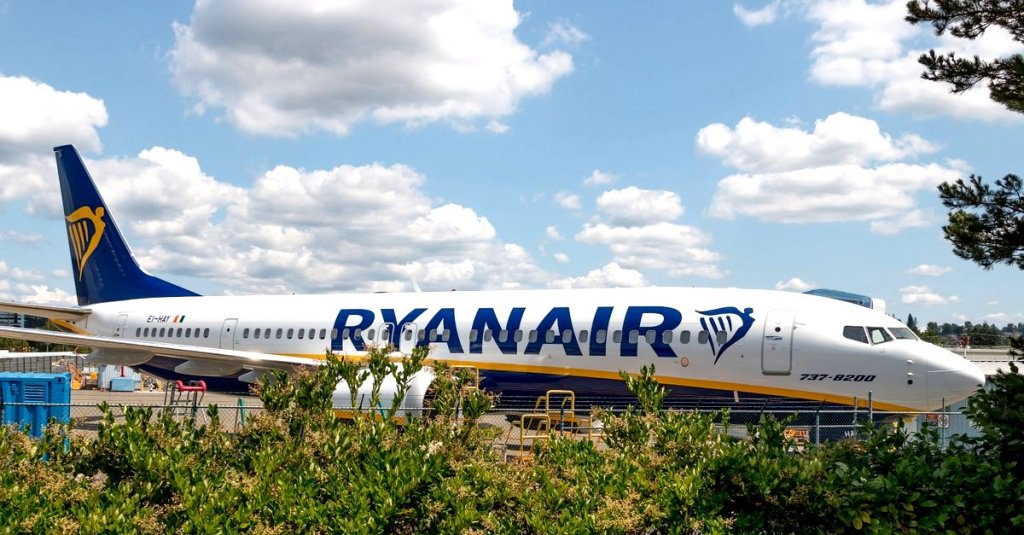
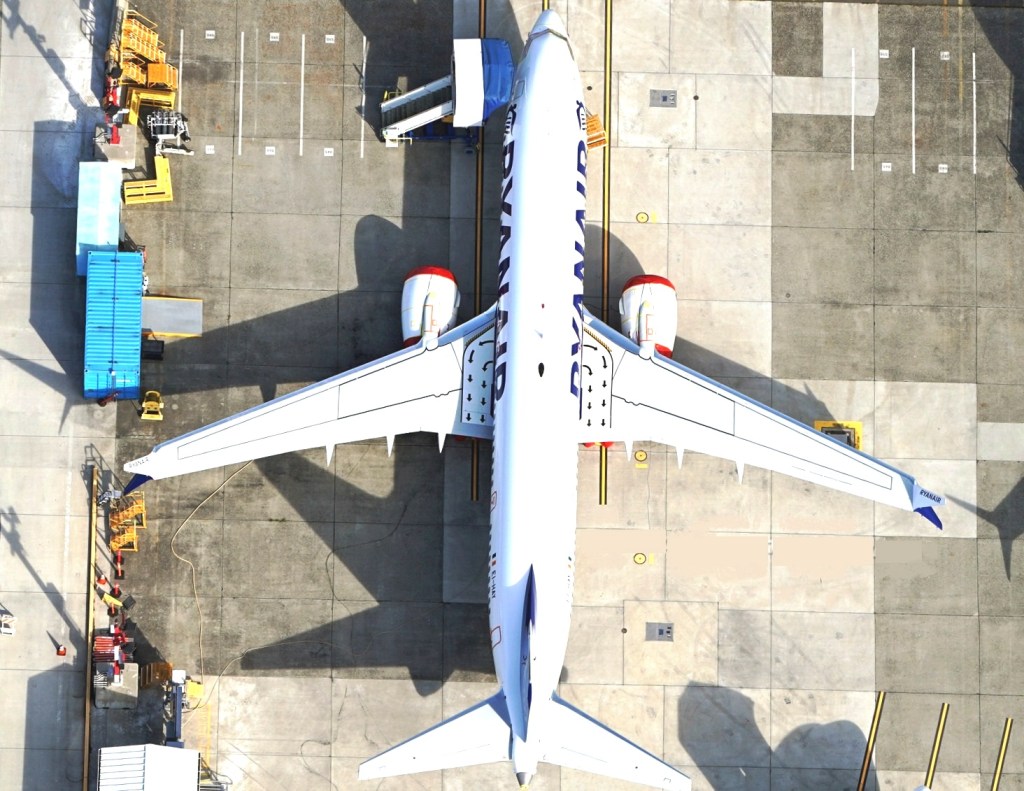
Ryanair redefine su posición estratégica hacia el 737 MAX 200
La aerolínea irlandesa low cost Ryanair ha comunicado el informe económico del primer semestre del ejercicio 2020 que ha reportado pérdidas por valores de € 200 millones de Euros durante los seis meses, después de beneficios de alrededor de € 1.000 millones de Euros. Ante un panorama sombría para la aviación comercial, que no excluye a las aerolíneas de presupuestos, el tráfico de pasajeros se desplomó en un 80%, debido a las restricciones de viajes gubernamentales en constante cambios y requisitos. A pesar de esta situación fluctuante, la aérea Ryanair mira con perspectivas alentadoras después de continuar atravesando el túnel de oscuridad que cierne a muchas aerolíneas en el mundo. Ryanair es una compañía con alta demanda de solicitud de aeronaves comerciales. La aerolínea irlandesa había simpatizado por la línea Boeing 737 MAX, pero tras el incursión a tierra por cuestiones de seguridad, las proyecciones han estado estancadas. Pero aún así conserva la esperanza de conseguir su primer aeronave Boeing 737-8 MAX a principios de 2021 y una flota de treinta unidades hacia la temporada alta de 2021.
El comunicado de Ryanair expresa la continuidad de apoyo a la línea 737 MAX, a pesar de los problemas que ha incurrido la industria en materia de seguridad. «Han pasado más de dieciocho meses desde que el Grupo debía recibir su primer Boeing 737-8 MAX 200. Boeing espera un calendario 4Q2020 para el retorno al servicio del MAX, lo que permite a Ryanair, aceptar la entrega de su primer MAX 200 a principios de 2021. Esperamos recibir una entrega de aproximadamente treinta MAX antes del pico del 2021». Ryanair tiene pedidos con la compañía Boeing órdenes de 210 aviones 737 MAX, 135 pedidos en firme más 75 opciones, todos los cuales son la versión especialmente configurada MAX 200, que representa al modelo 737-8 MAX pero con una configuración para 200 pasajeros, incorporando una salida de emergencia adicional como requisito obligatorio por parte de la FAA, que deberán esperar las aprobaciones de la FAA y la EASA para el Certificado Tipo.
Compensación económica
La compañía Boeing se ha visto obligado a pagar una compensación a las compañías aéreas afectadas por la puesta en tierra del 737 MAX. Si bien la situación de Ryanair ha tenido inevitablemente algún indulto dados los acontecimientos de 2020, la aerolínea todavía estaba buscando un reembolso del fabricante estadounidense por la falta de entregas de aeronaves. El informe de ganancias no ha comunicado acerca de la voluntad de acuerdos compensatorios a Ryanair. Aunque el Grupo recibió reembolsos de proveedores en el segundo trimestre, las discusiones de compensación no se finalizarán ni concluirán con Boeing hasta que el MAX vuelva al servicio y los plazos de entrega revisados puedan finalizarse y acordarse.
Perspectivas sobre-optimistas
Ryanair apunta a una flota de 30 unidades Boeing 737-8 200 MAX antes de la temporada alta el próximo año es un pensamiento optimista muy valioso para la aerolínea de presupuesto irlandesa. Pero la versión especial de 200 asientos de Ryanair requerirá un escrutinio adicional, lo que inevitablemente tendrá algunos retrasos en el cronograma de entregas hacia principios de 2021, por lo que queda por ver si se trata de una perspectiva realista. A pesar de las dificultades que presenta la puesta a tierra del MAX y la continua falta de nuevos aviones en su flota, Ryanair dice que sigue comprometido con el tipo de aeronave. «Seguimos comprometidos con el Boeing 737, en particular con el nuevo avión de la serie 200, que tiene un 4% más de asientos, un 16% menos de quema de combustible y un 40% menos de emisiones de ruido. Estos nuevos aviones permitirán a Ryanair crecer a 200 millones de pasajeros en los próximos 5 o 6 años, al tiempo que reducirán la base de costos y reducirán significativamente su huella ambiental».
Los recientes rebrotes de pandemia en toda Europa y el inicio de los segundos bloqueos en muchos países han llevado a la compañía de bajo coste a cerrar bases y sacar el 20% de su capacidad invernal de la red. Aún así con este panorama, ha expresado que prevé transportar alrededor de 21 millones de pasajeros más en la segunda mitad de su ejercicio, aunque todavía queda un largo vuelo por recorrer.
Ryanair bets on Boeing 737-8/200 MAX
Ryanair redefines its strategic position towards the 737 MAX 200
The Irish low-cost airline Ryanair has communicated the economic report for the first half of the 2020 financial year, which reported losses of € 200 million during the six months, after profits of around € 1 billion. Faced with a bleak outlook for commercial aviation, which does not exclude airlines from budgets, passenger traffic plummeted by 80%, due to ever-changing government travel restrictions and requirements. Despite this fluctuating situation, the airline Ryanair looks with encouraging prospects after continuing through the tunnel of darkness that looms many airlines around the world. Ryanair is a company with high demand for commercial aircraft request. The Irish airline had sympathized with the Boeing 737 MAX line, but after the incursion ashore for safety reasons, projections have been stalled. But it still hopes to get its first Boeing 737-8 200 MAX aircraft in early 2021 and a fleet of thirty units by the 2021 peak season.
Ryanair’s statement expresses the continuity of support for the 737 MAX line, despite the problems that the industry has incurred in terms of safety. «More than eighteen months have passed since the Group was due to receive its first Boeing 737-8 MAX 200. Boeing expects a 4Q2020 schedule for the return to service of the MAX, which allows Ryanair to accept delivery of its first MAX 200 to early 2021. We expect to receive a delivery of approximately thirty MAXs before the 2021 peak». Ryanair has orders with the Boeing company for 210 737 MAX aircraft, 135 firm orders plus 75 options, all of which are the specially configured MAX 200 version, representing the 737-8 MAX model but with a configuration for 200 passengers, incorporating an additional emergency exit as a mandatory requirement by the FAA, which must await FAA and EASA approvals for the Type Certificate.
Economic compensation
The Boeing company has been forced to pay compensation to the airlines affected by the grounding of the 737 MAX. While Ryanair’s situation has inevitably had some reprieve given the events of 2020, the airline was still seeking a refund from the US manufacturer for the lack of aircraft deliveries. The earnings report has not communicated about the willingness to compensate Ryanair. Although the Group received reimbursements from suppliers in the second quarter, compensation discussions will not be finalized or concluded with Boeing until the MAX returns to service and revised delivery times can be finalized and agreed
Over-optimistic perspective
Ryanair is targeting a fleet of 30 Boeing 737-8 200 MAX units ahead of peak season next year is a very valuable optimistic thought for the Irish budget carrier. But Ryanair’s 200-seat special version will require additional scrutiny, inevitably leading to some delays in the delivery schedule towards early 2021, so it remains to be seen whether this is a realistic outlook. Introducing the grounding of the MAX and the continuing lack of new aircraft in its fleet, Ryanair says it remains committed to the type of aircraft. «We remain committed to the Boeing 737, particularly the new 200 series aircraft, which has 4% more seats, 16% less fuel burn and 40% less noise emissions. These new aircraft will enable for Ryanair to grow to 200 million passengers in the next 5-6 years, while reducing the cost base and significantly reducing its environmental footprint».
Recent pandemic outbreaks across Europe and the start of second lockdowns in many countries have led the low-cost company to close bases and take 20% of its winter capacity off the grid. Even so with this panorama, it has expressed that it plans to transport around 21 million more passengers in the second half of its year, although there is still a long flight to go.
AW | 2020 11 02 16:40 | AIRPORTS / AIRLINES / GOVERNMENT
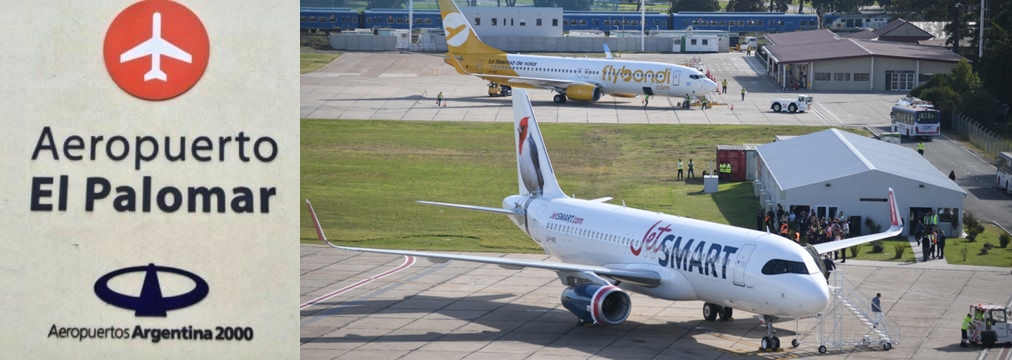
Aeropuerto El Palomar atado al destino de la idiología política
El Gobierno de Argentina, a través del Organismo Regulador del Sistema Nacional de Aeropuertos (ORSNA), estableció que el Aeropuerto de Ezeiza sea el único habilitado para operar, cancelando las habilitaciones del Aeropuerto El Palomar por considerarlas no seguras para la nueva modalidad biosanitaria. Lejos del rigor científico de esta postura irrazonable e irresponsable, el Intendente de Tres de Febrero, Diego Valenzuela, acusó que la reglamentación es por una cuestión ideológica y no por una razón económica. En un video publicado en sus red social Twitter, Diego Valenzuela apuntó contra “un sector político que busca mantener privilegios, y pone en riesgo miles de trabajos. El empleo, la conectividad, la competencia y federalismo todo eso es El Palomar”, sostuvo el mandatario, detallando los privilegios que trae a la región el aeropuerto low cost. Por último, Valenzuela solicitó que se haga lo posible para que El Palomar comience a operar: “Busquemos la forma para que vuelva a funcionar, no la excusa para cerrarlo, digámosle no al cierre”, indicó.
Manifestaciones en contra
Las manifestaciones en apoyo a la decisión de que no abra el Aeropuerto El Palomar han sido el reclamo de manifestantes bajo las consignas: “No a la extorsión de Flybondi” y “No al aeropuerto trucho e ilegal El Palomar”, ha sido el reclamo de vecinos de Morón, Tres de Febrero y Hurlingham que se movilizaron hasta la puerta de la terminal. En el marco de la polémica desatada en el último tiempo sobre el retorno o no de las actividades del Aeropuerto El Palomar, vecinos realizaron el pasado Domingo 01/11 un caravanazo en repudio a la lowcost Flybondi Líneas Aéreas, y a la vez apoyando la determinación del Gobierno nacional de que dicha terminal aún no pueda operar. Durante el recorrido de la protesta, hicieron escuchar su reclamo por el centro de Hurlingham, tras lo cual se dirigieron hacia el centro de Ciudad Jardín (Partido de Tres de Febrero) concluyendo en la puerta del Aeropuerto El Palomar.
Los manifestantes aseguraron que cuentan con el apoyo de los sindicatos aeronáuticos APA, APLA, APTA, UALA y UPSA y afirmaron que, pese al reclamo de los empleados de las lowcost, estos deberán seguir trabajando en el aeropuerto de Ezeiza, que es hasta el momento, el único habilitado por el Gobierno Nacional.
Posición empleados low cost
Por su parte, empleados de Flybondi Líneas Aéreas realizaron una denuncia contra el Vicepresidente del Organismo Regulador del Sistema Nacional de Aeropuertos (ORSNA), Fernando José Muriel.
El fin de semana se conoció que la Asociación Sindical de Trabajadores de Flybondi (ATFA) denunció penalmente al Vicepresidente del Organismo Regulador del Sistema Nacional de Aeropuertos (ORSNA), Fernando José Muriel, ante de la determinación de que el aeropuerto de Ezeiza sea el único en poder operar en el marco de la pandemia. Según la denuncia de ATFA, Muriel no ha dado fundamento razonable y suficiente para una decisión que, dicen, fue en abierta desobediencia a una sentencia judicial firme, en relación a un fallo de Martina Forns, Jueza Federal de San Martín, que en septiembre había rechazado un pedido de cierre total del aeropuerto. “La decisión arbitraria e ilegítima de Fernando Muriel incurre en los delitos de abuso de autoridad e incumplimiento de los deberes de funcionario público, reprimidos por el Código Penal de la Nación (Artículos 248 y 249). Recordamos que no existen razones sanitarias, ni operativas, ni de seguridad o técnicas para cerrar El Palomar”, remarcó ATFA.
Al respecto, Fernando Muriel, en declaraciones expresó: “Actualmente, los vuelos comerciales que Flybondi insiste en continuar desde El Palomar, son los correspondientes al único avión con que cuentan hoy en día. Es decir, que todos los actores del sistema aeronáutico implicados en este caso ANAC, ORSNA, Migraciones, EANA, Aduana, Sanidad de Fronteras, PSA y Aeropuertos Argentina 2000 deberían sostener con sus recursos la operación con un solo avión de Flybondi que, según las palabras del propio presidente, está con un nivel de ventas diarias de 30 o 40 tickets. ¿Alguien puede realmente sostener que el Estado debe realizar todo el despliegue necesario para que un aeropuerto pueda operar en condiciones de pandemia, para un solo avión o para que se trasladen entre 30 o 40 personas? Frente al contexto de esta crisis económica y sanitaria, resulta indispensable, por un lado, optimizar los recursos económicos de todo el sector y además garantizar los estándares de seguridad e higiene de la actividad aeroportuaria”, concluyó Fernando Muriel.
La razón del achicamiento de la flota de Flybondi Líneas Aéreas está relacionado con que la aerolínea ha iniciado un proceso de chequeos de flota en mantenimiento y reestableciendo negociaciones para alquilar en contrato de leasing aeronaves a mejores condiciones financieras, dado que actualmente existe un mercado con mayor oferta y mejores precios de alquileres, medidas que han sido tomadas para buscar reducir la aguda crisis económica que atraviesan las aerolíneas durante estos siete meses de pandemia y de incursión en tierra del transporte aéreo.
Desde los gremios aeronáuticos low cost y los empleados de las aerolíneas de presupuesto, sostienen que las políticas implementadas por el actual Gobierno no están a la altura de las definiciones que deben implementar para estimular el transporte aéreo federal, mientras que continúa en la desidia el destino del Aeropuerto Internacional El Palomar, un aeropuerto que promete una revolución económica en el transporte aéreo.
The laziness of El Palomar Airport
El Palomar Airport tied to the fate of political idiology
The Government of Argentina, through the Regulatory Body of the National Airport System (ORSNA), established that the Ezeiza Airport is the only one authorized to operate, canceling the El Palomar Airport authorizations as they are considered unsafe for the new biosanitary modality. Far from the scientific rigor of this unreasonable and irresponsible stance, the Mayor of Tres de Febrero, Diego Valenzuela, accused that the regulation is for an ideological issue and not for an economic reason. In a video posted on his social network Twitter, Velenzuela pointed out against “a political sector that seeks to maintain privileges, and puts thousands of jobs at risk. Employment, connectivity, competition and federalism are all El Palomar”, said the president, detailing the privileges that the low cost airport brings to the region. Finally, Valenzuela asked that everything possible be done so that El Palomar begins operating: «Let’s find a way to make it work again, not an excuse to close it, let’s say no to the closure», he said.
Through his social networks, the mayor of Tres de Febrero harshly criticized the national government for disabling El Palomar from operating again. «It is a political sector that seeks to maintain privileges», he accused.
Demonstrations against
The demonstrations in support of the decision not to open the El Palomar Airport have been the claim of protesters under the slogans: «No to extortion by Flybondi» and «No to the illegal and illegal El Palomar Airport», has been the claim of residents of Morón, Tres de Febrero and Hurlingham who mobilized to the door of the terminal. Within the framework of the controversy unleashed in recent times about the return or not of the activities of the El Palomar Airport, neighbors carried out a caravanning last Sunday 01/11 in repudiation of the low cost Flybondi Lineas Aereas, and at the same time supporting the determination of the National Government that said terminal can not yet operate. During the tour of the protest, they made their claim heard by the center of Hurlingham, after which they went to the center of Ciudad Jardín (Partido de Tres de Febrero) concluding at the door of El Palomar Airport.
The protesters assured that they have the support of the aeronautical unions APA, APLA, APTA, UALA and UPSA and affirmed that, despite the claim of the low-cost employees, they must continue working at the Ezeiza airport, which is until now, the only one authorized by the National Government.
Low cost employees position
For their part, employees of Flybondi Líneas Aéreas filed a complaint against the Vice President of the Regulatory Body of the National Airport System (ORSNA), Fernando José Muriel.
Over the weekend, it was learned that the Flybondi Workers’ Trade Union Association (ATFA) criminally denounced the Vice President of the Regulatory Body of the National Airport System (ORSNA), Fernando José Muriel, before the determination that the Ezeiza airport is the only one in being able to operate in the framework of the pandemic. According to the ATFA complaint, Muriel has not provided a reasonable and sufficient basis for a decision that, they say, was in open disobedience to a final judicial ruling, in relation to a ruling by Martina Forns, Federal Judge of San Martín, who in September had rejected a request for total closure of the airport. “The arbitrary and illegitimate decision of Fernando Muriel incurs the crimes of abuse of authority and non-compliance with the duties of a public official, repressed by the National Penal Code (Articles 248 and 249). We recall that there are no sanitary, operational, security or technical reasons to close El Palomar”, ATFA remarked.
In this regard, Fernando Muriel, in a statement stated: “Currently, the commercial flights that Flybondi insists on continuing from El Palomar are those corresponding to the only aircraft they have today. In other words, all the actors of the aeronautical system involved in this case ANAC, ORSNA, Migrations, EANA, Customs, Border Health, PSA and Airports Argentina 2000 should support with their resources the operation with a single Flybondi aircraft that, according to the words of the president himself, is with a daily sales level of 30 or 40 tickets. Can anyone really argue that the State must carry out all the necessary deployment so that an airport can operate in pandemic conditions, for a single plane or for 30 or 40 people to travel? Faced with the context of this economic and health crisis, it is essential, on the one hand, to optimize the economic resources of the entire sector and also guarantee the safety and hygiene standards of the airport activity”, concluded Fernando Muriel.
The reason for the reduction of the Flybondi Lineas Aereas fleet is related to the fact that the airline has started a process of maintenance checks of the fleet and reestablishing negotiations to rent aircraft in a leasing contract at better financial conditions, given that there is currently a market with greater supply and better rental prices, measures that have been taken to seek to reduce the acute economic crisis that airlines are going through during these seven months of pandemic and air transport incursion into the ground.
Low cost aeronautical unions and budget airline employees argue that the policies implemented by the current Government do not live up to the definitions they must implement to stimulate federal air transport, while the destination continues to be lazy from El Palomar International Airport, an airport that promises an economic revolution in air transport.
AW | 2020 11 02 15:50 | AIRLINES MARKET / GOVERNMENT
Elecciones Presidenciales y perspectivas aviación comercial
Las próximas elecciones Presidenciales de Estados Unidos tendrán lugar el 3 de Noviembre de 2020, proyectadas como una de las elecciones más importantes en la época en que el mundo está luchando contra un enemigo en común, la pandemia, pero al mismo tiempo el futuro Presidente también dará forma a la industria de la aviación y su recuperación, tras uno de los impactos más devastadores en los últimos tiempos.
Las elecciones marcan el apoyo a la industria con un segundo rescate para las aerolíneas. Los primeros auxilios de la Ley CARES, bajo el Gobierno de Donald Trump, un paquete de alivio económico de más de US$ 61.000 millones de Dólares firmado por Donald Trump para la industria de la aviación, se agotó el 1 de Octubre de 2020. Eso llevó a unos 40.000 trabajadores a ser arrasados. Un segundo paquete llamado Ley HEROES se formó en Mayo de 2020, pero nunca fue aprobado por el Senado. Joseph (Joe) Biden también tiene experiencia en la implementación de ayudas de recuperación. Como Vicepresidente, supervisó la Ley de Recuperación y Reinversión Estadounidense, firmada por el Presidente Barack Obama en 2009. Puso más de US$ 800.000 millones de Dólares en gastos de infraestructura y estímulo, de los cuales más de US$ 3.500 millones de Dólares se destinaron a proyectos aeroportuarios.
Prohibiciones de viaje
Al comienzo de la crisis del coronavirus, el presidente Trump anunció la prohibición de viajar para los viajeros chinos que ingresan a Estados Unidos. Más tarde, en marzo de 2020, la prohibición se amplió a los ciudadanos europeos, incluyendo finalmente el Reino Unido. La Subdirectora de campaña de Joseph Biden, Kate Bedingfield, dijo que el candidato apoyaba las prohibiciones de viaje si estaban respaldadas por funcionarios de salud pública.
La prohibición musulmana fue otra orden controvertida emitida por la Administración Trump. Trajo confusión e incertidumbre tanto para las aerolíneas como para los viajeros. Como Etihad Airways y Emirates tuvieron que ajustarse a las nuevas regulaciones asegurándose de que su personal y pasajeros no provenían de los países musulmanes prohibidos. «No pueden ser soluciones a largo plazo y las compañías aéreas no deben ser atrapadas en el medio, recogiendo las piezas y soportando gastos no planificados durante un período indeterminado cuando los gobiernos no pueden ponerse de acuerdo sobre las medidas necesarias para la seguridad de sus ciudadanos», comentó el Director General de la Asociación Internacional de Transporte Aéreo (IATA), Alexandre de Juniac.
Medidas de seguridad
El Gobierno de Estados Unidos, como del mundo entero tienen que poner bajo control a la pandemia actual con el fin de ayudar a la industria de la aviación a recuperarse. Sólo entonces las personas se sentirán lo suficientemente seguras como para empezar a viajar de nuevo. Los candidatos presidenciales tienen un enfoque diferente sobre cómo evitar que el virus se propague.
La Administración Trump rechazó la imposición de máscaras y otras medidas de seguridad en todo el país. La administración actual bloqueó el plan, emitido por el Centro para el Control y la Prevención de Enfermedades para requerir máscaras. Se espera que si existe un cambio de Gobierno se implementará la medida para proteger a los viajeros y trabajadores del transporte.
El 27 de Octubre de 2020, dos sindicatos de asistentes de vuelo más grandes de Estados Unidos anunciaron su respaldo al candidato Demócrata Joseph Biden. La Presidenta de las asociaciones sindicales Association of Flight Attendants-CWA and American Federation of Labor y Congress of Industrial Organizations (AFL-CIO), Sara Nelson, comentó la elección: «El fracaso total y total de este Presidente en cualquier plan en torno al Coronavirus, poniendo nuestras vidas en peligro y ahora poniendo a decenas de miles de nosotros fuera del trabajo sin esperanza de arreglar que nos da el espacio para hacer lo que normalmente estaríamos haciendo en esta época del año».
El futuro del transporte
El candidata a Presidente Joseph Biden ha expresado a comprometerse a reducir las emisiones de gases de efecto invernadero y a construir una infraestructura de transporte más sostenible. Se compromete a invertir en innovación en energías limpias y se comprometió a financiar el desarrollo de la aviación con bajas emisiones de carbono con el fin de lograr emisiones netas cero para 2050. En su programa, afirma su compromiso de mejorar el transporte público y la conexión ferroviaria a través de las principales ciudades estadounidenses. Esto daría más libertad y flexibilidad para viajar, pero podría amenazar a la aviación nacional. Mientras tanto, el actual Presidente Donald Trump ha sugerido que el dinero se gastaría mejor en rutas cortas e interurbanas. Critica el Green New Deal, diciendo que costaría demasiado. Si fuera elegido, dejaría la aviación para alcanzar sus propios objetivos ambientales.
Presidential and commercial aviation
Prilly, Switzerland
Presidential elections and commercial aviation perspectives
The next Presidential elections of the United States will take place on November 3, 2020, projected as one of the most important elections at the time when the world is fighting against a common enemy, the pandemic, but at the same time the future President also it will shape the aviation industry and its recovery, after one of the most devastating impacts in recent times.
The elections mark support for the industry with a second bailout for airlines. The first aid of the CARES Act, under the Government of Donald Trump, an economic relief package of more than US$ 61,000 million dollars signed by Donald Trump for the aviation industry, sold out on October 1, 2020. That led to some 40,000 workers being razed. A second package called the HEROES Act was formed in May 2020, but was never approved by the Senate. Joseph (Joe) Biden also has experience implementing recovery aids. As Vice President, he oversaw the American Recovery and Reinvestment Act, signed by President Barack Obama in 2009. He put more than US$ 800 billion in infrastructure and stimulus spending, of which more than US$ 3.5 billion went to to airport projects.
Travel bans
At the beginning of the coronavirus crisis, President Trump announced a travel ban for Chinese travelers entering the United States. Later, in March 2020, the ban was extended to European citizens, finally including the UK. Joseph Biden’s Deputy Campaign Manager Kate Bedingfield said the candidate supported travel bans if they were endorsed by public health officials.
The Muslim ban was another controversial order issued by the Trump Administration. It brought confusion and uncertainty for both airlines and travelers. Like Etihad Airways and Emirates they had to adjust to the new regulations ensuring that their staff and passengers did not come from the banned Muslim countries. «They cannot be long-term solutions and airlines should not be caught in the middle, picking up the pieces and bearing unplanned expenses for an indeterminate period when governments cannot agree on the measures necessary for the safety of their citizens», commented the Director General of the International Air Transport Association (IATA), Alexandre de Juniac.
Security measures
The United States Government, like the entire world, must bring the current pandemic under control in order to help the aviation industry recover. Only then will people feel safe enough to start traveling again. Presidential candidates have a different approach to preventing the virus from spreading.
The Trump Administration rejected the imposition of masks and other security measures across the country. The current administration blocked the plan, issued by the Center for Disease Control and Prevention to require masks. It is expected that if there is a change of government, the measure will be implemented to protect travelers and transport workers.
On October 27, 2020, two of the largest flight attendant unions Association of Flight Attendants-CWA and American Federation of Labor and Congress of Industrial Organizations (AFL-CIO) in the United States announced their endorsement of Democratic candidate Joseph Biden. The President of associations, Sara Nelson, commented on the election: «The total and total failure of this President in any plan around the Coronavirus, putting our lives in danger and now putting tens of thousands of us out of work without hope of fix that gives us the space to do what we would normally be doing at this time of year».
The future of transportation
Candidate for President Joseph Biden has made a commitment to reducing greenhouse gas emissions and building a more sustainable transportation infrastructure. It pledges to invest in clean energy innovation and pledged to fund the development of low-carbon aviation to achieve net zero emissions by 2050. In its program, it affirms its commitment to improving public transport and connection rail through major American cities. This would give more freedom and flexibility to travel, but could threaten national aviation. Meanwhile, incumbent President Donald Trump has suggested that the money would be better spent on short, interurban routes. He criticizes the Green New Deal, saying it would cost too much. If elected, he would leave aviation to achieve his own environmental goals.
Huracán Eta intensifica rápidamente a Categoría 4 en Centroamérica
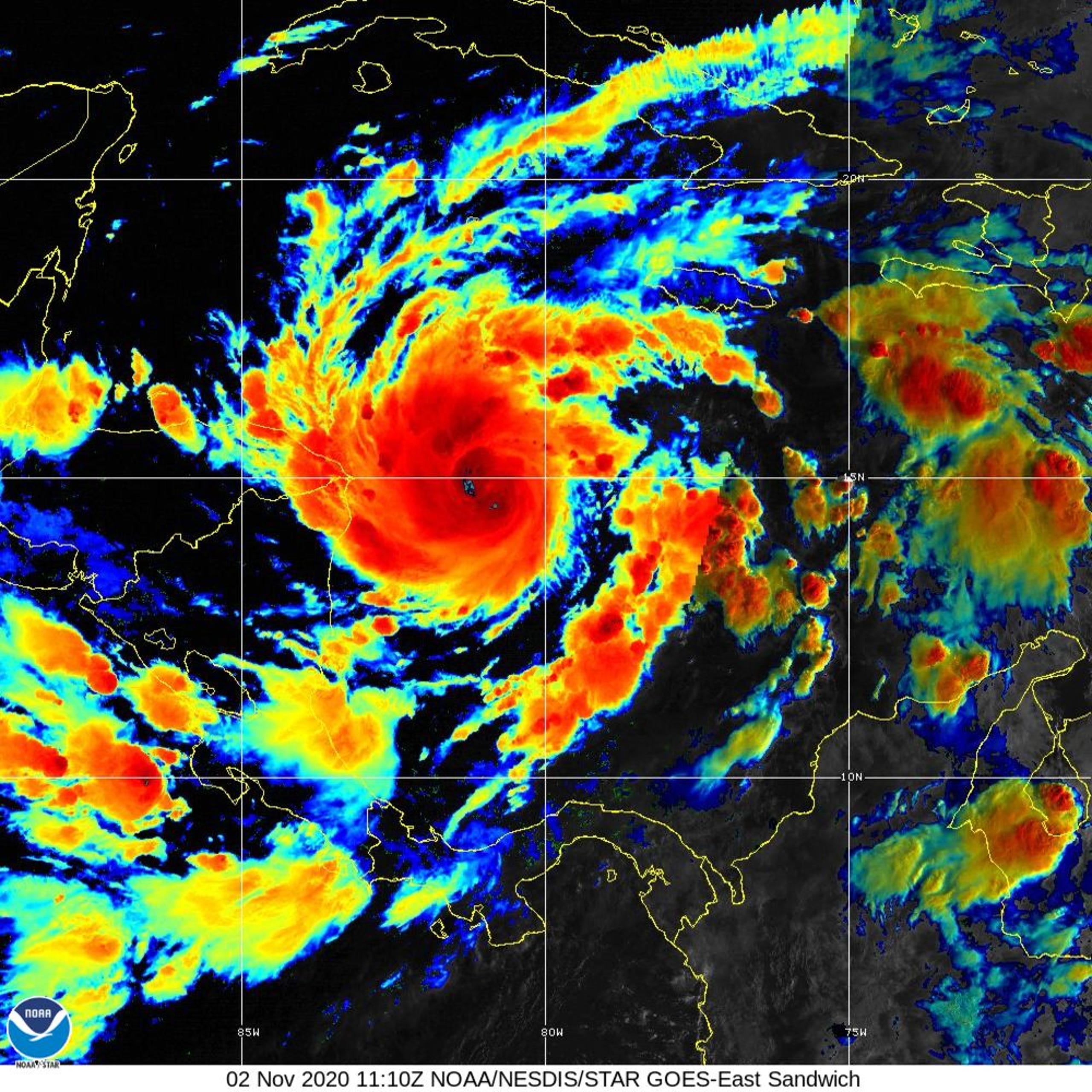
El Huracán Eta se intensifica rápidamente durante la noche del Domingo 01/11, impactando hacia el Lunes 02/11 trayendo marejadas muy violentas, fuertes vientos y casi 3 pies de lluvia. Podría provocar inundaciones catastróficas y deslizamientos de tierra en toda Centroamérica. Vientos sostenidos de Eta se fortalecieron a 110 mph lunes por la mañana. La tormenta se está moviendo hacia el oeste hacia Centroamérica a 9 mph, según un aviso del NHC emitido el Lunes 02/11 por la mañana. «Eta se ha convertido en un impresionante huracán de noviembre a medida que continúa experimentando un rápido fortalecimiento», dijo el Centro Nacional de Huracanes (NHC).
Se ha puesto en marcha una advertencia de huracanes para toda la costa de Nicaragua. Una advertencia de tormenta tropical está en vigor para la costa noreste de Honduras. Se espera que el centro de Eta se acerque a la costa noreste de Nicaragua el lunes por la tarde, y aterrice temprano el martes, antes de moverse hacia el interior sobre el norte de Nicaragua hasta principios del miércoles, según el NHC. El pronóstico actual tiene la tormenta serpenteando las montañas de Nicaragua y Honduras antes de dirigirse hacia el norte hacia Belice como depresión para el viernes. La pista y la intensidad de la tormenta sigue siendo incierta después del viernes y será vigilada de cerca.
Perspectivas Huracán Eta
El Huracán Eta es ahora la novena tormenta del año, y la quinta tormenta consecutiva, que se somete a una rápida intensificación, o el fortalecimiento de las velocidades del viento de 35 mph o más en 24 horas. La tormenta también producirá fuertes lluvias con estimaciones de 15 a 25 pulgadas, y cantidades aisladas de hasta 35 pulgadas en Nicaragua y Honduras. Se espera que la marejada de tormentas potencialmente mortal a lo largo de la costa de Nicaragua esté hasta 18 pies por encima de la marea normal. Los vientos extremadamente fuertes impactarán áreas de la costa hacia las montañas. Las fuertes lluvias se extenderán por toda Centroamérica, donde las áreas desde el sureste de México a través de Panamá pudieron ver acumulaciones de lluvia de hasta 25 pulgadas.
La amenaza de marejada de viento y tormenta disminuirá a lo largo del Martes 03/11, pero la lluvia durará hasta bien entrado el día de la semana. «Esta lluvia conduciría a inundaciones repentinas catastróficas y potencialmente mortales e inundaciones de ríos, junto con deslizamientos de tierra en áreas de terrenos más altos de Centroamérica. Las inundaciones repentinas y las inundaciones fluviales serían posibles en Jamaica, el sureste de México, El Salvador, el sur de Haití y las Islas Caimán», dijo el NHC.
El Huracán Eta es la 28a tormenta nombrada de la temporada activa de huracanes 2020 y empata el récord del número de tormentas nombradas en una sola temporada que se remonta en 2005. La tormenta tiene el potencial de ser uno de los peores eventos de inundación que Nicaragua ha visto desde el Huracán Mitch en 1998, que mató a más de 10.000 personas.
Hurricane Eta Category 4
Hurricane Eta rapidly escalates to Category 4 in Central America
Hurricane Eta intensifies rapidly during the night of Sunday 11/01, impacting towards Monday 11/02 bringing very violent swells, strong winds and almost 3 feet of rain. It could cause catastrophic floods and landslides throughout Central America. Sustained winds from Eta strengthened to 110 mph Monday morning. The storm is moving westward toward Central America at 9 mph, according to an NHC advisory issued Monday morning 02/11. «Eta has grown into an impressive November hurricane as it continues to experience rapid strengthening», said the National Hurricane Center (NHC).
A hurricane warning has been put in place for the entire Nicaraguan coast. A tropical storm warning is in effect for the northeast coast of Honduras. The center of Eta is expected to approach the northeast coast of Nicaragua Monday afternoon, landing early Tuesday, before moving inland over northern Nicaragua through early Wednesday, according to the NHC. The current forecast has the storm snaking through the mountains of Nicaragua and Honduras before heading north towards Belize as a depression for Friday. The track and intensity of the storm remains uncertain after Friday and will be closely watched.
Perspective Hurricane Eta
Hurricane Eta is now the ninth storm of the year, and the fifth storm in a row, to undergo rapid intensification, or strengthening of wind speeds of 35 mph or more in 24 hours. The storm will also produce heavy rains with estimates of 15 to 25 inches, and isolated amounts of up to 35 inches in Nicaragua and Honduras. The life-threatening storm surge along the Nicaraguan coast is expected to be up to 18 feet above normal tide. Extremely strong winds will impact coastal areas towards the mountains. Heavy rains will spread across Central America, where areas from southeastern Mexico through Panama could see rain accumulations of up to 25 inches.
The threat of storm surge and wind will diminish throughout Tuesday 11/03, but the rain will last well into the weekday. «This rain would lead to catastrophic and life-threatening flash floods and river flooding, along with landslides in higher ground areas of Central America. Flash floods and river flooding would be possible in Jamaica, southeastern Mexico, El Salvador, southern Haiti and the Cayman Islands», the NHC said.
Hurricane Eta is the 28th named storm of the 2020 active hurricane season and ties the record for the number of named storms in a single season dating back to 2005. The storm has the potential to be one of the worst flood events Nicaragua has seen since Hurricane Mitch in 1998, which killed more than 10,000 people.
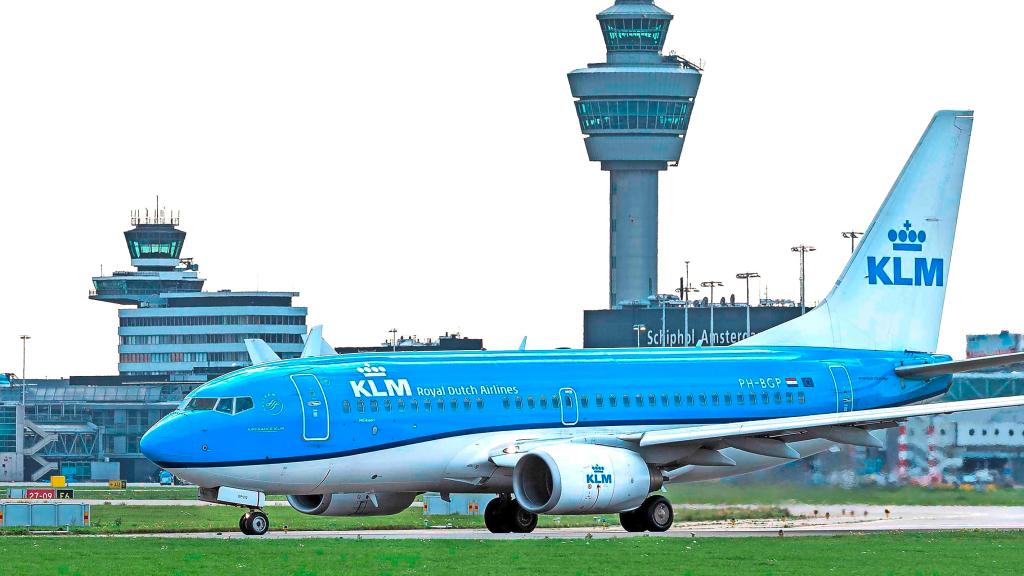
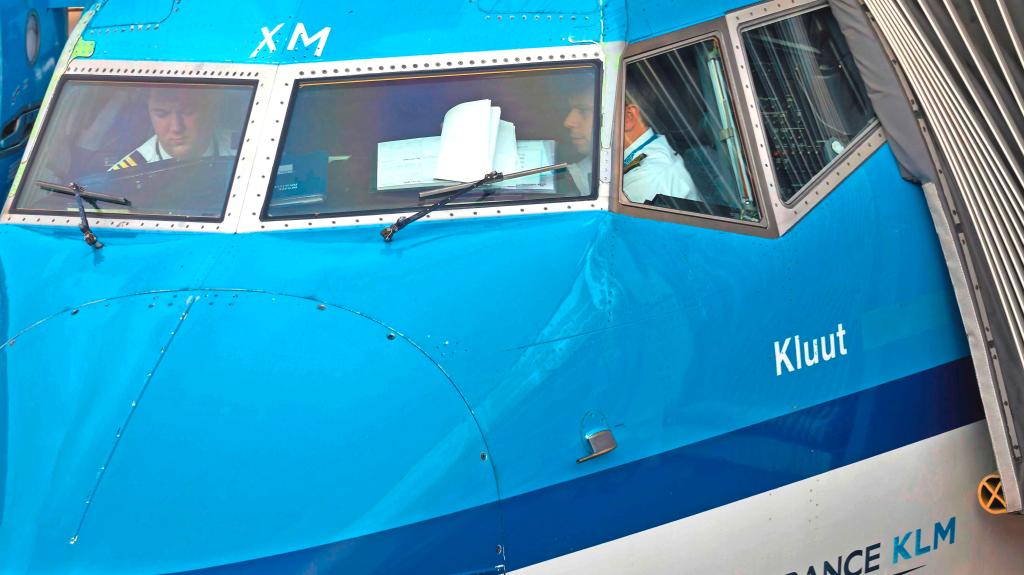
Sindicato de pilotos negocia recortes salariales KLM Airlines
Los pilotos de KLM Royal Dutch Airlines están dispuestos a negociar sobre la moderación salarial durante un período de cinco años, dijo Willem Schmid, Presidente del Sindicato de Pilotos Holandés VNV a este Lunes 02/11. El Viernes 31/10, el Ministerio de Finanzas había comunicado que no consideraba que los acuerdos alcanzados entre los sindicatos de aviación y KLM sobre la reducción de costos, una parte clave del paquete de rescate del gobierno, iban lo suficientemente lejos. Los acuerdos originales para los recortes salariales duraron hasta 2022, pero el Ministro de finanzas Wopke Hoekstra dijo en cambio que quería un acuerdo de cinco años, que cubriera todo el período del plan de apoyo del Gobierno holandés. La mayoría de los sindicatos de KLM estuvieron de acuerdo con el plan, pero los pilotos demostraron ser un punto de apoyo, amenazando todo el acuerdo. Dijeron que la falta de transparencia del gobierno sobre los términos era efectivamente un «cheque en blanco».
KLM ha recibido unos 1.000 millones de Euros del Gobierno en forma de ayuda salarial y está previsto que otros 2.400 de Euros en préstamos y garantías por la crisis del coronavirus. «Por moderación salarial durante cinco años, podemos llegar a acuerdos al respecto. Pero eso es algo completamente diferente a cantar un contrato del que no sabemos nada durante un período indefinido», dijo Willem Schmid. KLM aún no ha reaccionado a la declaración y el Ministerio de Finanzas ha dicho que corresponde a los sindicatos y a la aerolínea llegar a un acuerdo sobre el impulso de la eficiencia.
KLM pilot negotiations
Pilots union negotiates pay cuts KLM Airlines
The pilots of KLM Royal Dutch Airlines are ready to negotiate on salary moderation for a period of five years, said Willem Schmid, President of the VNV Dutch Pilots Union on this Monday 02/11. On Friday 10/31, the Finance Ministry had reported that it did not consider that the agreements reached between the aviation unions and KLM on cost reduction, a key part of the government’s rescue package, went far enough. The original agreements for the pay cuts lasted until 2022, but Finance Minister Wopke Hoekstra said instead that he wanted a five-year agreement, covering the entire period of the Dutch government’s support plan. Most of the KLM unions agreed to the plan, but the pilots proved to be a foothold, threatening the entire deal. They said the government’s lack of transparency about the terms was effectively a «blank check».
KLM has received about 1 billion euros from the government in the form of salary aid and another 2,400 euros in loans and guarantees are planned for the coronavirus crisis. «By salary moderation for five years, we can reach agreements about it. But that is something completely different than singing a contract about which we know nothing for an indefinite period», said Willem Schmid. KLM has yet to react to the statement and the Finance Ministry has said that it is up to the unions and the airline to reach an agreement on boosting efficiency.
KLM pilootonderhandelingen
Pilotenvakbond onderhandelt over loonsverlagingen KLM
De piloten van KLM Royal Dutch Airlines staan klaar om te onderhandelen over salarismatiging voor een periode van vijf jaar, zei Willem Schmid, voorzitter van de VNV Dutch Pilots Union op maandag 02/11. Op vrijdag 31 oktober meldde het ministerie van Financiën dat het van mening was dat de afspraken tussen de luchtvaartbonden en KLM over kostenreductie, een belangrijk onderdeel van het reddingspakket van de regering, niet ver genoeg gingen. De oorspronkelijke afspraken over de loonsverlagingen duurden tot 2022, maar minister van Financiën Wopke Hoekstra zei in plaats daarvan dat hij een vijfjarige overeenkomst wilde die de hele periode van het steunplan van de Nederlandse regering bestrijkt. De meeste KLM-vakbonden waren het met het plan eens, maar de piloten bleken voet aan de grond te hebben en bedreigden de hele deal. Ze zeiden dat het gebrek aan transparantie van de regering over de voorwaarden in feite een ,,chequeboek in het wit» was.
KLM heeft van de overheid ongeveer 1 miljard euro aan salarissteun ontvangen en nog eens 2.400 euro aan leningen en garanties is gepland voor de coronaviruscrisis. ,,Door salarismatiging voor vijf jaar kunnen we daar afspraken over maken. Maar dat is iets heel anders dan een contract zingen waarvan we voor onbepaalde tijd niets weten», aldus Willem Schmid. KLM moet nog reageren op de verklaring en het ministerie van Financiën heeft gezegd dat het aan de vakbonden en de luchtvaartmaatschappij is om overeenstemming te bereiken over het vergroten van de efficiëntie.
La 27º World Travel Award la iniciativa global para reconocer y recompensar la excelencia en viajes y turismo ha anunciado que sus ganadores de Europa 2020 coincidan con su día inaugural de Europa. Los resultados siguen a una búsqueda de un año de las principales marcas de viajes, turismo y hostelería del mundo. Los votos fueron emitidos por profesionales de la industria de viajes y el público, con el candidato ganando la mayor cantidad de votos en una categoría nombrada como ganadora. Graham Cooke, Fundador de World Travel Awards, dice: «Nuestros ganadores representan lo mejor del sector de los viajes y el turismo de Europa y mis felicitaciones a cada uno de ellos. Todos ellos han demostrado una notable resiliencia en un año de desafíos sin precedentes. El programa World Travel Awards 2020 recibió un número récord de votos emitidos por el público. Esto demuestra que el apetito por los viajes y el turismo nunca ha sido más fuerte y es un buen augurio para el futuro de la industria a medida que comienza la recuperación global».
Entre los ganadores incluyen Portugal, que defendió la dura competencia para emerger como «Destino líder de Europa», mientras que el esplendor imperial de Moscú fue reconocido con premios por «El principal destino de la ciudad de Europa» y «Destino del patrimonio líder de Europa». Las islas de Portugal disfrutaron de excelentes actuaciones, con Madeira elegida «Destino insular líder en Europa» y Azores nombrada «El principal destino turístico de aventura de Europa». El centro de atención también brilló en la localidad costera de Batumi, Georgia, denominada «El principal destino turístico emergente de Europa». En el sector de la hostelería, el Palacio Kempinski de La araan, Estambul fue votado como «Elounda’s Leading Hotel», Elounda Beach Hotel & Villas, Grecia ganó ‘Europe’s Leading Beach Resort» y el Forte Village Resort de Cerdeña levantó el título de «El Resort Líder de Europa». Italia también tuvo una fuerte presentación en las categorías de recién llegados, recogiendo tanto el «Nuevo Hotel Líder de Europa» para Palazzo Doglio como el «Nuevo Resort Líder de Europa» para Lefay Resort & SPA Dolomiti.
LA CIUDAD DE BUENOS AIRES FUE NOMINADA EN NUMEROSAS CATEGORÍAS DE LOS WORLD TRAVEL AWARDS
Otros ganadores incluyen Madrid «Principal encuentros de Europa y destino de conferencias»; El Centro de Convenciones de Irlanda en lo que «Europa se dirige a las reuniones y al centro de conferencias»; Hilton Diagonal Mar Barcelona, «El hotel de negocios líder en Europa»; Resort Valle dell’Erica Thalasso & SPA, Italia «El Principal Resort Verde de Europa»; Dark Sky Alqueva, Portugal y España «Premio de Turismo Responsable de Europa»; Sani Resort, Grecia, «El principal resort familiar de Europa»; Santo Maris Oia Luxury Suites & Spa, Grecia «Europe’s Leading Boutique Resort»; El Langham, Londres, y Adare Manor «Hotel líder de Irlanda».
Premios a aerolíneas
Norwegian Air Shuttle ASA ha sido reconocida como la «Aerolínea de bajo coste líder en Europa» por sexto año consecutivo en la 27 edición anual de los World Travel Awards, uno de los premios más prestigiosos de la industria del transporte y el turismo. Estos premios se establecieron en 1993 para reconocer, recompensar y celebrar la excelencia en todos los sectores clave de la industria y son reconocidos a nivel mundial como el principal sello de excelencia de ésta. A lo largo de 2020, Norwegian lanzó una nueva estrategia de sostenibilidad medioambiental que tendrá como principales objetivos reducir las emisiones de CO2 en un 45% para 2030, eliminar todos los plásticos no reciclables y reciclar todos los plásticos de un solo uso para 2023. Además ha sido la primera aerolínea en firmar el compromiso de la Convención Marco de las Naciones Unidas sobre el Cambio Climático (CMNUCC), comprometiéndose así en alcanzar la neutralidad climática para 2050. Norwegian también fue reconocida como la «Aerolínea de bajo coste líder en Europa» en los World Travel Awards como la aerolínea más eficiente en el uso de combustible en rutas transatlánticas en 2015 y de nuevo en 2018, por parte del Consejo Internacional de Transporte Limpio (ICCT). Desde 2010, la aerolínea ha reducido sus emisiones en un 28%. En 2019, Norwegian Air fue elegida como la «Mejor aerolínea de bajo coste de Europa» por sexto año consecutivo en los SkyTrax World Airline Awards.
World Travel Awards 2020
27th edition of the World Travel Award 2020
The 27th World Travel Award the global initiative to recognize and reward excellence in travel and tourism has announced that its Europe 2020 winners coincide with its opening day for Europe. The results follow a year-long search of the world’s top travel, tourism and hospitality brands. Votes were cast by travel industry professionals and the public, with the candidate winning the most votes in a category named as the winner. Graham Cooke, Founder of the World Travel Awards, says: «Our winners represent the best of Europe’s travel and tourism industry and my congratulations to each of them. They have all demonstrated remarkable resilience in a year of unprecedented challenges. The World Travel Awards 2020 program received a record number of votes cast by the public. This shows that the appetite for travel and tourism has never been stronger and bodes well for the future of the industry as the global recovery».
Winners include Portugal, which defended stiff competition to emerge as «Europe’s Leading Destination», while Moscow’s Imperial Splendor was recognized with awards for «Europe’s Leading City Destination» and «Europe’s Leading Heritage Destination. Europe». The islands of Portugal enjoyed excellent performances, with Madeira voted «Europe’s Leading Island Destination» and Azores named «Europe’s Top Adventure Travel Destination». The spotlight also shone on the seaside town of Batumi, Georgia, dubbed «Europe’s Top Emerging Tourist Destination». In the hospitality sector, Kempinski Palace in La Araan, Istanbul was voted «Elounda’s Leading Hotel», Elounda Beach Hotel & Villas, Greece won «Europe’s Leading Beach Resort» and Sardinia’s Forte Village Resort lifted the title of «Europe’s Leading Resort». Italy also had a strong showing in the newcomers categories, picking up both the «New Leading Hotel in Europe» for Palazzo Doglio and the «New Leading Resort in Europe» for Lefay Resort & SPA Dolomiti.
Other winners include Madrid’s «Europe’s Leading Meetings and Conference Destination»; The Ireland Convention Center on «Europe Heads to Meetings and the Conference Center»; Hilton Diagonal Mar Barcelona, »The leading business hotel in Europe»; Resort Valle dell’Erica Thalasso & SPA, Italy «The Leading Green Resort in Europe»; Dark Sky Alqueva, Portugal and Spain «Award for Responsible Tourism of Europe»; Sani Resort, Greece, «Europe’s Leading Family Resort»; Santo Maris Oia Luxury Suites & Spa, Greece «Europe’s Leading Boutique Resort»; The Langham, London, and Adare Manor «Ireland’s Leading Hotel».
Airline Awards
Norwegian Air Shuttle ASA has been recognized as «Europe’s Leading Low Cost Airline» for the sixth consecutive year at the 27th annual World Travel Awards, one of the most prestigious awards in the transport and tourism industry. These awards were established in 1993 to recognize, reward and celebrate excellence in all key sectors of the industry and are recognized worldwide as the industry’s premier seal of excellence. Throughout 2020, Norwegian launched a new environmental sustainability strategy that will have as its main objectives to reduce CO2 emissions by 45% by 2030, eliminate all non-recyclable plastics and recycle all single-use plastics by 2023. In addition has been the first airline to sign the commitment to the United Nations Framework Convention on Climate Change (UNFCCC), thus committing to achieve climate neutrality by 2050. Norwegian was also recognized as the «Leading Low Cost Airline in Europe» in the World Travel Awards as the most fuel efficient airline on transatlantic routes in 2015 and again in 2018, by the International Council on Clean Transportation (ICCT). Since 2010, the airline has reduced its emissions by 28%. In 2019, Norwegian Air was voted «Europe’s Best Low-Cost Airline» for the sixth consecutive year at the SkyTrax World Airline Awards.
AW | 2020 11 02 12:37 | AIRLINES MARKET / GOVERNMENT
Venezuela reactiva operaciones aéreas primera semana 12/2020
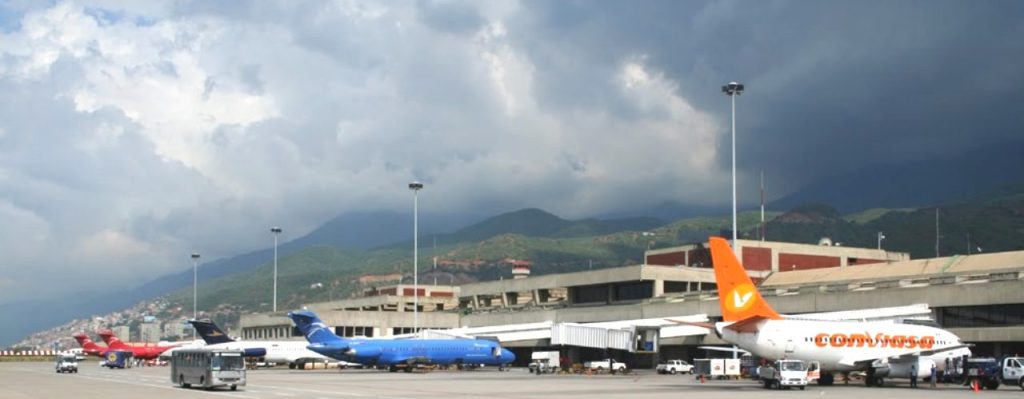
La República de Venezuela reiniciará sus actividades aéreas comerciales regulares hacia la primer semana de Diciembre 2020. Las líneas aéreas nacionales podrán reactivar sus vuelos a partir de la primera semana del 12/2020. Las aerolíneas podrán cubrir rutas nacionales e internacionales bajo las normas de estrictos procedimientos de protocolos de bioseguridad. Cuatro aerolíneas están autorizadas para realizar vuelos, entre ellas la estatal Conviasa y las privadas Aeropostal, Aerolíneas Estelar y Láser Airlines son las compañías a las que el Instituto Nacional de Aeronáutica Civil (INAC) ha aprobado para iniciar operaciones aéreas.
En Venezuela hay un total de nueve aerolíneas locales. El INAC ha decidido extender el visto bueno a cuatro de ellas, debido a que las cinco restantes Albatros Airlines, Avior Airlines, Ravsa Líneas Aéreas, Rutaca Airlines y Turpial Airlines no han cumplido con los protocolos de bioseguridad establecidos para impedir eventuales contagios de la pandemia actual.
Venezuela air reopening 12/2020
Venezuela reactivates air operations first week 12/2020
The Republic of Venezuela will restart its regular commercial air activities towards the first week of December 2020. National airlines will be able to reactivate their flights as of the first week of 12/2020. The airlines will be able to cover national and international routes under the rules of strict biosafety protocol procedures. Four airlines are authorized to carry out flights, among them the state-owned Conviasa and the private Aeropostal, Aerolíneas Estelar and Laser Airlines are the companies that the National Institute of Civil Aeronautics (INAC) has approved to start air operations.
In Venezuela there are a total of nine local airlines. The INAC has decided to extend the go-ahead to four of them, because the remaining five Albatros Airlines, Avior Airlines, Ravsa Lineas Aereas, Rutaca Airlines and Turpial Airlines have not complied with the biosafety protocols established to prevent possible contagion from the pandemic current.
CyberMonday un modelo que tiene réplicas en otros países
Este Lunes 02/11 se inició una nueva edición del CyberMonday, el evento de compras organizado por la Cámara Argentina de Comercio Electrónico (CACE). El evento de grandes ofertas y bonificaciones está habilitado desde el 2 al 4 de Noviembre de 2020. Con el anuncio de la extensión del Plan PreViaje hasta el 15/11y los tres días de descuentos, el sector turístico ve una oportunidad de levantar las ventas. El Travel Sale, un evento similar dedicado íntegramente a la categoría turismo y viajes había sido suspendido por la crisis sanitaria, CyberMonday retoma su arribo para estimular las economías y tirar un pequeño salvavidas a las atribuladas economías de las aerolíneas y el turismo. El CyberMonday 2020 se inicia con récord de marcas ofreciendo en esta modalidad vía internet descuentos, ofertas y cuotas.
Desde las 00.00 horas del 2 al 4 de Noviembre 2020, a través la web www.cybermonday.com.ar se podrá accederse a la lista de beneficios de las empresas adheridas al evento de ofertas económicas para desarrollar las economías del país. Durante el proceso de pandemia el Hot Sale, en Julio 2020, permitió ventas récord en Aerolíneas Argentinas con cerca de 200.000 tickets, superando la marca de 2018, con un 48% más de transacciones realizadas. CyberMonday, organizado por la CACE donde participan más de 800 empresas, entre ellas se encuentran agencias de turismo, aerolíneas y una poluralidad de empresas que activarán sus economías gracias a la ventana que ofrece CyberMonday.
Aerolíneas Argentina participará del evento ofreciendo 12 cuotas sin interés, acceso al programa Pre-viaje y una serie de beneficios que revelarán durante los tres días. Los viajeros podrán acceder a través del sitio web oficial, e incluyen tanto para viajes de cabotaje como internacionales.
Por su parte, las agencias de viajes, en esta oportunidad, apuntan más al turismo interno con el incentivo del plan lanzado por el gobierno. Sin embargo, con la lenta apertura de las fronteras, también ofrecen paquetes y vuelos al extranjero, con la posibilidad de fechas flexibles y las cuotas en pesos.
Assist Card aseguraron que los argentinos se inclinan principalmente por los destinos nacionales cuyas búsquedas en septiembre tuvieron un aumento intermensual del 63%. Entre los beneficios para esta edición, los viajeros argentinos podrán acceder hasta un 50% de descuento en la contratación de sus asistencias en viajes nacionales e internacionales, con opciones según modalidad: diaria o múltiples viajes anuales. Adicionalmente, dispondrán de hasta un 20% de descuento en la contratación de bloques de días, para aquellos que aún no tengan la certeza de su próximo viaje y prioricen la flexibilidad. Alexia Keglevich, CEO Global de Assist Card, afirmó: “Desde la compañía nos unimos al Cyber Monday con el objetivo de apoyar la reactivación de la industria y seguir cuidando de nuestros viajeros. Ya sea en destinos internacionales, donde contar con una asistencia es un requisito obligatorio en más de 40 países, como en destinos nacionales, donde ofrecemos mayores prestaciones que cualquier plan de salud local”.
Argentina launches CiberMonday
CyberMonday a model that has replicas in other countries
This Monday 02/11 began a new edition of CyberMonday, the shopping event organized by the Argentine Chamber of Electronic Commerce (CACE). The event of great offers and bonuses is enabled from November 2 to 4, 2020. With the announcement of the extension of the Pre-Trip Plan until 11/15 and the three days of discounts, the tourism sector sees an opportunity to raise sales. The Travel Sale, a similar event dedicated entirely to the tourism and travel category that had been suspended due to the health crisis, CyberMonday resumes its arrival to stimulate economies and throw a small lifeline to the troubled economies of airlines and tourism. CyberMonday 2020 begins with a record of brands offering discounts, offers and fees in this mode via the internet.
From 00.00 hours from 2 to 4 November 2020, through the website www.cybermonday.com.ar you can access the list of benefits of the companies adhering to the event of economic offers to develop the economies of the country. During the pandemic process, the Hot Sale, in July 2020, allowed record sales in Aerolíneas Argentinas with nearly 200,000 tickets, surpassing the 2018 mark, with 48% more transactions carried out. CyberMonday, organized by the CACE where more than 800 companies participate, among them are tourism agencies, airlines and a multitude of companies that will activate their economies thanks to the window offered by CyberMonday.
Aerolineas Argentina will participate in the event offering 12 interest-free installments, access to the Pre-trip program and a series of benefits that they will reveal during the three days. Travelers can access through the official website, and include both for domestic and international trips.
For their part, travel agencies, this time, are targeting more domestic tourism with the incentive of the plan launched by the government. However, with the slow opening of the borders, they also offer packages and flights abroad, with the possibility of flexible dates and quotas in pesos.
Assist Card assured that Argentines are mainly inclined towards national destinations whose searches in September had a month-on-month increase of 63%. Among the benefits for this edition, Argentine travelers will be able to access up to a 50% discount on hiring their assistance on national and international trips, with options depending on the modality: daily or multiple annual trips. Additionally, they will have up to a 20% discount on the hiring of blocks of days, for those who still do not have the certainty of their next trip and prioritize flexibility. Alexia Keglevich, Global CEO of Assist Card, stated: “From the company we join Cyber Monday with the aim of supporting the reactivation of the industry and continuing to take care of our travelers. Either in international destinations, where having assistance is a mandatory requirement in more than 40 countries, or in national destinations, where we offer greater benefits than any local health plan”.
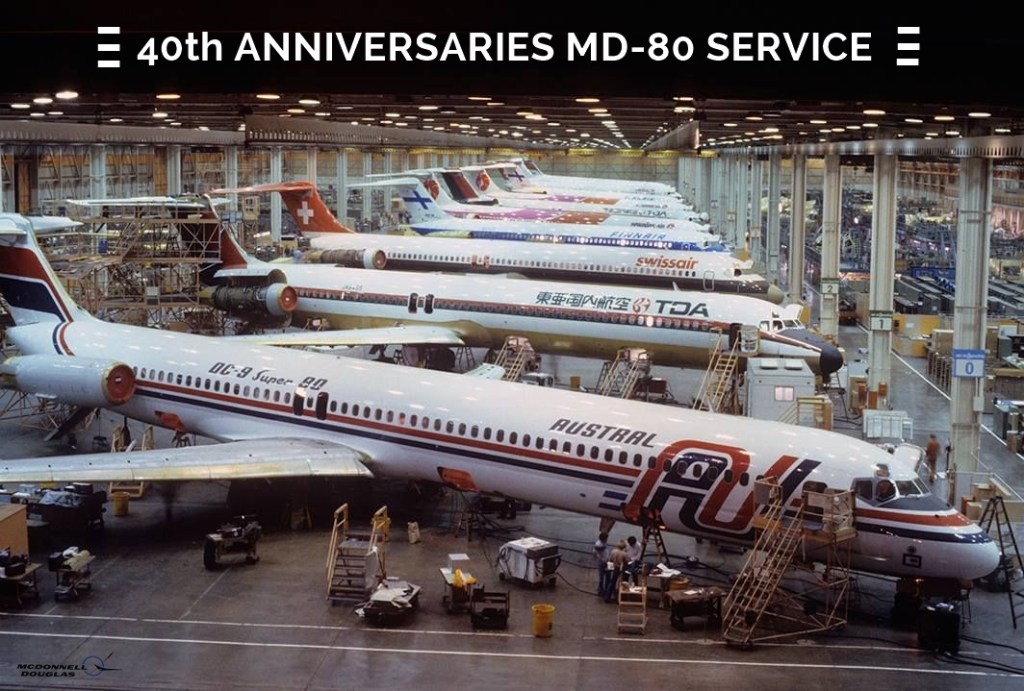
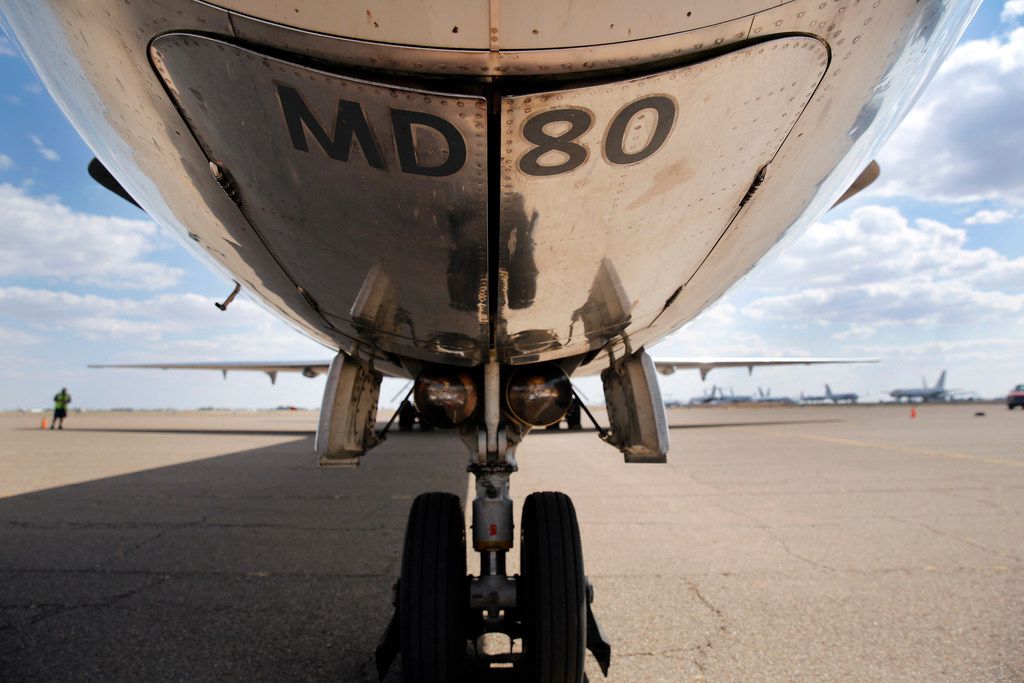
El McDonnell Douglas Corporation ha pasado a la historia como una de las compañías fabricantes de aeronaves líder del mercado de narrowbodies en el mundo tras consolidarse con la variante mejorada de su antecesor el Douglas DC-9. El MD-80 había nacido como una variante mejorada y de mayores dimensiones para competir preferentemente en el mercado con la familia de aeronaves Boeing 737 Classics, incrementando años tras año una fuerte demanda de MD-80 en muchas aerolíneas del mundo entero.
Douglas Aircraft desarrolló el DC-9 en la década de 1960 como un compañero de corto alcance para su DC-8 más grande. El DC-9 era un diseño totalmente nuevo, utilizando dos motores turboventiladores montados en el fuselaje trasero, y una cola en T. El DC-9 tiene un diseño de fuselaje de cuerpo estrecho con asientos de cinco, y tiene capacidad para 80 a 135 pasajeros dependiendo de la disposición de los asientos y la versión de la aeronave.
MD-80, todo un nombre
El MD-80 es una serie de aviones de pasillo único desarrollados por McDonnell Douglas a partir del DC-9, incorporando importantes mejoras. Incursionó en el mercado despertando admiración en el mundo entero como el DC-9 Super 80/DC-9-80. Luego la compañía introdujo algunos cambios de denominación para pasar a denominarlo [M]c[D]onnell [D]ouglas MD-80. Posteriormente, la compañía pasaría a denominar a la primera variante como MD-81, reservando la denominación MD-80 sólamente para designar al modelo.
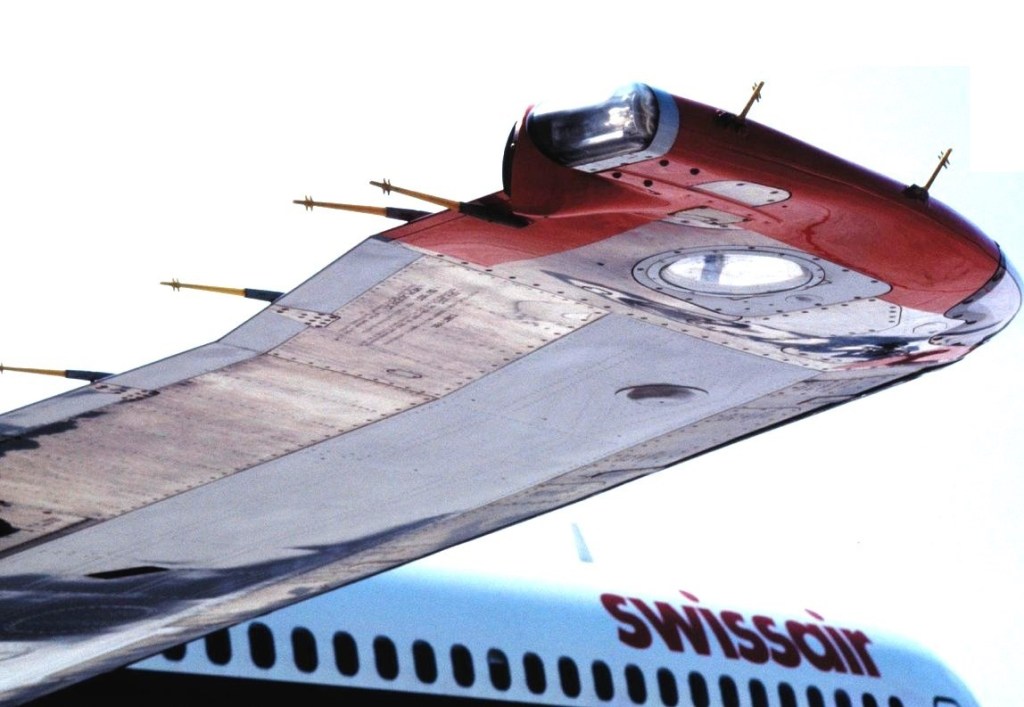
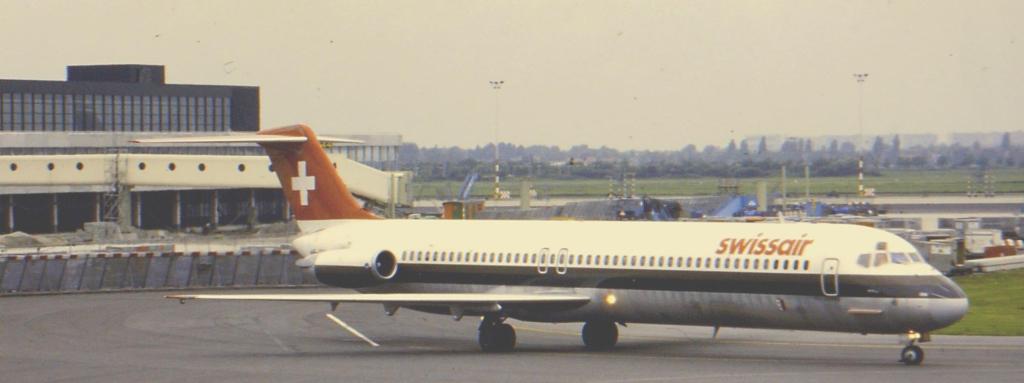
El nuevo avión derivado había sido estirado, con mayores pesos operativos, y con motores Pratt & Whitney JT8D-200 de mayor bypass, el DC-9 Series 80 fue lanzado en Octubre de 1977. Hizo su primer vuelo el 18 de Octubre de 1979 y fue certificado el 25 de Agosto de 1980. Fue entregado por primera vez con el cliente de lanzamiento Swissair el 13 de Septiembre de 1980, que lo introdujo en el servicio comercial el 10 de Octubre de 1980. El MD-80 continuaba conservando una disposición de asientos cross-section de 3X2. Las variantes más largas se estiran por 4,3 m del DC-9-50 y tienen un ala 28% más grande. Las variantes largas MD-81/82/83/88 son de 48 pies (45,1 m) de largo para acomodar a 155 pasajeros en autocar y, con diferentes pesos, pueden cubrir hasta 2.550 nmi (4.720 km). El MD-88 posterior tiene una cabina moderna con pantallas EFIS. El MD-87 es 17 pies (5,3 m) más corto para 130 pasajeros en clase turista y tiene un alcance de hasta 2.900 nmi (5.400 km). Compitió con el Boeing 737 Classic y el Airbus A320. Introducido en 1995, el MD-90 es un nuevo tramo impulsado por turboventiladores de alto bypass IAE V2500, mientras que el MD-95 más corto, el Boeing 717 posterior, fue propulsado por motores Rolls-Royce BR715. La familia DC-9 fue producida en 2441 unidades: 976 DC-9, 1191 MD-80, 116 MD-90 y 155 Boeing 717. La producción de MD-80 terminó en 1999 después de que se construyera 1.191.
Serie MD-80
El desarrollo de la serie MD-80 comenzó en la década de 1970 como una versión alargada y de crecimiento del DC-9-50, con un mayor peso máximo de despegue (MTOW) y una mayor capacidad de combustible. La disponibilidad de las versiones más recientes del motor Pratt & Whitney JT8D con mayores relaciones de derivación impulsaron estudios tempranos, incluyendo diseños conocidos como Series 55, Series 50 (refanned Super Stretch) y Series 60. El esfuerzo de diseño se centró en la Serie 55 en agosto de 1977. Con la entrada en servicio proyectada en 1980, el diseño fue comercializado como el «DC-9 Series 80». Swissair lanzó la Serie 80 en Octubre de 1977 con un pedido de 15 más una opción para cinco.
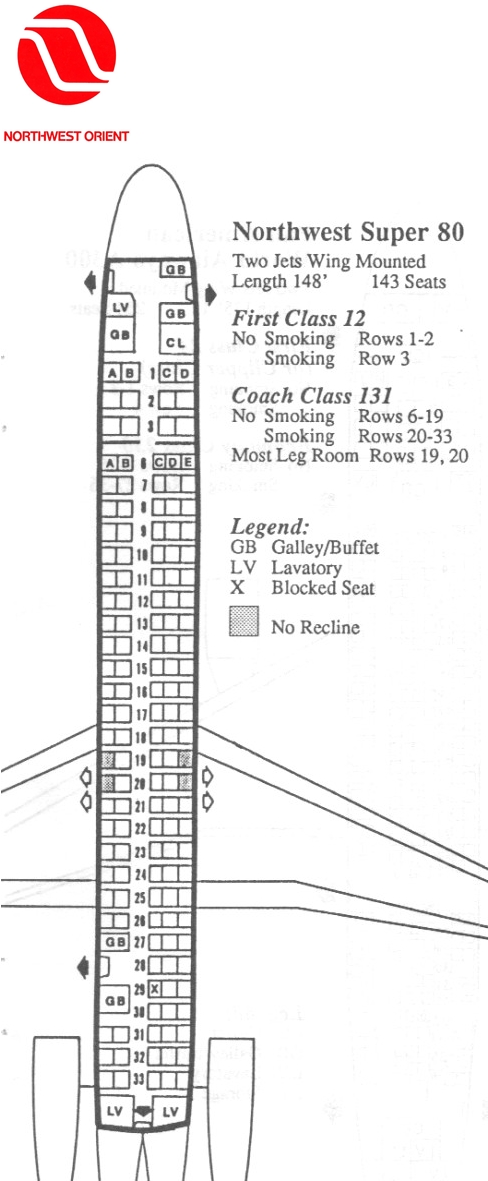
El MD-80 es un avión de pasajeros de tamaño mediano y medio. La serie presentaba un fuselaje de 14 pies 3 pulgadas (4,34 m) más largo que el DC-9-50. El diseño del ala del DC-9 se amplió añadiendo secciones en la raíz del ala y la punta para un ala 28% más grande. Fue la segunda generación del DC-9, originalmente llamado DC-9-80 y DC-9 Super 80. Tiene dos motores turboventiladores montados en fuselaje traseros, alas pequeñas y altamente eficientes, y una cola en T. El avión tiene cinco asientos al día en la clase de autocar. La serie de aviones fue diseñada para vuelos frecuentes de corta distancia para 130 a 172 pasajeros dependiendo de la versión del avión y la disposición de los asientos.
Las versiones MD-80 tienen cabina, aviónica y mejoras aerodinámicas junto con los motores más potentes, más eficientes y más silenciosos de la serie JT8D-200, que son una actualización significativa sobre las series más pequeñas de JT8D-15, -17, -11 y -9. Los aviones de la serie MD-80 también tienen fuselajes más largos que sus homólogos anteriores dc-9, así como de mayor alcance. Algunos clientes, como American Airlines, todavía se refieren a los aviones en la documentación de la flota como «Super 80». Los aviones comparables a la serie MD-80 incluyen los Boeing 737-400 y Airbus A320.
Pruebas y certificación
El primer MD-80, DC-9 número de línea 909, hizo su primer vuelo el 18 de octubre de 1979. Aunque dos aviones resultaron sustancialmente dañados en accidentes, el vuelo de prueba se completó el 25 de agosto de 1980, cuando la primera variante del MD-80, el JT8D-209-powered MD-81 (o DC-9-81), fue certificado bajo una enmienda al certificado de tipo FAA para el DC-9. Las pruebas de vuelo previas a la certificación habían implicado que tres aeronaves acumularan un total de 1.085 horas de vuelo en 795 vuelos. La primera entrega, que lanzó el cliente Swissair tuvo lugar el 13 de Septiembre de 1980.
Dado que el MD-80 no era en realidad un nuevo avión, sigue siendo operado bajo una enmienda al certificado original de tipo de aeronave DC-9 FAA (un caso similar al posterior MD-90 y Boeing 717). El certificado de tipo expedido al fabricante de aeronaves lleva las designaciones del modelo de aeronave exactamente como aparece en la solicitud del fabricante, incluido el uso de guiones o puntos decimales, y debe coincidir con lo que está estampado en los datos o placas de identificación de la aeronave. Lo que el fabricante opta por llamar a una aeronave con fines de comercialización o promocionales es irrelevante para las autoridades de aeronavegabilidad. La primera enmienda al certificado de tipo DC-9 para el nuevo avión MD-80 se aplicó como DC-9-81, que aprobó el 26 de agosto de 1980. Todos los modelos MD-80 han sido aprobados bajo modificaciones adicionales al certificado de tipo DC-9. En 1983, McDonnell Douglas decidió que el DC-9-80 (Super 80) sería designado MD-80. En lugar de utilizar simplemente el prefijo MD- como símbolo de marketing, se hizo una solicitud para modificar de nuevo el certificado de tipo para incluir el MD-81, MD-82 y MD-83. Este cambio estaba fechado el 10 de marzo de 1986, y el certificado de tipo declaraba que aunque el designador MD podría utilizarse entre paréntesis, debe ir acompañado de la designación oficial, por ejemplo: DC-9-81 (MD-81). Todos los aviones de Long Beach de la serie MD-80 a partir de entonces tenían MD-81, MD-82 o MD-83 estampados en la placa de identificación de la aeronave.
Aunque no estaba certificado hasta el 21 de Octubre de 1987, McDonnell Douglas ya había solicitado los modelos DC-9-87 y DC-9-87F el 14 de Febrero de 1985. La tercera derivada fue designada oficialmente DC-9-87 (MD-87), aunque no se estampó ninguna placa de identificación DC-9-87. Para el MD-88, se presentó una solicitud de modificación del modelo de certificado de tipo después de los cambios anteriores, por lo que no había un DC-9-88, que fue certificado el 8 de diciembre de 1987. La base de datos de registro de aeronaves en línea de la FAA muestra las designaciones DC-9-88 y DC-9-80 en existencia pero no utilizadas.
Línea producción
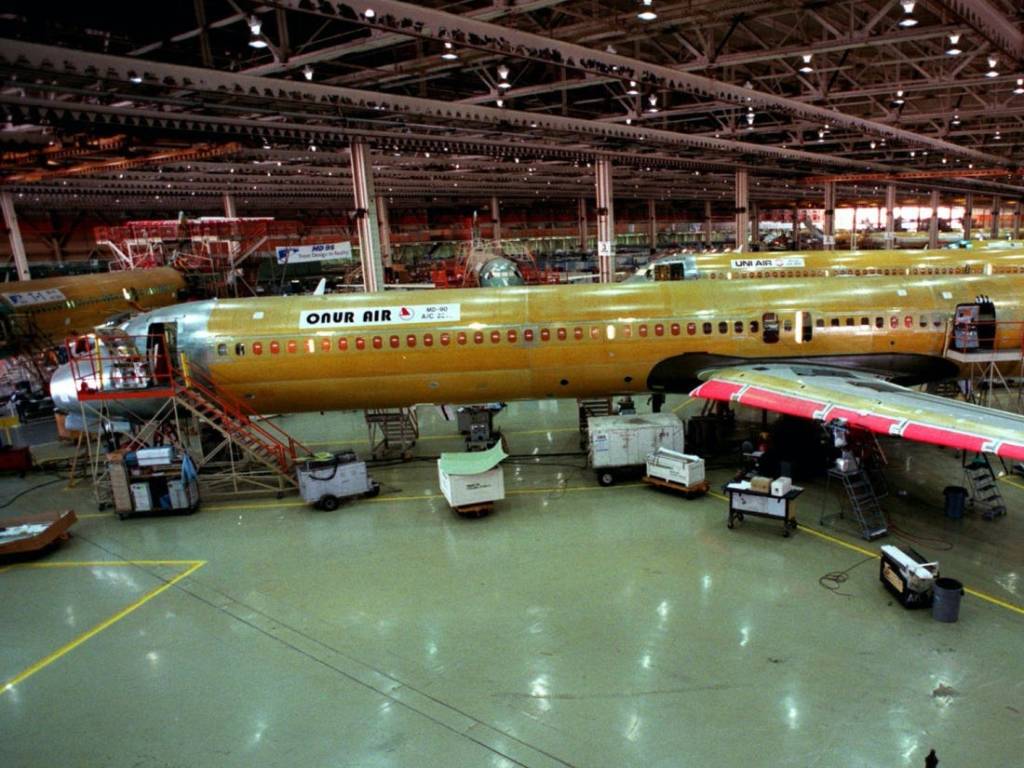
La segunda generación, más tarde denominada MD-80, se produjo en una línea común con la primera generación de DC-9, con los que comparte su secuencia de números de línea. Después de la entrega de 976 DC-9 y 108 MD-80, McDonnell Douglas detuvo la producción de DC-9. Por lo tanto, comenzando con la entrega 1,085 DE DC-9/MD-80, un MD-82 para VIASA en diciembre de 1982, todos los DC-9 producidos fueron Series 80s/MD-80.
En 1985, McDonnell Douglas, después de años de negociación atribuido a Gareth C.C. Chang, Presidente de una subsidiaria de McDonnell Douglas, firmó un acuerdo para la producción conjunta de MD-80 y MD-90 en la República Popular de China. El acuerdo era para 26 aviones, de los cuales 20 fueron finalmente producidos junto con dos aviones MD-90.
Durante 1991, la producción de MD-80 había alcanzado un pico de 12 por mes, habiendo estado funcionando a aproximadamente 10 por mes desde 1987 y se esperaba que continuara a este ritmo en el corto plazo, 140 MD-80 fueron entregados en 1991. Como resultado de la disminución del tráfico aéreo y de la lenta respuesta del mercado al MD-90, se redujo la producción de MD-80 y 84 aviones fueron entregados en 1992. Una nueva reducción de la tasa de producción dio lugar a 42 MD-80 entregados durante 1993 (3,5 por mes) y 22 aviones fueron entregados. La producción de MD-80 terminó en 1999, con el MD-80 final, un MD-83 registrado como N984TW, siendo entregado a TWA.
Diseños derivados
El MD-90 fue desarrollado a partir de la serie MD-80 y es una versión actualizada de 5 pies (1,5 m), del MD-88 con un sistema de instrumento de vuelo electrónico similar (EFIS/cabina de cristal), y motores turboventiladores mejorados y más silenciosos de alto bypass IAE V2500. El programa MD-90 comenzó en 1989, voló por primera vez en 1993, y entró en servicio comercial en 1995.
Varias otras variantes propuestas nunca entraron en producción. Una propuesta fue el MD-94X, que estaba equipado con motores turboventiladores de ventilador sin inducir. Anteriormente, un MD-81 se utilizaba como banco de pruebas para motores de ventiladores no usados, como el General Electric GE36 y el Pratt & Whitney/Allison 578-DX.
El MD-95 fue desarrollado para reemplazar los primeros modelos DC-9, que se acercaban a los 30 años de edad. El proyecto revisó por completo el DC-9 original en un avión de pasajeros moderno. Es ligeramente más largo que el DC-9-30 y está alimentado por nuevos motores Rolls-Royce BR715. El MD-95 fue renombrado Boeing 717 después de la fusión McDonnell-Douglas-Boeing en 1997.
Conversiones
En Febrero de 2010, Aeronautical Engineers Inc. (AEI) con sede en Miami, Florida anunció que estaba comenzando un programa de conversión de cargueros para la serie MD-80. [13] Los aviones convertidos utilizan la designación «MD-80SF». AEI fue la primera empresa en recibir un certificado de tipo suplementario para la familia MD-80 de la FAA en Febrero de 2013. La primera conversión se llevó a cabo en un avión ex-American Airlines MD-82, que fue utilizado como banco de pruebas para el tipo suplementario. El MD-80SF hizo su vuelo inaugural el 28 de Septiembre de 2012. AEI está certificado para realizar conversiones en aviones MD-81, MD-82, MD-83 y MD-88. El cliente de lanzamiento para el servicio de conversión es Everts Air Cargo. En Octubre de 2015, el MD-80SF fue aprobado por la EASA. El primer MD-80SF fue entregado a Everts Air Cargo en Febrero de 2013.
Historial operativo
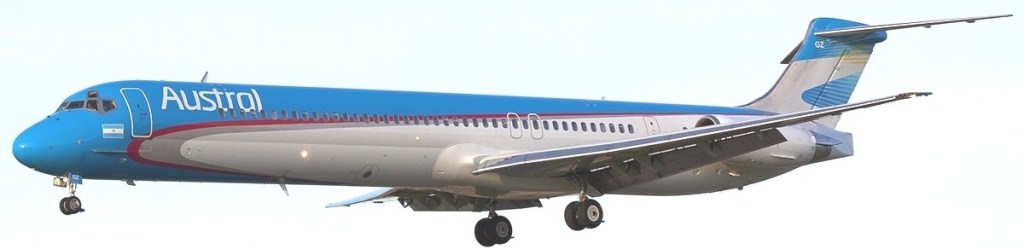
La serie MD-80 ha sido utilizada por aerolíneas de todo el mundo. Entre los principales clientes se encuentran Aerolíneas Argentinas, Aeroméxico, Aeropostal Aerorepublica, Alaska Airlines, Alitalia, Allegiant Air, American Airlines, Aserca, Austral Líneas Aéreas, Austrian Airlines, Avianca, China Eastern Airlines, China Northern Airlines, Delta Air Lines, Finnair, Iberia, Insel Air, Japan Air System (JAS), Korean Air, Lion Air, Martinair Holland, Pacific Southwest Airlines (PSA), Reno Air, Scandinavian Airlines System (SAS), Spanair, Spirit Airlines, Swissair, Trans World Airlines (TWA) y Meridiana.
American Airlines fue la primera aerolínea importante estadounidense en pedir el MD-80 cuando arrendó veinte aviones de 142 asientos a McDonnell Douglas en Octubre de 1982 para reemplazar su Boeing 727-100. Se comprometió con 67 pedidos en firme más 100 opciones en Marzo de 1984, y en 2002 su flota alcanzó un máximo de más de 360 aviones, el 30 % de los 1.191 producidos. Anunció que eliminaría todos sus MD-80 para 2019, reemplazándolos por 737-800. La aerolínea voló sus últimos vuelos de ingresos MD-80 el 3 y 4 de Septiembre de 2019 antes de retirar sus 26 aviones restantes. El último vuelo MD-80 el 4 de Septiembre de 2019 voló de Dallas/Fort Worth a Chicago-O’Hare.
Debido al uso de los motores JT8D envejecidos, el MD-80 no es eficiente en combustible en comparación con los modelos A320 o 737 más recientes; quema 1.050 usantes (4.000 l) de combustible para aviones por hora en un vuelo típico, mientras que el Boeing 737-800 más grande quema 850 usantes (3.200 l) por hora (19% de reducción). A partir de la década de 2000, muchas aerolíneas comenzaron a retirar el tipo. El punto de inflexión de Alaska Airlines en el uso del 737-800 fue el precio de US$ 4 por galón de combustible para aviones que la aerolínea estaba pagando para el verano de 2008; la aerolínea declaró que un vuelo típico de Los Angeles-Seattle costaría US$ 2.000 menos, usando un Boeing 737-800, que el mismo vuelo usando un MD-80.
Midwest Airlines anunció el 14 de Julio de 2008, que retiraría los 12 de sus MD-80, utilizados principalmente en rutas a la costa oeste, para el otoño. Los costos de mantenimiento comparativamente más bajos del JT8D debido a un diseño más simple ayudan a reducir la brecha de costos de combustible.
Variantes
El MD-80T, desarrollado para los chinos, difiere en que las unidades principales están equipadas con un tren de aterrizaje de doble rueda de cuatro ruedas para reducir la carga del pavimento.
A partir de mediados de 1987, se introdujeron nuevos conos denominada en la jerga coloquial como cola de castor o cola de pato. Estas incorporaciones en el mejoramiento aerodinámico de bajo arrastre al estilo MD-87, aplicadas en todas las series de MD-80, reduciría la resistencia al avance y mejoraría la quema de combustible. Algunos operadores han estado modificando los antiguos conos de estilo DC-9 en MD-80 de compilación anterior al nuevo estilo de bajo arrastre. Scandinavian Airlines System ha hecho esto, citando la mejora de la economía y los cosméticos de la modificación.
Variantes no desarrolladas
McDonnell Douglas reveló a finales de 1990 que estaría desarrollando un paquete de mejoras para el MD-80 con la intención de ofrecer a principios de 1991 para su entrega desde mediados de 1993. El avión se hizo conocido como el MD-80 Advanced. La principal mejora fue la instalación de motores Pratt & Whitney JT8D-290 con un ventilador de 1,5 de mayor diámetro y, se esperaba, permitiría una reducción de 6 dB en el ruido exterior.
Debido a la falta de interés en el mercado, McDonnell Douglas retiró sus planes de ofrecer el MD-80 Advanced durante 1991. Luego, en 1993, una versión «mark 2» MD-80 Advanced reapareció con los motores JT8D-290 modificados como se había propuesto anteriormente. La compañía también evaluó la adición de winglets en el MD-80. A finales de 1993, Pratt & Whitney lanzó una versión modificada de la serie JT8D-200, el -218B, que se ofrecía para el programa de re-engining DC-9X, y también estaba evaluando la posibilidad de desarrollar un nuevo JT8D para una posible adaptación en el MD-80. El motor también estaría disponible en los nuevos MD-80 de la nueva construcción. La versión del motor de empuje de 18.000 lbf (80 kN) a 19.000 lbf (85 kN) comparte una similitud del 98% con el motor existente, con cambios diseñados para reducir el NOx, mejorar la durabilidad y reducir los niveles de ruido en 3 dB. El 218B podría certificarse a principios y mediados de 1996. El nuevo motor, apodado el «8000», iba a contar con un nuevo ventilador de mayor diámetro (en 1,7 pulgadas), cono de escape extendido, un compresor de LP más grande, un nuevo quemador anular y una nueva turbina y mezclador de LP. La potencia inicial de empuje sería de alrededor de 21.700 lbf (97 kN). Una decisión de lanzamiento sobre el nuevo motor se esperaba para mediados de 1994, pero nunca ocurrió. El MD-80 Advanced también debía ofrecer un nuevo paquete de instrumentación de cubierta de vuelo y un diseño de compartimiento de pasajeros completamente nuevo. Estos cambios estarían disponibles mediante la adaptación a los MD-80 existentes, y se preveía que entraría en servicio en julio de 1993.
El MD-80 Advanced iba a incorporar la cubierta de vuelo avanzada del MD-88, incluyendo una selección de sistemas de referencia, con un sistema de referencia inercial como accesorio estándar y equipo de rumbo opcional. Iba a estar equipado con un sistema electrónico de instrumentos de vuelo (EFIS), un sistema opcional de gestión de segundo vuelo (FMS) y pantallas electrónicas de motor y sistema de matriz de puntos de diodo emisor de luz (LED). También se incluirían un ordenador Honeywell y un sistema opcional de alerta de tráfico y prevención de colisiones (TCAS). Un nuevo interior tendría un aumento del 12% en el espacio de equipaje superior y las luces del compartimento de almacenamiento que se encienden cuando se abren las puertas, así como un nuevo sistema de video con monitores LCD desplegables arriba. La falta de interés en el mercado para el MD-80 Advanced durante 1991 llevó a McDonnell Douglas a abandonar sus planes para el desarrollo.
MD-89 En 1984-1985, McDonnell Douglas propuso un tramo de 173 pasajeros y 152 pulgadas (390 cm; 12,7 pies; 3,9 m) del MD-80 llamado MD-89, que utilizaría el motor International Aero Engines V2500 en lugar de los motores regulares de la serie JT8D-200. [35] El MD-89 estaba destinado a tener dos enchufes de fuselaje de 57 pulgadas (40 cm; 4,8 pies; 1,4 m) delante del ala y un tapón de fuselaje de 38 pulgadas (97 cm; 3,2 pies; 0,97 m) de la popa del ala. [36] IAE y McDonnell Douglas anunciaron un acuerdo para comercializar conjuntamente este derivado de 160 pies 6 en derivados (48,9 m) el 1 de Febrero de 1985, pero el concepto fue posteriormente desprioritizado en favor de los derivados MD-91 y MD-92 propuestos usando motores de propventia de derivación ultra alta (UHB). En 1989, sin embargo, la falta de órdenes aéreas para los derivados UHB hizo que McDonnell Douglas regresara a los motores IAE V2500 para lanzar su avión de la serie MD-90.
MD-90X A partir de finales de 1986, McDonnell Douglas comenzó a ofrecer el MD-90X, un tramo de 25 pies (7,6 m) del MD-80. A diferencia de los derivados MD-91 y MD-92 y la propuesta MD-94X de hoja limpia, el MD-90X seguiría utilizando motores turboventiladores. El MD-90X transportaría 180 pasajeros. Impulsado por el empuje de 26.500 lbf (118 kN) CFM56-5 o V2500,el MD-90X reemplazó al MD-89 como la nueva oferta de turboventiladores propuesta por McDonnell Douglas, y fue diseñado para competir con el Boeing 757.
P-9D Cuando la Armada de los Estados Unidos quiso reemplazar su 125 aviones Lockheed P-3 Orion antisubmares (ASW), McDonnell Douglas ofreció el P-9D, que sería una versión propulsada por propventilesdel MD-87 o MD-91. El motor de empuje de 25.000 lbf (110 kN) sería el General Electric GE36 o el Pratt & Whitney/Allison 578-DX. Lockheed ganó la competencia con su derivado P-3, el Lockheed P-7,pero el programa de reemplazo fue cancelado más tarde.
Derivados El MD-90-30 es una variante estirada con dos motores V2500 más potentes. También se ofreció la versión de rango extendido MD-90ER. El MD-95 fue desarrollado como un reemplazo para el DC-9-30 anterior. Después de que McDonnell Douglas y Boeing se fusionaron fue renombrado y producido como el Boeing 717.
Fusión Boeing-McDonnell Douglas
A mitad del 1997, dos de los jugadores más críticos de la aviación global se convirtieron en una gran empresa aeronáutica. The Boeing Company, una de las empresas más grandes e importantes de Estados Unidos, adquirió su antiguo rival de fabricantes de aviones McDonnell Douglas, en lo que entonces era la décima fusión más grande del país. El gigante resultante conservó el nombre de Boeing, en realidad, en la práctica, se trataba más de una adquisición que de una fusión en si misma. Más inesperadamente, tomó su cultura y estrategia de McDonnell Douglas, incluso su departamento de aviación comercial estaba luchando para retener clientes.
Tras estudios y análisis de mercado, Boeing comenzaría a dar de baja las líneas de producción de las aeronaves comerciales porque el mercado era débil para la línea de la «Mac» y al mismo tiempo, porque entraban en competencia con algunos productos de Boeing. Pronto, la nueva compañía anunciaba la finalización de la línea MD-11/MD-11F, posteriormente le tocó el turno al MD-90 y finalmente la variante que había sobrevivido del desarrollo del McDonnell Douglas MD-95, que fue renombrado y adaptado para el mercado de la Boeing cono el 717. Tras tener poco interés por parte de las aerolíneas, el programa fue cancelado. El único sobreviviente de la línea McDonnell Douglas continuó siendo el C-17 Globemaster, una aeronave para misiones estratégicas en el ámbito militar.
La afamada línea McDonnell Douglas terminaba tristemente su época dorada de su aviación comercial, donde la historia es la encargada de continuar reivindicando aquella famosa línea MD que aún hoy continúan volando en algunos lugares del mundo.
Ξ 40th Anniversaries MD-80 service Ξ
MD-80 celebrates 40 commercial air service entry anniversaries
The McDonnell Douglas Corporation has gone down in history as one of the leading aircraft manufacturers in the narrowbodies market in the world after consolidating with the improved variant of its predecessor the Douglas DC-9. The MD-80 was born as an improved and larger variant to preferably compete in the market with the Boeing 737 Classics family of aircraft, increasing year after year a strong demand for MD-80 in many airlines around the world.
Douglas Aircraft developed the DC-9 in the 1960s as a short-range companion to its larger DC-8. The DC-9 was an entirely new design, using two rear-fuselage-mounted turbofan engines, and a T-tail. The DC-9 has a narrow-body fuselage design with five-open seats, and can accommodate 80 to 135 passengers depending on the seating arrangement and the version of the aircraft.
MD-80, quite a name
The MD-80 is a series of single-aisle aircraft developed by McDonnell Douglas from the DC-9, incorporating significant improvements. It entered the market, arousing worldwide admiration as the DC-9 Super 80/DC-9-80. The company then introduced some name changes to rename it [M] c [D] onnell [D] ouglas MD-80. Later, the company would go on to name the first variant as MD-81, reserving the name MD-80 only to designate the model.
The new derivative aircraft had been stretched, with higher operating weights, and with higher bypass Pratt & Whitney JT8D-200 engines, the DC-9 Series 80 was launched in October 1977. It made its maiden flight on October 18, 1979 and was certified on August 25, 1980. It was first delivered with the launch client Swissair on September 13, 1980, which brought it into commercial service on October 10, 1980. The MD-80 continued to retain a 3X2 cross-section seats. The longest variants stretch by 4.3m of the DC-9-50 and have a 28% larger wing. The long MD-81/82/83/88 variants are 48 feet (45.1 m) long to accommodate 155 coach passengers and, with varying weights, can cover up to 2,550 nmi (4,720 km). The rear MD-88 has a modern cockpit with EFIS displays. The MD-87 is 17 feet (5.3 m) shorter for 130 economy class passengers and has a range of up to 2,900 nm (5,400 km). It competed with the Boeing 737 Classic and the Airbus A320. Introduced in 1995, the MD-90 is a new stretch powered by IAE V2500 high-bypass turbofans, while the shorter MD-95, the later Boeing 717, was powered by Rolls-Royce BR715 engines. The DC-9 family was produced in 2,441 units: 976 DC-9, 1,191 MD-80, 116 MD-90 and 155 Boeing 717. Production of MD-80 ended in 1999 after 1,191 was built.
MD-80 series
Development of the MD-80 series began in the 1970s as a long, growing version of the DC-9-50, with a higher maximum take-off weight (MTOW) and increased fuel capacity. The availability of the newer versions of the Pratt & Whitney JT8D engine with higher bypass ratios prompted early studies, including designs known as the Series 55, Series 50 (refanned Super Stretch) and Series 60. The design effort focused on the Series 55 in August 1977. With projected entry into service in 1980, the design was marketed as the «DC-9 Series 80». Swissair launched the Series 80 in October 1977 with an order of 15 plus an option for five.
The MD-80 is a medium and medium size passenger aircraft. The series featured a 14 ft 3 in (4.34 m) longer fuselage than the DC-9-50. The DC-9 wing design was expanded by adding sections at the wing root and tip for a 28% larger wing. It was the second generation of the DC-9, originally called the DC-9-80 and DC-9 Super 80. It has two rear fuselage-mounted turbofan engines, small, highly efficient wings, and a T-tail. The aircraft has five seats at the rear. day in coach class. The aircraft series was designed for frequent short-haul flights for 130 to 172 passengers depending on the version of the aircraft and the seating arrangement.
The MD-80 versions have cockpit, avionics and aerodynamic improvements along with the more powerful, more efficient and quieter engines of the JT8D-200 series, which are a significant upgrade over the smaller series of JT8D-15, -17, -11 and -9. The MD-80 series aircraft also have longer fuselages than their previous DC-9 counterparts, as well as longer ranges. Some customers, such as American Airlines, still refer to aircraft in their fleet documentation as «Super 80». Airplanes comparable to the MD-80 series include the Boeing 737-400 and Airbus A320.
Testing and certification
The first MD-80, DC-9 line number 909, made its maiden flight on October 18, 1979. Although two aircraft were substantially damaged in accidents, the test flight was completed on August 25, 1980, when the first A variant of the MD-80, the JT8D-209-powered MD-81 (or DC-9-81), was certified under an amendment to the FAA type certificate for the DC-9. Flight tests prior to certification had involved three aircraft accumulating a total of 1,085 flight hours on 795 flights. The first delivery, which was launched by the client Swissair, took place on September 13, 1980.
Since the MD-80 was not actually a new aircraft, it continues to be operated under an amendment to the original DC-9 FAA aircraft type certificate (a similar case to the later MD-90 and Boeing 717). The type certificate issued to the aircraft manufacturer bears the aircraft model designations exactly as they appear on the manufacturer’s application, including the use of hyphens or decimal points, and must match what is stamped on the aircraft’s data or identification plates. The aircraft. What the manufacturer chooses to call an aircraft for marketing or promotional purposes is irrelevant to airworthiness authorities. The first amendment to the DC-9 type certificate for the new MD-80 aircraft was applied as DC-9-81, which passed on August 26, 1980. All MD-80 models have been approved under additional modifications to the aircraft certificate. type DC-9. In 1983, McDonnell Douglas decided that the DC-9-80 (Super 80) would be designated the MD-80. Instead of simply using the prefix MD- as a marketing symbol, a request was made to modify the type certificate again to include the MD-81, MD-82 and MD-83. This change was dated March 10, 1986, and the type certificate stated that although the MD designator could be used in parentheses, it must be accompanied by the official designation, for example: DC-9-81 (MD-81). All Long Beach MD-80 series aircraft thereafter had MD-81, MD-82 or MD-83 stamped on the aircraft’s nameplate.
Although it was not certified until October 21, 1987, McDonnell Douglas had already ordered the DC-9-87 and DC-9-87F models on February 14, 1985. The third derivative was officially designated DC-9-87 (MD -87), although no DC-9-87 nameplate was stamped. For the MD-88, a request for modification of the model type certificate was submitted after the above changes, so there was no DC-9-88, which was certified on December 8, 1987. The database The FAA’s online aircraft registry shows the designations DC-9-88 and DC-9-80 in existence but not used.
ONLINE PRODUCTION OF THE McDONNELL DOUGLAS MD-80 FAMILY AT THE LONG BEACH FACTORY, STATE OF CALIFORNIA
Production line
The second generation, later named the MD-80, was produced on a common line with the first generation DC-9, with which it shared its sequence of line numbers. After the delivery of 976 DC-9 and108 MD-80, McDonnell Douglas stopped production of DC-9. Therefore, beginning with the delivery of 1,085 DE DC-9/MD-80, an MD-82 for VIASA in December 1982, all DC-9s produced were Series 80s/MD-80s.
In 1985, McDonnell Douglas, after years of negotiation attributed to Gareth C.C. Chang, Chairman of a McDonnell Douglas subsidiary, signed an agreement for the joint production of MD-80 and MD-90 in the People’s Republic of China. The deal was for 26 aircraft, of which 20 were eventually produced along with two MD-90 aircraft.
During 1991 MD-80 production had reached a peak of 12 per month, having been running at approximately 10 per month since 1987 and was expected to continue at this rate in the short term, 140 MD-80s were delivered in 1991. As a result of the decrease in air traffic and the slow market response to the MD-90, the production of MD-80 was reduced and 84 aircraft were delivered in 1992. A further reduction in the production rate resulted in 42 MD- 80 delivered during 1993 (3.5 per month) and 22 aircraft were delivered. Production of the MD-80 ended in 1999, with the final MD-80, an MD-83 registered as N984TW, being delivered to TWA.
Derived designs
The MD-90 was developed from the MD-80 series and is an updated 5 ft (1.5 m) version of the MD-88 with a similar electronic flight instrument system (EFIS/glass cockpit), and improved and quieter IAE V2500 high-bypass turbofan engines. The MD-90 program began in 1989, first flew in 1993, and entered commercial service in 1995.
Several other proposed variants never went into production. One proposal was the MD-94X, which was equipped with uninduced fan turbofan engines. Previously, an MD-81 was used as a test bed for unused fan motors such as the General Electric GE36 and the Pratt & Whitney/Allison 578-DX.
The MD-95 was developed to replace the first DC-9 models, which were approaching 30 years of age. The project completely revised the original DC-9 into a modern airliner. It is slightly longer than the DC-9-30 and is powered by new Rolls-Royce BR715 engines. The MD-95 was renamed the Boeing 717 after the McDonnell-Douglas-Boeing merger in 1997.
Conversions
In February 2010, Miami, Florida-based Aeronautical Engineers Inc. (AEI) announced that it was beginning a freighter conversion program for the MD-80 series. Converted aircraft use the «MD-80SF» designation. AEI was the first company to receive a supplemental type certificate for the MD-80 family from the FAA in February 2013. The first conversion was carried out on an ex-American Airlines MD-82 aircraft, which was used as a bank of tests for the supplementary type. The MD-80SF made its maiden flight on September 28, 2012. AEI is certified to perform conversions on MD-81, MD-82, MD-83 and MD-88 aircraft. The launch customer for the conversion service is Everts Air Cargo. In October 2015, the MD-80SF was approved by EASA. The first MD-80SF was delivered to Everts Air Cargo in February 2013.
Operating history
The MD-80 series has been used by airlines around the world. Among the main clients are Aerolíneas Argentinas, Aeroméxico, Aeropostal Aerorepublica, Alaska Airlines, Alitalia, Allegiant Air, American Airlines, Aserca, Austral Líneas Aéreas, Austrian Airlines, Avianca, China Eastern Airlines, China Northern Airlines, Delta Air Lines, Finnair, Iberia, Insel Air, Japan Air System (JAS), Korean Air, Lion Air, Martinair Holland, Pacific Southwest Airlines (PSA), Reno Air, Scandinavian Airlines System (SAS), Spanair, Spirit Airlines, Swissair, Trans World Airlines (TWA) and Meridiana.
American Airlines was the first major American airline to order the MD-80 when it leased twenty 142-seat aircraft from McDonnell Douglas in October 1982 to replace its Boeing 727-100. It committed to 67 firm orders plus 100 options in March 1984, and in 2002 its fleet peaked at more than 360 aircraft, 30% of the 1,191 produced. It announced that it would remove all of its MD-80s for 2019, replacing them with 737-800. The airline flew its last MD-80 revenue flights on September 3-4, 2019 before retiring its remaining 26 aircraft. The last MD-80 flight on September 4, 2019 flew from Dallas/ Fort Worth to Chicago-O’Hare.
Due to the use of aging JT8D engines, the MD-80 is not fuel efficient compared to the newer A320 or 737 models; burns 1,050 users (4,000 l) of jet fuel per hour on a typical flight, while the larger Boeing 737-800 burns 850 users (3,200 l) per hour (19% reduction). Starting in the 2000s, many airlines began to withdraw the type. Alaska Airlines’ turning point in using the 737-800 was the US$ 4 price per gallon of jet fuel the airline was paying for the summer of 2008; the airline stated that a typical Los Angeles-Seattle flight would cost US$ 2,000 less, using a Boeing 737-800, than the same flight using an MD-80.
Midwest Airlines announced on July 14, 2008, that it would recall 12 of its MD-80s, used primarily on routes to the West Coast, by the fall. The JT8D’s comparatively lower maintenance costs due to a simpler design help reduce the fuel cost gap.
Variants
The MD-80T, developed for the Chinese, differs in that the main units are equipped with a four-wheel dual-wheel undercarriage to reduce pavement load.
Starting in mid-1987, new cones were introduced, referred to in colloquial jargon as beaver’s tail or duck’s tail. These additions to the MD-87-style low-drag aerodynamic upgrade, applied across all MD-80 series, would reduce drag and improve fuel burn. Some operators have been modifying the old DC-9 style cones in the older build MD-80 to the new low-drag style. Scandinavian Airlines System has done this, citing improving the economy and modifying cosmetics.
Undeveloped variants
McDonnell Douglas revealed in the late 1990s that it would be developing an upgrade package for the MD-80 with the intention of offering in early 1991 for delivery from mid-1993. The aircraft became known as the MD-80 Advanced. The main improvement was the installation of Pratt & Whitney JT8D-290 engines with a 1.5 larger diameter fan and, it was hoped, would allow a 6 dB reduction in outside noise.
Due to a lack of interest in the market, McDonnell Douglas withdrew its plans to offer the MD-80 Advanced during 1991. Then, in 1993, a «mark 2» version of the MD-80 Advanced reappeared with modified JT8D-290 engines as described. had previously proposed. The company also evaluated adding winglets to the MD-80. In late 1993, Pratt & Whitney released a modified version of the JT8D-200 series, the -218B, which was offered for the DC-9X re-engining program, and was also evaluating the possibility of developing a new JT8D for a possible adaptation in the MD-80. The engine would also be available in the new MD-80s of the new build. The 18,000 lbf (80 kN) to 19,000 lbf (85 kN) version of the push motor shares a 98% similarity to the existing engine, with changes designed to reduce NOx, improve durability, and reduce noise levels by 3 dB. The 218B could be certified in early and mid-1996. The new engine, dubbed the «8000», was to feature a new larger diameter fan (by 1.7 inches), extended exhaust cone, a larger LP compressor , a new ring burner and a new LP turbine and mixer. The initial thrust power would be around 21,700 lbf (97 kN). A launch decision on the new engine was expected in mid-1994, but never happened. The MD-80 Advanced was also to offer a new flight deck instrumentation package and an entirely new passenger compartment design. These changes would be available through retrofitting to the existing MD-80s, and it was expected to enter service in July 1993.
The MD-80 Advanced was to incorporate the advanced flight deck of the MD-88, including a selection of reference systems, with an inertial reference system as a standard accessory and optional heading equipment. It was to be equipped with an Electronic Flight Instrument System (EFIS), an optional Second Flight Management System (FMS) and electronic engine displays and light-emitting diode (LED) dot matrix system. A Honeywell wind cut-off computer and an optional Traffic Alert and Collision Avoidance System (TCAS) would also be included. A new interior would have a 12% increase in overhead luggage space and storage compartment lights that come on when the doors are opened, as well as a new video system with fold-out LCD monitors above. The lack of market interest for the MD-80 Advanced during 1991 led McDonnell Douglas to abandon his plans for development.
MD-89 In 1984-1985, McDonnell Douglas proposed a 173-passenger, 152-inch (390 cm, 12.7 ft, 3.9 m) stretch of the MD-80 called the MD-89, which would use the International Aero Engines V2500 engine instead of the regular JT8D-200 series engines. [35] The MD-89 was intended to have two 57-inch (40 cm, 4.8 ft, 1.4 m) fuselage plugs in front of the wing and one 38-inch (97 cm, 3.2 ft; 0.97 m) from the stern of the wing. [36] IAE and McDonnell Douglas announced an agreement to jointly market this 160 ft 6 derivative in derivatives (48.9 m) on February 1, 1985, but the concept was subsequently deprioritized in favor of the MD-91 and MD derivatives. -92 proposed using Ultra High Bypass (UHB) propventia motors. In 1989, however, the lack of air orders for UHB derivatives prompted McDonnell Douglas to return to IAE V2500 engines to launch its MD-90 series aircraft.
MD-90X Beginning in late 1986, McDonnell Douglas began offering the MD-90X, a 25-foot (7.6 m) stretch of the MD-80. Unlike the MD-91 and MD-92 derivatives and the proposed clean-blade MD-94X, the MD-90X would still use turbofan engines. The MD-90X would carry 180 passengers. Powered by the 26,500 lbf (118 kN) CFM56-5 or V2500 thrust, the MD-90X replaced the MD-89 as McDonnell Douglas’ proposed new turbofan offering, and was designed to compete with the Boeing 757.
P-9D When the United States Navy wanted to replace its 125 Lockheed P-3 Orion antisubsea (ASW) aircraft, McDonnell Douglas offered the P-9D, which would be a propventile-powered version of the MD-87 or MD-91. The 25,000 lbf (110 kN) thrust engine would be the General Electric GE36 or the Pratt & Whitney/Allison 578-DX. Lockheed won the competition with its P-3 derivative, the Lockheed P-7, but the replacement program was later canceled.
Derivatives The MD-90-30 is a stretched variant with two more powerful V2500 engines. The MD-90ER extended range version was also offered. The MD-95 was developed as a replacement for the previous DC-9-30. After McDonnell Douglas and Boeing merged it was renamed and produced as the Boeing 717.
Boeing-McDonnell Douglas merger
In mid-1997, two of the most critical players in global aviation became a major aeronautical company. The Boeing Company, one of the largest and most important companies in the United States, acquired its long-time rival from aircraft manufacturers McDonnell Douglas, in what was then the 10th largest merger in the country. The resulting giant retained the Boeing name, in fact, in practice, it was more of an acquisition than a merger itself. More unexpectedly, it took its culture and strategy from McDonnell Douglas even its commercial aviation department was struggling to retain customers.
After studies and market analysis, Boeing would begin to decommission the commercial aircraft production lines because the market was weak for the «Mac» line and at the same time, because they were in competition with some Boeing products. Soon, the new company announced the completion of the MD-11/MD-11F line, later it was the turn of the MD-90 and finally the variant that had survived the development of the McDonnell Douglas MD-95, which was renamed and adapted for the Boeing market with the 717. After little interest from the airlines, the program was canceled. The only survivor of the McDonnel Douglas line continued to be the C-17 Globemaster, an aircraft for strategic missions in the military field.
The famous McDonnell Douglas line sadly ended its golden age of its commercial aviation, where history is in charge of continuing to claim that famous Lima MD that still continues to fly in some parts of the world today.