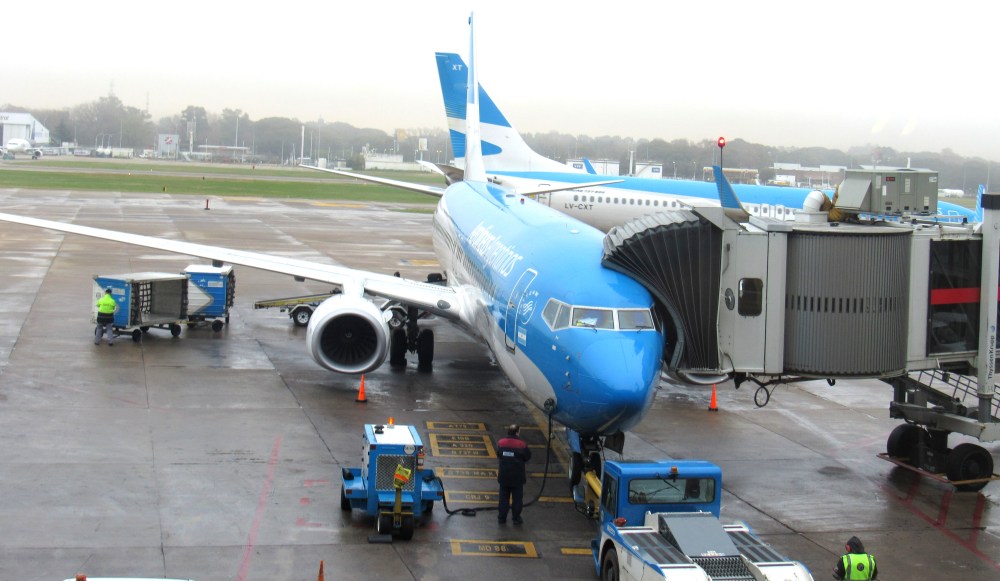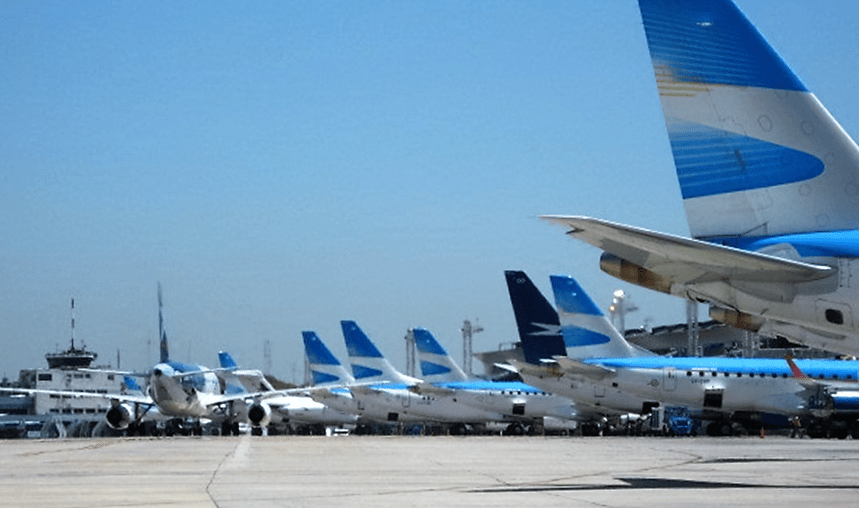
Problemas Centro Control Córdoba

AW | 2018 11 15 09:57 | AIR TRAFFIC

Aeropuerto Internacional Córdoba sufrió problemas en las comunicaciones por corte fibra óptica

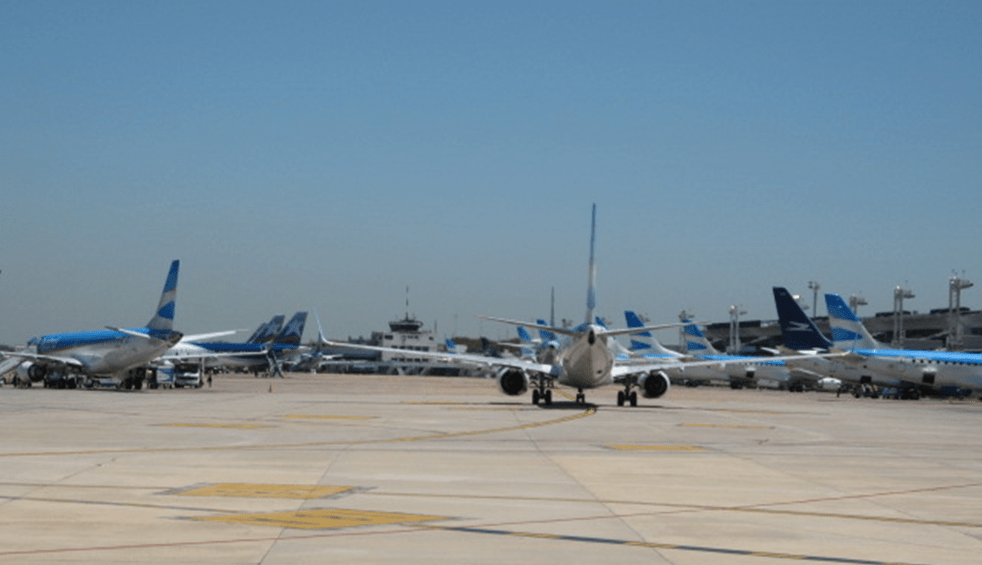
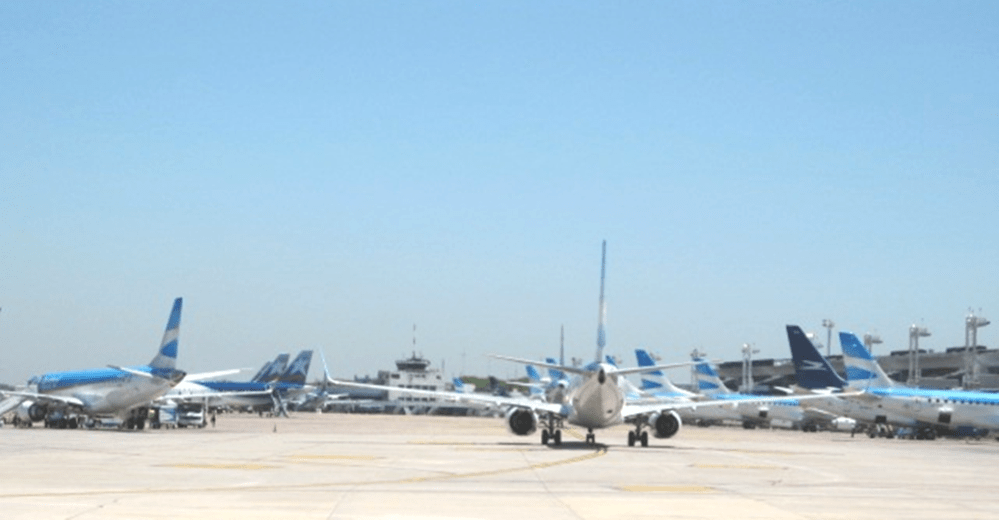
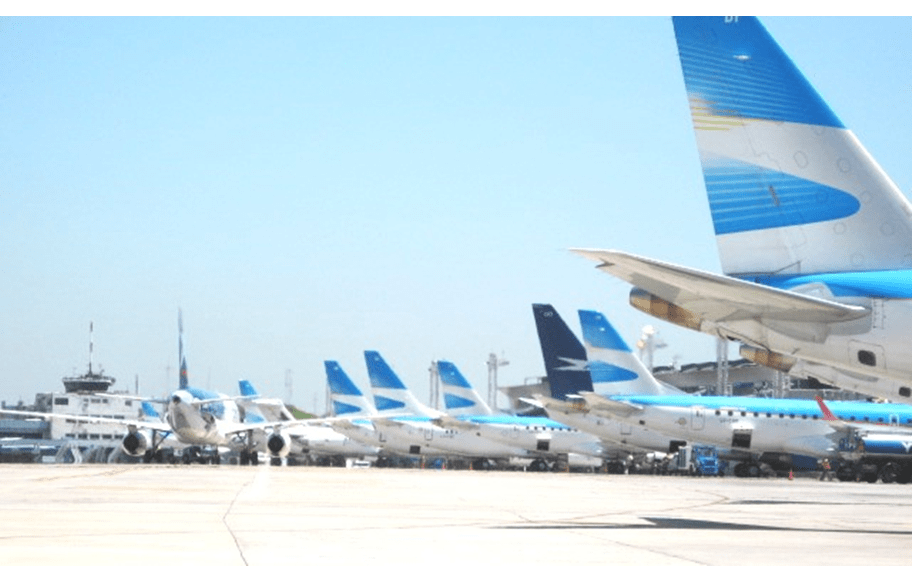
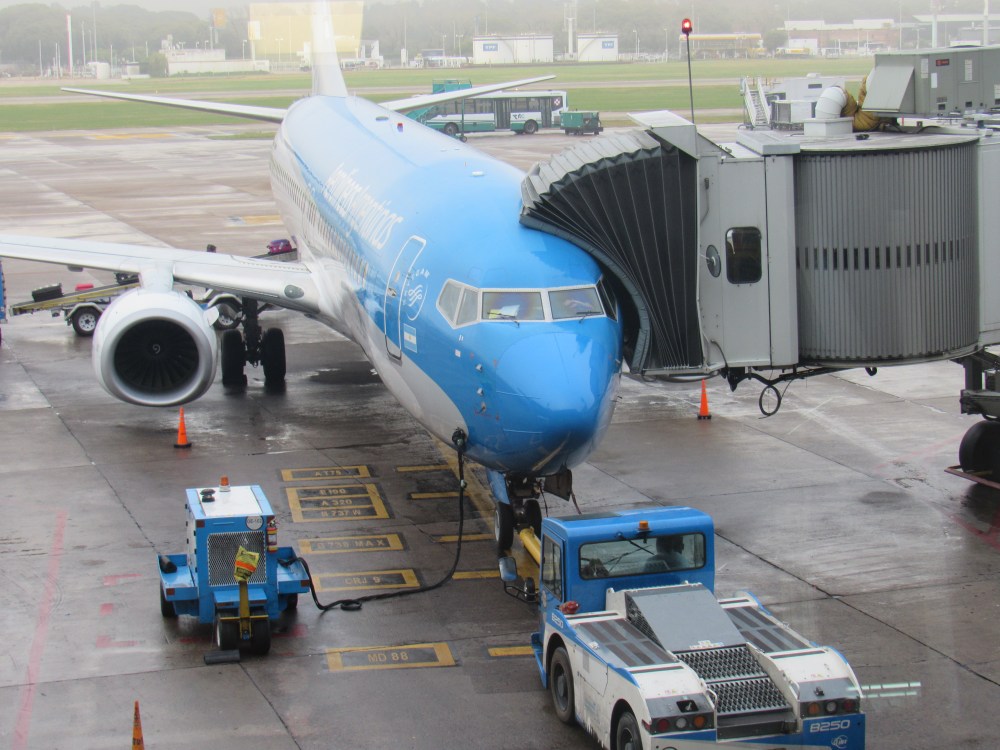
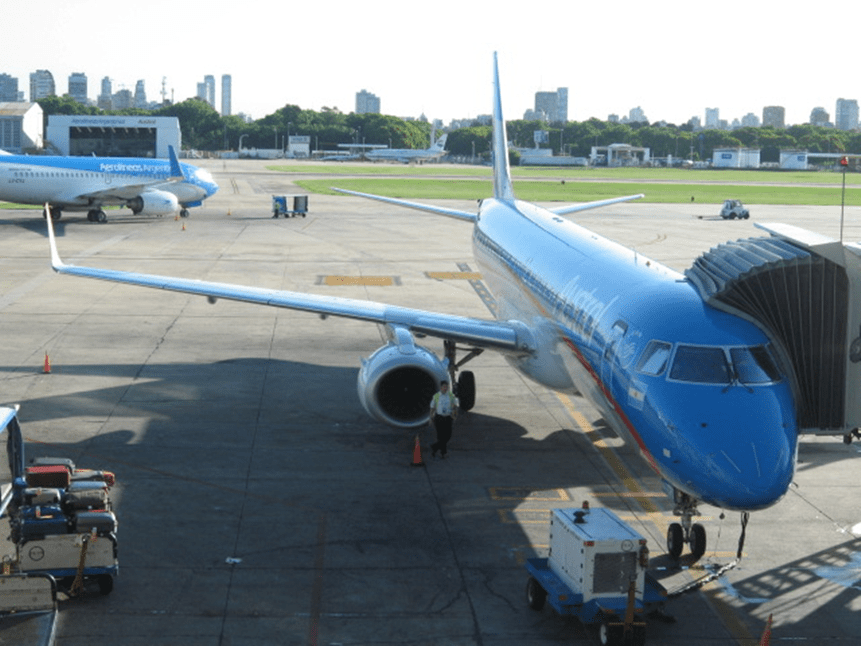
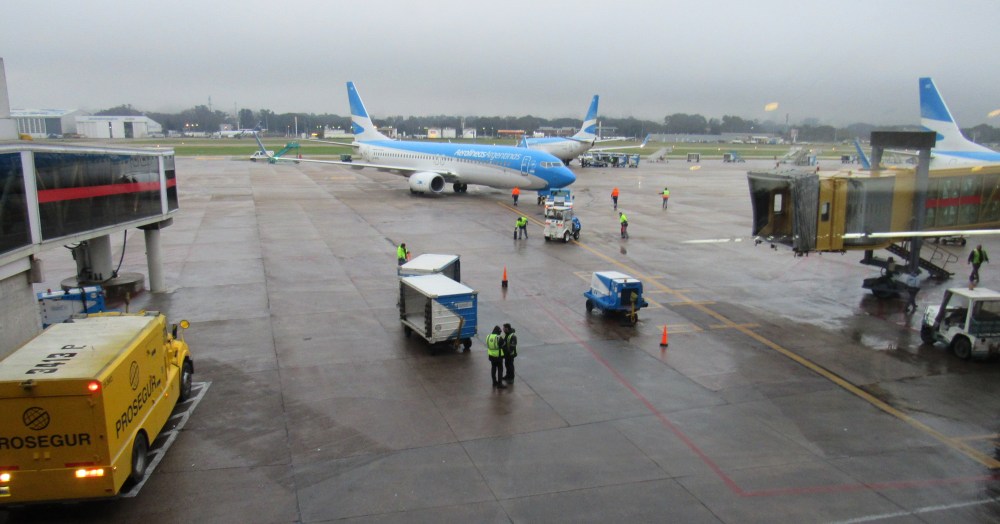
El Aeropuerto Internacional Córdoba (Argentina) sufrió un problema de comunicaciones en el Centro de Control, por lo que todos los vuelos del norte del país se vieron demorados el miércoles por la noche.

Una de las causales sería un corte de fibra óptica a la altura de Serrezuela, cerca de Cruz del Eje. Desde la Empresa Argentina de Navegación Aérea (EANA) informaron que se trabajaba en un plan de contingencia. Tanto personal del Centro de Control Córdoba como la ANAC Argentina están trabajando para reparar los daños ocasionados a la navegación aérea.aw-icon-txt-01


Cordoba Control Center Problems

Córdoba International Airport suffered problems in fiber optic communications

Córdoba International Airport (Argentina) suffered a communications problem at the Control Center, so all flights from the north of the country were delayed on Wednesday night.

One of the causes would be a fiber optic cut at the height of Serrezuela, near Cruz del Eje. From the Argentine Air Navigation Company (EANA) they reported that they were working on a contingency plan. Both personnel of the Control Center Córdoba and ANAC Argentina are working to repair the damage caused to air navigation. A \ W


Ξ A I R G W A Y S Ξ
SOURCE: Airgways.com
DBk: Lavoz.com.ar / Eana.com.ar / Anac.gov.ar
AW-POST: 201811150957AR

A\W   A I R G W A Y S ®

Nuevo paro gremios en Argentina

Resultado de imagen para strike Aeroparque

AW | 2018 11 15 09:46 | AIR TRAFFIC / AVIATION ORGANISMS

Los gremios aeronáuticos vuelven al paro general de transporte este viernes en Argentina

Resultado de imagen para Aeronavegantes logoDemoras y cancelaciones de vuelo para el fin de semana largo. El conflicto que enfrenta gremios aeronáuticos con el gobierno argentino no para de crecer. La Asociación Argentina de Aeronavegantes (AAA) y personal de la Administración Nacional de Aviación Civil (ANAC) realizarán asambleas y retención de tareas.

Resultado de imagen para ATE ANAC logoTras el cese de actividades llevado a cabo el jueves pasado por los principales gremios, que derivó en la cancelación de más de 150 vuelos en Aeroparque, Ezeiza y distintos aeropuertos en el interior de la Argentina, ahora una nueva medida de fuerza volverá a a desarrollarse este viernes, 16 Noviembre 2018.
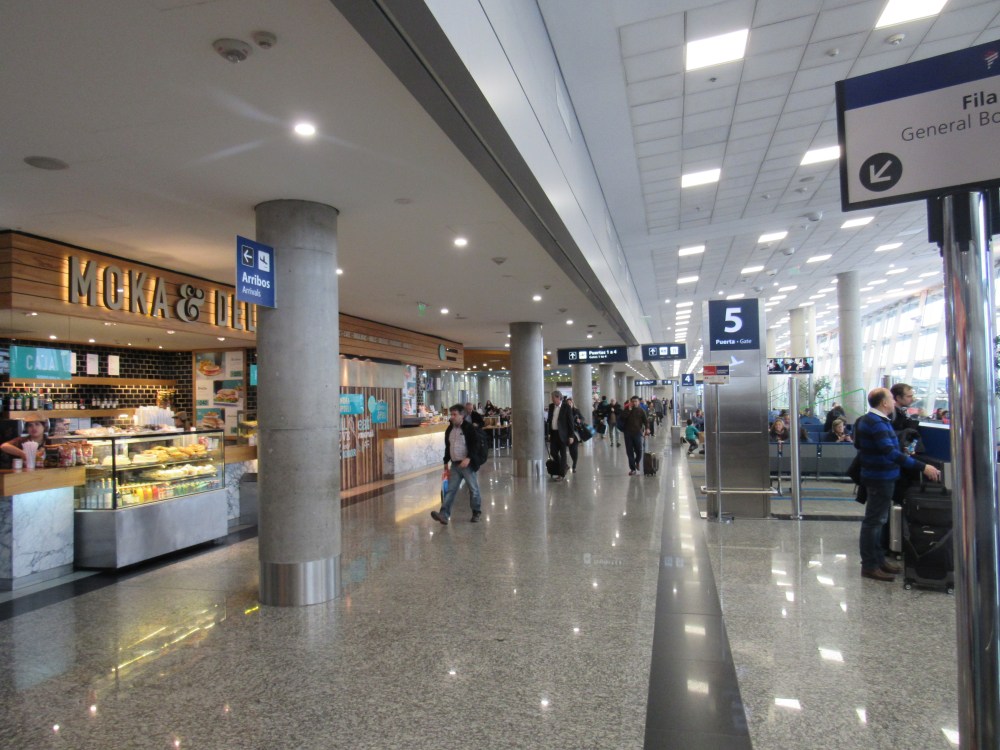
Voceros de los sindicatos, la Asociación Argentina de Aeronavegantes (AAA) y la representación de la Asociación de Trabajadores del Estado (ATE) en la Administración Nacional de Aviación Civil (ANAC) activarán asambleas que incluirán «quite de colaboración y retención de tareas» desde las 07:00 hs a 11:00 hs. Los gremios ya anticipan que habrá demoras e incluso cancelaciones en los vuelos.

Las aerolíneas

Los motivos del paro gremial es consecuencia de una varios reclamos hasta ahora no atendidos por el Gobierno de Argentina, informando al Ministerio de Transporte con la anticipación suficiente como para que la protesta no se lleve a cabo. Aeronavegantes (AAA) exige desde el cumplimiento de la cláusula gatillo en los salarios de los empleados de Aerolíneas Argentinas hasta la reincorporación de una empleada despedida por la low cost Flybondi Líneas Aéreas. Voceros del gremio sostuvieron a este medio que la compañía tomó esa determinación tras comprobar que se encontraba sindicalizada. «En Flybondi hay un clima muy claro de persecución sindical. Cualquier actividad gremial es mala palabra dentro de la empresa. Se están violando derechos laborales básicos», indicaron a este medio desde AAA. Ante esa acusación, la empresa desmintió que la desvinculación haya respondido a un problema de encuadre sindical, sino que estuvo fundada en «reiterados incumplimientos en la función laboral». Un vocero de Flybondi dijo que en el plantel de la compañía hay personas agremiadas, por lo cual la protesta es infundada.

Aeronavegantes expuso la necesidad de una intervención de la Secretaria de Trabajo para garantizar las fuentes laborales de los tripulantes de la empresa Andes Líneas Aéreas luego del feroz ajuste que anunciara la gerencia de la aerolínea. A fines del mes pasado, la firma notificó su decisión de desprenderse de cuatro aviones Boeing 737-800, además de suspender sus servicios hacia Tucumán. «Teníamos una flota y una estructura pensada para nueve aviones y pasamos a tener una para cinco aeronaves: 40% menos de gente, 40% menos de estructura, 40% de achique de empresa», detalló Bernardo Racedo Aragón, en ese momento Gerente Comercial de la compañía.

El caso de Latam Airlines Argentina, según el sindicato de Aeronavegantes (AAA), reclaman recomposición para las tripulaciones y aseguran que la pauta salarial está por llegar al vencimiento, además de reparar en la ausencia de la cláusula gatillo.

ANAC, opuestos a la tercerización

Por el lado de ATE ANAC (Administración Nacional de Aviación Civil), Marcelo Belelli, coordinador de la organización en el servicio del Ministerio de Transporte, sostuvo que la acción del viernes responde un intento por poner en evidencia el plan del Gobierno de tercerizar algunas de las funciones hasta hoy potestad de la administradora. «Existe una decisión de ceder a privados funciones que hoy corren por cuenta de la ANAC. El Gobierno habla de una revolución de los aviones pero, en la práctica, nunca llevó a cabo un desarrollo estratégico de las áreas del Estado vinculadas con la actividad. En lugar de ampliar la capacidad se está haciendo exactamente lo contrario», expuso. la intención oficial es entregar a privados actividades como el control de la seguridad en la pista, el chequeo de credenciales, la vigilancia operacional en todas sus escalas para, de esa forma, acotar el plantel de operarios de la ANAC en los diferentes aeropuertos del país.

«Hoy tenemos unos 1.000 puestos de trabajo que corren el riesgo de desaparecer si se lleva a cabo el recorte que se viene pensando para la administradora. Lo que predomina es una ausencia total de inversiones en todas las áreas del organismo. Faltan ambulancias, vehículos dentro de los aeropuertos y otros tantos bienes que son clave para la operatoria. La ANAC no incrementó su estructura siendo que tenemos cada vez más vuelos. Eso redunda en una falta de seguridad cada vez más visible», argumentó Marcelo Belelli.

Durante las asambleas del viernes, ATE ANAC también expondrá detalles de lo que interpreta como una maniobra de Transporte para acotar la operatoria de la administradora. En ese sentido, desde el gremio indicaron que además de promover la tercerización de varias acciones, el macrismo también procura fijar mecanismos de «autocontrol» por parte de las empresas que hoy intervienen en este sector. El Coordinador de ATE ANAC concluyó: «Se pretende que las compañías impongan sus propios límites y reglas. Desde los concesionarios de los aeropuertos hasta las firmas que se ocupan de mover las valijas. La intención del Ministerio de Transporte es que la ANAC deje de tener participación en estos controles. Todo este movimiento nos coloca en un escenario de conflicto ineludible».

Conscientes de que la medida del viernes derivará en otra instancia de complicaciones en los vuelos, con lo que esto implica en términos de malestar en los pasajeros, desde AAA y ATE ANAC insistieron en que las asambleas serán consecuencia de la falta de interés de los funcionarios por atender reclamos largamente anticipados.aw-icon-txt-01

AW-700865.JPGNew strike guilds in Argentina

The aeronautical guilds return to the general transport stop this Friday in Argentina

Flight delays and cancellations for the long weekend. The conflict that faces aeronautical guilds with the Argentine government does not stop growing. The Argentine Airnavigators Association (AAA) and personnel of the National Civil Aviation Administration (ANAC) will hold assemblies and retention of tasks.

After the cessation of activities carried out last Thursday by the main unions, which led to the cancellation of more than 150 flights in Aeroparque, Ezeiza and different airports in the interior of Argentina, now a new measure of force will be developed again this Friday, November 16, 2018.

Spokespersons of the unions, the Argentine Aircraft Association (AAA) and the representation of the State Workers Association (ATE) in the National Civil Aviation Administration (ANAC) will activate assemblies that will include «remove collaboration and retention of tasks» from 07:00 to 11:00 hs. The unions already anticipate that there will be delays and even cancellations in the flights.

The airlines

The reasons for the union strike is the result of a number of claims that have not yet been addressed by the Government of Argentina, informing the Ministry of Transportation with sufficient anticipation so that the protest is not carried out. Aeronavegantes (AAA) requires from the fulfillment of the trigger clause in the salaries of the employees of Aerolineas Argentinas until the reinstatement of an employee dismissed by the low cost Flybondi Líneas Aéreas. Spokesmen of the union maintained to this means that the company made that determination after verifying that it was unionized. «In Flybondi there is a very clear climate of trade union persecution, any trade union activity is a bad word within the company, they are violating basic labor rights», they indicated to this media from AAA. Faced with this accusation, the company denied that the dismissal has responded to a union framing problem, but was based on «repeated breaches of the labor function». A spokesman for Flybondi said that there are unionized people on the company’s staff, which is why the protest is unfounded.

Aeronavegantes exposed the need for an intervention by the Secretary of Labor to guarantee the labor sources of the crew of the company Andes Líneas Aéreas after the fierce adjustment announced by the management of the airline. At the end of last month, the company notified its decision to divest four Boeing 737-800 aircraft, in addition to suspending its services to Tucumán. «We had a fleet and a structure designed for nine aircraft and we had one for five aircraft: 40% less people, 40% less structure, 40% of company downsizing», explained Bernardo Racedo Aragón, at that time Commercial Manager of the company.

The case of Latam Airlines Argentina, according to the union of Aeronavegantes (AAA), claim recomposition for the crews and ensure that the salary schedule is about to reach the expiration, in addition to repair the absence of the trigger clause.

ANAC, opposed to outsourcing

On the side of ATE ANAC (National Civil Aviation Administration), Marcelo Belelli, coordinator of the organization in the service of the Ministry of Transportation, said that the action on Friday is an attempt to highlight the government’s plan to outsource some of the the functions until today the administrator’s power. «There is a decision to give in to private functions that are currently the responsibility of the ANAC The Government talks about an aircraft revolution but, in practice, never carried out a strategic development of the areas of the State linked to the activity. Instead of expanding capacity, the exact opposite is being done», he said. the official intention is to deliver private activities such as track safety control, credentials checking, operational surveillance at all its scales to, in this way, limit the ANAC’s workforce in the different airports of the country.

«Today we have about 1,000 jobs that are at risk of disappearing if the cut that is being considered for the administrator is carried out, what predominates is a total absence of investments in all areas of the agency. of the airports and other assets that are key to the operation, the ANAC did not increase its structure, since we have more and more flights, which results in an increasingly visible lack of security», argued Marcelo Belelli.

During the assemblies on Friday, ATE ANAC will also present details of what it interprets as a transport maneuver to limit the operations of the administrator. In this sense, from the union indicated that in addition to promoting the outsourcing of various actions, the macrismo also seeks to establish mechanisms of «self-control» by the companies that today intervene in this sector. The ATE ANAC Coordinator concluded: «It is intended that companies impose their own limits and rules, from the airport concessionaires to the companies that are in charge of moving the bags. The intention of the Ministry of Transportation is that the ANAC stops having participation in these controls, all this movement puts us in a scenario of unavoidable conflict».

Aware that Friday’s action will result in another instance of flight complications, which implies in terms of discomfort in passengers, since AAA and AAC ANAC insisted that the assemblies will be a consequence of the lack of interest of officials for addressing long-anticipated claims. A \ W


Ξ A I R G W A Y S Ξ
SOURCE: Airgways.com
DBk: Aeronavegantes.org.ar / Ate.org.ar / Iprofesional.com / Thebubble.com / Airgways.com
AW-POST: 201811150946AR

A\W   A I R G W A Y S ®

Demoras y cancelaciones EZE / AEP

AW-70001067AW | 2018 11 11 12:515 | AIR TRAFFIC

Los aeropuertos de Ezeiza y Aeroparque sufrieron algunas demoras por factores climáticos

El Aeropuerto de Ezeiza (SAEZ/EZE) presentó demoras y cancelaciones por la tormenta y varios vuelos tuvieron que aterrizar en la República de Uruguay y otros fueron desviados a terminales alternativas en el interior del país.

El Servicio Meteorológico Nacional comunicó que la franja horaria más complicada fue entre las 07:00 hs y las 08:30 hs, dado que fue en el momento donde la tormenta tuvo mayor intensidad en el área FIR Ezeiza correspondiente para el Aeropuerto Ezeiza. Actualmente se encuentra operando con dificultades por la gran tormenta la zona. Una gran cantidad de vuelos que planificaban aterrizar tuvieron que ser desviados a terminales del interior y hacia el Aeropuerto Montevideo, en Uruguay.

Durante las primeras horas del día, un avión de la empresa KLM Royal Dutch Airlines que venía procedente de Ámsterdam, otro de Latam Airlines procedente de Sao Paulo, uno de Lufthansa despegó del Aeropuerto Frankfurt y un vuelo de Air France que despegó en París, todos fueron derivados a aeropuertos alternativos. Un número de doce vuelos presentaron largas demoras por las condiciones climáticas.

En el Aeropuerto Jorge Newbery (SABE/AEP) debió se ha cancelado el servicio de Avianca Buenos Aires-Rosario, mientras que uno de Aerolíneas Argentinas, procedente de Santiago de Chile, tuvo que ser desviado. AIRWAYS® AW-Icon TXT

AW-70001125

Delays and cancellations EZE / AEP

The airports of Ezeiza and Aeroparque suffered some delays due to climatic factors

The Ezeiza Airport (SAEZ/EZE) presented delays and cancellations due to the storm and several flights had to land in the Republic of Uruguay and others were diverted to alternative terminals in the interior of the country.

The National Meteorological Service reported that the most complicated time slot was between 07:00 hs and 08:30 hs, given that it was at the moment when the storm had greater intensity in the corresponding FIR Ezeiza area for Ezeiza Airport. He is currently operating with difficulties due to the great storm in the area. A large number of flights planning to land had to be diverted to terminals in the interior and to Montevideo Airport, in Uruguay.

During the early hours of the day, a KLM Royal Dutch Airlines plane coming from Amsterdam, another from Latam Airlines from Sao Paulo, one from Lufthansa took off from Frankfurt Airport and an Air France flight took off in Paris, all they were derived to alternative airports. A number of twelve flights had long delays due to weather conditions.

At the Jorge Newbery Airport (SABE/AEP) the service of Avianca Buenos Aires-Rosario had to be canceled, while one of Aerolíneas Argentinas, coming from Santiago de Chile, had to be diverted. A \ W


Ξ A I R G W A Y S Ξ
SOURCE: Airgways.com
DBk: Aa2000.com.ar / Smn.gov.ar / Airgways.com
AW-POST: 201811111215AR

A\W   A I R G W A Y S ®

Conflicto gremial en Aerolíneas

Resultado de imagen para aeroparque

AW | 2018 11 08 08:49 | AIR TRAFFIC

Cancelan más de 50 vuelos de Aerolíneas Argentinas/Austral

El paro gremial aeronáutico por una sorpresiva medida de fuerza del día de hoy, Jueves, 8 Noviembre 2018 ha traído 57 vuelos cancelados y 7.000 pasajeros afectados. Los gremios aeronáuticos paralizan nuevamente las operaciones extendiendo la protesta en Aeroparque, Ezeiza y los aeropuertos del interior de Argentina.

Por una medida gremial del sindicato de Asociación de Aeronavegantes (AAA), alrededor de 57 vuelos de Aerolíneas Argentinas programados para este jueves por la mañana desde Aeroparque y otros aeropuertos del país fueron cancelados por una sorpresiva protesta gremial de Aeronavegantes en reclamo de reapertura de paritarias.

Voceros de Aerolíneas Argentinas estimaron que recién a las 10 comenzarán a normalizarse los vuelos, pero cerca de 7 mil pasajeros quedaron afectados por la medida de fuerza. Desde la empresa avisaron que intentarán reubicarlos en otros vuelos. En estos momentos, desde Aerolíneas Argentinas se están realizando los mayores esfuerzos por reubicar a los pasajeros afectados en los vuelos más próximos a su programación original que sea posible. Al mismo tiempo, la compañía informó que los pasajeros afectados podrán cambiar sus pasajes por otras fechas o destinos durante un lapso de 30 días, a través de la misma vía por la cual los compraron.

El último Viernes hubo una medida similar del sexto gremio que agrupa a trabajadores de la empresa, la Asociación de Aeronavegantes (AAA). Los pasajeros afectados podrán cambiar sus pasajes por otras fechas o destinos durante un lapso de 30 días, a través de la misma vía por la cual los compraron. Para consultas puntuales sobre los vuelos cancelados la empresa habilitó la línea 0810-222-86527. AIRWAYS® AW-Icon TXT

AW-70001090.JPG

Gremial Conflict in Aerolíneas

Canceled more than 50 flights of Aerolíneas Argentinas/Austral

The aeronautical union strike by a surprising measure of strength of today, Thursday, November 8, 2018 has brought 57 canceled flights and 7,000 passengers affected. The aeronautical guilds paralyze the operations again, extending the protest in Aeroparque, Ezeiza and the airports in the interior of Argentina.

By a union measure of the Association of Airnavigators (AAA), around 57 flights of Aerolíneas Argentinas scheduled for this Thursday morning from Aeroparque and other airports in the country were canceled by a surprise union protest of Aircraft in demand of reopening of joint .

Voices of Aerolíneas Argentinas estimated that only at 10 will begin to normalize flights, but about 7 thousand passengers were affected by the measure of force. From the company they warned that they will try to relocate them on other flights. At this moment, Aerolineas Argentinas is making the greatest efforts to relocate the affected passengers on the flights closest to its original programming that is possible. At the same time, the company informed that affected passengers will be able to change their tickets for other dates or destinations during a period of 30 days, through the same route by which they were purchased.

Last Friday there was a similar measure of the sixth union that groups workers of the company, the Association of Airnavigators (AAA). Affected passengers may change their tickets for other dates or destinations during a period of 30 days, through the same route through which they purchased them. For specific queries about canceled flights, the company authorized the line 0810-222-86527. A \ W


Ξ A I R G W A Y S Ξ
SOURCE: Airgways.com
DBk: Clarin.com / Infobae.com / Airgways.com
AW-POST: 201811080849AR

A\W   A I R G W A Y S ®

44º Puente Aéreo Madrid-Barcelona

Resultado de imagen para Aeropuerto Barcelona Iberia

AW | 2018 11 04 17:27 | AIRLINES ROUTES / AIR TRAFFIC

Puentes en el cielo para conectar Madrid-Barcelona

Un 4 Noviembre 1974 se inauguró el Puente Aéreo Madrid-Barcelona por parte de la aerolínea Iberia Líneas Aéreas de España con un vuelo desde Madrid hacia la Barcelona convirtiéndose a partir de entonces en la ruta aérea más transitada de Europa con unos tres millones de pasajeros transportados al año.

La nueva ruta llegó seis meses después de que la Subsecretaría de Aviación Civil de España aprobase el proyecto llamado «Servicios especiales Madrid-Barcelona y viceversa». De esta manera, el puente aéreo se convirtió en todo un símbolo de la aviación en España. Los primeros vuelos, por tanto, se realizaron el 1 Noviembre 1974, pero sería tres días más tarde, el 4 Noviembre 1974, cuando se realizó la inauguración oficial del servicio con 13 vuelos diarios en régimen de puente aéreo, más un número similar que seguían funcionando con reserva cerrada. El Acto de Inauguración abrió el telón para que el Puente Aéreo sea un éxito uniendo los dos centros más importantes de España en tiempo record.

Resultado de imagen para puente aéreo Madrid-Barcelona

Iberia elimina el sistema de reservas, pero se compromete a que el 90% de los pasajeros salgan en el vuelo que han elegido, y los que no lo consigan lo podrían hacer en el siguiente. La aerolínea también garantiza que el tiempo medio de espera se reducirá al menos un 60% en relación al sistema convencional de reserva de billetes, según se recoge en el acuerdo suscrito con la Subsecretaría de Aviación Civil. El lanzamiento sólo es posible gracias a las facilidades que da el Gobierno. Se construye una nueva terminal en el aeropuerto de Barajas y se amplía la de Barcelona, al tiempo que se crean espacios específicos para la venta in situ de los billetes en ambos aeropuertos y se reconfigura la operativa en ellos para que los aviones del Puente Aéreo se ubiquen cerca de las entradas específicas, para que así los pasajeros accedan directamente y que la gestión de su equipaje sea rápida.

El mayor corredor aéreo del mundo

El nuevo modelo comercial es un éxito casi desde el principio. Sólo en el primer año más de 900.000 pasajeros utilizan el nuevo servicio. Iberia estrenó el Puente Aéreo con 13 vuelos diarios en cada sentido (a los que se sumaban otros cuatro vuelos regulares más con reserva para completar la oferta entre Madrid y Barcelona de la compañía). El crecimiento fue casi continuo durante décadas.

Puentes de inspiración

Las aerolíneas han implementado corredores aéreos para llegar a ciudades punto a punto de manera ágil y dinámica a través del tiempo. Los puentes aéreos más conocidos en el mundo son Nueva York-Washington, Nueva York-Boston, Rio de Janeiro-Sao Paulo, Sao Paulo-Brasilia, Sao Paulo-Campinas, Tokio Narita-Osaka Tokio Haneda-Osaka, Londres-Birmingham, entre muchos otros. La compañia aérea española Iberia introdujo en España un sistema novedoso en el continente europeo, el Puente Aéreo estrenado oficialmente entre Madrid y Barcelona, el pasajero podía comprar su billete hacía Madrid o Barcelona y salir en el primer avión disponible y sin reserva de asiento. La dinámica funcionaba como una lanzadera de vuelos programados que beneficiaba al cliente poder elegir los horarios más convenientes.

Puente deteriorado

Iberia operó en solitario este servicio manteniendo el monopolio de los vuelos nacionales durante casi 20 años hasta 1993, beneficiándose sustancialmente durante los Juegos Olímpicos 1992, donde todos los pasajeros que se movieron en avión entre las capitales de España y Catalunya volaron obligatoriamente con Iberia. Sin embargo, todo eso quedó atrás una vez entró en funcionamiento el servicio de tren de alta velocidad AVE entre Barcelona y Madrid un 20 Febrero 2008, como así también los servicios que prestaba la aerolínea Spanair. Desde esta fecha, la hegemonía del avión en la ruta que conecta las dos ciudades ha sido desplazada hasta el punto de que en estos momentos gran parte de los usuarios se decantan por el AVE como medio de transporte para conectar ambas ciudades.

Reinventando el Puente Aéreo Madrid-Barcelona

Vueling, que forma parte de su mismo holding, IAG, y en el que Iberia tiene una participación directa en su accionariado del 45,85%. Además, Vueling es desde hace años la mayor aerolínea del aeropuerto de Barcelona-El Prat, lo que la convierte de por sí en un aliado perfecto.

Iberia y Vueling compartirán a partir de ahora el negocio y la operativa del Puente Aéreo. Las dos compañías sumarán sus vuelos entre Madrid y Barcelona, con lo que elevarán el número de frecuencias hasta un total de 26 al día (las 16 actuales de Iberia más 10 adicionales de Vueling). La nueva oferta conjunta se convierte en dominadora absoluta de la conexión aérea entre las dos capitales. Desaparecida Spanair, la alianza Iberia-Vueling se encontrará con Air Europa como único rival directo, pero con una oferta apenas testimonial de sólo un par de vuelos diarios.

La apuesta de Iberia-Vueling busca que con más oferta de vuelos cada 15 minutos en hora punta y cada hora el resto del día, con un servicio más flexible y con mejores horarios que el tren sea suficiente para arañar cuota de mercado al AVE. Iberia y Vueling quieren dar vuelta los porcentajes que hoy se reparten avión y tren. En él viajarán los pasajeros de otro experimento comercial, el que busca cuatro décadas después que el Puente Aéreo vuelva a ser un éxito.  AIRWAYS® AW-Icon TXT

Resultado de imagen para puente aéreo Madrid-Barcelona

44th Madrid-Barcelona Air Bridge

Bridges in the sky to connect Madrid-Barcelona

On November 4, 1974, the Madrid-Barcelona Air Bridge was inaugurated by the airline Iberia Líneas Aéreas de España with a flight from Madrid to Barcelona, ​​becoming the busiest air route in Europe with about three million passengers transported. year.

The new route arrived six months after the Undersecretary of Civil Aviation of Spain approved the project called «Special Services Madrid-Barcelona and vice versa». In this way, the airlift became a symbol of aviation in Spain. The first flights, therefore, took place on November 1, 1974, but it would be three days later, on November 4, 1974, when the official inauguration of the service was carried out with 13 daily flights in the airlift regime, plus a similar number that followed running with closed reservation. The Inauguration Act opened the curtain for the Puente Aéreo to be a success by uniting the two most important centers in Spain in record time.

Resultado de imagen para puente aéreo Madrid-Barcelona


Iberia eliminates the reservation system, but undertakes that 90% of passengers leave on the flight they have chosen, and those that do not get it could do so in the next one. The airline also guarantees that the average waiting time will be reduced by at least 60% in relation to the conventional ticket reservation system, as stated in the agreement signed with the Undersecretary of Civil Aviation. The launch is only possible thanks to the facilities provided by the Government. A new terminal is built at the Barajas airport and the one in Barcelona is expanded, while specific spaces are created for the on-site sale of the tickets at both airports and the operation is reconfigured in them so that the airlift aircraft locate near the specific entrances, so that passengers can access directly and that the management of their luggage is quick.

The largest air corridor in the world

The new business model is a success almost from the beginning. Only in the first year more than 900,000 passengers use the new service. Iberia premiered the Puente Aéreo with 13 daily flights in each direction (to which were added four more regular flights with reservations to complete the offer between Madrid and Barcelona of the company). The growth was almost continuous for decades.

Bridges of inspiration

Airlines have implemented air corridors to reach cities point-to-point in an agile and dynamic way over time. The best-known airlifts in the world are New York-Washington, New York-Boston, Rio de Janeiro-Sao Paulo, Sao Paulo-Brasilia, Sao Paulo-Campinas, Tokyo Narita-Osaka, Tokyo Haneda-Osaka, London-Birmingham, between much others. The Spanish airline Iberia introduced in Spain a new system on the European continent, the Air Bridge officially opened between Madrid and Barcelona, ​​the passenger could buy your ticket to Madrid or Barcelona and leave on the first available plane without seat reservation. The dynamics functioned as a scheduled flights shuttle that benefited the customer to choose the most convenient times.

Deteriorated bridge

Iberia operated this service alone maintaining the monopoly of domestic flights for almost 20 years until 1993, benefiting substantially during the 1992 Olympic Games, where all passengers who flew between the capitals of Spain and Catalonia necessarily flew with Iberia. However, all that was left behind once the AVE high-speed train service between Barcelona and Madrid came into operation on February 20, 2008, as well as the services provided by the airline Spanair. From this date, the hegemony of the plane on the route that connects the two cities has been displaced to the point that at this time a large part of the users opt for the AVE as a means of transport to connect both cities.

Reinventing the Madrid-Barcelona Air Bridge

Vueling, which is part of its own holding, IAG, and in which Iberia has a direct participation in its shareholding of 45.85%. In addition, Vueling has been the largest airline in the Barcelona-El Prat airport for years, which makes it a perfect ally.

Iberia and Vueling will share the business and operations of the Air Bridge from now on. The two companies will add their flights between Madrid and Barcelona, ​​which will increase the number of frequencies to a total of 26 a day (the current 16 Iberia plus 10 additional Vueling). The new joint offer becomes the absolute dominator of the air connection between the two capitals. Disappeared Spanair, the Iberia-Vueling alliance will meet Air Europa as the only direct rival, but with a barely testimonial offer of only a couple of daily flights.

The bet of Iberia-Vueling seeks that with more offer of flights every 15 minutes in rush hour and every hour the rest of the day, with a more flexible service and with better schedules than the train is enough to scratch market share to the AVE. Iberia and Vueling want to give back the percentages that today are shared by plane and train. In it will travel the passengers of another commercial experiment, the one that looks for four decades after the Air Bridge is again a success. A\W

Resultado de imagen para Aeropuerto Barcelona Iberia


44è Pont Aeri Madrid-Barcelona

Ponts al cel per connectar Madrid-Barcelona

Un 4 Novembre 1974 es va inaugurar el Pont Aeri Madrid-Barcelona per part de l’aerolínia Iberia Línies Aèries d’Espanya amb un vol des de Madrid cap a la Barcelona convertint a partir de llavors en la ruta aèria més transitada d’Europa amb uns tres milions de passatgers transportats a l’any.

La nova ruta va arribar sis mesos després que la Subsecretaria d’Aviació Civil d’Espanya aprovés el projecte anomenat «Serveis especials Madrid-Barcelona i viceversa». D’aquesta manera, el pont aeri es va convertir en tot un símbol de l’aviació a Espanya. Els primers vols, per tant, es van realitzar l’1 Novembre 1974, però seria tres dies més tard, el 4 de novembre 1974, quan es va realitzar la inauguració oficial del servei amb 13 vols diaris en règim de pont aeri, més un nombre similar que seguien funcionant amb reserva tancada. L’Acte d’Inauguració va obrir el teló perquè el Pont Aeri sigui un èxit unint els dos centres més importants d’Espanya en temps record.

Iberia elimina el sistema de reserves, però es compromet a que el 90% dels passatgers surtin en el vol que han triat, i els que no ho aconsegueixin ho podrien fer en el següent. L’aerolínia també garanteix que el temps mitjà d’espera es reduirà almenys un 60% en relació al sistema convencional de reserva de bitllets, segons es recull en l’acord subscrit amb la Subsecretaria d’Aviació Civil. El llançament només és possible gràcies a les facilitats que dóna el Govern. Es construeix una nova terminal a l’aeroport de Barajas i s’amplia la de Barcelona, ​​alhora que es creen espais específics per a la venda in situ dels bitllets en els dos aeroports i es reconfigura l’operativa en ells perquè els avions del Pont Aeri es s’ubiquen a prop de les entrades específiques, perquè així els passatgers accedeixin directament i que la gestió del seu equipatge sigui ràpida.

El major corredor aeri del món

El nou model comercial és un èxit gairebé des del principi. Només en el primer any més de 900.000 passatgers utilitzen el nou servei. Iberia va estrenar el Pont Aeri amb 13 vols diaris en cada sentit (als quals se sumaven altres quatre vols regulars més amb reserva per completar l’oferta entre Madrid i Barcelona de la companyia). El creixement va ser gairebé continu durant dècades.

Ponts d’inspiració

Les aerolínies han implementat corredors aeris per arribar a ciutats punt a punt de manera àgil i dinàmica a través del temps. Els ponts aeris més coneguts en el món són Nova York-Washington, Nova York-Boston, Rio de Janeiro-Sao Paulo, Sao Paulo-Brasília, Sao Paulo-Campinas, Tòquio Narita-Osaka Tòquio Haneda-Osaka, Londres-Birmingham, entre molts altres. La companyia aèria espanyola Iberia va introduir a Espanya un sistema innovador en el continent europeu, el Pont Aeri estrenat oficialment entre Madrid i Barcelona, ​​el passatger podia comprar el seu bitllet cap a Madrid o Barcelona i sortir en el primer avió disponible i sense reserva de seient. La dinàmica funcionava com una llançadora de vols programats que beneficiava al client poder triar els horaris més convenients.

Pont deteriorat

Iberia va operar en solitari aquest servei mantenint el monopoli dels vols nacionals durant gairebé 20 anys fins a 1993, beneficiant-se substancialment durant els Jocs Olímpics 1992, on tots els passatgers que es van moure en avió entre les capitals d’Espanya i Catalunya van volar obligatòriament amb Iberia. No obstant, tot això va quedar enrere un cop va entrar en funcionament el servei de tren d’alta velocitat AVE entre Barcelona i Madrid un 20 febrer 2008, com així també els serveis que prestava l’aerolínia Spanair. Des d’aquesta data, l’hegemonia de l’avió en la ruta que connecta les dues ciutats ha estat desplaçada fins al punt que a hores d’ara gran part dels usuaris es decanten per l’AVE com a mitjà de transport per connectar les dues ciutats.

Reinventant el Pont Aeri Madrid-Barcelona

Vueling, que forma part del seu mateix grup d’empreses, IAG, i en què Iberia té una participació directa en el seu accionariat del 45,85%. A més, Vueling és des de fa anys la major aerolínia de l’aeroport de Barcelona-el Prat, el que la converteix de per si en un aliat perfecte.

Iberia i Vueling compartiran a partir d’ara el negoci i l’operativa del Pont Aeri. Les dues companyies sumaran els seus vols entre Madrid i Barcelona, ​​amb el que elevaran el nombre de freqüències fins a un total de 26 al dia (les 16 actuals d’Iberia més de 10 addicionals de Vueling). La nova oferta conjunta esdevé dominadora absoluta de la connexió aèria entre les dues capitals. Desapareguda Spanair, l’aliança Iberia-Vueling es trobarà amb Air Europa com a únic rival directe, però amb una oferta prou feines testimonial de només un parell de vols diaris.

L’aposta d’Iberia-Vueling busca que amb més oferta de vols cada 15 minuts en hora punta i cada hora la resta del dia, amb un servei més flexible i amb millors horaris que el tren sigui suficient per esgarrapar quota de mercat a l’AVE. Iberia i Vueling volen donar volta els percentatges que avui es reparteixen avió i tren. En ell viatjaran els passatgers d’un altre experiment comercial, el que busca quatre dècades després que el Pont Aeri torni a ser un èxit. A \ W

Ξ A I R G W A Y S Ξ
SOURCE: Airgways.com
DBk: Fomento.gob.es / Elindependiente.com / Okdiario.com
AW-POST: 201811041727AR

A\W   A I R G W A Y S ®

Asamblea en Aeroparque

IMG_0997

AW | 2018 11 02 20:13 | AIR TRAFFIC

La Asamblea Gremial en Aeroparque se levantó y las aerolíneas intentan reprogramar los vuelos

El titular de la Administración Nacional de Aviación Civil de Argentina (ANAC), Tomás Insausti, confirmó que las asambleas de la Asociación de Aeronavegantes de Argentina (AAA) en el Aeroparque Jorge Newbery fueron levantadas y se restableció el servicio. El titular de la ANAC Argentina ha comunicado que ha existido un total de 31 vuelos cancelados y 5 mil pasajeros afectados por la medida gremial, iniciada hoy por la Asociación Argentina de Aeronavegantes, a partir de las 05:00 hs de la mañana prolongándose hasta las 10:30 hs.

La asamblea fue un paro encubierto porque fue sin aviso, sin comunicación sindical formal, por lo que a muchos pasajeros les afectó por estar desprevenidos de la medida gremial. Las empresas más afectadas fueron Andes Líneas Aéreas, Aerolíneas Argentinas y Latam Airlines. La reprogramación de los vuelos llevará todo el día para reubicar a los 5.000 pasajeros afectados.

Reclamo Gremial

El gremio de AAA, mediante un comunicado de prensa expresaron que la medida de fuerza fue en reclamo por el «achicamiento, despidos y persecución sindical» en el sector. De forma puntual, sus quejas iban dirigidas a la empresa Flybondi Líneas Aéreas, en donde se despidió a una trabajadora, según denuncian los gremialistas: “A causa de la política antisindical de dicha aerolínea”.

También denunciaban los masivos despidos, fruto del recorte aplicado en la aerolínea Andes Líneas Aéreas, y el achicamiento en Latam Airlines Argentina, al igual que “el atraso salarial que traen los trabajadores de dicha aerolínea por no haber contado con una cláusula gatillo”.

Por últimos, los gremialistas denunciaron el incumplimiento del acuerdo paritario por parte de la aerolínea Austral Líneas Aéreas, desde donde habrían “reinterpretado la cláusula gatillo” y no continuarían pagando el ajuste inflacionario pendiente desde el 2017.

La Asociación Argentina de Aeronavegantes (AAA), que lidera Juan Pablo Brey, inició asambleas sorpresivas con cese de actividades durante la mañana para expresar una serie de reclamos al Gobierno y a las empresas. «La medida es en rechazo al achicamiento, despidos y la persecución sindical que atraviesa al sector aeronáutico», sostuvo el secretario general del gremio. AIRWAYS® AW-Icon TXT

IMG_1128

Assembly in Aeroparque

The Union Assembly in Aeroparque got up and the airlines try to reprogram flights

The head of the National Administration of Civil Aviation of Argentina (ANAC), Tomás Insausti, confirmed that the assemblies of the Association of Aeronavegantes of Argentina (AAA) in the Aeroparque Jorge Newbery were lifted and the service was restored. The owner of the ANAC Argentina has announced that there have been a total of 31 canceled flights and 5 thousand passengers affected by the union measure, initiated today by the Argentine Aircraft Association, starting at 05:00 in the morning, extending until the 10:30 a.m.

The assembly was an undercover strike because it was without notice, without formal union communication, so many passengers were affected by being unprepared for the union measure. The most affected companies were Andes Líneas Aéreas, Aerolíneas Argentinas and Latam Airlines. The reprogramming of the flights will take all day to relocate the 5,000 passengers affected.

Gremial Claim

The guild of AAA, through a press release expressed that the measure of force was in demand for the «downsizing, dismissals and union persecution» in the sector. In a timely manner, their complaints were addressed to the company Flybondi Líneas Aéreas, where a worker was fired, as reported by the trade unionists: «Because of the airline’s anti-union policy».

They also denounced the massive dismissals, fruit of the cut applied in the airline Andes Líneas Aéreas, and the shrinkage in Latam Airlines Argentina, as well as «the salary delay that the workers of the airline bring because they did not have a trigger clause».

Finally, the trade unionists denounced the breach of the joint agreement by the airline Austral Líneas Aéreas, from which they would have «reinterpreted the trigger clause» and would not continue paying the inflationary adjustment pending since 2017.

The Asociación Argentina de Aeronavegantes (AAA), led by Juan Pablo Brey, initiated surprise assemblies with cessation of activities during the morning to express a series of complaints to the Government and to the companies. «The measure is in rejection of the reduction, dismissals and union persecution that crosses the aeronautical sector», said the general secretary of the union. A \ W

Ξ A I R G W A Y S Ξ
SOURCE: Airgways.com
DBk: Aeronavegantes.org.ar / Airgways.com
AW-POST: 201811022013AR

A\W   A I R G W A Y S ®

Nueva reglamentación ops aéreas Brasil

Resultado de imagen para decolagem Aeroporto Santos Dumont

AW | 2018 10 24 11:48 | AIR TRAFFIC

Nuevos criterios mínimos de despegues por IFR en aeropuerto de Brasil

Las nuevas reglas sobre la nueva normativa de la Circular de Información Aeronáutica (AIC) es para fines de divulgación a todos los usuarios de espacio aéreo para los nuevos criterios de determinación de los niveles de operación de aeródromos y servicios. La nueva Normativa AIC Nº54/18 está disponible en la AISWEB y el texto informativo en la AIP Brasil AD 1.1.4.

La nueva normativa entrará en vigor a partir del 8 Noviembre 2018 en todos los aeropuerto de Brasil para las operaciones por vuelo por instrumentos (IFR). El especialista en Control de Tráfico Aéreo, Teniente Márcio André da Silva informó que las modificaciones tienen como objetivo la optimización de las operaciones aéreas en los aeródromos por vuelos IFR, minimizando las interrupciones de las operaciones aéreas en condiciones adversas.

La falta de criterios en los mínimos regulares para despegues para techos de decolajes (altura base de las nubes sobre los aeropuertos) y la visibilidad. Un ejemplo claro es el Aeropuerto de Santos Dumont en Rio de Janeiro, donde las dificultades operativas presentas limitaciones en los despegues y aterrizajes. Con la nueva normativa, las aeronaves podrían decolar con un mínimo de 800 metros de visibilidad, deduciendo al mínimo las cancelaciones o demoras en los aeropuertos.

La nueva normativa cumple con los estándares internacionales tomados de la Organización de Aviación Civil (OACI), la Administración Federal de Aviación (FAA) y la Organización Europea de Seguridad y Navegación Aérea, denominada Eurocontrol. AIRWAYS® AW-Icon TXT

Resultado de imagen para decolagem Aeroporto Santos Dumont

New regulation of air operations in Brazil

New minimum take-off criteria by IFR at the Brazilian airport

The new rules on the new regulations of the Aeronautical Information Circular (AIC) are for the purpose of dissemination to all airspace users for the new criteria for determining the operation levels of aerodromes and services. The new AIC Regulation No.54/18 is available in the AISWEB and the informative text in the AIP Brazil AD 1.1.4.

The new regulations will come into effect on November 8, 2018 at all Brazilian airports for instrument flight operations (IFR). The Specialist in Air Traffic Control, Lieutenant Márcio André da Silva informed that the modifications have as objective the optimization of the aerial operations in the aerodromes by IFR flights, minimizing the interruptions of the aerial operations in adverse conditions.

The lack of criteria in the regular minimums for takeoffs for roofs of decolajes (base height of the clouds on the airports) and the visibility. A clear example is the Santos Dumont Airport in Rio de Janeiro, where operational difficulties present limitations on takeoffs and landings. With the new regulations, aircraft could decorate with a minimum of 800 meters of visibility, deducting cancellations or delays at airports to a minimum.

The new regulations comply with international standards taken from the Civil Aviation Organization (ICAO), the Federal Aviation Administration (FAA) and the European Organization for Safety and Air Navigation, called Eurocontrol. A \ W


Nova regulamentação das operações aéreas no Brasil

Novos critérios de descolagem mínima por IFR no aeroporto brasileiro

As novas regras sobre a nova regulamentação da Circular de Informação Aeronáutica (AIC) destinam-se à divulgação a todos os utilizadores do espaço aéreo para os novos critérios para determinar os níveis de operação de aeródromos e serviços. O novo Regulamento AIC No.54/18 está disponível no AISWEB e o texto informativo no AIP Brasil AD 1.1.4.

A nova regulamentação entrará em vigor em 8 de novembro de 2018 em todos os aeroportos brasileiros para operações de voo por instrumentos (IFR). O especialista em Controle de Tráfego Aéreo, tenente André Márcio da Silva disse que as mudanças visam a otimização das operações aéreas em aeródromos para voos IFR, minimizando a interrupção das operações de voo sob condições adversas.

A falta de critérios nos mínimos regulares para decolagens de telhados de decolajes (altura básica das nuvens nos aeroportos) e a visibilidade. Um exemplo claro é o Aeroporto Santos Dumont, no Rio de Janeiro, onde as dificuldades operacionais apresentam limitações de pousos e decolagens. Com os novos regulamentos, a aeronave pode decorar com um mínimo de 800 metros de visibilidade, deduzindo cancelamentos ou atrasos nos aeroportos ao mínimo.

Os novos regulamentos estão em conformidade com os padrões internacionais retirados da Organização da Aviação Civil (ICAO), da Administração Federal de Aviação (FAA) e da Organização Européia para Segurança e Navegação Aérea, chamada Eurocontrol. A \ W


Ξ A I R G W A Y S Ξ
SOURCE: Airgways.com
DBk: Aisweb.aer.mil.br / Publicacoes.decea.gov.br / Anac.gov.br
AW-POST: 201810241148AR

A\W   A I R G W A Y S ®

Huracán Willa Cat-4 sobre México

Resultado de imagen para hurricane Willa

AW | 2018 10 23 10:08 | AVIATION SAFETY / AIR TRAFFIC

México se prepara para el impacto del Huracán Willa

Resultado de imagen para NOAAMéxico se está preparando para lo que se espera que sea una de las tormentas más fuertes en su costa del Océano Pacífico. El Huracán Willa se desarrolla desde el Océano Pacífico al centro de la costa occidental de México, donde se prevé que llegue el Martes, 23 Octubre 2018 entre las 2 p.m. a las 9 p.m. Según el Centro Nacional de Huracanes, el Martes por la mañana, la tormenta está arrojando vientos sostenidos máximos de 130 mph y amenazaba con traer marejadas y torrentes de lluvia que amenazan la vida.

El comportamiento de la tormenta se ha debilitado ligeramente a un huracán de Categoría 4 el Lunes 22, y los vientos cayeron aún más temprano el Martes. El Huracán Willa se formó el Sábado y pasó de tormenta tropical a huracán de Categoría 5 en solo dos días, la cima de lo que el centro de huracanes denominó fortalecimiento explosivo. Durante las 24 horas, desde el Domingo por la mañana hasta el Lunes por la mañana, Willa creció a 80 mph.

«Willa es un huracán de Categoría 4 extremadamente peligroso en la escala de viento de huracán Saffir-Simpson. Aunque se prevé un debilitamiento gradual hoy (martes), se espera que Willa sea un huracán importante cuando alcance la costa de México», dijo el Centro Nacional de Huracanes.


AW-700888776.png

Las mareas de tormenta acompañadas de olas grandes y destructivas se pronostican en partes de la costa central y suroeste de México. Las precipitaciones de 6 a 12 pulgadas podrían generar derrumbes que amenazan la vida e inundaciones repentinas en partes de los estados mexicanos de Jalisco, Nayarit y Sinaloa. Willa también ha sido un peligro para los pronosticadores. Un avión con los cazadores de huracanes de la Reserva de la Fuerza Aérea se vio obligado a dar la vuelta el Lunes debido a las preocupaciones por su equipo a bordo después de ser golpeado por un rayo de una de las bandas de lluvia externas de Willa, según el Centro Nacional de Huracanes.

Tráfico aéreo

Viva Aerobús y Volaris suspendieron en Mazatlán sus vuelos programados para este Martes debido al mal clima ocasionado por el Huracán Willa. El Secretario de Turismo de Sinaloa Óscar Pérez Barros y el Administrador del Aeropuerto Internacional de Mazatlán, Víctor Ramírez del Ángel, dieron a conocer que se trata de los vuelos VIV3282, que saldría de la Ciudad de México hacia el puerto, y el VIV3283, que realizaría la ruta de la Perla del Pacífico a la capital México DC.

Southwest Airlines ha cancelado todos sus vuelos en el Aeropuerto Internacional de Puerto Vallarta, una ciudad turística del Estado de Jalisco. Southwest Airlines emitió el Lunes un aviso de viaje para Cabo San Lucas y Puerto Vallarta esta semana. Los pasajeros reservados en vuelos desde el Lunes 22 Octubre hasta el Viernes 26 Octubre 2018 pueden cambiar su vuelo sin penalización si desean adelantarse a la tormenta o esperar hasta que pase. La aerolínea ya ha cancelado vuelos entre Houston Hobby, Oakland y Los Ángeles y Puerto Vallarta para el martes y el miércoles, según la línea aérea y el servicio de seguimiento de vuelos FlightAware. Los pasajeros cuyos vuelos se cancelan son elegibles para un reembolso o pueden volver a reservar.

American Airlines ha cancelado sus vuelos en la ciudad de Mazatlán a unas 275 millas al norte de eso. American Airlines también emitió una exención de viaje a la región, eximiendo las tarifas para los viajeros con boleto para volar a través de Mazatlán y Puerto Vallarta el 23 de octubre y el 24 de octubre.

Es probable que más aerolíneas con vuelos a la región sigan con sus propias exenciones de viaje si el Huracán Willa mantiene su impulso. Las aerolíneas han comenzado a moverse fuera del camino del Huracán Willa.

Aumentos ciclónicos

Los sistemas adosados ​​de huracanes «Willa» y «Vicente» han complicado el áera de la temporada de huracanes de 2018 en el Pacífico nororiental, siendo la temporada de huracanes más activa registrada con una medición llamada «Energía de ciclón acumulada», que combina la cantidad de tormentas y su intensidad a lo largo de sus vidas para brindar una medición general de la actividad tropical en una región determinada. Ha habido 10 huracanes importantes en 2018, incluida Willa, que relaciona a 1992 con los huracanes más importantes del Pacífico nororiental en un año.

El aumento en el número de huracanes importantes, junto con una mayor propensión a las tormentas a sufrir una intensificación rápida son consecuencias esperadas de aguas oceánicas más cálidas como resultado del cambio climático. Las aguas oceánicas de la costa occidental de México se están ejecutando entre 1º a 2º grados Fahrenheit por encima del promedio para fines de Octubre 2018.

El Huracán Willa está en camino de ser uno de los huracanes más fuertes que jamás haya golpeado la costa del Pacífico de México, y su llegada a la tierra se producirá tres años después de que el Huracán Patricia de Categoría 5 más fuerte, tocó tierra en Jalisco. AIRWAYS® AW-Icon TXT

Resultado de imagen para hurricane Willa

Hurricane Willa Cat-4 on Mexico

Mexico prepares for the impact of Hurricane Willa

Mexico is preparing for what is expected to be one of the strongest storms on its Pacific coast. Hurricane Willa develops from the Pacific Ocean to the center of the western coast of Mexico, where it is expected to arrive on Tuesday, October 23, 2018 between 2 p.m. At 9pm. According to the National Hurricane Center, on Tuesday morning, the storm is throwing maximum sustained winds of 130 mph and threatening to bring swells and torrents of rain that threaten life.

The behavior of the storm has weakened slightly to a Category 4 hurricane on Monday 22, and winds fell even earlier on Tuesday. Hurricane Willa formed Saturday and went from tropical storm to Category 5 hurricane in just two days, the top of what the hurricane center called explosive fortification. During the 24 hours, from Sunday morning until Monday morning, Willa grew to 80 mph.

«Willa is an extremely dangerous Category 4 hurricane on the Saffir-Simpson hurricane wind scale, although a gradual weakening is expected today (Tuesday), Willa is expected to be a major hurricane when it reaches the coast of Mexico», he said. National Hurricane Center

Storm tides accompanied by large, destructive waves are forecast in parts of the central and southwestern coast of Mexico. Rainfall of 6 to 12 inches could lead to life-threatening landslides and flash floods in parts of the Mexican states of Jalisco, Nayarit and Sinaloa. Willa has also been a danger to forecasters. A plane with hurricane hunters from the Air Force Reserve was forced to turn around on Monday because of concerns about his crew on board after being struck by lightning from one of Willa’s external rainbands, according to the National Hurricane Center.

Air traffic

Viva Aerobús and Volaris suspended their scheduled flights for Mazatlan this Tuesday due to the bad weather caused by Hurricane Willa. The Secretary of Tourism of Sinaloa Óscar Pérez Barros and the Administrator of the International Airport of Mazatlán, Víctor Ramírez del Ángel, announced that they are flights VIV3282, which would depart from Mexico City to the port, and VIV3283, which would make the route from the Pearl of the Pacific to the capital Mexico DC.

Southwest Airlines has canceled all flights at the International Airport of Puerto Vallarta, a tourist city of the State of Jalisco. Southwest Airlines issued a travel notice on Monday for Cabo San Lucas and Puerto Vallarta this week. Passengers booked on flights from Monday 22 October to Friday 26 October 2018 can change their flight without penalty if they wish to anticipate the storm or wait until it passes. The airline has already canceled flights between Houston Hobby, Oakland and Los Angeles and Puerto Vallarta for Tuesday and Wednesday, according to the airline and FlightAware flight tracking service. Passengers whose flights are canceled are eligible for a refund or can re-book.

American Airlines has canceled its flights in the city of Mazatlan about 275 miles north of that. American Airlines also issued a travel exemption to the region, exempting fares for travelers with a ticket to fly through Mazatlan and Puerto Vallarta on October 23 and October 24.

It is likely that more airlines with flights to the region will continue with their own travel exemptions if Hurricane Willa maintains its momentum. Airlines have begun to move out of the way of Hurricane Willa.

Cyclonic increases

The hurricane systems «Willa» and «Vicente» have complicated the area of ​​the hurricane season of 2018 in the Northeast Pacific, with the most active hurricane season recorded with a measure called «Cumulative Cyclone Energy», which It combines the amount of storms and their intensity throughout their lives to provide a general measure of tropical activity in a given region. There have been 10 major hurricanes in 2018, including Willa, which relates to 1992 with the most important hurricanes in the Northeast Pacific in one year.

The increase in the number of major hurricanes, coupled with a greater propensity for storms to undergo rapid intensification are expected consequences of warmer ocean waters as a result of climate change. The oceanic waters of the western coast of Mexico are running between 1º to 2º Fahrenheit above the average by the end of October 2018.

Hurricane Willa is on its way to being one of the strongest hurricanes that has ever hit the Pacific coast of Mexico, and its arrival on Earth will occur three years after Hurricane Patricia of Category 5 strongest, touched land in Jalisco. A \ W


Ξ A I R G W A Y S Ξ
SOURCE: Airgways.com
DBk: Nhc.noaa.gov / Airgways.com
AW-POST: 201810231008AR

A\W   A I R G W A Y S ®

Hacia una crisis transporte aéreo Rusia

Resultado de imagen para Russian Federation airlines

AW | 2018 10 22 12:12 | AIRLINES / AIR TRAFFIC

Resultado de imagen para Ministry of Transport of the Russian FederationEl Ministerio Transporte de Federación Rusia ordenará transferir los sistemas de reservas de las aerolíneas rusas a los servidores de reservas locales

El proyecto propuesto por el Ministerio de Transporte de la Federación Rusa sobre la transferencia de todos los servidores y bases de datos para reservar y vender boletos aéreos a través de Rusia hacia las fronteras del país para 2020 puede llevar al cierre de las compañías aéreas rusas, o al inicio de una transferencia larga a otros sistemas de reserva (de 2 a 4 años). La causa de los posibles problemas es la inconsistencia de los proveedores rusos con los requisitos de los transportistas y la brecha en la interacción con socios extranjeros. Esto fue informado por Vedomosti, citando una carta del Director General de Siberia Airlines (miembro del Grupo S7) Vladimir Obedkov, enviado a la Asociación de Operadores de Transporte Aéreo, Jefe de Vladimir Tasun.

Tanto Aeroflot Russian Airlines y S7 Airlines son parte de alianzas mundiales de aviación ( Sky Team y One World respectivamente) y, por lo tanto, al implementar el proyecto de ley y cambiar a proveedores rusos, no podrán interactuar con sus socios de la alianza – Rusia Los operadores no tienen la funcionalidad necesaria para trabajar en la alianza, y su desarrollo puede demorar aproximadamente un año. Según las estimaciones del director general de Siberia, la pérdida de S7 al transferir servidores y bases de datos a Rusia puede ser de hasta 5 mil millones de rublos (US$ 75.9 millones dólares) al año.

Actualmente, las tres compañías aéreas más grandes de Rusia utilizan los servicios de proveedores extranjeros de sistemas de reserva: Aeroflot trabaja con American Sabre, el Grupo S7 se encuentra actualmente en el proceso de transición del SITA suizo al Amadeus español, que ya utiliza el Ural Airlines. Todas las demás aerolíneas rusas cooperan con la rusa Sirena Trave l.

El Ministerio de Transporte de la Federación Rusia ha desarrollado previamente un proyecto, según el cual todos los servidores y bases de datos que permiten reservar y vender boletos para aviones dentro de Rusia deben ubicarse en el territorio de la Federación Rusa antes de principios de 2020. El sistema proveedor también debe estar registrado en Rusia como una entidad legal.

Las autoridades rusas están promoviendo activamente la idea de transferir los sistemas de las empresas rusas a los servidores ubicados en el país, física y legalmente. Anteriormente, las compañías aéreas lograron hacer excepciones por sí mismas de las leyes que lo exigían, argumentando que era necesario trabajar con socios extranjeros y posibles problemas a largo plazo en la venta de boletos al cambiar a proveedores rusos. AIRWAYS® AW-Icon TXT

Resultado de imagen para Russian Federation airlines

Towards an air transport crisis in Russia

The Ministry of Transport of the Russian Federation will order the transfer of Russian airline reservation systems to local reservation servers

The project proposed by the Ministry of Transport of the Russian Federation on the transfer of all servers and databases to reserve and sell airline tickets through Russia to the borders of the country by 2020 can lead to the closure of Russian airlines, or at the beginning of a long transfer to other reservation systems (from 2 to 4 years). The cause of the possible problems is the inconsistency of the Russian suppliers with the requirements of the carriers and the gap in the interaction with foreign partners. This was reported by Vedomosti, citing a letter from the Director General of Siberia Airlines (member of the S7 Group) Vladimir Obedkov, sent to the Association of Air Transport Operators, Head of Vladimir Tasun.

Both Aeroflot Russian Airlines and S7 Airlines are part of global aviation alliances (Sky Team and One World respectively) and, therefore, by implementing the bill and switching to Russian suppliers, they will not be able to interact with their alliance partners – Russia The operators do not have the necessary functionality to work in the alliance, and its development may take approximately one year. According to the estimates of the Siberian CEO, the loss of S7 when transferring servers and databases to Russia can be up to 5 billion rubles (US $ 75.9 million) per year.

Currently, the three largest airlines in Russia use the services of foreign reserve system providers: Aeroflot works with American Saber, Group S7 is currently in the process of transition from Swiss SITA to Spanish Amadeus, which already uses the Ural Airlines All the other Russian airlines cooperate with the Russian Sirena Trave l.

The Ministry of Transport of the Russian Federation has previously developed a project, according to which all servers and databases that allow to book and sell tickets for aircraft within Russia must be located in the territory of the Russian Federation before the beginning of 2020. The provider system must also be registered in Russia as a legal entity.

The Russian authorities are actively promoting the idea of ​​transferring the systems of Russian companies to servers located in the country, physically and legally. Previously, the airlines were able to make exceptions for themselves of the laws that required it, arguing that it was necessary to work with foreign partners and possible long-term problems in the sale of tickets when switching to Russian suppliers. A \ W


К кризису воздушного транспорта в России

Resultado de imagen para Ministry of Transport of the Russian FederationМинистерство транспорта Российской Федерации будет заказывать перевод российских резервирующих систем на локальные серверы резервирования

Проект, предложенный Министерством транспорта Российской Федерации по передаче всех серверов и баз данных для резервирования и продажи авиабилетов через Россию к границам страны к 2020 году, может привести к закрытию российских авиакомпаний или в начале длительная передача в другие системы бронирования (от 2 до 4 лет). Причиной возможных проблем является несогласованность российских поставщиков с требованиями перевозчиков и разрыв во взаимодействии с зарубежными партнерами. Об этом сообщило «Ведомости» со ссылкой на письмо генерального директора авиакомпании «Сибирь» (члена группы S7) Владимира Обжекова, направленного в Ассоциацию операторов воздушного транспорта, главу Владимира Тасуна.

Как Аэрофлот российские авиалинии, так и S7 Airlines являются частью глобальных авиационных альянсов (Sky Team и One World соответственно), и, следовательно, путем реализации законопроекта и перехода на российских поставщиков, они не смогут взаимодействовать со своими партнерами по альянсу – Россия Операторы не имеют необходимой функциональности для работы в альянсе, и его разработка может занять примерно один год. По оценкам сибирского гендиректора, потеря S7 при передаче серверов и баз данных в Россию может составить до 5 миллиардов рублей (75,9 миллиона долларов США) в год.

В настоящее время три крупнейшие авиакомпании в России пользуются услугами зарубежных поставщиков резервных систем: Aeroflot работает с американской Saber, группа S7 в настоящее время находится в процессе перехода от швейцарской SITA к испанской Amadeus, которая уже использует Уральские авиалинии. Все остальные российские авиакомпании сотрудничать с российской трассой Сирены l.

Ранее Министерство транспорта Российской Федерации разработало проект, согласно которому все серверы и базы данных, которые позволяют заказывать и продавать билеты на самолеты в пределах России, должны находиться на территории Российской Федерации до начала 2020 года. Поставщик система также должна быть зарегистрирована в России как юридическое лицо.

Российские власти активно продвигают идею передачи систем российских компаний серверам, расположенным в стране, физически и юридически. Ранее авиакомпании могли делать исключения из законов, которые это требовали, утверждая, что необходимо было работать с иностранными партнерами и возможные долгосрочные проблемы при продаже билетов при переходе на российских поставщиков. A \ W


Ξ A I R G W A Y S Ξ
SOURCE: Airgways.com
DBk: Rostransnadzor.ru / Bostonherald.com
AW-POST: 201810221212AR

A\W   A I R G W A Y S ®

FAA autorización reanudación vuelos

Resultado de imagen para FAA allows airlines to resume flights in Ukraine

AW | 2018 10 20 10:04 | AIR TRAFFIC

La FAA permite a las aerolíneas reanudar los vuelos a tres aeropuertos de Ucrania

La Federal Aviation Administration (FAA) ha modificado áreas en el este de Ucrania que están fuera del alcance de las aerolíneas estadounidenses y sus socios de código compartido en el extranjero, citando una estabilización en las condiciones de seguridad en la región. La directiva, que estará vigente hasta Octubre 2020, abrirá despegues y aterrizajes en tres aeropuertos internacionales ucranianos, así como vuelos sobre cuatro rutas del Mar Negro, al tiempo que mantendrá prohibiciones de operaciones en áreas más volátiles del este de Ucrania y Crimea.

La FAA prohibió por primera vez las operaciones de vuelo en Abril 2014 en partes de la Región de Información de Vuelo (FIR) de Simferopol (UKFV) por parte de los transportistas y aviadores de los EE. UU. Debido a reclamaciones conflictivas del espacio aéreo entre Ucrania y Rusia derivadas de la anexión rusa de la Península de Crimea. Esa prohibición se amplió en Julio 2014 para incluir toda la FIR UKFV, así como la FIR Dnipropetrovsk (UKDV), luego de un aumento en las hostilidades entre los separatistas militares y prorrusos de Ucrania y el derribo del vuelo MH17 de Malaysia Airlines ese mes. En el que murieron 280 pasajeros y 15 tripulantes. Luego de dos extensiones adicionales en 2015 y 2016, la FAA ahora ha propuesto extender la prohibición por otros dos años, pero solo en las partes de las FIR UKFV y UKDV donde todavía existe un peligro continuo para la aviación civil. AIRWAYS® AW-Icon TXT

FAA authorization flight resumption

The FAA allows airlines to resume flights to three airports in Ukraine

The Federal Aviation Administration (FAA) has modified areas in eastern Ukraine that are beyond the reach of US airlines and their codeshare partners abroad, citing a stabilization in security conditions in the region. The directive, which will run until October 2020, will open takeoffs and landings at three Ukrainian international airports, as well as flights over four Black Sea routes, while maintaining bans on operations in more volatile areas of eastern Ukraine and the Crimea.

The FAA for the first time banned flight operations in April 2014 in parts of the Flight Information Region (FIR) of Simferopol (UKFV) by US carriers and aviators. UU Due to conflicting claims of the air space between Ukraine and Russia derived from the Russian annexation of the Crimean Peninsula. That ban was extended in July 2014 to include the entire UKFV FIR, as well as the Dnipropetrovsk FIR (UKDV), following an increase in hostilities between military and pro-Russian separatists and the downing of Malaysia Airlines MH17 flight that month. In which 280 passengers and 15 crew members died. After two additional extensions in 2015 and 2016, the FAA has now proposed extending the ban for another two years, but only in the parts of the UKFV and UKDV FIRs where there is still a continuing danger to civil aviation. A \ W


Ξ A I R G W A Y S Ξ
SOURCE: Airgways.com
DBk: Atwonline.com / Ukranews.com
AW-POST: 201810201004AR

A\W   A I R G W A Y S ®