Aerolínea quatarí comunica cancelación de 25 Boeing 737 MAX
Qatar Airways ha anunciado a The Boeing Company su intención de renegociar su pedido de aviones Boeing 737 MAX y está negociando las capacidades para otros modelos, al tiempo que ha confirmado sus nuevos planes de entrega de nuevos aviones. El CEO de Qatar Airways, Akbar Al Baker, ha confirmado que ya ha comunicado a Boeing su decisión de no aceptar la entrega de los 25 Boeing 737-8 MAX que tenía contratados. La aerolínea en cuestión es la quebrada Air Italy, que recibió tres Boeing 737-8 MAX del pedido de 30 realizado por Qatar Airways. Estos aviones fueron después vendidos a la empresa de leasing Pembroke mediante un contrato de venta y alquiler. Boeing entregó a esta otros dos ejemplares que no llegaron a unirse a la flota de Air Italy.
Qatar Airways haconfirmado que no recibirá ningún nuevo avión ni este año ni el que viene, y que están renegociando con Airbus y Boeing alargar las entregas de los previstos para 2022 y 2023 a lo largo de entre ocho y diez años, sujetas a que la recuperación de la demanda se acelere, y puedan acelerar algunas entregas sobre el nuevo calendario. Akbar Al Baker volvió a recordar que si Airbus y Boeing no se muestran flexibles con sus demandas “tendremos que revisar nuestras relaciones de negocio con ambas”.
Qatar Airways cancels 25 Boeing 737 MAX
Quatar Airways announces cancellation of 25 Boeing 737 MAX
Qatar Airways has announced to The Boeing Company its intention to renegotiate its order for Boeing 737 MAX aircraft and is negotiating capabilities for other models, while confirming its new delivery plans for new aircraft. Qatar Airways CEO Akbar Al Baker has confirmed that he has already communicated to Boeing his decision not to accept delivery of the 25 Boeing 737-8 MAX that he had contracted. The airline in question is the bankrupt Air Italy, which received three Boeing 737-8 MAX from the order of 30 made by Qatar Airways. These aircraft were then sold to the Pembroke leasing company under a sales and rental agreement. Boeing delivered to this other two copies that did not get to join the Air Italy fleet.
Qatar Airways has confirmed that it will not receive any new aircraft this year or next, and that they are renegotiating with Airbus and Boeing to extend the deliveries of those scheduled for 2022 and 2023 over eight to ten years, subject to the recovery demand is accelerated, and some deliveries may accelerate on the new calendar. Akbar Al Baker again recalled that if Airbus and Boeing are not flexible with their demands «we will have to review our business relationships with both».
الخطوط الجوية القطرية تلغي 25 طائرة بوينج 737 ماكس
أعلنت شركة الخطوط الجوية القطرية عن إلغاء 25 طائرة بوينج 737 ماكس
أعلنت الخطوط الجوية القطرية لشركة بوينج عزمها على إعادة التفاوض بشأن طلبيتها لطائرة بوينج 737 ماكس ، وهي تتفاوض بشأن إمكانيات موديلات أخرى ، مع التأكيد على خطط التسليم الجديدة للطائرات الجديدة. أكد أكبر الباكر ، الرئيس التنفيذي للخطوط الجوية القطرية ، أنه أبلغ بالفعل بوينغ بقراره بعدم قبول تسليم 25 طائرة بوينج 737-8 ماكس كانت قد تعاقدت معها. شركة الطيران المعنية هي شركة Air Italy المكسورة ، والتي تلقت ثلاث طائرات بوينج 737-8 MAX من طلب 30 من شركة الخطوط الجوية القطرية. ثم تم بيع هذه الطائرات لشركة تأجير بيمبروك بموجب اتفاقية بيع وإيجار. سلمت بوينغ إلى نسختين أخريين لم تتمكن من الانضمام إلى أسطول طيران إيطاليا.
أكدت الخطوط الجوية القطرية أنها لن تستقبل أي طائرة جديدة هذا العام أو التالي ، وأنهم سيعيدون التفاوض مع إيرباص وبوينج لتمديد شحنات الطائرات المجدولة لعامي 2022 و 2023 على مدى ثماني إلى عشر سنوات ، رهناً بالاسترداد يتم تسريع الطلب ، وقد تتسارع بعض عمليات التسليم في التقويم الجديد. وأشار أكبر الباكر مرة أخرى إلى أنه إذا لم تكن إيرباص وبوينج مرنة مع مطالبهما «فسيتعين علينا مراجعة علاقاتنا التجارية مع كليهما«.
Ξ A I R G W A Y S Ξ PUBLISHER: Airgways.com DBk: Qatarairways.com / Airgways.com / Gettyimages.com AW-POST: 202006222122AR
AW | 2020 06 22 20:52 | AIRLINES / INDUSTRY / GOVERNMENT
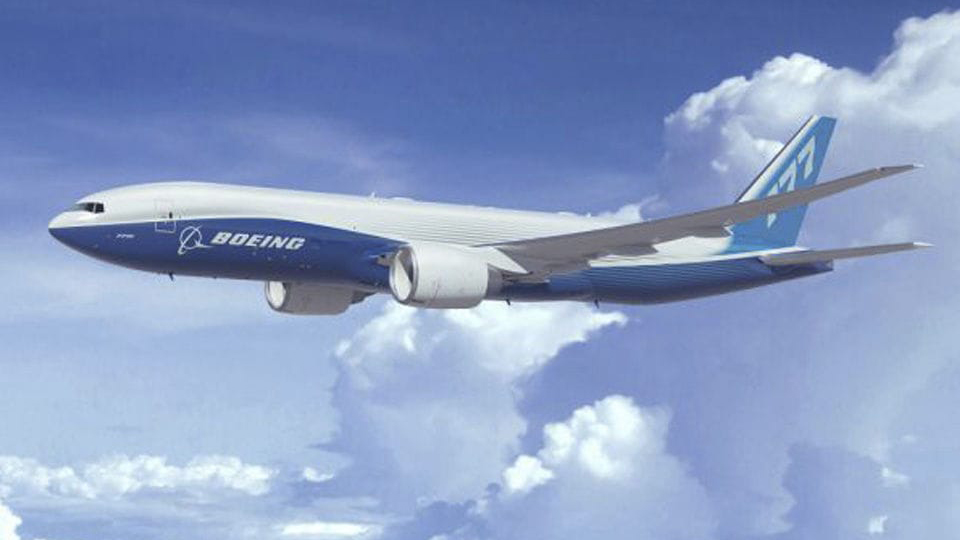
Turkmenistan Airlines comprará Boeing 777 carguero
El Gobierno de la República de Turkmenistán en Ashgabat, ha anunciado planes para comprar el primer Boeing 777-200F del país, que se agregará a la flota de Turkmenistan Airlines. El 19 Junio 2020, el Presidente Gurbanguly Berdimuhamedow ha ordenado a la compañía aérea estatal que firmara un acuerdo con la compañía de leasing de aviones Frankfurt Aircraft Finance de Alemania, en virtud del cual Turkmenistán comprará un avión Boeing 777-200F. El valor del acuerdo no ha sido revelado. Según los datos proporcionados por Statista.com, el avión puede costarle a Turkmenistán un estimado de US$ 352 millones.
Boeing 777 Freighter
Como parte de la familia de aviones Boeing 777, el 777-200F es un carguero eficiente, de largo alcance y alta capacidad que debutó en 2009. El avión 777-200F ofrece ahorros significativos para los operadores de carga en todo el mundo, permitiéndoles aprovechar menos paradas y tarifas de aterrizaje asociadas, menos congestión en los centros de transferencia, menores costos de manejo de carga y tiempos de entrega de carga más cortos. Con un peso máximo de despegue de 347.814 kilogramos, el 777-200F tiene una capacidad de carga útil de más de 105,233 kilogramos y puede volar 9.047 kilómetros con una carga completa en las densidades generales del mercado de carga, lo que lo convierte en el carguero bimotor de mayor alcance del mundo. La economía de combustible de la aeronave también proporciona beneficios ambientales, ya que su menor consumo de combustible da como resultado menores emisiones de carbono. El 777-200F también cumple con los estándares de ruido de Londres-Heathrow (QC2) para una máxima accesibilidad a los aeropuertos sensibles al ruido.
Los funcionarios en Turkmenistán creen que el nuevo avión modernizará la infraestructura aérea existente y expandirá la presencia del país en el extranjero. «Deberíamos aprovechar todas las oportunidades disponibles para convertir a Turkmenistán en uno de los mayores centros de transporte internacional. Gracias a esto, los aviadores nacionales podrán expandir la geografía del tráfico de carga regular y aumentar la frecuencia de los vuelos en las rutas existentes», dijo el Presidente de la República de Turkmenistán.
Los esfuerzos de Turkmenistán para desarrollar y fortalecer su capacidad de transporte aéreo se producen después de que los vuelos de Turkmenistan Airlines a Europa fueron suspendidos en Febrero 2020, a la espera de la confirmación de que la compañía aérea cumple con los estándares internacionales de seguridad aérea de la OACI.
Los funcionarios de la aerolínea nacional han estado durante meses mejorando la seguridad, junto con Lufthansa Consulting, una consultoría de aviación internacional para aerolíneas, aeropuertos e industrias relacionadas. El 16 Octubre 2020, las restricciones se levantaron después de que Turkmenistan Airlines confirmó el cumplimiento de los requisitos técnicos relacionados con las operaciones aéreas en el territorio de la Unión Europea (UE).
Turkmenistan Airlines es la aerolínea de bandera de Turkmenistán, con sede en la capital del país, Ashgabat. La aerolínea opera servicios de carga y pasajeros nacionales e internacionales principalmente desde su centro de operaciones en el aeropuerto internacional de Ashgabat. La aerolínea transporta a más de 3.000 pasajeros diariamente dentro del país y casi dos millones de pasajeros anualmente en las rutas internacionales y nacionales. Al 10 Octubre 2019, Turkmenistan Airlines poseía y operaba 19 aviones con una edad promedio de 9.6 años. La flota de la compañía aérea incluye Boeing 737-700 (4), Boeing 737-800 (8), Boeing 757-200 (3), Boeing 777-200 (3), Bombardier CRJ-700 (1) y un flota de aeronaves cargueras de Ilshuyin IL-76 (8).
La asociación actual de Turkmenistán con Boeing no es exactamente nueva. La relación de la compañía con el estado de la región del Caspio se remonta a 1992. En Junio 2020, los funcionarios de Boeing anunciaron que Turkmenistan Airlines compraría su cuarto avión 777-200LR (Long Range) para impulsar su flota y expandir sus servicios aéreos.
Turkmenistan to buy Boeing 777F
Turkmenistan Airlines to Buy Boeing 777 Freighter
The Government of the Republic of Turkmenistan in Ashgabat has announced plans to purchase the country’s first Boeing 777-200F, to be added to the Turkmenistan Airlines fleet. On June 19, 2020, President Gurbanguly Berdimuhamedow has ordered the state airline to sign an agreement with German aircraft leasing company Frankfurt Aircraft Finance, under which Turkmenistan will purchase a Boeing 777-200F aircraft. The value of the deal has not been disclosed. According to data provided by Statista.com, the plane can cost Turkmenistan an estimated $ 352 million.
Boeing 777 Freighter
As part of the Boeing 777 family of aircraft, the 777-200F is an efficient, long-range, high-capacity freighter that debuted in 2009. The 777-200F aircraft offers significant savings for cargo operators worldwide, allowing them to take advantage of Fewer stops and associated landing fees, less congestion at transfer centers, lower cargo handling costs, and shorter cargo delivery times. With a maximum takeoff weight of 347,814 kilograms, the 777-200F has a payload capacity of more than 105,233 kilograms and can fly 9,047 kilometers with a full load at the general cargo market densities, making it the freighter world’s largest twin-engine. The aircraft’s fuel economy also provides environmental benefits, as its lower fuel consumption results in lower carbon emissions. The 777-200F also complies with London-Heathrow (QC2) noise standards for maximum accessibility to noise sensitive airports.
Officials in Turkmenistan believe the new plane will modernize existing air infrastructure and expand the country’s presence abroad. «We should take advantage of all available opportunities to make Turkmenistan one of the largest hubs of international transport. Thanks to this, national airmen will be able to expand the geography of regular cargo traffic and increase the frequency of flights on existing routes», said the President of the Republic of Turkmenistan.
Turkmenistan’s efforts to develop and strengthen its air transport capacity come after Turkmenistan Airlines flights to Europe were suspended in February 2020, pending confirmation that the airline meets international aviation safety standards. of ICAO.
Officials at the national airline have been improving security for months, along with Lufthansa Consulting, an international aviation consultancy for airlines, airports and related industries. On October 16, 2020, restrictions were lifted after Turkmenistan Airlines confirmed compliance with technical requirements related to air operations on the territory of the European Union (EU).
Turkmenistan Airlines is the flag carrier of Turkmenistan, based in the country’s capital Ashgabat. The airline operates domestic and international cargo and passenger services primarily from its hub at Ashgabat International Airport. The airline transports more than 3,000 passengers daily within the country and almost two million passengers annually on international and national routes. As of October 10, 2019, Turkmenistan Airlines owned and operated 19 aircraft with an average age of 9.6 years. The airline’s fleet includes Boeing 737-700 (4), Boeing 737-800 (8), Boeing 757-200 (3), Boeing 777-200 (3), Bombardier CRJ-700 (1) and a fleet of Ilshuyin IL-76 cargo aircraft (8).
Turkmenistan’s current partnership with Boeing is not exactly new. The company’s relationship with the state of the Caspian region dates back to 1992. In June 2020, Boeing officials announced that Turkmenistan Airlines would purchase its fourth 777-200LR (Long Range) aircraft to boost its fleet and expand its air services.
Boieng 777F satyn almak üçin Türkmenistan
Türkmenistan howa ýollary Boeing 777 kysymly uçar satyn alar
Aşgabatdaky Türkmenistan Respublikasynyň hökümeti, Türkmenistan howa ýollarynyň flotuna goşuljak ilkinji Boeing 777-200F satyn almak meýilnamasyny yglan etdi. 2020-nji ýylyň 19-njy iýunynda Prezident Gurbanguly Berdimuhamedow döwlet awiakompaniýasyna Germaniýanyň uçar kärendesi kompaniýasy Frankfurt Aircraft Finans bilen şertnama baglaşmagy buýurdy, bu şertnama laýyklykda Türkmenistan Boeing 777-200F uçaryny satyn alar. Ylalaşygyň gymmaty aýan edilmedi. Statista.com tarapyndan berlen maglumatlara görä, uçar Türkmenistana takmynan 352 million dollar sarp edip biler.
Boeing 777
Boeing 777 uçar maşgalasynyň bir bölegi hökmünde, 777-200F 2009-njy ýylda ilkinji gezek öndürilen, uzak aralyga we ýokary kuwwatly ýük daşaýjydyr. 777-200F uçary dünýädäki ýük operatorlary üçin ep-esli tygşytlylygy hödürleýär we bu mümkinçiliklerden peýdalanmaga mümkinçilik berýär. Az duralgalar we baglanyşykly gonuş tölegleri, geçiriş merkezlerinde dyknyşyk az, ýük daşamak üçin çykdajylar we ýükleri eltmegiň wagty has gysga. Iň ýokary uçuş agramy 347,814 kilograma barabar bolan 777-200F, ýük göterijilik ukyby 105233 kilograma ýetýär we umumy ýük bazary dykyzlygynda doly ýük bilen 9,047 kilometre uçup bilýär we bu ýük göteriji bolýar dünýädäki iň uly goşa hereketlendiriji. Uçaryň ýangyç tygşytlylygy, daşky gurşawa peýdalydyr, sebäbi ýangyjyň az sarp edilmegi uglerodyň zyňyndylarynyň peselmegine getirýär. Şeýle hem, 777-200F ses-duýgur howa menzillerine iň ýokary elýeterlilik üçin London-Heathrow (QC2) ses standartlaryna laýyk gelýär.
Türkmenistanyň resmileri täze uçaryň bar bolan howa infrastrukturasyny döwrebaplaşdyrjakdygyna we ýurduň daşary ýurtlardaky gatnaşygyny giňeltjekdigine ynanýarlar. «Türkmenistany halkara ulaglarynyň iň uly merkezleriniň birine öwürmek üçin bar bolan ähli mümkinçiliklerden peýdalanmalydyrys. Munuň netijesinde milli uçarmanlar yzygiderli ýük gatnawynyň geografiýasyny giňeldip we bar bolan ugurlarda uçuşlaryň ýygylygyny artdyryp bilerler», diýip, Türkmenistan Respublikasynyň Prezidenti aýtdy.
Türkmenistanyň howa transport kuwwatyny ösdürmek we güýçlendirmek baradaky tagallalary, Türkmenistan howa ýollarynyň Europeewropa gatnawlary 2020-nji ýylyň fewral aýynda togtadylandan soň amala aşyryldy, awiakompaniýanyň halkara awiasiýa howpsuzlygy standartlaryna laýyk gelýändigi tassyklanmagyna garaşylýar. ICAO
Milli awiakompaniýanyň işgärleri, awiakompaniýalar, howa menzilleri we şuňa meňzeş pudaklar üçin halkara awiasiýa geňeşçisi Lufthansa Consulting bilen bilelikde birnäçe aý bäri howpsuzlygy gowulaşdyrýarlar. 2020-nji ýylyň 16-njy oktýabrynda Türkmenistan howa ýollary Europeanewropa Bileleşiginiň (EUB) çägindäki howa operasiýalary bilen baglanyşykly tehniki talaplaryň berjaý edilendigini tassyklandan soň çäklendirmeler ýatyryldy.
Türkmenistan howa ýollary ýurduň paýtagty Aşgabatda ýerleşýän Türkmenistanyň baýdak göterijisi. Awiakompaniýa, esasan, Aşgabat halkara howa menzilindäki merkezinden içerki we halkara ýük we ýolagçy hyzmatlaryny ýerine ýetirýär. Awiakompaniýa ýurduň içinde her gün 3000-den gowrak ýolagçyny we halkara we milli ugurlarda ýylda iki million ýolagçy gatnadýar. 2019-njy ýylyň 10-njy oktýabryna çenli Türkmenistan howa ýollary ortaça 9,6 ýaş 19 uçara eýeçilik etdi we işledi. Awiakompaniýanyň flotuna Boeing 737-700 (4), Boeing 737-800 (8), Boeing 757-200 (3), Boeing 777-200 (3), Bombardier CRJ-700 (1) floty girýär Ilşuýin IL-76 ýük uçary (8).
Türkmenistanyň Boeing bilen häzirki hyzmatdaşlygy düýbünden täze däl. Kompaniýanyň Kaspi sebiti bilen gatnaşygy 1992-nji ýyldan başlaýar. 2020-nji ýylyň iýun aýynda Boeing kompaniýasy Türkmenistan howa ýollarynyň flotuny güýçlendirmek we howa hyzmatlaryny giňeltmek üçin dördünji 777-200LR (Uzyn aralyk) uçaryny satyn aljakdygyny habar berdi.
Ξ A I R G W A Y S Ξ PUBLISHER: Airgways.com DBk: Turkmenistanairlines.tm / Boeing.com / Turkmenisitan.gov.tm / Airgways.com / Aviation-time.aero AW-POST: 202006222052AR
Aerolínea advierte capacidad resistir tormenta de pandemia
Introducidos en la tormenta perfecta de la pandemia glogal de Coronavirus, la aviación comercial se encuentra en una etapa de definiciones para poder despegar nuevamente, pero los rebrotes del virus pudieran extender las preocupaciones y los problemas financieros de las líneas aéreas.
GOL Linhas Aéreas ha advirtido a los reguladores financieros que su capacidad de resistir la tormenta financiera de 2020 está en duda. En una presentación regulatoria esta semana, Gol Linhas Aéreas dice que sus auditores pueden emitir una advertencia formal sugiriendo que la aerolínea nacional más grande de Brasil podría no estar presente en 12 meses. Gol estaba mejorando sus reservas de efectivo y tenía fondos suficientes para mantener a la aerolínea volando durante 12 meses, con valores aproximados en US$ 670 millones en liquidez total a fines de Mayo 2020. Esto mantendría a la aerolínea low cost funcionando por una autonomía de un año.
Sin embargo, esta semana pasada GOL también estaba tratando de retrasar el pago de una deuda de US$ 300 millones de Dólares para Agosto 2020. La transportadora brasileña estaría en conversaciones con Delta Air Lines sobre el aplazamiento de los vencimientos de deudas, pero Gol ha negado que este fuera el caso. «Como pionero del modelo de bajo costo en América del Sur , GOL ha tenido los costos operativos más bajos, en base a CASK, de cualquier aerolínea brasileña desde su fundación. Combinado con nuestro modelo flexible de gestión de flotas, que nos permite ajustar la capacidad más rápido, y nuestros 12 meses de efectivo disponible, confiamos en la capacidad contínua de GOL para no solo superar la crisis, sino también prosperar», dijo el CEO de GOL, Paulo Kakinoff.
Los auditores de GOL no son tan optimistas, ni comparten el optimismo de Paulo Kakinoff. Se han preguntado si la aerolínea GOL Linhas Aéreas continuaría volando en un período de doce meses. Esta auditoría ha provocado que GOL Linhas Aéreas presentara un aviso oficial de la advertencia ante la Comisión de Bolsa y Valores (SEC) de Estados Unidos. Este es un requisito legal llamado «Advertencia de Empresa en Marcha». La presentación sirve para notificar al mercado que los auditores piensan que el negocio está en riesgo de incumplimiento o incluso de abandono. La presentación se produce cuando Latam Airlines Group ha presentado el Concurso de Acreedores, agogiéndose al Capítulo 11 de la Ley de Quiebras de Estados Unidos.
Bajas de aeronaves
GOL Linhas Aéreas ha comunicado que está devolviendo aeronaves a los propietarios de leasing mientras Brasil enfrenta una tormenta sin precedentes en las economías mundiales. La compañía está retirando once aviones Boeing 737-800 Next Generation han sido devueltos a sus arrendadores. Otras siete aeronaves volverán a sus arrendadores este presente trimestre. GOL también está preparado para enviar otros 80 aviones a sus arrendadores durante el próximo año. La aerolínea también ha limitado la entrega de más aeronaves Boeing 737 MAX para los próximos dos años a 47 aviones. Gol Linhas Aéreas negoció con la Boeing, los nuevos tiempos de entrega de los nuevos Boeing B737-8 MAX, los cuales fueron diferidos hasta el año 2022.
Mercado de GOL
GOL Linhas Aéreas tiene una participación de mercado de aproximadamente el 38% de la red de vuelos domósticos en Brasil, pero el impacto de la crisis sanitaria mundial ha golpeado fuertemente ala industria aérea y el turismo. En Mayo 2020, la aerolínea low cost operaba con solo el 7% de su capacidad. Para fines de Junio 2020, GOL espera aumentar su capacidad al 20% de los niveles. Actualmente, la compañía tiene en operaciones 27 aeronaves para las rutas aéreas vigentes.
El ejecutivo Paulo Kakinoff, confirmó que prevé la operación de 200 a 250 vuelos por día en Julio 2020, frente a 1.000 vuelos diarios en el mismo mes de 2019 y espera retornar en 45 escalas de sus 59 bases, y en 103 de sus 154 mercados que llega la aerolínea. Para Diciembre 2020 la expectativa es estar entre el 65% y el 70% de la red doméstica. También trabaja con el pronóstico de que, el próximo verano septentrional, volará a todos los destinos que voló el verano pasado con una reducción sensible de las frecuencias nacionales, incluidas las internacionales. También existe la intención de ofrecer vuelos en la temporada alta de verano en el Caribe, pero provablemente bajo los servicios de charters. Esto se debe a que la negociación entre los gobiernos y los socios privados, que examinan los corredores de seguridad para vuelos, puede ser la forma más rápida de garantizar el retorno de las operaciones. «Realizaremos negociaciones entre países para que las rutas y frecuencias sean viables de acuerdo con el comercio en sí, con la participación de hoteles, centros turísticos e incluso gobiernos en algunos casos. Es posible que tengamos vuelos al Caribe el próximo verano, pero muchas operaciones estructuradas a través de del comercio en sí», expresó Paulo Kakinoff.
El ejecutivo de Gol Linhas Aéreas ha expresado que el escenario no tiene precedentes y las decisiones pueden fluctuar, pero cree que el sector está entrando en la segunda fase de operaciones, en la que los protocolos de seguridad y salud continúan aplicándose y los vuelos regresan de acuerdo con la demanda. La tercera fase, aún sin una fecha prevista, depende del control de la pandemia, sería el regreso a la normalidad y la relajación de las medidas y restricciones.
Perspectivas de GOL
A pesar del tono optimista del CEO de la aerolínea de presupuesto Paulo Lalinoff, los auditores de GOL no son las únicas personas preocupadas por el futuro de la aerolínea. Brasil se encuentra en medio de una emergencia de salud, y no hay alivio en el horizonte a corto plazo. Impactará en la demanda de viajes nacionales en el futuro previsible. Mientras tanto, la aerolínea está trabajando para una reestructuración de deuda de menos de US$ 3.2 mil millones, superando con creces sus reservas de efectivo, por lo que las consecuencias a futuro próximo asoman más pérdidas financieras.
GOL Linhas Aéreas ha comunicado a la SEC de Estados Unidos que sus auditores habían expresado inquietudes con respecto al control interno de la información financiera. Posteriormente, habrá un retraso en el informe anual 2019 de la aerolínea a medida que se resuelva el problema.
Gol post-pandemic perspective
Airline warns of ability to withstand pandemic storm
Introduced into the perfect storm of Coronavirus ‘global pandemic, commercial aviation is in a defining stage to take off again, but the virus’ outbreaks could spread airline concerns and financial woes.
GOL Linhas Aéreas has warned financial regulators that its ability to weather the 2020 financial storm is in question. In a regulatory filing this week, Gol Linhas Aéreas says its auditors may issue a formal warning suggesting that Brazil’s largest national airline may not be present in 12 months. Gol was improving its cash reserves and had sufficient funds to keep the airline flying for 12 months, with values of approximately US$ 670 million in total liquidity at the end of May 2020. This would keep the low cost airline operating for a range of one year.
However, this past week GOL was also trying to delay the payment of a debt of US$ 300 million dollars by August 2020. The Brazilian carrier would be in talks with Delta Air Lines about the postponement of debt maturities, but Gol has denied that this was the case. «As a pioneer of the low-cost model in South America, GOL has had the lowest operating costs, based on CASK, of any Brazilian airline since its foundation. Combined with our flexible fleet management model, which allows us to adjust the Faster capacity, and our 12 months of available cash, we rely on GOL’s continued ability to not only overcome the crisis, but also thrive», said GOL CEO Paulo Kakinoff.
GOL’s auditors are not so optimistic, nor do they share Paulo Kakinoff’s optimism. They have wondered if the airline GOL Linhas Aéreas would continue to fly in a period of twelve months. This audit has caused GOL Linhas Aéreas to file an official warning notice with the United States Securities and Exchange Commission (SEC). This is a legal requirement called «Running Company Warning». The presentation serves to notify the market that auditors think the business is at risk of default or even abandonment. The filing occurs when Latam Airlines Group has filed for Bankruptcy, abiding by Chapter 11 of the United States Bankruptcy Law.
Casualties from aircraft
GOL Linhas Aéreas has reported that it is returning aircraft to leasing owners as Brazil faces an unprecedented storm in world economies. The company is recalling eleven Boeing 737-800 Next Generation aircraft that have been returned to their lessors. Seven other aircraft will return to their lessors this quarter. GOL is also set to send another 80 planes to its lessors in the coming year. The airline has also limited the delivery of more Boeing 737 MAX aircraft for the next two years to 47 aircraft. Gol Linhas Aéreas negotiated with Boeing the new delivery times of the new Boeing B737-8 MAX, which were deferred until 2022.
GOL market
GOL Linhas Aéreas has a market share of approximately 38% of the domestic flight network in Brazil, but the impact of the global health crisis has hit the air industry and tourism hard. In May 2020, the low cost airline operated with only 7% of its capacity. By the end of June 2020, GOL expects to increase its capacity to 20% of levels. Currently, the company has 27 aircraft in operation for the current air routes.
The executive Paulo Kakinoff, confirmed that he foresees the operation of 200 to 250 flights per day in July 2020, compared to 1,000 daily flights in the same month of 2019 and expects to return at 45 stops from its 59 bases, and in 103 of its 154 markets. the airline arrives. For December 2020 the expectation is to be between 65% and 70% of the home network. It also works with the forecast that, next northern summer, it will fly to all the destinations it flew last summer with a noticeable reduction in national frequencies, including international frequencies. There is also an intention to offer flights in the high summer season in the Caribbean, but probably under charter services. This is because negotiation between governments and private partners, which examine flight security corridors, may be the fastest way to ensure return of operations. «We will carry out negotiations between countries so that the routes and frequencies are viable according to the trade itself, with the participation of hotels, tourist centers and even governments in some cases. We may have flights to the Caribbean next summer, but many operations structured through trade itself», said Paulo Kakinoff.
The Gol Linhas Aéreas executive has expressed that the scenario is unprecedented and decisions may fluctuate, but he believes that the sector is entering the second phase of operations, in which safety and health protocols continue to apply and flights return from according to demand. The third phase, even without an expected date, depends on the control of the pandemic, it would be the return to normality and the relaxation of the measures and restrictions.
GOL Perspectives
Despite the optimistic tone of budget airline CEO Paulo Lalinoff, GOL’s auditors are not the only people concerned about the airline’s future. Brazil is in the midst of a health emergency, and there is no relief on the horizon in the short term. It will impact the demand for domestic trips in the foreseeable future. Meanwhile, the airline is working on a debt restructuring of less than US$ 3.2 billion, far exceeding its cash reserves, with the consequences in the near future showing more financial losses.
GOL Linhas Aéreas has communicated to the United States SEC that its auditors have raised concerns regarding internal control over financial reporting. Subsequently, there will be a delay in the airline’s 2019 annual report as the issue is resolved.
Perspectivas pós-pandemia de Gol
Aérea alerta capacidade de suportar tempestade pandêmica
Introduzida na tempestade perfeita da pandemia global de Coronavirus, a aviação comercial está em um estágio decisivo para decolar novamente, mas os surtos do vírus podem espalhar preocupações de companhias aéreas e problemas financeiros.
A GOL Linhas Aéreas alertou os reguladores financeiros que está em questão sua capacidade de enfrentar a tempestade financeira de 2020. Em um documento regulatório esta semana, a Gol Linhas Aéreas diz que seus auditores podem emitir um aviso formal sugerindo que a maior companhia aérea nacional do Brasil pode não estar presente em 12 meses. A Gol estava melhorando suas reservas de caixa e tinha fundos suficientes para manter a companhia aérea voando por 12 meses, com valores de aproximadamente US $ 670 milhões em liquidez total no final de maio de 2020. Isso manteria a companhia aérea de baixo custo operando por uma variedade de um ano.
No entanto, na semana passada, a GOL também estava tentando adiar o pagamento de uma dívida de US$ 300 milhões em agosto de 2020. A transportadora brasileira estaria conversando com a Delta Air Lines sobre o adiamento do vencimento da dívida, mas a Gol negou que esse fosse o caso. «Como pioneira no modelo de baixo custo na América do Sul, a GOL teve os menores custos operacionais, com base no CASK, de qualquer companhia aérea brasileira desde a sua fundação. Combinado com o nosso modelo flexível de gerenciamento de frota, que nos permite ajustar o Com capacidade mais rápida e nossos 12 meses de caixa disponível, contamos com a capacidade contínua da GOL de superar não apenas a crise, mas também prosperar», disse o CEO da GOL, Paulo Kakinoff.
Os auditores da GOL não são tão otimistas nem compartilham o otimismo de Paulo Kakinoff. Eles se perguntaram se a companhia aérea GOL Linhas Aéreas continuaria a voar em um período de doze meses. Essa auditoria levou a GOL Linhas Aéreas a enviar um aviso oficial à Comissão de Valores Mobiliários dos Estados Unidos (SEC). Este é um requisito legal chamado «Aviso da empresa em execução». A apresentação serve para notificar o mercado que os auditores acham que o negócio está em risco de inadimplência ou mesmo abandono. O pedido ocorre quando o Latam Airlines Group entrou com pedido de falência, cumprindo o Capítulo 11 da Lei de Falências dos Estados Unidos.
Baixas de aeronaves
A GOL Linhas Aéreas informou que está devolvendo aeronaves aos proprietários de leasing, já que o Brasil enfrenta uma tempestade sem precedentes nas economias mundiais. A empresa está recuperando onze aeronaves Boeing 737-800 Next Generation que foram devolvidas aos seus arrendadores. Sete outras aeronaves retornarão aos seus arrendadores neste trimestre. A GOL também deve enviar outros 80 aviões a seus arrendadores no próximo ano. A companhia aérea também limitou a entrega de mais aeronaves Boeing 737 MAX nos próximos dois anos a 47 aeronaves. A Gol Linhas Aéreas negociou com a Boeing os novos prazos de entrega do novo Boeing B737-8 MAX, que foram adiados até 2022.
Mercado GOL
A GOL Linhas Aéreas possui uma participação de mercado de aproximadamente 38% da rede de vôos domésticos no Brasil, mas o impacto da crise global da saúde atingiu fortemente a indústria aérea e o turismo. Em maio de 2020, a companhia aérea de baixo custo operava com apenas 7% de sua capacidade. Até o final de junho de 2020, a GOL espera aumentar sua capacidade para 20% dos níveis. Atualmente, a empresa possui 27 aeronaves em operação para as rotas aéreas atuais.
O executivo Paulo Kakinoff confirmou que prevê a operação de 200 a 250 vôos por dia em julho de 2020, comparado a 1.000 vôos diários no mesmo mês de 2019 e espera retornar a 45 paradas de suas 59 bases e em 103 de seus 154 mercados. a companhia aérea chega. Para dezembro de 2020, a expectativa é estar entre 65% e 70% da rede doméstica. Ele também trabalha com a previsão de que, no próximo verão do norte, voe para todos os destinos que voou no verão passado, com uma notável redução nas frequências nacionais, incluindo as internacionais. Também existe a intenção de oferecer voos na alta temporada de verão no Caribe, mas provavelmente sob serviços de fretamento. Isso ocorre porque as negociações entre governos e parceiros privados, que examinam os corredores de segurança de vôo, podem ser a maneira mais rápida de garantir o retorno das operações. «Vamos conduzir negociações entre países para que as rotas e frequências sejam viáveis de acordo com o próprio comércio, com a participação de hotéis, centros turísticos e até governos em alguns casos. Podemos ter voos para o Caribe no próximo verão, mas muitas operações estruturado através do próprio comércio», afirmou Paulo Kakinoff.
O executivo da Gol Linhas Aéreas expressou que o cenário é inédito e as decisões podem variar, mas ele acredita que o setor está entrando na segunda fase das operações, na qual os protocolos de segurança e saúde continuam sendo aplicados e os vôos retornam de de acordo com a demanda. A terceira fase, mesmo sem uma data prevista, depende do controle da pandemia, seria o retorno à normalidade e o relaxamento das medidas e restrições.
Perspectivas da GOL
Apesar do tom otimista do CEO da companhia aérea Paulo Lalinoff, os auditores da GOL não são as únicas pessoas preocupadas com o futuro da companhia aérea. O Brasil está em meio a uma emergência de saúde e não há alívio no horizonte no curto prazo. Isso impactará a demanda por viagens domésticas no futuro próximo. Enquanto isso, a companhia aérea está trabalhando em uma reestruturação da dívida de menos de US$ 3,2 bilhões, excedendo em muito suas reservas de caixa, com mais perdas financeiras surgindo no futuro próximo.
A GOL Linhas Aéreas informou à SEC dos Estados Unidos que seus auditores levantaram preocupações com relação ao controle interno sobre relatórios financeiros. Posteriormente, haverá um atraso no relatório anual de 2019 da companhia aérea à medida que o problema for resolvido.
Ξ A I R G W A Y S Ξ PUBLISHER: Airgways.com DBk: Voegol.com.br / Sec.gov / Airgways.com AW-POST: 202006222015AR
La pandemia de Coronavirus está provocando la caída de la demanda de aeronaves con mayor antigüedad. Un resultado importante es que las aerolíneas han tenido que repensar completamente sus estrategias de flota. La mayoría de los ejecutivos de las aerolíneas esperan que la demanda permanezca deprimida durante varios años, lo que significa que se necesitarán menos aviones a corto plazo, por lo que las planificaciones estratégicas de sus flotas estarían orientadas a perseguir la rentabilidad al conservar las aeronaves más modernas y eliminar las más obsoletas.
El aspecto positivo de la puesta en tierra de ciertas aeronaves es que las aerolíneas ahora están pensando más estratégicamente sobre sus flotas, y están considerando movimientos que podrían ser dolorosos ahora pero que conducirán a reducciones sustanciales de costos a largo plazo. Delta Air Lines está siendo particularmente agresivo con la planificación, y puede tener algunas de las mayores oportunidades a largo plazo a medida que actualiza y simplifica su flota.
Desprogramando flotas
La aerolínea Delta Air Lines retiró meses atrás la flota MD-88/MD-90. La compañía continuará con el programa de desprogramación de unidades más antiguas de su flota de aeronaves. El turno de la salida de la compañía del Boeing 777 seguirá en el transcurso del 2020.
A fines de Abril 2020, Delta anunció que aceleraría el retiro de dos modelos de jet más antiguos, la línea McDonnell Douglas MD-88/MD-90. Los MD-88 ya estaban programados para retirarse a finales de este año, seguidos por los MD-90 en 2022, pero los vuelos finales se trasladaron hasta principios de Junio 2020, terminando así con la era de la famosa línea DC9/MD-80/MD-90, permaneciendo solamente el Boeing 717, un derivado de la factoría de McDonnell Douglas Corporation.
Un movimiento más audaz fue la decisión de Delta de retirar su flota Boeing 777-200 en Mayo hacia finales de 2020. Mientras que los MD-88 y MD-90 tenían aproximadamente 29 y 23 años, en promedio respectivamente, la flota 777 tiene una edad promedio de solo 15 años, siendo relativamente joven para retirarlo de manera prematura.
Delta Air Lines terminó recientemente un proyecto costoso para renovar los interiores del 777 para agregar asientos económicos premium y actualizar la cabina Delta One a mini-suites. Sin embargo, esas inversiones son costos hundidos, y Delta tiene solo 18 777 de casi 900 aviones en su flota. La estandarización del Airbus A350 para las rutas más largas de la aerolínea reducirá la complejidad, y los nuevos A350 de Delta son un 21% más eficientes en consumo de combustible que los Boeing 777. Los movimientos de simplificación de flota ya confirmados ahorrarán cientos de millones de dólares al año, según el CFO de Delta, Paul Jacobson.
Boeing 717, en la mira
El Boeing 717-200 también puede estar saliendo. El mes de Mayo, Delta Air Lines confirmó que cerrará dos de sus cuatro bases piloto para los Boeing 717-200 y operará solo entre 30 a 45 de sus 91 Boeing 717 en los próximos dos años. La edad promedio de la flota de 717 de Delta es un poco menos de 19 años. El problema fundamental que Delta enfrenta con esta flota es que, según una Directivas de Aeronavegabilidad (AD) de la FAA, debe reemplazar los asientos de todos sus 717 a mediados de 2022. Antes de la pandemia, la aerolínea había planeado instalar televisores con respaldo y actualizar otros aspectos de la cabina junto con ese proyecto, extendiendo la vida de sus 717 a alrededor de 2030.
FLOTA DE DELTA AIR LINES FIEL A LA LÍNEA McDONNELL DOUGLAS CORPORATION/BOEING, BOEING 717/DC-9/MD-80/MD-90
Ahora, Delta tiene que pensar mucho sobre cuánto tiempo quiere quedarse con los Boeing 717 y si todavía tiene sentido invertir lo que probablemente serían millones de dólares por avión. La aerolínea ya ha planteado la posibilidad de intercambiar sus Boeing 717 a Boeing a cambio de realizar un nuevo pedido de Boeing 737 MAX.
Si bien la mayoría de los Boeing 717 de Delta están arrendados, con fechas de vencimiento que comienzan en 2024, los costos anuales de arrendamiento de la flota probablemente superen los US$ 100 millones. En lugar de invertir más dinero en la flota 717, y aceptar la complejidad de la flota adicional durante la próxima década, puede tener sentido eliminarlos gradualmente a mediados de 2022 y comprar Airbus A220 adicionales de última generación. Los costos iniciales serán más altos, por supuesto, pero los A220 serán más económicos de operar con una perspectiva de flota hacia el 2050. Acelerar esta transición en una década permitirá a Delta capturar los beneficios de una flota simplificada mucho antes.
Flota Boeing 757/767
Los Boeing 757 y 767 se demorarán un poco más en despegarse de la flota de la compañía. Esta dupla de hermanos poseen una edad promedio por arriba de los 22 años de antigüedad. La flota de Boeing 757/767 más antiguos serán retirados este año, pero es probable que algunas aeronaves permanezcan en la flota de Delta por varios años.
Buscar un reemplazo para el Boeing 757 no es tarea fácil. Aunque el 757 no ha tenido un derivado más moderno, al presente, el Airbus A321 y el A321NEO todavía continúan siendo insuficientes para reemplazar los 757 que operan en el mercado interno, como así también no tienen el alcance suficiente (intercontinental) en rutas de mayor recorrido, como los vuelos transatlánticos. Delta tendrá que esperar hasta que el modelo Airbus A321XLR (eXtra Long Range) esté disponible dentro de unos años para tener un reemplazo a la medida del Boeing 757 en rutas de larga distancia.
En cuanto al 767, Delta planea reemplazar muchos de estos aviones con el A330-900NEO. Los nuevos A330NEO de Delta tienen 281 asientos: 18% más que incluso la versión más grande del 767, el Boeing 767-400ER. Las perspectivas de la demanda de viajes internacionales sea débil en los próximos años, por lo que Delta conservaría su avión internacional más pequeño, Boeing 757, hasta reemplazarlos cuando el A321XLR ya esté en el mercado.
Los planes de simplificación de la flota de Delta no solo surgieron durante la pandemia. Hace seis meses, la aerolínea reveló que quería mudarse a una flota futura con solo ocho familias de flotas: en comparación con 15 en 2009 y 13 en 2020. Sin embargo, en ese momento, esto parecía una aspiración lejana. Ahora, la gerencia se está tomando en serio el progreso hacia esta meta rápidamente. Tener menos tipos de aeronaves reducirá los gastos de mantenimiento, aumentará la productividad del piloto, simplificará la programación y facilitará la recuperación cuando el clima u otros factores interrumpan las operaciones. Invertir algunas amortizaciones y gastos de capital adicionales a corto plazo puede valer la pena si permite a Delta Air Lines alcanzar esta altamente deseable flota futura con mayor presteza.
Delta plans Boeing 777 recall
Delta would deprogram Boeing 777 fleet
The Coronavirus pandemic is causing a drop in demand for older aircraft. An important result is that airlines have had to completely rethink their fleet strategies. Most airline executives expect demand to remain depressed for several years, meaning that fewer aircraft will be needed in the short term, so strategic plans for their fleets would be geared toward pursuing profitability by keeping aircraft more modern and eliminate the most obsolete.
The positive aspect of grounding certain aircraft is that airlines are now thinking more strategically about their fleets, and are considering moves that might be painful now but will lead to substantial cost reductions in the long term. Delta Air Lines is being particularly aggressive with planning, and may have some of the greatest long-term opportunities as you upgrade and simplify your fleet.
Deprogramming fleets
The airline Delta Air Lines withdrew the MD-88/MD-90 fleet months ago. The company will continue with the deprogramming program for older units of its aircraft fleet. The company’s departure turn from the Boeing 777 will continue throughout 2020.
In late April 2020, Delta announced it would expedite the recall of two older jet models, the McDonnell Douglas MD-88/MD-90 line. The MD-88s were already slated to retire later this year, followed by the MD-90s in 2022, but the final flights carried over to early June 2020, thus ending the era of the famous DC9/MD-80/MD-90 line, remaining only the Boeing 717, a derivative of the McDonnell Douglas Corporation factory.
A bolder move was Delta’s decision to withdraw its Boeing 777-200 fleet in May towards the end of 2020. While the MD-88 and MD-90 were approximately 29 and 23 years old, on average respectively, the 777 fleet is of average age. only 15 years old, being relatively young to withdraw prematurely.
Delta Air Lines recently completed an expensive project to renovate the interiors of the 777 to add premium budget seats and upgrade the Delta One cabin to mini-suites. However, those investments are sunk costs, and Delta has only 18,777 of nearly 900 aircraft in its fleet. Standardizing the Airbus A350 for the airline’s longer routes will reduce complexity, and Delta’s new A350s are 21% more fuel efficient than Boeing 777s. Already confirmed fleet simplification movements will save hundreds of millions. dollars a year, according to Delta CFO Paul Jacobson.
Boeing 717 in focus
The Boeing 717-200 may also be coming out. In May, Delta Air Lines confirmed that it will close two of its four pilot bases for Boeing 717-200s and will operate only 30 to 45 of its 91 Boeing 717s in the next two years. The average age of Delta’s 717 fleet is just under 19. The fundamental problem Delta faces with this fleet is that, according to an FAA Airworthiness Directive (AD), it must replace the seats of all its 717s in mid-2022. Before the pandemic, the airline had planned to install back-up televisions. and updating other aspects of the cabin along with that project, extending the life of its 717s to around 2030.
Now Delta has a lot to think about how long it wants to stay with the Boeing 717s and whether it still makes sense to invest what would probably be millions of dollars per plane. The airline has already raised the possibility of exchanging its Boeing 717s with Boeing in exchange for placing a new order for the Boeing 737 MAX.
While most Delta Boeing 717s are leased, with expiration dates starting in 2024, annual fleet lease costs are likely to exceed $ 100 million. Rather than invest more money in the 717 fleet, and accept the complexity of the additional fleet over the next decade, it may make sense to phase them out in mid-2022 and buy additional next-generation Airbus A220s. Initial costs will be higher, of course, but the A220s will be cheaper to operate with a fleet perspective into 2050. Accelerating this transition by a decade will allow Delta to capture the benefits of a simplified fleet much sooner.
Boeing 757/767 fleet
The Boeing 757s and 767s will take a little longer to take off from the company’s fleet. This pair of siblings have an average age above 22 years old. The older Boeing 757/767 fleet will be retired this year, but some aircraft are likely to remain in Delta’s fleet for several years.
Finding a replacement for the Boeing 757 is no easy feat. Although the 757 has not had a more modern derivative, at present, the Airbus A321 and A321NEO still continue to be insufficient to replace the 757 operating in the domestic market, as well as not having sufficient (intercontinental) range on higher routes. route, such as transatlantic flights. Delta will have to wait until the Airbus A321XLR (eXtra Long Range) model is available in a few years to have a custom replacement for the Boeing 757 on long-haul routes.
As for the 767, Delta plans to replace many of these aircraft with the A330-900NEO. Delta’s new A330NEOs have 281 seats: 18% more than even the largest version of the 767, the Boeing 767-400ER. Prospects for international travel demand are weak in the coming years, so Delta would retain its smallest international aircraft, Boeing 757, until replacing them when the A321XLR is already on the market.
Delta’s fleet simplification plans did not just emerge during the pandemic. Six months ago, the airline revealed that it wanted to move to a future fleet with only eight fleet families compared to 15 in 2009 and 13 in 2020. However, at the time, this seemed like a distant aspiration. Management is now taking progress toward this goal seriously quickly. Having fewer types of aircraft will reduce maintenance costs, increase pilot productivity, simplify scheduling, and facilitate recovery when weather or other factors disrupt operations. Investing some additional amortizations and capital expenditures in the short term may pay off if you allow Delta Air Lines to reach this highly desirable future fleet more quickly.
Ξ A I R G W A Y S Ξ PUBLISHER: Airgways.com DBk: Delta.com / Fool.com / Airgways.com / Flickr.com AW-POST: 202006211500AR
Sectores aeronáuticos esfuerzan por continuidad Latam Argentina
Después de la reunión desarrollada por el Ministerio de Transporte de Argentina y los altos directivos de Latam Airlines Group el Viernes 19/06, el fracaso de las negociaciones para la continuidad de la aerolínea ha sido recibida muy negativamente en el ámbito de la aviación comercial y la población. La decisión de Latam Airlines Argentina de abandonar la Argentina no fue bien recibida en el mercado, dada a conocer al mismo tiempo que la expropiación de la Aceitera Vicentín, que ha sufrido un revés judicial con la empresa agroexportadora, ahora buscan que la aérea se quede en la Argentina.
Reunión Transporte-Latam
El Ministro de Transporte, Mario Meoni fue quien recibió a los ejecutivos de Latam Airlines Argentina para intentar revertir la decisión de abandonar las operaciones de cabotaje. Por su parte, el titular de Trabajo, Claudio Moroni, citó a los gremios aeronáuticos para analizar el Procedimiento Preventivo de Crisis (PPC), pedido por la línea aérea. El gremio que reune a los trabajadores de la compañía entiende que se está a tiempo de salvar la empresa. La cartera de Transporte había recibido al CEO de Latam Group, Roberto Alvo, y otros ejecutivos de la aerolínea para buscar una alternativa a la decisión de dejar de operar en la Argentina, lo que pone en riesgo más de 1.715 puestos de trabajo. Esta fue la primera reunión entre el Gobierno y los ejecutivos de Latam Airlines Group, a horas de que la empresa presentara el pedido de PPC, que se encuentra pendiente de aprobación gubernamental. Fuentes del Gobierno señalaron que la reunión duró una hora y media y que fue muy respetuosa se le ofreció a la empresa colaboración y ayuda por la operación en el país. No obstante, durante el encuentro, la empresa aclaró que la decisión de abandonar los vuelos de cabotaje es irreversible, dado que le resulta imposible afrontar el pago del total de los salarios y demás costos, en un contexto sin operaciones, sobre todo después de que la casa matriz solicitara el concurso preventivo en Estados Unidos y con ello dejara de asistir a la filial local.
A todo esto los empleados nucleados en la, Unión Sindical de Trabajadores Aeronáuticos de la Argentina (USTARA), apuntaron contra la empresa por el desmanejo durante la crisis del Coronavirus. Sin embargo, señalaron que cuentan con el apoyo de los empleados para poder revertir la situación. «Sabemos que pueden existir sectores que hayan tenido intereses oscuros para perjudicar a la empresa, pero los trabajadores, en su mayoría, nunca han entrado en ese juego perverso. Es irresponsable echar culpas a los trabajadores por la crisis de gerenciamiento de Latam Argentina, que forma parte de una multinacional; el verdadero y único origen del problema fue la falta de administración de la crisis debido a la pandemia que sacudió al mundo», señaló un comunicado de la USTARA. El comunicado lleva la firma del Secretario General Guillermo Cruz Quival, entre otros dirigentes del gremio, indicó que para el sindicato, aún «se está a tiempo para salvar a la empresa y preservar las fuentes laborales», tras la anunciada decisión de dejar de operar en Argentina.
Latam Argentina will seek to reconcile
Aeronautical sectors strive for continuity of Latam Argentina
After the meeting held by the Argentine Ministry of Transportation and the senior managers of the Latam Airlines Group on Friday 19/06, the failure of the negotiations for the continuity of the airline has been received very negatively in the field of commercial aviation and the population. The decision of Latam Airlines Argentina to leave Argentina was not well received in the market, made known at the same time that the expropriation of the Vicentín Oil Company, which has suffered a judicial setback with the agro-export company, now they are looking for the airline to stay in Argentina.
Transport-Latam Meeting
The Minister of Transport, Mario Meoni, was the one who received the executives of Latam Airlines Argentina to try to reverse the decision to abandon cabotage operations. For his part, the Minister of Labor, Claudio Moroni, summoned the aeronautical unions to analyze the Preventive Crisis Procedure (PPC), requested by the airline. The union that brings together the workers of the company understands that there is time to save the company. The Transport portfolio had received the CEO of Latam Group, Roberto Alvo, and other airline executives to seek an alternative to the decision to stop operating in Argentina, which puts more than 1,715 jobs at risk. This was the first meeting between the Government and the executives of the Latam Airlines Group, hours before the company presented the request for PPC, which is pending government approval. Government sources indicated that the meeting lasted an hour and a half and that it was very respectful, the company was offered collaboration and help for the operation in the country. However, during the meeting, the company clarified that the decision to abandon cabotage flights is irreversible, given that it is impossible to face the payment of total wages and other costs, in a context without operations, especially after the parent company will request the preventive bankruptcy in the United States and thereby stop attending the local subsidiary.
To all this the nucleated employees in the Union of Aeronautical Workers of Argentina (USTARA), pointed against the company for the mismanagement during the Coronavirus crisis. However, they noted that they have the support of employees to reverse the situation. «We know that there may be sectors that have had dark interests to harm the company, but the workers, for the most part, have never entered this perverse game. It is irresponsible to blame the workers for the management crisis in Latam Argentina, which It is part of a multinational, the true and only source of the problem was the lack of administration of the crisis due to the pandemic that shook the world», said a statement from USTARA. The statement bears the signature of Secretary General Guillermo Cruz Quival, among other union leaders, indicated that for the union, there is still «time to save the company and preserve labor sources», after the announced decision to stop operating in Argentina.
Ξ A I R G W A Y S Ξ PUBLISHER: Airgways.com DBk: Airgways.com / Latam.com / Ustara.com AW-POST: 202006221020AR
American Airlines busca más préstamos para recuperación
American Airlines busca asegurar otros US$ 3.5 mil millones en préstamos en un esfuerzo por mantenerse en alto mientras continúa recuperándose de los efectos de la pandemia de Coronavirus. El operador planea recaudar dinero vendiendo acciones y pagarés convertibles, la mitad de los que vencen en 2025 y la otra mitad a corto plazo, según un comunicado. También tiene la intención de entrar en una nueva línea de crédito a plazo de US$ 500 millones con vencimiento en 2024.
La medida se produce después que las aerolíneas continúan haciendo lo que se necesita y lo que pueden para aprovechar varias fuentes de capital para mantenerse en funcionamiento. Delta Air Lines, Southwest Airlines y JetBlue Airways han aprovechado los mercados de deuda en las últimas semanas para impulsar la liquidez.
El número de pasajeros de líneas aéreas en los Estados Unidos cayó un 81% a partir del 16 Junio 2020, según la Administración de Seguridad del Transporte (TSA). Las acciones de American en particular han ido ganando altitud tras el anuncio de la aerolínea de que aumentará su horario de vuelos de Julio a medida que las restricciones de viaje impuestas por la pandemia de Coronavirus comienzan a disminuir. En Mayo 2020, American voló solo el 20% de su horario nacional y está volando un 25% en Junio 2020. La aerolínea dijo que planea volar el 55% de su horario doméstico y el 20% de los vuelos internacionales en Julio 2020.
American seeks to raise more funds
American Airlines seeks more recovery loans
American Airlines seeks to secure another US$ 3.5 billion in loans in an effort to stay high while continuing to recover from the effects of the Coronavirus pandemic. The operator plans to raise money by selling convertible shares and notes, half of which are due in 2025 and the other half in the short term, according to a statement. It also intends to enter a new US $ 500 million term credit line with maturity in 2024.
The move comes after airlines continue to do what is needed and what they can to take advantage of various sources of capital to stay operational. Delta Air Lines, Southwest Airlines and JetBlue Airways have leveraged debt markets in recent weeks to boost liquidity.
The number of airline passengers in the United States fell 81% as of June 16, 2020, according to the Transportation Security Administration (TSA). American’s actions in particular have been gaining altitude following the airline’s announcement that it will increase its July flight schedule as travel restrictions imposed by the coronavirus pandemic begin to ease. In May 2020, American flew just 20% of its national time and is flying 25% in June 2020. The airline said it plans to fly 55% of its domestic time and 20% of international flights in July 2020.
Ξ A I R G W A Y S Ξ PUBLISHER: Airgways.com DBk: Aa.com / Airgways.com / Thestreet.com AW-POST: 202006220911AR
Las aerolíneas regionales CityJet y Stobart Air solicitan rescate
Las compañías regionales de la República de Irlanda CityJet y Stobart Air pidieron al Gobierno un rescate de seis meses para garantizar su supervivencia después de la expansión de la crisis sanitaria de Coronavirus. En una carta firmada al Ministro de Finanzas Pascual Donohoe en Abril 2020, Stobart Air y CityJet dijeron que requerían apoyo de subvención inmediata para sobrevivir a la pandemia.
Las aerolíneas representaron más del 13% del tráfico aéreo total en los aeropuertos de Irlanda antes de la pandemia, cuando también emplearon a más de 1.700 empleados entre ellas.
La carta, enviada en virtud de la Ley de Libertad de Información, llegó días después de que el Tribunal Superior designó un examinador interino para CityJet, con sede en Dublín, pero es mejor conocido por volar rutas desde el Aeropuerto de la Ciudad de Londres. Stobart Air, con sede en Dublín, suspendió todos los vuelos internacionales debido a lo que describió como una caída de la demanda sin precedentes como resultado de las cancelaciones de viajes aéreos. En su carta a Donohoe, el Director Gerente de Stobart Air, Andy Jolly, y el CEO de CityJet, Pat Byrne, advirtieron que las aerolíneas regionales no serían viables sin un ingreso estable.
Advirtieron que los costos fijos en curso estaban «carcomiendo la evaporación de las reservas de efectivo mientras los aviones se quedan en tierra con un colapso dramático en los ingresos. Sin duda habrá un resurgimiento de la demanda de vuelos regionales en el norte de Europa (en el caso de CityJet) y Gran Bretaña e Irlanda (en el caso de Stobart Air). Estas dos compañías irlandesas deben preservarse para satisfacer esa demanda», expresaron en la solicitud de la carta. Además solicitan al gobierno que siguiera a otros países europeos al mostrar un apoyo decisivo e inquebrantable en forma de subvenciones de capital durante seis meses, alegando que esto respaldaría hasta 1.000 empleos irlandeses a largo plazo.
Sorprende y decepciona la desidia de la importancia del negocio de la aviación comercial, que representa el 88% de los viajes al extranjero a Irlanda, se esté pasando por alto, por lo que esperan una revisión del asunto por parte del Ministerio de Transporte de Irlanda. Las consecuencias de la pandemia no se hacen esperar, el Viernes 19/06, la mayor aerolínea del país de la Isla Esmeralda, Aer Lingus, ha anunciado la pérdida de hasta 500 trabajadores como resultado del impacto de la crisis sanitaria.
Irish air regionals request rescue
Regional airlines CityJet and Storbart Air request rescue
Republic of Ireland regional companies CityJet and Stobart Air asked the government for a six-month bailout to ensure their survival after the spread of the Coronavirus health crisis. In a letter signed to Finance Minister Pascual Donohoe in April 2020, Stobart Air and CityJet said they required immediate grant support to survive the pandemic.
Airlines accounted for more than 13% of total air traffic at Ireland’s airports before the pandemic, when they also employed more than 1,700 employees with each other.
The letter, sent under the Freedom of Information Act, came days after the High Court appointed an interim examiner for CityJet, based in Dublin, but is best known for flying routes from London City Airport. Dublin-based Stobart Air suspended all international flights due to what it described as an unprecedented drop in demand as a result of air travel cancellations. In their letter to Donohoe, Stobart Air Managing Director Andy Jolly and CityJet CEO Pat Byrne warned that regional airlines would not be viable without a stable income.
They warned that ongoing fixed costs were «gnawing away the evaporation of cash reserves as planes land grounded with a dramatic collapse in revenue. There will certainly be a resurgence in demand for regional flights in northern Europe (in the CityJet case) and Britain and Ireland (in the case of Stobart Air). These two Irish companies must preserve themselves to meet that demand», they said in the letter’s request. They also ask the government to follow other European countries by showing decisive and unwavering support in the form of capital grants for six months, claiming that this would support up to 1,000 Irish jobs in the long term.
The laziness of the importance of the commercial aviation business, which accounts for 88% of overseas travel to Ireland, is surprising and disappointing, so they await a review of the matter by the Irish Ministry of Transport . The consequences of the pandemic are swift, on Friday 06/19, the largest airline in the country of the Emerald Isle, Aer Lingus, has announced the loss of up to 500 workers as a result of the impact of the health crisis.
Ξ A I R G W A Y S Ξ PUBLISHER: Airgways.com DBk: Airgways.com / Independent.ei / Thejournal.ei / Tis Meyer AW-POST: 202006211617AR
Cronología de la aviación de Latam Airlines en Argentina
Latam Airlines Argentina ha anunciado el 17 Junio 2020 que la compañía había presentado un Procedimiento Preventivo de Crisis (PPC)[Ɖ] ante el Ministerio de Trabajo, pero que en el día Viernes 19/06 ante una reunión con el Ministerio de Trabajo presentaron la petición indeclinable de levantar las operaciones en la República Argentina, una decisión planificada desde hace tiempo atrás. La aerolínea había comunicado tras la finalización de la reunión con la cartera de Trabajo la posición indeclinable de cerrar las operaciones de la filial Argentina.
Tras la información confirmada desde la compañía, la incertidumbre sobre el futuro de sus 1.750 empleados y la conmoción en el sector aerocomercial se hicieron sentir por el cese de operaciones como operador nacional, pues Latam Argentina continuaba siendo una línea aérea privada líder de la región y la segunda en el mercado local. La decisión llegó luego de quince años de presencia en el país, en la que la empresa operó en un mercado liderado por Aerolíneas Argentinas alcanzando el 16% del mercado de cabotaje y el 23% del sector internacional.
Cronología Latam Airlines Argentina
2005 | Arribo a la Argentina
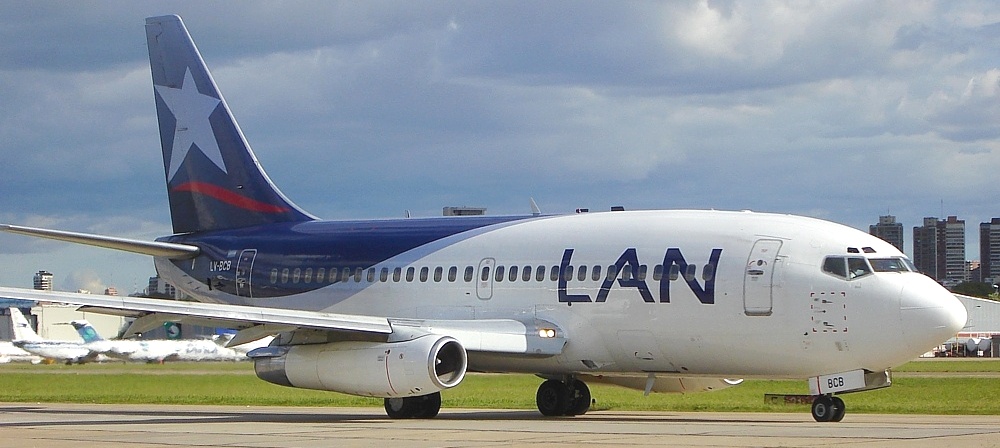
LAN Airlines dessembarcó en el país en 2005, iniciando las operaciones el 08/06. Para el inicio de la operación adquirió la empresa Aero 2000 y se hizo cargo de los empleados de Líneas Aéreas Federales S.A. (LAFSA), una empresa estatal que nunca había iniciado operaciones aerocomerciales y que fue creada en los últimos días del Gobierno de Eduardo Duhalde para absorber a los empleados de otras dos aerolíneas extinguidas Southern Winds Líneas Aéreas y Dinar Líneas Aéreas. El acuerdo fue que la compañía que debería tener mayoría de capitales nacionales se haría cargo de todos los empleados de LAFSA Líneas Aéreas a cambio de que el Gobierno le otorgara la autorización para operar ciertas rutas de cabotaje. Cuando se concretó el arribo de la chilena LAN al país, Aerolíneas Argentinas, por entonces en manos del grupo Marsans, tenía más del 80% del mercado de cabotaje. Los primeros vuelos de la compañía se concretaron el 8 Junio 2005, día en que inició las primeras conexiones hacia Córdoba y Mendoza. Para el comienzo de las operaciones la compañía ha empleado aeronaves Boeing 737-200.
2006 | Inicio operaciones internacionales
El 15 Agosto 2006 Lan Argentina Líneas Aéreas inició primeros vuelos entre Ezeiza y Miami, con tres frecuencias semanales (3Rrq/S), ruta que tuvo gran acogida y que comenzó a ofrecerse luego diariamente. Ese mismo año obtuvo permiso para para operar 35 nuevas rutas domésticas e internacionales, por lo que incorporó nuevos destinos. A principios de ese año LAN Argentina volaba hacia doce destinos domésticos que incluían: Buenos Aires, Iguazú, Bariloche, Salta, Tucumán, Mendoza, Córdoba, Neuquén, Comodoro Rivadavia, Río Gallegos, Calafate y Ushuaia; y cuatro internacionales: Miami, San Pablo, Santiago de Chile y Lima.
2007 | Conflictos gremiales
No serían ni los primeros ni los últimos, pero 2007 estuvo atravesado por varios conflictos que obligaron a la aerolínea a suspender servicios. En enero de ese año los trabajadores de LAN Argentina agremiados en APA comenzaron un paro general de actividades por lo que calificaron como un incumplimiento empresario de las actas acuerdo firmadas ante las autoridades laborales. En Marzo, las medidas de reclamo por la reincorporación de un trabajador despedido encabezado por el gremio APTA generan cancelación de servicios. Luego, en Mayo, hubo un paro de la Asociación de Pilotos de Líneas Aéreas (APLA), conducida por Pablo Biró, en contra de la aplicación de exámenes psicotécnicos.
2009 | Hangar propio en Aeroparque
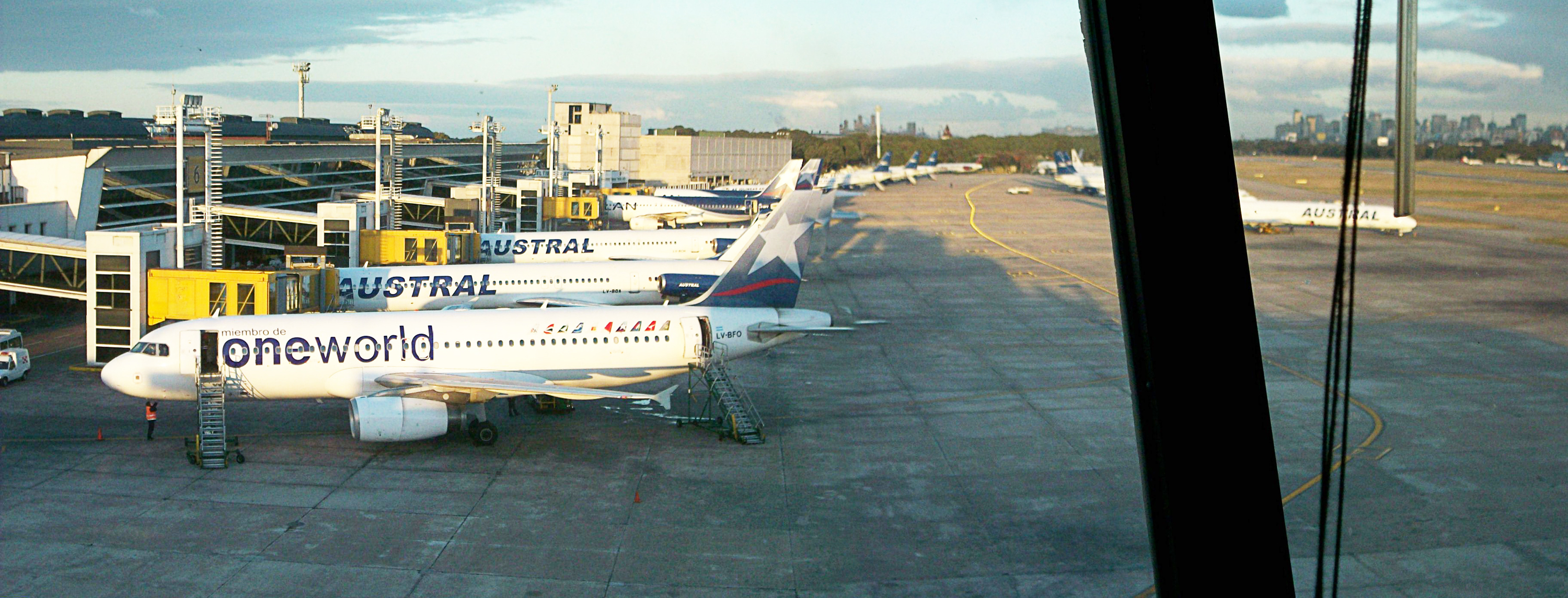
LAN Argentina concretó la apertura de un hangar propio en el Aeropuerto Jorge Newbery, tras una inversión de US$ 5 millones para su construcción. Luego, en 2013, ese hangar se convertiría en uno de los conflictos políticos más fuertes de la empresa en su paso por el país.
2010 | Fusión LAN-TAM
En 2010, LAN Airlines anunció la fusión de todas sus operaciones con la brasileña TAM Linhas Aéreas bajo la denominación Latam Airlines Group, formalizando la creación del gigante aerocomercial líder en Sudamérica, con ingresos por más de US$ 8.500 millones de Dólares en facturación anuales, controlando el 17% de las ganancias del mercado regional. El proceso de fusión llevó años y la empresa comenzó a operar bajo su nueva marca en 2016.
2013 | Conflicto con Intercargo y ORSNA
En 2013 un conflicto de varias semanas entre la aerolínea y la empresa estatal Intercargo, encargada de los servicios terrestres en los aeropuertos, generó la demora de cientos de vuelos de la empresa y llevó a la empresa a suspender todos los vuelos en el país. La Justicia tomó parte en el conflicto, iniciado por una deuda, y si bien obligó a Intercargo a restituir el servicio de rampas, que incluye las mangas, se demoró en volver a la normalidad. En ese momento Latam atribuyó el conflicto a los embates contra la empresa iniciados en Noviembre 2010 para favorecer a Aerolíneas Argentinas, su competidora para vuelos de cabotaje. Sin embargo, la empresa consideraban que las hostilidades habían recrudecido cuando se nombró como interventora de Intercargo a María Cecilia García, una funcionaria cercana al entonces Viceministro de Economía, Axel Kicillof.
En Agosto de ese mismo año, el Organismo Regulador del Sistema Nacional de Aeropuertos (ORSNA) había notificado a la compañía que debía desalojar el hangar que operaba en la terminal del Aeropuerto Jorge Newbery, pese a que la compañía tenía contrato de alquiler hasta 2023. Esto inició un proceso judicial que llegó incluso hasta la Corte Suprema, que falló a favor de la aerolínea privada. Sin embargo, el conflicto tuvo tal despliegue que la empresa evaluó hacer base en otro aeropuerto y pidió intervención de la Cancillería de Chile.
2018 | Contracción de mercado
Durante el proyecto de la «Revolución de los Aviones», impulsado por el Gobierno Nacional entrante de Mauricio Macri, Latam Argentina anuncia en 2018 la baja de dos bases en el país dejando de operar a destinos como San Juan y a Bahía Blanca, iniciando así un proceso de achicamiento aún en un proyecto de expansión de la aviación comercial. Pero las dificultades para sostener la operación en Argentina eran observables por los continuos problemas económicos que atravesaba el país, y desde la propia empresa explicaron que la decisión se basó específicamente en la ecuación ingresos-costos, con resultados de 7,6% de aumentos de las ganancias, pero con costos operativos de alrededor del 35% de incremento.
2019 | Creación sindicato de pilotos
Las personas que desempeñan tareas en Latam Airlines Argentina se encuentran representadas por ocho sindicatos. Tres de ellos son de personas que desempeñan tareas exclusivamente en Latam. También son propios de la empresa la Asociación de Tripulantes de Cabina de Pasajeros de Empresas Aerocomerciales (Atcpea) y Unión Industrial de Trabajadores Aeronáuticos de la República Argentina (Ustara).
Los pilotos de Latam Airlines Argentina entran en conflicto con el Gremio de APLA la conducción gremial tradicional de pilotos más asociada con Aerolíneas Argentinas. Tras la ruptura con este sindicato se crea la Unión Pilotos Aviadores de Latam (UPAL), que fue creada en 2019 por un grupo de trabajadores pilotos de Latam Airlines Argentina. Por otro lado, la aerolínea debía negociar con otros cuatro gremios de la industria con los que la empresa debe negociar: APTA (Técnicos Aeronáuticos), APA (Trabajadores de Rampas) y UPSA (Personal Superior) y AAA (Tripulantes de Cabina de Pasajeros).
En contra de los pronósticos que señalaban que la gestión de Mauricio Macri iba a impactar favorablemente en el desempeño de Latam Airlines Argentina por tener a un ex-CEO, Gustavo Lopetegui, como parte de su Gabinete, en los últimos años la empresa mostró sus peores números. Según el balance del año 2019, perdió US$ 133,4 millones, algo por encima de los US$132 millones del rojo de 2018. La empresa no estuvo exenta a los vaivenes económicos de la Argentina. La devaluación afectó directamente la ecuación del sector aerocomercial, que factura localmente en pesos pero tiene insumos como combustibles, aviones, mantenimiento, servicios dolarizados.
2020 | Cese Ops
Más recientemente, impactando la crisis sanitaria mundial Latam Argentina propuso recortar el salario de los trabajadores como medida de alivio a la crisis, pero el Gobierno había intimado a la compañía a pagar el 100% de los salarios adeudados de los trabajadores como medida de alivio a la crisis. La pandemia de Coronavirus, que llevó al Gobierno de Argentina a paralizar la actividad aerocomercial hizo profundizar la crisis financiera de la línea aérea. La empresa adhirió al programa ATP, a través del cual accedió a fondos de la ANSES para el pago de salarios de todo su personal, incluidos sus máximos directivos. Al mismo tiempo, en el Ministerio de Trabajo se llevó adelante la negociación fallida mediante la cual Latam Argentina ofreció pagar el 50% del sueldo no remunerativo a sus 1.750 empleados con un mínimo de AR$ 47.700), estrategia pensada a nivel global por el grupo, que no admitió ser negociada en el plano local. Luego de seis reuniones, el Gobierno intimó a Latam Airlines Argentina a pagar el 100% del sueldo.
Finalmente, argumentando que se había impedido la ejecución de los cambios estructurales necesarios para garantizar su continuidad, Latam Airlines Argentina había anunciado tras el fracaso de la reunión el 17/03 con el Ministerio de Transporte que dejaría de volar como operador aéreo nacional, mientras que las rutas internacionales que tienen como destino y origen la Argentina serían operadas por las filiales extranjeras.
Tras quince años de operaciones en la República Argentina, la compañía Latam Airlines Argentina finaliza sus operaciones exponiendo a la desidia a la mayoría de los 1.750 empleados multiplicados por las familias que serán un testimonio viviente de un legado de una aerolínea que ha sabido pilotear a un costo muy alto por bastante tiempo su subsistencia en un país dominado por la acción política y no más bien por la acción de las reglas del mercado.
Perspectivas aviación
El complejo mosaico del sindicalismo aeronáutico con múltiples caras, enfrentados en la trilogía empresas-gobierno-usuarios en múltiples medidas de fuerzas, continuaba perjudicando económicamente a los tres agentes manteniendo rehenes y cautivos al mercado en medio de la arbitrariedad.
Las perspectivas futuras en Argentina estarán marcadas por las luchas por devolver aquel viejo anhelo de engrandecer a las líneas aéreas el lugar que le pertenecen para no continuar dependiendo de los destinos de Aerolíneas Argentinas como un órgano regulador que condicione vez tras vez a la aviación comercial a continuar volando a perpetuidad en la miseria monopólica.
Que el legado de Latam Airlines Argentina contribuya a forjar una nueva aviación y construir nuevamente los cimientos de aquellos grandes aviadores argentinos que con su perseverancia, temple y visión permitieron posicionar a Argentina a la altura de los grandes países de la aviación comercial.
The legacy of Latam Argentina
Latam Airlines aviation timeline in Argentina
Latam Airlines Argentina has announced on June 17, 2020 that the company had presented a Crisis Preventive Procedure (PPC) [Ɖ] before the Ministry of Labor, but that on Friday 19/06 before a meeting with the Ministry of Labor they presented the Unwavering request to lift operations in the Argentine Republic, a decision planned long ago. After the end of the meeting with the Labor portfolio, the airline had communicated the unavoidable position of closing the operations of the Argentine subsidiary.
After the information confirmed by the company, the uncertainty about the future of its 1,750 employees and the commotion in the aero-commercial sector were felt by the cessation of operations as a national operator, since Latam Argentina continued to be a leading private airline in the region and the second in the local market. The decision came after fifteen years of presence in the country, in which the company operated in a market led by Aerolineas Argentinas, reaching 16% of the cabotage market and 23% of the international sector.
Chronology Latam Airlines Argentina
2005 | Arrival in Argentina
LAN Airlines landed in the country in 2005, beginning operations on 06/08. To start the operation, it acquired the company Aero 2000 and took over the employees of Lineas Aereas Federales S.A. (LAFSA), a state-owned company that had never started commercial operations and was created in the last days of the Eduardo Duhalde Government to absorb the employees of two other extinct airlines Southern Winds Líneas Aéreas and Dinar Líneas Aéreas. The agreement was that the company that should have a majority of national capitals would take over all the employees of LAFSA Líneas Aéreas in exchange for the government granting it authorization to operate certain cabotage routes. When the arrival of the Chilean LAN to the country was finalized, Aerolíneas Argentinas, at the time in the hands of the Marsans group, had more than 80% of the cabotage market. The company’s first flights were completed on June 8, 2005, the day the first connections to Córdoba and Mendoza began. For the beginning of operations the company has used Boeing 737-200 aircraft.
2006 | Start of international operations
On August 15, 2006, Lan Argentina Líneas Aéreas began its first flights between Ezeiza and Miami, with three weekly frequencies (3Frq/S), a route that was very well received and which was later offered daily. That same year he obtained permission to operate 35 new domestic and international routes, for which he incorporated new destinations. At the beginning of that year, LAN Argentina was flying to twelve domestic destinations that included: Buenos Aires, Iguazú, Bariloche, Salta, Tucumán, Mendoza, Córdoba, Neuquén, Comodoro Rivadavia, Río Gallegos, Calafate and Ushuaia; and four internationals: Miami, San Pablo, Santiago de Chile and Lima.
2007 | Union conflicts
They would not be the first or the last, but 2007 was crossed by several conflicts that forced the airline to suspend services. In January of that year, the LAN Argnetina workers joined in APA began a general stoppage of activities for what they described as a business breach of the agreement minutes signed before the labor authorities. In March, the claim measures for the reinstatement of a dismissed worker headed by the APTA union generated cancellation of services. Then, in May, there was a strike by the Association of Airline Pilots (APLA), led by Pablo Biró, against the application of psychotechnical tests.
2009 | Own hangar at Aeroparque
LAN Argentina completed the opening of its own hangar at the Jorge Newbery Airport, after an investment of US$ 5 million for its construction. Then, in 2013, that hangar would become one of the company’s strongest political conflicts as it passed through the country.
2010 | LAN-TAM merger
In 2010, LAN Airlines announced the merger of all its operations with the Brazilian TAM Linhas Aéreas under the name Latam Airlines Group, formalizing the creation of the leading commercial airline giant in South America, with revenues of more than US$ 8,500 million in annual invoicing, controlling 17% of the profits of the regional market. The merger process took years and the company began operating under its new brand in 2016.
2013 | Conflict with Intercargo and ORSNA
In 2013, a conflict of several weeks between the airline and the state-owned company Intercargo, which is in charge of ground services at airports, caused the delay of hundreds of company flights and led the company to suspend all flights in the country. Justice took part in the conflict, initiated by a debt, and although it forced Intercargo to restore the ramp service, which includes the sleeves, it took time to return to normal. At that time, Latam attributed the conflict to the attacks against the company that began in November 2010 to favor Aerolineas Argentinas, its competitor for domestic flights. However, the company considered that hostilities had escalated when María Cecilia García, an official close to the then Vice Minister of Economy, Axel Kicillof, was appointed as Intercargo’s intervener.
In August of that same year, the Regulatory Agency of the National Airport System (ORSNA) had notified the company that it had to vacate the hangar that operated at the Jorge Newbery Airport terminal, despite the fact that the company had a rental contract until 2023. This started a judicial process that even went as far as the Supreme Court, which ruled in favor of the private airline. However, the conflict had such a display that the company evaluated a base at another airport and requested intervention from the Chilean Foreign Ministry.
2018 | Market contraction
During the «Aircraft Revolution» project, promoted by the incoming National Government of Mauricio Macri, Latam Argentina announced in 2018 the loss of two bases in the country, ceasing to operate in destinations such as San Juan and Bahía Blanca, thus initiating a shrinking process even in a commercial aviation expansion project. But the difficulties to sustain the operation in Argentina were observable by the continuous economic problems that the country was going through, and from the company itself they explained that the decision was based specifically on the income-cost equation, with results of 7.6% increases in profits, but with operating costs of around 35% increase.
2019 | Creation of the pilots union
People who perform tasks at Latam Airlines Argentina are represented by eight unions. Three of them are from people who perform tasks exclusively in Latam. Also belonging to the company are the Association of Passenger Cabin Crews of Aerocomerciales Companies (ATCPEA) and the Industrial Union of Aeronautical Workers of the Argentine Republic (USTARA).
The pilots of Latam Airlines Argentina are in conflict with the APLA Guild, the traditional union guiding of pilots more associated with Aerolíneas Argentinas. After the break with this union, the Union of Pilots Aviators of Latam (UPAL) was created, which was created in 2019 by a group of pilot workers of Latam Airlines Argentina. On the other hand, the airline had to negotiate with four other industry unions with which the company must negotiate: APTA (Aeronautical Technicians), APA (Ramp Workers) and UPSA (Superior Personnel) and AAA (Passenger Cabin Crew).
Contrary to the forecasts that the management of Mauricio Macri was going to impact favorably on the performance of Latam Airlines Argentina for having an ex-CEO, Gustavo Lopetegui, as part of his Cabinet, in recent years the company showed its worst numbers. According to the balance of the year 2019, it lost US$ 133.4 million, somewhat above the US$ 132 million of the red of 2018. The company was not exempt from the economic ups and downs of Argentina. The devaluation directly affected the equation of the aero-commercial sector, which invoices locally in pesos but has inputs such as fuel, airplanes, maintenance, dollarized services.
2020 | Cessation Ops
More recently, impacting the global health crisis, Latam Argentina proposed cutting workers’ wages as a measure of relief from the crisis, but the Government had encouraged the company to pay 100% of the wages owed by workers as a measure of relief to the crisis. The Coronavirus pandemic, which led the Government of Argentina to paralyze commercial activity, deepened the airline’s financial crisis. The company joined the ATP program, through which it accessed ANSES funds to pay the salaries of all its staff, including its top managers. At the same time, the failed negotiation was carried out in the Ministry of Labor through which Latam Argentina offered to pay 50% of the non-remunerative salary to its 1,750 employees with a minimum of AR$ 47,700), a strategy thought globally by the group, which did not admit to being negotiated at the local level. After six meetings, the Government encouraged Latam Airlines Argentina to pay 100% of the salary.
Finally, arguing that the execution of the structural changes necessary to guarantee its continuity had been prevented, Latam Airlines Argentina had announced after the failure of the meeting on 03/17 with the Ministry of Transport that it would stop flying as a national air operator, while the international routes that have Argentina as their destination and origin would be operated by foreign subsidiaries.
After fifteen years of operations in the Argentine Republic, the company Latam Airlines Argentina ends its operations exposing to neglect the majority of the 1,750 employees multiplied by the families that will be a living testimony of a legacy of an airline that has known how to pilot a it cost very high for a long time to subsist in a country dominated by political action and not rather by the action of market rules.
Aviation perspective
The complex mosaic of aviation unionism with multiple faces, confronted in the company-government-user trilogy in multiple measures of forces, continued to economically harm the three agents, holding the market hostage and captive amid arbitrariness.
The future prospects in Argentina will be marked by the struggles to return that old yearning to enhance airlines to the place they belong to so as not to continue depending on the destinations of Aerolíneas Argentinas as a regulatory body that conditions commercial aviation over and over again. continue to fly perpetually in monopoly misery.
That the legacy of Latam Airlines Argentina contributes to forge a new aviation and rebuild the foundations of those great Argentine aviators who, with their perseverance, mettle and vision, allowed Argentina to position itself at the level of the great countries of commercial aviation.
Procedimiento Preventivo de Crisis (PPC): Es un mecanismo tendiente a prevenir despidos tempranos interviniendo el Ministerio de Trabajo como mediador frente a las partes en dicho procedimiento. Crisis Preventive Procedure (PPC): It is a mechanism aimed at preventing early dismissals by intervening the Ministry of Labor as mediator against the parties in said procedure.
Ξ A I R G W A Y S Ξ PUBLISHER: Airgways.com DBk: Airgways.com / Latam.com / Lanacion.com.ar / Batimes.com AW-POST: 202006202121AR
FAA establece decisión requerimiento máscaras a aerolíneas EEUU
Las aerolíneas estadounidenses en Mayo 2020 anunciaron que requeriría que los empleados y los pasajeros usen coberturas faciales durante la duración de su viaje, como había establecido un tiempo la Administración Federal de Aviación (FAA). Ahora, la modalidad de uso de máscaras faciales en las aerolíneas de Estados Unidos es dejada a criterio de cada aerolínea en particular.
El administrador de la FAA, Stephen Dickson, dijo a un Comité del Senado que los Centros para el Control y la Prevención de Enfermedades deberían encargarse de exigir protocolos de seguridad en las aerolíneas comerciales. «Nuestro espacio es la seguridad de la aviación, y su espacio es la salud pública», dijo el Jefe de la FAA.
En un esfuerzo por crear regulaciones nacionales sobre viajes aéreos, según el agente de viajes, los senadores Edward J. Markey y Richard Blumenthal, a principios de Junio 2020, llamaron al Departamento de Transporte de los Estados Unidos (DOT) y al Departamento de Salud y Servicios Humanos de los Estados Unidos (HHS) emitir reglas para proteger la salud y la seguridad del público volador. Ambas partes exigieron reglas claras para que los pasajeros utilicen máscaras faciales para para los vuelos, garantizar que los miembros de la tripulación de primera línea reciban equipos de protección personal, apoyar el distanciamiento social y exigir protocolos de limpieza sólidos para las aeronaves.
El Miércoles 17/06, American Airlines expulsó a un pasajero de su vuelo por negarse a usar una máscara. Desde entonces, ha sido prohibido hasta que «los clientes ya no necesitan cubrirse la cara», según la aerolínea. Este fue el primer caso conocido de expulsión de un pasajero, ya que parece que las aerolíneas se están volviendo más estrictas con respecto a sus propios protocolos de seguridad.
Aunque la FAA no hará que las máscaras faciales sean obligatorias, Steve Dickson dijo en la reunión del Senado de Estados Unidos que se supone que los pasajeros deben usar máscaras cuando lo indiquen las azafatas, y agregó que esto es «para su propia protección y la protección de quienes los rodean. especialmente importante en situaciones donde el distanciamiento social no es factible».
FAA/airlines criteria for use masks
FAA sets in-flight masks requirement decision to US airlines
US airlines in May 2020 announced that it would require employees and passengers to wear face covers for the duration of their trip, as the Federal Aviation Administration (FAA) had long established. Now, the modality of wearing face masks on United States airlines is left to the discretion of each individual airline.
FAA administrator Stephen Dickson told a Senate committee that the Centers for Disease Control and Prevention should be tasked with enforcing safety protocols on commercial airlines. «Our space is aviation security, and its space is public health», said the FAA Chief.
In an effort to create national air travel regulations, according to travel agent, Senators Edward J. Markey and Richard Blumenthal, in early June 2020, called the United States Department of Transportation (DOT) and the Department of Health. and United States Human Services (HHS) issue rules to protect the health and safety of the flying public. Both sides demanded clear rules for passengers to use face masks for flights, ensure that front-line crew members receive personal protective equipment, support social distancing, and demand robust cleaning protocols for aircraft.
On Wednesday 06/17, American Airlines ejected a passenger from his flight for refusing to wear a mask. Since then, it has been banned until «customers no longer need to cover their faces», according to the airline. This was the first known case of expulsion of a passenger, as it appears that airlines are becoming stricter regarding their own security protocols.
Although the FAA will not make face masks mandatory, Steve Dickson said at the United States Senate meeting that passengers are supposed to wear masks when directed by flight attendants, adding that this is «for their own protection and the protection of those around them, especially important in situations where social distancing is not feasible».
Ξ A I R G W A Y S Ξ PUBLISHER: Airgways.com DBk: Faa.gov / Chicagotribune.com / Sfgate.com / Airgways.com / Dallasnews.com AW-POST: 202006201322AR
La aerolínea irlandesa Aer Lingus, parte del grupo angloespañol IAG, planea recortar hasta 500 empleos como resultado de la conexión a tierra relacionada con la pandemia de Coronavirus, anunció la aerolínea el Viernes 19/06. «Aer Lingus ha informado al Ministro [de Empleo] que se prevén reducciones de personal de hasta 500 empleados en todo el negocio», dijo en un comunicado.
Las otras aerolíneas propiedad del grupo IAG, British Airways ha dicho que necesita eliminar 12.000 empleos, mientras que Level Europe, con sede en Austria propiedad de Vueling y, por extensión, de International Airlines Group, ha dicho que planea solicitar la insolvencia.
Aer Lingus to cut 500 jobs
Irish airline Aer Lingus to cut 500 jobs
Irish airline Aer Lingus, part of the Anglo-Spanish group IAG, plans to cut up to 500 jobs as a result of the Coronavirus pandemic-related ground connection, the airline announced on Friday 19/06. «Aer Lingus has informed the Minister [of Employment] that staff reductions of up to 500 employees are expected across the business», it said in a statement.
The other airlines owned by the IAG group, British Airways has said it needs to cut 12,000 jobs, while Austria-based Level Europe owned by Vueling and, by extension, the International Airlines Group, has said it plans to apply for insolvency.
Ξ A I R G W A Y S Ξ PUBLISHER: Airgways.com DBk: Aerlingus.com / Nytimes.com / Airgways.com AW-POST: 202006201223AR