A4A rechazan aumento tasas PFC

AW | 2017 07 26 19:00 | AIRLINES / AIR TRAFFIC / GOVERNMENT

Airlines for America pide a Senadores que rechacen la masiva circulación de impuestos secretos

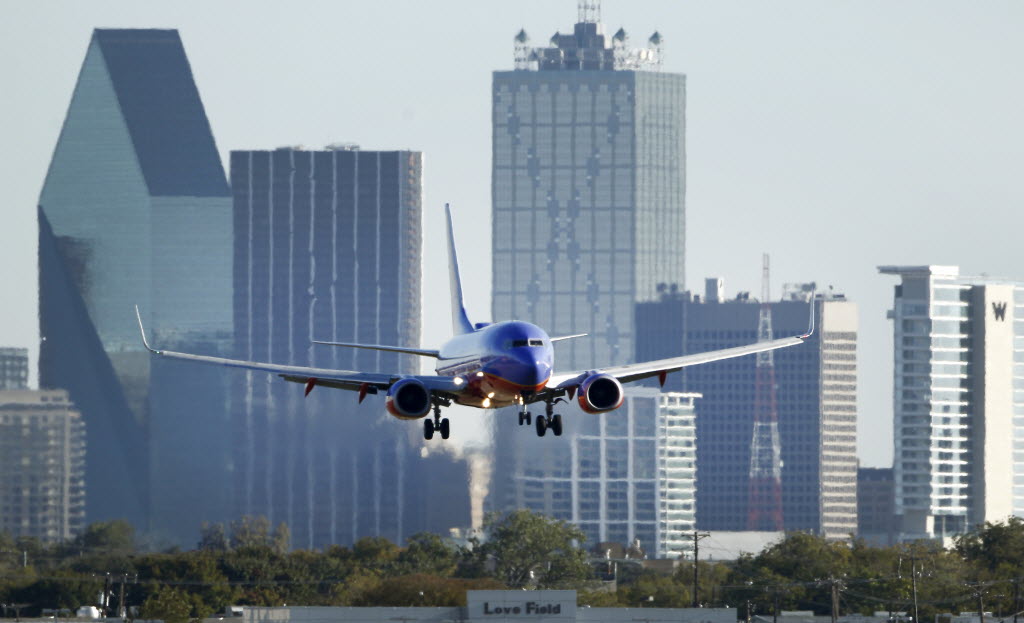
Airlines for America (A4A) instó a los senadores a oponerse a los esfuerzos de Subcomisión de Créditos de Transporte, Vivienda y Desarrollo Urbano para incrementar el impuesto de Passenger Facility Charge (PFC). Si bien el Comité no ha hecho público el texto de la ley, las fuentes de los aeropuertos indican que el Subcomité votó hoy para aumentar y casi duplicar el impuesto PFC de U$S 4.50 a U$S 8.50, lo que daría lugar a una masiva recaudación de impuestos de U$S 3.2 mil millones para todos los pasajeros que viajen a los cielos.

El Congreso de EEUU tiene acceso a más de 7.000 millones de dólares en ingresos fiscales no comprometidos que permanecen inactivos en el fondo fiduciario de la aviación que podría utilizarse en lugar de aumentar los impuestos. La elección de aumentar este impuesto es un empuje completamente innecesario en el ojo y la cartera de los viajeros aéreos. Por lo que se exhorta a los senadores a tener presente el impacto en la aviación comercial lo que generaría un aumento del doble de la tasa PFC.

Los viajeros que vuelan serán golpeados con U$S 3,2 mil millones adicionales en impuestos. El Congreso ha rechazado repetidamente el aumento de los impuestos aeroportuarios porque no hay base para apoyar tal aumento.

Nuestra industria trabaja mano a mano con los aeropuertos. Más de $ 100 mil millones de proyectos de capital han sido completados, están en marcha o han sido aprobados en los 30 aeropuertos más grandes del país desde 2008, desde Washington Dulles a Chicago O’Hare, Los Ángeles y LaGuardia. El desarrollo también es robusto en los aeropuertos más pequeños de la nación, incluyendo lugares como Des Moines, Nashville y Reno-Tahoe.

Al Congreso de los Estados Unidos se les preguntó que proporcionaran una lista de proyectos para apoyar un aumento razonable y justo; los aeropuertos no han podido señalar un solo proyecto que no haya procedido debido a una falta de financiamiento.

Según los informes financieros presentados ante la Administración Federal de Aviación (FAA), los ingresos aeroportuarios se encuentran en niveles récord. Los aeropuertos recaudaron más de U$S 27 mil millones en 2015, incluyendo los alquileres y las tarifas de las compañías aéreas, así como los alquileres y las tarifas no-aéreas (es decir, estacionamiento, alimentos y bebidas, al por menor y libres de impuestos).
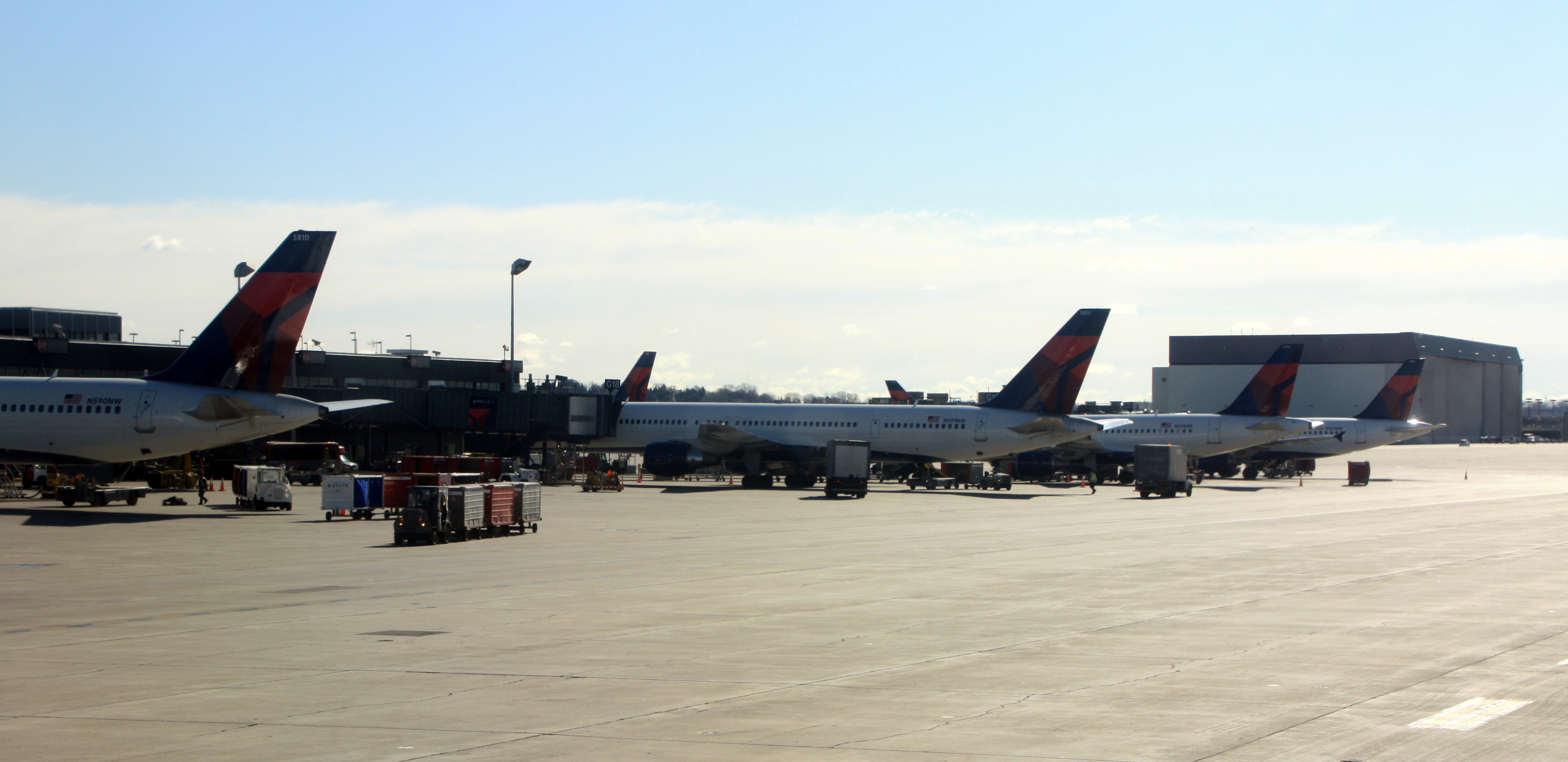
Los aeropuertos recaudaron U$S 3,2 mil millones a través del PFC en 2016, rompiendo el récord establecido en 2015. 2017 está en camino de ser otro record. Los pasajeros pagan otro impuesto para financiar el Fondo Fiduciario Aéreo y AeroportuarioAir and Airport Trust Fund (AATF), el cual apoya proyectos de mejoramiento de aeropuertos en todo el país. El saldo de ese fondo es de casi U$S 7 mil millones, que es el nivel más alto desde 2001. La Oficina de Presupuesto del Congreso estima que el fondo eclipsará U$S 7 mil millones a finales del año fiscal 2017.

Los aeropuertos tienen casi U$S 12.7 mil millones en efectivo sin restricciones e inversiones. También tienen acceso al mercado de bonos y a tasas de interés históricamente bajas, dadas las calificaciones de grado de inversión de los aeropuertos.

La mayoría de los entendidos en la aviación comercial sostienen que la gravación de impuestos o el aumento excesivo de ellos llevará a una disminución del tráfico aéreo en EEUU.  AIRWAYS® AW-Icon TXT

A4A reject increased PFC tax

Airlines for America calls on Senators to reject mass transit of secret taxes

Airlines for America (A4A) urged senators to oppose the Transportation, Housing, and Urban Development Subcommittee efforts to increase the Passenger Facility Charge (PFC) tax. While the Committee has not made public the text of the law, airport sources indicate that the Subcommittee voted today to increase and nearly double the PFC tax from U$S 4.50 to U$S 8.50, which would result in a massive tax collection of U$S 3.2 billion for all passengers traveling to the skies.

US Congress has access to more than U$S 7 billion in uncommitted tax revenues that remain inactive in the aviation trust fund that could be used instead of raising taxes. The choice to increase this tax is a completely unnecessary push in the eye and the air travelers’ wallet. So the senators are urged to keep in mind the impact on commercial aviation which would generate an increase of twice the PCF rate.

Flying travelers will be hit with an additional U$S 3.2 billion in taxes. Congress has repeatedly rejected the increase in airport taxes because there is no basis to support such an increase.

Our industry works hand in hand with airports. More than U$S 100 billion of capital projects have been completed, are underway or have been approved at the country’s 30 largest airports since 2008, from Washington Dulles to Chicago O’Hare, Los Angeles and LaGuardia. The development is also robust at the nation’s smallest airports, including places like Des Moines, Nashville and Reno-Tahoe.

The Congress of the United States was asked to provide a list of projects to support a reasonable and fair increase; the airports have not been able to indicate a single project that has not proceeded due to a lack of financing.

According to financial reports submitted to the Federal Aviation Administration (FAA), airport revenues are at record levels. Airports raised more than U$S 27 billion in 2015, including rents and fares of airlines, as well as rents and non-air fares (ie parking, food and beverage, retail and duty-free ).

The airports raised U$S 3.2 billion through the PFC in 2016, breaking the record set in 2015. 2017 is on track to be another record. Passengers pay another tax to fund the Air and Airport Trust Fund (AATF), which supports airport improvement projects across the country. The fund’s balance is nearly U$S 7 billion, which is the highest level since 2001. The Congressional Budget Office estimates the fund will eclipse U$S 7 billion by the end of fiscal year 2017.

Airports have almost U$S 12.7 billion in cash with no restrictions and investments. They also have access to the bond market and historically low interest rates, given the investment grade ratings of airports.

Most business aviation experts argue that taxing or excessive tax increases will lead to a drop in US air traffic. A \ W


Ξ A I R G W A Y S Ξ
SOURCE:  Airgways.com
DBk:  Dallasnews.net / Wikipedia.org / Thousandwonders.net
AW-POST: 201707261900AR

A\W   A I R G W A Y S ®

Aerolíneas apelan multas de la CE

AW | 2017 07 26 18:26 | AIRLINES / GOVERNMENT

Resultado de imagen para courtLas líneas aéreas apelan las multas de la Comisión Europea de 776 millones de euros

La Comisión Europea (CE) ha iniciado un proceso con once compañías aéreas sobre irregularidades en las modallidad de ventas y ofertas de precios entre 1999 y 2006. Las multas ascenderían a 776 millones de euros.

Según una serie de anuncios en el Diario Oficial de la UE, las aerolíneas KLM, British Airways, Lufthansa y otros ocho transportistas han pedido al Tribunal General de la Unión Europea (UE) que anule la decisión de marzo y también han pedido que se reduzcan o eliminen las multas.

Un portavoz del poder ejecutivo de la Unión Europea en Bruselas dijo: «La Comisión defenderá su decisión ante los tribunales». La decisión original de la Comisión había sido anulada por el Tribunal General de la Unión Europea por motivos de procedimiento.

Las compañías multadas en 2010 fueron Air Canada, Air France-KLM, British Airways, Cargolux, Cathay Pacific Airways, Japan Airlines, LAN Chile (Latam Airlines), Martinair, Qantas, SAS y Singapore Airlines. Lufthansa, y su filial, Swiss International Air Lines, recibió inmunidad total de multas. Todas menos una de las empresas, Qantas, sometidas al fallo de 2010 impugnaron la decisión ante el Tribunal General de la UE.

En diciembre de 2015, el Tribunal de Primera Instancia anuló la decisión de la Comisión contra los 11 participantes en el cartel que interpusieron el recurso, concluyendo que se había producido un error de procedimiento. Sin embargo, no se pronunció sobre la existencia del cártel. Las CE sostienen que estos transportistas aéreos efectivamente participaron en un anuncio de fijación de precios y ahora han adoptado una nueva decisión, restableciendo las multas.  AIRWAYS® AW-Icon TXT

Airlines Appeal Fines European Commission

Airlines appeal fines from European Commission of 776 million euros

The European Commission (EC) has started a process with 11 airlines on irregularities in sales figures and price offers between 1999 and 2006. The fines would amount to 776 million euros.

According to a series of announcements in the Official Gazette of the EU, airlines KLM, British Airways, Lufthansa and eight other carriers have asked the European Union General Court (EU) to annul the decision in March and have also asked that they be reduced Or eliminate fines.

A spokesman for the executive branch of the European Union in Brussels said: «The Commission will defend its decision before the courts.» The Commission’s original decision had been annulled by the General Court of the European Union on procedural grounds.

The companies fined in 2010 were Air Canada, Air France-KLM, British Airways, Cargolux, Cathay Pacific Airways, Japan Airlines, LAN Chile (Latam Airlines), Martinair, Qantas, SAS and Singapore Airlines. Lufthansa, and its subsidiary, Swiss International Air Lines, received full immunity from fines. All but one of the companies, Qantas, submitted to the 2010 ruling challenged the decision before the EU General Court.

In December 2015, the Court of First Instance annulled the Commission’s decision against the 11 cartel participants who brought the action, finding that there had been a procedural error. However, it did not rule on the existence of the cartel. The EC contends that these air carriers actually participated in a price-fixing announcement and have now taken a new decision, reinstating the fines. A \ W


Ξ A I R G W A Y S Ξ
SOURCE:  Airgways.com
DBk:  Ytimg.com / Skynews.com.au
AW-POST: 201707261826AR

A\W   A I R G W A Y S ®

Aerolíneas y los vaivenes judiciales


AW-70089771

AW | 2017 07 24 19:23 | AIRLINES / GOVERNMENT

Resultado de imagen para Aerolíneas Argentinas  MarsansUn tribunal de arbitraje falló a favor de una demanda respaldada por Burford de Teinver SA, alegando que Argentina habría tomado el control ilegal de dos de sus compañías aéreas en 2008burford-logo

Según la sentencia, Argentina está obligada a pagar 324 millones de dólares en concepto de daños y perjuicios, más los intereses Resultado de imagen para Austral lineas aereas logoprevios y posteriores a la adjudicación aún no calculados.
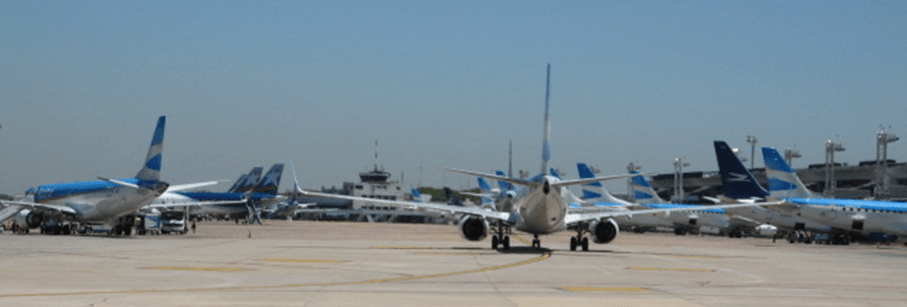
El fondo inversor Burford Capital Limited, que la semana pasada le ganó un juicio a la Argentina ante el Ciadi por la estatización de Aerolíneas Argentinas y Austral Líneas Aéreas, reconoció que esa decisión no significa necesariamente que el monto de más de U$S 324 millones será realmente pagado en su totalidad, dado que «existen varias vías para impugnar la decisión y el asunto aún no está libre de riesgo de litigio».

Burford Capital Limited, catalogado como un «fondo buitre», dijo que la decisión del Ciadi podría ser anulada por un órgano con autoridad superior y aclaró que es habitual que haya negociaciones, discusiones de acuerdos y descuentos que podrían reducir materialmente las cifras proporcionadas.

Christopher Bogart, director ejecutivo de Burford, dijo sin embargo que en el fondo están «muy satisfechos y complacidos con este resultado de ver la justicia hecha por Teinver S.A. y sus grupos de interés» y destacó el apoyo financiero de Burford.

Burford Capital Limited anunció que obtuvo «un premio» de 140 millones de dólares tras haber financiado el juicio contra el Estado argentino por la estatización de Aerolíneas Argentinas. Se trata de una ganancia del 976,92% para los integrantes del fondo estadounidense especializado en litigios, respecto de los 13 millones de dólares «invertidos» para llevar adelante la demanda

El grupo español Marsans (Teinver S.A.) al que el kirchnerismo le expropió Aerolíneas Argentinas en 2008 le había vendido en 2010 los derechos del litigio ante el Ciadi al fondo Burford Capital Limited, con oficinas en Nueva York, Londres y Chicago.

La «venta» de los derechos por parte de Teinver fue negada tanto por el grupo español como por el fondo estadounidense, que ahora sólo admite haber sido quien financió el litigio hasta lograr el fallo favorable. «Sin el capital de Burford, es dudoso que este tipo de recuperación se podría haber obtenido para los demandantes», dijo el fondo en una publicación realizada en su página web, celebrando el fallo del Ciadi.

El tribunal arbitral del Banco Mundial dictaminó el viernes en la noche que la Argentina deberá pagar U$S 324.254.807 dólares a Buford y otros en concepto de «daños, más intereses» por la expropiación de la aerolínea de bandera. «El derecho de Burford al premio depende de varias otras variables que aún no se conocen con precisión, pero se estima que están en el rango de 140 millones de dólares y está sujeto a un derecho de interés continuo y compuesto», publicó el fondo. El mismo fondo precisó que hasta el 30 de junio de 2017 había «invertido» en este asunto aproximadamente 13 millones de dólares, de los 30 millones que había previsto cuando tomó el control de la demanda contra el Estado argentino.  AIRWAYS® AW-Icon TXT


AW-70209476

Aerolíneas and judicial swings

An arbitration court ruled in favor of a suit backed by Burford de Teinver SA, alleging that Argentina would have taken illegal control of two of its airlines in 2008

According to the ruling, Argentina is required to pay $ 324 million in damages, plus pre-and post-award interest not yet calculated.

The investment fund Burford Capital Limited, which last week won a lawsuit against Argentina against the ICSID for the nationalization of Aerolíneas Argentinas and Austral Líneas Aéreas, acknowledged that this decision does not necessarily mean that the amount of more than US $ 324 million will be actually paid in its «There are several avenues to challenge the decision and the matter is not yet free of the risk of litigation.»

Burford Capital Limited, listed as a «vulture fund», said that the decision of the ICSID could be overturned by a body with higher authority and clarified that it is usual that there are negotiations, discussions of agreements and discounts that could materially reduce the figures provided.

Christopher Bogart, Burford’s chief executive, said however that at heart they are «very pleased and pleased with this outcome of seeing justice done by Teinver S.A. and its stakeholders» and highlighted Burford’s financial support.

Burford Capital Limited announced that it obtained «a prize» of 140 million dollars after having financed the trial against the Argentine State by the nationalization of Aerolíneas Argentinas. This is a 976.92% gain for the members of the US litigation fund, compared to the 13 million dollars «invested» to carry out the demand

The Spanish group Marsans (Teinver S.A.) to which Kirchnerism was expropriated by Aerolíneas Argentinas in 2008 had sold in 2010 the rights of litigation before the Ciadi to the Burford Capital Limited fund, with offices in New York, London and Chicago.

Teinver’s «sale» of rights was denied by both the Spanish group and the US fund, which now only admits having financed the litigation until the favorable ruling. «Without the capital of Burford, it is doubtful that this kind of recovery could have been obtained for the plaintiffs,» the fund said in a web site publication, celebrating the ICSID ruling.

The World Bank arbitration court ruled Friday that Argentina will have to pay $ 324,254,807 to Buford and others for «damages, plus interest» for the expropriation of the flag carrier. «Burford’s right to the prize depends on a number of other variables that are not yet known precisely, but are estimated to be in the range of $ 140 million and is subject to a compound and continuous interest rate,» the fund said. The same fund specified that up to June 30, 2017 had «invested» in this matter approximately 13 million dollars, out of the 30 million that it had envisaged when it took control of the lawsuit against the Argentine State. A \ W


Ξ A I R G W A Y S Ξ
SOURCE:  Airgways.com
DBk:  Airgways.com
AW-POST: 201707241923AR

A\W   A I R G W A Y S ®

Departamento Transporte EEUU acciona contra aerolíneas

AW | 2017 07 23 16:47 | AIRLINES / GOVERNMENT

Resultado de imagen para Department Of TransportationMultan a American, Frontier y Delta por violar normas de protección al consumidor

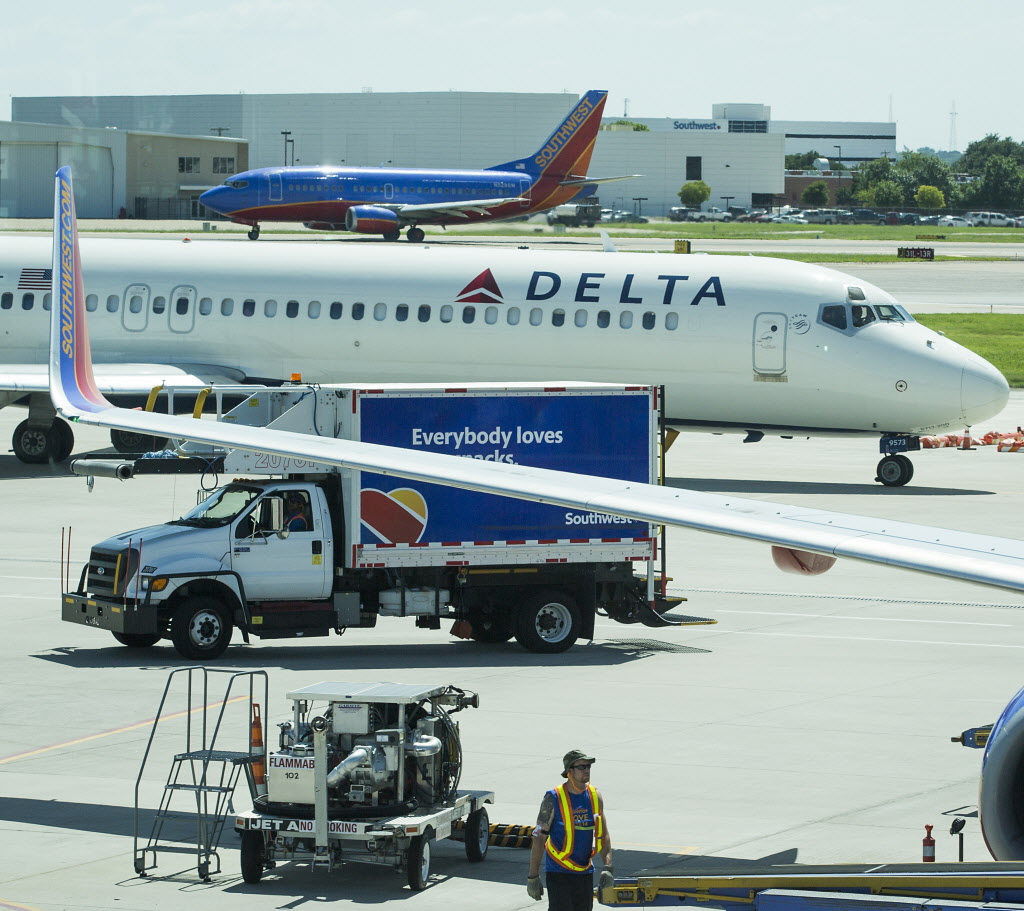
Las aerolíneas estadounidenses American, Frontier y Delta han sido multadas por el gobierno por violar normativas de protección al consumidor

El Departamento de Transporte de Estados Unidos (DOT) detalló las infracciones en las que incurrieron American Airlines, Delta Air Lines y Frontier Airlines, así como las multas que les fueron impuestas.

En el caso de American Airlines, la aerolínea no le entregó a los pasajeros reembolsos de manera oportuna en el primer semestre de 2015, por lo que se comprobó dicha infracción dando curso a una multa por infracción a la ley de consumidores en U$S 250,000 dólares. Funcionarios del Departamento de Transporte comenzaron a investigar a la compañía el año pasado luego de recibir múltiples quejas de los clientes de que la aerolínea tardaba mucho en hacerles efectivos los reembolsos.

Según las normativas, una aerolínea debe hacer las restituciones antes de siete días hábiles cuando el pasajero haya pagado con una tarjeta de crédito, por ejemplo. “Adoptamos medidas proactivas para corregir la tardanza en los reembolsos que algunos clientes tuvieron en 2015 a causa de un problema en la integración de los sistemas tras la fusión con US Airways, entre ellas inversiones para mejorar los tiempos de procesamiento”, dijo el sábado una portavoz de American Airlines, Shannon Gilson.

Delta Air Lines, la aerolínea dio información inexacta sobre las quejas que los pasajeros por mal manejo de equipaje. El Departamento de Transporte labró el acta de la multa en U$S 200,000 dólares. En un comunicado el sábado, Delta indicó que, tras una amonestación del gobierno en 2016, actualizó de inmediato su política sobre equipaje dañado e invirtió en proporcionar “transparencia total sobre la situación y ubicación del equipaje documentado” a través de su aplicación FlyDelta.

Los investigadores determinaron que la aerolínea Frontier Airlines sacó por la fuerza a pasajeros de vuelos sobrevendidos (overbooking) sin solicitar primero voluntarios ni pagar una compensación adecuada y oportuna. Según la investigación, Frontier tampoco facilitó a los pasajeros discapacitados asistencia de sillas de ruedas tanto para subir o bajar de la aeronave ni para moverse en la terminal. Frontier Airlines fue multada en U$S 400,000 dólares.

Las prácticas de choque de aerolíneas han atraído más escrutinio tras el video de un pasajero arrastrado fuera de un vuelo de United Airlines en abril. Southwest Airlines dijo en abril que terminaría el exceso de reservas, mientras que United anunció cambios en las políticas, incluyendo el aumento de la compensación para pasajeros con sobreventa de hasta U$S 10,000.

El Departamento de Transporte (DOT) obliga a las aerolíneas a entregar cada mes una relación sobre las quejas, y utiliza dicha información para clasificar a las empresas en informes dirigidos a los consumidores. Los expertos basaron sus conclusiones en unas 200 quejas que la compañía recibió en 2014 y 2015.

Las aerolíneas están obligadas a indemnizar a los pasajeros registrados que ya tienen un asiento reservado cuando los echen de un vuelo sobrevendido. Esta situación es conocida como “compensación por denegación de embarque”. La línea aérea está obligada a pagarles a los pasajeros afectados en efectivo o cheque el mismo día.

Este y otros incidentes que se han difundido en los medios de comunicación social, han tenido un impacto muy negativo a la imagen de las transportadoras, lo que ha llevado a las audiencias del Congreso a tomar medidas al respecto.

La legislación presentada en el Congreso en junio haría ilegal que una aerolínea golpee a un pasajero ya embarcado de un vuelo. Otra medida antes del Congreso requeriría nuevas reglas para que las aerolíneas reembolsaran sin demora a los pasajeros por cargos de equipaje u otras tarifas si no reciben el servicio. AIRWAYS® AW-Icon TXT

Transportation Department acts against airlines

American, Frontier and Delta are fined for violating consumer protection standards

American airlines American, Frontier and Delta have been fined by the government for violating consumer protection regulations

The United States Department of Transportation (DOT) detailed violations of American Airlines, Delta Air Lines and Frontier Airlines, as well as the fines imposed on them.

In the case of American Airlines, the airline did not provide passengers with reimbursements in a timely manner in the first half of 2015, as a result of which the violation was proven to result in a fine for violation of the consumer law of US $ 250,000 Dollars. Department of Transportation officials began investigating the company last year after receiving multiple complaints from customers that the airline was slow to cash in on reimbursements.

According to regulations, an airline must make the refunds within seven business days when the passenger has paid with a credit card, for example. «We have taken proactive measures to correct the delay in reimbursements that some customers had in 2015 because of a problem in integrating the systems after the merger with US Airways, including investments to improve processing times,» said one Spokeswoman for American Airlines, Shannon Gilson.

Delta Air Lines, the airline gave inaccurate information on the complaints that the passengers by bad handling of luggage. The Department of Transportation drafted the fine of US $ 200,000. In a statement Saturday, Delta said that after a government admonition in 2016, it immediately upgraded its policy on damaged baggage and invested in providing «full transparency on the location and location of checked baggage» through its FlyDelta application.

Investigators determined that the airline Frontier Airlines forcibly removed passengers from overbooked flights without first soliciting volunteers or paying adequate and timely compensation. According to the investigation, Frontier did not provide disabled passengers with wheelchair assistance either to get on or off the aircraft or to move in the terminal. Frontier Airlines was fined $ 400,000.

The crash practices of airlines have attracted more scrutiny following the video of a passenger dragged off a United Airlines flight in April. Southwest Airlines said in April it would end the excess reserves, while United announced policy changes, including increased passenger compensation with oversold sales of up to $ 10,000.

The Department of Transportation forces airlines to turn in a complaint report every month, and uses that information to classify companies into consumer-driven reports. The experts based their findings on some 200 complaints the company received in 2014 and 2015.

Airlines are required to compensate registered passengers who already have a reserved seat when they are expelled from an overbooked flight. This situation is known as «denied boarding compensation». The airline is obliged to pay affected passengers in cash or check the same day.

This and other incidents that have spread in the mass media have had a very negative impact on the image of the carriers, which has led to the hearings of the Congress to take action on the matter.

Legislation introduced in Congress in June would make it illegal for an airline to hit a passenger already boarded a flight. Another measure before Congress would require new rules for airlines to promptly reimburse passengers for baggage charges or other fees if they do not receive the service. A \ W


Ξ A I R G W A Y S Ξ
SOURCE:  Airgways.com
DBk:  Fortune.com / Dallasnews.com
AW-POST: 201707231647AR

A\W   A I R G W A Y S ®

Finaliza plazo ofertas por Alitalia

AW | 2017 07 22 15:17 | AIRLINES / GOVERNMENT

Resultado de imagen para alitalia logoEl plazo para presentar propuestas no vinculantes para comprar la aerolínea Alitalia concluyó hoy

El proceso podrá durar seis meses y, mientras tanto, para permitir su operatividad, el Gobierno Italiano concedió a Alitalia un préstamo de 600 millones de euros. La próxima semana se definirá el programa de la Administración Extraordinaria bajo la que está desde mayo.

Los tres comisarios extraordinarias procederán la próxima semana a definir y someter a la aprobación del Ministerio de Desarrollo Económico su programa para el futuro de la compañía, según las propuestas recibidas por parte de varias aerolíneas.

Aunque en el comunicado no se desvelaron las empresas interesadas por Alitalia, medios locales aseguran que ascienden a una decena, entre ellas la emiratí Etihad Airways, que desde agosto de 2014 posee el 49% de sus acciones.

En el programa de la Administración Extraordinaria se indicará si la compañía será vendida en su totalidad, si se cederán algunos de sus activos, como las rutas que controla, o si se procederá a su reestructuración financiera.

El ministro de Infraestructuras italiano, Graziano Delrio, declaró ante la Cámara de los Diputados que Alitalia «es un valor industrial para el país que tiene aún capacidad de desarrollo siempre y cuando no sea fraccionada o dividida». Por esa razón, consideró que «no se pueden vender rutas, activos o sectores de mantenimiento sino que debe ser comprada entera». «Mi opción, compartida por el Gobierno, es que la integridad de la compañía es la mejor solución», apuntó el ministro.

El Ejecutivo intervino después de que el consejo de administración de la sociedad solicitara su ayuda debido a su «grave situación económica, financiera y patrimonial» y después de que sus trabajadores rechazaran el plan de recortes que se les planteó.  AIRWAYS® AW-Icon TXT

Ends non-binding offers by Alitalia

The deadline to submit non-binding proposals to buy the airline Alitalia concluded today

The process could last six months and, meanwhile, to allow its operation, the Italian Government granted Alitalia a loan of 600 million euros. Next week will define the program of the Extraordinary Administration under which it is since May.

The three extraordinary commissioners will proceed next week to define and submit to the approval of the Ministry of Economic Development their program for the future of the company, according to proposals received from several airlines.

Although the statement did not reveal the companies interested in Alitalia, local media say they numbered a dozen, including the Emirate Etihad Airways, which since August 2014 holds 49% of its shares.

The Extraordinary Administration program will indicate whether the company will be sold in full, whether some of its assets will be sold, such as the routes it controls, or whether it will be restructured financially.

Italian Infrastructure Minister Graziano Delrio told the Chamber of Deputies that Alitalia «is an industrial value for the country that still has capacity for development as long as it is not fractioned or divided.» For that reason, it considered that «can not be sold routes, assets or sectors of maintenance but must be bought whole». «My choice, shared by the Government, is that the integrity of the company is the best solution,» said the minister.

The executive intervened after the company’s board of directors requested assistance because of its «serious economic, financial and patrimonial situation» and after its workers rejected the plan of cuts that were proposed to them. A \ W


Ξ A I R G W A Y S Ξ
SOURCE:  Airgways.com
DBk:  Alitalia.it
AW-POST: 201707221517AR

A\W   A I R G W A Y S ®

Banco Mundial condenó Argentina por expropiación de Aerolíneas Argentinas

AW-70089771.png

AW | 2017 07 22 14:57 | AIRLINES / GOVERNMENT

Resultado de imagen para banco mundial logoEl Banco Mundial condenó al Estado Argentino a pagar esa suma al Grupo Marsans, que manejaba la empresa hasta la nacionalización de 2008Resultado de imagen para aerolineas argentinas logo
El Tribunal Arbitral del Banco Mundial a cargo del CIADI Centro Internacional de Arreglo de Diferencias relativas a Inversiones, una institución del Banco Mundial Resultado de imagen para grupo marsans logocon sede en Washington, dictó sentencia a favor del extinto Grupo Marsans en relación a la nacionalización de Aerolíneas Argentinas en 2008 por parte del Gobierno nacional. Resultado de imagen para austral lineas aereas logoNueve años después de la expropiación de la línea aérea al grupo español, la indemnización que deberá pagar Argentina es de unos 320 millones de dólares más intereses. Consideró que la expropiación, en 2008, causó daños a Marsans ya que no se pagó por el valor que tenía entonces

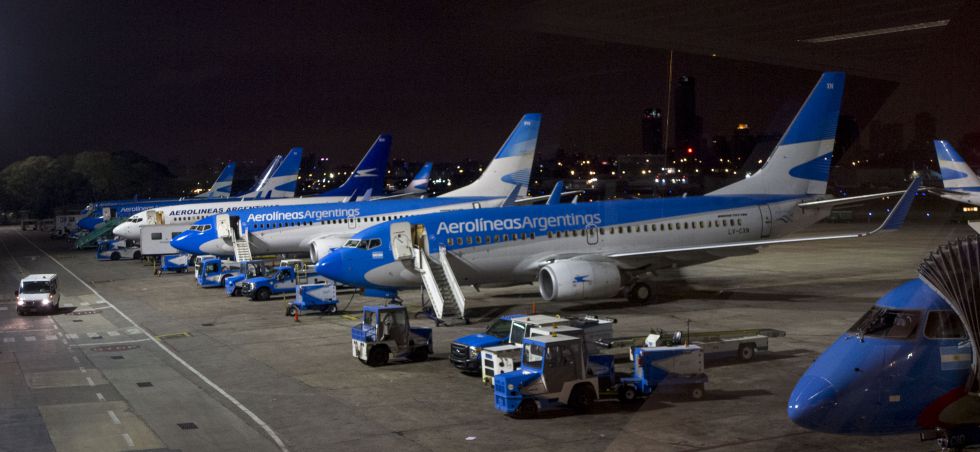
En el mundo del derecho privado existe el beneficio de inventario, una manera de aceptar una herencia por la cual los herederos no se hacen cargo con su patrimonio de las deudas del fallecido. En el derecho público eso no pasa y los gobiernos heredan al anterior.

El Estado argentino tendrá que pagar por las formas y los actos de los gobiernos de Néstor y Cristina Kirchner. A última hora de anoche, el tribunal arbitral del Banco Mundial (Ciadi, según las siglas en inglés) condenó al Estado argentino a desembolsar más de US$ 320 millones, más intereses, al grupo español Marsans por los daños que le infringió cuando -en 2008- expropió Aerolíneas Argentinas, Austral, Aerohanding, Optar y Jet Paq.

En el Gobierno esperaban novedades ya que el 25 de enero de este año, el tribunal arbitral se dio un plazo de 180 días para dictar el laudo. Cuidadosos de los tiempos, los árbitros decidieron en tiempo y forma. Anoche, la comunicación llegó a los abogados del Estado.

El Ciadi dijo que «el demandado incumplió el artículo IV del Tratado al no haber entregado a las demandantes un trato justo y equitativo de sus inversiones». Además, citó otros artículos referidos a la violación por parte de la Argentina del tratado de protección de inversiones.

En un laudo de más de 500 páginas, el tribunal condenó al país a pagar 23,76 millones de dólares más intereses a los demandantes en conceptos de compensación por los daños causados por la expropiación.

El traspaso de Aerolíneas se realizó en medio de fuertes polémicas. El gobierno kirchnerista tomó la empresa y mandó un proyecto para declararla de interés público. Esa ley le entregó facultades al Ministerio de Planificación para que sea el ejecutor del Congreso. Con amplia mayoría, tanto diputados como senadores aprobaron el proyecto. Luego se pidió al Tribunal de Tasaciones de la Nación que valuara los activos. Ese trabajo entregó un valor negativo de 832 millones de dólares, muy lejos de los 600 millones de dólares que decía Marsans que valía el grupo de compañías.

Como las partes no se pusieron de acuerdo, poco después de la estatización se inició un juicio. Entonces, el Estado depositó un peso como valor simbólico y se hizo de la empresa. Pocos días antes de la primera audiencia en el Ciadi, el juez en lo Contencioso Administrativo Federal Enrique Lavié Pico reconoció el derecho del Estado a la expropiación de acciones de las empresas Aerolíneas Argentinas y Austral Líneas Aéreas, que en 2008 estaban en poder de la firma Interinvest Sociedad Anónima.

En ese expediente se tomó como válido el trabajo que hizo en 2008 el Tribunal de Tasación de la Nación y que estableció que al momento de la estatización las sociedades anónimas Optar, Jet Paq, Aero Handling, Aerolíneas Argentinas y Austral tenían un valor negativo de 3275 millones de pesos, equivalentes a 949,4 millones de dólares.

El Estado tomó el control de la empresa y colocó primero como presidente a Julio Alak y, después, a Mariano Recalde. Finalmente el Ciadi ubicó la vara más cerca de lo que pedía Marsans que de lo que estableció aquel Tribunal de Tasaciones.

El juicio empezó formalmente el 3 de marzo de 2014 cuando arrancaron las audiencias en el Banco Mundial. Fueron 15 días que terminaron con los alegatos de cada una de las partes. Poco después de aquella batería de audiencias en Washington, la defensa de la Argentina, comandada por la procuradora general del Tesoro, Angelina Abbona, y la Procuraduría de Criminalidad Económica y Lavado de Activos (Procelac), denunciaron a Marsans por vender el reclamo en el Ciadi a un fondo llamado Burford Capital. «Marsans reclamó al CIADI alegando perjuicios que habían sufrido por trato injusto y tiene un reclamo por más de 1400 millones de dólares. En realidad, el grupo Marsans es un deudor de la Argentina al haber dejado en una situación tan ruinosa a Aerolíneas Argentinas», dijo Abbona entonces.

La Argentina transitó el proceso de defensa con varios argumentos complicados de probar. El primero es que en varias oportunidades confundió la naturaleza jurídica de la empresa. Por caso, Aerolíneas Argentinas, más allá de la relación directa que tiene con el mundo aeronáutico del país, era un empresa privada, una sociedad anónima, no una concesión de servicio público. Por poner un ejemplo, desde el punto de vista jurídico no tiene diferencia con el status de Lan Argentina. Por lo tanto, la desinversión afectaba en principio a los dueños.

Aergentina deberá pagar no solo la carga deficitaria de unos US$ 678 millones anuales en subsidios que recibió en promedio Aerolínes desde 2009 a 2015, además los US$ 350 millones por multa del CIADI. Es la herencia del kirchnerismo y las decisiones autoritarias de los gobiernos de turno. AIRWAYS® AW-Icon TXT

World Bank condemns Argentina for expropriation Aerolíneas Argentinas

The World Bank condemned the Argentine State to pay that amount to the Marsans Group, which operated the company until the nationalization of 2008

The World Bank Arbitration Tribunal in charge of the International Center for Resultado de imagen para aerolineas argentinas logo viejoSettlement of Investment Disputes (ICSID), a World Bank institution based in Washington, ruled in favor of the former Marsans Group in connection with the nationalization of Aerolíneas Argentinas in 2008 by the national government. Nine years after the expropriation of the airline to the Spanish group, the compensation to be paid Argentina is about 320 million dollars plus interest. It considered that the expropriation, in 2008, caused damages to Marsans since it was not paid by the value that had then

In the world of private law there is the benefit of inventory, a way of accepting an inheritance by which heirs do not take over their estate from the debts of the deceased. In public law this does not happen and governments inherit the former.

Imagen relacionadaThe Argentine State will have to pay for the forms and acts of the governments of Néstor and Cristina Kirchner. Late last night, the World Bank arbitration tribunal (ICSID) condemned the Argentine state to pay more than $ 320 million, plus interest, to the Spanish group Marsans for the damages it inflicted on it when 2008- expropió Aerolíneas Argentinas, Austral, Aerohanding, Optar and Jet Paq.

In the Government expected news since on January 25 of this year, the arbitral tribunal was given a period of 180 days to issue the award. Careful of the times, the referees decided in time and form. Last night, the communication reached the lawyers of the State.

ICSID stated that «the defendant breached Article IV of the Treaty by failing to provide the applicants with fair and equitable treatment of their investments». He also cited other articles referring to the violation by Argentina of the investment protection treaty.

In an award of more than 500 pages, the court condemned the country to pay $ 23.76 million plus interest to the plaintiffs in compensation for damage caused by the expropriation.

The transfer of Aerolíneas took place amidst strong controversy. The Kirchner government took the company and sent a project to declare it of public interest. That law gave authority to the Ministry of Planning to be the executor of the Congress. With a large majority, both deputies and senators approved the project. The Court of Appeals of the Nation was then asked to value the assets. That work gave a negative value of 832 million dollars, far from the 600 million dollars that Marsans said that the group of companies was worth.

As the parties did not agree, soon after the nationalization began a trial. Then, the State deposited a peso as a symbolic value and was made of the company. A few days before the first hearing in the ICSID, Federal Administrative Judge Enrique Lavié Pico acknowledged the right of the State to expropriation of shares of companies Aerolíneas Argentinas and Austral Líneas Aéreas, which in 2008 were held by the firm Interinvest Sociedad Anónima.

In that file was taken as valid the work done in 2008 by the National Appraisal Tribunal and established that at the time of nationalization the companies Optar, Jet Paq, Aero Handling, Aerolíneas Argentinas and Austral had a negative value of 3275 Million pesos, equivalent to 949.4 million dollars.

The state took control of the company and first placed Julio Alak as president and then Mariano Recalde. Finally, the ICSID placed the rod closer to what Marsans demanded than it did at the Valuation Court.

The trial began formally on March 3, 2014 when hearings were started at the World Bank. It was 15 days that ended with the allegations of each of the parties. Shortly after that battery of hearings in Washington, the defense of Argentina, commanded by Attorney General of the Treasury, Angelina Abbona, and the Prosecutor of Economic Crime and Money Laundering (Procelac), denounced Marsans for selling the claim in the Ciadi to a fund called Burford Capital. «Marsans claimed the ICSID alleging damages that had suffered unfair treatment and has a claim for more than $ 1.4 billion. In fact, the Marsans group is a debtor of Argentina having left such a ruinous situation to Aerolíneas Argentinas, Said Abbona then.

Argentina went through the defense process with several complicated arguments to prove. The first is that on several occasions he confused the legal nature of the company. In any case, Aerolíneas Argentinas, beyond its direct relationship with the aeronautical world of the country, was a private company, a corporation, not a public service concession. To give an example, from the legal point of view has no difference with the status of Lan Argentina. Therefore, the divestment affected in principle the owners.

Aergentina will have to pay not only the deficit load of about US $ 678 million per year in subsidies received on average Aerolínes from 2009 to 2015, plus the US $ 350 million per fine of the ICSID. It is the inheritance of kirchnerismo and the authoritarian decisions of the governments of the day. A \ W


Ξ A I R G W A Y S Ξ
SOURCE:  Airgways.com
DBk:  Airgways.com Ricardo Ceppi / Charly Diaz Azcue
AW-POST: 201707221457AR

A\W   A I R G W A Y S ®

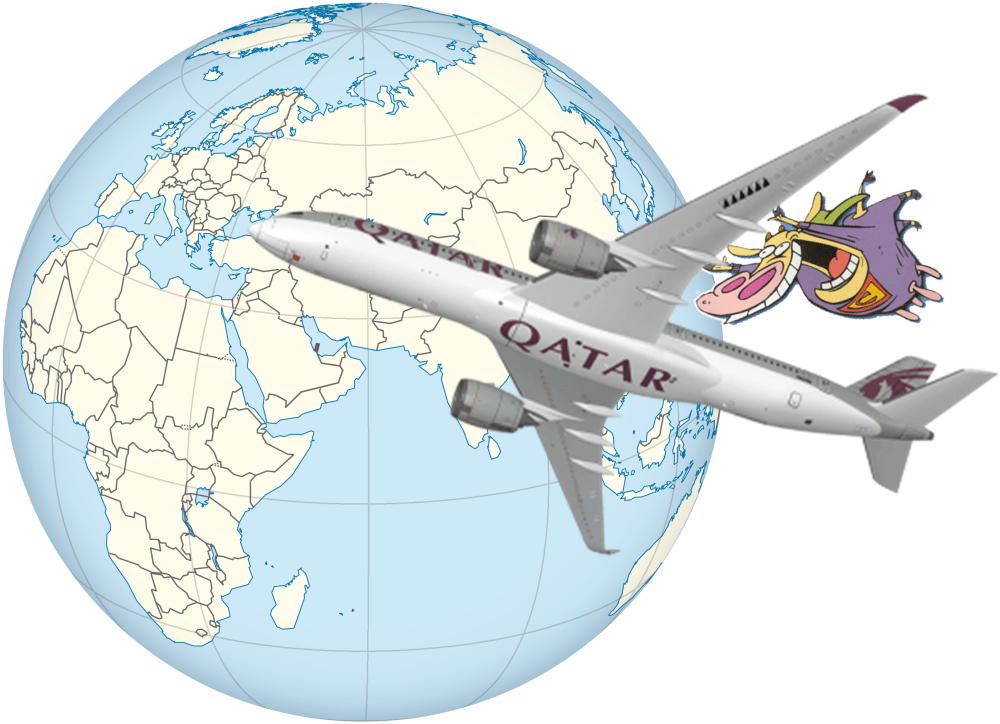
Vacas «voladoras» aterrizan en Qatar

2000px-Qatar_on_the_globe_(Afro-Eurasia_centered).svg

AW | 2017 07 19 10:55 | AIRLINES / GOVERNMENT

Las primeras vacas lecheras aterrizan en el emirato de Qatar

Qatar va a importar 4.000 reses para acabar con la escasez de leche fresca debido al bloqueo decretado pos sus vecinos

Hace cinco semanas una de las primeras consecuencias del inesperado bloqueo a Qatar fue la falta de leche fresca en los estantes de los supermercados del emirato. Era uno de los productos que llegaba a diario por tierra desde Arabia Saudí, cuya frontera permanece cerrada. Para acabar con la escasez y la dependencia de sus vecinos saudíes, un empresario qatarí expuso la idea de capear la crisis de importar vacas. «El objetivo es compensar el corte que hemos sufrido de leche fresca, un alimento que tiene una caducidad muy rápida y que es imposible traer por vía aérea», señala Mazen Alsbeti, director de relaciones públicas de Power International, el conglomerado qatarí al que pertenece la empresa láctea Baladna.

SupercowLa empresa láctea ha importado el primer lote de 165 vacas Holstein, una raza autóctona de Alemania caracterizada por su elevada producción de leche y su capacidad para adaptarse a nuevos entornos. Las reses aterrizaron la semana pasada en la capital del emirato a bordo de un avión de carga de la aerolínea estatal Qatar Airways procedente de Budapest, Hundría y fueron trasladadas en camiones a las instalaciones de la compañía. «La previsión es que sigan llegando nuevas remesas con un intervalo de entre tres y cuatro días. En total vamos a importar 4.000 vacas», detalla el portavoz de la firma. Australia, Estados Unidos o los Países Bajos serán los lugares de origen de los próximos rumiantes.

Con el bloqueo decretado por Arabia Saudí, Emiratos Árabes Unidos, Bahréin y Egipto sin visos de solución, las nuevas inquilinas comenzarán de inmediato a producir leche para Qatar. «Calculamos que, cuando estén todas en Qatar, seremos capaces de sacar al mercado diariamente unos 100.000 litros, lo que supone entre el 30% y el 35% de la demanda local», precisa Alsbeti. AIRGWAYS ® Icon-AW

Resultado de imagen para qatar airways png

Flying cows land in Qatar

The first dairy cows land in the emirate of Qatar

Qatar will import 4,000 cattle to end the shortage of fresh milk due to blockade decreed by its neighbors

Five weeks ago one of the first consequences of the unexpected blockade of Qatar was the lack of fresh milk on the shelves of the emirate supermarkets. It was one of the products that arrived daily by land from Saudi Arabia, whose border remains closed. To end the shortage and dependence of its Saudi neighbors, a Qatari businessman exposed the idea of ​​weathering the crisis of importing cows. «The objective is to compensate for the cut that we have suffered from fresh milk, a food that has a very fast expiration and that is impossible to bring by air,» says Mazen Alsbeti, director of public relations for Power International, the Qatari conglomerate The dairy company Baladna.

The dairy company has imported the first batch of 165 Holstein cows, an autochthonous breed of Germany characterized by its high milk production and ability to adapt to new environments. The cattle landed last week in the capital of the emirate aboard a cargo plane of state airline Qatar Airways from Budapest, Hundria and were transported by Cow-1truck to the company’s facilities. «The expectation is that new remittances continue to arrive with an interval of between three and four days. In total we will import 4,000 cows,» details the spokesman of the firm. Australia, the United States or the Netherlands will be the places of origin of the next ruminants.


With the blockade decreed by Saudi Arabia, the United Arab Emirates, Bahrain and Egypt without any solution, new tenants will immediately begin producing milk for Qatar. «We estimate that, when they are all in Qatar, we will be able to market 100,000 liters daily, which is between 30% and 35% of local demand,» Alsbeti said. A \ W


Ξ A I R G W A Y S Ξ
SOURCE:  Airgways.com
DBk:  Airgways.com / Qatarairways.com  / Hanna-Barbera Productions, Inc.
AW-POST: 201707191055AR

A\W   A I R G W A Y S ®

Debates aerolíneas Parlamento Europeo por efectos del Brexit en la aviación


AW-708881EU

AW | 2017 07 16 17:20 | AIRLINES MARKET / GOVERNMENT

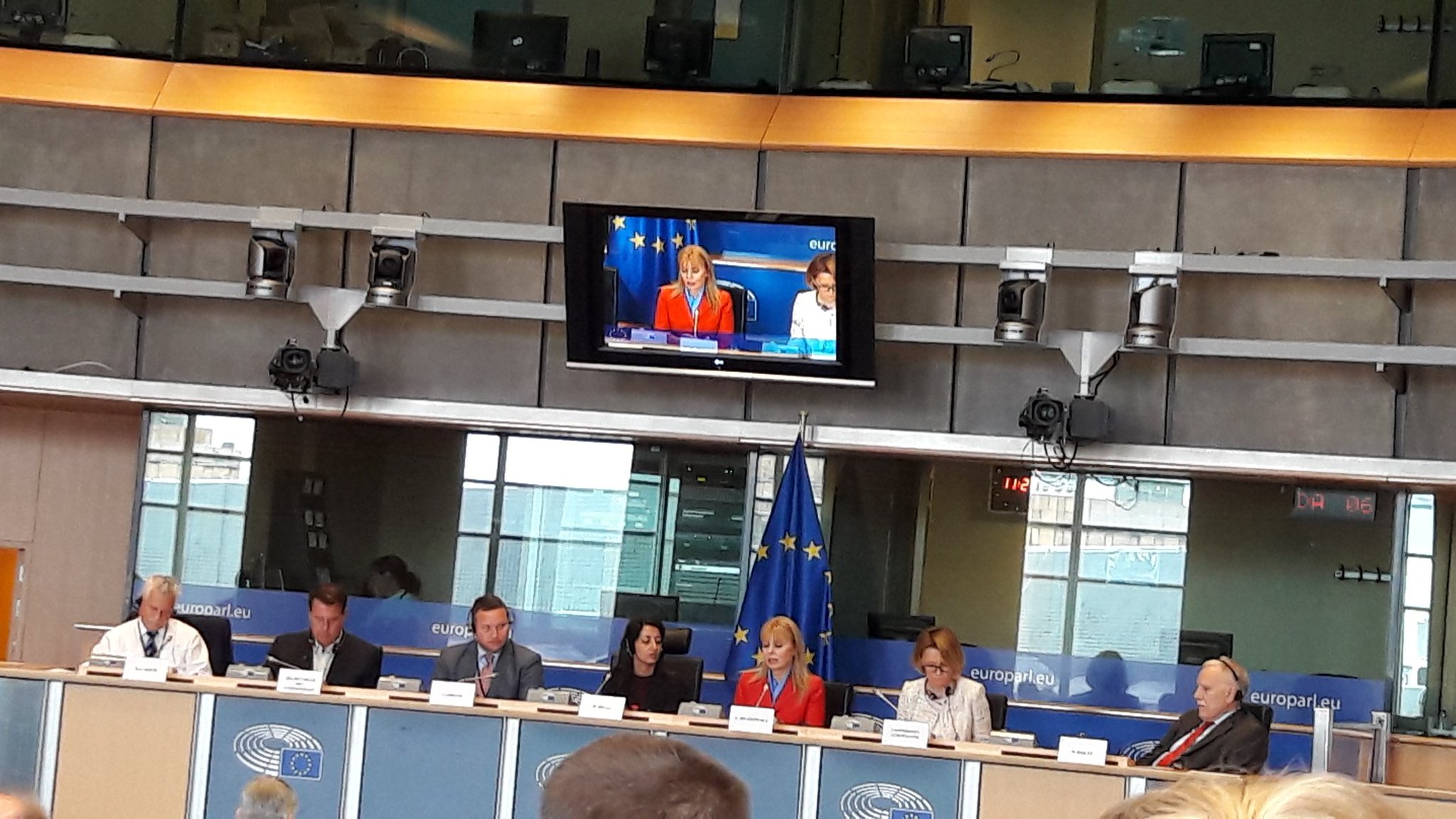
Intervención de los ejecutivos de las aerolíneas en el debate del Parlamento Europeo ante la Comisión de Transporte Europeo en Bruselas, Bélgica

Resultado de imagen para Parliament European logo

Tras las seciones del Parlamento Europeo sobre el tema Brexit, las aerolíneas han manifestado su preocupación por los efectos colaterales si no se realizan antes de tiempos acuerdos entre Gran Bretaña y la Unión Europea

Resultado de imagen para Ryanair logo pngRyanair se plantea cancelar vuelos entre el Reino Unido y la UE por el Brexit. EasyJet se prepara para el efecto Brexit y se convierte en un grupo paneuropeo. Solicita un certificado de operador y licencia europeos a Austria.

«La estructura de IAG [Brisith Airways, Iberia, Vueling] se va a desmoronar», sostiene el presidente de Ryanair, Michael O’Leary.

«En Turquía no permiten el derecho de huelga en el sector aeronáutico, va contra la competencia», se queja el vicepresidente de Lufthansa, Thomas Kropp.

Michael O’Leary, presidente de Ryanair, expresó su preocupación por la trascendencia del impacto del Brexit en el sector aeronáutico europeo en la Comisión de Transportes de Bruselas.

IAG, el grupo de British Airways, Iberia, Vueling, y Air Lingus, y el vicepresidente de Lufthansa, Thomas Kropp, convirtieron el debate organizado en la Comisión de Transportes exponiendo la profunda preocupación por la salida de Reino Unido de la Unión Europea pudiera generar un efecto adverso en el sector aeronáutico europeo. Todos ellos reclamaron a los europarlamentarios vigor y esfuerzo por conseguir un acuerdo con Reino Unido en materia de navegación aérea.

Resultado de imagen para Commission Transport European png

«Siempre me gusta venir a Bruselas, paso mucho tiempo aquí haciendo no sé muy bien qué», comenzó diciendo el presidente de Ryanair ante los europarlamentarios. «Somos una aerolínea irlandesa, la que ofrece la tarifa más baja en los mercados, una tarifa media de 41 euros, y tenemos un plan para reducirlas aun más», dijo O’Leary sin perder la oportunidad de meter su particular cuña publicitaria al principio de su intervención. Momento que Willie Walsh, sentado a su lado, aprovechó para arrancarle la etiqueta de identidad pegada en su chaqueta y tratar de colocársela en la boca, en un gesto que parecía decir: ‘Michael no te pases’. La presidenta de la Comisión de Transportes, Karima Delli, no pudo evitar sonreirse.

Por el efecto del Brexit «no habrán vuelos a partir de 2019 por parte de su compañía», advirtió el presidente de Ryanair. «Si el Gobierno británico se ciñe a su posición actual no habrá libre circulación y no habrá cielo único, Reino Unido tendrá que buscar un acuerdo bilateral, pero no creo que aquí se les vuelva a dejar entrar con condiciones de preferencia». O’Leary detalló: «Lufthansa y Air France ven aquí una oportunidad de negocio para acabar con IAG, Easyjet o Ryanair. Los alemanes y los franceses cuando se lo proponen siempre quieren hacer un poco la puñeta a Reino Unido». «A partir de septiembre de 2018 cuando el votante británico quiera irse de vacaciones, no tendrá más remedio que cogerse un ferry e irse a Irlanda, y yo amo mi patria, pero no creo que la población británica quiera pasar sus vacaciones ahí».

El presidente de Ryanair fue especialmente duro con las consecuencias que tendrá el Brexit sobre su competidor IAG. «Si no tenemos un marco jurídico para operar vuelos hacia y desde Reino Unido, se cancelarán los viajes, a los alemanes y franceses les va a encantar, la estructura de IAG se va a desmoronar, será un lío tremendo. IAG no sobrevivirá».

El primer ejecutivo de IAG destacó la necesidad de que se acuerde cuanto antes un convenio de cielo abierto entre la UE y Reino Unido. «La UE y Reino Unido deberían firmar un acuerdo de transporte aéreo completo, parecido al que ya existe con EE UU o Canadá, más abierto, en el que se reconozca una relación profunda entre Reino Unido y la UE, y mantener el beneficio de los consumidores».

Thomas Kropp, vicepresidente de Relaciones Internacionales de Lufthansa, cargó el peso de su intervención sobre la competencia entre las aerolíneas europeas y el resto. El Brexit, destacó, «es un acontecimiento dramático para toda Europa; O’Leary ha sugerido que el Brexit ha nacido en Francia o Alemania, pero no es así, el Brexit tendrá un impacto tremendo».

«Queremos un cielo abierto, pero que sirva para todos, que se aplique a todos, no solo a los comunitarios, que las normas sean iguales para todos», requirió Kropp. «Tenemos problemas graves, en países como Turquía no está permitido el derecho de huelga en el sector de la navegación aérea, nosotros tenemos 100.000 trabajadores a los que no podemos imponer condiciones determinadas, sin embargo otras aerolíneas extranjeras sí lo hacen», denunció.

Tras la intervención de los ejecutivos de las aerolíneas en el debate, que puede verse en la web del Parlamento Europeo en el que también participaron Sean Kennedy, de Airlines for America, y Ralf Pastleitner, Director del operador turístico TUI, y con anterioridad directivos de varios aeropuertos europeos, los europarlamentarios plantearon diversas cuestiones a los ponentes.

«Les gustará saber que Michael no siempre tiene razón, estoy convencido de que Reino Unido seguirá conectada con la UE, va en interés de los británicos, los europeos, y también incluso de Ryanair», dijo Walsh. El consejero delegado de IAG abogó de nuevo en su respuestas a las preguntas de los parlamentarios por impulsar un acuerdo bilateral en navegación aérea.

«En Reino Unido no saben qué demonios quieren», declaró O’Leary. «No me tomo el Brexit a la ligera, es un suicidio económico, será malo para todos, hasta que los británicos se den cuenta de que no quieren pasar sus vacaciones en Irlanda o en Escocia». El presidente de Ryanair insistió en su opinión de que durante un periodo de tiempo no habrá vuelos entre Reino Unido y la UE. «No hay mecanismo jurídico posible, si no hay un acuerdo de cielo único, durante semanas o meses no habrá vuelos».

El representante de Airlines for America, Kennedy, explicó los acuerdos existentes entre aerolíneas estadounidenes y aeropuertos y compañías aéreas europeas. Lo que dio pie al vicepresidente de Lufthansa para recordar que no estaría de más que la aerolínea alemana pudiera entrar en la ruta Nueva York-Chicago «como hacen ustedes en la UE».

El debate terminó con el agradecimiento a los ponentes de la presidenta de la Comisión de Transportes del Parlamento Europeo, quien manifestó que había quedado claro que si por los ejecutivos de las aerolíneas fuera, se daría marcha atrás al Brexit. AIRGWAYS ® Icon-AW

European Parliament debates over effects of Brexit in aviation

Intervention of airline executives in the debate of the European Parliament before the European Transport Commission in Brussels, Belgium

Resultado de imagen para Parliament European logo

Following the European Parliament’s sections on the Brexit issue, airlines have expressed concern about collateral effects if agreements between Britain and the European Union are not made before time

Ryanair is considering canceling flights between the UK and the EU by the Brexit. EasyJet prepares for the Brexit effect and becomes a pan-European group. Request a European operator’s certificate and license to Austria.

Resultado de imagen para British Airwayslogo png«The structure of IAG [Brisith Airways, Iberia, Vueling] is going to crumble,» says Ryanair President Michael O’Leary.

«In Turkey they do not allow the right to strike in the aeronautical sector, it goes against Resultado de imagen para lufthansa logo pngthe competition,» complains Lufthansa Vice President Thomas Kropp.

Michael O’Leary, President of Ryanair, expressed concern about the significance of Brexit’s impact on the European aeronautics sector at the Brussels Resultado de imagen para vueling   logo pngTransport Commission.

IAG, the group of British Airways, Iberia, Vueling, and Air Lingus, and Lufthansa Vice President Thomas Kropp, made the debate organized in the Committee on Transport expressing the deep concern that the departure of the Resultado de imagen para aer lingus logo pngUnited Kingdom from the European Union could generate An adverse effect on the European aeronautical sector. All of them called on the MEPs for vigor and effort to reach an agreement with the United Kingdom on air navigation.

Resultado de imagen para Iberia   logo png«I always like to come to Brussels, I spend a lot of time here doing I’m not sure what,» the Ryanair president told the MEPs. «We are an Irish airline, which offers the lowest fare in the markets, an average rate of 41 euros, and we have a plan to reduce them even more,» said O’Leary without losing the opportunity to stick his particular advertising wedge at the beginning Of his intervention. When Willie Walsh, sitting next to him, took advantage of the identity tag stuck in his jacket and try to put it in his mouth, in a gesture that seemed to say, ‘Michael do not pass.’ The chairwoman of the Transport Committee, Karima Delli, could not help but smile.
Due to the effect of Brexit «there will be no flights from 2019 on the part of your company», warned the president of Ryanair. «If the British Government adheres to its current position there will be no free movement and there will be no single sky, the United Kingdom will have to seek a bilateral agreement, but I do not think they will be allowed to enter here again with preferential conditions.» O’Leary said: «Lufthansa and Air France are looking for a business opportunity to end IAG, Easyjet or Ryanair. The Germans and the French always want to do a little punch in the UK.» «From September 2018 when the British voter wants to go on vacation, he will have no choice but to take a ferry and go to Ireland, and I love my country, but I do not think the British population wants to spend their vacations there.»

The president of Ryanair was especially tough with the consequences that will have the Brexit on its competitor IAG. «If we do not have a legal framework to operate flights to and from the UK, travel will be canceled, the Germans and French will love it, IAG’s structure is going to crumble, it will be a huge mess».

The IAG chief executive stressed the need for an open skies agreement between the EU and the United Kingdom as soon as possible. «The EU and the UK should sign a comprehensive air transport agreement, similar to the one that already exists with the US or Canada, which is more open, recognizing a deep relationship between the UK and the EU, and maintaining the consumers».

Thomas Kropp, Vice President of International Relations for Lufthansa, took the weight of his speech on competition between European airlines and the rest. The Brexit, he said, «is a dramatic event for all of Europe, O’Leary has suggested that Brexit was born in France or Germany, but it is not, Brexit will have a tremendous impact.»

«We want an open sky, but that works for everyone, that applies to all, not only to the community, that the rules are the same for all,» Kropp said. «We have serious problems, in countries like Turkey the right to strike in the air navigation sector is not allowed, we have 100,000 workers to whom we can not impose certain conditions, but other foreign airlines do,» he said.

Following the intervention of airline executives in the debate, which can be seen on the website of the European Parliament – which also included Sean Kennedy, Airlines for America, and Ralf Pastleitner, Director of tour operator TUI, and previously managers Of several European airports, the MEPs raised a number of issues for the rapporteurs.

«They will like to know that Michael is not always right, I am convinced that the United Kingdom will remain connected to the EU, it is in the interest of the British, Europeans, and even Ryanair,» Walsh said. The IAG CEO once again called on his answers to questions from parliamentarians for pushing for a bilateral air navigation agreement.

«In the UK they do not know what the hell they want,» O’Leary said. «I do not take Brexit lightly, it’s economic suicide, it will be bad for everyone, until the British realize they do not want to spend their holidays in Ireland or Scotland.» The Ryanair president insisted on his view that for a period of time there will be no flights between the UK and the EU. «There is no possible legal mechanism, if there is no single sky agreement, there will be no flights for weeks or months.»

The representative of Airlines for America, Kennedy, explained the agreements between US airlines and European airports and airlines. What gave rise to the vice president of Lufthansa to remember that it would not be bad that the German airline could enter in the route New York-Chicago «as you do in the EU».

The debate ended with gratitude to the rapporteurs of the chair of the Transport Committee of the European Parliament, who stated that it had been clear that if the executives of the airlines were outside, Brexit would be reversed. A \ W


Ξ A I R G W A Y S Ξ
SOURCE:  Airgways.com
DBk: Airgways.com / Clepa.eu / Ecf.com
AW-POST: 201707161720AR

A\W   A I R G W A Y S ®


Aerolíneas no quiere «cielos abiertos»

aw-0043227

AW | 2017 07 13 17:13 | AIRLINES MARKET / GOVERNMENT

El presidente de la línea de bandera, Mario Dell’Acqua, expresó que todas las compañías competirán en igualdad de condiciones

Bajo la mirada del gobierno de Argentina Mario Dell’Acqua enfatizó: «No habrá cielos abiertos. Las empresas que vengan no podrán matricular aviones donde quieran ni usar pilotos extranjeros con otras normas. Volarán con aviones radicados en la Argentina y trabajadores argentinos. No vemos una inequidad en la competencia. Las reglas son claras, son de competencia». La etapa que se inicia en el mercado aerocomercial, está claramente marcada por las condiciones que no solo Aerolíneas Argentinas puede fijar, sino que es un claro mensaje del gobierno de Argentina. El Presidente insistió en que le llama la atención que los gremios aeronáuticos adviertan sobre el impacto negativo que puede generar la mayor competencia. «Es raro porque les dará más trabajo», expresó.

«Volar en la Argentina ya es barato», definió García, y explicó que un estudio comparativo de las tarifa aéreas más baja que el Estado autoriza a las empresas y que no cambia desde octubre de 2014, se equilibran con otros países latinoamericanos. «Si las empresas vienen a competir, es porque esos valores convienen. Tenemos la red más eficiente de conexión y, además, el compromiso social de atender a todo el país», comentó Dell’Acqua.

Respecto del reclamo de las compañías de transporte de ómnibus de larga distancia, planteó que los datos demuestran que el avión capta pasajeros «que antes usaban el auto y a los que no viajaban». «Queremos que todos viajen; el asiento más caro para nosotros es el que no se ocupa, el que no se vende. Los precios desde esta ciudad este año bajaron 20% promedio», agregaron.

Balance en Aerolíneas Argentinas

Aerolíneas presentará su balance; regularizando su situación desde el año 2013 que no se obtienen ningún dato.Los informes permitirán obtener mejores condiciones de financiamiento para el arrendamiento o leasing de más aviones. Estiman incorporar 8 Boeing 737-800 y un Airbus 330. «Estamos pagando con mucho sacrificio los 300 millones de dólares adeudados a Embraer», dijo Dell’Acqua, en referencia a los E-190 de Austral Líneas Aéreas.

Los nuevos aviones Boeing 737-800, tres serán para reemplazo de la flota de Boeing 737-700 y el resto se suma a la flota, lo que suman un 30% más de asientos que los Boeing 737-700 actuales.

imagen-068

Aerolíneas Argentinas does not want «open skies»

The president of the flag line, Mario Dell’Acqua, said that all companies will compete on equal terms

Under the watchful eye of the Argentine government, Mario Dell’Acqua emphasized: «There will be no skies open, companies that come will not be able to register planes where they want to, nor use foreign pilots with other standards, they will fly with planes based in Argentina and Argentine workers. An inequity in competition. The rules are clear, they are competitive. « The stage that begins in the aerial commercial market, is clearly marked by the conditions that not only Aerolíneas Argentinas can fix, but it is a clear message of the government of Argentina. The President insisted that he was struck by the fact that the aeronautical guilds warned of the negative impact that greater competition could generate. «It’s weird because it will give them more work,» he said.

«Flying in Argentina is already cheap,» Garcia said, explaining that a comparative study of the lowest airfares that the state authorizes companies and that has not changed since October 2014, are in balance with other Latin American countries. «If companies come to compete, it is because those values ​​are appropriate. We have the most efficient network of connections and, in addition, the social commitment to serve the whole country,» said Dell’Acqua.

Regarding the claim of long-distance bus companies, he said the data show that the plane catches passengers «who used the car before and those who did not travel.» «We want everyone to travel, the most expensive seat for us is the one that is not occupied, the one that is not sold, prices from this city this year fell 20% on average,» they added.

Balance in Aerolíneas Argentinas

Aerolíneas will present their balance sheet; Regularizing its situation since the year 2013 that no data are obtained. The reports will allow to obtain better conditions of financing for the leasing or leasing of more airplanes. They are considering incorporating 8 Boeing 737-800 and an Airbus 330. «We are paying with a lot of sacrifice the 300 million dollars owed to Embraer,» said Dell’Acqua, referring to Austral Líneas Aéreas E-190s.

DMi 1057

The new Boeing 737-800, three will be to replace the Boeing 737-700 fleet and the rest add to the fleet, which add up to 30% more seats than the current Boeing 737-700. A \ W


AW-Airgways.com-Jet

AW-Airgways Icon-webΞ A I R G W A Y S Ξ
SOURCE:  Airgways.com
DBk:  Airgways.com / Aeropuertocordoba.blogspot.com
AW-POST: 201707131713AR

A\W   A I R G W A Y S ®

EEUU revisaría acuerdos de aviación con países del Golfo

AW | 2017 07 12 12:13 | AIRLINES MARKET / GOVERNMENT

En medio del confllicto por subsidios a las aerolíneas del Golfo, la administración Trump analiza la política de Acuerdos de Cielos Abiertos

Resultado de imagen para department of transportationEl gobierno de Trump está reconsiderando un par de acuerdos internacionales de aviación con los Emiratos Árabes Unidos y Qatar por acusaciones de subsidios injustos por parte de naciones del Golfo Pérsico están realizando sus las aerolíneas estatales

La administración enfrentando la creciente presión de tres de las mayores aerolíneas estadounidenses, Delta Air Lines, United Airlines y American Airlines, para establecer una política más justa o equilibrada sobre los precios de los billetes bajos de las compañías del Golfo. Las líneas aéreas estadounidenses argumentan que están actuando endesventaja frente a competidores como Emitares Airlines, Etihad Airways (Emiratos Árabes Unidos) y Qatar Airways.

Resultado de imagen para NEC National Economic Council US logoEl director del NEC, National Economic Council (Consejo Económico Nacional), Gary Cohn, el consejero comercial de la Casa Blanca Peter Navarro, el jefe de gabinete Reince Priebus y otros altos funcionarios del gobierno han estado discutiendo el asunto durante meses. La NEC, el Consejo de Seguridad Nacional, el Departamento de Transporte (Department of Transportation, DOT) y otros organismos se reunieron la semana anterior para la última reunión de estrategia sobre los acuerdos de aviación.
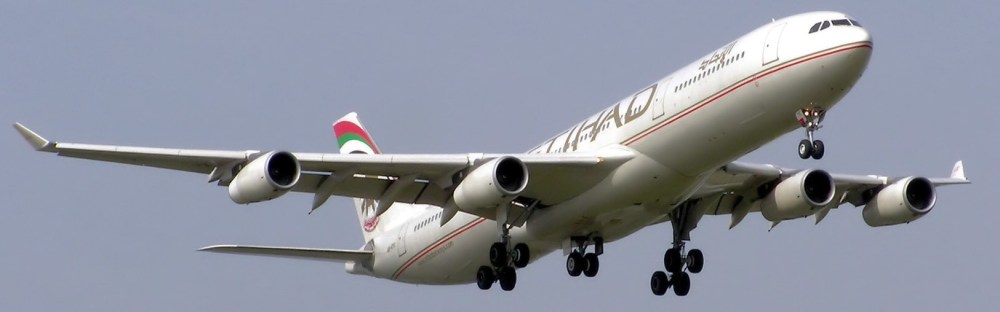
El acuerdo de aviación que se está debatiendo, llamado Acuerdos de Cielos Abiertos, permite a las compañías aéreas operar en EEUU con interferencia limitada del gobierno. Los Estados Unidos han firmado más de 100 pactos como Qatar y los Emiratos Árabes Unidos.

Funcionarios de la administración de la Casa Blanca advirtieron que aún no han llegado a un consenso sobre las acciones a realizar. Las opciones sobre la mesa incluyen conversaciones informales con los Emiratos Árabes Unidos y Qatar para limitar el número de vuelos a los Estados Unidos o restringir ciertas rutas. Otra opción es dar de baja los acuerdos con esos países para negociar mejores términos nuevamente.

Dentro de la administración estadounidense surgen diferencias en cuanto a acuerdos con diferentes funcionarios. Desde el gobierno parecen favorecer un enfoque agresivo que incluya la renegociación de los acuerdos.

Trump, ha hecho cumplir los acuerdos aerocomerciales y al mismo tiempo ha eliminado los acuerdos comerciales que traían perjuicio. Creen que tomar una postura fuerte sobre las prácticas de las líneas aéreas del Golfo podría ayudar a cumplir las promesas de campaña de Donald Trump.

Piloteando la tormenta
La continua tensión en el Golfo entre Arabia Saudí y Qatar sólo aumenta las apuestas políticas de cualquier decisión sobre la aviación, y hace menos probable que Estados Unidos actúe en un futuro cercano. El secretario de Estado Rex Tillerson viajará a Kuwait, Qatar y Arabia Saudí esta semana para ayudar a aliviar las tensiones en la región.

«Si bien las compañías del Golfo y sus aliados quieren desestabilizar la industria de la aviación mundial y arriesgar los medios de vida de los trabajadores estadounidenses, creemos que las empresas de juego limpio y sus empleados deberían tener igual oportunidad de competir», dijo Jill Zuckman, portavoz de la Partnership for Open & Fair Skies, un grupo comercial financiado por Delta, United, American y varios sindicatos que representan a los trabajadores de las aerolíneas.Pero no todas las aerolíneas estadounidenses apoyan el replanteamiento de los acuerdos de Cielos Abiertos. JetBlue y otros se han asociado con las compañías del Golfo, y se benefician del creciente número de pasajeros que necesitan ser trasladados a aeropuertos estadounidenses que tienen vuelos baratos en el extranjero.

Advierten que cualquier intento de renegociar los acuerdos de Cielos Abiertos podría causar un efecto dominó, dejando espacio para que otros países hagan lo mismo a mayor escala. «Lo que los transportistas legados están pidiendo a la administración para hacer reduciría la competencia y pondría en peligro toda nuestra red de acuerdos de Cielos Abiertos y los beneficios que traen para los trabajadores estadounidenses, los viajeros y las economías locales», dijo Andrea Christianson, portavoz de US Airlines para Cielos Abiertos , Un grupo comercial financiado por Atlas Air Worldwide, FedEx, Hawaiian Airlines y JetBlue que se opone a la renegociación de los acuerdos de Cielos Abiertos.Las aerolíneas del Golfo también han rechazado las acusaciones de que están siendo injustamente subvencionadas, contrariando que contribuyen con miles de millones a la economía estadounidense.  AIRGWAYS ® Icon-AW

Etihad.a340-300.a6-eyc.arp.jpg

US will review aviation agreements with Gulf countries

In the middle of the Gulf Airlines subsidy dispute, the Trump administration reviews the Open Skies Agreements policy

The Trump government is reconsidering a pair of international aviation agreements with the United Arab Emirates and Qatar on allegations of unfair subsidies by Gulf nations are making their state airlines

The administration is facing mounting pressure from three of America’s biggest airlines, Delta Air Lines, United Airlines and American Airlines, to establish a fairer or more balanced policy on low-priced Gulf companies. US airlines argue that they are acting end-customers against competitors such as Emitares Airlines, Etihad Airways (UAE) and Qatar Airways.

NEC Director, National Economic Council, Gary Cohn, White House Business Advisor Peter Navarro, Chief of Staff Reince Priebus and other senior government officials have been discussing the matter for months. The NEC, the National Security Council, the Department of Transportation (DOT) and other agencies met the previous week for the last strategy meeting on aviation agreements.

The aviation agreement being discussed, called Open Skies Agreements, allows airlines to operate in the US with limited government interference. The United States has signed more than 100 pacts such as Qatar and the United Arab Emirates.

Officials of the White House administration warned that they have not yet reached a consensus on the actions to be taken. The options on the table include informal talks with the United Arab Emirates and Qatar to limit the number of flights to the United States or restrict certain routes. Another option is to withdraw agreements with those countries to negotiate better terms again.

Within the US administration differences arise in terms of agreements with different officials. From the government they seem to favor an aggressive approach that includes the renegotiation of the agreements.

Trump, has enforced airline agreements and at the same time eliminated trade agreements that were prejudicial. They believe that taking a strong stance on Gulf airline practices could help fulfill Donald Trump’s campaign pledges.

Piloting the storm
Continuing tension in the Gulf between Saudi Arabia and Qatar only increases the political stakes of any decision on aviation, and makes it less likely that the United States will act in the near future. Secretary of State Rex Tillerson will travel to Kuwait, Qatar and Saudi Arabia this week to help ease tensions in the region.

«While Gulf companies and their allies want to destabilize the global aviation industry and risk the livelihoods of American workers, we believe that fair-play companies and their employees should have equal opportunity to compete,» said Jill Zuckman , A spokesman for the Partnership for Open & Fair Skies, a commercial group funded by Delta, United, American and several unions representing airline workers. But not all US airlines support rethinking the Open Skies agreements. JetBlue and others have partnered with Gulf companies, and benefit from the growing number of passengers needing to be transferred to US airports that have cheap flights abroad.

They warn that any attempt to renegotiate the Open Skies agreements could have a domino effect, leaving room for other countries to do the same on a larger scale. «What legacy carriers are asking the administration to do would reduce competition and endanger Our entire network of Open Skies agreements and the benefits they bring to American workers, travelers and local economies», said Andrea Christianson, US Airlines spokeswoman for Open Skies, A commercial group funded by Atlas Air Worldwide, FedEx, Hawaiian Airlines and JetBlue that opposes the renegotiation of Open Skies agreements. Gulf airlines also have rejected claims that they are being unfairly subsidized, countering that they contribute billions to the US economy. A \ W


Ξ A I R G W A Y S Ξ
SOURCE:  Airgways.com
DBk:  Wikipedia.org
AW-POST: 201707121213AR

A\W   A I R G W A Y S ®