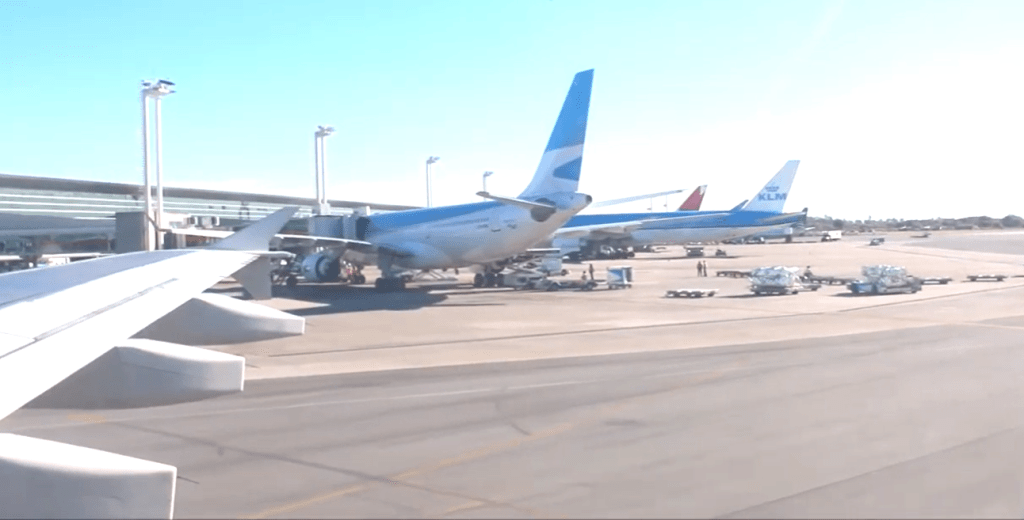
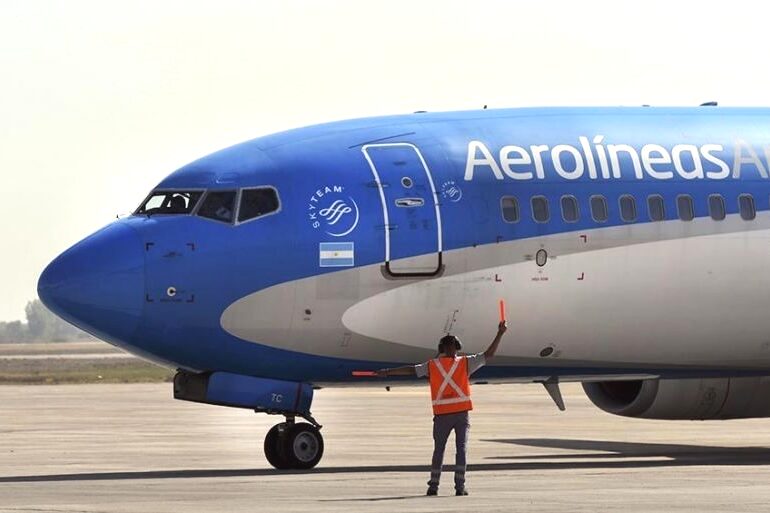
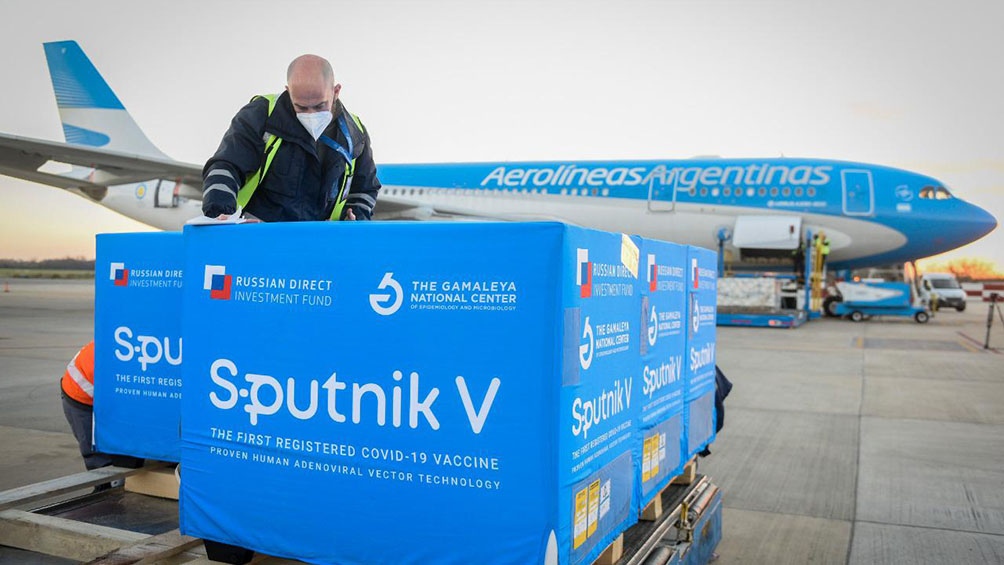
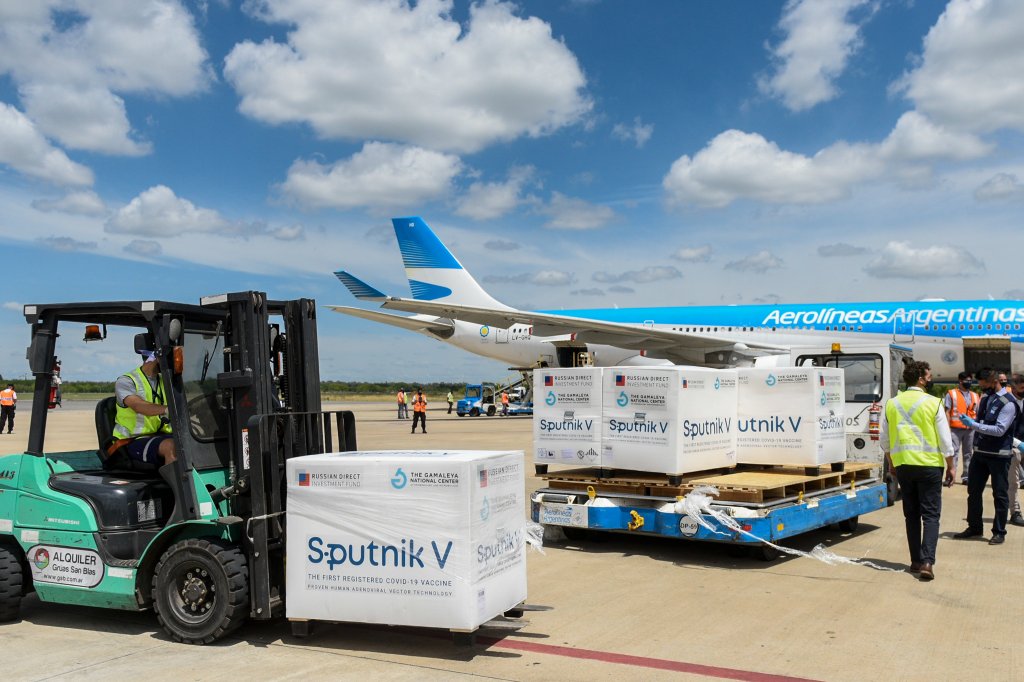
El Gobierno de Argentina ha establecido otro vuelo por Aerolíneas Argentinas número AR1062 que ha despegado a las 02:00 hora del Miércoles 30/06 para arribar al Aeropuerto Internacional Moscú/Sheremetievo a la medianoche de este Jueves 01/07. El retorno estaría programado para las 16:00 hs Rusia.
Aerolíneas Argentinas confirmó la partida de un nuevo vuelo hacia Moscú, y se trata de la vigesimoctava operación que realiza la empresa para trasladar al país cargamentos con vacunas Sputnik V contra el coronavirus, según indicaron fuentes de esa empresa. Aerolíneas Argentinas lleva realizados un total de 20 vuelos a Moscú en los que se transportaron 10.122.375 dosis de la vacuna producida por el Instituto Gamaleya. Además, desde Beijing, llegó al país un total de 5.195.200 dosis en 7 vuelos. De esta manera, en 27 operaciones se trasladó un total de 15.317.575 de dosis.
28th Airlines flight by Sputnik
Flight Wednesday 06/30 by Sputnik V dose
The Government of Argentina has established another flight by Aerolineas Argentinas number AR1062 that took off at 02:00 on Wednesday 06/30 to arrive at Moscow / Sheremetievo International Airport at midnight on Thursday 01/07. The return would be scheduled for 4:00 p.m. Russia.
Aerolíneas Argentinas confirmed the departure of a new flight to Moscow, and it is the twenty-eighth operation carried out by the company to transport cargoes with Sputnik V vaccines against the coronavirus to the country, according to sources from that company. Aeroliíneas Argentinas has carried out a total of 20 flights to Moscow in which 10,122,375 doses of the vaccine produced by the Gamaleya Institute were transported. In addition, from Beijing, a total of 5,195,200 doses arrived in the country on 7 flights. Thus, in 27 operations a total of 15,317,575 doses were transferred.
Complicaciones de varados y aerolíneas que levantarían destinos
Tras los anuncios del Gobierno de Argentina de la Decisión Administrativa 643/2021 de restringir nuevamente el cupo al tráfico aéreo para controlar el ingreso de mayor índice de contagiosidad, ha generado por otro lado nuevos usuarios argentinos varados en el exterior debido a vuelos cancelados. Varias aerolíneas fueron obligadas a suspender sus vuelos de regreso a Argentina desde este Domingo 27/06 por la noche, lo que se vuelve a repetir la historia de las serias dificultades que esto genera para los pasajeros, que según datos de la industria turística se ha pronosticado para este próximo fin de semana que habría unos 40.000 argentinos varados en el exterior debido a las nuevas restricciones sanitarias que limita de 2.000 a 600 el número de ciudadanos argentinos que pueden ingresar al país.
Si bien, en un primer momento, desde la Administración Nacional de Aviación Civil (ANAC), dijeron que los vuelos de este Lunes 28/06, no sufrirían modificaciones, la realidad, es que ya hay argentinos varados en el exterior que no saben cuándo podrán volver al país, por lo que necesitarán esperar una reprogramación de sus tickets aéreo.
Un ejemplo de ello ha sido los inconvenientes lo sufrieron los pasajeros de Latam Airlines. La compañía informó: «Debido a la publicación de la Decisión Administrativa 643/2021 emitida por el Gobierno en Argentina que implica, entre otras medidas, la decisión drástica de reducir el ingreso de pasajeros diarios en el país a 600 personas, la operación de la compañía será fuertemente afectada». En este contexto, Latam Airlines Perú ha recibido por parte de la autoridad local la revocación de la aprobación del vuelo LA2699 del día 28/06 que realizaba la ruta Lima–Buenos Aires y su posterior retorno LA2700 el día 29/06 Buenos Aires–Lima. Los pasajeros han tenido que modificar la fecha de vuelo en base a los cupos disponibles para otro vuelo.
Las líneas aéreas que vuelan en Argentina, ha excepción de Aerolíneas Argentinas que ya tiene confirmados sus vuelos hasta el 12/07, todavía no cuentan con un cronograma de vuelos para el mes de Julio 2021, mostrando nuevamente la imprevisibilidad del Gobierno frente a la desidia de los pasajeros. El Departamento de Transporte (DOT) de Estados Unidos podría aplicar duras sanciones a Argentina por la falta de planificación anticipada al cronograma de vuelos respecto a las líneas aéreas estadounidenses que operan en el país austral.
Organismos reclaman
Las líneas aéreas extranjeras que operan en Argentina han solicitado al Gobierno una reunión urgente con las autoridades respectivas para tratar la falta de previsibilidad en la programación de los vuelos en tiempos de restricciones, pero hasta la fecha no han recibido confirmaciones, por lo que desconocen cómo se distribuirá el cupo entre las compañías ni qué vuelos les permitirán operar, por lo que unos 1.400 argentinos por día continuarán varados en el exterior a la espera de definiciones del Gobierno.
La agrupación JURCA, la Cámara de Líneas Áreas en Argentina, informó que este Domingo 27/06 varias compañías aéreas recibieron cancelaciones de los vuelos que estaban aprobados hasta fin de mes. Incluso algunas fueron informadas en el mismo día del vuelo, lo cual deja a nuestros pasajeros con la inesperada sorpresa de no poder regresar. «Considerando que hay casos de líneas aéreas que tienen un solo vuelo para los próximos quince días desde algunos destinos, esto deja a nuestros pasajeros en una situación realmente preocupante por la falta de opciones de conectividad. Estamos tan sorprendidos como los pasajeros por lo drástico de esta medida de la cual no fuimos participes. Solicitamos a las autoridades nos reciban para presentar opciones de regreso para los miles de pasajeros que se verán afectados por esta medida. Estamos sumamente preocupados por la conectividad de nuestro país. Se puede ver como varias compañías dejaron de operar y otras tienen suspendidas sus operaciones con nuestro país a la espera de ver cuando resulta viable reiniciar sus operaciones o no regresar. Antes de la pandemia teníamos aproximadamente 155 aterrizajes internacionales diarios en todo el país y hoy pasaremos a tener 3 aterrizajes diarios. Ahora, pasamos a tener tres aterrizajes diarios, casi un 2% de lo anterior. Aún no tenemos novedades de la reunión pedida. La medida fue tomada de forma sorpresiva, de un día para el otro. Incluso, algunos pasajeros estaban en vuelo, para hacer una conexión, y quedaron varados en la escala. A nivel diplomático, varios países están haciendo gestiones para que puedan regresar sus pasajeros. Cancelaron vuelos ya aprobados hasta fin de mes. El nuevo límite rige hasta el 09/07. Pero no sabemos si a partir de esa fecha se vuelve a los 2000 pasajeros por día o si luego extienden la medida de sólo 600. Hay 1400 personas por día que no van a poder regresar. Se generó un embudo, un cuello de botella; las compañías no saben cómo traer a los pasajeros ni tampoco qué pasará con los que tienen reservas. Algunas compañías fueron informadas el mismo día del vuelo que se cancelaba. La medida fue muy drástica. Pedimos a las autoridades que nos reciban para presentar opciones de regreso para los miles de pasajeros afectados, pero aún no tuvimos respuesta», dijo Felipe Baravalle, Director Ejecutivo de Jurca.
La Asociación de Transporte Aéreo Internacional (IATA), que nuclea a las aerolíneas, y Jurca le reclamaron al Gobierno una reunión para presentarle posibles opciones que permitan el regreso de miles de pasajeros afectados por la medida. Sin embargo, hasta este Lunes 28/06 por la tarde, no habían recibido respuesta de las autoridades de la Administración Nacional de Aviación Civil (ANAC), el organismo que regula al sector. El Sábado 26/06, IATA le había pedido al Gobierno una reunión urgente y que, ante la nueva reducción de 70% en el número de pasajeros internacionales, necesitaba que al menos se les informe «cómo se distribuirán las 600 plazas entre las compañías aéreas, de modo transparente. Al tomar estas decisiones unilaterales y de corto plazo, el Gobierno corre el riesgo de aislar aún más al país», destacó Peter Cerdá, Vicepresidente Regional de IATA para las Américas, en un comunicado.
También las agencias de viaje salieron a reclamar el fin de semana por las nuevas medidas, que «afectan el desempeño del sector y, en especial, a las agencias de viajes que cumplen un rol clave en la comercialización del turismo. La incertidumbre generada pone un freno a la recuperación del sector y abre incógnitas de cara a la temporada invernal que se aproxima», comentaron, en un comunicado, desde Faevyt, la cámara de las agencias
Paola Tamburelli, titular de la ANAC, aseguró a un programa de radio que no hay pasajeros varados. «Varados había cuando no había vuelos; algunos tendrán que demorar su llegada, pero la conectividad está asegurada, aunque con un menor número de arribos. Lo que buscamos impedir es que estas nuevas cepas entren al país y se propaguen. Eso implicará que algunos pasajeros queden demorados». Desde el Gobierno, justificaron la medida, además, al asegurar a través de un comunicado de Presidencia que en la actualidad 101 países tienen cerradas sus fronteras por el Covid-19.
Air restrictions in Argentina
Complications of stranded and airlines that would lift destinations
Following the announcements by the Government of Argentina of Administrative Decision 643/2021 to once again restrict the quota to air traffic to control the entry of a higher contagious rate, it has also generated new Argentine users stranded abroad due to canceled flights. Several airlines were forced to suspend their flights back to Argentina from this Sunday 06/27 at night, which repeats the history of the serious difficulties that this generates for passengers, which according to data from the tourism industry has It is predicted for this coming weekend that there would be some 40,000 Argentines stranded abroad due to the new sanitary restrictions that limit from 2,000 to 600 the number of Argentine citizens who can enter the country.
Although, at first, from the National Civil Aviation Administration (ANAC), they said that the flights of this Monday, 06/28, would not undergo modifications, the reality is that there are already Argentines stranded abroad who do not know when They will be able to return to the country, so they will need to wait for their air tickets to be reprogrammed.
An example of this has been the inconvenience suffered by the passengers of Latam Airlines. The company reported: «Due to the publication of Administrative Decision 643/2021 issued by the Government in Argentina which implies, among other measures, the drastic decision to reduce the daily passenger entry into the country to 600 people, the operation of the company will be heavily affected». In this context, Latam Airlines Peru has received from the local authority the revocation of the approval of flight LA2699 on 06/28, which carried out the Lima–Buenos Aires route and its subsequent return LA2700 on 06/29 Buenos Aires–Lima. Passengers have had to modify the flight date based on the places available for another flight.
The airlines that fly in Argentina, with the exception of Aerolíneas Argentinas that already has their flights confirmed until 07/12, still do not have a flight schedule for the month of July 2021, again showing the unpredictability of the Government in the face of laziness of the passengers. The United States Department of Transportation (DOT) could apply harsh sanctions to Argentina for the lack of advance planning of the flight schedule with respect to US airlines operating in the southern country.
Organisms claim
Foreign airlines operating in Argentina have requested an urgent meeting from the Government with the respective authorities to address the lack of predictability in the scheduling of flights in times of restrictions, but to date they have not received confirmations, so they do not know how. The quota will be distributed among the companies and which flights will allow them to operate, so that some 1,400 Argentines per day will continue to be stranded abroad, awaiting definitions from the Government.
The group JURCA, the Chamber of Areas in Argentina, reported that this Sunday 06/27 several airlines received cancellations of the flights that were approved until the end of the month. Some were even informed on the day of the flight, which leaves our passengers with the unexpected surprise of not being able to return. «Considering that there are cases of airlines that have only one flight for the next fifteen days from some destinations, this leaves our passengers in a really worrying situation due to the lack of connectivity options. We are as surprised as passengers by how drastic it is. this measure in which we were not involved. We ask the authorities to receive us to present return options for the thousands of passengers that will be affected by this measure. We are extremely concerned about the connectivity of our country. You can see how several companies left to operate and others have suspended their operations with our country waiting to see when it is feasible to restart their operations or not to return. Before the pandemic we had approximately 155 daily international landings throughout the country and today we will have 3 daily landings. Now , we now have three daily landings, almost 2% of the above. We still have no news of the requested meeting. The measure was taken unexpectedly, from one day to the next. Some passengers were even in flight, to make a connection, and were stranded on the scale. At the diplomatic level, several countries are making arrangements so that their passengers can return. They canceled flights already approved until the end of the month. The new limit is valid until 09/07. But we do not know if from that date it will return to 2000 passengers per day or if the measure will be extended to only 600 later. There are 1400 people per day who will not be able to return. A funnel was created, a bottleneck; the companies do not know how to bring passengers or what will happen to those who have reservations. Some companies were informed the same day the flight was canceled. The move was very drastic. We ask the authorities to welcome us to present return options for the thousands of affected passengers, but we have not yet received a response», said Felipe Baravalle, Executive Director of Jurca.
The International Air Transport Association (IATA), which brings together the airlines, and Jurca called on the Government for a meeting to present possible options that allow the return of thousands of passengers affected by the measure. However, until this Monday afternoon, they had not received a response from the authorities of the National Civil Aviation Administration (ANAC), the body that regulates the sector. On Saturday 06/26, IATA had asked the Government for an urgent meeting and that, given the new 70% reduction in the number of international passengers, it needed to be informed at least «how the 600 seats will be distributed among the airlines, in a transparent way. By making these unilateral and short-term decisions, the Government runs the risk of further isolating the country», said Peter Cerdá, IATA Regional Vice President for the Americas, in a statement.
The travel agencies also came out to complain over the weekend for the new measures, which «affect the performance of the sector and, especially, the travel agencies that play a key role in the commercialization of tourism. The uncertainty generated puts a brake to the recovery of the sector and opens unknowns in the face of the winter season that is approaching», commented, in a statement, from Faevyt, the chamber of the agencies
Paola Tamburelli, head of the ANAC, assured a radio program that there are no stranded passengers. «There were stranded when there were no flights; some will have to delay their arrival, but connectivity is assured, although with fewer arrivals. What we seek to prevent is that these new strains enter the country and spread. That will imply that some passengers are delayed». From the Government, they justified the measure, in addition, by ensuring through a statement from the Presidency that currently 101 countries have their borders closed due to Covid-19.
AW | 2021 06 28 07:05 | AIR TRAFFIC / AIRLINES / GOVERNMENT
Compañías listado vuelos cancelados hasta 11/07
Las líneas aéreas que operan vuelos internacionales han publicado el listado de vuelos cancelados referentes a las nuevas restricciones impuesta por el Gobierno de Argentina debido a la crisis sanitaria vigente. Las restricciones de distancia a la entrada para viajeros procedentes del extranjero comenzará a ser efectiva a partir de este Lunes 28/06 y hasta el 11/07. Según la Decisión Administrativa 643/2021 ha establecido la reducción de 2000 a 600 pasajeros diarios para ingresar al país, por lo que las aerolíneas comenzaron a trabajar en la adaptación de los horarios de vuelo para los próximos días.
Esto significa reprogramar o cancelar los vuelos restantes para los últimos días del mes de Junio y parte de Julio 2021. La Asociación Internacional de Transporte Aéreo (IATA), ha advertido que esta situación dejará desamparado a los usuarios de transporte aéreos con miles de pasajeros varados.
Vuelos afectados
Este Domingo 27/06, Aerolíneas Argentinas ha publicado los cambios en sus programas de vuelos internacionales cancelados y los vigentes para este período de reducción del tráfico aéreo. Los primeros vuelos que parecen ser cancelados son del 29/06. Aerolíneas Argentinas informó en su web que existen 59 vuelos cancelados de un total de 91que estaban programados, con una programación que se lleva a cabo desde el Domingo 27 de Junio hasta el 11 de Julio de 2021. Entre las operaciones canceladas, además de numerosos vuelos desde y hacia Miami, también se detallan vuelos a Santiago de Chile, Asunción, Sao Paulo y Madrid, entre otros.
El listado de vuelos representan frecuencias canceladas. Ante consultas el usuario deberá entrar en contacto con su aerolínea para conocer las capacidades de los vuelos cancelados y reprogramados a medida que las líneas aéreas confirmen modificaciones de su programación en el período de restricciones. El siguiente listado representa los vuelos cancelados de cada aerolínea hasta la fecha, por lo que la ANAC deberá emitir más actualizaciones al respecto.
En el caso de cancelación de vuelos la compañía está obligada a informar a los pasajeros con billetes emitidos en agencias de viajes, deberán entrar en contacto con las mismas. Quien emitió sus pasajes directamente con Aerolíneas Argentinas y necesita viajar en los próximos días, deberá llenar un formulario publicado en la web. Los números disponibles de la aerolínea son: Call Center 0810-222-86527; WhatsApp +5491149404798). Para aquellos que no necesiten viajar de inmediato, la compañía afirma que se puede reutilizar el boleto sin costo alguno, siempre y cuando el nuevo vuelo termine antes del 15/12/2021 y respete la temporada de tu boleto original. El cambio debe hacerse antes de que finalice el año de compra de entradas y no es necesaria ninguna acción inmediata.
«Hoy en día, muchas aerolíneas recibieron cancelaciones de vuelos aprobadas hasta fin de mes, algunas de las cuales incluso fueron notificadas en vuelo el mismo día,lo que deja a nuestros pasajeros con una inesperada sorpresa de imposibilidad de regresar. Dado que hay casos de aerolíneas que tienen un vuelo de quince días proveniente de algunos destinos, esto deja a nuestros pasajeros en una situación realmente preocupante debido a la falta de opciones de comunicación», dijo Felipe Paraval, Presidente de la Cámara de Compañías Aéreas de Argentina (JURCA).
Airlines publish canceled list
Companies listing flights canceled until 07/11
The airlines that operate international flights have published the list of canceled flights referring to the new restrictions imposed by the Government of Argentina due to the current health crisis. The distance restrictions at the entrance for travelers from abroad will begin to be effective from this Monday, 06/28 until 07/11. According to Administrative Decision 643/2021, it has established the reduction from 2000 to 600 daily passengers to enter the country, so the airlines began to work on adapting flight schedules for the next few days.
This means rescheduling or canceling the remaining flights for the last days of June and part of July 2021. The International Air Transport Association (IATA) has warned that this situation will leave air transport users helpless with thousands of stranded passengers.
Affected flights
This Sunday 06/27, Aerolíneas Argentinas has published the changes in its canceled international flight programs and those in force for this period of reduction in air traffic. The first flights that appear to be canceled are from 06/29. Aerolíneas Argentinas reported on its website that there are 59 canceled flights out of a total of 91 that were scheduled, with a schedule that runs from Sunday June 27 to July 11, 2021. Among the operations canceled, in addition to numerous flights From and to Miami, flights to Santiago de Chile, Asunción, Sao Paulo and Madrid, among others, are also detailed.
The flight list represents canceled frequencies. In case of inquiries, the user must contact his airline to find out the capacities of the canceled and rescheduled flights as the airlines confirm modifications to their programming in the restriction period. The following list represents the canceled flights of each airline to date, so the ANAC must issue more updates in this regard.
In the case of cancellation of flights, the company is obliged to inform passengers with tickets issued in travel agencies, they must contact them. Whoever issued their tickets directly with Aerolíneas Argentinas and needs to travel in the next few days, must fill out a form published on the web. The airline’s available numbers are: Call Center 0810-222-86527; WhatsApp +5491149404798). For those who do not need to travel immediately, the company states that the ticket can be reused at no cost, as long as the new flight ends before 12/15/2021 and respects the season of your original ticket. The change must be made before the end of the ticket purchase year and no immediate action is required.
«Today, many airlines received approved flight cancellations until the end of the month, some of which were even notified in flight the same day, leaving our passengers with an unexpected surprise of being unable to return. Since there are cases of Airlines that have a fifteen-day flight from some destinations, this leaves our passengers in a really worrying situation due to the lack of communication options», said Felipe Paraval, President of the Chamber of Air Companies of Argentina (JURCA).
AW | 2021 06 28 06:30 | AIR INVESTIGATION / GOVERNMENT / AVIATION SAFETY
Presentan pruebas sospechosos relación atentado MH-017
El Gobierno del Reino Unido de los Países Bajos debería poder prohibir los vuelos sobre zonas de conflicto. Los investigadores holandeses están recomendando que el gobierno del país considere ampliar su mandato de seguridad de vuelo para incluir la prohibición de que las aerolíneas holandesas vuelen a través del espacio aéreo extranjero afectado por el conflicto.
El 7 de Junio de 2021, un Tribunal de los Países Bajos comenzó a escuchar pruebas contra los cuatro sospechosos fugitivos en relación con el atentado aéreo de la aerolínea Malaysia Airlines del vuelo MH-017 compartido con codeshare con KLM Royal Dutch Airlines. Los cuatro sospechosos, los ciudadanos rusos Sergei Dubinsky, Oleg Pulatov e Igor Girkin, así como el ucraniano Leonid Kharchenko son sospechosos de ser separatistas prorrusos clave y ahora asisten al juicio en La Haya.
El vuelo regular de pasajeros MH-017 se encontraba en ruta desde Amsterdam, Países Bajos, hacia Kuala Lumpur, Malaysia, cuando fue derribado el 17 de Julio de 2014 y se estrelló en el este de Ucrania, matando a todas las 298 personas a bordo. Esta fue la segunda pérdida de aviones de Malaysia Airlines, después de la desaparición del vuelo MH-370 el 8 de Marzo de 2014, y también es el incidente de derribo de aviones más mortífero hasta la fecha. Los países que habían perdido ciudadanos a bordo incluyen los Países Bajos, Malasia, Australia, Indonesia, el Reino Unido, Alemania, Bélgica, Filipinas, Canadá y Nueva Zelanda.
El Primer Ministro holandés Mark Rutte ha prometido llevar ante la justicia a la persona que «apretó el botón de disparar el misil». El Gobierno holandés ha establecido tres prioridades: repatriar e identificar a las víctimas, establecer la causa del accidente y llevar a cabo una investigación criminal.
Las cajas negras del avión muestran que el avión fue derribado por una descompresión explosiva masiva causada por la metralla de un misil. En octubre de 2015, los investigadores holandeses apoyaron aún más esto con un informe final de incidentes técnicos que confirma que el MH 17 fue derribado por un misil tierra-aire de hecho en Rusia desde un sistema Buk en el este de Ucrania. Algunas aerolíneas habían comenzado a evitar el espacio aéreo del este de Ucrania a principios de Marzo de 2014 debido a preocupaciones de seguridad de un conflicto armado en el este de Ucrania, y es probable que los rebeldes rusos confundieron el avión comercial con un transporte militar ucraniano.
Rusia ha refutado repetidamente las conclusiones de los investigadores, al tiempo que ha hecho valer afirmaciones falsas para presentar ante el tribunal y el público. Por ejemplo, la BBC informa que las imágenes fotos-hopeadas con fechas e imágenes satelitales alteradas fueron presentadas por Moscú como hechos alternativos en los días posteriores al accidente. Además, Rusia se ha negado a extraditar a sus ciudadanos y la participación internacional tras alcanzar una resolución ha sido generalizada. En Julio de 2018, el G7 emitió una declaración conjunta exigiendo a Rusia «rendir cuentas de su papel» en el derribamiento del MH17. En 2019, los ministros de Relaciones Exteriores del Equipo Conjunto de Investigación (JIT) de Australia, Malasia, Bélgica y los Países Bajos se reunieron en Nueva York para discutir y reflexionar sobre sus esfuerzos conjuntos para establecer la verdad sobre la tragedia.
Según una investigación de código abierto de RFE/RL, los próximos pasos para el juicio después de la presentación de los materiales del caso incluyen las sumatorias de la fiscalía y la defensa. En septiembre, el tribunal espera escuchar a los familiares de las víctimas, que hablarán sobre las experiencias de perder a un ser querido. La última audiencia para este año está prevista para noviembre, y si no hay nuevos acontecimientos que puedan prolongar el juicio, se espera que se llegue a un veredicto a finales de año. En general, es importante que continúe la cooperación internacional para que finalmente se haga justicia a la luz de esta tragedia mundial.
Netherlands Court analyzes MH-017
Suspects present evidence related to MH-017 attack
The Government of the United Kingdom of the Netherlands should be able to ban flights over conflict zones. Dutch investigators are recommending that the country’s government consider expanding its flight safety mandate to include a ban on Dutch airlines from flying through conflict-affected foreign airspace.
On June 7, 2021, a court in the Netherlands began hearing evidence against the four fugitive suspects in connection with the air attack on Malaysia Airlines airline flight MH-017 shared with codeshare with KLM Royal Dutch Airlines. The four suspects, Russian nationals Sergei Dubinsky, Oleg Pulatov and Igor Girkin, as well as Ukrainian Leonid Kharchenko are suspected of being key pro-Russian separatists and are now attending the trial in The Hague.
Regular passenger flight MH-017 was en route from Amsterdam, the Netherlands, to Kuala Lumpur, Malaysia, when it was shot down on July 17, 2014 and crashed in eastern Ukraine, killing all 298 people on board. This was Malaysia Airlines’ second aircraft loss, after the disappearance of Flight MH-370 on March 8, 2014, and it is also the deadliest aircraft shootdown incident to date. Countries that had lost citizens on board include the Netherlands, Malaysia, Australia, Indonesia, the United Kingdom, Germany, Belgium, the Philippines, Canada, and New Zealand.
Dutch Prime Minister Mark Rutte has promised to bring the person who «pushed the button to fire the missile» to justice. The Dutch government has set three priorities: repatriation and identification of the victims, establishing the cause of the accident and carrying out a criminal investigation.
The plane’s black boxes show that the plane was shot down by a massive explosive decompression caused by shrapnel from a missile. In October 2015, Dutch investigators further supported this with a final technical incident report confirming that MH 17 was shot down by a surface-to-air missile indeed in Russia from a Buk system in eastern Ukraine. Some airlines had started avoiding eastern Ukraine airspace in early March 2014 due to security concerns from an armed conflict in eastern Ukraine, and it is likely that the Russian rebels mistook the commercial aircraft for a Ukrainian military transport.
Russia has repeatedly refuted the investigators’ findings, while asserting false claims to present to the court and the public. For example, the BBC reports that photoshopped images with altered dates and satellite images were presented by Moscow as alternative events in the days after the accident. Furthermore, Russia has refused to extradite its citizens and international participation after reaching a resolution has been widespread. In July 2018, the G7 issued a joint statement calling on Russia to «account for its role» in the downing of MH17. In 2019, the Foreign Ministers of the Joint Investigation Team (JIT) from Australia, Malaysia, Belgium and the Netherlands met in New York to discuss and reflect on their joint efforts to establish the truth about the tragedy.
According to an open source investigation by RFE/RL, the next steps for the trial after the presentation of the case materials include the summations of the prosecution and the defense. In September, the court hopes to hear from the victims’ families, who will speak about the experiences of losing a loved one. The last hearing for this year is scheduled for November, and if there are no new developments that could prolong the trial, a verdict is expected to be reached by the end of the year. Overall, it is important that international cooperation continues so that justice is finally done in light of this global tragedy.
AW | 2021 06 27 11:37 | AIR TRAFFIC / AVIATION ORGANISMS / GOVERNMENT
IATA advierten argentinos podrían quedar varados exterior
El Gobierno de la República Argentina ha anunciado en su comunicado del Sábado 26/06 mediante el Decreto de Necesidad y Urgencia (DNU) y la Decisión Administrativa Nº 643/2021 que establece nuevas restricciones para el ingreso al país vía aérea, limitando los cupos de pasajeros atendiendo la emergencia sanitaria vigente.
La Asociación Internacional de Transporte Aéreo (IATA) ha expresado su preocupación ante las nuevas restricciones para reingresar al país. Han solicitado una reunión de urgencia con el Gobierno de Argentina. El Vicepresidente para América de la IATA, Peter Cerdá, manifestó en un comunicado su preocupación “por los ciudadanos y residentes argentinos que corren riesgo de quedar varados en el extranjero por las nuevas restricciones gubernamentales a los vuelos dispuestas por el gobierno argentino”. El referente de la IATA para la región indicó que solicitaron con urgencia una reunión con el Jefe de Gabinete de Ministros para tratar en forma directa con el Gobierno de Argentina tras la publicación del último decreto gubernamental que anuncia nuevas y drásticas restricciones de los vuelos internacionales hacia al país. «Comprendemos que el Gobierno argentino está enfocado en proteger la salud y el bienestar de sus ciudadanos. Como industria, hemos hecho todo lo posible para garantizar una conectividad segura del país, a pesar de las drásticas restricciones operativas que ya existen. Sin embargo, la nueva reducción de 70% en el número de pasajeros internacionales que puedan llegar diariamente al país, obligará a las aerolíneas a dejar en el extranjero a miles de pasajeros, principalmente ciudadanos y residentes argentinos, sin que ellos tengan la culpa. Argentina ya había puesto un tope de 2.000 pasajeros diarios que podían llegar en vuelos internacionales. Esto había obligado a las compañías aéreas a reducir y modificar drásticamente sus horarios. Pero según el último decreto emitido ayer por el Gobierno, con efecto inmediato, sólo se permitirá la llegada de 600 pasajeros al día en vuelos internacionales. Tal como está, las compañías aéreas no podrán aplicar la nueva norma del Gobierno. Como mínimo, deberían informar de cómo se distribuirán las 600 plazas entre las compañías aéreas que prestan servicios internacionales de pasajeros al país. Esto debe hacerse de forma no discriminatoria y transparente, por lo que hemos solicitado una reunión urgente con los responsables. Como industria, nos gustaría seguir ofreciendo una conectividad aérea esencial hacia y desde Argentina, tanto durante la pandemia como después. Pero al tomar estas decisiones unilaterales y de corto plazo, el gobierno corre el riesgo de aislar aún más al país. Tenemos que aprender a vivir con el COVID-19 en adelante y las autoridades responsables tienen que seguir la ciencia y no dejar que el miedo guíe sus decisiones», dijo Peter Cerdá.
Sostuvo que la postura de IATA es de “colaborar con el gobierno, trabajar estrechamente para evitar el perjuicio a las compañías aéreas y es por eso que queremos reunirnos cuanto antes para resolver esta situación”, concluyó el Vicepresidente de IATA para Las Américas.
Incertidumbre aérea
Las líneas aéreas de Argentina continúan bajo las incertidumbres por las nuevas restricciones. Esperan una definición de la ANAC para comunicar a los pasajeros reprogramaciones y cancelaciones a partir del Lunes 28/06. Ante las nuevas medidas anunciadas por el Gobierno de Argentina las frecuencias aéreas se verán reducidas de diez diarias a tres por día, con las consiguientes reprogramaciones y cancelaciones.
El Sábado 26/06, antes de ingresar dentro de las veinticuatro horas de la entrada en vigencia de las nuevas restricciones anunciadas en el DNU del Boletín Oficial del Gobierno de Argentina, hubo nueve aterrizajes internacionales de aviones de pasajeros que llegaron desde Miami, Frankfurt, París o Panamá, entre otros destinos.
A partir del Lunes 28/06, podrán arribar no más de tres aviones por día por compañía, con un tope general de 600 argentinos cada veinticuatro horas, según lo dispuso el Poder Ejecutivo. El cronograma de vuelos ahora está en manos de la Administración Nacional de Aviación Civil (ANAC), organismo que hasta el momento no informó a las aerolíneas qué vuelos les dejará mantener y cuáles serán cancelados.
Compañías aéreas
La compañía aérea American Airlines ha expresado que todavía no tienen novedades que más vuelos realiza hacia la Argentina, lo que podría derivar en nuevas multas y/o sanciones por parte de la observación del Departamento de Transporte de Estados Unidos (DOT) al exigirles una programación planificada y anticipada. Hasta el momento, American realizaba ocho frecuencias semanales desde Miami y algunos vuelos adicionales desde Dallas/Fort Worth.
Una de las aerolíneas con más frecuencias desde y hacia el extranjero expresó: «Veníamos con una frecuencia por semana, o dos. Ahora no sabemos qué informar a los pasajeros sobre los vuelos de julio, ya que no sabemos si nos autorizarán algún vuelo».
Aerolíneas Argentinas ha detallado hasta este fin de semana un cronograma que incluye un vuelo diario Buenos Aires/EZE-Miami/MIA (1 Frq/D), Buenos Aires/EZE-Madrid/MAD (2/3 Frq/S) y vuelos regionales, anticipando en la aerolínea que sufrirán reprogramaciones. «Estimados pasajeros y pasajeras, debido a las nuevas restricciones producto de la pandemia, nos encontramos trabajando en la adecuación de nuestra programación internacional. Estamos reorganizando toda la programación y el Lunes la tendremos definida, para informar las opciones que habrá para los vuelos cancelados o reprogramados. Los mantendremos informados». El tweet fue publicado el Sábado 26/06 al mediodía por la cuenta oficial de Aerolíneas Argentinas.
Las líneas aéreas agotaron rápidamente la disponibilidad de pasajes este fin de semana ante la creciente incertidumbre de las modificaciones de los próximos vuelos a partir de las nuevas restricciones sanitarias. La expectativa está centrada en los vuelos que el organismo de la ANAC autorizará a partir del Miércoles 30/06.
JURCA reclama
Desde la cámara que agrupa a las aerolíneas internacionales, JURCA, aseguraron no tener más novedades de la próxima restricción de vuelos anunciada desde el Poder Ejecutivo. Un instructivo que circula entre las líneas aéreas señala que hasta el 9 de Julio de 2021 continúan cerradas las fronteras al turismo y se prohíbe el ingreso de extranjeros con ese propósito. Asimismo, continúan suspendidos los vuelos provenientes Gran Bretaña, Chile, Brasil, India, Turquía y países de Africa.
El nuevo DNU remarca que ahora se ha fijado un cupo de 600 pasajeros diarios para el ingreso al país y el endurecimiento de los controles sanitarios para quienes regresen desde el exterior entre el 1 de Julio y el 31 de Agosto de 2021, con doble test PCR y aislamiento por diez días.
Agencias de viaje
Las agencias de viaje expresaron su preocupación por las nuevas restricciones implementadas por el Gobierno de Argentina a partir del Lunes 28/06. El Foro Argentino de Consultores de Viajes (FACVE) señaló que, de acuerdo con cifras oficiales, la crisis causada por la pandemia de Covid-19 redujo los arribos y las partidas internacionales en un 77% y un nuevo cierre resulta crítico para la industria. El FACVE expresó este Sábado 26/06 su preocupación y disconformidad debido a las nuevas restricciones dispuestas por el Gobierno, que alcanzan al sector turístico, en el marco de la pandemia de Coronavirus en el país. FACVE se expresó en estos términos tras la publicación en el Boletín Oficial del DNU y de la Decisión Administrativa Nº 643/2021 sobre el cierre de fronteras y demás medidas restrictivas que condicionan el ingreso y egreso al país de turistas, limitan el cupo de ingreso de pasajeros por día y reducen las frecuencias de vuelos.
«Esta situación implica directamente volver a cero la incipiente recuperación de la actividad y reducir aún más la conectividad de Argentina con el mundo. Para nuestro país, medidas de estas características, además de impactar fulminantemente en la actividad económica del sector viajes, podría desencadenar también importantes consecuencias de pérdida de rutas y líneas aéreas. Las aerolíneas que operaban desde hace años en Argentina, tales como Latam Airlines Argentina, Qatar Airways y Air New Zealand, se fueron del país y otras como Emirates Airline, Ethiopian Airlines, Alitalia, Gol Linhas Aéreas, Azul Linhas Aéreas Brasileiras y Air Canada, entre otras, cancelaron y/o suspendieron indefinidamente sus operaciones, lo cual en el futuro será muy difícil de recuperar. Esta medida no solo tiene un fuerte impacto en el corto plazo sino en el mediano y largo plazo para todas aquellas empresas y personas que necesitan para su desarrollo del intercambio con el mundo», según indicó en su comunicado FACVE.
Warning restrictions Argentina
IATA warn Argentines could be stranded abroad
The Government of the Argentine Republic has announced in its communication of Saturday 26/06 through the Decree of Necessity and Urgency (DNU) and Administrative Decision No. 643/2021 that establishes new restrictions for entering the country by air, limiting the quotas of passengers attending the current health emergency.
The International Air Transport Association (IATA) has expressed concern about the new restrictions to re-enter the country. They have requested an emergency meeting with the Government of Argentina. IATA Vice President for America, Peter Cerdá, expressed in a statement his concern «for Argentine citizens and residents who are at risk of being stranded abroad due to the new government restrictions on flights established by the Argentine government». The IATA reference for the region indicated that they urgently requested a meeting with the Chief of the Cabinet of Ministers to deal directly with the Government of Argentina after the publication of the latest government decree that announces new and drastic restrictions on international flights to to the country. «We understand that the Argentine government is focused on protecting the health and well-being of its citizens. As an industry, we have done everything possible to ensure safe connectivity in the country, despite the drastic operational restrictions that already exist. However, the A new 70% reduction in the number of international passengers that can arrive daily in the country will force airlines to leave thousands of passengers abroad, mainly Argentine citizens and residents, through no fault of their own. Argentina had already put a Maximum of 2,000 passengers a day that could arrive on international flights. This had forced airlines to reduce and drastically modify their schedules. But according to the latest decree issued yesterday by the Government, effective immediately, only 600 passengers will be allowed to arrive up-to-date on international flights. As it stands, airlines will not be able to apply the new government rule. At a minimum, They should report on how the 600 seats will be distributed among the airlines that provide international passenger services to the country. This must be done in a non-discriminatory and transparent manner, which is why we have requested an urgent meeting with those responsible. As an industry, we would like to continue to offer essential air connectivity to and from Argentina, both during and after the pandemic. But by making these short-term, unilateral decisions, the government runs the risk of further isolating the country. We have to learn to live with COVID-19 and the responsible authorities have to follow science and not let fear guide their decisions», said Peter Cerdá.
He argued that IATA’s position is to «collaborate with the government, work closely to avoid harm to airlines and that is why we want to meet as soon as possible to resolve this situation», concluded the IATA Vice President for the Americas.
Aerial insertion
Argentina’s airlines continue to face uncertainties due to the new restrictions. They await a definition from the ANAC to notify passengers of rescheduling and cancellations as of Monday 06/28. Given the new measures announced by the Government of Argentina, air frequencies will be reduced from ten a day to three a day, with the consequent rescheduling and cancellations.
On Saturday 06/26, before entering within twenty-four hours of the entry into force of the new restrictions announced in the DNU of the Official Gazette of the Government of Argentina, there were nine international landings of passenger aircraft that arrived from Miami, Frankfurt, Paris or Panama, among other destinations.
As of Monday 06/28, no more than three planes per day per company may arrive, with a general cap of 600 Argentines every twenty-four hours, as ordered by the Executive Power. The flight schedule is now in the hands of the National Civil Aviation Administration (ANAC), an organization that so far has not informed the airlines which flights it will allow them to maintain and which ones will be canceled.
Airlines
The airline company American Airlines has expressed that they still do not have news that more flights make to Argentina, which could lead to new fines and/or sanctions by the observation of the United States Department of Transportation (DOT) by requiring a schedule planned and anticipated. So far, American had eight weekly flights from Miami and a few additional flights from Dallas/Fort Worth.
One of the airlines with the most frequencies to and from abroad said: «We came once or twice a week. Now we do not know what to inform passengers about the July flights, since we do not know if they will authorize us any flights».
Aerolíneas Argentinas has detailed until this weekend a schedule that includes a daily flight Buenos Aires/EZE-Miami/MIA (1 Frq/D), Buenos Aires/EZE-Madrid/MAD (2/3 Frq/S) and regional flights, anticipating the airline that will undergo rescheduling. «Dear passengers, due to the new restrictions resulting from the pandemic, we are working on the adaptation of our international programming. We are reorganizing all the programming and on Monday we will have it defined, to inform the options that there will be for canceled flights or rescheduled. We’ll keep you posted». The tweet was published on Saturday 06/26 at noon by the official account of Aerolíneas Argentinas.
The airlines quickly exhausted the availability of tickets this weekend due to the growing uncertainty of the modifications of the next flights due to the new sanitary restrictions. The expectation is centered on the flights that the ANAC body will authorize as of Wednesday 06/30.
JURCA claims
From the chamber that groups international airlines, JURCA, they assured that they had no more news about the next flight restriction announced by the Executive Power. An instructive circulating among the airlines indicates that until July 9, 2021 the borders continue to be closed to tourism and the entry of foreigners for that purpose is prohibited. Likewise, flights from Great Britain, Chile, Brazil, India, Turkey and African countries continue to be suspended.
The new DNU remarks that a daily quota of 600 passengers has now been set to enter the country and the tightening of health controls for those who return from abroad between July 1 and August 31, 2021, with double PCR tests and isolation for ten days.
Travel agencies
Travel agencies expressed their concern about the new restrictions implemented by the Government of Argentina as of Monday 06/28. The Argentine Forum of Travel Consultants (FACVE) pointed out that, according to official figures, the crisis caused by the Covid-19 pandemic reduced arrivals and international departures by 77% and a new closure is critical for the industry. The FACVE expressed this Saturday 06/26 its concern and disagreement due to the new restrictions established by the Government, which affect the tourism sector, within the framework of the Coronavirus pandemic in the country. FACVE expressed itself in these terms after the publication in the Official Gazette of the DNU and Administrative Decision No. 643/2021 on the closure of borders and other restrictive measures that condition the entry and exit of tourists to the country, limit the number of passengers per day and reduce the frequencies of flights.
«This situation directly implies returning to zero the incipient recovery of activity and further reducing Argentina’s connectivity with the world. For our country, measures of these characteristics, in addition to having a sudden impact on the economic activity of the travel sector, could also unleash important consequences of loss of routes and airlines. The airlines that had operated for years in Argentina, such as Latam Airlines Argentina, Qatar Airways and Air New Zealand, left the country and others such as Emirates Airline, Ethiopian Airlines, Alitalia, Gol Linhas Aéreas, Azul Linhas Aéreas Brasileiras and Air Canada, among others, they canceled and / or suspended their operations indefinitely, which in the future will be very difficult to recover. This measure not only has a strong impact in the short term but in the medium and long term for all those companies and people who need exchange with the world for their development», according to FACVE in its statement.
AW | 2021 06 26 18:55 | AVIATION ORGANISMS / AVIATION SAFETY / INDUSTRY / GOVERNMENT
China continúa dilatando recertificación Boeing 737 MAX
El retorno del Boeing 737 MAX al territorio de China continúa resistiéndose como parte de los obstáculos regulatorios y políticos. The Boeing Company dijo que esperaba que el 737 MAX fuera aprobado en todas partes a finales de Junio 2021, pero las autoridades de la Administración de Aviación Civil de China (CAAC) no confían en las autoridades de certificación tradicionales como parte de las razones establecidas por el organismo regulatorio chino. Las personas familiarizadas con las discusiones dicen que los obstáculos regulatorios y políticos significan que cualquier resolución aún está a meses de distancia.
Las tensiones de poder comercial, los obstáculos regulatorios y los intentos de Occidente de contrarrestar la floreciente competencia china están retrasando el regreso del Boeing 737 MAX en China, frustrando a Boeing en un potencial rival de creciente influencia del COMAC C919.
Bloqueo mercado chino
El mercado chino es muy importante para la compañía Boeing, pero debido a los errores de diseño industrial, más, las tensas relaciones comerciales sino-estadounidense han puesto en jaque a la aeronave de cuarta generación más moderna de la línea 737 en territorio chino. La compañía americana esperaba que China aprobara el MAX para volver al cielo a finales del año pasado 2020. En Enero 2021, Boeing dijo que esperaba que el MAX fuera aprobado por los reguladores de todo el mundo a finales de Junio 2021. Ahora, con la ayuda de la nueva Administración Biden, Boeing está intensificando los esfuerzos para convencer a China de que el avión es seguro y para restablecer su asociación más estratégica a medida que las aerolíneas comienzan a recuperarse de la pandemia de Coronavirus. Pero las personas familiarizadas con las discusiones dicen que los obstáculos regulatorios y políticos significan que cualquier resolución aún está a meses de distancia. Para el CEO de The Boeing Company, David Calhoun, eso significa ver cómo las ganancias y la cuota de mercado se deslizan hacia su rival europeo Airbus Group. «Sé que si se prolonga demasiado, pago un precio. Pago un precio porque ellos [China] son la mayor parte del crecimiento de la industria en el mundo», sentenció David Calhoun.
Debido a la incertidumbre de China, Boeing no confía en que pueda aumentar la producción más allá del nivel de 31 aviones 737 MAX por mes que espera alcanzar a principios de 2022. La compañía ha sido casi excluida de los nuevos pedidos en el mercado de aviones más grande del mundo desde 2017, lo que contribuyó a su decisión de reducir la producción de su modelo 787 de larga distancia.
China espera competir contra los fabricantes de aviones occidentales con su nuevo COMAC C919, un potencial rival del MAX y con el Airbus A320NEO. Su fabricante, la empresa estatal Commercial Aircraft Corporation of China, tiene como objetivo la certificación local del C919 a finales de 2021, y en última instancia está buscando la certificación occidental. Esa competencia potencial ha llevado a Estados Unidos y Europa a pedir una tregua en una guerra comercial de aviones de diecisiete años para que puedan centrarse en desafiar los subsidios chinos.
Los líderes del Grupo del G7 regañaron la semana pasada a China por una serie de cuestiones y exigieron una investigación exhaustiva sobre el origen del Coronavirus, lo que enfureció a Pekín. Cualquier mejora en el contexto político de la decisión del MAX parece poco probable antes del 100 aniversarios del Partido Comunista el 1 de Julio de 2021, dicen fuentes y analistas. «El 100 aniversarios de la fundación del partido, el 20º Congreso del Partido en 2022, los Juegos Olímpicos de Invierno de 2022, todos ellos empujan a China a ser menos cooperativa», dijo Scott Kennedy, asesor principal del Centro de Estudios Estratégicos e Internacionales.
La puesta en tierra del Boeing 737 MAX, después de los dos accidentes que mataron en conjunto a 346 personas, ha sido la peor crisis en la historia de Boeing. Las fallas de diseño llevaron a múltiples investigaciones, dañaron su reputación en todo el mundo y la dejaron sin el efectivo necesario para hacer frente a la crisis sanitaria mundial. Sin embargo, hace un año, las perspectivas de que China devolviera el MAX al servicio en un plazo similar al de Estados Unidos y Europa parecían buenas, pero las presiones de la política de China intentará negociar en su favor esta vez. Pero la política, los problemas prácticos como los problemas de visas y cuarentena, y el intenso escrutinio del regulador de aviación chino han disminuido gradualmente las esperanzas de Estados Unidos de una solución rápida, dicen fuentes de la industria.
En 2020, ingenieros de Seattle visitaron China para responder a las consultas técnicas de la Administración de Aviación Civil de China (CAAC), dijo una de las personas. Una vez que quedó claro que la línea de tiempo de la CAAC se encontraba rezagada con respecto a la de otros reguladores, Boeing sugirió que China enviara representantes a Seattle para observar los vuelos de prueba, pero la CAAC se negó a hacerlo mientras la pandemia hacía estragos en Estados Unidos. Las discusiones cambiaron a que los ingenieros y pilotos de Boeing viajaran a Beijing para vuelos de prueba, pero seis meses después eso no ha sucedido.
Perspectivas chinas 737 MAX
Boeing ha comunicado que continuó trabajando estrechamente con la CAAC y otros reguladores para devolver el 737 MAX al servicio en todo el mundo, pero el constructor americano tendrá que continuar lidiando con la dilatación de los tiempos por parte de la agencia de aviación china favoreciendo a la floreciente industria del país oriental, el mercado de aviación comercial más importante del mundo.
Pending Chinese approval 737 MAX
China continues to delay Boeing 737 MAX recertification
The return of the Boeing 737 MAX to the territory of China continues to resist as part of the regulatory and political hurdles. The Boeing Company said it expected the 737 MAX to be approved everywhere by the end of June 2021, but the authorities of the Civil Aviation Administration of China (CAAC) do not trust traditional certification authorities as part of the reasons established by the body. Chinese regulatory. People familiar with the discussions say regulatory and political hurdles mean any resolution is still months away.
Trade power tensions, regulatory hurdles, and attempts by the West to counter burgeoning Chinese competition are delaying the return of the Boeing 737 MAX in China, frustrating Boeing as a potential rival of the COMAC C919’s growing influence.
Chinese market lock
The Chinese market is very important for the Boeing company, but due to errors in industrial design, moreover, the tense Sino-American trade relations have put the most modern fourth-generation aircraft of the 737 line in check in Chinese territory. The American company expected China to approve the MAX to return to the sky by the end of last year 2020. In January 2021, Boeing said it expected the MAX to be approved by regulators around the world by the end of June 2021. Now, with the With help from the new Biden Administration, Boeing is stepping up efforts to convince China that the plane is safe and to reestablish its more strategic partnership as airlines begin to recover from the Coronavirus pandemic. But people familiar with the discussions say regulatory and political hurdles mean any resolution is still months away. For The Boeing Company CEO David Calhoun, that means watching profits and market share slide toward European rival Airbus Group. «I know that if it goes too long, I pay a price. I pay a price because they [China] are the majority of the growth of the industry in the world», said David Calhoun.
Due to the uncertainty in China, Boeing is not confident that it will be able to increase production beyond the level of 31 737 MAX aircraft per month that it hopes to reach in early 2022. The company has been almost excluded from new orders in the aircraft market. largest in the world since 2017, which contributed to its decision to reduce production of its long-haul model 787.
China hopes to compete against Western aircraft manufacturers with its new COMAC C919, a potential rival to the MAX, and the Airbus A320NEO. Its manufacturer, the state-owned Commercial Aircraft Corporation of China, is aiming for local certification of the C919 by the end of 2021, and is ultimately seeking Western certification. That potential competition has prompted the United States and Europe to call for a truce in a seventeen-year aircraft trade war so they can focus on challenging Chinese subsidies.
G7 Group leaders scolded China over a number of issues last week and demanded a comprehensive investigation into the origin of the Coronavirus, angering Beijing. Any improvement in the political context of the MAX decision seems unlikely before the 100th anniversary of the Communist Party on July 1, 2021, sources and analysts say. «The 100th anniversary of the party’s founding, the 20th Party Congress in 2022, the 2022 Winter Olympics, all push China to be less cooperative», said Scott Kennedy, senior adviser at the Center for Strategic and International Studies.
The grounding of the Boeing 737 MAX, after the two accidents that killed together 346 people, has been the worst crisis in Boeing’s history. Design flaws led to multiple investigations, damaged her reputation around the world, and left her without the cash needed to deal with the global health crisis. However, a year ago, the prospects for China to return the MAX to service in a timeframe similar to that of the United States and Europe looked good, but policy pressures from China will try to negotiate in its favor this time. But politics, practical issues like visa and quarantine issues, and intense scrutiny from the Chinese aviation regulator have gradually dampened US hopes for a quick fix, industry sources say.
In 2020, engineers from Seattle visited China to answer technical inquiries from the Civil Aviation Administration of China (CAAC), one of the people said. Once it became clear that the CAAC timeline lagged behind other regulators, Boeing suggested that China send representatives to Seattle to observe the test flights, but the CAAC declined to do so as the pandemic it was havoc in America. The discussions turned to Boeing engineers and pilots traveling to Beijing for test flights, but six months later that has not happened.
Chinese perspectives 737 MAX
Boeing has communicated that it continued to work closely with the CAAC and other regulators to return the 737 MAX to service worldwide, but the American constructor will have to continue to deal with the dilation of times by the Chinese aviation agency favoring the the country’s burgeoning industry, the world’s most important commercial aviation market.
Gobierno impone nuevas medias para ingreso al país austral
El Gobierno de la República Argentina ha anunciado la decisión de implementar a partir del Lunes 28/06 sólo el ingresar al país por vía aérea un máximo de 600 pasajeros diarios. Es parte de los anuncios que hizo el Gobierno ante el temor por el posible ingreso de la variante Delta del Coronavirus. Las restricciones publicadas en el Boletín Oficial regirán hasta el 9 de Julio de 2021 inclusive y las fronteras continuarán cerradas para el turismo.
Debido a la alarma generada por la diseminación por el mundo de la cepa Delta del Coronavirus, el Gobierno decidió anunciar en el Boletín Oficial el Decreto de Necesidad y Urgencia (DNU) que a partir del 28/06 próximo sólo podrán ingresar desde el exterior a la Argentina por vía aérea 600 pasajeros por día, un equivalente a apenas dos aviones completos. La limitación, que se enmarca en el DNU que extendió las restricciones por la pandemia, se mantendrá hasta el 09/07. El Gobierno indicó que las fronteras continúan cerradas al turismo, por lo que todo aquel que no sea argentino y quiera ingresar al país con el propósito de hacer turismo no podrá hacerlo. También se aclaró que continúan suspendidos los vuelos provenientes del Reino Unido de Gran Bretaña e Irlanda del Norte, Chile, Brasil, India, países africanos, y Turquía.
Impacto de las medidas
El anuncio de este Viernes 25/06 por parte del Gobierno podría impactar en aquellas personas que compraron sus tickets para partir o regresar la semana que viene. Un tema clave es la proximidad de las vacaciones de invierno. Desde el ámbito oficial precisaron que regirá desde el Lunes 28/06 para que las líneas aéreas tengan margen para reordenar sus operaciones y que no haya pasajeros a quienes se les pueda vencer sus análisis obligatorios de PCR. Quienes regresen del exterior entre el 1 de Julio y el 31 de Agosto de 2021, están obligados a aislarse en los lugares que determinen los gobiernos provinciales y de la CABA, durante diez días, contados desde el testeo realizado en el país de origen. La estadía en los lugares de aislamiento estarán a cargo del pasajero. Se controlará que quienes regresaron de viaje estén cumpliendo el aislamiento en sus domicilios y se radicarán denuncias penales en caso de verificarse el incumplimiento del aislamiento por violación a medidas contra epidemias y desobediencia a autoridad pública, sancionadas con prisión de seis meses a dos años y con prisión de quince días a un año, respectivamente.
Según la información que difundió el Gobierno, las personas que viajen deberán hacerse un testeo para poder abordar el avión con destino a la Argentina y deberán hacerse un testeo al llegar al país y otro testeo al séptimo día de ingreso. Quienes resulten negativos, al ingreso al país, deberán cumplir con el aislamiento en los lugares que dispongan los gobierno provinciales y de la CABA y deberán realizar un nuevo test para finalizarlo. Quienes resulten positivos, al ingreso al país deberán realizar otro testeo de secuenciación genómica y, junto con sus contactos estrechos, cumplir aislamiento en los lugares que indiquen las autoridades nacionales, hasta su traslado seguro hasta la residencia si correspondiera. Todos los testeos y la estadía en los lugares de aislamiento estarán a cargo del pasajero. Asimismo, deberán declarar los lugares en donde estuvo los últimos catorce (14) días previos al reingreso al país.
Por otra parte, para el ingreso autorizado como excepción por migraciones, a través de pasos terrestres, la jurisdicción provincial deberá disponer corredores seguros, mientras que los extranjeros no residentes que ingresen a desarrollar trabajos esenciales, con autorización de Migraciones, deberán cumplir con la cuarentena. Las provincias deberán controlar el cumplimiento del aislamiento de las personas ingresadas desde el exterior.
Argentina capacity of 600 passengers
Government imposes new means to enter the southern country
The Government of the Argentine Republic has announced the decision to implement as of Monday 06/28 only entering the country by air a maximum of 600 daily passengers. It is part of the announcements made by the Government due to the fear of the possible entry of the Delta variant of Coronavirus. The restrictions published in the Official Gazette will be in force until July 9, 2021 inclusive and the borders will continue to be closed for tourism.
Due to the alarm generated by the spread throughout the world of the Delta strain of the Coronavirus, the Government decided to announce in the Official Gazette the Decree of Necessity and Urgency (DNU) that as of next 06/28 they will only be able to enter from abroad to Argentina by air 600 passengers per day, an equivalent to just two complete airplanes. The limitation, which is part of the DNU that extended the restrictions due to the pandemic, will remain in force until 07/09. The Government indicated that the borders continue to be closed to tourism, so that anyone who is not Argentine and wants to enter the country with the purpose of doing tourism will not be able to do so. It was also clarified that flights from the United Kingdom of Great Britain and Northern Ireland, Chile, Brazil, India, African countries, and Turkey continue to be suspended.
Impact of the measures
The announcement of this Friday 06/25 by the Government could impact those people who bought their tickets to leave or return next week. A key issue is the proximity of the winter holidays. From the official level they specified that it will be in force from Monday 06/28 so that airlines have room to reorder their operations and that there are no passengers who can be beaten their mandatory PCR tests. Those who return from abroad between July 1 and August 31, 2021, are obliged to isolate themselves in the places determined by the provincial and CABA governments, for ten days, counted from the test carried out in the country of origin. The stay in the places of isolation will be in charge of the passenger. It will be controlled that those who returned from a trip are fulfilling the isolation in their homes and criminal complaints will be filed in case of verifying non-compliance with isolation for violation of measures against epidemics and disobedience to public authority, sanctioned with imprisonment of six months to two years and with imprisonment from fifteen days to a year, respectively.
According to the information released by the Government, people who travel must undergo a test to be able to board the plane bound for Argentina and a test must be carried out upon arrival in the country and another test on the seventh day of entry. Those who are negative, upon entering the country, must comply with the isolation in the places provided by the provincial governments and the CABA and must take a new test to complete it. Those who are positive, upon entering the country must carry out another genomic sequencing test and, together with their close contacts, carry out isolation in the places indicated by the national authorities, until their safe transfer to residence, if applicable. All the tests and the stay in the isolation places will be in charge of the passenger. Likewise, they must declare the places where they were for the last fourteen (14) days prior to re-entry to the country.
On the other hand, for the entry authorized as an exception for migrations, through land crossings, the provincial jurisdiction must provide safe corridors, while non-resident foreigners who enter to carry out essential jobs, with authorization from Migrations, must comply with quarantine. The provinces must control compliance with the isolation of people entered from abroad.
AW | 2021 06 26 13:16 | AIRLINES / INDUSTRY / GOVERNMENT
Busca compensación por puesta en tierra del 737 MAX
Las consecuencias de la puesta en tierra del Boeing 737 MAX continúan con la aerolínea checa Smartwings Airlines demandando a The Boeing Company. Smartwings inició acciones legales contra Boeing el Martes 22/06. La aerolínea de bajo costo está buscando una cantidad no especificada por daños causados por la puesta en tierra del avión.
La low cost Smartwings encargó tres Boeing 737-8 MAX (3) en 2013, añadiendo otros cinco en 2017 a su cartera de órdenes, extendiendo arrendar otros 31 MAX para reemplazar su flota de pasillo único de Boeing 737-800. La incorporación del primer MAX 8 había arribado en Praga, República Checa a principios de 2018. Luego, Smartwings tomó siete Boeing 737-8 MAX adicionales bajo modalidad de arriendo antes de la puesta en tierra por los problemas ocasionados por la crisis de la línea MAX. Después de dos accidentes aéreos, el 737 MAX quedó en tierra en todo el mundo el 10 de Marzo de 2019. Los reguladores de aviación comenzaron a aprobar la recertificación hacia finales de 2020.
La cifra de los costos por puesta en tierra de la línea 737 MAX de Smartwings alcanzaron valores de US$ 93,8 millones. En Febrero 2021 Smartwings reanudó el vuelo de su flota MAX. Seis de los siete aviones se clasifican como activos, mientras que la aeronave registrada OK-SWC todavía estacionado en Praga.
Smartwings está persiguiendo daños financieros, quiere devolver un avión y está buscando un reembolso de los pagos realizados por ese avión y los pagos anticipados de otros MAX.
El mismo informe dice que Smartwings ha cancelado sus pedidos directos restantes de Boeing. Smartwings había pagado 833.332 dólares en pagos anticipados por dos aviones. La aerolínea también quiere que se le devuelva ese dinero. Smartwings también está persiguiendo más daños no especificados.
En su presentación, Smartwings hace varias acusaciones contra Boeing y su manejo del Programa MAX. Smartwings alega que Boeing no llevó a cabo una evaluación de seguridad completa con respecto a los modos de falla del Sistema de Aumento de Características de Maniobra (MCAS). «(Boeing) engañó a la Administración Federal de Aviación y otros reguladores con respecto a la naturaleza y el propósito de MCAS», dice la presentación de la aerolínea. En lugar de hacer cambios aerodinámicos en el MAX, Smartwings alega que «Boeing eligió un vendaje barato y apresuradamente implementado». La aerolínea checa alega además «negligencia grave y fraude» por parte de Boeing y dice que el fabricante de aviones hizo «tergiversaciones materiales y no revelaciones» a los pilotos sobre el Sistema MCAS. El lenguaje inflamatorio sugiere una ruptura significativa en la relación entre Boeing y Smartwings. Está muy lejos del respaldo mutuo y las declaraciones positivas de relaciones públicas cuando el primer Boeing 737 MAX aterrizó en Smartwings hace más de tres años.
Smartwings Airlines no es la primera aerolínea que busca una recompensa por parte de Boeing con respecto al 737 MAX. Pero tomar la queja pública e iniciar una demanda es una estrategia de alto riesgo. Smartwings posee actualmente cuarenta aviones en su flota de los cuales 39 unidades son de la flota Boeing. La aerolínea necesitará el apoyo continuo de Boeing para mantener estos aviones en funcionamiento.
Estrategias vs relaciones
Dejando a un lado las obligaciones contractuales, el rendimiento de ese apoyo y el costo, podría muy bien depender de la solidez de la relación entre la compañía aérea y el fabricante de aviones. La estrategia de la demanda también coloca a Smartwings en un segundo plano al comprar nuevos aviones en el futuro. Si bien los fabricantes de aviones están dispuestos a cerrar acuerdos para mantener las líneas de producción en funcionamiento y los ingresos que llegan a sus arcas, la mala voluntad generada por demandar a Boeing podría ver al fabricante de aviones menos dispuesto a negociar un acuerdo para Smartwings en el futuro. La postura de Smartwings no podría resolverse fácilmente virando su negocio hacia la competencia Airbus Group, más sabiendo que el fabricante de aviones europeo sabe que estás sentado en la mesa de negociaciones en Toulouse porque eres persona non grata en Boeing, es probable que Airbus acceda a una displicencia y no ofrezca una solución financiera favorable. Es una consecuencia de las que un operador inteligente como Smartwings es sin duda consciente. Después de sopesar los pros y los contras de demandar a Boeing y hacer algunas afirmaciones incendiarias, claramente han decidido que entrar en la sala del tribunal es la mejor estrategia en el futuro.
Smartwings demands to Boeing
Seeking compensation for grounding the 737 MAX
The consequences of the landing of the Boeing 737 MAX continue with the Czech airline Smartwings Airlines suing The Boeing Company. Smartwings took legal action against Boeing on Tuesday 06/22. The low-cost carrier is seeking an unspecified amount for damage caused by the plane’s grounding.
Low-cost Smartwings ordered three Boeing 737-8 MAXs (3) in 2013, adding another five in 2017 to its order book, extending leasing another 31 MAXs to replace its single-aisle fleet of Boeing 737-800s. The incorporation of the first MAX 8 had arrived in Prague, Czech Republic at the beginning of 2018. Then, Smartwings took seven additional Boeing 737-8 MAXs under lease mode before grounding due to problems caused by the crisis of the MAX line. After two plane crashes, the 737 MAX was grounded worldwide on March 10, 2019. Aviation regulators began approving recertification towards the end of 2020.
The amount of grounding costs for Smartwings’ 737 MAX line reached values of US $ 93.8 million. In February 2021 Smartwings resumed the flight of its MAX fleet. Six of the seven aircraft are classified as active, while the registered aircraft OK-SWC is still stationed in Prague.
Smartwings is pursuing financial damages, wants to return an aircraft, and is seeking a refund of payments made for that aircraft and advance payments from other MAXs.
The same report says that Smartwings has canceled its remaining direct orders from Boeing. Smartwings had paid US$ 833,332 in advance payments for two planes. The airline also wants that money back. Smartwings is also pursuing more unspecified damages.
In his filing, Smartwings makes several accusations against Boeing and its handling of the MAX Program. Smartwings alleges that Boeing did not conduct a full safety assessment regarding the failure modes of the Maneuvering Characteristics Augmentation System (MCAS). «(Boeing) misled the Federal Aviation Administration and other regulators regarding the nature and purpose of MCAS», the airline’s filing reads. Rather than make aerodynamic changes to the MAX, Smartwings alleges that «Boeing chose a cheap and hastily implemented bandage». The Czech airline further alleges «gross negligence and fraud» on the part of Boeing and says that the aircraft manufacturer made «material misrepresentations and non-disclosures» to pilots about the MCAS System. The inflammatory language suggests a significant rift in the relationship between Boeing and Smartwings. It’s a far cry from mutual endorsement and positive public relations statements when the first Boeing 737 MAX landed at Smartwings more than three years ago.
Smartwings Airlines is not the first airline to seek a reward from Boeing regarding the 737 MAX. But taking the public complaint and filing a lawsuit is a high-risk strategy. Smartwings currently has forty aircraft in its fleet of which 39 are from the Boeing fleet. The airline will need continued support from Boeing to keep these aircraft operating.
Strategies vs relationships
Leaving aside contractual obligations, the performance of that support, and the cost, it could very well depend on the strength of the relationship between the airline and the aircraft manufacturer. The demand strategy also puts Smartwings on the back burner when purchasing new aircraft in the future. While aircraft manufacturers are keen to strike deals to keep production lines running and revenue flowing into their coffers, the ill will generated by suing Boeing could see the aircraft maker less willing to negotiate a deal for Smartwings in the future. Smartwings’ position could not be easily resolved by turning its business towards the Airbus Group competition, moreover knowing that the European aircraft manufacturer knows that you are sitting at the negotiating table in Toulouse because you are persona non grata at Boeing, it is likely that Airbus will agree to an indifference and does not offer a favorable financial solution. It is a consequence of which an intelligent operator like Smartwings is undoubtedly aware. After weighing the pros and cons of suing Boeing and making some inflammatory claims, they have clearly decided that entering the courtroom is the best strategy going forward.
AW | 2021 06 25 19:57 | AVIATION SAFETY / AVIATION ORGANISMS / GOVERNMENT
Informe canadiense critica a Irán imprudente por derribo vuelo PS752
Un informe del Gobierno de Canadá sobre el derribo de un avión ucraniano no ha encontrado evidencia de que fuera premeditado, pero dijo que la República Islámica de Irán era totalmente responsable. El vuelo PS752 de Ukraine International Airlines fue alcanzado por dos misiles después de despegar de Teherán el 8 de Enero de 2020. Las 176 personas a bordo murieron.
El derribado del vuelo PS752 de un Boeing 737-800 en Enero de 2020 se cobró la vida de las 176 personas a bordo, incluidas 138 personas con vínculos con Canadá. Todas las personas a bordo fallecieron cuando la aeronave despegaba del Aeropuerto Internacional Teherán/Imán Jomeini y se dirigía hacia Kiev, Ucrania, pero la aeronave Boeing 737-800 fue alcanzada por una acción bélica.
El Gobierno de Irán que fue acusado de obstaculizar las investigaciones independientes ha dicho que confundió el avión con un misil estadounidense. Canadá ha comunicado el Jueves 24/06 que la culpa era de las autoridades civiles y militares de Irán. Si bien reconoció que un operador de unidad de defensa aérea «probablemente actuó por su cuenta al tomar la decisión de lanzar los misiles», una investigación forense de ocho meses concluyó que no habría sucedido si no fuera por la «incompetencia, imprudencia y desprecio injustificado por la vida humana» de los funcionarios iraníes. El Ministro de Relaciones Exteriores canadiense, Marc Garneau, en una conferencia de prensa el Jueves ha expresado que «Irán es totalmente responsable de lo que pasó».
La investigación encontró que los misiles antiaéreos iraníes estaban en alerta máxima, sin embargo, las autoridades no cerraron su espacio aéreo ni notificaron a las aerolíneas en operación en ese momento. Marc Garneau dijo que un operador de misiles tomó «una serie de decisiones extremadamente erróneas que podrían y deberían haberse evitado». El mando y control militar iraní ha sido demasiado lento tanto para abordar los fracasos como para tomar medidas para prevenir futuras tragedias. Los funcionarios pidieron «una explicación completa y honesta del régimen iraní» ya que el informe canadiense reconoce la falta de acceso a la evidencia, el lugar del accidente y los testigos por parte del Gobierno iraní.
Las autoridades iraníes negaron inicialmente la responsabilidad del accidente y permitieron que el lugar del accidente fuera arrasado y saqueado. Pero a medida que aumentaban las pruebas, la Fuerza Aeroespacial de los Guardianes de la Revolución dijo que una unidad de defensa aérea había confundido el Boeing 737-800 con un misil estadounidense. Las defensas antiaéreas de Irán habían estado en alerta máxima en ese momento porque el país acababa de disparar misiles balísticos contra dos bases militares iraquíes que albergan a las fuerzas estadounidenses en represalia por la muerte del alto General iraní Qasem Soleimani en un ataque estadounidense con drones en Bagdad cinco días antes del atentado aéreo.
Un informe final de la Organización de Aviación Civil de Irán concluyó en Marzo 2021 que un operador «identificó erróneamente» el avión y disparó los misiles sin la autorización de un comandante.
El Miércoles 23/06, el Ministro canadiense Marc Garneau dijo que el informe iraní tenía «agujeros enormes y culpa a todas las personas que están más abajo en la estructura», pero admitió que el equipo forense de su Gobierno se basó en el informe y no pudo sacar conclusiones que difieran de la explicación formal del «error humano» de Irán.
El Primer Ministro de Canadá, Justin Trudeau, dijo: «El relato oficial de Irán de los acontecimientos es falso, engañoso y superficial, e intencionalmente ignora factores clave. Altos funcionarios del régimen tomaron las decisiones que llevaron a esta tragedia, y el mundo no debe permitir que se escondan impunemente detrás de un puñado de chivos expiatorios de bajo rango». La Administración canadiense está pidiendo reparaciones a Irán para compensar a las familias de las víctimas. También ha indicado interés en aplicar sanciones o acudir ante la Corte Penal Internacional por el incidente.
Por parte del Gobierno de la República de Ucrania, rechaza tácitamente el Informe Final de la agencia de aviación de la República de Irán.
Canada rejects Iran report by PS752
Canadian report criticizes Iran’s reckless downing of flight PS752
A Canadian Government report on the downing of a Ukrainian plane has found no evidence that it was premeditated, but said the Islamic Republic of Iran was totally responsible. Ukraine International Airlines flight PS752 was hit by two missiles after taking off from Tehran on January 8, 2020. All 176 people on board were killed.
The downing of Flight PS752 from a Boeing 737-800 in January 2020 claimed the lives of all 176 people on board, including 138 people with ties to Canada. All the people on board were killed when the aircraft took off from Tehran/ Imam Khomeini International Airport and headed for Kiev, Ukraine, but the Boeing 737-800 aircraft was hit by a military action.
The Iranian government that was accused of obstructing independent investigations has said it mistook the plane for a US missile. Canada announced on Thursday 24/06 that the fault lay with the civil and military authoritiesof Iran. While acknowledging that an air defense unit operator «probably acted on his own in making the decision to launch the missiles», an eight-month forensic investigation concluded that it would not have happened were it not for «incompetence, recklessness and unwarranted disregard. for human life», of Iranian officials. Canadian Foreign Minister Marc Garneau in a press conference on Thursday said that «Iran is fully responsible for what happened».
The investigation found that Iranian anti-aircraft missiles were on high alert, yet authorities did not close their airspace or notify operating airlines at the time. Marc Garneau said a missile operator made «a series of extremely wrong decisions that could and should have been avoided». Iranian military command and control has been too slow both to address the failures and to take action to prevent future tragedies. Officials called for «a full and honest explanation of the Iranian regime» as the Canadian report acknowledges the Iranian government’s lack of access to evidence, crash site and witnesses.
Iranian authorities initially denied responsibility for the accident and allowed the crash site to be razed and looted. But as tests mounted, the Revolutionary Guardians Aerospace Force said an air defense unit had mistaken the Boeing 737-800 for a US missile. Iran’s air defenses had been on high alert at the time because the country had just fired ballistic missiles at two Iraqi military bases that house US forces in retaliation for the death of senior Iranian General Qasem Soleimani in a US drone strike in Baghdad five days before the air attack.
A final report from Iran’s Civil Aviation Organization concluded in March 2021 that an operator misidentified the plane and fired the missiles without authorization from a commander.
On Wednesday 06/23, Canadian Minister Marc Garneau said that the Iranian report had «huge holes and blames everyone who is lower down in the structure», but admitted that his government’s forensic team relied on the report and he could not draw conclusions that differ from the formal explanation of Iran’s «human error».
Canadian Prime Minister Justin Trudeau said: «Iran’s official account of events is false, misleading and perfunctory, and willfully ignores key factors. Senior regime officials made the decisions that led to this tragedy, and the world did not it must allow them to hide with impunity behind a handful of low-ranking scapegoats». The Canadian Administration is seeking reparations from Iran to compensate the families of the victims. He has also indicated interest in applying sanctions or going to the International Criminal Court for the incident.
On the part of the Government of the Republic of Ukraine, it tacitly rejects the Final Report of the aviation agency of the Republic of Iran.
Gobierno abonó AR$ 751.750.000 a Aerolíneas Argentinas
La elección de Aerolíneas Argentinas para transportar las vacunas contra el Coronavirus tuvo un costo enorme que ser transportados por otras empresas privadas. Para algunos traslados, como los que trajeron las partidas de AstraZeneca, el Gobierno de Argentina contrató a compañías que le cobraron hasta doce veces menor del valor que ser transportado por la aerolínea de bandera argentina.
Alrededor de AR$ 751,75 millones de Pesos Argentinos fueron destinados a solventar los costos operativos de Aerolíneas Argentinas por el uso de las aeronaves Airbus A330-200 para realizar el transporte de los vacunas hacia Argentina. Este costo no incluye otros desembolsos como handling, compra o alquiler de pallets especiales para el mantenimiento de la temperatura, logística en tierra y otras tarifas complementarias de la aviación, que sumarían una variación adicional de AR$ 1.050 millones, según se desprende de información oficial.
Con el arribo del 3 de Junio de 2021, proveniente de Moscú, habían llegado al Aeropuerto de Ezeiza 31 vuelos con vacunas. De ellos, 23 llevaban la insignia de la aerolínea de bandera. Cuatro fueron de KLM, la compañía holandesa y los cuatro restantes de Lufthansa German Airlines, Qatar Airways, Latam Cargo y Air Canada. Según los registros del Ministerio de Salud, a través de un pedido de información pública, los vuelos a Rusia costaron, en promedio, US$ 304.000. Los que trajeron Sinopharm desde China, cerca de US$ 425.000. Sin embargo, los que arribaron desde la India tuvieron un costo de US$25.000. La razón detrás de la diferencia es que, para traer las AstraZeneca, el Gobierno contrató a Hellman Worldwide Logistics, una megaempresa dedicada al comercio internacional que subcontrata vuelos y otros servicios. El precio final por el flete desde la India a Buenos Aires, del 17 de Febrero de 2021, para traer 580.000 dosis fue de US$ 25.671,80. La aerolínea de transporta de carga DHL también había cotizado el vuelo en US$ 25.500. El costo también fue más bajo en el traslado desde otros destinos. El Gobierno de Argentina abonó a Hellman US$ 31.709 por flete y logística para traer vacunas desde los Países Bajos. La compañía utilizó vuelos comerciales para traer en bodega hasta 864.000 dosis, en el caso del vuelo por KLM, que llegó a la Argentina el 18 de Abril de 2021.
En contraste, con los vuelos de Aerolíneas, llegaron cargamentos con tan poco como 200.000 dosis de Rusia, a un precio más alto. Fuentes cercanas a Hellman confirmaron que hubiera sido posible realizar servicios similares para traer las Sputnik V desde la capital rusa, pero el Ministerio ni siquiera les solicitó una cotización. Desde DHL expresaron que prefieren no dar detalles sobre su relación comercial con el Gobierno, pero aseguraron que tienen el servicio de transporte por bodegas disponible. “El problema es de eficiencia. Si el avión viniera a tope, la única opción es un charter, usar un vuelo completo. Pero si vas a traer pocas vacunas, menos de 500.000, pierde sentido el usar un avión completo, como en el caso de Aerolíneas”, explicó un empresario de servicios de logística internacionales.
Aerolíneas Argentinas fue responsable de traer vacunas desde Rusia y China. De los 23 vuelos realizados por la empresa, 15 venían cargados con 500.000 vacunas o menos. Antes del 25 de Marzo de 2021 no era posible transportar más que esa cantidad con los aviones argentinos, ya que no cabían en el espacio de bodega. El 25/03 se reacondicionó el Airbus para poder transportar hasta un millón donde antes había asientos para pasajeros. Desde que comenzó la campaña de vacunación hasta principios de mes, dos empresas, además de Aerolíneas Argentinas, estuvieron involucradas en la gestión, más allá de los vuelos. DHL y Hellman fueron contratadas para hacer las operaciones de transporte en el aeropuerto de origen. Estos servicios involucran camiones desde el laboratorio, acondicionamiento, palletizado, entre otros, según el caso.
En promedio, las facturas por las prestaciones en Rusia o China ascienden a US$ 130.000 Dólares, que se suman a los vuelos que el Ministerio de Salud paga a Aerolíneas. Ellos también se encargan del handling en el Aeropuerto de Ezeiza. Luego, la empresa Andreani se hace cargo de almacenar, por días o inclusive semanas, y luego distribuir a todo el país.
Consultados por la eficiencia de los vuelos y el espacio en cabina y bodega que se ocupa en cada caso, Aerolíneas Argentinas refirió que los laboratorios no siempre envían las vacunas con la misma presentación. Las cajas y contenedores juegan un rol en determinar la cantidad de dosis que podrán entrar en cada vuelo. Al hacer un vuelo regular se tarda tres veces más por los trasbordos y la triangulación se demora, motivos del uso de Aerolíneas Argentinas para traer vacunas directamente.
Las ventajas logísticas de realizar vuelos directos fueron expuestas por el Jefe de Gabinete, Santiago Cafiero, en su rendición de cuentas ante el Senado. Fuentes de la empresa suelen explicar, además, que una de las ventajas que ofrece Aerolíneas Argentinas al Gobierno es el hecho de contar con transporte inmediato y disponible para traer un insumo clave.
A principios de Julio 2021 habían llegado a la Argentina 18.450.150 millones de vacunas en 31 vuelos, un promedio de 595.167 dosis por traslado. Si se continúa a este ritmo, para llegar a las 90 millones estimadas para inmunizar a toda la población con esquema completo, serán necesarios 120 vuelos más.
Aumento vacunas
Aerolíneas Argentinas duplica la cantidad de vuelos. La aerolínea ha respondido al aumento de la demanda con una duplicación de las frecuencias semanales para traer más dosis al país.
Controversial airline travel to Russia
Government paid AR$ 751,750,000 to Aerolíneas Argentinas
The choice of Aerolíneas Argentinas to transport the vaccines against the Coronavirus had a huge cost than being transported by other private companies. For some transfers, such as those brought by the AstraZeneca consignments, the Government of Argentina hired companies that charged it up to twelve times less than the value of being transported by the Argentine flag carrier.
Around AR$ 751.75 million Argentine Pesos were used to cover the operating costs of Aerolíneas Argentinas for the use of Airbus A330-200 aircraft to transport the vaccines to Argentina. This cost does not include other disbursements such as handling, purchase or rental of special pallets for temperature maintenance, ground logistics and other complementary aviation fees, which would add an additional variation of AR$ 1,050 million, according to official information.
With the arrival of June 3, 2021, from Moscow, 31 flights with vaccines had arrived at the Ezeiza Airport. Of them, 23 wore the insignia of the flag carrier. Four were from KLM, the Dutch company and the remaining four from Lufthansa German Airlines, Qatar Airways, Latam Cargo and Air Canada. According to the records of the Ministry of Health, through a request for public information, flights to Russia cost, on average, US$ 304,000. Those who brought Sinopharm from China, about US$ 425,000. However, those that arrived from India had a cost of US$ 25,000. The reason behind the difference is that, to bring in the AstraZeneca, the Government hired Hellman Worldwide Logistics, a mega-company dedicated to international trade that outsources flights and other services. The final price for the freight from India to Buenos Aires, on February 17, 2021, to bring 580,000 doses was US$ 25,671.80. Freight carrier DHL had also priced the flight at US$ 25,500. The cost was also lower in the transfer from other destinations. The Government of Argentina paid Hellman US$ 31,709 for freight and logistics to bring vaccines from the Netherlands. The company used commercial flights to bring up to 864,000 doses in the hold, in the case of the KLM flight, which arrived in Argentina on April 18, 2021.
In contrast, with the Aerolíneas flights, shipments with as little as 200,000 doses arrived from Russia, at a higher price. Sources close to Hellman confirmed that it would have been possible to carry out similar services to bring Sputnik V from the Russian capital, but the Ministry did not even ask them for a quote. From DHL they expressed that they prefer not to give details about their commercial relationship with the Government, but they assured that they have the warehouse transport service available. “The problem is one of efficiency. If the plane were to come full, the only option is a charter, use a full flight. But if you are going to bring a few vaccines, less than 500,000, it makes no sense to use a complete plane, as in the case of Aerolíneas”, explained an international logistics services entrepreneur.
Aerolíneas Argentinas was responsible for bringing vaccines from Russia and China. Of the 23 flights carried out by the company, 15 came loaded with 500,000 vaccines or less. Before March 25, 2021, it was not possible to transport more than that amount with Argentine planes, since they did not fit in the warehouse space. On 03/25, the Airbus was reconditioned to be able to transport up to a million where previously there were passenger seats. Since the vaccination campaign began until the beginning of the month, two companies, in addition to Aerolíneas Argentinas, were involved in the management, beyond the flights. DHL and Hellman were contracted to carry out the transport operations at the airport of origin. These services involve trucks from the laboratory, conditioning, palletizing, among others, as the case may be.
On average, the bills for benefits in Russia or China amount to US$ 130,000, which is added to the flights that the Ministry of Health pays to Aerolíneas. They are also in charge of handling at the Ezeiza Airport. Then, the Andreani company takes over the storage, for days or even weeks, and then distributes to the whole country.
Asked about the efficiency of the flights and the space in the cabin and warehouse that is occupied in each case, Aerolíneas Argentinas said that the laboratories do not always send the vaccines with the same presentation. Boxes and containers play a role in determining the number of doses that can enter each flight. When making a regular flight it takes three times longer for transfers and the triangulation is delayed, reasons for the use of Aerolíneas Argentinas to bring vaccines directly.
The logistical advantages of making direct flights were exposed by the Chief of Staff, Santiago Cafiero, in his rendering of accounts before the Senate. Company sources usually explain, in addition, that one of the advantages that Aerolíneas Argentinas offers to the Government is the fact of having immediate and available transportation to bring a key input.
At the beginning of July 2021, 18,450,150 million vaccines had arrived in Argentina on 31 flights, an average of 595,167 doses per transfer. If it continues at this rate, to reach the estimated 90 million to immunize the entire population with the full scheme, 120 more flights will be necessary.
Vaccines increase
Aerolíneas Argentinas doubles the number of flights. The airline has responded to increased demand with a doubling of weekly frequencies to bring more doses to the country.