Airbus completa el montaje estructural del primer A321XLR
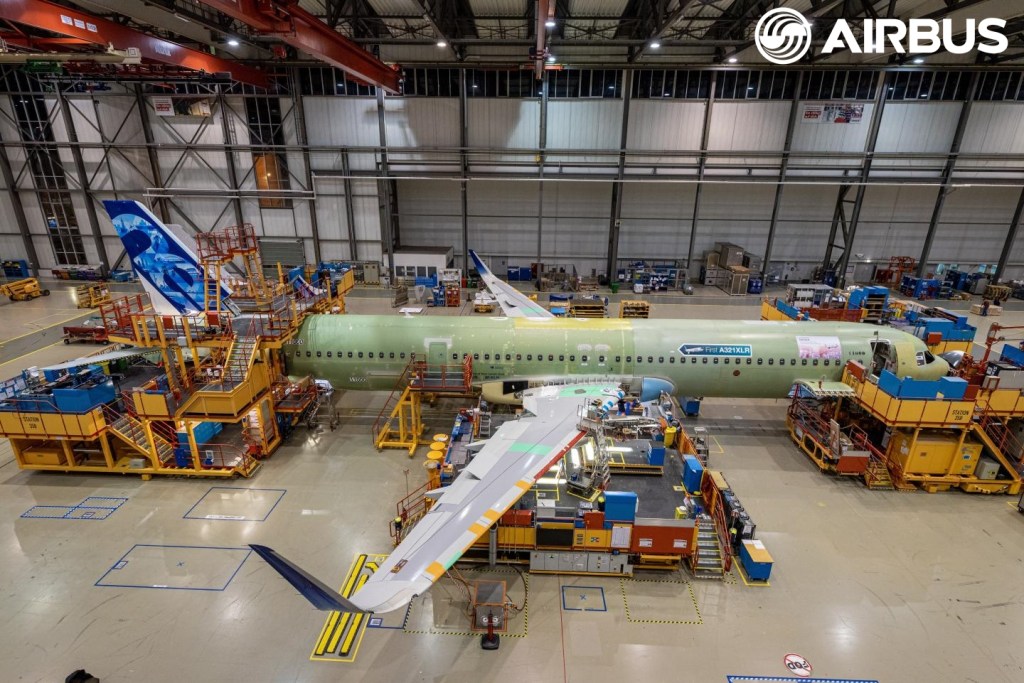
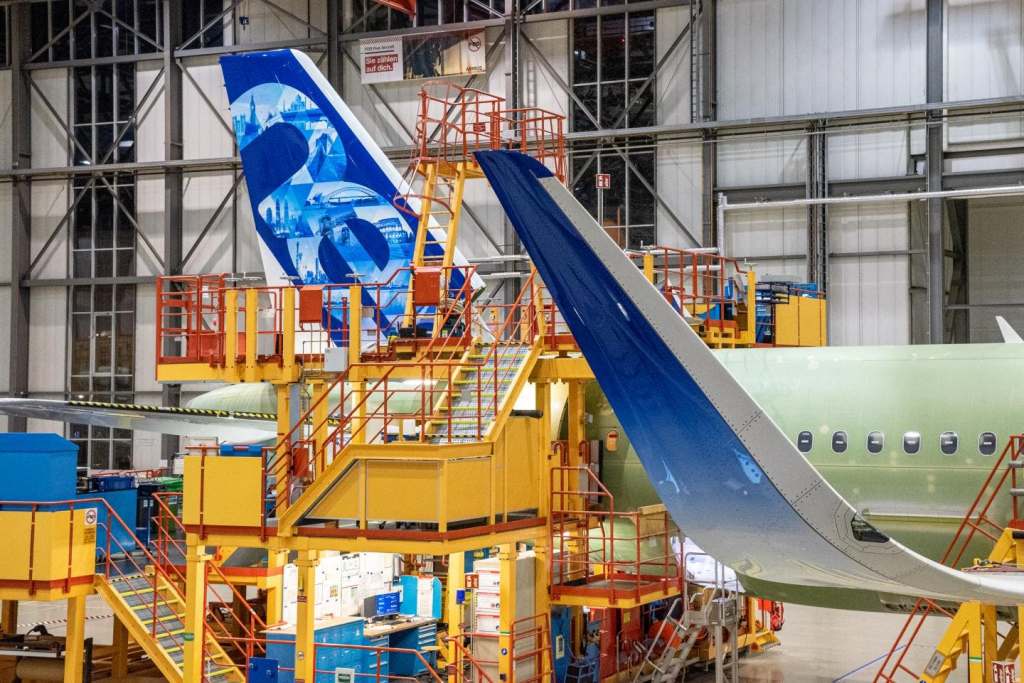
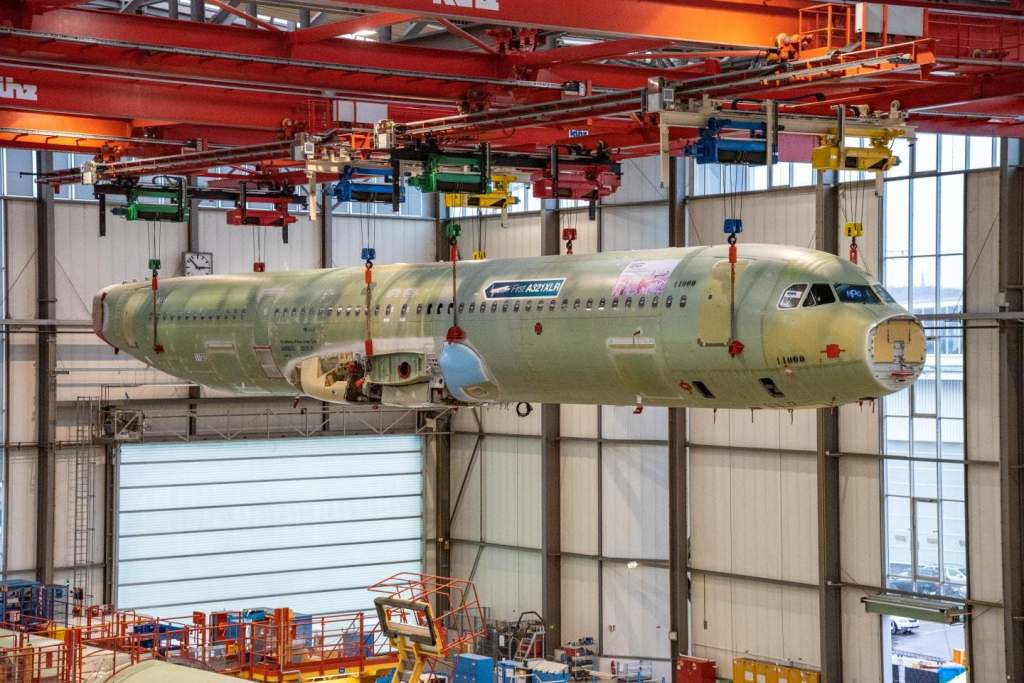
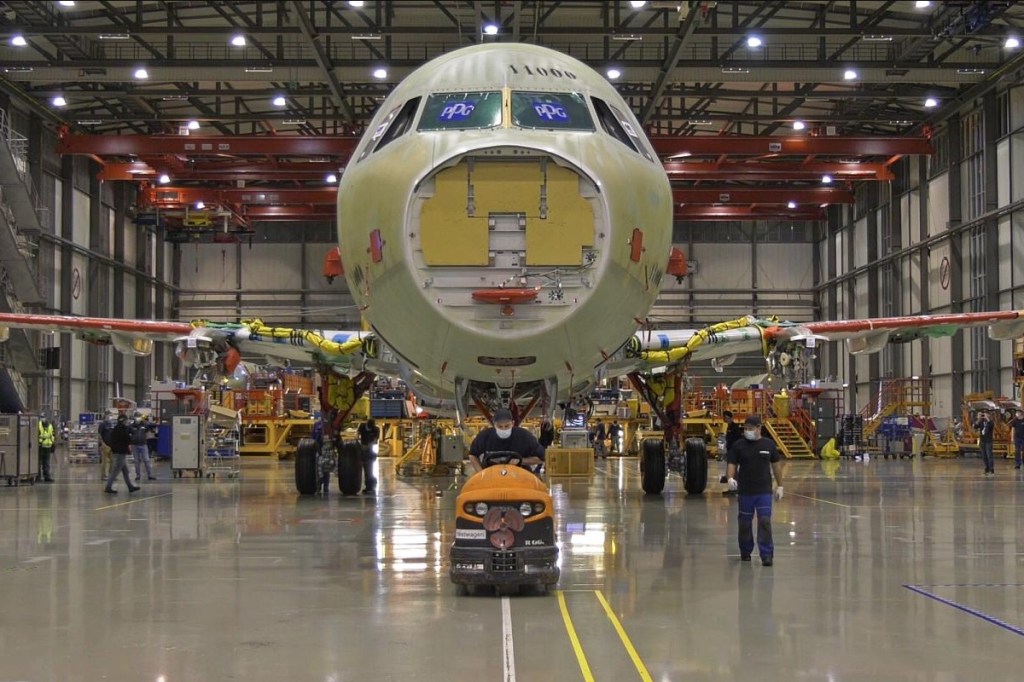
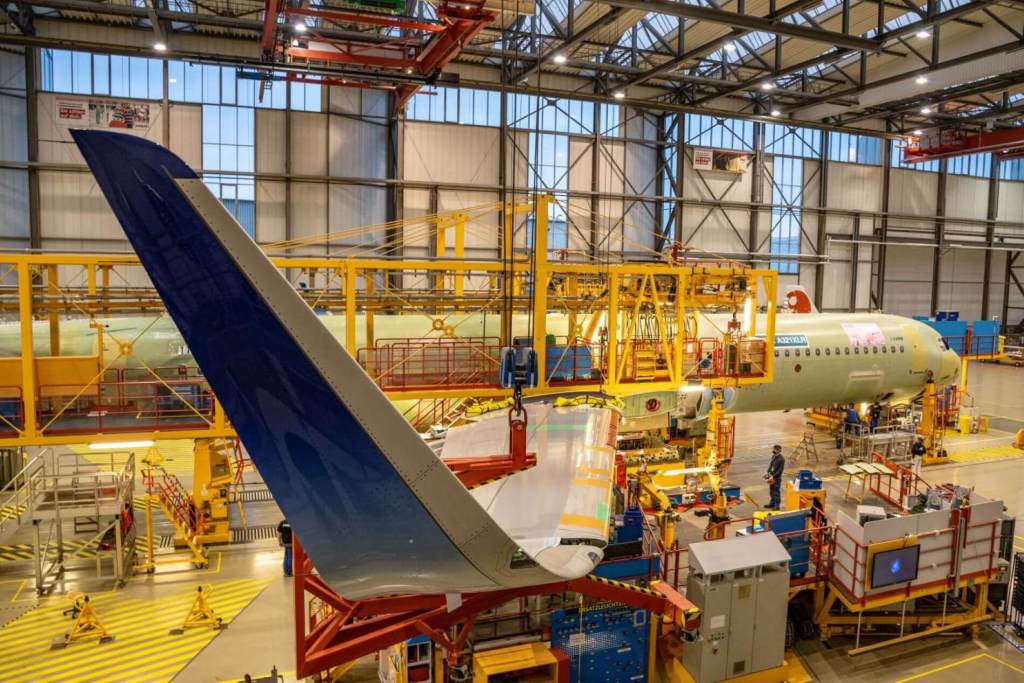
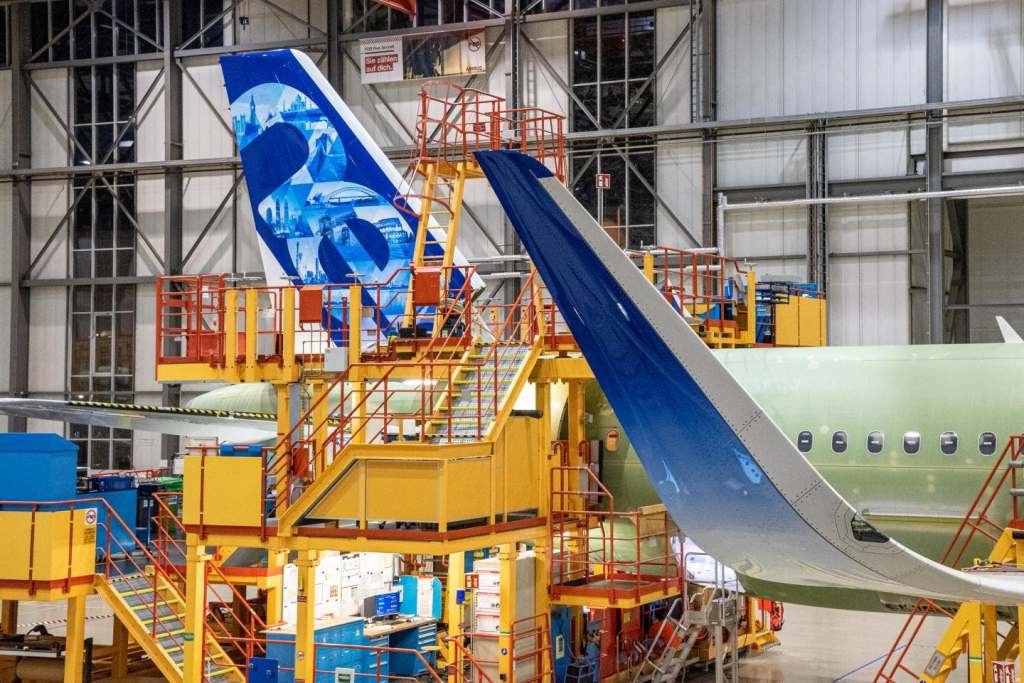
Airbus Group ha completado el ensamblaje final estructural del primer ejemplo de prueba del A321XLR después de la entrega de los principales ensamblajes de componentes a tiempo a su Línea de Ensamblaje Final (FAL) de Hamburgo, Alemania, el mes pasado. Mientras que otras ubicaciones de Airbus FAL eventualmente producirán los aviones de cuerpo estrecho de largo alcance, la compañía ha elegido Hamburgo para pilotar la nueva variante A320NEO en producción en serie, comenzando con los tres aviones de prueba de vuelo de desarrollo, ahora en varias etapas de finalización.
«Para la familia A321, hemos comenzado todos los jefes de versiones en Hamburgo y es nuestra intención construir estos aviones también en los otros sitios. Actualmente estamos en camino de que también se entregue el A321XLR de otros GAL de pasillo único. Por lo tanto, es importante que todos los equipos aprendan de la experiencia en Hamburgo para que podamos llevar este conocimiento a las otras instalaciones. Esto es también lo que estamos haciendo con la cabina A320 Family Airspace, que comenzamos en Hamburgo», dijo el Jefe del Programa A320, Michael Menking.
El primer A321XLR entrará en un llamado grupo de trabajo para instalar su suite de Instrumentación de Prueba de Vuelo (FTI), seguida de la instalación de sus motores CFM LEAP y góndolas. Los ingenieros probarán los motores la primera vez, luego el mecanismo de retracción del tren de aterrizaje y los carenados de las puertas, seguidos de una inspección general de la calidad de la aeronave. «En el ensamblaje final del avión A321XLR no hay una gran variación en comparación con los otros aviones A321. Las principales diferencias en el XLR se ven en el ‘pre-FAL’, a nivel de ensamblaje de sección, donde se instala el tanque central trasero, por ejemplo», dijo el Jefe de Flujo de Valor de Airbus A320, Gerd Weber.
Airbus llama al tanque central trasero producido por Premium Aerotec, que contiene 12,900 litros (3,408 galones) de combustible adicional, el «habilitador clave» del rango de 4,700 nm del avión. «Lo que también es específico para este primer avión A321XLR es que hay mucho trabajo de documentación por hacer, especialmente para la instalación de pruebas de vuelo, que es muy diferente de nuestro proceso en serie. Por lo tanto, esto requiere un enfoque especial por parte de todos los equipos para cerrar la documentación y lidiar con cualquier discrepancia», expresó Gerd Weber.
El siguiente paso de producción, la aplicación del esquema de pintura externa de la aeronave, esencialmente completa el avión antes de la entrega a los equipos de prueba de vuelo, que activarán y ejecutarán todos los sistemas, controles de vuelo, motores y la APU a través de una serie de pruebas en tierra, seguidas de carreras de rodaje y primer vuelo el próximo año 2022.
Airbus A321XLR first assembly
Airbus completes structural assembly of the first A321XLR
Airbus Group has completed the final structural assembly of the first test example of the A321XLR after the delivery of major component assemblies on time to its Final Assembly Line (FAL) in Hamburg, Germany, last month. While other Airbus FAL locations will eventually produce the long-range narrow-body aircraft, the company has chosen Hamburg to pilot the new A320NEO variant in series production, starting with the three development flight test aircraft, now in various stages. completion.
«For the A321 family, we have started all the release heads in Hamburg and it is our intention to build these aircraft also at the other sites. We are currently on track for the A321XLR from other single-aisle GALs to be delivered as well. Therefore, it is important that all teams learn from the experience in Hamburg so that we can bring this knowledge to the other facilities. This is also what we are doing with the A320 Family Airspace cabin, which we started in Hamburg», said the Head of the A320 Program, Michael Menking.
The first A321XLR will enter a so-called task force to install its Flight Test Instrumentation (FTI) suite, followed by the installation of its CFM Leap engines and nacelles. Engineers will test the engines the first time, then the landing gear retraction mechanism and door fairings, followed by a general aircraft quality inspection. «In the final assembly of the A321XLR aircraft there is not much variation compared to the other A321 aircraft. The main differences in the XLR are seen in the ‘pre-FAL’, at the section assembly level, where the tank is installed. central rear, for example», said Airbus A320 Head of Value Stream Gerd Weber.
Airbus calls the rear center tank produced by Premium Aerotec, which holds 12,900 liters (3,408 gallons) of additional fuel, the «key enabler» of the aircraft’s 4,700 nm range. «What is also specific to this first A321XLR aircraft is that there is a lot of documentation work to be done, especially for the flight test facility, which is very different from our serial process. Therefore, this requires a special approach by part of all teams to close the paperwork and deal with any discrepancies», said Gerd Weber.
The next production step, the application of the aircraft’s external paint scheme, essentially completes the aircraft prior to delivery to the flight test teams, which will activate and run all systems, flight controls, engines, and the APU to through a series of ground tests, followed by taxi races and first flight next year 2022.
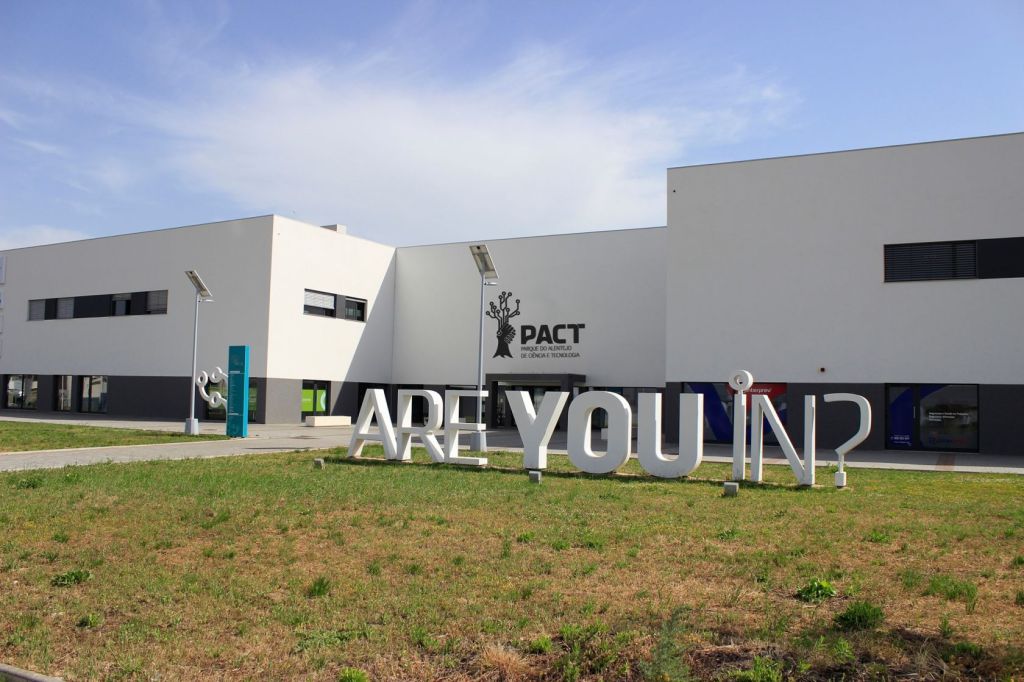
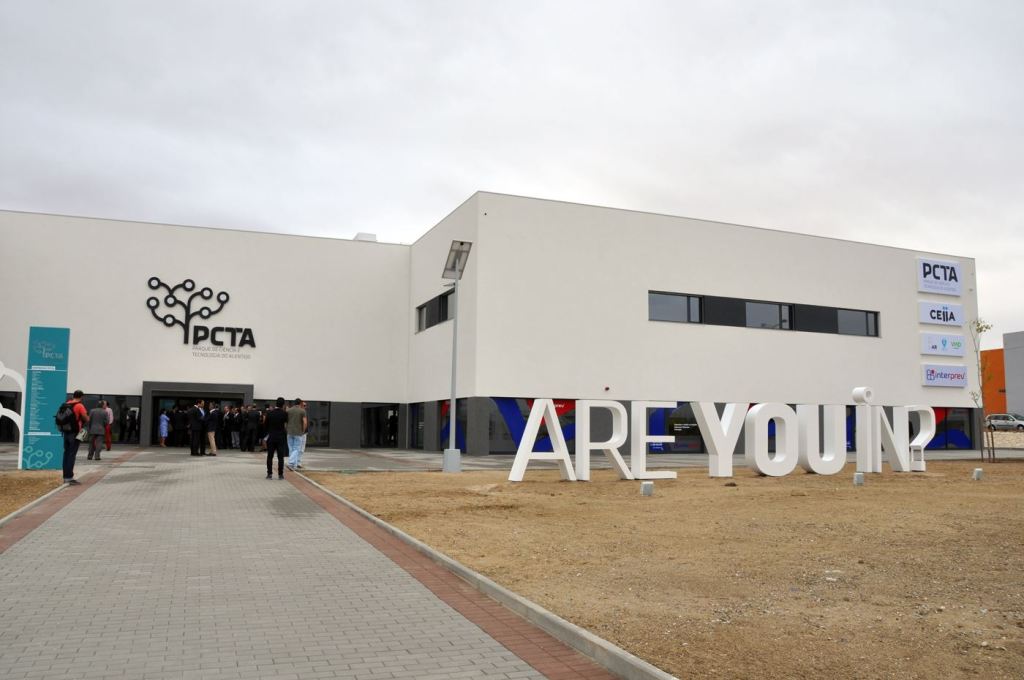
Las obras de ampliación del Parque Científico y Tecnológico del Alentejo (PACT), en Évora, República de Portugal, han comenzado, ayudando a promover la tecnología y la innovación en la región. El Presidente Ejecutivo del parque, Soumodip Sarkar, reveló que la construcción del primer edificio de la 2ª fase del PACT se encuentra en marcha. «Ya hemos comenzado con la construcción de un edificio, pero formalmente, colocaremos la primera piedra el 13 de Diciembre», dijo Soumodip Sarkar, quien también es Vicerrector de la Universidad de Évora (UE).
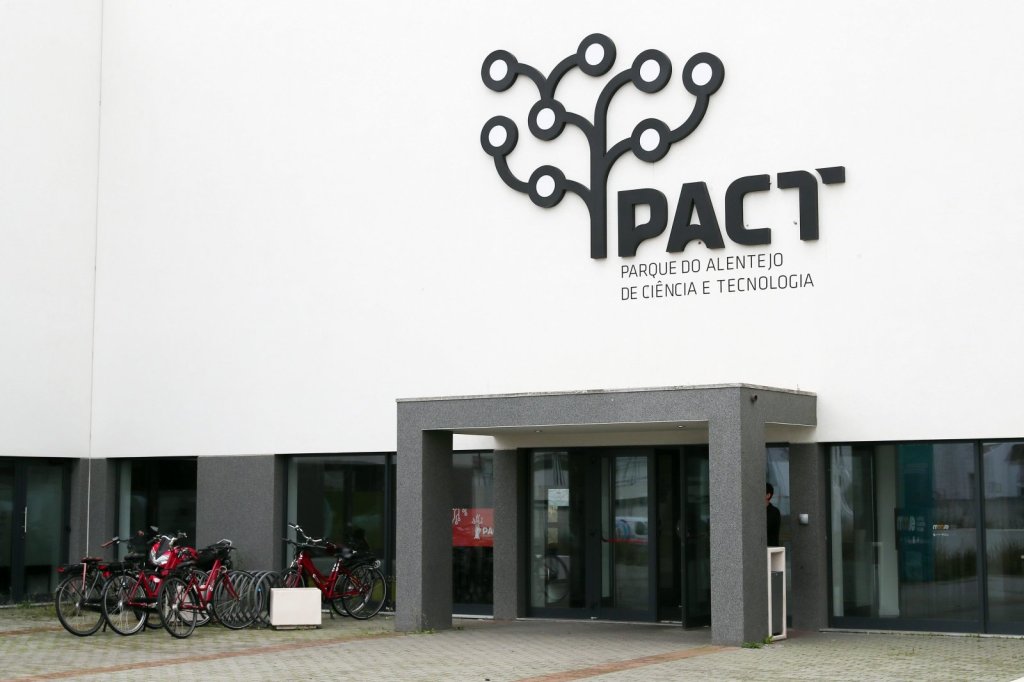
El proyecto, con la firma del Arquitecto Carrilho da Graça, tiene una superficie de 6.100 metros cuadrados e implica la construcción de cuatro nuevos edificios, lo que representa una inversión de «casi € 9 millones de Euros», indicó Soumodip Sarkar. Las nuevas instalaciones se ubicarán en terrenos adyacentes al actual edificio PACT, inaugurado en septiembre de 2015, tras una inversión de 3,6 millones de euros. Según Soumodip Sarkar, la primera fase de PACT es actualmente un éxito, pues no existe espacio para más empresas y el parque continúa recibiendo pedidos de otros que están interesados en venir al interior. Ahora, como parte de la ampliación, la mitad del edificio en construcción está reservado para una empresa, y este proyecto debería finalizar en Mayo de 2022. En cuanto a los otros tres edificios, dado que cuentan con una fuente de financiación diferente, las obras comenzarán en Enero 2022.
El funcionario dijo que cree que, para mediados de 2023, el PACT ya tendrá tres edificios. Las nuevas instalaciones estarán dedicadas a cuatro áreas, una de ellas aeronáutica, debido a la presencia en Évora de empresas como Embraer y Mecachrome y al hecho de que el Alentejo quiere afirmarse como un ‘clúster’ en este sector, con inversiones en otros municipios de la región. Otra área es la salud digital, con la construcción de un nuevo hospital y la posible creación de una Escuela de Medicina en la Ciudad de Évora, dijo Soumodip Sarkar.
Destacando el potencial del Alentejo, que ofrece, por ejemplo, un coste de vida más barato y una calidad de vida muy diferente a la que existe en Lisboa, el funcionario dijo que PACT quiere contribuir a retener a los jóvenes del Alentejo y atraer no solo empresas, sino también familias, de otras partes de Portugal y de Europa. El Alentejo no solo debe entenderse como un hermoso lugar para caminar o una región conocida por su gastronomía: «Tenemos que pensar en el Alentejo tecnológico», argumentó Soumodip Sarkar.
Alentejo investments in technology
Expansion of the PACT in Évora, Portugal
The expansion works of the Alentejo Science and Technology Park (PACT), in Évora, Republic of Portugal, have begun, helping to promote technology and innovation in the region. The Park’s Executive President, Soumodip Sarkar, revealed that the construction of the first building of the 2nd phase of the PACT is underway. «We have already started with the construction of a building, but formally, we will lay the first stone on December 13», said Soumodip Sarkar, who is also Vice Chancellor of the University of Évora (EU).
The project, signed by the architect Carrilho da Graça, has an area of 6,100 square meters and involves the construction of four new buildings, representing an investment of «almost € 9 million Euros», said Soumodip Sarkar. The new facilities will be located on land adjacent to the current PACT building, inaugurated in September 2015, after an investment of € 3.6 million Euros. According to Soumodip Sarkar, the first phase of PACT is currently a success, as there is no room for more companies and the park continues to receive requests from others who are interested in coming to the interior. Now, as part of the expansion, half of the building under construction is reserved for a company, and this project should end in May 2022. As for the other three buildings, given that they have a different source of financing, the works They will begin in January 2022.
The official said he believes that by mid-2023, the PACT will already have three buildings. The new facilities will be dedicated to four areas, one of them aeronautics, due to the presence in Évora of companies such as Embraer and Mecachrome and the fact that Alentejo wants to establish itself as a ‘cluster’ in this sector, with investments in other municipalities of the region. Another area is digital health, with the construction of a new hospital and the possible creation of a School of Medicine in the City of Évora, said Soumodip Sarkar.
Highlighting the potential of the Alentejo, which offers, for example, a cheaper cost of living and a quality of life very different from what exists in Lisbon, the official said that PACT wants to contribute to retain the young people of Alentejo and attract not only companies, but also families, from other parts of Portugal and Europe. The Alentejo should not only be understood as a beautiful place to walk or a region known for its gastronomy: «We have to think about the technological Alentejo», argued Soumodip Sarkar.
Investimentos do Alentejo em tecnologia
Expansão do PACT em Évora, Portugal
Já foram iniciadas as obras de expansão do Parque de Ciência e Tecnologia do Alentejo (PACT), em Évora, República de Portugal, ajudando a promover a tecnologia e a inovação na região. O Presidente Executivo do Parque, Soumodip Sarkar, revelou que está em curso a construção do primeiro edifício da 2ª fase do PACT. “Já iniciamos a construção de um edifício, mas formalmente colocaremos a primeira pedra no dia 13 de Dezembro”, disse Soumodip Sarkar, que também é vice-reitor da Universidade de Évora (UE).
O projecto, assinado pelo arquitecto Carrilho da Graça, tem uma área de 6.100 metros quadrados e envolve a construção de quatro novos edifícios, representando um investimento de “quase € 9 milhões de Euros”, disse Soumodip Sarkar. As novas instalações ficarão localizadas em terrenos adjacentes ao atual edifício PACT, inaugurado em setembro de 2015, após um investimento de € 3,6 milhões de Euros. Segundo Soumodip Sarkar, a primeira fase do PACT hoje é um sucesso, pois não há espaço para mais empresas e o parque continua recebendo pedidos de outros interessados em vir para o interior. Agora, como parte da ampliação, metade do prédio em construção está reservado para uma empresa, e essa obra deve terminar em Maio de 2022. Quanto aos outros três prédios, por terem uma fonte de financiamento diferente, as obras Eles vão. começar em Janeiro de 2022.
O responsável disse acreditar que, até meados de 2023, o PACT já terá três edifícios. Las nuevas instalaciones estarán dedicadas a cuatro áreas, una de ellas aeronáutica, debido a la presencia en Évora de empresas como Embraer y Mecachrome y al hecho de que el Alentejo quiere afirmarse como un ‘clúster’ en este sector, con inversiones en otros municipios de a região. Outra área é a saúde digital, com a construção de um novo hospital e a possível criação de uma Faculdade de Medicina na Cidade de Évora, disse Soumodip Sarkar.
Destacando o potencial do Alentejo, que oferece, por exemplo, um custo de vida mais barato e uma qualidade de vida muito diferente do que existe em Lisboa, o responsável disse que o PACT quer contribuir para reter os jovens alentejanos e não só atrair empresas, mas também famílias, de outras partes de Portugal e da Europa. O Alentejo não deve ser entendido apenas como um belo local para passear ou uma região conhecida pela sua gastronomia: “Temos que pensar no Alentejo tecnológico”, defendeu Soumodip Sarkar.
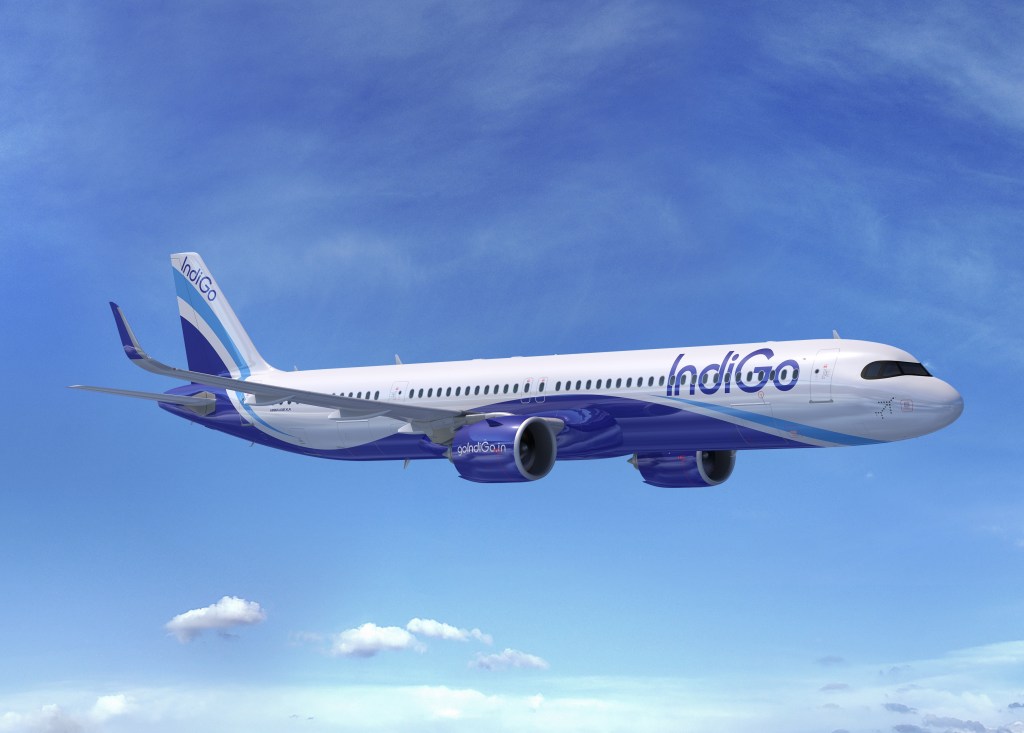
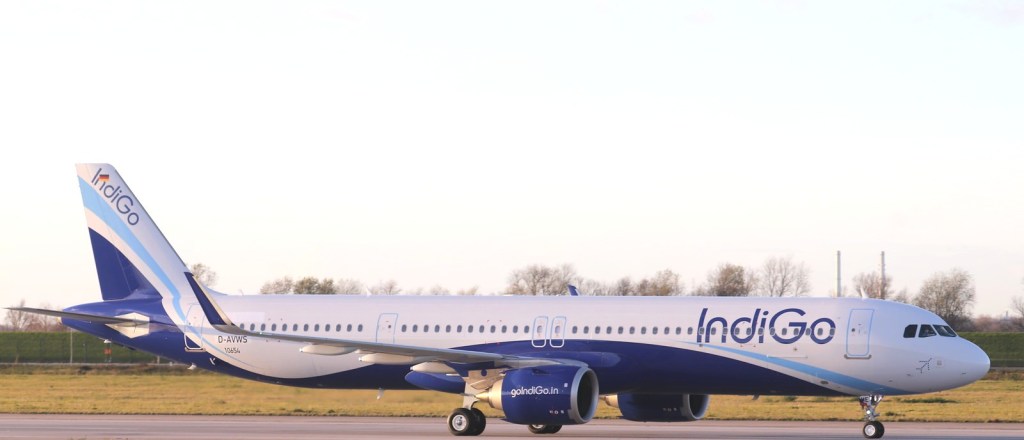
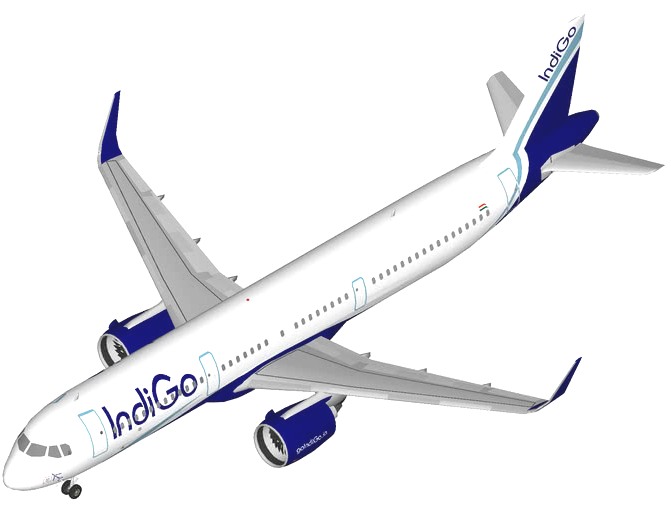
IndiGo de la India ha tomado entrega este Martes 30/11 del avión número 2.000 de la familia Airbus A320NEO. El avión que marca un hito en la familia de aeronaves narrobodies representa un Airbus A321NEO con registro industrial MSN10654 que ha sido producido y entregado en Hamburgo, Alemania. La nueva aeronave posee su registro de prueba D-AVWS, mientras que migrará a su actual matrícula india VT-IME.
Ronojoy Dutta, Director Ejecutivo de IndiGo, ha expresado sus palabras en el hito especial: «IndiGo fue temprano para reconocer la eficiencia de combustible y el rendimiento de la familia A320NEO, lo que resultó en grandes pedidos de aviones de la familia New Engine Option. La visión no era solo aumentar la eficiencia, sino también la sostenibilidad de la flota. IndiGo recibió el avión número 1.000 de la familia A320NEO producido en 2019 y solo dos años después está recibiendo la entrega de los 2.000ésimo aviones. La inducción continua de aviones de la familia A320NEO a pesar de los desafíos de la crisis de salud mundial es un testimonio del compromiso implacable de la aerolínea con la aviación sostenible».
IndiGo, tras dos años después de recibir el avión de la familia A320NEO número 1.000 en 2019, la aerolínea de bajo costo india puede afirmar con orgullo que ha recibido el avión número 2.000 marcando otro hito impresionante en la línea de la aeronave bestseller del mercado narrowbodies. Teniendo lugar el martes 30 de Noviembre de 2021, la aerolínea hizo el anuncio el 2 de Diciembre de 2021, señalando que este avión en particular es el miembro más largo de la familia A320NEO, el A321NEO. Según AIB Family Flights, MSN 10654 se vio por primera vez a principios de Octubre de 2021. En ese momento, el avión estaba sin sus motores. Entre los días 17 y 19 de Noviembre de 2021, el avión fue visto realizando controles de taxis y RTO (Despegues Rechazados/Rejected Takeoff) en las instalaciones de Airbus Group en Hamburgo/Finkenwerder, mientras que el 22/11 se realizó una verificación de cilindramiento y taxi. Curiosamente, hasta la fecha, no se han registrado datos de vuelo de prueba para este avión.
Airbus delivers #2000 A320NEO-family
Indigo takes delivery of an Airbus A321NEO
IndiGo of India has taken delivery this Tuesday 11/30 of the aircraft number 2,000 of the Airbus A320NEO family. The milestone aircraft in the narrobodies family of aircraft represents an Airbus A321NEO with industrial registration MSN10654 that has been produced and delivered in Hamburg, Germany. The new aircraft has its D-AVWS test registration, while it will migrate to its current Indian VT-IME registration.
Ronojoy Dutta, Chief Executive Officer of IndiGo, has expressed his words at the special milestone: «IndiGo went early to recognize the fuel efficiency and performance of the A320NEO family, resulting in large orders for New Engine Option family aircraft. The vision was not only to increase efficiency, but also the sustainability of the fleet. IndiGo received the 1,000th aircraft of the A320NEO family produced in 2019 and only two years later is receiving delivery of the 2,000th aircraft. Continuous induction of aircraft of the A320NEO family despite the challenges of the global health crisis is a testament to the airline’s relentless commitment to sustainable aviation».
IndiGo, two years after receiving the 1,000th A320NEO family aircraft in 2019, the Indian low-cost carrier can proudly claim to have received the 2,000th aircraft marking another impressive milestone in the narrowbodies market bestseller aircraft lineup. Taking place on Tuesday, November 30, 2021, the airline made the announcement on December 2, 2021, noting that this particular aircraft is the longest member of the A320NEO family, the A321NEO. According to AIB Family Flights, MSN 10654 was first seen in early October 2021. At the time, the plane was without its engines. Between November 17 and 19, 2021, the plane was seen carrying out taxi and RTO (Rejected Takeoff) checks at the Airbus Group facilities in Hamburg/Finkenwerder, while on 11/22 a cylinder and taxi check was carried out. Interestingly, to date, no test flight data has been recorded for this aircraft.
AW | 2021 12 03 13:16 | INDUSTRY / AVIATION TECHNOLOGY
Pratt & Whitney GTP construye nuevo motor para línea A320
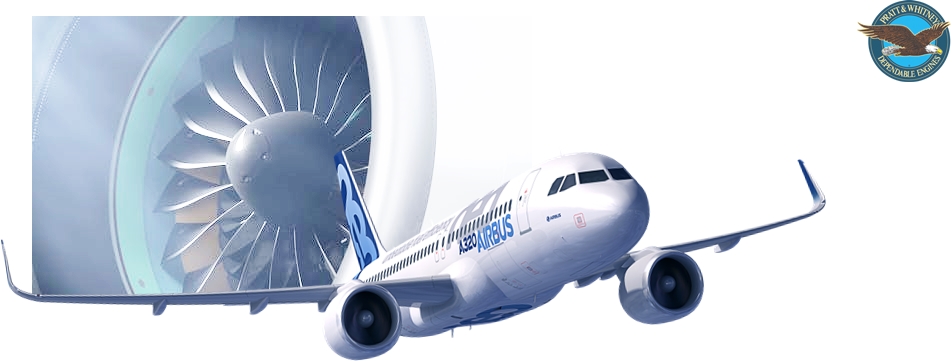
Pratt & Whitney (P&W) está construyendo una nueva versión de su motor a reacción de próxima generación a medida que Airbus Group mira hacia un futuro post-pandemia. El fabricante de motores a reacción Pratt & Whitney dijo el Jueves 02/11 que está lanzando una nueva versión de su motor turbofan GTF Advantage con engranajes de próxima generación para la familia Airbus A320NEO, su mayor cliente comercial, mientras el fabricante de aviones europeo se proyecta con un aumento de la producción en línea.
El GTF Advantage se basa en el motor turbofan con engranajes que ha estado en servicio durante cinco años y aumenta el ahorro de combustible en un 1%, a una reducción del 17% en el consumo de combustible y las emisiones de CO2 en comparación con los motores de la generación anterior, dijo la compañía a los periodistas en una reunión de medios en su sitio de East Hartford.
Pratt & Whitney registra un aumento de ventas del 25% en el tercer trimestre a medida que la aviación comercial se recupera de los efectos de la pandemia. Las aerolíneas están bajo presión para reducir las emisiones de carbono. Desde su lanzamiento en 2016, los motores GTF han ahorrado más de 600 millones de galones de combustible al tiempo que reducen las emisiones de carbono en más de 6 millones de toneladas métricas, dijo Pratt & Whitney. «Esto continuará multiplicándose y GTF Advantage es el siguiente paso para nosotros», dijo Tom Pelland, Vicepresidente Senior de GTF Programs.
El motor, que estará disponible hacia Enero de 2024, será compatible con combustible de aviación 100% sostenible cuando comience a servicio. La industria ha establecido un cronograma para 2050 para lograr cero emisiones netas. La aviación mundial genera alrededor del 2% de todas las emisiones de dióxido de carbono inducidas por el hombre, según el Air Transport Action Group, una asociación de la industria. La aviación es responsable del 12% de las emisiones de CO2 de todas las fuentes de transporte, en comparación con el 74% de los automóviles y camiones, dijo el grupo.
Airbus dijo a los proveedores en Mayo 2021 que está buscando producir 45 de sus populares aviones de fuselaje estrecho A320 al mes a fines de este año y pidió una tasa de 64 para mediados de 2023. Está pidiendo a los proveedores 70 al mes para principios de 2024. «A más largo plazo, Airbus está investigando oportunidades para tasas tan altas como 75 para 2025», dijo el fabricante de Toulouse, Francia. «El sector de la aviación está comenzando a recuperarse de la crisis de COVID-19. El mensaje a nuestra comunidad de proveedores proporciona visibilidad a todo el ecosistema industrial para asegurar las capacidades necesarias y estar listos cuando las condiciones del mercado lo requieren», dijo el Director Ejecutivo Guillaume Faury en Mayo 2021.
United Technologies Corp., la anterior empresa matriz de Pratt & Whitney, invirtió US$ 10 mil millones en veinte años para diseñar y construir el motor turbofan con engranajes que se instaló por primera vez en las flotas de aerolíneas en 2016. Christopher Calio, Presidente de Pratt & Whitney, dijo que la compañía no está revelando cuánto se ha gastado para desarrollar GTF Advantage. United Technologies se renombró el año pasado como Raytheon Technologies Corp., un fabricante de aviación y defensa con sede en Massachusetts, Estados Unidos.
Pratt & Whitney compite con CFM International, co-propiedad de la francesa Safran SA y General Electric Company, que lidera la cuota de mercado en el programa A320. Pratt & Whitney espera que GTF Advantage ayude a aumentar la cartera de pedidos del fabricante y mantenga o mejore su cuota de entrega, dijo el Director de Clientes Rick Deurloo.
«Pratt & Whitney no anticipa que la aviación comercial regrese a los niveles de 2019 hasta 2023 o 2024. Con las vacunas generalizadas y el uso de máscaras, esa perspectiva no ha cambiado a pesar de la variante Delta y la amenaza de Omicron más reciente. Independientemente de las noticias sobre esta variante y su virulencia, creo que estamos en un lugar mucho mejor como industria y sociedad para manejar nuestro camino a través de ella», expresó Christofer Calio.
A largo plazo, se proyecta que la flota global de aerolíneas crecerá anualmente en un 4,5%, dijo Geoff Hunt, Ingeniero Jefe de Pratt & Whitney. «La tecnología en la que invertimos hoy va a ser fundamental para el rendimiento de esa flota a mediados de la próxima década. Y, por supuesto, esa flota seguirá en servicio durante 20 años más allá de eso, por lo que es realmente importante que continuemos esta progresión de la tecnología», dijo Geoff Hunt.
PW powerplant upgrade for A320NEO
Pratt & Whitney GTP builds new engine for A320 line
Pratt & Whitney (P&W) is building a new version of its next-generation jet engine as Airbus Group looks to a post-pandemic future. Jet engine maker Pratt & Whitney said Thursday 11/02 that it is rolling out a new version of its next-generation geared GTF Advantage turbofan engine for Airbus A320NEO-family, its largest commercial customer, as the European aircraft maker projects a surge. of online production.
The GTF Advantage is based on the geared turbofan engine that has been in service for five years and increases fuel economy by 1%, to a 17% reduction in fuel consumption and CO2 emissions compared to the Previous-generation engines, the company told reporters at a media meeting at its East Hartford site.
Pratt & Whitney posted a 25% sales increase in the third quarter as commercial aviation recovers from the effects of the pandemic. Airlines are under pressure to cut carbon emissions. Since their launch in 2016, GTF engines have saved more than 600 million gallons of fuel while reducing carbon emissions by more than 6 million metric tons, said Pratt & Whitney. «This will continue to multiply and GTF Advantage is the next step for us», said Tom Pelland, Senior Vice President, GTF Programs.
The engine, which will be available by January 2024, will be compatible with 100% sustainable aviation fuel when it enters service. The industry has set a schedule for 2050 to achieve net zero emissions. Global aviation generates about 2% of all human-induced carbon dioxide emissions, according to the Air Transport Action Group, an industry association. Aviation is responsible for 12% of CO2 emissions from all transportation sources, compared to 74% from cars and trucks, the group said.
Airbus told suppliers in May 2021 that it is looking to produce 45 of its popular A320 narrow-body jets a month by the end of this year and asked for a rate of 64 by mid-2023. It is asking suppliers for 70 a month by the beginning of 2024. «In the longer term, Airbus is investigating opportunities for rates as high as 75 by 2025», said the Toulouse, France-based manufacturer. «The aviation sector is beginning to recover from the COVID-19 crisis. The message to our supplier community provides visibility to the entire industrial ecosystem to secure the necessary capabilities and be ready when market conditions call for it», he said Executive Director Guillaume Faury in May 2021.
United Technologies Corp., the former parent company of Pratt & Whitney, invested US$ 10 billion over twenty years to design and build the geared turbofan engine that was first installed in airline fleets in 2016. Christopher Calio, President of Pratt & Whitney, said the company is not disclosing how much has been spent to develop GTF Advantage. United Technologies rebranded itself last year as Raytheon Technologies Corp., an aviation and defense manufacturer based in Massachusetts, United States.
Pratt & Whitney competes with CFM International, co-owned by France’s Safran SA and General Electric Company, which leads the market share in the A320 program. Pratt & Whitney expects GTF Advantage to help grow the manufacturer’s order book and maintain or improve its delivery quota, said Chief Customer Officer Rick Deurloo.
«Pratt & Whitney does not anticipate that commercial aviation will return to 2019 levels until 2023 or 2024. With widespread vaccines and the use of masks, that perspective has not changed despite the Delta variant and the more recent Omicron threat. Regardless of the news about this variant and its virulence, I think we are in a much better place as an industry and society to handle our way through it», said Christofer Calio.
In the long term, the global airline fleet is projected to grow 4.5% annually, said Geoff Hunt, Chief Engineer at Pratt & Whitney. «The technology we invest in today is going to be critical to the performance of that fleet by the middle of the next decade. And of course, that fleet will remain in service for 20 years beyond that, so it’s really important that Let’s continue this progression of technology», said Geoff Hunt.
Alcanza marca de 500 unidades anuales entregadas actuales
Airbus Group ha anunciado que en Noviembre 2021 ha entregado 85 unidades de aeronaves comerciales, un volumen de colocaciones de aviones semejantes a mediados de los años 50, dijeron el Jueves 02/11 fuentes de la industria.
En Julio 2021, Airbus elevó el objetivo anual a 600 desde al menos 566, pero se ha topado con inconvenientes en la cadena de suministro que afectan especialmente a sus operaciones en Hamburgo, Alemania. El constructor europeo fabricante de aviones comerciales ha alcanzado entre Enero—Octubre 2021 entregas de 460 unidades de una perspectiva anual de 600 aviones. Un portavoz de Airbus se negó a comentar sobre las cifras mensuales antes de que hayan sido auditadas y publicadas. A principios de esta semana Airbus necesitaría acelerar las entregas en Diciembre 2021 después de alcanzar las 500 entregas para el año hasta la fecha actual, a partir del 26 de Noviembre de 2021.
Airbus delivers 85 aircraft 11/2021
It reaches a mark of 500 current units annually delivered
Airbus Group has announced that in November 2021 it has delivered 85 units of commercial aircraft, a volume of aircraft placements similar to the mid-1950s, industry sources said on Thursday 02/11.
In July 2021, Airbus raised the annual target to 600 from at least 566, but has run into supply chain issues that particularly affect its operations in Hamburg, Germany. The European manufacturer of commercial aircraft has reached between January-October 2021 deliveries of 460 units out of an annual outlook of 600 aircraft. An Airbus spokesperson declined to comment on the monthly figures before they have been audited and released. Earlier this week Airbus would need to accelerate deliveries in December 2021 after reaching 500 deliveries for the year to date, starting November 26, 2021.
AW | 2021 12 02 17:28 | AVIATION ORGANISMS / INDUSTRY
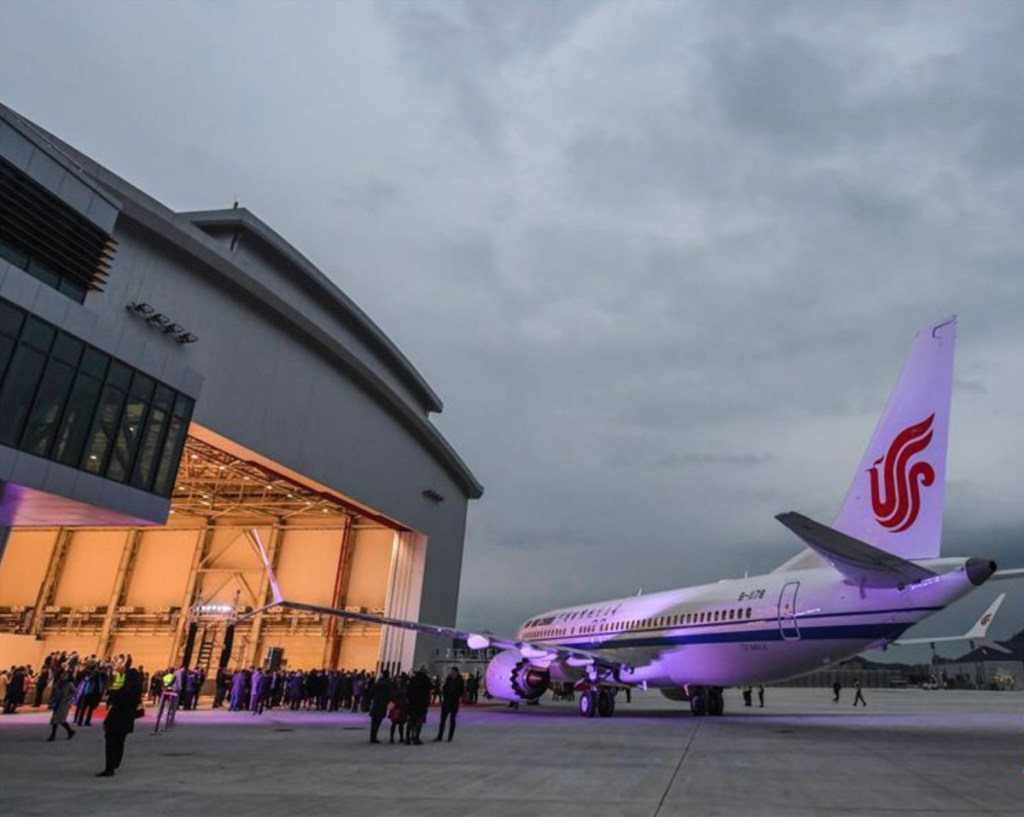
China otorga aeronavegabilidad Boeing 737 MAX
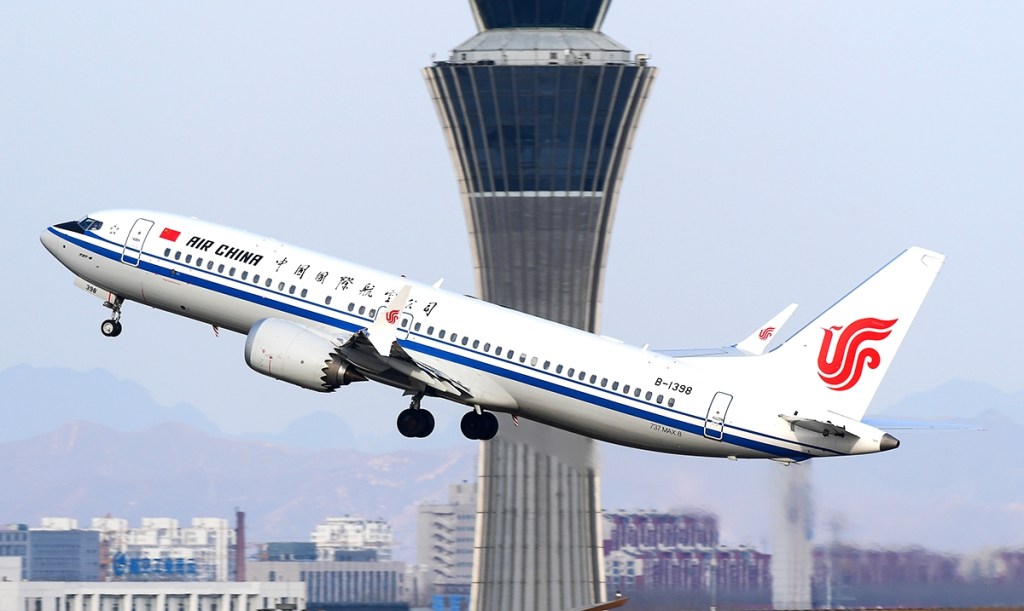
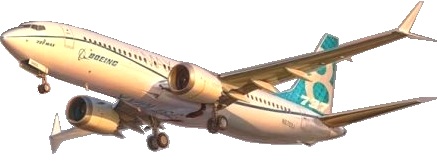
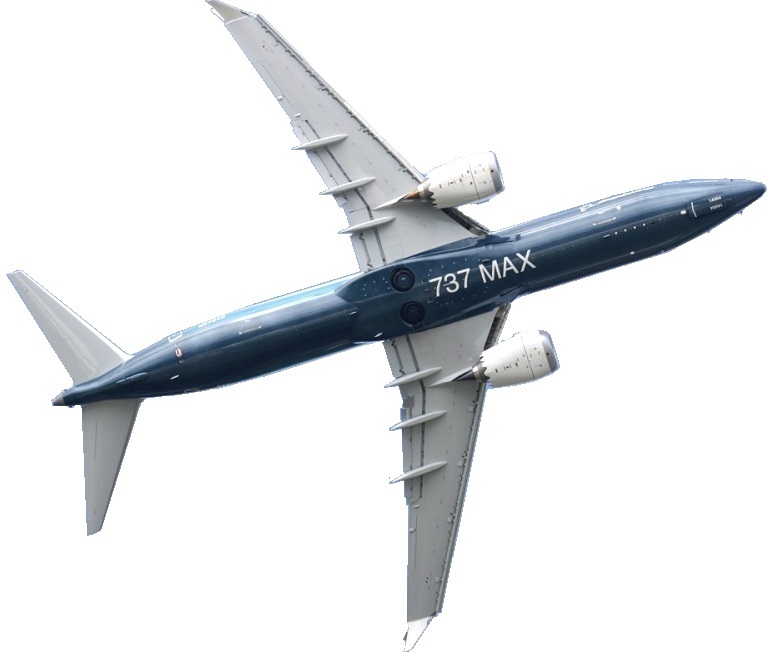
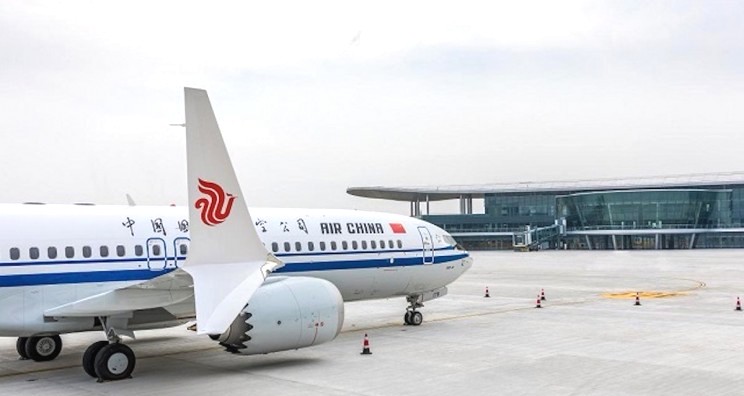
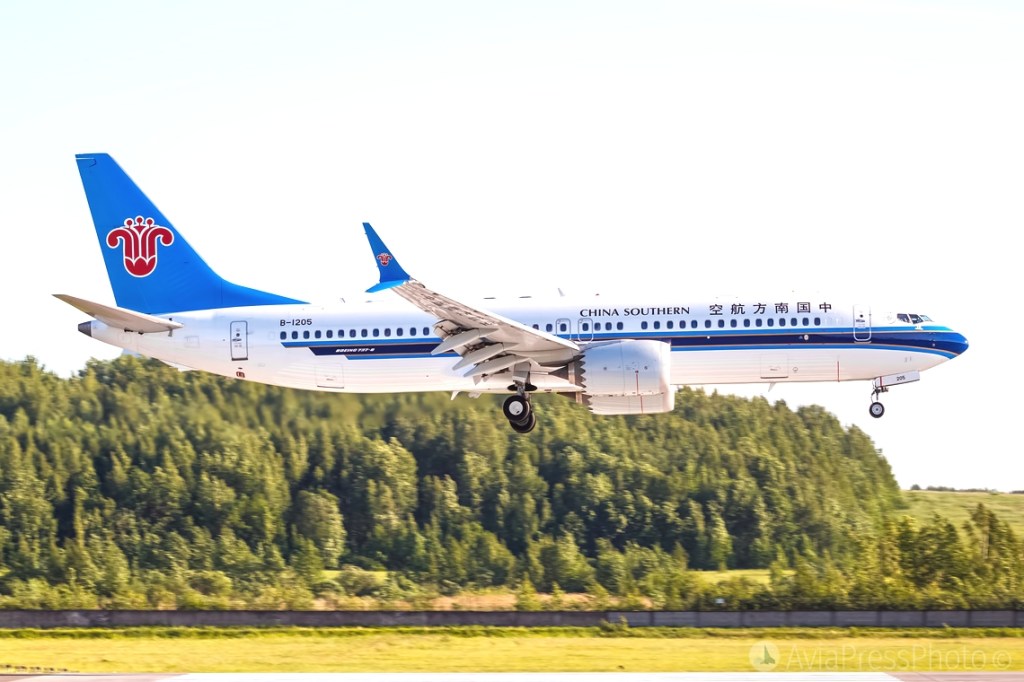
La Administración de Aviación Civil de China (CAAC) ha emitido este Jueves 02/12 una Directiva de Aeronavegabilidad (AD) para las aprobaciones de la línea Boeing 737 MAX. La Directiva de Aeronavegabilidad instruye a las compañías aéreas sobre las revisiones requeridas antes de la vuelta al servicio de los aviones 737 MAX. China no ha especificado cuándo levantará una prohibición del espacio aéreo para el 737 MAX, desde que el modelo ha estado conectado a tierra en China desde Marzo de 2019.
La autoridad de aviación de China emitió el Jueves 2 de Diciembre de 2021 una Directiva de Aeronavegabilidad (AD) sobre la serie Boeing 737 MAX que ayudará a allanar el camino para el regreso del modelo al servicio en China después de más de dos años y medio. Boeing describió la Directiva de Aeronavegabilidad como un hito importante hacia el regreso del servicio en China. La CAAC, que fue el primer regulador a nivel mundial en dejar en tierra el Boeing 737 MAX en Marzo de 2019 después de dos accidentes aéreos, dijo que había completado una revisión de los cambios de diseño propuestos por Boeing. «Después de realizar una evaluación suficiente, CAAC considera que las acciones correctivas son adecuadas para abordar esta condición insegura», dijo el regulador en un comunicado en su sitio web.
«La decisión de la CAAC es un hito importante hacia la devolución segura del 737 MAX al servicio en China. Boeing continúa trabajando con los reguladores y nuestros clientes para devolver el avión al servicio en todo el mundo», dijo Boeing el Jueves 02/12.
La CAAC no ha respondido sobre los próximos pasos requeridos antes de que el Boeing 737 MAX volviera al servicio. El regulador había buscado comentarios de la industria el mes pasado antes de emitir la Directiva de Aeronavegabilidad. Anteriormente ha esbozado tres principios para que el avión regrese al servicio en China, incluidos los cambios de diseño certificados, la capacitación adecuada para los pilotos y los hallazgos específicos y definitivos sobre los dos accidentes.
El CEO de Boeing, David Calhoun, dijo en Octubre 2021 que la compañía estaba trabajando para obtener las aprobaciones chinas para fin de año para que el 737 MAX vuele, y se espera que las entregas se reanuden en el primer trimestre de 2022 (1Q2022). Alrededor de un tercio de los aproximadamente 370 aviones 737 MAX no entregados en almacenamiento son para clientes chinos, dijo Boeing en ese momento.
La autorización de China del 737 MAX es una muy buena noticia, que apoyará la reducción del inventario MAX no entregado, expresó Olivier Andries, de Safran este Jueves 02/12. Actualmente, Safran fabrica motores para los aviones 737 MAX como parte de la empresa conjunta CFM International con General Electric (GE).
Antes de que el 737 MAX fuera inmoterado, Boeing vendía una cuarta parte de los aviones que construía anualmente a compradores chinos, sus mayores clientes. Más allá de las preocupaciones de seguridad, las ventas de Boeing en China se han visto obstaculizadas por las tensiones comerciales entre Estados Unidos y China, y Washington acusó a Beijing de bloquear las compras de aviones Boeing por parte de sus aerolíneas nacionales. Otros países de Asia-Pacífico, incluidos Singapur, Malasia, India, Japón, Australia y Fiji, ya han aprobado la devolución del Boeing 737 MAX.
CAAC awards AD Boeing 737 MAX
China grants Boeing 737 MAX airworthiness
The Civil Aviation Administration of China (CAAC) has issued this Thursday 02/12 an Airworthiness Directive (AD) for the approvals of the Boeing 737 MAX line. The Airworthiness Directive instructs airlines on the required pre-service checks for 737 MAX aircraft. China has not specified when it will lift an airspace ban for the 737 MAX, since the model has been grounded in China since March 2019.
China’s aviation authority issued on Thursday, December 2, 2021, an Airworthiness Directive (AD) on the Boeing 737 MAX series that will help pave the way for the model’s return to service in China after more than two and a half years. Boeing described the Airworthiness Directive as a major milestone towards the return of service in China. The CAAC, which was the first regulator globally to ground the Boeing 737 MAX in March 2019 after two plane crashes, said it had completed a review of Boeing’s proposed design changes. «After conducting a sufficient assessment, CAAC considers that corrective actions are adequate to address this unsafe condition», the regulator said in a statement on its website.
«The CAAC’s decision is an important milestone towards the safe return of the 737 MAX to service in China. Boeing continues to work with regulators and our customers to return the aircraft to service worldwide», Boeing said Thursday 12/02 .
The CAAC has not responded on the next steps required before the Boeing 737 MAX returned to service. The regulator had sought comment from the industry last month before issuing the Airworthiness Directive. He has previously outlined three principles for returning the aircraft to service in China, including certified design changes, proper pilot training, and specific and definitive findings on the two accidents.
Boeing CEO David Calhoun said in October 2021 that the company was working to obtain Chinese approvals by the end of the year for the 737 MAX to fly, with deliveries expected to resume in the first quarter of 2022 (1Q2022). About a third of the roughly 370 737 MAX jets not delivered to storage are for Chinese customers, Boeing said at the time.
The Chinese authorization of the 737 MAX is very good news, which will support the reduction of the MAX undelivered inventory, said Olivier Andries of Safran this Thursday 02/12. Safran currently manufactures engines for the 737 MAX aircraft as part of the CFM International joint venture with General Electric (GE).
Before the 737 MAX was immortalized, Boeing sold a quarter of the planes it built annually to Chinese buyers, its biggest customers. Beyond safety concerns, Boeing’s sales in China have been hampered by trade tensions between the United States and China, and Washington accused Beijing of blocking purchases of Boeing jets by its domestic airlines. Other Asia-Pacific countries, including Singapore, Malaysia, India, Japan, Australia and Fiji, have already approved the return of the Boeing 737 MAX.
CAAC授予AD波音737 MAX
中國授予波音737 MAX適航權
中國民航總局(CAAC)於本週四 02/12 發布了一項適航指令(AD),用於批准波音 737 MAX 系列。適航指令指導航空公司對 波音737 MAX 飛機進行必要的服務前檢查。中國尚未具體說明何時解除 737 MAX 的領空禁令,因為該機型自 2019 年 3 月以來已在中國停飛。
“CAAC 的決定是 737 MAX 安全恢復在中國服務的一個重要里程碑。波音公司將繼續與監管機構和我們的客戶合作,讓飛機在全球範圍內恢復服務”, 波音公司週四 12 月 2 日表示。
民航局尚未對波音 737 MAX 恢復服務前所需的後續步驟做出回應。在發布適航指令之前,監管機構上個月曾徵求過業界的意見。他此前曾概述了將飛機恢復在中國服役的三項原則,包括經過認證的設計變更、適當的飛行員培訓以及對這兩起事故的具體和明確的調查結果。
波音公司首席執行官大衛卡爾霍恩在 2021 年 10 月表示,該公司正努力在年底前獲得中國批准 737 MAX 飛行,預計將在 2022 年第一季度(2022 年第一季度)恢復交付。波音當時表示,在未交付存儲的大約 370 架 737 MAX 噴氣式飛機中,約有三分之一用於中國客戶。
賽峰集團的 Olivier Andries 於本週四 02/12 表示,737 MAX 的中國授權是一個非常好的消息,這將支持 MAX 未交付庫存的減少。作為 CFM 國際與通用電氣 (GE) 合資企業的一部分,賽峰目前為 737 MAX 飛機製造發動機。
在 737 MAX 永垂不朽之前,波音公司每年生產的飛機中有四分之一賣給了中國買家,即其最大的客戶。除了安全問題外,波音在中國的銷售還受到美中貿易緊張局勢的阻礙,華盛頓指責北京阻止其國內航空公司購買波音噴氣式飛機。其他亞太國家,包括新加坡、馬來西亞、印度、日本、澳大利亞和斐濟,已經批准波音 737 MAX 的回歸。
Embraer restablece división Yaborã a su unidad de negocios
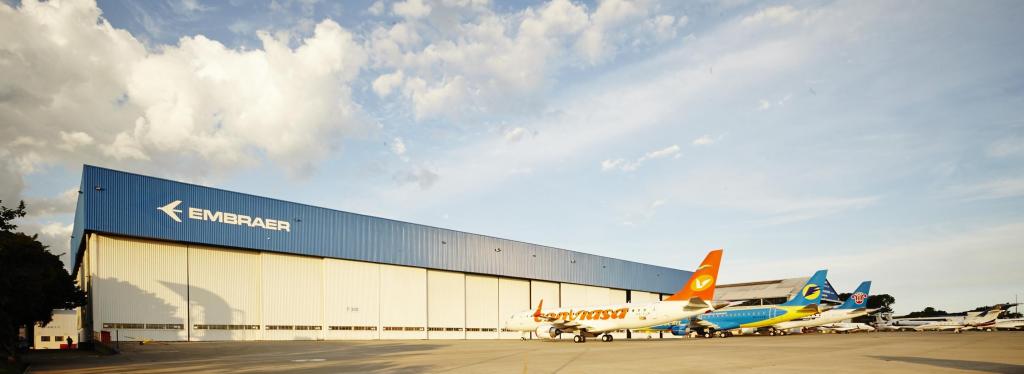
Embraer S.A. anunció que la división parcial de Yaborã Indústria Aeronáutica S.A., con la incorporación de la parte dividida por la compañía, fue aprobada en la Junta General Extraordinaria. La operación es efectiva a partir del 1 de Enero de 2022. Embraer S.A. en cumplimiento de la Resolución CVM 44 y la Instrucción CVM 565, informa a sus accionistas, una Asamblea Extraordinaria de Accionistas, celebrada en primera convocatoria, aprobó la escisión parcial de Yaborã Indústria Aeronáutica S.A., inscrita en el Registro de Contribuyentes (CNPJ/ME) bajo el Nº 30.657.250/0001-60, con transferencia de la porción escindida a Embraer, efectiva a partir del 1 de Enero de 2022.
La Transacción permitirá que el negocio de aviación comercial sea reintegrado por Embraer, lo que será beneficioso para Embraer y, en consecuencia, para sus accionistas, ya que, una vez completada la transacción, el negocio de aviación comercial volverá a ser desarrollado directamente por Embraer, lo que resultará en una reducción de los costos operativos, sistémicos, administrativos y fiscales.
Embraer informa además que la reorganización estructural resultante de la transacción requiere la integración de los sistemas de tecnología de la información de Embraer y Yaborã, que ocurrirá durante el mes de enero de 2022. Durante dicho período, las actividades de la empresa se reducirán, sin perjuicio de la continuidad de sus operaciones esenciales.
Embraer aclara que todos los términos y condiciones de la transacción informados en el Hecho Material de fecha 28 de Octubre de 2021, de conformidad con el Anexo 3 de la Instrucción CVM 565, permanecieron sin cambios. Embraer mantendrá informados a sus accionistas, al mercado en general y a todos sus empleados, proveedores y clientes de cualquier novedad material.
Embraer rejoins Yaborã
Embraer restores Yaborã division to its business unit
Embraer S.A. announced that the partial division of Yaborã Indústria Aeronáutica S.A., with the incorporation of the part divided by the company, was approved at the Extraordinary General Meeting. The operation is effective as of January 1, 2022. Embraer S.A. In compliance with CVM Resolution 44 and CVM Instruction 565, it informs its shareholders that an Extraordinary Shareholders’ Meeting, held on first call, approved the partial spin-off of Yaborã Indústria Aeronáutica SA, registered in the Taxpayers Registry (CNPJ / ME) under No. 30,657,250 / 0001-60, with transfer of the divided portion to Embraer, effective as of January 1, 2022.
The Transaction will allow the commercial aviation business to be reintegrated by Embraer, which will be beneficial to Embraer and, consequently, to its shareholders, since, once the transaction is completed, the commercial aviation business will once again be developed directly by Embraer, which will result in a reduction in operating, systemic, administrative and fiscal costs.
Embraer also informs that the structural reorganization resulting from the transaction requires the integration of the information technology systems of Embraer and Yaborã, which will take place during the month of January 2022. During said period, the company’s activities will be reduced, without detriment to the continuity of its essential operations.
Embraer clarifies that all the terms and conditions of the transaction reported in the Material Event dated October 28, 2021, in accordance with Annex 3 of CVM Instruction 565, remain unchanged. Embraer will keep its shareholders, the market in general and all its employees, suppliers and customers informed of any material news.
Embraer reintegra Yaborã
Embraer restaura divisão Yaborã para sua unidade de negócios
A Embraer S.A. anunciou que foi aprovada em Assembleia Geral Extraordinária a cisão parcial da Yaborã Indústria Aeronáutica S.A., com a incorporação da parte dividida pela empresa. A operação é efetiva a partir de 1º de janeiro de 2022. Embraer S.A. Em atendimento à Deliberação CVM 44 e à Instrução CVM 565, informa aos seus acionistas que em Assembleia Geral Extraordinária, realizada em primeira convocação, foi aprovada a cisão parcial da Yaborã Indústria Aeronáutica SA, inscrita no Cadastro de Contribuintes (CNPJ/ME) sob Nº 30.657.250/0001-60, com transferência da parcela fracionada para a Embraer, com vigência a partir de 1 de Janeiro de 2022.
A Transação permitirá que o negócio de aviação comercial seja reintegrado pela Embraer, o que será benéfico para a Embraer e, conseqüentemente, para seus acionistas, uma vez que, uma vez concluída a transação, o negócio de aviação comercial voltará a ser desenvolvido diretamente pela Embraer, o que resultará na redução dos custos operacionais, sistêmicos, administrativos e fiscais.
A Embraer informa ainda que a reorganização estrutural decorrente da transação requer a integração dos sistemas de informática da Embraer e da Yaborã, que ocorrerá durante o mês de Janeiro de 2022. Nesse período, as atividades da empresa serão reduzidas, sem prejuízo do continuidade de suas operações essenciais.
A Embraer esclarece que todos os termos e condições da operação informados em Fato Relevante datado de 28 de Outubro de 2021, conforme Anexo 3 da Instrução CVM 565, permanecem inalterados. A Embraer manterá seus acionistas, o mercado em geral e todos os seus funcionários, fornecedores e clientes informados sobre qualquer notícia relevante.
Startup encomienda pedido por familia aeronaves europeas
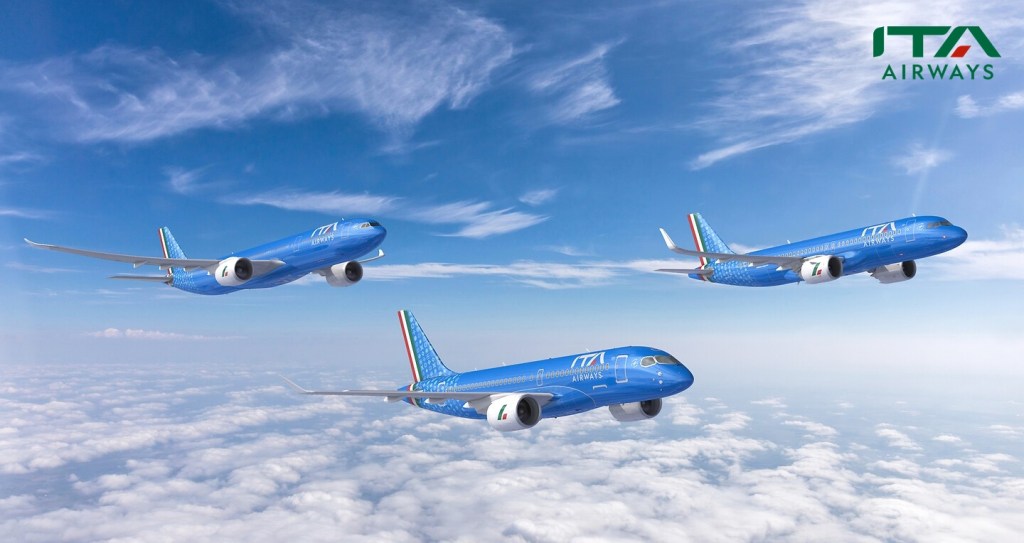
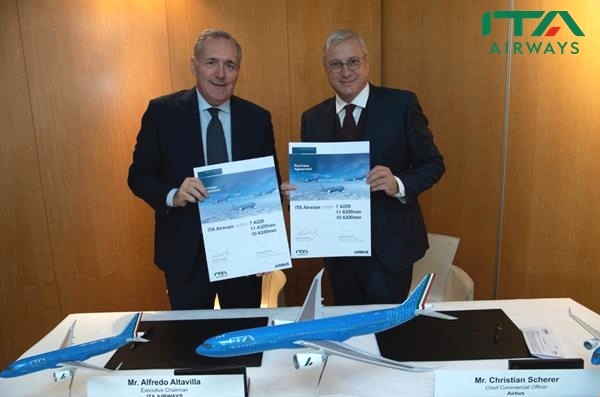
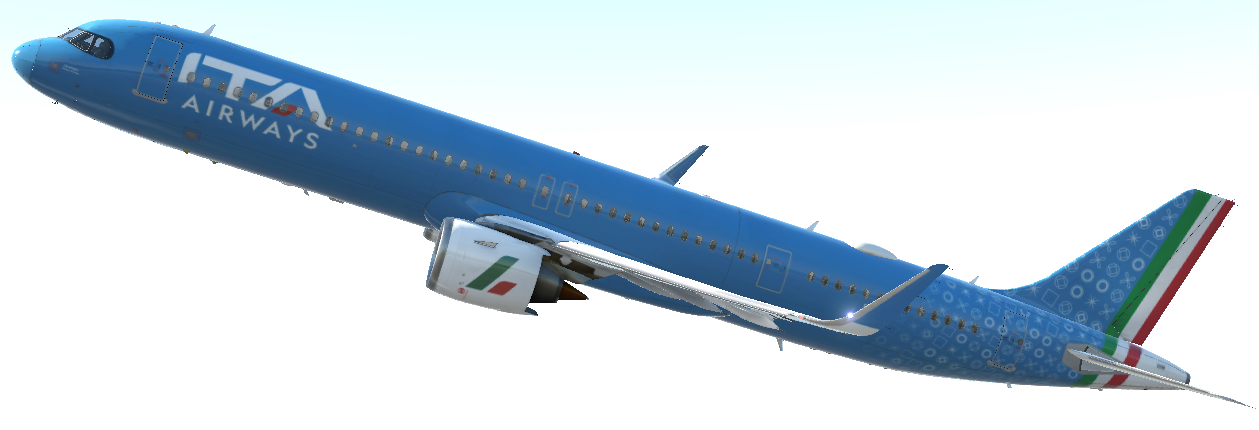
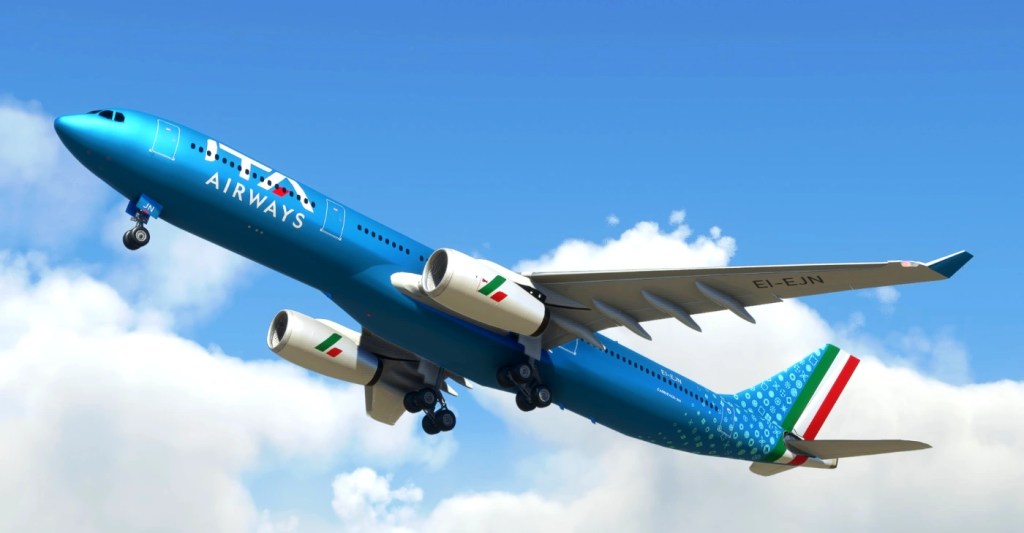
La nueva aerolínea italiana ITA Airways ha confirmado este Miércoles 01/12 un pedido con Airbus Group por veintiocho (28) aviones nuevos de fábrica desarrollando así los primeros pedidos formulados al constructor europeo de aeronaves comerciales. El pedido inicial representa una orden por siete Airbus A220 (7), once A320NEO (11) y diez A330NEO (10), seguido de un Memorando de Entendimiento (MoU) anunciado a finales de Septiembre 2021. El pedido complementario contempla además el incorporación de la línea Airbus A350 que representará el avión de mayor tamaño de la flota de la nueva compañía aérea italiana.
La firma de un pedido en firme con Airbus Group por veintiocho unidades viene a consolidar la posición de la startup italiana en busca de un mercado post-pandemia, estandarizando su flota hacia el constructor europeo. El MoU de 07/2021 contemplaba la adquisición de aeronaves del modelo Airbus en la flota de la aerolínea, mientras que complementarán la flota existente de la heredada aerolínea Alitalia de cincuenta y dos (52) aviones. ITA Airways ha concluido recientemente un acuerdo con Air Lease Corp. (ALC) para arrendar trece (13) aviones adicionales que incluyen aeronaves narrowbodies y los widebodies A350-900, aunque no se han precisados las cantidades solicitadas.
Alfredo Altavilla, Presidente Ejecutivo de ITA Airways, comentó sobre el acuerdo avanzado con Airbus Group: «Hoy, la asociación estratégica con Airbus da un importante paso adelante con la finalización del pedido que anunciamos el pasado mes de septiembre. Además de este acuerdo, han surgido posibilidades de una mayor colaboración, en particular en lo que respecta a los desarrollos tecnológicos en el sector de la aviación y la digitalización, donde Airbus es el líder del mercado. Todo ello forma parte de las acciones para alcanzar nuestros objetivos de sostenibilidad medioambiental».
Estos nuevos aviones ampliarán la flota inicial de ITA Airways con un avión de nueva generación con un mejor desempeño ambiental, equipado con las últimas tecnologías y cabinas de última generación para garantizar la máxima eficiencia operativa para la aerolínea y la mejor comodidad para los viajeros.
El A220 es el único avión construido específicamente para el mercado de 100-150 asientos y reúne aerodinámica de última generación, materiales avanzados y motores turbofan con engranajes de última generación de Pratt & Whitney. Con un alcance de hasta 3.450 nm (6.390 km), el A220 ofrece a las aerolíneas una mayor flexibilidad operativa. El A220 ofrece hasta un 25% menos de consumo de combustible y emisiones de CO2 por asiento en comparación con los aviones de la generación anterior, y un 50% menos de emisiones de NOx que los estándares de la industria. Además, la huella de ruido de la aeronave se reduce en un 50% en comparación con los aviones de la generación anterior, lo que hace que el A220 sea un buen vecino alrededor de los aeropuertos.
La familia A320NEO es la familia de aviones más exitosa de la historia y muestra una tasa de confiabilidad operativa del 99,7%. El A320NEO proporciona a los operadores una reducción del 20% en el consumo de combustible y las emisiones de CO2: la familia A320NEO incorpora las últimas tecnologías, incluidos motores de nueva generación y dispositivos de punta de ala Sharklet. La familia A320NEO de Airbus ofrece un confort inigualable en todas las clases y los asientos de 18 pulgadas de ancho de Airbus en clase económica de serie.
El Airbus A330NEO es un verdadero avión de nueva generación, que se basa en características populares para la familia A330 y se ha orientado a la última tecnología A350. Equipado con una atractiva cabina Airspace, el A330NEO ofrece una experiencia única para los pasajeros con los sistemas de entretenimiento y conectividad a bordo de última generación. Impulsado por los últimos motores Rolls-Royce Trent 7000, y con un nuevo ala con mayor envergadura y winglets inspirados en el A350, el A330NEO también proporciona un nivel de eficiencia sin precedentes, con un 25% menos de consumo de combustible por asiento que los competidores de la generación anterior. Gracias a su capacidad de tamaño medio a medida y su excelente versatilidad de alcance, el A330NEO se considera el avión ideal para apoyar a los operadores en su recuperación posterior a COVID-19.
Flota existente
La aerolínea ITA Airways posee actualmente una flota activa de dieciocho A319 (18), veintisiete A320-200CEO (27) y siete A330-200 (7). El comunicado de Airbus afirma que «estos nuevos aviones Airbus ampliarán la flota inicial de ITA Airways con un avión de nueva generación con un mejor rendimiento ambiental». ITA Airways contempla ampliar la flota en el corto plazo; mientras que en el mediano/largo plazo permitirá una renovación y actualización más completa de la flota Airbus.
Airbus, gana a ITA Airways
Para Airbus Group representa toda una victoria de dar continuidad a una aerolínea de bandera europea en Italia. Christian Scherer, Director Comercial de Airbus y Director de Airbus International, señaló: «Estamos muy orgullosos de asociarnos con ITA Airways en la construcción de su futuro a largo plazo con los aviones Airbus más eficientes y de última tecnología. Este acuerdo respalda los objetivos comerciales de ITA Airways para desarrollar su red en Europa e internacionalmente de la manera más sostenible».
ITA Airways signs order 28 Airbus
Startup entrusts order by European aircraft family
The new Italian airline ITA Airways has confirmed this Wednesday 01/12 an order with Airbus Group for twenty-eight (28) new factory aircraft, thus developing the first orders made to the European manufacturer of commercial aircraft. The initial order represents an order for seven Airbus A220 (7), eleven A320NEO (11) and ten A330NEO (10), followed by a Memorandum of Understanding (MoU) announced at the end of September 2021. The complementary order also includes the incorporation of the Airbus A350 line that will represent the largest aircraft in the fleet of the new Italian airline.
The signing of a firm order with Airbus Group for twenty-eight units consolidates the position of the Italian startup in search of a post-pandemic market, standardizing its fleet towards the European manufacturer. The 07/2021 MoU contemplated the acquisition of Airbus model aircraft in the airline’s fleet, while complementing the legacy airline Alitalia’s existing fleet of fifty-two (52) aircraft. ITA Airways has recently concluded an agreement with Air Lease Corp. (ALC) to lease an additional thirteen (13) aircraft including narrowbodies and the A350-900 widebodies, although the amounts requested have not been specified.
Alfredo Altavilla, Executive Chairman of ITA Airways, commented on the advanced agreement with Airbus Group: «Today, the strategic partnership with Airbus takes an important step forward with the completion of the order that we announced last September. In addition to this agreement, they have Possibilities for further collaboration have emerged, particularly with regard to technological developments in the aviation sector and digitization, where Airbus is the market leader. All of this is part of the actions to achieve our environmental sustainability goals».
These new airbusos aircraft will expand ITA Airways’ initial fleet with a new generation aircraft with better environmental performance, equipped with the latest technologies and state-of-the-art cabins to ensure maximum operational efficiency for the airline and the best comfort for travelers.
The A220 is the only aircraft built specifically for the 100-150 seat market and brings together state-of-the-art aerodynamics, advanced materials and state-of-the-art geared turbofan engines from Pratt & Whitney. With a range of up to 3,450 nm (6,390 km), the A220 offers airlines greater operational flexibility. The A220 offers up to 25% lower fuel consumption and CO2 emissions per seat compared to previous generation aircraft, and 50% lower NOx emissions than industry standards. Additionally, the aircraft’s noise footprint is reduced by 50% compared to previous generation aircraft, making the A220 a good neighbor around airports.
The A320NEO Family is the most successful family of aircraft in history and exhibits an operational reliability rate of 99.7%. The A320NEO provides operators with a 20% reduction in fuel consumption and CO2 emissions: the A320NEO family incorporates the latest technologies, including next-generation engines and Sharklet wingtip devices. The Airbus A320NEO Family offers unmatched comfort in all classes and Airbus 18-inch wide seats in Economy Class as standard.
The Airbus A330NEO is a true next-generation aircraft, building on popular features for the A330 family and geared towards the latest A350 technology. Equipped with an attractive Airspace cabin, the A330NEO offers a unique experience for passengers with state-of-the-art inflight connectivity and entertainment systems. Powered by the latest Rolls-Royce Trent 7000 engines, and with a new, larger wing and A350-inspired winglets, the A330NEO also provides an unprecedented level of efficiency, with 25% less fuel consumption per seat than the A330NEO. previous generation competitors. Thanks to its bespoke mid-size capacity and excellent range versatility, the A330NEO is considered the ideal aircraft to support operators in their post-COVID-19 recovery.
Existing fleet
The airline ITA Airways currently has an active fleet of eighteen A319s (18), twenty-seven A320-200CEOs (27) and seven A330-200s (7). The Airbus statement states that «these new Airbus aircraft will expand ITA Airways’ initial fleet with a new generation aircraft with better environmental performance». ITA Airways plans to expand the fleet in the short term; while in the medium / long term it will allow a more complete renewal and update of the Airbus fleet.
Airbus beats ITA Airways
For Airbus Group it represents a complete victory to continue a European flag airline in Italy. Christian Scherer, Airbus Chief Commercial Officer and Airbus International Director, said: «We are very proud to partner with ITA Airways in building its long-term future with the most efficient and state-of-the-art Airbus aircraft. This agreement supports business objectives ITA Airways to develop its network in Europe and internationally in the most sustainable way».
ITA Airways firma l’ordine 28 Airbus
Startup affida l’ordine alla famiglia di velivoli europea
La nuova compagnia aerea italiana ITA Airways ha confermato questo mercoledì 01/12 un ordine con Airbus Group per ventotto (28) nuovi aeromobili di fabbrica, sviluppando così i primi ordini effettuati al produttore europeo di aerei commerciali. L’ordine iniziale rappresenta un ordine per sette Airbus A220 (7), undici A320NEO (11) e dieci A330NEO (10), seguito da un Memorandum of Understanding (MoU) annunciato alla fine di settembre 2021. L’ordine complementare include anche l’incorporazione della linea Airbus A350 che rappresenterà il velivolo più grande della flotta della nuova compagnia aerea italiana.
La firma di un ordine fermo con Airbus Group per ventotto unità consolida la posizione della startup italiana alla ricerca di un mercato post-pandemia, uniformando la propria flotta verso il costruttore europeo. Il protocollo d’intesa del 07/2021 contemplava l’acquisizione di aeromodelli Airbus nella flotta della compagnia aerea, integrando al contempo la flotta esistente di cinquantadue (52) aerei della compagnia aerea legacy Alitalia. ITA Airways ha recentemente concluso un accordo con Air Lease Corp. (ALC) per il noleggio di ulteriori tredici (13) aeromobili tra cui narrowbody e widebody A350-900, sebbene gli importi richiesti non siano stati specificati.
Alfredo Altavilla, Presidente Esecutivo di ITA Airways, ha così commentato l’accordo avanzato con Airbus Group: «Oggi la partnership strategica con Airbus compie un importante passo avanti con il completamento dell’ordine che abbiamo annunciato lo scorso settembre. Oltre a questo accordo, hanno sono Sono emerse possibilità di ulteriore collaborazione, in particolare per quanto riguarda gli sviluppi tecnologici nel settore dell’aviazione e della digitalizzazione, dove Airbus è leader di mercato. Tutto questo fa parte delle azioni per raggiungere i nostri obiettivi di sostenibilità ambientale».
Questi nuovi aeromobili amplieranno la flotta iniziale di ITA Airways con un velivolo di nuova generazione con migliori prestazioni ambientali, dotato delle più recenti tecnologie e cabine all’avanguardia per garantire la massima efficienza operativa per la compagnia aerea e il miglior comfort per i viaggiatori.
L’A220 è l’unico velivolo costruito specificamente per il mercato dei 100-150 posti e riunisce aerodinamica all’avanguardia, materiali avanzati e motori turbofan con ingranaggi all’avanguardia di Pratt & Whitney. Con una portata fino a 3.450 nm (6.390 km), l’A220 offre alle compagnie aeree una maggiore flessibilità operativa. L’A220 offre fino al 25% in meno di consumo di carburante ed emissioni di CO2 per sedile rispetto ai velivoli della generazione precedente e il 50% in meno di emissioni di NOx rispetto agli standard del settore. Inoltre, l’impronta acustica dell’aeromobile è ridotta del 50% rispetto ai velivoli della generazione precedente, rendendo l’A220 un buon vicino negli aeroporti.
La famiglia A320NEO è la famiglia di velivoli di maggior successo nella storia e presenta un tasso di affidabilità operativa del 99,7%. L’A320NEO offre agli operatori una riduzione del 20% dei consumi di carburante e delle emissioni di CO2: la famiglia A320NEO incorpora le ultime tecnologie, inclusi motori di nuova generazione e dispositivi Sharklet wingtip. La famiglia Airbus A320NEO offre un comfort senza pari in tutte le classi e sedili Airbus larghi 18 pollici in Economy Class di serie.
L’Airbus A330NEO è un vero aereo di nuova generazione, basato su caratteristiche popolari per la famiglia A330 e orientato verso la più recente tecnologia A350. Dotato di un’attraente cabina Airspace, l’A330NEO offre un’esperienza unica per i passeggeri con connettività di bordo e sistemi di intrattenimento all’avanguardia. Alimentato dai più recenti motori Rolls-Royce Trent 7000 e con una nuova ala più grande e alette ispirate all’A350, l’A330NEO offre anche un livello di efficienza senza precedenti, con il 25% in meno di consumo di carburante per sedile rispetto ai concorrenti della generazione precedente. Grazie alla sua capacità di medie dimensioni su misura e all’eccellente versatilità di autonomia, l’A330NEO è considerato l’aereo ideale per supportare gli operatori nel loro recupero post-COVID-19.
Flotta esistente
La compagnia aerea ITA Airways ha attualmente una flotta attiva di diciotto A319 (18), ventisette A320-200CEO (27) e sette A330-200 (7). La dichiarazione di Airbus afferma che «questi nuovi aeromobili Airbus amplieranno la flotta iniziale di ITA Airways con un velivolo di nuova generazione con migliori prestazioni ambientali». ITA Airways prevede di espandere la flotta a breve termine; mentre nel medio/lungo termine consentirà un più completo rinnovamento e aggiornamento della flotta Airbus.
Airbus batte ITA Airways
Per Airbus Group rappresenta una vittoria completa continuare una compagnia di bandiera europea in Italia. Christian Scherer, Chief Commercial Officer di Airbus e Direttore Internazionale di Airbus, ha dichiarato: «Siamo molto orgogliosi di collaborare con ITA Airways nella costruzione del suo futuro a lungo termine con gli aeromobili Airbus più efficienti e all’avanguardia. Questo accordo supporta il business obiettivi ITA Airways di sviluppare il proprio network in Europa e a livello internazionale nel modo più sostenibile».
AW | 2021 12 01 16:04 | AVIATION HISTORY / INDUSTRY
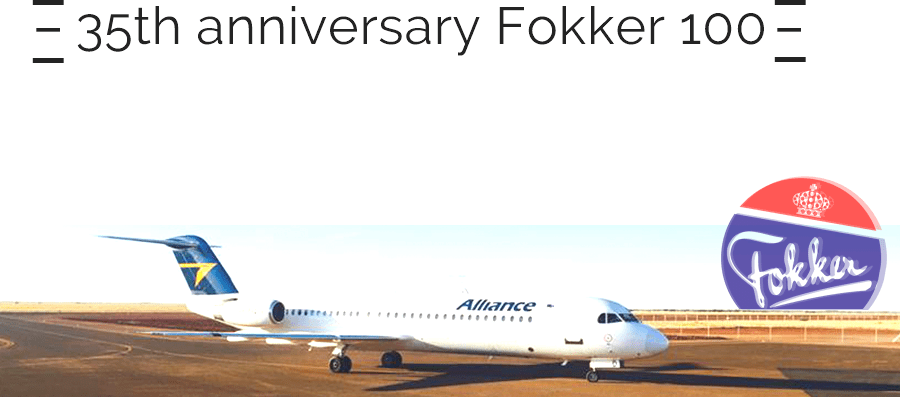
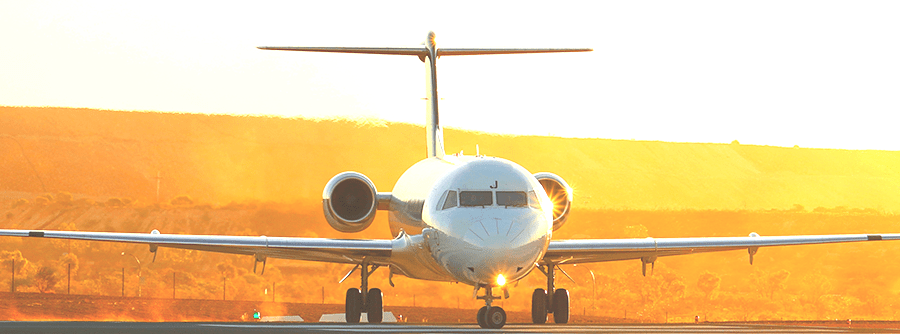
35º aniversarios primer vuelo Fokker 100
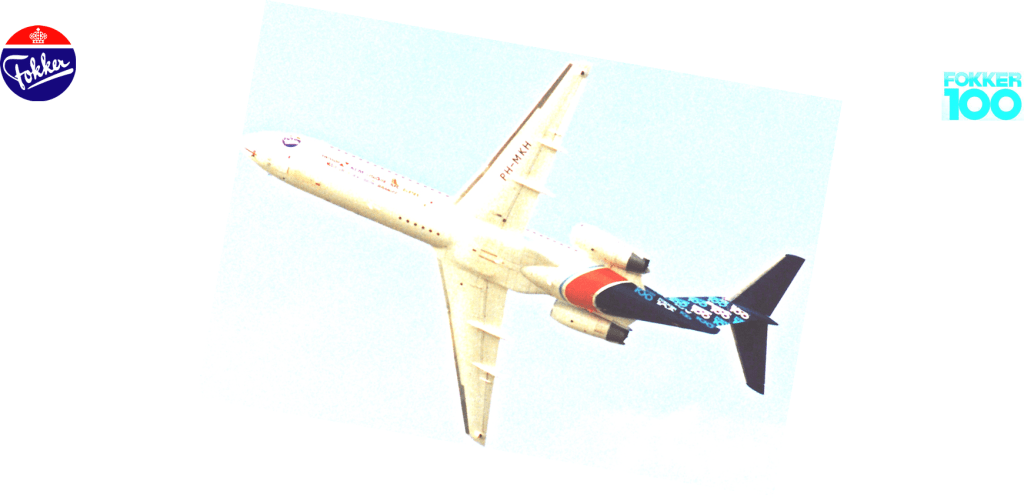
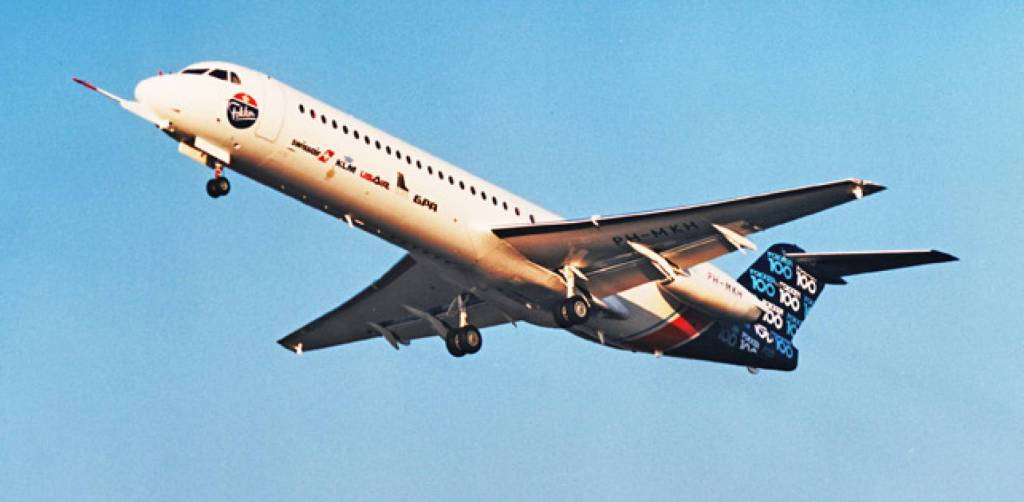
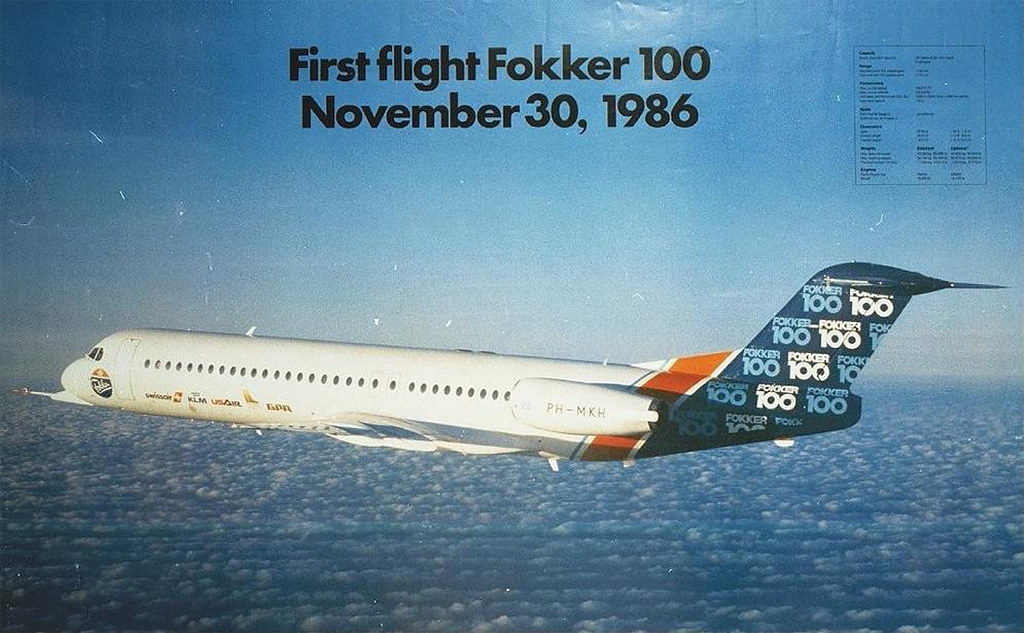
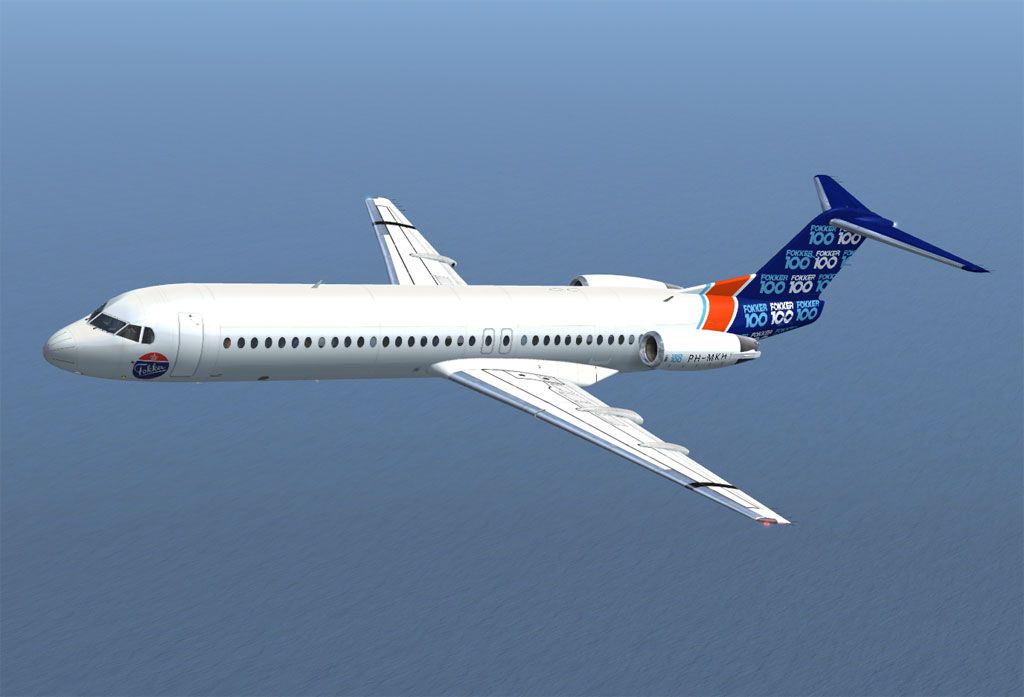
El primer vuelo del Fokker F100 estaba programado para tener su primer vuelo el 29 de Noviembre de 1986. Si bien todo el personal involucrado puso su mejor esfuerzo y el avión estaba listo para ello, el clima no estaba listo para ello. El mejor avión regional construido hizo su primer vuelo 30 de Noviembre de 1986. El primer prototipo Fokker 100 (Q1), PH-MKH.
El Aeropuerto Amsterdam/Schiphol/AMS estuvo envuelto en niebla durante todo el día, con la visibilidad máxima reportada durante el día de 800 a 900 metros (2600 a 2900 pies). Hacia el final de la mañana, la visibilidad cayó tan bajo como 100-200 metros (300-650 pies) no el clima para un primer vuelo. En lugar del primer vuelo, se hicieron algunas carreras de alta velocidad en una de las pistas de Schiphol. La aeronave Fokker 100 prototipo matrícula PH-MKH fue puesto de nuevo a dormir después, con toda la esperanza de un primer vuelo al día siguiente! Ese día siguiente fue hace 35 años, un Domingo 30 de Noviembre de 1986. En las primeras horas, Amsterdam/Schiphol estaba nuevamente envuelto en niebla, pero el sol de invierno logró quemar la niebla y se hizo evidente que el vuelo podría continuar en algún momento después del mediodía.
La tripulación para este primer vuelo fue: Henk Themmen (Piloto Jefe de Pruebas), Wim Huson (Piloto del proyecto, Copiloto), Wim Burgers (Ingeniero de Fligth). Después de un taxi sin incidentes y una carrera de despegue a las 14.16 hora local, el Fokker 100 fue transportado por primera vez. El vuelo inaugural duró más de 2 horas y sirvió también como primer vuelo de prueba. ¡Fue completado con éxito por un exitoso AutoLand! El programa de pruebas sería volado por dos prototipos, además del PH-MKH (Q1) el segundo prototipo PH-MKC (Q2) realizaría su primer vuelo el 25 de Febrero de 1987.
El Fokker 100 fue desarrollado al mismo tiempo que su hermano turbohélice el Fokker 50, aproximadamente 3 años antes del primer vuelo del Fokker 100. El Fokker 100 fue diseñado como sucesor del Fokker F.28 Fellowship. Algunas de las principales mejoras con el Fokker 28 fueron: Ala supercrítica totalmente nueva, Fuselaje estirado de 5,74 metros (18,8 pies), Estabilizador agrandado, Rockwell Collins DU-1000 EFIS (Sistema electrónico de instrumentos de vuelo), Aviónica digital, Capacidad Cat IIIB AutoLand, Motores Rolls Royce Tay 620 (más tarde estaría disponible el Tay 650).
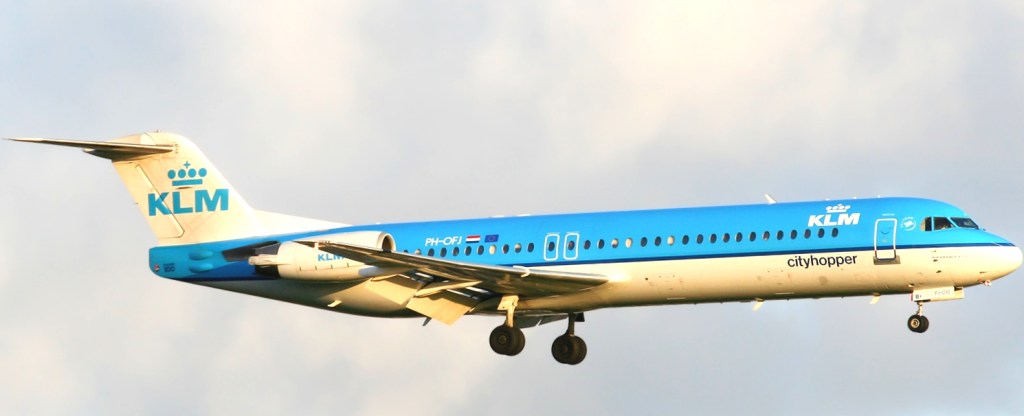
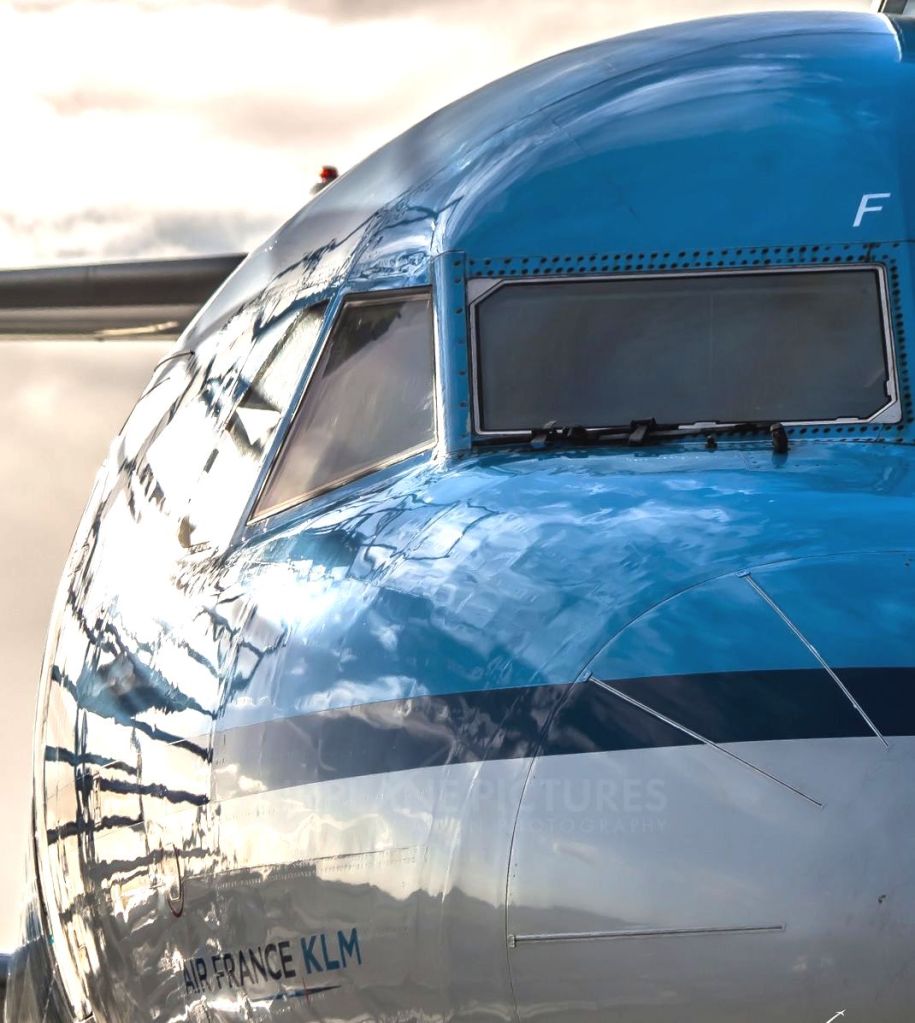
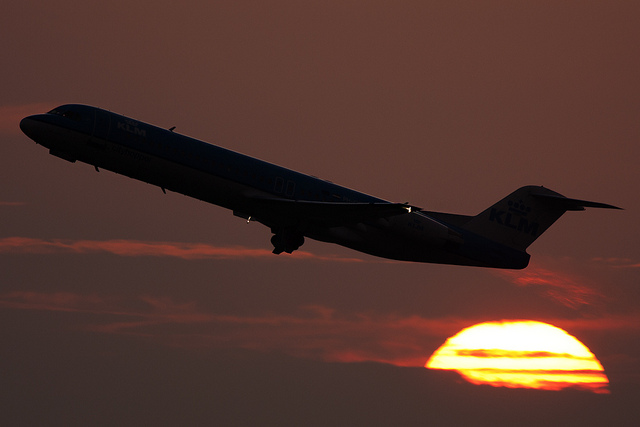
Fokker involucró a los clientes de lanzamiento en el desarrollo de la aeronave y acomodó sus deseos. La capacidad Cat IIIB AutoLand probada en el vuelo inaugural, por ejemplo, fue un deseo de la aerolínea nacional suiza de la época Swissair, como una puerta de servicio en el fuselaje izquierdo, delante del motor. Como segundo cliente, KLM quería una puerta de pasajeros que se abriera hacia adelante. Debido a sus destinos, no necesitaban el aire acondicionado integral de apertura descendente, inicialmente diseñado. Además, KLM solicitó puertas de carga más grandes, junto con un sistema de correa móvil como piso de la bahía de carga para facilitar la descarga. Estas solicitudes de diseño se cumplieron. USair solicitó que los aviones que ordenaron se entregaran con un fuselaje altamente pulido sin pintar (aunque se aplicó un recubrimiento transparente). Hasta entonces, Fokker siempre había pintado sus aviones con los colores de sus clientes. Tuvieron que desarrollar un procedimiento especial para cumplir con la solicitud de USair.
Esta flexibilidad de Fokker resultó en una gran cantidad de pedidos, incluso antes de que el avión hubiera abandonado la mesa de dibujo. Para cuando la fábrica de aviones Fokker cerró debido a la bancarrota, se construyeron 283 Fokker 100. Además, se desarrolló una hermana pequeña, el Fokker 70.
Ξ 35th anniversary Fokker 100 Ξ
35th Anniversaries First Flight Fokker 100
The maiden flight of the Fokker F100 was scheduled to have its maiden flight on November 29, 1986. While all the personnel involved did their best and the aircraft was ready for it, the weather was not ready for it. The best regional aircraft built made its first flight November 30, 1986. The first prototype Fokker 100 (Q1), PH-MKH.
Amsterdam/Schiphol/AMS Airport was shrouded in fog throughout the day, with the maximum visibility reported during the day at 800 to 900 meters (2,600 to 2,900 feet). Towards the end of the morning, visibility dropped as low as 100-200 meters (300-650 feet) not the weather for a first flight. Instead of the first flight, some high-speed races were made on one of the Schiphol tracks. The aircraft Fokker 100 prototype registration PH-MKH was put back to sleep afterwards, with all hope of a first flight the next day! That next day was 35 years ago, a Sunday, November 30, 1986. In the early hours, Amsterdam/ Schiphol was shrouded in fog again, but the winter sun managed to burn out the fog and it became clear that the flight could continue for some time. moment after noon.
The crew for this first flight were: Henk Themmen (Chief Test Pilot), Wim Huson (Project Pilot, Co-pilot), Wim Burgers (Flight Engineer). After an uneventful taxi and a takeoff run at 2:16 p.m. local time, the Fokker 100 was transported for the first time. The maiden flight lasted more than 2 hours and also served as the first test flight. It was successfully completed by a successful AutoLand! The test program would be flown by two prototypes, in addition to the PH-MKH (Q1) the second PH-MKC (Q2) prototype would make its first flight on February 25, 1987.
The Fokker 100 was developed at the same time as its turboprop brother the Fokker 50, approximately 3 years before the first flight of the Fokker 100. The Fokker 100 was designed as a successor to the Fokker F.28 Fellowship. Some of the major improvements with the Fokker 28 were: All-New Supercritical Wing, 5.74-meter (18.8-foot) Stretched Fuselage, Enlarged Stabilizer, Rockwell Collins DU-1000 EFIS (Electronic Flight Instrument System), Digital Avionics, Cat IIIB AutoLand capacity, Rolls Royce Tay 620 engines (later the Tay 650 would be available).
Fokker involved launch customers in the development of the aircraft and accommodated their wishes. The Cat IIIB AutoLand capability tested on the maiden flight, for example, was a wish of the Swiss national airline of the Swissair era, such as a service door in the left fuselage, in front of the engine. As a second customer, KLM wanted a forward-opening passenger door. Due to their destinations, they did not need the integral downdraft air conditioner, initially designed. In addition, KLM requested larger loading doors, along with a mobile strap system as the loading bay floor to facilitate unloading. These design requests were met. USair requested that the aircraft they ordered be delivered with a highly polished, unpainted fuselage (although a clear coating was applied). Until then, Fokker had always painted its planes in the colors of its customers. They had to develop a special procedure to fulfill USair’s request.
This flexibility from Fokker resulted in a large number of orders, even before the aircraft had left the drawing board. By the time the Fokker aircraft factory closed due to bankruptcy, 283 Fokker 100s were built. In addition, a little sister, the Fokker 70, was developed.
Ξ 35 jarig bestaan Fokker 100 Ξ
35e verjaardag Eerste vlucht Fokker 100
De eerste vlucht van de Fokker F100 zou zijn eerste vlucht hebben op 29 november 1986. Hoewel al het betrokken personeel zijn best deed en het vliegtuig er klaar voor was, was het weer er niet klaar voor. Het beste gebouwde regionale vliegtuig maakte zijn eerste vlucht op 30 november 1986. Het eerste prototype Fokker 100 (Q1), PH-MKH.
Amsterdam/Schiphol/AMS Airport was de hele dag in mist gehuld, met het maximale zicht overdag op 800 tot 900 meter (2.600 tot 2.900 voet). Tegen het einde van de ochtend daalde het zicht tot 100-200 meter (300-650 voet), niet het weer voor een eerste vlucht. In plaats van de eerste vlucht werden er enkele hogesnelheidsraces gehouden op een van de Schipholbanen. Het vliegtuig Fokker 100 prototype registratie PH-MKH werd daarna weer ingeslapen, met alle hoop op een eerste vlucht de volgende dag! Die volgende dag was 35 jaar geleden, een zondag 30 november 1986. In de vroege uurtjes was Amsterdam/Schiphol weer in mist gehuld, maar de winterzon wist de mist te verdrijven en het werd duidelijk dat de vlucht om een moment na de middag.
De bemanning voor deze eerste vlucht waren: Henk Themmen (Chief Test Pilot), Wim Huson (Project Pilot, Co-piloot), Wim Burgers (Flight Engineer). Na een rustige taxi en een startrun om 14.16 uur lokale tijd werd de Fokker 100 voor het eerst vervoerd. De eerste vlucht duurde ruim 2 uur en diende tevens als eerste testvlucht. Het werd met succes voltooid door een succesvol AutoLand! Het testprogramma zou gevlogen worden door twee prototypes, naast de PH-MKH (Q1) zou het tweede PH-MKC (Q2) prototype zijn eerste vlucht maken op 25 februari 1987.
De Fokker 100 werd tegelijk met zijn turbopropbroer de Fokker 50 ontwikkeld, ongeveer 3 jaar voor de eerste vlucht van de Fokker 100. De Fokker 100 werd ontworpen als opvolger van de Fokker F.28 Fellowship. Enkele van de belangrijkste verbeteringen met de Fokker 28 waren: geheel nieuwe superkritische vleugel, 5,74 meter (18,8 voet) gestrekte romp, vergrote stabilisator, Rockwell Collins DU-1000 EFIS (Electronic Flight Instrument System), Digital Avionics, Cat IIIB AutoLand capaciteit, Rolls Royce Tay 620-motoren (later zou de Tay 650 beschikbaar zijn).
Fokker betrok launch customers bij de ontwikkeling van het vliegtuig en speelde in op hun wensen. De Cat IIIB AutoLand-capaciteit die op de eerste vlucht werd getest, was bijvoorbeeld een wens van de Zwitserse nationale luchtvaartmaatschappij uit het Swissair-tijdperk, zoals een servicedeur in de linkerromp, voor de motor. Als tweede klant wilde KLM een naar voren openende passagiersdeur. Vanwege hun bestemming hadden ze de in eerste instantie ontworpen integrale downdraft-airconditioner niet nodig. Daarnaast vroeg KLM om grotere laaddeuren en een mobiel spansysteem als laadvloer om het lossen te vergemakkelijken. Aan deze ontwerpverzoeken is voldaan. USair verzocht om de levering van het door hen bestelde vliegtuig met een zeer gepolijste, ongeverfde romp (hoewel er een heldere coating was aangebracht). Tot dan toe had Fokker zijn vliegtuigen altijd in de kleuren van zijn klanten geschilderd. Ze moesten een speciale procedure ontwikkelen om aan het verzoek van USair te voldoen.
Deze flexibiliteit van Fokker resulteerde in een groot aantal orders, nog voordat het vliegtuig de tekentafel had verlaten. Tegen de tijd dat de Fokker-vliegtuigfabriek wegens faillissement werd gesloten, waren er 283 Fokker 100’s gebouwd.Daarnaast werd een zusje ontwikkeld, de Fokker 70.
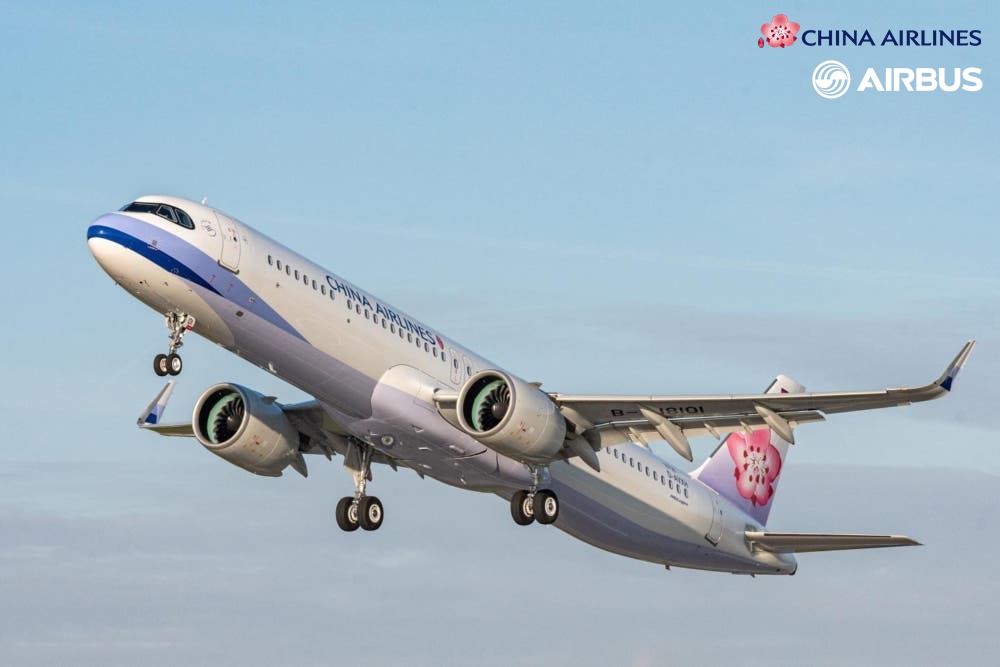
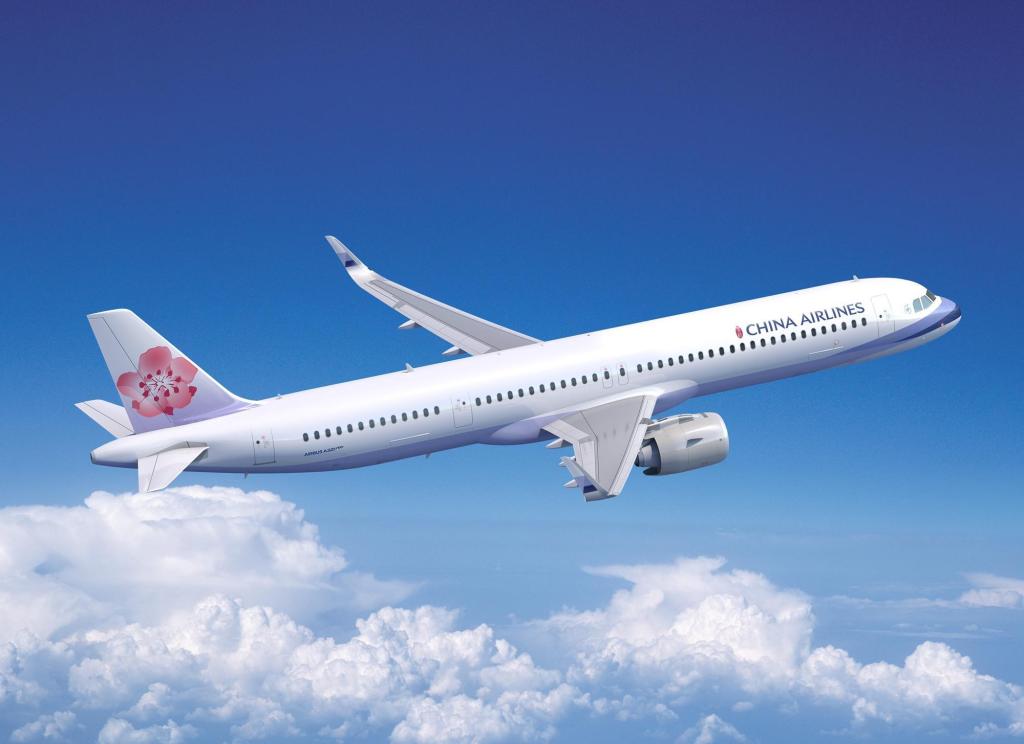
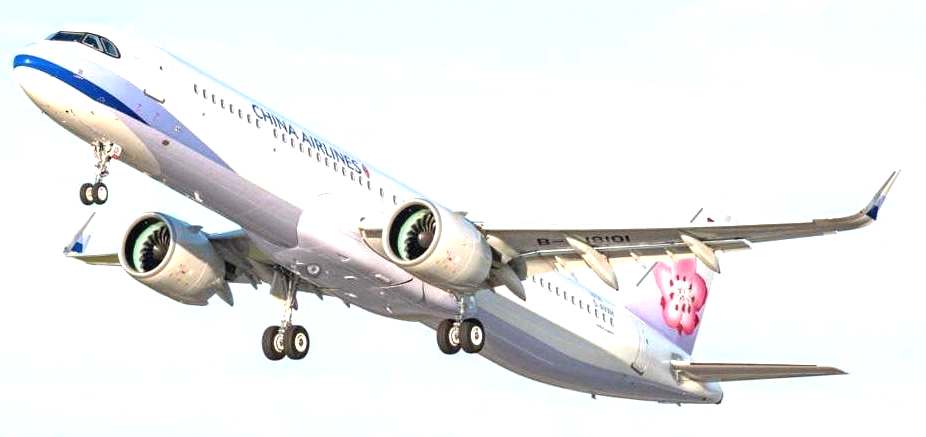
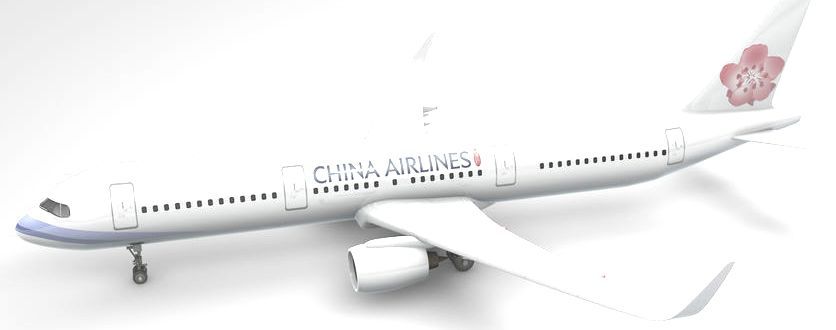
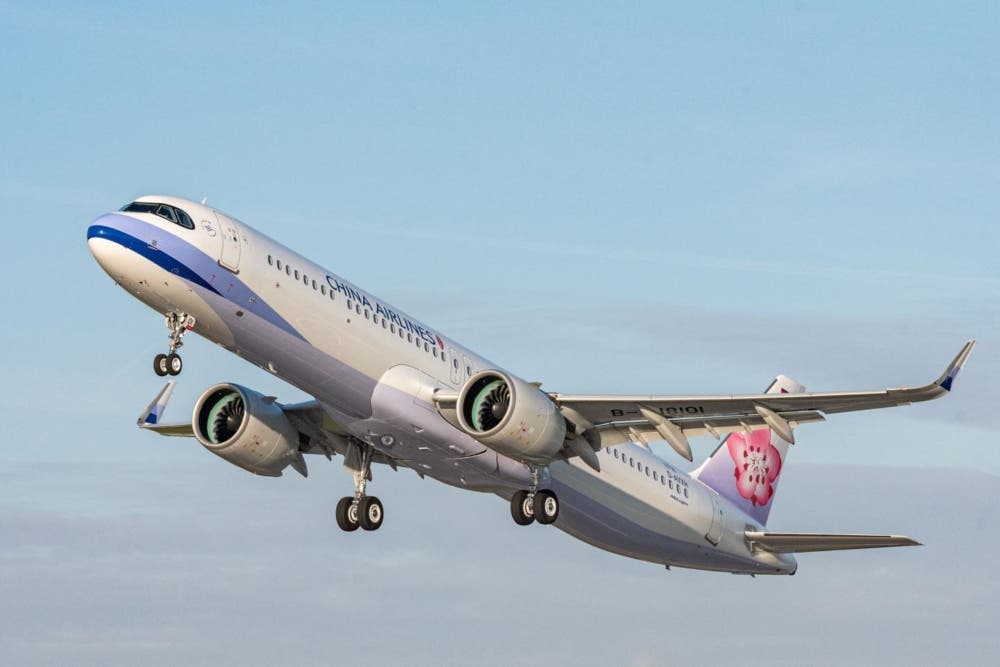
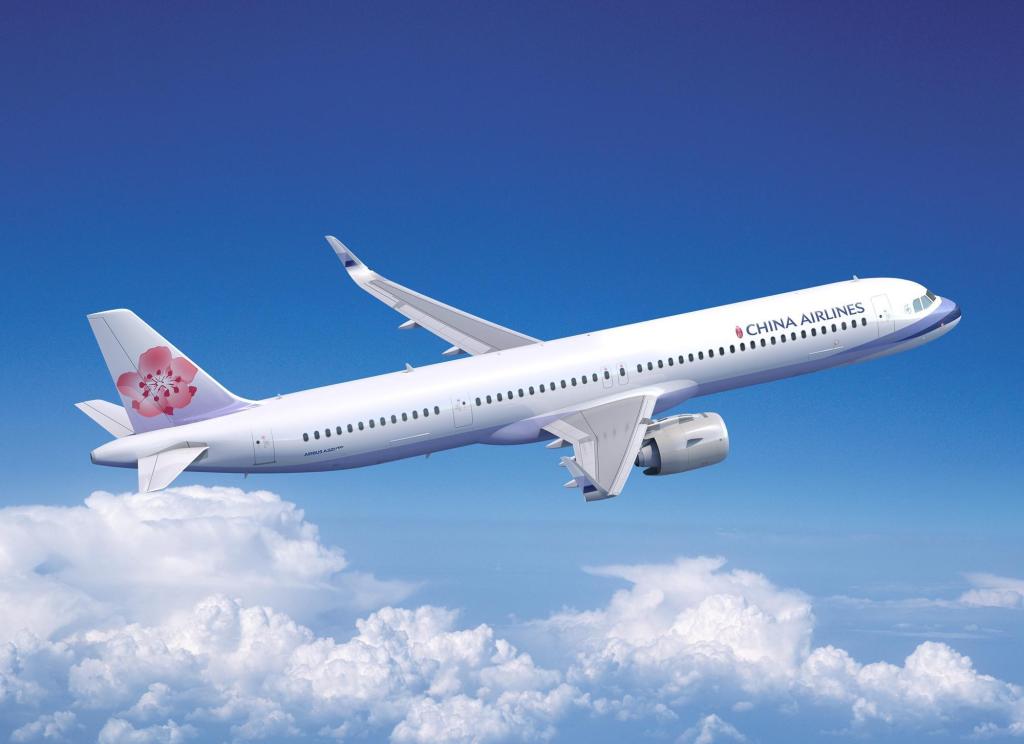
China Airlines se ha unido a las filas de los operadores de Airbus A321NEO, recibiendo su A321-200NEO inaugural el Miércoles 01/12. El avión es el primero de los veinticinco A321NEO (25) que la aerolínea con sede en Taipei tiene en pedido. El nuevo y brillante avión ha despegado desde Hamburgo, Alemania, el Miércoles 1 de Diciembre de 2021 con escala en Dubai, Emiratos Árabes Unidos. El nuevo Airbus A321NEO de China Airlines aterrizará en Taipei, Isla de Taiwan el Viernes 2 de Diciembre de 2021.
El A321-200NEO de China Airlines es un reemplazo para los Boeing 737-800, quebrando la filosofía americana por la europea introduciendo un nuevo avión con mayores prestaciones y autonomía. Tras el arribo, la nueva aeronave será sometida a preparación y certificación antes de volar a sus primeros pasajeros. China Airlines ha comunicado que el A321NEO reemplazará progresivamente a los aviones Boeing 737-800 más antiguos en rutas a lo largo del noreste de Asia, el sudeste asiático y los vuelos a través del estrecho. Los nuevos aviones podrán volar en rutas de hasta siete horas desde Taipei, Isla de Taiwán. Actualmente, China Airlines tiene una flota mixta de ochenta y cinco (85) entre ellos Airbus A330-300 (23), Airbus A350-900 (14) y Boeing 737-800 (17) aeronaves de pasajeros.
Introduciendo A321NEO
El Airbus A321NEO de China Airlines está propulsado por motores Pratt & Whitney PW1100G y tiene capacidad para 180 pasajeros en un diseño de dos clases, disfrutando de una mejora significativa en la experiencia de la cabina en comparación con los Boeing 737 de la generación anterior.
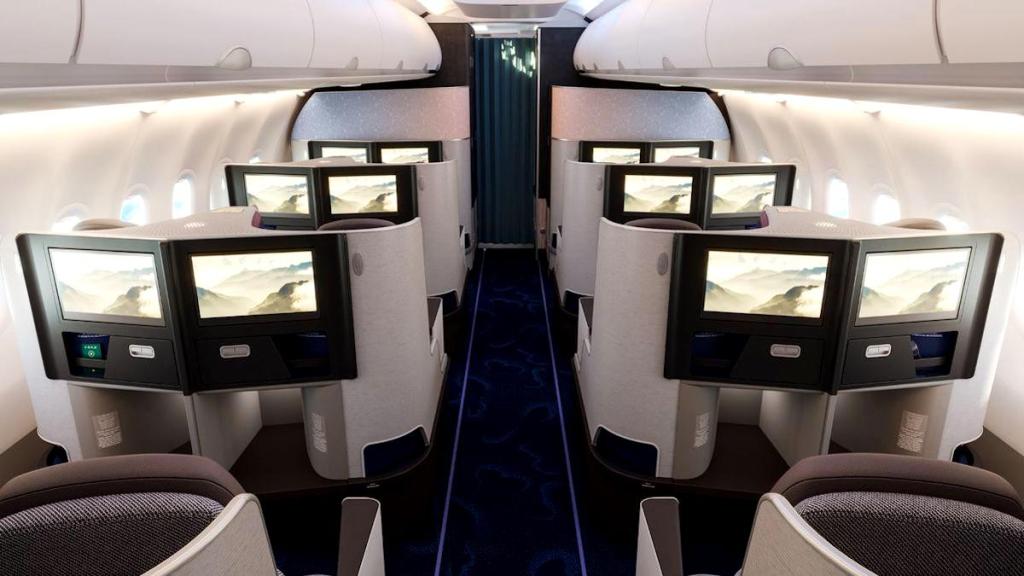
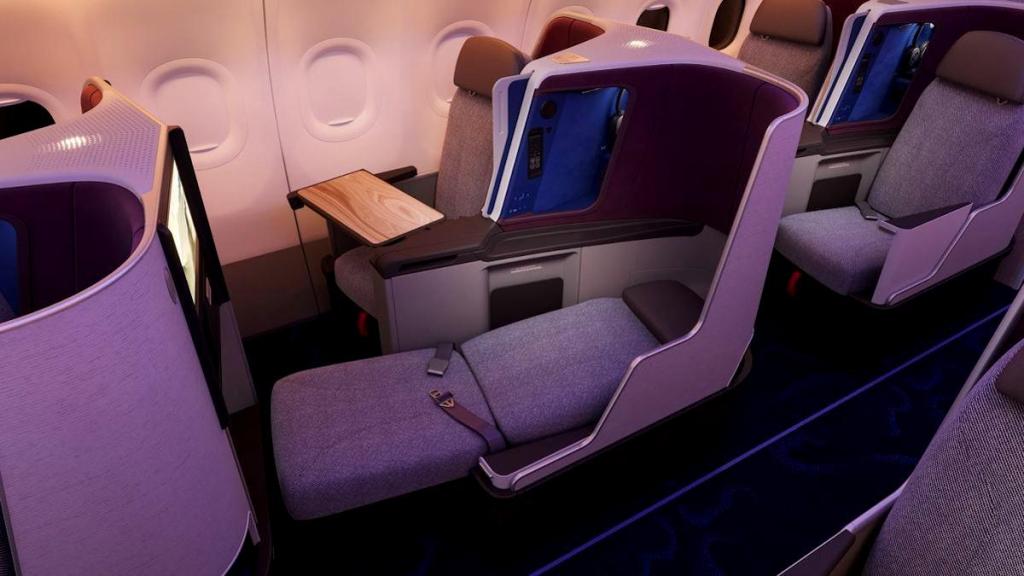
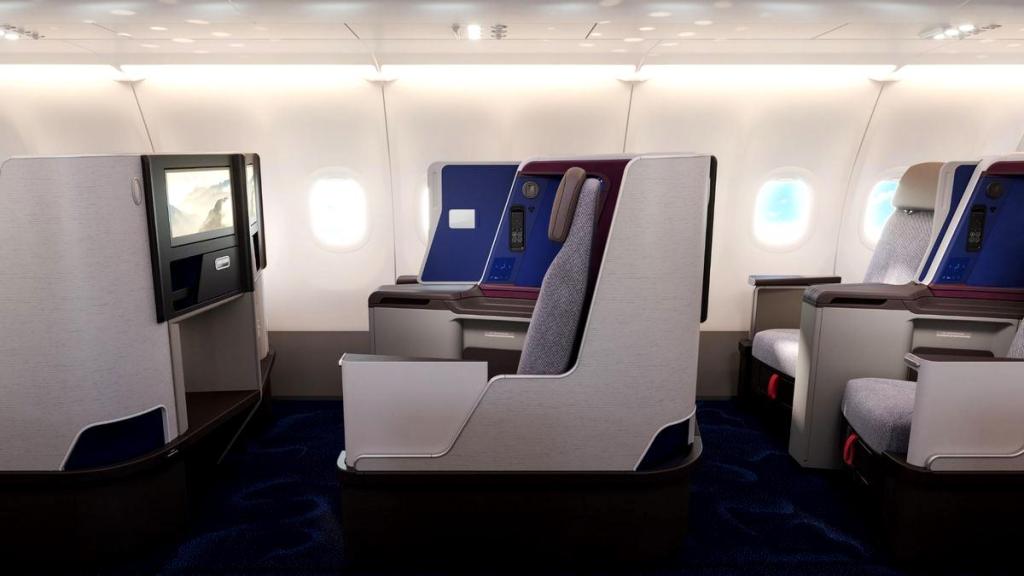
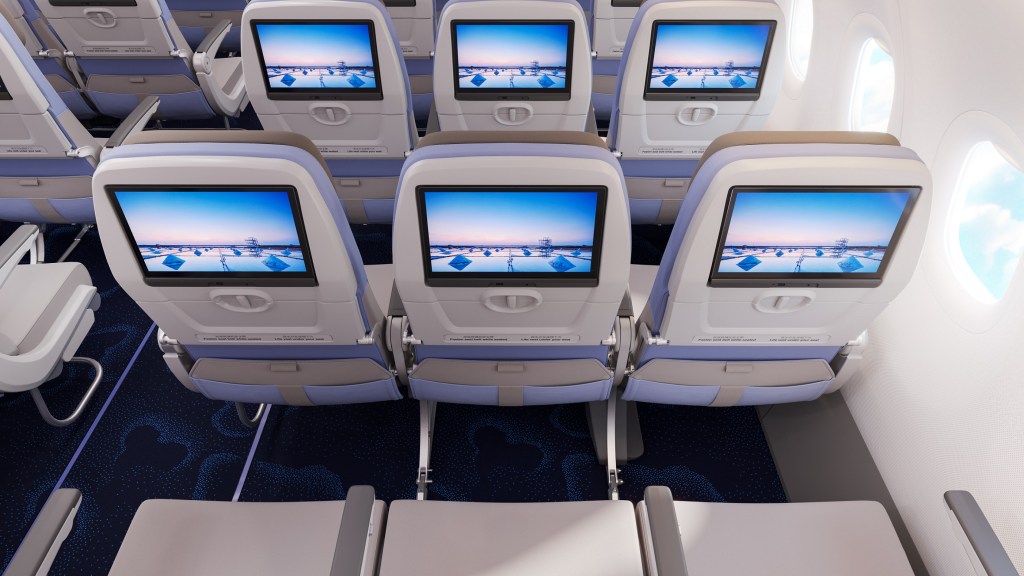
China Airlines mejorará su experiencia a bordo de los nuevos aviones de fuselaje estrecho permitiendo mayor flexibilidad y comodidad para los pasajeros. Las mejoras incluyen Premium Business Class con asientos totalmente planos, control del sistema de entretenimiento personalizado a través del teléfono móvil del pasajero, Wi-Fi de alta velocidad a bordo y una aplicación móvil con mensajes de texto gratuitos a través de Line, WeChat, Facebook Messenger, Apple iMessage, WhatsApp, Viber y Line2. Los asientos de clase ejecutiva premium totalmente planos desarrollados para aviones de pasajeros de fuselaje ancho siguen siendo relativamente poco comunes en aviones de fuselaje estrecho, pero eso es lo que China Airlines está instalando en sus A321NEOs. Habrá 12 asientos de clase ejecutiva que se convertirán en una cama plana, aunque en una configuración de 2-2 en lugar del diseño 1-1 líder en la industria. En la cabina principal, las cosas son un poco más de negocios como de costumbre, con 168 pasajeros sentados en la configuración estándar 3-3. Aún así, hay algunos consuelos, como una pantalla de entretenimiento a bordo de respaldo de asiento 4K de alta resolución de 13.3 , asientos frescos de fábrica y una cabina limpia y nítida.
La introducción del avión más moderno de la flota de China Airlines será la columna vertebral de la flota narrowbodies y se beneficiará de la similitud de la cabina con los aviones A330 y A350 existentes de la aerolínea. China Airlines permitirá una reducción del 8% en co2 emisiones con los combustibles SAF en comparación con el combustible tradicional para aviones.
«ALC se siente honrado de ser el primero en presentar el A321NEO a nuestro cliente de larga data China Airlines. El A321NEO se convertirá en la columna vertebral de la flota de pasillo único de China Airlines, proporcionando expansión y modernización de la flota, y elevación de la experiencia de sus pasajeros a nuevos niveles. La mayor eficiencia de combustible y flexibilidad operativa del A321NEO también maximizará la rentabilidad y promoverá los objetivos de sostenibilidad ambiental de China Airlines», dijo John Plueger, Director Ejecutivo y Presidente de Air Lease Corporation.
El primer A321NEO de China Airlines, matrícula B-18101, arriba en formato de arrendamiento de Air Lease Corporation (ALC). Catorce de los A321NEO (14) también serán tomados bajo la modalidad de arrendamiento mientras que once (11) vendrán directamente de fábrica de Airbus Group.
China Airlines 1st A321NEO
China Airlines receives its first Airbus A321NEO
China Airlines has joined the ranks of Airbus A321NEO operators, receiving its inaugural A321-200NEO on Wednesday 01/12. The aircraft is the first of twenty-five A321NEOs (25) that the Taipei-based airline has on order. The shiny new plane took off from Hamburg, Germany, on Wednesday, December 1, 2021 with a stopover in Dubai, United Arab Emirates. China Airlines’ new Airbus A321NEO will land in Taipei, Taiwan Island on Friday, December 2, 2021.
The China Airlines A321-200NEO is a replacement for the Boeing 737-800, breaking the American philosophy for the European one by introducing a new aircraft with greater performance and autonomy. Upon arrival, the new aircraft will undergo preparation and certification before flying its first passengers. China Airlines has announced that the A321NEO will progressively replace older Boeing 737-800 aircraft on routes throughout Northeast Asia, Southeast Asia and cross-strait flights. The new planes will be able to fly routes of up to seven hours from Taipei, Taiwan Island. Currently, China Airlines has a mixed fleet of eighty-five (85) including Airbus A330-300 (23), Airbus A350-900 (14) and Boeing 737-800 (17) passenger aircraft.
Introducing A321NEO
The China Airlines Airbus A321NEO is powered by Pratt & Whitney PW1100G engines and accommodates 180 passengers in a two-class layout, enjoying a significant improvement in the cabin experience compared to the previous generation Boeing 737s.
China Airlines will enhance your experience aboard the new narrow-body aircraft allowing greater flexibility and comfort for passengers. Upgrades include Premium Business Class with fully flat seats, personalized entertainment system control via passenger mobile phone, onboard high-speed Wi-Fi and a mobile app with free text messages via Line, WeChat, Facebook Messenger, Apple iMessage, WhatsApp, Viber and Line2. Fully flat premium business class seats developed for wide-body airliners are still relatively uncommon in narrow-body aircraft, but that’s what China Airlines is installing in its A321NEOs. There will be 12 business class seats that will be converted to a flat bed, albeit in a 2-2 configuration rather than the industry-leading 1-1 layout. In the main cabin, things are a bit more business-like as usual, with 168 passengers seated in the standard 3-3 configuration. Still, there are some comforts, like a 13.3 high-resolution 4K seat-back inflight entertainment screen, factory-cool seats, and a clean, crisp cabin.
The introduction of the most modern aircraft in the China Airlines fleet will be the backbone of the narrowbodies fleet and will benefit from the similarity of the cabin to the airline’s existing A330 and A350 aircraft. China Airlines will allow an 8% reduction in co2 emissions with SAF fuels compared to traditional jet fuel.
«ALC is honored to be the first to introduce the A321NEO to our long-time customer China Airlines. The A321NEO will become the backbone of China Airlines’ single-aisle fleet, providing fleet expansion and modernization, and lift of its passenger experience to new levels. The increased fuel efficiency and operational flexibility of the A321NEO will also maximize profitability and advance China Airlines’ environmental sustainability goals», said John Plueger, CEO and President of Air Lease Corporation.
China Airlines’ first A321NEO, registration B-18101, above in lease form from Air Lease Corporation (ALC). Fourteen of the A321NEOs (14) will also be taken under the lease mode while eleven (11) will come directly from the Airbus Group factory.




































 airgways.com