Inventario de piezas SSJ100
 

AW-700SSJ100.pngAW | 2019 09 11 15:27 | INDUSTRY

logo_sukhoi.jpgEl gobierno ruso asigna fondos para el inventario de piezas SSJ100

El Gobierno de Rusia aprobó la asignación de unos cuatro mil millones de rublos (US$ 61,5 millones) para el desarrollo del programa de postventa Superjet SSJ100. Los fondos se inyectarán para equipar un inventario de repuestos y para la implementación de boletines de servicio sobre el tipo.

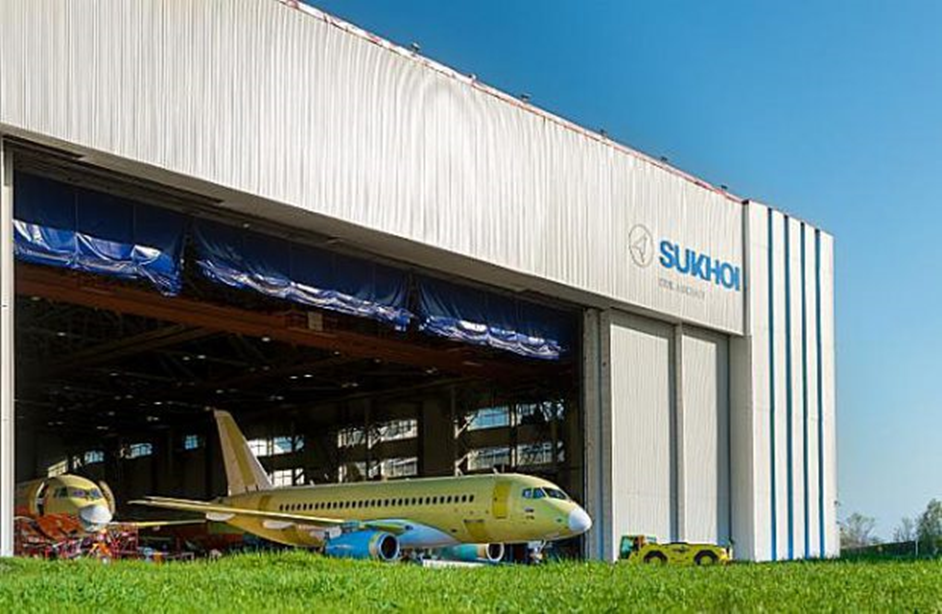
Para lograr esto, el fabricante Sukhoi Civil Aircraft Co (SCAC) recibirá subsidios estatales para compensar sus gastos financieros asociados con la formación de un inventario de repuestos de al menos 700 componentes y la implementación de 64 boletines de servicio en el avión, según el documento oficial. El ministerio de industria y comercio de la nación se ha encargado de garantizar que la inversión de 3.99 mil millones de rublos se gaste de manera inteligente y adecuada, y debe informar al gobierno antes del 1 de febrero de 2020.

A partir de Agosto 2019, SCAC ha construido 189 SSJ100, con 132 actualmente en servicio, la gran mayoría (105) de los cuales ahora están en las flotas de operadores rusos. El operador de bandera de Rusia, Aeroflot, es el mayor cliente de la aeronave, con 49 en su flota y otros 100 en pedidos preliminares . En agosto, la aerolínea nacional anunció otra licitación para acceder al inventario de repuestos para sus SSJ100.AW-Icon-AW-TXT

15338404_133953493760533_561845734509379584_n.jpgSSJ100 Parts Inventory

The Russian government allocates funds for the inventory of SSJ100 parts

AW-70008877.pngThe Russian Government approved the allocation of about four billion rubles (US$ 61.5 million) for the development of the Superjet SSJ100 after-sales program. The funds will be injected to equip an inventory of spare parts and for the implementation of service bulletins on the type.

To achieve this, the manufacturer Sukhoi Civil Aircraft Co (SCAC) will receive state subsidies to offset its financial expenses associated with the formation of an inventory of spare parts of at least 700 components and the implementation of 64 service bulletins on the plane, according to the document official. The ministry of industry and commerce of the nation has been responsible for ensuring that the investment of 3.99 billion rubles is spent intelligently and appropriately, and should inform the government before February 1, 2020.

As of August 2019, SCAC has built 189 SSJ100, with 132 currently in service, the vast majority (105) of which are now in the fleets of Russian operators. Russia’s flag operator, Aeroflot, is the largest customer of the aircraft, with 49 in its fleet and another 100 in preliminary orders. In August, the national airline announced another tender to access the inventory of spare parts for its SSJ100. A \ W

5ccf481e4fb77.image.jpgИнвентарь запасных частей SSJ100

logo_suhoy.jpgПравительство РФ выделяет средства на инвентаризацию деталей SSJ100

Правительство России одобрило выделение около четырех миллиардов рублей (61,5 миллиона долларов США) на разработку послепродажной программы Superjet SSJ100. Средства будут направлены на оснащение инвентаря запасных частей и на внедрение сервисных бюллетеней по типу.

Для этого производитель Sukhoi Civil Aircraft Co (SCAC) получит государственные субсидии для компенсации своих финансовых расходов, связанных с формированием инвентарного списка запасных частей не менее 700 комплектующих и внедрением 64 сервисных бюллетеней на самолете, согласно документу офицер. Министерство промышленности и торговли страны несет ответственность за разумное и разумное расходование инвестиций в размере 3,99 миллиарда рублей и должно информировать об этом правительство до 1 февраля 2020 года.

По состоянию на август 2019 года SCAC построил 189 SSJ100, из которых 132 в настоящее время находятся в эксплуатации, подавляющее большинство (105) которых сейчас находятся на флотах российских операторов. Российский флагман, Аэрофлот, является крупнейшим заказчиком самолета, 49 из них в его парке и еще 100 по предварительным заказам. В августе национальная авиакомпания объявила еще один тендер на доступ к инвентарю запасных частей для своего SSJ100. A \ W


Ξ A I R G W A Y S Ξ
SOURCE: Airgways.com
DBk: Scac.ru / Rusaviainsider.ru / Airgways.com
AW-POST: 201909111527AR

A\W   A I R G W A Y S ®

Airbus test tecnología IoT

Resultado de imagen para Airbus IoT Internet of ThingsAW | 2019 09 11 13:39 | INDUSTRY

logo_airbus (2)Airbus comienza las pruebas en vuelo de las tecnologías de Cabina Conectadas
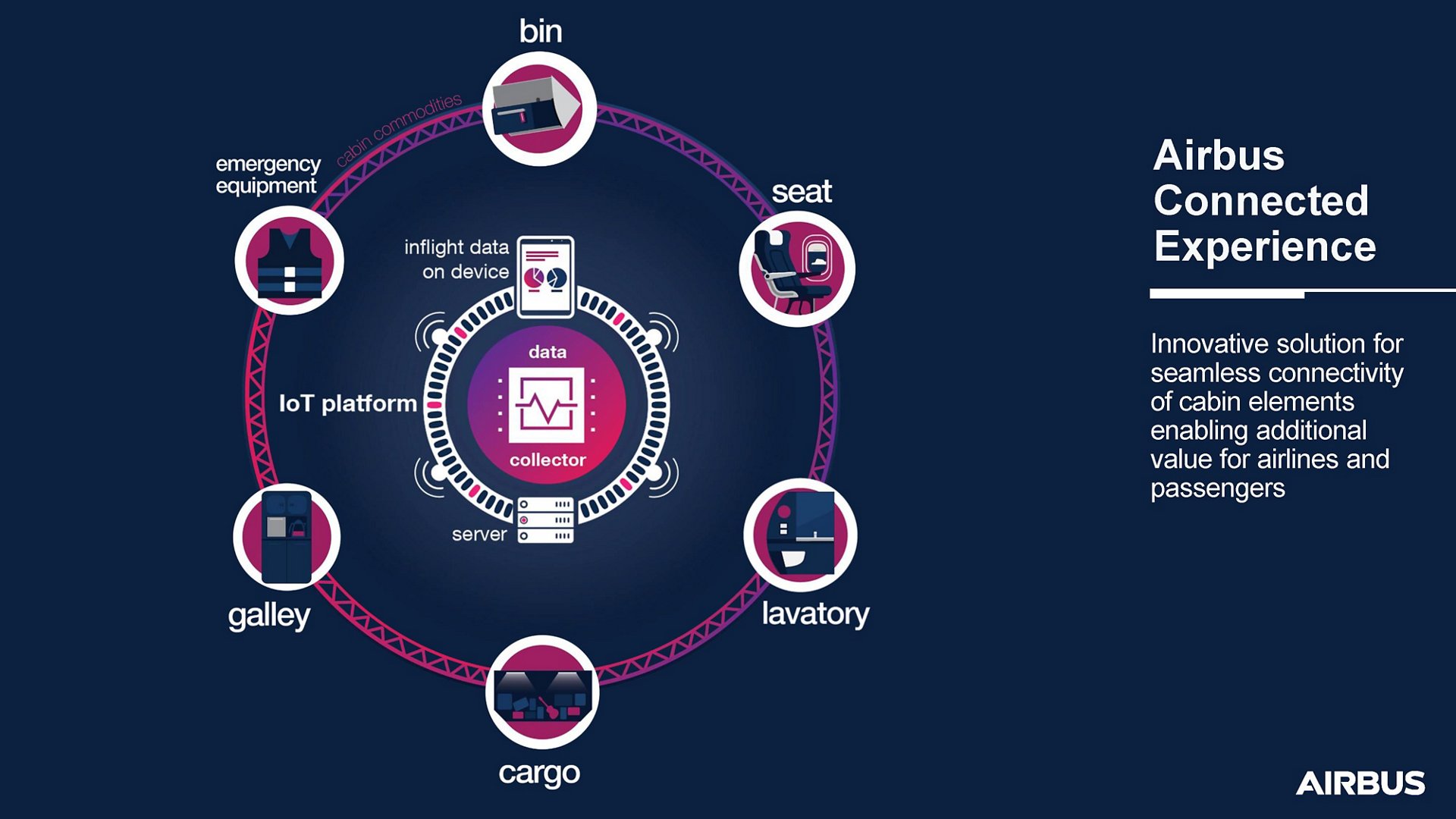
Airbus ha comenzado a probar en vuelo las tecnologías de cabina conectadas IoT (Internet of Things) a bordo de un avión A350-900 Flight Lab, que se dará a conocer en breve a los clientes. Al hacerlo, Airbus se convierte en el primer fabricante de aviones en realizar pruebas de vuelo de las innovaciones reales de la cabina conectada. La plataforma, conocida como Airspace Connected Experience, se presentó en la APEX Expo 2018. Dará paso a una nueva experiencia personalizada para los pasajeros y brindará oportunidades para mejorar los ingresos y las eficiencias operativas de las aerolíneas.

El Flight Lab es uno de los aviones de prueba de vuelo de certificación A350-900 originales MSN002 y está equipado con una cabina Airspace que ahora sirve como la plataforma ideal para evaluar las nuevas tecnologías de cabina conectadas en vuelo. Con este fin, y junto con nuestros mejores socios de cabina, se ha instalado un conjunto inicial de elementos de trabajo. Estos incluyen prototipos del iSeat conectado (Recaro), la galera conectada (gategroup), un sistema de control remoto inalámbrico de gestión de cabina, una gran pantalla OLED y, lo que es más importante, el primer paso del nuevo «backbone IoT» de Airbus que incluye una plataforma de software abierta. Todas estas innovaciones ahora se están probando en vuelo, junto con otras que se revelarán a su debido tiempo a los clientes.

El ecosistema de cabina conectada permitirá importantes servicios de valor agregado para pasajeros, aerolíneas y tripulaciones. Los posibles ejemplos incluyen: Los pasajeros recibirán una experiencia de viaje más personalizada específicamente dirigida a las necesidades y preferencias individuales, en función de los datos disponibles. En particular, esto cubre el pedido previo y remoto de comidas preferidas, la reserva de espacio privado en el contenedor, el establecimiento de posiciones de asientos individuales, así como una oferta IFE a bordo a medida. Las aerolíneas podrán generar ingresos adicionales por medio de venta minorista personalizada y publicidad, así como nuevos servicios, todos habilitados por el enfoque IoT. Además, las aerolíneas podrán mejorar su eficiencia operativa aplicando mantenimiento predictivo, evitando el desperdicio y haciendo que los servicios de la tripulación sean más eficientes. Otras oportunidades se pueden crear y aplicar fácilmente a través de aplicaciones. Las tripulaciones encontrarán un mejor entorno de trabajo y herramientas más eficientes, habilitadas digitalmente por datos en tiempo real desde la plataforma IoT en toda la cabina. Un dispositivo inteligente móvil permitirá a los equipos monitorear y operar todos los componentes.

Enfoque centrado en el cliente

Las pruebas en vuelo son parte de nuestro enfoque centrado en el cliente, que comenzó con talleres para crear y priorizar conceptos innovadores, seguido de una extensa fase de pruebas en tierra y evaluación de los elementos conectados por parte del cliente. La prueba posterior de estas innovaciones en un entorno de Airbus Flight Lab es clave para llevar a buen término una experiencia conectada conectada: poder validarlas y refinarlas en una cabina aérea real. En particular, las pruebas permiten que los diversos elementos sean operados y monitoreados durante un ciclo de vuelo normal, especialmente con respecto a la robustez del flujo de datos de extremo a extremo dentro de los sistemas y entre ellos. Los siguientes pasos continuarán probando la configuración actual, luego cerrarán el ciclo de comentarios con las aerolíneas que usan el foro de Equipos de Experiencia del Cliente (CET) de Airbus, alrededor de fin de año.AW-Icon-AW-TXT

Resultado de imagen para Airbus IoT Internet of ThingsAirbus test IoT technology

Airbus begins flight tests of Connected Cab technologies

Airbus has begun to test in-flight the IoT (Internet of Things) connected cabin technologies aboard an A350-900 Flight Lab aircraft, which will be announced shortly to customers. By doing so, Airbus becomes the first aircraft manufacturer to perform flight tests of the actual innovations of the connected cabin. The platform, known as the Airspace Connected Experience, was presented at the APEX Expo 2018. It will give way to a new personalized experience for passengers and provide opportunities to improve airline revenues and operational efficiencies.

The Flight Lab is one of the original MSN002 A350-900 certified flight test aircraft and is equipped with an Airspace cabin that now serves as the ideal platform for evaluating new flight-connected cabin technologies. To this end, and together with our best cab partners, an initial set of work items has been installed. These include prototypes of the connected iSeat (Recaro), the connected galley (gategroup), a wireless remote control system of cabin management, a large OLED display and, more importantly, the first step of the new «IoT backbone» of Airbus that includes an open software platform. All these innovations are now being tested in flight, along with others that will be revealed in due course to customers.

The connected cabin ecosystem will allow significant value-added services for passengers, airlines, and crews. Possible examples include: Passengers will receive a more personalized travel experience specifically aimed at individual needs and preferences, based on available data. In particular, this covers the previous and remote ordering of preferred meals, the reservation of private space in the container, the establishment of individual seating positions, as well as a custom onboard IFE offer. Airlines may generate additional income through personalized retail and advertising, as well as new services, all enabled by the IoT approach. In addition, airlines can improve their operational efficiency by applying predictive maintenance, avoiding waste and making the services of the crew more efficient. Other opportunities can be easily created and applied through applications. Crews will find a better working environment and more efficient tools, digitally-enabled by real-time data from the IoT platform throughout the cabin. A mobile smart device will allow teams to monitor and operate all components.

Customer-Centered Approach

Flight tests are part of our customer-centric approach, which began with workshops to create and prioritize innovative concepts, followed by an extensive phase of ground testing and evaluation of the connected elements by the customer. Subsequent testing of these innovations in an Airbus Flight Lab environment is key to a successful connected connected experience: to validate and refine them in a real air cabin. In particular, the tests allow the various elements to be operated and monitored during a normal flight cycle, especially with regard to the robustness of the end-to-end data flow within and between systems. The following steps will continue testing the current configuration, then close the comment cycle with the airlines that use the Airbus Customer Experience Teams (CET) forum, around the end of the year. A \ W


Ξ A I R G W A Y S Ξ
SOURCE: Airgways.com
DBk: Airbus.com
AW-POST: 201909111339AR

A\W   A I R G W A Y S ®

Comlux ordena 4 ACJ320NEO

Resultado de imagen para comlux ACJ320neoAW | 2019 09 10 15:41 | AIRLINES / INDUSTRY

ACJ320neo.jpglogo_airbus (2).jpgComlux ordena el cuarto ACJ320NEO con un total de 20 unidades en cartera

La aerolínea Comlux ha realizado un nuevo pedido de cuatro ACJ320NEO adicionales, reafirmando su papel como el cliente individual más grande para el avión y llevando sus pedidos totales de 20 aviones corporativos de la gama narrowbodies de Airbus. El equipamiento de la cabina será realizado por Comlux Completion en Indianápolis.

«Airbus y Comlux han hecho negocios estableciendo nuevos estándares, de los cuales el ACJ320neo y nuestra creciente flota de ellos son los últimos ejemplos. Ya somos el cliente más grande para los aviones de la familia ACJ320neo, todos impulsados ​​por el nuevo motor CFM International LEAP-1A. Junto con nuestra amplia experiencia de equipamiento, más cuatro cabañas NEO reservadas para completar en nuestro centro en Indianápolis, estamos en una posición de liderazgo», dijo el Presidente y CEO de Comlux, Richard Gaona.

El ACJ320NEO se deriva de la familia de aviones Airbus A320NEO, que cuenta con nuevos motores y Sharklets montados en las alas. «La comodidad de ahorro de tiempo y la disponibilidad de aeronaves son vitales en el mundo de los aviones corporativos, y nuestra herencia de aviones de pasajeros nos permite ofrecer más de estos con la familia ACJ320neo que cualquier otra persona más el beneficio de costos imbatibles del ciclo de vida», dijo el Presidente de ACJ, Benoit Defforge. Los pedidos y compromisos de aviones corporativos para aviones derivados de la familia A320NEO ahora suman quince unidades. El ACJ319NEO vuela a ocho pasajeros a 6.750 nm /12.500 km o más de 15 horas, mientras que el ACJ320NEO puede transportar a 25 pasajeros a 6.000 nm/11.100 km o más de 13 horas. Ambas aeronaves aprovechan el diseño moderno de la familia A320 y su herencia de aviones, que brindan la protección mejorada de los controles de vuelo por cable, los costos y beneficios de ahorro de tiempo del mantenimiento centralizado. Esto significa que la aeronave mantiene su valor mejor con el tiempo.

Las aerolíneas y los clientes de aviones corporativos han ordenado casi 15,000 aviones de la familia A320 hasta la fecha, y más de 800 de la nueva versión del A320neo ya brindan servicio a aerolíneas de todo el mundo. Alrededor de 200 jets corporativos de Airbus están en servicio en todo el mundo, volando en todos los continentes, incluida la Antártida.AW-Icon-AW-TXT

Resultado de imagen para comlux ACJ320neoComlux orders 4 additional ACJ320NEO

AW-ACJ320neo-001.jpgComlux orders the fourth ACJ320NEO with a total of 20 units in the portfolio

The Comlux airline has placed a new order for four additional Airbus ACJ320NEOs, reaffirming its role as the largest individual customer for the aircraft and carrying its total orders for 20 corporate airplanes from the Airbus narrowbodies range. The cabin equipment will be made by Comlux Completion in Indianapolis.

«Airbus and Comlux have done business by setting new standards, of which the ACJ320NEO and our growing fleet of them are the latest examples. We are already the largest customer for ACJ320NEO family aircraft, all powered by the new CFM engine International LEAP-1A Together with our extensive equipment experience, plus four NEO cabins reserved for completion at our center in Indianapolis, we are in a leading position», said Comlux President and CEO Richard Gaona.

The ACJ320NEO is derived from the Airbus A320NEO family of aircraft, which has new engines and Sharklets mounted on the wings. «The time-saving convenience and availability of aircraft are vital in the world of corporate aircraft, and our heritage of passenger aircraft allows us to offer more of these with the ACJ320NEO family than any other person plus the unbeatable cost benefit of life cycle», said ACJ President Benoit Defforge. The orders and commitments of corporate aircraft for aircraft derived from the A320NEO family now total of fifteen units. The ACJ319NEO flies eight passengers at 6,750 nm/12,500 km or more than 15 hours, while the ACJ320NEO can transport 25 passengers at 6,000 nm/11,100 km or more than 13 hours. Both aircraft take advantage of the modern design of the A320 family and its heritage of aircraft, which provide enhanced protection of cable flight controls, costs and time-saving benefits of centralized maintenance. This means that the aircraft maintains its value better over time.

Airlines and corporate aircraft customers have ordered almost 15,000 A320 family aircraft to date, and more than 800 of the new version of the A320neo already serve airlines around the world. Around 200 Airbus corporate jets are in service worldwide, flying on all continents, including Antarctica. A \ W


Ξ A I R G W A Y S Ξ
SOURCE: Airgways.com
DBk: Airbus.com / Airgways.com / Comlux.com
AW-POST: 201909101541AR

A\W   A I R G W A Y S ®

Fallo prueba de carga alar Boeing 777X

AW-780054_Tagsroot.jpgAW | 2019 09 07 12:11 | INDUSTRY / AVIATION SAFETY

Boeing-Company-LogoLas pruebas estructurales del Boeing 777X fueron suspendidas
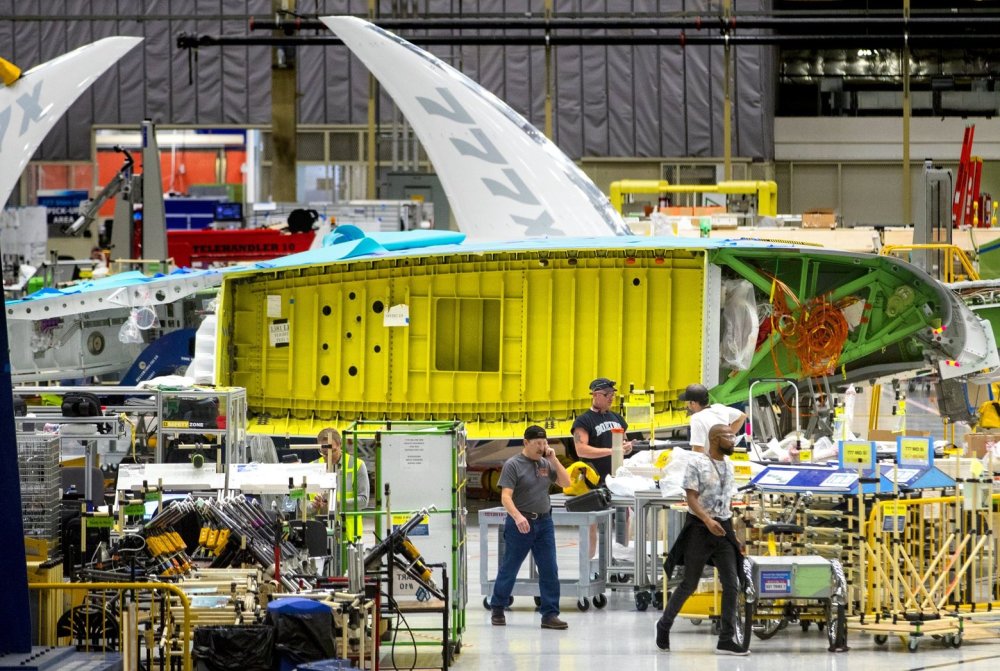
El nuevo avión de fuselaje ancho de Boeing 777X sufrió un revés el Jueves 05/09 por la tarde durante una prueba de esfuerzo de alta presión en el suelo cuando una de las puertas de carga del avión explotó hacia afuera.

El accidente ocurrió con lo que se llama el avión de prueba estática, uno de los dos aviones en cualquier nuevo programa de jet que se construye solo para pruebas en tierra y nunca volará. Fue durante la prueba final que la Administración Federal de Aviación (FAA) debe aprobar como parte de la certificación del avión. Un empleado del 777X que trabajaba en una bahía cercana en la planta Everett de Boeing dijo que escuchó «un fuerte estallido y el suelo tembló».

Programa 777X

La falla de la puerta requerirá un análisis cuidadoso para descubrir por qué sucedió, y puede significar que Boeing tendrá que reemplazar la puerta y repetir la prueba. El Programa 777X ya está retrasado debido a un problema con el desarrollo del motor GE-9X que lo impulsará. En Julio 2019, el CEO de Boeing, Dennis Muilenburg, reveló en una llamada trimestral de ganancias que el primer 777X destinado a volar, que salió de la fábrica de Everett en marzo, no saldrá al aire hasta el próximo año.

Esta falla de prueba en tierra es otro golpe. El plano de prueba estático es aquel que se enfatiza deliberadamente mucho más allá de los límites del servicio normal. El avión está rodeado por un armazón de metal, mientras que los pesos que pasan a través de las poleas se fijan a las alas y otras partes del fuselaje. Durante la prueba de carga final, las alas se tiran hacia arriba. Para pasar la prueba y obtener la certificación, las alas deben doblarse sin romperse hasta que la carga sobre ellas alcance al menos el 150% de la carga normalmente esperada. Además, los paneles de piel que cubren tanto las alas como el fuselaje están presurizados a la tensión máxima que se esperaría al borde de cualquier maniobra extrema prevista en el servicio. La presión aumenta al bombear aire a la cabina.

A veces, esta prueba final continúa más allá del objetivo de carga del 150% hasta que un ala realmente se rompe, pero no ocurre siempre. Las alas de compuesto de carbono en el 787 Dreamliner son tan flexibles que cuando Boeing las probó en 2010 se doblaron hacia arriba unos 25 pies y, tras haber superado cómodamente la carga objetivo, Boeing detuvo la prueba sin romperlas.

Las alas masivamente más grandes del 777X también son de compuesto de carbono, con una punta plegable, y durante la prueba del jueves, esas deben haberse flexionado de manera similar a las del 787. Esta vez, sin embargo, aunque las alas no cedieron; fue una de las puertas que falló, un resultado que definitivamente no se supone que suceda. El área completa alrededor del avión estático generalmente se limpia durante esta prueba, con todas las mediciones tomadas por el equipo de monitoreo y con los ingenieros mirando ansiosamente en un enlace de video mientras la carga avanza lentamente hacia el objetivo y la presión aumenta. Nadie resultó herido en la explosión de la puerta del jueves, que ocurrió poco después de la 1:30 p.m., y todos pudieron salir del edificio.

El Viernes 06/09, según los empleados de Boeing, se colocó una cinta de precaución en todas las puertas de entrada y no se permitió el ingreso de nadie al edificio. Boeing confirmó que se había producido un incidente grave, pero ofreció pocos detalles. «Durante la prueba de carga final en el avión de prueba estática 777X, el equipo encontró un problema que requería la suspensión de la prueba. El evento está bajo revisión y el equipo está trabajando para comprender la causa raíz. Las condiciones de prueba fueron mucho más allá de cualquier carga esperada en el servicio comercial» y que el avión utilizado en la prueba «nunca volará ni se utilizará en el servicio de pasajeros», dijo en un comunicado.

Debido a que el problema del motor de GE ya ha llevado las pruebas de vuelo del avión al próximo año, es posible que Boeing tenga tiempo para analizar y rehacer la prueba final de carga de tierra sin un nuevo golpe en el cronograma.AW-Icon-AW-TXT

AW-70008X_Seattletimes.jpgBoeing 777X alar load test failure

Structural tests of the Boeing 777X were suspended

The new wide-body aircraft of Boeing 777X suffered a setback on Thursday 05/09 in the afternoon during a high-pressure stress test on the ground when one of the aircraft’s cargo doors exploded outward.

The accident happened with what is called the static test plane, one of the two planes in any new jet program that is built only for ground tests and will never fly. It was during the final test that the Federal Aviation Administration (FAA) must pass as part of the aircraft certification. A 777X employee who worked in a nearby bay on the Boeing Everett plant said he heard «a loud bang and the ground shook».

777X Program

AW-78022112.pngThe door failure will require careful analysis to find out why it happened, and it may mean that Boeing will have to replace the door and repeat the test. The 777X Program is already delayed due to a problem with the development of the GE-9X engine that will drive it. In July, Boeing CEO Dennis Muilenburg revealed in a quarterly earnings call that the first 777X destined to fly, which left the Everett factory in March, will not air until next year.
This ground test failure is another blow. The static test plane is one that is deliberately emphasized far beyond the limits of normal service. The plane is surrounded by a metal frame, while the weights that pass through the pulleys are fixed to the wings and other parts of the fuselage. During the final load test, the wings are pulled up. To pass the test and obtain certification, the wings must be folded without breaking until the load on them reaches at least 150% of the normally expected load. In addition, the skin panels that cover both the wings and the fuselage are pressurized to the maximum tension that would be expected at the edge of any extreme maneuver provided for in the service. The pressure increases when pumping air to the cabin.

Sometimes, this final test continues beyond the 150% load target until a wing really breaks, but it doesn’t always happen. The carbon compound wings on the 787 Dreamliner are so flexible that when Boeing tested them in 2010, they turned upward about 25 feet and, having comfortably exceeded the target load, Boeing stopped the test without breaking them.

The massively larger wings of the 777X are also made of carbon, with a folding tip, and during Thursday’s test, they must have flexed similarly to those of 787. This time, however, although the wings did not yield; It was one of the doors that failed, a result that is definitely not supposed to happen. The entire area around the static aircraft is usually cleaned during this test, with all measurements taken by the monitoring team and with the engineers looking anxiously on a video link as the load slowly advances towards the target and the pressure increases. No one was injured in Thursday’s door explosion, which happened shortly after 1:30 p.m. and everyone was able to leave the building.

On Friday 06/09, according to Boeing employees, caution tape was placed on all entrance doors and no one was allowed into the building. Boeing confirmed that a serious incident had occurred, but offered few details. «During the final load test on the 777X static test aircraft, the team encountered a problem that required the suspension of the test. The event is under review and the team is working to understand the root cause. The test conditions were very high. beyond any expected cargo in the commercial service» and that the aircraft used in the test «will never fly or be used in the passenger service», he said in a statement.

Because the GE engine problem has already taken the plane’s flight tests to next year, it is possible that Boeing has time to analyze and redo the final ground load test without a new hit in the schedule. A \ W


Ξ A I R G W A Y S Ξ
SOURCE: Airgways.com
DBk: Boeing.com / Seattletimes.com / Airgways.com
AW-POST: 201909071211AR

A\W   A I R G W A Y S ®


Mesa ordena 100 SpaceJet M100

Resultado de imagen para Mesa Airlines Mitsubishi MRJ 100AW | 2019 09 06 11:39 | AIRLINES / INDUSTRY

mitac_logotype.pngMesa Airlines acuerda comprar hasta 100 SpaceJet M100

La aerolínea estadounidense Mesa Airlines y Mitsubishi Aircraft Corporation han firmado una carta de intenciones por 100 SpaceJet M100. La aerolínea regional estadounidense Mesa Airlines ha firmado un Memorando de Entendimiento (MoU) para ordenar hasta 100 de los aviones regionales SpaceJet M100 de 76 asientos de Mitsubishi Aircraft.

Resultado de imagen para Mesa Airlines logoMesa Airlines opera con una flota de aviones regionales como compañía feeder para las principales aerolíneas de Estados Unidos, las cuales tienen firmado con sus pilotos acuerdos de Clausulas de Alcance que limitan el número y tamaño de esos aviones regionales. El acuerdo entre ambas partes señala que las entregas de los aviones comenzaría en 2024.
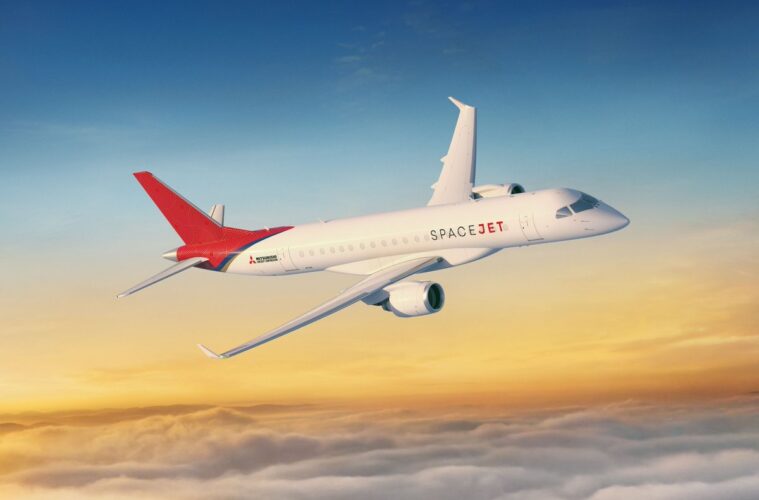
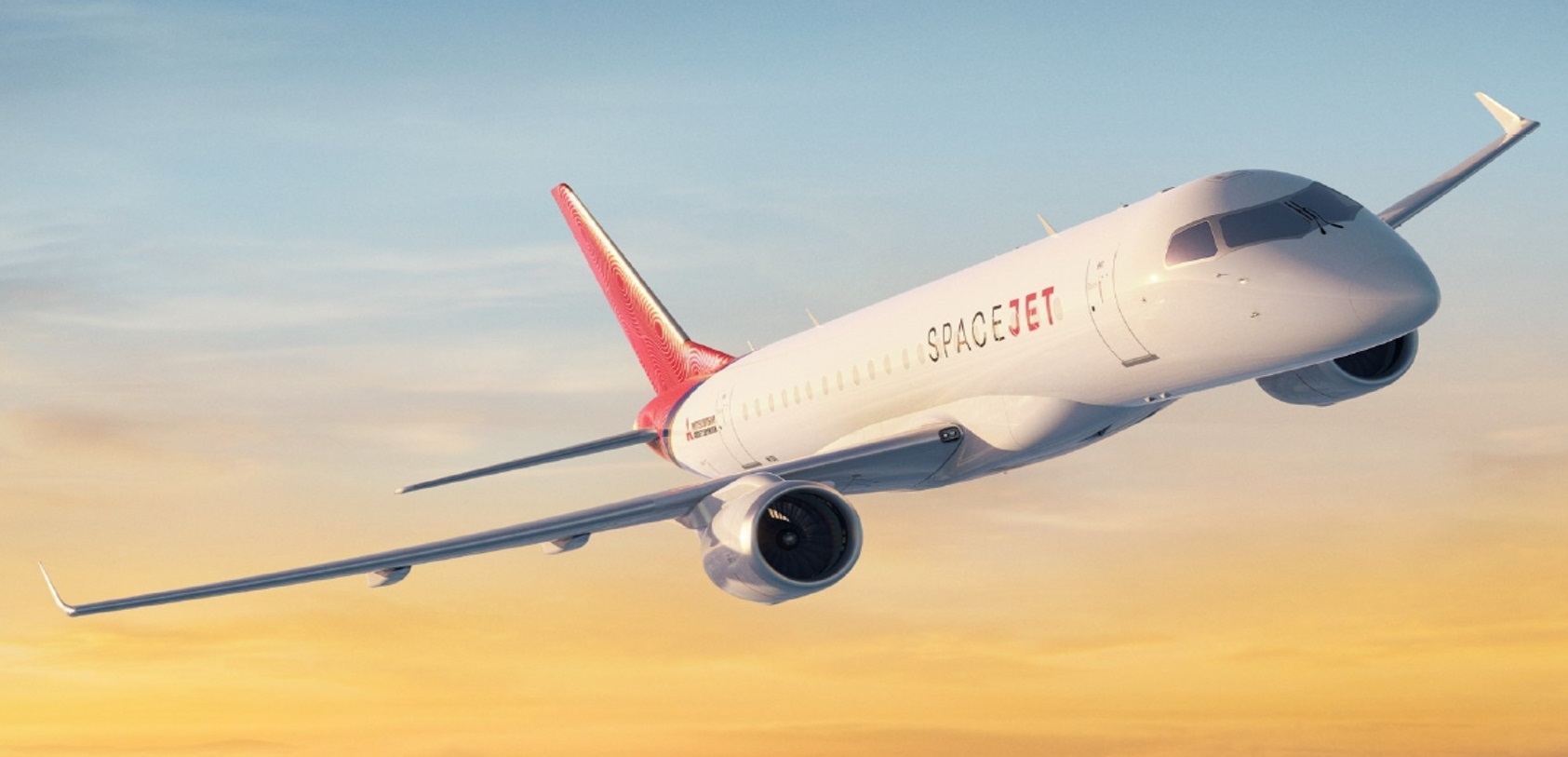
El memorando de entendimiento exige que Mesa y Mitsubishi Aircraft «comiencen las negociaciones formales para la compra» de 100 M100, según un comunicado de prensa de Mitsubishi Aircraft. El acuerdo establece a Mesa Airlines realizar 50 pedidos en firme y tomar los derechos de compra de otros 50, con entregas a partir de 2024. El avión estará propulsado por turbofans con engranajes Pratt & Whitney PW1200.

El mercado del SpaceJet M100 está desarrollando con estos acuerdos en mente, con una capacidad de 76 plazas, en clase única podrá equiparse con hasta 88 asientos. Se trata de una variante que intermedia entre el SpaceJet M90, de 90 plazas, y el MRJ70, de 70, cuyo desarrollo se ha cancelado en favor del M100. El anterior MRJ70 de 70 asientos tenía menos asientos que los aviones de la competencia como el Embraer 175. Mitsubishi Aircraft continúa desarrollando el M90 más grande de 88 asientos junto con el M100. Espera comenzar a entregar el M90 en 2020. La compañía también adquirió recientemente el programa CRJ de Bombardier, dándole una sólida red global de soporte de aeronaves.

«La selección de Mesa Airlines del SpaceJet M100 confirma que nuestro avión satisface las necesidades actuales y futuras en esta industria, y que las aerolíneas están listas para avanzar en nuestras discusiones», dice el Presidente de Mitsubishi Aircraft, Hisakazu Mizutani, en un comunicado de prensa.

«Con su gran cabina, comodidad, nueva tecnología y bajos costos de operación, el Mitsubishi SpaceJet M100 puede ofrecer esta experiencia premium dentro de la cláusula de alcance de los Estados Unidos», dice el director ejecutivo de Mesa, Jonathan Ornstein.

El SpaceJet era denominado anteriormente MRJ (Mitusbishi Regional Jet), pero en el pasado Salón de Le Bourget se anunció el cambio de denominación.AW-Icon-AW-TXT

Resultado de imagen para Mesa Airlines Mitsubishi MRJ 100Mesa Airlines orders 100 SpaceJet M100

Mesa Airlines agrees to buy up to 100 SpaceJet M100

The American airline Mesa Airlines and Mitsubishi Aircraft Corporation have signed a letter of intent for 100 SpaceJet M100. The American regional airline Mesa Airlines has signed a Memorandum of Understanding (MoU) to order up to 100 of the 76-seat SpaceJet M100 regional aircraft from Mitsubishi Aircraft.

AW-700M100.jpgMesa Airlines operates with a fleet of regional airplanes as a feeder company for the main US airlines, which have signed with their pilots Scope Clauses agreements that limit the number and size of those regional airplanes. The agreement between both parties indicates that aircraft deliveries would begin in 2024.
The memorandum of understanding requires that Mesa and Mitsubishi Aircraft begin formal negotiations for the purchase of 100 M100, according to a press release from Mitsubishi Aircraft. The agreement establishes Mesa Airlines to make 50 firm orders and take the purchase rights of another 50, with deliveries from 2024. The aircraft will be powered by turbofans with Pratt & Whitney PW1200 gears.

The SpaceJet M100 market is developing with these agreements in mind, with a capacity of 76 seats, in a single class it can be equipped with up to 88 seats. It is a variant that intermediates between the SpaceJet M90, 90 seats, and the MRJ70, 70, whose development has been canceled in favor of the M100. The previous 70-seat MRJ70 had fewer seats than competing aircraft like the Embraer 175. Mitsubishi Aircraft continues to develop the largest M90 of 88 seats along with the M100. He expects to start delivering the M90 ​​in 2020. The company also recently acquired the Bombardier CRJ program, giving it a strong global aircraft support network.

«The Mesa Airlines selection of the SpaceJet M100 confirms that our aircraft meets current and future needs in this industry and that the airlines are ready to move forward in our discussions», says Mitsubishi Aircraft President Hisakazu Mizutani, in a statement from the press.

«With its large cab, comfort, new technology, and low operating costs, the Mitsubishi SpaceJet M100 can offer this premium experience within the scope of the United States», says Mesa chief executive Jonathan Ornstein.

The SpaceJet was previously called MRJ (Mitsubishi Regional Jet), but in the past Le Bourget Hall, the name change was announced. A \ W


Ξ A I R G W A Y S Ξ
SOURCE: Airgways.com
DBk: Theflymrj.com / Airgways.com
AW-POST: 201909061139AR

A\W   A I R G W A Y S ®

Primera entrega de A220 a Egyptair

Resultado de imagen para Egyptair Airbus A220AW | 2019 09 05 10:43 | AIRLINES / INDUSTRY

logo_airbus (2)La aerolínea Egyptair recibe primer Airbus A220-300AW-A220-Icon.jpg
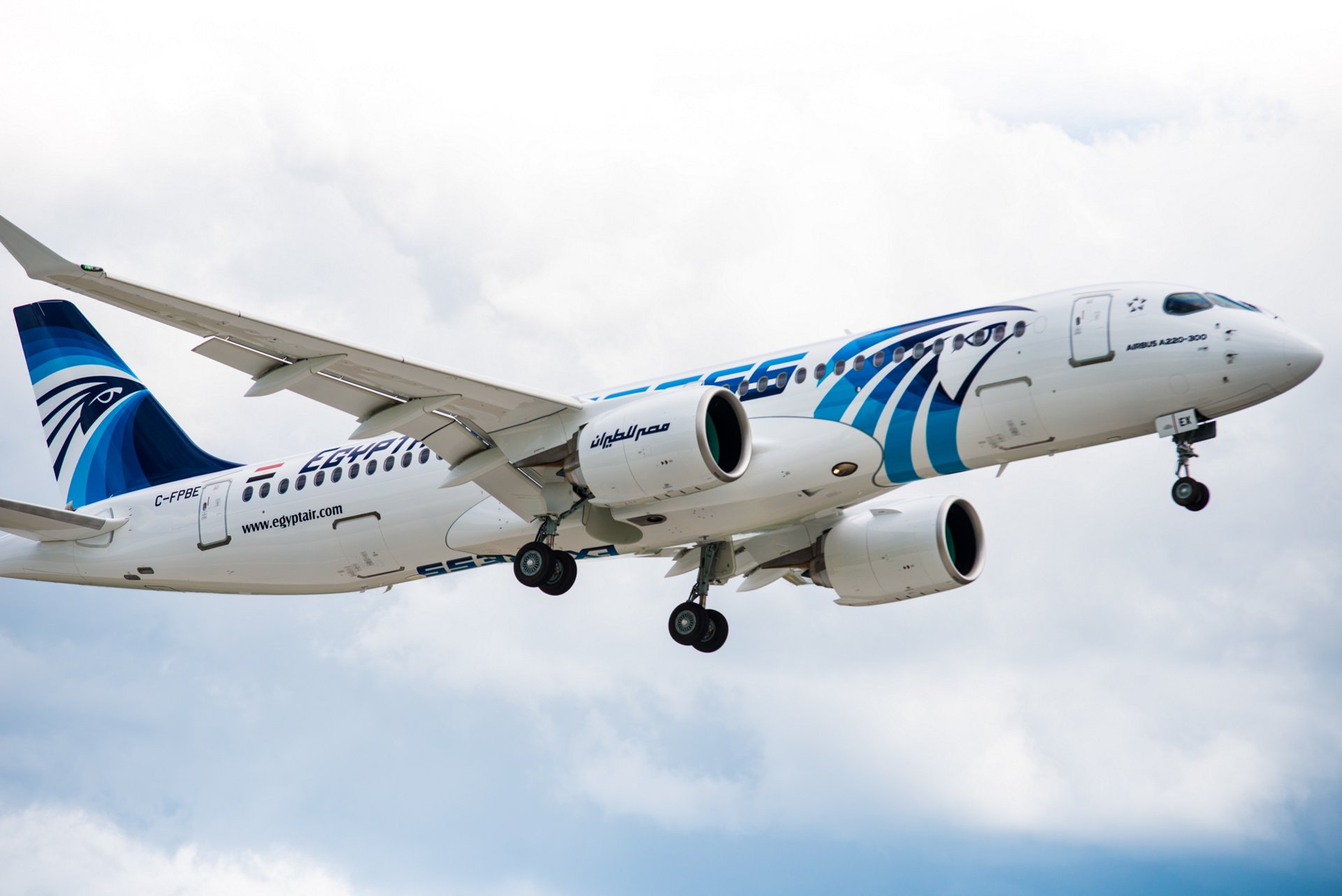
Egyptair recibió su primer avión Airbus A220-300 por encargo, convirtiéndose en el primer operador A220 con sede en la región de Medio Oriente y África del Norte, y el sexto operador en todo el mundo. La aerolínea con sede en El Cairo tiene la intención de volar el avión en rutas hacia y desde su principal centro egipcio en El Cairo en los próximos días.

Representantes de la aerolínea, junto con ejecutivos de Airbus Canada Limited Partnership celebraron la entrega de aviones en la línea de ensamblaje final A220 Mirabel. «Estamos orgullosos de dar la bienvenida a nuestro primer avión A220 y de ser la primera aerolínea en la región de Medio Oriente y África del Norte en recibir y lanzar operaciones comerciales del A220, el avión más innovador y tecnológicamente avanzado del mundo. Los aviones de pasajeros Airbus A220 son parte integral de la ejecución de la estrategia de desarrollo de negocios Egyptair Horizon 2025 y el plan de optimización de flota», dijo Capt Ahmed Adel, Presidente y Director Ejecutivo de Egyptair Holding Company.

«Estamos encantados de dar la bienvenida a Egyptair a la creciente familia de operadores de A220 y esperamos ver a sus pasajeros disfrutar de la experiencia de viajar a bordo de la cabina brillante, espaciosa y moderna del A220», dijo Philippe Balducchi, CEO, Airbus Canada Limited Partnership y Airbus Head of Country Canada.

El nuevo A220-300 de Egyptair está configurado en una cabina de dos clases con 140 asientos, incluyendo 15 asientos premium de clase económica y 125 asientos de clase económica, ofreciendo a cada pasajero un mayor nivel de comodidad y espacio.

El A220 es el único avión diseñado específicamente para el mercado de 100-150 asientos; Ofrece una eficiencia de combustible inmejorable y comodidad para los pasajeros de cabina ancha en un avión de pasillo único. El A220 reúne una aerodinámica de vanguardia, materiales avanzados y los motores de turboventilador con engranaje PW1500G de última generación de Pratt & Whitney para ofrecer al menos un 20% menos de consumo de combustible por asiento en comparación con los aviones de la generación anterior. El A220 ofrece el rendimiento de aviones de pasillo único más grandes.

Egyptair actualmente opera una flota de 15 aviones Airbus y todavía tiene 15 aviones A320NEO, así como 11 aviones A220 que se entregarán en los próximos años. Con una cartera de pedidos de más de 500 aviones a fines de agosto de 2019, el A220 tiene todas las credenciales para ganar la mayor parte del mercado de aviones de 100 a 150 asientos que se estima que representa al menos 7.000 aviones en los próximos 20 años.AW-Icon-AW-TXT

Resultado de imagen para Egyptair Airbus A220The first delivery of A220 to Egyptair

Egyptair airline receives first Airbus A220-300

Egyptair received its first Airbus A220-300 aircraft on request, becoming the first A220 operator based in the Middle East and North Africa region, and the sixth-largest operator worldwide. The Cairo-based airline intends to fly the plane on routes to and from its main Egyptian center in Cairo in the coming days.

Representatives of the airline, along with executives of Airbus Canada Limited Partnership celebrated the delivery of aircraft in the final assembly line A220 Mirabel. «We are proud to welcome our first A220 aircraft and to be the first airline in the Middle East and North Africa region to receive and launch commercial operations of the A220, the most innovative and technologically advanced aircraft in the world. Airbus A220 passengers are an integral part of the execution of the Egyptair Horizon 2025 business development strategy and fleet optimization plan», said Capt Ahmed Adel, President, and CEO of Egyptair Holding Company.

«We are delighted to welcome Egyptair to the growing family of A220 operators and we hope to see its passengers enjoy the experience of traveling aboard the bright, spacious and modern cabin of the A220», said Philippe Balducchi, CEO, Airbus Canada Limited Partnership and Airbus Head of Country Canada.

The new Egyptair A220-300 is configured in a two-class cabin with 140 seats, including 15 premium economy class seats and 125 economy class seats, offering each passenger a greater level of comfort and space.

The A220 is the only aircraft designed specifically for the market of 100-150 seats; It offers unbeatable fuel efficiency and comfort for wide-cabin passengers in a single-aisle plane. The A220 brings together state-of-the-art aerodynamics, advanced materials and the latest generation PW1500G turbofan motors with Pratt & Whitney to offer at least 20% less fuel consumption per seat compared to the previous generation aircraft. The A220 offers the performance of larger single-aisle aircraft.

Egyptair currently operates a fleet of 15 Airbus aircraft and still has 15 A320NEO aircraft, as well as 11 A220 aircraft that will be delivered in the coming years. With an order book of more than 500 aircraft at the end of August 2019, the A220 has all the credentials to win most of the 100 to 150 seat aircraft market that is estimated to represent at least 7,000 aircraft in the next 20 years. A \ W


Ξ A I R G W A Y S Ξ
SOURCE: Airgways.com
DBk: Airbus.com / Airgways.com
AW-POST: 201909061043AR

A\W   A I R G W A Y S ®

Airbus reafirma asociación con AVIC

Resultado de imagen para Airbus AVICAW | 2019 09 06 10:22 | INDUSTRY

logo_airbus (2)Airbus y AVIC profundizarán aún más la cooperación industrial en la producción de aeronaves de pasillo único

Airbus reafirma su compromiso con su asociación estratégica a largo plazo con la industria de la aviación de China y ha firmado un nuevo acuerdo con AVIC para 20160815070527!Logo_Avicprofundizar la cooperación industrial en la producción de pasillo único de Airbus. El acuerdo fue firmado en el Gran Salón del Pueblo en Beijing, presenciado por el Primer Ministro chino, Li Keqiang, y la canciller alemana Angela Merkel.

La cooperación con AVIC mejorará el equipamiento del fuselaje de los aviones Airbus Single Aisle (A319/A320) en Tianjin, China. La primera entrega de un fuselaje de los aviones A319 y A320 equipado con China está programada para el segundo trimestre de 2021. La firma es un hito en Airbus que beneficiará a la industria de la aviación de ambas partes en términos de escala y calidad.

La cooperación industrial entre Airbus y la industria de la aviación china en aviones comerciales se remonta a 1985 en la firma del primer acuerdo de subcontratación con Xi’an Aircraft Company (actualmente AVIC Aircraft Co.Ltd) en la fabricación y montaje de puertas de acceso para Airbus A300/A310 de fuselaje ancho. El valor total de la cooperación industrial entre Airbus y la industria de la aviación china alcanzó los US$ 900 millones en 2018.AW-Icon-AW-TXT

Resultado de imagen para Airbus AVICAirbus reaffirms partnership with AVIC

Airbus and AVIC will further deepen industrial cooperation in the production of single-aisle aircraft

Airbus reaffirms its commitment to its long-term strategic partnership with China’s aviation industry and has signed a new agreement with AVIC to deepen industrial cooperation in the production of Airbus’s single-aisle. The agreement was signed in the Great Hall of the People in Beijing, witnessed by Chinese Prime Minister Li Keqiang and German Chancellor Angela Merkel.

Cooperation with AVIC will improve the fuselage equipment of Airbus Single Aisle (A319/A320) aircraft in Tianjin, China. The first delivery of a fuselage of A319 and A320 aircraft equipped with China is scheduled for the second quarter of 2021. The firm is a milestone in Airbus that will benefit the aviation industry of both parties in terms of scale and quality.

The industrial cooperation between Airbus and the Chinese aviation industry in commercial aircraft dates back to 1985 in the signing of the first subcontracting agreement with Xi’an Aircraft Company (currently AVIC Aircraft Co. Ltd.) in the manufacture and assembly of access doors for Airbus A300 / A310 wide-body. The total value of industrial cooperation between Airbus and the Chinese aviation industry reached US$ 900 million in 2018. A \ W

Resultado de imagen para Airbus AVIC空中客車公司重申與中航工業的合作關係

空客和中航工業將進一步深化單通道飛機生產的產業合作

空中客車公司重申致力於與中國航空業建立長期戰略合作夥伴關係,並與中航工業簽署新協議,深化空中客車單通道生產的產業合作。該協議是在北京人民大會堂簽署的,中國總理李克強和德國總理默克爾見證了這一協議。

與中航工業的合作將改善中國天津空客單通道(A319/A320)飛機的機身設備。首次交付配備中國的A319和A320飛機的機身定於2021年第二季度。該公司是空中客車公司的一個里程碑,它將在規模和質量方面使雙方的航空業受益。

空中客車公司與中國航空業之間在商用飛機上的產業合作可以追溯到1985年與西安飛機公司(目前是中航工業飛機有限公司)簽訂的第一個分包協議,用於製造和組裝通道門適用於空中客車A300 / A310寬體。 2014年,空中客車與中國航空工業的工業合作總價值達到9億美元。A \ W


Ξ A I R G W A Y S Ξ
SOURCE: Airgways.com
DBk: Airbus.com
AW-POST: 201909061022AR

A\W   A I R G W A Y S ®

China Airlines firma pedido Boeing 777F

Resultado de imagen para Boeing 777F China AirlinesAW | 2019 09 05 15:05 | INDUSTRY / AIRLINES

Resultado de imagen para Boeing 777F China Airlines pngBoeing y China Airlines finalizan el acuerdo por seis Boeing 777F

China Airlines finalizó su acuerdo con Boeing para ordenar seis Boeing 777F (Cargueros) para modernizar su flota de carga. El transportista, que actualmente opera una de las flotas de cargueros 747 más grandes del mundo, planea hacer la transición a los cargueros bimotores más grandes y de mayor alcance en la industria a medida que lanza operaciones desde Taipei a América del Norte, un mercado clave que proporciona mayores rendimientos para el portador.

El acuerdo esta valorado en US$ 2,1 mil millones según los precios de lista, China Airlines había anunciado previamente su intención de ordenar hasta seis Boeing 777 Cargueros en el Salón Aeronáutico de París en Junio 2019. Tres de los seis pedidos del 777 Freighter fueron confirmados en julio y publicados en el sitio web de pedidos y entregas de Boeing como un cliente no identificado. Los tres restantes se publicarán durante la próxima actualización.

El versátil Boeing 777 Carguero puede volar misiones trans-pacíficas de largo alcance en exceso de 6.000 millas náuticas con un 20 por ciento más de carga útil que otros cargueros grandes como el 747-400F. El avión, que es capaz de transportar una carga útil máxima de 102 toneladas, permitirá a China Airlines hacer menos paradas y reducir las tarifas de aterrizaje asociadas en estas rutas de larga distancia. Como resultado, proporcionará a China Airlines y otros operadores el costo de viaje más bajo de cualquier carguero grande y ofrecerá una economía superior de tonelada por milla. Además, el 777 Carguero presenta una capacidad líder en el mercado para un carguero bimotor, con capacidad para 27 paletas estándar, que mide 96 pulgadas por 125 pulgadas ( 2.5 mx 3 m ) en la cubierta principal. Esto permite menores costos de manejo de carga y tiempos de entrega de carga más cortos.

«La carga aérea es una parte importante de nuestro negocio en general y la introducción de estos nuevos 777 Freighters jugará un papel integral en nuestra estrategia de crecimiento a largo plazo. A medida que hacemos la transición de nuestra flota de carga a los 777F, esto nos permitirá ofrecer servicios de clase mundial a nuestros clientes de manera más eficiente y confiable», dijo el Presidente de China Airlines, Hsieh Su-Chien.

China Airlines, que marca su 60º aniversarios este año, actualmente opera 51 aviones Boeing 777-300ER (51), 19 Boeing 737 Next-Generation (19), Boeing 747-400 (4) y Boeing 747F (18).

«A medida que China Airlines celebra más de medio siglo de éxito, Boeing tiene el honor de seguir desempeñando un papel integral en su crecimiento y expansión. Con esta orden, China Airlines se unirá a un grupo de élite de operadores de carga aérea global que operan nuevos 777 Cargueros. Con el pronóstico de que el mercado global de carga aérea se duplicará en los próximos 20 años, las capacidades y economía líderes del mercado del 777 Freighter ayudarán a China Airlines a ampliar su red y hacer crecer su negocio de carga en el futuro», dijo Ihssane Mounir, Vicepresidente Senior de Ventas Comerciales y Marketing de The Boeing Company.

La incorporación de 777 Freighters permitirá al transportista optimizar el mantenimiento y las piezas de su flota 777. El transportista utiliza una serie de soluciones de servicios globales de Boeing para respaldar las operaciones de su flota de Boeing, incluida la caja de herramientas de mantenimiento y mantenimiento de la salud del avión. Estas plataformas basadas en datos rastrean la información del avión en tiempo real, proporcionando datos de mantenimiento y herramientas de soporte de decisiones que permiten a los técnicos resolver problemas de forma rápida y correcta. En tierra y en el aire, toda la flota de China Airline utiliza Jeppesen FliteDeck Pro y acceso a cartas de navegación digital para optimizar el rendimiento y mejorar el conocimiento de la situación.AW-Icon-AW-TXT

Resultado de imagen para Boeing 777F China Airlines pngChina Airlines signs order Boeing 777F

Boeing and China Airlines finalize the agreement for six Boeing 777F

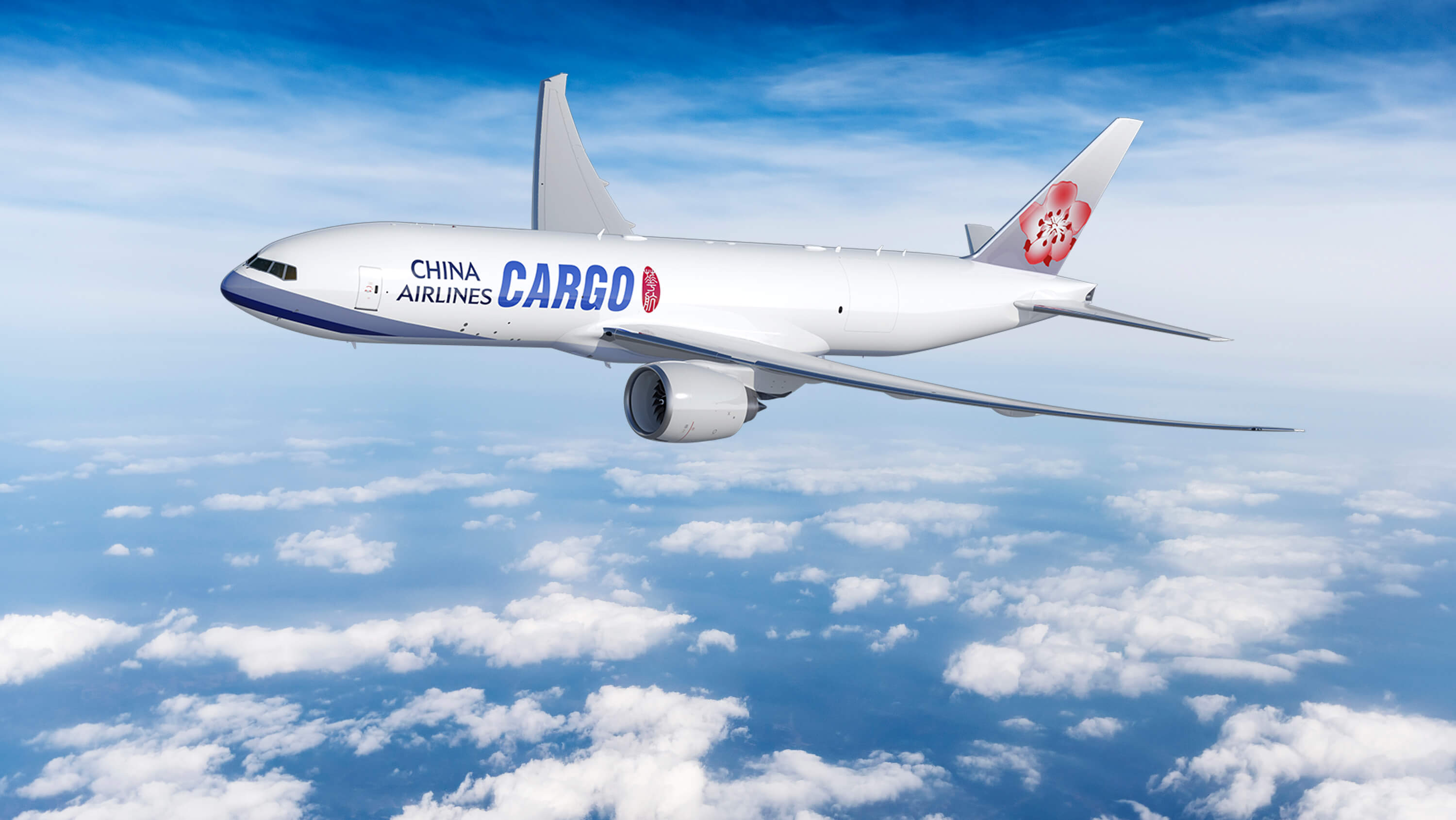
China Airlines finalized its agreement with Boeing to order six Boeing 777F (Freighters) to modernize its cargo fleet. The carrier, which currently operates one of the world’s largest 747 freighter fleets, plans to transition to the largest and most powerful twin-engine freighters in the industry as it launches operations from Taipei to North America, a key market which provides higher yields for the carrier.

The agreement is valued at US$ 2.1 billion according to the list prices, China Airlines had previously announced its intention to order up to six Boeing 777 Freighters at the Paris Air Show in June 2019. Three of the six orders of the 777 Freighter They were confirmed in July and posted on the Boeing order and delivery website as an unidentified customer. The remaining three will be published during the next update.

The versatile Boeing 777 Freighter can fly long-range trans-peaceful missions in excess of 6,000 nautical miles with 20 percent more payload than other large freighters such as 747-400F. The aircraft, which is capable of transporting a maximum payload of 102 tons, will allow China Airlines to make fewer stops and reduce the associated landing fees on these long-distance routes. As a result, it will provide China Airlines and other operators with the lowest travel cost of any large freighter and offer a superior economy of ton per mile. In addition, the 777 Freighter features a market-leading capacity for a twin-engine freighter, with capacity for 27 standard pallets, measuring 96 inches by 125 inches (2.5 mx 3 m) on the main deck. This allows lower load handling costs and shorter load delivery times.

«Air cargo is an important part of our business in general and the introduction of these new 777 Freighters will play an integral role in our long-term growth strategy. As we transition from our cargo fleet to 777F, this it will allow us to offer world-class services to our customers in a more efficient and reliable way», said China Airlines President Hsieh Su-Chien.

China Airlines, which marks its 60th anniversary this year, currently operates 51 Boeing 777-300ER (51), 19 Boeing 737 Next-Generation (19), Boeing 747-400 (4) and Boeing 747F (18) aircraft.

«As China Airlines celebrates more than half a century of success, Boeing has the honor of continuing to play an integral role in its growth and expansion. With this order, China Airlines will join an elite group of global air cargo operators that New 777 Freighters operate, with the forecast that the global air cargo market will double over the next 20 years, the leading capabilities and economy of the 777 Freighter market will help China Airlines expand its network and grow its cargo business in the future», said Ihssane Mounir, Senior Vice President of Commercial Sales and Marketing at The Boeing Company.

The incorporation of 777 Freighters will allow the carrier to optimize the maintenance and parts of its 777 fleets. The carrier uses a series of Boeing global service solutions to support the operations of its Boeing fleet, including the maintenance and maintenance toolbox of the health of the plane. These data-based platforms track aircraft information in real-time, providing maintenance data and decision support tools that allow technicians to solve problems quickly and correctly. On land and in the air, the entire China Airline fleet uses Jeppesen FliteDeck Pro and access to digital navigation charts to optimize performance and improve awareness of the situation. A \ W


Ξ A I R G W A Y S Ξ
SOURCE: Airgways.com
DBk: Boeing.com / China-airlines.com
AW-POST: 201909051505AR

A\W   A I R G W A Y S ®

EASA realiza test pruebas 737 MAX

Resultado de imagen para Boeing 737 max testAW | 2019 09 05 14:44 | AVIATION SAFETY / INDUSTRY

EASA_Logo.pngEl organismo de seguridad europeo EASA efectúa pruebas de vuelo del Boeing 737 MAX
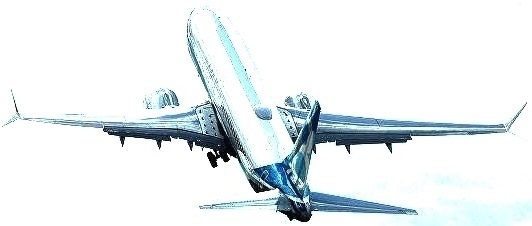
EASA, el organismo de control de seguridad de la aviación de Europa no aceptará una decisión de Estado Unidos acerca si el Boeing 737 MAX es seguro y, en cambio, está realizando sus propias pruebas antes de aprobar un regreso a los vuelos comerciales. Estos análisis incluyen evaluaciones de seguridad de nuevos cambios de diseño, pruebas de nuevo software, requisitos de entrenamiento de la tripulación y una semana completa de pruebas de vuelo en un 737 MAX modificado.

Si bien Boeing tiene la intención de volver a certificar el avión para el cuarto trimestre, una presentación de EASA afirma que «todavía no hay una respuesta adecuada a los problemas de integridad del ángulo de ataque».AW-Icon-AW-TXT

AW-700034434

EASA performs test tests Boeing 737 MAX

The European security agency EASA performs flight tests of the Boeing 737 MAX

EASA, the European aviation security control body will not accept a US decision on whether the Boeing 737 MAX is safe and, instead, is conducting its own tests before approving a return to commercial flights. These analyzes include safety assessments of new design changes, new software tests, crew training requirements and a full week of flight tests on a modified 737 MAX.

While Boeing intends to re-certify the aircraft for the fourth quarter, an EASA presentation states that «there is still no adequate response to the integrity problems of the angle of attack». A \ W


Ξ A I R G W A Y S Ξ
SOURCE: Airgways.com
DBk: Easa.europa.eu / Boeing.com / Thenational.ae / Airgways.com
AW-POST: 201909051444AR

A\W   A I R G W A Y S ®


Sukhoi revisión proyecto SSJ-75

Resultado de imagen para Sukhoi SSJ-75AW | 2019 09 04 16:25 | INDUSTRY

logo_sukhoi.jpgSukhoi Aircraft revisará el proyecto de fabricación del SSJ-75
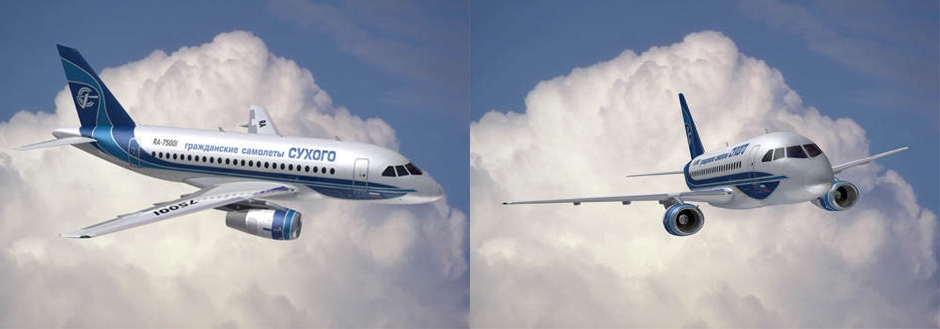
La compañía rusa Sukhoi Civil Aircraft revisaría el Proyecto SSJ-75, una aeronave más acortada de la versión SSJ-100. La compañía ha emitido un comunicado en respuesta a la cancelación del programa de la aeronave Superjet 75. Según la declaración de la Gerencia de la compañía Sukhoi Civil Aircraft, no hay absolutamente ninguna demanda de una versión abreviada del 75.

En Abril 2018, una oficina de representación de la industria de la industria aeronáutica civil anunció el inicio de los trabajos para el desarrollo de una modificación abreviada del SSJ-75 con una capacidad de 75 asientos. En el mismo año, el mayor transportista ruso del Grupo S7 firmó la intención de comprar el primer lote de aviones de esta clase por la cantidad de 75 unidades. Se suponía que los revestimientos acortados comenzarían a ingresar a las flotas de la compañía en 2022. El copropietario de S7, Vladislav Filev, hizo un anuncio sobre la decisión supuestamente tomada por Sukhoi Civil Aircraft de dejar de trabajar en el SSJ-75.

El Ministerio de Industria y Comercio de Federación Rusia anunció que la compañía considera que el protocolo de intenciones con S7 es una industria prometedora en el desarrollo de la industria aeronáutica.

Mercado regional

Actualmente, hay alrededor de 3.500 aviones en el mercado mundial de aviones a reacción con una capacidad de 75 pasajeros. Además, hay una gran cantidad de aviones con motores de turbohélice en funcionamiento, aproximadamente la misma capacidad. Las aeronaves con una pequeña capacidad de 30-50 asientos abandonan el mercado, y 120-130 asientos que tienen demanda no siempre son ventajosos para usar en rutas interregionales. Por lo tanto, existe un nicho para crear una aeronave de 75 plazas. Sin embargo, en tales aviones, el principal inconveniente que reduce su demanda en el mercado es la baja velocidad y el alto ruido del motor.

Modificación Superjet 75

En Abril 2019, el liderazgo de Sukhoi Civil Aircraft anunció un nuevo plan de desarrollo para una nueva familia de aviones llamada Sukhoi Superjet New. La apuesta en este proyecto se hizo en la máxima sustitución posible de importación de piezas en la versión básica del SSJ-100 y el aplazamiento de la fecha límite para crear una versión abreviada con el nuevo motor ruso PD-10.

Se prevé que el avión regional Sukhoi Superjet 75 con una capacidad de 75-78 pasajeros volará a una distancia de hasta 4.000 km, con la posibilidad de despegar y aterrizar en aeródromos cubiertos de asfalto y una longitud del PIB de no más de 1.400 m. Además, el cliente estipuló la posibilidad de aterrizar el avión con un gran suministro de combustible. Esto se debe a su alto costo en regiones remotas del país.

La reducción de peso SSJ-75 es la tarea principal del nuevo modelo. Para cumplir con estos requisitos, en primer lugar, es necesario reducir la masa de la aeronave, tanto vacía como de despegue. Reducir el peso de la aeronave cortando las secciones del fuselaje delante y detrás reducirá significativamente las características de resistencia del revestimiento, y su peso seguirá siendo grande. Para resolver este problema, el diseño del fuselaje debe basarse en nuevas aleaciones ligeras de aluminio y litio. Los materiales compuestos deben usarse en el diseño de alas y cola. Además, la proporción de materiales compuestos debería aumentar del 15 al 40%. Para reducir el peso de la aeronave, se creará un nuevo diseño de tren de aterrizaje. Durante el diseño, se buscarán reservas para la reducción de peso para todos los elementos de la aeronave.

En 2019, la sección de fuselaje se fabricará para estudiar el comportamiento de nuevos materiales, se desarrollará la tecnología para fabricar elementos estructurales mediante soldadura y remachado. Está previsto fabricar una sección de ala con materiales compuestos y realizar sus pruebas. El primer despegue del SSJ-75 tendrá lugar en 2023.AW-Icon-AW-TXT

2-sukhoi.jpgSukhoi review project SSJ-75

Sukhoi Aircraft will review the manufacturing project of the SSJ-75

The Russian company Sukhoi Civil Aircraft would review Project SSJ-75, a shorter-cut aircraft of the SSJ-100 version. The company has issued a statement in response to the cancellation of the Superjet 75 aircraft program. According to the statement of the Sukhoi Civil Aircraft Company Management, there is absolutely no demand for a shortened version of 75.

In April 2018, a representative office of the civil aviation industry announced the start of work for the development of an abbreviated modification of the SSJ-75 with a capacity of 75 seats. In the same year, the largest Russian carrier of the S7 Group signed the intention to buy the first batch of aircraft of this class for the amount of 75 units. The shortened coatings were supposed to start entering the company’s fleets in 2022. S7 co-owner Vladislav Filev made an announcement about the decision allegedly taken by Sukhoi Civil Aircraft to stop working on the SSJ-75.

The Ministry of Industry and Commerce of the Russian Federation announced that the company considers that the protocol of intentions with S7 is a promising industry in the development of the aeronautical industry.

Regional market

Currently, there are around 3,500 aircraft in the global jet aircraft market with a capacity of 75 passengers. In addition, there are a lot of airplanes with turboprop engines running, approximately the same capacity. Aircraft with a small capacity of 30-50 seats leave the market, and 120-130 seats that are in demand are not always advantageous for use on interregional routes. Therefore, there is a niche to create a 75-seater aircraft. However, in such aircraft, the main drawback that reduces its demand in the market is a low speed and high engine noise.

Modification Superjet 75

In April 2019, the leadership of Sukhoi Civil Aircraft announced a new development plan for a new family of aircraft called Sukhoi Superjet New. The bet on this project was made in the maximum possible replacement of import of parts in the basic version of the SSJ- 100 and the postponement of the deadline to create a shortened version with the new Russian PD-10 engine.

The Sukhoi Superjet 75 regional aircraft with a capacity of 75-78 passengers is expected to fly at a distance of up to 4,000 km, with the possibility of taking off and landing on asphalt-covered airfields and a GDP length of no more than 1,400 m. In addition, the customer stipulated the possibility of landing the plane with a large supply of fuel. This is due to its high cost in remote regions of the country.

SSJ-75 weight reduction is the main task of the new model. To meet these requirements, first of all, it is necessary to reduce the mass of the aircraft, both empty and take-off. Reducing the weight of the aircraft by cutting the sections of the fuselage in front and behind will significantly reduce the strength characteristics of the lining, and its weight will remain large. To solve this problem, the fuselage design must be based on new lightweight aluminum and lithium alloys. Composite materials should be used in the design of wings and tail. In addition, the proportion of composite materials should increase from 15 to 40%. To reduce the weight of the aircraft, a new landing gear design will be created. During the design, reserves for weight reduction for all elements of the aircraft will be sought.

In 2019, the fuselage section will be manufactured to study the behavior of new materials, technology will be developed to manufacture structural elements by welding and riveting. It is planned to manufacture a wing section with composite materials and perform its tests. The first take-off of the SSJ-75 will take place in 2023. A \ W


Ξ A I R G W A Y S Ξ
SOURCE: Airgways.com
DBk: Scac.ru / Airgways.com
AW-POST: 201909041625AR

A\W   A I R G W A Y S ®