Crisis aérea del Golfo Pérsico

https://upload.wikimedia.org/wikipedia/commons/d/dd/QR_aircraft_at_Hamad_Airport%2C_07-2014.JPG

AW | 2017 06 05 16:15 | GOVERNMENT / AIRLINES

Las aerolíneas árabes cancelan vuelos y Qatar Airways modificó sus rutas

Saudia, Emirates, Etihad y Fly Dubai suspendieron sus viajes después de la ruptura de relaciones de cinco países con el gobierno qatarí. La aerolínea de bandera del gobierno de Doha respondió con la misma medida. Como precaución, ahora vuela a Europa a través del espacio aéreo de sus países «amigos»

La aerolínea de bandera Qatar Airways anunció el lunes la suspensión de todos sus vuelos hacia Arabia Saudita, una medida recíproca luego de que las empresas Saudia, Etihad, Emirates, EgyptAir y Fly Dubai hicieran lo mismo en medio de una crisis diplomática entre las monarquías del golfo y Doha, a la que acusan de apoyar al terrorismo.

Los Emiratos Árabes Unidos, Bahréin, Egipto, Yemen y Arabia Saudita, entre otros, rompieron relaciones diplomáticas con Qatar, que deberá retirar a sus embajadores, y habían anunciado la cancelación de vuelos y el cierre de sus espacios aéreos y marítimos, aislando política y económicamente a la monarquía sunita. La medida entrará en rigor el martes, pero sus efectos ya se sienten.

La mayor parte del comercio de Qatar llega a través de rutas, puertos y aeropuertos en los países del Golfo, por lo que el reino deberá ahora utilizar vías por sobre Irak e Irán para llegar a Europa, Medio Oriente y otros puntos del globo, según destacó la cadena estadounidense ABC.

La decisión está basada en acusaciones de apoyo a grupos terroristas, especialmente la organización de los Hermanos Musulmanes, por parte de Doha, así como de diferencias sobre la conducción de las acciones en Yemen, donde una coalición liderada por Arabia Saudita asiste al gobierno de Al Hadi en la guerra civil contra los rebeldes hutíes, y la relación con Irán.

«Qatar alberga una multitud de terroristas y grupos sectarios que apuntan a crear inestabilidad en la región», argumenta un comunicado publicado por Riad que justifica el quiebre dentro del Consejo de Cooperación del Golfo (CCG) del que los países son miembros, según reporta la CNN.

La crisis se despliega a una semana de la visita del presidente de los Estados Unidos, Donald Trump, a Arabia Saudita, donde se reunió con los principales líderes del Golfo Pérsico, firmó acuerdos militares y pidió a los países que no sean «refugio de terroristas y que aislen a Irán, una visita que la Casa Blanca describió como histórica».

Al respecto, su secretario de Estado, Rex Tillerson, dijo el lunes: «Instamos a las partes a sentarse y solucionar estas diferencias, y si hay algún rol que podamos jugar en términos de ayudar en esa solución, creo que es importante que los miembros del CCG permanezcan unidos».

Tillerson se encuentra en Australia junto al Secretario de Defensa, James Mattis, quien por su parte culpó a Teherán de las fricciones. «Las acciones de Irán hablan más fuerte que las palabras», dijo, según la cadena Al Jazeera.

La teocracia chiita también se refirió a la crisis en el Golfo. «Cortar relaciones diplomáticas y cerrar fronteras no es la forma de resolver una crisis. Como dije antes, la agresión y la ocupación no resultarán en otra cosa que la inestabilidad», dijo Hamid Aboutalebi, subsecretario del presidente iraní Hasan Rohani, en referencia a la situación en Yemen, donde Irán apoya a los rebeldes hutíes. AIRGWAYS ® Icon-AW

https://i0.wp.com/8319-presscdn-0-95.pagely.netdna-cdn.com/wp-content/uploads/2013/12/DSCF2323.jpg

Persian Gulf air crisis

Arab airlines cancel flights and Qatar Airways modified its routes


Saudia, Emirates, Etihad and Fly Dubai suspended their travels after the rupture of relations of five countries with the qatarí government. The Doha government’s flagship airline responded with the same measure. As a precaution, it now flies to Europe through the airspace of its «friendly»

Qatar Airways announced on Monday its suspension of all flights to Saudi Arabia, a reciprocal measure after Saudia, Etihad, Emirates, EgyptAir and Fly Dubai companies did the same in the middle of a diplomatic crisis between the monarchies of Gulf and Doha, which they accuse of supporting terrorism.

The United Arab Emirates, Bahrain, Egypt, Yemen and Saudi Arabia, among others, broke diplomatic relations with Qatar, which will have to withdraw its ambassadors, and announced the cancellation of flights and the closure of its air and sea spaces, isolating policy and Economically to the Sunni monarchy. The measure will come into force on Tuesday, but its effects are already felt.

Most of Qatari’s trade comes through routes, ports and airports in the Gulf countries, so the kingdom must now use routes over Iraq and Iran to reach Europe, the Middle East and other parts of the globe, according to Said the American network ABC.

The decision is based on accusations of support for terrorist groups, especially the organization of the Muslim Brotherhood in Doha, as well as differences on the conduct of actions in Yemen, where a coalition led by Saudi Arabia assists the government of Al Hadi in the civil war against Hutu rebels, and the relationship with Iran.

«Qatar is home to a multitude of terrorists and sectarian groups that aim to create instability in the region,» argues a statement issued by Riyadh that justifies the breakdown within the Gulf Cooperation Council (GCC) of which the member countries are members, according to the report. CNN.

The crisis unfolds a week after US President Donald Trump’s visit to Saudi Arabia, where he met with key leaders of the Persian Gulf, signed military accords and called on countries not to be «a haven for terrorists «And to isolate Iran, a visit the White House described as historic. «

In that regard, Secretary of State Rex Tillerson said Monday: «We urge the parties to sit down and address these differences, and if there is any role that we can play in terms of helping with that solution, I think it is important for members Of the GCC remain united «.

Tillerson is in Australia along with Secretary of Defense James Mattis, who for his part blamed Tehran for the frictions. «Iran’s actions speak louder than words,» he said, according to Al Jazeera.

The Shiite theocracy also referred to the crisis in the Gulf. «Cutting diplomatic relations and closing borders is not the way to resolve a crisis. As I said before, aggression and occupation will result in nothing but instability,» said Hamid Aboutalebi, Undersecretary of Iranian President Hasan Rohani, referring to Situation in Yemen, where Iran supports the Hutu rebels. A \ W

Ξ A I R G W A Y S Ξ
SOURCE: Infobae.com
DBk: Wikipedia.org / Cdn.com
AW-POST: 201706051615AR

A \ W   A I R G W A Y S ®

Plan privatizador Control Tráfico Aéreo EE.UU.

AW | 2017 06 05 15:51 | AIR TRAFFIC

Trump presenta un plan para privatizar el sistema de control de tránsito aéreo


El presidente Donald Trump presentó el lunes un plan para privatizar el sistema de control de tráfico aéreo estadounidense para modernizar sistemas anticuados y reducir el costo del vuelo, pero la propuesta enfrentó críticas inmediatas de parte de los demócratas.

El anuncio de la Cámara Este de la Casa Blanca de Trump sobre el control del tráfico aéreo es parte de un esfuerzo de una semana para dar a conocer sus planes para revisar la envejecida infraestructura del país mientras la Casa Blanca enfrenta una creciente investigación sobre los supuestos lazos entre su campaña y Rusia. Trump describió su plan como una «revolución de los viajes aéreos», instando al Congreso estadounidense a separarlo de la Administración Federal de Aviación. «Estamos proponiendo reducir los tiempos de espera, aumentar la eficiencia de la ruta y mucho menos retrasos.Nuestro plan le llevará a donde usted necesita para ir de forma rápida, más confiable, más asequible, y sí, por primera vez en mucho tiempo, a tiempo«, él dijo.

Ejecutivos de United Airlines, Hawaiian Airlines, American Airlines y Southwest Airlines, todos representados por Airlines for America, asistieron al discurso de Trump. El grupo elogió el plan Trump.


La propuesta de privatizar el sistema de control de tránsito aéreo se encontrará con grandes obstáculos en el Congreso, donde los demócratas y algunos republicanos se oponen. Trump ha dicho con frecuencia que los esfuerzos de modernización en curso ya estaban obsoletos. En un documento de síntesis publicado por la Casa Blanca, la administración Trump propone un período de transición de tres años para cambiar la supervisión del control del tráfico aéreo.

La propuesta dice que una junta formada por funcionarios de aerolíneas, sindicatos y aeropuertos supervisaría la entidad sin fines de lucro. La nueva entidad debería respetar los acuerdos laborales existentes, pero los controladores ya no serían empleados federales. La Administración Federal de Aviación gasta casi $ 10 mil millones al año en control de tráfico aéreo financiado en gran parte a través de tarifas de pasajeros y cuenta con aproximadamente 28,000 empleados de control de tráfico aéreo.

La líder demócrata de la Cámara, Nancy Pelosi, dijo en una declaración que Trump estaba reciclando «un plan republicano cansado que ambos lados del pasillo han rechazado» y que «controlará uno de los bienes públicos más importantes de nuestra nación hacia intereses especiales y las grandes aerolíneas». «Hoy estamos dando el primer paso importante para despejar la pista para más empleos, precios más bajos y mucho, mucho, mucho mejor transporte», dijo Trump.

El miércoles, Trump viajará a Cincinnati para hablar sobre mejoras a los 19.300 km de vías navegables interiores, represas, esclusas y puertos críticos para el envío de productos agrícolas, y pronunciará un discurso sobre su visión de la infraestructura. El impulso de la infraestructura se produce cuando la Casa Blanca busca enfocar la atención en las promesas fundamentales de impulsar los empleos y la economía que hizo Trump el año pasado durante su campaña electoral.

Esas promesas han sido eclipsadas por el furor político por la supuesta intromisión de Rusia en las elecciones estadounidenses de 2016. Ese drama llegará a la cabeza el jueves cuando el ex director de la Oficina Federal de Investigaciones, James Comey, quien dirigía la investigación de Rusia hasta que Trump lo despidió, testifica ante un panel del Senado estadounidense.

Trump ha negado cualquier connivencia entre Rusia y su campaña. Él ha luchado para mantener el foco en los planes que podrían darle un impulso político. Los eventos de infraestructura de esta semana estaban en las obras antes de la audiencia de Comey estaba programado. Ellos darán a Trump la oportunidad de proporcionar algo de contraprogramación a la batería de noticias de Rusia.

Los partidarios de la privatización sostienen que la eliminación del control del tráfico aéreo en una entidad no gubernamental permitiría un sistema más eficiente y mejoras rápidas y rentables de la tecnología, en parte evitando el proceso de adquisiciones gubernamentales.

Los opositores, entre ellos Delta Air Lines, dicen que el sistema de los Estados Unidos es tan grande que la privatización no ahorraría dinero y aumentaría los costos de los boletos y podría crear un riesgo para la seguridad nacional. También existe la preocupación de que las aerolíneas dominen la junta directiva de la empresa privada y limiten el acceso a los aeropuertos por los jets de negocios. La mayoría de las aerolíneas respaldan el plan.

La propuesta formal del presupuesto de la administración dio a conocer en mayo que incluía planes para privatizar el sistema de control de tráfico aéreo de la nación, aumentaría el déficit presupuestario en unos 45.000 millones de dólares en 10 años.  AIRGWAYS ® Icon-AW

US Air Traffic Control Privatization Plan

U.S. President Donald Trump (C) signs the air traffic control initiative at the White House in Washington, U.S., June 5, 2017. REUTERS / Jonathan Ernst

Trump lays out plan to privatize air traffic control system

President Donald Trump outlined a plan on Monday to privatize the U.S. air traffic control system to modernize outdated systems and lower the cost of flying, but the proposal faced immediate criticism from Democrats.

Trump’s White House East Room announcement on air traffic control is part of a week-long push to publicize his plans to overhaul the country’s aging infrastructure as the White House confronts a growing probe into alleged ties between his campaign and Russia. Trump described his plan as representing an «air travel revolution», urging the U.S. Congress to separate it from the Federal Aviation Administration. «We’re proposing reduced wait times, increased route efficiency and far fewer delays. Our plan will get you where you need to go quickly, more reliably, more affordably, and yes, for the first time in a long time, on time,» he said.

Executives from United Airlines, Hawaiian Airlines, American Airlines and Southwest Airlines, which are all represented by Airlines for America, attended the Trump speech. The group praised the Trump plan.

The proposal to privatize the air traffic control system will encounter major hurdles in Congress where Democrats and some Republicans oppose it. Trump has frequently said that ongoing modernization efforts were already obsolete. In a summary document released by the White House, the Trump administration proposes a three-year transition period to shift oversight of air traffic control.

The proposal says a board made up of airline, union and airport officials would oversee the non-profit entity. The new entity should honor existing labor agreements but controllers would no longer be federal employees. The Federal Aviation Administration spends nearly $10 billion a year on air traffic control funded largely through passenger user fees, and has about 28,000 air traffic control personnel.

House Democratic Leader Nancy Pelosi said in a statement that Trump was recycling «a tired Republican plan that both sides of the aisle have rejected» and would «hand control of one of our nation’s most important public assets to special interests and the big airlines.» «Today we are taking the first important step to clearing the runway for more jobs, lower prices and much, much, much better transportation,» Trump said.

On Wednesday, Trump will travel to Cincinnati to talk about improvements to the 12,000 miles (19,300 km) of inland waterways, dams, locks and ports critical for shipping farm products, and will deliver a speech about his vision for infrastructure. The infrastructure push comes as the White House seeks to refocus attention on core promises to boost jobs and the economy made by Trump last year during his campaign for office.

Those pledges have been eclipsed by the political furor over Russia’s alleged meddling in the 2016 U.S. election. That drama will come to a head on Thursday when former Federal Bureau of Investigation Director James Comey, who was leading the Russia probe until Trump fired him, testifies before a U.S. Senate panel.

Trump has denied any collusion between Russia and his campaign. He has struggled to keep the spotlight on plans that could give him a political boost. The infrastructure events this week were in the works before Comey’s hearing was scheduled. They will give Trump the opportunity to provide some counterprogramming to the drumbeat of Russia news.

Privatization advocates argue that spinning off air traffic control into a non-government entity would allow for a more efficient system and rapid, cost-effective improvements of technology, in part by avoiding the government procurement process.

Opponents, including Delta Air Lines, say the U.S. system is so large that privatization would not save money, and would drive up ticket costs and could create a national security risk. There also are concerns that airlines would dominate the private-company board and limit access to airports by business jets. Most airlines back the plan.

The administration’s formal budget proposal unveiled in May that included plans to privatize the nation’s air traffic control system would boost the budget deficit by about $45 billion over 10 years. A \ W

Ξ A I R G W A Y S Ξ
SOURCE: Reuters.con
DBk: Reuters.com
AW-POST: 201706051551AR

A \ W   A I R G W A Y S ®

United cancela vuelos a Venezuela

https://i0.wp.com/cdn.noticiaaldia.com.s3.amazonaws.com/wp-content/uploads/2017/03/United.jpg

AW | 2017 06 04 23:26 | AIRLINES ROUTES

United Airlines anunció l que dejará de prestar servicios en Venezuela. La aerolínea, que volaba diariamente entre Caracas y Houston, confirmó que la medida permanente no está vinculada con temas de pago.

La compañía reveló que los vuelos Caracas-Houston no arrojan los resultados financieros esperados, por lo que han decidido suspender el servicio a partir del 1 de julio.

Varias compañías aéreas han suspendido sus servicios en el país tras una prolongada disputa en torno a miles de millones de dólares que aseguran, la Nación les deben. De acuerdo con estas empresas, el gobierno de Nicolás Maduro no ha reembolsado a las empresas la venta de pasajes en moneda local, según los estrictos controles monetarios de dicho país.

La Asociación Internacional de Transportes Aéreos (IATA), por su parte, informó que para 2016 el Gobierno venezolano debía 3,78 millones de dólares a empresas aéreas. Además de las disputas monetarias y la baja ocupación de vuelos a Venezuela, las aerolíneas alegan estar preocupadas por la seguridad de sus tripulaciones sobre el terreno.  AIRGWAYS ® Icon-AW

United cancels flights to Venezuela


United Airlines announced to the National Institute of Civil Aviation that it will stop providing services in Venezuela. The airline, which flew daily between Caracas and Houston, confirmed that the permanent measure is not linked to payment issues.

The company revealed that the Caracas-Houston flights do not yield the expected financial results, reason why they have decided to suspend the service from the 1 of July.

Several airlines have suspended their services in the country after a protracted dispute around billions of dollars that they claim, the Nation owes them. According to these companies, the government of Nicolás Maduro has not reimbursed companies for the sale of tickets in local currency, according to the strict monetary controls of that country.

The International Air Transport Association (IATA), for its part, reported that by 2016 the Venezuelan government owed $ 3.78 million to airlines. In addition to the monetary disputes and the low occupation of flights to Venezuela, the airlines claim to be concerned about the safety of their crews on the ground. A \ W


Ξ A I R G W A Y S Ξ
SOURCE: Airgways.com
DBk: Amazonaws.com
AW-POST: 201706042326AR

A \ W   A I R G W A Y S ®

Gran despedida Fokker 70

https://www.luchtvaartnieuws.nl/sites/default/files/website_633x300/slider-airlines/kbx_2_c_reismedia_1280_0.jpg

AW | 2017 06 03 21:33 | GOVERNMENT

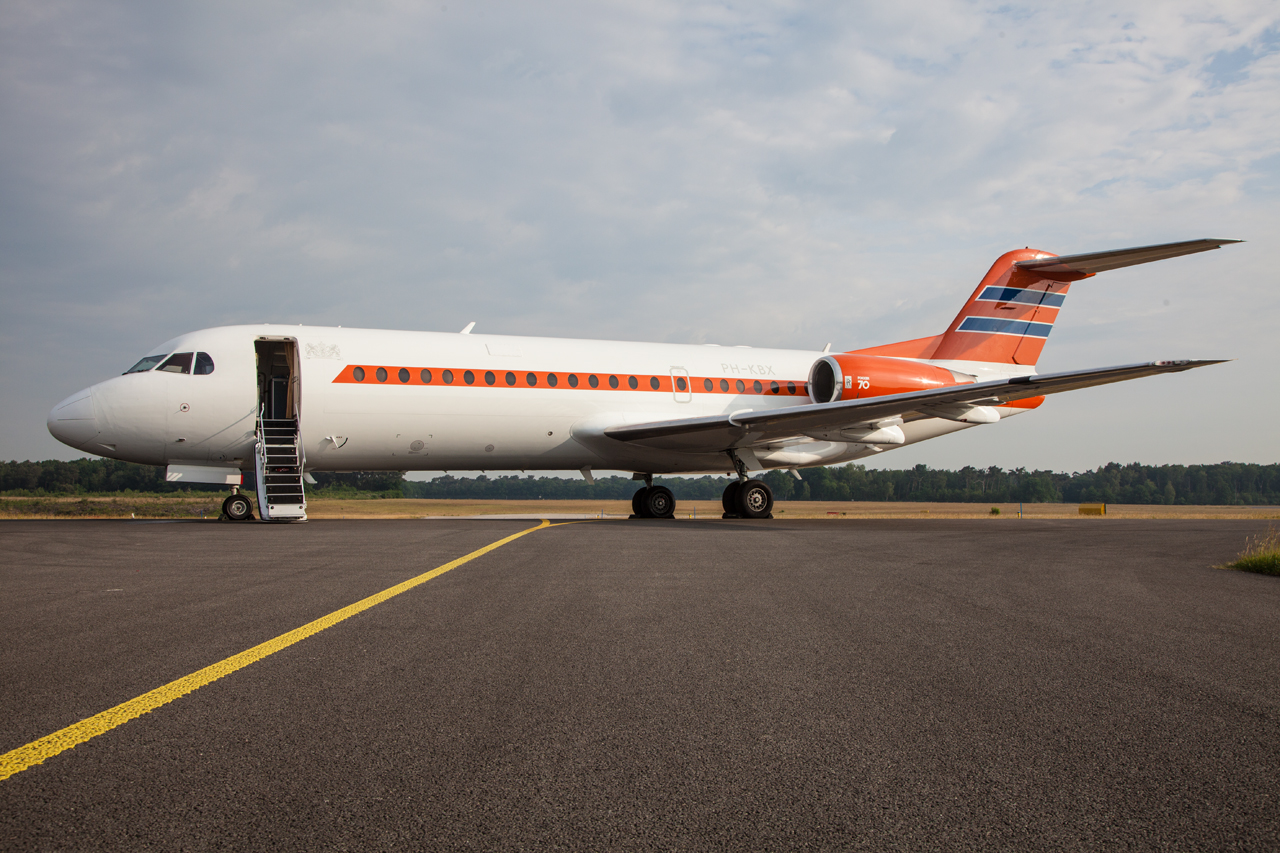
Fokker.svgWoensdrecht, Países Bajos · Entusiastas del avión le han dicho adiós a la unidad de gobierno holandés, el Fokker 70, matrícula PH-KBX. Alrededor de 4000 personas llegaron a la Woensdrecht para ver el teléfono por última vez desde la cercana informado el Ministerio de Infraestructura y Medio Ambiente.


El PH-KBX se ha utilizado durante años por el gobierno y los miembros de la familia real. Después de más de veinte años – el Fokker 70, construido en 1996 – un fin a esto. Las letras PH son el código de la aviación en los Países Bajos. Las letras corresponden a KBX de la reina Beatriz, que estaba sentado en el trono en el momento de la inscripción. El avión se sustituye por un Boeing 737 Business Jet  con la matrícula PH-GOV.

Los visitantes pudieron ver y fotografiar el dispositivo desde el exterior. El interior fue visto en película y fotos. También hubo una exposición con información sobre el dispositivo y los viajes realizados. La gente no estaba en el avión, ya que fue vendido a la empresa australiana Alliance Airlines por 3,7 millones de euros.  AIRGWAYS ® Icon-AW

http://images0.tcdn.nl/binnenland/article27291523.ece/BINARY/u/CX214_7E62_9

Great farewell breeder 70

Woensdrecht, Netherlands · Aircraft enthusiasts have said goodbye to the Fokker 70 PH-KBX Dutch government agency on Saturday. About 4000 people arrived at the Woensdrecht air base to see the device for a last time, reported the Ministry of Infrastructure and Environment.

The PH-KBX has been used for years by the government and members of the royal house. After over twenty years – the Fokker 70 dates back to 1996 – an end is coming. The letters PH are the aviation code for the Netherlands. The letters KBX represent Queen Beatrix, who was on the throne at the time of registration. The aircraft is replaced by a Boeing 737 Business Jet, registered as PH-GOV.

Visitors could see and photograph the device from outside. Inside the interior were movies and pictures to be seen. There was also an exhibition with information about the device and the trips made. People could not enter the plane because it was sold to Australian society Alliance Airlines for 3.7 million euros. A \ W

https://www.rd.nl/image/policy:1.1403344:1495610111/image/2017-05-22-pkKON1-in_cockpit-4-FC_web.jpg?q=0.85&$p$q=242b0a4

Groot afscheid Fokker 70

Woensdrecht, Nederland · Vliegtuigliefhebbers hebben zaterdag afscheid genomen van het Nederlandse regeringstoestel de Fokker 70 PH-KBX. Zo’n 4000 mensen kwamen naar de vliegbasis Woensdrecht om het toestel voor een laatste keer van dichtbij te kunnen zien meldde het ministerie van Infrastructuur en Milieu.

De PH-KBX werd jarenlang gebruikt door de regering en leden van het koningshuis. Na ruim twintig jaar – de Fokker 70 stamt uit 1996 – komt daar een einde aan. De letters PH zijn de luchtvaartcode voor Nederland. De letters KBX staan voor voor Koningin Beatrix, die op moment van registratie op de troon zat. Het vliegtuig wordt vervangen door een Boeing 737 Business Jet, met als registratie PH-GOV.

Bezoekers konden het toestel van buiten zien en fotograferen. Van het interieur waren film en foto’s te zien. Ook was er een tentoonstelling met informatie over het toestel en de gemaakte reizen. Mensen konden niet het vliegtuig in omdat het is verkocht aan de Australische maatschappij Alliance Airlines voor 3,7 miljoen euro. A\W

Video camera
VIDEO: http://www.telegraaf.nl/binnerland/28305998/_Groot_afscheid_Fokker_70.html
A I R G W A Y S ® 005

Ξ A I R G W A Y S Ξ
SOURCE: Telegraaf.nl
DBk: Telegraaf.nl / Rd.nl  / Luchtvaartnieuws.nl
AW-POST: 201706032133AR

A \ W   A I R G W A Y S ®

Paro Aeronavegantes el martes en todas las líneas aéreas en Argentina

https://i1.wp.com/aviationtechsv.com/wp-content/uploads/2017/05/la-fg-british-airways-20170527.jpg?fit=2048%2C1049&ssl=1

AW | 2017 06 03 14:50 | AIRLINES

La Asociación Argentina de Aeronavegantes irá a un paro el martes, 6 en todas las líneas aéreas en rechazó de la decisión de la empresa British Airways de cerrar su base de tripulantes de cabina de pasajeros en Argentina

La Asociación Argentina de Aeronavegantes (AAA) ratificó el paro del martes en todas las líneas aéreas, así lo indicaron fuentes gremiales, que confirmaron que el Ministerio de Trabajo no dictó la conciliación obligatoria, la medida de fuerza se mantiene firme. «Esperamos que la empresa revea y revierta la decisión, en caso contrario, el martes 6 de junio iniciaremos una medida de paro en todos los vuelos operativos de la actividad aerocomercial», expresó el jefe del gremio, Juan Pablo Brey.

El sindicato expresó su preocupación que la decisión de la aerolínea British Airways «significará pérdida de puestos de trabajo», y que por ese motivo, en caso de no ser escuchados, «se va a concretar la medida de fuerza». «Pedimos al Ministro de Trabajo Jorge Triaca que tome cartas en el asunto ya que está en juego la fuente laboral de muchos compañeros, como también de mano de obra argentina», manifestó Brey. Y, concluyó: «Desde la Asociación Argentina de Aeronavegantes no vamos a permitir que nuestros compañeros pierdan su sustento y estamos pendientes de cómo avance la situación, porque no vamos a especular a la hora de hacer medidas de fuerza«.

British Airways anunció esta semana que cerrará en los próximos días su base de tripulantes de cabina de pasajeros en Argentina. Las medidas de fuerza de los Aeronavegantes afectarán con demoras y cancelaciones no solo vuelos de la aerolínea británica, sino también de las demás empresas en solidaridad con los trabajadores afectados.

https://i2.wp.com/www.travelweekly.com/uploadedImages/All_TW_Art/Shutterstock_Art/2017/BritishAirways.jpg

Strike Aeronavegantes on Tuesday in all airlines in Argentina


The Argentine Aircraft Association will go on strike Tuesday, 6 on all airlines in rejection of British Airways’ decision to close its cabin crew base in Argentina


The Argentine Aircraft Association (AAA) ratified Tuesday’s strike on all airlines, as indicated by trade union sources, who confirmed that the Ministry of Labor did not issue mandatory conciliation, the measure of force remains firm. «We expect the company to review and reverse the decision, otherwise, on Tuesday, June 6, we will start a stoppage measure on all operating flights of the commercial activity,» said union boss Juan Pablo Brey.

The union expressed concern that the decision of British Airways «will mean loss of jobs,» and that for that reason, in case of not being heard, «the measure of force will be determined.» «We ask Labor Minister Jorge Triaca to take up the matter as the labor source of many of our colleagues is at stake, as well as Argentine labor,» Brey said. And, he concluded: «Since the Argentine Aircraft Association we are not going to allow our comrades to lose their livelihood and we are waiting for how the situation advances, because we will not speculate when it comes to making force measures.»

British Airways announced this week that it will close in the next few days its cabin crew base in Argentina. Aircraft force measurements will affect delays and cancellations not only flights of the British airline, but also of other companies in solidarity with the affected workers. A \ W


Ξ A I R G W A Y S Ξ
SOURCE: Airgways.com
DBk: Wp.com
AW-POST: 201706031450AR

A \ W   A I R G W A Y S ®

Conviasa suspende vuelos a Is. Margarita

https://i0.wp.com/www.embraer.com/PublishingImages/press-releases/01Conviasa_001.jpg

AW | 2017 06 31 14:33 | AIRLINES

Agrava la situación de la aerolínea Conviasa tras suspensión de vuelos en Margarita

Igor Viloria, presidente de la la Cámara de Turismo de Nueva Esparta, aseguró que la asociación depende de las buenas decisiones que tomen las personas que gobiernan, tras la suspensión de vuelos en la Isla de Margarita en días pasados. Durante una entrevista en el programa Turismo en Línea, Viloria expresó que por los momentos no hay productividad en el país, por lo que el esfuerzo que se hace en la isla ha sido en vano tras la ausencia de turistas.

En cuanto a la cancelación de los vuelos, el presidente de la cámara afirmó que 820 vuelos estaban llegando desde Buenos Aires a Porlamar y que este problema podría significar una disminución de por lo menos 1000 turistas semanales que dejarán de consumir productos y servicios. También dijo que las personas tienen miedo de viajar a Nueva Esparta por temor a quedarse varados lejos de sus casas.  AIRGWAYS ® Icon-AW

Resultado de imagen para conviasa isla margarita

Conviasa suspends flights to Isla Margarita


Aggravates the situation of the airline Conviasa after suspension of flights in Margarita Island

Igor Viloria, president of the Chamber of Tourism of Nueva Esparta, said that the association depends on the good decisions that the people who govern, after the suspension of flights in the island of Margarita in days past. During an interview in the online tourism program, Viloria said that at the moment there is no productivity in the country, so the effort that is made in the island has been in vain after the absence of tourists.

As for the cancellation of flights, the president of the chamber said that 820 flights were arriving from Buenos Aires to Porlamar and that this problem could mean a decrease of at least 1000 weekly tourists that will stop consuming products and services. He also said that people are afraid to travel to Nueva Esparta for fear of being stranded away from their homes. A \ W


Ξ A I R G W A Y S Ξ
SOURCE: El-carabobeno.com
DBk: Youtube.com / Embraer.com
AW-POST: 201706031433AR

A \ W   A I R G W A Y S ®


73ª Asamblea General Anual de la IATA

https://pbs.twimg.com/media/DAFyaBbU0AM-bxj.jpg

AW | 2017 06 03 14:11 | CONGRESS

La aviación mundial se reúnen en la Cumbre del Transporte Aéreo en Cancún

Los máximos representantes de la industria aérea de las 275 aerolíneas miembro de la Asociación Internacional del Transporte Aéreo (IATA), que concentran el 83% del tráfico aéreo mundial, se dan cita edel 4-6 de junio 2017 en la 73ª Asamblea General Anual (AGM) y Cumbre Mundial del Transporte Aéreo. Participarán altos dirigentes de gobiernos, organizaciones internacionales, la industria de la aviación del transporte aéreo. En total, se calcula la asistencia de más de 900 delegados al evento, cuya anfitriona es Aeroméxico.

«Los altos dirigentes de la industria aérea abordarán temas cruciales del transporte aéreo, como la búsqueda de soluciones alternativas que mejoren la seguridad aérea sin los inconvenientes de la actual prohibición de portátiles a bordo, la lucha contra la trata de seres humanos, la implementación del Esquema de Compensación y Reducción de Carbono de la Aviación Internacional o la modernización de los procesos de transporte de carga aérea«, ha señalado Alexandre de Juniac, consejero delegado y director general de la IATA.

Temática de la 73ª Asamblea Anual IATA

Los ocnsejeros de la reunión de la Asamblea Anual debatirán sobre la recuperación de las aerolíneas. El panel contará con la participación de Oscar Muñoz, CEO de United Airlines; Peter Bellew, CEO de Malaysia Airlines; Enrique Beltranena, CEO de Volaris; y Rickard Gustafson, CEO de SAS Group. Entre otros temas en agenda están la globalización, la innovación disruptiva, seguridad aérea y medio ambiente.  AIRGWAYS ® Icon-AW

https://pbs.twimg.com/media/DAFyaBbU0AM-bxj.jpg

73rd Annual IATA General Assembly


Global aviation meets at Cancun Air Transport Summit


The top representatives of the airline industry of the 275 member airlines of the International Air Transport Association (IATA), which account for 83% of global air traffic, meet on 4-6 June 2017 at the 73rd Annual General Assembly (AGM) and World Air Transport Summit. Participants will be senior government officials, international organizations, the aviation industry. In total, the attendance of more than 900 delegates to the event, whose hostess is Aeroméxico, is calculated.

«High leaders in the airline industry will address crucial air transport issues, such as finding alternative solutions that improve air safety without the drawbacks of the current on-board notebook ban, the fight against trafficking in human beings, the implementation of Scheme of Compensation and Reduction of Carbon of the International Aviation or the modernization of the processes of transport of air cargo», pointed out Alexandre de Juniac, CEO and CEO of IATA.

Thematic Assembly of the 73rd IATA Annual Assembly

The meeting of the Annual Assembly will discuss the recovery of the airlines. The panel will be attended by Oscar Muñoz, CEO of United Airlines; Peter Bellew, CEO of Malaysia Airlines; Enrique Beltranena, CEO of Volaris; And Rickard Gustafson, CEO of SAS Group. Other issues on the agenda include globalization, disruptive innovation, air safety and the environment. A \ W


Ξ A I R G W A Y S Ξ
SOURCE: Airgways.com / Iata.org
DBk: Twimg.com
AW-POST: 201706031411AR

A \ W   A I R G W A Y S ®

B777X bajo el ojo crítico de Lufthansa

Lufthansa aircraft are parked in Frankfurt, Germany, in this 2014 file photo. (Michael Probst/The Associated Press)

AW | 2017 06 02 19:07 | AIRLINES

 Lufthansa pesa las entregas más lentas de 777X, lo que sería un golpe para Boeing

La aerolínea alemana está preocupada por el costo y el tamaño del gran Boeing 777X, ya que la industria de la aviación cambia a aviones más pequeños y más ágiles.

La alemana Lufthansa está considerando extender las entregas de los nuevos aviones 777X de Boeing, preocupados por el costo y el tamaño del gran avión a medida que la industria de la aviación cambia a aviones más pequeños y ágiles.

Una decisión sobre el nuevo cronograma es «urgente» y podría ser alcanzada en septiembre, de acuerdo con una presentación de vídeo interna por Lufthansa Director General Carsten Spohr. La aerolínea puede tomar aviones Airbus A350 adicionales, que transportan menos pasajeros que el avión Boeing de 400 asientos.

«No estoy seguro si realmente hemos ordenado suficientes A350 y posiblemente demasiados 777Xs», dijo Spohr en una reunión de personal, una reproducción de la cual fue vista por Bloomberg. «Ahora debemos pensar en estirar el 777X en un acuerdo con Boeing para permitirles entrar más lentamente, o aumentar la rentabilidad para financiar nuestras inversiones de flota vencidas».

La medida sería un golpe para Boeing, que firmó con Lufthansa como cliente de lanzamiento para el 777X. El fabricante de aviones tiene un backlog para el modelo de unos 125.000 millones de dólares a precios de lista, con pedidos concentrados entre las aerolíneas que han golpeado la turbulencia del mercado recientemente.

Los transportistas del Golfo Pérsico, donde los bajos precios del petróleo están amortiguando las economías y socavando la demanda de viajes, representan más de tres cuartas partes de los 306 pedidos.

Las entregas para el 777X -una nueva versión de los 777 aviones existentes de Boeing que será el mayor bimotor de la industria- están programadas para el 2020.

El portavoz de Lufthansa, Andreas Bartels, dijo que revisar la cartera de pedidos es un negocio diario para cualquier aerolínea y que la compañía no comentará las discusiones internas.

La demanda de grandes aviones de doble pasillo se ha debilitado desde que Lufthansa colocó una orden para el modelo Boeing en 2013, bajo el precedente de Spohr. El combustible más barato y el exceso de aviones de fuselaje ancho, más pequeños y relativamente jóvenes, han alterado la economía que había favorecido modelos más grandes para vuelos de largo alcance.

Cualquier aplazamiento o cancelación se sumaría a las preocupaciones sobre el futuro de la 777, la segunda mayor fuente de beneficios de Boeing. La compañía está frenando la producción de las versiones actuales, ya que se encuentra con ventas más débiles y se prepara para construir aviones de prueba para la variante de próxima generación, el avión comercial más caro de Boeing. El portavoz de Boeing, Daniel Mosely, se negó a comentar posibles conversaciones con Lufthansa.

La aerolínea, que tiene sus principales ejes en Frankfurt y Múnich, está lidiando con un mercado de la aviación cambiante que puede haber hecho parte de sus pedidos de 205 aviones fuera de paso con las tendencias actuales. Los transportistas como Norwegian Air Shuttle están aumentando la velocidad de los servicios transatlánticos mediante el uso de cuerpos estrechos de largo alcance o aviones eficientes como el 787 Dreamliner de Boeing.

Basándose en los precios de catálogo, la cartera de pedidos de Lufthansa se traduce en un gasto promedio de 3.900 millones de euros (4.400 millones de dólares) anuales hasta 2025. Esto se compara con un presupuesto de 2.500 millones de euros anuales en gastos de capital. El 777X de 408.8 millones de dólares consumiría casi todo eso, pero sigue siendo necesario reemplazar los aviones más viejos de cuatro motores, dijo el CEO.

El mensaje de Spohr, entregado en marzo, también puede haber sido pensado para motivar a los gerentes de Lufthansa a reducir costos. Argumentó que la escasa rentabilidad ha hecho que la aerolínea subinvertir en su flota durante dos décadas.

Los aviones de la aerolínea alemana tenían un promedio de 11,3 años el año pasado, en comparación con 5,25 años en la aerolínea Emirates, con sede en Dubai, y 5,5 años en la aerolínea de descuento con sede en Dublín Ryanair.

El envejecimiento de la flota ha dejado a Lufthansa con los mayores gastos de combustible de cualquier aerolínea en Europa, ya que opera casi 100 vehículos de gasolina de cuatro motores. Eso incluye la mayor flota mundial de Airbus A340, un modelo que ha estado fuera de producción.

Mientras que Lufthansa tiene 20 777Xs en orden firme más otras 14 opciones, de acuerdo con el libro de pedidos de Boeing, tiene sólo 25 A350s debido a la entrega. El avión Airbus, con capacidad para 293 personas y cuesta unos 100 millones de dólares menos, es interesante para las rutas de largo recorrido frecuentadas por un menor número de pasajeros, lo que reduce la necesidad de agrupar el tráfico en los grandes centros. Estas capacidades podrían hacer viables los servicios de larga distancia de Düsseldorf, Hamburgo y Berlín para la filial del presupuesto de Eurowings de Lufthansa, dijo Spohr.

Lufthansa también ha indicado que puede alquilar una mayor proporción de su flota y comprar más modelos usados ​​para reducir los gastos. El portavoz dijo el mes pasado que reemplazará a la mayoría de los aviones de largo recorrido volados por su brazo belga y optará por los aviones usados.

«En términos generales, seguro que habrá buenas ofertas en los próximos años», dijo Spohr en el video. «Airbus y Boeing han vendido demasiados aviones al Golfo». AIRGWAYS ® Icon-AW

Lufthansa aircraft are parked in Frankfurt, Germany, in this 2014 file photo. (Michael Probst/The Associated Press)

B777X under the critical eye of Lufthansa

Lufthansa weighs slowing deliveries of 777X, which would be blow to Boeing

The German airline is concerned about the cost and size of the big Boeing 777X as the aviation industry shifts to smaller, more nimble planes.

Germany’s Lufthansa is considering stretching out deliveries of Boeing’s new 777X aircraft, concerned about the cost and size of the big jet as the aviation industry shifts to smaller, more nimble planes.

A decision on the new timeline is “urgent” and could be reached by September, according to an internal video presentation by Lufthansa Chief Executive Officer Carsten Spohr. The airline may take additional Airbus A350 planes, which carry fewer passengers than the 400-seat Boeing jet.

“I’m not sure if we’ve really ordered enough A350s and possibly too many 777Xs,” Spohr said at a staff meeting, a replay of which was seen by Bloomberg. “We must now think about either stretching the 777X in a deal with Boeing to let them come in more slowly, or increasing profitability to finance our overdue fleet investments.”

The move would be a blow to Boeing, which signed up Lufthansa as a launch customer for the 777X. The jet maker has a backlog for the model worth about $125 billion at list prices, with orders concentrated among airlines that have hit market turbulence recently.

Carriers in the Persian Gulf, where low oil prices are damping economies and sapping demand for travel, account for more than three-quarters of the 306 orders.

Deliveries for the 777X — a new version of Boeing’s existing 777 aircraft that will be the industry’s largest-ever twin-engine jetliner — are due to start in 2020.

Lufthansa spokesman Andreas Bartels said reviewing the order book is daily business for any airline and that the company won’t comment on internal discussions.

Demand for big twin-aisle aircraft has weakened since Lufthansa placed an order for the Boeing model in 2013, under Spohr’s predecessor. Cheaper fuel and an industrywide glut of smaller, relatively young widebody planes have upended the economics that had favored larger models for long-range flying.

Any deferrals or cancellations would add to concerns about the future of the 777, Boeing’s second-largest source of profit. The company is slowing production of current versions as it encounters weaker sales and prepares to build test planes for the next-generation variant, Boeing’s most expensive commercial plane. Boeing spokesman Daniel Mosely declined to comment on potential talks with Lufthansa.

The airline, which has its main hubs in Frankfurt and Munich, is grappling with a shifting aviation market that may have made parts of its orders for 205 aircraft out of step with current trends. Carriers like Norwegian Air Shuttle are ramping up cut-rate trans-Atlantic services using long-range narrow-bodies or fuel-efficient aircraft like Boeing’s twin-aisle 787 Dreamliner.

Based on list prices, Lufthansa’s order book translates into average spending of 3.9 billion euros ($4.4 billion) a year through 2025. That compares with a budget of about 2.5 billion euros in annual capital expenditure. The $408.8 million 777X would eat up almost all of that, but remains necessary to replace older four-engine aircraft, the CEO said.

Spohr’s message, delivered in March, may also have been intended to motivate Lufthansa managers to cut costs. He argued that meager profitability has caused the airline to underinvest in its fleet for two decades.

The German carrier’s aircraft were 11.3 years old on average last year, compared with 5.25 years at Dubai-based Emirates airline and 5.5 years at Dublin-based discount carrier Ryanair.

The aging fleet has left Lufthansa with the highest fuel expenses of any airline in Europe, as it operates almost 100 four-engine gas guzzlers. That includes the largest global fleet of Airbus A340s, a model that has long been out of production.

While Lufthansa has 20 777Xs on firm order plus another 14 options, according to Boeing’s order book, it has just 25 A350s due for delivery. The Airbus plane, which seats 293 people and costs about $100 million less, is interesting for long-haul routes frequented by fewer passengers, reducing the need to bundle traffic at large hubs. These capabilities could make long-haul services from Düsseldorf, Hamburg and Berlin viable for Lufthansa’s Eurowings budget subsidiary, Spohr said.

Lufthansa has also indicated that it may lease a larger proportion of its fleet and buy more used models to curb expenditures. The carrier said last month that it will replace most of the long-haul planes flown by its Belgian arm and opt for used aircraft.

“Generally speaking, there for sure will be good deals in the coming years,” Spohr said in the video. “Airbus and Boeing have sold far too many aircraft to the Gulf.” A \ W

Ξ A I R G W A Y S Ξ
SOURCE: Seattletimes.com
DBk: Michael Probst, The Associated Press (AP)
AW-POST: 201706021907AR

A \ W   A I R G W A Y S ®

Beneficios de único cielo europeo

https://i0.wp.com/i.huffpost.com/gen/1717306/images/o-EUROPEAN-AIR-TRAFFIC-TIME-LAPSE-facebook.jpg

AW | 2017 06 02 16:57 | AIR TRAFFIC

Cuando Loyola de Palacio, en calidad de comisaria de Transporte y vicepresidenta de la ComisiónEuropea, levantó la liebre de los problemas del espacio aéreo, los miembros del bloque continental caminaban con vigor hacia una unión plena. Aquella iniciativa en el ámbito aéreo se anunció oficialmente como el Cielo Único Europeo y suponía -y sigue suponiendo- poner coto a la congestión del tráfico y los consecuentes retrasos. «Asistimos a una mutación importante en el transporte aéreo en Europa, que será beneficiosa tanto para los viajeros como para las compañías aéreas, pues permitirá aumentar el número de vuelos y reforzar la seguridad», decía la política española ya fallecida.

Hoy, 18 años después de lanzarse aquella propuesta -que contrajo un primer compromiso de implantación para 2004-, la Unión Europea cuenta ya con una disidencia entre sus filas y su cielo sigue fragmentado. Una fragmentación que cuesta, según la Comisión Europea, 5.000 millones de euros anuales.

Faltan otros 18 años, pero en 2035 -fecha límite marcada por ahora- tener un Cielo Único en Europa podría suponer un ahorro de 69 euros en un billete de avión en business y de 36 euros para el común de los mortales, que vuela en clase turista, respecto al precio de 2014;año de referencia en el que el sector empezó a recuperarse de la crisis y con él los precios, por lo que la rebaja podría ser mayor.

Según un informe de la Asociación de Transporte Aéreo Internacional (Iata) el ahorro de costes por pasajero, en un vuelo de unas dos horas de media de duración y una ocupación de 138 personas, ascendería a 74 y 48 euros en business y turista, respectivamente, teniendo en cuenta que se acortarían los tiempos de vuelo -11,4 minutos menos- y los retrasos -en 8 minutos-, gracias a rutas más directas -que permitirían aumentar las frecuencias un 35%-, y que a su vez redundarían en un menor consumo de combustible -4,7 euros menos por pasajero- y por ende menores emisiones de CO2 -hasta un 10% menos de impacto medioambiental-.

Así, según las estimaciones de la asociación, para un pasajero que viaje por negocios el valor por hora sería de 54 euros, es decir, que obtendría unos 17 euros de ahorro, mientras que para el de ocio -no tan sensible al tiempo- sería de seis euros, con un valor/hora de 18 euros.

Todas estas ventajas parten de modernizar, coordinar y unificar los 28 subespacios aéreos actuales basados en las fronteras. Esta labor, que se realiza ya hace tiempo, supondría incrementar el PIB europeo en 245.000 millones para 2035 y el de España en 15.000 millones, en cálculos de Iata. Y se está desarrollando con la agrupación de los espacios aéreos por proximidad y compartiendo tecnología avanzada para garantizar su eficiencia, a través de nueve bloques de navegación aérea funcionales (FAB).

Sin embargo, ¿puede el Brexit interponerse en el camino del que hasta ahora es el proyecto más longevo de la aeronáutica europea? En el año 2020, uno después de la que será la salida definitiva de la UE del Reino Unido -fechada para marzo de 2019-, está previsto que el tráfico aéreo se duplique y que el proyecto de modernización del espacio aéreo avance. En la actualidad, nueve millones de vuelos cruzan Europa y, en opinión de los expertos, sin el Cielo Único no se podrá canalizar un tráfico que previsiblemente será un 50% mayor entre los próximos 10 y 20 años.

La presumible salida del reglamento sobre Cielo Único de un destino cuyo mayor aeropuerto, Heathrow, gestionó un tráfico de 76 millones de pasajeros en 2016 (el mayor de Europa frente a los nada despreciables 50 millones que se movieron por Barajas) podría variar algunas premisas. «Es más una cuestión política», afirman desde la principal asociación de aerolíneas internacional. Y las negociaciones no han comenzado, así que «todo depende de cómo se negocie», ratifican desde la asociación de compañías españolas de transporte aéreo Aceta.

Lo que está claro es que el FAB Irlanda-Reino Unido [España forma el suyo con Portugal] es uno de los más avanzados en la integración tecnológica hacia el Cielo Único y es «crucial para la Unión». «Pero no sabemos si el tráfico se va a ver afectado y la conectividad es parte de la ecuación», afirman desde ambas asociaciones. Lo que está claro, dicen, es que de momento «Reino Unido sigue firme en el proyecto de modernización del espacio aéreo hacia el Cielo Único», aunque, en principio, cuando salga de la UE no podría formar parte del mismo.

El Consejo Internacional de Aeropuertos de Europa (ACI Europe) ha reclamado que los mercados de la aviación comercial de la UE y del Reino Unido sigan «completamente integrados» para salvaguardar la conectividad aérea y el desarrollo económico.

Pero las dudas con respecto al Brexit son tan amplias que abarcan desde cómo se podrá negociar el acceso continuo al mercado aéreo hasta si peligrará la libertad de establecimiento y operación de las compañías aéreas. En el primer caso, entre las opciones están un acuerdo de adhesión al Espacio Europeo de Aviación Común (ECAA) -al modo de Noruega-, para lo cual el Reino Unido debería, en principio, aceptar seguir bajo la legislación aeronáutica de la UE; un pacto bilateral entre la UE y el Reino Unido -como con Suiza-; o un sistema de acuerdos bilaterales tradicionales individualizados al modo en que se hace con otros países.

Sea como fuere, todo el sector tiene claro que hay que avanzar en la modernización del espacio aéreo europeo. El actual sistema de navegación en Europa fue diseñado tras la Segunda Guerra Mundial, y «las comunicaciones habladas, por ejemplo, ya no harían falta porque lo pueden hacer las máquinas», precisa Antonio Pimentel, presidente de Aceta.

Los orígenes del proyecto

Se estableció sobre seis líneas principales de actuación:gestión conjunta del espacio aéreo, autoridades nacionales de supervisión, integración gradual de la gestión civil y militar, sinergia institucional entre la UE y Eurocontrol -creada por por Francia, Alemania, Reino Unido, Bélgica, Holanda y Luxemburgo en 1960 como organización para la seguridad de la navegación aérea-, introducción de la tecnología moderna adecuada y mejor coordinación de la política de recursos humanos en el sector del control del tránsito aéreo.

No obstante, reticencias en la cesión de soberanía acabaron con los sueños originales de estas seis naciones, a las que se unió Irlanda.

Hoy día el Cielo Único lucha por avanzar más rápido pero aún tiene pendientes numerosos cambios esenciales en muchos aspectos. «Ha habido éxitos y debilidades dentro del sistema», reconoce Rory Sergison, director adjunto de Infraestructuras de Gestión de Tráfico Aéreo de Iata.

Para seguir en la buena dirección Sergison reivindica en nombre de Iata el trabajo en «una Estrategia Nacional para el Espacio Aéreo» que «incluya a la industria aeronáutica en general, porque las inversiones en tecnología y en los presupuestos, tanto a nivel europeo como nacional, salen en su mayor parte de las compañías aéreas», dice. E incluye en el pack a hoteleros y empresarios locales relacionados con el sector. Pimentel, en coincidencia, añade, evidentemente a los controladores: «Son una parte fundamental y entre todos queremos evolucionar el sistema».
Desventajas subsanables

Dejar atrás las actuales autopistas aéreas y cambiarlas por otras mucho más útiles, con rutas más directas -punto a punto-, que van a «permitir descensos directos de los aviones a los aeropuertos y no en saltos, por lo que serán más eficientes», explica el directivo de Iata, es uno de los beneficios del proyecto de Cielo Único. También concibe una mayor seguridad operacional, mediante tecnología para evitar errores, o mejor conexión con los aeropuertos y los controladores, entre otros cambios, gracias a«una comunicación más fluida entre origen y destino», cortesía de aplicar los avances tecnológicos.

Iata piensa que el Cielo Único tenderá, y deberá tender, a un network manager o gestor de red europeo -que ya es parte de Eurocontrol- «más independiente [a diferencia de Eurocontrol, que no lo es]; que pueda tener una visión de conjunto de todo el espacio». «Queremos un regulador independiente», se reafirma Pimentel.

Para ello «hay una negociación, y los Estados miembro deberán ceder una parte de sus atribuciones actuales», exhorta el presidente de Aceta. Porque «los beneficios serán para el pasajero, el país, los aeropuertos y la economía en general», afirma Sergison.

Sin embargo, como antaño, aún hay reticencias y la no cesión de soberanía de los países lo está ralentizando. «Si no lo cambiamos, en unos años habrá mas retrasos y no habrá capacidad para incorporar más vuelos; no es una opción» no progresar en el proyecto, apremia Pimentel.

El Cielo Único también implicaría «rebajar un 50% el coste de las tasas y los servicios que prestan los proveedores aéreos, como Enaire», afirma Sergison. En este ámbito se van dando pasos. En septiembre de 2016 los gestores de navegación aérea de España, Portugal, Francia y Alemania llegaron a un acuerdo por el que la gestión del tráfico en sus espacios será «más segura, sostenible y eficiente» y con la realización de rutas más directas ahorrará tiempo a los usuarios.

«Los vuelos punto a punto es lo que realmente se ha implementado», opina la secretaria de comunicación del sindicato de controladores Usca,Susana Romero. Y es que aún sobreviven 37 gestores de navegación (en España es Enaire). con 8,6 billones de euros y 57.000 empleados y 16.800 controladores aéreos, en datos de Iata. Para Usca «el Cielo Único es por ahora un puzzle» con bastantes piezas por encajar.

«Desde el principio «fuimos muy críticos porque vimos que se implementaban muchas medidas pero no había avances reales», reconoce Romero. «Ahora mismo estamos muy lejos de poder hablar de un Cielo Único con un único proveedor de navegación europeo. Y los problemas son más políticos que de otra índoles», afirma, «porque Europa no es un único país, como Estados Unidos». De hecho, recuerda la controladora, «el proveedor alemán (DES) intentó comprar al británico (Nats), pero la operación no salió adelante».

Modernización y empleo

El Cielo Único modificará la tecnología y el empleo en el sector. De hecho ya está teniendo repercusiones en ambos. En especial en trabajos relacionados indirectamente, puesto que los avances tecnológicos son los que realmente requieren personal. «Se van a crear puestos de trabajo», estima Romero., «en los sistemas de navegación y en implementar y mejorar tecnología».

Serán esencialmente trabajos en las empresas fabricantes de dicha tecnología. «Los roles van a cambiar, habrá nuevos trabajos traídos por las nuevas tecnologías», reconoce Sergison. Pero «tendrá un efecto dominó en toda la industria aeronáutica», aclara el directivo de Iata, cuyo informe refleja que se crearán un millón de empleos y que la productividad se incrementará en 717 euros por puesto.

Pero la gestión del network manager «no supondrá que vaya a haber menos controladores», marca el presidente de Aceta, «porque el tráfico se incrementará. Sólo evolucionarán a un trabajo más eficiente».

Las asociaciones de aerolíneas consideran que el Cielo Único lo que sí hará será «disminuir el impacto de las huelgas de controladores» en los distintos países de la Unión, que un informe de la consultora PwC cifra en 22 entre enero y octubre del pasado año, con una reducción de 1,6 millones de euros del Producto Interior Bruto de la UE. Se minimizaría, en opinión de Iata, por la menor dificultad de los sobrevuelos de aeronaves en tránsito por los países que estuvieran afectados.

No obstante, aunque los avances no lleven a perder puestos «los controladores, técnicos y hasta pilotos vemos un problema en la eficiencia porque en el futuro los aviones seguirán un plan de vuelo casi sin intervención humana», cuentan desde Usca.«Es como ciencia ficción porque se ha diseñado sin tener en cuenta los imprevistos que pueden surgir a diario», dice Romero. Se refiere así a un «cierre de pistas por diversos motivos, vientos fuertes, mal tiempo en ruta» y otros muchos que, en su opinión, el Cielo Único no recoge cómo afrontar.

Lo que sí tiene claro todo el sector es que para que el Cielo Único sea ya una realidad demanda un diálogo en el que se oigan todas las voces. «No tiene sentido no escuchar a todos, en especial a los que trabajan en ello a día a día, por razones operativas», concluye la controladora.  AIRGWAYS ® Icon-AW

Benefits of single European sky

When Loyola de Palacio, as Transport Commissar and Vice-President of the European Commission, raised the hare of airspace problems, the members of the continental bloc were moving vigorously toward full union. This initiative in the air was officially announced as the Single European Sky and meant – and still supposes – to stop traffic congestion and consequent delays. «We are witnessing a significant change in air travel in Europe, which will be beneficial for both passengers and airlines, as it will increase the number of flights and strengthen security», said Spanish policy deceased.

Today, 18 years after launching that proposal – which got a first commitment to implement in 2004 -, the European Union already has a dissidence between its ranks and its sky is still fragmented. A fragmentation that costs, according to the European Commission, 5,000 million euros per year.

Another 18 years are missing, but in 2035 – a deadline marked by now – having a Single Sky in Europe could mean a saving of 69 euros in a plane ticket in business and 36 euros for the common mortal, who flies in class Tourist, compared to the price of 2014, reference year in which the sector began to recover from the crisis and with it prices, so the reduction could be higher.

According to a report by the International Air Transport Association (IATA), the cost savings per passenger, in a flight of about two hours on average and an occupation of 138 people, would amount to 74 and 48 euros in business and tourist, respectively , Taking into account that flight times would be shortened by 11.4 minutes less, and delays by 8 minutes, thanks to more direct routes, which would increase the frequencies by 35%, and which in turn would result in Lower fuel consumption -4.7 euros less per passenger – and therefore lower CO2 emissions – up to 10% less environmental impact.

Thus, according to the estimates of the association, for a passenger who travels for business the value per hour would be 54 euros, ie, that would get about 17 euros of savings, while for the leisure-not so sensitive to time- would be Of six euros, with a value / hour of 18 euros.

All these advantages start with modernizing, coordinating and unifying the 28 existing air subspaces based on borders. This work, which has been carried out for some time, would increase European GDP by 245 billion by 2035 and Spain by 15 billion by IATA calculations. And it is being developed with the grouping of airspace by proximity and sharing advanced technology to guarantee its efficiency, through nine functional air navigation blocks (FAB).

However, can Brexit stand in the way of what is so far the longest-running project in European aeronautics? In 2020, one after which it will be the final exit of the EU from the United Kingdom – closed for March 2019 -, air traffic is expected to double and the airspace modernization project will progress. Currently, nine million flights cross Europe and, in the opinion of experts, without the Single Sky can not channel traffic that is expected to be 50% higher in the next 10 to 20 years.

The presumed departure of the regulation on Single Sky from a destination whose largest airport, Heathrow, managed a traffic of 76 million passengers in 2016 (the largest in Europe compared to the not inconsiderable 50 million that moved by Barajas) could vary some premises. «It’s more a political issue,» they say from the leading international airline association. And negotiations have not started, so «everything depends on how you negotiate», ratify from the association of Spanish air transport companies Aceta.

What is clear is that the FAB Ireland-UK [Spain forms yours with Portugal] is one of the most advanced in technological integration towards the Single Sky and is «crucial for the Union». «But we do not know if traffic will be affected and connectivity is part of the equation,» they say from both associations. What is clear, they say, is that for the time being «the United Kingdom remains firm in the airspace modernization project towards the Single Sky», although, in principle, when it leaves the EU it could not be part of it.

The International Council of Airports of Europe (ACI Europe) has called for the EU and UK commercial aviation markets to remain «fully integrated» to safeguard air connectivity and economic development.

But the doubts regarding Brexit are so broad that they range from how it will be possible to negotiate continuous access to the air market until the freedom of establishment and operation of the airlines will be jeopardized. In the first case, among the options are an adhesion agreement To the European Common Aviation Area (ECAA) in the manner of Norway, for which the United Kingdom should, in principle, agree to remain under EU aeronautical legislation; A bilateral pact between the EU and the United Kingdom – as with Switzerland; Or a system of traditional bilateral agreements that are individualized in the way it is done with other countries.

Whatever the case, the whole sector is clear that progress must be made in modernizing European airspace. The current navigation system in Europe was designed after World War II, and «spoken communications, for example, would no longer be necessary because machines can do it,» says Antonio Pimentel, president of Aceta.


The origins of the project

Six main lines of action were established: joint airspace management, national supervisory authorities, gradual integration of civil and military management, institutional synergy between the EU and Eurocontrol – created by France, Germany, United Kingdom, Belgium, Netherlands And Luxembourg in 1960 as an organization for the safety of air navigation – introduction of appropriate modern technology and better coordination of human resources policy in the field of air traffic control.

Nevertheless, reluctance in the cession of sovereignty finished with the original dreams of these six nations, to which Ireland was united.

Today, the Only Sky is struggling to move forward faster but it still has many important changes in many aspects pending. «There have been successes and weaknesses within the system,» says Rory Sergison, deputy director of IATA Air Traffic Management Infrastructures.

In order to continue in the right direction, Sergison claims, on behalf of Iata, the work on «a National Strategy for Airspace» that «includes the aeronautics industry in general, because investments in technology and in budgets, both at European and national level , Come mostly from airlines», he says. And includes in the pack local hoteliers and entrepreneurs related to the sector. Pimentel, in coincidence, obviously adds to the controllers: «They are a fundamental part and we all want to evolve the system».


Remaining disadvantages

To leave behind the existing air towers and to change them for much more useful ones, with more direct routes – point to point -, that will «allow direct descents of the airplanes to the airports and not in jumps, reason why they will be more efficient» Explains the manager of Iata, is one of the benefits of the Single Sky project. It also envisages greater operational safety, through technology to avoid errors, or better connection with airports and controllers, among other changes, thanks to «a more fluid communication between origin and destination», courtesy of applying technological advances.

Iata thinks that the Single Sky will, and will tend, tend to a network manager or European network manager – who is already part of Eurocontrol – «more independent [unlike Eurocontrol, which is not]; Which can have an overall view of the whole space. «We want an independent regulator,» Pimentel reaffirms.

To this end, «there is a negotiation, and the member states must give up part of their current powers», urges the president of Aceta. Because «the benefits will be for the passenger, the country, the airports and the economy in general,» says Sergison.

However, as before, there is still reluctance and the non-cession of sovereignty of the countries is slowing it down. «If we do not change it, in a few years there will be more delays and there will be no capacity to incorporate more flights; It is not an option» not to progress in the project, urges Pimentel.

The Single Sky would also mean «lowering the cost of fees and services provided by air providers, such as Enaire, by 50%,» says Sergison. Steps are being taken in this area. In September 2016, the air navigation managers of Spain, Portugal, France and Germany reached an agreement whereby traffic management in their spaces will be «safer, more sustainable and efficient» and with more direct routes, it will save time To users.

«Point-to-point flights are what has really been implemented,» says the secretary of communication of the Usca drivers’ union, Susana Romero. And is that still survive 37 managers of navigation (in Spain is Enaire). With 8.6 billion euros and 57,000 employees and 16,800 air traffic controllers, in IATA data. For Usca «the Only Sky is for now a puzzle» with enough pieces to fit.

«From the beginning, we were very critical because we saw that many measures were implemented but there were no real progress,»says Romero. «Right now we are very far from being able to speak of a Single Sky with a single European navigation provider. And the problems are more political than anything else, » he says, «because Europe is not a single country, like the United States». In fact, recalled the parent company, «the German supplier (DES) tried to buy the British (Nats), but the operation did not go ahead.»

Modernization and employment

The Single Sky will change technology and employment in the sector. In fact it is already having repercussions in both. Especially in indirectly related jobs, since technological advances are those that really require personnel. «Jobs will be created,» says Romero, «in navigation systems and in the implementation and improvement of technology.»

They will essentially be jobs in the companies that manufacture this technology. «The roles will change, there will be new jobs brought by new technologies,» acknowledges Sergison. But «it will have a domino effect on the entire aeronautical industry,» says the IATA executive whose report shows that one million jobs will be created and that productivity will increase by 717 euros per position.

But the management of the network manager «will not mean that there will be fewer drivers,» says the president of Aceta, «because traffic will increase. They will only evolve into more efficient work. «

Airline associations consider that the Single Sky will «reduce the impact of driver strikes» in the different countries of the Union, which a report by the consultancy PwC numbered 22 between January and October of last year, With a reduction of 1.6 million euros in the EU’s Gross Domestic Product. It would be minimized, in Iata’s view, by the lesser difficulty of aircraft overflights in transit by affected countries.

However, although the progress does not lead to losing positions «controllers, technicians and even pilots we see a problem in the efficiency because in the future the airplanes will follow a flight plan almost without human intervention», count from Usca. Fiction because it has been designed without taking into account the unforeseen events that may arise every day, «says Romero. It refers to a «closure of tracks for various reasons, strong winds, bad weather en route» and many others that, in his opinion, the Only Heaven does not pick up how to deal with.

What is clear the whole sector is that for the Single Sky is already a reality demands a dialogue in which all voices are heard. «It makes no sense not to listen to everyone, especially those who work on it day by day, for operational reasons,» concludes the parent company. A \ W

Ξ A I R G W A Y S Ξ
SOURCE: Elmundo.es
DBk: Elmundo.es / Huffpost.com
AW-POST: 201706021657AR

A \ W   A I R G W A Y S ®

KLM nuevo destino Costa Rica

https://i2.wp.com/www.upinthesky.nl/wp-content/uploads/2015/11/KLM_B787-9_landing.jpg

AW | 2017 06 01 16:17 | AIRLINES ROUTES

KLM Real Compañía Holandesa de Aviación volará dos veces por semana (martes y viernes) a San José, Costa Rica

KLM iniciará las operaciones aerocomerciales a partir del 31 de octubre del 2017. “Actualmente KLM lleva un gran número de pasajeros a Costa Rica a través de Panamá. El creciente interés del mercado europeo por este hermoso país nos convenció de iniciar un vuelo directo a San José» declaró Pieter Elbers, Presidente y CEO de KLM.

La programación del vuelo se iniciará en Ámsterdam-Schiphol a las 15:25 hs. y llegará a San José a las 20:05 hs. de Costa Rica. El vuelo de regreso saldrá de San José a las 22:05 hs y llegará a Ámsterdam – Schiphol a las 15:10 horas del día siguiente. Durante la temporada de invierno, el grupo Air France-KLM ofrecerá un total de cinco vuelos semanales hacia Costa Rica, tres de ellos desde París-CDG con Air France y los dos nuevos a Ámsterdam con KLM.

El vuelo de KLM utilizará el avión más moderno de la flota, un Boeing 787-9, con capacidad para 294 pasajeros: 30 asientos en la World Business Class (clase ejecutiva de KLM), 219 en clase Economy y 45 en la zona Economy Confort.

Acerca de KLM

KLM Real Compañía Holandesa de Aviación, fundada en 1919, es la aerolínea más antigua del mundo que opera bajo su nombre original. En 2004, Air France y KLM se fusionaron para formar el Grupo Air France-KLM. La fusión dio origen al mayor grupo aéreo europeo basado en dos poderosas marcas y hubs: París-Charles de Gaulle y Ámsterdam-Schiphol. Manteniendo su propia identidad, el Grupo se centra en tres actividades principales: transporte de pasajeros, carga y mantenimiento de aeronaves.

KLM es socio de la alianza SkyTeam, que reúne a 20 aerolíneas, ofreciendo acceso a una red mundial de más de 17.000 vuelos diarios a más de 1.060 destinos en 177 países. Flying Blue, el programa de viajero frecuente del Grupo, cuenta con más de 27 millones de miembros.

Air France-KLM, líder europeo en América Latina y el Caribe

Grupo europeo líder entre Europa y América Latina y el Caribe en número de asientos ofrecidos, Air France-KLM vuela a 27 destinos* en esta región, y propone hasta 260 vuelos semanales desde París-Charles de Gaulle y Ámsterdam- Schiphol. AIRGWAYS ® Icon-AW

(*) 27 destinos en América Latina y el Caribe: Aruba, Bogotá, Bonaire, Buenos Aires, Cancún, Caracas, Cartagena de Indias, Cayena, Ciudad de México, Ciudad de Panamá, Curazao, Fort-de-France, Guayaquil, La Habana, Lima, Montevideo, Paramaribo, Pointe-à-Pitre, Puerto Príncipe, Punta Cana, Quito, Santo Domingo, San Martín, Santiago de Chile, São Paulo, San José, Río de Janeiro.

https://i1.wp.com/media.nu.nl/m/z7ixdvuaxnlx_wd1280.jpg/hoger-beroep-fnv-klm-stakingen-volgende-week.jpg

KLM new destination Costa Rica


KLM Real Dutch Airline Company will fly twice a week (Tuesday and Friday) to San José, Costa Rica


KLM will start air-business operations from October 31, 2017. «Currently KLM brings a large number of passengers to Costa Rica through Panama. The growing interest of the European market in this beautiful country convinced us to start a direct flight to San José», said Pieter Elbers, President and CEO of KLM.

The flight schedule will start in Amsterdam – Schiphol at 15:25 hs. And will arrive in San José at 8:05 pm. from Costa Rica. The return flight will leave San Jose at 22:05 hrs and arrive in Amsterdam – Schiphol at 15:10 the next day. During the winter season, the Air France-KLM group will offer a total of five weekly flights to Costa Rica, three of them from Paris-CDG with Air France and the two new ones to Amsterdam with KLM.

The KLM flight will use the most modern aircraft in the fleet, a Boeing 787-9, with a capacity for 294 passengers: 30 seats in the World Business Class (KLM business class), 219 in Economy class and 45 in Economy Comfort zone.

About KLM

KLM Royal Dutch Aviation Company, founded in 1919, is the oldest airline in the world operating under its original name. In 2004, Air France and KLM merged to form the Air France-KLM Group. The merger gave rise to the largest European air group based on two powerful brands and hubs: Paris-Charles de Gaulle and Amsterdam-Schiphol. Maintaining its own identity, the Group focuses on three main activities: passenger transport, loading and maintenance of aircraft.

KLM is a partner of the SkyTeam alliance, which brings together 20 airlines, offering access to a worldwide network of more than 17,000 daily flights to more than 1,060 destinations in 177 countries. Flying Blue, the Group’s frequent flyer program, has more than 27 million members.

Air France-KLM, European leader in Latin America and the Caribbean

Leading Europe-Latin America and Caribbean Group in terms of number of seats offered, Air France-KLM flies to 27 destinations * in this region, and proposes up to 260 weekly flights from Paris-Charles de Gaulle and Amsterdam-Schiphol. A \ W

(*) 27 destinations in Latin America and the Caribbean: Aruba, Bogota, Bonaire, Buenos Aires, Cancun, Caracas, Cartagena de Indias, Cayena, Mexico City, Panama City, Curacao, Fort-de-France, Guayaquil, La Havana, Lima, Montevideo, Paramaribo, Pointe-a-Pitre, Port-au-Prince, Punta Cana, Quito, Santo Domingo, San Martín, Santiago de Chile, São Paulo, San José, Rio de Janeiro. A \ W

Ξ A I R G W A Y S Ξ
SOURCE: Airgways.com
DBk: Upinthesky.nl / Media.nu.nl
AW-POST: 201706011617AR

A \ W   A I R G W A Y S ®