JetSmart Airlines Chile ha tomado entrega de su séptimo Airbus A320NEO en el Delivery Center de Airbus en Toulouse, Francia. Como parte de la ampliación y renovación de flota de la aerolínea chilena, el nuevo avión salido de fábrica con registro provisional F-WWDY ha sido pintado con un motivo llamativo de pintura en su deriva con un patito. Todos los aviones de JetSmart tienen un animal diferente en la cola. Cada uno de sus A320s tiene un colorido animal adornando su cola. En su mayoría se trata de aves, que van desde el poderoso halcón peregrino hasta el ágil kingfisher anillado. Sin embargo, algunos aviones también cuentan con piel en lugar de plumas, con un jaguar, puma e incluso un zorro en algunos de sus aviones.
El A320-200NEO despegó de Toulouse a las 13:35 hs [hora local], haciendo escalas técnicas, previo arribo a Santiago de Chile. La nueva aeronave recibe al nuevo propietario con el registro CC-AWP en su nuevo hogar en América del Sur. La ruta de llegada de la aeronave es: Toulouse-Keflavík (Islandia)-Jacksonville (EE.UU.)-Ciudad de Panamá (Panamá)-Santiago de Chile (Chile).
Actualmente, JetSmart Airlines Chile tiene una flota de siete A320-200NEO en servicio desde Octubre 2019. Con la octava incorporación espera completar un total de 47 del tipo en los próximos años. Además, está anticipando la entrega del A321NEO para este 2021, y tiene pedidos para otros doce aviones de largo alcance Airbus A321NEO XLR.
JetSmart Airlines Chile has taken delivery of its seventh Airbus A320NEO at the Airbus Delivery Center in Toulouse, France. As part of the expansion and renewal of the Chilean airline’s fleet, the new aircraft leaving the factory with provisional registration F-WWDY has been painted with a striking motif of paint in its drift with a duckling. All JetSmart planes have a different animal on the tail. Each of its A320s has a colorful animal adorning its tail. These are mostly birds, ranging from the mighty peregrine falcon to the agile ringed kingfisher. However, some planes also feature fur instead of feathers, with a jaguar, puma, and even a fox on some of their planes.
The A320-200NEO took off from Toulouse at 01:35 p.m. [local time], making technical stops, prior to arrival in Santiago de Chile. The new aircraft welcomes the new owner with the CC-AWP registration to their new home in South America. The arrival route of the aircraft is: Toulouse-Keflavík (Iceland)-Jacksonville (USA)-Panama City (Panama)-Santiago de Chile (Chile).
Currently, JetSmart Airlines Chile has a fleet of seven A320-200NEOs in service since October 2019. With the eighth addition, it expects to complete a total of 47 of the type in the coming years. In addition, it is anticipating the delivery of the A321NEO in 2021, and has orders for another twelve Airbus A321NEO XLR long-range aircraft.
ANAC Brasil emite certificación operativa Aeropuerto Correia Pinto
La Agencia Nacional de Aviación Civil (ANAC) de la República de Brasil ha publicado el Martes 19/01, la Ordenanza del Certificado Operativo para vuelos comerciales regulares al Aeropuerto Regional Correia Pinto de Planalto Serrano, en el Estado de Santa Catarina (SC). La autorización de la agencia se establece después de una espera de casi dos décadas, permitiendo las operaciones de aeronaves con una capacidad de más de 200 asientos, ubicándola en operaciones con aeronaves tipo Boeing 737/A320.
El Aeropuerto Regional de Planalto Serrano es un aeródromo público ubicado en el municipio de Correia Pinto, en Santa Catarina y administrado por Infracea Ltda. Está situado en una superficie de aproximadamente 193 hectáreas a orillas de la carretera BR-116, a unos 6 kilómetros al sur de la sede del municipio de Correia Pinto y a 24 kilómetros del centro de Lages, la principal ciudad de la región con una población estimada de 160.000 habitantes. La terminal atenderá a las regiones de la meseta de Santa Catarina serrano,el Medio Oeste y el Valle Superior de Itajaí.
La entrada de servicio de un nuevo aeropuerto en la región permitirá al Aeropuerto Regional Correia Pinto buscar clientes entre las líneas aéreas para establecer rutas entre la región y diferentes centros de distribución. El Gerente Márcio Reis, del Aeropuerto Regional Correia Pinto, a través de la empresa Infracea, que tiene la responsabilidad operativa de la unidad, explica que toda la certificación operativa es provisional y tiene una duración de seis meses. «Tenemos que movernos ahora para consolidar el proceso con una certificación definitiva. El siguiente paso será el vuelo comercial y eso dependerá de nuestra capacidad para negociar con las aerolíneas», explicó.
El certificado aeroportuario se expide al Secretario de Estado de Infraestructura y Movilidad. En el caso que estaba previsto para este jueves con el gobernador Carlos Moisés da Silva, se anunciaría la certificación, además de las obras de mejora. El Director del Aeropuerto se reunió con el Alcalde de Correia Pinto, Edilson Germiniano dos Santos y el Secretario de Movilidad Urbana, Turismo y Empleo Generación de Correia Pinto, José Carlos Vargas Mariano, donde presentó la ordenanza de certificación. «Es un hito para la región en este momento. Esto significa que en el lado técnico operativo, el aeropuerto ya existe en la red aérea nacional y su funcionamiento ahora depende del esfuerzo de la región junto con el estado. Este aeropuerto es el resultado de muchos años de demandas», comentó la Alcalde de Correia Pinto, Edilson Germiniano dos Santos.
El Presidente de la Conserra Eliseu Farias, señala que la población en un radio de al menos 150 kilómetros, se beneficiará de futuros vuelos comerciales. «Hay estudios que demuestran que este aeropuerto será capaz de operar con una demanda anual de 200.000 pasajeros. Beneficiará a la población desde el Valle del Alto Itajaí hasta el Medio Oeste», dijo Eliseo Farias. A partir de esta certificación operativa, el Aeropuerto Regional Correia Pinto puede recibir inversiones para operar con la terminal de carga, y recibir vuelos de aviones como el Boeing 737 y Airbus A320.
Paho authorization Correia Pinto Airport
ANAC Brazil issues operational certification Correia Pinto Airport
The National Civil Aviation Agency (ANAC) of the Republic of Brazil has published on Tuesday 01/19, the Ordinance of the Operational Certificate for regular commercial flights to the Correia Pinto Regional Airport of Planalto Serrano, in the State of Santa Catarina (SC). The agency’s authorization is established after a wait of almost two decades, allowing the operations of aircraft with a capacity of more than 200 seats, placing it in operations with Boeing 737/A320 type aircraft.
The Planalto Serrano Regional Airport is a public aerodrome located in the municipality of Correia Pinto, in Santa Catarina and managed by Infracea Ltda. It is located on an area of approximately 193 hectares on the banks of the BR-116 highway, about 6 kilometers from the south of the headquarters of the municipality of Correia Pinto and 24 kilometers from the center of Lages, the main city in the region with an estimated population of 160,000 inhabitants. The terminal will serve the regions of the Santa Catarina Serrano plateau, the Midwest and the Upper Valley of Itajaí.
The service entry of a new airport in the region will allow Correia Pinto Regional Airport to search for customers among airlines to establish routes between the region and different distribution centers. The Manager Márcio Reis, from the Correia Pinto Regional Airport, through the company Infracea, which has operational responsibility for the unit, explains that the entire operational certification is provisional and lasts for six months. «We have to move now to consolidate the process with a definitive certification. The next step will be the commercial flight and that will depend on our ability to negotiate with the airlines», he explained.
The airport certificate is issued to the Secretary of State for Infrastructure and Mobility. In the case that was scheduled for this Thursday with Governor Carlos Moisés da Silva, the certification would be announced, in addition to the improvement works. The Airport Director met with the Mayor of Correia Pinto, Edilson Germiniano dos Santos and the Secretary of Urban Mobility, Tourism and Generation Employment of Correia Pinto, José Carlos Vargas Mariano, where he presented the certification ordinance. «It is a milestone for the region at the moment. This means that on the operational technical side, the airport already exists in the national air network and its operation now depends on the efforts of the region together with the state. This airport is the result of many years of demands», commented the Mayor of Correia Pinto, Edilson Germiniano dos Santos.
The President of the Conserra Eliseu Farias, points out that the population in a radius of at least 150 kilometers, will benefit from future commercial flights. «There are studies that show that this airport will be able to operate with an annual demand of 200,000 passengers. It will benefit the population from the Alto Itajaí Valley to the Midwest», said Eliseo Farias. Based on this operational certification, the Correia Pinto Regional Airport can receive investments to operate with the cargo terminal, and receive flights from aircraft such as the Boeing 737 and Airbus A320.
Autorização ops Aeroporto Correia Pinto
ANAC Brasil emite certificação operacional Aeroporto Correia Pinto
A Agência Nacional de Aviação Civil (ANAC) da República do Brasil publicou nesta terça-feira 19/01, a Portaria do Certificado de Operação para voos comerciais regulares para o Aeroporto Regional Correia Pinto do Planalto Serrano, no Estado de Santa Catarina (SC) . A autorização da agência é estabelecida após uma espera de quase duas décadas, permitindo a operação de aeronaves com capacidade superior a 200 assentos, colocando-a em operação com aeronaves do tipo Boeing 737/A320.
O Aeroporto Regional do Planalto Serrano é um aeródromo público localizado no município de Correia Pinto, em Santa Catarina e administrado pela Infracea Ltda. Está localizado em uma área de aproximadamente 193 hectares às margens da BR-116, cerca de 6 quilómetros a sul da sede do concelho de Correia Pinto e a 24 quilómetros do centro de Lages, principal cidade da região com uma população estimada em 160 mil habitantes. O terminal atenderá as regiões do Planalto Serrano de Santa Catarina, Centro-Oeste e Alto Vale do Itajaí.
A entrada ao serviço de um novo aeroporto na região permitirá ao Aeroporto Regional Correia Pinto procurar clientes entre companhias aéreas para estabelecer ligações entre a região e os diferentes centros de distribuição. O gerente Márcio Reis, do Aeroporto Regional Correia Pinto, por meio da empresa Infracea, que tem a responsabilidade operacional da unidade, explica que toda a certificação operacional é provisória e tem duração de seis meses. “Temos que avançar agora para consolidar o processo com uma certificação definitiva. O próximo passo será o vôo comercial e isso dependerá da nossa capacidade de negociação com as companhias aéreas”, explicou.
O certificado do aeroporto é emitido para o Secretário de Estado das Infraestruturas e Mobilidade. No caso que estava agendado para esta quinta-feira com o governador Carlos Moisés da Silva, seria anunciada a certificação, além das obras de beneficiação. O Director do Aeroporto reuniu-se com o Presidente da Câmara Municipal de Correia Pinto, Edilson Germiniano dos Santos e com o Secretário de Mobilidade Urbana, Turismo e Geração de Emprego de Correia Pinto, José Carlos Vargas Mariano, onde apresentou a portaria de certificação. “É um marco para a região no momento. Isso significa que do lado técnico operacional, o aeroporto já existe na malha aérea nacional e sua operação agora depende do esforço da região em conjunto com o estado. Esse aeroporto é o resultado de muitos anos de reivindicações”, comentou o prefeito de Correia Pinto, Edilson Germiniano dos Santos.
O presidente da Conserra, Eliseu Farias, lembra que a população num raio de pelo menos 150 quilômetros, será beneficiada com futuros vôos comerciais. “Há estudos que mostram que esse aeroporto terá capacidade para operar com uma demanda anual de 200 mil passageiros. Vai beneficiar a população do Vale do Alto Itajaí ao Centro-Oeste”, disse Eliseo Farias. A partir dessa certificação operacional, o Aeroporto Regional Correia Pinto pode receber investimentos para operar com o terminal de cargas, além de receber voos de aeronaves como Boeing 737 e Airbus A320.
La aerolínea JSX iniciará operaciones en Aeropuerto Reno/Tahoe
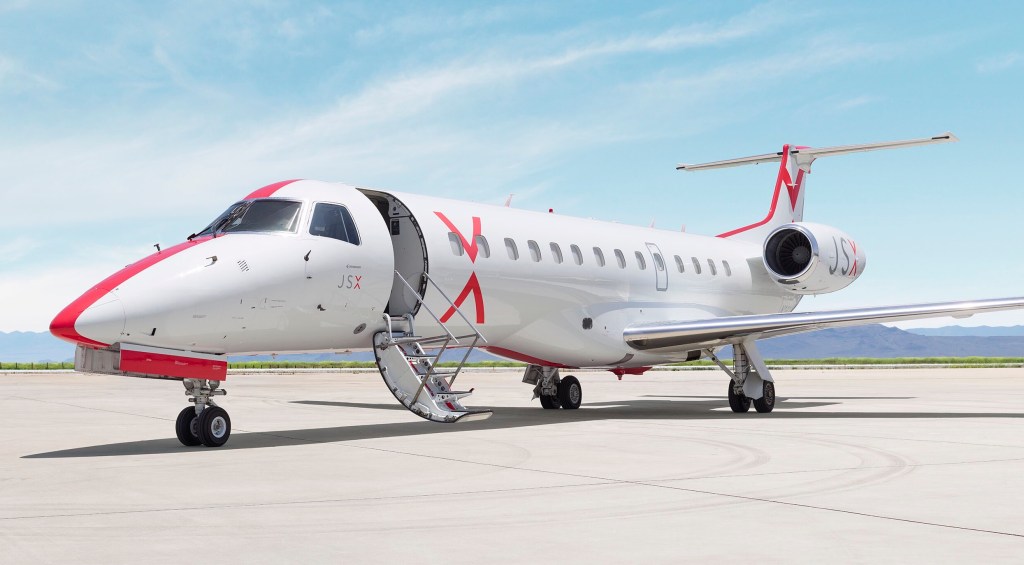
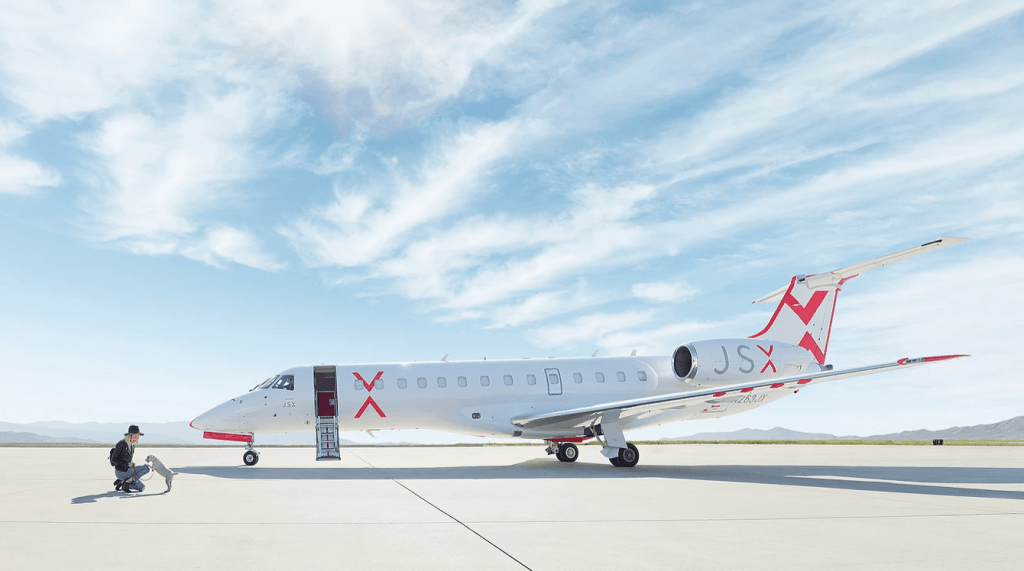
La aerolínea regional JSX iniciará sus operaciones en el Aeropuerto Internacional Reno/Tahoe, Estados Unidos. JSX es una aerolínea regional independiente en los Estados Unidos que se describe a sí misma como un servicio de jets de salto que ofrece vuelos de corta distancia entre y dentro de Arizona, California, Nevada, Texas y Utah. Posee una modalidad de facturación como una aerolínea hop-on, donde vuelos pasajeros pueden llegar sólo media hora antes de un vuelo y simplemente abordar el avión.
JSX, que opera fuera de las instalaciones de Stellar Aviation en South Rock Boulevard, comenzó a volar entre Reno y Burbank en Septiembre 2020, mientras que hacia Diciembre 2020 ha añadido un servicio entre Reno y el Condado de Orange, Estado de California.
La Autoridad aeroportuaria de Reno/Tahoe dice que JSX transportó 382 pasajeros en 19 vuelos que salían de Reno a Burbank durante noviembre. Las cifras aún no están disponibles en el tráfico de diciembre, que incluiría el nuevo servicio del Condado de Orange. «Hemos estado muy satisfechos con la respuesta inicial al nuevo servicio JSX», dijo una portavoz de la compañía. La compañía cree que su servicio a Reno se ha beneficiado del deseo de los consumidores cansados de la pandemia de salir de las ciudades y dirigirse a la recreación al aire libre en lugares como el Lago Tahoe y el norte de Nevada. De hecho, la aerolínea cambió sutilmente su enfoque de los viajes de negocios de corta distancia a un mayor énfasis en los destinos de ocio a medida que se desarrollaba la pandemia. Pero incluso una vez que los viajes de negocios vuelven a algo así como algo normal, los ejecutivos de JSX esperan que Reno siga siendo un componente importante de su servicio.
La aerolínea regional con sede en Dallas utiliza aviones Embraer E135 y E145 en cuatro vuelos semanales entre Reno y cada uno de los aeropuertos del sur de California. Debido a que sus vuelos utilizan las instalaciones de Stellar Aviation en lugar de la terminal internacional de Reno-Tahoe, JSX dice que puede eliminar largas filas de espera para un sistema de control de seguridad que excede los requisitos de la TSA. La compañía sirve a las ciudades californianas de Concord y Oakland, además de Burbank y el Condado de Orange. En otros lugares, sirve a Las Vegas, Phoenix, Dallas y Houston.
JSX seeks position in Reno
JSX airline to start operations at Reno/Tahoe Airport
The regional airline JSX will begin operations at the Reno/Tahoe International Airport, United States. JSX is an independent regional airline in the United States that describes itself as a jump jet service offering short-haul flights between and within Arizona, California, Nevada, Texas, and Utah. It has a check-in method like a hop-on airline, where passengers can arrive only half an hour before a flight and simply board the plane.
JSX, which operates out of Stellar Aviation’s South Rock Boulevard facility, began flying between Reno and Burbank in September 2020, while by December 2020 it has added service between Reno and Orange County, California.
The Reno/Tahoe Airport Authority says JSX carried 382 passengers on 19 flights departing from Reno to Burbank during November. Figures are not yet available on December traffic, which would include new Orange County service. «We have been very satisfied with the initial response to the new JSX service», said a company spokeswoman. The company believes its service to Reno has benefited from the desire of pandemic-weary consumers to get out of the cities and into outdoor recreation in places like Lake Tahoe and northern Nevada. In fact, the airline subtly shifted its focus from short-haul business travel to a greater emphasis on leisure destinations as the pandemic unfolded. But even once business travel returns to normal, JSX executives expect Reno to remain an important component of their service.
The Dallas-based regional airline uses Embraer E135 and E145 jets on four weekly flights between Reno and each of the Southern California airports. Because its flights use the Stellar Aviation facility rather than the Reno-Tahoe International Terminal, JSX says it can eliminate long waiting lines for a security screening system that exceeds TSA requirements. The company serves the Californian cities of Concord and Oakland, in addition to Burbank and Orange County. Elsewhere, it serves Las Vegas, Phoenix, Dallas, and Houston.
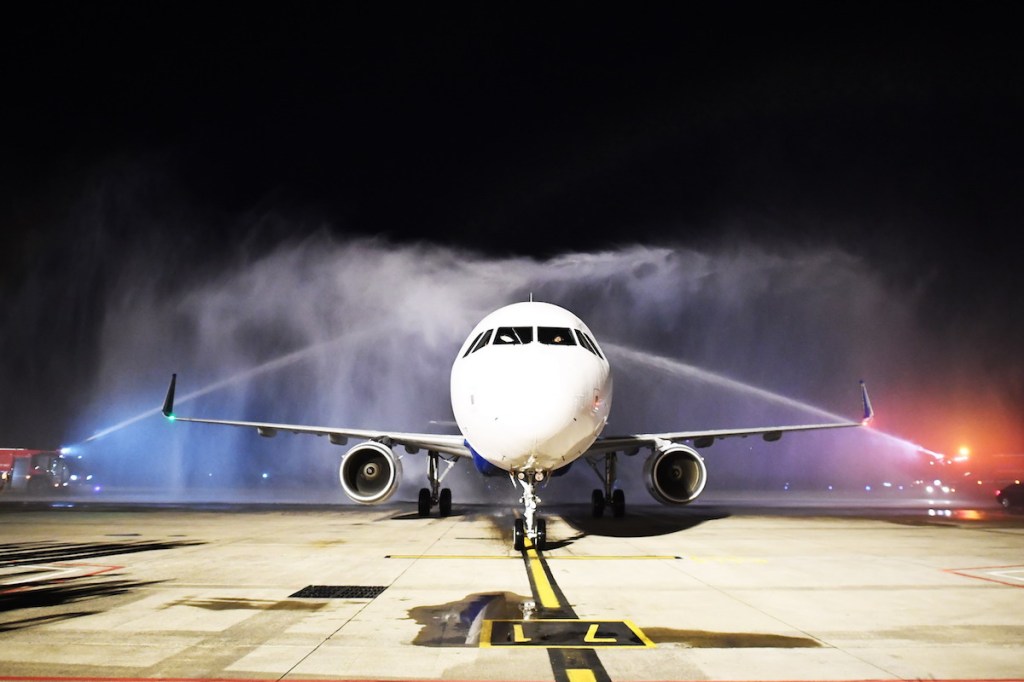
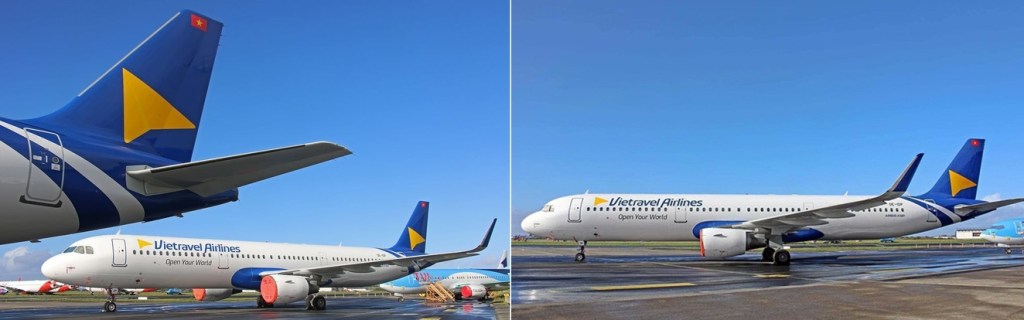
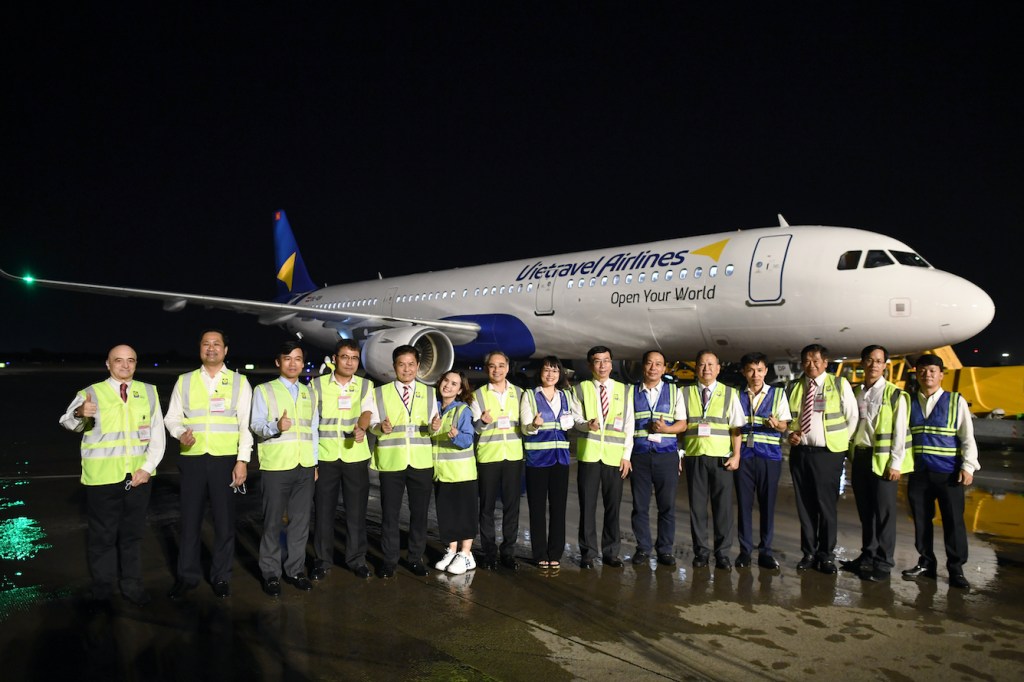
Vietravel Airlines comenzará a volar el próximo Lunes 25/01
Vietravel Airlines está programado para hacer su primer vuelo el 25 de Enero de 2021, iniciando la venta de tickets aéreos este Martes 19/01, dijo su CEO, Vu Duc Bien. La aerolínea más nueva de la República de Vietnam operará uno o dos vuelos al día cada uno desde Ho Chi Minh y Hanoi a los principales destinos turísticos como Nha Trang, Phu Quoc, Da Nang y Hue. La nueva start-up inicia con una flota de aeronaves Airbus A321CEO (2), con una futura incorporación de un tercer avión arribando el 21 de Enero de 2021 para satisfacer la creciente demanda de viajes durante el Tet de Año Nuevo Lunar a mediados de Febrero 2021.
Vietravel Airlines ha contratado a unos 200 pilotos y azafatas y está buscando ampliar su flota a 30 unidades para prepararse para las operaciones internacionales, volando al sudeste asiático, especialmente a destinos como Tailandia, Oriente Medio y el noreste de Asia, mercados a los que la compañía de viajes Vietravel posee. la nueva línea aérea se introduce en un mercado de aviación altamente competitivo. Vietravel representa la sexta aerolínea nacional después de Vietnam Airlines, Vietjet, Jetstar Pacific, Vietnam Air Services Company y Bamboo Airways.
Vitravel Airlines start-up 01/25
Vietravel Airlines will start flying next Monday 01/25
Vietravel Airlines is scheduled to make its first flight on January 25, 2021, starting the sale of air tickets this Tuesday 01/19, said its CEO, Vu Duc Bien. The newest airline in the Republic of Vietnam will operate one or two flights a day each from Ho Chi Minh and Hanoi to major tourist destinations such as Nha Trang, Phu Quoc, Da Nang and Hue. The new start-up begins with a fleet of Airbus A321CEO (2) aircraft, with a future addition of a third aircraft arriving on January 21, 2021 to meet the growing demand for travel during Lunar New Year Tet in mid-February. 2021.
Vietravel Airlines has hired some 200 pilots and hostesses and is looking to expand its fleet to 30 units to prepare for international operations, flying to Southeast Asia, especially destinations such as Thailand, the Middle East and Northeast Asia, markets where the Vietravel travel company owns. the new airline enters a highly competitive aviation market. Vietravel represents the sixth national airline after Vietnam Airlines, Vietjet, Jetstar Pacific, Vietnam Air Services Company and Bamboo Airways.
Vitravel Airlines khai trương ngày 25/01
Hãng hàng không Vietravel sẽ bắt đầu bay vào thứ Hai tuần sau 25/01
Hãng hàng không Vietravel dự kiến thực hiện chuyến bay đầu tiên vào ngày 25/1/2021, bắt đầu bán vé máy bay từ thứ Ba tuần này, ngày 19/1, ông Vũ Đức Biên, Giám đốc điều hành hãng cho biết. Hãng hàng không mới nhất của Việt Nam sẽ khai thác một hoặc hai chuyến bay mỗi ngày từ Hồ Chí Minh và Hà Nội đến các điểm du lịch lớn như Nha Trang, Phú Quốc, Đà Nẵng và Huế. Việc khởi động mới bắt đầu với đội máy bay Airbus A321CEO (2), trong tương lai sẽ bổ sung thêm máy bay thứ ba sẽ đến vào ngày 21 tháng 1 năm 2021 để đáp ứng nhu cầu đi lại ngày càng tăng trong dịp Tết Nguyên đán vào giữa tháng Hai. Năm 2021.
Vietravel Airlines đã thuê khoảng 200 phi công và nữ tiếp viên và đang tìm cách mở rộng đội bay lên 30 chiếc để chuẩn bị cho các hoạt động quốc tế, bay đến Đông Nam Á, đặc biệt là các điểm đến như Thái Lan, Trung Đông và Đông Bắc Á, những thị trường có Công ty du lịch Vietravel sở hữu. hãng hàng không mới tham gia vào một thị trường hàng không cạnh tranh cao. Vietravel là hãng hàng không quốc gia thứ sáu sau Vietnam Airlines, Vietjet, Jetstar Pacific, Vietnam Air Services Company và Bamboo Airways.
Regulador aviación Reino Unido enfrentará aprobación 737 MAX
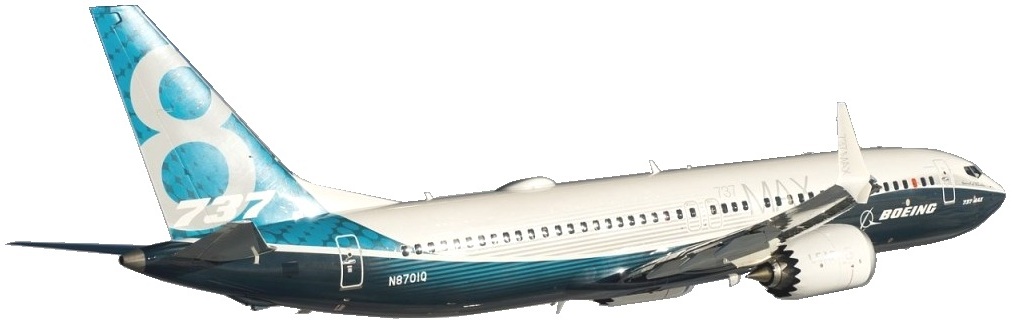
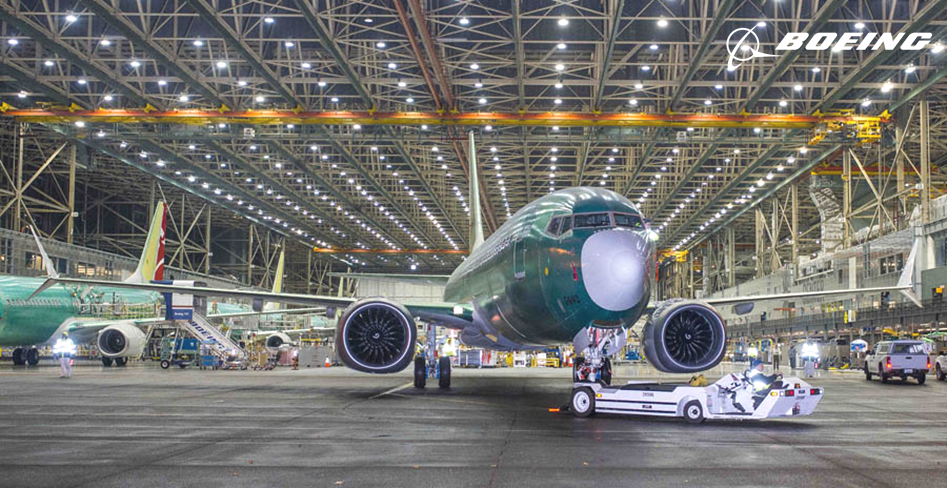
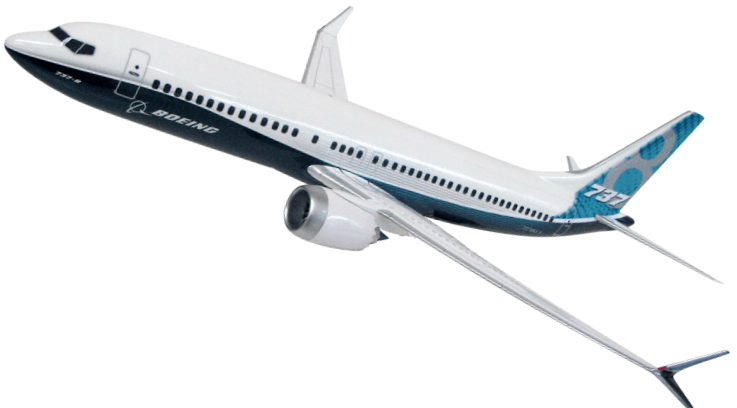
Civil Aviation Authority (CAA), el regulador aeronáutico británico, ha tomado un nuevo rol protagónico concedido tras la separación del Reino Unido de la Comunidad Europea (Brexit). El organismo fiscalizador de la seguridad de aviación se enfrenta a una prueba temprana para la evaluación y aprobación de la línea Boeing 737 MAX, como organismo independiente de Europa. La aprobación del 737 MAX para volar de nuevo después de dos accidentes aéreos ofrece una oportunidad para que la Autoridad de Aviación Civil demuestre su competencia e independencia. Al mismo tiempo, destaca el desafío de establecer un papel en un panorama regulatorio dominado por la Administración Federal de Aviación (FAA) de los Estados Unidos, que respaldó al 737 MAX en 2020, Transport Canada con la aprobación en el día 20/01 y la Agencia de Seguridad Aérea de la Unión Europea (EASA), que se prepara para hacerlo la próxima semana.
Las primeras expectativas después del voto de Gran Bretaña de 2016 para abandonar la UE fueron que el CAA seguiría siendo miembro asociado de la EASA. Pero dejar al Tribunal de Justicia de las Comunidades Europeas con jurisdicción última se consideró incompatible con el objetivo del Reino Unido de recuperar poderes soberanos del bloque. Incluso entonces, si la EASA hubiera gobernado sobre el MAX antes del final del período de transición del Brexit el 31/12/2020, el CAA se habría librado de una prueba tan temprana. «Desde un punto de vista práctico, la tarea del CAA no tiene precedentes. Nunca antes una autoridad nacional de aviación ha tenido que asumir una mayor responsabilidad de esa escala», dijo Jan Walulik, del Laboratorio de Aviación Civil del Centro de Estudios Antimonopolio y Regulatorios de Varsovia.
El CAA tomará una decisión independiente sobre el MAX, al tiempo que se adhiere estrechamente a la inminente directiva de la EASA, con la que participó, dijo el Subdirector Jonathan Nicholson. Es probable que siga a EASA al permitir que los pilotos desactiven una alarma denominada «Stick-shaker» activada erróneamente para evitar distracciones, según una persona familiarizada con la situación que pidió no ser nombrada. La alarma sacude la columna de control violentamente en una emergencia, aunque los reguladores de Europa y Canadá han cuestionado si podría contribuir a la confusión de las tripulaciones de cabina en momentos caóticos.
El CAA fue establecido en 1972 y aprobó aviones durante las siguientes tres décadas antes de que la EASA asumió el cargo en 2004. El último modelo firmado fue el Boeing 777-300ER aunque EASA emitió el certificado de tipo final.
CAA & 737 MAX
La interrupción de la pandemia de Coronavirus ha aliviado la presión de temporización ligada a la decisión de la CAA sobre el 737 MAX, con TUI AG, la única aerolínea con aviones registrados en el Reino Unido, que ha detenido los vuelos de vacaciones desde el país al menos hasta mediados de febrero. Ryanair Holdings Plc, cuya base más grande se encuentra en London/Stansted, operará el avión, pero está a la espera de la aprobación de un modelo modificado. La CAA ha contratado a 47 nuevos empleados para hacer frente a sus responsabilidades ampliadas. El grupo comercial ADS del Reino Unido estima que el grupo comercial ADS tardará una década y hasta ₤ 40 millones de Libras (US$ 55 millones) anualmente para que el regulador se ponga al día con la EASA, en comparación con una contribución previa de no más de ₤ 4 millones de Libras al año. «No es sólo la autoridad para llevar a cabo una tarea, es que tienes a la gente adecuada para hacerlo, y es lo que sí reconoces como suficiente o apropiado por otras autoridades», dijo Dai Whittingham, un ex-Piloto de la Real Fuerza Aérea que dirige el Comité de Seguridad de Vuelo del Reino Unido, que tiene como objetivo hacer que los vuelos comerciales sean más seguros.
Como parte del acuerdo sobre el Brexit, Gran Bretaña y la UE acordaron que debería crearse un Comité de Seguridad de la Aviación para facilitar la cooperación en ámbitos como los certificados de aeronavegabilidad, aunque esto sólo puede suceder cuando cualquiera de las partes acepta las normas y procedimientos de la otra. Hablando en un evento en línea con los periodistas el miércoles 20/01, el Director Ejecutivo de la EASA, Patrick Ky, dijo que las dos agencias han mantenido una relación muy cordial. «Necesitamos ver en la práctica cómo funciona», dijo.
Dai Whittingham dijo que Gran Bretaña podría optar por permitir operaciones que podrían ser más difíciles de aprobar para la EASA a escala europea. Neil Cloughley, fundador de Duxford, con sede en Inglaterra, Faradair Aerospace, que tiene como objetivo construir y operar un avión utilitario híbrido, dijo que el Reino Unido podría convertirse en un portador de la antorcha en la regulación de futuras aeronaves donde la FAA y la EASA no han terminado sus posiciones. «Si no nos aseguramos de que estamos en una posición sólida a nivel internacional en esto, nos quedaremos atrás», dijo Neil Cloughley. Eso podría obligar a los fabricantes británicos a considerar la creación de la certificación en el extranjero.
FAA & MAX 9
La Federal Aviation Administration (FAA) ha comunicado el requerimiento de inspecciones de sellador de combustible en algunos aviones de la familia 737 MAX. La agencia de la FAA propone inspecciones de veinticinco Boeing 737-9 MAX después de determinar que no se ha aplicado un sellador de combustible durante la fase en la línea de producción.
CAA UK perspectives 737 MAX
UK aviation regulator to face Boeing 737 MAX approval
Civil Aviation Authority (CAA), the British aeronautical regulator, has taken on a new leading role granted after the separation of the United Kingdom from the European Community (Brexit). The aviation security watchdog is facing an early test for the evaluation and approval of the Boeing 737 MAX line, as an independent body in Europe. Approval of the 737 MAX to fly again after two plane crashes provides an opportunity for the Civil Aviation Authority to demonstrate its competence and independence. At the same time, it highlights the challenge of establishing a role in a regulatory landscape dominated by the Federal Aviation Administration (FAA) of the United States, which backed the 737 MAX in 2020, Transport Canada with approval on 01/20 and the European Union Aviation Safety Agency (EASA), which is preparing to do so next week.
The first expectations after Britain’s 2016 vote to leave the EU were that the CAA would remain an associate member of EASA. But leaving the Court of Justice of the European Communities with ultimate jurisdiction was deemed incompatible with the UK’s objective of regaining sovereign powers from the bloc. Even then, if EASA had ruled over the MAX before the end of the Brexit transition period on 12/31/2020, the CAA would have gotten rid of such an early test. «From a practical point of view, the CAA’s task is unprecedented. Never before has a national aviation authority had to assume greater responsibility on this scale», said Jan Walulik, from the Civil Aviation Laboratory at the Center for Antitrust Studies and Warsaw Regulatory.
The CAA will make an independent decision on the MAX, while closely adhering to the impending EASA directive, with which it participated, said Deputy Director Jonathan Nicholson. It is likely to follow EASA in allowing pilots to disable an erroneously triggered «Stick-shaker» alarm to avoid distractions, according to a person familiar with the situation who asked not to be named. The alarm shakes the control column violently in an emergency, although regulators in Europe and Canada have questioned whether it could contribute to cabin crew confusion at chaotic times.
The CAA was established in 1972 and approved aircraft for the next three decades before EASA took office in 2004. The last model signed was the Boeing 777-300ER although EASA issued the final type certificate.
CAA & 737 MAX
The disruption to the Coronavirus pandemic has eased the timing pressure tied to the CAA’s decision on the 737 MAX, with TUI AG, the only airline with registered aircraft in the UK, halting holiday flights from the country at least until mid-February. Ryanair Holdings Plc, whose largest base is in London/Stansted, will operate the plane, but is awaiting approval of a modified model. The CAA has hired 47 new employees to address its expanded responsibilities. UK ADS trading group estimates it will take a decade and up to £ 40 million (US$ 55 million) annually for the regulator to catch up with EASA, compared to a previous contribution of no more than ₤ 4 million pounds a year. «It is not just the authority to carry out a task, it is that you have the right people to do it, and it is what you do recognize as sufficient or appropriate by other authorities», said Dai Whittingham, a former Royal Force Pilot. An airline run by the UK Flight Safety Committee, which aims to make commercial flights safer.
As part of the Brexit deal, Britain and the EU agreed that an Aviation Security Committee should be created to facilitate cooperation in areas such as certificates of airworthiness, although this can only happen when either party accepts the rules and procedures of the other. Speaking at an online event with journalists on Wednesday 01/20, EASA Executive Director Patrick Ky said the two agencies have maintained a very cordial relationship. «We need to see how it works in practice», he said.
Dai Whittingham said Britain could choose to allow operations that could be more difficult for EASA to approve at the European level. Neil Cloughley, founder of England-based Duxford, Faradair Aerospace, which aims to build and operate a hybrid utility aircraft, said the UK could become a torchbearer in regulating future aircraft where the FAA and EASA have not terminated their positions. «If we don’t make sure that we are in a strong position internationally on this, we will be left behind«, said Neil Cloughley. That could force British manufacturers to consider creating certification abroad.
FAA & MAX 9
The Federal Aviation Administration (FAA) has communicated the requirement for fuel sealant inspections on some aircraft in the 737 MAX family. The FAA agency proposes inspections of twenty-five Boeing 737-9 MAXs after determining that a fuel sealant has not been applied during the on-line phase.
Presentación pública del primer Airbus A220 de JetBlue Airways
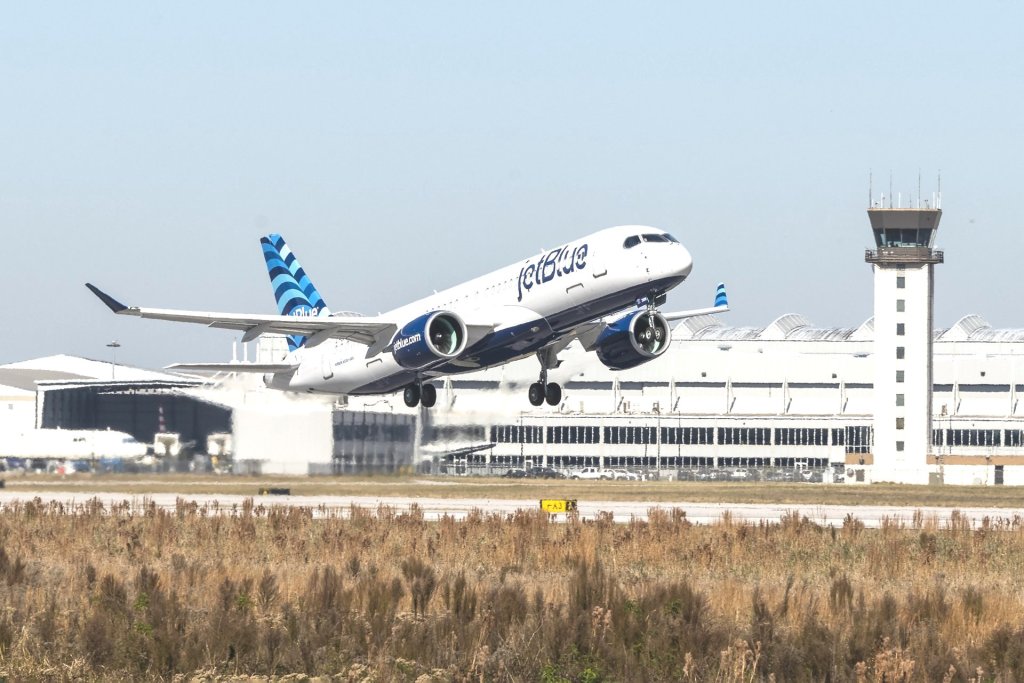
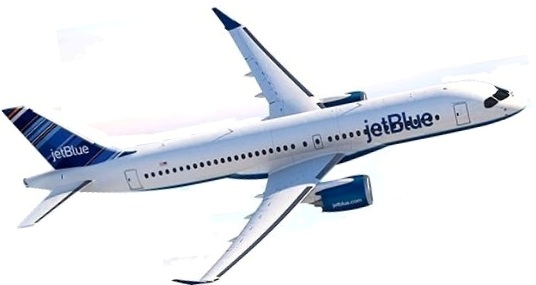
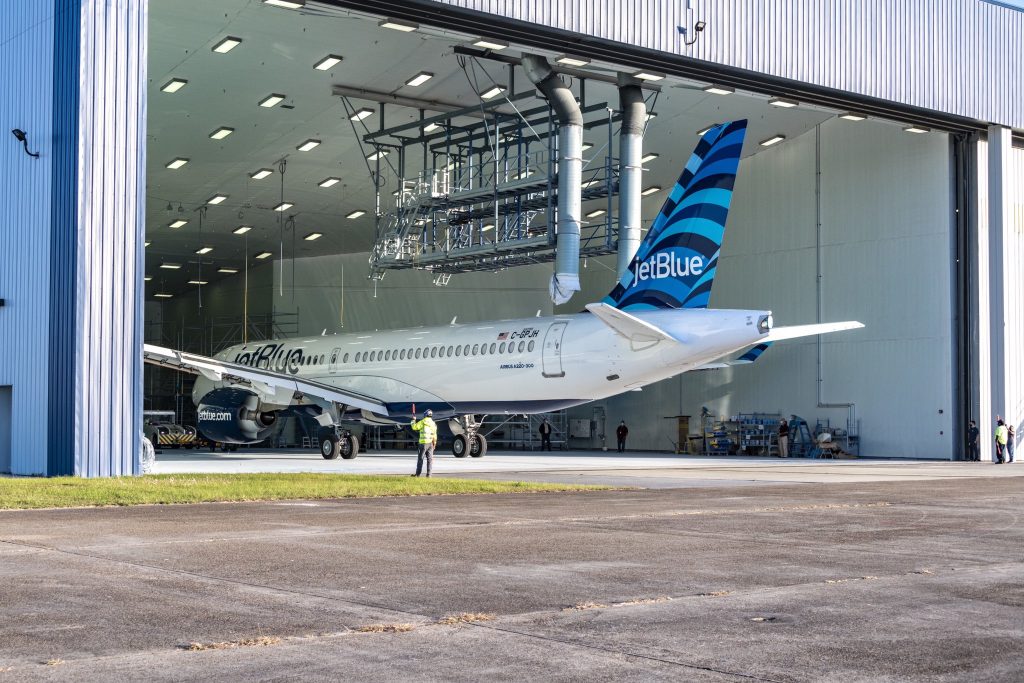
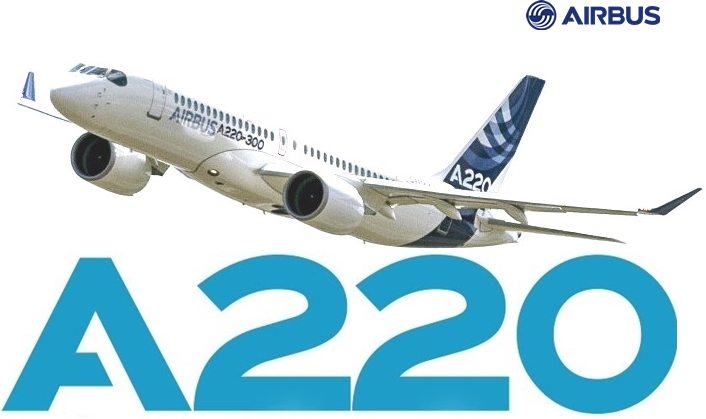
JetBlue Airways ha presentado su primer Airbus A220-300, el primero de 70 nuevas aeronaves encomendadas. La aerolínea de bajo costo es la tercera aerolínea norteamericana en operar el A220, después de Air Canada y Delta Air Lines.
Jayne O’Brien, Directora de Marketing y Lealtad de JetBlue Airways, comentó: «Con el A220 hemos tomado un avión de última generación y añadido nuestro toque galardonado para dar vida a una experiencia que solo JetBlue podría soñar. Esperamos dar la bienvenida a los clientes a bordo de nuestros aviones más nuevos, con una increíble comodidad a bordo, elementos de diseño únicos y entretenimiento y conectividad sin igual».
Caractarísticas JetBlue-A220
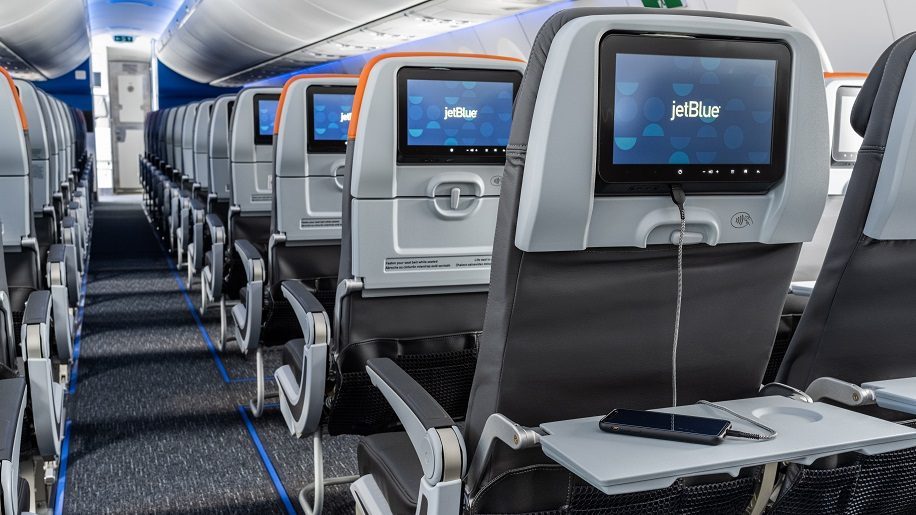
El arribo del A220 significa una cabina mejorada con ventanas más grandes, contenedores superiores más grandes e iluminación ambiental para los viajeros. El A220 de JetBlue está equipado con 140 asientos en una configuración de 2-3, con un asiento Collins Meridian, similar al A320 renovado y ofrece 18,6 pulgadas de ancho. El producto también incluye un sistema de entretenimiento Thales Avant con pantallas HD de 10,1 pulgadas, 30 canales de TV vía satélite, así como alimentación en el asiento a través de tomas de CA y USB. JetBlue se convierte en la primera aerolínea a nivel mundial en recibir un A220 equipado con conectividad Viasat que ofrece wifi gratuito de alta velocidad.
Perspectivas A220
Se espera que el avión entre en servicio programado a mediados de Junio 2021, comenzando con la ruta Boston-Fort Lauderdale. El objetivo es reemplazar la flota de Embraer E190 reduciendo los costos de operación por asiento en un 30 por ciento. El A220-300 también permitirá a JetBlue Airways servir a nuevos mercados y rutas que anteriormente no habrían sido rentables. El transportista ha expresado que espera recibir siete A220-300, que es la variante más larga, hacia finales de este 2021.
JetBlue introduces the Airbus A220
JetBlue Airways First Airbus A220 Public Presentation
JetBlue Airways has unveiled its first Airbus A220-300, the first of 70 new aircraft ordered. The low-cost carrier is the third North American carrier to operate the A220, after Air Canada and Delta Air Lines.
Jayne O’Brien, JetBlue Airways Director of Marketing and Loyalty, commented: «With the A220 we have taken a next-generation aircraft and added our award-winning touch to bring to life an experience only Jetblue could dream of. We look forward to welcoming the customers aboard our newest aircraft, with incredible onboard comfort, unique design elements and unmatched entertainment and connectivity».
JetBlue-A220 features
The arrival of the A220 means an improved cabin with larger windows, larger top containers and ambient lighting for travelers. JetBlue’s A220 is equipped with 140 seats in a 2-3 configuration, with a Collins Meridian seat, similar to the refreshed A320 and offering 18.6 inches of width. The product also includes a Thales Avant entertainment system with 10.1-inch HD displays, 30 satellite TV channels, as well as seat power via AC and USB outlets. JetBlue becomes the first airline in the world to receive an A220 equipped with Viasat connectivity that offers free high-speed Wi-Fi.
Perspectives A220
The aircraft is expected to enter scheduled service in mid-June 2021, beginning with the Boston-Fort Lauderdale route. The goal is to replace the Embraer E190 fleet by reducing operating costs per seat by 30 percent. The A220-300 will also allow JetBlue Airways to serve new markets and routes that previously would not have been profitable. The carrier has expressed that it expects to receive seven A220-300, which is the longest variant, by the end of this 2021.
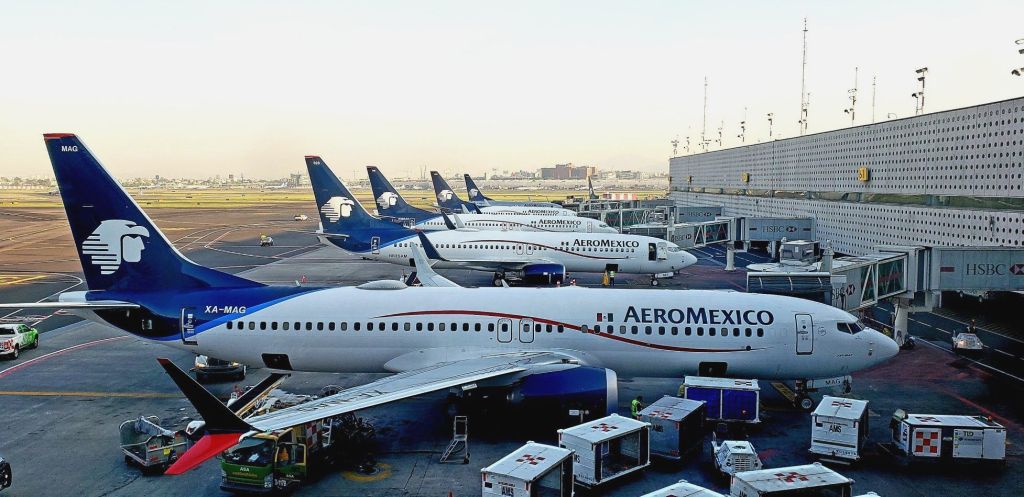
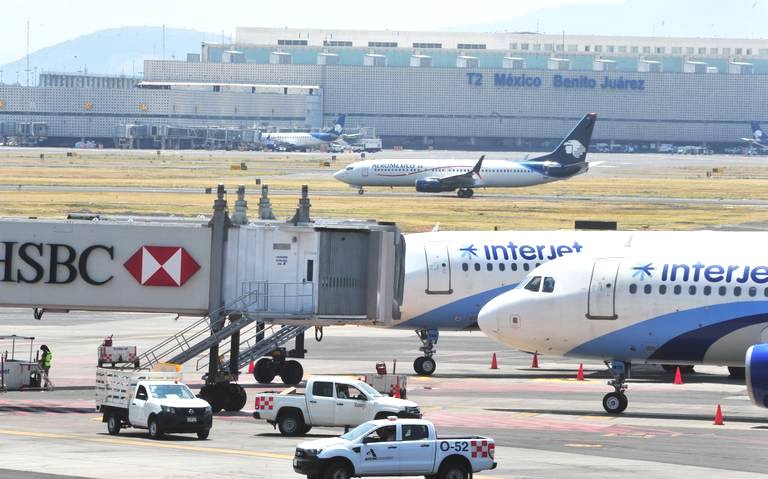
La industria del transporte aéreo ha golpeado al mundo entero, quiebres de aerolíneas y resurgimiento de oportunidades en otras. Mientras tanto, México afronto su peor crisis de la aviación comercial que jamás se haya tenido en cuenta. Losa efectos de la pandemia han terminado por sepultar muchas esperanzas. Aeroméxico e Interjet, dos de las más importantes aerolíneas del país, atraviesan profundas crisis que ponen a la aviación del país azteca en la cúspide de las dificultades del transporte aéreo. Este problema no solo afecta al sector privado, sino que se trasladará a la cúpula del Gobierno mexicano, con efectos inmediatos para la economía nacional y para los miles de trabajadores que trabajan es las compañías aéreas y el impacto sobre los usuarios del mercado aéreo. La conectividad del país y el ingreso de turistas y divisas pondrían en jaque la economía con consecuencias inesperadas.
México constituía un país en construcción, con nuevos aeropuertos, con una economía que tenía pronósticos de crecimiento superiores a los que se venían registrando, cuando el escenario cambió definitivamente.
Aeroméxico
La compañía líder del mercado mexicano, Aeroméxico, proyectaba en el 2012 apostar al crecimiento, cerrando un acuerdo para comprar 100 aviones Boeing valorados en alrededor de US$ 10.000 millones de Dólares. Tras los cambios drásticos y la pandemia del Coronavirus hicieron que Aeroméxico tuviera que cancelar en 2020 los contratos de arrendamiento de 23 aeronaves. En 2020 Aeroméxico registró una caída del 90% en su operación; su deuda alcanzó los US$ 5.000 millones de dólares y tuvo que someterse a severos ajustes que al final lo llevaron a solicitar la reestructura de sus pasivos en el capítulo 11 de la Ley de Quiebras de Estados Unidos y solicitar un préstamo por US$ 1.000 millones de Dólares. El 11 de Enero de 2021, Aeroméxico solicitó en México la terminación de los contratos colectivos de trabajo con los sindicatos de pilotos y sobrecargos y aunque todavía buscan llegar a un acuerdo, continúan con las indefiniciones. Aeroméxico tiene la cuenta regresiva en su contra con apenas siete días de plazo para lograr un acuerdo con los sindicatos de pilotos y sobrecargos para reducir los costos laborales y poder ser objeto del segundo tramo de financiamiento por US$ 1.000 millones de Dólares que de manera condicionada tiene del fondo de inversión Apollo Global Management Inc. Aeroméxico se está jugando su destino: continuar con su programa de reestructura financiera en el contexto del Capítulo 11 de la Ley de Quiebras de Estados Unidos o iniciar el proceso de liquidación de la empresa.
Interjet
La aerolínea de presupuesto Interjet posee una deuda fiscal extraordinaria y su historia se encuentra marcada por dificultades operativas y promesas de recapitalización y cambios en el Consejo de Administración que no se han cumplido. La línea aérea depende de una repacitalización para afrontar la crisis, pues el Gobierno ha denegado el apoyo económico, mientras que la institución tributaria del SAT no ha aceptado propuestas que van desde la cancelación de las deudas fiscales hasta el pago en especie.
Perspectivas aéreas
Las definiciones de las dos compañías parecen cerrar definiciones hacia los próximos días permitiendo definir su atribulada situación tanto para poder sortear la crisis o morir en el intento. Las sombras de la aviación en México se ciernen sobre un escenario difícil mientras otras compañías preparan un nuevo capítulo para volar en modo post-pandemia.
Mexican aviation crisis
Difficult front for aviation in Mexico
The air transport industry has hit the whole world, airline bankruptcies and resurgence of opportunities in others. Meanwhile, Mexico faced its worst commercial aviation crisis that has ever been considered. The effects of the pandemic have ended up burying many hopes. Aeromexico and Interjet, two of the most important airlines in the country, are going through deep crises that put the aviation of the Aztec country at the top of the difficulties of air transport. This problem not only affects the private sector, but will also be transferred to the top of the Mexican Government, with immediate effects for the national economy and for the thousands of workers who work in the airlines and the impact on the users of the air market. The country’s connectivity and the inflow of tourists and foreign currency would put the economy in check with unexpected consequences.
Mexico was a country under construction, with new airports, with an economy that had higher growth forecasts than those that had been registered, when the scenario changed definitively.
Aeromexico
The leading company in the Mexican market, Aeroméxico, planned to bet on growth in 2012, closing an agreement to buy 100 Boeing aircraft valued at around US$ 10 billion. After the drastic changes and the Coronavirus pandemic, Aeromexico had to cancel the lease contracts for 23 aircraft in 2020. In 2020 Aeroméxico registered a 90% drop in its operation; His debt reached US$ 5,000 million and had to undergo severe adjustments that ultimately led him to request the restructuring of his liabilities in Chapter 11 of the United States Bankruptcy Law and request a loan for US$ 1,000 million of dollars. On January 11, 2021, Aeroméxico requested in Mexico the termination of the collective bargaining agreements with the pilot and flight attendant unions and although they are still seeking to reach an agreement, they continue to be undefined. Aeroméxico has the countdown against it with just seven days to reach an agreement with the unions of pilots and flight attendants to reduce labor costs and be able to be subject to the second tranche of financing for US$ 1,000 million dollars that on a conditional basis has from the investment fund Apollo Global Management Inc. Aeromexico is risking its destiny: to continue with its financial restructuring program in the context of Chapter 11 of the United States Bankruptcy Law or to start the process of liquidating the company.
Interjet
Budget airline Interjet has extraordinary tax debt and its history is marked by operational difficulties and promises of recapitalization and changes in the Board of Directors that have not been fulfilled. The airline depends on a repacitalization to face the crisis, as the Government has denied financial support, while the SAT tax institution has not accepted proposals ranging from the cancellation of tax debts to payment in kind.
Aerial perspectives
The definitions of the two companies seem to close definitions for the next few days, allowing them to define their troubled situation both to be able to overcome the crisis or die trying. The shadows of aviation in Mexico loom over a difficult scenario as other companies prepare a new chapter to fly in post-pandemic mode.
Convocatorias paquete urgente de apoyo aeroportuario
El Gobierno del Reino Unido ha anunciado medidas fronterizas de emergencia para evitar la propagación de nuevas variantes de COVID-19 en el Gran Brataña, como las identificadas por primera vez en Brasil y América del Sur, y para proteger a la nación contra el riesgo de nuevas cepas aún no identificadas. Con todos los corredores de viajes con el Reino Unido ahora suspendidos temporalmente con el fin de proteger a la nación de la importación de nuevas cepas de COVID-19, el Director Ejecutivo de la AOA ha insistido una vez más en la urgencia de un apoyo financiero inmediato para el aeropuerto y la industria de la aviación del Reino Unido.
A partir del 18 de Enero de 2021, todos los corredores de viaje con el Reino Unido se suspenderán temporalmente, lo que significa que todas las llegadas internacionales que hayan partido o transitado por cualquier país fuera de la zona común de viajes en los diez días anteriores deberán realizar una prueba previa a la salida y luego auto-aislarse inmediatamente durante diez días a la llegada. Esto incluye a los ciudadanos británicos e irlandeses. Esta acción urgente responde a la creciente preocupación por la transmisibilidad y la virulencia de nuevas cepas que evolucionan internacionalmente. También garantizará que el gobierno pueda proteger los progresos realizados en el programa de vacunación del país. Este movimiento estará respaldado por un aumento de la aplicación, tanto en la frontera como en todo el Reino Unido, con la Fuerza Fronteriza aumentando el número de controles puntuales de los pasajeros que han entrado en el país.
Desde Julio de 2020 se han establecido corredores de viajes internacionales para países y territorios en los que el análisis crítico sugiere que el riesgo de COVID-19 puede mitigarse. Sin embargo, el nivel de riesgo asociado con la aparición de nuevas variantes a nivel mundial ha aumentado, lo que requiere medidas más estrictas para bloquear todas las vías potenciales a través de las cuales nuevas cepas del virus podrían entrar en el Reino Unido, mientras que el gobierno considera la mejor manera de responder. Las nuevas medidas se revisarán el 15 de Febrero de 2021, mientras que se sigue trabajando para gestionar la amenaza que suponen las variantes del coronavirus.
El Secretario de Transporte del Reino Unido, Grant Shapps, dijo: «Estamos operando en un entorno completamente nuevo en nuestra lucha contra COVID-19, con varias cepas nuevas y preocupantes del virus que surgen en todo el mundo. Ahora más que nunca, a medida que avanzamos vacunando a las personas en el país, tenemos que aprovechar todas las medidas disponibles para nosotros, y estas sólidas precauciones de emergencia nos ayudarán a proteger a la nación para garantizar que sigamos progresando». Como ha sido el caso a lo largo de la pandemia, el Gobierno se está moviendo rápidamente en respuesta a las últimas pruebas científicas, y se ha comprometido a seguir tomando medidas rápidas para prohibir los viajes de países donde se identifican formalmente nuevas cepas, como se ha hecho anteriormente. Estas medidas se consideran el curso de acción correcto ahora, para salvaguardar la salud pública y evitar que las nuevas cepas del virus empeoren el panorama existente en el Reino Unido.
Las restricciones nacionales para el Reino Unido introducidas el 6 de Enero de 2021 siguen vigentes, lo que significa que todos deben quedarse en casa a menos que viajen por un conjunto muy limitado de razones. Aquellos que incumplen las reglas de bloqueo se enfrentan a sanciones a partir de ₤ 200 Libras Esterlinas, alcanzando un máximo de ₤ 6.400 Libras Esterlinas. El cierre de todos los corredores de viaje del Reino Unido garantizará que, para aquellos que regresan de viajes que entran en este conjunto limitado de exenciones, y para los pasajeros que llegan al Reino Unido desde el extranjero, exista un conjunto claro y robusto de medidas para evitar que los casos de coronavirus entren en el país.
A partir del 18 de Enero de 2021 se suspenderán varias exenciones a la política del corredor de viajes, incluida la necesidad de viajar para empresas, a menos que sean vitales para mantener el flujo de bienes críticos, proteger los servicios esenciales, proteger la seguridad nacional o facilitar el trabajo del gobierno. El programa de Prueba de Liberación del gobierno permanecerá en vigor, dando a los pasajeros la opción de acortar el período obligatorio de autoaislamiento a tan solo cinco días. Sin embargo, todavía tendrán que adherirse a las restricciones nacionales vigentes al liberarse del autoaislamiento.
En respuesta al anuncio de que todos los corredores de viajes serán suspendidos, Karen Dee, Directora Ejecutiva de la Asociación de Operadores Aeroportuarios (AOA), dijo: «El cierre de los corredores de viaje es comprensible desde una perspectiva de salud pública, pero esto se suma al actual cierre casi completo de los aeropuertos del Reino Unido, que son vitales para nuestra prosperidad post-pandémica. Esto está empeorando una situación devastadora para los aeropuertos y las comunidades del Reino Unido que dependen de los puestos de trabajo y los beneficios económicos que aporta la aviación. El Reino Unido y los gobiernos descentralizados ahora tienen que establecer con extrema urgencia cómo apoyarán a los aeropuertos a través de esta crisis cada vez más profunda. El apoyo a las tarifas de negocios, anunciado en 2020 y, en Inglaterra, aún no está abierto a las aplicaciones, ya no es suficiente para garantizar que los aeropuertos puedan capear los difíciles meses por delante. Actualmente, los aeropuertos mantienen su infraestructura abierta para apoyar servicios vitales y críticos, como servicios de correo, carga, servicios de emergencia, vuelos militares y de guardacostas, así como para ayudar a mantener las luces en el Reino Unido encendidas a través de vuelos de apoyo a operaciones de petróleo, gas y viento en alta mar. Los aeropuertos lo están haciendo mientras se ejecutan en vacío – sólo hay tanto tiempo que pueden funcionar con humos antes de tener que cerrar temporalmente para preservar su negocio para el futuro. El gobierno debe ayudar a cubrir los costos operativos de los aeropuertos, por ejemplo, proporcionando urgentemente alivio de los costos regulatorios, policiales, de tráfico aéreo y de tasas comerciales en el año fiscal actual y el próximo».
British airport support urgency
Calls for urgent airport support package
The UK Government has announced emergency border measures to prevent the spread of new COVID-19 variants in Great Britain, such as those first identified in Brazil and South America, and to protect the nation against the risk of new strains not yet identified. With all travel corridors to the UK now temporarily suspended in order to protect the nation from the importation of new strains of COVID-19, the AOA Executive Director has once again insisted on the urgency of financial support. Immediate for the UK airport and aviation industry.
As of January 18, 2021, all travel corridors with the United Kingdom will be temporarily suspended, which means that all international arrivals that have departed or transited through any country outside the common travel zone in the previous ten days They will need to take a pre-departure test and then immediately self-isolate for ten days upon arrival. This includes British and Irish citizens. This urgent action responds to the growing concern about the transmissibility and virulence of new strains that evolve internationally. It will also ensure that the government can protect the progress made in the country’s vaccination program. This move will be backed by increased enforcement, both at the border and across the UK, with the Border Force increasing the number of spot checks on passengers who have entered the country.
Since July 2020, international travel corridors have been established for countries and territories where critical analysis suggests that the risk of COVID-19 can be mitigated. However, the level of risk associated with the emergence of new variants globally has increased, requiring stricter measures to block all potential pathways through which new strains of the virus could enter the UK, while the government considers the best way to respond. The new measures will be reviewed on February 15, 2021, while work continues to manage the threat posed by variants of the coronavirus.
UK Transport Secretary Grant Shapps said: «We are operating in a completely new environment in our fight against COVID-19, with several worrying new strains of the virus emerging around the world. Now more than ever, to As we move forward vaccinating people in the country, we have to take advantage of all the measures available to us, and these strong emergency precautions will help us protect the nation to ensure we continue to make progress». As has been the case throughout the pandemic, the Government is moving rapidly in response to the latest scientific evidence, and has pledged to continue to take swift action to ban travel from countries where new strains are formally identified, as noted. has done previously. These measures are seen as the right course of action now, to safeguard public health and prevent new strains of the virus from worsening the existing landscape in the UK.
National restrictions for the UK introduced on January 6, 2021 remain in effect, meaning everyone must stay home unless traveling for a very limited set of reasons. Those who breach the lockdown rules face penalties starting at 200 GBP, reaching a maximum of ₤ 6,400 GBP. The closure of all UK travel corridors will ensure that for those returning from trips that fall under this limited set of exemptions, and for passengers arriving in the UK from abroad, there is a clear and robust set of measures. to prevent coronavirus cases from entering the country.
Effective January 18, 2021, various exemptions to the travel broker’s policy will be suspended, including the need to travel for business, unless they are vital to maintaining the flow of critical goods, protecting essential services, protecting national security. or facilitate the work of the government. The government’s Trial of Release program will remain in effect, giving passengers the option to shorten the mandatory period of self-isolation to just five days. However, they will still have to adhere to existing national restrictions when breaking free from self-isolation.
In response to the announcement that all travel corridors will be suspended, Karen Dee, Executive Director of the Association of Airport Operators (AOA), said: «The closure of travel corridors is understandable from a public health perspective, but this adds to the current near-complete closure of UK airports, which are vital to our post-pandemic prosperity. This is worsening a devastating situation for UK airports and communities dependent on jobs and economic benefits brought by aviation. The UK and decentralized governments now have to establish with extreme urgency how they will support airports through this deepening crisis. Support for business fares, announced in 2020 and, in England, is not yet open to applications, it is no longer sufficient to ensure that airports can weather the difficult months ahead. te, airports keep their infrastructure open to support vital and critical services such as mail, cargo, emergency services, military and coast guard flights, as well as to help keep the lights on in the UK through flights from support for offshore oil, gas and wind operations. Airports are doing it while running empty – there’s only so long they can run on smoke before they have to temporarily close to preserve their business for the future. The government should help cover airport operating costs, for example by urgently providing relief from regulatory, police, air traffic and commercial fee costs in the current and next fiscal year».
NASA TV transmitirá prueba del Cohete Artemis Moon
Los equipos del Centro Espacial Stennis de la NASA realizarán una Prueba de Fuego Caliente de la Etapa del Núcleo del Cohete del Sistema de Lanzamiento Espacial (SLS) de la NASA el Sábado, 16 de Enero de 2021. Esta imagen muestra hidrógeno líquido siendo ventilado y quemado de forma segura, ya que naturalmente se calienta y hierve durante un ensayo de una cuenta atrás para el fuego caliente de los motores del escenario el 20 de Diciembre de 2020.
La NASA está apuntando a una ventana de prueba de dos horas que se abre a las 05:00 p.m. EST del 16 de Enero de 2021, para la Prueba de Fuego Caliente de la Etapa del Núcleo del Cohete del Sistema de Lanzamiento Espacial (SLS) de la NASA en el Centro Espacial Stennis de la agencia cerca de Bay St. Louis, Mississippi. La cobertura en vivo comenzará a las 04:20 p.m. en la NASA Television y el sitio web de la agencia, seguido de una sesión informativa posterior a la prueba aproximadamente dos horas después de que concluya la prueba.
El Hot Fire es la octava y última prueba de la serie Green Run para asegurar que la etapa central del cohete SLS está listo para lanzar misiones Artemis a la Luna, comenzando con Artemis I. La etapa central incluye el tanque de hidrógeno líquido y el tanque de oxígeno líquido, cuatro motores RS-25, y las computadoras, electrónica y aviónica que sirven como los cerebros del cohete. Durante la prueba, los ingenieros encenderán todos los sistemas de etapa central, cargarán más de 700.000 galones de propulsor criogénico o superconfesador contra los tanques, y dispararán los cuatro motores al mismo tiempo para simular la operación de la etapa durante el lanzamiento, generando 1,6 millones de libras de empuje. La primera de una serie de misiones cada vez más complejas, Artemis I probará el cohete SLS y la nave espacial Orion como un sistema integrado antes de los vuelos tripulados a la Luna. Bajo el programa Artemis, la NASA está trabajando para aterrizar la primera mujer y el siguiente hombre en la Luna en 2024.
NASA Artemis Hot Fire Test Rocket
NASA TV to broadcast test of Artemis Moon rocket
Teams at NASA‘s Stennis Space Center will conduct a Hot Fire Test of the Rocket Core Stage of NASA’s Space Launch System (SLS) on Saturday, January 16, 2021. This image shows liquid hydrogen being vented and burned from safely, as it naturally heats up and boils during a rehearsal of a countdown to the hot fire of the stage engines on December 20, 2020.
NASA is targeting a two-hour test window that opens at 05:00 p.m. EST on January 16, 2021, for the NASA Space Launch System (SLS) Rocket Core Stage Hot Fire Test at the agency’s Stennis Space Center near Bay St. Louis, Mississippi. Live coverage will begin at 04:20 p.m. on NASA Television and the agency’s website, followed by a post-test briefing approximately two hours after the test concludes.
The Hot Fire is the eighth and final test in the Green Run series to ensure that the SLS rocket’s core stage is ready to launch Artemis missions to the Moon, beginning with Artemis I. The core stage includes the liquid hydrogen tank and tank. of liquid oxygen, four RS-25 engines, and the computers, electronics and avionics that serve as the brains of the rocket. During the test, engineers will power up all center stage systems, load more than 700,000 gallons of cryogenic propellant or super confessor into the tanks, and fire all four engines at the same time to simulate stage operation during launch, generating 1, 6 million pounds of thrust. The first in a series of increasingly complex missions, Artemis I will test the SLS rocket and the Orion spacecraft as an integrated system prior to manned flights to the Moon. Under the Artemis program, NASA is working to land the first woman and the next man on the Moon in 2024.
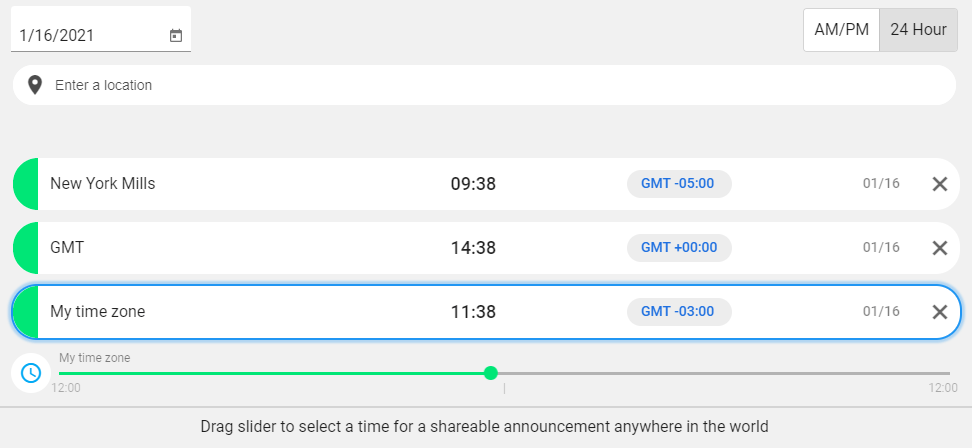
GREENWICH MEAN TIME
Coordinate your schedule regarding the event scheduling so that you enjoy the event live and direct.
GREENWICH MEAN TIME
Coordine su agenda respecto a la programación del acontecimiento para que disfrute del evento en vivo y directo.