Airbus firma un pedido de cuatro aviones de carga A350F
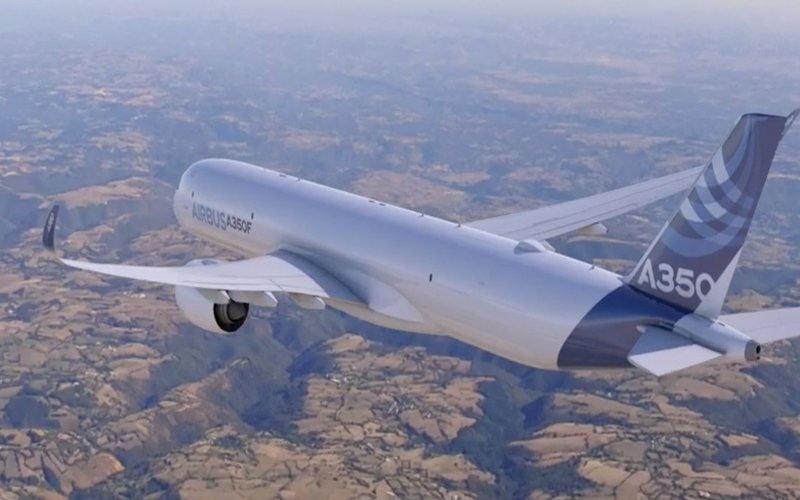
Airbus Group ha firmado una orden para la compra de cuatro aviones cargueros Airbus A350F (4) con CMA CGM Group, líder mundial en transporte y logística. Este pedido elevará la flota total de Airbus de CMA CGM a nueve aviones (9), incluidos cuatro A330-200F (4) y un A330-200 (1) que se convertirán en un carguero.
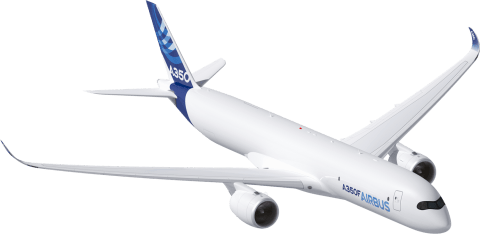
El A350F se basa en el líder de largo alcance más moderno del mundo, el A350. La aeronave cuenta con una gran puerta de carga en la cubierta principal y una longitud de fuselaje optimizada para operaciones de carga. Más del 70% de la estructura del avión está hecha de materiales avanzados, lo que resulta en un peso de despegue 30t más ligero, lo que genera un consumo de combustible al menos un 20% menor que su competidor más cercano actual. Con una capacidad de carga útil de 109t (+3t de carga útil/11% más de volumen que su competencia), el A350F sirve a todos los mercados de carga express, carga general, carga especial, ubicándose en la categoría de carguero grande, el único avión carguero de nueva generación listo para las normas mejoradas de emisiones de CO₂ de la OACI de 2027.
Airbus order A350F from CMA CGM Group
Airbus signs order for four A350F cargo aircraft
Airbus Group has signed an order for the purchase of four Airbus A350F freighters (4) with CMA CGM Group, a world leader in transport and logistics. This order will bring CMA CGM’s total Airbus fleet to nine aircraft (9), including four A330-200F (4) and one A330-200 (1) that will be converted to a freighter.
The A350F is based on the world’s most modern long-range leader, the A350. The aircraft features a large cargo door on the main deck and an optimized fuselage length for cargo operations. More than 70% of the aircraft structure is made of advanced materials, resulting in a 30t lighter take-off weight, generating at least 20% lower fuel consumption than its current closest competitor. With a payload capacity of 109t (+3t payload/11% more volume than its competition), the A350F serves all markets of express cargo, general cargo, special cargo, placing itself in the category of large freighter, the only next generation freighter aircraft ready for the ICAO 2027 enhanced CO₂ emission standards.
Embraer realiza entrega E175-E1 a Skywest Airlines
Embraer ha entregado dos E175-E1 (2) a Skywest Airlines, aerolínea regional de Estados Unidos. La compañía tomará entrega de ambas aeronaves que operarán con los colores de American Eagle, el brazo regional de American Airlines. Las aeronaves E175-E1 emplearán matrículas N515SY (MSN 17000896) y N516SY (MSN 17000897). La primer aeronave E175-E1 ha despegado de São José dos Campos, en el interior del Estado de São Paulo, hizo escalas en Manaos y San Juan (Puerto Rico), antes de ingresar a los Estados Unidos.
Skywest Airlines es una compañía feeder que sirve a aerolíneas de mayor estructura estadounidenses como American Airlines, United Airlines y Alaska Airlines. Actualmente, la línea aérea posee una flota de más de 211 aviones Embraer E175, un número que pronto alcanzará a 240.En su modelo de negocio, a SkyWest se desarrolla principalmente en vuelos programados, comercializados para alimentar a las principales aerolíneas y con precios ventajosos. La compañía opera un promedio de más de 2.400 vuelos diarios a 250 ciudades de Estados Unidos, Canadá y México.
Embraer deliveries E175-E1 Skywest
Embraer delivers E175-E1 to Skywest Airlines
Embraer has delivered two E175-E1 (2) to Skywest Airlines, a regional airline in the United States. The company will take delivery of both aircraft that will operate in the colors of American Eagle, the regional arm of American Airlines. E175-E1 aircraft will use license plates N515SY (MSN 17000896) and N516SY (MSN 17000897). The first E175-E1 aircraft has taken off from São José dos Campos, in the interior of the State of São Paulo, making stops in Manaus and San Juan (Puerto Rico), before entering the United States.
Skywest Airlines is a feeder company serving larger American airlines such as American Airlines, United Airlines, and Alaska Airlines. Currently, the airline has a fleet of more than 211 Embraer E175 aircraft, a number that will soon reach 240. In its business model, SkyWest operates mainly on scheduled flights, marketed for feed the main airlines and with advantageous prices. The company operates an average of more than 2,400 daily flights to 250 cities in the United States, Canada and Mexico.
Tribunal EE.UU. aprueba plan rreorganización para Philippine Airlines
Philippine Airlines, Inc. (PAL) anunció que el Tribunal de Bancarrota de los Estados Unidos del Distrito Sur de Nueva York ha aprobado su Plan de Reorganización. Philippine Airlines presentó una petición voluntaria el 3 de Septiembre de 2021 para una reestructuración preestablecida bajo el proceso del Capítulo 11 de los Estados Unidos, y ha recibido un apoyo abrumador de los acreedores durante todo el proceso. «La aprobación judicial de hoy representa un momento crítico en nuestro viaje para emerger como una aerolínea más fuerte. Estamos agradecidos por nuestros clientes leales, empleados dedicados y el apoyo de nuestros accionistas y socios y el gobierno, lo que nos ha permitido avanzar de manera eficiente a través del proceso y alcanzar este hito. Tenemos algunos pasos de procedimiento más que tomar antes de que podamos completar el proceso del Capítulo 11, después de lo cual nos centraremos intensamente en servir al público, navegar por los continuos desafíos de la pandemia y la recuperación económica, y mantener los vínculos que conectan nuestro archipiélago», dijo Gilbert F. Santa Maria, Presidente y Director de Operaciones de la aerolínea.
El plan consensuado fue aceptado por el cien por ciento de los votos de los acreedores emitidos, que fueron de los principales arrendadores y prestamistas de aeronaves de PAL, fabricantes de equipos originales y proveedores de servicios de mantenimiento, reparación y revisión, y ciertos prestamistas de deuda financiados. El Plan prevé más de US$ 2.000 millones en reducciones permanentes del balance de los acreedores existentes, permite a PAL contraer de forma consensuada la capacidad de la flota en un 25 por ciento, mejora los acuerdos operativos críticos de PAL e incluye una inversión de US$505 millones en financiamiento de capital y deuda a largo plazo del accionista mayoritario de PAL. Se espera que la fecha de entrada en vigor del plan se produzca antes de finales de 2021.
Philippine Airlines continúa operando vuelos a 32 destinos internacionales y 29 nacionales desde sus centros en Manila, Cebú y Davao. La aerolínea de bandera filipina espera restaurar más rutas y aumentar las frecuencias de vuelo a medida que se alivien las restricciones de viaje y se reabran las fronteras. Tras la implementación del Plan, Philippine Airlines estará mejor posicionado para captar la demanda de viajes y atender las necesidades de los ciudadanos del mundo, contribuyendo activamente a la economía filipina.
Phillippine, test plan Chapter 11
US court approves reorganization plan for Philippine Airlines
Philippine Airlines, Inc. (PAL) announced that the United States Bankruptcy Court for the Southern District of New York has approved its Reorganization Plan. Philippine Airlines submitted a voluntary petition on September 3, 2021 for a pre-established restructuring under the United States Chapter 11 process, and has received overwhelming support from creditors throughout the process. «Today’s court approval represents a critical moment in our journey to emerge as a stronger airline. We are grateful for our loyal customers, dedicated employees, and the support of our shareholders and partners and the government, which has allowed us to move forward in such a way that efficiently through the process and reach this milestone. We have a few more procedural steps to take before we can complete the Chapter 11 process, after which we will focus intensively on serving the public, navigating the ongoing challenges of the pandemic, and economic recovery, and maintaining the ties that connect our archipelago», said Gilbert F. Santa Maria, President and Chief Operating Officer of the airline.
The consensual plan was accepted by one hundred percent of the votes of the creditors cast, which were from PAL’s major aircraft lessors and lenders, OEMs and maintenance, repair and overhaul service providers, and certain lenders of debt financed. The Plan provides for more than US$ 2 billion in permanent balance reductions from existing creditors, allows PAL to contract fleet capacity by 25 percent by consensus, improves PAL’s critical operating arrangements, and includes a US investment US$ 505 million in equity financing and long-term debt from PAL’s majority shareholder. The effective date of the plan is expected to come before the end of 2021.
Philippine Airlines continues to operate flights to 32 international and 29 domestic destinations from its hubs in Manila, Cebu and Davao. The Philippine-flag carrier hopes to restore more routes and increase flight frequencies as travel restrictions are eased and borders are reopened. Following the implementation of the Plan, Philippine Airlines will be better positioned to capture travel demand and serve the needs of the world’s citizens, actively contributing to the Philippine economy.
PUBLISHER: Airgways.com DBk: Flyphilippineairlines.com / Nysb.uscourts.gov / Shutterstock.com / Kevin De la Cruz / Airgways.com AW-POST: 202112191018AR
French Bee toma entrega primer A350-1000 Air Caraïbes recibe su tercer A350-1000 en su flota
French Bee, la aerolínea de bajo coste y larga distancia, miembro del Groupe Dubreuil, con sede en Francia, ha recibido este Viernes 17/12 su primer Airbus A350-1000, alquilado por Air Lease Corporation, uniéndose a su flota y convirtiéndose a la aerolínea operador de flota totalmente A350. La aerolínea francesa French Bee ha adquirido su primer A350-1000 con matrícula F-HMIX, mientras que su flota de A350-900 (4) representa un total en la familia A350 de cinco unidades. El avión es el primero de dos A350-1000 (2) que operará la aerolínea en la ruta de París a Saint Denis en la Isla La Reunión en el Océano Índico.
Los A350-1000 complementarán los cuatro aviones A350-900 que actualmente están en la flota de French Bee, proporcionando a la aerolínea una flexibilidad operativa sin igual y soluciones ecoeficientes para su red. El avión cuenta con una configuración para 480 asientos en un diseño de dos clases (40 en Clase Premium y 440 en Clase Económica), lo que brinda todo el confort y las comodidades de la cabina Airspace de Airbus, incluido entretenimiento de última generación para pasajeros en vuelo (IFE). y conectividad WiFi completa en toda la cabina. La cabina del A350 es también la más silenciosa de todos los aviones de dos pasillos.
El A350-1000, el fuselaje ancho más grande de Airbus en la categoría de bimotores, cuenta con el último diseño aerodinámico, un fuselaje y alas de fibra de carbono, además de nuevos motores Rolls-Royce Trent XWB-97 de bajo consumo de combustible, lo que permite a la aerolínea volar en largas distancias. destinos de transporte de hasta 16.000 km (8.700 nm). Juntos, estos elementos se traducen en niveles inigualables de eficiencia operativa con un 25% menos de consumo de combustible y emisiones de CO2 y un 50% de reducción del ruido.
Al mismo tiempo, el grupo Dubreuil también recibe otro A350-1000 en arrendamiento de Air Lease Corporation destinado a Air Caraïbes, lo que eleva el número de aviones Airbus en la flota del grupo a trece (13) unidades. Air Caraïbes adquiere su tercer Airbus A350-1000 en su flota con registro francés F-HSIS, mientras que representa su sexta aeronave de la familia A350 A350-900 (3) y A350-1000 (3). A finales de Noviembre de 2021, la Familia A350 había recibido 913 pedidos en firme de 49 clientes en todo el mundo.
French Bee receives first A350-1000
French Bee takes delivery of first A350-1000 Air Caraïbes receives its third A350-1000 in its fleet
French Bee, the low-cost and long-haul airline, member of the Groupe Dubreuil, based in France, has received its first Airbus A350-1000 this Friday 17/12, leased by Air Lease Corporation, joining its fleet and becoming the Fully A350 fleet operator airline. The French airline French Bee has acquired its first A350-1000 with the registration F-HMIX, while its fleet of A350-900s (4) represents a total in the A350 family of five units. The aircraft is the first of two A350-1000s (2) to be operated by the airline on the route from Paris to Saint Denis on La Reunion Island in the Indian Ocean.
The A350-1000s will complement the four A350-900 aircraft currently in the French Bee fleet, providing the airline with unmatched operational flexibility and eco-efficient solutions for its network. The aircraft features a 480-seat configuration in a two-class layout (40 in Premium Class and 440 in Economy Class), providing all the comfort and convenience of the Airbus Airspace cabin, including state-of-the-art passenger entertainment. in flight (IFE). and full WiFi connectivity throughout the cabin. The A350 cabin is also the quietest of all two-aisle aircraft.
The A350-1000, Airbus’ largest widebody in the twin-engine category, features the latest aerodynamic design, a carbon fiber fuselage and wings, plus new fuel-efficient Rolls-Royce Trent XWB-97 engines, allowing the airline to fly long distances. transport destinations of up to 16,000 km (8,700 nm). Together these elements translate into unmatched levels of operational efficiency with 25% lower fuel consumption and CO2 emissions and 50% reduced noise.
At the same time, the Dubreuil group also receives another A350-1000 leased from Air Lease Corporation destined for Air Caraïbes, bringing the number of Airbus aircraft in the group’s fleet to thirteen (13) units. Air Caraïbes acquires its third Airbus A350-1000 in its fleet with French registration F-HSIS, while it represents its sixth aircraft of the A350 family, A350-900 (3) and A350-1000 (3). By the end of November 2021, the A350 Family had received 913 firm orders from 49 customers around the world.
French Bee reçoit le premier A350-1000
French Bee prend livraison du premier A350-1000 Air Caraïbes reçoit son troisième A350-1000 de sa flotte
French Bee, la compagnie aérienne low-cost et long-courrier, membre du Groupe Dubreuil, basée en France, a reçu ce vendredi 17/12 son premier Airbus A350-1000, loué par Air Lease Corporation, rejoignant sa flotte et devenant le Full A350 compagnie aérienne exploitant de flotte. La compagnie aérienne française French Bee a acquis son premier A350-1000 avec l’immatriculation F-HMIX, tandis que sa flotte d’A350-900 (4) représente un total de cinq unités dans la famille A350. L’avion est le premier des deux A350-1000 (2) à être exploité par la compagnie aérienne sur la liaison Paris-Saint-Denis sur l’île de La Réunion dans l’océan Indien.
Les A350-1000 viendront compléter les quatre A350-900 actuellement dans la flotte de French Bee, offrant à la compagnie aérienne une flexibilité opérationnelle inégalée et des solutions éco-efficaces pour son réseau. L’avion dispose d’une configuration de 480 sièges dans une configuration à deux classes (40 en classe Premium et 440 en classe économique), offrant tout le confort et la commodité de la cabine Airbus Airspace, y compris un divertissement de pointe pour les passagers. vol (IFE). et une connectivité WiFi complète dans toute la cabine. La cabine de l’A350 est également la plus silencieuse de tous les avions à deux couloirs.
L’A350-1000, le plus gros gros-porteur d’Airbus dans la catégorie des bimoteurs, présente la dernière conception aérodynamique, un fuselage et des ailes en fibre de carbone, ainsi que de nouveaux moteurs Rolls-Royce Trent XWB-97 économes en carburant, permettant à la compagnie aérienne de voler longtemps. distances. destinations de transport jusqu’à 16 000 km (8 700 nm). Ensemble, ces éléments se traduisent par des niveaux d’efficacité opérationnelle inégalés avec une consommation de carburant et des émissions de CO2 réduites de 25 % et un bruit réduit de 50 %.
Parallèlement, le groupe Dubreuil reçoit également un autre A350-1000 loué à Air Lease Corporation à destination d’Air Caraïbes, portant le nombre d’avions Airbus de la flotte du groupe à treize (13) unités. Air Caraïbes acquiert son troisième Airbus A350-1000 de sa flotte immatriculée en France F-HSIS, alors qu’il représente son sixième appareil de la famille A350, l’A350-900 (3) et l’A350-1000 (3). Fin novembre 2021, la famille A350 avait reçu 913 commandes fermes de 49 clients dans le monde.
Plan expansión hasta 2023 Inversiones por valores a US$ 42 millones
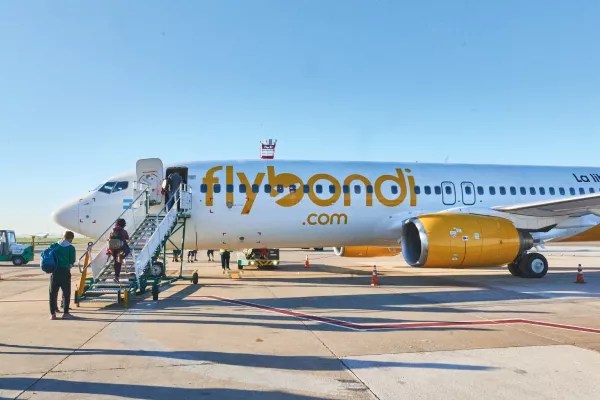
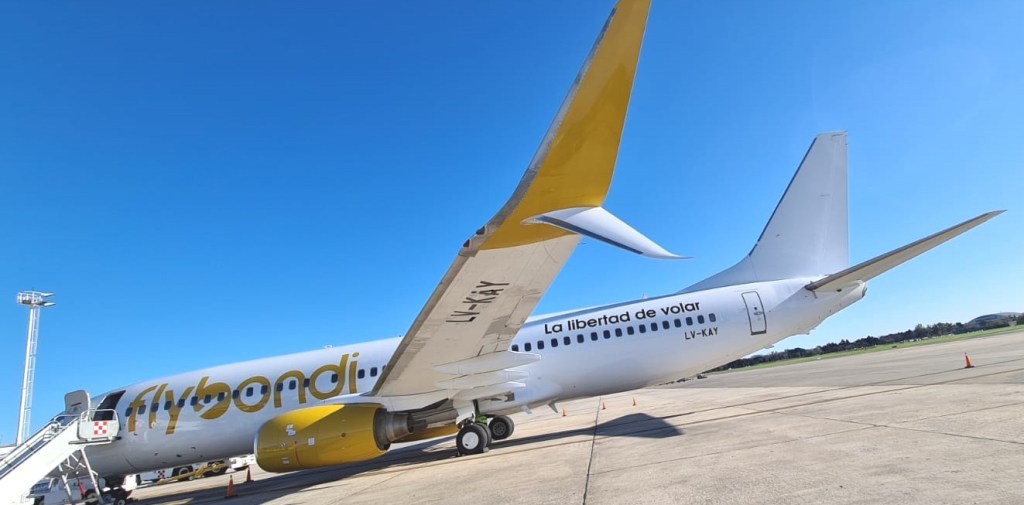
Flybondi Líneas Aéreas ha anunciado fuertes inversiones en Argentina como parte de la reactivación de la aviación comercial. La compañía low cost incorporará más aviones para enfrentar la competitividad en rutas domésticas y regionales con inversiones de US$ 42 millones de Dólares en su plan de expansión hasta 2023.
La aerolínea Flybondi buscará reactivar los servicios en rutas de cabotaje como así también la malla aérea en Sudamérica para acrecentar más pasajeros hacia nuevos destinos con el doble de aviones operativos. Tras una reunión aerolínea-Gobierno a mediados de la semana, el Director Ejecutivo de la aerolínea, Mauricio Sana, dijo que la reunión sirvió para avanzar en la programación 2022 y 2023, siendo un momento de hacer inversiones en Argentina. El Director de Flybondi expresó “es un momento de crecimiento, que es justamente lo que estamos buscando, poder trabajarlo de manera conjunta con el Gobierno y con las autoridades y con los aeropuertos para poder llevarlo a cabo». A todo esto la compañía explicó que duplicará la cantidad de aviones que tiene en el país para transportar 3,4 millones de pasajeros en los próximos dos años, que sumará 400 empleados y cinco aeronaves.
Con la incorporación de más aeronaves, Flybondi buscará ganar cuota de mercado, para lo cual adquirirá cinco aviones adicionales para duplicar la cantidad de flota que tiene en el país, con el objetivo de estimular la próxima temporada invernal, mientras que para finales de 2023 alcanzarán incorporaciones de 400 empleados adicionales a su actual plantilla de 600 trabajadores. “El solo hecho de alquilar cinco aviones implica una inversión de US$ 42 millones en dos años: 2022 y 2023. En 2019, los vuelos de cabotaje tuvieron un récord con 16 millones de tickets vendidos. Como los pasajes son ida y vuelta estaríamos hablando de 8 millones de personas si es que ninguna repitió viaje. Es decir que podríamos estar hablando de 3 o 4 millones de argentinos que viajaron, de un total de 45 millones. de ciudadanos. ¿Y los otros 42 millones qué hacen? Estamos en un 92% de ocupación y en noviembre ya tuvimos un 2% más de pasajeros que en noviembre de 2019”, se preguntó, el ejecutivo y respondió que esta falta de capacidad para que el mercado crezca es lo que impulsa a la firma a traer más aviones, además de la ocupación de las aeronaves.
Actualmente, la aerolínea de bajo costo tiene cuatro aeronaves Boeing 737-800 en el país, la quinta estará operativa hacia Enero 2022, la sexta arribaría en Febrero 2022, y las diez se completarían en Julio de 2022. Las rutas actualmente operativas ascienden a trece en el mercado doméstico y cuatro en el regional que comprenden los destinos a Brasil, Uruguay y Paraguay.
Flybondi en números
La aerolínea de presupuesto iniciaba operaciones en la Argentina en 2018 y transportó hasta la fecha unos 3.700.000 pasajeros. El 20% de ellos realizaron el primer vuelo de su vida. Cuenta con más de 570 empleados en todo el país. Tiene una flota de cuatro (4) aviones Boeing 737-800 Next Generation con 189 asientos de única clase y considera ingresar una quinta máquina de iguales características. Vuela a trece (13) destinos domésticos: Buenos Aires, Bariloche, Corrientes, Córdoba, Jujuy, Mendoza, Neuquén, Posadas, Iguazú, Salta, Santiago del Estero, Trelew y Tucumán. La reiniciado el primer enlace regional a Florianópolis, mientras que espera los permisos para volar hacia São Paulo, Río de Janeiro y Punta del Este. Desde enero de 2021 es la aerolínea con el mayor coeficiente de ocupación dentro del país.
Perspectivas Flybondi
La proyección para los dos años siguientes estiman transportar unos 3,4 millones de pasajeros. La mayor flota se utilizará para incorporar más frecuencias, mientras que evaluarán más rutas adicionales. Con la reactivación de más servicios, las economías regionales tendrán un impacto por valores aproximados de US$ 500 millones, sin contar el monto de facturación de la compañía, y la creación de 10.200 empleos indirectos en el sector turístico.
Mientras tanto, habían sido consultado sobre la posible reapertura del Aeropuerto de El Palomar, clausurado para operaciones aerocomerciales. “El beneficio de El Palomar es que es un aeropuerto no congestionado si se lo compara con Aeroparque, pero este último nos dio más exposición y pudimos entrar en la cabeza de un público que no es el nuestro y que no entendía el modelo low cost”.
Flybondi invests heavily
Expansion plan until 2023 Investments for securities of US $ 42 million
Flybondi Líneas Aéreas has announced strong investments in Argentina as part of the reactivation of commercial aviation. The low-cost company will incorporate more aircraft to face competitiveness on domestic and regional routes with investments of US$ 42 million in its expansion plan until 2023.
The airline Flybondi will seek to reactivate services on cabotage routes as well as the air network in South America to increase more passengers to new destinations with double the number of operating aircraft. After an airline-Government meeting in the middle of the week, the Executive Director of the airline, Mauricio Sana, said that the meeting served to advance the 2022 and 2023 programming, being a time to make investments in Argentina. The Director of Flybondi expressed “it is a moment of growth, which is precisely what we are looking for, to be able to work it together with the Government and with the authorities and with the airports to be able to carry it out”. To all this, the company explained that It will double the number of planes it has in the country to transport 3.4 million passengers in the next two years, which will add 400 employees and five aircraft.
With the incorporation of more aircraft, Flybondi will seek to gain market share, for which it will acquire five additional aircraft to double the amount of fleet it has in the country, with the aim of stimulating the next winter season, while by the end of 2023 they will reach incorporation of 400 additional employees to its current staff of 600 workers. “The mere fact of renting five aircraft implies an investment of US$ 42 million in two years: 2022 and 2023. In 2019, domestic flights had a record with 16 million tickets sold. As the tickets are roundtrip, we would be talking about 8 million people if none of them repeated the trip. In other words, we could be talking about 3 or 4 million Argentines who traveled, out of a total of 45 million. of citizens. What do the other 42 million do? We are at 92% occupancy and in November we already had 2% more passengers than in November 2019”, the executive asked himself and responded that this lack of capacity for the market to grow is what prompts the firm to bring more aircraft in addition to the occupation of aircraft.
Currently, the low-cost airline has four Boeing 737-800 aircraft in the country, the fifth will be operational by January 2022, the sixth will arrive in February 2022, and the ten will be completed in July 2022. Currently operating routes amount to thirteen in the domestic market and four in the regional one that includes the destinations to Brazil, Uruguay and Paraguay.
Flybondi in numbers
The budget airline began operations in Argentina in 2018 and has transported some 3,700,000 passengers to date. 20% of them made the first flight of their life. It has more than 570 employees throughout the country. It has a fleet of four (4) Boeing 737-800 Next Generation aircraft with 189 single-class seats and is considering entering a fifth machine with the same characteristics. It flies to thirteen (13) domestic destinations: Buenos Aires, Bariloche, Corrientes, Córdoba, Jujuy, Mendoza, Neuquén, Posadas, Iguazú, Salta, Santiago del Estero, Trelew and Tucumán. The restarted the first regional link to Florianópolis, while waiting for permits to fly to São Paulo, Rio de Janeiro and Punta del Este. Since January 2021, it is the airline with the highest load factor within the country.
Flybondi outlook
The projection for the following two years is estimated to transport about 3.4 million passengers. The larger fleet will be used to incorporate more frequencies, while they will evaluate more additional routes. With the reactivation of more services, the regional economies will have an impact of approximately US$ 500 million, not counting the company’s turnover, and the creation of 10,200 indirect jobs in the tourism sector.
Meanwhile, they had been consulted about the possible reopening of the El Palomar Airport, closed for commercial air operations. «The benefit of El Palomar is that it is a non-congested airport when compared to Aeroparque, but the latter gave us more exposure and we were able to enter the head of an audience that is not ours and that did not understand the low cost model».
Es la primera empresa que se suma a esta iniciativa del Sistema Argentino de Calidad Turística (SACT). El objetivo es implementar medidas que contribuyan a transversalizar la perspectiva de género y diversidad. Participaron del acto la subsecretaria de Calidad, Accesibilidad y Sustentabilidad del Turismo Nacional, Inés Albergucci, y el director nacional de Calidad e Innovación Turística, Hernán Roitman, por el Ministerio de Turismo y Deportes; y los representantes del equipo de la Coordinación de Género y Diversidad de Aerolíneas Argentinas, Luciana Merelle D’Herve y Gabriela Loscar.
«Es muy importante esta adhesión de nuestra aerolínea de bandera al Sello Igualdad, resultado de un trabajo articulado con el Ministerio de las Mujeres, Géneros y Diversidad. Tanto este Sello como las políticas de género están adquiriendo un volumen cada vez más grande y esperamos que ese impacto siga creciendo en el sector», expresó Inés Albergucci.
El Sello Igualdad es una herramienta del Sistema Argentino de Calidad Turística (SACT) que tiene como propósito impulsar buenas prácticas para promover la igualdad y eliminar la violencia por motivos de género dentro de las organizaciones turísticas. A través de sus pautas recorre diversas dimensiones, abordando aspectos fundamentales como son: ● La igualdad de oportunidades y derechos laborales para todas las personas que conforman la organización, indistintamente su género, promoviendo así entornos de trabajo basados en una gestión participativa e inclusiva. ● La prevención y abordaje de cualquier tipo de violencia por motivos de género que conlleven a espacios de trabajo seguros, empáticos y comprometidos, asistiendo correcta e integralmente a las personas en esa situación. ● La sensibilización y formación en igualdad de género para todas las personas que conforman la organización, lo que involucra un proceso continúo que requiere la voluntad y el compromiso de todas las partes con el fin de crear ambientes de trabajo más inclusivos e igualitarios.
La implementación prevé un plazo de ejecución de cuatro meses, incluyendo una instancia de evaluación, y finaliza con una etapa de distinción para las organizaciones que cumplan satisfactoriamente los requerimientos del programa.
SACT airlines distinction
Aerolíneas Argentinas adhered to the Equality Seal
It is the first company to join this initiative of the Argentine Tourism Quality System (SACT). The objective is to implement measures that contribute to mainstreaming the gender and diversity perspective. The Undersecretary of Quality, Accessibility and Sustainability of National Tourism, Inés Albergucci, and the National Director of Quality and Tourism Innovation, Hernán Roitman, for the Ministry of Tourism and Sports participated in the event; and the representatives of the Aerolíneas Argentinas Gender and Diversity Coordination team, Luciana Merelle D’Herve and Gabriela Loscar.
«This adhesion of our flag airline to the Equality Seal is very important, the result of joint work with the Ministry of Women, Gender and Diversity. Both this Seal and gender policies are acquiring an ever greater volume and we hope that this impact continues to grow in the sector», said Inés Albergucci.
The Equality Seal is a tool of the Argentine Tourism Quality System (SACT) that aims to promote good practices to promote equality and eliminate gender-based violence within tourism organizations. Through its guidelines, it covers various dimensions, addressing fundamental aspects such as: ● Equal opportunities and labor rights for all the people who make up the organization, regardless of their gender, thus promoting work environments based on participatory and inclusive management. ● Prevention and tackling of any type of gender-based violence that leads to safe, empathetic and committed work spaces, assisting people in that situation correctly and comprehensively. ● Sensitization and training on gender equality for all the people who make up the organization, which involves a continuous process that requires the will and commitment of all parties in order to create more inclusive and equal work environments.
The implementation foresees an execution period of four months, including an evaluation instance, and ends with a distinction stage for the organizations that satisfactorily fulfill the program requirements.
Air France-KLM ordena 100 aviones de pasajeros Grupo aéreo franco-holandés selecciona cargueros A350
El grupo de aviación franco-holandés Air France-KLM ordena cien (100) aviones al constructor aeronáutico europeo Airbus Group. El acuerdo incluye cien aviones de media distancia de las series A320NEO y A321NEO, anunció la compañía Air France-KLM el Jueves 16/12 por la noche en París, Francia. Se espera que las primeras aeronaves lleguen en la segunda mitad de 2023.
El nuevo pedido de aeronaves para el grupo Air France-KLM permitirá renovar las flotas de KLM y Transavia en los Países Bajos. La flota de Transavia Francia también se actualizará y ampliará. Además del pedido en firme, la aerolínea ha acordado una opción de compra para sesenta (60) aviones adicionales. Además, el Grupo tiene la intención de comprar cuatro cargueros Airbus A350F para Air France. La compañía firmó una carta de intención que también incluye los derechos de compra de cuatro máquinas adicionales en la serie.
La compañía KLM Royal Dutch Airlines podría estar migrando un cambio de filosofía de los productos de la línea Boeing 737 hacia la familia Airbus A320NEO, un cambio radical e histórico en la flota de la aerolínea neerlandesa.
Air France-KLM order 100 Airbus
Air France-KLM orders 100 passenger planes Franco-Dutch airline group selects A350 freighters
The French-Dutch aviation group Air France-KLM orders one hundred (100) aircraft from the European aircraft manufacturer Airbus Group. The agreement includes one hundred medium-haul aircraft of the types A320NEO and A321NEO, announced the company Air France-KLM on Thursday night 12/16 in Paris, France. The first aircraft are expected to arrive in the second half of 2023.
The new aircraft order for the Air France-KLM group will allow the renewal of the KLM and Transavia fleets in the Netherlands. The Transavia France fleet will also be updated and expanded. In addition to the firm order, the airline has agreed to a purchase option for an additional sixty (60) aircraft. In addition, the Group intends to purchase four Airbus A350F freighters for Air France. The company signed a letter of intent that also includes the purchase rights for four additional machines in the series.
The KLM Royal Dutch Airlines company could be migrating a change of philosophy of the products of the Boeing 737 line towards the Airbus A320NEO family, a radical and historic change in the fleet of the Dutch airline.
Qantas elige al constructor europeo en sector narrowbodies
Qantas Airwyas ha seleccionado al constructor europeo Airbus Group de la familia A320NEO que incluyen a las aeronaves A320NEO, A321NEO, coma así también al avión regional A220 como las aeronaves de reemplazo para la renovación a largo plazo de su flota doméstica de fuselaje estrecho que incluye los Boeing 737-800 y Boeing 717.
El acuerdo consiste en un pedido en firme de veinte Airbus A321XLR (20) y veinte Airbus A220-300 (20). Cuenta con la opción de comprar 94 aviones adicionales por un período de entrega de más de diez años, que incluirán más Airbus A220, A320NEO y A321NEO. Además, se suma a un pedido de treinta y seis A321XLR (36) realizado en 2020 para su entrega en 2024. Los pedidos estarían sujetos a la aprobación final de la Junta Administrativa de la compañía, con un pedido anticipado para fines de 2022 con flexibilidad en el momento y la combinación de aviones de estas dos familias. El anuncio actual sigue a una revisión minuciosa y detallada por parte de los equipos de ingeniería, operaciones de vuelo, experiencia del cliente, red, adquisición de flotas y finanzas de la aerolínea. La aerolínea realizó una evaluación detallada de las familias A320NEO y Boeing 737 MAX, así como de los pequeños A220 y Embraer E190/195-E2.
El nuevo pedido ha permitido dar un cambio de cliente decantándose por el constructor europeo, quebrando así el dominio de The Boeing Company en la flota de Qantas Group. El acuerdo se suma al acuerdo existente de Jetstar Airways con Airbus por más de cien aviones de la familia A320NEO (100). En este nuevo acuerdo se incluye la combinación de estos dos pedidos para permitir que el grupo utilice un total de 299 aviones del fabricante europeo, como se requiere durante la próxima década para Qantas Airways, QantasLink y Jetstar Airways. Alan Joyce dijo que presentará un nuevo interior y una nueva experiencia de vuelo una vez que comiencen a entregarse los nuevos aviones. Una vez finalizado el acuerdo, representará el pedido de aviones más grande en la historia de la aviación australiana.
«El acuerdo de Airbus tiene el beneficio adicional de proporcionar una flexibilidad continua dentro del pedido, lo que significa que podemos seguir eligiendo entre todas las familias A320NEO y A220 en función de nuestras necesidades cambiantes en los años venideros. La capacidad de combinar el pedido de Jetstar y Qantas para el tipo A320 también fue un factor», explicó Alan Joyce, Director Ejecutivo de Qantas Group.
Proyecto Winton
Qantas Airways había bautizado la renovación de su flota nacional como «Proyecto Winton» en honor a la ciudad donde nació la aerolínea nacional hace 101 años, marcando este proyecto como una decisión estratégica clave para el futuro de Qantas Domestic. «Se trata de un plan de renovación a largo plazo con entregas y pagos repartidos durante la próxima década y más allá, pero el tiempo de espera igualmente largo para los pedidos de aviones significa que debemos tomar estas decisiones ahora. La combinación de aviones pequeños, medianos y grandes y el diferente alcance y economía de cada uno significa que podemos tener el avión correcto en la ruta correcta. Para los clientes, esto significa tener más salidas a lo largo del día en una aeronave más pequeña y capacidad adicional en las horas punta con una aeronave más grande o incluso más la capacidad de iniciar una nueva ruta regional porque los costos de la aeronave lo hacen posible», expresó el CEO de Qantas Airways.
Qantas selects A220/A320NEO
Qantas chooses European builder in narrowbodies sector
Qantas Airwyas has selected the European constructor Airbus Group of the A320NEO family which includes the A320NEO, A321NEO aircraft, as well as the A220 regional aircraft as the replacement aircraft for the long-term renewal of its domestic narrow-body fleet that includes the Boeing 737-800 and Boeing 717.
The agreement consists of a firm order for twenty Airbus A321XLR (20) and twenty Airbus A220-300 (20). You have the option to purchase an additional 94 aircraft for a delivery period of more than ten years, which will include more Airbus A220, A320NEO and A321NEO. In addition, it is in addition to an order for thirty-six A321XLR (36) placed in 2020 for delivery in 2024. Orders would be subject to final approval by the company’s Board of Directors, with a pre-order by the end of 2022 with flexibility at the time and the combination of aircraft of these two families. The current announcement follows a thorough and detailed review by the airline’s engineering, flight operations, customer experience, network, fleet acquisition and finance teams. The airline conducted a detailed assessment of the A320NEO and Boeing 737 MAX families, as well as the small A220 and Embraer E190/195-E2.
The new order has allowed for a change of client, opting for the European manufacturer, thus breaking the dominance of The Boeing Company in the Qantas Group fleet. The agreement adds to Jetstar Airways’ existing agreement with Airbus for more than 100 A320NEO family aircraft (100). This new agreement includes the combination of these two orders to allow the group to use a total of 299 aircraft from the European manufacturer, as required over the next decade for Qantas Airways, QantasLink and Jetstar Airways. Alan Joyce said that he will introduce a new interior and a new flight experience once the new aircraft begin to be delivered. Upon completion of the deal, it will represent the largest aircraft order in Australian aviation history.
«The Airbus agreement has the added benefit of providing continued flexibility within the order, whichmeans that we can continue to choose between all the A320NEO and A220 families based on our changing needs for years to come. The ability to combine ordering from Jetstar and Qantas for the A320 type was also a factor», explained Alan Joyce, CEO of Qantas Group.
Winton Project
Qantas Airways had christened the renewal of its national fleet «Project Winton» in honor of the city where the national airline was born 101 years ago, marking this project as a key strategic decision for the future of Qantas Domestic. «This is a long-term renewal plan with deliveries and payments spread over the next decade and beyond, but the equally long lead time for aircraft orders means we must make these decisions now. The combination of small aircraft, Medium and large and the different range and economy of each means that we can have the right aircraft on the right route. For customers, this means having more departures throughout the day on a smaller aircraft and additional capacity at peak times. with a larger aircraft or even more ability to start a new regional route because aircraft costs make it possible», said the CEO of Qantas Airways.
International Consolidated Airlines Group SA (IAG) dijo este Jueves 16/12 que acordó pagar € 75 millones de Euros para romper su acuerdo de compra de la aerolínea española Air Europa. IAG dijo que pagará a Globalia, propietaria de Air Europe, € 35 millones de Euros, además de la tarifa de ruptura de € 40 millones de Euros que se acordó previamente. La pareja acordó que los € 75 millones de Euros podrían aplicarse contra cualquier precio de compra futuro, si se llegara a un nuevo acuerdo para que IAG comprara Air Europa.
Las dos compañías habían anunciado el Miércoles 15/12 que estaban discutiendo un acuerdo. La aerolínea española Iberia Líneas Aéreas perteneciente al grupo IAG, había acordado comprar Air Europa a finales de 2019 por € 1.000 millones de Euros, pero el precio se redujo a € 500 millones de Euros después de que la pandemia de Covid-19 dejara en tierra a todo el sector de viajes.
Air Europa es una aerolínea española que opera vuelos nacionales e internacionales en Europa, así como rutas de larga distancia a América Latina, Estados Unidos, el Caribe y el norte de África. Además de Iberia, con sede en Madrid, IAG Group también es propietaria de Vueling en España. En Noviembre 2021, la Autoridad de Competencia y Mercados del Reino Unido dijo que comenzó una investigación sobre el acuerdo. IAG también es propietaria de British Airways y Aer Lingus.
Como parte del acuerdo anunciado este Jueves 16/12, IAG ha señalado que ha acordado con Globalia evaluar antes de finales de Enero 2022, estructuras alternativas que puedan ser de interés para ambas compañías y ofrecer importantes beneficios para sus accionistas, clientes y empleados. El Consejero Delegado de IAG, Luis Gallego, ha expresado: «Es muy decepcionante que hayamos tenido que rescindir el acuerdo actual para adquirir Air Europa, pero la decisión tiene sentido debido a las condiciones del mercado, la profunda crisis resultante de COVID-19 y teniendo en cuenta nuestro deseo de mantener un enfoque disciplinado de la asignación de capital».
IAG approaches purchase of Air Europa
Purchase of Air Europa of € 500 million Euros
International Consolidated Airlines Group SA (IAG) said this Thursday 12/16 that it agreed to pay € 75 million Euros to break its purchase agreement with the Spanish airline Air Europa. IAG said it will pay Globalia, which owns Air Europe, € 35 million Euros, in addition to the € 40 million break-up fee that was previously agreed upon. The couple agreed that the € 75 million Euros could be applied against any future purchase price, should a new deal be reached for IAG to purchase Air Europa.
The two companies had announced on Wednesday 12/15 that they were discussing an agreement. The Spanish airline Iberia Lineas Aereas belonging to the IAG group, had agreed to buy Air Europa at the end of 2019 for € 1 billion Euros, but the price was reduced to € 500 million Euros after the Covid-19 pandemic left the ground. to the entire travel industry.
Air Europa is a Spanish airline that operates national and international flights in Europe, as well as long-haul routes to Latin America, the United States, the Caribbean and North Africa. In addition to Madrid-based Iberia, IAG Group also owns Vueling in Spain. In November 2021, the UK Competition and Markets Authority said it started an investigation into the deal. IAG also owns British Airways and Aer Lingus.
As part of the agreement announced this Thursday 12/16, IAG has indicated that it has agreed with Globalia to evaluate, before the end of January 2022, alternative structures that may be of interest to both companies and offer significant benefits for their shareholders, customers and employees. IAG CEO Luis Gallego said: «It is very disappointing that we had to terminate the current agreement to acquire Air Europa, but the decision makes sense due to market conditions, the deep crisis resulting from COVID-19 and bearing in mind our desire to maintain a disciplined approach to capital allocation».
La aerolínea de mayor tamaño de Argentina, Aerolíneas Argentinas, ha anunciado la puesta en servicio del quinto Boeing 737-8 MAX registro LV–GVE este Lunes 13/12, marcando la totalidad de la flota operativa de aeronaves de este tipo en servicio. Aerolíneas vuelve a poner en servicio a toda su flota Boenig 737 MAX después de un parate a nivel mundial. El último avión entrará en servicio en los próximos días, afectando la totalidad de la flota a vuelos domésticos. El primer avión fue puesto nuevamente en servicio en Mayo 2021, el segundo a principios de Julio 2021, el tercero en Agosto 2021 y el cuarto en Septiembre 2021 como parte del restablecimiento de la línea 737 MAX a nivel mundial, como así también del mercado post-pandemia.
Aerolíneas Argentinas posee actualmente una flota de cinco Boeing 737-8 MAX registros LV-HKU, LV-GVD, LV-HKW, LV-HKV y LV-GVE. La compañía no ha avanzado respecto a las seis unidades adicionales pendientes de incorporación en su flota, lo que permitirá acordar con el constructor americano mediante una negociación especial, después de la puesta en tierra de la flota mundial afectada por la inseguridad de un defecto de diseño en la versión 737 de cuarta generación.
Aerolíneas re-establishes 737 MAX fleet
Total Boeing 737 MAX fleet in service
The largest airline in Argentina, Aerolíneas Argentinas, has announced the commissioning of the fifth Boeing 737-8 MAX registration LV–GVE this Monday 12/13, marking the entire operational fleet of aircraft of this type in service. Aerolíneas puts its entire Boenig 737 MAX fleet back into service after a worldwide shutdown. The last aircraft will enter service in the next few days, affecting the entire fleet to domestic flights. The first aircraft was put back into service in May 2021, the second in early July 2021, the third in August 2021 and the fourth in September 2021 as part of the re-establishment of the 737 MAX line worldwide, as well as the post-pandemic market.
Aerolíneas Argentinas currently has a fleet of five Boeing 737-8 MAX registers LV-HKU, LV-GVD, LV-HKW, LV-HKV and LV-GVE. The company has not advanced with respect to the six additional units pending incorporation in its fleet, which will allow an agreement with the American constructor through a special negotiation, after the grounding of the world fleet affected by the uncertainty of a design defect in version 737 of the fourth generation.