Aeródromo Junín (BA) retornaría a la actividad en Argentina
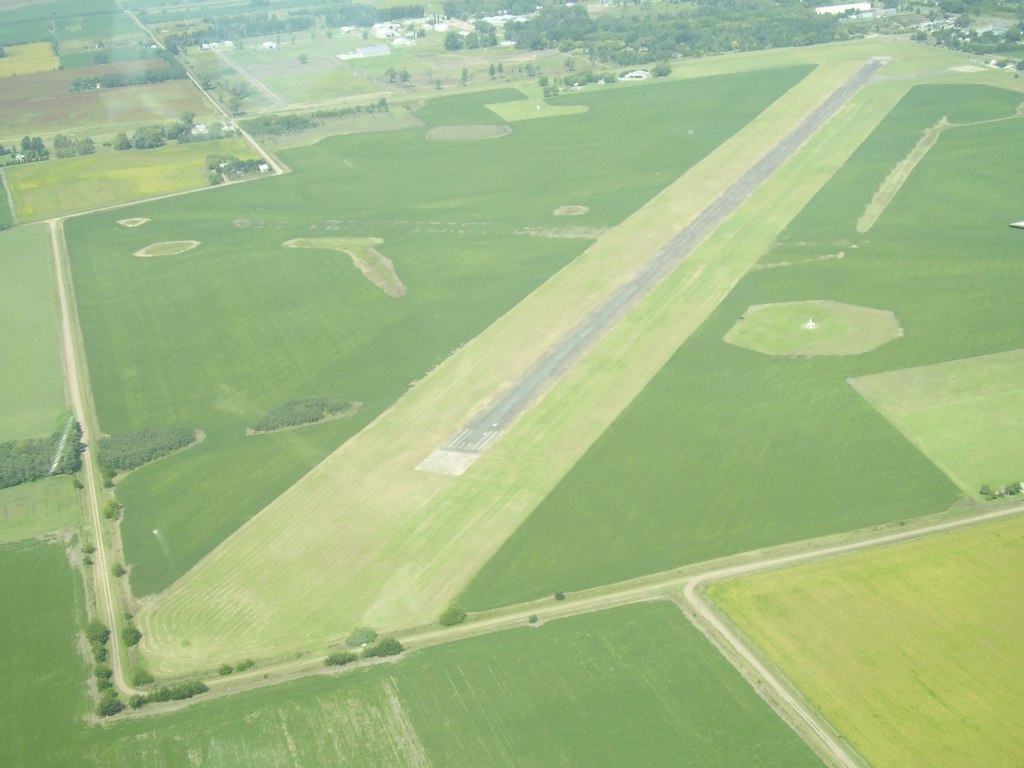
El Aeródromo de JunínJNI/SAAJ, localizado al oeste en la Provincia de Buenos Aires, Argentina, estaría en el radar para próximas obras de ampliación de pista y remodelaciones para su reapertura como aeropuerto en la región del oeste provincial. El aeródromo se encuentra localizado a dos kilómetros (1 millas) al norte de la Ciudad de Junín. El Ministro de Transporte, Mario Meoni, se ha hecho cita en Junín y realizó un importante anuncio relacionado a la reactivación del aeródromo local que desde hace años no está operativo, anunciando la reactivación del aeródromo después de hace años sin operaciones.
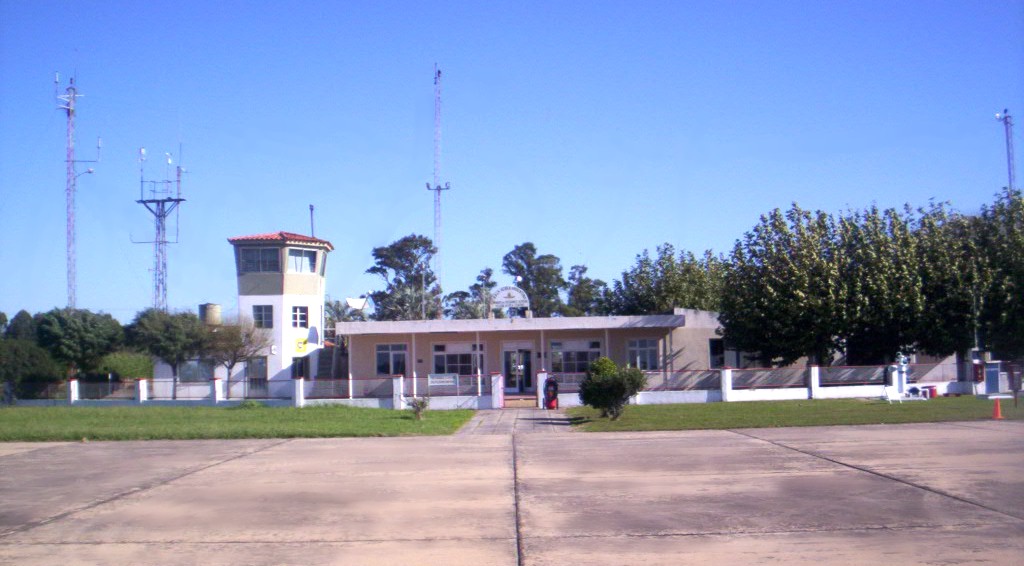
Desde Transporte notifican que se encuentra en una etapa avanzada del proyecto de obra para la ejecución de un nuevo aeródromo provincial para transformarlo en aeropuerto. Entre las obras y mejoras se encuentran Pista nueva de 2.000 metros, una Torre de Control nueva, una zona de recepción de pasajeros, zonas comerciales, como así también contará con una escuela de Controladores Aéreos.
La obra estratégica es de vital magnitud, se convertirá en uno de los aeropuertos más moderno de la Argentina que permitirá atraer inversiones en su área de influencia. La forma de explotación del aeropuerto será definida por el Municipio de Junín y la Provincia de Buenos Aires. El diseño del proyecto está a cargo del Organismo Regulador del Sistema Nacional de Aeropuertos (ORSNA). El Ministro de Transporte de la Nación, anunció: «vamos a trabajar en lo que tiene que ver el desarrollo de la obra. Es algo que está definido y determinado. Desde el órgano de regulación aeroportuario nacional están trabajando sobre el proyecto y presupuesto de obras, que son significativas», ha expresado Mario Meoni.
Junín Aerodrome works planned
Junín Aerodrome (BA) would return to activity in Argentina
The Junín AerodromeJNI/SAAJ, located to the west in the Province of Buenos Aires, Argentina, would be on the radar for future runway expansion works and remodeling for its reopening as an airport in the western provincial region. The aerodrome is located two kilometers (1 miles) north of the City of Junín. The Minister of Transport, Mario Meoni, has made an appointment in Junín and made an important announcement related to the reactivation of the local airfield that has not been operational for years, announcing the reactivation of the airfield after years without operations.
From Transportation they notify that it is in an advanced stage of the work project for the execution of a new provincial aerodrome to transform it into an airport. Among the works and improvements are a new 2,000-meter runway, a new Control Tower, a passenger reception area, commercial areas, as well as a school for Air Traffic Controllers.
The strategic work is of vital magnitude, it will become one of the most modern airports in Argentina that will attract investment in its area of influence. The form of operation of the airport will be defined by the Municipality of Junín and the Province of Buenos Aires. The design of the project is in charge of the Regulatory Body of the National Airport System (ORSNA). The Minister of Transportation of the Nation announced: «We are going to work on what has to do with the development of the work. It is something that is defined and determined. The national airport regulation body is working on the project and works budget , which are significant», has expressed Mario Meoni.
Apertura Aeropuerto Palmerola de Honduras hacia el 4Q2021
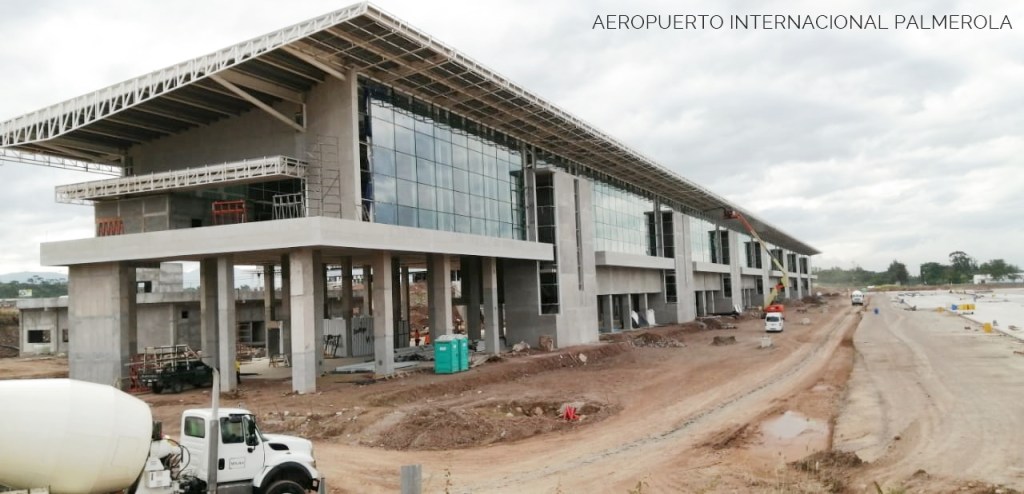
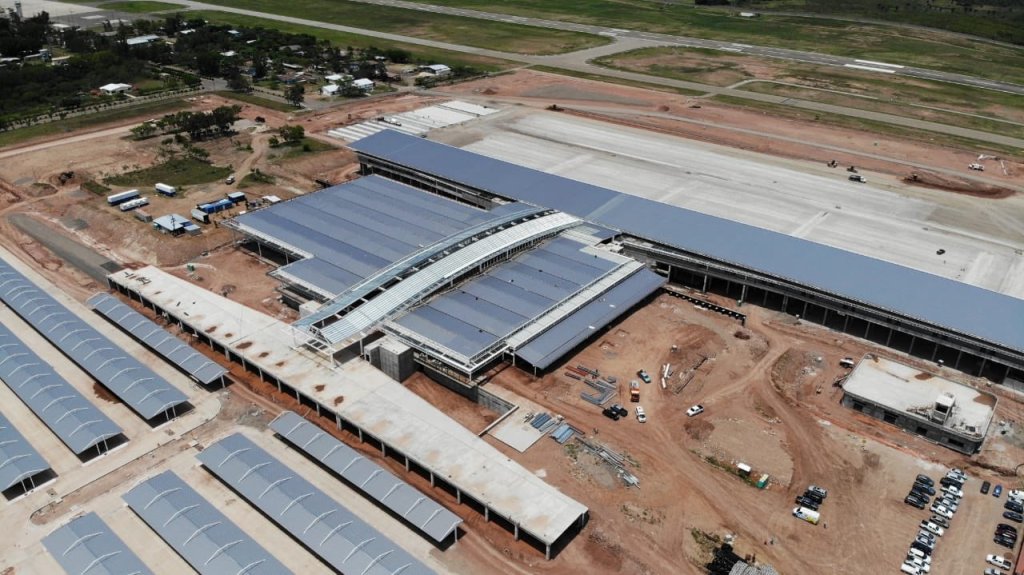
El representante de la Superintendencia de Alianza Público Privada (SAPP), César Cáceres, ha anunciado que el Aeropuerto Internacional de Palmerola, en Comayagua, República de Honduras iniciará operaciones en el último trimestre de este año 2021. El Aeropuerto Internacional de Comayagua/MHSC, o el Aeropuerto Internacional de Palmerola es un aeropuerto internacional ubicado a seis kilómetros al sur del centro de Comayagua, Honduras. Actualmente, el aeropuerto tiene uso militar y forma parte de la Base Aérea José Enrique Soto Cano. Hacia finales de 2021 se inaugurará como un nuevo aeropuerto internacional para uso civil y comercial, convirtiéndose en uno de los aeropuertos más importantes del país con una capacidad mayor al Aeropuerto Internacional Toncontín de Tegucigalpa. Se espera que este nuevo aeropuerto sirva no solo a Comayagua si no también a los residentes de Tegucigalpa debido a las limitaciones para crecer del aeropuerto Toncontín. El nuevo aeropuerto se podría convertir en el aeropuerto principal para la capital hondureña. El nuevo aeropuerto tendrá una capacidad de veinte aeronaves y la terminal tendrá más de 39.000 metros cuadrados construidos, aproximadamente cuatro veces el tamaño del Aeropuerto Toncontín en Tegucigalpa. El aeropuerto también tendrá la secunda pista de aterrizaje más larga de Honduras después del Aeropuerto Internacional Ramón Villeda Morales de San Pedro Sula.
La nueva terminal será operativa como H24, contará con siete mangas, de las cuales una es doble y 13 puertas de embarque lo que permitirá que igual número de aviones puedan ser abordados al mismo tiempo. El representante de SAPP dijo que “se está trabajando arduamente en darle seguimiento al contrato en particular de Palmerola, en cuanto a la parte operativa y la puesta en ejecución. El plan incluye, además, la migración de las operaciones internacionales del capitalino aeropuerto internacional de Toncontín para el aeropuerto de Palmerola. Todo tiende a caminar a que el último trimestre de este año, el aeropuerto de Palmerola estará ya operando con todas las medidas de seguridad correspondientes. Lo anterior permitirá que las aerolíneas que operan en Toncontín puedan migrar hacia Palmerola, así como aquellas que han manifestado su interés de llegar a este nuevo aeropuerto, como es el caso de las empresas de bajo costo y otras europeas que han mostrado su interés en iniciar operaciones desde y hacia esa terminal. De manera, que de esa forma abrimos nuevas oportunidades a la industria de la aeronavegación y turística, sobre todo con la posibilidad de contar con una mayor competencia. Además, se tendrá una mayor capacidad de asientos, lo que generalmente induce a una rebaja en los costos de los boletos que en este momento saliendo de Toncontín son sumamente altos. Tenemos muchas expectativas no solo nosotros, sino que todas aquellas instituciones de gobierno y el sector privado que estarían muy interesados en que Palmerola inicie operaciones, sobre todo en su potencial de exportación de carga aérea de productos perecederos procedentes del valle de Comayagua”.
Palmerola will start operations in 4Q2021
Palmerola de Honduras Airport opens around 4Q2021
The representative of the Superintendency of Public Private Partnership (SAPP), César Cáceres, has announced that the Palmerola International Airport, in Comayagua, Republic of Honduras will begin operations in the last quarter of this year 2021. Comayagua International Airport/MHSC, or Palmerola International Airport is an international airport located six kilometers south of downtown Comayagua, Honduras. Currently, the airport has military use and is part of the José Enrique Soto Cano Air Base. Towards the end of 2021, it will be inaugurated as a new international airport for civil and commercial use, becoming one of the most important airports in the country with a greater capacity than the Toncontin de Tegucigalpa International Airport. This new airport is expected to serve not only Comayagua but also the residents of Tegucigalpa due to the limitations of the Toncontin airport to grow. The new airport could become the main airport for the Honduran capital. The new airport will have a capacity of twenty aircraft and the terminal will have more than 39,000 square meters built, approximately four times the size of the Toncontín Airport in Tegucigalpa. The airport will also have the second longest runway in Honduras after the Ramón Villeda Morales International Airport in San Pedro Sula.
The new terminal will be operational as H24, it will have seven sleeves, of which one is double and 13 boarding gates, which will allow the same number of planes to be boarded at the same time. The SAPP representative said that “they are working hard to follow up on the Palmerola contract in particular, in terms of the operational part and the implementation. The plan also includes the migration of international operations from the capital’s Toncontín international airport to Palmerola airport. Everything tends to walk because in the last quarter of this year, the Palmerola airport will already be operating with all the corresponding security measures. This will allow the airlines that operate in Toncontin to migrate to Palmerola, as well as those that have expressed interest in arriving at this new airport, such as low-cost companies and other European companies that have shown their interest in starting operations to and from that terminal. Thus, in this way we open new opportunities to the aviation and tourism industry, especially with the possibility of having greater competition. In addition, there will be a greater capacity of seats, which generally induces a reduction in the costs of the tickets that at this moment leaving from Toncontin are extremely high. We have high expectations, not only us, but also all those government institutions and the private sector that would be very interested in Palmerola starting operations, especially in its potential for exporting air cargo of perishable products from the Comayagua valley”.
AA2000 informa de avance obras en Aeropuerto Jorge Newbery
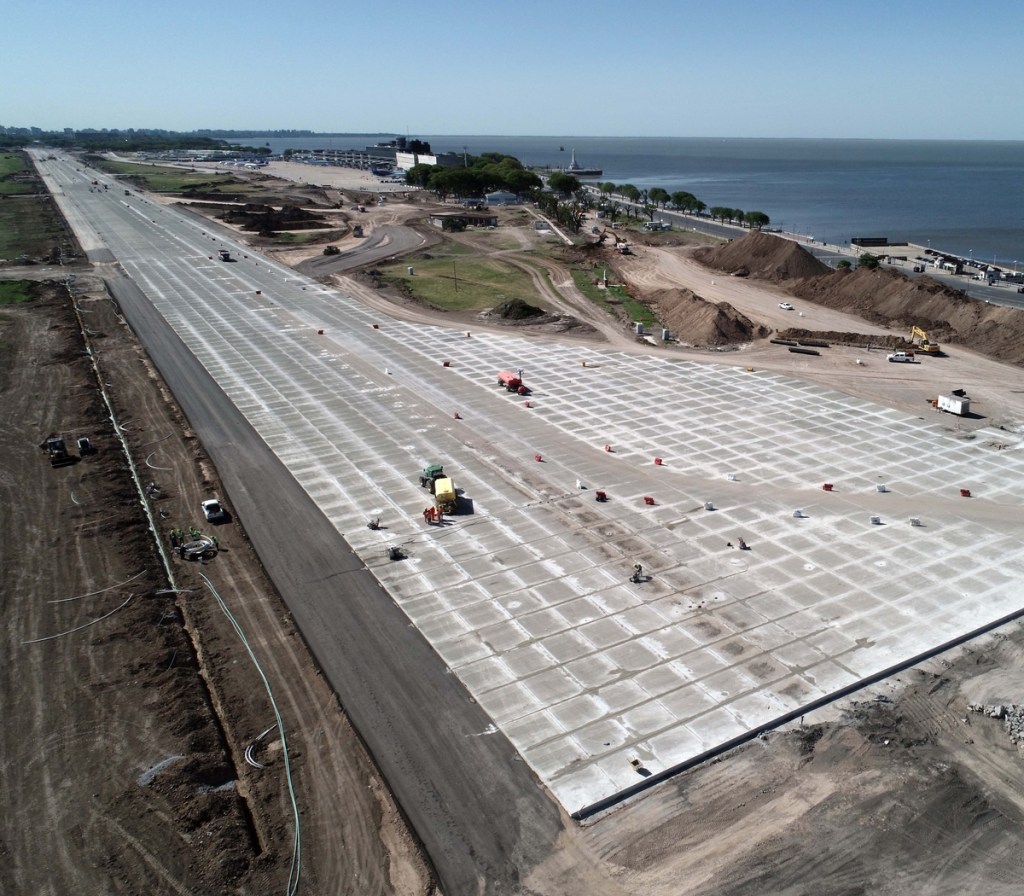
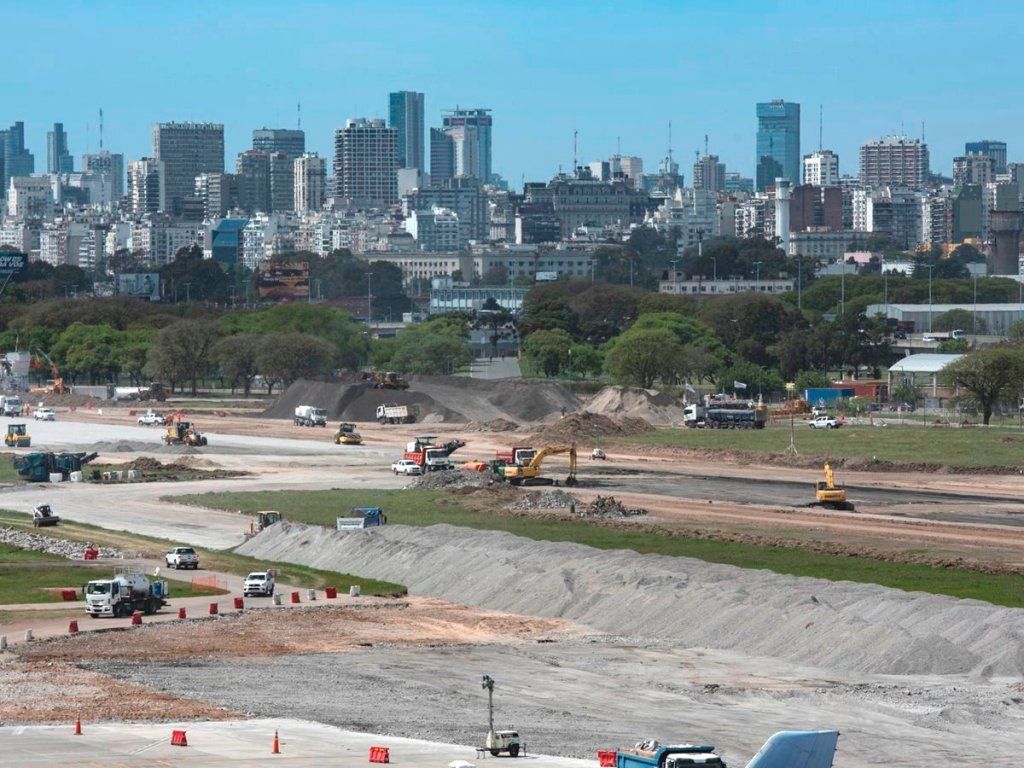
La concesionaria aeroportuaria Aeropuertos Argentina 2000 (AA2000), miembro de la Corporación América Airports (CAAP), informó oficialmente de las últimas novedades de la obra en el Aeropuerto Jorge Newbery, que implica una inversión cercana a los AR$ 5.000 millones de Pesos. Los trabajos avanzan con las obras que se desarrollan en la Pista 13/31 y en la Terminal Aérea que se espera inaugurar para fin de Febrero o principios de Marzo 2021.
La Pista 13/31 actualmente tiene 2.100 metros, y con la nueva obra sumará 275 metros hacia el sur y 340 metros hacia el norte, con un total adicional de 615 metros, llegando a un total de 2.715 metros de largo, y se ensanchará 20 metros a la capacidad anterior. Las nuevas mejoras permitirán optimizar las operaciones regionales y mejorar la seguridad y la conectividad con el exterior. El sector de los arribos internacionales se ampliará con la suma de 800 m2 de superficie, lo que permite una funcionalidad más óptima en el sector de partidas internacionales en la Terminal de pasajeros, priorizando un diseño más funcional, atractivo y más seguro. Contará con nueva área de Check-in más moderno. El Pre-embarque Internacional se diagramó para poder manejar operaciones en una fracción de seis vuelos en una hora. En cuanto a la instalación del nuevo Sistema de Balizamiento, fortalecerá la seguridad operacional en los despegues y aterrizajes. También, se incorporará un nuevo Sistema Instrumental para Aterrizajes en categoría 3 (ILS CAT. III). Las actualizaciones mejorarán sustancialmente la seguridad de las operaciones y permitirán operar en condiciones de baja visibilidad. Adicionalmente, el Aeropuerto de la Ciudad de Buenos Aires tendrá nuevos estacionamientos en el Sector Sur, como así también en el área de subsuelo, en tierra ganada al Río de la Plata, debajo de nuevo parque costero. Las obras de mejoras en el Aeropuerto Jorge Newbery permitirán introducir una renovada aeroestación más potente para atender una mayor demanda para vuelos domésticos y regionales.
Works in Aeroparque progress
AA2000 reports on the progress of works at Jorge Newbery Airport
The airport concessionaire Airports Argentina 2000 (AA2000), a member of the Corporación América Airports (CAAP), officially reported the latest developments in the work at Jorge Newbery Airport, which implies an investment close to AR$ 5,000 million Pesos. The works are progressing with the works being developed on Runway 13/31 and at the Air Terminal that is expected to open by the end of February or the beginning of March 2021.
Runway 13/31 is currently 2,100 meters long, and with the new work it will add 275 meters to the south and 340 meters to the north, with an additional total of 615 meters, reaching a total of 2,715 meters long, and will widen 20 meters to previous capacity. The new improvements will make it possible to optimize regional operations and improve security and foreign connectivity. The international arrivals sector will be expanded with an area of 800 m2, which allows a more optimal functionality in the international departures sector in the passenger terminal, prioritizing a more functional, attractive and safer design. It will have a new, more modern Check-in area. The International Pre-boarding was planned to handle operations in a fraction of six flights in an hour. As for the installation of the new Beaconing System, it will strengthen operational safety during takeoffs and landings. Also, a new Instrumental System for Landings in category 3 (ILS CAT. III) will be incorporated. The updates will substantially improve the safety of operations and allow operations in low visibility conditions. Additionally, the Buenos Aires City Airport will have new parking lots in the South Sector, as well as in the subsoil area, on land reclaimed from the Río de la Plata, under a new coastal park. The improvement works at the Jorge Newbery Airport will allow the introduction of a renewed, more powerful airstation to meet a greater demand for domestic and regional flights.
Corporación América Airports previsibilidad como horizonte
Corporación América ha obtenido la concesión operativa para 35 aeropuertos argentinos por parte del Gobierno de Argentino que ha mantenido con Aeropuertos Argentinas 2000 (AA2000) desde 1998, por lo que se ha aprobado por diez años adicionales hasta 2038. Esto envía un mensaje positivo para el futuro donde es más necesario, en un continente donde la pandemia de coronavirus ha devastado la industria del transporte aéreo. Tras el impacto en el 2Q2020 que en ese período los ingresos aeronáuticos de los aeropuertos de Corporación América ascendieron solamente a sólo US$ 8 millones de Dólares. La débil posición de liquidez y los altos niveles de deuda están dificultando la justificación de una posición larga en los aeropuertos de Corporación América. La pandemia en curso ha disminuido drásticamente su capacidad para generar ganancias, ya que todo su negocio está expuesto a las industrias de viajes y aerolíneas, y por esa razón, es poco probable que la compañía sea capaz de alcanzar niveles de rentabilidad antes de la pandemia en cualquier momento pronto.
Corporación América Airports (CAAP) es un operador de concesión, que gestiona aeropuertos en siete países diferentes, la mayoría de los cuales se consideran mercados emergentes. La compañía opera bajo los contratos de concesión y es capaz de hacer la mayoría de los ingresos mediante el cobro de tarifas a los pasajeros que salen y también el cobro de estacionamiento y gastos de aterrizaje a las aerolíneas. Actualmente, CAAP opera 37 aeropuertos en Argentina, que generan el 56% de los ingresos totales, mientras que sus aeropuertos italianos y brasileños generan el 16% y el 9% de los ingresos totales, respectivamente. A principios de 2020, COVID-19 perdió la capacidad de la compañía para impulsar el crecimiento y es seguro suponer que el operador del aeropuerto no se recuperará a sus niveles de rentabilidad de 2019 en el futuro previsible debido a la larga y dolorosa recuperación del mercado de viajes aéreos. En Argentina, continúan los trabajos de remodelación en el Aeropuerto Jorge Newbery que estarían concluyendo hacia finales de Febrero 2021. Mientras tanto se debe terminar de resolver el conflicto de intereses sobre los tres aeropuertos que operan en el Área Metropolitana Buenos Aires (AMBA).
La buena noticia es que CAAP tenía US$ 180 millones de Dólares en reservas de efectivo a finales de septiembre, y desde el comienzo de la pandemia recaudó liquidez adicional mediante la emisión de notas convertibles y la obtención de préstamos a bajas tasas de interés de varios gobiernos. Recientemente, la compañía recibió un préstamo de US$ 40 millones de Dólares a dos años de Argentina al 0% y también recibió un préstamo de € 85 millones de Euros de Italia en un plazo de seis años con un período de gracia de dos años. Además, Corporación América Aeropuertos ha solicitado la refinanciación de sus tasas de concesión en Brasil, y actualmente está en conversaciones para posponer el pago de otras tasas de concesión en Uruguay y Ecuador. Todos esos esfuerzos sin duda ayudaron a la empresa a evitar una crisis de liquidez y sobrevivir a través de las etapas iniciales de la pandemia. CAAP implementó una serie de medidas de preservación de efectivo, como la revisión de los contratos de mantenimiento y la reducción de la fuerza de trabajo, lo que le ayudó a reducir sus gastos operativos en el tercer trimestre en un 48% interés. Respecto a la situación de la deuda, el punto positivo es que en sí se mantiene en niveles subsidiarios, por lo que si algunos aeropuertos se declaran en bancarrota en uno de los países en los que opera Corporación América Airports, no va a afectar sustancialmente a toda la compañía. Además, la mayor parte de la deuda de la compañía vence en 2024 y más allá, por lo que la compañía proyectaría un futuro más previsible.
Corporación América weathered the crisis
Corporación América Airports predictability as a horizon
Corporación América has obtained the operating concession for 35 Argentine airports by the Argentine Government, which it has held with Aeropuertos Argentinas 2000 (AA2000) since 1998, for which it has been approved for an additional ten years until 2038. This sends a positive message for the future where it is most needed, on a continent where the coronavirus pandemic has devastated the air transport industry. After the impact in 2Q2020 that in that period the aeronautical revenues of Corporación América airports only amounted to only US$ 8 million. The weak liquidity position and high levels of debt are making it difficult to justify a long position at Corporación América airports. The ongoing pandemic has dramatically diminished its ability to make a profit, as its entire business is exposed to the travel and airline industries, and for that reason, the company is unlikely to be able to reach profitability levels before the pandemic. anytime soon.
Corporación América Airports (CAAP) is a concession operator, managing airports in seven different countries, most of which are considered emerging markets. The company operates under concession contracts and is able to make the majority of revenue by collecting fares from departing passengers and also collecting parking and landing expenses from airlines. Currently, CAAP operates 37 airports in Argentina, which generate 56% of total revenues, while its Italian and Brazilian airports generate 16% and 9% of total revenues, respectively. In early 2020, COVID-19 lost the company’s ability to drive growth and it is safe to assume that the airport operator will not recover to its 2019 profitability levels in the foreseeable future due to the long and painful market recovery. of air travel. In Argentina, remodeling work continues at the Jorge Newbery Airport that would be concluding towards the end of February 2021. In the meantime, the conflict of interest over the three airports that operate in the Buenos Aires Metropolitan Area (AMBA) must be resolved.
The good news is that CAAP had US$ 180 million in cash reserves at the end of September, and since the beginning of the pandemic, it has raised additional liquidity by issuing convertible notes and obtaining low-interest loans of various governments. Recently, the company received a two-year loan of US$ 40 million from Argentina at 0% and also received a loan of € 85 million from Italy over a six-year term with a two-year grace period. In addition, Corporación América Airports has requested the refinancing of its concession fees in Brazil, and is currently in talks to postpone the payment of other concession fees in Uruguay and Ecuador. All of those efforts undoubtedly helped the company avoid a liquidity crisis and survive through the initial stages of the pandemic. CAAP implemented a series of cash preservation measures, such as the revision of maintenance contracts and the reduction of the workforce, which helped it reduce its operating expenses in the third quarter by 48% year-on-year. Regarding the debt situation, the positive point is that it itself remains at subsidiary levels, so that if some airports declare bankruptcy in one of the countries in which Corporación América Airports operates, it will not substantially affect All the company. Additionally, most of the company’s debt matures in 2024 and beyond, so the company would project a more predictable future.
Implementará primera estación de abastecimiento aeronaves
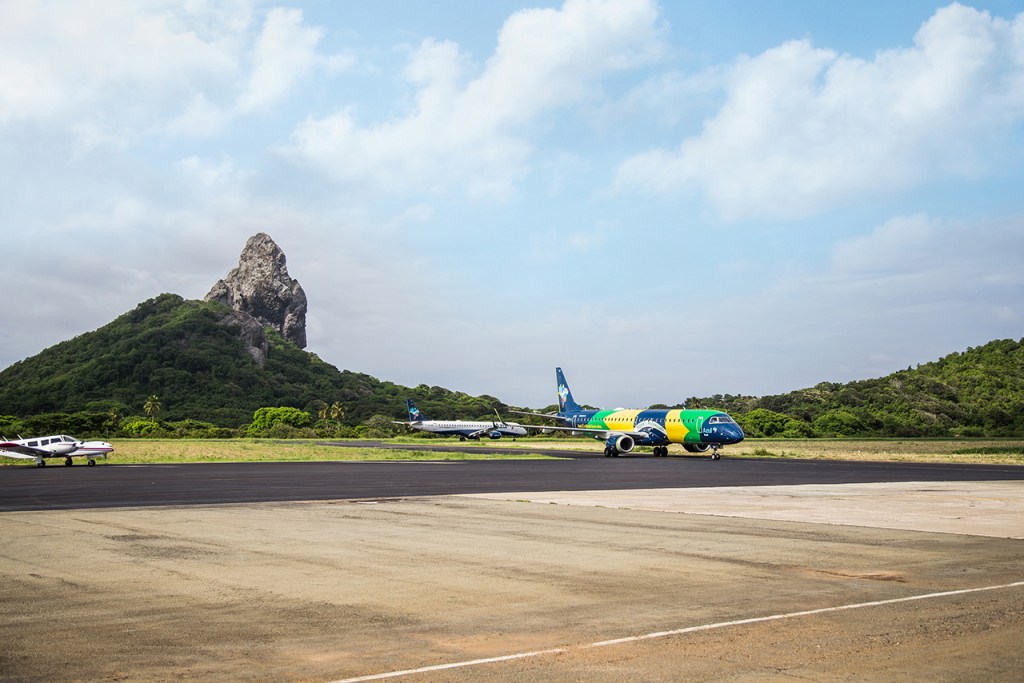
La Isla de Fernando de Noronha, en el Estado de Pernambuco (PE), República de Brasil, tendré su primer Puesto de Abastecimiento de Aeronaves (PAA), una inversión de unos R$ 20 millones de Reales, a finales de este año 2021. El objetivo del implemento de suministro en la isla permitirá evitar paradas en los aeropuertos de la costa noreste para repostar, como así también de aquellas aeronaves que no encuentran condiciones climáticas adecuadas para el aterrizaje inmediato en Fernando de Noronha no tendrían que regresar al continente para aterrizar. Esto se debe precisamente a que no hay posibilidad de reabastecimiento de combustible en el archipiélago, un problema que se cumplirá con el nuevo PAA que tiene Agemar como responsable del suministro regular de combustible del archipiélago, que invirtió R$ 15 millones para construir un buque cisterna especial que cumpla con todos los estándares de seguridad requeridos para el transporte de queroseno de aviación. Otros R$ 4,7 millones fueron asignados por revisión para las obras de PAA.
«Fernando de Noronha tiene un enorme potencial de Turismo y necesita una estructura cada vez mejor para que reciba a los turistas de una manera cómoda y sostenible. Sabemos que el turista sólo regresa o indica un destino turístico si tiene una buena experiencia y encuentra la naturaleza preservada», afirma Carlos Brito, Presidente de Embratur. Los incentivos previstos en el proyecto BR do Mar, propuestos por el Ejecutivo, aprobados en la Cámara de Representantes y que se llevan a cabo en el Senado Federal, son esperados por las empresas responsables de las inversiones. Entre las ventajas de BR do Mar se encuentra la modernización de la navegación por cabotaje en todo Brasil.
Noronha will have resupply
Noronha will implement the first aircraft supply station
The Island of Fernando de Noronha, in the State of Pernambuco (PE), Republic of Brazil, will have its first Aircraft Supply Post (PAA), an investment of about R$ 20 million, at the end of this year 2021. The objective of the supply implement on the island will avoid stops at the airports on the northeast coast to refuel, as well as those aircraft that do not find adequate weather conditions for immediate landing in Fernando de Noronha would not have to return to the continent to land. This is precisely due to the fact that there is no possibility of refueling in the archipelago, a problem that will be met with the new PAA that Agemar has as responsible for the regular supply of fuel to the archipelago, which invested R$ 15 million to build a tanker that meets all the safety standards required for the transport of aviation kerosene. Another R$ 4.7 million were assigned for revision for PAA works.
«Fernando de Noronha has enormous tourism potential and needs an increasingly better structure so that it receives tourists in a comfortable and sustainable way. We know that tourists only return or indicate a tourist destination if they have a good experience and find nature. preserved», affirms Carlos Brito, President of Embratur. The incentives provided for in the BR do Mar project, proposed by the Executive, approved in the House of Representatives and carried out in the Federal Senate, are expected by the companies responsible for the investments. Among the advantages of BR do Mar is the modernization of coastal shipping throughout Brazil.
Noronha terá reabastecimento
Noronha vai implantar 1ra estação de abastecimento de aeronaves
A Ilha de Fernando de Noronha, no Estado de Pernambuco (PE), República do Brasil, terá seu primeiro Posto de Abastecimento de Aeronaves (PAA), um investimento de cerca de R$ 20 milhões, no final deste ano de 2021. O objetivo do implemento de abastecimento na ilha evitará paradas nos aeroportos do litoral nordestino para reabastecimento, bem como aquelas aeronaves que não encontrem condições climáticas adequadas para o pouso imediato em Fernando de Noronha não precisem retornar ao continente para pousar. Isso se deve justamente ao fato de não haver possibilidade de reabastecimento no arquipélago, problema que será enfrentado com o novo PAA que a Agemar tem como responsável pelo abastecimento regular de combustível ao arquipélago, que investiu R$ 15 milhões na construção de um petroleiro que atenda a todas as normas de segurança exigidas para o transporte de querosene de aviação. Outros R$ 4,7 milhões foram destinados para revisão de obras do PAA.
“Fernando de Noronha tem um enorme potencial turístico e precisa de uma estrutura cada vez melhor para receber os turistas de forma confortável e sustentável. Sabemos que o turista só retorna ou indica um destino turístico se tiver uma boa experiência e encontrar a natureza. preservada”, afirma Carlos Brito, presidente da Embratur. Os incentivos previstos no projeto BR do Mar, proposto pelo Executivo, aprovado na Câmara dos Deputados e executado no Senado Federal, são esperados pelas empresas responsáveis pelos investimentos. Entre as vantagens da BR do Mar está a modernização da cabotagem em todo o Brasil.
Campaña de firmas para continuidad de Aeropuerto El Palomar
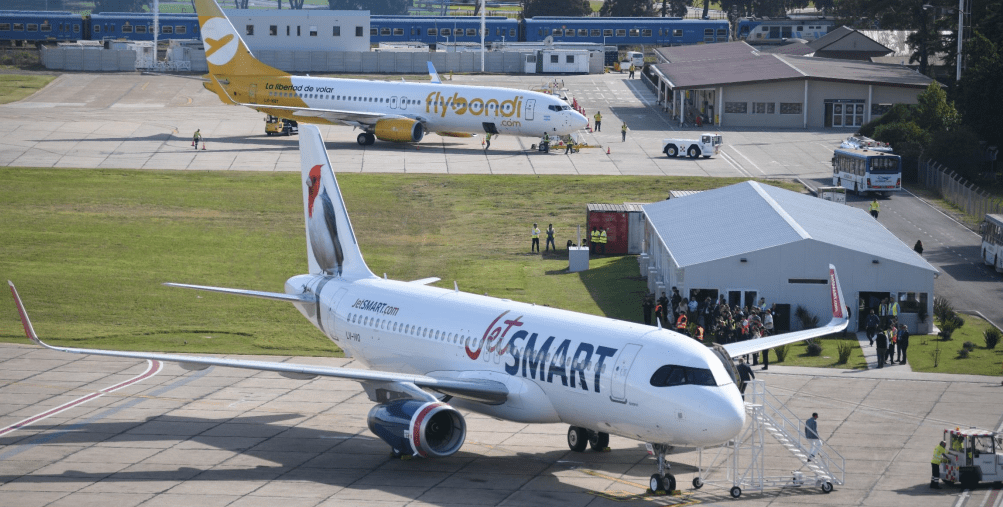
Una nueva campaña de recolección de firmas en favor del Aeropuerto El Palomar continua esta semana. Dirigentes del Partido político Juntos por el Cambio,, que le ha dado vida al aeropuerto low cost, continuaron esta semana con la junta de firmas en favor de la reapertura del Aeropuerto de El Palomar, para llevar ese petitorio al Gobierno y al Congreso, superando las 50.000 en la plataforma Change.org y las mesas de difusión en las ciudades de Morón, Tres de Febrero y Hurlingham. El Martes 05/01 se sumaron el ex intendente Ramiro Tagliaferro y concejales de Morón. También estuvo el Diputado bonaerense Néstor Résico, además del dirigente Radical Gustavo Deheza, también integrante de la Agrupación Banquemos, que organizó la mayor campaña de firmas en favor de la terminal aérea. El dirigente Gustavo Deheza posteó fotografías de camiones de carga que llegaron a la puerta de la Brigada Aérea, donde existen rumores que desmantelarían el aeropuerto.
Indistintamente de cómo siga la vida comercial de Flybondi y Jetsmart en Ezeiza y Aeroparque, la campaña por El Palomar continuará. «Este era un aeropuerto de muy bajo costo que le permitió viajar a mucha gente. El desarrollo que generó en la zona fue impresionante. Lo mismo en Salta o Misiones. Se empezó a generar un flujo económico. Ni hablar del turismo, que está arruinado», sostuvo Gustavo Deheza.
El posible final del Aeropuerto El Palomar se rubricó el 14 de Diciembre de 2020 a través de un comunicado conjunto entre el Ministerio de Transporte y el Organismo Regulador del Sistema Nacional de Aeropuertos (ORSNA) en el que evitaron la palabra «cierre» pero echaron por tierra la posibilidad de que vuelva a contar con vuelos regulares. Las dos aerolíneas low cost que nacieron en El Palomar serán trasladadas al Aeropuerto Jorge Newbery (Aeroparque), para reasignar slots y destinos domésticos y desde el Aeropuerto Internacional Ezeiza para vuelos regionales e internacionales.
Ideología vs. costos
El ala más dura de la política de Gobierno sostiene la conservación de dos aeroestaciones: Aeroparque y Ezeiza. El problema de fondo no es ideológico, es de caja. «El Palomar fue el primer aeropuerto en vuelos de cabotaje dentro del territorio bonaerense, llegando a superar al aeropuerto de Ezeiza en cantidad de vuelos domésticos, y al de Aeroparque de la Ciudad de Buenos Aires en el segmento de vuelos regionales a países limítrofes. Es el sexto aeropuerto más importante de toda Argentina en cantidad de pasajeros transportados durante 2019 con 1.793.619 usuarios. Desde que comenzó a operar se generaron más de 1.000 puestos de trabajo directos y otros 3.000 empleos de manera indirecta, pero actualmente se encuentra sin vuelos ni aerolíneas en virtud de una decisión netamente política dentro de la gestión de Alberto Fernández», expresa el sitio web Change.org.
Campaign against closing El Palomar
Signature campaign for the continuity of El Palomar Airport
A new signature collection campaign in favor of El Palomar Airport continues this week. Leaders of the political Party Together for Change, which has given life to the low cost airport, continued this week with the meeting of signatures in favor of the reopening of the El Palomar Airport, to take this request to the Government and Congress, overcoming the 50,000 on the Change.org platform and the dissemination tables in the cities of Morón, Tres de Febrero and Hurlingham. On Tuesday 05/01, the former mayor Ramiro Tagliaferro and councilors from Morón joined. The Buenos Aires Deputy Néstor Résico was also present, as well as the Radical leader Gustavo Deheza, also a member of the Banquemos group, who organized the largest signature campaign in favor of the air terminal. The leader Gustavo Deheza posted photographs of cargo trucks that arrived at the door of the Air Brigade, where there are rumors that they would dismantle the airport.
Regardless of how the commercial life of Flybondi and Jetsmart continues in Ezeiza and Aeroparque, the campaign for El Palomar will continue. «This was a very low-cost airport that allowed many people to travel. The development it generated in the area was impressive. The same in Salta or Misiones. An economic flow began to be generated. Not to mention tourism, which is ruined», Gustavo Deheza said.
The possible end of the El Palomar Airport was signed on December 14, 2020 through a joint statement between the Ministry of Transportation and the Regulatory Agency of the National Airport System (ORSNA) in which they avoided the word «closure» but rejected land the possibility of having regular flights again. The two low cost airlines that were born in El Palomar will be transferred to the Jorge Newbery Airport (Aeroparque), to reassign slots and domestic destinations and from the Ezeiza International Airport for regional and international flights.
Ideology vs. costs
The toughest wing of government policy supports the conservation of two air stations: Aeroparque and Ezeiza. The underlying problem is not ideological, it is cash. «El Palomar was the first airport in domestic flights within the Buenos Aires territory, surpassing the Ezeiza airport in the number of domestic flights, and the Aeroparque de la Ciudad de Buenos Aires in the segment of regional flights to neighboring countries. the sixth most important airport in all of Argentina in number of passengers transported during 2019 with 1,793,619 users. Since it began to operate, more than 1,000 direct jobs and another 3,000 indirect jobs have been generated, but currently it is without flights or airlines by virtue of a purely political decision within Alberto Fernández’s administration», says the Change.org website.
Continúan obras remodelación en aeropuertos en Argentina
Introduciendo el período de confinamiento y parálisis del transporte aéreo en 2020, la puesta en marcha para la remodelación y acondicionamiento de varias estaciones aéreas en la República Argentina. Tanto aeropuertos como aeródromos continuarán siendo puesto a punto para dar valoración a aeroestaciones que por mucho tiempo han quedado en el olvido. Los valores de las obras complementarias en 2020 alcanzan los US$ 12,5 millones de Dólares, mientras que los proyectos anunciados y en ejecución previstos por US$ 3.217 millones de Dólares, a los que se suman US$ 18.299 en obras proyectadas en todo el país.
Actualmente se encuentran en obras, el Aeropuerto Jorge Newbery que estaría terminada hacia Febrero 2021. Además se encuentran bajo estudio catorce proyectos de remodelaciones de pista y rodajes de diferentes aeropuertos/aeródromos: Ezeiza, Formosa, Junín, Malargüe, Paraná, Posadas, Resistencia, Rio Hondo, Rosario, Santa Rosa, Tandil, Tartagal, Tucumán, Villa Gesell. Además, se incorporarán nuevos sistemas de balizamientos en quince aeropuertos: Comodoro Rivadavia, Córdoba, Ezeiza, Formosa, Jorge Newbery, Iguazú, Junín, La Rioja, Paraná, Río Hondo, San Juan, Santiago del Estero, Tandil, Tucumán, Villa Gesell. En quince terminales de pasajeros se esperan remodelaciones y ampliaciones para ofrecer mejores servicios: Esquel, Ezeiza, Iguazú, Jorge Newbery, Junín, La Rioja, Resistencia, Río Hondo, San Juan, San Martín de los Andes, Santa Rosa, San Salvador de Jujuy, Santiago del Estero, Tandil, Villa Gesell.
Aeropuerto Jorge Newbery
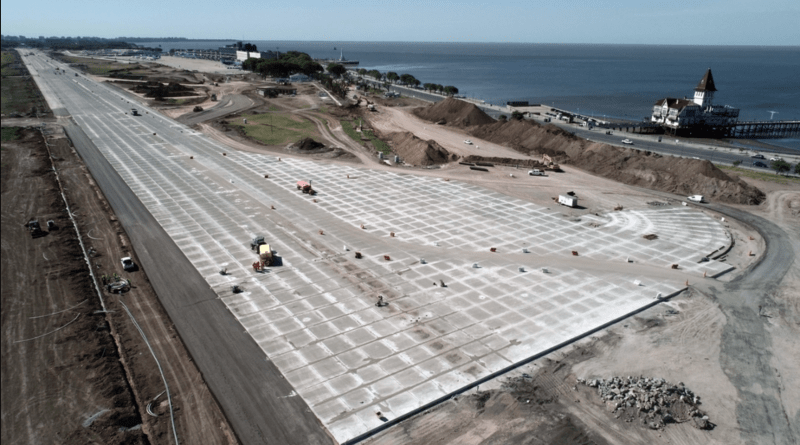
El Aeroparque Jorge Newbery inaugurará el 24 de Febrero 2021 las obras en la pista de aterrizaje y en los sectores de arribos y partidas del área internacional y que, tras una inversión del orden de los AR$ 5.000 millones de Pesos, permitirá a la estación aérea regional convertirse en una de las más seguras del continente para las operaciones aéreas, informaron fuentes oficiales. La obra consistirá en la remodelación y ampliación de los sectores de Arribos y de Partidas del área Internacional de la Terminal de Pasajeros, en vistas al retorno de los vuelos regionales, previsto precisamente para fines de Febrero y principios de Marzo de 2021. En lo que hace a la pista, es la primera vez, desde 1974, que se la construye totalmente a nuevo en su calle central, y la obra en sí marca un hito en la historia del Aeroparque porque le permitirá elevar su posibilidad operacional a la Categoría 3 (CAT3), la más alta que determina la autoridad internacional de control aéreo y que implica que las aeronaves pueden despegar y aterrizar con instrumental, entre otros requisitos.
AMPLIACIÓN DE LA PISTA DEL AEROPUERTO REGIONAL JORGE NEWBERY AEP/SABE CON UNA LONGITUD TOTAL DE 2.700 M.
El proyecto en desarrollo se encuadra dentro de los objetivos planteados en el marco del Convenio N° 22/2004, entre el Estado Nacional y el Gobierno de la Ciudad Autónoma de Buenos Aires, donde se resalta como fundamental el incremento de la seguridad operativa de la pista, acorde a las recomendaciones de la Organización de Aviación Civil Internacional (OACI), como así también, el aumento de la capacidad operativa del aeropuerto. Para la rehabilitación de la pista, se llevó adelante la demolición y reconstrucción de los 21 metros de la faja central existente, a lo largo de toda su longitud (2.100 m), aumentando su estructura para darle mayor capacidad de soporte y llevando su longitud total a los 2.700 metros, o sea 600 metros más de lo que tenía. Esto se complementa con el ensanche de la pista a 45 metros y la ejecución de márgenes pavimentados de 7,5 metros a cada lado, conforme lo recomendado en la normativa internacional vigente, lo que llevará la pista a un ancho total de 60 metros. También, se concreta la prolongación de la pista en ambas cabeceras, lo que, además de incrementar la seguridad de las operaciones, permitirá realizar vuelos de mayor radio de acción. Complementariamente a la intervención de la pista, se han previsto dos nuevas salidas rápidas que conectarán la pista con el rodaje paralelo, y dos nuevas calles de rodaje en el extremo de Cabecera Sur, en tanto que los rodajes existentes serán reconstruidos en su totalidad, una novedad para los aeropuertos argentinos. Las obras contemplan, además, un nuevo sistema de balizamiento de alta intensidad en configuración de Categoría Operacional 3, a instalarse en la pista, con rodajes y salidas rápidas, que incluye luces de eje pista, bordes, umbral y fin de pista, y nuevos sistemas de luces de aproximación en ambas cabeceras, a lo que también, se incorporará un nuevo Sistema Instrumental para el Aterrizaje (ILS), lo que mejorará sustancialmente la seguridad de las operaciones y permitirán operar en condiciones de baja visibilidad. Para los trabajos en la pista se están utilizando tres terminadoras, que trabajan continuamente en el hormigonado, se movilizaron 102 mil metros cúbicos de hormigón, récord para una obra de esta naturaleza en tan poco tiempo (4 meses), a un promedio de 2.100 metros cúbicos diarios.
El proyecto comprenderá, por otra parte, la remodelación y ampliación del preembarque internacional, con una superficie aproximada de 3.350 m2, además, se readecuarán los espacios existentes para mejorar la funcionalidad y espacialidad. Asimismo, se concretará una nueva estructura para los sectores de control de seguridad y control migratorio, a fin de lograr una optimización de los espacios, y una mejor operación y procesamiento de los pasajeros, y se mejorará la oferta gastronómica y comercial existente, incorporando nuevos locales. En cuanto al área de Arribos Internacionales, el proyecto abarcará una superficie aproximada de 4.600 metros cuadrados y prevé la remodelación, readecuación y refuncionalización del área de control con sus oficinas anexas; la remodelación del patio de valijas internacional y la construcción de un nuevo hall de arribos internacional con sus sanitarios, local gastronómico y locales comerciales.
Esta obra incluye, además, la readecuación de los espacios exteriores, esto es, veredas, canteros y equipamiento. El nuevo sector de control de migraciones consistirá en un espacio amplio para filas, e incluye la instalación de 14 puestos de atención y 5 E-gates y perimetralmente a esta área se ubicarán las oficinas de los organismos de control. En la misma línea se remodelará y ampliará el sector correspondiente al control de aduanas, para una mejor organización en la formación de filas, configurándose para la instalación de cuatro máquinas de rayos y oficinas operativas de apoyo. «Pudimos concretar esta obra con un presupuesto que está un 30 por ciento por debajo de la cotización oficial y lo hicimos con una visión estratégica», señaló Lugones Aignasse, tiitular del Organismo Regulador del Sistema Nacional de Aeropuertos (ORSNA) dependiente del Ministerio de Transporte de la Nación.
En tanto, Julián Obaid, titular de la Junta de Seguridad de Accidentes, que recorrió las obras junto a las autoridades del ORSNA, ha indicado que «lo que muestran estas obras es que ni la pandemia detuvo la convicción del Gobierno de avanzar con los trabajos para convertir al Aeroparque Jorge Newbery en un centro fundamental para toda la región. No solo se planificaron durante la crisis del COVID-19 con una inversión de aproximadamente AR$ 5.000 millones, sino que también se llevaron adelante y se están terminando. Cuando las obras estén finalizadas, se proyecta que Aeroparque tendrá vuelos regionales con la seguridad y las características de un aeropuerto internacional. Los trabajos que se están haciendo mejorarán sustancialmente la seguridad de las operaciones y permitirán operar en condiciones de baja visibilidad».
Projections of airport works in Argentina
Renovation works continue at airports in Argentina
Introducing the period of confinement and paralysis of air transport in 2020, the start-up for the remodeling and conditioning of several air stations in the Argentine Republic. Both airports and aerodromes will continue to be fine-tuned to assess air stations that have long been forgotten. The values of the complementary works in 2020 reach US$ 12.5 million dollars, while the projects announced and in execution planned for US$ 3,217 million dollars, to which are added US$ 18,299 in projected works throughout the country.
Currently under construction, the Jorge Newbery Airport, which would be completed by February 2021. In addition, fourteen projects for runway remodeling and taxiing of different airports/airfields are under study: Ezeiza, Formosa, Junín, Malargüe, Paraná, Posadas, Resistencia, Rio Hondo, Rosario, Santa Rosa, Tandil, Tartagal, Tucumán, Villa Gesell. In addition, new beacon systems will be incorporated at fifteen airports: Comodoro Rivadavia, Córdoba, Ezeiza, Formosa, Jorge Newbery, Iguazú, Junín, La Rioja, Paraná, Río Hondo, San Juan, Santiago del Estero, Tandil, Tucumán, Villa Gesell. In fifteen passenger terminals remodeling and extensions are expected to offer better services: Esquel, Ezeiza, Iguazú, Jorge Newbery, Junín, La Rioja, Resistencia, Río Hondo, San Juan, San Martín de los Andes, Santa Rosa, San Salvador de Jujuy, Santiago del Estero, Tandil, Villa Gesell.
Jorge Newbery Airport
Jorge Newbery Airport will inaugurate on February 24, 2021 the works on the landing strip and in the arrivals and departures sectors of the international area and that, after an investment of the order of AR$ 5,000 million pesos, will allow the air station region to become one of the safest in the continent for air operations, official sources reported. The work will consist of the remodeling and expansion of the Arrivals and Departures sectors of the International area of the Passenger Terminal, in view of the return of regional flights, planned precisely for the end of February and the beginning of March 2021. In what makes the runway, it is the first time, since 1974, that it has been built completely new in its central street, and the work itself marks a milestone in the history of the Aeroparque because it will allow it to raise its operational possibility to Category 3 ( CAT3), the highest determined by the international air control authority and which implies that aircraft can take off and land with instruments, among other requirements.
The project under development is framed within the objectives set out in the framework of Agreement No. 22/2004, between the National State and the Government of the Autonomous City of Buenos Aires, where the increase in the operational safety of the runway, in accordance with the recommendations of the International Civil Aviation Organization (ICAO), as well as the increase in the airport’s operational capacity. For the rehabilitation of the track, the demolition and reconstruction of the 21 meters of the existing central strip was carried out, along its entire length (2,100 m), increasing its structure to give it greater support capacity and bringing its total length at 2,700 meters, or 600 meters more than what he had. This is complemented by the widening of the track to 45 meters and the execution of paved margins of 7.5 meters on each side, as recommended in current international regulations, which will bring the track to a total width of 60 meters. Also, the extension of the runway in both headwaters is specified, which, in addition to increasing the safety of operations, will allow flights with a greater radius of action. In addition to the intervention of the runway, two new rapid exits have been planned that will connect the runway with the parallel taxiing, and two new taxiways at the end of South Headland, while the existing taxiways will be completely rebuilt, one novelty for Argentine airports. The works also include a new high-intensity beaconing system in Operational Category 3 configuration, to be installed on the runway, with taxiing and rapid exits, which includes runway center line, edges, threshold and runway end lights, and new Approach lighting systems in both headlands, to which a new Landing Instrument System (ILS) will also be incorporated, which will substantially improve the safety of operations and will allow operating in low visibility conditions. For the works on the track, three pavers are being used, which work continuously in the concreting, 102 thousand cubic meters of concrete were mobilized, a record for a work of this nature in such a short time (4 months), at an average of 2,100 meters cubic per day.
The project will include, on the other hand, the remodeling and expansion of the international pre-shipment, with an approximate surface of 3,350 m2, in addition, the existing spaces will be readjusted to improve functionality and spatiality. Likewise, a new structure will be specified for the security control and immigration control sectors, in order to achieve an optimization of spaces, and a better operation and processing of passengers, and the existing gastronomic and commercial offer will be improved, incorporating new local. Regarding the International Arrivals area, the project will cover an approximate area of 4,600 square meters and foresees the remodeling, readjustment and refunctionalization of the control area with its attached offices; the remodeling of the international luggage yard and the construction of a new international arrivals hall with its toilets, gastronomic premises and commercial premises.
This work also includes the readjustment of the exterior spaces, that is, sidewalks, flowerbeds and equipment. The new migration control sector will consist of a wide space for queues, and includes the installation of 14 service posts and 5 E-gates and the offices of the control bodies will be located around this area. Along the same lines, the sector corresponding to customs control will be remodeled and expanded, for a better organization in the formation of lines, being configured for the installation of four ray machines and operational support offices. «We were able to carry out this work with a budget that is 30 percent below the official price and we did it with a strategic vision», said Lugones Aignasse, head of the Regulatory Body of the National Airport System (ORSNA) under the Ministry of Transportation of the Nation.
Meanwhile, Julián Obaid, head of the Accident Safety Board, who toured the works together with the ORSNA authorities, has indicated that «what these works show is that not even the pandemic stopped the Government’s conviction to advance with the works to turn Jorge Newbery Airport into a fundamental center for the entire region. Not only were they planned during the COVID-19 crisis with an investment of approximately AR$ 5 billion, but they were also carried out and are being completed. are completed, it is projected that Aeroparque will have regional flights with the safety and characteristics of an international airport. The works being carried out will substantially improve the safety of operations and will allow operating in low visibility conditions».
Denver con nueva instalación central de monitoreo equipaje
El nuevo Centro Central de Monitoreo del Aeropuerto Internacional de Denver/DEN ha sido habilitado. El CMF es el área donde el personal de la Administración de Seguridad del Transporte lleva a cabo la vigilancia de equipaje y resuelve los problemas de detección. El nuevo CMF incluye más de 4.100 pies cuadrados de espacio interior, con nuevas oficinas, salas de control y monitoreo, una sala de conferencias y una sala de descanso. Esta área se encontraba anteriormente en el Nivel 6 y forma parte de la Fase 1 del Proyecto Gran Salón. «Desde que DEN se hizo cargo del Proyecto Great Hall en noviembre de 2019, el proyecto ha cumplido ambos hitos de construcción antes de lo previsto. DEN se compromete a cumplir todos los hitos futuros, así como a mantenerse dentro del presupuesto original de diseño y construcción de US$ 770 millones», dijeron los funcionarios.
El Ayuntamiento de Denver aprobó recientemente la enmienda para que DEN continúe en la Fase 2 del Proyecto Gran Salón en el verano de 2021. Está previsto que el Proyecto del Gran Salón esté completo a mediados de 2024.
Denver central baggage monitoring
Denver airport with new central baggage monitoring facility
The new Denver International Airport/DEN Central Monitoring Center has been enabled. The CMF is the area where the personnel of the Transportation Security Administration carry out the surveillance of luggage and solve the detection problems. The new CMF includes more than 4,100 square feet of interior space, with new offices, control and monitoring rooms, a conference room and a break room. This area was previously on Level 6 and is part of Phase 1 of the Great Hall Project. «Since DEN took over the Great Hall Project in November 2019, the project has met both construction milestones ahead of schedule. DEN is committed to meeting all future milestones as well as staying within the original design budget and US$ 770 million construction», officials said.
The Denver City Council recently approved the amendment for DEN to continue in Phase 2 of the Great Hall Project in the summer of 2021. The Great Hall Project is scheduled to be complete by mid-2024.
Progresa obras en terminal de pasajeros y pistas de aterrizaje
La Secretaría de la Defensa Nacional (SEDENA) de México ha informado que en la construcción del nuevo Aeropuerto Internacional de Santa Lucia/General Felipe Ángeles/AISL se avanza en la terminal de pasajeros, con la fabricación de rampas y escaleras de servicio, así como la colocación de redes hidráulicas, sanitarias, eléctricas y aire acondicionado. En un video que se transmitió durante la conferencia matutina del presidente Andrés Manuel López Obrador, la SEDENA ha detallado que se encuentra en construcción las pistas de aterrizaje y despegue: el tendido de las capas de terraplén, concreto magro y de alta resistencia, además se trabaja en la colocación de tuberías de concreto para alojar instalaciones de redes y conducción del drenaje pluvial. La construcción de la barda perimetral se lleva a cabo el colado de concreto de alta resistencia para la conformación de la capa superior y rodamiento de la construcción de primer tramo de cuatro carriles.
Respecto al eje troncal de circulación vial para el acceso al AISL, se hace la construcción de losas del viaducto elevado para el acceso al nivel de la terminal de pasajeros, además la excavación y tendido de tuberías de redes eléctricas. El viaducto elevado de 13.9 kilómetros será construido en medio del Circuito Exterior Mexiquense y la autopista México-Pachuca, para ser el acceso principal al Aeropuerto Felipe Ángeles, reportó la Secretaría de Comunicaciones y Transportes (SCT).
El Gobierno de México ha informado que hasta el momento se han creado 62.341 empleos y faltan 448 días de construcción del nuevo Aeropuerto Internacional Santa Lucía que permitirá descomprimir al Aeropuerto AInternacional Ciudad de México/AICM.
Santa Lucia/Mexico works progress
Works on the passenger terminal and runways progress
The Secretariat of National Defense (SEDENA) of Mexico has informed that in the construction of the new International Airport of Santa Lucia/General Felipe Ángeles/AISL progress is being made in the passenger terminal, with the manufacture of ramps and service stairs, as well as the placement of networks hydraulic, sanitary, electrical and air conditioning. In a video that was broadcast during the morning conference of President Andrés Manuel López Obrador, SEDENA has detailed that the landing and take-off runways are under construction: the laying of the embankment layers, lean concrete and high resistance, also works in the laying of concrete pipes to house network installations and conduction of storm drainage. The construction of the perimeter fence is carried out by casting high-strength concrete for the shaping of the upper layer and rolling of the construction of the first four-lane section.
Regarding the main axis of road circulation for access to AISL, the construction of slabs of the elevated viaduct for access to the level of the passenger terminal is carried out, in addition to the excavation and laying of electrical network pipes. The 13.9-kilometer elevated viaduct will be built in the middle of the Circuito Exterior Mexiquense and the México-Pachuca highway, to be the main access to the Felipe Ángeles Airport, reported the Ministry of Communications and Transportation (SCT).
The Government of Mexico has reported that so far 62,341 jobs have been created and 448 days are missing from the construction of the new Santa Lucía International Airport, which will allow the decompression of the International Airport Mexico City/AICM.
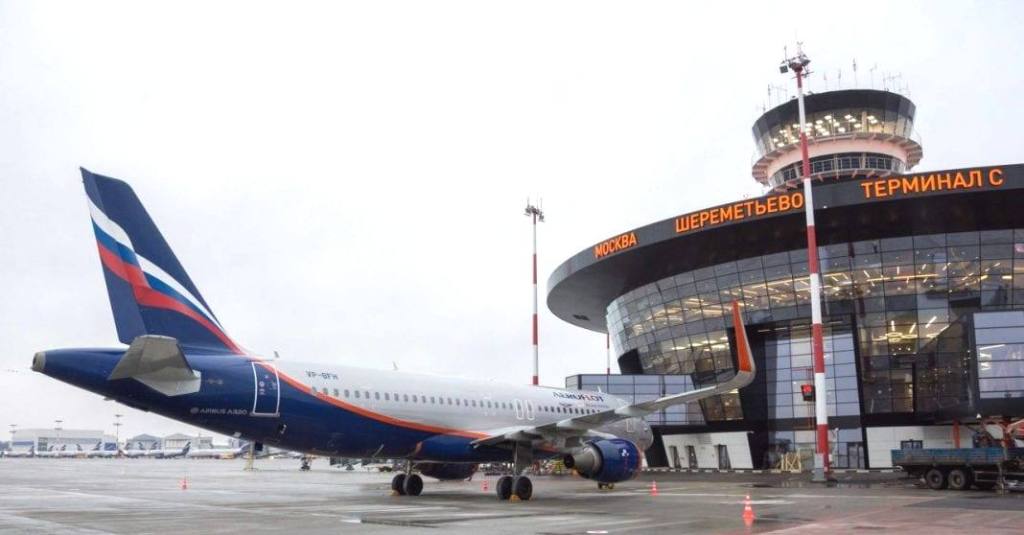
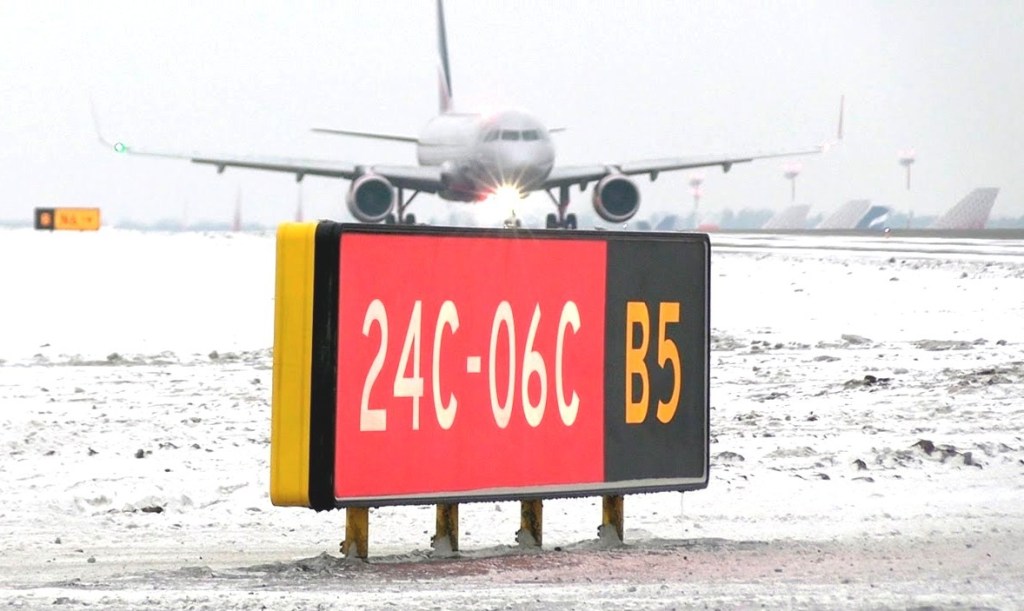
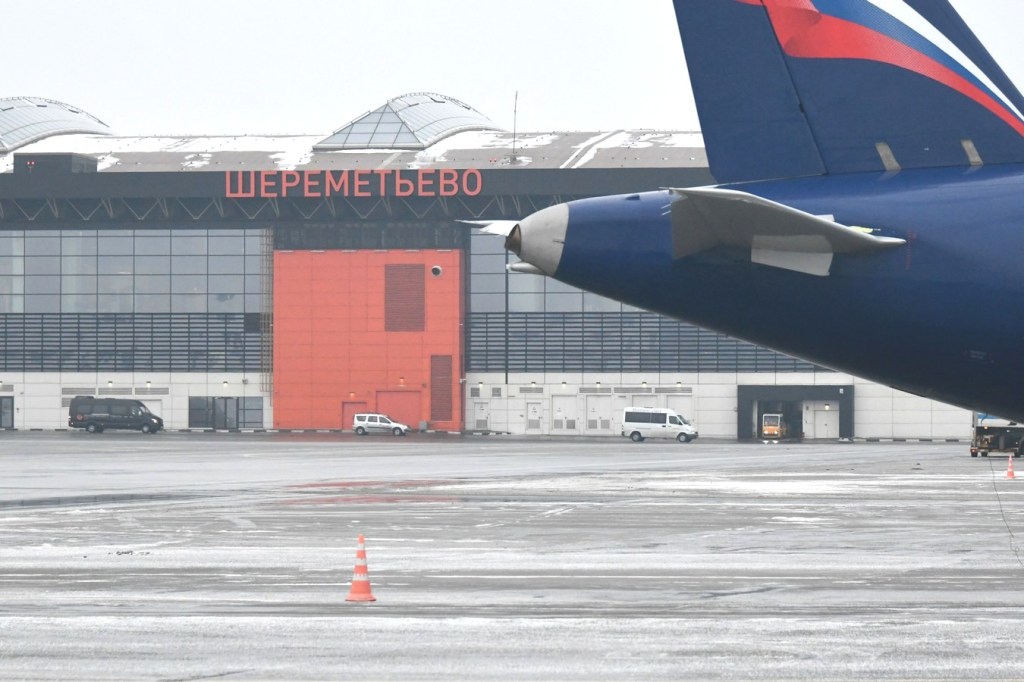
El Aeropuerto Internacional Moscow/Sheremetyevo de Federación Rusia ha reestablecido la Pista 01 (Runways/RWY-1) este 24 de Diciembre de 2020 en una ceremonia de reapertura. Con la puesta en marcha de la pista, que cuenta despegues/aterrizajes de alta velocidad de salida, la capacidad de las tres pistas del Aeropuerto Moscú/Sheremetyevo aumentará a 110 millones de pasajeros por año.
Los funcionarios que participaron en la ceremonia de puesta en servicio fueron el Ministro de Transporte de la Federación de Rusia V.G. Saveliev, primer viceministro de transporte de la Federación de Rusia y jefe de la Agencia Federal de Transporte Aéreo A.V. Neradko, Primer Viceministro de Desarrollo Económico de la Federación de Rusia M.V. Babich, Jefe Adjunto de la Oficina del Presidente de la Federación de Rusia para apoyar las actividades del Consejo Estatal de la Federación de Rusia A.A., Director General de PJSC Aeroflot M.I. Poluboyarinov, Presidente del Consejo de Administración de JSC SIA A.A. Ponomarenko, miembro del Consejo de Administración de JSC SIA A.I. Skorobogatko y Director General de JSC SIA M.M. Vasilenko. «Pudimos hacer la reconstrucción de la Pista 1, que es una etapa importante en el desarrollo del complejo del aeródromo gracias al actual acuerdo de concesión entre el gobierno, representado por Rosaviatsia, y el aeropuerto de Sheremetyevo. Como resultado, hoy contamos con tres pistas que, junto con el desarrollo de la capacidad terminal y en el contexto de la normalización del volumen de tráfico de pasajeros, ofrecen una oportunidad para alcanzar nuestro objetivo estratégico: atender a 110 millones de pasajeros al año», dijo Alexander Ponomarenko.
Los trabajos de construcción se compitieron en un tiempo récord, en un plazo de 10 meses durante un período de disminución significativa de las actividades e ingresos del aeropuerto y la necesidad de cumplir con estrictas medidas antidemiológicas. Los trabajos de construcción e instalación se realizaron sin interrupción mientras el aeropuerto estaba operativo. Las operaciones de despegue y aterrizaje en el aeródromo se realizaron en la Pista 2 existente y la Pista 3, mientras que la Pista-1 fue cerrada para la reconstrucción. Este ha sido un proyecto único para la industria de la aviación internacional en términos de su complejidad tecnológica y corto plazo de entrega. La Pista 1 tiene 3.552,5 metros de largo, con una sección de carga que mide 60 metros de ancho. La pista puede acomodar todo tipo y modificaciones de aviones rusos y extranjeros para el despegue y aterrizaje, incluyendo el Airbus A380, así como futuros tipos de aeronaves previstas.
Actualmente, el aeropuerto proporciona un alto grado de puntualidad, fiabilidad y seguridad de vuelo incluso en condiciones climáticas extremas. La reconstrucción de RWY-1 ha sido un proyecto prioritario para 2020 como parte de la implementación del Programa de Desarrollo a Largo Plazo del Aeropuerto de Sheremetyevo. La inversión total de capital superó los 114 millones de dólares. El proyecto se financió directamente y las inversiones realizadas en virtud de los términos del contrato de concesión se recuperarán del componente de inversión de las tasas de despegue y aterrizaje de la aeronave.
Perspectivas Moscow/Sheremetyevo
La puesta en marcha de una nueva estructura del espacio aéreo y el funcionamiento de tres pistas en el Aeropuerto de Sheremetyevo mejorarán la eficiencia del combustible de las compañías aéreas y la seguridad y puntualidad de los vuelos, y también reducirán la carga de trabajo sobre el control de tráfico y el personal de vuelo mediante el uso de patrones de llegada y salida sin conflictos.
El moderno aeródromo y la infraestructura terminal de Sheremetyevo abren amplias oportunidades para el crecimiento y desarrollo a largo plazo para las compañías aéreas de base y las nuevas aerolíneas. Las perspectivas del Aeropuerto Moscow/Sheremetyevo, teniendo en cuenta el desarrollo de la infraestructura y llevando las terminales de pasajeros y carga a su capacidad de diseño, planea unirse a la liga de los centros de aviación más grandes del mundo y fortalecer su estatus como el principal centro aéreo de tránsito entre Europa y Asia.
The Moscow/Sheremetyevo International Airport of the Russian Federation has re-established Runway 01 (Runways / RWY-1) this December 24, 2020 in a reopening ceremony. With the commissioning of the runway, which features high-speed departure takeoffs/landings, the capacity of the three runways at Moscow/ Sheremetyevo Airport will increase to 110 million passengers per year.
The officials who participated in the commissioning ceremony were the Minister of Transport of the Russian Federation V.G. Saveliev, First Deputy Minister of Transport of the Russian Federation and head of the Federal Air Transport Agency A.V. Neradko, First Deputy Minister of Economic Development of the Russian Federation M.V. Babich, Deputy Head of the Office of the President of the Russian Federation to support the activities of the State Council of the Russian Federation A.A., General Director of PJSC Aeroflot M.I. Poluboyarinov, Chairman of the Board of Directors of JSC SIA A.A. Ponomarenko, member of the Board of Directors of JSC SIA A.I. Skorobogatko and Managing Director of JSC SIA M.M. Vasilenko. «We were able to do the reconstruction of Runway 1, which is an important stage in the development of the aerodrome complex thanks to the current concession agreement between the government, represented by Rosaviatsia, and Sheremetyevo Airport. As a result, today we have three runways which, together with the development of terminal capacity and in the context of the normalization of the volume of passenger traffic, offers an opportunity to achieve our strategic objective: to serve 110 million passengers per year», said Alexander Ponomarenko.
The construction works were competed in record time, within 10 months during a period of significant decline in airport activities and revenues and the need to comply with strict anti-demiological measures. Construction and installation work was carried out without interruption while the airport was operational. Take-off and landing operations at the airfield were carried out on existing Runway 2 and Runway 3, while Runway-1 was closed for reconstruction. This has been a unique project for the international aviation industry in terms of its technological complexity and short lead time. Runway 1 is 3,552.5 meters long, with a cargo section that measures 60 meters wide. The runway can accommodate all types and modifications of Russian and foreign aircraft for takeoff and landing, including the Airbus A380, as well as planned future aircraft types.
Today, the airport provides a high degree of punctuality, reliability and flight safety even in extreme weather conditions. The reconstruction of RWY-1 has been a priority project for 2020 as part of the implementation of the Sheremetyevo Airport Long-Term Development Program. Total capital investment exceeded US$ 114 million. The project was directly financed and the investments made under the terms of the concession contract will be recovered from the investment component of the aircraft takeoff and landing fees.
Perspectives Moscow/Sheremetyevo
The commissioning of a new airspace structure and the operation of three runways at Sheremetyevo Airport will improve the fuel efficiency of airlines and the safety and punctuality of flights, and will also reduce the workload on control traffic and flight personnel by using conflict-free arrival and departure patterns.
Sheremetyevo’s modern airfield and terminal infrastructure open up extensive opportunities for long-term growth and development for base airlines and new airlines. The prospects for Moscow/Sheremetyevo Airport, taking into account the development of infrastructure and bringing passenger and cargo terminals to their design capacity, plans to join the league of the world’s largest aviation hubs and strengthen its status as the main air transit hub between Europe and Asia.
Открытие ВПП-1 Москва/Шереметьево
Аэропорт Шереметьево открывает взлетно-посадочную полосу 1
В международном аэропорту Мсока/Шереметьево, Российская Федерация, была восстановленавзлетно-посадочная полоса 01 (ВПП-1) 24 декабря 2020 года в рамках церемонии открытия. С вводом в эксплуатацию взлетно-посадочной полосы с высокоскоростными взлетно-посадочными полосами пропускная способность трех взлетно-посадочных полос в аэропорту Москва/Шереметьево увеличится до 110 миллионов пассажиров в год.
Официальными лицами, участвовавшими в церемонии ввода в эксплуатацию, были министр транспорта Российской Федерации В.Г. Савельев, первый заместитель министра транспорта Российской Федерации, руководитель Федерального агентства воздушного транспорта А.В. Нерадько, Первый заместитель Министра экономического развития Российской Федерации М.В. Бабич, заместитель руководителя Аппарата Президента Российской Федерации по обеспечению деятельности Государственного Совета Российской Федерации А.А., Генеральный директор ПАО Аэрофлот М.И. Полубояринов, Председатель Совета директоров ООО SIA A.A. Пономаренко, член Совета директоров ООО SIA А.И. Скоробогатько и управляющий директор ООО SIA M.M. Василенко. «Благодаря действующему концессионному соглашению между правительством в лице Росавиации и аэропортом Шереметьево мы смогли провести реконструкцию ВПП 1, что является важным этапом в развитии аэродромного комплекса. В результате сегодня у нас есть три взлетно-посадочные полосы. что вместе с увеличением пропускной способности терминала и в контексте нормализации пассажиропотока дает возможность достичь нашей стратегической цели: обслуживать 110 миллионов пассажиров в год», сказал Александр Пономаренко.
Строительные работы были завершены в рекордные сроки, в течение 10 месяцев, в период значительного снижения активности и доходов аэропорта и необходимости соблюдения строгих антидемиологических мер. Строительно-монтажные работы велись без перебоев во время работы аэропорта. Взлетно-посадочные операции на аэродроме выполнялись на существующих ВПП 2 и ВПП 3, а ВПП-1 закрыта на реконструкцию. Это уникальный проект для международной авиационной отрасли с точки зрения его технологической сложности и коротких сроков выполнения. Длина взлетно-посадочной полосы 1 составляет 3552,5 метра, а ширина грузового отсека составляет 60 метров. Взлетно-посадочная полоса может принимать для взлета и посадки все типы и модификации российских и зарубежных самолетов, в том числе Airbus A380, а также планируемые типы самолетов будущего.
Сегодня аэропорт обеспечивает высокую степень пунктуальности, надежности и безопасности полетов даже в экстремальных погодных условиях. Реконструкция ВПП-1 является приоритетным проектом на 2020 год в рамках реализации Долгосрочной программы развития аэропорта Шереметьево. Общий объем капитальных вложений превысил 114 миллионов долларов. Проект финансировался напрямую, и инвестиции, сделанные по условиям концессионного контракта, будут возмещены за счет инвестиционной составляющей сборов за взлет и посадку самолетов.
Outlook Москва/Шереметьево
Ввод в эксплуатацию новой структуры воздушного пространства и эксплуатация трех взлетно-посадочных полос в аэропорту Шереметьево позволит повысить топливную эффективность авиакомпаний, безопасность и пунктуальность полетов, а также снизит нагрузку на диспетчерскую транспортный и летный персонал с использованием бесконфликтных схем прибытия и отправления.
Современная аэродромная и терминальная инфраструктура Шереметьево открывает широкие возможности для долгосрочного роста и развития для базовых и новых авиакомпаний. Перспективы аэропорта Москва/Шеpeметьево с учетом развития инфраструктуры и вывода пассажирских и грузовых терминалов на проектную мощность планируют войти в лигу крупнейших авиационных хабов мира и укрепить свой статус главный транзитный узел между Европой и Азией.