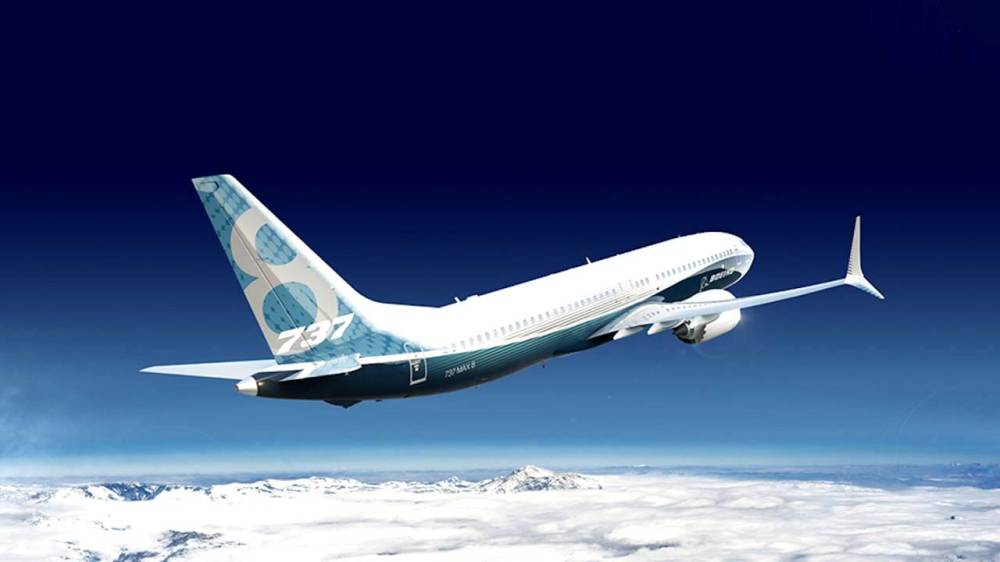
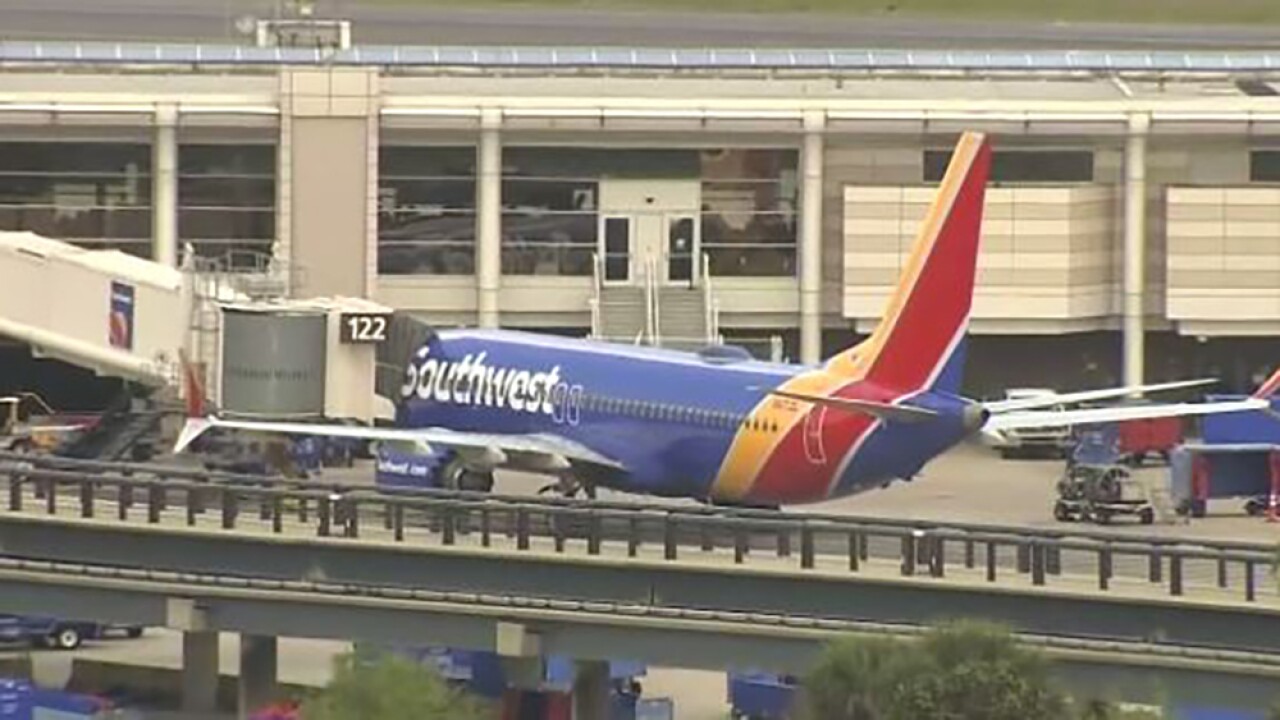
Demoran correcciones Boeing 737 MAX

Image result for Boeing 737 MAX grounded in world

AW | 2019 04 02 20:28 | AIR INVESTIGATION / AVIATION SAFETY

Boeing-Logo.svgFK,4923,36,737-max-round-pinLas correcciones en las aeronaves Boeing 737 MAX tomarán más tiempo

La Administración Federal de Aviación (FAA) ha comunicado el Lunes 1 Abril 2019 que los aviones Boeing 737 MAX permanecerán en tierra durante varias semanas más mientras los ingenieros continúan trabajando en las correcciones del software de control de vuelo automatizado del MCAS que se cree es la causa de dos accidentes recientes que mataron a casi 350 personas. Se han iniciado varias investigaciones sobre el desarrollo y la aprobación de la aeronave.

Los accidentes fatales que sufrieron dos vuelos del Boeing 737 MAX provocaron que se prohibiera volar a estos aviones en todo el mundo. Boeing prometió una solución la semana pasada, pero sus responsables han anunciado que el software corregido causante del problema llegará en las próximas semanas, y quieren estar seguros de que no volverá a haber problemas de este tipo jamás.

Tormenta perfecta

Los problemas generados en la línea de producción del 737 MAX están generando una de las mayores crisis en Boeing durante años. Mientras su competidor europeo Airbus revisa el mercado aéreo para conseguir mayores pedidos de aeronaves narrowbodies; en el caso de Boeing continúa profundizándose la crisis para determinar los errores de diseño ocasionados en las aeronaves Boeing 737 MAX. En un comunicado oficial Boeing explicó que enviarán el software revisado a la FAA para que lo revise cuidadosamente, pero aún tardarán algunas semanas en aprobarlo. «Adoptaremos un enfoque exhaustivo y metódico en el desarrollo y la evaluación de la actualización para asegurarnos de que nos tomamos el tiempo necesario para hacerlo bien», explicaron. La crisis de Boeing es la más importante en años. Más de 300 aviones están en tierra en todo el mundo tras los trágicos accidentes aéreos en los que murieron cerca de 350 personas.

Senado EEUU investiga

La comisión de Comercio del Senado de Estados Unidos lanzó una investigación dirigida a descubrir cualquier potencial vínculo entre el entrenamiento inadecuado de los inspectores de seguridad aeronáutica y los recientes siniestros de los aviones Boeing 737-8 MAX, informó el Presidente de la Comisión, Roger Wicker. «Tras los recientes siniestros de los Boeing 737-8 MAX en Indonesia y Etiopía, la comisión está investigando cualquier conexión potencial entre un entrenamiento incorrecto y la certificación de los Inspectores de Seguridad Aeronáutica que podrían haber participado en la evaluación de los 737 MAX realizada por el Consejo de Estandarización de Vuelos», escribió el senador en una carta.

La investigación se inicia luego de que varios informantes dieran a conocer a la comisión que inspectores de la Administración Federal de Aviación (FAA), que habrían participado en el Consejo de Estandarización de Vuelos que certificó los Boeing 737 MAX, no recibieron el entrenamiento adecuado ni certificaciones válidas, explicó Wicker en su misiva, dirigida al administrador en funciones de la FAA, Daniel Elwell.

El senador destacó que la FAA tendría que haber sido notificada sobre estos temas en Agosto 2018, antes de los siniestros de Indonesia y de Etiopía. Añadió que ordenó a la agencia que responda, en no más de dos semanas, si fue alertada sobre supuestas deficiencias y qué medidas tomó para resolverlas. «La comisión tiene la impresión de que la investigación de la FAA sobre estos asuntos podría haber sido concluida recientemente», dijo Wicker.

Investigaciones Preliminares

La investigación preliminar apunta a que los pilotos tuvieron dificultades con el software del estabilizador MCAS (Sistema de Aumento de las Características de Maniobras) y no lograron retomar el control de la aeronave. El sistema MCAS baja automáticamente la trompa del avión cuando los sensores detectan un ángulo de vuelo muy elevado que puede llevar a que la aeronave entre en pérdida.

Boeing ya avanzó que está reprogramando el MCAS de los 737 MAX, para que los pilotos puedan contrarrestarlo con el control manual o para que se desactive automáticamente cuando los sensores del flujo de aire a ambos costados de la aeronave ofrezcan lecturas muy distintas.AW-Icon-TXT-01

Image result for Boeing 737 MAX flight test MCASDelayed corrections in Boeing 737 MAX

Corrections on Boeing 737 MAX aircraft will take more time

The Federal Aviation Administration (FAA) has announced on Monday 1 April 2019 that the Boeing 737 MAX aircraft will remain on the ground for several more weeks while engineers continue to work on corrections to the MCAS automated flight control software that is believed to be the cause of two recent accidents that killed almost 350 people. Several investigations have been initiated on the development and approval of the aircraft.

The fatal accidents that suffered two flights of the Boeing 737 MAX caused that it was prohibited to fly to these airplanes anywhere in the world. Boeing promised a solution last week, but its managers have announced that the corrected software that causes the problem will arrive in the coming weeks, and they want to be sure that there will never be any more problems of this kind.

Image result for Boeing 737 MAX groundedTHE PRODUCTION LINE OF THE BOEING 737 MAX SOON WILL BE DETECTED BY DELAYS IN THE CORRECTIONS OF THE MCAS SYSTEM SOFTWARE. APPROVALS COULD DELAY WEEKS

Perfect storm

The problems generated in the production line of the 737 MAX are generating one of the biggest crises in Boeing for years. While its European competitor Airbus reviews the air market to get larger orders for narrowbodies aircraft; in the case of Boeing, the crisis continues to deepen to determine the design errors caused by the Boeing 737 MAX aircraft. In an official statement, Boeing explained that they will send the revised software to the FAA for careful review, but it will still take a few weeks to approve it. «We will adopt a thorough and methodical approach to the development and evaluation of the update to make sure we take the time to do it well», they explained. The Boeing crisis is the most important in years. More than 300 aircraft are on the ground around the world after the tragic plane crashes in which around 350 people died.

US Senate investigates

The US Senate Commerce Committee launched an investigation aimed at uncovering any potential link between the inadequate training of aeronautical safety inspectors and the recent crashes of the Boeing 737-8 MAX aircraft, reported Commission Chairman Roger Wicker. «Following the recent incidents of the Boeing 737-8 MAX in Indonesia and Ethiopia, the commission is investigating any potential connection between incorrect training and the certification of the Aviation Safety Inspectors who may have participated in the evaluation of the 737 MAX performed by the Flight Standardization Council», the senator wrote in a letter.

The investigation begins after several informants told the commission that inspectors of the Federal Aviation Administration (FAA), who would have participated in the Flight Standardization Council that certified the Boeing 737 MAX, did not receive adequate training or Valid certifications, Wicker explained in his letter, addressed to the acting administrator of the FAA, Daniel Elwell.

The senator stressed that the FAA should have been notified about these issues in August 2018, before the incidents in Indonesia and Ethiopia. He added that he ordered the agency to respond, in no more than two weeks, if it was alerted to alleged deficiencies and what measures it took to resolve them. «The commission is under the impression that the FAA’s investigation of these issues may have been concluded recently», Wicker said.

Preliminary Investigations

The preliminary investigation indicates that the pilots had difficulties with the MCAS stabilizer software (Maneuvering Characteristics Augmentation System) and failed to regain control of the aircraft. The MCAS system automatically lowers the nose of the aircraft when the sensors detect a very high flight angle that can lead to the aircraft stalling.

Boeing has already advanced that it is reprogramming the MCAS of the 737 MAX, so that the pilots can counteract it with manual control or to deactivate it automatically when the sensors of the air flow on both sides of the aircraft offer very different readings. A\W


Ξ A I R G W A Y S Ξ
SOURCE: Airgways.com
DBk: Faa.gov / Boeing.com / Senate.gov / Yahoo.com
AW-POST: 201904022028AR

A\W   A I R G W A Y S ®

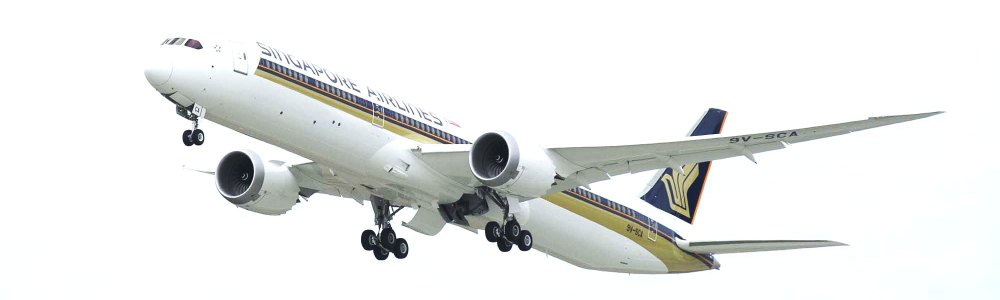
Singapore incidentes Boeing 787-10

AW-70065777.jpegAW | 2019 04 02 15:15 | AIRLINES / AVIATION SAFETY

Image result for singapore airlines logoSingapore Airlines deja en tierra dos Boeing 787-10 por fallos en sus Rolls-Royce

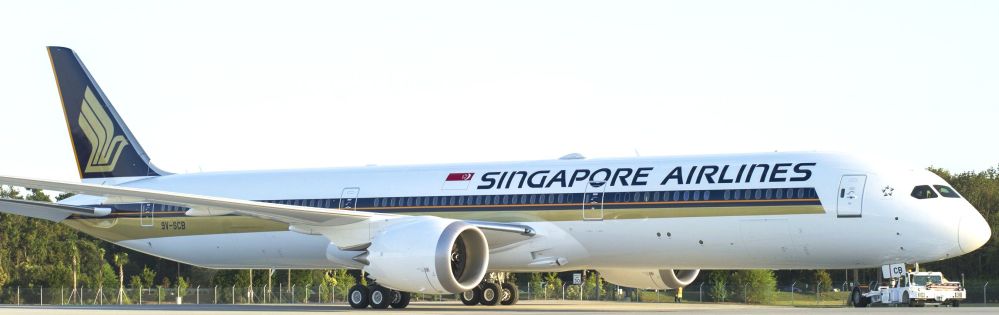
Singapore Airlines ha anunciado que ha tenido que dejar en tierra dos Boeing 787-10 por problemas con los motores Trent 1000 TEN de la Rolls-Royce Holding PLC. La aerolínea ha tomado esta decisión después de que los análisis de su flota detectaran un deterioro prematuro de los álabes del motor. Los aviones se han retirado del servicio a la espera de las reparaciones, según ha anunciado la aerolínea en un comunicado, informa Reuters.

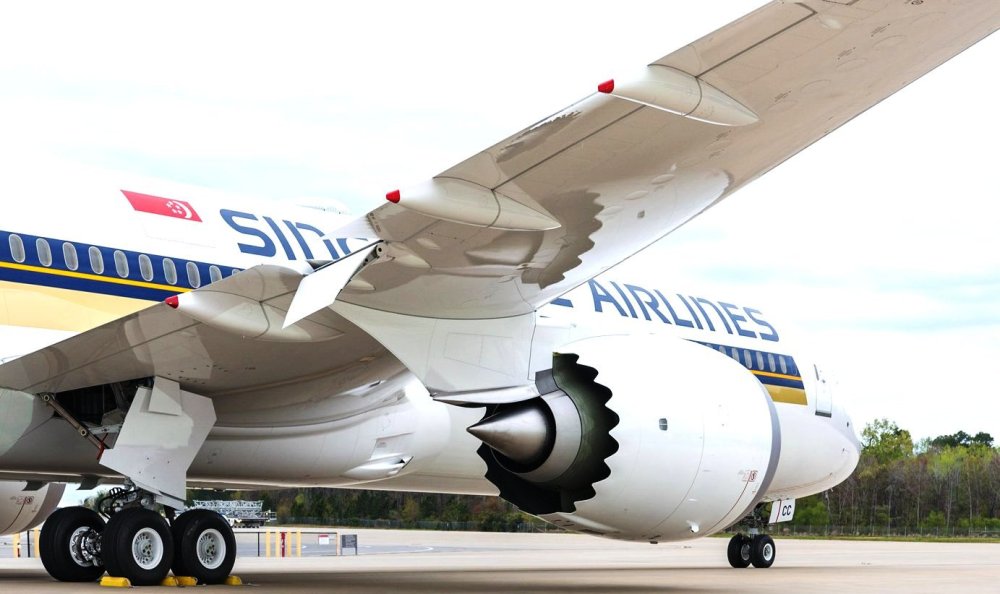
El Trent 1000 TEN es la última versión de un motor que ha tenido una entrada en servicio problemática. A finales de febrero, Rolls-Royce informó de que 35 unidades del 787 estaban inmovilizados en todo el mundo debido a que los álabes del motor se corroían o se agrietaban prematuramente. Posteriormente, Rolls-Royce anunció que su objetivo era reducir el número a diez para final de año.

AW-70000321.jpg

En Febrero 2019, Rolls-Royce hizo una provisión de 920 millones de euros por los Trent 1000, lo que ha contribuido a una pérdida operativa anual € 1.350 millones de euros. Además, destinó otros 100 millones de libras en efectivo para solucionar al problema de los álabes del motor, que ha afectado a otras aerolíneas como Norwegian o Air Europa.

Rolls-Royce dijo el martes que desde la entrada en servicio del Trent 1000 TEN, había comunicado a los operadores que los álabes de la turbina de alta presión en el motor tendrían una vida útil limitada. “Trabajando con los operadores, hemos estado analizando una pequeña muestra de la flota Trent 1000 TEN que ha volado en condiciones más difíciles. Este trabajo ha demostrado que una pequeña cantidad de estos motores deben reemplazar sus álabes antes de lo previsto”, dijo el fabricante en un comunicado.AW-Icon-TXT-01

Singapore-Airlines-Boeing-787-10-9V-SCA.jpgSingapore Boeing incidents 787-10

Singapore Airlines leaves two Boeing 787-10 on the ground due to failures in its Rolls-Royce

Singapore Airlines has announced that it has had to leave two Boeing 787-10 on the ground due to problems with Trent 1000 TEN of the Rolls-Royce Holding PLC engines. The airline has made this decision after analyzes of its fleet detected a premature deterioration of the engine’s blades. The planes have withdrawn from service pending repairs, the airline announced in a statement, Reuters reports.

The Trent 1000 TEN is the latest version of an engine that has had a problematic entry into service. At the end of February, Rolls-Royce reported that 35 units of the 787 were immobilized around the world because the engine blades corroded or cracked prematurely. Subsequently, Rolls-Royce announced that its goal was to reduce the number to ten by the end of the year.

In February 2019, Rolls-Royce made a provision of 920 million euros for the Trent 1000, which has contributed to an annual operating loss of € 1,350 million. In addition, he allocated another 100 million pounds in cash to solve the problem of the blades of the engine, which has affected other airlines such as Norwegian or Air Europa.

Rolls-Royce said on Tuesday that since the Trent 1000 TEN entered service, it had informed operators that the high-pressure turbine blades in the engine would have a limited life. «Working with the operators, we have been analyzing a small sample of the Trent 1000 TEN fleet that has flown in more difficult conditions. This work has shown that a small number of these engines must replace their blades sooner than expected», the manufacturer said in a statement. A \ W


Ξ A I R G W A Y S Ξ
SOURCE: Airgways.com
DBk: Singaporeair.com / Rolls-royce.com / Airgways.com
AW-POST: 201904021515AR

A\W   A I R G W A Y S ®

Ciclón Joaninha azota Océano Índico

AW | 2019 03 30 18:43 | AVIATION SAFETY

Ciclón Joaninha azota la isla del océano Índico y la Isla Rodrigues

El Ciclón Joaninha de Cat-4 ha atravesado la Isla Rodrigues en el Océano Índico. La isla de Rodrigues ha sido golpeada por el ciclón tropical Joaninha. Fuertes vientos y fuertes lluvias azotaron la pequeña isla volcánica ubicada a 650 km al este de Mauricio cuando la tormenta se desvaneció. En su punto más cercano, el ojo de la tormenta estaba a unos 80 km de la isla, que alberga a unas 40 000 personas. El ciclón avanzó lentamente, solo se movió alrededor de 15 km/h, lo que aseguró que Rodrigues tuviera un ataque prolongado por el ciclón.

El Aeropuerto de Rodrigues Island Ltd. ha sido cerrado por el paso del Ciclón Joaninha. Los vientos en Port Mathurin, en la costa norte, soplaron más de 100 km/h durante más de 33 horas. La ráfaga más alta registrada fue de 161 km/h. Se reportaron casi 200 mm de lluvia del sistema, pero si el ojo de la tormenta hubiera tocado tierra, la situación hubiera sido aún peor. En el centro del ciclón, los vientos soplaban hasta 250 km/h. El daño causado por el ciclón todavía se está evaluando, pero podría llegar a ser bastante extenso.

El Ciclón Joaninha es el segundo ciclón importante en atravesar la isla este año. En Febrero 2019, Gelena, un ciclón de tamaño y fuerza similar, pasó cerca de la isla y destruyó el 90% de la red eléctrica de la isla. El daño de la tormenta de febrero se estima en alrededor de US$ 1 millón de dólares.AW-Icon-TXT-01

Resultado de imagen para rodrigues island airportCyclone Joaninha hits Indian Ocean

Ciclón Joaninha hits the island of the Indian Ocean and Rodrigues Island

Cyclone Joaninha de Cat-4 has crossed the Rodrigues Island in the Indian Ocean. The island of Rodrigues has been hit by tropical cyclone Joaninha. Strong winds and heavy rain lashed the small volcanic island 650 km east of Mauritius when the storm faded. At its closest point, the eye of the storm was about 80 km from the island, which is home to some 40,000 people. The cyclone advanced slowly, only moved around 15 km / h, which ensured that Rodrigues had a prolonged attack by the cyclone.

Rodrigues Island Airport Ltd. has been closed due to the passage of the Joaninha Cyclone. The winds at Port Mathurin, on the north coast, blew over 100 km / h for more than 33 hours. The highest recorded burst was 161 km / h. Nearly 200 mm of rain was reported from the system, but if the eye of the storm had touched the ground, the situation would have been even worse. In the center of the cyclone, the winds blew up to 250 km / h. The damage caused by the cyclone is still being evaluated, but it could be quite extensive.

Cyclone Joaninha is the second major cyclone to cross the island this year. In February 2019, Gelena, a cyclone of similar size and strength, passed close to the island and destroyed 90% of the island’s electricity grid. The damage from the February storm is estimated at around US$ 1 million. A \ W


Ξ A I R G W A Y S Ξ
SOURCE: Airgways.com
DBk: Noaa.gov / Airportofrodrigues.com
AW-POST: 201903301843AR

A\W   A I R G W A Y S ®

Boeing 737, la tormenta perfecta

The-Perfect-Storm-890x380.jpg

AW | 2019 03 29 20:34 | INDUSTRY / AVIATION SAFETY

FK,4923,36,737-max-round-pinBoeing-Logo.svg.pngThe Boeing Company enfrentará costos probablemente en cientos de millones de dólares para recuperar la confianza del Boeing 737 MAX


A medida que aumentan los costos de la puesta a tierra de la flota de aviones Boeing 737 MAX, también hay dudas sobre cuándo se manejará la reintroducción del modelo 737 MAX para volver al aire. Después de que 83731-faaBoeing anunció una serie de correcciones de la Anti-Install de la MCAS bajo las inspecciones de la Federal Aviation Administration (FAA), se ha comunicado que los analistas de aviación predicen que tomará un mínimo de entre seis semanas a 12 semanas antes de que los aviones vuelva a despegar en las aerolíneas del mundo.

Escollos para volver a volar

Incluso cuando el 737 MAX consiguiera la aprobación de la FAA para volar de nuevo, sus problemas no se resolverían. China había suspendido el certificado de aeronavegabilidad del avión, lo que significa que el avión enfrentaría obstáculos adicionales antes de poder regresar a ese enorme mercado de aeronaves y de más rápido crecimiento.

Las capacidades de Boeing para resolver los problemas ocasionados en la línea 737 MAX deberían resolverse sin inconvenientes. Quizás la pregunta no debería ser cuándo el 737 MAX volverá al cielo sino si debería hacerlo.

Los problemas actuales del modelo son el resultado de una serie de decisiones que se remontan a más de medio siglo; sus limitaciones de diseño son mucho más profundas que un software mal escrito.

La historia comienza en la década de 1960, cuando Boeing estaba estableciendo las especificaciones para el 737, el avión que se convertiría en su mejor vendedor hasta la fecha. En aquel entonces, el viaje en jet estaba en su infancia, y muchos aeropuertos carecían de la infraestructura que damos por sentado hoy, como jetways. «El avión fue diseñado para sentarse cerca del suelo. Tendría un airstair integrado en la puerta, por lo que no necesitaría arreglos exteriores para sacar a los pasajeros del avión», dice el diseñador de aviones y periodista de aviación Peter Garrison.

737NGvsMAX.png

Esa decisión dio como resultado un avión que satisfacía las necesidades de la aviación de la década de 1960, pero avanzó rápidamente a principios de la década de 2010 y el mundo era un lugar radicalmente diferente. Airstairs ya no era una gran preocupación. Pero décadas de desarrollo de motores a reacción han llevado a los ingenieros a concluir que la clave para la eficiencia de los turbofanes era un gran diámetro.

En el día en que la cosa estaba diseñada, tenía pequeños motores delgados debajo de las alas, y luego, cuando empezaron a poner estos turbofans cada vez más grandes, tuvieron que lidiar con el hecho de que no había espacio debajo del ala. Finalmente, tuvieron que mover todo el motor hacia adelante y hacia arriba para mantenerlo fuera del suelo. Esto tuvo un efecto secundario indeseable. Un motor más potente, lanzado hacia adelante, tiende a hacer que un avión sea inestable dinámicamente, especialmente cuando el motor está a máxima velocidad y la nariz está hacia arriba, como durante el despegue. «Es desestabilizador en el sentido de que cuanto más nariz es, más grandes son las fuerzas que tienden a hacer que sea más nariz», dice Garrison.

AW-70737007.png

Los diseñadores de aviones comerciales generalmente buscan la estabilidad. Imagina llevar una canica en un tazón profundo. Si se tambalea de esta manera, la canica rodará, pero siempre volverá al centro. La inestabilidad es como equilibrar un taco de billar en el dedo: cuanto más se aleja de arriba a abajo, más quiere caer. En el caso de un avión, cuanto más alta es la nariz, más alto quiere ir. Si no se controla, esto podría resultar en una situación llamada pérdida aerodinámica, donde las alas pierden sustentación y el avión comienza a caer en picado.

Debido a que la FAA consideraba que el 737 MAX era demasiado inestable para ser usado como un avión de pasajeros, Boeing ideó un sistema automatizado que evitaría que la nariz subiera demasiado: el ahora infame «sistema de aumento de características de maniobra», o MCAS,«era necesario para la certificación», dice el blogger de aviación Peter Lemme.

Los problemas de inestabilidad del 737 MAX se hicieron eco de otro diseño de los años 60, el Cheyenne. En ese momento, Piper Aircraft quería construir una versión más potente de su popular avión ligero bimotor, el Navajo. Piper cambió sus motores de pistón por turbopropulsores. Al igual que el 737 MAX, el Cheyenne tenía un diseño que involucraba poner los motores más potentes más adelante en el ala.

Jack Webb fue el piloto de pruebas de ingeniería en jefe de Piper durante la mayor parte del proceso de desarrollo de Cheyenne. «A medida que avanzábamos, descubrí una especie de problema dinámico de estabilidad dinámica», dice. Era el mismo problema que tendría el 737 MAX más tarde, por la misma razón. Y como lo haría más tarde Boeing, Piper intentó solucionar el problema agregando automatización; en su caso, un dispositivo llamado Sistema de Aumento de Estabilidad (SAS) que presionaría la nariz hacia abajo si se elevaba demasiado. Webb se dio cuenta de que si el piloto no estaba debidamente capacitado, el SAS podría empeorar la inestabilidad. El problema era que el sistema podía entrar en un circuito de retroalimentación con el piloto humano. Sin entender por qué la nariz estaba empezando a bajar, el piloto subía, a lo que el SAS respondería presionando hacia abajo. Como cada uno tiene un retraso en su tiempo de respuesta, terminan persiguiéndose, lo que hace que el avión ingrese en una serie de subidas y inmersiones cada vez más empinadas.

Recientes informes de la prensa se han centrado en el hecho de que los malvados aviones Ethiopian Airlines y Lion Air estaban equipados con el MCAS, que podría confundirse si un solo sensor devolviera lecturas defectuosas. Esto provocaría que pateara y bajara la nariz, incluso cuando el avión no estaba a la altura de la nariz. El esfuerzo del piloto para luchar contra el sistema fuera de control causaría que el avión se marche. Webb cree que este tipo de movimiento hacia arriba y hacia abajo puede tener lugar incluso cuando el sistema funciona como se diseñó. Ha examinado varios accidentes relacionados con la Cheyenne, y es una imagen clásica. Parece que el avión está en una montaña rusa antes de que se estrelle. Los pilotos simplemente se ponen detrás de la entrada necesaria para estabilizar el avión. Están luchando contra eso.

El miércoles, Boeing reveló la lista de arreglos planeados para el 737 MAX. Una de ellas fue que el MCAS en adelante recibirá información de dos sensores en lugar de uno solo. Si los sensores no están de acuerdo, el sistema se desactivará.

Webb cree que, según su experiencia con el Cheyenne, estas correcciones no eliminarán la predilección del avión por la montaña rusa. Incluso si Webb está equivocado, y el 737 Max está a salvo siempre que su MCAS funcione correctamente, eso deja otro problema. Un solo sensor que funciona mal hará que el sistema se apague, lo que devolverá al avión a la condición de que la FAA considere demasiado inestable para otorgar un certificado de aeronavegabilidad.

Hay una solución sencilla para todos los problemas del 737 Max: para reducir la tendencia de inclinación del avión, Boeing podría alargar el tren de aterrizaje y mover los motores más atrás debajo del ala; y para aumentar la estabilidad, podría aumentar el tamaño de la cola. Hay una razón por la que Boeing no quiere hacer eso, «sería considerado un nuevo avión», explica Garrison.

El punto central del 737 MAX es que, a pesar de todos sus cambios y mejoras, desde la perspectiva de la FAA, sigue siendo técnicamente un 737. Desde la perspectiva del diseño, las pruebas y la certificación, es más barato actualizar un diseño antiguo que un campo de marca. uno nuevo. Le costó a Boeing un estimado de US$ 2 mil millones a US$ 3 mil millones para llevar el 737 MAX al mercado, en comparación con aproximadamente US$ 10 mil millones a US$ 12 mil millones para crear un nuevo avión. Y los aviones heredados son más atractivos para las aerolíneas porque no tienen que volver a entrenar a sus pilotos.

Sin embargo, hasta ahora solo se puede seguir actualizando un diseño venerable. Boeing lo sabe. A mediados de los años, lanzó un proyecto para considerar un reemplazo de hoja limpia para el 737 que estaría listo para volar en algún momento entre 2012 y 2015. Sin embargo, al final, desechó ese enfoque. Cuando Airbus lanzó una actualización de su propia versión del avión de cuerpo estrecho, el A320neo, en 2010, Boeing se vio obligado a responder. Su respuesta fue el artilugio de Rube Goldberg que tiene hoy.

Quizás la suerte de Boeing cambiará y el mundo se dará cuenta de que, si bien no es perfecto, el 737 MAX es lo suficientemente bueno. Tal vez Boeing vaya a completar los 5,000 pedidos que hay actualmente en los libros, y quién sabe, tal vez agregue algunos miles más en la parte superior. ¿Cuál será el resultado de este escenario rosado? Los cielos se llenaron con la mejor parte de un billón de dólares de aviones que podrían ser mejores, cuando la compañía podría haber tomado una pequeña fracción de ese tiempo y dinero y simplemente construir un avión digno del nombre de Boeing.

En el futuro, Boeing debe obtener el 737 MAX con el estándar de seguridad requerido y recuperar la confianza para mantener la acumulación al menos estable y, posiblemente, ampliarla. Todavía no creo que puedas evaluar los inconvenientes observando la flota en tierra. Para aquellos que consideran el valor de los aviones a tierra como una medida de desventaja, es importante entender que, actualmente, la acumulación de costos ha agregado presión sobre las ganancias de Boeing, pero esos costos probablemente no serán tan altos como el valor de la flota a tierra.

Creo que posicionarse para cancelaciones es prematuro, especialmente porque los atrasos no se valoran completamente en el precio de las acciones de Boeing, y no deberían. Si ahora toma en cuenta las cancelaciones en los precios de las acciones, tendrá en cuenta algo que nunca ha sido parte de la apreciación del precio de las acciones, ya que los pedidos nunca se valoran completamente en los precios de las acciones de Boeing, ni tampoco en los informes financieros de la compañía.

Negociaciones con la Boeing

Algunos clientes pueden buscar flexibilidad en los planes de entrega y pago en lugar de exigir una compensación de Boeing. Sin embargo, se espera que la conexión a tierra de los Boeing 737 MAX afecte las ganancias de Boeing y el objetivo de entrega de aviones comerciales.

Con los dos accidentes aéreos ocurrido con la línea Boeing 737-8 MAX en cuestión de meses, la conexión a tierra del Boeing 737 MAX no es una sorpresa. Las consecuencias financieras que la conexión a tierra podría tener en Boeing han arrojado estimaciones disponibles que van desde US$ 115 millones hasta varios miles de millones, ya que las entregas del Boeing 737 MAX se han detenido.

Escenarios encontrados

Las negociaciones de Boeing es otro frente de tormenta que deberán afrontar para mantener y no continuar perdiendo cuota de mercado, donde el Airbus A320NEO ya lleva una ventaja en órdenes solicitadas de 1.000 aeronaves adicionales.

En un primer escenario, la conexión a tierra se traduce en cancelaciones de vuelos, en cuyo caso Boeing tiene que pagar las tasas de arrendamiento perdidas y las ganancias licuadas de las aerolíneas, así como la depreciación. Todos los vuelos del Boeing 737 MAX se cancelan y Boeing tiene que compensar esto además de pagar a los arrendadores las tarifas de arrendamiento y la depreciación, los costos serían entre US$ 360 millones y US$ 375 millones por mes.

En el segundo escenario, Boeing paga la depreciación de los aviones a tierra, así como las mayores tasas de arrendamiento y los costos adicionales de combustible. Boeing pagaría la depreciación, los arrendamientos adicionales para llevar a cabo las operaciones de vuelo y los gastos adicionales de combustible debido al uso de aviones más antiguos y menos eficientes. El consumo adicional de combustible sería de 1,56 millones de litros por día o casi US$ 50 millones de litros por mes, lo que equivaldría a costos adicionales de US$ 24 millones por mes. En el segundo escenario, la factura sería significativamente mayor para Boeing, es decir, de US$ 590 millones a US$ 600 millones por mes. Esto incluye aproximadamente unos US$ 85 millones en costos de depreciación, US$ 485 millones para arrendamientos adicionales a corto plazo y alrededor de US$ 25 millones en gastos adicionales de combustible.

Un buen punto de partida para evaluar cualquier costo que Boeing pueda tener es mirar cuántas aeronaves están realmente conectados a tierra. Hasta Febrero 2019, Boeing entregó 376 aviones Boeing 737 MAX y otros 10 se entregaron en Marzo 2019 hasta que Boeing dejó de entregar aviones a los clientes. Estos 386 jets tienen un valor combinado de más de US$ 20 billones de dólares. Desde el segundo accidente aéreo que involucró al Boeing 737-8 MAX de Ethiopian Airlines, la capitalización de mercado de Boeing disminuyó en aproximadamente US$ 30 mil millones de dólares. El valor de los aviones a tierra como una medida de desventaja, la acumulación de costos ha agregado presión sobre las ganancias de Boeing, pero esos costos probablemente no serán tan altos como el valor de la flota a tierra. Lo que está claro es que cuanto más tiempo toma la conexión a tierra, más le costará a Boeing y esos costos se ejecutan en cientos de millones por mes.

Lecciones por aprender

En ambos accidentes aéreos, Boeing podría aprender lecciones vitales. El constructor americano podría haber diseñado un mejor sistema de estabilidad con la documentación adecuada. La FAA pudiera haber desempeñado un papel más imparcial y determinante. La tripulación de cabina podría haber sido instruida más eficientemente en el manejo de situaciones críticas y al mismo tiempo investigar adecuadamente la ejecución de los vuelos JT-610 y ET-302.

El resultado de las investigaciones criminales puede tomar bastante tiempo, pero eso es algo que podría perjudicar a la FAA, a Boeing y a las compañías operadoras del Boeing 737 MAX. Los resultados del informe preliminar de fallos deben proporcionar algún tipo de orientación sobre lo que está sucediendo con la cuarta generación de la línea Boeing 737 MAX y recuperar la confianza en el producto y el trabajo acumulado de Boeing.

Actualmente, la FAA ha observado una solución, que es una combinación de soluciones de software y hardware, pero que continúa en una fina línea en la zona segura. Boeing parece haber acelerado el trabajo en una solución, mientras que la línea de producción se ha detenido para ponerse al día con el trabajo retrasado.

En Boeing están esperanzados en devolver al Baby Boeing al lugar que siempre estaba. Aunque está atravesando una tormenta perfecta, la factoría de Seattle batallará a cualquier costo por recuperar la confianza del símbolo estrella de la The Boeing Company, el 737.AW-Icon-TXT-01

Resultado de imagen para boeing 737 max grounded

Boeing 737, the perfect storm

The Boeing Company will probably face costs in the hundreds of millions of dollars to recover the confidence of the Boeing 737 MAX

As the cost of grounding the Boeing 737 MAX aircraft fleet increases, there are also questions about when the re-introduction of the 737 MAX model will be handled to get back on the air. After Boeing announced a series of corrections to the MCAS Anti-Install under Federal Aviation Administration (FAA) inspections, it has been reported that aviation analysts predict that it will take a minimum of six weeks to 12 weeks before that planes take off again in the world’s airlines.

Escollos to fly again

Even when the 737 MAX got approval from the FAA to fly again, its problems would not be resolved. China had suspended the plane’s airworthiness certificate, which means that the plane would face additional obstacles before it could return to that huge and rapidly growing aircraft market.

The capabilities of Boeing to solve the problems caused in line 737 MAX should be solved without problems. Maybe the question should not be when the 737 MAX will return to heaven but if it should.

The current problems of the model are the result of a series of decisions that go back more than half a century; Its design limitations are much deeper than poorly written software.

The story begins in the 1960s, when Boeing was setting specifications for the 737, the plane that would become its best seller to date. Back then, jet travel was in its infancy, and many airports lacked the infrastructure that we take for granted today, such as jetways. «The plane was designed to sit close to the ground. It would have an integrated airstair on the door, so it would not need outside arrangements to get the passengers out of the plane», says aviation designer and aviation journalist Peter Garrison.

That decision resulted in an airplane that met the needs of aviation in the 1960s, but advanced rapidly in the early 2010s and the world was a radically different place. Airstairs was no longer a big concern. But decades of jet engine development have led engineers to conclude that the key to the efficiency of turbofans was a large diameter.

«On the day the thing was designed, it had small thin engines under the wings, and then, when they started putting these turbofans getting bigger, they had to deal with the fact that there was no space under the wing. They had to move the entire engine forward and up to keep it off the ground», said Garrison.

AW-70737007.png

This had an undesirable side effect. A more powerful engine, thrown forward, tends to make an airplane unstable dynamically, especially when the engine is at full speed and the nose is up, as during takeoff. «It’s destabilizing in the sense that the more nose it is, the greater the forces that tend to make it more nose», says Garrison.

Commercial aircraft designers generally seek stability. Imagine carrying a marble in a deep bowl. If you wobble in this way, the marble will roll, but it will always return to the center. Instability is like balancing a billiard cue on your finger: the further you move from top to bottom, the more you want to fall. In the case of an airplane, the higher the nose, the higher it wants to go. If left unchecked, this could result in a situation called aerodynamic loss, where the wings lose lift and the plane begins to plummet.

Because the FAA considered that the 737 MAX was too unstable to be used as a passenger plane, Boeing devised an automated system that would prevent the nose from going too high: the now infamous «Manuvening Characteristic Augmentation System, or MCAS, it was necessary for certification», says aviation blogger Peter Lemme.

The problems of instability of the 737 MAX echoed another design of the 60s, the Cheyenne. At the time, Piper Aircraft wanted to build a more powerful version of its popular twin-engine light aircraft, the Navajo. Piper changed its piston engines by turboprop. Like the 737 MAX, the Cheyenne had a design that involved putting the most powerful engines later in the wing.

Jack Webb was Piper’s chief engineering test pilot for most of Cheyenne’s development process. «As we went along, I discovered a kind of dynamic problem of dynamic stability», he says. It was the same problem that 737 MAX would have later, for the same reason. And as Boeing would later do, Piper tried to solve the problem by adding automation; in his case, a device called Stability Augmentation System (SAS) that would press the nose down if it rose too much.

Webb realized that if the pilot was not properly trained, the SAS could worsen the instability. The problem was that the system could enter a feedback loop with the human pilot. Without understanding why the nose was starting to fall, the pilot climbed, to which the SAS would respond by pressing down. As each one has a delay in their response time, they end up chasing each other, which causes the plane to enter a series of increasingly steep climbs and dives.

Recent press reports have focused on the fact that the evil Ethiopian Airlines and Lion Air aircraft were equipped with the MCAS, which could be confused if a single sensor returned faulty readings. This would cause him to kick and lower his nose, even when the plane was not up to his nose. The pilot’s effort to fight the out-of-control system would cause the plane to leave.

Webb believes that this kind of up and down movement can take place even when the system works as designed. He has examined several accidents related to the Cheyenne, and it’s a classic image, it looks like the plane is on a roller coaster before it crashes in. The pilots simply get behind the necessary entrance to stabilize the plane.

On Wednesday, Boeing revealed the list of planned arrangements for the 737 MAX. One of them was that the MCAS will receive information from two sensors instead of just one. If the sensors do not agree, the system will be deactivated.

Webb believes that, based on his experience with the Cheyenne, these corrections will not eliminate the airplane’s predilection for the roller coaster. Even if Webb is wrong, and 737 Max is safe as long as his MCAS works properly, that leaves another problem. A single sensor that malfunctions will cause the system to shut down, which will return the aircraft to the condition that the FAA considers it too unstable to grant a certificate of airworthiness.

There is a simple solution for all the problems of the 737 MAX: «to reduce the inclination tendency of the aircraft, Boeing could lengthen the landing gear and move the engines further back under the wing; and to increase the stability, it could increase the size of the tail. There is a reason why Boeing does not want to do that. «It would be considered a new plane», explains Garrison.

The central point of the 737 MAX is that, despite all its changes and improvements, from the perspective of the FAA, it is still technically a 737. From the perspective of design, testing and certification, it is cheaper to update an older design than a brand field. new one. It cost Boeing an estimated US$ 2 billion to US$ 3 billion to bring the 737 MAX to market, compared to approximately US$ 10 billion to US$ 12 billion to create a new airplane. And legacy aircraft are more attractive to airlines because they do not have to retrain their pilots.

However, until now you can only continue updating a venerable design. Boeing knows it. In the middle of the years, he launched a project to consider a clean sheet replacement for the 737 that would be ready to fly sometime between 2012 and 2015. However, in the end, he dismissed that approach. When Airbus launched an update of its own version of the narrow-body aircraft, the A320NEO, in 2010, Boeing was forced to respond. His answer was the Rube Goldberg contraption he has today.

Maybe Boeing’s luck will change and the world will realize that, while it’s not perfect, the 737 MAX is good enough. Maybe Boeing is going to complete the 5,000 orders that are currently in the books, and who knows, maybe add a few thousand more at the top. What will be the result of this pink scenario? The skies were filled with the best part of a trillion dollars of aircraft that could be better, when the company could have taken a small fraction of that time and money and simply built a plane worthy of Boeing’s name.

In the future, Boeing must obtain the 737 MAX with the required security standard and regain the confidence to keep the accumulation at least stable and possibly expand it. I still do not think you can evaluate the inconveniences by observing the fleet on land. For those who consider the value of land-based aircraft as a measure of disadvantage, it is important to understand that, currently, the accumulation of costs has added pressure on Boeing’s profits, but those costs will probably not be as high as the value of the It floats to the ground.

I believe that positioning for cancellations is premature, especially because the arrears are not fully valued in the price of Boeing shares, and they should not. If you now take into account the cancellations in the stock prices, you will consider something that has never been part of the appreciation of the stock price, since the orders are never fully valued in the Boeing stock prices, nor neither in the company’s financial reports.

Negotiations with the Boeing

Some customers may seek flexibility in delivery and payment plans instead of demanding compensation from Boeing. However, it is expected that the grounding of the Boeing 737 MAX will affect Boeing’s profits and the commercial aircraft delivery target. With the two plane crashes occurred with the Boeing 737-8 MAX line in a matter of months, the grounding of the Boeing 737 MAX is not a surprise.

The financial consequences that the ground connection could have on Boeing have yielded estimates that range from US $ 115 million to several billion, since the deliveries of the Boeing 737 MAX have stopped.

Found scenarios

The Boeing negotiations are another storm front that they will have to face in order to maintain and not continue to lose market share, where the Airbus A320NEO already has an advantage in apply for orders of 1,000 additional aircraft.

In a first scenario, grounding translates into flight cancellations, in which case Boeing has to pay for lost lease rates and airline liquefied profits, as well as depreciation. All Boeing 737 MAX flights are canceled and Boeing has to compensate for this in addition to paying landlords the lease rates and depreciation, the costs would be between US$ 360 million and US$ 375 million per month.

In the second scenario, Boeing pays the depreciation of aircraft to land, as well as higher lease rates and additional fuel costs. Boeing would pay for depreciation, additional leases to carry out flight operations and additional fuel costs due to the use of older and less efficient aircraft. The additional fuel consumption would be 1.56 million liters per day or almost US$ 50 million liters per month, which would be equivalent to additional costs of US$ 24 million per month. In the second scenario, the invoice would be significantly higher for Boeing, that is, from US$ 590 million to US$ 600 million per month. This includes approximately US$ 85 million in depreciation costs, US$ 485 million for additional short-term leases and around US$ 25 million in additional fuel costs.

A good starting point to evaluate any cost that Boeing may have is to look at how many aircraft are actually connected to the ground. Until February 2019, Boeing delivered 376 Boeing 737 MAX aircraft and another 10 were delivered in March 2019 until Boeing stopped delivering aircraft to customers. These 386 jets have a combined value of more than US$ 20 billion. Since the second plane crash involving the Boeing 737-8 MAX from Ethiopian Airlines, the market capitalization of Boeing has decreased by approximately US$ 30 billion. The value of aircraft to land as a measure of disadvantage, the accumulation of costs has added pressure on Boeing’s profits, but those costs will probably not be as high as the value of the fleet to land. What is clear is that the longer the ground connection takes, the more it will cost Boeing and those costs are executed in hundreds of millions per month.
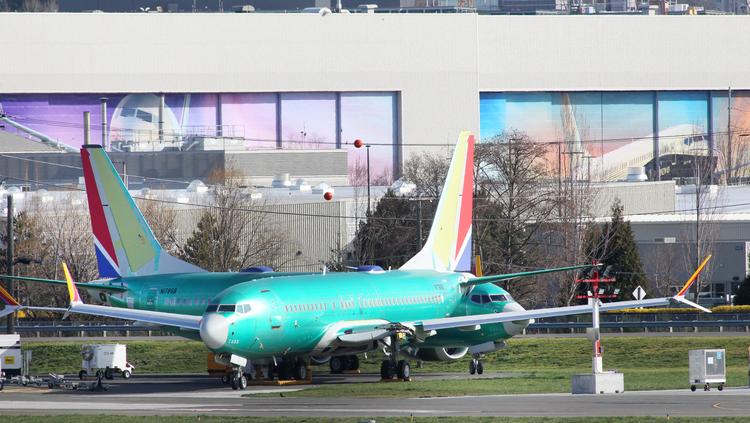
Resultado de imagen para boeing 737 max groundedLessons to learn

In both plane crashes, Boeing could learn vital lessons. The American builder could have designed a better stability system with the proper documentation. The FAA could have played a more impartial and decisive role. The cabin crew could have been instructed more efficiently in the handling of critical situations and at the same time adequately investigate the execution of flights JT-610 and ET-302.

The result of criminal investigations can take a long time, but that could harm the FAA, Boeing and the operating companies of the Boeing 737 MAX. The results of the preliminary bug report should provide some guidance on what is happening with the fourth generation of the Boeing 737 MAX line and regain confidence in the product and the accumulated work of Boeing.

Currently, the FAA has observed a solution, which is a combination of software and hardware solutions, but which continues in a fine line in the safe zone. Boeing seems to have accelerated work on a solution, while the production line has stopped to catch up with the delayed work.

At Boeing, they are hoping to return Baby Boeing to the place it always was. Although it is going through a perfect storm, the Seattle factory will struggle at any cost to regain the confidence of the star symbol of The Boeing Company, the 737. A \ W


AW-AW.com

AW-Airgways Icon-webΞ A I R G W A Y S Ξ
SOURCE: Airgways.com
DBk: Airgways.com / Nymag.com / Faa.gov / Boeing.com / Reuters.com / Bizjournals.com
AW-POST: 201903292034AR

A\W   A I R G W A Y S ®


Reporte Preliminar Vuelo ET-302

Resultado de imagen para Ethiopian Airlines ET-320

AW | 2019 03 29 16:00 | AIR INVESTIGATION / AVIATION SAFETY

AW-7017378ET.pngLos investigadores creen que el Sistema Antibloqueo de Boeing se activó en el accidente del vuelo ET-302 de Ethiopian Airlines

Los investigadores que examinan los datos de las cajas negras del vuelo ET-302 de Ethiopian Airlines han llegado a una conclusión preliminar. Dicen que la característica antibloqueo del Boeing 737-8 MAX, el Anti-Stall System, se activó antes de que el avión cayera al suelo. En un hallazgo preliminar, los oficiales que investigan el accidente del vuelo ET-302 de un Boeing 737-8 MAX de Ethiopian Airlines creen que se activó una función de control de vuelo diseñada para evitar que se detuviera un bloqueo antes de que el avión se zambullera y se estrellara. Los funcionarios que investigaron el accidente informaron que los hallazgos preliminares sugieren similitudes entre los dos accidentes mortales en estos últimos meses. El mismo mecanismo era sospechoso en el accidente del vuelo JT-610 de Lion Air el 29 Octubre 2018. Entre los dos accidentes, 346 personas murieron a bordo.

La MCAS o Sistema de Aumento de Características de Maniobra, se supone que ayuda a prevenir un bloqueo si un avión vuela en un ángulo demasiado agudo hacia arriba y, como resultado, las alas pierden su sustentación. Pero si se activa en el momento equivocado, como poco después del despegue, el sistema puede forzar la nariz hacia abajo, haciendo que el 737 pierda altitud repentinamente.

Boeing anunció su solución al problema MCAS el miércoles en una presentación a expertos en aviación de todo el mundo. El gigante aeroespacial ha intentado recuperar su reputación. El 737-8 MAX ha estado en tierra durante semanas. Boeing ha visto órdenes canceladas.

En última instancia, tomará más que una solución. Los reguladores de las líneas aéreas de todo el mundo tendrán que aprobar los cambios antes de que el 737-8 MAX pueda regresar al aire. Eso podría llevar semanas o incluso meses en algunos países.

Los funcionarios que investigan el accidente fatal de un Boeing 737 MAX en el vuelo ET-302 de Ethiopian Airlines han llegado a la conclusión preliminar de que una función de control de vuelo sospechosa se activó automáticamente antes de que el avión se zambullera en el suelo. El consenso se transmitió durante una reunión informativa de alto nivel en la FAA y es la indicación más sólida hasta ahora de que el mismo sistema automatizado, llamado MCAS, también falló en un vuelo de Lion Air, que se estrelló menos de cinco meses antes.

Informe Preliminar ET-302

El Informe Preliminar hace un seguimiento con una declaración del Ministro de Transporte etíope, Dagmawit Moges, quien dijo que los datos preliminares indicaban claras similitudes entre ambos accidentes. El consenso emergente se transmitió a la Federal Aviation Administration (FAA) el jueves, dijo uno de los funcionarios, según The Journal. El hallazgo preliminar apunta a una falla en el encendido por el mismo sistema automatizado, llamado MCAS, que ocurrió justo antes del accidente del avión Lion Air poco después de salir de Yakarta, dice el Journal.

Los investigadores de la Junta Nacional de Seguridad y Transporte de Estados Unidos (NTSB), observaron los escombros en el lugar del accidente del vuelo ET-302 de Ethiopian Airlines el 12 Marzo 2019, en Bishoftu, Etiopía constatando claras evidencias de similitudes con el accidente del vuelo JT-610 de Lion Air. De acuerdo con el informe preliminar, en el accidente de Lion Air, el nuevo sistema de prevención de paradas, basado en información errónea del sensor, presionó repetidamente la nariz del avión. El piloto se vio obligado a luchar contra los controles de vuelo antes de perder el control y sumergirse en el mar de Java.

Cambios en el MCAS

Boeing anunció esta semana cambios en el sistema MCAS para hacerlo menos agresivo y dar a los pilotos más control para anularlo si fuera necesario. Además, Boeing dijo que el sistema se basará en los datos de los dos sensores de ángulo de ataque, no solo en uno. Boeing también dijo que el sistema antibloqueo solo se activaría una vez por evento, en lugar de forzar repetidamente al avión a bucear. Los reguladores de seguridad aérea de Estados Unidos (FAA) han aprobado provisionalmente el software Boeing y los cambios de entrenamiento de pilotos.

Demandas a Boeing

La demanda contra Boeing fue presentada en un Tribunal Federal de Chicago por la familia de Jackson Musoni, donde alega que Boeing había diseñado defectuosamente el sistema de control de vuelo automatizado. La demanda denunció que el avión tenía un diseño defectuoso, tenía advertencias inadecuadas y era injustificadamente peligroso.AW-Icon-TXT-01

Resultado de imagen para Ethiopian Airlines ET-320Preliminary Report Flight ET-302

Investigators believe that the Boeing Anti-Blight System was activated in the crash of Ethiopian Airlines flight ET-302

Researchers who examine data from the black boxes of ET-302 flight from Ethiopian Airlines have reached a preliminary conclusion. They say that the anti-lock feature of the Boeing 737-8 MAX, the Anti-Stall System, was activated before the plane fell to the ground. In a preliminary finding, officials investigating the crash of ET-302 flight of a Boeing 737-8 MAX from Ethiopian Airlines believe that a flight control function designed to prevent a blockage from being stopped before the plane was activated was activated. Diving and crashing. Officials investigating the accident reported that the preliminary findings suggest similarities between the two fatal accidents in recent months. The same mechanism was suspect in the accident of JT-610 flight of Lion Air on October 29, 2018. Between the two accidents, 346 people died on board.

The MCAS or Maneuver Characteristics Increase System is supposed to help prevent a blockage if a plane flies at an angle too sharp upwards and, as a result, the wings lose their lift. But if it is activated at the wrong time, such as shortly after takeoff, the system can force the nose down, causing the 737 to suddenly lose altitude.

Boeing announced its solution to the MCAS problem on Wednesday in a presentation to aviation experts from around the world. The aerospace giant has tried to recover its reputation. The 737-8 MAX has been on the ground for weeks. Boeing has seen canceled orders.

Ultimately, it will take more than a solution. Airline regulators around the world will have to approve the changes before the 737-8 MAX can return to the air. That could take weeks or even months in some countries.

Officials investigating the fatal crash of a Boeing 737 MAX on Ethiopian Airlines flight ET-302 have reached the preliminary conclusion that a suspicious flight control function was automatically activated before the plane plunged into the ground. The consensus was conveyed during a high-level briefing at the FAA and is the strongest indication so far that the same automated system, called MCAS, also failed on a Lion Air flight, which crashed less than five months earlier.

AW-7378MAXMCAS.jpg

Preliminary Report ET-302

The Preliminary Report follows up with a statement from the Ethiopian Transport Minister, Dagmawit Moges, who said the preliminary data indicated clear similarities between the two accidents. The emerging consensus was transmitted to the Federal Aviation Administration (FAA) on Thursday, one of the officials said, according to The Journal. The preliminary finding points to a misfire on the same automated system, called MCAS, that occurred just before the Lion Air plane crash shortly after leaving Jakarta, the Journal says.

Researchers from the National Board of Safety and Transportation of the United States (NTSB), observed the debris at the site of the crash of ET-302 flight of Ethiopian Airlines on March 12, 2019, in Bishoftu, Ethiopia noting clear evidence of similarities with the accident of JT-610 flight from Lion Air. According to the preliminary report, in the Lion Air accident, the new stop prevention system, based on misinformation from the sensor, repeatedly pressed the nose of the aircraft. The pilot was forced to fight the flight controls before losing control and diving into the Java Sea.

Changes in the MCAS

Boeing this week announced changes to the MCAS system to make it less aggressive and give pilots more control to override it if necessary. In addition, Boeing said the system will be based on data from the two attack angle sensors, not just one. Boeing also said that the anti-lock system would only activate once per event, instead of repeatedly forcing the plane to dive. US Air Safety Regulators (FAA) have provisionally approved the Boeing software and pilot training changes.

Demands to Boeing

The lawsuit against Boeing was filed in a Chicago Federal Court by Jackson Musoni’s family, alleging that Boeing had defectively designed the automated flight control system. The lawsuit alleged that the plane had a defective design, had inadequate warnings and was unreasonably dangerous. A \ W


Ξ A I R G W A Y S Ξ
SOURCE: Airgways.com
DBk: Faa.gov / Ntsb.gov / Boeing.com / Airgways.com / Theaustralian.com.au
AW-POST: 201903291600AR

A\W   A I R G W A Y S ®

Evacuación Torre Control Sydney

Una imagen aérea del aeropuerto de Sydney.  (Aeropuerto de Sydney)

AW | 2019 03 29 13:09 | AIRPORTS / AVIATION SAFETY

La Torre de Control del Aeropuerto Internacional Sydney ha sido evacuada por humo. Todos los vuelos han sido demorados

Los vuelos en el Aeropuerto Internacional Sydney, Australia, han sido demorados después de que la Torre de Control de Tráfico Aéreo fue evacuada cuando se detectó humo en la instalación. El incidente, que ocurrió alrededor de las 11:40 hs (hora local) de hoy Viernes 29 Marzo 2019, lo que llevó a que se pusiera en marcha la cancelación del movimiento aéreo en el aeropuerto, con todas las llegadas y salidas detenidas. A las 12:18 hs (hora local), el Control de Tráfico Aéreo en el Aeropuerto Sydney había comenzado a procesar las llegadas de los vuelos. Las aerolíneas les pidieron a los pasajeros que verifiquen el estado de sus vuelos.

Alerta aeropuerto

Los bomberos despejaron a unos 15 empleados para regresar a la torre en el aeropuerto más ocupado de Australia alrededor de las 12:30 pm, unos 80 minutos después de que fueron evacuados cuando sonó una alarma de incendio. La raíz del problema en el Aeropuerto Sydney podría haber sido ocasionado un posible cortocircuito en el sistema de respaldo de una batería y una ligera neblina de humo había activado la alarma de incendio, expresó el Superintendente de Incendios y Rescates Bryce Jonas.

Air Services Australia (ASA), el proveedor nacional de servicios de navegación aérea, dijo que se detectó humo en el edificio y que todos los vuelos fueron detenidos y 12 vuelos fueron desviados a otros aeropuertos. Un portavoz de ASA dijo que un rodamiento defectuoso en un sistema de aire acondicionado producía humo en la planta baja que activó la alarma. Cerca de 15 personas fueron evacuadas de la torre mientras los bomberos de ASA descubrieron el problema. Fire and Rescue NSW también asistió a la escena. ASA dijo que a las 12:30 pm, los aviones podían aterrizar, «aunque a un ritmo más lento».AW-Icon-TXT-01

Una pantalla electrónica que muestra retrasos en cada vuelo.

Evacuation Control Tower Sydney

The Control Tower of Sydney International Airport has been evacuated by smoke. All flights have been delayed

Flights at Sydney International Airport, Australia, have been delayed after the Air Traffic Control Tower was evacuated when smoke was detected at the facility. The incident, which occurred around 11:40 am (local time) today, Friday 29 March 2019, which led to the start of the cancellation of the air movement at the airport, with all arrivals and departures stopped. At 12:18 p.m. (local time), the Air Traffic Control at the Sydney Airport had begun to process the arrivals of the flights. Airlines asked passengers to check the status of their flights.

Airport alert

Firefighters cleared about 15 employees to return to the tower at Australia’s busiest airport around 12:30 pm, about 80 minutes after they were evacuated when a fire alarm sounded. The root of the problem at Sydney Airport could have been caused by a possible short circuit in the battery backup system and a slight smoke fog had triggered the fire alarm, said Fire and Rescue Superintendent Bryce Jonas.

Air Services Australia (ASA), the national provider of air navigation services, said that smoke was detected in the building and that all flights were stopped and 12 flights were diverted to other airports. An ASA spokesman said that a defective bearing in an air conditioning system produced smoke on the ground floor that triggered the alarm. About 15 people were evacuated from the tower while ASA firefighters discovered the problem. Fire and Rescue NSW also attended the scene. ASA said that at 12:30 pm, planes could land, «although at a slower pace». A \ W


Ξ A I R G W A Y S Ξ
SOURCE: Airgways.com
DBk: Australianaviation.com.au / Abc.au.net / Airserviceaustralia.com
AW-POST: 201903291309AR

A\W   A I R G W A Y S ®

Boeing revela modificaciones en 737 MAX

Image result for Boeing 737 MAX testAW | 2019 03 28 14:31 | INDUSTRY / AVIATION SAFETY

83731-faaLa FAA todavía no ha emitido las aprobaciones correspondientes a las modificaciones en la MCAS de los Boeing 737 MAX
FK,4923,36,737-max-round-pin

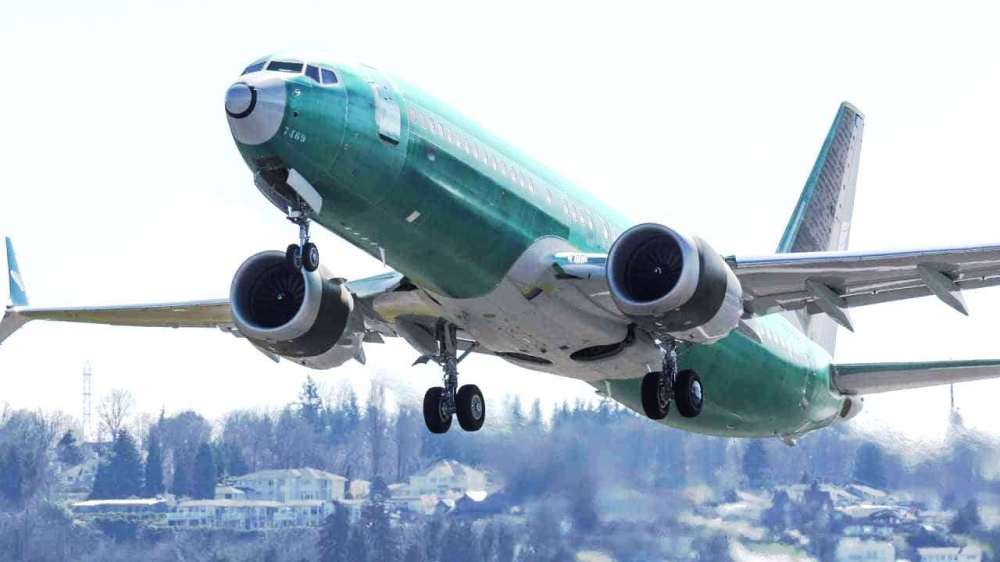
The Boeing Company mostró los cambios en el Sistema de Estabilización MCAS. En una reunión con cientos de periodistas, pilotos y dirigentes de aerolíneas en su sede de Renton, Estados Unidos para mostrar los cambios en su sistema de estabilización MCAS, en una ofensiva para recuperar la confianza perdida. «Vamos a hacer todo para asegurarnos que accidentes como estos no ocurran de nuevo», dijo a la prensa el Vicepresidente de Estrategia de Productos de Boeing, Mike Sinnet.

Dan Elwell, el responsable interino de la Federal Aviation Administration (FAA) de Estados Unidos, deberá explicar a los Senadores estadounidenses por qué su organismo tardó tanto en prohibir los vuelos de los Boeing 737 MAX tras el accidente en el que murieron 157 personas el 10 Marzo 2019 en Etiopía. Esa tardanza levantó sospechas sobre una connivencia entre la agencia estadounidense y Boeing, sobre todo después de que las autoridades chinas y europeas decidieran prohibir rápidamente los vuelos de esos aviones, debido a las similitudes entre el accidente en Etiopía y el que ocurrió el 29 Octubre 2018 en el Mar de Java con la aerolínea Lion Air.

Modificaciones del MCAS

Boeing intenta convencer de que la versión corregida del Sistema de Estabilización MCAS de los 737 MAX, cuestionado por su supuesta responsabilidad en los accidentes, está ahora operativa.

La intervención del sistema será más transparente para la tripulación, y los pilotos podrán desactivarlo más fácilmente en caso de problema, explicó Boeing, que iba a presentar el nuevo MCAS a los profesionales este Miércoles 27 Marzo 2019 para tener su opinión sobre los cambios.

Entre los cambios notables a los controles de vuelo MAX, el sistema de control de vuelo automatizado MCAS del avión ahora recibirá datos de ambos sensores de ángulo de ataque en lugar de solo uno. Además, un funcionario de Boeing dice que las revisiones de la compañía de varios sistemas de control de vuelo en los nuevos aviones 737 MAX no han revelado ningún problema potencial adicional. La revisión ha revisado los análisis de peligros potenciales y mal funcionamiento, y no hemos descubierto nada que nos preocupe en ninguna de esas áreas, dijo el funcionario de Boeing. Esas revisiones continúan y continuarán por algún tiempo.

En la nueva versión del programa, el piloto podrá ver que el MCAS ya no funciona gracias a un sistema de alerta luminosa, que indicará que las dos sondas del aparato emiten datos contradictorios. Boeing informó a las aerolíneas que adquirieron 737 MAX que podían encargar esa opción de forma gratuita. Ésta se instalará posteriormente, si recibe el visto bueno de las autoridades.

Según la compañía, la nueva versión del programa se sometió a cientos de horas de análisis, pruebas en laboratorio, verificaciones en un simulador y dos vuelos de prueba, incluido uno con representantes de la FAA a bordo. «El objetivo es reducir la carga de trabajo de la tripulación en situaciones anormales e impedir que el MCAS se active cuando reciba datos falsos», precisó Boeing.

Boeing también tiene previsto formar mejor a los pilotos para manejar el MCAS y el 737 MAX, cuyo comportamiento cambió mucho por modificaciones sobre los motores. La FAA y otras autoridades regulatorias aún deben certificar esas modificaciones, indicó la compañía.

Revisión de la FAA

La Federal Aviation Administration (FAA) ha comunicado que aún no ha otorgado la aprobación provisional para la actualización de software anti-stall de Boeing anunciada en el Boeing 737 MAX. El regulador dice que ha trabajado con la compañía a lo largo de su cambio de software y «no hemos recibido la mejora completa del software para su revisión y certificación».

También en el testimonio del Senado de Estados Unidos hoy, el jefe interino de la FAA, Daniel Elwell, dijo que costaría US$ 1.800 millones de dólares y que se llevaría a 10 mil nuevos empleados para que la agencia se encargara de todas las certificaciones de aeronaves internamente, respondiendo preguntas sobre cómo se aprueban los nuevos aviones para volar. Elwell también dijo que una alerta a los pilotos de que Boeing estaba haciendo estándar en todos los aviones 737 MAX como parte de una actualización de software no era «crítica para la seguridad». Boeing dejará de cargar esa alerta y otro indicador aún opcional. En un testimonio separado, el Secretario de Transporte dijo que era preocupante que ciertas características de seguridad estuvieran disponibles como opciones en lugar del equipo estándar en los aviones 737 MAX.

Boeing ha programado una reunión informativa para unos 200 pilotos y representantes de aerolíneas en Renton, Washington, sede del complejo de ensamblaje 737, donde se espera que describa los cambios de software que controlan un sistema diseñado para evitar automáticamente un puesto en la mitad del vuelo. Un panel del Senado en Washington, DC también interrogará al jefe interino de la FAA, al inspector general del DOT y al jefe de la NTSB acerca de qué tan exhaustivamente se probó el sistema MCAS y qué se hará para asegurar que cualquier solución funcione.

El responsable de la FAA admitirá, no obstante, que, ante unos sistemas cada vez más complejos, el enfoque de su agencia en materia de supervisión debe cambiar. En una audiencia distinta celebrada el miércoles por la mañana, la Secretaria de Transporte, Elaine Chao, se mostró preocupada ante «cualquier alegación de relaciones demasiado estrechas con cualquier compañía».

Entretanto, la inmovilización de la flota de Boeing 737 MAX tiene un coste importante. La compañía estadounidense Southwest Airlines rebajó este miércoles su previsión de volumen de negocios en el 1Q2019 por culpa de las cancelaciones de vuelos vinculadas a la prohibición del Boeing 737 MAX.AW-Icon-TXT-01

AW-700007378MAX.jpgBoeing unveiled modifications at 737 MAX

The FAA has not yet issued approvals for modifications to the MCAS of the Boeing 737 MAX

Boeing-Company-LogoThe Boeing Company showed the changes in the MCAS Stabilization System. In a meeting with hundreds of journalists, pilots and airline leaders at their headquarters in Renton, United States to show the changes in their MCAS stabilization system, in an offensive to recover lost confidence. «We’re going to do everything to make sure accidents like these do not happen again», Boeing Vice President of Product Strategy Mike Sinnet told reporters.
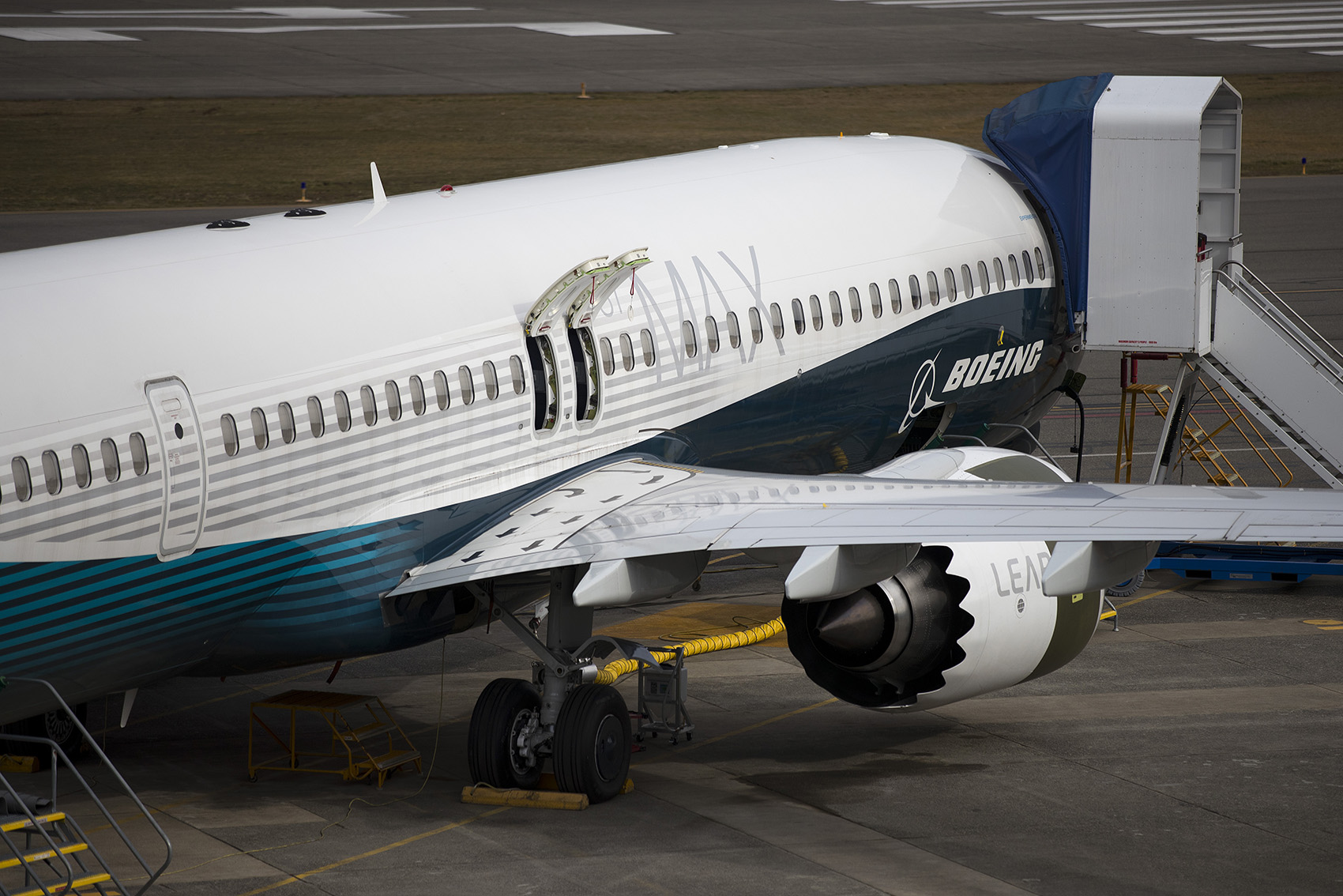
Dan Elwell, the acting head of the US Federal Aviation Agency (FAA), should explain to US Senators why his agency took so long to ban Boeing 737 MAX flights after the accident in which 157 people died. March 10, 2019 in Ethiopia. That delay raised suspicions about a collusion between the US agency and Boeing, especially after the Chinese and European authorities decided to quickly ban the flights of those planes, due to the similarities between the accident in Ethiopia and the one that occurred on October 29, 2018 in the Java Sea with the airline Lion Air.

Modifications of the MCAS

Boeing tries to convince that the corrected version of the System of Stabilization MCAS of the 737 MAX, questioned by its supposed responsibility in the accidents, is now operative.

The intervention of the system will be more transparent for the crew, and the pilots will be able to deactivate it more easily in case of problem, explained Boeing, who was going to present the new MCAS to the professionals this Wednesday 27 March 2019 to have their opinion about the changes.

Image result for MCAS Boeing 737 MAX

Among the notable changes to the MAX flight controls, the aircraft’s MCAS automated flight control system will now receive data from both attack angle sensors instead of just one. In addition, a Boeing official says that company reviews of several flight control systems on the new 737 MAX aircraft have not revealed any additional potential problems. The review has reviewed the analysis of potential hazards and malfunctions, and we have not discovered anything that worries us in any of those areas, said the Boeing official. Those revisions continue and will continue for some time.

In the new version of the program, the pilot will be able to see that the MCAS no longer works thanks to a system of luminous alert, that will indicate that both probes of the apparatus emit contradictory data. Boeing informed the airlines that they acquired 737 MAX that they could order that option for free. This will be installed later, if it receives the approval of the authorities.

According to the company, the new version of the program underwent hundreds of hours of analysis, laboratory tests, simulator checks and two test flights, including one with representatives of the FAA on board. «The goal is to reduce the workload of the crew in abnormal situations and prevent the MCAS from activating when it receives false data», Boeing said.

Boeing also plans to better train the drivers to operate the MCAS and the 737 MAX, whose behavior changed a lot because of modifications on the engines. The FAA and other regulatory authorities still must certify those modifications, the company said.

Review of the FAA

The Federal Aviation Administration (FAA) has announced that it has not yet granted provisional approval for the Boeing anti-stall software update announced on the Boeing 737 MAX. The regulator says it has worked with the company throughout its software change and «we have not received the complete software upgrade for review and certification».

Also in the testimony of the United States Senate today, the acting head of the FAA, Daniel Elwell, said that it would cost US $ 1,800 million dollars and that it would take 10,000 new employees for the agency to take care of all the certifications of Aircraft internally, answering questions about how new airplanes are approved to fly. Elwell also said that warning pilots that Boeing was making standard on all 737 MAX aircraft as part of a software update was not critical to safety. Boeing will stop loading that alert and another indicator still optional. In a separate testimony, the Transportation Secretary said it was troubling that certain safety features were available as options instead of the standard equipment on the 737 MAX aircraft.

Boeing has scheduled an informational meeting for some 200 airline pilots and representatives in Renton, Washington, home of the 737 assembly complex, where it is expected to describe the software changes that control a system designed to automatically avoid a position in the middle of the flight. A Senate panel in Washington, DC will also question the interim FAA chief, the DOT inspector general and the NTSB chief about how thoroughly the MCAS system was tested and what will be done to ensure that any solution works.

The head of the FAA will admit, nevertheless, that, faced with increasingly complex systems, the focus of his agency on matters of supervision must change. In a separate hearing held on Wednesday morning, the Secretary of Transportation, Elaine Chao, was concerned about «any allegation of too close relations with any company».

Meanwhile, the immobilization of the Boeing 737 MAX fleet has a significant cost. The American company Southwest Airlines lowered its forecast of turnover in the 1Q2019 on Wednesday because of cancellations of flights linked to the prohibition of the Boeing 737 MAX. A\W


video-camera_318-50337.jpg


Ξ A I R G W A Y S Ξ
SOURCE: Airgways.com
DBk: Faa.gov / Boeing.com / Airgways.com / Nbcnews.com
AW-POST: 201903281431AR

A\W   A I R G W A Y S ®

Boeing pierde la línea de la batalla

AW-7000737MAX.jpgAW | 2019 03 27 17:43 | INDUSTRY / AIR INVESTIGATION / AVIATION SAFETY

FK,4923,36,737-max-round-pinBoeing-Logo.svgLa saga de Boeing 737 MAX sirve como un caso de estudio en la incompetencia de la ingeniería y la ética

La Administración de Aviación Civil de China (CAAC) ha suspendido la Certificación de Aeronavegabilidad del Boeing 737-8 MAX, que demoró 15 meses para que Boeing finalmente la obtuviera en Octubre 2017. Airbus contraataca con un formidable pedido de 290 aeronaves A320NEO.

Investigaciones accidentes

Durante las simulaciones de vuelo que recrean los problemas en el fatal accidente del vuelo JT-610 de Lion Air el 29 Octubre 2018, los pilotos descubrieron que tenían menos de 40 segundos para anular el Sistema MCAS del Boeing 737-8 MAX y evitar el desastre. Mientras tanto, el informe preliminar sobre el accidente del vuelo ET-302 del Boeing 737-8 MAX del 10 Marzo 2019 de Ethiopian Airlines probablemente será publicado esta semana, según el Ministerio de Transporte de Etiopía.

FAA

El administrador interino de la FAA, Dan Elwell, le informará a un subcomité de Comercio del Senado que los Boeing 737 MAX de Boeing regresarán al servicio «solo cuando el análisis de los hechos y los datos técnicos de la FAA indiquen que es apropiado». El testimonio de Elwell dice que Boeing presentó por primera vez la actualización del software anti-stall propuesto a la FAA para la certificación este 21 Enero 2019 y que la FAA ha probado «esta mejora al sistema de control de vuelo del Boeing 737 MAX tanto en el simulador como en la aeronave. A medida que el sistema aeroespacial y sus componentes se vuelven cada vez más complejos, sabemos que nuestro enfoque de supervisión debe evolucionar para garantizar que la FAA siga siendo el líder mundial en el logro de la seguridad de la aviación», dijo el testimonio de Elwell, según el informe.

Cuestionado MCAS

Las simulaciones de vuelo que intentaron recrear los problemas que causaron que un avión Boeing 737-8 MAX de Lion Air se estrellara en Indonesia el 29 Octubre 2018 encontraron que los pilotos tenían menos de 40 segundos para anular un sistema automatizado. El sistema automatizado, conocido como MCAS, es el foco de los investigadores que buscan determinar qué sucedió tanto con el avión de Lion Air y el de Ethiopian Airlines ambos del mismo modelo de aeronave.

Presiones competitivas

Han surgido nuevos detalles sobre las presiones competitivas que ejercen los ingenieros de Boeing 737 cuando el fabricante de aeronaves se apresuró a evitar las deserciones de las principales aerolíneas estadounidenses para competir con Airbus. El consorcio europeo estaba desafiando el producto estrella de Boeing con su A320NEO (New Engine Option) actualizado. Según los informes, los operadores estadounidenses como American Airlines se preparaban para cambiar al modo Airbus de mayor alcance.

Ingeniería 737 MAX7378MAX_0[1].png

Boeing respondió con lo que afirmó que era una versión mejorada de su caballo de batalla 737 equipado con un motor LEAP CFM más grande que ofrece un mayor alcance y una mayor eficiencia de combustible. Los motores más grandes requerían que los ingenieros de Boeing los colocaran muy por delante del borde de ataque del ala para lograr la distancia al suelo.

Esa decisión de diseño significaba que el Boeing 737 MAX tendería a subir mientras aceleraba o cuando la aeronave experimentaba un alto ángulo de ataque: el ángulo entre el ala y la dirección de vuelo. La solución propuesta para el problema del lanzamiento, y un medio para lograr la certificación de capacidad de vuelo, fue un sistema de software llamado MCAS.

Los críticos afirman que la colocación del motor convirtió a la serie 737 MAX en un avión fundamentalmente diferente con diferentes características de manejo que requieren un nuevo software operativo y entrenamiento de pilotos. El proceso de recertificación que Boeing intentó evitar por razones competitivas hubiera sido largo y costoso.

En esencia, la respuesta de Boeing al desafío planteado por Airbus fue llevar a la seguridad de los pasajeros a un asiento intermedio en clase económica, mientras que las consideraciones financieras se actualizaron a primera clase, Boeing niega esto.

AW-737-8MAXNG.png

Entre los críticos de Boeing se encuentra Gregory Travis, un veterano ingeniero de software y piloto con experiencia en instrumentos que ha volado simuladores de aviones tan grandes como el Boeing 757. Gregory Travis publicó una crítica condenatoria del fiasco del 737 MAX la semana pasada que concluyó: «Es probable que el MCAS, originalmente agregado con el espíritu de aumentar la seguridad, ahora ha matado a más personas de las que podría haber salvado. No necesita ser arreglado con más complejidad, más software. Necesita ser eliminado, por completo». Gregory Travis dijo que «lo más desconcertante para mí es cómo esto podría haber pasado a un avión comercial con un largo historial de seguridad y confiabilidad, y fue construido por una compañía con una excelente reputación en ingeniería de hardware». El ingeniero expresó que es inequívoco en su evaluación del Boeing 737 MAX: «Es un fuselaje defectuoso. Tiene que arreglar el fuselaje y no puede hacerlo sin mover los motores hacia atrás y alejándolos de su posición actual. El problema de raíz con el diseño del motor hacia adelante es que una vez que la aeronave despega, quiere seguir lanzándose hacia arriba, porque el lanzamiento en un avión aumenta el ángulo de ataque (AOA). Así nació MCAS, donde se implementó el software de computadora de vuelo 737 MAX. Utilizando solo un único sensor de datos, el MCAS fue diseñado para corregir lo que resultó ser un defecto de diseño mortal al bajar el morro hacia abajo basándose en datos de un solo ángulo de sensor de ataque. Travis insiste en que los pilotos de los dos 737 vuelos fatales de MAX no pudieron haber anulado el sistema, sin importar lo fuerte que se pusieran el yugo. La única forma de anular el sistema fue presionando un disyuntor que debería haber sido destacado entre los controles del 737 MAX».

Boeing ha unido motores más grandes a un fuselaje que no ha cambiado de tamaño. Con esta última versión, los nuevos motores apenas despejan la pista en el despegue. Boeing ofreció el sensor de ángulo de ataque único como equipo estándar, y se cargó extra por un segundo junto con un indicador de desacuerdo que permitiría a pilotos del Boeing 737 MAX verificar un sensor defectuoso. Citando esas decisiones, otro observador señaló: «¿Quién diseñaría un sistema con un único punto de falla?».

El análisis de Gregory Travis del diseño del 737 MAX fue alcanzado por la Boeing. La conclusión es que el fabricante propuso resolver un problema de fuselaje con MCAS como una forma menos costosa de obtener la certificación federal. En última instancia, Travis también lamenta lo que él llama «pereza cultural» dentro de la comunidad de desarrollo de software que se está introduciendo en sistemas críticos como las computadoras de vuelo. «Por pereza, quiero decir que cada vez se piensa menos en conseguir un diseño correcto y simple, desde el principio. Lo que debe suceder, creo, es que la responsabilidad se acumule donde se genera».

Incompetencia o falta de ética

Si la historia de advertencia del Boeing 737 MAX es una cuestión de ingeniería ética es prudente hacer las cosas bien a la primera, asegurarse de que los sistemas de misión crítica funcionen con cinco nueves (99.999%) o mayor confiabilidad con redundancia incorporada, sigue siendo una pregunta abierta. «Puede que solo sea una incompetencia de ingeniería», expresa Travis.

Las presiones económicas y competitivas que llevaron a Boeing a ocultar efectivamente la existencia del MCAS como una forma de evitar un largo proceso de recertificación para el Boeing 737 MAX, un proceso que requiere un entrenamiento exhaustivo del piloto en nuevos simuladores caros. Todos habrían aumentado el costo unitario de cada aeronave en millones de dólares, señaló Travis, reduciendo así las posibilidades de Boeing de competir con el Airbus A320NEO.

Las tragedias de Boeing 737 MAX también recuerdan las decisiones de ingeniería que llevaron al desastre del transbordador Challenger en 1986 y al incendio del Apollo 1 en 1967. La prisa de Boeing en responder al desafío de Airbus recuerda a Travis y otros de la maldición del pensamiento grupal llamada «Go Fever» durante el Proyecto Apolo, que finalmente mató a la tripulación del Apolo 1 durante una simulación de la plataforma de lanzamiento. En ese caso, la seguridad de la tripulación fue sacrificada en nombre del horario.

Las decisiones de ingeniería de Boeing, mientras se desarrollaba a toda prisa el 737 MAX, finalmente causaron la muerte de 347 personas. El ingeniero Gregory Travis espera uno de los dos resultados posibles para Boeing: «Veo un escenario en el que ya no venden más de estos aviones. Lo más probable es que continúe con un anuncio en los próximos días de que el fabricante de aviones está arreglando el software MCAS para manejar entradas desde múltiples sensores de ángulo de ataque». De cualquier manera, concluye Gregory Travis, «el software ahora se interpone entre el hombre y la máquina».

AW-7378MAX-0000.jpgBoeing loses the line of battle

Boeing-Company-Logo.jpgThe saga of Boeing 737 MAX serves as a case study in the incompetence of engineering and ethics562

The Civil Aviation Administration of China (CAAC) has suspended the Airworthiness Certification of the Boeing 737-8 MAX, which took 15 months for Boeing to finally obtain it in October 2017. Airbus counterattacks with a formidable order of 290 A320NEO aircraft.

Investigations accidents

During the flight simulations that recreate the problems in the fatal accident of Lion Air’s JT-610 flight on October 29, 2018, the pilots discovered that they had less than 40 seconds to void the MCAS System of the Boeing 737-8 MAX and avoid disaster . Meanwhile, the preliminary report on the crash of ET-302 flight of the Boeing 737-8 MAX on 10 March 2019 from Ethiopian Airlines will probably be published this week, according to the Ethiopian Ministry of Transport.

FAA

FAA interim administrator Dan Elwell will inform a Senate Commerce subcommittee that the Boeing 737 MAX will return to the service «only when the factual analysis and FAA technical data indicate that it is appropriate». Elwell’s testimony says that Boeing presented for the first time the anti-stall software update proposed to the FAA for certification this 21 January 2019 and that the FAA has proven «this improvement to the Boeing 737 MAX flight control system in both the simulator as in the aircraft. «As the aerospace system and its components become increasingly complex, we know that our oversight approach must evolve to ensure that the FAA continues to be the world leader in achieving safety of the aviation», said Elwell’s testimony, according to the report.

Questioned MCAS

Flight simulations that attempted to recreate the problems that caused a Boeing 737-8 MAX aircraft from Lion Air to crash in Indonesia on October 29, 2018 found that pilots had less than 40 seconds to override an automated system. The automated system, known as MCAS, is the focus of researchers seeking to determine what happened to both the Lion Air aircraft and Ethiopian Airlines both of the same aircraft model.

Competitive pressures

New details have emerged about the competitive pressures exerted by Boeing 737 engineers when the aircraft manufacturer rushed to avoid defections from major US airlines to compete with Airbus. The European consortium was challenging Boeing’s flagship product with its updated A320NEO (New Engine Option). According to reports, US operators such as American Airlines were preparing to switch to the longer-range Airbus mode.

Engineering 737 MAX

Boeing responded with what he claimed was an improved version of its 737 workhorse equipped with a larger LEAP CFM engine that offers greater range and greater fuel efficiency. Larger engines required Boeing engineers to place them well in front of the wing’s leading edge to achieve ground clearance.

That design decision meant that the Boeing 737 MAX would tend to climb while accelerating or when the aircraft experienced a high angle of attack: the angle between the wing and the direction of flight. The proposed solution to the launch problem, and a means to achieve flight capacity certification, was a software system called MCAS.AW-737-Comparative.png

Critics say the engine placement made the 737 MAX series a fundamentally different aircraft with different handling characteristics that require new operating software and pilot training. The recertification process that Boeing tried to avoid for competitive reasons would have been long and costly.

In essence, Boeing’s response to the challenge posed by Airbus was to bring passenger safety to an intermediate seat in economy class, while financial considerations were upgraded to first class, Boeing denies this.

AW-70033737.jpgPARA ACOMODAR LOS MOTORES MÁS NUEVOS Y MÁS GRANDES, BOEING ELIGIÓ MOVERLOS MÁS HACIA ADELANTE EN EL ALA. ESTE CAMBIO EN EL DISEÑO TAMBIÉN CAMBIÓ LA AERODINÁMICA DE LA EMBARCACIÓN. PARA COMPENSAR, BOEING AGREGÓ UN SOLO SENSOR Y UNA SOLUCIÓN DE SOFTWARE: MCAS
IN ORDER TO ACCOMMODATE THE NEWER, LARGER ENGINES, BOEING ELECTED TO MOVE THEM FARTHER FORWARD ON THE WING. THIS CHANGE IN DESIGN ALSO CHANGED THE AERODYNAMICS OF THE CRAFT. TO COMPENSATE, BOEING ADDED A SINGLE SENSOR AND A SOFTWARE FIX: MCAS.

Among Boeing’s critics is Gregory Travis, a veteran software engineer and instrument-experienced pilot who has flown simulators of aircraft as big as the Boeing 757. Gregory Travis published a damning critique of the 737 MAX fiasco last week that ended «It’s likely that the MCAS, originally added in the spirit of increasing security, has now killed more people than it could have saved, it does not need to be fixed with more complexity, more software, it needs to be removed, completely. Travis said that «the most disconcerting thing for me is how this could have happened to a commercial aircraft with a long history of safety and reliability, and was built by a company with an excellent reputation in hardware engineering». The engineer said that it is Unmistakable in his evaluation of the Boeing 737 MAX: «It’s a faulty fuselage. You have to fix the fuselage and you can not do it without moving the engines back and away from your current position. The root problem with the design of the forward engine is that once the aircraft takes off, it wants to continue to launch upwards, because the launch in an airplane increases the angle of attack (AOA). This is how MCAS was born, where the 737 MAX flight computer software was implemented. Using only a single data sensor, the MCAS was designed to correct what turned out to be a deadly design flaw by lowering the nose down based on data from a single attack sensor angle. Travis insists that the pilots of MAX’s two 737 fatal flights could not have canceled the system, no matter how strong the yoke was. The only way to override the system was by pressing a circuit breaker that should have been highlighted between the controls of the 737 MAX».

Boeing has joined larger engines to a fuselage that has not changed in size. With this latest version, the new engines barely clear the track at takeoff. Boeing offered the unique attack angle sensor as standard equipment, and was charged extra for one second along with a disagreement indicator that would allow pilots of the Boeing 737 MAX to verify a faulty sensor. Citing those decisions, another observer noted: «Who would design a system with a single point of failure?».

Gregory Travis’s analysis of the design of the 737 MAX was achieved by Boeing. The conclusion is that the manufacturer proposed to solve a fuselage problem with MCAS as a less expensive way to obtain federal certification. Ultimately, Travis also laments what he calls «cultural laziness» within the software development community that is being introduced into critical systems such as flight computers. «By laziness, I mean that every time you think less about getting a correct and simple design, from the beginning, what must happen, I think, is that responsibility accumulates where it is generated».

Incompetence or lack of ethics

If the warning history of the Boeing 737 MAX is a matter of ethical engineering, it is prudent to do things right the first time, make sure mission critical systems work with five nines (99.999%) or higher reliability with built-in redundancy, it remains an open question «It may just be an engineering incompetence», says Travis.

The economic and competitive pressures that led Boeing to effectively conceal the existence of the MCAS as a way to avoid a lengthy recertification process for the Boeing 737 MAX, a process that requires extensive pilot training on expensive new simulators. All would have increased the unit cost of each aircraft by millions of dollars, Travis said, reducing Boeing’s chances of competing with the Airbus A320NEO.

Resultado de imagen para challenger transbordador shuttle pngThe tragedies of Boeing 737 MAX also recall the engineering decisions that led to the 1986 Challenger shuttle disaster and the Apollo 1 fire in 1967. Boeing’s rush to respond to the Airbus challenge reminds Travis and others of the curse of thought group called «Go Fever» during the Apollo Project, which eventually killed the crew of Apollo 1 during a simulation of the launch pad. In that case, the safety of the crew was sacrificed on behalf of the schedule.

The engineering decisions of Boeing, while rapidly developing the 737 MAX, finally caused the death of 347 people. Engineer Gregory Travis expects one of two possible outcomes for Boeing: «I see a scenario in which they no longer sell these aircraft, most likely continuing with an announcement in the coming days that the aircraft manufacturer is fixing MCAS software to handle inputs from multiple angle-of-attack sensors». In any case, concludes Gregory Travis, «software now stands between man and machine». A \ W


AW-AW.com.png

AW-Airgways Icon-web.pngΞ A I R G W A Y S Ξ
SOURCE: Airgways.com
DBk: Eetimes.com / Faa.gov / Boeing.com / Airgways.com
AW-POST: 201903271743AR

A\W   A I R G W A Y S ®


737 MAX en ferry aterriza en emergencia

AW | 2019 03 27 10:05 | AVIATION SAFETY

Un Boeing 737 MAX de Southwest Airlines sin pasajeros aterriza de emergencia en Aeropuerto Orlando

Un avión Boeing 737-8 MAX, operado por Southwest Airlines, aterrizó este martes de emergencia en el Aeropuerto Orlando, Florida, de donde había despegado poco antes, tras reportar problemas en el motor, informó la Administración Federal de la Aviación (FAA). La aeronave, en la que sólo viajaban el piloto y el copiloto, “dio media vuelta y aterrizó de manera segura en Orlando”, indicó la FAA.

El vuelo SW-8701 se dirigía a Victorsville, California, donde sería enviado a un depósito de Southwest Airlines, luego que el Gobierno de Estados Unidos prohibiera que los Boeing 737 MAX continuaran volando para las aerolíneas. Los pilotos de un Boeing 737-8 MAX de Southwest Airlines se han declarado en emergencia a los diez minutos de despegar del Aeropuerto Orlando, el Martes 26 Marzo 2019. Reportaron problema con uno de los motores. El avión iba a ser posicionado en Aeropuerto Victorville para ser almacenado a la espera de las correcciones del Sistema MCAS.AW-Icon-TXT-01

Resultado de imagen para Southwest 8701 emergency landingBoeing 737 MAX on ferry lands in emergency
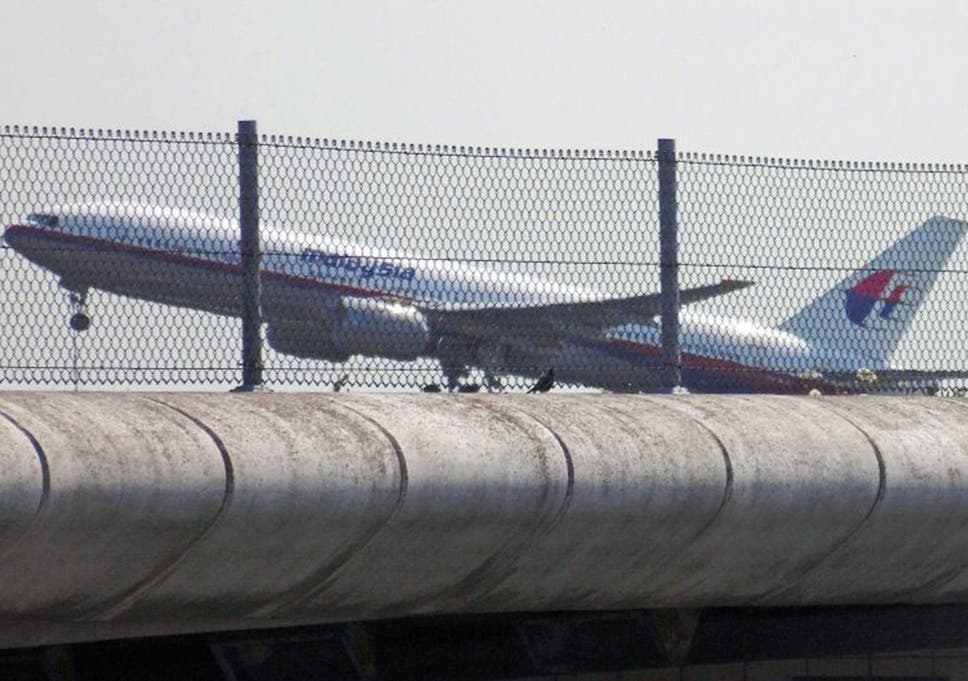
A Southwest Airlines Boeing 737 MAX without passengers lands at Orlando Airport

A Boeing 737-8 MAX aircraft, operated by Southwest Airlines, landed on Tuesday at the Orlando Airport, Florida, where it had taken off shortly before, after reporting problems in the engine, reported the Federal Aviation Administration (FAA). The aircraft, in which only the pilot and co-pilot were traveling, «turned around and landed safely in Orlando», the FAA said.

Flight SW-8701 was headed to Victorsville, California, where it would be sent to a Southwest Airlines depot, after the United States government banned the Boeing 737 MAX from continuing to fly for the airlines. The pilots of a Boeing 737-8 MAX of Southwest Airlines have declared an emergency ten minutes after taking off from Orlando Airport on Tuesday 26 March 2019. They reported a problem with one of the engines. The aircraft was to be positioned at Victorville Airport to be stored pending the corrections of the MCAS System. A\W


Ξ A I R G W A Y S Ξ
SOURCE: Airgways.com
DBk: Faa.gov / Orlandoairports.net / Boeing.com / Michael Lopardi @MLopardiWFTV
AW-POST: 201903271005AR

A\W   A I R G W A Y S ®

Autoridades Ucranianas involucradas en el accidente del vuelo Malaysia MH-017

El vuelo MH17 de Malaysia Airlines despega del aeropuerto de Schiphol cerca de ÁmsterdamAW | 2019 03 26 22:32 | AIR INVESTIGATION / AVIATION SAFETY

AW-70083667.pngInvolucran a autoridades ucranianas y servicios inteligencia occidental en el accidente del vuelo MH-017

Las autoridades ucranianas, junto con las agencias de inteligencia occidentales, están directamente involucradas en el accidente del Boeing 777-200ER de Malaysia Airlines en el Donbass de la República de Ucrania.

El reconocimiento del ex-oficial de la SBU, Vasily Prozorov, sobre los crímenes en el Donbass no le causó dudas. «Especialmente quería señalar el papel de los servicios de inteligencia occidentales y específicamente de los estadounidenses en todo lo que está sucediendo. Prozorov dice directamente que la CIA, el MI6 y otras organizaciones participaron en la organización de actos terroristas, en la capacitación de saboteadores y en la planificación de operaciones militares en Ucrania y en Donbass», expresó el ex-oficial.

El vuelo MH-017 de Malaysia Airlines, con la aeronave Boeing 777-200ER, registro M9-MRO que operaba la ruta Amsterdam-Kuala Lumpur, se estrelló el 17 Julio 2014 en el este de la Región de Donetsk. Como resultado del desastre, murieron 298 personas, ciudadanos de 10 estados. A pesar de las hostilidades activas en tierra, Kiev no cerró el cielo de Donbass para vuelos internacionales de pasajeros. Para investigar el incidente, se estableció un Equipo de Investigación Conjunto (CCV), que incluye representantes de Australia, Bélgica, Malasia, los Países Bajos y Ucrania.

En una conferencia de prensa celebrada en Moscú, el ex oficial de la SBU, Vasily Prozorov, dijo que la parte ucraniana era la culpable de la muerte del avión en Donbas en Julio 2014.

Gira Ministro holandés

Durante su visita a Australia y Malasia, el Ministro de Relaciones Exteriores Stephanus Abraham Blok habló con familiares de las víctimas y empleados de Malaysia Airlines, depositó una ofrenda floral en el Memorial MH17 en Canberra y habló con sus colegas ministros sobre el estado de los asuntos en la investigación criminal y la responsabilidad de Rusia.

El 17 Julio 2014, hace 5 años, el vuelo MH-017, que iba de Amsterdam a Malasia, fue derribado. En sus conversaciones con sus colegas ministros, el Ministro Step’ Blok abordará varios temas de política exterior, como la cooperación internacional contra el terrorismo, también después de los ataques en Utrecht y Christchurch en Nueva Zelanda. El papel de China en el escenario mundial también es un tema importante de discusión, al igual que el Brexit y los desarrollos en Afganistán. Step’ Blok también presta atención a la comunidad empresarial y la cooperación económica intensiva en el lugar. La última vez que un ministro holandés de Asuntos Exteriores visitó Australia fue durante la visita de estado a Australia en 2016. El Primer Ministro Rutte visitó Malasia en 2014. Esa visita también estuvo dominada por la colaboración MH17.AW-Icon-TXT-01

Resultado de imagen para Malasia MH17Ukrainian authorities involved accident MH-017

Involve Ukrainian authorities and Western intelligence services in the accident of flight MH-017

The Ukrainian authorities, together with Western intelligence agencies, are directly involved in the crash of the Malaysian Airlines Boeing 777-200ER in the Donbass of the Republic of Ukraine.

The recognition of the former SBU official, Vasily Prozorov, about the crimes in the Donbass did not cause him any doubts. «I especially wanted to point out the role of Western intelligence services and specifically of the Americans in everything that is happening». Prozorov says directly that the CIA, MI6 and other organizations participated in the organization of terrorist acts, in the training of saboteurs and in the planning of military operations in Ukraine and in Donbass, «said the former official.

Malaysia Airlines flight MH-017, with the Boeing 777-200ER aircraft, registration M9-MRO operating the Amsterdam-Kuala Lumpur route, crashed on July 17, 2014 in the east of the Donetsk Region. As a result of the disaster, 298 people died, citizens of 10 states. Despite the active hostilities on land, Kiev did not close the Donbass sky for international passenger flights. To investigate the incident, a Joint Investigation Team (CCV) was established, which includes representatives from Australia, Belgium, Malaysia, the Netherlands and Ukraine.

At a press conference held in Moscow, the former SBU official, Vasily Prozorov, said that the Ukrainian side was to blame for the death of the plane in Donbas in July 2014.

Dutch Minister tour

During his visit to Australia and Malaysia, Foreign Minister Stephanus Abraham Blok spoke with relatives of victims and employees of Malaysia Airlines, laid a wreath at Memorial MH17 in Canberra and spoke with his fellow ministers about the state of affairs in criminal investigation and responsibility of Russia.

On July 17, 2014, 5 years ago, flight MH-017, which went from Amsterdam to Malaysia, was shot down. In his talks with his fellow ministers, Minister Step ‘Blok will address several foreign policy issues, such as international cooperation against terrorism, also after the attacks in Utrecht and Christchurch in New Zealand. China’s role on the world stage is also an important topic of discussion, as is Brexit and the developments in Afghanistan. Step ‘Blok also pays attention to the business community and intensive economic cooperation in place. The last time a Dutch Minister of Foreign Affairs visited Australia was during the state visit to Australia in 2016. Prime Minister Rutte visited Malaysia in 2014. That visit was also dominated by the MH17 collaboration. A \ W


Ξ A I R G W A Y S Ξ
SOURCE: Airgways.com
DBk: Rijksoverheid.nl
AW-POST: 201903262232AR

A\W   A I R G W A Y S ®